Cheering on Artemis II: One step closer to a vacation on the Moon

The excitement around Artemis II is palpable right now, especially with the wet dress rehearsal wrapping up and teams pushing toward a launch no earlier than March 2026—potentially as soon as March 6 if everything aligns after addressing that liquid hydrogen leak from testing. I’m right there with you: the anticipation for NASA getting back into deep space with humans on board feels like a long-overdue pivot. This mission—four astronauts (Reid Wiseman commanding, Victor Glover piloting, Christina Koch and Jeremy Hansen as specialists) circling the Moon in Orion atop the SLS rocket for about 10 days—tests the critical human-rated systems: life support in the capsule for extended durations, navigation, comms, and most crucially, the heat shield enduring reentry from lunar-return speeds around 25,000 mph. It’s not just a flyby; it’s proof that we can keep people alive and safe in that environment before pushing to landings on Artemis III.

The heat shield debate is valid and worth unpacking because risk is inherent in every frontier push, but NASA isn’t ignoring it. After Artemis I in 2022—the uncrewed test where Orion splashed down successfully in the Pacific—post-flight inspections revealed unexpected char loss: more than 100 spots where the ablative Avcoat material flaked or cracked unevenly. Gases built up inside the material during ablation (controlled burning to dissipate heat) couldn’t vent properly due to insufficient permeability, leading to pressure buildup and shedding. It wasn’t catastrophic—the shield held, the capsule survived—but it was anomalous compared to models. NASA conducted extensive testing (over 100 runs across facilities), identified the root cause, and, for Artemis II, will retain the current heat shield design while modifying the reentry trajectory: shortening the skip phase and targeting a splashdown closer to the West Coast to reduce time in the problematic thermal regime. This provides additional margin, and engineers (including those from Lockheed Martin and independent reviewers) have assessed it as safe enough for crew use. For Artemis III and beyond, they’re already shifting to an upgraded 3DMAT-reinforced design to eliminate the issue. Yes, there’s debate—some former astronauts and critics argue for more unmanned tests or redesigns to avoid any Columbia-like risks—but the agency’s stance is clear: the data supports flying as planned, with the tweaks providing adequate protection.

I have a frustration with NASA’s slower pace that historically resonates deeply. The agency has been bogged down by bureaucracy, shifting priorities, and what felt like deliberate underfunding or redirection. Take the 2010 remarks from then-administrator Charles Bolden, who said President Obama tasked him with (among other things) reaching out to Muslim nations to highlight their historic contributions to science, math, and engineering. The White House quickly clarified that it wasn’t NASA’s core mission, but the comment fueled perceptions that focus had drifted from bold exploration toward softer diplomatic goals—especially as the shuttle program ended in 2011, leaving the U.S. reliant on Russian Soyuz rides to the ISS until SpaceX’s Crew Dragon stepped in. That gap period was humiliating and stalled momentum. Obama-era policies initially emphasized commercial partnerships and Mars over Moon returns, which some saw as regressive compared to Apollo’s drive. Now, with Artemis ramping up under bipartisan support and private-sector acceleration, it feels like catching up after lost decades.

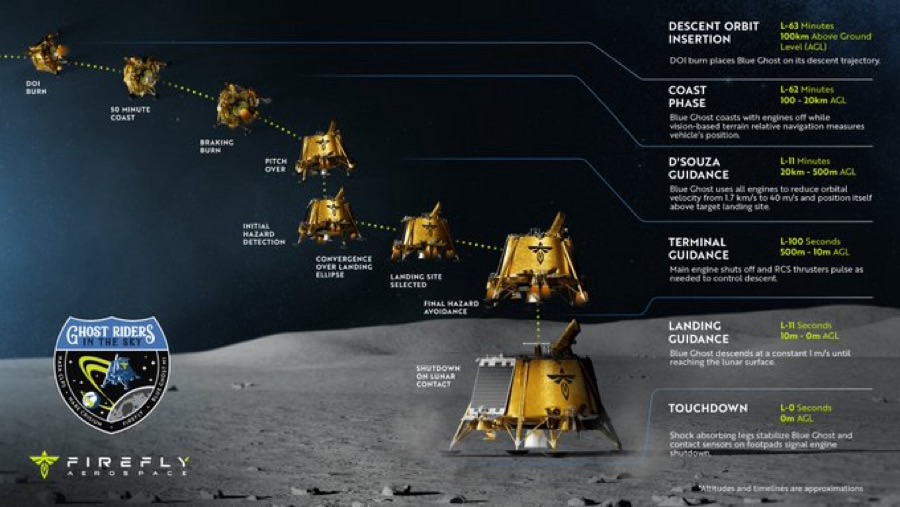
On the conspiracy side—the occult roots, Moon landing hoaxes, pre-existing lunar occupants—I get why those ideas circulate. Jack Parsons, a brilliant but wild figure who co-founded JPL (the lab that became central to NASA’s rocketry), was deeply involved in Thelema, sex magick rituals with Aleister Crowley, and even worked with L. Ron Hubbard before Scientology. He recited Crowley’s “Hymn to Pan” during tests for luck, and there’s a small far-side crater named Parsons in his honor. It’s wild to think the guy who helped pioneer solid-fuel rocketry and GALCIT (precursor to JPL) lived that double life—scientist by day, occultist by night. But does that invalidate the engineering? No more than it erases the Moon landings. Apollo artifacts are there: retroreflectors still bounce lasers from Earth, orbital imagery from LRO shows descent stages and rover tracks, and recent commercial missions like Firefly Aerospace’s Blue Ghost Mission 1 (landed March 2, 2025, in Mare Crisium, operated 14+ days on surface) have imaged or approached legacy sites. Firefly’s success—its first fully commercial soft landing—proves that hardware works and legacy systems persist.  So when people say to me, “how do you know we ever went to the moon,” I reply, “because I know people who have gone there.  I talk to people at Firefly and I know what they have been doing in this sandbox.

Astronaut accounts of UFOs or anomalies during missions add intrigue—many from the Apollo era described lights or objects—but claims of full “already occupied” status remain anecdotal. Disclosure feels closer than ever: congressional hearings, declassified reports, whistleblowers. Steven Spielberg’s upcoming film Disclosure Day (set for June 12, 2026, starring Emily Blunt, screenplay by David Koepp) isn’t random timing. Spielberg’s track record with Close Encounters and E.T. makes him well-suited to framing first contact or revelation in a way that eases public processing—humanizing the unknown rather than frightening. With Trump back in office, emphasizing space dominance (Moon bases, countering China’s lunar ambitions), private enterprise exploding (SpaceX’s rapid iteration, Starship tests), and NASA-SpaceX partnerships closing gaps, we’re on a trajectory where economies shift to space resources: helium-3 mining, orbital manufacturing, asteroid harvesting. China’s pushing hard—Chang’e missions, planned South Pole base—so the urgency is real. We need lunar footholds before they lock in advantages.

I have a vision of lunar hotels in 5–10 years that isn’t a fantasy. Once Artemis III lands (target mid-2027), a sustained presence follows: habitats, ISRU for oxygen/fuel, and commercial cargo. Vacation spots? Blue Origin and SpaceX tourism precursors point that way. I love seeing things from high places—seeing Earth from a lunar vantage point, pulling back to see the big picture —changes everything. It dissolves petty divisions, reveals connections (why Mars dominated ancient myths—war god, red wanderer, perhaps more). Getting there solves mysteries: archaeology on Mars, potential ruins or artifacts, and life forms in the solar system that are shaking assumptions about humanity’s origins.

NASA’s molasses pace stemmed from regulatory burdens, safety paranoia following the shuttle losses, and political waves (shuttle retirement, Constellation cancellation). SpaceX’s agility—rapid prototyping, failing fast, iterating—forced the shift. Without them, we’d still hitch rides. Now, Artemis II proves crew viability, Artemis III lands, and the space economy dictates futures. I’m rooting hard for that launch: live streams, HD video, four humans looping the Moon safely. It’s the step toward a lunar getaway, to perspective from the high ground. Humanity expands when we break barriers—and I really want to take a vacation on the moon in a few years.  And beyond. 

Footnotes

1.  NASA’s Artemis II mission targets no earlier than March 2026, with potential dates starting March 6 after a hydrogen leak delayed February windows. Wet dress rehearsal data review ongoing as of February 2026.

2.  Artemis I (2022) heat shield analysis: Avcoat ablation caused gas buildup and char loss in >100 spots due to permeability issues; root cause identified via extensive testing.

3.  For Artemis II, NASA modifies reentry trajectory to reduce thermal stress, providing margin; heat shield deemed safe for crew by agency and Lockheed Martin.

4.  Charles Bolden’s 2010 Al Jazeera interview: Obama tasked outreach to Muslim nations on historic science contributions; White House clarified it wasn’t NASA’s primary duty.

5.  Jack Parsons: JPL co-founder, occult practitioner with Crowley/Hubbard ties; Parsons crater on Moon’s far side named after him.

6.  Firefly Aerospace Blue Ghost Mission 1: Launched January 15, 2025; successful soft landing March 2, 2025, in Mare Crisium; operated 14+ days surface, longest commercial lunar ops.

7.  Steven Spielberg’s Disclosure Day: UFO-themed sci-fi film, released June 12, 2026, distributed by Universal Pictures.

8.  Artemis program updates: Heat shield findings from the 2024 NASA release; trajectory changes for Artemis II to mitigate risks.

Bibliography

•  NASA. “Artemis II: NASA’s First Crewed Lunar Flyby in 50 Years.” nasa.gov/mission/artemis-ii (accessed February 2026).

•  NASA. “NASA Identifies Cause of Artemis I Orion Heat Shield Char Loss.” December 6, 2024.

•  Space.com. “The Artemis 1 moon mission had a heat shield issue. Here’s why NASA doesn’t think it will happen again on Artemis 2.” February 2026.

•  Wikipedia. “Space policy of the Obama administration.” en.wikipedia.org (accessed February 2026).

•  Space.com. “Muslim Outreach Isn’t NASA Chief’s Duty, White House Says.” July 14, 2010.

•  Science History Institute. “The Sex-Cult ‘Antichrist’ Who Rocketed Us to Space: Part 1.” March 12, 2024.

•  Firefly Aerospace. “Blue Ghost Mission 1.” fireflyspace.com (accessed February 2026).

•  IMDb. “Disclosure Day (2026).” imdb.com/title/tt15047880 (accessed February 2026).

•  Wikipedia. “Disclosure Day.” en.wikipedia.org (accessed February 2026).

Rich Hoffman

More about me

Click Here to Protect Yourself with Second Call Defense https://www.secondcalldefense.org/?affiliate=20707

Starship SN10: A Turning Point in Human History

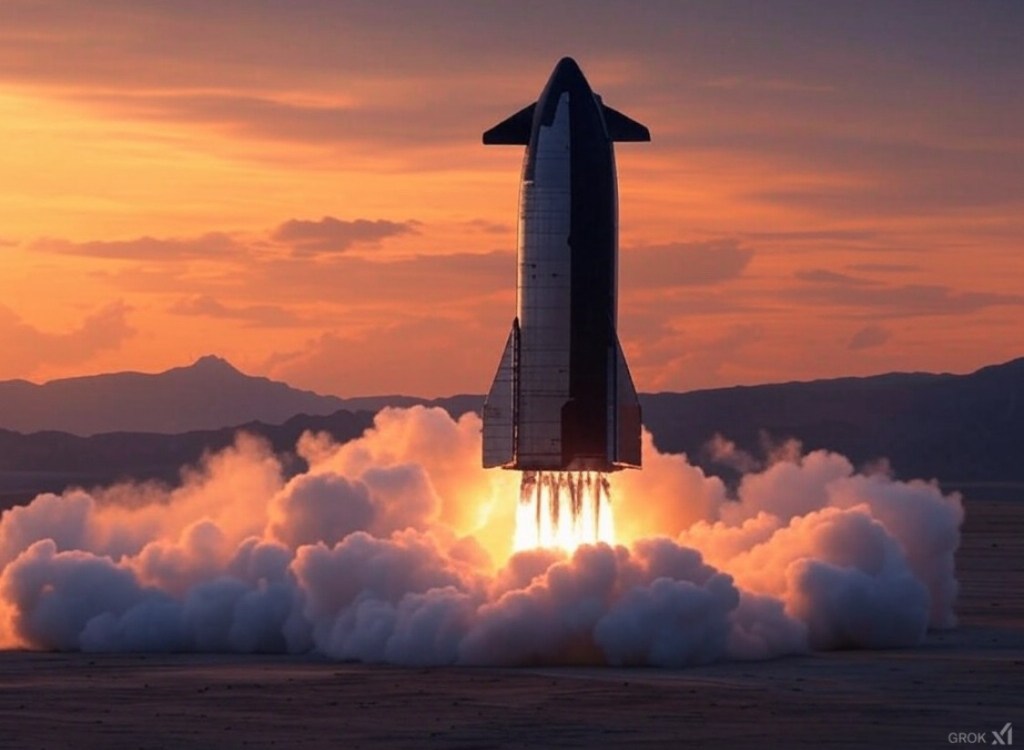
It’s a remarkable thing to witness history being made, especially when it doesn’t receive the attention it deserves. That’s precisely what happened with SpaceX’s Starship SN10. Against all odds, and despite a series of setbacks, SN10 completed its mission, withstood the stress tests, and landed a fully intact craft in the Indian Ocean. It wasn’t perfect—there were damaged components, mysterious explosions, and some tough engineering challenges—but it worked. And that’s the point. It worked well enough to prove something extraordinary: that this vehicle, this Starship, is more robust than anyone expected. And that robustness is precisely what we need if we’re serious about going to the Moon, to Mars, and beyond.

Starship SN10 didn’t just fly—it endured. It burned through the atmosphere, held together under pressure, and landed with controlled precision. That’s not just a technical achievement; it’s a philosophical one. It’s a statement about what’s possible when you push boundaries, when you accept failure as part of the process, and when you keep going anyway.

Let’s talk about what actually happened. Starship SN10 launched from Boca Chica, Texas, and demonstrated its full capabilities. It wasn’t just a test flight—it was a stress test. Engineers deliberately pushed the limits. They removed some heat shield tiles to see how the stainless steel would react to hotspots. They pushed the flaps to the edge of their tolerances. They wanted data, and they got it. That’s how you improve a spacecraft. You don’t play it safe. You push it until it breaks, and then you figure out how to make it stronger.

Previous missions had ended in explosions. SN8, and SN9, had spectacular failures. But each one taught SpaceX something new. That’s the beauty of iterative engineering. You fail fast, you learn fast, and you build better. SN10 was the culmination of those lessons. It didn’t just survive—it performed. Even with one flap malfunctioning and a mysterious explosion near the edge of the bay, it managed to stay stable, burn through the atmosphere, and land close to its intended target. That’s not luck. That’s engineering.

This mission was critical. It wasn’t just about proving that Starship could fly—it was about proving that it could be trusted. That it could be repeatable. That it could be the backbone of a new space economy. And yet, where was the coverage? Where was the excitement? Back in the days of NASA’s space shuttle program, every launch was a media event. It was on every channel. It was a national moment. But Starship? It barely made a blip in mainstream news.

That’s bizarre. Because what SpaceX is doing is arguably more significant than anything NASA did during the shuttle era. This isn’t just about sending astronauts into orbit. This is about building a reusable, scalable, interplanetary transport system. This is about making space travel routine. And yet, the only people who seem to care are the science geeks, the tech enthusiasts, the Comic-Con crowd. I’m one of them, proudly. I build my day around every Starship launch. Because I know what it means. I know what’s at stake.

I’ve watched every launch. I’ve felt frustrated when things blow up. I’ve celebrated the small victories. And this one—SN10—felt different. It felt like a turning point. It felt like the moment when things started to work. The payload simulations worked. The Starlink satellite dispenser inside the craft functioned with pinpoint precision. The reusability goals were achieved. This wasn’t just a test—it was a proof of concept. And it worked.

This is the moment people will look back on and say, “That’s when it changed.” That’s when space travel stopped being a dream and started being a reality. That’s when we stopped talking about going to the Moon and started planning it. That’s when Mars stopped being science fiction and started being a destination.

Of course, none of this happens without technology. And that brings us to AI. There’s a lot of fear around AI—people worry about Skynet, about machines becoming conscious, about losing control. Science fiction has been warning us for decades. And those fears are worth thinking about. We shouldn’t let technology get away from us. We need to stay in control. But we also need to embrace it.

AI is how we get to space. It’s how we process the massive amounts of data needed to run these missions. It’s how we make things repeatable, reliable, and scalable. The computing power we have today makes the Apollo missions look like kids’ toys, with the technology of a laser pointer. We’re operating on a whole different level now. And AI is the key to unlocking that level.

Take self-driving cars, for example. They’re not just a convenience—they’re a shift in how we live. They free up time. They make commutes more productive. They change the way we think about transportation. And that same shift is happening in space. The commercial space enterprise is poised to become a thriving economy. It’s going to require hard work, innovation, and yes, AI. Because humans can’t do it all. We need help. And AI is that help.

Starship SN10 was just the beginning. Starship 11 is already in the pipeline. Engineers are learning from SN10, making adjustments, and preparing for the next flight. Elon Musk has hinted that Starship 12 or 13 could launch by the fourth quarter of 2025 or early 2026. That’s rapid iteration. That’s how you build a space program, not with bureaucracy, not with delays, but with action.

And it’s not just about launches. It’s about deployment. It’s about getting to the point where Starships are flying like buses—routine, reliable, and everywhere. That’s the vision. That’s the goal. And it’s achievable because SN10 proved it.

We’re talking about the Artemis program. We’re talking about putting people on the Moon. And whatever people believe about past moon landings—whether they think it was real, staged, or somewhere in between—we’re going back. And this time, it’s not about beating the Russians. It’s about building a future. It’s about expanding humanity’s reach. It’s about survival.

There’s a segment of the population that doesn’t want to leave Earth. They’re comfortable here. They worship the planet. They fear change. However, if you genuinely care about humanity, you must think bigger. Elon Musk says it best: if we want to preserve human consciousness, we must venture into space. We have to take our intelligence, our creativity, our spirit—and let it grow beyond Earth.

That’s what Starship is about. It’s not just a rocket. It’s a symbol. It’s a foundation. It’s the first step toward a multiplanetary civilization. And SN10 was the proof that we’re on the right path.

Even under stress, even with problems, SpaceX pulled it off. That means we have stability. That means engineers can trust the system. That means we can innovate. We can take chances. We can improve. And that’s how progress happens.

This was a milestone. A pinnacle moment in human history. And it didn’t get enough coverage. We need to discuss this. We have to celebrate it. We have to recognize it for what it is: the beginning of a new era.

Starship SN10 wasn’t just a successful flight. It was a statement. It was a declaration that space is open for business. That humanity is ready to expand. That our past does not limit us—we’re driven by our future.

And it’s happening fast. The rate of acceleration is astonishing. Every launch gets better. Every mission teaches us something new. And every success brings us closer to the stars.  I love every one of these launches. I build my day around them. Because I know what they mean. I know what they represent. I’m eager to see more.  Starship SN10 was a success. Not just technically, but philosophically. It proved that we can accomplish complex tasks. That we can push boundaries. That we can dream big—and make those dreams real.

Rich Hoffman

Click Here to Protect Yourself with Second Call Defense https://www.secondcalldefense.org/?affiliate=20707

Firefly Lands on the Moon: Another step toward a space economy

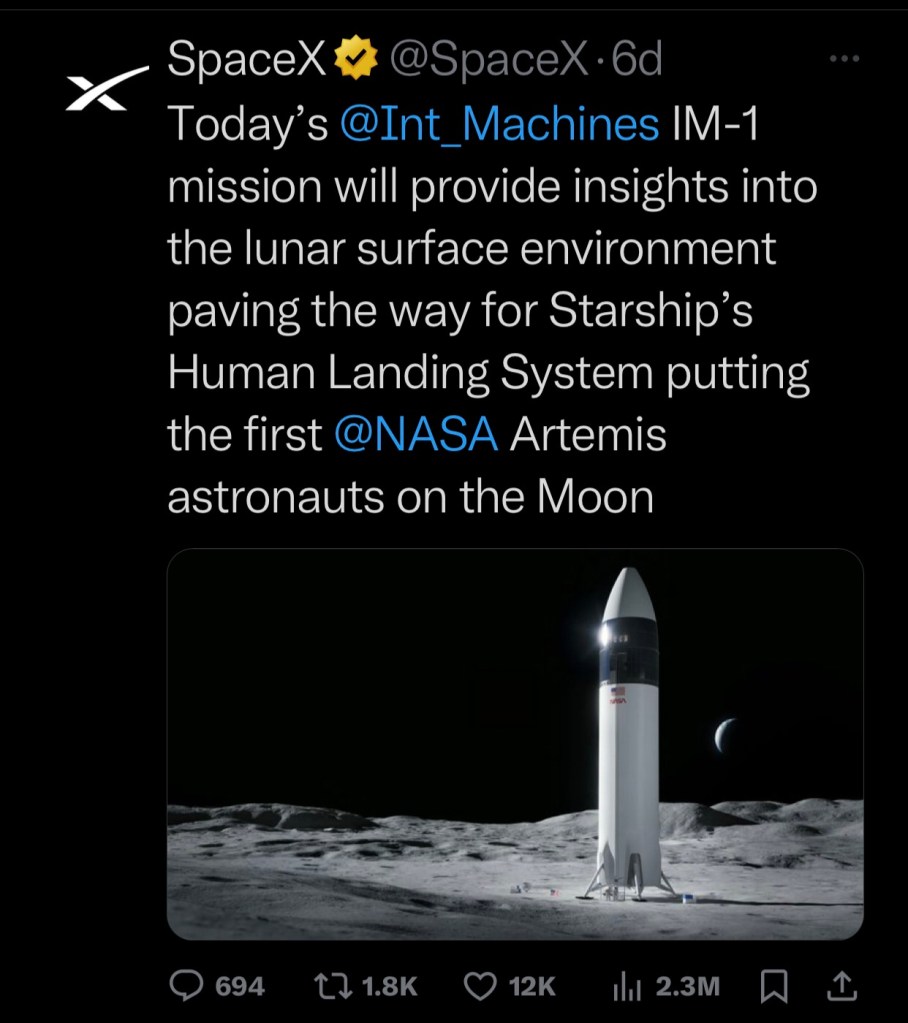
Never forget that at 3:34 AM on March 2, 2025, Firefly’s Blue Ghost lunar lander touched down on the moon’s surface.  It’s the second time a private company achieved a soft lunar landing, indicating many good things to come.  The first was Odysseus from Intuitive Machines almost a year ago.  I know several people at Firefly and know how significant their company is growing in the right direction, and this landing was an important historical marker showing that a smaller commercial company can pull off something like this in a partnership with NASA.  It would take NASA decades to do these launches, and now we see these private companies in a profoundly competitive undertaking, and they are doing so successfully.  There will be many more good things to come from Firefly, which is very exciting, and this goes along with what I have been saying about space.  This landing occurred one day before SpaceX sent Starship 8 into space, and just ahead of Blue Origin, a ship full of women, like celebrity Katy Perry, going into space as if it were just another day at the office.  Space is becoming routine, which is what we want to see happen.  And the moon has needed much more attention than it has received; we should have never stopped going.  I don’t care if aliens were on the moon to scare off Buzz Aldrin and Neil Armstrong, pushing us never to return.  NASA moved into the Space Shuttle program after the Apollo missions, but we have never since the early 70s dared to return to the moon.  Now, we have private companies doing the job that governments were too slow to do themselves.  And it’s all very exciting.  Firefly is a great new company, and it will play a significant role in the expansion of a space economy that I have been talking about for quite some time now.

And while discussing it, I’ll make a few predictions.  Just as Elon Musk is pushing for humanity to get into space and settle on Mars, to ensure that humans survive, I would dare say that this isn’t the first time our species has encountered this problem.  I think we will find that the relics on Mars are from our history and that our move to Earth was for many of the same reasons that we want to now return to Mars.  Not to discover it for the first time but to return there and complete a story that began for us many thousands of years ago.  Elon Musk is simply fulfilling the hard-wired desires that are built into human consciousness to ensure the continuation of the species, in the same way a sperm knows to penetrate the egg within a woman.  We must penetrate space to move our species as a thinking consciousness into the universe, as we were meant to.  On earth as it is in Heaven.  We are meant to ascend into Heaven, to the kingdoms we know from our past, which are in the sky. Mark it on your calendar and remember who told you all this.  Once we move into space and start checking things out, that’s when we are going to learn about ourselves.  The proof is coming.  I would say that it is all around us, hidden behind our institutionalized history.  But that won’t last very long; the evidence is abundant and will be confirmed with a space economy.  I could go into quite a long discussion about hidden lifeforms behind a curtain of Dark Matter made of neutrinos and cold fusion.  But let’s save that for other times.  Instead, let’s talk about the excitement of this growing economy brought to us by commercial-driven space utilization.

At a recent Vivek Ramaswamy governor announcement event at CTL Aerospace, I must have had more than 100 people ask me why I love aerospace.  And I tell them that the future is there.  It’s been like panning for gold in a little mountain stream during the Gold Rush.  I get a lot of offers to make a lot of money doing many things, especially in communications.  But I like to stay close to where the gold is, and I like knowing people like the cool cats at Firefly and other companies.  I get very excited every time SpaceX puts up a new rocket.  From all I know about history and science, I see aerospace as the ultimate gold nugget, and I’ve been committed to it for over four decades.  To use a Western metaphor, I’d rather dig for gold in aerospace than sit in a comfortable job in town as a lawyer or communications expert.  It’s not the money that excites me; the growth of human intellect and what adventure can bring us is the ultimate treasure.  But that doesn’t mean that money doesn’t matter.  But on a scale that I think is better than just some average well-paying job.  The growth of the space economy will far outpace any technical time humans have ever experienced, whether it be steamships, early airplanes, trains, or automobiles.  The space economy will likely contribute hundreds of trillions of dollars to the first to utilize it.  And that, to me, is the best of the big gold nuggets.  But this time we should have learned some critical lessons, to keep the Marxists out of this business, as they dramatically crippled every modern industry that humans have invented.  The Firefly launch is more vital than past attempts when Trump is in office and cheerleading on all these efforts.  So, the resolution rate is much higher than at any other time in history.

I watched Brit Hume on Fox News the other night stumble around perplexed about how Trump thinks he will go into all these tariff wars, cut taxes, and still expand the economy.  As everyone was, he spoke about an economy that they think has seen the climax of its days and that all government management has to be wrapped around managing those fixed assets.  But that’s not where Trump is as he is facing down what we all are, a 36 trillion dollar deficit that is out of control.  If you want to fix that without touching the Social Security and Medicare concept, something dramatic has to happen.  And as I have been pointing out, it’s in this space economy.   With Firefly putting their lunar module on the moon after a drought of 50 years, a half a century.  Our economy has been held back by a lot of Marxist parasites who moved into administrative positions at NASA and the Pentagon and held back human civilization in a very catastrophic way.  However, the more private people have grown more powerful, and the more that government has lost it, the more companies like SpaceX and Firefly have grown and are now doing the big things.  And that is where the future treasures are.  And that is the only kind of treasure I care about in the long line of treasures in any economy.  The best to my mind is in space, and the adventures to come.  And when I see scrappy companies like Firefly have success, I am more than happy for them.  These are fascinating times! 

Rich Hoffman

Click Here to Protect Yourself with Second Call Defense https://www.secondcalldefense.org/?affiliate=20707

SpaceX Does it Again: Crawling out from under Cost-Plus restrictions

For perspective, you can go back through all my writing, millions and millions of words back to 2013 when I wrote an article from Florida about the essential end of the Space Shuttle program and that Obama’s vision for NASA was to partner with Russian cosmonauts for any future space missions.  I was very outraged at the policy, and if I never liked Obama for anything, it was his anti-growth attitude to suppress American exceptionalism as it often presents itself in space travel, that I hated the most.  We were going backward under Obama and Biden, and the only growth we have seen in over two decades came from the four years we had from Trump the first time.  So, I have been very excited about watching the civilian infrastructure for space develop, and anywhere I can help it, I certainly do.  So if I’m more excited these days and very enthusiastic for every day, as many people pointed out to me at a Jags get-together ahead of the inauguration of Trump, I’m sure eventually they’ll understand.  I don’t think people realize what a miracle the week of January 13th was in 2025.  Yes, SpaceX did it again; they landed their Superheavy booster rocket back on the pad it launched from after carrying another Starship into space.  They lost the ship due to a pressure problem that couldn’t gas out fast enough on a new second-generation Starship, and it ruptured the hull, causing the whole thing to break up in the atmosphere.   That was unfortunate but very correctable.  The real trick was repeating the landing of the booster rocket to show that the first time wasn’t an accident.  Watching that rocket capture chopsticks system work now repeatably was a fantastic thing to witness, and it takes us a long way from my complaints about when Obama ended the Space Shuttle program over a decade ago.

But that wasn’t all; just a few hours before SpaceX launched, Blue Origin put their own rocket into space, but this one was carrying a lunar lander from Firefly, a Texas-based company, that was returning to the moon.  Another personal problem I have is with NASA and governments around the world.  I don’t care what anybody found when we went to the moon the first time.  There was no excuse not to have a Hilton there by now so I could vacation on the moon with my family.  This raw, primitive embrace of backward thinking that came to us from both political parties has infuriated me to no end.  When people ask me why I have had my war against public education, it starts with this lack of preparation as a culture to advance people into space.  We should have been doing this since the original moon missions, and as I was growing up, it looked good.  But the Department of Education under Jimmy Carter and the socialist politics that held our society down through labor unions and liberal politics stopped that advancement and I have never been good with it.   If we don’t have a culture pushing for adventures into space, we are deliberately trying to suppress the ambitions of the human race in a very unhealthy way.  So, for me, watching all this space activity just a few days before President Trump’s return to the White House was fantastic and deserved as a subject of massive optimism.  For a culture to produce two space launches like Blue Origin and SpaceX produced, it would have taken NASA a decade to do one of them.  Let alone two significant ones.  We are dealing with good times, finally.

The amount of capacity and bandwidth is the real challenge, and that’s what is changing, which I’ll be pointing out often because I am pretty sure people don’t know what to think of these displays of monumental ambition.  It takes thousands of manhours and intelligence calculations to produce one rocket into space, especially when discussing complicated payloads.  But here we have a culture that did it twice in the same week. Additionally, there are several Falcon rockets that are taking constant payload into space, whether people or satellites for the Starlink system, we have come a long way from the Obama administration sending Americans into space through partnerships with Russia.  As soon as SpaceX realized that they had lost their Starship, they were already planning to pull another out of their manufacturing facility, where several others were waiting, and they were planning another launch next month.  SpaceX expects to launch at least 20 more times in 2025 to develop Starship further.  What they learned from this recent one, even though it burned up in the atmosphere, was extremely valuable compared to the traditional hindrances of a cost-plus company.  The way SpaceX is attacking the problem is the definition of how these things will be done in the future, and it embodies a whole new view of manufacturing that is escaping the clutches of global socialists like Obama, who were deliberately trying to hold back humanity.   It’s one of those situations in which small-minded people have been trying to destroy society to rule over the ashes.  And these new manufacturing methods being developed at SpaceX are a rebellion against that sentiment.  And it’s precisely what space needs for humans to colonize the stars.  Other companies are now moving in that same direction regarding the “rate of resolution.”

Cost-plus companies have been hijacked by all kinds of horrible forces that have held back the aerospace industry since the first moon landing.  When parasitic characters realized they could stall contracts and make money off ignorant governments for more congressional money to be thrown at the trolls to build something, trouble was clearly on the horizon.  That’s why space had to move into civilian care because there was looting politics in government control that held us back with people like Obama.  A setback like Starship had at SpaceX this week would have stopped advancement at a typical cost-plus company for a decade in the past.  Instead, Elon Musk said immediately that the plan was to roll out another Starship and get ready for a second try next month.  The only thing that will hold them back is the speed of government, which will increase dramatically once Trump is back in office.  There is a lot to be very excited about, and I am.  It’s not just about going to space that is exciting; it is about watching the human race crawl out from under a very oppressive political climate and an education system that has sought to cripple us purposely.  Not to inspire us to grow.  And due to all that, we see that the human race is doing big things again, and the American culture, which has produced the world’s wealthiest people, is putting that wealth to good use in adventure and enterprise.  As good as this past week was, and it was, I see under the incoming Trump administration launches like that happening every single day.  I don’t think people realize yet how important all this is and what it will do for us.  But I can see it and am very excited about what’s coming.   In many ways, it’s a dream come true. 

Rich Hoffman

Click Here to Protect Yourself with Second Call Defense https://www.secondcalldefense.org/?affiliate=20707

The Eclipse of 2024 in Ohio: When immortality is observed in all its magnificance

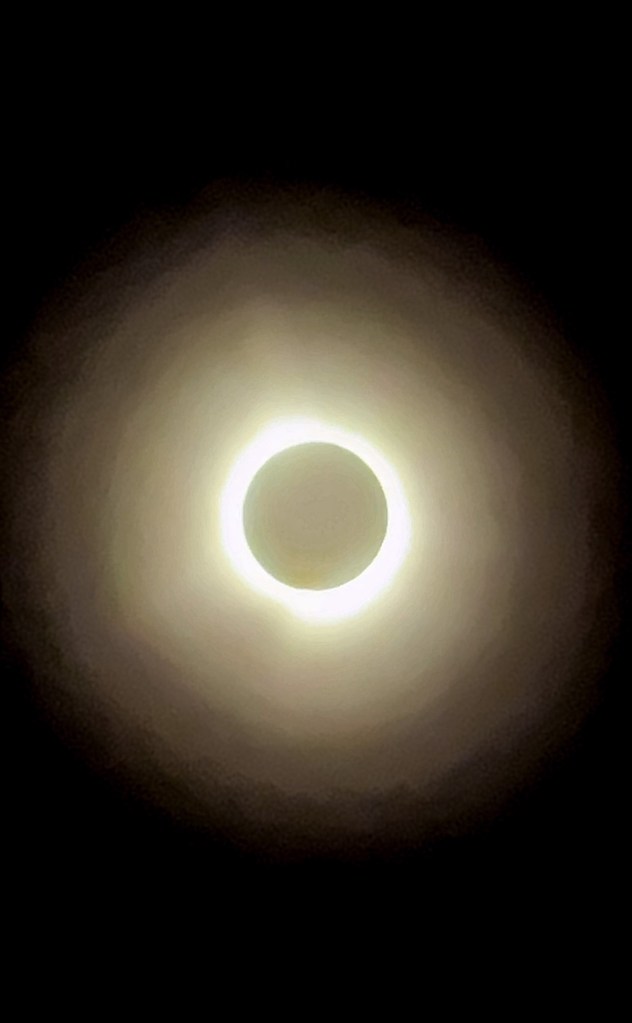
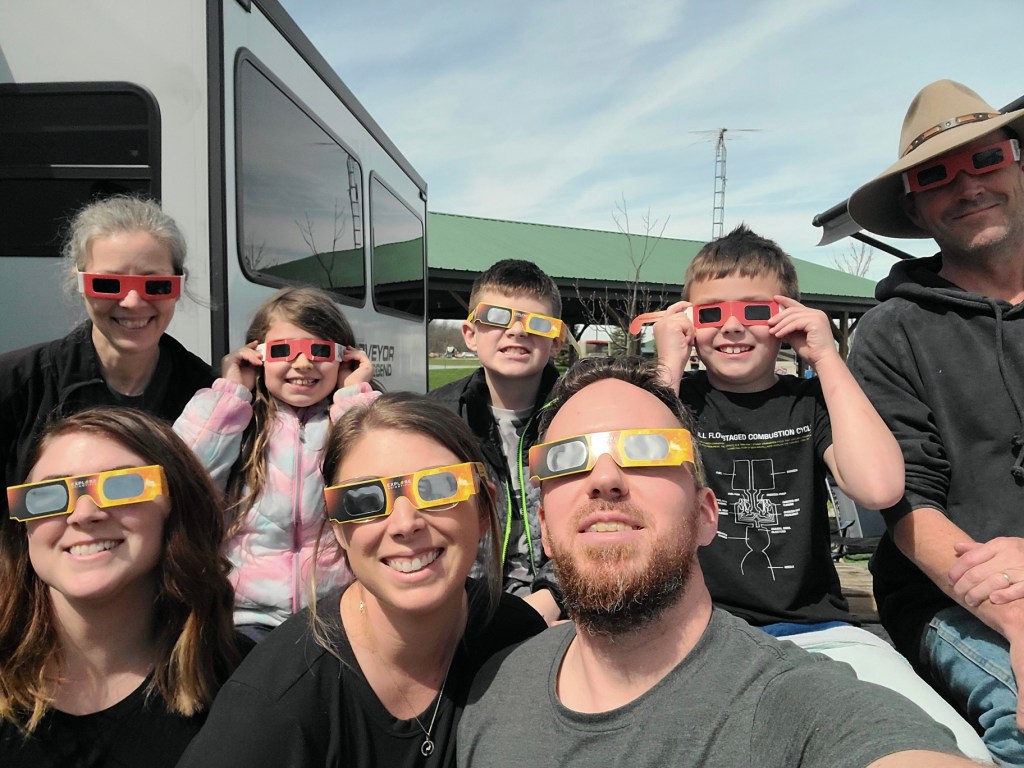
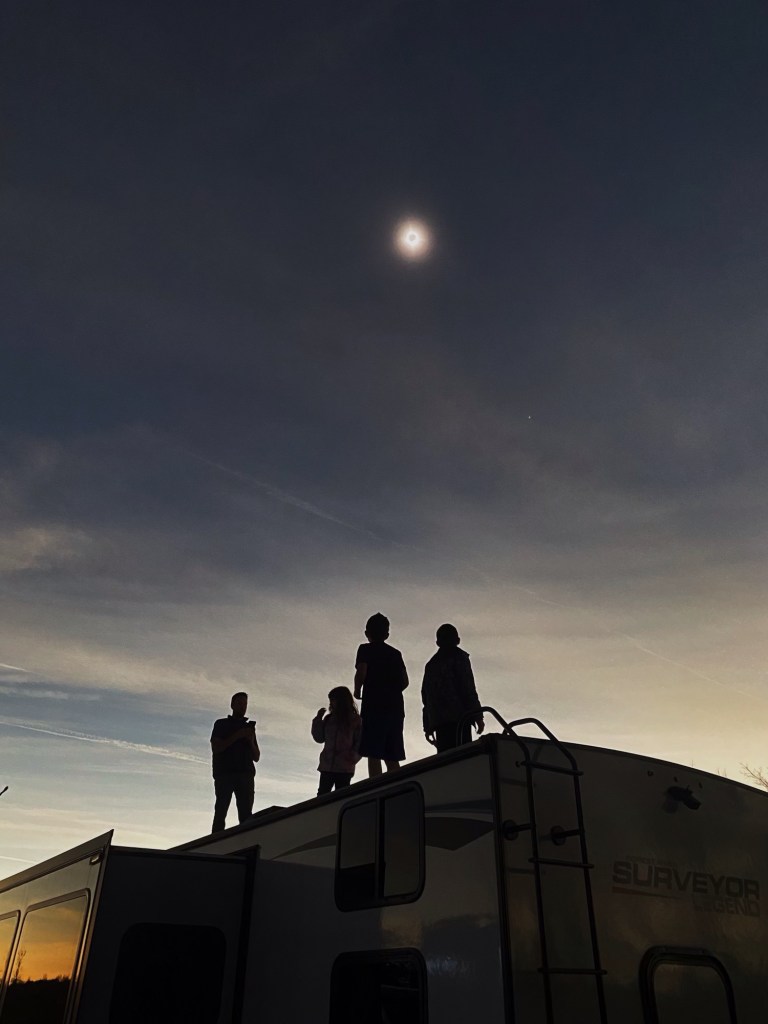
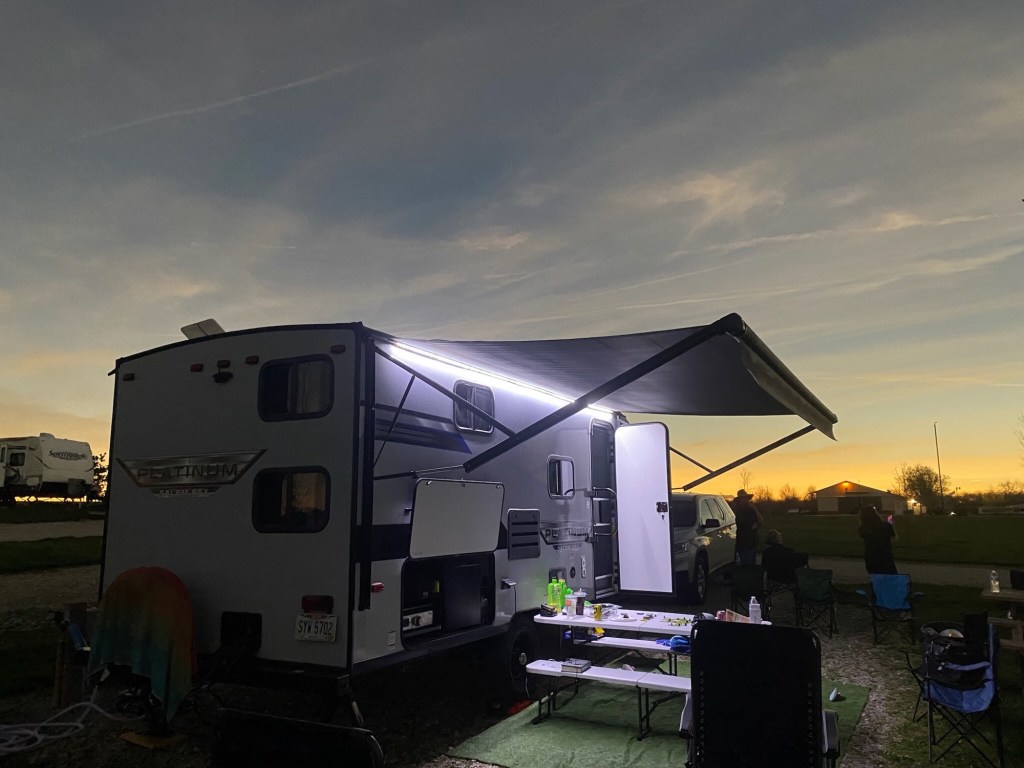
I’ve seen eclipses before, but this one in 2024 was different, especially since it was close to where I live in Liberty Township, Ohio.  The totality band was going to be very nearby, so once we received a decent weather report and had the exact path agreed upon by analysis, we found a good RV campsite in Rossburg, Ohio, to set up a base and make a real thing of it.  My crew is very interested in those things, and it certainly made a difference that all three of my grandchildren are inclined toward intelligent things. Even at age seven, one of them is showing a Thomas Edison level of genius, so we wanted to make this a unique experience for them.  Plus, getting out the campers after a hard winter was a chance to stretch our legs a bit.  For an eclipse, the event was scheduled to occur between 1 and 5 PM on April 8th, with the totality of darkness happening around 3:07 PM.  So rather than wait in some parking lot for that specific event, we took our homes on the road and were very relaxed.  So relaxed that we stayed at that campsite for a good part of the week.  It was also my birthday on the 9th so we made quite a thing of it.  We got up on the morning of the 8th, ready for a front-row seat of a great celestial anomaly.  We didn’t have to get up and go anywhere to observe it, so already that was a good thing.  We had a nice breakfast at our campsite, the kids played fervently, and the adults had some raw downtime to talk in ways there was never time for, so we had a very nice experience. 

It was worth it; by the time the moon had blocked the sun 100%, there was a nice halo ring around the celestial bodies that blocked out most of the light from the sun, and the stars came out.  On all horizons, it looked like a sunset for about 50 miles in every direction.  But directly over our heads, it was essentially night.  I put a video up with speed advanced to see that narrow 4-minute period where day became night, and we had two sunsets on the same day.  That particular part of the world is indeed in God’s country. Our campsite was in a flat open area with no trees close, and our campers were essentially pointed in the direction of the whole event as if it were a giant IMAX screen put there for our entertainment.  For a last-minute campsite, the one in Rossburg was fantastic.  It had a couple of lakes with fish and a beach for the kids to play in, which was quite nice.  And for four minutes of totality, everyone could geek out on science and optimally enjoy the eclipse.  All my kids would be lucky to ever see an eclipse like that again in their lives, and we were happy to have the chance to share it together.  Life has so many moving pieces, and getting so many people together to do something like this is hard.  And the celestial show did not let us down.  Even I found the whole thing to be a bit of a miracle and a sensational opportunity to study science in the field and contemplate larger concepts.  The little kids, my grandchildren, were overwhelmed with the spectacle, which is what we wanted for them, and it was obvious that interests were sparked in them at that moment that would last a lifetime.

During the totality, I couldn’t help but think of Tecumseh when he famously predicted an eclipse and an earthquake along the New Madrid Faultline by St. Lewis.  I also thought of all the conspiracy theories that had led up to the eclipse as people tried to make sense of such a meaningful event to human minds.  For instance, why were their ten towns named after the Biblical Nineveh along the path of the totality in North America?  Did many of the Masons who organized these towns initially know this eclipse would happen mathematically, and they set fate to play host to some celestial significance rooted in ancient astrological belief systems?  What role did this particular eclipse play in Jewish rituals, and how planned were they for this event in 2024?  And what results were produced by the particle collider at CERN, which was supposed to have gone off at that exact moment of the totality band in America?  All that was playing in my mind as we watched the eclipse unfold.  Yet, for me, it looked purely like a regional thing.  We had gone to that location because at home, even though home wasn’t very far away compared to other places that we’ve gone, the whole experience was a regional one.  Obviously, celestial observers witnessing events discussed in the Bible would only be important to those experiencing even the most dramatic events.  Most people in the world wouldn’t even notice that there was an eclipse at all.  The sun would dim a bit, and if you didn’t have special glasses to look at it, you would not see the moon passing in front of it.  And wouldn’t even know what was happening, if anything at all. 

The world did not end, and after that event, I continued to think about how humans bring meaning to natural occurrences to attempt to understand the cosmic significance.  As creatures of nature, we tend to do that, where nature happens, and people may observe it, but the importance may not have any significance other than three celestial bodies interacting with each other, the sun, the moon, and the earth relative to their positions.  Suppose anybody hung around long enough over billions of years. In that case, our Milky Way galaxy will collide with a neighboring galaxy, and there will be all kinds of disruptive, likely destructive, celestial events on a grand, epic scale.  This eclipse was a regional thing that had harmless consequences and reminded all the humans watching it, that there was a lot more to existence that they needed to understand.  And that they attempted to bring meaning to the passage of the moon in front of the sun in very specific places in North America was an interesting observation of relativity, but not much else.  But humans have minds, and they think and observe. So many stories came to their minds saying that they were doing what nature intended them to do, to take nature and make meaningful the occurrences in a way that shapes necessity in interesting ways.  The ability to think was the most miraculous event that day, to see a celestial event and to bring human meaning to it as a greater cosmic significance.  We certainly enjoyed it; we wanted all the kids to have something important to think about and see as gloriously as possible.  And to create memories that would last for years, even longer.  There would be more eclipses, not in that part of the world, but they would happen.  But they would never occur under that collection of circumstances ever again, where meaning was created by the minds observing it.  And what is born of that meaning is better than nature for its own sake and is the stuff that makes immortality such a grand word.

Rich Hoffman

Click Here to Protect Yourself with Second Call Defense https://www.secondcalldefense.org/?affiliate=20707

The Government Could Never Run SpaceX: Technical innovation works best under capitalist markets

Again, let’s make something clear.  The government cannot make things, and most everything it does in most cases is terrible.  However, we need the government to maintain national and statewide concerns.  You need just enough government to manage a community but never enough to become tyrannical.  So, I’m not an anti-government guy, but I am an anti-stupid guy.  Dumb people tend to be drawn to government work because they hope the power of government will cover up how stupid they are and can hide it from the world; government tends to have all the wrong people in it from top to bottom, so what we let them do has to be managed to a minimum.  Those same people never become magically competent and suddenly make things better by attending a few meetings and acquiring some name tag at a meet and greet where they draw their name on it with a marker.  So it is absolutely absurd that anybody in government thinks they could do anything with SpaceX other than fill out a permit, which they can’t even do promptly.  But that is the word on the street, now that they’ve seen that the Starship from SpaceX is going to be successful, with the third test flight coming up soon, there are leaked talks that the government wants to take over the Starship as a “national necessity” and make it part of the military.  First of all, I do not doubt that the government in any form, through the Department of Defense, Homeland Security, the Space Force, the Air Force, or any branch of government, thinks that all civilian enterprises as valuable as SpaceX have become, should be held down to the limits government can provide.  Many in government believe that no company such as SpaceX should exist beyond the control of government and that they can’t be the first to claim the moon, Mars, and other celestial bodies as a private company, set up bases, and govern people in the far reaches of space. 

There are many people who think only a government can have power that is then accountable to voters, and they can never get their minds wrapped around the purpose of government in the first place, which is why we have the current Civil War that we do in the world, the corporations against free people.  Who does the government report to, and what is its purpose?  Corporations use the power of government not as capitalist, free market enterprises but as clubs to beat down their competition and secure their stake in the marketplace.  Pfizer comes to mind in its relationship with the World Economic Forum to be in the business of making bioweapons in a Wuhan lab and releasing them during election years to control who runs countries through stolen elections so that they can then use government to force private people to consume their product.  I don’t think SpaceX will let the government take over anything.  They have shown that they can partner with the government, such as they have with NASA, to have success, but such relationships have slowed SpaceX down a lot, not made it better.  But because the government regulates so much of the space industry, such partnerships are essential, if not stupid.  Amazingly, SpaceX has managed to do as well as with such government partnerships.  But now that SpaceX has been successful, with the Falcon rockets and the Dragon programs, now that Starship is ready to make its mark as a very efficient space taxi, many in the government are having delusions that they could run SpaceX better than the private market and that is just absurd, and will never happen.  It can’t happen. 

Government workers cannot perform at the rate of technical innovations required for the space industry.  They don’t have it in them, and the nature of government prevents such a possibility.  So, for the government to take over SpaceX in any way is unrealistic.  Like everything they do, from building highways to teaching children in schools, the government cannot perform the task better than free markets.  The concept of profit fuels ambition, and the typical government bureaucrat, even in the military forces, can not do great things without the idea of profit being used to fuel the task.  And profit doesn’t just come in the form of money.  It can come in the ambitions of a future task, but those who can provide opportunity tend to evoke such ambition that creates invention.  All government work tends to fall under a structured concept that limits the work to the scope of the people doing it.  In the private industry, people tend to rise to meet the needs of the work.  However, in government-managed enterprises, the work is limited to the skills of the people who manage to get into government work because of multiple psychological problems that draw them to it.  This is why there aren’t more companies like SpaceX: they never grow so big and powerful in such a short time and on such a scale that the government doesn’t see them as a threat and destroys them well in advance.  When you watch a SpaceX launch, and the crowd cheers the way they do, there is a collective celebration from the human race with each new achievement that is quite audible.  That’s because people know.  They know how significant many of these technical innovations are and that SpaceX has been able to outrun the limits of government to achieve them for the betterment of everyone.

It is a problem that civilization has reconciled that has not occurred yet in our development over many thousands of years.  Work is done best by free people who benefit from the invention, as opposed to controlling powers manipulated by a few administrators who can distribute that power based on favors.  Depending on the ratio of those effects, you can know if your civilization is good and successful or oppressive and tyrannical.  And no tyrannical civilization has ever been successful at innovation and invention.  That’s why communist countries like China must steal everything they do.  They cannot think independently because they use the power of government to hide their incompetence through collective government power, so they stifle creative thought instead of unleashing it.  To do what SpaceX wants to do over the next decade, there are literally millions and millions of inventions that will have to occur from many more sources than SpaceX to make it happen.  But the effort starts with them and their free ability to meet marketplace demands.  But without profit being the key to their operation, none of it will occur, and the government will regulate the industry back to the stone age, which is the only thing they can do predictably, holding back innovation and the spirit of invention.  America and American capitalism have been more successful than any other place in the world because we have a country that prevents government from harming people more than any other place, so companies like SpaceX can form.  A company like SpaceX would never occur in a communist country like China.  They can copy but can’t create, which is the rule in most endeavors.  In that way, anybody who is worried that the government will take over SpaceX can rest assured that it won’t.  They might try, but once they did take over SpaceX operations, they would ruin everything they had built, and it would be just a matter of months before the government would celebrate screwing in a light bulb rather than unleashing flights into space.  And that is being kind to the light bulb. 

Rich Hoffman

Click Here to Protect Yourself with Second Call Defense https://www.secondcalldefense.org/?affiliate=20707

Life on the Moon: The ancient past and modern activity of alien life above our heads

I don’t say things until I’ve considered the evidence intently and one of the reasons I’ve been most insistent to write The Curse of Fort Seven Mile with an emphasis of late is because of a realization that I’ve discovered through quite a lot of research.  These rumors of some type of life on the Moon of our earth have some weight to them.  From the 1976 book written by George Leonard Somebody Else Is on the Moon (linked below) compelling evidence from actual NASA photographs open the topic profoundly.  It’s an expensive book to get, but well worth it.  Additionally I think it is the remarks of the astronauts who have actually walked on the moon, people like Edger Mitchell and Buzz Aldren who have provided such virtuous testimony—some intentionally, some not so much so.  The evidence points more to the fact that there are constructions on the moon that shouldn’t be there and that there is presently, or has been, an alien race active on its surface.  If you can’t afford the old Leonard book feel free to watch these following videos for some supportive evidence to the fact.

http://www.amazon.com/Somebody-Else-Moon-Artifacts-Leonard/dp/1499250797/ref=sr_1_2?s=books&ie=UTF8&qid=1462071157&sr=1-2&keywords=ulos+unidentified+lunar+objects

One of my first big memories as a kid was visiting the Neal Armstrong museum at Wapakoneta, Ohio while my family went on a trip to Put-in-Bay—I was around four years old.  Years after that, my class went on a field trip to the museum there while in grade school and I oddly enough remembered  most everything because I had been there before.  I was the kid who always read the literature on the exhibits, so I felt very much at home compared to the other kids who had seen the place for the first time.  Armstrong was a professor at the University of Cincinnati—which was in my hometown and his life occurred very much around me—and I was aware of that growing up.  Aviation was born around me as well, so I’ve always taken some pride in the Wright Brothers and old test pilots like Neal Armstrong who was obviously the first person to walk on the moon—at least that we know of.  What always bothered me about Armstrong was that he had turned inward after the experience.  He wasn’t like Buzz Aldren—Armstrong didn’t relish the celebrity of being the first man on the moon—he had a secret which he avoided talking about and obviously took to his death.

Given Armstrong’s Midwestern roots, I think the guy didn’t like lying to people about what he saw on the moon when NASA switched to a private broadcast while he and Buzz were standing on the surface in July of 1969.  I was one year old at the time and my parents were standing me up in front of the television to see the event.  All I remember of the occurrence was the shape of the ship and the sounds of the transmissions which I recognized at the museum years later in Wapakoneta.  I didn’t understand the context at the time, but the layers of memory solidified it in my thinking for years to come.  While everyone was impressed that mankind was standing on the moon, Armstrong had confirmed much of what NASA wanted to see, which wasn’t filmed with cameras that were made public.  We were not alone—not by a long shot—and it haunted him for the rest of his life—apparently.

I’ve talked about the moon before, there are several things not right with it—it’s a little too perfectly positioned and it is locked in a type of orbit around the earth that never shows its far side.  That is a little weird as well.  And apparently on the far side there are even more strange photographs of things that should not be there if Neil Armstrong was truly the first life form to ever walk on the surface.  This of course has led to a lot of speculation through science fiction but those entries into are rooted in fact.  For me the most compelling evidence is that we have not returned—and neither has any other country.  The technology is clearly available to us now, yet we aren’t going back after those initial Apollo missions.  Some of the astronauts involved in the Apollo missions are now very supportive of alien life in space even if they do preserve their disclosures agreements with NASA which is after all a government agency which thinks it knows best how to preserve the religions and social order of the society it is supposed to serve.

Just a few miles south of where the Wright Brothers ran their bicycle shop which invented aviation the bones of an undocumented giant species of man was found in Miamisburg—one very large skeleton at a gravel quarry near the Great Miami River and the other under a large tree which was uprooted at a farm which bordered the mysterious Miamisburg mound complex.  Strangely enough, Hanger 18 which housed the wreckage of the Roswell crash was also nearby and to prevent proper excavation of the Miamisburg site by archaeologists and anthropologists a nuclear weapon facility was built on the land called Mound Laboratories.  That certainly stopped any real research into the region by credentialed scientists.  I currently live on the banks of the Great Miami River south of that Miamisburg site, so all these conspiracy stories have been with me for my entire life—and nobody wants to give any real answers to the probing questions—which feeds the conspiracies.   My conclusion is that there is much more to the story which is why everyone is so tight lipped.  The authorities in this case would rather not confirm or deny—they’d just prefer to avoid the topic.  But the evidence is rather compelling–it’s is all around us—we just need to look at it.

Given all that evidence, it’s just a matter of time before we have to go to the moon and discover what NASA has been avoiding to tell us.  Private space companies are headed to the moon and within just a few years of now, there will be hotels on the surface—and by then we’ll learn the hard truth—it won’t be a secret any longer.  There is a presence of some life other than our own on the moon right now and they watch us from there for reasons that we’ll discover.  I would propose that it’s a kind of interplanetary base camp and they find our civilization interesting and likely some kind of social experiment that they check up on frequently.  Just yesterday I drove by the Serpent Mound site in eastern, Ohio and scientists are no closer to figuring out the reason for that strange mound than they were twenty years ago.  In fact, they have more questions now than answers.  If our science cannot figure out the meaning of things in our own back yards, then they surely aren’t prepared to deal with what’s on the surface of the moon—an entire celestial body that has not had any of its history covered yet by modern development.  It’s an open text-book of mankind’s past and whoever was a part of helping to shape it from inception.  And it floats there above our heads—all the answers we seek—yet we do not dare to uncover.  Actually, you and I might dear reader—but our governments want to hold onto their power for just a while longer.  The evidence is there for us to investigate and when we do we have a lot of hard questions to answer about ourselves.  Of course the first step will be in returning—and I can’t wait for that to occur.  I’d rather know the truth than live with illusions.

Europeans did not discover America–the giants in the Ohio mounds prove that.  They were in North America before there was ever an Indian or a Christopher Columbus voyage.  And we did not first walk on the moon.  Someone was there before us and they are still there. ………………………………

Rich Hoffman

 CLIFFHANGER RESEARCH & DEVELOPMENT

Sign up for Second Call Defense here:  http://www.secondcalldefense.org/?affiliate=20707  Use my name to get added benefits.

Yes there was Life on Other Planets: NASA reveals a truth I told you was coming all along

I’m not writing this for today, but for about twenty years in the future so that I can point back to it and declare how correct I was, before anyone else was ready to admit it. This is not science fiction, or just inflammatory speculation—but a hypothesis based on observed facts, a study of history, mythology, and political tendencies around cultures nurtured through human necessity. Of course I plan to explore this concept in much greater detail in my Curse of Fort Seven Mile stories, but for the sake of future validation, this is to say I told you so. To begin, please consider what Ellen Stofan said early in 2015 about alien life. Ellen is a bleeding heart progressive at NASA, who is a bit of a political advocate on behalf of women and global warming, but she is pretty smart. She loves science and the possibilities of things beyond the orbit of earth. With that I share quite a lot with her. In reaction to her activism on global warming I would tell her to forget the earth and to use space to move humanity to another place. Earth is like that apartment you had in college that is dirty and used up. Its time to build a home in space for mankind—so who cares about global warming. It would only take a sustained solar wind to strip away earth’s atmosphere, as it appeared to have done with Mars, so let’s take our technology and ambition and head for the stars. But first, here’s what Ellen Stofan said:

“I think we’re going to have strong indications of life beyond Earth within a decade, and I think we’re going to have definitive evidence within 20 to 30 years,” NASA chief scientist Ellen Stofan said Tuesday in a live webcast.

 “We know where to look. We know how to look,” Stofan added. “In most cases we have the technology, and we’re on a path to implementing it. And so I think we’re definitely on the road.”

http://www.people.com/article/nasa-predicts-discovery-alien-life

For a long time my family has vacationed at Cape Canaveral and opportunities to speak to NASA employees off the record present themselves at local restaurants and shopping complexes. Most of the time they only know what their classifications allow, but a lot of them look at the stars now with a changing emphasis. Add to that the free market push to commercialize space and the government realization that they can’t keep a lid on the topic any longer is materializing quickly. NASA is a victim of budgets, so they have to ride the line of politics to keep their funding flowing. When Obama announced that NASA should study Islamic contributions to science, of course there was more to the story. NASA stopped going to the moon after the Apollo missions. The space shuttle was cancelled, and the proclamation of returning to the moon by George W. Bush was nixed. Meanwhile rovers have been exploring Mars as the news coverage of those adventures have been scaled back—considerably. The reason is that there is far more than enough evidence discovered in just our infantile attempts to explore space just outside of earth’s atmosphere to confirm that our Biblical history is incomplete. Mankind did not start with Genesis, but with prequels of other stories long since lost.

Evidence of those early chapters are all over the moon and Mars where monuments of achievement similar to Teotihuacán, Ankor Wat, Giza, and many other places seen across the earth are visible to cameras and early space explorers.   On earth there is plenty of commercial development that has occurred that has destroyed much of our pre-Biblical history, and religious radicalism through inquisitions from most major religions have forced millions to deny what their own eyes can see. But on the moon their history was frozen in time. It has not been paved over for a new housing development or destroyed by religious conquistadors, leaving NASA in the precarious position of being an eager gatekeeper stuck between a rock and a hard place. They want to go and study those relics with the cold, emotionless eye of science, while their political funding wants to prevent humanity from the fragile realization that we are not, and never have been, alone. That our religions are but the childhood stories of the true reality—maintaining a grain of truth while leaving out vast amounts of the details.

When the Spanish Inquisition was issued by Pope Sixtus IV on November 1st 1478 the intention was to push out Jewish heretics from the country. The job of the Inquisition was to find such people, torture them until the admitted their crime, then kill them. Columbus found himself in lots of hot water once he discovered America for Europe as the Catholic Church wanted to maintain their control over what Columbus was seeing and keeping their flock from fleeing to shores beyond and learning of events occurring in the outside world—such as that the Chinese were already there and had been trading around the world for many years. The Church wanting to maintain authority over their people had a nice little Inquisition to keep loose tongues quiet and to maintain their control over their region—politically. They wanted people to believe that the world was flat, and that if people strayed too far from the Church and its control, they’d fall off into some hell below. This wasn’t the first Inquisition in history—earth has experienced many of them. The Spanish Inquisition was just one of the more recent ones that successfully destroyed tremendous amounts of archaeology not just in Europe, but in the New World as well, most spectacularly when Henan Cortes and a legion of Tiaxcalan warriors captured the emperor Cuauhtemoc at the city of Tenochtitlan. The Catholic inspired city of Mexico City was built onto top of the ruins of that once great metropolis preventing any real excavation of its history. In present day Iraq and Syria where much of human civilization started as an advanced concept erupting suddenly from the previous hunters and gatherers that we had been—ISIS is running around destroying everything that isn’t historically connected to Islamic faith—which as everyone knows is not all that ancient of a religion. Historically speaking, it has a pretty shallow past and if not for Aristotle, would not exist at all. Historically speaking, Muhammad only founded Islam in the 7th century. Human history likely went on for many thousands of years prior. Possibly because of the Vico Cycle, it may have risen and fallen many times every few thousand years prior—but much of that history has been erased by modern religion.

However, on the moon and likely quite spectacularly all over Mars are untouched relics of the distant past that shows a civilization that was jumping all over the solar system, even to the point of traveling along the arm of the Milky Way galaxy we live in, to other colonized planets. We’ll discover that Mars wasn’t alone, but was to galactic explorers similar to a McDonald’s along our own highways where societies stopped, did their work and moved on. That there were connecting societies in South America directly trading with the Martians and that the Indus Valley was another popular stop. Modern day China is littered with evidence showing a tremendous amount of archaeology that is overgrown and points to a prehistory that is completely uncharted. But nobody is exploring those regions because communism prevents that knowledge from getting out of state controlled governments. Instead they keep the funding cut for further excavations because they don’t want the information getting out to their public. The same could be said in Siberia. Russia was a communist country, now it’s an impoverished one—and they don’t have the extra money for such excavations and since they are a closed country mostly, they won’t allow for foreign permits to do research in their country without strict oversight.

These government inspired control mechanisms to conceal actual human history are prevalent across the earth over all regions. It is clear to me that this is the primary reason that NASA stopped going to the moon. And it’s also why delays to Mars have persisted so long. I have noticed that all global governments are supporting the progressive push toward non-religion—whether they pit Muslims against Christians, or Muslims against Jews, or Buddhists against secularists—the intent is to get each to destroy each other and keep the minds of mankind illiterate to the truth, and to assimilate the youth into more of a secular view which government then controls. Only then will governments be comfortable in humanity learning the truth of what’s always been out there—because eventually we will find out. They already know. So far its just relics from the past, half covered by soil, but it won’t be long before the full story gets out and we directly connect those societies to the myths and legends of our own ancient past and learn that they were more rooted in truth than fiction.

The sum of all this surmising is that it will be soon confirmed that earth is not our origin of birth. Our religions do not help us understand that relationship and our governments have been constructed by our religions to keep the book closed on the topic. But science has advanced far enough to let us peek just a bit at the pages inside. And within a few short years the book will have to open by necessity and at least the American government knows that the inevitable is about to occur. They will have to break the story officially very soon to the public, and when they do a major crises will unfold across civilization—history books will have to be re-written, religions will have to cope, and humanity will have to come to some uncomfortable terms with itself. It’s not that we will find life on other planets or the evidence of it that will be the breaking point—it will be that we will have found our long-lost selves in the process. We are already out there—and always have been. The evidence is sitting right there in full view of a powerful telescope.

Rich “Cliffhanger” Hoffman

 CLIFFHANGER RESEARCH & DEVELOPMENT

Listen to The Blaze Radio Network by CLICKING HERE.

Secrets of the Moon: We are not alone, and never have been

The great danger of having the government in control of so much, particularly education, is that it makes it easy for them to conceal information that they do not wish to emerge. And this has never been more evident than in the issue over mankind’s actual origins or its relationship to the heavens. For instance, NASA recently had a press conference announcing that it would be likely that mankind would discover alien life within the next decade as seen in the video below. This was a remarkable statement by a government organization that has traditionally tried to debunk some of the wild UFO theories that have emerged throughout the years. Yet innately we all seem to understand that there is something not quite right about the stories we were given as children, and we look to the heavens as if yearning for home. We hide those yearnings behind religion and trust in government because the implications are just too terrifying to us in discovering, (or rather re-discovering) the truth. But the truth is headed in our direction quicker than mankind can deal with it and is on a collision course with destiny that none of us are ready for. Government has some idea, although it’s unlikely any one person in government has the whole story. For instance, NASA is planning on getting a manned mission to Mars by 2035 and they already have a pretty good idea what we’ll find once we get there. Just recently it was discovered that there was a vast ocean that covered the Northern Hemisphere of Mars and at a time, the red planet was very earth like. If there was water, it is likely that some form of life was in it. It is even possible that a whole life cycle of intelligent life rose and fell well before humans were even mating with (angels) in the time before the Deluge.

The most suspicious giveaway of this massive cover-up is the fact that mankind has not returned to the moon since the 1970s. Our journeys to the moon came to a sudden stop never to return or even send a probe. When the Apollo missions were over, everything just came to an end. NASA moved into a phase of launching shuttles and building an “International Space Station” content to float above the earth, but never to venture out too far from our home planet. The moon was strangely off limits suddenly.

The moon is pretty easy to see and amateur astronomers have been looking at it for many years. No matter where we are on earth, we all see the same side of it, never seeing anything on the back side as the same face always gazes at us—yet human beings have been more curious than their governments have been comfortable with. They have seen strange events happening on the moon and speculate as to why or how. But the real evidence that gives away the mystery is that nobody has returned, and if they have, it was a secret not disclosed to the public. When mankind does return to these other planets we’ll confirm the long-held suspicion that we are not alone. We were never alone, in fact, our galaxy is teeming with life—most of it very primitive, some of it advanced, but we will share with that advanced life an origin story that will be difficult for all of us. It will shatter our religious convictions and a perceptual understanding of reality—so for now our governments protect our fragile emotions with the thin veil of concealment like children still wanting to believe in Santa Clause. We want to believe in the Leaky theories of evolution, in the hand of God shaping us into our present form. But what we’ll discover very soon is that God was not some deity in the heavens but only part of the story of a race of people who came to earth from someplace else and made the world into the image of their homeland. Likely some of these relics will be found on Mars which will finally put all the speculation to rest. And before Mars was settled, there are other home worlds some of which still host life and have with them the origin stories what will shatter our current perceptual knowledge and leave mankind reeling with panic. The government isn’t all sinister, just filled with human frailty and an understanding that such revelations will shake the very foundations of society to its very core—and they have an innate desire to stay in charge and protect their “flock” from such trauma. But, it’s too late. It’s coming whether or not we want it to.

It is common in government schools for children to ridicule other children for believing in UFOs even though the evidence in support of alien life far surpasses the official press releases provided by government. The government has shown that it will lie collectively about small things, like Benghazi, or the true nature of a deal with Cuba and lifting sanctions with Iran—so it is quite a mystery why anybody would be so willing to believe the government in regard to alien life. But in public schools the government helps shape the consensus of learning. Children are encouraged to keep up with all the latest trends in pop culture and social concerns filling their brains with irrelevant material doomed to revision once government gets caught concealing the truth. That time is coming quick especially with independent private sector companies moving into the space race. Government will have to come clean or put a stop to free will because they can’t prevent the curious from uncovering the origins of mankind any longer. There are just too many tools available to the modern adventurer. Kids still make fun of other kids in school who dare to ask questions that have their answers outside of the latest happenings of a boy band singing the latest greatest hits. Many young minds are happy for a time to turn off their thoughts so they can feel the boobies of some girl during their adolescent years, but eventually their curiosity will catch up to them. And the evidence won’t be concealed any longer.

It wasn’t that long ago scientists—(individuals functioning under government grants) doubted that there was life anywhere but earth and that water was unusual to our planet. Now we know that Mars had an ocean—a big one and given the nature of our personal mythologies and early “pagan” religions, that in our background on earth there is evidence of life that was quite vast and intricate. Before there were governments in the form that we have them today, there were kingdoms and religion was used to control the minds of those within those kingdoms to serving their kings as a link to the heavens. Government has expanded this role, it is no longer just one or two monarchs sitting on a throne, but a whole class of people we are supposed to trust to manage our affairs as we work to pay our taxes to them and pick one of the few religions provided to us to focus our eye toward some version of immortality after the death of our bodies on earth. We are taught in our public schools to cattle prod our classmates into staying in the lines and not believing the strange reports of UFOs that flood in from the curious. But later, when the school days are done and government doesn’t provide answers to the strange things we see around us but to tell us to look somewhere else and keep our minds focused on some religion to answer our questions, all we have to do is look up and see ancient relics looking back at us.  The moon is right there—yet human kind does not see it for what it really is..

The moon itself is an ancient artifact and this will be confirmed once we finally return and stay on its surface. There won’t be concealment of the truth any longer and NASA can see the day within the next few decades when this reality will occur. So they are slowly floating out to the public what is expected to be discovered, so that mankind has a chance to grapple with the implications. And those implications will shatter the religions of the world too stringent to accept the reality that we have never been alone but were only a colony on earth from a vast species that still roams the universe. And from there is the real origin story that will bring with it many new religions and a destiny not rooted in such sure footing. The strongest evidence to the fact is in what NASA or the government in general has avoided doing. The moon is so close, yet so far away. It is right there in the sky and on it is the truth—a truth we ran away from after the Apollo program. But a truth that is catching up to us faster than government can conceal the information.

Rich Hoffman

 CLIFFHANGER RESEARCH & DEVELOPMENT

Listen to The Blaze Radio Network by CLICKING HERE.

The Moon is a Study of Archaeology, not Geology: An artificially created-life sustaining mystery

Ever since I read the Jim Marrs book Alien Agenda  way back in 1997 I have had a problem every time I look at the moon………I wonder if it was manmade.  I read Marrs book for fun, not intending to take it very serious, but I will have to say that he made some compelling arguments about the moon that I found shocking.  In fact, for those who aren’t used to this kind of information, the videos provided here are worth listing to.  Listen to them fully before arriving at a conclusion.  With Marrs Alien Agenda work most notably for me is the fact that the moon never reveals the backside of itself to Earth’s surface.  The same side of the moon always faces our home planet and this is because it is linked in perfect timing rotationally to the Earth with tidal locking where the two masses pull on one another in a perfectly symbiotic fashion.  If not for the moon, weather patterns, tidal energy and many other aspects of life on Earth would not occur.  Additionally, many of the facts about the moon just do not add up as a random celestial rock that was capture by Earth’s gravity drifting through space.

-The age of the moon is done by examining radiation scars from rocks on the moon. “Harvard’s respected astronomy journal, Sky and Telescope, reported that at the Lunar Conference of 1973, it was dated that one moon rock dated at 5.3 billion years old”(3).

-The moon is supposed to be completely dry, yet on March 7, 1971 instruments left behind by the Apollo missions sent a signal to Earth indicating a “wind of water had crossed the moon’s surface”(4). Also Apollo 16 astronauts found moon rocks with bits of rusted iron.

-Another anomaly is that the moon’s inner temperature of only 1800 degrees (Earth’s is between 3600 and 900 degrees) would suggest that the moon has never been hot enough for volcanic eruptions.  On the moon are large dense circular masses, about 20-40 miles below the surface “centered like bull’s-eyes” in the middle of each”(6).

-As for the hollow moon theory: the density of the moon is only about 3.34 grams per cubic centimeter is significantly less than the Earth’s mantle of 5.54 gram density. This discrepancy would suggest either a much less dense core or no core at all. Even more evidence came on November 20, 1969 when the Apollo 12 crew “sent the lunar module ascent stage crashing back onto the moon, creating an artificial “moonquake”.

The LM struck about 40 miles from the Apollo 12 landing site, where ultrasensitive seismic equipment recorded something both unexpected and astounding–the moon reverberated like a bell for more than an hour. The vibrations took almost eight minutes to reach a peak, then decreased in intensity”(9). This happened once again when the Apollo 13’s third stage was sent crashing to the moon by radio command.

Even though equipment was 108 miles from the crash site they recorded reverberations for 3 hours and 20 minutes. “According to NASA, this time the moon “reacted like a gong””(9). More conclusive evidence occurred on May 13, 1972 when a large meteor hit the moon with the force of 200 tons of  TNT. Shock waves traveled deep into the moon and never reflected back. This indicated there is something unusual about the moon’s core. What’s even more shocking about this is that in Intelligent Life in the Universe, by Carl Sagan, he says, “A natural satellite cannot be a hollow object.”

-Another mystery of the moon is the presence of processed metals. “Experts were surprised to find lunar rocks bearing brass, and mica, in addition to near-pure titanium”(10). Also, according to Argone National Laboratory, Uranium 236 and neptunium 237 (elements not previously found in nature) were discovered in moon rocks.

-Now for stories about a time before the moon. Aristotle told of a people called the Proselenes who lived in Arcadia long before the Greeks. Selene is the name of the god of the moon and eventually became the name for the moon itself. The term Proselenes means “before the moon.” “According to legend, the Proselenes held claim to Arcadia because they lived there “before there was a moon in the heavens”(17). Also Plutarch spoke of people who lived in Arcadia before there was a moon. The Roman author Ovid said Arcadian “folk is older than the moon”. Tibetan texts mention people on a lost continent of Gondwana who were civilized before the moon shone in the sky.

See more of the above information at the following site:

http://www.hiddenmysteries.org/review/rev/item170.html

Also discussed in the book Alien Agenda is the Spaceship Moon Theory, also known as the Vasin-Shcherbakov Theory, is a theory that claims the Earth‘s moon may actually be an alien spacecraft. The theory was put forth by two members of the then Soviet Academy of SciencesMichael Vasin and Alexander Shcherbakov, in a July 1970 article entitled “Is the Moon the Creation of Alien Intelligence?”.[1]

http://en.wikipedia.org/wiki/Spaceship_Moon_Theory

This is the reason I wrote about the destruction of Alexandria in a previous article, because there is no way to know how true these theories are, since much of the documentation that might have cleared this issue up was destroyed during the 500 year period of The Dark Ages.  Given some of the scientific relevance that are quite evident, the types of stories about the moon that have been passed down through folklore, along with the fact that NASA and the American government have given upon visiting the moon completely, it is obvious that there is something amiss that could possibly shatter the mind of the human race upon learning it–and that something may very well be that the Moon was built-in much the same way that artificial harbors are built against the forces of nature, and irrigation brings water to baron deserts—the Moon may have been built to make life on Earth habitable—to allow the kind of stability that would be required for life to thrive on Earth.

Jim Marrs is a conspiracy writer, but he is also a journalist who knows that his theories will be attacked intensely by the establishment, so he goes to extra care to ensure that his statements are backed with facts.  In the case of his Alien Agenda book, the evidence points that the moon is not what our schools and religions have taught us that it was.  The evidence is so compelling that when I now look at it I think of the moon as a remarkable piece of engineering that was built by a society that has long since left Earth leaving in their wake all the stories of superstition that generations who followed tried to duplicate with primitive rituals and sacrifice.  The moon is archaeological  not geological evidence that needs to be explored by the human race so that our future society can connect with the past in a way that has not been possible since the Library of Alexandria was destroyed.  The revelations discovered on the moon will shatter man’s concept of science, of religion, of even time and space but it is there in the sky for everyone to see, and it is not what we have always thought it was.  The moon holds on it and within it the secrets to world history and it won’t be proven one way or the other until it is visited and studied again in much greater detail than the handful of manned missions NASA has sent to its surface.  There are too many coincidences that the moon functions from to be accidental.  Rather the more logical explanation is that the moon was built by a society beyond our modern understanding with tools that defy comprehension and the evidence sits in the sky and makes life on Planet Earth possible holding secrets that must be unlocked before the human race can take the next great step.

Rich Hoffman

www.tailofthedragonbook.com


I appreciate the support my readers here provide by clicking on the pictures below.  The support expands life in ways that will ultimately create the means to boundless imagination.  For a sample of such projects, click here and witness one of my ever reaching projects.