The Privacy Paradox and the Digital ID Debate: 2028’s presidential platform

The question of privacy in the modern era is no longer theoretical—it’s a daily decision. Every time we swipe a loyalty card, sign up for a rewards program, or accept a digital convenience, we trade a piece of our autonomy for a discount or a faster checkout. For many, this trade-off seems harmless. But for those of us who value privacy as a cornerstone of freedom, the implications are profound. I recently visited a new Barnes & Noble near my home—a store I frequent so often that my purchases probably keep the lights on. Yet, when asked if I wanted to join their rewards program, I declined, as I always do. Not because I don’t appreciate saving money, but because I refuse to surrender my personal data for a 10% discount. This small act reflects a larger resistance to the creeping normalization of digital IDs—a system designed to consolidate personal information under the guise of convenience. From Apple’s digital ID initiatives to Real ID requirements at airports, the infrastructure for a fully digitized identity system is being laid brick by brick. And while older generations instinctively recoil from this erosion of privacy, younger generations—raised in a world of constant connectivity—see it as the natural order of things. For them, convenience trumps confidentiality.

This generational divide poses a strategic challenge for political movements, particularly the Republican Party as it looks beyond 2028. Simply saying “no” to digital IDs will not resonate with voters who prioritize ease over encryption. To win the argument, conservatives must dismantle the premise that makes digital IDs seem indispensable: the centralized control of healthcare. The pandemic revealed the authoritarian potential of health-based governance. When government controls your medical access, it controls your life. Digital IDs are marketed as tools for streamlining health records, insurance claims, and prescription tracking—but their true function is to tether individual freedom to bureaucratic oversight. The antidote is not nostalgia for paper records; it is innovation that renders such control obsolete. If the most convenient healthcare option is not to get sick, then the rationale for universal health IDs collapses. And that is where regenerative medicine enters the conversation—not as a niche scientific curiosity, but as a political game-changer.

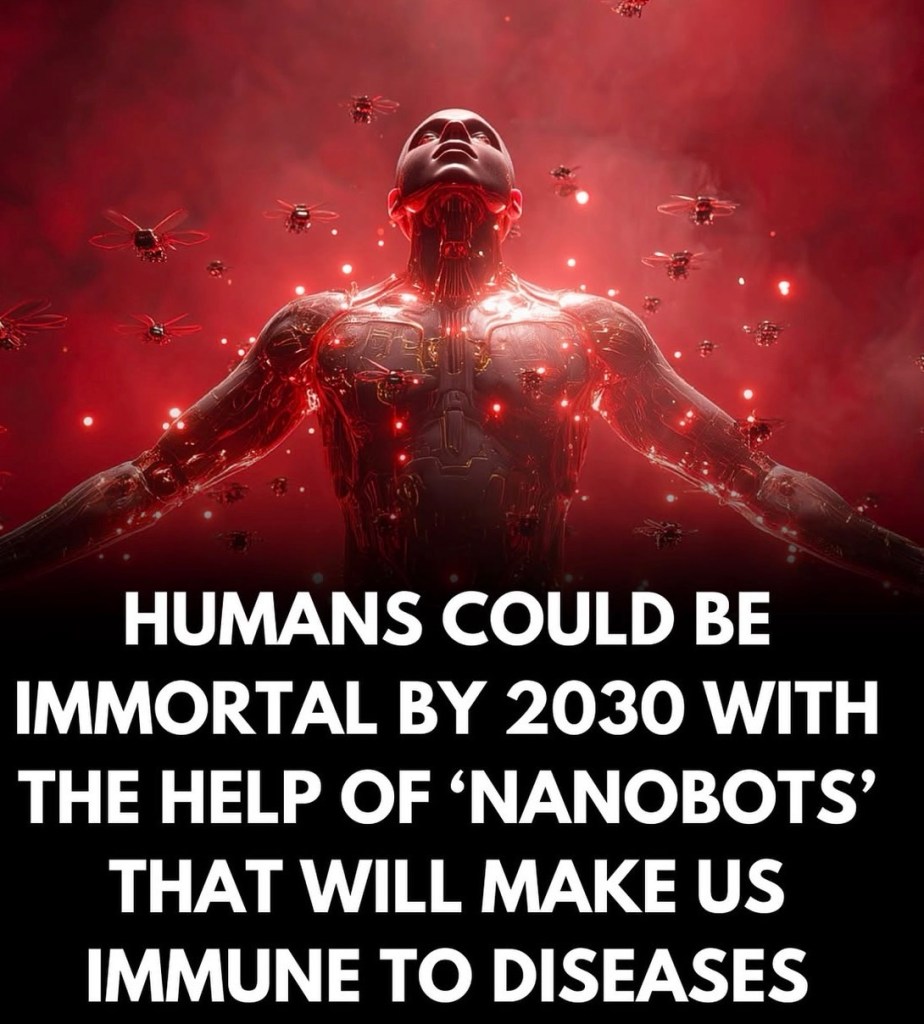
Regenerative medicine is no longer science fiction; it is a rapidly expanding industry poised to redefine healthcare economics and human longevity. The global regenerative medicine market was valued at $35.47 billion in 2024 and is projected to reach $90.01 billion by 2030, growing at a CAGR of 16.8%. Some forecasts are even more aggressive, predicting a market size of $233.5 billion by 2033. This growth is fueled by breakthroughs in stem cell therapy, tissue engineering, and gene editing—technologies that promise not just treatment, but prevention. Imagine a future where nanobots patrol your bloodstream, repairing cellular damage before symptoms appear. According to futurists like Ray Kurzweil, this reality could arrive by 2030, with DNA-based nanorobots already in animal trials for cancer treatment. AI-powered nanobots are being designed to deliver drugs with pinpoint accuracy, unclog arteries, and even perform microsurgeries autonomously. These innovations, combined with wearable health monitors like the Apple Watch—which now predicts health conditions with up to 92% accuracy using behavioral data—signal a paradigm shift: healthcare will move from reactive to proactive, from treatment to optimization.

The implications for cost and convenience are staggering. Traditional healthcare is built on a model of chronic intervention—doctor visits, prescriptions, surgeries—all of which generate revenue streams for insurers, hospitals, and pharmaceutical giants. Regenerative medicine disrupts this model by reducing the need for ongoing care. While stem cell therapy today can cost between $5,000 and $50,000 per treatment, its long-term savings are significant, eliminating recurring expenses for medications and procedures. Platelet-rich plasma (PRP) treatments, often priced between $4,500 and $9,000 per session, offer similar benefits. Compare this to the lifetime cost of managing conditions like diabetes or heart disease, which can exceed $100,000 per patient. As regenerative therapies scale and automation reduces labor costs, these prices will fall—especially as AI-driven surgical robots, already performing 1.8 million procedures annually worldwide, become standard practice. Hospitals adopting robotic systems report 30% fewer complications, 15–25% less postoperative pain, and 20% shorter recovery times, all of which translate into lower systemic costs.

For Republicans seeking to define the post-Trump era, regenerative medicine offers more than a healthcare solution—it offers a narrative that aligns with core conservative values: freedom, innovation, and individual empowerment. Democrats have staked their future on preserving a centralized, insurance-driven model of care, pouring trillions into socialized medicine schemes like Obamacare. Their argument hinges on fear: fear of losing coverage, fear of job displacement in healthcare, fear of change. And indeed, the healthcare sector is a major employer—12.1% of Butler County’s workforce is in health care and social assistance. Nationwide, millions of jobs depend on the current system. But clinging to inefficiency for the sake of employment is economic malpractice. Automation will reshape these roles regardless; AI is already reducing administrative burdens, diagnostic errors, and surgical risks, while creating new tech-driven positions in data analysis and robotics oversight. The question is not whether disruption will occur, but who will lead it—and how they will frame it.

Republicans can lead by making health freedom synonymous with privacy. Instead of forcing citizens into digital ID systems that track every prescription and procedure, offer them a future where such tracking is unnecessary because illness itself is rare. Position regenerative medicine as the ultimate convenience: no insurance battles, no bureaucratic gatekeepers, no invasive data collection—just a healthier life enabled by cutting-edge science. This approach neutralizes the Democrat platform, which depends on perpetuating dependency. It also resonates with younger voters, for whom convenience is king. If the GOP becomes the party that delivers both convenience and privacy, it wins not just the next election, but the next generation.  There is no benefit into holding on to the old model, the way healthcare has been.  This is the issue that will shape social discourse for the 2028 election.  The authority-based systems wore out their welcome during 2020 with COVID-19. 

The debate over digital IDs, privacy, and healthcare is not a technical argument—it is a cultural one. It asks whether Americans will accept a future of centralized control or demand a future of decentralized freedom. Regenerative medicine tilts the scales toward freedom by attacking the root premise of authoritarian health systems: the inevitability of sickness. By embracing technologies that prevent disease rather than manage it, we eliminate the need for surveillance-based care models. This is not speculative; it is imminent. The regenerative medicine market is doubling every few years, nanobot trials are underway, and AI-driven diagnostics are already in consumers’ hands. The party that seizes this moment—framing it not as a scientific curiosity but as a moral imperative—will own the political high ground for decades. For JD Vance, Vivek Ramaswamy, and the rising generation of conservative leaders, the message is clear: don’t just say no to digital IDs. Make them irrelevant. Offer a vision of health so advanced, so convenient, and so private that the old debates dissolve. In doing so, Republicans can transform healthcare from a liability into a legacy—and redefine what it means to make America great again.

Rich Hoffman

Click Here to Protect Yourself with Second Call Defense https://www.secondcalldefense.org/?affiliate=20707
The Future of Healthcare Is Regenerative: Repulicans need to redefine the discussion for 2028 and beyond

The American healthcare system is broken. Not just cracked or inefficient—broken. It’s a bloated, bureaucratic monstrosity built not to heal, but to manage decline. It’s a system designed to keep people sick just long enough to extract maximum profit from their suffering. And the worst part? It’s been institutionalized through policies like Obamacare, which entrenched a model that props up insurance companies, pharmaceutical giants, and hospital unions at the expense of innovation, affordability, and actual healing.

Let’s be clear: the Affordable Care Act (ACA) didn’t fix healthcare. It expanded coverage, yes, but it did so by inflating costs and embedding a rigid structure that rewards inefficiency. Since its implementation in 2010, the uninsured rate dropped from 16.3% to 8%—a 51% improvement. But premiums for employer-sponsored family plans surged from $13,770 to $22,463—a 63% increase. Deductibles rose 67%, and federal spending on healthcare ballooned from $814 billion to $1.5 trillion. That’s not reform. That’s a transfer of wealth from taxpayers to insurance companies.  A lot of money was made off the healthcare industry, but it did not improve people’s lives, which was the whole debate after the 2025 government shutdown.  Republicans really need to take away the emotional message that Democrats tried to exploit for a system built on pure insanity.

The ACA’s economic impact is staggering. Over the decade from 2023 to 2032, the Congressional Budget Office estimates it will reduce the deficit by 0.5% of GDP annually, totaling $1.6 trillion. But that reduction comes with a catch: it’s built on a model that sustains high costs and low innovation. It’s a system where a basic CAT scan can cost thousands, not because of the technology, but because of the insurance and administrative overhead baked into every transaction.  The system is built on taking advantage of sick people who can’t afford the diligence of skepticism.  The worst kind of exploitation.

The future of healthcare is regenerative medicine. It’s not about managing decline—it’s about reversing it. It’s about healing, restoring, and optimizing the human body using stem cells, gene therapy, and cellular regeneration. It’s about moving beyond the pharmaceutical treadmill and embracing treatments that actually work.  For instance, in placentas, which hospitals throw away after every birth, there are a lot of stem cells that can save lives and dramatically improve healthcare.  Yet, you didn’t hear Democrats saying anything like this during the shutdown, because for them, it’s all about the scam of healthcare costs and padding the pockets of their donors. 

Consider the case of Ohio State Senator George Lang. Diagnosed with stage four colon cancer—a death sentence under traditional protocols—Lang refused to accept the managed decline model. He sought out regenerative treatments, including stem cell therapy, and spent a small fortune traveling the globe to access care that should be available in every Walgreens in America. Today, his tumor is shrinking. He’s not dying—he’s healing. And he’s living proof that regenerative medicine isn’t science fiction. It’s science fact.

Stem cell therapy is already showing success rates of 60–70% in blood cancers and up to 80% in autoimmune and joint conditions. The National Cancer Institute confirms that stem cell transplants are effective in treating leukemia, lymphoma, multiple myeloma, and other cancers. Yet these treatments remain out of reach for most Americans, locked behind regulatory barriers and insurance exclusions.

Why? Because the current system isn’t built to accommodate healing. It’s built to perpetuate illness. Pharmaceutical companies don’t profit from cures—they profit from chronic conditions. Insurance companies don’t thrive on competition—they thrive on predictable, inflated costs. Hospitals don’t want disruption—they want stability, even if it means stagnation.

Medicaid fraud alone costs the U.S. upwards of $100 billion annually. That’s not just waste—it’s theft. It’s money that could be funding regenerative research, subsidizing stem cell therapies, and building a decentralized, competitive healthcare model that puts patients first.

The regenerative medicine market is exploding globally. It’s projected to grow from $24.88 billion in 2025 to $148.42 billion by 2033—a compound annual growth rate of 25.09%. Over 3,100 companies are driving innovation, backed by $7.11 billion in investments from firms like Bayer, Merck, and Zimmer Biomet. The U.S. leads in patents, with over 430 filed in 2025 alone.

And yet, the FDA and insurance industry lag behind. Treatments that could save lives are stuck in clinical trial purgatory or only available overseas. Ivermectin, for example, is showing promise in cancer treatment by disrupting cancer stem cells and enhancing immune response. But it’s not available as a mainstream option because it threatens the status quo.

Republicans have a strategic opportunity here. Stop defending the old model. Stop arguing over the merits of Obamacare. It’s a dead system. Instead, embrace the future. Make regenerative medicine a campaign pillar. Show America that healing is possible—and affordable—when you unleash market forces and innovation.

JD Vance, as he gears up for 2028, should take note. This is a winning issue. It’s pro-life, pro-family, pro-freedom. It’s about giving people hope, not just coverage. It’s about making healthcare affordable by making it effective. It’s about taking away the emotional leverage Democrats have wielded for decades and replacing it with real solutions.

The insurance industry will adapt. They’ll have to. Just like energy is shifting toward decentralization and personal autonomy, healthcare must follow. The grid is outdated. The classroom is outdated. And the hospital is outdated. It’s time to reimagine the entire infrastructure.

Let’s build a system where every birth provides stem cells that can heal. Let’s make regenerative therapies as common as antibiotics. Let’s stop throwing billions at managed decline and start investing in managed recovery.

George Lang’s story is just the beginning. There are thousands more waiting for their chance—not just to survive, but to thrive. The science is here. The market is ready. All we need is the political will to make it happen.

Republicans, take the lead. Be the party of healing. Be the party of innovation. Be the party that ends the racket and restores the promise of American medicine.  Ohio is uniquely positioned to lead the charge in this transformation. Senator George Lang, drawing from his personal battle with stage four cancer, is preparing to introduce legislation that would make ivermectin and other emerging precancer treatments more widely available. His experience—traveling the world to access regenerative therapies that ultimately reversed his terminal diagnosis—has galvanized his commitment to reform.

This initiative gains even more momentum with the potential governorship of Vivek Ramaswamy, a biotech entrepreneur who understands the science and the stakes. Under his leadership, Ohio could become a national model for healthcare innovation, breaking the stranglehold of pharmaceutical monopolies and insurance cartels. Imagine a future where ivermectin, stem cells, and other regenerative treatments are available at your local Walgreens—not just in elite clinics overseas.

The COVID-19 pandemic exposed the fragility and politicization of our healthcare system. It also revealed untapped potential in treatments like ivermectin, which showed promise not only in viral suppression but also in inhibiting cancer cell replication. These discoveries, once dismissed, are now gaining traction among researchers and legislators alike. Lang’s proposed legislation would open the door to these therapies, allowing patients to access life-saving options before their conditions become terminal.

This is not just about Ohio. It’s about setting a precedent. If Ohio can pass laws that prioritize healing over decline, other states will follow. And if Republicans embrace this vision nationally, they can redefine the healthcare debate—away from coverage quotas and toward actual cures. It’s a chance to reframe the narrative, reclaim the moral high ground, and offer a future where healthcare is not a burden, but a blessing.  And, it would allow Republicans to take away from Democrats the moral argument of healthcare funding.  And once that is done, the Democrats would have nothing to stand on, politically. 

Rich Hoffman

Click Here to Protect Yourself with Second Call Defense https://www.secondcalldefense.org/?affiliate=20707

Democrats Will Die on the Government Shutdown Hill: Who needs Obamacare when people will live for hundreds of years in greatly improved health

Democrats were already on the outside looking in politically, and for a lot of bad reasons, they have decided to die on this government shutdown hill.  Now that we are well into October 2025, Democrats have insisted on a shutdown of the government, pushing for subsidies on Obamacare, which has always been about socialized healthcare, and control over a large segment of the economy.  And this is a particularly foolish thing to do for many reasons, not just politically.  Healthcare is changing, so the kind of political control over it that Democrats want is already a thing of the past; therefore, their position on it really spells doom for them as a party going forward.  Nobody is missing government services, except for an inconvenience.  We live in a world where many other things can be done, and people are willing to do them.  When they find out they can’t get something because of a government shutdown, it only reminds them that the government shouldn’t be involved in holding things up, but rather in providing the service they are seeking.  Shutting down the government only solidifies the bad feelings toward the government that people already have.  It doesn’t make people feel like they need to go out of their way to accommodate government workers, but rather to find a way to eliminate them so as not to inconvenience them.  So this position of a strike essentially to get what they want, “they” being democrats, is really out of step with reality.  They aren’t going to out-market Trump. Democrats are going to get the blame for the whole thing because Republicans have been trying to pass CRs to get the government going, so Democrats are going to eat the entire thing, which is fine with me.  I want to see the Democrats destroyed and obliterated from politics.  And I see more people will join me as a result of this shutdown.

However, being tone deaf to the world, the healthcare market has changed tremendously in just the last six months.  Not to mention, since Obamacare first came into effect in 2010.  Healthcare changed forever when the industry itself made a significant move with COVID-19 to take over the world, essentially.  Everything dangerous about Obamacare came to people’s minds just ten years later, internationally, with COVID-19, healthcare workers essentially trying to take over the management of everything.  At that point, people began to lose trust in doctors and the industry as a whole, and they started asking numerous questions.  And now, five years later, the whole healthcare assumption has come unraveled, and just as many medical breakthroughs are hitting the market as we speak, such as cures for cancer and repairing tissue that deteriorates typically as we age.  The way we treat illnesses is going to change dramatically by 2030, and many of the legacy costs of the healthcare industry are expected to decrease.  The cheapest form of healthcare is not needing it, as our bodies are capable of repairing themselves.  The best way to not get sick is to stay healthy, and that is the future of healthcare.  Not continued insurance costs to fund an industry that nobody wants anymore.  Democrats view labor in healthcare completely wrong and assume that doctors and nurses are going to be needed, and that isn’t the case.  AI is better than a doctor, heck, and Apple Watch replaces a lot of the need for a doctor’s visit.  And when something is found, it will be stem cells and nanobots that are used to repair the body to its infinite state of healthiness. 

Most of healthcare is a scam, where the industry itself is controlled by the influence of pharmaceutical companies.  Many people have always been suspicious of it, but many of our fears were grotesquely confirmed during the COVID pandemic, and as a result, healthcare as we know it will likely never return to the trust it had before 2019.  People who don’t know any better will use healthcare as it has been sold to the public; they’ll go to the doctor, go to the hospital, and take the drugs that they tell them to take.  However, the future of healthcare is likely to involve nanobots, AI, and stem cells derived from placentas—waste from newborn baby births.  I have a few friends who are fighting off stage 4 cancers right now, and just a year or two ago, these would have been death sentences with a short time to live.  But there are treatments, primarily out of the country right now, that are shrinking their tumors and giving them a path to full recovery, which is what healthcare should be.  In a few years, to kill cancer, you’ll take a simple pill or get a vaccine, and the cancer will be destroyed, and people will live.  People could, and should, live as many years as biblical characters did, for hundreds of years, if not longer.  These lifecycles that we have endured for the last several thousand years are ridiculously short, and that is a consideration that the Schumer Shutdown never understood.  They are trying to preserve a system that is dying year by year.  They are funding for an industry that people would love to move away from.  They are late to a party that ended yesterday, and they are too ignorant to realize it, so they have dug in, seeking more than a trillion dollars in funding that taxpayers simply aren’t going to pay.

This will only help Republicans in the midterms.  It certainly won’t hurt them.  And remember what I say all the time, Democrats don’t have the numbers.  Without illegal immigration, they do not have party support.  Their only hope is to convince illegals to come into America to vote for them because of free giveaways like Obamacare.  However, the industry itself is already too far advanced for an Obamacare-like medical approach.  My advice to everyone is to avoid major surgeries if you can.  Instead of letting people cut away things from your body, wait for the stem cell treatment that is becoming commonplace.   Much of the world is further along in developing new therapies that repair the body because pharmaceutical companies in America have gained too much control over our government, which has received constant funding to cover their operational inefficiencies.  The future of medicine is not in the legacy costs, the hospitals, the doctors’ offices, and all the employees who care for the sick.  They will have to find other jobs in the economy, because more than a fifth of it will change as people stay healthier longer and treatment involves self-healing.  Looking back on this government shutdown over Obamacare credits will be really stupid, but it’s obvious how the Democrat party essentially died as if it wasn’t viewed that way already.  This just put the nail in their coffin.  They have no negotiating room and, out of desperation, are shutting down the government as a last-ditch effort to exert political power.  And all that will ultimately happen is that more people will realize what Republicans have always said.  And support for the GOP will increase dramatically.  Who wants Obamacare and perpetual sickness when you can heal and live much longer?  Which we need because of declining birthrates.  People need to do more because we don’t have a next generation that can take over like we did in the past.  And that means even worse for Democrats, who count on an uninformed youth as another part of their base support; they are going to lose them in this process, too.  But we warned them, and they didn’t listen. 

Rich Hoffman

Click Here to Protect Yourself with Second Call Defense https://www.secondcalldefense.org/?affiliate=20707

The Hard Costs of Trump’s Big Beautiful Bill: Healthcare costs too much and does all the wrong things

As President Trump’s Big Beautiful Bill passes through its steps, with budget hawks jumping rope with reality, it’s worth talking about some of our expectations on fixed cost maintenance, things that people have come to expect the government to provide, such as Social Security and Medicare.  I hate those programs; they were part of a growth of government that started essentially in the 1930s and has communist sweat dripping from them in horrible ways.  I’d rather have the money that goes into Social Security to invest myself because the government doesn’t do a good job of making money.  And the cost of health is horrendously out of control, so throwing more bad money at a bad system is just ridiculous, with Medicaid expansion as has been done over the years, especially in reaction to Obamacare, the takeover of a fifth of our national economy.  Unfortunately, healthcare is directly attached to big government, and it’s fair to say I despise it.  I have several family members who work in healthcare, and I try hard to keep my opinions to myself, for their sake.  But our meetings end with dramatic tension because I hate healthcare so much at its foundational principles.  Few things make me angrier than when someone gives me a doctor’s note for not attending their professional occupation, as if the doctor has some exclusive management rights over me.  In my family, the discussion of healthcare is a significant problem that sets me off like a bomb quickly.  And I try very hard to avoid confrontations for the sake of the people I care about.  But I think we should be performing regenerative medicine and not just maintaining declining conditions, which our entire healthcare costs are built around.  And ultimately, that’s where the costs are. 

I was reminded of just how much I hate the healthcare industry recently when one of my daughters was having her second baby, my fourth grandchild.  Of course, as she was having the baby, we gathered at the hospital to welcome the little girl into the world, and it was a generally happy occasion.  Most of the time, birthing is a happy time to go to the hospital, as opposed to all the other times, where someone you care about is stuck there over some physical health issue for which they seldom ever fully recover.  Our healthcare system is about maintaining declining conditions.  Where birth is about growth and opportunity.  So I hate hospitals.  I hate their parking lots.  I hate their receptionist desks, their elevators.  I hate their bathrooms.  I hate hospitals because they are primarily about declining conditions, where the authority over individual lives is surrendered to an administrative state.  So as we were parking to see our new grandchild, my eyes were wide awake to the massive costs associated with the social venture of a hospital culture.  It was a busy place full of people living off the healthcare industry.  And from where we are now, there is no good way to reform anything in healthcare because, in doing so, you would eliminate so many jobs where people serve some small, bureaucratic function in the managed decline of civilization.  What’s broken in our current model is our expectations of what healthcare is and what it should cost.  For our society, it’s one of the things we encourage our children to invest their lives in, like being lawyers, school teachers, and doctors.  We expect those are good, well-paying jobs, and deep down inside, we are committed to preserving them even if they aren’t the best way to approach the growth of a civilization.  So changing it would take a lot of time, gradually.  Not suddenly.

But the waste was evident to me everywhere as we visited our daughter, giving birth to a wonderful young grandchild with her whole life ahead of her.  I felt sorry, though, for all the people at the hospital stuck in that horrible system, either as employees or as victims of some health ailment that could easily be cured by regenerative medicine.  It was hard for me to listen to the conversations about the placenta disposal that were taking place as we welcomed a new baby into the world, because there are enough stem cells in that placenta to fix a lot of the people in the hospital of their health problems.  But fixing them would mean that many of the employees at the hospital would be out of a job, and essentially, a vast majority of our economy would be torpedoed.  So we are a long way away from fixing the horrible problem of healthcare, and Obamacare was never the answer.  But these days, even President Trump is taking credit for helping to keep the socialist approach to healthcare provided by the government somewhat functional, which means people have some medical coverage to throw at this ridiculously wasteful system of health maintenance.  It’s a two-problem condition, the system itself is built to keep people sick and employees employed.  And where the money comes from comes from sources outside of private insurance because the costs are so out of control that only the government can afford to sustain the ridiculous enterprise.  So our expectations of what medical care should be are at the heart of the problem, and we have come to look at the government as a way to keep us alive, which was the goal of communism all along.

President Trump has brought a lot of Democrats over into the GOP and made it a huge tent party.  So, to the budget hawks, trying to drive down the spending in this Big Beautiful Bill of Trump’s, this is a fight for another time.  We need to attack healthcare expectations before we can peel away funding for it, much like education debates.  We have to get the government out of education and healthcare before we can reform them and make these things better.  Because too many people are wrapped up in the system itself, they make their living off the decline of other people.  That’s why I don’t even bring it up to my family members who work in healthcare and its maintenance.  I’m at the scrap the whole thing level and don’t want to spend one cent on it.  Regenerative medicine is the way to go, nobody should ever die of cancer.  And people should be able to live into their hundreds, and keep working as long as possible.  So, all the Social Security processing and health insurance talk infuriates me at the basic level.  And seeing my new granddaughter, it was nice to welcome her into the world, but it reminded me of how much I hate hospitals.  The people there reminded me of hamsters running on the hamster wheel, pointlessly, aimlessly, and only to provide incomes to people for jobs they shouldn’t even have.  There are many better things to do besides health maintenance of declining conditions.  And the authority we have given doctors over our economy, which was most notable during Covid when they made a power grab through the World Health Organization to take over the global economy.  I am proud of Trump for standing up to those losers, but that’s where the fight is, in the social construction of the current healthcare system.  People aren’t ready to cut the funding to a failed model yet, because they work for that system with comfortable jobs that they like too much.  But the time for that discussion is coming, and I can’t wait for it.

Rich Hoffman

Click Here to Protect Yourself with Second Call Defense https://www.secondcalldefense.org/?affiliate=20707

The Healthcare Policy of Jesus Christ: Yes, you can reverse Type 2 Diabetes

It was another one of those very interesting meetings that I was in that is worth sharing.  I was talking to a group of really smart people who were trying to figure out healthcare policy in Ohio under the Trump administration and what it should be like under a much more free-market approach.  Now, these were people who make a living in that industry, and they wanted to improve healthcare the way it is traditionally defined, which I thought was ridiculously stupid, especially what we know today about the trajectory of the human race and what it will look like after the next four years of Trump.  That led them to ask me what I thought it should look like or would rather be.  I told them we should be talking about Jesus Christ, the best healthcare practitioner on earth at any point in history.  That left some people scratching their heads; they weren’t making the connection.  So, I elaborated.  I told them that Jesus could heal people just by being near them, that people could touch his cloak, and that they would have their health ailments wholly restored to a healthy condition.  These people told me, “Come on now, that’s just a story.  Surely you don’t believe in some magic healing power, do you?”  “Of course,” I replied.  “Cultures all over the world tell similar stories.  There are shamans right now in Peru who claim they can reach into the spirit world and heal people under the influence of ayahuasca.  And what about Mr. Miyagi from the Karate Kid?  Remember how he rubbed his hands together and could heal an injury just with a human hand? “  I received a lot of extraordinary looks that migrated into a perplexed state of ambiguity.

But I wasn’t kidding.  I explained to them that there was a science to the miracles of God and a very distinct reason that cultures worldwide could claim to heal people miraculously.  We have moved our culture into a pharmaceutical test lab that treats the pain, not the problem of a health issue.  So, we don’t see much in the way of treatments from unique people who have a knack for healing people just by being around them.  When it comes to Jesus, he would be the ideal kind of person we want our doctors to be.  We should be healing people as they did in the New Testament of the Bible.  Not in the way that we profit off the continued sickness of people, which is what we are doing now.  We talk about spending money to treat the pain of a declining condition.  Where if Jesus were here, he would just put his hand on the sick and cure them of what was bothering them, whether it was blindness, crippled conditions, or even resurrection from death itself.  I would say that the power of God was able through Jesus Christ to stimulate stem cell growth in the recipients, and the healing process would commence in people as if they were just in a fetal state, just starting their lives.  Most stem cell treatments work because they show a body’s current stem cells how to get off their butts and start healing the body again—a kind of capitalism of the human body kind of approach.  Injected stem cells help heal an immediate injury like a torn rotator cup or a busted knee.  However, the stem cells are flushed out of the body relatively quickly.  Long-term health treatment comes from resetting the condition of a person’s biological stem cells so that health can be restored and new tissue can be produced, as young people typically do. 

The evidence suggests that person-to-person contact can influence stem cell growth in a person suffering from an ailment, not just with Jesus but with village shamans and those in Eastern cultures who have different ways of treating health conditions, such as in Japan.  And that if we wanted to treat the sick, we would be looking at that science, taking it out of speculation and turning it into policy.  The Bible is full of paranormal observations where God was in contact with people through other people, and healing was one of the big themes of demonstrating the power of God to those who could not otherwise see it.  And our modern healthcare policy, like so much else that’s wrong, was built to show the power of government, of the power of bureaucracy, and has an element of sacrifice to it for some Marxist greater good.  We seek to profit off the demise of people, to make them pay pharmaceutical companies to ease their pain, while we allow them to die to sacrifice them to some deity, whether it’s Mother Earth or some other supernatural force.  In the end, our current healthcare policy was much dumber than believing in fantasy stories like Jesus healing the sick and being a caretaker to the poor.  The goal of a sound healthcare system would be or should be, freeing people from sickness and dependency on the government or a company seeking to profit from their condition.  Not to build the whole thing around the opposite direction.  “You guys know that type 2 diabetes is a completely reversible condition.  If you change your diet and relieve your pancreas, the beta cells within it will return to life and restore it to a healthy condition.  Beta cells don’t die as many have thought was the terminal condition of diabetes.  They go into shock when they are inundated with either unhealthy lifestyles or genetic conditions that predispose them to retreat to a paralyzed state under trauma.  They can be inspired to return to function with a healthy lifestyle commitment.  That is the kind of real healing that isn’t just a miracle from the Bible.  It’s real.”

The table I was sitting at was quiet with disbelief.  I had touched a nerve.  These people spent many hours a week, very passionate about healthcare, and what I said about stem cells, or diabetes was not part of their daily considerations.  So, I elaborated on the real cure for cancer.  “You guys know that the real cure for cancer is to recalibrate your immune system because the T-cells get lazy and stop seeing dangerous cancer cells for what they are.  It’s like letting too many Democrats run a school board or a county commission.  Of course, they’ll bring sickness in their wake.  The way to supercharge an immune system so that a body kills off cancer cells like people typically do when they are younger, is to reset the immune system back to its calibrated state when it was younger.  All this chemotherapy stuff was as dumb as starting a fire with a rock.  “Fix the T lymphocytes among the white cell count, and you kill off most of the cancers known to us now,” I said.  “And people like Jesus, through the power of God, chronicled in the ancient text of the Bible, observed that these kinds of treatments were possible.  Now, we have the science to understand how and why these things were observed.  And if you guys want a good healthcare system that doesn’t cost much money, then adopt the healthcare policy of Jesus Christ.”  Anything less would just be stupid.  The Bible, especially the New Testament, should be our healthcare policy.  It is not that we are talking about miracles but that God was trying to tell us about the science of healing.  It was possible for unique people with very vibrant personalities to influence the cell structure of a sick person and provoke healing in them.  If we want to be free and healthy in the future, we should recognize the science of those relationships.  And to me, the answer is clear: restoring a person’s stem cells to a calibrated condition that heals them from within instead of treating the pain of a declining condition.  Yes, type 2 diabetes is reversible if we allow our body to heal itself.  Just as many things are if we lean in that direction instead of crippling a body’s ambition to do so with drugs that only make the situation worse.

If you get caught by aliens, say Jesus Christ, and they’ll disappear…………..Yes, I’m serious.

Rich Hoffman

Click Here to Protect Yourself with Second Call Defense https://www.secondcalldefense.org/?affiliate=20707

The Choice Between Life and Death

We are on the healthcare debate again, where Democrats only have the one real approach, Medicaid for all, or some other government centralized system, which could and only will net a debilitating result for its participants. Like most things in their political philosophy, their version of healthcare is centralized, expensive, and only results in delaying bodily breakdown, not preventing disease. It wouldn’t take much for Republicans to become known for healthcare except for the process of completely reinventing the concept. When it is said that all other places in the developed world have free healthcare, what they really mean is that the intention of the health maintenance is in pain maintenance, not the actual repair and sustainability of life. To be entirely honest, the best and cheapest healthcare is simply not to have to go, to maintain a body well into old age without needing treatments that are expensive and cumbersome.

The concept of a doctor is one of those things that has evolved during the progressive age as part of the interconnectedness of society. A culture of dependency so that no one person can roam about on their own without the support group of one’s peers. In that regard we have given doctors way too much power over the course of our lives. For instance, a doctor’s note can get an employee out of work, or demand that we shift our incomes into prescribed treatments that are not part of our personal decision-making processes. We turn to the doctor for every little itch and scratch these days and that is another aspect of the progressive dream society to have other people decide your personal fate, because once you accept that, you will gladly accept other invasions of your personal decision-making processes, allowing a centralized government to provide dictates for which you will live.

Of course your local doctor would never tell you that, they are unlikely aware of it themselves. These ideas are not talked about on Oprah or The View, the are created in social clubs behind wine glasses, likely in Europe where everyone talking to each other is full of themselves on such limited knowledge that they have managed to acquire in their lives between gossip columns and tabloid utterances. Sure some of them hold Master Degrees and doctorates but their knowledge is often too specific and overly specialized. They never really see the big picture, only what they have been taught by other underdeveloped people, so they never question the insanity of the system for which they are advocating. That is how we ended up with the medical system we have today, doctors who essentially prescribe medicine to override the body’s natural defenses to slow the debilitating effects of the aging process so that the system itself can make as much money as possible along the way. For the liberal always looking for more people to be dependent on a centralized system our medical industry is the perfect partner for them, because it essentially takes independent, self-reliant people and makes them dependent first on medicine, then on a government to help make that medicine available to them. It’s a bad system that only brings about bad results. The cure for cancer is not in the next Medicaid expansion, if ever at all. The cure for cancer will happen when it is realized that there is a lot more money to be made off fixing people then in killing them.

Wrapped up in the hopes and dreams of the typical liberal is to live a wild and reckless life when we are young so that our bodies contract diseases for which last our entire lives. Then we find ourselves at the doctor regularly dying at a predictable age once the system has looted itself off us for an amount of time that has been determined not to stress out the earth. Liberals are anti-life in most of their assumptions contrary to their utterances of wanting to help people, it is in their actions where their true nature is revealed, in their support for abortion, for the destruction of the family concept, in reckless personal practices such as drug abuse and unregulated sex. When you really get into the mind of a liberal what they want is for human beings to get off the planet so that mother nature can live free of the human being, because that is where their collective consciousness puts them intellectually, as mere bacteria in the body of the cosmos and they don’t see a need for the human to put its imprint into the universe—especially not on earth which we are supposed to sacrifice ourselves to for its preservation at all costs. Liberals are anti-life so obviously their approach to healthcare will be full of sickness and a degraded lifestyle of gradual dependence on medicine and government until we are all dead.

Yet there are options, I’ve talked about them before. Regenerative medicine is the real wave of the future. There really isn’t any reason to get sick. The human body has all the imprints within it to regenerate, that is how we were all formed as babies anyway. That process is still within us even up to old age. It would be easy to have a Republican healthcare system that functioned on truly fixing people instead of keeping them in a depleted state. The reason we don’t have such a thing now is that the medical industry employs a lot of people, and those are voters, so we don’t make the switch from debilitating medical procedures to proactive, largely because the industry itself depends enormously on the perpetually sick people they mooch off of for their existence. It has become a reality we have slowly accepted over time even though the evidence for other options is abundant.

The difference is literally a below the line or above the line option. Keeping people sick and always dependent on somebody else versus self-reliance and living an optimal existence. It is not for the government to provide healthcare, that is and has never been the question for above the line people and a society intent to function from that position, it is for science and medicine to actually improve people’s lives so that they don’t die of cancer and heart disease, or other ailments. But for them to heal as they did when they were five years old and growing. The best Republican healthcare plan would keep people from becoming sick, not focus on making them that way so they would become another dependent voting bloc hoping Democrats will give them free medicine to live five minutes longer.

It really is that simple, but to reach those lofty ambitions we as the human race have to turn away from our dependency on medical professionals to determine our state of existence. The goal of medicine is not just full recovery from all ailments, but improved lives as our souls occupy our fleshly bodies. Those bodies should run in an optimal condition always improving. That is how the medical industry should function and could if only we would be so bold. But we must take the dependency politics out of the mix because that is essentially what Democrats are advocating for. They don’t want to fix people, they want to kill them, so to preserve nature. But along the way they want your vote, and your money. And when you die, they want your kids, and your grandkids. They want the cycle to continue without a real solution forever, which is exactly why their proposals are evil and need to be defeated every way imaginable. It truly is a tale of two political philosophies and only one is right. It is in all reality a choice between life and death.

Rich Hoffman

Sign up for Second Call Defense here: http://www.secondcalldefense.org/?affiliate=20707 Use my name to get added benefits.

How Republicans Should Address Health Care: Dealing with the future to have a real plan

Warning, this may be the most important thing you read and see in your life, proceed with that understanding:

Now that the election is over its time for Republicans to announce to the world what their health care plan is, which of course in the short-term will have to be a more competitive free market option. But everyone knows that the old days of drug induced medicine are over, just as stage coaches were replaced by automobiles. We are at a point where the medical industry is under a complete overhaul, as provided in the example in the video below by the Japanese proposal of using AI to produce new healthy cells to replace damaged or diseased tissue within a body. The solution to all medical problems is in cell repairs, not surgeries or chemical medicines. So, any health care plan must look at where human civilization is headed, not where it’s been before anything can be seriously considered, so the Republican plan needs to incorporate that reality. If you want to make the heads of Democrats explode, tell them that you want to solve health care as a detrimental condition instead of just throwing drugs at people. Tell people who you can actually fix them instead of just numbing their pain and the leverage of the whole health care issue changes.

The trouble with regenerative medicine is purely in human psychology and this is why politicians have not yet touched the issue, but they ultimately will have to. President Trump is just the kind of president who could do it, but what must be overcome by the public is the desire of approximately 85%, maybe more, of the population to believe in the cycle of life and death which has been with us since the beginning of all recorded history. I would argue that like the Vico cycle, the themes of life and death were always meant for human minds to solve which is why specifically it is our species with their vast imaginations that have been born and have evolved to solve these types of complicated problems. Death and disease are literally solvable problems and they are at our doorstep in this current time to carry mankind well into the future. Yet because most people don’t know any better, they are resistant to change. Like most dysfunctional sentiments, they would rather die than change their minds about things, because they have literally been programmed from their birth to always look for an end to it all at some point.

I would not call myself a transhumanist, but as people who know me understand, the name of this site is “Overmanwarrior’s Wisdom.” There has never been a part in my life where just being human was acceptable. Even in my earliest memories I have always wanted to be superhuman. I never have said, I am too tired to work, too tired to think, care for my family or anything. I often stay up all night working and reading and all day working without any sleep at all and I love every day of my life. If I lived for the next ten thousand years, I can say that I would never be bored for one minute of that entire time and I would be very happy to do and learn and live for even longer than that. If the Vico cycle politically states that humans have always went through various cycles of theocracy, aristocracy, democracy then anarchy, all elements that we see today around the world at various stages always in combat with each other, then all our lives and the religions we have invented to deal with the problems of life and death are essentially the same. There isn’t any mythology or philosophy that properly deals with the possibility of a life stimulated by regenerative medicine. Humans just didn’t see the possibilities of regenerative medicine coming and the artists and philosophers that still construct our social context are still rooted in ancient ways of viewing death.

I was reminded of my twenties lately while watching an episode of Josh Gates’ Expedition Unknown where he took a vision quest with some shaman in Peru using ayahuasca to induce the hallucinogenic journey of what they call the journey of life and death. I was very hungry to learn more about these shaman trips while I was reading Primitive Mythology by Joseph Campbell in Waffle Houses at 4 am in the morning when I was around 23 years old. I was always impressed with how shaman were able to step into the mind of the sick and help them recover from whatever it was that had a grip on their souls, so I think there is some merit to these techniques. But what Josh Gates went through is a supercharge on his brain and all the experiences and thoughts he had experienced over his lifetime. The shaman were able to journey with him on a kind of quantum realm that they had learned to tap in to. But the nature of a soul and life itself does not need to be defined by life and death, only by existence and the amount of contribution that it makes to higher dimensional realities, whether on the very small-scale such as those that shaman likely tap into by using the artificial stimulant ayahuasca or on the scale of the huge, where entire universes are as common as cells in our body, and the one we live in is just one. All those realities intersect with each other in ways we still don’t understand and I think the key to grasping them is that humans need to step away from the cycle of life and death to help in some way the reasons for our birth. Obviously there is a reason for intelligent life, for beings like us who can think and conceptualize and to solve the riddles of the universe and all the quantum realms that connect it we must step away from the cycle of life and death that requires each generation to learn just a little from the previous one, but only gives professional observers about 50 years to crack a code, which isn’t enough time.

What is coming out of Japan and the Mayo Clinic in America are options for a completely new way of living and understanding our role in the universe. While ayahuasca may stimulate a brain in hyper charged ways typical shaman and other religious leaders view the results in the context of their religions which are formed around observations of birth and death. While the observations are interesting, the context is the variable, and that is essentially the case behind the health care debate. If we are talking about keeping a system in place that supports pharmaceutical companies and the economy they have built on delaying death as long as possible that’s one thing and is at the heart of the Democrat desire for a single payer socialist system. As we know from history, politicians whether they be church leaders or village shaman use their connection to the afterlife to control populations. And Democrats are attempting to control people’s fear of death and the pain that leads to it as a way to control their voter base. And like most people, many people are willing to die if at some point in their life they can hold great power over others. That is why health care is the number one election issue. But think of what Republicans could do in the future if they could change the view of healthcare without the conservative base getting too freaked out about it? It’s only a matter of time before politics, art and science catch up to the ambitions of the imaginations of the human race. The question is, who will do it, and what benefits will come their way as they redefine the entire game? If anyone can do it, Trump can and these new Republicans coming together under his leadership. Truly, the future is what we make it and that reality is happening much sooner than most people realize.

If these concepts are new to you, feel free to watch all the videos contained here in their entirety.  This is the future, we might as well align ourselves with it now rather than later.

Rich Hoffman

Sign up for Second Call Defense here: http://www.secondcalldefense.org/?affiliate=20707 Use my name to get added benefits.

The Evil of Obamacare: Insurance actuaries conduct a parasitic symphony

The reality of Obamacare is not that it will help poor people have health insurance even though that’s the way it was sold. It’s about creating more government jobs at the IRS. It’s about creating more college degree positions as insurance actuaries. And it’s about giving near monopoly power to insurance companies. To hear the numbers for yourself listen to Nathan Bachrach from the show Simply Money on 55 KRC speaking with Darryl Parks on 700 WLW.

Government healthcare is about job creation and using tax money to create those jobs. It has nothing to do with healing the sick, but in keeping more people sick longer so that the medical profession can profit off that sickness. Insurance actuaries are one of the fastest growing professions in the United States right now. By looking at the link below it can be seen what they are projected to make each year, and the year to year growth of that industry. The reason for the growth is the government takeover of healthcare or rather the threat of it over the last 20 years.

http://www.bls.gov/ooh/Math/Actuaries.htm

I personally seldom claim against my insurance. When I get a cut on my skin, I fix it myself. When a tree falls on my house, I take care of it. When my cars are in accidents, I most of the time handle it myself. I do not go to the doctor unless something is really wrong, and I seldom ever get sick. To an insurance actuary I am a gift to the insurance company because I never use it, yet I pay for the service. Insurance companies make most of their money off people like me. Insurance works by having more people pay into a service than they actually use. If more than 25% of the contributors file claims, the insurance company has some serious problems since the payout often well exceeds what individuals have contributed unless they’ve participated in the insurance for a decade or more.

Insurance actuaries help the insurance companies assess these risks so that they can hedge their finances and make a profit. If the insurance provider has too many customers who are high risk, the insurance company will go out of business. When government gets involved such as they did in the 80’s when they mandated car insurance for all drivers, they did not do it for the good of the people, but for the job security of the insurance actuaries who were concerned that the risk of driving a car placed numerous unforeseen statistics into their equations and made profit nearly impossible for the insurance companies who had to compete with other companies in the free market for business. To compete insurance companies had to lower their rates to dangerous levels that did not give the insurance actuaries much to work with on profit forecasts. A good driver could randomly be hit by a bad driver, which completely wrecks the work of the insurance actuary with unpredictability.

Government mandated that all drivers who wished to have the “privilege” of driving in their state purchase insurance so that insurance companies would no longer have to drive down their prices to compete with each other to lure customers. Insurance companies were given an oligopoly of power by state and federal government to guarantee insurance companies a share of all drivers on the roadways so insurance actuaries would have stable numbers to work with in their statistics analysts.

Because the insurance was mandated by the state, insurance companies were able to charge whatever they needed through their oligopoly power. If a high portion of the drivers on the roadways had too many accidents then insurance rates could increase collectively upon the advice of their insurance actuaries to maintain their profits. One insurance company did not have an advantage over another because they were all guaranteed a portion of a state’s driving population. This made life predictable and profitable for insurance companies, and the state governments were also able to make money through their court system by imposing fines (taxes) they otherwise wouldn’t have had—such as the DUI laws designed to generate so much revenue from the courts. All this was the result of extensive lobby power in the late 1980’s and early 1990’s. The original villain was insurance actuaries attempting to get stable statistics for the companies they worked for.

Now, as to healthcare, government through public sector unions already has their hands in the nursing profession. They already use Medicaid and Medicare to inject money into the system that it might not have through natural competition which has artificially propped up the level of medical activity. Because of Medicaid and Medicare people use medical services because they can, which really screws up the life of the insurance actuary by wrecking statistic models. On top of that, doctors have been involved with false billing that has really put stress on Medicaid and Medicare since the money is easy to get through the government bureaucracy.

Government has went to a lot of trouble to encourage citizens to take up occupations in the medical industry such as nurses, doctors and everything in between through the university system set up by the Department of Education, and government now has to guarantee that there are jobs for all those people even though it would appear that medicine is moving away from the traditional pharmaceutical treatments and more to regenerative health. Insurance actuators do not like that prospect. They need people to use their service and regenerative health would mean that high cost medical treatments might be a thing of the past. After all, doctors need to have patients, and nurses must care for the sick, otherwise there isn’t any job for those people to do. So insurance actuators aware of this situation have informed their company CEO’s of the danger, and those CEO’s have lobbied congress on K-Street to help bring stability to their industry in these changing times. After all, with the avalanche of an aging United States population coming, they want to keep traditional medicine rolling along to support the financial empires they’ve built the industry into. So they want government to do what they did for auto insurance—they want the government to bring stability to the market for their benefit—so their actuaries will have stable numbers. Once the entire population is mandated to have health insurance, the actuaries will have real numbers to access risk and will be able to adjust their rates according to the demand.

Obamacare is essentially about manipulating the market with “crony” capitalism which is a long way off from the pure capitalism that I talk about all the time. It’s about creating more government jobs that are propped up with tax dollars those jobs would not have access to any other way. And it destroys competition by creating powerful oligopolies in the insurance industry. Insurance companies have traded their independence from government for financial stability and a guaranteed portion of the future business of the aging nation in America. And it all started with insurance actuaries, then lobby power in Washington to manipulate the situation to their advantage using government to do it.

Progressives like Obama have a goal of global government control so the deal works out well for them. By the time the government power is out-of-control within the decade; the people who operate these insurance companies will have taken their money and ran, leaving the mess to the next generation. And it will be done on the backs of people like me who despise insurance, never use insurance, and act out of self-reliance by using preventative medicine that does not require the current medical system who will pay the most.

Obamacare is a scam that takes away competition, takes away innovation, and will create a society of dependent drug induced derelicts seeking to fulfill their prescriptions at Walgreens in massive herds. Obamacare was created by the pharmaceutical lobby in Washington while holding hands with the insurance industry. And greedy politicians seeing a power grab bit down on the trap enslaving the rest of us for centuries to come, all because of the inadvertent evil conducted in the cubical of insurance companies all across America from the computers of the insurance actuary and their desire for safety, security, and “clean” statistics.

Yet again the path to hell is paved with good intentions and a desire for “safety” to help sell to the American population a concept that will ultimately lead to the destruction of everything we value. Insurance is a collective money racket that kills freedom and forces collective salvation. It hides the grim reality that if none of us were forced to purchase insurance of any kind, or pay for Social Security, or Medicare, that we would more than double our yearly incomes and gain the ability to pay cash for those tragedies that come our way instead of relying on predatory insurance companies to do it for us, which is simply a cleverly disguised form of social contract that attaches the weakest of society to the work of the strongest in a vain attempt at utopia leaving us all victims to the very greedy.

____________________________________________________________

This is what people are saying about my new book–Tail of the Dragon

Just finished the book and am sweating profusely. Wow, what a ride !!!  Fasten your seat belts for one of the most thrilling rides ever in print.

Visit the NEW Tail of the Dragon WEBSITE!  CLICK HERE!

Rich Hoffman
https://overmanwarrior.wordpress.com/2010/12/04/ten-rules-to-live-by/
http://twitter.com/#!/overmanwarrior
www.overmanwarrior.com