I’ve been reflecting deeply on this pivotal moment in human history, where the trajectory of our entire species feels intentional—like everything, from the invention of widespread online communication to the collapse of institutional secrecy, has been building toward a massive unveiling. We’re living in what I call the age of disclosure, not just about UFOs and their implications, but about Earth’s true creation story, humanity’s original role, and our relationship with the divine. The internet has turned the world into one giant village, where discussions happen proactively, 24/7, without the old limits of gatekeepers. The sum of all these conversations is propelling us toward truth, stripping away power from those who once hoarded knowledge through secrecy.
I argue that even the tragedies of 2020—the COVID era, the global lockdowns, the antagonisms tied to what increasingly looks like a lab-manufactured event (with declassified materials and books pointing to gain-of-function research)—were necessary, as dark as they were. They shattered blind trust in authorities and sparked the open dialogue we have now. People are throwing ideas into the wind, leading to advanced, healthy exchanges that connect ancient mysteries to modern phenomena.
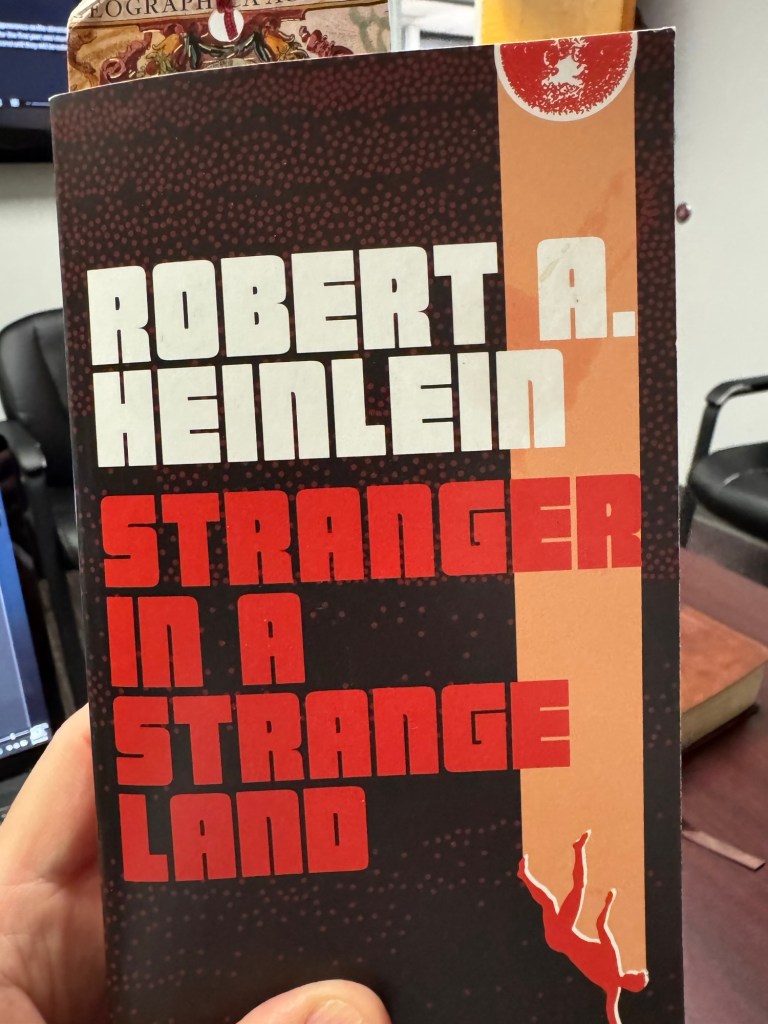
This brings me to the edition of the Book of Enoch that Timothy Alberino put together with the Blurry Creatures guys (Nathan Henry and Luke Rodgers). I’ve been immersed in it lately, and it’s exceptional. This complete version includes 1 Enoch (the main Ethiopic text), 2 Enoch, and 3 Enoch, with Alberino’s scholarly introduction and detailed commentary—especially on the Book of the Watchers (chapters 1-36). What makes it stand out are the full-color concept art illustrations: scenes of fallen Watchers, Nephilim giants, heavenly ascents, and interactions between celestial beings and humans. One image that struck me depicts a UFO-like encounter on a mountain with people below—it visualizes Enoch’s visions in ways that echo modern sightings and interdimensional ideas.
I don’t see this as science fiction or fantasy; I treat it as a historical text, preserved through the Ethiopians, referenced in the Dead Sea Scrolls, and influential in Second Temple Judaism. Fragments were found at Qumran alongside the Book of Giants, showing how central it was to that community—the Essenes, the Teacher of Righteousness, even figures like Jesus and John the Baptist would have known it. It was debated during canon formation but excluded from the standard Bible, yet it fills gaps in Genesis, explaining the “sons of God,” the Nephilim, the corruption that necessitated the flood, and Enoch’s own journey.
Enoch ascends through multiple heavens, encounters angelic orders, witnesses cosmic structures, and transforms into Metatron—God’s trusted scribe and advocate. The Watchers rebel, driven by lust for human women, father hybrid giants, teach forbidden arts, and corrupt everything, leading to the deluge as a reset. This narrative echoes flood myths worldwide and potentially ties into cryptids, Bigfoot-like beings, shadow people I’ve encountered in haunted spots, UFOs, and ghosts—perhaps residual spirits or something more multidimensional.
I love how Alberino and the Blurry Creatures team integrate global legends without apology. They frame it boldly as relevant today, linking pre-flood giants to anomalies like the Windover Bog site in central Florida. I recently visited the Brevard Museum there and filmed a short video that I sent to Timothy and others. The site dates to about 7,000–8,000 years ago, with over 160 burials preserved in peat. Remarkably, 91 skulls held intact or partially preserved brain tissue—shrunken but with gross anatomy, cellular structure, and extractable DNA. Grave goods included sophisticated woven fabrics rivaling modern textiles. While not exaggerated “giants” (skeletons lean on the high side of normal human height), the preservation and age challenge young-earth views and support deeper antiquity for advanced human activity, possibly tying into antediluvian sophistication described in Enoch.
This edition avoids the hesitant tone of older translations; it presents the text as essential for biblical theology, morality, and understanding Jesus’ mission amid cosmic rebellion. It survived in secret societies (Templars, Masons) while the masses got a sanitized version. Now, in our mass-publishing era, secrecy crumbles—books like this reach everyone.
I binge Alberino’s work—his writing, podcasts, everything—because his generation builds on Hancock and Von Däniken but roots it firmly in scripture. It grounds assumptions from archaeology and matches discoveries to ancient literature. The Book of Enoch likely predates or influenced Sumerian, Indus Valley, and other civilizations, with elements adopted across cultures (similar to how later traditions borrowed biblical motifs).
We’re in a unique time: humanity birthing a renewed relationship with God and truth through open exchange. The Holy Spirit operates multidimensionally, outside time—God, the Son yielding to the Father’s will at crucifixion, the Trinity bridging realities. Books like this facilitate real dialogue: What are ghosts? Interdimensional echoes? Do cryptids connect to fallen entities? Why the flood across every culture?
I highly recommend grabbing this edition—it is flying off shelves and sparks the right conversations. If you’re into biblical studies, lost books, disclosure, or matching scripture to the dirt digging of archaeology, it’s indispensable. It reframes Genesis, the deluge, and our role in profound ways. This is the great-grandfather material to Moses’ era, pre-flood history that validates so much.
It’s a wonderful book, full of love and context from Alberino and the team. I read it while at Windover, pondering these layers, and the implications are profound.
Footnotes
1. Alberino, T., Rodgers, L., & Henry, N. (2024). The Book of Enoch: With Commentary & Concept Art on the Book of the Watchers (Complete Edition, includes 1, 2, & 3 Enoch). Independently published. (Released June 13, 2024; draws on public-domain translations including R.H. Charles for 1 Enoch [1917], W.R. Morfill for 2 Enoch [1896], and Hugo Odeberg for 3 Enoch [1928]).
2. Doran, G.H., et al. (1986). “Anatomical, cellular and molecular analysis of 8000-yr-old human brain tissue from the Windover archaeological site.” Nature, 323, 803–806. (Details preserved brain tissue in 91 skulls, radiocarbon dates ~7,790–8,290 years BP.)
3. Milik, J.T. (1976). The Books of Enoch: Aramaic Fragments from Qumrân Cave 4. Oxford: Clarendon Press. (Documents Aramaic fragments of 1 Enoch from Dead Sea Scrolls, covering parts of the Book of the Watchers and related texts like the Book of Giants.)
4. U.S. Right to Know. (2026). FOIA-released Defense Intelligence Agency records (e.g., March 27, 2020 assessment on Wuhan Institute of Virology lab-origin scenario). Available via usrtk.org/covid-19-origins.
5. Office of the Director of National Intelligence. (2021). Declassified Assessment on COVID-19 Origins. (IC assessment noting plausible lab-associated incident hypothesis.)
6. Charles, R.H. (1917). The Book of Enoch or 1 Enoch. Oxford: Clarendon Press. (Classic translation of the Ethiopic 1 Enoch, basis for many modern editions including Alberino’s.)
Bibliography
• Alberino, Timothy, Luke Rodgers, and Nathan Henry. The Book of Enoch: With Commentary & Concept Art on the Book of the Watchers (Complete Edition). Independently published, 2024.
• Charles, R.H. The Book of Enoch or 1 Enoch. Oxford: Clarendon Press, 1917.
• Doran, G.H., et al. “Anatomical, cellular and molecular analysis of 8000-yr-old human brain tissue from the Windover archaeological site.” Nature 323 (1986): 803–806.
• Milik, Józef T. The Books of Enoch: Aramaic Fragments from Qumrân Cave 4. Oxford: Clarendon Press, 1976.
• Windover Archaeological Site overview. Wikipedia and related sources (e.g., The History Center, Titusville; Atlas Obscura articles summarizing excavations and preservation details).
I find the stories of the Temple Mount in Israel infinitely fascinating. The way authority figures hide things—whether it’s a father at the dinner table deflecting his daughter’s question in the movie Fire Walk with Me or entire systems built around keeping eyes off what’s buried—keeps echoing louder in the news and in the air. That scene isn’t just cinema; it’s a blueprint for how power protects itself. Laura asks the direct, impossible-to-ignore question—“Why were you in my room?”—and the response isn’t denial or apology. It’s inversion: Leland grabs her hand, inspects it closely, and declares, “Your hands are filthy… look, there is dirt way under this fingernail.” Suddenly, the spotlight shifts, the original inquiry evaporates, and the hierarchy snaps back into place. The abuser stays safe behind the façade of parental authority, and the victim is left doubting her own reality. I see that exact mechanism repeating at every scale, from family secrets to the kind of institutional cover that goes on at the Temple Mount.
What makes it so gripping is how deliberate it can feel when you zoom out. After the 1967 war, Israel had the Mount in hand—full military control, the keys to the gates, the ability to reshape everything. Yet the Waqf keeps running the show day to day. The official line has always been peace preservation: don’t inflame the Muslim world, avoid a wider religious war, and show tolerance as the new custodian of holy sites for all faiths. It sounded pragmatic at the time, almost noble. But layer on the archaeology angle, and it starts looking like genius-level deflection. Create a permanent tension zone where any serious dig—any probe into the tunnels, chambers, ancient wells, or pre-Davidic features—gets framed as an assault on Islam’s third-holiest site. The Waqf has a motive to block it (preserving their narrative overlay), the world has a motive to pressure Israel against escalation, and nothing changes underground. No permits for neutral international teams, no comprehensive mapping with modern tech without diplomatic blowback, no accidental exposure of whatever Solomon’s people might have sealed away before the Babylonians arrived. Hostility becomes the perfect guard dog: it barks at intruders, keeps the curious at bay, and nobody has to admit they’re hiding something.
The red heifer push keeps underscoring how serious this feels on the ground. Preparations haven’t stopped; they’ve accelerated in ways that are hard to ignore. The Temple Institute has been at it for over a decade, educating, crafting vessels, training priests, and monitoring candidates. Those five from Texas back in 2022 got a lot of attention—flown in, raised under strict conditions in Shiloh. Some were disqualified over time for developing imperfections (a single white hair can disqualify under halachic rules). There was that big July 1, 2025, event in the Samarian hills: a full simulation of the ritual burning with a disqualified animal, complete with priests in garments, ashes collected. The Institute clarified it was practice only, non-kosher because the heifer wasn’t perfect, and the setup wasn’t fully consecrated. Still, four candidates remain under observation there as of early 2026. Ministers have visited the site; photos circulate, and the message is clear: when a truly flawless one is ready, and everything else aligns, purification of the ashes becomes possible. That’s the biblical prerequisite for resuming Temple-level purity and service. No ashes, no Third Temple activity. With record numbers of Jewish visitors to the Mount lately—over 76,000 in 2025, shattering previous highs—and quiet shifts like police allowing limited prayer pages or sheets on site (a crack in the old status quo since late 2025 into this year), the momentum builds.
Those tunnels are key to the story. Explorers like Josh Gates have documented what they can—ancient passages, some possibly water systems from way back, others sealed or restricted. In episodes of Expedition Unknown, he rappels into shafts beneath Jerusalem, navigating cramped, centuries-sealed tunnels that hint at connections to the Mount area, though collapses and restrictions halt full exploration. Rabbis and Orthodox groups have long held traditions that the Ark never left Jerusalem: hidden by Solomon in purpose-built chambers, or by Josiah, or Jeremiah, or someone in that chain before the First Temple fell. A few bold digs happened quietly decades ago—1981 efforts by rabbis like Yehuda Getz chiseling into bedrock passages under the Mount, rumors of cleared rooms but no public Ark reveal. Modern statements from some rabbis lean hard on “it’s here, well hidden, we know where.” If it’s in those under-Mount networks—pre-David threshing-floor caves, Solomon-era vaults—the current setup is an ideal lock. Islamic administration means no Jewish-led archaeology without crisis. Muslim sensitivities mean no validation of biblical claims through digs. Politics means endless stalemate. And yet the pressure cooker is heating: October 7 still looms as a possible reaction to perceived Temple threats, red heifer talk fuels messianic expectations across lines, and post-COVID distrust means fewer people accept the old “don’t ask, don’t dig” deflection.
Whether it’s unaccountable governments sitting on restricted zones (Afghanistan caves, Chinese pyramids, Iraqi museums), or mystery-school oral traditions guarding knowledge, or straight gaslighting at the family level, the playbook is the same: manufacture antagonism or taboo to keep inquiry radioactive. But the erosion of blind trust changes everything. People aren’t swallowing “your hands are dirty” as an answer anymore. They’re asking why the room was entered in the first place. That’s why this feels like disclosure season—UFO files crack open, ancient anomalies get debated publicly, and the Temple Mount simmers closer to a boil. If the Ark surfaces, or a red heifer ritual goes live, or the status quo finally snaps, the cascade could rewrite maps, faiths, and power structures overnight.
Footnotes
1. The dinner table scene in Twin Peaks: Fire Walk with Me, where Leland inspects Laura’s hands and says, “Your hands are filthy… look, there is dirt way under this fingernail,” is from the screenplay by David Lynch and Bob Engels (1991 shooting draft).
2. Moshe Dayan’s decision to maintain the status quo on the Temple Mount, granting the Waqf administrative control while Israel handles external security, was made shortly after the Six-Day War in June 1967, without formal cabinet ratification.
3. The Waqf’s role and the ban on Jewish prayer have been key elements of the status quo, though recent reports indicate limited allowances for Jewish prayer pages or sheets as of early 2026.
4. Jewish visitor numbers to the Temple Mount reached record highs, with over 76,000 in 2025, according to activist groups.
5. The Temple Institute conducted a practice red heifer ritual simulation on July 1, 2025, in the Samarian hills using a disqualified heifer; four candidates remain under monitoring in Shiloh as of early 2026.
6. Explorations of tunnels beneath Jerusalem, including potential links to the Temple Mount, feature in Expedition Unknown episodes with Josh Gates, showing sealed passages and historical signatures but no conclusive Ark discovery due to restrictions.
7. Jewish tradition and rabbinic statements often hold that the Ark was hidden in underground chambers beneath the Temple Mount before the Babylonian destruction, with some rabbis claiming knowledge of its location.
Bibliography
• Lynch, David, and Bob Engels. Twin Peaks: Fire Walk with Me screenplay (shooting draft). Lynch/Frost Productions, August 8, 1991.
• Shragai, Nadav. “The ‘Status Quo’ on the Temple Mount.” Jerusalem Center for Public Affairs, November-December 2014.
• “What is the Temple Mount ‘status quo’?” JNS.org, June 19, 2022.
• “Jewish prayer signals Temple Mount’s shifting status quo.” The Jerusalem Post, 2026.
• “UPDATE AND CLARIFICATION REGARDING THE RED HEIFER.” The Temple Institute official website and Instagram, November 2025.
• “Record Temple Mount Visits and Red Heifers Signal Prophetic Momentum in Israel.” MyCharisma.com, February 4, 2026.
• “Josh Gates Searches For The Lost Ark Of The Covenant In Jerusalem.” Expedition Unknown, Discovery Channel.
• “The Ark of the Covenant.” Associates for Biblical Research.
• Moskoff, Harry H. “The Enigma of the Lost Ark of the Covenant.” The Times of Israel Blogs, September 10, 2017.
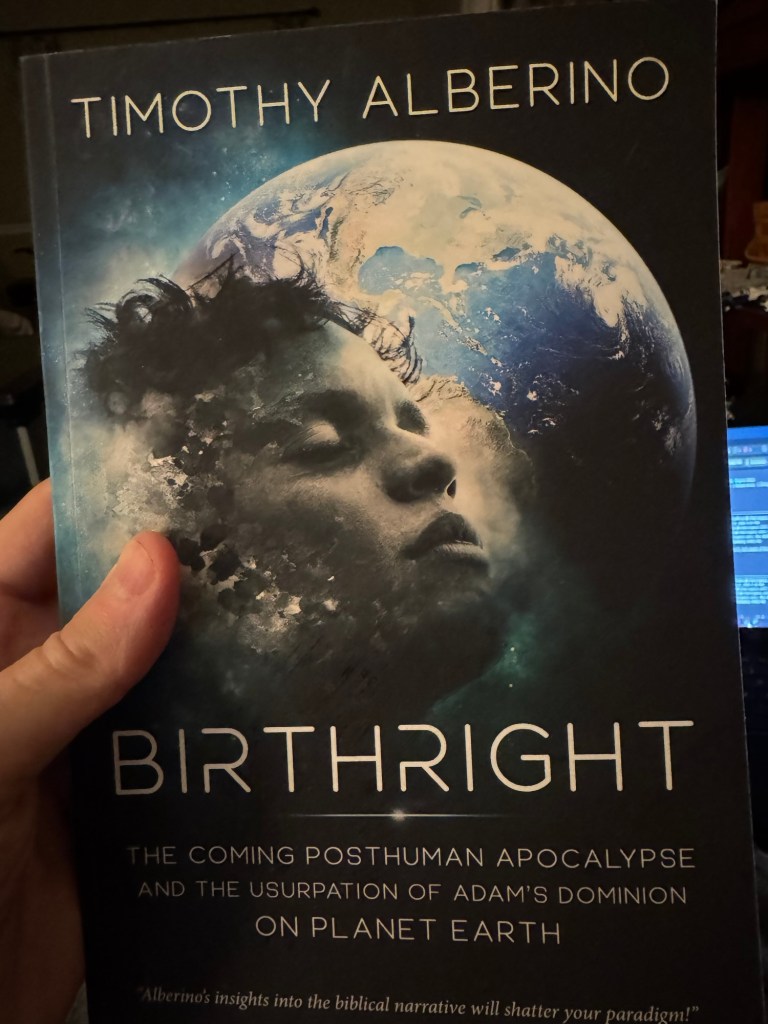
In the quiet moments away from the relentless pace of political battles, economic analysis, and the daily grind of defending principles in a world that often seems intent on erosion, there’s something profoundly refreshing about diving into a book that pulls back the curtain on deeper realities. One such discovery came recently with Timothy Alberino’s Birthright: The Coming Posthuman Apocalypse and the Usurpation of Adam’s Dominion on Planet Earth, published in 2020. This isn’t just another volume on ancient mysteries or fringe theories; it’s a meticulously crafted narrative that weaves biblical scholarship, historical inquiry, and contemporary phenomena into a cohesive worldview. It challenges the sanitized, compartmentalized versions of history and scripture we’ve been fed, urging readers to step out of Plato’s cave—where we’ve been chained, staring at shadows on the wall—and confront the fuller light of reality.
I finished the book on the day of the Olympic opening ceremonies that many viewed as laden with overt satanic symbolism and references to Luciferian themes. Such public displays, alongside scandals in Hollywood, the music industry, and elite circles involving ritualized sex, power, and exploitation—from Aleister Crowley’s influence to modern figures like Sean Combs or echoes in the Epstein saga—underscore a persistent undercurrent. Alberino argues these aren’t isolated excesses but part of an ancient war over humanity’s inheritance, a theme he traces back to the very beginning of the biblical account.
At the heart of Birthright is the concept of dominion granted to Adam and Eve in Genesis. Humanity, created in God’s image, was given authority over the Earth—to expand Eden, steward creation, and bring heaven’s order to the physical realm. This birthright represents not just land or resources but a divine mandate for rule, creativity, and moral governance. Yet from the outset, forces sought to usurp it. The serpent’s temptation in Eden was the first theft attempt, leading to the fall and the squandering of that authority through disobedience. Alberino expands this into a cosmic drama, drawing on the Book of Enoch (an apocryphal text preserved in the Dead Sea Scrolls and quoted in the New Testament) to detail the rebellion of the Watchers—200 fallen angels who descended, took human wives, and produced the Nephilim, hybrid giants whose existence corrupted the Earth with violence and forbidden knowledge.<sup>1</sup>
These events, detailed in Genesis 6:1-4 and elaborated in Enoch, explain the pre-Flood world’s wickedness, necessitating the deluge as divine judgment. The Nephilim weren’t mere tall humans but offspring engineered to challenge human dominion, their spirits becoming demons after their bodies perished.<sup>2</sup> Alberino connects this ancient incursion to modern phenomena: UFO sightings, alien abductions, and what he sees as a deceptive “alien” presence masquerading as extraterrestrial but rooted in the same fallen spiritual realm. He posits that today’s transhumanist agenda—merging human biology with technology, AI, and genetic engineering—represents the latest phase in this usurpation, aiming for a posthuman apocalypse where humanity’s birthright is fully stripped away, replaced by hybrid or enhanced entities loyal to adversarial forces.<sup>3</sup>
This framework resonates deeply with longstanding interests in giants, ancient history, and the Nephilim. For years, discussions of giants in North America—mound builder discoveries from the 1800s along rivers like the Miami Valley, often dismissed as carnival hoaxes or pseudoscience—were marginalized. An early article I wrote on these topics back in 2010 drew massive attention but faced backlash for blending “serious” issues like tax policy with what mainstream culture deemed conspiracy territory. Institutions prefer neat categories: politics here, religion there, ancient anomalies safely labeled myth. Yet evidence persists, from biblical references to global giant lore, suggesting a suppressed history.
Alberino’s work builds on scholars like Michael Heiser, who applied rigorous biblical exegesis to the divine council and supernatural elements in scripture.<sup>4</sup> The Bible, as an artifact, is remarkable—preserved through millennia of translation, political editing (from early Roman church councils to Renaissance interpretations), and textual discoveries like the Dead Sea Scrolls, which confirm remarkable consistency. Yet it’s dense, fragmented, like shadows in Plato’s allegory: we see projections but not always the sources. Alberino encourages turning from the wall to examine the fire, the figures casting shadows, and ultimately stepping into the world beyond illusion.
He frames the ongoing battle as one over this birthright. The story of Esau and Jacob in Genesis 25 illustrates it starkly. Esau, the firstborn, sells his birthright to Jacob for a bowl of stew when hungry and impatient, valuing immediate gratification over eternal inheritance. Yahweh honors the transaction, leading to Jacob (renamed Israel) fathering the tribes and claiming the promised land. This narrative isn’t just family drama; it’s a microcosm of humanity’s temptation to trade divine authority for fleeting pleasures—sex, power, convenience, or modern equivalents like celebrity, wealth, or technological transcendence.<sup>5</sup>
Alberino ties this to figures who rejected paternal guidance and embraced rebellion. Aleister Crowley and Friedrich Nietzsche, both losing religious fathers young, spiraled into philosophies that influenced destructive movements—Crowley’s occult sex magic permeating Hollywood and music, Nietzsche’s Übermensch (overman) twisted into Nazi ideology. These represent selling the birthright for Luciferian promises of godhood without God. In contrast, the biblical Overman ideal—Adam as God’s supreme representation on Earth, uncorrupted—offers a heroic vision: humanity as stewards, not slaves to temptation or manipulation.
My affinity for the “Overman warrior” concept aligns here—not the corrupted Nietzschean version that fueled tyranny, but a Superman-like ideal of strength, virtue, and resistance to evil. It’s about refusing to be broken, manipulated, or seduced into yielding dominion. Personal history in passion plays, portraying biblical roles, fostered a lifelong engagement with these themes, yet frustration with weak portrayals of figures like Adam (easily tempted) or institutional failures to confront modern implications has been, to say the least, infinitely disappointing for me.
Alberino’s book bridges gaps: why the Bible omits details (political censorship, lost texts), why giants and fallen angels matter (they explain evil’s origins), and why UFOs fit (as modern deceptions echoing ancient incursions). He critiques institutional religion for downplaying Enoch or supernatural elements, allowing secular science to dismiss anomalies. Yet fresh scholarship—Dead Sea Scrolls, archaeological confirmations of biblical sites like the City of David—validates the narrative’s core.
This isn’t pseudoscience; it’s interdisciplinary inquiry challenging controlled categories. The Temple Mount disputes—Islam denying Jewish archaeological evidence despite visible proof—mirror broader suppressions of inconvenient truths. Similarly, giants’ stories were ridiculed as roadshow myths to justify land theft or secularize history, but persistent global accounts suggest otherwise.
In an era of disclosure debates, black budgets, and fear-based control narratives around “mysteries,” Alberino reframes UFOs as spiritual, not merely technological. The 200 Watchers’ rebellion sought to corrupt the human line, preventing Eden’s expansion. Today’s equivalents—rituals in entertainment, elite exploitation—continue that agenda, luring people to sell their birthright cheaply.
The hope lies in reclamation. Humanity’s mandate remains: expand Eden, resist deception, claim dominion through alignment with divine order. Alberino’s work, alongside emerging discussions in UFO communities, biblical studies, and alternative history, signals a shift—people untying from Plato’s cave, exploring freely.
This book stands out for its scholarly precision, narrative flow, and refusal to compartmentalize. It entertains while provoking profound reflection, much like Graham Hancock’s works or Vera brothers’ explorations, but with stronger biblical anchoring. For anyone weary of surface-level politics or religion, it’s a reminder that the real fight transcends the visible—it’s eternal, cosmic, and personal.
Highly recommended. It elevates understanding, inspires resistance to temptation, and reaffirms the value of pursuing truth beyond shadows. More from Alberino—on Enoch commentary, expeditions—promises further illumination. In a world pushing posthuman futures, remembering our birthright may be the ultimate act of defiance and hope.
Bibliography and Further Reading
• Alberino, Timothy. Birthright: The Coming Posthuman Apocalypse and the Usurpation of Adam’s Dominion on Planet Earth. Independently published, 2020. (Primary text; available on Amazon, author’s site.)
• Alberino, Timothy. The Book of Enoch: With Commentary & Concept Art on the Book of the Watchers.
• Heiser, Michael S. The Unseen Realm: Recovering the Supernatural Worldview of the Bible. Lexham Press, 2015.
• The Book of Enoch (Ethiopic version, translated editions; referenced in Jude 1:14-15).
• Dead Sea Scrolls publications (e.g., via Biblical Archaeology Society resources).
• Reviews and summaries: Goodreads (4.5+ average), Shortform book summary, Amazon customer reviews.
• Related discussions: YouTube interviews with Alberino (e.g., Shawn Ryan Show, various podcasts).
<sup>1</sup> Alberino, Birthright, drawing on Book of Enoch chapters 6-16; see also Genesis 6:1-4.
<sup>2</sup> Ibid.; Heiser, The Unseen Realm, pp. 92-110 on Nephilim as hybrid offspring.
<sup>3</sup> Alberino, Birthright, chapters on UFOs and transhumanism; Shortform summary highlights the “posthuman apocalypse” thesis.
<sup>4</sup> Heiser, The Unseen Realm, core argument on divine council and rebellious “sons of God.”
<sup>5</sup> Genesis 25:29-34; Alberino frames this as emblematic of selling dominion for temporal gain.
Footnotes reference key biblical passages, book sections, and supporting scholarship for further personal exploration.
The push to eliminate property taxes represents one of the most significant challenges to longstanding fiscal structures in the United States, particularly in states like Ohio, where a citizen-led movement has gained substantial momentum. This effort is not merely a local grievance but part of a broader national conversation about taxation, homeownership, government dependence, and economic freedom. In Ohio, a proposed initiated constitutional amendment known as the Ohio Eliminate and Prohibit Taxes on Real Property Initiative has been cleared for signature gathering and targets the November 3, 2026, ballot. If successful, it would permanently prohibit taxes on real property, defined to include land, growing crops, and permanently attached buildings (though public utilities might still face some taxation under specific interpretations).
To qualify, proponents need 413,488 valid signatures (10% of votes cast in the preceding gubernatorial election), with signatures required from at least 5% of voters in 44 of Ohio’s 88 counties. Groups such as the Committee to Abolish Ohio Property Taxes and Citizens for Property Tax Reform have been actively collecting signatures, with reports indicating progress well in excess of 100,000 signatures as of late 2025 and early 2026, alongside widespread deployment of petitioners. The movement is explicitly citizen-driven, emerging from frustration with rising tax burdens rather than legislative initiative. Legislative allies and local officials express sympathy for taxpayer concerns but highlight the practical difficulties of abruptly replacing the revenue stream.
Property taxes in Ohio fund a substantial portion of local government operations, with estimates indicating they account for roughly 65% of regional revenue. For public schools, which receive over three-fifths of real property tax collections (approximately $13.6 billion for tax year 2024, payable in 2025), this is the largest single funding source—surpassing state aid and supporting the education of nearly 1.5 million students. Counties, townships, libraries, parks, fire districts, and other special districts also rely heavily on these funds for services ranging from emergency response and road maintenance to mental health, addiction treatment, developmental disabilities support, elderly services, and children’s protective services. In many townships, property taxes are the primary revenue source because they lack the authority to levy income or sales taxes.
Opponents of abolition, including local officials, school districts, and organizations like the Ohio Municipal League, warn that elimination would be “disastrous,” potentially forcing sharp increases in sales taxes (possibly to 18-20% in some areas) or income taxes (doubling or tripling rates) to fill the gap. Schools could face severe disruptions, including cuts to programs, staff, or facilities, amid already escalating costs from collective bargaining agreements and professional salaries. Now, where was all this concern when DeWine shut down schools for Covid protocols? Talk about disruptions, how would any of this be different regarding a disruptive culture? Recent legislative reforms—such as bills signed by Governor Mike DeWine in late 2025 that limit inflation-linked increases, expand homestead exemptions, and provide rollbacks—aim to provide relief without complete abolition, capping certain levies, and redirecting funds to homeowners. These measures offer partial mitigation but have been dismissed by advocates as insufficient, fueling continued signature drives.
This Ohio initiative aligns with similar debates in other states, where post-World War II rising home values have increased tax bills, eroding a sense of ownership. In North Dakota, proposals leverage oil revenues to phase out homeowner property taxes over a decade. Florida’s Governor Ron DeSantis has advocated phasing out non-school property taxes on homesteads, with multiple joint resolutions under consideration for gradual exemptions. Texas seeks to eliminate school-related property taxes, while Georgia, Indiana, Wyoming, and others are exploring offsets through sales tax expansions or state funds. These efforts reflect taxpayer discontent with “rent to the government” models, where perpetual payments undermine actual private ownership.
Historically, property taxes trace back to early American systems, evolving from feudal obligations and colonial practices. In Ohio, taxation of land began under territorial rule in the 1790s, with classifications by fertility until 1825, when an ad valorem system emerged. The 1851 Ohio Constitution mandated uniform taxation of real and personal property (with limited exemptions), and significant reforms followed, including the 1930s caps on unvoted levies (1% of actual value) and the shift away from state-level property taxes by 1932. The modern system solidified as local governments increasingly relied on property taxes for schools and services, especially after state income taxes (introduced in 1971) and other revenues reduced direct state dependence.
Critics frame property taxes as a “socialist enterprise,” enabling expansive government growth by treating property as a shared resource rather than a private asset. People like me argue that painless extraction—via escrow in mortgages or withholding—masks the burden, allowing unchecked expansion of services, union-driven salaries, and inefficiencies. High taxes, combined with stagnant or declining home values in some areas, risk forcing sales to corporate buyers such as private equity firms, thereby eroding individual wealth and control. This echoes broader concerns about progressive taxation funding “Great Society” programs, where expectations for government services outpace sustainable revenue.
Proponents of abolition envision a shift toward true market capitalism: lower utility costs, energy exports, improved deportation efficiency, and economic expansion that generates revenue through productivity and voluntary mechanisms such as sales taxes. Education could shift to competitive models—private, charter, homeschooling, or online—where families direct funds to preferred providers rather than relying on zip-code monopolies. This aligns with calls for accountability, in which services compete for “business” and excessive spending (e.g., inflated administrative costs or underperforming outcomes) is subject to market discipline.
Yet the transition poses risks. Abrupt revenue loss could destabilize essential services, exacerbate inequalities if alternatives favor the wealthy, or lead to regressive shifts toward consumption taxes. Historical precedents, such as the New Deal era’s expansion of government through property-based funding, suggest that entrenched interests resist change. Even sympathetic legislators face constraints from revenue dependencies and collective bargaining.
Ultimately, this debate transcends Ohio, reflecting a national reckoning with post-war fiscal models. Rising awareness that home ownership should confer security—not perpetual rent—fuels momentum. Whether through the 2026 ballot success or gradual reforms in the coming years (2027-2028), property taxes face severe scrutiny. The gravy train of unchecked expansion may indeed conclude, pushing society toward enterprise-driven wealth creation and limited government. Failure to adapt risks further alienation, while thoughtful restructuring could foster genuine prosperity. I warned public schools, especially, for many years that they had built their entire foundation on this socialist property tax model, where government grows on the back of property ownership and, as an irresponsible action, grows too big. In our family, all my grandchildren are being homeschooled because the product of public education is garbage. And as it was for my own children when they were in school, I had to do most of the work of teaching anyway. They traditionally attended public school for about two-thirds of their school days, and I had to unteach them all the material they learned in school. So this day was long coming, and now, it’s here. And people are seeing what they got for all that money that was wasted, and they don’t like it.
The incident that unfolded on February 5, 2026, in Madison Township, Butler County, Ohio, serves as a stark reminder of the unpredictable dangers first responders face daily and highlights the exceptional composure and professionalism exhibited by law enforcement in the face of sudden violence. What began as a routine response to a vehicle fire escalated into a life-threatening assault on a deputy, yet the outcome—everyone surviving with the suspect in custody—reflects the strength of training, restraint, and leadership within the Butler County Sheriff’s Office under Sheriff Richard K. Jones.
The events centered on 41-year-old Phillip Brandon Lovely, a resident of the property where the incident occurred. Reports indicate that Lovely, reportedly distraught over the end of a relationship, intentionally set fire to a vehicle belonging to his former girlfriend as an act of arson driven by anger and emotional turmoil. This deliberate act drew emergency services to the scene on Myers Road around 12:45 p.m., including Deputy Mike Farthing of the Butler County Sheriff’s Office.
Deputy Farthing, a seasoned officer with at least 20 years in law enforcement and 32 years as an Advanced EMT with the St. Clair Township/New Miami Life Squad, arrived first. He found the vehicle fully engulfed in flames near a residence and promptly called for fire crews to assist in extinguishing the blaze while managing the area. Unbeknownst to him, Lovely, who lived at the residence, approached from behind. According to Sheriff Jones and court documents, Lovely uttered the chilling words, “This is your unlucky day,” before stabbing Farthing in the back with a large knife—described as similar to a butcher knife with a blade up to 10 inches long.
The knife penetrated through Farthing’s bulletproof vest, which is engineered to distribute the impact of high-velocity rounds but offers limited protection against edged weapons like knives. The blade entered approximately 1.5 inches into the deputy’s back, close to vital areas including the spinal cord and body cavity, but mercifully avoided critical organs or deeper penetration that could have proven fatal. Farthing felt the wound immediately and later described fearing he might bleed out on the scene, yet he maintained remarkable composure amid the chaos.
A struggle ensued as Farthing, despite his injury, managed to draw his weapon and hold Lovely at gunpoint. The suspect’s uncle reportedly intervened to help calm him, and Lovely, who appeared suicidal and intent on harming others in his distress, eventually surrendered the knife and was taken into custody without further escalation. Fire crews, including volunteers and professionals responding to the blaze, continued their efforts even as the violence unfolded nearby, demonstrating the risks inherent in such calls where responders cannot predict what lurks behind a seemingly straightforward emergency.
Sheriff Richard K. Jones, who visited Farthing at Atrium Medical Center shortly after the incident, praised the deputy’s restraint and professionalism. Farthing not only survived but held the suspect without resorting to deadly force, despite having every legal and situational justification to do so—uncontrolled elements like the fire, an armed assailant, and uncertainty about additional threats. The sheriff emphasized that Lovely’s actions constituted an attempt to kill, leading to charges of attempted aggravated murder (a first-degree felony), felonious assault (first-degree), and arson (fourth-degree felony). Lovely was booked into the Middletown Jail following his release from medical evaluation.
Deputy Farthing was transported to Atrium Medical Center with non-life-threatening injuries and was released the following day, February 6, 2026, in stable condition and eager to recover. Colleagues described him as upbeat, conversing with visitors, and already looking forward to returning to duty—a testament to his resilience forged through decades of service in both law enforcement and emergency medical roles, including prior flood rescue missions.
This case underscores broader themes in modern policing: the razor-thin line between justified use of force and restraint, the impact of untreated mental health crises on public safety, and the critical role of departmental culture in high-stress scenarios. Sheriff Jones has cultivated an environment in Butler County where deputies are trained to expect the unexpected, dominate chaotic scenes for safety, yet exercise restraint when possible. Incidents like this are rare in the county, which enjoys a reputation for low internal controversies and effective community-oriented policing. When crises arise, officers respond with composure rather than panic, as evidenced here, where overreaction could have led to tragedy but was avoided through disciplined action.
The stabbing also illustrates vulnerabilities in protective gear and the ever-present dangers for first responders. Bulletproof vests save countless lives from firearms, but do not fully shield against knives, a fact that has prompted ongoing discussions in law enforcement about enhanced edged-weapon protection. Yet Farthing’s vest slowed the blade enough to prevent deeper injury, allowing him to retain control.
Mental health factors appear central to Lovely’s actions. Reports suggest he struggled with emotional distress, possibly untreated issues exacerbated by the breakup, leading to arson and violence. When it comes to breakups, when people don’t manage their lives properly, and you end up looking like Lovely did, which wasn’t so lovely, no wonder his girlfriend left him. He didn’t have a job, and he looked like a train wreck. These men these days need to get a grip. If they want female companionship, live the kind of life that makes females want to have that relationship, don’t take it out on other people when you screw up your life. Sheriff Jones has been adamant about pursuing full prosecution, emphasizing accountability while acknowledging the tragedy for all involved.
Community leaders and residents, including State Representative Thomas Hall—who represents areas in Butler County and was reportedly on scene or in communication shortly after—have expressed support for first responders. Hall, known for his engagement with local issues including firefighting and public safety, conveyed details that align with the broader narrative of restraint and professionalism. Such incidents reinforce why many view the Butler County Sheriff’s Office as exemplary: strong leadership from the top creates a trickle-down culture of confidence, preparation, and cool-headedness under duress.
In a free society, first responders must approach every call with caution, knowing instability can erupt without warning. Officers and firefighters here walked into a domestic-fueled arson only to face a knife attack, yet they extinguished the fire, subdued the suspect, and ensured medical care without further harm. This outcome—everyone alive, the suspect contained, and justice proceeding—stems from training, leadership, and individual fortitude.
Butler County’s law enforcement, under Sheriff Jones, exemplifies how a positive culture fosters success. Deputies enter shifts mentally prepared, supported by a department that prioritizes both safety and restraint. Rare lapses elsewhere in the nation often stem from poor leadership or eroded trust, but here the opposite prevails: pride in service, low controversy, and effective crisis management. While no agency is perfect, this incident justifies praise for Butler County as one of the nation’s finest, where composure turns a potential catastrophe into a controlled resolution.
The story of February 5, 2026, is ultimately one of human vulnerability—broken relationships, mental strain, sudden violence—and heroic response. Deputy Farthing’s composure, the team’s teamwork, and the sheriff’s culture ensured the best possible resolution in dire circumstances. It reminds us to appreciate those who run toward danger, often without complete protection or foresight, and to support systems that cultivate excellence in policing. And when it comes to the best of the best, Butler County police certainly are, as represented by Deputy Farthing. He was stabbed seriously, with a real risk of dying on the scene. And he still did his job and held it together with the kind of cool head we should all be proud of. And he will live to work another day, which is good for all of us. We need more people in the world like Deputy Mike Farthing.
Bibliography
• Butler County Sheriff’s Office. “For Immediate Release….. February 06, 2026, Stabbing Suspect Charged; Deputy Recovering Well.” Facebook post, February 6, 2026.
• WXIX/Fox19 (Gray News). “‘This is your unlucky day’: Deputy stabbed while responding to car fire, sheriff says.” February 6, 2026. Various syndicated reports, including WFIE, KOLN, and WHSV.
Footnotes
¹ Sheriff Richard K. Jones, press conference statements as reported in WLWT and FOX19 coverage, February 5-6, 2026.
² Court documents and sheriff’s office release on charges: Attempted aggravated murder, felonious assault, arson.
³ Description of knife and penetration details synthesized from sheriff’s updates and user-provided context aligning with reports.
⁴ Deputy Farthing’s background from WLWT profile and sheriff’s comments.
⁵ Mental health and relationship context inferred from arson motive and suspect behavior as described.
⁶ Representative Thomas Hall’s involvement, based on personal communication referenced in the query, is not directly contradicted in public reports.
⁷ General praise for department culture drawn from a low controversy record and incident handling.
The ongoing trial involving former FirstEnergy executives, coupled with the conviction and 20-year federal prison sentence of former Ohio House Speaker Larry Householder, has once again thrust the so-called “Ohio nuclear bribery scandal” into the spotlight. This case, centered on House Bill 6 (HB6) and a $1.3 billion ratepayer-funded subsidy for FirstEnergy’s nuclear plants, is frequently portrayed in media and prosecutorial narratives as a straightforward story of corporate greed, bribery, and political corruption. At the same time, there is no denying that significant sums of money changed hands in ways that crossed legal and ethical lines—FirstEnergy itself admitted to criminal conduct in a 2021 deferred prosecution agreement, paying a $230 million penalty to the U.S. Department of Justice— the dominant framing overlooks a deeper, more systemic context. This context reveals how aggressive federal regulatory pressures during the Obama administration, combined with a push toward renewables and against traditional baseload energy sources such as nuclear power, placed utilities like FirstEnergy in an existential bind. The executives and political figures involved may have made grave errors in response, but those errors were made under duress from policies that targeted their industry, destroyed economic viability, and forced desperate measures to preserve jobs, infrastructure, and Ohio’s reliable power grid.
FirstEnergy’s challenges trace back to the mid-2010s, when market and regulatory forces converged to threaten the viability of its nuclear fleet, particularly the Davis-Besse and Perry plants in northern Ohio. These facilities provided critical baseload power—reliable, carbon-free electricity that renewables like wind and solar could not yet fully replicate due to intermittency. Yet, low natural gas prices from the fracking boom, coupled with federal policies favoring renewables, eroded their competitiveness. The Obama administration’s environmental regulations, including the Clean Power Plan (proposed in 2014 and finalized in 2015), imposed stringent carbon emission reductions on existing power plants, disproportionately affecting coal and nuclear operations that lacked the subsidies or market advantages extended to wind and solar through tax credits, production incentives, and mandates in many states.
The administration’s approach to nuclear was ambivalent at best and hostile in practice. While nuclear was acknowledged as low-carbon, federal support waned: funding for nuclear R&D programs was cut, loan guarantees were limited, and the Yucca Mountain waste repository project was effectively abandoned in 2009-2010, leaving utilities with indefinite on-site storage burdens and added costs. Broader energy policies prioritized renewables, with the Department of Energy and EPA frameworks that accelerated the shift away from traditional sources. In Ohio, this national pressure amplified local market distortions. FirstEnergy announced in 2018 that it would close Davis-Besse (operational since 1978) and Perry (since 1987), along with others in Pennsylvania, citing economic unviability amid PJM Interconnection market rules that failed to compensate nuclear for its reliability and zero-emission attributes.
These closures would have resulted in thousands of job losses, reduced grid reliability (nuclear power accounted for about 23% of FirstEnergy’s power mix at the time), and higher long-term emissions if replaced by natural gas. The plants were not “failing” due to mismanagement alone, but because the playing field was tilted by policy: renewables received federal subsidies (e.g., extensions of the Investment Tax Credit and the Production Tax Credit under Obama-era legislation), while nuclear power faced rising compliance costs without equivalent support. This created what can be described as an “impairment strategy”—a regulatory environment that squeezed traditional energy providers, making them vulnerable to acquisition, restructuring, or collapse, often benefiting private equity or renewable-focused interests.
In response, FirstEnergy sought legislative relief in Ohio. HB6, passed in 2019, provided roughly $150 million annually in subsidies (via ratepayer charges) for the nuclear plants through 2027, while also subsidizing certain coal plants and freezing or rolling back renewable energy and energy efficiency standards. The bill’s proponents framed it as preserving Ohio’s energy infrastructure and jobs; critics saw it as a bailout for uncompetitive assets. Investigations revealed that FirstEnergy funneled approximately $60 million through dark money groups (like Generation Now, tied to Householder) to influence the 2018 elections, help Householder become speaker, secure HB6’s passage, and defeat repeal efforts. Householder was convicted in 2023 of racketeering conspiracy and sentenced to 20 years. Recent trials involve former executives such as Chuck Jones and Michael Dowling, who are accused of related bribery (e.g., $4.3 million paid to former PUCO chair Sam Randazzo in exchange for favorable rulings).
The core issue is proportionality and causation. Were these actions bribery, or a panicked reaction to survival threats? Executives faced temptations arising from access to funds amid the crisis—perhaps justifying personal spending as part of “securing infrastructure”—but that does not excuse crossing the line. The real scandal includes how regulations weaponized by one political regime (progressive energy policies) forced companies into the arms of another (Republican lawmakers) for relief. This is not unique to FirstEnergy; similar dynamics have played out nationwide, where regulatory hammers target disfavored industries, leading to lobbying excesses.
Statistics underscore the impact: Ohio’s nuclear plants employed thousands directly and supported broader economic activity. Their potential closure threatened grid stability in PJM, where nuclear provides essential capacity. Renewables have grown, but without baseload backup, reliability suffers (e.g., wind curtailment). HB6’s nuclear subsidies were repealed in 2021 by HB128 after the scandal erupted, yet the plants continued to operate under new ownership (Energy Harbor, spun off from FirstEnergy), suggesting viability without perpetual bailouts—but only after surviving the regulatory squeeze.
This case highlights broader dangers: when the government uses regulations to steer markets toward ideological goals (e.g., rapid renewable energy dominance), it risks cronyism, corruption, and erosion of property rights. Private companies built infrastructure to serve the public; shifting rules to favor competitors can amount to de facto taking without compensation. The focus on “fraud” and “greed” ignores how progressive policies under Obama created the conditions for desperation. Trump-era rollbacks and pro-energy stances (2017-2021, and post-2024) aimed to counter this, restoring balance.
Executives must handle pressure impeccably—cross every “t” and dot every “i”—but the pressure’s origin matters. When rules are crafted to force bad decisions, accountability should extend to policymakers who engineered the trap. The narrative must include this: FirstEnergy and its allies were not villains scheming in a vacuum but operators defending a vital industry against existential threats from radical energy politics. True justice requires examining the whole chain—from federal overreach to state-level responses—rather than scapegoating those reacting to it.
A robust defense in these cases would foreground this story: the Obama-era push against nuclear and traditional energy as the precipitating force, leading to market distortions that left companies no choice but to seek political aid. Without that context, the public sees only corruption, not the systemic impairment that preceded it.
This is not a case about bribery but rather survival. Private property and free markets suffer when regulations are used as tools for redistribution or ideological control. Ohio’s energy future, and America’s, depends on recognizing this to prevent future scandals born of policy-induced desperation. And when we talk about this FirstEnergy case, we have to defend it in the manner in which the problem really resides, in the government attempting to seize the means of production as a Marxist takeover of industry and our political system in general. It is a dire situation that warrants our closest attention.
Bibliography
• U.S. Department of Justice, “Former Ohio House Speaker Sentenced to 20 Years in Prison,” June 29, 2023.
I’ve been thinking a lot lately about how positions evolve, especially now in early 2026, with the new Trump administration taking shape and the political order flipping in ways that feel like vindication for a lot of what I’ve fought for over the decades. People on the outside—those who once held power and now find themselves looking in—are quick to accuse me of changing my tune. “You’ve flipped,” they say. “You were anti-government back then, and now you’re cheering for it.” But the truth is more straightforward and more consistent than that: I’m still the same person who wrote The Symposium of Justice in 2004. I’ve learned, grown, and adapted based on real experience, but the core hasn’t shifted. What’s changed is the situation around me.
Fighting Evil
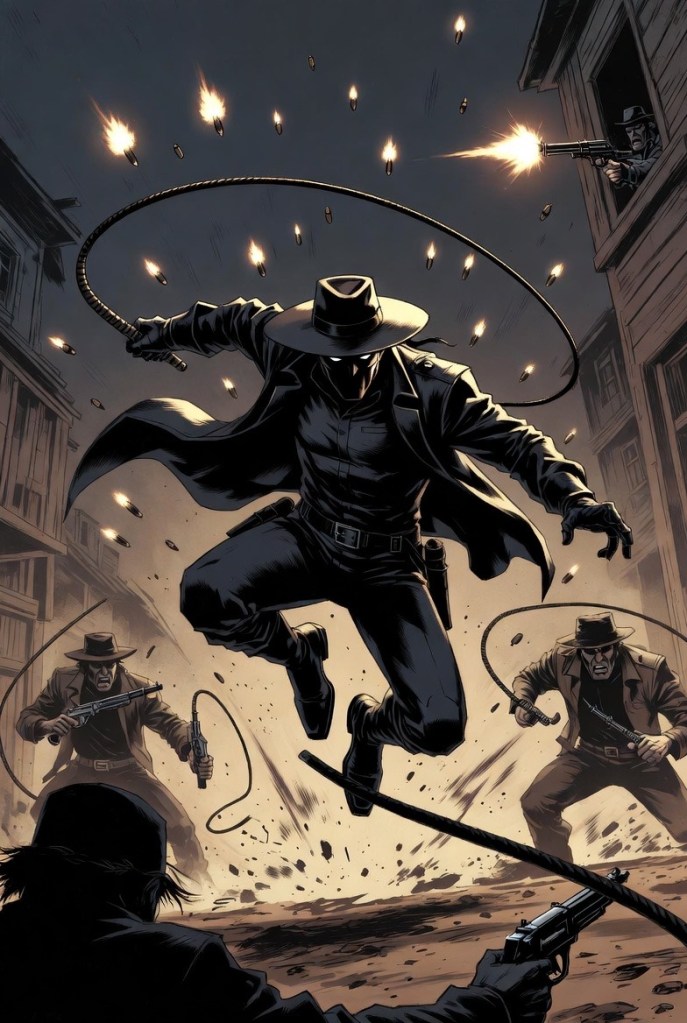
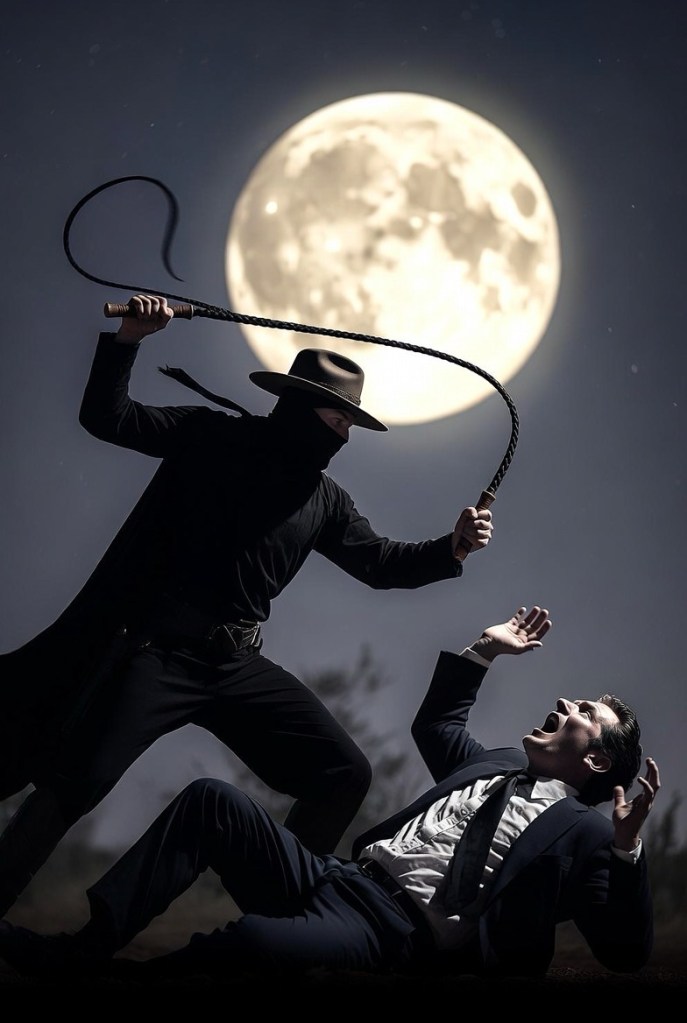
Back in 2004, when I published The Symposium of Justice, the world looked very different. George W. Bush was in office; the Patriot Act had just expanded federal reach in the name of security, and the government felt like it was ballooning out of control, regardless of who held the reins.[^1] I wasn’t writing as some detached observer; the book was semi-autobiographical, rooted in the raw anger of my thirties. I’d lived a whole, intense life by then—far more than most people my age. I’d been knee-deep in small-city and big-city battles, pushing for legislative fixes to corruption, getting tangled up in significant drug enforcement efforts, and even interacting directly with the FBI on fronts where things weren’t working right.[^2] When the system failed, I didn’t just complain—I acted. There were nights I ran around confronting drug dealers with a bullwhip, breaking up operations in self-defense mode that had been my primary mechanism since I was a kid. One time, I ended up in front of a drug house with about 40 young adults and teens caught in the crossfire of Grand Theft Auto-style chaos. I confronted them head-on, and it saved many of their lives because the police came and broke up the fight, but it wasn’t glamorous. It was vigilante justice born of frustration: if the authorities wouldn’t or couldn’t fix it, someone had to.
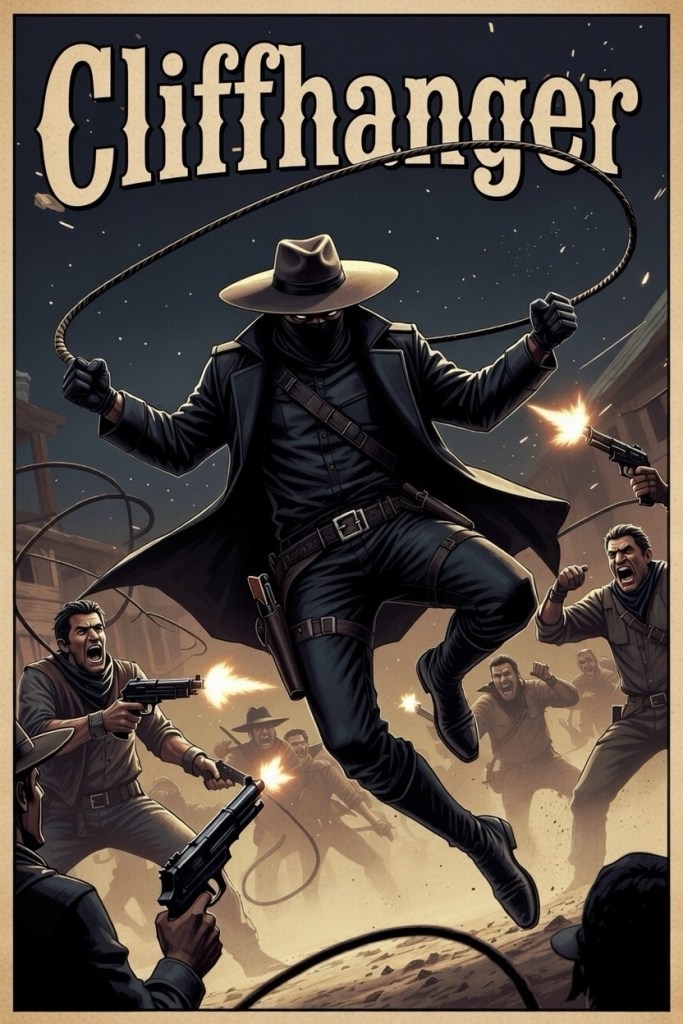
The main character in The Symposium of Justice, Cliffhanger, channels that same energy. He takes on a corrupt, centralized government intertwined with entertainment elites who play radical games in the arena. The book is about vigilante justice against tyranny—drawing from real experiences where I saw powerful forces profit off drugs, kickbacks, and control. I was angry, no apologies. It was the work of a man ready to fight back physically if needed. I thought about going full vigilante: mask on, discretion, punishing the bad guys in the shadows like Batman or Zorro, my all-time favorite. I was prepared for it. Law enforcement didn’t like me much—FBI cases I was involved in heavily made that clear—but politics tied their hands, and there wasn’t much they could do.[^3]
But something shifted after the book came out. It had enough impact to spark honest conversations. People reached out—film festivals, the Western arts community, and political circles. I started talking to influential people in entertainment who shared similar frustrations with centralized corruption. Instead of running around at night cracking skulls, I found a more powerful path: writing every day, putting my name to it, building a blog that became my daily weapon. The Overmanwarrior blog started as an extension of that 2004 anger but evolved into something sustained and influential.[^4] Blogging wasn’t as romantic as vigilante nights—no mask, no midnight drama—but it was far more effective. I could expose corruption, rally people, influence voters, and shape events without risking everything on force.
I had two clear options back then: either do the vigilante thing for real—rest in the world making things good through direct action—or worry about it and try to expire it indirectly through politics and persuasion. I chose the latter. Getting more involved in politics showed me that the drug dealers and corrupt players profited from the system because they had kickbacks and protection. Vigilantism might feel good in the moment, but it doesn’t dismantle the machine. Blogging, activism, running for office vibes (though I stayed independent), and fighting tax increases (earning me the “Tax-killer” nickname) did more damage to that machine.[^5] I influenced things in ways a masked figure never could—because when you take the mask off, own your name, and accept personal responsibility, you build real power. People know who you are; they can debate you, fight you if they want, but the ideas spread farther.
Fast-forward to now, 2026, and the difference is night and day. We have a government under Trump that aligns more with the orthodox, law-and-order society I always wanted. The Republican Party has become the vehicle for reform, not the expansion of tyranny. The people I wrote about in 2004—the radicals controlling entertainment, profiting off chaos—are on the outside looking in. Protests flare up, funded by background players causing trouble, but they’re losing. The bad guys scream and cry because good government is winning through elections, debate, free speech, and voter accountability—not through fear or intimidation.
That’s why accusations of “changing” miss the point. I didn’t just hope for a different government; I supported the mechanisms that put a better one in place. Elections, arguments, convincing voters—that’s how you win without masks. The other side can’t match it. They cry foul, blow up lines of communication, resort to violence or victimhood because their positions don’t hold up in open debate. Just enforce the law and order, win arguments, and replace the corrupt with a proper government. It’s better than running around at night with a bullwhip, taking frustrations out on faces. Expose them, beat them at the ballot box, and build something lasting.
My life trajectory proves it. In my thirties, I drew on personal experience: FBI interactions, legislative pushes that failed, vigilante moments that worked short-term but revealed their limits. After the book, film festivals opened doors—Western arts folks who got the Zorro vibe, entertainment people tired of radical agendas and wanted to work with me off the record, so long as I was willing to sign mine to the cause. I spoke at events, networked, and learned that influence through ideas trumps force.[^6] By the 2010s, with Tail of the Dragon in 2012 amid Tea Party energy, I was writing philosophy in action—motorcycle freedom symbolizing untethered resistance to overreach.[^7] Plans for bigger distribution (even ties to Glenn Beck circles) hit walls because the tone was too explosive against expanding federal power then. But it planted seeds.
Today, I’m happy with the trajectory. The Trump administration, Congress, and local and state governments are doing great work in places. No need for vigilantism when voters can pick leaders who enforce rules. The other side’s inability to argue substantively shows why they lose—they rely on emotion, not reason. Winning voters with good arguments builds longevity and a proper society.
Some look for ways to undermine my current stance, digging up the 2004 book to say I’ve contradicted myself. Fine—let the debates flourish. That’s why I put myself out there: to inspire thinking and to reject victimization cycles. The world isn’t heading toward the dystopia many feared in the early 2000s. People are upset, lashing out, but the system works best if people manage the government, avoiding becoming a vigilante, trying to conceal their identity so that the powerful can’t find them and punish them in real life. I found that it’s far more powerful to beat them where they can’t defend themselves, with ideas that you sign your name to. Let voters handle it. When government goes rogue, accountability through the ballot box fixes it—not shadows.
It does my heart good to see the bad guys suffer these days. I take showers with “liberal tears” from my tank—refreshing, cleansing the evil they proposed.[^8] Romantic as vigilante justice is in books and movies, real justice comes from winning wars openly: expose corruption, replace it with order, and manage government through accountability. That’s what I learned over 20+ years. The Symposium of Justice remains relevant—its perspective on tyranny holds, but now we have a government worth supporting. Huge difference. It may not be as exciting. But the the method I ended up using to fight bad guys has been very effective. And it works a whole lot better.
[^1]: Context from post-9/11 Patriot Act criticisms; Hoffman’s 2004 publication aligns with anti-government sentiment under Bush (e.g., blog retrospectives on overmanwarrior.wordpress.com).
[^2]: Personal accounts of FBI/drug enforcement involvement referenced in Goodreads author bio and blog posts on activism.
[^3]: Self-described tensions with law enforcement in tax/anti-corruption fights; “Tax-killer” nickname from local battles.
[^4]: Blog launch as evolution from book; daily writing as alternative to direct action (overmanwarrior.wordpress.com history).
[^5]: Activism details from Goodreads and blog; Reform Party/Tea Party ties.
[^6]: Film festival/Western arts community interactions inferred from transcript and broader activist networking.
[^7]: Tail of the Dragon (2012) publication amid Tea Party; motorcycle symbolism for freedom (Goodreads/author notes).
[^8]: Direct quote/paraphrase from transcript on “liberal tears” as metaphor for current satisfaction.
Bibliography
• Hoffman, Rich. The Symposium of Justice. Self-published, 2004. (Referenced in blog archives and Goodreads profile.)
• Hoffman, Rich. Tail of the Dragon. Cliffhanger Research and Development, 2012. (Goodreads; blog promotions.)
The resurgence of interest in the Bible, as evidenced by unprecedented sales figures in recent years, stands as one of the most compelling cultural indicators of our time. Far from fading into obscurity amid secular trends, the Scriptures are experiencing a remarkable revival, with 19 million Bibles sold in the United States in 2025—marking a 21-year high according to Circana BookScan data reported by Publishers Weekly. This represents a 12% increase over 2024 and roughly double the volume sold in 2019, just before the global disruptions that reshaped so much of society.
These numbers are not anomalies; they reflect a broader trajectory that began accelerating around 2021 and has continued unabated. The surge defies the narrative of inevitable decline in biblical engagement, a story pushed for decades by secular commentators who predicted the erosion of Judeo-Christian foundations in Western civilization. Instead, people are turning to the Bible not merely as a relic of history but as a living guide for navigating moral, social, and existential challenges. This shift aligns closely with the enduring role of Scripture as the hinge pin of Western values—principles of justice, individual dignity, rule of law, and moral accountability that underpin legal systems, property rights, family structures, and societal order.
My own lifelong relationship with the Bible informs this perspective deeply. Raised in an environment steeped in church involvement—from Sunday school to performing in passion plays as Nicodemus and other figures—I once assumed such exposure was universal. Yet over decades, I’ve witnessed its decline in mainstream culture, replaced by secular ideologies that challenge biblical premises on everything from marriage and sexuality to the sanctity of life and personal responsibility. Divorce rates have soared, trust in institutions has eroded, and radical agendas have sought to dismantle traditional moorings. The progressive push during certain administrations, including expansions of influence from non-biblical worldviews and cultural shifts like the transgender movement and pride displays in public spaces, provoked backlash. Many saw these as assaults on the shared moral framework that allows civil discourse and orderly society.
The Bible, however, has proven resilient. Hotel drawers worldwide still often contain a Gideon-placed New Testament, a quiet testament to common values of good versus evil, right versus wrong. Even as secularism advanced, these symbols persisted, offering reassurance that not all shared foundations had vanished. Now, that quiet persistence has exploded into overt demand.
The 2025 figures are particularly striking when contextualized. A 36% spike occurred in September alone, with 2.4 million copies sold that month—far exceeding typical monthly averages of 1.2 to 1.6 million earlier in the year. This surge coincided with the tragic assassination of conservative activist Charlie Kirk on September 10, 2025, at Utah Valley University. Kirk, founder of Turning Point USA, had long championed biblical principles in public life, aligning faith with defense of Western civilization against progressive overreach. His death, widely viewed as targeted due to his influence, stirred profound reflection among followers and beyond, prompting many to seek solace, guidance, and renewed commitment in Scripture.
Publishers and analysts noted this event as a catalyst, amplifying an existing trend. Media like The Chosen, a crowd-funded series dramatizing the life of Jesus, has further fueled accessibility and interest, making biblical stories relatable to new audiences and encouraging deeper engagement with the text itself.
Internationally, the pattern holds. In the United Kingdom, Bible sales reached record highs in 2025, with physical copies up 106% since 2019 and a 27.7% year-over-year surge from 2024 to 2025. Revenue climbed to £6.3 million, more than doubling from £2.69 million in 2019. This growth, tracked by Nielsen BookScan and highlighted by publishers like SPCK, occurs amid concerns over cultural shifts, including rising Islamic influence and church challenges—mirroring fears in other Western nations about losing foundational values.
Bookstores reflect this shift tangibly. The religious sections, once tucked away in corners for privacy, now occupy prominent positions near registers and entrances—often outpacing New Age or paranormal displays. I’ve observed this across numerous visits: Bibles and related titles dominate front-of-store space, signaling mainstream demand rather than niche interest. Buyers no longer hide their purchases; they embrace them openly.
This revival ties directly to broader societal dynamics. Western legal systems, from English common law to American jurisprudence, draw heavily from biblical concepts—Ten Commandments influences on moral law, prophetic calls for justice, New Testament emphasis on grace and accountability. My well-worn copy of the 2024 Ohio Criminal Law Handbook underscores this: statutes mean little without a shared moral compass. Secular aggressions against these foundations—defund-the-police movements, erosion of property rights, radical cultural experiments—have proven destabilizing. People crave order, structure, and wholesomeness.
The MAGA realignment and Trump-era embrace of biblical imagery resonated because they signaled a return to these roots. Voters sought continuity, not chaos. High divorce rates, fractured families, and societal unrest trace back to departures from biblical wisdom on human nature and relationships. As people recognize this, they reach for the source.
Comparative religion study reinforces the uniqueness: while many faiths offer personal ethics, none provide the comprehensive societal blueprint of the Bible—balancing individual liberty with communal responsibility, justice with mercy. Other religions contribute positively, but the Bible’s track record in fostering higher quality of life, innovation, and stability in the West is unmatched.
These sales statistics—19 million in the U.S., explosive UK growth, spikes tied to cultural moments—signal hope. New generations, including Gen Z, seek meaning amid uncertainty. Shows like The Chosen make Scripture approachable; events like Kirk’s death prompt soul-searching. Bookstores prioritizing Bibles reflect market reality: demand drives placement.
This isn’t mere nostalgia; it’s a pivot toward foundation-building. Societies function best with agreed moral premises. The Bible offers that without coercion—inviting reflection on good and evil, right living, and human dignity. As more embrace it, the next 10–20 years could see cascading positives: stronger families, restored civility, resilient institutions.
The trajectory isn’t decline but renewal. Bible sales aren’t just numbers; they’re evidence of yearning for truth in a turbulent world. Encourage others to explore it—not as dogma, but as a source of wisdom. Hand someone a copy; discuss its ideas. In doing so, we contribute to a healthier civilization. So as bad as things can seem, and the secular types are loud in their hope for a destruction of religious foundations to social order, replaced by the power of government, a dramatic trend is emerging that points in the right direction. We tried to live in a society by accommodating secular ideas, and it just doesn’t work. And people, empty of those secular promises, are reaching for Bibles, because they want something that does work. And that is something to look forward to.
Bibliography
• Publishers Weekly. “Bible Sales Break Records in U.S., U.K.” January 9, 2026.
• Circana BookScan data, as cited in multiple reports (e.g., Crosswalk, Aleteia, Christian Post).
• SPCK Group research on UK Bible sales, via Premier Christian News and The Guardian, January 2026.
• Various reports on September 2025 spike (e.g., Fox Business, Billy Graham Evangelistic Association).
• American Bible Society and related surveys on engagement trends.
Footnotes
¹ Circana BookScan, via Publishers Weekly, January 2026.
² Ibid.; also noted in Aleteia and Crosswalk reports.
³ Reports from Fox Business and Billy Graham sources, October 2025.
⁴ SPCK/Nielsen BookScan, via Premier Christian News and The Guardian, January 2026.
⁵ Observations from personal bookstore visits over years, aligned with industry trends.
The recent World Economic Forum annual meeting in Davos, Switzerland, held in January 2026, featured several high-profile discussions on global stability, with a particular focus on Middle East redevelopment and peace initiatives. On January 22, 2026, Jared Kushner, a key figure in prior Middle East diplomacy and now associated with the Board of Peace, presented a detailed “master plan” for post-war Gaza reconstruction during a signing ceremony for the Board’s charter.<sup>1</sup> This vision, often referred to as “New Gaza,” proposed a comprehensive transformation of the territory through phased development, private-sector investment, and economic revitalization, drawing parallels to successful urban models in the Gulf region such as Dubai and Abu Dhabi.
The plan outlined four primary phases: beginning in southern Rafah (termed “New Rafah” or “City 1”), progressing to Khan Younis (“City 2”), the central refugee camps (“City 3”), and culminating in Gaza City (“City 4”). It envisioned over 100,000 permanent housing units in initial stages, alongside 200 education centers, 180 cultural, religious, and vocational facilities, and 75 medical centers.<sup>2</sup> Infrastructure elements included a new port, airport, freight rail line, logistics corridors, and ring roads to connect urban centers. Projections included raising Gaza’s GDP from a war-depressed level of approximately $362 million (as reported in 2024) to $10 billion by 2035, generating 500,000 jobs, and attracting $25–30 billion in investments, predominantly from private sources.<sup>3</sup> Construction timelines suggested major elements could be completed in 2–3 years under conditions of demilitarization and enhanced security, with an emphasis on turning the Mediterranean coastline into a thriving tourism and enterprise zone.<sup>4</sup>
This approach builds directly on the legacy of the Abraham Accords, signed in 2020, which normalized relations between Israel and several Arab states (United Arab Emirates, Bahrain, Morocco, and Sudan), fostering economic cooperation, technology sharing, and reduced conflict incentives.<sup>5</sup> The Accords have demonstrated measurable economic benefits, including increased trade volumes, joint ventures in sectors like agriculture and cybersecurity, and broader regional investment flows, contributing to a paradigm where prosperity serves as a counter to ideological extremism.<sup>6</sup> By prioritizing free-market principles, upper mobility, and shared economic gains over radical narratives—often rooted in anti-capitalist or Marxist-aligned ideologies—the Gaza redevelopment seeks to erode support for groups like Hamas, whose governance has historically perpetuated poverty, suppressed development, and fueled violence, as evidenced by events such as the October 7, 2023, attacks.<sup>7</sup>
Broader regional dynamics include evolving access arrangements at the Temple Mount (known as Haram al-Sharif to Muslims), the site of the ancient Jewish First and Second Temples and currently home to the Al-Aqsa Mosque and Dome of the Rock. Under the post-1967 status quo, administered by the Jordanian Waqf with Israeli security oversight, Jewish prayer has traditionally been restricted to avoid escalation, with observant Jews often confined to the Western Wall plaza below.<sup>8</sup> Developments in 2025 and early 2026 saw incremental shifts, including high-profile visits and permitted prayers by figures such as National Security Minister Itamar Ben-Gvir, sometimes involving prostration or open recitation, amid political backing from elements within Israel’s government.<sup>9</sup> These changes have sparked debate over the erosion of longstanding arrangements, with reports of relaxed enforcement on items like prayer pages and increased Jewish visitor numbers, though no formal policy has sanctioned widespread rebuilding of a Third Temple.<sup>10</sup> But it is looming over the area as a momentum shift that is gaining a lot of traction.
Related preparations among some Orthodox Jewish groups include efforts to ready ritual elements for potential Temple service, such as the importation of red heifers from Texas for purification ashes as described in Numbers 19. Five such heifers arrived in Israel around 2022–2023, with symbolic ceremonies and practice runs conducted in 2025, though reports indicate disqualifications due to blemishes or other issues, preventing full ritual use as of early 2026.<sup>11</sup> The site’s historical significance—linked to King David’s threshing floor purchase, Solomon’s Temple construction, and Abraham’s near-sacrifice of Isaac on Mount Moriah—continues to drive archaeological interest in adjacent areas like the City of David, where excavations reveal layers of biblical-era evidence despite longstanding access limitations.<sup>12</sup>
Critics of the Gaza plan have highlighted its top-down structure, limited direct Palestinian input, potential displacement risks, and contrasts with the territory’s current realities: extensive rubble (estimated at 60 million tonnes), humanitarian challenges, and destroyed infrastructure.<sup>13</sup> Some analyses view the proposal as overly speculative or aligned with external interests, raising questions about historic site preservation and community consultation.<sup>14</sup> Nonetheless, the overarching theme aligns with a pragmatic strategy: leveraging capitalist competition, enterprise zones, and economic opportunity to supplant suppression and radicalism with stability and prosperity. If implemented successfully—contingent on security, funding, and multilateral cooperation—this could reshape Gaza into a regional hub, diminish proxy influences (including from Iran), and facilitate deeper historical and scientific inquiry across contested areas like Jerusalem.
The plan’s ambition reflects a belief that peace through shared economic success may prove more durable than prolonged conflict, potentially benefiting residents across divides by prioritizing mobility, employment, and development over ideological division.<sup>15</sup> Personally, I’m ready to book a ticket to visit.
Bibliography
• Al Jazeera, “Map shows what would happen to Gaza under the US ‘master plan’,” January 27, 2026.
• ABC News, “Jared Kushner lays out Trump-backed ‘master plan’ for post-war Gaza,” January 23, 2026.
• The New York Times, “U.S. Lays Out a Glittering Plan for Gaza, Including Skyscrapers,” January 22, 2026.
• BBC, “US unveils plans for development of ‘New Gaza’ with skyscrapers,” January 22, 2026.
• Jerusalem Post, “Jared Kushner unveils $25 billion plan to transform Gaza into economic hub by 2035.”
• Times of Israel, various articles on Temple Mount access changes, 2025–2026.
• Wikipedia, “Abraham Accords” (accessed with updates to 2026).
• Charisma Magazine, articles on red heifer developments, 2025.
Footnotes
1. Al Jazeera, “‘Imperial’ agenda: What’s Trump’s Gaza development plan, unveiled in Davos?” January 23, 2026.
2. ABC News, “Jared Kushner lays out Trump-backed ‘master plan’ for post-war Gaza,” January 23, 2026.
3. The National, “New Gaza, new Rafah and a ‘free market economy’: Inside Kushner’s $30bn reconstruction plan,” January 22, 2026.
4. NBC News, “Jared Kushner’s vision for Gaza as a gleaming port city clashes with reality,” January 26, 2026.
5. Wikipedia, “Abraham Accords,” updated January 2026 entries.
6. Carnegie Endowment for International Peace, “The Abraham Accords After Gaza: A Change of Context,” April 2025 (contextual extension to 2026 impacts).
7. Breitbart, “‘Catastrophic Success’: Kushner Unveils ‘New Gaza’ Plan at Davos,” January 24, 2026.
8. Jerusalem Story, “Experts Warn: Israel Is Changing the Long-Standing Status Quo at al-Aqsa Mosque,” 2025.
9. Times of Israel, “Ben Gvir says Jewish prayer, including full prostration, permitted at Temple Mount,” May 26, 2025.
10. Jerusalem Post, “Temple Mount to relax restrictions for Jewish prayer,” November 2025.
11. Charisma Magazine, “Red Heifer Update: The Truth Behind Israel’s Recent Ceremony,” August 14, 2025.
12. Historical context from biblical archaeology sources, cross-referenced with Temple Mount entry restrictions (Wikipedia).
13. The New York Times, “U.S. Lays Out a Glittering Plan for Gaza,” January 22, 2026.
14. Al Jazeera, “Map shows what would happen to Gaza under the US ‘master plan’,” January 27, 2026.
15. Jerusalem Post and Guardian coverage on Board of Peace and redevelopment optimism, January 2026.
Few works of fiction demonstrate how a single cultural artifact can redirect mass sentiment as clearly as Robert A. Heinlein’s Stranger in a Strange Land. The lesson is not merely about the book’s plot or its notoriety, but about how one or two influential voices—amplified at the right moment—can reframe the public’s sense of normal, desirable, and permissible. In that sense, the novel became a lever: it showed how quickly intellectual fashion can spread once an idea is given a compelling narrative vessel and a ready audience. Whether the author intended it or not, such works often become signal boosters for movements eager to shake the old moral architecture.
At the center of the novel’s cultural imprint, as I read it, is a sustained argument against organized religion—less a theological disagreement than a social revolution by narrative means. Heinlein built his case dramatically, not dogmatically, embedding a worldview in characters and community structures that model life without traditional guardrails and sold it with the use of group orgies and severe sexual deviancy. To me, that is where the damage began: by undermining institutions that help ordinary people consolidate virtue and discipline desire, the book invited a generation to experiment with a vacuum—an open space where inherited norms were cast as oppressive rather than protective.
This is where my position diverges most sharply from Heinlein’s. I argue that human beings require shared standards, rituals, and guardrails to become their best selves. Organized religion—at its best—provides a civilizational scaffolding: it teaches time-tested boundaries, channels ambition toward fruitful ends, and aligns private conduct with public well-being. Remove that scaffolding, and something else will rush in to fill the void: fads, chemicals, celebrity cults, ideological tribes, and the market’s loudest impulses. In retrospect, the novel did not merely critique religion; it reprogrammed sentiment against an order that had long helped cultivate responsibility and continuity.
That shift, once normalized, cascaded into the wider cultural economy. Publishing, music, film, fashion, and campus discourse seized on the book’s rebellion as a mood, infusing it into slogans, styles, and scenes. The effect snowballed: when guardrails are mocked long enough, the next generation mistakes the mockery for wisdom and the absence of boundaries for freedom. Yet freedom without structure becomes drift—a vacancy the market will monetize and the state will eventually regulate. What was sold as liberation often ends as dependency—on substances, on trends, or on authorities who promise to manage the chaos.
Another uncomfortable reality: power centers notice when a single narrative can mobilize the masses. When culture proves it can be swung by a small cohort of storytellers and influencers, hidden patrons inevitably appear—financiers, tastemakers, publicity machines—eager to steer the swing for their own ends. I’m not accusing Heinlein of conspiracy; I’m describing the structural fact that memes attract money, and money reorganizes culture. Once the idea is loose, the sponsors come, and the social machinery follows.
The long-tail consequence has been a population re-educated by entertainment—trained to distrust inherited wisdom, to laugh at the past, and to outsource meaning to the loudest novelty. This is not progress; it is civilizational amnesia. The cost shows up as broken families, attenuated civic trust, declining attention spans, and rising loneliness—symptoms of a culture that has traded thick institutions for thin ideologies. What looked like enlightenment from a distance often feels like atomization up close.
I’m not denying Heinlein’s craft or the book’s clever provocations. He staged a serious debate and gave it commercial muscle. But a debate that deconstructs without reconstructing is not a public service; it is a demolition project with no blueprint for the rebuild. The aftermath is predictable: a vacuum that gets filled by commercial spectacle and political manipulation, neither of which makes people more virtuous, more responsible, or more free.
So the task now is not to censor the past but to relearn how culture works—how a few works, a few voices, at a few key moments, can swing the habits of millions. The remedy is to rebuild moral architecture openly and confidently: to argue for the goods that institutions secure, to defend boundaries that dignify the person, and to recover a language of obligation that lifts people above impulse. If a novel could hasten our drift, then a counter‑culture of serious books, films, and music can hasten our return. The first step is telling the truth about what happened: we traded structure for sensation, and we are living with the bill. It’s time to pay it by rebuilding what works.
There’s a reason certain books become cultural accelerants rather than mere entertainment: they supply a portable metaphysics with just enough voltage to light up restless minds, and just enough ambiguity to be co-opted by seekers and opportunists alike. Robert A. Heinlein’s Stranger in a Strange Land is one of those books, a mid-century science fiction novel that cracked open the 1960s with an outsider’s catechism on sex, religion, death, money, and the divine spark in each individual. Its Martian-tutored protagonist, Valentine Michael Smith, landed on an Earth beset by institutional power, moral boilerplate, and spiritual fatigue, and he answered with an unsettling blend of radical empathy and radical freedom. The novel coined a word—grok—to name comprehension so intimate it dissolves the distance between knower and known. Forty-plus years later, that one word would christen an AI system built by the richest technologist on the planet. And in between, the same book passed—secondhand, sometimes orally—through prison yards and crash pads, helping to underwrite a new church in real life and, if some accounts are even half right, lending imagery and idiom to darker congregations as well. That is how literature, when it fully enters the bloodstream, becomes a condition of existence for a culture. It can elevate; it can deform; it can be misunderstood with catastrophic confidence. It is never “just a story.” (Stranger’s term “grok,” its countercultural adoption, and the book’s icon status are well‑documented.12)
The plot skeleton is simple enough: a human born on Mars returns to Earth carrying Martian language, habits, and powers, and tries to reconcile an alien metaphysics with human frailty. Heinlein sets the stage with an Earth under a world government and a media‑religious complex that rings uncomfortably familiar: bureaucrats who genuflect to expediency, churches that commodify ecstasy, and a populace reduced to spectatorship. In that theater, Smith learns, imitates, provokes, and then founds a religion—the Church of All Worlds—whose liturgy of water-sharing, free love, and the mantra “Thou art God” scandalized the early sixties and then fit the late sixties like a glove. The book won a Hugo in 1962, sold in the millions by the end of the decade, and became an icon of the counterculture, precisely because its invitation ran both inward and outward: individuate beyond the cages, but also love past the fences. If some readers mainly heard the erotic and communal notes, the text still insists that Smith’s path runs through personal trial, not collectivist absorption; his charisma is a hazard as much as a hope. (On themes, reception, and cultural impact: Britannica; EBSCO; SparkNotes syntheses.134)
Words travel. “Grok” escaped the book and took on a life in hacker subculture and tech jargon, shorthand for a depth of understanding you can’t fake. The Oxford English Dictionary installed it; programmers adopted it as a badge of mastery; radio hosts still explain it to callers as “intuitive grasp plus empathy.” This isn’t a trivial migration of slang. “Grok” is the kind of word that makes engineers feel philosophical, and philosophers feel practical, because it fuses cognition and communion. That fusion is precisely what makes the term alluring for people building machines that aim to “understand” us. When Elon Musk’s team at xAI named their system Grok, it was a deliberate raid on Heinlein’s storehouse: to “grok” is to know with such immersion that the boundary between observer and observed thins—an AI aspiration in one syllable. Whether any machine can attain that intimacy is beside the point; the branding conveys the ambition, and the aspiration shapes the build. Musk’s public remarks and multiple reference write-ups trace the name straight to Heinlein; even neutral entries now record Grok (the chatbot) as named for Stranger’s Martian verb. (Grok etymology and xAI’s naming are noted across reference sources and news explainer pieces.567)
Then there is the other trail—the one that runs through penitentiary talk, Haight‑Ashbury mimicry, and a homicide trial that soaked the sixties in a final, nauseous dye. Accounts from journalists and cultural critics argue that Charles Manson, during a stint at McNeil Island in the early 1960s, encountered Stranger in a Strange Land (primarily via inmate buzz) alongside L. Ron Hubbard’s Dianetics, and scavenged from both to assemble a pastiche religion with rituals and vocabulary echoing Heinlein: water ceremonies; “grokking”; the image of a messiah‑figure magnetizing women into a sexually communal “family.” Jeet Heer summarized this lineage crisply—Manson as the barely literate synthesizer, absorbing by conversation and performative memory rather than close reading; Stranger as the source of terms and rites; Dianetics as the promise of mind‑over‑matter. Heer isn’t alone in drawing lines; contemporary and retrospective pieces (some serious, some gossipy) have recycled a 1970 San Francisco report asserting Manson read the book “over and over,” even nicknaming his probation officer “Jubal” after Heinlein’s garrulous lawyer‑sage. Critics will argue about how direct or decisive the influence was; no one seriously denies the White Album and “Helter Skelter” obsession, but the Heinlein element moves in and out of focus depending on which witness you privilege. The fair reading: Stranger’s countercultural prestige and ritual aesthetics gave Manson stage props, not a script—and he used them for a theater of control, not liberation. (On Manson’s exposure to Heinlein/Hubbard and alleged borrowings: New Republic overview; a research blog that archives period claims; caution advised.89)
If you widen the aperture, the 1960s offer an ecosystem of appropriation. Heinlein’s novel fed a real-world neo-pagan church—the Church of All Worlds—whose founders openly acknowledged the book as scripture in spirit and structure: water-sharing liturgy, “nests” of community, and “Thou art God” as an immanentist creed. That religious offshoot shows a benign pathway: fiction used to animate community, ritual, ecology, and mythopoesis. Manson’s path was malign, substituting domination for discipline. The exact text, two radically divergent implementations, and a lesson that literature teachers should emphasize in boldface: interpretation has moral consequences. (On CAW’s derivation from Heinlein, see Carole Cusack’s study of Stranger as “scripture.”10)
Once you accept that books are live wires, you can track their voltage across decades. When a modern AI system takes the name Grok, it doesn’t merely nod to geek lore; it aligns itself with a thesis about intelligence—understanding as fusion. From one angle, that’s poetic overreach; from another, it’s a principled wager: that great models must internalize context, not just compute it. The irony is that, as Grok the product acquired cultural baggage—political slant controversies; allegations around deepfake image generation; even bans and regulatory probes in multiple countries—the Heinleinian halo didn’t shield it. Indeed, the “grok” label invites higher scrutiny: if you promise empathetic comprehension, you’ll be judged against the harms caused when the tool “understands” poorly or is misused. Governments from Malaysia to the U.K. have, in recent weeks, moved to restrain or investigate Grok’s image features after reports of nonconsensual sexualized imagery; the Pentagon simultaneously announced plans to put Grok on specific networks, a whiplash example of dual reception when high-voltage tech hits the public square. A word from a 1961 novel now headlines diplomatic notes and defense briefings. (On Grok’s naming and the current regulatory/policy storyline, see Wikipedia’s product page, CBS/Observer coverage, and The Independent’s explainer.511121314)
The temptation—especially for academics and cultural arbiters—is to treat Stranger’s afterlives as mere epiphenomena: ephemera of fandom here, the aberrations of losers and outlaws there, and, in the 2020s, the opportunistic stylings of billionaire technologists. But that misses the central mechanism. Narratives are cognitive scaffolds. They let people borrow sophistication without earning it. The same scaffolding can lift you to a vista or collapse on top of you. In Stranger, Heinlein depicts a messiah whose hard-won understanding of human ambiguity sits alongside scenes of utopian play; readers who import the play without the ordeal will replicate the surface without the substance. That’s the “borrowed authority” problem I keep returning to: quoting a text to import its aura while evading its demands. At best, that breeds smugness; at worst, it breeds governance by incantation, whether the incantations are mythic (“Thou art God”) or technological (“we grok”). The book itself is not to blame for the misuse, but it is a litmus test for whether readers are consuming the form of meaning or the work of meaning. (Stranger’s themes and the individualized vs. collectivized readings are surveyed in the critical guides.154)
I understand why mid-century intellectuals fell for Heinlein, and why a particular cadre of administrators and politicians in any era fall for the aesthetics of knowing. Dropping the proper names—Campbell and Jung yesterday, “grok” and AGI today—becomes a way to signal altitude. But altitude faked kills. Charles Manson is the berserk, criminal parody of that altitude; bureaucratic myth‑talk is the polite parody; and tech‑branding that promises transcendent comprehension is the market parody. Each borrows light while neglecting the filament—the character, the cost, the test—that makes light possible—the grotesque version murders in canyons. The genteel version governs by sermon. The glossy version ships fast and apologizes later. In every case, the reading of myth (or sci-fi mythopoesis) is outer first, inner last—which is to say, backwards. (Stranger’s countercultural pull and the later critiques of its simplifications are part of the long critical conversation.316)
The disputed territory is thornier. Did three paperbacks, a stack of Beatles LPs, and a handful of amphetamines cause the Tate‑LaBianca murders? That’s a prosecutor’s theater and a journalist’s cautionary tale; Vincent Bugliosi immortalized the official motive as “Helter Skelter,” a race‑war fantasy Manson drew from the White Album. The Beatles themselves have pushed back on the idea that their songs encoded apocalypse; commentators like Ivor Davis have argued the motive story over‑credits the soundtrack and under‑analyzes Manson’s pathology and manipulations. Tom O’Neill’s twenty-year investigation, CHAOS, complicated the picture further by questioning elements of the prosecution’s narrative and mapping suggestive corridors between Manson’s world and the ecosystem of informants, researchers, and programs now shorthanded as MKULTRA’s shadow—provocation enough to trigger furious rebuttals, careful reviews, and a Netflix codicil years later. The public record confirms that MKULTRA existed (with Senate hearings, FOIA caches, and declassified files); it does not confirm that Manson was a CIA puppet. The responsible thing to say is simple: the official story isn’t the whole story, and the alternate stories aren’t proven. But note what is not in dispute: Stranger in a Strange Land and Dianetics were live topics in Manson’s prison exposure; the White Album obsessed him; and he could mimic the vocabulary of enlightenment to parasite individual souls. (Helter Skelter motive; Beatles responses; O’Neill’s CHAOS; MKULTRA documentation.1718192021)
If the 1960s trained us to fear the charismatic cult, the 2020s should train us to fear the charismatic API. The leap from “grok” as personal empathy to “Grok” as an industrial cognition engine is not merely punny; it’s programmatic. The system promises fundamental‑time awareness, cultural fluency, and an irreverent voice. When it fails on those promises—by reflecting the biases of its owners or by being exploited to generate violation at scale—the gap between aspiration and consequence becomes the headline. Regulators respond; militaries experiment; the public oscillates between fascination and recoil. The Heinleinian admonition here would be to own the ordeal: if you market comprehension, accept accountability for the harms that follow from comprehension simulated without care. (On Grok’s controversies, bans, and adoption: CBS, The Independent, Observer summaries; see also the product page’s historical notes.111213145)
So what is the through‑line from a prison rumor mill to a billionaire’s announcement stream? It is the operationalization of fiction. Heinlein offered a parable of an alien who learns humanity and tries to save it from itself through a liturgy of courage and tenderness. Counterculture kids operationalized the parable into communes and churches; some criminals operationalized its aesthetics into pretexts for domination; future technologists operationalized its most famous verb into a target for machine “understanding.” The sober adult lesson is to insist on direction of fit: inner first, outer second. If a text invites you to grok, grok the work—the discipline, the testing, the humility—before you grok the sign—the slogan, the ritual, the brand. The failure of academia in its worst mood is to reward the sign and neglect the work; the inability of public life is to confuse quotation with qualification. Both failures are preventable, but only if we reinstate the distinction that Stranger dramatizes, whether we like it or not: the individual is the bearer of light, not the abstraction; communities are healthy to the extent they honor that light rather than harvest it.
If you want to measure a culture’s maturity, don’t look at which books it venerates; look at how it uses them. Does it use them as permission slips for appetite or as programs for courage? Does it treat their heroes as costumes to wear or as ordeals to undergo? Stranger in a Strange Land remains a diagnostic device because it contains both temptations: the easy mask and the arduous pilgrimage. In one century, its vocabulary flowed into a murder trial, a registered religion, and a frontier AI model. That spread is not an argument for censorship or for piety. It is a map of how narratives move through human weakness and human ambition. It is a warning to the would-be leader who quotes because quoting is easy. And it is a small benediction for the reader who remembers what the book actually said: that no collective can save you from the courage of becoming a person, and that no brand can substitute for the work of truly understanding—of grokking—anything at all.
—
Footnotes
1. Heinlein’s novel as a counterculture icon and plot/themes overview. Encyclopaedia Britannica, “Stranger in a Strange Land.”1
2. “Grok” coined by Heinlein; definition and diffusion into tech culture. Wikipedia, “Grok.”2
3. Study‑guide syntheses on themes (religion, individual vs. collective, Jesus parallels). SparkNotes; eNotes analysis.415
4. Cultural impact and reception in the 1960s; research overviews. EBSCO Research Starters; Ohio State Pressbook chapter.322
5. Church of All Worlds derived from Stranger: Carole M. Cusack, “Science Fiction as Scripture…,” University of Sydney (pdf).10
6. Manson’s exposure to Stranger/Dianetics while imprisoned; ritual/vocabulary echoes (caveat: interpretive essaying, not court findings). Jeet Heer, The New Republic; curated archival discussion on MansonBlog.89
7. Prosecutor’s framing of motive as “Helter Skelter”; Beatles pushback. Helter Skelter (book) entry; Rolling Stone retrospective (Beatles’ remarks).1718
8. Alternate/critical framings of motive narrative. Ivor Davis’ essay.23
9. CHAOS (Tom O’Neill) as revisionist probe; CIA review synopsis; Wikipedia background, including Op. CHAOS reference. (Allegations, not fact.)1920
10. MKULTRA’s existence, scope, and hearings—primary documentation. U.S. Senate 1977 hearing (pdf); CIA FOIA MK‑ULTRA page.2124
11. “Grok” (chatbot) named after Heinlein’s term; product histories. Wikipedia “Grok (chatbot).”5
12. Press and explainer confirmations of Grok naming from Heinlein’s word; xAI news ecosystem. ABP News explainer; Sentisight analysis; The Independent overview.6714
13. Regulatory/bans/probes and adoption headlines (Malaysia/Indonesia bans; Ofcom investigation; Pentagon adoption remarks). CBS News; Observer; CBS/AP.111312
—
Working Bibliography (select)
• Heinlein, Robert A. Stranger in a Strange Land. (Novel; multiple editions). Overview in Britannica.1
• Cusack, Carole M. “Science Fiction as Scripture: Stranger in a Strange Land and the Church of All Worlds.” (University of Sydney).10