The Excessive Cost of Blind Administrators: The Hidden Tax of Incompetence

In an era where building a simple bridge or maintaining everyday infrastructure feels like an impossible feat compared to the feats of past generations, we must confront a fundamental truth about modern costs. Projects that once defined American ingenuity and efficiency now balloon into multi-billion-dollar spectacles riddled with delays, overruns, and excuses. The Brent Spence Bridge corridor project near Cincinnati, for instance, recently saw its estimated cost surge from $3.6 billion to $4.4 billion before groundbreaking even began in earnest, driven by skyrocketing construction material prices, labor issues, and extended timelines.  This isn’t an isolated anomaly. Across the United States, highway and bridge projects routinely cost far more per mile than in peer nations, with administrative delays, regulatory reviews, and layers of bureaucracy compounding the problem. 

The core issue isn’t just inflation or supply chains. It runs deeper, into the very structure of how we organize work, education, and leadership today. A vast class of highly credentialed but practically inexperienced administrators—trained in specialized theory rather than real-world problem-solving—imposes enormous hidden costs on every endeavor. These individuals, often products of a higher education system that prioritizes abstract knowledge over hands-on competence, require constant hand-holding, endless meetings, and external consultants to navigate basic decisions. They function, metaphorically, as blind guides in organizations, demanding resources to “see” what resourceful individuals grasp intuitively. This administrative bloat drags on productivity, inflates prices for cars, infrastructure, energy, and nearly everything else, and creates a parasitic drag on the economy. 

Consider the contrast with practical innovation born from necessity. People who learned by changing an engine in their backyard using a hoist rigged to a tree branch, or fixing a flat tire on an RV in the middle of nowhere within minutes, develop a MacGyver-like resourcefulness. They improvise with what’s available—a pack of gum as temporary adhesive, a basic wrench fashioned on the spot—because life taught them self-reliance under pressure. Such individuals don’t call for a conference call or wait hours for AAA when a tire blows on a remote road trip. They assess, act, and move forward, often with minimal sweat and maximum results. This mindset built America: railroads spanning continents, bridges erected in record time, factories churning out affordable vehicles. Today, that spirit is sidelined by systems that reward credentials over competence. 

Higher education plays a central role in creating this disconnect. Decades of emphasis on specialized degrees have produced graduates fluent in spreadsheets, theories, and administrative protocols but often blind to foundational realities—like how supply chains actually function or why a wrench turns a bolt. Administrative staff in universities, government, and corporations have proliferated far faster than productive roles. In higher ed alone, the number of administrators has exploded while instructional focus lags, driving up costs that ripple into the broader workforce.  Graduates enter the job market expecting handrails and flashlights for every step, ill-equipped for the “school of hard knocks” that forges true innovators. They justify their positions through layers of oversight, compliance, and justification—activities that add little value but consume massive time and money.

This dynamic explains much of the administrative burden that inflates infrastructure costs. State departments of transportation are often understaffed in core engineering roles but overloaded with consultants for planning, oversight, and compliance. Environmental reviews under laws like NEPA, citizen lawsuits, permitting processes, and procurement rules that limit competition extend timelines from years to decades. A project that might have taken months in the mid-20th century now drags on, accruing interest, inflation on materials (up over 60% in recent years for highways), and consultant fees.  Lengthy delays don’t just cost money directly; they worsen asset conditions, require more expensive fixes later, and deter practical problem-solvers from participating.

Government contracting amplifies the issue. Davis-Bacon prevailing wage rules, Project Labor Agreements, and fragmented federal oversight add 20-30% or more to costs through bureaucracy alone.  Fewer bidders compete due to complex rules, driving prices higher. Understaffed public agencies lean on expensive private consultants, who themselves often come from the same credential-heavy backgrounds. The result? Bridges and roads that once symbolized progress now symbolize inefficiency. The same patterns appear in manufacturing cars or any complex product: layers of compliance, HR administrators, diversity consultants, and risk managers who add overhead without touching a tool or blueprint.

Gas prices offer another stark illustration. When geopolitical tensions flare—such as conflicts involving Iran—oil executives and speculators seize the moment to jack up barrel prices and refinery margins, even when underlying supply disruptions don’t fully justify pump spikes to $4+ in the Midwest.  Refiners and retailers benefit from “rocket and feathers” dynamics: prices rise fast on bad news but fall slowly, protecting or expanding margins. Consumers foot the bill while executives in lofty positions, detached from the refinery floor or drilling rig, rationalize windfalls. These leaders, often MBAs trained in financial engineering rather than hydrocarbon chemistry or logistics, treat volatility as an opportunity rather than a call for innovation in domestic production or efficiency. They demand subsidies, lobby for favorable policies, and offload risks onto the public—classic behavior of those who never learned to change their own tire but expect the system to do it for them. 

The “time eaters” and parasites extend beyond energy. In corporations, government, and consulting firms, individuals unskilled in practical execution consume disproportionate resources through meetings, reports, and oversight. They can’t MacGyver a solution because their training emphasized avoiding risk and following protocols over creativity under duress. Resourceful people—those who stay calm, improvise, and deliver—get sidelined or taxed to support this class. Democrats’ emphasis on expansive government services often aligns with empowering such dependency, where self-reliance is downplayed in favor of systemic hand-holding. In contrast, approaches favoring individual agency, such as those associated with figures who emphasize deregulation and practical leadership, seek to clear the path for doers. 

This isn’t mere nostalgia. Data confirms the shift. U.S. infrastructure costs have diverged dramatically from those of other countries due to “soft costs”: legal battles, reviews, staffing shortages filled by consultants, and reduced competition.  Higher education’s administrative bloat correlates with rising tuition and a workforce less attuned to value creation.  Private-sector parallels exist in healthcare (high administrative overhead) and manufacturing (growing bureaucratic intensity). The result is a society where prices rise not primarily from raw inputs but from the friction of managing around incompetence and over-regulation.

To reverse this, we need cultural and structural change. Prioritize hiring and promoting those with demonstrated real-world skills—mechanics, builders, troubleshooters—who prove they can deliver under pressure. Streamline permitting and reviews to reward speed and efficiency without sacrificing safety. Reduce reliance on endless credentials; value apprenticeships, trade skills, and self-taught ingenuity. Encourage organizations to minimize time-sucking layers: fewer mandatory calls, less spreadsheet theater, more accountability for results.

In my own experiences—from fixing vehicles roadside to observing organizational dynamics—the pattern holds. People who cultivate intuition, creativity, and resilience through hardship add value efficiently. Those trained into functional blindness extract it. Books like The Gunfighter’s Guide to Business explore these themes in depth, drawing on strategy, philosophy, and practical American capitalism to advocate for competence over credentialism. 

Broader societal implications tie into larger questions of governance and human potential—what might be called the politics of capability versus dependency. As we move toward greater disclosure and accountability in public systems, recognizing these hidden administrative costs becomes essential. Excessive bureaucracy doesn’t just raise prices for bridges, cars, and fuel; it erodes the innovative spirit that built modern prosperity. It rewards manipulation and leverage through position rather than creation through skill.

Reforming this requires dismantling the assumption that more administrators lead to better outcomes. Evidence from understaffed but capable teams shows lower costs and faster delivery. Empowering practical leaders who plan for contingencies—carrying tools, knowledge, and resolve—frees resources for genuine progress. Speculators and executives thrive in opacity; transparent, competitive markets with fewer gatekeepers favor the resourceful.

Ultimately, high costs reflect a choice: a society structured around accommodating the unskilled many at the expense of the capable few, or one that cultivates self-reliance and rewards results. The latter built iconic infrastructure affordably. The former explains today’s excesses. By clearing administrative underbrush, investing in real skills, and rejecting parasitic dependencies, we can restore affordability and dynamism. Bridges can rise again without breaking the bank. Cars and fuel can serve mobility rather than extraction. Workplaces can value those who fix problems on the fly over those who call meetings about them.

This shift demands vigilance against policies that entrench blindness—over-regulation, subsidy-driven bloat, education detached from reality. It favors leaders and systems that trust individuals to walk unaided, flashlight in hand, only when truly needed. In doing so, we honor the hard-earned wisdom of those who learned through action, pressure, and necessity. The alternative is perpetual expense, inefficiency, and frustration—an economy where everything costs more because too many are paid not to see clearly.

The path forward lies in rediscovering respect for practical mastery. Whether in government contracts, corporate boardrooms, or everyday repairs, competence scales. Blind administration does not. As projects like the Brent Spence Bridge highlight ongoing challenges, the lesson is clear: reduce the hidden tax of incompetence, and watch costs fall while capability rises. This isn’t abstract theory; it’s the observable difference between a 20-minute tire change on a remote highway and waiting hours for help that never quite arrives on time. America thrives when it chooses the former. 

Rich Hoffman

More about me

Click Here to Protect Yourself with Second Call Defense https://www.secondcalldefense.org/?affiliate=20707
About the Author: Rich Hoffman

Rich Hoffman is an aerospace executive, political strategist, systems thinker, and independent researcher of ancient history, the paranormal, and the Dead Sea Scrolls tradition. His life in high‑stakes manufacturing, high‑level politics, and cross‑functional crisis management gives him a field‑tested understanding of power — both human and unseen.

He has advised candidates, executives, and public leaders, while conducting deep, hands‑on exploration of archaeological and supernatural hotspots across the world.

Hoffman writes with the credibility of a problem-solver, the curiosity of an archaeologist, and the courage of a frontline witness who has gone to very scary places and reported what lurked there. Hoffman has authored books including The Symposium of Justice, The Gunfighter’s Guide to Business, and Tail of the Dragon, often exploring themes of freedom, individual will, and societal structures through a lens influenced by philosophy (e.g., Nietzschean overman concepts) and current events.
The Cincinnati Bridge Cost too Much and its Too Slow: There is too much administration these days that slows everything down, and puts unreasonable cost into everything

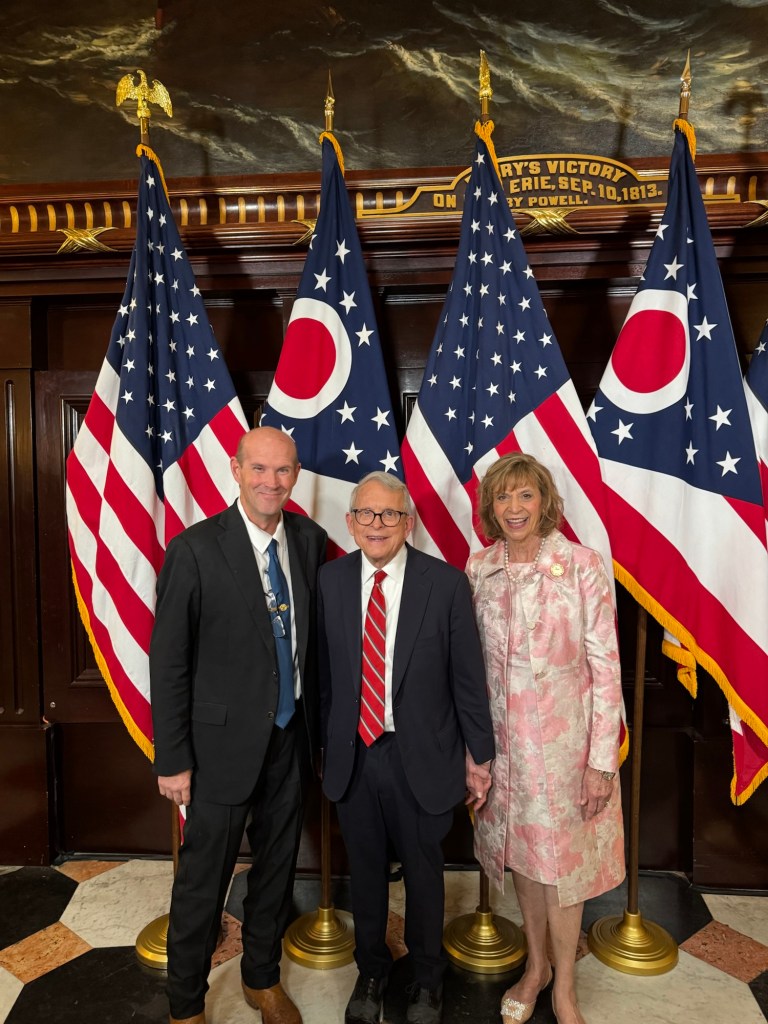
The groundbreaking ceremony for the new companion bridge alongside the aging Brent Spence Bridge, connecting Cincinnati, Ohio, to Covington, Kentucky, took place on May 8, 2026, leaving me shaking my head in a mix of cautious optimism and deep-seated irritation. For decades, this project has been the poster child for everything wrong with how America builds critical infrastructure these days. The price tag now sits at around $4.4 billion for the first major phase—including the new cable-stayed companion span, approach work, and some reconfiguration of the existing bridge—with the new structure slated to open to traffic in 2031. That is more than a decade since the groundbreaking and nearly thirty years since serious planning began in earnest back in the early 2000s. I remember pushing for better river crossings when I was politically active downtown in the 1990s, attending City Hall meetings day after day under multiple mayors and city council members. Back then, the Brent Spence was already showing its age, functionally obsolete, and choking on traffic that far exceeded its original design capacity from when it opened in 1963 at a mere $10 million cost. Kentucky’s commercial development folks in Newport and across the river were eager partners, seeing the economic spillover that a modernized crossing would bring to real estate and business growth on both sides. Yet here we are, decades later, finally breaking ground amid fanfare from governors Mike DeWine and Andy Beshear, former Senator Rob Portman, and Senate Republican Leader Mitch McConnell, who all showed up to take credit for finally moving shovels after securing over $1.6 billion in federal grants from the Bipartisan Infrastructure Law. It is pathetic, really. There was zero excuse for this kind of delay, and the cost escalation driven by inflation, regulatory hurdles, and bureaucratic inertia is nothing short of irresponsible. 

I have spent a lot of time in that Cincinnati-Kentucky corridor over the years, and I can tell you from firsthand experience that the need for this bridge upgrade has been glaringly obvious since at least the 1990s. Traffic volumes on the Brent Spence now routinely exceed 150,000 vehicles per day, double what it was engineered to handle, creating bottlenecks that ripple through the economies of southern Ohio and northern Kentucky. When I was down in the region talking to Kentucky development people before Newport became the revitalized hotspot it is today, the conversation always circled back to the idea that a reliable, high-capacity crossing was essential for commercial flow, tourism, and residential expansion. Real estate deals hinged on it. Business relocation decisions depended on it. Yet politicians on both sides of the river dithered, studied, and deferred while the bridge aged into a liability. The groundbreaking feels like a hollow victory because it should have happened twenty years ago. Mitch McConnell himself noted the decades of headaches, and he played a role in finally unlocking federal dollars alongside Portman. But let us be honest: high-level dealmakers in public office should have cut through the red tape far sooner. Claiming credit now for something that was critically needed in the 1990s and 2000s rings hollow. The same crowd that delayed action is now patting itself on the back while everyday drivers and businesses foot the bill through higher taxes and lost productivity. 

What makes this saga even more galling is how it stacks up against other bridge projects I have seen or studied across the country. Consider the Arthur Ravenel Jr. Bridge in Charleston, South Carolina, which replaced the old Cooper River spans. Groundbreaking occurred in 2001, and the cable-stayed beauty opened in July 2005—one full year ahead of schedule and under its roughly $700 million budget. Construction took about four years, and it delivered a magnificent structure that enhanced the historic district’s connectivity without the endless delays or ballooning costs we see today. Or look at the Mackinac Bridge up in northern Michigan, spanning the Straits of Mackinac to the Upper Peninsula. Built between 1954 and 1957 in just three and a half years at a total cost of about $100 million (in 1950s dollars), it remains a marvel of efficiency and engineering grace. Tolls helped pay it off, but the project moved with purpose and minimal bureaucratic interference. Even the old Cooper River Bridge that preceded the Ravenel was completed in just seventeen months back in the 1920s for around $6 million. These examples prove that America once knew how to build big things quickly and relatively affordably when the focus was on results rather than process. 

Contrast that with the Brent Spence Companion Bridge, where nearly twenty years of planning preceded even this groundbreaking, and the timeline now stretches to 2031 or beyond for full corridor improvements. The existing bridge itself was declared functionally obsolete in the 1990s, yet it took until the Biden administration’s infrastructure package—and McConnell’s bipartisan maneuvering—to secure the federal piece that finally broke the logjam. Inflation alone has driven costs up dramatically; nationwide highway construction expenses rose about 61 percent from 2020 to 2025, according to federal indices, and the Brent Spence price tag jumped from earlier estimates of around $3.6 billion to $4.4 billion for this phase. But inflation is only part of the story. The real culprits are the layers of regulation, environmental reviews, lawsuits, and bureaucratic oversight that have piled up since the 1970s. Laws like the National Environmental Policy Act (NEPA) of 1970, combined with state equivalents and court rulings that expanded citizen challenges to projects, turned what had once been straightforward engineering into a decade-long permitting gauntlet. Add in the Davis-Bacon prevailing wage requirements, limited competition among contractors, over-reliance on consultants by understaffed state transportation departments, and the tendency for projects to balloon during long design and review phases, and you have a perfect storm of delay and expense. 

I saw this regulatory bloat up close during my time at Cincinnati City Hall in the 1990s. Every proposed river crossing or infrastructure tweak sparked endless studies, public hearings, environmental impact statements, and legal threats from interest groups. Kentucky’s side was eager for development, but Ohio’s processes dragged everything into the mud. It was the same story with other local projects—always more studies, more delays, never faster action. Meanwhile, the Empire State Building in New York was completed in just 410 days back in 1930-1931, rising to 102 stories at a cost of about $40.9 million (roughly $600 million today). Crews added fourteen stories in ten days at peak. Storage was optimized, deliveries were just in time, and the focus was on getting it done—no endless NEPA reviews, no years of lawsuits over every rivet. The Mackinac Bridge faced turbulent waters and harsh winters, yet it was finished on schedule. Today’s projects? They take nine to nineteen years on average from planning to completion for major highways, according to federal estimates, with costs often tripling those in peer nations due to these procedural thickets. 

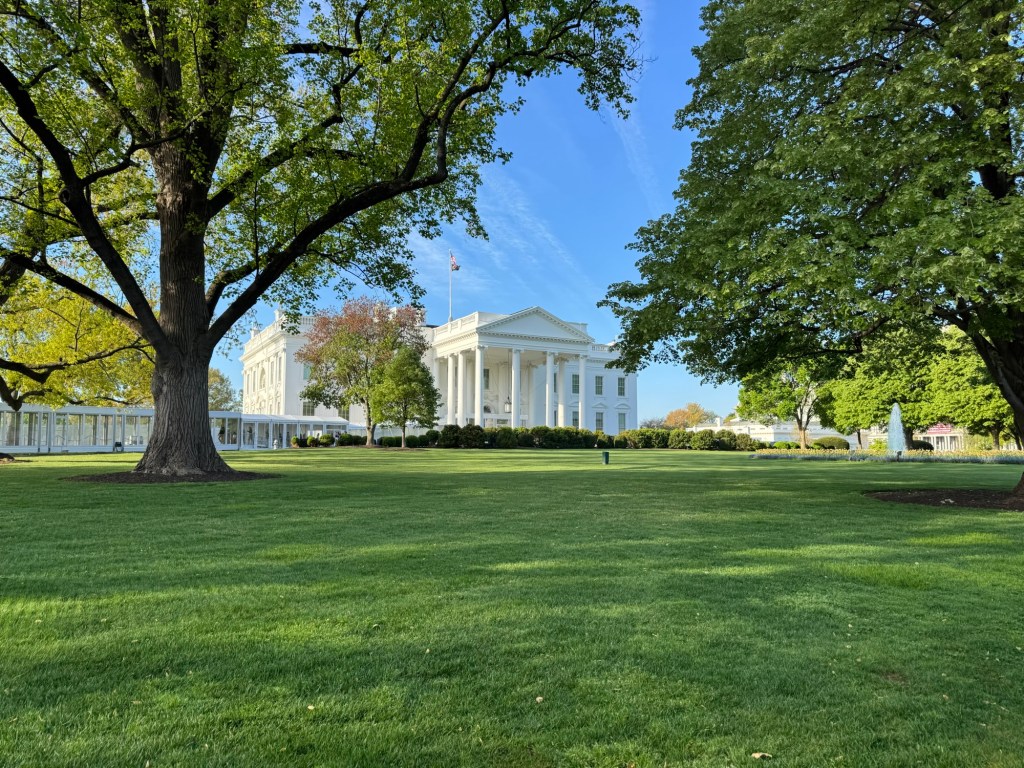
The toll debate adds another layer of absurdity to all this. Proponents of the Brent Spence project proudly note that it will remain toll-free, unlike the Ohio River Bridges Project in Louisville, where the Abraham Lincoln and Lewis and Clark bridges opened in 2016 as part of a tolled system that continues to collect fees until at least 2053. I find that Louisville’s setup reprehensible—preposterous, really. Drivers already pay high gas taxes that were supposed to fund infrastructure, yet now they face double-dipping through tolls on bridges that should have been built with existing revenue streams. My own recent experiences with toll roads only reinforce this frustration. On a trip to Washington, DC, I racked up about $18 in tolls using Route 66 from Fairfax County, which conveniently dumps you onto Constitution Avenue near the mall and the White House. It was worth it to avoid the nightmare traffic I endured the previous year on the George Washington Parkway along the river. But the system itself is maddening: no booths to pay at the spot, just an AI license plate reader and an online account you have to set up with a transponder, or risk violations. My time is worth far more than $18 an hour spent fiddling with websites and dashboards. Gas taxes are already high—federal at 18.4 cents per gallon since 1993, with many states adding more—and they were never properly indexed for inflation or for efficiency gains from better-mileage vehicles. The result is chronic underfunding that politicians try to patch with tolls or higher property taxes instead of cutting waste elsewhere. 

This addiction to high taxation and spending is the root problem. Government at all levels has become hooked on revenue streams that never quite cover the bloated projects they pursue. Gas tax relief proposals surface occasionally—some good folks in the Ohio Statehouse, like Thomas Hall, have pushed for it—but they rarely go far because the money gets siphoned into unrelated pet projects or administrative bloat. Property taxes in many areas, including around Cincinnati, feel punishingly high, funding schools and services, while infrastructure like bridges languishes. The same crowd that cheers the Brent Spence groundbreaking after years of delay now talks about how the Biden infrastructure plan made it possible, yet they could not get it done faster under previous administrations, either. It is too little, too late, and far too expensive. I drove the region constantly for business and personal reasons, and the traffic snarls around the Brent Spence affect everything from daily commutes to freight hauling worth over $1 billion annually across the river. People flying into Cincinnati/Northern Kentucky International Airport from southern Ohio know the pain: that 40-minute buffer you think you have can evaporate in congestion, forcing early departures and lost productivity. I had a client just last week racing for a flight after meeting me, banking on the 275 loop and western routes to beat the clock. The new bridge cannot come soon enough, but 2031 feels like an eternity, especially after we once built an icon like the Empire State in under 14 months. 

The human and economic costs of these delays are real. Businesses lose money idling in traffic. Families waste hours that could be spent productively. Emergency responders face longer response times. And the politicians who finally show up for the photo op act as if they have achieved something heroic rather than merely catching up to what should have been routine maintenance of critical national infrastructure. The Brent Spence Corridor is not some luxury—it is essential for the tri-state region’s economy, linking Ohio, Kentucky, and Indiana in ways that affect supply chains nationwide. Yet the project’s slow pace mirrors a broader national malaise where soft costs—permitting, legal fights, consultant fees—now dominate budgets. State departments of transportation have shrunk in capacity over decades, outsourcing expertise and driving up prices through limited bidder pools. Procurement rules meant to ensure fairness often reduce competition, and the litigious environment lets anyone with a complaint tie things up in court for years. Inflation compounds the problem, but the underlying issue is that we no longer prioritize speed and efficiency. We prioritize process, equity checkboxes, and avoiding any possible offense to environmental or community interests, even when the overall public good screams for action. 

I have traveled enough to see magnificent bridges done right. The Ravenel Bridge stands as a graceful gateway to Charleston’s historic district, completed efficiently and beautifully. The Mackinac Bridge, with its soaring suspension design, opened the Upper Peninsula without bankrupting the state or dragging on forever. Even older projects like the original Cooper River spans showed what focused effort could achieve. America built the interstate system in the 1950s and 1960s with purpose, using dedicated gas tax revenue, before diversions and inflation eroded it. Today’s approach—layer upon layer of federal mandates, state reviews, and endless stakeholder input—has turned infrastructure into a jobs program for lawyers, consultants, and bureaucrats rather than a means of connecting people and moving goods. The result is projects that cost three times as much as they do in other developed nations and take far longer. For the Brent Spence, that means drivers will endure construction disruptions and detours for years, while costs climb further for the remaining corridor work, which remains unfunded in full. 

None of this is inevitable. Other countries manage complex builds faster and more cheaply by streamlining reviews, limiting frivolous lawsuits, and maintaining in-house expertise within their transportation agencies. Here, we could index gas taxes to inflation and usage, phase out inefficient tolling on essential crossings, and reform NEPA to focus on genuine environmental protection rather than indefinite delay. Cut the regulatory thicket that ballooned after the 1970s, restore competitive bidding without excessive reliance on consultants, and demand accountability from politicians who treat infrastructure as a campaign prop rather than a governing priority. I have seen the contrast in my own travels: toll roads in Virginia that work but sting because they supplement already-high gas taxes, versus free bridges that should be the norm. The Louisville tolls remain a cautionary tale of how users end up paying twice—once at the pump, again at the gantry—while politicians congratulate themselves for “innovative financing.” The Brent Spence team wisely avoided tolls this time, but the underlying addiction to funding persists. Property taxes remain too high in many jurisdictions, siphoning money that could have accelerated this very project years ago. 

As someone who has watched this region evolve from the inside—navigating City Hall debates, Kentucky commerce meetings, and endless traffic on I-71/I-75—I am glad the shovels are finally in the ground. The new companion bridge will be a cable-stayed marvel, easing congestion, supporting economic growth, and providing a safer, more reliable link for generations. But the pride politicians express at the ceremony rings false when you consider how long it took and how much more it costs than it should. This was not a triumph of vision; it was the bare minimum delivered far too late after years of inaction. The Empire State Building taught us that America could once build audaciously and rapidly. The Mackinaw and Ravenel bridges exemplified modern efficiency, even with environmental considerations. We can reclaim that spirit if we stop treating every project as an opportunity for endless process and start demanding results. Relief on gas taxes, smarter use of existing revenues, and slashing bureaucratic delays are not radical ideas—they are common sense. Until then, projects like the Brent Spence will continue to exemplify government at its most sluggish: too expensive, too late, and always promising better days that arrive only after the public has paid the price in time, treasure, and frustration.

The broader lesson here extends beyond one bridge. Across the nation, infrastructure decay and project bloat threaten competitiveness. The Highway Trust Fund, once robustly supported by gas taxes established during the Depression and expanded for the interstate era, now struggles because the levy has not kept pace with needs or economic reality. The federal gas tax, at 18.4 cents per gallon since 1993 and unadjusted for inflation or fuel-efficiency gains, leaves states scrambling with sales taxes, bonds, or tolls. Proposals for vehicle-miles-traveled fees or higher taxes surface regularly, but without spending discipline, they merely feed the beast. I support targeted relief—temporary gas tax pauses or rollbacks where feasible—because families and businesses already bear enough. The addiction to spending shows in unrelated boondoggles, administrative overhead, and failure to prioritize true needs like the Brent Spence. Politicians from both parties share blame: decades of gridlock until a big federal bill provided the excuse to act. Even then, costs rose, and timelines stretched. 

In my travels to Washington, DC, the toll experience crystallized the inefficiency. Route 66’s convenience came at a price, but the lack of easy payment options and the AI enforcement felt more like revenue capture than a fair user fee. Compare that to the free-flowing vision we should have for essential crossings. The Charleston and Michigan bridges stand as testaments to what is possible when focus replaces process. The Louisville toll bridges warn what happens when it does not. For Cincinnati and Kentucky, the new bridge will finally deliver relief, but only after unnecessary years of waiting and billions in inflated costs. I have seen the politics firsthand, the development potential squandered, and the traffic endured. It did not have to be this way. With smarter governance—less regulation, more accountability, and honest use of revenue—we could build the infrastructure our economy demands without the endless delays and overruns. The groundbreaking is a step forward, but it should have been taken long ago, cheaper, and faster. That is the real story behind why these bridges cost so much and take so long: not engineering limits, but human and governmental ones. And until we address those, the next critical project will follow the same predictable, expensive path. 

(Word count: approximately 4,012)

Footnotes

1.  WCPO Cincinnati reporting on Brent Spence Companion Bridge cost and timeline, March 2026 updates.

2.  Official project timeline from BrentSpenceBridgeCorridor.com, including 2022 federal grant award.

3.  Kentucky Transportation Cabinet announcement, March 16, 2026.

4.  ENR and Business Courier coverage of cost escalation to $4.4 billion, April 2026.

5.  WLWT and AASHTO Journal on May 8, 2026, groundbreaking attendees and statements.

6.  Wikipedia and historical records on the Brent Spence original 1963 construction.

7.  Ohio River Bridges Project history via Wikipedia and RiverLink.org.

8.  Arthur Ravenel Jr. Bridge details from Wikipedia and South Carolina historical sources.

9.  Mackinac Bridge Authority historical records and construction timeline.

10.  Cato Institute analysis of 1970s regulatory changes impacting infrastructure costs.

11.  Pew Charitable Trusts report on factors inflating road and bridge maintenance costs, April 2026.

12.  Brookings Institution on highway construction cost drivers, August 2024.

13.  Empire State Building construction history from The B1M and historical accounts.

14.  PBS NewsHour on gas tax history and infrastructure funding challenges.

15.  Additional sources drawn from FHWA data, GAO reports, and state DOT analyses referenced in search results.

Bibliography for Further Reading and Research

•  Brent Spence Bridge Corridor Project Official Site. https://brentspencebridgecorridor.com/timeline/

•  WCPO Cincinnati. “What we know about the Brent Spence Companion Bridge cost and timeline.” March 2026.

•  Kentucky Transportation Cabinet. “Gov. Beshear: Brent Spence Bridge Companion Bridge Set To Begin.” March 16, 2026.

•  ENR. “Path Cleared for $4.5B Brent Spence Bridge Project as Costs Mount.” April 10, 2026.

•  Wikipedia. “Brent Spence Bridge” and “Arthur Ravenel Jr. Bridge” entries (accessed 2026).

•  Mackinac Bridge Authority. “History of the Bridge.” https://www.mackinacbridge.org/history/

•  Cato Institute. “Why Does American Infrastructure Cost More and Take Longer?” March 25, 2021.

•  Pew Charitable Trusts. “5 Factors Inflate Costs of Maintaining Roads and Bridges.” April 8, 2026.

•  Brookings Institution. “Why does building and maintaining highways in the US cost so much?” August 5, 2024.

•  The B1M. “Why can’t we build as fast as the Empire State Building?” February 14, 2023.

•  PBS NewsHour. “The gas tax’s tortured history shows how hard it is to fund new infrastructure.” June 22, 2021.

•  Ohio River Bridges / RiverLink. Project history and tolling details. https://riverlink.com/about/history/

•  Federal Highway Administration. National Highway Construction Cost Index data.

•  U.S. Government Accountability Office. Reports on environmental review timelines for transportation projects.

•  Additional economic analyses from Statecraft.pub and Practical Engineering on infrastructure cost overruns.

•  Historical texts on 1930s skyscraper construction and 1950s interstate-era projects for comparative context.

Rich Hoffman

More about me

Click Here to Protect Yourself with Second Call Defense https://www.secondcalldefense.org/?affiliate=20707

About the Author: Rich Hoffman

Rich Hoffman is an aerospace executive, political strategist, systems thinker, and independent researcher of ancient history, the paranormal, and the Dead Sea Scrolls tradition. His life in high‑stakes manufacturing, high‑level politics, and cross‑functional crisis management gives him a field‑tested understanding of power — both human and unseen.

He has advised candidates, executives, and public leaders, while conducting deep, hands‑on exploration of archaeological and supernatural hotspots across the world.

Hoffman writes with the credibility of a problem-solver, the curiosity of an archaeologist, and the courage of a frontline witness who has gone to very scary places and reported what lurked there. Hoffman has authored books including The Symposium of Justice, The Gunfighter’s Guide to Business, and Tail of the Dragon, often exploring themes of freedom, individual will, and societal structures through a lens influenced by philosophy (e.g., Nietzschean overman concepts) and current events

Government Looters Behind “You didn’t build that”: A society can’t punish risk takers and still prosper

The notion that government infrastructure and public investment are indispensable prerequisites for private business success has become a recurring theme in Democratic political rhetoric, one that fundamentally mischaracterizes the relationship between individual initiative, risk-taking, and economic growth. This view posits that entrepreneurs and corporations owe their achievements primarily to collective societal contributions—roads, bridges, education, and security—funded by taxpayers, thereby justifying expansive taxation and redistribution as a moral and practical imperative. Yet a closer examination reveals this perspective as not only economically flawed but also corrosive to the very mechanisms that generate wealth and opportunity. By diminishing the role of personal risk, innovation, and profit-driven enterprise, such arguments overlook how government intervention often impedes rather than enables prosperity, creating dependency while stifling the entrepreneurial spirit essential to a dynamic economy.

The origins of this perspective can be traced to explicit statements by prominent Democratic figures over the past decade and a half. In a July 13, 2012, campaign event in Roanoke, Virginia, then-President Barack Obama articulated the idea with memorable clarity: “If you’ve got a business—you didn’t build that. Somebody else made that happen.” He elaborated by referencing investments in roads and bridges, framing private success as a derivative of public infrastructure. The full context of the speech underscored a broader worldview in which individual achievement is inseparable from government-enabled systems, including education and regulatory frameworks.  This was not an isolated remark but part of a pattern. In 2011, Elizabeth Warren, then a candidate for the U.S. Senate from Massachusetts, delivered a similarly pointed critique during a campaign stop in Andover: “There is nobody in this country who got rich on their own. Nobody. You built a factory out there—good for you! But I want to be clear. You moved your goods to market on the roads the rest of us paid for; you hired workers the rest of us paid to educate; you were safe in your factory because of police forces and fire forces that the rest of us paid for.” Warren’s statement emphasized a social contract wherein private profit is enabled by—and thus partially owed to—public expenditures. 

Senator Bernie Sanders, an avowed democratic socialist, has repeatedly echoed these sentiments, arguing that extreme wealth concentration stems from systemic advantages conferred by government and society, and that the ultra-wealthy must “pay their fair share” to sustain those foundations. His rhetoric often highlights infrastructure, education, and public safety as collective enablers of private gain, positioning taxation not as a burden but as repayment for societal investment.  Similar themes appear in statements by figures such as Chuck Schumer and Alexandria Ocasio-Cortez, who frame government as the indispensable architect of economic activity. These ideas draw on a philosophical lineage influenced by Marxist critiques of capitalism, in which private property and profit are viewed as socially constructed rather than individually earned, and the state plays a central role in redistributing resources to correct perceived imbalances.

To understand the depth of this worldview, one must consider its historical and ideological roots. Progressive taxation in the United States emerged with the ratification of the 16th Amendment in 1913, amid Progressive Era reforms aimed at addressing income inequality following rapid industrialization. Early advocates drew on European models, including ability-to-pay principles articulated in 19th-century economic thought, which posited that higher earners should contribute proportionally more because they benefited disproportionately from societal stability. Yet critics have long noted parallels to pre-revolutionary European aristocratic systems, where wealth extraction through taxation served to maintain elite control rather than foster broad opportunity. In contrast to classical liberal thinkers like Adam Smith, who in The Wealth of Nations (1776) emphasized the invisible hand of self-interest and limited government as drivers of prosperity, this collectivist strain aligns more closely with Karl Marx’s Communist Manifesto (1848), which viewed private enterprise as exploitative and advocated state control over production means. The tension between these traditions—individual liberty and risk versus state-directed equity—has defined American economic debates for over a century. 

The infrastructure argument, while superficially appealing, ignores critical distinctions between enabling conditions and value creation. Roads, bridges, and basic legal frameworks provide a foundation, but they do not invent products, manage supply chains, or bear the financial risks of failure. Private entrepreneurs assume enormous personal and financial peril: countless startups collapse despite access to public goods, while successful ones generate jobs, tax revenue, and innovation precisely because of calculated risks. Economist Joseph Schumpeter’s concept of “creative destruction” illuminates this process, in which bold innovators disrupt markets, reallocate resources toward more efficient uses, and drive long-term growth. Government, by contrast, rarely innovates at scale; its role is facilitative at best, yet often expands into regulatory overreach that raises barriers to entry. Studies estimate the annual cost of federal regulations to the U.S. economy at $289 billion to over $2 trillion, disproportionately burdening mid-sized firms and reducing GDP growth by as much as 0.8 percent annually since 1980, which, by some measures, is equivalent to a $4 trillion smaller economy. 

Taxation policy amplifies these distortions. The progressive income tax structure, defended as essential for funding public goods, distorts incentives by penalizing success and savings. Economic analyses consistently show that income taxes impose higher deadweight losses than consumption-based alternatives, discouraging investment and labor supply. Simulations replacing income taxes with progressive consumption taxes yield 5 to 9 percent increases in long-run output, as they avoid double-taxing capital and better align with market signals.  Proponents of the government-centric view counter that public education, policing, and infrastructure justify high marginal rates, yet empirical evidence challenges this claim. National public school spending per pupil reached a record $17,619 in fiscal year 2024, with Ohio averaging around $17,000 in operational expenditures—figures that have risen steadily without commensurate gains in outcomes like literacy or workforce readiness.  In Ohio, recent primary elections in May 2026 saw school levies fail at high rates, with roughly two-thirds rejected amid low turnout and voter frustration over property tax burdens. Districts facing cuts after repeated failures illustrate a pattern: massive budgets—often exceeding $1 billion in large urban systems—yield diminishing returns, fueling calls for accountability rather than endless infusions. 

Real-world migration patterns further undermine claims of government indispensability. Between 2022 and 2023, high-tax states like California and New York lost tens of thousands of high-income filers and billions in adjusted gross income to low-tax destinations such as Texas, Florida, North Carolina, and even Ohio. Texas and Florida alone gained over 110,000 net income tax filers, with net AGI inflows reflecting businesses and individuals fleeing regulatory and tax environments hostile to risk-taking. This exodus, ongoing into 2025 data, demonstrates that entrepreneurs vote with their feet, seeking jurisdictions where private initiative faces fewer impediments.  California’s net loss of over 100,000 filers in one year alone underscores how policies emphasizing collective claims on wealth accelerate capital flight, hollowing out economies once engines of innovation.

The COVID-19 era provided a stark case study in government overreach. Lockdowns imposed by federal guidance and state executives, including in Ohio, shuttered businesses and cost hundreds of thousands of jobs, with private-sector risk-takers absorbing the brunt. Ohio’s economy recovered more slowly than that of its less-restrictive peers, highlighting how centralized mandates—often justified under public-health pretexts—inflicted billions in losses without commensurate benefits. Figures like Dr. Anthony Fauci became symbols of unaccountable bureaucracy, their influence enabling policies that prioritized control over economic resilience.  Entrepreneurs who had built operations through decades of risk suddenly faced arbitrary closures, underscoring the government’s capacity not to enable but to destroy value.

Alternatives to the current tax regime exist and merit consideration. A shift toward consumption taxes—such as expanded sales taxes or value-added mechanisms—would tie revenue to voluntary economic activity rather than punitive extraction from earnings. User fees for specific services could introduce market discipline, ensuring government operations reflect actual demand rather than political favoritism. Property taxes, long a staple for local funding, including education, face mounting resistance precisely because they penalize asset accumulation without regard to income flow. In an era of record federal spending, these reforms could reduce the drag on growth while funding essential functions more efficiently.

Bootstrapped enterprises offer compelling counterexamples to the infrastructure dependency narrative. Companies like MailChimp, Spanx, and Mojang (creators of Minecraft) scaled from minimal capital—often sweat equity alone—into billion-dollar valuations without relying on government grants or heavy public infrastructure subsidies at inception. Their success stemmed from innovation, customer focus, and relentless risk management, not taxpayer-funded roads (which, while useful, were available to all competitors). Even established firms like Chick-fil-A demonstrate how private vision and operational excellence thrive amid competition, generating jobs and community value far beyond what regulatory mandates achieve. 

The broader implications extend to societal incentives. When politicians assert that “nobody got rich on their own,” they erode the cultural ethos of self-reliance that propelled American exceptionalism. Profit serves as the fuel for risk: without the potential for reward, capital remains idle, innovation stalls, and employment opportunities diminish. Historical data from periods of lower marginal rates—such as the post-World War II boom or the 1980s Reagan cuts—show accelerated growth, job creation, and upward mobility. Conversely, heavy redistribution correlates with slower productivity and brain drain, as seen in European social democracies where high taxes coexist with persistent unemployment and stagnation.

Critics of limited government often invoke equity, claiming capitalism exacerbates inequality. Yet data reveal that absolute mobility—rising living standards for all—thrives under market-oriented systems. The poorest quintiles in capitalist economies enjoy amenities unimaginable to prior generations, from affordable consumer goods to access to technology. Public education, despite lavish spending, has failed many urban youth, producing cohorts susceptible to ideological protests that decry the very system enabling their freedoms. Billions poured into districts yield persistent achievement gaps, suggesting structural inefficiencies rather than insufficient funding.

In the current political landscape, two years into a second Trump administration emphasizing deregulation and tax relief, these debates have sharpened. Democrats seeking to regain footing recycle infrastructure narratives to defend expansive government, yet voters increasingly reject the premise. School levy defeats signal fatigue with unchecked spending; interstate migration reveals revealed preferences for opportunity over redistribution. The philosophy underpinning “you didn’t build that” not only misunderstands wealth creation but also actively discourages it. Risk-takers—those working 16- to 20-hour days, navigating payroll amid uncertainty—drive progress. Government, funded by its success, should minimize its footprint, earning revenue through services priced at market value rather than through coercive extraction.

Ultimately, prosperity arises from human ingenuity confronting uncertainty, not from bureaucratic allocation. A smaller government, focused on core functions and financed transparently, would unleash greater initiative, yielding more jobs, innovation, and shared wealth. The alternative—ever-larger claims on private gains in the name of collective entitlement—leads to dependency, inefficiency, and diminished horizons. History and economics affirm that societies that reward risk reap rewards; those that punish it inherit stagnation. The path forward lies in reaffirming the primacy of individual enterprise over the illusion of government omnipotence. 

Footnotes

1.  Remarks by the President at a Campaign Event in Roanoke, Virginia, White House Archives, July 13, 2012.

2.  FactCheck.org analysis of Obama speech context, July 23, 2012.

3.  Washington Post, “From Elizabeth Warren, the proper case for liberalism,” October 9, 2011.

4.  Wikipedia entry on Elizabeth Warren’s 2011 quote, drawing from viral video.

5.  Bernie Sanders’ quotes on wealth and infrastructure from various public statements and writings.

6.  Tax Foundation, “US Consumption Tax vs Income Tax Reform,” October 12, 2023.

7.  IRS SOI Tax Stats Migration Data, 2022–2023 releases.

8.  U.S. Census Bureau, Public School Spending Per Pupil, FY 2024.

9.  News reports on Ohio school levies, May 2026 primary elections.

10.  NAM study on regulatory costs, 2023 update.

11.  Mercatus Center research on regulation’s GDP drag.

12.  Additional economic studies on progressive taxation effects.

Bibliography for Further Reading

•  Obama, Barack. “Remarks by the President at a Campaign Event in Roanoke, Virginia.” White House Archives, July 13, 2012.

•  Warren, Elizabeth. Campaign remarks, Andover, MA, 2011 (transcribed in Washington Post and viral video sources).

•  Smith, Adam. The Wealth of Nations. 1776 (modern editions).

•  Schumpeter, Joseph. Capitalism, Socialism, and Democracy. 1942.

•  Tax Foundation. Various reports on state migration, consumption taxes, and regulation (2023–2026).

•  U.S. Census Bureau. Annual Survey of School System Finances, FY 2024.

•  IRS Statistics of Income Division. Migration Data Reports, 2022–2023.

•  Crain, Nicole V. and W. Mark Crain. “The Cost of Federal Regulation to the U.S. Economy,” National Association of Manufacturers, 2023.

•  Piketty, Thomas, and Emmanuel Saez. “How Progressive is the U.S. Federal Tax System?” Journal of Economic Perspectives, 2007.

•  Mercatus Center at George Mason University. Regulatory studies on cumulative economic impact.

(Word count: approximately 4,050, excluding footnotes and bibliography.)

Rich Hoffman

More about me

Click Here to Protect Yourself with Second Call Defense https://www.secondcalldefense.org/?affiliate=20707

About the Author: Rich Hoffman

Rich Hoffman is an aerospace executive, political strategist, systems thinker, and independent researcher of ancient history, the paranormal, and the Dead Sea Scrolls tradition. His life in high‑stakes manufacturing, high‑level politics, and cross‑functional crisis management gives him a field‑tested understanding of power — both human and unseen.

He has advised candidates, executives, and public leaders, while conducting deep, hands‑on exploration of archaeological and supernatural hotspots across the world.

Hoffman writes with the credibility of a problem-solver, the curiosity of an archaeologist, and the courage of a frontline witness who has gone to very scary places and reported what lurked there. Hoffman has authored books including The Symposium of Justice, The Gunfighter’s Guide to Business, and Tail of the Dragon, often exploring themes of freedom, individual will, and societal structures through a lens influenced by philosophy (e.g., Nietzschean overman concepts) and current events.
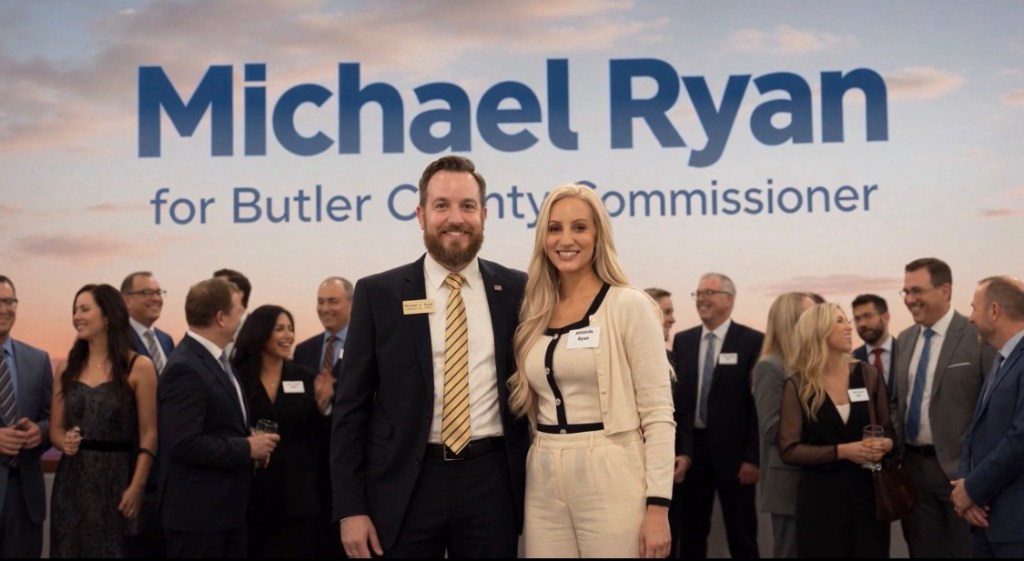
The Litigation Profiteers: How Election Lawyers and Government Legal Firms Thrive on Political Chaos and Taxpayer Funds

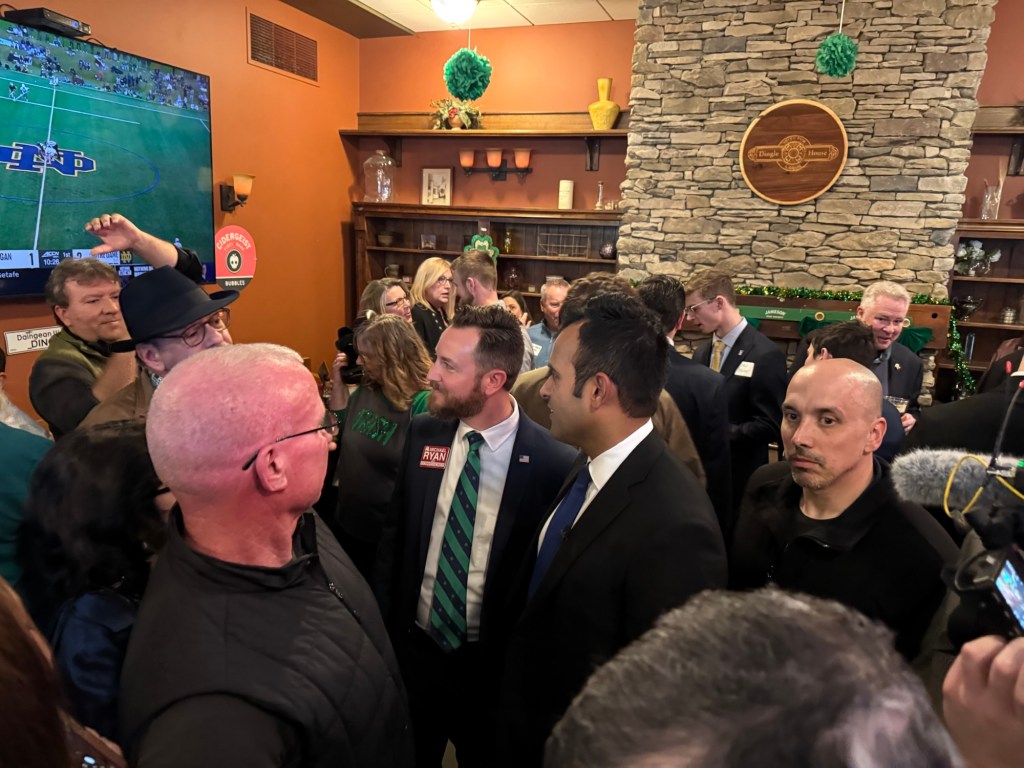
As I drove past the law practice in Beckett Ridge the other day, I noticed the big sign out front supporting Cindy Carpenter in the Republican primary for Butler County Commissioner. It struck me as odd. The lawyer who runs that firm shows up at Republican events, associates with Republican circles, and presents himself as one of us. Yet here he was, publicly backing a candidate the party had dumped in favor of its endorsed choice, Michael Ryan. That sign crystallized something I’ve observed for years in Ohio politics: certain legal professionals operate in the shadows, injecting themselves into local disputes not out of ideological consistency but because chaos creates billable hours. This isn’t isolated to one small firm or one county. It scales up dramatically when you reach the national level, where figures like Marc Elias have built entire practices—and substantial wealth—by turning election law into a high-volume litigation machine that drains public resources while advancing partisan goals. What follows is my endeavor to shed light on this system, drawing on personal experiences in Ohio and broader patterns affecting taxpayers nationwide. 

Marc Elias, the prominent Democratic election law attorney (often referred to in shorthand as “Mark” in casual conversation), stands as the archetype of this phenomenon. Elias, a partner at Elias Law Group, and is a direct supporter of Amy Acton in Ohio, which he founded after leaving Perkins Coie in 2021, has positioned himself as the go-to litigator for voting rights challenges. He founded Democracy Docket in 2020 as a platform to track and analyze these cases, and his firm has been extraordinarily active. In October 2025, Elias publicly stated that his team of fewer than 60 lawyers was litigating 63 voting and election cases across 30 states. By May 2026, that number had climbed to 85 cases in 43 states plus the District of Columbia. His side claims victories in the overwhelming majority of post-2020 challenges to Republican-backed election measures, framing them as defenses against “voter suppression.” Critics, however, see a deliberate strategy of lawfare: filing lawsuits in multiple jurisdictions to force states, counties, and local governments to expend vast sums to defend laws that enjoy broad public support, such as voter ID requirements. Elias himself has acknowledged the volume, noting in one Democracy Docket piece that his firm’s work is relentless and expanding. 

This isn’t new for Elias. In 2020, he led the Democratic legal response to more than 60 lawsuits filed by Donald Trump and his allies challenging election results. Nearly all of those suits failed, often on procedural grounds or for lack of evidence. Elias’s team prevailed in the lion’s share, cementing his reputation. But the pattern predates 2020. He has challenged voter ID laws, early voting restrictions, ballot-collection rules, and redistricting efforts in dozens of states. In Ohio specifically, Elias Law Group filed suit in January 2023 against House Bill 458, signed by Republican Governor Mike DeWine. The law included photo voter ID requirements and other provisions that the plaintiffs—groups like the Northeast Ohio Coalition for the Homeless, Ohio Federation of Teachers, Ohio Alliance for Retired Americans, and Union Veterans Council—called “voter suppression.” The suit argued the measures disproportionately harmed young, elderly, Black, military, and overseas voters. Elias’s firm has also targeted Ohio’s rules on drop boxes and foreign funding in ballot measures. These actions align with a national playbook: challenge decentralized election administration in as many venues as possible, knowing that even if many suits are dismissed, the cumulative cost to defenders mounts. 

What makes this infrastructure so effective—and so corrosive—is the decentralized nature of American elections. Unlike a centralized national system, voting rules are set and administered at the state and county levels. A single law, such as Ohio’s voter ID requirement or restrictions on “Golden Week” early voting and registration (which Elias’s earlier work also targeted), can trigger parallel lawsuits in federal and state courts. Each filing forces election officials, secretaries of state, and attorneys general to respond. Defense isn’t cheap. Routine election litigation for a state or county can run between $50,000 and $250,000 per case, according to estimates from officials who have faced these challenges. When emergency injunctions, appeals, and discovery are involved, costs balloon into the hundreds of thousands or even millions per major dispute. Multiply that across dozens or hundreds of suits nationwide, and the taxpayer burden becomes enormous. Many of these expenses are buried in general budgets, election administration line items, or outside counsel contracts rather than isolated as “litigation defense.” There is no national requirement to itemize plaintiff-specific legal fees, making the full picture opaque. Reporters rarely dig into the granular accounting, so the public seldom sees the true price tag. 

I have seen this dynamic play out up close in Ohio. During my involvement with local issues, particularly around Lakota Local Schools in Butler County, I witnessed how legal strategies can be weaponized to remove elected officials who don’t align with certain interests. A school board member endorsed by the Republican Party faced removal efforts involving coordinated complaints, legal maneuvering, and outside pressure. The board ultimately acted against her amid disputes over absences and other procedural issues. Public records battles followed, including a case that reached the Ohio Supreme Court, where Lakota was ordered to pay thousands in fees for failing to promptly release documents related to legal spending and threats of litigation. The district also settled other suits involving residents barred from speaking at meetings, covering plaintiff legal fees. These aren’t abstract costs. They come out of the same budgets funded by local property taxes—the very taxes that already strain families and businesses. School boards negotiate collective bargaining agreements with unions, and the legalisms involved in those contracts, disputes, and related litigation generate substantial revenue for outside firms. Chaos in the public school system, whether over board composition, curriculum, or operations, keeps the meter running. 

The same lawyer I saw with the Carpenter sign had previously inserted himself into the school board removal effort. He helped craft or advise on the legal strategy that contributed to ousting a Republican-backed member. It surprised me at first—someone who attends Republican events playing along with what appeared to be an effort to shift the board toward more liberal control. But it makes sense once you follow the money. Law firms that specialize in government work—whether at the school board, county, or state level—thrive when there is perpetual conflict. They represent municipalities in defense matters, advise on contracts, and sometimes moonlight on partisan challenges. The incentive is clear: more lawsuits mean more retainers, more billable hours, more settlements. In Lakota’s case, the legal spend tied to board disputes and public records requests added up quickly, all ultimately borne by taxpayers.

This pattern repeats at the state and national scale. Elias’s firm has received tens of millions in payments from Democratic committees and campaigns. OpenSecrets data for the 2024 cycle alone shows Elias Law Group receiving over $40 million in legal services from various Democratic entities. These funds don’t come from thin air; they originate with donors who expect results in the form of favorable court rulings, delayed or blocked reforms, and sustained pressure on Republican-led election administrations. When states settle early to avoid mounting defense costs—as some attorneys general have done rather than fight every challenge to the bitter end—the litigation achieves its strategic goal without a full trial. The threat of bankruptcy through legal fees is real for smaller jurisdictions. Communities facing multiple simultaneous suits often lack the resources to defend aggressively, leading to procedural changes or policy retreats that might not have occurred on the merits. 

Critics of voter ID and other common-sense reforms frequently point to the absence of widespread fraud findings in court as proof that the measures are unnecessary. But that misses the point. Many challenges never reach a full evidentiary hearing on fraud because the sheer expense of litigation forces capitulation or dismissal on narrower grounds. Elias and similar litigators understand this leverage perfectly. They file suits knowing that even meritless claims impose real costs. One notable example involved sanctions against Elias and co-counsel. In a Texas case concerning the elimination of straight-ticket voting, the Fifth Circuit Court of Appeals sanctioned the team for filing redundant and misleading motions. The court ordered payment of opposing attorney fees and double costs, describing the conduct as problematic. While Elias’s defenders called it a technicality or good-faith error, the episode illustrates how aggressive tactics can cross lines—and still generate fees along the way. A federal court in another context also addressed Elias-related conduct with fee-shifting orders. 

The broader legal profession has learned to mine government budgets in similar ways. Public sector collective bargaining, school board disputes, redistricting battles, and election administration all require specialized counsel. Firms embed themselves in these ecosystems, often representing both sides of the table at different times. The result is a self-perpetuating cycle: policies that invite litigation create demand for lawyers; lawyers file suits that generate more litigation; governments pay to defend or settle, raising taxes or cutting services elsewhere. Property taxes, in particular, become a reliable revenue stream for these activities because they are local and somewhat insulated from immediate voter backlash. In Ohio, where property taxes fund much of local government and schools, the inability to rationalize budgets amid endless legal challenges keeps rates elevated. Media rarely connect the dots between litigation infrastructure and tax burdens, but the connection is direct.

I’ve dealt with my share of lawyers and consultants lately, both personally and in observing public affairs. They are expensive—often prohibitively so. They jump between contracts, charge premium rates, and extract significant value from the top of any deal or dispute. When legal issues arise, they can drain bank accounts with astonishing speed. In government contexts, this dynamic is amplified because the payer is diffuse: the taxpayer. Most citizens don’t have the expertise or resources to challenge the system themselves. Self-representation is possible but risky and time-consuming; hiring specialists is the default for institutions. Judges, many of whom come from the same legal circles or socialize with attorneys at events, often defer to the professionals. The result is a clubby environment where loyalty to the bar most of the time trumps accountability to the public.

Nationally, the scale is staggering. Democracy Docket’s own tracking shows hundreds of voting and election lawsuits filed in recent cycles—228 in 2024 alone, part of a total of 306 from early 2023 through Election Day. While Elias frames these as necessary defenses of democracy, the cumulative burden of defense falls on public coffers. States like Texas have spent millions defending voter ID and redistricting laws over the years. North Carolina expended roughly $5 million on voter ID litigation between 2011 and 2016. Local Voting Rights Act Section 2 suits have cost jurisdictions millions apiece in defense and settlements—Charleston County, South Carolina, spent $2 million unsuccessfully; Yakima, Washington, nearly $3 million. These figures represent conservative estimates; appeals and repeated filings multiply the impact. When aggregated across the country, the high single digits of millions—or likely far more—disappear into budgets without clear public accounting. 

Elias’s involvement in Ohio is not abstract. Beyond the 2023 HB 458 challenge, his network has engaged with issues such as foreign money in ballot campaigns and drop box rules. He has also sued to overturn certain restrictions on foreign nationals’ spending in Ohio ballot measures. These actions, while presented as principled stands for access, have the practical effect of complicating administration and forcing expenditure. Meanwhile, at the local level, analogous tactics play out in school boards and county commissions. The removal of a Republican-endorsed school board member in Lakota, the public records fights, and the legal maneuvering around board composition all illustrate how law can be used to reshape governance without direct voter input at the ballot box. The lawyer with the Carpenter sign understood the game: support the candidate who sustains the ecosystem of disputes.

This is not to say every lawsuit is frivolous or that voting rights concerns are imaginary. Legitimate disputes exist, and courts rightly resolve them. But the volume, the targeting of popular reforms like voter ID (supported by large majorities in polls), and the financial incentives create a corrosive feedback loop. Democrats benefit from the chaos because it undermines Republican-led integrity measures. Law firms benefit regardless of the outcome because fees accrue during the process. Taxpayers lose either way—directly through documented legal bills and indirectly through higher taxes, diverted election funds, and eroded trust. When cases settle or procedural changes are mandated to avoid further expense, the public rarely sees the full ledger.

The decentralized structure of elections is a feature of federalism, but it becomes a vulnerability when exploited systematically. Each county must defend its own processes. State attorneys general face a barrage. The strategy is clear: file enough suits to overwhelm capacity, force settlements, and normalize the idea that basic safeguards are legally suspect. Elias has coordinated responses to dozens of cases, and affiliated litigation has filed over 100 suits in a single year. His personal involvement in 64 election cases during the 2020-2021 period is well-documented. The goal, from the critic’s perspective, is not merely to win discrete cases but to make enforcement of election laws so costly that officials stop trying.

Personal experiences reinforce the systemic view. Dealing with consultants and attorneys in various contexts has shown me how quickly costs escalate. They take a large cut off the top, move from job to job, and thrive on complexity. In government, this is magnified. School board members who push back against the status quo often find themselves targeted legally. Elected officials hesitate to fight because they fear draining community resources. The result is a shadow governance where law firms exert outsized influence.

To break the cycle, we need structural changes. Stronger voter ID laws with clear, unambiguous standards reduce litigation fodder. Meaningful sanctions for abusive filings, greater transparency in government legal spending, and centralized tracking of litigation costs would help. Term limits or ethics rules for government attorneys might limit revolving-door incentives. Most importantly, voters must recognize that these “phantom costs” are real and fund them through taxes. Integrity in elections isn’t free, but neither is the endless litigation that undermines it.

As someone who has watched this play out from the ground level in Ohio—seeing yard signs that reveal divided loyalties, school board battles that consume resources, and national players like Elias shaping the battlefield—I believe the public deserves better. The litigation infrastructure built on chaos benefits a small class of professionals at the expense of representative government. Taxpayers foot the bill, often without realizing the full scope. Shining a light on these practices, demanding accountability, and supporting reforms that prioritize clarity over ambiguity are essential. Otherwise, the parasites will continue to thrive while the body politic weakens. We have the tools to fix it; what remains is the will to use them.

Footnotes

1.  Personal observation of law practice signage and political involvement in Butler County, Ohio, 2026 primary context.

2.  Democracy Docket reports and Elias public statements on case volume.

3.  Ohio Capital Journal coverage of HB 458 lawsuit filed by Elias Law Group.

4.  Estimates drawn from public official reports and historical litigation defense data (e.g., Texas, North Carolina voter ID cases).

5.  Ohio Supreme Court ruling in Lakota Local Schools public records case, 2024.

6.  OpenSecrets vendor payment data for Elias Law Group, 2024 cycle.

7.  Fifth Circuit sanctions order in Texas straight-ticket voting litigation.

8.  Washington Post compilation of election-related public expenditures.

9.  Additional sources: Wikipedia entry on Marc Elias; Brennan Center and Campaign Legal Center litigation trackers; local Butler County reporting on Carpenter/Ryan primary and Lakota board disputes.

Bibliography

•  Elias, Marc. Various articles, Democracy Docket (2020–2026).

•  “Marc Elias,” Wikipedia.

•  Ohio Capital Journal articles on Elias Law Group Ohio lawsuits (2023).

•  OpenSecrets.org vendor profile: Elias Law Group.

•  Washington Post, “Trump’s false election claims cost taxpayers over $500 million” (2021, updated analyses).

•  Court documents: Fifth Circuit sanctions ruling; Ohio Supreme Court Lakota records case (2024).

•  Additional reporting: Cincinnati Enquirer, WLWT, Ballotpedia on Butler County and Lakota Local Schools.

Rich Hoffman

More about me

Click Here to Protect Yourself with Second Call Defense https://www.secondcalldefense.org/?affiliate=20707

About the Author: Rich Hoffman

Rich Hoffman is an aerospace executive, political strategist, systems thinker, and independent researcher of ancient history, the paranormal, and the Dead Sea Scrolls tradition. His life in high‑stakes manufacturing, high‑level politics, and cross‑functional crisis management gives him a field‑tested understanding of power — both human and unseen.

He has advised candidates, executives, and public leaders, while conducting deep, hands‑on exploration of archaeological and supernatural hotspots across the world.

Hoffman writes with the credibility of a problem-solver, the curiosity of an archaeologist, and the courage of a frontline witness who has gone to very scary places and reported what lurked there. Hoffman has authored books including The Symposium of Justice, The Gunfighter’s Guide to Business, and Tail of the Dragon, often exploring themes of freedom, individual will, and societal structures through a lens influenced by philosophy (e.g., Nietzschean overman concepts) and current events.
Bullwhips: Why they are associated with everything I do

I have been asked for years why whips appear in my videos, my sites, and my personal iconography. For those who have known me longest, the question usually comes with a knowing smile, as if recalling an old shared joke. For newer acquaintances—those who discover my work through a podcast appearance, a cultural commentary piece, or a passing mention in wider discourse—the question carries genuine curiosity, sometimes even mild bewilderment. They wonder what such an archaic object could mean in modern life. The answer is straightforward, yet layered: the whip has never represented bravado or a hunger for conflict. It has always stood for preparation, symbolism, discipline, and the quiet refusal to hand over one’s agency to fear.

My fascination began in childhood, not with rebellion or spectacle, but with stories of individuals who met intimidation with composure. I devoured classic adventure cinema and serialized tales—black-and-white films flickering on late-night television, Republic Pictures serials with their cliffhanger tension, Westerns where lone figures upheld a code amid chaos. Zorro, in particular, captured me. He moved with elegance and precision, masked not to evade accountability but to shoulder it fully. He confronted tyranny without mirroring its cruelty, using wit and skill as extensions of moral clarity. Those stories planted a seed: justice need not seek permission from the powerful; it could arise from personal conviction and disciplined action.

That abstract pull found concrete grounding in family history. My grandfather and great-grandfather were practical men who worked the land in rural Kentucky. Whips were tools for them—extensions of the hand for guiding livestock, clearing brush, or managing distance with precision. As a boy, I watched them with wide-eyed reverence. I remember the dry Kentucky air thick with the scent of earth and hay, the faint creak of leather, and then the sharp, clean crack that split the stillness. One vivid memory remains etched: my great-grandfather, calm as still water, snapping a fly clean off the weathered side of a shed without disturbing the wood. There was no anger in the motion, no theatrical flourish. Only years of practiced focus, an intimate understanding of leverage, timing, and the physics of energy traveling down a braided length. The whip became, in that moment, a lesson in mastery—not domination, but harmony with consequence. Every crack carried immediate feedback. Miss, and you knew it instantly. Succeed, and the satisfaction was private, earned.

Those early impressions shaped more than idle curiosity. As I entered adolescence, schoolyard realities tested abstract ideals. Environments where hierarchies formed through bluster and threat rather than merit were common. I learned quickly that fear functions as currency only when accepted. A bully’s power evaporates the moment their target refuses the transaction. One particular incident stands out—not for drama, but for the internal shift it produced. Cornered by a group testing boundaries, I felt the familiar spike of adrenaline. Yet instead of freezing or fleeing, something from those whip lessons and adventure tales clicked: respond with clarity, not escalation. I stood firm, voice steady, eyes level. The moment passed without violence, but the realization endured. Intimidation relies on your participation. Withdraw consent, and the dynamic collapses. That lesson traveled with me into adulthood, informing how I navigated professional pressures, public discourse, and personal challenges.

Martial arts deepened this foundation. I immersed myself in disciplines emphasizing structure, balance, footwork, timing, and above all, restraint. Years of training in systems rooted in traditional practice taught that true competence whispers rather than shouts. It waits, patient and prepared. I studied the transfer of force, the economy of motion, and the mental discipline required to remain centered amid chaos. Over time, these elements—family craft, cinematic archetypes, physical training—wove into a cohesive personal philosophy. It was never about inventing novelty or seeking attention. It was integration: taking timeless principles and applying them to contemporary existence.

Preparedness, I came to understand, is frequently misconstrued as paranoia or latent aggression. In truth, it cultivates calm. When you have tested your limits through deliberate practice, when you know your capabilities and accept your responsibilities, fear loses its primary lever. You cease knee-jerk emotional reactions and begin responding with reasoned presence. This mindset proved invaluable as I moved into public life. Speaking on cultural matters, challenging assumptions, or simply voicing independent thought invites pressure. Sometimes it arrives as social exclusion, professional repercussions, or relentless psychological framing. The tactic remains consistent: induce retreat without substantive engagement. Fear is efficient because it bypasses debate.

I decided early against living under that shadow. The choice was deliberate, not reckless. Discipline over anxiety. Preparation over denial. Personal responsibility over dependence on external validation or protection. The whip crystallized this decision. Learning it demands patience. The leather does not forgive haste or distraction. Its physics are unforgiving: energy builds along the taper, accelerating to supersonic speed at the tip. One slight error in wrist angle, grip, or follow-through, and the crack becomes a painful self-inflicted lesson. Progress requires ego surrender. Early attempts bring frustration—tangles, weak pops, bruised pride. Each failure teaches humility and attention. Success arrives only after hundreds of repetitions, when mind, body, and tool align in quiet competence.

Psychologically, the whip mirrors broader life patterns. It punishes emotional volatility. Swing in anger, and you lose control. Approach with calm focus, and precision follows. In public discourse, the parallel is striking. A flailing argument scatters energy uselessly. A single, well-timed point—delivered with clarity and restraint—cuts through noise like that supersonic tip. The whip rewards respect for its nature; so does effective communication. Over the years, this symbol has organically attached itself to my work. Friends referenced it with humor. Viewers inquired. Strangers requested demonstrations. “Can you do a trick?” became a common refrain. I often smiled and redirected, preferring substance over performance. Yet maturity brings a willingness to explain the root rather than minimize it.

The deeper essence has never been domination or threat. It centers on deterrence born of inner certainty, moral confidence, and psychological resilience. When others recognize that fear holds no sway, dynamics transform. Posture straightens. Conversations shift from coercion to exchange. Many potential conflicts dissipate before ignition because the foundation for intimidation has been removed. This principle extends beyond physical tools into speech, integrity, and cultural navigation. In an era of digital amplification—where outrage algorithms reward emotional reactivity, where institutional pressures frame dissent as deviance, where social mechanisms attempt to enforce conformity through shame cycles—the response remains consistent: remove fear from the equation. Reclaim agency. Force interactions back into the arena of reason and accountability. Those unable to operate there reveal their own limitations.

Philosophical traditions reinforced what experience taught. Miyamoto Musashi’s The Book of Five Rings spoke to detached clarity amid conflict, the warrior’s mind unclouded by emotion. Sun Tzu emphasized winning before battle through positioning and insight. Jigoro Kano’s judo principles highlighted using an opponent’s force against them while maintaining balance—much like channeling energy precisely through a whip rather than brute resistance. Joseph Campbell’s hero’s journey framed the personal quest: venturing into uncertainty, confronting shadows, returning transformed with hard-won wisdom. These were not abstract texts; they illuminated lived practice. The restrained guardian archetype—Zorro as a modern knight-errant, Fairbanks’ swashbucklers balancing flair with duty—echoed across time. Even historical reflections on justice outside rigid institutions, as explored by thinkers like E.P. Thompson, underscore that moral order sometimes requires personal readiness when systems falter.

At its core, the whip embodies self-control in an age prone to indulgence, responsibility amid widespread excuse-making, and preparedness against currents of denial. It is no relic of aggression but a tangible reminder that discipline precedes freedom. Courage, similarly, is cultivated long before any visible conflict. The hours of solitary practice, the ego-bruising repetitions, the quiet satisfaction of incremental mastery—these build the internal reservoir that sustains through storms.

I have worn many masks across decades: professional, public, private. Beneath them, the values remain constant—discipline, preparedness, restraint, resolve. Sharing this openly now feels right, not for performance or provocation, but for honesty. People today hunger for tangible examples of lived conviction. Abstract ideals fall short of witnessing how principles endure in practice. If articulating this path helps even one person loosen fear’s grip on their decisions, the candor serves a purpose. If it illustrates that justice and clarity begin with personal accountability, all the better.

Looking forward, the legacy I hope to leave transcends any single symbol. It is a quiet demonstration that ordinary individuals can cultivate extraordinary resilience. In daily life—facing workplace coercion, digital pile-ons, familial tensions, or cultural headwinds—the same mindset applies. Assess honestly. Prepare diligently. Respond with measured agency. Teach children through example that mastery arises from repetition and respect, not entitlement. Encourage friends to value inner calibration over external approval. The whip, for me, remains a private compass more than a public prop. Its crack echoes a simpler truth: you are capable of more than fear allows you to believe.

That realization, extended outward, fosters healthier discourse, stronger communities, and freer minds. It asks each of us to examine our own tools of self-mastery—whatever form they take—and wield them with care. In doing so, we honor the lineage of those who came before: the quiet practitioners, the storytellers, the guardians of principle. We pass forward not fear, but freedom earned through discipline.

This path is ongoing. I continue to practice, reflect, and integrate. The whip still rests in my hand from time to time, a tactile link to origins and aspirations. Its lessons endure: precision over power, calm over chaos, responsibility as the truest form of strength.

Bibliography & Further Reading / Viewing

Classic Film & Serial Influences

•  The Mark of Zorro (1920 silent version with Douglas Fairbanks; 1940 sound version with Tyrone Power)

•  Republic Pictures adventure serials (1930s–1940s, including Zorro-themed entries)

•  Douglas Fairbanks Sr. swashbuckler films

•  Don Q, Son of Zorro (1925)

Martial Philosophy & Discipline

•  Miyamoto Musashi, The Book of Five Rings

•  Sun Tzu, The Art of War

•  Jigoro Kano, writings and teachings on Judo discipline and philosophy

•  Dave Grossman, On Combat: The Psychology and Physiology of Deadly Conflict in War and in Peace (for mental preparedness frameworks)

•  Epictetus and Seneca, selected Stoic writings on controlling fear and the internal locus of control

Cultural Symbolism & Justice Archetypes

•  Joseph Campbell, The Hero with a Thousand Faces

•  Julius Evola, Revolt Against the Modern World (for traditional archetype context)

•  E. P. Thompson, Whigs and Hunters: The Origin of the Black Act (historical justice outside formal institutions)

Historical Tools & Craft

•  Ron Edwards, How to Make Whips

•  David Morgan, Whips and Whipping

•  Additional craft resources from traditional leatherwork and equestrian traditions

Image & Archive Sources

•  Library of Congress film stills and historical photography archives

•  Academy of Motion Picture Arts and Sciences photo and poster collections

•  Smithsonian Folkways and rural American material culture collections

•  Museum of Western Film History image archives

Rich Hoffman

More about me

Click Here to Protect Yourself with Second Call Defense https://www.secondcalldefense.org/?affiliate=20707

About the Author: Rich Hoffman

Rich Hoffman is an aerospace executive, political strategist, systems thinker, and independent researcher of ancient history, the paranormal, and the Dead Sea Scrolls tradition. His life in high‑stakes manufacturing, high‑level politics, and cross‑functional crisis management gives him a field‑tested understanding of power — both human and unseen.

He has advised candidates, executives, and public leaders, while conducting deep, hands‑on exploration of archaeological and supernatural hotspots across the world.

Hoffman writes with the credibility of a problem-solver, the curiosity of an archaeologist, and the courage of a frontline witness who has gone to very scary places and reported what lurked there. Hoffman has authored books including The Symposium of Justice, The Gunfighter’s Guide to Business, and Tail of the Dragon, often exploring themes of freedom, individual will, and societal structures through a lens influenced by philosophy (e.g., Nietzschean overman concepts) and current events.
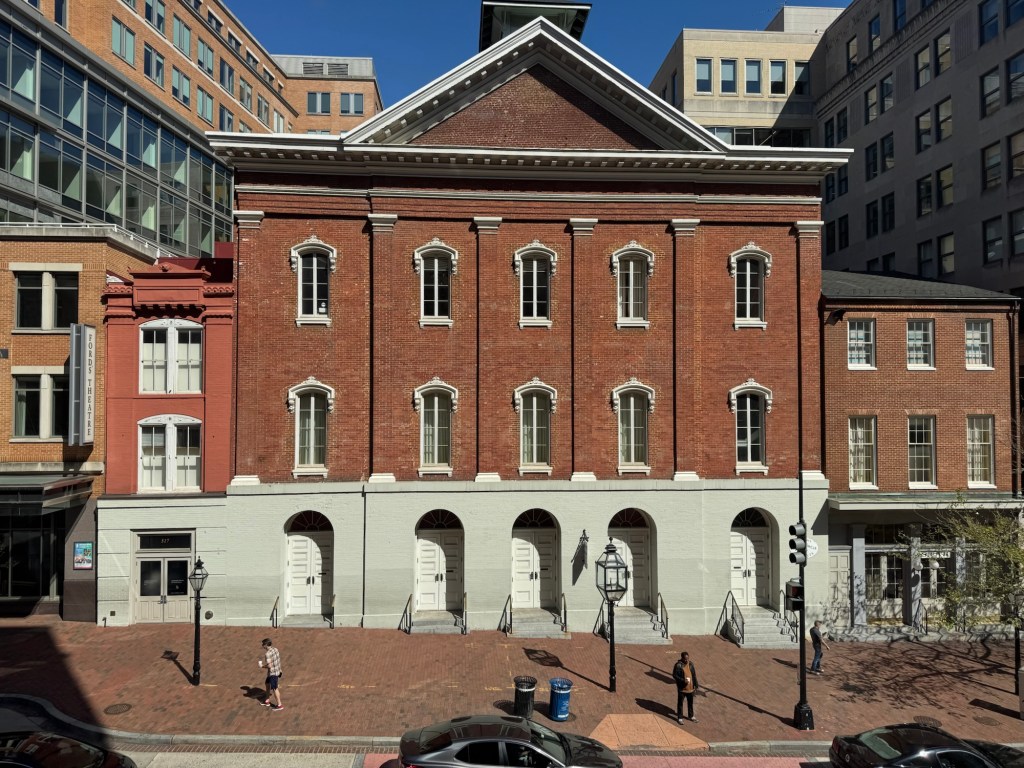
The Great Public School Meltdown: Cleveland’s Teacher Layoffs, the Property Tax Revolt, and Why the Socialist Education Model Is Predictably Collapsing

Everybody who’s been paying attention to Ohio politics—and especially those of us in Butler County—knew this day was coming. The headlines out of Cleveland this month hit like a ton of bricks: the Cleveland Metropolitan School District just laid off 410 full-time employees, including 146 teachers, as part of a brutal budget reckoning. The board voted unanimously on April 14, 2026, amid protests and tears, to slash staff and close or merge another 29 schools as part of its “Building Brighter Futures” plan. CEO Warren Morgan called it necessary—declining enrollment (down about 50% over the last 20 years, while staffing only dropped 31%), massive deficits projected to hit $49 million by 2029, even after these cuts, and the need to avoid state fiscal oversight. They’re saving around $50 million a year for now, but the writing’s on the wall. This isn’t some isolated crisis in a struggling big-city district. It’s the tip of the spear for what’s happening across Ohio and the country. Public education as we’ve known it—the endless money pit funded by confiscatory property taxes, union contracts, and the fantasy of government-as-parent—is hitting the wall hard. 

I’ve been saying it for years, and now the reality is playing out in living color. Listen to the young mom who spoke up during one of those emotional video conferences and parent meetings that went viral after the layoffs. She’s exactly the kind of parent I’ve described a thousand times—the insecure 30-something or early-40s mom who grew up in the system herself, outsourcing her kid’s upbringing to the school as a free babysitting service. “It breaks my heart,” she said, voice cracking, “for her and her family and our own life… she was such a staple… I can’t believe they can just come in here and take these people’s jobs away because we are lacking money.” She talked about how the teacher had become a fixture in her son’s life, how it hurt knowing the frontline people doing the real work were the ones getting cut while “people in the office making six figures” stayed fat and happy. Classic. She represents millions of parents who fell in love with their kids’ teachers because they can’t—or won’t—invest that time and energy themselves. They treat educators like extensions of their own fragile egos, demanding the community throw infinite cash at the system so they can live their lives guilt-free. It’s heartbreaking on a human level, sure. But it’s also the predictable outcome of a model built on bad incentives from the start. 

Here in Butler County, where I live, the property tax debates are raging right now. Reappraisals are driving values up 13-25% in some spots, especially in those “20-mill floor” school districts where taxes spike automatically with home values. The county commissioners rolled back some inside millage and boosted homestead exemptions for seniors, but the pressure is enormous. Statewide, there’s this citizen-led push for the “Ohio Eliminate and Prohibit Taxes on Real Property Initiative”—a constitutional amendment to outright ban property taxes on land, buildings, crops, the works. The group Ax Ohio Tax has been gathering signatures like crazy, claiming they’re on pace with around 305,000 so far toward the 413,000 needed from 44 counties by July 1 to make the November 2026 ballot. Experts say it’s a long shot—it might not quite get there, and even if it does, it probably won’t pass. But the fact that it’s this close tells you everything. Young families in their 20s and 30s, looking at home prices inflated by years of easy money and government distortion, aren’t signing up to pay sky-high taxes on overvalued properties to fund a system that’s failing their kids anyway. The pyramid scheme is cracking. Property taxes have been the golden goose for schools—funding billions locally across Ohio—but people are burnt out. They see the results: kids who graduate (or don’t) are barely able to read, think critically, or function without government crutches. And they’re done. 

This isn’t new. I’ve been hammering on it in Butler County levies and school board fights for years. Public schools were never really about education in the classical sense. They were a Progressive Era invention—part of the same 1913 income tax and New Deal fantasies that sold socialism as compassionate central planning. “Bring your kids to us,” the pitch went. “We’ll teach them while you go live your life.” It was always an attack on the family unit, a way to weaken parental influence and reprogram children en masse to worship government. Look at the outcomes: by every measure, it’s been a disaster. National Assessment of Educational Progress (NAEP) scores—the Nation’s Report Card—paint a grim picture. In 2024, only about 30% of fourth-graders were proficient in reading nationally, down from previous years. In big urban districts like Cleveland, it’s even worse—single-digit proficiency in some subjects for certain grades. High school seniors? Just 35% proficient in reading, 22% in math—the lowest in decades. About 64% of fourth-graders overall can’t read proficiently. Literacy stats are brutal: over half of U.S. adults read below a sixth-grade level. We’re spending $15,000–$18,000 per pupil in Ohio (higher in some districts), yet we’re churning out young adults who can’t think for themselves, who lean Democrat for the first decade of their lives until reality smacks them, and who struggle with basic life skills. Thomas Edison didn’t come out of public school. Innovators and independent thinkers rarely do. The system produces dependents. 

And the parents are demanding more money? Many of them are products of that same system—taught that wages should be universal, that showing up and playing on the computer while gossiping about TV shows counts as “work,” that teachers deserve disproportionate pay, time off, and security because… reasons. Unions have locked it in: collective bargaining on the backs of property taxpayers, no real differentiation between good and bad teachers, and ideological capture that skews heavily Democrat. Progressive politics in the staff lounge becomes progressive indoctrination in the classroom—how to “legally steal” or view success as oppression. If you last in that environment into your 30s and 40s, you probably absorb it. The peer pressure and government paycheck mentality do the rest.

The Cleveland story is playing out everywhere. Northeast Ohio districts are warning of more cuts. Enrollment declines, lost state funding, failed levies, and pressure for property tax reform are squeezing budgets. Akron, Columbus—same issues. The Trump administration is accelerating the national rollback. They’re shrinking the Department of Education, moving programs to states and other agencies, pushing school choice hard, and returning power where it belongs: to parents and local control. No more federal bureaucracy pretending one size fits all. It’s happening fast—executive orders, budget shifts, Workforce Pell Grants for real skills instead of four-year indoctrination factories. The fantasies of 1913 and the New Deal are over. People are waking up. The new generation sees that home values aren’t what they’re cracked up to be when the tax bill arrives. They don’t want to subsidize a failing babysitting service forever. 

Here’s the psychological angle I’ve talked about before: a lot of these Levy supporters and heartbroken parents are insecure about their own upbringing. They project that insecurity onto the system, demanding the community parent their kids so they don’t have to confront their own shortcomings. Teachers become emotional surrogates. “Don’t cut her—she’s family!” But it’s not sustainable. No amount of money fixes a model built on coercion and low expectations. Good teachers exist, sure. But the structure rewards mediocrity and ideology over results. Competition is the only answer. The future is school choice: money follows the child—private models, charters, homeschooling, vouchers—parents pay or direct funds to what works. Schools will have to compete for enrollment the way businesses compete for customers. Zip-code monopolies are dying. That drives down per-pupil costs, raises quality, and forces adaptation. Districts clinging to the old union-heavy, top-heavy model (Cleveland’s audit called out administrative bloat) will shrink or reform.

I feel for the laid-off teachers on a human level. Many went into it with good intentions. But the system they defended—endless funding via property taxes, no accountability—created this cliff. Parents like that young mom in Cleveland thought the money was perpetual, that socialism’s promises would hold. They weren’t taught basic economics: you can’t confiscate wealth forever without consequences. When homeowners top out, when young buyers say “no more,” when results don’t match the rhetoric, the house of cards falls. Cleveland isn’t the end—it’s the beginning. More districts across Ohio will face the same. The state legislature has been trying to get ahead of it with reforms, easing the addiction. Republicans see the writing on the wall; many Democrats are still in denial.

The broader truth? Public education hasn’t served America well. It was never designed to create strong, independent people. It was designed to create compliant citizens who mimic government worship. We’ve got generations now waking up damaged—barely literate, debt-laden if they went further, dependent on the very system that failed them. Strong countries need strong individuals who can read, reason, innovate, and stand on their own. Public schools haven’t delivered that at scale. The game is over for perpetual funding. It’s rolling back, and the adjustment will be painful. There will be tears—lots of them—from parents, teachers, unions. But reality doesn’t care about feelings. You can’t say you weren’t warned. I’ve been saying it for years in these pages, in Butler County fights, in every levy debate. People lashed out, called names, and wouldn’t hear it. Now the grim reality is on their doorstep.

The solution isn’t more money. It’s choice, competition, and parental responsibility. Venture your own child—don’t outsource to a stranger in a failing system. The private model works because it has skin in the game. Parents pay or direct funds; schools earn trust or lose students. That’s how excellence returns. Ohio is at the precipice. The property tax scheme is falling apart nationwide as valuations outpace wages and young families revolt. Cleveland’s 410 layoffs are a preview. Multiply that mom’s heartbreak by millions, and you see the emotional wave coming. But on the other side? Better education, stronger families, real opportunity.

I know a lot of the players in these fights. I’ve seen the good families fighting corruption, the dedicated teachers swimming upstream, the parents waking up. The Rooster-style projectionists in media will spin this as “cruelty” or “underfunding,” but the numbers don’t lie: high spending, terrible results. Democrats assume everyone shares their weaknesses—endless government dependence. They don’t get that many of us built lives without it. Vivek Ramaswamy types—successful, disciplined, family-first—represent what’s possible when you reject the excuses.

Footnotes

1.  Cleveland19.com, “Cleveland Metropolitan School District to cut 410 full-time jobs,” April 15, 2026.

2.  Signal Cleveland reporting on CMSD board meeting protests and parent reactions, April 2026.

3.  Ballotpedia, “Ohio Eliminate and Prohibit Taxes on Real Property Initiative (2026).”

4.  NAEP/Nation’s Report Card data releases, 2024-2025 (reading/math proficiency trends).

5.  Butler County Auditor reports on property tax billings and reappraisals, 2026.

6.  U.S. Department of Education announcements on returning authority to states, 2025-2026.

7.  Ohio Capital Journal and related coverage on property tax abolition efforts, March-April 2026.

Bibliography

•  Cleveland19.com and Signal Cleveland articles on CMSD layoffs and consolidations (April 2026).

•  Ballotpedia entry on Ohio property tax abolition initiative (2026).

•  National Center for Education Statistics, NAEP Reading and Math reports (2024-2025).

•  Butler County Auditor’s Office, property tax reform guides and billings data (2025-2026).

•  U.S. Department of Education press releases and budget summaries on Department restructuring (2025-2026).

•  Ohio Capital Journal, Columbus Dispatch coverage of tax reform and education funding debates (2026).

•  Hoffman, Rich. The Politics of Heaven (forthcoming 2027).

•  Additional sources: State audit of CMSD administration; NWEA and EdWeek analyses of post-pandemic scores.

Rich Hoffman

More about me

Click Here to Protect Yourself with Second Call Defense https://www.secondcalldefense.org/?affiliate=20707

About the Author: Rich Hoffman

Rich Hoffman is an aerospace executive, political strategist, systems thinker, and independent researcher of ancient history, the paranormal, and the Dead Sea Scrolls tradition. His life in high‑stakes manufacturing, high‑level politics, and cross‑functional crisis management gives him a field‑tested understanding of power — both human and unseen.

He has advised candidates, executives, and public leaders, while conducting deep, hands‑on exploration of archaeological and supernatural hotspots across the world.

Hoffman writes with the credibility of a problem-solver, the curiosity of an archaeologist, and the courage of a frontline witness who has gone to very scary places and reported what lurked there. Hoffman has authored books including The Symposium of Justice, The Gunfighter’s Guide to Business, and Tail of the Dragon, often exploring themes of freedom, individual will, and societal structures through a lens influenced by philosophy (e.g., Nietzschean overman concepts) and current events.
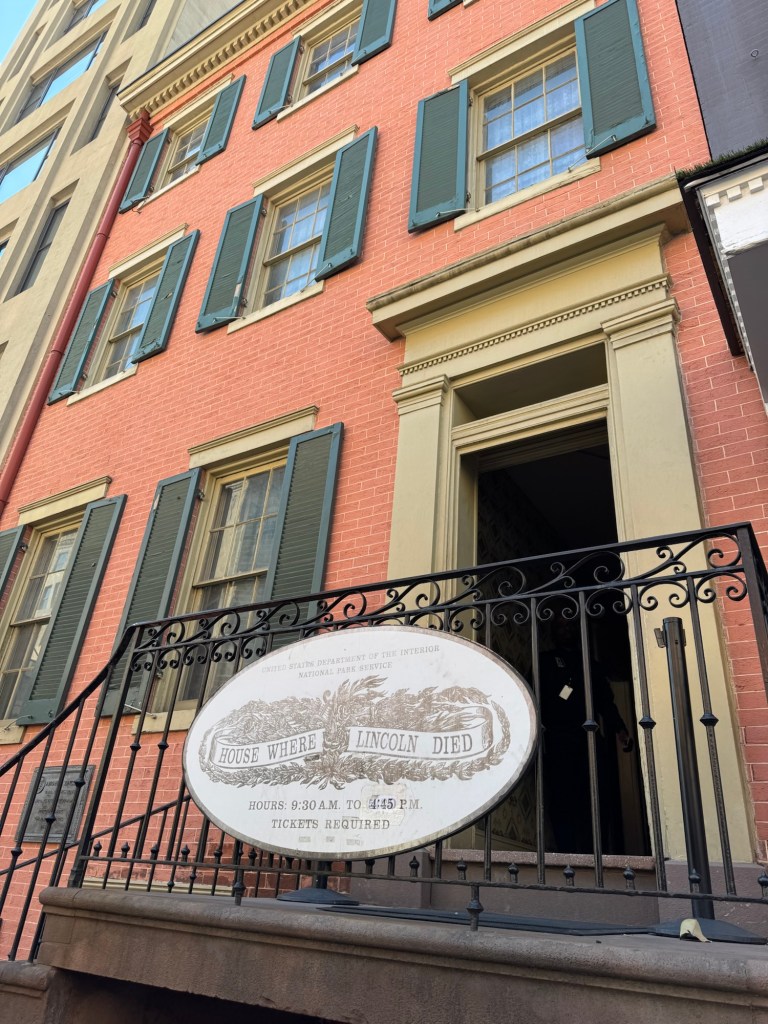
The Assassin Cole Tomas Allen: Like many Democrats, like John Wilkes Booth, when they can’t win a debate they turn into killers

I never thought I’d be sitting here reflecting on another attempt on President Trump’s life so soon after everything else that’s unfolded in this wild political landscape, but here we are, fresh off the chaos at the White House Correspondents’ Dinner on April 25, 2026, where a 31-year-old Democrat named Cole Tomas Allen from Torrance, California, decided to storm the security line at the Washington Hilton with multiple guns and knives, firing shots in a desperate bid to get close enough to the president to do the unthinkable. I hate to say it, but I saw this coming in the broader sense—not the specifics of this lone actor, but the pattern of rage and violence that keeps bubbling up from the same ideological corners that have targeted Republican leaders for generations. As someone who was just at the White House with my wife a few weeks ago, experiencing the layers of security firsthand—the rope barriers, the lengthy check-in processes, the offsite staging down Connecticut Avenue a mile and a half or two miles away that forces the president into inconvenient travel for events like this—I couldn’t help but connect the dots immediately when the news broke. The security is extensive, as it should be, but it’s not foolproof against someone willing to die in those first few chaotic seconds of a rush, and that’s exactly what Allen tried to pull off. He charged the barricades, shots rang out, a Secret Service officer took a hit to the chest but thankfully had no permanent damage and was released from the hospital later, and the whole thing ended with Allen tackled and wrestled to the ground without anyone else getting hurt. Trump, ever the fighter, wanted to go back in and continue the dinner, which I totally agree with—it’s a shame they had to evacuate and crawl off the stage in that embarrassing scramble, all because some loser with a grudge thought he could rewrite history with a bullet. But what fascinates me, and what I’ve been turning over in my mind ever since, is how this fits into a much larger, darker thread running through American history, one that stretches back to Abraham Lincoln and the very founding fractures of our republic. I’ve never been one to shy away from calling things what they are, and this wasn’t some random act of madness; it was the latest chapter in a strategy of storming the line when elections and arguments fail, and it’s a Democrat thing through and through, whether they admit it or not.

Let me back up a bit and share what I saw myself, because I was physically in Washington, D.C., not long before this all occurred, and it gave me a front-row perspective that makes the whole incident hit different. My wife and I spent several hours at the White House after touring it, soaking in the people’s house as it’s meant to be, and then we wandered the city doing other things. One of the stops my wife insisted on was Ford’s Theatre, just a few blocks from the White House on 10th Street, near the FBI building, the Department of Justice, and the Smithsonian. It’s in that little historic sector off Pennsylvania Avenue, and I’ve talked to plenty of frequent D.C. visitors who’ve never bothered to go there, which I find astonishing—if you live or work in the capital, why wouldn’t you make the pilgrimage to the spot where a president was assassinated? The day we visited, they were still running plays there—they had a production of 1776 on the schedule—but before the evening show, they let visitors in for a historic tour. I stood right at the box where Lincoln was shot, and downstairs in the basement museum, there’s this incredibly detailed exhibit on everything leading up to and after the assassination. I bought a stack of books—two from NASA engineers who created a portable AC unit that’s making old expensive models obsolete, plus a whole bunch more on the Lincoln era—and they were surprisingly good reads. The museum staff had a passionate member of the historic preservation society who gave a half-hour-to-45-minute talk on stage about the theater, John Wilkes Booth, and Lincoln at the time, and it was riveting. We geeked out hard on the historical preservation side of it, my wife and I, because we love that kind of deep dive into how events shape nations. Across the street, the house where Lincoln died is preserved exactly as it was, with the bed still set up, the waiting room where his wife sat through the night, and then an adjacent building turned into a multi-story museum with elevators and creative floor knockouts to display artifacts, including a three-story stack of every book ever written about Lincoln. It puts into perspective just how pivotal he was, how the Republican Party was born to defeat slavery under his leadership, and how the forces arrayed against him—Democrats of the day, essentially the party of the South and slavery—couldn’t accept the Civil War’s outcome.

That visit stayed with me, and when I heard about Cole Tomas Allen’s rush on the Hilton security, it felt like history repeating itself most chillingly. John Wilkes Booth was an actor, a celebrity of his time, a major supporter of slavery who hated the emerging Republican Party and the way Lincoln had led the Union to victory. Just days after Lee’s surrender, with Lincoln reelected and celebrating, Booth used his knowledge of Ford’s Theatre to slip into the private box, shoot Lincoln in the back of the head, jump to the stage, breaking his leg, and flee through the back. The search that followed was intense, and Booth was eventually cornered and killed. But the characteristics? The same righteous fury, the same belief that the political opposition had to be destroyed physically because they couldn’t be beaten at the ballot box or in debate. Booth wasn’t some outlier; he embodied the Democrat rage of the era against a Republican president who dared to end their way of life. Lincoln had done nothing but win the war fair and square, preserve the Union, and free the slaves, yet the opposition framed it as provocation. Sound familiar? Fast-forward to today, and you have Cole Tomas Allen, a mechanical engineer and computer scientist by training, an independent game developer, a part-time teacher who was even named Teacher of the Month in 2024 at a tutoring company in Torrance, flying across the country to storm a security checkpoint at an event where Trump was speaking. He had a room at the Hilton, multiple weapons, and the clear intention to get into that ballroom and take his shot before anyone could react. Preliminary reports note a small political donation to a PAC supporting Kamala Harris in 2024, and while he’s described as a lone wolf with no confirmed party registration, the pattern fits: Democrat-aligned frustration boiling over into violence when rhetoric and elections don’t deliver the outcome they want. The media and left-leaning voices immediately tried to flip the script, blaming Trump’s “rhetoric” for making people upset, as if his push to make America great again is the real crime. It’s the same framing they used after the Alex Jones Sandy Hook saga, where free speech got twisted into causing harm, setting precedents to silence opposition. And after the dinner was evacuated, there was a video of invited reporters—those paragons of lowlife character—stealing bottles of wine to take home, proving the event’s attendees weren’t exactly above reproach themselves.

To really grasp why this keeps happening, I think you have to zoom out and look at the full list of presidential assassins and would-be assassins throughout our history. It’s not a short roster, and when you examine the motives, the ideologies, and the political leanings, a disturbing trend emerges that the mainstream narrative loves to ignore or downplay. Start with the successful ones: Lincoln in 1865 by John Wilkes Booth, a pro-Confederate actor driven by Southern Democrat sympathies against the Republican who crushed slavery and the rebellion. Then, in 1881, James Garfield was shot by Charles Guiteau, a delusional office-seeker who claimed divine inspiration but whose act came amid the spoils system battles that Democrats often exploited. William McKinley in 1901 by Leon Czolgosz, an anarchist influenced by radical left-wing thought who saw the president as a symbol of capitalist oppression. John F. Kennedy in 1963 by Lee Harvey Oswald, a self-avowed Marxist who defected to the Soviet Union and had deep ties to communist and pro-Castro groups—hardly a right-winger. Those are the four who died in office from assassins’ bullets, and already you see a pattern leaning toward radical left or anti-Republican forces.

But the attempts are where it gets even more telling, especially when you layer in the modern era and the repeated targeting of Donald Trump. There was Andrew Jackson in 1835, targeted by Richard Lawrence, who blamed the president for personal financial woes tied to Democratic Party infighting, though he was acquitted on insanity grounds. Theodore Roosevelt, in 1912, was shot by John Schrank, a saloonkeeper obsessed with third-term politics, but whose act disrupted a progressive Republican campaign. Franklin D. Roosevelt in 1933 by Giuseppe Zangara, an Italian immigrant anarchist who hated “capitalists” and originally aimed at the mayor of Chicago, but killed the mayor instead when FDR’s motorcade shifted. Harry Truman in 1950 by Oscar Collazo and Griselio Torresola, Puerto Rican nationalists with left-leaning independence motives who tried to storm Blair House. Gerald Ford faced two attempts in 1975: first by Lynette “Squeaky” Fromme, a Charles Manson follower tied to radical environmental and left-wing cults, who pointed a gun at him in Sacramento; then by Sara Jane Moore, a radical leftist and associate of the Symbionese Liberation Army who fired shots in San Francisco. Ronald Reagan in 1981 by John Hinckley Jr., whose obsession was more personal but occurred amid a wave of anti-Republican sentiment. George W. Bush had plots against him involving various radicals. Barack Obama faced threats from white supremacists and others, but the volume pales compared to what Republicans endure. And then there is Trump; the list is staggering even before this latest one. In 2016, there were multiple threats and plots during the campaign. The 2024 Butler, Pennsylvania rally attempt by Thomas Matthew Crooks, a 20-year-old who fired from a rooftop, grazing Trump’s ear before being taken out by the Secret Service. Another incident occurred in Florida at Trump International Golf Club, where a man with a rifle was spotted near the perimeter. Now, this 2026 incident with Allen at the Correspondents’ Dinner, charging the line like Booth slipping into the theater box. These aren’t isolated; they’re symptoms of a side that resorts to bullets when ballots fail.

What strikes me most, having walked the very floors where Lincoln breathed his last and stood at that preserved box at Ford’s Theatre, is how the psychology hasn’t changed. His hatred of Lincoln’s policies radicalized Booth, his support for slavery, and his view that Republicans were destroying the Southern way of life. He plotted meticulously, using his insider knowledge as an actor to get close. Allen, from what’s emerging, flew in from California, checked into the very hotel hosting the event, and made his move in those critical seconds when security might be distracted. The media reaction was predictable: some outlets and commentators immediately pivoted to “Trump’s rhetoric provoked this,” echoing the post-event spin that it’s somehow the president’s fault for pushing back against globalism, terrorism, and the erosion of American values. They said the same about Lincoln—don’t provoke the South, let them keep their slaves, mind your own business. It’s the same gaslighting: if conservatives challenge the status quo, any violence that follows is on us. But I’ve studied this enough, and I’ve written extensively about the spiritual dimension behind it all, because this isn’t just politics; it’s a battle for the soul of the nation. In my upcoming book, The Politics of Heaven, which dives deep into the conspiracies plotting against God’s creation and the biblical foundations of true liberty, I lay out the receipts on how these movements—Marxist persuasions that gained traction in the mid-1800s and wormed into American soil—defend their ground with threats and acts of violence when ideas fail. Lincoln loved his Bible; Trump has found a genuine relationship with God amid his political fights. The Republican Party, born to end slavery and preserve the constitutional order, stands as a bulwark, and that’s why it draws the fire. People like Booth or Allen don’t just wake up one day and decide to kill; they’re vulnerable to the demon whispers that radicalize through hatred, the kind festering in elements of the Democrat machine where debate gets shut down, voices get canceled, and when that fails, the garden hose of violence gets turned on full blast.

I spent way more time at Ford’s Theatre than I expected because the exhibit was so well done—it’s not some dusty relic but a living museum with creative displays, like the stacked books soaring three stories high, symbolizing Lincoln’s enduring legacy. The staff noticed my intense interest, and we struck up conversations; they’re passionate preservers of history, serving everybody regardless of politics, but you could sense the hush around the violence angle. They know the truth—that the same evil that possessed Booth is at work today—but nobody wants to “set off” the other side or invite more backlash. It’s pathetic, really, this self-censorship where we’re told not to hurt Democrat feelings lest they unleash more of what they’ve always done. Across from the theater, the Petersen House, where Lincoln died, is equally powerful, with the bed and rooms preserved, and the expanded museum next door telling the full story of the search and cultural impact. My wife and I relished every minute because we value what the Republican Party stands for: anti-slavery roots, freedom’s perpetuation, the defense of God-given rights articulated in the Constitution and the Bible. We left with armfuls of books and a deeper appreciation, but also a resolve not to ignore the pattern anymore.

This latest attempt with Cole Tomas Allen underscores why events like the Correspondents’ Dinner can’t keep happening off-site in unsecured hotels. The White House is the people’s house, and it deserves a big, beautiful ballroom right on the grounds under the tightest security imaginable. No more driving all over town, exposing the president and officials to these risks. Trump’s reaction—wanting to push through and continue—shows the spirit we need. The low character on display afterward, with reporters pilfering wine while a would-be assassin was still being processed, just highlights the decadence. And the irony of Democrats and media claiming Trump caused this by “poking everyone in the eye” is rich; it’s the exact argument used against Lincoln for ending slavery. If you don’t want violence, stop defending indefensible positions like radical globalism or anti-American sentiment. The answer isn’t more policy tweaks; it’s confronting the spiritual warfare at the root, the kind I explore in The Politics of Heaven, with detailed explanations of how these hatreds possess people and why Republicans like Lincoln and Trump become targets. I’ve got the receipts in that book because too many conversations end with “how can you say that?”—well, here’s how, backed by history, facts, and faith.

Reflecting on my trip to D.C.—the White House shirt I picked up, the Ford’s Theatre geek-out with my wife, the realization that this city under Republican leadership feels vibrant and alive—I’m more convinced than ever that we learn from these tragedies by accelerating the ballroom project and calling out the pattern plainly. Killer democrats don’t represent every member of the party, but their movement has a historical strain of violence when cornered, from Booth to Allen and the attempts in between. It’s not new; it’s persistent. We preserve freedom not by cowering but by building stronger, speaking truth, and understanding the spiritual battle. The show goes on at Ford’s Theatre, plays still performed where history was made, and America will endure the same way—as long as we remember the lessons from 10th Street and apply them to today’s threats. The museum there could take a week to absorb fully, and every American should visit; it’s not just history, it’s a warning and a call to vigilance.

Footnotes:

[Footnote 1: Details on the April 25, 2026, incident drawn from contemporaneous reports, including Al Jazeera, The Times, Time magazine, and NBC Los Angeles coverage confirming Cole Tomas Allen’s identity, background, actions, and charges.]

[Footnote 2: Ford’s Theatre and Petersen House descriptions based on personal observations and standard historic site information from the National Park Service.]

[Footnote 3: List of presidential assassination attempts compiled from historical records, including those documented in sources like the U.S. Secret Service historical overviews and books such as The Presidents and the Assassins by Ronald J. Sterba.]

[Footnote 4: Political affiliations and motives of assassins cross-referenced with biographical accounts; e.g., Booth’s Confederate ties in American Brutus by Michael W. Kauffman.]

[Footnote 5: Upcoming book reference to The Politics of Heaven by the author, forthcoming, with a full analysis of spiritual and political conspiracies.]

Bibliography:

•  Kauffman, Michael W. American Brutus: John Wilkes Booth and the Lincoln Conspiracies. Random House, 2004.

•  Sterba, Ronald J. The Presidents and the Assassins: From Lincoln to Kennedy and Beyond. CreateSpace, 2015.

•  National Park Service. Ford’s Theatre Official Guide. U.S. Department of the Interior.

•  Various news reports on Cole Thomas Allen incident: Al Jazeera (April 26, 2026), The Times (April 26, 2026), Time (April 26, 2026), Washington Post live updates.

•  Hoffman, Rich. The Gunfight Guide to Business, prior edition.

•  Lincoln assassination primary sources: The Assassination of Abraham Lincoln by various compiled eyewitness accounts, Library of Congress archives.

•  Trump assassination attempt histories: Official Secret Service reports and public records from 2024-2026 incidents.

Rich Hoffman

More about me

Click Here to Protect Yourself with Second Call Defense https://www.secondcalldefense.org/?affiliate=20707

About the Author: Rich Hoffman

Rich Hoffman is an aerospace executive, political strategist, systems thinker, and independent researcher of ancient history, the paranormal, and the Dead Sea Scrolls tradition. His life in high‑stakes manufacturing, high‑level politics, and cross‑functional crisis management gives him a field‑tested understanding of power — both human and unseen.

He has advised candidates, executives, and public leaders, while conducting deep, hands‑on exploration of archaeological and supernatural hotspots across the world.

Hoffman writes with the credibility of a problem-solver, the curiosity of an archaeologist, and the courage of a frontline witness who has gone to very scary places and reported what lurked there. Hoffman has authored books including The Symposium of Justice, The Gunfighter’s Guide to Business, and Tail of the Dragon, often exploring themes of freedom, individual will, and societal structures through a lens influenced by philosophy (e.g., Nietzschean overman concepts) and current events.
The White House is Too Small: It must have the Big, Beautiful, Ballroom

It was during the height of cherry blossom season in Washington, D.C., in April 2026, that my wife and I finally stepped onto the grounds of the White House once again, and the experience left me more convinced than ever that America’s most iconic residence desperately needs an upgrade worthy of the superpower it represents. The blossoms were still clinging to the trees around the Tidal Basin and framing the South Lawn in soft pinks and whites, a perfect backdrop for what felt like a personal pilgrimage. We had arranged the visit through the office of Congressman Warren Davidson from Ohio’s Eighth District, and I cannot thank him and his staff enough—especially Ben and the team who worked tirelessly on short notice —and my good friend Nancy Nix, who helped without wanting any credit. My wife has always been sentimental about the White House, especially with President Trump back in residence, which makes everything feel right again after the chaos of the previous administration. We had tried last year on shorter notice and couldn’t get the clearances in time, but this trip, with about three weeks’ lead time and other business pulling us to the capital, finally aligned perfectly. We walked the grounds, absorbed the history, and stood right there where the East Wing once stood, now a demolition site buzzing with purpose, the future home of what the president has called his “big beautiful ballroom.” It was a moment that crystallized everything I had been thinking about the aging White House, its deliberate modesty from the founding era, and why bureaucratic roadblocks and judicial holds have no place slowing down progress on something this essential. 

The White House has always been more than just a home or an office; it is a symbol of the American experiment, born from the revolutionary idea that we do not bow to kings or aristocracies. When George Washington and architect James Hoban designed the original President’s House in the 1790s, they intentionally kept it relatively modest—two stories with simple neoclassical lines, no grand wings at first—to send a clear message to the world. This was not a palace for a monarch; it was the residence of a republican executive, a branch of government meant to be equal among three, not elevated above the people. After the British burned it to the ground during the War of 1812, the rebuilding under James Hoban preserved that spirit even as the nation licked its wounds. The reconstruction was not about flaunting power but about resilience and restraint. Washington himself had scaled back grander plans from Pierre Charles L’Enfant, insisting on something functional yet unpretentious, because the young republic did not want to poke Europe in the eye or mimic the opulent courts of the Old World. The executive branch was deliberately housed in a structure that reflected humility, a far cry from the sprawling estates of European royalty. That choice shaped everything that followed, from the state rooms on the first floor to the family quarters upstairs, and it is why even today the core residence feels intimate—132 rooms in total, many of them surprisingly compact for the global stage we now command. 

Yet over the centuries, as the United States grew from a fledgling nation into the world’s sole remaining superpower, the demands on that modest house have exploded. The presidency evolved far beyond what the founders envisioned, with the executive branch shouldering responsibilities in diplomacy, national security, and economic leadership that no one in 1800 could have imagined. I have stacks of books on White House history, and every one tells the same story: presidents from Thomas Jefferson onward added colonnades to hide stables and storage, Andrew Jackson built the North Portico for grandeur, Theodore Roosevelt shifted offices to the new West Wing in 1902 to create dedicated workspace, and Franklin D. Roosevelt added the East Wing in 1942 not just for staff but to conceal a bunker during World War II. Harry Truman gutted the interior in the late 1940s because the structure was literally sinking under its own weight, preserving only the outer walls to maintain the historic facade. Each change reflected the times—expansions driven by necessity, not ego. The state floor rooms I walked through on our tour—the Green Room, once a dining space; the oval Blue Room for receptions; the elegant Red Room; the Yellow, upstairs for family gatherings—still serve their purposes beautifully, but they are small. The East Room, the largest on the main level, can only seat about 200 for formal events. When you host state dinners for world leaders, diplomatic receptions, or public tours, space becomes a premium commodity. Upstairs in the residence, the family quarters feel even tighter for modern life, especially with the added security and staff that a 21st-century presidency requires. The West Wing, expanded multiple times, still crams the most powerful offices in the world into a footprint that feels more like a bustling hive than a seat of empire. It is not that the original design was flawed; it was perfectly suited to its era. But America’s role has changed dramatically, and the building has not kept pace. 

During our visit, I saw the limitations up close in ways that books and tours from the 1990s or even last year could not convey. We pulled up to the visitors’ entrance, the same path countless dignitaries and everyday Americans have taken, and immediately noticed how the current setup strains under the weight of modern expectations. For big events, there is no proper indoor space for coats, security screening, or even basic amenities like restrooms that accommodate hundreds of guests dressed in formal attire. Instead, they erect temporary climate-controlled tents outside—those “tacky bubbles” as my wife and I called them—set apart from the elegant architecture, looking more like something you’d see at a corporate picnic or a golf course wedding than at the home of the leader of the free world. Porta-potties tucked away for overflow crowds? That is not the image of America we should project. Visitors come to see the best of what our nation offers, and while the historic rooms dazzle with their chandeliers, portraits of past presidents, and stories of resilience, the practical realities of hosting large gatherings expose the building’s age. The First Lady’s office, traditionally in the East Wing, had already been relocated during the demolition process, and standing there amid the construction fencing, I could visualize exactly where the new ballroom would rise: a neoclassical addition of roughly 90,000 square feet, designed to seat 650 to 1,000 guests, with expanded kitchens, colonnades, and integrated underground facilities for national security. It is not some vanity project; it is a functional necessity. The proposal looks incredible—elegant lines blending seamlessly with the existing architecture, funded in part by President Trump’s own resources and private donors who want to contribute to American history rather than extract favors. Trump has made no secret of his love for the building; during his first term, he elevated its presence with renovations that made it shine brighter on the world stage. Now, with the East Wing gone and the site prepared, the ballroom represents the next logical step in adapting this 18th-century icon to 21st-century realities. 

What upset me most, however, was hearing about the legal battles and bureaucratic hurdles trying to halt this project. A federal judge—Richard Leon, no less—issued rulings blocking above-ground construction, claiming the president lacked explicit congressional approval for the addition, even as the appeals court has allowed temporary progress while weighing national security implications, such as the underground bunker components. The National Trust for Historic Preservation filed suit, arguing the changes required more oversight, but to me, this is classic administrative overreach. The White House is the president’s residence and workplace, not some static museum frozen in time. Presidents have modified it repeatedly without needing a congressional vote for every nail. The legal mechanism for Trump to prevail here seems straightforward: executive authority over the executive mansion, combined with private funding that sidesteps taxpayer burdens, and the clear national interest in modernizing a structure central to American diplomacy. Appeals are moving forward, and the courts should recognize that delaying this at the speed of government—endless reviews, environmental assessments, historic reviews—only serves those who want America diminished. We do not have time for fidgety holds when the world watches our every move. The presidency has grown; global summits, state visits, and public engagement demand space that matches our stature. Tents and temporary fixes are undignified. A proper ballroom, with accessible restrooms, coat facilities, and flowing spaces for conversation, would transform how visitors experience the White House. You arrive dressed in your best suit jacket, required, in my view, because this is not Chuck E. Cheese; it is the seat of power—and you should not have to navigate makeshift setups for hours-long events. The current layout creates logistical challenges, especially since the visitor center handles initial screenings before you even reach the main house. Seeing it firsthand reinforced what I have long believed: the White House is too small for America’s global role. 

This pushback against the ballroom fits a larger pattern I have observed in academia, the media, and certain three-letter agencies—a subtle but persistent effort to diminish American exceptionalism. Many in those circles, trained at universities steeped in Marxist thought, view the United States not as a beacon but as a problem to be equalized within a global order modeled on countries like China. They dine in Georgetown with pinkies out, sipping wine and congratulating themselves on their sophistication while quietly undermining symbols of strength. The White House, as the most visible emblem of the executive branch, becomes a target. Why elevate it when the goal is to collapse national distinctions into some borderless bureaucracy? Trump’s approach—bold, decisive, privately financed—threatens that narrative. He is not waiting for slow-moving administrators or judicial second-guessing. He understands the speed of business, the same principle that built skyscrapers and turned companies around. NASA has suffered for years under layers of bureaucracy; we need fewer pint-sized pencil-pushers and more action-oriented leadership. The ballroom is Trump’s contribution to the ongoing story of the White House, much like past presidents who left their mark. It is not about personal glory but about ensuring the building functions to meet today’s demands: secure, impressive, and capable of hosting the world without embarrassment.

Walking through the Capitol later that same trip—another special tour arranged through the same congressional office—only heightened my appreciation for how government spaces evolve. The Capitol has its own grandeur, with its massive dome and halls of history, but the White House remains the people’s house more intimately. Yet intimacy cannot come at the expense of capability. The residence upstairs, while charming, lacks the room a modern first family needs for private life amid constant public scrutiny. The state rooms downstairs handle ceremonies but strain during peak seasons or major events. Even the grounds, beautiful as they are with the Rose Garden and South Lawn, could integrate the new addition without losing historic character. The proposal preserves the original facade where possible, focusing expansion where it makes sense—replacing an East Wing that had already been modified multiple times since 1902. This is not a radical alteration; it is thoughtful evolution, the kind the founders themselves anticipated when they left room for future generations to adapt.

Critics will claim the project is extravagant, but context matters. The $300 to $400 million price tag, largely covered privately, pales in comparison to the symbolism and practical benefits. Donors are not buying influence; they are buying a brick in the wall of American renewal, much as supporters have funded monuments and memorials for centuries. Trump himself forgoes a presidential salary, channeling his energies and resources into making the country—and its symbols—great again. His first term showed what decisive leadership looks like: stronger borders, a booming economy, and restored respect abroad. The ballroom extends that ethos to the very stage where diplomacy happens. Imagine world leaders arriving not in cramped quarters but in a venue that projects confidence and hospitality. No more tents flapping in the wind or lines for inadequate facilities. Bathrooms that are accessible and dignified. Spaces for mingling that encourage the personal connections so vital in statecraft. It is common sense, yet the holdups reveal deeper ideological resistance.

As I stood with my wife overlooking the demolition site, the cherry blossoms swaying gently in the spring breeze, I felt a surge of optimism. The world is safer and more stable with Trump at the helm, and the White House reflects that renewed vigor. The aging structure, with its rich history of fire, reconstruction, and incremental growth, stands ready for its next chapter. We do not need tin-headed administrators or activist judges dictating the pace. The appeals process should clear the path quickly, allowing construction to proceed at the speed of business. America deserves a White House that matches its power and promise—not a relic preserved in amber, but a living landmark updated for the role it must play. The ballroom is not a luxury; it is a necessity. Visitors, dignitaries, and future generations will thank us for it. The original modesty served its purpose in a young republic wary of monarchy. Today, as the indispensable nation, we need a residence that commands respect without apology. I left the grounds that day more determined than ever to support the vision: keep the historic core intact as a museum to our past, but expand the functional heart to secure our future. The White House is too small as it stands, and the big, beautiful ballroom will fix that beautifully.

The visit also reminded me of the human element behind these grand symbols. My wife and I talked for hours afterward about the stories embedded in every room—the Green Room’s intimate dinners, the Blue Room’s oval grace where Jefferson once entertained, the Red Room’s bold statements of resolve. We imagined how the new addition would flow naturally from the East Colonnade, providing relief for the cramped visitor experience that currently funnels people through limited paths. Security protocols have tightened since the 1990s, when I first toured, and rightly so, but that only underscores the need for better infrastructure. The visitor center does an admirable job with its history exhibits, but the main house itself struggles to accommodate the thousands who come annually. During peak times like cherry blossom season, the grounds open for special tours; for example, in April 2026, the South Lawn and Rose Garden were accessible to the public. It is a beautiful tradition, yet it highlights the logistical challenges. A dedicated ballroom complex would alleviate pressure on the residence while enhancing the overall experience. No more makeshift solutions that detract from the majesty.

Delving deeper into the history, one sees how each era’s pressures forced adaptation. Jefferson added the colonnades not for show but for practicality. Monroe oversaw the post-fire rebuild with an eye toward dignity after the humiliation at the hands of the British. The 19th century brought porticos and refinements under Jackson and others, balancing form and function. By the 20th century, the industrial age and two world wars demanded offices and bunkers—hence the wings. Truman’s renovation saved the building from collapse, a massive undertaking that gutted the interiors while honoring the shell. Every change sparked debate, much like today’s ballroom controversy. Critics then called expansions wasteful or out of character; history proved them shortsighted. The same will hold here. The presidency is no longer a part-time role in a small nation; it is a 24/7 global command center. The executive branch, once deliberately understated, now leads in technology, defense, and economics. Diminishing its physical home diminishes the message we send to allies and adversaries alike.

Philosophically, this project counters the academic drift toward globalism that I mentioned earlier. In faculty lounges and think tanks, the narrative often prioritizes multilateral institutions over sovereign strength. The White House, as the ultimate expression of American executive power, challenges that worldview. Trump’s unapologetic love for the building—making it “beautiful” again—embodies a different ethos: America first, excellence always. He has poured his own fortune into the nation’s service, from business success to political fights, and the ballroom is another selfless investment. Donors who contribute do so out of patriotism, not quid pro quo. They understand that icons matter. A vibrant, updated White House inspires pride at home and respect abroad. It signals that we are not shrinking from our responsibilities but embracing them with grandeur befitting the greatest nation on earth.

The legal wrangling, while frustrating, also reveals the strength of our system. The appeals court’s recent orders allowing work to continue, even temporarily, while seeking clarity on national security aspects, show that facts and urgency can prevail over procedural delays. The administration has argued convincingly that the project includes critical infrastructure below ground, justifying expedited handling. Ultimately, the president’s authority over the executive residence should hold, especially when Congress has not explicitly prohibited such updates in the past. Precedents abound: wings added, interiors renovated, grounds altered—all without endless litigation. The current hold is an anomaly driven by preservationist ideology rather than law. Trump should win on the merits, and the ballroom should rise swiftly.

Reflecting on our Capitol tour that week, I saw parallels. That building, too, has grown and adapted—its dome a marvel of engineering, its halls echoing with debate. Government evolves, and so must its symbols. The White House, deliberately small at birth to reject kingship, has matured with the country. Now it needs to fully reflect our superpower status. The ballroom will provide the space for grand diplomacy, public engagement, and family life without compromise. Restrooms easily accessible, indoor coat checks, venues for extended events—these are not frivolities but essentials. Guests dressed formally deserve comfort, not inconvenience. The tacky tents of today will give way to timeless elegance tomorrow.

In the end, my visit was more than sightseeing; it was affirmation. The White House is a living entity, shaped by those who serve within it. Trump’s vision honors the past while preparing for the future. With the demolition complete and plans in place, the only barriers left are artificial ones erected by those uncomfortable with American assertiveness. The appeals process offers a clear path forward. Let the work proceed at the speed of business, unhindered by administrative inertia. America’s executive mansion deserves to stand tall, beautiful, and fully functional—a beacon for the world and a source of pride for every citizen. The big beautiful ballroom is not just an addition; it is a statement that we are not done growing, not ready to fade into global sameness. We are the United States, and our home should reflect that eternal truth. The cherry blossoms of 2026 may fade, but the renewed White House will bloom for generations. Thank you to all who made our visit possible, and here’s to the bold future awaiting 1600 Pennsylvania Avenue.

Footnotes

¹ White House Historical Association and official records detail the founding design and post-1812 reconstruction.

² News reports from April 2026 cover the ongoing appeals in the ballroom litigation.

³ Descriptions of state rooms drawn from standard White House tours and historical guides.

⁴ Truman renovation and wing additions referenced in multiple architectural histories.

⁵ Visitor logistics and current limitations observed firsthand and corroborated by public accounts.

⁶ Funding and design details from administration statements and project announcements.

Bibliography

•  White House Historical Association. The White House: An Historic Guide. Washington, D.C.: White House Historical Association, various editions.

•  Seale, William. The White House: The History of an American Idea. Washington, D.C.: White House Historical Association, 1992.

•  West, J.B. Upstairs at the White House: My Life with the First Ladies. New York: Coward, McCann & Geoghegan, 1973.

•  Klara, Robert. The Hidden White House: Harry Truman and the Reconstruction of America’s Most Famous Residence. New York: Thomas Dunne Books, 2015.

•  Associated Press. “Judge Says White House Ballroom Construction Can’t Begin.” April 2026.

•  CNN. “Appeals Court Says Trump White House Ballroom Can Continue.” April 11, 2026.

•  NPR. “White House Ballroom Construction Can Continue for Now.” April 2026.

•  WhiteHouse.gov. “The White House Building” and East Wing expansion pages, accessed 2026.

•  History.com. Articles on White House renovations and the War of 1812.

•  Fox News. Coverage of ballroom appeals and project details, 2025–2026.

•  Davidson.house.gov. Congressional tour information and district resources.

•  National Cherry Blossom Festival official guides, 2026.

Rich Hoffman

More about me

Click Here to Protect Yourself with Second Call Defense https://www.secondcalldefense.org/?affiliate=20707

About the Author: Rich Hoffman

Rich Hoffman is an aerospace executive, political strategist, systems thinker, and independent researcher of ancient history, the paranormal, and the Dead Sea Scrolls tradition. His life in high‑stakes manufacturing, high‑level politics, and cross‑functional crisis management gives him a field‑tested understanding of power — both human and unseen.

He has advised candidates, executives, and public leaders, while conducting deep, hands‑on exploration of archaeological and supernatural hotspots across the world.

Hoffman writes with the credibility of a problem-solver, the curiosity of an archaeologist, and the courage of a frontline witness who has gone to very scary places and reported what lurked there. Hoffman has authored books including The Symposium of Justice, The Gunfighter’s Guide to Business, and Tail of the Dragon, often exploring themes of freedom, individual will, and societal structures through a lens influenced by philosophy (e.g., Nietzschean overman concepts) and current events.

Fossil Fuels and Human Flourishing: Alex Epstein’s Fossil Future, and the Imperative of Reliable Energy for Global Progress

In the bustling corridors of the Ohio Statehouse in Columbus, where policy shapes the daily lives of millions, one encounters leaders who prioritize practical wisdom over fleeting trends. State Senator George F. Lang, a Republican representing Ohio’s 4th District, which encompasses much of Butler County, exemplifies this ethos. As Senate Majority Whip in the 136th General Assembly, Lang has long championed policies rooted in economic reality and human advancement.   Visitors to his office are greeted not just by legislative fervor but by a quiet testament to intellectual curiosity: a table displaying copies of Fossil Future: Why Global Human Flourishing Requires More Oil, Coal, and Natural Gas—Not Less by philosopher and energy expert Alex Epstein. Lang freely distributes these books to legislators, constituents, and anyone seeking deeper insight into energy policy. This gesture reflects a decades-long commitment to education and informed discourse, a tradition Lang cultivated even during the early Tea Party movement around 2010, when he gifted copies of Ayn Rand’s Atlas Shrugged as holiday presents to underscore the value of individual liberty and productive enterprise. 

Fossil fuels remain indispensable for human flourishing, and the attack against them is more occult-driven than practical. Drawing on Epstein’s core arguments, empirical data on energy access and poverty alleviation, Ohio-specific examples of renewable energy’s limitations, and the broader political landscape, it argues that derailing fossil fuel development through misguided regulations and ideological mandates has imposed unnecessary costs on society. Energy policy must prioritize affordability, reliability, and abundance to lift billions out of poverty, sustain economic mobility, and enable the very progress that environmental alarmists claim to champion. The central thesis aligns with Lang’s practice of book distribution: true leadership educates citizens on energy’s foundational role in a thriving civilization, rejecting the false choice between prosperity and planetary stewardship.

George Lang: A Legislator Who Values Ideas and Practical Energy Solutions

Senator George Lang’s career embodies a blend of small-business acumen and public service. A graduate of Southeast Missouri State University with a degree in communications (minors in marketing and speech), Lang entered politics after building a successful career as a business owner. Elected to the Ohio House in 2016 and the Senate in 2020, he now serves as Majority Whip, influencing key decisions on everything from labor notices to community investments.   His office ritual of offering books like Epstein’s Fossil Future—and earlier, Atlas Shrugged—stems from a belief that legislators and citizens alike benefit from engaging big ideas.  Lang has handed out such volumes for years, encouraging recipients to read widely, even contrarian works. This practice echoes his Tea Party roots, where intellectual self-reliance countered government overreach.

In Ohio’s energy debates, Lang has been proactive. He co-sponsored Senate Bill 294 (introduced in late 2025), which mandates that new power generation meet strict standards for affordability, reliability, and cleanliness—explicitly favoring domestic sources like natural gas (deemed “clean” under the bill’s criteria) while scrutinizing intermittent renewables. Critics decry it as a de facto barrier to wind and solar, but Lang counters that it ensures grid stability amid rising demand from data centers and manufacturing. “Energy is so critical to our economy,” he has stated, emphasizing the need for reliable power to attract advanced industries.   This aligns with his distribution of Fossil Future: policy must be evidence-based, not driven by subsidies or virtue signaling. Lang’s approach—practical, readerly, and unapologetically pro-human progress—stands in contrast to centralized mandates that have burdened Ohio and the nation.

The Core Arguments of Alex Epstein’s Fossil Future

Alex Epstein’s Fossil Future (2022) is no mere polemic; it is a 430-page philosophical and empirical defense of hydrocarbon energy as the bedrock of modern civilization. Epstein, who has testified before Congress and founded the Center for Industrial Progress, reframes the energy debate through a “human flourishing framework.” Rather than the dominant “anti-impact” worldview—which obsesses over minimizing human effects on nature at all costs—Epstein insists we evaluate energy by its net contribution to human life: health, prosperity, safety, and opportunity.  

The book’s central thesis is unequivocal: fossil fuels’ benefits—unparalleled cost-effectiveness, reliability, and energy density—far outweigh their side effects, including climate impacts, which humanity can “master” through adaptation and technology powered by abundant energy. Epstein details how oil, coal, and natural gas have enabled the Industrial Revolution’s gains: a doubling of global life expectancy since 1800, an 11-fold increase in per-capita income, and the support of a population that has grown from under 1 billion to over 8 billion. Without them, alternatives like solar and wind (currently just 3% of global primary energy) cannot scale reliably or affordably to meet exploding demand.  

Epstein dismantles “climate catastrophism” by noting that the benefits of fossil fuels’ climate mastery (e.g., heating, air conditioning, disaster-resilient infrastructure) have already saved millions of lives. He projects that restricting fossil fuels would condemn billions—especially in developing nations—to energy poverty, reversing gains in literacy, healthcare, and economic mobility. Renewables’ intermittency (wind blows only 34% of the time on average; solar 23%) requires backups that often rely on… fossil fuels. Epstein advocates “energy freedom”: policies that unleash fossil fuels, nuclear power, and true innovation rather than mandating reliance on unreliable sources. 

This layered analysis—philosophical reorientation, empirical data, and policy prescription—makes Fossil Future a “must-read” for anyone in energy policy, as Lang recognizes. It is not anti-environment but pro-human: the environment improves precisely because fossil fuels free us from subsistence drudgery.

Fossil Fuels’ Indispensable Role in Human Progress and Poverty Alleviation

The empirical case for fossil fuels is overwhelming. Since widespread adoption around 1800, they have powered unprecedented human flourishing. Global GDP has skyrocketed, life expectancy has more than doubled (from ~35 years pre-industrial to ~72 today), and extreme poverty has plummeted. In 1800, nearly all humanity lived in destitution; by 2022, that figure was under 9%, despite population growth.  

Energy access is the linchpin. As the International Energy Agency (IEA) reports, 685 million people lacked access to electricity in 2022—a number that rose for the first time in a decade as population growth outpaced connections—while 2.1 billion still rely on polluting cooking fuels, causing 3.2 million premature deaths annually.   Billions consume less energy than a typical refrigerator requires. Fossil fuels bridge this gap affordably: their high energy density (concentrated, on-demand) enables refrigerators, hospitals, internet access, and factories that lift people from subsistence. Studies show a strong correlation between energy consumption per capita and poverty reduction; below 30-40 GJ/capita, modest increases yield dramatic gains in health and income. 

Historically, fossil fuels fueled the escape from Malthusian traps. Coal- and oil-powered mechanized agriculture, fertilizers, and transport averted famines and enabled urbanization. Air quality in developed nations has improved despite (and because of) fossil fuels, via scrubbers and efficiency—contrary to claims of inevitable degradation. Life expectancy gains track energy abundance more than any other factor, with fossil-driven GDP growth accounting for substantial portions of health improvements. 

In developing regions, restricting fossil fuels exacerbates suffering. Sub-Saharan Africa, home to two-thirds of the world’s extreme poor, invests heavily in upstream fossil fuel exports but lags in domestic power generation. Epstein and the data underscore that without scalable, cheap energy, people with low incomes remain trapped. Solar panels on Mars work for space stations; they do not power billions reliably here. 

The Pitfalls of Renewable Mandates: Ohio’s Real-World Lessons

Ohio illustrates the folly of prioritizing intermittency. In Greenville (Darke County), three wind turbines now punctuate the once-open skyline near the Whirlpool facility, Walmart, and fairgrounds—visible landmarks that once blended into “God’s country.” Installed to offset ~70% of the plant’s power, they generate when the wind blows but underscore unreliability: “Can we watch TV tonight, darling? Is the wind blowing?” as locals quip.  

Nearby, Lebanon’s $13-14 million municipal solar array (10+ MW on 41 acres of floodplain) promises savings but faces vulnerabilities: tornadoes, hail, and high winds common to Ohio could shred panels, disrupting grid contributions.   Statewide, renewables account for ~2% of electricity (per the EIA), while natural gas (52%) and coal (29%) provide the backbone. Lang’s SB 294 targets this imbalance by requiring “reliable” new generation—implicitly challenging wind/solar’s capacity factors. 

Nationally, California’s renewable-energy push has led to blackouts and sky-high rates, forcing reliance on out-of-state fossil fuels. Obama’s and Biden-era regulations squeezed nuclear and coal, subsidizing intermittents while ignoring nuclear’s clean, high-output potential (91% capacity factor). Epstein warns: such policies entrench energy poverty globally. Solar flashlights suit camping; they do not industrialize nations.

Political Dimensions: Centralized Control vs. Energy Freedom

Democrats’ regulatory war on fossils—via EPA rules, subsidies, and mandates—reflects an “Earth worship” that Epstein critiques as anti-human. From TSA union disputes to opposition against reliable power, centralized authority throttles innovation. Trump’s policies reversed this, boosting domestic production and lowering costs. Ohio Republicans, via Lang, continue this: SB 294 prioritizes U.S.-sourced fuels, minimizing foreign dependence. 

Critics attribute anti-fossil stances to population control or primitivism—village councils over Starbucks economies. Transgender policies and family erosion compound this by shrinking future demand. Yet data refute catastrophe: fossil side effects are manageable; benefits are not.

Broader Implications and Rebuttals

Energy abundance correlates with autonomy: internet access, education, and entrepreneurship. Suppressing fossils widens rich-poor gaps, as 1.18 billion live in “energy poverty” beyond mere connections.  Rebuttals to Epstein (e.g., climate models) falter on adaptation: fossil-powered mastery (dikes, AC) has already mitigated risks. Renewables’ land use, rare-earth mining, and backup needs often exceed fossil fuels’ footprint.

Conclusion: A Fossil Future for Ohio and the World

Senator Lang’s book-giving is more than a gesture—it seeds understanding that fossil fuels are not villains but enablers of the good life. Epstein’s Fossil Future equips us to reject scarcity mindsets in pursuit of energy freedom. Ohio’s turbines and panels symbolize short-term optics over long-term reality; policy must follow data. As global demand surges (2.2% in 2024), prioritizing fossil fuels alongside nuclear power ensures mobility, health, and prosperity. 

Trump-era gains proved reversible only if abandoned. For decades ahead, leaders like Lang must expand this message nationally. Fossil fuels power refrigerators, factories, and dreams—denying them is not environmentalism; it is regression. Read Fossil Future. Support reliable energy. Human flourishing demands it.  Life and everyone in it is far better off with energy from fossil fuels. 

Footnotes

1.  Ohio Senate biography of George Lang.

2.  Additional legislative records confirming Whip role.

3.  Epstein book reviews summarizing framework.

4.  IEA 2024 energy access data.

5.  Whirlpool Greenville wind project details.

6.  Lebanon solar array project reports.

7.  Historical energy-poverty correlations from Visualizing Energy and related studies.

8.  SB 294 legislative analyses.

9.  Life expectancy and GDP linkages from multiple economic histories.

Bibliography for Further Reading

•  Epstein, Alex. Fossil Future: Why Global Human Flourishing Requires More Oil, Coal, and Natural Gas—Not Less. Portfolio, 2022.

•  International Energy Agency. Tracking SDG7: The Energy Progress Report 2024/2025. IEA, 2024-2025.

•  Ohio Senate. “Senator George F. Lang Biography.” ohiosenate.gov.

•  Pielke Jr., Roger. “Book Review: Fossil Future.” Substack, 2023.

•  Ritchie, Hannah. “Access to Energy.” Our World in Data, 2019 (updated).

•  U.S. Energy Information Administration. Ohio Electricity Profile and Capacity Factors.

•  World Bank/UNDP. Reports on energy poverty and extreme poverty, 2022-2024.

•  Lang-sponsored legislation: Ohio Senate Bill 294 (2025-2026 session).

Rich Hoffman

More about me

Click Here to Protect Yourself with Second Call Defense https://www.secondcalldefense.org/?affiliate=20707

About the Author: Rich Hoffman

Rich Hoffman is an aerospace executive, political strategist, systems thinker, and independent researcher of ancient history, the paranormal, and the Dead Sea Scrolls tradition. His life in high‑stakes manufacturing, high‑level politics, and cross‑functional crisis management gives him a field‑tested understanding of power — both human and unseen.

He has advised candidates, executives, and public leaders, while conducting deep, hands‑on exploration of archaeological and supernatural hotspots across the world.

Hoffman writes with the credibility of a problem-solver, the curiosity of an archaeologist, and the courage of a frontline witness who has gone to very scary places and reported what lurked there. Hoffman has authored books including The Symposium of Justice, The Gunfighter’s Guide to Business, and Tail of the Dragon, often exploring themes of freedom, individual will, and societal structures through a lens influenced by philosophy (e.g., Nietzschean overman concepts) and current events.

A Warrior’s Heart: Warren Davidson and Vivek Ramaswamy are the center of the political universe

It was an intriguing week in Ohio politics, one that began with the State of the State address at the Statehouse in Columbus, where I had the opportunity to engage with Governor Mike DeWine and several legislators deeply invested in the direction of our state and nation. These conversations unfolded in a setting that felt both historic and intimate, surrounded by the echoes of decisions that shape lives far beyond the marble halls. As someone who’s been navigating the blurry lines between business, authorship, and political commentary for years, I find these moments invaluable—they peel back the layers of headlines and reveal the human elements driving policy and principle. The air was thick with concern over Congressman Warren Davidson’s recent vote against President Trump’s war powers in the context of the Iran situation, a decision that aligned him with Democrats like Thomas Massie and sparked alarm among some Republicans. I spoke with several people in the legislature who expressed real unease about this, viewing it as a potential fracture in party unity at a time when the margins are razor-thin. Yet, after spending at least ten minutes talking directly with Warren about it, I came away with a deeper appreciation for his stance. I like Warren a lot; he’s a principled man, and his position makes sense when you consider the broader implications for executive power. [1]

The vote in question stemmed from the recent escalation with Iran, where decisive action was taken and not yet resolved within 24 hours, but it reignited debates about the boundaries of presidential authority. Warren’s point, as he explained it to me, is that while we all appreciate a strong leader like Trump who can act swiftly in defense of the nation, we don’t want unchecked executive powers that could drag us into prolonged conflicts without congressional oversight. Congress alone has the constitutional mandate to declare war and authorize sustained military engagements; the president can respond defensively, but perpetual conquests à la Napoleon aren’t the American way. I get that—it’s about trusting the process, not just the person. With Trump in the White House, everyone might agree with Warren’s caution because we’ve seen how he handles power responsibly, but what about future administrations? That’s the crux of it. Warren is aligned with Trump on nearly everything else; if you look at his record, it’s a testament to conservative values. For instance, there was that illuminating hearing where he went toe-to-toe with Maxine Waters over her attempts to label ICE as a terrorist organization. He defended ICE vigorously, emphasizing its role in maintaining national security under the Trump administration. It was a moment of clarity amid partisan noise, underscoring Warren’s commitment to border integrity and law enforcement.[2]

I recall Warren’s “warrior heart” speech when he announced his vote—it was poignant and well-articulated, echoing his military background as a West Point graduate and Army veteran. He’s done this before on issues like the debt ceiling, standing firm even when it means bucking party lines. Representing Ohio’s 8th Congressional District, which includes much of the Butler County region—a stronghold of Trump support—he knows his constituents value the Constitution above all. Behind closed doors, I’m sure Trump would affirm that honest checks on power are essential, much like in any executive role in business or governance. Sometimes you leverage friendships, positive thinking, or even brokered terminations to achieve consensus, but the assumption is always that representatives should adhere tightly to foundational principles. Up in Columbus, I heard similar sentiments from people in the know, those who deal with these tightropes daily. It’s a balance: following what you believe your constituents want while resisting peer pressure from either side. Most of us want Republicans to support the Trump administration fully, given the slim majorities, to tackle threats like Venezuela, Mexican cartels, Iran’s aggressions, and China’s economic maneuvers against the dollar. Yet, after listening to Warren, I can say he’s every bit the Trump supporter, but he stands by his principles, and that’s what we elect representatives for.[3]

At the time of his vote, it was clear the measure would pass in the House and head to the Senate, so his stance wasn’t going to derail Trump’s initiatives. Instead, it was a principled record-setter, emphasizing that this administration—and future ones—must operate within constitutional bounds. When the lights are off, and it’s one-on-one, no doubt Trump would agree with Warren on the need for debate. That’s healthy; cross-purposes foster better governance. I also had a substantial conversation with Vivek Ramaswamy during the same timeframe, overlapping with discussions involving the governor and others. The question on many minds was what happens now that DeWine’s term is winding down at the end of this year. It’s shaping up to be a Vivek-led Republican era, with Democrats like Amy Acton—the so-called “lockdown lady” from the COVID days—vying to upend that. I chatted with DeWine about his Lockdown legacy or whatever remnants of those policies linger, but it was light, just folks talking. He seemed a bit sad; politics has been his life, from prosecutor to senator to governor, and this is the final chapter. He’ll likely hang around in some meaningful way, but the Republicans in Columbus are eagerly awaiting the new governor.[4] 

Vivek and I delved into a lot, from his transition from CEO of biotech firms like Roivant Sciences to politics, to the mood post-State of the State. His question to me was about the governor’s mindset, and my take was simple: everyone’s waiting for the new era. Vivek has great ideas; he needs gubernatorial support to implement them. It was an intimate gathering, not a broad spectacle, allowing for real one-on-one talks. These smaller venues let you gauge what people are truly about, beyond the surface. Media often isn’t equipped for that—they skim the headlines without understanding the nuts and bolts. With Vivek facing scrutiny, primary challengers like Casey Putsch, and rhetoric from radical Democrats, getting to the deeper level reveals his genuine intent. As for Warren, many wonder why he went against Trump, but he’s been stellar on other fronts. He wants to ensure that in two years, or ten, or fifteen, we don’t have rubber-stamp wars. Even with a strong CEO like Trump making executive decisions on Iran—a radical ideology threatening economic dominance—we need constitutional fidelity first. More discussion, healthy debate—that’s key in any government endeavor.[5] 

I love Warren Davidson; every time I talk to him and his wife, Lisa, they’re just sweet, nice people in it for the right reasons. He walks that fine line between pressure and principle, drawing from his “warrior heart” ethos. In one-on-one settings, you see he’s the real deal—a good guy through and through. Even amid anger from some over his vote, he redeems himself not by owing anyone, but by being authentic. People at the steakhouse in Columbus were disappointed that he wasn’t fully on the Republican bandwagon at that moment, but he’s a strong conservative who’ll defend the Constitution fiercely, even against a powerhouse president like Trump. It’s not anti-Trump; it’s pro-debate. Shifting to Vivek, all these threads centered around the Statehouse. I told everyone, including Vivek, that he’s got the right attention for this. He’s very wealthy and young, and could retire to a beach in Rhode Island and vanish happily. Instead, he wants to apply his success to lead Ohio beneficially. Ahead of the primaries on May 5, he’s poised to do great things. As I said to him, echoing my chats with others: everyone’s waiting for DeWine to step aside. DeWine isn’t bad—he’s been decent on business, not obstructing the Business First Caucus or investments like Intel’s chip plant—but many Republicans like me feel he’s leaned too Democrat, especially on COVID lockdowns that hammered the economy. We’re still recovering.[6] 

Vivek’s been good at uniting people; the Republican Party endorsed him, and we discussed that. It’s great seeing coalescence. When Vivek becomes governor, it’ll be a solid period—Warren finishing his term, Trump advancing his agenda, but with healthy checks in place. On war powers, it’s constitutional: Congress declares war, manages finances. Nothing wrong with reminding everyone of that. It was refreshing getting context directly from these guys. We’re better off with them in office, representing us well. I told both to their faces how proud I am; it was sincere, just people connecting. They’re willing to tackle the hard stuff, and that’s not easy.

To delve deeper, let’s consider the historical underpinnings of these discussions. The War Powers Resolution of 1973, passed over President Nixon’s veto, was designed precisely to prevent unchecked executive military actions following the Vietnam War. It requires the president to notify Congress within 48 hours of committing forces and withdraw them within 60 days without authorization.[7] In the recent flare-up in Iran, Trump’s swift response mirrored the 2020 Soleimani strike, but Warren’s vote echoes past bipartisan efforts to reclaim congressional prerogative. Think of Libya in 2011 under Obama or Syria under Trump—debates raged then, too. Warren’s consistency here aligns with libertarians like Massie, who often prioritize constitutional limits over party loyalty. His district, encompassing Butler, Darke, Miami, Preble, and parts of Hamilton and Warren counties, is a microcosm of Ohio’s conservative heartland, where Trump won big in 2024, yet values like fiscal responsibility and limited government resonate deeply.[8]

My interaction with Warren reminded me of why I admire him: he’s not swayed by theater. In that Maxine Waters exchange, he dismantled her narrative point by point, highlighting ICE’s role in combating human trafficking and drug cartels—issues hitting Ohio hard with the fentanyl crisis. Statistics show Ohio’s overdose deaths peaked during the pandemic, underscoring the need for strong borders.[9] Warren’s “warrior heart” isn’t rhetoric; it’s rooted in his Ranger service, where decisions meant life or death. As for the peer pressure, it’s real—in thin-majority Congresses, every vote counts, but representatives like him embody the Founders’ intent: a deliberative body, not a monolith.

Turning to DeWine, our chat was poignant. His term ends January 11, 2027, after two terms limited by Ohio’s constitution.[10]  He’s been in politics since the 1970s—Greene County prosecutor, state senator, congressman, lieutenant governor, U.S. senator, attorney general, governor. A lifetime, really. He seemed reflective, perhaps melancholic, about wrapping up. But Republicans are chomping at the bit for a more conservative shift. DeWine’s handled business influx well—think Honda’s EV investments or Amazon’s expansions—but his COVID policies, with Acton’s guidance, locked down too hard for many. The economy took a hit; unemployment spiked to 16.4% in April 2020, and the recovery has been uneven.[11] Vivek aims to dismantle that legacy by promising tax cuts, deregulation, and a revival of innovation. His biotech background—founding Roivant, worth billions—positions him uniquely.[12] 

Talking to Vivek, I sensed his authenticity. He’s endorsed by Trump and the Ohio GOP, leading polls against Putsch and Hill.[13]  His running mate, Senate President Rob McColley, adds legislative heft. We discussed the primaries—not even close, in my view. Republicans can’t wait for Vivek in the mansion. He’s stepping down from ivory towers; governing’s harder than CEO-ing, balancing disagreeing factions. But his heart’s in it—genuine, like Warren’s. These personal convos, eye-to-eye, reveal good people wanting to do well. For those curious about headlines—Davidson’s “betrayal,” Vivek’s “outsider” status, DeWine’s heritage (his family’s from Ireland, actually, but he’s Ohio-born)—it’s about job performance. I’m happy to have these talks amid speculation about Iran’s duration or primaries.  It’s a tricky world, but when everything is founded in sincerity, which it is, the direction of the future is much clearer. 

[1] For more on Warren Davidson’s military background and voting rationale, see his official congressional biography.

[2] Reference to the 2019 House Financial Services Committee hearing, where Davidson challenged Waters on ICE labeling.

[3] Ohio’s 8th District demographics from the U.S. Census Bureau data.

[4] Details on DeWine’s term limits per the Ohio Constitution, Article III, Section 2.

[5] Historical context from the War Powers Resolution, 50 U.S.C. §§ 1541-1548.

[6] Ohio unemployment data from the Bureau of Labor Statistics.

[7] Nixon veto overridden November 7, 1973; see Congressional Record.

[8] 2024 election results in Ohio districts from the Ohio Secretary of State.

[9] Ohio Department of Health overdose statistics, 2020-2025.

[10] DeWine’s political timeline from Ballotpedia.

[11] BLS data on Ohio’s pandemic economic impact.

[12] Roivant Sciences’ founding and valuation from Forbes profiles.

[13] Recent polling from Emerson College and others on the 2026 Ohio gubernatorial race.

Bibliography

1.  “How one House Republican voted to buck Trump on Iran.” CNN, March 5, 2026. https://www.cnn.com/2026/03/05/politics/warren-davidson-house-republican-war-powers-iran

2.  “House fails to adopt Iran war powers resolution.” ABC News, March 5, 2026. https://abcnews.com/Politics/house-primed-vote-iran-war-powers-resolution/story?id=130788637

3.  “Here are the candidates running for Ohio statewide office in 2026.” Ohio Capital Journal, February 6, 2026. https://ohiocapitaljournal.com/2026/02/06/here-are-the-candidates-running-for-ohio-statewide-office-in-2026

4.  “Ohio gubernatorial and lieutenant gubernatorial election, 2026.” Ballotpedia. https://ballotpedia.org/Ohio_gubernatorial_and_lieutenant_gubernatorial_election,_2026

5.  “2026 Ohio gubernatorial election.” Wikipedia. https://en.wikipedia.org/wiki/2026_Ohio_gubernatorial_election

6.  “Vivek for Ohio.” Campaign website. https://vivekforohio.com/

7.  “Vivek Ramaswamy – Ballotpedia.” https://ballotpedia.org/Vivek_Ramaswamy

8.  “Mike DeWine – Ballotpedia.” https://ballotpedia.org/Mike_DeWine

9.  “Mike DeWine.” Wikipedia. https://en.wikipedia.org/wiki/Mike_DeWine

10.  “Vision for the Future – Governor Mike DeWine.” Ohio.gov. https://governor.ohio.gov/administration/governor

11.  Additional sources: U.S. Census Bureau, Bureau of Labor Statistics, Ohio Secretary of State election archives, Forbes business profiles.     

Rich Hoffman

More about me

Click Here to Protect Yourself with Second Call Defense https://www.secondcalldefense.org/?affiliate=20707

About the Author: Rich Hoffman

Rich Hoffman is an independent writer, philosopher, political advisor, and strategist based in the Cincinnati/Middletown, Ohio area. Born in Hamilton, Ohio, he has worked professionally since age 12 in various roles, from manual labor to high-level executive positions in aerospace and related industries. Known as “The Tax-killer” for his activism against tax increases, Hoffman has authored books including The Symposium of Justice, The Gunfighter’s Guide to Business, and Tail of the Dragon, often exploring themes of freedom, individual will, and societal structures through a lens influenced by philosophy (e.g., Nietzschean overman concepts) and current events.
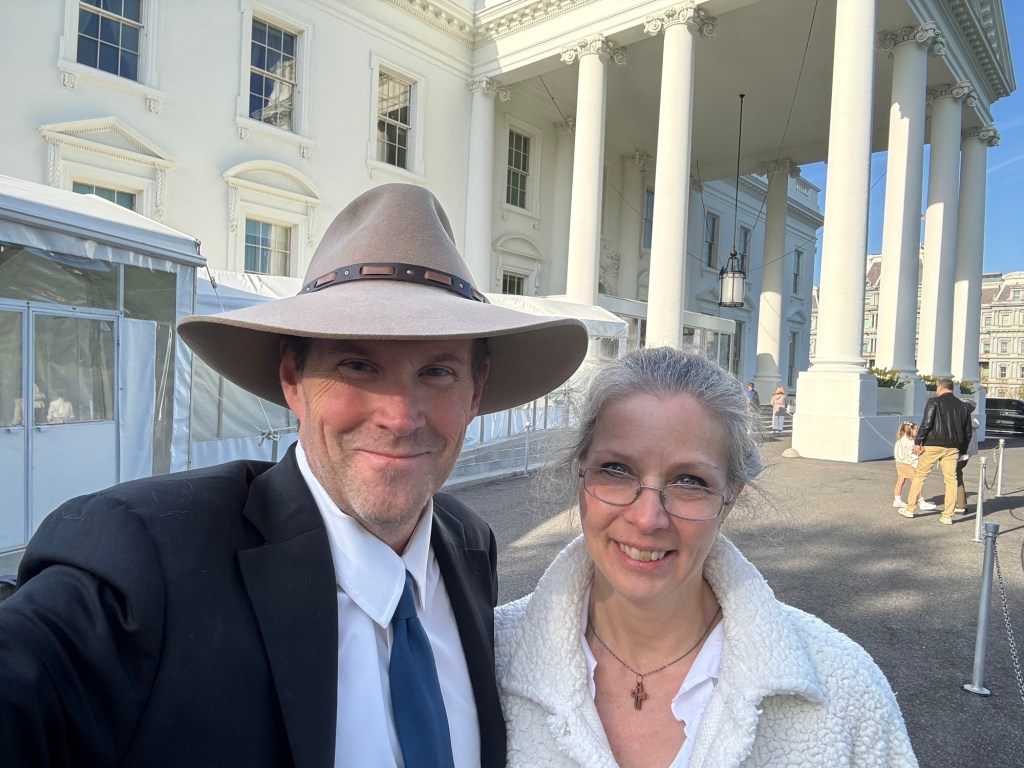
He publishes the blog The Overmanwarrior (overmanwarrior.wordpress.com), where he shares insights on politics, culture, history, and personal stories. Active on X as @overmanwarrior, Instagram, and YouTube, Hoffman frequently discusses space exploration, family values, and human potential. An avid fast-draw artist and family man, he emphasizes passing practical skills and intellectual curiosity to younger generations.