

I was just in one of those back-and-forths online the other day, the kind that pops up when people start talking about this governor’s race we’ve got coming in Ohio, and somebody came at me with the usual line after I pointed out a few things about Amy Acton. You know the one: “You don’t have a uterus, so you don’t get to have an opinion on this.” I’ve heard it before, from the same crowd that wants to shut down any man who dares speak on the moral weight of ending a life before it ever draws breath. It always lands flat with me. I’ve been married for nearly forty years. I raised daughters. I’ve had bones broken and sticking out through the skin more than once in my life, and I can say with an extensive reputation that if I had been wired to carry a child, I would have taken every contraction, every hour of labor, every bit of that pain away from the women in my life without a second thought. I’ve got the capacity for suffering. I’ve proved it on myself. That old dodge about “you can’t understand because you’re a man” is just a way to dodge the real question, which is whether we’re going to keep pretending that the deliberate ending of innocent human life is some private medical choice that only one sex gets a vote on.
Let me back up and lay this out the way I see it, because a lot of folks have let the COVID years paper over who Amy Acton really is and always has been. Back in February of 2019, Governor Mike DeWine, a Republican who had built a record as pro-life, made his final cabinet appointment, bringing Dr. Amy Acton in as Director of the Ohio Department of Health. She was the first woman physician to hold the post. DeWine talked about wanting fresh thinking in the department. What he got was a public-health official whose record and instincts ran hard the other way on the question of unborn life. Even then, I said it out loud: this was the abortion person being installed in a Republican administration. DeWine was willing to reach across the aisle to show he could work with someone whose views on that fundamental issue differed from his own. He paid for it later when the lockdowns came, and she became the face of the Ohio response, the one issuing the stay-at-home orders, the one whose name was attached to the restrictions that kept families apart, businesses closed, churches limited, and elderly folks isolated in ways that still haunt a lot of us who watched it happen.
I don’t need to rehash every day of 2020. What I do want to keep front and center is that the woman now running as the Democratic nominee for governor of Ohio was not some neutral technocrat who suddenly discovered progressive politics during a crisis. She came in with a worldview that treated the unborn as negotiable and, once the pandemic arrived, treated the rest of us as subjects to be managed. The nursing-home decisions, the orders that kept healthy people from moving around and building natural immunity, the whole apparatus of control that turned the state into something that felt more like a laboratory experiment than a free society, all of that happened on her watch. I’ve said it before, and I’ll say it again: she became Ohio’s version of Dr. Fauci, only with more direct power over our daily lives. And the same circles that produced gain-of-function research in places like Wuhan were not unknown to the public health establishment she moved in with. I’ve followed the money and the papers long enough to know that certain people in those rooms understood exactly what kind of pathogen could be engineered and what the risks were if it escaped the lab or was released under whatever conditions. She knew the environment she was operating in. That’s my firm belief after watching it all unfold.
Now she’s out there reminding everybody that it’s been a few years since Roe v. Wade was overturned and that Ohio voters, in their wisdom or in their distraction, passed Issue 1 in November 2023 and wrote a right to abortion into the state constitution. She frames it as protecting women’s decisions, as trusting women and their doctors. What she leaves out, and what I keep reminding people of, is how that vote actually happened. It came after an August 2023 special election that was itself a battle over whether to make it harder to amend the constitution. Progressive money, millions upon millions from out-of-state donors and dark-money groups, poured into Ohio during an off-year, low-attention cycle. They knew exactly what they were doing. They treated this red-leaning state like low-hanging fruit because they had a Republican governor who had already shown he was willing to put an abortion-rights advocate in charge of public health. The campaign wasn’t some spontaneous uprising of Ohio mothers speaking their hearts. It was a well-funded, professionally run operation that counted on people not paying close attention in the heat of summer. And it worked. Now the same people who bankrolled that effort are backing her, and she’s happy to remind voters that she stands with the “will of the people” on this issue.
Here’s the part that really sticks in my craw. When I pointed all this out in that online exchange, somebody fired back that I, as a man, had no standing to talk about it. I’ve heard the same thing aimed at other men who speak plainly about the moral status of the unborn. It’s a rhetorical trick meant to make the argument about anatomy instead of about right and wrong. I told them I’ve lived with women my whole adult life. I’ve watched my wife go through what women go through. I’ve raised daughters, and I’ve seen the culture shift from the music of the seventies and eighties, when songs were still mostly about love and family and sticking together, to the stuff that came later, the rage and the hedonism and the open celebration of using people and discarding consequences. I’ve seen what permissive sexual culture does to young women especially. It sells them the lie that they can live exactly like the most reckless men and that abortion will always be there as the cleanup crew when biology doesn’t cooperate. That’s not liberation. That’s a trap dressed up as empowerment.
I said it plain: men are on offense in the sexual marketplace, always looking for the opening. Women are on defense. They have to be the careful ones, the ones who say no when every signal from the culture is telling them to say yes. When they don’t, when the apps and the hook-up culture and the “you do you” philosophy win out, it’s almost always the woman who carries the permanent consequence, whether that’s a child she wasn’t ready for or an abortion she’ll live with for the rest of her life. And the men? Too many of them walk away. That’s why I’ve always said the answer isn’t more abortion. The answer is a culture that expects men to marry the women they get pregnant and to stay married, to raise their children, to provide and protect until their dying day. That used to be the norm. It built this country. We walked away from it at our peril.
Somebody in that same thread tried the “but what about bad parents?” line. I know bad parents exist. I’ve seen them. I’ve watched kids get dealt a lousy hand biologically and then get stuck with adults who never should have been allowed near a child in the first place. Some of those kids grow up carrying scars that never fully heal. I’ve said more than once that in a fallen world there are situations where bringing a child into a truly horrific home might be worse than the alternative, at least from the narrow perspective of that child’s immediate suffering. But that doesn’t make abortion right. It makes the culture that produces those homes the real villain. We don’t fix a bad society by giving it a license to kill its inconvenient young. We fix it by rebuilding the expectation that sex belongs inside marriage, that marriage is for life, that fathers don’t get to opt out, and that communities and churches and extended families step up when parents fall short. Adoption, mentorship, the kind of intergenerational transfer of skills and values I try to practice with my own grandson, those are the answers that affirm life instead of ending it.
I’ve got no patience for the pity-party version of pregnancy either. I’ve heard women talk about it like it’s some special suffering contest where the rest of us are supposed to send gifts and lower our expectations. Pregnancy is hard. Labor is hard. Raising children is the hardest thing most people will ever do. But it’s also the most important. And the notion that only the person with the uterus gets a say in whether that life continues is a moral absurdity. The child is not an extension of the mother’s body in the same way an appendix is. It’s a separate human being with its own DNA from the moment of conception. Ending that life is ending a life. I call it what it is: murder. And I say it as a man who would have gladly taken every bit of the physical burden if the biology had allowed it, because that’s what men are supposed to do. We bear the weight so the people we love don’t have to carry it maliciously.
Amy Acton has made her choice clear. She wants to be the governor who protects and expands what Issue 1 started. She wants Ohio to remain a place where abortion is treated as healthcare rather than what it actually is. She’s counting on the same coalition of progressive money, media framing, and cultural exhaustion that got Issue 1 passed to carry her into the governor’s office. I’ve seen the internals. I’ve watched how these races move. She’s not in as strong a position as some of her backers, including the usual suspects like David Pepper and the Mark Elias types who specialize in lawfare and election mechanics, would like you to believe. There’s still time for Ohio voters to remember who she was in 2019 and 2020, not just the lockdown orders but the deeper consistency on the question of life itself. She was the abortion advocate then. She’s the abortion candidate now. The COVID chapter didn’t create that part of her; it just revealed how far a Republican governor was willing to go to accommodate it.
I keep coming back to the same truth that has guided me through decades of watching this state and this country. We don’t build a decent society by making it easier to kill inconvenient children or by pretending that men have no stake in the moral health of the next generation. We build it by expecting responsibility from both sexes, by telling the truth about what sex is for, and by refusing to let the language of “reproductive freedom” paper over the reality of dead babies and wounded mothers. I’ve said it in longer form in other places, and I’ll keep saying it here: abortion is murder, and the culture that treats it as minor surgery is a culture in active rebellion against the way human beings are meant to live. Amy Acton has chosen her side in that rebellion. The rest of us still get to choose whether we’re going to keep pretending we don’t notice.
When that person told me I couldn’t speak because I don’t have a uterus, I thought about my wife and my daughters and my grandsons and every young woman I’ve ever watched get sold the bill of goods that casual sex plus abortion equals freedom. I thought about the boys who never learn that real manhood means working hard when life gets difficult. I thought about the children who never get the chance to draw breath because somebody decided their life would be too inconvenient. And I answered the only way I know how. I told them the truth as plainly as I could. I don’t need a uterus to know that ending a human life is wrong. I need eyes to see and a conscience that hasn’t been trained to look away. Ohio still has both, if we’re willing to use them before the next election decides how much more of this we’re going to tolerate.
Footnotes
1. Amy Acton was appointed Director of the Ohio Department of Health by Governor Mike DeWine in February 2019, the first woman physician to hold the position. See contemporaneous reporting from Governing magazine (February 28, 2019) and official announcements from the Governor’s office.
2. Acton served in that role from February 2019 through June 2020 and was the primary public face of Ohio’s early COVID-19 response, including stay-at-home orders and guidance affecting nursing homes and long-term care facilities.
3. Ohio Issue 1, the constitutional amendment establishing a right to make reproductive decisions including abortion, appeared on the November 7, 2023 ballot and passed. Significant funding for the supporting campaign came from out-of-state progressive donors and organizations; supporting committees raised roughly $53.8 million, according to campaign finance records compiled by Ballotpedia and Ohio Capital Journal reporting.
4. An August 8, 2023, special election on a separate Issue 1 (raising thresholds for future constitutional amendments) was widely understood as an attempt to make passage of the November abortion-rights measure more difficult. That August measure failed.
5. As the 2026 Democratic nominee for Governor of Ohio, Amy Acton’s campaign platform explicitly commits to protecting and expanding access to abortion, contraception, and related services, and Planned Parenthood Advocates of Ohio have endorsed her as a “longtime champion of sexual and reproductive health.”
6. General social-science data consistently show elevated risks for children raised in single-parent or unstable households, including higher rates of poverty, lower educational attainment, and increased involvement with the criminal justice system. Sources include U.S. Census Bureau reports and analyses from the Department of Health and Human Services over multiple decades.
7. The author’s personal observations on pain tolerance, family responsibility, and cultural shifts in sexual mores from the 1970s–1980s to the present draw from lived experience in Ohio and are offered as individual testimony rather than clinical data.
Bibliography for Further Reading
• Klusendorf, Scott. The Case for Life: Equipping Christians to Engage the Culture. Crossway, 2009. (Clear philosophical and scientific defense of the pro-life position.)
• Beckwith, Francis J. Defending Life: A Moral and Legal Case Against Abortion Choice. Cambridge University Press, 2007.
• Blankenhorn, David. Fatherless America: Confronting Our Most Urgent Social Problem. Basic Books, 1995. (On the societal costs of father absence.)
• McCorvey, Norma (with Gary Thomas). Won by Love. Thomas Nelson, 1998. (Personal account of the Roe plaintiff’s change of heart.)
• Reardon, David C. Aborted Women, Silent No More. Loyola University Press, 1987. (Early study of post-abortion emotional and psychological effects.)
• CDC. Abortion Surveillance — United States (annual reports). Latest available data on reported abortions by state and demographics.
• U.S. Census Bureau and HHS reports on family structure and child outcomes (various years). Searchable at census.gov and hhs.gov.
• Ohio Secretary of State and Ballotpedia archives on Issue 1 (2023) campaign finance and election results.
• Bhattacharya, Jay, et al. Writings and testimony on lockdown harms and focused protection strategies (in the context of the Great Barrington Declaration and subsequent analyses).
• Selected articles from Biblical Archaeology Review and primary ancient texts (Book of Enoch, Dead Sea Scrolls material) for the deeper civilizational and spiritual framing of questions of life and human dignity.
• Campaign materials and public statements from actonforgovernor.com (2026) and contemporaneous news coverage of the 2026 Ohio gubernatorial race.
• Historical Ohio political coverage from the Columbus Dispatch, Cleveland Plain Dealer, and Ohio Capital Journal on the DeWine administration’s cabinet appointments and COVID policy implementation.
Rich Hoffman
More about me
Click Here to Protect Yourself with Second Call Defense https://www.secondcalldefense.org/?affiliate=20707
About the Author: Rich Hoffman
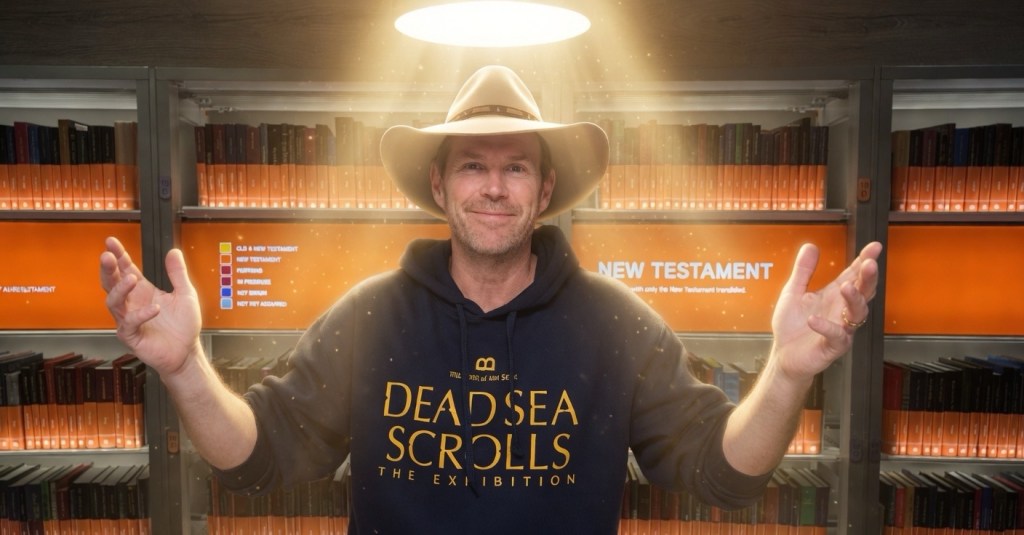
Rich Hoffman is an author, political consultant, and strategic advisor based in Cincinnati, Ohio, and the creator of The Politics of Heaven—a unique framework that connects biblical theology, ancient history, and modern power structures to explain how moral alignment and spiritual forces shape global events. Blending real-world political experience with deep research into archaeology, UFO phenomena, and suppressed historical narratives, Hoffman offers compelling commentary on topics ranging from ancient civilizations and the Dead Sea Scrolls to modern populist movements, paranormal continuity, and leadership strategy in chaotic environments. As the author of The Gunfighter’s Guide to Business and the forthcoming Politics of Heaven, he brings a grounded yet provocative voice to media discussions, supported by firsthand experiences and a cross-disciplinary approach that bridges science, history, and theology. For interviews, speaking engagements, or expert analysis, visit richhoffmanbooks.com or contact directly via phone at 513-307-5815 or email at rhoffman@richhoffmanbooks.com. If you’ve seen the movie, Disclosure Day and want to talk about it and the implications of Presidnet Trump’s UAP disclosures, let me know and we can bring some color to your coverage. https://richhoffmanbooks.com/media-inquiries-broadcast-topics-and-contact-info/?frame-nonce=ad51e7ecba I do have a firsthand UFO encounter to discuss.

