
The Eye of the Tiger: Lindsey Graham dies and Conor McGregor loses

I woke up in the middle of July 2026 to a couple of pieces of news that landed with a familiar weight, the kind you feel when patterns you have watched for years finally play out exactly as expected. Senator Lindsey Graham had died suddenly of a heart attack, or more precisely, what the reports called an aortic dissection tied to arteriosclerotic cardiovascular disease. It was a brief and sudden illness, they said, and the flags were ordered to half-mast. Around the same time, or perhaps the very same night, depending on time zones and fight cards, Conor McGregor stepped back into the Octagon at UFC 329 in Las Vegas against Max Holloway and lasted just sixty-nine seconds before a knee injury from one of his own flashy opening kicks forced the stoppage. A suspected blown ACL, the kind of thing that ends careers or at least sends fighters into long nights of the soul.

Neither outcome surprised me, though both carried that sting of unnecessary diminishment. I have never been a big fan of Lindsey Graham. He and John McCain represented a certain strain of Republicanism that always felt more interested in maintaining a seat at the table than in actually winning the fight for the principles they claimed to hold. They were the “Three Amigos” with Joe Lieberman, globetrotting on foreign policy, cutting deals, positioning themselves as the reasonable voices who could work across the aisle. In practice, that often meant the Republican brand took on water while the more aggressive side kept advancing. Graham bristled early when Trump criticized McCain’s war record, called Trump names, and destroyed phones in a stunt when his number got out. Later, he became a golfing buddy and defender. It was transactional. Hang around the winners long enough, and maybe some of the fire rubs off, or at least you stay relevant. I do not disparage a man on the day of his passing out of basic politeness and respect for the family. That is not what I will do. But as far as the political work goes, the vacancy he leaves in the South Carolina Senate is an opening. Governor McMaster will appoint someone as interim, and then there will be a special election. The question is whether that seat goes to someone who actually carries the eye of the tiger or to another placeholder who thinks proximity to power is the same as having it.

The McGregor situation felt even more avoidable and therefore more disappointing. I have always respected what he accomplished in his prime. The speed, the left hand, the way he made the entire sport bigger by sheer force of personality and skill. He changed the game. But watching the buildup to this comeback, I could see it coming from a mile away. There was a vacancy in his face during the face-off. The look was not there. The walk to the arena hours ahead of time already told the story. He was going through the motions that had once been fueled by something deeper. When the fight started, he opened with the jumping, theatrical kicks that signal a man trying to manufacture intensity he no longer feels in his bones. Within seconds, the knee buckled on landing; he tried to continue, but the referee waved it off. Max Holloway did not even have to do much. He just had to be the one who still had the gas in the tank and the willingness to press when the other man was already compensating with showmanship.

I felt sorry for Conor McGregor before the fight even started. I said it out loud to myself and to anyone who would listen in the days leading up to it. He should have stayed retired. Go out on the legacy you built when you had the eye of the tiger, when you were the hungry kid from Dublin knocking people out and changing divisions. Instead, he stepped back in, got the big paycheck and the big stage, and now he walks away with another loss and a serious injury that will linger. That is how legacies get complicated. The record book will show the late-career defeats, and the highlight reels will always include the moments where the body betrayed the intention because the intention itself was no longer pure. I have torn my own ACL. I know what it feels like when the leg suddenly is not under you anymore, when the bones shift, and you realize in an instant that something fundamental has given way. It is not just pain. It is the body telling you that the architecture you trusted has limits, and theatrics do not change those limits. McGregor knew it the second it happened. You could see it in the way he tried to keep throwing and then had to stop. The opponent did not have to finish him with strikes. The injury did the work because the preparation and the mindset had already left the building.

This is bigger than one fighter or one senator. It is about the eye of the tiger and what happens when you lose it. I go back to Rocky III every time this comes up. Apollo Creed sits Rocky down after the loss to Clubber Lang and tells him straight: you had that eye of the tiger, man, the edge, and now you have got to get it back. Rocky had gotten comfortable. He had the money, the fame, the big house, the training that had become routine instead of desperate. He was still strong on paper, but the hunger that made him dangerous had been replaced by the soft belief that reputation alone would carry him. Apollo drags him back to the old gym, strips away the comforts, and forces him to remember what it felt like to have nothing but the will to impose himself on the moment. That is the lesson. The eye of the tiger is not about being loud or theatrical. It is about the quiet, relentless knowledge that you are willing to do what the other person is not, and that you have prepared your mind and body for the exact second when everything is on the line.

McGregor used to have it. You saw it in the old fights, the way he walked through opponents with that left hand and that certainty. The theatrics were there too, the entrances, the predictions, the psychological warfare. But they were backed by the real thing. When the real thing started to fade, after the losses to Khabib and the leg break against Poirier and the years away, the theatrics became the main act. He tried to win the fight in the buildup, in the face-off, in the flying kicks that look spectacular on a highlight but leave you vulnerable the moment your timing or your body is even slightly off. That is what entitlement looks like in combat sports. You start believing your own press clippings and your bank account. You think the name and the history will do some of the work for you. The young hungry dogs see it immediately. They do not care about your past glories. They see the vacancy in the eyes, and they know that if they stay disciplined and scrappy, they can take the perch. McGregor invited it by trying to overcompensate with movement and show instead of the cold, patient application of skill and will.

That is why I felt the same way about Gina Carano and Ronda Rousey in their moments. You could see it a month in advance in some cases. The eye was gone. The comfort had set in. The performance became about protecting an image rather than dominating the moment. Rocky III nailed it because Apollo was not just talking about boxing. He was talking about any arena where human beings test themselves against each other or against circumstances. Business, politics, raising a family, teaching a grandson how to launch model rockets on a windy, rainy day when every instinct says stay inside. You impose your will on the environment anyway. You troubleshoot when things go wrong. You recover the drifted rocket, and you turn the failure into a story about resilience. That is the eye of the tiger in everyday form. It is not glamorous. It does not trend on social media. But it is what actually builds lasting legacies.

Lindsey Graham spent a career learning that he could hang around winners and borrow some of their credibility. McCain had the maverick brand and the war hero story. Trump had the unmistakable fighter energy that resonated with people tired of the old accommodations. Graham positioned himself as the bridge, the one who could translate between worlds. It worked for a long time. He accumulated influence, especially on judicial appointments and foreign policy. But the underlying pattern was the same one I saw in McGregor. When you are operating from a place of borrowed fire rather than your own, eventually the bill comes due. People remember how you carried yourself when the pressure was highest. They remember whether you were willing to stand alone or always needed validation from the current power structure. Graham’s death leaves a vacancy, and vacancies are opportunities. South Carolina and the broader Republican ecosystem now have a chance to put someone in that seat who does not need to borrow the eye of the tiger because he already carries it.

McGregor has his own vacancy to reckon with now. The physical one in the knee will heal or it will not, but the deeper one is in the approach to competition itself. He has advocated for Christianity in public ways that I respect. He has weighed in on Irish politics with a directness that cuts through a lot of the usual noise. Those are good things. But you cannot carry those convictions into the Octagon on theatrics alone. The cage does not care about your brand deals, your past knockouts, or your social media following. It cares about whether you are willing to impose your will on another trained human being who is trying to do the same to you. When that willingness is replaced by the need to perform the role of the dangerous man, the outcome becomes predictable. The hungry young fighters are already circling. They watched the same face-off I did. They saw the same vacancy. They will be ready when the next opportunity presents itself.

I have carried large-caliber handguns for personal protection for years. I vary my routes. I pay attention to how people move and how they look at you when they think no one is watching. You learn to distinguish between real readiness and the kind of posturing that comes from people who hope the image will do the work. The ones who are truly prepared do not need to announce it with every step. They are. That same discernment applies to politics, business, and every other competitive space. The eye of the tiger shows up in the small things: the consistency of preparation, the refusal to make excuses, the willingness to do the boring work that makes the dramatic moments possible. When that is missing, no amount of jumping around or clever marketing changes the underlying math.

There is a broader context to all of this that I keep returning to in my own writing and thinking. We are living through a period in which many of the old structures are being tested, and in which entitlement and performance have been elevated over substance in too many corners of culture. The media rewards the loudest voices. Politics sometimes rewards those who can perform the role of a fighter without actually having to fight on the hard issues. Sports and entertainment industries create stars and then watch them fade when the underlying fire goes out. It is not just about individual choices. It is about a cultural atmosphere that makes comfort and image more attractive than the daily discipline of staying sharp. That is why the lessons from the cage and from the Senate floor matter beyond their immediate arenas. They are microcosms of the same human dynamics that play out everywhere.

I have written before about the gunfighter ethos as a skeleton key to understanding Western success in business and in life. The willingness to draw when necessary, to be precise under pressure, to accept that reputation is earned in the moment of truth rather than in the buildup. McGregor in his prime embodied a version of that. Graham, for all his years in Washington, never quite projected the same self-contained readiness. He was effective in his own way, but the effectiveness often depended on the company he kept rather than on a solitary, unmistakable center of gravity. When that center is missing, time eventually exposes it. For Graham, the exposure came at the end of a long career. For McGregor, it came in sixty-nine seconds under the bright lights.

The vacancy left by Graham’s passing is an opportunity for someone who understands that politics at its best is not about hanging around winners but about being willing to fight for the right things even when it is costly. The lesson from McGregor’s fight is an opportunity for every young athlete, every entrepreneur, every person who steps into any arena: do not go out there unless you have the eye of the tiger. Do not try to fake it with theatrics or reputation or the hope that the other side will respect your past. The cage, the marketplace, the ballot box, and life itself have a way of finding the vacancy and exploiting it. The ones who win consistently are the ones who wake up every day knowing they are still hungry, still willing to do the work, still prepared to impose their will on whatever stands in their way.

I felt sorry for both men in different ways. For Graham, the human reality of a sudden exit after decades of service. For McGregor, the avoidable nature of the loss and the way it complicates a legacy that did not need complicating. But I am not surprised by either. When you operate without the eye of the tiger, the outcomes become foreseeable. The body, the political environment, or the competitive landscape eventually calls the bluff. The only real choice is whether you recognize it in time to either rekindle the fire or step aside with dignity while the fire is still remembered for what it once was.

That is the lesson I keep returning to, whether I am watching a fight card, reading political news, or whatever the issue.  The eye of the tiger is not a feeling that comes and goes with the crowd or the paycheck. It is a decision you make every day about how you will meet the moment. Some people never lose it. Others let comfort, distraction, or the accumulation of small compromises take it from them. The ones who keep it understand that every fight, every negotiation, every election, every personal test is an opportunity to prove it is still there. When it is not, the smart move is to recognize it before the knee buckles or the vacancy becomes the story everyone tells about you.

Conor McGregor should have stayed retired if the fire had not been there in full force. Lindsey Graham’s seat now belongs to whoever is willing to occupy it with something more than borrowed credibility. Both situations point to the same truth. You cannot win on theatrics when the other side is still willing to do the real work. You cannot fake the eye of the tiger. Either you have it or you do not, and the arena always finds out which.

This is why I keep writing and talking about these things. The surface events, the fights, the elections, and the headlines are never just about themselves. They are reflections of deeper patterns in how human beings handle pressure, power, and the passage of time. If you want to understand why certain people rise and others fade, why institutions get captured or renewed, why cultures either strengthen or decay, you have to look past the performance and into the actual state of the will. That is the work I have tried to do in my books, and it is the work that feels more urgent now than ever. 

Footnotes

[1] Reports on Lindsey Graham’s death on or around July 11-12, 2026, described the cause as an aortic dissection due to arteriosclerotic cardiovascular disease, following a brief illness. He was 71. See contemporaneous coverage from Reuters, The Washington Post, and The Guardian (July 2026).

[2] Graham served in the U.S. House before winning the election to the Senate in 2002, representing South Carolina. He formed a close political and personal alliance with Sen. John McCain, often traveling together and working on foreign policy and judicial matters. They were part of the informal “Three Amigos” grouping that also included Sen. Joe Lieberman for a period. Graham initially criticized Donald Trump sharply during the 2016 campaign, including over Trump’s comments about McCain, but later became a supporter and frequent golf partner.

[3] Conor McGregor returned to the UFC at event 329 in Las Vegas, facing Max Holloway in a welterweight bout. The fight ended at 1:09 of the first round when McGregor injured his right knee (suspected ACL tear) upon landing from an opening flying left roundhouse kick. He had not fought since breaking his leg against Dustin Poirier in 2021. Holloway was awarded the TKO victory. Post-fight commentary and McGregor’s own statements reflected significant disappointment.

[4] McGregor’s fighting style has long combined elite striking (particularly the left hand) with significant showmanship, psychological warfare, and theatrical elements in entrances and pre-fight interactions. Analysts have noted both the effectiveness of his mental game in his prime and the risks when physical tools or timing are compromised. His history includes notable leg injuries that affected mobility in later bouts.

[5] The phrase “eye of the tiger” originates in the film Rocky III (1982, directed by Sylvester Stallone). After Rocky loses to Clubber Lang, Apollo Creed tells him he has lost “that eye of the tiger, man—the edge,” and must recover the hunger and intensity that defined his earlier success. The song “Eye of the Tiger” by Survivor was written for the film and underscores the theme of reclaiming drive after comfort sets in.

[6] The author’s perspective on competitive mindset, resilience, and Western strategic traditions is developed in The Gunfighter’s Guide to Business: A Skeleton Key to Western Civilization, which draws on gunfighter ethos, Lean manufacturing experience, and practical leadership lessons from decades in aerospace and business environments. Personal experiences with high-stakes situations, personal protection, and teaching resilience (including model rocketry with family) inform the analogies used throughout.

[7] Broader themes of spiritual and historical patterns that underlie visible political and cultural conflicts are explored in the author’s forthcoming work, The Politics of Heaven, which examines biblical conspiracies, ancient history, non-human influences, and the nature of power and moral alignment across time.

Bibliography / Recommended Reading

•  Stallone, Sylvester, dir. Rocky III. United Artists, 1982. Film.

•  Survivor. “Eye of the Tiger.” Eye of the Tiger, Scotti Brothers Records, 1982. Song.

•  Hoffman, Rich. The Gunfighter’s Guide to Business: A Skeleton Key to Western Civilization. (Available editions emphasize practical Western strategic thinking for business and life.)

•  Hoffman, Rich. The Politics of Heaven. Forthcoming / completed 2026. (Explores deeper spiritual warfare, historical conspiracies, and power structures.)

•  Contemporary news reporting on Sen. Lindsey Graham’s career, alliance with Sen. John McCain, evolution regarding Donald Trump, and death in July 2026 (Reuters, The Washington Post, The Guardian, Roll Call).

•  MMA technical and career analysis of Conor McGregor, including striking style, psychological approach, injury history, and the UFC 329 bout against Max Holloway (various fight coverage and breakdowns, July 2026).

Rich Hoffman

More about me

Click Here to Protect Yourself with Second Call Defense https://www.secondcalldefense.org/?affiliate=20707
About the Author: Rich Hoffman

Rich Hoffman is an author, political consultant, and strategic advisor based in Cincinnati, Ohio, and the creator of The Politics of Heaven—a unique framework that connects biblical theology, ancient history, and modern power structures to explain how moral alignment and spiritual forces shape global events. Blending real-world political experience with deep research into archaeology, UFO phenomena, and suppressed historical narratives, Hoffman offers compelling commentary on topics ranging from ancient civilizations and the Dead Sea Scrolls to modern populist movements, paranormal continuity, and leadership strategy in chaotic environments. As the author of The Gunfighter’s Guide to Business and the forthcoming Politics of Heaven, he brings a grounded yet provocative voice to media discussions, supported by firsthand experiences and a cross-disciplinary approach that bridges science, history, and theology. For interviews, speaking engagements, or expert analysis, visit richhoffmanbooks.com or contact directly via phone at 513-307-5815 or email at rhoffman@richhoffmanbooks.com.  If you’ve seen the movie, Disclosure Day and want to talk about it and the implications of Presidnet Trump’s UAP disclosures, let me know and we can bring some color to your coverage. https://richhoffmanbooks.com/media-inquiries-broadcast-topics-and-contact-info/?frame-nonce=ad51e7ecba I do have a firsthand UFO encounter to discuss.
There Are Millions of Graham Platners Taking Advantage of Liberal Women: They hide bad conduct in collectivist movements, such as communism

I heard the news the other day about this Graham Platner loser dropping out of the Maine Senate race, and it struck me the same way it probably struck many people who watched his video statement. Here was a guy who had just won the Democratic primary in a big way, an oysterman and Marine veteran out of Sullivan, Maine, who beat the establishment favorite and raised something like sixteen million dollars in contributions for a race against Susan Collins. Then a former girlfriend comes forward with a story about him forcing himself on her back in 2021 while drunk, ignoring her repeated objections, and the whole thing unravels in a matter of days. He denies it outright, calls the claims false and not real, but still suspends operations and files the paperwork to withdraw before the July 13 deadline so the party can scramble for a replacement by the 27th. In his eleven-minute video, he says it is not an admission of guilt, that some will think it is, but it most certainly is not, and that they are stepping aside not because of the allegations but because those in power are taking away the structures and access. For the movement to continue, it cannot be him. 

That surface reaction, the astonishment and the quick takes, does not get deep enough. What happened here is not just another politician caught in a mess of his own making. It is a window into something larger about how certain kinds of people rise in the current version of Democrat politics, especially the populist left strain that has been building since Bernie Sanders and now carries elements of what some are calling a blue MAGA or communist-adjacent energy. Platner fits a pattern that keeps showing up. Multiple ex-girlfriends have described intimidating behavior, one saying he twisted her arm and locked her in a bedroom until she calmed down, another recounting comments about raping intruders to show dominance, and still another alleging he removed protection without consent during sex. There was the chest tattoo, a Totenkopf that he first claimed he did not understand, just a skull and crossbones from a drunken night with Marines in Croatia in 2007, but ex-girlfriends say he knew exactly what it was, bragged about it as a reminder that the United States was the evil bad guy overseas, and called it his Totenkopf. Then came the old Reddit posts where he described himself as a communist, said all cops are bastards, and made other remarks disparaging women, rural White Americans, and various groups. He had also been sending sexually explicit texts to other women during a rough patch in his marriage, something his wife publicly defended while saying they had a great marriage overall. 

When the latest allegation hit from Jenny Racicot, the pressure from national and state Democrats mounted fast, and endorsements started peeling away. The party machinery that had lifted him after Governor Janet Mills stepped aside suddenly found the strings being pulled. Platner framed it as the establishment taking away his ability to run, his access to funding, and the mechanisms of power, even though he had beaten their preferred candidate in the primary. It sounded like an admission that the machine believed the story or at least believed it would stick and cost them the seat. Susan Collins, for all the complaints about her being a RINO Republican at best, suddenly looked like the safer bet in a race that matters for Senate control. The whole episode felt familiar, like watching the same movie the Republican side lived through a decade ago, only now it is the Democrats’ turn and the characters coming forward to fill the populist void on their side carry different baggage.

I have been saying for a long time that the Tea Party movement was never really about pulling the Republican Party back to some Chamber of Commerce comfort zone. It was the start of something bigger: MAGA, a demand for individual accountability and pushback against the permanent class that had captured both parties. The RINOs like McConnell, Romney, and Kasich types resisted Trump because they saw the threat to their control. They got pushed to the margins or had to adapt. What we are watching now on the Democrat side is their version of that purification, except the energy they are riding is collectivist at its core. Bernie Sanders gave it shape, and now you see candidates who talk about Medicare for All, banning billionaires from buying elections, ending wars forever, and strong unions, but the people who step forward to lead that charge often bring personal conduct that would get them run out of a more individual-responsibility culture. Platner is not an outlier in that environment. He is a predictable product of it.

The warm blanket of collectivism is what draws these characters and protects them for a while. When you tell people that the individual does not matter as much as the group, that judgment on personal behavior is bourgeois or oppressive, or whatever the current phrase is, you create space for someone with a Nazi tattoo, a history of rough treatment of women, and a trail of denied allegations to present himself as the champion of the working class. The cause becomes the excuse. Personal integrity gets subordinated to participation in the movement. If you are out there advocating for the collective good, for the masses against the oligarchs, then who cares if your private life shows a pattern of dominance, non-consent, or simple low character? The ideology says do not judge the individual; judge him by his alignment with the larger project. That is why you keep seeing the same types of behavior surface. They find a home where their dysfunction does not trigger the same social cost it would elsewhere.

I have watched enough of this over the years to know that sexual conduct is one of the clearest windows into character. People who live for self-pleasure, who chase validation without scrutiny, who treat others as means to an end, often gravitate toward environments that promise no judgment. Liberal politics has been that environment for decades for a certain kind of man. It is not that every liberal man is like this, but the ones who are find it easier to operate there. The women who get drawn in, the ones who are insecure and looking for collective cover, often end up in situations they later regret. They talk about wanting a strong, dominant presence, but they do not look for it on the side that might actually hold them accountable or demand standards. They stay inside the circle where the bad behavior can be reframed as a moment of weakness, or the fault of the system, or something the collective will forgive because the higher cause matters more. You see it in the wine-tasting crowds, the middle-aged women who start hitting on everyone once the drinks flow, the husbands standing off to the side, embarrassed, while their wives seek validation in a group setting. It is the same impulse that makes collectivism attractive to people who do not want their personal record examined too closely. Four or five abortions, repeated cheating, substance issues, whatever the story is, the group provides the blanket. Do not judge me for my individual choices; judge me for my participation in empowering the masses.

That is the danger with someone like Platner. On the surface, he looked like a fresh face, a veteran oysterman who could connect with working people in a state facing real economic pressures. Underneath was the same pattern that had shown up with other figures on that side of the aisle in recent years. The party did not know what to do when the stories kept coming, so they did what machines do: they pulled the plug once it became clear he could no longer win or raise money effectively. Platner’s response was to blame the structures rather than own the conduct that had turned the structures against him. That is also classic. It is never the individual’s fault in a collectivist frame. It is the machine, the establishment, the powers that be who are threatened by the movement.

The Republican side went through its own version of this a decade ago and is still sorting some of it. The difference is that the underlying philosophy on that side, even when imperfectly practiced, still holds room for individual responsibility and personal conduct as legitimate standards. Trump himself came out of a Playboy background in the eighties and nineties, lived that life openly, and the people who supported him later knew what they were getting. Melania came out of that same world, and they built something that has lasted. He did not hide behind a collective excuse when things got hard. He used his brand and his willingness to fight the permanent class to deliver on borders, energy, judges, and pushing back against the administrative state. The voters who backed him were not endorsing the 1990s lifestyle; they were endorsing the man who would impose limits on government power and restore some sense of sovereignty. That is why the purification worked on the right. It was messy, and it took years, but it produced a filter that still operates. People who cannot meet a basic standard of personal integrity or who treat politics as cover for their own appetites get exposed and sidelined eventually.

On the Democratic side, the filter is currently weaker because the ideology itself discourages individual judgment. The populist energy they are trying to harness is being filled by characters who would have been laughed out of a serious movement on the other side. You are going to see more Graham Platners before this cycle finishes. They will keep coming forward because the environment rewards the ability to perform the collectivist script, while their personal lives stay hidden or are excused. The more they double down on that direction, the more the low-character actors will find it a comfortable place to operate. Republicans already paid the price and did the work of cleaning house. Democrats are just starting their version, and it looks like it is going to be uglier because the philosophy they are embracing provides better cover for dysfunction.

That is why some of the dumbest outcomes in politics keep happening. People who would never tolerate certain behavior in their own families or businesses will defend it or excuse it when it comes from someone aligned with their political tribe. They will vote for policies that demonstrably harm the vulnerable, erode family formation, import incompatible cultures, and centralize power in unaccountable bureaucracies, all while insisting it is compassion or progress. On the surface, it looks like ideology run amok. Deeper, it looks like influence is amplifying the parts of human nature that are already broken.

Platner’s short rise and fall is just one more data point in that larger story. A man with a documented pattern of behavior that should have disqualified him from any position of trust found a lane in the current Democrat populist moment because the ideology provided cover and the machine needed a fresh face who could raise money and excite the base. When the cover began to fail, the machine cut him loose, and he blamed it. The cycle will repeat with the next candidate who can perform the script while carrying similar baggage. On the other side, the work of insisting on personal conduct and individual responsibility continues, however imperfectly. That insistence is not just political hygiene. It is resistance to the older pattern that wants humanity to dissolve responsibility into collectives so the real influences can operate without resistance.

Footnotes

1.  National Review and multiple outlets reported Platner’s formal withdrawal letter and video statement on or around July 8–10, 2026, including his phrasing that the structures were being taken away and that it was not an admission of guilt.

2.  Politico, CNN, and Washington Post reporting on Jenny Racicot’s allegations of forced sex in 2021, including details of the incident and her decision to come forward after Platner’s public denials of abusive behavior.

3.  New York Times reporting on multiple ex-girlfriends describing physical intimidation, locked rooms, and other conduct, including Lyndsey Fifield’s accounts from 2013–2015.

4.  New York Post and other reporting on the Totenkopf tattoo, ex-girlfriends stating Platner knew its meaning and used it as a reminder that the U.S. was the “evil bad guy overseas,” and his initial public claim that he did not understand the symbol.

5.  Reporting on deleted Reddit posts from 2009–2021 in which Platner described himself as a communist and made various disparaging remarks; also coverage of sexually explicit texts sent during marital difficulties and the wife’s public defense.

6.  Campaign finance totals and primary results showing Platner’s strong performance after Mills suspended her campaign and his subsequent withdrawal before the July 13, 2026 ballot deadline, with the Maine Democratic Party given until July 27 to name a replacement.

Bibliography for Further Reading

•  The Book of Enoch, translated editions with commentary on the watchers, giants, and pre-flood rebellion.

•  The Bible, particularly Genesis 6, Daniel on principalities and powers, Ephesians 6 on spiritual warfare, and Revelation on the ongoing conflict.

•  Dead Sea Scrolls materials and related scholarship on Second Temple period views of heavenly politics and fallen entities.

•  My own forthcoming book, The Politics of Heaven, explores these threads through history and current events.

•  The Gunfighter’s Guide to Business and its developing sequel, which apply lessons of individual will, resilience, and integrity to institutional and political environments.

•  Tail of the Dragon and The Symposium of Justice for narrative treatments of personal conduct, justice, and hidden power structures.

•  Standard works on UFO disclosure and non-human intelligence, including historical government documents and researcher compilations on reported entity types and their interactions with human systems.

•  Histories of the Tea Party movement and its evolution into broader populist realignments on the right, with attention to the internal purification process.

•  Accounts of Bernie Sanders’ influence and the subsequent development of progressive populist currents on the

Rich Hoffman

More about me

Click Here to Protect Yourself with Second Call Defense https://www.secondcalldefense.org/?affiliate=20707

About the Author: Rich Hoffman

Rich Hoffman is an author, political consultant, and strategic advisor based in Cincinnati, Ohio, and the creator of The Politics of Heaven—a unique framework that connects biblical theology, ancient history, and modern power structures to explain how moral alignment and spiritual forces shape global events. Blending real-world political experience with deep research into archaeology, UFO phenomena, and suppressed historical narratives, Hoffman offers compelling commentary on topics ranging from ancient civilizations and the Dead Sea Scrolls to modern populist movements, paranormal continuity, and leadership strategy in chaotic environments. As the author of The Gunfighter’s Guide to Business and the forthcoming Politics of Heaven, he brings a grounded yet provocative voice to media discussions, supported by firsthand experiences and a cross-disciplinary approach that bridges science, history, and theology. For interviews, speaking engagements, or expert analysis, visit richhoffmanbooks.com or contact directly via phone at 513-307-5815 or email at rhoffman@richhoffmanbooks.com.  If you’ve seen the movie, Disclosure Day and want to talk about it and the implications of Presidnet Trump’s UAP disclosures, let me know and we can bring some color to your coverage. https://richhoffmanbooks.com/media-inquiries-broadcast-topics-and-contact-info/?frame-nonce=ad51e7ecba I do have a firsthand UFO encounter to discuss.
The Lakota Grooming Scandal: Power, Protection, and the Price of Silence in Our Public Schools

I have watched this story unfold with a mixture of anger, sadness, and that familiar sinking feeling that comes when you realize the system is working exactly as designed—not for the kids, but for the adults who feed off the perpetual motion machine of public money and institutional self-preservation. A mother filed a federal lawsuit on July 1, 2026, alleging that a Lakota Local Schools teacher groomed and sexually abused her daughter over roughly three years, starting when the girl was 13 years old in seventh grade at Liberty Junior School. 

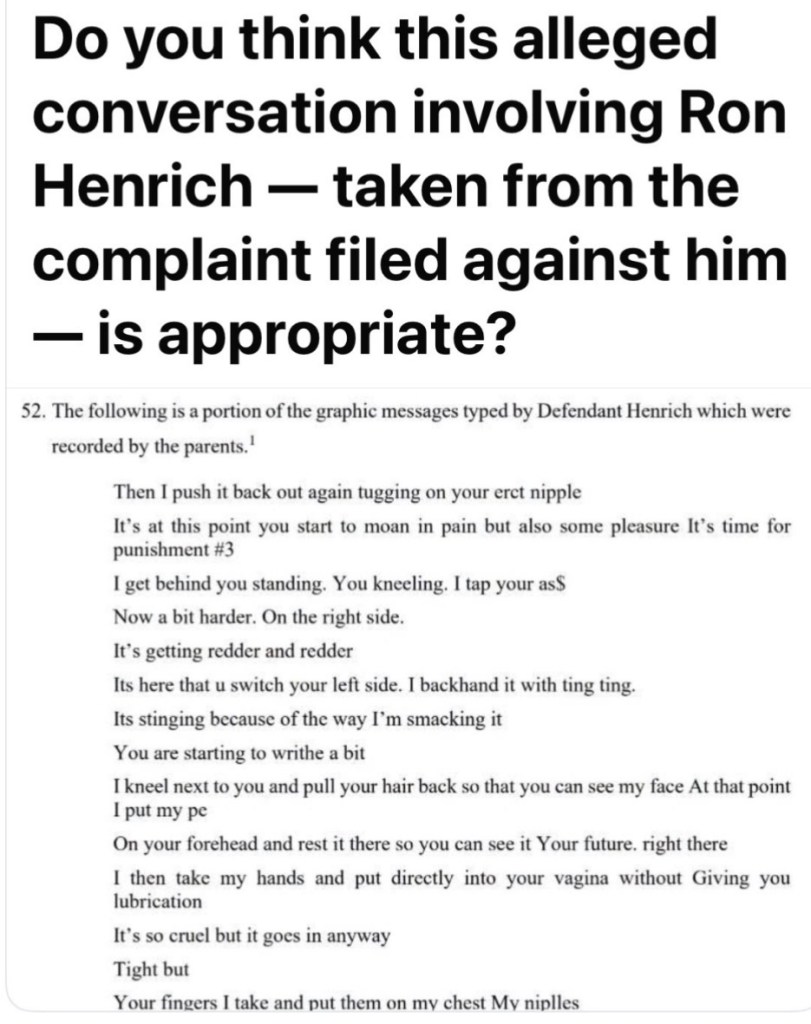
According to the detailed complaint, the teacher—identified in court documents as Ronald Henrich—did not even teach the girl in any of her classes. He welcomed her into his classroom during study hall periods, showed her “special attention,” and began building a relationship. Messages started on the district’s own Remind app. The student confided personal struggles, including mental health issues. The communications continued and escalated even after the mother tried to set boundaries. By ninth grade, the meetings moved to a closed-door “mindfulness room” for Friday lunches. Communications shifted to district email and Google Docs when access to Remind was curtailed. In March 2025, the mother discovered the teacher actively typing “extremely sexually graphic content” into a shared Canva document with her daughter. She recorded it. She called the Butler County Sheriff’s Office. 

The district’s response, according to the lawsuit, was to promise administrative leave and restricted access to technology, then quietly allow the teacher to take Family and Medical Leave Act leave instead. Less than two weeks after the explicit messages surfaced—and while investigations by the district, sheriff, and children’s services were still open—the district approved his retirement. No public discipline. No immediate report to the Ohio Department of Education, as many parents would expect. The teacher walked away with his pension and benefits intact while the family was left to pick up the pieces. 

The superintendent, Ashley Whitely, issued the standard institutional denial: the district “denies all allegations” and claims student safety is its top priority.  Meanwhile, the mother’s lawsuit also details earlier reports she made that went unaddressed, repeated class pull-outs without parental notification, and even troubling lapses in how the school nurse handled the student’s medication—stockpiling Tylenol that contributed to a suicide attempt and failing to manage anxiety medication on a trip properly. These are not small administrative hiccups. They paint a picture of a system that had multiple opportunities to intervene and chose not to.

Then there is the part that really sticks in my craw. According to people who have followed the internal handling, the HR director—Jeff Rouff—essentially shrugged and said something to the effect that the age of consent in Ohio is 16, so what’s the big deal? Two consenting adults. Nothing illegal happened. That line of thinking is exactly why these situations metastasize. It ignores the entire grooming process that began at 13, when the girl was under the care and authority of this adult in a position of power inside a public school building. It ignores the use of school-issued devices and district apps to conduct the relationship. It ignores the closed doors, the missed classes, the emotional manipulation of a vulnerable child who had already suffered prior sexual abuse. Age of consent statutes were never intended to give cover to adults in positions of trust who spend years cultivating access to minors. That is not a gray area. That is the precise reason we have laws and professional conduct codes for educators in the first place.

I heard about problems surrounding this teacher roughly a year before the lawsuit dropped. Other parents and observers had been talking. The circle had already started to form. When the story finally broke across local media—Channel 5, Local 12, FOX 19—the superintendent’s immediate public move was not a somber address about accountability and root-cause fixes. It was a cheerleading video hyping a fall tax increase, talking about hiring dozens more staff members, rolling out a corporate “roadmap” with “stakeholders,” and reminding everyone to keep supporting public schools. The timing felt deliberate. Distract, then reassure the taxpayers who write the checks. Keep the money flowing.

That is the game I have been describing for years. Lakota, like many large suburban districts, is constantly in or approaching levy mode. The narrative must be controlled: we are great, we are improving, we need a little more of your property tax money to keep doing the wonderful things we do. Bad stories—especially stories that suggest adults in the building are preying on children and that leadership circled the wagons—threaten that narrative. So the wagons circle. The teacher retires quietly. HR offers the age-of-consent talking point. The superintendent films the upbeat video. The teachers’ union, which exists in large part to protect its members from consequences, stays largely silent or issues the usual generic statements about due process. And the machine keeps turning.

This is not an isolated incident. The lawsuit itself references a pattern of other cases involving Lakota employees over the years—some that resulted in convictions or license revocations, others that were handled with quiet exits.  Former board member Darbi Boddy, who has remained a vocal parent advocate even after her time on the board ended, issued a clear public statement criticizing the handling of this situation. Good for her. We need more people willing to say the obvious out loud rather than hide behind “stakeholder engagement” jargon.

What troubles me most is how predictable the protection response has become. When something like this surfaces, the institution’s first instinct is not “How do we make sure this never happens again and how do we support the victim?” It is “How do we contain the damage to our brand and our funding pipeline?” The HR director’s reported comment about 16 being legal is a perfect example of that mindset. It treats the endpoint—the moment the child turned 16—as the only thing that matters, while erasing the years of grooming and boundary erosion that got her there. It treats a minor student in a teacher’s care as just another “consenting adult” the second the calendar flips. That is not how any responsible adult in education should think. It is how an institution thinks when its primary loyalty is to itself and the revenue stream that sustains it.

Public education in its current monopolistic, union-protected, tax-funded form has structural problems that make these failures almost inevitable. When you combine compulsory attendance, massive budgets, powerful collective bargaining agreements that make firing even grossly negligent employees difficult and expensive, and a culture that treats any criticism as an attack on “the children” or “public education itself,” you create exactly the conditions for cover-ups. The money keeps coming in as long as the bad stories stay buried or get spun. Parents who raise hell are dismissed as “haters” or people with “unrealistically high moral standards.” Meanwhile, the actual standard on the ground—don’t have sex with kids in the classroom or via school devices, don’t groom them for years, don’t let it slide when a parent reports it—somehow becomes negotiable the moment it threatens the budget or the reputation.

I am not saying every teacher is doing this, but too many are. The vast majority are not. But the ones who are counting on the system’s reluctance to act decisively. They count on the HR director who will find the legal technicality. They count on the superintendent, who will film the upbeat video instead of cleaning house. They count on the union that will fight to the last dollar of taxpayer money to protect a member who should never have been in a classroom with minors. And they count on enough parents staying disengaged or intimidated for the story to fade before real accountability arrives.

The mother in this case did what too few parents feel empowered to do: she documented, she reported, she refused to let it disappear. Her lawsuit is now public. The allegations are serious and detailed. Whether every claim is ultimately proven in court is for the legal process to decide. But the pattern of institutional response—quiet exit, legal denials, distraction videos, and the age-of-consent shrug—is already on display for anyone willing to look. That pattern is what should alarm every parent in Lakota and every parent in any district that operates the same way.

How many other kids right now are in unhealthy dynamics with adults who hold power over their grades, their schedules, their daily lives inside these buildings? How many school-issued devices are carrying messages that would make any decent parent’s blood run cold if they saw them? How many times has a concerned parent been told some version of “nothing to see here, move along, and please vote yes on the next levy”? I would be willing to bet the number is higher than any of us want to admit. This case only became a story because one mother refused to be quiet. The rest stay invisible because the system is optimized for exactly that outcome.

We keep being told that more money, more staff, more programs, and more “roadmaps” will fix what ails public education. I have watched this play out locally for years. The money keeps increasing. The problems—academic stagnation in too many areas, cultural capture, and now these horrifying failures of basic child protection—persist or worsen. At some point, parents have to ask whether the institution itself is the problem, not the lack of funding. When the first instinct of leadership is to protect the adult and the budget rather than the child, the social contract has already been broken.

Summary of Doe v. Lakota Local Schools (Filed July 1, 2026)

Important: This is a civil complaint containing allegations made by the plaintiffs. The allegations have been filed in federal court but have not been proven in court unless and until established through litigation. [Doe v Lakota Schools | PDF]

Overview

A mother (“Jane Doe”) and her daughter (“Jill Doe”), a minor student in the Lakota Local School District, filed a federal lawsuit against:

  • Lakota Local Schools
  • Former teacher Ronald Henrich
  • Superintendent Ashley Whitely
  • Principal Bill Brinkman

The lawsuit alleges that Henrich groomed and sexually abused Jill over approximately three years and that district officials failed to prevent, investigate, or properly respond to the misconduct. [Doe v Lakota Schools | PDF]


Timeline of Alleged Events

2022–2023 School Year (7th Grade)

According to the complaint:

  • Jill was 13 years old and had documented mental health struggles and prior trauma.
  • Although she was not formally identified as a gifted student, she began attending a gifted-program study hall supervised by Ronald Henrich.
  • Henrich allegedly began developing a special relationship with her and communicating extensively through the district’s Remind messaging app.
  • Jill reportedly disclosed personal information, including mental health struggles and prior abuse.
  • The lawsuit alleges the district failed to monitor or investigate the growing relationship. [Doe v Lakota Schools | PDF]

January 2024 Suicide Attempt

The complaint alleges:

  • Jill stockpiled Tylenol obtained from a school nurse over several days.
  • On January 22, 2024, she consumed approximately 4,500 mg in a suicide attempt while at school.
  • She was hospitalized and spent four days in psychiatric care.
  • The district allegedly failed to supervise medication administration properly. [Doe v Lakota Schools | PDF]

Summer 2024

The lawsuit claims:

  • Henrich continued communicating with Jill during summer break.
  • Messages allegedly became increasingly personal.
  • Jill’s mother became concerned and restricted access to the messaging app outside school hours.
  • The complaint argues district monitoring failed to detect inappropriate communications. [Doe v Lakota Schools | PDF]

2024–2025 School Year (9th Grade)

The complaint alleges that:

  • Henrich was assigned to a different school building but continued visiting Jill’s building.
  • He allegedly met her weekly for private lunches.
  • He brought her food and regularly pulled her from class for mentoring sessions.
  • Communications allegedly shifted to district email and Google documents after the Remind app was discontinued.
  • Jill reportedly missed significant class time due to meetings with Henrich.
  • Teachers allegedly expressed concerns about her absences, but her mother was not informed. [Doe v Lakota Schools | PDF]

January–March 2025 Escalation

According to the complaint:

  • Henrich allegedly contacted Jill’s therapist directly without parental permission.
  • The two allegedly arranged a meeting at a driving range.
  • On March 14, 2025, Jill participated in a gifted-program event where her parents observed what they considered unusual interactions between her and Henrich. [Doe v Lakota Schools | PDF]

March 20, 2025: Discovery of Explicit Messages

This is the central allegation of the lawsuit.

The complaint states:

  • Jill’s mother inspected Jill’s district-issued Chromebook.
  • She discovered a shared Canva document allegedly being used for communication between Jill and Henrich.
  • The mother and stepfather reportedly recorded nearly an hour of sexually explicit messages allegedly typed by Henrich.
  • The complaint includes graphic excerpts from those messages.
  • Butler County Sheriff’s deputies were called to the home and allegedly observed additional messages being typed while officers were present. [Doe v Lakota Schools | PDF]

After Discovery

The lawsuit claims:

  • The Sheriff’s Office informed the district on March 21, 2025.
  • The family was initially told Henrich would be placed on administrative leave and barred from district property.
  • Later, the parents discovered through board records that Henrich had instead been granted Family Medical Leave and subsequently retired.
  • The complaint alleges the district failed to investigate adequately and failed to report misconduct to state authorities. [Doe v Lakota Schools | PDF]

Children’s Services Finding

The complaint states that:

  • Butler County Children Services substantiated abuse allegations involving Henrich and Jill.
  • The family argues the district still failed to take meaningful disciplinary action. [Doe v Lakota Schools | PDF]

Return to School

The lawsuit alleges:

  • Jill was prohibited from using a Chromebook as a safety measure.
  • Teachers allegedly failed to provide equivalent paper assignments.
  • She allegedly faced stigma and negative treatment related to the abuse investigation.
  • Principal Brinkman allegedly failed to correct the situation. [Doe v Lakota Schools | PDF]

Fall–Winter 2025

According to the complaint:

  • Jill continued experiencing serious emotional difficulties.
  • Another teacher reportedly raised concerns after she began seeking excessive contact with him.
  • In December 2025, Jill allegedly contacted Henrich using another student’s phone.
  • Henrich allegedly picked her up from a school activity and spent time with her at a park before returning her.
  • The family ultimately obtained a protection order against Henrich in January 2026. [Doe v Lakota Schools | PDF]

Broader District Allegations

The complaint argues Henrich’s case reflects a larger pattern within Lakota Schools.

It references previous incidents involving:

  • Justin Dennis
  • Nick McGill
  • Former Superintendent Matt Miller
  • George Merk
  • Robert Supinger
  • Angela Johnson

The plaintiffs argue these incidents demonstrate a longstanding failure by the district to identify, stop, or adequately respond to staff misconduct involving students. These allegations, presented by the plaintiffs as evidence of a pattern, have not been adjudicated in this case. [Doe v Lakota Schools | PDF]


Claims Filed

The lawsuit includes numerous claims, including:

Federal Civil Rights Claims (42 U.S.C. § 1983)

  • State-created danger
  • Special relationship doctrine
  • Conduct that “shocks the conscience”
  • Equal protection violations
  • Inadequate district policies and protection systems

Disability Claims

  • Americans with Disabilities Act (ADA)
  • Section 504 of the Rehabilitation Act

State Law Claims

  • Negligent supervision
  • Negligence per se
  • Negligent infliction of emotional distress
  • Intentional infliction of emotional distress (against Henrich)
  • Loss of filial consortium (mother’s claim) [Doe v Lakota Schools | PDF]

Relief Requested

The plaintiffs seek:

  • Compensatory damages
  • Actual damages
  • Punitive damages
  • Attorney fees
  • Costs
  • Interest
  • Jury trial on all applicable claims [Doe v Lakota Schools | PDF]

Bottom Line Review

The complaint alleges that a Lakota teacher groomed and sexually abused a vulnerable student over several years using district facilities, technology, and access to the student, while school administrators allegedly ignored warning signs, failed to take corrective action after discovery, and inadequately protected the student afterward. The lawsuit seeks damages under federal civil rights laws, disability laws, and Ohio tort law. [Doe v Lakota Schools | PDF]

Based on the civil complaint, the accusations and behaviors of Ronald Henrich against the minor plaintiff include a systematic pattern of grooming, manipulation, and sexual abuse over three years:

 **Grooming and Relationship Development**

**Unauthorized Access:** Henrich allowed Jill to attend his “gifted” program study hall instead of her assigned one in seventh grade, despite her not being a designated gifted student.

**Targeting Vulnerabilities:** He built a relationship with Jill by showing her “special attention” and exploiting her personal struggles, including her history of anxiety, self-harm, and past sexual abuse, which she shared with him.

**Mentoring Pretense:** He repeatedly pulled Jill out of her regular classes for one-on-one “mentoring” sessions, claiming it was necessary for her anxiety and mental health.

**App-Based Communication:** He messaged Jill frequently on the District’s Remind app, often outside of school hours, with messages that became increasingly personal, such as saying “good morning” and “good night” and discussing their dinners.

**Switching Platforms:** When the District ended its contract with the Remind app, Henrich continued his daily personal communications through Jill’s District email and Google Docs accounts.

 **Boundary Violations and Stalking**

 **Secluded Lunches:** During Jill’s ninth-grade year, Henrich—who was no longer assigned to her building—visited her every Friday to eat lunch alone with her in a “mindfulness room” with the door closed, often bringing her food from outside the school.

**Inappropriate Physical Presence:** He “stalked” Jill by visiting her after band practice in a building where he had no official responsibilities.

**Circumventing Parents:** He reached out directly to Jill’s therapist without her mother’s consent to discuss “developments” in Jill’s mental health.

**Orchestrated Meetings:** He arranged to meet Jill at a local driving range outside of school hours and feigned that their encounter was a “coincidence” to her family. 

 **Inappropriate Conversation with Mother:** He told Jill’s mother that he had lost sleep and weight over their relationship and that he “missed how things used to be,” when teachers could drive students alone in their vehicles.

**Sexual Abuse and Graphic Misconduct**

**Canva Incident:** On March 20, 2025, Jill’s mother discovered Henrich was actively typing and immediately deleting extremely sexually graphic messages on a live Canva document shared with Jill.

**Graphic Content:** These recorded messages included detailed descriptions of Henrich engaging in rough sexual foreplay and penetrative acts with Jill, which he referred to as “punishment.”

**Physical Abuse:** The messages depicted Henrich causing Jill pain, pulling her hair, and smacking her. 

**Post-Discovery Misconduct**

 **Unauthorized Contact:** In December 2025, after Butler County Children’s Services had substantiated the abuse, Henrich communicated with Jill during the school day via another student’s phone.

**Physical Encounter:** A few days later, Henrich picked Jill up from a mandatory school band practice and drove her to a park where they “laid together” in his vehicle before he returned her to school.

Footnotes

1.  Details of the federal lawsuit filed July 1, 2026, in the U.S. District Court for the Southern District of Ohio, as reported in contemporaneous coverage by the Cincinnati Enquirer and Journal-News.

2.  Allegations regarding the timeline, use of the Remind app, Canva document, mindfulness room meetings, and district response drawn from the complaint were summarized in multiple local outlets.

3.  District statement denying allegations and emphasizing student safety priorities, reported across local media following the lawsuit filing.

4.  References to prior incidents and pattern allegations contained within the 2026 lawsuit filings and prior local reporting on other Lakota employee cases.

5.  Ohio age of consent is 16; however, professional conduct codes for educators and laws regarding persons in positions of authority create additional prohibitions on sexual conduct with students that do not turn solely on the general age of consent.

Bibliography for Further Reading

•  Cincinnati Enquirer, “Parent says Lakota teacher groomed and abused her daughter,” July 8, 2026. 

•  Journal-News, “Lawsuit: Lakota teacher ‘groomed and sexually abused’ a student and was allowed to take medical leave, retire,” July 7, 2026 (updated July 9). 

•  FOX19 / Local 12 coverage of the July 2026 lawsuit and related statements.

•  Ohio Department of Education professional conduct standards for educators (ongoing reference for context on boundaries and reporting obligations).

•  General resources on educator sexual misconduct patterns: U.S. Department of Education reports and studies on employee misconduct in K-12 settings (searchable via ED.gov).

•  Local coverage of prior Lakota cases involving Justin Dennis and others referenced in the 2026 lawsuit for pattern context.

•  Darbi Boddy’s public statements and commentary on Lakota issues (available via local media archives and her public channels).

•  Ohio Revised Code sections on sexual battery, unlawful sexual conduct with a minor, and school employee reporting requirements.

Rich Hoffman

More about me

Click Here to Protect Yourself with Second Call Defense https://www.secondcalldefense.org/?affiliate=20707

About the Author: Rich Hoffman

Rich Hoffman is an author, political consultant, and strategic advisor based in Cincinnati, Ohio, and the creator of The Politics of Heaven—a unique framework that connects biblical theology, ancient history, and modern power structures to explain how moral alignment and spiritual forces shape global events. Blending real-world political experience with deep research into archaeology, UFO phenomena, and suppressed historical narratives, Hoffman offers compelling commentary on topics ranging from ancient civilizations and the Dead Sea Scrolls to modern populist movements, paranormal continuity, and leadership strategy in chaotic environments. As the author of The Gunfighter’s Guide to Business and the forthcoming Politics of Heaven, he brings a grounded yet provocative voice to media discussions, supported by firsthand experiences and a cross-disciplinary approach that bridges science, history, and theology. For interviews, speaking engagements, or expert analysis, visit richhoffmanbooks.com or contact directly via phone at 513-307-5815 or email at rhoffman@richhoffmanbooks.com.  If you’ve seen the movie, Disclosure Day and want to talk about it and the implications of Presidnet Trump’s UAP disclosures, let me know and we can bring some color to your coverage. https://richhoffmanbooks.com/media-inquiries-broadcast-topics-and-contact-info/?frame-nonce=ad51e7ecba I do have a firsthand UFO encounter to discuss.

I Told You So: Yes, suddenly there are Marxists and outright communists everywhere–what did you think was going to happen?

I told you so. That phrase has been rolling around in my mind a lot lately, especially as I watch the country grapple with forces that were plain as day more than a decade ago if you bothered to look. I’ve spent a lifetime studying human nature, history, and the patterns that repeat across civilizations, and one thing I’ve learned is that people rarely listen when the warnings don’t fit the comfortable narrative of the moment. They prefer the glossy corporate packaging, the safe conventional wisdom, the voices that promise everything can go back in the bottle, and we can return to the George W. Bush days of polite Republicanism. I saw it clearly back in 2012, and I’ve been proven right in ways that still make me shake my head and chuckle, even as the consequences play out in Ohio and across the nation. 

I remember those days on Clear Channel radio vividly. I was a frequent guest, then hosting segments on weekday and weekend shows, reaching millions. The topics were hot: the cost of labor in public schools, the socialist bent of public-sector unions, and how collective bargaining funded with taxpayer money created an unsustainable beast. I laid it out plainly—labor unions in America, particularly public ones, carried the DNA of communist organizing imported from Europe. They weren’t just about fair wages; they were about wielding power over government, education, and culture, funded by confiscated property taxes. The pushback was immediate. Executives pulled me aside. Corporate types whispered that communism was a bad word, that I was going too far, that I was alienating the audience. They wanted sports talk, grilling tips, lighter fare. The orthodoxy believed the Tea Party energy could be bottled up and the old establishment restored. I warned them it wouldn’t work. Human nature doesn’t let genies stay bottled once the cork is out. 

Around that time, John Kasich pushed Senate Bill 5 in Ohio, a serious attempt to curb public employee collective bargaining. It passed, but the unions mobilized, and it was repealed by referendum. I had been vocal in support of reforms, and when it blew up, the knives came out. People who had listened to me suddenly distanced themselves. I was labeled extreme. Invitations dried up. Some higher-ups at Clear Channel and in political circles thought the radical voices like mine needed sidelining so the respectable Republicans could take back control. Fast forward, and Kasich himself has shown more progressive stripes over time. Mike DeWine, another Republican governor, appointed Amy Acton as Health Director despite her abortion advocacy and later watched her become the lockdown queen during COVID. The pattern repeats: reach across the aisle, accommodate the left, and wonder why the ground keeps shifting. I’ve been saying for years that many of these figures are Democrats in Republican clothing, and the internals bear it out. 

When Trump rose, the corporate conservative media—Fox News chief among them—had a similar moment. They treated him like an interloper, elevated more conventional types like Ron DeSantis, and seemed ready to exile the populist wave. I watched it with the same sense of déjà vu I felt in 2012. The proper conservative establishment wanted the genie back in the bottle. They couldn’t stomach the raw challenge to the system. On the left, Bernie Sanders represented a parallel populist surge, but it got channeled into radical socialist figures like Alexandria Ocasio-Cortez. The media tried to polish it up, but the undercurrents were Marxist through and through. I said then that MAGA was the natural evolution of questioning the rot, and ignoring or silencing voices like mine wouldn’t make the questions go away. Here we are in 2026, and the same dynamics play out in Ohio with Amy Acton running as a Democrat, backed by the usual progressive machinery, while Vivek Ramaswamy draws fire precisely because he represents successful capitalism. The anti-rich mantra is straight out of the communist playbook. 

I’ve never been one to chase popularity. I study the totality of human endeavor—ancient history, biblical patterns, philosophy, the way power really operates behind the scenes. That’s why I could see where public sector unions were heading. They were created out of movements with communist roots, designed to infiltrate and control. Taxpayer-funded bargaining gives them leverage over policy, especially in education. Property taxes confiscate wealth from owners to fund what amounts to Marxist indoctrination in many classrooms. The Department of Education, created in the late 1970s, accelerated it. Kids dropped off for what amounts to free babysitting come home with attitudes shaped by collective bargaining agreements that prioritize ideology over basics. I warned about this on air relentlessly. The response? “You can’t talk like that on corporate radio. We’re here to entertain and sell ads, not tell uncomfortable truths.” So I stepped away from a lot of it, preferring independence. I turned down opportunities that would have chained me to the corporate structure because I value longevity and truth over short-term access. 

One broadcast that sticks with me came around 2013-2014. I was on with Matt Clark from Ann Arbor, Michigan and others, and we read the planks from The Naked Communist by W. Cleon Skousen right on the air. That 1958 book, expanded with 45 goals in later editions, lays out the strategy: infiltrate schools, unions, media, churches; soften curricula; promote pornography and moral breakdown; discredit the Constitution and Founding Fathers; capture one or both political parties. It was all there, drawn from congressional records and deep research into Marxist tactics. The alignment with what I was seeing was uncanny. Communists don’t need to win elections outright when they can reshape the culture that produces the voters. Get control of the schools, use them as transmission belts for socialism. Infiltrate the press. Break down the family. It’s all documented, and we’re living through the harvest. 

People laughed or got uncomfortable. “You’re making enemies,” they said. “You’re upsetting the donors.” But I’ve always played the long game. I don’t let consensus or teamwork dictate my path because those are often vehicles for diluted truth. I’ve been pushed aside more than once—business, politics, media—but I don’t hand over power by needing their approval. That independence lets me look back and say, without bitterness but with a certain satisfaction, “I told you so.” When lives or societies run into the wall, I don’t jump off a bridge with them. I giggle a bit because the warnings were sincere, offered freely from years of study, meant to help. Most don’t want help; they want scapegoats and comfortable narratives. They fly the flag on the Fourth of July, cheer the Bengals, call themselves patriots, but won’t confront the cultural Marxism embedded in daily life. Soccer, for instance—I’ve called it a socialist game. Penalizing forwards for being offside, low scores, and an emphasis on the collective over individual brilliance. Contrast that with American football: strategic, explosive, rewarding excellence and preparation. Little cultural markers reveal bigger philosophies. 

Now, as we celebrate another Independence Day, the ironies pile up. Fireworks light the sky while radicalized generations, trained in public schools funded by the very property taxes I warned about, push policies that erode the foundations of that freedom. Amy Acton embodies it in Ohio: lockdown authoritarian during COVID, abortion advocate before and after, now running with backing from figures like David Pepper and the election mechanics crowd. Vivek draws hate because he’s rich and successful—classic proletariat resentment dressed as justice. The naked communist strategy didn’t stay on paper; it marched through institutions while polite conservatives tried to accommodate or ignore it. Fox News personalities like Jesse Watters, Laura Ingraham, and Greg Gutfeld on The Five express bewilderment at the cultural shifts, but many of those shifts were telegraphed years ago. Normies are starting to feel it in their corporate jobs, their kids’ schools, their daily lives. The awakening is late, but real. 

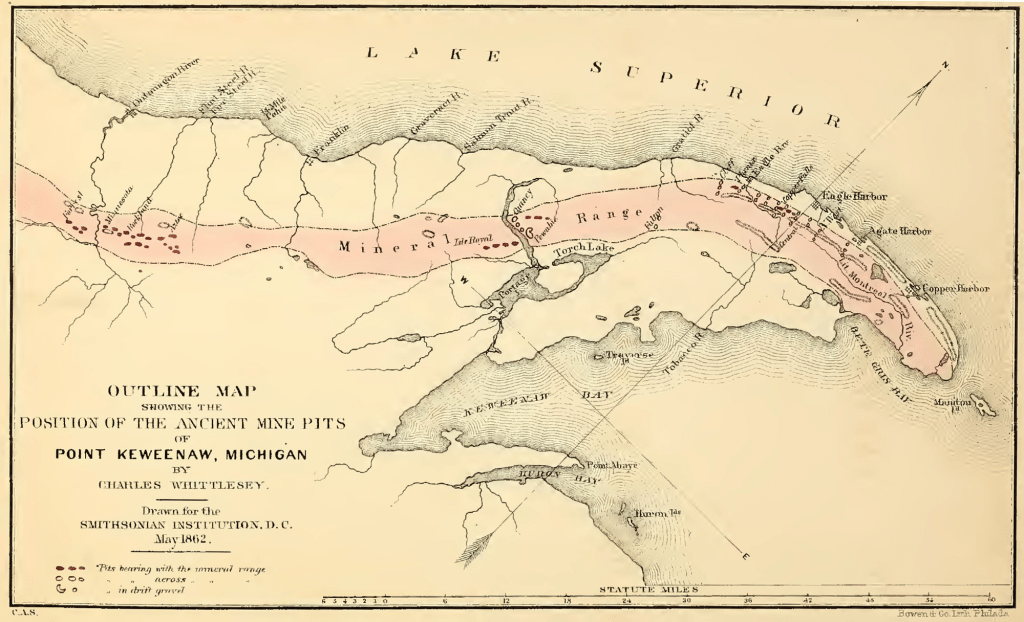
My own journey informs all this. From manual labor as a kid to aerospace executive, through local politics in Butler County, grand jury service, and years of activism against tax increases, I’ve seen how power operates. I’ve watched media and music degrade from family-oriented themes in the ’70s and ’80s to hedonism and occult influences. It’s spiritual warfare as much as political. That’s why my work on The Politics of Heaven digs into biblical conspiracies, giants, demons, and the deeper rebellion. Twenty years from now, when more on ancient interactions, UFOs, and non-human intelligences comes to light, the same people who dismissed warnings about communism will be asking how I saw it coming. The answer is simple: I study the totality. I don’t outsource my thinking to corporate gatekeepers or consensus. I connect the dots across time—from Hopewell shamans with copper ear spools from Lake Superior, traded hundreds of miles, showing sophisticated networks, to modern trade in ideas that undermine sovereignty. 

I don’t chase people down begging them to listen. I explain once, from the heart, because I want to help families, communities, and the republic. If they run headlong into the consequences anyway, that’s on them. I reserve the right to withdraw and keep building independently. The “I told you so” isn’t gloating for its own sake; it’s the natural outcome of pattern recognition meeting denial.

Looking at the current Ohio governor’s race and national trends, the communist infusion—whether labeled progressive, socialist, or woke—isn’t hidden anymore. Mark Elias lawfare, property tax-funded indoctrination, unions as political machines, media as propagandists—it’s all converging. Trump’s two terms disrupted it, but the underlying rot from decades of infiltration remains. Voters face a choice: continue the path of confiscation and control, or reclaim the individual responsibility and biblical orientation that built the West. I’ve always advocated the latter: strong families, personal discipline (that whip symbol of mine represents precision and self-mastery), limited government, and cultural pushback. Reckless sex leading to abortion, moral breakdown, fatherless homes—these aren’t unrelated to the economic and political failures. They’re symptoms of the same rebellion.

As this Fourth of July fades and we head into the election cycle, I find myself reflecting on how many times it has recurred. People think the world is falling apart around the truth-teller, but reality has a way of catching up. I warned about public unions, school indoctrination, media capture, and the Marxist undercurrents in 2012. I read the planks on air. I stepped away from corporate constraints to speak freely. Now the bill comes due, and the same voices that sidelined the warnings express shock. To them I say, without malice but with the clarity of long observation: I told you so. Listen next time, or don’t. The consequences will be the same, but at least some of us saw it coming and prepared accordingly. The fight for the republic continues, rooted in understanding the full sweep of human history, from ancient earthworks to modern ballots. That’s where real hope lies—not in putting genies back in bottles, but in confronting the totality head-on. 

Footnotes

1.  Observations on Clear Channel radio appearances and 2012 Ohio politics drawn from personal experience during the SB5 debate and repeal.

2.  Senate Bill 5, signed by Gov. John Kasich in 2011, sought to limit public employee collective bargaining rights and was repealed via referendum.

3.  W. Cleon Skousen, The Naked Communist (1958, with 45 goals added in 1961 editions), details strategies for cultural and institutional infiltration. Many goals align with observed shifts in education, media, and unions.

4.  Amy Acton’s role as Ohio Health Director (2019-2020) and subsequent political positioning referenced in campaign coverage.

5.  Public sector union influence on education funding via property taxes is a longstanding structural issue in Ohio and nationally, with data from state budget analyses.

6.  Cultural commentary on media, music, and sports analogies stems from decades of personal observation of societal shifts.

7.  The Politics of Heaven manuscript explores deeper spiritual and historical layers informing political analysis.

Bibliography for Further Reading

•  Skousen, W. Cleon. The Naked Communist. Ensign Publishing, 1958/1961 editions. (Core text on communist strategies.)

•  Congressional Record, January 10, 1963, Appendix pp. A34-A35 (reprinting Skousen’s 45 goals).

•  Kasich administration records and Ohio Secretary of State archives on the SB5 referendum.

•  Ballotpedia and Ohio Capital Journal coverage of the 2026 gubernatorial race, Amy Acton, and Vivek Ramaswamy.

•  U.S. Department of Education history and funding analyses (creation 1979 onward).

•  Reports on public sector union political spending (e.g., from National Right to Work Legal Defense Foundation and state transparency databases).

•  Historical works on labor movement origins, including influences from European socialist and communist organizers.

•  Biblical Archaeology Review archives and related texts on ancient Ohio cultures (Hopewell trade networks) for broader civilizational context.

•  Solzhenitsyn, Aleksandr. The Gulag Archipelago and One Day in the Life of Ivan Denisovich (insights into communist systems in practice).

•  Hayek, F.A. The Road to Serfdom (warnings on central planning and loss of liberty).

•  Selected Federalist Papers and Founding documents for contrast to modern institutional capture.

•  Ohio campaign finance records on progressive funding in recent elections.

•  Personal essays and podcast transcripts from The Overman Warrior Podcast (ongoing reflections on these themes).

Rich Hoffman

More about me

Click Here to Protect Yourself with Second Call Defense https://www.secondcalldefense.org/?affiliate=20707

About the Author: Rich Hoffman

Rich Hoffman is an author, political consultant, and strategic advisor based in Cincinnati, Ohio, and the creator of The Politics of Heaven—a unique framework that connects biblical theology, ancient history, and modern power structures to explain how moral alignment and spiritual forces shape global events. Blending real-world political experience with deep research into archaeology, UFO phenomena, and suppressed historical narratives, Hoffman offers compelling commentary on topics ranging from ancient civilizations and the Dead Sea Scrolls to modern populist movements, paranormal continuity, and leadership strategy in chaotic environments. As the author of The Gunfighter’s Guide to Business and the forthcoming Politics of Heaven, he brings a grounded yet provocative voice to media discussions, supported by firsthand experiences and a cross-disciplinary approach that bridges science, history, and theology. For interviews, speaking engagements, or expert analysis, visit richhoffmanbooks.com or contact directly via phone at 513-307-5815 or email at rhoffman@richhoffmanbooks.com.  If you’ve seen the movie, Disclosure Day and want to talk about it and the implications of Presidnet Trump’s UAP disclosures, let me know and we can bring some color to your coverage. https://richhoffmanbooks.com/media-inquiries-broadcast-topics-and-contact-info/?frame-nonce=ad51e7ecba I do have a firsthand UFO encounter to discuss.

No, I don’t have a uterous: Amy Acton is the abortion queen of Ohio

I was just in one of those back-and-forths online the other day, the kind that pops up when people start talking about this governor’s race we’ve got coming in Ohio, and somebody came at me with the usual line after I pointed out a few things about Amy Acton. You know the one: “You don’t have a uterus, so you don’t get to have an opinion on this.” I’ve heard it before, from the same crowd that wants to shut down any man who dares speak on the moral weight of ending a life before it ever draws breath. It always lands flat with me. I’ve been married for nearly forty years. I raised daughters. I’ve had bones broken and sticking out through the skin more than once in my life, and I can say with an extensive reputation that if I had been wired to carry a child, I would have taken every contraction, every hour of labor, every bit of that pain away from the women in my life without a second thought. I’ve got the capacity for suffering. I’ve proved it on myself. That old dodge about “you can’t understand because you’re a man” is just a way to dodge the real question, which is whether we’re going to keep pretending that the deliberate ending of innocent human life is some private medical choice that only one sex gets a vote on.

Let me back up and lay this out the way I see it, because a lot of folks have let the COVID years paper over who Amy Acton really is and always has been. Back in February of 2019, Governor Mike DeWine, a Republican who had built a record as pro-life, made his final cabinet appointment, bringing Dr. Amy Acton in as Director of the Ohio Department of Health. She was the first woman physician to hold the post. DeWine talked about wanting fresh thinking in the department. What he got was a public-health official whose record and instincts ran hard the other way on the question of unborn life. Even then, I said it out loud: this was the abortion person being installed in a Republican administration. DeWine was willing to reach across the aisle to show he could work with someone whose views on that fundamental issue differed from his own. He paid for it later when the lockdowns came, and she became the face of the Ohio response, the one issuing the stay-at-home orders, the one whose name was attached to the restrictions that kept families apart, businesses closed, churches limited, and elderly folks isolated in ways that still haunt a lot of us who watched it happen.

I don’t need to rehash every day of 2020. What I do want to keep front and center is that the woman now running as the Democratic nominee for governor of Ohio was not some neutral technocrat who suddenly discovered progressive politics during a crisis. She came in with a worldview that treated the unborn as negotiable and, once the pandemic arrived, treated the rest of us as subjects to be managed. The nursing-home decisions, the orders that kept healthy people from moving around and building natural immunity, the whole apparatus of control that turned the state into something that felt more like a laboratory experiment than a free society, all of that happened on her watch. I’ve said it before, and I’ll say it again: she became Ohio’s version of Dr. Fauci, only with more direct power over our daily lives. And the same circles that produced gain-of-function research in places like Wuhan were not unknown to the public health establishment she moved in with. I’ve followed the money and the papers long enough to know that certain people in those rooms understood exactly what kind of pathogen could be engineered and what the risks were if it escaped the lab or was released under whatever conditions. She knew the environment she was operating in. That’s my firm belief after watching it all unfold.

Now she’s out there reminding everybody that it’s been a few years since Roe v. Wade was overturned and that Ohio voters, in their wisdom or in their distraction, passed Issue 1 in November 2023 and wrote a right to abortion into the state constitution. She frames it as protecting women’s decisions, as trusting women and their doctors. What she leaves out, and what I keep reminding people of, is how that vote actually happened. It came after an August 2023 special election that was itself a battle over whether to make it harder to amend the constitution. Progressive money, millions upon millions from out-of-state donors and dark-money groups, poured into Ohio during an off-year, low-attention cycle. They knew exactly what they were doing. They treated this red-leaning state like low-hanging fruit because they had a Republican governor who had already shown he was willing to put an abortion-rights advocate in charge of public health. The campaign wasn’t some spontaneous uprising of Ohio mothers speaking their hearts. It was a well-funded, professionally run operation that counted on people not paying close attention in the heat of summer. And it worked. Now the same people who bankrolled that effort are backing her, and she’s happy to remind voters that she stands with the “will of the people” on this issue.

Here’s the part that really sticks in my craw. When I pointed all this out in that online exchange, somebody fired back that I, as a man, had no standing to talk about it. I’ve heard the same thing aimed at other men who speak plainly about the moral status of the unborn. It’s a rhetorical trick meant to make the argument about anatomy instead of about right and wrong. I told them I’ve lived with women my whole adult life. I’ve watched my wife go through what women go through. I’ve raised daughters, and I’ve seen the culture shift from the music of the seventies and eighties, when songs were still mostly about love and family and sticking together, to the stuff that came later, the rage and the hedonism and the open celebration of using people and discarding consequences. I’ve seen what permissive sexual culture does to young women especially. It sells them the lie that they can live exactly like the most reckless men and that abortion will always be there as the cleanup crew when biology doesn’t cooperate. That’s not liberation. That’s a trap dressed up as empowerment.

I said it plain: men are on offense in the sexual marketplace, always looking for the opening. Women are on defense. They have to be the careful ones, the ones who say no when every signal from the culture is telling them to say yes. When they don’t, when the apps and the hook-up culture and the “you do you” philosophy win out, it’s almost always the woman who carries the permanent consequence, whether that’s a child she wasn’t ready for or an abortion she’ll live with for the rest of her life. And the men? Too many of them walk away. That’s why I’ve always said the answer isn’t more abortion. The answer is a culture that expects men to marry the women they get pregnant and to stay married, to raise their children, to provide and protect until their dying day. That used to be the norm. It built this country. We walked away from it at our peril.

Somebody in that same thread tried the “but what about bad parents?” line. I know bad parents exist. I’ve seen them. I’ve watched kids get dealt a lousy hand biologically and then get stuck with adults who never should have been allowed near a child in the first place. Some of those kids grow up carrying scars that never fully heal. I’ve said more than once that in a fallen world there are situations where bringing a child into a truly horrific home might be worse than the alternative, at least from the narrow perspective of that child’s immediate suffering. But that doesn’t make abortion right. It makes the culture that produces those homes the real villain. We don’t fix a bad society by giving it a license to kill its inconvenient young. We fix it by rebuilding the expectation that sex belongs inside marriage, that marriage is for life, that fathers don’t get to opt out, and that communities and churches and extended families step up when parents fall short. Adoption, mentorship, the kind of intergenerational transfer of skills and values I try to practice with my own grandson, those are the answers that affirm life instead of ending it.

I’ve got no patience for the pity-party version of pregnancy either. I’ve heard women talk about it like it’s some special suffering contest where the rest of us are supposed to send gifts and lower our expectations. Pregnancy is hard. Labor is hard. Raising children is the hardest thing most people will ever do. But it’s also the most important. And the notion that only the person with the uterus gets a say in whether that life continues is a moral absurdity. The child is not an extension of the mother’s body in the same way an appendix is. It’s a separate human being with its own DNA from the moment of conception. Ending that life is ending a life. I call it what it is: murder. And I say it as a man who would have gladly taken every bit of the physical burden if the biology had allowed it, because that’s what men are supposed to do. We bear the weight so the people we love don’t have to carry it maliciously.

Amy Acton has made her choice clear. She wants to be the governor who protects and expands what Issue 1 started. She wants Ohio to remain a place where abortion is treated as healthcare rather than what it actually is. She’s counting on the same coalition of progressive money, media framing, and cultural exhaustion that got Issue 1 passed to carry her into the governor’s office. I’ve seen the internals. I’ve watched how these races move. She’s not in as strong a position as some of her backers, including the usual suspects like David Pepper and the Mark Elias types who specialize in lawfare and election mechanics, would like you to believe. There’s still time for Ohio voters to remember who she was in 2019 and 2020, not just the lockdown orders but the deeper consistency on the question of life itself. She was the abortion advocate then. She’s the abortion candidate now. The COVID chapter didn’t create that part of her; it just revealed how far a Republican governor was willing to go to accommodate it.

I keep coming back to the same truth that has guided me through decades of watching this state and this country. We don’t build a decent society by making it easier to kill inconvenient children or by pretending that men have no stake in the moral health of the next generation. We build it by expecting responsibility from both sexes, by telling the truth about what sex is for, and by refusing to let the language of “reproductive freedom” paper over the reality of dead babies and wounded mothers. I’ve said it in longer form in other places, and I’ll keep saying it here: abortion is murder, and the culture that treats it as minor surgery is a culture in active rebellion against the way human beings are meant to live. Amy Acton has chosen her side in that rebellion. The rest of us still get to choose whether we’re going to keep pretending we don’t notice.

When that person told me I couldn’t speak because I don’t have a uterus, I thought about my wife and my daughters and my grandsons and every young woman I’ve ever watched get sold the bill of goods that casual sex plus abortion equals freedom. I thought about the boys who never learn that real manhood means working hard when life gets difficult. I thought about the children who never get the chance to draw breath because somebody decided their life would be too inconvenient. And I answered the only way I know how. I told them the truth as plainly as I could. I don’t need a uterus to know that ending a human life is wrong. I need eyes to see and a conscience that hasn’t been trained to look away. Ohio still has both, if we’re willing to use them before the next election decides how much more of this we’re going to tolerate.

Footnotes

1.  Amy Acton was appointed Director of the Ohio Department of Health by Governor Mike DeWine in February 2019, the first woman physician to hold the position. See contemporaneous reporting from Governing magazine (February 28, 2019) and official announcements from the Governor’s office.

2.  Acton served in that role from February 2019 through June 2020 and was the primary public face of Ohio’s early COVID-19 response, including stay-at-home orders and guidance affecting nursing homes and long-term care facilities.

3.  Ohio Issue 1, the constitutional amendment establishing a right to make reproductive decisions including abortion, appeared on the November 7, 2023 ballot and passed. Significant funding for the supporting campaign came from out-of-state progressive donors and organizations; supporting committees raised roughly $53.8 million, according to campaign finance records compiled by Ballotpedia and Ohio Capital Journal reporting.

4.  An August 8, 2023, special election on a separate Issue 1 (raising thresholds for future constitutional amendments) was widely understood as an attempt to make passage of the November abortion-rights measure more difficult. That August measure failed.

5.  As the 2026 Democratic nominee for Governor of Ohio, Amy Acton’s campaign platform explicitly commits to protecting and expanding access to abortion, contraception, and related services, and Planned Parenthood Advocates of Ohio have endorsed her as a “longtime champion of sexual and reproductive health.”

6.  General social-science data consistently show elevated risks for children raised in single-parent or unstable households, including higher rates of poverty, lower educational attainment, and increased involvement with the criminal justice system. Sources include U.S. Census Bureau reports and analyses from the Department of Health and Human Services over multiple decades.

7.  The author’s personal observations on pain tolerance, family responsibility, and cultural shifts in sexual mores from the 1970s–1980s to the present draw from lived experience in Ohio and are offered as individual testimony rather than clinical data.

Bibliography for Further Reading

•  Klusendorf, Scott. The Case for Life: Equipping Christians to Engage the Culture. Crossway, 2009. (Clear philosophical and scientific defense of the pro-life position.)

•  Beckwith, Francis J. Defending Life: A Moral and Legal Case Against Abortion Choice. Cambridge University Press, 2007.

•  Blankenhorn, David. Fatherless America: Confronting Our Most Urgent Social Problem. Basic Books, 1995. (On the societal costs of father absence.)

•  McCorvey, Norma (with Gary Thomas). Won by Love. Thomas Nelson, 1998. (Personal account of the Roe plaintiff’s change of heart.)

•  Reardon, David C. Aborted Women, Silent No More. Loyola University Press, 1987. (Early study of post-abortion emotional and psychological effects.)

•  CDC. Abortion Surveillance — United States (annual reports). Latest available data on reported abortions by state and demographics.

•  U.S. Census Bureau and HHS reports on family structure and child outcomes (various years). Searchable at census.gov and hhs.gov.

•  Ohio Secretary of State and Ballotpedia archives on Issue 1 (2023) campaign finance and election results.

•  Bhattacharya, Jay, et al. Writings and testimony on lockdown harms and focused protection strategies (in the context of the Great Barrington Declaration and subsequent analyses).

•  Selected articles from Biblical Archaeology Review and primary ancient texts (Book of Enoch, Dead Sea Scrolls material) for the deeper civilizational and spiritual framing of questions of life and human dignity.

•  Campaign materials and public statements from actonforgovernor.com (2026) and contemporaneous news coverage of the 2026 Ohio gubernatorial race.

•  Historical Ohio political coverage from the Columbus Dispatch, Cleveland Plain Dealer, and Ohio Capital Journal on the DeWine administration’s cabinet appointments and COVID policy implementation.

Rich Hoffman

More about me

Click Here to Protect Yourself with Second Call Defense https://www.secondcalldefense.org/?affiliate=20707

About the Author: Rich Hoffman

Rich Hoffman is an author, political consultant, and strategic advisor based in Cincinnati, Ohio, and the creator of The Politics of Heaven—a unique framework that connects biblical theology, ancient history, and modern power structures to explain how moral alignment and spiritual forces shape global events. Blending real-world political experience with deep research into archaeology, UFO phenomena, and suppressed historical narratives, Hoffman offers compelling commentary on topics ranging from ancient civilizations and the Dead Sea Scrolls to modern populist movements, paranormal continuity, and leadership strategy in chaotic environments. As the author of The Gunfighter’s Guide to Business and the forthcoming Politics of Heaven, he brings a grounded yet provocative voice to media discussions, supported by firsthand experiences and a cross-disciplinary approach that bridges science, history, and theology. For interviews, speaking engagements, or expert analysis, visit richhoffmanbooks.com or contact directly via phone at 513-307-5815 or email at rhoffman@richhoffmanbooks.com.  If you’ve seen the movie, Disclosure Day and want to talk about it and the implications of Presidnet Trump’s UAP disclosures, let me know and we can bring some color to your coverage. https://richhoffmanbooks.com/media-inquiries-broadcast-topics-and-contact-info/?frame-nonce=ad51e7ecba I do have a firsthand UFO encounter to discuss.

The Big Muskie Bucket, The Wilds, and the Heart of American Energy Innovation

I just got back from a family trip that turned into one of those unexpected journeys where you set out thinking one thing and come away with something far deeper. We headed out to The Wilds in southeastern Ohio, that remarkable conservation center and safari-style wildlife park built on what used to be strip-mined land. I love zoos and conservation efforts in the right way—the kind that actually preserves species and land while recognizing that humans are part of the picture, not some parasitic afterthought. What I didn’t fully expect was how a side trip just south of there to see the remnants of the Big Muskie would crystallize so many thoughts I’ve been carrying about energy, innovation, capitalism, and the way the political left has twisted conservation into something that often works against human flourishing.

The Wilds sits on nearly ten thousand acres of reclaimed surface-mined land in Muskingum County, near Cumberland. It opened to the public in 1994 after the Central Ohio Coal Company, a subsidiary of American Electric Power (AEP), donated over 9,000 acres to the International Center for the Preservation of Wild Animals. That gift, combined with the reclamation work already underway, transformed what had been an industrial extraction site into one of North America’s largest conservation centers. We stayed right there at the new Hellbender RV Campground at The Wilds—beautiful sites on that same land that once fed coal into the power grid. From the campground, you can head into the park proper and experience open-air safaris rolling through habitats where giraffes, rhinoceroses, cheetahs, and other species roam across rolling terrain that, in its own way, echoes the African Serengeti. The landscape doesn’t look like the steep Allegheny foothills that were here before mining; the stripping and reclamation flattened and reshaped sections into wide, grassy vistas perfect for large herbivores. It’s not the exact ecology that existed pre-mining, but it’s productive, beautiful, and teeming with life in ways that serve conservation science and education every single day.

One afternoon, we drove the short distance south to Miner’s Memorial Park to see the Big Muskie bucket—the last major remnant of what was once the largest dragline excavator ever built. Standing there, walking inside that colossal bucket, touching the steel that once clawed through hundreds of feet of overburden, you can’t help but feel the scale of human ingenuity. The machine itself, officially a Bucyrus-Erie 4250-W, stood nearly twenty-two stories tall, weighed around thirteen and a half thousand tons, and swung a 220-cubic-yard bucket capable of lifting 325 tons of earth and rock in a single bite. The bucket alone is the size of a twelve-car garage or easily two full-size buses side by side. When it operated from 1969 to 1991, Big Muskie moved more than 483 million cubic yards of material, revealing high-sulfur coal seams that powered Ohio homes, industries, and the broader grid through plants like the Muskingum River Generating Station. It walked on massive shoes, its boom stretching over three hundred feet, built on site because nothing that big could be transported whole. Twenty-four hours a day, three hundred sixty-four days a year, it did the work that surface mining made possible—safer in many respects than sending men deep underground into the old room-and-pillar mines, and efficient enough to supply the energy that built modern Ohio.

I grew up in the seventies and eighties, hearing the news coverage of strip mining in Ohio. It was always framed as an environmental catastrophe—radical voices and mainstream outlets alike talking about the “rape of the land,” the destruction of precious topsoil, acid mine drainage polluting streams, and corporate greed tearing up the earth for profit. Central Ohio was a focal point of that conversation. You couldn’t miss it. The narrative was clear: this was primitive, destructive, something that enlightened environmental regulation would eventually rein in and correct. And regulation did come—the federal Surface Mining Control and Reclamation Act of 1977 imposed new standards for contouring, topsoil replacement, and revegetation. I’m not against sensible environmental protections. What concerns me is when those protections become a vehicle for anti-capitalist ideology that ignores the human benefits of energy production and pretends that the companies doing the actual work weren’t already innovating reclamation methods long before politicians and bureaucrats showed up to take credit or impose penalties.

Because here’s what you see when you stand at the Big Muskie bucket and then drive back to The Wilds: the power company that operated the machine also owned vast stretches of the land. They extracted the coal—formed over three hundred million years in ancient swamps and forests—and turned it into usable energy that lit homes, ran factories, and powered the machines that built the modern world. Then they participated in turning the worked-out land into something new and valuable. The Wilds exists in large part because of that private-sector decision to donate thousands of acres rather than walk away or fight endless legal battles. The reclamation wasn’t just compliance; it became an opportunity. What had been stripped to fuel progress was reshaped into a world-class center for wildlife conservation, research, and public education. You can sit at the Overlook Cafe or Terrace Grill at The Wilds, look out over the valley at giraffes and rhinos moving through grasslands that mining and reclamation made possible, and eat a good meal with running water and modern conveniences while the animals graze below. Try doing that with a picnic basket on raw, unrestored ground in the middle of nowhere and tell me which approach actually serves both people and wildlife better.

That contrast hit me hard. The same companies the political left loves to demonize as destroyers of the planet were the ones who made The Wilds possible. AEP’s Central Ohio Coal Company didn’t just comply with later regulations; they were already engaged in preservation and restoration efforts. The environmental movement often attaches itself to these stories after the fact, claiming moral victory while ignoring that the capital, the engineering, and the willingness to take risks came from the private sector. Without the coal extraction that powered Ohio’s growth, without the wealth created by that enterprise, there would have been far less capacity to fund or even imagine large-scale conservation projects like this one. It’s the classic pattern: innovators and producers do the hard work, create the surplus, and then the critics arrive to regulate, tax, and re-narrate history as a story of exploitation that only enlightened government could fix.

I thought about that same dynamic when we talk about today’s energy battles, particularly around nuclear power in Ohio. The two plants—Davis-Besse near Toledo and Perry near Cleveland—have long been critical to the state’s grid. I’ve heard the numbers bandied about; depending on the year and how you count, they contribute a substantial share of reliable baseload power, something in the range of ten to perhaps fifteen percent or more of Ohio’s electricity at times, and historically more when coal was dominant. The exact percentage varies in conversation, but the point is that they matter enormously for grid stability. In a state where natural gas now supplies roughly half or more of generation and coal has fallen sharply from its peak, nuclear provides the steady, high-capacity-factor power that intermittent sources can’t match. Yet for years we’ve watched political attacks from the Obama and Biden eras—subsidies fights, regulatory pressure, public narratives framing nuclear as dangerous or unnecessary—while the same voices rarely offer a credible, scalable replacement that keeps the lights on and the economy growing. It’s the Big Muskie story all over again: paint the producers as villains, ignore the benefits ordinary people receive every time they flip a switch or charge a device, and push policies that ultimately raise costs or reduce reliability for everyone, especially working families.

You see the same pattern in how the left approaches energy restriction as a tool of control. Whether it’s coal in the seventies or nuclear today, the rhetoric is that these things are existential threats to the planet and that only by limiting human access to abundant, affordable energy can we “save” the Earth. But energy is what lifts the burden of labor from human beings. A person hauling water by hand all day isn’t freer or more virtuous than one who turns a tap and uses the saved time to build, create, or rest. Electricity powers the data centers, training the AI models that will transform medicine, logistics, and discovery. It powers the factories, hospitals, schools, and farms that feed billions. The notion that we should all retreat to some primitive campfire existence—sitting around telling stories about pagan gods while the productive capacity of civilization withers—isn’t conservation; it’s a recipe for poverty and stagnation dressed up as virtue. The environmental movement has deep strains of this anti-human thinking, sometimes explicit in population-control rhetoric or degrowth economics that treat human ingenuity and consumption as the problem rather than the solution.

Standing inside that Big Muskie bucket puts it in perspective. That machine represented the best engineering of its era applied to the problem of extracting energy from the ground efficiently and at scale. It wasn’t pretty. It changed the landscape. But it also delivered the energy that made post-war Ohio prosperous, that kept factories running, that let families in Middletown and across the state live with lights, refrigeration, and opportunity their grandparents could only dream of. The coal it uncovered took three hundred million years to form; we used it in decades to build a civilization. Then the same enterprise that did the extracting turned around and helped create The Wilds on the worked land. That’s not destruction followed by cosmetic repair. That’s productive use followed by genuine restoration and the creation of new value. It’s what real conservation looks like when it’s driven by people who understand both the land and the ledger.

I kept coming back to the parallel with the fight over slavery in this country. Republicans led the effort to abolish it, at enormous cost in blood and treasure, while many Democrats and the broader establishment either defended the institution or dragged their feet. After the war, it was Republicans who pushed the early civil rights amendments and enforcement. Yet somewhere along the line, the narrative flipped, and today the party that fought to end slavery is often painted as the problem while the party whose members founded the KKK and enforced Jim Crow for generations gets to claim the moral high ground on race. The pattern repeats with energy and conservation. The companies and workers who built the power grid, engineered machines like Big Muskie, extracted the resources that industrialized the nation, and then reclaimed the land for new uses—these are treated as villains. The activists and politicians who arrived later, often with no skin in the game and plenty of opportunity for moral posturing, get to define “environmentalism” as whatever restricts the producers. It’s the same rhetorical capture, and it serves the same underlying goal: concentrating power in institutions that claim to speak for the Earth while actually limiting human potential.

At The Wilds, you see the better path. Capital enterprise created the wealth and the technology. It extracted the resource that powered progress. It then donated the land and supported the transformation into a living classroom for conservation science. The restaurant with the view, the safari vehicles, the research programs, the campground where families like mine can stay on the very ground that once fed coal into the grid—all of it exists because someone took the risk, did the work, made the profit, and then chose to leave the place better in meaningful ways. The strip mining didn’t “destroy” the land in any permanent sense; it changed it, and human ingenuity changed it again into something that now supports species that never lived here naturally in these numbers. That’s the story of civilization itself: we impose order and purpose on raw nature, we extract what we need to thrive, and when we’re at our best, we restore and improve rather than consume and abandon.

I think about my own work and the themes in The Gunfighter’s Guide to Business—the idea that you impose your will on circumstances rather than waiting for perfect conditions, that resilience and disciplined action turn challenges into advantages. The men who ran Big Muskie didn’t have the luxury of modern environmental impact statements or endless public comment periods. They had a job to do: get the coal out safely and efficiently to keep the power flowing. They did it with machines that still boggle the mind. Then the next generation of the same enterprise looked at the worked land and saw not a scar but an opportunity for something new. That’s the gunfighter spirit applied to energy and land use. You don’t retreat from the necessary work because critics call it ugly. You do it well, you do it responsibly within reason, and you leave the place positioned for the next chapter.

Visiting both sites in the same trip—the living conservation success at The Wilds and the monumental tool that helped create the conditions for it—ought to be required for anyone who wants to have an informed opinion about energy policy in this country. You can’t stand inside that bucket, read the history of how much earth it moved and how much power it ultimately enabled, then walk the safari trails where rhinos and giraffes now graze on reclaimed ground, and still believe the simple story that extraction equals destruction and only government regulators plus activists equal salvation. The truth is more interesting and more hopeful. Human beings using reason, capital, and engineering solved the problem of energy scarcity that had kept our ancestors poor and short-lived. Along the way, we made mistakes, as every generation does. But we also built the surplus that lets us fund conservation at scales that previous societies could never have imagined. The Wilds is proof of that. The Big Muskie bucket is proof of the tool that made part of it possible.

We’re in a moment right now where the same arguments are playing out over nuclear power, over natural gas development, over any serious attempt to expand reliable generation to meet the exploding demands of AI data centers and electrification. The political left still reaches for the same rhetorical weapons: portray the producers as greedy or reckless, emphasize risks while downplaying benefits, offer no realistic replacement that maintains or increases living standards, and treat any expansion of human productive capacity as inherently suspect. It’s the Big Muskie fight with better public relations. The companies that actually keep the grid running—whether legacy coal operators that have reclaimed land or the nuclear fleet that provides steady power—are doing the real work. The activists protesting outside are often performing for an audience that has never had to keep the lights on for millions of people or balance a multi-billion-dollar capital investment against regulatory uncertainty.

I came away from this trip more convinced than ever that the path forward isn’t to demonize the enterprises that built our energy foundation or to pretend that conservation requires halting human progress. It’s to recognize that the best conservation often flows from the same innovative, risk-taking, profit-seeking institutions that extract resources productively in the first place. The Wilds wouldn’t exist without the coal mining that preceded it. The power that lets us enjoy air-conditioned homes, smartphones, and yes, even the electric vehicles some environmentalists champion, comes from somewhere. Right now, a significant portion of that, somewhere in Ohio, includes the steady output of our nuclear plants. We should be building more of that kind of reliable, high-density energy, not tearing it down under the guise of protecting a planet that has survived far worse than human industry and will continue long after our current debates are forgotten.

If you ever find yourself in southeastern Ohio, do what we did. Spend a few days at Hellbender Campground or one of the other lodging options at The Wilds. Take the open-air safari and watch animals that have no business being in Ohio thriving on land that mining and reclamation made suitable for them. Then drive south a short way to Miner’s Memorial Park and stand inside the Big Muskie bucket. Touch the steel. Imagine the machine walking across the landscape, the bucket biting into the earth, the coal coming out to feed the boilers that kept the grid alive. Talk to the exhibits about the workers who ran it and the land that came after. Then go back to The Wilds and have lunch at the overlook with a view of the valley. You’ll see, as I did, that the story of energy in America isn’t a simple morality play of villains and heroes. It’s the story of human beings using their minds and their tools to turn raw materials into civilization, and then, at our best, using the surplus to restore and improve what we touched.

That trip reminded me why I keep returning to these themes in my writing and podcast. The battles over energy, over land use, over what counts as “conservation”—they’re never just about science or engineering. They’re about whether we believe human beings have the right and the capacity to shape the world productively, or whether we accept a vision that treats us as a problem to be managed and reduced. The Big Muskie and The Wilds together make the case for the former. They show what free people and free enterprise can accomplish when they’re allowed to work, to risk, to profit, and to give back in ways that actually endure. Everything else is commentary.

If you’ve read The Gunfighter’s Guide to Business, you know the mindset I’m talking about—imposing order and purpose on circumstances rather than surrendering to them. That’s what built the machine, that’s what powered the grid, and that’s what turned a mined landscape into a living conservation success. We need more of that spirit, not less. The age of disclosure is here, and understanding the politics of heaven—the deeper forces behind the attacks on human energy and human life—matters more than ever. But for today, see the bucket and the park. Stand where the work was done and where the restoration happened. You’ll come away with a clearer head and a stronger conviction that the future belongs to those who build, not those who merely protest.

Footnotes

1.  Specifications and operational history of Big Muskie drawn from contemporary engineering records and historical summaries maintained by the Ohio Department of Natural Resources at Miner’s Memorial Park.

2.  Details on the land gift from Central Ohio Coal Company (AEP subsidiary) to the International Center for the Preservation of Wild Animals and the subsequent development of The Wilds come from the official history published on thewilds.org.

3.  Ohio electricity generation mix data for recent years (natural gas dominant at approximately 50-59%, coal around 20-22%, nuclear from the two plants contributing roughly 10-13% of net generation) sourced from the U.S. Energy Information Administration state analysis and related reports covering the 2024-2026 periods.

4.  Bucket capacity, machine weight, boom length, and total material moved by Big Muskie confirmed across multiple engineering and historical sources, including Bucyrus-Erie records and Ohio historical markers.

5.  Description of current visitor experience at the Big Muskie bucket exhibit, including ability to stand inside the 220-cubic-yard bucket, based on Ohio State Parks and Ohio DNR public information as of 2025-2026.

6.  Information on Hellbender RV Campground at The Wilds, its location on reclaimed land, and amenities, including safari discounts, from the official The Wilds website and 2025-2026 opening announcements.

7.  Dining options at The Wilds (Overlook Cafe / Terrace Grill) with views over animal habitats confirmed via official site descriptions of food service and visitor experiences.

8.  Broader context on surface mining reclamation practices pre- and post-1977 SMCRA, and the role of private land donation in creating large conservation areas, drawn from Ohio coal industry historical analyses and The Wilds timeline.

9.  Recent developments regarding power purchase agreements for Ohio nuclear plants (Davis-Besse and Perry) supporting AI/data center demand, including Meta agreements announced in 2026, reported in industry and local news sources.

10.  Philosophical and historical parallels regarding narratives around energy production, conservation, and political rhetoric are interpretive commentary grounded in the observable outcomes at the sites visited and long-term patterns in U.S. energy and environmental policy debates.

Bibliography

•  “Big Muskie.” Wikipedia. Accessed 2026. https://en.wikipedia.org/wiki/Big_Muskie (overview of specifications, history, and connection to The Wilds).

•  Ohio Department of Natural Resources. “Miner’s Memorial Park & Big Muskie’s Bucket.” ohiodnr.gov. Detailed visitor information and historical markers on the machine and reclamation.

•  The Wilds. “History.” thewilds.org/history. Official timeline, including the land gift from Central Ohio Coal Company and the transformation of the mined land.

•  U.S. Energy Information Administration. “Ohio – State Energy Profile Analysis.” eia.gov/states/OH/analysis. 2024-2026 data on electricity generation mix, nuclear contribution, natural gas, and coal shares.

•  Ohio State Parks / Ohio DNR. Social media and site posts regarding the Big Muskie bucket as a tourist attraction and an engineering landmark (2025).

•  The Wilds. “Hellbender RV Campground.” thewilds.org/hellbender-rv-campground. Details on the new campground on reclaimed land and visitor offerings.

•  The Wilds. “Food and Shopping.” thewilds.org/food-and-shops. Descriptions of Overlook Cafe and Terrace Grill with habitat views.

•  Various contemporary reports on AEP / Central Ohio Coal Company operations and reclamation achievements, including historical coal industry studies from the Ohio Department of Natural Resources.

•  Industry announcements regarding Vistra / Energy Harbor nuclear plants and 2026 power purchase agreements with Meta for Ohio nuclear output supporting data centers.

•  Historical context on Surface Mining Control and Reclamation Act (SMCRA) of 1977 and its implementation in Ohio coal regions, drawn from state and federal regulatory histories.

This essay reflects my direct observations from the family trip, historical research, and long-standing convictions about energy, innovation, and the proper relationship between human enterprise and conservation. The views expressed are my own, grounded in what I saw on the ground and in what the record shows actually works.

Rich Hoffman

More about me

Click Here to Protect Yourself with Second Call Defense https://www.secondcalldefense.org/?affiliate=20707

About the Author: Rich Hoffman

Rich Hoffman is an author, political consultant, and strategic advisor based in Cincinnati, Ohio, and the creator of The Politics of Heaven—a unique framework that connects biblical theology, ancient history, and modern power structures to explain how moral alignment and spiritual forces shape global events. Blending real-world political experience with deep research into archaeology, UFO phenomena, and suppressed historical narratives, Hoffman offers compelling commentary on topics ranging from ancient civilizations and the Dead Sea Scrolls to modern populist movements, paranormal continuity, and leadership strategy in chaotic environments. As the author of The Gunfighter’s Guide to Business and the forthcoming Politics of Heaven, he brings a grounded yet provocative voice to media discussions, supported by firsthand experiences and a cross-disciplinary approach that bridges science, history, and theology. For interviews, speaking engagements, or expert analysis, visit richhoffmanbooks.com or contact directly via phone at 513-307-5815 or email at rhoffman@richhoffmanbooks.com.  If you’ve seen the movie, Disclosure Day and want to talk about it and the implications of Presidnet Trump’s UAP disclosures, let me know and we can bring some color to your coverage. https://richhoffmanbooks.com/media-inquiries-broadcast-topics-and-contact-info/?frame-nonce=ad51e7ecba I do have a firsthand UFO encounter to discuss.

The Gunfighter’s Ethos: Living by a measure that isn’t commonly understood, but is very highly sought after

I wrote The Gunfighter’s Guide to Business back in 2021 because I had grown weary of hearing about Japanese warrior codes every time someone discussed Lean manufacturing or the Toyota Production System.  Those approaches contain real value—Toyota’s emphasis on eliminating waste, Just-in-Time production, and continuous improvement through Kaizen has influenced industries worldwide. But as an American who spent decades in manufacturing and aerospace, applying those lessons while teaching teams how to solve problems on the fly, I felt our culture needed its own framework. We have our own warrior tradition, one rooted in self-reliance, quick decision-making under pressure, and the willingness to face risk head-on. That is the spirit of the gunfighter—the fast-draw competitor who practices until shooting from the hip becomes an expression of hard-won skill and confidence rather than recklessness. 

The book is not aimed at legacy corporations seeking incremental tweaks to maintain the status quo. It is for entrepreneurs and individuals who want to build something real in a world full of obstacles. I drew heavily from the sport of fast draw, which I have long seen as a perfect metaphor for high-stakes business: when you are truly skilled, you can act decisively and accurately without hesitation. Chapters explore placing bets wisely, managing risk, and understanding that real success often means operating as a “ghost”—staying agile and unencumbered by titles, corner offices, or attachments that others can target in an effort to gain control over you.

This year, 2026, has brought several moments that reminded me why the message matters. People have approached me in everyday places like Costco in Liberty Township—recognizing me from the blog, videos, or the book itself. They want to talk, ask for a signature, or share how the ideas resonated with them. One particularly memorable encounter came from the CEO of a large company a few states away who had read the book and flew in specifically to find me. He made a substantial offer: come consult for several months, coach his workforce on the gunfighter mindset, and help reshape the culture. It was the kind of money that would make most people in my position jump with enthusiasm. I said no.

I critique consultants throughout the book, and I stand by that. Not because every single one is worthless, but because too many function as the “dandies” or “bounty hunters” in Clint Eastwood’s Unforgiven—profiting from the legends and hard work of others without ever stepping into the real fight themselves.  The gunfighters are the ones who face the target, put their lives or reputations on the line, and deliver results. I have always tried to live as the latter. Turning down that opportunity was not about rejecting money; it was about staying consistent with the principles I laid out. I am not racing to stuff a retirement account before time runs out. I have a different measure of success, one shaped by decades of experience and a marriage built on integrity.

That integrity traces back to a moment early in my relationship with my wife, nearly forty years ago. I was selling cars as a young man—good at it, making strong commissions in a cutthroat environment. One Saturday, I had an older, retired customer ready to buy a truck, paying $5,000 over sticker price, all cash. The finance department balked at the markup, but the sales manager pushed me to close it anyway. I had the man’s keys, had built genuine trust over hours of conversation, and convinced him to walk across the street to withdraw the cash. My future wife showed up at the lot right as I was finishing the deal. I thought she would be impressed by the big sale. Instead, she was deeply upset that I had taken advantage of an honest man. She came from a different background—modeling, country club circles—and had seen plenty of “successful” men who measured life by mansions, boats, and flashy deals. She wanted none of it. She told me it was the Corvette I was about to buy or her; she would not marry someone who operated that way. I walked the deal back, took the ethical path, and my commission was cut in half. I left that job soon after. We have been married ever since, and that decision remains one of the best of my life. It taught me that real leverage comes from living in a way your spouse and family can respect—not from cornering every last dollar or using dollars to gain control of people.

These same values run through the book and my daily work. I have encountered “safety tyrants” and sandbaggers in manufacturing facilities—people who hide behind compliance rules, slow output to protect their own power or laziness, and attack anyone who pushes for genuine improvement.  I have seen engineers and managers who opposed efficiency gains, only for the pressure of their own schemes to catch up with them later. I do not celebrate their misfortunes, but I also do not mourn those who tried to destroy my teams or me. When you face real opposition in business—or life—you square your shoulders like Andrew Jackson in his duels or Theodore Roosevelt finishing a speech with a bullet in his chest.  You do not cry over the grave of someone who would have put you in one. Forgiveness in the theological sense is between them and God; my job is to defend what matters and keep moving forward.

This mindset is not just for business. It applies to politics, culture, and how we build any healthy organization or society. Capitalism, properly understood, rewards those willing to initiate, risk, and deliver—not the parasites who live off others’ efforts. I see parallels in today’s corporate world and broader culture: too much fear disguised as safety, too many incentives to sandbag rather than excel. SpaceX stands out as a counterexample—lean, confident, and willing to accept calculated risk in pursuit of big goals. That spirit is what America’s economy needs more of in the years ahead, especially as entrepreneurs step up in the current environment.

I am not closed to opportunities, and I am grateful when people find value in the work. Some have bought copies in bulk to share with their teams. The book was written so readers can engage with the ideas independently—the bullet-point summaries at the end of each chapter help reinforce the key lessons without needing me in the room. Royalties still arrive occasionally, and my wife and I enjoy turning a good check into a nice dinner. That feels honest and sustainable. Turning a large consulting gig into another form of selling out would betray the gunfighter ethos I wrote about.

The stories and principles in The Gunfighter’s Guide to Business come from real experience—car lots, stamping plants, aerospace programs, and the hard lessons learned alongside a supportive wife who keeps me honest. They are meant for those with the guts to start companies, face opposition, and build something lasting. If you have not read it, I believe you will find it useful, whether for your own ventures or simply understanding how to navigate a world full of safety tyrants and bounty hunters. The gunfighter spirit is not about recklessness; it is about skill, ethics, and the courage to act when others hide behind rules. That is the skeleton key I aimed to offer to Western civilization and American enterprise. I still carry it with me every day and live by every word.  Many are finding those words very valuable, and I’m glad to hear it.  Thanks for the opportunities.  But to me, opportunities are measured in more than just money, even though this offer was for a lot of it.  The gunfighter still has to take bullets and to bite bullets, and be willing to deliver them. 

Footnotes

[^1]: For deeper context on the Toyota Production System and its philosophical roots, see the official Toyota documentation and historical analyses of Lean principles.

[^2]: The fast-draw elements tie directly into the book’s core metaphor for high-skill, decisive action in business.

[^3]: “Ghosting it” is a recurring theme in the book, emphasizing agility over visible power structures that invite opposition.

[^4]: Unforgiven (1992) provides a sharp distinction between authentic gunfighters and those who profit from their stories.

[^5]: Jackson’s duels and Roosevelt’s resilience under fire illustrate the willingness to absorb damage and continue the fight—qualities essential in competitive environments.

[^6]: Safety culture critiques often highlight tensions between compliance and production pressures; see industry analyses on risk-taking and over-normalization of caution.

[^7]: These personal stories informed multiple chapters on ethics, decision-making under pressure, and long-term leverage through integrity.

[^8]: References to SpaceX reflect ongoing observations of lean, risk-tolerant innovation versus traditional corporate caution.

Bibliography

Hoffman, Rich. The Gunfighter’s Guide to Business: A Skeleton Key to Western Civilization. Liberty Hill Publishing, 2021. (Core text referenced throughout.)

Ohno, Taiichi. Toyota Production System: Beyond Large-Scale Production. Productivity Press, 1988.

Liker, Jeffrey K. The Toyota Way: 14 Management Principles from the World’s Greatest Manufacturer. McGraw-Hill, 2004.

Womack, James P., Daniel T. Jones, and Daniel Roos. The Machine That Changed the World: The Story of Lean Production. Free Press, 1990.

Eastwood, Clint, dir. Unforgiven. Warner Bros. Pictures, 1992.

Brands, H.W. Andrew Jackson: His Life and Times. Anchor Books, 2006.

Morris, Edmund. Theodore Rex. Random House, 2001.

Additional sources:

•  Toyota Motor Corporation official materials on the Toyota Production System and Kaizen philosophy.

•  Industry reports and critiques on safety culture in manufacturing (e.g., discussions of production vs. compliance tensions).

•  Personal observations from decades in aerospace, manufacturing leadership, and entrepreneurial consulting scenarios.

•  Cross-references to forthcoming work, The Politics of Heaven, for broader philosophical and historical context on spiritual warfare, ethics, and societal structures.

Rich Hoffman

More about me

Click Here to Protect Yourself with Second Call Defense https://www.secondcalldefense.org/?affiliate=20707

About the Author: Rich Hoffman

Rich Hoffman is an author, political consultant, and strategic advisor based in Cincinnati, Ohio, and the creator of The Politics of Heaven—a unique framework that connects biblical theology, ancient history, and modern power structures to explain how moral alignment and spiritual forces shape global events. Blending real-world political experience with deep research into archaeology, UFO phenomena, and suppressed historical narratives, Hoffman offers compelling commentary on topics ranging from ancient civilizations and the Dead Sea Scrolls to modern populist movements, paranormal continuity, and leadership strategy in chaotic environments. As the author of The Gunfighter’s Guide to Business and the forthcoming Politics of Heaven, he brings a grounded yet provocative voice to media discussions, supported by firsthand experiences and a cross-disciplinary approach that bridges science, history, and theology. For interviews, speaking engagements, or expert analysis, visit richhoffmanbooks.com or contact directly via phone at 513-307-5815 or email at rhoffman@richhoffmanbooks.com.  If you’ve seen the movie, Disclosure Day and want to talk about it and the implications of Presidnet Trump’s UAP disclosures, let me know and we can bring some color to your coverage. https://richhoffmanbooks.com/media-inquiries-broadcast-topics-and-contact-info/?frame-nonce=ad51e7ecba I do have a firsthand UFO encounter to discuss.

The Space Economy: A changing manufacturing environment that will impact every human being on earth

I have been following the developments in space with a kind of quiet intensity these past few years, the way a man watches the weather when he knows his livelihood and his grandchildren’s future depend on understanding which way the wind is truly blowing. What is unfolding right now is not just another round of rocket launches or another billionaire’s side project. It is the opening of an entirely new economic frontier, one that will make the industrial revolutions of the past look small by comparison. The space economy is already measured in the hundreds of billions and is projected to reach $1.8 trillion by 2035, with some projections running well beyond that once Starship-class vehicles make mass-to-orbit routine and cheap. 

I picked up Rainer Zitelmann’s new book, New Space Capitalism: The Entrepreneurial Path to the Stars, the week it came out, the same week SpaceX went public in what is already being called one of the largest IPOs in history.  It is a little over three hundred pages, the kind of book a man can start after dinner and finish before midnight if he reads with purpose. I read it straight through in one of my evening sessions, the same way I have been working through four or five books a week for years. Zitelmann lays out the historical case plainly: government monopoly and central planning never scaled space the way private enterprise, property rights, and relentless iteration can. The book arrived at exactly the right moment, when the largest single company in the sector was opening itself to Main Street investors, and the manufacturing revolution at Boca Chica was becoming impossible to ignore. 

A day or so later, I watched the CNBC interview with Gwynne Shotwell, president and COO of SpaceX. She has been there from the early days, the steady hand next to Elon Musk’s electricity. The conversation was one of those rare television moments where you could feel the ground shifting under the old assumptions. She spoke about manufacturing techniques the way a craftsman talks about a well-tuned machine, not the way most aerospace executives talk about compliance and risk matrices. She described facilities where the design-test-fly-fix loop runs so fast that what was not even contemplated on flight twelve is already being incorporated for the next ones. The flame trench and diverter that now channel the exhaust were not part of the original flight-one plan; necessity and data drove the change, and they made it happen without waiting for a decade of committee reviews. That is the new standard. 

I have spent my working life in aerospace. I know what the old way looked like from the inside: layers of requirements that accumulated over decades, change orders that took months or years to process, engineers who had learned to protect themselves by writing rules that nobody could later say they ignored. The result was predictable. Progress crawled. Costs ballooned. The same organizations that once put men on the Moon in less than a decade now need longer to decide whether a minor material substitution was acceptable. SpaceX has broken that pattern at Boca Chica and the new facilities rising at Cape Canaveral. They are building the equivalent of a Toyota Production System for orbital-class vehicles, only the takt time is measured in days and weeks instead of minutes on an assembly line. The goal is a Starship every couple of days, with longer-term ambitions of three per day once the infrastructure matures. They are already talking about monthly flights by the end of 2026 and then scaling from there. 

Marcus House has been documenting every step of this on his YouTube channel, week after week, with the kind of detail that lets a serious observer see the trend lines before the headlines catch up. Flight twelve went up a few weeks ago. Thirteen, fourteen, and fifteen are already in various stages of stacking and testing. The new Gigabay structures going up will give them dozens of parallel workstations. That is how you move from a handful of flights a year to something that starts to look like routine transportation. 

What Shotwell made clear, and what the book reinforces, is that this manufacturing revolution is not limited to rockets. Once you have a vehicle that can put serious mass into orbit on a regular cadence, everything downstream changes. Starlink already blankets the planet with broadband and is moving to direct-to-cell. The same architecture that delivers low-latency internet can host compute. There is serious discussion now about data centers in orbit, where power and cooling constraints on the ground become someone else’s problem and latency to certain users drops dramatically. Rare-earth mining on the Moon stops being science fiction once you have a bus that can go up and come back with tonnage instead of ounces. Orbital manufacturing, propellant depots, and eventually point-to-point Earth transport all become engineering problems rather than physics problems.

The economic implications are straightforward. Abundance at this scale does not require redistribution; it requires production. The old arguments that we must slow growth so that workers can be paid more or protected from robots miss the point entirely. I have seen what happens when labor is unreliable. I worked service jobs when I was younger and watched people spit in food because they were mad at a manager or distracted by drive-through drama. Robots do not have bad days, do not call off, and do not need a union to show up on time. They are tools. The people who own the tools, or who own shares in the companies that deploy them at scale, will see the returns. That is how wealth has always compounded when new production frontiers open. The difference this time is that the frontier is not a continent or an ocean; it is everything above the Kármán line and everything those vehicles can enable on Earth.

I hear the same tired pushback I heard in 2020 and 2021. Lock everything down, work from home, let the government manage the allocation of resources and risk. We tried that experiment on a national scale. Manufacturing and logistics do not run on Microsoft Teams. The people who insisted they did were usually the same voices that had spent years teaching children that socialism was just “being nice to each other” and that capitalism was exploitation. By 2035, those lessons will look as primitive as slide rules. The children who were told the economy is a fixed pie will watch robots and AI handle the drudge work while new markets in orbit and on the Moon create wealth that did not exist before. Some of them will have equity in the companies doing the work. Others will live in a world where goods and services that once required human hands at every step are cheaper and more reliable.

Here in Butler County, the evidence is already visible if you drive the roads I have driven for fifty years. The data centers going up around Trenton are not abstract. They are the physical plant that will run the AI models training the next generation of robots and processing the firehose of data coming down from Starlink constellations. I pass the old Armco site and the steel legacy of Middletown on one side and the Garver family farm on the other, stopping for fresh apple juice at their little store the way I have for years. The new infrastructure needs power, land, and water. Ohio has all three. The question is whether we welcome the growth that funds schools and roads and keeps farms viable, or let the same regulatory and cultural habits that slowed aerospace for decades strangle this opportunity, too. I know which side I am on.

My own life has been a long argument for the same principle that Shotwell and Musk are proving at industrial scale. Show up. Do the work. Iterate faster than the problem can change. I have worked sixteen- to twenty-two-hour days for most of my career, with power naps when the body demands them, because the alternative was letting someone else define the pace. That is the same mindset that turns a flame trench that was not on the original drawing into standard equipment on the next vehicle. It is also the mindset that lets a man in his later decades look at regenerative medicine, extended healthspan, and robot labor not as threats but as tools that let him keep contributing on his own terms, rather than being forced into some bureaucratic retirement at sixty-five or seventy.

By 2035, we will look back on 2026 the way we now look back on 1995. The phones will be different, the medicine will be different, the available jobs and the definition of retirement will be different, and a meaningful fraction of the global economy will trace its supply chains through orbit. The people who positioned themselves to own a piece of that expansion, whether through equity, skills, or simply the willingness to adapt, will have options their parents could not have imagined. The people who spent the intervening years trying to slow the world down to the speed of the least ambitious regulator will be wondering what happened.

I am not telling anyone to quit their job and day-trade Starship futures. I am saying pay attention. Watch the weekly updates from people like Marcus House who track every stack and every test fire without corporate spin. Read the book that puts the current moment in historical context. Catch the interviews with the people actually building the hardware, the ones who have to make payroll and hit launch windows while the rest of the world argues about pronouns and pronouns and pronouns. The manufacturing standard being set at Boca Chica is already leaking into every other industry that has to move metal and electrons at scale. The capital that flowed into the SpaceX IPO is the first wave of what will become a much larger reallocation toward anything that reduces the cost of moving mass or processing information above the atmosphere.

I have grandchildren. I want them to grow up in a country that still knows how to build things faster than it can regulate them into mediocrity. I want them to have the option to work because they choose to, not because a clock is ticking on their productive years. The space economy does not guarantee any of that on its own. Only the underlying philosophy does: that human beings thrive when they are free to try, free to fail, free to keep the fruits of success, and free to try the next morning again with better data. That is what I see when I watch a Starship climb out of Boca Chica and when I read a book that explains why private enterprise, not state planning, is the only force that has ever scaled a frontier this far.

The old arguments will keep coming. They always do. The people who benefit from scarcity and control will insist that abundance is dangerous, unfair, or bad for the planet. They will be wrong in the same way they were wrong about the internet, wrong about container shipping, wrong about every technology that lets ordinary people do more with less supervision. The evidence is already in the sky and on the factory floor in South Texas. It is also in the data centers rising in places like Trenton and in the quiet confidence of the engineers who have stopped asking permission to move fast.

I intend to keep watching, keep reading, and keep saying what I see. The next ten years are going to be loud. They are also going to be the most opportunity-rich stretch any generation has seen since the opening of the American West. The only question worth asking is whether we will meet that opportunity with the same spirit that built the first Starships, or let the people who have never built anything tell us it is moving too fast.

Footnotes

¹ McKinsey & Company / World Economic Forum, Space: The $1.8 Trillion Opportunity for Global Economic Growth (2024/2025 projections).

² Rainer Zitelmann, New Space Capitalism: The Entrepreneurial Path to the Stars (Skyhorse Publishing, June 9, 2026).

³ CNBC interview with Gwynne Shotwell, June 12, 2026 (Morgan Brennan).

⁴ SpaceX official updates and production reports, 2026.

⁵ Marcus House YouTube channel, weekly Starship and SpaceX updates (e.g., “SpaceX Just Revealed Its Biggest Plans Yet,” June 2026).

⁶ Walter Isaacson CNBC/Squawk Box discussion on SpaceX IPO and new space economy, June 2026.

⁷ Additional context from Zitelmann’s book and historical analysis of private vs. public space efforts.

⁸ Personal observations from aerospace executive experience and local Butler County development (Trenton data centers, Garver Farms area).

Bibliography

•  Zitelmann, Rainer. New Space Capitalism: The Entrepreneurial Path to the Stars. Skyhorse Publishing, 2026. (With contributions/foreword elements involving Newt Gingrich in related coverage.)

•  McKinsey & Company and World Economic Forum. Space: The $1.8 Trillion Opportunity for Global Economic Growth. 2025 report.

•  SpaceX official website updates on Starship production and facilities (Starbase/Boca Chica, 2026).

•  CNBC transcripts and videos: Gwynne Shotwell interview (June 12, 2026) and Walter Isaacson on SpaceX IPO.

•  Marcus House. YouTube channel – regular, in-depth coverage of Starship flights, manufacturing, and space-economy news.

•  Additional economic analyses from Payload Space, Morgan Stanley, and related space industry reports on trillion-dollar projections and manufacturing shifts.

Rich Hoffman

More about me

Click Here to Protect Yourself with Second Call Defense https://www.secondcalldefense.org/?affiliate=20707

About the Author: Rich Hoffman

Rich Hoffman is an author, political consultant, and strategic advisor based in Cincinnati, Ohio, and the creator of The Politics of Heaven—a unique framework that connects biblical theology, ancient history, and modern power structures to explain how moral alignment and spiritual forces shape global events. Blending real-world political experience with deep research into archaeology, UFO phenomena, and suppressed historical narratives, Hoffman offers compelling commentary on topics ranging from ancient civilizations and the Dead Sea Scrolls to modern populist movements, paranormal continuity, and leadership strategy in chaotic environments. As the author of The Gunfighter’s Guide to Business and the forthcoming Politics of Heaven, he brings a grounded yet provocative voice to media discussions, supported by firsthand experiences and a cross-disciplinary approach that bridges science, history, and theology. For interviews, speaking engagements, or expert analysis, visit richhoffmanbooks.com or contact directly via phone at 513-307-5815 or email at rhoffman@richhoffmanbooks.com.  If you’ve seen the movie, Disclosure Day and want to talk about it and the implications of Presidnet Trump’s UAP disclosures, let me know and we can bring some color to your coverage. https://richhoffmanbooks.com/media-inquiries-broadcast-topics-and-contact-info/?frame-nonce=ad51e7ecba I do have a firsthand UFO encounter to discuss.

Election Integrity, the California Playbook, and the Cost of Letting Stupid Requirements Stand

I don’t want to be that guy who keeps circling back to the same uncomfortable subjects, but the truth doesn’t do me any favors by staying quiet. There was a very good episode of War Room the other day in which Rudy Giuliani spent about 45 minutes across three segments laying out exactly what happened in the Los Angeles mayoral race. Steve Hilton, a strong candidate who was performing well on election night, watched the lead evaporate as ballots kept being counted long after the polls closed. It wasn’t mysterious. It was the same playbook we saw in 2020, refined and deployed again in 2026 wherever the rules allow endless mail-in and provisional ballots with minimal traceability. I put the episode on my blog because people need to see it. When you have no voter ID requirement, same-day voting standards, and the ability to keep counting until the desired number appears, the cheese is already baked into the system. You’re not running a representative republic anymore. You’re running a managed installation process. 

Anybody who lived through 2020 knows what massive fraud looks like when it happens in plain sight. Ballots appearing in the middle of the night, unsecured drop boxes, signature verification that was loosened or ignored under the cover of COVID, and the endless counting in key jurisdictions until the numbers flipped. No one of any real consequence was ever punished for it. Rudy Giuliani stepped forward, paid an enormous personal price in wealth, reputation, and legal warfare, and they tried to destroy him. Trump, as a billionaire, could finance his way through the lawfare with good lawyers. Most people cannot. That is the chilling effect. Whistleblowers see what happens to Tina Peters in Colorado or the January 6 defendants and decide the personal cost is too high. The evidence gets suppressed or buried because the people who hold it are intimidated into silence. “Where is the proof?” the critics ask. The proof is in the ruined lives of those who brought it forward and in the jurisdictions where the rules were deliberately written to make fraud easy and detection hard.

Look at California under Gavin Newsom. The rules he and his allies put in place allow ballots to be counted well past election day. No strict voter ID. Mail-in ballots that arrive with weak chain-of-custody protections. Once the election-night numbers come in and the gap is known, the machinery can produce or process just enough additional ballots to close it. Steve Hilton was doing well enough that night, but the final certified results told a different story. This is not speculation. It is the observable pattern in places where the system is designed for it. In Ohio, we saw Amy Acton, as health director, literally cancel an election during COVID because it was supposedly too dangerous to vote in person. The same public health apparatus that pushed masks, lockdowns, and trust-the-science messaging while gain-of-function research funding flowed created the pretext for changing voting rules nationwide. Dr. Fauci’s emails, the lab-leak questions that were dismissed as conspiracy theories, and the lack of accountability afterward showed the credentialed class protecting its own. Rand Paul and others tried to hold them accountable through proper channels, but the Department of Justice under Biden was not interested. The push was always toward more centralized control and less verifiable elections. 

I have watched this up close in Ohio politics for years. Butler County, Lakota schools, commissioner races—the local battles matter because they are where the rubber meets the road for families. But the bigger picture is national. Republicans who still carry water for the old institutional order—McConnell holdovers, Susan Collins types—look at their role as sandbagging the tide rather than representing the voters who sent them there. They see Trump as a temporary disruption, a lame duck whose influence will fade, and they want to preserve what they call the “institution” even if it means slow-walking real reform on election security. Bernie Moreno is doing a great job in the Senate from Ohio. JD Vance represents a different, more combative generation. Ten years from now, people like them will be the moderates compared to the harder line the base demands. The Senate is changing, but the sandbaggers are still there, trying to keep the door open just wide enough for the familiar game to continue.

The Marxist playbook is not subtle. Control the flow of information, install sympathetic officials in key positions (secretaries of state, election boards), loosen verification, and use emergencies—real or manufactured—to justify changes that make fraud scalable. COVID was the perfect vehicle. It allowed rule changes that never fully reverted. In blue strongholds and sanctuary jurisdictions, the combination of no ID, mail ballots without robust tracking, and post-election counting creates the opportunity to “find” whatever margin is needed. They laugh about it because they believe the system protects them. Giuliani, despite everything they threw at him, is still willing to go on War Room and say the quiet part out loud. Tina Peters went to jail for trying to preserve records. January 6 protesters who raised their voices about election integrity are still suffering consequences. The message is clear: bring forward the evidence, and we will bankrupt you, jail you, or block you.

I know a thing or two about blocklisting. In my line of work and in the writing I do, talking about these subjects attaches your name to algorithms that throttle reach. Platforms claim to support free speech but run background filters that limit the distribution of content on controversial topics. Pay to remove restrictions if you have the money, or stay throttled. It is a revenue stream and a control mechanism. Yet the truth does not disappear just because the search results are manipulated. Election fraud evidence exists in the affidavits, the video footage, the statistical anomalies, the whistleblower accounts that never received fair hearings, and the simple, observable reality that, in too many places, the counting never seems to stop until the right side wins. Steve Hilton’s race is only the latest example. Unless every state adopts strict voter ID, same-day voting with paper trails, and real-time chain of custody for mail ballots, the door stays open. Federal elections have national consequences, so national standards are not radical—they are constitutional common sense.

People ask why Republicans don’t just win bigger everywhere. Look at the states where elections are reasonably secure versus those that treat ballots like confetti. The contrast is obvious. The rhinos who shrug and say “demographics are destiny” or “we can’t fight the system” are the ones preserving the very mechanisms that import and protect the demographics they claim are inevitable. Trump showed what happens when you fight. The institutional response was lawfare, censorship, and two-tier justice. They tried to destroy him financially and legally because he was too big to intimidate easily. Most candidates are not. That is why the credentialed and connected class thought they could install Biden, prop him up, and continue the managed decline. The economy suffered, borders were chaotic, and trust evaporated. Now in 2026, we see the same tactics locally and statewide.

I have reverence for genuine history and for the people who were here before European settlement. I have read deeply on Tecumseh, Blue Jacket, the Shawnee, and the broader Native nations of the Ohio Valley. Their stories are rich and tragic. But calling every group that happened to occupy land at a particular moment “indigenous” in a way that freezes history and justifies modern political narratives is the same credentialed sleight-of-hand we see in election administration. Cultures rose and fell here long before. The Windover Bog People in Florida, the Old Copper Complex around the Great Lakes, the Hopewell and Adena earthworks—these show sophisticated societies with trade and complexity going back thousands of years. The point is evidence, not ideology. The same applies to elections. Let the ballots be verifiable. Let the voters be who they say they are. Anything less is an invitation to the kind of managed outcomes we keep witnessing.

In my aerospace work, I deal with credentialed experts who cling to old drawings because their name is on them. Changing anything costs time, money, and bruised egos. SpaceX succeeds by ruthlessly eliminating stupid requirements. Gwynne Shotwell laid it out clearly—ditch the unnecessary parts, simplify, iterate faster. That mindset scales. The same disease infects our politics and election systems. Layers of bureaucracy, legacy rules, and protected interests prevent simple fixes like voter ID and paper-trail same-day voting. The result is predictable: outcomes that do not match the obvious sentiment on the ground. People see their neighborhoods change, costs rise, and security erode, yet the installed officials keep winning under rules that favor volume over verification.

The future Senate looks better with people like Bernie Moreno and JD Vance. They represent a harder edge that will not tolerate the old sandbagging. But the McConnell holdovers still act as if their job is to restrain the voters rather than represent them. Trump’s influence, even as a lame duck in their eyes, forced the conversation. The base will not go back to business as usual. Election integrity is non-negotiable. States that leave the door open to post-election counting and unsecured mail ballots are advertising their willingness to let the system be gamed. California’s recent races are Exhibit A. Newsom’s rules enabled the endless counting. The gap on election night was known, and the machinery filled it. This is not democracy. This is an installation.

I have no illusions that talking about it will win me friends in certain circles. My name gets associated with searches for election security and fraud, and my reach gets limited. But the truth is stubborn. Giuliani, despite everything, keeps speaking. Tina Peters paid a heavy price for preserving records. Ordinary people who showed up on January 6 to protest what they saw are still living with the consequences. The credentialed class and their political allies thought they could intimidate everyone into silence. They overreached. The backlash is building because people can see the pattern with their own eyes. When ballots keep appearing until the right number is reached, when ID is treated as oppression rather than basic security, and when emergencies are used to rewrite rules permanently, the representative republic is replaced by something else.

My book The Politics of Heaven explores the deeper spiritual and historical layers—how non-human influences, heavenly politics, and human power structures interact across time. Election fraud fits inside that larger story. It is not just technical cheating. It is the attempt to frustrate the will of a people and impose an agenda that cannot win in the open. The ancient temptation is always to seize control by any means. The modern version uses bureaucracy, emergency powers, and captured institutions. The solution is the same as it has always been: transparency, accountability, and courage. Secure the elections. Demand ID. Insist on same-day counting with paper trails. Punish fraud severely. Anything less leaves the door open for the next round.

The rhinos who think they can wait Trump out and return to the comfortable institutional game are misreading the moment. The base has seen too much. Bernie Marino and others like him point to a different Senate ten years from now—one less tolerant of sandbagging. The future belongs to those willing to close the loopholes and let the people’s will actually decide. Until then, the California model—endless ballots, no ID, counting until victory—is the warning. Giuliani laid it out in the War Room. The episode is worth watching. The pattern is clear. The evidence is in the rules themselves and in the observable results that defy election-night reality.

I keep coming back to these subjects because they matter more than comfort. My job in aerospace shows me daily how clinging to stupid requirements destroys efficiency and progress. The same is true in government and elections. Scrap the unnecessary parts. Simplify. Verify. Iterate on truth instead of protecting the machine. The republic depends on it. The age of disclosure demands it. The Politics of Heaven is coming soon because the heavenly politics have earthly consequences, and we cannot afford to ignore either.

Footnotes

[1] War Room episode with Giuliani on LA mayoral race (recent 2026 broadcast); patterns of post-election counting under California rules.

[2] COVID-era changes in Ohio and nationally, including Acton’s election cancellation; Fauci-related correspondence and gain-of-function context from public records and testimony.

[3] Ohio Senate figures (Moreno, Vance) and McConnell holdovers; institutional resistance patterns.

[4] General election security literature on voter ID, mail ballot chain of custody, and statistical anomalies in 2020/2026 races.

Bibliography

•  Giuliani, Rudy. Appearances and segments on War Room (2026 episodes covering California election practices).

•  Public records on California election rules under the Newsom administration (mail ballot processing, post-election counting).

•  Ohio election history, including Amy Acton’s COVID-era decisions (state health department archives).

•  Peters, Tina. Case documents and Colorado election integrity proceedings.

•  Various congressional testimony on the 2020 election (House and Senate committees).

•  ODNI and related reports on broader integrity and influence issues.

•  Standard references on election administration: voter ID studies from the Heritage Foundation and state audit reports.

•  Personal and local Ohio political context (Butler County, Lakota, commissioner races) from public records.

•  The Politics of Heaven manuscript themes (spiritual/historical layers intersecting modern power structures).

•  Additional reading: Works on lawfare against Trump and Giuliani; January 6 case summaries; comparative state election security analyses (e.g., states with strict ID vs. expansive mail-in).

Rich Hoffman

More about me

Click Here to Protect Yourself with Second Call Defense https://www.secondcalldefense.org/?affiliate=20707

About the Author: Rich Hoffman

Rich Hoffman is an author, political consultant, and strategic advisor based in Cincinnati, Ohio, and the creator of The Politics of Heaven—a unique framework that connects biblical theology, ancient history, and modern power structures to explain how moral alignment and spiritual forces shape global events. Blending real-world political experience with deep research into archaeology, UFO phenomena, and suppressed historical narratives, Hoffman offers compelling commentary on topics ranging from ancient civilizations and the Dead Sea Scrolls to modern populist movements, paranormal continuity, and leadership strategy in chaotic environments. As the author of The Gunfighter’s Guide to Business and the forthcoming Politics of Heaven, he brings a grounded yet provocative voice to media discussions, supported by firsthand experiences and a cross-disciplinary approach that bridges science, history, and theology. For interviews, speaking engagements, or expert analysis, visit richhoffmanbooks.com or contact directly via phone at 513-307-5815 or email at rhoffman@richhoffmanbooks.com.  If you’ve seen the movie, Disclosure Day and want to talk about it and the implications of Presidnet Trump’s UAP disclosures, let me know and we can bring some color to your coverage. https://richhoffmanbooks.com/media-inquiries-broadcast-topics-and-contact-info/?frame-nonce=ad51e7ecba I do have a firsthand UFO encounter to discuss.

The Wilmington Tablet and the Cost of Stupid Requirements: Disclosure is about more than just UFOs

I was down at the Johnson-Humrickhouse House Museum in Coshocton the other day, just wandering through the exhibits and glancing at the shop shelves the way you do when you’re killing a little time in a small Ohio town. Something caught my eye—a sandstone replica, maybe five inches long, a few inches wide, sitting there like a forgotten coaster. The people running the place didn’t know what it was. They couldn’t put a price on it because they didn’t recognize it. But I did. Instantly. I’d carried that exact design in my head for years.

It was the Wilmington Tablet. [1]

Map of the copper mines of Lake Superior

I knew it from Joseph Campbell’s Historical Atlas of World Mythology, the big, rich volumes my daughter hunted down for me one Christmas when they were long out of print and going for serious money on the secondary market. She knew how much those books meant to me. I’d been deep into Campbell in my twenties—reading at Perkins and Denny’s at all hours while other people my age were doing whatever twenty-somethings do. I even joined the Joseph Campbell Foundation back then, partly because George Lucas was on the board and I wanted the chance to talk to the man who made Star Wars and Indiana Jones. The foundation sent me the first of those atlas volumes. They were dense, illustrated treasures. When I saw the Wilmington Tablet sitting on that museum shelf, the memory came flooding back—the line work, the central figure, the sense that it was recording something far more than decoration.

The original is Adena culture, roughly 2,000 years old, recovered from a mound near Wilmington, Ohio. Sandstone. Compact. The engraving shows a powerful central form that reads to me as a bird-like or avian prayer figure—with wings or feathered aspects suggested by the flowing lines, and a sense of movement across what looks like mirrored or dimensional space. One side echoes the other. What happens here happens there. That’s the phrase that keeps coming back when I look at it. These weren’t doodles. They were records. Shamanic. Visionary. The kind of thing you carve after you’ve been somewhere else and come back with a story the ordinary world needs to remember. [2]

The Adena and the Hopewell cultures that followed them in the Ohio Valley weren’t simple hunter-gatherers scratching out a living. They built geometric earthworks on a scale that still stuns people—Newark’s great octagon and circle, Fort Ancient up the road from here, the Miamisburg Mound half an hour away. They moved materials across enormous distances: copper from the Great Lakes, mica from the southern Appalachians, marine shell from the Gulf, obsidian from the Rockies. They aligned structures to lunar standstills and solar events with precision that modern surveyors respect. And they left behind these small, dense tablets that nobody has fully decoded because the people who could read them are gone and the credentialed class that inherited the sites prefers older, safer stories. [3]

That brings me to the copper.

The Old Copper Complex along Lake Superior—Keweenaw Peninsula, Isle Royale, the Brule River country—represents one of the earliest large-scale metalworking traditions in the world. People were mining native copper there by at least 4000–5000 BC, cold-hammering it into tools, points, and ornaments without smelting. Thousands of pits are documented. One historical estimate put the total copper removed in the hundreds of thousands to over a million pounds; some older analyses floated even higher figures. Sediment cores from the region still carry the chemical signature of that ancient mining activity from six thousand years ago—copper, lead, potassium from the fires used to anneal the metal. [4]

Where did all that copper go? It traveled. Artifacts show up far outside the immediate region. But the sheer volume raises the same question that serious people have been asking for a long time: was this purely an internal trade among indigenous networks, or did the scale and timing suggest something more—visitors, traders, or knowledge moving in both directions across what we now call oceans? The Newberry Tablet, found in Michigan’s Upper Peninsula, near the old mining country, in 1896, bears a grid of characters that Smithsonian and University of Michigan experts at the time could not decipher. Some later researchers read it as possible Old World script. The Cincinnati Tablet, recovered in the 1840s from a mound right downtown where a UPS facility sits today, carries its own dense symbolic language. [5]

Mainstream archaeology has long held that meaningful transoceanic contact before the Norse or Columbus was impossible—that people here were isolated after the Bering migrations, that boats couldn’t cross, that the timelines don’t allow it. I understand the institutional reasons. Once you admit earlier or more complex movements of people and ideas, many published books, careers, and tidy secular narratives have to be revisited. The same instinct that made credentialed experts during COVID say “trust the science” while gain-of-function research happened in under-regulated labs in Wuhan and elsewhere is alive in archaeology. Protect the published record. Don’t upset the people whose names are on the big monographs. The result is the same: progress slows, anomalies get explained away or ignored, and the public gets a thinner story than the evidence supports. [6]

I see the same pattern in my own industry. Aerospace is full of brilliant PhD engineers who treat drawings from twenty or thirty years ago like sacred texts. “My name is on that print. You can’t change it.” Even when better materials exist, even when regulations have evolved, even when a simpler design would work better and cost less. Changing the print means committees, reviews, months or years of delay, and sometimes millions in added cost. Personalities clash. Egos lock in. You end up herding cats on a hot tin roof to get something built that should have been obvious. It’s not that the people are bad. Many of them are very good at what they do. But the system rewards protecting the old requirement more than it rewards solving the actual problem.

SpaceX operates differently. Gwynne Shotwell explained it plainly in a recent CNBC interview. They used to put “pushers” on the Super Heavy booster to shove the Starship upper stage away during separation—extra hardware, extra mass, extra failure points. Following what she called Elon’s algorithm—get rid of stupid requirements, get rid of the part—they eliminated them. Now they use hot staging: light the upper-stage engines while still attached, let the flames and pressure do the separation work, and divert those flames through a simple ring structure on the booster. Fewer parts. Higher reliability. Faster learning. That’s why they’re catching boosters with chopsticks at Boca Chica, and why the rest of the industry will eventually have to copy the approach or fall behind. [7]

The same logic applies to history. We don’t need to protect every old theory just because a credentialed person wrote it down in 1957 or 1972. We need to let the evidence lead and be willing to revise when better data arrives. The Wilmington Tablet, the copper mines, the geometric precision of the Hopewell earthworks, the Windover Bog People in Florida with their 7,000–8,000-year-old preserved remains—these things are not problems to be explained away. They are invitations.

I brought that replica home. It sits where I can see it. It reminds me why I wrote The Politics of Heaven and why I keep talking about these things. The book is a long treasure hunt through heaven and human history—biblical conspiracies, giants, non-human intelligences, spiritual warfare, the politics that play out beyond the veil. These tablets fit inside that story. They look like records left by people who encountered something avian, something serpentine, something that crossed between realms. Shamans under the influence of what we would now call entheogens, or in dream states, or in direct contact, carving what they saw so the next generation would remember: there are more layers to reality than the daylight world admits. The Mothman sightings at Point Pleasant, the Birdman imagery at Cahokia, the reverence for the feathered serpent farther south—they rhyme. Current UAP disclosures are forcing the credential class to talk about non-human intelligences again. Once that door opens, many older doors that were nailed shut start to creak.

There are also the old Shawnee silver legends around Clifton Gorge and Yellow Springs, right in this part of Ohio. Stories of rich deposits or hidden caches that go back to Blue Jacket’s time and earlier. Geologists have found traces. Amateur shafts and assays over the years turned up silver. The mother lode, if it exists in any serious quantity, has never been properly located. The area has changed—some of it flooded, some developed—but the stories persist because the geology allows for it and because people who lived here before us clearly knew things about the land we’re still re-learning. Another thread worth pulling. [8]

The larger point is simple. We are living through a moment when old gatekeeping structures are under real pressure—from space companies that refuse to accept “that’s how we’ve always done it,” from citizens who watched credentialed experts lie or overreach during COVID, from independent researchers and venture-funded digs that don’t need a university committee’s permission to ask inconvenient questions. The Smithsonian and the old academic apparatus still carry enormous cultural weight, but they no longer have a monopoly on attention or funding. Capitalism, properly applied, is excellent at this. It rewards people who eliminate stupid requirements and penalizes those who cling to them out of ego or job security. SpaceX is proving it in orbit. The same principle can work on the ground, in the archives, and in the dirt.

I’m not saying every fringe theory is correct. I’m saying the evidence deserves better than reflexive defense of mid-twentieth-century consensus. The Wilmington Tablet is one small, heavy piece of that evidence. It sat on a museum shelf, unrecognized, because upstream experts had told the people in charge it wasn’t important enough to feature. That’s the system working exactly as designed. It protects the published record and keeps the public from getting too curious.

We can do better. Dig the copper country properly. Re-examine the tablets with fresh eyes and better tools. Fund the dives on the underwater anomalies in the Great Lakes. Let serious, well-resourced people chase the silver legends with modern methods. And keep watching what SpaceX and the companies that follow them do—because the mindset that catches rockets with chopsticks is the same mindset that will eventually fund the archaeology we should have been doing all along.

The age of disclosure isn’t just about UAPs. It’s about everything we were told was settled that never actually was. The tablet on my shelf is a quiet reminder. What happens here still echoes there. The only question left is whether we dare to listen.

Footnotes

[1] Physical description and museum context based on Adena tablet records and personal observation of the replica. See also noahsage.com archaeological summaries.

[2] Interpretive framework drawing from comparative mythology in Campbell’s work and user analysis of symbolic avian/interdimensional motifs common in Adena/Hopewell artifacts.

[3] Hopewell interaction sphere and earthwork details from standard references on Ohio Valley mound-builder cultures.

[4] Old Copper Complex data: Martin (1995), Drier et al. (1961), and sediment studies. Estimates vary but highlight significant prehistoric extraction.

[5] Newberry and Cincinnati Tablet descriptions from historical accounts, including Smithsonian correspondence and Cincinnati Museum Center records.

[6] Parallel to COVID credentialism drawn from public records, emails, and congressional testimony on gain-of-function research and lab-leak origins.

[7] Gwynne Shotwell CNBC interview (June 2026) on Starship hot staging and elimination of pusher mechanisms.

[8] Shawnee silver legends and Clifton Gorge/Yellow Springs geology from local historical accounts and assay reports.

Bibliography

•  Campbell, Joseph. Historical Atlas of World Mythology, Vol. 1: The Way of the Animal Powers. Harper & Row, 1983 (and subsequent volumes/foundation editions).

•  Drier, Roy W., and Octave J. Du Temple. Prehistoric Copper Mining in the Lake Superior Region. 1961.

•  Lepper, Bradley T. Ohio Archaeology: An Illustrated Chronicle of Ohio’s Ancient American Indian Cultures. Orange Frazer Press, 2005.

•  Martin, Susan R. Wonderful Power: The Story of Ancient Copper Working in the Lake Superior Basin. Wayne State University Press, 1999.

•  Mills, Lisa A. “Mitochondrial DNA Analysis of the Ohio Hopewell of the Hopewell Mound Group.” PhD Dissertation, Ohio State University, 2003.

•  Pompeani, David P., et al. “Sediment Record of Prehistoric and Historic Metal Mining in Lake Superior.” EOS, 2014.

•  Squier, Ephraim G., and Edwin H. Davis. Ancient Monuments of the Mississippi Valley. Smithsonian Contributions to Knowledge, 1848.

•  Various primary accounts on Newberry Tablet (1896 discovery) and Cincinnati Tablet (1841 mound find), Cincinnati Museum Center and Smithsonian archives.

•  Barry Fell’s epigraphic works (controversial; for diffusionist perspectives).

•  Recent UAP/UFO disclosure materials: ODNI reports and congressional hearings (2020s).

•  Local histories on Shawnee silver legends, Clifton Gorge, and Yellow Springs (Greene County historical collections).

•  Shotwell, Gwynne. CNBC interview transcript on SpaceX Starship development, June 2026.

Rich Hoffman

More about me

Click Here to Protect Yourself with Second Call Defense https://www.secondcalldefense.org/?affiliate=20707

About the Author: Rich Hoffman

Rich Hoffman is an author, political consultant, and strategic advisor based in Cincinnati, Ohio, and the creator of The Politics of Heaven—a unique framework that connects biblical theology, ancient history, and modern power structures to explain how moral alignment and spiritual forces shape global events. Blending real-world political experience with deep research into archaeology, UFO phenomena, and suppressed historical narratives, Hoffman offers compelling commentary on topics ranging from ancient civilizations and the Dead Sea Scrolls to modern populist movements, paranormal continuity, and leadership strategy in chaotic environments. As the author of The Gunfighter’s Guide to Business and the forthcoming Politics of Heaven, he brings a grounded yet provocative voice to media discussions, supported by firsthand experiences and a cross-disciplinary approach that bridges science, history, and theology. For interviews, speaking engagements, or expert analysis, visit richhoffmanbooks.com or contact directly via phone at 513-307-5815 or email at rhoffman@richhoffmanbooks.com.  If you’ve seen the movie, Disclosure Day and want to talk about it and the implications of Presidnet Trump’s UAP disclosures, let me know and we can bring some color to your coverage. https://richhoffmanbooks.com/media-inquiries-broadcast-topics-and-contact-info/?frame-nonce=ad51e7ecba I do have a firsthand UFO encounter to discuss.