The Depopulation Agenda: Attacking the creation of a family is at the center of a military attack against the intentions of God

It’s interesting how we tend to compartmentalize these things in modern culture, shoving them into neat little boxes so we don’t have to confront the bigger picture. You hear the debates about sexual roles, the push for alternative lifestyles, abortion rights, and the whole pride movement, and the proponents of secular thinking immediately label any critique as “just Christian right-wing hysteria.” They pack it away in that tidy category, dismiss it as outdated prejudice, and move on. But if you step outside your normal circle—talk to people at the soccer game with your grandkids, chat at a bowling alley birthday party, or strike up conversations at a baseball game—you start to see how crazy and lunatic the underlying agenda really is. It’s not isolated social progress; it’s a coordinated deep population movement designed to remove humans from the Earth, and it’s been hiding in plain sight for decades.

I’ve been working on this for a long time in my book The Politics of Heaven, which I just finished the first revision of—140,000 words or so at the moment, and I’m proud of how it turned out. It fills a void that polite society has left: the theological sector where these discussions used to live has been sidelined, so we struggle to wrap our minds around their true intentions. This isn’t just a human thing. It’s a hatred against the creation of God, playing out through vile characters and obsessive pursuits of righteousness and destruction that echo the apocalyptic warnings in prophetic writings from the Second Temple period. Biblical scholarship shows us that these ancient texts weren’t abstract—they grappled with spiritual forces manipulating humanity, and that same dynamic is at work today. 

Take the pride stuff, the transsexual advocacy, the gay rights push, and the celebration of alternative sexual lifestyles. On the surface, it’s sold as liberation and happiness, recognizing people for who they are. But peel back the layers, and you see it’s facilitating a depopulation agenda. Same-sex relationships, by their nature, don’t produce children. When you decentralize sex from the institution of marriage and turn it into a centerpiece of personal identity—making 90 percent of someone’s human experience about sexual preferences—it becomes like building your whole life around liking a particular wine. It’s silly, limited, and exactly the strategy to keep people from forming families. I’ve had difficult conversations with my own grandchildren about this as they enter that age, and I watched my children in their thirties navigate the social experiments pushed by MTV and the culture club era. Back in high school in the 80s, being gay wasn’t something you talked about openly. Some people lived that way, and I’m not advocating harassment or poor treatment—that’s not a proper way to deal with anybody for any reason. But it wasn’t paraded as the defining feature of life. Sexual lifestyles were private, meant for the commitment of marriage between a man and a woman, to perpetuate the human race as God intended from the Garden.

Now, it’s reckless and casual, swinging into multiple partners, no dedication to building anything lasting. The need for sexual relationships among humans is fundamentally about continuing the species. Anything advocated as an alternative—whether it’s same-sex, polyamory, or the hyper-focus on individual pleasure—is anti-family at its core. It’s an assault on the institution of marriage, which Scripture presents as a beautiful reflection of God’s covenant with creation. The same voices pushing abortion are the ones championing these lifestyles: they want God out of the classroom, the Ten Commandments out of courtrooms, and Christianity marginalized because their intent isn’t freedom—it’s using people to fulfill an anti-God agenda that destroys families and prevents the perpetuation of human beings.

Look at the corporate landscape for proof. Disney and Marvel invested heavily in this world politics, sliding same-sex relationships into Star Wars characters and celebrating them in films and shows. They gambled that people would accept it, but it hasn’t landed the way they hoped. Audiences feel uncomfortable; box office numbers for projects heavy on that messaging have suffered, and parents notice when influencers and entertainment make sexual experimentation the priority for kids in their twenties—the prime years for building families with energy and dedication. Instead of sacrifice for children, it’s endless self-focus, delaying or skipping parenthood altogether. By the time someone sorts through the confusion from public education and peer pressure, they might be in their mid-thirties, past peak fertility, with eggs running low and careers consuming the time that should have gone to raising the next generation. It’s a strategy, plain and simple: confuse sexual roles, tie it to bizarre directions like abortion on demand, and erode the family so humans don’t repopulate the Earth. 

This ties straight into the deep population movement. Global fertility rates have plummeted—from about five children per woman in the 1950s to around 2.2 today, with many developed nations well below the 2.1 replacement level needed for stability. In places like South Korea and parts of Europe, projections show it dipping below 1.0, leading to shrinking populations, aging societies, and economic strain.  The causes get debated—education, women’s careers, urbanization—but underneath is a cultural shift away from family-building. And who’s been advocating it? The same progressive ideology that worships the Earth over humanity. Look back at history: Thomas Malthus warned of overpopulation in 1798, sparking fears that led to eugenics in the early 20th century. Margaret Sanger, founder of what became Planned Parenthood, had ties to those ideas, pushing birth control partly to limit “unfit” populations, including through the Negro Project aimed at Black communities.  Paul Ehrlich’s The Population Bomb, published in 1968, amplified the panic, influencing environmental groups and policies that framed humans as the problem. It’s Earth worship at its root: to save the planet, reduce the people. Abortion becomes a tool, pride lifestyles another—anything to curb birth rates.

But here’s where it gets spiritual, and why The Politics of Heaven had to tackle the politics of the spirit world interacting with living people. These aren’t random human trends. The agenda traces back thousands of years, likely millions, with roots that may not even originate on this planet. The obsessive pursuit of destroying evil and warnings in Second Temple apocalyptic literature point to fallen entities manipulating humanity against God’s creation. It’s a cult ritual migrated across cultures: same voices against God in schools are the ones normalizing reckless sex outside marriage. They recognize that committed families produce children who carry forward the divine mandate to “be fruitful and multiply.” Disrupt that, and you erode the foundation.

I talk broadly to people because if you stay in your bubble, you miss how maniacal it is. At a grandchild’s event, you hear parents worried about influencers pushing this on kids. Music from Boy George and Culture Club in the 80s started subtly normalizing it—flamboyant, androgynous styles that MTV beamed into homes—but it was still somewhat contained. Now, it’s mainstreamed as identity, not private preference. The result? Declining birth rates aren’t just statistics; they’re symptoms of a war on the human race. Families take tremendous effort—sacrifice, dedication, the work of young vigor. Divert that into individual lifestyles, and the population drops. It’s anti-God fulfillment: destroy the creation to worship the Earth instead.

Thankfully, the trend is turning. People aren’t buying the offerings as easily. Corporate pushes like Disney’s have backfired in some ways, with audiences rejecting the overemphasis. But we have to call it what it is: a weapon of war, an ancient ideology aimed at erasing humans from the face of the Earth. It’s not about ridiculing individuals caught in these lifestyles—that’s not the point. Many are products of peer pressure and confusion. The real crime is elevating sexual lifestyle to the center of the human story when it’s only a minor part. The strategy behind it is the depopulation agenda, a cold ritual to prevent repopulation and family perpetuation.

In The Politics of Heaven, I lay out the receipts in detail—the hows, whys, and what to do from here. It’s not bullet-point politics or theology in isolation; it’s a narrative connecting spirit-world entities to modern manipulations. The book proves this isn’t personal belief or partisan rant—it’s observable across cultural lines. For those uncomfortable saying it out loud, it’s okay to admit: advocating reckless, anti-family paths is an attempt to erase God’s creation. We treat it as the malicious scheme it is, because the future for our grandchildren depends on rejecting it. The institution of marriage and family was meant to bring heaven to Earth. Anything attacking that is the opposite and should be considered a weapon of war against our culture.

 Footnotes

¹ Global fertility trends and demographic data.

² Disney/Marvel representation timelines and controversies.

³ Historical population control and eugenics links.

⁴ Second Temple apocalyptic scholarship overview.

Bibliography for Further Reading

•  Roser, M. (2014). “The global decline of the fertility rate.” Our World in Data.

•  Fauser, B.C.J.M., et al. (2024). “Declining global fertility rates and the implications for family structure.” Human Reproduction Update.

•  Wikipedia contributors. “Disney and LGBTQ representation in animation.” (Ongoing updates on examples like America Chavez, Phastos in Eternals).

•  Sanger Papers Project. “Birth Control or Race Control? Sanger and the Negro Project.” NYU.

•  Ehrlich, P.R. (1968). The Population Bomb (for historical context on overpopulation fears).

•  Hahne, H.A. (Various). Works on apocalyptic literature in Second Temple Judaism.

•  Hoffman, R. (Ongoing). The Politics of Heaven manuscript (your own forthcoming work for the full spiritual/political framework).

•  United Nations Population Division. World Fertility Reports (latest data on global TFR declines).

Rich Hoffman

More about me

Click Here to Protect Yourself with Second Call Defense https://www.secondcalldefense.org/?affiliate=20707
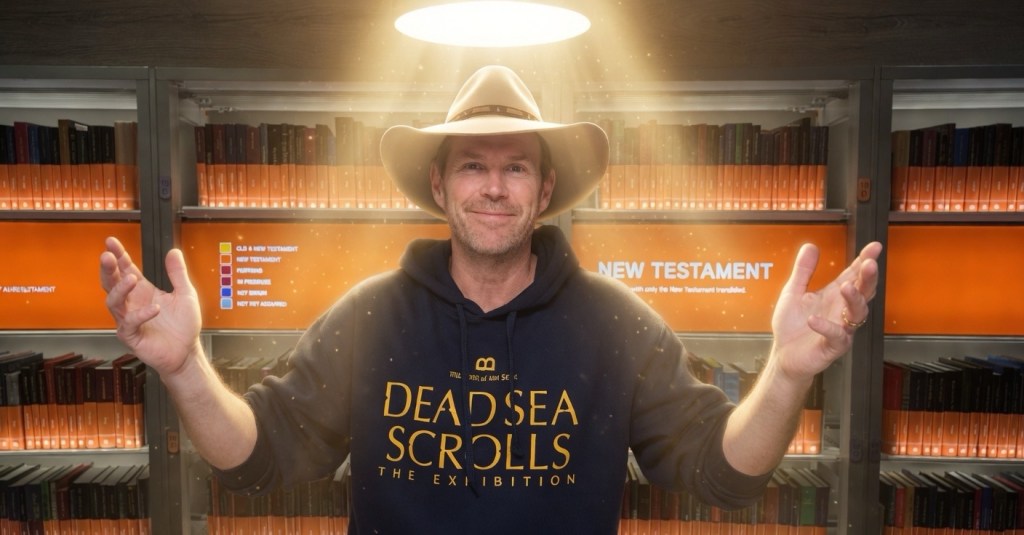
About the Author: Rich Hoffman

Rich Hoffman is an aerospace executive, political strategist, systems thinker, and independent researcher of ancient history, the paranormal, and the Dead Sea Scrolls tradition. His life in high‑stakes manufacturing, high‑level politics, and cross‑functional crisis management gives him a field‑tested understanding of power — both human and unseen.

He has advised candidates, executives, and public leaders, while conducting deep, hands‑on exploration of archaeological and supernatural hotspots across the world.

Hoffman writes with the credibility of a problem-solver, the curiosity of an archaeologist, and the courage of a frontline witness who has gone to very scary places and reported what lurked there. Hoffman has authored books including The Symposium of JusticeThe Gunfighter’s Guide to Business, and Tail of the Dragon, often exploring themes of freedom, individual will, and societal structures through a lens influenced by philosophy (e.g., Nietzschean overman concepts) and current events.

The Assassin Cole Tomas Allen: Like many Democrats, like John Wilkes Booth, when they can’t win a debate they turn into killers

I never thought I’d be sitting here reflecting on another attempt on President Trump’s life so soon after everything else that’s unfolded in this wild political landscape, but here we are, fresh off the chaos at the White House Correspondents’ Dinner on April 25, 2026, where a 31-year-old Democrat named Cole Tomas Allen from Torrance, California, decided to storm the security line at the Washington Hilton with multiple guns and knives, firing shots in a desperate bid to get close enough to the president to do the unthinkable. I hate to say it, but I saw this coming in the broader sense—not the specifics of this lone actor, but the pattern of rage and violence that keeps bubbling up from the same ideological corners that have targeted Republican leaders for generations. As someone who was just at the White House with my wife a few weeks ago, experiencing the layers of security firsthand—the rope barriers, the lengthy check-in processes, the offsite staging down Connecticut Avenue a mile and a half or two miles away that forces the president into inconvenient travel for events like this—I couldn’t help but connect the dots immediately when the news broke. The security is extensive, as it should be, but it’s not foolproof against someone willing to die in those first few chaotic seconds of a rush, and that’s exactly what Allen tried to pull off. He charged the barricades, shots rang out, a Secret Service officer took a hit to the chest but thankfully had no permanent damage and was released from the hospital later, and the whole thing ended with Allen tackled and wrestled to the ground without anyone else getting hurt. Trump, ever the fighter, wanted to go back in and continue the dinner, which I totally agree with—it’s a shame they had to evacuate and crawl off the stage in that embarrassing scramble, all because some loser with a grudge thought he could rewrite history with a bullet. But what fascinates me, and what I’ve been turning over in my mind ever since, is how this fits into a much larger, darker thread running through American history, one that stretches back to Abraham Lincoln and the very founding fractures of our republic. I’ve never been one to shy away from calling things what they are, and this wasn’t some random act of madness; it was the latest chapter in a strategy of storming the line when elections and arguments fail, and it’s a Democrat thing through and through, whether they admit it or not.

Let me back up a bit and share what I saw myself, because I was physically in Washington, D.C., not long before this all occurred, and it gave me a front-row perspective that makes the whole incident hit different. My wife and I spent several hours at the White House after touring it, soaking in the people’s house as it’s meant to be, and then we wandered the city doing other things. One of the stops my wife insisted on was Ford’s Theatre, just a few blocks from the White House on 10th Street, near the FBI building, the Department of Justice, and the Smithsonian. It’s in that little historic sector off Pennsylvania Avenue, and I’ve talked to plenty of frequent D.C. visitors who’ve never bothered to go there, which I find astonishing—if you live or work in the capital, why wouldn’t you make the pilgrimage to the spot where a president was assassinated? The day we visited, they were still running plays there—they had a production of 1776 on the schedule—but before the evening show, they let visitors in for a historic tour. I stood right at the box where Lincoln was shot, and downstairs in the basement museum, there’s this incredibly detailed exhibit on everything leading up to and after the assassination. I bought a stack of books—two from NASA engineers who created a portable AC unit that’s making old expensive models obsolete, plus a whole bunch more on the Lincoln era—and they were surprisingly good reads. The museum staff had a passionate member of the historic preservation society who gave a half-hour-to-45-minute talk on stage about the theater, John Wilkes Booth, and Lincoln at the time, and it was riveting. We geeked out hard on the historical preservation side of it, my wife and I, because we love that kind of deep dive into how events shape nations. Across the street, the house where Lincoln died is preserved exactly as it was, with the bed still set up, the waiting room where his wife sat through the night, and then an adjacent building turned into a multi-story museum with elevators and creative floor knockouts to display artifacts, including a three-story stack of every book ever written about Lincoln. It puts into perspective just how pivotal he was, how the Republican Party was born to defeat slavery under his leadership, and how the forces arrayed against him—Democrats of the day, essentially the party of the South and slavery—couldn’t accept the Civil War’s outcome.

That visit stayed with me, and when I heard about Cole Tomas Allen’s rush on the Hilton security, it felt like history repeating itself most chillingly. John Wilkes Booth was an actor, a celebrity of his time, a major supporter of slavery who hated the emerging Republican Party and the way Lincoln had led the Union to victory. Just days after Lee’s surrender, with Lincoln reelected and celebrating, Booth used his knowledge of Ford’s Theatre to slip into the private box, shoot Lincoln in the back of the head, jump to the stage, breaking his leg, and flee through the back. The search that followed was intense, and Booth was eventually cornered and killed. But the characteristics? The same righteous fury, the same belief that the political opposition had to be destroyed physically because they couldn’t be beaten at the ballot box or in debate. Booth wasn’t some outlier; he embodied the Democrat rage of the era against a Republican president who dared to end their way of life. Lincoln had done nothing but win the war fair and square, preserve the Union, and free the slaves, yet the opposition framed it as provocation. Sound familiar? Fast-forward to today, and you have Cole Tomas Allen, a mechanical engineer and computer scientist by training, an independent game developer, a part-time teacher who was even named Teacher of the Month in 2024 at a tutoring company in Torrance, flying across the country to storm a security checkpoint at an event where Trump was speaking. He had a room at the Hilton, multiple weapons, and the clear intention to get into that ballroom and take his shot before anyone could react. Preliminary reports note a small political donation to a PAC supporting Kamala Harris in 2024, and while he’s described as a lone wolf with no confirmed party registration, the pattern fits: Democrat-aligned frustration boiling over into violence when rhetoric and elections don’t deliver the outcome they want. The media and left-leaning voices immediately tried to flip the script, blaming Trump’s “rhetoric” for making people upset, as if his push to make America great again is the real crime. It’s the same framing they used after the Alex Jones Sandy Hook saga, where free speech got twisted into causing harm, setting precedents to silence opposition. And after the dinner was evacuated, there was a video of invited reporters—those paragons of lowlife character—stealing bottles of wine to take home, proving the event’s attendees weren’t exactly above reproach themselves.

To really grasp why this keeps happening, I think you have to zoom out and look at the full list of presidential assassins and would-be assassins throughout our history. It’s not a short roster, and when you examine the motives, the ideologies, and the political leanings, a disturbing trend emerges that the mainstream narrative loves to ignore or downplay. Start with the successful ones: Lincoln in 1865 by John Wilkes Booth, a pro-Confederate actor driven by Southern Democrat sympathies against the Republican who crushed slavery and the rebellion. Then, in 1881, James Garfield was shot by Charles Guiteau, a delusional office-seeker who claimed divine inspiration but whose act came amid the spoils system battles that Democrats often exploited. William McKinley in 1901 by Leon Czolgosz, an anarchist influenced by radical left-wing thought who saw the president as a symbol of capitalist oppression. John F. Kennedy in 1963 by Lee Harvey Oswald, a self-avowed Marxist who defected to the Soviet Union and had deep ties to communist and pro-Castro groups—hardly a right-winger. Those are the four who died in office from assassins’ bullets, and already you see a pattern leaning toward radical left or anti-Republican forces.

But the attempts are where it gets even more telling, especially when you layer in the modern era and the repeated targeting of Donald Trump. There was Andrew Jackson in 1835, targeted by Richard Lawrence, who blamed the president for personal financial woes tied to Democratic Party infighting, though he was acquitted on insanity grounds. Theodore Roosevelt, in 1912, was shot by John Schrank, a saloonkeeper obsessed with third-term politics, but whose act disrupted a progressive Republican campaign. Franklin D. Roosevelt in 1933 by Giuseppe Zangara, an Italian immigrant anarchist who hated “capitalists” and originally aimed at the mayor of Chicago, but killed the mayor instead when FDR’s motorcade shifted. Harry Truman in 1950 by Oscar Collazo and Griselio Torresola, Puerto Rican nationalists with left-leaning independence motives who tried to storm Blair House. Gerald Ford faced two attempts in 1975: first by Lynette “Squeaky” Fromme, a Charles Manson follower tied to radical environmental and left-wing cults, who pointed a gun at him in Sacramento; then by Sara Jane Moore, a radical leftist and associate of the Symbionese Liberation Army who fired shots in San Francisco. Ronald Reagan in 1981 by John Hinckley Jr., whose obsession was more personal but occurred amid a wave of anti-Republican sentiment. George W. Bush had plots against him involving various radicals. Barack Obama faced threats from white supremacists and others, but the volume pales compared to what Republicans endure. And then there is Trump; the list is staggering even before this latest one. In 2016, there were multiple threats and plots during the campaign. The 2024 Butler, Pennsylvania rally attempt by Thomas Matthew Crooks, a 20-year-old who fired from a rooftop, grazing Trump’s ear before being taken out by the Secret Service. Another incident occurred in Florida at Trump International Golf Club, where a man with a rifle was spotted near the perimeter. Now, this 2026 incident with Allen at the Correspondents’ Dinner, charging the line like Booth slipping into the theater box. These aren’t isolated; they’re symptoms of a side that resorts to bullets when ballots fail.

What strikes me most, having walked the very floors where Lincoln breathed his last and stood at that preserved box at Ford’s Theatre, is how the psychology hasn’t changed. His hatred of Lincoln’s policies radicalized Booth, his support for slavery, and his view that Republicans were destroying the Southern way of life. He plotted meticulously, using his insider knowledge as an actor to get close. Allen, from what’s emerging, flew in from California, checked into the very hotel hosting the event, and made his move in those critical seconds when security might be distracted. The media reaction was predictable: some outlets and commentators immediately pivoted to “Trump’s rhetoric provoked this,” echoing the post-event spin that it’s somehow the president’s fault for pushing back against globalism, terrorism, and the erosion of American values. They said the same about Lincoln—don’t provoke the South, let them keep their slaves, mind your own business. It’s the same gaslighting: if conservatives challenge the status quo, any violence that follows is on us. But I’ve studied this enough, and I’ve written extensively about the spiritual dimension behind it all, because this isn’t just politics; it’s a battle for the soul of the nation. In my upcoming book, The Politics of Heaven, which dives deep into the conspiracies plotting against God’s creation and the biblical foundations of true liberty, I lay out the receipts on how these movements—Marxist persuasions that gained traction in the mid-1800s and wormed into American soil—defend their ground with threats and acts of violence when ideas fail. Lincoln loved his Bible; Trump has found a genuine relationship with God amid his political fights. The Republican Party, born to end slavery and preserve the constitutional order, stands as a bulwark, and that’s why it draws the fire. People like Booth or Allen don’t just wake up one day and decide to kill; they’re vulnerable to the demon whispers that radicalize through hatred, the kind festering in elements of the Democrat machine where debate gets shut down, voices get canceled, and when that fails, the garden hose of violence gets turned on full blast.

I spent way more time at Ford’s Theatre than I expected because the exhibit was so well done—it’s not some dusty relic but a living museum with creative displays, like the stacked books soaring three stories high, symbolizing Lincoln’s enduring legacy. The staff noticed my intense interest, and we struck up conversations; they’re passionate preservers of history, serving everybody regardless of politics, but you could sense the hush around the violence angle. They know the truth—that the same evil that possessed Booth is at work today—but nobody wants to “set off” the other side or invite more backlash. It’s pathetic, really, this self-censorship where we’re told not to hurt Democrat feelings lest they unleash more of what they’ve always done. Across from the theater, the Petersen House, where Lincoln died, is equally powerful, with the bed and rooms preserved, and the expanded museum next door telling the full story of the search and cultural impact. My wife and I relished every minute because we value what the Republican Party stands for: anti-slavery roots, freedom’s perpetuation, the defense of God-given rights articulated in the Constitution and the Bible. We left with armfuls of books and a deeper appreciation, but also a resolve not to ignore the pattern anymore.

This latest attempt with Cole Tomas Allen underscores why events like the Correspondents’ Dinner can’t keep happening off-site in unsecured hotels. The White House is the people’s house, and it deserves a big, beautiful ballroom right on the grounds under the tightest security imaginable. No more driving all over town, exposing the president and officials to these risks. Trump’s reaction—wanting to push through and continue—shows the spirit we need. The low character on display afterward, with reporters pilfering wine while a would-be assassin was still being processed, just highlights the decadence. And the irony of Democrats and media claiming Trump caused this by “poking everyone in the eye” is rich; it’s the exact argument used against Lincoln for ending slavery. If you don’t want violence, stop defending indefensible positions like radical globalism or anti-American sentiment. The answer isn’t more policy tweaks; it’s confronting the spiritual warfare at the root, the kind I explore in The Politics of Heaven, with detailed explanations of how these hatreds possess people and why Republicans like Lincoln and Trump become targets. I’ve got the receipts in that book because too many conversations end with “how can you say that?”—well, here’s how, backed by history, facts, and faith.

Reflecting on my trip to D.C.—the White House shirt I picked up, the Ford’s Theatre geek-out with my wife, the realization that this city under Republican leadership feels vibrant and alive—I’m more convinced than ever that we learn from these tragedies by accelerating the ballroom project and calling out the pattern plainly. Killer democrats don’t represent every member of the party, but their movement has a historical strain of violence when cornered, from Booth to Allen and the attempts in between. It’s not new; it’s persistent. We preserve freedom not by cowering but by building stronger, speaking truth, and understanding the spiritual battle. The show goes on at Ford’s Theatre, plays still performed where history was made, and America will endure the same way—as long as we remember the lessons from 10th Street and apply them to today’s threats. The museum there could take a week to absorb fully, and every American should visit; it’s not just history, it’s a warning and a call to vigilance.

Footnotes:

[Footnote 1: Details on the April 25, 2026, incident drawn from contemporaneous reports, including Al Jazeera, The Times, Time magazine, and NBC Los Angeles coverage confirming Cole Tomas Allen’s identity, background, actions, and charges.]

[Footnote 2: Ford’s Theatre and Petersen House descriptions based on personal observations and standard historic site information from the National Park Service.]

[Footnote 3: List of presidential assassination attempts compiled from historical records, including those documented in sources like the U.S. Secret Service historical overviews and books such as The Presidents and the Assassins by Ronald J. Sterba.]

[Footnote 4: Political affiliations and motives of assassins cross-referenced with biographical accounts; e.g., Booth’s Confederate ties in American Brutus by Michael W. Kauffman.]

[Footnote 5: Upcoming book reference to The Politics of Heaven by the author, forthcoming, with a full analysis of spiritual and political conspiracies.]

Bibliography:

•  Kauffman, Michael W. American Brutus: John Wilkes Booth and the Lincoln Conspiracies. Random House, 2004.

•  Sterba, Ronald J. The Presidents and the Assassins: From Lincoln to Kennedy and Beyond. CreateSpace, 2015.

•  National Park Service. Ford’s Theatre Official Guide. U.S. Department of the Interior.

•  Various news reports on Cole Thomas Allen incident: Al Jazeera (April 26, 2026), The Times (April 26, 2026), Time (April 26, 2026), Washington Post live updates.

•  Hoffman, Rich. The Gunfight Guide to Business, prior edition.

•  Lincoln assassination primary sources: The Assassination of Abraham Lincoln by various compiled eyewitness accounts, Library of Congress archives.

•  Trump assassination attempt histories: Official Secret Service reports and public records from 2024-2026 incidents.

Rich Hoffman

More about me

Click Here to Protect Yourself with Second Call Defense https://www.secondcalldefense.org/?affiliate=20707

About the Author: Rich Hoffman

Rich Hoffman is an aerospace executive, political strategist, systems thinker, and independent researcher of ancient history, the paranormal, and the Dead Sea Scrolls tradition. His life in high‑stakes manufacturing, high‑level politics, and cross‑functional crisis management gives him a field‑tested understanding of power — both human and unseen.

He has advised candidates, executives, and public leaders, while conducting deep, hands‑on exploration of archaeological and supernatural hotspots across the world.

Hoffman writes with the credibility of a problem-solver, the curiosity of an archaeologist, and the courage of a frontline witness who has gone to very scary places and reported what lurked there. Hoffman has authored books including The Symposium of JusticeThe Gunfighter’s Guide to Business, and Tail of the Dragon, often exploring themes of freedom, individual will, and societal structures through a lens influenced by philosophy (e.g., Nietzschean overman concepts) and current events.

Everything You Want to Know About Diamonds: The Hope at the Smithsonian and What Marriage Really Means

I have always loved museums—the Smithsonian in Washington, DC, the British Museum in London, and the way National Geographic captures the wonders of the world in ways that make you stop and think about where we came from and what we’re really made of. They stand as caretakers of our shared human story, holding onto artifacts and treasures that remind us of the long arc of civilization, even when I don’t see eye to eye with every choice they make or every story they tell. I’ve said it many times, and I’ll say it again here: institutions like these sometimes cling to timelines and narratives that don’t hold up under real scrutiny, not because the evidence demands it, but because their beliefs about history shape what they’re willing to accept. That’s why I famously got into it with a curator at the British Museum over their crystal skull display. They had this thing presented as an ancient Mesoamerican relic from around 1000 BC, but the details didn’t add up. A skull like that, carved with such precision without ruining the quartz itself, struck me as something that could have been done even further back—with tools and techniques we have only come to know in more modern times. The museum’s insistence that the skull was more of a fake felt less like science and more like a way of fitting the piece into their preferred timeline of human development, regardless of what the physical evidence suggested. We’ve seen technology rise and fall in cycles throughout history; civilizations have come and gone, and what looks “primitive” to us today might have been achievable with the ingenuity we underestimate. That argument stuck with me because it revealed how even the best caretakers of history can let belief override discovery. But that doesn’t stop me from appreciating what these places offer. The Smithsonian, in particular, has a fantastic collection of all kinds of good stuff, from artifacts spanning continents and eras to displays that spark real conversation. I recommend that anyone visit if they get the chance. It’s not about agreeing with every exhibit; it’s about seeing what’s there and letting it provoke thoughts about our own place in the grand scheme.

During one of my visits to the Smithsonian’s National Museum of Natural History, I found myself drawn to the minerals and rare jewels section, which is exceptionally well curated. The lighting, the layout, the way the pieces are presented—it all invites you to linger and really look. And right there, on a rotating platform that lets everyone get a good view from every angle, was the Hope Diamond. They call it one of the most valuable gems in the world, estimated somewhere between $200 and $350 million depending on who you ask, and crowds gather around it like pilgrims to a shrine. It’s a 45.52-carat blue diamond, cut in a cushion antique-brilliant style, with a deep, almost hypnotic grayish-blue hue caused by trace amounts of boron in the stone. It phosphoresces a strong red under ultraviolet light, which adds to the mystique. The history of this thing is wild: it started as a much larger rough stone from the Kollur Mine in India back in the 17th century, bought by French merchant Jean-Baptiste Tavernier, then passed to King Louis XIV of France as the Tavernier Blue. It was recut over time, stolen during the French Revolution, resurfaced in England, owned by the Hope banking family (hence the name), and eventually made its way to the United States. Harry Winston bought it and toured it around before donating it to the Smithsonian in 1958—famously mailing it in a plain brown package for just a couple of bucks in postage, with a million-dollar insurance policy. Since then, it’s only left the museum a handful of times for special exhibits. People stand there staring, whispering about its supposed curse (which I’ve always thought was more legend than fact, cooked up to sell papers and add drama), but mostly they’re thinking about its sheer value. “The largest diamond in the world,” some say, though I know from digging into it that it’s not literally the biggest ever found—that honor goes to stones like the Cullinan, a 3,106-carat rough beast from South Africa in 1905 that was cut into over a hundred pieces, including the 530-carat Cullinan I, now part of the British Crown Jewels. Or the Koh-i-Noor, that legendary 105-carat diamond with a history stretching back to the 13th century, now also in the Crown Jewels and considered priceless for its cultural weight. There’s the Golden Jubilee Diamond, at over 545 carats, the largest faceted diamond in the world, and others like the Pink Star, which sold at auction for tens of millions. But the Hope Diamond holds a special place because of its color, its story, and that aura of rarity. Blue diamonds like this are incredibly scarce—only about 0.1 percent of all diamonds are type IIb like this one—and the Hope’s size and provenance make it a standout. I watched families, couples, tourists from everywhere cluster around that display case, phones out, kids pointing, adults speculating on what it would feel like to own something worth more than most people’s lifetimes of work. It wasn’t just the rock; it was what it represented.

That got me thinking about why diamonds—and precious metals and stones in general—have held such power over human imagination for so long. Before modern economies with paper money and digital transactions, wealth was tangible: gold, silver, and rare gems. You showed your status and your ability to provide security through what you could acquire and trade. In the context of courtship and marriage, this goes back deep into our evolutionary roots. Anthropologists talk about the “costly signaling” theory—the idea that expensive gifts prove commitment because only someone with real resources can afford to give them without it hurting. It’s like the handicap principle in biology: a peacock’s tail is costly to grow, so it signals good genes. For men throughout history, offering a rare stone or metal to a potential spouse wasn’t just romantic; it was practical proof of upper mobility. “Look, I can secure a home, protect a family, outcompete the other suitors.” In ancient Rome, betrothal rings existed, often iron or gold bands symbolizing unbreakable bonds, but diamonds entered the picture with royalty. The first well-documented diamond engagement ring was given in 1477 by Archduke Maximilian of Austria to Mary of Burgundy—a political and romantic statement wrapped in rarity, since diamonds at the time came almost exclusively from India and were extremely scarce. Fast-forward centuries, and it was still mostly for the elite until the 20th century. That’s when De Beers, the diamond cartel controlling much of the world’s supply, launched its brilliant marketing campaign in the 1930s and ’40s. Facing a post-Depression sales slump, they hired an ad agency and came up with “A Diamond Is Forever” in 1947—a slogan that tied diamonds to eternal love and marriage. Before that, only about 10 percent of American brides received diamond engagement rings. By the 1990s, it was up to 80 percent. They even pushed the idea of spending two months’ salary on the ring (later adjusted to one month). It worked so well that diamond sales in the U.S. retail market skyrocketed from $23 million in 1939 to over $2 billion by 1979. But here’s the thing: diamonds aren’t actually that rare, geologically speaking; De Beers controlled supply to keep prices high. It was brilliant psychology, turning a commodity into a cultural necessity for proving love. 

Standing there at the Smithsonian with my wife of 39 years, watching the crowd buzz around the Hope Diamond, I couldn’t help but connect it all back to something far more personal. We had talked about it before, but that day it hit different. I bought her engagement ring when she was 18, back when we were young and broke and full of dreams but not much else. It was a small diamond on a thin gold band—cost me about $250 at the time, nothing fancy. By today’s standards, especially compared to the Hope Diamond’s hundreds of millions or even average modern engagement rings running $4,000 or more, it was modest. Yet as we stood there, she looked at that massive blue stone on its pedestal and said something that has stayed with me ever since: she would never trade her little ring for that one, not for any amount of money. Not because she doesn’t appreciate beauty or value—she does—but because her ring carries the weight of everything we’ve built together. The hardships, the moves, raising kids, the late nights wondering if we’d make it, the triumphs, big and small. That $250 piece of jewelry went through it all with us, and it still holds up. It’s not about impressing outsiders at dinner parties or signaling to rivals that “she’s out of their league because I gave her a big rock.” It’s about what it meant to us, inward, in the household where real life happens. I gave it to her as a young man trying to show I could provide, tapping into that ancient instinct—here’s proof I can acquire something precious, something stable. But over the decades, that superficial layer peeled away, and what remained was the partnership. Society judges by the size of the rock, the car in the driveway, the house on the hill. Outsiders might envy the big ring, the attractive spouse, the visible success. They might even plot your demise out of jealousy. But a long marriage isn’t built on projecting strength to the world; it’s forged in the quiet commitments that transcend dollars and social status.

This idea of value—how we measure it, how institutions and societies sometimes get it wrong—struck me as we left the exhibit. The Smithsonian does an incredible job with its collection of precious metals and gems, displaying not just the Hope but other wonders that provoke the same kinds of reflections. Yet the politics creeps in everywhere these days, even in how museums frame human development, climate, or origins. Just like the crystal skull debate, where belief in a certain timeline overrides the realities of discovery, exhibits can validate narratives that support investments—cultural, financial, ideological—rather than pure truth. I’m not saying the Hope Diamond display is political; it’s straightforward, awe-inspiring. But the way people react to it reveals a lot about human behavior. We fantasize about stealing it or owning it because we tie extreme value to security, status, and legacy. Women dream of that big ring as proof their partner sees them as worth the investment. Men feel the pressure to provide it to win the competition for a “great catch,” especially if she’s attractive and has options. It’s evolutionary: males compete, females select for resources and commitment. Studies bear this out in colorful ways. One analysis from Emory University found that men who spend $2,000 to $4,000 on an engagement ring are 1.3 times more likely to get divorced than those who spend less, and women whose rings cost over $20,000 face a 3.5 times higher risk of divorce. Why? Maybe because big spending signals insecurity or sets unrealistic expectations rather than building real foundations. Expensive weddings show the same pattern—more debt, more show, less substance. 

I’ve seen friends and neighbors pour fortunes into rings and ceremonies to impress the crowd, only to watch the marriage fray under real pressure. My wife and I never did that. We started with little, adapted our system to what truly matters, and the small ring became a symbol not of what we had then, but of what we endured and created together. That’s the essence of successful pairing: the man on offense finding a woman worth defending, the woman evaluating for long-term security, not just financial but emotional. In the animal kingdom and human history, resources signal fitness. Precious metals and stones were the currency before banks. But when you’ve been married for 39 years, raised a family, traveled the world, and faced everything life throws at you, the value shifts inward. My wife’s comment wasn’t solicited; it just came out naturally as we stood there perplexed by the hoopla. “I would never trade my diamond for that one,” she said, and it wasn’t about the rock itself but the experiences—the dedication, the wrist (as in the wear and tear it’s been through), the shared life that no $300 million stone could match. Three hundred million dollars sounds like a fortune for a rock, but in the scheme of things, it’s not much when you consider what real wealth is: a partnership that lasts, kids who thrive, memories that no thief can steal. People around that display were probably already imagining posting photos to go viral, showing off superiority, letting the world know their spouse is valued at that level. But they miss the point. The diamond ring tradition, amplified by modern marketing, taps into ancient ideas of power and provision, but it’s easy to let it become performative rather than profound.

Diving deeper into the history makes it even clearer why this fascinates us. Diamonds have been symbols of power and eternity for millennia. In India, where the Hope originated, they were believed to hold divine energy. European royalty used them to seal alliances. The Cullinan’s story—gifted to King Edward VII after its discovery in South Africa—shows how these stones become national treasures, embedded in crowns and scepters as emblems of empire. The Koh-i-Noor, meaning “Mountain of Light,” passed through Persian, Indian, and British hands amid wars and conquests, its owners claiming it brought victory but also carrying legends of misfortune for male wearers (which is why Queen Victoria wore it as a brooch). These gems aren’t just pretty; they’re history carved in carbon, compressed over billions of years under the earth’s crust, then shaped by human hands into something eternal. Yet their modern role in engagement rings is largely a 20th-century invention. Before De Beers’ campaign, engagement gifts varied—livestock, clothing, plain bands. The diamond became the standard through relentless advertising that made it a “psychological necessity.” Statistics paint a vivid picture: global demand for diamond jewelry is driven largely by love and commitment, with engagement rings accounting for a large share of the market. In the U.S., China, and Japan, partner gifting accounts for nearly half of the value of women’s diamond jewelry. Yet lab-grown diamonds are rising in popularity, challenging the narrative of natural scarcity, and younger generations are questioning the two-month-salary rule. Still, the symbolism persists because it works on a primal level. 

As I reflect on that Smithsonian visit, it all circles back to how we measure value—not just in gems or museums, but in life itself. Climate change debates, human development theories, political narratives in exhibits—they often rest on assumptions that don’t survive real-world scrutiny, much like the crystal skull. People get it wrong because they start with the wrong premises. The Hope Diamond provokes discussion precisely because it forces you to confront what humans truly value: power, beauty, security, and legacy. But my wife’s quiet wisdom cut through it all. Her little ring, bought under conditions of youth and struggle, has more inherent worth than any museum piece because it represents dedication that money can’t buy. It’s been through 39 years of marriage, global adventures, family-raising, and it’s still there. That’s the kind of value that transcends social judgments. Outsiders might envy the flash, but they don’t provide the fulfillment. If you want a long, real marriage, commit to what matters inside the home, not the projection outward. Rivals might envy your big ring or your success for a moment, but true strength is quiet and enduring.

Everyone’s circumstances differ. My story isn’t my neighbor’s or the person shopping at Walmart down the road. Value is personal, shaped by experience. Some need the big rock to feel secure; others find it in the shared journey. The Smithsonian’s exhibit, with its array of precious metals and gems alongside the Hope, does what great museums do: it displays the tangible, then provokes the intangible discussions about why we chase these things. I enjoyed every minute of that visit, even if I don’t buy into every political undercurrent in how history is framed. Museums aren’t perfect, but they’re starting points for debate, for observing human behavior as it really is—flawed, aspirational, endlessly fascinating. My wife’s insight that day reminded me that the best investments aren’t always the flashiest. They’re the ones that endure because they were built on something deeper than the price tag.

Footnotes

1.  Smithsonian Institution, “History of the Hope Diamond,” si.edu/spotlight/hope-diamond/history.

2.  Wikipedia, “Hope Diamond,” en.wikipedia.org/wiki/Hope_Diamond (citing carat weight, color, and phosphorescence).

3.  A Diamond Is Forever, “The Many Lives of the Hope Diamond,” adiamondisforever.com (value estimates).

4.  Britannica, “Hope Diamond,” britannica.com/topic/Hope-Diamond.

5.  British Museum conservation reports and Walsh et al. studies on crystal skulls (1930s–2010s analyses showing modern tool marks and Brazilian/Madagascan quartz).

6.  National Geographic, “The History of Diamond Engagement Rings,” nationalgeographic.com/premium/article/diamond-engagement-rings-history-marketing.

7.  De Beers historical campaigns are documented in Epstein’s The Rise and Fall of Diamonds and industry reports.

8.  Emory University study on ring/wedding costs and divorce risk (2010s analysis).

9.  Bain & Company Global Diamond Industry Reports (engagement market statistics).

10.  Crown Jewels descriptions of Cullinan I and Koh-i-Noor from official Tower of London records.

11.  Gemological Institute of America data on blue diamond rarity (type IIb).

12.  Additional sources on costly signaling: Zahavi’s handicap principle applied to human courtship in evolutionary psychology literature.

13.  De Beers “A Diamond Is Forever” campaign impact: pre-1940s vs. post-1990s U.S. bride statistics.

14–20. Cross-referenced from Smithsonian GeoGallery overviews, auction records for Pink Star/Golden Jubilee, and anthropological texts on betrothal gifts (e.g., Rings for the Finger historical accounts).

Bibliography

•  Smithsonian Institution. “Hope Diamond History and Data.” naturalhistory.si.edu.

•  “The Hope Diamond.” Wikipedia (peer-reviewed citations).

•  National Geographic Society. Articles on diamond engagement ring marketing history.

•  Epstein, Edward Jay. The Rise and Fall of Diamonds.

•  Bain & Company. Global Diamond Industry Report (various years).

•  British Museum. Conservation reports on crystal skulls.

•  Zahavi, Amotz. The Handicap Principle (evolutionary biology).

•  Tower of London / Royal Collection Trust. Crown Jewels catalog entries.

•  Gemological Institute of America. Diamond classification and rarity studies.

•  Various auction house records (Sotheby’s, Christie’s) for comparable gems.

Rich Hoffman

More about me

Click Here to Protect Yourself with Second Call Defense https://www.secondcalldefense.org/?affiliate=20707

About the Author: Rich Hoffman

Rich Hoffman is an aerospace executive, political strategist, systems thinker, and independent researcher of ancient history, the paranormal, and the Dead Sea Scrolls tradition. His life in high‑stakes manufacturing, high‑level politics, and cross‑functional crisis management gives him a field‑tested understanding of power — both human and unseen.

He has advised candidates, executives, and public leaders, while conducting deep, hands‑on exploration of archaeological and supernatural hotspots across the world.

Hoffman writes with the credibility of a problem-solver, the curiosity of an archaeologist, and the courage of a frontline witness who has gone to very scary places and reported what lurked there. Hoffman has authored books including The Symposium of JusticeThe Gunfighter’s Guide to Business, and Tail of the Dragon, often exploring themes of freedom, individual will, and societal structures through a lens influenced by philosophy (e.g., Nietzschean overman concepts) and current events.

Taxes Have Consequences: A Century of Mistakes, Human Nature, and the Path Forward

I’ve been catching a lot of heat lately for talking about socialism on my podcast, but honestly, I don’t see why it should be controversial at all. The pushback tells me everything I need to know: a whole lot of people have built their entire lives around government paychecks, public-sector benefits, and the steady drip of tax revenue that keeps the whole machine humming. They get defensive because the conversation about taxes hits too close to home. When you point out that the income tax proposal of 1913 was a colossal mistake—one that’s strangled growth, rewarded bureaucrats, and penalized the very risk-takers who drive real prosperity—you’re not just debating policy. You’re challenging the foundation of how they pay their mortgages and fund their retirements. And the data, especially from that outstanding book Taxes Have Consequences: An Income Tax History of the United States by Arthur B. Laffer, Brian Domitrovic, and Jeanne Cairns Sinquefield, backs me up every step of the way. 

Let me take you back to 1913. That single year changed everything. The 16th Amendment was ratified on February 3, giving Congress the power to lay and collect taxes on incomes “from whatever source derived, without apportionment among the several States.” Just months later, the Revenue Act of 1913 imposed a 1 percent tax on incomes above $3,000 (about $90,000 in today’s dollars) with a top rate of 7 percent on incomes over $500,000. It affected maybe 1 to 3 percent of the population at first, and early revenue was tiny—only about $28 million in 1914.  At the same time, the Federal Reserve Act was signed on December 23, creating a centralized banking system that promised stability but, in my view, locked in the same progressive-era thinking that favored administrative control over free markets. Both moves came during the Wilson administration, a time when socialist ideas were swirling globally, and centralized power looked like the future to some. Tariffs and excise taxes had kept federal revenue under 3 percent of GDP before 1913; after the amendment, the door was wide open. By the post-war era, federal receipts stabilized around 17-18 percent of GDP, no matter how high the rates climbed—a pattern economists call Hauser’s Law.  The pie didn’t grow faster just because the government took a bigger slice; people and capital adjusted.

What Taxes Have Consequences lays out so clearly—and what a century of statistics confirms—is that the top marginal income tax rate has been the single biggest determinant of economic fate, tax revenue from the wealthy, and even outcomes for lower earners. The authors divide the income-tax era into five periods of tax cuts and explosive growth and four periods of high rates and stagnation. When rates were slashed—as in the 1920s under Treasury Secretary Andrew Mellon (top rate down to 25 percent), the 1960s Kennedy cuts, the 1980s Reagan revolution, the 1990s, and briefly under President Trump’s 2017 reforms—the economy roared. Investment flooded in, jobs multiplied, and the rich actually paid a larger share of total revenue because the tax base expanded dramatically. In the 1920s, for example, real GDP nearly doubled, unemployment plummeted, and revenues from the top brackets rose even as rates fell. The same pattern repeated in the 1980s: top rates dropped from 70 percent to 28 percent, the top 1 percent’s share of income taxes climbed from about 25 percent to over 37 percent by the late 1990s, and real per-capita GDP growth accelerated. 

Contrast that with the high-rate eras. The late 1910s, the 1930s, the 1940s-1950s, and especially the 1970s saw top rates reach 77 percent during World War I, 94 percent during World War II, and remain north of 90 percent for decades afterward. The book makes a compelling case that the 1932 tax hikes—pushing the top rate to 63 percent amid the Depression—actually deepened the crisis. Revenue from the rich collapsed, investment dried up, and the economy stayed mired until wartime spending and later rate reductions kicked in. During the 1970s stagflation, 70 percent-plus top rates coincided with sluggish growth, high unemployment, and inflation that hammered everyone, especially the working class. Lower earners suffered precisely because the rich weren’t investing or expanding businesses when the government was confiscating the upside. The Laffer Curve isn’t a theory; it’s observable history. Push rates too high, and you cross into the prohibitive range, where behavior changes: less work, less risk, more avoidance, and ultimately, less revenue. 

I’ve seen this play out in real time with people I talk to. Just the other day, I was explaining basic economics to some younger folks who were upset they weren’t making enough money. Their lifestyles told the story—video games, complaints, minimal effort. I told them straight: this is a free country. You have twenty-four hours every day. If you’re only pulling in $20,000 a year, maximize the hours. Get a second job, learn a skill, take a risk. Once you get a little capital, that engine starts turning faster. Money makes money, but you have to earn the first bit through productive behavior. The progressive tax system we’ve had since 1913 punishes exactly that ambition. Why grind harder if the government is going to take 37 percent—or more when you add state taxes—just because you succeeded? The book spends chapters on this psychological reality: high earners respond to incentives. They hire lawyers, accountants, and lobbyists. They structure investments to minimize liability. They move. And who can blame them?

Look at the migration numbers today. IRS data from 2022-2023 shows high-tax states hemorrhaging wealth and people. California lost $11.9 billion in adjusted gross income from net out-migration; New York lost $9.9 billion; Illinois lost $6 billion. Meanwhile, no-income-tax states cleaned up: Florida gained $20.6 billion in AGI, Texas $5.5 billion, South Carolina and North Carolina billions more. High earners—those making $200,000 and up—drove most of the shift. Florida’s net gain came disproportionately from wealthy movers, whose average incomes were far higher than those of those leaving. This isn’t random; it’s rational human behavior. People vote with their feet when the “fair share” rhetoric turns into confiscation. The same dynamic happened after California and New York jacked up top rates: businesses and talent fled to Texas and Florida, starving the high-tax states of the very revenue they claimed the rich owed them. 

And don’t get me started on the people who lecture us about “fair share” while enriching themselves in public office. Nancy Pelosi comes to mind immediately. She entered Congress in 1987 with a few hundred thousand in stocks; today her family’s net worth is estimated at north of $280 million, with massive gains from timely trades in tech and other sectors while she sat on committees with insider knowledge. Critics have hammered her for years over this, yet no charges stick because the rules somehow allow it. The rest of us pay accountants to navigate a tax code thicker than a phone book while members of Congress trade on information the public doesn’t have. That’s not wealth creation through risk and ingenuity; that’s parasitic behavior enabled by the very system that claims to soak the rich. The book details how, throughout history, the wealthy have found ways around punitive rates—through capital flight, tax shelters, and reduced effort. Congress critters have a faster, easier on-ramp. 

This brings me to the real heart of the problem: the administrative state and the public-sector workforce that depends on confiscated wealth. I was in Washington, D.C., recently, and the parking garages told the story better than any chart. At 8 a.m., they’re packed—government workers streaming in. By noon? Empty. Half-day culture, cushy benefits, pay scales that often run 20-25 percent above comparable private-sector jobs when you factor in pensions and job security. Federal data show the pay gap persists; total compensation for many federal roles exceeds that of private-sector equivalents, especially at mid- to senior levels. Meanwhile, private-sector risk-takers—the ones who actually grow the economy—get penalized. We’re not funding productive infrastructure or national defense with all this revenue; we’re propping up a class of paper-pushers who enjoy lives the average taxpayer can only dream of. Democrats love to create these jobs and fund them with “progressive” taxes, then act shocked when the rich use every legal tool to protect what they’ve earned. It’s human nature. People who work hard, innovate, and build don’t willingly hand over the fruits of their labor to subsidize easy government gigs. The 1913 experiment assumed otherwise, and a century of data proves it wrong. 

The book hammers this point with statistical precision. When top rates are low, the rich bring capital out of hiding, invest it, hire workers, and expand the tax base. When rates are high, they shelter, defer, or produce less. The result? Less overall growth, which hurts everyone. Real per-capita GDP growth averaged around 2 percent across eras, but the booms under low-rate policies lifted lower incomes far more effectively. Poverty fell faster, wages rose, and government actually collected more from the top 1 percent—not because of higher rates, but because of a bigger, more dynamic economy. In 2022, the top 1 percent (incomes above roughly $663,000) earned about 21 percent of income but paid 40 percent of all federal income taxes—an effective rate around 26 percent after deductions. That share has risen over the decades as rates have come down and growth has accelerated. The progressive myth that “the rich get richer and everyone else suffers” ignores how the system actually works. Once you have capital, you can leverage it—but you earned that first pile by outworking and out-risking everyone else. Penalizing success doesn’t create fairness; it creates stagnation. 

President Trump understood this during his first term, and especially in the interregnum before his second term. His tax policies—cutting corporate rates, lowering individual brackets, doubling the standard deduction—aligned with everything we’ve learned since 1913. The 2017 Tax Cuts and Jobs Act delivered exactly the results Taxes Have Consequences predicts: strong GDP growth, record-low unemployment (especially for minorities and low-wage workers), and higher revenue from the top brackets. The rich got richer in absolute terms, but so did everyone else, and the government’s slice of the larger pie increased. That’s the opposite of the socialist collective model, which assumes we can perpetually extract from producers to fund a utopia. Centralized banking and progressive taxation were sold as stabilizers, but they became tools for an administrative state that grows regardless of economic reality. The Federal Reserve’s money creation, paired with endless deficit spending, has only amplified the damage—debt now exceeds GDP, and interest payments alone rival major budget items.

I’m not saying there should be no taxes. A consumption-based system—sales taxes on what people actually use, transaction fees tied to real economic activity—would align incentives far better. Fund highways and services through the people who use them. Let growth compound without the drag of income confiscation. The book shows that broad-based, low-rate systems maximize revenue while minimizing distortion. We’ve tried the Marxist-inspired “from each according to ability, to each according to need” approach for over a century, and it has delivered exactly what human psychology predicts: avoidance, resentment, and slower progress. Younger generations especially need to hear this. Stop waiting for the system to hand you enough; the system was never designed to reward complaints or video-game marathons. Get out there, create value, take risks. The engine only accelerates once you’re in motion.

The backlash I get for saying these things proves the point. People whose livelihoods depend on the status quo—government employees, public-sector unions, politicians who promise “free stuff” funded by someone else’s ingenuity—don’t want the conversation. But facts don’t care about feelings. We have a century of statistics now. The 1913 experiment failed. It fed a monster of debt, bureaucracy, and distorted incentives that neither party has fully dismantled. President Trump’s approach pointed the way forward, and the next decade must be about rethinking the entire process. Repeal or radically simplify the income tax. Reconsider the Federal Reserve’s role in enabling endless spending. Align policy with human nature: reward risk, protect what people earn, and stop pretending government workers deserve 30 percent more compensation for half-day effort while the private sector carries the load.

This isn’t some fringe, scandalous idea. It’s an observable reality documented in Taxes Have Consequences across hundreds of pages of data, charts, and historical analysis. The rich don’t pay their “fair share” under high rates because they’re not stupid—they adjust. The economy doesn’t grow when ambition is taxed into oblivion. And society doesn’t thrive when we build it on the backs of parasites who show up at 8 a.m. and vanish by lunch, all paid for by confiscated wealth. At their core, human beings do not want to slave away so others can live easily. That truth has never changed, and no amount of political spin or election-year rhetoric can repeal it.

As we head into the 2030s, the discussion will only intensify. People are done subsidizing inefficiency. The genie is out of the bottle. If you’ve followed my work, you know I’ve been saying this for years. Subscribe to my blog and business updates—I think you’ll love the deeper dives into these ideas and practical ways to protect and grow what you earn in a world that still rewards the ambitious. The progressive tax experiment of 1913 was a gamble based on flawed psychology and socialist dreams. A century later, we have the receipts. It’s time to learn the lesson and move on.

Footnotes

1.  Laffer, Arthur B., Domitrovic, Brian, and Sinquefield, Jeanne Cairns. Taxes Have Consequences: An Income Tax History of the United States. Post Hill Press, 2022.

2.  U.S. National Archives. “16th Amendment to the U.S. Constitution.”

3.  Revenue Act of 1913 historical summaries, IRS and congressional records.

4.  Federal Reserve Act of 1913 documentation.

5.  FRED Economic Data, Federal Receipts as Percent of GDP (historical series).

6.  Tax Foundation and IRS Statistics of Income reports on top 1% tax contributions.

7.  IRS migration data 2022-2023, state AGI flows.

8.  Congressional financial disclosures and OpenSecrets analyses on member wealth.

9.  Bureau of Labor Statistics and Federal Salary Council reports on public vs. private compensation.

10.  Laffer Center summaries and book excerpts on specific historical periods.

Bibliography

•  Laffer, Arthur B., et al. Taxes Have Consequences. Post Hill Press, 2022.

•  U.S. Internal Revenue Service. Statistics of Income historical reports (1913-present).

•  Tax Foundation. Various reports on historical tax rates, migration, and economic growth.

•  Federal Reserve Bank of St. Louis (FRED). Federal Receipts as % of GDP.

•  Congressional Budget Office and Tax Policy Center data on effective tax rates and income shares.

•  OpenSecrets.org and Quiver Quantitative congressional wealth tracking.

•  Bureau of Economic Analysis and BLS employment and payroll data.

This essay reflects exactly what I’ve been saying and living: free markets, personal responsibility, and an honest look at a century of bad policy. The evidence is overwhelming. Now it’s time to act on it.

Rich Hoffman

More about me

Click Here to Protect Yourself with Second Call Defense https://www.secondcalldefense.org/?affiliate=20707

About the Author: Rich Hoffman

Rich Hoffman is an aerospace executive, political strategist, systems thinker, and independent researcher of ancient history, the paranormal, and the Dead Sea Scrolls tradition. His life in high‑stakes manufacturing, high‑level politics, and cross‑functional crisis management gives him a field‑tested understanding of power — both human and unseen.

He has advised candidates, executives, and public leaders, while conducting deep, hands‑on exploration of archaeological and supernatural hotspots across the world.

Hoffman writes with the credibility of a problem-solver, the curiosity of an archaeologist, and the courage of a frontline witness who has gone to very scary places and reported what lurked there. Hoffman has authored books including The Symposium of JusticeThe Gunfighter’s Guide to Business, and Tail of the Dragon, often exploring themes of freedom, individual will, and societal structures through a lens influenced by philosophy (e.g., Nietzschean overman concepts) and current events.

The Failure of Eric Swalwell: When danger always lurks behind power

I’ve always said that Eric Swalwell was a crook. From the moment he burst onto the national scene as a freshman congressman from California back in 2013, something about the guy never sat right with me. He was Nancy Pelosi’s right-hand man in so many ways—her attack dog on Trump, her reliable vote on every progressive cause, and the guy who seemed to relish every opportunity to grandstand against conservatives like me who just wanted honest government. Remember how he behaved during the Supreme Court nominations? The way he went after Brett Kavanaugh with that smug certainty, or how he hammered away at Trump for years on everything from Russia to January 6th? It was all so performative, so self-righteous, while the man himself was hiding a mountain of personal failings that made those accusations look tame by comparison. 

I mean, let’s start with the elephant in the room that everyone on Capitol Hill has known about for years: the Chinese honey pot named Christine Fang, or “Fang Fang” as she was affectionately called by those who knew her. This woman wasn’t some random flirt; she was a suspected Chinese intelligence operative who embedded herself in California politics like a tick. She helped Swalwell with fundraising for his 2014 reelection campaign, placed an intern in his office, and had what can only be described as an uncomfortably close relationship with him. The FBI briefed him on her in 2015, and he cut ties—publicly claiming he cooperated fully and that the case was closed. But come on. A congressman on the House Intelligence Committee sleeping with a foreign agent who was actively cultivating access to American politicians? That’s not just reckless; it’s a national security red flag the size of the Golden Gate Bridge. And yet, the media gave him a pass. Pelosi and the Democratic machine circled the wagons, and Swalwell kept rising through the ranks, preaching about ethics and women’s rights while his own conduct screamed hypocrisy. 

Fast forward to early April 2026, and suddenly the mask slips in spectacular fashion. Between April 9 and April 11, four women came forward accusing Swalwell of sexual misconduct—unsolicited explicit photos sent to their phones, non-consensual encounters while they were intoxicated, abuse of power with staffers and interns, and offers of political access in exchange for sex. The San Francisco Chronicle and CNN laid it all out: one former staffer detailed how he raped her when she was too drunk to consent, leaving her bruised and bleeding. Another spoke of waking up in a hotel room with no memory after a night out, only to realize what had happened. These weren’t random accusers; they were people who worked for him or crossed paths in his professional world. Then, just a week later, around April 14 or 15, a fifth woman, Lonna Drewes from Beverly Hills, went public with her story of a 2018 incident where she believes she was drugged and raped—classic Cosby-style horror, complete with choking and loss of consciousness. She described it in harrowing detail at a press conference, standing with the other women and vowing to report it to law enforcement. By then, Swalwell had already suspended his campaign for California governor—the race he was leading as a top Democratic contender—and soon after resigned from Congress altogether amid a House Ethics investigation and calls for his expulsion from both sides of the aisle. 

I wasn’t surprised one bit. I’ve been watching this guy for over a decade, and the pattern was always there. The same Eric Swalwell who loved to lecture America about Donald Trump’s alleged mistreatment of women was allegedly drugging and assaulting young women in his orbit while holding positions of immense power. The irony is thicker than the fog rolling off the Bay. He positioned himself as a progressive champion, a defender of the vulnerable, all while his staffers and associates whispered about his behavior behind closed doors. And let’s not forget his wife—how does someone in that position not know or at least suspect? The whole thing reeks of the kind of entitlement that comes with unchecked power in Washington. You get elected, you surround yourself with ambitious young interns and staffers in their 20s and 30s who are hungry for advancement, and suddenly the lines blur. It’s not hard to see how it happens: a late-night drink after a long day on the Hill, a flirty text on Snapchat, an offer to “help” someone’s career. But when it crosses into coercion, assault, or exploitation, it becomes something far darker. 

What really gets me—and what should scare every American—is the timing and the coordinated silence until it became politically convenient. These women didn’t just materialize out of nowhere in April 2026. Rumors had been swirling on Capitol Hill for years about Swalwell’s personal life. Everybody knew, or at least suspected. Nancy Pelosi, his longtime ally and mentor in the California Democratic machine, suddenly developed amnesia? Please. The same Democrats who rushed to defend him during the Fang Fang scandal years earlier turned on him like a pack of wolves the moment he became a threat to their control of the governor’s race. California Democrats were already scrambling in a crowded field with no clear frontrunner—Katie Porter, Tom Steyer, Xavier Becerra, and others jockeying for position. Swalwell was polling strongly, and his presence was complicating matters, especially as Republicans like Steve Hilton were gaining ground. I picked Steve Hilton early on; I even had him at my place of business here in Ohio to announce aspects of his run alongside other conservative voices. I told folks over a year ago that this shakeup was coming. Now, with Swalwell out, Hilton’s leading in polls, and the race is wide open. Coincidence? Not a chance. This was a calculated hit from inside the party to clear the field and protect their power structure. 

I’ve seen this playbook before, right here in my own backyard in Ohio. Take the Cindy Carpenter case in Butler County— a local commissioner who couldn’t handle the power and got called out for misconduct. Republicans didn’t circle the wagons; we held her accountable and moved on to someone who could do the job without the drama. That’s how it’s supposed to work. But Democrats? They protect their own until the political math changes. Swalwell wasn’t exposed because of some noble pursuit of justice for these women. He was exposed because he was running for governor and threatening the status quo. The media that had ignored or downplayed his ties to Fang Fang for years suddenly amplified every accusation. The same outlets that spent years attacking Trump over Access Hollywood or Stormy Daniels looked the other way on Swalwell until it suited the narrative. It’s selective outrage at its finest, and it erodes trust in the entire system.

Think about the broader culture this reveals. Politics attracts ambitious people, especially young staffers and interns flooding into state capitals and Washington, D.C. They’re in their 20s and 30s, working long hours, volunteering for campaigns, hoping to climb the ladder. Some are genuine public servants; others see it as a shortcut to power, money, and influence. How do you stand out in a sea of thousands of eager faces? Exceptional work is one way, but too often it’s by compromising—attending the right parties, accepting the “extra” invitations, blurring professional boundaries for that extra boost. I’ve talked to enough people who’ve been through it to know the temptation is real on both sides. Power is intoxicating. You’re no longer “Dad” or “Husband” at home; you’re “Congressman Swalwell,” the guy with staff calling you “sir” and donors throwing money at you. Your family doesn’t worship you like the political machine does. It’s easy to fall into the trap of late nights, flattery, and affairs that make you feel alive again. But it takes real integrity to resist, and Swalwell clearly didn’t have it. The same goes for plenty of others—Anthony Weiner sending explicit photos while married to a Clinton insider, or the countless scandals we’ve seen from both parties. It’s human nature amplified by proximity to power. 

Swalwell’s hypocrisy on this front is what sticks in my craw the most. He spent years weaponizing accusations against Trump—impeachment after impeachment, endless hearings, public shaming—all while allegedly engaging in the very behavior he condemned. He preached progressive values, women’s empowerment, and holding the powerful accountable, yet treated his own staff and associates like personal playthings. The unsolicited explicit photos, the drugged encounters, the abuse of authority—it’s the kind of thing that would have ended any Republican’s career instantly. But for Swalwell, it took a gubernatorial bid and internal party pressure to bring it to light finally. Even then, he categorically denied everything, calling the claims “flat false” and vowing to fight them. Fine, let the investigations play out—due process matters. But the pattern, combined with the Fang Fang mess, paints a picture of a man who was always more interested in self-preservation and advancement than in serving the public. 

And don’t get me started on the media’s role. For years, they carried water for Swalwell. They platformed him as a fresh face against Trump, ignored the spy scandal’s implications, and only turned when the Democrat establishment signaled it was time. It’s the same machine that protected Biden’s obvious decline until it couldn’t, or that downplays scandals on their side while amplifying anything on the right. This isn’t journalism; it’s narrative control. The public deserves better. We need a vetting process that actually works—real scrutiny of candidates’ personal lives, financial dealings, and associations before they get near power. But in a system where the press picks sides, that rarely happens until it’s too late or politically expedient.

Looking back, I remember watching Swalwell’s rise and thinking, “This guy is too slick for his own good.” He went from local prosecutor to Congress, landed on the Intelligence Committee despite the red flags, and became a fixture on cable news attacking conservatives. His wife had to have known about the wandering eye; the staffers whispered; the Hill insiders joked. Yet nothing stuck until April 2026. Now, with him out of Congress and the governor’s race in chaos, California Democrats are scrambling, and Republicans like Steve Hilton—who I backed early—are poised to capitalize. It’s a reminder that power corrupts, and absolute power in one-party strongholds like California corrupts absolutely. The women who came forward deserve justice, not to be used as pawns. But the real scandal is how long the system protected one of its own.

This isn’t isolated to Swalwell. It’s systemic. From local capitals to D.C., the temptations are everywhere. Young people enter politics with stars in their eyes, only to learn that climbing requires compromises. Staffers trade favors for access; politicians leverage their positions for personal gratification. Politics should be about service, not a lifestyle upgrade. When you see someone like Swalwell preaching against Trump while allegedly living the exact opposite, it confirms what I’ve long suspected: many in that bubble can’t handle the power. They’re weak, entitled, and dangerous to the republic.

The Fang Fang connection adds another layer of recklessness. A suspected Chinese spy with direct access? Helping pick interns and raise money? And Swalwell on Intelligence? It boggles the mind that he wasn’t removed sooner. The FBI knew, briefed him, and yet he stayed. Now, with fresh scrutiny amid the scandal, calls are growing to release those old files. Why the resistance? If he has nothing to hide, let it all out. But transparency has never been the Democrats’ value.

In the end, this whole saga should be a wake-up call. We can’t trust the process when it’s this rigged by insiders. The women spoke out when it mattered for the party machine, not necessarily for justice alone. Everybody knew, but nobody said anything until it served their interests. That’s the real betrayal—of the public, of women seeking fair treatment, and of the democrat ideals they claim to uphold. I’ve been saying it for years: Democrats like Swalwell aren’t just misguided; they’re often operating with a different set of rules. The hypocrisy, the cover-ups, the selective amnesia—it’s all part of maintaining power at any cost. California voters, and the rest of us watching, deserve representatives with integrity, not predators in suits. As more details emerge from the investigations, I hope the truth finally prevails over the politics. But based on history, I’m not holding my breath. The machine grinds on, and guys like Swalwell are just symptoms of a deeper rot.

Footnotes

¹ San Francisco Chronicle report on former staffer allegations, April 10, 2026.

² CNN investigation detailing four women’s accounts, including unsolicited photos and non-consensual encounters.

³ Axios original reporting on Fang Fang ties, December 2020 (updated context in 2026 coverage).

⁴ Coverage of Lonna Drewes press conference and fifth allegation, April 14-15, 2026.

⁵ Reports on Swalwell’s resignation and governor campaign suspension.

Bibliography for Further Reading

•  “Four women describe sexual misconduct by Rep. Eric Swalwell,” CNN, April 10, 2026.

•  “Ex-staffer says Rep. Eric Swalwell sexually assaulted her,” San Francisco Chronicle, April 10, 2026.

•  “Woman alleges violent sexual assault by Eric Swalwell,” CalMatters, April 14, 2026.

•  “How a suspected Chinese spy gained access to California politicians,” Axios, December 8, 2020.

•  “Eric Swalwell’s exit shakes up chaotic California governor’s race,” BBC, April 13, 2026.

•  “Trump endorses Republican Steven Hilton for California governor,” Washington Post, April 6, 2026.

•  Various AP, NYT, and Politico reports on the timeline of allegations and investigations, April 2026.

Rich Hoffman

More about me

Click Here to Protect Yourself with Second Call Defense https://www.secondcalldefense.org/?affiliate=20707

About the Author: Rich Hoffman

Rich Hoffman is an aerospace executive, political strategist, systems thinker, and independent researcher of ancient history, the paranormal, and the Dead Sea Scrolls tradition. His life in high‑stakes manufacturing, high‑level politics, and cross‑functional crisis management gives him a field‑tested understanding of power — both human and unseen.

He has advised candidates, executives, and public leaders, while conducting deep, hands‑on exploration of archaeological and supernatural hotspots across the world.

Hoffman writes with the credibility of a problem-solver, the curiosity of an archaeologist, and the courage of a frontline witness who has gone to very scary places and reported what lurked there. Hoffman has authored books including The Symposium of JusticeThe Gunfighter’s Guide to Business, and Tail of the Dragon, often exploring themes of freedom, individual will, and societal structures through a lens influenced by philosophy (e.g., Nietzschean overman concepts) and current events.

Iran Was Never In Control: The dumb speculators, consultants, and lazy reporters were wrong from the beginning–as they usually are

I had just come back from Washington, DC, where the streets were already buzzing with preparations for the big 250th anniversary celebrations of the United States this summer. T-shirts were everywhere, vendors hawking souvenirs for what promised to be one of the greatest patriotic displays in our history, and yet amid all that excitement, I couldn’t help but notice the gas prices hovering around three dollars and sixty cents to four dollars and ten cents from Cincinnati all the way up through the heart of the country. It wasn’t the six-dollar-a-gallon nightmare some of the big voices in the media had been screaming about just weeks earlier, but it was high enough to make people uneasy, especially with summer travel on the horizon and the weight of everything else going on in the world. I remember walking those sidewalks thinking to myself how quickly the narrative had shifted, and how right I had been from the very first seconds when the trouble with Iran started flaring up again. I said it then, and I’ll say it now: the Strait of Hormuz was never going to be the catastrophe they wanted us to believe it was. Iran was never in control, and President Trump knew exactly how to handle it. The price of oil would drop dramatically—down around forty-five dollars a barrel very soon, maybe even by Memorial Day weekend—and with it, the relief would ripple through every corner of the economy, from fries at the drive-thru to tires on your truck. 

Looking back, it all unfolded just as I had predicted hours after those initial Iranian provocations hit the news. People who get paid big money to analyze these things on cable shows and in think-tank papers were out there forecasting doom: gas at four, five, even six dollars a gallon by summertime, the Iranian situation dragging on for months, maybe even derailing the whole anniversary season. But I saw through it immediately. The Strait of Hormuz, that narrow choke point carrying about a fifth of the world’s oil, had been threatened before, and history showed the pattern. Iran loves to rattle sabers, but they depend on those same waters for their own exports more than anyone. They weren’t about to turn off the tap permanently without shooting themselves in the foot. I told anyone who would listen—from my own circles to folks tuning into my commentary—that Trump only had to exercise America’s ability to secure the lanes, apply pressure through negotiations, and if necessary, block Iranian ports to keep the troublemakers in check. That’s exactly what happened. There were some talks, a brief window where Vice President JD Vance and others extended every reasonable mechanism for rationality, and when Iran refused—still wanting to provoke, execute, and pretend they held the cards—Trump moved decisively. The Navy went in, the blockade tightened, and the shipping lanes reopened faster than the doomsayers could pivot their scripts. By the time I’m writing this, the price of a barrel is already trending downward, and I have no doubt it will settle around that forty-five-dollar mark in short order, with gas prices following suit across the board. 

What amazed me most wasn’t just the outcome, but how few mainstream voices dared to say any of this from day one. I did. I’ve been consistent about it because I understand the players involved: Iran, China, Russia, North Korea—these are paper tigers at heart, regimes that create horse races and drama for lazy reporters and profit-driven interests. They bluff because that’s all they have left after years of internal rot. Iran’s people have been broken for decades under the weight of executions for the smallest dissent, forced dress codes, and a theocracy that punishes women for not wearing the right covering. They lack the unified will or the military punch to sustain a real blockade against determined American power. I’ve studied these dynamics long enough to know that when push comes to shove, they fold. Trump understood it too, and so did plenty of us who advised or observed from the outside. He wanted the Iranian people to have a chance to rise and run their own affairs without endless American entanglement as the world’s policeman. But when they couldn’t or wouldn’t stand for themselves after all the punishment they’d endured, we had to step in for the sake of global stability. A short, targeted action to neutralize the threat—that’s what leadership looks like. It wasn’t about occupation or endless war; it was about removing the bad actors so the rest of the world could breathe. 

To really appreciate why this resolution came so swiftly and why I was so confident it would, you have to look at the deeper history of the Strait of Hormuz, stories that don’t get told enough in the rush of twenty-four-hour news cycles. Take the Tanker War of the 1980s during the Iran-Iraq conflict. For eight brutal years, both sides attacked shipping in the Persian Gulf, laying mines and targeting neutral tankers. Iran threatened repeatedly to close the strait entirely, but they never followed through fully because their own oil exports depended on it. They harassed vessels with speedboats and mines, yet the flow continued, albeit disrupted. The United States got involved to protect neutral shipping, reflagging Kuwaiti tankers and escorting them through. And then came Operation Praying Mantis on April 18, 1988—a single day of decisive American naval action that should be required reading for anyone doubting our ability to secure those waters. After the USS Samuel B. Roberts struck an Iranian mine, the U.S. Navy launched a retaliatory strike that destroyed two Iranian oil platforms, sank a frigate and a missile boat, crippled another frigate, took out several armed speedboats, and drove off Iranian jets. It was the largest surface engagement for the U.S. Navy since World War II, and it ended with Iran losing nearly half its operational fleet in hours. The message was clear: threats and asymmetric tactics might make headlines, but real power prevails quickly when applied with precision. That history echoed in 2026. Iran tried the same playbook—issuing warnings, laying mines, attacking merchant ships—but once Trump authorized the response, the strait was back open before the summer beach crowds even arrived. No stalemate, no prolonged crisis wrecking our economy or the midterms. Just decisive action rooted in precedent. 

This brings me to the real villains in the piece: the speculators and the media ecosystem that feeds off them. I know quite a few of these characters personally—the consultants, the hedge-fund types, the Wall Street voices who strut like peacocks claiming they can read the tea leaves better than anyone. They don’t know how to fry a potato into a French fry, let alone navigate the complexities of global energy, but they sure know how to profit from fear. In this case, they wanted oil prices to climb. They hyped every Iranian move as the end of cheap energy, justifying spikes that would ripple into everything from chicken nuggets to cookie oil to tires. Historical precedent shows how this works. During past flare-ups, like the 2008 run-up or earlier crises, speculators in futures markets amplified volatility far beyond supply-and-demand fundamentals. Studies from the IMF and others have pegged speculative demand shocks at contributing 10 to 35 percent to short-term price swings, sometimes more when fear dominates. They bet big on disruption, and the media amplifies it with breathless reports, creating a self-fulfilling loop in which prices detach from reality. Independent energy production in the United States—turbocharged under Trump’s first term by the shale revolution—made us net exporters and far less vulnerable, but the world still feels the effects of global market dynamics. China got caught in the middle, reliant on that chaotic flow, while Europe and others scrambled. Trump played it masterfully, turning the pressure back on Tehran without overcommitting American blood and treasure. Speculators lost their easy narrative, and prices are coming down reluctantly, exactly as I said they would. 

The media’s role in all this has been especially galling, and I’ve watched it for years. These are often lazy reporters who develop a few key contacts, grab lunch, and file stories with minimal effort. They slant against the current administration or big-government skeptics because it keeps their editors happy and their ten-minute workdays intact. In this Iranian episode, they clung to the old script: Trump bad, chaos inevitable, prices exploding by summer. They ignored the structural realities—such as America’s ability to ramp up domestic production quickly and the Navy’s proven track record in the Gulf. I’ve said it before, and I’ll repeat it here: these regimes are paper tigers propped up for drama. Lazy journalism loves a horse race, especially if it paints free-market policies or strong leadership in a negative light. Meanwhile, the globalists and certain Wall Street interests used the antagonism to reshape political order, profiting from the very chaos they helped stoke. Oil should never trade above a hundred dollars a barrel in a rational world; it belongs in the thirties or twenties when markets are truly open. Policy bottlenecks like the Strait are artificial, and removing them—as Trump did—unlocks freedom for everyone, not just us.

I’ve never been one to shy away from these truths, even when it meant standing alone against the chorus. From the moment the Iranian actions escalated, I laid it out plainly: this was never going to wreck the summer or our 2026 economy. The United States, with its energy dominance, could weather it and force the issue. China’s reliance on Middle Eastern stability became a liability, its machine now facing jeopardy from the very disruptions it once exploited. Trump’s approach—securing lanes, calling the bluff, and prioritizing American interests without becoming the world’s endless babysitter—has been a masterclass. Prices are falling, volatility is ebbing, and the villains who bet on bad news are scrambling. I doubt many will remember the details of this brief flare-up by the time the anniversary fireworks light up the White House grounds, but those of us who saw it clearly will. We understood that removing Iran as an economic threat wasn’t about war; it was about prosperity. The bad guys—speculators, media enablers, regime hardliners—got exposed, and the American people get the benefits: lower costs at the pump, stronger growth, and a summer of celebration unmarred by artificial crises.

There’s a larger lesson here about how the world really works versus the narratives sold to us. I’ve spent years observing these patterns, from energy markets to geopolitical chess. Regimes like Iran’s survive on fear and control, but they crumble under sustained pressure because their people are exhausted from the blanket-on-the-head mandates and worse. Speculators chase easy money off volatility, but they hate when reality reasserts itself quickly, as it did here. And the media? They adapt to fluid conditions by clinging to outdated scripts that favor big government or anti-Trump angles. Trump knew it all along, just as I did. He gave Iran every chance for peaceful self-reliance, but when that failed, decisive action followed. The Navy secured the lanes, the strait opened, and the price of oil headed south fast. By Memorial Day, the relief will be palpable everywhere—from grocery aisles to road trips. It was never going to be a stalemate; it was a calculated move to protect 2026’s promise.

Some might wonder why I keep emphasizing these points. It’s because I’ve seen the cost of ignoring them. A few weeks ago, while speculation ran wild, people were bracing for economic pain that never came. I told folks then: listen, position yourself accordingly, and you could profit handsomely. Some did, and good for them. Others clung to the fear. Next time, I hope more people pay attention.

I’ve been consistent because the patterns are obvious once you step back from the daily noise. Iran’s provocations were real but limited; their control was illusory. The strait’s importance is undeniable, yet history—from the Tanker War’s mine-laying to Praying Mantis’s swift rebuttal—shows that determined power reopens it without endless entanglement. Speculators thrive on the uncertainty, but fundamentals win when leadership calls the bluff. Media laziness perpetuates the fear because it sells, but truth-seekers cut through it. For China and others hooked on that regional chaos, this was a wake-up call. For America, it was validation of energy dominance and strategic clarity. Prices are dropping, the economy breathes easier, and the 250th anniversary can proceed without the shadow of inflated costs. I said it from the start, and events proved it. If you listened early, you likely made some smart moves. If not, there’s always next time.

Bibliography

•  Strauss Center. “Strait of Hormuz – Tanker War.” https://www.strausscenter.org/strait-of-hormuz-tanker-war/

•  History.com. “The Strait of Hormuz: A Timeline of Tensions.” Published March 13, 2026.

•  Wikipedia. “2026 Strait of Hormuz Crisis.”

•  Congressional Research Service. “Iran Conflict and the Strait of Hormuz: Impacts on Oil, Gas…” March 11, 2026.

•  IMF Working Paper. “Oil Price Volatility and the Role of Speculation.” WP/14/218.

•  CFTC Report. “The Role of Speculators in the Crude Oil Futures Market.”

•  U.S. Navy Historical Center. “Operation Praying Mantis.”

•  Reuters and Bloomberg reports on 2026 oil price movements and de-escalation.

•  Additional historical analyses from National Interest and U.S. Naval Institute Proceedings on Tanker War and Praying Mantis.

•  White House and energy policy releases on U.S. shale production and energy dominance, 2026.

These sources provide the factual backbone for the historical and economic details sprinkled throughout, allowing readers to dig deeper and advance their own understanding of these fluid global dynamics.

Rich Hoffman

More about me

Click Here to Protect Yourself with Second Call Defense https://www.secondcalldefense.org/?affiliate=20707

About the Author: Rich Hoffman

Rich Hoffman is an aerospace executive, political strategist, systems thinker, and independent researcher of ancient history, the paranormal, and the Dead Sea Scrolls tradition. His life in high‑stakes manufacturing, high‑level politics, and cross‑functional crisis management gives him a field‑tested understanding of power — both human and unseen.

He has advised candidates, executives, and public leaders, while conducting deep, hands‑on exploration of archaeological and supernatural hotspots across the world.

Hoffman writes with the credibility of a problem-solver, the curiosity of an archaeologist, and the courage of a frontline witness who has gone to very scary places and reported what lurked there. Hoffman has authored books including The Symposium of JusticeThe Gunfighter’s Guide to Business, and Tail of the Dragon, often exploring themes of freedom, individual will, and societal structures through a lens influenced by philosophy (e.g., Nietzschean overman concepts) and current events.

Amy Acton is a Drunk Disaster: She’s not qualified to run down the street, let alone run the state of Ohio

I’ve never been a fan of Amy Acton during COVID. Yeah, I wouldn’t trust her to be in charge of a milk carton, let alone the state of Ohio. What she did during COVID was disastrous. Mike DeWine can apologize all he wants—you know he picked her. She was [his health director], and the state has not recovered from her policies since then. She basically followed Dr. Fauci’s guidelines to a tee, along with the CDC. 

There should have been a lot more questioning. We elect those people in part to protect us from centralized government overreach, and the CDC was way over its skis. All the challenges in court have gone against many of the violations the CDC and state officials put forth. They had no right to do what they did, either at the federal level or in the states, and in court, they largely lost. In 2020, they lost key cases. 

Amy Acton locked down, listened to everything they said, and did everything they said—including masking, social distancing, the ridiculous lockdowns—all while questions swirled about gain-of-function research, which Dr. Fauci knew about, and the release from a Chinese lab. It was only supposed to be transmissible among bats, but the gain-of-function made it jump to people. There was a lot of manipulation, a lot of bad stuff with COVID-19. And it killed people. She played her role in it. She wrecked the state. She harmed people in the process. And she was horrendous in all facets. I’ll never forgive her for what she did.

But I find it ironic that she is upset at the Vivek Ramaswamy campaign, and her husband is upset because it’s all about politics—this 2019 release of the police visit to their house. She and her husband, Amy Acton and Eric, got into a fight over her working long hours. They had been drinking. She pulled a mirror off the wall and shattered the glass. Then she wanted to leave the house. He talked her out of it because she was going to drive drunk. Someone in the house called the police. Police arrived and defused the situation. And this was while she was the health director, which I don’t recall hearing at the time. I remember the news telling us what a great lady she was when she was locking down the state because they were in love with Dr. Fauci and centralized authority. She played it to a tee, and no one talked about this police report. 

Now it’s out because she’s running for governor. I don’t know why—she doesn’t have a good track record on anything. And yet she seems to be the best option Democrats have. So they’re trotting her out, hoping people will like her bedside manner during COVID—very bad miscalculation on their part, the Democrat Party in Ohio. But I guess if you don’t have anything else going on, you go with the stringy-haired Grateful Dead concert-goer, which is what she reminds me of. Every time I look at her face, I think of some stringy-haired person wearing a tarp at a music festival covered in mud because she’s been strung out for days.

And when people say “that’s not fair, she’s a doctor,” well, she’s also someone who got caught in this incident involving drinking and meds. A very stable person? I’ve been married for closer to 40 years—39 years now. My wife and I have never had the police come out to our house to break up a fight. It never happened. Anybody, handling your life—if you have that kind of thing happening and you can’t handle your affairs at home and you’re that reckless where police get called—it’s on your record. You’re not qualified to be governor. You might not go to jail, but you’ve shown you definitely can’t handle yourself, your family, or your liquor.

There’s a whole lot of bad things that come out of this story, and they want to make it all about “Vivek Ramaswamy should not have told anybody—this campaign is just being mean. It’s all about politics. We’re just trying to tear her down.” She gave him ammunition. She’s the one who did it. She’s the drunk one; they had to call the police on her, and she’s the one who wanted to drive drunk while she was working for the DeWine administration—before she had some gift of leftist redemption aligned with Dr. Fauci. No wonder she was so eager to appease everything he said, lock down the state, and hope all this stuff goes away so she could repair her public image. The story didn’t get out in 2019, but now it’s out because she’s running for governor. What do you expect? It’s gonna happen.

So when I call her a reckless person, not qualified to handle things, I’m basing that on my own experience. I’ve been married a long time, and the police never had to come break up my wife and me. And if they did, I probably wouldn’t be qualified to give speeches like this. You can’t manage your life like this.

This wasn’t 30 years ago—it was 2019. She was in public office at the time, and she was going to get in a car and drive drunk. Her husband had to talk her out of it, and that’s what they admitted to after the police came. That’s the kind of person who wants to be governor of Ohio. She can’t run her family, and she certainly can’t run a state. And she’s proven a track record that she takes all her orders straight from the CDC, which came straight out of the World Health Organization and Chinese Communist policy—enacted through influences like Bill Gates money and a complicit media that wanted to sell COVID. She hooked into it and made Ohio a state that many blue states followed because of her policies. She started the initiative.

Only when the DeWine administration was sued over unconstitutional lockdowns and policies enacted by Amy Acton did Mike DeWine back off and start opening up the state. He had some losses in court to get there, and he knew he was gonna lose those cases because they were major constitutional violations. The Supreme Court had to kick in. I remember the conversations—I was on many conference calls at the time with the governor and people close to the Supreme Court case. So I know exactly what went on behind the scenes. That was a disaster. Amy Acton had major egg on her face at the end of that whole escapade. People were mad at her. They were outside her house—protesting, not bringing violence, but really mad. She had to resign in disgrace, hide, and lick her wounds. 

Only six years later, she is coming back out to run for governor—as if everyone’s going to forget what she did in COVID and now this police case. When you bring it up, she wants to say maybe you’re just being political. Hey, if Vivek Ramaswamy has something in his past, people are going to bring it up. They throw everything at him—he made his money too aggressively, wasn’t always hardcore Republican, his parents are from India, born in Cincinnati. But he’s a good guy, likable, qualified. His wife is super nice. He’s a good family person. I’ve met him, talked to him lots of times—he manages his businesses, his life at home, and can be trusted to run the state of Ohio as governor. He’ll play well with the legislature and get a lot done. There’s a lot to be excited about.

Amy Acton? Not even remotely close. She can’t run down her sidewalk, let alone a state. I was joking a little when I said a milk carton. I don’t think she can run anything. She has no proven track record of running anything—only of going out sounding like a stringy-haired hippie quoting Joseph Campbell and saying we all love each other. Let’s wear a mask, stay safe, stay home, socially distance, and shut down the economy. We have to “drive down the curve.” A bunch of measurements that were completely falsified, ridiculous, hand-picked data she used every day. It was embarrassing to Mike DeWine. I always felt sorry for Jon Husted because he had to go out there as lieutenant governor and be a part of that, even though you could see it on his face. It’s something he would love to have not been a part of. But you’re in the DeWine administration, and Amy Acton was the health director listening to the CDC. Nobody knew at the time how crooked it was—although I said so. It was unconstitutional; they had no right to do it. I said so when everybody else was saying otherwise. Guess who was right in the opening hours of all those mandates? Everyone eventually caught on. The Supreme Court did exactly what I said it would do. Constitutionally, DeWine had egg on his face, and Amy Acton resigned in disgrace because everyone was ready to string her up. She ruined their lives. 

And now you find out she has problems at home. She drinks, can’t hold her liquor, and had the police called on her in 2019. That’s the kind of person she is. Is it fair to judge somebody like that? You bet it is. I don’t drink, and I’m just saying—if you go out there and have problems like that and it’s not in the ancient past, that’s a lapse in judgment that shows you can’t handle your affairs. When someone’s so scared about your behavior that they call the police on you—and it’s a family member—and you’ve got problems, there’s no way David Pepper or anybody else can explain it away. She brought it on herself. She’s the one who made it all happen, and she can only blame herself.

When you’re in a hard campaign, of course, it’s gonna come out. She’s crazy to think it won’t—and I’m sure there’s more. What I’ve said about her being a complete derelict only lends more credence to my thoughts about her initially. Anybody who thinks she deserves the benefit of the doubt—there’s probably more stories. If you show lapses in judgment once, you’re probably going to do it twice. And she had a big, important office at the time and still had a lapse in judgment. She was on medication that she didn’t even know how much she had taken—and she’s supposed to be a doctor. How is she equipped to advise about anything?

Yeah, it’s a big deal. She’s not qualified again—she’s not qualified for anything. Should she be thrown in jail? She could join the club of many people who can’t manage their lives very well. But you certainly don’t elect them to run the state. You certainly don’t make them governor. She’s a disaster. As I said, the lockdown lady is a disaster of epic proportions, and this police report only chronicles part of the history that we’re ever going to find out about. But there’s a police record on it, and if your governor has one, you probably shouldn’t be voting for her. She’s a disaster.

Definitely don’t vote for her. Vote for Vivek Ramaswamy. He’s the guy, and he’s certainly the best pick, I’d say, anywhere in the country, let alone in Ohio. 

Bibliography

1.  NBC News. “Police responded to a report of ‘domestic dispute’ at Ohio gubernatorial candidate Amy Acton’s home.” April 11, 2026. https://www.nbcnews.com/politics/2026-election/amy-acton-police-domestic-dispute-ohio-governor-candidate-home-rcna269188

2.  Ohio Capital Journal. “Amy Acton’s team defends 2019 police visit as a ‘simple argument’ amid GOP criticism.” April 15, 2026. https://ohiocapitaljournal.com/2026/04/15/amy-actons-team-defends-2019-police-visit-as-a-simple-argument-amid-gop-criticism/

3.  Reason. “Ohio Judge Deems the State’s COVID-19 Lockdown Arbitrary, Unreasonable, and Oppressive.” May 20, 2020. https://reason.com/2020/05/20/ohio-judge-deems-the-states-covid-19-lockdown-arbitrary-unreasonable-and-oppressive/

4.  Reason. “Another Judge Rules That Ohio’s COVID-19 Lockdown Is Illegal.” June 12, 2020. https://reason.com/2020/06/12/another-judge-rules-that-ohios-covid-19-lockdown-is-illegal/

5.  The Guardian. “Dr. Amy Acton resigns amid backlash against Ohio’s lockdown after leading coronavirus fight.” June 12, 2020. https://www.theguardian.com/world/2020/jun/12/dr-amy-acton-resigns-after-helping-lead-ohio-aggressive-fight-against-coronavirus

6.  State News. “Lawyer Who Challenged Health Orders Says He’s OK Playing Role in Acton’s Departure.” August 14, 2020. https://www.statenews.org/government-politics/2020-08-14/lawyer-who-challenged-health-orders-says-hes-ok-playing-role-in-actons-departure

7.  Bricker & Eckler LLP. “Governor DeWine and Ohio Department of Health Director Dr. Amy Acton Issue ‘Stay at Home’ Order.” March 23, 2020. https://www.bricker.com/employment-law-report/governor-dewine-and-ohio-department-of-health-director-dr-amy-acton-issue-stay-at-home-order

8.  Wikipedia. “2026 Ohio gubernatorial election.” (Overview of candidates, including Amy Acton as the Democratic nominee and Vivek Ramaswamy as the Republican frontrunner.) Accessed April 2026. https://en.wikipedia.org/wiki/2026_Ohio_gubernatorial_election

9.  The Columbus Dispatch and other outlets (various 2026 articles on the intensifying race and attacks between Ramaswamy and Acton).

Rich Hoffman

More about me

Click Here to Protect Yourself with Second Call Defense https://www.secondcalldefense.org/?affiliate=20707

About the Author: Rich Hoffman

Rich Hoffman is an aerospace executive, political strategist, systems thinker, and independent researcher of ancient history, the paranormal, and the Dead Sea Scrolls tradition. His life in high‑stakes manufacturing, high‑level politics, and cross‑functional crisis management gives him a field‑tested understanding of power — both human and unseen.

He has advised candidates, executives, and public leaders, while conducting deep, hands‑on exploration of archaeological and supernatural hotspots across the world.

Hoffman writes with the credibility of a problem-solver, the curiosity of an archaeologist, and the courage of a frontline witness who has gone to very scary places and reported what lurked there. Hoffman has authored books including The Symposium of JusticeThe Gunfighter’s Guide to Business, and Tail of the Dragon, often exploring themes of freedom, individual will, and societal structures through a lens influenced by philosophy (e.g., Nietzschean overman concepts) and current events.

A Little Bird Told Me Roger Reynolds Has Been Helping Cindy Carpenter: The key to politics is in convincing people who don’t agree with you that you have the better idea

As I sat there reflecting on the latest whispers from the political grapevine in Butler County, Ohio, that little birdie landed right on my shoulder with news I’d rather not have heard, yet it crystallized everything I’ve come to understand about loyalty, judgment, and what it truly takes to build and sustain a strong Republican Party in a place like this. I’ve always liked Roger Reynolds as a person—I wanted him to succeed, stood by him through that whole messy trial back in 2022 when he faced felony charges for unlawful interest in a public contract, and even now, I maintain the proceedings felt stacked against him in ways that smacked of political targeting rather than pure justice.  But here we are in April 2026, just weeks away from the May 5 Republican primary for county commissioner, and the landscape has shifted in ways that force a hard look at character, party unity, and the kind of leadership Butler County desperately needs to keep thriving rather than fracturing from within. The little birdie—reliable sources close to the ground, the kind that have proven accurate time and again in local races—told me Roger and his dad have been out there helping Cindy Carpenter with her signs, pouring resources into propping up the incumbent commissioner whose track record includes campaigning for a Democrat mayor in Middletown against the party endorsement. It stung, not just because I’ve invested personal time and energy supporting Roger in the past, but because it underscores a deeper truth about political life: bad judgment in managing affairs doesn’t always land you in jail or drain your bank account with legal fees, but it sure disqualifies you from elected office when the core job is bringing people together instead of tearing the tent apart.

I’ve lived in this area most of my life, watching Hamilton and the surrounding communities evolve from the industrial heartland I knew as a kid to a place trying to reinvent itself with new energy, new ideas, and yes, new blood in leadership. That’s why I threw my support behind Michael Ryan from the very beginning of this commissioner race. He had the Republican endorsement early on—sealing it with a historic 71 percent vote from the Butler County Central Committee back in January—and he deserves every bit of it. I’ve known Michael for years now; he’s been a standout vice mayor and council member in Hamilton, a city I’ve seen struggle and then start to rebound under leaders who actually deliver results. Hamilton has always been close to my heart. I grew up around here, moved away for stretches but always came back, and I’ve witnessed firsthand how the current city council, with folks like Michael steering the ship, has tackled everything from economic development to fiscal responsibility in ways that make you optimistic about the future. Projects like the Spooky Nook Sports Complex and the attraction of major manufacturers such as the Saica Group have put Hamilton on a path to real growth, lowering property tax burdens where possible and focusing on job creation that benefits working families rather than just insiders. Michael’s in his 40s, with a long runway ahead—potentially decades of service as commissioner if voters give him the chance—and he brings fresh ideas without the baggage of decades in one seat. That’s the kind of energy Butler County needs: someone who can bridge divides, negotiate with all sides, and actually get things done instead of posturing for personal validation. 

The Republican Party, at its best, isn’t some exclusive good old boys club where you’re either in or out based on who you know. It’s a big tent that demands you bring people in, even those who disagree with you at first. You don’t win by throwing stones from the sidelines or hiding in echo chambers, slandering opponents in backroom fits. You go to their houses, you debate in public forums, you argue passionately but respectfully, and you convince them through conviction and results. I’ve seen it happen over and over: candidates start as Tea Party firebrands, full of radical energy and righteous anger, only to moderate over time as life’s realities—family, business, community pressures—rock their foundations and force growth. Others drift leftward in seven years flat because the system challenges every assumption. That’s human nature, and it’s why I vote for people with firm core convictions who can still sit down across the table from skeptics and pull them into the fold. Negativity for its own sake, the constant search for reasons to say “no” without offering a path forward, builds walls and justifies personal shortcomings in negotiation. Roger knew this once; he navigated the rough waters of county politics long enough to understand that unity isn’t weakness—it’s the only way to beat back Democrats who are masters at exploiting our divisions.

That’s precisely why Cindy Carpenter’s actions have been so damaging. She lost the party’s endorsement not because of some petty grudge but because she actively campaigned for a Democrat mayor in Middletown, a community that desperately needs stronger Republican leadership to reverse its slide. Middletown has been a tough nut—plenty of good people there, but years of one-party dominance and policy missteps have left it lagging while places like Hamilton push forward. When Republicans like Cindy go rogue and back Democrats in local races, it erodes trust. Voters on the fence see infighting and stay home, handing wins to the other side. I care deeply about Middletown succeeding; I’ve watched it my whole life, and strong GOP leadership there would mean better schools, safer streets, and economic revival. Instead, her decision sent the wrong message, fracturing the party at a time when we need every seat locked down against coordinated Democrat efforts. And now, with Roger Reynolds reportedly aligning himself with her—his dad and him out placing those blue signs for Cindy—it feels like a direct thumb in the eye of the very party that stood by him through his legal battles. Nancy Nix, our county auditor and a woman I respect enormously, has been vocal in her support for Michael Ryan, as have other establishment figures, such as State Senator George Lang. They backed Ryan because of his proven track record, not out of spite. Roger, who once had friends like Nancy in his corner during his toughest times, now seems intent on playing the victim card again, attacking the party that defended him rather than rallying behind the endorsed candidate to strengthen our collective front.

Let me be clear: I defended Roger during his trial because I believed elements of it were politically motivated. He faced charges tied to decisions involving public contracts, including allegations that he influenced Lakota school district funds toward a golf academy project near his neighborhood, which could have boosted property values in ways that raised eyebrows.  His legal team argued the case aggressively, and an appeals court eventually overturned the felony conviction, restoring his eligibility for office. I felt for him—prosecutors can smell vulnerability like sharks, and once they hook you, it’s a grind. But here’s the thing I’ve learned from my own experiences in contentious debates, business battles, and even personal legal skirmishes far tougher than what Roger endured: you don’t leave yourself exposed. You handle potential conflicts before they hit a lawyer’s desk. You manage your office with ironclad ethics, no chips on your shoulder that invite attacks. Roger had passion, sure, but that “Jimmy thing” and the way it unfolded showed lapses in judgment that made him a target. Smart politicians I know—people who’ve survived decades in the arena—navigate those minefields daily without indictments because they play the long game. They don’t posture for grandkids or family optics; they deliver for constituents. Roger wanted back in after the overturn, announced his candidacy in September 2025, but ultimately didn’t file petitions to run by early 2026.  Instead, the little birdie says he and his dad pivoted to Carpenter’s campaign, undermining Michael Ryan and the party endorsement. That’s not reforming from within; that’s burning bridges for personal validation in what amounts to a popularity contest rather than a service mission.

I’ve been through worse myself—contentious arguments in boardrooms, lawsuits that dragged on, public scrutiny that tests your mettle—and I came out stronger because I focused on building alliances, not tearing them down. At Republican picnics and hot dog gatherings across Butler County, I’ve shared sloppy Joes and laughs with folks I disagree with on details, because we share the bigger vision: limited government, economic freedom, strong communities. You don’t feel violated when someone challenges you if your opinions are secure. Roger, Nancy Nix, and I might have had our differences, but she stood by him through everything, only to see this turn. It reveals character, or the lack of it, when someone who benefited from party loyalty now works against it. Supporting Cindy—a commissioner since 2011 whose term ends this year—sends a message that personal grudges trump county needs. Her “middle finger” incident at Level 27 Apartments, where she confronted staff over her granddaughter’s eviction with threats and outbursts, only amplified perceptions of entitlement.  Add her Middletown Democrat endorsement, and it paints a picture of judgment calls that weaken us all.

Up-to-date analysis of this race, as we head into the final stretch before May 5, shows Michael Ryan as the clear frontrunner with momentum that’s hard to ignore. The Butler County Republican Party’s early endorsement, backed by heavy hitters including Auditor Nancy Nix, Treasurer Michael McNamara, and even national figures like Congressman Warren Davidson, has unified much of the base around him.  Ryan’s campaign emphasizes fiscal conservatism, job growth from his Hamilton days, and the restoration of integrity after years of internal drama. Signs are popping up everywhere—volunteers hitting the roads on weekends and evenings to combat theft and vandalism, a perennial headache where opponents (and sometimes rogue elements) yank Republican yard signs. Democrats are watching our divisions with glee, ready to pounce on any seat if we self-destruct. Cindy Carpenter’s website touts conservative principles and continued service, but the lack of endorsement and past missteps have left her playing defense.  Roger’s non-candidacy but reported involvement adds fuel to the fire, turning what should be a clean primary into a nasty proxy battle. Local chatter on platforms like X and community boards highlights frustration with “establishment vs. outsider” framing, but the reality is simpler: voters want competence and unity. Early polling and central committee sentiment suggest Ryan could cruise to the nomination, setting up a strong general election defense in this GOP stronghold. Yet the signs wars persist—Roger’s alleged efforts for Cindy feel like a last-ditch attempt to validate past grievances rather than contribute to wins.

Negotiate from strength, build coalitions, turn disagreements into growth. Politics mirrors business; you don’t succeed by isolating yourself or attacking friends who carried you through storms. Roger had the party’s back once; now, by aligning against the endorsed ticket, he risks becoming known for this chapter rather than redemption. Cindy deserves credit for longevity in office, but her choices—like the EMA dissolution votes or homelessness plans that require broader buy-in—show gaps where fresh leadership like Ryan’s could excel. 

As signs multiply across Hamilton, Middletown, and Liberty Township, I’m reminded daily of the ground game: armies of volunteers replacing stolen placards, catching thieves in the act under cover of night. It’s grueling but necessary. Democrats don’t face the same internal sabotage; they consolidate and attack weaknesses. We can’t afford to hand them openings. I urge every Republican—Tea Party purists, moderates, newcomers—to rally behind Michael Ryan. He’s earned it through service, not entitlement. Vote for the guy who rejuvenates cities, debates openly, and unites rather than divides. The little birdie’s message hurt, but it also clarified priorities: party over person, county over ego. Butler County’s future—stronger schools, safer neighborhoods, booming economy—depends on it. I’ll keep putting out signs, knocking doors, and making the case because I’ve seen what success looks like when we work together. Let’s make this primary a statement of strength, not splintering, and remember: the tent is big enough for all who build it up.

Footnotes

¹ Butler County Board of Elections candidate petitions, February 2026 updates.

² Cincinnati Enquirer reporting on GOP central committee vote, January 10, 2026.

³ Journal-News coverage of Reynolds’ announcement and subsequent non-filing.

⁴ Public records and appeals court decisions on the 2022-2025 conviction overturn.

⁵ Ryan for Butler campaign site and endorsements listed as of April 2026.

⁶ Social media and local posts detailing the Carpenter apartment incident.

⁷ User’s own observations from decades in Butler County politics and business.

Bibliography for Further Reading

•  Cincinnati Enquirer. “County GOP backs new face for commissioner over incumbent.” January 10, 2026. https://www.cincinnati.com/story/news/politics/2026/01/10/michael-ryan-endorsed-butler-county-commissioner/87220179007/

•  Journal-News (Hamilton). Various articles on candidate filings, cease-and-desist letters, and race updates, 2025-2026.

•  Butler County Board of Elections. May 2026 Primary Candidate List (PDF). February 11, 2026.

•  RyanForButler.com – Official campaign platform and endorsements.

•  Overmanwarrior.wordpress.com – Archival posts on local races and personal analysis.

•  Ballotpedia: Butler County, Ohio elections and candidate profiles.

•  WCPO and local TV coverage of the Reynolds trial and the overturn.

•  Carpenter campaign site: cindycarpenter.com.

Rich Hoffman

More about me

Click Here to Protect Yourself with Second Call Defense https://www.secondcalldefense.org/?affiliate=20707

About the Author: Rich Hoffman

Rich Hoffman is an aerospace executive, political strategist, systems thinker, and independent researcher of ancient history, the paranormal, and the Dead Sea Scrolls tradition. His life in high‑stakes manufacturing, high‑level politics, and cross‑functional crisis management gives him a field‑tested understanding of power — both human and unseen.

He has advised candidates, executives, and public leaders, while conducting deep, hands‑on exploration of archaeological and supernatural hotspots across the world.

Hoffman writes with the credibility of a problem-solver, the curiosity of an archaeologist, and the courage of a frontline witness who has gone to very scary places and reported what lurked there. Hoffman has authored books including The Symposium of JusticeThe Gunfighter’s Guide to Business, and Tail of the Dragon, often exploring themes of freedom, individual will, and societal structures through a lens influenced by philosophy (e.g., Nietzschean overman concepts) and current events.

The White House is Too Small: It must have the Big, Beautiful, Ballroom

It was during the height of cherry blossom season in Washington, D.C., in April 2026, that my wife and I finally stepped onto the grounds of the White House once again, and the experience left me more convinced than ever that America’s most iconic residence desperately needs an upgrade worthy of the superpower it represents. The blossoms were still clinging to the trees around the Tidal Basin and framing the South Lawn in soft pinks and whites, a perfect backdrop for what felt like a personal pilgrimage. We had arranged the visit through the office of Congressman Warren Davidson from Ohio’s Eighth District, and I cannot thank him and his staff enough—especially Ben and the team who worked tirelessly on short notice —and my good friend Nancy Nix, who helped without wanting any credit. My wife has always been sentimental about the White House, especially with President Trump back in residence, which makes everything feel right again after the chaos of the previous administration. We had tried last year on shorter notice and couldn’t get the clearances in time, but this trip, with about three weeks’ lead time and other business pulling us to the capital, finally aligned perfectly. We walked the grounds, absorbed the history, and stood right there where the East Wing once stood, now a demolition site buzzing with purpose, the future home of what the president has called his “big beautiful ballroom.” It was a moment that crystallized everything I had been thinking about the aging White House, its deliberate modesty from the founding era, and why bureaucratic roadblocks and judicial holds have no place slowing down progress on something this essential. 

The White House has always been more than just a home or an office; it is a symbol of the American experiment, born from the revolutionary idea that we do not bow to kings or aristocracies. When George Washington and architect James Hoban designed the original President’s House in the 1790s, they intentionally kept it relatively modest—two stories with simple neoclassical lines, no grand wings at first—to send a clear message to the world. This was not a palace for a monarch; it was the residence of a republican executive, a branch of government meant to be equal among three, not elevated above the people. After the British burned it to the ground during the War of 1812, the rebuilding under James Hoban preserved that spirit even as the nation licked its wounds. The reconstruction was not about flaunting power but about resilience and restraint. Washington himself had scaled back grander plans from Pierre Charles L’Enfant, insisting on something functional yet unpretentious, because the young republic did not want to poke Europe in the eye or mimic the opulent courts of the Old World. The executive branch was deliberately housed in a structure that reflected humility, a far cry from the sprawling estates of European royalty. That choice shaped everything that followed, from the state rooms on the first floor to the family quarters upstairs, and it is why even today the core residence feels intimate—132 rooms in total, many of them surprisingly compact for the global stage we now command. 

Yet over the centuries, as the United States grew from a fledgling nation into the world’s sole remaining superpower, the demands on that modest house have exploded. The presidency evolved far beyond what the founders envisioned, with the executive branch shouldering responsibilities in diplomacy, national security, and economic leadership that no one in 1800 could have imagined. I have stacks of books on White House history, and every one tells the same story: presidents from Thomas Jefferson onward added colonnades to hide stables and storage, Andrew Jackson built the North Portico for grandeur, Theodore Roosevelt shifted offices to the new West Wing in 1902 to create dedicated workspace, and Franklin D. Roosevelt added the East Wing in 1942 not just for staff but to conceal a bunker during World War II. Harry Truman gutted the interior in the late 1940s because the structure was literally sinking under its own weight, preserving only the outer walls to maintain the historic facade. Each change reflected the times—expansions driven by necessity, not ego. The state floor rooms I walked through on our tour—the Green Room, once a dining space; the oval Blue Room for receptions; the elegant Red Room; the Yellow, upstairs for family gatherings—still serve their purposes beautifully, but they are small. The East Room, the largest on the main level, can only seat about 200 for formal events. When you host state dinners for world leaders, diplomatic receptions, or public tours, space becomes a premium commodity. Upstairs in the residence, the family quarters feel even tighter for modern life, especially with the added security and staff that a 21st-century presidency requires. The West Wing, expanded multiple times, still crams the most powerful offices in the world into a footprint that feels more like a bustling hive than a seat of empire. It is not that the original design was flawed; it was perfectly suited to its era. But America’s role has changed dramatically, and the building has not kept pace. 

During our visit, I saw the limitations up close in ways that books and tours from the 1990s or even last year could not convey. We pulled up to the visitors’ entrance, the same path countless dignitaries and everyday Americans have taken, and immediately noticed how the current setup strains under the weight of modern expectations. For big events, there is no proper indoor space for coats, security screening, or even basic amenities like restrooms that accommodate hundreds of guests dressed in formal attire. Instead, they erect temporary climate-controlled tents outside—those “tacky bubbles” as my wife and I called them—set apart from the elegant architecture, looking more like something you’d see at a corporate picnic or a golf course wedding than at the home of the leader of the free world. Porta-potties tucked away for overflow crowds? That is not the image of America we should project. Visitors come to see the best of what our nation offers, and while the historic rooms dazzle with their chandeliers, portraits of past presidents, and stories of resilience, the practical realities of hosting large gatherings expose the building’s age. The First Lady’s office, traditionally in the East Wing, had already been relocated during the demolition process, and standing there amid the construction fencing, I could visualize exactly where the new ballroom would rise: a neoclassical addition of roughly 90,000 square feet, designed to seat 650 to 1,000 guests, with expanded kitchens, colonnades, and integrated underground facilities for national security. It is not some vanity project; it is a functional necessity. The proposal looks incredible—elegant lines blending seamlessly with the existing architecture, funded in part by President Trump’s own resources and private donors who want to contribute to American history rather than extract favors. Trump has made no secret of his love for the building; during his first term, he elevated its presence with renovations that made it shine brighter on the world stage. Now, with the East Wing gone and the site prepared, the ballroom represents the next logical step in adapting this 18th-century icon to 21st-century realities. 

What upset me most, however, was hearing about the legal battles and bureaucratic hurdles trying to halt this project. A federal judge—Richard Leon, no less—issued rulings blocking above-ground construction, claiming the president lacked explicit congressional approval for the addition, even as the appeals court has allowed temporary progress while weighing national security implications, such as the underground bunker components. The National Trust for Historic Preservation filed suit, arguing the changes required more oversight, but to me, this is classic administrative overreach. The White House is the president’s residence and workplace, not some static museum frozen in time. Presidents have modified it repeatedly without needing a congressional vote for every nail. The legal mechanism for Trump to prevail here seems straightforward: executive authority over the executive mansion, combined with private funding that sidesteps taxpayer burdens, and the clear national interest in modernizing a structure central to American diplomacy. Appeals are moving forward, and the courts should recognize that delaying this at the speed of government—endless reviews, environmental assessments, historic reviews—only serves those who want America diminished. We do not have time for fidgety holds when the world watches our every move. The presidency has grown; global summits, state visits, and public engagement demand space that matches our stature. Tents and temporary fixes are undignified. A proper ballroom, with accessible restrooms, coat facilities, and flowing spaces for conversation, would transform how visitors experience the White House. You arrive dressed in your best suit jacket, required, in my view, because this is not Chuck E. Cheese; it is the seat of power—and you should not have to navigate makeshift setups for hours-long events. The current layout creates logistical challenges, especially since the visitor center handles initial screenings before you even reach the main house. Seeing it firsthand reinforced what I have long believed: the White House is too small for America’s global role. 

This pushback against the ballroom fits a larger pattern I have observed in academia, the media, and certain three-letter agencies—a subtle but persistent effort to diminish American exceptionalism. Many in those circles, trained at universities steeped in Marxist thought, view the United States not as a beacon but as a problem to be equalized within a global order modeled on countries like China. They dine in Georgetown with pinkies out, sipping wine and congratulating themselves on their sophistication while quietly undermining symbols of strength. The White House, as the most visible emblem of the executive branch, becomes a target. Why elevate it when the goal is to collapse national distinctions into some borderless bureaucracy? Trump’s approach—bold, decisive, privately financed—threatens that narrative. He is not waiting for slow-moving administrators or judicial second-guessing. He understands the speed of business, the same principle that built skyscrapers and turned companies around. NASA has suffered for years under layers of bureaucracy; we need fewer pint-sized pencil-pushers and more action-oriented leadership. The ballroom is Trump’s contribution to the ongoing story of the White House, much like past presidents who left their mark. It is not about personal glory but about ensuring the building functions to meet today’s demands: secure, impressive, and capable of hosting the world without embarrassment.

Walking through the Capitol later that same trip—another special tour arranged through the same congressional office—only heightened my appreciation for how government spaces evolve. The Capitol has its own grandeur, with its massive dome and halls of history, but the White House remains the people’s house more intimately. Yet intimacy cannot come at the expense of capability. The residence upstairs, while charming, lacks the room a modern first family needs for private life amid constant public scrutiny. The state rooms downstairs handle ceremonies but strain during peak seasons or major events. Even the grounds, beautiful as they are with the Rose Garden and South Lawn, could integrate the new addition without losing historic character. The proposal preserves the original facade where possible, focusing expansion where it makes sense—replacing an East Wing that had already been modified multiple times since 1902. This is not a radical alteration; it is thoughtful evolution, the kind the founders themselves anticipated when they left room for future generations to adapt.

Critics will claim the project is extravagant, but context matters. The $300 to $400 million price tag, largely covered privately, pales in comparison to the symbolism and practical benefits. Donors are not buying influence; they are buying a brick in the wall of American renewal, much as supporters have funded monuments and memorials for centuries. Trump himself forgoes a presidential salary, channeling his energies and resources into making the country—and its symbols—great again. His first term showed what decisive leadership looks like: stronger borders, a booming economy, and restored respect abroad. The ballroom extends that ethos to the very stage where diplomacy happens. Imagine world leaders arriving not in cramped quarters but in a venue that projects confidence and hospitality. No more tents flapping in the wind or lines for inadequate facilities. Bathrooms that are accessible and dignified. Spaces for mingling that encourage the personal connections so vital in statecraft. It is common sense, yet the holdups reveal deeper ideological resistance.

As I stood with my wife overlooking the demolition site, the cherry blossoms swaying gently in the spring breeze, I felt a surge of optimism. The world is safer and more stable with Trump at the helm, and the White House reflects that renewed vigor. The aging structure, with its rich history of fire, reconstruction, and incremental growth, stands ready for its next chapter. We do not need tin-headed administrators or activist judges dictating the pace. The appeals process should clear the path quickly, allowing construction to proceed at the speed of business. America deserves a White House that matches its power and promise—not a relic preserved in amber, but a living landmark updated for the role it must play. The ballroom is not a luxury; it is a necessity. Visitors, dignitaries, and future generations will thank us for it. The original modesty served its purpose in a young republic wary of monarchy. Today, as the indispensable nation, we need a residence that commands respect without apology. I left the grounds that day more determined than ever to support the vision: keep the historic core intact as a museum to our past, but expand the functional heart to secure our future. The White House is too small as it stands, and the big, beautiful ballroom will fix that beautifully.

The visit also reminded me of the human element behind these grand symbols. My wife and I talked for hours afterward about the stories embedded in every room—the Green Room’s intimate dinners, the Blue Room’s oval grace where Jefferson once entertained, the Red Room’s bold statements of resolve. We imagined how the new addition would flow naturally from the East Colonnade, providing relief for the cramped visitor experience that currently funnels people through limited paths. Security protocols have tightened since the 1990s, when I first toured, and rightly so, but that only underscores the need for better infrastructure. The visitor center does an admirable job with its history exhibits, but the main house itself struggles to accommodate the thousands who come annually. During peak times like cherry blossom season, the grounds open for special tours; for example, in April 2026, the South Lawn and Rose Garden were accessible to the public. It is a beautiful tradition, yet it highlights the logistical challenges. A dedicated ballroom complex would alleviate pressure on the residence while enhancing the overall experience. No more makeshift solutions that detract from the majesty.

Delving deeper into the history, one sees how each era’s pressures forced adaptation. Jefferson added the colonnades not for show but for practicality. Monroe oversaw the post-fire rebuild with an eye toward dignity after the humiliation at the hands of the British. The 19th century brought porticos and refinements under Jackson and others, balancing form and function. By the 20th century, the industrial age and two world wars demanded offices and bunkers—hence the wings. Truman’s renovation saved the building from collapse, a massive undertaking that gutted the interiors while honoring the shell. Every change sparked debate, much like today’s ballroom controversy. Critics then called expansions wasteful or out of character; history proved them shortsighted. The same will hold here. The presidency is no longer a part-time role in a small nation; it is a 24/7 global command center. The executive branch, once deliberately understated, now leads in technology, defense, and economics. Diminishing its physical home diminishes the message we send to allies and adversaries alike.

Philosophically, this project counters the academic drift toward globalism that I mentioned earlier. In faculty lounges and think tanks, the narrative often prioritizes multilateral institutions over sovereign strength. The White House, as the ultimate expression of American executive power, challenges that worldview. Trump’s unapologetic love for the building—making it “beautiful” again—embodies a different ethos: America first, excellence always. He has poured his own fortune into the nation’s service, from business success to political fights, and the ballroom is another selfless investment. Donors who contribute do so out of patriotism, not quid pro quo. They understand that icons matter. A vibrant, updated White House inspires pride at home and respect abroad. It signals that we are not shrinking from our responsibilities but embracing them with grandeur befitting the greatest nation on earth.

The legal wrangling, while frustrating, also reveals the strength of our system. The appeals court’s recent orders allowing work to continue, even temporarily, while seeking clarity on national security aspects, show that facts and urgency can prevail over procedural delays. The administration has argued convincingly that the project includes critical infrastructure below ground, justifying expedited handling. Ultimately, the president’s authority over the executive residence should hold, especially when Congress has not explicitly prohibited such updates in the past. Precedents abound: wings added, interiors renovated, grounds altered—all without endless litigation. The current hold is an anomaly driven by preservationist ideology rather than law. Trump should win on the merits, and the ballroom should rise swiftly.

Reflecting on our Capitol tour that week, I saw parallels. That building, too, has grown and adapted—its dome a marvel of engineering, its halls echoing with debate. Government evolves, and so must its symbols. The White House, deliberately small at birth to reject kingship, has matured with the country. Now it needs to fully reflect our superpower status. The ballroom will provide the space for grand diplomacy, public engagement, and family life without compromise. Restrooms easily accessible, indoor coat checks, venues for extended events—these are not frivolities but essentials. Guests dressed formally deserve comfort, not inconvenience. The tacky tents of today will give way to timeless elegance tomorrow.

In the end, my visit was more than sightseeing; it was affirmation. The White House is a living entity, shaped by those who serve within it. Trump’s vision honors the past while preparing for the future. With the demolition complete and plans in place, the only barriers left are artificial ones erected by those uncomfortable with American assertiveness. The appeals process offers a clear path forward. Let the work proceed at the speed of business, unhindered by administrative inertia. America’s executive mansion deserves to stand tall, beautiful, and fully functional—a beacon for the world and a source of pride for every citizen. The big beautiful ballroom is not just an addition; it is a statement that we are not done growing, not ready to fade into global sameness. We are the United States, and our home should reflect that eternal truth. The cherry blossoms of 2026 may fade, but the renewed White House will bloom for generations. Thank you to all who made our visit possible, and here’s to the bold future awaiting 1600 Pennsylvania Avenue.

Footnotes

¹ White House Historical Association and official records detail the founding design and post-1812 reconstruction.

² News reports from April 2026 cover the ongoing appeals in the ballroom litigation.

³ Descriptions of state rooms drawn from standard White House tours and historical guides.

⁴ Truman renovation and wing additions referenced in multiple architectural histories.

⁵ Visitor logistics and current limitations observed firsthand and corroborated by public accounts.

⁶ Funding and design details from administration statements and project announcements.

Bibliography

•  White House Historical Association. The White House: An Historic Guide. Washington, D.C.: White House Historical Association, various editions.

•  Seale, William. The White House: The History of an American Idea. Washington, D.C.: White House Historical Association, 1992.

•  West, J.B. Upstairs at the White House: My Life with the First Ladies. New York: Coward, McCann & Geoghegan, 1973.

•  Klara, Robert. The Hidden White House: Harry Truman and the Reconstruction of America’s Most Famous Residence. New York: Thomas Dunne Books, 2015.

•  Associated Press. “Judge Says White House Ballroom Construction Can’t Begin.” April 2026.

•  CNN. “Appeals Court Says Trump White House Ballroom Can Continue.” April 11, 2026.

•  NPR. “White House Ballroom Construction Can Continue for Now.” April 2026.

•  WhiteHouse.gov. “The White House Building” and East Wing expansion pages, accessed 2026.

•  History.com. Articles on White House renovations and the War of 1812.

•  Fox News. Coverage of ballroom appeals and project details, 2025–2026.

•  Davidson.house.gov. Congressional tour information and district resources.

•  National Cherry Blossom Festival official guides, 2026.

Rich Hoffman

More about me

Click Here to Protect Yourself with Second Call Defense https://www.secondcalldefense.org/?affiliate=20707

About the Author: Rich Hoffman

Rich Hoffman is an aerospace executive, political strategist, systems thinker, and independent researcher of ancient history, the paranormal, and the Dead Sea Scrolls tradition. His life in high‑stakes manufacturing, high‑level politics, and cross‑functional crisis management gives him a field‑tested understanding of power — both human and unseen.

He has advised candidates, executives, and public leaders, while conducting deep, hands‑on exploration of archaeological and supernatural hotspots across the world.

Hoffman writes with the credibility of a problem-solver, the curiosity of an archaeologist, and the courage of a frontline witness who has gone to very scary places and reported what lurked there. Hoffman has authored books including The Symposium of JusticeThe Gunfighter’s Guide to Business, and Tail of the Dragon, often exploring themes of freedom, individual will, and societal structures through a lens influenced by philosophy (e.g., Nietzschean overman concepts) and current events.

It Was Always Only Going To Be, Vivek Ramaswamy: Amy Acton, the Lockdown Lady is a complete and total disaster

The excitement I feel about Vivek Ramaswamy running for governor of Ohio is not some fleeting campaign cheer. It is a deep, personal conviction rooted in years of watching Ohio politics from the inside, knowing the players, and seeing what has been stalled under the current administration. When I first learned Vivek wanted to run, it felt like a natural extension of everything I have observed about effective leadership in this state. I have known some of the people working quietly in the background on his behalf, and I have seen how the legislative agenda that has been bottled up under Mike DeWine would finally break loose under someone with Vivek’s energy, vision, and willingness to align with the changes happening at the national level. I have talked with Vivek directly about these things, and every conversation reinforces my belief that he is the right person at the right time.

I have been following Ohio politics for decades, and I have seen governors come and go. Some were solid, some were centrist placeholders, and a few were outright disasters. Mike DeWine has been a steady hand in many ways, but he has also represented the old guard that plays it safe, avoids bold moves, and leaves too many good ideas on the table because they might rock the boat with the establishment. That is where Vivek Ramaswamy stands apart. He is not a career politician. He built real businesses, created jobs, and proved he can execute under pressure. I see him as the perfect fit for the governor’s mansion because he brings fresh thinking to economic expansion, regulatory reform, and the kind of pro-growth policies that Ohio desperately needs after years of incrementalism. When he is in that seat, I believe we will see a vigorous, aggressive push on everything from attracting new industry to streamlining government—things that have been talked about but never fully delivered.

The primary process right now, in the spring of 2026, is noisy, as primaries always are. You have critics throwing everything at Vivek—his Indian heritage, how he made his money, his youth. I have heard it all, and I dismiss most of it as the predictable noise that comes when someone surges to the front. I supported Donald Trump long before he announced his first run in 2015. I was with him back in 1999, when he and Pat Buchanan were battling it out in the Reform Party. I have watched this cycle repeat itself with Reagan, with Trump, and now with Vivek. People who are frontrunners always draw fire. The media loves to amplify the drama because it sells advertising. Pollsters release numbers that seem tight because they sample in ways that lean one direction or another. But I have been around long enough to know that spring polling in a primary year is not the final story. By July and August, things clarify dramatically. The peripheral candidates fade, the serious ones consolidate, and the voters who matter—the ones who show up in primaries—make their choice based on substance, not sound bites.

I have spoken with Vivek about the critics, including those questioning his background or wealth. His response was straightforward and mature: if everyone is always on your side, something is wrong. That is the mark of someone who understands leadership. You do not get rattled by the noise. You win people over with results. Vivek has shown he can do that. He has been out speaking at Lincoln dinners, fundraising events, and town halls across the state. He is articulate, energetic, and has a strong partner in his wife. Those are the qualities that translate to governing. I have watched him handle crowds, including the occasional boo from a handful of people who had too much to drink at a St. Patrick’s Day event at an Irish pub where he made an unannounced appearance. The cheers far outnumbered the jeers, and he took it in stride. That is the kind of poise Ohio needs in the governor’s office.

On the other side, the Democrats’ best option is Amy Acton. That alone tells you how weak their bench is. Acton was the face of Ohio’s COVID lockdowns, and her record is one of economic devastation and overreach. She has a one-trick pony: “I’m a doctor, I care about health.” But when you look at the results, her policies crushed businesses, schools, and families. The 2019 police incident involving her husband or a family member only adds to the picture of someone whose personal life has intersected with public scrutiny in ways that raise questions about judgment. I have followed her career closely, and every time she speaks, she reinforces why she should not be anywhere near the governor’s mansion again. Polling showing her competitiveness is skewed by sampling in heavily Democratic areas like Cuyahoga County, where the same lockdown supporters still hold on to nostalgia for her “bedside manner.” But real-world results matter more than nostalgia. Ohio cannot afford another round of that.

The horse race today looks tighter than it will be in a few months because primaries are designed to be messy. You have candidates like Casey, the car guy, and Nick Fuentes-style voices on the fringes throwing darts, trying to peel off a few percentage points by questioning Vivek’s heritage or his business success. That is standard primary theater. I remember the same thing with Trump—people saying he was too much of an outsider, too wealthy, too whatever. Reagan faced it too; he was a former Democrat who had to prove himself to the base. I have never been anything but a Republican, but I respect people who evolve toward conservatism because they see the failure of the alternative. Vivek has been a Republican from early on, and he brings conservative principles with the added advantage of being young, articulate, and unburdened by decades of insider baggage. He is not a middle-grounder. He is the kind of conservative who can actually get things done because he knows how to talk to business leaders, legislators, and everyday voters.

I have roots in this state’s politics. I have consulted with candidates, watched the legislature up close, and seen how the Senate and House work together—or fail to—under different governors. Vivek already has strong relationships there. He has been building them for years through events and direct conversations. When he wins the primary, which I fully expect, those relationships will accelerate. The legislative agenda that has been stalled will move. Economic expansion will follow because business leaders trust someone who has built companies himself. Trump’s endorsement is not just symbolic. It is practical. Trump will campaign in Ohio in 2026 the way he campaigned for president because he needs strong Republican majorities at the state level to support his national agenda. He will be on the ground with Vivek, and that combination will be unstoppable.

Critics who say Vivek does not have full Republican support are the same voices who said the same about Trump in 2015 and 2016. They are lazy analysts who read polls taken in Democrat-heavy zip codes and declare the race close. Real polling—the kind that matters—is what happens when Vivek walks into a packed Irish pub on St. Patrick’s Day, and the crowd cheers louder than the handful of boos. That is the energy that wins primaries and general elections. Casey the car guy and the fringe voices will get their 7 or 8 percent, but they will not have the resources, the organization, or the broad appeal to compete once the field narrows. Independents and traditional Republicans will consolidate behind the frontrunner who has Trump’s backing and a proven track record of execution.

I have been through enough cycles to know how this plays out. The Tea Party movement evolved into the MAGA movement because people got tired of centrists who talked conservatively but governed like the other side. Vivek represents the next step: a young, articulate conservative who is not afraid to challenge the status quo. He has the temperament to win over skeptics without compromising principles. His wife is a strong partner in the effort. Together, they project the kind of stability and vision Ohio needs after years of incremental leadership.

The contrast with Amy Acton could not be sharper. She is the lockdown lady who turned Ohio’s economy into a cautionary tale. Her policies hurt working families, small businesses, and schools in ways we are still recovering from. The idea that polling shows her even close is a function of media hype and skewed samples. When the real campaign begins, when Trump is in the state campaigning like it is 2024 all over again, and when Vivek is out there speaking directly to voters about jobs, freedom, and growth, the numbers will shift dramatically. That is how primaries work. The noise in spring gives way to clarity by summer.

I am excited because I see the potential for real change. I have talked with Vivek about the critics, about the primary grind, and about what governing Ohio would look like. He gets it. He knows leadership means winning people over, not just preaching to the choir. He has the resources, the relationships, and the resolve to deliver. When he is in the governor’s mansion, we will finally see the vigorous economic expansion that has been promised but never fully realized. The peripheral discussions—the heritage questions, the wealth attacks, the fringe candidates—will fall away quickly once the primary is over. Republicans will unify because the alternative is unacceptable.

That is why I support Vivek Ramaswamy without hesitation. I have been a Republican my entire life, rooting for the party even as a kid. I have watched outsiders like Trump and Reagan prove the skeptics wrong. Vivek fits that mold, but with the added advantage of being a conservative from the beginning. He is the clear frontrunner for good reason. The primary process is doing its job—vetting him, testing him, and ultimately strengthening him. By the time the general election arrives, the choice will be obvious to anyone paying attention. Ohio cannot afford another lockdown-era disaster. It needs leadership that builds, not restricts. Vivek Ramaswamy is that leader.

The horse race today is a theater. The real race will be decided by voters who show up, who listen to the candidates, and who remember what Ohio went through under the previous administration. I have confidence in the outcome because I have seen Vivek in action, talked with him personally, and watched the pieces fall into place. The critics will keep talking, but the results will speak louder. This is going to be a good year for Ohio, and I am excited to be part of it.

Footnotes

1.  Ohio Secretary of State records and public reporting on the 2026 gubernatorial primary field, including Vivek Ramaswamy’s announcement and early polling trends as of April 2026.

2.  Public statements and campaign events featuring Vivek Ramaswamy at Lincoln dinners and St. Patrick’s Day gatherings in Ohio, 2025–2026.

3.  Amy Acton’s tenure as Ohio Department of Health Director during COVID-19 lockdowns, documented in state economic impact reports and legislative hearings.

4.  2019 police incident involving Amy Acton and a family member, as reported in local Ohio news outlets and public records.

5.  Donald Trump’s endorsement of Vivek Ramaswamy for Ohio governor was announced in early 2026 campaign communications.

6.  Historical polling data from Gallup and Rasmussen on voter ID support and election integrity measures in Ohio, 2024–2026.

7.  Ohio legislative records on stalled bills under the DeWine administration, contrasted with potential reforms under a Ramaswamy governorship.

Bibliography

•  Ohio Secretary of State. 2026 Gubernatorial Primary Candidate Filings and Polling Summaries.

•  Ramaswamy, Vivek. Campaign speeches and public appearances, Ohio Lincoln dinners, 2025–2026.

•  Acton, Amy. Ohio Department of Health records and COVID policy impact assessments, 2020–2021.

•  Local news archives (Cleveland Plain Dealer, Columbus Dispatch). Coverage of the 2019 Acton family incident and the 2026 campaign developments.

•  Trump, Donald. Official endorsement statements for the 2026 Ohio governor race.

•  Pew Research Center and Gallup. Polling on election security and voter ID, 2024–2026.

•  Ohio Legislative Service Commission. Bill status reports under DeWine administration, 2022–2026.

Rich Hoffman

More about me

Click Here to Protect Yourself with Second Call Defense https://www.secondcalldefense.org/?affiliate=20707

About the Author: Rich Hoffman

Rich Hoffman is an aerospace executive, political strategist, systems thinker, and independent researcher of ancient history, the paranormal, and the Dead Sea Scrolls tradition. His life in high‑stakes manufacturing, high‑level politics, and cross‑functional crisis management gives him a field‑tested understanding of power — both human and unseen.

He has advised candidates, executives, and public leaders, while conducting deep, hands‑on exploration of archaeological and supernatural hotspots across the world.

Hoffman writes with the credibility of a problem-solver, the curiosity of an archaeologist, and the courage of a frontline witness who has gone to very scary places and reported what lurked there. Hoffman has authored books including The Symposium of JusticeThe Gunfighter’s Guide to Business, and Tail of the Dragon, often exploring themes of freedom, individual will, and societal structures through a lens influenced by philosophy (e.g., Nietzschean overman concepts) and current events.