Everything You Want to Know About Diamonds: The Hope at the Smithsonian and What Marriage Really Means

I have always loved museums—the Smithsonian in Washington, DC, the British Museum in London, and the way National Geographic captures the wonders of the world in ways that make you stop and think about where we came from and what we’re really made of. They stand as caretakers of our shared human story, holding onto artifacts and treasures that remind us of the long arc of civilization, even when I don’t see eye to eye with every choice they make or every story they tell. I’ve said it many times, and I’ll say it again here: institutions like these sometimes cling to timelines and narratives that don’t hold up under real scrutiny, not because the evidence demands it, but because their beliefs about history shape what they’re willing to accept. That’s why I famously got into it with a curator at the British Museum over their crystal skull display. They had this thing presented as an ancient Mesoamerican relic from around 1000 BC, but the details didn’t add up. A skull like that, carved with such precision without ruining the quartz itself, struck me as something that could have been done even further back—with tools and techniques we have only come to know in more modern times. The museum’s insistence that the skull was more of a fake felt less like science and more like a way of fitting the piece into their preferred timeline of human development, regardless of what the physical evidence suggested. We’ve seen technology rise and fall in cycles throughout history; civilizations have come and gone, and what looks “primitive” to us today might have been achievable with the ingenuity we underestimate. That argument stuck with me because it revealed how even the best caretakers of history can let belief override discovery. But that doesn’t stop me from appreciating what these places offer. The Smithsonian, in particular, has a fantastic collection of all kinds of good stuff, from artifacts spanning continents and eras to displays that spark real conversation. I recommend that anyone visit if they get the chance. It’s not about agreeing with every exhibit; it’s about seeing what’s there and letting it provoke thoughts about our own place in the grand scheme.
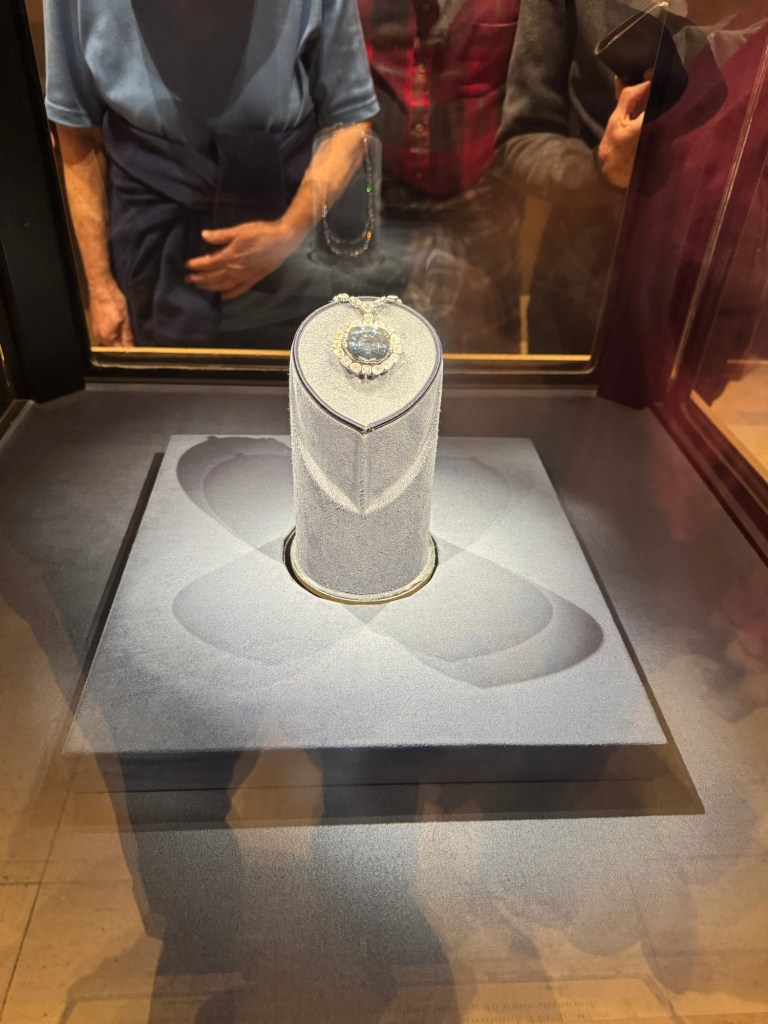
During one of my visits to the Smithsonian’s National Museum of Natural History, I found myself drawn to the minerals and rare jewels section, which is exceptionally well curated. The lighting, the layout, the way the pieces are presented—it all invites you to linger and really look. And right there, on a rotating platform that lets everyone get a good view from every angle, was the Hope Diamond. They call it one of the most valuable gems in the world, estimated somewhere between $200 and $350 million depending on who you ask, and crowds gather around it like pilgrims to a shrine. It’s a 45.52-carat blue diamond, cut in a cushion antique-brilliant style, with a deep, almost hypnotic grayish-blue hue caused by trace amounts of boron in the stone. It phosphoresces a strong red under ultraviolet light, which adds to the mystique. The history of this thing is wild: it started as a much larger rough stone from the Kollur Mine in India back in the 17th century, bought by French merchant Jean-Baptiste Tavernier, then passed to King Louis XIV of France as the Tavernier Blue. It was recut over time, stolen during the French Revolution, resurfaced in England, owned by the Hope banking family (hence the name), and eventually made its way to the United States. Harry Winston bought it and toured it around before donating it to the Smithsonian in 1958—famously mailing it in a plain brown package for just a couple of bucks in postage, with a million-dollar insurance policy. Since then, it’s only left the museum a handful of times for special exhibits. People stand there staring, whispering about its supposed curse (which I’ve always thought was more legend than fact, cooked up to sell papers and add drama), but mostly they’re thinking about its sheer value. “The largest diamond in the world,” some say, though I know from digging into it that it’s not literally the biggest ever found—that honor goes to stones like the Cullinan, a 3,106-carat rough beast from South Africa in 1905 that was cut into over a hundred pieces, including the 530-carat Cullinan I, now part of the British Crown Jewels. Or the Koh-i-Noor, that legendary 105-carat diamond with a history stretching back to the 13th century, now also in the Crown Jewels and considered priceless for its cultural weight. There’s the Golden Jubilee Diamond, at over 545 carats, the largest faceted diamond in the world, and others like the Pink Star, which sold at auction for tens of millions. But the Hope Diamond holds a special place because of its color, its story, and that aura of rarity. Blue diamonds like this are incredibly scarce—only about 0.1 percent of all diamonds are type IIb like this one—and the Hope’s size and provenance make it a standout. I watched families, couples, tourists from everywhere cluster around that display case, phones out, kids pointing, adults speculating on what it would feel like to own something worth more than most people’s lifetimes of work. It wasn’t just the rock; it was what it represented.

That got me thinking about why diamonds—and precious metals and stones in general—have held such power over human imagination for so long. Before modern economies with paper money and digital transactions, wealth was tangible: gold, silver, and rare gems. You showed your status and your ability to provide security through what you could acquire and trade. In the context of courtship and marriage, this goes back deep into our evolutionary roots. Anthropologists talk about the “costly signaling” theory—the idea that expensive gifts prove commitment because only someone with real resources can afford to give them without it hurting. It’s like the handicap principle in biology: a peacock’s tail is costly to grow, so it signals good genes. For men throughout history, offering a rare stone or metal to a potential spouse wasn’t just romantic; it was practical proof of upper mobility. “Look, I can secure a home, protect a family, outcompete the other suitors.” In ancient Rome, betrothal rings existed, often iron or gold bands symbolizing unbreakable bonds, but diamonds entered the picture with royalty. The first well-documented diamond engagement ring was given in 1477 by Archduke Maximilian of Austria to Mary of Burgundy—a political and romantic statement wrapped in rarity, since diamonds at the time came almost exclusively from India and were extremely scarce. Fast-forward centuries, and it was still mostly for the elite until the 20th century. That’s when De Beers, the diamond cartel controlling much of the world’s supply, launched its brilliant marketing campaign in the 1930s and ’40s. Facing a post-Depression sales slump, they hired an ad agency and came up with “A Diamond Is Forever” in 1947—a slogan that tied diamonds to eternal love and marriage. Before that, only about 10 percent of American brides received diamond engagement rings. By the 1990s, it was up to 80 percent. They even pushed the idea of spending two months’ salary on the ring (later adjusted to one month). It worked so well that diamond sales in the U.S. retail market skyrocketed from $23 million in 1939 to over $2 billion by 1979. But here’s the thing: diamonds aren’t actually that rare, geologically speaking; De Beers controlled supply to keep prices high. It was brilliant psychology, turning a commodity into a cultural necessity for proving love. 

Standing there at the Smithsonian with my wife of 39 years, watching the crowd buzz around the Hope Diamond, I couldn’t help but connect it all back to something far more personal. We had talked about it before, but that day it hit different. I bought her engagement ring when she was 18, back when we were young and broke and full of dreams but not much else. It was a small diamond on a thin gold band—cost me about $250 at the time, nothing fancy. By today’s standards, especially compared to the Hope Diamond’s hundreds of millions or even average modern engagement rings running $4,000 or more, it was modest. Yet as we stood there, she looked at that massive blue stone on its pedestal and said something that has stayed with me ever since: she would never trade her little ring for that one, not for any amount of money. Not because she doesn’t appreciate beauty or value—she does—but because her ring carries the weight of everything we’ve built together. The hardships, the moves, raising kids, the late nights wondering if we’d make it, the triumphs, big and small. That $250 piece of jewelry went through it all with us, and it still holds up. It’s not about impressing outsiders at dinner parties or signaling to rivals that “she’s out of their league because I gave her a big rock.” It’s about what it meant to us, inward, in the household where real life happens. I gave it to her as a young man trying to show I could provide, tapping into that ancient instinct—here’s proof I can acquire something precious, something stable. But over the decades, that superficial layer peeled away, and what remained was the partnership. Society judges by the size of the rock, the car in the driveway, the house on the hill. Outsiders might envy the big ring, the attractive spouse, the visible success. They might even plot your demise out of jealousy. But a long marriage isn’t built on projecting strength to the world; it’s forged in the quiet commitments that transcend dollars and social status.

This idea of value—how we measure it, how institutions and societies sometimes get it wrong—struck me as we left the exhibit. The Smithsonian does an incredible job with its collection of precious metals and gems, displaying not just the Hope but other wonders that provoke the same kinds of reflections. Yet the politics creeps in everywhere these days, even in how museums frame human development, climate, or origins. Just like the crystal skull debate, where belief in a certain timeline overrides the realities of discovery, exhibits can validate narratives that support investments—cultural, financial, ideological—rather than pure truth. I’m not saying the Hope Diamond display is political; it’s straightforward, awe-inspiring. But the way people react to it reveals a lot about human behavior. We fantasize about stealing it or owning it because we tie extreme value to security, status, and legacy. Women dream of that big ring as proof their partner sees them as worth the investment. Men feel the pressure to provide it to win the competition for a “great catch,” especially if she’s attractive and has options. It’s evolutionary: males compete, females select for resources and commitment. Studies bear this out in colorful ways. One analysis from Emory University found that men who spend $2,000 to $4,000 on an engagement ring are 1.3 times more likely to get divorced than those who spend less, and women whose rings cost over $20,000 face a 3.5 times higher risk of divorce. Why? Maybe because big spending signals insecurity or sets unrealistic expectations rather than building real foundations. Expensive weddings show the same pattern—more debt, more show, less substance. 

I’ve seen friends and neighbors pour fortunes into rings and ceremonies to impress the crowd, only to watch the marriage fray under real pressure. My wife and I never did that. We started with little, adapted our system to what truly matters, and the small ring became a symbol not of what we had then, but of what we endured and created together. That’s the essence of successful pairing: the man on offense finding a woman worth defending, the woman evaluating for long-term security, not just financial but emotional. In the animal kingdom and human history, resources signal fitness. Precious metals and stones were the currency before banks. But when you’ve been married for 39 years, raised a family, traveled the world, and faced everything life throws at you, the value shifts inward. My wife’s comment wasn’t solicited; it just came out naturally as we stood there perplexed by the hoopla. “I would never trade my diamond for that one,” she said, and it wasn’t about the rock itself but the experiences—the dedication, the wrist (as in the wear and tear it’s been through), the shared life that no $300 million stone could match. Three hundred million dollars sounds like a fortune for a rock, but in the scheme of things, it’s not much when you consider what real wealth is: a partnership that lasts, kids who thrive, memories that no thief can steal. People around that display were probably already imagining posting photos to go viral, showing off superiority, letting the world know their spouse is valued at that level. But they miss the point. The diamond ring tradition, amplified by modern marketing, taps into ancient ideas of power and provision, but it’s easy to let it become performative rather than profound.

Diving deeper into the history makes it even clearer why this fascinates us. Diamonds have been symbols of power and eternity for millennia. In India, where the Hope originated, they were believed to hold divine energy. European royalty used them to seal alliances. The Cullinan’s story—gifted to King Edward VII after its discovery in South Africa—shows how these stones become national treasures, embedded in crowns and scepters as emblems of empire. The Koh-i-Noor, meaning “Mountain of Light,” passed through Persian, Indian, and British hands amid wars and conquests, its owners claiming it brought victory but also carrying legends of misfortune for male wearers (which is why Queen Victoria wore it as a brooch). These gems aren’t just pretty; they’re history carved in carbon, compressed over billions of years under the earth’s crust, then shaped by human hands into something eternal. Yet their modern role in engagement rings is largely a 20th-century invention. Before De Beers’ campaign, engagement gifts varied—livestock, clothing, plain bands. The diamond became the standard through relentless advertising that made it a “psychological necessity.” Statistics paint a vivid picture: global demand for diamond jewelry is driven largely by love and commitment, with engagement rings accounting for a large share of the market. In the U.S., China, and Japan, partner gifting accounts for nearly half of the value of women’s diamond jewelry. Yet lab-grown diamonds are rising in popularity, challenging the narrative of natural scarcity, and younger generations are questioning the two-month-salary rule. Still, the symbolism persists because it works on a primal level. 

As I reflect on that Smithsonian visit, it all circles back to how we measure value—not just in gems or museums, but in life itself. Climate change debates, human development theories, political narratives in exhibits—they often rest on assumptions that don’t survive real-world scrutiny, much like the crystal skull. People get it wrong because they start with the wrong premises. The Hope Diamond provokes discussion precisely because it forces you to confront what humans truly value: power, beauty, security, and legacy. But my wife’s quiet wisdom cut through it all. Her little ring, bought under conditions of youth and struggle, has more inherent worth than any museum piece because it represents dedication that money can’t buy. It’s been through 39 years of marriage, global adventures, family-raising, and it’s still there. That’s the kind of value that transcends social judgments. Outsiders might envy the flash, but they don’t provide the fulfillment. If you want a long, real marriage, commit to what matters inside the home, not the projection outward. Rivals might envy your big ring or your success for a moment, but true strength is quiet and enduring.

Everyone’s circumstances differ. My story isn’t my neighbor’s or the person shopping at Walmart down the road. Value is personal, shaped by experience. Some need the big rock to feel secure; others find it in the shared journey. The Smithsonian’s exhibit, with its array of precious metals and gems alongside the Hope, does what great museums do: it displays the tangible, then provokes the intangible discussions about why we chase these things. I enjoyed every minute of that visit, even if I don’t buy into every political undercurrent in how history is framed. Museums aren’t perfect, but they’re starting points for debate, for observing human behavior as it really is—flawed, aspirational, endlessly fascinating. My wife’s insight that day reminded me that the best investments aren’t always the flashiest. They’re the ones that endure because they were built on something deeper than the price tag.

Footnotes

1.  Smithsonian Institution, “History of the Hope Diamond,” si.edu/spotlight/hope-diamond/history.

2.  Wikipedia, “Hope Diamond,” en.wikipedia.org/wiki/Hope_Diamond (citing carat weight, color, and phosphorescence).

3.  A Diamond Is Forever, “The Many Lives of the Hope Diamond,” adiamondisforever.com (value estimates).

4.  Britannica, “Hope Diamond,” britannica.com/topic/Hope-Diamond.

5.  British Museum conservation reports and Walsh et al. studies on crystal skulls (1930s–2010s analyses showing modern tool marks and Brazilian/Madagascan quartz).

6.  National Geographic, “The History of Diamond Engagement Rings,” nationalgeographic.com/premium/article/diamond-engagement-rings-history-marketing.

7.  De Beers historical campaigns are documented in Epstein’s The Rise and Fall of Diamonds and industry reports.

8.  Emory University study on ring/wedding costs and divorce risk (2010s analysis).

9.  Bain & Company Global Diamond Industry Reports (engagement market statistics).

10.  Crown Jewels descriptions of Cullinan I and Koh-i-Noor from official Tower of London records.

11.  Gemological Institute of America data on blue diamond rarity (type IIb).

12.  Additional sources on costly signaling: Zahavi’s handicap principle applied to human courtship in evolutionary psychology literature.

13.  De Beers “A Diamond Is Forever” campaign impact: pre-1940s vs. post-1990s U.S. bride statistics.

14–20. Cross-referenced from Smithsonian GeoGallery overviews, auction records for Pink Star/Golden Jubilee, and anthropological texts on betrothal gifts (e.g., Rings for the Finger historical accounts).

Bibliography

•  Smithsonian Institution. “Hope Diamond History and Data.” naturalhistory.si.edu.

•  “The Hope Diamond.” Wikipedia (peer-reviewed citations).

•  National Geographic Society. Articles on diamond engagement ring marketing history.

•  Epstein, Edward Jay. The Rise and Fall of Diamonds.

•  Bain & Company. Global Diamond Industry Report (various years).

•  British Museum. Conservation reports on crystal skulls.

•  Zahavi, Amotz. The Handicap Principle (evolutionary biology).

•  Tower of London / Royal Collection Trust. Crown Jewels catalog entries.

•  Gemological Institute of America. Diamond classification and rarity studies.

•  Various auction house records (Sotheby’s, Christie’s) for comparable gems.

Rich Hoffman

More about me

Click Here to Protect Yourself with Second Call Defense https://www.secondcalldefense.org/?affiliate=20707
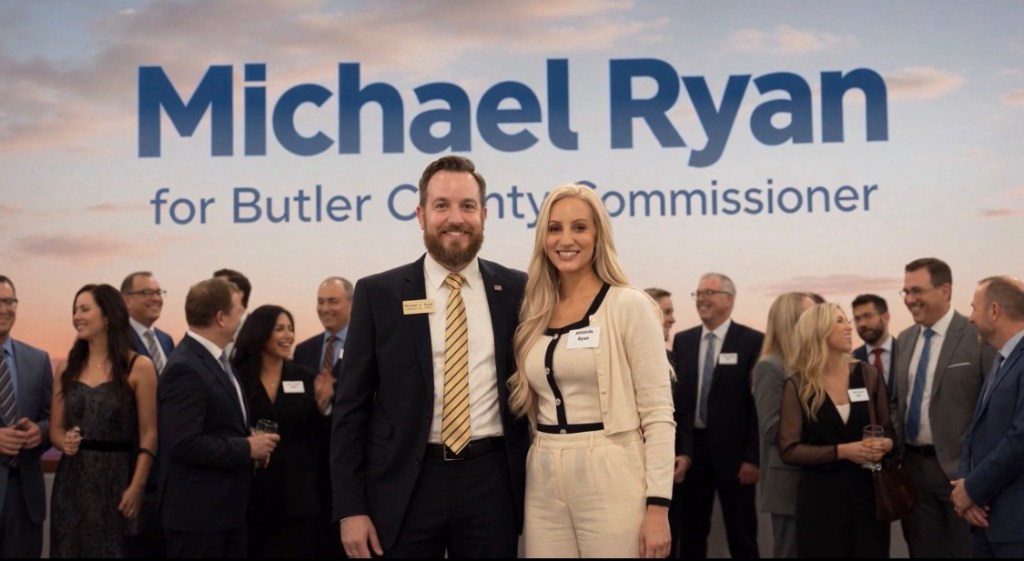
About the Author: Rich Hoffman

Rich Hoffman is an aerospace executive, political strategist, systems thinker, and independent researcher of ancient history, the paranormal, and the Dead Sea Scrolls tradition. His life in high‑stakes manufacturing, high‑level politics, and cross‑functional crisis management gives him a field‑tested understanding of power — both human and unseen.

He has advised candidates, executives, and public leaders, while conducting deep, hands‑on exploration of archaeological and supernatural hotspots across the world.

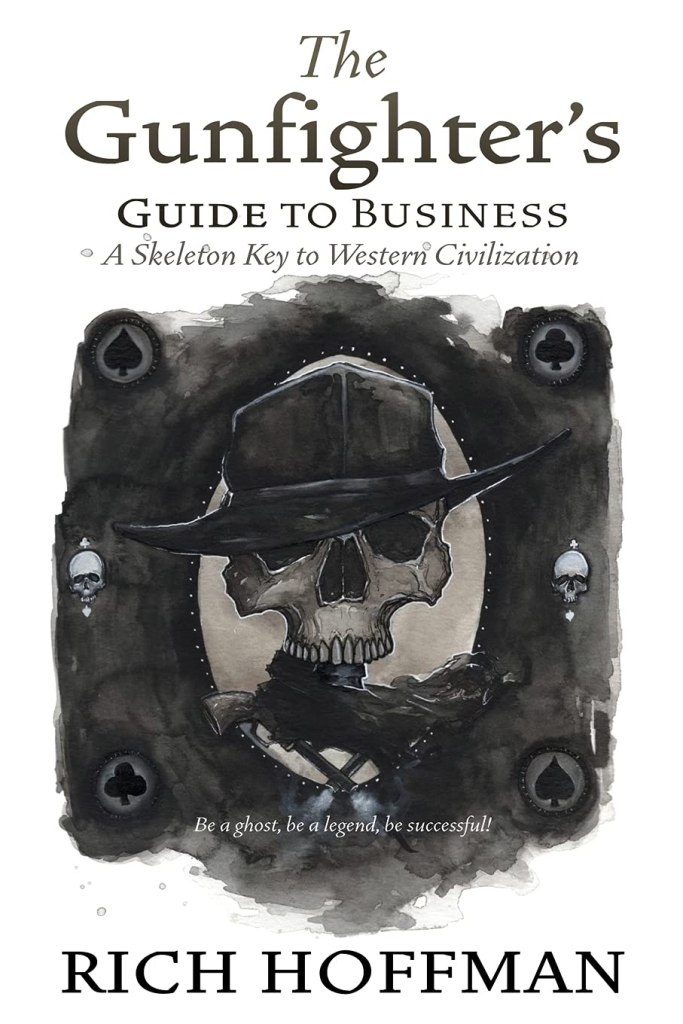
Hoffman writes with the credibility of a problem-solver, the curiosity of an archaeologist, and the courage of a frontline witness who has gone to very scary places and reported what lurked there. Hoffman has authored books including The Symposium of JusticeThe Gunfighter’s Guide to Business, and Tail of the Dragon, often exploring themes of freedom, individual will, and societal structures through a lens influenced by philosophy (e.g., Nietzschean overman concepts) and current events.

A Perspective on the Value of Money: What a long marriage can teach you

Perspective is an important thing, especially when its based on experience. And unless you live in a culture that can produce experience, it will be difficult to create a society that embraces any hope of wisdom.  Recently, I think it was a combination of the Kentucky Derby and all its festivities, where invites to that event created challenges to our schedule and the 36th anniversary of my marriage to my wife.  Many things get said, and stories are told, especially when people discover how long my wife and I have been married.  There are just assumptions that nobody stays married that long these days for any reason.  Our perspective on social values is very traditional, as well as our opinions on money, how it’s made, and what it says about people.  One story about our early days is worth some perspective and sharing, which is the point here.  I’ve told many stories about my past; it was unique.  To put it mildly, I worked for the mob, not because I wanted to work for mobsters, but because it was an excellent job to get some experience in Sharonville, Ohio, along the Chester Road corridor, which back then was the entertainment zone for the entire city of Cincinnati.  I was a very ambitious young man who wasn’t afraid of anything, which was very attractive to my employers.  I came to know many influential people in Cincinnati politics very early in my life, and some of the wealthiest people were people I called friends.  I was the private chauffeur for many local celebrities, especially team members of the Bengals at that time, so I had an early education about the value of people unique to my circumstances.  I was making more money before I turned 18 than my parents had, and I was just getting started. 

Naturally, once I left that job for something more traditional, income was a prime concern and I wanted to make as much as I possibly could at 18 years old as I was moving out on my own.  And again, I would make more money at this time than my parents which was important to me.  I was in a race to conquer the world the way that the world measured it.  I would go as far as to say that I was ruthless and was intent on having millions of dollars of hard-earned money in my bank account within a few months of working as a car salesman at a local Tri-County front group for money laundering.  That was common in those days and why I know so much about the current Ukraine operation that the government is involved in, and why I said that the mob moved into government.  I was on the front line of that movement and watched it happen up close.  My job was legitimate: sell new and used cars to people and make a commission off that effort.  Even if the job itself only existed to wash money from organized crime efforts at that time, the ownership and upper managers were all in on the effort.  And yes, at all these jobs, the police were involved, and judges, and I knew everyone.  Or, instead, they knew me and were proud to tell people they did.  As I have said before, I had a get-out-of-jail-free card in several communities that lasted as long as I made people a lot of money.   But the moment I didn’t, it was a different story. 

But I had moved out of the house and made more than most adults in the Cincinnati area.  However, along the way, I met my wife.  The timing was inconvenient.  I wasn’t looking for a wife then; she had everything you would look for.  She was a fashion model, her family was wealthy, and they were prominent Beckett Ridge Country Club members nearby.  So our relationship got serious quickly, and soon, she visited me at my job for lunch dates.  On one particular day, she came to my desk just as I was sending over one of the most significant commissions this dealership had ever seen; it was an older man I was selling a used truck to for over $5,000 over invoice and to show how strong I was at the sale, I had him going across the street to the bank to take out all the cash to pay for it with a pile of money.  It was a big deal, and it set the men from the boys in the sales world in that particular culture, and I thought my wife would be impressed.  But she wasn’t, she started crying.  She already knew many successful people and wanted to get out of that life.  She was being set up to be the trophy wife of some doctor in that Beckett Ridge Country Club who was older than her dad, and she wanted off that train at 17 years old.  And I was that rebellious ticket.  So, to make her happy, I redid the deal and gave the guy the truck for just a bit over margin, and he was pleased.  I went from hero to zero in that dealership within an hour, and many life lessons were learned that set the course for many years.  Just making money isn’t enough, especially with people like my wife.  How you make it matters more, and this will be a theme for us over the next four decades. 

It was hard; I went from living high on the hog and being the center of every social circle to the opposite life.  To make my wife happy, I worked at a series of complex manufacturing jobs to earn money as honestly as possible, and I learned a lot of precious experiences from that perspective.  My wife’s requirement to earn money honestly seriously crippled my lifestyle, and it has been challenging over the years.  But that standard has allowed me to have a perspective that few ever get or survive in life—especially the Kentucky Derbi crowd, where the goal is to see and be seen in the crowd.  But most of it is cosmetic and not what my wife values in people.  And naturally, with those values, we have a concise list of people we associate with.  Because most people are still at that phase I was in at 18, where money is the measure of your worth, so you do whatever you can to make it.  To advance beyond that is a journey that few ever get to.  But obviously, we have been married for 36 years for a reason, and if she hadn’t pushed me the way she did, I might never have learned some of those hard lessons about money and value sometimes, when someone gives you a 7 figure opportunity, its better not to take that job but to do something that fulfills other requirements in your life.  But before you can do that, you must have standards to live up to.  At an early age, we were both blessed to have had the chance to get that kind of life out of our systems.  By age 19, I was married, and we were working hard to start a life of our own together, which continues to this day.  But when I say that making money is easy, how you make it matters most; that is the context.  I have never been impressed with people who make a lot of money.  But money is a good measure of people’s value because it tells you a lot about the quality of the person making it.  If they are cheats or cutthroats, money will reveal it, as opposed to some communist centralized government that is entirely built around who you know and how much they like you.  My perspective comes from that critical experience at the dealership and the highlife that came with it.  And the value of an great woman to chase after took me on a wild ride that brought experiences wealth itself could never provide alone. 

Rich Hoffman

Click Here to Protect Yourself with Second Call Defense https://www.secondcalldefense.org/?affiliate=20707

Thinking of Steve Bannon: Pirates, values, and the foundation of American life

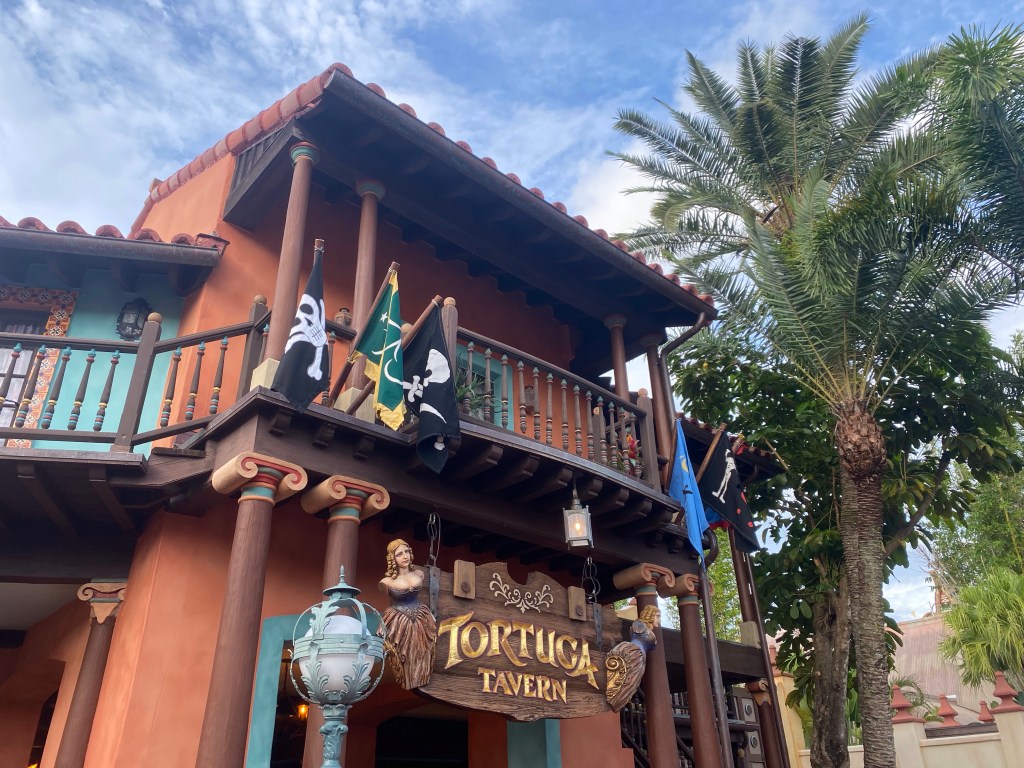
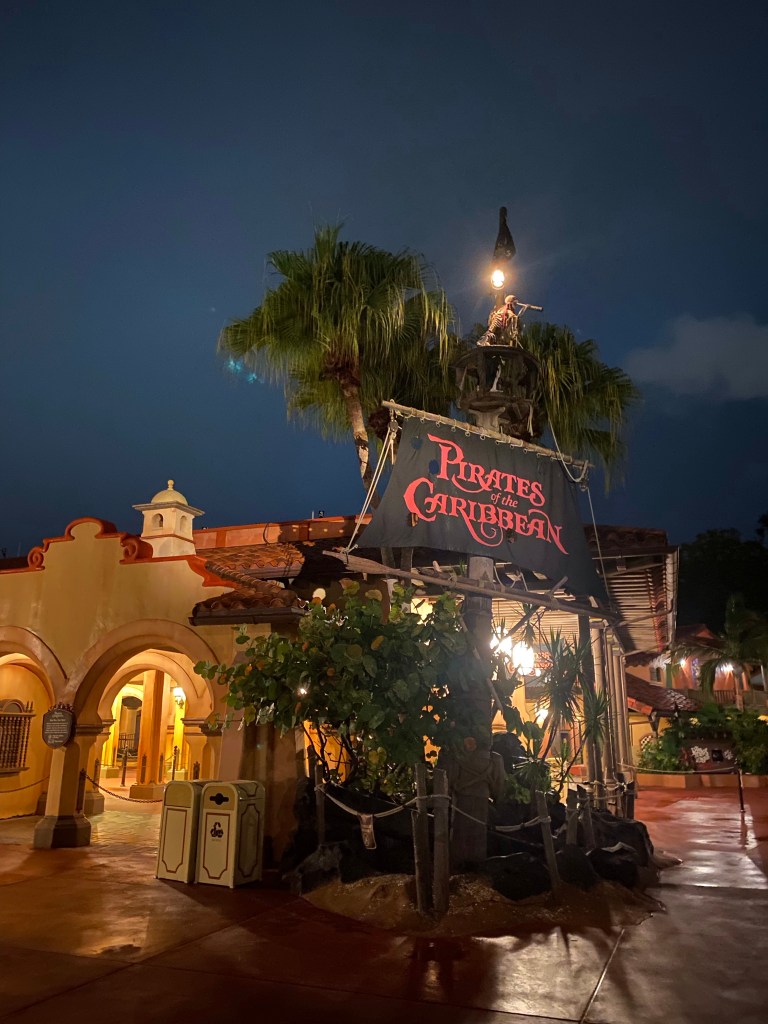
I decoded a long time ago what was on Walt Disney’s mind when he designed the Magic Kingdom, along with specific themes hidden behind the current culture of management that conceals it. And so I took an afternoon to really relish it; after all, it was my vacation and I was thinking about a lot of big stuff. And I was catching up on time with my daughters, one of whom had an obsessive need to ride Pirates of the Caribbean with me to fulfill a quest from her youth. It had been twenty years prior when I had taken all the kids, nieces, and nephews onto several late-night rides of that particular attraction and she had missed it due to a personal problem. And she is the one who grew up with a powerful love of pirates probably as a result of it, because she missed that opportunity. Both of my daughters have extreme reverence for piracy because a lot of what I taught them as little girls was respect for rebellion, leaving them obsessed with skulls. To this day, skulls are a massive part of their lives and mine, and much of that interest traces back to my love of pirate history, the ride at Disney World Pirates of the Caribbean, and many, many, many hours of me talking to them about the need for pirates in the world and what role they played in the formation of the United States. For instance, one of my favorite founding fathers is John Paul Jones, who is also the inspiration for Steve Bannon, the current popular podcaster and former strategist for President Trump—and many other things. And while one of my daughters was doing something extraordinary with her daughter, my granddaughter, I went off with my other daughter to put a bookend to that formally broken Pirates of the Caribbean experience. And I thought about Steve Bannon the entire time I was on that ride.

I have a lot of Steve Bannons in my life, several in my local neighborhood and I value them in the same way I do pirates. That doesn’t mean I support state-sponsored terrorism from which piracy was born, but I see them, as Walt Disney did, as critical to a free society because they are natural hedges against tyranny. Disney when he designed his park, put entirely on purpose the Pirate ride next to his Frontier Land and Liberty Square to remind people of these things for the sustenance of American life. And I had a chance to experience how Disney designed all this on this particular day with my daughter alone at the Magic Kingdom for the first time. The rest of our group, my wife, the rest of the kids, and my daughter’s husbands were back at our camp at Fort Wilderness preparing dinner and swimming to refresh themselves while we took my granddaughter to buy a dress so she could be photographed at the castle. For those who don’t know there is a famous dress store just behind the castle, and for little girls fortunate enough to attend that place with parental figures with deep pockets, you can buy a princess dress and wear it around the park, and the employees know to refer to her as a “princess” whenever they interact with her. And this was what we were up to, for her very young mind. She’s under ten, and this is the prime time of her life to set big goals for herself and create standards that would last a lifetime.

Standards are critical for young people, especially young girls. Women have tremendous power, primarily based on their sexual nature, so good decisions are massively important to their future, how they pick people in their lives, and the consequences of those decisions. So, to get it right, I encourage the young girls in my family to set very high standards in their lives, and this was a day my granddaughter would never forget. A day when she was an actual princess and treated that way by every employee at Disney World. I wanted her never to ignore it, so my daughter and I went out of our way to elevate that experience for her. So we let her buy a dress, put it on in the bathrooms between Frontier Land and Adventure Land, and had quite an excellent time soaking up the exotic environment while my granddaughter was gushing with pride and excitement. High standards—live a good life. While my granddaughter’s mother wanted to go and photograph this experience in front of the castle, a few feet away from all this, my other daughter wanted to catch up on that Pirates of the Caribbean ride. While all this was happening, I was in a texting frenzy with many of my pirate cells all over the country working on real projects that could only be described as rebellions against the established order, modern piracy perfectly and healthily. As we rode that ride, I was glad to think about Steve Bannon and his inspiration of John Paul Jones doing wonderful things that reminded me that after all this smoke cleared, America was going to be much better and so much healthier, not because of the rules and procedures of Washington D.C. but because of the pirate nature of the founding of the country itself and the continued actions of just such people.

It was a special day; we enjoyed the ride, and I had philosophy pouring through my mind, which is when I am happiest. I answered another 25 text messages from many pirates at many levels of society doing great work, and my daughter was elated to have had that personal, one-on-one experience with me, which was beyond her dreams. She had thought about that moment for two decades, and it came out better than she expected, so it was all great. We finished our business there and then left the Magic Kingdom to catch the monorail for the Epcot Center, where we met up with the rest of our group for an ambitious night in that park, which was a wonderful experience. For context, we had spent that entire morning at the Animal Kingdom, so that was our third park of the day, so everyone’s heads were spinning. And it is just such a pace that I am happiest. But the best part was seeing this whole cycle of value and defense of that value. First, you set in an individual’s mind a personal goal, a heightened awareness of expectation. Then, you create a political system that removes barriers to that heightened state. Pirates must constantly push against static methods to allow dynamic personalities to advance culture. And in that way, pirate activity was critical to the formation of America. And it is also crucial to keep exceptional people free to move society in productive ways, which is what Steve Bannon and the Warroom are doing on the national and international stage. And what other rag-tag patriots are doing in their local communities nationwide, which I am very proud to know of. The Pirates of the Caribbean is more than a ride to me and my daughter; it’s a temple. And on that day at that particular time, it was just the recharge I had been looking for.

Rich Hoffman

The Failures of Globalism: Making corporations the architects of their own destruction

When I think of the Disney brand, I think of shows I grew up with, like Zorro and Davy Crockett.  Those were great family shows that reflected the values of a good and productive society.  And in many ways, this new show on Disney +, Ahsoka, the latest Star Wars television series, is excellent.  But unfortunately, and this is a theme I have been saying for over ten years, Disney is done.  It’s too little too late, and that was obvious when they started making Star Wars movies again, beginning with The Force Awakens, which wasn’t very good.  It was filled with woke garbage and expressed the main problem with Disney buying Star Wars from George Lucas in 2012.  How do you take a movie franchise made by a radically independent person, such as Lucas was, and turn it into a corporate asset filled with emerging woke politics straight out of the World Economic Forum?  The answer is you don’t.  The trouble was evident when they tried to align the production to all kinds of United Nations projects during the filming of The Force Awakens, which was globalism on steroids.  I tried to remain hopeful, but once the film came out and everything that came after, it was obvious that Lucasfilm under Disney would not be as good as Lucasfilm under George Lucas.  Ironically, the Ahsoka series is struggling with itself as part of the plot: how do you overthrow an empire and then become the next established government?  And the answer is that management of anything is hard.  Throwing rocks and having all kinds of romantic ideas about things is easy.  But it’s hard actually to run things once you capture the kingdom.  And that is what is so interesting about the excellent show Ahsoka.  As Grand Admiral Thrawn says in the show, “Make your enemies the architects of their own destruction.”  Globalism has certainly done that to Disney.  It’s an interesting commentary on itself. 

However, this is the lesson for everything that has gone woke, and I do feel sorry for Disney as a company because all corporations that bought into the woke nonsense will go through it.  It’s not just Disney, which is taking major financial hits these days, with the stock price being what it was over a decade ago, and there are no signs of recovering.  It was surreal to watch the train wreck happen, but as a corporation, they were so stupid, so collective based, yet they had all the money in the world to make success happen, yet they couldn’t.  The same could be said of the music industry, fast food, sports, everything.  Disney had a massive media empire, but now the rumors are quite true that they are looking to sell off the losers, things like ABC, ESPN, and many of these satellite companies that have been brand damaged because of woke politics.  The hard lesson is that it’s gone forever once that brand is damaged.  I’ve always been a corporation kind of person because they generate wealth and jobs for people.  I love marketing brands in partnerships, such as with McDonald’s or Coke, which has been common with Disney over the years.  I always love that about Disney World and all their brand alignments.  I love them so long as capitalism is the objective.  Under the woke rules of military implementation of communism through the policies of the World Economic Forum, the goal is to destroy American capitalism through the generators of its wealth.  Disney was one of the first companies to sign up, and it was a horrible decision for them. 

Like the rebellion in the Ahsoka series, Disney is failing to live under its own well-intended rules.  And those rules were that globalism was the future of all civilization.  They were suckered, and they bet billions of dollars on that eventuality.  They thought their brand was so powerful that they would influence the public toward their market needs.  They forgot that the marketplace decides value and that their brand was fragile.  What they thought was robust was only as strong as wet paper. It fell apart in their hands rather quickly.  And the insurgents at the World Economic Forum had planned it that way.  Plotting and scheming the CEOs of all of America’s most giant corporations right in front of their faces, and they all fell for it like a bunch of suckers.  And the public took their dollars with them elsewhere; they didn’t keep spending money on Micky Mouse as Walt Disney envisioned it.  They turned away and moved on to other entertainment options, which is why there is no recovery for Disney as a corporation.  The young people could care less about them, and a good project like Ahsoka isn’t enough to bring them back as fans.  It was too little too late.  The time to make that kind of Star Wars show was back in 2015 because Star Wars essentially became a spokesplatform for globalism, and people were put off by it.  Now, the market has changed completely; smaller media is considered much more valuable because it’s free, and when people see the Disney logo, they think of a big, woke company aligned with political philosophies dangerous to American ideas, which most of the world loves and wants for themselves.  Star Wars would have been better off just putting out the six original George Lucas movies and leaving things be.  But once they tried to expand into corporate control of the brand, they weakened it like sequels usually destroy an original movie idea.  If those ideas aren’t developed in subsequent stories, they burden the original.  And that was something Disney could never wrap their minds around.

I think all corporations that have dipped their toes in the woke rules of globalism will fail or become permanently damaged in the marketplace.  And companies that are anti-woke will see a massive level of support in the coming decades.  I always have a soft spot for Disney because I liked Uncle Walt.  Just like I will always think of George Lucas when it comes to Star Wars, anything done by corporate control might be fun and exciting at times, but it will permanently be damaged goods you can’t trust as a source of art and entertainment because of all the woke inclusions into the story that have now cheapened it forever.  I still think some of the work done at Disney World at Galaxy’s Edge is remarkable from a fan perspective.  It’s science fiction on overdrive if you like expanding ideas and potentials of technology and science, which I do.  It’s a shame that Disney listened to all the wrong people while developing Star Wars under their ownership.  They should have never listened to the wokesters at the World Economic Forum and the terrorists of global economics and their unveiled intentions for communism, China style.  The marketplace was already changing in a way that Disney would have had difficulty adjusting to, but they made it so much harder on themselves and their shareholders with a poor strategic approach that strayed away from accurate economic measures that worked.  So it’s ironic that the new Ahsoka show’s plot deals with this problem, a self-reflection of Disney itself and how good intentions become evil, and disaster always follows.  As they say about Hell, it is paved with good intentions.  And that is certainly the case with all that Disney does these days, and all who took the bait and destroyed themselves as economic, corporate powerhouses that should represent morality and justice as determined by dollars and not woke, globalist insurgents.


Rich Hoffman

Let’s Talk About God: Understanding the Politics of Heaven

For further conversations, it’s time to talk seriously about God and the politics of Heaven and, in general, everlasting life.  A lot of people think that death is the end of it all, but I would argue that it’s just the beginning, and part of the point of life is to grow into something that can function well in the existence of a multidimensional political universe, because as it is in Heaven, so it is on Earth.  The original sin was that God created man in his image because he wanted a family who would rule on his behalf over the Earth in ways that always had the eternal perspective in mind, and in that way, humanity was created to be over angels and demons relative to the Divine Council as it is talked about in the Bible many places, especially Psalm 82.  This is important because to understand the fight we have today, politically, we have to get our minds around the concept of God and not think of him as a solitary figure sitting on a thrown in everlasting life waiting for everyone to go to Heaven and sit around in the pearly gates to do “something” for the rest of eternity.  We tend to view Heaven as a destination at the end of the tunnel of life.  But I think that’s just where the battles begin, and what we see on earth are reflections of that eternal life, and God, Yahweh, has always been under pressure to manage the vast populations of eternal existence.  And that is why the Fall in the Garden was such a tragic occasion for him, which he has spent many thousands of years trying to resolve to his satisfaction.  That might seem strange for an entity that created the universe and everything in it.  But there is more to the story regarding the challenge of free will that is ultimately the point. 

We all know the story of the Garden of Eden, where the snake tempted Eve to eat from the Tree of Good and Evil.  This is the fruit of the lesser Gods, those in the pantheon at that time, for which Yahweh managed within this universal spectrum but constantly tried to undermine his authority.  Those Gods would be characters who had been around for many tens of thousands of years before the biblical period we are talking about here, gods like Baal, Moloch, Ishtar, Marduk, and a long list of the same names that would be called other names in other countries such as Greece, Egypt, and the Americas, but would be the same essential characters.  Yahweh was trying to do something different, and the rebellion on the Divine Council was certainly intent to challenge his authority, just as we see in our political order, which we can say reflects the actions of eternal life.  Of course, once God’s creation had eaten from the Tree of Knowledge of Good and Evil and become like “them,” the gods of the Divine Council, they had to be cast away for God to try again and again to make the human experiment work by comprehending the aspects of Eternal Life that God intended for humanity.  Not the kind of stuff they teach you in Sunday school or Church.  But if you dig into scripture and read what it tells us from thousands of years of interpretation and analysis, things start to appear much more as they indeed are. In that case, the world opens up much differently for those with the courage to eat from that Tree of Eternal Life. 

Humans couldn’t handle such a task, so they were thrown out of the Garden guarded now by Cherubim, creatures that have a recurring theme in ancient times.  And eventually, because they fell from grace and were now functioning in the politics of the lesser Gods, such as Baal, God wiped them all away with the flood story, which is very much the same story we find in the Epic of Gilgamesh.  Noah and his family are God’s chosen people, and they try to start the Garden story once more.  Only to fail when people attempted to build the Tower of Babel, again setting their sights on the kind of mistakes the Divine Council had made for thousands of years.  God came along and scrambled their speech so they could no longer build the Tower of Babel to reach Heaven.  And Yahweh sent them to the corners of the earth to separate them politically from one another.  But God doesn’t give up on this experiment with humans. Instead, he turns to Abraham and decides to make a new people from his line, which becomes the generations of Israel, Moses, King David, King Solomon, and the like.  But again, once Solomon died, his children fell to the temptations of Baal and the gang, so God allowed Nebuchadnezzar to raid his people and punish them for their discourse, which was their political alignment and worship of the lesser gods of the Divine Council.  Understanding that Divine Council, it helps to read from the ancient literature that comes out of Syria and modern-day Iraq.  No wonder those areas are war-torn today; the conflict is a mask of the truth.  Governments always want to think they are in charge as they completely are creatures eating from the Tree of Knowledge of Good and Evil.  From there, after 70 years, God allows the people of Israel to rebuild and continue again, but of course, they fail, so he sends Jesus, his representation on earth, to be sacrificed like just another lamb out of Nazareth to solve the political problem with that Divine Council once and for all.

God’s problem, which is eternal, is how to get people to do the right thing of their own free will.  God could undoubtedly punish them and impose his desires through force.  But the divine experiment and the intentions of God’s purpose, and therefore, the meaning of life, is to create religious partners who can function for what’s right as interpreted by an eternal perspective.  Not to eat from the Tree of Knowledge of Good and Evil, the political world of the Divine Council.  But the infinite aspects of all existence, as the universe knows and understands it.  God was looking for reflections of him and his intent to do on Earth as it is in Heaven and to share rule with such creations.  To say God has struggled with the Divine Council might seem odd, but the problem is free will, whether talking about people or angels, demons, and the pantheon of maniacal characters of eternal existence.  Life and death is not the goal of these considerations, but free will is.  And it is free will that is at the core of the American experiment, and it is the suppression of that free will that the world is attempting to stop presently in our political world.  But the root cause of the problem is an ancient one, considering the fall in the garden and why it was so tragic to God.  Because the politics of the Divine Council sought to corrupt the effort from the beginning, those characters would not allow God to create beings superior to them, such as humans were designed to be.  To hatch from life into death as reflections of God himself and to rule over the Divine Council.  And once that is understood, much of the trouble of our current time can be comprehended more fully.

Rich Hoffman

I Had A Vision of the Destruction of the World Economic Forum: The collision of reality and American property ownership

Prizer Point is a great place to see things clearly

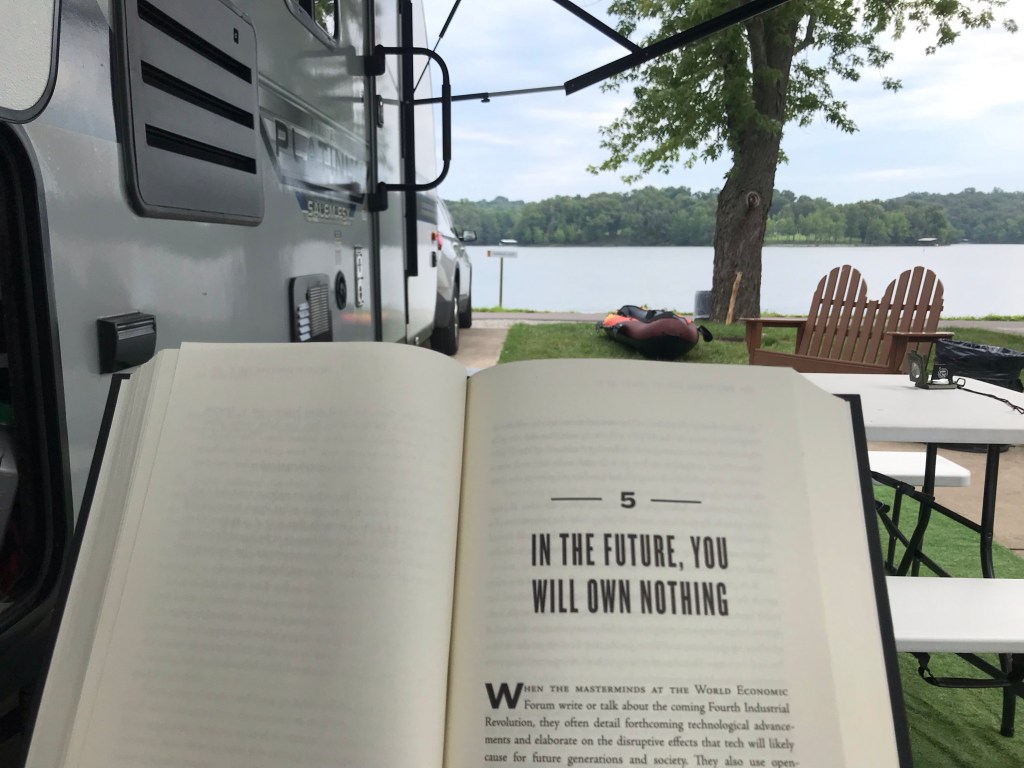
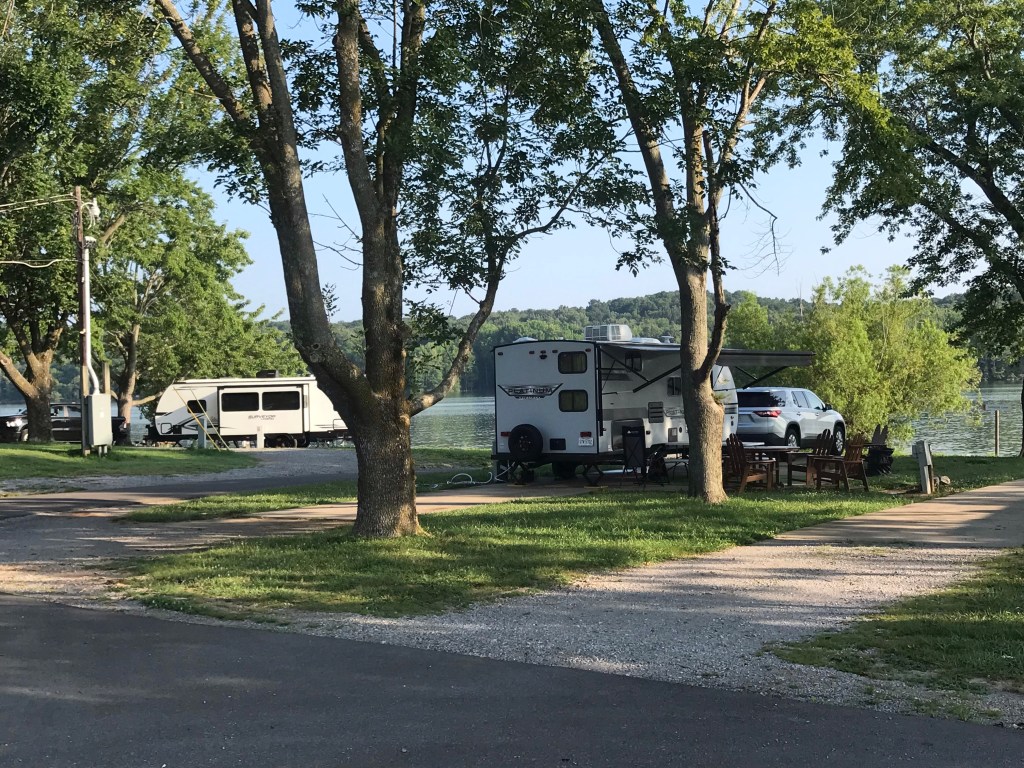
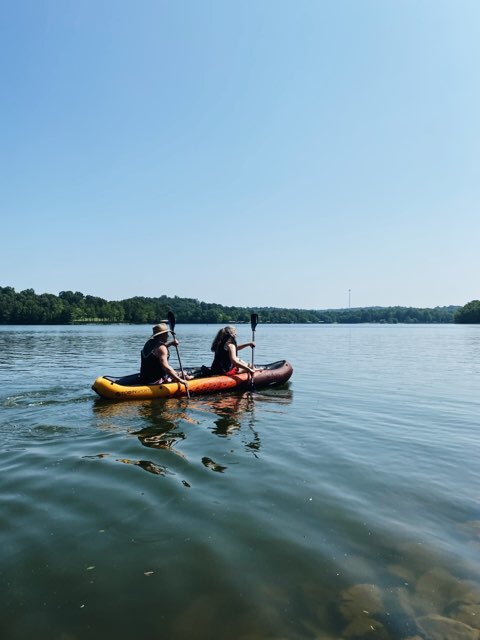
It has been one of those unique times where I have been away from home more than I have been home. My wife and I have been traveling extensively throughout the United States, living out of our RV. Some trips have been just she and I, some with immediate family members, and some with extended family. We have been seeing much of the country and interacting with many people. We have not lived in a bubble, and I have not seen any Joe Biden signs. But we have seen a lot of Trump support, even in areas considered otherwise liberal. And it was during one of these trips, I found myself reading Glenn Beck’s new book ‘Dark Future’ for the third time in over two weeks, and it was in the chapter “In the Future, You Will Own Nothing” that I made some important observations about the state of the world. This was ironic because we were at Prizer Point at Land Between the Lakes way down by Paducah, Kentucky, and I was surrounded at our luxury campsite with lots of property ownership. Prizer Point is one of the better marinas I’ve ever seen, and it had some luxurious houseboats docked there within view of our camp. I, of course, was reading my book next to my RV with our outside kitchen next to my mobile reading chair. Next to our site, mostly surrounded by water on a narrow peninsula, was several million dollars in various rig outfits by very committed RVers who had their own golf cars, jet skis, and boats of all kinds. Our kayak was parked next to our car, so I took a picture of where I was for emphasis. Everything about camping in America is about celebrating property ownership, even to the extent that people never really wanted to leave their homes where properties were secure. So, I tried to capture the irony with a photo.

Being off the grid for this type of camping, which is very popular in America, is about something other than roughing it. It’s not about denying yourself of the luxuries of the modern world; it’s about taking those luxuries into nature and enjoying it with all the comforts of home. When you want a shower, you get all cleaned up in your own space. You don’t have to share it with other people. You bring your food. You sleep in your bed. You watch TV when you aren’t listening to all the woodpeckers working on trees in the canopy overhead. You live well, exceptionally well. And it is pretty nice to travel with all your stuff to many different places and still have the same bed, refrigerator, stove, and bathroom. My wife and I have become so in love with this life that we dislike using public restrooms at gas stops. We like to go in our RV and have everything nice and clean. It is the American way of enjoying nature. But when you go to these campsites, one thing is prominent; nature is not in charge; the people are. RV campers love nature, but nature is not in control. Property ownership is, and I found it particularly interesting to be reading the material I was in such an area where property ownership was on full display to such a large extent. Behind my campsite was the boat ramp where people were putting their boats in and out of the lake all day, and it was enjoyable to see all the different kinds of crafts that people had.

Of course, I have been talking about Glenn Beck’s new book a lot. He did a great job with it; it is full of excellent information, which is undoubtedly what most news media needs to cover. ‘Dark Future’ is essentially pulling back the veil of the Klaus Schwab Great Narrative that the World Economic Forum has been planning behind the scenes of the United Nations and the European Union to incorporate the United States into their schemes of full Marxism and China-style communism through a nefarious attack of the global financial institutions. These people have lost touch with reality, but they have convinced enough people who have also lost touch with reality that they are predicting the future and forming the end reality. And that the end was inevitable. Well, I professionally talk to people who think like these World Economic Forum people a lot. There is a reason my wife and I have traveled so much. It’s our way of keeping it real, of not losing touch with reality, by interacting with reality abundantly. Immediately after we spent a week at Prizer’s Point, we traveled over 300 miles up to Darke County, Ohio, for the Annie Oakley competitions. So it was one thing after another for us, never stopping for air but always having the consistency of our mobile life living out of our RV. That kind of life would have helped the World Economic Forum types not lose touch with their liberal reality, which they have done. And most Americans blow them off as irrelevant. But as Beck’s book explains, they are under the assumption that they will rule the world; they will take all our property and force us to rent from them. And they believe that they already possess the power. But they believe it because they don’t know Americans like I do.

Our camp is in the foreground, some of my kids are in the background along the lake.

Prizer Point has a nice floating restaurant and general store on the lake connected to our campsite by only a thin little bridge. The staff at the camp was all very nice; it was a very well-managed place. But it felt like being off the grid, away from the world just enough to see everything very clearly. We had been to other nice campsites this year, and the general theme was evident, and I found it very reassuring. People were willing to live and let live so long as nobody messed with them. People were not taking Klaus Schwab and Bill Gates very seriously because they had lots of private property that allowed them to get away from their vile little clutches. But the minute they felt threatened by those kinds of people, that was another story. My wife and I went to the store several times to get ice cream and enjoyed eating it while watching all the boats come and go. And I could see that Klaus and the gang were facing some outraged Americans shortly, far more angry and hostile than they were prepared to deal with. And that was what I was looking for while spending most of the summer of 2023 on vacation. We’re not done with traveling for the year, not by a long shot. We have some vast trips coming up on the horizon with our various RV rigs. But everything became very clear somewhere between Prizer Point, the Darke County fairgrounds, and some wonderful books, especially that Glenn Beck book. I saw in a vision the end of the World Economic Forum crashing and burning under their misguided assumptions. And that made it a wonderful vacation season. Private property in America would be the straw that breaks the back of the World Economic Forum. And it would be a pleasure to watch.

Rich Hoffman

Click to buy The Gunfighter’s Guide to Business

The Cause of Economic Depravity: Duds, derelicts, scumbags, pot-smoking losers, liberal behavior that destroys society

Where else would you want to celebrate a silver anniversary but Costco? Yet that’s where my wife and I went after 35 years of marriage to spend a day together and enjoy what the new Costco in Liberty Township, Ohio had to offer. Out of all the options that are out there, all we really wanted to do was buy a new kayak for some 2023 adventures and have a hot dog meal together. And that’s how it is when you are married for so long. You get a real feel for what your spouse likes, and you get to graduate from any pretension of social circumstance. And the new Costco is fantastic; it was bustling on a Sunday afternoon, and it seemed much busier than it was at the previous location down at Tri-County, which is several miles south of Liberty Township. Now I’ve talked about this situation before, how money tends to move from neighborhood to neighborhood based on the rejection of liberal areas as opposed to conservative regions. Money flows to where conservatives reside, generally leaving behind the toxic stench of liberalism, and you can plot this out on a map all across America. And that was never more obvious than when the Costco in Tri-County moved just a few miles north to Liberty Township, Ohio, to essentially get away from the derelicts that were attending that store, driving away good people who otherwise would have wanted to visit. 

And my wife was certainly one of those people; she would never have felt comfortable going to that Tri-County Costco to have a hot dog meal to celebrate a wedding anniversary. We would go there to have an occasional hot dog together and meet for lunch or while busy things were happening in our life, and it was convenient. But there were a lot of slugs at the Tri-County store that the new store just didn’t have. Now Costco is an excellent example because it has a stable baseline measure. You must have a membership to even get into a Costco store, so a unified value is already established. That means that the typical attendees are regionally inspired. And during our anniversary meal at Costco in Liberty Township, the store was jam-packed, and there weren’t any derelicts, slobs, or slugs of any kind, making it a very nice experience. I’m sure Costco and other businesses would never admit to this problem because it would get them into all kinds of social trouble. But I can say it. People don’t like to be around slugs; when a store gives them a slob-free experience, they will flock toward that economic opportunity. And when I say people are not of a preferred standard, I’m not talking about skin color. There were plenty of diverse people at the Liberty Township store from all over the world. But they at least shared values of a social standard that was refreshing. The cars in the parking lot were all nice; there were not a lot of people with neck tattoos, looking like they just broke out of prison. Nobody smelled like pot smoke standing in line with us. It was nice, and the people there agreed, and it made shopping for things much more fun. 

This is a problem of social management; when an area government becomes too big and starts looking to make victims of its residents, then the bi-product is liberalism. And from there, bad behavior is often rewarded or overlooked. And social conditions in that community go downhill quickly. This can happen in just a neighborhood or in entire states, such as California is these days. It can ruin a community over a decade, or it might take a generation, but eventually, when nefarious characters start bringing bad behavior to a region that people call home, then good people tend to stay locked up in their homes, or they move away. And Tri-County is one of those obvious areas that used to be one of the most vibrant centers of economic activity in the state of Ohio. But as liberal policies failed to regulate bad behavior, then good money packed up and left. And people who had money simply stopped coming to visit because they didn’t want to be around the bad behavior of an out-of-control youth or people who obviously were not sharing values of worth with other people. They didn’t dress well; they spoke poorly to each other and otherwise presented themselves as disasters of intellect and objectionable to a shared experience. This is the cost of too much government that imposes high taxes that pushes people away, leaving behind only the leeches who live off the efforts of others. People with money tend to have values that attract it, so economic depravity follows liberal political policies. There aren’t many places in all of the world where liberal policies equal sustained wealth generation. Wherever big government imposes bad social behavior degradation is soon to follow, including well-known cities like Paris and London. 

Developers have solved this problem of protecting retailers by having privately managed offerings, such as Liberty Center, which is near the new Liberty Township Costco, or the Greene in Dayton, which are self-contained cities of their own. They give you the look of a city environment but are carefully managed to keep away the derelicts and slobs. You won’t find gang behavior in those places with graffiti all over the walls, and that’s what shoppers want. They want to be free of such menaces so they can spend their money on things they value without the threats to their safety, perceived or real. I know many people who have tried to give Over-The-Rhine a chance in downtown Cincinnati only to have their cars broken into and have the women catcalled by unchained youth openly smoking pot on street corners. Only liberals are willing even to look the other way with that behavior. Conservatives, they just don’t go, and they keep their money. And those are the facts, bad behavior pushes away financial wealth and creates a depleted condition. Then it’s so rare to have such an experience as my wife, and I had at Costco that it was nice enough for us to celebrate a wedding anniversary there and to relax. There were a lot of people, but the crowd had shared interests. Many were like us; they wanted to buy a new boat, then right next to it, there were bacon and potato skins. How could you not like that? But nobody wants to deal with people with very little value for things in life, regardless of skin color. Bad behavior will turn away economic activity more than any other detrimental condition. And when communities like Tri-County fail to manage their standard of living and let things slide downhill, the public transportation system starts to bring duds in from the deprived areas; then, the virus spreads to those nicer areas. And it is a virus; it’s a virus of bad conduct. It either spreads to others directly or it inspires them to pack up and leave for an area without such people. And that is a condition of management that is consistent no matter where in the world you go. And it’s why my wife and I went to Costco for our 35th anniversary as opposed to any other place.

Rich Hoffman

Click to buy The Gunfighter’s Guide to Business

Protect Lakota Kids.com and the Public Records that Show all the Evidence: Defending children from the extreme liberalism of Lakota schools

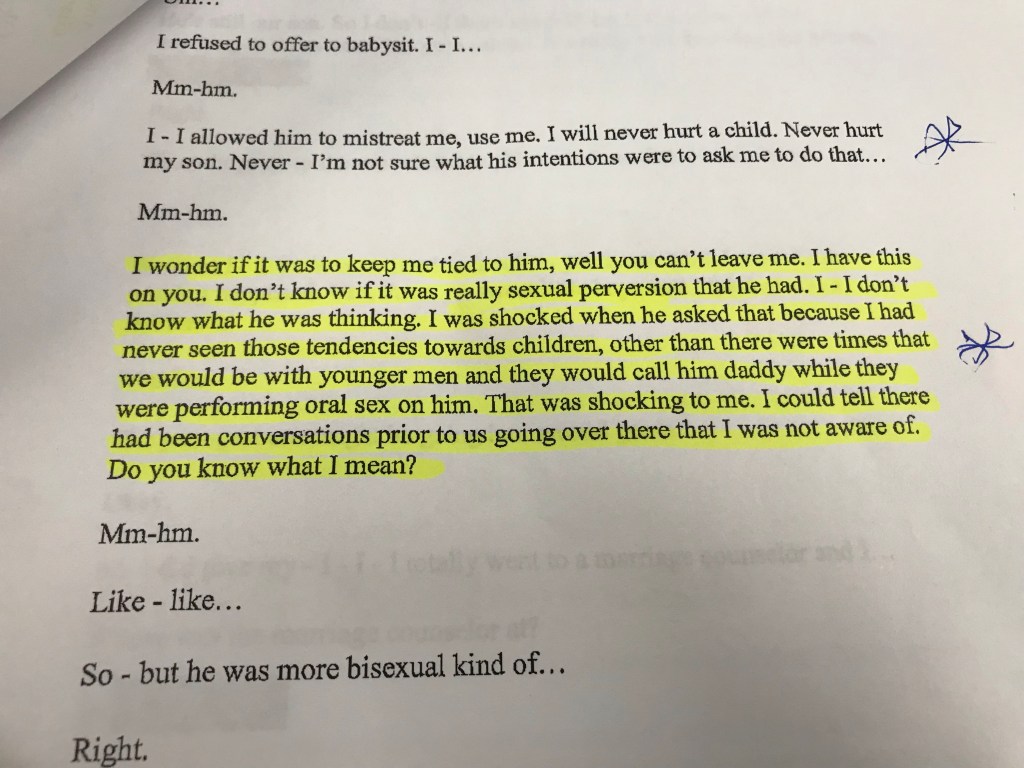
It’s not like the bad behavior at Lakota schools happened overnight. It took place over a long period of time. For those who have been wanting to see all the evidence from the Matt Miller divorce and the crazy sexual lifestyle of the superintendent of Lakota that has been much talked about, you can see it all down to the last public document at the excellent website Protect Lakota Kids.com.  CLICK TO Visit for yourself. I am proud of the great people who put that site together, and you better believe it; it was not an enterprise of a few lonely people. It’s a community effort; even better, over 600 people have signed the petition to protect Lakota Kids from the diabolical exploits of the radical progressives who work for all these government schools. This particular school is in our neighborhood, and it is challenging our values as a community, so it’s great to see people coming together to stand up to the vile behavior that has been on full display for quite a while now. The evidence of that behavior is reflected in the meeting segment shown below. A parent gave a very nice speech about the bad behavior of the superintendent, but additionally on the behavior of the school board members and other administrators. No wonder they didn’t see anything wrong with the superintendent’s sexual behavior because they are just as bad in many cases. What does that say about the people who run Lakota schools, especially when you can see for yourself just how bad that behavior has been for the superintendent? 

When the upset parent’s speech was given, I was working on getting new school board members elected. For me, that was the solution: to get better management on the board who would take the job a lot more seriously, not drink so much, and find themselves in compromising situations when they went to social events around town and out of town. The stories from some of these events have been horrendous and embarrassing to me. I like my community; I think there are a lot of good people who live in Butler County. I’ve been associated with Butler County most of my life. I could have lived anywhere in the world that I wanted, but I loved Butler County so much that I stayed in the area by choice. But these extreme leftist types who always come with more government expansion, especially in the public schools, do not represent the values of the community I have known for five decades. Many people moved to the area to be part of that kind of community. They did not move to Butler County to be embarrassed by the extreme liberalism of Lakota schools. For too long, they have put up with it to go along to get along. But after learning more about just how liberal and sexually reckless the people who run Lakota schools really are, there has been a very steady chorus of anger that has been building for several years now. To say the least, when Matt Miller was hired to be the superintendent in 2017, he reflected the values obviously of the people who hired him. And to understand what those values were, just read the voluminous public records on the Protect Lakota Kids website. We know the school board knew in 2020 just how bad things were, and instead of fixing the problem, they moved to cover everything up, which everyone should find alarming.

I had hopes that good management might fix some of these problems, but instantly the governing board gave the new school board members a fruit basket of friendship and worked to either bring them into the fold or to get rid of them. One of the newly elected board members seemed to like the fruit basket. The other one could care less, and instantly, Matt Miller and his partners on the school board worked quickly to get rid of her. And at that point, it was apparent that I had wasted my time trying to work with the board to have proper management at Lakota. Because the sexual deviants, the swingers, and the radical left loons who make up Lakota management wanted to protect their racket from the outside eyes of the holy rollers in the community and their pesky “Christian values.” They had no desire to listen to voters; they simply wanted to hide bad behavior from the public, and by reviewing the public documents at Protect Lakota Kids, it’s obvious that this was a common assumption, not an isolated behavior. With our tax money, we were funding the kind of behavior among the adults at Lakota that we wouldn’t endorse in our community otherwise except behind the innocent faces of our children. 

Yes, the title of that website, Protect Lakota Kids.com, is appropriate because if we don’t do it, who will? The school board certainly isn’t interested in helping kids find their moral compass in life. And if we aren’t teaching kids the basics of living a good, productive life, then what are we teaching them to be? If you leave it to the school, the role model they have in mind is Matt Miller. Obviously, the Lakota superintendent has serious sexual issues, as chronicled by the public records listed on the Protect Lakota Kids website. And you don’t have to live in Lakota to have an opinion about this matter. This is a problem in all public schools. Everywhere there are government schools, we see the same essential issues.

What is different about the school district of Lakota is that parents are taking control of their community. We have tried to elect good school board members. But the progressive types have rebelled against that notion. So, if parents can’t control their school board, they will create awareness with their own media, with websites like Protect Lakota Kids.com.   At that site, they are doing the job that the media should have been doing all along. But it’s not as if good people didn’t try to do things the traditional way. Speeches like the frustrated parent shown here have been going on for a long time. And it proves that the school board chose not to listen and to act to defend the bad behavior from the judgment of the public at all costs. And that isn’t acceptable. We aren’t paying all the money that we do in taxes to fuel this level of liberal politics. Butler County is a very conservative place in the world, and Lakota schools are a playground of liberalism that has embedded itself into our community in extremely unhealthy ways. It’s a fight worth having because, in the end, the product of the community is the children. Left to their own devices, the leadership of Lakota is intent on making kids into reflections of their own impoverished lifestyles, into the train wrecks spoken about by that concerned parent. I know that parent, and when she was talking about handpicking people from the GOP for the school board, she was talking about my work. She was frustrated with the results; she was ready to give up on the school way back then. I would say that it’s always good to try to fix something. But to her point, Lakota has been beyond gone for a long time now. And it will never get better if we allow them to govern themselves. Because given a choice, Lakota management will always pick the wrong thing.

Rich Hoffman

Why the World Needs Many More Darbi Boddys: Without Dynamic Intellectualism the Quality of Static Order cannot be known

There have been a parade of angry emails and comments sent my way by people upset that I support Darbi Boddy, the newest Lakota school board member, so emphatically. They say about her that she is evil, unprofessional, reckless, disruptive, and diabolically a menace to our community. And to those comments I must laugh.  Evil to evil of course is evil, and I can live with that. But to the rest of the assessments, those are all values that I have which are essential to keep the Static Quality of society in its proper balance. Darbi Boddy should be hated by the static order of a corrupt orthodox, and that was always the point.  And obviously, we need a lot more disruption of that condition to get a properly functioning government school, if there could ever be such a thing. But more broadly considered, this is exactly why Steve Bannon is so hated in society, and President Trump. I am quite used to this reaction because I spend most of my time dealing with it, in all aspects of life.  I see great value in what disrupters to a static order provide in keeping corruption in check, but unfortunately many don’t understand why its so necessary.  They enjoy what a Static Quality provides to their life and once they know the rules of that static order, they are comfortable to find their place in it. But the values I’m speaking of come from outside that order.  I use a number of business techniques from well written books over the years, and I’ve incorporated my own version of my experience into my Gunfighter’s Guide to Business, to make it easier for people to bring some of these positive elements into their own process improvements.  But personally, I have some special weapons that I draw on often that have been with me for many decades and one of those is the work of Robert Pirsig and his Metaphysics of Quality as outlined in two books, the first, Zen and the Art of Motorcycle Maintenance, and the second, the sequel to the first, Lila.  Understanding those books will explain why people like Darbi Boddy and Steve Bannon are necessary in the world, and why they are so hated by all static orders.

In Zen and the Art of Motorcycle Maintenance, the author Robert Pirsig defines what the meaning of quality is.  His problem as a teacher which instigated this question and answer was why do we give kids good grades? Is it to evaluate their knowledge, or reward them for a standard correct answer, even if that answer was constructed to protect insane notions of reality.  Looked at another way, when a psycho analyzer might ask a patient what an inkblot means to them, do we get a correct answer as to the condition of the mind being asked, or do they select their answer based on a socially acceptable criterion.  Robert Pirsig found himself to identify most with the philosopher William James who had an IQ of 250 to 300.  I too find William James books enjoyable, but like the work of Robert Pirsig, they are mostly rejected by static order society because they are out of reach for common experience, which cares very much what their peers think of them, which keeps them chained to static order thinking.  Pirsig took his quality concept from Zen and further broke down the concepts into two primary categories, Static Quality and Dynamic Quality. I for my own use rename these terms Static Intellectualism and Dynamic Intellectualism because people find the word “intellectualism” more accommodating than “quality” which requires some baseline understanding of measure which many people lack. What is good quality, telling society what they want to hear, or understanding the contents of a problem and reporting it without fear of what that definition causes.  Both could be true depending on the value system of the culture.

Static Intellectualism are the rules of society, and its value system.  In the movie the Matrix, this is referred to as a “blue pill” existence.  Its football on weekends, good restaurants to eat at.  Saving up money to send your kids to college. Mowing your grass once a week.  Things that society values and lives to.  Dynamic Intellectualism are influences that might be called a “red pill” existence by the Matrix, they are influences outside the static order which challenge the assumptions of value.  In the magnificent book Lila, Pirsig’s characters find themselves on a round the world sailboat trip.  The owner of the boat picks up a crazy woman on his way down the Hudson River to pick up royalty checks in New York before heading out into the open sea for a trip around the world.  The boat captain is a particular man, highly organized and methodical.  But when he picks up a middle-aged woman to go with him on part of the journey, he finds her to be radically different than he is.  She has a very promiscuous life, she’s very random and challenging about everything and it drives him crazy as he’s locked on a small boat with her for several days.  This is where he tries to apply his Metaphysics of Quality on her and finds he must provide more detailed answers to these kinds of questions.  He determines that even though the woman drives him crazy, her challenging of his static order has provided valuable insight into his own state of quality, and his life is therefor much better off.  And generally, it is always determined in any culture that the relationship between corruption in a culture is its lack of Dynamic Intellectualism to test the Static Intellectualism of a culture.  Because without challenges, there are also going to be elements of that society that will seek to leverage conditions to their desire to cheat the system by rigging it in their favor.  Dynamic Intellectualism prevents this from happening by providing a measure that reveals corruption where it otherwise wouldn’t be seen.

When looking at an inkblot poured onto a piece of paper and folded over once, what does it mean?  Well, to the progressive psychoanalysis investigator asking a patient wanting very much to get a good grade and provide a compliant answer might say that it looks like a heart and that it reminds them that the world should be full of love. That would make the institutionalist and protector of that static order very happy, and they would record the answer with great enthusiasm.  But if one were to ask William James, or Robert Pirsig that same question, they would say, “it’s an inkblot folded over where the ink smeared.”  To the Static Intellectualism of that culture that would be the wrong answer and that would inspire the analyzer to give the patient a bad grade, and maybe even to declare the test taker, “insane.”  This is exactly what happened when the governments of the world tried to shut down our lives with Covid or told us that there was no election fraud.  It was the inkblot test, and the Static Intellectualism of the current order wanted an unchallenged answer to the question, what is a threat and who decides it is. By experience, the Static Quality of something cannot measure itself. It must be challenged by Dynamic Intellectualism in order to determine its “quality.”  And that is in essence the Metaphysics of Quality as defined by Robert Pirsig.  A lot of people have trouble with Pirsig’s books.  But they are worth reading and I can promise positive results if you do read them, even if it’s after 20 times. It is because of Dynamic Intellectualism that I value Darbi Boddy at Lakota schools. Why I value President Trump in the White House. And why people like Steve Bannon are so important to keeping checks on the media. Without Dynamic Quality, static systems quickly become corrupted and out of control. And without a measure, you can never know if something is good or not. Which is exactly why the world needs more Darbi Boddys. 

Rich Hoffman

Click to buy The Gunfighter’s Guide to Business

Want to be Free: Learn to wear a hat

The problem is that people talk about fighting for freedom, but often by the time they are voting age adults, they are so beat down with compromise that they no longer know what freedom is or why they should be fighting for it. We talk about it all the time, fighting for freedom. Yet very few people are remotely free in their lives; they have bosses at their jobs, spouses often working at odds with them, and peer pressures in their neighborhoods. Medical professionals always tell us what to do, which was common before Covid became a government policy disaster. Then there are the various governments in our lives, the local zoning board as to whether or not a water garden can be built on our private property, whether a state governor can ruin our lives with lockdowns and other fears of economy, or an executive branch at the federal level who will sign a piece of paper that could actually destroy our physical bodies with a vaccine mandate. Most people are so burdened with obedience to many other people in their lives that they have no idea what freedom is or what they should be doing with it. So it’s hard for them to know why they should be fighting for it or even why they should value it at all. Oddly enough, as I was thinking about all these things, I have grandchildren who are at that magical age of deciding who they will be for the rest of their lives. They were asking about these matters, for which I gave them their first hats and told them why I have always worn a hat of some kind and what benefits it can provide them in the quest for personal freedom and benefit their lives in magnificent ways. 

One of my favorite hat stores in America, at Jackson Hole, Wyoming

It was a pretty good moment to explain why I have always worn a variation of a cowboy hat all my life to my grandchildren because they wanted to know. But the message has value well beyond family advice on how to live a better life, which is worth sharing. I learned early in my life that being unique was a freedom that had value in it, and to protect that freedom when you are too young to fight it off physically and mentally, is to shake off your attackers with audacity. So, I wore hats to declare my own unique look. Being young or old and having hair or not are conditions of nature, but wearing a hat was a proclamation of controlling your own appearance by choice, by invention. Even in the third and fourth grade, I started this process, and I wore my hats even to bed at night, and I found that within that simple measure, I was teaching myself to love personal freedom and making decisions that showed I had control over my appearance and was not a victim to public opinion. Of course, whenever you make such a declaration, people will make fun of you for it. And sometimes, those opinions can be brutal. It is amazing how threatening to people a kid wearing a hat can be, but I heard some of the worst and most violent talk when I was age 10 through 15 that you can imagine, just because I showed up in public places always wearing a hat. But those were some very valuable years because I learned not to care. And as I learned not to be shaped by the opinions of others, I learned to have real independence in my life, which has dramatically frustrated a significant number of people. 

We all wear hats in my family, always have

We were indeed a better society during periods where people wore hats, even though the social stigma favored them, such as during the Revolutionary period with the tri-cornered hats that were common to the day. Or the cowboy hats of western expansion. Then there were the fedoras of the roaring twenties up until the socialist incursions of the 60s. Hats were a statement of independence and control over nature. If it started raining, you could use your hat to shield your head from the elements of chaos coming in the form of weather. If you were balding, you could fashion your own style of cosmetic appearance with a good hat. Hats showed individual taste, they could be whatever color you wanted, and they projected your values to the world. But to those who wanted to reject those values, hats were dangerous because they showed individual expression, which was a real threat to the collectivist intentions of Marxism. Some of the cruelest comments that came in my direction about my hats as a kid came from the drug user class of long-haired hippies and dope smokers. When I wore a hat, it threatened them and their desires for social conformity. That safe place where a stoned mind and social camouflage could insulate them from the opinions of others. They certainly didn’t want to stand out in a crowd; they wanted to blend in. And when they saw someone who didn’t feel those social fears, it truly scared them. 

At that Jackson Hole hat shop, getting my latest one steamed to shape

I told my grandchildren that people would ridicule them for wearing their hats in public. Anything they show to the world that they valued would be ridiculed to no end, and if people could steal their hats and destroy them, they would do it to punish them for even wearing them in public. I explained that people are cruel because they don’t want to live up to the expectations of personal independence and crave to hide in the shadows where it’s safe. Wearing a hat publicly was a declaration of independence and a real threat to their existence. So be ready for anything and everything. But the benefit would be that by the time you are an adult, which will be most of your life, you will have been well practiced in being your own person. Nobody really cares what you look like after age 30, so don’t waste your lives trying to look like a teenager.

Enjoy your life no matter how old you are. Wear a hat that reflects who you are and how much you like it. Don’t let them make you feel bad for self-expression. And by the time you are 40, 50, and 60 years old, nobody will care if you wear a hat in public. They’ll avoid you most of the time, but making fun of you will stop. So the task of being young and out of control of your social circumstances because so many other factors are still governing your lives is to learn not to care what the opinions of others are. And when you do that, you will gain valuable freedom that will spill over into other parts of your life and enrich yourself. To have real freedom in life is to be free of the opinions of others. Once you do that, you can understand freedom’s basic premise and why it’s worth fighting for. A society of people who have worn hats to express that freedom had a better ability to maintain that freedom. But a society of people who care too much about what other people think are not going to understand why freedom is worth fighting for. Because essentially, they aren’t free anywhere in their lives if they constantly fear what the opinions of others are. So as I told my grandchildren, wear your hats. Don’t listen to what people say to you, and learn to love the controversy. Because when people’s opinions no longer control your actions, you can start to see yourself as a free person.

Rich Hoffman

Click to buy The Gunfighter’s Guide to Business