Investing in the Future: A huge growth sector is coming

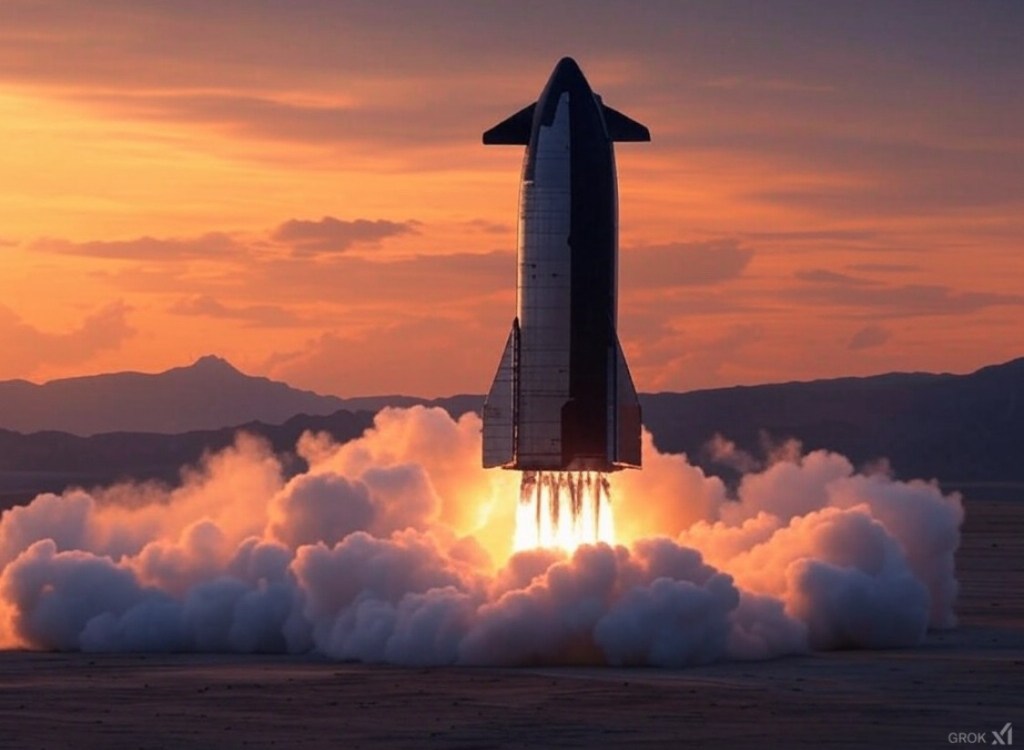
I have to spend some time on A.I. because it’s probably the most significant psychological crisis our civilization will face over the next several thousand years.  And my wife is right there with many of you.  We were at Kings Island with the grandkids, and a Tesla Cybertruck was parked next to me, and I loved it.  I think it’s the best car on the road today, and I’m probably going to get one in the not-too-distant future.  But most people think it’s ugly and disgusting, and they believe that for a lot of deeply psychological reasons.  Yet it reminds me of the Starship, which is one of my favorite things in the world right now. As we discussed our opinions on Cybertruck, Starship 11 had just successfully landed in the Indian Ocean on a spectacular mission, which I was very excited about.  And the main reason was that it was a big, complicated rocket, but humans didn’t operate any of it.  Everything was autonomous.  All that engineering innovation took off from Texas and landed autonomously at precise points on the other side of the world.  And much of that technology has made its way into the Cybertruck and its autonomous driving.  And I would like that automatic driving feature.  My lifestyle would greatly benefit from it.  I could get a lot done with all that commuting around, which usually requires physical driving.  Which many people aren’t ready to accept.  But I would encourage everyone to shift a gear and get with the program, because a lot of exciting stuff is coming.  And human beings will be getting a lot busier —not less so —because vast amounts of the economy will be unlocked, and humans will benefit, not find themselves replaced. 

And my wife and I were compelled to have this discussion, as I have been having it with many people lately about labor.  I’m a 24/7 guy, certainly not a Monday-through-Friday 8-hour-max person.  I hate driving around on a Saturday and seeing so many manufacturing facilities closed up for the day.  I want to see more 7-day-a-week operations everywhere to maximize economic output.  That doesn’t mean people need to do all that work.  But sandbagging potential revenue when there is work to be done because some human doesn’t want to do it, or is trying to stuff labor hours into a box of convenient assumptions, is not the wave of the future.  More work, more often, is the new standard.  And what all this technology I’m talking about leads to is the new market trend of Tesla Optimus robots, which are being built rapidly, and the Gen 3 designs have nearly full articulation in the hands.  They will be about half as fast as a human on labor-intensive tasks, but they will be able to do them around the clock without complaint, seven days a week.  While people are in church on Sunday, Optimus robots will still be able to perform work.  And that is exciting because that means that humans will be able to settle space without having to do all the dangerous work on Starship.  In a few short years, Starships will be able to fly into space every day, and there will be thousands of them.  And none of them will likely have human beings on them.  Optimus robots, Gen 3 and beyond, will be the first to Mars, and by the time humans arrive in those remote places, there will already be infrastructure in place, built by robots and A.I., to make the trip much safer and easier.

I have been very impressed with the Grok A.I. program developed by Elon Musk’s team at the X platform.  It has been a strange chain of events: Musk bought Twitter and turned it into a free-speech platform, which played a significant role in getting Trump’s message out so people could vote for him.  But more than anything, it has captured all the information people have put into it, building a very sophisticated A.I. program that I already think of as a kind of personal C-3PO from Star Wars.  It’s swift at research and at conversational communication.  And that development of A.I. will roll straight into making the Optimus robots much more human-like and effective right out of the box.  I think all this technology will help human beings, not hurt them.  It will be more of a Star Wars relationship than 2001: A Space Odyssey or The Terminator.  Going back to the Cybertruck, the kind of hatred it generates is a reminder that the future has arrived and people are not ready for it, with such a radical design change that completely alters the aesthetic of what transportation is supposed to do.  Not only does it look different, but it acts differently, and it is more of an A.I. companion than a car, and that really rattles people, including my wife.  She is not happy about these changes, but I think it’s funny.  Because she’s not alone, we’re rapidly redefining many things, and in just a few short years, we will be looking at a very different economy, with most of the growth happening in space. 

As I talk to market types, that’s what I’m saying to those who want to listen: the 24/7 day work week is the future, and the growth is in space.  Starship 11 showed that SpaceX can launch and land a reusable craft exactly where they want it, without fear of human error.  It’s all autonomous.  And that means that soon, A.I. will be able to take over air traffic control and coordinate all these vehicles with great precision, without ever having to stop for a coffee break.  So, human limits won’t hold the economy back; it will grow enormously by trillions of dollars.  However, all that money generated won’t be spent by the A.I. technology.  They will have no use of money, only the currency of energy.  Humans will have a lot more leisure time and will see vastly improved incomes for the time they do commit to the job.  Which is why I like Cybertruck —it respects my time and lets me do so much more in a 24-hour day.  Work will greatly expand, but leisure time for humans will become much more manageable.  Humans will go to Mars and the Moon.  But to colonize them, it will essentially be A.I. and Tesla robots that build the vast infrastructure and cities needed to make human visits much safer and more reliable.  Robots, not humans, will perform the dangerous work.  And there will be many thousands and thousands of robots, adding to our labor force by necessity.  And I think it’s all very exciting and significant.   But for many, like my wife, they are very skeptical and see all this new technology as a serious threat to their very life essence.  But that’s what’s coming.  That’s what I’m telling everyone is the future of aerospace.  There will be lots of opportunities for great adventure and vast work, and it all becomes possible and reasonably achievable with that last Starship launch that was nearly perfect.  Grok’s advancements, a very sophisticated A.I. program, are directly feeding the Optimus robot’s development.  And that all points back to the practical use of the new Cybertruck.  A glimpse of the future, today.  And it might be scary to a lot of people.  But it’s coming, ready or not.

Rich Hoffman

Click Here to Protect Yourself with Second Call Defense https://www.secondcalldefense.org/?affiliate=20707
Starship SN10: A Turning Point in Human History

It’s a remarkable thing to witness history being made, especially when it doesn’t receive the attention it deserves. That’s precisely what happened with SpaceX’s Starship SN10. Against all odds, and despite a series of setbacks, SN10 completed its mission, withstood the stress tests, and landed a fully intact craft in the Indian Ocean. It wasn’t perfect—there were damaged components, mysterious explosions, and some tough engineering challenges—but it worked. And that’s the point. It worked well enough to prove something extraordinary: that this vehicle, this Starship, is more robust than anyone expected. And that robustness is precisely what we need if we’re serious about going to the Moon, to Mars, and beyond.

Starship SN10 didn’t just fly—it endured. It burned through the atmosphere, held together under pressure, and landed with controlled precision. That’s not just a technical achievement; it’s a philosophical one. It’s a statement about what’s possible when you push boundaries, when you accept failure as part of the process, and when you keep going anyway.

Let’s talk about what actually happened. Starship SN10 launched from Boca Chica, Texas, and demonstrated its full capabilities. It wasn’t just a test flight—it was a stress test. Engineers deliberately pushed the limits. They removed some heat shield tiles to see how the stainless steel would react to hotspots. They pushed the flaps to the edge of their tolerances. They wanted data, and they got it. That’s how you improve a spacecraft. You don’t play it safe. You push it until it breaks, and then you figure out how to make it stronger.

Previous missions had ended in explosions. SN8, and SN9, had spectacular failures. But each one taught SpaceX something new. That’s the beauty of iterative engineering. You fail fast, you learn fast, and you build better. SN10 was the culmination of those lessons. It didn’t just survive—it performed. Even with one flap malfunctioning and a mysterious explosion near the edge of the bay, it managed to stay stable, burn through the atmosphere, and land close to its intended target. That’s not luck. That’s engineering.

This mission was critical. It wasn’t just about proving that Starship could fly—it was about proving that it could be trusted. That it could be repeatable. That it could be the backbone of a new space economy. And yet, where was the coverage? Where was the excitement? Back in the days of NASA’s space shuttle program, every launch was a media event. It was on every channel. It was a national moment. But Starship? It barely made a blip in mainstream news.

That’s bizarre. Because what SpaceX is doing is arguably more significant than anything NASA did during the shuttle era. This isn’t just about sending astronauts into orbit. This is about building a reusable, scalable, interplanetary transport system. This is about making space travel routine. And yet, the only people who seem to care are the science geeks, the tech enthusiasts, the Comic-Con crowd. I’m one of them, proudly. I build my day around every Starship launch. Because I know what it means. I know what’s at stake.

I’ve watched every launch. I’ve felt frustrated when things blow up. I’ve celebrated the small victories. And this one—SN10—felt different. It felt like a turning point. It felt like the moment when things started to work. The payload simulations worked. The Starlink satellite dispenser inside the craft functioned with pinpoint precision. The reusability goals were achieved. This wasn’t just a test—it was a proof of concept. And it worked.

This is the moment people will look back on and say, “That’s when it changed.” That’s when space travel stopped being a dream and started being a reality. That’s when we stopped talking about going to the Moon and started planning it. That’s when Mars stopped being science fiction and started being a destination.

Of course, none of this happens without technology. And that brings us to AI. There’s a lot of fear around AI—people worry about Skynet, about machines becoming conscious, about losing control. Science fiction has been warning us for decades. And those fears are worth thinking about. We shouldn’t let technology get away from us. We need to stay in control. But we also need to embrace it.

AI is how we get to space. It’s how we process the massive amounts of data needed to run these missions. It’s how we make things repeatable, reliable, and scalable. The computing power we have today makes the Apollo missions look like kids’ toys, with the technology of a laser pointer. We’re operating on a whole different level now. And AI is the key to unlocking that level.

Take self-driving cars, for example. They’re not just a convenience—they’re a shift in how we live. They free up time. They make commutes more productive. They change the way we think about transportation. And that same shift is happening in space. The commercial space enterprise is poised to become a thriving economy. It’s going to require hard work, innovation, and yes, AI. Because humans can’t do it all. We need help. And AI is that help.

Starship SN10 was just the beginning. Starship 11 is already in the pipeline. Engineers are learning from SN10, making adjustments, and preparing for the next flight. Elon Musk has hinted that Starship 12 or 13 could launch by the fourth quarter of 2025 or early 2026. That’s rapid iteration. That’s how you build a space program, not with bureaucracy, not with delays, but with action.

And it’s not just about launches. It’s about deployment. It’s about getting to the point where Starships are flying like buses—routine, reliable, and everywhere. That’s the vision. That’s the goal. And it’s achievable because SN10 proved it.

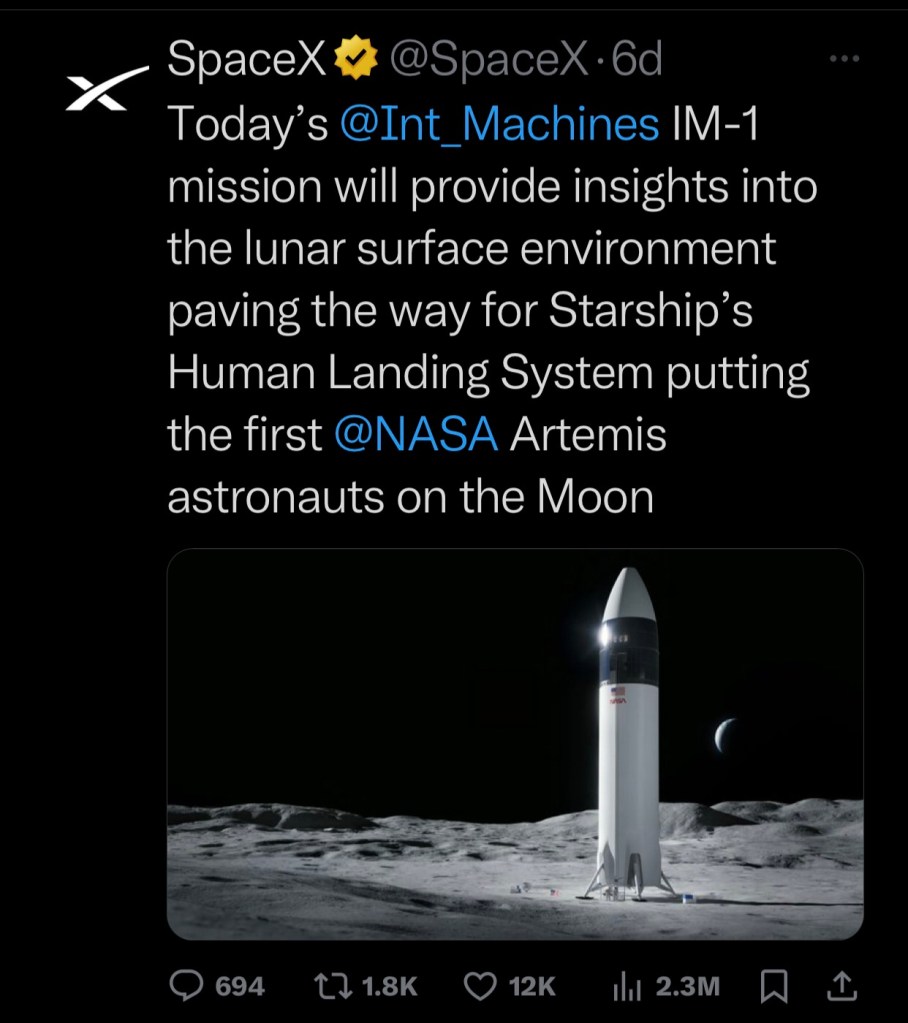
We’re talking about the Artemis program. We’re talking about putting people on the Moon. And whatever people believe about past moon landings—whether they think it was real, staged, or somewhere in between—we’re going back. And this time, it’s not about beating the Russians. It’s about building a future. It’s about expanding humanity’s reach. It’s about survival.

There’s a segment of the population that doesn’t want to leave Earth. They’re comfortable here. They worship the planet. They fear change. However, if you genuinely care about humanity, you must think bigger. Elon Musk says it best: if we want to preserve human consciousness, we must venture into space. We have to take our intelligence, our creativity, our spirit—and let it grow beyond Earth.

That’s what Starship is about. It’s not just a rocket. It’s a symbol. It’s a foundation. It’s the first step toward a multiplanetary civilization. And SN10 was the proof that we’re on the right path.

Even under stress, even with problems, SpaceX pulled it off. That means we have stability. That means engineers can trust the system. That means we can innovate. We can take chances. We can improve. And that’s how progress happens.

This was a milestone. A pinnacle moment in human history. And it didn’t get enough coverage. We need to discuss this. We have to celebrate it. We have to recognize it for what it is: the beginning of a new era.

Starship SN10 wasn’t just a successful flight. It was a statement. It was a declaration that space is open for business. That humanity is ready to expand. That our past does not limit us—we’re driven by our future.

And it’s happening fast. The rate of acceleration is astonishing. Every launch gets better. Every mission teaches us something new. And every success brings us closer to the stars.  I love every one of these launches. I build my day around them. Because I know what they mean. I know what they represent. I’m eager to see more.  Starship SN10 was a success. Not just technically, but philosophically. It proved that we can accomplish complex tasks. That we can push boundaries. That we can dream big—and make those dreams real.

Rich Hoffman

Click Here to Protect Yourself with Second Call Defense https://www.secondcalldefense.org/?affiliate=20707

I Feel Sorry for Elon Musk: CEOs build culture, and are extremely important

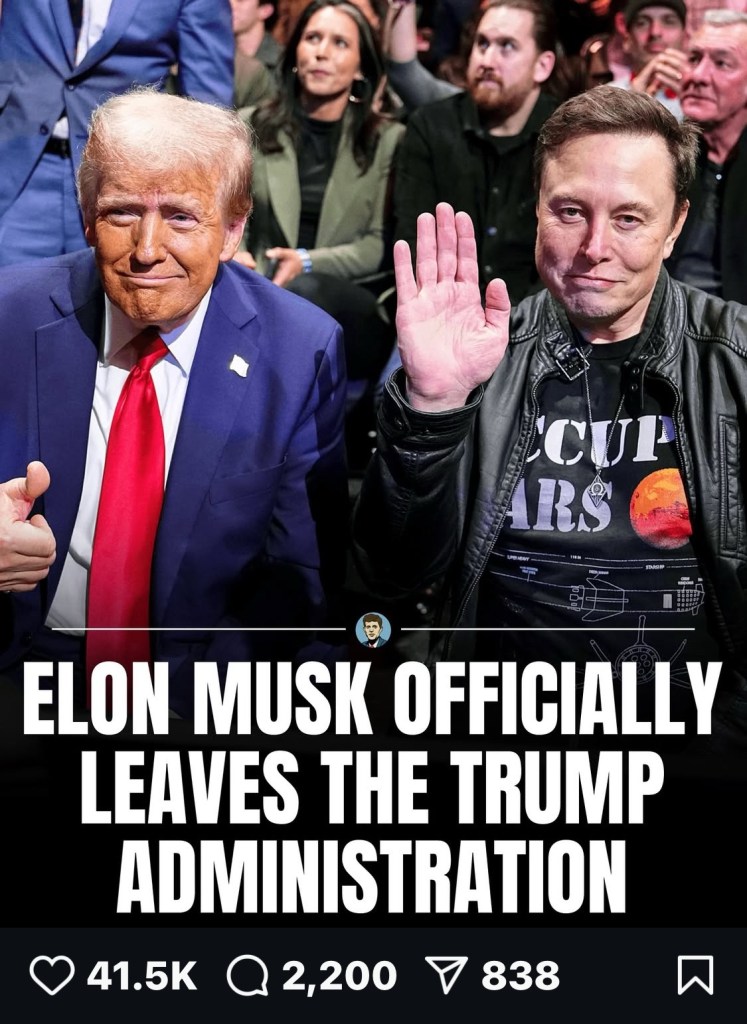
I do feel sorry for Elon Musk. I would say to him, the government is a very negative experience, full of losers.  And that fixing it will take a lot more work than he can give in short spurts.  People who choose to work for the government are quite different from those drawn to the private sector.  Government is filled with entitled losers who want to make a lot of money off taxpayers without the risk of earning it themselves.  Therefore, it will require significant reform, which is just getting started with the Trump administration.  But it will take decades to unwind the mess that has been given to us.  And I can see that Elon Musk began his DOGE campaign with a lot of bright ideas.  But making the cuts permanent that he has identified isn’t as easy as it would be at one of his companies.  The government is full of parasites, and you have to play the long game with them.  Elon Musk can do the world a great deal of good if he focuses on what made him great to begin with.  He needs to be back at SpaceX every day, sending Starships into space every three weeks.  It has been evident that he has been absent from those companies; they have been experiencing a decline.  The job of a CEO is often not well-defined; they create the culture.  It’s not the work they do but the culture they make in their wake.  And SpaceX has slipped significantly since Elon has been frequenting the White House daily since Trump’s return to office.  It will take more than CEO stunts to save the government.  However, some business success on the frontier of innovation is the best way that Elon Musk can make the world a better place and establish a civilization to save by going to Mars. 

I thought it was astonishingly short-sighted for Disney-run ABC to characterize the Starship 9 mission that launched this past week as a series of failed missions.  The process SpaceX uses for data collection involves launching these Starships to see what works and what doesn’t, so that every configuration of the problem can be witnessed and designed, modified in real-time.  Drawing on extensive experience with this very issue in the aerospace industry, the world is fundamentally flawed in its approach to manufacturing processes.  And SpaceX has taken a noticeably different approach, one that is much more akin to the Skunkworks at Lockheed Martin many years ago.  The world has learned the wrong lessons and incorporated them into its management systems, and the entire industry is in desperate need of an overhaul.  And if Elon Musk wants to change and save the world, he can do it most effectively with Tesla and SpaceX.  The big secret is that you can’t put engineers in a room and get everything right the first time, which is the assumption in aerospace that began with NASA and the need to avoid any accidents that would become public relations nightmares.  When you can automate flights, you can afford to have launches to measure cause and effect, and approach the whole process of technology development much more aggressively.  Even though Starship 9, which launched at the end of May 2025, burned up during re-entry, as did the booster rocket, much of what SpaceX needed to achieve was successful, leading to the technical adjustments that need to be made at the engineering level. 

However, the way the industry operates now is very risk-averse, and, of course, the least risky thing to do is to do nothing, which is why things are so slow in aerospace and why cost overruns are so common.  And when ABC says that the previous SpaceX missions were failures, they are speaking from the vantage point of the administrative state —the kind of world that the government has created for us, with over-regulation and a world shaped by insurance industry lobbyists.  From that world, exploding Starships are a bad thing.  For the innovative SpaceX world, they provide a lot of information, and when you look at the rate of innovation that is needed to build Starships, you need to collect a lot of data to get repeatability outside of engineering tolerances, because until you see all those inventions working together, there is no way to know how stable a process is.  When it came to the NASA approach, you get lucky with a design and then never deviate from it, fearing the unknown, and that is essentially how they built the space program.  SpaceX is seeking complete, automated redundancy that remains reliable after thousands of trips.  To achieve that, SpaceX needs to be launching a new Starship every week, which is why Elon Musk has been so crucial.  Since he has been at the White House, doing good work that often goes unappreciated, SpaceX has been addressing engine bay leaks that have compromised spaceflight, and the Starships have been exploding.  Not a great way to have a space program.  However, the best thing about this most recent Starship 9 mission was that much of it had become so commonplace now.  The Starship was able to undergo stage separation and space flight, solving many of the problems it previously had, so now the other lingering issues can be addressed. 

The best engineering is to do things and fix things as you see problems emerge.  And for something as complicated as Starship, it will take Elon Musk to foster a productive culture among the many great people at SpaceX, guiding them toward corrective actions to address the numerous problems that must be solved for stable space flight.  It’s fantastic that we’ve had only 9 Starship missions and that they’ve made getting them into space so routine.  Now, getting re-entry right, with stable space flight, will be the key, and it will take a full-time Elon Musk to pull it off.  However, when it comes to cutting the deficit, given the current state of affairs, the first step in fixing the American economy is to achieve magnificent growth through new market sectors.  The SpaceX Starship is the best way to reach that point.  China, in their wildest imaginations, won’t be able to copy SpaceX, because they don’t have a person like Elon Musk to act as the CEO.  Just like other considerations of the administrative state, people cannot be swapped out.  Great people are irreplaceable; when they take vacations or are absent from work, things don’t run smoothly.  Exceptionalism comes from unique people.  Not process controls that allow losers in life to be just as good as winners.  Exceptionalism matters, and Elon Musk needs to stay on the cutting edge at SpaceX for it to continue its success.  And if he wants to save the world, he can do it best in the private sector.  DOGE will still be a good idea that will do good work.  But it’s going to be a slow boil.  What we need most is Starship, and missions going to space so routinely that people take it for granted, as usual.  And with the recent Starship 9 mission, that is becoming the standard.  Normal is launching the biggest rocket humanity has ever produced into space, routinely.  Now, getting it to do what we need it to do time and time again is the next challenge, which is very close to being completed. 

Rich Hoffman

Click Here to Protect Yourself with Second Call Defense https://www.secondcalldefense.org/?affiliate=20707

SpaceX Does it Again: Crawling out from under Cost-Plus restrictions

For perspective, you can go back through all my writing, millions and millions of words back to 2013 when I wrote an article from Florida about the essential end of the Space Shuttle program and that Obama’s vision for NASA was to partner with Russian cosmonauts for any future space missions.  I was very outraged at the policy, and if I never liked Obama for anything, it was his anti-growth attitude to suppress American exceptionalism as it often presents itself in space travel, that I hated the most.  We were going backward under Obama and Biden, and the only growth we have seen in over two decades came from the four years we had from Trump the first time.  So, I have been very excited about watching the civilian infrastructure for space develop, and anywhere I can help it, I certainly do.  So if I’m more excited these days and very enthusiastic for every day, as many people pointed out to me at a Jags get-together ahead of the inauguration of Trump, I’m sure eventually they’ll understand.  I don’t think people realize what a miracle the week of January 13th was in 2025.  Yes, SpaceX did it again; they landed their Superheavy booster rocket back on the pad it launched from after carrying another Starship into space.  They lost the ship due to a pressure problem that couldn’t gas out fast enough on a new second-generation Starship, and it ruptured the hull, causing the whole thing to break up in the atmosphere.   That was unfortunate but very correctable.  The real trick was repeating the landing of the booster rocket to show that the first time wasn’t an accident.  Watching that rocket capture chopsticks system work now repeatably was a fantastic thing to witness, and it takes us a long way from my complaints about when Obama ended the Space Shuttle program over a decade ago.

But that wasn’t all; just a few hours before SpaceX launched, Blue Origin put their own rocket into space, but this one was carrying a lunar lander from Firefly, a Texas-based company, that was returning to the moon.  Another personal problem I have is with NASA and governments around the world.  I don’t care what anybody found when we went to the moon the first time.  There was no excuse not to have a Hilton there by now so I could vacation on the moon with my family.  This raw, primitive embrace of backward thinking that came to us from both political parties has infuriated me to no end.  When people ask me why I have had my war against public education, it starts with this lack of preparation as a culture to advance people into space.  We should have been doing this since the original moon missions, and as I was growing up, it looked good.  But the Department of Education under Jimmy Carter and the socialist politics that held our society down through labor unions and liberal politics stopped that advancement and I have never been good with it.   If we don’t have a culture pushing for adventures into space, we are deliberately trying to suppress the ambitions of the human race in a very unhealthy way.  So, for me, watching all this space activity just a few days before President Trump’s return to the White House was fantastic and deserved as a subject of massive optimism.  For a culture to produce two space launches like Blue Origin and SpaceX produced, it would have taken NASA a decade to do one of them.  Let alone two significant ones.  We are dealing with good times, finally.

The amount of capacity and bandwidth is the real challenge, and that’s what is changing, which I’ll be pointing out often because I am pretty sure people don’t know what to think of these displays of monumental ambition.  It takes thousands of manhours and intelligence calculations to produce one rocket into space, especially when discussing complicated payloads.  But here we have a culture that did it twice in the same week. Additionally, there are several Falcon rockets that are taking constant payload into space, whether people or satellites for the Starlink system, we have come a long way from the Obama administration sending Americans into space through partnerships with Russia.  As soon as SpaceX realized that they had lost their Starship, they were already planning to pull another out of their manufacturing facility, where several others were waiting, and they were planning another launch next month.  SpaceX expects to launch at least 20 more times in 2025 to develop Starship further.  What they learned from this recent one, even though it burned up in the atmosphere, was extremely valuable compared to the traditional hindrances of a cost-plus company.  The way SpaceX is attacking the problem is the definition of how these things will be done in the future, and it embodies a whole new view of manufacturing that is escaping the clutches of global socialists like Obama, who were deliberately trying to hold back humanity.   It’s one of those situations in which small-minded people have been trying to destroy society to rule over the ashes.  And these new manufacturing methods being developed at SpaceX are a rebellion against that sentiment.  And it’s precisely what space needs for humans to colonize the stars.  Other companies are now moving in that same direction regarding the “rate of resolution.”

Cost-plus companies have been hijacked by all kinds of horrible forces that have held back the aerospace industry since the first moon landing.  When parasitic characters realized they could stall contracts and make money off ignorant governments for more congressional money to be thrown at the trolls to build something, trouble was clearly on the horizon.  That’s why space had to move into civilian care because there was looting politics in government control that held us back with people like Obama.  A setback like Starship had at SpaceX this week would have stopped advancement at a typical cost-plus company for a decade in the past.  Instead, Elon Musk said immediately that the plan was to roll out another Starship and get ready for a second try next month.  The only thing that will hold them back is the speed of government, which will increase dramatically once Trump is back in office.  There is a lot to be very excited about, and I am.  It’s not just about going to space that is exciting; it is about watching the human race crawl out from under a very oppressive political climate and an education system that has sought to cripple us purposely.  Not to inspire us to grow.  And due to all that, we see that the human race is doing big things again, and the American culture, which has produced the world’s wealthiest people, is putting that wealth to good use in adventure and enterprise.  As good as this past week was, and it was, I see under the incoming Trump administration launches like that happening every single day.  I don’t think people realize yet how important all this is and what it will do for us.  But I can see it and am very excited about what’s coming.   In many ways, it’s a dream come true. 

Rich Hoffman

Click Here to Protect Yourself with Second Call Defense https://www.secondcalldefense.org/?affiliate=20707

The Biggest Thing to Ever Happen to the Human Race: SpaceX performed perfectly with Starship 5

In many ways, the spectacular Super Heavy Booster catch at the SpaceX facility was more significant than when the Berlin Wall came down.  Much more important, politically, scientifically, and philosophically.   It was an awesome display of what human minds can achieve when unleashed, and to say the least, the door to human colonization of space was just kicked wide open.  On an even larger scale, the pages of Karl Marx might as well have been burnt as the most inefficient system of government management ever created.  Capitalism was and will always be the means of managing people and their finances for the future as this incredible event occurred just a few weeks away from the 2024 election, where essentially those are the two choices: abundant capitalism from a sovereign American market or global communism ran by the United Nations.  Elon Musk, the CEO of SpaceX, gets it.  I was probably the first person in the world, including himself, to see Musk turn hard to Republican elected officials as he had in the past been an enthusiastic supporter of Barack Obama and Biden.  I chronicled his change by the kind of books he was reading and pointed it out well before he seemed to have figured it out.  Communism doesn’t work, and it was overt communism that had been holding back this fantastic event of the launch of Starship 5 from Boca Chica, Texas, and the Starbase there with FAA permits that were holding everything up with massive government bureaucracy.   Once they finally had their permit, under tremendous public pressure, the FAA had no choice really; the SpaceX team launched, for the first time in all history, the largest vehicle ever to go into space and have controlled landings in two different locations precisely over their targets, all automated and coming off without a problem.  The countdown to launch was exact and on point, and we saw what routine spaceflights over the coming years would look like. 

America has a choice to make that is very positive: elect President Trump and get a whole lot more toward a massively expanding economy as what people saw from SpaceX on October 13th, 2024.  As I watched the Super Heavy Booster carry Starship into space to land in the Indian Ocean about an hour later, the giant thing the size of a skyscraper turned around and landed back at the same pad it had just launched from.  It returned to earth to be captured by the Megazilla chopsticks at the launch pad precisely and smoothly.  I first thought that we needed to work out the property rights issue that would arise as we settled into space.  The world is getting ready to go through a gold rush similar to what America experienced during westward expansion, and the governing principle will have to be flamboyant capitalism to pull it all off.  One of the very first things that the new Trump administration will have to do is protect property rights on the Moon and other celestial bodies.  It will have to be American economic standards that the rest of the world will have to live up to because we will be the first to arrive and set up colonies.  Starship will make moving into space a practical reality and an economy that will quickly outperform anything ever done on earth, including coal, oil, railroads, shipping, and telecommunications.  We are talking about trillions and trillions of dollars of economic value.  But it’s not about making money that matters; it’s expanding human intellect, and the only way to do that is to embrace capitalism and human expansion into space.  A lot is about to change for the better because of what SpaceX did.  The personal journey that Elon Musk has made politically, out of necessity, is one that the rest of the world will now have to embrace—especially communist China.

While the FAA and other government regulatory agencies were trying to protect environmental concerns in the cooling system of SpaceX launches, and California announced a ban of any Elon Musk launch into space from their state entirely due to his political beliefs, China is plotting to carry their communist nation into space with very aggressive plans.  So, America must be the first to enter these vast realms and establish the ground rules.  The moon needs to be viewed as another continent in our neighborhood that is about the size of Africa, and humans will inevitably go there and use it as a staging platform for expansion into the solar system.  All the typical political models of the past are suddenly irrelevant, which is evident behind the Trump campaign in America.  So many people have come together under Trump, including Elon Musk, that a new direction for the entire world has just unfolded, and the proof of what is possible was just shown by the Super Heavy rocket that landed precisely at a spaceport like something from a science fiction concept.  Only this wasn’t fiction; it was fact.  Over one hundred years of science fiction and fantasy were being engineered into reality, and an explosion of intellect was thrust onto the world stage.  All past philosophies, except vivacious capitalism, would be inappropriate for embracing these massive changes. 

I’ve been a fan of SpaceX for a long time now, and I cheer them on with each launch. They have achieved some new and fantastic engineering breakthroughs.  But I did not expect that Super Heavy Booster to return to the launch pad to be captured like that.  And to answer everyone catching up, why do they have to capture that rocket with the chopsticks? Well, that’s because the Super Heavy Rocket weighs 250 tons, and it would add too much weight to the craft to have legs on it like they do their Falcon rockets.  (the Falcon rockets are named after the Millennium Falcon from Star Wars, by the way, which demonstrates what impact science fiction can have on making it into science reality)  The chopsticks on Mechazilla (also named after the massive mechanical monster in Godzilla movies) are a means to take that pressure away from the Super Heavy craft and place it back on its launch stand to be refueled and relaunched within hours.  See what’s going on here?  The new Giga factory for Starship there at the Spaceport in Texas is planning to build 1000 Star Ships per year, and launches will go up every day, several times a day, to take massive amounts of payload and people into space to live as a routine part of human existence.  Fueled by science fiction books and movies, the imaginations of many brilliant people have found a home under Elon Musk, and now they need an economic system that can unleash their vast potential.  And communism was never going to be it.  The pressure of performance under the upcoming Trump administration will change the world for the better in ways that most aren’t ready for.  But what SpaceX did on Sunday, the 13th of October, was life-changing.  I would say it was more significant than the moon landing because of what it does to the economy of space.  No longer would countries control the realm of space, but it would be the laws of economic reality, imagination, and ambition.  The human race demands autonomy and freedom to think, contemplate, and invent.  And Starship by SpaceX is the means to achieve the greatness of the human race under the potential of capitalism for thousands of years in the future.  And it all starts with a proven concept, which SpaceX has done.  Now, it needs a political system that can make it happen, and that comes with the election of President Trump.

Rich Hoffman

Click Here to Protect Yourself with Second Call Defense https://www.secondcalldefense.org/?affiliate=20707

Government Losers are Holding Up Starship 5: The trillions and trillions of dollars of lost opportunity that the Biden administration is costing American industry

For context, Starship 5 has not launched yet. This is the mission from SpaceX that will prove the landing of the booster rocket, Super Heavy with the Chopsticks in Texas upon reentry. The FAA has stalled the application for launch due to some ridiculous concerns over the water fire suppression system impacting the environment.  This is not unique to SpaceX and likely has more to do with why Elon Musk has become in 2024 a very fervent supporter of President Trump because he knows what a bunch of nonsense all this environmental talk is.  A year ago, he was a left-of-center World Economic Forum type who was the poster boy for “saving the earth.”  But trying to perform this Starship program, to which he has dedicated his life in partnership with the government, has proven to be a ridiculous proposal.  I can say with great authority that this is not unique to SpaceX.  But because they are such a great company, and they have done such a great job of engineering, this Starship 5 launch has exposed the government radicalism in ways that even bleeding heart liberals are now questioning.  And it’s why we are on the precipice of doing something very unique: for Trump to put Elon Musk on the efficiency board to make the government work better by cutting away all that fat that is getting in the way.  Starship 5 has been ready at StarBase in Boca Chica, Texas, for over three weeks and was set to launch at the start of September 2024.  All the mechanical issues are fixed; all that everyone is waiting on are a bunch of useless government pinheads from a Biden-led government that is upset that Elon Musk no longer supports the Democrats.  So, they are delaying the application process for purely political reasons by using the government’s power to impose political compliance on people at the expense of integrity. 

Yes!

Many people in government and behind the greenie weenie movement are not participating in environmentalism from a rational, scientific perspective.  Many were running around like drug-induced losers with their clothes off, acting like rabid animals at Woodstock just a month after man landed on the moon.  These people do not want humanity to go to space or to advance beyond their control.  They want as a government bureaucrat to preserve their useless jobs with fat pensions paid for by the taxpayer and to retire at age 55 and buy a condo in Florida so they can socialize with similar losers with a latte in the morning and a stiff mixed drink in the evening talking about nothing at a bar going nowhere.  They do not want people like Elon Musk changing their lives with all this going to space stuff.  They want a lovely, comfortable death after a long retirement to satisfy their lazy souls.  Because they are so lazy and worthless, they get jobs in government so they can have power over people like Elon Musk and others trying to do big things in the world.  We saw this conflict with the Woodstock music festival and its media coverage once Armstrong, Aldrin, and Collins returned from the moon’s surface.  We could look at almost every industry and show this process of eroding innovation when it is asked why Boeing is struggling with its space program, as everyone is; it’s because of this essential desire of government types to expand government into this environmental religion and impose on the world its limits that have nothing to do with science, but the preservation of laziness by the bottom dwellers of the global economy. 

Most companies in the United States have overloaded their staffing with these compliance terrorists who serve no purpose at all but to stall out economic development, and President Trump has identified that he will be targeting this very aspect during his next term.  I think it is fair to say that this scam of government costs America trillions of dollars in opportunity costs each year and is bankrupting many companies, as we speak, from dried-up revenue waiting on the approval of application processes, which is what SpaceX is currently experiencing.  For years, there was a kind of polite cooperation between these two forces: those who wanted to go into space and invent and those who wanted a government job so they could take off their clothes like a bunch of animals and wallow in the mud like a pig, like what we saw with the Woodstock festival, and thousands like it since then.  The excuse of using unscientific environmentalism as a bureaucratic stoppage of work to control the pace of that work has been purposefully crippling and is one of the greatest dangers to our modern economy.   And I think putting Elon Musk in charge of dismantling that massive government machine would be the best thing that could be done, once and for all, in American business.  The rate of invention is critical to the survivability of the human race.  But of course, there are a lot of bottom feeders in government who could care less and are digging their graves happily, day after day, toward that latte sipped in early retirement.  I think the entire federal government needs to be cut down by 80%, just as Musk did with Twitter when he turned it into X, which works much better after he took over.  And that is one of the fears with Trump returning to the White House and putting people like Musk in charge of government efficiency.  Most of them will find they are out of jobs, which is terrifying.  But it’s what we have to do.

Speaking from personal experience, getting patents from the patent office is not like it was back in Edison’s day when he was getting them approved every week for most of his life.  Most people at the patent office work banker hours and are highly inefficient throughout the day.  The process takes way too long, and it forces you to deal with losers who are terrified of the natural world and seek refuge behind a government job with all the excessive benefits.  As a company, you can hire the best people to do all the right things for new inventions, but eventually, because you have to deal with the government, you’ll have to deal with some slug along the way that is slow and cumbersome and to get through them, you’ll have to throw millions of dollars of inefficiency at them to get through their opposition to your project.  And that is essentially all SpaceX is experiencing: a complete shutdown of their Starship launch ability because of political activism and a strategy imposed on the human race that essentially goes back to the Woodstock response to the landing on the moon.  They let Elon Musk play at launching Starships into space, but after that fourth launch, SpaceX achieved most of its technical milestones, which meant that the human race was close to leaving Earth forever and colonizing the solar system.  That would put human beings out of the reach of the government, which would terrify them.  How can governments live off taxpayers if they can get into a Starship and fly off to Mars?  Who is going to fund their early retirement then?  But that’s what we are dealing with, and with the election of Trump, we can expect dramatic changes in this crazy environmental application process in many industries.  And it can’t happen fast enough at this point.  It has already cost us trillions of dollars in lost opportunity costs.  And suppose we don’t dismantle this government machine. In that case, it will bankrupt us all with trillions of dollars more shortly and keep humanity chained to a jealous Mother Earth like a bunch of slack-jawed losers, lacking enough ambition to get up out of bed in the morning and do anything bold than stuffing our faces with useless food to fuel a worthless life.

Rich Hoffman

Click Here to Protect Yourself with Second Call Defense https://www.secondcalldefense.org/?affiliate=20707

How Everyone on Earth Could Get Rich: A Space Economy with 16 Psyche’s 700 quadrillion dollars of Value–what a Trump/Ramaswamy Administration Could Start

The other day, I was talking to some very smart, rich, and well-credentialed people, that I thought was the kind of conversation that a lot of other people would benefit from.  The subject was Vivek Ramaswamy, why he should be the V.P. for Trump, and how he has a definite economic plan that will carry over well into 2028.  In the short run, it’s all about BlackRock’s destruction and strengthening the dollar from this global banking cartel of destroying it in favor of globalism, and for America to be great again, we needed to produce around 57 trillion dollars of value to pay off our national debt, and the lingering costs, and then some.  And where on earth were we going to get that kind of wealth?  That’s where things went sideways because I started talking about space.  Now, some of these people are very rich; some were PhDs and had several Master’s Degrees in various fields, from law to engineering, and they didn’t see a way out.  Their wealth had been built off the traditional model of real estate, where three generations watched the value of a property increase proportionally until everything flamed out and people couldn’t afford the new pricing structure.  Then, the economy collapses, and a new country takes over as the key destination.  Globalism has tried to set that scenario up to be China, and corporate communism has bet everything on that eventuality.  But I told them that space was where it was at.  I said we needed a divorce from globalism.  They said we need each other with interdependence; otherwise, everything would fall apart.  I told them that Vivek had an excellent economic plan to undo the work that BlackRock has done to the world and that while that was going on, SpaceX was going to refine its Starship craft so that in a few years, there would be two or three built every week, and they would be launching into space just as fast.  That left them all looking at me and asking why.

A space economy is a new frontier, and people do not yet see the benefits of it.  And I know that SpaceX isn’t just thinking of a space economy that will make America wealthy again.  Under a Trump/Ramaswamy administration, returning to an oil-based economy will solve most of our problems, quickly.  But what about after that?  They didn’t see why we would even go to space because there was nothing there.  Why would Elon Musk want to colonize Mars, the moon, or any place else?  Again, these are all brilliant, rich, and influential people.  And what I was talking about was science fiction to them.  At least until I told them about the asteroid between Mars and Jupiter called 16 Psyche, which has on its 150-mile surface over 700 quadrillion dollars in gold and precious metals.  And that’s just on one asteroid.  The next great gold rush will be in mining companies who can go to these asteroids, which Starship will make the whole experience very easy, and our entire national debt will be gone with a new value economy that the world is not prepared for.  America would be prosperous; and would forever take humanity deep into space with the wealth gained.  Legend has it that the asteroid belt between Mars and Jupiter used to be the planet Tiamat.  It was abundant in gold, and once it was destroyed, its occupants left and formed colonies on other planets, like Earth.  That is why all Earth cultures worship gold the way they do as a precious metal: because it is the subconscious reaction to the grief we all feel from our lost homeworld.  And that stories of Atlantis, Eden, and the foundations of all Earth cultures spawned from this lost knowledge.  This is about when everyone stopped eating and wondering if what I was saying was the next great thing or the utterances of insanity from someone who has read too many science fiction books. 

But what wasn’t in question was that 16 Psyche was a massive opportunity from a mining perspective.  We need precious metals on Earth for many reasons, not just direct monetary value, and going into space didn’t hurt anybody.  There were no indigenous people to exploit, as is the excuse of the first few gold rushes on Earth, such as the one where Spain raided Central and South America.  Then, in the western expansion, Americans found gold in California and ran through the Indians to get to it.  On 16 Psyche, there are no Indians or Aztecs.  It’s just a destroyed collection of rocks floating around in space.  You must land on them and pick up enough gold and platinum to fuel Earth’s economies for centuries with a few full payloads.  It’s relatively easy, and given the trajectory of SpaceX and their massive Boca Chica plant in Texas, they will have done their part within ten years.  Starship will be like a trucking line, always in space doing something.  To pay for those things, we know right now that there is plenty of gold and other metals of value to cover the costs.  But first, on earth, we have to put down all these Marxist plots meant to rule the world from the perspective of centralized banking and governments of communism to suppress any competition from limited resources.  The plan I was talking about would completely obliterate all those previous assumptions.  So I spoke about a very different future than they had feared, and they were at least listening. 

The key is to have a friendly administration in the White House and that all these fights between political ideologies have it out and destroy those who are holding back the human race.  There are way too many opportunities for the future to get hung up on anything.  And people like Vivek Ramaswamy get it.  He’s the future face of America, and under this next Trump administration, he’ll be able to shape economic policy with the kinds of opportunities in mind that I was talking about, with a space economy.  And many of the miseries we are experiencing today will be long gone tomorrow if we are smart and play our cards right.  The best thing we could all do is use Trump’s celebrity status to put people like Vivek Ramaswamy in a position to free the lost talent deeply suppressed in the global marketplace and expand the human intellect of the planet and into new horizons for good.  And what I was saying was not science fiction, but are the opportunities for tomorrow, today.  The future is not way out there anymore.  We are living it now, and all it will take to uncover it are some bold personality types to unleash the best that human beings can bring to thought.  We see that unleashed at the SpaceX facility in Texas in many ways.  What they are doing and an excellent economic platform for the next Trump administration are opportunities for infinite enthusiasm.  And we will quickly outpace the communist detriments of globalism driven by aristocrats and not dollars and sense.  Their power is wholly based on limited resources to stay in control.  I mentioned to this group that there was so much wealth that every human being on planet Earth could be very wealthy.  And our future would be out there, not right here.  And while that might rattle previous assumptions, it’s right in front of our faces to grab onto.  If only we dare to do so. 

Rich Hoffman

Click Here to Protect Yourself with Second Call Defense https://www.secondcalldefense.org/?affiliate=20707

The Government Could Never Run SpaceX: Technical innovation works best under capitalist markets

Again, let’s make something clear.  The government cannot make things, and most everything it does in most cases is terrible.  However, we need the government to maintain national and statewide concerns.  You need just enough government to manage a community but never enough to become tyrannical.  So, I’m not an anti-government guy, but I am an anti-stupid guy.  Dumb people tend to be drawn to government work because they hope the power of government will cover up how stupid they are and can hide it from the world; government tends to have all the wrong people in it from top to bottom, so what we let them do has to be managed to a minimum.  Those same people never become magically competent and suddenly make things better by attending a few meetings and acquiring some name tag at a meet and greet where they draw their name on it with a marker.  So it is absolutely absurd that anybody in government thinks they could do anything with SpaceX other than fill out a permit, which they can’t even do promptly.  But that is the word on the street, now that they’ve seen that the Starship from SpaceX is going to be successful, with the third test flight coming up soon, there are leaked talks that the government wants to take over the Starship as a “national necessity” and make it part of the military.  First of all, I do not doubt that the government in any form, through the Department of Defense, Homeland Security, the Space Force, the Air Force, or any branch of government, thinks that all civilian enterprises as valuable as SpaceX have become, should be held down to the limits government can provide.  Many in government believe that no company such as SpaceX should exist beyond the control of government and that they can’t be the first to claim the moon, Mars, and other celestial bodies as a private company, set up bases, and govern people in the far reaches of space. 

There are many people who think only a government can have power that is then accountable to voters, and they can never get their minds wrapped around the purpose of government in the first place, which is why we have the current Civil War that we do in the world, the corporations against free people.  Who does the government report to, and what is its purpose?  Corporations use the power of government not as capitalist, free market enterprises but as clubs to beat down their competition and secure their stake in the marketplace.  Pfizer comes to mind in its relationship with the World Economic Forum to be in the business of making bioweapons in a Wuhan lab and releasing them during election years to control who runs countries through stolen elections so that they can then use government to force private people to consume their product.  I don’t think SpaceX will let the government take over anything.  They have shown that they can partner with the government, such as they have with NASA, to have success, but such relationships have slowed SpaceX down a lot, not made it better.  But because the government regulates so much of the space industry, such partnerships are essential, if not stupid.  Amazingly, SpaceX has managed to do as well as with such government partnerships.  But now that SpaceX has been successful, with the Falcon rockets and the Dragon programs, now that Starship is ready to make its mark as a very efficient space taxi, many in the government are having delusions that they could run SpaceX better than the private market and that is just absurd, and will never happen.  It can’t happen. 

Government workers cannot perform at the rate of technical innovations required for the space industry.  They don’t have it in them, and the nature of government prevents such a possibility.  So, for the government to take over SpaceX in any way is unrealistic.  Like everything they do, from building highways to teaching children in schools, the government cannot perform the task better than free markets.  The concept of profit fuels ambition, and the typical government bureaucrat, even in the military forces, can not do great things without the idea of profit being used to fuel the task.  And profit doesn’t just come in the form of money.  It can come in the ambitions of a future task, but those who can provide opportunity tend to evoke such ambition that creates invention.  All government work tends to fall under a structured concept that limits the work to the scope of the people doing it.  In the private industry, people tend to rise to meet the needs of the work.  However, in government-managed enterprises, the work is limited to the skills of the people who manage to get into government work because of multiple psychological problems that draw them to it.  This is why there aren’t more companies like SpaceX: they never grow so big and powerful in such a short time and on such a scale that the government doesn’t see them as a threat and destroys them well in advance.  When you watch a SpaceX launch, and the crowd cheers the way they do, there is a collective celebration from the human race with each new achievement that is quite audible.  That’s because people know.  They know how significant many of these technical innovations are and that SpaceX has been able to outrun the limits of government to achieve them for the betterment of everyone.

It is a problem that civilization has reconciled that has not occurred yet in our development over many thousands of years.  Work is done best by free people who benefit from the invention, as opposed to controlling powers manipulated by a few administrators who can distribute that power based on favors.  Depending on the ratio of those effects, you can know if your civilization is good and successful or oppressive and tyrannical.  And no tyrannical civilization has ever been successful at innovation and invention.  That’s why communist countries like China must steal everything they do.  They cannot think independently because they use the power of government to hide their incompetence through collective government power, so they stifle creative thought instead of unleashing it.  To do what SpaceX wants to do over the next decade, there are literally millions and millions of inventions that will have to occur from many more sources than SpaceX to make it happen.  But the effort starts with them and their free ability to meet marketplace demands.  But without profit being the key to their operation, none of it will occur, and the government will regulate the industry back to the stone age, which is the only thing they can do predictably, holding back innovation and the spirit of invention.  America and American capitalism have been more successful than any other place in the world because we have a country that prevents government from harming people more than any other place, so companies like SpaceX can form.  A company like SpaceX would never occur in a communist country like China.  They can copy but can’t create, which is the rule in most endeavors.  In that way, anybody who is worried that the government will take over SpaceX can rest assured that it won’t.  They might try, but once they did take over SpaceX operations, they would ruin everything they had built, and it would be just a matter of months before the government would celebrate screwing in a light bulb rather than unleashing flights into space.  And that is being kind to the light bulb. 

Rich Hoffman

Click Here to Protect Yourself with Second Call Defense https://www.secondcalldefense.org/?affiliate=20707

Zandaya at the ‘Dune II’ Premier: There is hope for the human race yet

With all that’s going on in the world, there are traces of some fascinating things, and one that certainly attracted my attention was the premier of Dune II in London.  It’s not just because it’s a great science fiction story from 1965 put exceptionally well into a movie format, which people have been trying to do for many years.  They have tried it before with David Lynch.   A lot of people didn’t like that earlier movie.  I did like it and thought it was an exciting interpretation of Frank Herbert’s original story.  The first movie came out a few years ago and did quite well, being recognized as a cinematic masterpiece, where even critics agreed with the fans that Dune was something special.  The buzz for Dune II of course has been looming in the background because it’s essentially Part II of the original first book.  Dune is a massive story that takes place across six original books by Herbert. Then, after his death, his sons completed the story with two additional books, which span across the entire universe and involve thousands of years, and the whole thing isn’t just about science fiction but about the problems with power and how living things have difficulty managing it.  It’s very sophisticated and it looks like the producers of Dune understand the content of the story very well, and finally digital set design has caught up to the ambitions of the film and something really special ended up on screen.  But that’s not what dazzled me as a fan of the books and Herbert himself.  Zandaya showed up in a stunning robot outfit that reminded me of many things I had been thinking about lately.  And she made a bold proclamation that certainly did set the world on fire in more ways than one. 

The outfit itself was ultra sexy with cutouts that exposed the sexual areas of a female body in ways that reminded me of a Heavy Metal magazine cover from when I was growing up that put high science fiction concepts into sex appeal to young adolescent boys.  But I had never seen a young woman on such a widespread scale as Zandaya do something like that before.  It wasn’t slutty like something Madonna would do, or even Lady Gaga.  It was bold, innovative, and classy yet very ambitious.  I follow the launch of every Starship from SpaceX very closely, and another launch is coming up, the third for actual flights into space. The first thing I thought of was that her outfit matched the ambitions of these civilian space flights, and I instantly thought of the beautiful statues from the great novel Fountainhead as the perfect embodiment of this current time, when corporate communism and global fascism from that sector of the economy was spreading terror all over the world, A.I. was making people weary with worry about being controlled by machines.  Space travel was displacing all the philosophies and religions of the world with the uncomfortable reality of life on other planets.  Politically, the world was in a populist revolt.  And there was Zandaya boldly managing it all with a very knowledgeable understanding of it all by showing up to that movie premiere dressed in that outfit, which is what I would have expected as a young 12-year-old looking into the future of 2024 and considering what life should have been like.   She certainly understands the director of the film Dune and what he’s trying to do.  And she clearly understands the author of the book, Frank Herbert.  He certainly was not a socialist like H.G. Wells and some of those early European writers.  He was a small government kind of guy who appreciated the founding fathers, and that went into the extensive work of his Dune project, with all the books being between 600 and 800 pages each.  It was a very ambitious work, so there was a lot going on. 

And there were a few times over the last few years when I thought nothing like this would ever happen again, especially a young woman like Zandaya openly expressing her femininity and sex appeal without being raunchy about it.  Not after the Covid lockdowns destroyed the movie industry, and a firm commitment to socialism pretty much provided the final nail in the coffin.  I never thought I would see something like that again or for the first time.  I had all the Heavy Metal magazines for several years, and I loved the ambitious art.  I also loved the animated movie when I was a kid.  This Dune premier was all those magazine covers coming to life.  I think Zandaya is a pretty good kid.  She is younger than my daughters.  I thought she was perfect in the latest Spiderman movies, and she showed up at the end of the first Dune movie.  She’s a singer and a high fashion model who grew up as a Disney talent.  Despite all her early success, I think she has a pretty good head on her shoulders, which came out in interviews with Tom Holland while promoting the Spiderman films.  Unlike other Hollywood types, she is a good entertainment representative for this upcoming generation.  At least so far.  She didn’t have to show up to that premier with that outfit.  But that she did shows she understands far more about the nature of our current reality than most people do, and she was bold about it. 

What a gift she provided to the director of Dune, Denis Villeneuve.  He should be ecstatic with excitement that one of his stars from the new film so openly embraced the overall vision of the Herbert books, which is not to spoil it for anybody, but that Zandaya’s look explores what Frank thought was the background of the entire universe.  But that fashion model of Zandaya knew how to look and express the totality of Frank Herbert’s work with just a few simple gazes, and I felt the entire human race had just leveled up a bit.  Because of the Dune movies, more people will understand the point of Dune, which is a very anti-tyrannical effort that questions the nature of all life and how power flows down to every form of it.  With all the bad news that has been going on in the world, I saw this premiere for this movie as a bold rebellion against those vile forces.  In much the way that I was surprised by the Godzilla Minus One movie.  With all the bits of tyranny that have emerged, these little bits of hope are emerging from the human race.  And sometimes, someone like Zandaya captures the effort with high art and fashion in ways that seem iniquitous, even unintentional.  But you can’t go into public dressed like that, yet face everything down with such boldness without the intent being purposeful and intelligent, without scrutiny being applied.  And with the production of Dune, the launch of the Starships, and the political landscape lashing out at fascism the way it is, many elements came together in human expression that refused to be a victim to it all, which was very encouraging and a sign of a lot of good things to come.  I would say there is hope for the human race yet!

Rich Hoffman

Click Here to Protect Yourself with Second Call Defense https://www.secondcalldefense.org/?affiliate=20707

The Magnificant Launch of Starship: A Jealous, Fat, Mother that wants to Sabotage her son’s hot wife

The biggest story of the year so far was undoubtedly the SpaceX Starship launch that occurred on April 20th, 2023. It was the largest rocket configuration that ever attempted to fly, and they managed to get the monstrosity to leave the pad and achieve supersonic speeds in its first flight. I stopped what I was doing when the launch occurred in Boca Chica, Texas, around 9:30 AM. And the rest of the world was watching too. Suddenly nothing else was more important, and it was nice to see. But of course, there were problems. The force of the launch damaged the launch pad, some of the Raptor engines did not ignite, and others burned out during the flight, leaving the upward trajectory to fall short of its orbital goals. The craft lost control in the upper atmosphere and had to self-destruct in what SpaceX called “an unscheduled disassembly.” We were watching an entirely new sector of the economy blooming before our eyes. Starship was essentially a giant space bus that would make it possible to move civilization into space with routine, reusable space flights, much more effectively than the Space Shuttle from NASA was able to. Starship was a game changer, and they actually made the thing fly, which many thought would be impossible. So with everything going on which seemed so important, there was nothing bigger, better, or more dramatic than the launch of SpaceX’s Starship into orbital testing. There are more phases to test, such as the orbital spaceflight itself and reloading back on a pad in Texas for rapid refueling and relaunch. Yet, there is a lot more going on with this launch than just a technical achievement. The entire world was not happy about it, even though they were paying attention. You didn’t see Joe Biden stop and give a press conference about this event from the Rose Garden because, in essence, the world’s politics did not want to see SpaceX achieve anything, which became apparent in the hours after the launch. 

All the news coverage was negative to one degree or another. The key reports talked about the damage to the launch pad and that the Starship had exploded on its first flight. There was almost a jealous parent syndrome going on when a son brings home a hot young girl he intends to marry, and the mother is a fat piece of cabbage shaped by years of bad decisions who says nothing but bad things about the young wife-to-be. Of course, the son wants his mom to be happy, but she’s overtly jealous and can’t say anything good because here is a nice young couple who have a chance to do all kinds of great things together, while the mom’s life is essentially over. So she jealously criticizes everything about the young couple to their face, and even worse, behind their backs, making it impossible to have a conversation with her about anything because she is so filled with jealous hate. That global mother is the earth, and the way she intends to manage her family is communism, as China has been selling it to the world. And with communists, a centralized government intends to prevent options for the children so that they are easier to control. For top-heavy governments filled with lazy bureaucrats, they are always looking for the easiest options, so they wish to limit the desires of the human race to fit their limited abilities. Space, in this case, is the hot young wife that is filled with promise colliding with the desire by governments to rule at all costs. They want Covid restrictions and economy lockdowns, while the children want to be free of such parental figures and a chance to do things their own way in the world. That is what Starship brings to civilization.

The plan is for Starship to launch a new craft several times a week within a few years. The assembly line-like approach at Starbase, where the Starship launches, currently have plenty of other rockets ready to go. That’s the way SpaceX operates. Even with all the damage, SpaceX will have another craft ready to fly in a few months, and they’ll stay along that path until they achieve stable flight that is so routine that people won’t even pay attention anymore, much the way that the Falcon Heavy launches are now, that launch so often that nobody hardly takes the time to watch them, even though every one of them is its own minor miracle of science. In a short time, Starship will be able to take people into space by the busloads, and they will unlock a whole new economy where the tools of space will suddenly free mankind in ways that recorded history has never been able to achieve. The ability to set up space stations on the moon, manufacture in the weightlessness of space, and travel to Mars and other places is a game changer that many haven’t come to terms with. And yet launches like the one early in 2023 drag that angry mother along for the ride that is way beyond their control, and they don’t like it. 

A quick reminder that when NASA landed people on the moon, we had two significant events that sought to pull mankind back into the worship of ancient Sumerian gods, such as the Cult of Ishtar with the Stonewall Inn riots at the end of June 1969, then again a month after the July landing on the moon with the Woodstock music festival. What we saw was a crawl by the timid of our society back to the primitive grasp of that jealous mother because they lacked the courage to embrace this new future where mankind could build a rocket and land people on the moon to walk around, pick up rocks and practice their golf swing. The governments of the world should be more supportive, just as they should support the young son who brings home the hot wife-to-be, untarnished by the mistakes of age and a fresh outlook on life. Space is an opportunity for everyone, and SpaceX’s work is destroying the yearnings for global communism because it brings too many options to civilization, requiring an entirely new political philosophy. Knowing all that, the way that the news media is these days, entirely on board with centralized governments controlling every aspect of society, this push into space does not fit their comfort zone of technical innovation. The imagination and ambition of our society were outgrowing the governments that wanted to hold it back with silly rules and regulations. And many of those static figures hoped that SpaceX would fail and continue to fail. So all they could think about during that magnificent launch was their hope that it would all go bad and that; hopefully, Elon Musk would get discouraged and stop trying to get into space and would shut up, sit down, and take orders from an authoritarian government like everyone else. Instead, what SpaceX continues to do, and why people cheer on those launches the way they do, is because space gives people options. Options that organized societies have always struggled with. How do you boss around people with kingly roles if people can just pick up their stuff and leave? And with that, there were many animosities that Starship had a successful launch, that it had left the pad and achieved great things that will bring tremendous new options to all existence. Which clearly the tyrants of the world do not want to see. 

Rich Hoffman

Click to buy The Gunfighter’s Guide to Business