
Capitalism: The Unknown Ideal – Ayn Rand’s Moral Defense of the Only System Consistent with Human Nature, and Why It Still Matters in Ohio in 2026

I have been running a series on Ayn Rand because too many people who once understood her through the Tea Party years have let her slip out of memory, or worse, accepted the lazy smear that she was merely an atheist with nothing useful to say. That is a mistake. The radical left still hates her for the same reason they hate successful producers today. They understand, even if they will not admit it, that her arguments cut the moral legs out from under every scheme of redistribution, regulation, and class resentment.

I was reminded of this again after lunch with one of my favorite senators, George Lang. We talked about The Fountainhead, about the gold standard, and about how few people who claim to like Rand have actually read the full range of her nonfiction. That conversation pushed me to pick up the 1966 collection Capitalism: The Unknown Ideal again. It remains one of the clearest statements ever written of why pure capitalism is not just an economic preference but a moral necessity.

The book is not a dry economics text. Rand called it a nonfiction footnote to Atlas Shrugged. With contributions from Nathaniel Branden, a young Alan Greenspan, and Robert Hessen, it argues that the system we call capitalism today is a bastardized version of the real thing—an unknown ideal because it has never been allowed to exist in pure form. What we have instead is a mixed economy of freedom mixed with controls, and the controls always expand. 

Capitalism as the Only Moral Social System

Rand’s central claim is simple and radical. Man is a rational being who must use his own mind to survive. Any social system that initiates force against that process is not merely inefficient; it is immoral. Capitalism, properly understood, is the only system that bans the initiation of physical force from human relationships and leaves individuals free to produce, trade, and keep what they create.

She defines it precisely: a social system based on the recognition of individual rights, including property rights, in which all property is privately owned. The government’s sole legitimate function is to protect those rights by retaliating against those who initiate force. Everything else—regulation of production, redistribution of wealth, “industrial policy,” licensing of speech—is a violation. 

This is why she rejected the conservative approach of her time. Conservatives often tried to defend capitalism on practical grounds or by appeal to tradition while accepting the moral premise of altruism—that the individual has a duty to live for others. Rand called that a fatal compromise. In “The Anatomy of Compromise,” she shows that when you try to mix a rational principle with an irrational one, the irrational always wins. You cannot have a little bit of socialism without eventually losing the foundation of freedom. 

America’s Persecuted Minority: Big Business

One of the most powerful essays in the collection is “America’s Persecuted Minority: Big Business.” Rand flips the usual narrative on its head. The productive genius is not the exploiter; he is the one being hamstrung by the looters and moochers who use the power of the state to seize what they did not create. Business people are treated as a scapegoat class in the same way other minorities have been treated under collectivist regimes. In Soviet Russia it was the bourgeoisie. In Nazi Germany it was the Jews. In America it is the successful businessman. 

I see this hatred every day in the attacks on Trump, on Vivek Ramaswamy, on any rich person who made money by creating value rather than extracting it through politics. The radical left’s outrage is not about fairness. It is pure Marxist class warfare dressed up in modern language. Rand saw it clearly because she lived it. Her father lost his pharmacy when the Bolsheviks nationalized private businesses. She never forgot.

Solving World Hunger: Production, Not Politics

People still talk about solving world hunger as if it were a distribution problem that requires more government. That is backward. Pigs, chickens, and rabbits reproduce rapidly. There is no physical shortage of the capacity to produce food. Shortages are created by politics—by governments that micromanage, confiscate, and regulate the very people who would otherwise raise the animals and grow the crops.

If you want to end hunger, get as close as possible to pure capitalism. Remove the artificial constraints. Let people own property, keep their profits, and trade freely. The poor in the United States, even under our imperfect capitalism, are rich compared to most of the world. A few American dollars can still be a fortune to someone living under the policies that Rand warned against. The guilt that drives redistribution often comes from people who helped create the barriers to opportunity and then want to ease their conscience by confiscating more from the productive.

Greenspan on Gold and the Hard Reality of Theory

One of the most quoted essays in the book is Alan Greenspan’s “Gold and Economic Freedom,” written years before he became Federal Reserve chairman. He argued that gold and economic freedom are inseparable. The gold standard protects property rights by limiting the government’s ability to inflate away wealth through deficit spending. Without it, the welfare state can confiscate savings silently. 

Greenspan later operated in a system far from that ideal. Theory is cleaner than practice when you face political realities, activist judges, and entrenched interests. That does not make the original argument wrong. It shows how hard it is to implement principle once the mixed economy has taken hold. We are still living with the consequences of easy money, quantitative easing, and the revolving door between the Fed and large asset managers. The warnings in that 1966 essay hold up.

True Monopolies, Railroads, and the Industrial Revolution

The collection also dismantles the usual antitrust myths. Free-market monopolies can only be maintained by superior efficiency and better service. Coercive monopolies require government intervention—subsidies, franchises, or legal barriers to entry. The history of American railroads is a clear example. Most of the transcontinental lines were built with government land grants and ended in financial chaos. James J. Hill’s Great Northern was built without federal subsidies and remained the only one that did not go bankrupt. 

Robert Hessen’s essay on the effects of the Industrial Revolution on women and children is equally important. Child labor was not created by capitalism; it was inherited from a world of grinding poverty. Factories gave children a way to earn a living and survive to adulthood. Rising wealth created by capitalism eventually made child labor unnecessary. The laws usually get the credit; the production gets the blame. 

Airwaves, Speech, and the Nature of Government

Rand’s essay on the property status of the airwaves is still relevant. The early chaos in radio was not a failure of free enterprise but a failure of government to recognize and protect property rights in frequencies. Instead of allowing private ownership and trade, the government declared the airwaves public property and nationalized them through licensing. That opened the door to political control of speech—the same impulse we still see whenever independent voices become inconvenient. 

Ohio’s Choice and the Fight Ahead

All of this is not abstract philosophy. It is the framework for understanding the hatred directed at successful people in our own state. Vivek Ramaswamy is a rich man who built companies. That alone is enough for the radical left and their media allies to paint him as untrustworthy. The same pattern appears in the attacks on Trump. They do not hate wealth. They hate the independence that wealth can buy when it is earned rather than granted.

I have watched this for decades. The people who want a governor who has never had to make a payroll or risk his own capital are the same people who will expand the very controls that create shortages and dependency. Michael Ryan understands these issues at the county level. Senators like George Lang still talk about gold-backed approaches and business-friendly policy. We need more of them.

Rand was not interested in being practical in the usual sense. She was interested in being right on principle. She knew that a culture that accepts altruism as its moral code will eventually sacrifice the producers. She also believed that the potential for human progress under pure capitalism is limitless. The nineteenth century, when America came closest to the ideal, proved it.

I have read her books many times, along with the work of those who analyzed her. I agree with her on the essentials of capitalism even while I am more of a man of faith than she was. The philosophy can be taken further. But the fight is now. The books are still on the shelves at Barnes & Noble. You can get them quickly. Read Capitalism: The Unknown Ideal. Then look at the news with clearer eyes.

If you want to solve poverty and hunger, expand opportunity. More capitalism, not less. More people who understand how wealth is actually created. That is the only path that treats individuals as ends in themselves rather than means to someone else’s political vision.

Don’t give up the ship.

Footnotes

1.  Ayn Rand, Capitalism: The Unknown Ideal (New York: New American Library, 1966; expanded 1967). Rand described the book as a nonfiction footnote to Atlas Shrugged.

2.  Ayn Rand, “What Is Capitalism?” in Capitalism: The Unknown Ideal.

3.  Ayn Rand, “America’s Persecuted Minority: Big Business,” in Capitalism: The Unknown Ideal.

4.  Ayn Rand, “The Anatomy of Compromise,” in Capitalism: The Unknown Ideal.

5.  Alan Greenspan, “Gold and Economic Freedom,” originally published in The Objectivist (1966) and reprinted in Capitalism: The Unknown Ideal.

6.  Robert Hessen, “The Effects of the Industrial Revolution on Women and Children,” in Capitalism: The Unknown Ideal.

7.  Ayn Rand, “The Property Status of Airwaves,” in Capitalism: The Unknown Ideal.

8.  On James J. Hill and the Great Northern Railway, see Burton W. Folsom Jr. and related free-market historical accounts; the railroad is frequently cited in Objectivist literature as the counter-example to subsidized lines.

Bibliography

Rand, Ayn. Capitalism: The Unknown Ideal. With additional articles by Nathaniel Branden, Alan Greenspan, and Robert Hessen. New York: New American Library, 1966 (hardcover); expanded Signet paperback, 1967.

Rand, Ayn. Atlas Shrugged. New York: Random House, 1957.

Rand, Ayn. The Fountainhead. New York: Bobbs-Merrill, 1943.

Greenspan, Alan. “Gold and Economic Freedom.” The Objectivist, 1966.

Folsom, Burton W., Jr. Works on the “robber barons” myth and James J. Hill.

Additional recommended reading: Ayn Rand Lexicon entries on capitalism, business people, and the gold standard (aynrandlexicon.com); Ayn Rand Institute materials on laissez-faire.

Rich Hoffman

More about me

Click Here to Protect Yourself with Second Call Defense https://www.secondcalldefense.org/?affiliate=20707
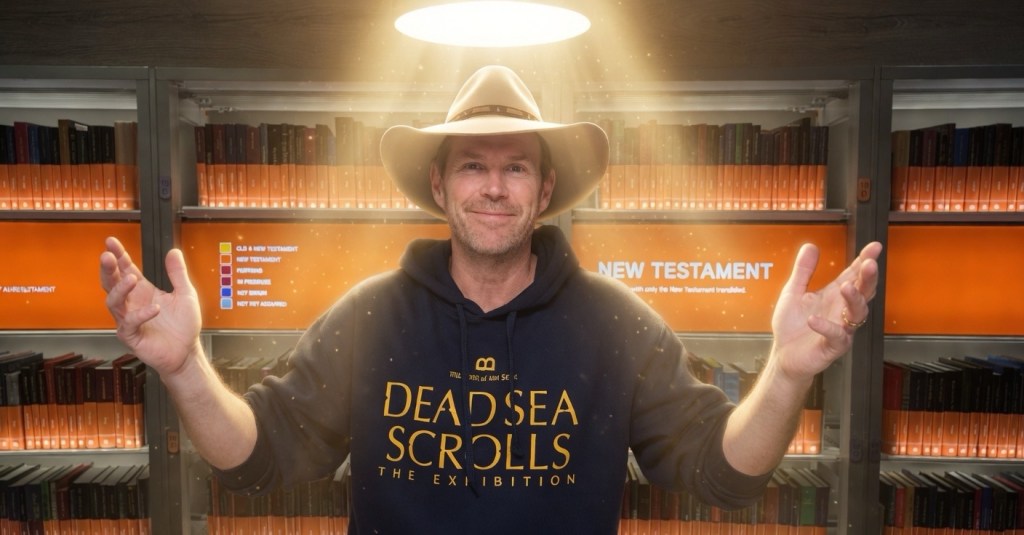
About the Author: Rich Hoffman

Rich Hoffman is an author, political consultant, and strategic advisor based in Cincinnati, Ohio, and the creator of The Politics of Heaven—a unique framework that connects biblical theology, ancient history, and modern power structures to explain how moral alignment and spiritual forces shape global events. Blending real-world political experience with deep research into archaeology, UFO phenomena, and suppressed historical narratives, Hoffman offers compelling commentary on topics ranging from ancient civilizations and the Dead Sea Scrolls to modern populist movements, paranormal continuity, and leadership strategy in chaotic environments. As the author of The Gunfighter’s Guide to Business and the forthcoming Politics of Heaven, he brings a grounded yet provocative voice to media discussions, supported by firsthand experiences and a cross-disciplinary approach that bridges science, history, and theology. For interviews, speaking engagements, or expert analysis, visit richhoffmanbooks.com or contact directly via phone at 513-307-5815 or email at rhoffman@richhoffmanbooks.com.  If you’ve seen the movie, Disclosure Day and want to talk about it and the implications of Presidnet Trump’s UAP disclosures, let me know and we can bring some color to your coverage. https://richhoffmanbooks.com/media-inquiries-broadcast-topics-and-contact-info/?frame-nonce=ad51e7ecba I do have a firsthand UFO encounter to discuss.

Objectivism and the American Experiment: Why Ayn Rand Still Matters in an Age of Collective Delusion, and Why Peter Thiel is a tremendous asset to any civlization

Ayn Rand remains one of the most polarizing figures in modern philosophy and literature for a reason, a very healthy reason. A refugee from the Soviet Union who watched her father’s business seized and her family’s life reduced to poverty under collectivist rule, she arrived in the United States in 1926 carrying a clear-eyed hatred of any system that subordinates the individual mind to the group. She built an entire philosophical system—Objectivism—around the primacy of objective reality, the sovereignty of reason, and the moral right of the individual to live for his own sake. In an era when official culture insists that feelings can rewrite biology, that the state may confiscate the product of one person’s effort for another’s benefit, and that the individual is merely a unit in larger identity categories, her work is no longer a historical curiosity. It is a live confrontation with the day’s dominant premises.

Her novels and nonfiction supply an on-ramp that mainstream institutions will not provide. Anthem stands as one of the cleanest anti-communist fables ever written—a short, devastating portrait of a society that has erased the word “I.” The Fountainhead dramatizes the creator who refuses to subordinate his vision to the demands of the collective. Atlas Shrugged takes the logic further: the men of the mind withdraw, and the parasites who lived off their productivity discover they cannot run the world without them. These books still circulate because they name a conflict that never went away—the individual versus the collective—and because the collectivist side is once again confident enough to drop the mask. For those wanting to understand the news cycles of our day, the work of Ayn Rand will help you get your mind around it. 

Metaphysics: Reality Is Not Optional

Objectivism begins with a blunt metaphysical claim: existence exists. The universe is what it is independent of anyone’s wishes, prayers, social consensus, or emotional needs. Rand called this the primacy of existence. A rock is a rock whether or not someone finds the fact inconvenient. Facts are not created by consciousness; consciousness is the faculty that perceives them.

This sounds like common sense until one watches contemporary culture try to legislate it out of existence. A man cannot become a woman by declaration. A biological male does not acquire the capacity to menstruate or gestate simply because he “identifies” as female. The insistence that subjective feeling overrides observable reality is precisely the mentality Rand spent decades attacking. She was not writing about the more exotic claims of quantum measurement or observer effects in controlled laboratory settings; she was defending the four-dimensional world human beings actually inhabit and must act within. When that world is treated as infinitely malleable by will or decree, the result is not liberation. It is catastrophe dressed up as compassion.

Epistemology: Reason as Absolute

If reality is objective, then knowledge of it must be acquired by specific means. Rand held that the senses are the only source of information about the world and that reason is the faculty that identifies and integrates that material. There is no separate channel of “intuition,” mystical insight, or divine revelation that can override sensory evidence and logical processing. A concept that cannot be traced back to the evidence of the senses and the operation of logic is not merely mistaken; it is cognitively empty.

This is why she was merciless toward modern philosophy’s retreat from the world, particularly the influence of Immanuel Kant. If reason is limited or if “things-in-themselves” are forever inaccessible, then the door opens to every form of subjectivism and collectivist claim. Rand’s position is severe, and it leaves little room for the non-rational. One can grant that human sensory equipment is limited and that deeper layers of physical reality may require instruments and theories beyond the five senses; that does not license treating feelings or group consensus as substitutes for evidence. In the domain of ordinary human action—law, economics, medicine, education—her insistence on reason remains the only reliable check against those who would rewrite reality by force of declaration.

Ethics: The Virtue of Selfishness

The transition from facts to values is the most contentious part of her system. David Hume’s old problem—how one derives an “ought” from an “is”—is met head-on. Rand argued that the concept of value only arises for living organisms. A rock has no values because nothing can benefit or harm it as a rock. A living entity must act to maintain its life. For a human being, whose mode of survival is conceptual and productive rather than instinctual, the good is that which sustains and advances life according to the requirements of a rational being. The evil is that which destroys it.

From this, she derived rational egoism: one’s own life is the proper standard of value, and the moral purpose of each individual is to achieve their own happiness through productive work and voluntary trade. This is not a license for whim, predation, or short-term gratification. The man who drinks himself to death is not selfish; he is destroying the only value he possesses. Rational self-interest requires long-range thinking, integrity, and the refusal to live as a parasite or to treat others as sacrificial animals.

Altruism, in her usage, is not simple kindness or voluntary charity. It is the moral doctrine that the individual has a duty to sacrifice himself to others and that the needs of the collective create a claim on the productive. She rejected that doctrine root and branch. Charity is permissible and often admirable when it is voluntary and does not rest on the premise that the recipient has a moral mortgage on the giver. The moment it becomes a duty enforced by the state or by social pressure, it ceases to be benevolence and becomes predation with a halo.

Politics: Capitalism as the Only Moral System

If individuals have the right to their own lives and the products of their efforts, then the only political system consistent with that right bans the initiation of physical force. Government’s legitimate functions shrink to the police (to protect against domestic force), the military (to protect against foreign force), and the courts (to adjudicate disputes under objective law). Everything else—roads, schools, welfare, industrial policy—belongs in the realm of private voluntary action.

Capitalism, in this view, is not merely the most efficient system; it is the only moral one, because it is the only system that treats individuals as ends in themselves and organizes society based on trade rather than sacrifice. Any government seizure of wealth for redistribution is a violation of the producer’s right to the product of his mind. Rand did not arrive at this conclusion in a vacuum. She had watched the Bolsheviks liquidate private property and reduce her family to near-starvation. When she looked at the New Deal and the expanding administrative state in her adopted country, she saw a slower, softer version of the same principle: the subordination of the individual to the collective will.

The Novels as Philosophical Weapons

The Fountainhead gave the world Howard Roark, the architect who would rather see his building destroyed than allow it to be compromised by second-handers and taste-makers. He is the archetype of the man who lives by his own judgment. Atlas Shrugged escalated the drama: the inventors, industrialists, and thinkers who carry the world on their shoulders stop. The result is not utopia for the remaining population; it is collapse. The book’s influence on entrepreneurs, Silicon Valley founders, and a certain strain of American political thought is well documented. Peter Thiel has been open about its impact. Figures in the current administration’s orbit have circulated it for years. In Ohio, legislators have been known to hand out copies as a quiet statement of first principles.  My good friend Senator George Lang is one of them. And the hatred of Peter Thiel largely, and specifically, comes from his support of Ayn Rand’s philosophy of Objectivism, which the political left despises.  

Critics have always been harsh. Whittaker Chambers’s famous National Review attack treated Atlas Shrugged as if it issued from a totalitarian loudspeaker—an irony given Rand’s lifelong hatred of totalitarianism. Academic philosophers such as Robert Nozick argued that even if one accepts life as the standard of value, the leap to absolute property rights and the rejection of any enforceable duty of aid is not logically compelled. The Objectivist movement itself developed a reputation for rigidity and a personality cult, culminating in the public break with Nathaniel Branden. These criticisms are not trivial. A philosophy that demands near-perfect consistency will always struggle with the messy, interdependent realities of actual human lives, including disability, bad luck, and the genuine goods that arise from voluntary community.

Yet the core insight survives the objections. The productive genius of a relative handful of individuals—Edison, the Wrights, the modern equivalents like Elon Musk building reusable rockets and energy systems—creates the surplus that lifts entire societies. When those individuals are treated as cash cows for the collective or as moral suspects simply because they succeed, the long-term result is not justice. It is stagnation. The question is not whether Elon Musk or any particular innovator is personally likable. The question is whether a society that systematically handicaps its highest producers in the name of equity ends up better or worse for the average person. The historical record of systems that tried the latter experiment is not ambiguous.

America at the Crossroads of Two Traditions

Walk out of certain offices in the Ohio Statehouse and the architecture itself poses the question. Greek columns, vaulted ceilings, classical proportions—the visual language of a republican experiment that began on the other side of the Mediterranean. At the same time, the conversations that spontaneously arise among the people who work there often turn to Scripture, to the Book of Judges, to the warning that a people who demand a king “like all the nations” will discover what concentrated power does to both ruler and ruled. The American founding drew from both streams: classical political forms and a biblical anthropology that understood the corruption of the human heart and the danger of centralized authority.

Rand, an atheist, had little patience for the religious side of that inheritance. Yet her central political claim—that the smallest minority is the individual, and that any ideology which subordinates the individual to the group is already on the road to tyranny—converges with the older biblical suspicion of collective power. The scapegoat mechanism, the demand that someone be sacrificed for the sins or the needs of the many, is ancient. Objectivism names it without theological language and refuses to grant it moral legitimacy.

The same refusal applies to the newer forms of collectivism on offer: the racial and sexual identity politics that treat individuals as avatars of groups, the economic redistribution that treats productive achievement as a social resource to be reallocated, and the cultural insistence that biological reality itself is a social construct. These are not progressive refinements. They are regressions to the oldest political temptation—the belief that the group can rewrite the terms of its members’ existence.

The Continuing Argument

Objectivism is not the last word in philosophy. No system is. Human thought did not end with Aristotle, or with Rand, or with any other figure. Quantum theory, the limits of sensory apparatus, and the persistent human hunger for meaning beyond the strictly material remain open questions. One can accept the primacy of existence and the necessity of reason for navigating the world of action, while still acknowledging that the full picture of reality may lie beyond the current toolkit. The political core, however, does not require omniscience. It requires only the recognition that individuals are not raw material for someone else’s vision of the good, and that a society which protects the right of the mind to function is the only kind that has ever generated sustained prosperity and personal freedom.

That is why the books keep circulating and why the arguments keep returning. In a moment when collectivist premises dominate major institutions and when the productive minority is once again treated as a problem to be managed, Rand’s insistence on the individual as the irreducible unit of moral and political life is not nostalgia. It is a necessary corrective. The American experiment has always been an argument about how much room to give the person who refuses to live as a cog. Objectivism is one of the clearest modern statements of the side that says the person comes first. The debate is not academic. It is the daily substance of politics, culture, and the question of what kind of country this remains.

Further reading is straightforward. Start with the novels for the emotional and dramatic force, then move to the nonfiction for the systematic case. The rest is the ongoing work of testing those ideas against the evidence of history and the requirements of a free society.

Footnotes

1.  For biographical context and the formative impact of the Bolshevik Revolution on Rand’s thought, see her own accounts in We the Living (semi-autobiographical) and the biographical material in Letters of Ayn Rand, ed. Michael S. Berliner (New York: Dutton, 1995).

2.  Ayn Rand, “The Metaphysical Versus the Man-Made,” in Philosophy: Who Needs It (New York: Bobbs-Merrill, 1982); also “The Objectivist Ethics” in The Virtue of Selfishness (New York: New American Library, 1964).

3.  Ayn Rand, Introduction to Objectivist Epistemology, expanded 2nd ed., ed. Harry Binswanger and Leonard Peikoff (New York: NAL Books, 1990).

4.  Ayn Rand, “The Objectivist Ethics,” in The Virtue of Selfishness; the 1961 University of Wisconsin lecture is referenced in secondary literature and in Peikoff’s Objectivism: The Philosophy of Ayn Rand (New York: Dutton, 1991).

5.  Ayn Rand, “What Is Capitalism?” and related essays in Capitalism: The Unknown Ideal (New York: New American Library, 1966).

6.  On the novel’s reception and influence, see Jennifer Burns, Goddess of the Market: Ayn Rand and the American Right (Oxford: Oxford University Press, 2009); Whittaker Chambers’s review appeared in National Review, December 28, 1957. Robert Nozick’s critique is “On the Randian Argument,” The Personalist 52 (1971).

Bibliography

Burns, Jennifer. Goddess of the Market: Ayn Rand and the American Right. Oxford: Oxford University Press, 2009.

Chambers, Whittaker. “Big Sister Is Watching You.” National Review, December 28, 1957.

Nozick, Robert. “On the Randian Argument.” The Personalist 52 (1971): 282–304.

Peikoff, Leonard. Objectivism: The Philosophy of Ayn Rand. New York: Dutton, 1991.

Rand, Ayn. Anthem. Caldwell, ID: Caxton Printers, 1953 (orig. 1938).

———. Atlas Shrugged. New York: Random House, 1957.

———. Capitalism: The Unknown Ideal. New York: New American Library, 1966.

———. The Fountainhead. New York: Bobbs-Merrill, 1943.

———. Introduction to Objectivist Epistemology. Expanded 2nd ed. Edited by Harry Binswanger and Leonard Peikoff. New York: NAL Books, 1990.

———. Philosophy: Who Needs It. New York: Bobbs-Merrill, 1982.

———. The Virtue of Selfishness. New York: New American Library, 1964.

———. We the Living. New York: Macmillan, 1936.

Rich Hoffman

More about me

Click Here to Protect Yourself with Second Call Defense https://www.secondcalldefense.org/?affiliate=20707

About the Author: Rich Hoffman

Rich Hoffman is an author, political consultant, and strategic advisor based in Cincinnati, Ohio, and the creator of The Politics of Heaven—a unique framework that connects biblical theology, ancient history, and modern power structures to explain how moral alignment and spiritual forces shape global events. Blending real-world political experience with deep research into archaeology, UFO phenomena, and suppressed historical narratives, Hoffman offers compelling commentary on topics ranging from ancient civilizations and the Dead Sea Scrolls to modern populist movements, paranormal continuity, and leadership strategy in chaotic environments. As the author of The Gunfighter’s Guide to Business and the forthcoming Politics of Heaven, he brings a grounded yet provocative voice to media discussions, supported by firsthand experiences and a cross-disciplinary approach that bridges science, history, and theology. For interviews, speaking engagements, or expert analysis, visit richhoffmanbooks.com or contact directly via phone at 513-307-5815 or email at rhoffman@richhoffmanbooks.com.  If you’ve seen the movie, Disclosure Day and want to talk about it and the implications of Presidnet Trump’s UAP disclosures, let me know and we can bring some color to your coverage. https://richhoffmanbooks.com/media-inquiries-broadcast-topics-and-contact-info/?frame-nonce=ad51e7ecba I do have a firsthand UFO encounter to discuss.

From Put-in-Bay Caves to Edison’s Milan Home: A Family Vacation That Reveals the Enduring Spark of American Curiosity

I have spent a good deal of time lately thinking about the ancient copper mines of Lake Superior and the strange, almost otherworldly geology that surrounds the Great Lakes. Those thoughts were still turning over in my mind when my family and I loaded the RV and headed for South Bass Island. People from California or Europe might look at a map of Ohio and wonder why anyone would choose an island in Lake Erie for a vacation. From where I sit, it is one of the finest places on earth. It is close enough that my wife and I can reach it without turning the trip into an ordeal, yet once you are on the island you feel properly away from the mainland and its noise. That distance matters to me more than it once did.

We took the ferry with the RV, set up camp, and let the grandchildren loose on golf carts. They had a tremendous time. My son-in-law captured a different angle of the same days on his YouTube channel—lighter, more focused on the pure family fun. I present information one way; he and my daughter present it another. The island itself offered exactly what I had hoped for: a short escape, some serious geology, and a chance to feed the particular curiosity I see in one of my grandsons.

Why South Bass Island and the Lake Erie Caves Called to Us

The geology of these islands is young by deep-time standards. Much of what you see was shaped by the last ice age, roughly 12,000 years ago, yet the underlying limestone and the cave systems hold older stories. I wanted the grandchildren to walk through those stories. Perry’s Cave is the most famous of them. During the War of 1812, men under Commodore Oliver Hazard Perry used the underground freshwater stream inside the cave while the fleet was based in the natural harbor at Put-in-Bay. The cave sits fifty-odd feet below the surface, stays a constant cool temperature, and still carries that quiet historical weight. 

A short distance away is Crystal Cave at Heineman’s Winery, recognized as the world’s largest geode. You descend into a single vast cavity lined with celestite crystals, some of them more than a foot long. The space is large enough to accommodate a small group of people comfortably. Standing inside it feels less like visiting a tourist attraction and more like stepping into a mineral cathedral formed over thousands of years after the ice retreated. My grandson, the one who already shows the restless, pattern-seeking intelligence that strongly reminds me of a young Thomas Edison, had been talking about the largest geode in the world. We made sure he saw it. 

Joe’s Bar sits near the little airport, close enough that people flying in on small planes can walk over for a hamburger or fries. They allow dogs on the outdoor side, which is why my granddaughter wanted to go. We were not there for the drinking crowd. We were there because it sits almost on the path between the campground and the caves, and because a place that welcomes the family dog while serving simple food has its own quiet usefulness. These small details are part of what makes the island work.

The Edison Parallel and the Decision to Stay Longer in Milan

I talk about Thomas Edison a good deal around that particular grandson. It is not that I want to turn him into a replica. I want him to see that there have always been alternatives to the standard path. After the rest of us headed home, my oldest daughter, her husband, and that grandson stayed on. They took the extra days to drive over to Milan, Ohio, and visit Edison’s boyhood home. The house is modest, brick, and sits in a quiet town that still carries the inventor’s name with a certain local pride.

I had recommended Edmund Morris’s biography of Edison years earlier. Morris structured the book in reverse, beginning near the end of Edison’s life—when the older man was still frantically trying to solve the problem of domestic rubber production with Henry Ford and others—and working backward to the boy in Milan. That structure stays with me. It shows a man who never stopped pushing against limits, even when he was five minutes from death. His mother had pulled him out of the public school system early because the ordinary classroom could not contain him. She homeschooled him, protected his oddities, and gave him room to become the person who would later file patents at a pace almost no one has matched. 

That decision by a mother in a small Ohio town still matters. The regulatory and educational environment today makes another Edison far less likely. My daughter understands this. Her husband understands it. They did not stay behind to force a legend on a child. They stayed to show him the actual house, the actual town, and the atmosphere that once allowed a singular mind to develop without being sanded down into a drone.

Local Newspapers, Mickey’s Gas Station, and the Voynich Manuscript

While they were in the Milan area, they stopped at one of the Mickey’s locations—a regional gas-station and market chain that still feels rooted in northern Ohio rather than corporate nowhere. At the counter, they picked up free local newspapers. One of them carried a feature on the Voynich Manuscript, the world’s most mysterious book. My daughter texted me photos of the pages and asked what I thought of it.

I had already written about the manuscript. My working view is that it may be the notebook of a non-human intelligence that somehow ended up in human hands—an idea that fits the larger pattern I explore in The Politics of Heaven. Whether that theory is ultimately correct or not, the fact that a free newspaper distributed at a gas station in Edison country would feature the Voynich at all tells you something about the residual curiosity that still lives in these communities. They are not merely selling fuel and snacks. They are still willing to put strange, difficult ideas in front of ordinary people who might take a copy home and actually read it. 

That same spirit shows up in the little free papers and local efforts you find on the islands themselves. People publish them because they love the place and want to keep a certain industrious, heritage-minded atmosphere alive. It is the opposite of the passive consumption that dominates so much of modern life.

Hardware-Store Towels, Uranus Fudge, and the Ordinary Magic of Ohio Stops

One afternoon we took the kids to a beach facing Kelley’s Island from South Base Island. It is one of the better swimming spots in the area, down past the memorial at the far end. No one had packed swimsuits or towels. The water was cold, as Lake Erie usually is. My wife climbed into a golf cart, drove to the little hardware-and-grocery store that serves much of the island, bought towels and extra clothes, and raced back so the children would not freeze on the return ride. The whole episode lasted maybe half an hour. It was pure small-town improvisation, and it worked.

On other trips, we stop at Shelton’s fireworks store in Richmond, Indiana, right across the state line. Across the street sits the Uranus Fudge Factory, a place that leans hard into adolescent humor in its name yet sells genuinely high-quality candy. This has been a candy year for the grandchildren. We have hit obscure sweet shops all over Ohio, and Uranus held its own. We also make the ritual stop at the McDonald’s in Eaton with the good playground, even though the kids are now mostly too old to play on it. They still like being there. On the way back, we often grab Chinese food from the little plaza near the Walmart. These are not glamorous destinations. They are simply places that have kept a certain American texture—part commerce, part joke, part genuine local pride.

What These Days Actually Mean

I did not plan the vacation as a lesson. I planned it as time away with the people I care about, on an island that still feels like itself. The geology, the caves, the geode, the Edison house, the free newspaper with the Voynich article, the hardware-store towels, and the slightly ridiculous fudge factory all belong to the same larger pattern. They are evidence that pockets of real curiosity and individual initiative still exist in ordinary American places.

The copper mines of Superior, the glacial history of the islands, the unexplained manuscript, and the boy who was protected from the standard school system all feed into the same set of questions I have been carrying for years. Those questions will appear in full in The Politics of Heaven. For now, it is enough to say that a family trip to Put-in-Bay and a side journey to Milan reminded me why I keep returning to these subjects. Intelligence and inventiveness do not come from committees or from systems designed to produce uniform results. They come from particular minds given room to develop, often in small towns that still value their own odd heritage.

I am glad my daughter and son-in-law captured their version of the days on video. I am glad the grandchildren got to stand inside the largest geode, walk through Perry’s Cave, and see the actual house where Edison began. And I am glad a free newspaper at a gas station still bothers to tell people about the world’s most mysterious book. These are small signs, but they are real. In a time when so much of the culture seems determined to flatten everything into the same safe shape, they are worth noticing.

If you ever find yourself near Lake Erie with a few free days, take the ferry. Walk the caves. Stand inside the geode. And if you are driving through northern Ohio, stop at a Mickey’s and pick up whatever free paper they are giving away that week. You never know what might be inside it.

Footnotes

1.  Guinness World Records recognizes Crystal Cave at Heineman’s Winery on South Bass Island as the largest geode, a single celestite cavity discovered in 1887 while digging a well.

2.  Historical accounts credit men under Commodore Oliver Hazard Perry with using the underground stream in Perry’s Cave for freshwater during the 1813 occupation of the island before the Battle of Lake Erie.

3.  Edmund Morris, Edison (New York: Random House, 2019). The biography is structured in reverse chronological order, beginning near the end of Edison’s life and moving backward to his boyhood in Milan, Ohio.

4.  The Voynich Manuscript, held at Yale’s Beinecke Rare Book & Manuscript Library, remains undeciphered. Fringe theories have long included non-human or extraterrestrial origin; the author’s own published view aligns with that line of speculation as part of a broader inquiry into non-human intelligence.

5.  Mickey’s is a regional convenience-store and gas-station chain headquartered in the Milan, Ohio area, known for community involvement and local character.

Selected Bibliography

Morris, Edmund. Edison. New York: Random House, 2019.

Heineman’s Winery and Crystal Cave historical materials, Put-in-Bay, Ohio.

Perry’s Cave Family Fun Center and related War of 1812 documentation.

National Park Service materials on Perry’s Victory and International Peace Memorial.

Voynich Manuscript facsimile and scholarly literature, Beinecke Rare Book & Manuscript Library, Yale University.

Local histories of South Bass Island, Kelleys Island, and the Lake Erie island archipelago.

Geology of the Great Lakes region and post-glacial cave formation studies.

Hoffman, Rich. The Gunfighter’s Guide to Business.

Hoffman, Rich. The Politics of Heaven (forthcoming).

The Gunfighter’s Guide: A skeleton key to Western Civilization (gunfighterguide.shop) 

Rich Hoffman

More about me

Click Here to Protect Yourself with Second Call Defense https://www.secondcalldefense.org/?affiliate=20707

About the Author: Rich Hoffman

Rich Hoffman is an author, political consultant, and strategic advisor based in Cincinnati, Ohio, and the creator of The Politics of Heaven—a unique framework that connects biblical theology, ancient history, and modern power structures to explain how moral alignment and spiritual forces shape global events. Blending real-world political experience with deep research into archaeology, UFO phenomena, and suppressed historical narratives, Hoffman offers compelling commentary on topics ranging from ancient civilizations and the Dead Sea Scrolls to modern populist movements, paranormal continuity, and leadership strategy in chaotic environments. As the author of The Gunfighter’s Guide to Business and the forthcoming Politics of Heaven, he brings a grounded yet provocative voice to media discussions, supported by firsthand experiences and a cross-disciplinary approach that bridges science, history, and theology. For interviews, speaking engagements, or expert analysis, visit richhoffmanbooks.com or contact directly via phone at 513-307-5815 or email at rhoffman@richhoffmanbooks.com.  If you’ve seen the movie, Disclosure Day and want to talk about it and the implications of Presidnet Trump’s UAP disclosures, let me know and we can bring some color to your coverage. https://richhoffmanbooks.com/media-inquiries-broadcast-topics-and-contact-info/?frame-nonce=ad51e7ecba I do have a firsthand UFO encounter to discuss.

Why The Fountainhead Is Still the Most Important Novel in America:  Why so many Americans now treat the producer as the problem and the parasite as the moral authority

I sit down most days and watch the news panels the same way many people do. Fox News, the War Room, the usual circuit. Smart people, serious people, many of them I respect. Steve Bannon and his guests especially. And yet I keep hearing the same stunned tone when they talk about the sudden popularity of socialism, the rise of candidates who openly flirt with Marxist language, the young people who treat Bernie Sanders or Alexandria Ocasio-Cortez as prophets. They act as if this is some new weather system that just blew in.

I have been talking about the same weather for decades. The adverse effects of collectivism on a free human culture are not a mystery to me. They destroy the individual while pretending to help the group. I have committed a large portion of my working life to saying so, in writing, on the air, and in private conversation. So when the panels discover it late, I find myself less angry than simply tired. The diagnosis has been available the entire time. It sits on the shelf as a single novel that most of them will not touch.

That novel is The Fountainhead by Ayn Rand.

It is, without qualification, my favorite book. Not one of my favorites. The favorite. I have read it more times than I can cleanly count. I talked about it for years. I have carried its central argument into boardrooms, courtrooms, and conversations with my own grandchildren. When people ask me what single work of fiction best explains why so many Americans now treat the producer as the problem and the parasite as the moral authority, I do not hesitate. Read The Fountainhead. Then read it again.

Ayn Rand’s Escape from Communism and the American Novel That Resulted

Ayn Rand was a Russian refugee who escaped the Soviet system and came to America precisely because she wanted the opposite of what she had left. She watched the early years of the Bolshevik experiment up close. She understood, in her bones, what happens when the collective claims the right to own a man’s mind and the products of his mind. She wrote The Fountainhead as an artist, not as a political pamphlet, and the result is one of the clearest, most sustained examinations of the creator versus the second-hander that American literature has ever produced. 

Howard Roark is an architect who will not compromise the integrity of his buildings. When the establishment forces mediocrity onto a housing project he designed, he dynamites the result rather than allow his work to stand as a diluted lie. That act is not teenage rebellion. It is the logical end of a man who treats his own mind as the final court of appeal. The courtroom speech that closes the book is, in my view, as powerful as John Galt’s radio address in Atlas Shrugged. It is pure intellectual dynamite. Roark explains, without apology, the difference between the man who lives by the work of his own mind and the man who lives by borrowing, begging, or looting the work of others.

Most people do not want to see themselves as second-handers. That is exactly why the book still stings.

Why Some Conservatives Keep Their Distance from Ayn Rand

I remain mystified that so many people on the right, including voices I otherwise admire, treat Rand as radioactive. Bannon and others have expressed open dislike. The explanation usually circles her atheism. She was an atheist. She never pretended otherwise. That fact has allowed generations of religious conservatives to dismiss the entire body of work rather than engage the actual argument about production, integrity, and the moral status of the individual.

I am a Bible guy. I read it constantly. I take Joshua seriously—the man who marches around Jericho because God said to, who trusts the order larger than himself even when the math looks insane. I also take the Grail quest seriously. Percival finds the castle only when he stops forcing the journey and rides with looser reins. Those stories are not in conflict with the best of what Rand saw. They deepen it.

The Tower of Babel story is often read as a simple warning against human pride. Rand would have celebrated the ambition itself. The real sin in that story is the unified collective that tries to storm heaven by consensus rather than by individual excellence. When a man’s personal vision actually lines up with the larger order—when he becomes the vehicle rather than a cog—the result looks a lot like Joshua’s conquest and a lot like Roark’s refusal to bend. The difference is the source of the certainty. One man says “God told me.” The other says “I will not pretend.” Both refuse the noise of the crowd.

I live closer to Joshua’s path in daily practice. I want the commitment of marriage, the long obedience in the same direction, the willingness to enjoy the life God actually gave me rather than treat every compromise as spiritual death. But I understand what Roark was protecting. The forces that tried to break him are the same forces the Bible warns about under different names—the ones that pull a man away from the work he was made to do. Uncompromising clarity in the face of that noise is a form of spiritual discipline, whether the author acknowledged it or not.

Creators Versus Parasites and Why We Have So Few Edisons

The central question of The Fountainhead is simple and uncomfortable: are you creating, or are you feeding off someone else’s creation? Most people never ask it of themselves. Committees do not invent the light bulb. Consensus does not produce the theory of relativity. Those things come from individuals who refuse to bend.

My daughter recently took my grandson to Thomas Edison’s boyhood home in Milan, Ohio, for exactly that reason. I am not trying to manufacture another Edison. I want him to see that there are alternatives to the box the culture keeps trying to sell. Edison woke up every day trying to be a fountainhead. He made mistakes—plenty of them—but the posture was unmistakable. The same posture explains why an Elon Musk can exist in America and why a Jack Ma eventually runs into the wall in a more collective system. The culture that still has room for the uncompromising creator is the culture that keeps producing them. The culture that treats that spirit as a threat eventually smothers it. 

Hollywood’s Long War Against the Fountainhead Spirit

The resistance is not abstract. Zack Snyder, the director of 300 and a string of visually ambitious films, has spent years trying to adapt The Fountainhead. Studios treat the material as radioactive. He has said publicly that the book is considered “taboo” among the people who green-light projects. The same pattern appeared with the low-budget Atlas Shrugged trilogy made between 2011 and 2014. Funding was scraped together in pieces. Actors who appeared in it paid a quiet professional price. The collective does not need to ban the book. It only needs to make sure no one with real resources is allowed to put the story on a large screen without punishment. 

Clint Eastwood understood the same energy. He carried versions of it through Dirty Harry, the preacher in Pale Rider, Frank Morris in Escape from Alcatraz, and the driven director in White Hunter Black Heart. In the 1980s, when he was still fighting for the kind of films he wanted to make, those characters walked through the frame like men who would rather dynamite the building than let the second-handers own the final cut. White Hunter Black Heart feels, to me, like Eastwood’s private reckoning with the cost of that stance. He played the uncompromising artist for most of the running time and then, at the end, allowed the character a moment of regret. After that film, the pure Roark energy largely left his work. Age and the system both take their toll. 

Even Walt Disney once understood. In the American Adventure pavilion at Epcot, there is a quote set into the wall: “Throughout the centuries there were men who took first steps down new roads, armed with nothing but their own vision.” It is Ayn Rand’s line. I have stood in front of it with my grandchildren and told them it is one of the most important things in the entire park. Modern operators tend to cover it with seasonal decorations or other displays. The plaque is still there. The spirit that put it there is harder to find. 

Trump, the Ballroom, and the Same Old Courtroom Drama

I recently walked through the construction site of the new White House ballroom with my wife. We were invited. What is rising out of that hole in the ground is a clear, large-scale vision. The resistance to it has been immediate and predictable: you did not get our approval, the process was not followed, the collective must control the final shape. It is the same drama Roark faced, only now the building is the people’s house and the second-handers wear different titles. Trump has said publicly that The Fountainhead relates to business, beauty, life, and inner emotions—that it relates to everything. The comparison is not perfect, and pure Objectivists often bristle at it, but the pattern of an uncompromising builder meeting institutional resistance is hard to miss. 

Robert Kincaid, the Bridges of Madison County, and the Quiet Hunger for the Fountainhead Life

Robert James Waller’s The Bridges of Madison County sold in enormous numbers for a reason that had very little to do with the affair itself. Robert Kincaid is a roaming photographer who lives by his own vision in a landscape that offers almost nothing to support it. Francesca sees, for a few days, what it looks like to be the vehicle rather than another wheel on someone else’s ride. Most people settle for the comfortable, arranged path—the prom-king marriage, the nice house, the pool—and then spend the rest of their lives wondering why the castle never appears. The book worked because American readers still recognize the difference even if they no longer have the language for it.

What I Tell My Grandchildren and Why Independent Media Matters

When I take the grandchildren to Epcot or to Edison’s house or talk to them at the kitchen table, I am not trying to turn them into little Objectivists. I am trying to show them that they do not have to be cogs. They can be the vehicle. That requires a certain rebelliousness against the noise of the culture. It requires the willingness to trust a larger order while still showing up with full intensity, the way Joshua did and the way Percival finally learned to do. The plaque on the wall, the boyhood home of an inventor, the courtroom speech at the end of a long novel—these are seeds. They may not bloom for years. When the world starts testing them, I want the memory of their grandfather getting excited about a simple line of text to be one of the things that makes them stop and think there might be another way to live.

Independent media is the slow trickle that keeps these ideas alive when the big networks and the entertainment unions will not touch them. I do this work for that reason. The Tea Party years showed that people will reach for Rand when they are hungry for an explanation of what is happening to them. The hunger has not gone away. It has only been driven underground by the same second-hand mechanisms the books describe.

Read the Book. Then Read It Again.

The Fountainhead is not a new religion. Treating it that way is one of the fastest ways to miss the point. It is a work of art that dramatizes a permanent conflict: the man who creates versus the man who lives second-hand. It is a big book. It is demanding. It does not flatter. That is precisely why it remains useful, even as television panels are still trying to figure out why socialist language keeps gaining ground among the young.

I have the advantage of having watched the cultural impact of these ideas across decades—what worked, what failed, where the atheism limited Rand’s own reach, and where the moral clarity she captured still cuts through every fashionable excuse. The Bible, the Grail stories, Edison’s stubbornness, Eastwood’s best characters, the quiet rebellion of a man who refuses to hand his voice to a committee—all of it belongs in the same conversation. Rand never fully arrived at the larger synthesis. That does not make the novel less valuable. It makes the rest of us responsible for finishing the thought.

If you have never read it, get it. If you read it once and bounced off the characters or the length, try again. The courtroom speech alone is worth the price of admission. Then look around at the news, at the schools, at the institutions that keep trying to turn creators into employees of the collective, and ask yourself the question Roark never stopped asking: are you the fountainhead, or are you content to be another wheel?

I know which side I am on. I have known it for a long time. The work continues.

Footnotes

1.  Ayn Rand, The Fountainhead (New York: Bobbs-Merrill, 1943). The novel has sold more than ten million copies and remains in continuous print.

2.  For Rand’s early life and escape from Soviet Russia, see Anne C. Heller, Ayn Rand and the World She Made (New York: Nan A. Talese/Doubleday, 2009).

3.  The quote appears in the rotunda of the American Adventure pavilion at Epcot. Multiple visitor accounts and Disney historians confirm its presence; seasonal overlays have at times obscured individual plaques.

4.  Zack Snyder has discussed his unproduced Fountainhead adaptation in interviews, including on the Joe Rogan Experience (2024), describing industry resistance to the material as “taboo.”

5.  The Atlas Shrugged film trilogy (2011–2014) was produced independently on limited budgets after repeated failures to secure traditional Hollywood financing.

6.  Clint Eastwood’s interest in Rand’s work and the Roark-like qualities of several of his characters are documented in contemporary profiles and in the production history of White Hunter Black Heart (1990).

7.  Donald Trump’s public comments on The Fountainhead appear in a 2016 interview with Kirsten Powers for USA Today.

8.  Thomas Edison Birthplace Museum, Milan, Ohio; National Historic Landmark.

9.  Robert James Waller, The Bridges of Madison County (New York: Warner Books, 1992).

10.  On the broader cultural reception of Rand among conservatives and the persistent tension with her atheism, see Jennifer Burns, Goddess of the Market: Ayn Rand and the American Right (Oxford: Oxford University Press, 2009).

Selected Bibliography

Rand, Ayn. The Fountainhead. New York: Bobbs-Merrill, 1943.

Rand, Ayn. Atlas Shrugged. New York: Random House, 1957.

Rand, Ayn. Anthem. Caldwell, Idaho: Caxton Printers, 1966 (orig. 1938).

Heller, Anne C. Ayn Rand and the World She Made. New York: Nan A. Talese/Doubleday, 2009.

Burns, Jennifer. Goddess of the Market: Ayn Rand and the American Right. Oxford: Oxford University Press, 2009.

The Holy Bible, various translations (particularly the Book of Joshua and accounts of the Tower of Babel).

Chrétien de Troyes and later Grail romances (Percival tradition).

Waller, Robert James. The Bridges of Madison County. New York: Warner Books, 1992.

Viertel, Peter. White Hunter, Black Heart. New York: Doubleday, 1953 (basis for the 1990 film).

Eastwood, Clint, dir. White Hunter Black Heart. Warner Bros., 1990.

Eastwood, Clint, dir. Pale Rider. Warner Bros., 1985.

Eastwood, Clint, dir. Escape from Alcatraz. Paramount, 1979.

Snyder, Zack (unproduced adaptation notes and public statements on The Fountainhead).

Edison Birthplace Museum archival materials, Milan, Ohio.

Disney historical accounts of the American Adventure pavilion, Epcot.

Hoffman, Rich. The Gunfighter’s Guide to Business.

Hoffman, Rich. The Politics of Heaven (forthcoming).

Rich Hoffman

More about me

Click Here to Protect Yourself with Second Call Defense https://www.secondcalldefense.org/?affiliate=20707

About the Author: Rich Hoffman

Rich Hoffman is an author, political consultant, and strategic advisor based in Cincinnati, Ohio, and the creator of The Politics of Heaven—a unique framework that connects biblical theology, ancient history, and modern power structures to explain how moral alignment and spiritual forces shape global events. Blending real-world political experience with deep research into archaeology, UFO phenomena, and suppressed historical narratives, Hoffman offers compelling commentary on topics ranging from ancient civilizations and the Dead Sea Scrolls to modern populist movements, paranormal continuity, and leadership strategy in chaotic environments. As the author of The Gunfighter’s Guide to Business and the forthcoming Politics of Heaven, he brings a grounded yet provocative voice to media discussions, supported by firsthand experiences and a cross-disciplinary approach that bridges science, history, and theology. For interviews, speaking engagements, or expert analysis, visit richhoffmanbooks.com or contact directly via phone at 513-307-5815 or email at rhoffman@richhoffmanbooks.com.  If you’ve seen the movie, Disclosure Day and want to talk about it and the implications of Presidnet Trump’s UAP disclosures, let me know and we can bring some color to your coverage. https://richhoffmanbooks.com/media-inquiries-broadcast-topics-and-contact-info/?frame-nonce=ad51e7ecba I do have a firsthand UFO encounter to discuss.

Psychedelics, Skull Cults, and the Politics of Heaven: Why Christianity Broke the Cycle of Appeasement to Non-Human Intelligence

I have been carrying these questions in the background of my thinking for decades. The frequency with which they demand attention has risen sharply since the recent UAP disclosures. When the best technology the Air Force possesses cannot keep pace with something that behaves more like a ghost than a craft, the old categories collapse. It is not enough to say a flying saucer is real. It is not enough to say a religious claim is real. I want to know what causes people to believe what they believe, what political order forms around those beliefs, and what self-interest drives the entire system. Once you understand the political motivation behind belief, you understand the kind of society people are actually building—and whether you should support it.

That is why the conversation around Brian Muraresku’s The Immortality Key landed with such force. The book is not merely another academic argument about ancient wine. It is a direct challenge to the sanitized version of early Christianity most of us inherited. And it raises a harder question: if the original Eucharist carried a pharmacological charge, what does that tell us about the entities people were trying to contact, and why did Christianity’s later institutional form deliberately move away from that charge?

The Immortality Key and the Pagan Continuity Hypothesis

Muraresku’s central claim is straightforward and explosive. The original Christian communion was not a symbolic sip of ordinary wine. It was a potent psychedelic sacrament inherited from the Greek mysteries, specifically the cult of Dionysus and the rites at Eleusis. For nearly two thousand years, the greatest minds of antiquity—Cicero among them—traveled to the sanctuary at Eleusis to drink the kykeon. They claimed the experience removed the fear of death. The recipe was a state secret punishable by death.

The chemistry focuses on ergot, the fungus that grows on barley and rye—the same fungus from which Albert Hofmann first synthesized LSD in 1938. The theory is not new. It was proposed in 1978 by R. Gordon Wasson, Albert Hofmann, and Carl A. P. Ruck in The Road to Eleusis. Hofmann and Ruck’s academic careers suffered for it. The idea that the foundations of Western philosophy and early Christianity rested on controlled visionary pharmacology was too much for the scholarly stomach of the time.  And when you think about that very obvious claim, and the way those names were ostracized, you can see the root cause of a much larger problem.  

Muraresku spends years in the Vatican archives and archaeological sites looking for the transition. He notes that ancient wine was rarely plain fermented grape juice. It was routinely an infusion of herbs, roots, and potentially fungi—a pharmakon. The Gospel of John, the most Greek of the Gospels, uses language for the wine that suggests something more complex than table drink. Jesus’ miracle at Cana occurs in a cultural zone saturated with Dionysian imagery. In early Jesus centuries, Dionysus and Jesus were sometimes treated as interchangeable figures of death, rebirth, and ecstatic immortality.

The book’s most compelling social argument concerns women. For millennia, the preparation of these visionary beverages was women’s work. As Christianity became institutionalized and more patriarchal, particularly from the fourth century onward, those women and their spiked drinks became a threat to the emerging clerical monopoly on the divine. Muraresku reads the Inquisition’s language of pharmaka and sorcery not merely as superstition but as the systematic eradication of a competing technology of direct encounter with the sacred. The shift, in his framing, is from pharmacological Christianity to placebo Christianity.

I want Christianity to succeed. I do not read Muraresku as an enemy of the faith. He identifies as a Catholic who is trying to recover rather than destroy the Eucharist. Yet the implications cut in two directions at once. If the earliest layers of the tradition carried a visionary intensity later deliberately muted, then the institutional Church both preserved and constrained something powerful. And if that intensity was chemically mediated, we must ask what, exactly, the initiates were encountering.

Beer, Skulls, and the Long Continuity of Death Cults

The problem is larger than Greece. When I go back further—ten thousand years further—the pattern sharpens.

At Göbekli Tepe (the site that Muraresku and others still sometimes refer to by earlier or variant names in popular discussion), the evidence is no longer subtle. T-shaped pillars, snakes carved everywhere, a clear skull cult, and chemical traces consistent with beer brewing. People were not merely gathering to eat. They were preparing fermented beverages, removing soft tissue from human heads, drilling holes, and displaying the skulls in ritual contexts under carefully oriented architecture. The same complex appears, in different local forms, along the Jordan Valley in the dolmen fields that stretch from the Golan south toward the Dead Sea, and again in the megalithic “Wheel of Giants” (Rujm el-Hiri / Gilgal Refa’im) east of the Sea of Galilee—roughly 160 meters across, built of more than 40,000 tons of basalt, aligned with solar and stellar markers.

I have scoured the archaeological literature for a serious treatment of these Jordan Valley dolmens from roughly 10,000 to 3,000 BC. The silence is telling, just like any discussion dealing with the use of wine in Greek culture outside of mainstream opinion. Mainstream discussion prefers the safer Bronze Age and later. Yet the structures are there. The alignments are there. The continuity of ritual astronomy with later Hopewell earthworks in the Ohio Valley is difficult to ignore once you stop treating the Atlantic as an absolute barrier.

Pure native copper from the Lake Superior region was extracted for thousands of years. Isotopic and purity studies continue to raise questions about whether some of that copper moved farther than orthodoxy allows. The Windover bog people of central Florida preserve soft tissue and brain matter from the same deep time window. The Newberry Tablet and other Michigan finds remain controversial, but the pattern of megalithic and copper-working activity across the Great Lakes and the Upper Peninsula does not vanish because it is inconvenient.

Everywhere you look in this pre-biblical window, you find cultures oriented toward death, severed heads, fermented or psychoactive drink, and communication with something beyond the ordinary dead—the politics of that communication matter. Human beings do not casually cut off a neighbor’s head, scrape the flesh, hang the skull, and pour blood on an altar for sport. They do it because they believe the act buys favor, knowledge, rain, fertility, or protection from harm.

The Mouse and the Snake

I use a simple allegory. Watch a pet snake being fed. Drop a mouse into the glass enclosure. For the first few minutes, the mouse runs, freezes, and tests every corner. Eventually it realizes there is no exit. Then the behavior changes. It becomes still. It positions itself near the water dish or the food bowl as if stillness and proximity to ordinary life might persuade the snake to look elsewhere. The snake, of course, is not persuaded. It simply waits and then eats.

Humanity has lived for a very long time with the anxiety of that mouse. Non-human intelligences—call them Watchers, old gods, ultraterrestrials, or whatever the current UAP language prefers—appear in the record as entities that demand appeasement. Psychedelics, ritual sex, blood, and skull display are technologies of that appeasement. The mouse tries to make itself useful or invisible so the snake will not strike.

Christianity, in its mature form, broke that cycle. It did not deny the existence of the hostile powers. It declared them defeated in principle and offered a different posture: moral agency, individual responsibility, and direct relationship with a God who does not require the constant feeding of death. The result, imperfect as every human institution is, was the rise of a civilization that valued the living more than the skulls of the dead. Strip the Christian premise from a mass of people, and the older pattern reasserts itself with remarkable speed. I have watched it at a Jason Aldean concert from the VIP area—twenty thousand people, many drunk since morning, public sexual display, the old fertility and abandon patterns returning the moment the moral frame loosens. The same retreat appears wherever the teachings of Jesus are actively removed from a culture.

That is why I am not enthusiastic about the modern psychedelic renaissance framing itself as the recovery of a lost “religion with no name.” The experiences reported at Johns Hopkins and NYU—ego death, loss of fear of mortality—are real. The question is whether the entities contacted in those states are friends of the human project. My reading of the long archaeological record is that they are not. They have been competing for control of human attention and behavior for a very long time. Christianity was never their preferred outcome.

The Four Pillars That Still Need Digging

The gap between roughly 10,000 BC and the world of Abraham remains the least examined and most consequential stretch of the human story. Four clusters of evidence deserve far more serious, well-funded attention than they currently receive.  I am committing myself to putting money and attention to these ideas:

1.  The skull cult, beer residues, and snake iconography at Göbekli Tepe and related Anatolian sites.

2.  The dolmen fields and the Wheel of Giants along the Jordan Valley and Golan.

3.  The pure copper extraction systems of the Lake Superior region and their possible long-distance movement.

4.  The Windover and related Archaic Florida populations with their extraordinary preservation of soft tissue and ritual practice.

These are not isolated curiosities. They form the deep background against which both the biblical narrative and the later Greek mysteries emerge. More excavation, more isotopic analysis, more open discussion of possible transoceanic contact, and less reflexive dismissal of “fringe” data would change the conversation. I am writing The Politics of Heaven in part to force that conversation into the open. The secular publishing world prefers books that treat Christianity as the problem rather than as a partial solution to an older and darker problem. That preference itself looks, from where I sit, like another form of the mouse’s stillness—keeping the larger questions safely inside the glass.

Conclusion: Do Not Be the Mouse

The original Eucharist may well have carried a pharmacological dimension inherited from older Mediterranean practice. The women who prepared the drinks may have been the last keepers of a technology the institutional Church found threatening. None of that requires us to return to the skull cults and the blood altars. The miracle of Christianity was not that it invented the sacred. It redirected the human drive for transcendence away from appeasement of predatory powers and toward a moral and spiritual posture that could build a durable civilization.

I want more money poured into the archaeology of the deep past—not the archaeology that already knows what it is allowed to find, but the kind willing to follow the copper, the alignments, the beer residues, and the severed heads wherever they lead. I want the conversation about non-human intelligence to stop treating the entities as either cartoon aliens or harmless spirit guides. They have a politics. Humanity needs a politics equal to theirs.

The Politics of Heaven is my effort to map that battlefield. The four pillars above are the places where the next decade of serious digging should concentrate. The rest is commentary, color, and the long memory of a man who has watched the same patterns repeat across continents and millennia.

Do not be the mouse. Learn the snake’s methods. The enemy is the one who puts the mouse in the cage with the snake.  That is the answer to our many questions.  And in the UAP disclosures, we are getting a hint of that world.  

Footnotes

1.  Brian C. Muraresku, The Immortality Key: The Secret History of the Religion with No Name (St. Martin’s Press, 2020).

2.  R. Gordon Wasson, Albert Hofmann, and Carl A. P. Ruck, The Road to Eleusis: Unveiling the Secret of the Mysteries (Harcourt Brace Jovanovich, 1978; later editions).

3.  On the ergot detoxification experiments and the University of Athens work referenced by Muraresku, see the discussion and citations in The Immortality Key, chapters on Eleusis and the chemistry of the kykeon.

4.  Patrick E. McGovern, Ancient Wine: The Search for the Origins of Viniculture (Princeton University Press, 2003) and subsequent biomolecular archaeology papers on mixed fermented beverages.

5.  For Göbekli Tepe skull cult and brewing evidence: Klaus Schmidt and subsequent publications of the German Archaeological Institute; recent chemical analyses of residues in stone vessels.

6.  Rujm el-Hiri (Gilgal Refa’im / Wheel of Giants): surveys and interpretations in Israeli archaeology literature; see also popular and specialist treatments of its astronomical alignments.

7.  Old Copper Culture / Lake Superior copper: standard Midwestern archaeology; purity and sourcing debates continue in archaeometallurgy literature.

8.  Windover site, Florida: Glen H. Doran et al., publications on the Archaic wet-site cemetery and preserved soft tissue.

9.  Jacques Vallée, Passport to Magonia: From Folklore to Flying Saucers (Henry Regnery, 1969) and later works on the continuity of non-human encounter narratives.

10.  Diarmaid MacCulloch, Christianity: The First Three Thousand Years (Viking, 2009).

11.  Biblical Archaeology Review, ongoing coverage of Jordan Valley and related megalithic sites; earlier issues treating dolmens remain limited relative to the density of the remains.

12.  On Hopewell copper and ceremonial complexes: standard Ohio Valley archaeology; Newark Earthworks and related lunar alignments.

13.  Dolores Cannon’s reported communications with Essene figures appear in her Conversations with Nostradamus series and related remote-viewing / past-life material; treated here as phenomenological data rather than conventional historiography.

14.  Graham Hancock, Fingerprints of the Gods (1995) and later works on Göbekli Tepe and catastrophic prehistory; useful for raising questions even where orthodoxy disagrees with conclusions.

Selected Bibliography

•  Muraresku, Brian C. The Immortality Key. St. Martin’s Press, 2020.

•  Wasson, R. Gordon, Albert Hofmann, and Carl A. P. Ruck. The Road to Eleusis. 1978 and later editions.

•  MacCulloch, Diarmaid. Christianity: The First Three Thousand Years. Viking, 2009.

•  Vallée, Jacques. Passport to Magonia. 1969.

•  McGovern, Patrick E. Ancient Wine. Princeton University Press, 2003.

•  Schmidt, Klaus. Publications on Göbekli Tepe (German Archaeological Institute).

•  Doran, Glen H., et al. Windover site monographs and papers.

•  Hancock, Graham. Fingerprints of the Gods and subsequent titles.

•  Biblical Archaeology Society. Biblical Archaeology Review (ongoing).

•  Standard references on Rujm el-Hiri, Old Copper Culture, Hopewell, and Jordan Valley dolmens in regional archaeological journals.

Rich Hoffman

More about me

Click Here to Protect Yourself with Second Call Defense https://www.secondcalldefense.org/?affiliate=20707

About the Author: Rich Hoffman

Rich Hoffman is an author, political consultant, and strategic advisor based in Cincinnati, Ohio, and the creator of The Politics of Heaven—a unique framework that connects biblical theology, ancient history, and modern power structures to explain how moral alignment and spiritual forces shape global events. Blending real-world political experience with deep research into archaeology, UFO phenomena, and suppressed historical narratives, Hoffman offers compelling commentary on topics ranging from ancient civilizations and the Dead Sea Scrolls to modern populist movements, paranormal continuity, and leadership strategy in chaotic environments. As the author of The Gunfighter’s Guide to Business and the forthcoming Politics of Heaven, he brings a grounded yet provocative voice to media discussions, supported by firsthand experiences and a cross-disciplinary approach that bridges science, history, and theology. For interviews, speaking engagements, or expert analysis, visit richhoffmanbooks.com or contact directly via phone at 513-307-5815 or email at rhoffman@richhoffmanbooks.com.  If you’ve seen the movie, Disclosure Day and want to talk about it and the implications of Presidnet Trump’s UAP disclosures, let me know and we can bring some color to your coverage. https://richhoffmanbooks.com/media-inquiries-broadcast-topics-and-contact-info/?frame-nonce=ad51e7ecba I do have a firsthand UFO encounter to discuss.

Ohio Needs more Republicans: Currently, the State is operating in the black–less Democrats means a better state

I saw the U.S. News & World Report rankings circulating on X this week, and they put Ohio at 42nd overall for 2026, which puts us in the bottom ten and marks a drop from 38th last year and 36th the year before.¹ The categories they measure are education, healthcare, economy, infrastructure, opportunity, fiscal stability, natural environment, and crime and corrections. Ohio’s weakest spots were natural environment at 43rd and economy at 38th, with healthcare at 36th, crime and corrections at 37th, infrastructure at 31st, and education at 29th. The brighter spots were opportunity at 18th and fiscal stability at 28th.² Utah sat at number one for the fourth straight year.

The timing is not lost on me. We are months out from a midterm cycle and a gubernatorial race, with Democrats trying to claw back ground in a state they have not controlled for a long time. Amy Acton is the Democratic nominee, and the narrative machine is looking for any data point that can be spun into evidence that Republican stewardship has failed. Ohio has had Republican governors and legislative majorities for the better part of two decades. When the ledgers are in the black, and the business climate is competitive, the opposition looks for rankings that penalize issues Republicans tend not to prioritize as much as progressive outlets do.

That is exactly what this ranking does. Education and healthcare carry the heaviest weights in the U.S. News methodology—roughly 15.8 percent and 15.5 percent, respectively—while natural environment and crime and corrections carry less weight.³ The metrics lean toward things like pre-K enrollment rates, higher-education access, college debt levels, and certain public-health indicators. States that invest more in expanding the existing system and in measuring inputs rather than outcomes tend to score higher on those axes. Ohio spends in the mid-to-high teens of thousands per pupil, right around or slightly below the national average depending on the data set, and we are not pretending that simply increasing the size of the bureaucracy automatically produces better results.⁴ The ranking rewards the model that has produced years of mediocre performance and cultural experimentation in many places, and it docked Ohio for not matching that model closely enough.

Meanwhile, two months earlier, CNBC released its America’s Top States for Business ranking and put Ohio at number one for the first time.⁵ That study uses a different set of 138 metrics weighted toward infrastructure, cost of doing business, workforce, economy, and access to capital—the things companies actually look at when they decide where to put plants, headquarters, and capital. Ohio ranked first in infrastructure and first in cost of doing business. We have no corporate income tax, a competitive commercial activity tax structure, shovel-ready sites, abundant power capacity, and more than 140 million people within a day’s drive. Governor DeWine correctly called that ranking proof that Ohio is a strong place for jobs and opportunity. The contrast is instructive. One ranking measures outcomes that matter to employers and taxpayers who have to meet payroll. The other measures a set of progressive priorities and then acts surprised when a state that has refused to adopt the full progressive playbook scores lower.

I prefer the CNBC approach. Rankings are never gospel, and methodology is everything. Mortimer Zuckerman owns U.S. News and has long reflected the worldview of coastal media institutions that view Republican governance as inherently suspect.⁶ When a ranking heavily weights healthcare access metrics and education-system expansion while Ohio is running consistent budget surpluses—nearly $1.8 billion above projections in fiscal year 2026—and is actively working on property-tax relief, the political incentive is obvious.⁷ Democrats cannot move the ball in Ohio the way they want, so the media environment supplies stories about how the state is “falling behind.” Ohio is operating in the black. We dug out of the deficits of earlier Democratic administrations and have maintained strong credit ratings and a healthy rainy-day fund. That is not failure. That is competence.

Amy Acton’s record is part of the same conversation. As Ohio’s health director in early 2020, she became the public face of some of the strictest early lockdowns in the country. Ohio was the first to close schools statewide and to impose broad business and gathering restrictions when case numbers were still low.⁸ The economic and educational damage from those months is still visible in workforce participation, learning loss, and small-business attrition. DeWine has said the ultimate responsibility was his, but Acton signed the orders and was the visible advocate. That history is fair game in a gubernatorial campaign. Voters who lived through the shutdowns remember who was on television telling them their livelihoods and their children’s schooling had to stop. Ramaswamy’s campaign has made that point repeatedly, and for good reason.

I met with Senator George Lang a few hours before looking at these rankings. We talk about a lot of things that are not pure politics—economy, history, the practical realities of running a state that has to stay competitive. Ohio’s fiscal position is one of the shared points of agreement among people who actually have to balance books. Democrats prefer that the state spend more aggressively on programs that score well in rankings like U.S. News. When the state declines to do that and still delivers opportunity rankings in the top 20 and a number-one business climate ranking from a major national outlet, the response is to declare the state a failure. That tells you more about the scorers than about Ohio.

I have watched this pattern for years. Rankings that punish limited-government outcomes and reward expansion of public systems are not neutral measuring sticks. They are arguments dressed up as data. Ohio under sustained Republican leadership has produced a competitive business environment, budget surpluses, and a refusal to treat every progressive education or healthcare priority as mandatory. CNBC noticed. U.S. News did not. That gap is not a problem for Ohio. It is a problem for the people who keep insisting the only acceptable path is the one that produces higher scores on their preferred scorecard.

If the goal is to elect candidates who will reverse the fiscal discipline and reopen the spending spigots that progressive media outlets reward, then yes, this ranking is useful propaganda. If the goal is a state that can attract capital, keep taxes competitive, and avoid the deficits that once plagued it, then the CNBC ranking is the more relevant document.

Subscribe if you want more of this. The Gunfighter’s Guide to Business is still out there if you have not read it. Have a good day.

Footnotes

1.  U.S. News & World Report, “Best States Rankings 2026,” released late July 2026; NBC4 Columbus coverage, August 10–11, 2026.

2.  Official U.S. News Ohio profile and category rankings for 2026.

3.  U.S. News Best States methodology page: Education 15.79%, Healthcare 15.51%, Economy 12.88%, Infrastructure 12.74%, Opportunity 12.20%, Fiscal Stability 12.19%, Natural Environment 9.69%, Crime & Corrections 9.01%. Weights derived from multi-year national surveys of what residents prioritize.

4.  Thomas B. Fordham Institute, Ohio Education by the Numbers 2026; U.S. Census and NCES per-pupil expenditure data placing Ohio near the national average (approximately $16,300–$17,300 depending on exact definition and year).

5.  CNBC, “America’s Top States for Business 2026,” July 9, 2026; Ohio ranked No. 1 overall, No. 1 infrastructure, No. 1 cost of doing business.

6.  Ownership history: Mortimer Zuckerman acquired U.S. News & World Report in 1984; company remains privately held under his control.

7.  Ohio Office of Budget and Management preliminary FY 2026 revenue report: General Revenue Fund tax receipts approximately $1.8 billion above estimates; multiple contemporaneous reports confirming surplus and ongoing property-tax relief measures.

8.  Contemporary 2020 reporting and later campaign coverage of Acton’s tenure as Ohio Department of Health director, including school and business closure orders signed in her name.

Bibliography / Further Reading

•  U.S. News & World Report Best States 2026 full rankings, methodology, and state profiles (usnews.com/news/best-states).

•  CNBC America’s Top States for Business 2026 complete rankings and category scores.

•  Ohio Office of Budget and Management FY 2026 revenue and budget documents.

•  Thomas B. Fordham Institute, Ohio Education by the Numbers (2026 edition).

•  Contemporary reporting on Amy Acton’s 2020 health orders and 2026 campaign (Associated Press, Columbus Dispatch, Ohio Capital Journal, and others).

•  Historical ownership and editorial background of U.S. News & World Report (Wikipedia and company histories).

•  Polling aggregates for the 2026 Ohio gubernatorial race (270toWin, Emerson, AARP, Fox, Siena, etc.).

Rich Hoffman

More about me

Click Here to Protect Yourself with Second Call Defense https://www.secondcalldefense.org/?affiliate=20707

About the Author: Rich Hoffman

Rich Hoffman is an author, political consultant, and strategic advisor based in Cincinnati, Ohio, and the creator of The Politics of Heaven—a unique framework that connects biblical theology, ancient history, and modern power structures to explain how moral alignment and spiritual forces shape global events. Blending real-world political experience with deep research into archaeology, UFO phenomena, and suppressed historical narratives, Hoffman offers compelling commentary on topics ranging from ancient civilizations and the Dead Sea Scrolls to modern populist movements, paranormal continuity, and leadership strategy in chaotic environments. As the author of The Gunfighter’s Guide to Business and the forthcoming Politics of Heaven, he brings a grounded yet provocative voice to media discussions, supported by firsthand experiences and a cross-disciplinary approach that bridges science, history, and theology. For interviews, speaking engagements, or expert analysis, visit richhoffmanbooks.com or contact directly via phone at 513-307-5815 or email at rhoffman@richhoffmanbooks.com.  If you’ve seen the movie, Disclosure Day and want to talk about it and the implications of Presidnet Trump’s UAP disclosures, let me know and we can bring some color to your coverage. https://richhoffmanbooks.com/media-inquiries-broadcast-topics-and-contact-info/?frame-nonce=ad51e7ecba I do have a firsthand UFO encounter to discuss.

Beer at Göbekli Tepe and the Skull Cult of Doom: Fortune and glory drive all archaeology

I am sitting in a portable office far from home, looking out at a landscape that is not Butler County, and the books stacked around me keep circling the same problem. I have been shopping The Politics of Heaven to publishers and agents, and the recurring question is the simplest one: why another book? Why not keep writing the daily pieces and posting the videos? The answer is speed and depth simultaneously. The blog and the videos let me move fast. A book lets me put the full architecture on the table so the people who actually dig—the modern Calverts—have something coherent to work from.

Four threads run through the manuscript. The first is the continuation of what Brian Muraresku laid out in The Immortality Key: a long, hidden thread of psychedelic sacrament that runs from the Greek Mysteries through the early Christian centuries, a religion with no name that was too powerful, or too threatening, for the emerging institutional church to leave alone. The second is the Windover people in central Florida, one of the most important archaeological sites in the Americas, where bodies were carefully placed in a pond between roughly eight and seven thousand years ago, wrapped in the oldest surviving textiles we have, oriented toward the setting sun, with brains still intact in dozens of skulls. The third is the dolmen landscapes—hundreds of them in the Jordan Valley and the broader Near East from the Early Bronze Age —and the parallel stone structures and copper-working culture around Lake Superior, which began as early as 9,500 years ago. The fourth is the chemical and osteological evidence from Göbekli Tepe itself, which has grown darker, not lighter, the more we learn.

Start with the troughs. At Göbekli Tepe, six large limestone vessels, some holding up to one hundred sixty liters, carry residues of calcium oxalate—the same marker that forms during the steeping, mashing, and fermenting of grain. The site sits in the heartland of wild cereals. There are thousands of grinding stones. There are massive bone piles from animals slaughtered for communal feasts. The 2012 analysis by Dietrich and colleagues was careful: the oxalate results were preliminary and not fully reproducible with the tests available at the time. Later integrated studies still treat the vessels as tools for processing large quantities of cereal liquids—porridges, gruels, and very possibly early beer. The point is not that every trough was a pure brewery. The point is that people were gathering in numbers large enough to require industrial-scale liquid preparation eleven to twelve thousand years ago, right at the edge of the Younger Dryas, in a place with almost no domestic architecture and every sign of ritual focus. https://gobekli-tepe.com/blog/beer-brewing-feasting-gobekli-tepe/

That is already enough to rewrite the old story that beer and agriculture arrived together in a neat package much later. But Göbekli Tepe is not a cheerful calendar temple where people held hands and watched the stars. Three human skulls recovered from the site show deliberate post-mortem modification never before documented in that form. Deep, straight grooves were cut with flint tools along the sagittal axis from forehead over the crown and, in one case, continuing onto the back of the skull and mandible. One skull has a drilled perforation near the top, consistent with suspension by cord. Traces of red ochre remain. The grooves appear to have been made after the soft tissue was removed. Roughly ten percent of all skull fragments from the site carry cut marks consistent with defleshing. Iconography on the pillars and sculptures—headless figures, a kneeling form holding a severed head—reinforces the emphasis. Selected skulls were cleaned, marked, and displayed. This is ancestor veneration, trophy display, or both, carried out in the same ceremonial enclosures where the large troughs once stood. The parties and the skulls belong to the same world. https://advances.sciencemag.org/content/3/6/e1700564.full

I have walked the Upper Peninsula. I know the copper country around Lake Superior. The Old Copper Culture is real and impressive: people were hammering pure native copper into tools as early as ninety-five hundred years ago, earlier than many expected, with a peak later in the Archaic. That technology is indigenous and sophisticated. Claims that particular stones bear Baal marks or that certain megalithic features are exact architectural twins of Jordan Valley dolmens remain outside mainstream acceptance; many of the more dramatic inscribed relics unearthed in the nineteenth century have tool marks or other problems that render them unreliable. Yet the absence of accepted evidence is not proof that nothing crossed the ocean. Sea levels at the end of the last glacial period were substantially lower—on the order of two hundred feet or more around ten thousand years ago. Coastlines looked different. Island-hopping and coastal routes were easier. The Mediterranean is not an ocean, but skilled seafarers who already moved copper and ideas around the Near East and the Aegean would not have found the Atlantic an absolute barrier. We do not yet have the artifacts that would settle the question. Most of the coastal evidence from that era is underwater or has eroded. https://www.science.org/doi/10.1126/science.371.6536.1299

Windover sits in the middle of that same deep time. A peat pond in Florida served as a site for more than 1,000 years of continuous use. Bodies were wrapped in plant-fiber textiles, staked into the peat in fetal positions facing west, sometimes accompanied by tools and ornaments. Brains survived in ninety-one skulls because interment happened quickly. This is not a simple hunter-gatherer disposal ground. It is a sustained mortuary tradition that implies belief about the afterlife and the proper treatment of the dead. When I set that beside the Göbekli skull cult and the later Hopewell practices that also elevated heads and skulls in ritual contexts, the pattern is hard to ignore. Head veneration and altered-state ceremonies appear early and recur. https://www.atlasobscura.com/articles/windover-bog-bodies

Muraresku’s book did the useful work of dragging the psychedelic thread into public view and tying it to real archaeology and classical texts. The Eleusinian kykeon, the possibility of ergot or other additives in fermented drinks, the continuity into early Christian circles—these are not wild inventions. They are arguments built on existing scholarship that still make many academics uncomfortable. The same discomfort appears when the conversation turns to beer at Göbekli Tepe or to the possibility that copper from the Great Lakes moved farther than the conventional maps allow. The academic system is designed to protect itself from rapid disruption. Rules of evidence, peer review, funding cycles, and political overlays around indigenous remains all slow the rate at which new data can force a rewrite of the narrative. That is not always malice. It is institutional inertia. But inertia has a cost when the underlying record is already fragmentary.

Troy is the classic counter-example. Frank Calvert, a British consular official and amateur with skin in the game, identified Hisarlik, bought part of the mound, dug methodical trenches, and published his reasons for believing it was the real city. Heinrich Schliemann, a wealthy German businessman with no formal archaeological training, obtained the permit, excavated on a dramatic scale, and made the discovery famous. Schliemann’s methods were rough; he destroyed strata he should have recorded. Yet without the outsider who was willing to dig where the consensus said there was nothing, the city might have remained a literary ghost for another generation. Academia needed the passion and the risk-taking. The same pattern repeats. The people who move the ball are often not waiting for the next grant cycle or the next committee vote.

That is why I am writing the book. I am not trying to replace careful excavation with speculation. I am trying to put the four threads—psychedelic continuity, Windover, the dolmen and copper landscapes, and the full ritual reality of Göbekli Tepe—into one readable architecture so that the next generation of independent investigators has a map. The skulls hanging in the enclosures, the large troughs that once held fermented grain liquids, the carefully staked bodies in a Florida pond, the copper tools hammered nine thousand years ago beside Lake Superior—these are not conspiracy theories. They are pieces of a deeper human story about how people once spoke with whatever intelligences they believed inhabited the world, how they marked their dead, and how they organized themselves long before the familiar kingdoms of the Near East or the classical Mediterranean. The academic pace is too slow for the volume of material still in the ground or underwater. We need more Calverts. We need people willing to dig, to ask the uncomfortable questions, and to publish what they find without waiting for permission.

The Politics of Heaven is written for those people. It carries the footnotes and the bibliography so the trail is clear. It does not pretend that every parallel is proven contact. It does insist that the parallels are real enough and the gaps in the record are large enough that we cannot keep pretending the official timeline is complete. Beer and skulls at the dawn of monumental architecture, complex burial rites in the Florida Archaic, early copper metallurgy in the Great Lakes, and a long sacramental tradition that institutional religion tried to suppress—these are not side issues. They are the foundation. Until we understand what people thought and practiced before Abraham, before the Pharaohs, before the classical gods were given their familiar names, every later assumption sits on soft ground.

I have no interest in burning down the university. I like the Greek ideal of higher learning and intellectual stamina. I refuse to wait another generation for the system to process evidence that is already in front of us. The book is one more tool for the people who will go out and dig the next Troy.

⭐ 1. Göbekli Tepe has a genuine “skull cult” — this is not fringe, and here is a list of the discoveries. Much darker than I had been thinking of the site.

Archaeologists have found:

  • human skull fragments
  • three skulls with deliberate carvings
  • deep incisions made after death
  • cut marks showing defleshing
  • holes drilled into skulls
  • possible suspension or display of skulls

This is not random violence.

It is ritual manipulation of human skulls.

The findings were published in Science Advances in 2017.

—

⭐ 2. The skulls were intentionally modified

The carvings include:

  • parallel deep grooves
  • V‑shaped incisions
  • cuts made with flint tools
  • drilled holes

These marks were made after death, but before the bone fully dried, meaning:

✔ The skulls were processed intentionally

✔ The cuts were ritual, not accidental

✔ The skulls were likely displayed or used ceremonially

This is consistent with ancestor veneration or shamanic ritual.

—

⭐ 3. The skulls were probably hung or mounted

One skull had a drilled hole, which strongly suggests:

  • suspension
  • display
  • ritual presentation
  • possibly use in ceremonies

This is similar to skull cults found in:

  • Jericho
  • Çayönü
  • Neolithic Levant
  • Natufian sites

Göbekli Tepe fits into a broader Near Eastern skull‑veneration tradition.

—

⭐ 4. Why skulls?

In early ritual cultures, skulls represent:

  • ancestral presence
  • ritual authority
  • shamanic power
  • death and rebirth
  • contact with the spirit world
  • boundary crossing

The skull is the seat of identity in many ancient symbolic systems.

Göbekli Tepe’s skull carvings are consistent with:

  • initiation rites
  • ancestor invocation
  • ritual feasting
  • altered‑state ceremonies
  • shamanic leadership

—

⭐ 5. The skulls appear in the same enclosures as the snakes

Enclosures with:

  • snakes
  • scorpions
  • composite beings
  • predatory animals
  • skull fragments

…suggest a symbolic system involving:

✔ death

✔ transformation

✔ altered consciousness

✔ initiation

✔ boundary crossing

Snakes + skulls = death‑rebirth symbolism, common in shamanic traditions worldwide.

—

⭐ 6. Were the skull rituals connected to intoxicants?

There is no direct evidence of psychedelic use.

But the ritual context strongly suggests:

  • communal feasting
  • beer consumption
  • trance states
  • shamanic performance
  • symbolic death‑rebirth experiences

If ergot‑infected barley was used (plausible), the beer could have produced:

  • mild visionary states
  • dreamlike consciousness
  • ritual trance

This would fit perfectly with skull‑based initiation symbolism.

—

⭐ 7. The deeper meaning

Göbekli Tepe’s skull culture shows:

✔ Ritual preceded agriculture

✔ Death symbolism preceded civilization

✔ Shamanic authority existed before cities

✔ Monumental architecture served ritual, not domestic life

✔ Early humans engaged in complex symbolic behavior long before farming

This is exactly the kind of deep‑time ritual consciousness your manuscript is built around.

—

⭐ Bottom Line

✔ Göbekli Tepe had a real skull cult.

✔ Skulls were carved, defleshed, and displayed.

✔ This was ritual, not violence.

✔ It fits into a broader Near Eastern skull‑veneration tradition.

✔ It aligns with shamanic death‑rebirth symbolism.

✔ It pairs meaningfully with the snake imagery.

✔ It supports the idea of altered‑state ritual, even without psychedelics.

⭐ How the Lost City of Troy Was Actually Discovered

For centuries, Troy lived in that strange space between myth and memory — a city everyone knew from Homer, but no one could actually find. The breakthrough came in stages. In 1822, Scottish journalist and geologist Charles Maclaren proposed that the mound at Hisarlık in northwestern Turkey was the true location of Homeric Troy, though most scholars dismissed the idea at the time. The next major step came from Frank Calvert, an English expatriate and amateur archaeologist who began exploratory digs at Hisarlık in the 1860s. Calvert owned part of the land and spent years collecting artifacts and studying the mound, eventually persuading the German businessman‑turned‑archaeologist Heinrich Schliemann to excavate there rather than at the more popular site at Pınarbaşı.

Schliemann arrived in Turkey in 1870, driven by a lifelong obsession with proving that Homer’s world was real. His excavations at Hisarlık between 1870 and 1890 uncovered the remains of multiple ancient cities stacked atop one another — nine Troys in total, each built over the ruins of the last. His methods were crude by modern standards: he carved a massive trench straight through the mound, destroying valuable layers in his rush to reach what he believed was the earliest, “Homeric” level. Still, his work exposed a fortified citadel, convincing scholars that Hisarlık was indeed the site of ancient Troy.

The most sensational moment came in 1873, when Schliemann uncovered a cache of gold, silver, and bronze artifacts near the citadel walls — the famous “Priam’s Treasure.” He claimed these belonged to the legendary King Priam, though modern dating shows the hoard actually came from Troy II, a city more than a thousand years older than the Troy of the Iliad. Despite the controversy, Schliemann’s discoveries electrified the world and permanently changed archaeology. Today, most scholars identify Troy VI or VII — not Schliemann’s Troy II — as the likely city of Homer’s Trojan War, but the credit for locating Troy belongs jointly to Calvert’s insight and Schliemann’s relentless drive.

Notes:

1.  Large limestone troughs at Göbekli Tepe (capacities up to ~160 L) and calcium oxalate residues consistent with cereal fermentation were reported by Dietrich et al. in Antiquity (2012). Subsequent use-wear and residue studies (Dietrich et al. 2020) support large-scale processing of cereal liquids, with beer remaining a plausible but not fully conclusive interpretation within a clear feasting context.

2.  Three intentionally modified human skulls from Göbekli Tepe—deep post-mortem sagittal grooves cut with stone tools, one drilled perforation, ochre traces—were published by Gresky, Haelm & Clare in Science Advances(2017). The modifications are unique in the regional record and indicate selected skulls were prepared for display or suspension. Broader defleshing cut marks appear on a significant percentage of cranial fragments.

3.  Windover Pond, Florida, is a peat cemetery used for more than a thousand years, centered on roughly 7000–6000 BCE. Exceptional preservation includes brain tissue in 91 individuals and plant-fiber textiles. Bodies were typically flexed, oriented west, and staked in place. The site is a National Historic Landmark and one of the most important Early Archaic mortuary complexes in North America.

4.  The Old Copper Culture of the Lake Superior region produced hammered native-copper tools beginning as early as ~9500 years ago, with a later Archaic peak. The metallurgy is firmly indigenous. Specific claims of Near Eastern inscriptions or exact architectural parallels with Jordan Valley dolmens have not been accepted by mainstream archaeology; many dramatic 19th-century “Michigan relics” are considered forgeries or misidentified.

5.  Frank Calvert identified and partially excavated Hisarlik before Heinrich Schliemann obtained the permit and conducted the large-scale digs that made Troy famous. The episode remains a standard illustration of the role of determined amateurs in major discoveries.

6.  Brian C. Muraresku, The Immortality Key: The Secret History of the Religion with No Name (2020), synthesizes archaeological, classical, and chemical evidence for a continuous psychedelic-sacrament tradition. The core claims remain debated but rest on published scholarship rather than pure invention.

Bibliography

Dietrich, Oliver, et al. “The Role of Cult and Feasting in the Emergence of Neolithic Communities: New Evidence from Göbekli Tepe.” Antiquity 86 (2012).

Dietrich, Laura, et al. “Investigating the Function of Pre-Pottery Neolithic Stone Troughs from Göbekli Tepe: An Integrated Approach.” Journal of Archaeological Science: Reports 34 (2020).

Gresky, Julia, Juliane Haelm, and Lee Clare. “Modified Human Crania from Göbekli Tepe Provide Evidence for a New Form of Neolithic Skull Cult.” Science Advances 3, no. 6 (2017).

Doran, Glen H., and related Windover excavation reports; Rachel Wentz, Life and Death at Windover (Florida Historical Society).

Pompeani, David P., et al., and subsequent Bayesian modeling papers on the chronology of Old Copper Culture (Radiocarbon, The Holocene).

Muraresku, Brian C. The Immortality Key. St. Martin’s Press, 2020.

Primary excavation reports and site summaries from the German Archaeological Institute Göbekli Tepe project; standard references on Jordan Valley dolmens and Early Bronze Age mortuary landscapes.

Rich Hoffman

More about me

Click Here to Protect Yourself with Second Call Defense https://www.secondcalldefense.org/?affiliate=20707.

About the Author: Rich Hoffman

Rich Hoffman is an author, political consultant, and strategic advisor based in Cincinnati, Ohio, and the creator of The Politics of Heaven—a unique framework that connects biblical theology, ancient history, and modern power structures to explain how moral alignment and spiritual forces shape global events. Blending real-world political experience with deep research into archaeology, UFO phenomena, and suppressed historical narratives, Hoffman offers compelling commentary on topics ranging from ancient civilizations and the Dead Sea Scrolls to modern populist movements, paranormal continuity, and leadership strategy in chaotic environments. As the author of The Gunfighter’s Guide to Business and the forthcoming Politics of Heaven, he brings a grounded yet provocative voice to media discussions, supported by firsthand experiences and a cross-disciplinary approach that bridges science, history, and theology. For interviews, speaking engagements, or expert analysis, visit richhoffmanbooks.com or contact him directly via phone at 513-307-5815 or email at rhoffman@richhoffmanbooks.com.  If you’ve seen the movie  Disclosure Day and want to talk about it and the implications of President Trump’s UAP disclosures, let me know, and we can bring some color to your coverage. https://richhoffmanbooks.com/media-inquiries-broadcast-topics-and-contact-info/?frame-nonce=ad51e7ecba I do have a firsthand UFO encounter to discuss.

A message to Senator George Lang: Making deals with the dead for earthly power

Yes, George, you need to watch this video. I had to finish our discussion from lunch. I had a good lunch with Senator George Lang the other day. Nothing formal, nothing staged for the cameras, just two guys who have known each other a long time sitting outside at a place we both like, talking the way we always end up talking when the politics finally take a back seat. People assume that every time I sit down with a senator or a sheriff or a treasurer around here, it is some closed-door strategy session. It is not. George and I share a long-standing interest in ancient history, the kind of deep, layered history that most people in public life never get the chance to dig into. He likes that I run into the stranger corners of it. I like that he actually reads the books I recommend and asks the kind of questions that keep the conversation alive long after the plates are cleared.

We ran out of time that day. Rain started coming down hard while we were still outside, and I had only gotten started on the things I wanted to walk him through. So I am continuing the conversation here the same way I would if he were still sitting across from me and the rest of you were at the next table over. Nothing confidential. Nothing I would not say in front of anyone. Just the thoughts that were already in motion when we had to pack it up.

I updated him on where The Politics of Heaven stands, my next book. The manuscript is finished. The first full draft has been through enough eyes that the early feedback keeps coming back in the same surprising way. More than one reader, including people who know the publishing world, has said the same thing: this book reminds them of The Immortality Key. That 2020 book from St. Martin’s Press by Brian Muraresku, the one Graham Hancock helped put on the map. I told George that I had already decided to go back through The Immortality Key carefully, not because I think I borrowed from it, but because the comparison keeps arriving uninvited and I want to be precise about where the overlap ends and where my own line of inquiry begins. Publication is a relationship, like any other. You do not jump straight into sharing an apartment. You get dinner. You talk. You figure out whether the trust is real. That process takes time, and patience is part of the work.

What pushed me back into The Immortality Key was the same impulse that had me reading Sharon and Derek Gilbert’s Veneration in the early hours before that lunch. Timothy Alberino had been discussing related material on Joe Rogan, and the conversation turned to the older Near Eastern material that most people never hear about. The Gilberts work from a biblical frame, and they do it with real attention to the primary texts. I respect that. Their book digs into the cult of the Rephaim, those dead aristocratic warrior kings whose spirits the living kings of the Late Bronze Age still summoned by name. The Ugaritic tablet known as KTU 1.161 records the liturgy. The dead are called up. Food and drink are set for them. The living king anchors his own right to rule in a line that stretches back into a mythic age of heroes. The meal is not polite remembrance. It is consultation. It is power.

That is the system the biblical writers were confronting. When the scouts came back from Canaan and said they felt like grasshoppers beside the people living there, they were describing more than physical size. They were describing a culture that still fed and consulted the spirits of the giants who had once ruled. Og of Bashan, the last of the remnant of the Rephaim, still had an iron bedstead measured in cubits that made the point for anyone who needed numbers. The physical and spiritual threats were the same. The command to wipe the system out was not simple land hunger. It was an attempt to close the door that the cult of the dead kept trying to hold open.

Mount Hermon sits at the center of that geography. In the Book of Enoch it is the place where the Watchers came down. In the older Canaanite material it is the mountain of assembly, the seat of the divine council that opposed Yahweh. When Jesus took his disciples to the region of Caesarea Philippi at the foot of that mountain and said the gates of hell would not prevail, he was standing on the front porch of the old cult and issuing a direct challenge. The Gilberts make that geography impossible to ignore once you have seen it.

I have been reading this material with one eye on the Near East and the other on the ground under my own feet. The Wheel of the Giants, Gilgal Refaim, sits up in the Golan Heights, a massive set of concentric stone circles that some call the Stonehenge of the East. It belongs to the same broad horizon of ritual architecture that appears along the Jordan and then, in different forms, moves westward. At the same time, over here in the Ohio Valley, the Hopewell people were raising enormous ceremonial centers with the same intensity of purpose. The Milford Works, the great earthworks near the confluence of the Little Miami and the East Fork, the alignments at Newark, the mounds that once stood all through what is now Butler County and Warren County and on up the Scioto. These were not random piles of dirt. They were places where the living gathered to deal with the dead and whatever else they believed could be reached through the right rituals and alignments.

I keep coming back to the Windover site just west of Titusville, a few miles from the Kennedy Space Center. Seven to eight thousand years old. Bodies preserved in peat with brain tissue still intact. Textiles more sophisticated than anything the standard story allows for at that early stage. Directional burial practices. A people who do not fit neatly into the later tribal identities we project backward. Some of the individuals were tall by the standards of the time. The site sits in a region that later becomes part of the same trade networks that moved copper out of the Lake Superior mines and into the wider world just as the Bronze Age was taking shape. The usual explanations for exotic materials found in these contexts grow more strained the longer you look at them. Bananas and turmeric proteins in elite Near Eastern burials. Advanced textiles and possible African or Mediterranean contacts at Windover. The copper that left the Upper Peninsula in quantities that still have not been fully accounted for. At some point, the assumption that the oceans were closed until Columbus made his journey starts to look like a real leap of faith.

The Loveland Frogmen sightings sit right in the middle of this local landscape. 1955, then 1972, later reports still in the same general corridor. Small, grayish, bipedal figures near the water, not far from the old Hopewell ceremonial centers. I am not claiming they are the same entities the Ugaritic kings were feeding under the palace benches. I am saying that when you map the places where people once worked hard to open contact with the dead, and then you look at the places where anomalous encounters keep showing up in the modern record, the overlap is hard to ignore. Point Pleasant and the Mothman. The poltergeist activity that still gets reported in houses built over older burial grounds. The same pattern appears in other parts of the world whenever the old ritual centers are disturbed or left alone long enough for whatever was once invited to keep answering.

I told George that the deeper I go into this material, the clearer it becomes that the biblical story is not a late invention dropped into an empty landscape. It is a record of conflict in a world already thick with competing claims about who had the right to rule and whose spirits still held authority. The non-human intelligences that show up in the older texts, the ones that later get called demons or Watchers or the shades of the Rephaim, did not disappear when the last physical giant was killed. The cult changed its methods. Psychedelics appear to have been one of the technologies that kept the door open. Muraresku’s work on the ritual use of those substances in the ancient Mediterranean and their possible survival into early Christian practice is part of the same larger picture. If you want to understand why a culture builds a certain kind of religion, you have to understand what it was taking and what it thought it was talking to while it was under the influence.

My own book takes the next step. It treats the entire span from the deep pre-biblical period to the present as a single continuous political and spiritual struggle. The copper, the earthworks, the burial practices, the later attempts to rebury or reclassify the evidence, the modern fascination with ascended masters and ancient aliens and celebrity necromancy, all of it belongs to the same long contest. The entities that once sat at the banquet tables under the palace floors in Ugarit are still trying to claim a seat at the table. The question is whether we keep setting places for them.

I am not interested in scaring people. I am interested in making the pattern visible so that the next time someone tries to sell a new version of the old system we recognize it for what it is. The Gilberts do that work from one angle. Muraresku does it from another. Alberino keeps pushing the conversation into the open. I am simply adding the North American material and the long view that comes from living in a place where the mounds are still under the subdivisions, and the river valleys still remember older traffic.

Notes:

¹ Brian C. Muraresku, The Immortality Key: The Secret History of the Religion with No Name (New York: St. Martin’s Press, 2020). Foreword by Graham Hancock.

² Sharon K. Gilbert and Derek P. Gilbert, Veneration: Unveiling the Ancient Realms of Demonic Kings and Satan’s Battle Plan for Armageddon (Crane, MO: Defender, 2020).

³ KTU 1.161 (Ugaritic funerary liturgy), standard edition in Manfried Dietrich, Oswald Loretz, and Joaquín Sanmartín, The Cuneiform Alphabetic Texts from Ugarit, Ras Ibn Hani and Other Places (Münster: Ugarit-Verlag, 2013). See also Baruch A. Levine and Jean-Michel de Tarragon, “Dead Kings and Rephaim: The Patrons of the Ugaritic Dynasty,” Journal of the American Oriental Society 104 (1984): 649–659.

⁴ On Gilgal Refaim / Rujm el-Hiri see Yonathan Mizrachi et al., recent satellite survey work published in PLOS ONE (2026) documenting additional circular structures in the Golan; earlier discussions in Yonathan Paz and others on Early Bronze Age ritual landscapes.

⁵ Glen H. Doran, ed., Windover: Multidisciplinary Investigations of an Early Archaic Florida Cemetery (Gainesville: University Press of Florida, 2002). See also subsequent DNA and textile studies confirming the site’s uniqueness within the Archaic Southeast.

⁶ On Hopewell ceremonial centers, alignments, and ritual feasting, see Bradley T. Lepper, Ohio Archaeology (Wilmington, OH: Orange Frazer Press, various editions) and the UNESCO World Heritage documentation for the Hopewell Ceremonial Earthworks. For the Milford Works specifically, nineteenth-century surveys by Squier and Davis remain foundational.

⁷ Book of Enoch (1 Enoch) 6–16 on the descent of the Watchers at Mount Hermon; standard translation by R. H. Charles or George W. E. Nickelsburg and James C. VanderKam.

⁸ Timothy Alberino’s appearance on The Joe Rogan Experience #2530 (July 2026) discusses the Rephaim, the kispum rites, and the continued occult utility of giant remains in modern contexts.

Bibliography for further reading

Alberino, Timothy. Various lectures and the special edition of The Book of Enoch with commentary (2026).

Byers, A. Martin. Sacred Games, Death, and Renewal in the Ancient Eastern Woodlands. Knoxville: University of Tennessee Press, 2011.

Charles, R. H., trans. The Book of Enoch. Oxford: Clarendon Press, 1912 (and later editions).

Doran, Glen H., ed. Windover. Gainesville: University Press of Florida, 2002.

Gilbert, Derek P., and Sharon K. Gilbert. Veneration. Crane, MO: Defender, 2020.

———. Giants, Gods & Dragons. Crane, MO: Defender, 2020.

———. The Great Inception. Crane, MO: Defender, 2017.

Hancock, Graham. America Before. New York: St. Martin’s Press, 2019.

Heiser, Michael S. The Unseen Realm. Bellingham, WA: Lexham Press, 2015.

Lepper, Bradley T. Ohio Archaeology. Wilmington, OH: Orange Frazer Press.

Muraresku, Brian C. The Immortality Key. New York: St. Martin’s Press, 2020.

Nickelsburg, George W. E., and James C. VanderKam. 1 Enoch: The Hermeneia Translation. Minneapolis: Fortress Press, 2012.

Pardee, Dennis. Ritual and Cult at Ugarit. Atlanta: Society of Biblical Literature, 2002.

Squier, Ephraim G., and Edwin H. Davis. Ancient Monuments of the Mississippi Valley. Washington: Smithsonian Institution, 1848 (reprint editions widely available).

Vallée, Jacques. Passport to Magonia. Chicago: Henry Regnery, 1969 (and later editions).

Additional primary Near Eastern texts are available in The Context of Scripture, ed—William W. Hallo (Leiden: Brill), and in the standard Ugaritic editions cited above.

Rich Hoffman

More about me

Click Here to Protect Yourself with Second Call Defense https://www.secondcalldefense.org/?affiliate=20707

About the Author: Rich Hoffman

Rich Hoffman is an author, political consultant, and strategic advisor based in Cincinnati, Ohio, and the creator of The Politics of Heaven—a unique framework that connects biblical theology, ancient history, and modern power structures to explain how moral alignment and spiritual forces shape global events. Blending real-world political experience with deep research into archaeology, UFO phenomena, and suppressed historical narratives, Hoffman offers compelling commentary on topics ranging from ancient civilizations and the Dead Sea Scrolls to modern populist movements, paranormal continuity, and leadership strategy in chaotic environments. As the author of The Gunfighter’s Guide to Business and the forthcoming Politics of Heaven, he brings a grounded yet provocative voice to media discussions, supported by firsthand experiences and a cross-disciplinary approach that bridges science, history, and theology. For interviews, speaking engagements, or expert analysis, visit richhoffmanbooks.com or contact directly via phone at 513-307-5815 or email at rhoffman@richhoffmanbooks.com.  If you’ve seen the movie, Disclosure Day and want to talk about it and the implications of Presidnet Trump’s UAP disclosures, let me know and we can bring some color to your coverage. https://richhoffmanbooks.com/media-inquiries-broadcast-topics-and-contact-info/?frame-nonce=ad51e7ecba I do have a firsthand UFO encounter to discuss.

The Voynich Manuscript: A property of non human intelligence

When we confront mysteries like the Voynich Manuscript, we have to admit that our understanding of the world is built on cascading evidence—one culture copying, borrowing, or inheriting from another—and that our interpretations are limited by the historical record institutions allow us to see. I have enormous respect for the archaeologists who dig in the dirt and give us the raw material to think with, but once that evidence exists, we must be willing to put every piece on the board—like sticky notes in a Six Sigma or Lean seminar—and follow the trail wherever it leads, even if the truth is uncomfortable. Institutionalism often pressures scholars to conform, whether through policies like NAGPRA that restrict the study of artifacts or through the kind of self‑preservation we’ve seen in recent scientific controversies, and that means unconventional ideas become essential tools. Dolmens in the Jordan Valley, the Wheel of Giants near the Sea of Galilee, and the dolmens around Lake Superior’s ancient copper mines all hint at cultures and connections we don’t fully understand, possibly even long‑distance trade or contact far earlier than our textbooks allow. If we’re going to crack something as opaque as the Voynich Manuscript, we must be willing to entertain wild theories—not because they’re true, but because they free us from institutional prejudice and help us see what the evidence might actually be showing us. keep coming back to the same quiet fact that will not leave me alone. Somewhere between the years 1404 and 1438, on animal-skin parchment that laboratory carbon dating has pinned down with ninety-five percent confidence, someone or something produced a book that still sits in the Beinecke Rare Book and Manuscript Library at Yale and refuses every attempt the human race has made to understand it. 

So, as we reflect on the mysteries of something like the Voynich manuscript, we have to acknowledge that our understanding is often built on the pillars of what we know—those periods from Abraham’s time through the Woodland period and beyond—because written records have survived. But the real intrigue lies in what hasn’t survived and what we haven’t yet discovered.

Think about the dolmen structures scattered across the world; their stones still stand, hinting at ancient rituals, cultures, and even trade networks that may have stretched across oceans. We often measure history by what we can observe and document, but there’s a vast world of unknowns—cultures that predated familiar texts, religions that existed before Yahweh was even recorded into history, and trade routes that might have linked continents long before we currently believe.  What was going on in the world from 2000 BCE to 8000 BCE?  What religion did the Windover people of Central Florida practice?  We can’t just say, “there is no evidence” because we haven’t found it yet.   Nor can we say anything for certain until we’ve done the adventure of looking and asking the hard questions.  What was the religion of those who built the dolmen structures along the Jordan River, and around Lake Superior, because they look like the same culture, by practice?  

In the same way, when we look at something like the Voynich manuscript, we’re facing a puzzle that can’t be solved by standing under the same lamppost where we’ve always looked. We need to shine a light on those uncharted areas and ask the questions that haven’t been asked yet. It’s only by pushing beyond the known parameters that we can truly uncover the answers that have eluded us for so long.We call it the Voynich Manuscript because a Polish-American book dealer named Wilfrid Voynich acquired it from a Jesuit collection near Rome in 1912, but that is only the last chapter of its known history of custody. Before that, it passed through the hands of a Prague alchemist, a court pharmacist to Emperor Rudolf II, and possibly the emperor himself. The parchment itself, the ink, the pigments, the stitching all belong to the early fifteenth century. The architecture drawn on its most famous fold-out page carries the distinctive swallow-tail merlons that northern Italian masons favored in the region around Verona and Milan. So the physical object was made in central Europe, most likely northern Italy or the adjacent Alpine valleys, right at the hinge between the late Middle Ages and the early Renaissance. 

And yet almost nothing inside it behaves as if it belongs to that world.

The plants do not match any known species on Earth. Botanists have spent decades trying. A few leaves resemble European herbs if you squint hard enough and ignore the roots. Still, most of the drawings are hybrids that nature has never produced: roots that terminate in animal claws or lion-like heads, stems that branch into impossible geometries. These flowers look more like mechanical organs than petals. One folio in particular shows a creature that seems half plant and half beast, claws extended, head crowned with vegetation. It does not look like a medieval copyist’s mistake. It looks like something observed and recorded by an intelligence that does not share our taxonomy. 

Then there are the women. Page after page of naked female figures, some crowned, most bare, standing in green or blue pools connected by an elaborate network of tubes and pipes. They bathe, they gestate, they hold stars on cords, they move through circular diagrams that look more like cosmic plumbing than any European bathhouse. The largest of these diagrams, the famous nine-rosette fold-out, spreads across six pages and shows circular islands linked by causeways, towers, walls, and what may be a volcano. Inside one of those circles sits a castle whose battlements are pure northern Italian. The rest of the page feels like architecture from somewhere else entirely. 

The script itself is the purest insult to human expectation. It is not a cipher in any ordinary sense. Statistical analysis shows word frequencies that obey Zipf’s law the way natural languages do, yet the conditional entropy of the characters sits far below every known human writing system, around two bits instead of the three-to-four bits that living languages produce. The patterns are rigid, position-dependent, almost mechanical, and still no one has produced a translation that survives peer review. Cryptographers who broke Enigma, linguists who cracked Linear B, teams armed with modern machine learning- all of them have walked away empty-handed. 

I have stared at high-resolution scans of those pages for years now, and the longer I look, the more the manuscript feels like a notebook that was never meant for us. Not a hoax. Not a lost European herbal. Not a coded medical text. Something closer to field notes taken by a non-human intelligence that brushed against our reality, leaving the record behind.

I am not the first person to sense the otherness. The Peruvian visionary painter Pablo Amaringo filled canvas after canvas with exactly this vocabulary after drinking ayahuasca: naked feminine spirits rising out of water, mermaid forms, plants that become animals, circular cosmic architectures pulsing with energy that does not belong to ordinary daylight. Amaringo claimed he was painting what the spirits showed him. The visual overlap with certain Voynich pages is not subtle. The same obsession with feminine water beings, the same organic tubes and circular mandalas, the same sense that the artist is recording a conversation rather than inventing decoration. 

Closer to home, here in the Ohio River valleys where I have lived my entire life, we have our own small reminder that the boundary is thin. The Loveland Frogman sightings of 1955 and 1972 describe bipedal, leathery, grayish creatures three to four feet tall, frog-faced, standing upright beside the Little Miami River only a short drive from where I sit. One of them was said to hold a wand that sprayed sparks. The official explanation later became a large iguana that had lost its tail. That explanation has never satisfied anyone who has stood on those banks at night. 

When you place the Frogman beside the congressional testimony of 2023, the picture sharpens. David Grusch, under oath before the House Oversight Committee, stated that the United States has recovered non-human biologics from crash sites of craft whose performance exceeds anything we can build. He spoke of multiple species, of multi-decade reverse-engineering programs, of materials that do not belong to our periodic table. Whether those beings are extraterrestrial, interdimensional, or something older that has always shared the planet with us is a secondary question. The primary fact is the admission, on the record, that non-human intelligences have physical presence and have left physical residue. 

I look at the Voynich Manuscript, and I see another piece of that residue.

Imagine a small bipedal being, gray or greenish, frog-like or more classically “gray,” moving through the forests and river valleys of fifteenth-century northern Italy with a purpose we cannot yet name. It carries a notebook bound in the local style so that it will not attract attention if dropped. Inside that notebook it records the plants of this world as they appear to senses that are not human, the reproductive cycles of the dominant bipedal species, the astronomical patterns it uses for navigation or timing, the circular geometries of the places it considers important. It is taking notes the way any field researcher would. Then, one afternoon or one night, the notebook is left behind. Perhaps it was set down while the being was examining something. Perhaps it slipped from a pouch when the being returned to whatever craft or aperture it uses to leave our continuum. The book is found by a local, carried into a library or a private collection, and begins its six-hundred-year career as the most stubborn unsolved object in European history.

That is my working theory. It is not polite. It is not the theory that keeps university careers safe. But it accounts for the data better than the alternatives I have seen.

If the manuscript were simply a lost human language or an elaborate cipher, someone would have broken it by now. The statistical properties are too regular and too alien at the same time. If it were a hoax, the materials science would not hold up; the parchment is genuinely early fifteenth-century, and the pigments match the period. If it were a normal medical or herbal text, the plants would match something we know, and the women would not be arranged in cosmic plumbing diagrams. The only hypothesis that still fits is that the reference frame itself is wrong. We keep trying to map the manuscript onto human knowledge systems because we are human. The manuscript was never written inside those systems.

This is the same mistake we make with the older records. Moses speaks with a burning bush that is not a bush. Ezekiel describes wheels within wheels that sound more like technology than theology. The Book of Enoch, recovered among the Dead Sea Scrolls, speaks of Watchers who descended and taught forbidden arts. The ancient world is saturated with accounts of non-human teachers, non-human bargains, non-human bloodlines. We have spent centuries translating those accounts into allegory because the literal reading was too disruptive. The Voynich Manuscript is the same disruption written in a different alphabet.

The obsession with naked human women is not incidental. Every serious student of the contact literature eventually notices the same pattern. From the early modern occultists who mixed sex magic with angelic communication, through the Crowley-Parsons experiments at the edge of the Mojave, to the modern abductee reports that focus with clinical intensity on reproductive systems, the non-human interest in human biology and human sexuality is persistent. The Voynich balneological section reads like a laboratory notebook on exactly that subject. The women are not erotic in any human sense; they are specimens, vessels, stages in a process the writer found important enough to illustrate in exhaustive detail.

I do not claim the writer was frightened. Fascination and fear often travel together when the frame of reference collapses. The plant-animal hybrid on that one folio feels like something that crawled out of a place Lovecraft would have recognized: organic, intelligent, and utterly indifferent to our categories of beauty or horror. The circular diagrams on the rosette pages have the same cold geometry. They are not decorations. They are maps or circuit diagrams or star charts drawn by a mind that does not care whether we can read them.

The fact that the book survived is almost the strangest part. Paper and parchment vanish easily. This one was protected, sold, hidden, and finally placed in a climate-controlled vault where anyone with an internet connection can turn its pages in high resolution. It is as if the accident of its loss was meant to become permanent. Six hundred years of human attention have produced no translation, only a growing sense that the object is looking back at us.

I have no laboratory proof that a non-human hand held the quill. What I have is a manuscript that behaves exactly as field notes from an outside intelligence should behave, a growing body of official testimony that such intelligences leave physical traces, a local folklore of bipedal frog-like beings along the same river systems that feed the Ohio, and a visual language that reappears in the visionary art of people who deliberately open the same doors with plant medicines. The accumulation is what matters.

We keep applying the wrong map. We keep asking which medieval European doctor, alchemist, or hoaxer produced this book. The more productive question is what kind of mind would produce a book that no human mind has been able to claim. The Voynich Manuscript is not waiting for a better cipher key. It is waiting for us to admit that the key may never have been human.

That is the thought that will not leave me. Somewhere in the early fifteenth century, something that was not us walked through our world, took notes in a language that was not ours, and left the notebook behind. We found it. We have been staring at it ever since. And every decade that passes without a translation only deepens the suspicion that we were never the intended audience.

The book is still there. The plants still do not match. The women still bathe in their impossible tubes. The script still refuses. And the longer it refuses, the more it looks like evidence rather than enigma.

Footnotes

1.  University of Arizona radiocarbon dating results published 2011; 95 % probability interval 1404–1438. See also René Zandbergen’s compilation of the dating data at voynich. nu.

2.  Swallow-tail (Ghibelline) merlons on the castle in the upper right of the nine-rosette folio are characteristic of northern Italian fortifications of the period, especially the Verona–Milan corridor.

3.  Beinecke MS 408; high-resolution digital facsimile freely available through the Beinecke Library website.

4.  Currier’s A and B “languages,” low second-order character entropy (≈ 2.0 bits) versus 3–4 bits for natural languages; see Lindemann (2020) and earlier statistical work by Montemurro & Zanette.

5.  David Grusch testimony, House Oversight Committee hearing, 26 July 2023; sworn statement regarding recovery of non-human biologics.

6.  Pablo Amaringo, Ayahuasca Visions: The Religious Iconography of a Peruvian Shaman (1999) and subsequent collections; visual parallels noted by multiple independent observers.

7.  Loveland Frogman primary sightings: 1955 (three bipedal creatures), 1972 (police officer Ray Shockey and subsequent reports).

8.  On the persistence of non-human reproductive interest across contact traditions, see the comparative literature from Jacques Vallée, John Keel, and the more recent compilations of abduction research.

Selected Bibliography

Amaringo, Pablo, and Luis Eduardo Luna. Ayahuasca Visions: The Religious Iconography of a Peruvian Shaman. North Atlantic Books, 1999.

Clemens, Raymond, and Deborah E. Harkness. The Voynich Manuscript. Yale University Press, 2016. (Facsimile and scholarly introduction.)

Grusch, David. Testimony before the U.S. House Committee on Oversight and Accountability, 26 July 2023. Official transcript.

Keel, John A. The Mothman Prophecies. Saturday Review Press, 1975; and Operation Trojan Horse. Putnam, 1970.

Lindemann, Luke. Statistical analyses of Voynichese entropy and positional constraints, various papers 2018–2020.

Montemurro, Marcelo A., and Damián H. Zanette. “Keywords and Co-Occurrence Patterns in the Voynich Manuscript.” PLoS ONE, 2013.

Rugg, Gordon. Various papers on the “hoax” hypothesis and statistical structure; useful as negative control.

Vallée, Jacques. Passport to Magonia. Henry Regnery, 1969; and Messengers of Deception. And/Or Press, 1979.

Zandbergen, René. voynich.nu – the most comprehensive open repository of Voynich research, imaging, and historical documentation.

Additional primary sources: Beinecke Rare Book & Manuscript Library digital collection; University of Arizona AMS radiocarbon reports; original 1665/1666 correspondence of Johannes Marcus Marci regarding the manuscript’s earlier provenance.

Rich Hoffman

More about me

Click Here to Protect Yourself with Second Call Defense https://www.secondcalldefense.org/?affiliate=20707

About the Author: Rich Hoffman

Rich Hoffman is an author, political consultant, and strategic advisor based in Cincinnati, Ohio, and the creator of The Politics of Heaven—a unique framework that connects biblical theology, ancient history, and modern power structures to explain how moral alignment and spiritual forces shape global events. Blending real-world political experience with deep research into archaeology, UFO phenomena, and suppressed historical narratives, Hoffman offers compelling commentary on topics ranging from ancient civilizations and the Dead Sea Scrolls to modern populist movements, paranormal continuity, and leadership strategy in chaotic environments. As the author of The Gunfighter’s Guide to Business and the forthcoming Politics of Heaven, he brings a grounded yet provocative voice to media discussions, supported by firsthand experiences and a cross-disciplinary approach that bridges science, history, and theology. For interviews, speaking engagements, or expert analysis, visit richhoffmanbooks.com or contact directly via phone at 513-307-5815 or email at rhoffman@richhoffmanbooks.com.  If you’ve seen the movie, Disclosure Day and want to talk about it and the implications of Presidnet Trump’s UAP disclosures, let me know and we can bring some color to your coverage. https://richhoffmanbooks.com/media-inquiries-broadcast-topics-and-contact-info/?frame-nonce=ad51e7ecba I do have a firsthand UFO encounter to discuss.

The American Novelist Ayn Rand: Understanding the rise of socialism in America


I have been saying this for years: ten years ago, twenty years ago, back when I was doing radio shows and walking people through Cleon Skousen’s The Naked Communist and the larger body of work that showed how the communist movement as a philosophy had already impregnated itself into American society. Most people did not want to talk about it then. They treated the subject like an embarrassment or a relic of the Cold War that had been safely buried. I wrote books of my own, put them out there, and kept advocating for capitalism because that is the actual economic engine of the United States. When we talk about America being so great, so wonderful, and we almost seem to have an insecure need to remind ourselves of it all the time, it is because we have been under sustained assault by forces that prefer a corporate form of socialism, and that assault has been aggressive for a very long time. It is a real problem, and the evidence is now sitting in plain sight.

What surprises me is how many people in the Fox News orbit, and in broader conservative media, act as if the sudden visibility of socialism and communism is some brand-new development. The same people who shrugged when I raised the issue years ago now look startled. Bernie Sanders was never an outlier; he was a representative of a current that had been moving on the left for decades. When Democrats start losing ground, you see figures like that gain oxygen, and you see cities and states that have voted blue for generations produce the logical results. New England has been practicing a softer version of this for a long time. New York is not an aberration. The kids running around calling themselves socialists did not invent the ideology in a vacuum. They were taught it. Public schools have been delivering pieces of that curriculum for years, and the culture has rewarded the language of grievance and redistribution. I warned about it. A lot of us did. Now the bill is coming due, and the people who once treated the warning as overheated are suddenly discovering that the problem did not simply disappear.

I like a lot of people in the broader movement. I like Steve Bannon a great deal. The way he has been treated, the jail time, the selective enforcement, the institutional effort to sideline him, has been corrupt and ugly. He has done important work with War Room and with the larger project of forcing attention onto the administrative state and the global arrangements that treat national sovereignty as an inconvenience. He made films, including serving as an executive producer on Julie Taymor’s Titus with Anthony Hopkins, a brutal and faithful take on Shakespeare’s bloodiest play, which is my favorite. That alone tells you something about the range of the man. He has operated inside the Hollywood sandbox for stretches of his career, raised money, dealt with the people who control distribution and narrative, and still tried to produce work that cut against the grain. The question I keep asking is whether you can play in that sandbox for years and come out entirely your own person. I have my doubts. The incentives are powerful. High-level politics and high-level media are environments where you sit around tables with people who do not share the same level of conviction about the productive core of the American experiment. You learn to speak in codes, to manage coalitions, to keep certain doors open. That is the nature of the work. It does not make the man worthless. It does mean the purity of the original impulse gets tested every single day.

What I cannot square is the apparent distaste for Ayn Rand. I have heard him talk about her work in ways that treat it as naïve, or as a kind of Wall Street cartoon of capitalism that turns people into commodities. He has distinguished that vision and what he calls the enlightened capitalism of the Judeo-Christian West. Fair enough as a philosophical difference. Rand was an atheist. She had a complicated personal life. She was more of a pure libertarian than a conservative in the traditional sense, and I am not a big libertarian myself. Yet the core of what she put on the page remains one of the clearest fictional diagnoses of the looter mentality that I have ever read, and it is bizarre to me that someone who understands the value of money, who has operated in finance, who drives people toward serious books, and who has spent years criticizing the Federal Reserve and the soft corruption of the system would keep her at arm’s length. Atlas Shrugged ranked as the second most frequently cited book after the Bible in a Library of Congress and Book-of-the-Month Club survey of works that shaped American lives. That is not a small data point. The novel is a sustained argument about what happens when the people who actually create value decide they will no longer carry the people who only know how to take it.

Rand fled the Soviet Union. The Bolsheviks confiscated her father’s pharmacy. She watched a functioning commercial order get smashed in the name of the collective, and she never got over it. That hatred of the communist method runs through everything she wrote. The Fountainhead came first, in 1943, and it is my favorite of her novels. Howard Roark is the architect who will not let his designs be diluted by committees and second-rate talents who want to ride his talent without earning it. There is a scene where he is invited to join an advisory board for a kind of world’s fair project, and he refuses. He will not lend his name and his mind so that lesser people can loot the prestige. Some readers find that extreme. In ordinary politics it is often impractical. George Lang and I have talked about this more than once. In a majority party you have to work with people whose instincts are not identical to yours if you want votes to move in a productive direction. Absolute purity can become a form of vanity. At the same time, Rand is right that there is a difference between tactical compromise with imperfect allies and the slow acceptance of actively evil principles. You cannot split the difference with people whose operating premise is that your productivity exists to be harvested. Roark’s refusal is a dramatic statement of that boundary. I see versions of it in the best of Trump’s refusal to play the expected game. I see versions of it in anyone who has built something real and then watched the administrative class try to regulate, tax, or shame it into submission.

Atlas Shrugged is the larger canvas. John Galt and the producers withdraw. They stop supplying the energy, the invention, the organizational talent that keeps the lights on. The looters are left with the machinery and no one who knows how to run it. The book is long, sometimes didactic, and unapologetic about the creator’s moral superiority over the expropriator. It is not a happy story. It is a warning written by someone who had witnessed the real thing in Russia and recognized the same intellectual currents moving through American universities and policy circles in the middle of the twentieth century. When the Tea Party erupted in 2009 and 2010, the novel found a new audience. “Who is John Galt?” showed up on signs. Sales spiked. People who had never read a word of Objectivist philosophy suddenly recognized the emotional truth of the strike. Hollywood had no interest in touching the material with any seriousness. The independent film trilogy that eventually appeared was made outside the studio system, with rotating casts, limited budgets, and the predictable critical hostility. Unions and the usual cultural gatekeepers treated the project as radioactive. Clint Eastwood and others circled The Fountainhead for years without ever getting a serious production off the ground. The resistance was not mysterious. The books argue that the people who make things have a moral right to the value they create, and that the people who only know how to consume or commandeer that value are not victims but predators. That message does not sit well with an industry and an academic class that has spent decades teaching the opposite.

I do not swallow every piece of Rand’s personal philosophy. She was extreme. The childhood wound of watching her father’s standing and property taken never fully healed, and it shows in the absolute tone of the later work. I am a Christian. I believe in family obligations that go beyond the pure calculation of self-interest. I do not think every social coordination is looting. But the central distinction she draws between producers and looters is still the cleanest language I have found for what is happening in large parts of American institutional life. Pirates board a ship, kill or maroon the people who built and sailed it, and then congratulate themselves on the redistribution of the cargo. Corporate raiders in the political sense do a slower version of the same thing. They capture the regulatory apparatus, the tax code, the university, the HR department, the foundation, and they extract. They call it equity, sustainability, or the common good. The result is the same: the people who know how to build eventually decide the game is no longer worth playing on those terms.

That is why the party culture matters more than most people want to admit. I watched the new Spider-Man film, No Way Home, and there is a scene where Peter Parker walks into an apartment full of people in their twenties. Beers are being handed around without ceremony. There is no real threshold, no sense that anyone is required to bring anything other than their presence and willingness to dissolve into the group. It is presented as normal, even warm. I have never liked that atmosphere. I married young and stepped out of it early. I do not romanticize the college or post-college party as some necessary rite of passage. Rand saw the same pattern in the Soviet and post-Soviet cultural residue and in the Western imitation of it: the deliberate lowering of standards, the free-love rhetoric that treats self-possession as bourgeois repression, the pressure to surrender individual judgment to the warmth of the crowd. The 1960s did not invent the impulse, but they industrialized it in the West. Once you train a generation to find identity in collective release rather than in the disciplined creation of value, you have prepared the ground for the political language of socialism. The kid who learns that adulthood begins by getting drunk and losing himself in a game or at a party is not being prepared to be a producer. He is being prepared for management.

I am not Howard Roark. I am not prepared to dynamite the building rather than see it compromised. Politics requires more patience and more willingness to persuade than pure fiction allows. But I have learned to recognize the looter pattern early, and when I see it taking over an enterprise I tend to check out. Not with terrorism, not by vanishing into a Colorado valley, but by refusing to keep pouring effort into a structure that has already decided my contribution is collective property. My own book Tail of the Dragon was, among other things, an effort to work through the same themes of self-initiation and refusal to be pulled under by people who only know how to take. Readers who have lived the problem recognized it.

If I were twenty-five again, or just out of college, or interning for some member of Congress on the Hill with more time than obligations, I know exactly how I would spend it. I would get a Library of Congress reader card, which is free and available across the hall from the main reading room, and I would go into that magnificent space every day, with its gold ceiling and its quiet gravity. I would take Atlas Shrugged or, better, start with The Fountainhead, and I would read for an hour or two. The tunnels that run under the street connect the Capitol complex, the Court, and the Library, so the people who work there never have to step outside into the city’s ordinary weather. It is a physical expression of the idea that the serious business of the republic is intellectual before it is anything else. Steve Bannon lives essentially next door to that world. The proximity is not accidental. The same few blocks contain the Supreme Court, the Library, and the offices where the daily compromises of legislation are hammered out. It is the most concentrated expression of American institutional ambition I know. I would use it. I would also walk over to the Supreme Court cafeteria when I needed a break. The building itself is a statement that law is supposed to be something higher than the temporary majority. Spending months in that environment with Rand’s novels would do more for a young person’s understanding of the current crisis than any number of seminars on equity.

I did my own version of that education later at night, after second-shift work, at Perkins, Denny’s, and Waffle House between midnight and four in the morning, reading until it was time to go back on the clock—hundreds of books. The habit of sitting alone with a serious text and refusing the easy company of the moment is how you build the internal resources that later let you recognize a looter when he smiles and calls himself your partner. The same impulse took my family to Put-in-Bay just a few weeks ago. Sometimes you need an island, a stretch of water, a temporary removal from the people who treat your energy as an open account. It is not Atlantis. It is just a necessary interval of clarity.

The novels are fiction. They are also more accurate in their portrayal of the moral psychology of redistribution than most of the nonfiction assigned in schools. Socialism is not a discovery. It is the oldest temptation in political life: the belief that the people who did not build the thing have a superior claim on it because there are more of them, or because they feel more strongly, or because history is said to be moving in their direction. Rand had watched that claim enforced with guns in Russia. She wrote the American version of the warning. You do not have to accept her atheism or her more extreme personal conclusions to see that the warning still applies. The engine of the world is not the committee. It is not the hashtag. It is not the person who has learned to speak the language of the oppressed while living off the productivity of others. The engine is the individual mind that looks at raw material and sees a railroad, a new alloy, a better way to generate power, a story worth telling, and then does the long, unglamorous work of making it real.

That is what is under assault. That is why the old books keep finding new readers whenever the political temperature rises. And that is why I keep returning to them even when people I otherwise respect prefer to keep their distance. The argument is not finished. The strike is not over. The only question is how many people still remember what it means to refuse to be looted.

Notes

1.  W. Cleon Skousen, The Naked Communist (Salt Lake City: Ensign Publishing, 1958; multiple later editions). Skousen, a former FBI agent, distilled Marxist theory and operational history into a widely circulated Cold War text that sold nearly two million copies.

2.  On the 1991 Library of Congress / Book-of-the-Month Club survey ranking Atlas Shrugged second only to the Bible among books that most influenced respondents’ lives, see Los Angeles Times, “Bible Ranks 1 of Books That Changed Lives,” December 2, 1991; and subsequent discussions in libertarian and Objectivist literature.

3.  Steve Bannon’s critical distinction between Randian capitalism and “enlightened capitalism of the Judeo-Christian West” appears in reporting from his 2014 remarks and later analyses, including Ralph Benko, “Ayn Rand’s Ghost Does Not Haunt The Trump Administration,” Forbes, December 18, 2016, and Wikipedia’s summary of Bannon’s economic nationalism.

4.  Bannon’s role as executive producer on Titus (1999, dir. Julie Taymor) is documented in contemporary Variety coverage and later profiles, including The Paris Review, “Steve Bannon’s Obsession with Shakespeare’s Goriest Play,” November 29, 2016.

5.  Ayn Rand’s family background and the confiscation of her father’s business after the Bolshevik Revolution are standard biographical facts; see Anne C. Heller, Ayn Rand and the World She Made (New York: Nan A. Talese/Doubleday, 2009), and Barbara Branden, The Passion of Ayn Rand (New York: Doubleday, 1986).

6.  Sales surge and cultural visibility of Atlas Shrugged during the Tea Party period (2009–2010) are recorded in contemporary publishing data and reporting; “Who is John Galt?” signage became a common visual marker at rallies.

7.  The independent Atlas Shrugged film trilogy (2011, 2012, 2014) was produced outside the major studio system after decades of unsuccessful Hollywood development efforts. Critical and commercial reception was poor; the producers widely noted union and cultural resistance.

8.  Rand’s major fiction: Anthem (1938), The Fountainhead (1943), Atlas Shrugged (1957). Nonfiction collections include For the New Intellectual (1961) and The Virtue of Selfishness (1964).

9.  Parallel readings of Atlas Shrugged and the original Star Wars (1977) as narratives of resistance to oppressive systems are interpretive; George Lucas has not affirmed direct influence, though readers of both frequently observe the thematic overlap with individual agency versus bureaucratic or imperial control.

10.  Personal observations on party culture, the Spider-Man: No Way Home apartment scene, and the Put-in-Bay interval are drawn from direct experience and recent family travel.

Bibliography

Branden, Barbara. The Passion of Ayn Rand. New York: Doubleday, 1986.

Burns, Jennifer. Goddess of the Market: Ayn Rand and the American Right. New York: Oxford University Press, 2009.

Heller, Anne C. Ayn Rand and the World She Made. New York: Nan A. Talese/Doubleday, 2009.

Hoffman, Rich. Tail of the Dragon. [Publisher details per author’s edition].

Hoffman, Rich. The Gunfighter’s Guide to Business. [Publisher details per author’s edition].

Hoffman, Rich. The Politics of Heaven. Manuscript in final preparation, targeted 2027.

Peikoff, Leonard. Objectivism: The Philosophy of Ayn Rand. New York: Dutton, 1991.

Rand, Ayn. Anthem. London: Cassell, 1938; various later editions.

Rand, Ayn. Atlas Shrugged. New York: Random House, 1957.

Rand, Ayn. For the New Intellectual. New York: Random House, 1961.

Rand, Ayn. The Fountainhead. New York: Bobbs-Merrill, 1943.

Rand, Ayn. The Virtue of Selfishness. New York: New American Library, 1964.

Skousen, W. Cleon. The Naked Communist. Salt Lake City: Ensign Publishing, 1958; subsequent editions.

Shakespeare, William. Titus Andronicus. Multiple scholarly editions; film adaptation Titus (1999), dir: Julie Taymor, executive produced in part by Stephen K. Bannon.

Additional context on the Tea Party’s reception of Rand, Hollywood’s development history of the novels, and Bannon’s public economic commentary may be found in contemporary reporting from Forbes, The New York Times, Variety, and Objectivist periodicals such as The Objective Standard and New Ideal. For the Library of Congress survey, see the 1991 Book-of-the-Month Club / Center for the Book results as reported in the Los Angeles Times and subsequent secondary literature. Primary Marxist and progressive texts that form the intellectual background against which Rand wrote remain essential contrasting reading: Marx and Engels, The Communist Manifesto; and selected works of the American progressive and New Left traditions.

Rich Hoffman

More about me

Click Here to Protect Yourself with Second Call Defense https://www.secondcalldefense.org/?affiliate=20707

About the Author: Rich Hoffman

Rich Hoffman is an author, political consultant, and strategic advisor based in Cincinnati, Ohio, and the creator of The Politics of Heaven—a unique framework that connects biblical theology, ancient history, and modern power structures to explain how moral alignment and spiritual forces shape global events. Blending real-world political experience with deep research into archaeology, UFO phenomena, and suppressed historical narratives, Hoffman offers compelling commentary on topics ranging from ancient civilizations and the Dead Sea Scrolls to modern populist movements, paranormal continuity, and leadership strategy in chaotic environments. As the author of The Gunfighter’s Guide to Business and the forthcoming Politics of Heaven, he brings a grounded yet provocative voice to media discussions, supported by firsthand experiences and a cross-disciplinary approach that bridges science, history, and theology. For interviews, speaking engagements, or expert analysis, visit richhoffmanbooks.com or contact directly via phone at 513-307-5815 or email at rhoffman@richhoffmanbooks.com.  If you’ve seen the movie, Disclosure Day and want to talk about it and the implications of Presidnet Trump’s UAP disclosures, let me know and we can bring some color to your coverage. https://richhoffmanbooks.com/media-inquiries-broadcast-topics-and-contact-info/?frame-nonce=ad51e7ecba I do have a firsthand UFO encounter to discuss.