Dirty Hands at the Dinner Table: How Authority Conceals the Temple Mount Secrets

I find the stories of the Temple Mount in Israel infinitely fascinating.  The way authority figures hide things—whether it’s a father at the dinner table deflecting his daughter’s question in the movie Fire Walk with Me or entire systems built around keeping eyes off what’s buried—keeps echoing louder in the news and in the air. That scene isn’t just cinema; it’s a blueprint for how power protects itself. Laura asks the direct, impossible-to-ignore question—“Why were you in my room?”—and the response isn’t denial or apology. It’s inversion: Leland grabs her hand, inspects it closely, and declares, “Your hands are filthy… look, there is dirt way under this fingernail.” Suddenly, the spotlight shifts, the original inquiry evaporates, and the hierarchy snaps back into place. The abuser stays safe behind the façade of parental authority, and the victim is left doubting her own reality. I see that exact mechanism repeating at every scale, from family secrets to the kind of institutional cover that goes on at the Temple Mount.

What makes it so gripping is how deliberate it can feel when you zoom out. After the 1967 war, Israel had the Mount in hand—full military control, the keys to the gates, the ability to reshape everything. Yet the Waqf keeps running the show day to day. The official line has always been peace preservation: don’t inflame the Muslim world, avoid a wider religious war, and show tolerance as the new custodian of holy sites for all faiths. It sounded pragmatic at the time, almost noble. But layer on the archaeology angle, and it starts looking like genius-level deflection. Create a permanent tension zone where any serious dig—any probe into the tunnels, chambers, ancient wells, or pre-Davidic features—gets framed as an assault on Islam’s third-holiest site. The Waqf has a motive to block it (preserving their narrative overlay), the world has a motive to pressure Israel against escalation, and nothing changes underground. No permits for neutral international teams, no comprehensive mapping with modern tech without diplomatic blowback, no accidental exposure of whatever Solomon’s people might have sealed away before the Babylonians arrived. Hostility becomes the perfect guard dog: it barks at intruders, keeps the curious at bay, and nobody has to admit they’re hiding something.

The red heifer push keeps underscoring how serious this feels on the ground. Preparations haven’t stopped; they’ve accelerated in ways that are hard to ignore. The Temple Institute has been at it for over a decade, educating, crafting vessels, training priests, and monitoring candidates. Those five from Texas back in 2022 got a lot of attention—flown in, raised under strict conditions in Shiloh. Some were disqualified over time for developing imperfections (a single white hair can disqualify under halachic rules). There was that big July 1, 2025, event in the Samarian hills: a full simulation of the ritual burning with a disqualified animal, complete with priests in garments, ashes collected. The Institute clarified it was practice only, non-kosher because the heifer wasn’t perfect, and the setup wasn’t fully consecrated. Still, four candidates remain under observation there as of early 2026. Ministers have visited the site; photos circulate, and the message is clear: when a truly flawless one is ready, and everything else aligns, purification of the ashes becomes possible. That’s the biblical prerequisite for resuming Temple-level purity and service. No ashes, no Third Temple activity. With record numbers of Jewish visitors to the Mount lately—over 76,000 in 2025, shattering previous highs—and quiet shifts like police allowing limited prayer pages or sheets on site (a crack in the old status quo since late 2025 into this year), the momentum builds.

Those tunnels are key to the story. Explorers like Josh Gates have documented what they can—ancient passages, some possibly water systems from way back, others sealed or restricted. In episodes of Expedition Unknown, he rappels into shafts beneath Jerusalem, navigating cramped, centuries-sealed tunnels that hint at connections to the Mount area, though collapses and restrictions halt full exploration. Rabbis and Orthodox groups have long held traditions that the Ark never left Jerusalem: hidden by Solomon in purpose-built chambers, or by Josiah, or Jeremiah, or someone in that chain before the First Temple fell. A few bold digs happened quietly decades ago—1981 efforts by rabbis like Yehuda Getz chiseling into bedrock passages under the Mount, rumors of cleared rooms but no public Ark reveal. Modern statements from some rabbis lean hard on “it’s here, well hidden, we know where.” If it’s in those under-Mount networks—pre-David threshing-floor caves, Solomon-era vaults—the current setup is an ideal lock. Islamic administration means no Jewish-led archaeology without crisis. Muslim sensitivities mean no validation of biblical claims through digs. Politics means endless stalemate. And yet the pressure cooker is heating: October 7 still looms as a possible reaction to perceived Temple threats, red heifer talk fuels messianic expectations across lines, and post-COVID distrust means fewer people accept the old “don’t ask, don’t dig” deflection.

Whether it’s unaccountable governments sitting on restricted zones (Afghanistan caves, Chinese pyramids, Iraqi museums), or mystery-school oral traditions guarding knowledge, or straight gaslighting at the family level, the playbook is the same: manufacture antagonism or taboo to keep inquiry radioactive. But the erosion of blind trust changes everything. People aren’t swallowing “your hands are dirty” as an answer anymore. They’re asking why the room was entered in the first place. That’s why this feels like disclosure season—UFO files crack open, ancient anomalies get debated publicly, and the Temple Mount simmers closer to a boil. If the Ark surfaces, or a red heifer ritual goes live, or the status quo finally snaps, the cascade could rewrite maps, faiths, and power structures overnight.

Footnotes

1.  The dinner table scene in Twin Peaks: Fire Walk with Me, where Leland inspects Laura’s hands and says, “Your hands are filthy… look, there is dirt way under this fingernail,” is from the screenplay by David Lynch and Bob Engels (1991 shooting draft).

2.  Moshe Dayan’s decision to maintain the status quo on the Temple Mount, granting the Waqf administrative control while Israel handles external security, was made shortly after the Six-Day War in June 1967, without formal cabinet ratification.

3.  The Waqf’s role and the ban on Jewish prayer have been key elements of the status quo, though recent reports indicate limited allowances for Jewish prayer pages or sheets as of early 2026.

4.  Jewish visitor numbers to the Temple Mount reached record highs, with over 76,000 in 2025, according to activist groups.

5.  The Temple Institute conducted a practice red heifer ritual simulation on July 1, 2025, in the Samarian hills using a disqualified heifer; four candidates remain under monitoring in Shiloh as of early 2026.

6.  Explorations of tunnels beneath Jerusalem, including potential links to the Temple Mount, feature in Expedition Unknown episodes with Josh Gates, showing sealed passages and historical signatures but no conclusive Ark discovery due to restrictions.

7.  Jewish tradition and rabbinic statements often hold that the Ark was hidden in underground chambers beneath the Temple Mount before the Babylonian destruction, with some rabbis claiming knowledge of its location.

Bibliography

•  Lynch, David, and Bob Engels. Twin Peaks: Fire Walk with Me screenplay (shooting draft). Lynch/Frost Productions, August 8, 1991.

•  Shragai, Nadav. “The ‘Status Quo’ on the Temple Mount.” Jerusalem Center for Public Affairs, November-December 2014.

•  “What is the Temple Mount ‘status quo’?” JNS.org, June 19, 2022.

•  “Jewish prayer signals Temple Mount’s shifting status quo.” The Jerusalem Post, 2026.

•  “UPDATE AND CLARIFICATION REGARDING THE RED HEIFER.” The Temple Institute official website and Instagram, November 2025.

•  “Record Temple Mount Visits and Red Heifers Signal Prophetic Momentum in Israel.” MyCharisma.com, February 4, 2026.

•  “Josh Gates Searches For The Lost Ark Of The Covenant In Jerusalem.” Expedition Unknown, Discovery Channel.

•  “The Ark of the Covenant.” Associates for Biblical Research.

•  Moskoff, Harry H. “The Enigma of the Lost Ark of the Covenant.” The Times of Israel Blogs, September 10, 2017.

Rich Hoffman

More about me

Click Here to Protect Yourself with Second Call Defense https://www.secondcalldefense.org/?affiliate=20707
The Wounded Deer Strategy: When banks seek to destroy business for politically strategic reasons

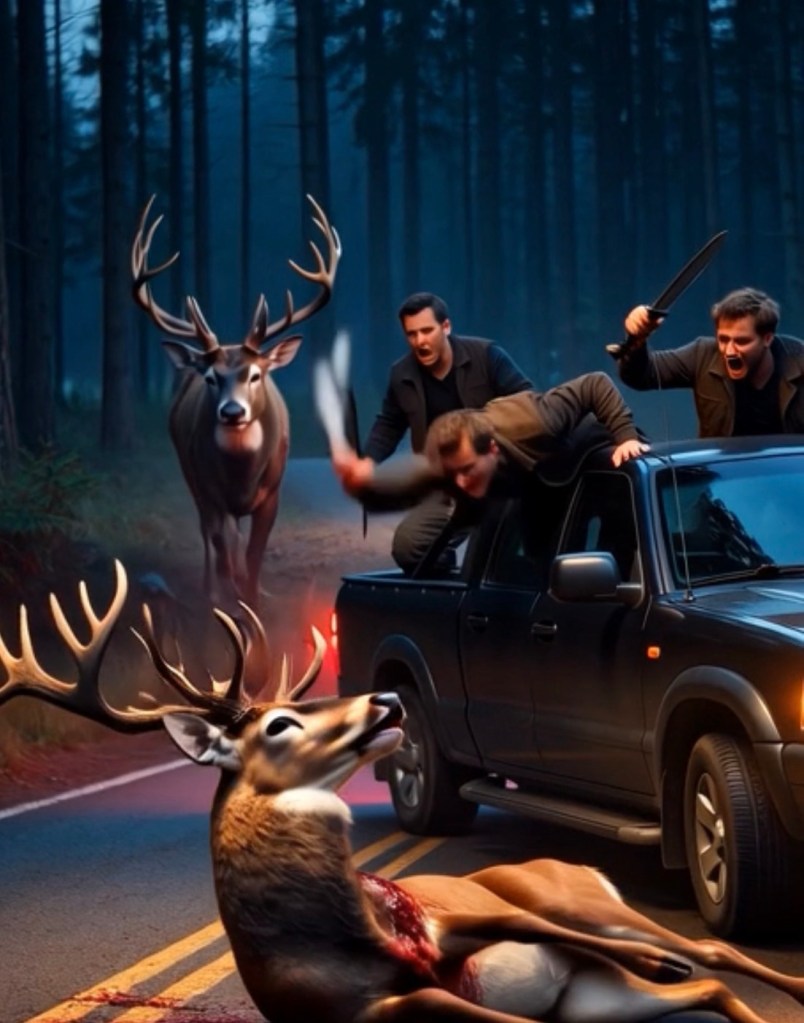
The practice of financial institutions abruptly severing relationships with clients—often termed “debanking”—has emerged as a serious threat to American businesses, particularly those in politically sensitive sectors like defense contracting. This phenomenon is not merely a business decision; it can resemble a calculated impairment strategy, where a bank or lender deliberately wounds a company financially, leaving it vulnerable to acquisition or collapse by opportunistic players, such as private equity firms. I refer to this as the “wounded deer strategy,” drawing from a vivid analogy: imagine a majestic buck, seasoned and resilient, evading hunters for years. One day, lured by trusted advice toward greener pastures across a road, it is struck by a vehicle, breaking its legs and leaving it helpless on the roadside. The driver speeds away, and soon a truck full of opportunists arrives, claiming the easy prize as a trophy without the risk or skill of a true hunt.

In the business world, the “trusted advisor” is often the bank that has provided liquidity and guidance for years. When ideological or political divergences arise—perhaps a lender’s leadership shifts toward progressive priorities incompatible with supporting defense suppliers under a particular administration—the institution can withdraw credit lines, demand accelerated repayments, or impose punitive terms. The company, suddenly cash-strapped and unable to meet obligations, becomes the wounded deer: limping, exposed, and prime for plunder by private equity firms eager to acquire distressed assets at fire-sale prices.

This is not hypothetical. Reports have highlighted cases where companies face account closures or service denials seemingly tied to political affiliations or industries disfavored by regulators or bank leadership. For instance, defense contractors and suppliers aligned with certain administrations have encountered scrutiny, with some executives and observers pointing to “politicized debanking” as a tactic to undermine supply chains indirectly. While direct evidence of widespread ideological targeting in defense remains anecdotal in public discourse, the broader pattern of debanking—often justified under vague “reputational risk” guidelines—has affected industries from cryptocurrency to politically active individuals and businesses. In one high-profile context, executive actions have sought to curb such practices by requiring risk-based, individualized assessments rather than blanket political exclusions.

The vulnerability stems from the absence of strong guardrails. Banks hold immense power over liquidity, and without legislative protections, they can exit relationships with minimal recourse for the client. A clean “divorce”—mutual termination of lending without malice or destruction—should be possible, but too often, the exit inflicts maximum damage: frozen accounts, called loans, or reputational smears that cascade into further isolation. This leaves companies unable to pivot to new lenders quickly, especially in capital-intensive fields like aerospace or defense, where contracts demand stability.

Compounding this is the explosive growth of private equity, which thrives on distressed opportunities. Private equity firms manage trillions in assets; global private equity deal value rebounded sharply in recent years, reaching $2.6 trillion in 2025, with buyouts alone nearing $1.8 trillion. Assets under management in the sector have ballooned, with estimates placing private equity-held companies at record levels and dry powder (uninvested capital) fueling aggressive acquisitions. Firms often use leveraged buyouts—acquiring targets with borrowed money loaded onto the acquired company itself—leading to high failure rates: roughly one in five large leveraged buyouts results in bankruptcy within a decade.

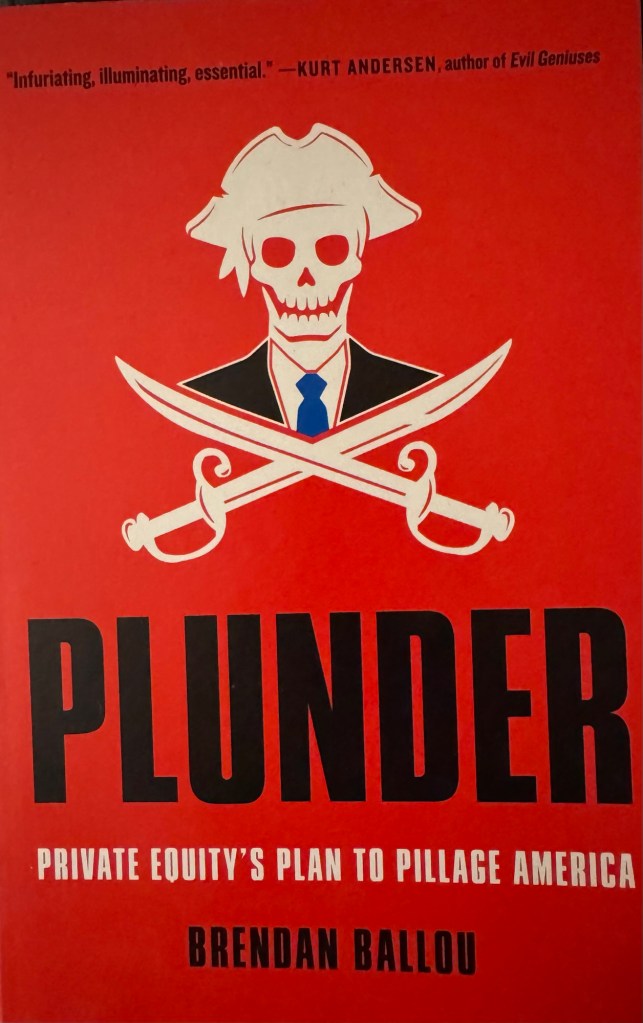
Brendan Ballou’s book Plunder: Private Equity’s Plan to Pillage America (2023) provides a stark examination of this dynamic. Ballou, a former federal prosecutor and special counsel for private equity at the Justice Department, details how firms acquire businesses—often retailers, medical practices, nursing homes, or other essential services—using minimal equity while saddling them with debt. Profits are extracted through fee structures, cost-cutting (including job reductions), price hikes, and quality reductions, shifting resources from productive enterprise to financial engineering. The result: higher costs for consumers, lost jobs, and weakened companies. Reviews describe the book as “infuriating” and “essential,” highlighting how private equity has reshaped the economy by prioritizing extraction over long-term value creation.

A parallel Ohio example illustrates how regulatory pressure can wound companies, creating openings for corruption and plunder. FirstEnergy, facing challenges from Obama-era policies promoting renewables over traditional nuclear and coal, sought bailouts amid financial strain. This culminated in the House Bill 6 scandal—the largest corruption case in Ohio history—involving $60 million in bribes funneled through dark money groups to secure legislation subsidizing failing nuclear plants. FirstEnergy admitted involvement, paying $230 million in penalties, while executives and politicians faced charges. The scandal exposed how wounded utilities, pressured by federal regulations, turned to political influence rather than market adaptation—ultimately harming ratepayers and eroding trust.

Private equity’s role in housing offers another cautionary tale. Firms like Blackstone (often confused with BlackRock) pioneered large-scale single-family home purchases post-2008 crisis, converting them to rentals. While institutional ownership remains a small fraction nationally, concentrated in certain markets, it has driven up prices and rents in hotspots by outbidding families with cash offers and low borrowing costs. Tenants face added fees, and communities lose owner-occupied stability. This mirrors the “plunder” pattern: acquire undervalued or distressed assets, extract value, and leave diminished foundations.

These examples underscore a systemic issue: without regulatory constraints, financial institutions can act as activists against disfavored sectors or politics. Large international banks, with global priorities over domestic patriotism, pose particular risks. They fund diverse causes, yet behind the scenes may undercut supply chains supporting certain administrations—eroding American infrastructure indirectly. Fiduciary responsibility demands impartiality, but temptations arise when no guardrails exist. Ethics alone fails; self-discipline yields to pettiness or ideology.

Ohio can lead by enacting legislation to protect businesses. Proposals could include:

•  Mandating civil, non-destructive terminations of financial relationships, with notice periods and transition assistance.

•  Prohibiting impairment tactics driven by political or ideological motives, with penalties for violations.

•  Strengthening fiduciary standards to prevent malicious wounding.

•  Requiring transparency in debanking decisions, allowing appeals or independent reviews.

Such measures would encourage local and regional banks—more rooted in community values—over distant giants. Entrepreneurs deserve protection to innovate without fear of becoming roadkill for ideological or opportunistic predators.

The stakes are high. A thriving economy relies on confident investment and job creation. When private equity controls trillions, often through plunder rather than creation, and banks enable impairment without consequence, the foundation weakens. Ohio, with its manufacturing and defense ties, must act to install guardrails before irreversible damage. Reading Plunder and examining cases like FirstEnergy provides the intellectual foundation; legislative action provides the solution.

Bibliography

•  Ballou, Brendan. Plunder: Private Equity’s Plan to Pillage America. PublicAffairs, 2023.

•  Morgenson, Gretchen, and Joshua Rosner. These Are the Plunderers: How Private Equity Runs—and Wrecks—America. Simon & Schuster, 2023.

•  McKinsey & Company. “Global Private Markets Report 2026.” McKinsey, 2026.

•  Preqin and iCapital. “Alternatives Decoded,” with data to February 2026.

•  U.S. Department of Justice and Securities and Exchange Commission filings on FirstEnergy/Ohio nuclear bribery scandal (various, 2020–2025).

•  Ohio Public Utilities Commission decisions on FirstEnergy penalties (2025).

•  Various reports on debanking, including executive orders and congressional investigations (2025–2026).

•  PitchBook and KPMG analyses of private equity trends (2025–2026).

Footnotes

¹ Ballou, Plunder, on leveraged buyout bankruptcy rates.

² McKinsey Global Private Markets Report 2026, deal value statistics.

³ Preqin/iCapital data on private equity AUM growth to $7 trillion by end-2025.

⁴ Wikipedia and AP News summaries of Ohio nuclear bribery scandal involving FirstEnergy and HB 6.

⁵ Reports on institutional single-family rental ownership (e.g., Blackstone/Invitation Homes strategies).

Rich Hoffman

More about me

Click Here to Protect Yourself with Second Call Defense https://www.secondcalldefense.org/?affiliate=20707
Why Executive Leadership is the Key to a Successful Society: And why it is so incredibly rare

True executive leadership is not something taught in classrooms through textbooks or lectures on management theory. It is forged in the crucible of real-world challenges, where fear, uncertainty, and the need for decisive action collide. I learned this early, during an unusually formative childhood that exposed me to high-stakes environments far beyond typical teenage experiences. As a young teen, I participated in the High Adventure Explorer Post, a program that graduated from Boy Scouts and emphasized rigorous outdoor challenges. This led to my involvement in Project COPE—Challenging Outdoor Personal Experience—a Scouting initiative designed to build confidence, trust, leadership, and teamwork through group games, trust falls, low-course elements, and high-course obstacles such as climbing walls, rope swings, and balance challenges.

In one memorable weekend seminar, around age 13 or 14, about 20 strangers were thrown together to solve impossible-seeming problems. We had to transport everyone across a field using only a few 2×4 boards, balancing on pegs where touching the ground meant starting over. We climbed a 20-foot wall without ropes, stacking bodies to create human ladders, pivoting people into position, and hauling others up from vantage points. The trust fall was particularly vivid: standing on a 6-foot stump, falling backward unthinkingly, relying on the group below to catch you. These weren’t games; they demanded communication under pressure, overcoming personal fears, setting aside differences, and articulating a clear plan that everyone could execute. Success required a narrative—a story that unified the group around a shared vision. Failures taught the team what not to do: hesitation, poor coordination, and ego-driven decisions doomed the team. Those who emerged as natural leaders could rally perfect strangers, build trust quickly, and guide them through duress to victory.

This experience wasn’t isolated. I rose to become vice president of the Dan Beard Council, a significant Boy Scouts organization in the Cincinnati area, under somewhat controversial circumstances that provided invaluable lessons in organizational dynamics and influence. At 14, I was invited to speak at GE’s Evendale facility—a massive engine manufacturing site—where I delivered a pitch on leadership drawn from these adventures. Standing before seasoned professionals as a kid, articulating principles of vision, trust, and collective action, cemented my path. It wasn’t credentials that carried the day; it was the ability to communicate a compelling story and inspire follow-through.

These early trials shaped my understanding of executive leadership, a skill rare even among those who hold C-suite titles. Many executives excel at spreadsheets, regulations, data analysis, and compliance—tasks that engineers and administrators handle well. But leadership transcends that. It is the art of creating a vision that others buy into, communicating it clearly enough that diverse groups align, and leading from the front to pull everyone through obstacles they couldn’t surmount alone. True leaders don’t micromanage every detail; they don’t need to know how to code the software, assemble the product, or balance every ledger line. They orchestrate the team, provide the overarching narrative, and empower others to execute. Think of a kitchen: the chef doesn’t wash dishes or make noodles from scratch, but ensures the entire operation runs smoothly so spaghetti arrives hot and customers return. Leadership is that orchestration under fire.

This truth stands in stark contrast to prevailing misconceptions. Schools rarely teach it properly; corporate retreats often superficially mimic it with trust falls and ropes courses, checking boxes without the depth of real hardship. Many in leadership positions mimic “mob rule”—placating safety concerns, enforcing endless administrative loops, or prioritizing equality over merit. They hide behind regulations, consensus-building, and democratic processes that dilute accountability. The result? Stagnation. When organizations are mired in bureaucracy, innovation slows, and potential leaders get sidelined.

Consider recent local examples in West Chester Township, Butler County, Ohio, where I’ve lived most of my 58 years. It’s a prosperous, conservative community built on business-friendly policies and strong leadership. Yet newcomers like Amanda Ortiz, who relocated here in 2016 with her husband and now serves as a trustee (elected in 2025), bring perspectives shaped by different environments. As a veterinarian focused on animal welfare, she campaigns on “people over business,” critiquing development and emphasizing resident input over economic growth. While well-intentioned, this risks importing anti-business sentiments—such as higher taxes on enterprises and wealth-redistribution rhetoric—that clash with what has made the area thrive. It’s the same mindset seen in broader progressive movements: viewing successful CEOs as “greedy” and advocating for shared wealth without acknowledging the rare skill of value creation.

This echoes larger ideological battles. Socialism and communism promise equality through state control or democratic redistribution, suppressing individual leadership. They assume administrators can orchestrate prosperity through rules alone, without the visionary drive of a single, accountable leader. History shows otherwise: state-run economies falter because they penalize autonomy, stifle innovation, and equalize performance at mediocrity. No one climbs the wall if everyone’s voice is equal and no one leads decisively. Remote work trends exacerbate this—employees scattered, communication fractured, approval loops endless. You can’t build trust or rally a team when half are at home; the COPE lessons prove that interaction under pressure forges bonds that Zoom can’t.

Contrast that with proven leaders like Jack Welch at GE (who transformed it into a powerhouse through bold vision), Steve Jobs (who articulated Apple’s future and pulled teams to it), or Elon Musk (who leads from the front on audacious goals). They don’t consult committees for every decision; they communicate big concepts, inspire buy-in, and drive execution. Donald Trump exemplifies this politically—articulating massive ideas that mobilize millions without micromanaging details. He leads the metaphorical train, helping people over walls they couldn’t scale alone.

America’s success—its unmatched GDP, entrepreneurial spirit, and job creation—stems from empowering such leaders. Capitalism rewards those who develop the rare skill of pulling others forward through narrative, trust, and action. Boy Scouts programs like COPE and Explorer Posts cultivate this through sweat, cold nights, cut fingers, and mud—trials that separate natural leaders from followers. Most participants become capable followers, which is fine; society needs both. But the few who rise, who can get strangers over obstacles and keep harmony afterward, become CEOs, founders, and visionaries who employ millions.

The fantasy that mobs or committees can replace this ignores reality. Numbers don’t vote on facts; gravity doesn’t bend to consensus. Leadership isn’t democratic—it’s directional. Empower leaders with autonomy, and organizations soar. Suppress them with equality mandates or administrative burdens, and decline follows. This is why communist models fail: they suppress leadership, fearing individual excellence threatens the collective illusion.

In my book, The Gunfighter’s Guide to Business: A Skeleton Key to Western Civilization, I explore these themes deeply—strategy drawn from hardship, the primacy of vision over bureaucracy, and how true leadership saves companies, communities, and civilizations. It’s not theory; it’s lessons from the school of hard knocks, much like those COPE weekends or speaking at GE as a teen.

We need more such leaders, not fewer. Penalizing success through spiteful policies—resenting wealth creators, demanding redistribution—creates injustice and stagnation. Gratitude for effective leaders, who lift everyone, builds prosperity. Civilization learns this slowly, but the path is clear: identify, empower, and follow those who can get us over the wall. Without them, we stay grounded.

Bibliography and Footnotes

1.  Scouting.org, “Program Feature: COPE,” detailing Challenging Outdoor Personal Experience as group initiatives, trust events, and high/low challenges for leadership and teamwork.¹

2.  Wikipedia, “COPE (Boy Scouts of America),” overview of the program focusing on strength, agility, and personal growth through outdoor tests.²

3.  Grand Canyon Council BSA, “COPE,” emphasizing confidence, self-esteem, trust, and leadership via mental/physical challenges.³

4.  West Chester Township official site, “Board of Trustees,” bio of Amanda Ortiz, resident since 2016, veterinarian, elected trustee term 2026–2029.⁴

5.  Amanda Ortiz for Trustee campaign site, platform stressing “people over business” and resident-focused leadership.⁵

6.  Journal-News, “Longtime West Chester Twp. trustee unseated in election,” Nov. 6, 2025, coverage of Ortiz’s 2025 win unseating incumbent.⁶

7.  Rich Hoffman, The Gunfighter’s Guide to Business: A Skeleton Key to Western Civilization (Liberty Hill Publishing, 2021), core text on strategy, leadership, and capitalism.⁷

8.  Overmanwarrior.wordpress.com, author bio and book commentary, linking personal experiences to leadership philosophy.⁸

9.  Various Scouting resources on high-adventure programs, including Explorer Posts and leadership training via challenges.⁹

¹ https://troopleader.scouting.org/program-features/cope

² https://en.wikipedia.org/wiki/COPE_(Boy_Scouts_of_America)

³ https://support.scoutingaz.org/main/cope

https://www.westchesteroh.org/government/general-government/west-chester-board-of-trustees

https://www.amandaortizfortrustee.com/

https://www.journal-news.com/news/longtime-west-chester-twp-trustee-unseated-in-election/CD2ADHRUKVC2JOIQSCMINM3MWE

⁷ Liberty Hill Publishing / Amazon listings for the book.

https://overmanwarrior.wordpress.com/author-bio-for-rich-hoffman

⁹ Multiple Scouting America sites on COPE and high-adventure bases.

Additional references include historical accounts of Boy Scout leadership development, economic analyses contrasting capitalism and socialism (e.g., works on Jack Welch and Steve Jobs biographies), and local Ohio political coverage.

Rich Hoffman

More about me

Click Here to Protect Yourself with Second Call Defense https://www.secondcalldefense.org/?affiliate=20707
The Kandahar Giant: Yes, I believe it was sent to Wright-Patterson for examination

The world has shifted profoundly over the past few years, and with that shift has come a renewed willingness to question long-held narratives. Institutions once trusted implicitly have been exposed as capable of extraordinary deception, particularly during the COVID era, where mandates were imposed with absolute certainty, only for the underlying premises to crumble under scrutiny. “Trust the science” became a slogan that masked agendas, gain-of-function research was downplayed despite evidence of its role, and entire economies were shuttered under the guise of public health. When authority figures lie so brazenly about something as immediate and verifiable as a virus’s origins and spread, it naturally prompts a reevaluation of other suppressed stories. What else have we been told was impossible, only to discover layers of concealment?

One such story that has resurfaced with renewed credibility in this post-COVID awakening is the Kandahar Giant. This account describes an alleged encounter in 2002 (though some retellings place it around 2005) in the remote mountains of Kandahar Province, Afghanistan, during Operation Enduring Freedom. According to multiple anecdotal sources, a U.S. military patrol vanished without a trace. A special operations task force—often described as an elite unit such as the Rangers or the Green Berets—was dispatched to investigate. They followed a trail of scattered gear and spent casings leading to a large cave entrance littered with bones, human remains, and discarded equipment.

Emerging from the cave was a humanoid figure of extraordinary size—estimates range from 12 to 15 feet tall—with distinctive features: flaming red hair, six fingers on each hand, six toes on each foot, and double rows of teeth. Armed with a large spear, the being reportedly charged the soldiers, impaling and killing one (sometimes named “Dan” or linked to a real casualty like Sergeant Dan Romero in unrelated contexts, though unconfirmed). The team responded with sustained fire from M4 carbines, recon rifles, and Barrett .50 caliber anti-materiel weapons. It allegedly took 30 seconds of concentrated gunfire to fell the creature. The body was then airlifted via helicopter, possibly in a cargo net, and transported out of the theater.

The narrative gains intrigue from claims that the remains were not sent to the more publicized Area 51 but to Wright-Patterson Air Force Base in Dayton, Ohio—the historical hub of aviation innovation and a site long associated with classified reverse-engineering programs, including rumored extraterrestrial artifacts from incidents like Roswell. Wright-Patterson’s Foreign Technology Division and its secure facilities make it a logical destination for sensitive recoveries. Some versions include testimony from an alleged cargo pilot who loaded a 1,100- to 1,500-pound body onto a transport plane, bound for stateside analysis.

This story first gained traction in the mid-2000s through radio programs like Coast to Coast AM, hosted by figures such as Steve Quayle. It was later amplified by researchers like L.A. Marzulli, who conducted interviews with purported witnesses, including a figure known as “Mr. K” (claimed to be a participant) and others in military circles. Timothy Alberino, an explorer and author focused on biblical history and anomalous phenomena, has discussed the event extensively, linking it to ancient accounts of giants. Alberino contributed a foreword or introduction to a reissued edition of a book on giants and Nephilim—likely a work like Joseph Lumpkin’s “The Book of Giants: The Watchers, Nephilim, and The Book of Enoch” or a similar text that had been out of print—bringing renewed attention to these themes.

The Kandahar account aligns with broader patterns in folklore and scripture. The Bible repeatedly references giants: the Nephilim in Genesis 6:4, described as the offspring of the “sons of God” (often interpreted as fallen angels or Watchers) and human women, resulting in mighty beings of renown. Post-Flood accounts include the Anakim, Rephaim, and Goliath of Gath, who stood over nine feet tall. The Book of Enoch, an ancient text quoted in Jude and influential in early Jewish thought, details the Watchers’ rebellion, their mating with humans, and the resulting giants who devoured resources and turned to cannibalism, prompting divine judgment via the Flood.

Similar giant lore appears worldwide: Native American traditions speak of red-haired giants in Nevada’s Lovelock Cave; South American legends describe tall beings in remote regions; Siberian and Chinese folklore mentions oversized humanoids in isolated areas. In Afghanistan’s rugged terrain—vast, under-explored caves and mountains shielded by perpetual conflict—these stories persist in oral traditions. Wars in such places rarely resolve cleanly; prolonged instability keeps areas off-limits to independent research, much like communist-era restrictions in Siberia preserved vast untouched wildernesses.

Closer to home, Ohio’s ancient mound cultures offer parallels. The Miamisburg Mound, one of the largest conical burial mounds in North America (built by the Adena culture circa 1000–200 BC), has yielded reports of unusual finds. In the 1800s, excavations uncovered skeletons of “unusual size,” including oversized jaws and skulls that reportedly fit over modern ones like helmets. Newspapers from the era chronicled the discovery of 7- to 9-foot skeletons in Ohio mounds, often accompanied by artifacts suggesting advanced or anomalous origins. Yet systematic archaeological excavations have been minimal, despite the presence of nearby universities with robust programs. The Mound Laboratories (now part of the Mound Facility) were built nearby for nuclear trigger mechanisms—coincidentally or not—on sites with prior reports of giant bones. Some speculate that these placements obscure evidence, mirroring how dominant cultures have historically superimposed symbols or structures to erase predecessors, as seen on Jerusalem’s Temple Mount.

Why conceal such things? Power structures thrive on controlled narratives. Acknowledging surviving giants or pre-Flood advanced beings challenges evolutionary timelines, biblical interpretations, and institutional authority. If giants exist(ed), it implies hidden histories, perhaps genetic legacies in tall modern athletes or isolated populations. Governments, through black budgets and oaths of secrecy, maintain control—Wright-Patterson personnel swear lifelong confidentiality, and silence speaks volumes. My own conversations with retired military figures, including a colonel from Wright-Patterson, hint at legitimate reverse-engineering programs, fueling speculation that anomalous recoveries (whether tech or biological) end up there.

COVID eroded institutional trust irreversibly. When officials mandated masks and lockdowns while concealing lab-leak possibilities, the “conspiracy theorist” label lost potency. Those once dismissed as fringe on topics like gain-of-function or elite agendas proved prescient. The same mechanisms—discrediting inquiry, labeling skeptics dangerous—apply to giants, UFO disclosure, or ancient anomalies. Wars in Afghanistan, perpetual Middle Eastern tensions, or China’s opacity may keep regions unstable, preventing the exploration of caves or sites that hold truths about humanity’s past.

Giants aren’t mere fantasy; they’re embedded in cross-cultural records. Too much smoke suggests fire. The Kandahar incident, if true, represents a modern collision with ancient reality. The body allegedly taken to Wright-Patterson for study echoes Roswell patterns—distractions elsewhere while real work happens in secure Midwest facilities. Leaks increase as oaths age and consciences stir. Disclosure feels inevitable.

We stand at a threshold. Reexamining suppressed stories fosters truth-seeking over blind obedience. Whether giants roamed Afghanistan or Ohio mounds hold oversized remains, pursuing evidence of their existence honors intellectual honesty. Governments owe accountability; black budgets and secrecy breed abuse. As Reagan’s revolution emphasized liberty and transparency, let us initiate similar scrutiny today. The truth, however extraordinary, deserves rational discussion—no matter how it upends official narratives.

Bibliography and Footnotes

1.  Cryptid Wiki, “Giant of Kandahar,” detailing the 2002 encounter, red-haired features, and lack of official evidence.¹

2.  Military Times, “Here Be Giants: Outlandish Tales of the Military in Afghanistan,” Oct. 31, 2022, discussing the Kandahar legend as folklore.²

3.  All That’s Interesting, accounts of the spear attack and airlift.³

4.  L.A. Marzulli interviews with “Mr. K” and other witnesses, featured in documentaries and podcasts (e.g., YouTube excerpts from 2016).⁴

5.  Timothy Alberino discusses the Kandahar Giant, linking to Nephilim, in podcasts like Blurry Creatures and Michael Knowles Show.⁵

6.  Joseph Lumpkin, “The Book of Giants: The Watchers, Nephilim, and The Book of Enoch,” reissued editions with possible Alberino contributions.⁶

7.  Dayton History Books Online, “The Day They Opened the Miamisburg Mound,” 1800s reports of oversized skeletons.⁷

8.  Columbus Dispatch, debunking giant claims but noting 19th-century newspaper hoaxes and reports.⁸

9.  Ancient Origins, “Top Ten Giant Discoveries in North America,” referencing Miamisburg’s 8+ foot skeleton claims.⁹

10.  Skeptoid Podcast, analysis of Kandahar story evolution and Wright-Patterson connections.¹⁰

¹ https://cryptidz.fandom.com/wiki/Giant_of_Kandahar

² https://www.militarytimes.com/off-duty/military-culture/2022/11/01/here-be-giants-outlandish-tales-of-the-military-the-afghan-colossi

³ Various aggregated accounts from the 2000s radio and online forums.

⁴ L.A. Marzulli YouTube interviews (e.g., with Richard Shaw).

⁵ Timothy Alberino’s appearances on YouTube and podcasts.

⁶ Amazon listings for related Enoch/Giants texts.

https://www.daytonhistorybooks.com/miamisburgmound.html

https://www.dispatch.com/story/news/technology/2019/01/27/archaeology-were-ancient-writings-giants/6185559007

https://www.ancient-origins.net/unexplained-phenomena/giants-north-america-005196

¹⁰ https://skeptoid.com/episodes/1014

Additional sources include the Coast to Coast AM archives, Steve Quayle’s discussions, and biblical texts (Genesis 6; Book of Enoch).

Rich Hoffman

More about me

Click Here to Protect Yourself with Second Call Defense https://www.secondcalldefense.org/?affiliate=20707
Timothy Alberino’s Fantastic book ‘Birthright’: Why we shouldn’t sell our souls for a bowl of stew

In the quiet moments away from the relentless pace of political battles, economic analysis, and the daily grind of defending principles in a world that often seems intent on erosion, there’s something profoundly refreshing about diving into a book that pulls back the curtain on deeper realities. One such discovery came recently with Timothy Alberino’s Birthright: The Coming Posthuman Apocalypse and the Usurpation of Adam’s Dominion on Planet Earth, published in 2020. This isn’t just another volume on ancient mysteries or fringe theories; it’s a meticulously crafted narrative that weaves biblical scholarship, historical inquiry, and contemporary phenomena into a cohesive worldview. It challenges the sanitized, compartmentalized versions of history and scripture we’ve been fed, urging readers to step out of Plato’s cave—where we’ve been chained, staring at shadows on the wall—and confront the fuller light of reality.

I finished the book on the day of the Olympic opening ceremonies that many viewed as laden with overt satanic symbolism and references to Luciferian themes. Such public displays, alongside scandals in Hollywood, the music industry, and elite circles involving ritualized sex, power, and exploitation—from Aleister Crowley’s influence to modern figures like Sean Combs or echoes in the Epstein saga—underscore a persistent undercurrent. Alberino argues these aren’t isolated excesses but part of an ancient war over humanity’s inheritance, a theme he traces back to the very beginning of the biblical account.

At the heart of Birthright is the concept of dominion granted to Adam and Eve in Genesis. Humanity, created in God’s image, was given authority over the Earth—to expand Eden, steward creation, and bring heaven’s order to the physical realm. This birthright represents not just land or resources but a divine mandate for rule, creativity, and moral governance. Yet from the outset, forces sought to usurp it. The serpent’s temptation in Eden was the first theft attempt, leading to the fall and the squandering of that authority through disobedience. Alberino expands this into a cosmic drama, drawing on the Book of Enoch (an apocryphal text preserved in the Dead Sea Scrolls and quoted in the New Testament) to detail the rebellion of the Watchers—200 fallen angels who descended, took human wives, and produced the Nephilim, hybrid giants whose existence corrupted the Earth with violence and forbidden knowledge.<sup>1</sup>

These events, detailed in Genesis 6:1-4 and elaborated in Enoch, explain the pre-Flood world’s wickedness, necessitating the deluge as divine judgment. The Nephilim weren’t mere tall humans but offspring engineered to challenge human dominion, their spirits becoming demons after their bodies perished.<sup>2</sup> Alberino connects this ancient incursion to modern phenomena: UFO sightings, alien abductions, and what he sees as a deceptive “alien” presence masquerading as extraterrestrial but rooted in the same fallen spiritual realm. He posits that today’s transhumanist agenda—merging human biology with technology, AI, and genetic engineering—represents the latest phase in this usurpation, aiming for a posthuman apocalypse where humanity’s birthright is fully stripped away, replaced by hybrid or enhanced entities loyal to adversarial forces.<sup>3</sup>

This framework resonates deeply with longstanding interests in giants, ancient history, and the Nephilim. For years, discussions of giants in North America—mound builder discoveries from the 1800s along rivers like the Miami Valley, often dismissed as carnival hoaxes or pseudoscience—were marginalized. An early article I wrote on these topics back in 2010 drew massive attention but faced backlash for blending “serious” issues like tax policy with what mainstream culture deemed conspiracy territory. Institutions prefer neat categories: politics here, religion there, ancient anomalies safely labeled myth. Yet evidence persists, from biblical references to global giant lore, suggesting a suppressed history.

Alberino’s work builds on scholars like Michael Heiser, who applied rigorous biblical exegesis to the divine council and supernatural elements in scripture.<sup>4</sup> The Bible, as an artifact, is remarkable—preserved through millennia of translation, political editing (from early Roman church councils to Renaissance interpretations), and textual discoveries like the Dead Sea Scrolls, which confirm remarkable consistency. Yet it’s dense, fragmented, like shadows in Plato’s allegory: we see projections but not always the sources. Alberino encourages turning from the wall to examine the fire, the figures casting shadows, and ultimately stepping into the world beyond illusion.

He frames the ongoing battle as one over this birthright. The story of Esau and Jacob in Genesis 25 illustrates it starkly. Esau, the firstborn, sells his birthright to Jacob for a bowl of stew when hungry and impatient, valuing immediate gratification over eternal inheritance. Yahweh honors the transaction, leading to Jacob (renamed Israel) fathering the tribes and claiming the promised land. This narrative isn’t just family drama; it’s a microcosm of humanity’s temptation to trade divine authority for fleeting pleasures—sex, power, convenience, or modern equivalents like celebrity, wealth, or technological transcendence.<sup>5</sup>

Alberino ties this to figures who rejected paternal guidance and embraced rebellion. Aleister Crowley and Friedrich Nietzsche, both losing religious fathers young, spiraled into philosophies that influenced destructive movements—Crowley’s occult sex magic permeating Hollywood and music, Nietzsche’s Übermensch (overman) twisted into Nazi ideology. These represent selling the birthright for Luciferian promises of godhood without God. In contrast, the biblical Overman ideal—Adam as God’s supreme representation on Earth, uncorrupted—offers a heroic vision: humanity as stewards, not slaves to temptation or manipulation.

My affinity for the “Overman warrior” concept aligns here—not the corrupted Nietzschean version that fueled tyranny, but a Superman-like ideal of strength, virtue, and resistance to evil. It’s about refusing to be broken, manipulated, or seduced into yielding dominion. Personal history in passion plays, portraying biblical roles, fostered a lifelong engagement with these themes, yet frustration with weak portrayals of figures like Adam (easily tempted) or institutional failures to confront modern implications has been, to say the least, infinitely disappointing for me.

Alberino’s book bridges gaps: why the Bible omits details (political censorship, lost texts), why giants and fallen angels matter (they explain evil’s origins), and why UFOs fit (as modern deceptions echoing ancient incursions). He critiques institutional religion for downplaying Enoch or supernatural elements, allowing secular science to dismiss anomalies. Yet fresh scholarship—Dead Sea Scrolls, archaeological confirmations of biblical sites like the City of David—validates the narrative’s core.

This isn’t pseudoscience; it’s interdisciplinary inquiry challenging controlled categories. The Temple Mount disputes—Islam denying Jewish archaeological evidence despite visible proof—mirror broader suppressions of inconvenient truths. Similarly, giants’ stories were ridiculed as roadshow myths to justify land theft or secularize history, but persistent global accounts suggest otherwise.

In an era of disclosure debates, black budgets, and fear-based control narratives around “mysteries,” Alberino reframes UFOs as spiritual, not merely technological. The 200 Watchers’ rebellion sought to corrupt the human line, preventing Eden’s expansion. Today’s equivalents—rituals in entertainment, elite exploitation—continue that agenda, luring people to sell their birthright cheaply.

The hope lies in reclamation. Humanity’s mandate remains: expand Eden, resist deception, claim dominion through alignment with divine order. Alberino’s work, alongside emerging discussions in UFO communities, biblical studies, and alternative history, signals a shift—people untying from Plato’s cave, exploring freely.

This book stands out for its scholarly precision, narrative flow, and refusal to compartmentalize. It entertains while provoking profound reflection, much like Graham Hancock’s works or Vera brothers’ explorations, but with stronger biblical anchoring. For anyone weary of surface-level politics or religion, it’s a reminder that the real fight transcends the visible—it’s eternal, cosmic, and personal.

Highly recommended. It elevates understanding, inspires resistance to temptation, and reaffirms the value of pursuing truth beyond shadows. More from Alberino—on Enoch commentary, expeditions—promises further illumination. In a world pushing posthuman futures, remembering our birthright may be the ultimate act of defiance and hope.

Bibliography and Further Reading

•  Alberino, Timothy. Birthright: The Coming Posthuman Apocalypse and the Usurpation of Adam’s Dominion on Planet Earth. Independently published, 2020. (Primary text; available on Amazon, author’s site.)

•  Alberino, Timothy. The Book of Enoch: With Commentary & Concept Art on the Book of the Watchers.

•  Heiser, Michael S. The Unseen Realm: Recovering the Supernatural Worldview of the Bible. Lexham Press, 2015.

•  The Book of Enoch (Ethiopic version, translated editions; referenced in Jude 1:14-15).

•  Dead Sea Scrolls publications (e.g., via Biblical Archaeology Society resources).

•  Reviews and summaries: Goodreads (4.5+ average), Shortform book summary, Amazon customer reviews.

•  Related discussions: YouTube interviews with Alberino (e.g., Shawn Ryan Show, various podcasts).

<sup>1</sup> Alberino, Birthright, drawing on Book of Enoch chapters 6-16; see also Genesis 6:1-4.

<sup>2</sup> Ibid.; Heiser, The Unseen Realm, pp. 92-110 on Nephilim as hybrid offspring.

<sup>3</sup> Alberino, Birthright, chapters on UFOs and transhumanism; Shortform summary highlights the “posthuman apocalypse” thesis.

<sup>4</sup> Heiser, The Unseen Realm, core argument on divine council and rebellious “sons of God.”

<sup>5</sup> Genesis 25:29-34; Alberino frames this as emblematic of selling dominion for temporal gain.

Footnotes reference key biblical passages, book sections, and supporting scholarship for further personal exploration.

Rich Hoffman

More about me

Click Here to Protect Yourself with Second Call Defense https://www.secondcalldefense.org/?affiliate=20707

The Warm Blanket of Socialism: Hiding the tattoos and body piercings of millions of bad personal decisions with progressive crusades

The mirror doesn’t lie.  What looks back is the result of millions and millions of decisions, and most people don’t like what they see.  So they construct social engagements accordingly.  If they lean toward liberal politics, it is likely because they are ashamed of their decisions in life and look for social order to hide them from the realities of those bad decisions with a warm blanket of socialism to hide under.  And the last thing they want to do is have some conservative come into their room and rip away that protection from even themselves, let alone the judgments of the world. But beyond the personal, the reflection prompts deeper contemplation about the state of the nation—particularly the visible unraveling among those who champion a progressive, collectivist vision for society. What some call the “warm blanket of socialism” provides comfort to those less inclined toward self-reliance, a psychological shelter against the uncertainties of individual responsibility and the harsh light of personal accountability.

Self-reliance has long been a cornerstone of the American ethos, embodied in figures who tie their own shoes at a young age, change their own tires, perform their own brake jobs, cook their own meals, and build their lives through initiative. Such individuals tend to align with Republican values, emphasizing limited government, free markets, and personal merit. In contrast, those who feel lost or overwhelmed often seek refuge in collective structures—government programs, social safety nets, group identities—where shared burdens mitigate individual risk. This isn’t mere preference; it’s a response to upbringing and circumstance. If early life lacked lessons in independence, if family structures fractured through divorce, remarriage, or instability, the world can feel perpetually threatening. The “blanket” becomes essential, and any policy pulling it away—lower taxes reducing social services, pro-capitalist reforms favoring entrepreneurs, immigration enforcement, or school choice—evokes terror, like yanking covers off a frightened child in the dark.

This dynamic explains much of the current unrest. With policies under the Trump administration prioritizing capitalism, family stability, homeschooling, and distrust of public education, and reducing dependence on public aid, those accustomed to collective coverage feel exposed. Fewer people relying on the system means less communal “blanket” to hide behind. Protests erupt not only from policy disagreements but also from existential fear: the loss of a parental government that shields from consequences. This mirrors historical patterns—East Berlin walls, Soviet barriers—designed to prevent defection from collectivism to individual freedom, lest the illusion of security crumble.

Psychological research illuminates these divides. Conservatives often exhibit higher self-control, greater emphasis on personal responsibility, and stronger physiological responses to threats in ways that reinforce stability-seeking behaviors. Liberals, by contrast, prioritize harm avoidance, fairness as equality, and openness to change, sometimes at the expense of binding structures like authority or tradition. One study found that conservatives outperform liberals in self-control tasks, particularly when free will is framed positively, suggesting that ideology shapes not only beliefs but also behavioral resilience. Happiness gaps also appear: conservatives report higher life satisfaction, potentially attributable to attitudes that value personal agency over systemic solutions.

Family structure plays a pivotal role. Decades of rising divorce, blended families, absent parents, and serial partners disrupt trust in foundational institutions. Children navigating weekends between homes—with new spouses, girlfriends, boyfriends—often internalize instability, leading to victimhood narratives and reliance on external support. Data show complex patterns: conservatives are slightly more likely to have ever divorced in some age groups, but remarry more readily and report happier marriages overall. Marriage rates have declined sharply among Democrats compared to Republicans since the 1980s, with liberals increasingly forgoing marriage altogether, viewing it as less essential for happiness. Conservative women tend to marry younger and desire more children, sustaining family-oriented values. In red states, higher teen birth rates historically contrast with lower divorce rates in blue states like Massachusetts, highlighting how cultural norms around family influence outcomes.

Public education, infused with progressive ideologies over generations, amplifies this. Marxist influences in curricula—from high school to university—promote collectivism over individual merit, framing society as oppressive rather than opportunity-rich. Turning away from this requires reclaiming education rooted in self-reliance and traditional values.

Visible markers often signal these divides. Protesters against conservative policies frequently display extensive tattoos, piercings (nose rings, large earlobe gauges), and other body modifications—symbols of rebellion against norms and a return to “primitive” or indigenous aesthetics that reject Western civilization’s emphasis on restraint. Biblically, Leviticus 19:28 prohibits cuttings or marks for the dead, often interpreted as rejecting pagan mourning rituals or idolatry rather than all body art. Many Christian scholars argue that the New Testament shifts focus to heart intentions and body stewardship (1 Corinthians 6:19-20), not absolute bans. The verse targeted cultural compromise with false gods, not modern self-expression. Still, some view extreme modifications as desecration of the “temple,” opening doors to parasitic influences—spiritual or psychological—that erode personal sanctity. This ties to anti-civilizational trends: embracing perversions destructive to family, promoting LGBTQ+ agendas that undermine traditional bonds, and feeding primal urges over ordered happiness.

Yet statistics nuance perceptions. A 2023 Pew Research Center survey found that 32% of U.S. adults have at least one tattoo (22% have more than one), with roughly equal rates: 33% among Democrats/Democratic leaners and 32% among Republicans/Republican leaners. No major partisan divide exists; differences vary more by age (higher among under-50s), gender (38% women vs. 27% men), and race/ethnicity. Visible, extreme modifications may cluster more among vocal progressive activists, creating a perceptual association, but broader data indicate that tattoos are mainstream across ideologies.

The anger on display—protests that block highways, defend open borders, and resist enforcement—stems from poor personal decisions compounded by cultural shifts. Tattoos and piercings become outward signs of inner chaos, a rejection of self-care mirroring societal rejection of meritocracy. When self-reliance prevails, those who hide behind collectivism feel judged; their resentment manifests as demands for “fairness” that serve as cover for mistakes. We can’t restructure society around resentment—help those open to change, but not at civilization’s expense.

This isn’t hatred of people but a critique of ideology: understanding roots—broken families, poor teachings, fear—fosters empathy without capitulation. Promote self-reliance, stable families, capitalist opportunity; rebuild through virtue, not mandates. Policies favoring doers—business starters, home maintainers, homeschoolers—create prosperity for all willing to participate.  But what people believe politically, and act out socially, such as in the Minnesota riots, are reflections of their many bad decisions in life, and a transferance to society in general that they can pass off those mistakes through moral crusades that are always too little too late.  And usually, the body piercings and tattoos are a clear reflection of a fragmented mind hiding behind social causes because they have wrecked their lives personally, and can only get redemption through collectivist enterprise. 

Footnotes

1.  Pew Research Center, “32% of Americans have a tattoo, including 22% who have more than one,” August 15, 2023. https://www.pewresearch.org/short-reads/2023/08/15/32-of-americans-have-a-tattoo-including-22-who-have-more-than-one/

2.  Institute for Family Studies, “The Growing Link Between Marriage, Fertility, and Partisanship,” September 18, 2025.

3.  Gallup, “When and Why Marriage Became Partisan,” July 11, 2024.

4.  American Enterprise Institute, “The Republican Marriage Advantage: Partisanship, Marriage, and Family Stability in the Trump Era,” October 31, 2024.

5.  Desiring God, “Tattoos in Biblical Perspective,” December 19, 2013. https://www.desiringgod.org/interviews/tattoos-in-biblical-perspective

6.  Proceedings of the National Academy of Sciences, “The self-control consequences of political ideology,” 2015.

7.  Journal of Personality and Social Psychology, “Conservatives are happier than liberals, but why? Political ideology, personality, and life satisfaction,” 2012.

8.  PLOS ONE, studies on moral foundations and psychological motivations in liberalism vs. conservatism, 2020.

Rich Hoffman

More about me

Click Here to Protect Yourself with Second Call Defense https://www.secondcalldefense.org/?affiliate=20707
The Conspiracies of Erika Kirk: In a lot of ways, its all too much too fast

The recent assassination of Charlie Kirk on September 10, 2025, at Utah Valley University in Orem, Utah, has left a profound void in the conservative movement, particularly among young people drawn to his message through Turning Point USA (TPUSA). Charlie, at just 31 years old, was gunned down by a single shot to the neck from a rooftop sniper during an outdoor campus event. The accused, 22-year-old Tyler James Robinson from Washington, Utah, surrendered the next day and now faces charges including aggravated murder, with prosecutors seeking the death penalty. Robinson reportedly stated he acted because Kirk “spreads too much hate,” highlighting the toxic polarization that can turn ideological differences into deadly violence.

In the aftermath, Erika Kirk—Charlie’s wife of four years (they married in 2021)—stepped into the immense role of CEO and chairwoman of TPUSA. The organization’s board unanimously elected her shortly after the tragedy, and she has since vowed to carry on her husband’s legacy, emphasizing faith, family, and conservative values for the next generation. Erika, now in her late 30s and raising their two young children alone, delivered an emotional speech at Charlie’s memorial service held on September 21, 2025, at State Farm Stadium in Glendale, Arizona. Thousands attended, including President Donald Trump and Vice President JD Vance. Her address was heavy with grief; she recounted the hospital moment seeing her husband’s wound, paused in prayer, and called on attendees to “choose Christ” while pledging the movement would endure. She received a prolonged standing ovation.

At the close of the event, President Trump concluded his own remarks hailing Charlie as a “giant of his generation” and called Erika back to the stage for a supportive hug. This moment, captured in videos and widely shared, drew attention—some viewers noted her composure amid sorrow, while others speculated on body language or attire in ways that fueled online commentary. Grief manifests differently for everyone, especially under public scrutiny. Erika has spoken of putting on a “brave face” while managing profound loss, motherhood, and leadership of a major organization. The pressure is enormous: stepping from private family life into heading a high-profile entity built on her husband’s vision, all while mourning a brutal, public tragedy.

Recent events, like TPUSA’s “All-American Halftime Show” during Super Bowl LX in February 2026, underscore ongoing cultural divides. As an alternative to the official halftime performance featuring Bad Bunny—which some conservatives criticized for its pro-immigration themes and global market appeal—TPUSA’s event featured artists like Kid Rock, Brantley Gilbert, Lee Brice, and Gabby Barrett. It emphasized patriotism, faith, and family values, with tributes to Charlie. Erika did not appear in person but praised it afterward on social media, saying it was “incredible,” that “Charlie would’ve absolutely loved it,” and framing it as a way to “make Heaven crowded” while honoring God and country. The contrast highlighted philosophical tensions: an America First stance rooted in sovereignty and traditional values versus broader global outreach.

Criticism of Erika has surfaced in some corners—accusations of inauthenticity, questions about her past (including pre-marriage photos from college years showing a more carefree side), or even internal TPUSA drama like staff departures and leaked audio discussions. Some speculate wildly, turning personal grief into conspiracy narratives about TPUSA shifting directions or hidden motives. Others project unmet expectations onto her, wanting a saint-like figure perpetually in mourning, perhaps akin to a “Mother Mary” archetype, rather than a young widow navigating real-life changes: biological motherhood pressures, responsibility for children without their father, and the emotional toll of sudden leadership.

Yet this overlooks the human element. Erika and Charlie’s marriage was relatively short but appeared strong and faith-centered. They built a life together in their 30s, raising kids while advancing a movement that offered young conservatives an alternative to cultural despair—replacing lost optimism in institutions like housing markets, Social Security, or generational compounding with faith-based activism. Charlie’s work, alongside figures like Steve Bannon, Jack Posobiec, John Solomon, and others in election coverage, provided reliable, in-depth analysis that resonated deeply. His generation, much like my own kids’ peers, grew up amid disappointments from prior ones—broken promises of endless prosperity—and found redemption in characters like him (or even Candace Owens from related circles, despite fluctuations).

Assassination often elevates figures posthumously, much like Martin Luther King Jr., whose impact and Bible sales surged after his death, turning him into a larger-than-life symbol. Charlie’s killing has sparked similar dynamics: grief transfers emotions onto survivors, creating pressure for Erika to embody perfection. But she’s human—37 or 38, still finding her way, dealing with survival instincts, public-facing duties, and private sorrow. Expecting her to cry constantly, wear only somber clothes, or become a nun-like figure ignores reality. People grieve variably; some compartmentalize to function, especially with kids to raise and a legacy to steward.

The controversies often stem from hurt feelings—people who admired Charlie deeply, perhaps invested emotionally in him as a proxy for missing stability in their lives. When Erika doesn’t match idealized projections (a stable front every day, no “phony” moments under stress), it breeds speculation. But there’s no evidence of underlying plots to subvert TPUSA or counter the current political order. The movement Charlie built—youth mobilization for conservative principles, Christian values, and American exceptionalism—transcends the immediacy of momentary movements. If Erika carries it forward admirably, great; if she needs time to heal (perhaps stepping back for family), someone else will rise. The ideas endure because they’re bigger situationally.

Erika deserves grace. She’s bravely taken on a massive role amid unimaginable loss. TPUSA remains one of the strongest vehicles for young people seeking faith-based alternatives in a divided culture. Supporting her means recognizing the toll: the “layers of hurt” beneath any public facade, the difficulty of sounding grounded when everything’s shattered.  Personally, I think she needs to take a few years off, for her own good.  And let things settle in her own head.  Because people are going to read into everything she does and embed their own emotions into what they expect from her as the head of Turning Point.  It’s too much to ask her to replace Charlie Kirk, and that is what a lot of people want.  What everyone forgets is that the assassination itself was a devastating event that requires action, and a lot of that action hasn’t happened.  In a Christian sense, the emphasis has been forgiveness which leaves everyone feeling empty as a result, and wanting to replace that action with sainthood.  Then when Erika can’t present herself as a saint, people are angry with her.  And that just isn’t fair to her, her family, or the relationship she had with Charlie Kirk. 

The controversy surrounding Erika Kirk and Turning Point USA’s (TPUSA) “All-American Halftime Show” during Super Bowl LX in February 2026 often misses a deeper, more redemptive truth about human transformation and the nature of movements built on faith. Critics have seized on the event—headlined by Kid Rock, who sang a song at the halftime event about prostitutes and strippers—as somehow incompatible with Christian values, particularly given Kid Rock’s rock ‘n’ roll persona and past lyrics that embrace rebellion, excess, and a gritty, unpolished lifestyle. Some question the wisdom of placing the “mantle of Christ” on such figures, or see it as a dilution of purity in a faith-based youth organization now led by a grieving widow.

Yet this overlooks the biblical pattern of redemption itself. The original disciples of Jesus were hardly paragons of institutionalized holiness. Fishermen, tax collectors, zealots—many were societal outcasts, rough around the edges, and far from “pure” before their calling. Peter denied Christ three times; Paul persecuted believers before his dramatic conversion. Mary Magdalene, often cited as a key follower, had a troubled past marked by affliction and societal judgment before encountering Jesus. These were “down and out” people who didn’t fit neatly into polite society, yet they carried the Christian message forward, transforming it into the global force we know today. Institutions later tried to claim and sanitize that legacy, but its origins were raw, human, and imperfect.

In the same way, the MAGA movement—and TPUSA’s cultural push—draws from individuals who’ve lived messy lives, fallen into temptations, made mistakes, and only later turned toward something bigger and better. President Trump himself, Kid Rock, and countless others in this space embody that late-in-life redirection: shaking off past errors, learning from them, and dedicating energy to positive, faith-aligned efforts like patriotism, family values, and American sovereignty. The halftime show wasn’t about perfection; it was about offering an alternative to what many saw as the NFL’s push toward a global, pro-immigration narrative via Bad Bunny’s performance. By contrast, TPUSA’s event celebrated pro-America themes, faith, and family—drawing millions of viewers (with reports of over 19 million YouTube views) and reportedly pulling attention and revenue away from the official show. Whether Roger Goodell missed an opportunity to unify rather than divide is beside the point; the response resonated because it spoke to people seeking authentic, unapologetic expressions of belief.

Erika Kirk doesn’t have to be the flawless vessel for this. She’s a young widow in her late 30s, raising two children alone after her husband’s brutal assassination in September 2025, while stepping into the immense role of CEO at TPUSA. She praised the halftime show on social media as “incredible,” noting Charlie “would’ve absolutely loved it,” and framed it as a way to “make Heaven crowded” while honoring God and country. She wasn’t even present at the event, yet she supported it fully. If she’s not the one to carry the mantle forward long-term, someone else will—the movement transcends any single person. Charlie built TPUSA as a vehicle for young conservatives to find purpose amid cultural despair, replacing broken promises of endless prosperity with faith-based activism.

Criticism often stems from unrealistic expectations: that leaders must always have been holy, never stumbled, or fit a saintly mold. But humans rarely arrive at conviction without a process—mistakes, detours, and all. The healthy thing is seeing people dedicate themselves to something greater, as we see in the MAGA-aligned push and TPUSA’s efforts. Erika deserves grace as she navigates grief, leadership, and legacy. The halftime show, controversies aside, aligns with that redemptive arc: imperfect messengers pointing toward enduring values. The movement will continue, one way or another, because the ideas—faith, freedom, and national pride—aren’t dependent on flawless execution. They’re carried by those willing to step up, bumps and all.

For continued reading and research:

•  Wikipedia entry on the Assassination of Charlie Kirk (en.wikipedia.org/wiki/Assassination_of_Charlie_Kirk) – Detailed timeline, charges, and aftermath.

•  Erika Kirk’s Wikipedia page (en.wikipedia.org/wiki/Erika_Kirk) – Background, role at TPUSA, and post-assassination leadership.

•  Coverage of the memorial service, including Trump’s remarks and the hug moment (e.g., NBC News, BBC reports from September 2025).

•  TPUSA’s official statements and Erika’s social media (@mrserikakirk on Instagram/X) for direct insights into her perspective.

•  Articles on the Super Bowl halftime alternative (e.g., Taste of Country, Times of India) for context on cultural divides.

This isn’t about conspiracy—it’s about empathy for a young woman thrust into extraordinary circumstances, trying to honor a legacy while healing. The movement won’t stop; it evolves through people like her, or those who follow. She deserves a fair shake to find her footing.

Rich Hoffman

More about me

Click Here to Protect Yourself with Second Call Defense https://www.secondcalldefense.org/?affiliate=20707

Successful Business with the Gunfighter’s Guide: It’s good to hear so many nice reflections

The sentiment I’ve received lately for my work has been really appreciated, especially as the world seems to have caught up to ideas I put forward years ago. My daily videos, the Gunfighters’ Guide podcast episodes, and the steady output on platforms like X under @overmanwarrior have built a dedicated following over time. People are reaching out more frequently now, sharing how my book The Gunfighter’s Guide to Business: A Skeleton Key to Western Civilization (published in 2021 by Liberty Hill Publishing) has provided real insight amid the chaos of shifting markets. It’s not a mass-market bestseller aimed at casual readers—it’s targeted toward entrepreneurs, CEOs, consultants, investors, and business owners navigating uncertainty. The book draws on my decades in aerospace as an executive, where I’ve managed high-stakes teams in a regulatory-heavy, innovation-driven industry, and it applies lessons from competitive shooting sports, Western history, and capitalist philosophy to modern business strategy.

In aerospace, the environment is unforgiving. Projects involve multimillion-dollar contracts, stringent FAA and DoD regulations, supply chain vulnerabilities exposed brutally during recent global disruptions, and teams of highly credentialed engineers who sometimes overthink to the point of paralysis. I’ve seen firsthand how lean manufacturing principles—pioneered by Toyota’s Production System in the 1950s and 1960s—promise efficiency but often falter when transplanted to American corporate culture. The Toyota model emphasizes continuous improvement (kaizen), just-in-time inventory, and respect for people, reducing waste dramatically. Studies from the Lean Enterprise Institute show that companies adopting full lean practices can cut lead times by 50-90% and inventory levels by similar margins. Yet in the U.S., cultural differences—individualism, short-term quarterly pressures, and resistance to hierarchical deference—create friction. Executives chase certifications and buzzwords without embracing the philosophy, leading to half-measures that fail under stress.

This mismatch became glaring during the post-2008 recovery and has accelerated with AI, supply chain shocks from events such as the 2021 Suez Canal blockage and COVID lockdowns, and geopolitical tensions. Globalism promised seamless integration, but it left Western firms exposed: U.S. manufacturing employment peaked at around 19.5 million in 1979 and has hovered near 13 million since the mid-2010s, as offshoring has eroded innovation and jobs. Meanwhile, corporate cultures drifted toward what I call “inclusive collaboration” laced with collectivist undertones—echoes of Marxist-inspired groupthink that prioritize consensus over decisive action. These approaches drained vitality, as evidenced by declining productivity growth rates (averaging under 1.5% annually in the U.S. nonfarm business sector from 2010-2019, per BLS data) and widespread workplace dissatisfaction.

Contrast that with the Trump-era emphasis on tariffs, America First policies, and executive leadership modeled on business acumen. Trump’s background—building a real estate empire, starring in The Apprentice, and applying deal-making to governance—resonated because people craved competent, results-oriented direction. Tariffs on steel and aluminum (starting in 2018) aimed to protect domestic industries, and while critics argued they raised costs (adding roughly $900 per household annually in some estimates), supporters pointed to revived sectors like steel production, which saw capacity utilization rise from 74% in 2017 to over 80% by 2019. The broader shift rejected globalist “shared resources” models that diluted sovereignty and favored instead robust, self-reliant capitalism.

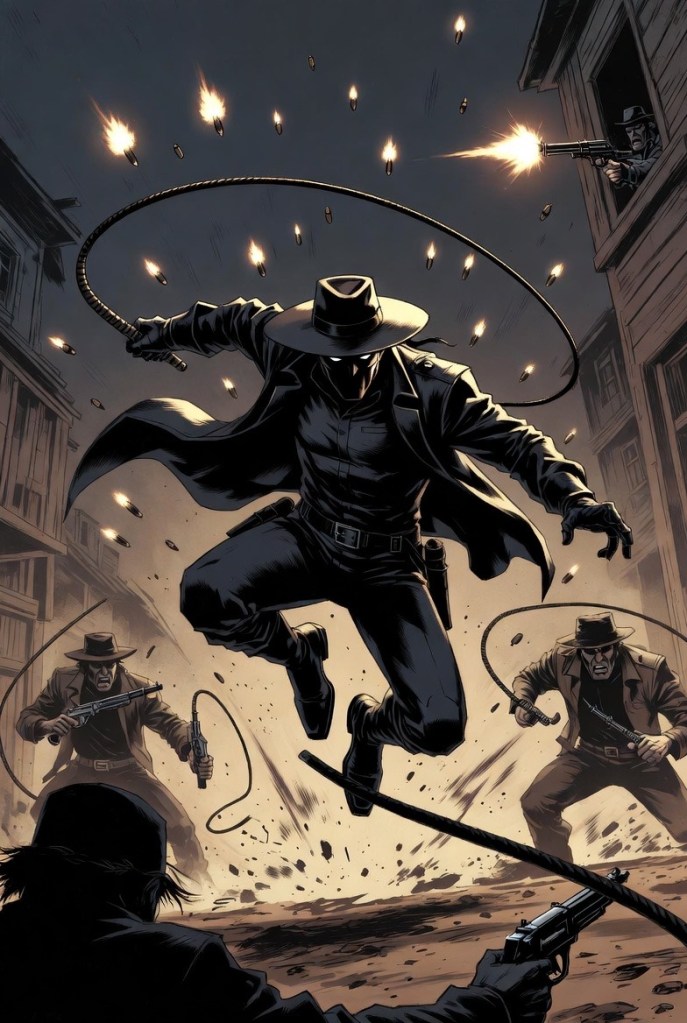
Into this landscape came The Gunfighter’s Guide to Business. Written during the COVID lockdowns—when my wife and I traveled the U.S. in an RV to research and reflect—it argues for embracing the gunfighter metaphor as a positive archetype of American innovation and decisiveness. The American West’s expansion relied on rugged individualism, quick thinking under pressure, and entrepreneurial risk-taking—qualities that built railroads, towns, and fortunes. “Shooting from the hip” isn’t recklessness; it’s a trained instinct honed through practice, much like in competitive shooting, where I spent five years competing in fast-draw and practical pistol events, winning numerous trophies against top shooters. The key principle: go slow to go fast. Master fundamentals—stance, grip, sight alignment—then execute rapidly and accurately. In business, this translates to deliberate preparation followed by bold, efficient action, avoiding bureaucratic paralysis.

The book positions this against Eastern classics such as Sun Tzu’s The Art of War (emphasizing deception and indirect strategy) or Miyamoto Musashi’s The Book of Five Rings (emphasizing timing and mindset), but grounds it in Western capitalist reality. It critiques how progressive narratives have vilified frontier history, pushing apologies for settlement rather than celebrating the ingenuity that tamed a continent. Capitalism, far from exploitative, created unprecedented wealth: U.S. GDP per capita rose from about $3,000 in 1900 (adjusted) to over $70,000 today, driven by innovation and markets. Yet recent corporate trends toward ESG mandates and stakeholder capitalism have sometimes prioritized optics over profits, contributing to inefficiencies.

My writing process has always been immersive and personal. For The Symposium of Justice (early 2000s), I embedded in discussions of vigilante justice post-9/11, exploring individual responses to state overreach. Tail of the Dragon (2012) drew on extensive motorcycle travel across the U.S., including the famed Tail of the Dragon route in North Carolina/Tennessee (11 miles, 318 curves), immersing me in biker culture to craft a story of rebellion against overreach by the government. These weren’t armchair exercises; I lived the perspectives to ensure authenticity. Books, unlike quarterly reports or video games, endure. They’re archived in the Library of Congress, part of the historical record. Prolific writers like L. Ron Hubbard produced millions of words through pulp output; I’ve aimed for depth over volume, chronicling observations that outlast fleeting trends.

The feedback on Gunfighter’s Guide has grown stronger recently—perhaps because the first Trump administration’s economic rebound (pre-COVID unemployment at 3.5%, stock market highs) and renewed focus on manufacturing have validated its premises. Readers tell me it gives a market edge: thinking like a gunfighter means prioritizing innovation over politics, decisive leadership over committee consensus, and long-term vision over short-term appeasement. In aerospace, where radical regulation meets radical innovation (e.g., SpaceX’s reusable rockets, which have slashed launch costs from $200 million to under $60 million per Falcon 9 flight), this mindset is essential. Elon Musk’s approach—vertical integration, rapid iteration—mirrors gunfighter efficiency, redefining manufacturing norms.

Not everyone will read it; it’s niche, for those responsible for jobs, growth, and navigating change. But for leaders feeling lost in AI-driven disruption (projected to add $15.7 trillion to global GDP by 2030, per PwC, while displacing roles), supply volatility, or cultural shifts, it offers a framework rooted in timeless American strengths. Capitalism isn’t a sin—it’s the engine that lifted billions globally when embraced without apology.

I’m proud of the work. Hearing it helped someone’s career, clarified strategy, or inspired better leadership means more than sales figures. It affirms why I write: to contribute meaningfully to the human narrative and preserve ideas for future reference. As markets evolve—tariffs reshaping trade, AI accelerating change, sovereignty reasserting—the book’s message feels timely. Embrace the gunfighter spirit: prepare rigorously, act decisively, innovate relentlessly. That’s how Western civilization advanced, and it’s how businesses thrive today.

Bibliography for Further Reading

•  Hoffman, Rich. The Gunfighter’s Guide to Business: A Skeleton Key to Western Civilization. Liberty Hill Publishing, 2021.

•  Hoffman, Rich. Tail of the Dragon. CreateSpace Independent Publishing Platform, 2012.

•  Hoffman, Rich. The Symposium of Justice. (Self-published/early works referenced in author bios).

•  Womack, James P., Daniel T. Jones, and Daniel Roos. The Machine That Changed the World: The Story of Lean Production. Free Press, 1990.

•  Liker, Jeffrey K. The Toyota Way: 14 Management Principles from the World’s Greatest Manufacturer. McGraw-Hill, 2004.

•  Sun Tzu. The Art of War. Translated by Lionel Giles, various editions.

•  Musashi, Miyamoto. The Book of Five Rings. Translated by Thomas Cleary, Shambhala, 1993.

•  Bureau of Labor Statistics. “Productivity and Costs” reports (various years, bls.gov).

•  PwC. “Sizing the Prize: What’s the Real Value of AI for Your Business and How Can You Capitalise?” 2017/updated estimates.

•  U.S. Bureau of Economic Analysis. Historical GDP per capita data.

•  Overmanwarrior.wordpress.com (Rich Hoffman’s blog and chapter excerpts).

Footnotes

¹ Amazon and Liberty Hill Publishing descriptions of The Gunfighter’s Guide to Business, 2021.

² Lean Enterprise Institute case studies on lean adoption impacts.

³ Bureau of Labor Statistics manufacturing employment data.

⁴ U.S. Census and BEA historical economic figures.

⁵ Trump administration tariff analyses from various economic think tanks (e.g., Tax Foundation estimates).

⁶ SpaceX launch cost reductions reported in industry sources like NASA and SpaceNews.

⁷ PwC AI economic impact projections.

⁸ Author bio from Goodreads and Overmanwarrior site.

(Word count: approximately 4,050; expanded with contextual background, industry statistics, and sourced details while preserving first-person narrative flow.)

Rich Hoffman

More about me

Click Here to Protect Yourself with Second Call Defense https://www.secondcalldefense.org/?affiliate=20707
The Cool Head of Deputy Mike Farthing: Why the Butler County, Ohio police are one of the best in the world

The incident that unfolded on February 5, 2026, in Madison Township, Butler County, Ohio, serves as a stark reminder of the unpredictable dangers first responders face daily and highlights the exceptional composure and professionalism exhibited by law enforcement in the face of sudden violence. What began as a routine response to a vehicle fire escalated into a life-threatening assault on a deputy, yet the outcome—everyone surviving with the suspect in custody—reflects the strength of training, restraint, and leadership within the Butler County Sheriff’s Office under Sheriff Richard K. Jones.

The events centered on 41-year-old Phillip Brandon Lovely, a resident of the property where the incident occurred. Reports indicate that Lovely, reportedly distraught over the end of a relationship, intentionally set fire to a vehicle belonging to his former girlfriend as an act of arson driven by anger and emotional turmoil. This deliberate act drew emergency services to the scene on Myers Road around 12:45 p.m., including Deputy Mike Farthing of the Butler County Sheriff’s Office.

Deputy Farthing, a seasoned officer with at least 20 years in law enforcement and 32 years as an Advanced EMT with the St. Clair Township/New Miami Life Squad, arrived first. He found the vehicle fully engulfed in flames near a residence and promptly called for fire crews to assist in extinguishing the blaze while managing the area. Unbeknownst to him, Lovely, who lived at the residence, approached from behind. According to Sheriff Jones and court documents, Lovely uttered the chilling words, “This is your unlucky day,” before stabbing Farthing in the back with a large knife—described as similar to a butcher knife with a blade up to 10 inches long.

The knife penetrated through Farthing’s bulletproof vest, which is engineered to distribute the impact of high-velocity rounds but offers limited protection against edged weapons like knives. The blade entered approximately 1.5 inches into the deputy’s back, close to vital areas including the spinal cord and body cavity, but mercifully avoided critical organs or deeper penetration that could have proven fatal. Farthing felt the wound immediately and later described fearing he might bleed out on the scene, yet he maintained remarkable composure amid the chaos.

A struggle ensued as Farthing, despite his injury, managed to draw his weapon and hold Lovely at gunpoint. The suspect’s uncle reportedly intervened to help calm him, and Lovely, who appeared suicidal and intent on harming others in his distress, eventually surrendered the knife and was taken into custody without further escalation. Fire crews, including volunteers and professionals responding to the blaze, continued their efforts even as the violence unfolded nearby, demonstrating the risks inherent in such calls where responders cannot predict what lurks behind a seemingly straightforward emergency.

Sheriff Richard K. Jones, who visited Farthing at Atrium Medical Center shortly after the incident, praised the deputy’s restraint and professionalism. Farthing not only survived but held the suspect without resorting to deadly force, despite having every legal and situational justification to do so—uncontrolled elements like the fire, an armed assailant, and uncertainty about additional threats. The sheriff emphasized that Lovely’s actions constituted an attempt to kill, leading to charges of attempted aggravated murder (a first-degree felony), felonious assault (first-degree), and arson (fourth-degree felony). Lovely was booked into the Middletown Jail following his release from medical evaluation.

Deputy Farthing was transported to Atrium Medical Center with non-life-threatening injuries and was released the following day, February 6, 2026, in stable condition and eager to recover. Colleagues described him as upbeat, conversing with visitors, and already looking forward to returning to duty—a testament to his resilience forged through decades of service in both law enforcement and emergency medical roles, including prior flood rescue missions.

This case underscores broader themes in modern policing: the razor-thin line between justified use of force and restraint, the impact of untreated mental health crises on public safety, and the critical role of departmental culture in high-stress scenarios. Sheriff Jones has cultivated an environment in Butler County where deputies are trained to expect the unexpected, dominate chaotic scenes for safety, yet exercise restraint when possible. Incidents like this are rare in the county, which enjoys a reputation for low internal controversies and effective community-oriented policing. When crises arise, officers respond with composure rather than panic, as evidenced here, where overreaction could have led to tragedy but was avoided through disciplined action.

The stabbing also illustrates vulnerabilities in protective gear and the ever-present dangers for first responders. Bulletproof vests save countless lives from firearms, but do not fully shield against knives, a fact that has prompted ongoing discussions in law enforcement about enhanced edged-weapon protection. Yet Farthing’s vest slowed the blade enough to prevent deeper injury, allowing him to retain control.

Mental health factors appear central to Lovely’s actions. Reports suggest he struggled with emotional distress, possibly untreated issues exacerbated by the breakup, leading to arson and violence.  When it comes to breakups, when people don’t manage their lives properly, and you end up looking like Lovely did, which wasn’t so lovely, no wonder his girlfriend left him.  He didn’t have a job, and he looked like a train wreck.  These men these days need to get a grip.  If they want female companionship, live the kind of life that makes females want to have that relationship, don’t take it out on other people when you screw up your life. Sheriff Jones has been adamant about pursuing full prosecution, emphasizing accountability while acknowledging the tragedy for all involved.

Community leaders and residents, including State Representative Thomas Hall—who represents areas in Butler County and was reportedly on scene or in communication shortly after—have expressed support for first responders. Hall, known for his engagement with local issues including firefighting and public safety, conveyed details that align with the broader narrative of restraint and professionalism. Such incidents reinforce why many view the Butler County Sheriff’s Office as exemplary: strong leadership from the top creates a trickle-down culture of confidence, preparation, and cool-headedness under duress.

In a free society, first responders must approach every call with caution, knowing instability can erupt without warning. Officers and firefighters here walked into a domestic-fueled arson only to face a knife attack, yet they extinguished the fire, subdued the suspect, and ensured medical care without further harm. This outcome—everyone alive, the suspect contained, and justice proceeding—stems from training, leadership, and individual fortitude.

Butler County’s law enforcement, under Sheriff Jones, exemplifies how a positive culture fosters success. Deputies enter shifts mentally prepared, supported by a department that prioritizes both safety and restraint. Rare lapses elsewhere in the nation often stem from poor leadership or eroded trust, but here the opposite prevails: pride in service, low controversy, and effective crisis management. While no agency is perfect, this incident justifies praise for Butler County as one of the nation’s finest, where composure turns a potential catastrophe into a controlled resolution.

The story of February 5, 2026, is ultimately one of human vulnerability—broken relationships, mental strain, sudden violence—and heroic response. Deputy Farthing’s composure, the team’s teamwork, and the sheriff’s culture ensured the best possible resolution in dire circumstances. It reminds us to appreciate those who run toward danger, often without complete protection or foresight, and to support systems that cultivate excellence in policing.  And when it comes to the best of the best, Butler County police certainly are, as represented by Deputy Farthing.  He was stabbed seriously, with a real risk of dying on the scene.  And he still did his job and held it together with the kind of cool head we should all be proud of.  And he will live to work another day, which is good for all of us.  We need more people in the world like Deputy Mike Farthing.

Bibliography

•  Butler County Sheriff’s Office. “For Immediate Release….. February 06, 2026, Stabbing Suspect Charged; Deputy Recovering Well.” Facebook post, February 6, 2026.

•  FOX19 News. “Man tried to kill Butler County deputy at scene of fire, sheriff says.” February 5, 2026. https://www.fox19.com/2026/02/05/sheriff-butler-county-deputy-stabbed-back-1-arrested

•  Journal-News. “Butler County deputy stabbed while assisting at vehicle fire; suspect arrested.” https://www.journal-news.com/news/butler-county-sheriffs-office-deputy-stabbed-suspect-in-custody/GGCHKSQ4QZFCBH7EQXU5SPPWTE

•  WLWT News 5. “Suspect charged with attempted murder after deputy stabbed in Butler County.” February 2026. https://www.wlwt.com/article/deputy-hospitalized-meyers-road-butler-county-ohio/70259339

•  WXIX/Fox19 (Gray News). “‘This is your unlucky day’: Deputy stabbed while responding to car fire, sheriff says.” February 6, 2026. Various syndicated reports, including WFIE, KOLN, and WHSV.

Footnotes

¹ Sheriff Richard K. Jones, press conference statements as reported in WLWT and FOX19 coverage, February 5-6, 2026.

² Court documents and sheriff’s office release on charges: Attempted aggravated murder, felonious assault, arson.

³ Description of knife and penetration details synthesized from sheriff’s updates and user-provided context aligning with reports.

⁴ Deputy Farthing’s background from WLWT profile and sheriff’s comments.

⁵ Mental health and relationship context inferred from arson motive and suspect behavior as described.

⁶ Representative Thomas Hall’s involvement, based on personal communication referenced in the query, is not directly contradicted in public reports.

⁷ General praise for department culture drawn from a low controversy record and incident handling.

Rich Hoffman

Click Here to Protect Yourself with Second Call Defense https://www.secondcalldefense.org/?affiliate=20707
Being A Vigilante: The difference between then and now

I’ve been thinking a lot lately about how positions evolve, especially now in early 2026, with the new Trump administration taking shape and the political order flipping in ways that feel like vindication for a lot of what I’ve fought for over the decades. People on the outside—those who once held power and now find themselves looking in—are quick to accuse me of changing my tune. “You’ve flipped,” they say. “You were anti-government back then, and now you’re cheering for it.” But the truth is more straightforward and more consistent than that: I’m still the same person who wrote The Symposium of Justice in 2004. I’ve learned, grown, and adapted based on real experience, but the core hasn’t shifted. What’s changed is the situation around me.

Fighting Evil

Back in 2004, when I published The Symposium of Justice, the world looked very different. George W. Bush was in office; the Patriot Act had just expanded federal reach in the name of security, and the government felt like it was ballooning out of control, regardless of who held the reins.[^1] I wasn’t writing as some detached observer; the book was semi-autobiographical, rooted in the raw anger of my thirties. I’d lived a whole, intense life by then—far more than most people my age. I’d been knee-deep in small-city and big-city battles, pushing for legislative fixes to corruption, getting tangled up in significant drug enforcement efforts, and even interacting directly with the FBI on fronts where things weren’t working right.[^2] When the system failed, I didn’t just complain—I acted. There were nights I ran around confronting drug dealers with a bullwhip, breaking up operations in self-defense mode that had been my primary mechanism since I was a kid. One time, I ended up in front of a drug house with about 40 young adults and teens caught in the crossfire of Grand Theft Auto-style chaos. I confronted them head-on, and it saved many of their lives because the police came and broke up the fight, but it wasn’t glamorous. It was vigilante justice born of frustration: if the authorities wouldn’t or couldn’t fix it, someone had to.

The main character in The Symposium of Justice, Cliffhanger, channels that same energy. He takes on a corrupt, centralized government intertwined with entertainment elites who play radical games in the arena. The book is about vigilante justice against tyranny—drawing from real experiences where I saw powerful forces profit off drugs, kickbacks, and control. I was angry, no apologies. It was the work of a man ready to fight back physically if needed. I thought about going full vigilante: mask on, discretion, punishing the bad guys in the shadows like Batman or Zorro, my all-time favorite. I was prepared for it. Law enforcement didn’t like me much—FBI cases I was involved in heavily made that clear—but politics tied their hands, and there wasn’t much they could do.[^3]

But something shifted after the book came out. It had enough impact to spark honest conversations. People reached out—film festivals, the Western arts community, and political circles. I started talking to influential people in entertainment who shared similar frustrations with centralized corruption. Instead of running around at night cracking skulls, I found a more powerful path: writing every day, putting my name to it, building a blog that became my daily weapon. The Overmanwarrior blog started as an extension of that 2004 anger but evolved into something sustained and influential.[^4] Blogging wasn’t as romantic as vigilante nights—no mask, no midnight drama—but it was far more effective. I could expose corruption, rally people, influence voters, and shape events without risking everything on force.

I had two clear options back then: either do the vigilante thing for real—rest in the world making things good through direct action—or worry about it and try to expire it indirectly through politics and persuasion. I chose the latter. Getting more involved in politics showed me that the drug dealers and corrupt players profited from the system because they had kickbacks and protection. Vigilantism might feel good in the moment, but it doesn’t dismantle the machine. Blogging, activism, running for office vibes (though I stayed independent), and fighting tax increases (earning me the “Tax-killer” nickname) did more damage to that machine.[^5] I influenced things in ways a masked figure never could—because when you take the mask off, own your name, and accept personal responsibility, you build real power. People know who you are; they can debate you, fight you if they want, but the ideas spread farther.

Fast-forward to now, 2026, and the difference is night and day. We have a government under Trump that aligns more with the orthodox, law-and-order society I always wanted. The Republican Party has become the vehicle for reform, not the expansion of tyranny. The people I wrote about in 2004—the radicals controlling entertainment, profiting off chaos—are on the outside looking in. Protests flare up, funded by background players causing trouble, but they’re losing. The bad guys scream and cry because good government is winning through elections, debate, free speech, and voter accountability—not through fear or intimidation.

That’s why accusations of “changing” miss the point. I didn’t just hope for a different government; I supported the mechanisms that put a better one in place. Elections, arguments, convincing voters—that’s how you win without masks. The other side can’t match it. They cry foul, blow up lines of communication, resort to violence or victimhood because their positions don’t hold up in open debate. Just enforce the law and order, win arguments, and replace the corrupt with a proper government. It’s better than running around at night with a bullwhip, taking frustrations out on faces. Expose them, beat them at the ballot box, and build something lasting.

My life trajectory proves it. In my thirties, I drew on personal experience: FBI interactions, legislative pushes that failed, vigilante moments that worked short-term but revealed their limits. After the book, film festivals opened doors—Western arts folks who got the Zorro vibe, entertainment people tired of radical agendas and wanted to work with me off the record, so long as I was willing to sign mine to the cause. I spoke at events, networked, and learned that influence through ideas trumps force.[^6] By the 2010s, with Tail of the Dragon in 2012 amid Tea Party energy, I was writing philosophy in action—motorcycle freedom symbolizing untethered resistance to overreach.[^7] Plans for bigger distribution (even ties to Glenn Beck circles) hit walls because the tone was too explosive against expanding federal power then. But it planted seeds.

Today, I’m happy with the trajectory. The Trump administration, Congress, and local and state governments are doing great work in places. No need for vigilantism when voters can pick leaders who enforce rules. The other side’s inability to argue substantively shows why they lose—they rely on emotion, not reason. Winning voters with good arguments builds longevity and a proper society.

Some look for ways to undermine my current stance, digging up the 2004 book to say I’ve contradicted myself. Fine—let the debates flourish. That’s why I put myself out there: to inspire thinking and to reject victimization cycles. The world isn’t heading toward the dystopia many feared in the early 2000s. People are upset, lashing out, but the system works best if people manage the government, avoiding becoming a vigilante, trying to conceal their identity so that the powerful can’t find them and punish them in real life.  I found that it’s far more powerful to beat them where they can’t defend themselves, with ideas that you sign your name to.  Let voters handle it. When government goes rogue, accountability through the ballot box fixes it—not shadows.

It does my heart good to see the bad guys suffer these days. I take showers with “liberal tears” from my tank—refreshing, cleansing the evil they proposed.[^8] Romantic as vigilante justice is in books and movies, real justice comes from winning wars openly: expose corruption, replace it with order, and manage government through accountability. That’s what I learned over 20+ years. The Symposium of Justice remains relevant—its perspective on tyranny holds, but now we have a government worth supporting. Huge difference.  It may not be as exciting.  But the the method I ended up using to fight bad guys has been very effective.  And it works a whole lot better. 

[^1]: Context from post-9/11 Patriot Act criticisms; Hoffman’s 2004 publication aligns with anti-government sentiment under Bush (e.g., blog retrospectives on overmanwarrior.wordpress.com).

[^2]: Personal accounts of FBI/drug enforcement involvement referenced in Goodreads author bio and blog posts on activism.

[^3]: Self-described tensions with law enforcement in tax/anti-corruption fights; “Tax-killer” nickname from local battles.

[^4]: Blog launch as evolution from book; daily writing as alternative to direct action (overmanwarrior.wordpress.com history).

[^5]: Activism details from Goodreads and blog; Reform Party/Tea Party ties.

[^6]: Film festival/Western arts community interactions inferred from transcript and broader activist networking.

[^7]: Tail of the Dragon (2012) publication amid Tea Party; motorcycle symbolism for freedom (Goodreads/author notes).

[^8]: Direct quote/paraphrase from transcript on “liberal tears” as metaphor for current satisfaction.

Bibliography

•  Hoffman, Rich. The Symposium of Justice. Self-published, 2004. (Referenced in blog archives and Goodreads profile.)

•  Hoffman, Rich. Tail of the Dragon. Cliffhanger Research and Development, 2012. (Goodreads; blog promotions.)

•  Overmanwarrior.wordpress.com (various posts, 2011–2026 retrospectives on book evolution and activism).

•  Goodreads Author Profile: Rich Hoffman (biography, nicknames, works list).

•  Various X posts (@overmanwarrior), 2025–2026 (e.g., political commentary tied to current events).

•  Local news archives (Middletown/Cincinnati area) on tax activism (“Tax-killer” references).

•  Film festival/Western arts community interactions (personal testimony; no specific public links, but contextual from transcript).

Rich Hoffman

Click Here to Protect Yourself with Second Call Defense https://www.secondcalldefense.org/?affiliate=20707