The Truth About Bigfoot Sightings in Ohio During March of 2026: What nobody wants to admit–the terror behind the conspiracies

It was one of those crisp March evenings in 2026 when the calls started pouring in from Portage County, Ohio—eight credible Bigfoot sightings crammed into barely a hundred hours, each one more jaw-dropping than the last. People weren’t just spotting shadows in the woods; they were locking eyes with something massive, something that didn’t belong in our tidy little version of reality. One report came from a mom and her daughter, who were driving along a back road near Mantua Center, right around 8:00 p.m. on March 7th. They almost hit it. The thing stepped out of the treeline and stood there three feet from the passenger door—close enough, the daughter said, that she could have reached out and touched it if the window had been down. It was around six-foot-five, brown, and moving with that casual, unhurried stride that big creatures seem to have when they know they own the night. But here’s the part that is most chilling: its face was blurry. Not out of focus like a bad photo, but genuinely indistinct, as if the creature was only halfway rendered into our four-dimensional world. The mom slammed the brakes, the daughter screamed, and then it was gone—melted back into the trees as if it had never been there at all. No aggression, no chase, just a quiet acknowledgment that something ancient had crossed their path and decided, for whatever reason, to let them live with the memory.

By the time the Bigfoot Society podcast and local news outlets like Cleveland 19 and FOX 8 started mapping it out, the reports were stacking up from Mantua Center to Garrettsville to Windham to Newton Township. Daytime sightings in broad sunlight on the Headwaters Trail—a nine-foot brown male standing 120 yards off Route 44 at 12:23 p.m. on March 6th. Nighttime grunts and muddy prints the size of dinner plates. An older woman in Windham who had never believed in any of this nonsense watched something massive bolt through the woods on March 9th. A man walking his German Shepherd at 4:00 a.m. on March 10th had the dog lose its mind at the back door before the shadow of an eight- to ten-foot figure vanished into the blackness. Multiple independent witnesses, at different times of day, on different roads, under different lighting conditions. Some smelled that unmistakable wet-dog-meets-skunk odor. Others heard deep, vibrating grunts that carried through the trees like distant thunder. And every single one of them swore it wasn’t a bear, wasn’t a hoax, wasn’t some kid in a costume. These were ordinary Ohioans—hikers, dog walkers, a mom just trying to get her kid home—who suddenly found themselves face-to-face with the impossible.
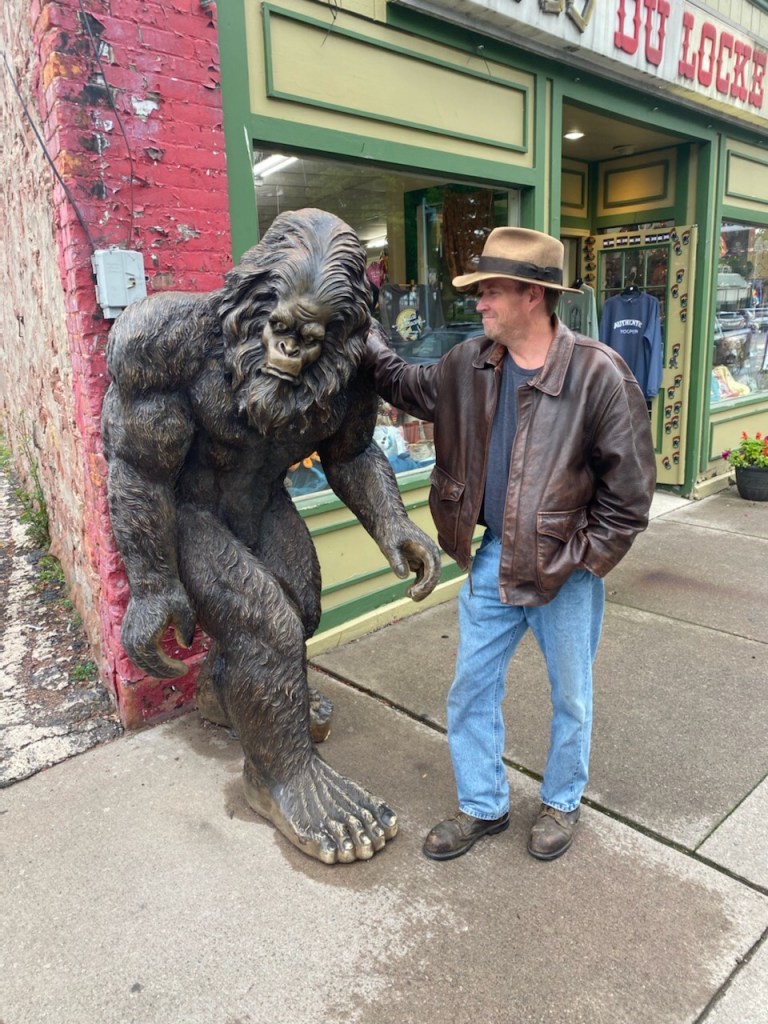
The internet, of course, went wild with the usual explanations. “Undocumented Neanderthal remnant!” cried the cryptid enthusiasts. “Lost tribe of giant hairy hominids migrating through the Midwest!” But I’ve spent too many years chasing these things—camping at the Mothman Museum with my grandkids, hiking the haunted Moonville Tunnel at midnight, standing on the ridges of Little Round Top at Gettysburg—to buy the simple “flesh-and-blood ape-man hiding in the woods” story. The more I read the reports, the more I kept coming back to the same conclusion I’ve reached after researching the Ohio Valley mounds for decades: these aren’t just undiscovered animals. They’re something far older, far stranger, and far more connected to the Politics of Heaven than most people are ready to admit. They’re dimensional. They’re quantum-entangled echoes of beings who have been walking these same trails for thousands of years—sometimes in our reality, sometimes bleeding through from somewhere else entirely. And the reason they keep showing up right here, right now, in the same corridors where ancient earthworks once stood, is because those earthworks were never just “religious monuments.” They were communication devices. Calling cards. Mathematical beacons built by people who understood something we’ve spent centuries trying to forget.

Let me take you back to the source of all this strangeness—the Ohio River Valley itself, that ribbon of land that runs from the Serpent Mound down near Cincinnati all the way up through the Newark Earthworks and beyond. This isn’t random wilderness. It’s one of the most concentrated paranormal hotspots on the planet, and it has been for a very long time. The same week those Portage County sightings were making national news, I pulled out the old hidden-haunts map I’d bought at the Mothman Museum and started plotting the locations. Every single sighting clustered around old mound corridors, old Indian trails that modern roads had paved over, places where the veil has always been thin. Serpent Mound, Fort Ancient, the massive geometric works at Newark that once covered more ground than the Great Pyramid complex in Egypt—those aren’t just piles of dirt left by “primitive” hunter-gatherers. They’re precise mathematical constructs aligned to the Pleiades, to solstices, to the movement of stars in ways that required calculus-level understanding of Earth’s circumference and axial tilt. The same mathematics you find at Stonehenge and Avebury in England. The same geometric obsession you see at Flag Fen near Peterborough, where Francis Pryor and his team uncovered an entire Bronze Age village built on a bog around 1300 B.C.—a place so sophisticated it makes the Romans who later conquered Britain look like amateurs playing catch-up.

I remember the first time I stood at Stonehenge with my family, the same trip where I picked up Pryor’s book Britain BC at the visitor center gift shop. You see the famous stones on TV, and you think, “cool rocks.” But when you’re actually there, walking the landscape, you realize the stones are just the tip of the iceberg. The entire countryside is dotted with burial mounds—hundreds of them—some almost identical in size and construction to the ones at Miamisburg and Middletown right here in Ohio. There’s a massive cursus—a long, linear earthwork over a mile long—that you can’t even see properly from the ground; it only makes sense from the air. It looks like a giant runway aimed at the heavens. And just a few miles north at Avebury, you’ve got the same thing: enormous circular henges, burial barrows, and geometric patterns that mirror the Newark Octagon and the Great Circle earthworks back home. Pryor’s work at Flag Fen blew the lid off the whole “primitive Britons” myth. They built an entire wooden platform and causeway across a bog, throwing broken tools and weapons into the water as offerings to the dead. Why? Because they understood that bogs preserve. They understood that the afterlife wasn’t some vague cloud kingdom—it was a place you could send messages to. And they used mathematics and geometry to do it.

Fritz Zimmerman has been saying the same thing about North America for years, only louder and with more receipts. His books—The Encyclopedia of Ancient Giants in North America, The Nephilim Chronicles: Fallen Angels in the Ohio Valley, Ancient America: The Dark Side, and Mysteries of Ancient America—aren’t fringe conspiracy rants. They’re the result of decades of boots-on-the-ground research, cross-referencing thousands of old newspaper accounts, county histories, and Smithsonian reports that mainstream archaeology would rather pretend don’t exist. Zimmerman’s core thesis is as elegant as it is explosive: the giant bones reported in over 500 separate accounts across the Midwest weren’t hoaxes or exaggerations. They belonged to the Amorites—biblical giants, descendants of the Nephilim—who fled Joshua’s conquest of Canaan, migrated through Europe (building or influencing Stonehenge and Avebury along the way), and eventually crossed the Atlantic in sophisticated boats to settle the Ohio Valley. The mounds they left behind aren’t random; they’re the same celestial observatories and ritual centers you find in England, only transplanted here. And the paranormal activity that clusters around them—Bigfoot, orbs, Mothman, shadowy figures—aren’t new phenomena. They’re the lingering echoes of the same entities those ancient builders were trying to communicate with.

Think about it. The Book of Enoch—preserved in the Dead Sea Scrolls and left out of our modern canon for reasons that should make every honest person furious—gives us the clearest picture. Two hundred Watchers, led by Semyaza and Azazel, descend on Mount Hermon, lust after human women, and produce giant offspring. God punishes them, but their disembodied spirits are cursed to roam the earth until the final judgment. These aren’t cartoon devils with pitchforks. They’re principalities and powers (Ephesians 6:12), interdimensional beings who once had physical bodies and now operate from the quantum edges of our reality. The Amorites carried that knowledge with them. They built geometric earthworks—circles, octagons, serpents aligned to the stars—because those shapes spoke the language those fallen entities understood. It wasn’t “religion” in the Sunday-school sense. It was technology. It was science. It was an attempt to maintain a relationship with the divine council, which Psalm 82 warns is still plotting against Yahweh to this day.

That’s why the mom and her daughter didn’t see a clear-faced ape-man on that dark Ohio road. They saw something bleeding through the veil—something that exists in a higher or adjacent dimension and only partially manifests here. The blurry face? That’s what quantum entanglement looks like when two realities briefly overlap. The creature wasn’t “lost.” It was answering an ancient call that still resonates through the mounds it once helped build. The same thing explains the Mothman at Point Pleasant in 1966–67—Stolas, the 36th demon from the Lesser Key of Solomon, appearing as a prophetic harbinger before the Silver Bridge collapse. The same thing explains the orbs we photographed at the Moonville Tunnel, the green healing spirits that seem to drift down from the ridges at Gettysburg, the Bigfoot sightings that spike whenever someone disturbs an old mound corridor. These aren’t separate mysteries. They’re the same phenomenon wearing different masks depending on who’s looking and what the local geometry is tuned to.

And here’s where the real conspiracy kicks in—the one that has nothing to do with the CIA and everything to do with the spiritual wickedness in high places. Mainstream archaeology, the Smithsonian, and the political class that funds them have spent over a century burying this truth under layers of political correctness and bad assumptions. The Native American Graves Protection and Repatriation Act (NAGPRA) of 1990—passed right after Dances with Wolves tugged at everyone’s heartstrings—made it illegal to study many of these sites properly. Bones that could prove the existence of pre-Columbian European or Near Eastern contact? Reburied. Giant skeletons reported in hundreds of 19th-century newspapers? Carted off to Smithsonian vaults and never seen again. The Windover Bog site in Florida is the perfect example. Discovered in the 1980s during housing construction, it yielded 168 incredibly preserved skeletons from 7,000–8,000 years ago—people with advanced woven textiles, bog-preservation knowledge identical to European practices, and thigh bones so large that Dr. Geoffrey Thomas held one up next to his own leg on camera at the Brevard Museum and basically admitted these folks were giants. Average height estimates got downplayed to 5’5” in some reports, but the video evidence and the bone density tell a different story. These weren’t primitive hunter-gatherers. They were part of a sophisticated culture that understood time, astronomy, and the spirit world in ways we’re only beginning to rediscover. And what happened? The site was covered up. Research stalled. NAGPRA kicked in. End of story.

Meanwhile, in England, Francis Pryor and the English Heritage team get to dig Flag Fen like it’s the greatest adventure on Earth. They uncover a Bronze Age village built on a bog, with broken swords and tools thrown in as offerings, and everyone celebrates the sophistication of prehistoric Britons. Why the double standard? Because admitting the same people—or at least the same knowledge—crossed the Atlantic thousands of years before Columbus shatters too many comfortable narratives. It forces us to confront the biblical timeline. It forces us to admit that the “indigenous” label we slap on every pre-Columbian culture is as accurate as calling the Romans “indigenous” to Britain. Migration, trade, and the collision of cultures happened constantly. Giants walked among us. Fallen angels taught forbidden knowledge. And their disembodied offspring are still here, still walking the old paths, still answering calls that were broadcast through geometric earthworks when the stars were in different alignments.

This is the Politics of Heaven playing out on Earth. Yahweh’s divine council—Elohim plural, as Psalm 82 makes painfully clear—has been in rebellion since before the Flood. The Watchers’ sin produced the Nephilim, whose spirits became the principalities and powers that still rule from the shadows. Solomon commanded them to build his Temple. The Canaanites sacrificed children to Moloch to appease them. The mound builders aligned their works to the stars to communicate with them. And today, in 2026, when eight Bigfoot encounters happen in a single week in Portage County, we’re seeing the same entities responding to the same ancient geometry. The mounds may be paved over, but the call still echoes. The quantum entanglement still happens. The blurry faces still peer through the veil.

I’ve stood on Little Round Top at Gettysburg at night with my family. I’ve hiked the Moonville Tunnel when the mist rolls in, and the green orbs appear exactly where my wife said they would. I’ve walked the ridges at Stonehenge and felt the same electric charge I feel standing on Fortified Hill or the Middletown Mound back home. The pattern is undeniable. The science—real science, the kind Pryor practices in England and the kind Zimmerman has been quietly practicing in America for decades—points to a lost chapter of human history in which advanced cultures used mathematics not just to measure the stars but to speak to the beings who live among them. We call them cryptids. The Bible calls them demons, watchers, principalities. The Japanese call them kami. The Muslims call them jinn. Every culture that ever built geometric earthworks knew them by a different name, but they all knew the same truth: these entities are real, they’re ancient, and they never really left.

The mom and her daughter in Portage County didn’t almost hit a lost ape. They brushed up against something that has been walking these trails since the Amorites—or whoever came before them—first laid out the geometric patterns that still whisper across time. The Bigfoot that stood three feet away with the blurry face wasn’t confused. It was exactly where it was supposed to be—answering a call that was programmed into the landscape thousands of years ago. And until we stop pretending that our textbooks tell the whole story, until we start digging the mounds again with the same adventurous spirit that Pryor brought to Flag Fen, we’ll keep mistaking echoes for myths and calling the messengers monsters.

The Politics of Heaven (the title of my new book coming up) aren’t happening somewhere far away in the clouds. They’re happening on the back roads of Ohio in March 2026, when the veil thins and something very old decides to step through for a moment and remind us that the war never ended. It just changed costumes. And the next time you see a blurry figure on the side of the road, don’t reach for your phone to call it a hoax. Reach for the truth instead. The mounds are still talking. The Watchers are still listening. And the rest of us? We’re just now starting to remember how to hear them.

BOOK SUMMARY of the upcoming Politics of Heaven (I will be finishing the final chapter in Washington D.C. at the Museum of the Bible soon after this posting)

The Politics of Heaven is a sweeping, unconventional investigation into the hidden structure of history — blending biblical archaeology, supernatural encounters, political warfare, cryptid phenomena, and ancient mathematics into a single, high‑powered thesis:

Earth’s political conflicts are the surface-level reflections of a much older, multidimensional battle among the Elohim — the divine council referenced throughout the Bible.

Drawing from firsthand experiences at sites like Chichen Itza, Stonehenge, Serpent Mound, Osaka’s Kofun tombs, Moonville Tunnel, and Washington D.C.’s Masonic grid — combined with encounters in modern political war rooms — Hoffman argues that the veil separating Heaven, Earth, and the unseen realm is thinner than we admit.

The book culminates in Chapter 19, where recent Bigfoot sightings in Ohio become the key to unifying the narrative. These blurry, partially‑manifest beings are framed as:

Residual spiritual entities tied to the Amorites, the Watchers, and the pre‑Flood giants — evidence of dimensional interference and the limits of human free will.

The result is a revelatory, provocative work for readers of Biblical studies, ancient mysteries, UFO/paranormal research, and political philosophy.

Footnotes

1.  Cleveland 19 News, “Several Bigfoot sightings reported in Portage County,” March 2026; FOX8, “Bigfoot roaming Portage County: Several reported sightings within days,” March 10, 2026.

2.  The Bigfoot Society podcast and mapping project documented at least eight high-credibility reports between March 6–10, 2026, including the Mantua Center daytime encounter and the Newton Township 4 a.m. sighting.

3.  Francis Pryor, Flag Fen: Life and Death of a Prehistoric Landscape (Tempus, 2005; updated editions). Pryor’s excavations revealed a sophisticated Bronze Age platform and votive offerings in the bog.

4.  Fritz Zimmerman, The Encyclopedia of Ancient Giants in North America (2015); The Nephilim Chronicles: Fallen Angels in the Ohio Valley (2010); Ancient America: The Dark Side (2024). Zimmerman’s fieldwork and archival research compile over 500 historical giant-bone reports.

5.  Windover Archaeological Site reports, including video testimony from Dr. Geoffrey Thomas at the Brevard Museum of History and Natural Science (Brevard County, Florida). Skeletons dated to 7000–8000 years ago; some long bones indicate individuals were taller than those in typical Archaic populations.

6.  English Heritage maps of Stonehenge and Avebury World Heritage Site (1:10,000 scale) show cursus, barrows, and geometric alignments mirroring Newark Earthworks in Ohio.

7.  Book of Enoch (1 Enoch), chapters 6–16, Dead Sea Scrolls fragments; cross-referenced with The Book of Giants also found at Qumran.

8.  Psalm 82; Ephesians 6:12 (KJV).

Bibliography for Further Reading

•  Zimmerman, Fritz. The Encyclopedia of Ancient Giants in North America. 2015.

•  Zimmerman, Fritz. The Nephilim Chronicles: Fallen Angels in the Ohio Valley. 2010.

•  Zimmerman, Fritz. Ancient America: The Dark Side. 2024.

•  Pryor, Francis. Flag Fen: Life and Death of a Prehistoric Landscape. Tempus, 2005.

•  Pryor, Francis. Britain BC. Harper Perennial, 2004.

•  The Book of Enoch. Translated by R.H. Charles. 1912 (modern editions widely available).

•  Biblical Archaeology Review archives on Dead Sea Scrolls and Qumran texts.

•  English Heritage official guides to Stonehenge and Avebury (2020s editions).

•  Windover site reports: “Windover: Prehistoric Past Revealed,” Orange County Regional History Center; Ancient Origins coverage, 2016–2025 updates.

Rich Hoffman

More about me

Click Here to Protect Yourself with Second Call Defense https://www.secondcalldefense.org/?affiliate=20707
About the Author: Rich Hoffman

Rich Hoffman is an aerospace executive, political strategist, systems thinker, and independent researcher of ancient history, the paranormal, and the Dead Sea Scrolls tradition. His life in high‑stakes manufacturing, high‑level politics, and cross‑functional crisis management gives him a field‑tested understanding of power — both human and unseen.

He has advised candidates, executives, and public leaders, while conducting deep, hands‑on exploration of archaeological and supernatural hotspots across the world.

Hoffman writes with the credibility of a problem-solver, the curiosity of an archaeologist, and the courage of a frontline witness who has gone to very scary places and reported what lurked there. Hoffman has authored books including The Symposium of JusticeThe Gunfighter’s Guide to Business, and Tail of the Dragon, often exploring themes of freedom, individual will, and societal structures through a lens influenced by philosophy (e.g., Nietzschean overman concepts) and current events.

The End of the Socialist Experiment: People are tired of high property taxes to fund Democrat dreams

The governor of New York, Kathy Hochul, recently stood up at a forum and essentially begged the wealthy who have fled her state to return and keep paying the bills that fund her vision of big government. She said something along the lines of, ” Go down to Palm Beach, see who you can bring back home, because our tax base has been eroded. She admitted that New York is now in direct competition with other states that impose a lighter tax burden on corporations and individuals, and that Wall Street businesses are looking to Texas instead of staying captive in Manhattan. This is the same Kathy Hochul who, just a couple of years earlier, had told political opponents to jump on a bus and head down to Florida, where they belong, if they didn’t represent New York values. Now she’s pleading for those same people—and their money—to return so she can keep the generous social programs afloat. It’s a stunning reversal that proves exactly what I have been saying for four decades: liberal policies, built on endless taxation, endless spending, and the assumption that people will stay put and keep writing checks, are collapsing under their own weight. The free market is working exactly as it should, and people are voting with their feet. 

I was recently talking with folks in my local community here in Butler County, Ohio, about the Lakota Local School District, and the conversation crystallized everything happening on the national stage. Lakota had put a massive $506 million bond issue and levy on the ballot in November 2025—one of the largest school funding requests in Ohio history—tied to a master facilities plan that would demolish and rebuild buildings, supposedly to accommodate growth and modernize things. The district discussed reducing the number of buildings from 21 to 16, improving safety, and freeing up money for students. But voters saw through it. The levy was rejected by a decisive 61 to 39 percent margin. Even with promises that the actual net tax increase would be phased in later and capped at something like $93 per hundred thousand dollars of appraised value, thanks to debt roll-offs and state matching funds, people said no. They were tired of the trajectory. They didn’t want more property taxes funding a system that keeps growing its administration, its facilities wish list, and its social agenda while the real value delivered to families keeps getting questioned. This isn’t just a local story. It’s the same story playing out in New York, in California, and in every high-tax, high-spending blue state or district where the easy-money days of the past have finally run out. 

For decades, people tolerated these large social programs and bloated public education budgets because the economy seemed to be working in their favor. Compound interest in savings accounts was real. Home values kept climbing year after year, creating paper wealth that let families cash out when the kids grew up—sell the house, pocket half a million or more, and move into something smaller while still feeling ahead of the game. Property taxes felt like a tolerable price to pay for nice communities, decent schools that acted as reliable babysitters during work hours, and the social approval that came with supporting “the kids.” You could afford to be a little generous at the next neighborhood gathering or school board meeting because your net worth was rising faster than the tax bill. But that scheme is over. Inflation has eroded real returns. Interest rates have fluctuated wildly. Home appreciation isn’t the guaranteed golden ticket it once was for everyone. People are looking at their tax bills, looking at what their money is actually buying in public schools, and saying enough. The taxation trajectory that propped up liberalism for generations is now pointing downward, and the people who built their political power on it are panicking.

Look at what Hochul and her fellow Democrats are confronting. New York has been bleeding residents and businesses for years. Domestic migration data from the U.S. Census show New York losing hundreds of thousands of people, net, to lower-tax states like Florida and Texas. California is in the same boat, with net losses exceeding 200,000 annually in recent cycles. Florida alone has gained hundreds of thousands of domestic migrants, and Texas even more. These aren’t just retirees heading south for the weather. They are working families, entrepreneurs, corporations, and high-net-worth individuals who have had it with sky-high income taxes, property taxes, regulatory burdens, and the cultural policies that come attached. New York’s per-pupil spending is among the highest in the nation—often topping $30,000 per student—yet educational outcomes measured by national assessments like NAEP remain middling at best. Florida and Texas spend far less per pupil, around 12,000 to 14,000, and deliver competitive or better results in many categories while keeping taxes lower overall. No state income tax in either place. That is real competition, and Hochul is finally admitting it out loud even as she tries to guilt-trip people into returning for the “patriotic” duty of funding her programs. 

This is liberalism eating itself. For years, I have pointed out that every socialist experiment in history required walls—literal or figurative—to keep people from leaving. North Korea has its borders sealed. Cuba had its rafters and its political prisoners. East Germany built the Berlin Wall because people were fleeing to the West. China, even with its economic openings, maintains tight control because the alternative is mass exodus. The Soviet Union collapsed when the pressure to contain its people became unsustainable. Here in America, Democrats have relied on the soft walls of economic dependency, guilt, and cultural pressure. But those walls are crumbling because people can move. They can load up a U-Haul, drive to a free state, and never look back. Florida, under Governor Ron DeSantis, has become a magnet precisely because it refuses to play the high-tax, high-regulation game. Texas is booming for the same reasons. And here in Ohio, we are seeing the early stages of the same shift. People are coming to us from the collapsing blue states, and the lesson is clear: competitive models win. Punitive taxation and endless government expansion lose.

The property tax itself is at the heart of this fight, and it always has been a flawed, almost feudal concept dressed up in modern language. Its roots go back to William the Conqueror in 1066 England, where the king claimed ownership of all land and extracted perpetual payments from tenants and knights. The American version evolved through the Northwest Ordinance and the general property tax of the nineteenth century, which treated land and personal property as subject to state taxation indefinitely in exchange for “protecting” them. It was never truly about voluntary contribution; it was rent paid to the government for the privilege of owning what you thought you owned. Critics have long called it the most hated tax in America for good reason. It punishes ownership, discourages improvement, and ties local services—especially schools—to ever-rising assessments that have nothing to do with a family’s ability to pay. In places like New York and California, it became a weapon to fund expansive social programs that many residents never asked for and no longer support. Florida is leading the charge to change this. Governor DeSantis and state lawmakers have advanced multiple constitutional amendments to phase out homestead property taxes over time, ultimately eliminating them. Proposals include massive increases in exemptions—hundred-thousand-dollar jumps annually until nonschool property taxes on primary residences disappear. Ohio has its own movement gathering signatures for a 2026 ballot initiative to ban real property taxes altogether. Even some national voices aligned with President Trump have floated ideas for broader relief or elimination as part of a freedom agenda that recognizes property rights as fundamental. Why should anyone be penalized year after year simply for owning a home? It is a socialist march concept from the beginning, and people are waking up to it. 

Here in Butler County and at Lakota specifically, the failed levy is a microcosm of the larger revolt. The district wanted hundreds of millions for bricks and mortar, for renovations, and for a smaller footprint that supposedly saves money in the long term. Yet the community looked at the track record: rising administrative costs, questions about curriculum priorities, and the reality that public education has been turned into something far beyond basic reading, writing, and arithmetic. Parents are sick of teacher strikes or walkouts that leave kids without instruction while unions demand more pay and less accountability. They are tired of seeing resources funneled into social experiments—coloring hair purple, pushing premature discussions of sexual lifestyles on young children, and ideological lessons that many families consider inappropriate or even damaging. Schools were supposed to be trusted babysitters that prepared kids for smart, productive lives. Instead, too many have become vehicles for cultural agendas that parents never voted for and refuse to subsidize with their property taxes. When the easy-money era ended, and families started feeling the real pinch, the willingness to keep writing blank checks vanished. One more mill or two more mills might not sound like much on paper, but when it is attached to policies people actively oppose, it becomes unacceptable—even if it is just one extra dollar.

The same dynamic plays out with every other government service funded by these taxes. Look at the TSA—Transportation Security Administration—as a perfect example of what happens when critical infrastructure is handed to unionized government workers attached to the Democratic extortion economy. Long lines, delays, sickouts, threats of shutdowns whenever funding fights arise. People who once flew without a second thought are now choosing sixteen-hour drives rather than enduring the inefficiency and the political games. Airlines struggle to maintain themselves while government mandates and union leverage create artificial bottlenecks. Taxpayers are funding something broken, something that punishes them for trying to travel freely, and they are done with it. Democrats love to attach these unionized workforces to essential services because it gives them leverage—hold the public hostage, blame Republicans or “underfunding,” and demand more money. It is the same playbook with public schools, public transportation, and welfare systems. When people can no longer afford it or no longer support the ideology behind it, they stop paying voluntarily. They move. They vote against levies. They support politicians who promise reform.

I have been part of the no-more-taxes, lower-taxes movement my entire adult life because I saw this coming. High taxes deter growth. They drive away the productive. They reward inefficiency. In New York, California, and places like them, the richest were supposed to stick around for the social clubs, the prestige, the elbow-rubbing with the political class. Instead, they took their money, their businesses, and their talent to Florida, Texas, and increasingly to states like Ohio that are positioning themselves as the next frontier of opportunity. Ohio’s future cannot be more government, more spending, more taxes. It has to be the opposite. We have legislators and potential future leaders who understand that. We have a governor’s race and local movements that are aligning with the national shift toward lower costs, smaller government, and actual freedom. Property tax relief is coming—whether through caps tied to inflation, homestead exemptions that grow dramatically, or outright abolition in some form. Sales taxes can be reformed or reduced. Income taxes, where they exist, must be kept competitive. The gravy train that funded reckless social spending is over because the people who pay the bills have decided they no longer consent to the product being delivered.

This is why the walls of the old order are failing. In communist countries, the only way to keep the system intact was violence and threats—shooting people who tried to cross to freedom. Here, Democrats assumed guilt, cultural inertia, and the inability to leave would suffice. But remote work changed everything. The pandemic accelerated the realization. Free states with lower taxes, better governance, and respect for individual rights became irresistible. People are not afraid anymore. They are packing up and leaving New York, California, Illinois—anywhere the liberal model has run its course. The tax base erodes, the deficits grow, the pleas become more desperate, and the cycle accelerates. Hochul’s Palm Beach pilgrimage is just the latest symptom. She and the supermoms and the big-government cheerleaders who built careers around this model are late to the party. Bernie Sanders-style socialism always sounded good in the abstract until the bill came due and people realized the cost to their communities, their families, and their futures. Now the bill is here, and the payers are walking away.

Locally, Lakota and districts like it will have to adjust. No more assuming taxpayers will fund every wish list. Superintendents and boards will need to trim administration, focus on core education, respect parental values, and operate within realistic budgets. If that means fewer buildings, fewer non-essential programs, or actual efficiency reforms, so be it. The same applies statewide. Ohio cannot import the failing model from the coasts. We have to export the successful low-tax, high-freedom model. That is how we attract the people and businesses fleeing the collapse. That is how we keep our own residents from looking elsewhere. Competitive states win. Coercive ones lose.

I have warned about this for forty years because the math was always inevitable. Socialism requires coercion. When the coercion fails—when people can leave or vote no—the system collapses. We are watching it happen in real time. New York’s tax base is eroding. California is eroding. The liberal dream of endless spending funded by other people’s money is dripping through their fingers like water. They cannot hold it. They cannot force it. And they certainly cannot guilt-trip a free people into submission when better alternatives exist just a moving van away.

The future belongs to the states and communities that understand this. Florida is already moving toward eliminating property taxes on primary homes. Texas thrives without an income tax. Ohio has the chance to lead the Midwest in the same direction. Property tax abolition movements are gaining steam nationally because people are tired of being treated like tenants on their own land. Schools will be funded differently—perhaps through choice, vouchers, or learner operations that actually deliver value. Overall, government services will shrink because the public will no longer subsidize failure. TSA lines will either improve through competition and accountability, or people will keep driving. Either way, the extortion ends.

This is the movement of the world now. Anti-tax sentiment is rising everywhere because people have lived through the consequences of big government. They have seen the waste, the indoctrination, the inefficiency, and the cultural decay funded by their dollars. They voted for change at the national level with President Trump and the Republican wave because they want a different kind of government—one that does not punish success, ownership, or families trying to raise children in line with their values. Fraud in elections will continue to be exposed. The 50-50 split on paper was never real; it was propped up by manipulation. When people vote their true preferences without interference, the results will be even stronger.

For anyone still clinging to the old model, the message is simple: it is over. The easy money is gone. The guilt trips no longer work. The walls are down. People are free, and they are choosing freedom. Here in Ohio, in Butler County, at Lakota and beyond, we will learn the same lessons New York is learning the hard way. Budgets will be cut. Priorities will be realigned. Taxes will come down. And communities will thrive—not because government spends more, but because it spends less and interferes less.

I have always been clear on this. Beware of any politician who wants higher taxes. They are dangerous. They are going out of fashion fast. My book, Gunfighter’s Guide to Business, lays out the philosophy of self-reliance, competitive thinking, and the rejection of coercive systems that have guided my warnings for decades. It is more relevant now than ever. Subscribe, read it, and join the fight. The future is bright for those willing to embrace lower taxes, smaller government, and genuine freedom. The collapse we are witnessing is not the end of America—it is the end of a failed experiment. And the rebirth that follows will be something worth building.

Footnotes

1.  U.S. Census Bureau migration estimates, 2024-2025 data releases.

2.  Tax Foundation State Business Tax Climate Index, 2026 rankings.

3.  National Assessment of Educational Progress (NAEP) reports on per-pupil spending vs. outcomes.

4.  Historical analysis of property tax origins from feudal England through the U.S. Northwest Ordinance.

Bibliography for Further Reading

•  Fox News coverage of Hochul’s Palm Beach comments and tax base erosion (March 2026).

•  Cincinnati Enquirer and local Butler County reporting on Lakota levy failure (November 2025).

•  U.S. Census Bureau State-to-State Migration Flows tables (2023-2025).

•  Tax Foundation reports on property tax relief proposals in Florida, Ohio, and national trends (2026).

•  The Atlantic historical piece on feudal roots of American property tax (2016, with updates in policy debates).

•  DeSantis administration statements on Florida homestead tax elimination proposals.

•  Hoffman, Rich. Gunfighter’s Guide to Business (self-published, available via subscription platforms).

•  Additional data from NAEP/Nations Report Card and state education spending comparisons.

These sources provide the factual backbone while the analysis reflects four decades of observation on tax policy, education funding, and the failure of coercive governance models. The era of unchecked liberalism is ending, and the evidence is everywhere for those willing to see it.

Rich Hoffman

More about me

Click Here to Protect Yourself with Second Call Defense https://www.secondcalldefense.org/?affiliate=20707

About the Author: Rich Hoffman

Rich Hoffman is an independent writer, philosopher, political advisor, and strategist based in the Cincinnati/Middletown, Ohio area. Born in Hamilton, Ohio, he has worked professionally since age 12 in various roles, from manual labor to high-level executive positions in aerospace and related industries. Known as “The Tax-killer” for his activism against tax increases, Hoffman has authored books including The Symposium of JusticeThe Gunfighter’s Guide to Business, and Tail of the Dragon, often exploring themes of freedom, individual will, and societal structures through a lens influenced by philosophy (e.g., Nietzschean overman concepts) and current events.
He publishes the blog The Overmanwarrior (overmanwarrior.wordpress.com), where he shares insights on politics, culture, history, and personal stories. Active on X as @overmanwarrior, Instagram, and YouTube, Hoffman frequently discusses space exploration, family values, and human potential. An avid fast-draw artist and family man, he emphasizes passing practical skills and intellectual curiosity to younger generations.

Lakota Schools Never Learns: New Superintendent Ashley Whitely is more of the same past failures–ask for more tax money, and teach kids Democrat politics

Public education in the United States stands as one of the most entrenched institutions of modern civilization, yet its fundamental design reveals a profound misalignment with human nature and family sovereignty.[^1] For centuries, the transmission of knowledge, values, and skills occurred primarily within the family unit, reinforced by community and society as supportive extensions rather than replacements. Compulsory schooling, modeled after 19th-century Prussian systems and imported into America through reformers like Horace Mann, shifted this dynamic dramatically. Children were removed from the familial hearth—where organic, personalized mentorship could flourish—and placed into centralized social hierarchies designed to enforce conformity, pecking orders, and state-approved narratives. This model, while promising universal literacy and opportunity, has instead fostered dependency, ideological indoctrination, and fiscal inefficiency. As John Taylor Gatto argued in his seminal critique The Underground History of American Education, the system was never primarily about empowerment but about social control and workforce standardization.[^2]

Nowhere is this misalignment more evident than in suburban districts like Lakota Local Schools in Butler County, Ohio—the largest suburban public school system in southwest Ohio, serving approximately 17,887 students across 22–23 schools in West Chester and Liberty Townships.[^3] Located in the greater Cincinnati area, Lakota exemplifies the carbon-copy problems plaguing districts nationwide: escalating property tax burdens, bloated administrative layers, union-driven wage spirals, and a progressive ideological tilt that often prioritizes social engineering over academic excellence and parental authority. Residents like those in nearby Middletown, Ohio, witness these issues firsthand, as similar patterns repeat across Hamilton and Butler Counties. The district’s recent leadership transition and repeated levy defeats offer a microcosm of why the public education model is fundamentally broken—and why resistance through low-tax advocacy and school choice represents the path forward.

At its core, effective education marries parental responsibility with societal support, not the reverse. Removing children from the family for seven to eight hours daily, five days a week, severs the natural bonds of mentorship and moral formation. Teachers, once envisioned as extensions of the home, have become agents of a bureaucratic “social order” where students navigate artificial pecking orders—cliques, grade-point competitions, and now identity-based hierarchies—rather than real-world apprenticeships. This detachment has proven devastating: declining test scores, rising mental health crises, and generational alienation from parental values. Progressive education, amplified since the 1960s, has accelerated the divorce of children from family, promoting platforms that emphasize state-defined equity, gender fluidity, and partisan activism over timeless skills like reading, math, and critical thinking rooted in heritage.[^4]

Critics across the political spectrum—from libertarian school-choice advocates to traditionalists—note that U.S. public schools consume over $800 billion annually nationwide yet produce outcomes inferior to many peer nations, especially when adjusted for per-pupil spending.[^5] Ohio’s model, heavily reliant on local property taxes (supplemented by state aid), exacerbates inequities tied to ZIP codes. Funding follows geography, not merit or parental demand. The result? Districts like Lakota operate as monopolies, insulated from market pressures. True reform demands detaching funding from residence: vouchers, education savings accounts, open enrollment, and charter expansion. Parents, not bureaucrats, should direct resources to institutions that deliver value—whether traditional public, private, homeschool, or hybrid. Lakota’s story illustrates why clinging to the status quo fails both fiscally and culturally.

Lakota’s fiscal narrative is one of repeated tax extraction attempts met with growing taxpayer fatigue. The district’s last successful operating and permanent improvement levy passed in 2013, intended as a five-year measure but stretched to 15 years through pressure management and economic conditions.[^6] It funded operations amid post-recession recovery, but by the 2020s, escalating costs—driven by union contracts, inflation, and administrative bloat—necessitated more. Earlier attempts tell a cautionary tale. In 2011 alone, voters rejected Lakota levies three times in 18 months, reflecting early resistance to millage hikes amid economic uncertainty.[^7] Fast-forward to November 4, 2025: The district placed one of Ohio’s largest school levies ever on the ballot—a $506.4 million bond issue (4.99 mills) paired with a 0.95-mill permanent improvement levy for its Master Facilities Plan. The proposal aimed to demolish, renovate, and consolidate 21 buildings into 16 (including four new elementary schools), promising operational savings, smaller class sizes, enhanced security, and fewer grade transitions.[^8]

Financial details were layered with optimistic projections: State co-funding via the Ohio Facilities Construction Commission would cover 32 percent (roughly $200 million), reducing the effective bond collection to 3.99 mills. An existing 2.28-mill bond roll-off in 2028 would offset much of the hike, yielding a net increase of just 2.66 mills—or roughly $93.10 annually per $100,000 of auditor-appraised home value ($208 gross, delayed collection to 2029). Seniors and low-income disabled residents would see even less (about $68.71).[^9] District leaders, including Treasurer/CFO Adam Zink, framed it as a “last resort” to avoid deeper operating cuts and redirect savings to classrooms. Yet voters delivered a decisive rejection: 61 percent “no” (approximately 60.81 percent to 39.19 percent), one of the starkest defeats in recent memory.[^10]

This was no anomaly. The district’s 12-year streak of balanced budgets (because of declining enrollment through FY2024) masked underlying pressures: staffing costs (predominantly wages and benefits under union contracts), enrollment fluctuations, and state funding volatility.[^11] The 2013 levy’s longevity proved temporary; without new revenue, forecasts warned of shortfalls by FY2028–2029. Superintendent Dr. Ashley Whitely, in a January 2026 interview, conceded another levy is “a matter of when, not if,” signaling plans for a revised, perhaps scaled-down proposal after community input sessions and a ThoughtExchange survey.[^12] This “shell game”—big ask first, retreat to smaller—has become predictable, eroding trust.

The 2025 levy push occurred under new leadership installed amid crisis. Former Superintendent Matt Miller resigned in January 2023 after a tumultuous year. Board member Darbi Boddy and others highlighted allegations stemming from his divorce, detailed in police records: Miller admitted arranging and participating in group sexual encounters with his ex-wife.[^13] A private investigation cleared him of on-the-job misconduct or legal violations, but the public spectacle—coupled with claims of board hostility—doomed his tenure. Miller had positioned himself as a progressive exemplar, yet the revelations shattered that image.[^14]

In May 2024, the board hired Dr. Ashley Whitely as Superintendent/CEO, effective August 1, 2024. A former Lakota East English teacher and department chair (five years in-district), plus assistant superintendent at Wyoming City Schools, Whitely brought local roots and a “proven track record” in professional development and community partnership.[^15] Her vision, outlined in district messages and the “Let’s Go Lakota!” video series, emphasizes “Building OUR Future…One Piece at a Time,” the E + R = O performance pathway (Events + Responses = Outcomes), a staff-co-created Culture Blueprint, and over 100 listening sessions. She champions the Master Facilities Plan for safety, programming, and efficiencies.[^16]

Initial hopes for reform—perhaps embracing competition via open enrollment or market-driven efficiencies—faded quickly. Whitely’s role evolved into levy cheerleader, promoting the 2025 ballot as essential for “redirect[ing] dollars toward academics.” Post-defeat, she solicits input on facilities but insists on future tax measures.[^17] This aligns with the district’s pattern: Administrators for administrators. National Center for Education Statistics data shows 5 district-level administrators, 49 school administrators, 76 administrative support staff, and total FTE staff of roughly 1,988 (including about 729 teachers) for 17,500-plus students.[^18] Total headcount exceeds 2,061. Salaries reflect this top-heaviness: Former Superintendent Miller earned $199,639 (2023 peak); current structures project assistant superintendents up to $165,000-plus.[^19]

Critics, including new board member Benjamin Nguyen (elected 2025 alongside incumbents), highlight the mismatch with private-sector accountability. Unlike CEOs who scale operations amid market shifts, Lakota’s leadership maintains escalating wages, refuses workforce reductions despite declining enrollment trends in some areas, and layers bureaucracy. The “famous” salary transparency reports (local analyses comparing Lakota admins to regional peers) have long shown disproportion—often exceeding governors’ pay or comparable private roles—yet little reform follows.[^20]

Lakota’s budget—predominantly staffing (teachers and classified unions under contract)—grows unchecked. Five-year forecasts assume wage hikes, new programming for state report cards, and no scaling despite efficiencies promised in the failed Master Facilities Plan.[^21] Too many administrators oversee administrators; summer-heavy schedules (nine-month operations for many) yield high per-day costs. Property taxes fund this while state models collapse under pension liabilities and mandates.

Worse, cultural drift compounds the issue. Public schools nationwide increasingly insert progressive curricula—gender ideology, pronoun policies, CRT undertones—divorcing students from parental authority. While Lakota has removed some problematic materials and adopted neutral policies under board pressure, the broader model recruits youth toward statist loyalty rather than family-centric independence. Teachers’ unions, dominant in negotiations, prioritize compensation over innovation. The “free babysitting” value proposition of yesteryear—drop kids off, secure college/job outcomes—has evaporated amid rising costs, ideological conflicts, and mediocre proficiency (69 percent in core subjects per state metrics).[^22]

Voters recognize the scam: Levies no longer “invest” but subsidize inefficiency. The 2025 defeat echoed taxpayer weariness after decades of escalation. Economic illusions of endless growth once masked the burden; now, with inflation, remote work, and housing costs, resistance grows. Low taxes foster community vitality—business attraction, population retention—far more than shiny facilities. As one analysis notes, districts failing levies often thrive via market adaptation; Lakota’s monopoly mindset persists.[^23]

True CEOs innovate. Lakota should pursue open enrollment aggressively, attracting students (and per-pupil state aid) from underperforming districts. Detach funding from ZIP codes via Ohio’s expanding voucher/EdChoice programs. Embrace hybrid models, reduce admin layers (target fewer than 40 total), benchmark salaries privately, and cut non-essential staff. Competition would force excellence: Lower “prices” (effective tax cost per outcome), higher value.

School board members like Nguyen offer glimmers of accountability. Anti-levy organizations and citizen groups—doing the oversight boards often neglect—have proven more valuable than cheerleaders. Ohio’s property tax reliance is unsustainable; broader reforms (income-based or choice-driven funding) loom.

Nationally, districts adopting choice outperform monopolies. Florida and Arizona models demonstrate gains without endless bonds. Lakota could lead by proving smaller government yields better education.

Dr. Ashley Whitely’s tenure, like predecessors’, risks perpetuating the cycle: Cheerlead taxes, ignore marketplace realities, double down on bureaucracy. The 2025 defeat and her “matter of when” stance confirm no learning occurred. Yet community pushback—rejecting the $506 million ask—signals maturity. Low taxes and fiscal restraint build stronger neighborhoods than lavish, ideologically captured schools.

Public education’s inception promised uplift; its execution delivered dependency. Lakota proves the thesis: Family teaching, societal backup, and competitive choice outperform removal and regimentation. Voters must sustain resistance until leaders adapt—or parents exit via choice. The next levy attempt will test this resolve. History suggests defeat again, until the model evolves. Residents owe it to future generations to demand better: Not more spending, but smarter, freer education.  And the new superintendent at Lakota schools is just more of the same failure-based education approach that nobody likes, and is poised to change dramatically in the times to come.

Over the past decade, the consistent rejection of new school levies in the Lakota Local Schools district has functioned as an informal tax‑stabilization mechanism. When a district of Lakota’s size goes twelve-plus years without a new operating levy, the cumulative savings for homeowners and businesses become enormous. A single failed levy—typically in the range of 5–7 mills—can represent millions of dollars per year that remain in private hands. Spread across more than 110,000 residents and tens of thousands of parcels, the avoided tax burdens since 2013 likely total hundreds of millions over the decade. For most families, that means thousands of dollars that stayed in their household budgets; for businesses with larger property footprints, it means tens of thousands saved per year that could instead be invested in hiring, equipment, or expansion.

The opportunity cost dimension may actually be the most important. Property‑tax‑resistant communities often grow faster because stable taxes encourage residential investment, business development, and long‑term homeownership. West Chester and Liberty Township have repeatedly been cited as among the fastest‑growing and most competitive economic corridors in Ohio—not in spite of tax restraint, but largely because of it. Keeping levy pressure low increases disposable income, which boosts retail, construction, restaurants, and small business dynamism. Over a decade, that economic flywheel compounds: more residents, more businesses, more payroll, and more value creation than would have existed under a heavier tax regime.

There’s also a governance value created by tax resistance. When levies fail, districts are forced to prioritize, modernize operations, and seek non‑tax solutions to structural problems. Lakota’s delayed levy cycle has pushed administrators—Miller previously, and now Dr. Whitely—to be more transparent, more financially innovative, and more accountable to the public. That pressure often leads to leaner operations, better auditing, and a clearer articulation of needs versus wants. From a community perspective, that’s a form of economic value too: it disciplines public institutions to behave more like private ones, where efficiency isn’t optional.

Taken together, the anti‑tax presence in the Lakota district hasn’t just saved residents money—it has shaped the character of Butler County’s growth. Lower tax burdens helped produce one of the most economically vibrant suburban regions in the state, attracting investment and stabilizing property markets even during volatile national periods. The savings are measurable, but the long-term community value—strong growth, predictable tax environments, and a business‑friendly climate—is the larger legacy.

Footnotes

[^1]: Based on historical analysis of Prussian compulsory education models adopted in the U.S. during the 19th century.

[^2]: John Taylor Gatto, The Underground History of American Education (New York: Oxford Village Press, 2000).

[^3]: Lakota Local School District official enrollment data and National Center for Education Statistics (NCES) district profile, 2024–2025.

[^4]: See critiques in progressive education history, including works by Diane Ravitch and E.D. Hirsch Jr. on curriculum shifts since the 1960s.

[^5]: U.S. Department of Education and OECD PISA comparative spending/outcome reports, latest available cycles.

[^6]: Lakota Local Schools historical levy records and Ohio Department of Education financial reports.

[^7]: Journal-News (Hamilton, Ohio) coverage of 2011 levy elections.

[^8]: Lakota Local School District Master Facilities Plan documents and ballot language, September 2025.

[^9]: Lakota “Financial Facts Behind the 2025 Ballot” publication and auditor’s office millage calculators.

[^10]: Official election results from Butler County Board of Elections, November 4, 2025, reported by WLWT and Cincinnati Enquirer.

[^11]: Lakota five-year financial forecasts submitted to Ohio Department of Education, FY2024–2029.

[^12]: Cincinnati Business Courier interview with Dr. Ashley Whitely, January 2026.

[^13]: Police records and board meeting minutes referencing Miller’s resignation, January 2023.

[^14]: Cincinnati Enquirer and Journal-News reporting on the investigation and public fallout.

[^15]: Lakota Local Schools board announcement and Cincinnati Enquirer, May 4, 2024.

[^16]: District “Let’s Go Lakota!” communications and superintendent message archive on lakotaonline.com.

[^17]: Post-election statements and ThoughtExchange survey updates from Superintendent Whitely.

[^18]: NCES Common Core of Data, Lakota Local School District staffing tables, 2024–2025.

[^19]: OpenPayrolls.com and Lakota salary schedules, 2023–2025 data.

[^20]: Local salary comparison reports circulated in Butler County media and taxpayer analyses.

[^21]: Lakota five-year forecast assumptions and board budget documents.

[^22]: Ohio State Report Card metrics for Lakota Local Schools, latest proficiency data.

[^23]: Comparative studies on levy-failure districts by EdChoice and Ohio Auditor of State performance audits.

Bibliography for Further Reading

Cincinnati Enquirer. “Lakota Local Schools names Ashley Whitely as its superintendent.” May 4, 2024.

Journal-News. Coverage of 2011–2025 levy attempts and Miller resignation.

Lakota Local School District. Master Facilities Plan financial documents and superintendent messages (lakotaonline.com).

National Center for Education Statistics (NCES). Lakota Local District Detail, 2024–2025.

Ohio Department of Education. School district financial forecasts and report cards.

WLWT / WVXU. Election results and levy coverage, November 2025.

Cincinnati Business Courier. Whitely interview on future levies, January 2026.

OpenPayrolls.com. Lakota employee salary database.

Gatto, John Taylor. The Underground History of American Education.

EdChoice.org and Ohio Auditor of State reports on vouchers, choice, and district audits.

Rich Hoffman

More about me

Click Here to Protect Yourself with Second Call Defense https://www.secondcalldefense.org/?affiliate=20707

About the Author: Rich Hoffman

Rich Hoffman is an independent writer, philosopher, political advisor, and strategist based in the Cincinnati/Middletown, Ohio area. Born in Hamilton, Ohio, he has worked professionally since age 12 in various roles, from manual labor to high-level executive positions in aerospace and related industries. Known as “The Tax-killer” for his activism against tax increases, Hoffman has authored books including The Symposium of JusticeThe Gunfighter’s Guide to Business, and Tail of the Dragon, often exploring themes of freedom, individual will, and societal structures through a lens influenced by philosophy (e.g., Nietzschean overman concepts) and current events.
He publishes the blog The Overmanwarrior (overmanwarrior.wordpress.com), where he shares insights on politics, culture, history, and personal stories. Active on X as @overmanwarrior, Instagram, and YouTube, Hoffman frequently discusses space exploration, family values, and human potential. An avid fast-draw artist and family man, he emphasizes passing practical skills and intellectual curiosity to younger generations.

Ken Paxton is the Future in Texas: The trend is not toward a purple state

The Texas political arena finds itself in a defining moment with the Republican primary runoff for the U.S. Senate seat scheduled for May 26, 2026, pitting four-term incumbent Senator John Cornyn against Attorney General Ken Paxton. In the March 3 primary, Cornyn received 41.9 percent of the vote to Paxton’s 40.7 percent, with Houston Congressman Wesley Hunt trailing at 13.5 percent.   Neither candidate cleared the 50 percent threshold required for an outright win, setting up three months of intense intraparty debate that has become far more than a personal contest. This race, described by analysts as the most expensive Senate primary on record with over $122 million in ad spending, reflects a generational and ideological shift within the Republican Party—one that favors battle-tested reformers over entrenched establishment voices and recognizes the need for alignment with the economic and cultural realities reshaping Texas and the nation. 

Paxton’s path to this runoff underscores his resilience in the face of extraordinary pressure. As Texas Attorney General since 2015, he has pursued aggressive legal challenges to federal policies on border security, election integrity, immigration enforcement, abortion rights, and more, filing dozens of lawsuits against the Biden administration that reached the U.S. Supreme Court. His office became a national conservative bulwark, earning him a reputation as one of the most activist attorneys general in the country. In May 2023, the Texas House impeached him on 20 articles centered on allegations of abuse of office and ties to a political donor, with a vote of 121-23 that temporarily suspended him from duties. Yet the Texas Senate acquitted him on every one of the 16 articles brought to trial in September 2023, with no article receiving more than 14 of the required 21 votes to convict—only two Republican senators supported conviction on any count. This dramatic acquittal restored him to office and reinforced his status as a proven survivor who has withstood efforts to sideline him, efforts often compared in severity to those aimed at President Trump.   Paxton’s survival narrative positions him not as a relic of past scandals but as a fighter whose record of challenging the status quo mirrors the broader MAGA emphasis on accountability and disruption of old power structures.

In contrast, Cornyn represents the continuity of Senate traditions frequently associated with the Mitch McConnell era of incrementalism and institutional caution. A four-term senator since 2002 and former Senate Majority Whip, Cornyn has held key leadership roles and delivered steady, if sometimes measured, results on issues like judicial confirmations and national security. While effective in those capacities, his approach is viewed by many grassroots conservatives as sometimes stalling bolder reforms—resistance encountered by newer senators such as Ohio’s Bernie Moreno, a former private-sector businessman and Trump-endorsed candidate who defeated incumbent Democrat Sherrod Brown in November 2024. Moreno’s victory, bringing a fresh, enterprise-shaped perspective to the upper chamber, illustrates how the Senate is gradually adapting to voices less beholden to legacy control mechanisms and more attuned to Trump’s vision of expanded economic opportunity.  

A central flashpoint in the race is the SAVE Act (Safeguard American Voter Eligibility Act, H.R. 22 in the 119th Congress), which requires documentary proof of U.S. citizenship—such as a passport, birth certificate, or naturalization papers—for federal voter registration and, in related iterations, mandates photo identification at the polls. Introduced by Rep. Chip Roy (R-TX) and passed by the House on April 10, 2025, the bill has been received in the Senate but remains stalled amid partisan debate. Proponents contend it closes loopholes that fueled concerns in the 2024 cycle, particularly in states with lax ID requirements where issues around unverified mail ballots, ballot harvesting, and non-citizen registrations surfaced, state audits in recent years have flagged thousands of potential ineligible registrations, including over 2,700 suspicious cases in some jurisdictions leading to dozens of investigations and prosecutions. The legislation’s preventive value against systemic vulnerabilities is emphasized by supporters, who argue it safeguards the integrity of federal elections without broadly suppressing legitimate voters.  

Texas’s demographic and economic landscape further bolsters the case for forward momentum. The state’s population stands at roughly 31.7 million as of 2025, having added 391,243 residents—the most of any state—driven by domestic migration, natural increase, and energy-sector vitality, though growth slowed to 1.2 percent amid a nationwide immigration dip. Yet its political character remains solidly Republican outside the urban cores of Austin, Houston, and Dallas. Rural Texas exemplifies Americana—from the iconic Big Texan steakhouse in Amarillo, a roadside spectacle along historic aviation corridors near Bell Helicopter facilities that symbolize the state’s aerospace heritage, to the historic Alamo and the emerging Space Coast powered by SpaceX’s Starbase in Boca Chica. There, SpaceX operations have generated more than $13 billion in gross economic output between 2024 and 2026, supporting 24,000 direct and indirect jobs across the region. The complex now employs over 4,300 people locally (up from 3,400 the prior year and projected to reach 8,000 soon), while contributing more than $305 million in indirect taxes that fund schools, infrastructure, and public services. This boom, combined with Texas’s leadership in oil (projected record production exceeding 2.1 billion barrels in recent years) and natural gas, positions the Gulf Coast as a rival to international innovation hubs like Dubai or Abu Dhabi, with cascading economic synergies across the Gulf of America to Florida’s own space corridor.   

Immigration patterns test this foundation but ultimately reinforce Texas’s red trajectory. Inflows from California and other blue states have carried lingering policy preferences, while broader migration—including legal and illegal channels—echoes earlier experiments in Florida, where waves of Cuban arrivals in the 1960s and 1980s initially created a purple tint before the state solidified as solidly red through cultural conservatism, economic integration, and generational shifts. Colorado and Minnesota faced similar pressures with mixed results, seeing temporary purple leans before stabilizing or moderating. Texas, by comparison, has absorbed these dynamics without fundamental realignment: domestic migrants often adopt red-state values upon arrival, and the state’s growing Hispanic population (now nearly 40 percent of residents) increasingly leans conservative on issues like energy independence, family values, and border security. Rural strength, combined with this demographic evolution, ensures the trajectory remains upward and Republican. Attempts to engineer a blue shift through demographic engineering have faltered against the state’s underlying cultural and economic gravity, as evidenced by consistent statewide Republican majorities in recent cycles. 

Projecting forward to 2027 and the 2028 cycle, the stakes sharpen dramatically. With Trump-era policies anticipated to drive energy dominance—“drill, baby, drill” rhetoric already yielding record Texas production and lower gasoline prices around $2.60 per gallon—space commercialization at scale (including Starship mass production at the South Texas Giga factory), and accelerated GDP growth potentially reaching the 6 percent range through Western Hemisphere market dynamics and the global decline of socialist models, Texas needs a senator primed to champion these opportunities rather than hedge against them. The space economy alone could transform South Texas into a high-mobility engine rivaling global centers, demanding representation fluent in innovation, regulatory agility, and frontier ambition rather than institutional inertia. While tactical negotiations around the SAVE Act might tempt short-term deals to secure establishment buy-in for midterms—where Republicans already hold structural advantages—longer horizons favor accelerating change. Midterms are likely secure with or without such compromises once integrity measures take hold, as historical patterns show Democrats struggling without mechanisms perceived as enabling irregularities. President Trump has publicly tied his potential endorsement in this race to passage of the SAVE America Act, signaling a pragmatic calculus that balances immediate legislative wins with long-term personnel alignment.  

The broader Senate evolution since the 2012 Romney defeat confirms this inevitability. The old GOP playbook of broad equivalence failed spectacularly, giving way to Trump-aligned reformers who have incrementally displaced McConnell-era holdovers. Figures like J.D. Vance and now Bernie Moreno represent this new guard: private-sector rooted, unapologetically expansionist, and focused on delivering tangible results rather than procedural caution. Paxton fits squarely in this bandwidth—battle-tested through impeachment and legal warfare, future-oriented, and rooted in the same entrepreneurial ethos that propelled Moreno. Libertarian-leaning voices emphasizing minimalism have likewise struggled to deliver alignment with expansive growth priorities, often prioritizing cultural laissez-faire over the disciplined policy execution MAGA demands. Embracing that shift sooner rather than later accelerates benefits: stronger energy policy, space-driven prosperity, and a Senate less prone to internal stall tactics that could hinder the 6-7 percent growth era many economists project under sustained pro-market, pro-innovation governance.

Texas will not turn blue. Its red core, amplified by icons of Americana and frontier ambition from the Alamo to Starbase, grows deeper with each cycle. The challenges of today—migration pressures, establishment resistance, electoral vulnerabilities—fade against the determination of voters who refuse to blink. Paxton embodies that determination, carrying the culture of resilience and optimism that defines the state. Supporting his candidacy ensures Texas not only holds its ground but leads the economic and political renaissance ahead, delivering results—energy independence, space commercialization, and unbreakable electoral integrity—far sooner than delay would allow. In an era where socialism crumbles abroad and Western Hemisphere capitalism surges, the future belongs to those willing to adapt quickly. Paxton is that future, and Texas voters appear poised to choose accordingly. 

Bibliography (for further independent research and verification):

•  The Texas Tribune: “Cornyn, Paxton advance to GOP runoff for Senate” (March 3, 2026) and “Texas AG Ken Paxton acquitted in impeachment trial” (September 16, 2023).

•  The New York Times: “Texas U.S. Senate Primary Election Results” (March 2026 interactive).

•  Congress.gov: H.R.22 – SAVE Act, 119th Congress (2025-2026).

•  Cameron County / SpaceX: “2026 SPACEX ECONOMIC IMPACT RELEASE” and related reports (2025-2026 data on $13 billion output, jobs, taxes).

•  Ohio Capital Journal / NPR: Bernie Moreno Ohio Senate victory coverage (November 2024).

•  U.S. Census Bureau / Texas Tribune: “Texas led U.S. states in population growth in 2025” (January 2026).

•  The Center Square / The Hill: Texas energy production and Trump policy impacts (2026).

•  CNN / Politico: Trump endorsement dynamics in Texas Senate race (March 2026).

Rich Hoffman

More about me

Click Here to Protect Yourself with Second Call Defense https://www.secondcalldefense.org/?affiliate=20707

About the Author: Rich Hoffman

Rich Hoffman is an independent writer, philosopher, political advisor, and strategist based in the Cincinnati/Middletown, Ohio area. Born in Hamilton, Ohio, he has worked professionally since age 12 in various roles, from manual labor to high-level executive positions in aerospace and related industries. Known as “The Tax-killer” for his activism against tax increases, Hoffman has authored books including The Symposium of JusticeThe Gunfighter’s Guide to Business, and Tail of the Dragon, often exploring themes of freedom, individual will, and societal structures through a lens influenced by philosophy (e.g., Nietzschean overman concepts) and current events.
He publishes the blog The Overmanwarrior (overmanwarrior.wordpress.com), where he shares insights on politics, culture, history, and personal stories. Active on X as @overmanwarrior, Instagram, and YouTube, Hoffman frequently discusses space exploration, family values, and human potential. An avid fast-draw artist and family man, he emphasizes passing practical skills and intellectual curiosity to younger generations.

The Merger Is Complete: All Assets Secure – Why Ohio (and America) Cannot Talk Financial Stabilization Without Confronting Financialization and Returning to Real Production

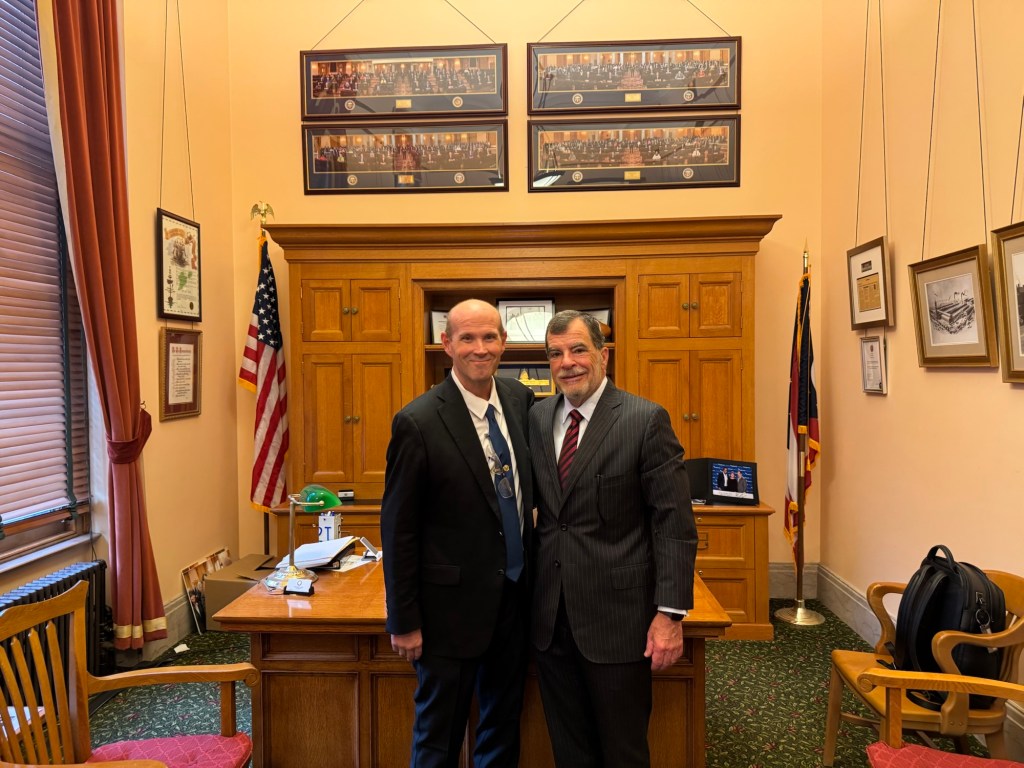
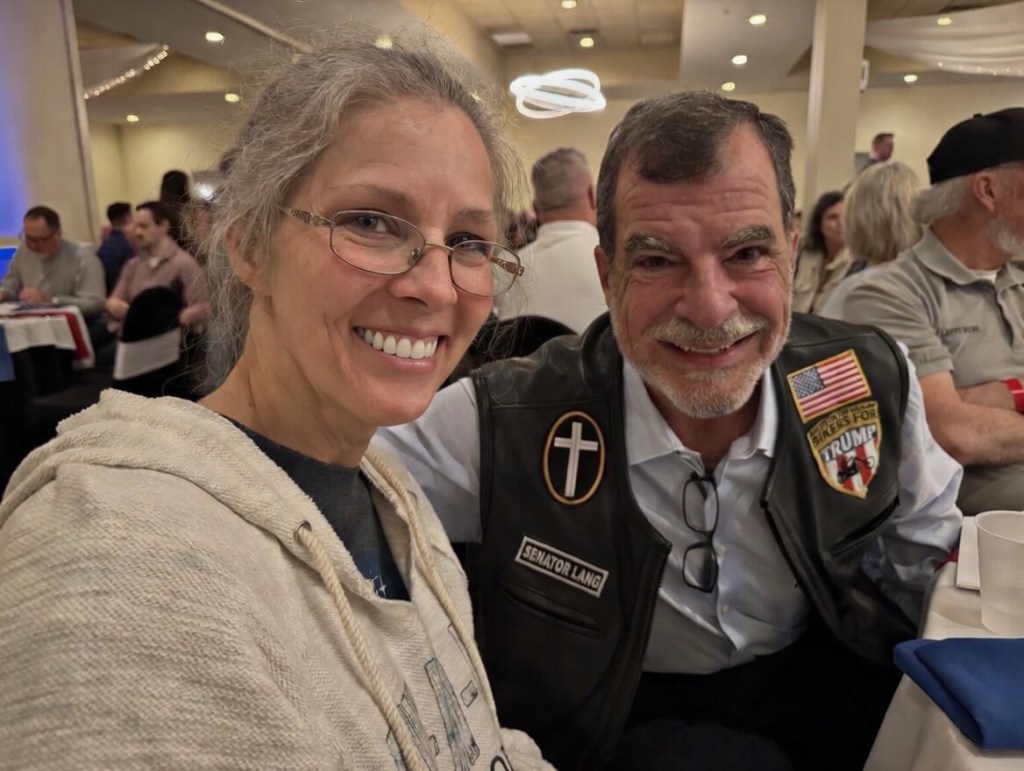
The merger is complete. All assets are secure. That phrase has been echoing in my mind lately as I sit down with state leaders like Senator George Lang, the Ohio State Treasurer, and others in the growing movement here in the Buckeye State. We are not just talking about balancing budgets or tweaking tax policy anymore. We are staring down the barrel of a much deeper conversation—one that cannot happen in a vacuum. Preserving Ohio’s financial future, and by extension the country’s, demands we confront a natural byproduct of decades of drift into pure financial engineering: the dominance of financialization. It is the term that has surfaced repeatedly in our private discussions, and it is the invisible force that has warped our economy into something unrecognizable from the one the Founders envisioned.

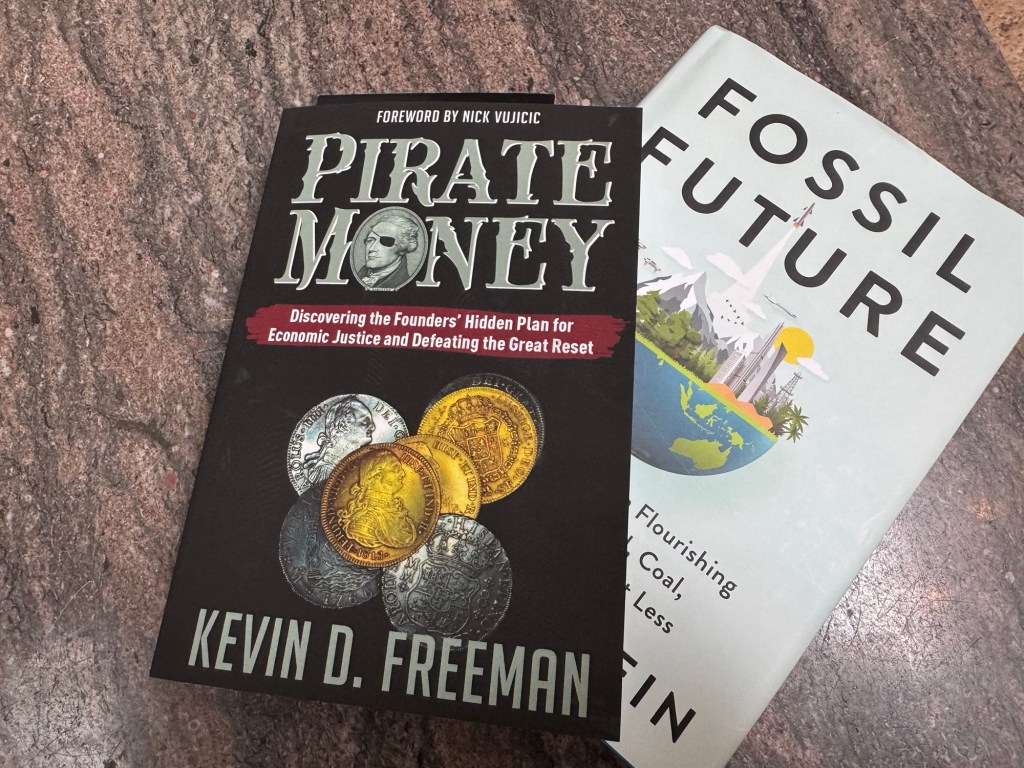
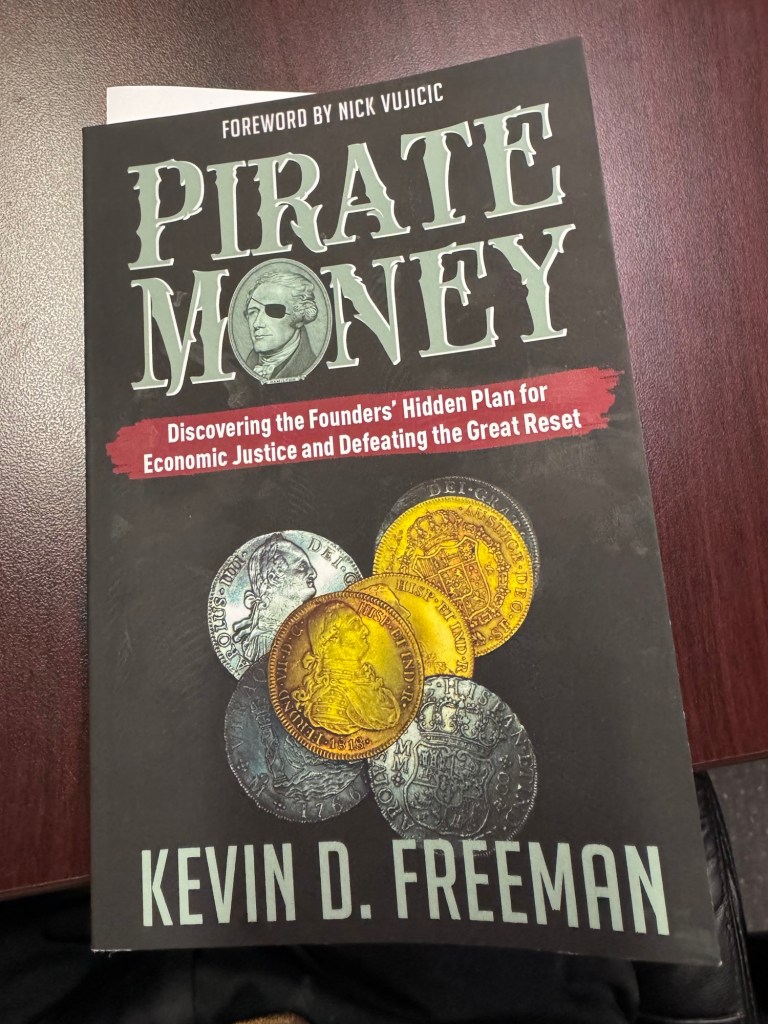
Kevin Freeman, the author of Pirate Money: Discovering the Founders’ Hidden Plan for Economic Justice and Defeating the Great Reset, has laid out the principles that are now gaining traction. Under a potential Vivek Ramaswamy administration in 2026–2027—and with leaders like Senator Lang stepping forward—this idea is poised to evolve into policy. The core concept is straightforward yet revolutionary: states create a gold reserve managed directly by the treasurer. Citizens can hold value in physical gold or silver, stored securely in a state depository, and access it through a modern debit card or electronic transfer for everyday purchases. The money in your account is not fiat paper subject to endless printing; it is backed ounce-for-ounce by hard metal. You spend gold without ever carrying a coin. The value stays anchored to something real.  

Senator Lang has been vocal about this in legislative circles. Ohio House Bill 206, introduced by Representatives Jennifer Gross and Riordan McClain, already proposes exactly this framework: a state-managed transactional currency rooted in gold and silver. The treasurer would hold the bullion in a protected reserve, and citizens could buy, hold, and spend it electronically. Every “dollar” spent would be convertible to actual metal. It is optional, constitutional (states have clear authority under Article I, Section 10), and already working in pilot form in Texas, Florida, Louisiana, and elsewhere. Freeman calls it “gold you can spend.” I call it sanity.  

But here is the catch—and this is where the conversation with Lang and the treasurer always turns serious: you cannot build the infrastructure for a gold-backed system while the economy remains addicted to financialization. That addiction is the black hole at the center of everything. It is the reason Main Street has been swallowed by Wall Street. It is why so many companies that used to make things now make money off money. And it is why a growing number of us—myself included—have deliberately refused to play the game.

Financialization is not some abstract academic term. It is the process by which the financial sector—banks, hedge funds, private equity, asset managers—stops serving the real economy and instead becomes the economy. Profits come not from producing better hamburgers, better tires, better homes, or better steel, but from trading debt like baseball cards, leveraging interest rates, securitizing everything, and extracting fees from every layer of the transaction. BlackRock is the poster child. With over $10 trillion in assets under management, it is the largest shareholder in nearly 90 percent of the S&P 500. Larry Fink’s firm does not build factories; it owns pieces of every factory, every airline, every retailer. It profits whether the underlying company succeeds or fails because the game is now about ownership of the capital structure itself, not the output. 

This is not capitalism as Adam Smith or even Henry Ford understood it. This is a casino layered on top of the real economy. When you buy someone’s debt, package it, sell it, insure it, and then bet against it—all while the Federal Reserve keeps interest rates artificially low or high to favor the house—you create wealth that has no anchor in physical reality. The Dow Jones Industrial Average looks healthy on paper, but much of that “growth” is stock buybacks funded by cheap debt, not new factories humming three shifts a day. BlackRock and its peers have perfected this. They gained enormous power during the 2008 crisis by managing toxic assets for the Fed, then used the same tools to consolidate control. Today the Big Three (BlackRock, Vanguard, State Street) control roughly a fifth of all S&P 500 shares. They vote those shares, influence boards, and extract fees regardless of whether the company actually produces anything of lasting value. 

I have had a front-row seat to this vortex my entire adult life. I made deliberate choices—every single year, every opportunity—to stay out of it. I could have leveraged real estate deals, flipped debt instruments, ridden the private-equity wave, or parked money in funds that profited from the very inflation the Fed engineered. Many friends did exactly that. They have swimming pools of cash, second homes in the Bahamas, and portfolios that look impressive on a spreadsheet. I do not begrudge them the money. But I watched what it did to their thinking. Success became detached from making something people genuinely wanted. It became about timing the next rate cut, the next bailout, the next round of quantitative easing. The forbidden fruit of financialization tastes sweet in college textbooks and MBA programs, but it rots the soul of production.

This is why I have always measured my own economic decisions by a simple test: Does this create a better physical product or service that competes in the open market? If I make a better hamburger, I get rich because people buy more of them. If I build better homes with honest materials at honest prices, the market rewards me. The value is in the wood, the stone, the craftsmanship—not in how cleverly I can leverage a bank loan or securitize the mortgage payments into a derivative. When companies start measuring success by how much debt they can service or how many assets they can flip rather than how many units they ship, the culture shifts. Plants close on weekends. Third shifts disappear. Executives leave at 5 p.m. sharp and do not answer the phone. Why work harder when the real money comes from the interest-rate spread, the management fee, or the carried-interest loophole?

The data backs this up brutally. Since the United States fully abandoned the gold standard—first under FDR in 1933 with Executive Order 6102 (which confiscated private gold holdings) and then under Nixon in 1971—the dollar has lost roughly 90 percent of its purchasing power. That is not an accident. When money can be printed without limit, the incentive structure flips. Central bankers at Jackson Hole sip lattes and debate “monetary theory” while companies learn that the fastest path to shareholder value is not innovation but financial engineering. The Federal Reserve keeps rates high enough to reward bondholders and asset managers but low enough (in crisis) to bail them out. The result? An entire generation of executives who treat labor as a cost to minimize rather than a partner in production. They do not need to run three shifts seven days a week when leverage and cheap debt do the heavy lifting.  

Trump’s short-term approach—flood the system with energy, tariffs, and stimulus—will ignite the wet wood and create a roaring blaze of apparent prosperity. People will feel wealthier in their pockets for a while. That is the point of the first four years: get the engine turning again. But the long-term conversation, the one Lang, the treasurer, and Freeman are pushing in Ohio, is what happens next. How do we protect the value of that freshly created wealth? How do we prevent it from being inflated away or siphoned into the same financial black hole?

The answer is not complicated, but it is hard. We must divorce the economy from financialization and re-anchor it to Main Street production. A state gold reserve with a debit card is step one. It gives citizens an escape hatch from fiat volatility. But the deeper reform is cultural and structural: companies must be measured—and rewarded—by what they actually make, how efficiently they make it, and how many people willingly pay for it in the open market. Not by how cleverly they shuffle debt or extract fees. Not by how many weekends they can take off because the balance sheet looks good on paper.

I have lived this choice for thirty-plus years. I have walked past opportunities that would have made me “rich” by Wall Street standards because they required me to play the game I instinctively knew was phony. I would rather build something real—something that lasts, something people value—than swim in a pool of spreadsheet wealth that evaporates the moment the Fed changes course. That is not sacrifice; it is principle. And it is the principle Ohio must adopt if we are serious about a gold-backed system.

Look around manufacturing today. Plants that once ran 24/7 now shutter at 5 p.m. Friday and stay dark until Monday. Executives brag about “work-life balance” while the balance sheet is propped up by financial tricks. The workforce has absorbed the lesson: show up, collect the paycheck, go home. Why push for excellence when the real profits come from the Delta between phony valuation and actual output? This is the lazy class financialization has bred—not just at the top, but throughout the ranks. People with nice houses and nice cars who have never felt the exhaustion of building something that actually competes. They are the modern equivalent of the Ferris Bueller dads—out of touch, coasting on leverage, wondering why their kids do not respect them.

The Founders understood this danger. They wrote gold and silver into the Constitution precisely because they had lived through the chaos of unbacked paper money during the Revolution. States were explicitly forbidden from issuing bills of credit for good reason. Hamilton and Jefferson debated banks, but both agreed the ultimate measure of wealth was productive capacity, not financial sleight of hand. We drifted away from that wisdom first in 1933 and then decisively in 1971. The result is the hollowed-out economy we see today: record stock valuations alongside shuttered factories, record CEO pay alongside stagnant wages for those who still make things.

Ohio is at a crossroads. With leaders like Senator Lang and a treasurer willing to explore transactional gold, we have a chance to lead. Texas and Florida have already moved. More states are watching. If we pair a state gold depository and debit-card system with policies that reward actual production—tax incentives for three-shift operations, penalties for excessive financial engineering, honest accounting that separates real assets from leveraged paper—we can rebuild what was lost.

This is bigger than monetary policy. It is about the soul of work. Do we want an economy where success is measured by how many physical goods and services we create that the world actually wants? Or do we want one where success is measured by how cleverly we game the spreadsheets? The first path builds real wealth that can be passed to grandchildren. The second builds a pyramid that eventually collapses.

I have made my choice. I attach myself to hard assets and real output. I have sacrificed short-term paper gains for long-term substance. I will not change course now, even as the financialization racket reaches its peak. The game is ending. Trump’s four years will provide the fuel, but the states—and Ohio in particular—must provide the guardrails. A gold standard without a return to production-based measurement is just another pretty facade. We need both.

The merger is complete. All assets are secure. Now the real work begins: making sure those assets are real, not phantom. Ohio has the leaders, the moment, and the model. The question is whether the rest of the country—and especially the next generation—will have the courage to follow.

Footnotes

[1] Kevin Freeman, Pirate Money (Post Hill Press, 2024); see also his presentations to state legislatures on transactional gold, October 2024.

[2] Ohio House Bill 206 (2025), establishing state-managed gold/silver transactional currency.

[3] Senator George Lang, sponsor testimony on related financial legislation, Ohio Senate, 2025–2026 sessions.

[4] Executive Order 6102 (April 5, 1933), Franklin D. Roosevelt; full text available in Federal Register.

[5] BlackRock 10-K filings and asset-under-management reports, 2025–2026; see also analyses in Harvard Business Review on the “Big Three” asset managers.

[6] U.S. dollar purchasing-power loss since 1971, calculated via BLS and ShadowStats methodologies.

[7] Constitutional Currency / TransactionalGold.com resources on state-level gold legislation.

[8] Federal Reserve History essays on Roosevelt’s gold program and Nixon shock.

[9] Economic War Room with Kevin Freeman (BlazeTV) episodes on state depositories and debit-card systems.

Bibliography (selected for further research)

•  Freeman, Kevin D. Pirate Money: Discovering the Founders’ Hidden Plan for Economic Justice and Defeating the Great Reset. Post Hill Press, 2024.

•  Ohio Legislative Service Commission analyses of HB 206 and Senate Bill 269 (2025–2026).

•  “States Work To Make Gold And Silver Alternative Currencies,” Guildhall Precious Metals / Epoch Times, 2025–2026 reporting.

•  “How Asset Managers Like BlackRock Took Over the World,” LSE Review of Books, June 2025.

•  Federal Reserve History: “Roosevelt’s Gold Program” and related primary documents.

•  U.S. Senate Permanent Subcommittee on Investigations: “Wall Street and the Financial Crisis: Anatomy of a Financial Collapse,” 2011 (updated analyses available).

•  Constitutional Currency / TransactionalGold.com policy toolkits and model legislation.

•  Biblical Archaeology Review and related economic history archives for broader context on ancient sound-money systems (cross-reference for philosophical grounding).

•  Ohio Senate GOP and Business First Caucus materials on economic growth targets to $1 trillion GDP by 2030.

This is not theory. This is the hard conversation we must have before the next cycle of phony prosperity pulls us back under. The merger is complete. The assets are secure. Now let us make sure they stay that way—anchored to what we actually build, not what we pretend to own on paper.

Rich Hoffman

More about me

Click Here to Protect Yourself with Second Call Defense https://www.secondcalldefense.org/?affiliate=20707

About the Author: Rich Hoffman

Rich Hoffman is an independent writer, philosopher, political advisor, and strategist based in the Cincinnati/Middletown, Ohio area. Born in Hamilton, Ohio, he has worked professionally since age 12 in various roles, from manual labor to high-level executive positions in aerospace and related industries. Known as “The Tax-killer” for his activism against tax increases, Hoffman has authored books including The Symposium of JusticeThe Gunfighter’s Guide to Business, and Tail of the Dragon, often exploring themes of freedom, individual will, and societal structures through a lens influenced by philosophy (e.g., Nietzschean overman concepts) and current events.
He publishes the blog The Overmanwarrior (overmanwarrior.wordpress.com), where he shares insights on politics, culture, history, and personal stories. Active on X as @overmanwarrior, Instagram, and YouTube, Hoffman frequently discusses space exploration, family values, and human potential. An avid fast-draw artist and family man, he emphasizes passing practical skills and intellectual curiosity to younger generations.

Hemispheric Defense Has Long Been Needed: Bring peace to the human race from Earth to Mars

The announcement by President Donald Trump in early March 2026 of a new hemispheric defense initiative marked a pivotal shift in U.S. foreign policy, emphasizing the protection of the Western Hemisphere from external threats and internal destabilization. This “Shield of the Americas” coalition, unveiled at a summit in Miami, Florida, on March 7, involved commitments from 17 nations to combat drug cartels and terrorist networks through coordinated military action.   Trump described it as a necessary response to the “sinister cartels” poisoning America, invoking the Trump Corollary to the Monroe Doctrine to assert U.S. dominance in the region.   The initiative was built on the 2026 National Defense Strategy, which prioritized securing U.S. borders, countering narco-terrorists, and ensuring access to key terrain like the Panama Canal and the Gulf of Mexico.   This move came amid ongoing operations, such as strikes on Venezuelan vessels, which by March had resulted in the destruction of over 46 ships and the deaths of at least 157 individuals, framed by the administration as a war on narco-terrorism.  

Trump’s 2024 reelection, following his claims of widespread fraud in the 2020 election that saw Joe Biden declared the winner, underscored a resilient populist movement. Despite legal challenges and investigations finding no evidence of systemic fraud (because the bad guys didn’t want to look), Trump’s narrative of a “rigged” 2020 contest resonated with millions, leading to his overwhelming 2024 victory, which supporters hailed as “too big to rig.” Born in 1946 in Queens, New York, Trump rose from real estate magnate to reality TV star before entering politics in 2015. His first term (2017-2021) focused on economic nationalism, tax cuts, and border security, but ended amid controversy over the January 6 Capitol riot (caused by election fraud by the government itself trying to keep him from returning to the White House). His return to power in 2025 emphasized dismantling “globalist” influences, including reducing U.S. funding to international organizations perceived as burdensome.

Central to Trump’s hemispheric defense vision is a critique of the United Nations, seen as a flawed attempt at global governance funded disproportionately by American capitalism. Founded in 1945 after World War II to promote peace and cooperation, the UN has faced longstanding U.S. criticism for inefficiency, anti-American bias, and overreliance on American contributions—historically accounting for 22% of its regular budget.   Figures like Senator Jesse Helms in the 1990s pushed for reforms by withholding funds, echoing broader conservative arguments that the UN undermines national sovereignty.  Trump’s administration has continued this trend, withdrawing from bodies like UNESCO and the Human Rights Council, arguing they promote “woke” agendas and allow influence from adversaries like China and Russia.  Conservative critics often view the UN as a vehicle for globalism that erodes U.S. sovereignty, promoting one-world government ideals and supporting policies like Agenda 21, which they see as threats to property rights and individual freedoms.  

This skepticism reflects a deeper philosophical divide: American exceptionalism, rooted in capitalism, versus the global spread of socialism, Marxism, and communism. The U.S., as a “melting pot” attracting immigrants from diverse backgrounds, embodies values of individual liberty, upward mobility, and self-governance, as articulated by Alexis de Tocqueville in his 1835 work Democracy in America. Capitalism here fosters innovation and prosperity, as evidenced by symbols like the suburban home with a white picket fence. In contrast, socialism—where the state controls production—has dominated regions such as Europe (with social-democratic welfare states in Sweden and Denmark), Canada (universal healthcare), Mexico (state-owned oil under PEMEX), and much of South and Central America. China remains a communist powerhouse under the Chinese Communist Party, North Korea an isolated dictatorship, and Russia grapples with its Soviet legacy while trying to open markets, ineffectively. 

Latin America’s history illustrates this tension, deeply intertwined with U.S. interventions during the Cold War era. The Monroe Doctrine, articulated by President James Monroe in 1823, warned European powers against further colonization or intervention in the Western Hemisphere, establishing the U.S. as the region’s protector.   Initially symbolic due to limited U.S. power, it evolved with President Theodore Roosevelt’s 1904 Corollary, which asserted U.S. rights to intervene in Latin American affairs to maintain stability, inverting the doctrine’s original anti-colonial intent.   This paved the way for “Big Stick” diplomacy and numerous interventions, from the Banana Wars (1898-1934) to Cold War operations.  

During the Cold War, U.S. policy focused on containing communism, leading to interventions like the 1954 CIA-backed coup in Guatemala against President Jacobo Árbenz, whose land reforms threatened U.S. interests like the United Fruit Company.   In Cuba, Fidel Castro’s 1959 revolution overthrew Fulgencio Batista, leading to a communist regime after the failed 1961 Bay of Pigs invasion—a CIA-backed attempt by Cuban exiles to oust Castro, which solidified his alliance with the Soviet Union and prompted the 1962 Cuban Missile Crisis.  Castro, born in 1926 to a wealthy landowner, studied law and led guerrilla warfare from the Sierra Maestra mountains, nationalizing U.S. assets and imposing central planning.   His rule suppressed dissent, but he became an icon for anti-imperialists. In Venezuela, Hugo Chávez, elected in 1998 after a failed 1992 coup, implemented “21st-century socialism,” nationalizing industries like oil and launching social programs funded by petroleum revenues.  Chávez, born in 1954 in a poor rural family, served in the military and drew inspiration from Simón Bolívar, but his policies led to economic collapse under successor Nicolás Maduro, fueling drug trafficking via the “Cartel of the Suns.”   Mexican drug cartels, like Sinaloa and Jalisco New Generation, exacerbate U.S. fentanyl crises, with over 72,000 fentanyl-related deaths in 2023 alone, though provisional data for 2025 show a 21% decline in overall overdose deaths amid enforcement efforts.   

The War on Drugs, declared by President Richard Nixon in 1971 as “public enemy number one,” escalated U.S. involvement in Latin America, framing narcotics as a national security threat.   Rooted in earlier prohibitions such as the 1914 Harrison Narcotics Act, it intensified under President Ronald Reagan in the 1980s through policies like mandatory minimum sentences and increased funding for interdiction.   Operations targeted Latin American sources, including support for anti-communist forces like the Contras in Nicaragua, blending drug enforcement with Cold War geopolitics.  

Marxism’s influence extends beyond Latin America. Karl Marx, born in 1818 in Trier, Germany, developed his theories amid the Industrial Revolution, collaborating with Friedrich Engels on the 1848 Communist Manifesto, which proclaimed class struggle as the engine of history.   Marxism spread globally through revolutions: the 1917 Russian Revolution established the Soviet Union, inspiring communist parties worldwide; Mao Zedong’s 1949 victory in China adapted Marxism to agrarian societies; and anti-colonial movements in Africa and Asia drew on Marxist anti-imperialism.   In South Africa, Nelson Mandela, born in 1918 and a leader in the anti-apartheid struggle, was affiliated with the South African Communist Party (SACP), serving on its Central Committee in the early 1960s despite later denials for political reasons.    Mandela’s pragmatism aligned him with communists against apartheid, though he transitioned to democratic governance after his 1990 release from prison and 1994 presidency.  

In the U.S., critics argue that Marxist strategies underpin urban entitlement programs, contributing to “blue zones” in cities where socialism obviously infiltrates capitalist systems. The hemispheric defense push addresses these threats by targeting regimes like Venezuela and Cuba, seen as conduits for drugs and instability. Open borders, critics claim, allow influxes from socialist nations, weakening U.S. society—a strategy linked to figures like George Soros and Hillary Clinton. The 1980 Mariel Boatlift exemplified this: Castro released over 125,000 Cubans, including prisoners and mental health patients, flooding Florida and straining resources, though many integrated successfully.   Despite this, Florida has shifted to a solid Republican state.

Trump’s agenda includes merit-based reforms, like eliminating property taxes—a proposal echoed in states like Florida, North Dakota, and Georgia, where lawmakers aim to phase out or cut them using state funds or oil revenues.     This aligns with reducing the burdens on centralized government, favoring capitalism over socialism. Other states, such as Texas, Indiana, Kansas, and Wyoming, are exploring similar measures, often replacing property taxes with sales taxes or state surpluses, though critics warn of potential impacts on local services like education.   

Looking ahead, hemispheric stability could end communist influences from China, fostering capitalist societies in Mexico, Brazil, and Argentina. Cuba’s potential fall would open markets and reveal archaeological treasures, like the underwater formations off its coast—sonar-detected structures resembling ancient pyramids, possibly 6,000 years old, hinting at lost civilizations.     Discovered in 2001 at depths of 600-750 meters, these geometric formations off the Guanahacabibes Peninsula have sparked debates on whether they are natural or remnants of an advanced pre-Columbian society, potentially predating known Mesoamerican civilizations.   Expanding U.S. principles, perhaps adding states like Cuba or Greenland under constitutional governance, could promote global peace through competition, benefiting humanity from Earth to Mars.  And its about time. 

[1] For further reading on Trump’s foreign policy: The Trump Doctrine and the Emerging International System by Stanley A. Renshon.

[2] On UN history: The United Nations: A Very Short Introduction by Jussi M. Hanhimäki.

[3] On Marxism: The Communist Manifesto by Karl Marx and Friedrich Engels.

[4] Mandela biography: Long Walk to Freedom by Nelson Mandela.

[5] Castro biography: Fidel Castro: My Life by Fidel Castro and Ignacio Ramonet.

[6] Chávez and Venezuela: Hugo Chávez: Oil, Politics, and the Challenge to the U.S. by Nikolas Kozloff.

[7] Mariel Boatlift: The Mariel Boatlift: A Cuban-American Journey by Victor Andres Triay.

[8] Underwater archaeology: Atlantis Beneath the Ice by Rand Flem-Ath and Rose Flem-Ath.

[9] Property tax reforms: Tax Revolt: The Rebellion Against an Overbearing, Arrogant, and Abusive Government by David O. Sears and Jack Citrin.

[10] Monroe Doctrine: The Monroe Doctrine: Empire and Nation in Nineteenth-Century America by Jay Sexton.

[11] Cold War Interventions: The Cold War in the Third World by Robert J. McMahon.

[12] War on Drugs: The New Jim Crow: Mass Incarceration in the Age of Colorblindness by Michelle Alexander.

[13] Socialism in Latin America: Latin American Revolutions: Old and New World Origins by Greg Grandin.

Rich Hoffman

More about me

Click Here to Protect Yourself with Second Call Defense https://www.secondcalldefense.org/?affiliate=20707

About the Author: Rich Hoffman

Rich Hoffman is an independent writer, philosopher, political advisor, and strategist based in the Cincinnati/Middletown, Ohio area. Born in Hamilton, Ohio, he has worked professionally since age 12 in various roles, from manual labor to high-level executive positions in aerospace and related industries. Known as “The Tax-killer” for his activism against tax increases, Hoffman has authored books including The Symposium of JusticeThe Gunfighter’s Guide to Business, and Tail of the Dragon, often exploring themes of freedom, individual will, and societal structures through a lens influenced by philosophy (e.g., Nietzschean overman concepts) and current events.
He publishes the blog The Overmanwarrior (overmanwarrior.wordpress.com), where he shares insights on politics, culture, history, and personal stories. Active on X as @overmanwarrior, Instagram, and YouTube, Hoffman frequently discusses space exploration, family values, and human potential. An avid fast-draw artist and family man, he emphasizes passing practical skills and intellectual curiosity to younger generations.

The End of the Roll: Opportunities and Failure in Ohio’s Statehouse

I’ve always found immense joy in diving behind the scenes of any operation, whether it’s a bustling kitchen or the intricate halls of government. Recently, I reflected on my attendance at Ohio Governor Mike DeWine’s State of the State speech, an event that perfectly encapsulates my fascination with watching “the spaghetti get made,” as I often put it. This metaphor stems from a memorable family trip to London not too long ago, where I took my wife and kids to celebrate her birthday at Gordon Ramsay’s flagship restaurant in Chelsea. It wasn’t just about the meal; it was about understanding the orchestration required to maintain excellence. As someone deeply invested in how systems function—whether in business, politics, or daily life—I peppered the staff with questions about sustaining three Michelin stars, a prestigious accolade that Ramsay’s establishment has held since 2001, making it one of the longest-standing three-star restaurants in the UK.[^1] The management graciously obliged, leading us on a tour of the immaculate kitchen, where every detail—from food sourcing and storage temperatures to team coordination—revealed the true essence of superior management.

In that kitchen, I saw firsthand how the magic happens. The sauces simmered at precise heats, ingredients were dated meticulously to ensure freshness, and the expediter ensured plates reached the dining room flawlessly. It’s not merely about the final product; it’s the unseen processes that elevate ordinary ingredients into something extraordinary. Ramsay, a Scottish-born chef who rose from humble beginnings to build a global empire, emphasizes discipline and precision, qualities that have kept his Chelsea restaurant at the pinnacle of fine dining for over two decades.[^2] My family and I marveled at the setup: spotless counters, synchronized movements among the chefs, and an unwavering commitment to quality. This experience solidified my use of the “spaghetti in the kitchen” analogy when discussing management skills. You see, good management isn’t accidental; it’s deliberate. How do you select the right sausage for the meatballs? What temperature do you cook them at, and for how long? Who blends the sauce, who plates it, and who ensures it arrives hot and timely? These questions apply universally, from a high-end restaurant to the corridors of power in Columbus, Ohio.

Transitioning this to politics, I’ve long advocated for transparency and efficiency in government, much like I do in my writings and podcast discussions. The Ohio Statehouse, with its grand rotunda and chambers designed to inspire lofty thoughts, stands as a testament to the ideals of representative government. Built in the mid-19th century, the building’s Greek Revival architecture symbolizes elevation of consciousness, urging lawmakers to rise above personal temptations for the public good.[^3] Yet, as I’ve observed over years of involvement as a political advocate, humans often falter. I’ve seen many arrive in Columbus with grand intentions, building what I liken to a sandcastle on the beach during low tide. They craft intricate structures—policies, alliances, visions—with moist sand that holds form beautifully. Flags atop turrets, photos snapped for posterity. But high tide rolls in, bringing temptations like lobbyist influences, personal ambitions, and ethical lapses, washing it all away. Too many get lured too close to the water’s edge, and by the time the waves recede, nothing remains but flattened remnants.

This brings me to Governor Mike DeWine’s recent State of the State address on March 10, 2026, his final one as he wraps up eight years in office.[^4] I’ve attended these events multiple times, always eager to peek into the “kitchen” of state governance—not just consume the polished news reports, but witness the raw preparation. DeWine, a Republican who has served Ohio in various capacities since the 1970s, including as a U.S. Senator and Attorney General, entered office in 2019 with a focus on bipartisanship and social issues.[^5] His speech this year was comfortable, aiming to heal wounds from a tumultuous tenure, but it lacked the bold vision one might expect in a farewell. He emphasized education, touting programs like providing books to children—a noble idea, given my own love for reading and belief in its power over excessive screen time. Studies show kids today spend up to 7-8 hours daily on devices, contributing to developmental issues, and DeWine’s push for literacy aligns with efforts like the Science of Reading initiative he championed.[^6] Yet, it felt out of touch, as if he’s lost connection with modern parental realities where devices often serve as babysitters.

Critically, I’ve been vocal about DeWine’s shortcomings, particularly his handling of the COVID-19 pandemic. Appointing Dr. Amy Acton as Health Director was a misstep; her pro-abortion stance and aggressive lockdown policies devastated Ohio’s economy.[^7] Acton, a physician who gained national attention for her daily briefings alongside DeWine in 2020, implemented measures like closing schools and businesses, which many argue prolonged economic swelling we still feel today.[^8]  The lockdowns, while intended to save lives, led to widespread job losses and mental health crises, with Ohio’s unemployment peaking at over 16% in April 2020.[^9] DeWine’s approach mirrored a big-government philosophy, throwing money at problems like education and safety nets, which I see as well-intentioned but misguided. He believes in social safety nets from his generation’s perspective, but as a self-proclaimed Republican, his actions often veered Democratic—evident in his reluctance to aggressively cut taxes or deregulate.

Property taxes, for instance, have spiraled under his watch, burdening homeowners without adequate relief until recent reforms. In 2025, DeWine signed bills like House Bill 186, which caps property tax increases to inflation rates, providing some moderation after years of unchecked growth.[^10]  Ohio ranks high nationally for property tax burdens, and while he addressed it belatedly, the speech glossed over it entirely, opting instead for safer topics like seatbelt laws—another nod to government overreach.[^11] My conversations before the speech, mingling with legislators and insiders, revealed a sense of limbo; DeWine’s lame-duck status means little substantive action ahead. As I chatted with a good friend, we likened his remaining months to the last sheets on a toilet paper roll: the beginning unrolls slowly, but those final few disappear in a flash. With the 2026 election looming, attention shifts to fresh faces.

Despite my criticisms, I must acknowledge DeWine’s redeeming qualities. Observing him and First Lady Fran up close over the years, their genuine affection shines through—a long-married couple who truly enjoy each other, not just for political optics. Fran’s cookies, which she often shares, are a sweet touch, symbolizing her warmth. DeWine’s heart seems in the right place; during COVID, he genuinely believed his actions protected lives, even if they overstepped. Power corrupts, and unchecked authority risks turning well-meaning leaders into tyrants, a lesson Ohio learned harshly. Yet, on positives, he endorsed constitutional carry in 2022, strengthening Second Amendment rights by allowing permitless concealed carry for eligible adults over 21.[^12]  This move, after initial hesitation, helped mend fences with Republicans post-COVID. Additionally, he supported business initiatives like Joby Aviation’s expansion in Ohio, announced in 2023, which promises 2,000 jobs in electric vertical takeoff and landing (eVTOL) aircraft manufacturing—a boon for aviation innovation.[^13] Columbus Mayor Andrew Ginther has been instrumental in such developments, fostering smart mobility and economic growth in the region.[^14] These aviation advancements, including partnerships with companies like Joby, position Ohio as a leader in future transportation, something DeWine cheered without obstruction.

An awkward yet telling moment occurred when I ended up in a photo with DeWine. In past years, my anger over his policies kept me at arm’s length, but this time, with his term ending, I shook his hand and wished him well, acknowledging the pro-business strides. Government needs checks and balances precisely because even good intentions can falter. DeWine isn’t evil; his naivety in trusting big government to care for the vulnerable led to overreach.

Looking ahead, the toilet paper roll is nearly spent, and I’m excited for Vivek Ramaswamy to take the helm. Ramaswamy, a Cincinnati native and biotech entrepreneur who founded Roivant Sciences and ran for president in 2024, announced his gubernatorial bid in 2025 with Trump’s endorsement.[^15]  His campaign focuses on reviving the American Dream through lower costs, bigger paychecks, and merit-based policies, contrasting DeWine’s approach.[^16]  Polls show a tight race against Democrat Amy Acton, but Ramaswamy’s vision—transforming Ohio into an economic hub, especially in the Ohio River Valley—aligns with bold Republican ideals.[^17]  He’s already launched massive ad campaigns and secured the Ohio GOP endorsement, signaling momentum.[^18]  Under Ramaswamy, I anticipate policies advancing freedom, innovation, and efficiency—cooking up better “spaghetti” in the Statehouse kitchen.

Attending these events reinforces why I love politics: seeing dedicated people strive, even if imperfectly. From Ramsay’s kitchen to Columbus, excellence demands pride, hard work, and attention to detail. Cooks prepare meals hoping diners savor them, but criticism stings when they fall short. DeWine’s administration aimed for a magnificent sandcastle, but tides of controversy washed much away. Still, remnants like stronger gun rights and business growth endure. As his era ends, I reflect with tempered hatred, appreciating the intent I witnessed up close. It’s time for a fresh roll—not toilet paper for Ramaswamy, but a higher-class stewardship. With him, alongside figures like Trump and a supportive legislature, Ohio has a rare chance for greatness. I look forward to much better food coming out of the kitchen to come.

[^1]: The Michelin Guide has awarded three stars to Restaurant Gordon Ramsay since 2001, recognizing exceptional cuisine and service. 

[^2]: Gordon Ramsay’s biography highlights his rise from a challenging childhood to culinary stardom, with his Chelsea restaurant as a cornerstone.

[^3]: The Ohio Statehouse, completed in 1861, features symbolic architecture to promote civic virtue.

[^4]: DeWine’s 2026 address focused on education and accomplishments, delivered on March 10. 

[^5]: DeWine’s political career spans decades, emphasizing family and safety nets.

[^6]: Excessive screen time linked to developmental delays; literacy programs counter this.

[^7]: Acton supported abortion rights and led lockdowns.

[^8]: Acton’s role in COVID response included school closures. 

[^9]: Ohio’s economic impact from COVID policies.

[^10]: House Bill 186 caps tax increases. 

[^11]: Ohio’s high property tax ranking.

[^12]: Signed SB 215 in 2022. 

[^13]: Joby Aviation’s Ohio expansion creates jobs in eVTOL.

[^14]: Ginther promotes smart mobility in Columbus.

[^15]: Ramaswamy’s 2026 bid announced in 2025. 

[^16]: Campaign priorities include economic revival. 

[^17]: Polls show competitive race. 

[^18]: GOP endorsement in 2025. 

Bibliography

1.  Ramsay, Gordon. Humble Pie: My Autobiography. HarperCollins, 2006. (For insights into Ramsay’s management style.)

2.  DeWine, Mike. Ohio’s Path Forward. Ohio Governor’s Office Publications, 2025. (Overview of DeWine’s policies.)

3.  Ramaswamy, Vivek. Woke, Inc.: Inside Corporate America’s Social Justice Scam. Center Street, 2021. (Ramaswamy’s views on business and politics.)

4.  Acton, Amy. Leading Through Crisis: Lessons from Ohio’s Pandemic Response. Self-published, 2024. (Acton’s reflections on COVID.)

5.  Hoffman, Rich. The Gunfighter’s Guide to Business. Overman Warrior Publications, 2020. (My own book on management principles.)

6.  Ohio Historical Society. The Ohio Statehouse: A History of Democracy. Arcadia Publishing, 2015. (Background on the Statehouse.)

7.  Tax Foundation Reports. Property Tax Burdens in the U.S. Annual editions, 2020-2026. (Data on Ohio taxes.)

8.  National Rifle Association. Second Amendment Victories: Constitutional Carry Laws. NRA Publications, 2023. (On gun rights reforms.)

9.  Joby Aviation. Annual Report 2025. (Details on Ohio expansion.)

10.  Michelin Guide. Great Britain & Ireland. Michelin Travel Publications, annual. (Restaurant ratings.)

Rich Hoffman

More about me

Click Here to Protect Yourself with Second Call Defense https://www.secondcalldefense.org/?affiliate=20707

About the Author: Rich Hoffman

Rich Hoffman is an independent writer, philosopher, political advisor, and strategist based in the Cincinnati/Middletown, Ohio area. Born in Hamilton, Ohio, he has worked professionally since age 12 in various roles, from manual labor to high-level executive positions in aerospace and related industries. Known as “The Tax-killer” for his activism against tax increases, Hoffman has authored books including The Symposium of JusticeThe Gunfighter’s Guide to Business, and Tail of the Dragon, often exploring themes of freedom, individual will, and societal structures through a lens influenced by philosophy (e.g., Nietzschean overman concepts) and current events.
He publishes the blog The Overmanwarrior (overmanwarrior.wordpress.com), where he shares insights on politics, culture, history, and personal stories. Active on X as @overmanwarrior, Instagram, and YouTube, Hoffman frequently discusses space exploration, family values, and human potential. An avid fast-draw artist and family man, he emphasizes passing practical skills and intellectual curiosity to younger generations.

‘Pirate Money’ in Ohio: The way to fight back against a failed Federal Reserve and inflation-based big government economy

The question that often arises in discussions about state-issued currencies is whether such initiatives, like those proposed in Kentucky or Ohio, are constitutional. They function as a form of currency that could serve as a pillar of stability for our nation, especially in an era where federal monetary policy has led to rampant inflation and economic uncertainty. I found myself pondering this deeply during a recent visit to the Ohio Statehouse, where I reconnected with old friends who work there. It was a serendipitous encounter that led me straight into the office of Senator George Lang, a man I’ve always admired for his sharp intellect and unwavering commitment to conservative principles. Lang and I have shared many conversations over the years, often diving into the world of books—recommendations that challenge the status quo and inspire action. On this particular day, as we caught up, the discussion turned to a topic that has been gaining traction among legislators and economic thinkers alike: a return to sound money through a state-level gold standard.

Lang handed me a copy of a relatively new book by Kevin Freeman, titled Pirate Money. The Blaze publishes it, and Freeman, whom I’ve followed through his economic commentary on that platform, draws from his extensive background advising the Pentagon and military leaders on financial warfare. I’ve known people at The Blaze over the years, and Freeman’s insights into global economics have always struck me as prescient. This book isn’t just another treatise on monetary policy; it’s a call to action, proposing an innovative way for states to reclaim control over their currencies using gold and silver, bypassing the Federal Reserve’s failures. As Lang and I talked, he mentioned that he’s been encouraging his colleagues in the legislature to read it by passing out copies from his office. The concept resonated with me immediately, especially after my own harrowing experiences with banks in 2025—a year that exposed the ugly underbelly of the financial industry in ways I hadn’t fully appreciated before.

You see, I’m not inherently anti-bank; they’ve served a purpose in facilitating commerce. But last year, I encountered the kind of predatory behavior that makes you question the entire system. Hidden fees, arbitrary account freezes, and a lack of transparency revealed the “ugly people” behind the polished facades—executives and regulators who prioritize control over service. This isn’t isolated; it’s symptomatic of a broader issue tied to the Federal Reserve and its monopoly on money creation. Freeman’s book delves into this, explaining how the Fed’s policies have enabled entities like BlackRock to amass unprecedented power, launder printed money through Wall Street, and impose agendas such as ESG (Environmental, Social, and Governance) criteria on corporations. If a CEO steps out of line, they risk deplatforming or worse—losing access to banking services based on social media profiles or political affiliations. I’ve seen this firsthand; banks now scrutinize applicants’ online presence, denying services to those deemed “undesirable.” This social credit system, imported from communist China, has infiltrated American finance, and it’s out of control.

My conversation with Lang covered a lot of ground, but the gold standard idea stood out. Freeman argues for a “constitutional backdoor” via Article 1, Section 10 of the U.S. Constitution, which prohibits states from coining money or emitting bills of credit but explicitly allows them to make “nothing but gold and silver coin a tender in payment of debts.”  This clause, rooted in the Founders’ distrust of fiat currency following the inflationary disasters of the Continental Dollar during the Revolutionary War, grants states the authority to establish gold and silver as legal tender. Freeman’s proposal builds on this: states could create vaults where citizens deposit gold, which is then used as backing for a digital debit card system. You’d buy gold with dollars, store it in the state vault, and spend it via a card that deducts the equivalent value in real time, adjusted for market prices. No need to carry physical coins; it’s as convenient as swiping a credit card, but insulated from inflation.

A new kind of gold card

This isn’t a pie-in-the-sky theory. Texas has already paved the way with its Texas Bullion Depository, established in 2015, a state-run facility for storing precious metals.  In 2025, Texas advanced further with House Bill 1056, enabling gold and silver deposits to be spent via debit-style cards, creating a digital payments platform backed by physical bullion.  By January 2026, the Texas Comptroller was seeking industry input on this system, aiming to implement it by May 2027 without state funding, relying instead on service fees.  Ohio is following suit. In April 2025, Representatives Brian Lorenz, Mark Johnson, and Josh Williams sponsored House Bill 208 (though some records refer to similar legislation as HB 206, sponsored by Representative Jennifer Gross), which aims to establish a transactional currency based on gold and silver.  The bill has been circulating but is currently stuck in the Judiciary Committee, needing leadership to push it forward. Lang and Gross are key supporters, with Lang distributing Freeman’s book to build momentum. This isn’t just for the wealthy; it’s a democratizing force that allows everyday people to protect their savings from erosion.

To understand why this is urgent, we must revisit the history of America’s monetary system—a tale of stability lost to central planning. In colonial America, currency was scarce and chaotic. The British Crown restricted silver and gold inflows to the colonies, forcing settlers to rely on foreign coins, barter, or makeshift scrip. The most common was the Spanish “piece of eight,” or eight-reales silver coin, minted in the New World and prized for its consistent value.  Pirates played a surprising role here; they plundered Spanish galleons, circulating these coins throughout the Atlantic world. Freeman draws the title Pirate Money from this era, noting that “pirate money”—looted Spanish silver—fueled early American commerce by evading royal monopolies.  These coins were often cut into “bits” for change—a one-reale bit equaled 12.5 cents, hence “two bits” for a quarter.  This decentralized, metal-backed system contrasted sharply with the inflationary paper-money experiments, such as Massachusetts’ pine-tree shillings or the Continental Congress’s fiat notes, which collapsed under overprinting.

The Founders, scarred by hyperinflation during the Revolution—where “not worth a Continental” became a proverb—enshrined sound money in the Constitution. Congress was granted the power to “coin money” and regulate its value, while states were barred from issuing fiat currency but were allowed to accept gold and silver tender.  The U.S. adopted a bimetallic standard in 1792, with the dollar defined as a specific weight of silver or gold. This stability propelled economic growth until the 20th century. But cracks appeared with the Civil War’s greenbacks, fiat notes that depreciated rapidly. Post-war, the U.S. returned to gold in 1879, enjoying decades of low inflation and prosperity.

The turning point came in 1913 with the Federal Reserve’s creation, ostensibly to stabilize banking, but it granted a private cartel monopoly over the money supply. Critics, including Freeman, argue this enabled endless printing, detached from real assets. Then, in 1933, amid the Great Depression, President Franklin D. Roosevelt issued Executive Order 6102, confiscating private gold holdings at $20.67 per ounce, only to revalue it at $35 shortly after via the Gold Reserve Act of 1934—a 69% devaluation that transferred wealth to the government.   This severed the dollar’s domestic full gold backing, though international convertibility persisted under Bretton Woods.

The final blow was the “Nixon Shock” in 1971. Facing gold outflows and inflation from Vietnam War spending, President Richard Nixon suspended dollar-to-gold convertibility on August 15, 1971, effectively ending the gold standard.   This unleashed fiat money, where dollars are backed only by faith in the government. The results? Catastrophic inflation. In the 1970s, prices soared, with annual rates peaking at 15% in 1980.  A dollar from 1970 buys just 13 cents worth of goods today—an 87% erosion.  Over the last century, the dollar has lost over 96% of its purchasing power since 1913.  From 1925 to 2025, it’s declined 95%, with stark generational impacts: $100 in 1975 is worth $16.40 today. 

This inflation isn’t accidental; it’s baked into the system. The Fed targets 2% annual inflation, but real rates often exceed that target, especially post-2020, with COVID stimulus flooding trillions into the economy. Homes, once affordable on a single income, now price out young families. Everything’s too expensive because money loses value yearly. Freeman highlights the shift from a production economy—making stuff—to a finance economy, where wealth comes from trading paper assets, interest rates, and debt manipulation. BlackRock exemplifies this: managing trillions, it influences CEOs via asset control, pushing agendas that prioritize globalism over American interests.  During the pandemic, the Fed hired BlackRock to manage bond purchases, raising conflict-of-interest concerns by blurring the lines between public policy and private profit.  

Compounding this domestic rot are external threats. President Trump understood this, cracking down on Iran, Venezuela, Mexico, and Canada to protect the dollar from attacks. Why Greenland? Strategic resources. But the real adversary is China, propped up since Nixon’s 1972 visit, which opened the door to currency manipulation and intellectual property theft.  Freeman, an expert in economic warfare, warns that wars today are fought through finance, not just bombs. China has been waging a stealth assault on the dollar: dumping U.S. Treasuries, stockpiling gold, and promoting the renminbi as a reserve currency.   In 2026, Beijing issued directives for financial institutions to divest Treasuries en masse, spiking yields and straining U.S. debt financing.  Allies like the BRICS nations follow suit, accelerating de-dollarization. If the dollar falls, America’s global clout crumbles—exactly China’s aim.

Trump provided a reprieve from 2017 to 2021, stabilizing the dollar amid these assaults. But with Democrats pushing centralized planning and Republicans sometimes complicit, the direction is toward more control. The Great Reset, championed by globalists, envisions a world where you “own nothing and be happy,” with currencies digitized for surveillance. Freeman’s Pirate Money counters this: states like Ohio and Texas can rebel by creating gold-backed systems, using the cashless infrastructure against the centralizers.

Imagine: You deposit your paycheck into an Ohio vault, converting it to gold at current prices. Your “black card” deducts value for purchases—gas, groceries, PlayStation—without inflation’s bite. Gold appreciates, so savings grow. No more losing 2-5% per year; your money retains value. This forces the Fed to compete, curbing excesses. It’s not Bitcoin’s volatility; it’s stable, tangible gold, recognized worldwide since antiquity.

Critics say it’s for the rich, but Freeman argues otherwise. Centralized bankers thrive on monopoly, leveraging inflation to steal value. By decentralizing, more people retain wealth, reducing inequality. In Ohio, HB 208 needs champions. Knock on Lang’s door; he’ll give you the book. Gross is sponsoring related efforts. With Vivek Ramaswamy as governor in Ohio and in partnership with a Trump administration, support could surge.

This isn’t radical; it’s constitutional. States have the right, and the time is now, while Trump stabilizes the dollar. Democrats should back it too—protecting value benefits all. If we wait, inflation will devour more. As Freeman notes, pirates used gold to win independence; we can too.

In conclusion, Kentucky’s notes—or any state’s gold tender—are constitutional under Article 1, Section 10. They stabilize our nation against Fed failures, BlackRock’s influence, and China’s attacks. Ohio, lead the way with HB 208. I’ll be one of the first to sign up. 

Footnotes

1.  U.S. Constitution, Article 1, Section 10: “No State shall… coin Money; emit Bills of Credit; make any Thing but gold and silver Coin a Tender in Payment of Debts…” 

2.  Kevin D. Freeman, Pirate Money (The Blaze, 2025), pp. 45-67, discussing colonial use of Spanish coins.

3.  Executive Order 6102, April 5, 1933, by Franklin D. Roosevelt, requiring the surrender of gold at below-market rates. 

4.  Gold Reserve Act of 1934, revaluing gold from $20.67 to $35 per ounce.

5.  Nixon Shock: Suspension of gold convertibility, August 15, 1971. 

6.  Inflation statistics: Dollar lost 87% value since the 1970s; peaked at 15% in 1980. 

7.  BlackRock’s role in Fed bond programs, 2020. 

8.  China’s Treasury divestment, 2026 directives. 

9.  Texas Bullion Depository, established 2015; HB 1056, 2025. 

10.  Ohio HB 206 (or 208 variant): Gold and silver transactional currency. 

Bibliography

•  Freeman, Kevin D. Pirate Money: The Constitutional Path to Sound Money. The Blaze, 2025.

•  Griffin, G. Edward. The Creature from Jekyll Island: A Second Look at the Federal Reserve. American Media, 1994.

•  Rothbard, Murray N. What Has Government Done to Our Money? Ludwig von Mises Institute, 1963.

•  Eichengreen, Barry. Golden Fetters: The Gold Standard and the Great Depression, 1919-1939. Oxford University Press, 1992.

•  Lowenstein, Roger. “The Nixon Shock.” Bloomberg Businessweek, August 4, 2011.

•  U.S. Constitution, Annotated Edition. Library of Congress.

•  Federal Reserve Economic Data (FRED). “Purchasing Power of the Consumer Dollar.”

•  Texas Comptroller of Public Accounts. “Request for Information: Digital Payment System Backed by Bullion,” January 2026.

•  Ohio House of Representatives. “H.B. No. 206: Establish a Transactional Currency Based on Gold and Silver.”

•  Freeman, Kevin D. Advisory Reports to Pentagon on Economic Warfare, Various Dates.

Rich Hoffman

More about me

Click Here to Protect Yourself with Second Call Defense https://www.secondcalldefense.org/?affiliate=20707

About the Author: Rich Hoffman

Rich Hoffman is an independent writer, philosopher, political advisor, and strategist based in the Cincinnati/Middletown, Ohio area. Born in Hamilton, Ohio, he has worked professionally since age 12 in various roles, from manual labor to high-level executive positions in aerospace and related industries. Known as “The Tax-killer” for his activism against tax increases, Hoffman has authored books including The Symposium of JusticeThe Gunfighter’s Guide to Business, and Tail of the Dragon, often exploring themes of freedom, individual will, and societal structures through a lens influenced by philosophy (e.g., Nietzschean overman concepts) and current events.
He publishes the blog The Overmanwarrior (overmanwarrior.wordpress.com), where he shares insights on politics, culture, history, and personal stories. Active on X as @overmanwarrior, Instagram, and YouTube, Hoffman frequently discusses space exploration, family values, and human potential. An avid fast-draw artist and family man, he emphasizes passing practical skills and intellectual curiosity to younger generations.

The Invincible Mind: Navigating Human Relationships, Politics, and the Pursuit of Truth

Human beings interact in countless ways, layered with psychological complexities that often obscure simple truths. Friendships form, alliances shift, and conflicts arise—not always from malice, but from differing visions of what is right. In politics especially, these dynamics intensify: tides turn, candidates rise and fall, and people find themselves on opposite sides of debates. Yet, amid the noise, some relationships endure. Observers sometimes question loyalties: “How can you be so friendly with someone you disagree with politically?”

I’ve had some very public disagreements with people. But I can never think of a time that I wouldn’t ever talk to someone again

This question has arisen repeatedly in my interactions with Butler County Sheriff Richard K. Jones and many others. We’ve shared public moments of warmth and camaraderie, even as political winds have blown in conflicting directions. The same applies to recent encounters with Ohio Governor Mike DeWine. After years of sharp criticism—particularly over his administration’s handling of COVID policies and other matters—I shook his hand following his final State of the State address. We discussed areas of agreement, such as Second Amendment rights and efforts to combat AI-generated child exploitation. These moments highlight a core principle: genuine regard for individuals ‘ needs need not hinge on perfect alignment. Relationships built on authenticity withstand disagreement; those rooted in manipulation crumble.

We were talking about his wife’s great cookies. The second amendment during his administration. Taxes. And his endorsement of Vivek Ramaswamy.

This perspective stems from a life shaped by diverse encounters. Growing up in Ohio, I navigated rough characters and “celebrity” figures in my early adult years—individuals carrying heavy psychological burdens and disappointments. These experiences, often intense and sleepless, taught navigation of human darkness. I awoke each day intent on being the “good guy,” never contemplating villainy. This innate drive toward justice, perhaps divinely guided, clashed with destructive forces, leading through ominous courtrooms and rigorous trials.

The lofty expectations of public office. Few people ever live up to those expectations. But the building was built with the expectation of exceptionalism.

These trials instilled resilience. I’ve seen the worst of human behavior: betrayal, manipulation, and raw conflict. Yet, they clarified priorities. Nothing since has felt catastrophic by comparison. This foundation allows aloof observation—staying “lofty” amid chaos—while engaging directly when needed.

I love to see the future, in the here and now. Great young people!

Professionally, I’ve channeled this into commentary via platforms like The Overmanwarrior blog, podcasts, and writings (including books like The Symposium of Justice and business guides). As a fast-draw enthusiast and strategist, I’ve advised on local and state issues. Public friendships, like with Sheriff Jones, stem from shared values on law, order, and community—despite occasional political divergences. These are not performative; they’re authentic.

Most relationships reduce to two levers of control. The first is friendship as leverage: people offer smiles, hugs, or inclusion to gain compliance. When denied, they withdraw—“I’m not your friend anymore unless you…” This mirrors childhood games (stickers on lockers) and adult dynamics (passive-aggression in marriages, where affection is withheld until demands are met). In politics, it’s “endorse my candidate or lose my support.” Women and men alike use emotional coziness as currency; it’s learned early and persists.

The second is the threat of violence or intimidation. When friendship fails, escalation follows: harassment, protests, spiritual “warfare,” or physical threats—“Do what I say or face consequences.” Authoritarian regimes amplify this; bullies in parking lots embody it personally. Both aim at submission through fear.

I’ve rejected both. Secure in my positions, I express them openly—here, on podcasts, in writing—without needing validation. Disagreement doesn’t prompt cliff-jumping; it invites dialogue or indifference. If someone withdraws friendship over opinions, that’s their choice. If intimidation arises, I handle it unflinchingly, drawing from early lessons in facing rough characters.

This stance echoes timeless wisdom, like Sun Tzu’s The Art of War: become invincible by rendering tactics ineffective. Control what you can—your actions, values, responses—and influence outcomes without direct domination.

Sheriff Jones exemplifies this. We’ve agreed on much: law enforcement, border security, deportations, and community protection. His office’s work with ICE and unapologetic stance on illegal immigration align with my views. Publicly, we’re friendly—podcasts, events, and genuine conversations about his brand and duties.

Yet, political motivations diverge at times. Endorsements or strategies might differ. Critics note our chumminess amid such gaps, confused by loyalty despite opposition. The answer: I like him authentically. His character, spine, and public service earn respect. If we clash, we may not talk for a while—that’s fine. Friendship isn’t conditional on perfect alignment. I won’t manipulate him (or allow manipulation) to force agreement. Truth emerges through pressure and process, not emotional blackmail.

This extends broadly. I like many who’ve opposed me politically, and I reserve the right to value people independently. Indifference to reciprocity preserves freedom.

A recent addition underscores this: Governor DeWine’s final State of the State address. His administration faced criticism—over COVID handling and other policies—creating opposition, which I had been very critical of, rightfully so. Yet, post-speech, we shook hands and spoke cordially.

We aligned on key issues: Second Amendment defense, and crucially, combating AI-generated child sexual abuse material (often called “simulated” or “AI child porn”). DeWine and Attorney General Dave Yost highlighted predators using AI to create exploitative images of children, urging legislation to criminalize creation, possession, and distribution. This addresses a growing threat where legal gaps allow evasion of traditional child pornography laws. I expressed support, noting agreement despite past differences, such as when Yost was running against my supported candidate, Vivek Ramaswamy for governor.

This exchange wasn’t leverage-seeking. It prioritized common ground—protecting children—over grudges. Putting differences aside when opportunities arise fosters the emergence of truth, not manipulation through fear of lost friendship.

Politics amplifies these dynamics: RINOs vs. traditional conservatives, reform movements, religious clashes. Belief systems collide; scores settle. Yet, values about people shouldn’t depend on outcomes. I like or dislike based on character, not scoreboard.

Pursuing righteousness means respecting all sides, allowing truth to reveal itself through conflict’s “fog of war.” Hot tempers subside; smoke clears; good emerges. Manipulation—friendship withdrawal or intimidation—crowds ideas into small-mindedness. Independence enables macro focus: immortal existence over micro squabbles (marriages, divorces, family disputes).

A good friend of mine gave me some homework to do

I’ve built a life affording this luxury: secure positions, no fear of loss. Many seek friendship; time limits interactions. Some engage strategically to advance balls—purely functional, not manipulative.

It’s okay to like those who hate you, to be friendly with opponents, and to shake hands after battles. Truth often surfaces in conflict; observation reveals positions. By staying outside manipulation’s reach, one accomplishes greatly where others falter.

In the end, righteousness is rooted in truth, not personal desires or leverage. Respect others’ thoughts—even wrong ones. Good people come around; disputes fade. We shake hands, share hot dogs at picnics, and discuss lofty things as emotions drift.

George Lang is a great guy in all aspects, what a lot of people don’t know about him is he loves books. Something we share beyond the immediacy of politics

 Bibliography

Overmanwarrior blog (overmanwarrior.wordpress.com) – Primary source for writings on politics, philosophy, and personal insights. Butler County Sheriff’s Office interactions – Public podcasts and events with Sheriff Jones (e.g., discussions on immigration, law enforcement). Ohio Governor Mike DeWine’s State of the State address (2026) – Focused on AI restrictions, including child exploitation; references from news coverage (e.g., Toledo Blade, ABC6). Attorney General Dave Yost’s efforts – Collaboration on bills like SB 217/SB 163 targeting AI-generated CSAM. The Art of War by Sun Tzu – Concept of invincibility through non-engagement with opponent strengths. Personal books: The Symposium of Justice, business guides – Available via Overmanwarrior platforms.

This framework allows engagement without compromise, advancing righteousness amid human complexity.

1.  Hoffman, Rich. The Symposium of Justice. iUniverse, 2004.

A novel blending fiction with philosophical themes of justice, freedom, and confronting sinister forces—written as a counterpoint to real-world political and personal battles. Available on Amazon: https://www.amazon.com/Symposium-Justice-Rich-Hoffman/dp/1412020158.

2.  Hoffman, Rich. Tail of the Dragon. CreateSpace Independent Publishing Platform, 2012.

Explores themes of freedom, law, and high-stakes conflict through a narrative rooted in real altercations and political activism and often described as “faction” (fact-based fiction).

3.  Hoffman, Rich. The Gunfighter’s Guide to Business: A Skeleton Key to Western Civilization. Liberty Hill Publishing, 2021.

A practical and philosophical guide that draws parallels among gunfighting strategy, business, and life—offering a Western counterpoint to Eastern classics like The Art of War. Emphasizes invincibility through preparation and independence. Available on Amazon and referenced in Hoffman’s bio.

4.  Hoffman, Rich. “The Overmanwarrior” (blog). WordPress.com, ongoing since ~2010. Primary URL: https://overmanwarrior.wordpress.com/.

Daily posts on politics, culture, philosophy, personal stories, and current events in Ohio (e.g., Butler County issues, tax fights, and human dynamics). Includes author bio, reflections on early life, and discussions of books like The Symposium of Justice.

5.  Sun Tzu. The Art of War. Translated by Lionel Giles (1910 edition) or modern versions (e.g., Everyman’s Library). Original ~5th century BCE.

Key concept from Chapter 4 (“Formation”): “Invincibility lies in oneself; vulnerability lies in the enemy.” The skilled make themselves invincible through self-preparation, rendering opponent tactics ineffective—directly echoed in the essay’s rejection of manipulation levers.

6.  “DeWine calls for new AI regs, parental control rules in 2026 State of the State.” Cleveland.com (via various outlets, including Facebook reposts and Toledo Blade coverage), March 2026.

Covers Governor Mike DeWine’s final State of the State address, urging legislation on AI guardrails, including outlawing the creation, possession, and distribution of AI-generated child sexual abuse material (CSAM). Aligns with the essay’s mention of agreement on child protection despite past differences.

7.  “Ohio struggles to combat AI-generated child porn amid legal gaps.” ABC6 On Your Side, January 29, 2026.

Details legislative efforts (involving DeWine and Attorney General Dave Yost) to close gaps in prosecuting AI-simulated child exploitation, highlighting the growing threat and push for criminalization.

8.  Butler County Sheriff’s Office. “In The Saddle With Sheriff Richard K. Jones” (podcast series). Apple Podcasts and related platforms, ongoing.

Episodes featuring Sheriff Richard K. Jones on law enforcement, immigration (e.g., 287(g) agreements), and community issues. Includes collaborations and discussions with Rich Hoffman (e.g., Rumble episodes on ICE detainees and related topics).

9.  Various public interactions: Butler County Sheriff’s Office Facebook posts and YouTube videos (e.g., “Ohio 287(g) with Butler County Sheriff Richard Jones,” November 2025).

Document friendly exchanges, podcasts, and joint appearances between Sheriff Jones and Rich Hoffman on topics like border security and prisoner handling.

Top Notes for Further Reading

•  Start with Hoffman’s blog (The Overmanwarrior) for the most direct, unfiltered context—search archives for terms like “Sheriff Jones,” “DeWine,” “friendship,” “manipulation,” or “invincibility” to find raw reflections mirroring the essay’s monologue.

•  For philosophical grounding on invincibility and non-manipulative strategy, read The Art of War Chapter 4 alongside The Gunfighter’s Guide to Business—Hoffman explicitly positions his work as a Western response to Sun Tzu.

•  On Ohio politics and the examples: Follow coverage from Cleveland.com, Toledo Blade, and ABC6 for updates on AI/CSAM bills (e.g., potential SB 217/SB 163 analogs) and DeWine’s 2026 address. Sheriff’s Office social media provides real-time context on Jones’ work and public persona.

•  For broader insights into human relationships and power dynamics: Explore related classics like Machiavelli’s The Prince (on manipulation) or Nietzsche’s ideas on the “overman” (influencing the blog’s name), though Hoffman’s approach emphasizes righteousness over conquest.

Rich Hoffman

More about me

Click Here to Protect Yourself with Second Call Defense https://www.secondcalldefense.org/?affiliate=20707

About the Author: Rich Hoffman

Rich Hoffman is an independent writer, philosopher, political advisor, and strategist based in the Cincinnati/Middletown, Ohio area. Born in Hamilton, Ohio, he has worked professionally since age 12 in various roles, from manual labor to high-level executive positions in aerospace and related industries. Known as “The Tax-killer” for his activism against tax increases, Hoffman has authored books including The Symposium of JusticeThe Gunfighter’s Guide to Business, and Tail of the Dragon, often exploring themes of freedom, individual will, and societal structures through a lens influenced by philosophy (e.g., Nietzschean overman concepts) and current events.
He publishes the blog The Overmanwarrior (overmanwarrior.wordpress.com), where he shares insights on politics, culture, history, and personal stories. Active on X as @overmanwarrior, Instagram, and YouTube, Hoffman frequently discusses space exploration, family values, and human potential. An avid fast-draw artist and family man, he emphasizes passing practical skills and intellectual curiosity to younger generations.

The Spine of Courage and Self-Government in Butler County, Ohio: Meeting great kids at the Friends of Youth Shooting Sports fundraiser and dinner

It was really nice to attend the Butler County Friends of Youth Shooting Sports annual fundraiser dinner and auction on March 6, 2026, at Receptions of Fairfield. The place was packed with a large crowd of good, normal people—families, shooters, law enforcement folks, and community leaders—all there to support youth programs that teach firearm safety, marksmanship, discipline, and responsibility. I enjoyed every minute of it: the excellent food, the company, the auctions (silent and live, with plenty of guns and gear on offer), raffles, games, and the overall positive energy in the room. Doors opened at 5:30 p.m., and my wife and I stayed for three or four hours, just soaking it in and talking with good people who share the same fundamental values.

What stood out most was meeting so many young people involved in shooting sports. These kids have a brightness in their eyes, a confidence that comes from handling responsibility early. They learn to clean guns properly, shoot straight, hit targets, and manage danger in a controlled, supervised way. That kind of training builds character—it translates to life. You don’t see school shootings or reckless behavior from kids raised like this. Instead, they grow into solid adults who value family, hard work, and living constructively. They buy cars thoughtfully, choose good spouses, raise their own kids right, and pass on those same lessons.

I particularly enjoyed meeting the children of Butler County Treasurer Mike McNamara. He’s stepped into a big role after Nancy Nix (who was outstanding as treasurer and is now doing great as auditor), and he’s really grown on me. When he first took over, I wondered if anyone could fill those shoes as well as Nancy did, but Mike has proven himself capable and committed. More importantly, he’s solidly behind the Second Amendment and shooting sports. His kids were there wearing nice cowboy hats—just like I did back in third, fourth, and fifth grade, and still do today. We got into a fun conversation about it. People always ask why I wear a cowboy hat everywhere, and I tell them it’s my way of declaring I’m aspiring to something different from the mainstream secular world. It’s like wearing a T-shirt or pin that says, “I’m not going along with the crowd.” Those kids had the same spirit—bold, unapologetic, proclaiming traditional values at a young age. Their eyes had that refreshing light; you can see a lot about the parents in how the children carry themselves. Mike and his wife have raised a solid family, and it was heartening to see.

The event reminded me why these gatherings feel so reassuring. In everyday life—at Walmart or out in broader society—you encounter all kinds of people, some bright-eyed and well-raised, others not so much. Maybe they didn’t have good parents or healthy influences. Conservatives tend to be accommodating toward those folks, giving them a fair shake while holding to our own standards. But when you step into a room like this one, filled with hundreds of people dedicated to the Second Amendment, you see what’s possible when values align: large crowds of normal, productive people celebrating youth excellence, law and order, and personal liberty.

Handling firearms responsibly does something profound for a person. It teaches you to manage danger, focus, follow rules, and achieve precision. Those skills carry over. Kids who excel in shooting sports under good supervision become reliable adults. They don’t turn to violence; they build healthy lives. That’s why programs like those supported by Friends of Youth Shooting Sports—through 4-H clubs, local ranges, safety training, and more—are so vital. Every dollar raised stays local, funding equipment, events, and opportunities for Butler County kids.

Prominent people were there, fully embracing these principles. Sheriff Richard K. Jones gave a powerful speech that captured the mood perfectly. He talked about standing firm despite constant lawsuits (he said he has about 20 at any time), threats, and even people following him to the restroom trying to kill him. But he takes it—he has a spine. His office has deported thousands of illegal immigrants from dozens of countries, working with ICE, putting up signs that say “illegal aliens” without apology. He warned about border threats, getaways, potential terrorists already here, and urged everyone to be careful when traveling or at festivals. He credited President Trump for giving folks like him the backbone. The room erupted in chants: “Trump, Trump, Trump,” then “Vance, Vance, Vance” (a nod to potential future leadership), and “USA, USA.” It was electric, patriotic, and unfiltered.

Sheriff Jones has built a culture of law and order in Butler County. His jail got featured on Discovery Channel’s 120 Hours Behind Bars recently—showing productive reforms, even the infamous Warden Burger (which I’ve tried on tours; yeah, it’s as bad as the jokes say). He’s in his sixth term, setting an example others emulate. People like him, Treasurer McNamara, State Senator George Lang (majority whip and a strong supporter of shooting sports), and Sean Maloney (the main organizer from Second Call Defense) make these events what they are.

Sean Maloney has poured his passion into Second Call Defense for years. It’s a network that provides legal and financial help if you use a firearm in self-defense—protecting you from the legal headaches that often follow, even when you’re in the right. Ohio’s laws have improved dramatically over the last decade: better stand-your-ground, concealed carry, and self-defense protections. Groups like his have helped make that happen.

I support Second Call Defense because it’s effective, and events like this one demonstrate the community’s backing for it. We talked about real concerns—off the mainstream media grid—things the popular narrative pushes against: gun ownership as essential to preventing tyranny, whether from kings, Marxism, or overreaching government acting like a parent over adults. A world without self-defense rights leads to administrative intrusions on liberty. That’s not the trajectory humanity should take.

Butler County feels unique. It’s MAGA country through and through—from Tea Party days to Trump’s wins (and I believe the 2020 irregularities were real; free speech in 2024 helped bring sanity back). CNN even came here years ago, interviewing folks at places like Rick’s Tavern near the venue, trying to figure out why we supported Trump despite the scandals and attacks. It’s because we see through power-structure games. Gun ownership is key: a population armed and trained stays free to speak, organize, and resist overreach.

That’s why I’ve stayed in Butler County all these years, despite chances to live or work elsewhere. Sheriff Jones’s speech nailed it—local pride, taking care of our own, standing up. Property values are high; it’s desirable to live here because of safe communities, strong families, and representatives who embody the character: law and order, Second Amendment support, and traditional values.

This wasn’t a bunch of fringe types talking revolution. These are everyday people—government officials, families, business folks—who elect leaders like Jones (popular for decades), McNamara, and Lang. They want this kind of representation. Strip away the social layers, and you see shared beliefs about building a good society: family, individual strength, and no centralized parental government.

Seeing the youth there—the next generation with cowboy hats, bright eyes, no fear—gives hope. I’ve seen that same light in rodeos, Christian groups, Bible studies: confident kids from strong families and support structures. It starts with learning to handle firearms safely and building confidence under adult guidance. That produces people who stick around for decades, keeping the Republican Party strong here and events like this thriving.

The mainstream media slants toward progressive agendas—disarmament, accommodation of brokenness over traditional standards. But we’re not victims. We’ve been polite, giving seats at the table, but we don’t have to accept their direction. Events like this remind me that goodness is worth fighting for.

It was a wonderful evening—good food, great company, encouragement from like-minded people. I appreciated the invite and loved meeting the young people, especially those like McNamara’s kids. Their boldness, the light in their eyes—it’s refreshing. That’s why places like Butler County endure and why these principles matter: family building, strong individuals, defense of liberty through understanding and ownership of firearms.  Gun ownership is the key to a successful society of self-rule.  And that is the backbone of success in Butler County, Ohio.

Footnotes

1.  Event details from American Freedom Liberty Foundation (aflf.org/banquet), confirming March 6, 2026, at Receptions of Fairfield, with activities including dinner, auctions, raffles, and local youth program support.

2.  Sheriff Jones’s background and jail features were drawn from public reports (e.g., Discovery Channel 120 Hours Behind Bars, March 2026 coverage).

3.  Second Call Defense and Sean Maloney from the official site (secondcalldefense.org).

4.  Butler County officials (McNamara, Nix, Lang) from county websites and election records.

5.  Youth shooting programs reference Ohio 4-H and local clubs.

Bibliography

•  American Freedom Liberty Foundation. “Butler County Friends of Youth Shooting Sports Banquet.” aflf.org/banquet.

•  Buckeye Firearms Association. Related banquet announcements (2025–2026).

•  Butler County official sites (treasurer.bcohio.gov, etc.).

•  Second Call Defense. secondcalldefense.org.

•  Local news on Sheriff Jones (WVXU, Journal-News, 2026).

If you’d like tweaks or more details, say the word.

Rich Hoffman

More about me

Click Here to Protect Yourself with Second Call Defense https://www.secondcalldefense.org/?affiliate=20707