

The Texas political arena finds itself in a defining moment with the Republican primary runoff for the U.S. Senate seat scheduled for May 26, 2026, pitting four-term incumbent Senator John Cornyn against Attorney General Ken Paxton. In the March 3 primary, Cornyn received 41.9 percent of the vote to Paxton’s 40.7 percent, with Houston Congressman Wesley Hunt trailing at 13.5 percent. Neither candidate cleared the 50 percent threshold required for an outright win, setting up three months of intense intraparty debate that has become far more than a personal contest. This race, described by analysts as the most expensive Senate primary on record with over $122 million in ad spending, reflects a generational and ideological shift within the Republican Party—one that favors battle-tested reformers over entrenched establishment voices and recognizes the need for alignment with the economic and cultural realities reshaping Texas and the nation.
Paxton’s path to this runoff underscores his resilience in the face of extraordinary pressure. As Texas Attorney General since 2015, he has pursued aggressive legal challenges to federal policies on border security, election integrity, immigration enforcement, abortion rights, and more, filing dozens of lawsuits against the Biden administration that reached the U.S. Supreme Court. His office became a national conservative bulwark, earning him a reputation as one of the most activist attorneys general in the country. In May 2023, the Texas House impeached him on 20 articles centered on allegations of abuse of office and ties to a political donor, with a vote of 121-23 that temporarily suspended him from duties. Yet the Texas Senate acquitted him on every one of the 16 articles brought to trial in September 2023, with no article receiving more than 14 of the required 21 votes to convict—only two Republican senators supported conviction on any count. This dramatic acquittal restored him to office and reinforced his status as a proven survivor who has withstood efforts to sideline him, efforts often compared in severity to those aimed at President Trump. Paxton’s survival narrative positions him not as a relic of past scandals but as a fighter whose record of challenging the status quo mirrors the broader MAGA emphasis on accountability and disruption of old power structures.
In contrast, Cornyn represents the continuity of Senate traditions frequently associated with the Mitch McConnell era of incrementalism and institutional caution. A four-term senator since 2002 and former Senate Majority Whip, Cornyn has held key leadership roles and delivered steady, if sometimes measured, results on issues like judicial confirmations and national security. While effective in those capacities, his approach is viewed by many grassroots conservatives as sometimes stalling bolder reforms—resistance encountered by newer senators such as Ohio’s Bernie Moreno, a former private-sector businessman and Trump-endorsed candidate who defeated incumbent Democrat Sherrod Brown in November 2024. Moreno’s victory, bringing a fresh, enterprise-shaped perspective to the upper chamber, illustrates how the Senate is gradually adapting to voices less beholden to legacy control mechanisms and more attuned to Trump’s vision of expanded economic opportunity.
A central flashpoint in the race is the SAVE Act (Safeguard American Voter Eligibility Act, H.R. 22 in the 119th Congress), which requires documentary proof of U.S. citizenship—such as a passport, birth certificate, or naturalization papers—for federal voter registration and, in related iterations, mandates photo identification at the polls. Introduced by Rep. Chip Roy (R-TX) and passed by the House on April 10, 2025, the bill has been received in the Senate but remains stalled amid partisan debate. Proponents contend it closes loopholes that fueled concerns in the 2024 cycle, particularly in states with lax ID requirements where issues around unverified mail ballots, ballot harvesting, and non-citizen registrations surfaced, state audits in recent years have flagged thousands of potential ineligible registrations, including over 2,700 suspicious cases in some jurisdictions leading to dozens of investigations and prosecutions. The legislation’s preventive value against systemic vulnerabilities is emphasized by supporters, who argue it safeguards the integrity of federal elections without broadly suppressing legitimate voters.
Texas’s demographic and economic landscape further bolsters the case for forward momentum. The state’s population stands at roughly 31.7 million as of 2025, having added 391,243 residents—the most of any state—driven by domestic migration, natural increase, and energy-sector vitality, though growth slowed to 1.2 percent amid a nationwide immigration dip. Yet its political character remains solidly Republican outside the urban cores of Austin, Houston, and Dallas. Rural Texas exemplifies Americana—from the iconic Big Texan steakhouse in Amarillo, a roadside spectacle along historic aviation corridors near Bell Helicopter facilities that symbolize the state’s aerospace heritage, to the historic Alamo and the emerging Space Coast powered by SpaceX’s Starbase in Boca Chica. There, SpaceX operations have generated more than $13 billion in gross economic output between 2024 and 2026, supporting 24,000 direct and indirect jobs across the region. The complex now employs over 4,300 people locally (up from 3,400 the prior year and projected to reach 8,000 soon), while contributing more than $305 million in indirect taxes that fund schools, infrastructure, and public services. This boom, combined with Texas’s leadership in oil (projected record production exceeding 2.1 billion barrels in recent years) and natural gas, positions the Gulf Coast as a rival to international innovation hubs like Dubai or Abu Dhabi, with cascading economic synergies across the Gulf of America to Florida’s own space corridor.
Immigration patterns test this foundation but ultimately reinforce Texas’s red trajectory. Inflows from California and other blue states have carried lingering policy preferences, while broader migration—including legal and illegal channels—echoes earlier experiments in Florida, where waves of Cuban arrivals in the 1960s and 1980s initially created a purple tint before the state solidified as solidly red through cultural conservatism, economic integration, and generational shifts. Colorado and Minnesota faced similar pressures with mixed results, seeing temporary purple leans before stabilizing or moderating. Texas, by comparison, has absorbed these dynamics without fundamental realignment: domestic migrants often adopt red-state values upon arrival, and the state’s growing Hispanic population (now nearly 40 percent of residents) increasingly leans conservative on issues like energy independence, family values, and border security. Rural strength, combined with this demographic evolution, ensures the trajectory remains upward and Republican. Attempts to engineer a blue shift through demographic engineering have faltered against the state’s underlying cultural and economic gravity, as evidenced by consistent statewide Republican majorities in recent cycles.
Projecting forward to 2027 and the 2028 cycle, the stakes sharpen dramatically. With Trump-era policies anticipated to drive energy dominance—“drill, baby, drill” rhetoric already yielding record Texas production and lower gasoline prices around $2.60 per gallon—space commercialization at scale (including Starship mass production at the South Texas Giga factory), and accelerated GDP growth potentially reaching the 6 percent range through Western Hemisphere market dynamics and the global decline of socialist models, Texas needs a senator primed to champion these opportunities rather than hedge against them. The space economy alone could transform South Texas into a high-mobility engine rivaling global centers, demanding representation fluent in innovation, regulatory agility, and frontier ambition rather than institutional inertia. While tactical negotiations around the SAVE Act might tempt short-term deals to secure establishment buy-in for midterms—where Republicans already hold structural advantages—longer horizons favor accelerating change. Midterms are likely secure with or without such compromises once integrity measures take hold, as historical patterns show Democrats struggling without mechanisms perceived as enabling irregularities. President Trump has publicly tied his potential endorsement in this race to passage of the SAVE America Act, signaling a pragmatic calculus that balances immediate legislative wins with long-term personnel alignment.
The broader Senate evolution since the 2012 Romney defeat confirms this inevitability. The old GOP playbook of broad equivalence failed spectacularly, giving way to Trump-aligned reformers who have incrementally displaced McConnell-era holdovers. Figures like J.D. Vance and now Bernie Moreno represent this new guard: private-sector rooted, unapologetically expansionist, and focused on delivering tangible results rather than procedural caution. Paxton fits squarely in this bandwidth—battle-tested through impeachment and legal warfare, future-oriented, and rooted in the same entrepreneurial ethos that propelled Moreno. Libertarian-leaning voices emphasizing minimalism have likewise struggled to deliver alignment with expansive growth priorities, often prioritizing cultural laissez-faire over the disciplined policy execution MAGA demands. Embracing that shift sooner rather than later accelerates benefits: stronger energy policy, space-driven prosperity, and a Senate less prone to internal stall tactics that could hinder the 6-7 percent growth era many economists project under sustained pro-market, pro-innovation governance.
Texas will not turn blue. Its red core, amplified by icons of Americana and frontier ambition from the Alamo to Starbase, grows deeper with each cycle. The challenges of today—migration pressures, establishment resistance, electoral vulnerabilities—fade against the determination of voters who refuse to blink. Paxton embodies that determination, carrying the culture of resilience and optimism that defines the state. Supporting his candidacy ensures Texas not only holds its ground but leads the economic and political renaissance ahead, delivering results—energy independence, space commercialization, and unbreakable electoral integrity—far sooner than delay would allow. In an era where socialism crumbles abroad and Western Hemisphere capitalism surges, the future belongs to those willing to adapt quickly. Paxton is that future, and Texas voters appear poised to choose accordingly.
Bibliography (for further independent research and verification):
• The Texas Tribune: “Cornyn, Paxton advance to GOP runoff for Senate” (March 3, 2026) and “Texas AG Ken Paxton acquitted in impeachment trial” (September 16, 2023).
• The New York Times: “Texas U.S. Senate Primary Election Results” (March 2026 interactive).
• Congress.gov: H.R.22 – SAVE Act, 119th Congress (2025-2026).
• Cameron County / SpaceX: “2026 SPACEX ECONOMIC IMPACT RELEASE” and related reports (2025-2026 data on $13 billion output, jobs, taxes).
• Ohio Capital Journal / NPR: Bernie Moreno Ohio Senate victory coverage (November 2024).
• U.S. Census Bureau / Texas Tribune: “Texas led U.S. states in population growth in 2025” (January 2026).
• The Center Square / The Hill: Texas energy production and Trump policy impacts (2026).
• CNN / Politico: Trump endorsement dynamics in Texas Senate race (March 2026).
Rich Hoffman
More about me
Click Here to Protect Yourself with Second Call Defense https://www.secondcalldefense.org/?affiliate=20707
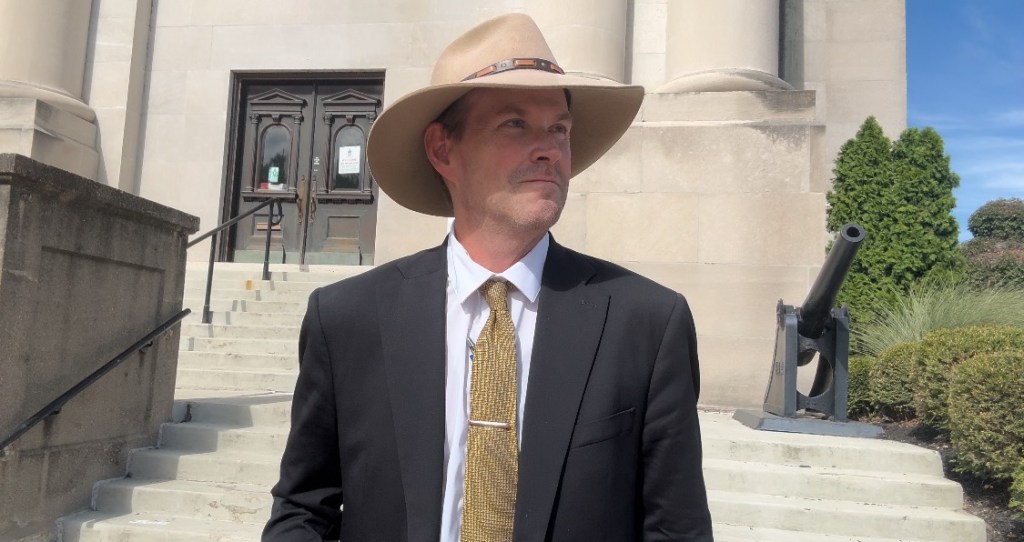
About the Author: Rich Hoffman
Rich Hoffman is an independent writer, philosopher, political advisor, and strategist based in the Cincinnati/Middletown, Ohio area. Born in Hamilton, Ohio, he has worked professionally since age 12 in various roles, from manual labor to high-level executive positions in aerospace and related industries. Known as “The Tax-killer” for his activism against tax increases, Hoffman has authored books including The Symposium of Justice, The Gunfighter’s Guide to Business, and Tail of the Dragon, often exploring themes of freedom, individual will, and societal structures through a lens influenced by philosophy (e.g., Nietzschean overman concepts) and current events.
He publishes the blog The Overmanwarrior (overmanwarrior.wordpress.com), where he shares insights on politics, culture, history, and personal stories. Active on X as @overmanwarrior, Instagram, and YouTube, Hoffman frequently discusses space exploration, family values, and human potential. An avid fast-draw artist and family man, he emphasizes passing practical skills and intellectual curiosity to younger generations.

