

The governor of New York, Kathy Hochul, recently stood up at a forum and essentially begged the wealthy who have fled her state to return and keep paying the bills that fund her vision of big government. She said something along the lines of, ” Go down to Palm Beach, see who you can bring back home, because our tax base has been eroded. She admitted that New York is now in direct competition with other states that impose a lighter tax burden on corporations and individuals, and that Wall Street businesses are looking to Texas instead of staying captive in Manhattan. This is the same Kathy Hochul who, just a couple of years earlier, had told political opponents to jump on a bus and head down to Florida, where they belong, if they didn’t represent New York values. Now she’s pleading for those same people—and their money—to return so she can keep the generous social programs afloat. It’s a stunning reversal that proves exactly what I have been saying for four decades: liberal policies, built on endless taxation, endless spending, and the assumption that people will stay put and keep writing checks, are collapsing under their own weight. The free market is working exactly as it should, and people are voting with their feet.
I was recently talking with folks in my local community here in Butler County, Ohio, about the Lakota Local School District, and the conversation crystallized everything happening on the national stage. Lakota had put a massive $506 million bond issue and levy on the ballot in November 2025—one of the largest school funding requests in Ohio history—tied to a master facilities plan that would demolish and rebuild buildings, supposedly to accommodate growth and modernize things. The district discussed reducing the number of buildings from 21 to 16, improving safety, and freeing up money for students. But voters saw through it. The levy was rejected by a decisive 61 to 39 percent margin. Even with promises that the actual net tax increase would be phased in later and capped at something like $93 per hundred thousand dollars of appraised value, thanks to debt roll-offs and state matching funds, people said no. They were tired of the trajectory. They didn’t want more property taxes funding a system that keeps growing its administration, its facilities wish list, and its social agenda while the real value delivered to families keeps getting questioned. This isn’t just a local story. It’s the same story playing out in New York, in California, and in every high-tax, high-spending blue state or district where the easy-money days of the past have finally run out.
For decades, people tolerated these large social programs and bloated public education budgets because the economy seemed to be working in their favor. Compound interest in savings accounts was real. Home values kept climbing year after year, creating paper wealth that let families cash out when the kids grew up—sell the house, pocket half a million or more, and move into something smaller while still feeling ahead of the game. Property taxes felt like a tolerable price to pay for nice communities, decent schools that acted as reliable babysitters during work hours, and the social approval that came with supporting “the kids.” You could afford to be a little generous at the next neighborhood gathering or school board meeting because your net worth was rising faster than the tax bill. But that scheme is over. Inflation has eroded real returns. Interest rates have fluctuated wildly. Home appreciation isn’t the guaranteed golden ticket it once was for everyone. People are looking at their tax bills, looking at what their money is actually buying in public schools, and saying enough. The taxation trajectory that propped up liberalism for generations is now pointing downward, and the people who built their political power on it are panicking.
Look at what Hochul and her fellow Democrats are confronting. New York has been bleeding residents and businesses for years. Domestic migration data from the U.S. Census show New York losing hundreds of thousands of people, net, to lower-tax states like Florida and Texas. California is in the same boat, with net losses exceeding 200,000 annually in recent cycles. Florida alone has gained hundreds of thousands of domestic migrants, and Texas even more. These aren’t just retirees heading south for the weather. They are working families, entrepreneurs, corporations, and high-net-worth individuals who have had it with sky-high income taxes, property taxes, regulatory burdens, and the cultural policies that come attached. New York’s per-pupil spending is among the highest in the nation—often topping $30,000 per student—yet educational outcomes measured by national assessments like NAEP remain middling at best. Florida and Texas spend far less per pupil, around 12,000 to 14,000, and deliver competitive or better results in many categories while keeping taxes lower overall. No state income tax in either place. That is real competition, and Hochul is finally admitting it out loud even as she tries to guilt-trip people into returning for the “patriotic” duty of funding her programs.
This is liberalism eating itself. For years, I have pointed out that every socialist experiment in history required walls—literal or figurative—to keep people from leaving. North Korea has its borders sealed. Cuba had its rafters and its political prisoners. East Germany built the Berlin Wall because people were fleeing to the West. China, even with its economic openings, maintains tight control because the alternative is mass exodus. The Soviet Union collapsed when the pressure to contain its people became unsustainable. Here in America, Democrats have relied on the soft walls of economic dependency, guilt, and cultural pressure. But those walls are crumbling because people can move. They can load up a U-Haul, drive to a free state, and never look back. Florida, under Governor Ron DeSantis, has become a magnet precisely because it refuses to play the high-tax, high-regulation game. Texas is booming for the same reasons. And here in Ohio, we are seeing the early stages of the same shift. People are coming to us from the collapsing blue states, and the lesson is clear: competitive models win. Punitive taxation and endless government expansion lose.
The property tax itself is at the heart of this fight, and it always has been a flawed, almost feudal concept dressed up in modern language. Its roots go back to William the Conqueror in 1066 England, where the king claimed ownership of all land and extracted perpetual payments from tenants and knights. The American version evolved through the Northwest Ordinance and the general property tax of the nineteenth century, which treated land and personal property as subject to state taxation indefinitely in exchange for “protecting” them. It was never truly about voluntary contribution; it was rent paid to the government for the privilege of owning what you thought you owned. Critics have long called it the most hated tax in America for good reason. It punishes ownership, discourages improvement, and ties local services—especially schools—to ever-rising assessments that have nothing to do with a family’s ability to pay. In places like New York and California, it became a weapon to fund expansive social programs that many residents never asked for and no longer support. Florida is leading the charge to change this. Governor DeSantis and state lawmakers have advanced multiple constitutional amendments to phase out homestead property taxes over time, ultimately eliminating them. Proposals include massive increases in exemptions—hundred-thousand-dollar jumps annually until nonschool property taxes on primary residences disappear. Ohio has its own movement gathering signatures for a 2026 ballot initiative to ban real property taxes altogether. Even some national voices aligned with President Trump have floated ideas for broader relief or elimination as part of a freedom agenda that recognizes property rights as fundamental. Why should anyone be penalized year after year simply for owning a home? It is a socialist march concept from the beginning, and people are waking up to it.
Here in Butler County and at Lakota specifically, the failed levy is a microcosm of the larger revolt. The district wanted hundreds of millions for bricks and mortar, for renovations, and for a smaller footprint that supposedly saves money in the long term. Yet the community looked at the track record: rising administrative costs, questions about curriculum priorities, and the reality that public education has been turned into something far beyond basic reading, writing, and arithmetic. Parents are sick of teacher strikes or walkouts that leave kids without instruction while unions demand more pay and less accountability. They are tired of seeing resources funneled into social experiments—coloring hair purple, pushing premature discussions of sexual lifestyles on young children, and ideological lessons that many families consider inappropriate or even damaging. Schools were supposed to be trusted babysitters that prepared kids for smart, productive lives. Instead, too many have become vehicles for cultural agendas that parents never voted for and refuse to subsidize with their property taxes. When the easy-money era ended, and families started feeling the real pinch, the willingness to keep writing blank checks vanished. One more mill or two more mills might not sound like much on paper, but when it is attached to policies people actively oppose, it becomes unacceptable—even if it is just one extra dollar.
The same dynamic plays out with every other government service funded by these taxes. Look at the TSA—Transportation Security Administration—as a perfect example of what happens when critical infrastructure is handed to unionized government workers attached to the Democratic extortion economy. Long lines, delays, sickouts, threats of shutdowns whenever funding fights arise. People who once flew without a second thought are now choosing sixteen-hour drives rather than enduring the inefficiency and the political games. Airlines struggle to maintain themselves while government mandates and union leverage create artificial bottlenecks. Taxpayers are funding something broken, something that punishes them for trying to travel freely, and they are done with it. Democrats love to attach these unionized workforces to essential services because it gives them leverage—hold the public hostage, blame Republicans or “underfunding,” and demand more money. It is the same playbook with public schools, public transportation, and welfare systems. When people can no longer afford it or no longer support the ideology behind it, they stop paying voluntarily. They move. They vote against levies. They support politicians who promise reform.
I have been part of the no-more-taxes, lower-taxes movement my entire adult life because I saw this coming. High taxes deter growth. They drive away the productive. They reward inefficiency. In New York, California, and places like them, the richest were supposed to stick around for the social clubs, the prestige, the elbow-rubbing with the political class. Instead, they took their money, their businesses, and their talent to Florida, Texas, and increasingly to states like Ohio that are positioning themselves as the next frontier of opportunity. Ohio’s future cannot be more government, more spending, more taxes. It has to be the opposite. We have legislators and potential future leaders who understand that. We have a governor’s race and local movements that are aligning with the national shift toward lower costs, smaller government, and actual freedom. Property tax relief is coming—whether through caps tied to inflation, homestead exemptions that grow dramatically, or outright abolition in some form. Sales taxes can be reformed or reduced. Income taxes, where they exist, must be kept competitive. The gravy train that funded reckless social spending is over because the people who pay the bills have decided they no longer consent to the product being delivered.
This is why the walls of the old order are failing. In communist countries, the only way to keep the system intact was violence and threats—shooting people who tried to cross to freedom. Here, Democrats assumed guilt, cultural inertia, and the inability to leave would suffice. But remote work changed everything. The pandemic accelerated the realization. Free states with lower taxes, better governance, and respect for individual rights became irresistible. People are not afraid anymore. They are packing up and leaving New York, California, Illinois—anywhere the liberal model has run its course. The tax base erodes, the deficits grow, the pleas become more desperate, and the cycle accelerates. Hochul’s Palm Beach pilgrimage is just the latest symptom. She and the supermoms and the big-government cheerleaders who built careers around this model are late to the party. Bernie Sanders-style socialism always sounded good in the abstract until the bill came due and people realized the cost to their communities, their families, and their futures. Now the bill is here, and the payers are walking away.
Locally, Lakota and districts like it will have to adjust. No more assuming taxpayers will fund every wish list. Superintendents and boards will need to trim administration, focus on core education, respect parental values, and operate within realistic budgets. If that means fewer buildings, fewer non-essential programs, or actual efficiency reforms, so be it. The same applies statewide. Ohio cannot import the failing model from the coasts. We have to export the successful low-tax, high-freedom model. That is how we attract the people and businesses fleeing the collapse. That is how we keep our own residents from looking elsewhere. Competitive states win. Coercive ones lose.
I have warned about this for forty years because the math was always inevitable. Socialism requires coercion. When the coercion fails—when people can leave or vote no—the system collapses. We are watching it happen in real time. New York’s tax base is eroding. California is eroding. The liberal dream of endless spending funded by other people’s money is dripping through their fingers like water. They cannot hold it. They cannot force it. And they certainly cannot guilt-trip a free people into submission when better alternatives exist just a moving van away.
The future belongs to the states and communities that understand this. Florida is already moving toward eliminating property taxes on primary homes. Texas thrives without an income tax. Ohio has the chance to lead the Midwest in the same direction. Property tax abolition movements are gaining steam nationally because people are tired of being treated like tenants on their own land. Schools will be funded differently—perhaps through choice, vouchers, or learner operations that actually deliver value. Overall, government services will shrink because the public will no longer subsidize failure. TSA lines will either improve through competition and accountability, or people will keep driving. Either way, the extortion ends.
This is the movement of the world now. Anti-tax sentiment is rising everywhere because people have lived through the consequences of big government. They have seen the waste, the indoctrination, the inefficiency, and the cultural decay funded by their dollars. They voted for change at the national level with President Trump and the Republican wave because they want a different kind of government—one that does not punish success, ownership, or families trying to raise children in line with their values. Fraud in elections will continue to be exposed. The 50-50 split on paper was never real; it was propped up by manipulation. When people vote their true preferences without interference, the results will be even stronger.
For anyone still clinging to the old model, the message is simple: it is over. The easy money is gone. The guilt trips no longer work. The walls are down. People are free, and they are choosing freedom. Here in Ohio, in Butler County, at Lakota and beyond, we will learn the same lessons New York is learning the hard way. Budgets will be cut. Priorities will be realigned. Taxes will come down. And communities will thrive—not because government spends more, but because it spends less and interferes less.
I have always been clear on this. Beware of any politician who wants higher taxes. They are dangerous. They are going out of fashion fast. My book, Gunfighter’s Guide to Business, lays out the philosophy of self-reliance, competitive thinking, and the rejection of coercive systems that have guided my warnings for decades. It is more relevant now than ever. Subscribe, read it, and join the fight. The future is bright for those willing to embrace lower taxes, smaller government, and genuine freedom. The collapse we are witnessing is not the end of America—it is the end of a failed experiment. And the rebirth that follows will be something worth building.
Footnotes
1. U.S. Census Bureau migration estimates, 2024-2025 data releases.
2. Tax Foundation State Business Tax Climate Index, 2026 rankings.
3. National Assessment of Educational Progress (NAEP) reports on per-pupil spending vs. outcomes.
4. Historical analysis of property tax origins from feudal England through the U.S. Northwest Ordinance.
Bibliography for Further Reading
• Fox News coverage of Hochul’s Palm Beach comments and tax base erosion (March 2026).
• Cincinnati Enquirer and local Butler County reporting on Lakota levy failure (November 2025).
• U.S. Census Bureau State-to-State Migration Flows tables (2023-2025).
• Tax Foundation reports on property tax relief proposals in Florida, Ohio, and national trends (2026).
• The Atlantic historical piece on feudal roots of American property tax (2016, with updates in policy debates).
• DeSantis administration statements on Florida homestead tax elimination proposals.
• Hoffman, Rich. Gunfighter’s Guide to Business (self-published, available via subscription platforms).
• Additional data from NAEP/Nations Report Card and state education spending comparisons.
These sources provide the factual backbone while the analysis reflects four decades of observation on tax policy, education funding, and the failure of coercive governance models. The era of unchecked liberalism is ending, and the evidence is everywhere for those willing to see it.
Rich Hoffman
More about me
Click Here to Protect Yourself with Second Call Defense https://www.secondcalldefense.org/?affiliate=20707
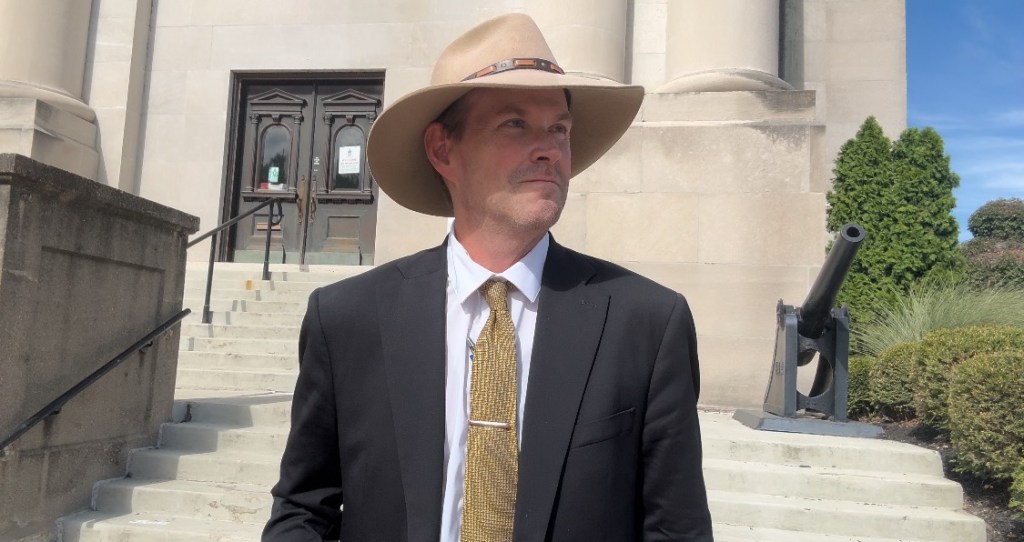
About the Author: Rich Hoffman
Rich Hoffman is an independent writer, philosopher, political advisor, and strategist based in the Cincinnati/Middletown, Ohio area. Born in Hamilton, Ohio, he has worked professionally since age 12 in various roles, from manual labor to high-level executive positions in aerospace and related industries. Known as “The Tax-killer” for his activism against tax increases, Hoffman has authored books including The Symposium of Justice, The Gunfighter’s Guide to Business, and Tail of the Dragon, often exploring themes of freedom, individual will, and societal structures through a lens influenced by philosophy (e.g., Nietzschean overman concepts) and current events.
He publishes the blog The Overmanwarrior (overmanwarrior.wordpress.com), where he shares insights on politics, culture, history, and personal stories. Active on X as @overmanwarrior, Instagram, and YouTube, Hoffman frequently discusses space exploration, family values, and human potential. An avid fast-draw artist and family man, he emphasizes passing practical skills and intellectual curiosity to younger generations.

