

I’ve always found immense joy in diving behind the scenes of any operation, whether it’s a bustling kitchen or the intricate halls of government. Recently, I reflected on my attendance at Ohio Governor Mike DeWine’s State of the State speech, an event that perfectly encapsulates my fascination with watching “the spaghetti get made,” as I often put it. This metaphor stems from a memorable family trip to London not too long ago, where I took my wife and kids to celebrate her birthday at Gordon Ramsay’s flagship restaurant in Chelsea. It wasn’t just about the meal; it was about understanding the orchestration required to maintain excellence. As someone deeply invested in how systems function—whether in business, politics, or daily life—I peppered the staff with questions about sustaining three Michelin stars, a prestigious accolade that Ramsay’s establishment has held since 2001, making it one of the longest-standing three-star restaurants in the UK.[^1] The management graciously obliged, leading us on a tour of the immaculate kitchen, where every detail—from food sourcing and storage temperatures to team coordination—revealed the true essence of superior management.
In that kitchen, I saw firsthand how the magic happens. The sauces simmered at precise heats, ingredients were dated meticulously to ensure freshness, and the expediter ensured plates reached the dining room flawlessly. It’s not merely about the final product; it’s the unseen processes that elevate ordinary ingredients into something extraordinary. Ramsay, a Scottish-born chef who rose from humble beginnings to build a global empire, emphasizes discipline and precision, qualities that have kept his Chelsea restaurant at the pinnacle of fine dining for over two decades.[^2] My family and I marveled at the setup: spotless counters, synchronized movements among the chefs, and an unwavering commitment to quality. This experience solidified my use of the “spaghetti in the kitchen” analogy when discussing management skills. You see, good management isn’t accidental; it’s deliberate. How do you select the right sausage for the meatballs? What temperature do you cook them at, and for how long? Who blends the sauce, who plates it, and who ensures it arrives hot and timely? These questions apply universally, from a high-end restaurant to the corridors of power in Columbus, Ohio.
Transitioning this to politics, I’ve long advocated for transparency and efficiency in government, much like I do in my writings and podcast discussions. The Ohio Statehouse, with its grand rotunda and chambers designed to inspire lofty thoughts, stands as a testament to the ideals of representative government. Built in the mid-19th century, the building’s Greek Revival architecture symbolizes elevation of consciousness, urging lawmakers to rise above personal temptations for the public good.[^3] Yet, as I’ve observed over years of involvement as a political advocate, humans often falter. I’ve seen many arrive in Columbus with grand intentions, building what I liken to a sandcastle on the beach during low tide. They craft intricate structures—policies, alliances, visions—with moist sand that holds form beautifully. Flags atop turrets, photos snapped for posterity. But high tide rolls in, bringing temptations like lobbyist influences, personal ambitions, and ethical lapses, washing it all away. Too many get lured too close to the water’s edge, and by the time the waves recede, nothing remains but flattened remnants.
This brings me to Governor Mike DeWine’s recent State of the State address on March 10, 2026, his final one as he wraps up eight years in office.[^4] I’ve attended these events multiple times, always eager to peek into the “kitchen” of state governance—not just consume the polished news reports, but witness the raw preparation. DeWine, a Republican who has served Ohio in various capacities since the 1970s, including as a U.S. Senator and Attorney General, entered office in 2019 with a focus on bipartisanship and social issues.[^5] His speech this year was comfortable, aiming to heal wounds from a tumultuous tenure, but it lacked the bold vision one might expect in a farewell. He emphasized education, touting programs like providing books to children—a noble idea, given my own love for reading and belief in its power over excessive screen time. Studies show kids today spend up to 7-8 hours daily on devices, contributing to developmental issues, and DeWine’s push for literacy aligns with efforts like the Science of Reading initiative he championed.[^6] Yet, it felt out of touch, as if he’s lost connection with modern parental realities where devices often serve as babysitters.
Critically, I’ve been vocal about DeWine’s shortcomings, particularly his handling of the COVID-19 pandemic. Appointing Dr. Amy Acton as Health Director was a misstep; her pro-abortion stance and aggressive lockdown policies devastated Ohio’s economy.[^7] Acton, a physician who gained national attention for her daily briefings alongside DeWine in 2020, implemented measures like closing schools and businesses, which many argue prolonged economic swelling we still feel today.[^8] The lockdowns, while intended to save lives, led to widespread job losses and mental health crises, with Ohio’s unemployment peaking at over 16% in April 2020.[^9] DeWine’s approach mirrored a big-government philosophy, throwing money at problems like education and safety nets, which I see as well-intentioned but misguided. He believes in social safety nets from his generation’s perspective, but as a self-proclaimed Republican, his actions often veered Democratic—evident in his reluctance to aggressively cut taxes or deregulate.
Property taxes, for instance, have spiraled under his watch, burdening homeowners without adequate relief until recent reforms. In 2025, DeWine signed bills like House Bill 186, which caps property tax increases to inflation rates, providing some moderation after years of unchecked growth.[^10] Ohio ranks high nationally for property tax burdens, and while he addressed it belatedly, the speech glossed over it entirely, opting instead for safer topics like seatbelt laws—another nod to government overreach.[^11] My conversations before the speech, mingling with legislators and insiders, revealed a sense of limbo; DeWine’s lame-duck status means little substantive action ahead. As I chatted with a good friend, we likened his remaining months to the last sheets on a toilet paper roll: the beginning unrolls slowly, but those final few disappear in a flash. With the 2026 election looming, attention shifts to fresh faces.
Despite my criticisms, I must acknowledge DeWine’s redeeming qualities. Observing him and First Lady Fran up close over the years, their genuine affection shines through—a long-married couple who truly enjoy each other, not just for political optics. Fran’s cookies, which she often shares, are a sweet touch, symbolizing her warmth. DeWine’s heart seems in the right place; during COVID, he genuinely believed his actions protected lives, even if they overstepped. Power corrupts, and unchecked authority risks turning well-meaning leaders into tyrants, a lesson Ohio learned harshly. Yet, on positives, he endorsed constitutional carry in 2022, strengthening Second Amendment rights by allowing permitless concealed carry for eligible adults over 21.[^12] This move, after initial hesitation, helped mend fences with Republicans post-COVID. Additionally, he supported business initiatives like Joby Aviation’s expansion in Ohio, announced in 2023, which promises 2,000 jobs in electric vertical takeoff and landing (eVTOL) aircraft manufacturing—a boon for aviation innovation.[^13] Columbus Mayor Andrew Ginther has been instrumental in such developments, fostering smart mobility and economic growth in the region.[^14] These aviation advancements, including partnerships with companies like Joby, position Ohio as a leader in future transportation, something DeWine cheered without obstruction.
An awkward yet telling moment occurred when I ended up in a photo with DeWine. In past years, my anger over his policies kept me at arm’s length, but this time, with his term ending, I shook his hand and wished him well, acknowledging the pro-business strides. Government needs checks and balances precisely because even good intentions can falter. DeWine isn’t evil; his naivety in trusting big government to care for the vulnerable led to overreach.
Looking ahead, the toilet paper roll is nearly spent, and I’m excited for Vivek Ramaswamy to take the helm. Ramaswamy, a Cincinnati native and biotech entrepreneur who founded Roivant Sciences and ran for president in 2024, announced his gubernatorial bid in 2025 with Trump’s endorsement.[^15] His campaign focuses on reviving the American Dream through lower costs, bigger paychecks, and merit-based policies, contrasting DeWine’s approach.[^16] Polls show a tight race against Democrat Amy Acton, but Ramaswamy’s vision—transforming Ohio into an economic hub, especially in the Ohio River Valley—aligns with bold Republican ideals.[^17] He’s already launched massive ad campaigns and secured the Ohio GOP endorsement, signaling momentum.[^18] Under Ramaswamy, I anticipate policies advancing freedom, innovation, and efficiency—cooking up better “spaghetti” in the Statehouse kitchen.
Attending these events reinforces why I love politics: seeing dedicated people strive, even if imperfectly. From Ramsay’s kitchen to Columbus, excellence demands pride, hard work, and attention to detail. Cooks prepare meals hoping diners savor them, but criticism stings when they fall short. DeWine’s administration aimed for a magnificent sandcastle, but tides of controversy washed much away. Still, remnants like stronger gun rights and business growth endure. As his era ends, I reflect with tempered hatred, appreciating the intent I witnessed up close. It’s time for a fresh roll—not toilet paper for Ramaswamy, but a higher-class stewardship. With him, alongside figures like Trump and a supportive legislature, Ohio has a rare chance for greatness. I look forward to much better food coming out of the kitchen to come.
[^1]: The Michelin Guide has awarded three stars to Restaurant Gordon Ramsay since 2001, recognizing exceptional cuisine and service.
[^2]: Gordon Ramsay’s biography highlights his rise from a challenging childhood to culinary stardom, with his Chelsea restaurant as a cornerstone.
[^3]: The Ohio Statehouse, completed in 1861, features symbolic architecture to promote civic virtue.
[^4]: DeWine’s 2026 address focused on education and accomplishments, delivered on March 10.
[^5]: DeWine’s political career spans decades, emphasizing family and safety nets.
[^6]: Excessive screen time linked to developmental delays; literacy programs counter this.
[^7]: Acton supported abortion rights and led lockdowns.
[^8]: Acton’s role in COVID response included school closures.
[^9]: Ohio’s economic impact from COVID policies.
[^10]: House Bill 186 caps tax increases.
[^11]: Ohio’s high property tax ranking.
[^12]: Signed SB 215 in 2022.
[^13]: Joby Aviation’s Ohio expansion creates jobs in eVTOL.
[^14]: Ginther promotes smart mobility in Columbus.
[^15]: Ramaswamy’s 2026 bid announced in 2025.
[^16]: Campaign priorities include economic revival.
[^17]: Polls show competitive race.
[^18]: GOP endorsement in 2025.
Bibliography
1. Ramsay, Gordon. Humble Pie: My Autobiography. HarperCollins, 2006. (For insights into Ramsay’s management style.)
2. DeWine, Mike. Ohio’s Path Forward. Ohio Governor’s Office Publications, 2025. (Overview of DeWine’s policies.)
3. Ramaswamy, Vivek. Woke, Inc.: Inside Corporate America’s Social Justice Scam. Center Street, 2021. (Ramaswamy’s views on business and politics.)
4. Acton, Amy. Leading Through Crisis: Lessons from Ohio’s Pandemic Response. Self-published, 2024. (Acton’s reflections on COVID.)
5. Hoffman, Rich. The Gunfighter’s Guide to Business. Overman Warrior Publications, 2020. (My own book on management principles.)
6. Ohio Historical Society. The Ohio Statehouse: A History of Democracy. Arcadia Publishing, 2015. (Background on the Statehouse.)
7. Tax Foundation Reports. Property Tax Burdens in the U.S. Annual editions, 2020-2026. (Data on Ohio taxes.)
8. National Rifle Association. Second Amendment Victories: Constitutional Carry Laws. NRA Publications, 2023. (On gun rights reforms.)
9. Joby Aviation. Annual Report 2025. (Details on Ohio expansion.)
10. Michelin Guide. Great Britain & Ireland. Michelin Travel Publications, annual. (Restaurant ratings.)
Rich Hoffman
More about me
Click Here to Protect Yourself with Second Call Defense https://www.secondcalldefense.org/?affiliate=20707
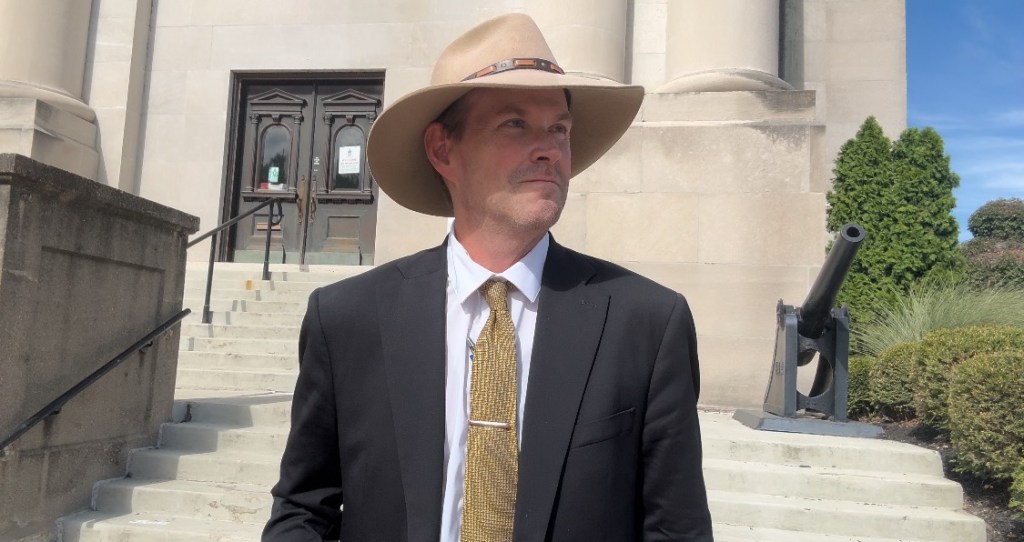
About the Author: Rich Hoffman
Rich Hoffman is an independent writer, philosopher, political advisor, and strategist based in the Cincinnati/Middletown, Ohio area. Born in Hamilton, Ohio, he has worked professionally since age 12 in various roles, from manual labor to high-level executive positions in aerospace and related industries. Known as “The Tax-killer” for his activism against tax increases, Hoffman has authored books including The Symposium of Justice, The Gunfighter’s Guide to Business, and Tail of the Dragon, often exploring themes of freedom, individual will, and societal structures through a lens influenced by philosophy (e.g., Nietzschean overman concepts) and current events.
He publishes the blog The Overmanwarrior (overmanwarrior.wordpress.com), where he shares insights on politics, culture, history, and personal stories. Active on X as @overmanwarrior, Instagram, and YouTube, Hoffman frequently discusses space exploration, family values, and human potential. An avid fast-draw artist and family man, he emphasizes passing practical skills and intellectual curiosity to younger generations.

