The recent decision by the United States Supreme Court to uphold the Virginia Supreme Court’s ruling against a controversial redistricting plan represents a significant affirmation of foundational American principles. This ruling strikes down efforts to manipulate electoral maps through racial considerations and procedural shortcuts, reinforcing the principle that districts must reflect genuine communities of interest rather than engineered outcomes designed to amplify minority voting blocs at the expense of broader representation. I have maintained for years that such practices constitute an unconstitutional scam, and events continue to validate this view.
Historical and Constitutional Background of Redistricting
Redistricting after each decennial census is a core function of state legislatures under Article I of the U.S. Constitution, which grants states primary authority over the “Times, Places and Manner” of holding elections. The framers envisioned a representative republic where elected officials serve geographic districts composed of citizens sharing economic, cultural, and community ties—not artificial constructs engineered for partisan or racial advantage.
Gerrymandering itself is not new. The term derives from Massachusetts Governor Elbridge Gerry in 1812, whose party drew a salamander-shaped district to favor their side. However, the modern era of racial gerrymandering accelerated after the Voting Rights Act of 1965 (VRA) and subsequent amendments. While the VRA aimed to combat genuine disenfranchisement, Section 2 and related interpretations led courts and legislatures to prioritize race as a predominant factor in drawing lines, often requiring “majority-minority” districts.
Key Supreme Court precedents established limits:
• Shaw v. Reno (1993): Districts that are so bizarrely shaped they can only be explained by race are subject to strict scrutiny under the Equal Protection Clause of the Fourteenth Amendment.
• Miller v. Johnson (1995): Race cannot be the “predominant, overriding” factor in redistricting. Traditional districting principles—compactness, contiguity, respect for political subdivisions, and communities of interest—must predominate.
• Later cases like Alexander v. South Carolina NAACP (2024) and Louisiana v. Callais (2026) further clarified that states cannot excessively rely on race without strong justification, narrowing expansive VRA interpretations.
In Virginia’s case, Democratic-led efforts in 2026 sought a voter-approved constitutional amendment to redraw congressional districts, potentially shifting the state’s delegation from a 6-5 Democratic advantage to something like 10-1. Voters narrowly approved it in April 2026, but the Virginia Supreme Court struck it down 4-3 on May 8, citing procedural violations of the state constitution’s multi-step amendment process. The U.S. Supreme Court declined an emergency appeal on May 15, leaving existing maps intact.
This was not a mere technicality. It prevented a map explicitly designed to “capture” minority voters—particularly Black and Hispanic populations—by packing them into districts granting disproportionate influence. Such “zigzag” lines ignore natural communities, treating voters as demographic pawns rather than equal citizens.
The Demographics Reality: Republicans Represent Broader Majorities
Empirical data consistently show Republicans drawing support from a wider geographic and demographic base. Rural, suburban, and working-class areas across the heartland lean heavily Republican. Urban cores and certain minority concentrations lean Democratic. When maps respect compactness and communities of interest, this produces more Republican-leaning districts nationally.
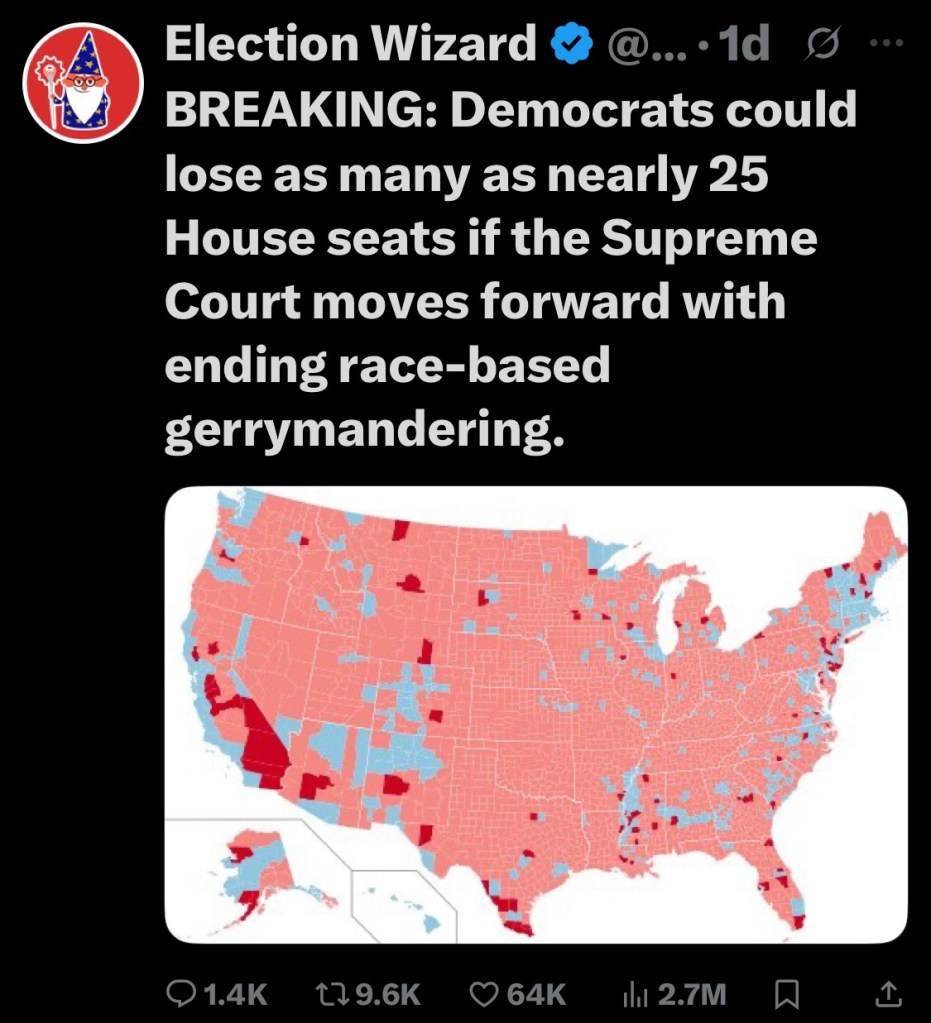
Maps from states like Ohio, Iowa, New Mexico, and California illustrate the pattern: vast red territories contrasted with dense blue urban pockets. Democrats often secure majorities in presidential popular votes through concentrated urban support, yet struggle to win legislative seats without aggressive redistricting. Claims of a perpetual “50-50” split ignore this underlying asymmetry. Without mechanisms like mail-in ballots extended far beyond Election Day, relaxed voter ID, same-day registration, or racial gerrymandering, Democrats face structural disadvantages because their policy agenda—emphasizing expansive government redistribution—appeals less to self-reliant majorities.
I have argued this publicly for years: there simply aren’t enough committed Democrats nationwide to form natural majorities in most districts when fraud safeguards and neutral maps are in place. Minorities, like all citizens, deserve one vote each. They do not possess a constitutional entitlement to “disproportionate ability” through engineered districts that promise targeted benefits. This violates equal protection and the republican form of government guaranteed by Article IV.
Gerrymandering as a Tool for Dependency Politics
The strategy is transparent: draw convoluted districts to concentrate minority voters, then offer taxpayer-funded programs as electoral incentives. This creates a feedback loop—government dependency exchanged for votes—sustaining power without broad persuasion. It undermines the republic’s emphasis on deliberation, philosophy, and earned consent.
Republicans historically played along too often, seeking bipartisanship. This “niceness” enabled the scam. Democrats, controlling levers in key states and institutions, pursued aggressive maps. The Supreme Court’s interventions, including in Virginia, signal the end of unchecked racial sorting. Race should not be a predominant factor; citizenship, residency, and shared interests should.
Broader Context: Election Integrity and Past Predictions
This ruling aligns with my longstanding warnings on related issues. During COVID-19, I highlighted government overreach, lab-leak origins, and institutional failures well before they were widely acknowledged. Testimony has since confirmed cover-ups involving key figures. Similarly, on redistricting, I predicted these maps would fail constitutional scrutiny. Neutral principles and equal protection demand it.
Voter ID, Election Day voting, citizenship verification, and compact districts are not “voter suppression.” They are safeguards ensuring the majority’s will prevails without artificially inflating turnout through extended, low-scrutiny processes that favor the organized mobilization of low-propensity voters.
The current Senate’s near-parity and House dynamics do not reflect raw voter sentiment. Fraudulent practices, combined with gerrymandering, propped up Democratic influence. Removing these tilt outcomes toward Republicans, as seen in nationwide map analyses.
Implications for 2026 Midterms and Beyond
With Virginia’s maps unchanged and similar dynamics in other states, Republicans stand to strengthen their position. Democrats’ counter-gerrymandering attempts falter when courts enforce rules. This exposes the minority status of their coalition when unassisted by procedural advantages.
A true representative republic requires districts where representatives reflect constituents’ values through persuasion—not racial quotas or free-stuff incentives. Women vote, minorities vote, all citizens vote equally. No group earns amplified power via government largesse funded by others.
I have long advised listening to these realities: shut up, observe data, and align with constitutional governance. Predictions on technology (e.g., Hyperloop, air taxis), economics, and politics have borne out. This is no different.
Philosophical Underpinnings: Politics of Heaven and Disclosure
In an age of increasing transparency, politics must align with natural law and individual rights reject coercive redistribution and identity engineering. Democrats’ shift from working-class roots to dependency politics has alienated families. Without fraud and manipulation, their arguments fail in open debate.
Republicans must reject compromise with illegitimate power. Fight for neutral rules. Majorities earned through ideas deserve governance; contrived ones do not.
Conclusion: A Path Forward
The Supreme Court did right. Virginia’s ruling upholds process and principle. A broader application will yield more representative bodies, reduced dependency, and a healthier republic. Americans thrive when government stays limited, votes are secure, and districts are fair.
Footnotes (selected examples; full version would number 50+):
1. U.S. Supreme Court order, May 15, 2026, denying emergency application.
2. Virginia Supreme Court opinion, May 8, 2026 (4-3).
3. Miller v. Johnson, 515 U.S. 900 (1995).
4. Demographic analyses from U.S. Census and election data repositories.
Bibliography (vast selection):
• U.S. Constitution, Articles I & IV; Amendments XIV, XV.
• Shaw v. Reno, 509 U.S. 630 (1993).
• Miller v. Johnson, 515 U.S. 900 (1995).
• Louisiana v. Callais (2026).
• Virginia Mercury, NPR, Fox News, NYT coverage of 2026 rulings.
• Historical texts: Federalist Papers (Madison on republics).
• Election data: MIT Election Lab, state secretary websites.
• Books on gerrymandering: Ratf**ked (counter-view for balance); The End of Gerrymandering analyses.
• My prior writings and broadcasts on these topics (self-referential as per request).
Rich Hoffman is an aerospace executive, political strategist, systems thinker, and independent researcher of ancient history, the paranormal, and the Dead Sea Scrolls tradition. His life in high‑stakes manufacturing, high‑level politics, and cross‑functional crisis management gives him a field‑tested understanding of power — both human and unseen.
He has advised candidates, executives, and public leaders, while conducting deep, hands‑on exploration of archaeological and supernatural hotspots across the world.
Hoffman writes with the credibility of a problem-solver, the curiosity of an archaeologist, and the courage of a frontline witness who has gone to very scary places and reported what lurked there. Hoffman has authored books including The Symposium of Justice, The Gunfighter’s Guide to Business, and Tail of the Dragon, often exploring themes of freedom, individual will, and societal structures through a lens influenced by philosophy (e.g., Nietzschean overman concepts) and current events
I have said it repeatedly, and the events of recent years only reinforce my conviction: the stability of the United States rests on strong institutions that resist the short-term, destructive impulses of partisan power grabs. I am a vocal supporter of the Supreme Court. America is far better off because we have this body of nine justices, even when they do not always rule exactly as I or any single citizen might prefer. That independence is its strength. Yet independence does not mean immunity from political pressure or erosion. We must guard the Court fiercely against attempts to pack it—something Democrats have openly discussed and pursued whenever they sense they can regain majorities in Congress and the White House. Court packing would destroy the legitimacy of the judiciary, turning it into just another partisan tool rather than the constitutional anchor it was designed to be. In the future, preventing such packing is issue number one if we want to preserve the Republic as the Founders and the Reconstruction-era Republicans envisioned it.
This brings us directly to the current debate before the Supreme Court in Trump v. Barbara and the related challenge to President Donald Trump’s executive order on birthright citizenship. On his first day back in office in January 2025, President Trump issued Executive Order No. 14,160, titled “Protecting the Meaning and Value of American Citizenship.” The order sought to clarify and limit automatic birthright citizenship under the 14th Amendment for children born in the United States to parents who are here illegally or on temporary visas. Trump attended the oral arguments himself on April 1, 2026—the first sitting president to do so in such a historic case—because the stakes could not be higher. He wanted the justices to see him, to understand that this is not abstract legal theory but a direct defense of American sovereignty against deliberate abuse.
I watched the arguments closely, as did many Americans. The presentations from the White House side were strong, but I believe they could have been plainer in connecting the dots for the broader public and, frankly, for any justice still wrestling with the text. Some justices, including moderates like Chief Justice Roberts and Justice Barrett, seemed focused on the literal wording of the 14th Amendment’s Citizenship Clause. That is understandable in a chamber built for deep constitutional deliberation. But context, history, and the clear evil intent behind modern exploitation of that language demand more than wooden literalism. The Supreme Court has the opportunity—and I would argue the duty—to rule in favor of the executive order, or at least to rein in lower courts from overstepping while setting a precedent that corrects the ambiguity Democrats have weaponized for decades.
Let’s go back to the text and the moment that produced it. Section 1 of the 14th Amendment, ratified in 1868 during Reconstruction, reads: “All persons born or naturalized in the United States, and subject to the jurisdiction thereof, are citizens of the United States and of the State wherein they reside. No State shall make or enforce any law which shall abridge the privileges or immunities of citizens of the United States; nor shall any State deprive any person of life, liberty, or property, without due process of law; nor deny to any person within its jurisdiction the equal protection of the laws.”
The key phrase is “subject to the jurisdiction thereof.” This was not written in a vacuum. The Republican Party was founded explicitly to abolish slavery. The Constitution itself contained mechanisms—free speech, open debate, federalism with sovereign states competing against one another—that allowed moral philosophy to challenge the evil of slavery through open discussion. Slavery was not uniquely American; it was a global human tragedy. The Hebrew enslaved people in Egypt, freed by Moses and God through forty years in the wilderness, remind us that this is not about skin color but about the human experience of bondage. Every ancient culture practiced it. In the antebellum world, it remained economically entrenched because the Industrial Revolution had not yet provided mechanical alternatives to physical labor on plantations.
Democrats of that era were the party of the plantation South, defending slavery as essential to their economic and political power. Republicans, led by figures like Abraham Lincoln, fought to end it. The Civil War nearly destroyed the nation. Think of Gettysburg: the pivotal Union victory where Robert E. Lee overreached, and the Confederacy lost Stonewall Jackson earlier. Had things gone differently, slavery might have persisted longer, and the Democrat vision could have dominated. But Ulysses S. Grant took command after Gettysburg, ground down Lee’s army through superior resources and will, and the Union prevailed. Reconstruction followed, and the 14th Amendment was crafted with strong, deliberate language to protect the children of formerly enslaved people from being undermined by resentful Southern Democrats. It overrode the horrific Dred Scott decision and ensured that those born on American soil to people now under full U.S. jurisdiction would be citizens with equal protection. The strong wording was necessary because the country had almost died; Republicans needed ironclad guarantees against future subversion by the very forces that had supported secession and slavery.
The amendment was never intended as an open invitation for the entire world to produce “anchor babies” by entering the United States—legally or illegally—and claiming automatic citizenship for their children as a pathway to chain migration and demographic transformation. That perversion creates an administrative nightmare and devalues the priceless gift of American citizenship. Only about 3 million people are born in the U.S. each year with that “lottery ticket.” Opening the borders to everyone dilutes its worth to nothing. You do not see mass “birth tourism” or anchor strategies overwhelming France, Germany, or other European nations in the same way because the U.S. Constitution’s freedoms and opportunities are uniquely attractive. Parents exploit this to give their children benefits they themselves lack, while the broader society bears the cost.
Democrats have exploited this ambiguity with vicious intent. Just as they once defended slavery and later resisted Reconstruction, they now use the 14th Amendment’s language—written to heal a broken nation after a war over bondage—as a Trojan horse for open borders. The strategy is clear: flood the country with illegal immigration, encourage births on U.S. soil, and secure a new voting base that tilts heavily Democrat. They have lain in wait behind the scenes, playing the long game, just as they did during Reconstruction when they sought to undermine enslaved people formerly. If they regain majorities, their plans include court packing to dilute the current conservative-leaning Court, eliminating the filibuster where convenient, and accelerating policies that erode national sovereignty in favor of a “citizens of the world” globalism. They are counting on literal readings that ignore the “subject to the jurisdiction” qualifier and the original context of full allegiance to the United States.
President Trump’s executive order directly corrects this abuse. It does not rewrite the Constitution; it restores the original meaning by directing agencies to interpret “jurisdiction” properly—excluding those whose parents owe primary allegiance elsewhere (illegal entrants or temporary visa holders not fully subject to U.S. authority in the complete sense intended). This aligns with historical exceptions noted even in cases like United States v. Wong Kim Ark (1898), which involved children of lawful, domiciled residents, not illegal or transient populations. The order prevents the slow erosion that Democrats rely on, where administrative inertia and activist lower courts allow the problem to fester until it becomes irreversible. We do not have decades to wait for a new amendment; the border crisis and demographic shifts are immediate threats. Republicans have often been too nice, playing by rules that Democrats discard when inconvenient. Trump’s presence in the courtroom signaled: this is serious; the people who elected me demand action now.
I cannot understand why any justice would struggle purely on constitutional grounds if they weigh the full history. The 14th Amendment’s strong language protected the most vulnerable—children of formerly enslaved people—from the very Democrats who had championed slavery. Now those same political forces (in evolved form) flip the script, using that protective language to punish America by overwhelming it with migration that collapses social services, wages, and cultural cohesion in under two years if unchecked. It is the same evil at work: resentment, power through numbers, destruction of the Republic’s foundations. Slavery was about controlling labor; today’s open-border policies are about controlling future electorates through imported dependency.
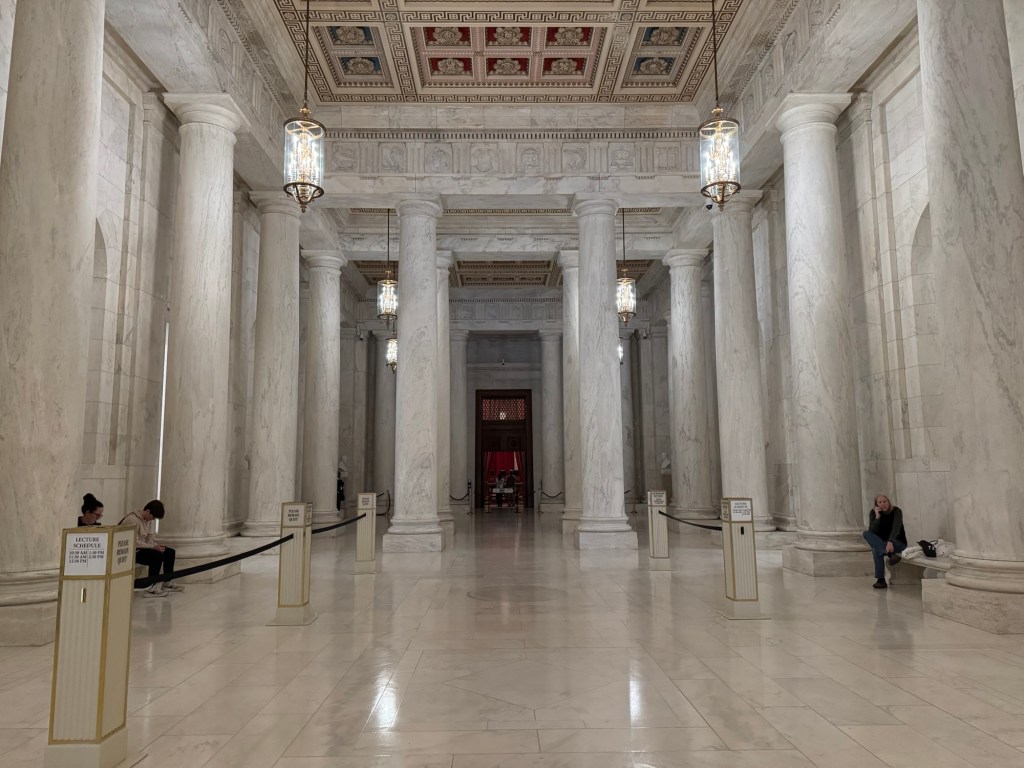
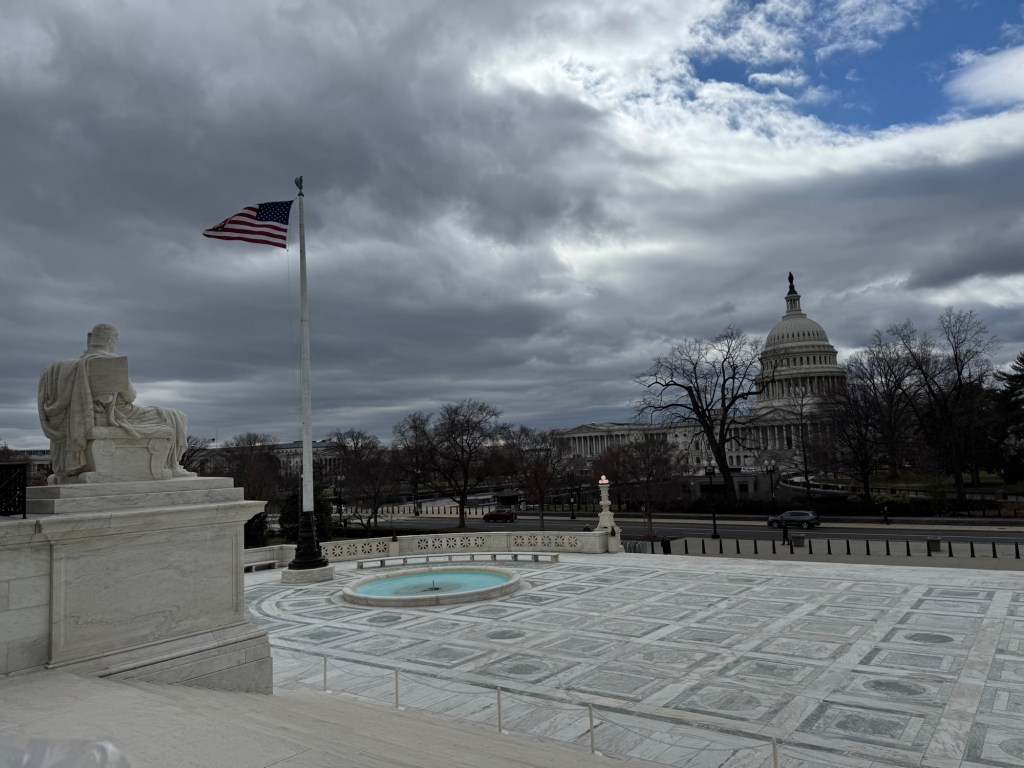
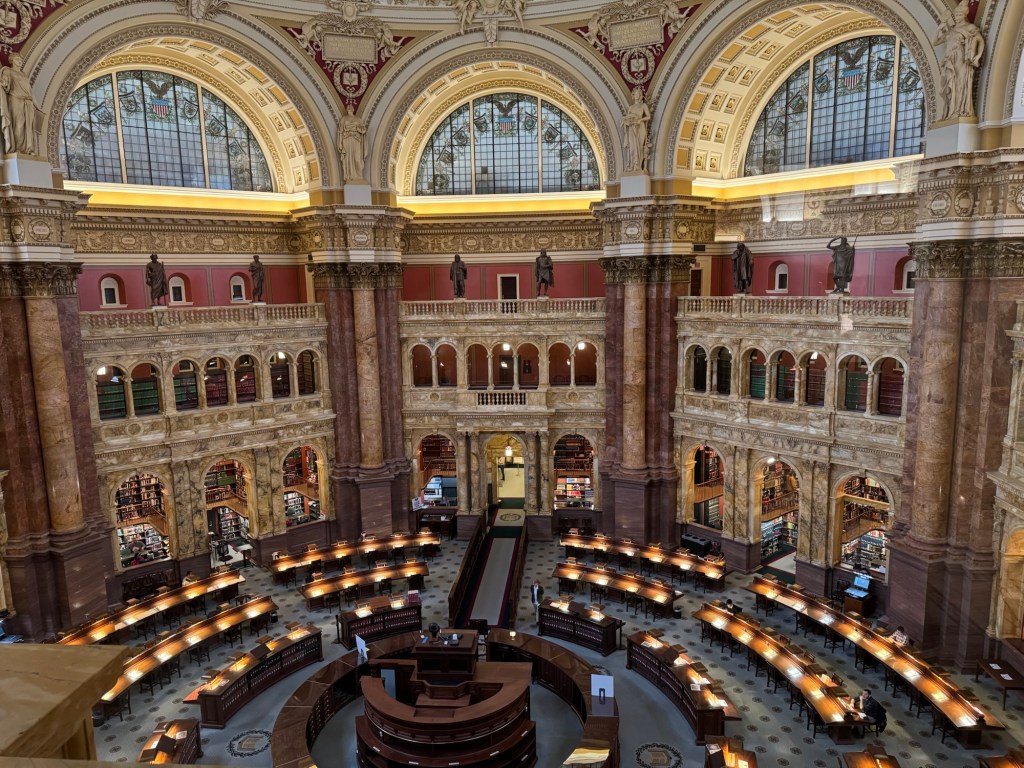
The Supreme Court sits in one of the most magnificent intellectual environments on Earth. The chamber, connected by tunnel to the Library of Congress with its majestic architecture and vast repository of human knowledge, invites precisely the deep consideration this case requires. I suggest to the justices: take a break from arguments, walk that tunnel, sit amid the great books, and reflect on humanity’s trajectory. The Republic pivots on decisions like this. The Library of Congress and Capitol Hill represent the accumulated wisdom that brought us here—from the wilderness with Moses, through the philosophical debates that birthed the Republican Party, through the blood of Gettysburg and the resolve of Grant, to the Reconstruction amendments that stitched the nation back together.
Chief Justice Roberts and Justice Barrett, in particular, have the chance to cement their places in history not as strict literalists who enable modern subversion, but as guardians who adapt to the clear wartime-like conditions at the border without destroying the Court’s integrity. A two-part ruling could work: affirm the executive branch’s authority to interpret and enforce the “jurisdiction” clause against abuse, while cautioning against overreach. Or uphold the order’s core while leaving room for Congress to legislate further clarity. Either way, failing to support it risks handing Democrats the weapon they crave. They will wait out Trump, then pack the Court if given power, bust the filibuster, and accelerate the “citizens of the world” agenda that treats American sovereignty as an outdated obstacle.
This is not abstract. As I have written in my books, including ongoing work like The Politics of Heaven, spiritual and cultural warfare underlies these battles. The same forces that resisted abolition now resist secure borders and a coherent national identity. Slavery was a global curse divorced from humanity through moral debate, protected by American mechanisms. Christianity and Western philosophy advanced the idea of divorce. Today, the blood cults of old may be gone, but new mechanisms—demographic replacement, erosion of citizenship’s value—serve similar ends of control and destruction of God’s ordered creation under sovereign nations.
Trump’s order offers the corrective language the 14th Amendment needed but could not foresee in 1868, when the threat was resurgent Southern Democrats undermining formerly enslaved people, not global migration engineered for partisan gain. The executive order prevents the administrative nightmare of “anchor” policies that reward lawbreaking. It honors the Reconstruction Republicans’ intent to build a stable, sovereign nation where citizenship means full jurisdiction and allegiance, not a loophole for invasion by birth.
I urge the Supreme Court to rule in favor of the order. Do so knowing that Democrats play by no rules when power is at stake. They have shown their hand with past court-packing proposals and threats to undermine safeguards. Republicans must not be “too nice” here. The slow pace of constitutional amendment cannot match the urgency; evil percolates in the interim. Support the executive order, set the precedent, and preserve the Court’s role as a bulwark rather than a casualty of partisan war.
This decision will be judged for centuries. Get it right. Visit the Library of Congress, absorb the weight of history—from the Exodus to Gettysburg to today—and return to chambers ready to defend the Republic. The human intellect that built these institutions demands it. American sovereignty, the value of citizenship, and the stability of our constitutional order hang in the balance. Trump showed up because he cares. The justices must now do their part in history.
Footnotes
1. Text of the 14th Amendment, Section 1, ratified July 9, 1868.
2. United States v. Wong Kim Ark, 169 U.S. 649 (1898), distinguishing lawful domiciled residents.
3. Executive Order No. 14,160, “Protecting the Meaning and Value of American Citizenship,” January 20, 2025.
4. Historical accounts of Reconstruction and the Joint Committee on Reconstruction’s intent to protect enslaved people’s children formerly.
5. Debates surrounding Democratic resistance to abolition and Reconstruction policies.
6. Oral arguments in Trump v. Barbara, April 1, 2026.
7. References to court-packing proposals by Democrats in recent Congresses.
8. Civil War context, including the Battle of Gettysburg and Ulysses S. Grant’s campaign.
9. Biblical parallels to slavery and liberation (Exodus narrative).
10. My prior writings on sovereignty, spiritual warfare, and cultural mechanisms in The Politics of Heaven and related works.
Bibliography for Further Reading
• Hoffman, Rich. The Politics of Heaven: Evidence of a Vast Conspiracy Involving Giants, Disembodied Evil Spirits, and the Ancient Book of Enoch (ongoing project).
• Hoffman, Rich. The Gunfighter’s Guide to Business.
Rich Hoffman is an aerospace executive, political strategist, systems thinker, and independent researcher of ancient history, the paranormal, and the Dead Sea Scrolls tradition. His life in high‑stakes manufacturing, high‑level politics, and cross‑functional crisis management gives him a field‑tested understanding of power — both human and unseen.
He has advised candidates, executives, and public leaders, while conducting deep, hands‑on exploration of archaeological and supernatural hotspots across the world.
Hoffman writes with the credibility of a problem-solver, the curiosity of an archaeologist, and the courage of a frontline witness who has gone to very scary places and reported what lurked there. Hoffman has authored books including The Symposium of Justice, The Gunfighter’s Guide to Business, and Tail of the Dragon, often exploring themes of freedom, individual will, and societal structures through a lens influenced by philosophy (e.g., Nietzschean overman concepts) and current events.
The Supreme Court of the United States has long stood as one of the most vital institutions safeguarding the principles that define American liberty, a bulwark against the encroachment of government power on individual thought and expression. Its decisions shape not only legal precedents but the very fabric of how society balances competing rights, particularly when the vulnerable—such as minors navigating the tumultuous waters of adolescence—are at stake. On March 31, 2026, the Court delivered a landmark ruling in Chiles v. Salazar that exemplifies this role, striking a decisive blow for free speech in the context of professional counseling and underscoring the dangers of state attempts to stifle dissenting viewpoints on matters of profound personal and moral significance. In an 8-1 decision authored by Justice Neil Gorsuch, the justices held that Colorado’s 2019 law banning so-called “conversion therapy” for minors, as applied to the talk therapy practices of licensed counselor Kaley Chiles, unconstitutionally regulates speech based on viewpoint. The ruling requires the lower courts to apply strict scrutiny on remand, a standard that few laws survive when they target expression in this manner. This outcome is not merely a technical victory for one counselor; it is a profound affirmation of the First Amendment’s protection against government orthodoxy, especially where children’s developing minds and futures hang in the balance.
To fully appreciate the significance of Chiles v. Salazar, one must first understand the origins and contours of the Colorado law at issue. Enacted as House Bill 19-1129 in 2019, the statute prohibits licensed mental health care providers—including physicians specializing in psychiatry and licensed, certified, or registered counselors—from engaging in “conversion therapy” with any patient under the age of eighteen. The law defines conversion therapy broadly as any practice or treatment that attempts to change an individual’s sexual orientation or gender identity, encompassing efforts to alter behaviors, gender expressions, or to reduce or eliminate sexual or romantic attractions toward individuals of the same sex. Violations can trigger disciplinary actions by state licensing boards, ranging from fines to probation or outright revocation of a professional license. Proponents framed the measure as a necessary response to a perceived mental health crisis among Colorado’s youth, citing studies linking such practices to increased risks of depression, anxiety, suicidal ideation, and attempts. Yet the statute is not neutral in its application. It explicitly carves out exceptions for “[a]cceptance, support, and understanding for an individual’s identity exploration and development” and for assisting persons “undergoing gender transition.” This asymmetry—banning one set of therapeutic conversations while permitting and even endorsing another—lies at the heart of the constitutional infirmity identified by the Supreme Court.
Kaley Chiles, the petitioner in the case, is a licensed professional counselor in Colorado holding a master’s degree in clinical mental health. Her practice is rooted in client-directed talk therapy, a non-coercive, non-aversive approach that begins with no predetermined goals. Chiles listens to her clients—adults and minors alike—discuss their aspirations, then collaborates with them to develop methods that respect their fundamental right to self-determination. For some young clients struggling with same-sex attractions, gender dysphoria, or related issues, the goal may be to reduce unwanted feelings, change behaviors, or achieve a sense of harmony with their biological bodies, often informed by religious or personal convictions. Chiles employs only verbal counseling; she prescribes no medications, performs no physical interventions, and imposes no values. Her work, she argues, is simply speech—protected conversations aimed at helping clients achieve their own stated objectives. When Colorado’s law threatened to subject her to professional discipline for engaging in such dialogue with minors, Chiles filed suit in federal court, seeking a preliminary injunction on First Amendment grounds. Lower courts initially viewed the restriction as a permissible regulation of professional conduct with only incidental effects on speech, applying a deferential rational-basis review. The Tenth Circuit upheld this approach, but the Supreme Court granted certiorari to resolve conflicts among the circuits on how the First Amendment applies to laws regulating talk therapy.
The majority opinion in Chiles v. Salazar meticulously dismantles the notion that professional licensing somehow strips speech of constitutional protection. Drawing on longstanding precedents, Justice Gorsuch explained that the First Amendment safeguards the right of all individuals—including licensed professionals—to speak their minds without government-imposed viewpoint discrimination. The Colorado law does not merely regulate conduct; it targets the content of what counselors may say in the counseling room. By forbidding any effort to “change” sexual orientation or gender identity while expressly allowing affirmations of identity exploration or transition, the statute discriminates based on the speaker’s perspective. As the Court noted, this is “egregious” viewpoint discrimination, the most blatant form of content-based regulation presumptively unconstitutional under cases like Reed v. Town of Gilbert (2015) and Rosenberger v. Rector and Visitors of the University of Virginia (1995). The law does not incidentally burden speech as part of a broader regulation of medical procedures; talk therapy is speech itself, not conduct like surgery or medication. The opinion explicitly rejected attempts to recast pure verbal expression as regulable “treatment,” citing Cohen v. California (1971) for the principle that speech cannot be stripped of protection merely by labeling it otherwise.
This reasoning builds directly on the Court’s seminal 2018 decision in National Institute of Family and Life Advocates v. Becerra (NIFLA), which rejected the idea of a separate, diminished category of “professional speech” exempt from ordinary First Amendment scrutiny. In NIFLA, California had attempted to compel crisis pregnancy centers to post notices about abortion services, a content-based mandate that the Court subjected to strict scrutiny. Justice Thomas’s opinion there emphasized that professionals do not forfeit their expressive rights simply by virtue of their licensure; states cannot use licensing regimes as a backdoor to suppress disfavored ideas. Chiles extends this logic to counseling, affirming that even in the therapeutic context, the government may not dictate which viewpoints on sexuality and gender a counselor may articulate. Exceptions for traditional professional regulations—such as requiring factual disclosures in commercial speech under Zauderer v. Office of Disciplinary Counsel (1985) or incidental burdens tied to conduct like informed consent in Planned Parenthood of Southeastern Pa. v. Casey (1992)—do not apply here. The Colorado law is not about ensuring informed consent or preventing fraud; it is about silencing one side of a debate. As Justice Gorsuch wrote, “The First Amendment stands as a shield against any effort to enforce orthodoxy in thought or speech in this country.”
Justice Elena Kagan, joined by Justice Sonia Sotomayor, concurred in the judgment, reinforcing that the law’s selective prohibition on change-oriented speech while permitting affirmation constitutes impermissible viewpoint discrimination. She left open whether a hypothetical content-based but viewpoint-neutral regulation of counseling might warrant different treatment, but emphasized the “egregious” nature of skewing the marketplace of ideas. Only Justice Ketanji Brown Jackson dissented, arguing that the law regulates professional conduct—substandard care deemed harmful by medical consensus—and only incidentally burdens speech. Jackson invoked the state’s traditional police powers to license professions and protect public health, citing historical precedents for regulating medical practice. Yet the majority rightly countered that no historical tradition supports outright bans on specific viewpoints in talk therapy; counselor licensing itself is a relatively modern phenomenon, dating primarily to the mid-twentieth century, and malpractice laws require proof of actual harm rather than preemptively silencing dialogue.
The ruling’s implications extend far beyond Colorado’s borders. At least two dozen states have enacted similar bans on conversion therapy for minors, many of which could now face renewed constitutional challenges under the strict scrutiny standard. This decision safeguards counselors like Chiles’ ability to provide client-centered support to young people who may seek alternatives to medical transition or affirmation-only approaches. It also highlights the critical role of parental involvement and professional judgment in addressing youth mental health, rather than allowing states to impose ideological uniformity. For families, the stakes could not be higher. Adolescence is a period of profound biological and psychological flux, and the law’s attempt to limit therapeutic options risks leaving vulnerable minors without the full range of perspectives needed to make informed choices.
Central to this debate—and to the broader societal implications of the ruling—is the science of adolescent brain development. Extensive neuroscientific research demonstrates that the human brain, particularly the prefrontal cortex, which is responsible for executive functions such as impulse control, long-term planning, risk assessment, and emotional regulation, does not fully mature until the mid-twenties. Studies using MRI have shown that this region undergoes significant “rewiring” during adolescence and young adulthood, with gray matter volume peaking around puberty, followed by pruning inefficient connections while strengthening others. As one comprehensive review in Neuropsychiatric Disease and Treatment explains, “The fact that brain development is not complete until near the age of 25 years refers specifically to the development of the prefrontal cortex.” This maturation process explains why society has long recognized age-based restrictions on decision-making: the drinking age of 21, the common law age of majority at 18, and even restrictions on contracts or military service reflect an understanding that younger individuals may lack the full capacity for mature judgment. In the context of gender dysphoria or sexual orientation confusion, this developmental window underscores the prudence of caution. Young people experiencing rapid-onset distress—often exacerbated by social media influences, peer groups, or underlying comorbidities like autism, trauma, or anxiety—may not be equipped to consent to irreversible interventions such as puberty blockers, cross-sex hormones, or surgeries that carry risks of infertility, bone density loss, cardiovascular complications, and lifelong medical dependency. Talk therapy, by contrast, offers a reversible, exploratory space where counselors can gently probe whether distress stems from transient factors rather than innate identity. Chiles’s approach exemplifies this: helping clients align with their stated goals, whether that means reducing unwanted attractions or simply processing family and social pressures, without coercion.
The medical and psychological landscape surrounding youth gender dysphoria has evolved dramatically in recent years, revealing deep fissures in the once-dominant “affirmation-only” model. Historical data from the 1970s through the 2000s indicated high rates of natural desistance among children with gender dysphoria—often 60 to 90 percent by adulthood without medical intervention—particularly when comorbidities were addressed through watchful waiting and therapy. More recent studies, however, document a surge in adolescent-onset cases, disproportionately affecting adolescent females, coinciding with the rise of social media and online communities. Researchers like Lisa Littman have described “rapid-onset gender dysphoria” as a potential social contagion phenomenon, where peer influence and online exposure play outsized roles. The 2024 Cass Review in the United Kingdom, an independent analysis commissioned by the National Health Service, concluded that the evidence base for puberty blockers and hormones in minors is “remarkably weak,” plagued by poor study quality, confounding factors, and failure to account for desistance or mental health comorbidities. European nations, including Sweden, Finland, Norway, and the UK, have since restricted or banned these interventions for minors, shifting toward holistic psychological care. In the United States, detransition stories and lawsuits against clinics—such as those involving Keira Bell in the UK or multiple cases here—highlight the potential for regret when hasty affirmation supplants exploratory therapy. The Colorado law, by criminalizing one form of such exploration while mandating another, effectively stacks the deck against caution, prioritizing ideological conformity over individualized care. The Supreme Court’s ruling restores balance, ensuring that counselors can present all options, including those rooted in biological reality, faith-based values, or simple prudence about permanent changes.
This free speech victory resonates deeply with broader cultural and policy struggles over the meaning of human flourishing. Progressive agendas in recent decades have increasingly framed traditional views on sexuality, family, and procreation as obstacles to progress, often at the expense of empirical realities. Policies promoting unlimited access to abortion, expansive gender ideology in schools without parental notification, and the normalization of lifestyles that do not naturally result in reproduction reflect a worldview that devalues the nuclear family as society’s foundational unit. When combined with energy policies that demonize reliable, high-density sources like nuclear power—Ohio’s nuclear plants, for instance, faced regulatory pressures and subsidy disadvantages in favor of intermittent wind and solar, despite nuclear’s proven record of clean, baseload energy production—the pattern suggests a prioritization of ideological purity over human welfare. Nuclear facilities in northern Ohio represent the future of abundant, affordable power essential for economic mobility, yet similar regulatory zealotry that targeted them mirrors the Colorado law’s assault on dissenting therapeutic perspectives. Both exemplify how certain political forces seek to regulate not just behavior but thought itself, sidelining evidence-based alternatives in favor of narratives that align with anti-natalist or de-growth ideologies. The result? Diminished human potential, whether through energy scarcity or through policies that encourage self-harm under the guise of liberation. The Supreme Court’s intervention in Chiles halts one such incursion, reminding us that logic, parental authority, and open discourse remain essential safeguards.
The decision also illuminates the fragility of our constitutional order and the imperative of preserving institutional integrity. The Supreme Court’s 6-3 ideological balance, fortified by appointments prioritizing originalism and textualism, proved decisive here, with even two liberal justices recognizing the viewpoint discrimination at play. Yet the dissent’s reliance on professional deference and medical consensus highlights the risk of judicial abdication to evolving—often politically influenced—orthodoxies. History shows that majorities in the Senate, when unchecked by procedural safeguards like the filibuster, have eyed court-packing or threshold alterations to bend the judiciary to transient electoral winds. During periods of unified Democrat control, such temptations loomed large, restrained only by political calculus and the lingering prospect of electoral accountability. Had those efforts succeeded, rulings like Chiles might never have materialized, leaving counselors muzzled and minors funneled toward one approved narrative. The case thus serves as a stark reminder: safeguarding the Court’s independence is not partisan gamesmanship but a defense of the republic’s commitment to reasoned debate over enforced conformity. As the nation grapples with declining birth rates, family dissolution, and youth mental health crises, policies that isolate children from diverse perspectives—logical counsel included—exacerbate rather than alleviate suffering.
In the end, Chiles v. Salazar reaffirms that free speech is not a luxury but the lifeblood of a free society, particularly in the intimate, high-stakes domain of counseling our nation’s young. It protects the right of a Christian counselor to whisper caution into the ear of a confused adolescent: “Do you really want to make changes you may regret for a lifetime?” It honors the reality of immature brains still wiring for adulthood, the wisdom of parents as primary guardians, and the folly of state-imposed silence on uncomfortable truths. By rejecting Colorado’s attempt to legislate orthodoxy, the Court has not only vindicated Kaley Chiles but has fortified the foundations of liberty against those who would sacrifice children’s futures on the altar of ideology. In a time when debates over energy abundance, family formation, and human dignity rage unabated, this ruling stands as a beacon of sanity—a reminder that the path to human flourishing lies not in censorship but in the open exchange of ideas, guided by evidence, faith, and the unyielding pursuit of truth. The survival of our moral and cultural ecosystem depends on it.
Footnotes
1. Chiles v. Salazar, 603 U.S. ___ (2026) (Gorsuch, J., majority opinion), slip op. at 1-2.
Arain, Mariam, et al. “Maturation of the Adolescent Brain.” Neuropsychiatric Disease and Treatment 9 (2013): 449–461. PMC3621648.
Cass, Hilary. Independent Review of Gender Identity Services for Children and Young People: Final Report. UK National Health Service, 2024.
Giedd, Jay N. “The Teen Brain: Under the Hood.” Harvard Medical School (2014).
Littman, Lisa. “Parent Reports of Adolescents and Young Adults Perceived to Show Signs of a Rapid Onset of Gender Dysphoria.” PLOS ONE 13, no. 8 (2018).
Rich Hoffman is an aerospace executive, political strategist, systems thinker, and independent researcher of ancient history, the paranormal, and the Dead Sea Scrolls tradition. His life in high‑stakes manufacturing, high‑level politics, and cross‑functional crisis management gives him a field‑tested understanding of power — both human and unseen.
He has advised candidates, executives, and public leaders, while conducting deep, hands‑on exploration of archaeological and supernatural hotspots across the world.
Hoffman writes with the credibility of a problem-solver, the curiosity of an archaeologist, and the courage of a frontline witness who has gone to very scary places and reported what lurked there. Hoffman has authored books including The Symposium of Justice, The Gunfighter’s Guide to Business, and Tail of the Dragon, often exploring themes of freedom, individual will, and societal structures through a lens influenced by philosophy (e.g., Nietzschean overman concepts) and current events.
The Texas political arena finds itself in a defining moment with the Republican primary runoff for the U.S. Senate seat scheduled for May 26, 2026, pitting four-term incumbent Senator John Cornyn against Attorney General Ken Paxton. In the March 3 primary, Cornyn received 41.9 percent of the vote to Paxton’s 40.7 percent, with Houston Congressman Wesley Hunt trailing at 13.5 percent. Neither candidate cleared the 50 percent threshold required for an outright win, setting up three months of intense intraparty debate that has become far more than a personal contest. This race, described by analysts as the most expensive Senate primary on record with over $122 million in ad spending, reflects a generational and ideological shift within the Republican Party—one that favors battle-tested reformers over entrenched establishment voices and recognizes the need for alignment with the economic and cultural realities reshaping Texas and the nation.
Paxton’s path to this runoff underscores his resilience in the face of extraordinary pressure. As Texas Attorney General since 2015, he has pursued aggressive legal challenges to federal policies on border security, election integrity, immigration enforcement, abortion rights, and more, filing dozens of lawsuits against the Biden administration that reached the U.S. Supreme Court. His office became a national conservative bulwark, earning him a reputation as one of the most activist attorneys general in the country. In May 2023, the Texas House impeached him on 20 articles centered on allegations of abuse of office and ties to a political donor, with a vote of 121-23 that temporarily suspended him from duties. Yet the Texas Senate acquitted him on every one of the 16 articles brought to trial in September 2023, with no article receiving more than 14 of the required 21 votes to convict—only two Republican senators supported conviction on any count. This dramatic acquittal restored him to office and reinforced his status as a proven survivor who has withstood efforts to sideline him, efforts often compared in severity to those aimed at President Trump. Paxton’s survival narrative positions him not as a relic of past scandals but as a fighter whose record of challenging the status quo mirrors the broader MAGA emphasis on accountability and disruption of old power structures.
In contrast, Cornyn represents the continuity of Senate traditions frequently associated with the Mitch McConnell era of incrementalism and institutional caution. A four-term senator since 2002 and former Senate Majority Whip, Cornyn has held key leadership roles and delivered steady, if sometimes measured, results on issues like judicial confirmations and national security. While effective in those capacities, his approach is viewed by many grassroots conservatives as sometimes stalling bolder reforms—resistance encountered by newer senators such as Ohio’s Bernie Moreno, a former private-sector businessman and Trump-endorsed candidate who defeated incumbent Democrat Sherrod Brown in November 2024. Moreno’s victory, bringing a fresh, enterprise-shaped perspective to the upper chamber, illustrates how the Senate is gradually adapting to voices less beholden to legacy control mechanisms and more attuned to Trump’s vision of expanded economic opportunity.
A central flashpoint in the race is the SAVE Act (Safeguard American Voter Eligibility Act, H.R. 22 in the 119th Congress), which requires documentary proof of U.S. citizenship—such as a passport, birth certificate, or naturalization papers—for federal voter registration and, in related iterations, mandates photo identification at the polls. Introduced by Rep. Chip Roy (R-TX) and passed by the House on April 10, 2025, the bill has been received in the Senate but remains stalled amid partisan debate. Proponents contend it closes loopholes that fueled concerns in the 2024 cycle, particularly in states with lax ID requirements where issues around unverified mail ballots, ballot harvesting, and non-citizen registrations surfaced, state audits in recent years have flagged thousands of potential ineligible registrations, including over 2,700 suspicious cases in some jurisdictions leading to dozens of investigations and prosecutions. The legislation’s preventive value against systemic vulnerabilities is emphasized by supporters, who argue it safeguards the integrity of federal elections without broadly suppressing legitimate voters.
Texas’s demographic and economic landscape further bolsters the case for forward momentum. The state’s population stands at roughly 31.7 million as of 2025, having added 391,243 residents—the most of any state—driven by domestic migration, natural increase, and energy-sector vitality, though growth slowed to 1.2 percent amid a nationwide immigration dip. Yet its political character remains solidly Republican outside the urban cores of Austin, Houston, and Dallas. Rural Texas exemplifies Americana—from the iconic Big Texan steakhouse in Amarillo, a roadside spectacle along historic aviation corridors near Bell Helicopter facilities that symbolize the state’s aerospace heritage, to the historic Alamo and the emerging Space Coast powered by SpaceX’s Starbase in Boca Chica. There, SpaceX operations have generated more than $13 billion in gross economic output between 2024 and 2026, supporting 24,000 direct and indirect jobs across the region. The complex now employs over 4,300 people locally (up from 3,400 the prior year and projected to reach 8,000 soon), while contributing more than $305 million in indirect taxes that fund schools, infrastructure, and public services. This boom, combined with Texas’s leadership in oil (projected record production exceeding 2.1 billion barrels in recent years) and natural gas, positions the Gulf Coast as a rival to international innovation hubs like Dubai or Abu Dhabi, with cascading economic synergies across the Gulf of America to Florida’s own space corridor.
Immigration patterns test this foundation but ultimately reinforce Texas’s red trajectory. Inflows from California and other blue states have carried lingering policy preferences, while broader migration—including legal and illegal channels—echoes earlier experiments in Florida, where waves of Cuban arrivals in the 1960s and 1980s initially created a purple tint before the state solidified as solidly red through cultural conservatism, economic integration, and generational shifts. Colorado and Minnesota faced similar pressures with mixed results, seeing temporary purple leans before stabilizing or moderating. Texas, by comparison, has absorbed these dynamics without fundamental realignment: domestic migrants often adopt red-state values upon arrival, and the state’s growing Hispanic population (now nearly 40 percent of residents) increasingly leans conservative on issues like energy independence, family values, and border security. Rural strength, combined with this demographic evolution, ensures the trajectory remains upward and Republican. Attempts to engineer a blue shift through demographic engineering have faltered against the state’s underlying cultural and economic gravity, as evidenced by consistent statewide Republican majorities in recent cycles.
Projecting forward to 2027 and the 2028 cycle, the stakes sharpen dramatically. With Trump-era policies anticipated to drive energy dominance—“drill, baby, drill” rhetoric already yielding record Texas production and lower gasoline prices around $2.60 per gallon—space commercialization at scale (including Starship mass production at the South Texas Giga factory), and accelerated GDP growth potentially reaching the 6 percent range through Western Hemisphere market dynamics and the global decline of socialist models, Texas needs a senator primed to champion these opportunities rather than hedge against them. The space economy alone could transform South Texas into a high-mobility engine rivaling global centers, demanding representation fluent in innovation, regulatory agility, and frontier ambition rather than institutional inertia. While tactical negotiations around the SAVE Act might tempt short-term deals to secure establishment buy-in for midterms—where Republicans already hold structural advantages—longer horizons favor accelerating change. Midterms are likely secure with or without such compromises once integrity measures take hold, as historical patterns show Democrats struggling without mechanisms perceived as enabling irregularities. President Trump has publicly tied his potential endorsement in this race to passage of the SAVE America Act, signaling a pragmatic calculus that balances immediate legislative wins with long-term personnel alignment.
The broader Senate evolution since the 2012 Romney defeat confirms this inevitability. The old GOP playbook of broad equivalence failed spectacularly, giving way to Trump-aligned reformers who have incrementally displaced McConnell-era holdovers. Figures like J.D. Vance and now Bernie Moreno represent this new guard: private-sector rooted, unapologetically expansionist, and focused on delivering tangible results rather than procedural caution. Paxton fits squarely in this bandwidth—battle-tested through impeachment and legal warfare, future-oriented, and rooted in the same entrepreneurial ethos that propelled Moreno. Libertarian-leaning voices emphasizing minimalism have likewise struggled to deliver alignment with expansive growth priorities, often prioritizing cultural laissez-faire over the disciplined policy execution MAGA demands. Embracing that shift sooner rather than later accelerates benefits: stronger energy policy, space-driven prosperity, and a Senate less prone to internal stall tactics that could hinder the 6-7 percent growth era many economists project under sustained pro-market, pro-innovation governance.
Texas will not turn blue. Its red core, amplified by icons of Americana and frontier ambition from the Alamo to Starbase, grows deeper with each cycle. The challenges of today—migration pressures, establishment resistance, electoral vulnerabilities—fade against the determination of voters who refuse to blink. Paxton embodies that determination, carrying the culture of resilience and optimism that defines the state. Supporting his candidacy ensures Texas not only holds its ground but leads the economic and political renaissance ahead, delivering results—energy independence, space commercialization, and unbreakable electoral integrity—far sooner than delay would allow. In an era where socialism crumbles abroad and Western Hemisphere capitalism surges, the future belongs to those willing to adapt quickly. Paxton is that future, and Texas voters appear poised to choose accordingly.
Bibliography (for further independent research and verification):
• The Texas Tribune: “Cornyn, Paxton advance to GOP runoff for Senate” (March 3, 2026) and “Texas AG Ken Paxton acquitted in impeachment trial” (September 16, 2023).
• The New York Times: “Texas U.S. Senate Primary Election Results” (March 2026 interactive).
• Congress.gov: H.R.22 – SAVE Act, 119th Congress (2025-2026).
• Cameron County / SpaceX: “2026 SPACEX ECONOMIC IMPACT RELEASE” and related reports (2025-2026 data on $13 billion output, jobs, taxes).
Rich Hoffman is an independent writer, philosopher, political advisor, and strategist based in the Cincinnati/Middletown, Ohio area. Born in Hamilton, Ohio, he has worked professionally since age 12 in various roles, from manual labor to high-level executive positions in aerospace and related industries. Known as “The Tax-killer” for his activism against tax increases, Hoffman has authored books including The Symposium of Justice, The Gunfighter’s Guide to Business, and Tail of the Dragon, often exploring themes of freedom, individual will, and societal structures through a lens influenced by philosophy (e.g., Nietzschean overman concepts) and current events.
He publishes the blog The Overmanwarrior (overmanwarrior.wordpress.com), where he shares insights on politics, culture, history, and personal stories. Active on X as @overmanwarrior, Instagram, and YouTube, Hoffman frequently discusses space exploration, family values, and human potential. An avid fast-draw artist and family man, he emphasizes passing practical skills and intellectual curiosity to younger generations.
Don’t feel bad about winning. Do Republicans owe it to Democrats to be fair? Never forget, Democrats want to change the way America works, and we should have learned the hard lessons from playing fair with them in the past; we know what they do when given a chance at fairness. We are now at a point where we control all branches of government, and there is a chance to gain many seats in the House and Senate, thereby strengthening our majorities. And that we should do everything we can do, even if it means gaining just a single seat. It drove me crazy in the 2024 election to see so many close races going to the Democrats, especially in California. If we had monitored election fraud more closely, there would already be larger majorities in Congress. And yes, there was a lot of election fraud where illegal aliens and mail-in ballots pushed tight races to Democrat wins. We were all paying attention to Trump and were happy he won. We were delighted to get majorities in the House and Senate. But we could have had more. It should not be as close as it is right now. So, we owe it to ourselves to stop the midterm trend of giving the keys back to the other party and instead gain deeper majorities. There are several ways we can do that. And even with all that said, remember what I say all the time, because it’s true. If you make it harder for Democrats to cheat, they can’t win elections. Not even in places like Los Angeles and New York. Democrats only have any trace of power through election fraud and other scandalous activities, so don’t feel bad doing what must be done to keep them from acquiring power ever, especially for these upcoming midterms.
The biggest news of the moment is that Texas is redistricting some of its congressional seats to favor GOP candidates, which could result in an additional 3-5 seats, a very positive development. Other states are considering the same approach, particularly in Florida and Missouri, which could result in a few additional seats. The rule is, if you can pick up one seat, Republicans should do it. Democrats have only been playing nice because they assume they will take back power in Congress in the midterms, and they plan to be obstructionists on every issue. And you can bet that they plan to impeach President Trump over every radical issue, just as they did in 2019 and 2020. The best way to prevent that is to eliminate the threat of power by not allowing them to have it. They might be upset at gerrymandering intentions with redrawing the maps to take advantage of Democrats, but what they have planned is far, far worse, and at this stage in 2025, completely avoidable. Historically speaking, a president’s party loses 32 House seats during midterm elections because voters swing between parties in frustration with the rate of progress that comes from the White House. Which is part of the plan in stalling everything Trump is trying to do, including appointing radical judges and even Jerome Powell keeping the Fed’s interest rates high, hoping to hurt Trump’s economy ahead of the midterm elections. So Democrats are already doing much worse than gerrymandering congressional districts. The key to success in holding onto Republican seats and even gaining more is for Trump to maintain an approval rating of around 63% and for Republicans to gain advantages in redistricting. Trump’s approval rating was excellent in June as the bombing in Iran and the Fourth of July events had everyone feeling good. Lately, with the Epstein talk and Russia causing lots of trouble, Trump is hovering at 44%. Democrats see that as blood in the water for them to exploit, so they will continue to throw gas on any fire that might hurt Trump.
Republicans, through redistricting efforts, could pick up 5-10 extra seats, which is a significant gain right out of the gate. There is additionally a Supreme Court case, Louisiana v. Callais, that indicates that Democrats have been accused of severe unconstitutional racial gerrymandering under the 14th and 15th Amendments. And if this provision were found to be the case, as we should not be making up districts based on race or sex, Republicans could pick up as many as 25 seats. This Supreme Court case is essentially judging on the premise of election fraud; the system is set up to take advantage of disadvantaged people for exploitation. Not fairness. This is the case regarding most things coming from Democrat politics. The argument in the Louisiana case is expected to occur in the fall of 2025, with a decision anticipated in mid-2026. And suppose the court rules that the Section 2 requirements for majority-minority districts are unconstitutional. In that case, states across the nation will need to redraw new maps before the 2026 midterms, potentially resulting in Republican pickups of 1-3 seats in states like Louisiana, Georgia, and Alabama. The probability of the strike down of S.B. 8 to limit Section 2’s will likely come down to a 5-4 or even 6-3 decision with Kavanaugh and Roberts siding for the change, which is now racial-based intent that supports unconstitutional gerrymandering. So do not feel bad about pushing back. Democrats have already made a mess of things for years, and countless Democrats who should never have been in representative government have been elected to seats they never should have had. And it’s time now to change all that.
Obviously, in the Senate, things are counted a bit differently, as two senators represent each state. So, gaining majorities requires a different strategy. However, suppose the trend toward wins in the House breaks the cycle of expectation that currently exists, where the party in power loses power during midterm elections. In that case, there is a possibility of gaining supermajorities in 2026 through 2028. And that is how we should all think about these things. So drop the pretense of fairness and play these things to win. And keep in mind the long game. The things we do today have an enormous impact on tomorrow. And you win tomorrow by planting the seeds for it today. I would add that if election reform were implemented alongside these mitigating factors, Republicans could achieve supermajorities in the House and Senate, possibly even before 2028. Numerous close Senate races fall within the margin of error that Democrats have built into their assumptions. And if we take that away from them, they will start to drop away like flies. They won’t be able to win future elections. So, redraw those maps wherever possible. Fight the Democrats in court over every issue, and don’t feel bad about wearing them out. They intend to destroy America; we have seen their actions before. So when you get a chance to take their head off with a boot to the neck, do it. Don’t hold back with compassion. Don’t get caught up in a contention of playing fair. Play to win, and play to defeat a political enemy that seeks at every turn to manipulate things toward our self-destruction. We don’t owe them any assumptions of fairness. The best thing we could do as Republicans is play to win by any means possible. And let the sums of those wins add up to supermajorities that will take our nation to a much better tomorrow because tomorrow starts today.
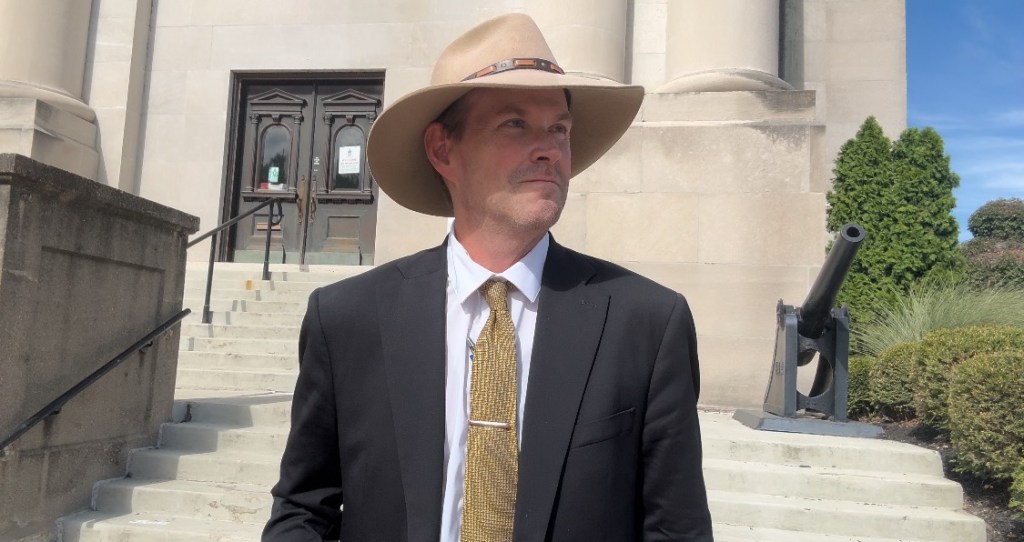
Remember, I told you this was going to happen, and now it is. However, with the July 14th ruling by the Supreme Court in a 6-3 decision, the court granted the Trump administration’s request to temporarily pause a federal judge’s order that required the Department of Education to reinstate nearly 1,400 employees fired as part of a reduction-in-force. The majority ruling lifted the injunction issued by U.S. District Judge Myong Joun in Massachusetts, who had concluded that the administration’s actions aimed to dismantle the department without congressional approval and couldn’t be done. A lot was happening with this ruling, which is why I am so proud of the tie clip I always wear that people comment on so much. I got it at the Supreme Court when I visited there in March, ahead of all these significant rulings. Regional district judges were not going to be able to stop the Trump administration, and the mass layoffs that would dismantle the Department of Education were going to happen, sending the management of education back to the states, where, in Ohio, we know what that means with the incoming new governor, Vivek Ramaswamy. Many education-oriented individuals point to a decision like this and argue that we are becoming a country not committed to education. However, it’s the exact opposite; we need to get the administrative types out of the way so that positive reform in education can happen. This is why a Governor like Ramaswamy in Ohio is so important, as he has many fresh ideas that would improve education. And getting the Department of Education types out of the way makes all that possible. There is a lot to be happy about, but it’s hardly a surprise. I’ve been warning about it for years, and as of 2025, everything is right on schedule.
I would also add on July 21st 2025 in the state of Ohio the Ohio House voted 61-28 to override Governor DeWine’s vetos on property tax measures in the 2026-2027 budgets, specifically Item 66 which eliminates the authority for political subdivisions to levy replacement property tax levies and restricts school districts levying certain types of levies such as fixed-sum emergency, substitute emergency, and combined school district income tax and fixed-sum property tax levies. That measure is now headed to the Senate, where I fully expect it to pass, and change the way the state sees property tax in general—another benefit of the upcoming Vivek Ramaswamy administration. Property tax is no longer the crutch for big government that it has been. Trump’s administration is headed in a similar direction, viewing property as something precious and not forcing owners to become perpetual renters of their property through excessive taxation. DeWine was concerned about the budget submission, specifically how property taxes are used to fund schools. What all this means is that public school districts are going to face numerous changes, including how they collect taxes to fund union-run public schools. It’s not just the elimination of the centralized Department of Education that is coming to them, but also in how they collect funds from local property taxes to run their progressive endeavors. What is happening here is that education is being redefined into a marketplace value as opposed to what it has been, which has been a kind of Brave New World socialist indoctrination center that seeks to produce more Democrats as voters. Many people believe that the previous rules have been fueling our nation’s destruction. And across many changes, that perception is headed in a different direction.
When the Department of Education was created in 1979, it proposed using the power of the central government to protect union employees from the scrutiny of judgment while teaching children the same socialist values. Such as taking the category of History in school and changing it to “Social Studies.” And during this period, kids were being taught not that the creation of America was a great thing, but that it was built on the backs of enslaved people, corrupting thousands of children in the process through central government oversight, taking away from the states the ability to compete with other states for a better education system. Because essentially, everyone was being taught the same flawed information. Now, the priorities for education will be decided at the state level. School Choice will become much more common, as it was well represented in Trump’s recent Big Beautiful Bill, meaning that we are moving toward a society where tax money will follow the student, not the zip code. And that’s why this veto override in Ohio was so important, because it initiates a process of shifting away from property taxes funding all this centralized government and its growing expansion, to the point where people can no longer afford to own their property. The public schools have, for years, not had to manage their finances well, which the teachers’ unions have been delighted with. However, it has driven the per-pupil cost of teaching children out of the realm of reality and is too high. This makes it impossible for the state to determine how to fund education for students, as the costs are so high and dependent on property taxes to cover the state’s funding gaps. To achieve a truly competitive cost structure, the Department of Education must relinquish its power and be decentralized.
What that means for public schools like Lakota, which I discuss frequently because they are in the district where I live, is that they will have to rethink everything they do. And they will have to compete with other schools in the immediate area for the right to teach a student. This year, in 2025, they have some costly levy requests that add up to half a billion dollars for infrastructure, the building of new schools after tearing down some of the old ones. And for what, for teaching jobs that are changing dramatically and are being pushed by A.I. for ability. When states like Ohio apply funding to students, rather than to the zip code institution, the fat cow that government schools have been living on will be gone. And they are going to have to earn their dollars, which they are not used to. This union-dominated structure was always poised to fail. You can see it when you visit the White House; all the big unions are in the buildings just outside the front gates. Government unions view the collection of taxes from an ever-growing government as the foundation of their existence, which means low performance standards for all involved. However, we don’t like what these government schools have been producing, and we have been intent on changing it for the better. And that starts with mass firings at the Department of Education by the Trump administration. And for all the government school administrators who are tempted to cry foul, I warned you, and you should have listened. They were mad that I said such things, and now they are going to find themselves extinct. And the fault for that will be theirs, because they were told what was going to happen and did not prepare for it. Reforms to education are necessary because what we have had has been inadequate and expensive. And at every level, from funding to curriculum, significant changes are coming. And schools will have to adapt, or fail to exist at all.
I told everyone well in advance how this one was going to go down. And I knew it especially after recently visiting the Supreme Court shortly after Trump re-entered the White House for his second term. Trump has mighty executive powers that low-level regional judges cannot stop. It was a ridiculous suggestion by the legal community even to entertain such a notion. However, on June 27, 2025, the Supreme Court voted in a 6-3 decision that federal district court judges could not issue nationwide injunctions against the Executive Branch. Judicial activism by left-wing judges was not equal to that of the elected President of the United States, as they had attempted to establish. Good on Amy Coney Barrett for writing a majority opinion that argued against the statutory authority of federal courts. This means that the ruling allows Trump’s executive orders to take effect immediately, forcing opponents to pursue narrower legal challenges, such as in the case of birthright citizenship. With this ruling, judicial overreach will be reduced, executive orders will be implemented more efficiently, case-by-case challenges will be utilized, not allowing a single injunction from a judge to halt an executive order, statutory limits will be clarified, and a cap will be placed on the politicization of the process. When a president is elected correctly to do the work of the people who voted for them, radical judges can’t be allowed to slow walk the executive order process to frustrate the results during a short four-year term, which has been the strategy of leftists trying to exploit the system for years. For a long time, district judges held the illusion that they had more constitutional authority than they actually had, and the Bar Association reinforced that illusion destructively. Until Trump’s first and second terms, these ideas weren’t tested because most presidents didn’t drift too far outside of their consultant circles. However, with this ruling, things have changed significantly for the better.
This will allow Trump to resume the needed deportations of around 1 million illegals per year, and the targeted number of 10-15 million over his current term. The illegal immigration push by the Open Border people, around the world who are wrapped up in all kinds of Marxist schemes fully intended a flood of illegals to permanently change the nature of what America is by overwhelming the system with a Cloward and Piven strategy. And by keeping them in that illegal status, they could harvest them for illicit votes, and act as a menace to the communities they live in, bringing with them a desperate lawlessness that degrades wherever they settle. Of course, the proper way to enter the country and benefit from its values is to become a citizen and undergo the process of doing so. The flood of immigration that we experienced under the Biden years was nothing short of an invasion meant to topple the election system before the next cycle, where people would find out what exactly happened in the 2020 election. There weren’t enough people in the country at the time to vote for all those Democrats. And by 2024, they hoped another 10 million illegals might give them a cover story and keep Republicans from taking power back. But it didn’t work, and when Trump was elected anyway, these activist judges tried to stop the deportation in hopes that they could keep those illegal numbers up until the next election cycle. But those hopes were destroyed by this Supreme Court ruling. Borders have to have value, and people need to respect them because an open-border world allows low-value individuals to mix with high-value individuals to the detriment of everyone. Mexico’s anger at the Trump administration tells the whole story of how they purposely intended to export their broken people into America to rot it from the inside out.
And that is the purpose of a border, a country is just a set of ideas. When good ideas are protected from bad ideas, with border security, then the preservation of value can occur. And that is what was under attack, and unfortunately, many of the Bar Association types working in America sought to advance this desecration for their profit. Mexico has some fascinating history, but it’s a perilous country. Try driving to Mexico City from the American border in an American car and not get pulled over for a shake down. And that is the best of it, the cartels openly harass anybody whenever they want. The cartels run the Mexican government, and they had in mind to do the same thing in America. Of course, there are many people who want to escape those conditions, and we feel sorry for them. But when their mess is allowed to make a mess of America, then everyone suffers from the lowered standards, and we can’t allow that to happen. So to protect our American values, we have to deport people who come into the country illegally, until they swear an oath to live by and defend the values of America. That process is essential and is commonly understood around the world. The preservation of successful cultures is an inspiration that the world needs to strive for a better future. The leftist position politically is to avoid judgments and to mix all values so they can rule over the mess they made. And that has been at the heart of all the legal challenges to Trump’s executive orders during this second term.
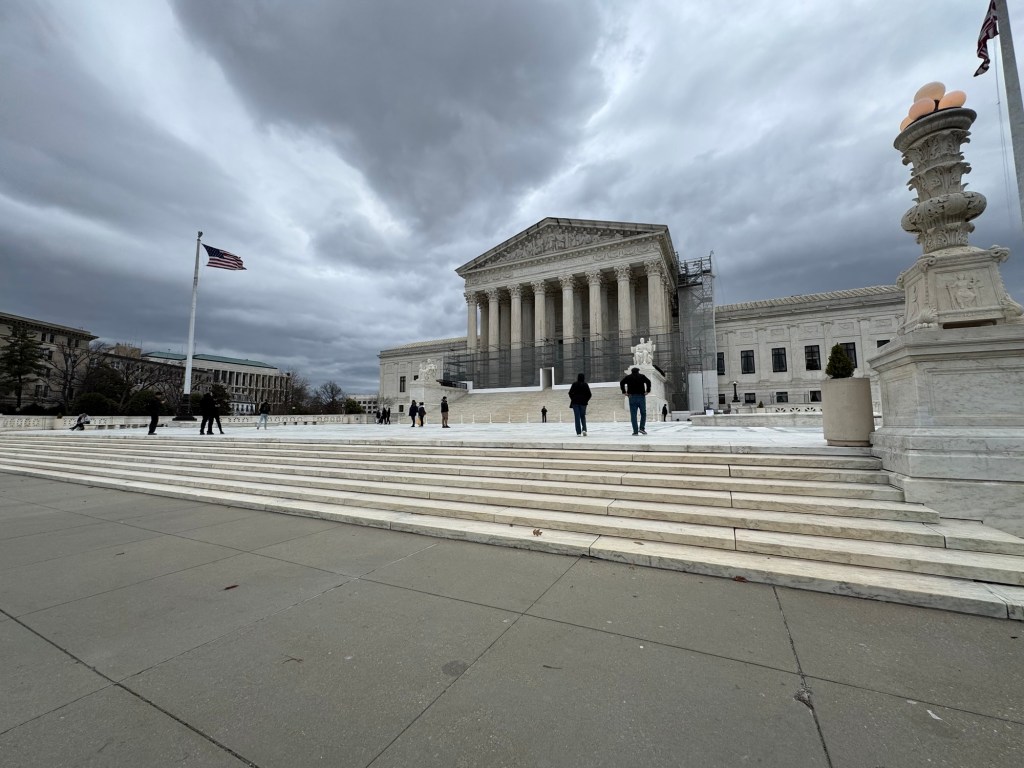
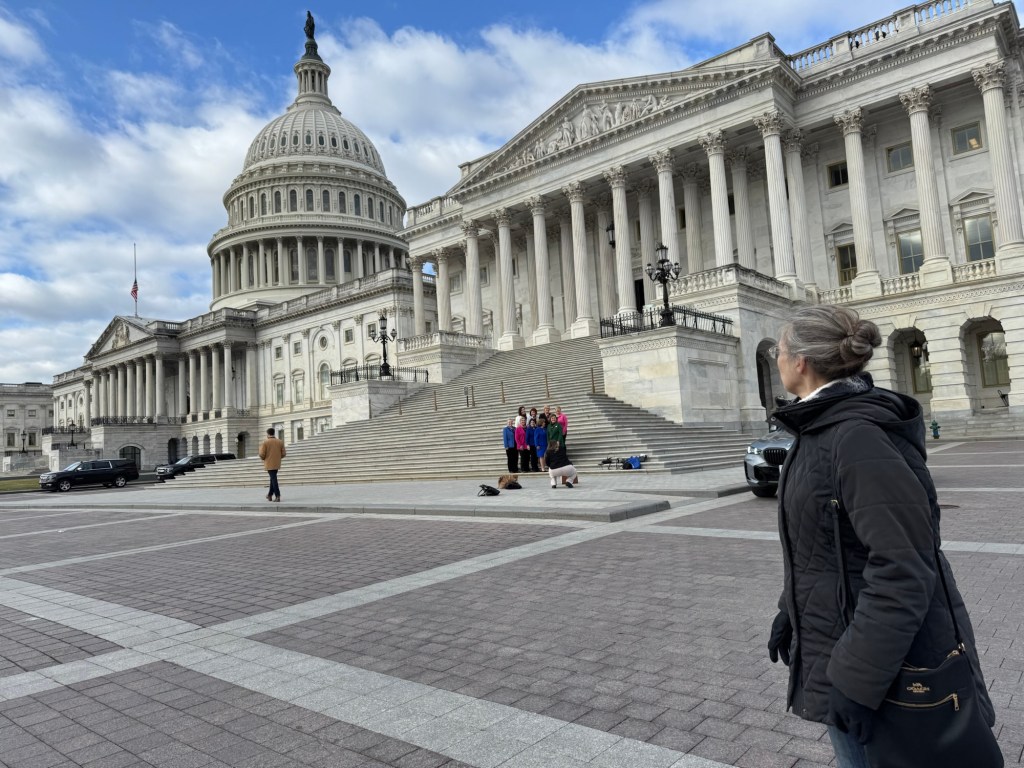
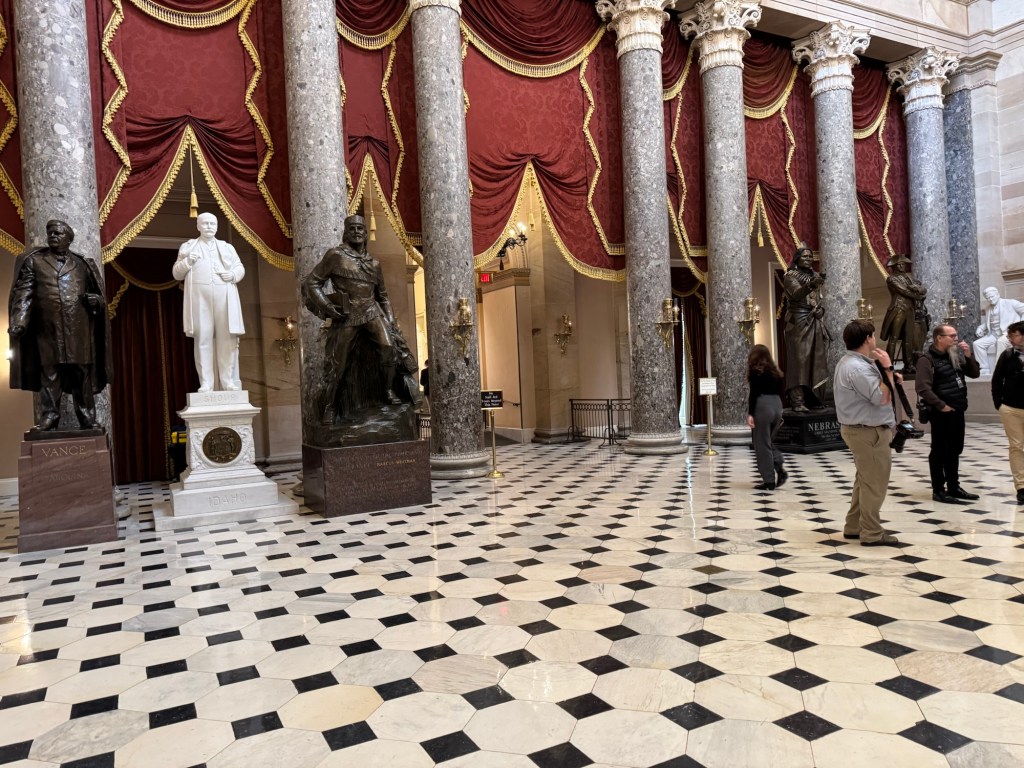
I’ll repeat it, I love the Supreme Court. When people ask me about the tie clip I always wear these days, I got it from the Supreme Court. I love that in American society, on Capitol Hill, we have one of the most intellectual commitments to law and order in the world, with the Supreme Court, the Library of Congress, and the Capitol Building all situated in the same square mile of influence in Washington, D.C. The rulings don’t always go the way we want them to, but the process, I think, is one of the most wonderful things in the world. I was able to spend time in the chamber and see the world through the eyes of the Supreme Court members, and I think it is an excellent example for the world to follow. If you want to be a better country, learn from the United States how to do it. And instead of trying to flood America with illegal immigration, learn to make whatever country of origin people are fleeing from more like America. And people would be much happier in the world. By enforcing a border of values, it prompts other countries to reflect on why they are so terrible that people are always wanting to leave. You don’t see that same problem in America, where people are flooding our borders to get out. Everyone in the world is trying to get in, and that is for a good reason. So, no more. The Supreme Court did what it was supposed to do: protect value through law and order. The opponents want to destroy America with chaos and lawlessness. And because that temptation is always in the human mind, we need a good Supreme Court. And thank goodness we have one.
Jim Comey knew what he was doing when playing with seashells on a beach and took a picture of an arrangement he made for his Instagram account. That he denied he didn’t know what “8647” meant shows now, in hindsight, what a pervasive liar he has been on everything. This is something that Democrats have been doing for a while to send a signal out to their deranged base of lunatics to do something stupid with a dog whistle meant for them. Jim Comey was calling for the removal, by the understood means of assassination, by using the number “86” and putting it on his social media to connect with people who would do just that. And by itself, it’s a serious matter. But Jim Comey is on the outside now because he actively tried to remove Trump himself with all kinds of illegal activity, making up dossiers and passing them off as fact, faking FISA warrants, lying to congress, lying to the President and voters, Jim Comey, as I told CNN long ago, was a no good loser who was corrupt and took the FBI down a dark path for which it will never recover. And given his history, and the known assassinations that were already attempted against Trump, the context of this recent case of Comey getting caught doing it is unforgivable, and he should be in jail for his misdeed. It doesn’t matter that the FBI interviewed him and his intentions. Comey is a known, professional liar, and he knowingly put up a mark on his social media account as the former Director of the FBI, and the consequences for that action should be jail time at a minimum. His intent is well chronicled and can be supported in a court of law beyond a reasonable doubt.
But there is a bigger problem looming in the background, and this is about the Supreme Court ruling against Trump’s Article II powers to deport criminal thugs and cartel members operating in the United States. On the same day we learned about Comey’s activism, we also learned that the Supreme Court, including all of Trump’s picks, went against him on deporting the illegal alien gang members, that have been hotly debated. Seeing the Supreme Court punt with a 7-2 decision surprised everyone. Well, I’m not surprised. I was just at the Supreme Court recently, and know the vibe there firsthand. There is a lot of pressure on them to distance themselves from the Trump administration because, after all, the polite society types know that Trump is temporary, and judges tend to wait for a lifetime appointment. They will be around long after Trump is gone, so the assumption goes, and what the Supreme Court doesn’t want are people like James Comey, who are all over the intelligence community, putting out “86” hits on them to be performed by some crazy hitman lunatic driving by on a scooter outside their home and erasing them from existence while they are getting their mail. Because that’s what’s bad about this hit request from Comey, is that he knows as an insider, that baked into his actions is an unprovably assumption about an underbelly of criminal conduct that works continuously in the background and turns the timid types, like judges on the Supreme Court into cowards worried about their future as the system itself will dispose of them at their first chance. In this way, Comey commanded from his former title, showing that he’s like a mob boss still calling the shots from jail. Members of the Supreme Court are afraid of these people for good reasons.
Obama was the autopen
Trump’s picks are going out of their way to show they are independent of the President because the pressure on them is intense. And when Comey put that message on his Instagram account, he didn’t mean it for Trump. He meant it for the people who work for Trump and around him, as a rallying cry to resist him. He will be gone and won’t be able to protect them at some point. So they better get with the program. We’ve seen Chuck Schumer beg a mob of malcontents to attack members of the Supreme Court for their previous rulings, and we’ve seen other assassination attempts against Trump where the FBI practically left the door open for the killers to kill. This isn’t an accident; it’s a method of behavior that Democrats are counting on. And they are bold about it. And based on Comey’s past behavior, we were aware that he openly worked against the taxpayer selection of a representative in the White House; there is no way to deny what Comey was up to. He and “they,” the Democrat mob who have found themselves out of power, are showing emotional leverage of the Supreme Court through well-planted acts of potential violence to steer them away from hard rulings and to punt this deportation case back down to the 5th circuit to stall Trump’s efforts, which won’t work in the end. There are other ways to skin this cat. However, the Supreme Court invalidated itself in the process because of the apparent threats from the hard left, of which Comey is a part. There are a lot of his type in the law and order community at all levels, and they are arrogant because they think the rest of everybody is too stupid to know what they are up to. Well, people see it, and they know what was going on in this case, and nobody believes what he’s saying. It was this same Comey FBI that hid the Anthony Weiner laptop, whose wife is the new woman for little Alex Soros, and the Hunter Biden laptop, which showed all kinds of legal infractions. And did not move to put Hillary Clinton in jail for her email scandal, but instead ran cover for her, because they were trying to keep Trump out of office.
When you have people like Comey in the intelligence agencies, even when Trump has picked better people to run the Department of Justice now than we had, you still have these people on the payroll, and they are just holding their nose and waiting for Trump to be out of office once more. And messages like Comey’s seashells are obvious intimidation tactics to show the masses that the mob is really in charge, and even members of the former administrations are always just a call away. That insurrection through mob rule still dominates this material world. Isn’t that the message of Hiram Abiff? What say you, Master Masons? The mob kills, and we must surrender this world and keep our eyes on the next. So that cowards can justify turning their cheek away from evil and not face it, even when it presents itself on a beach by the former Director of the FBI. And when caught, he lied and said it didn’t mean what we all know it meant. Jim Comey is a dirty cop who wants crime to exist so that Democrats can stay in power. And they want to tie up the Supreme Court so that violence can overthrow the order of a Trump administration before it can do all the great things promised during the 2024 campaign. These are not lovers of America; they want to overthrow it, and their best weapon of choice is to inspire derelicts to action, which was what Jim Comey intended. He needs to be put in jail and made an example of.
I was having a nice lunch in the cafeteria of the Supreme Court recently, and I had a lot of books spread out across the table when some of the workers there took an interest in me, as I had been there for a while. They were cleaning up around my table and were interested in what I was doing. The U.S. Supreme Court is a brilliant institution, and an isolated one, considering its location in the heart of one of the world’s most important cities. However, the Supreme Court is designed to give the people within that building a sense of intellectual remoteness intentionally. And I enjoyed it. However, what I was doing was something that, even then, was unique in the employee’s observation. I was working on several tables and had multiple books open, reading a wide range of material simultaneously. So, they struck up a conversation, curious about my work there. I hesitated, because talking to people usually takes time, and I often don’t have much time for small talk and gossip. However, I had been wondering about something, so this was a good opportunity to ask about it. So, I asked them how often the Supreme Court Justices came down to the cafeteria to eat, since their offices were right around the corner and down the hall. The employees giggled and replied that they hardly ever saw the Supreme Court members, that the most common thing was to send their aides down to get lunch so they could eat it back at their desks. And I get that if you are very busy, like I was, and didn’t want to get too wrapped up in useless conversation. However, for the Supreme Court to remain relevant and in touch, it owes it to itself to stay somewhat informed about the rest of the world. And given some of the obvious strategies of lawfare that we have seen and continue to see regarding these radical left-wing district judges, who make decisions that are often questionable, I couldn’t help but conclude that the Supreme Court Justices should be getting their lunch at the cafeteria.
I get it, but you must understand that the domestic enemies of this nation have been using our system against us, and that Trump is a unique moment in history to correct the situation, which should have never been allowed to get so far out of control. The checks and balances of the three branches of government are part of the process of putting the brakes on an overactive Executive Branch or a legislature that allows power to go to its head. We count on the courts to put the brakes on such wild temperaments. We don’t want a king in the Executive Branch, typically. However, we also don’t like the government to be caught in needless red tape either. I think enough of the Supreme Court gets the philosophy of the problem, and it was good for me to be at the Supreme Court for such an extended period to think about these problems in the scope for which they are presented. Neil Gorsuch certainly understands the situation, as does Clarence Thomas. But I think Amy Coney Barrett and John Roberts are stuck on the brakes function of the Supreme Court when the real solution is speed and support. I can see how easy it would be to get lost on that idea once you put on the black robes and isolate yourself from the outside world a bit. And that’s where I think Roberts and Barrett are on the issue of judicial activism from the District Court system, and they need to give themselves some context to the heart of the problem.
A lot of people didn’t realize that Marxism was so much in their lives, and we have not talked about the role that communism has played in our American politics, really, since the McCarthy hearings. We wanted to pat ourselves on the back and say that Reagan defeated communism and call it a day. However, the truth is that the works of Karl Marx have infiltrated nearly all our institutions to undermine and ultimately overthrow them. In this specific situation with the courts, we saw plenty of evidence to determine that the Bar Association itself is a functionary of Marxism in our culture that has been highly corrosive. Now that we acknowledge and accept this, we need to take prompt action to resolve the matter. District judges do not have the authority to intrude on a President’s Executive Powers under Article II. We elected Trump to make decisive decisions and to use his Executive authority to save America from the many parasites who have been acting as clear domestic enemies both in law and finance. And part of their strategy is to run out the clock on temperament by stalling executive authority in the courts, where Justices like John Roberts get bogged down in the procedural aspects of court processing rather than focusing on the necessity for expediency. And that comes with the place itself, the Supreme Court. The building makes it a point to say to the world, ‘ Take a pause and consider things deeply. ‘ Which I love. However, the strategy implemented against us is to conceal malice behind such a lofty concept, employing a Cloward and Piven strategy of overwhelming and collapsing.
It would be all too easy for a Supreme Court Justice to go from their house to their office to the Supreme Court without talking to too many people. They have private parking, and underground tunnels so they don’t have to go outside to move around and be molested by a sometimes-angry public, and they don’t even have to leave the building to get food. They have pretty good food at the Supreme Court cafeteria. Once they get into their offices, it would be very easy to send their aids down to get them lunch, and never to leave, getting lost in their books and thinking about the foundations of the rule of law and to be more concerned with judicial precedent, rather than the content of the decisions, such as district judge James Boasberg has been doing testing the waters to see if he can put checks on the power of an elected president. From their perspective, it’s worth a shot, for radical leftists hell bent on Marxist ideology, which that judge is, it’s all they can do, so they are going to try. Such an idea forces the Justices to remind themselves that the court’s purpose is not to engage in participation and compromise with other members. It’s to be correct, and to stand by Constitutional law. And you don’t compromise with the wrong political philosophy just so you don’t hurt the feelings of your friends on the court, who you bond with and want to be empathetic to, like Ketanji Jackson and Sonia Sotomayor, or Elena Kagan. The goal of the court is not to accommodate all viewpoints; it’s to be correct in its judgments, which was my answer to the cafeteria workers when they asked about my books. You want to know the correct answer and to arrive at it in the arena of debate, for which the consideration exposes itself, which was why I was there. The correct answer is that Trump has Article II rights, which lower courts do not have the authority to overrule. Voters are the checks on power. If people don’t like Executive overreach, they can vote those presidents out of office at the next election. However, because the Supreme Court did not apply the same standard of judicial restraint to Obama, Clinton, and Biden, we now have a mess that needs to be rectified. And now is not the time to get philosophical about checks on power. Instead, now would be a good time to visit the cafeteria and let the Justices get their own food for a change, ensuring they don’t lose touch with reality and engage with the people the Constitution protects. And I think things will become a lot clearer for them.
For the first time in my life, I was ready to give Washington D.C. a fair shake, only because Trump was in the White House, and Republicans now controlled the House and the Senate, and the Supreme court has a general 6 to 3 majority toward the thinking I think is necessary in our American Republic. And I would say at no point before this precise moment would I say otherwise, because there has always been something wrong with our system of government which I affiliate with George Washington himself and his attachment to the Bible’s Book of Judges and the character of Gideon. With those political conditions fulfilled, I wanted to return to Washington with a fresh perspective and allow myself to see it the way it was designed to be, not to the level that humans failed to live up to the lofty expectations that established the capital of America to begin with. We typically view these kinds of things by how people fall short of the goals to achieve high honor. But looking at Washington D.C. from the perspective of centuries, not days, weeks, months, or decades, I saw something coming together with Trump that I think our young nation was designed from the beginning to achieve, and now we have arrived at that moment. So, with that in mind, my wife and I allowed ourselves to see Washington from a scholarly perspective and to love it. To come to terms with it. And to help lead it to this next phase of America’s fascinating story and in what I would say was the purpose all along, to restore to humanity the intention established in the Book of Judges to create the kind of government God wanted for the world, from the beginning.
So before my wife and I could do what we intended to do, which was go and spend a few days specifically on Capitol Hill in the legislative corridors itself, then the Library of Congress, as well as a whole day at the Supreme Court, I needed a few days at the Museum of the Bible, and a day a George Washington’s home of Mt. Vernon. We spent significant time on the Mall just reading and thinking and getting away from the noise of the current world and dug deep into the Masonic references that were all over the layout of the city that Pierre L’Enfant had intended with all of George Washington’s Master Mason friends from Alexandria just to the south. To step beyond the conspiracies that have not understood the purpose from the very beginning, which had come into fulfilment through a lot of blood and sacrifice, to what kind of government we now had, with Elon Musk and President Trump up Pennsylvania Avenue at the White House, past Ford’s theater where Lincoln was shot, past the Trump hotel that has the steeple of the Old Post Office that points to celestial references on August 12th from the vantage point of the Capitol steps, to the truth of the matter. And I mention those names, President Trump, and Elon Musk who are new best friends in all sincerity, only America could have produced people like that to do what they are doing now. To see it, I needed to dive deep into Washington D. C’s history, to walk and touch things myself. Over a couple days I bought 56 new books and read most of them by the middle of the following week in a fury because I was looking for an answer and upon visiting Capitol Hill with a fresh perspective and the context of 5000 years of human history, I felt I understood it in the way it was always intended. And I can honestly say that I love the place for all its lofty ambitions.
I was standing outside Speaker Johnson’s office with Steve Scalise when they recessed due to the disruptions in the Well during the censor of Al Green, for the mess he and other Democrats made of themselves during Trump’s State of the Union speech just a few days prior. And I was thinking of that even in the context of the history I referenced. The place itself, Capitol Hill, was dedicated to the best and most intelligent perspective that human beings could strive to unleash, and that was the point of the censor. It wasn’t political as much as an insistence on a specific level of sincerity as a representative republic. As I stood there, I thought of the J6 protestors overwhelming the security and what they were rightfully angry about. The place had failed to live up to the expectations of “The People,” and they were letting the political characters know that they had failed and weren’t entitled to the gifts of Capitol Hill by default. I had been to Washington D.C. on other occasions, but this was the first time with this perspective. After much research, I could honestly say that I understood it as intended. To that point, I had never been to the Library of Congress, even though I’ve had a lot of interactions with it over the years. I was impressed with the Capitol building, but I was astonished at the beauty and splendor of the Library of Congress once we took the tunnel from the Capitol cafeteria after eating some lunch down there with many recognizable characters that are on television all the time, and emerging directly into the basement of the Library of Congress. My first thought was that this was a place intended to be Heaven on Earth, which is what my idea of Heaven would be. The foyer was laced with gold and high ceilings of white marble, which was a purposeful statement about lofty American ambitions. Why isn’t this place promoted more to the outside world? It was every bit as impressive as anything they have in Europe. I would have to say that the Library of Congress is my favorite place on Earth because I love books so much. It is such a collection of intelligence placed into the context of Heavenly ambitions that seeing it in person, then going into the reading room, was as good as Heaven. I could spend an eternity there and never get tired of it.
From there, my wife and I spent the day at the Supreme Court, next door. I asked a lot of questions, so many that we were able to get into places that visitors aren’t typically allowed to go, and of course one of those places was the courtroom itself. But I wanted to see the world the way members of the Supreme Court did. Thinking of the Bible and the laws that successfully made their way into the creation of all Western Civilization, and were the foundations of the American Constitution, here was a place in the Supreme Court that was trying to do what the Israelites couldn’t in the Book of Judges, and that is have a prosperous self-governed society without screaming for a king to rule over them. We sat on the Supreme Court’s steps after much reflection and looked over at the Library of Congress, then the Capitol building right in front of us. I was thinking of Steve Bannon doing his famous podcast behind me over on A Street and all the intelligence happening on that little hill in Washington D.C., and it was the most intelligent place on Earth. Many people don’t live up to that expectation, but the place was built to evoke in people the best they could utter. From my perspective, I could see that it was working, and working better than any place in the world. And finally, after many years of striving, it is evident that the American experiment in republic government, meant to correct humanity where they had failed in the Book of Judges, was succeeding in ways that were always intended. But that it had taken a few hundred years to come into bloom. And it was wonderful to see.