‘Taxes Have Consequences’: The path forward in Ohio regarding property tax destruction

I’ve been thinking a lot about the upcoming 2026 Ohio gubernatorial race, and there are always a certain number of suckers who are going to fall for the polished narratives coming from the other side. They won’t remember yesterday, let alone six years ago, when the lockdowns crushed Ohio’s economy in ways we’re still feeling today. Amy Acton, the former health director who became the face of those restrictive policies during the COVID era, is running for governor as a Democrat. She’s going to go out there and talk nice, sounding reasonable and compassionate, and a chunk of voters—especially those who don’t follow politics closely or have short memories—are going to buy it. That’s the danger. The meat and potatoes of any campaign are the economy, taxes, jobs, and everyday affordability, but the left has its playbook: when policies fail, they pivot to personal attacks, calling opponents Nazis or extremists because they have little else substantive to offer. Timing matters too. Vivek Ramaswamy is a wealthy, successful entrepreneur with a background in business and biotech that many admire, but some voters struggle to relate to that level of achievement. Others might get bored during the long campaign stretch from now in April 2026 through the November election. Months of stops repeating the same policy points can wear thin without something to keep people engaged.

That’s where I see a real opportunity for Vivek to stand out. Republicans have historically been uncomfortable with topics outside strict policy—paranormal stuff, cryptozoology, disclosure on unexplained phenomena. By default, those areas get ceded to liberals who love to explore the mysterious. But Trump showed how to fluff up speeches with entertaining content: the snake metaphor, stories about men’s and women’s sports, even dancing to YMCA to get the crowd laughing and connected. There’s plenty in Ohio to do the same. We’ve had a surge of Bigfoot sightings recently, especially in the northeast around Youngstown, Portage County, and areas between Akron and there. People are reporting large, hairy figures—eight to ten feet tall—moving through the woods, accompanied by grunts, musty odors, footprints, and even pets shaking in fear. It started clustering in early March 2026, with multiple reports in just a few days near Mantua Center and Garrettsville. These aren’t fringe stories; they’ve made local news, gone viral on social media, and drawn attention from Bigfoot enthusiasts across the state. Ohio already has a reputation for this kind of activity—Hocking Hills calls itself the Bigfoot capital with festivals, and the state ranks high in sightings historically. Vivek should talk to the people who experienced these encounters. Listen to their stories without mocking them. It would make fantastic clips for TikTok and YouTube—human, relatable, showing a candidate who engages real Ohioans on what’s on their minds, even the unusual. You don’t have to believe in Bigfoot to show attention to folks who feel traumatized or excited by what they saw. Those rural and small-town areas near Youngstown include voters who might otherwise lean toward Acton’s camp. Meeting them where they are and hearing them out could freshly capture the narrative and beat Democrats to the punch on engaging the paranormal, just as JD Vance or others could on UFO disclosure. Spielberg-style wonder isn’t owned by one side; Republicans should run with it and make it part of showing government can connect with everyday wonder and curiosity again.

The serious policy side can’t be ignored, of course. Property taxes have become a flashpoint in Ohio, and Vivek has talked about rollbacks or even bolder moves toward zero income taxes. Some critics accuse him of flip-flopping or softening his stance, but that’s not accurate from what I’ve seen and heard. He’s building support with legislators who understand the real-world constraints. My good friend Senator George Lang, the majority whip at the Ohio Statehouse, handed me a powerful book that puts all this in perspective: Taxes Have Consequences: An Income Tax History of the United States by Arthur B. Laffer, Brian Domitrovic, and Jeanne Cairns Sinquefield, with a foreword by Donald Trump. It’s essentially a roadmap for the tax policies we need moving forward, especially as we navigate the next few years under a Trump-influenced administration where Vivek could play a key role in Ohio. The book traces the devastating experiment of the federal income tax since the 16th Amendment in 1913. What started as a small levy on the wealthy quickly became a tool for social engineering and revenue extraction with Marxist and socialist fingerprints all over it. High tax rates have repeatedly stifled growth, innovation, and prosperity, while cuts—like those under Kennedy, Reagan, and Trump—unleashed economic booms that lifted average incomes and helped lower earners the most. The Laffer Curve, which Art Laffer famously illustrated, shows that beyond a certain point, higher rates actually reduce revenue because they discourage work, investment, and risk-taking. The book details how the top marginal rate has dictated America’s economic fate for over a century: sky-high rates in the 1930s contributed to the prolongation of the Great Depression, while post-war cuts and the 1980s reforms correlated with surges in GDP, jobs, and opportunity.

Trump’s foreword ties it directly to his own policies, emphasizing how lowering rates and simplifying the code boosted the economy before external shocks hit. This isn’t abstract theory—it’s history with data. The authors show how taxes harm not just the economy but the social atmosphere: they distort behavior, punish success, and create dependency. For Christians or anyone with a moral framework, it’s a reminder that stewardship and honest labor thrive under systems that reward productivity rather than penalize it. Ohio sits right in the thick of similar challenges at the state and local levels with property taxes. People are fed up. They’ve watched home values compound for decades through a kind of pyramid scheme fueled by easy money, Federal Reserve policies since 1913, and development that turned farmland into subdivisions. Twenty years ago, a house might sell for $100,000; through repeated appreciation—$150k, $200k, $300k or more—owners felt wealthy on paper. They passed school, fire, and police levies, and senior services, without much pain because equity gains masked the bite. But that runway has ended. Homes built with cheaper materials and packed closer together have topped out in what buyers are willing to pay, especially with dual-income families stretched thin by inflation that has eroded the dollar’s value. Young people look at half-million-dollar mortgages and say, “No thanks.” They’re opting out—less drinking, less reckless behavior, rejecting the lifestyles they saw drain their parents. Beer sales are down among the young; the new rebellion is living cleaner, smaller, and smarter.

The result is a brick wall. Property tax revenue, which funds over 60% of local school budgets in Ohio (billions annually), faces revolt. Voters reject new levies because they can’t afford the inflated bills anymore. Developers and builders know the game: buy cheap farmland, subdivide, sell high, watch values rise on cheap credit and inflation. But when appreciation stalls and inflation erodes real wages, the tax burden feels like robbery without corresponding services. Schools built assumptions around perpetual growth that never materialized in the long term. Fire departments, roads, and senior programs—all tied to this model—are vulnerable if the faucet turns off abruptly. That’s why a sudden, total rollback or constitutional abolition of property taxes sounds appealing to the 7-8% who want to burn it all down, but it’s not practical for winning elections or governing. A full cutoff would cause chaos: mass layoffs in education, larger classes, program cuts, potential school closures in some districts, and pressure to spike income or sales taxes elsewhere to backfill—sometimes dramatically. Legislators know this. Republicans in the House and Senate, including those Vivek would work with, recognize you can’t just flip a switch without grinding infrastructure to a halt. The state isn’t ready for an all-out divorce from local funding mechanisms that maintain roads, schools, and services.

Instead, the smart path is a deliberate wind-down: roll back rates gradually, reform assessment practices, cap growth tied to inflation rather than unchecked reappraisals, diversify with income taxes or other sources where feasible, and pair it with broader economic growth that puts more money in people’s pockets. Vivek’s background in wealth management and business creation, along with a high-level understanding of capital flows, uniquely equips him for this. He gets how taxes have consequences—not just revenue numbers but behavioral shifts, investment decisions, and social health. Critics framing his Indian immigrant parents as somehow disqualifying are drifting into nonsense that has no place in conservatism. That racial or ethnic attack echoes left-wing identity politics or worse—Hitler’s socialist Nazi tactics of division, not American conservatism rooted in individual merit, opportunity, and e pluribus unum. Nick Fuentes-style shock jockery or drifting toward Tucker Carlson’s more isolationist edges risks alienating the broader MAGA coalition that values wins over purity spirals. Real conservatism builds coalitions around shared principles: lower taxes, strong borders, economic freedom, and cultural sanity. Vivek embodies success through innovation and hard work; attacking that because of heritage is lunacy and plays into the left’s divide-and-conquer game. He’s not flipping on taxes—he’s being pragmatic, courting legislators who see the addiction to government programs built up over decades. Schools, in particular, expanded on the assumption of endless property tax growth from rising values. Abrupt cuts without transition would hurt the very families we want to help.

The book Taxes Have Consequences articulates this history brilliantly. It shows how the income tax, sold as temporary and fair in 1913, ballooned into a tool that funded expansive government and distorted the economy. Periods of low rates saw flourishing: the Roaring Twenties, post-WWII boom, Reagan era, and Trump’s pre-COVID surge. High rates correlated with stagnation or decline. Socially, it fostered resentment, underground economies, and a pyramid-like reliance on growth that eventually hits limits—just like Ohio’s property tax model. Inflation from fiat money printing since the Fed’s creation compounds it, making each dollar buy less while nominal home values create illusory wealth that taxes then erode. To fix it long-term, we need more than tweaks: sound money policies (gold-standard elements or currency competition), wealth creation through energy independence, fossil fuels, a manufacturing resurgence, and, yes, emerging sectors like the space economy that could infuse real value. Young people turning away from vice and toward responsibility is a positive cultural shift; they won’t sustain the old tax-and-spend model. Parents cashing out to condos leave fewer buyers for inflated homes. The market will constrain until costs come down or real incomes rise.

Vivek Ramaswamy has the best tax policy vision and rollback ability in the conversation right now because he understands these dynamics at scale. He’ll need guts, debate, and collaboration with the legislature—including voices like Senator Lang—to implement gradual relief without collapse. Sprinkling in fun engagements like visiting Bigfoot witnesses in the Youngstown area would lighten the heavy load. People are sick of government size and intrusion; they haven’t gotten value for their taxes and are ready for change. But winning popular support means meeting voters where they are—on pocketbook pain and on the human stories that make life interesting. Amy Acton will try to memory-hole her role in economic destruction and paint herself as the caring alternative, relying on short attention spans and Nazi-style smears when pressed on substance. A certain number will fall for it. But Vivek can counter by staying substantive on taxes while adding entertainment and genuine curiosity that Trump mastered. Go to those rural spots, listen to the sighting stories, and turn them into engaging content. It captures attention in a media-saturated world and shows Republicans aren’t stuffy on everything.

This race is about more than one election. It’s a microcosm of the national struggle: can we unwind the tax addiction built since 1913 without chaos, restore economic vitality, and reconnect with the American spirit that includes wonder, hard work, and skepticism of overreach? Ohio’s brick wall on property values and taxes reflects the national pyramid scheme hitting limits. Vivek, with his policy depth and ability to engage broadly, is positioned to lead that grind-it-down process—month by month, bill by bill, with the courage to debate and the wisdom to avoid abrupt pain that loses voters. Critics who want instant demolition ignore how representative government works: you persuade the majority who still want some services but resent the cost and inefficiency. The book from Laffer and team provides the intellectual ammunition, showing tax cuts as the proven path to prosperity rather than punishment.

As we head through these months of campaigning, the contrast will sharpen. Acton’s side will offer more government band-aids—tax credits, debt relief—without addressing root causes like inflation and dependency. Vivek can offer a real rollback grounded in history, paired with cultural engagement that makes politics fun again. Bigfoot might seem trivial next to billion-dollar budgets, but ignoring what captures people’s imagination cedes ground. Trump proved metaphors, stories, and showmanship win hearts while policy wins minds. Ohio has the ingredients: frustrated taxpayers tired of the endless levy cycle, a new generation rejecting decline, and pockets of genuine mystery that remind us life holds more than spreadsheets. Listening to those Bigfoot witnesses in the northeast wouldn’t cost anything but time and respect—it could humanize the campaign and pull in independents who see a candidate willing to engage their world.

Ultimately, taxes do have consequences, as the book details across a century of evidence. They shape economies, families, and societies. Ohio’s reliance on property taxes, tied to the same inflationary home-value game that national policy enabled, has reached its limit. People aren’t supporting endless spending anymore; they’re tapped out. Gradual reform, economic growth to create real wealth, and cultural reconnection are the way forward. Vivek understands this at a level that pure politicians often don’t, thanks to his private-sector success. Paired with pragmatic legislators who know you can’t flip the switch overnight without pain, he can deliver relief that sticks. The suckers who forget Acton’s past or fall for nice talk will always exist, but a campaign that mixes meat-and-potatoes tax reform with engaging, memorable moments can reach the rest. It’s going to take hard work, but it’s doable. Ohio’s best days can still lie ahead if we learn from tax history since 1913 and apply those lessons boldly but wisely.

Footnotes

1.  Details on Amy Acton’s 2026 gubernatorial campaign, including her background as Ohio’s former health director during COVID lockdowns and current platform on affordability, drawn from campaign announcements and coverage in early 2026.

2.  Reports of the March 2026 Bigfoot “flap” in northeast Ohio, with multiple sightings in Portage County near Mantua, Garrettsville, and extending toward Youngstown/Trumbull areas, including descriptions of 8-10 foot figures, footprints, and pet reactions; see local news and Bigfoot Society accounts.

3.  Vivek Ramaswamy’s positions on property tax rollbacks, zero income tax ambitions, and campaign strategy in the 2026 Ohio race, including primary dynamics and legislative pragmatism.

4.  Analysis of Ohio property tax funding for schools (over 60% of local revenue in many districts) and risks of abrupt repeal, including potential service cuts or alternative tax spikes.

5.  Historical context from Taxes Have Consequences on U.S. income tax since 1913, Laffer Curve effects, and correlations between tax rates and economic outcomes across administrations.

6.  Ohio-specific property tax reforms in 2025-2026 legislation (e.g., HB 186 capping growth) and ongoing levy struggles amid voter resistance.

Bibliography

•  Laffer, Arthur B., Brian Domitrovic, and Jeanne Cairns Sinquefield. Taxes Have Consequences: An Income Tax History of the United States. Post Hill Press, 2022. (With foreword by Donald J. Trump.)

•  Hoffman, Rich. The Gunfighter’s Guide to Business: A Skeleton Key to Western Civilization. Self-published, 2021 (expanded editions via Overmanwarrior.com).

•  Council on Foreign Relations or Tax Foundation reports on state property tax structures (general reference for the Ohio context).

•  Local coverage: Cleveland19, WKBN, New York Post, Fox News, in March 2026, Ohio Bigfoot sightings.

•  Ohio Capital Journal, Signal Ohio, Columbus Dispatch, and AP News for 2026 gubernatorial race updates on Ramaswamy, Acton, and tax issues.

•  Policy Matters Ohio and Tax Foundation analyses on property tax repeal impacts on schools and local services (2025-2026).

•  Further reading: Laffer Center materials on supply-side economics; historical works on the 16th Amendment and Federal Reserve; Bigfoot Field Researchers Organization (BFRO), Ohio reports for cryptid context.

These provide solid entry points for exploring the tax history, campaign dynamics, and cultural elements discussed. Dig in, think critically, and let’s continue pushing for better policy and engagement in Ohio and beyond.

Rich Hoffman

More about me

Click Here to Protect Yourself with Second Call Defense https://www.secondcalldefense.org/?affiliate=20707
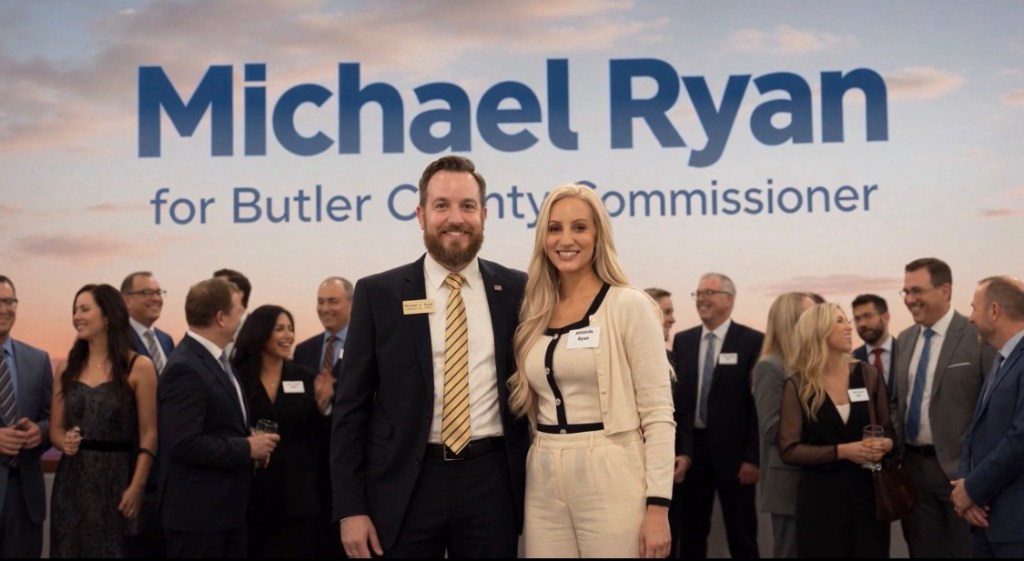
About the Author: Rich Hoffman

Rich Hoffman is an aerospace executive, political strategist, systems thinker, and independent researcher of ancient history, the paranormal, and the Dead Sea Scrolls tradition. His life in high‑stakes manufacturing, high‑level politics, and cross‑functional crisis management gives him a field‑tested understanding of power — both human and unseen.

He has advised candidates, executives, and public leaders, while conducting deep, hands‑on exploration of archaeological and supernatural hotspots across the world.

Hoffman writes with the credibility of a problem-solver, the curiosity of an archaeologist, and the courage of a frontline witness who has gone to very scary places and reported what lurked there. Hoffman has authored books including The Symposium of JusticeThe Gunfighter’s Guide to Business, and Tail of the Dragon, often exploring themes of freedom, individual will, and societal structures through a lens influenced by philosophy (e.g., Nietzschean overman concepts) and current events.
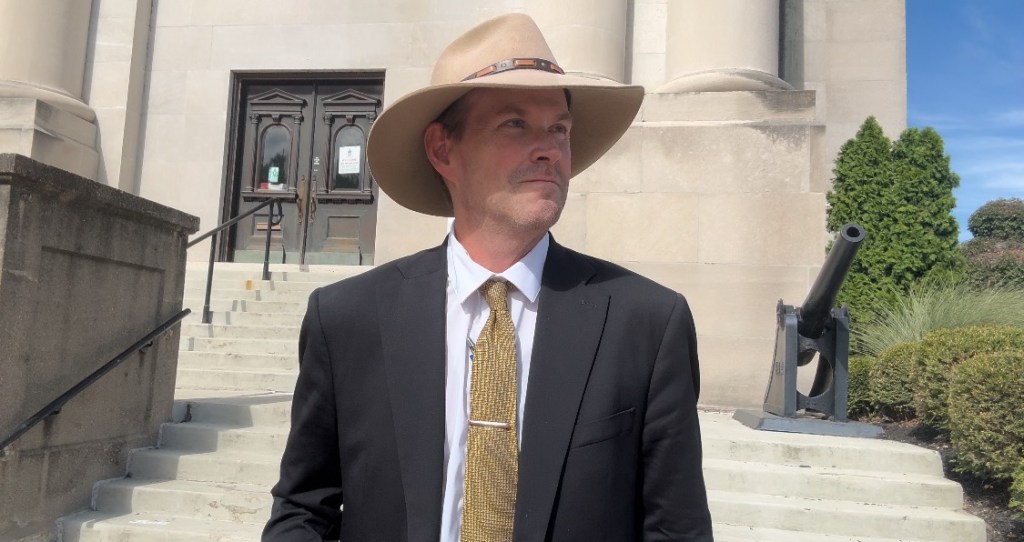
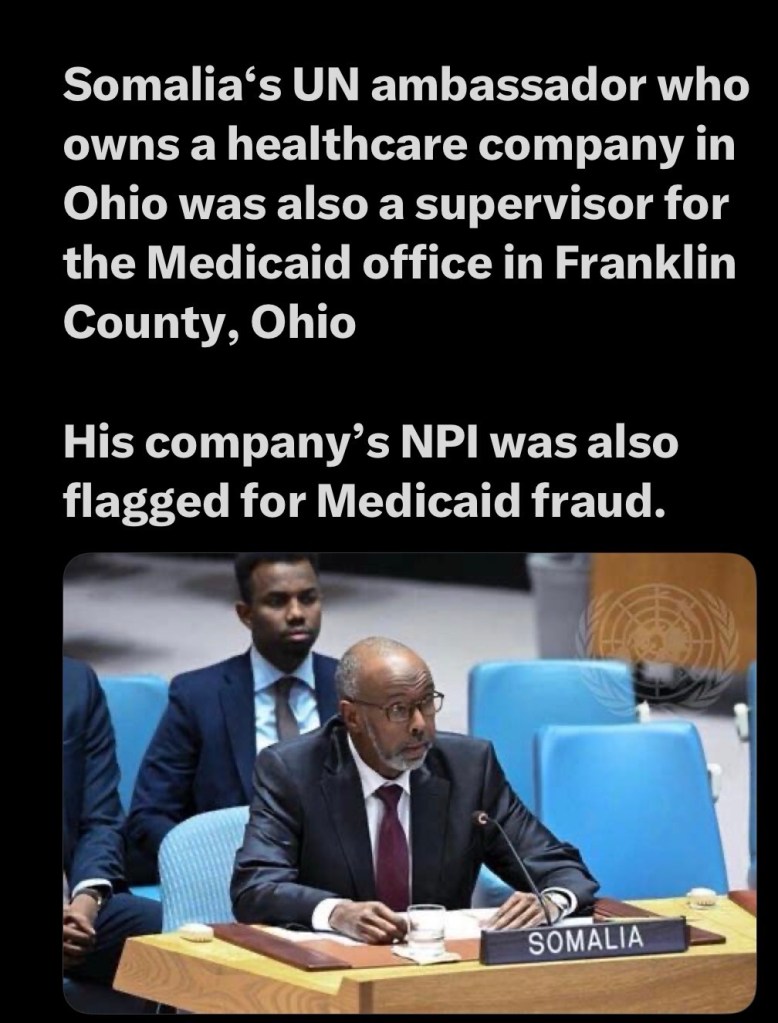
Ken Paxton is the Future in Texas: The trend is not toward a purple state

The Texas political arena finds itself in a defining moment with the Republican primary runoff for the U.S. Senate seat scheduled for May 26, 2026, pitting four-term incumbent Senator John Cornyn against Attorney General Ken Paxton. In the March 3 primary, Cornyn received 41.9 percent of the vote to Paxton’s 40.7 percent, with Houston Congressman Wesley Hunt trailing at 13.5 percent.   Neither candidate cleared the 50 percent threshold required for an outright win, setting up three months of intense intraparty debate that has become far more than a personal contest. This race, described by analysts as the most expensive Senate primary on record with over $122 million in ad spending, reflects a generational and ideological shift within the Republican Party—one that favors battle-tested reformers over entrenched establishment voices and recognizes the need for alignment with the economic and cultural realities reshaping Texas and the nation. 

Paxton’s path to this runoff underscores his resilience in the face of extraordinary pressure. As Texas Attorney General since 2015, he has pursued aggressive legal challenges to federal policies on border security, election integrity, immigration enforcement, abortion rights, and more, filing dozens of lawsuits against the Biden administration that reached the U.S. Supreme Court. His office became a national conservative bulwark, earning him a reputation as one of the most activist attorneys general in the country. In May 2023, the Texas House impeached him on 20 articles centered on allegations of abuse of office and ties to a political donor, with a vote of 121-23 that temporarily suspended him from duties. Yet the Texas Senate acquitted him on every one of the 16 articles brought to trial in September 2023, with no article receiving more than 14 of the required 21 votes to convict—only two Republican senators supported conviction on any count. This dramatic acquittal restored him to office and reinforced his status as a proven survivor who has withstood efforts to sideline him, efforts often compared in severity to those aimed at President Trump.   Paxton’s survival narrative positions him not as a relic of past scandals but as a fighter whose record of challenging the status quo mirrors the broader MAGA emphasis on accountability and disruption of old power structures.

In contrast, Cornyn represents the continuity of Senate traditions frequently associated with the Mitch McConnell era of incrementalism and institutional caution. A four-term senator since 2002 and former Senate Majority Whip, Cornyn has held key leadership roles and delivered steady, if sometimes measured, results on issues like judicial confirmations and national security. While effective in those capacities, his approach is viewed by many grassroots conservatives as sometimes stalling bolder reforms—resistance encountered by newer senators such as Ohio’s Bernie Moreno, a former private-sector businessman and Trump-endorsed candidate who defeated incumbent Democrat Sherrod Brown in November 2024. Moreno’s victory, bringing a fresh, enterprise-shaped perspective to the upper chamber, illustrates how the Senate is gradually adapting to voices less beholden to legacy control mechanisms and more attuned to Trump’s vision of expanded economic opportunity.  

A central flashpoint in the race is the SAVE Act (Safeguard American Voter Eligibility Act, H.R. 22 in the 119th Congress), which requires documentary proof of U.S. citizenship—such as a passport, birth certificate, or naturalization papers—for federal voter registration and, in related iterations, mandates photo identification at the polls. Introduced by Rep. Chip Roy (R-TX) and passed by the House on April 10, 2025, the bill has been received in the Senate but remains stalled amid partisan debate. Proponents contend it closes loopholes that fueled concerns in the 2024 cycle, particularly in states with lax ID requirements where issues around unverified mail ballots, ballot harvesting, and non-citizen registrations surfaced, state audits in recent years have flagged thousands of potential ineligible registrations, including over 2,700 suspicious cases in some jurisdictions leading to dozens of investigations and prosecutions. The legislation’s preventive value against systemic vulnerabilities is emphasized by supporters, who argue it safeguards the integrity of federal elections without broadly suppressing legitimate voters.  

Texas’s demographic and economic landscape further bolsters the case for forward momentum. The state’s population stands at roughly 31.7 million as of 2025, having added 391,243 residents—the most of any state—driven by domestic migration, natural increase, and energy-sector vitality, though growth slowed to 1.2 percent amid a nationwide immigration dip. Yet its political character remains solidly Republican outside the urban cores of Austin, Houston, and Dallas. Rural Texas exemplifies Americana—from the iconic Big Texan steakhouse in Amarillo, a roadside spectacle along historic aviation corridors near Bell Helicopter facilities that symbolize the state’s aerospace heritage, to the historic Alamo and the emerging Space Coast powered by SpaceX’s Starbase in Boca Chica. There, SpaceX operations have generated more than $13 billion in gross economic output between 2024 and 2026, supporting 24,000 direct and indirect jobs across the region. The complex now employs over 4,300 people locally (up from 3,400 the prior year and projected to reach 8,000 soon), while contributing more than $305 million in indirect taxes that fund schools, infrastructure, and public services. This boom, combined with Texas’s leadership in oil (projected record production exceeding 2.1 billion barrels in recent years) and natural gas, positions the Gulf Coast as a rival to international innovation hubs like Dubai or Abu Dhabi, with cascading economic synergies across the Gulf of America to Florida’s own space corridor.   

Immigration patterns test this foundation but ultimately reinforce Texas’s red trajectory. Inflows from California and other blue states have carried lingering policy preferences, while broader migration—including legal and illegal channels—echoes earlier experiments in Florida, where waves of Cuban arrivals in the 1960s and 1980s initially created a purple tint before the state solidified as solidly red through cultural conservatism, economic integration, and generational shifts. Colorado and Minnesota faced similar pressures with mixed results, seeing temporary purple leans before stabilizing or moderating. Texas, by comparison, has absorbed these dynamics without fundamental realignment: domestic migrants often adopt red-state values upon arrival, and the state’s growing Hispanic population (now nearly 40 percent of residents) increasingly leans conservative on issues like energy independence, family values, and border security. Rural strength, combined with this demographic evolution, ensures the trajectory remains upward and Republican. Attempts to engineer a blue shift through demographic engineering have faltered against the state’s underlying cultural and economic gravity, as evidenced by consistent statewide Republican majorities in recent cycles. 

Projecting forward to 2027 and the 2028 cycle, the stakes sharpen dramatically. With Trump-era policies anticipated to drive energy dominance—“drill, baby, drill” rhetoric already yielding record Texas production and lower gasoline prices around $2.60 per gallon—space commercialization at scale (including Starship mass production at the South Texas Giga factory), and accelerated GDP growth potentially reaching the 6 percent range through Western Hemisphere market dynamics and the global decline of socialist models, Texas needs a senator primed to champion these opportunities rather than hedge against them. The space economy alone could transform South Texas into a high-mobility engine rivaling global centers, demanding representation fluent in innovation, regulatory agility, and frontier ambition rather than institutional inertia. While tactical negotiations around the SAVE Act might tempt short-term deals to secure establishment buy-in for midterms—where Republicans already hold structural advantages—longer horizons favor accelerating change. Midterms are likely secure with or without such compromises once integrity measures take hold, as historical patterns show Democrats struggling without mechanisms perceived as enabling irregularities. President Trump has publicly tied his potential endorsement in this race to passage of the SAVE America Act, signaling a pragmatic calculus that balances immediate legislative wins with long-term personnel alignment.  

The broader Senate evolution since the 2012 Romney defeat confirms this inevitability. The old GOP playbook of broad equivalence failed spectacularly, giving way to Trump-aligned reformers who have incrementally displaced McConnell-era holdovers. Figures like J.D. Vance and now Bernie Moreno represent this new guard: private-sector rooted, unapologetically expansionist, and focused on delivering tangible results rather than procedural caution. Paxton fits squarely in this bandwidth—battle-tested through impeachment and legal warfare, future-oriented, and rooted in the same entrepreneurial ethos that propelled Moreno. Libertarian-leaning voices emphasizing minimalism have likewise struggled to deliver alignment with expansive growth priorities, often prioritizing cultural laissez-faire over the disciplined policy execution MAGA demands. Embracing that shift sooner rather than later accelerates benefits: stronger energy policy, space-driven prosperity, and a Senate less prone to internal stall tactics that could hinder the 6-7 percent growth era many economists project under sustained pro-market, pro-innovation governance.

Texas will not turn blue. Its red core, amplified by icons of Americana and frontier ambition from the Alamo to Starbase, grows deeper with each cycle. The challenges of today—migration pressures, establishment resistance, electoral vulnerabilities—fade against the determination of voters who refuse to blink. Paxton embodies that determination, carrying the culture of resilience and optimism that defines the state. Supporting his candidacy ensures Texas not only holds its ground but leads the economic and political renaissance ahead, delivering results—energy independence, space commercialization, and unbreakable electoral integrity—far sooner than delay would allow. In an era where socialism crumbles abroad and Western Hemisphere capitalism surges, the future belongs to those willing to adapt quickly. Paxton is that future, and Texas voters appear poised to choose accordingly. 

Bibliography (for further independent research and verification):

•  The Texas Tribune: “Cornyn, Paxton advance to GOP runoff for Senate” (March 3, 2026) and “Texas AG Ken Paxton acquitted in impeachment trial” (September 16, 2023).

•  The New York Times: “Texas U.S. Senate Primary Election Results” (March 2026 interactive).

•  Congress.gov: H.R.22 – SAVE Act, 119th Congress (2025-2026).

•  Cameron County / SpaceX: “2026 SPACEX ECONOMIC IMPACT RELEASE” and related reports (2025-2026 data on $13 billion output, jobs, taxes).

•  Ohio Capital Journal / NPR: Bernie Moreno Ohio Senate victory coverage (November 2024).

•  U.S. Census Bureau / Texas Tribune: “Texas led U.S. states in population growth in 2025” (January 2026).

•  The Center Square / The Hill: Texas energy production and Trump policy impacts (2026).

•  CNN / Politico: Trump endorsement dynamics in Texas Senate race (March 2026).

Rich Hoffman

More about me

Click Here to Protect Yourself with Second Call Defense https://www.secondcalldefense.org/?affiliate=20707

About the Author: Rich Hoffman

Rich Hoffman is an independent writer, philosopher, political advisor, and strategist based in the Cincinnati/Middletown, Ohio area. Born in Hamilton, Ohio, he has worked professionally since age 12 in various roles, from manual labor to high-level executive positions in aerospace and related industries. Known as “The Tax-killer” for his activism against tax increases, Hoffman has authored books including The Symposium of JusticeThe Gunfighter’s Guide to Business, and Tail of the Dragon, often exploring themes of freedom, individual will, and societal structures through a lens influenced by philosophy (e.g., Nietzschean overman concepts) and current events.
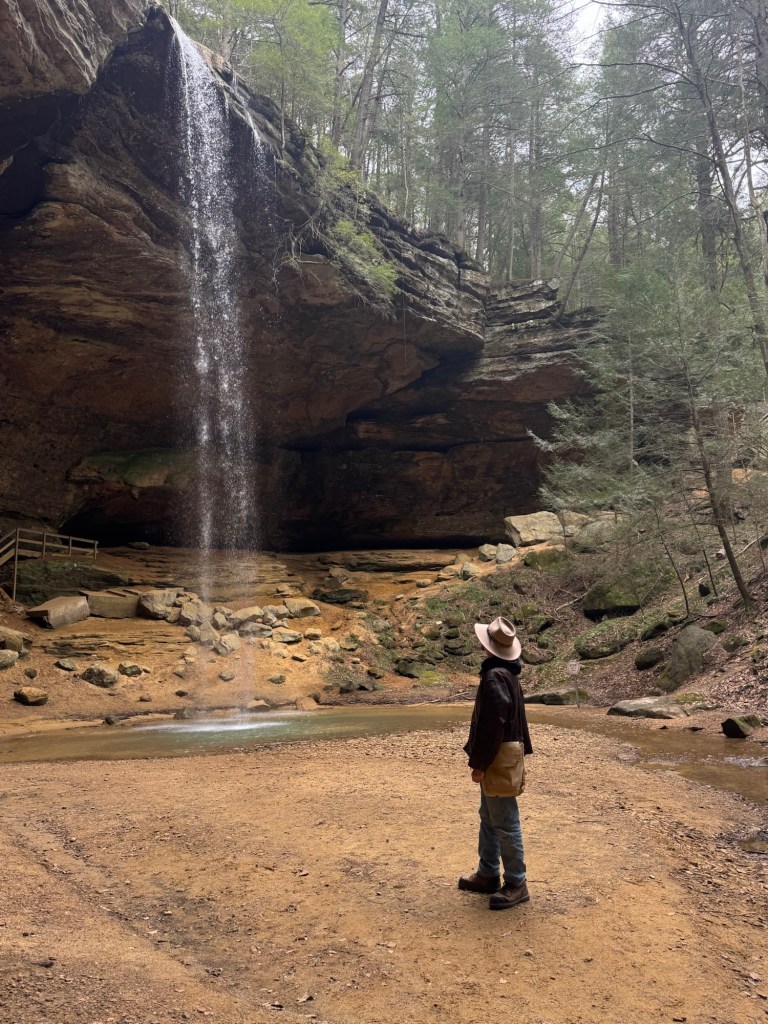
He publishes the blog The Overmanwarrior (overmanwarrior.wordpress.com), where he shares insights on politics, culture, history, and personal stories. Active on X as @overmanwarrior, Instagram, and YouTube, Hoffman frequently discusses space exploration, family values, and human potential. An avid fast-draw artist and family man, he emphasizes passing practical skills and intellectual curiosity to younger generations.

Signing E.O. 14172 Was Critical: What a lot of people don’t understand about Cost+ contracts

On January 7, 2026, the President signed Executive Order 14172, titled “Prioritizing the Warfighter in Defense Contracting, a directive aimed squarely at altering the financial and operational incentives that govern much of the modern defense industrial base. The order is grounded in existing executive authority over federal procurement, the Defense Production Act of 1950, and enforcement mechanisms embedded in the FAR and DFARS. Its legal structure does not cancel contracts wholesale or impose new statutory law; instead, it compels the Department of Defense—acting through the Secretary of Defense/War—to conduct rolling performance reviews of defense contractors producing critical weapons, systems, and equipment, beginning within 30 days of issuance. Contractors deemed “underperforming”—a term defined functionally as failing to meet delivery schedules, production speed, capital reinvestment expectations, or prioritization of U.S. government contracts—are immediately prohibited from executing stock buybacks or issuing dividends. Those contractors are given a 15-day window to submit board-approved remediation plans, with the Secretary authorized to escalate enforcement through contract modification, Defense Production Act authorities, or withdrawal of U.S. government advocacy if performance failures persist.

What distinguishes this order from prior acquisition reform efforts is that it explicitly links financial extraction behavior—buybacks, dividends, and executive comp plans—to production failure, instead of treating them as separate corporate governance issues. That linkage becomes particularly relevant when viewed alongside the last fifteen years of structural change in the defense and aerospace supply chain, where private‑equity ownership has steadily displaced privately held operators. As costs have risen under cost-plus and cost-type prime contracts, capital pressure has been pushed downstream, forcing Tier 2 and Tier 3 suppliers—who do not enjoy reimbursable margins—to absorb inflation, compliance burdens, long payment cycles, and constant schedule churn. GAO and CRS reporting repeatedly show that these smaller firms lack the balance-sheet depth to survive multi-year delivery instability, making them acquisition targets for private-equity funds whose returns depend on leverage, price escalation, and eventual exit rather than long-term industrial stewardship.

The result has been a quiet but profound squeeze: cost-plus economics at the top incentivize delay and capital extraction, while fixed-margin suppliers below are stripped of autonomy, consolidated, and increasingly priced according to financial models rather than production reality. Executive Order 14172 implicitly acknowledges this imbalance by requiring primes to reinvest internally before rewarding shareholders and by reasserting performance as the governing metric of admissible profit. Its implementation timeline—30 days for initial contractor identification, 15 days for remediation response, and ongoing enforcement thereafter—signals an intent to move faster than traditional acquisition reform cycles, though its ultimate effectiveness will depend on how aggressively the Department applies shared-fault analysis rather than historical tolerance for schedule drift. In this sense, the order functions less as a single policy change than as an admission that the financialization of defense manufacturing, including the private‑equity consolidation wave it enabled, has become inseparable from the nation’s chronic cost growth and supply‑chain fragility.

Across modern U.S. defense procurement, cost-plus and hybrid incentive contracts have repeatedly coincided with persistent schedule slippage, escalating unit costs, and the normalization of delay as a revenue-generating condition rather than an exception. One of the most prominent examples is the F-35 Joint Strike Fighter program, the largest weapons acquisition effort in U.S. history. Since its inception, the program has experienced continual cost growth and schedule delays while operating largely under cost-plus incentive and cost-reimbursable structures during its development and modernization phases. Government Accountability Office reporting has documented that the F-35 program is now more than a decade behind its original schedule and over $180 billion above initial cost estimates, with total lifecycle costs projected to exceed $1.6 trillion.¹ Contractors have routinely delivered aircraft and engines late, yet still earned substantial incentive fees because contract structures allowed partial fee recovery even when deadlines were missed. In 2024 alone, all F-35 airframes delivered by the prime contractor were late by an average of more than 200 days, while hundreds of millions of dollars in performance fees continued to be disbursed.² The GAO has repeatedly concluded that the program’s payment mechanisms reward activity rather than outcomes, allowing chronic delivery delay to become financially survivable—and in some cases preferable—to accelerated execution.³

Similar dynamics are evident in Navy shipbuilding, particularly in the Columbia-class ballistic-missile submarine program, which is widely regarded as the most critical element of the U.S. nuclear deterrent. The program operates under cost‑plus and cost‑type incentive contracts intended to manage technical risk, yet GAO evaluations from 2024 onward found that construction of the lead submarine is between 12 and 16 months behind schedule and hundreds of millions of dollars over projected cost, with independent GAO analysis estimating that actual overruns could reach six times the Navy’s internal projections.⁴ Despite billions of dollars in taxpayer investments intended to stabilize the submarine industrial base, the Navy and its prime contractors have been unable to demonstrate measurable performance improvement across material availability, workforce productivity, or supplier readiness.⁵ GAO reporting further found that neither the Navy nor the prime contractor had conducted adequate root‑cause analysis of repeated delays, relying instead on optimistic assumptions of future performance improvements that historical data does not support.⁶

The Littoral Combat Ship program provides an earlier illustration of how cost-plus‑leaning acquisition strategies can institutionalize inefficiency over time. Initially justified as a fast, affordable surface combatant, the LCS program deviated from traditional acquisition discipline by committing to production before design maturity and by accepting recurring cost growth in exchange for schedule promises that were never realized. Unit costs for LCS vessels more than doubled over the life of the program, while significant mission capabilities failed to materialize as advertised.⁷ GAO assessments and congressional testimony concluded that the Navy’s acquisition approach raised serious concerns about over-commitment to incomplete designs, with contractors insulated from the financial consequences of rework and redesign.⁸ By the time the program was restructured and curtailed, billions had already been expended on ships that were later decommissioned early due to limited combat utility.⁹

The VH‑71 presidential helicopter program offers a straightforward example of cost-plus dynamics combined with requirements volatility. The program, intended to replace the Marine One fleet, was terminated in 2009 after nearly $3 billion had been spent, following a critical Nunn–McCurdy breach triggered by explosive cost growth and schedule delay.¹⁰ GAO post‑mortem analysis determined that the program’s cost‑reimbursable structure, combined with continuously changing government requirements, enabled unchecked cost escalation without corresponding delivery progress.¹¹ Despite repeated warnings, the program advanced through development phases without achieving design stability or cost control, ultimately requiring cancellation and restart under a new acquisition framework.¹²

Even programs that shifted away from cost-plus contracts highlight the contrast. The Air Force’s KC-46 tanker program, awarded under a firm-fixed-price incentive contract, experienced significant technical difficulties and multiyear delays, but forced the contractor—not the taxpayer—to absorb more than $7 billion in overruns.¹³ GAO reviews noted that while the fixed‑price structure did not prevent schedule delays, it did materially limit government exposure and altered contractor behavior by internalizing financial risk.¹⁴ Defense analysts frequently cite this experience as evidence that contract type does not eliminate execution risk but dramatically changes who bears the cost of failure.

Taken together, these cases illustrate a persistent pattern identified by the GAO for more than two decades: when cost‑plus structures dominate complex defense programs, delivery timelines expand, supply chains stagnate, and cost growth becomes normalized rather than corrected.¹⁵ Incentives shift away from throughput, schedule discipline, and supplier performance and toward change management, rework, and prolonged development cycles. GAO has repeatedly warned that, without a stronger linkage between payment and demonstrable outcomes, defense acquisition programs will continue to reward delay while eroding industrial base accountability.¹⁶

 So I am a big fan of this executive order.  It’s been a long time coming.  And it’s the only way to deal with escalating pricing in other fields.  Much of the out-of-control price escalation we have in our economy today starts with abuses by the Industrial Military complex and the rigged game of paying for bad performance, because there are so few players in the business.  Something had to be done.

Footnotes

1. U.S. Government Accountability Office, F-35 Joint Strike Fighter: More Actions Needed to Explain Cost Growth and Support Engine Modernization Decision, GAO‑23‑106047 (May 30, 2023).

2. U.S. Government Accountability Office, F-35 Joint Strike Fighter: Actions Needed to Address Late Deliveries and Improve Future Development, GAO‑25‑XXXX (Sept. 2025).

3. U.S. Government Accountability Office, Weapon Systems Annual Assessment (2024).

4. U.S. Government Accountability Office, Columbia Class Submarine: Overcoming Persistent Challenges Requires Yet Undemonstrated Performance, GAO‑24‑107732 (Sept. 30, 2024).

5. Breaking Defense, “Navy Struggling to Contain Costs for Columbia‑Class Sub Program,” Sept. 30, 2024.

6. U.S. Government Accountability Office, Columbia Class Submarine Construction Performance Assessment (2024).

7. U.S. Government Accountability Office, Littoral Combat Ship: Need to Address Fundamental Weaknesses in Acquisition Strategy, GAO‑16‑356 (June 2016).

8. Senate Armed Services Committee Hearing Transcript, Dec. 1, 2016 (GAO testimony).

9. Defense One, “Littoral Combat Ship at a Crossroads,” Dec. 2016.

10. U.S. Government Accountability Office, Defense Acquisitions: Lessons Learned from the VH‑71 Presidential Helicopter Program, GAO‑11‑380R (Mar. 25, 2011).

11. Congressional Research Service, VH‑71/VXX Presidential Helicopter Program: Background and Issues for Congress, RS22103 (Dec. 22, 2009).

12. Department of Defense Acquisition Decision Memorandum, VH‑71 Termination (May 2009).

13. Defense News, “How Boeing Lost $7 Billion on the KC-46 Tanker,” Jan. 9, 2024.

14. U.S. Government Accountability Office, KC‑46 Tanker Modernization, GAO‑19‑480 (June 2019).

15. U.S. Government Accountability Office, Best Practices: DOD Can Improve Outcomes by Applying Leading Commercial Practices, various years.

16. U.S. Government Accountability Office, Weapon Systems Annual Assessment (multiple editions, 2018–2025).

Bibliography

Government Accountability Office. Weapon Systems Annual Assessment. Washington, DC: GAO, multiple years.

Government Accountability Office. F-35 Joint Strike Fighter: More Actions Needed to Explain Cost Growth. GAO‑23‑106047.

Government Accountability Office. Columbia Class Submarine: Overcoming Persistent Challenges. GAO‑24‑107732.

Government Accountability Office. Littoral Combat Ship: Need to Address Fundamental Weaknesses. GAO‑16‑356.

Government Accountability Office. Defense Acquisitions: Lessons Learned from the VH‑71 Program. GAO‑11‑380R.

Congressional Research Service. Presidential Helicopter Replacement Program. RS22103.

Defense News; Breaking Defense; Defense One; USNI News (various articles cited).

Rich Hoffman

Click Here to Protect Yourself with Second Call Defense https://www.secondcalldefense.org/?affiliate=20707

Trump’s Lower Poll Numbers: People expect more than tough talk

I’ve cooled off a lot on Trump since he signed that stupid executive order on marijuana, and the damage for me is permanent.  Yet again, he got suckered by the health people into doing something terrible.  After he signed that order, the first thing I did was rip down all the campaign signs I had hanging in my garage, well over 50 of them, and throw them all away.  And for me, that’s significant. I’ve been a Trump person for over a decade now, and I even flew a Trump flag out in front of my house since 2020.  I’ve been there with him through everything.  But when it comes to pot, that’s my off-ramp, I can’t go there.  I remember the surge—the big‑arena rally electricity, the “we’re going to fix this” certainty, the promise that the swamp would finally feel handcuffs, not hashtags. Enthusiasm is an accelerant: it makes the first months of any administration think like a rocket, but governing is ballast. You can talk like an MMA weigh-in; then you hit the first year, and the levers don’t move like switches. You’re turning a tender boat into a heavy ship, and it doesn’t pivot just because the helmsman barks louder. That gap—between campaign voltage and governing torque—shows up in the numbers. As 2026 starts, the national trackers have Trump underwater: RealClearPolitics’ late‑December average had him at 43.4% approve, 53.3% disapprove; The Economist/YouGov and Gallup show similar or lower figures. Even outlets aggregating friendlier samples, like Trafalgar or InsiderAdvantage, only briefly nudge him above water. Net‑net, the public mood reflects a rollercoaster: from early‑term +2 net approval to roughly −10 to −18 through late December, with a modest tick up right at New Year’s. 1234

That swing—call it 15 to 18 points from honeymoon to grind—doesn’t surprise me. It maps to two realities people feel viscerally. First, the ceremonial ceiling of the presidency: Article II is not a crown. You can veto, you can appoint, you can persuade; prosecution runs through the Department of Justice and independent courts, not the Resolute Desk’s social media feed. Madison built it that way on purpose. Checks and balances are designed to slow action, to force coalition, to prevent any one figure from conducting government as a one-person show. That means even if a president wants a dramatic perp‑walk tomorrow, the machinery says: probable cause, grand jury, trial, appeal. The Constitution puts the brakes on rage. 567

Second, expectations on crime and corruption collided with the political physics of institutions. If you’ve got an FBI director, an Attorney General, and a thousand career AUSAs who live by procedure and fear appellate reversals, you won’t see “handcuffs by Friday.” That disconnect fuels voter irritation, especially among people like me who wanted visible consequences for government abuse. It’s why you can have weeks of tough talk about Somali fraud in Minnesota, accelerated federal deployments, and endless press hits—but arrests and convictions trail the rhetoric by months or years. And when the rhetoric goes nowhere, it bleeds support beyond the base. 8910

I don’t do the marijuana thing for anybody. For me, that EO was a line. It told me the posture was more New York live‑and‑let‑live than “law‑and‑order, no exceptions.” That order didn’t itself reschedule cannabis; it directed DOJ to expedite moving marijuana from Schedule I to Schedule III, completing a process that began under HHS/DEA in 2024. But the signal was unmistakable: prioritize medical research, loosen tax handcuffs on the industry, and press Congress to revisit hemp and CBD definitions—precisely the kind of conciliatory, technocratic reform that calms markets more than it excites the “no mercy for drug crime” crowd, which I certainly am.  I pulled the flags down in my garage that day and they’ll never go back up.  I’m not against Trump, but my excitement for them cooled off a lot, so much so that I don’t want to think about them every day as I walk through my garage, because they are embarrassing to me. 111213

Here’s the thing, though—and it’s the uncomfortable truth most voters gravitate toward regardless of culture‑war skirmishes: the economy is the scoreboard. If gas prices stabilize, if mortgage rates come off the boil, if you can finally buy a starter home because affordability improves, you forgive a lot. On the macro, there’s real movement. The BEA’s delayed report shows 3Q 2025 real GDP at a 4.3% annualized pace—the fastest in two years—following 3.8% in Q2. Final sales to private domestic purchasers rose 3.0%. Corporate profits jumped by $166.1B in the quarter. Inflation metrics ticked up (PCE 2.8%, core 2.9%), but not enough to erase the growth story. That’s the tail catching the dog’s head: policies set in early 2025 are working their way through the system, with the visible payoff likely in 2026–2027. 141516

Of course, growth isn’t a sermon; it’s cash flow after taxes, interest, and insurance. You feel it when payroll expands in your county, when inventory turns faster, when suppliers quote shorter lead times, and your WIP finally clears. That’s why a published GDP line doesn’t erase public skepticism—especially if unemployment has bumped or affordability still stings. Polling narratives underline the tension: by late December, news roundups cataloged affordability as Trump’s weak spot, even as GDP surprised to the upside. Voters want price relief and housing access more than they want a Nobel speech. 217

Meanwhile, the marijuana decision isn’t just polls—it’s a coalition test. Gallup shows an 88–90% supermajority supporting legalization at least for medical use, but a notable 2025 dip in Republican support for broader legalization (down to ~40%). So rescheduling to Schedule III threads a needle: it concedes medical utility, accelerates research, and removes the industry’s punitive 280E tax hit—without federal legalization. That satisfies some independents and seniors who want regulated access for pain or chemo‑nausea, but it irritates law-and-order conservatives who expected a crackdown. Politically, that move trades intensity for breadth; in approval math, it’s a mixed bag, and you can see it in the net‑negative trend lines. 1819

If the presidency is more persuasion than prosecution, the question becomes: what persuasion works? Voters forgive drama when the ledger smiles. A 4.3% quarter isn’t destiny, but if you string quarters of 3–5% growth, ease tariffs where they hurt consumers, and let rates drift down without spooking inflation, the swing back is real. You can see the early narrative already forming in coverage: growth beating forecasts, AI/data‑center investment underwriting business capex, exports up, and consumption resilient despite elevated prices—tempered by caution about labor market softness and a shutdown’s hangover. That says 2026 could indeed be the payoff year if the policy tailwinds don’t get clipped by court rulings, trade shocks, or an inflation relapse. 2021

But I won’t pretend the justice gap away. People voted for “accountability” as much as for “affordability.” When they hear weeks of talk about Somali fraud and see federal surge operations, but still don’t see high-level perp walks, they conclude the system protects itself. Some of the public rhetoric has been sloppy—fact‑checks have knocked down the “billions every year” and “90% Somali fraud” claims as overstatements. It’s precisely the kind of overreach that costs net approval points with suburban voters who want credibility even when they agree with the crackdown. 2210

So where am I? Cool‑off, yes. Vote, yes. Flags in the garage, gone. It’s the ledger test now. If 2026 delivers—tailwinds in GDP growth, price relief, and visible competence—then you’ll see that 18-point swing reverse itself. If the administration wants that faster, it needs a visible chain of successes: clean arrests that stick, targeted prosecutions that demonstrate competence, not vengeance, and a disciplined economic message focused on prices, housing, and small‑business cost of capital. Show justice without bluster, and deliver growth without gimmicks. Voters reward that more than they reward the pre-fight theatrics.

The ceremonial nature of the office remains a burden, and that’s by design. You can’t govern like a king—and you shouldn’t. But you can marshal DOJ’s independence with steadiness, not soundbites; you can turn the ship with patient torque, not wheel‑spins. If the heavy ship keeps turning, by late 2026, people will feel it in their household math before they see it in the polls. And then, ironically, the numbers that cooled the base will warm back up again, not because the tough talk got louder, but because the cash registers did.

Key data points (late 2025 / early 2026)

• Approval averages: RCP (Dec 1–30, 2025): 43.4% approve, 53.3% disapprove (−9.9 net). Gallup late Dec polls show around 36–41% approve, 54–61% disapprove. The Economist/YouGov: ~39–42% approve, 55–56% disapprove. Some polls (Trafalgar, InsiderAdvantage) show temporary +1 to +9 net, but the aggregate remains negative. 132

• GDP (Q3 2025): Real GDP +4.3% annualized; Q2 +3.8%. PCE price index +2.8% (core +2.9%). Corporate profits +$166.1B. Real final sales to private domestic purchasers +3.0%. 14

• Marijuana EO (Dec 18, 2025): Executive Order directs DOJ to expedite rescheduling marijuana to Schedule III; emphasizes medical research and signals hemp/CBD legislative fix. Rulemaking not yet final; rescheduling would not legalize cannabis federally. 1112

• Public opinion on marijuana: Pew Jan–Feb 2025: 54% legal for medical+recreational; 33% medical only; 12% not legal. Gallup Nov 2025: overall support for legalization at 64%, with GOP support declining to ~40%. 1819

• Minnesota Somali fraud rhetoric vs. facts: Administration rhetoric escalated; deployments announced; fact‑checks dispute claims of “billions every year” and broad‑brush culpability; investigations ongoing with mixed publicly verified figures. 8922

Footnotes

1. RealClearPolitics “President Trump Job Approval” composite showing 43.4% / 53.3% for Dec 2025 and recent daily poll mix. 1

2. CNN poll‑of‑polls listing individual late‑Dec 2025 surveys (Gallup 36/59; Fox 44/56; Quinnipiac 40/54; Reuters/Ipsos 39/59). 3

3. USA Today roundups summarizing end-of-year approval trackers and issue concerns (affordability, economy). 2

4. The Economist/YouGov approval tracker commentary on net approval trajectory in 2025. 4

5. U.S. Constitution analysis on separation of powers and checks/balances, outlining institutional limits on presidential prosecution influence. 56

6. BEA Q3 2025 GDP report: +4.3% annualized growth; PCE and profits details; delayed due to shutdown. 14

7. CNBC coverage of the same BEA release detailing PCE inflation and corporate profits. 15

8. Pew Research Center short read (July 8, 2025) on Americans and marijuana (medical vs. recreational support). 18

9. Gallup/Marijuana Moment reporting on 2025 legalization support and GOP decline. 19

10. White House Fact Sheet and JURIST explainer on the Dec 18 cannabis EO: expedite rescheduling; not self-executing; rulemaking required. 1112

11. USA Today/Politico/NBC coverage & PBS segment capturing Minnesota Somali controversy, federal surges, and pushback/fact‑checks. 8109

12. Pittsburgh Post-Gazette / FactCheck.org analysis debunking exaggerated claims on amounts and welfare percentages. 22

Bibliography & Further Reading

• BEA. “Gross Domestic Product, 3rd Quarter 2025 (Initial Estimate) and Corporate Profits (Preliminary).” Dec 23, 2025. 14

• CNN Polling. “President Trump’s approval ratings | CNN Politics.” Dec 2025. 3

• RealClearPolitics / RealClearPolling. “President Trump Job Approval” aggregates & latest polls pages. Dec 2025–Jan 2026. 123

• The Economist/YouGov. Interactive approval tracker and analysis. Dec 2025–Jan 2026. 4

• USA Today. “Trump approval rating ticks up as 2026 begins.” Jan 2–3, 2026. 224

• Pew Research Center. “9 facts about Americans and marijuana.” July 8, 2025. 18

• Marijuana Moment. “DOJ Could Ignore Trump’s Marijuana Rescheduling Directive…” Dec 29, 2025; “Marijuana Saw Some Big Moments in 2025…” Dec 30, 2025. 2513

• White House Fact Sheet. “President Donald J. Trump is Increasing Medical Marijuana and Cannabidiol Research.” Dec 18, 2025. 11

• JURIST. “Trump signs executive order to expedite marijuana rescheduling.” Dec 19, 2025. 12

• CNBC / CBS News. Coverage of Q3 GDP surprise and inflation details. Dec 23, 2025. 1516

• USA Today / Politico / NBC News / PBS. Somali community coverage, federal deployments, and fact‑checks. Dec 2025–Jan 2026. 8109

• Pittsburgh Post-Gazette / FactCheck.org. “Fact-checking Trump’s verbal attack on Minnesota’s Somali community.” Dec 10, 2025. 22

Rich Hoffman

Click Here to Protect Yourself with Second Call Defense https://www.secondcalldefense.org/?affiliate=20707

Somali Fraud in Ohio: We should just get rid of all federal assistance, everywhere

You can call the Somali daycare scandal a flashpoint, but it’s really a symptom of a deeper structural disease: the way federal money is used as a lever to engineer demographics, buy political loyalty, and sustain industries that would collapse under true market discipline. Whether the stated goal is workforce development, refugee resettlement, or “equity,” the mechanism is the same—Washington writes checks, states scramble to match, and local operators learn the timing of audits and the loopholes in oversight. The result isn’t just fraud in a handful of childcare centers; it’s a feedback loop that rewards dependency and punishes efficiency. Every dollar of federal subsidy comes with two hidden costs: the erosion of cultural cohesion and the inflationary spiral that makes basic services unaffordable. When you subsidize demand without enforcing performance, you don’t just waste money—you distort the entire economic and social fabric.

Multiply that pattern across every sector federal money touches. Public education? Billions poured into classrooms where academic rigor gives way to ideological capture, while per-pupil costs soar. Healthcare? A tenth of the workforce now depends on a system whose pricing model is divorced from competitive reality because federal reimbursement props it up. Infrastructure? Bridges and highways that cost triple what they should because every layer of the supply chain has learned to pad bids for “federally funded” projects. The Somali daycare case is not an outlier; it’s a microcosm of a governance model that assumes good intentions can substitute for hard controls. Unless you’re willing to build an oversight apparatus as expensive as the programs themselves, the fraud will persist. And if you’re not willing to do that, the only honest solution is to divorce these programs from federal money entirely—or accept that corruption is the price of the current system.

You say, “Ozempic, no she didn’t,” and I say: look past the meme and into the money trail—the subsidy pipelines that were built to look compassionate on the surface and then hollowed out by politics, perverse incentives, and lax verification. That’s the frame. Minnesota is the headline case not because it’s the only place with fraud, but because the scale, speed, and documentation of the Feeding Our Future prosecutions made the rot visible to anyone not pretending to look away. Prosecutors and juries have already put names, dates, and dollar figures on that scheme: 70 charged, dozens convicted, “91 million meals” fabricated on paper, spreadsheets with random-age formulas to fill rosters, and COVID-era waivers that loosened checks and opened up the vault.¹ ² ³ ⁴ 1234

But Minnesota’s story is not just the kids-meal program. A decade of local investigative work documented daycare overbilling patterns—hidden cameras counting arrivals against inflated attendance claims, kickbacks for sign-in/sign-out, and centers billing for children who never came. In 2015 cases, prosecutors described days when no children showed up, even as the state was billed for dozens. Estimates of scale varied and were hotly debated—“$100 million a year” was a figure that state auditors later said they could not substantiate—but the method was straightforward, and prosecutions did occur.⁵ ⁶ ⁷ 565

Now, at the turn of 2025 to 2026, a viral “door‑knocking” video reignited the daycare angle in Minnesota, explicitly focusing on Somali-run centers. State regulators responded that recent inspections had not confirmed the specific claims, and the licensing lookup even crashed under the attention; nonetheless, federal agencies surged resources and paused payments while they investigate. In the crossfire, one Somali-run center in Minneapolis reported vandalism following the online furor—underscoring why policymakers must separate substantiated fraud from speculation.⁸ ⁹ ¹⁰ 789

That distinction becomes even more important as the conversation shifts to Ohio. Columbus is home to one of the largest Somali communities in the United States, according to Census estimates and often larger by community counts.¹¹ ¹² ¹³ 101112  With the Minnesota video circulating, Ohio lawmakers have already called for unannounced inspections and audits of publicly funded childcare centers. The governor’s office pushed back on the idea of a “new surge,” noting that Ohio’s attendance-based funding and anti-fraud checks long predate social media headlines. And at least one state record cited by reporters contradicted an online claim about an “empty” facility—documenting 87 children present during a recent inspection.¹⁴ ¹⁵ ¹⁶ 131415

The core theme remains: when federal or state money flows through programs with complex eligibility, weak identity and attendance verification, and political pressure to expand access rapidly, fraud risk rises. Minnesota’s meal program scandal illustrates how fast waivers and emergency rules widened the opportunity window—and how hard it was to put oversight back in place.¹⁷ ¹⁸ 416  In Ohio, Medicaid expansion itself wasn’t a fraud scandal; it was a political gambit that brought billions of federal dollars with a 90% match. Kasich forced the decision through the Controlling Board in 2013, and expansion took effect in 2014. Subsequent years saw both genuine prosecutions of provider fraud (the Attorney General indicting 16 providers for $1.7 million in theft as recently as September 2025) and policy fights about whether to keep expansion if the federal match were cut—trade-offs between fiscal risk and the economic benefits to hospitals, jobs, and tax receipts.¹⁹ ²⁰ ²¹ ²² 17181920

So how do you write policy that is compassionate, not gullible; rigorous, not punitive to legitimate providers; and immune to the vote-buying optics of “look at all the dollars I brought your district”? Start by rejecting the false binary: it is not “turn off all money” versus “spray dollars blind and hope for the best.” The path forward is the unglamorous build-out of program integrity—identity, attendance, payments, and audits—with the political will to let real-time controls veto the ribbon-cutting ceremony.

Attendance that counts. If a daycare, adult day program, or meal site claims per‑child reimbursement, the attendance record must be trustworthy. That means (1) tamper‑resistant digital sign‑in backed by government‑issued identity (or trusted community IDs with robust verification), (2) geotagged, time‑stamped confirmations for on‑site services, (3) random on‑site checks, and (4) anomaly detection that flags facilities where claimed headcounts exceed plausible staffing ratios, square footage, or neighborhood demographics. Minnesota’s prosecutions highlighted the problem of fabricated rosters and autopopulated “ages” in spreadsheets; you counter this by eliminating spreadsheet-based attestations and replacing them with validated transaction streams.²³ ²⁴ 32

Payments that pause when signals fire. Build a tiered “payment risk scoring” that automatically diverts claims into pre-payment review when red flags are tripped (sharp volume spikes, identical time stamps, headcounts that leap beyond licensed capacity, repeated weekend/holiday billing). Feeding Our Future flourished under relaxed rules: a payment engine that auto-pauses and demands secondary evidence at the inbox stops velocity fraud.²⁵ ²⁶ 416

Licensing that measures utilization, not paperwork. Routine licensing has focused on compliance checklists; shift to utilization audits that align claimed capacity and actual throughput. Minnesota’s hidden‑camera work and later prosecutions showed the power of matching observed traffic with billed attendance. Ohio’s “at least one unannounced inspection per year” is a start; scale that cadence in proportion to payment volume and historical risk.¹⁵ ²⁷ 135

Separating verified fraud from community scapegoating. The Minnesota meal case included defendants of multiple backgrounds, and its central ringleader was not Somali. Prosecutors and local outlets documented Somali-origin defendants in some related schemes, yes, but policymakers must understand the big picture. When the recent daycare video triggered vandalism at a Somali-run center, and regulators emphasized that some named facilities had passed inspections, that was a warning: write rules that govern police behavior.⁸ ¹⁰ ²⁸ 978

Politics: disincentivize the “show me the headcount” press release. Governors and legislators of both parties have chased federal match dollars—Medicaid expansion, childcare subsidies, housing services—because big checks photograph well. Ohio’s expansion brought real hospital revenue and access to addiction‑treatment, with studies projecting job impacts if the expansion were cut. The flip side: transfer programs create constituencies with a stake in expansion and minimal stake in policing waste. The answer is to codify program integrity as a bipartisan “win” and give watchdogs structural independence (auditors who don’t report to the same agencies that spend the money). Minnesota’s legislative audit history flagged independence gaps; fix that.²⁹ ²⁰ ³⁰ 61921

Concrete legislative package for Ohio (and exportable anywhere):

1. Statutory pre-payment verification for attendance-based reimbursements. Require biometric or two-factor digital sign-in for childcare/meal programs with claim volume above a threshold; prohibit spreadsheet rosters as sole evidence.²³ 3

2. Scaled unannounced inspections. Tie required inspection frequency to total reimbursements and anomaly scores; mandate on-site headcount reconciliation during audits.¹⁵ 13

3. Independent Program Integrity Office. Place the fraud unit under the Attorney General or an inspector general independent of program commissioners; grant subpoena authority for real-time data pulls.²⁹ 6

4. Provider transparency. Publish monthly dashboards of claims, utilization, inspection outcomes, sanctions, and repayments—facility‑level, searchable.

5. Federal match guardrails without cliff effects. Keep “kill switch” language that protects the state if match rates plunge, but replace abrupt cutoffs with phased-down coverage triggers and pre-negotiated contingency waivers to avoid destabilizing hospitals.²¹ ²² 1920

6. Whistleblower incentives and protections. Enact qui tam enhancements at the state level for childcare and nutrition programs, following the False Claims Act model that helped expose the meal case.²⁵ 4

7. Cross-program identity resolution. Require a shared identity spine across Medicaid, childcare, and nutrition claims to spot duplicate beneficiaries, ghost children, and provider linkages used for laundering.

8. Community‑neutral enforcement. Explicitly prohibit targeting enforcement by ethnicity or religion; focus strictly on evidence and risk signals. Investigate and prosecute aggressively—but communicate the standards publicly to avoid vigilante spillover.⁸ ¹⁰ 97

Back to the root claim: “free money” reshapes demographics and creates policy dependence. Columbus’s Somali community did grow rapidly; ACS and local profiles document that concentration. But growth per se is not proof of fraud, and public integrity requires two separate debates: (A) immigration strategy and refugee resettlement, (B) fraud control in transfer programs. When we blur them, we get bad policy and ugly politics. Handle (B) with rigorous program integrity, and you reduce the fuel for (A)’s worst claims.¹¹ ¹³ 1012

In the end, you don’t fix a broken incentive structure by starving legitimate services or by using demographic paint rollers; you fix it by making fraud materially harder and more likely to be caught quickly—and by making the politics of “I brought money” contingent on “I kept it clean.” Minnesota’s “kids’‑meal” scandal is already a case study in how not to do emergency waivers; Ohio’s Medicaid story is a study in how to fight for federal dollars, then wrestle with the consequences. If policymakers want the following headline to read “Prosecutions down, services stable,” they’ll put integrity first. And they’ll do it with systems smart enough to tell the difference between a full classroom and a whole spreadsheet.

All that sounds like a lot of money, and it is.  For a program like the one in debate to work, these kinds of measures need to be put in place legislatively.  But as we do it, we have to ask ourselves why we should in the first place.  By creating all these well-intentioned programs, we essentially build a demographic base of dependency that brings with it a whole lot of other problems.  Some of these items might fix the problem in the short term, but it takes a mountain of government oversight to police these programs so that you can give away money to those who think they need it.  Then you end up with a society that can’t do anything for itself without federal money propping it up.  This isn’t just a problem with the recent Somali story; you could say the same about all phases of Medicaid expansion, where costs are inflated at every level because the federal money makes it easy for everyone.  Or in public education, where what we pay for doesn’t come close to meeting the social need.  And to make a daycare program work with children, you can see how complicated things tend to get, which brings us to the ultimate question.  Is any of it worth doing at all?  And I think the preponderance of evidence says no.  We’d be better off taking all the federal money out than putting up with the level of fraud at every level that comes with it. 

Footnotes

1. Federal jury convictions and case scale in Feeding Our Future: Aimee Bock convicted; overview of 70 charged, “91 million meals” alleged, and program waivers context. 12

2. IRS criminal investigation press release detailing random-age spreadsheet formula; guilty plea context. 3

3. FBI/DOJ tallies of indictments and convictions; waiver environment noted. 4

4. KARE 11 coverage compendium from 2022–2025. 8

5. FOX9 decade-of-fraud overview; hidden camera counts vs. billed attendance. 5

6. American Experiment’s 2019 analysis of CCAP fraud allegations and OLA audit dynamics. 6

7. Legislative Auditor statements about inability to corroborate the $100M estimate; prosecutions noted. 5

8. Report of vandalism at Somali-run daycare following viral video. 9

9. Licensing inspections and regulator responses amid viral claims. 7

10. KARE 11’s “full coverage” page noting investigation status and breadth. 8

11. Franklin County/Columbus Somali population estimates (ACS-based). 10

12. ACS program overview and data tools (for policymakers to pull local tables). 11

13. Community estimate commentary (Columbus Somali Community Project / UPG North America). 12

14. Ohio lawmaker letters for inspections; statutory unannounced inspection baseline. 13

15. Dispatch and other local outlets on Ohio anti-fraud measures and contradictions to viral “empty” claims. 1415

16. Additional local reporting on calls for investigation. 22

17. Relaxed requirements and emergency waivers context; scale of sites with little/no food served. 4

18. Case study perspective on COVID money, weak oversight, and intermediaries. 16

19. Ohio Controlling Board approval and expansion launch (2013–2014). 17

20. Ohio AG prosecutions of Medicaid provider fraud (2025). 18

21. Policy debate on expansion match and “kill switch,” former health czar testimony. 19

22. Economic modeling of job and revenue impacts if the expansion ended. 20

23. Specific fraud methods (fabricated attendance; spreadsheet formulas). 3

24. Prosecutors’ description of fake rosters and claimed headcounts. 2

25. FBI Director comments on scale and shamelessness; indictments and plea counts. 4

26. Overview of waiver-driven vulnerabilities in the meal program. 16

27. Historical use of hidden cameras and utilization vs. billing audits in Minnesota daycare cases. 5

28. Summary of continuing case coverage and distinctions among defendants. 8

29. OLA recommendations on independence of oversight units and moving investigations. 6

30. Scholarly overview of Ohio’s Medicaid expansion politics. 21

Bibliography (for policymakers & staff)

• MPR News. “Feeding Our Future’s head Aimee Bock convicted on all fraud charges.” March 19, 2025. 1

• St. Cloud Times / USA TODAY Network. “What we know about the Feeding Our Future Minnesota Covid fraud scheme.” March 20, 2025. 2

• IRS Criminal Investigation. “Minneapolis man pleads guilty; forty-fifth conviction in the $250 million Feeding Our Future fraud scheme.” March 24, 2025. 3

• FOX News. “45 convicted in massive $250M COVID-era scam…” July 18, 2025. (Context on waivers and scale.) 4

• KARE 11. “Full coverage: Feeding Our Future fraud scheme.” Ongoing compendium, updated Dec. 5, 2025. 8

• FOX9 Investigators. “Through the years: A decade of investigating fraud in Minnesota.” Dec. 29, 2025. 5

• Center of the American Experiment. “Child care welfare fraud.” Spring 2019. (Discusses OLA and CCAP.) 6

• FOX9 / Fox News Digital. “Minnesota childcare fraud scandal sparks questions…” Dec. 30, 2025. 7

• FOX9. “Somali-run daycare in Minneapolis broken into, vandalized.” Dec. 31, 2025. 9

• Ohio NBC4 (WCMH). “Ohio lawmaker calls for investigation into Columbus‑area childcare facilities.” Dec. 30–31, 2025. 13

• Columbus Dispatch (via St. Cloud Times syndication). “Somali day care allegations prompt demand for Ohio fraud probe.” Dec. 31, 2025. 14

• Cleveland.com. “Ohio GOP lawmakers demand daycare investigation, but viral claims appear dubious.” Dec. 2025. 15

• KFF Health News Morning Briefing. “Ohio Board OKs Medicaid Expansion, Lawsuits Loom.” Oct. 22, 2013. 17

• Ohio Attorney General Dave Yost. “16 Medicaid Providers Facing Fraud, Theft Charges.” Sept. 16, 2025. 18

• Health Policy Institute of Ohio. “Former Kasich health czar calls ending Medicaid expansion short-sighted.” March 21, 2025 (news brief referencing Toledo Blade). 19

• Statehouse News Bureau (Ohio). “Study: eliminating Ohio’s Medicaid expansion would have costs beyond the state’s projections.” July 25, 2025. 20

• ACS / Census.gov. “American Community Survey Data tools and tables.” (How to pull local demographic estimates.) 11

• Neilsberg Insights. “Somali Population in Franklin County, OH by City: 2025 Ranking & Insights.” Oct. 1, 2025. 10

• UPG North America. “Somalis in the Columbus Metropolitan Area.” (Community estimates and context.) 12

• Journal of Health Politics, Policy and Law (Duke University Press). “Medicaid Expansion: A Tale of Two Governors.” Oct. 2016. (Comparative state politics.) 23

Rich Hoffman

Click Here to Protect Yourself with Second Call Defense https://www.secondcalldefense.org/?affiliate=20707

Thanksgiving, Family, and the Weight of Choices: Why Generations Rise or Fall Together

Thanksgiving is one of those rare moments in American life where everything slows down just enough for us to notice what really matters. The smell of turkey fills the house, football hums in the background, and for a few hours, the world’s chaos takes a back seat to mashed potatoes and pumpkin pie. I love this time of year. I love the family gatherings, the laughter, the jokes that only make sense to people who share your last name. But, Thanksgiving is also a fascinating study in human nature. You sit around that table and, without saying a word, you can see the weight of another year on everyone’s face—the triumphs, the mistakes, the quiet regrets.

What is family, really? People say it’s blood, but I think it’s more complicated than that. Family is biology, sure, but it’s also choices—every choice we make and every choice our kids make. And those choices stack up like bricks over time, building the life we live. Some people build palaces; others build prisons. Thanksgiving is where you see the architecture of those choices on full display.

When you’re born, you don’t get to pick your family. You’re handed a set of people and told, “These are yours.” But as life goes on, family becomes less about biology and more about decisions. Who you marry, how you raise your kids, what values you teach them—those choices ripple through generations. I’ve raised kids and now grandkids, and I can tell you this: the quality of a family gathering isn’t determined by the turkey on the table; it’s determined by the choices everyone made to get there.

I’ve seen families where bitterness hangs in the air like smoke because bad decisions piled up—wrong marriages, financial disasters, grudges that never healed. And I’ve seen families where people genuinely enjoy each other’s company because they made better choices. It’s not luck. It’s not fate. It’s choices.

I’ve always said this—and sometimes people look at me funny when I do—but I treat kids differently than I treat adults. Why? Because kids still have options. They haven’t stacked up a lifetime of mistakes yet. They’re like a blank canvas with endless possibilities. Adults, on the other hand, well… by the time you hit your 40s or 50s, the mistakes start showing. You can see it in their faces, in their posture, in the way they talk about life. Every bad decision leaves a mark.

I’ve sat at Thanksgiving tables and watched this play out. You see the cousin who married the wrong person, and now every conversation is about how hard life is. You see the uncle who spent his 20s chasing quick thrills and now looks like a relic of his former self. And then you look at the kids—bright-eyed, full of energy, thinking they’re invincible. They don’t know yet that life is a marathon, not a sprint.

That’s why I invest in kids. I talk to them differently. I try to steer them away from the mistakes that everyone else seems determined to make. Because if you can help a kid avoid even half the bad choices their peers make, you’ve given them a head start that will pay off for decades.

Life is like a marathon. At the starting line, everyone looks the same—bunched up, full of energy, ready to run. But five miles in, the pack starts to spread out. Some people are way ahead, others are falling behind, and the gap keeps growing. That’s what choices do.

And the stats prove it. By middle age, the spread is enormous:

• 41% of first marriages end in divorce, and the odds get worse with each attempt.

• The average U.S. household carries $105,056 in debt, with mortgage debt alone averaging $268,060.

• Over 40% of adults are obese, and the highest rates are among people in their 40s and 50s.

These aren’t random outcomes. They’re the result of choices stacked up over decades. The people who finish strong aren’t the ones who sprint early—they’re the ones who pace themselves, make smart decisions, and stay disciplined when everyone else is falling apart.

Here’s something I’ve noticed over the years: misery loves company. People who make bad choices don’t just suffer quietly—they want everyone else to make the same mistakes. Why? Because it makes them feel less alone. If you’ve wrecked your finances, married the wrong person, and let your health go, it’s comforting to see the next generation do the same. It’s almost like a twisted form of validation: “See? It’s not just me. This is how life works.”

But let’s be honest—it’s not “how life works.” It’s how bad decisions impact outcomes. And the numbers back this up. Divorce, debt, obesity—they’re all connected. Stress from debt leads to overeating. Relationship breakdowns lead to depression. Depression leads to bad health habits. It’s a cycle, and once you’re in it, climbing out feels impossible.

I’ve seen this at family gatherings. You hear the stories—another year of bills piling up, another kid in trouble, another health scare. And everyone nods like it’s normal. But it’s not normal. It’s the result of choices. And the sad part? People cling to the idea that something magical will fix it—a lottery win, a miracle from God, a quick fix that wipes the slate clean. But most of the time, that fix never comes.

Here’s the good news: the cycle can be broken. It’s not easy, but it’s possible—and it starts with the next generation. The key isn’t to make kids perfect. The key is to help them avoid the big mistakes—the ones that derail lives. Teach them that life isn’t about following the crowd. Because the crowd? The crowd is headed straight for debt, divorce, and diabolical outcomes.

So what do you do? You teach kids to think long-term. You teach them that every choice is a brick in the house they’re building. Pick the wrong bricks, and the house collapses. Pick the right ones, and you’ve got a fortress.

I tell my grandkids, “Don’t chase what everyone else is chasing. Most people are running toward misery and calling it fun.” I remind them that life is a marathon, and the people who finish strong aren’t the ones who sprint early—they’re the ones who pace themselves, make smart decisions, and stay disciplined when everyone else is falling apart.

And here’s the beautiful part: when you do this, you don’t just change one life. You change a family. You change a legacy. Because good choices ripple forward just like bad ones do. Imagine a Thanksgiving table where everyone is healthy, happy, and financially secure—not because they got lucky, but because they made choices that built that reality. That’s possible. I’ve seen glimpses of it in my own family, and it’s worth every ounce of effort.

Thanksgiving is more than turkey and football—it’s a mirror. Every year, when the family gathers, you can see the story of choices written on people’s faces. Some look vibrant, full of life, laughing easily. Others look worn down, carrying the weight of years of bad decisions. And it’s not just physical—it’s in the conversations. You hear who’s struggling with debt, who’s on their third marriage, who’s battling health problems.

But here’s the thing: Thanksgiving also gives us hope. It’s a chance to reset, to remind ourselves what matters. For a few hours, the bills and the stress fade away, and we just enjoy being together. And if we use that time wisely—not just to eat, but to inspire—we can plant seeds that change the next generation.

Family is a gift, but it’s also a responsibility. It’s not just about biology—it’s about choices. Every choice we make ripples through generations, shaping the lives of people who haven’t even been born yet. That’s heavy, but it’s also empowering. Because if bad choices can create misery, good choices can create joy.

So this Thanksgiving, as you sit around the table, look at the faces you care about and ask yourself: What legacy are we building? Are we passing down wisdom, or just repeating the same mistakes? Because the truth is, the cycle doesn’t have to continue. We can break it. We can teach our kids to run the marathon wisely, to pace themselves, to make decisions that lead to health, happiness, and freedom.

And if we do that—if we choose better and inspire better—then maybe, just maybe, the next Thanksgiving will feel different. The laughter will be louder, the smiles will be brighter, and the weight of bad choices will be replaced by the joy of good ones. That’s something worth being thankful for.

Rich Hoffman

Click Here to Protect Yourself with Second Call Defense https://www.secondcalldefense.org/?affiliate=20707

Public Discourse and Political Integrity: A Reflection on Warren Davidson’s Trenton Town Hall

In the heart of Butler County, Ohio, Congressman Warren Davidson recently held a town hall meeting at Edgewood Middle School in Trenton—a bold and commendable move in today’s politically charged climate. With approximately 500 attendees, the event was a rare opportunity for constituents to engage directly with their elected representative. Although I wasn’t able to attend due to scheduling conflicts, the proximity of the event to my home across the Great Miami River made me want to go.  I love Warren, and he’s usually spot on with his issues.  However, I would have liked to have been there to see the protesters who showed up, the ‘Tax the Rich’ types, because it became quite a media event. Still, the significance of the event and the reactions it provoked offer a compelling lens through which to examine the state of public discourse, political representation, and the ideological divides that continue to shape our communities.

Warren Davidson’s decision to host a live, unscripted town hall was gutsy. In an era where many politicians avoid direct engagement with constituents, preferring curated media appearances or controlled environments, Davidson’s willingness to face the public head-on deserves recognition. His district, which spans Butler County and parts of surrounding areas, is politically diverse. While former President Donald Trump won Butler County by a significant margin—roughly 60%—a vocal minority remains that opposes Davidson’s policies and broader conservative principles. These individuals, often aligned with progressive or left-leaning ideologies, represent a segment of the population that feels increasingly marginalized in a region dominated by Republican politics.

The town hall, however, was not without its challenges. Reports and social media coverage highlighted a group of vocal disruptors who attended the event with the apparent intention of derailing the conversation. Rather than engaging in respectful dialogue, these individuals resorted to heckling and creating distractions, undermining the very purpose of the town hall. While public debate is a cornerstone of our republic, there is a line between passionate disagreement and outright disrespect. As someone who has attended events featuring speakers with whom I disagree, I believe in maintaining decorum—listening, shaking hands, and finding common ground where possible. The behavior exhibited by some attendees at Davidson’s town hall was not only counterproductive but emblematic of a broader erosion of civility in political discourse.

The media’s portrayal of the event further complicated matters. Coverage focused heavily on the disruptions, framing them as indicative of widespread dissatisfaction with Davidson’s policies. This narrative, however, overlooks the broader context. The disruptive group represented a small fraction of the attendees—perhaps 20 to 30 individuals—yet their actions were amplified to suggest a larger movement. This kind of coverage plays into the hands of those seeking to challenge Davidson’s seat in the upcoming election, painting him as vulnerable despite strong support from his base. It’s a tactic often employed by those on the political fringes who hope to gain traction by manufacturing controversy rather than presenting substantive alternatives.

Davidson’s alignment with Trump on many issues, particularly fiscal policy, has made him a target for criticism. While Trump’s approach often involves aggressive spending to stimulate economic growth, Davidson has positioned himself as a fiscal conservative, advocating for reduced federal spending and greater accountability. This divergence has sparked debate within conservative circles, but it also highlights Davidson’s commitment to principle over party. His stance on limiting government expenditure reflects a belief in personal responsibility and economic discipline—values that resonate deeply with many in his district, including myself.

The disruptions at the town hall were not merely expressions of policy disagreement; they were symptomatic of a deeper ideological divide. The individuals who sought to hijack the event often espouse views rooted in socialist or Marxist frameworks, advocating for increased taxation and expanded government programs. Their arguments, while emotionally charged, lack practical grounding. Demanding higher taxes to fund expansive social initiatives without addressing underlying spending habits is akin to maxing out a credit card and blaming the employer for insufficient wages. Fiscal responsibility begins with managing expenditures, not simply demanding more revenue.

Moreover, the push for higher taxes often targets the wealthy under the guise of promoting equity. Yet this approach overlooks the broader implications of punitive taxation—namely, the disincentive to invest and innovate. Not understanding why investment occurs and what a lack of it does to a society as a whole.  The same individuals advocating for increased government spending are frequently those who struggle with personal financial discipline, projecting their frustrations onto systemic structures rather than addressing individual accountability. This mindset, while understandable in moments of hardship, ultimately undermines the principles of self-reliance and economic freedom that form the bedrock of American society.

The town hall also served as a microcosm of the broader political landscape. With Trump’s administration well underway, Democrats find themselves on the defensive, seeking avenues to regain relevance. The disruptions at Davidson’s event were not isolated incidents but part of a coordinated effort to challenge conservative leadership in regions where progressive influence has waned. These tactics, while effective in generating media attention, do little to foster meaningful dialogue or policy innovation. Instead, they contribute to a climate of polarization and mistrust, where political opponents are viewed not as fellow citizens with differing views but as enemies to be silenced.

Despite the noise, Davidson remained composed, demonstrating the kind of resilience and integrity that defines effective leadership. His willingness to engage with constituents—regardless of their political affiliation—speaks to a commitment to representation that transcends party lines. While I may not agree with every aspect of his platform, I respect his dedication to public service and his courage in facing criticism head-on.  I agree with most of his positions, but I was a much quicker yes on the Big Beautiful Bill than he was.  In a time when many politicians retreat from scrutiny, Davidson’s approach is both refreshing and necessary.

The media’s role in shaping public perception is crucial and cannot be overstated. By focusing on the disruptions rather than the substance of the town hall, outlets contributed to a distorted narrative that misrepresents the event’s true character. This kind of coverage not only undermines the communication process but also fuels division by amplifying fringe voices at the expense of constructive dialogue. It’s a reminder that media literacy is essential in today’s information landscape—citizens must critically evaluate sources and seek out diverse perspectives to form informed opinions.

Looking ahead, Davidson’s reelection prospects remain strong. The vocal minority that seeks to unseat him lacks the organizational strength and policy coherence necessary to mount a serious challenge. Their efforts, while loud, are unlikely to resonate with the broader electorate, which values stability, fiscal responsibility, and principled leadership. Davidson’s track record, combined with his willingness to engage directly with constituents, positions him well for continued service.

The Trenton town hall was a testament to the complexities of modern political engagement. It highlighted the importance of respectful discourse, the challenges of ideological division, and the resilience required of public servants in the face of adversity. While disruptions and media bias may cloud the narrative, the core message remains clear: representation matters, and leaders like Warren Davidson play a vital role in upholding the values that define our communities. As constituents, it is our responsibility to engage thoughtfully, maintain integrity, and contribute to a political culture founded on respect and accountability.  And to be thankful that there are politicians out there, like Warren Davidson, who are willing to do the job in the way that he does.

Rich Hoffman

Click Here to Protect Yourself with Second Call Defense https://www.secondcalldefense.org/?affiliate=20707

Trading Government Jobs into Real Jobs: It will be stunning, but it should have happened a long time ago

First of all, most of the government jobs that have been created over a long period were not real jobs.  They were placeholders for administrations that wanted to look like they were creating jobs in the economy, such as the jobs reports we’ve seen over the last several years with the Biden administration.  But they weren’t real jobs driven by absolute value, so they were always dangerous.  Most of the jobs in the federal government never should have been created and were always useless.  So the talk that is going on now with the new Elon Musk and Vivek Ramaswamy effort with the Department of Government Efficiency, otherwise known as D.O.G.E., where entire departments will lose their jobs, is a task we should have been utilizing for a long time.  Aside from saving a lot of taxpayer money, one primary reason for doing it is creating actual value jobs rather than placeholders.  For instance, 1.3 million federal workers are currently approved for telework, according to the Office of Personnel Management.  Only six percent of federal workers are working full-time in their offices.  Thirty percent are fully remote.  Suppose you are a government employee working from home in any capacity. In that case, you aren’t working hard enough for a value-driven job, and your position needs to be eliminated for lack of effectiveness.  There is no such thing in my mind as “work from home.”  I call that a vacation.  If you are not out there talking to people and driving work toward some objective, you aren’t working.  You are just talking.  In the United States, there is about to be a massive economic boom, and we need all the workers we can get to fill actual roles.  I also don’t define a work week as 40 hours or 5 days a week.  The government does not have the correct demands on their employees to fulfill the needs of the top economy in the world, and it shows.  And that has to come to an end. 

One of the reasons we have stagnation in our economy is that we have too many people working too few hours in jobs that mean next to nothing.  And when you study the amount of money that flows through Washington D.C. to prop up fake jobs that do nothing but give people a paycheck because there are no actual demands for the services those jobs provide, it’s no wonder why things in life take as long as they do.  The government is inefficient and has no desire to be otherwise or to justify their jobs through competition, and in the wake of all that, it has become a real weight on the American economy. Too few people are chasing real meaningful employment options and, instead, are pushing for a universal wage mentality where people are paid just to exist, which has really ballooned with the post-Covid stay-at-home culture.  It was always a dumb idea and would need to be reformed at some point in time.  The system was so abused that not cleaning and fixing the house would result in massive layoffs by the millions.  And what are those people going to do?  The job reports for a while will be very negative because all this time, they have been propped up by phony statistics justifying phony needs.  But as a good measure, if you work less than 6 hours per day, you aren’t working a real job that can be replaced and should be replaced by a real job that works much more.  Generally, it would be best to work a job where people scream for you to work more than 40 hours per week.  If you aren’t, whether in the public sector or private, you should be looking for a job that needs you more.  Not one that pays you to be a slot on a spreadsheet to show justification for a government office. 

I would say I have vast experience with this topic.  Recently, while I was a grand jury foreman, I spent much of the summer of 2024 at the courthouse every day, and I was stunned at how many good people were seriously under-employed.  No wonder many people want a government job; those jobs pay too much for insufficient work.  And they aren’t driven by any efficiency measure.  While I was in court all those days, the courthouse of Hamilton, Ohio, was very active from 9 AM until lunchtime.  Then, the place started clearing out, and the parking garage emptied.  For everyone, this was a typical day of work.  For me, it was a lunch break.  I typically work at least 10 hours per day on something.  Often, I put in 20-hour days that last all around the clock.  I sleep when I can, but the work comes first.  So, this court culture of government workers was stunning because I usually avoid those kinds of people.  I wouldn’t say that they were lazy.  But their expectations of employment were way off.  It is not even close to what reality demands of an employed position. There were very few people working from 9 to 4 PM.  And indeed, nobody was working more than that, which should have been considered normal.  The actual crime is that these government positions drag down the expectations for private sector work where the real need for one employee to do one position should exceed a 12-hour workday.  The labor movement in America, driven by a global communist movement, has impacted productivity in detrimental ways, and the most apparent jobs are government workers who aren’t realistically in the ballpark. 

There are around 168 million workers in America as of September of 2024 to maintain a 19 trillion dollar GDP.  To pay off the 35 trillion dollars in debt we have now, we need an economic expansion of at least double that, perhaps to triple that.  And we can do it with a combination of things, starting with the energy sector, to export energy to the world by stopping the war against fossil fuels.  That is the quickest way to ignite cash back into our economic system, which has been artificially suppressed.  Then there is the upcoming space economy that is worth trillions on its own, and all these jobs will need employees to manage them.  So we need more workers than that 168 million people to expand the economy, and we don’t need a bunch of slugs wasting their lives on a government job, working from their living rooms, feeding their cats.  Government employment must become private sector-driven toward real economic growth, not fake government statistics.  Much of that gap will come from robotics and artificial intelligence, which will help expand the amount of work we can do.  But humans in jobs aren’t going away anytime soon.  Likely, not in this century.  So we need to switch government jobs into real performing jobs in the private sector quickly and stunningly over the next two years of Trump’s next term.  And it will be shocking to many.  But remember that many of those jobs should have never been created by the government.  Many lazy people will lose jobs that weren’t that important, selling their expensive homes in the suburbs of Washington D.C. for a while before they learn to be productive with a real job.  But that whole mess should have never been propped up, and the actual value suppressed under phony jobs reports that were only lines on a spreadsheet to make people feel good about essentially nothing.  And in the new economy of tomorrow, we need to turn nothing into something quickly. 

Rich Hoffman

Click Here to Protect Yourself with Second Call Defense https://www.secondcalldefense.org/?affiliate=20707

Ding Dongs in Columbus: A Review of Governor DeWine’s State of the State speech

Before I get into the obvious homeless guy on 3rd Street in Columbus who was standing on the corner a block south of the Statehouse, completely nude, with his ding dong and buttocks clear for all the world to see, as if he were getting ready to shower at a YMCA, I have to talk about the fantastic book I bought from the Statehouse gift shop that I have had my eye on for several years now, The Art and Artistry of the Ohio Statehouse by Dayna Jalkanen.  Every time I go to the Statehouse, I think about getting it, but time is always short, so I never do.  I love the Statehouse and the intentions of the work that is supposed to be done there, of republic-style representative government, and I had just told a story to similar people about my thoughts on Governor DeWine’s speech where I stood in the rotunda with DeWine giving out pictures with a lunch buffet set up in the middle of the room where senators, representatives, lawyers, lobbyists, cutthroats and even media personalities were at work saving the world from their perspective.  Even the “Rooster” was there dressed in his backpack and poorly attired shorts, deliberately showing disrespect for the process as he runs a government blog checking the antics of the powerful with a kind of Marxist mentality of “bringing them all down.  During this visit, I had a little more time to make it to the bookstore, where I was there with Jennifer Gross, the Ohio Representative from the 47th District, and her son, a brilliant young man.  I explained to many people that DeWine’s speech this year was horrible, worse than usual, and uninspiring.  And there was a thick blanket over the whole State of the State address as Columbus conspiracies were awash in speculation and scandal.  But as I have said before, the Statehouse is there, grand and has deep roots in history.  It intends to inspire people to greatness even if they fall short, as was apparent under this current flock of politicians.  So, I wanted to get the book to remind myself of the worth of it all.

As I checked out the book at the counter and spoke to Jennifer about all the perils of progress during legislative proceedings, I reflected on what I had just said about DeWine’s speech and why it was so bad.  Governor DeWine was clearly in a lame-duck stage of his term.  He was on the outs with the Trump campaign over several controversies.  But the biggest one is that DeWine isn’t a Republican, especially not a Trump Republican.  He’s a product of FDR’s New Deal and some Johnson version of a Great Society where the government was there to do what parents couldn’t or wouldn’t.  And that was the entirety of DeWine’s speech on the State of the State on 4.10.24.  The whole thing was about how the state of Ohio could take care of children in ways their parents would fall short of, and everything he mentioned required more legislation and tax money spent without scrutiny on the next generation without any real expectation of success.  As I had just said in the rotunda, everyone in that room thought they were doing the right things, including DeWine.  They all had the best of intentions.  Nobody thought of themselves as evil.  Yet there was evil everywhere, and why?  It’s a challenging game where you must go to Columbus to work with others to make things happen.  You have to build relationships and get things done.  But in compromising with other people to get things passed, most people find themselves changed forever in the process, and they aren’t the same people who were elected, and they don’t survive the meat grinder of politics intact. 

Whenever I attend a State of the State speech, I always like to sit in the gallery where all the lawyers, aides, and lobbyists sit because I want to hear how they talk to each other.  They all have some specific thing that concerns them most about the government.  It might be renewable energy, social programs, or even Rob Portman’s retirement status, and how many boards he is sitting on for advice.  I was sitting next to one of his former aides who went on and on about how much influence the former senator still had in the business world, which I had to snicker about.  I’ve known Rob Portman for a long time, especially at the beginning of his political career when he was in his 20s.  Rob Portman shouldn’t be advising businesses about anything; he doesn’t have the horsepower to understand the field or how it works.  But in that gallery, I heard many stories about things those people wanted to impress upon each other as they were caught up in the moment.  All dressed up to listen to the Governor give a speech about saving children from their parents.  I explained it later by identifying the problem for what it is: all those people at the speech had the power of government at their fingertips, and they had to decide how to use it to help people.  And that’s where the evil comes in: when people don’t have the right thoughts about things, how can they decide to use government the way it’s supposed to, not how their feeble minds interpret it?  DeWine intended his speech well, as everyone listening did.  But where can they apply government power to the right purposes?  That’s what I wanted to think about as I bought that book and why I took a little extra time talking with Jennifer about those kinds of challenges this time. 

But the answer to that question was at the corner of 3rd Street, just one block south of the Statehouse as I was leaving.  There was security everywhere around the Statehouse because of the governor.  I was leaving the Senate, and there were plenty of police.  But then there was this 6’ 6 man of color standing there with his pants pulled down around his ankles, underwear, and all oblivious to the world around him.  I don’t think he knew his ding dong was hanging out in full view to all the cars and pedestrians moving by him.  I’ve seen homeless people all over the world, and they are caused by too much government destroying the personal initiative of individual people.  And here was this guy, an apparent creation of a nanny state government rotting away in full view of everyone just a block from where all the rules of Ohio were made.  And nobody was doing anything about it.  He was violating public decency standards.  He was probably violating many drug laws.  But he was a person of color, and nobody wanted to be called a racist for pointing out his bad behavior.  So, everyone just ignored him and went about their way.   No doubt, several children that day had their lives ruined by seeing that naked guy on the street corner on a sunny April day in 2024.  With all the grand ideas proposed by many governors over the years, the reality is that the quality of life for people only gets worse the more that the government tries to replace good personal conduct with more laws, which aren’t even enforced a block from where DeWine gave his speech.  And all the people talking about big, fancy ideas in the gallery were already in their cars on their way home, driving past all the problems none had the guts to deal with.  Which is how evil works in those kinds of gatherings.  Well-intended people who use the power of government to do what they lack as people, and it migrated into society to show itself in that homeless guy so disconnected from reality he was nude on a street corner in the capital of Ohio, which should be a showpiece of excellence.  The Statehouse certainly lives up to the lofty expectations.  But the people in it, inhabiting it, don’t.  And they hide their lack of courage behind procedures and fancy speeches.  Yet they always fall short because their minds aren’t up to the task, and they don’t have the guts to increase their intellect where they can help people like that guy instead of making more of them by default. 

Rich Hoffman

Click Here to Protect Yourself with Second Call Defense https://www.secondcalldefense.org/?affiliate=20707

‘The Wuhan Cover-Up’: ‘Behold a Pale Horse’

As I was reading it, I kept thinking about Behold a Pale Horse, a classic conspiracy book that is considered a Bible for “truthers.” But the moment that an advanced copy of The Wuhan Cover-Up by Robert F. Kennedy arrived, well over a year behind schedule, I started reading it. I finished it 20 hours later as the sun was coming up the next day filled with anger. I didn’t want William Cooper to be right. I read many books, and I enjoy books on conspiracy theories because they are imaginative, more than I would consider them factual. And Behold a Pale Horse is a monster of a book, that has always been disconcerting in the background. What are the world’s elite, and why do they think they have so much power? As I read the Cooper book way back in the 90s in a little breakfast place facing the Kroger in Clifton on the U.C. campus in Cincinnati I thought it was wild, and would best be summed up by the first Matrix movie. Who was really in charge of all civilization? My omelet tasted great as I thought about those kinds of deep and complex things when Bill Clinton was in his first term. And when Covid came along, I thought first about all that Cooper had said in that book and others like him who were already part of the “truther” movement, the kind of people who thought that the CIA and FBI had orchestrated with radicle Islam the attack on 9/11. “No,” I said to myself. There is no way that our own people would try to kill us in order to drive a massive expansion of the government and its power. I didn’t want to think such things, but the moment Covid hit, there was no more denying it. It was evident that all the conspiracies were true, at least most of them. There was a government operating beyond our elected government, we were calling it the Deep State. And they were vile killers working to appease forces not talked about on the nightly news, and they were a menace to all civilization.

This book has the goods!

I couldn’t stop reading The Wuhan Cover-Up, and as I did, reports started floating around the internet that Robert F. Kennedy, who is a Democrat running for president as an independent who takes more votes away from Biden than Trump, had spent time on flights with Jeffery Epstein. And that Kennedy’s wife had a relationship with Ghislaine Maxwell. That by itself didn’t bother me, it was the timing of it that did. There were a lot of people caught up in the Epstein extortion racket, and the temptation to eat the forbidden fruit was too much for people to resist. I find that people who fall in such a way often look to redeem themselves in other ways, and Kennedy has been great on issues involving government intrusions into medicine. He’s still a Democrat, though, so I don’t expect much from him morally or ethically. It doesn’t surprise me to learn that he flew on Epstein’s plane that naturally involved underaged girls serving the powerful elite, or at least that’s how they like to think of themselves. Rather, why was that information coming out now? Kennedy has written other books, very controversial ones such as the recent The Real Anthony Fauci, which The Wuhan Cover-Up is a sequel. But this latest one is different. The Real Anthony Fauci was dangerous because it clearly showed a behavior pattern that would easily stand up in court with raw facts. Fauci and Bill Gates knew what they were doing, and they worked to suppress a proper response to COVID by attacking countermeasures known early in the process, such as hydroxychloroquine and Ivermectin, and millions of people died. As a result, the world essentially adopted the United Nations climate change approach to medicine to deal with COVID-19, and the big government expanded its tyrannical authority globally, just as predicted in Cooper’s classic book. It was a power grab that was so ostentatious that nobody could believe it was happening, just as it has taken them a long time to admit it.

This is a serious story, but why is it coming out now? They think you are stupid

But what The Wuhan Cover-Up does that hasn’t been done yet in other books about the Covid crisis that was entirely manufactured by the same kind of people described in Cooper’s exposé of doom and gloom that it shows the who, what, where, why, and when’s on the malicious intent of the governments and their financial backers on the biggest crime in the history of the world, the purposeful murder of millions and the deliberate harm of many more for control and centralized authority.  As The Wuhan Cover-Up establishes, chain of custody was a bioweapons program that had been utilized in America, but as its dangers were pointed out, it was moved to less restrictive markets in China with the full knowledge of everyone involved, especially people like Dr. Fauci and Bill Gates.  Once this bioweapons research was in Wuhan, it got out, either by accident or on purpose.  As I read The Wuhan Cover-Up word for word, it’s pretty straightforward, based on the evidence, that it was purposeful, and that’s where the script shifts to books like Behold a Pale Horse.  2020 was the year that the Deep State was making its move at the World Economic Forum. They wanted control of the global economy through The Great Reset, and they weren’t going to put up with another term of Trump. 

These are killers who have no respect for the American rule of law or the Constitution.  They believe they operate with the full authority of the forces talked about in the Cooper classic, and the truth is worse.  Kennedy firmly established that he believed the CIA killed his uncle, based on firm evidence that remains classified but has been leaked, President Kennedy, and after what we watched happened to Nixon, Reagan, and now Trump, it is pretty evident that the intelligence community, the same people who are always trying to debunk UFOs, are not working for American sovereignty, but some fourth branch of government that justifies itself under the guise of “national security.”  Look out for the little green men, and give us endless black budgets funded by a corrupt Federal Reserve that prints infinite money accountable to nobody for global domination by invisible forces.  Those forces made themselves known with the bioweapon of COVID-19, which was just a test for them.  And they can now see how much they can get away with in the future.  Murder and mass extinction events are certainly part of their strategy.  I closed the book, The Wuhan Cover-Up, around 4:30 AM the following morning in the way I had completed the book on Behold a Pale Horse in the little eatery on that college campus thirty-five years earlier.  Realization is quite evident in those moments.  Everyone needed to read this book by Robert F. Kennedy, and I couldn’t wait to talk about it and share the information with as many people as possible.  It’s a book with good content and should be a priority for everyone in my audience.  Get it, read it, use it, and give it out as a Christmas present.  The more people who read The Wuhan Cover-Up, the better.  It’s not a crazy conspiracy theory book, and the bad guys don’t want people to read it, which is part of the delaying process, and why the story about Epstein was released, to attempt to discredit Kennedy before this book made the waves.  But it’s a packed book filled with facts and many footnotes.  It’s designed for lawyers to prosecute the greatest crime in history in court.  But it’s accessible enough for everyone who wants to understand what happened to us and by whom.  Even though they are in the millions, the perpetrators must be punished. Otherwise, they will do it again.  We don’t want the world talked about in Behold a Pale Horse.  Because, as of now, we do. 

I know this is tough to deal with, most people just want to live life, buy groceries, watch a movie with their spouse, and raise their kids. I personally like people like William Cooper, the author of Behold a Pale Horse. I think it’s a shame that he died in a shootout with authorities. There were probably better ways to deal with that subject. But asking questions against a tyrannical insurgent that likely hides deeply in the shadows of our reality is dangerous business. But it’s not their world, and people like Cooper had a right to ask tough questions, even if he was given a lot of nonsense to hold and drive the control narrative in the way that the power players wanted it to be shaped. Ultimately, when the power people lose their patience, or things don’t work out the way they hope and plan, they turn to violence, and that was how things ended for William Cooper in a bloody gunfight. And when Covid was unleashed, it was the same kind of bloodthirsty ruthlessness. But that’s the truth of things, let’s not have any illusions about it. What matters for our present time is to understand that these maniacal lunatics hide in the shadows for a reason because they don’t want you to know what kind of people they are or what they are up to. And when they feel their grip on power losing control, they do kill. They always kill. And kill they did when they built the COVID-19 virus and unleashed it upon the world in 2020. The proof is in the book The Wuhan Cover-Up and The Terrifying Bioweapons Arms Race. What they did to William Cooper, they have no problem doing to every one of us. And they won’t shed a tear.

Rich Hoffman