Every once in a while, life hands you one of those small, perfect weeks with family — the kind that doesn’t need a grand destination or a complicated itinerary to feel meaningful. Recently, we packed up the RV and took a short family trip to The Wilds in central Ohio. It wasn’t far from home, and it wasn’t meant to be anything elaborate. But it turned into exactly the kind of experience that reminds you why family time matters and why stepping away from the noise is sometimes the best thing you can do.
My daughter put together a fantastic video from the trip, capturing the highlights in a way only she can. A few of my grandkids are featured in it, running around, laughing, exploring, and just being kids. Watching them in that setting—surrounded by open sky, quiet water, and the wide, rolling landscape—reminded me how grounding these moments can be. We spend so much of our lives dealing with big issues, heavy conversations, and responsibilities that stack up day after day. But weeks like this show the other side of life, the part that keeps you centered.
If you’ve followed my writing for any length of time, you know I spend a lot of time talking about sovereignty, community, history, politics, and the deeper questions that shape our world. Those topics matter, and they deserve the attention we give them. But it’s just as important to share the lighter moments—the real life that happens between all the big ideas. This trip was a perfect example of that balance. It wasn’t a grand expedition; it was simply a family outing, close to home, filled with the kind of memories that last longer than most of the headlines we chase. As I have said, I have spent most of 2026 on the road like this. Sometimes it’s just my wife and I. Sometimes, like this, it’s family, some of our family. Sometimes it’s all my family. I like RV travel because it lets me take my office with me. I write books, I do consulting, and I can do all that work from anywhere in the world with a TEAMS call. I never know where I’m going to be, so that’s why I do all the videos these days from the kitchen in my RV. It has good power and a comfortable, studio-like setting. Sometimes the internet isn’t great at our campgrounds, but that can be solved with Starlink, which I’ll likely do next year.
The World of Everywhere and Anything
RV camping has a way of slowing everything down. There’s something about being on the road, even for a short distance, that shifts your mindset. You’re not rushing. You’re not checking your phone every five minutes. You’re not thinking about the next meeting or the next project. You’re just present. The video my daughter made captures that feeling beautifully — the simplicity, the quiet, the laughter, the sense of being together without distraction. It’s a glimpse into how we travel, unwind, and stay connected as a family.
The Wilds itself is a unique place. Wide open spaces, wildlife roaming in the distance, and a sense of calm that settles in as soon as you arrive. It’s the kind of environment that encourages reflection without forcing it. You breathe a little deeper. You listen a little more. You notice things you might overlook in the rush of everyday life. And when your kids and grandkids surround you, those moments become even more meaningful.
It was a short trip, but it was packed with fun and full of the kind of small joys that make life feel full. These are the moments that remind us that life isn’t just about the big battles or the big ideas — it’s also about the quiet weekends, the shared meals, the kids running around, and the chance to breathe for a minute. It’s about remembering that the world is bigger than our worries and that the people closest to us are the ones who make the journey worthwhile.
So I’m sharing this little slice of our life not because it’s dramatic or extraordinary, but because it’s real. It’s honest. It’s the kind of thing we all need more of. And I think you’ll enjoy seeing that side of our world — the family side, the simple side, the part that keeps everything else in perspective.
Rich Hoffman is an author, political consultant, and strategic advisor based in Cincinnati, Ohio, and the creator of The Politics of Heaven—a unique framework that connects biblical theology, ancient history, and modern power structures to explain how moral alignment and spiritual forces shape global events. Blending real-world political experience with deep research into archaeology, UFO phenomena, and suppressed historical narratives, Hoffman offers compelling commentary on topics ranging from ancient civilizations and the Dead Sea Scrolls to modern populist movements, paranormal continuity, and leadership strategy in chaotic environments. As the author of The Gunfighter’s Guide to Business and the forthcoming Politics of Heaven, he brings a grounded yet provocative voice to media discussions, supported by firsthand experiences and a cross-disciplinary approach that bridges science, history, and theology. For interviews, speaking engagements, or expert analysis, visit richhoffmanbooks.com or contact directly via phone at 513-307-5815 or email at rhoffman@richhoffmanbooks.com. If you’ve seen the movie, Disclosure Day and want to talk about it and the implications of Presidnet Trump’s UAP disclosures, let me know and we can bring some color to your coverage. https://richhoffmanbooks.com/media-inquiries-broadcast-topics-and-contact-info/?frame-nonce=ad51e7ecba I do have a firsthand UFO encounter to discuss.
People have been asking me what I am doing. They have wondered about me. They have watched the episodes, read the blog, seen me in rooms around Butler County for years, and then I went quiet in the way a person goes quiet when they are changing the work under their feet and are not ready to turn it into content.
I am not looking for a safe job that pays well so I can run out the clock. I have had those offers. I appreciate them. I am affiliating myself with a team of very sharp engineers and builders at Volynt Aero, as a senior consultant, with a path toward the COO seat, and I am doing it because I am in a stage of life where I want to swing for the fences. Not out of desperation. Out of refusal. I have watched too many capable people spend their best remaining years hitting ground balls and calling it wisdom.[1][2]
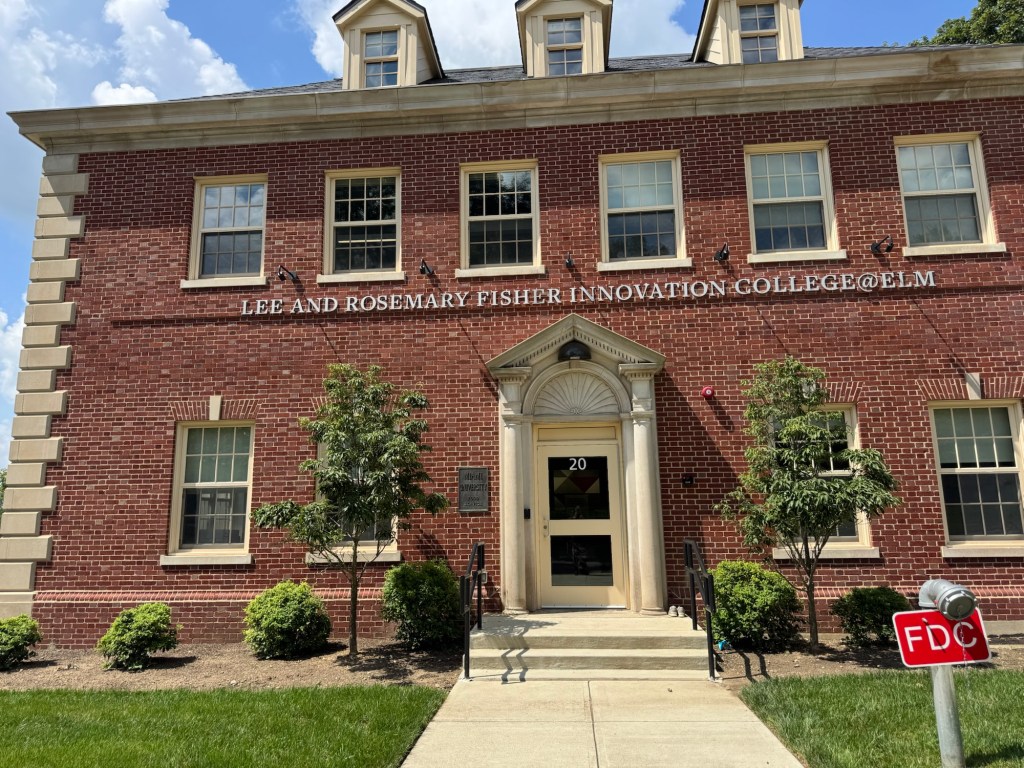
On Monday, September 21, 2026, at 7:00 p.m., at 20 South Elm Street, Oxford, Ohio 45056, inside Fisher Innovation College@Elm on Miami University’s campus, we are going to talk in public about economic vitality and what I believe is an enormous opportunity for Butler County. The event is free. Nobody is asking you to bring a checkbook. Just eat some snacks, shake hands, and hear the plan. I told my wife to go to Costco and get Doritos, punch, and whatever else makes a room feel welcoming instead of processed. That is the tone—serious work. Easy room. If you have wanted a reason to see me after a decade of reading or listening, that is the date. My schedule jumps around a lot, but I will be there for this.[3][4]
Oxford. The university town on the west side of the county. The building is the renovated old food-service and workforce site at 20 S. Elm Street — College@Elm — not a lecture hall buried in the academic core. Volynt Aero lists that building as its home. Miami’s Advanced Air Mobility Hub lives in that same incubator. The door you want is on Elm.[1][2][3][5]
I still dislike the word consultant, even though I now wear it, because I spent years chained to a success I had already built, and I felt embarrassed standing next to men who had already swung and connected. And why I would rather strike out in public, in Butler County, in the aerospace market I have been talking about for years, than spend the rest of my working life protecting ground that other people were already trying to steal.
I am a job-creator kind of person. I want to make jobs. I do not want to get a job someone else already made. That distinction sounds like a slogan until you have lived both sides of it. Most of the professional class measures adulthood by getting a job. Making jobs is how a county stays alive. I am happiest when I create work for other people—hundreds, or thousands. If I can help build something that employs a thousand people or more, that is the scoreboard I care about. Upper mobility. Payrolls that put gas in cars. Families that can stay in Butler County instead of exporting their kids to Texas, North Carolina, or the coasts and then coming home at Christmas to tell us how much better the schools are somewhere else.
I have done versions of this before. I have hired. I have built programs. I have kept a business alive longer than I wanted to because I brought people into it and felt responsible for the lives attached to those paychecks. That loyalty was not branding. It cost me years. It also taught me the thing the consultant class never learns: once you make something valuable, you become a target. Pirates do not always arrive with hooks and flags. Sometimes they arrive with decks, retainers, and a vocabulary about “professionalizing the operation.”
Go back to 2019. We had a Trump rally at a place where I had spent much of my life building a business. The owner was my friend. I stayed with that business a long time because of that friendship and because I didn’t want to deal with the woke corporatism that evolved from 2015 through 2020. Then COVID. Then the years after COVID, when the work stopped being about building and started being about keeping the lights on for people I had hired. I felt chained to their ability to put gas in the car. In a lot of ways I felt like I was lashed to a white whale. From the outside, that can look like success. The people who still had jobs were glad the jobs existed. I was glad they still had them. Inside, I was resentful — not of the people, of the process. I had created jobs, and then I became the janitor of those jobs while other people bought in, layered in, and tried to change what I didn’t want changed.[6]
It felt like trying to stay married to someone who wanted to cheat. Every time you turned around, they were climbing out a window toward some new lover with a fancier spreadsheet and phony EBITA numbers propped up by a shell game. I poured my heart into a company I didn’t fully control. Other people wanted to change it. I didn’t like the changes or the people who came with them. I still liked the people I had encouraged to become part of it. So I stayed. I defended. I hit ground balls to advance other people already safely on base. I kept the lights on.
Over the last couple of years, I went through multiple cycles of consulting firms imposed on me by, come what may, financial institutions who thought they knew best, after the best was already placed in their lap and worked out for them. Three waves. Then a fourth. I will say it the way I say it when I am not dressing it up for a chamber breakfast: a lot of them are dumb as rocks, and I do not mean to insult rocks. They are paid like industry professionals while the world under their feet has already changed. They exist to maintain ground already taken. They do not create the ground. They arrive after value exists and explain to the people who made the value how the value should now be managed. That is not a free market. That is a priesthood of fools.[7][8]
I worked at the same place for many years because of loyalty to the owner and because I wanted his family to benefit from what had been built. I still want that. Friendship does not expire because a corporate process gets stupid. But I also wanted an excuse to get away from a machine that had stopped being a build and had become a defense. The first opening that would let me play where I actually wanted to play showed up in these guys at Miami, in vertical takeoff, in the new space-adjacent aerospace market I have been putting episodes on for a long time. I have been interested in vertical aerospace for years. I wanted into that market for all kinds of reasons. Then my life opened a gap; I met them, I liked them, I wanted them to succeed, and they started introducing me to people. That was the intention. That is why I said yes.
They have introduced me as the coming COO. Right now I am a consultant. A senior consultant. I have a path toward the COO role at the scale they are trying to reach. I was apprehensive about the word. I have been stunned by how many places want me to consult for them. I had personal reservations about putting my name on that label. I still have them. I am also proud to be affiliated with this particular team. The title is not the prize. The prize is whether we can turn a sharp technical package into manufacturing, customers, and jobs.
Vivek Ramaswamy and J.D. Vance were at that 2019 rally I hosted. Warren Davidson has been in the orbit. I have had conversations with Bernie Moreno. I had a good talk with Jim Renacci after an event at Jags in West Chester. I have watched a lot of people I know leave the safe lane, take a real risk, and come back with independent wealth—enough to enter politics, or to refuse to be owned by it.[9][10]
Vivek was already on a steep wealth curve then. He wasn’t quite in the billionaire club the way magazines like to print it, but he was headed that way, and since then he’s been in that conversation and has taken the political path back toward Ohio’s governorship. Years later the call came through other people: he wanted to announce a governor’s race at my place, because the place still represented a free-enterprise culture that had not gone fully woke, and because we were doing things that did not look like everybody else. I said yes. I meant yes. I also felt a private embarrassment I should admit here, because if I do not admit it, the rest of this sounds like a victory lap instead of a confession.
When you stand next to people who built or sold large enterprises and then used that capital to change the map, and you are the guy still defending last decade’s success against the fourth wave of consultants, you feel the difference in your chest. They look at you the way a hitting coach looks at a veteran who will not let the bat get through the zone. You are at this stage of life. Why are you hitting ground balls? Why are you taking the walk? Why are you protecting a single when the bases are loaded? You are a guy who could drive the ball with runners on. Why are you trying to beat out a roller to short?
The honest answer, for a long time, was loyalty. Loyalty to the owner who was my friend. Loyalty to the people I hired. I do not apologize for that. I also will not pretend it was the same thing as ambition. Ambition would have left earlier. Loyalty stayed. Then loyalty, after enough waves of professional stupidity, became a kind of self-betrayal. I felt like I was underperforming in front of people I respected. I felt like I was wasting a bat. When Vivek talked about using the place because it still stood for the free-enterprise system, I felt a flicker of pride and a bigger flicker of “I should have more to put on the table than a good venue and a good story about the past.”
I watched them swing. Some of the balls went over the fence. The crowd enjoyed it. The players enjoyed it. Everybody enjoys seeing a ball leave the yard, including the man who hit it. I wanted that feeling again — not the celebrity, the creation. I want to make other people wealthy. I want payrolls large enough that a community can even start talking about abolishing property taxes without gutting the services people actually like. That is a standard, not a slogan. If you are not trying to create billions in new market value, I am not sure the conversation is worth the evening. A few hundred million in annual revenue is what the coastal startup press calls a win. I do not think that is a win. Ten billion in new market growth is the starting point for a conversation about success. To me, success looks like a hundred billion. That is how you change a county instead of decorating it.
I haven’t built a job base that employed a thousand people or more in over a decade. I have been trying to hang on to the success I had already built. That work has its honor. It also became boring to me, and boredom in an operator is a warning light. When the fourth wave of consultants arrived with different ideas about how we should do the thing I had already done, I was happy to leave and not look back. They did not like me. I did not like their ideas. I did not want to be part of another cycle of ground balls. I took the off-ramp. I would rather hit the reset button and start over with people who want to build than spend another year arguing with people who think a slide deck is an airplane. I’m sure I’ll write a book about all this once I get some distance from the immediacy of it all. It will make a very interesting business book. But first, such books are only valuable to people once you are looking back from a position of success; otherwise, it’s just another story about a down-and-out situation. Success has to be attached to the narrative.
That is how I landed at Volynt.
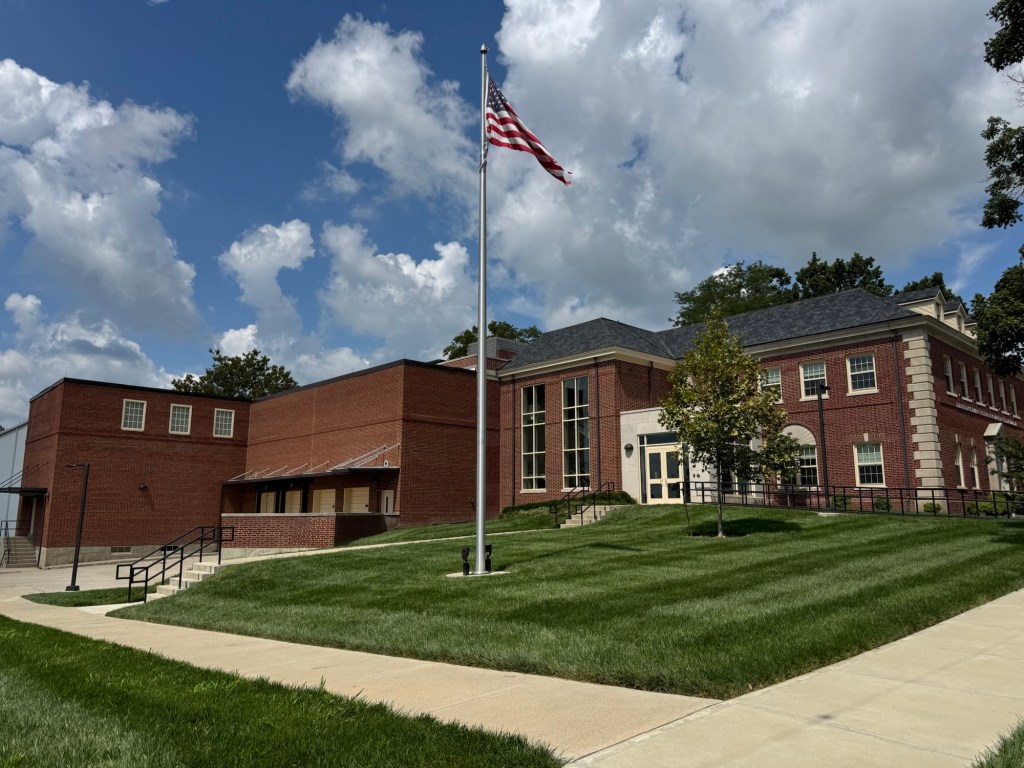
The building matters, and I am going to stay on the building for a minute because “Miami University” is a large map, and people get lost on large maps. College@Elm is Miami’s innovation and workforce hub at 20 S. Elm Street. It used to sit vacant. The university, the City of Oxford, alumni, the state capital budget, and JobsOhio money turned it into a technology, entrepreneurship, and light-manufacturing incubator — office, design and testing, startup space, a workforce resource function, and room for real production instead of just posters about production. Miami alumni Lee and Rosemary Fisher put their name on it. Randi Thomas and the ASPIRE shop treated it as a way to drag Oxford out of an eight-month student economy and toward a twelve-month one. That is the room.[3][4][11][12]
Volynt Aero’s address is that building. Suite language has appeared in their capability materials as 20 S. Elm St., Suite 117. Miami has also stood up an Advanced Air Mobility Hub in the same incubator, aimed at autonomous, hybrid-electric, and eVTOL aircraft, in collaboration with Butler County and Middletown Regional Airports, Cincinnati/Northern Kentucky International Airport, Butler Tech, and industry partners including Volynt.[1][2][5]
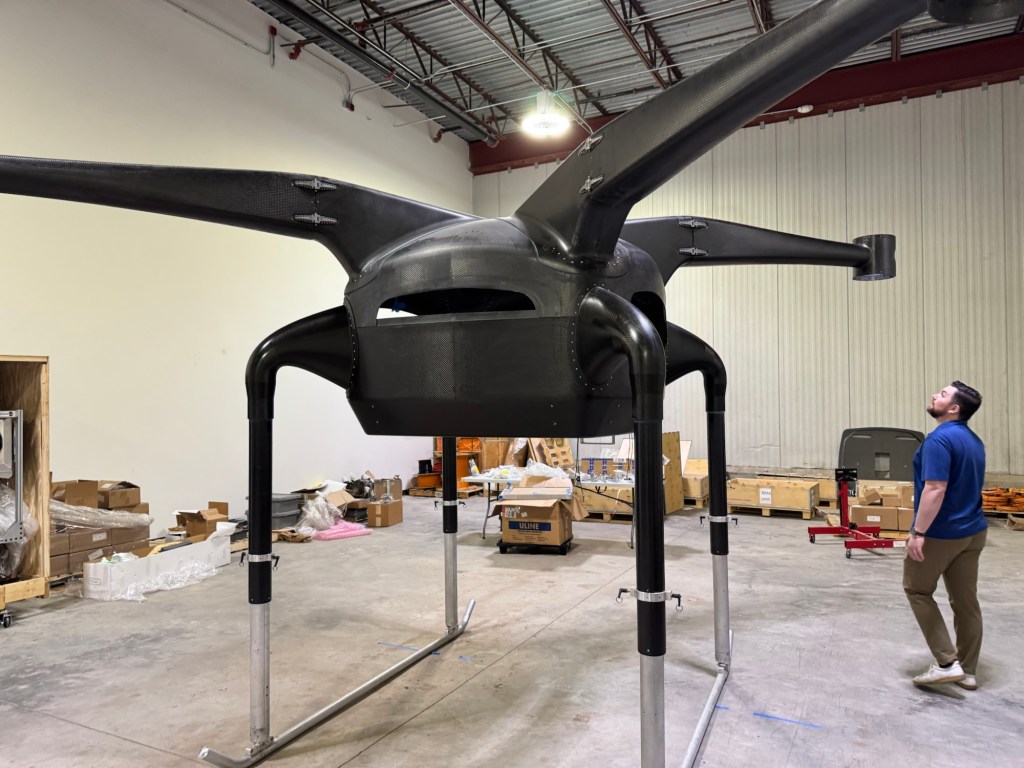
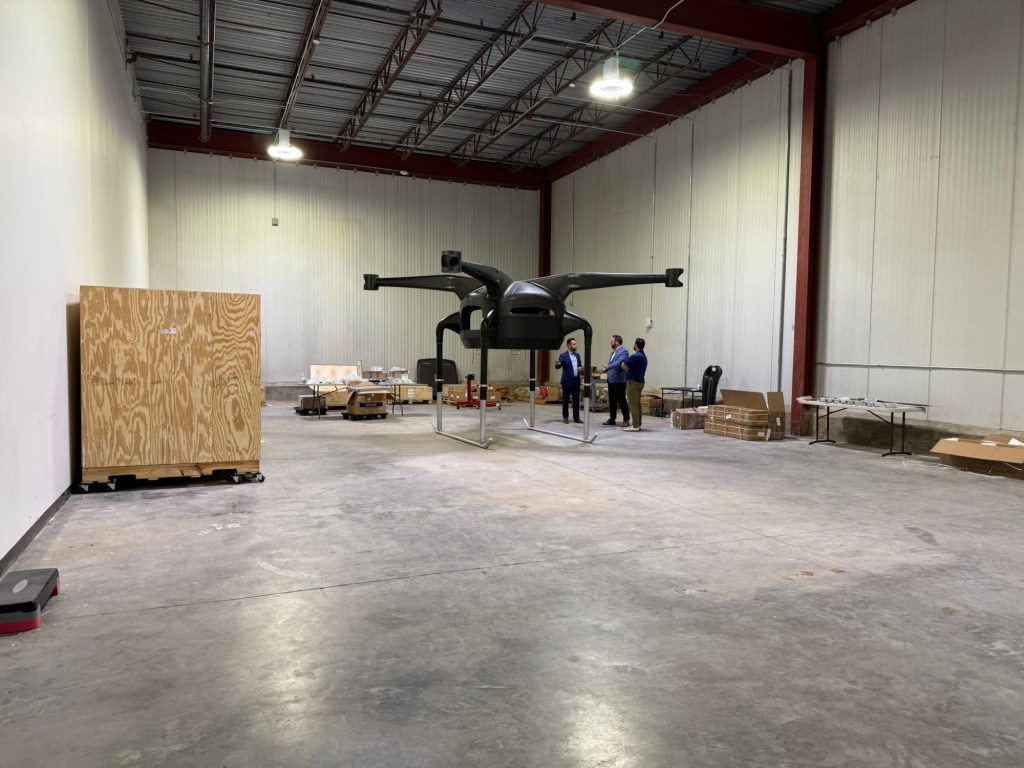
Volynt is not a passenger flying-taxi pitch dressed up for a TED talk. I need to say that because the popular press only knows one picture of this industry: a four-seat air taxi humming over a downtown skyline in a rendering that has never paid a supplier. The company is building large hybrid-electric uncrewed aircraft for cargo logistics, disaster response, contested logistics, mobile power generation, and forward communications—ugly work. Useful work. The work that can find a customer before the lifestyle brochure does. They call the aircraft line Vyper in their public materials. The founding team came out of UAS and eVTOL work dating to 2012, including AFWERX Agility Prime flight-test experience on a full-scale electric aircraft; University of Cincinnati aerospace engineering; Rose-Hulman and Illinois mechanical engineering; and FAA experimental airworthiness work. Together, they have forty-plus years of experience in electric vehicles, eVTOL, and manned and uncrewed aircraft. Jeffrey Bennett is the CEO. Justin Jantzen is the CTO. The rest of the technical bench is the kind of bench a county should want to keep.[2][5][13]
They have proposed a Hybrid Propulsion and Energy Lab — the HyPE Lab — at Miami University Airport in Oxford, a facility in the neighborhood of seven million dollars aimed at hybrid-electric, hydrogen fuel cell, and electric aviation development. They have already pulled Ohio Third Frontier / TVSF grant support in partnership with Miami and the Entrepreneurs’ Center. That is not a finished factory. That is a package with technology laid out, customer logic laid out, and a county sitting in the birthplace of powered flight, next to Wright-Patterson, next to a new Butler Tech aviation hangar beside Middletown Regional, next to Joby and BETA and Electra planting metal in the Miami Valley, in a state that has spent years trying to own advanced air mobility instead of applauding it from the stands.[14][15][16][17][18]
Ohio’s own AAM studies are not modest. DriveOhio and the NEXA work done for the state put the prize at roughly thirteen billion dollars in economic activity over twenty-five years, about fifteen thousand jobs, and about two and a half billion in tax revenue — if Ohio actually captures the market. Cargo, emergency services, and vehicle manufacturing are a large share of that stack. That is the lane Volynt is in. I do not treat a consultant forecast as destiny. I have spent too many years watching forecasts get used as incense. I treat the number as a fastball I can see. If the state leaves that stack on the table, California and Texas will take it and send us a newsletter about thought leadership.[19][20]
I want to give this some color, because “economic vitality” is a phrase chambers of commerce use until it means nothing.
Vitality is not a social-hour calendar. Vitality is surplus. It is when a county produces so much new value that young people do not have to leave, old industrial sites get reused, airports become more than weekend-pilot hobbies, and tax fights become less vicious because the base is growing faster than the government. I have spent a lot of my public life as the tax-killer in this county. I didn’t do that because I hate roads, sheriffs, and firehouses. I did it because a government that cannot stop growing will eat a private economy that has stopped growing. The only durable answer is not a clever levy. The durable answer is so much new payroll and new production that the argument changes temperature.
Butler County already has pieces of the machine. Miami’s Oxford campus and the regional campuses. Middletown’s steel and manufacturing memory, including the kind of heavy industry that still knows what a shift is. The I-75 corridor. Two relevant airports inside the conversation — Miami University Airport in Oxford and Middletown Regional — plus CVG as the big-hub partner on the AAM map. Butler Tech’s new aviation center, a roughly fifteen-million-dollar hangar and classroom pile next to the Middletown airport, with county, city, and JobsOhio money in it, training kids who can see an aerospace job without leaving home. And a university incubator on Elm Street, explicitly sold as a way to create year-round work in a town that used to hibernate when students left.[1][15][11]. And let’s not forget about the wonderful Butler County Regional, which has the prospect of enormous significance in a way that it has always been poised to bring forth.
Advanced air mobility is one of the few new industrial stacks that can still be built in the Midwest instead of being imported as a finished product from the coasts. Ohio has been recruiting it on purpose. Joby has been planting manufacturing near Dayton and talking about thousands of jobs and hundreds of aircraft a year if the production curve holds. Electra has committed a huge Ohio production bet out of an MIT classroom idea that turned into a short-takeoff hybrid aircraft and an $850 million manufacturing story in Springfield and Clark County, with job counts in the neighborhood of two thousand. BETA and the National Advanced Air Mobility Center of Excellence in Springfield are part of the same weather system. JobsOhio has treated AAM as a super-sector and has been walking that story all the way to Paris. Hartzell in Piqua certified an electric-aircraft propeller. The FAA’s eVTOL Integration Pilot Program is on the 2026 calendar. Ohio entered that fight with a multi-state medical-logistics proposal.[16][17][18][21]
Most of the passenger eVTOL story is still a certification and capital-markets story. That is not an insult. It is a timeline. Certification is slow. Air-taxi unit economics are a sermon until the aircraft is legal, maintainable, and paid for by someone other than a vision fund. The cargo, disaster, defense-adjacent, and mobile-power story can move sooner because the customer is not waiting for a four-seat taxi to become socially fashionable. An uncrewed hybrid aircraft that can haul, generate, and communicate in ugly terrain is a product a government buyer and a logistics company can understand without a lifestyle brochure. That is why I like this package. It is closer to a truck than to a fashion object.
I have talked about the new space economy and vertical aerospace for years. All these things mentioned here are merging at a very unique time in Southern Ohio, and I’ve known it for a long time, and I had felt stuck, unable to participate because of my other commitments. I wanted into that market, not stuck to loyal obligations. Not as a fan. As an operator. I have walked the producer culture at SpaceX and looked at what happens when a company treats manufacturing as the product instead of treating the press release as the product. Reusability. Iteration. Catching the thing and flying it again. That is the version of aerospace I want in Ohio. I do not need Volynt to be SpaceX. I need Volynt to be as serious as SpaceX: close the gap between the drawing and the floor. California and Texas will take a lot of the gold rush. They should not take all of it. Ohio invented powered flight. It should not rent the sequel from the coasts and call the rental economic development.
There is a second vitality problem I will not dance around. A lot of American corporate culture imported a compliance religion that I believe tracks, in spirit if not in every memo, to the same managerial habits that made Wall Street comfortable with Communist China’s labor and governance model while lecturing American manufacturers about virtue. ESG-era asset managers scolded domestic firms and stayed hungry for China exposure. Larry Fink could write letters telling American CEOs that climate and stakeholders would reshape finance, and the same apparatus could treat Beijing as a growth market. That split personality cost real companies real billions in distracted leadership. It also trained a consultant class to speak fluent morality while missing the factory. I have watched it up close. I have watched financial institutions send in the next wave of advisors because they thought a firm that had not gone woke yet still had juice that could be squeezed if only the culture were more compliant. They do not like Elon Musk. They do not like being told the world will change through building instead of through postings. I have been a target of that instinct. I am done volunteering for it.[22][23][24]
I want to lead a very dramatic change that changes entire industry standards, around the world. I want to help build a company that makes money the old way: a customer pays for a machine that works. Easy money and financial engineering can look like vitality for a while. Then inflation shows up, and the community realizes the jobs were never as solid as the press release. I want the other kind. Output. Exports. Aircraft. Power systems. Maintenance hangars. Suppliers. Kids from Butler Tech and Miami who can stay home and get paid. I want so much money coming into this community that property taxes become a conversation you can have without destroying the services people like. That is where my mind is. Getting on base is not enough.
Swinging for the fences is a moral choice, not a motivational poster. Baseball metaphors get cheap. I am keeping this one because it is the cleanest picture of the decision.
Most people in operating roles at this stage of life take the safe route. Get on base. Take the walk. Protect the pension. Let someone else hit the homer. You have already done the hard thing once. Now you need to keep your place in the lineup. I understand that instinct. I rejected it.
Swinging for the fences can end in a strikeout. I know that. I am a realist in business. Success is not entirely up to me. Other people have to get on base. The pitcher has to leave a pitch you can actually hit. Certification, capital, customers, suppliers, and timing all have to arrive in something like the right order. I have said on the air that this is a poker game more than a guaranteed jackpot. The risk is real. I do not think the risk is stupid. They have a gap I think they can close. I know what I can do in an operating seat. That part is not in doubt in my mind. I have done versions of it many times. The barrier most early technical teams cannot cross is not the CAD model. It is the factory floor, the hiring machine, the customer close, and the culture that does not dissolve when the first institutional money arrives. In this case, I see all those coming together in very unique and profitable ways. It’s always about timing, and the timing for this is right now.
Even so, a strikeout while swinging for the fence feels more honest to me than a career of ground balls. I have wanted a window to build from the ground up again. I got one. Before the window closes, I want a grand slam for Butler County — or at least a swing that everybody in the stands can respect. Safety is not my default setting. Loyalty is. Those two traits fought each other for years. Loyalty won, until the fourth wave of consultants made it obvious that staying was no longer protecting the people I hired. It was protecting a process I did not believe in.
I enjoy risk. I enjoy my life most when there is real risk in it. People who have known me a long time know that. They also know I will hang onto a job base I created longer than a purely rational careerist would, because I do not like being the person who collected a check and left other people’s mortgages on the table. When the money showed up to go somewhere else, and I knew the new layer was going to take it in a direction I would not sign off on, I did not feel like I was letting anybody down by leaving. I felt like I was buying my freedom from a process that had already decided I was the problem.
I want to be a version, in Ohio, of what the serious aerospace builders are doing in Texas. I expect that of myself. I was embarrassed, in those conversations with people like Vivek Ramaswamy and Bernie Moreno who had already swung and connected in their own lives, because I could hear the unasked question from them: you love the free-enterprise system enough to host a speech, why aren’t you in the game at that scale? I hosted the speech. I meant it. I also needed a moment of my own — the kind where you roll the dice large enough that the win, if it comes, is visible from the rest of the world.
September 21 is not a fundraiser with a soft-ask after the punch. It is not the Rich Hoffman show. It is not a secret society. It is a public conversation about a plan for economic vitality in Butler County, hosted where the work is already living, on a Monday night, with the people doing the engineering in the room. If you come, you will not be listening to me invent a company out of a microphone. You will be listening to why I think this particular team, in this particular building, in this particular county, is a bat worth swinging.
Monday, September 21, 2026. Seven o’clock. Fisher Innovation College@Elm. 20 South Elm Street. Oxford, Ohio 45056. Free. Come as you are.
If the evening works, you will leave less interested in me and more interested in what a serious advanced-air-mobility build could do to the tax base, the talent pipeline, and the self-respect of a manufacturing region that has been told for twenty years that the future lives somewhere else. There is a lot of affiliation possible in this — Miami engineers, Butler Tech kids, airport boards, suppliers who already know composites and power electronics, people across Ohio who are tired of watching the next factory announcement land in another state. I want these guys among the names people mention when they talk about who actually built the upper-mobility market instead of posting about it on LinkedIn.
Let me stay in Butler County long enough that the vitality claim isn’t a vibe.
This county sits between Cincinnati and Dayton with a population now in the high 380,000s to about 400,000 depending on which vintage of the estimate you trust, employment in the neighborhood of 190,000 people, and a local GDP north of twenty billion dollars. Manufacturing is not the largest headcount sector—healthcare and retail usually win that race—but it is still the spine. County profile data puts manufacturing employment in the mid-teens of thousands, with hundreds of manufacturing establishments. That is the difference between a bedroom county and a producing county. Bedroom counties import paychecks and export children. Producing counties keep a reason to stay.[26][27]
I have lived in this county my whole adult life. I did not stay because it was fashionable. I stayed because this is the ground I know, and because I think a person who talks about job creation while quietly arranging his own exit to a coastal zip code is running a different play than the one they are selling. The future I want is not a TED talk in Austin about the Midwest. The future I want is a payroll in Oxford, Middletown, Hamilton, Trenton, West Chester, Fairfield, and the townships not named in the brochures.
Middletown still knows steel. Cleveland-Cliffs putting real capital into Middletown Works is the kind of story that should shame anyone who wrote this valley off as a twentieth-century museum. Hamilton is growing again, according to the latest Census slice of incorporated places. Oxford shrinks a little when the student count wobbles, which is exactly why College@Elm was sold as a twelve-month economy instead of an eight-month one. The I-75 corridor still moves freight. The airports are not theoretical. Miami University Airport is a tool if someone treats it as one. Middletown Regional now has a Butler Tech aviation hangar next door — roughly thirty thousand square feet and fifteen million dollars, with millions from the county commissioners, JobsOhio, and the city — so a kid can learn airframes and powerplants without buying a plane ticket to Dayton on the first day of class.[28][15][11]
That is the county I am talking about on the 21st. Not a fantasy county. This one.
I should talk about the industry itself, because vitality without an industry is just a mood.
The Wright brothers did not invent flight so Ohio could become a spectator. Huffman Prairie is a cow pasture with a better story than most nations ever get, and Wright-Patterson plus the Air Force Research Laboratory turned that story into a century of metal, propulsion, sensors, and people who know how to hold a tolerance. The National Advanced Air Mobility Center of Excellence in Springfield gave the new stack a hangar and a test culture. Ohio was early on beyond-visual-line-of-sight work. JobsOhio has been walking AAM around the world as a super-sector. That is nothing. It is also not finished. A super-sector that does not produce aircraft, batteries, blades, software, and trained hands in this state is just a brand.[16][21]
Joby is the loudest nearby proof. In 2023, the state stood at Hawthorn Hill and announced a Dayton-area manufacturing bet aimed at two thousand jobs, hundreds of millions in investment, and a long-run rate described as up to five hundred aircraft a year if the curve holds. By late 2025 they were making propeller blades in Dayton — thirty blades per aircraft across six rotors, with talk of fifteen thousand blades a year at scale. In January 2026 they bought a 700,000-square-foot building in the Vandalia / Dayton orbit to support a doubling of production toward four aircraft a month in 2027, while California still does final assembly in Marina. That is what a real company looks like when it stops rendering and starts buying floor. I do not work for Joby. I am not pretending Volynt is Joby. I am saying the weather system is here, and a county that refuses to fly in that weather is choosing to stay on the ground for sport, and just hitting ground balls when they should be home runs.[18][29][30]
Electra is the other loud proof. An MIT classroom argument about short takeoff versus pure eVTOL turned into a hybrid-aircraft story, then into an $850 million Ohio manufacturing commitment in Springfield and Clark County, with job figures in the neighborhood of two thousand. That architecture differs from Volynt’s unmanned hybrid cargo and power mission, and that is the point. A healthy industrial stack is not one company. It is a density of companies that can share suppliers, schools, airports, and a labor pool that already knows composites, wiring harnesses, thermal problems, and shift work.[17]
BETA, Wisk, Archer, and the rest of the passenger field will keep eating capital and calendar until the FAA is satisfied. That is their fight. Ohio’s eIPP proposal — medical cargo, multi-state coordination, existing infrastructure north of a billion dollars already in the AAM pipeline by the state’s telling — is an attempt to make the fight operational instead of ceremonial.[21]
Volynt’s lane is the one I keep coming back to because it does not need a downtown skyline to make sense. Contested logistics. Disaster. Mobile power. Forward comms. Cargo that does not care whether the landing zone has a concourse. Hybrid propulsion because batteries alone still lose arguments with range, weather, and payload. Unmanned because the scarce resource in a bad place is often the trained crew, not the box. If you have listened to me talk about cargo drones, battlefield and hurricane power, and the difference between a toy and a truck, this is that conversation with a company attached to it.[2][5][13]
I have been drawing and talking through those vehicles for a long time — American-flag and camouflage workhorses, five-hundred-pound-class cargo, relief power after a storm, the ugly missions that do not photograph like an air taxi over a football stadium. The point of affiliation is not that I became a CAD operator. The point is that I know what it looks like when a technical team has the machine but doesn’t yet have the operating company around it. That gap is where COOs either earn their keep or become another slide.
What do I think I bring? I am not going to write myself a brochure. I will say this. I have hired at scale. I have built programs. I have kept operations alive under pressure. I have sat through the consultant priesthood, and I know which parts of their language are anesthesia. I have a public voice in this county, which is either an asset or a liability depending on whether you want the work known. I want the work known. I want suppliers to walk in. I want kids from Butler Tech to see a ladder. I want Miami engineers to have a reason to stay on Elm Street after graduation instead of taking the first offer that spells California correctly. I want political people who talk about jobs to have to look at an actual floor instead of a resolution.
I also want to be honest about scale. Volynt is early. Public profiles put the firm in the small-headcount startup band, founded in 2024, grant-supported, incubator-housed, airport-lab proposed. That is not a criticism. That is the inning. I am walking in at the inning where the bat still matters.
People will ask why a person who distrusts consultants became one. I have answered it, and I will answer it again because the contradiction is the point. I distrust consultants as a class because the class profits from ambiguity and from other people’s sunk costs. I accepted this particular affiliation because the team asked me to help them become a company, not to help them become a presentation about a company. If that changes — if the work becomes another layer of process laid on top of people who actually know how to build aircraft — I will not stay for the fee. I have already lived that movie. I did not like the ending.
The same is true of the COO language. A COO at this stage is not a parking place for a résumé. A COO at this stage is the person who turns a technical core into hiring, suppliers, quality, customers, cash discipline, and a culture that can survive the first serious outside money. Most startups die in that translation. They have smart founders and a concept that connects, and they cannot get distance. I think I can get them distance. That is the only reason to say the letters out loud. A COO has to be top notch and able to build at scale to achieve the kind of revenue I think is meaningful, and you won’t get that by playing it safe and hitting ground balls.
I want to address a risk that the safe people often overlook. Risk isn’t the same as recklessness. Recklessness is swinging at everything. Risk is knowing the count, knowing the pitcher, and still letting the bat go because a walk will not change the game. I have been offered safe work that paid well. I know what that work is. It is a ground ball with a 401(k). It is a walk with better catering. It is other people’s home runs. I have lost years to loyalty, and I am not going to lose the next window to comfort. Comfort is how a producing region becomes a commenting region.
A cultural fight runs beneath the industrial one, and I am not going to pretend I do not see it. LinkedIn-era corporate America learned a language that came into American firms through compliance, banking, and the HR stack, and a lot of that language treats production as a moral problem to be managed instead of a good to be multiplied. I have called that language anti-American in the sense that it distrusts the producer and trusts the administrator. I have called out the China contradiction because it is the tell. If your virtue system cannot survive contact with the actual labor and governance model of the country that ate so much of our manufacturing, your virtue system is a costume. I don’t want a company that puts on the costume to raise a round. I want a company that makes a machine a customer will pay for, then makes another one faster.[22][23][24]
That is why I talk about SpaceX the way I do. Not because I think every Ohio startup is going to catch a booster. Because the method is the method: iterate in public, treat the factory as the product, refuse the cost-plus fog, and accept that some days the thing blows up and you learn. The consultant class hates that method because it makes their timelines look like prayer. I like that method because it is the only one that has recently changed what a country can do in the air.
I also like it because it creates the thing I actually want to be judged by. Jobs. Not jobs as a press-release noun. Jobs as a person who can buy a house in this county, raise children who do not have to apologize for staying, and look at a factory or a hangar and know the work is real. I have not had a run at a thousand-plus job base in more than ten years. That sentence bothers me. It should. A person who knows how to do a thing and spends a decade defending a smaller version of the thing is not being humble. They are being delayed.
Vertical aerospace does not sit in a vacuum. The same decade that made reusable orbital machines ordinary made a lot of people rich and made a lot of other people angry that wealth could still be created without a committee. I have said that a few hundred million in revenue is not the definition of a serious company in this era. I meant it. The markets being built around launch, satellite constellations, lunar logistics, point-to-point cargo, and now advanced air mobility are not cottage markets. They are the next industrial revolution, and they still have an American accent if we keep it. If we treat them as branding exercises for cities that want to look modern, the accent moves to Shenzhen, to a Gulf sovereign fund, or to whatever coastal firm learned to speak Ohio long enough to take the incentive and leave the toolpath somewhere else.
Vertical takeoff is the part of that revolution that touches a county like mine first. You do not need a Cape to build a hybrid cargo aircraft. You need engineers, a hangar, a certification strategy, suppliers, and a customer with a problem a road cannot solve. Disaster is that customer. Defense logistics is that customer. A hospital network that cannot wait for a truck in snow is that customer. A grid that dies in a hurricane is that customer. I have watched too many AAM conversations start at the air-taxi rendering and stay there until the money gets bored. Start at the ugly mission. The ugly mission pays. The pretty mission might pay later.
I kept doing episodes on this because it would have been easier to do another week of political weather. Politics matters. I am not walking away from it. But politics without production is commentary. I got tired of being excellent at commentary while the production problem in my own working life was a whale I was feeding. That is the private engine under this public announcement. I wanted my workdays to match the thing I have been telling this audience is coming.
I also wanted my community to have a shot at the kind of wealth that does not arrive as a transfer payment. Transfer wealth makes clients. Produced wealth makes citizens. I have watched federal money, state money, levy money, and foundation money wash through this region and leave behind a professional class that knows how to apply for the next wash. I am not against a smart grant. Volynt has used Ohio Third Frontier support and I am not going to pretend that seed capital is sinful. I am against a culture that thinks the grant is the business. The business is an aircraft that flies, a customer who pays, a shop that can build the next one, and a payroll that does not vanish when the appropriation cycle turns.
Consultants love the grant cycle. They measure it in the way they understand measurement: hours, decks, compliance language, a ribbon, a quote in the paper. Builders love the second aircraft. The second aircraft is the only metric that means the first one was not a stunt. If you come on the 21st and you only want to hear about the first rendering, you will be in the wrong room. I want to hear about the second, the tenth, and the factory that makes the tenth boring.
Boring is the compliment. SpaceX became important when landing a booster stopped being a miracle and started being a Tuesday. Joby becomes important in Ohio when a blade is just a blade and an airframe is just an airframe and the third shift is staffed. Volynt becomes important in Butler County when a hybrid unmanned cargo aircraft is a product you can point at, not a paragraph in an incubator newsletter. I am here for the Tuesday. I am willing to live through the miracles to get there. I am not willing to live through another decade of process about the miracles.
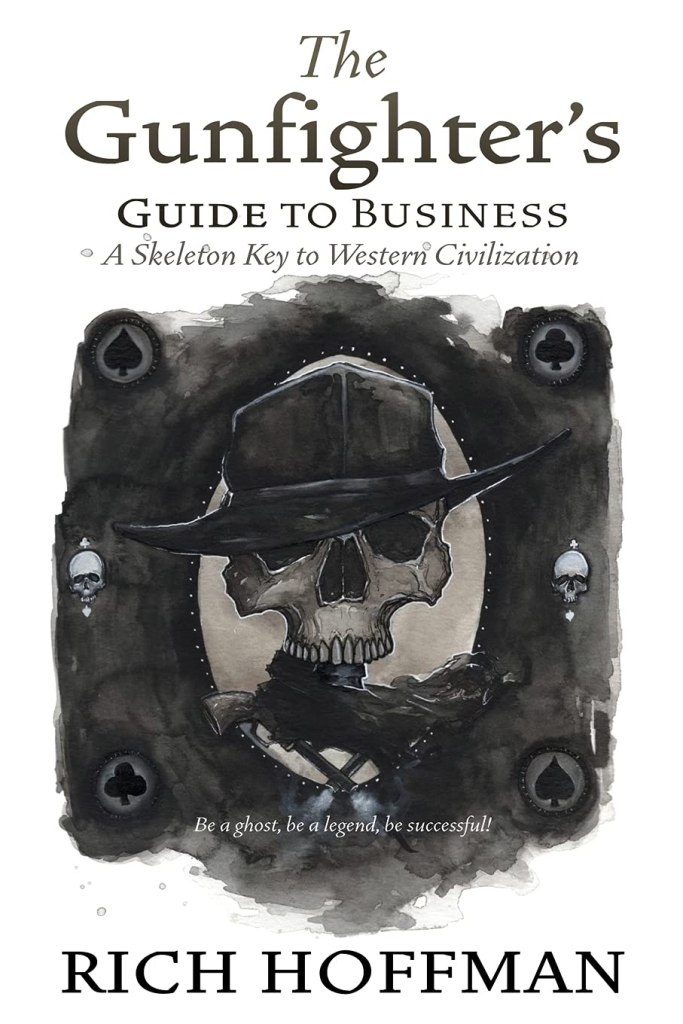
People who have known me since the car lots and the plants and the courtrooms and the long years in aerospace programs know I do not have a clean corporate story. I have a Western story. I worked young. I learned in rooms that did not care about my feelings. I wrote a book that used a gunfighter as the American stand-in for Sun Tzu and Musashi because I thought this civilization had forgotten that speed plus competence is a moral achievement, not a personality defect. That book was not a merch play. It was meant to give operators a language that did not come from a consultancy or from a monastery. If you read it and then watch me take a safe COO job at a firm that wants to be liked by the same class the book was written against, you should reject the book and I would never want you to do that.[7]
The loyalty years complicate the legend, and I am leaving the complication in. I could tell this as a clean break: woke capital arrived, I left, I found the future. That is too clean. I stayed because of a friend. I stayed because of people I hired. That is a virtue until it becomes a cage. The cage ended when the fourth wave made it obvious that the fight was no longer about the work. It was about who got to narrate the work. I do not give that away anymore.
If you are a young engineer at Miami and you are reading this, I want you in the room. If you are a trades kid at Butler Tech who can hold a torque spec, I want you in the room. If you are a supplier who already sells to the Dayton aerospace pile and you are curious whether Oxford is serious, I want you in the room. If you are a mover and shaker, a trustee, a mayor, or a staffer who only knows this industry from a JobsOhio slide, I want you in the room. If you are a person who has listened to me for ten years and thought I would never come back to a build, I want you in the room so you can see that I meant what I said when it really mattered most. Not when the game was on the line and we were hitting ground balls just to get and stay on base. But to hit home runs and to win the game in ways that nobody ever forgets.
So come to Elm Street.
If you are coming from Middletown or Liberty Township, you are driving west toward Oxford, not south toward Cincinnati and not north toward Dayton unless you like extra highway. You want 20 South Elm Street. You want the College@Elm building. You want 7:00 p.m. on Monday the 21st. Park like a person who has been to Oxford before, the building has its own parking lot— the streets are tight, the students exist, the building is the old food-service site that does not look like a cathedral and should not. Walk in. Eat a Dorito. Shake a hand. Listen to engineers. Listen to why I think this is the fence we need to knock the ball over with the bases loaded.
If you have known me for a long time and you have been waiting for a reason that was not another levy fight or another school-board night, this is a different reason. I still care about taxes, because a county that cannot grow its base will keep reaching into the same pockets. I still care about schools, because a talent pipeline that hates production will not staff a hangar. I still care about the sheriff’s side of a functioning county, because none of this works in a place that cannot keep law and order. But the 21st is not a political rally. It is an economic conversation with a company in the room.
I have said I want wealth large enough that property tax abolition becomes thinkable without wrecking services. People hear that as a joke or as a campaign line. Hear it as a measuring stick. If the new stack in Ohio is really thirteen billion over twenty-five years and fifteen thousand jobs, and if Butler County captures even a serious slice of the cargo, power, training, and supplier work, the tax argument in this county changes. If we capture nothing, we will keep fighting over the same pie and calling the fight civic engagement.[19][20]
I wrote The Gunfighter’s Guide to Business because I thought America needed its own book of strategy — not another imported mystic manual, and not another consultant workbook that teaches people how to manage decline politely. Shooting from the hip, in that book, is not sloppiness. It is mastery under time pressure. I have made a lot of people money before. I have given a lot of people jobs they could live on. I am proud of that. I want to do it again, bigger than I have had a chance to do it in more than a decade. That is why I am standing where I am standing. That is why I stopped protecting the whale. That is why I am swinging.
If the ball goes over the fence, Butler County should feel it in the payrolls. If it does not, at least nobody will be able to say I spent the late innings bunting.
[2] Volynt Aero LinkedIn company page: Oxford headquarters; hybrid unmanned eVTOL mission; 20 S. Elm St. address; Ohio TVSF / Third Frontier grant with Miami University. https://www.linkedin.com/company/volynt-aero
[7] Rich Hoffman, The Gunfighter’s Guide to Business: A Skeleton Key to Western Civilization (Liberty Hill Publishing, 2021).
[8] Rich Hoffman, video commentary on consultants, pricing, and corporate process theater, including “Affordability and Pricing” (2025).
[9] C-SPAN, “Gubernatorial Candidate Vivek Ramaswamy (R-OH) Campaign in Middletown,” August 2026.
[10] Public biographies and campaign records of Vivek Ramaswamy, J.D. Vance, Warren Davidson, Bernie Moreno, and Jim Renacci, used only to locate the author’s personal encounters.
[11] “The new Fisher Innovation College@Elm center hopes to drive economic growth in the community,” The Miami Student, March 9, 2023.
[12] Miami University, “Miami, city of Oxford receive JobsOhio Vibrant Community Grant for visionary College@Elm project,” June 2021.
[20] Michael J. Dyment and Chase Leeby, Advanced Air Mobility Business Case Assessment: State of Ohio, NEXA Capital Partners / NEXA Advisors.
[21] JobsOhio, Ohio eIPP / AAM coalition materials, including the January 28, 2026 GlobeNewswire release on Ohio’s FAA eVTOL Integration Pilot Program proposal.
[22] “BlackRock’s China Hypocrisy Highlights ESG’s Shortcomings,” National Review, February 3, 2022.
[23] “China Has One Powerful Friend Left in the U.S.: Wall Street,” The Wall Street Journal.
[24] “‘Woke’ Capitalists Sell Out U.S. to China Behind a Mask of Virtue,” RealClearPolitics, June 4, 2020.
[25] Rich Hoffman, author bio and Politics of Heaven project description, The Overmanwarrior / richhoffmanbooks.com.
[26] St. Louis Fed (FRED), Employed Persons in Butler County, OH, 2025 annual: 189,920.
[27] Butler County / BCFA community profile: population near 388,000–399,000; manufacturing employment in the mid-teens of thousands; GDP reported above $22 billion in profile materials.
[28] Journal-News, May 26, 2026, Census estimates on Hamilton and other Butler County cities.
[29] JobsOhio, “Joby Aviation Doubles Down on Ohio,” 2026, and DeWine / Husted 2023 Dayton manufacturing announcement: 2,000 jobs targeted, up to 500 aircraft per year at full ambition.
[30] Dayton Daily News, June 15, 2026, Joby Dayton blade work and Vandalia 700,000-square-foot assembly building.
Bibliography and Further Reading
Hoffman, Rich. The Gunfighter’s Guide to Business: A Skeleton Key to Western Civilization. Liberty Hill Publishing, 2021. Hoffman, Rich. Tail of the Dragon. CreateSpace, 2012. Hoffman, Rich. The Symposium of Justice. Hoffman, Rich. The Overmanwarrior (blog). https://overmanwarrior.wordpress.com/ Hoffman, Rich. https://richhoffmanbooks.com/ Volynt Aero. https://volynt.aero Volynt Aero. Capability Statement. 2024. Miami University ASPIRE. Advanced Air Mobility Hub. Miami University. Economic and Community Impact of College@Elm. DriveOhio. Advanced Air Mobility Economic Impact Study. Dyment, Michael J., and Leeby, Chase. Advanced Air Mobility Business Case Assessment: State of Ohio. JobsOhio eIPP and AAM super-sector materials, 2025–2026. Ohno, Taiichi. Toyota Production System. Productivity Press, 1988. Goldratt, Eliyahu M. The Goal. Womack, Jones, and Roos. The Machine That Changed the World. 1990. Christensen, Clayton M. The Innovator’s Dilemma. 1997. Grove, Andrew S. Only the Paranoid Survive. 1996. Drucker, Peter F. Innovation and Entrepreneurship. Ries, Eric. The Lean Startup. 2011. Fink, Larry. Annual letters to CEOs, BlackRock, 2018–2025. Ramaswamy, Vivek. Woke, Inc. 2021. Ramaswamy, Vivek. Nation of Victims. 2022. Vance, J.D. Hillbilly Elegy. 2016. Rand, Ayn. Atlas Shrugged. 1957. Rand, Ayn. The Fountainhead. 1943. NASA / Booz Allen Hamilton urban air mobility market studies. FAA eVTOL Integration Pilot Program (eIPP) announcements, 2026. AFWERX Agility Prime program overviews. Kahn, Roger. The Boys of Summer. 1972. Lewis, Michael. Moneyball. 2003. Nietzsche, Friedrich. Thus Spoke Zarathustra. Sun Tzu. The Art of War. Musashi, Miyamoto. The Book of Five Rings.
Rich Hoffman is an author, political consultant, and strategic advisor based in Cincinnati, Ohio, and the creator of The Politics of Heaven—a unique framework that connects biblical theology, ancient history, and modern power structures to explain how moral alignment and spiritual forces shape global events. Blending real-world political experience with deep research into archaeology, UFO phenomena, and suppressed historical narratives, Hoffman offers compelling commentary on topics ranging from ancient civilizations and the Dead Sea Scrolls to modern populist movements, paranormal continuity, and leadership strategy in chaotic environments. As the author of The Gunfighter’s Guide to Business and the forthcoming Politics of Heaven, he brings a grounded yet provocative voice to media discussions, supported by firsthand experiences and a cross-disciplinary approach that bridges science, history, and theology. For interviews, speaking engagements, or expert analysis, visit richhoffmanbooks.com or contact directly via phone at 513-307-5815 or email at rhoffman@richhoffmanbooks.com. If you’ve seen the movie, Disclosure Day and want to talk about it and the implications of Presidnet Trump’s UAP disclosures, let me know and we can bring some color to your coverage. https://richhoffmanbooks.com/media-inquiries-broadcast-topics-and-contact-info/?frame-nonce=ad51e7ecba I do have a firsthand UFO encounter to discuss.
I’ve spent a good portion of my life learning that once you step into the arena and attach your name to a cause—especially one that challenges the comfortable consensus—there is no clean exit. The fight doesn’t end when the election is over or the levy fails. It follows you. It lingers in the background of every new opportunity, every conversation with agents or publishers, every attempt to build something larger than the immediate battle. People ask me why I keep doing it, why I take the hits, why I don’t just pivot to safer topics that corporate gatekeepers find more palatable. The honest answer is that I never figured out how to look at myself in the mirror, knowing I had walked away from what was right to make life easier. And the longer I’ve stayed in this game, the more I’ve seen how that very decision—to speak plainly and sign my name to it—becomes a lifelong tax on everything else I try to do.
Take the book I’m working on now, The Politics of Heaven. It’s a serious work, the kind that walks through biblical history, spiritual warfare, giants, ancient conspiracies, divine rebellion, and the population agendas that echo across time. I see it as mainstream in ambition—something that could sit on the front tables at Barnes & Noble alongside the big New York releases. Top-level readers who’ve seen the manuscript are excited. They tell me it has that weight. But then the conversation turns, as it always does. “You have some really strong opinions,” they say. “You’re in Ohio, very Republican, very MAGA, very Trump.” The subtext is clear: that baggage makes the project riskier in their world. It’s the same script I heard in 2012 when Tail of the Dragon came out. The book was ready; Hollywood producers were circling; relationships I had built over years in the industry were lining up interviews and options; and then the school board wars detonated everything.
Back then, Lakota was pushing its third levy attempt. I had already poured myself into fighting the first two. I went on WLW radio in Cincinnati multiple times a week, debated on air, did television hits, and wrote pieces that got national pickup in education circles. I called things exactly as I saw them. One line that still follows me everywhere was about the “latte-sipping prostitutes with asses the size of car tires and diamond rings to match.” It was raw, it was honest, and it captured the disconnect between the comfortable insiders pushing tax increases and the families getting squeezed. That phrase became a rallying cry for many people tired of the same old levy machine, but it also painted a target on my back. The corporate media, the teachers’ union allies, the local establishment—they treated it like a declaration of war. And in many ways it was. What followed was an early version of the cancel culture and personal destruction playbook that later got refined against Trump and anyone else who wouldn’t bend the knee.
They went after my reputation, my associations, my ability to make a living outside the fight. WLW started feeling pressure. Hosts and producers who had me on regularly faced heat. Some got demoted, some moved to worse slots, some disappeared from the rotation. The Cincinnati Enquirer and its allies ran over-the-top hit pieces. Corporate types listened to the complaints and quietly distanced themselves. Friends I thought were solid partners in the broader movement pulled away fast when the personal cost rose. It was brutal. I watched people I had stood shoulder to shoulder with suddenly find reasons to create distance. The playbook was clear: isolate the loudest voice, make the price of association too high, and watch the support evaporate. It was personal destruction sold as politics, and it worked on many people. But I kept going. I still helped organize, still spoke out, still put my name on it even when the professional repercussions mounted.
The timing couldn’t have been worse for Tail of the Dragon. The book was built on my deep love of the Smoky Mountains, the Tail of the Dragon road itself, and the culture of freedom and self-reliance it represented. I had spent years building Hollywood contacts precisely so I could get that story out wider. Producers were interested. There was talk of it becoming the next big action-adventure property in the vein of the Fast and the Furious franchise, which was dominating at the time. I had relationships with directors, big-name talent, people who could option material and move it forward. Zuri Hall interviewed me for a television segment promoting the book. She was excellent—sharp, professional—and that clip still holds up more than a decade later. From there, she went on to Access Hollywood, where she covered major projects like The Mandalorian, interviewing Steven Spielberg, John Favreau, Pedro Pascal, and others. Seeing her recently doing disclosure-related interviews brought it all back. That was the kind of platform I was building in 2012, and it was working—until the school levy fight made me radioactive to the very people I needed for the book’s success.
I lost money. I lost momentum. Opportunities that were lining up dried up almost overnight. The same networks that had been friendly suddenly found reasons to pass. The blocklisting was real. Google’s algorithm, YouTube recommendations, social media reach—all of it seemed tuned against anyone who wouldn’t play the game. I’ve been called the “algorithm king” in some circles because I built the Overmanwarrior handle in a way that bypasses some of it—if you search for it, you find me—but that took years of fighting uphill. The platforming, the shadow-banning, the quiet corporate decisions to sideline voices—it was all there in 2012, well before it became a national conversation during Trump’s rise. And I felt it personally. I had cashed in media chips I had built over years of honest work, only to see them spent defending a local school district from another tax grab. The people who benefited from those fights—the families who kept their money, the taxpayers who got a breather—rarely understood the full cost to the guy whose name was out front.
That’s the part most people miss. Once you put your name on it, the fight never really ends. Levies get defeated, but the machine keeps grinding. In 2013, another attempt came, and we fought it again. By then, some of the RINOs who had gone along with the earlier efforts had learned, or at least pretended to learn. We later stood together on other issues. But the personal toll lingered. I remember sitting in an office with one of the key organizers—a good friend, a successful person—around Christmas 2012 after the second levy fight. Snow was falling. He looked at me and asked, in essence, how many more of these I had in me. Could someone else step up as the public face? Could I hand off the platform I had built to promote my book and chase the Hollywood opportunities that were slipping away? The answer, unfortunately, was no. Nobody else wanted to take the heat. The same dynamic plays out everywhere good people stay silent: the fear of being labeled, blocked, or professionally damaged keeps them on the sidelines. So I stayed in it. I kept speaking. I kept signing my name—Rich Hoffman—at the bottom of every piece.
And I paid for it. Millions of dollars in potential earnings walked away because I wouldn’t bend. I’ve had opportunities at the top of the entertainment pyramid that most people would kill for. I’ve sat in catering tents with A-list talent, producers, and executives during projects where big checks were being written. I warned people early about what Facebook was doing—how they were paying influencers to migrate audiences from MySpace, collecting data, building a machine that would later be weaponized for censorship. I saw it firsthand in 2008-era Hollywood events. But when it came time to choose between protecting my community from endless tax increases and chasing the next big Hollywood deal, I chose the community. I chose truth as a weapon. I said what needed to be said, even when it hurt feelings, even when it cost alliances, even when it made me the villain in the corporate media narrative. That “latte-sipping prostitute” line earned me political credibility that has helped in Butler County and across Ohio for years, but it also became a permanent asterisk next to my name in certain circles.
People who weren’t there like to lecture me now about being a sellout, a Rhino, too close to establishment Republicans, too supportive of Israel or the military, whatever the current purity test requires. They have no idea. They weren’t in the room when the pressure was applied. They didn’t watch producers and agents pull back because a local Ohio writer had “strong opinions.” They didn’t see the friends who ran away when the media heat got too high. A few people stood by me when it counted—prominent politicians on the rise at the time, folks in the Overman Warrior’s network who met behind the scenes and didn’t flinch. I remember them. I don’t forget loyalty in hard times. But they were the exception. Most ran for cover. That’s human nature when the machine turns its focus on you. And the machine never forgets either. It’s why the same tactics that were used on me in 2012 got perfected later against Trump, against parents at school boards, against anyone who challenges the narrative.
I’ve thought a lot about why this happens. Part of it is spiritual. I see these battles through the lens of The Politics of Heaven—the same forces of control, deception, and spiritual warfare that have played out across history. The grind is designed to wear you down so that good people self-censor. Why risk your career, your book deals, your family’s stability when staying quiet is so much easier? I understand the temptation. I’ve felt the exhaustion after more than a dozen years of this. But I also know that once you compromise on the small things, the big things become impossible to defend. I’ve watched public education fights, tax fights, cultural fights. The levies at Lakota haven’t passed another big one since we stood firm, but the pressure never went away. The same two-tier systems, the same institutional failures I saw up close as a Butler County grand jury foreman, the same media manipulation—it all continues. And every time I try to launch something new—like this book, which could reach a much wider audience—the old fights are dragged out again as reasons to hesitate.
The personal destruction element is what stays with me most. It wasn’t just politics. It was an attempt to destroy my ability to operate in the world I had built. I will never forgive the people who orchestrated that, particularly elements tied to the local paper and the broader machine that amplified it. Trump talks about never forgetting those who came after him, and I feel the same way. Once the shot is taken, it can’t be taken back. But here’s what I also know: living bigger than the attacks helps. I’ve built a life and a body of work that stands on its own. I’ve raised a family, worked in aerospace at executive levels, traveled with my wife to NASA, Blue Origin, SpaceX, the Museum of the Bible, and Gettysburg. I launch model rockets with my grandson in the rain and teach him resilience. I write thousands of words in the evenings after long days because the ideas matter more than the comfort of silence. And I still put my name—Rich Hoffman—on everything.
That’s the trade-off. You cash in chips of influence to fight for what’s right, and you hope the broader impact outweighs the personal cost. In the Lakota fights, we gave many people a blueprint for resisting tax increases. My platform helped teach others how to fight. The “latte” line became a cultural touchstone in local politics. Influence built there has carried into other Butler County races, school issues, and beyond. But every new project carries a shadow. Agents and publishers for The Politics of Heaven want sample interviews, and I can point to strong ones—like the Zuri Hall segment—but the first thing they see is the conservative, Trump-aligned, outspoken record. It scares some of them. That’s the cost. I could soften the edges, distance myself from past fights, chase the New York Times centerpiece dream without the baggage. But that would betray everything I’ve stood for. I won’t do it.
I’ve given up millions in potential earnings over the years to look in the mirror and know I fought honestly. I turned away from magnificent opportunities in entertainment because ethics mattered more. I walked away from gigs that would have been life-changing financially because I wouldn’t lend my name or credibility to things I knew were wrong. And I’d do it again. The fighters who step up never get to hand off the baton cleanly. The battles linger because the underlying problems—government overreach, cultural decay, spiritual forces at work—don’t go away. They adapt. They wait for new levies, new mandates, new cultural pressures. Good people who could speak get ground down by the personal price until they stay quiet. That’s how the system maintains control.
When people write me now and accuse me of being part of the problem because I support certain policies or work with imperfect allies, I shake my head. They have no idea what it costs to stay in the fight for sixteen years and counting. They weren’t there when the media was hammering me daily, when radio doors closed, when Hollywood interest evaporated. They don’t see the family time traded, the book sales impacted, the quiet blacklisting that still affects reach. But I can live with it. I have integrity intact. I have authority that comes from having skin in the game. And I have the satisfaction of knowing that when I sign my name to something, it means something because I’ve paid the price for it.
The Politics of Heaven will come out one way or another. It may not get the easy mainstream rollout some books enjoy, but it will reach the people who need it. I’ll keep doing the interviews, building the platform, speaking plainly. I’ll keep putting my name next to the truth even when it costs. Because in the end, that’s what separates those who merely complain from those who actually stand. The grind is real. The personal destruction is real. The lingering shadow of old fights is real. But so is the reward of looking back and knowing you never sold out. I sleep fine at night. I look my grandchildren in the eye and teach them to do the same. And I’ll keep writing, keep fighting, keep signing Rich Hoffman to every word.
That’s the cost. And I’d pay it again. And in many ways, I still am.
1. Personal observations from the 2012 media cycle and subsequent blocklisting patterns, cross-referenced with broader studies on algorithmic suppression post-2010.
2. Accounts of WLW programming shifts and local Cincinnati media coverage during Lakota levy campaigns.
Bibliography (selective for depth):
• Hoffman, Rich. Tail of the Dragon. (early editions, 2012).
• Hoffman, Rich. The Gunfighter’s Guide to Business.
• Various Biblical Archaeology Review archives (lifelong reading).
• Ohio education policy documents on property tax levies, Butler County records.
• Studies on social media platform migration and data practices circa 2008-2012.
• Trump-era documentation of similar personal destruction tactics for pattern comparison.
Rich Hoffman is an aerospace executive, political strategist, systems thinker, and independent researcher of ancient history, the paranormal, and the Dead Sea Scrolls tradition. His life in high‑stakes manufacturing, high‑level politics, and cross‑functional crisis management gives him a field‑tested understanding of power — both human and unseen.
He has advised candidates, executives, and public leaders, while conducting deep, hands‑on exploration of archaeological and supernatural hotspots across the world.
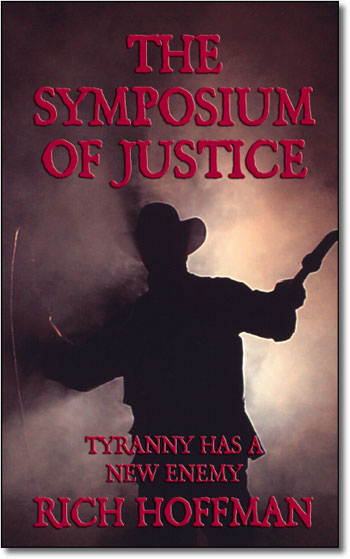
Hoffman writes with the credibility of a problem-solver, the curiosity of an archaeologist, and the courage of a frontline witness who has gone to very scary places and reported what lurked there. Hoffman has authored books including The Symposium of Justice, The Gunfighter’s Guide to Business, and Tail of the Dragon, often exploring themes of freedom, individual will, and societal structures through a lens influenced by philosophy (e.g., Nietzschean overman concepts) and current events
The recent Lunar New Year celebration at Liberty Center in Liberty Township, Ohio, brought back a flood of memories for me. On February 28, 2026, the mall complex—always a wonderful development just north of the I-275 loop—hosted a vibrant Lunar Festival organized by the Alliance of Chinese Culture & Arts. The event featured classic dragon and lion dances, Chinese music, Asian drums, acrobatics, Taiji demonstrations, and more, filling the space with energy and drawing crowds from the local community in Butler County. It was a positive, constructive way to launch the next phase of the year, embracing Eastern cultural traditions in a modern American setting. The performances were well-coordinated, tasteful, and joyful, with vendors offering dumplings and other treats amid the festivities, and watching the dragon soar and the lions prance reminded me of my own early experiences with these rituals.
As a teenager in the mid-1980s—around 1984, 1985, and 1986—I had one of my first real jobs at Emperor’s Wok, a highly decorated Chinese restaurant on Chester Road in Sharonville, Ohio. It was one of the most elaborate spots in Cincinnati at the time, with intricate interiors dedicated to Chinese culture. Everyone went there for authentic food in an immersive environment. The owners and family were wonderful; I got to know the cooks and the performers who handled the dragon dances. My role included customer service—dressing sharply in a bowtie to hustle tips in a classic, high-energy setting—but during Chinese New Year, it became something more adventurous. They kept the dragon costume and props in a closet year-round, and I was tasked with climbing onto the roof and the magnificent awning where cars pulled up for drop-offs. The restaurant had a grand entrance, and the parking lot would fill with spectators as the traditional dragon dance unfolded.
The dance lasted about half an hour, complete with booming drums, crashing cymbals, and the performers underneath the long, colorful dragon puppet. My job was to feed strings of thousands of firecrackers off the awning, setting them off in bursts that exploded above the dragon’s head as it twisted and leaped below. The noise, smoke, and flashes created an electric atmosphere, scaring away bad spirits in the tradition while entertaining the crowd. Firecrackers were key—loud explosions to drive off evil—and the whole thing felt proactive: humans creating their own spectacle to combat terror. Seeing similar elements at Liberty Center in 2026 brought it all rushing back: the coordination, the percussion, the acrobatics, and the sense of community triumph over unseen threats.
These dances aren’t just entertainment; they’re deeply rooted in Chinese mythology and serve a spiritual purpose. The lion dance, prominent in southern China, is often associated with the legend of the Nian (or Nian beast), a ferocious monster that terrorized villages on New Year’s Eve. Descriptions vary—some say it resembled a flat-faced lion with a horn, others a massive creature larger than an elephant with sharp teeth—but the core story is consistent. The Nian feared loud noises, bright lights, and the color red. Villagers discovered this and used firecrackers, fireworks, red decorations, lanterns, and couplets on doors to repel it. Over time, these customs evolved into annual traditions: red envelopes for luck, staying up late, and performances to ensure protection and prosperity. The lion dance mimics this defense, with performers in vibrant, red-heavy costumes embodying strength and courage. The dragon dance, dating back to the Han Dynasty or earlier, honors the dragon as a symbol of power, wisdom, benevolence, good fortune, and control over rain and water—essential for agriculture and abundance.
A key figure in many lion dances is the Laughing Buddha, or Big Head Buddha (Dai Tou Fat), often portrayed as a jolly, potbellied character in a mask, waving a fan. This isn’t the historical Buddha of Buddhism but a folk figure inspired by Budai (or Hotei), the “Laughing Buddha” known for joy, prosperity, and contentment. In the dance, he provides comic relief, teasing and guiding the lions—sometimes playfully chasing them or interacting with the crowd—while coordinating to the music. His presence adds lightness: amid the fierce combat against evil, there’s laughter, pranks, and confidence. The potbelly symbolizes a full, prosperous life, laughing in the face of danger. It’s a brilliant touch—turning fear into joy, showing human ingenuity in overcoming darkness through humor and skill. The martial arts elements, acrobatics, and kung fu displays highlight dexterity and strength, reinforcing that humans can triumph over lurking monsters.
This reverence for the spirit world extends across Eastern cultures. In Japan, Shinto temples feature similar beliefs in kami (spirits), with rituals to balance the seen and unseen. Korea and other regions share roots in warding off malevolent forces through noise, color, and performance. The thin veil between the physical and spiritual worlds means monsters or evil spirits—rambunctious and ever-present—must be managed proactively. Red wards off negativity; mirrors on costumes reflect evil back; drums and gongs create an overwhelming sound to dispel it. It’s optimistic: approach the unknown with boldness, abundance, and good fortune, much like fortune cookies that always deliver positive messages.
These patterns aren’t unique to the East. Globally, cultures confront “monsters” or paranormal threats through ritual. North American Indigenous traditions often involve drums, yelling, colorful regalia, and dances to connect with or control spirit visions—sometimes blurred by hallucinogenic plants in shamanic practices, creating colorful, terrifying projections that demand management for societal harmony. The use of red, loud percussion, and aggressive displays taps into the idea of warding off evil, much like firecrackers or mirrors. In Christianity, demons are pushed out through prayer, exorcism, or faith in divine protection. Everywhere, humans develop mechanisms to live with terror—whether invisible forces, cryptids, or existential fears.
This brings me to the Mothman legend from Point Pleasant, West Virginia (close to Ohio roots). Sightings in 1966-1967 described a large, winged humanoid with glowing red eyes, often near the TNT area (a former munitions site). It became tied to the tragic Silver Bridge collapse in December 1967, killing 46 people, turning Mothman into a harbinger of doom. Some link it to Native American lore, such as thunderbirds or curses (e.g., Chief Cornstalk’s), or even misidentified birds, such as sandhill cranes. But the archetype persists: a monster emerging seasonally or in crisis, attacking or foretelling harm. Around Christmas or New Year periods, it echoes the Nian—seasonal terror tied to transitions. Both involve communities responding: firecrackers and dances for Nian, vigilance and folklore for Mothman.
Expanding further, many speculate on shared origins for such creatures. Ancient astronaut theories suggest amphibious or serpentine beings from places like Sirius (as in Dogon African traditions of Nommo from Sirius B) influenced global myths. Chinese dragons—long, serpentine, benevolent yet powerful—might reflect memories of advanced visitors or natural phenomena, migrating from regions like the Indus Valley over the Himalayas into East Asia. From the Near East westward, dragons became adversarial (e.g., biblical serpents or European fire-breathers), but in the East, they’re auspicious. Amphibious gods (e.g., Babylonian Oannes or Dagon) appear in Sumerian and other lore, possibly tied to seafaring or aquatic extraterrestrials who seeded civilization. The persistence of monster myths—winged humanoids, serpents, beasts—suggests a universal human concern with the “other”: unseen threats in the dark, whether paranormal, spiritual, or existential.
Yet cultures don’t just fear; they innovate. Eastern approaches—optimistic, proactive, laughing at danger—offer lessons. The Laughing Buddha prances confidently amid monsters, embodying joy despite peril. Drums attack the spirit world aggressively, red banners proclaim victory, and firecrackers create human-made chaos to counter it. This mindset—embracing abundance, prosperity, and humor—helps build constructive societies. Liberty Center’s event wonderfully blended this ancient wisdom with modern community life, reminding us that engaging with other cultures enriches our own without duplicating rituals wholesale. We have strengths in the West, but learning to face “monsters”—whether literal cryptids, personal demons, or global uncertainties—builds resilience.
My time at Emperor’s Wok taught me early about cultural depth beyond surface festivity. Friendships with the family performers, the thrill of the rooftop explosions, the cultural immersion—all shaped how I view the world. Watching the 2026 festival, I saw echoes of those days: positive energy pushing back darkness, joy in the face of the unknown. It’s a healthy reverence for survival, a reminder that humans thrive by confronting fears creatively. Watch out for the monsters—they’re everywhere—but find ways to laugh, drum, and dance them away.
For further reading and research:
• Wikipedia entries on “Nian,” “Lion dance,” “Dragon dance,” and “Mothman” provide solid overviews with sources.
• Britannica’s article on the Chinese New Year details legends and traditions.
• Books like The Mothman Prophecies by John Keel explore the Point Pleasant events.
• Robert K.G. Temple’s The Sirius Mystery discusses Dogon-Sirius connections (though controversial).
• Academic sources on shamanism and global folklore, such as studies on Indigenous North American rituals or comparative mythology.
It’s something most people have to deal with at some point in their lives, and I think we don’t do it very well. However, it’s one of those things that doesn’t have many good answers, and that is the care of elderly people. As our parents age, what do we do when they struggle to care for themselves and lose independence? For me, I think death is worse than losing freedom and independence, quite literally. And as I look at medical costs as a government offering, keeping sick people alive longer as they lose their freedoms with more government dependence is the worst kind of sickness of them all, and I think people are better off no longer living. But, we have a lawyerly society that is way too litigious and a snoopy medical industry that is full of cosmetic do gooders who have created policies and rules that pay a lot of money and give medical expenses quite an income, so there is a lot wrong with the entire industry and the problems come down to just a few basic human assumptions that are more emotional than practical. And most of us would rather not think about it, but what cost is the nursing home industry to our society for the services they provide when the litigious decision making process puts the burden of care judgement on people not prepared to deal with an emotional crises, making a lot of the wrong kind of people rich off the process, feeding a parasitic health care industry with a demeaning end of life trajectory that the courts find acceptable, but on scale of human need, is dramatically lacking. And it takes lives once well lived, and essential, and makes them into uneventful closures of forgetfulness and an almost vile hatred for the perpetuation of the human race that has vast evil wrapped all around it.
I usually don’t associate with many people in the healthcare industry, especially those involved in care for older people, for all the reasons mentioned. However, I did run into Commissioner Dixon and his son, Brent, at a recent event, and we had a good discussion about this very topic. I hadn’t seen Brent for many years, even though we live in the same general area, and I knew he had managed a nursing home facility, so we hadn’t seen each other since we were ten years old and racing together in a soap box derby event in Hamilton that was the talk of the town back then. So it was fun to see him again and talk about what has happened over the last four and a half decades. And I like Don Dixon quite a lot, so we had fun catching up. But nearby, because of some nursing home talk, a couple of women caught on to our conversation, and it provoked in them discussions they were having about a father in their lives. One of the women was the direct daughter, the other one was a sister-in-law. And they were talking about how their dad had fallen and hit his head, and they were worried about him and thought he was losing the ability to be the caregiver to his wife, who is in an entirely dependent state. So, for the discussion with these two women, they were determining that their dad needed to go to a home before he hurt himself and let something bad happen to their mom. And as I was listening to this conversation, it was getting more revolting by the moment because there were a lot of psychological things wrong with it.
So, for clarity, I think it would be better for the dad they were talking about to pass away of natural causes at peace in his own home, on his own terms as much as possible. But the decision was a legal one; if the kids knowingly allow the father to care for the mother and something happens to him, it would provoke something to happen to her, and then they would be found guilty of elder abuse in the eyes of the court. But even worse than that was a social neurosis that involved the women regarding the decision-making process of how to manage their dad. Here was a man who had lived his whole life doing things that were important to both society and himself. And had raised a family and done many things, and now all that was coming to a close with the impending doom of losing personal freedoms to the point where he was just a fetus entirely dependent on the parental figures of society at large. And this was not the way human beings should be planning their exit from life. The women I noticed were very animated about this topic for unusual reasons, and it was not by accident that they both had kids who had just recently grown up and moved away from them; emotionally, they were looking for a new baby to care for. Being middle aged women without the prospect of a baby to have, to give them the feeling of meaning that motherhood often does, they were instead taking that emotional baggage and looking to apply it to their parents, to make their elderly parents into incapable toddlers unable to care for themselves to satisfy the lack of importance they were feeling as aging mothers.
It wasn’t hard to see how many terrible decisions were being made, which had enormous social costs and were destructive to the individual lives of the parental figures. And baked into the rule-making process was a desire to humiliate older people and their personal lives into dependent toddlers who ended their life the way they started it, wetting the bed, having their diapers changed, and needing help even to feed themselves. And there are a lot of women like these two talking who are feeling old, thrown away by their husbands and kids, and they gravitate to their elderly parents to turn them into dependents to give meaning to their lives, which is losing value by the day. And, of course, a significant amount of money is invested in this process to generate something from it for a very parasitic industry. In my opinion, I would say let the parents have their independence for as long as possible, because it’s better than losing it. And if the dad passes away tripping on a pebble on the sidewalk, he is better off than a much slower death while in a nursing home. And the lawyers should stay out of it. And the emotional children who have been trying to give meaning to their own lives by making their parents into replacement children for their own grown children have created a real mess. The costs associated are more parasitic to the burdens of those who define care than to the values of a life well lived, and to protect that meaning from life to death. A few years in a nursing home and turning once strong people into complete dependents, in my eyes, is far worse than death. And it is something we should completely reconsider. Because the emotional children of older people are not in positions themselves to make decisions for their parents because they are dealing with their own sense of value as their children grow up and away from them leaving everyone feeling empty and useless in the process, and no amount of money can solve the problem in the way that human beings require it to be solved. However, what we can be sure of is that we should not make our parents dependents to avoid dealing with our lack of security once our child-rearing days are behind us. There is more to life, and adults need to figure that out, rather than putting their parents in homes to satisfy their selfish needs to care for somebody in an infinite state and quell the whims of motherhood once it has been unlocked in them for the perpetuation of the human race, for which they are no longer needed.
With all the evil that is obvious in the world, the question has been brought up a lot about the nature of demons and whether or not they are taking over people’s bodies, and if they were, how would we know? This has been most discussed when explaining the behavior of a recent school board member who has shown a noticeable behavior change from campaign mode to actual board service. The personality shift has been stunning, leading people to conclude that some other life form has taken hold of his body and is driving the car. Which is precisely how I think demons work. Our bodies are like the cars we drive. The drivers of the car can change, but the car is a car; it ages, gets old, and eventually breaks down and stops running. But when it comes to paranormal activity, I think quantum mechanics can largely explain it. Then knowing that there are lifeforms in several dimensional realities, our own 4-dimensional space being just one of them. Yet in them all, there are lifeforms in various manifestations teaming with activity. And if they can take root in our reality by grabbing hold of a car to drive, such as one of our bodies, then they will do it and do it often. We can all tell stories of people we know who behave differently when they drink or use drugs. I would say this is what it’s like when there are multiple passengers in a car but only one driver. If the driver lets go of the wheel or maybe even gets out of the car for some reason and a new driver takes their place, then you could see how there might be a behavioral change from one driver to the next.
Listening to women talk about people is often very entertaining; they associate a personality with the biological DNA of a person they know or have been raising. When they say to someone else, “oh, look, he has your mouth,” or “he has your eyes,” they are saying something we all do to a point, we identify a lifeform with the vehicle it inhabits. There is to a body the biological codes that put it together, and we associate those mechanisms with a personality. And to a large degree, people are what their biological makeup determines them to be. Whether they are short-tempered, whether they are tall, short, smart, dumb, happy, or sad are all attributes that are genetically inherited. And when a person dies, those traits are no longer useful and peel away into memory. But because that’s what we see about a person, we tend to associate those attributes with them, so we often get confused when we witness a behavioral change in their personality. When we see the same physical features, only they suddenly behave differently, as if someone else is driving those bodies, it upsets us because we thought we knew them. I tend to think of people in their eternal aspect, the parts of them that are not associated with the biological devices of a body but are the drivers which reside there during a lifetime. When you really get to know someone, you could be said to get to know their “soul” rather than just getting to know the person that was raised by so and so at a such and such address that became friends because of a birthday party when you were both five years old. Those aspects of life are conditional based on DNA and the combination of those elements in a four-dimensional reality. That life might contribute to a soul’s development, but the car’s driver is not the car.
I tend to think the push for intoxication and the abuse of bodies comes from competing lifeforms trying to sneak their way into a body by either pushing out the driver or convincing the driver that someone else could drive their car better. By whatever means, once a driver surrenders their body to another lifeform, we can see then a noticeable behavioral difference. The owner of the body might even still be in the body, but something else is clearly driving, especially under intoxicating circumstances. I think there are a lot of lifeforms out there, some of them very jealous of our four-dimensional existence, and they would love to take over a person’s body and experience life as we do. Is it appropriate to call these lifeforms demons? I think so, and I think they are ubiquitous. Do they take up permanent residence in a body, or is it just temporary? Well, I think that varies depending on the need to drive the car and why they are there in the first place. Maybe they are just joyriding in our dimensional reality. Or perhaps they want to go somewhere and need a body to get there. Or perhaps there is a massive interdimensional strategy that makes sense to their reality where influence over our reality makes sense to them. What we call evil may be perfectly justified to them in their quantum realm. That doesn’t give them the right to do what they do to us, but it may explain the desire to occupy bodies massively to destroy life in the way we observe.
Yet we are born into our bodies, which are ours to keep. We do not have to share them with other life forms. And throughout life, there are many times when others would clearly like to drive our car because they like it and want one for themselves. It’s up to us if we allow ourselves to be tricked into surrendering ourselves to their manipulation, and I think many gullible people get suckered in this way. Sometimes it’s by choice, such as by allowing intoxication to unlock the doors for others to get into our car. Sometimes it’s by blood, where ancient lifeforms might have known the DNA code of a family lineage and find themselves attracted to the driver of that car and want to reside within that car with the driver for as long as they can because it’s familiar to them. And sometimes it’s just malicious; it’s a Grand Theft Auto kind of thing where they abuse their ability to jump in and out of other people’s cars and shove them out of the driver’s seat for a criminal-inspired joy ride. There are many ways that other lifeforms can jump into our cars and drive our bodies without us realizing it or knowing it as observers, especially if we assume that the person we know is the biological thing we can see.
People are far more than just the cars that they drive. And when it comes to observing the vast amounts of evil that we see today, yes, I think many of them are driven by demons. And there are lots of demons at work, armies of them. More than we could possibly ever count. And their motives are likely as endless as an imagination could conceive. But do they have a right? Of course not. Our bodies are our own, and we should guard them aggressively. We should not take for granted anything about our lives, and we should treat our bodies just as greedily as we lock our cars when we park them somewhere, with utmost security. We should be careful what kind of music we listen to and what we eat and drink. We should be cautious about what we learn and share intimate details and with whom. Because there are lots of reasons for demons to inhabit bodies, and as we see in reality, they often do, and with terrifying results.
We were all having a nice time at Kings Island’s Winterfest, enjoying the Christmas decorations, my family, and making plans for the Holidays. My daughters, who are now in their 30s, were reminiscing on what we used to do as a New Year’s ritual, and they were thinking about wanting to bring it back. For most of their late childhood and teenage years, every New Year’s Eve, then flowing over into the next day, we would watch all five of the Dirty Harry movies by Clint Eastwood. We called it the Dirty Harry marathon. It was my way of teaching my kids about the dangers of progressivism forming in San Francisco during the 70s and 80s and what needed to be done about it. Well, now, 50 years later, we all see what happened to San Francisco and how progressive politics destroyed it and California in general. And instead of Dirty Harry, we elected Donald Trump, a person from that time and still thinks right about things. Our ritual lasted until my girls were married essentially, and now they have kids of their own, so it’s been well over a decade since we had a Dirty Harry marathon. But after seeing how messed up the world is, my girls were thankful that I took the time to teach them right, steer them away from drinking on New Year’s Eve, and instead spend time together safe and sound as a family. And they want to resurrect that ritual again soon. Maybe not this year because their kids are too young for that. But certainly, in the near future, which I, of course, am happy to oblige.
And I see that trend everywhere, really. It’s not just my kids reminiscing over their childhood and my unique rituals that are so appealing. All people are going through it; they feel they have been suckered by progressivism and want a redo. That is most obvious in the Supreme Court cases of late and the very real possibility that Roe v. Wade will be overturned due to the Mississippi law banning abortions to a large degree. The Supreme Court took up the case early in December of 2021, which will have a decision in June of 2022. All indications based on the presentation of the case to the court by observers indicate that the Mississippi law will be upheld and that Roe v. Wade will be overturned, which has the political left apocalyptic. It’s really something that the left views abortion as a human right to such a degree that they think of it as a benchmark of their entire philosophy. For them, it’s like gun rights for conservatives, which of course, is absurd. It’s basing a political philosophy on the premise of a death cult. The killing of babies. And they are willing to go to extremes to preserve it. Now, all this was forecast in the Dirty Harry movies, made in a different time. Watching those movies and comparing them to our current times is a message in a bottle and warnings of this kind of thinking. People who want to get back to the basics notice that what progressivism has led us to is not what we want. That is one of the reasons people voted for Donald Trump, and 75 million people at that because they did not like what progressives have sold the country. And instead of seeing that, they are digging in harder, which is a massive mistake for them.
Just like in the Dirty Harry movies, the political left has made most all their gains, including Roe v. Wade, by threatening violence against the courts if they do not rule in their favor. The communist-oriented left did this by social unrest and riots during the 60s and 70s, and the courts were intimidated. The Supreme Court back then ruled on Roe v. Wade entirely on false interpretations of the Constitution as the ruling was made through force and fear. Not the way to win people over to your way of thinking, by threatening to kill them for the right to kill off the next generation. Do you want to live now, or do you want to live in the future is essentially what the political left said to everyone? The Supreme Court did what they have done recently due to election fraud; they appeased the mob so that the anarchists didn’t come to their homes to rape them, rob them, and perhaps kill them at the end of a rope. That is the only reason that Roe v. Wade happened. It was not a law out of logic; it was done out of fear. That’s why Senator Jeanne Shaheen came out this week as things were looking bad for them and threatened that there would be a “revolution” if the Supreme Court overturned Roe v. Wade. It was an astonishing threat, especially given the fact that people like her are trying to make a big deal out of the January 6th protests over the election certification. What this liberal senator is doing is following the playbook that caused Roe v. Wade in the first place, the public pressure of a mob to incite violence to influence the legal system. Threatening judges, harassing juries, inspiring criminals to burn down cities if they don’t get their way, its all illegal and is a strategy built on force, not logic, and it was always wrong. People put up with Roe v. Wade when it happened, but logic says that once people have had time to think about it, they will change their minds.
If there is violence that results from the overturning Roe v. Wade, it will be the fault of people like Senator Jeanne Shaheen. People are people, and that law was bad in the beginning. It was always going to be a states rights issue; the federal government does not have that kind of authority. It never did, just like the federal government doesn’t have the right to impose vaccine mandates. The political left turned to violence; then, when that violence was turned against them during the January 6th protests over election fraud, it scared them. Yet, they should have always known that if they didn’t win people’s hearts and minds over to their culture of death, that cult would eventually be overcome with logic. People generally understand that abortion is murder. They might participate in the killing of babies out of convenience. But that doesn’t stop them from feeling bad about it. And those guilty feelings won’t result in positive legislation.
Abortion is murder, and those who support it essentially argue that it’s a human right to conduct murder. And the only way they have been able to gain public approval is through threats of violence. That is what Senator Shaheen was turning to when she could see where the Supreme Court was heading with its opinions on the Mississippi case. If it wasn’t Mississippi, it would be Texas, Ohio, or several other states which will come up with their own version of protecting life. The flimsy case of Roe v. Way was a time bomb from the beginning because the opinion wasn’t based on thoughtful law, it was an appeasement of the mob, and those fears have not held up over time. The political left should have never expected it to. So any violence that does happen because of it is on their heads, and their’s alone. Death is death, and what they propose is murder. Their only counterpoint is either now or later. But it’s still all about death in the end.
Thinking deeply about these new cicadas that have been coming out of the ground for this latest 17-year cycle in May has given me reflection on the nature of life in general and the ways that governments seek to control us. I like these cicadas, they are beautiful little creatures, and it almost seems tragic that their life is so short for all the hoopla they embark on to arrive over such a long gestation period. But here they are, they climb out of their shells after so long burrowed in the ground only to almost immediately begin their mating rituals followed by death days or weeks later. It reminds me in a cosmic way of the human lifespan and why we have the kinds of anxieties that we do about things. I would also offer that by developing our intellects, we can step away from the lifecycles that the cicadas are stuck on. But one major impediment that we must overcome is how governments use our natural struggle with lifecycles to keep us under control, as explained in the video below.
One of the most persistent criticisms of my work on this site which has permeated over the decades is my legitimate coverage of ancient aliens’ stories, well before the History Channel show was popularized. While its true that I cover lots of mainstream political topics more accurately than any other source, from school levies, to presidential politics my first love in all categories is cultures and the aspects of them that rise and fall on a universal scale. In that regard it didn’t surprise me at all that the Department of Defense and the United States Navy has come forth and admitted that UFOs are real, they are calling them Unusual Arial Phenomenon, but that yes, they are indeed true and are beyond our present technology and are quite perplexing. I would not call them “them” per say however, I would call “them” an aspect of “us.” We all come from the same places and want the same things in the context of things. But we are not all equal, for us reality is a determination limited by the human mind which expands or contracts depending on intellectual fulfillment. In essence, those who have criticized my thoughts on things eventually come to learn that what I have often stated turns out to be true, but it was the limits of their reality which prevented them from seeing it sooner.
I was in a meeting last week with a lot of smart people and there was something of an argument about reality. It was suggested that I wasn’t conveying reality to the people who needed to know something whereas my statement was that reality wasn’t the same for everyone, and that before saying something my version of reality needed to be implemented. The people controlling the reality we were discussing were lazy people not very intellectual, therefor the constraint on understanding reality was limited to their measuring instrument, their own intellects. While those people were happy to name off their Fantasy picks for the upcoming NFL games on the weekend, they didn’t know jack shit about quantum mechanics and the ability to use the mind to move mountains in an intellectual jousting period so we were discussing two different realities in the context of space and time, yet the circumstances hadn’t changed. All the elements were there, it was just limited by our ability to measure it, based on our intellectual limits.
For many, the idea that there is alien life in space flying around in spaceships that behave by unique rules of physics is terrifying, because they worry that they are not the top of the food chain in life forms and it makes them worry about being preyed upon. Of course, the American government worries about revealing what they know because in doing so they would have to admit that they aren’t in control with our physical weapons. And of course, the evidence is quite obvious that the history of mankind goes much further back along the Archaic Period, even up to at least the last Ice Age. Much of what we call history is just now being unveiled and we are shocked by what we are learning. But the essence of that shock is that government fears letting normal people know that they are not in control and never have been—when for most human beings, that illusion of control allowed their lazy minds to feaster through life following some didactic path of unhealthy living without the expectation to do more with themselves.
But nothing about meeting alien life is scary to me. I see them as just another lifeform, like we’d observe in a new species of bird, or an elephant. They are just out there doing their thing. I don’t consider them or anybody who may exist in the universe or multiverse to be superior in thought and action. They just may be on a different reality based on their unique experience. I read four books last week, spoke to hundreds of people on the upper levels of society, and personally worked over 85 hours and I still had time for my family and to enjoy life without feeling wore out. Yet I heard complaints from people who barely worked 40 hours how tough life was and how they couldn’t find time to read the numbers and letters on their television remote. Those are the types of people who look at these UFOs and UAPs and are scared. They are the same people who have criticized my many articles about ancient civilizations in the pre-Columbian North America sphere of influence and in sites predating Europe’s reigns of kings and queens. That well before there was communism in Asia that they had already traveled the world many times over and that the North American Indian was in fact the results of those travels. They were not indigenous people for the modern progressive movement. The reality of these suggestions is limited to the intellect of the proponents. Live a week in my shoes and you will see things vastly different.
And that’s going to be the result of the meeting of minds that will eventually take place once we admit to ourselves that the Milky Way is teeming with life and we are far from the only advanced species functioning within it. I have never allowed my reality to be determined by dumb people and that is always at the core of my work whether we are talking about local and national government, or science and technology. The theme for me is consistent and my support for the Second Amendment even comes into play here. Dumb people who have lazy intellects are not going to be allowed to shape my reality and that is the fight we are all conducting. And we’ll find that the lifeforms flying those UAPs are no different than us in that regard. Intelligent life tends to want to build, not destroy. Dumb people do that. The whole question about life from other places visiting us here on earth has been suggested as a reality by dumb people.
Once we realize that there is life visiting us from space, and that this behavior has been going on for many millions of years, we can move on to other stages of human development that is not chained like a prisoner to our current versions of history that look back 4000 measly years and thinks that is a long time. Humans are much older than that and likely so are the lifeforms in those UAPs. Nothing would surprise me about what we learn there. What is surprising is that people are so lazy in our present age that they can’t wrap their mind around it until they’ve been exposed to the material for a decade or two. It has always been obvious to me. And while it can be frustrating to listen to people try to defend their reality built on lazy assumptions about the universe, I also understand that all thinking people will eventually come around to my version of reality anyway, because while reality can be different depending on how its measured, ultimately, it is what it is. A mind that can handle more reality than a mind that can’t will obviously see more of it and work with a larger aspect of it. And that is what really scares people about the UFO assumptions and why to appease the masses we have always tossed that study into the bin of tin foil hatted conspiracy theory. Let’s just call it what it really has been, lazy, loser people who didn’t want to challenge themselves with thought so they could continue the illusion that they were the only life in the world that mattered. But in reality, it is the mind of the hungry intellect whether it be an alien or a human, that truly thrives in this universe, no matter what level on the history of technology they find themselves on.
We are on the healthcare debate again, where Democrats only have the one real approach, Medicaid for all, or some other government centralized system, which could and only will net a debilitating result for its participants. Like most things in their political philosophy, their version of healthcare is centralized, expensive, and only results in delaying bodily breakdown, not preventing disease. It wouldn’t take much for Republicans to become known for healthcare except for the process of completely reinventing the concept. When it is said that all other places in the developed world have free healthcare, what they really mean is that the intention of the health maintenance is in pain maintenance, not the actual repair and sustainability of life. To be entirely honest, the best and cheapest healthcare is simply not to have to go, to maintain a body well into old age without needing treatments that are expensive and cumbersome.
The concept of a doctor is one of those things that has evolved during the progressive age as part of the interconnectedness of society. A culture of dependency so that no one person can roam about on their own without the support group of one’s peers. In that regard we have given doctors way too much power over the course of our lives. For instance, a doctor’s note can get an employee out of work, or demand that we shift our incomes into prescribed treatments that are not part of our personal decision-making processes. We turn to the doctor for every little itch and scratch these days and that is another aspect of the progressive dream society to have other people decide your personal fate, because once you accept that, you will gladly accept other invasions of your personal decision-making processes, allowing a centralized government to provide dictates for which you will live.
Of course your local doctor would never tell you that, they are unlikely aware of it themselves. These ideas are not talked about on Oprah or The View, the are created in social clubs behind wine glasses, likely in Europe where everyone talking to each other is full of themselves on such limited knowledge that they have managed to acquire in their lives between gossip columns and tabloid utterances. Sure some of them hold Master Degrees and doctorates but their knowledge is often too specific and overly specialized. They never really see the big picture, only what they have been taught by other underdeveloped people, so they never question the insanity of the system for which they are advocating. That is how we ended up with the medical system we have today, doctors who essentially prescribe medicine to override the body’s natural defenses to slow the debilitating effects of the aging process so that the system itself can make as much money as possible along the way. For the liberal always looking for more people to be dependent on a centralized system our medical industry is the perfect partner for them, because it essentially takes independent, self-reliant people and makes them dependent first on medicine, then on a government to help make that medicine available to them. It’s a bad system that only brings about bad results. The cure for cancer is not in the next Medicaid expansion, if ever at all. The cure for cancer will happen when it is realized that there is a lot more money to be made off fixing people then in killing them.
Wrapped up in the hopes and dreams of the typical liberal is to live a wild and reckless life when we are young so that our bodies contract diseases for which last our entire lives. Then we find ourselves at the doctor regularly dying at a predictable age once the system has looted itself off us for an amount of time that has been determined not to stress out the earth. Liberals are anti-life in most of their assumptions contrary to their utterances of wanting to help people, it is in their actions where their true nature is revealed, in their support for abortion, for the destruction of the family concept, in reckless personal practices such as drug abuse and unregulated sex. When you really get into the mind of a liberal what they want is for human beings to get off the planet so that mother nature can live free of the human being, because that is where their collective consciousness puts them intellectually, as mere bacteria in the body of the cosmos and they don’t see a need for the human to put its imprint into the universe—especially not on earth which we are supposed to sacrifice ourselves to for its preservation at all costs. Liberals are anti-life so obviously their approach to healthcare will be full of sickness and a degraded lifestyle of gradual dependence on medicine and government until we are all dead.
Yet there are options, I’ve talked about them before. Regenerative medicine is the real wave of the future. There really isn’t any reason to get sick. The human body has all the imprints within it to regenerate, that is how we were all formed as babies anyway. That process is still within us even up to old age. It would be easy to have a Republican healthcare system that functioned on truly fixing people instead of keeping them in a depleted state. The reason we don’t have such a thing now is that the medical industry employs a lot of people, and those are voters, so we don’t make the switch from debilitating medical procedures to proactive, largely because the industry itself depends enormously on the perpetually sick people they mooch off of for their existence. It has become a reality we have slowly accepted over time even though the evidence for other options is abundant.
The difference is literally a below the line or above the line option. Keeping people sick and always dependent on somebody else versus self-reliance and living an optimal existence. It is not for the government to provide healthcare, that is and has never been the question for above the line people and a society intent to function from that position, it is for science and medicine to actually improve people’s lives so that they don’t die of cancer and heart disease, or other ailments. But for them to heal as they did when they were five years old and growing. The best Republican healthcare plan would keep people from becoming sick, not focus on making them that way so they would become another dependent voting bloc hoping Democrats will give them free medicine to live five minutes longer.
It really is that simple, but to reach those lofty ambitions we as the human race have to turn away from our dependency on medical professionals to determine our state of existence. The goal of medicine is not just full recovery from all ailments, but improved lives as our souls occupy our fleshly bodies. Those bodies should run in an optimal condition always improving. That is how the medical industry should function and could if only we would be so bold. But we must take the dependency politics out of the mix because that is essentially what Democrats are advocating for. They don’t want to fix people, they want to kill them, so to preserve nature. But along the way they want your vote, and your money. And when you die, they want your kids, and your grandkids. They want the cycle to continue without a real solution forever, which is exactly why their proposals are evil and need to be defeated every way imaginable. It truly is a tale of two political philosophies and only one is right. It is in all reality a choice between life and death.