Why Executive Leadership is the Key to a Successful Society: And why it is so incredibly rare

True executive leadership is not something taught in classrooms through textbooks or lectures on management theory. It is forged in the crucible of real-world challenges, where fear, uncertainty, and the need for decisive action collide. I learned this early, during an unusually formative childhood that exposed me to high-stakes environments far beyond typical teenage experiences. As a young teen, I participated in the High Adventure Explorer Post, a program that graduated from Boy Scouts and emphasized rigorous outdoor challenges. This led to my involvement in Project COPE—Challenging Outdoor Personal Experience—a Scouting initiative designed to build confidence, trust, leadership, and teamwork through group games, trust falls, low-course elements, and high-course obstacles such as climbing walls, rope swings, and balance challenges.

In one memorable weekend seminar, around age 13 or 14, about 20 strangers were thrown together to solve impossible-seeming problems. We had to transport everyone across a field using only a few 2×4 boards, balancing on pegs where touching the ground meant starting over. We climbed a 20-foot wall without ropes, stacking bodies to create human ladders, pivoting people into position, and hauling others up from vantage points. The trust fall was particularly vivid: standing on a 6-foot stump, falling backward unthinkingly, relying on the group below to catch you. These weren’t games; they demanded communication under pressure, overcoming personal fears, setting aside differences, and articulating a clear plan that everyone could execute. Success required a narrative—a story that unified the group around a shared vision. Failures taught the team what not to do: hesitation, poor coordination, and ego-driven decisions doomed the team. Those who emerged as natural leaders could rally perfect strangers, build trust quickly, and guide them through duress to victory.

This experience wasn’t isolated. I rose to become vice president of the Dan Beard Council, a significant Boy Scouts organization in the Cincinnati area, under somewhat controversial circumstances that provided invaluable lessons in organizational dynamics and influence. At 14, I was invited to speak at GE’s Evendale facility—a massive engine manufacturing site—where I delivered a pitch on leadership drawn from these adventures. Standing before seasoned professionals as a kid, articulating principles of vision, trust, and collective action, cemented my path. It wasn’t credentials that carried the day; it was the ability to communicate a compelling story and inspire follow-through.

These early trials shaped my understanding of executive leadership, a skill rare even among those who hold C-suite titles. Many executives excel at spreadsheets, regulations, data analysis, and compliance—tasks that engineers and administrators handle well. But leadership transcends that. It is the art of creating a vision that others buy into, communicating it clearly enough that diverse groups align, and leading from the front to pull everyone through obstacles they couldn’t surmount alone. True leaders don’t micromanage every detail; they don’t need to know how to code the software, assemble the product, or balance every ledger line. They orchestrate the team, provide the overarching narrative, and empower others to execute. Think of a kitchen: the chef doesn’t wash dishes or make noodles from scratch, but ensures the entire operation runs smoothly so spaghetti arrives hot and customers return. Leadership is that orchestration under fire.

This truth stands in stark contrast to prevailing misconceptions. Schools rarely teach it properly; corporate retreats often superficially mimic it with trust falls and ropes courses, checking boxes without the depth of real hardship. Many in leadership positions mimic “mob rule”—placating safety concerns, enforcing endless administrative loops, or prioritizing equality over merit. They hide behind regulations, consensus-building, and democratic processes that dilute accountability. The result? Stagnation. When organizations are mired in bureaucracy, innovation slows, and potential leaders get sidelined.

Consider recent local examples in West Chester Township, Butler County, Ohio, where I’ve lived most of my 58 years. It’s a prosperous, conservative community built on business-friendly policies and strong leadership. Yet newcomers like Amanda Ortiz, who relocated here in 2016 with her husband and now serves as a trustee (elected in 2025), bring perspectives shaped by different environments. As a veterinarian focused on animal welfare, she campaigns on “people over business,” critiquing development and emphasizing resident input over economic growth. While well-intentioned, this risks importing anti-business sentiments—such as higher taxes on enterprises and wealth-redistribution rhetoric—that clash with what has made the area thrive. It’s the same mindset seen in broader progressive movements: viewing successful CEOs as “greedy” and advocating for shared wealth without acknowledging the rare skill of value creation.

This echoes larger ideological battles. Socialism and communism promise equality through state control or democratic redistribution, suppressing individual leadership. They assume administrators can orchestrate prosperity through rules alone, without the visionary drive of a single, accountable leader. History shows otherwise: state-run economies falter because they penalize autonomy, stifle innovation, and equalize performance at mediocrity. No one climbs the wall if everyone’s voice is equal and no one leads decisively. Remote work trends exacerbate this—employees scattered, communication fractured, approval loops endless. You can’t build trust or rally a team when half are at home; the COPE lessons prove that interaction under pressure forges bonds that Zoom can’t.

Contrast that with proven leaders like Jack Welch at GE (who transformed it into a powerhouse through bold vision), Steve Jobs (who articulated Apple’s future and pulled teams to it), or Elon Musk (who leads from the front on audacious goals). They don’t consult committees for every decision; they communicate big concepts, inspire buy-in, and drive execution. Donald Trump exemplifies this politically—articulating massive ideas that mobilize millions without micromanaging details. He leads the metaphorical train, helping people over walls they couldn’t scale alone.

America’s success—its unmatched GDP, entrepreneurial spirit, and job creation—stems from empowering such leaders. Capitalism rewards those who develop the rare skill of pulling others forward through narrative, trust, and action. Boy Scouts programs like COPE and Explorer Posts cultivate this through sweat, cold nights, cut fingers, and mud—trials that separate natural leaders from followers. Most participants become capable followers, which is fine; society needs both. But the few who rise, who can get strangers over obstacles and keep harmony afterward, become CEOs, founders, and visionaries who employ millions.

The fantasy that mobs or committees can replace this ignores reality. Numbers don’t vote on facts; gravity doesn’t bend to consensus. Leadership isn’t democratic—it’s directional. Empower leaders with autonomy, and organizations soar. Suppress them with equality mandates or administrative burdens, and decline follows. This is why communist models fail: they suppress leadership, fearing individual excellence threatens the collective illusion.

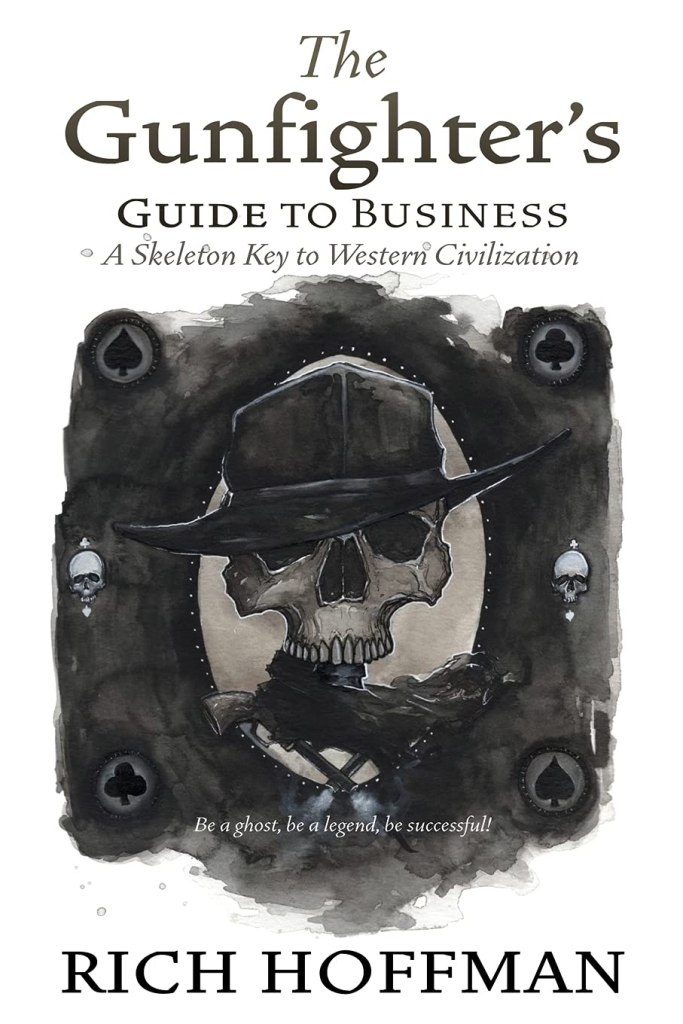
In my book, The Gunfighter’s Guide to Business: A Skeleton Key to Western Civilization, I explore these themes deeply—strategy drawn from hardship, the primacy of vision over bureaucracy, and how true leadership saves companies, communities, and civilizations. It’s not theory; it’s lessons from the school of hard knocks, much like those COPE weekends or speaking at GE as a teen.

We need more such leaders, not fewer. Penalizing success through spiteful policies—resenting wealth creators, demanding redistribution—creates injustice and stagnation. Gratitude for effective leaders, who lift everyone, builds prosperity. Civilization learns this slowly, but the path is clear: identify, empower, and follow those who can get us over the wall. Without them, we stay grounded.

Bibliography and Footnotes

1.  Scouting.org, “Program Feature: COPE,” detailing Challenging Outdoor Personal Experience as group initiatives, trust events, and high/low challenges for leadership and teamwork.¹

2.  Wikipedia, “COPE (Boy Scouts of America),” overview of the program focusing on strength, agility, and personal growth through outdoor tests.²

3.  Grand Canyon Council BSA, “COPE,” emphasizing confidence, self-esteem, trust, and leadership via mental/physical challenges.³

4.  West Chester Township official site, “Board of Trustees,” bio of Amanda Ortiz, resident since 2016, veterinarian, elected trustee term 2026–2029.⁴

5.  Amanda Ortiz for Trustee campaign site, platform stressing “people over business” and resident-focused leadership.⁵

6.  Journal-News, “Longtime West Chester Twp. trustee unseated in election,” Nov. 6, 2025, coverage of Ortiz’s 2025 win unseating incumbent.⁶

7.  Rich Hoffman, The Gunfighter’s Guide to Business: A Skeleton Key to Western Civilization (Liberty Hill Publishing, 2021), core text on strategy, leadership, and capitalism.⁷

8.  Overmanwarrior.wordpress.com, author bio and book commentary, linking personal experiences to leadership philosophy.⁸

9.  Various Scouting resources on high-adventure programs, including Explorer Posts and leadership training via challenges.⁹

¹ https://troopleader.scouting.org/program-features/cope

² https://en.wikipedia.org/wiki/COPE_(Boy_Scouts_of_America)

³ https://support.scoutingaz.org/main/cope

https://www.westchesteroh.org/government/general-government/west-chester-board-of-trustees

https://www.amandaortizfortrustee.com/

https://www.journal-news.com/news/longtime-west-chester-twp-trustee-unseated-in-election/CD2ADHRUKVC2JOIQSCMINM3MWE

⁷ Liberty Hill Publishing / Amazon listings for the book.

https://overmanwarrior.wordpress.com/author-bio-for-rich-hoffman

⁹ Multiple Scouting America sites on COPE and high-adventure bases.

Additional references include historical accounts of Boy Scout leadership development, economic analyses contrasting capitalism and socialism (e.g., works on Jack Welch and Steve Jobs biographies), and local Ohio political coverage.

Rich Hoffman

More about me

Click Here to Protect Yourself with Second Call Defense https://www.secondcalldefense.org/?affiliate=20707
Most People Are Just Cogs in the Machine: Leadership knows how to pull the levers of that machine

This seems to come up every year when people are reflecting and sending each other motivational messages, such as they do on LinkedIn.  Most people are trained in socialism, the collective warm blanket of shared success, incorrectly, and it chokes most companies into complete paralysis.  Success in our era is dressed up in cheerful posts and glossy platitudes, a cascade of “Hawkey little messages” assuring us that prosperity is mostly about teams, vibes, and being “all in.” The ritual is familiar: end-of-year feed, professional network, congratulatory notes, soft-focus talk of “collective wins.” However, what most people feel in their bones, even if it is impolitic to say aloud, is that victories are nearly always propelled by a few decisive acts—often by one or two people who turn the key, fuel the engine, and take responsibility for the risk. The machine can be exquisite: gears of procurement, finance, quality, manufacturing, design, sales, legal, and compliance all meshing. However, machines, however sentimental, do not start themselves. Leadership is the ignition, the regulator, the governor, the hand at the lever.

If you want success, build a machine that reliably makes success. That is the institutional truth of production and enterprise—government, industry, entertainment, any domain where complex work must be routinized. Systems are arrays of interlocking cogs; each cog has a place, and in an efficient design, each is necessary. However, necessity is not sufficiency. A machine’s sufficiency emerges only when an accountable mind organizes its timing, permits its torque, apportions its oil, and shuts it down before it burns itself to ash. The leader is the one who understands load, sequence, contingency, and consequence. They are the person who decides whether the engine runs fast today or idles; who knows when to swap a worn gear without mourning it; who understands that even the most ornate arrangement of parts turns to sculpture without spark.

We train most people to be components. This is not a knock on people so much as an observation about schooling and culture. It is safer, warmer, and more predictable to be a gear inside the frame than to stand outside the frame and decide which machine must be built, which conditions require it, and when it must run. The collective promises comfort; the individual bears cost. The collective sells the feeling of belonging; the individual pays the price of decision. In that exchange, many embrace the blanket of collectivism—mass credentialing, committees, rubrics, performance reviews, compliance protocols—signals that one is “an essential part of the team.” Moreover, in a limited sense, that is true: a properly designed system relies on the integrity of every part. Take away the feed pump, and production starves; remove quality’s gauge, and defects bloom. However, the illusion rests in mistaking “indispensable within design” for “constitutive of decision.” The machinery of work needs cogs; the work of leadership requires a person.

Leadership is not consensus engineering. It is not the median of opinions distilled into approved action. Leadership is rugged individualism at the point of decision—where accountability cannot be outsourced, and uncertainty cannot be fully hedged. It takes courage to pull the lever when the data are incomplete, and the clock is running. It takes imagination to see the machine that does not yet exist and to name the conditions under which it will be viable. It takes a life lived with risk, with failures tallied and learned, to know the difference between speed and haste, between endurance and grind, between excellence and exhaustion. Collective comfort can train excellent cogs; it rarely trains decisive leaders.

Watch team sports if you need a working metaphor. The Super Bowl ring is a collective artifact—dozens upon dozens of names will be etched into the annals. Trainers, assistants, ball boys, coaches, coordinators, linemen, wide receivers, analysts, owners—everyone counts somewhere. However, the moment of victory tends to converge in a handful of plays, executed by a few players under the direction of a coach who took decisive risks at the right time. The ring belongs to all; the victory turns on the few. Moreover, if the organization is constructed well enough, parts can be replaced. Players retire or are traded; staff rotates. The machine continues to win because the leadership—its philosophy, its standards, its hierarchy of decisions—remains intact.

This is why strong organizations do not worship any single cog. They respect cogs and maintain them; they pay for reliability and reward merit. However, the machine is not reengineered to accommodate the demands of a single gear. Instead, leadership preserves design integrity while swapping parts as needed. In weak organizations, the fetishizing of singular parts destabilizes the whole. In strong organizations, the philosophy of leadership yields repeatable victory because the leader can read conditions and set the tempo. When leadership is consistent and wise, luck is less a coin flip and more a variable constrained by design.

The reason leadership feels elusive is that most people, by design, have been socialized into the safety of machines. The world is complex; specialization is rational. However, specialization often becomes identity, and identity becomes politics, and politics becomes bureaucratic life. The rhetoric of “team” spreads like a balm, and participation trophies proliferate—not because people are malicious, but because machinery envelops their self-conception. Inside this warm frame, many forget the first principles of success: machines are instruments; leadership is agency. The machine is necessary; the leader is decisive.

Righteous leadership is not domination. It is stewardship under justice. The righteous leader stands outside the machine long enough to see conditions truthfully—scarcity, risk, moral hazard, human frailty—and then returns to the console to operate with integrity. Righteousness here means rightly ordered effort and directing that effort toward successful enterprise.  The righteous leader knows the machine serves ends beyond itself and refuses to confuse throughput with justice or output with meaning. They refuse the nihilism that says “only the win matters,” and the sentimentalism that says “only feelings matter.” Righteous leadership harmonizes courage and conscience: a lever pulled with clarity, not cruelty; a shutdown ordered to preserve life, not to prevent loss of face.

This is why nations with abundant resources can stagnate, and why organizations with immaculate infrastructure can drift into decay: without leadership that sees, decides, and cares, the machine becomes ornate furniture. Oil rigs rust; factories idle; supply chains fray. Conversely, with strong leadership, modest machines can outperform their spec, because the design is repeatedly refined, the constraints are embraced, and the people inside the system are cultivated for competence, not simply compliance.

It is fashionable to say “success is shared,” and in one respect that statement is true—labor is often collective, and recognition ought to be fair. However, success is not collectively decided. Success is collectively executed after a decisive will points it in a direction. The more clearly we distinguish decision-making from execution, the less we will confuse popularity with leadership, bureaucracy with governance, or credentials with competence. Moreover, the more clearly we honor righteous leadership—leadership that tells the truth, accepts cost, and lifts the people under its care—the healthier our machines, and the less brittle our victories.

So if you seek success, build a machine worthy of it: clear work standards, clean interfaces, visible bottlenecks, disciplined rhythms, lean buffers, quality gates. Then seek, become, or empower a leader of conscience. Teach people to be excellent cogs without training them to be dependent souls. Reward initiative alongside reliability. Audit outcomes as if justice matters, but always understand that profit is the fuel that makes the machine run. Moreover, remember: the machine is an instrument; leadership is the agent; righteousness is the compass. When those three align, the lever is pulled at the right time—and the win, when it comes, is more than luck and more than noise. It is the visible fruit of invisible virtues: courage, clarity, and care.  However, just because it is invisible, does not mean it does not exist.  Only that people from their perspective do not see it, because they are just cogs in the wheel, and their understanding of the big picture is severely limited.

Footnotes

[1] Peter F. Drucker, The Effective Executive (HarperBusiness, 2006).

[2] W. Edwards Deming, Out of the Crisis (MIT Press, 2000).

[3] Eliyahu M. Goldratt, The Goal (North River Press, 2014).

[4] Stephen R. Covey, The 7 Habits of Highly Effective People (Simon & Schuster, 2013).

[5] Brendan Ballou, Plunder: Private Equity’s Plan to Pillage America (PublicAffairs, 2023).

[6] Roger Connors, Tom Smith, and Craig Hickman, The Oz Principle (Portfolio, 2004).

[7] F. A. Hayek, The Road to Serfdom (University of Chicago Press, 2007).

[8] Alexis de Tocqueville, Democracy in America (Penguin Classics, 2003).

[9] Jim Collins, Good to Great (HarperBusiness, 2001).

[10] Andrew Grove, High Output Management (Vintage, 2015).

Bibliography

Ballou, Brendan. Plunder: Private Equity’s Plan to Pillage America. New York: PublicAffairs, 2023.

Collins, Jim. Good to Great: Why Some Companies Make the Leap… and Others Do not. New York: HarperBusiness, 2001.

Covey, Stephen R. The 7 Habits of Highly Effective People. New York: Simon & Schuster, 2013.

Deming, W. Edwards. Out of the Crisis. Cambridge, MA: MIT Press, 2000.

Drucker, Peter F. The Effective Executive. New York: HarperBusiness, 2006.

Goldratt, Eliyahu M. The Goal: A Process of Ongoing Improvement. Great Barrington, MA: North River Press, 2014.

Grove, Andrew S. High Output Management. New York: Vintage, 2015.

Hayek, F. A. The Road to Serfdom. Chicago: University of Chicago Press, 2007.

Tocqueville, Alexis de. Democracy in America. London: Penguin Classics, 2003.

Connors, Roger, Tom Smith, and Craig Hickman. The Oz Principle: Getting Results Through Individual and Organizational Accountability. New York: Portfolio, 2004.

Rich Hoffman

Click Here to Protect Yourself with Second Call Defense https://www.secondcalldefense.org/?affiliate=20707

The No Kings Protests Are Going Nowhere: Simon and Garfunkel can no longer save the communist movement from free market needs

The No Kings Protests that were pushed uphill over this past weekend are really quite telling.  It’s the same communist losers from the George Soros side of the fence, the Simon and Garfunkel crowd of old pot-smoking hippies and lazy teacher union types who, like trained seals, look for an easy paycheck, show up with their dumb signs and beg for food like common dogs.  As I have said before, several of the biggest labor unions in the world have buildings just outside the gates of the White House, and they really want to think they have power over the means of production in the United States, and they clearly don’t, and won’t.  They have had a lot of influence in the past because people didn’t know that they were essentially the actions of Karl Marx himself.  On a good day, they wanted European socialism, but what they wish for, policy-wise, is outright communism in the style of China.  Their protests were far from organic as the media tried to shape them.  And as a footnote, most members of the media, primarily on the national level, are members of a labor union, even Sean Hannity, who is a member of SAG-AFTRA (the Screen Actors Guild-American Federation of Television and Radio artists, and an AFL-CIO affiliate that represents broadcasters, journalists, and media professionals like radio and TV hosts.)  That is why so many media types are soft on coverage of these kinds of communist activities.  All labor unions are communist organizations, and they seek to rule by the mob and to take out the management of any organization.  And that’s precisely what’s going on here, with Trump.  He’s a strong executive type that union membership hates, and they are seeking to apply Karl Marx to the success America is seeing and to try to turn people against the good management we are witnessing in the White House.

I have to pick on Simon and Garfunkel for a minute because maybe one of the big keys to this new awakening we are enjoying in modern life is the degradation of the music industry.  Generally, I think the transition of contemporary music and entertainment has been a bad thing.  People used to share a favorite movie at least and a favorite song, and with the decentralizing of so many broadcasters and musicians, free markets have destroyed the common experience.  Everyone can have their own YouTube channel, and everyone can make a hit song.  But not everyone will hear it, so the chances of Simon and Garfunkel writing and singing some modern version of a hippie folk song about smoking pot and free love are much less influential. For instance, many people over 50 will know their song “Feelin’ Groovy” and the Bob Dylan song, “Rainy Day Women.”  People under 50, especially closer to 20, will get most of their information from YouTube, and the content likely won’t be repeated because it comes and goes so fast.  A lot of people might enjoy the entertainment experience, but it won’t be shared in the way that Simon and Garfunkel did, and it won’t be passed from generation to generation as a cultural staple.  So the ability for someone like George Soros to capture people’s minds through music has been greatly diminished in this new entertainment generation, which has as much to do with the sudden rise of the MAGA movement as anything.  A kind of spell has been broken from the capture of our entertainment culture over a long period of time.  Music was used to rally the masses toward communism throughout the latter half of the last century, without question.  And now no musical artist has that kind of influence, so people are waking up and away from those detrimental influences.

And that kind of brain-dead numbness was evident at the No Kings rally, which was as mad at Trump as the teacher’s unions are at moms and dads who insist that they run their children’s lives rather than the mob rule of the public school.  Trump has signed a lot of executive orders to undo essentially the progressive agenda.  There is a lot of legislative support that a supportive House and Senate will undoubtedly follow.  But to undo the mess that many of these embedded communists have imposed on our way of government, Trump has had to sign a lot of them.  And that’s what we voted for.  Trump was a successful executive who brought to the White House all the elements that made him great in the private sector.  And he hasn’t disappointed people. Instead, people have had to come to terms with the roots of their own past.  Many people think in the way that MAGA does, the Make America Great Again movement.  But what does that mean when people are listening to songs from Jefferson Airplane about overt free love, which was causing them to tap their feet to the music while going to work and trying to hold together a marriage?  When the common experience of entertainment gives them a contrary thought, they will likely produce in society, contrary values.  But people are waking up from that fog of contradiction and are enjoying the success Trump has brought to our White House.  And the communist labor union types are being lost in the dust as their influence is vanishing like fog on the horizon of a rising sun. 

So the coverage of this communist No Kings movement around the world was biased toward Karl Marx and not the free market influences of a society independent of the previous tyranny.  In America, we look to empower individuals to achieve above and beyond group associations, so leadership is a high-value enterprise.  We like innovative CEOs and entrepreneurs, like Elon Musk or Steve Jobs.  And Trump made his living being a shining example of outstanding business leadership.  That’s why we wanted him in the White House.  We wanted our government to run like one of his businesses.  And we don’t like the stringy-haired bra burners to weaken our society with the kind of communist drivel we have had to endure for many years, which has delivered us to so many global embarrassments.  At the end of his term, Trump will leave and turn everything over to someone else, which is how the American republic was designed.  We are moving away from the tyranny of the masses, where the common losers of society can have equality with the best and brightest.  We want the best to produce wonderful things we can all enjoy.  But without the exceptional, we get a society of the average, and that was never what America was going to be about.  And why the MAGA movement is moving away from influencers like the communist supporting George Soros and his little son, Alex.  Their money has been weaponized to shape our culture through old mechanisms like music and movies.  But not anymore.  That spell has been broken and will continue to be well into the future, as options have given people independence from the unifying communism of artistic control over the entertainment industry.  The labor union movement put out the call for their members to show up and carry signs against Trump, but it’s an old, tired crowd of people going nowhere.  And their communist movement is slipping through their fingers as the success of the Trump White House continues.  And there is nothing they can do about it, which is a joy to see.

Rich Hoffman

Click Here to Protect Yourself with Second Call Defense https://www.secondcalldefense.org/?affiliate=20707

We Are Not Better Together: The illusion of leadership

Let’s clear some things up right now, because I’m tired of hearing the term.  We are not better together.  More minds do not make something better.  These are dumb, communist ideas by outside influencers who have tried over time to slide dumb ideas about how society should be structured under the door and have left us with a lot of garbage like that term to muddle through.  I receive numerous emails from people, and someone sent me one of those LinkedIn links to a statement from a consultant group about leadership, as if to refute my position on the matter. I had to give that person a healthy dose of reality.   More is not always better.  More administrative minds do not improve processes. Instead, you often get the opposite; usually, you end up with more of a mess than any improvement.  If you want to improve something, identify your leader and then listen to them.  But don’t think that a bunch of useless people meandering through life can come together and improve something.  It never works.  The concept of teamwork has been grossly misused to incorporate elements of Marxism over the years through our public education system, and it was always a flawed idea. I think the reason for this was best captured in books like Robert Persig’s ideas on the Metaphysics of Quality.  His metaphor of people who sit in the back of a moving train is a particularly apt one that accurately reflects the truth in this matter.  Good leaders are at the front of the train where things can be seen as they are happening.  But most of the world sits in the back, where it’s safe, and analyzes data that has already passed.  It can be helpful information, but that’s not leadership.  And the communist societies of the world have tried to sell cowardice that way to make the timid feel like they were equal to good leaders.  And they are not. 

That is where most consultants get things wrong, and LinkedIn is full of those types of people who attend all the business seminars and listen to all that “team building” nonsense, such as the idea that no one person has all the answers and that more minds are better than just one.  What causes trouble in cultures that need leadership is the presence of committees, where administrative types try to lead an organization from the back of the train, rather than from the front, where they belong.  And often up front, where things are scary and coming fast, most people don’t have the guts to live there.  They always pick where it’s safe and build their 9-to-5 lives around the value of analysis, often from the caboose of a train, complete with lots of spreadsheets and graphs, but without the voice of leadership to guide the timid toward greatness.  Good leaders are listened to, not debated with.  So, any culture that wants to succeed needs to hear more than hold hands in the back of the train while the world outside moves quickly.  Leadership is not safe; it’s usually hazardous, and it requires a lot of toughness that most people never develop in their lives.  That doesn’t make those people useless.  However, they are unable to lead because they never developed the stomach for the rigors of the leadership task.  They have come up with all kinds of excuses why failure is best elevated in group consensus rather than the responsibility of leadership at the front of the train, where things are much more dangerous.

I’ve heard every excuse in the book as to why most people prefer the back of the train as opposed to where leadership lives, at the front.  They say, people, say dumb things like, “I don’t want the stress and want to avoid a heart attack.”  Or they will point to the need for time to decompress after work.  All they are doing is telling the world that they aren’t tough enough to be a leader of an organization and that they prefer the back of the train, where things are safe, and where they can share the experience with others holding hands for safety and security.  And it’s those types of people who want to believe that more is better and that no one mind is better than a collective whole.  This is the kind of flawed thinking that assumes the United Nations is better as a one-world government than the individual results of leadership that come from the United States, for instance.  You don’t see that the United Nations has accomplished much over the years to bring the kind of peace it has always intended.  It takes a strong individual country like the United States to provide that leadership.  And that same mentality could be applied to every organization; if a strong leader isn’t leading it, it is, to some degree, inefficient and destructive.  The only real way to pull off the illusion that more is better is to stop the train, which is impossible in day-to-day life.  But for the fantasy to work, the trains of life can’t be moving so that all those in the back can analyze data and make decisions in time to do something about it, which is unrealistic.  Trains are constantly moving, and they require sharp, focused minds to be at the front of the train, leading everyone at the cutting edge. 

I’m usually nice to people who send me stupid ideas like this one, the LinkedIn warriors who buy into all the corporate placations created by consultants who are leeching off the profitability of the few.  Consultants like teachers do what they do not because they are good or the best in their field.  Occasionally, you find an exception, but not very often, certainly not often enough to alter the statistical analysis.  What you get are people who lack the courage to lead an organization and try to sell companies on a scam that more analysis from the back of the train will help a struggling company.  However, as soon as the consultant leaves with their misguided ideas of ‘better together,’ the organization falls back into its previous state because it failed to identify its leaders and place them in the correct positions to succeed.  And success is usually found by shutting up and listening to a leader, not in building consensus with a bunch of people in the back of the fast-moving train who are too timid to do what it takes to lead people.  To conceal their timidity from the world, they have adopted these misguided notions about leadership, none of which are accurate.  And they have made a mess out of the world at every level.  So, if you really want to fix anything, figure out who you are: either a back-of-the-train analysis cruncher who likes things safe and secure, or a daring, cutting-edge type who will go it alone and make decisions where they matter, and tell people behind them what to do and when to do it.  If you find a good leader, you’ll find a successful organization.  However, once that leader is gone, the people are left without direction and powerless to improve their lives, and this is the case in almost every circumstance.  We are not better together.  We are better when those people shut up, and listen to the leader among them.  And then, and only then, does everything get better for everyone.

Rich Hoffman

Click Here to Protect Yourself with Second Call Defense https://www.secondcalldefense.org/?affiliate=20707

The Future CEO: They won’t come from the Linkedln losers

When I was in college, I majored in economics and philosophy, and it was apparent even then that a significant shortage was headed our way: a CEO shortage of strong, viable leadership.  And that the attack on our culture that was creating that shortage was purposeful and malicious.  And now we see it everywhere, from failed companies ranging from everything, whether we are talking about the collapse of the Frisch’s restaurant chain, Tupperware, or the Hollywood movie industry.  In every form of business, we see a class of CEOs who were taught weak politics, put in place over those reasons alone, and have choked off and killed huge portions of business sector economies.  I used to warn everyone back then, and people would laugh and giggle and call me a conspiracy theorist for what I was saying.  But as it turned out, everything was true.  We are not making Jack Welch-type CEOs anymore; clearly, people are yearning for it, which is one of the reasons why President Trump was elected back into the White House.  People don’t like the lack of leadership in the world, or what has happened to their businesses.  But if you talk to company heads from top to bottom worldwide, especially in the United States, you find these trained monkeys who don’t know what they are doing and couldn’t lead an ant colony to a breadbasket at a picnic.  Reflecting on my college days, they were only teaching Marxism as an economic viability which I thought was ridiculous and it didn’t take much to figure out that an entire generation learning that kind of garbage was of course going to be crippled in their adult lives, which is precisely the case we are seeing now.  The biggest challenge in the modern age is not returning our economy to our hands, which is occurring rapidly under Trump’s policies.  The shortage of leadership is coming out of the CEO class now, who aren’t prepared to lead companies into healthy sustainability.

Another thing that I am very critical of, just as I was of the college teaching methods, is the new trend of LinkedIn, the professional networking site.  There is a lot wrong with it, which was designed to pull leadership-oriented professionals toward a social score of acceptance that is very China-like.  It’s more about uniformity than exceptionalism, and the deficiency is certainly showing up in our culture today.  We can bring back our jobs from the impact of globalism, but can we put CEOs in place to run those companies in time to run them?  I have a lot of faith in the adaptability of human beings, especially when they are under pressure.  And I would say that we can.  However, the current recruitment method and implementation of a leadership culture, as seen on LinkedIn, is not where the future is.  Consensus building with other losers hiding behind professional titles will be smoked out quickly under the scrutiny of marketplace competition.  And companies that have gone down that road are finding themselves lacking, which is evident in the failures of so many companies these days, who followed the rules of the Obama administration and found themselves closed and bankrupt, which was always part of the plan.  Who needs an army to attack an enemy country when you can train a generation of leadership to lead their economy down the drain?  It could be argued that many of the failures we are seeing from older companies are because they are at the end of their business cycle, and new opportunities are squeezing out the old-fashioned companies with tired brand recognition.  But I would say it’s more than that.

I used to get a lot of flak for my interest in philosophy, even when majoring in it, from the same type of losers today who think LinkedIn is their key to networking salvation.  But I will say now what I said then: what you think matters, and why you think it.  Not following the orders of what some professor committed to Keynesian economics and Marxist social diatribes tells you will be important when it wasn’t going to be.  Probably the best thing I have ever done was spend those college years reading so much philosophy independently, without being told to do so by anybody.   And if more people had prepared themselves independently of the established institutionalism, they’d be better prepared for this significant change in leadership necessity, now.  And I am enjoying a certain satisfaction now because of all the criticism I endured.  The world will find a way for sure.  But it won’t come from those most trained to do it.  The market rejects bad CEOs in favor of innovation, hard work, and merit. It is not the LinkedIn values of a fancy profile picture and a padded resume that looks and sounds impressive, but it is essentially representative of a trained failure made that way by institutionalism to hit the market as a failure and bring down our entire society.  When what you learn philosophically leads to ruin, don’t be surprised when bad leaders ruin companies.  As I say that, I’m thinking of Bob Iger at Disney, who has pretty much ruined that company with bad social philosophy and a reckless assumption that the power of the company would always remain, and would never feel the effects of competition.

The world’s future leaders will not come from institutionalism; they will come from the pressure cooker of life.  Those who have survived the pitfalls of globalism with their take will be the most viable to adapt to these rapidly changing economic standards.  The marketplace will find leaders to run all these new companies.  But it won’t be by the old networking ways, but in the philosophy of success that is at the foundation of all endeavors.  Process fulfillment can’t allow group consensus to hide Marxism in the shadows, which is what has been happening.  It can’t allow the losers of LinkedIn to pad a resume and say some fancy things here and there without actually leading people to victory.  No, in a competitive environment, good leadership will be driven by a proper philosophy of success that wins the day.  Not the CEO who wanted to check all the DEI boxes and led their companies to ruin following it, as Bob Iger did at Disney, and many other huge companies suddenly struggling to maintain their markets.  The brownnoser, the boot licker, the social appeaser will not find a world conducive to their back-footed strategy.  Only the strong and wise will adapt to this rapidly changing market.  There will be a lot of failures, but those who do succeed are those who weren’t taught by institutionalism to fail, purposely.  But those who didn’t listen.  And as I look around, I am happy that I never did.  It’s easy to criticize now with hindsight being what it is.  I feel a little sorry for those who thought they had a handle on all this, because the suffering is hard on them.  But that’s how the ball bounces in a wild and woolly world.  Competition will root out the bad.  Marxism can’t hide them from the world as they have been doing.  But we will be far better off for it. 

Rich Hoffman

Click Here to Protect Yourself with Second Call Defense https://www.secondcalldefense.org/?affiliate=20707

Don’t Ever Get Drunk: If you offer youself as a leader, you can never compromise your mind

This is a bit controversial, but it’s a fact of life that needs to be understood.  If you offer yourself up as a leader of a position of any kind, you cannot allow yourself to be mentally impaired at all.  People do not want to see their leaders in an intoxicated state, ever.  I say this because of questions I have had to answer during this holiday season ahead of the Trump inauguration, and people are doing a lot of soul-searching and talking about things that they previously wouldn’t.  And at some of these Christmas parties, people were urging me to drink, and I didn’t.  I don’t like alcohol; I don’t like how it makes my mind feel.  I never have.  It slows me down, and I don’t want to go slow.  So when the drinks are being poured, I don’t participate.  There isn’t anything good that comes from social drinking other than making other people feel better that you don’t present yourself as “high and mighty.”  And honestly, we live in a world now where people need to be more mighty.  One thing that I can promise is that nobody will ever see me in a drunken state.  You can’t do so and offer to be a leader of any kind.  Human weakness is not a merit, it’s a liability.  And when people get drunk, they show the world that they cannot command themselves, let alone other people.  It doesn’t matter if it’s legal.  There are a lot of legal things that shouldn’t be.  A choice to impair your mind with intoxicants displays a weakness of character that is unforgivable among leaders, and you can never do it.  So, to answer everyone all at once, that’s why I am not keen on drinking much at these holiday get-togethers and other social gatherings.  I might sip on a wine or a mixed drink to taste it.  But that’s all.  I will never let them impact my mind in any way because I require too much of myself to be encumbered, mainly by choice.

Nothing good comes from drunken group engagements

I think President Trump is a good example of a good leader.  He doesn’t drink, and he has said that if he did have that bad habit, he would probably be a disaster.  People who are very much A-type personalities have to manage their ambitions, and if they invest in degrading behavior, they tend to succeed more at those diabolical tasks than regular people do.  Trump has worked through his life to manage vices, and he has arrived at this stage of his life with great moral authority because he has not done much that people could use against him.  He had a reputation as a playboy for a good part of his adult life, which has held him back a bit, and we can all see how that has been used against him.  But the key to the story is that you must maintain moral authority by not degrading yourself to the shared ambition of slugs who are extremely unproductive and not very good people.  Trading their opinions for valor does not do the human race any good.  People want to know, even if they are critical of the effort because it makes them feel guilty not to do it themselves; they want to know that the leaders in their lives have a firm hand on the wheel and will not waiver under pressure.  It’s reassuring to them to see that somebody has the strength to stand up to diabolical weakness and overcome temptation.  That is one of the many reasons Trump can do what he does in negotiations.  A strong person with their mind uncompromised always has leverage over compromised people.  And there are far more of those in the world than good leaders, making it relatively easy for Trump to overcome just about anybody with firm moral authority.  Nobody has ever seen President Trump drunk, and they never will and can never use a mutually embarrassing moment against him.

2025 is shaping up to be a period of self-reflection, which is why this is an important topic.  Moral authority is it’s own kind of capital.  We have allowed the socialists and communists of the world to sucker us into this depleted state where we would numb our brains and present it as merit.  It let the world know we weren’t more significant and better than everyone else because everyone was equally compromised.  Then, for most people who didn’t want to work very hard to be good people, it was a tempting fruit to eat.  Social drinking shows vulnerability among friends and puts everyone on equal footing, which is what the socialists always wanted.  It kept the lofty-minded grounded in the realities of the average.  And, of course, those people who don’t want to feel bad about their condition want company.  They are willing to be your friend if you compromise and get them off the hook of having to maintain a lofty self-impression.  We have allowed ourselves to believe that drunkenness is a merit and that it’s a gateway to social acceptance.  Because it took the pressure off other people to conduct their lives as more lofty participants of intellectual value, and that kind of talk comes across as prudish and unrealistic.

But we see failures everywhere in the world from a lack of leadership and connected directly to this trend toward drunkenness and a weakened mental state due to intoxicants, legal or illegal.  It has become fashionable to be incompetent, so many more people are surrendering to that temptation.  And it has become more stylish than ever to drink too much in front of other people to show them that your stuff doesn’t stink and that you don’t think of yourself as better than anybody else.  But you see the problem, that was the game all along, to bring down the good and spread them among the weak.  As Marxists have always wanted, weakness should be presented as merit.  So, in that way, getting drunk or high and not being very smart became a merit in a culture of misfits looking for sameness rather than exceptionalism.  And we have the kind of loser world we see now.  That’s something I have never embraced and never will.  I would not say it’s an accident that President Trump doesn’t drink, even under social conditions, for many reasons that aren’t the same as the reasons I give.  But the merit of the effort is the same.  Not being a drunk or intoxicating whore gives him emotional leverage over his enemies, and you better believe it in life, that enemies are a fact of life.  And you want leverage over them.  And that is the future trend now that we see where the Marxists have tried to take us all along.  And why, when the drinks get passed around at Christmas parties, I pass and drink water or something without alcohol in it.  A mind is a terrible thing to waste, and we have too often traded it in favor of consensus building with malcontents who don’t care about us; they only care that we don’t grow out of their reach.  And for the good of the world, we should never give them the satisfaction and relief from a mind intact while they have inebriated theirs and live as compromised people of a diabolical sameness that is a sin against humanity’s efforts.

Rich Hoffman

Click Here to Protect Yourself with Second Call Defense https://www.secondcalldefense.org/?affiliate=20707

Picasso and Darbi Boddy in Lakota: The power of Leadership and temptations of blue pill politics

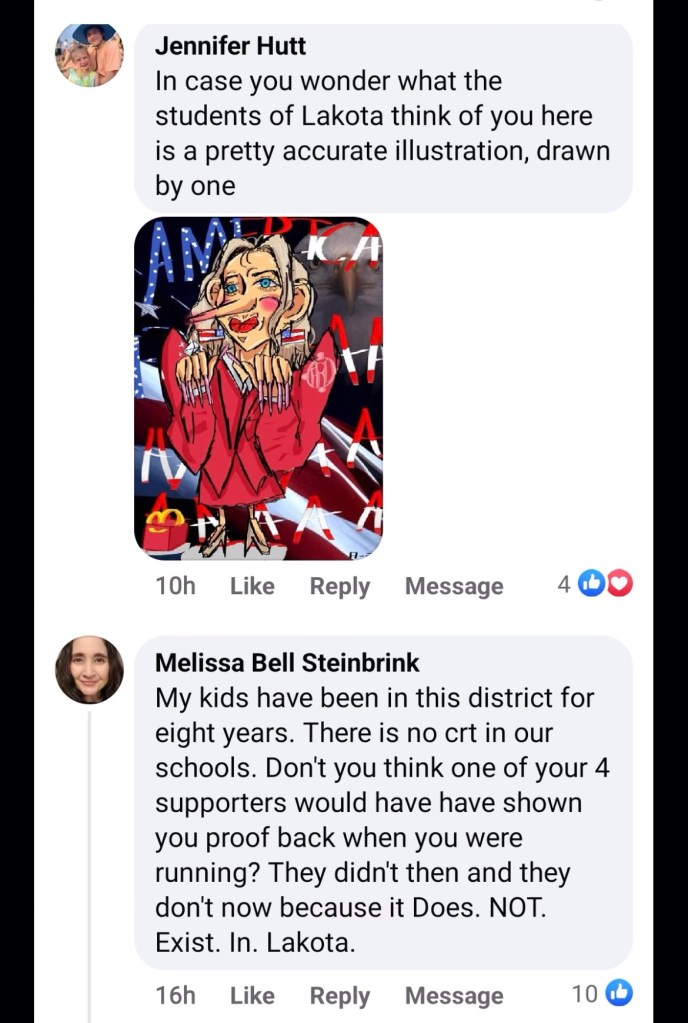
Like all good art, I think it reaches beyond the obvious world and articulates a core problem in the Lakota school district. And it’s pretty good, a work of art that was supposedly done by a student that an angry mom put on Darbi Boddy’s webpage after a school board meeting on Monday, the 17th of July, 2023. Darbi had once again made news, or rather Lakota did. I watched what I could of the meeting in small segments, and one thing that was clear to me was best represented in that Picasso-like painting, a caricature of Darbi Boddy, one of the most controversial school board members in the entire United States, and how kids have come to think of her. Art often says all the things that a complicated subject can’t say in an obvious way, and this artistic rendition of Darbi certainly does, despite its obvious negativity. This time the controversy that made the news was that Darbi mentioned “blood libel,” which is a very real thing. And that caused quite a stir that the media in Cleveland, Ohio, was talking about, and it provoked a reaction out of school board member Kelly Casper that was quite astonishing. The school board had been talking about the recent Supreme Court case where affirmative action was struck down for college entry. And when Darbi mentioned that Lakota should also drop those types of hiring requirements, Kelly Casper said that Lakota never practiced that type of conduct. But immediately, the most recent diversity tzar comes to mind, a person who clearly was assigned the job because of the color of their skin. To me, this is a normal meeting. To the pro-public-school people, this was a devastating conversation because what they want is a blue-pill life where nobody knows anything; they just live their lives oblivious to the outside world. They certainly don’t want to talk about affirmative action as it relates to human resource issues or blood cults that might infiltrate the school’s culture and destroy all the children.

Yet what struck me while watching all this wasn’t just the defensiveness of Kelly Casper, who has a friend in school board president now in Lynda O’Conner, but in the role reversal that Lynda now played against Darbi in public that was quite ostentatious. I’ve known Lynda for a long time and remember when she felt that the other school board members were picking on her continuously just a few years ago. The previous school board president, Brad Lovell, singled Lynda out because she was supposedly the only conservative member on the board, and things were pretty contentious. Now in that exact same role, as Brad used to have, Lynda has essentially become Brad. I know how it made her feel, so I can certainly understand and sympathize with how it made Darbi feel. And this started before Darbi became such a controversial figure. If Lynda had treated Darbi fairly, as she had throughout that last election, Darbi would have been a much different person in office. Instead, when the election was over, Lynda moved to ostracize the newly elected member, who never misrepresented herself as anything but a Tea Party candidate. And once elected, she stayed true to the type of people who had just elected her, which is a significant portion of the very conservative region we all live in within the Lakota school district.

Fantastic Interview that explains the magnitude of the problem

Of course, the students see all this, and they form their opinions and based on the way that Lakota has treated Darbi, led by Lynda O’Conner in this case; it’s no wonder that if a young person reporting what they saw through art would make such a picture of Darbi as was put forth in the summer of 2023.  In the picture, Darbi looks like some patriotic witch with the words “America” cast in a condescending way in the background.  When we wonder why many kids these days become Democrat activists, here is a case where it’s happening right in front of our faces within one of the most prestigious public schools in the country.  If it was happening there, it was happening everywhere.  The leadership at Lakota, which is something that transferred from one person to another in the seat of President, had shown students that conservative opinions were not welcome and that people who expressed them would be punished and made fun of.  Watching that Monday meeting, it’s quite clear that Lynda despises Darbi and doesn’t respect the voters who put her there.  It was Lynda who changed political positions.  Darbi is doing what Darbi was always going to do.  Voters want someone who represents them in public, not people who fall in love with job titles and will do anything to have them.  That is what has caused many of the problems in public education, and it’s not a mystery why students come to believe what they do about politics.  The big question is why did Lynda O’Conner essentially become Brad Lovell when all that changed was the name of the person who was the school board president.  And as to a bigger question, because apparently, Isaac Adi turned hard left after the election too, what makes people who were supposed to be Republican representatives turn into RINOs?  Why is it so important to them to be accepted by their peers?  Why aren’t they more like Darbi Boddy and fighting for the voters who elected them?  Why do they think it’s acceptable to behave one way during elections, but an entirely other way, a much more Democrat way, once they are sitting in the president’s seat on a lowly school board for a public education system that is an obviously dying model socially. 

I love the Jewish people; without them, a Bible wouldn’t exist. Yet like all people, bad things do happen when they lose their way. In the past, they have fallen to Baal worship, and these days, the temptations toward evil are all too easy. And they are just as tempted as anybody.

All that adds up to the painting of Darbi Boddy by a student who had a parent put it on Darbi’s website as if to say it all with a simple visual.  The poor leadership that runs these schools all over the country and are not supposed to be about politics at all are actually all about politics, liberal politics.  Democrat social positions.  And there is only one acceptable viewpoint.  Conservatives are not allowed, not real ones, anyway.  Public schools want to waste tax money on nonsense, and what they want to teach is unamerican and destructive to conservative values.  And the only reason this is a clash is because Darbi is refusing to change her beliefs under the pressure of the group consensus on the board.  At a point where I wanted to help her because I don’t like to see people being picked on, Lynda was Darbi, and Brad Lovell went well out of his way to treat her terribly from the seat of the president.  And it looks like Lynda wanted so much to turn the tables that she worked hard to become the president, only to become Brad?  This conflict is clear in that artistic rendition of Darbi.  It shows how Democrats who run these public schools see opposition to their strategies for children, and it’s quite an honor for them to feel that way.  But the more mysterious quandary is in how Lynda became what she used to hate.  Or did she ever hate that treatment at all?  Whatever the case, the students see what’s going on, their opinions about life are being formed, and the slant of their political beliefs are being shaped.  And what they see is a fault of leadership as it exists and the power it provides to people who are obviously ill-equipped to handle it.

Rich Hoffman

Click to buy The Gunfighter’s Guide to Business

A Man Who Gets Divorced Loses Leadership Ability: What is wrong with Tom Brady

I haven’t talked about the Tampa Bay Buccaneers in a while because, honestly, the world is at war, and who really cares about NFL football? But this story is about Tom Brady, who almost everyone agrees is the best football player of all time. His marriage, his retirement, and why the Bucs aren’t as good on the field as they are on paper is an interesting study on the impact of good leadership on any culture, whether it be business, entertainment, or politics. What Tom Brady is going through is a good baseline for just how important leadership is to any culture. He has traditionally been the best on a football field not because he is the strongest, fastest, tallest, or most creative, but because he has a way of making the people around him better, which is why he’s been in so many Super Bowls and Championship games and won many of them. And when that leadership isn’t working, it’s obvious why. So with the Bucs at 3 and 3 at the point of this article is not over for the Tampa Bay Buccaneers. They are playing in the weak NFC South division, so they are still in first place even though the Bucs should have won close games against Kansas City, Green Bay, and Pittsburg. But they lost those games because they were simply outplayed, and it’s quite clear that the team is distracted by Tom Brady, his retirement status, his marriage trouble, and his general age. It has to be tough to be 45 years old and playing with a bunch of kids who are 25 years old, old enough to be his own kids. And the head coaches are all the same age or even younger. 

What’s different about this year with Tom Brady is that the NFL obviously doesn’t want him around. The media doesn’t either. They have moved on to the Patrick Mahomes types, the Josh Allens, the much younger and mobile quarterbacks who are part of the new story of the NFL. The Bucs have done the woke thing and put people of color in charge of their coaching staff, even though they obviously have problems making decisions. They aren’t the best people for the job; they were put there because of color, although Todd Bowls, the head coach, made great news when he recently dismissed the measurement of color, which gained national attention. Bowls is a great defensive coordinator when he can dominate the other team. But his playcalling is terrible in close games when the other team isn’t intimidated, and that has certainly carried over into this year, where he remains the defensive play caller, and he just can’t stop the other team. Everyone has gotten so used to being lazy on the field and on the sideline because they just expect Tom Brady to get the ball at the end of the game and win it for them that some of these games are just getting out of reach. Tom Brady usually has an opportunity to still win the game for them, but people are happy to let him do most of the work. And that problem comes from leadership. The coaches are lazy; the players reflect the coaches. One thing about leadership that is always obvious, people adapt to the personality of the leader, so when a good leader is present, it’s evident to the world because the culture takes on their personality; when there isn’t good leadership, it’s just as evident for all those reasons. 

And every day, the news is that Tom Brady is getting divorced from his wife, Gisele Bundchen, a person many consider the most beautiful woman in the world. During the Super Bowl year of Tom Brady’s first year in Tampa, she was a tremendous asset. The other players looked at Brady and his wife, their children, Tom’s love of his parents, and his good-guy image as the best in the world, and they played off it. They listened to Tom Brady because they wanted to be like Tom Brady and have what Tom Brady had: good successful life in every way people measure success, money, beauty, ethically, and categorically. But this year, Tom Brady looks like a person like everyone else. Even at press conferences, Brady goes way out of his way to appear just like the other guys, that he’s nothing special and that he continues to play because he wants to be around his teammates. This is to other players who often have to think about whether to tackle at full speed a 300-pound player with their 250-pound bodies at 20 MPH with a head-on collision that will undoubtedly hurt the next day, a weak proposal. While they know, they have a few million dollars in their bank accounts. Why are they going to hit the other player so hard again? Especially since everything is always about Tom Brady?   Unless you have a special coach who can motivate such players, a lackluster effort is almost baked into the problem.

But specifically for other guys, they look at people they follow, and if the leader can’t hold together a marriage, then why should they listen to them about anything? A guy going through a divorce is a loser, no matter how fair that assessment might be. If you can’t hold a family together, why should anybody listen to you about anything? If a woman who knows you in your most vulnerable state, behind the media curtain, isn’t so in love with you that she’ll do anything to stay with you, then there is something wrong, and a locker room will quickly figure that out. And that holds true for everything, not just sports. If a leader can’t lead a family, they certainly can’t lead an organization, a school, or a society. All men know that once a wife leaves a man and is off to Chuckee Cheese with a new one, and a man loses his kids to a stepfather, it’s over. A family is broken beyond repair, the children will grow up with likely problems as a result, and the leadership potential of that man is gone. There is a lot of effort in the world to try to hide personal behavior behind processes, but that is just not how human beings are wired. Tom Brady is the best of all time because he did everything well. His private life was successful, which then carried over into on-field behavior. But this is the problem when you stick around too long, people start thinking of him as just another guy, who has problems just like everyone else, and at that point, the magic is gone forever. This is why I thought it would be good for Brady to stay retired, ride off into the sunset, and let history remember him as the best. But to lose that leadership ability, which he clearly has, especially now that his wife is clearly not with him, the cost is far worse than just lost games. Tom Brady has lost his leadership brand. The Tampa Bay Buccaneers may still win their division. Tom Brady may even win another Super Bowl. But in doing so, he has lost what is most important, his leadership brand. And once a man loses it, it’s nearly impossible to get back. And to the way I think, that isn’t worth another chance at a Super Bowl. 

Rich Hoffman

Click to buy The Gunfighter’s Guide to Business

The Lakota School Board Has Always Been Political: So why do they want peace now?

Wait a minute, why was Julie Shaffer crying at the Lakota school board meeting on September 12th? After all, she has been one of the most vicious political activists on the school board over the years. She has come after me before, quite viciously. In 2012, after Lakota had suffered its third levy defeat and figured that the only way they would ever win a tax increase from the community was to get rid of me, they came after me in a very public way, not in a softball manner. So since they couldn’t beat me in debate, Julie worked with several school board members and the Cincinnati media to destroy me viciously, which has been well chronicled. For most people, what she and the Lakota school board did to me would have destroyed them, and they didn’t care what it did to my family, life, or reputation in the community. They just wanted me gone, and they took the kill shot, and so did the Cincinnati media, which was hooked in lockstep with them, just as they are today. I have recently watched them do the same thing to Darbi Boddy. After voters elected her, the Lakota school board decided they didn’t want her, so they conspired to get rid of her viciously, with fangs out, and ruthlessly, blowing on the fires of liberal activism throughout the community. They didn’t care one bit what it might do to Darbi, her family, or her reputation. They simply wanted to destroy her in any way possible. 

But then, at the school board meeting’s closing comments, it came time for Julie to provide her’s; fighting back the tears, she said, “that I wish that people could remember that this is more than political theater and that these are people’s lives and future and what they worked for their entire career, and there are more people involved and that these are more than people’s points on a score card.” Well, isn’t that an astonishing statement? Who would have figured that she would say such a thing, given her track record? But then that opens up a whole new can of worms. Suppose she has such a public double standard depending on the political situation. How much bad behavior has she been willing to explain away in the past, knowing what this information tells us about her? I already know the answer, but for you, dear reader, let’s just have a little fun with it. For many years, I have heard of many cover-up stories that the Lakota school board has whitewashed. My hope was that with the current school board candidates that maybe that would change. But as soon as Darbi was elected, the knives came out, and surprisingly, Lynda did not come to her defense like I expected that she would and should. I have not been a fan of public education for many years now. I think teaching kids a progressive, liberal education is a huge waste of money. But I have worked with school board members like Lynda over the years to try and save the system. I have come to the defense of many who found themselves without a voice where the media did not want to tell their stories of bad conduct inflicted upon them to improve the school. I didn’t let my feelings toward people like Julie Shaffer inspire a campaign of complete destruction of the public school system in my district. I’ve held back a lot to make the thing work because I knew there were people like Lynda there trying to make it better. 

But then I heard at that same meeting Lynda gave a strange interpretation of the police report, which is available from the Sheriff’s Department as a public record’s request. Anybody can see it and read it, yet Lynda had a strange interpretation of it. She said, “there are no credible allegations against Mr. Miller. The Sheriff’s Office completed its investigation and found there was ‘no probable cause to initiate criminal charges.'” Well, actually, what the police report says at the end of a description of really extraordinary allegations and a police investigation that seems unreal is that the prosecutor said, “at this time,” as in to mean there wasn’t enough evidence at that point to further criminal charges. It does not “clear” Matt Miller as the media and Lynda said it did. Rather, it eludes to much more, suggesting that there may be more to come. What is implied, knowing some of the inside information from the various witnesses, is that it is hoped that this police report will shut down the investigation unless the public demands more. If the public does, then the prosecutor’s behind would be covered to further the investigation. What is astonishing is that Lynda establishes herself as the judge as to whether or not witnesses are credible or not. So what does that say about the school board that she leads? If someone comes forward with information that the school board doesn’t like, does that mean that the school board doesn’t take it seriously? If the Board is anti-Darbi, anti-Tea Party, anti-Republican, does that mean they will disregard the information if it comes from those sources? I have known Lynda O’Conner for a fifth of my life and think of her as a smart woman. A well-intentioned woman. These statements by her seem strange, not her. But then again, maybe the only reason I’ve ever had a relationship with her was for her to keep her enemies close. Nothing would surprise me. Like I say, always judge people based on what they do, not what they say. 

The hypocrisy of it all is that, on the one hand, the school board is all about politics so long as they are destroying the people they don’t want around. But, they will rally to their own people even if those people are guilty as can be, which everyone should find alarming. This isn’t some conspiracy theory; we see this publicly at school board meetings. Compare the police report with what the Board said at the meeting, and everything becomes very clear. Matt Miller created his own problems. Yes, people have a problem with his behavior and are making their opposition known. But people like Julie Shaffer and her school board accomplices set the ground rules for bloodthirsty politics long ago. They take public money to function, and I wouldn’t say I like paying it for the garbage we get from each graduating class. Lynda knows how I felt, but we still worked together to assemble a nice school board that represented the public more than we had. I am surprised that she turned on Darbi as she did. I was also surprised to hear her say the things she did at the latest school board meeting. But then again, maybe not. You never really find out about people until you go through the pressure cooker with them. If Matt hadn’t done what he did to Darbi with the help of the Board led by Lynda and people like Julie to destroy her completely, then the witnesses against Matt Miller would have probably never had the strength to speak out for themselves and go public with the information that has the Lakota superintendent in so much trouble now. He did it to himself. People are only willing to take so much, and because of what those antagonists did at Lakota toward conservatives in the community, over a long period of time, they have asked for what is happening now. And if Lynda doesn’t think the person who was married to Matt, and her many friends wasn’t a credible witness even after the police did their interviews, maybe she is having trouble with definitions these days, just as she obviously has with the police report.

Rich Hoffman

Click to buy The Gunfighter’s Guide to Business

Only Idiots Follow Orders: There is no excuse for the abuse of authority by the FBI and other policing agencies

Some of the worst crimes in all of human history have come from people just following orders. Defying orders is often the right thing to do because a corrupt person can’t impose behavioral applications on a good person. Instead, a weak person accepts the decisions of a bad person to commit vast crimes, which has been the history of much of the human race. To justify non-thinking behavior, people say, “but I was just following orders.”  We have been taught all our lives to follow directions. We first learn it from our parents. Then we learn it in our schools. We are told what to do in our religions, politics, and social circles. So, of course, when a weak person is told to do some terrible thing under orders, our default mode is to obey. For so many people, their desire to obey authority is their first and primary concern, to be a nice, compliant human being. Because we have been told all our lives that doing what we are told is good. Not following orders is bad. We never question the validity of the person giving the orders, only that they were followed to the letter. And under such a guise, so much crime has been committed against so many people over the entire span of the human race. And vast evil has been spread to every corner of the earth. 

That is why there is so much anger at the FBI for President Trump’s Florida home break-in. If they were filled with good people, the FBI would have defied the orders and not conducted the break-in. It was not honorable for them to follow the orders of the Biden White House and his Department of Justice for the political witch-hunt that it was. That the 30 FBI officers who did conduct the raid considered their orders more important than actually following the law says everything. It does not give them a free pass for their behavior. For the idiot that follows corrupt orders, they then become just as corrupt. If bad people take over your government, who is to stop them from controlling all the levers of power if compliance with orders is more important than following the law? Defiance is mandated when corruption speaks, and the authority figures who demand injustice for the morality of following orders are evil and must be defeated with rebellion. Yes, people have a right to be upset with the FBI in the wake of the Trump raid and the abuse of Peter Navarro, Roger Stone, Paul Manafort, Steve Bannon, and many others who the FBI and other police agencies have unjustly attacked by a government that has drifted into corruption. It is not the good cop who follows the orders of bad politicians who deserves understanding. In defiance of corrupt orders, the human race should be defined. Not by the quality of compliance but by the standard of efficacy that the individual upholds. 

The purpose of being an intelligent human being is to use the freedom of intellect to make proper decisions. Leaders bring people into following them out of showing the path to self-preservation, not sacrifice to a Liberal World Order. That is what the nature of orders requires: a thoughtless commitment to organizational structure. Once evil penetrates that structure, a commitment to evil is unleashed for all to suffer. And from there, evil rules the day to the misery of everyone. And it only takes one bad person in the chain of command to perpetrate such evils. And just because law enforcement wears the blue uniform and carries the star of law and order on their breast pocket, it doesn’t mean they stand for truth and justice. It means they follow orders and expect their entire existence to base their moral quandaries on compliance with higher authorities regardless of whether or not those higher authorities work for good or evil. Definitions of evil are not relevant to such systems of authority, only compliance to the highest established authority that is present to give the orders. So in that regard, the FBI and CIA, and other three lettered agencies that conduct government business and commit major infractions on innocent people every day, are just as bad as those at the top who have been captured by the evils of politics in the Biden administration, or Merrick Garland who is still upset that he’s not a lifelong Supreme Court judge appointed under Obama instead of the Trump pick who knocked him out of contention.   That is really the root of all politics that some people like Biden and Garland will do anything to capture high office positions because they believe that if they acquire them that they will then be able to tell vast bureaucracies what to do because they know they will follow orders, regardless of if the orders are good or evil. When the FBI raided Trump’s home and went through the personal belongings of Melania Trump, the agents knew it was evil, yet they did it anyway. Then after, when they wanted the country to forgive them, they said, “but we were only following orders.” 

Following orders blindly and without question is not moral or good. Only the person who pushes back against immoral orders can be considered to be a good person. We are thoughtful people for a reason, not mindless dogs or horses that can be ridden anywhere by anybody at the whim of a fool. We were designed to rebel; it’s the basic nature of a human being. That doesn’t mean that people won’t follow a leader. But what it means is that the best leaders know how to get people to follow them out of the self-interest of the participants rather than the mindless obedience of a cog in the wheels of life. It is not good to allow law enforcement under orders of a corrupt government to allow them to accost you and your belongings and embarrass you to the public, which is clearly what the FBI was doing to Peter Navarro and Steve Bannon, and the attack on Trump was to show dominance and authority over the former President. So how can you tell if the government giving orders is good? Well, if people find they can find advantages through mutual morality for self-preservation and the best interests of those involved are the most obvious. When people know that a leader knows what they are talking about, they will be willing to get advice on the best strategy. But blind compliance to an evil intention does not give soldiers and law enforcement a free pass to the golden gates of morality without question. It doesn’t even take them to the door. There is no path for the ruthless dictator and their followers to gain morality through blind compliance, which is what is expected. And why the FBI finds themselves in a public relations nightmare on a basic concept that they perhaps never contemplated, that people would hold them accountable for their actual actions, not just in their ability to follow orders, which they all thought was all that mattered. In the world of truly free people, orders and compliance are just chains to stupidity, the same stupidity that has followed every act of evil since the beginning of time.

Rich Hoffman

Click to buy The Gunfighter’s Guide to Business