Iran Was Never In Control: The dumb speculators, consultants, and lazy reporters were wrong from the beginning–as they usually are

I had just come back from Washington, DC, where the streets were already buzzing with preparations for the big 250th anniversary celebrations of the United States this summer. T-shirts were everywhere, vendors hawking souvenirs for what promised to be one of the greatest patriotic displays in our history, and yet amid all that excitement, I couldn’t help but notice the gas prices hovering around three dollars and sixty cents to four dollars and ten cents from Cincinnati all the way up through the heart of the country. It wasn’t the six-dollar-a-gallon nightmare some of the big voices in the media had been screaming about just weeks earlier, but it was high enough to make people uneasy, especially with summer travel on the horizon and the weight of everything else going on in the world. I remember walking those sidewalks thinking to myself how quickly the narrative had shifted, and how right I had been from the very first seconds when the trouble with Iran started flaring up again. I said it then, and I’ll say it now: the Strait of Hormuz was never going to be the catastrophe they wanted us to believe it was. Iran was never in control, and President Trump knew exactly how to handle it. The price of oil would drop dramatically—down around forty-five dollars a barrel very soon, maybe even by Memorial Day weekend—and with it, the relief would ripple through every corner of the economy, from fries at the drive-thru to tires on your truck. 

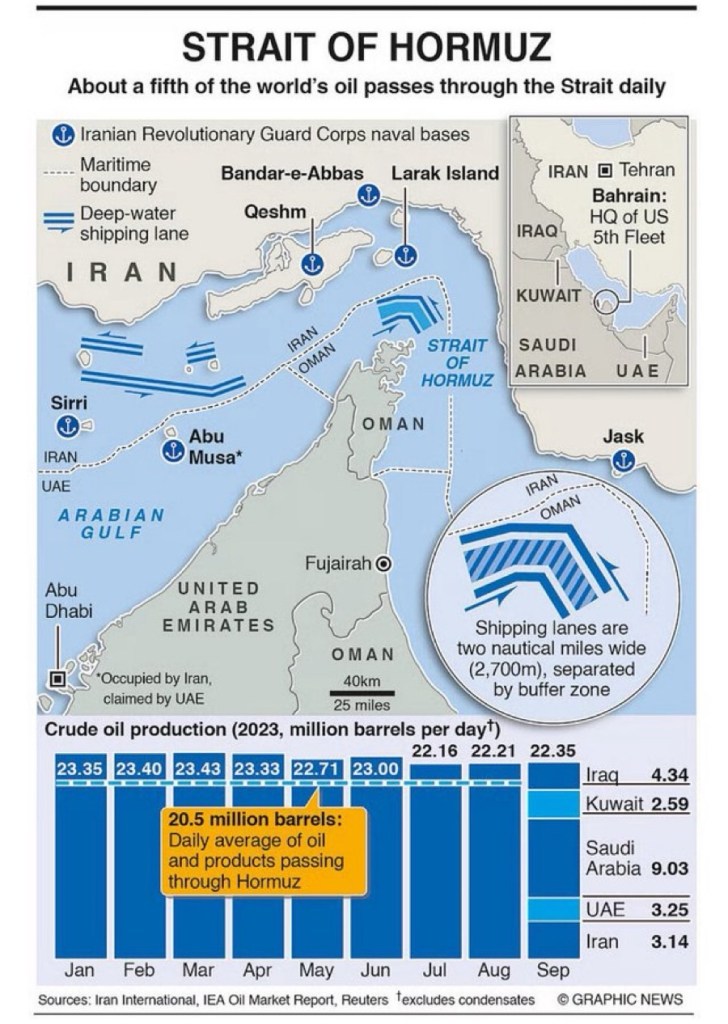
Looking back, it all unfolded just as I had predicted hours after those initial Iranian provocations hit the news. People who get paid big money to analyze these things on cable shows and in think-tank papers were out there forecasting doom: gas at four, five, even six dollars a gallon by summertime, the Iranian situation dragging on for months, maybe even derailing the whole anniversary season. But I saw through it immediately. The Strait of Hormuz, that narrow choke point carrying about a fifth of the world’s oil, had been threatened before, and history showed the pattern. Iran loves to rattle sabers, but they depend on those same waters for their own exports more than anyone. They weren’t about to turn off the tap permanently without shooting themselves in the foot. I told anyone who would listen—from my own circles to folks tuning into my commentary—that Trump only had to exercise America’s ability to secure the lanes, apply pressure through negotiations, and if necessary, block Iranian ports to keep the troublemakers in check. That’s exactly what happened. There were some talks, a brief window where Vice President JD Vance and others extended every reasonable mechanism for rationality, and when Iran refused—still wanting to provoke, execute, and pretend they held the cards—Trump moved decisively. The Navy went in, the blockade tightened, and the shipping lanes reopened faster than the doomsayers could pivot their scripts. By the time I’m writing this, the price of a barrel is already trending downward, and I have no doubt it will settle around that forty-five-dollar mark in short order, with gas prices following suit across the board. 

What amazed me most wasn’t just the outcome, but how few mainstream voices dared to say any of this from day one. I did. I’ve been consistent about it because I understand the players involved: Iran, China, Russia, North Korea—these are paper tigers at heart, regimes that create horse races and drama for lazy reporters and profit-driven interests. They bluff because that’s all they have left after years of internal rot. Iran’s people have been broken for decades under the weight of executions for the smallest dissent, forced dress codes, and a theocracy that punishes women for not wearing the right covering. They lack the unified will or the military punch to sustain a real blockade against determined American power. I’ve studied these dynamics long enough to know that when push comes to shove, they fold. Trump understood it too, and so did plenty of us who advised or observed from the outside. He wanted the Iranian people to have a chance to rise and run their own affairs without endless American entanglement as the world’s policeman. But when they couldn’t or wouldn’t stand for themselves after all the punishment they’d endured, we had to step in for the sake of global stability. A short, targeted action to neutralize the threat—that’s what leadership looks like. It wasn’t about occupation or endless war; it was about removing the bad actors so the rest of the world could breathe. 

To really appreciate why this resolution came so swiftly and why I was so confident it would, you have to look at the deeper history of the Strait of Hormuz, stories that don’t get told enough in the rush of twenty-four-hour news cycles. Take the Tanker War of the 1980s during the Iran-Iraq conflict. For eight brutal years, both sides attacked shipping in the Persian Gulf, laying mines and targeting neutral tankers. Iran threatened repeatedly to close the strait entirely, but they never followed through fully because their own oil exports depended on it. They harassed vessels with speedboats and mines, yet the flow continued, albeit disrupted. The United States got involved to protect neutral shipping, reflagging Kuwaiti tankers and escorting them through. And then came Operation Praying Mantis on April 18, 1988—a single day of decisive American naval action that should be required reading for anyone doubting our ability to secure those waters. After the USS Samuel B. Roberts struck an Iranian mine, the U.S. Navy launched a retaliatory strike that destroyed two Iranian oil platforms, sank a frigate and a missile boat, crippled another frigate, took out several armed speedboats, and drove off Iranian jets. It was the largest surface engagement for the U.S. Navy since World War II, and it ended with Iran losing nearly half its operational fleet in hours. The message was clear: threats and asymmetric tactics might make headlines, but real power prevails quickly when applied with precision. That history echoed in 2026. Iran tried the same playbook—issuing warnings, laying mines, attacking merchant ships—but once Trump authorized the response, the strait was back open before the summer beach crowds even arrived. No stalemate, no prolonged crisis wrecking our economy or the midterms. Just decisive action rooted in precedent. 

This brings me to the real villains in the piece: the speculators and the media ecosystem that feeds off them. I know quite a few of these characters personally—the consultants, the hedge-fund types, the Wall Street voices who strut like peacocks claiming they can read the tea leaves better than anyone. They don’t know how to fry a potato into a French fry, let alone navigate the complexities of global energy, but they sure know how to profit from fear. In this case, they wanted oil prices to climb. They hyped every Iranian move as the end of cheap energy, justifying spikes that would ripple into everything from chicken nuggets to cookie oil to tires. Historical precedent shows how this works. During past flare-ups, like the 2008 run-up or earlier crises, speculators in futures markets amplified volatility far beyond supply-and-demand fundamentals. Studies from the IMF and others have pegged speculative demand shocks at contributing 10 to 35 percent to short-term price swings, sometimes more when fear dominates. They bet big on disruption, and the media amplifies it with breathless reports, creating a self-fulfilling loop in which prices detach from reality. Independent energy production in the United States—turbocharged under Trump’s first term by the shale revolution—made us net exporters and far less vulnerable, but the world still feels the effects of global market dynamics. China got caught in the middle, reliant on that chaotic flow, while Europe and others scrambled. Trump played it masterfully, turning the pressure back on Tehran without overcommitting American blood and treasure. Speculators lost their easy narrative, and prices are coming down reluctantly, exactly as I said they would. 

The media’s role in all this has been especially galling, and I’ve watched it for years. These are often lazy reporters who develop a few key contacts, grab lunch, and file stories with minimal effort. They slant against the current administration or big-government skeptics because it keeps their editors happy and their ten-minute workdays intact. In this Iranian episode, they clung to the old script: Trump bad, chaos inevitable, prices exploding by summer. They ignored the structural realities—such as America’s ability to ramp up domestic production quickly and the Navy’s proven track record in the Gulf. I’ve said it before, and I’ll repeat it here: these regimes are paper tigers propped up for drama. Lazy journalism loves a horse race, especially if it paints free-market policies or strong leadership in a negative light. Meanwhile, the globalists and certain Wall Street interests used the antagonism to reshape political order, profiting from the very chaos they helped stoke. Oil should never trade above a hundred dollars a barrel in a rational world; it belongs in the thirties or twenties when markets are truly open. Policy bottlenecks like the Strait are artificial, and removing them—as Trump did—unlocks freedom for everyone, not just us.

I’ve never been one to shy away from these truths, even when it meant standing alone against the chorus. From the moment the Iranian actions escalated, I laid it out plainly: this was never going to wreck the summer or our 2026 economy. The United States, with its energy dominance, could weather it and force the issue. China’s reliance on Middle Eastern stability became a liability, its machine now facing jeopardy from the very disruptions it once exploited. Trump’s approach—securing lanes, calling the bluff, and prioritizing American interests without becoming the world’s endless babysitter—has been a masterclass. Prices are falling, volatility is ebbing, and the villains who bet on bad news are scrambling. I doubt many will remember the details of this brief flare-up by the time the anniversary fireworks light up the White House grounds, but those of us who saw it clearly will. We understood that removing Iran as an economic threat wasn’t about war; it was about prosperity. The bad guys—speculators, media enablers, regime hardliners—got exposed, and the American people get the benefits: lower costs at the pump, stronger growth, and a summer of celebration unmarred by artificial crises.

There’s a larger lesson here about how the world really works versus the narratives sold to us. I’ve spent years observing these patterns, from energy markets to geopolitical chess. Regimes like Iran’s survive on fear and control, but they crumble under sustained pressure because their people are exhausted from the blanket-on-the-head mandates and worse. Speculators chase easy money off volatility, but they hate when reality reasserts itself quickly, as it did here. And the media? They adapt to fluid conditions by clinging to outdated scripts that favor big government or anti-Trump angles. Trump knew it all along, just as I did. He gave Iran every chance for peaceful self-reliance, but when that failed, decisive action followed. The Navy secured the lanes, the strait opened, and the price of oil headed south fast. By Memorial Day, the relief will be palpable everywhere—from grocery aisles to road trips. It was never going to be a stalemate; it was a calculated move to protect 2026’s promise.

Some might wonder why I keep emphasizing these points. It’s because I’ve seen the cost of ignoring them. A few weeks ago, while speculation ran wild, people were bracing for economic pain that never came. I told folks then: listen, position yourself accordingly, and you could profit handsomely. Some did, and good for them. Others clung to the fear. Next time, I hope more people pay attention.

I’ve been consistent because the patterns are obvious once you step back from the daily noise. Iran’s provocations were real but limited; their control was illusory. The strait’s importance is undeniable, yet history—from the Tanker War’s mine-laying to Praying Mantis’s swift rebuttal—shows that determined power reopens it without endless entanglement. Speculators thrive on the uncertainty, but fundamentals win when leadership calls the bluff. Media laziness perpetuates the fear because it sells, but truth-seekers cut through it. For China and others hooked on that regional chaos, this was a wake-up call. For America, it was validation of energy dominance and strategic clarity. Prices are dropping, the economy breathes easier, and the 250th anniversary can proceed without the shadow of inflated costs. I said it from the start, and events proved it. If you listened early, you likely made some smart moves. If not, there’s always next time.

Bibliography

•  Strauss Center. “Strait of Hormuz – Tanker War.” https://www.strausscenter.org/strait-of-hormuz-tanker-war/

•  History.com. “The Strait of Hormuz: A Timeline of Tensions.” Published March 13, 2026.

•  Wikipedia. “2026 Strait of Hormuz Crisis.”

•  Congressional Research Service. “Iran Conflict and the Strait of Hormuz: Impacts on Oil, Gas…” March 11, 2026.

•  IMF Working Paper. “Oil Price Volatility and the Role of Speculation.” WP/14/218.

•  CFTC Report. “The Role of Speculators in the Crude Oil Futures Market.”

•  U.S. Navy Historical Center. “Operation Praying Mantis.”

•  Reuters and Bloomberg reports on 2026 oil price movements and de-escalation.

•  Additional historical analyses from National Interest and U.S. Naval Institute Proceedings on Tanker War and Praying Mantis.

•  White House and energy policy releases on U.S. shale production and energy dominance, 2026.

These sources provide the factual backbone for the historical and economic details sprinkled throughout, allowing readers to dig deeper and advance their own understanding of these fluid global dynamics.

Rich Hoffman

More about me

Click Here to Protect Yourself with Second Call Defense https://www.secondcalldefense.org/?affiliate=20707
About the Author: Rich Hoffman

Rich Hoffman is an aerospace executive, political strategist, systems thinker, and independent researcher of ancient history, the paranormal, and the Dead Sea Scrolls tradition. His life in high‑stakes manufacturing, high‑level politics, and cross‑functional crisis management gives him a field‑tested understanding of power — both human and unseen.

He has advised candidates, executives, and public leaders, while conducting deep, hands‑on exploration of archaeological and supernatural hotspots across the world.

Hoffman writes with the credibility of a problem-solver, the curiosity of an archaeologist, and the courage of a frontline witness who has gone to very scary places and reported what lurked there. Hoffman has authored books including The Symposium of JusticeThe Gunfighter’s Guide to Business, and Tail of the Dragon, often exploring themes of freedom, individual will, and societal structures through a lens influenced by philosophy (e.g., Nietzschean overman concepts) and current events.
What the TSA Funding and the Iranian Aggression in the Strait of Hormuz Reveal: Democrats want to harm the economy in both scenarios with an anti-American agenda

The recent developments in the Middle East, particularly the decisive military actions taken by the Trump administration against Iranian targets, have exposed deep fissures in American political life and revealed the true priorities of those who claim to represent progressive values. What began as a targeted bombing campaign to neutralize threats from a hostile regime has been met with a bizarre and troubling response from certain quarters of the Democratic Party and left-leaning media, where voices seem almost eager to amplify the remaining terrorist elements capable of disrupting global oil flows through the Strait of Hormuz. This narrow waterway, situated between Iran and the United Arab Emirates in the Persian Gulf, represents one of the most strategically vital passages in the world, funneling approximately 20 percent of global seaborne oil trade—roughly 21 million barrels per day under normal conditions—through a chokepoint as narrow as 21 miles at its most constricted point.  Historically, this strait has been a flashpoint for conflict; during the 1980s Tanker War between Iran and Iraq, both sides attacked commercial shipping, leading to U.S. naval intervention under Operation Earnest Will to protect oil tankers. The geography itself underscores the vulnerability: while 21 miles may seem vast on a map, it is narrow enough for modern anti-ship missiles, speedboats operated by Iran’s Islamic Revolutionary Guard Corps (IRGC), and even rudimentary mines to pose credible threats, yet wide enough that vessels cannot simply “hide” in open seas without sophisticated escort protection. Ships transiting the area must navigate between Iranian coastal defenses and the Omani side, making any disruption not just a regional issue but a global economic shock, as evidenced by past spikes in crude prices during similar crises.

The Trump administration’s campaign, which included precision strikes on military infrastructure such as those at Kharg Island—Iran’s primary oil export hub, where U.S. forces targeted over 90 military assets while sparing core oil facilities—has fundamentally altered the balance of power.  Reports indicate that these operations, coordinated in part with Israeli efforts, eliminated significant portions of Iran’s leadership succession bench, including the Supreme Leader Ayatollah Ali Khamenei and dozens of top commanders, effectively decapitating the command structure that once orchestrated proxy terrorism across the region.  This was no accidental escalation; it followed years of Iranian provocations, from nuclear enrichment programs set back by earlier U.S. actions in 2025 to support for groups like Hamas and Hezbollah, which have long destabilized the Middle East. The strikes targeted air defenses, missile batteries positioned along the Strait of Hormuz, and naval assets, rendering Iran’s ability to organize a sustained closure of the waterway severely compromised. In the immediate aftermath, Iranian remnants attempted retaliatory actions with speedboats and anti-ship missiles—tactics reminiscent of their “swarm” tactics in past incidents—but without centralized leadership or intact infrastructure, these efforts amount to little more than guerrilla harassment rather than a viable military strategy capable of halting commerce indefinitely.

Yet, rather than celebrating this reduction in a long-standing threat to American energy security and global stability, segments of the Democrat establishment and aligned media outlets have responded in ways that can only be described as cheerleading for the very terrorist elements left scrambling in Iran’s diminished capacity. Coverage has fixated on potential disruptions to oil shipments, speculating wildly about prolonged blockades that would drive gasoline prices skyward and derail economic progress under the current administration. This is not neutral reporting; it aligns with a broader ideological agenda that prioritizes weakening capitalist structures over securing American interests. The goal, as evidenced by repeated patterns, appears rooted in a desire to impose a net-zero-energy future, in which fossil fuel flows are throttled not by market forces but by engineered crises, forcing societies toward reliance on unreliable alternatives or, in the most extreme visions, a return to pre-industrial existence. One need only look at the climate rhetoric that has dominated left-leaning discourse for decades: shutting down pipelines, opposing domestic drilling, and now implicitly rooting for Iranian proxies to succeed where sanctions and diplomacy failed. This mindset views high energy prices not as a policy failure but as a feature, punishing consumers and industries alike to accelerate a transition that ignores practical realities like the intermittent nature of renewables and the immediate needs of working families.

The Strait of Hormuz incident encapsulates this perfectly. With the waterway’s narrowest stretch creating a natural bottleneck—vessels must slow and align in a predictable lane for safe passage—any residual Iranian speedboat attacks or missile launches from the mainland could theoretically endanger tankers. However, the scale of the U.S.-led degradation of Iranian naval and coastal capabilities has rendered such threats marginal. Iran’s “bass boat” navy, as critics have mockingly termed the IRGC’s small, fast-attack vessels used for fishing one moment and asymmetric warfare the next, lacks the logistical support or air cover to sustain operations against a coalition presence. Trump has already called for international partners, including approximately seven nations, to contribute minesweepers and escorts, leveraging alliances that recognize the shared interest in uninterrupted energy flows.  Traffic through the strait, while initially reduced to a trickle amid the early chaos of retaliatory strikes—with estimates of only dozens of vessels transiting in the first weeks compared to over 100 daily pre-conflict—has begun to recover as U.S. forces neutralize threats.  Iranian oil exports themselves continue at reduced but notable volumes, underscoring that the regime’s own economic lifeline persists even as it attempts to weaponize the passage against adversaries. The notion that this could spiral into another prolonged ground war akin to Iraq is pure speculation peddled by those invested in market volatility; boots-on-the-ground scenarios ignore the precision, standoff nature of the current operations, and the absence of any viable Iranian conventional force.

This cheerleading for disruption ties directly into a deeper anti-Trump animus that has stripped away the Democrat Party’s moderate facade. Once bolstered by centrist voices who could bridge divides, the party now stands exposed after waves of defections from its ranks. Union workers, laborers, and everyday Democrats who once formed the backbone of the coalition have shifted toward the Republican side, drawn by tangible results in economic security and a rejection of radical policies. Figures like Pennsylvania Senator John Fetterman, previously seen as a progressive stalwart, have moved toward positions that emphasize strength abroad and support for decisive action against threats such as Iran, aligning more closely with MAGA priorities on national security. Similarly, podcaster Joe Rogan—long a voice of independent inquiry—has critiqued leftward excesses and shown openness to perspectives once dismissed, including explorations of faith and personal responsibility. Elon Musk, who built revolutionary companies while navigating early left-leaning sympathies, has increasingly championed free-market principles and innovation unfettered by government overreach. Even Robert F. Kennedy Jr. has broken from family traditions to advocate for pragmatic governance. These are not Republicans migrating leftward; they represent a genuine realignment in which former Democrats, recognizing the failures of identity-driven radicalism and economic sabotage, have gravitated toward a growing GOP tent under Trump’s leadership. As someone who has held conservative convictions since childhood, I approach this influx with some caution—the “big tent” expands rapidly, incorporating voices that may not align perfectly on every issue—but the net effect is to strengthen the movement. It dilutes the radicals left behind, those who now dominate media narratives and push agendas that prioritize ideological purity over prosperity.

The absence of any remaining Iranian leadership structure capable of orchestrating a coherent closure of the strait further undermines the doomsday predictions. With key figures eliminated and succession plans disrupted, the regime’s Marxist-adjacent authoritarian framework—characterized by centralized control, suppression of dissent, and alliances with adversarial powers like China—lacks the organizational muscle for sustained operations. (Note: while the Islamic Republic is fundamentally a Shia theocratic system governed by the principle of velayat-e faqih, or guardianship of the jurist, it incorporated anti-imperialist and redistributive elements from the 1979 Revolution that some analysts have likened to Marxist influences, though communist factions were later purged.) This vacuum leaves scattered terrorist remnants, easily countered by American naval superiority and coalition patrols. Speculation about skyrocketing oil prices persisting at elevated levels—perhaps locking gasoline at around $3.50 per gallon indefinitely—ignores historical precedents in which resolved crises led to rapid stabilization. Markets react to uncertainty with volatility, but once security is restored, barrels will trade lower, potentially dipping gasoline below $2 in the not-too-distant future as domestic production ramps up and global flows normalize. Card sharks in futures markets may bet on prolonged pain, but those bets are being unwound as reality sets in: the region is being secured through justified force, not endless occupation.

This dynamic exposes the fundamental philosophical rift. Democrats, now largely unmasked without their moderate cover, pursue policies that undermine self-rule and free enterprise. From reluctance to fully fund transportation security amid shutdown threats—actions that could grind air travel to a halt and mirror desires to cripple economic engines—to broader efforts against fossil fuels, the pattern is consistent: hurt capitalism at all costs to usher in a managed decline. Chuck Schumer and similar figures exemplify this by framing fiscal standoffs in ways that prioritize partisan leverage over public safety, hoping disruptions erode support for the administration. In contrast, the Republican Party, bolstered by defectors seeking common ground, offers a vision of strength, innovation, and abundance. Trump’s approach—opening the tent wide while delivering results—facilitates this evolution. People who were once skeptical, including those who viewed certain figures as too far left during earlier campaigns, now see the logic under pressure from real-world governance. This is not Republicans compromising; it is a magnetic pull toward policies that work, evident in parallel movements worldwide: Italy’s shifts under Giorgia Meloni, Argentina’s Milei revolution against socialism, Brazil’s adjustments, Mexico’s easing of cartel pressures, Canada’s populist stirrings, and European realignments against entrenched elites.

Globally, the removal of threats like Iran’s regime reverberates. George Soros and his network, including successors, have long funded elements that sow discord, preferring chaos to organized self-governance where moneyed interests cannot play kingmaker. Their immature worldview clashes with representative systems that empower citizens. As Trump dismantles such obstacles—from Iranian proxies to domestic regulatory overreach—more individuals awaken to the benefits of ordered liberty. In the Strait of Hormuz specifically, oil will continue flowing because the infrastructure for interference has been neutralized. American dominance in the region, achieved through air and naval power rather than quagmires, ensures this. Media attempts to manufacture crises, portraying terrorists as underdogs or inevitable victors, ring hollow as facts emerge: no mass closure, no boots on the ground quagmire, no permanent economic sabotage.

The cheerleading for potential chaos reveals a side long suspected but now undeniable. Without the polite moderates who once provided camouflage, radicals stand exposed, rooting against American success, whether through domestic shutdowns or foreign disruptions. This anti-team America stance contrasts sharply with the defectors streaming into the broader conservative coalition. The trend accelerates over the coming years: four, six, or more, as global populist waves mirror the U.S. shift. Marxism’s allure—centralized control disguised as equity—fails under scrutiny, leaving adherents isolated. In Iran, the vacuum created by leadership losses prevents any orchestrated Strait closure, despite desperate attempts by holdouts. The illusion peddled in some outlets, suggesting a robust threat persists, crumbles in light of evidence of degraded capabilities.

Economically, the payoff is clear. With secure shipping lanes, energy abundance returns, lowering costs for families and industries. Speculative bets on perpetual high prices will falter as tankers resume normal transit under protection. This is the future: flourishing commerce, reduced threats, and a political landscape realigned toward prosperity. Those clinging to old ideologies find themselves sidelined, their masks removed by the very successes they decry. The Strait of Hormuz remains open not by Iranian sufferance but through American resolve, proving once more that strength deters aggression while weakness invites it.

Expanding on the historical context, the Persian Gulf has long been a theater of great-power competition. Pre-1979, Iran under the Shah was a U.S. ally, stabilizing oil flows; the Islamic Revolution reversed this, birthing a system that exported revolution via proxies. The 1980-1988 Iran-Iraq War saw the strait mined and tankers attacked, prompting reflagging operations where U.S. warships escorted Kuwaiti vessels. Lessons from that era inform today’s response: targeted naval interdiction can work without a full invasion. Iran’s current arsenal—anti-ship ballistic missiles like the Khalij Fars, fast-attack craft, and submarine threats—has been systematically degraded, as confirmed in post-strike assessments. Supplemental economic data reinforce optimism: pre-conflict, Gulf exports underpinned global supply chains; disruptions temporarily raise West Texas Intermediate crude prices, but diversification (U.S. shale, alliances with Saudi Arabia and the UAE) buffers the impact. Forecasts from energy analysts, accounting for resumed patrols, point to normalization within months, countering alarmist narratives.

Politically, the realignment transcends personalities. Labor unions, once Democrat mainstays, fracture over issues like energy jobs versus green mandates. Fetterman’s evolution—praising decisive foreign policy—exemplifies how representative pressures compel adaptation. Rogan’s platform amplifies voices questioning orthodoxy, fostering conversions through dialogue. Musk’s enterprises, from electric vehicles to space, thrive in open markets, his critiques of regulatory capture aligning with conservative skepticism. Kennedy’s independent run highlighted anti-establishment sentiment cutting across lines. This influx enlarges the tent, accommodating diverse views on fiscal matters and social issues while unifying around core principles: secure borders, energy dominance, and the rejection of globalist entanglements that empower adversaries.

The Marxist label applied to Iran merits nuance in background: the 1979 revolutionaries blended Islamist fervor with leftist economics, nationalizing industries and allying with Soviet remnants initially, but Khomeini’s purges eliminated true communists by the 1980s. Today’s regime blends theocracy with state capitalism, funneling oil revenues to proxies while partnering with China via Belt and Road initiatives. Its hostility stems from ideological opposition to Western liberalism, not from pure Marxism, yet it shares the goal of undermining capitalism through disruption. Allies in Beijing benefit from the chaos that elevates their influence. Removing this node weakens that axis, paving the way for regional realignments favoring stability.

On the domestic front, TSA funding battles illustrate the pattern: withholding resources to manufacture crises, hoping airport delays erode public confidence. This echoes broader shutdown tactics that prioritize narrative over function. Contrast with the Republican emphasis on funding security while streamlining bureaucracy. The exposure of such tactics accelerates defections, as average citizens—union members, small-business owners—recognize the disconnect from their livelihoods.

Worldwide echoes abound. Italy’s Meloni government curbs migration and revives industry; Argentina’s Milei slashes spending to combat inflation; Brazil navigates post-leftist adjustments; Mexico confronts cartels with renewed vigor; Canada faces provincial pushes against federal overreach; Europe contends with energy crises post-Russia sanctions, fueling populist surges. Each dismantles radical covers, mirroring U.S. trends. Soros-funded NGOs, promoting open borders and identity politics, lose ground as the public demands accountability.

Analysis of the Hormuz situation, speculation of endless hostility ignores military realities. U.S. and allied assets have cleared key threats; Iranian “fishing” boats repurposed for attacks lack sustainment. Oil flows resume, prices moderate. This victory, smooth and leadership-focused, signals broader progress against adversarial networks. Those celebrating potential setbacks reveal priorities that are misaligned with the national interest. The future belongs to the expanding coalition prioritizing strength, growth, and unity—Team America redefined through inclusion of the awakened. Gas prices will decline as security solidifies, economies flourish, and radical elements fade into irrelevance. This evolution, driven by results over rhetoric, defines the coming era.

Footnotes

1.  EIA estimates on global oil transit chokepoints (historical baseline for 21 million barrels/day figure).

2.  AP/Reuters reporting on coalition calls and vessel transits (March 2026 updates).

3.  Fox News and NPR accounts of leadership eliminations post-strikes.

4.  CNN and Politico details on Kharg Island targeting.

5.  Historical context from U.S. Naval Institute records on the 1980s Tanker War.

6.  Analyses of Iranian regime ideology from scholarly sources like those in Foreign Affairs archives.

7.  Examples of political shifts drawn from public statements by Fetterman, Rogan interviews, and Musk commentary.

8.  Oil price forecasts and shipping data from Kpler, TankerTrackers, and Lloyd’s List (2026 conflict metrics).

9.  Global populist movements referenced in comparative political studies (e.g., Journal of Democracy).

10.  U.S.-Iran relations timeline from Council on Foreign Relations backgrounders.

Bibliography

•  CNN. “Trump Administration Underestimated Iran War’s Impact on Strait of Hormuz.” March 13, 2026. https://www.cnn.com/2026/03/12/politics/hormuz-trump-administration-underestimated-iran

•  Al Jazeera. “Trump Says US May Hit Iran’s Kharg Island Again ‘Just for Fun’.” March 15, 2026. https://www.aljazeera.com/news/2026/3/15/trump-says-us-may-hit-irans-kharg-island-again-just-for-fun

•  AP News. “Trump Says He’s Asked ‘About 7’ Countries to Join Coalition to Police Iran’s Strait of Hormuz.” March 15, 2026. https://apnews.com/article/iran-iraq-us-trump-march-15-2026-9bbed3c906146844be08fdfd02595754

•  Fox News. “Trump Says Iran Strikes Eliminated Most Leadership.” March 3, 2026. https://www.foxnews.com/politics/trump-says-irans-succession-bench-wiped-out-israeli-strike-hits-leadership-deliberations

•  NPR. “Trump Warns Iran Not to Retaliate After Ayatollah Ali Khamenei Is Killed.” March 1, 2026. https://www.npr.org/2026/03/01/nx-s1-5731333/iran-us-israel-strikes

•  CNBC. “Traffic Is Trickling Through Strait of Hormuz.” March 18, 2026. https://www.cnbc.com/2026/03/18/hormuz-bottleneck-vessel-tanker-tracker-shipping-strait-of-hormuz.html

•  Reuters. “Oil Tankers ‘Starting to Dribble Through’ Strait of Hormuz.” March 17, 2026. https://www.reuters.com/business/energy/oil-tankers-starting-dribble-through-strait-hormuz-says-white-house-2026-03-17/

•  U.S. Energy Information Administration. “World Oil Transit Chokepoints.” Updated reports on Hormuz.

•  Council on Foreign Relations. “U.S.-Iran Relations Timeline.” Background primer.

•  Foreign Affairs. Articles on Iranian revolutionary ideology and regional proxies.

•  Additional references: Kpler energy analytics, Lloyd’s List Intelligence shipping data, and public statements from political figures as cited in mainstream coverage (March 2026). 202

Rich Hoffman

More about me

Click Here to Protect Yourself with Second Call Defense https://www.secondcalldefense.org/?affiliate=20707

About the Author: Rich Hoffman

Rich Hoffman is an independent writer, philosopher, political advisor, and strategist based in the Cincinnati/Middletown, Ohio area. Born in Hamilton, Ohio, he has worked professionally since age 12 in various roles, from manual labor to high-level executive positions in aerospace and related industries. Known as “The Tax-killer” for his activism against tax increases, Hoffman has authored books including The Symposium of JusticeThe Gunfighter’s Guide to Business, and Tail of the Dragon, often exploring themes of freedom, individual will, and societal structures through a lens influenced by philosophy (e.g., Nietzschean overman concepts) and current events.

He publishes the blog The Overmanwarrior (overmanwarrior.wordpress.com), where he shares insights on politics, culture, history, and personal stories. Active on X as @overmanwarrior, Instagram, and YouTube, Hoffman frequently discusses space exploration, family values, and human potential. An avid fast-draw artist and family man, he emphasizes passing practical skills and intellectual curiosity to younger generations.

The Bad Guys Deserve Punishment: Destroying Iran to free people from tyranny

I’ve been watching everything unfold in real time. It feels good to see some real aggression from the top, finally. Everybody’s talking about how Trump’s inspiration is driving this new level of toughness—hitting Iran hard, taking out Maduro in Venezuela, and setting up hemispheric shielding through Kristi Noem’s new gig as Special Envoy for the Shield of the Americas. It’s exactly what we needed. We’ve lived through a very dangerous time, and we had to have justice for what was done to us. So when people whine, “Why are you being so aggressive? Why treat Venezuela like this? Why talk so tough on Iran, China, the cartels?”—I point to the big picture. We tried playing nice when we could, making deals, but the bad actors never stopped scheming in the background. Iran’s always been problematic, bragging about nuclear warheads and funding terrorists. Trump couldn’t walk away from negotiations with them, thumbing their nose at honest attempts at peace in the Middle East. If they’re going to keep sponsoring terror, you cut the head off the snake. That’s what’s happening now, and it had to happen.

Obviously, the Democrats support that kind of insurrection—they want the downfall of the United States. Peel back the layers, and you see China behind so much of it: property acquisitions here, buying up media companies to steer narratives their way. It’s been ugly, nasty, nasty, nasty. After what they did with COVID, the lockdowns, the global economic sabotage—Bill Gates, the whole crew—people get mad if they’re not in jail or tied up somewhere. They have too much money; they buy courts, buy freedom. They don’t get in trouble. And yeah, I still think Jeffrey Epstein’s alive out there. He’s too rich to die that way. Body double, bought-off guards, elements of law enforcement—it’s not hard with that kind of cash.

Trump doesn’t have the constitutional power to round them all up and jail them—he can’t do it directly—but he can attack their mechanisms of evil. The way bad guys use countries like Iran, Venezuela, Mexican drug cartels, North Korea, and even Russia, stirring up Ukraine—they hustle agents, cause chaos, turn everybody in the wrong direction. But Trump’s clear: no boots on the ground for forever wars. We never should’ve been doing that. I joke about it half-seriously, but what was the Iraq war really about? Oil? Securing prices and American interests? Weapons of mass destruction, they never found? Or was it about raiding the Baghdad Museum right after the invasion, grabbing ancient DNA or artifacts from Gilgamesh’s era to mess with human genetics, or hide giants like in Kandahar? Those conspiracy theories floated around podcasts after retirees started talking. People have lost faith in institutions, in the nightly news narrative: “We’re going to war to save people from communism,” or whatever. Yet the bad guys propped up maniacs for decades—Fidel Castro, the Iranian Revolution in the late ’70s as a Marxist movement hidden behind religion, so you couldn’t criticize it without attacking Islam. That’s how they sold it here: don’t criticize our communities, even as they shuffled in socialism, lined people up for food stamps and welfare, turning dependency into modern slavery to the government instead of plantations.

The same thing’s happening with radical Islam—thorny alliances everywhere, causing needless harm—cartels in Mexico, Venezuelan aggression, and China behind it all. China was built by the deep state; they never would’ve had the money without investment firms funneling stolen Federal Reserve wealth, Wall Street manipulations, modern monetary theory tricks at Jackson Hole conferences. It sounds wild because the media calls it crazy, but listen to those talks—it’s out there.

That’s why everybody’s upset about these moves. Iran’s economy is a dying fallout on the couch—they can’t fight a real war. No ships, no missiles, no planes of any worth. They’ve been de-industrialized by sanctions. Trump bombed them because they poked the bear with radical Islam and ideology issues tied to the Democrat party, which clearly represents America’s destruction in so many ways. Obama gave them billions to keep their economy afloat so they could buy terrorist toys; now Trump’s taking it all away. As an elected official, we put him in office to do this job; he’s doing it. We don’t want radical losers causing trouble worldwide. We don’t want cartels running Mexico—pulling people over for bribes, corruption everywhere. We want to vacation or do business there without fear. We don’t want Venezuela screwing our energy markets. We don’t want Iran sponsoring terrorism. We want peace in the Middle East—Jews, Christians, everybody getting along, building lives.

This is what Kristi Noem’s Shield of the Americas is about—stabilization in the hemisphere. She’s moved from DHS to Special Envoy, focusing on dismantling cartels, securing the Western Hemisphere, working with Rubio and Hegseth. It’s hemispheric shielding: choke off the bad guys economically and militarily without endless occupations. Trump’s not putting boots everywhere; he sends precision strikes, missiles as compliments of capitalism—paid for by the best system in the world. That’s how you win now.

All these characters in the background—COVID planners, great reset pushers, China feeders—they used distractions like Iran to usher agendas through while we fought shadows. Peel back the onion: destroy the disguises, pull off the masks. That’s happening in Iran right now, Venezuela (Maduro captured in January, U.S. overseeing oil rebuild), and Mexico (cartel disruptions). It’s great. I highly support what Trump’s doing—I want to see a whole lot more. He’s actually being too nice in some ways. The world deserves this reckoning for 2020: stolen elections, COVID as a weapon, great reset leashed to lockdowns, all attached to global control plots. Epstein, Gates, Russian honeypots, Chinese labs—it’s out there.

If you think that’s all a conspiracy, it’s in the open now. The people crying loudest about Iran are the ones who used these characters to cause trouble. Forget the courts, UN nonsense, and treaties that neutralized America so bad guys could thrive. Time for punishment. Show the world it happens. Use capitalism for upper mobility, freedom in Hong Kong, Venezuela, Mexico, England, and Europe. Lead by example: take away the hostiles causing trouble. Iran had no other intention but trouble since the late ’70s Marxist infusion feeding communism, China, Russia, socialist Latin America—all anti-American, anti-capitalist, anti-upward mobility. They played their part in lockdowns, freedom theft, and using COVID to destroy economies into a great reset.

This isn’t theory anymore; it’s action. Trump’s crushing them economically, stripping them of their covers, exposing them. The attacks on Iran neutralize them as a threat—they tried rational peace, but they’re hostile. Venezuela’s aggression, Mexico’s cartels—all choked off. No more hiding. Democrats and the media cry because Iran was their Marxist disguise, a haven, a proxy to break America down. Now excuses stripped away, masks off—nowhere to hide. They don’t like it, but too bad. It’s great, the bad guys needed to be punished.  And now they are.

Footnotes

1.  On Operation Epic Fury and Khamenei’s death: Strikes targeted nuclear sites, missiles, navy; civilian casualties reported (e.g., girls’ school in Minab). Trump urged regime change without full occupation.

2.  Maduro capture in January 2026: U.S. raid framed as anti-narco-terrorism; plans for long-term oil oversight and revenue split.

3.  Kristi Noem’s role: Appointed Special Envoy for the Shield of the Americas (Western Hemisphere) in March 2026, focusing on cartel dismantlement and border security partnerships.

4.  Iran’s 1979 Revolution: Marxist influences blended with Shia Islamism to avoid direct criticism of leftist elements.

5.  Iraq Museum looting: Over 15,000 artifacts stolen post-invasion; fringe theories link to ancient DNA/Gilgamesh,/giants myths.

6.  Kandahar giants: Persistent online legend from alleged U.S. military encounters; widely debunked but symbolic of institutional distrust.

7.  China-media investments: Documented stakes in U.S. outlets; fentanyl precursor supply to Mexican cartels well-reported.

8.  Obama’s Iran payment: $1.7 billion settlement for pre-1979 arms deal, not direct “terror funding” per official accounts.

9.  COVID/Great Reset conspiracies: WEF initiative twisted into global control narratives; Gates-Epstein links fueled speculation.

10.  Epstein “alive” theories: Persistent despite official ruling; tied to elite protections.

Bibliography

•  White House Fact Sheet on Iran (2026). https://www.whitehouse.gov/fact-sheets/2026/02/fact-sheet-president-donald-j-trump-addresses-threats-to-the-united-states-by-the-government-of-iran

•  DHS Announcement on Noem’s Role (March 5, 2026). https://www.dhs.gov/news/2026/03/05/thanks-president-trump-and-secretary-noem-america-safer

•  TIME on Shield of the Americas (2026). https://time.com/7382975/kristi-noem-new-job-shield-of-americas

•  Marxist.com on the Iranian Revolution (historical analysis).

•  Various: Axios, Politico, The Hill, CNN reports on 2026 operations in Iran/Venezuela.

•  Reuters Institute on Chinese media influence.

•  BBC on Great Reset conspiracies.

•  Brookings on Obama-Iran cash transfer.

•  CSIS/NBC on China-cartel connections.

Rich Hoffman

More about me

Click Here to Protect Yourself with Second Call Defense https://www.secondcalldefense.org/?affiliate=20707

Fortune Favors the Bold: Attacking Iran had to happen

To answer the question of whether these events will hurt—or were worth the cost—the answer is uncomfortable but clear: this confrontation with Iran was inevitable. The threat was never theoretical. It was already present, already embedded, already metastasizing beneath the surface of polite society. What decisive action does is not create violence; it exposes where it has been hiding. When hostile regimes and their ideological proxies are allowed to operate unchallenged, they do not become peaceful—they become bolder. The choice is never between peace and conflict; it is between managed confrontation now or uncontrolled destruction later. What we are witnessing is the surfacing of a danger that already existed, and that visibility matters because it allows societies to identify, isolate, and ultimately dismantle networks that thrive only in darkness.

The regime change operation in Iran, which began with joint U.S.-Israeli strikes on February 28, 2026, has escalated dramatically into a full-scale conflict with profound implications for global security, domestic U.S. politics, and the broader fight against masked authoritarianism. President Donald Trump’s decision to target not just nuclear and military infrastructure but also key leadership—culminating in the confirmed death of Supreme Leader Ayatollah Ali Khamenei—marks a decisive break from decades of containment and diplomacy. This action, framed by Trump as the “single greatest chance for the Iranian people to take back their Country,” aligns with his executive approach: rapid, results-driven intervention over endless negotiations.

Intelligence from the CIA, shared with Israeli partners over months, enabled precise strikes that eliminated Khamenei along with approximately 48 senior leaders, including IRGC commanders and other officials, in the initial wave. U.S. forces have sunk at least nine Iranian warships, destroyed naval headquarters, and hit over 1,000 targets, including ballistic missile sites with B-2 stealth bombers armed with 2,000-pound bombs. Trump has described operations as “ahead of schedule” and “moving along very rapidly,” with potential continuation for weeks if needed. He has expressed openness to talks with Iran’s interim leadership council—comprising figures like President Masoud Pezeshkian and judiciary chief Gholamhossein Mohseni Ejehi—but warned of overwhelming force against further escalation.

Iran’s retaliation has been swift and widespread: missile and drone barrages on Israel, U.S. bases in Bahrain, Qatar, UAE, Kuwait, Jordan, Saudi Arabia, and others, killing three U.S. service members and wounding five seriously. Civilian casualties include reports of over 100 girls killed near a military site in one strike (per Iranian claims), blasts in Tehran, and disruptions to oil shipments and airports like Dubai. Israel has countered with new waves targeting Tehran and the internal security apparatus, such as Basij bases, involved in suppressing recent protests.

This exposes the regime’s true nature: a theocratic facade over Marxist-statist control since 1979, blending radical Islamism with centralized economic repression and proxy terrorism via the Axis of Resistance (Hezbollah, Houthis, Hamas). Long appeased to avoid violence, these elements are now lashing out openly. In the U.S., heightened alerts follow, with warnings of potential proxy activations like Hezbollah or Iraqi militias. Isolated incidents—stabbings, assaults—linked to radical Islamist actors have emerged post-strikes, reflecting latent threats provoked into visibility. This mirrors the “beast within” dynamic: when leadership is decapitated, desperate reactions expose networks for confrontation in wartime conditions.

Parallel events reinforce the pattern. In Mexico, the February 22-23, 2026, killing of CJNG leader Nemesio “El Mencho” Oseguera Cervantes—via a U.S.-aided Mexican raid—sparked unprecedented violence: road blockades, arson, attacks killing 25 National Guard members across 20+ states, stranding tourists, and disrupting infrastructure. Cartel reprisals, including 85+ burning blockades, highlight criminal-socialist entanglements exploiting weak governance. Trump’s pressure compelled Mexican action, weakening narco-influence tied to broader destabilization.

Venezuela’s reforms, under similar pressure, dismantle socialist structures that serve as Chinese leverage points in the hemisphere. These interconnected victories target the global Marxist push—hidden behind religion (Iran), race/feminism (West), or “fairness” rhetoric—responsible for millions dead and stifled prosperity since the 1970s.

Capitalism remains the counter: hard work yields upward mobility—no central planners ban “ice cream shops” or micromanage lives. Dubai and Abu Dhabi thrive despite Islamic roots when free from tyranny, proving compatibility with enterprise.

Politically, this bolsters Republicans. Voters reward bold winners delivering resolutions over complacency or UN globalism. Regime change in Iran, cartel disruptions in Mexico, and Venezuelan reforms project strength; people favor progress amid occasional downsides. Strong Trump-aligned Republicans will gain in the 2026 midterms; indecisiveness loses. Domestically, Democrats defend these ideologies, but freedom-seekers back opportunity.

The trajectory favors self-rule and honest elections, inspiring emulation in Hong Kong or elsewhere, weakening China’s proxies. Trump’s short-window decisiveness delivers what voters elected: America leading freedom’s advance.

The timing of recent domestic attacks underscores this reality. In Washington State, a brutal multiple‑fatality stabbing incident shocked the public, reminding Americans how fragile civil order can be when violent ideologies or psychological radicalization go unchecked—regardless of the specific motive still under investigation 1. More strikingly, in Austin, Texas, a mass shooting on March 1 left three people dead and at least fourteen wounded, prompting the FBI’s Joint Terrorism Task Force to investigate a potential nexus to terrorism. Federal authorities have stated there were “indicators” associated with the suspect and his vehicle suggesting ideological motivation, though the investigation remains ongoing and conclusions have not yet been finalized 23. These events did not occur in a vacuum. They occurred amid heightened global tensions and reflect the reality that ideological violence does not respect borders. When regimes built on terror feel pressure abroad, their sympathizers and offshoots often react domestically—not because they are newly inspired, but because they are newly threatened.

Politically, this will not punish decisive leadership—it will reward it. History shows that voters do not rally around hesitation; they rally around clarity and resolve. The Trump administration’s actions project strength at a moment when ambiguity would invite chaos. Yes, it is tragic that innocent people suffer—but innocent people have been suffering all along. The difference now is not the presence of violence, but the presence of attention. What was once ignored or reframed is now visible, named, and confronted. This is the hard truth of peace: it is not achieved by accommodation with evil, but by facing it directly, exposing its mechanisms, and denying it safe harbor. That is the path being taken now, and it is the only one that leads anywhere other than decline.

Footnotes

1.  Supreme Leader Ayatollah Ali Khamenei was confirmed killed in U.S.-Israeli strikes on February 28, 2026, per Iranian state media and U.S. sources.<sup>1</sup>

2.  Trump described operations as “ahead of schedule” in a CNBC interview, March 1, 2026.<sup>2</sup>

3.  U.S. forces sank nine Iranian warships and hit over 1,000 targets, including ballistic missile sites.<sup>3</sup>

4.  Three U.S. service members killed, five wounded in Iranian retaliatory strikes on regional bases.<sup>4</sup>

5.  Iran launched barrages on Israel and U.S. allies in Bahrain, Qatar, UAE, etc.<sup>5</sup>

6.  Mexico: El Mencho was killed on February 22-23, 2026; cartel violence killed 25 National Guard members, and there were widespread blockades.<sup>6</sup>

7.  CIA intelligence enabled Khamenei strike targeting a senior leaders’ meeting.<sup>7</sup>

8.  Interim Iranian leadership council formed amid power vacuum.<sup>8</sup>

9.  Protests and violence in Pakistan, India (Kashmir), etc., following Khamenei’s death.<sup>9</sup>

10.  Trump’s call for Iranian uprising and regime change in Truth Social posts and addresses.<sup>10</sup>

Bibliography

•  CNN. “February 28, 2026 — US-Israeli strikes on Iran.” Live updates. https://www.cnn.com/world/live-news/israel-iran-attack-02-28-26-hnk-intl

•  CNBC. “Live updates: Trump tells CNBC that Iran military operations are ‘ahead of schedule’.” March 1, 2026. https://www.cnbc.com/2026/03/01/us-iran-live-updates-khamenei-death-trump-gulf-strikes.html

•  CBS News. “U.S. confirms 3 troops killed in Iran war as Trump says operation is ‘ahead of schedule’.” March 1, 2026. https://www.cbsnews.com/live-updates/us-iran-war-israel-supreme-leader-khamenei-funeral-day-2

•  NPR. “Trump warns Iran not to retaliate after Ayatollah Ali Khamenei is killed.” March 1, 2026. https://www.npr.org/2026/03/01/nx-s1-5731333/iran-us-israel-strikes

•  The New York Times. “Iran Says Supreme Leader Killed in U.S.-Israeli Strikes.” February 28-March 1, 2026. https://www.nytimes.com/live/2026/02/28/world/iran-strikes-trump

•  Reuters. “US-Israeli strikes kill Khamenei, and Iranian retaliation shakes the Gulf.” February 28-March 1, 2026. https://www.reuters.com/world/iran-crisis-live-explosions-tehran-israel-announces-strike-2026-02-28

•  Understanding War (ISW). “Iran Update Morning Special Report: March 1, 2026.” https://understandingwar.org/research/middle-east/iran-update-morning-special-report-march-1-2026

•  CNN. “February 23, 2026 – Mexico cartel leader ‘El Mencho’ killing sparks chaos.” https://www.cnn.com/world/live-news/mexico-el-mencho-killed-travel-chaos-02-23-26-intl-hnk

•  CSIS. “Criminal Kingpin ‘El Mencho’ Is Dead, What Comes Next?” February 26, 2026. https://www.csis.org/analysis/criminal-kingpin-el-mencho-dead-what-comes-next

•  Wikipedia. “2026 Jalisco operation.” (Timeline overview). https://en.wikipedia.org/wiki/2026_Jalisco_operation

Rich Hoffman

More about me

Click Here to Protect Yourself with Second Call Defense https://www.secondcalldefense.org/?affiliate=20707

The Brilliance of Pete Hegseth: Why the Big Beautiful Bill is so strategically important to bomb resistance to 4-5% GDP growth

While we are going through a process of transition, as we consider the signing of the Big Beautiful Bill and the amount of debt being added to it to fuel extraordinary growth, which on the surface appears irresponsible, but rather, and this is the case with the criticism of Jerome Powell at the Federal Reserve, everyone has to understand the attack on American culture that has taken place to grapple with the need to spend trillions of future dollars to jump-start an economy that has so many parasites in it.  We have to look at what the BBB is poised to do as Trump campaign promises, such as NO TAX ON TIPS, or NO TAX ON OVERTIME, and making the Trump tax cuts permanent, to get the big picture implications.  The philosophy of big spending is similar to how we would approach a military engagement.  Bombs, missiles, and troops cost a lot of money, and whenever you fight a war, on any level, it is usually an inspiration for debt, because very little that is profitable comes out of war.  For instance, the recent bombing of Iran, which most people generally support and attribute to Trump being very successful, and people are very proud of its success, cost around $500 million.  The B2 operations cost alone is $38.85 million, the GBU-57 bombs are $280 million, the Tomahawk missiles are $48 million, and all the supporting assets are $15 million.  That’s a lot of money to spend on one bombing campaign, and a prolonged war can quickly exceed all possible revenue sources and throw everyone into massive debts.  That’s why I said there would be no war with Iran, because Iran simply can’t spend money at that scale to fight a war.  War costs money, and if a country doesn’t have access to cash, it can’t fight a war.  Looked at another way, what’s the value of a gun if you can’t afford the bullets? 

I do, and I get it! Let’s get GDP growth over 3%, 4-5% at least!

And that makes Trump’s appointment of Pete Hegseth from Fox News into the Defense Secretary position that much more appropriate because in the past when we have spent this kind of money on military operations, we always had some stiff who would stand in front of a hostile socialist media and try to explain why what we did was a good thing.  However, Trump understands these situations very well; his knowledge comes from many sleepless nights of worrying about how to make deals and knowing how to get the most bang for his buck, so to speak.  In order to force peace in the Middle East, the threat of nuclear war had to be taken off the table.  Iran had to lose that leverage point in the conversation.  So Israel opened the door to a military attack, targeted at limited casualties and mostly cosmetic, to take that piece of hostility off the world stage.  So Trump sent in the B-2s at the extraordinary cost mentioned, around $500 million.  Anticipating the tremendous success and knowing that Iran can’t outspend anybody in a prolonged war, because they don’t have many missiles left to shoot and nobody in the world can give them new ones at the rate they would require, they had no choice but to play nice and sit at the table and talk about peace with Israel.  But even all that wasn’t enough; Trump had to have someone like Pete Hegseth, who understands how the media works and can talk on their terms, to explain it all to the world appropriately.  Otherwise, all that money spent on success wouldn’t mean anything in the end. 

Pete Hegseth, when he gave his press conference briefing to explain the effectiveness of the B2 raid, which essentially took Iran off the map of world terrorism sponsorship, was brilliant.  If that were all he did from now on, that would have been enough.  Pete Hegseth was fabulous, and I think it will go down in history as one of the most fantastic explanations of military endeavor in the world.  It’s not just the cost involved, but the human ingenuity that usually goes unsaid, for which Pete Hegseth was able to communicate.  To have the ability to take off on a secret mission from Missouri, at the fantastic Whiteman Air Force Base in Knob Noter, just 70 miles south of Kansas City and to fly non stop to Iran on the other side of the world and drop bombs to such a precision that these guys did, then be headed home before anybody in Iran even knew to look up in the sky, was a remarkable feat.  Astonishing actually.  And the group landed back at Whiteman without a scratch, for which Pete Hegseth was able to provide a correct explanation.  If you’ve ever been to that part of the world, you know just how far away from anything that it is.  To have that kind of reach demonstrates to the world not just the monetary ability to conduct such a raid, which costs roughly $500 million every time, but also to have that kind of reach under stealth capabilities is a terrifying prospect for the rest of the world.  Nobody in the world could have pulled that operation off, and when Trump did it, he took the gas out of the winds of fire from the minds of the world and their hostilities.  So, yes, the money spent was worth it, even if it generated short-term debt, because the prosperity of peace will create many more opportunities for revenue. 

And that same mentality is what is in this Big Beautiful Bill.  I understand it; I love Warren Davidson, he’s my congressman, and I get not trusting anyone from the future to cut spending that’s done today.  It doesn’t make sense under any rules of responsible spending practices.  However, we are discussing military engagement against the hostile economic forces in the world that have been impacting our economy, and the scale of the cost structure is a result of their imposition.  And Trump is looking to dismantle those constraints with growth, in the same way that he is attacking the Federal Reserve for foolishly sitting on interest rate hikes under the guise of prudence and patience, when boldness and spontaneity are needed for the massive growth Trump intends.  The purpose of the Big Beautiful Bill is military; it is meant to cut revenue and reduce spending by exposing all those with their hands in the cookie jar, and to promote manufacturing growth among the people who do the work. The opportunity cost generated will be substantial.  The deficit generated, much like a B2 attack, will be measured in dollars up front.  But the intangibles that have a much higher value will be exploited for great opportunities that wouldn’t be achieved any other way.  The optimism created by the Big Beautiful Bill will far outpace the actual cost in dollars, which is controlled by so many hostile agents in the finance industry, and it will change the scale for how we measure debt.  So, the achievements of the passage and the first year of the Trump presidency in this second term will far outweigh the cost once the threats to our economic security are eliminated through capitalist rules of engagement.  When the other economies of the world collapse, due to their reliance on socialism, communism, and Marxism, the scale shifts for all considerations.  And revenue sources that cannot be considered at this point will become available to backfill any debt produced in the short term.  And, just as putting Pete Hegseth in position well before he was needed, the same kind of experience has gone into the mechanics behind this Big Beautiful Bill.  It’s not about money; it’s a military attack against the Lords of Easy Money and their control of the process of debt spending that is much more of a threat in the world than Iran ever was.  And it’s a way to bomb them where they hide in ways that take them off the map as the parasites that they always were.  And massive prosperity will follow in the wake of their destruction.

Rich Hoffman

Click Here to Protect Yourself with Second Call Defense https://www.secondcalldefense.org/?affiliate=20707

Destroying Iran: The magnificance of capitalism

I’m not that surprised that President Trump attacked the Fordow site in Iran, along with two others, where the nuclear program was reported to be in the process of development.  From what Trump knew, taking away any leverage of fear from a nuclear power development plan from the number one state sponsor of terrorism in the world, and the Revolutionary Army of the current regime was on their heels, the timing was right.  With this move, Trump can accomplish several essential things simultaneously.  Given this air raid of Iran, it might look risky to be pulled into a prolonged war.  But the reports told Trump what he needed to know in the wake of the conflict between Iran and Israel.  Iran was out of missiles.  They had been able to bomb Israeli cities like Tel Aviv and get through the Iron Dome defense network by overwhelming the system.  But missiles cost money, and Obama isn’t around anymore to sneak money to the Iranian government to antagonize Western civilization, and the rockets ran dry.  To make a show of continued force, Iran has still been launching missiles into Israel, but at a much reduced rate, leaving the Iron Dome to pick them off easily.  Iran was in trouble.  The Ayatollah was in hiding.  Many of the senior revolutionary leadership were killed off or in disarray.  So the time was ripe for a strike, and Trump did it.  If he had resisted, he would have lost an opportunity. Iran was already falling, so it was a good time to send a message to the rest of the world, pass the Big Beautiful Bill, and crush the Russian resistance to end the Ukraine war.  Cut the ties China has with Iran by taking them off the map.  And pave the way for the people of Iran to take back their country and remove it from being a Marxist stronghold in the Middle East.  With the bombing of those three sites, Trump was able to get a lot done, so the time to strike was open.

Trump could have crushed Iran just with his mouth, as he had been doing.  However, an opening was obvious, and people often need to see decisive action. Moreover, nothing unites people more than military action.  As controversial as it is, Trump needs the Big Beautiful Bill to pass the Senate because the tax cuts in it, if made permanent, are key features to the future of the American economy and the improvements we have been seeing in all our wallets.  With the Fed resisting a lowering of interest rates, the tax cuts become even more critical. To unify everyone in passing the Bill for a very nice Fourth of July in 2025, destroying a long-known enemy of America was a smart move to drive resistance to the Bill to act quickly and decisively.  For Trump, he will be remembered as the President who crushed Iran with a marvelous attack that was very successful.  However, for the rest of the world, it was a significant statement and a display of military force.  And it was just enough to get the war hawks on Capitol Hill engaged enough to cheerlead passage of Trump’s Bill, which will secure all his campaign promises.  It will also add a lot of debt to an already escalating pile.  But strategically speaking, this raid on Iran in the middle of the night was an all-in poker move, and Trump has been successful at those before. This is undoubtedly what I voted for, and so did many others.  Likely, even people who didn’t want Trump are suddenly quite happy that he’s in the White House.

Regarding Article II powers, Trump is well within his rights as President to call such a strike.  All this talk of impeachment by Democrats isn’t going to go anywhere.  Ground troops were not involved, so that kept things straight legally on the side of Trump’s decisive action.  For those who fear retaliation, and that, because of Trump’s actions, it puts everyone at risk, they have been deceived into believing that Iran was more powerful than it really was.  The fear is that Iran will close the Strait of Hormuz, located between the Persian Gulf and the Gulf of Oman.  The simple answer is that ships traveling through the area can hug the coast of the United Arab Emirates and avoid Iranian patrols.  However, in truth, Iran lacks the firepower to establish a blockade that would prevent ships from traveling through it.  These are not the Obama days when ships could be stopped by Iranian patrols and harassed.  The Iranians know that they can’t afford retaliation, so there isn’t any real way to provoke more trouble to pour on themselves.  So, any fear of such a thing is misplaced in those who thought of Iran as more potent than it was.  The media and their leftist partners in the world propped up Iran to be a bully so that Marxist ideology could thrive.  And Trump just took that leverage away from the world with that one act.  Ultimately, the fight was always between capitalism and various degrees of communism hidden behind religious fundamentalism, which is why Democrats are so unhappy with the attack because it exposes what they already know but were trying to hide from the world.  Iran was a paper tiger of antagonism that was keeping the world in a terrible state.  And that they used that leverage to spread big government socialism as a reaction to it.  And now that paper tiger is gone. 

When it’s said that nobody else in the world could have performed an attack like this, with B-2 Spirit stealth bombers dropping six GBU-57A/B Massive Ordnance Penetrators, (bunker busters) that could destroy targets 300 feet underground, every country suddenly has to perk up differently when Trump picks up the phone, especially China, and Russia.  And the European Union.  And all the bill whipping that Trump will do in the last week before the Fourth of July to pass his bill and seal his campaign promises, which will fund a repayment of the debt incurred, and then some, will take on a whole new meaning.  As China plans to replace the dollar as the world’s currency standard at the upcoming BRICS summit, set to take place on July 6, 2025, just a few weeks away, it will now have to reconsider all its thoughts.  And in that vacuum of consideration, Trump’s economic plans will have a chance to take flight, and the world will be reeling from their commitments to global communism and socialism.  And only capitalist governments will find success, with the United States pulling way out in front of everyone.  And all the posturing of China to antagonize Taiwan are suddenly not very attractive when America can send bunker busters from halfway around the world and devastatingly cripple a target, essentially ending the life of a country in a few minutes, and still be home in time for dinner.  No, this attack was about more than helping Israel.  It was a final blow against communism, forcing the world to compete in ways they weren’t ready for.  And it will be remembered as one of the most incredible achievements of any American president, not for the action itself, but for what came after. 

Rich Hoffman

Click Here to Protect Yourself with Second Call Defense https://www.secondcalldefense.org/?affiliate=20707

There Won’t Be A War with Iran: They can’t afford it

There is all this talk about war with Iran, and America getting sucked into a prolonged war that will further entangle us into a mess of foreign commitment.  And there are all these war hawks like Lindsey Graham who want to go to war and bomb Iran into destruction.  And then there are people like Tucker Carlson who want complete involvement in Israel’s business, at all.  But everyone is missing the point, and Trump gets it.  You have to know your leverage points, and just to burst everyone’s bubble, Iran has already lost any potential war.  Iran is another hostile country, much like Antifa or Black Lives Matter in America, that is propped up with foreign money to create a grand distraction in the world.  Iran is the number 1 sponsor of terrorism in the world.  They don’t call it terrorism; however, they instead call it “revolutionary activities,” using almost the same kind of logic as we saw from the No Kings riots in America.  Iran exists to fight capitalism behind the façade of radical Islamic Fundamentalism.  And they can’t be reasoned with.  There is nothing about them that exists to protect the indigenous rights of the Palestinian people, and their continued protest to fight and destroy the creation of Israel as a country in the post-World War II environment.  Remember when the Obama administration left behind 1.7 billion dollars on an airport runway to Iran?  Or when Joe Biden lifted sanctions against Iran that were there from Trump’s first term?  Iran is not a country; it’s an Occupy Wall Street endeavor by radical leftist lunatics to destabilize the world.  Here are the facts: Iran can’t win a war with the United States.  I can’t win a war against a turtle.  And the threat of calling their bluff will shatter them completely. 

$1.7 billion might sound like a lot of money, but ground troops cost significantly more than that for just a few weeks of war.  And with all those missiles that they have launched against Israel, those are very expensive.  Additionally, Iran has its entire power grid concentrated in a small area, which would be very easy to target and disrupt.  Iran has an essentially oil-based economy, but not much else.  You don’t see people rushing out to buy the latest Iranian television or a new pair of jeans.  Iran could be brought to its knees without America firing a single shot, by just forcing the price of oil too low to compete with by exporting American oil.  And that is the way Trump is going to destroy hostile markets like Venezuela and Iran, through economics.  There is no reason to engage in a military conflict.  Iran doesn’t have the money to fight a war, and their entire infrastructure could be destroyed easily.  And with all the missiles they have launched recently toward Israel, they are going to run out of rockets fast.  And where are they going to get more of them?  Who is going to supply Iran with more weapons while the world’s eyes are on them?  Typically, Iran manufactures missiles on assembly lines, but it has to import the technology that powers them, which comes from North Korea and China.  Who thinks that either country is going to supply Iran with anything while Trump is in office?  They want to appease Trump, rather than risk being on the wrong side of the negotiating table with him.  Iran is currently on its own, and it can’t last long.  The Revolutionaries who run the country are not very deep in number, and the people in general in Iran do not support the current regime, so they only hold onto power with the threat of violence.  And they’ll lose that with any fight against Israel.

The Army Parade came at the perfect time, because it showed the world what the riches of capitalism can produce in such a display in the very nice city of Washington, D.C.  It took off the table any thought of engagement in a ground war with America, and the rest of the world doesn’t have the money to keep up.  The wars we have been dealing with were largely creations by centralized banking, not countries fighting over borders and ideology.  Trump knows he can crush Iran economically.  They are already reeling from the short conflict with Israel.  And when Iran falls, that will put pressure on Russia to settle things with Ukraine, which is also propped up entirely by globalist money.  And China is in a delicate situation with its economy.  They are propped up by globalism, and now that people are onto the scam, they are in a preventive defense mode.  They can’t afford any sustained competition along economic lines.  They’d love to attack Taiwan and take all its resources.  They’d love to do the same in Japan.  However, they dare not do it, because they would be economically destroyed.  So they have to play nice.  There won’t be any war.  And while many of these countries have their militaries, they can also hold parades.  They have to work a lot harder to have those militaries than America does.  In any engagement, they will run out of gas and come up short on missiles really fast.  But America can produce weapons like candy.  And when it was put on display, as it was at the Army Parade, it was disheartening to those in the world who want to intimidate by puffing up their feathers, only for everyone to learn that it was just a skinny, weak bird in the middle.

Iran is going to fall, and they should.  They are evil.  And once they do, there won’t be any place left in the world for all these terrorist organizations to hide behind.  If you take out the number one sponsor of terrorism, a world with a lot less terrorism would be a good one.  And when you look around at the hostile places of the world, who are just as close to falling as Iran currently is, they can’t hang onto power unless people are scared of them.  China is at risk of losing Hong Kong, for instance.  If Iran falls apart, the rest of them will likely follow suit.  And Trump, or America, doesn’t have to do much of anything for it to happen.  We certainly don’t need to send troops into Israel.  I love Israel, and I think they deserve revenge for what happened at that music festival.  A lot of people were killed and tortured who didn’t deserve it, and what was done to them, with Iran backing the activity in the background, was terrible.  But forget about this idea of ground engagement.  Those are not the fights we are fighting anymore.  When Iran falls, the Ukraine War will likely end shortly thereafter, due to the resulting pressure.  And China will struggle to maintain its current economic strength because it needs American markets to sell its products to.  They are dependent on America for their power, which can be turned off quickly.  And ruthlessly.  Which is what Trump will do to Iran, and once that vulnerability is exposed, all the other dominoes in the world fall too.  Therefore, there will be no military engagement.  Iran has already lost, and I believe they are aware of it.  It’s just taking the media a while to figure it out, because they need the subject matter.  However, the war with Iran never even began.  And Israel will easily triumph over their enemies with the power of economics.  Not missiles. 

Rich Hoffman

Click Here to Protect Yourself with Second Call Defense https://www.secondcalldefense.org/?affiliate=20707

Putting Out the Fires of War: No, there won’t be a World War III

You have to see the big picture here and understand the motivations that are being exposed, as we speak.  I was surprised that Benjamin Netanyahu was so bullish on attacking Iran’s nuclear capability and taking out the heads of the Iranian revolutionary forces.  In the chess game of war, it’s a pretty bold one, and when you add to that the antics of Ukraine and Russia, and China moving in on Taiwan, there is a lot of talk about World War III.  And about the United States getting dragged into it.  But lurking in the background of all this chaos are the forces of globalism, who are starting these fires to cover up their many crimes.  And they are looking for a diversion.  All these characters didn’t just get these warlike ideas on their own as single-minded personalities.  Numerous factors are at play in the background, and many global crimes are being brought to light for consideration.  So the hope here is that wars, even if it means World War III and mass casualties everywhere, can’t be avoided. Suppose the bad guys out there can start a war and destroy the world to cover their many, vast crimes.  You can bet that they will do it in a New York minute.  We are dealing with a vast evil that is as malicious as the human imagination could consider.  And it has always hidden itself through death and violence.  So, while there is a lot of concern about America getting pulled into a war, remember, this is just another Covid story, an attempt to derail the news cycle and hide the perpetrators of evil who move the mouths of the characters involved.  And hope that nobody notices.  But of course we do see, and are onto the truth of the matter.

In Israel’s case, I don’t feel that enough revenge has been put in place for the malicious attack that occurred against Israel at that music festival.  The way they were attacked was reprehensible, and to say that America can’t get dragged into a Holy War is ridiculously insufficient.  Globalism is a layered topic in this case because Israel was a creation of globalism, of the forces being realigned after World War II.  There are forces of the western world who want to rebuild the Temple in Jerusalem and the ancient fight with the residents of the Land of Canaan, and of the Mesopotamian Valley feel they are fulfilling a prophesy the same as Jesus riding a donkey into the ancient city as the Son of God to be the King of Kings to a chosen people.   There is no peace in this process because there are more than terrestrial forces at play, blowing on the winds of war that have been present for many tens of thousands of years, if not millions.  Not to become distracted here, but you have to understand the level of evil in the Middle East that we are discussing, which has been chronicled in literature as long as humans have been able to record their observations and thoughts.  So with all that in mind, I love Israel, I love the Jewish people, and I think that it’s essential to understand why that part of the world was chosen to be a Promised Land.  There is no way to appease the Iranians and their history against the Jewish people, going back to the beginning.  To have peace with them, they will have to be destroyed.  And they showed those fangs when they attacked all those kids at that music festival, and raped all those poor girls, and tortured those family members.  We can’t tolerate that kind of evil in a world of mass communication, where people have a responsibility to be aware of these things.  We can’t turn away from evil, and I tend to think that the Jewish people should rebuild the Temple in Jerusalem for the third time. 

However, we are also discussing the majority of the known world being in a perilous circumstance, from Russia to China, which threatens to disrupt chip manufacturing and, in turn, impact the American economy.  Trump has done a great job getting on the phone with Vladimir Putin and Xi Jinping, and maintaining a relationship with them that would make waging war difficult in their minds with free justification.  The winds of war were being blown on by globalist forces trying to hide their crimes as Trump took away the embers with diffusing telephone calls that only a top executive would understand how to do.  Thank goodness Trump is in the White House because I don’t see World War III happening in the way that most people fear it will, with a ground war and mass casualties all over the earth.  As I look at it, the world can’t afford to be at war.  The world is broke, and they can’t maintain war as it is traditionally viewed.  All they can afford to do is sponsor various elements of terrorism.  Russia is broke.  China is only propped up with globalist money, trying to hide itself behind a wall of communism.  And in Iran, they hide Marxism behind Islamic Fundamentalism, but the truth is that they are the top sponsor in the world of terrorism.  Or as they define it, “revolutionary support.”  When they talk about revolution, they are talking about the fight of indigenous people to push out the Western world from their ancient practices that go back to the time of the Tower of Babel.  And they will never stop.  But they have also been propped up by globalism, remember all the cases of money that Obama left on runways during his administration to sponsor the terrorism of that region against the Western World.  Against the Christianized West. 

However, none of those countries can afford to go to war; what we are seeing on the news are the attempted fires of those forces hiding within the policy of those places, trying to throw everyone off the scent.  But without globalist money, Iran can’t maintain its regime.  The Ukraine War falls apart.  And China can’t do anything as they are completely attached to the greedy hands of the World Economic Forum as their government of choice for corporate manipulation.  And America doesn’t need to get pulled into any war.  It’s perfectly fine to shoot down the missiles going into Israel and to run Iran dry.  And let the people rise and overthrow the Revolutionary forces there in Iran, and install a new government.  America doesn’t need to lift a finger, only to support the fight against evil wherever it shows itself.  However, a ground war is not in the cards, as it’s not necessary.  Trump has already discharged the steam, leaving the globalist forces exposed and desperate.  And we have to realize that’s what is going on.  The world that doesn’t want peace is losing its hiding places, and they know that America is going to outpace globalism and make them irrelevant.  All the talk show pundits are getting the war talk wrong because they don’t want to admit the economics of the situation.  There isn’t money for the kind of war they fear, due to the way globalism has entangled so many forces.  They can’t afford such a fight. Instead, the bad guys have been stripped naked, and their marionettes have found themselves talking peacefully to Trump, putting out the fires faster than they can be started.  Leaving them all exposed without any hiding places, in full view of a public waking up massively, perhaps for the first time, in the history of this world.

Rich Hoffman

Click Here to Protect Yourself with Second Call Defense https://www.secondcalldefense.org/?affiliate=20707

The Biden Administration is Guilty of the Hamas Attack on Israel: If you want to be safe and protect your family, carry a gun

A very ancient evil was evident on the faces of the Hamas attackers in Israel, and they wanted the world to see it. A lot is going on with that attack, but the key takeaway I think best came from Jack Posobiec when he talked about the quality of actual intel people who should have warned the world that this attack was coming. Jack is a frequent contributor on the WarRoom podcast and has some background in military intelligence, so he should know, and it’s been my experience as well. Intel agents aren’t what we’d like them to be, which are Jason Bourne and James Bond types of characters; all too often, they are hipsters standing around the office in hiking tennis shoes sipping on coffee. What we see in the movies is a myth; it’s what we’d like to aspire to. But reality is a long way from such ambitions. And it’s because of this that the world is such a dangerous place. We invest a lot of money in government to make us feel safe, yet something like this attack on Israel can still happen. So, it has all been an expensive illusion and is a very sobering reminder of why we have a Second Amendment. Those poor people in Israel, where entire families were killed when Hamas decided to make a move of outright terrorism against their sworn enemy, the creation of Israel in the first place, would have been far better off if they had been carrying guns and could have shot back. Because in the end, that’s the only answer to such evil, which is very much a part of the world, especially the dangerous world of liberalism as radical Marxists everywhere have made it. Many evil people were blowing on the fires of that Hamas attack in the background, and the lesson is that the world is not safe, and the government is not there to protect people. Instead, the opposite is the case.

The Biden administration knew this attack was coming, and so did everyone else. That is why the border policy of the Biden people suddenly wanted to build Trump’s wall, a reversal from them that had a lot of people scratching their heads. They know what they have done, and without question, there are many sleeper cells of Hamas and other terrorists operating within the United States, hiding in the density of our cities until they decide to perform a similar attack. The only reason something like that hasn’t happened yet in America is because of the amount of guns that we own. It is significantly more challenging to behave as Hamas did in Israel when the public is as armed as in America. Gun-free zones still have a lot of danger, but the house-to-house raids, the checkpoints where entire families were slaughtered, and the young women raped next to their husbands and parents wouldn’t occur without bullets flying in the other direction. And when you see that blank look on the faces of the Biden people in the American government, and the mindless clinging to sending more money to Israel to show support is their only answer of reassurance, that’s how bad it is. Only gun ownership can protect people from such an audacious attack. And that would be my advice to everyone in the world who can; as the Administrative State continues to fail and the Deep State withers under the pressure of their destructive policies that they can’t hide from the public any longer, the animals of the world, groups like these Hamas terrorists, are going to emerge and do what humans have done for thousands of years when values are removed from their core conduct. And the danger is never far behind.

The Biden and the Obama administrations before them are to blame; they have been paying off terrorists in Iran, supporting the terrorist state with money infusion at every subversive opportunity, including the 6 billion recently that has many people talking. But rather than let the radical Marxist elements hiding behind the Quaran whither away under their weight, these progressive globalist groups have sought to keep Iran alive and well to support state-sponsored terrorism worldwide. So that is why there is a Hamas terror cell, to begin with, and as many of those Palestinian sympathizers said in New York rallies in the wake of this devastation, they see themselves as the resistance to evil and imperial Israel, which they are determined to destroy. I’ve given the history before; Islam was a tactical invention of the Arabs from the last days of the Roman Empire to push back against Christianity in the region. I’ve read the Quaran many times and know it very well, and my opinion of it is not one of divine revelation but of political intent to undermine Roman influence at that time and the Crusades that followed. It was always a creation to hide the old gods of Mesopotamia and Canaan behind a solitary figure and attack the very premise of Western Civilization. So, there isn’t any peace, as many initially supported Israel’s creation through secret societies. The people of the Near East and the East would never allow such a power to emerge, so they would always plot and scheme its destruction. The only thing that keeps them in check is the threat of force, a strong United States supporting Israel, or personal power from gun ownership.

I would say that many of the evil forces captured on video wanted the world to be outraged.  But the people committing the acts are too stupid to do much of all this alone.  They have a network of influence that empowers them, and when you pay terrorists to be terrorists, as the Biden administration has done, those malicious animals will be inclined to do what they did.  But the message to the world is frustrated fear, just as it was with Covid.  In election-year politics, the globalists are grabbing for straws now as they see where populism is going.  Ukraine hasn’t been working to unite the world behind a cause, which taps into ideas of biblical apocalypse and diverts people from the economic depression that is getting ready to hit the books.  Or the antics of the Biden crime family.  China’s desire to attack Taiwan while the world is watching the tragedy of the biblical homeland and has their minds occupied by audacity.  Everyone needs to know that you are on your own regarding safety and security.  The CIA, the FBI, and other intel agencies supposed to keep everyone safe are filled with the wrong people.  Not the tough guys of our movies but the social rejects who couldn’t get a real job doing real things.  We saw that failure during 9/11 where the CIA and FBI didn’t compare notes, and we ended up with a bunch of panicky politicians throwing money and more government at the problem as if that would solve everything.  But it only made the world more dangerous because when you pay terrorists, even with appeasement, you get more terrorism. After all, they see it gets their attention.  The guilty parties were always saying peace at all costs when the maniacal evil we could see on the terrorist faces of Hamas was so raw and quickly displayed that it continues unchallenged.  Ultimately, the only thing that keeps the world safe, somewhat so, is gun ownership, which everyone should be pushing for, not just in the United States. 

Rich Hoffman

China and Other Countries Committed Massive Election Fraud: They are daring us to war

Mike Lindell has certainly put it all out on the line.  His new video on the election fraud issue has been out for a few weeks, and it has some very compelling information in it.  Now I’ve said my position on the matter; I think Biden and his Democrats need to choke on the election fraud by being forced to stay in office.  It’s hard to govern a country when you didn’t win it fair and square, and it is rather entertaining to watch these idiots squirm, knowing how guilty they are.  I mean, that press conference from Harris in Mexico City was probably the most pathetic thing I’ve ever seen in a public office.  But in Lindell’s video called Absolutely 9-0, he shows how China and other hostile countries tampered with the 2020 presidential election through digital machines, which has opened up a whole can of worms.  However, as I explain in the video above, this crime was intended to be beyond our Supreme Court.  It was committed as a dare to prosecute with a world court because the perpetrators are daring war and have no respect for our judicial system.  And that’s why they committed the crime because they are betting that we won’t call them on it.

Cliffhanger the Overmanwarrior


Share, subscribe, and see you later,https://rumble.com/embed/vciikp/?pub=3rih5#?secret=bniNjt4gIIhttps://rumble.com/embed/vd9a53/?pub=3rih5#?secret=I8cwvuaVB9


Sign up for Second Call Defense at the link below. Use my name to get added benefits.
http://www.secondcalldefense.org/?affiliate=20707