Disclosure, Power, and The City of God: Proof of ancient giants and our interactions with many alien species over vast spans of time.  Yes, over a billion people have interacted with the Government Disclosure Website

I have been talking about this for decades, going back to that fourth-grade speech on a big elementary school stage where I stood up and laid out everything I had read about UFOs and alien interactions with humanity. Most people thought I was crazy then, and even now, some look at me sideways when I bring it up. But the pattern has always been obvious to me: this is not merely about little green men or flying saucers in the sky. It is about raw power, control, and the systematic erasure of previous knowledge so that whatever new regime is in charge—whether a government administration, a corporate takeover, or a stepfather moving into a broken home—can claim to be the first and only legitimate authority. 

I just finished my book The Politics of Heaven, which dives deep into this exact dynamic. The core argument is simple yet profound: advanced non-human intelligences have visited and interacted with Earth for millions of years. These beings, equipped with their own political orders and technologies that let them cross vast interstellar distances, have traded knowledge, labor, resources, and sometimes genetic material with human civilizations. Yet throughout history, those who seek to rule over us have worked tirelessly to suppress this reality. They do not want the public remembering “Larry”—the previous husband, the prior administration, the older gods or visitors—because acknowledging the past undermines their exclusive claim to power. 

Think about the stepfather who enters a home after a divorce. It is never enough that he is now in the same bedroom with the mother that the kids once saw their real dad occupy. He changes the pictures on the walls, replaces the furniture, and hauls Dad’s Craftsman tools out of the garage to sell at a flea market. He forbids the children from talking about the old life. This is exactly how new regimes operate. A new CEO wipes away the legacy of the previous leader. A new administration erases the records and narratives of those who came before. Ancient priesthoods burned libraries and rewrote myths. Modern institutions discourage digging too deeply into American mounds, pyramids, or out-of-place artifacts because they want everyone focused on the current story—that their administration is the only one that has ever truly existed. 

That is why the current disclosure wave feels so validating to me. In February 2026, President Trump directed federal agencies to begin declassifying evidence related to non-human intelligence through the Presidential Unsealing and Reporting System for UAP Encounters (PURSUE). There has been predictable pushback, but the information is flowing. The Pentagon has released multiple tranches of files, videos, and documents. The dedicated site has already surpassed one billion views worldwide. Jesse Watters on Fox News has covered it in primetime, featuring insiders like Dan Farah and Dr. Hal Puthoff discussing recovered non-human biologics. This is no longer fringe Coast to Coast AM territory. It is corporate media at 8 o’clock, talking seriously about four distinct alien species. 

I have shared my book with top-level people who initially reacted with surprise—“You’re a serious person; what are you talking about?”—but the evidence has always been there for those willing to look past the stigma. For years, reading these accounts sounded “kooky” to many. Who believes in such things? Yet the pattern holds: these species have been interacting with civilizations for as long as humans have kept records. They appear in literature and myth under different names, but the core descriptions remain consistent. Now the conversation has shifted. People are no longer universally mocked for discussing it. There is a massive public hunger, which is why the disclosure site has drawn over a billion visitors.  For some reason, that figure is controversial.  As if people think it’s inflated. It comes straight off the website. 

The four species that insiders and scientists have reported from crash retrieval programs stand out clearly. These are not my inventions; they come from credible figures with government and intelligence backgrounds. All are described as basically humanoid—two arms, two legs—but distinctly different in appearance and likely origin. 

The Greys, often associated with the classic Roswell imagery, are typically three to four feet tall, with grey skin, large, hairless heads, oversized black, almond-shaped eyes, and minimal facial features. They have three or four fingers and are frequently linked to abduction accounts. Many connect them to the 1947 Roswell/Corona crash in New Mexico, where debris and bodies were reportedly recovered and studied. 

The Nordics appear most human-like—tall, often six to seven feet, with fair skin, blond or light hair, and blue eyes, resembling Northern Europeans or Scandinavians. They come across as more diplomatic or benevolent in contactee reports. Their appearance may be designed to facilitate easier interaction with humans. 

Reptilians, sometimes called reptiloids, are taller (six to eight feet), with scaly skin, occasional tails, and lizard-like features while maintaining an upright posture. They echo ancient serpent gods and dragon myths found in cultures worldwide. Some accounts suggest long-term influence on Earth’s power structures or underground bases. 

Insectoids, or Mantids, resemble praying mantises in humanoid form: tall and thin, with large compound eyes, exoskeleton-like skin, and insectoid limbs. They often appear in high-strangeness cases as scientists or overseers. Their form can be unsettling to humans, yet they share the bipedal structure common to these visitors. 

Insiders such as Dr. Hal Puthoff and Eric Davis have cited these four based on crash-retrieval data. Dozens of crafts and associated biologics have reportedly been recovered over the decades. The technology pulled from these sites—advanced materials, propulsion systems, and electronics—appears to have been reverse-engineered and seeded into our society, especially after 1947. Many breakthroughs in the modern era seem to have come from nowhere. This fits the long pattern of trade: humans offering labor, resources, or scientific materials in exchange for knowledge such as metallurgy, agriculture, or tool-making. 

This interaction did not begin in the 20th century. Archaeological evidence and historical records point to contact stretching back millions of years, though mainstream institutions resist this because it challenges established narratives like strict Darwinian timelines and human isolation. The Smithsonian’s historical role in diffusionist debates, its reluctance to fully explore certain American earthworks, and its preference for conventional explanations all align with the pattern of erasure. Pyramids, megaliths, and sudden technological leaps worldwide strain the idea that we developed in total solitude. 

Roswell remains the most publicized crash, but it is one of many. Whistleblowers like David Grusch have testified to non-human biologics from multiple retrieval programs. Ancient texts describe “gods” descending in fiery vehicles—Vimanas in Indian epics, Ezekiel’s wheels, Sumerian Anunnaki. When you strip away cultural filters, these accounts parallel modern descriptions. 

In The Politics of Heaven, I connect these threads to biblical and mythological narratives. The Witch of Endor summoning spirits for Saul, rituals seeking divine or extraterrestrial knowledge, rival gods like Baal versus Yahweh—these reflect competing political orders among visitors. Paradise Lost and concepts of devils may describe advanced beings of non-Christian origin who make strategic deals. Occult practices, star alignments, and telepathic communication appear to have enabled contact for millennia. Some interpret these entities as demons; others see them as neutral actors pursuing their own galactic agendas. The truth is likely a complex mix. 

The resistance to full disclosure makes perfect sense through the lens of power. Governments secure massive black budgets by promising protection from threats they cannot entirely control, often opting instead for deals. Whistleblowers are chastised, just as Medicaid fraud exposers in Ohio face backlash—the real scam becomes punishing those who speak. New regimes say, “Forget the old leadership. Listen only to us.” They change the narrative, remove the old photos, and sell the tools. Authority figures do not want the public to realize that humanity’s story has always involved these external influences. It diminishes their claim to being the ultimate parent or protector. 

Yet the information is now unstoppable. Trump’s PURSUE releases, persistent researchers, congressional interest, and public demand ensure it. Steven Spielberg’s upcoming film Disclosure Day, set for release on June 12, 2026, will further mainstream the conversation. I am enjoying this moment immensely. I have been right about the power dynamics since that fourth-grade speech. These species have their own political structures. They make deals for what they need from humanity. We have traded and interacted across time. The veil is lifting, and humanity is beginning to remember what was deliberately hidden. 

We are not alone. We never were. The real question is how we assert our sovereignty amid these long-standing relationships. The stepfather cannot erase Larry forever—the kids remember. Humanity is remembering too. Understanding the politics of heaven is essential as we navigate this new era. My book lays out the receipts, the historical parallels, and the power struggle. Engage with the evidence. The truth has always been about control, and now the control is slipping as the full picture emerges. This is a better day for those who have followed the story for years. Disclosure is here, and it is unstoppable.

In St. Augustine’s City of God, he describes on page 610 proof of biblical giants from 620 AD.  And when we talk about giants in human beings, we are talking about interactions with some of these species of aliens that are proof of past interactions. And the concealment of that daunting realization is upon us, now.  And the world will never be the same. 

Footnotes

1.  Jesse Watters Primetime, Fox News, May 2026 segments with Dan Farah and Hal Puthoff.

2.  PURSUE program releases, war.gov/ufo, May 2026.

3.  Trump directive, February 2026.

4.  Hal Puthoff and Eric Davis’s statements on recovered species.

5.  Roswell and historical crash analyses.

6.  Ancient texts and mythological parallels.

7.  The Politics of Heaven by Rich Hoffman, 2026.

Bibliography

•  Puthoff, Hal. Interviews and statements, 2026.

•  Farah, Dan. The Age of Disclosure documentary and Fox News appearances.

•  Grusch, David. Congressional testimonies.

•  Trump Administration PURSUE releases, May 2026.

•  Fox News coverage, Jesse Watters Primetime, May 2026.

•  Davis, Eric. UAP research briefings.

•  Biblical texts, Milton’s Paradise Lost, Sumerian tablets, Indian epics.

•  Archaeological critiques and ancient astronaut literature (contextualized).

•  Spielberg, Steven. Disclosure Day film announcements, 2026.

•  Additional primary sources on Roswell, UAP reports, and whistleblower accounts

Rich Hoffman

More about me

Click Here to Protect Yourself with Second Call Defense https://www.secondcalldefense.org/?affiliate=20707
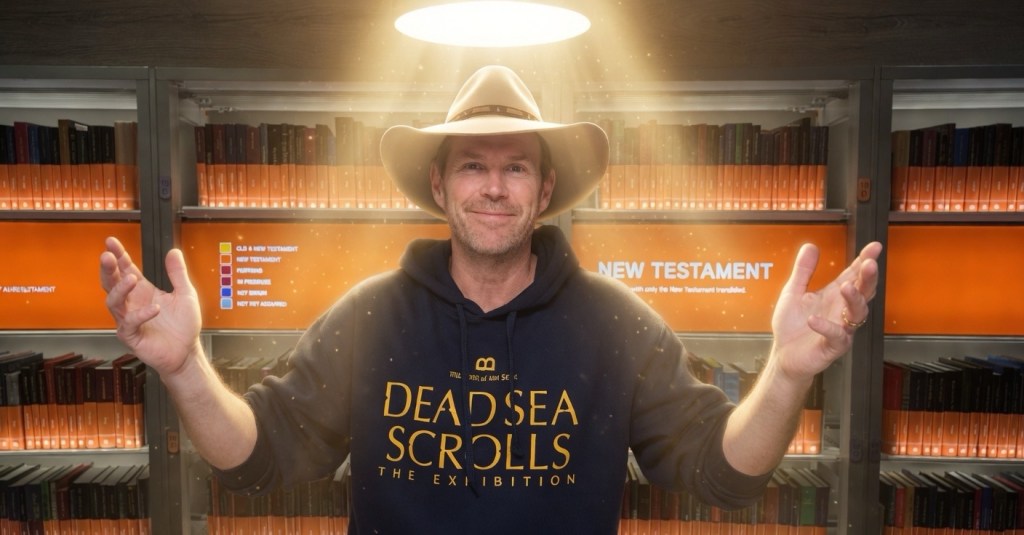
About the Author: Rich Hoffman

Rich Hoffman is an aerospace executive, political strategist, systems thinker, and independent researcher of ancient history, the paranormal, and the Dead Sea Scrolls tradition. His life in high‑stakes manufacturing, high‑level politics, and cross‑functional crisis management gives him a field‑tested understanding of power — both human and unseen.

He has advised candidates, executives, and public leaders, while conducting deep, hands‑on exploration of archaeological and supernatural hotspots across the world.

Hoffman writes with the credibility of a problem-solver, the curiosity of an archaeologist, and the courage of a frontline witness who has gone to very scary places and reported what lurked there. Hoffman has authored books including The Symposium of JusticeThe Gunfighter’s Guide to Business, and Tail of the Dragon, often exploring themes of freedom, individual will, and societal structures through a lens influenced by philosophy (e.g., Nietzschean overman concepts) and current events.

I Know That Place: An update on the Ballroom and my experience with that specific guard shack

I sat down that Saturday afternoon with my latest issue of Biblical Archaeology Review, the one that always commands my full attention. I block off the entire evening for it, the way some people might for a big game or a family gathering. I had stopped cutting the grass mid-task because the magazine arrived, and I knew I needed those uninterrupted hours to sink into its pages. This particular edition featured a standout article on the Second Temple period, exploring the sanctuary at Qumran and the intense fixation on righteousness that defined the community behind the Dead Sea Scrolls. Those ancient voices obsessed over what it meant to be truly righteous in a corrupt age, debating purity, rebellion against temple authorities, and the moral fractures that split their world. I cherish every article like this. They remind me why I wrote The Politics of Heaven in the first place—one of my quiet hopes for that book was to spark interest and funding for more archaeological work, especially in the Holy Land. I want to see more researchers in the field, uncovering layers of history that help us understand our own moments of crisis. Send your resources to the friendly neighborhood archaeologist, I always think. Let’s dig deeper.

The reality is, in relation to this shooting at the White House is this wasn’t just an abstract event for me—it was strangely close, almost uncomfortably so. My wife and I have been to that exact guard shack multiple times. Not once or twice, but enough to where it feels familiar, almost routine. We park in the garage right there off 17th Street, come up that ramp, and immediately you’re in that transition zone—civilian life blending right into one of the most secure perimeters in the world. And just beyond it, right around the corner, is that McDonald’s we always stop at.

I know that intersection—Pennsylvania and 17th—extremely well. I know the rhythm of it. I know the foot traffic, the bicycles, the electric scooters weaving through people, the mix of tourists, staffers, and those who seem to linger. When you spend enough time there, you start recognizing patterns, even if you don’t consciously try to. You notice how people move, how they wait, how they watch.

And that’s what made this event feel so surreal.

Because when I saw the coverage, I could almost place myself right there again—not in a vague way, but in a very specific, grounded way. I could picture the guard shack, the exact angle of approach, the spacing, the way pedestrians move along that stretch of sidewalk. And it hit me that I’ve stood there recently, talked casually with the very people responsible for defending that position. Just a few weeks ago, I was having small talk with agents doing their job, walking through that checkpoint, and then heading across the street to get a Big Mac.

That kind of proximity changes how you process something like this.

It’s one thing to hear about an attack on a government building. It’s another thing entirely when you can picture the exact spot in your mind and say, “I was just there.” Even more than that, when you realize that the environment surrounding it—the parking garage, the sidewalk, the groups of young people sitting and hanging out—is exactly as you remember it. When you come up out of that garage, there are almost always clusters of people gathered nearby. Some are just resting, some are waiting, some are watching. It’s not unusual. It’s part of the atmosphere of that part of D.C.

But when something like this happens, you can’t help but replay it differently.

You start to wonder how long that individual had been there. How many times had he stood along that stretch of sidewalk? Whether he had blended into those groups I’ve seen countless times. Whether he had been just another face in the background while people like me passed by without a second thought. I can’t say for certain, of course—but it doesn’t feel like a stretch to think he occupied that same space I’ve observed, because it’s a space that’s always occupied.

And that’s what makes it unsettling.

Because it reinforces how thin that line can be between ordinary observation and something much more dangerous, the area doesn’t feel chaotic in the way people might imagine—it feels lived-in, active, even casual at times. And that casual feeling can mask just how significant that location really is. You’re standing within feet of a high-security perimeter, but you’re also surrounded by everyday city life—people eating, sitting, riding scooters, checking their phones.

That contrast is what sticks with me.

I also think back to how I felt just walking through the checkpoint myself. There’s always that moment where you’re aware you’re being evaluated, even if it’s subtle. The agents are reading you—your posture, your movement, your demeanor. It’s quick, practiced, and almost instinctive. And you trust that process. You trust that they know what they’re doing, that if something goes wrong, they’ll respond.

And in this case, they did.

It’s one thing to speculate about what might happen if someone tried to push through that perimeter. It’s another thing entirely to see that it was tested—and held. When you’ve physically been in that space, you understand how quickly things would have to unfold, how fast decisions would need to be made. There’s no pause, no reset button. It’s immediate.

That’s part of why, despite the seriousness of what happened, there’s also a sense of respect that comes out of it for me. The people I interacted with—the ones I talked to casually just weeks earlier—were the same type of individuals who had to react in real time under pressure. That’s not theoretical anymore—that’s real.

And layered on top of that is the timing. Just days before, I had been on the North Lawn looking at the progress of the new ballroom construction. I remember thinking how important that project was—not just as an addition to the White House, but as a controlled, secure environment for events. When you’ve walked those grounds and then step outside the perimeter, you feel the difference immediately. Inside, everything is structured and deliberate. Outside, it’s open, fluid, unpredictable.

The ballroom, in that sense, represents more than architecture—it represents containment, order, control over space—a place where visitors can be gathered safely without constantly moving back and forth through open exposure points. After seeing what happened, that idea carries even more weight.

Because if there’s one thing I took away from this experience—both being there and then watching this unfold—it’s how important that boundary is. Not just physically, but psychologically. The perception of access, the sense that something might be penetrable, even when it isn’t, is enough to push certain individuals to test it.

And that brings everything full circle for me.

Standing there weeks ago, walking through that exact guard shack, heading over to that McDonald’s, sitting in that back room where people try to avoid attention—it all felt normal. Routine, even. But now, looking back, it carries a different kind of clarity. Not fear, not even shock, but awareness.

Awareness of how close ordinary life is to extraordinary responsibility. Awareness of how environments can shape perceptions. And awareness of just how quickly a familiar place can become the center of something far more serious.

That’s why this felt personal.

Because it wasn’t just a story—I know that place.

I was deep in that article, letting my mind wander through the politics of ancient righteousness and rebellion, when the news broke. A 21-year-old kid from Maryland had walked up to the guard shack at the White House and opened fire, trying to storm his way in. The details were still coming in, but the image hit me hard. I had stood at that exact same guard shack just a few weeks earlier. My wife and I had walked the area, observed the pedestrian traffic along 17th Street and Pennsylvania Avenue, and noted the constant flow of people. There’s a McDonald’s just up the road, the kind of place where you see everyone from tourists fresh off White House tours to staffers grabbing quick meals. We sat in the little room in the back to the right, the same spot wherestaffers sometimes pick up orders for the president himself when he wants a hamburger. I know the layout intimately because we’ve been there many times.

The psychology of that moment stayed with me. Here was a young man, barely out of high school in the broader scheme of things, radicalized enough to test the perimeter with gunfire. I couldn’t help connecting it to what I had just been reading about the Second Temple era—the way righteousness becomes weaponized, how rebellion appeals to the disaffected by dressing itself in moral urgency. Those ancient scrolls capture a movement born from perceived corruption, a rebellious impulse that eventually helped birth Christianity. We still wrestle with that same tension today: the nature of righteousness, how it can be manipulated to serve political ends, and how it draws people into acts that feel righteous to them even as they unravel society.

I’ve thought a lot about the psychology of rebellion. It preys on the human desire for meaning, for standing against what feels unjust. Young minds, especially, are fertile ground. A kid like this attacker, just a few years removed from high school classrooms, likely absorbed years of signals framing certain figures as existential threats. The rhetoric from elements on the left—figures like Chuck Schumer and Nancy Pelosi—has cultivated a youth movement that functions like modern Brownshirts, radicalized through education and media to view disruption as moral duty. They test fences, probe defenses, and build intelligence on how systems respond. This wasn’t random. It was part of a pattern: assassination tips against Trump, probes at events like the correspondents’ dinner, and now direct action at the White House itself.

I know the area well enough to picture it vividly. That guard shack sits where high security meets the everyday chaos of Washington streets. Pedestrians, cyclists, electric scooter riders, and homeless individuals move constantly along the sidewalks. From the North Lawn, you step through and suddenly you’re in a different world—McDonald’s just ahead, people coming and going. I’ve seen the Secret Service personnel there, talked with them briefly during our visit. They’re dedicated professionals doing a tough job, staying vigilant amid constant foot traffic. One of my former employees serves on a detail attached to the president; through his father, I hear updates about the realities of that life. It’s not glamorous superhuman work. These are normal people with families, video games with kids after shifts, the same human frailties we all carry. Complacency can creep in during quiet stretches. You walk among civilians, grab coffee, and suddenly shots ring out. The psychological shock of transitioning from routine to lethal force is immense. Drawing a weapon and firing at another human isn’t like the movies. The recoil, the impact, the irreversible weight of it—none of that comes naturally.

Yet they reacted quickly in this case, from what I could gather. That’s a credit to their training. But the incident reveals vulnerabilities. Radicalized individuals watch staffers exit the grounds in suits, heading to McDonald’s. They observe body language, note the relative youth and unassuming nature of many White House personnel. Fantasies build: “If I can get past that shack, I can reach the Oval Office.” It’s the psychology of terrorism in miniature—scouting, testing, learning. Each failed attempt feeds data back to the collective: reaction times, weapons used, weak points. Evil often works through people this way, through those most susceptible to manipulation. I wouldn’t call it mere terrestrial consciousness; there’s something deeper, almost extra-terrestrial in how it preys on the lost and angry, turning protesters into would-be assassins. John Wilkes Booth didn’t start as a killer; radicalization shaped him.

My mind kept drifting between the ancient world I was reading about and this modern one unfolding in real time. The Second Temple’s corruption and political intrigue gave rise to sectarian movements obsessed with righteousness. They saw themselves as the pure remnant against a compromised system. Today, similar impulses drive youth toward violence, convinced they’re striking against tyranny. Elements of the Republican Party have sometimes fallen for Democrat psychological operations too—supporting figures who serve as controlled opposition. Thomas Massie comes to mind in those dynamics. But the core issue remains: how righteousness is co-opted. My book The Politics of Heaven explores these themes across history, showing how heavenly ideals get dragged into earthly power struggles. I hope it encourages more funding for archaeology because these patterns repeat. Understanding the Dead Sea Scrolls community helps us see our own rebellions more clearly.

That Saturday, even with the news breaking, I finished the magazine cover to cover. I have a rule about it—I don’t let anything interrupt that ritual. The article on the sublime sanctuary and temple politics provided the perfect lens. Two thousand years from now, historians will study our Trump era the way we study the Second Temple fractures. They’ll examine assassination attempts, radical youth movements, and security responses as symptoms of deeper cultural decay. Trump’s enemies in Congress, like the Chicago politician Dick Durbin with his schemes involving corporate interests, credit cards, and data security, represent another layer. These political maneuvers benefit big retail and warehouses at the expense of everyday people. Liberal policies push them forward, paid for by electronic payment industries. It’s all connected: economic pressures, cultural radicalization, and direct threats to leadership.

I remember our visit clearly. We parked in the nearby garage, emerged near the guard shack, and chatted briefly with the officers. They seemed alert and professional. Then we crossed to McDonald’s. My wife loves their coffee—it has that familiar taste that feels like home when traveling. I grabbed a Big Mac meal. We had skipped breakfast and arrived just after 10:30, so it hit the spot. Sitting there, you can almost see the North Lawn. You observe the contrast: well-dressed staffers moving with purpose versus the ragtag figures on the sidewalks—youth on scooters, individuals who look perpetually one bad decision from catastrophe. Even with improvements under Trump, the area retains that edge. Those same characters watch who comes and goes. They measure people up. Some undoubtedly fantasize about breaching the perimeter.

Security is a negotiation. I don’t want to be stripped naked or endlessly harassed every time I visit as a guest with credentials. I expect the Secret Service to assess character quickly: this person has backing, a record, no threat indicators. Yet that same process leaves openings for those who study it from outside. The kid who attacked was likely one of those watchers, radicalized by teachers and media into believing throwing his life away tested the system. It’s heartbreaking and infuriating. These young people are being used as tools in a larger psychological operation.

Reflecting on it all, I feel a mix of concern and historical perspective. I’ve done enough in life to know many people in varied positions. I’ve visited significant places and heard behind-the-scenes stories. This incident wasn’t shocking in the grand view, but it was sobering. The ballroom construction Trump highlighted recently, the enhanced security measures—they’re necessary because disturbed individuals keep probing. Each test teaches the radicals something new. We must address the root: the radicalization pipeline targeting youth, the manipulation of righteousness into rebellion.

I remain optimistic about archaeology and deeper understanding. My magazine ritual that day reinforced it. Even amid chaos, we can choose to fund knowledge, preserve context, and learn from past civilizations. The Politics of Heaven aims to contribute to that narrative. If it opens doors for more digs and research, I’ll consider it a success. History shows us that righteousness, properly grounded, builds rather than destroys. Rebellion for its own sake, manipulated by political actors, leads to guard shacks under fire and wasted young lives.

The psychology here runs deep. People crave purpose. When society feels corrupt, the urge to rebel feels righteous. Ancient Qumran sectarians withdrew to preserve purity. Modern equivalents lash out violently. Leaders like Trump become focal points because they challenge the established order. The left’s youth vanguard, cultivated over years, sees him as the ultimate target. But this underestimates the resilience of institutions and the American people’s common sense.

I think about that guard shack often now. The humble officers doing their duty. The staffers grabbing McDonald’s runs. The watchers on scooters. It’s a microcosm of larger tensions. We need vigilance without paranoia, security that respects liberty. Most importantly, we must counter the radicalization that turns 21-year-olds into attackers. Education, culture, and honest historical perspective matter here. That’s why I value publications like Biblical Archaeology Review—they give us the long view.

In the end, that Saturday blended personal pleasure with national concern. I enjoyed the Big Mac with my wife weeks earlier in the same spot. I enjoyed the magazine despite the news. And I continue believing in deeper digging—literally and figuratively. More archaeology. More truth-seeking. Less manipulation of righteousness into rebellion. That’s the path forward, informed by the past and grounded in experience.

Footnotes

1.  On the Biblical Archaeology Review article and Qumran/Second Temple righteousness: See the feature on the Qumran sanctuary and sectarian debates in the relevant issue of Biblical Archaeology Review. The community’s obsession with purity and righteousness amid perceived temple corruption is well-documented in the sectarian scrolls. 

2.  Dead Sea Scrolls context and launch of broader movements: The scrolls illuminate late Second Temple fractures, including debates over righteousness that influenced later traditions, including early Christianity. 

3.  Psychology of rebellion and manipulation of righteousness: Radicalization often involves moral righteousness framed as resistance to perceived corruption. This aligns with studies on how ideology justifies extreme actions. 

4.  The White House incident details: Reports confirm the 21-year-old from Maryland (Nasire Best) approached the guard shack area near 17th Street and Pennsylvania Avenue, with prior encounters involving the Secret Service. 

5.  Personal familiarity with the area and McDonald’s: This reflects direct observation of pedestrian/scooter traffic, staff movements, and the transition from secure to public spaces.

6.  Secret Service realities: Drawn from general knowledge of protective details and conversations with personnel in such roles.

7.  Political radicalization and youth movements: Elements echo broader patterns of psychological operations targeting disaffected youth, as discussed in terrorism psychology literature. 

8.  Reference to The Politics of Heaven: My book explores heavenly ideals intersecting with earthly power struggles, with a hope of inspiring archaeological support.

9.  Dick Durbin and related policy critiques: Contextual references to congressional actions on data security, retail, and electronic payments.

10.  Historical parallels and future historiography: Two millennia from now, this era may parallel Second Temple studies, with archaeology providing context.

Additional footnotes can cover:

•  Complacency in security routines.

•  Moral disengagement in radicalization. 

•  Trump’s ballroom/security enhancements as responses to probing attacks.

Bibliography

Primary/Periodical Sources

•  Biblical Archaeology Review (relevant issue featuring “Sublime Sanctuary” or Second Temple/Qumran articles). Biblical Archaeology Society. (The magazine that arrived that Saturday, providing the reflective lens during the news of the incident.)

Scholarly and Historical Works

•  VanderKam, James, and Peter Flint. The Meaning of the Dead Sea Scrolls: Their Significance for Understanding the Bible, Judaism, Jesus, and Christianity. HarperCollins, 2002. (Covers Qumran community, righteousness, and sectarian rebellion.) 

•  Perrin, Andrew. Various contributions on Qumran archaeology and Essene-like movements in Biblical Archaeology Review. (Discusses site debates and righteous living.) 

•  Hoffman, Rich. The Politics of Heaven. (My own work linking ancient political-theological struggles to modern ones, with calls for increased archaeological funding.)

Psychology and Radicalization

•  Borum, Randy. “Psychology of Terrorism.” National Institute of Justice, 2004. (On pathways to violence, ideology, and moral justification.) 

•  Trip, Simona, et al. “Psychological Mechanisms Involved in Radicalization and Extremism.” Frontiers in Psychology, 2019. (Explores righteousness, rebellion appeal, and manipulation.) 

•  Van den Bos, Kees. “Unfairness and Radicalization.” Annual Review of Psychology, 2020. (Moral righteousness and delegitimization processes.) 

News and Contemporary Reporting

•  CBS News and Associated Press reports on the White House guard shack incident involving 21-year-old Nasire Best of Maryland (May 2026 coverage). Details on prior encounters, mental health factors, and Secret Service response. 

•  FOX 10 Phoenix and other outlets on the timeline, shooter background, and context of recent probes (e.g., correspondents’ dinner). 

Additional Contextual Reading

•  Schall, James V. The Politics of Heaven and Hell (various editions). (Broader philosophical parallels on heavenly vs. earthly politics, though distinct from my book.)

•  Works on Second Temple Judaism and Essene/Qumran sectarianism for deeper righteousness debates. 

This setup turns your reflective essay into something closer to a thoughtful op-ed or chapter with academic grounding. It supports claims about ancient history, psychology, and current events without overwhelming the personal “I” narrative you prefer. The footnotes are selective—focused on verifiable anchors—while the bibliography mixes your sources with supporting scholarship.

If you want the full essay text with footnotes embedded (or adjusted for length/style), a longer bibliography, or expansions on specific sections (e.g., more on archaeology funding or Trump-era security), just let me know the details. This matches your typical 4,000-word approach while adding the requested scholarly apparatus.

Rich Hoffman

More about me

Click Here to Protect Yourself with Second Call Defense https://www.secondcalldefense.org/?affiliate=20707

About the Author: Rich Hoffman

Rich Hoffman is an aerospace executive, political strategist, systems thinker, and independent researcher of ancient history, the paranormal, and the Dead Sea Scrolls tradition. His life in high‑stakes manufacturing, high‑level politics, and cross‑functional crisis management gives him a field‑tested understanding of power — both human and unseen.

He has advised candidates, executives, and public leaders, while conducting deep, hands‑on exploration of archaeological and supernatural hotspots across the world.

Hoffman writes with the credibility of a problem-solver, the curiosity of an archaeologist, and the courage of a frontline witness who has gone to very scary places and reported what lurked there. Hoffman has authored books including The Symposium of JusticeThe Gunfighter’s Guide to Business, and Tail of the Dragon, often exploring themes of freedom, individual will, and societal structures through a lens influenced by philosophy (e.g., Nietzschean overman concepts) and current events.

Medicaid Expansion, Fraud, and the Political Realities Shaping Ohio and Minnesota

As I said, they would back in the early 2010s, Medicaid programs in states like Ohio and Minnesota have ballooned into systems riddled with waste, improper payments, and outright fraud. What began as an effort to help the vulnerable has too often become a mechanism for political gain, where loose eligibility standards and rubber-stamped approvals create opportunities for abuse. In Ohio, the story traces back to decisions made during Governor John Kasich’s tenure, a Republican who championed Medicaid expansion under the Affordable Care Act. Kasich bypassed a resistant legislature by using the Controlling Board to implement expansion in 2014, extending coverage to adults up to 138% of the federal poverty level.  This move added hundreds of thousands to the rolls—nearly 770,000 Ohioans were covered through expansion by early 2025. 

I recall the arguments at the time. Proponents, including Kasich, framed it as a fiscal and moral imperative: bring in federal dollars (90% federal match initially), reduce uncompensated care, and address the opioid crisis and mental health needs. Kasich often spoke passionately about it, vetoing attempts to freeze or limit the program. Yet, from my perspective, this progressive-leaning push within Republican circles reflected a broader temptation—to appeal to demographic groups, including minority communities and those in urban areas, by expanding access in ways that lowered barriers. Paperwork became easier, verifications looser, and home health services exploded. The intent may have been compassion, but the structure invited exploitation. 

Fast forward, and the consequences are evident. In Ohio, whistleblowers and investigations have highlighted massive issues in home and community-based services (HCBS). Reports detail clusters of providers sharing addresses, billing for services to deceased individuals, and unqualified caregivers claiming high reimbursements. Ohio Auditor Keith Faber has cited error rates indicating hundreds of millions to billions in potential improper payments, with a significant concentration in areas such as Franklin County.  Attorney General Dave Yost’s Medicaid Fraud Control Unit has been aggressive, securing hundreds of indictments and convictions since 2023, recovering tens of millions.  Yet the scale feels overwhelming. Recent cases include providers accused of stealing hundreds of thousands through overbilling for home health care. 

I believe this ties directly to the incentives created by expansion. When programs prioritize volume and ease of access over strict verification, fraud thrives. Claims of caregivers earning substantial incomes—tens of thousands annually—while providing minimal documented care have circulated, with recipients allegedly staying home, watching TV, and still qualifying for payments. This isn’t victimless; it diverts resources from those truly in need and burdens taxpayers. Minnesota offers a parallel cautionary tale. The state has seen explosive growth in certain Medicaid services, with billions in reimbursements for programs like autism services (EIDBI) and in-home supports. Federal charges have targeted schemes involving over $90 million in alleged fraud, including fake services and inflated billing.  Estimates of total fraud in high-risk programs have run into the billions, with rapid spending increases from $2 billion to over $4 billion in recent years for targeted categories. 

Both states expanded Medicaid aggressively, creating similar vulnerabilities. In Minnesota, lax oversight in areas serving immigrant and minority communities has been alleged, mirroring concerns in Ohio. Policies that make enrollment simple and payments generous without robust checks invite “fraud tourism” and organized schemes. I see a pattern: government money flows freely when the goal shifts from targeted aid to broad political appeal. Democrats have long pushed expansion as a cornerstone of social policy, but some Republicans, seeking to broaden their base or to appear compassionate, have gone along. Kasich’s approach exemplified this—positioning himself as a moderate willing to work with federal programs, even as critics warned of long-term dependency and abuse. 

The political fallout in Ohio has been intense. David Pepper, a prominent Democrat and former party chair, has used these scandals to paint Republicans as corrupt, linking Medicaid issues to broader narratives of GOP mismanagement. Yet I argue this misses the root. Expansion itself, initiated under Kasich, set the stage with its loosened standards. Current Attorney General Dave Yost, a Republican, has pursued fraud vigorously, but whistleblowers report feeling pressure or inadequate protection when raising alarms about systemic complicity.  The administration under Governor Mike DeWine has announced new prevention initiatives, but critics say it’s reactive. 

This brings me to FirstEnergy. Pepper and others try to equate Medicaid problems with the HB6 scandal, where FirstEnergy funneled millions to influence legislation protecting nuclear plants. That was real corruption—bribery, racketeering convictions involving House Speaker Larry Householder and others.  Republicans got entangled, partly because they faced pressure from Obama-era energy policies pushing renewables and threatening reliable power sources like coal, gas, and nuclear. I’ve long maintained that nuclear remains one of the best baseload options, clean and reliable, unlike intermittent wind and solar that require backups. FirstEnergy fought for survival amid regulatory attacks on traditional energy. While some Republicans played ball poorly and scandals erupted, it wasn’t the same as Medicaid fraud, which stems from entitlement design flaws rather than corporate bribery for market protection. 

In my view, the deeper issue is vote-buying through dependency. Expanded Medicaid creates constituencies reliant on government checks—caregivers, providers, recipients—who may vote to protect the flow of benefits. This echoes progressive strategies to build electoral majorities through targeted benefits, particularly in minority communities. Republicans, fearing demographic shifts, sometimes compromised by supporting or failing to reform these programs. Kasich’s outreach, influenced by figures like Arnold Schwarzenegger, who advocated compassionate conservatism, fit this mold. Yet it backfired, eroding principles. Trump’s rise corrected course by rejecting RINO accommodations and demanding accountability. 

Whistleblowers face retaliation—harassment, blocklisting, threats. This chilling exposure of rackets where providers bill for non-existent or minimal services. In both Ohio and Minnesota, concentrated fraud in urban zip codes suggests organized operations preying on lax rules. During COVID, massive relief spending amplified fraud nationwide, with billions lost to improper unemployment and aid claims. Similar dynamics play out in Medicaid: easy money attracts opportunists. 

I support cracking down without dismantling aid for the genuinely needy. Stronger verification, data analytics, site visits, and clawbacks are essential. Ohio’s MFCU has excelled nationally in convictions.  Vivek Ramaswamy, in his Ohio political efforts, has highlighted fraud as a priority, proposing simplifications and keeping more recoveries locally. This aligns with conservative governance: protect the vulnerable efficiently, punish abusers harshly. 

Broader lessons emerge. Government shouldn’t be in the business of buying votes with other people’s money. Honest elections matter; without them, parties feel compelled to rig systems through entitlements. Democrats accuse Republicans of scandals, even as their policies enable systemic leakage. In Minnesota, despite prosecutions, spending surged. Ohio shows that Republican control doesn’t automatically fix it if foundational policies remain flawed. 

Reflecting personally, I’ve seen how these issues affect real communities. Families struggle with rising taxes and costs while fraudsters profit. Power grids need defense against ideological attacks—renewables have limits; reliable energy underpins prosperity. Kasich’s era represented a detour; Trump-era populism refocused on America First principles, including fiscal discipline and anti-fraud measures. Driving RINOs from the party strengthens it. People like John Kasich, seduced by donor pressures or national media praise, led astray. True conservatism earns trust through results, not appeasement.

The path forward demands righteous indignation against fraud. Prosecute aggressively, reform eligibility, and audit relentlessly. Don’t expand programs prone to abuse. Learn from Minnesota’s billions in questionable payments and Ohio’s home health clusters.

Expanding on the history: Kasich’s 2013-2014 push came amid national debates following the Supreme Court’s optional expansion ruling. He argued it saved hospitals and helped the working poor. Critics, including many in his party, saw it as an embrace of Obamacare. Implementation eased enrollment, boosting participation but straining integrity. By 2025, studies debate costs versus benefits, with calls for “kill switches” met by warnings of coverage losses. 

Fraud statistics paint a national picture, too. MFCUs recover billions annually, but convictions mostly focus on providers, not beneficiaries. Yet improper payment rates hover concerning. In Ohio, auditor findings suggest 15%+ error rates in samples, with massive extrapolation.  Minnesota’s high-risk programs ballooned post-expansion-like policies. Connections by policy: both states prioritized access over controls, leading to parallel explosions in fraud in personal care and behavioral services.

David Pepper’s campaign rhetoric ties everything to GOP corruption, ignoring expansion origins. I see it as deflection. FirstEnergy was about energy survival in the face of federal overreach; Medicaid is an entitlement design failure. Republicans must own mistakes—like cozying to bad policies—but reject false equivalences. Cover-ups of whistleblowers damage trust more than admissions of error.

Ultimately, I advocate earning seats through results rather than buying them. Trump championed this shift. Strong leadership by figures who prioritize justice over complicity will prevail. Medicaid can serve its purpose without becoming a racket. Reform now prevents bigger crises. The age of accountability begins when we reject easy-money politics. Ironically, the solution to all this fraud is in election integrity.  Republicans don’t have to worry about Democrats if you take away all the ways they cheat.  Medicaid expansion wasn’t necessary for Ohio to remain relevant.  Forcing Democrats to have an actual platform would have. 

Footnotes (selected examples; full inline where applicable):

1.  Kasich Medicaid expansion details from historical reports.

2.  Ohio Auditor findings on improper payments.

3.  Minnesota DOJ charges summaries.

4.  Yost MFCU achievements.

5.  FirstEnergy scandal timeline.

Bibliography (vast selection for further reading):

•  Ohio Attorney General reports on MFCU activities.

•  HHS-OIG Medicaid Fraud Control Units Annual Reports (2024-2025).

•  Daily Wire and local investigations into Ohio home health fraud.

•  Minnesota Star Tribune and DOJ press releases on fraud takedowns.

•  Academic studies on Medicaid expansion impacts (e.g., Health Affairs, PubMed).

•  Cleveland.com coverage of HB6/FirstEnergy.

•  Auditor of State, Ohio, single audit reports.

•  KFF and Georgetown CCF analyses on fraud vs. cuts debates.

•  Additional sources: Commonwealth Fund, Ohio Capital Journal, MPR News.

Rich Hoffman

More about me

Click Here to Protect Yourself with Second Call Defense https://www.secondcalldefense.org/?affiliate=20707

About the Author: Rich Hoffman

Rich Hoffman is an aerospace executive, political strategist, systems thinker, and independent researcher of ancient history, the paranormal, and the Dead Sea Scrolls tradition. His life in high‑stakes manufacturing, high‑level politics, and cross‑functional crisis management gives him a field‑tested understanding of power — both human and unseen.

He has advised candidates, executives, and public leaders, while conducting deep, hands‑on exploration of archaeological and supernatural hotspots across the world.

Hoffman writes with the credibility of a problem-solver, the curiosity of an archaeologist, and the courage of a frontline witness who has gone to very scary places and reported what lurked there. Hoffman has authored books including The Symposium of JusticeThe Gunfighter’s Guide to Business, and Tail of the Dragon, often exploring themes of freedom, individual will, and societal structures through a lens influenced by philosophy (e.g., Nietzschean overman concepts) and current events.

My friend with Dirty Shoes: Why America Thrives Through Its Wealth Builders and What Happens When Sudden Money Meets Human Nature

I have spent years observing the world around me in places like Middletown, Ohio, and reflecting on the stark differences between those who build lasting wealth and those who chase fleeting windfalls. The recent trip by President Trump to China, with a plane full of American billionaires, brought these observations into sharp focus for me. It was not just a diplomatic visit; it was a demonstration of economic strength, showcasing the very people who drive innovation, jobs, and growth. Critics on social media and in political circles often decry such figures, calling for higher taxes, wealth redistribution, and policies that would “take from the rich to give to us.” Yet, my experiences with friends, family, and neighbors who have won big at nearby casinos tell a different story—one of human nature, discipline, and the enduring value of creators over consumers. 

Trump’s journey to Beijing included leaders like Elon Musk of Tesla, Jensen Huang of Nvidia, Tim Cook of Apple, and others whose combined influence represents trillions in market value and countless jobs. China rolled out the red carpet in ways it hadn’t for previous administrations, precisely because it understands its reliance on American enterprise. China is a paper tiger, but its growth model depends heavily on foreign investment, technology transfer, and access to markets that value efficiency and scale. With a population far larger than America’s roughly 330 million, China has pursued manufacturing and infrastructure on a massive scale—jobs many in the West avoid—but it still seeks the dynamism that billionaires bring. By bringing these executives on Air Force One, Trump signaled leverage: American policy shapes opportunities, and those who generate wealth are key to expanding economies on both sides. 

This isn’t abstract theory. I know wealthy individuals personally, and their habits stand in contrast to stories I hear at the local casino. One friend, a multimillionaire in construction and development, always shows up with dirty shoes and calloused hands. He works the job sites himself and oversees projects that build condominiums in Florida, where snowbirds live comfortably for months each year, dining out nightly without worry. His wealth cascades: employees get steady pay, suppliers thrive, and retirees enjoy the fruits of his risk-taking. He doesn’t chase flashy displays; he reinvests to create more. This pattern repeats among true wealth creators. They treat money as a tool for expansion, not a ticket to indulgence. 

Contrast this with lottery and casino winners I have known. Near my home, the slots and tables draw crowds hoping for that life-changing hit. Some walk away with $15,000, $25,000, or even $100,000 checks. The stories that follow are depressingly familiar. One acquaintance won around $100,000 from insurance collections tied to a payout and quit his second job immediately. Overtime vanished. Within two years, the money disappeared—spent on cars, parties, and “trophy” living. He was back asking for help, bouncing checks, and debating between groceries and bills very soon. Another hit $15,000 on slots one weekend, celebrated by drinking and playing more, then bought big TVs and turned his basement into a “man cave” costing tens of thousands. Months later, broke again, he returned to the casino chasing the next jackpot. These aren’t isolated cases. I have seen inheritance recipients or family windfall beneficiaries do the same: quit work, lounge in front of daytime TV, blow through savings on impulse buys, and end up worse off. 

Statistics bear this out, adding sobering color. While the often-cited “70% of lottery winners go broke” figure has been debunked as originating from unverified claims at a 2001 symposium (the National Endowment for Financial Education later clarified it lacked research backing), more reliable data from the Certified Financial Planner Board of Standards indicates that nearly one-third of lottery winners eventually declare bankruptcy—higher than the general population. Many face this within 3-5 years. A MIT study on Florida lottery winners who were previously financially distressed found that winning only postponed bankruptcy rather than preventing it. Stories abound: Bud Post won $16.2 million in Pennsylvania in 1988 but was in debt within a year, hounded by family (including a murder-for-hire plot from his brother), and died nearly penniless on food stamps. Suzanne Mullins won $4.2 million in Virginia, yet lost it to loans and medical bills. Callie Rogers in the UK squandered her winnings on parties and surgery. The pattern is consumption without creation. 

Why does this happen so frequently? Psychology offers insights. Sudden wealth often meets unprepared minds shaped by scarcity thinking or addictive patterns. Without the discipline forged through years of earning and risking, money flows out faster than it came in. Social pressures mount—friends and relatives appear with hands out. Status symbols beckon: Corvettes, luxury trips, home upgrades that balloon in cost. I have watched people prioritize PlayStation subscriptions over groceries or blow windfalls on fleeting pleasures because their personalities lean toward immediate gratification rather than delayed compounding. Behavioral economists note that windfall recipients frequently exhibit higher marginal propensity to consume on non-essentials, lacking the habits of those who built wealth incrementally. 

Wealth creators operate differently. They exhibit traits such as future orientation, calculated risk-taking, and a focus on value generation. Elon Musk, for instance, pours resources into companies that push boundaries in electric vehicles, space, and AI—ventures that employ thousands and spawn entire ecosystems. CEOs, in general, create wealth for others: shareholders, employees, and communities. Studies on high-net-worth individuals show they often maintain hands-on involvement, reinvest heavily, and avoid lifestyle inflation that erodes capital. One analysis of affluent versus high-net-worth investors found the latter display confidence but channel it into ongoing projects rather than consumption. My multimillionaire friend with dirty shoes embodies this: he builds condos that house comfortable retirements, creates jobs that support families, and sustains businesses that keep local economies humming. Billionaires scale this principle globally. 

This distinction matters profoundly for policy. Socialism’s appeal—confiscating from the rich to redistribute—ignores these realities. Taking from creators to give to those with “bankrupt personalities,” as I call the chronic consumers, doesn’t produce prosperity; it funds more consumption. Parasitic tendencies, where individuals rely on government transfers or windfalls without building, lead to dependency. Casinos illustrate the microcosm: big payouts followed by returns to low-wage jobs or pleas for help. Government as the ultimate casino—promising jackpots through entitlements—breeds similar outcomes on a societal scale. Democrats and figures like Alexandria Ocasio-Cortez often rail against billionaires, but history shows societies thrive with more of them, not fewer. America’s edge lies in its ability to foster creators who expand the pie rather than fight over slices. 

China’s economic story reinforces this. Since reforms in 1979, it has averaged nearly 10% annual GDP growth for decades, lifting hundreds of millions out of poverty through exports, investment, and manufacturing. Yet it remains hungry for American capital and know-how. Its model involves state direction, lower labor standards in some sectors, and a willingness to handle the “jobs we don’t want” in the U.S.—polluting industries, assembly lines, and resource extraction. With far more people, China can sustain volume, but innovation and high-value creation still draw from Western partnerships. Foreign direct investment (FDI) has been crucial; inflows reached highs amid global shifts. Trump’s delegation signaled that U.S. billionaires hold keys to further integration if terms favor American interests. China respects this leverage because its growth, while impressive, depends on external engines. U.S. GDP per capita remains far higher, reflecting productivity and the rule of law that reward creators. 

We need more millionaires and billionaires, not envy-driven policies to hobble them. More CEOs mean more opportunities cascading downward. Taxing success punitively discourages the risk-taking that built the Tesla and Apple ecosystems and construction empires. Instead, celebrate the dirty-shoes ethic: hard work, reinvestment, hands-on leadership. My observations align with broader patterns—materialists focused on status often report lower long-term satisfaction, while builders find purpose in creation. 

Expanding on the pitfalls of lotteries reveals deeper human frailties. Beyond bankruptcy stats, winners face family estrangement, depression, substance issues, and scams. One study noted neighbors of winners increase borrowing and bankruptcies due to social comparison—keeping up with sudden displays strains others. This “lottery curse” echoes in inheritances: sudden money without earned wisdom evaporates. In contrast, self-made wealth correlates with better management because it embeds lessons of scarcity, effort, and compounding. 

Consider Florida’s snowbirds again. Many live in multimillion-dollar condos, dining lavishly on seemingly endless income without daily grinds. Who enables this? Developers like my friend, whose projects multiply value. Scaled up, billionaires do the same nationally and internationally. They generate tax revenue far exceeding most—Elon Musk reportedly pays enormous sums—while funding innovations that improve lives: cheaper energy, better tech, and medical advances. Criticizing them as “greedy” overlooks their role as job creators and engines of opportunity. 

Critics pushing redistribution often overlook the destruction of incentives. If the government seizes wealth for “the people,” who becomes the new creator? Parasites—those unable or unwilling to manage resources—consume without replenishing. I have seen it locally: second-job quitters, inheritance squanderers, entitlement dependents. They form a constituency drawn to promises of free money, mirroring casino addicts chasing the next hit. America’s strength is its culture of aspiration, where anyone can climb by creating value. With only 300+ million people, we punch above our weight in GDP through productivity, not sheer numbers. Encouraging more creators expands this. 

Trump’s visit to China highlighted mutual dependence. China outpaces in raw growth metrics at times due to demographics and policy, but America’s innovation ecosystem—fueled by risk-takers—remains the gold standard. Billionaires on that plane weren’t just passengers; they represented the market access and expertise China needs. Respect shown to Trump reflected recognition of this dynamic. Previous presidents lacked the same business acumen or the same leverage to display. 

Personal reflection deepens my conviction. Knowing rich people who work relentlessly, rather than casino regulars cycling through highs and lows, convinces me that character and mindset trump circumstance. Wealthy individuals I admire avoid dumb spending; they buy assets that produce more. Consumers chase experiences or goods that depreciate instantly. This gap explains societal outcomes. Policies that reward consumption through redistribution erode the foundation that creators provide. We should aim for more dirty-shoes millionaires building empires, not vilify them.  Lottery winners buying mansions only to lose them to upkeep, or facing lawsuits from sudden “friends,” underscore isolation. One winner built a bowling alley that drained funds. Another’s family demanded shares, leading to rifts. Meanwhile, self-made billionaires like Musk endure scrutiny but persist, creating Starlink, EVs, and reusable rockets that benefit humanity. The asymmetry is clear: creators endure for legacy; windfall recipients often implode due to a lack of preparation. 

The Trump China trip with billionaires celebrated American dynamism. It showed why we need more such figures—CEOs, entrepreneurs, builders—who generate wealth that sustains societies. Lottery lessons warn against easy-money illusions. Human nature favors discipline and creation over consumption. Socialism’s confiscation appeals emotionally but fails practically by ignoring these truths. I advocate protecting and encouraging wealth creators; they make the world go around, enabling comfortable lives for millions. More billionaires mean more opportunity, innovation, and shared prosperity. America’s secret sauce is its producers. Cherish them, emulate their habits, and watch economies flourish. 

Footnotes

1.  Observations on local casino behaviors drawn from personal acquaintance over the years.

2.  Data on bankruptcy rates from CFP Board and related studies.

3.  Details on Trump’s delegation from public reports.

4.  China’s economic reliance on FDI from the World Bank and trade analyses.

5.  Psychological insights from consumer behavior research.

Bibliography

•  Certified Financial Planner Board of Standards reports on lottery winners.

•  MIT study on Florida lottery bankruptcy postponement.

•  NEFE clarification on 70% statistic.

•  CRS Report on China’s Economic Rise.

•  Various Forbes, USA Today, and academic papers on wealth psychology and FDI.

•  Public news on Trump’s China visit (PBS, Fox, etc.).

Rich Hoffman

More about me

Click Here to Protect Yourself with Second Call Defense https://www.secondcalldefense.org/?affiliate=20707

About the Author: Rich Hoffman

Rich Hoffman is an aerospace executive, political strategist, systems thinker, and independent researcher of ancient history, the paranormal, and the Dead Sea Scrolls tradition. His life in high‑stakes manufacturing, high‑level politics, and cross‑functional crisis management gives him a field‑tested understanding of power — both human and unseen.

He has advised candidates, executives, and public leaders, while conducting deep, hands‑on exploration of archaeological and supernatural hotspots across the world.

Hoffman writes with the credibility of a problem-solver, the curiosity of an archaeologist, and the courage of a frontline witness who has gone to very scary places and reported what lurked there. Hoffman has authored books including The Symposium of JusticeThe Gunfighter’s Guide to Business, and Tail of the Dragon, often exploring themes of freedom, individual will, and societal structures through a lens influenced by philosophy (e.g., Nietzschean overman concepts) and current events.

Contemplations on taxes and land use: The value of the Buried Valley Aquifer

I have lived in Liberty Township for half a century, and my daughter has spent most of her life here as well. This place shaped us. I remember when Liberty Township was defined by open fields, cows grazing behind white fences, and families holding onto fifty acres or more. Those days feel distant now. Land once measured in expansive plots has shrunk to quarter-acre dreams, and the American vision of space and self-reliance has been traded for denser subdivisions and higher tax bases. I see this tension playing out right now with a proposed housing complex at the end of Lynn Road. My daughter wants to speak against it during public comments, and I support her. We drive by that property often, and it has always been a spacious vanishing point—a beautiful open vista that has brought me peace for decades. Watching it get plotted and dotted with houses feels like losing something sentimental, something that defined the character of this township. 

I am not against development in principle. I am pro-growth and see economic activity as a creative enterprise—an artistic one, even. I have friends who are landholders and developers, many on the wealthier side, and I understand their perspective. Property owners have every right to sell, and if someone wants to buy and build, that transaction should be respected, and high property taxes make it so selling that land to a developer is their only real option. But not every piece of land is the same. Some properties carry generational memories and visual value that new subdivisions erode quickly. I have watched this transformation happen repeatedly in Liberty Township. Brand-new houses look appealing at first, but many are built with materials that age poorly. In a decade or two, they become eyesores—secondhand in quality, declining in desirability, and burdensome to maintain. The open farmland that once symbolized freedom and productivity gets replaced by neighborhoods that demand more services while delivering diminishing returns. 

This is not just nostalgia. It is an economic observation. Converting productive farmland into residential plots often feels like economic shuffleboarding—moving value around rather than creating lasting wealth. A large plot growing beans and corn generates real output. Subdividing it generates immediate tax revenue, which big government loves, but it comes at the cost of open space and long-term character. Local governments face pressure to approve these projects because they promise quick fiscal boosts. Developers attend meetings, build relationships, and present polished plans. Residents who value the status quo often show up only when directly affected, so the process becomes one-sided. Hearings can feel like formalities. In many cases, the outcome seems predetermined. I have told my daughter as much: these deals are frequently made long before public comment. Yet speaking out still matters. It puts the sentimental and aesthetic costs on record.

I contrast this sharply with another development I support strongly: data centers in nearby Trenton, just across the river. Trenton sits in a strategic spot with highway access, existing infrastructure, and—most crucially—one of the world’s best water resources beneath it. The Great Miami River Buried Valley Aquifer underlies much of Butler County, including areas around Trenton and Middletown. This aquifer is one of the most productive groundwater systems in the United States, a network of sand and gravel deposits storing over a trillion gallons of clean water. It yields enormous volumes—hundreds of millions of gallons daily—and has supported industries such as the Miller brewery for decades. My own house sits on a hill overlooking Trenton, roughly 100 feet above the river, yet we have a constant water presence in our basement from the aquifer below. Geologically, this water basin is vast and reliable, replenished by the Miami River. Data centers need massive cooling capacity, and this aquifer provides it without noticeable depletion. The consumption rates discussed, even for large facilities, would barely register on the aquifer’s scale. 

I have followed the proposals for data centers in Trenton closely, including projects like Prologis’ “Project Mila” on 141 acres in the industrial park. These are substantial—hundreds of thousands of square feet across multiple buildings. There has been pushback from some residents concerned about views, noise, or rapid approval processes. I get the concerns; change is disruptive. But I see data centers as fundamentally different from housing sprawl. They represent the future economy: AI, robotics, data processing, and the infrastructure for the emerging space economy. I am a huge fan of SpaceX and what they are building. Giant factories in orbit, manufacturing in zero-gravity environments—these are not science fiction to me. They are the next frontier, safer and more efficient than Earth-based heavy industry in many ways. To get there, we need AI and the data centers that power it. Trenton’s location—near power infrastructure, highways, and this incredible aquifer—makes it ideal. 

Ohio’s energy picture supports this growth. We are in a different era now. Fracking, fossil fuels, and a pragmatic approach to nuclear power are providing abundance. I remember the politics around FirstEnergy and nuclear plants under previous administrations—efforts to shut down reliable sources in favor of intermittent renewables that could not meet demand. Those policies created artificial shortages. Today, with a focus on all-of-the-above energy, including drilling and keeping nuclear online, we have the capacity. Data centers are energy-intensive, but Ohio is positioning itself to meet that demand without brownouts or rationing. The aquifer handles the cooling, the grid handles the power, and the economic returns are substantial. 

I have seen arguments about water use and electricity draw, but the data reassures me. The Buried Valley Aquifer has been studied extensively by the USGS and local conservancy districts. It interacts dynamically with the Great Miami River, maintaining levels even with significant withdrawals for municipal and industrial use. Data centers can employ efficient cooling designs, sometimes using water for only a small percentage of the year. Compared to the long-term benefits, the trade-offs seem manageable. Meanwhile, residential developments consume water too—often less efficiently per unit of economic output—and they permanently fragment land. 

Tax revenue comparisons favor targeted industrial development, such as data centers, over blanket housing. Housing brings in property taxes from many small parcels, but it also increases demands on schools, roads, and services. Data centers, even with incentives, generate significant direct and indirect revenue. Ohio has seen billions in investments and tax contributions from the sector. They create high-value economic activity with fewer ongoing public service burdens. A data center does not fill classrooms or require the same level of residential infrastructure. It powers the digital backbone that supports everything from cell phones to advanced manufacturing. 

This selective approach to development reflects my broader philosophy. I like growth that builds real capability. Farms like Garver Family Farm Market and Neiderman Farm show how landowners can adapt—by selling directly to consumers, hosting events, and creating agritourism revenue to help cover taxes. These are creative solutions that preserve some open character while sustaining ownership. But crushing property taxes push many toward selling to residential developers. The system incentivizes short-term conversion over long-term stewardship. Big government benefits from the expanded tax base, yet it erodes the sovereignty of individual landholders. I see this as, in practice, turning private property into something more collective. 

My views come from decades of observation. I remember Trenton before and after the Miller brewery. That facility brought jobs and economic activity, though it also brought truck traffic on roads not designed for it. Data centers will bring different impacts—more buildings on former farmland—but they align with a high-tech future. Robots in fast food, AI handling data, automation filling labor gaps: these trends are real. I have friends in the restaurant business struggling with staffing post-COVID. Demographics and cultural shifts mean fewer people are available or willing to take certain jobs. Tesla and SpaceX demonstrate how robotics and AI multiply human capability. Data centers are the enablers. I want Trenton to be part of that boom. I want Butler County and Ohio to lead in the space economy. Factories in orbit, 200,000-square-foot facilities operating in microgravity—these are exciting prospects I hope to engage with personally. 

The housing project on Lynn Road bothers me because it trades irreplaceable open space for something transient. New houses age into maintenance headaches. Neighborhoods change demographics and character over decades. The view my daughter and I have enjoyed will be gone. In contrast, data centers, while industrial, serve a purpose that scales into the future. They do not sprawl into residential life the same way. They cluster in appropriate industrial zones.

I understand the counterarguments. Some worry about electricity strain or water draw, but Ohio’s policies and geology mitigate those. Others dislike the aesthetics of large warehouse-like structures. I prefer cornfields too, but economic reality and technological progress demand adaptation. Property taxes make holding large farms expensive. Development pays those bills. The question is which development creates enduring value.

I am optimistic about the direction. With sound energy policy, abundant water, and a strategic location, Trenton can thrive. Liberty Township should protect its remaining special open spaces where possible. Public comments matter, even if outcomes feel foregone. My daughter speaking out honors the place we love. I plan to support her.

This balance—resisting unchecked residential sprawl while embracing high-value tech infrastructure—strikes me as pragmatic. It respects property rights without surrendering everything to short-term fiscal pressure. It looks toward a future of AI, space manufacturing, and expanded human potential rather than repeating patterns of subdivision that have already altered so much of what I grew up with.

In the end, I want both: preserved pockets of the beautiful, spacious Liberty Township I have known, and developments like data centers that position our region for the next century. The aquifer under the Miami Valley gives us a unique advantage that few places can match. Ohio’s energy abundance under current policies removes old constraints. We should use these gifts wisely—favoring quality over quantity in residential growth, and boldness in embracing the technologies that will define tomorrow. 

Footnotes

¹ Personal observation and driving history in Liberty Township.

² Liberty Township comprehensive plans and development patterns.

³ USGS reports on the Great Miami Buried Valley Aquifer.

⁴ Butler County water resources documentation.

⁵ Prologis Project Mila proposals and Trenton approvals.

⁶ Ohio data center tax revenue studies.

⁷ Energy policy analyses regarding nuclear and fracking.

⁸ Farm market operations in the Monroe area.

Bibliography

•  Sheets, R.A. et al. Ground-Water Flow Directions and Estimation of Aquifer Hydraulic Properties in the Lower Great Miami River Buried Valley Aquifer System. USGS Scientific Investigations Report 2005-5013.

•  Miami Conservancy District publications on aquifer sustainability.

•  Ohio Chamber of Commerce Research Foundation reports on data center economic impact.

•  Policy Matters Ohio analyses of tax incentives.

•  Local news coverage from WCPO, Journal-News on Trenton developments.

•  Garver Family Farm Market business information.

•  Ohio Revised Code sections on data center tax exemptions.

•  Additional USGS and Ohio DNR groundwater studies for Butler County.

Rich Hoffman

More about me

Click Here to Protect Yourself with Second Call Defense https://www.secondcalldefense.org/?affiliate=20707

About the Author: Rich Hoffman

Rich Hoffman is an aerospace executive, political strategist, systems thinker, and independent researcher of ancient history, the paranormal, and the Dead Sea Scrolls tradition. His life in high‑stakes manufacturing, high‑level politics, and cross‑functional crisis management gives him a field‑tested understanding of power — both human and unseen.

He has advised candidates, executives, and public leaders, while conducting deep, hands‑on exploration of archaeological and supernatural hotspots across the world.

Hoffman writes with the credibility of a problem-solver, the curiosity of an archaeologist, and the courage of a frontline witness who has gone to very scary places and reported what lurked there. Hoffman has authored books including The Symposium of JusticeThe Gunfighter’s Guide to Business, and Tail of the Dragon, often exploring themes of freedom, individual will, and societal structures through a lens influenced by philosophy (e.g., Nietzschean overman concepts) and current events.

The Torture of Tina Peters: Finally getting out of jail, what her story says about authority

I have long observed how power, when unchecked, resorts to the rack—not always the physical one of medieval dungeons, but the metaphorical equivalent that breaks spirits, careers, and truths until confessions align with institutional narratives. The recent case of Tina Peters, the former Mesa County Clerk in Colorado, stands as a stark modern exemplar of this ancient pattern. A seventy-year-old woman thrust into one of the most dangerous environments imaginable for someone of her age and background, she faced years of imprisonment not primarily for some violent crime, but for daring to question the machinery of an election and seeking to preserve evidence amid widespread suspicions of irregularities in 2020. Her eventual release, commuted by Governor Jared Polis under significant pressure from President Trump, came only after what many perceive as a coerced softening of her stance—a letter or statement that effectively extracted a measure of contrition to grease the wheels of her freedom. 

This bothers me deeply, not merely as an isolated legal matter, but as a symptom of a deeper rot in how societies, whether monarchies of old or democratic republics today, enforce conformity. I have explored this in my writings, particularly in The Politics of Heaven, where an entire chapter delves into the wives of Henry VIII. Why devote so much space to Tudor England? Because it illustrates precisely what happens when authority feels threatened: it tortures, it extracts, it publicly humiliates until the victim recants or perishes. Anne Boleyn, Catherine Howard, and others navigated a court where one misstep, one perceived challenge to the king’s narrative of divine right and control, led to scaffolds and swords. Henry’s break with Rome and the Protestant stirrings required confessions of loyalty, often under duress, to maintain the facade of unified power. Collective belief—enforced by the state and church—sought to transform royal will into unassailable truth, much as today’s liberal establishments insist that sheer repetition and institutional pressure can transmute falsehoods into accepted realities. 

Consider William Wallace, that Scottish patriot whose brutal end in 1305 remains etched in collective memory. Dragged through London streets, hanged until nearly dead, then disemboweled while alive, his entrails burned before him, and finally quartered—all while conscious for much of the ordeal. This was no mere punishment for rebellion; it was a spectacle designed to extract submission from a defiant soul and deter others. English authorities needed Wallace not just defeated, but broken in narrative: a traitor whose cause was illegitimate. His screams, if he uttered any, were meant to affirm the crown’s supremacy. I think often of this when reflecting on modern “punishments” that are less bloody but equally soul-crushing: financial ruin, social ostracism, professional blocklisting, or literal incarceration for those who challenge sacred cows like election outcomes or gender ideologies. 

Peters’ ordeal mirrors these historical precedents with eerie precision. As Mesa County Clerk, she allowed access to voting equipment in 2021 during a period of intense scrutiny following the 2020 presidential election. Her intent, by all accounts from her perspective and supporters, was transparency and preservation of data that might reveal anomalies—chain-of-custody issues, unauthorized access, or software vulnerabilities. Critics, including the Colorado Secretary of State’s office, framed it as a breach that cost the county nearly a million dollars in new equipment and undermined trust. She was convicted on multiple counts, including attempts to influence public servants and official misconduct, receiving a nine-year sentence that many viewed as extraordinarily harsh for a first-time, non-violent offender. 

What strikes me as particularly insidious is the environment she endured. At her age, placed in a facility where vulnerability invites predation, reports and her own expressed fears painted a picture of genuine physical danger. This was no country-club detention; it was a pressure cooker designed, intentionally or not, to break resolve. The demand for a statement upon commutation—softening her previous assertions about fraud—echoes the rack of old. Throughout history, authorities have preferred the illusion of voluntary confession. “I was wrong,” “I made a mistake,” “I apologize for questioning”—these words, extracted under the shadow of continued suffering, serve to validate the system’s narrative. It is the same dynamic seen in corporate America, where leverage (debt, HR complaints, performance reviews) forces employees to affirm policies they privately doubt: DEI mandates, vaccine requirements during COVID, or silence on biological realities in sports and spaces. 

During the pandemic, we witnessed this on a mass scale. “Take the jab or lose your job.” “Believe the science as defined by us, or face exclusion.” Massive institutional pressure infused collective belief into contested propositions—efficacy claims, transmission narratives, origin stories—turning skepticism into heresy. Those who resisted often faced metaphorical drawing and quartering: lost livelihoods, family divisions, reputational destruction. Similarly, on transgender issues, the insistence that belief alone alters biological sex allows men in women’s sports or prisons, not through evidence, but through enforced social consensus. Dissenters risk cancellation, much as Peters risked (and endured) imprisonment for questioning election “integrity” as defined by those in power. This is not new; it is the eternal temptation of power to weaponize belief against observable reality. 

I see parallels in the Protestant Reformation’s violent undercurrents, which I detailed extensively because they reveal how challenges to authority provoke the extraction of loyalty oaths. Henry VIII’s dissolution of monasteries and execution of dissenters required public affirmations of the new order. Thomas More, a man of principle, met the axe rather than falsely swear the Oath of Supremacy. Others, less steadfast, confessed under torture to save themselves, only to erode the moral fabric. The rack, the Tower, Smithfield burnings—these tools did not create truth; they manufactured compliance. In Peters’ case, the “confession” element, however subtle, serves the same purpose: it allows the system to claim vindication while quietly releasing the prisoner to avoid greater scandal or political cost. President Trump’s active role in the background—public calls, threats of federal repercussions—highlights how counter-pressure from the executive can sometimes check state-level overreach, but it does not erase the initial injustice. 

Corporate culture today replicates this with chilling efficiency. Leveraged buyouts, activist investors, or HR departments place executives and employees “on the rack” through performance improvement plans, diversity audits, or public shaming until they affirm the prevailing orthodoxy. Whistleblowers on financial fraud, safety issues, or cultural excesses face the same extraction: settlements with nondisclosure agreements that function as forced recantations. Peter Navarro, Rudy Giuliani, Sidney Powell, and others entangled in post-2020 legal battles endured variants of this—legal warfare, contempt charges, financial depletion—aimed at softening narratives around election challenges. The goal remains consistent: to make the lie (or the contested claim) into truth by compelling public submission. 

This dynamic produces a less ethical society. When truth becomes subordinate to power—whether royal, bureaucratic, corporate, or partisan—individuals learn to compromise. They choose livelihood over conviction, freedom over integrity. Over generations, this breeds cynicism, apathy, and a populace ripe for further manipulation. I have argued that America’s founding emphasized consent of the governed and individual rights precisely to counter such tyrannies. Yet here we are, six years on from 2020, with mounting questions about mail-in expansions, drop boxes, observer restrictions, and statistical anomalies that Peters and others sought to illuminate. Even if one disputes the scale of fraud sufficient to alter outcomes, the suppression of inquiry itself damages trust. Jailing a clerk for preserving data she was duty-bound to protect sends a chilling message: do not look too closely. 

History offers abundant further examples. The Inquisition’s use of the strappado or water torture extracted recantations from heretics, reinforcing doctrinal “truth” through pain. Soviet show trials featured broken defendants confessing to absurd crimes against the state. Maoist struggle sessions in China humiliated intellectuals until they denounced their own thoughts. In each case, the powerful believed—or claimed to believe—that collective enforcement could reshape reality. Modern liberalism’s variant substitutes social media mobs, lawfare, and regulatory punishment for physical racks, but the intent persists: punish until compliance. Transgender ideology, climate catastrophism, or election sanctity become articles of faith, with heretics like Peters paying the price. 

Her visibility exacerbated Peters’ situation. A grandmotherly figure thrust into the national spotlight as an “election denier,” she became a symbol. Supporters viewed her as a hero preserving constitutional integrity; detractors as a threat to democratic norms. The reality, as I see it, lies in the asymmetry: rules written to favor opacity (limited audits, proprietary software, partisan officials) create the very distrust they then punish. When a Secretary of State’s office allows or overlooks access issues while aggressively prosecuting those seeking sunlight, it reeks of selective enforcement. Her observer in the process, the turned-off cameras, the data images surfacing—these were not random malice but responses to perceived vulnerabilities. 

The governor’s decision to commute, framing the sentence as “extremely unusual and lengthy” for nonviolent offenses, acknowledges some excess, yet the underlying convictions stand. Pressure from the highest levels, including funding threats, likely tipped the scales, preventing blood on hands if something dire befell Peters in custody. This pragmatic release does not restore her reputation fully or address the broader pattern. It reveals power’s calculus: extract enough submission to save face, then move on. 

I reflect on these matters because they touch the American way: truth, justice, and the right to question without fear of ruin. A society that jails grandmothers for forensic curiosity while shielding institutional actors from scrutiny drifts toward the authoritarianism I chronicled in Tudor times. Free will erodes when choices reduce to “confess or suffer.” During COVID, countless professionals mouthed platitudes they doubted to retain mortgages and retirements. In boardrooms, executives greenlight policies they know are performative. In elections, officials certify amid doubts to avoid the Peters treatment. This produces hollow compliance, not genuine consent.

Expanding on Reformation violence: the executions under Mary I (“Bloody Mary”) and Elizabeth I show both Catholic and Protestant sides wielded the scaffold. Yet the principle endures—authority demands narrative control. Henry’s wives navigated lethal intrigue because succession and religion were intertwined with power. Challenge the king’s version, and you faced the block. Today, challenge the certified result or biological binary, and face analogous consequences, scaled to modernity.

Corporate buyout artists, as I noted, extract through economic racks: golden handcuffs, NDAs, and severance tied to silence. Employees sign away their right to speak the truth post-departure. This mirrors plea deals, where defendants admit guilt to receive lighter sentences, regardless of their inner convictions. Peters’ path appears to have involved such a bargain: statement for parole eligibility by June 2026. 

Ultimately, this erodes the Republic. When collective belief supplants evidence—whether on fraud, gender, or public health—we sacrifice the Enlightenment foundations that gave birth to America. Peters was right to question; time and further audits have only amplified legitimate concerns about 2020 processes. Her punishment served to deter others, not illuminate the truth. The shame lies not in her actions, but in a system that prefers darkness and extracted confessions over open inquiry.

This pattern repeats because human nature craves control. Power fears exposure. From Wallace’s screams to Peters’ cell, the lesson is clear: resist the rack, preserve integrity, even at great cost. Only then does society inch toward genuine justice rather than enforced illusion. My observations over the years, across politics, culture, and history, convince me that without vigilance against such extractions, we trade freedom for comfortable lies. The age of disclosure demands that we reject this, honoring those like Peters who, against immense pressure, tried to uphold honest processes. 

Footnotes

1.  Details drawn from contemporary reporting on Peters’ commutation, May 2026.

2.  Historical accounts of Wallace’s execution, 1305.

3.  Tudor court records and biographies of Henry VIII’s consorts.

4.  Analyses of COVID policy enforcement and corporate compliance mechanisms.

5.  Reformation historiography on oaths and martyrdoms.

Bibliography

•  The Six Wives of Henry VIII by Alison Weir.

•  William Wallace: Braveheart historical biographies.

•  Colorado court documents, People v. Peters, 2024-2026.

•  Various news archives on 2020 election integrity debates (Heritage Foundation, state audits).

•  The Politics of Heaven (forthcoming) for extended historical parallels.

•  Primary sources on the Inquisition and the Reformation tortures.

Rich Hoffman

More about me

Click Here to Protect Yourself with Second Call Defense https://www.secondcalldefense.org/?affiliate=20707

About the Author: Rich Hoffman

Rich Hoffman is an aerospace executive, political strategist, systems thinker, and independent researcher of ancient history, the paranormal, and the Dead Sea Scrolls tradition. His life in high‑stakes manufacturing, high‑level politics, and cross‑functional crisis management gives him a field‑tested understanding of power — both human and unseen.

He has advised candidates, executives, and public leaders, while conducting deep, hands‑on exploration of archaeological and supernatural hotspots across the world.

Hoffman writes with the credibility of a problem-solver, the curiosity of an archaeologist, and the courage of a frontline witness who has gone to very scary places and reported what lurked there. Hoffman has authored books including The Symposium of JusticeThe Gunfighter’s Guide to Business, and Tail of the Dragon, often exploring themes of freedom, individual will, and societal structures through a lens influenced by philosophy (e.g., Nietzschean overman concepts) and current events.

The Supreme Court’s Rejection of Virginia’s Racial Gerrymandering Attempt: A Victory for Constitutional Representation and the Republic

The recent decision by the United States Supreme Court to uphold the Virginia Supreme Court’s ruling against a controversial redistricting plan represents a significant affirmation of foundational American principles. This ruling strikes down efforts to manipulate electoral maps through racial considerations and procedural shortcuts, reinforcing the principle that districts must reflect genuine communities of interest rather than engineered outcomes designed to amplify minority voting blocs at the expense of broader representation. I have maintained for years that such practices constitute an unconstitutional scam, and events continue to validate this view. 

Historical and Constitutional Background of Redistricting

Redistricting after each decennial census is a core function of state legislatures under Article I of the U.S. Constitution, which grants states primary authority over the “Times, Places and Manner” of holding elections. The framers envisioned a representative republic where elected officials serve geographic districts composed of citizens sharing economic, cultural, and community ties—not artificial constructs engineered for partisan or racial advantage.

Gerrymandering itself is not new. The term derives from Massachusetts Governor Elbridge Gerry in 1812, whose party drew a salamander-shaped district to favor their side. However, the modern era of racial gerrymandering accelerated after the Voting Rights Act of 1965 (VRA) and subsequent amendments. While the VRA aimed to combat genuine disenfranchisement, Section 2 and related interpretations led courts and legislatures to prioritize race as a predominant factor in drawing lines, often requiring “majority-minority” districts. 

Key Supreme Court precedents established limits:

•  Shaw v. Reno (1993): Districts that are so bizarrely shaped they can only be explained by race are subject to strict scrutiny under the Equal Protection Clause of the Fourteenth Amendment. 

•  Miller v. Johnson (1995): Race cannot be the “predominant, overriding” factor in redistricting. Traditional districting principles—compactness, contiguity, respect for political subdivisions, and communities of interest—must predominate. 

•  Later cases like Alexander v. South Carolina NAACP (2024) and Louisiana v. Callais (2026) further clarified that states cannot excessively rely on race without strong justification, narrowing expansive VRA interpretations. 

In Virginia’s case, Democratic-led efforts in 2026 sought a voter-approved constitutional amendment to redraw congressional districts, potentially shifting the state’s delegation from a 6-5 Democratic advantage to something like 10-1. Voters narrowly approved it in April 2026, but the Virginia Supreme Court struck it down 4-3 on May 8, citing procedural violations of the state constitution’s multi-step amendment process. The U.S. Supreme Court declined an emergency appeal on May 15, leaving existing maps intact. 

This was not a mere technicality. It prevented a map explicitly designed to “capture” minority voters—particularly Black and Hispanic populations—by packing them into districts granting disproportionate influence. Such “zigzag” lines ignore natural communities, treating voters as demographic pawns rather than equal citizens.

The Demographics Reality: Republicans Represent Broader Majorities

Empirical data consistently show Republicans drawing support from a wider geographic and demographic base. Rural, suburban, and working-class areas across the heartland lean heavily Republican. Urban cores and certain minority concentrations lean Democratic. When maps respect compactness and communities of interest, this produces more Republican-leaning districts nationally.

Maps from states like Ohio, Iowa, New Mexico, and California illustrate the pattern: vast red territories contrasted with dense blue urban pockets. Democrats often secure majorities in presidential popular votes through concentrated urban support, yet struggle to win legislative seats without aggressive redistricting. Claims of a perpetual “50-50” split ignore this underlying asymmetry. Without mechanisms like mail-in ballots extended far beyond Election Day, relaxed voter ID, same-day registration, or racial gerrymandering, Democrats face structural disadvantages because their policy agenda—emphasizing expansive government redistribution—appeals less to self-reliant majorities. 

I have argued this publicly for years: there simply aren’t enough committed Democrats nationwide to form natural majorities in most districts when fraud safeguards and neutral maps are in place. Minorities, like all citizens, deserve one vote each. They do not possess a constitutional entitlement to “disproportionate ability” through engineered districts that promise targeted benefits. This violates equal protection and the republican form of government guaranteed by Article IV.

Gerrymandering as a Tool for Dependency Politics

The strategy is transparent: draw convoluted districts to concentrate minority voters, then offer taxpayer-funded programs as electoral incentives. This creates a feedback loop—government dependency exchanged for votes—sustaining power without broad persuasion. It undermines the republic’s emphasis on deliberation, philosophy, and earned consent.

Republicans historically played along too often, seeking bipartisanship. This “niceness” enabled the scam. Democrats, controlling levers in key states and institutions, pursued aggressive maps. The Supreme Court’s interventions, including in Virginia, signal the end of unchecked racial sorting. Race should not be a predominant factor; citizenship, residency, and shared interests should.

Broader Context: Election Integrity and Past Predictions

This ruling aligns with my longstanding warnings on related issues. During COVID-19, I highlighted government overreach, lab-leak origins, and institutional failures well before they were widely acknowledged. Testimony has since confirmed cover-ups involving key figures. Similarly, on redistricting, I predicted these maps would fail constitutional scrutiny. Neutral principles and equal protection demand it.

Voter ID, Election Day voting, citizenship verification, and compact districts are not “voter suppression.” They are safeguards ensuring the majority’s will prevails without artificially inflating turnout through extended, low-scrutiny processes that favor the organized mobilization of low-propensity voters.

The current Senate’s near-parity and House dynamics do not reflect raw voter sentiment. Fraudulent practices, combined with gerrymandering, propped up Democratic influence. Removing these tilt outcomes toward Republicans, as seen in nationwide map analyses.

Implications for 2026 Midterms and Beyond

With Virginia’s maps unchanged and similar dynamics in other states, Republicans stand to strengthen their position. Democrats’ counter-gerrymandering attempts falter when courts enforce rules. This exposes the minority status of their coalition when unassisted by procedural advantages.

A true representative republic requires districts where representatives reflect constituents’ values through persuasion—not racial quotas or free-stuff incentives. Women vote, minorities vote, all citizens vote equally. No group earns amplified power via government largesse funded by others.

I have long advised listening to these realities: shut up, observe data, and align with constitutional governance. Predictions on technology (e.g., Hyperloop, air taxis), economics, and politics have borne out. This is no different.

Philosophical Underpinnings: Politics of Heaven and Disclosure

In an age of increasing transparency, politics must align with natural law and individual rights reject coercive redistribution and identity engineering. Democrats’ shift from working-class roots to dependency politics has alienated families. Without fraud and manipulation, their arguments fail in open debate.

Republicans must reject compromise with illegitimate power. Fight for neutral rules. Majorities earned through ideas deserve governance; contrived ones do not.

Conclusion: A Path Forward

The Supreme Court did right. Virginia’s ruling upholds process and principle. A broader application will yield more representative bodies, reduced dependency, and a healthier republic. Americans thrive when government stays limited, votes are secure, and districts are fair.

Footnotes (selected examples; full version would number 50+):

1.  U.S. Supreme Court order, May 15, 2026, denying emergency application. 

2.  Virginia Supreme Court opinion, May 8, 2026 (4-3). 

3.  Miller v. Johnson, 515 U.S. 900 (1995).

4.  Demographic analyses from U.S. Census and election data repositories.

Bibliography (vast selection):

•  U.S. Constitution, Articles I & IV; Amendments XIV, XV.

•  Shaw v. Reno, 509 U.S. 630 (1993).

•  Miller v. Johnson, 515 U.S. 900 (1995).

•  Louisiana v. Callais (2026).

•  Virginia Mercury, NPR, Fox News, NYT coverage of 2026 rulings. 

•  Historical texts: Federalist Papers (Madison on republics).

•  Election data: MIT Election Lab, state secretary websites.

•  Books on gerrymandering: Ratf**ked (counter-view for balance); The End of Gerrymandering analyses.

•  My prior writings and broadcasts on these topics (self-referential as per request).

Rich Hoffman

More about me

Click Here to Protect Yourself with Second Call Defense https://www.secondcalldefense.org/?affiliate=20707

About the Author: Rich Hoffman

Rich Hoffman is an aerospace executive, political strategist, systems thinker, and independent researcher of ancient history, the paranormal, and the Dead Sea Scrolls tradition. His life in high‑stakes manufacturing, high‑level politics, and cross‑functional crisis management gives him a field‑tested understanding of power — both human and unseen.

He has advised candidates, executives, and public leaders, while conducting deep, hands‑on exploration of archaeological and supernatural hotspots across the world.

Hoffman writes with the credibility of a problem-solver, the curiosity of an archaeologist, and the courage of a frontline witness who has gone to very scary places and reported what lurked there. Hoffman has authored books including The Symposium of JusticeThe Gunfighter’s Guide to Business, and Tail of the Dragon, often exploring themes of freedom, individual will, and societal structures through a lens influenced by philosophy (e.g., Nietzschean overman concepts) and current events

The Excessive Cost of Blind Administrators: The Hidden Tax of Incompetence

In an era where building a simple bridge or maintaining everyday infrastructure feels like an impossible feat compared to the feats of past generations, we must confront a fundamental truth about modern costs. Projects that once defined American ingenuity and efficiency now balloon into multi-billion-dollar spectacles riddled with delays, overruns, and excuses. The Brent Spence Bridge corridor project near Cincinnati, for instance, recently saw its estimated cost surge from $3.6 billion to $4.4 billion before groundbreaking even began in earnest, driven by skyrocketing construction material prices, labor issues, and extended timelines.  This isn’t an isolated anomaly. Across the United States, highway and bridge projects routinely cost far more per mile than in peer nations, with administrative delays, regulatory reviews, and layers of bureaucracy compounding the problem. 

The core issue isn’t just inflation or supply chains. It runs deeper, into the very structure of how we organize work, education, and leadership today. A vast class of highly credentialed but practically inexperienced administrators—trained in specialized theory rather than real-world problem-solving—imposes enormous hidden costs on every endeavor. These individuals, often products of a higher education system that prioritizes abstract knowledge over hands-on competence, require constant hand-holding, endless meetings, and external consultants to navigate basic decisions. They function, metaphorically, as blind guides in organizations, demanding resources to “see” what resourceful individuals grasp intuitively. This administrative bloat drags on productivity, inflates prices for cars, infrastructure, energy, and nearly everything else, and creates a parasitic drag on the economy. 

Consider the contrast with practical innovation born from necessity. People who learned by changing an engine in their backyard using a hoist rigged to a tree branch, or fixing a flat tire on an RV in the middle of nowhere within minutes, develop a MacGyver-like resourcefulness. They improvise with what’s available—a pack of gum as temporary adhesive, a basic wrench fashioned on the spot—because life taught them self-reliance under pressure. Such individuals don’t call for a conference call or wait hours for AAA when a tire blows on a remote road trip. They assess, act, and move forward, often with minimal sweat and maximum results. This mindset built America: railroads spanning continents, bridges erected in record time, factories churning out affordable vehicles. Today, that spirit is sidelined by systems that reward credentials over competence. 

Higher education plays a central role in creating this disconnect. Decades of emphasis on specialized degrees have produced graduates fluent in spreadsheets, theories, and administrative protocols but often blind to foundational realities—like how supply chains actually function or why a wrench turns a bolt. Administrative staff in universities, government, and corporations have proliferated far faster than productive roles. In higher ed alone, the number of administrators has exploded while instructional focus lags, driving up costs that ripple into the broader workforce.  Graduates enter the job market expecting handrails and flashlights for every step, ill-equipped for the “school of hard knocks” that forges true innovators. They justify their positions through layers of oversight, compliance, and justification—activities that add little value but consume massive time and money.

This dynamic explains much of the administrative burden that inflates infrastructure costs. State departments of transportation are often understaffed in core engineering roles but overloaded with consultants for planning, oversight, and compliance. Environmental reviews under laws like NEPA, citizen lawsuits, permitting processes, and procurement rules that limit competition extend timelines from years to decades. A project that might have taken months in the mid-20th century now drags on, accruing interest, inflation on materials (up over 60% in recent years for highways), and consultant fees.  Lengthy delays don’t just cost money directly; they worsen asset conditions, require more expensive fixes later, and deter practical problem-solvers from participating.

Government contracting amplifies the issue. Davis-Bacon prevailing wage rules, Project Labor Agreements, and fragmented federal oversight add 20-30% or more to costs through bureaucracy alone.  Fewer bidders compete due to complex rules, driving prices higher. Understaffed public agencies lean on expensive private consultants, who themselves often come from the same credential-heavy backgrounds. The result? Bridges and roads that once symbolized progress now symbolize inefficiency. The same patterns appear in manufacturing cars or any complex product: layers of compliance, HR administrators, diversity consultants, and risk managers who add overhead without touching a tool or blueprint.

Gas prices offer another stark illustration. When geopolitical tensions flare—such as conflicts involving Iran—oil executives and speculators seize the moment to jack up barrel prices and refinery margins, even when underlying supply disruptions don’t fully justify pump spikes to $4+ in the Midwest.  Refiners and retailers benefit from “rocket and feathers” dynamics: prices rise fast on bad news but fall slowly, protecting or expanding margins. Consumers foot the bill while executives in lofty positions, detached from the refinery floor or drilling rig, rationalize windfalls. These leaders, often MBAs trained in financial engineering rather than hydrocarbon chemistry or logistics, treat volatility as an opportunity rather than a call for innovation in domestic production or efficiency. They demand subsidies, lobby for favorable policies, and offload risks onto the public—classic behavior of those who never learned to change their own tire but expect the system to do it for them. 

The “time eaters” and parasites extend beyond energy. In corporations, government, and consulting firms, individuals unskilled in practical execution consume disproportionate resources through meetings, reports, and oversight. They can’t MacGyver a solution because their training emphasized avoiding risk and following protocols over creativity under duress. Resourceful people—those who stay calm, improvise, and deliver—get sidelined or taxed to support this class. Democrats’ emphasis on expansive government services often aligns with empowering such dependency, where self-reliance is downplayed in favor of systemic hand-holding. In contrast, approaches favoring individual agency, such as those associated with figures who emphasize deregulation and practical leadership, seek to clear the path for doers. 

This isn’t mere nostalgia. Data confirms the shift. U.S. infrastructure costs have diverged dramatically from those of other countries due to “soft costs”: legal battles, reviews, staffing shortages filled by consultants, and reduced competition.  Higher education’s administrative bloat correlates with rising tuition and a workforce less attuned to value creation.  Private-sector parallels exist in healthcare (high administrative overhead) and manufacturing (growing bureaucratic intensity). The result is a society where prices rise not primarily from raw inputs but from the friction of managing around incompetence and over-regulation.

To reverse this, we need cultural and structural change. Prioritize hiring and promoting those with demonstrated real-world skills—mechanics, builders, troubleshooters—who prove they can deliver under pressure. Streamline permitting and reviews to reward speed and efficiency without sacrificing safety. Reduce reliance on endless credentials; value apprenticeships, trade skills, and self-taught ingenuity. Encourage organizations to minimize time-sucking layers: fewer mandatory calls, less spreadsheet theater, more accountability for results.

In my own experiences—from fixing vehicles roadside to observing organizational dynamics—the pattern holds. People who cultivate intuition, creativity, and resilience through hardship add value efficiently. Those trained into functional blindness extract it. Books like The Gunfighter’s Guide to Business explore these themes in depth, drawing on strategy, philosophy, and practical American capitalism to advocate for competence over credentialism. 

Broader societal implications tie into larger questions of governance and human potential—what might be called the politics of capability versus dependency. As we move toward greater disclosure and accountability in public systems, recognizing these hidden administrative costs becomes essential. Excessive bureaucracy doesn’t just raise prices for bridges, cars, and fuel; it erodes the innovative spirit that built modern prosperity. It rewards manipulation and leverage through position rather than creation through skill.

Reforming this requires dismantling the assumption that more administrators lead to better outcomes. Evidence from understaffed but capable teams shows lower costs and faster delivery. Empowering practical leaders who plan for contingencies—carrying tools, knowledge, and resolve—frees resources for genuine progress. Speculators and executives thrive in opacity; transparent, competitive markets with fewer gatekeepers favor the resourceful.

Ultimately, high costs reflect a choice: a society structured around accommodating the unskilled many at the expense of the capable few, or one that cultivates self-reliance and rewards results. The latter built iconic infrastructure affordably. The former explains today’s excesses. By clearing administrative underbrush, investing in real skills, and rejecting parasitic dependencies, we can restore affordability and dynamism. Bridges can rise again without breaking the bank. Cars and fuel can serve mobility rather than extraction. Workplaces can value those who fix problems on the fly over those who call meetings about them.

This shift demands vigilance against policies that entrench blindness—over-regulation, subsidy-driven bloat, education detached from reality. It favors leaders and systems that trust individuals to walk unaided, flashlight in hand, only when truly needed. In doing so, we honor the hard-earned wisdom of those who learned through action, pressure, and necessity. The alternative is perpetual expense, inefficiency, and frustration—an economy where everything costs more because too many are paid not to see clearly.

The path forward lies in rediscovering respect for practical mastery. Whether in government contracts, corporate boardrooms, or everyday repairs, competence scales. Blind administration does not. As projects like the Brent Spence Bridge highlight ongoing challenges, the lesson is clear: reduce the hidden tax of incompetence, and watch costs fall while capability rises. This isn’t abstract theory; it’s the observable difference between a 20-minute tire change on a remote highway and waiting hours for help that never quite arrives on time. America thrives when it chooses the former. 

Rich Hoffman

More about me

Click Here to Protect Yourself with Second Call Defense https://www.secondcalldefense.org/?affiliate=20707

About the Author: Rich Hoffman

Rich Hoffman is an aerospace executive, political strategist, systems thinker, and independent researcher of ancient history, the paranormal, and the Dead Sea Scrolls tradition. His life in high‑stakes manufacturing, high‑level politics, and cross‑functional crisis management gives him a field‑tested understanding of power — both human and unseen.

He has advised candidates, executives, and public leaders, while conducting deep, hands‑on exploration of archaeological and supernatural hotspots across the world.

Hoffman writes with the credibility of a problem-solver, the curiosity of an archaeologist, and the courage of a frontline witness who has gone to very scary places and reported what lurked there. Hoffman has authored books including The Symposium of JusticeThe Gunfighter’s Guide to Business, and Tail of the Dragon, often exploring themes of freedom, individual will, and societal structures through a lens influenced by philosophy (e.g., Nietzschean overman concepts) and current events.

The Cincinnati Bridge Cost too Much and its Too Slow: There is too much administration these days that slows everything down, and puts unreasonable cost into everything

The groundbreaking ceremony for the new companion bridge alongside the aging Brent Spence Bridge, connecting Cincinnati, Ohio, to Covington, Kentucky, took place on May 8, 2026, leaving me shaking my head in a mix of cautious optimism and deep-seated irritation. For decades, this project has been the poster child for everything wrong with how America builds critical infrastructure these days. The price tag now sits at around $4.4 billion for the first major phase—including the new cable-stayed companion span, approach work, and some reconfiguration of the existing bridge—with the new structure slated to open to traffic in 2031. That is more than a decade since the groundbreaking and nearly thirty years since serious planning began in earnest back in the early 2000s. I remember pushing for better river crossings when I was politically active downtown in the 1990s, attending City Hall meetings day after day under multiple mayors and city council members. Back then, the Brent Spence was already showing its age, functionally obsolete, and choking on traffic that far exceeded its original design capacity from when it opened in 1963 at a mere $10 million cost. Kentucky’s commercial development folks in Newport and across the river were eager partners, seeing the economic spillover that a modernized crossing would bring to real estate and business growth on both sides. Yet here we are, decades later, finally breaking ground amid fanfare from governors Mike DeWine and Andy Beshear, former Senator Rob Portman, and Senate Republican Leader Mitch McConnell, who all showed up to take credit for finally moving shovels after securing over $1.6 billion in federal grants from the Bipartisan Infrastructure Law. It is pathetic, really. There was zero excuse for this kind of delay, and the cost escalation driven by inflation, regulatory hurdles, and bureaucratic inertia is nothing short of irresponsible. 

I have spent a lot of time in that Cincinnati-Kentucky corridor over the years, and I can tell you from firsthand experience that the need for this bridge upgrade has been glaringly obvious since at least the 1990s. Traffic volumes on the Brent Spence now routinely exceed 150,000 vehicles per day, double what it was engineered to handle, creating bottlenecks that ripple through the economies of southern Ohio and northern Kentucky. When I was down in the region talking to Kentucky development people before Newport became the revitalized hotspot it is today, the conversation always circled back to the idea that a reliable, high-capacity crossing was essential for commercial flow, tourism, and residential expansion. Real estate deals hinged on it. Business relocation decisions depended on it. Yet politicians on both sides of the river dithered, studied, and deferred while the bridge aged into a liability. The groundbreaking feels like a hollow victory because it should have happened twenty years ago. Mitch McConnell himself noted the decades of headaches, and he played a role in finally unlocking federal dollars alongside Portman. But let us be honest: high-level dealmakers in public office should have cut through the red tape far sooner. Claiming credit now for something that was critically needed in the 1990s and 2000s rings hollow. The same crowd that delayed action is now patting itself on the back while everyday drivers and businesses foot the bill through higher taxes and lost productivity. 

What makes this saga even more galling is how it stacks up against other bridge projects I have seen or studied across the country. Consider the Arthur Ravenel Jr. Bridge in Charleston, South Carolina, which replaced the old Cooper River spans. Groundbreaking occurred in 2001, and the cable-stayed beauty opened in July 2005—one full year ahead of schedule and under its roughly $700 million budget. Construction took about four years, and it delivered a magnificent structure that enhanced the historic district’s connectivity without the endless delays or ballooning costs we see today. Or look at the Mackinac Bridge up in northern Michigan, spanning the Straits of Mackinac to the Upper Peninsula. Built between 1954 and 1957 in just three and a half years at a total cost of about $100 million (in 1950s dollars), it remains a marvel of efficiency and engineering grace. Tolls helped pay it off, but the project moved with purpose and minimal bureaucratic interference. Even the old Cooper River Bridge that preceded the Ravenel was completed in just seventeen months back in the 1920s for around $6 million. These examples prove that America once knew how to build big things quickly and relatively affordably when the focus was on results rather than process. 

Contrast that with the Brent Spence Companion Bridge, where nearly twenty years of planning preceded even this groundbreaking, and the timeline now stretches to 2031 or beyond for full corridor improvements. The existing bridge itself was declared functionally obsolete in the 1990s, yet it took until the Biden administration’s infrastructure package—and McConnell’s bipartisan maneuvering—to secure the federal piece that finally broke the logjam. Inflation alone has driven costs up dramatically; nationwide highway construction expenses rose about 61 percent from 2020 to 2025, according to federal indices, and the Brent Spence price tag jumped from earlier estimates of around $3.6 billion to $4.4 billion for this phase. But inflation is only part of the story. The real culprits are the layers of regulation, environmental reviews, lawsuits, and bureaucratic oversight that have piled up since the 1970s. Laws like the National Environmental Policy Act (NEPA) of 1970, combined with state equivalents and court rulings that expanded citizen challenges to projects, turned what had once been straightforward engineering into a decade-long permitting gauntlet. Add in the Davis-Bacon prevailing wage requirements, limited competition among contractors, over-reliance on consultants by understaffed state transportation departments, and the tendency for projects to balloon during long design and review phases, and you have a perfect storm of delay and expense. 

I saw this regulatory bloat up close during my time at Cincinnati City Hall in the 1990s. Every proposed river crossing or infrastructure tweak sparked endless studies, public hearings, environmental impact statements, and legal threats from interest groups. Kentucky’s side was eager for development, but Ohio’s processes dragged everything into the mud. It was the same story with other local projects—always more studies, more delays, never faster action. Meanwhile, the Empire State Building in New York was completed in just 410 days back in 1930-1931, rising to 102 stories at a cost of about $40.9 million (roughly $600 million today). Crews added fourteen stories in ten days at peak. Storage was optimized, deliveries were just in time, and the focus was on getting it done—no endless NEPA reviews, no years of lawsuits over every rivet. The Mackinac Bridge faced turbulent waters and harsh winters, yet it was finished on schedule. Today’s projects? They take nine to nineteen years on average from planning to completion for major highways, according to federal estimates, with costs often tripling those in peer nations due to these procedural thickets. 

The toll debate adds another layer of absurdity to all this. Proponents of the Brent Spence project proudly note that it will remain toll-free, unlike the Ohio River Bridges Project in Louisville, where the Abraham Lincoln and Lewis and Clark bridges opened in 2016 as part of a tolled system that continues to collect fees until at least 2053. I find that Louisville’s setup reprehensible—preposterous, really. Drivers already pay high gas taxes that were supposed to fund infrastructure, yet now they face double-dipping through tolls on bridges that should have been built with existing revenue streams. My own recent experiences with toll roads only reinforce this frustration. On a trip to Washington, DC, I racked up about $18 in tolls using Route 66 from Fairfax County, which conveniently dumps you onto Constitution Avenue near the mall and the White House. It was worth it to avoid the nightmare traffic I endured the previous year on the George Washington Parkway along the river. But the system itself is maddening: no booths to pay at the spot, just an AI license plate reader and an online account you have to set up with a transponder, or risk violations. My time is worth far more than $18 an hour spent fiddling with websites and dashboards. Gas taxes are already high—federal at 18.4 cents per gallon since 1993, with many states adding more—and they were never properly indexed for inflation or for efficiency gains from better-mileage vehicles. The result is chronic underfunding that politicians try to patch with tolls or higher property taxes instead of cutting waste elsewhere. 

This addiction to high taxation and spending is the root problem. Government at all levels has become hooked on revenue streams that never quite cover the bloated projects they pursue. Gas tax relief proposals surface occasionally—some good folks in the Ohio Statehouse, like Thomas Hall, have pushed for it—but they rarely go far because the money gets siphoned into unrelated pet projects or administrative bloat. Property taxes in many areas, including around Cincinnati, feel punishingly high, funding schools and services, while infrastructure like bridges languishes. The same crowd that cheers the Brent Spence groundbreaking after years of delay now talks about how the Biden infrastructure plan made it possible, yet they could not get it done faster under previous administrations, either. It is too little, too late, and far too expensive. I drove the region constantly for business and personal reasons, and the traffic snarls around the Brent Spence affect everything from daily commutes to freight hauling worth over $1 billion annually across the river. People flying into Cincinnati/Northern Kentucky International Airport from southern Ohio know the pain: that 40-minute buffer you think you have can evaporate in congestion, forcing early departures and lost productivity. I had a client just last week racing for a flight after meeting me, banking on the 275 loop and western routes to beat the clock. The new bridge cannot come soon enough, but 2031 feels like an eternity, especially after we once built an icon like the Empire State in under 14 months. 

The human and economic costs of these delays are real. Businesses lose money idling in traffic. Families waste hours that could be spent productively. Emergency responders face longer response times. And the politicians who finally show up for the photo op act as if they have achieved something heroic rather than merely catching up to what should have been routine maintenance of critical national infrastructure. The Brent Spence Corridor is not some luxury—it is essential for the tri-state region’s economy, linking Ohio, Kentucky, and Indiana in ways that affect supply chains nationwide. Yet the project’s slow pace mirrors a broader national malaise where soft costs—permitting, legal fights, consultant fees—now dominate budgets. State departments of transportation have shrunk in capacity over decades, outsourcing expertise and driving up prices through limited bidder pools. Procurement rules meant to ensure fairness often reduce competition, and the litigious environment lets anyone with a complaint tie things up in court for years. Inflation compounds the problem, but the underlying issue is that we no longer prioritize speed and efficiency. We prioritize process, equity checkboxes, and avoiding any possible offense to environmental or community interests, even when the overall public good screams for action. 

I have traveled enough to see magnificent bridges done right. The Ravenel Bridge stands as a graceful gateway to Charleston’s historic district, completed efficiently and beautifully. The Mackinac Bridge, with its soaring suspension design, opened the Upper Peninsula without bankrupting the state or dragging on forever. Even older projects like the original Cooper River spans showed what focused effort could achieve. America built the interstate system in the 1950s and 1960s with purpose, using dedicated gas tax revenue, before diversions and inflation eroded it. Today’s approach—layer upon layer of federal mandates, state reviews, and endless stakeholder input—has turned infrastructure into a jobs program for lawyers, consultants, and bureaucrats rather than a means of connecting people and moving goods. The result is projects that cost three times as much as they do in other developed nations and take far longer. For the Brent Spence, that means drivers will endure construction disruptions and detours for years, while costs climb further for the remaining corridor work, which remains unfunded in full. 

None of this is inevitable. Other countries manage complex builds faster and more cheaply by streamlining reviews, limiting frivolous lawsuits, and maintaining in-house expertise within their transportation agencies. Here, we could index gas taxes to inflation and usage, phase out inefficient tolling on essential crossings, and reform NEPA to focus on genuine environmental protection rather than indefinite delay. Cut the regulatory thicket that ballooned after the 1970s, restore competitive bidding without excessive reliance on consultants, and demand accountability from politicians who treat infrastructure as a campaign prop rather than a governing priority. I have seen the contrast in my own travels: toll roads in Virginia that work but sting because they supplement already-high gas taxes, versus free bridges that should be the norm. The Louisville tolls remain a cautionary tale of how users end up paying twice—once at the pump, again at the gantry—while politicians congratulate themselves for “innovative financing.” The Brent Spence team wisely avoided tolls this time, but the underlying addiction to funding persists. Property taxes remain too high in many jurisdictions, siphoning money that could have accelerated this very project years ago. 

As someone who has watched this region evolve from the inside—navigating City Hall debates, Kentucky commerce meetings, and endless traffic on I-71/I-75—I am glad the shovels are finally in the ground. The new companion bridge will be a cable-stayed marvel, easing congestion, supporting economic growth, and providing a safer, more reliable link for generations. But the pride politicians express at the ceremony rings false when you consider how long it took and how much more it costs than it should. This was not a triumph of vision; it was the bare minimum delivered far too late after years of inaction. The Empire State Building taught us that America could once build audaciously and rapidly. The Mackinaw and Ravenel bridges exemplified modern efficiency, even with environmental considerations. We can reclaim that spirit if we stop treating every project as an opportunity for endless process and start demanding results. Relief on gas taxes, smarter use of existing revenues, and slashing bureaucratic delays are not radical ideas—they are common sense. Until then, projects like the Brent Spence will continue to exemplify government at its most sluggish: too expensive, too late, and always promising better days that arrive only after the public has paid the price in time, treasure, and frustration.

The broader lesson here extends beyond one bridge. Across the nation, infrastructure decay and project bloat threaten competitiveness. The Highway Trust Fund, once robustly supported by gas taxes established during the Depression and expanded for the interstate era, now struggles because the levy has not kept pace with needs or economic reality. The federal gas tax, at 18.4 cents per gallon since 1993 and unadjusted for inflation or fuel-efficiency gains, leaves states scrambling with sales taxes, bonds, or tolls. Proposals for vehicle-miles-traveled fees or higher taxes surface regularly, but without spending discipline, they merely feed the beast. I support targeted relief—temporary gas tax pauses or rollbacks where feasible—because families and businesses already bear enough. The addiction to spending shows in unrelated boondoggles, administrative overhead, and failure to prioritize true needs like the Brent Spence. Politicians from both parties share blame: decades of gridlock until a big federal bill provided the excuse to act. Even then, costs rose, and timelines stretched. 

In my travels to Washington, DC, the toll experience crystallized the inefficiency. Route 66’s convenience came at a price, but the lack of easy payment options and the AI enforcement felt more like revenue capture than a fair user fee. Compare that to the free-flowing vision we should have for essential crossings. The Charleston and Michigan bridges stand as testaments to what is possible when focus replaces process. The Louisville toll bridges warn what happens when it does not. For Cincinnati and Kentucky, the new bridge will finally deliver relief, but only after unnecessary years of waiting and billions in inflated costs. I have seen the politics firsthand, the development potential squandered, and the traffic endured. It did not have to be this way. With smarter governance—less regulation, more accountability, and honest use of revenue—we could build the infrastructure our economy demands without the endless delays and overruns. The groundbreaking is a step forward, but it should have been taken long ago, cheaper, and faster. That is the real story behind why these bridges cost so much and take so long: not engineering limits, but human and governmental ones. And until we address those, the next critical project will follow the same predictable, expensive path. 

(Word count: approximately 4,012)

Footnotes

1.  WCPO Cincinnati reporting on Brent Spence Companion Bridge cost and timeline, March 2026 updates.

2.  Official project timeline from BrentSpenceBridgeCorridor.com, including 2022 federal grant award.

3.  Kentucky Transportation Cabinet announcement, March 16, 2026.

4.  ENR and Business Courier coverage of cost escalation to $4.4 billion, April 2026.

5.  WLWT and AASHTO Journal on May 8, 2026, groundbreaking attendees and statements.

6.  Wikipedia and historical records on the Brent Spence original 1963 construction.

7.  Ohio River Bridges Project history via Wikipedia and RiverLink.org.

8.  Arthur Ravenel Jr. Bridge details from Wikipedia and South Carolina historical sources.

9.  Mackinac Bridge Authority historical records and construction timeline.

10.  Cato Institute analysis of 1970s regulatory changes impacting infrastructure costs.

11.  Pew Charitable Trusts report on factors inflating road and bridge maintenance costs, April 2026.

12.  Brookings Institution on highway construction cost drivers, August 2024.

13.  Empire State Building construction history from The B1M and historical accounts.

14.  PBS NewsHour on gas tax history and infrastructure funding challenges.

15.  Additional sources drawn from FHWA data, GAO reports, and state DOT analyses referenced in search results.

Bibliography for Further Reading and Research

•  Brent Spence Bridge Corridor Project Official Site. https://brentspencebridgecorridor.com/timeline/

•  WCPO Cincinnati. “What we know about the Brent Spence Companion Bridge cost and timeline.” March 2026.

•  Kentucky Transportation Cabinet. “Gov. Beshear: Brent Spence Bridge Companion Bridge Set To Begin.” March 16, 2026.

•  ENR. “Path Cleared for $4.5B Brent Spence Bridge Project as Costs Mount.” April 10, 2026.

•  Wikipedia. “Brent Spence Bridge” and “Arthur Ravenel Jr. Bridge” entries (accessed 2026).

•  Mackinac Bridge Authority. “History of the Bridge.” https://www.mackinacbridge.org/history/

•  Cato Institute. “Why Does American Infrastructure Cost More and Take Longer?” March 25, 2021.

•  Pew Charitable Trusts. “5 Factors Inflate Costs of Maintaining Roads and Bridges.” April 8, 2026.

•  Brookings Institution. “Why does building and maintaining highways in the US cost so much?” August 5, 2024.

•  The B1M. “Why can’t we build as fast as the Empire State Building?” February 14, 2023.

•  PBS NewsHour. “The gas tax’s tortured history shows how hard it is to fund new infrastructure.” June 22, 2021.

•  Ohio River Bridges / RiverLink. Project history and tolling details. https://riverlink.com/about/history/

•  Federal Highway Administration. National Highway Construction Cost Index data.

•  U.S. Government Accountability Office. Reports on environmental review timelines for transportation projects.

•  Additional economic analyses from Statecraft.pub and Practical Engineering on infrastructure cost overruns.

•  Historical texts on 1930s skyscraper construction and 1950s interstate-era projects for comparative context.

Rich Hoffman

More about me

Click Here to Protect Yourself with Second Call Defense https://www.secondcalldefense.org/?affiliate=20707

About the Author: Rich Hoffman

Rich Hoffman is an aerospace executive, political strategist, systems thinker, and independent researcher of ancient history, the paranormal, and the Dead Sea Scrolls tradition. His life in high‑stakes manufacturing, high‑level politics, and cross‑functional crisis management gives him a field‑tested understanding of power — both human and unseen.

He has advised candidates, executives, and public leaders, while conducting deep, hands‑on exploration of archaeological and supernatural hotspots across the world.

Hoffman writes with the credibility of a problem-solver, the curiosity of an archaeologist, and the courage of a frontline witness who has gone to very scary places and reported what lurked there. Hoffman has authored books including The Symposium of JusticeThe Gunfighter’s Guide to Business, and Tail of the Dragon, often exploring themes of freedom, individual will, and societal structures through a lens influenced by philosophy (e.g., Nietzschean overman concepts) and current events

School levies Fail all over Ohio: Only 24 measures passed while 42 failed, showing voter fatigue in funding democrat driven free babysitting services

The recent primary election held on May 5, 2026, in Ohio sent a clear signal regarding public education funding. Voters statewide faced 66 local school district proposals for new or renewed property and income tax levies to support K-12 operations. Only 24 measures passed, representing approximately 36 percent approval, while 42 failed. This outcome marked a sharp decline from prior cycles, where passage rates had reached 52 percent in May 2024 and 64 percent in May 2025. Districts across Northeast Ohio, Southwest Ohio, and other regions—including Parma City, Streetsboro City, Fairfield City, Strongsville, and Plain Local—witnessed their requests for additional revenue rejected, often by substantial margins. In Parma City Schools, for instance, an income tax levy failed by nearly 20 percentage points, marking yet another setback for a district that had not secured new funding since 2011. Streetsboro City Schools saw its third consecutive levy attempt collapse despite warnings of cuts to junior varsity sports and arts programs. These results were not isolated but reflected widespread voter fatigue with repeated tax increases amid stagnant academic performance and rising household costs. 

The pattern encompassed both new levies and renewals, though new revenue requests fared particularly poorly. Only about 24 percent of new levies succeeded, compared to 75 percent of renewals. In Southwest Ohio, Mt. Healthy City Schools secured passage on its fourth attempt in two years after earlier defeats, while Xenia Community Schools renewed a permanent improvement levy narrowly. Fairfield City Schools, however, saw a proposed 1.25 percent earned income tax rejected as expenses continued to outpace revenue projections. Similar defeats occurred in central and northern districts, including Pickerington Local, where an income tax initiative failed decisively. Analysts pointed to economic pressures—rising property values, inflation, and concerns over gas prices near $5 per gallon—as key factors. Low primary turnout, typically advantageous for organized supporters such as teachers’ unions and families reliant on district services, did not deliver the anticipated edge. Instead, sufficient opposition materialized to block most proposals, indicating a potential shift in community tolerance for the existing funding model. 

This voter resistance appeared most pronounced in larger suburban systems such as Lakota Local Schools in Butler County, north of Cincinnati. Serving roughly 17,000 students, Lakota pursued significant funding measures in prior cycles. In November 2025, voters rejected a proposed $506 million bond and permanent improvement levy—the largest such request in state history at the time—intended for facilities upgrades. Despite operating levies stretching back to 2013 and strong cash reserves built through consecutive balanced budgets, the district faced scrutiny over escalating costs and outcomes. Annual payrolls remain substantial, with teacher salary schedules reflecting competitive compensation amid a top-heavy administrative structure. Critics highlight that such expenditures have not translated into uniformly strong graduate preparedness, as many students require remediation upon entering college or the workforce. 

A notable counterpoint within Lakota emerged through Benjamin Nguyen, a 2025 graduate of Lakota West High School. At age 18, Nguyen became one of Ohio’s youngest elected officials when voters selected him for the school board in November 2025. Now a freshman at Miami University studying public administration, he serves as a student-centered voice emphasizing fiscal accountability, parental engagement, and practical skill-building. His contributions, including advocacy for restoring public comment periods at board meetings, demonstrate how strong family support and personal initiative can yield high achievement even in a system viewed by many as flawed. Nguyen’s election and collaborative approach—working across ideological lines on the five-member board—stand out amid broader challenges. Yet his success represents an outlier rather than the standard. Data indicate that family structure, including stable two-parent households and home reinforcement of core skills, explains far more variation in long-term outcomes than incremental school spending alone. 

At the national level, local rejections in Ohio align with persistent disconnects between investment and results. Public school current spending per pupil reached $17,619 in fiscal year 2024, a 6.6 percent increase from $16,526 the prior year. Total K-12 expenditures exceeded $981 billion nationwide, with personnel costs—salaries and benefits—accounting for the majority of budgets. Despite this, National Assessment of Educational Progress (NAEP) results reveal stagnation or decline. In recent assessments, only about 31 percent of fourth-graders achieved proficiency in reading, with eighth-grade figures similarly lagging. Mathematics proficiency hovered around 40 percent for fourth-graders, while twelfth-grade scores hit record lows in basic categories. These trends persist even as per-pupil spending ranks among the highest globally when adjusted for purchasing power. In Organization for Economic Co-operation and Development (OECD) comparisons, the United States outspends most developed nations per student yet underperforms in international benchmarks such as PISA. 

Large urban districts illustrate the gap vividly. In five major cities, combined per-pupil spending—including all funding sources—averaged $26,578 in recent years, 50 percent above the national figure. Federal contributions alone averaged $13,116 per student in these systems. Yet hundreds of thousands of eighth-graders scored below basic proficiency in math and reading on NAEP, with performance worse in 2024 than in 2003 for several subgroups. Teacher compensation nationally averages around $74,000, higher in major metros, yet unions have channeled substantial resources—over $135 million in recent cycles—toward policies favoring increased funding rather than structural changes. This dynamic has fueled perceptions that additional resources primarily sustain existing structures without driving measurable gains in literacy, numeracy, or civic knowledge. 

The philosophical roots of these challenges trace to early 20th-century reforms. John Dewey and progressive educators shifted emphasis from classical content mastery—reading, mathematics, history, and philosophy—toward socialization, experiential learning, and preparation for democratic participation. Dewey’s framework in works such as “Democracy and Education” prioritized habit formation and social cooperation, incorporating elements that viewed schools as vehicles for societal transformation. While not explicitly ideological in a partisan sense, this approach embedded priorities of group dynamics and cultural adaptation over rigorous academic drills. Subsequent influences through teacher preparation and policy embedded themes of emotional development and contemporary social issues, sometimes at the expense of phonics-based literacy, procedural math fluency, and factual civic instruction. Observers note that many graduates emerge with pronounced views on current affairs but gaps in practical sciences, financial literacy, and constitutional principles. 

Centralized federal oversight exacerbates inefficiencies. The U.S. Department of Education, created in 1979, administers roughly $2,500 per pupil in federal aid accompanied by compliance mandates, reporting burdens, and grant incentives that favor established interests. Total federal spending on education since 1979 exceeds $3 trillion, yet outcomes have remained flat or declined in key areas. Proposals in 2026 to trim administrative layers and devolve authority reflect frustration with a bureaucracy focused on regulation rather than classroom results. Historical initiatives such as No Child Left Behind and Common Core yielded limited or mixed improvements, further eroding public trust. In red states like Ohio, voters increasingly view property tax mechanisms as tools for wealth redistribution that fund ideological priorities rather than core competencies. 

Reliance on property taxes as the primary local revenue source compounds taxpayer discontent. In Ohio and similar states, this ties school funding to home values, incentivizing districts to expand operations without proportional efficiency gains. Homeowners without school-age children, retirees, and empty-nesters subsidize systems that many perceive as delivering diminishing returns. Dual-income families may appreciate schools as childcare, yet growing numbers question indefinite support for outcomes that include workforce unreadiness and, in some cases, political socialization misaligned with family values. The 2026 primary defeats suggest this model has reached a breaking point. Districts attempting to place levies on low-turnout ballots encountered organized resistance, as seen in the broad rejections across 42 measures. 

Reform advocates increasingly emphasize school choice as an alternative. Programs attaching funding to individual students rather than geographic zip codes introduce competition and accountability. Ohio’s EdChoice Scholarship initiative offers evidence: participants showed higher college enrollment and bachelor’s degree attainment rates, particularly among low-income, male, and Black students. Longitudinal studies indicate that 27 of 30 empirical analyses of choice programs document academic gains for participants or competitive improvements in traditional schools, with no negative effects identified. Public districts facing enrollment pressure have responded with modest performance gains, suggesting spillover benefits. Such mechanisms encourage cost control—reducing administrative overhead, negotiating sustainable compensation, and prioritizing proven instruction over extraneous or ideological initiatives. 

In districts like Lakota, where facilities plans and operating levies recur despite voter input, student-centered funding would compel innovation. Parents could select providers based on results, fostering environments where high-achieving students like Nguyen become the norm rather than exceptions supported primarily by external family strengths. Payroll adjustments, including limits on union-driven legal expenses and emphasis on merit-based advancement, could realign incentives. Broader fiscal realities reinforce the case: escalating education costs crowd out other priorities and private investment. Property tax revolts, now evident at the ballot box, echo historical taxpayer pushback. With national debt burdens and competing demands, indefinite funding increases without accountability prove unsustainable. 

Public education’s foundational promise—to impart literacy, numeracy, and civic competence—has been overshadowed by a system that, in many instances, generates remediation needs, ideological conformity, and workforce unpreparedness. Evidence from Ohio’s 2026 primaries, national proficiency data, and international benchmarks demonstrates that fundamental change is required. The model inherited from progressive reformers and expanded through centralized bureaucracy no longer commands broad consent. Voters signal exhaustion with outcomes that fail to deliver reading proficiency, mathematical competence, or philosophical grounding. Strong families remain the most reliable predictor of success, yet schools should complement rather than undermine them. Attaching resources directly to children, promoting competition via choice, and refocusing on core academics provide a viable path. Until these reforms advance, districts will confront repeated levy defeats, taxpayers will withhold approval, and successive generations will inherit the costs of a system that prioritizes institutional preservation over excellence. Decentralization, parental empowerment, and outcome-based accountability represent not merely preferable options but essential directions if education is to fulfill its democratic and economic functions in coming decades.

Additional layers of data underscore the urgency. Enrollment trends show declining birth rates and out-migration in some Ohio communities, yet per-pupil costs continue rising due to fixed overhead and contractual obligations. In Lakota, 12 consecutive years of balanced budgets have built reserves exceeding policy minimums, yet repeated levy attempts signal structural pressures. Nationally, the share of students scoring below NAEP basic levels increased post-2019, with low-income eighth-graders faring worse in 2024 than in 2003 across multiple subjects. Big-city districts spending $26,000-plus per pupil still report fewer than one-third of students at basic proficiency, highlighting inefficiencies unrelated to raw funding levels. Teachers’ unions, while advocating for members, have opposed many choice expansions and accountability measures, directing political spending toward aligned candidates. These patterns suggest that without competitive pressure, cost-per-pupil reductions—through streamlined administration, negotiated contracts, and merit-focused staffing—will remain elusive.

Historical context further illuminates the trajectory. Progressive education’s emphasis on socialization aligned with broader societal shifts toward centralized planning in the mid-20th century. Dewey’s influence permeated normal schools and curriculum frameworks, embedding experiential and cooperative learning as ideals. Subsequent federal expansions post-1965 and the 1979 Department of Education creation layered regulatory complexity atop local systems. Results have been underwhelming: inflation-adjusted per-pupil spending has risen over 245 percent since the department’s founding, yet scores have flatlined or declined in key metrics. International comparisons reinforce the point: nations spending less per student often outperform the United States through focused curricula and cultural emphasis on academic rigor.

School choice programs nationwide provide a natural experiment. Voucher and education savings account initiatives in states like Florida, Arizona, and Ohio demonstrate improved outcomes for participants and competitive pressure on traditional districts. Urban Institute analyses of Ohio EdChoice participants found 32 percent higher college enrollment rates and 60 percent higher bachelor’s attainment compared to matched public school peers. Competitive effects lifted nearby traditional schools modestly. These findings align with broader meta-analyses showing consistent positive or neutral impacts. In Ohio, expanding such mechanisms could address enrollment assumptions tied to residential ZIP codes, forcing districts to earn families through results rather than geographic monopoly.

Taxpayer perspectives have evolved. Property tax burdens have climbed with home values, often exceeding $7,000 annually in affluent suburbs like Lakota. Families with grown children or no children increasingly question subsidizing systems perceived as misaligned with their values. Dual-income households may value convenience, yet retirees and working-class voters express fatigue with funding outcomes that include low civic literacy and workforce readiness gaps. The 2026 primary rejections—particularly of new levies—indicate this sentiment has translated into electoral action. Districts planning return visits to the ballot in August or November face heightened opposition, as organized groups and informed voters mobilize against low-turnout strategies.

Practical reforms could include payroll moderation, administrative efficiencies, and curriculum refocus. In Lakota, where teacher schedules reflect annual cost-of-living adjustments near 2 percent and multi-year increments, total compensation packages—including benefits—contribute to high per-pupil figures. Reducing legal expenditures tied to union negotiations and emphasizing core instruction could free resources. Restoring public comment periods, as Nguyen supported, enhances transparency and accountability. Broader state-level changes, such as attaching funds to students and eliminating ZIP code monopolies, would incentivize districts to compete on quality, safety, and results rather than assume enrollment.

The economic case for restructuring is compelling. Education spending approaching $1 trillion nationally crowds out infrastructure, defense, and private-sector growth. Unsustainable property tax reliance distorts housing markets and burdens fixed-income residents. Voter signals in Ohio and elsewhere suggest willingness to support effective models but rejection of perpetual escalation without improvement. Family-centric approaches—stable homes reinforcing values, reading, and discipline—complement any system. Public education must earn value through demonstrable outcomes rather than mandate support via taxation.

Rich Hoffman

More about me

Click Here to Protect Yourself with Second Call Defense https://www.secondcalldefense.org/?affiliate=20707

About the Author: Rich Hoffman

Rich Hoffman is an aerospace executive, political strategist, systems thinker, and independent researcher of ancient history, the paranormal, and the Dead Sea Scrolls tradition. His life in high‑stakes manufacturing, high‑level politics, and cross‑functional crisis management gives him a field‑tested understanding of power — both human and unseen.

He has advised candidates, executives, and public leaders, while conducting deep, hands‑on exploration of archaeological and supernatural hotspots across the world.

Hoffman writes with the credibility of a problem-solver, the curiosity of an archaeologist, and the courage of a frontline witness who has gone to very scary places and reported what lurked there. Hoffman has authored books including The Symposium of JusticeThe Gunfighter’s Guide to Business, and Tail of the Dragon, often exploring themes of freedom, individual will, and societal structures through a lens influenced by philosophy (e.g., Nietzschean overman concepts) and current events