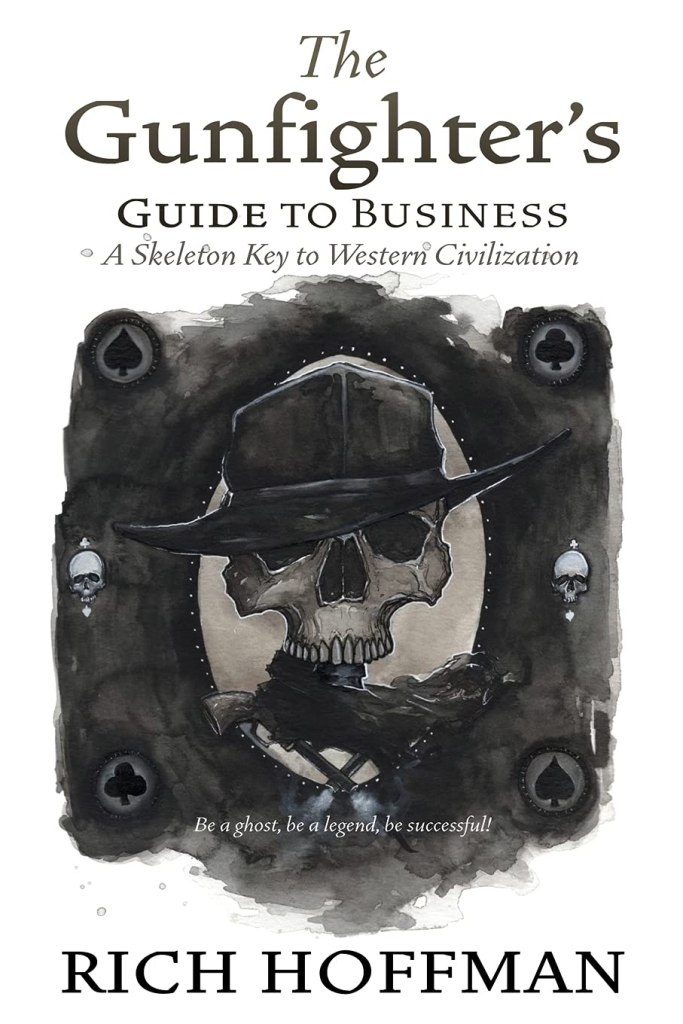
I wrote The Gunfighter’s Guide to Business back in 2021 because I had grown weary of hearing about Japanese warrior codes every time someone discussed Lean manufacturing or the Toyota Production System. Those approaches contain real value—Toyota’s emphasis on eliminating waste, Just-in-Time production, and continuous improvement through Kaizen has influenced industries worldwide. But as an American who spent decades in manufacturing and aerospace, applying those lessons while teaching teams how to solve problems on the fly, I felt our culture needed its own framework. We have our own warrior tradition, one rooted in self-reliance, quick decision-making under pressure, and the willingness to face risk head-on. That is the spirit of the gunfighter—the fast-draw competitor who practices until shooting from the hip becomes an expression of hard-won skill and confidence rather than recklessness.
The book is not aimed at legacy corporations seeking incremental tweaks to maintain the status quo. It is for entrepreneurs and individuals who want to build something real in a world full of obstacles. I drew heavily from the sport of fast draw, which I have long seen as a perfect metaphor for high-stakes business: when you are truly skilled, you can act decisively and accurately without hesitation. Chapters explore placing bets wisely, managing risk, and understanding that real success often means operating as a “ghost”—staying agile and unencumbered by titles, corner offices, or attachments that others can target in an effort to gain control over you.
This year, 2026, has brought several moments that reminded me why the message matters. People have approached me in everyday places like Costco in Liberty Township—recognizing me from the blog, videos, or the book itself. They want to talk, ask for a signature, or share how the ideas resonated with them. One particularly memorable encounter came from the CEO of a large company a few states away who had read the book and flew in specifically to find me. He made a substantial offer: come consult for several months, coach his workforce on the gunfighter mindset, and help reshape the culture. It was the kind of money that would make most people in my position jump with enthusiasm. I said no.
I critique consultants throughout the book, and I stand by that. Not because every single one is worthless, but because too many function as the “dandies” or “bounty hunters” in Clint Eastwood’s Unforgiven—profiting from the legends and hard work of others without ever stepping into the real fight themselves. The gunfighters are the ones who face the target, put their lives or reputations on the line, and deliver results. I have always tried to live as the latter. Turning down that opportunity was not about rejecting money; it was about staying consistent with the principles I laid out. I am not racing to stuff a retirement account before time runs out. I have a different measure of success, one shaped by decades of experience and a marriage built on integrity.
That integrity traces back to a moment early in my relationship with my wife, nearly forty years ago. I was selling cars as a young man—good at it, making strong commissions in a cutthroat environment. One Saturday, I had an older, retired customer ready to buy a truck, paying $5,000 over sticker price, all cash. The finance department balked at the markup, but the sales manager pushed me to close it anyway. I had the man’s keys, had built genuine trust over hours of conversation, and convinced him to walk across the street to withdraw the cash. My future wife showed up at the lot right as I was finishing the deal. I thought she would be impressed by the big sale. Instead, she was deeply upset that I had taken advantage of an honest man. She came from a different background—modeling, country club circles—and had seen plenty of “successful” men who measured life by mansions, boats, and flashy deals. She wanted none of it. She told me it was the Corvette I was about to buy or her; she would not marry someone who operated that way. I walked the deal back, took the ethical path, and my commission was cut in half. I left that job soon after. We have been married ever since, and that decision remains one of the best of my life. It taught me that real leverage comes from living in a way your spouse and family can respect—not from cornering every last dollar or using dollars to gain control of people.
These same values run through the book and my daily work. I have encountered “safety tyrants” and sandbaggers in manufacturing facilities—people who hide behind compliance rules, slow output to protect their own power or laziness, and attack anyone who pushes for genuine improvement. I have seen engineers and managers who opposed efficiency gains, only for the pressure of their own schemes to catch up with them later. I do not celebrate their misfortunes, but I also do not mourn those who tried to destroy my teams or me. When you face real opposition in business—or life—you square your shoulders like Andrew Jackson in his duels or Theodore Roosevelt finishing a speech with a bullet in his chest. You do not cry over the grave of someone who would have put you in one. Forgiveness in the theological sense is between them and God; my job is to defend what matters and keep moving forward.
This mindset is not just for business. It applies to politics, culture, and how we build any healthy organization or society. Capitalism, properly understood, rewards those willing to initiate, risk, and deliver—not the parasites who live off others’ efforts. I see parallels in today’s corporate world and broader culture: too much fear disguised as safety, too many incentives to sandbag rather than excel. SpaceX stands out as a counterexample—lean, confident, and willing to accept calculated risk in pursuit of big goals. That spirit is what America’s economy needs more of in the years ahead, especially as entrepreneurs step up in the current environment.
I am not closed to opportunities, and I am grateful when people find value in the work. Some have bought copies in bulk to share with their teams. The book was written so readers can engage with the ideas independently—the bullet-point summaries at the end of each chapter help reinforce the key lessons without needing me in the room. Royalties still arrive occasionally, and my wife and I enjoy turning a good check into a nice dinner. That feels honest and sustainable. Turning a large consulting gig into another form of selling out would betray the gunfighter ethos I wrote about.
The stories and principles in The Gunfighter’s Guide to Business come from real experience—car lots, stamping plants, aerospace programs, and the hard lessons learned alongside a supportive wife who keeps me honest. They are meant for those with the guts to start companies, face opposition, and build something lasting. If you have not read it, I believe you will find it useful, whether for your own ventures or simply understanding how to navigate a world full of safety tyrants and bounty hunters. The gunfighter spirit is not about recklessness; it is about skill, ethics, and the courage to act when others hide behind rules. That is the skeleton key I aimed to offer to Western civilization and American enterprise. I still carry it with me every day and live by every word. Many are finding those words very valuable, and I’m glad to hear it. Thanks for the opportunities. But to me, opportunities are measured in more than just money, even though this offer was for a lot of it. The gunfighter still has to take bullets and to bite bullets, and be willing to deliver them.
Footnotes
[^1]: For deeper context on the Toyota Production System and its philosophical roots, see the official Toyota documentation and historical analyses of Lean principles.
[^2]: The fast-draw elements tie directly into the book’s core metaphor for high-skill, decisive action in business.
[^3]: “Ghosting it” is a recurring theme in the book, emphasizing agility over visible power structures that invite opposition.
[^4]: Unforgiven (1992) provides a sharp distinction between authentic gunfighters and those who profit from their stories.
[^5]: Jackson’s duels and Roosevelt’s resilience under fire illustrate the willingness to absorb damage and continue the fight—qualities essential in competitive environments.
[^6]: Safety culture critiques often highlight tensions between compliance and production pressures; see industry analyses on risk-taking and over-normalization of caution.
[^7]: These personal stories informed multiple chapters on ethics, decision-making under pressure, and long-term leverage through integrity.
[^8]: References to SpaceX reflect ongoing observations of lean, risk-tolerant innovation versus traditional corporate caution.
Bibliography
Hoffman, Rich. The Gunfighter’s Guide to Business: A Skeleton Key to Western Civilization. Liberty Hill Publishing, 2021. (Core text referenced throughout.)
Ohno, Taiichi. Toyota Production System: Beyond Large-Scale Production. Productivity Press, 1988.
Liker, Jeffrey K. The Toyota Way: 14 Management Principles from the World’s Greatest Manufacturer. McGraw-Hill, 2004.
Womack, James P., Daniel T. Jones, and Daniel Roos. The Machine That Changed the World: The Story of Lean Production. Free Press, 1990.
Eastwood, Clint, dir. Unforgiven. Warner Bros. Pictures, 1992.
Brands, H.W. Andrew Jackson: His Life and Times. Anchor Books, 2006.
Morris, Edmund. Theodore Rex. Random House, 2001.
Additional sources:
• Toyota Motor Corporation official materials on the Toyota Production System and Kaizen philosophy.
• Industry reports and critiques on safety culture in manufacturing (e.g., discussions of production vs. compliance tensions).
• Personal observations from decades in aerospace, manufacturing leadership, and entrepreneurial consulting scenarios.
• Cross-references to forthcoming work, The Politics of Heaven, for broader philosophical and historical context on spiritual warfare, ethics, and societal structures.
Rich Hoffman
More about me
Click Here to Protect Yourself with Second Call Defense https://www.secondcalldefense.org/?affiliate=20707
About the Author: Rich Hoffman
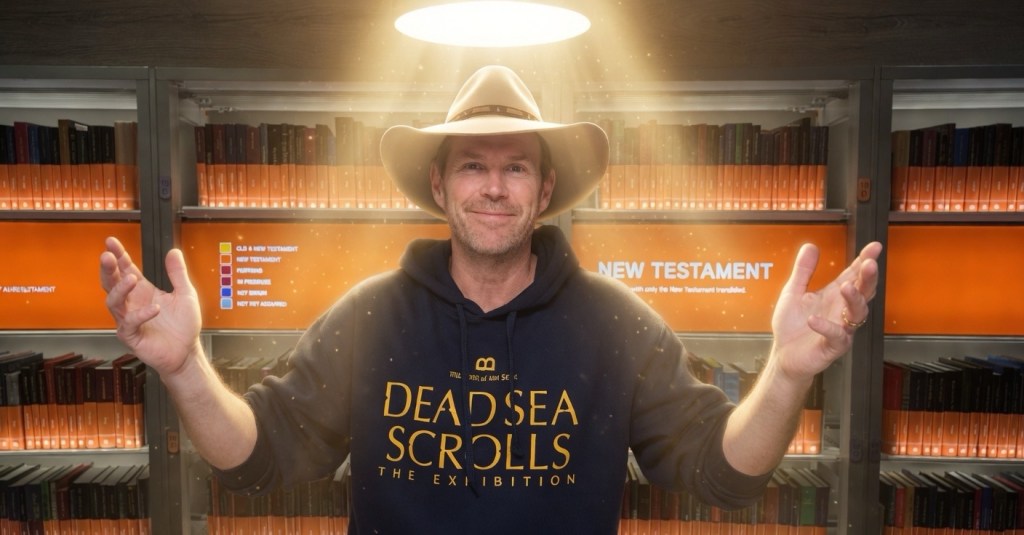
Rich Hoffman is an author, political consultant, and strategic advisor based in Cincinnati, Ohio, and the creator of The Politics of Heaven—a unique framework that connects biblical theology, ancient history, and modern power structures to explain how moral alignment and spiritual forces shape global events. Blending real-world political experience with deep research into archaeology, UFO phenomena, and suppressed historical narratives, Hoffman offers compelling commentary on topics ranging from ancient civilizations and the Dead Sea Scrolls to modern populist movements, paranormal continuity, and leadership strategy in chaotic environments. As the author of The Gunfighter’s Guide to Business and the forthcoming Politics of Heaven, he brings a grounded yet provocative voice to media discussions, supported by firsthand experiences and a cross-disciplinary approach that bridges science, history, and theology. For interviews, speaking engagements, or expert analysis, visit richhoffmanbooks.com or contact directly via phone at 513-307-5815 or email at rhoffman@richhoffmanbooks.com. If you’ve seen the movie, Disclosure Day and want to talk about it and the implications of Presidnet Trump’s UAP disclosures, let me know and we can bring some color to your coverage. https://richhoffmanbooks.com/media-inquiries-broadcast-topics-and-contact-info/?frame-nonce=ad51e7ecba I do have a firsthand UFO encounter to discuss.