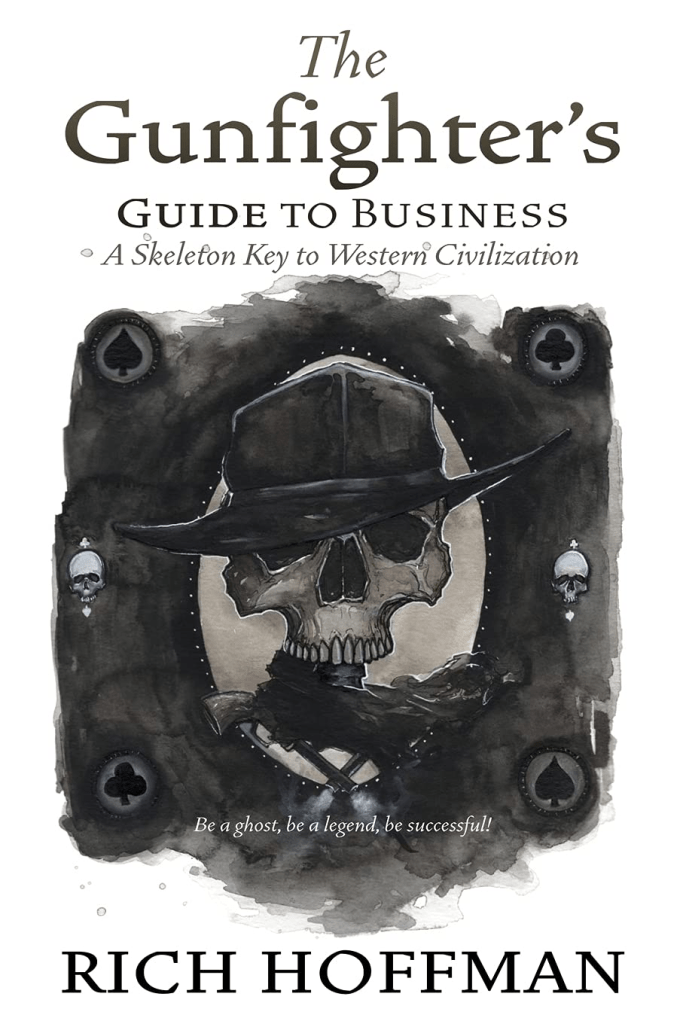
Rich Hoffman is an author, political consultant, and strategic advisor based in Cincinnati, Ohio, and the creator of The Politics of Heaven—a unique framework that connects biblical theology, ancient history, and modern power structures to explain how moral alignment and spiritual forces shape global events. Blending real-world political experience with deep research into archaeology, UFO phenomena, and suppressed historical narratives, Hoffman offers compelling commentary on topics ranging from ancient civilizations and the Dead Sea Scrolls to modern populist movements, paranormal continuity, and leadership strategy in chaotic environments. As the author of The Gunfighter’s Guide to Business and the forthcoming Politics of Heaven, he brings a grounded yet provocative voice to media discussions, supported by firsthand experiences and a cross-disciplinary approach that bridges science, history, and theology. For interviews, speaking engagements, or expert analysis, visit richhoffmanbooks.com or contact directly via phone at 513-307-5815 or email at rhoffman@richhoffmanbooks.com. If you’ve seen the movie, Disclosure Day and want to talk about it and the implications of Presidnet Trump’s UAP disclosures, let me know and we can bring some color to your coverage. https://richhoffmanbooks.com/media-inquiries-broadcast-topics-and-contact-info/?frame-nonce=ad51e7ecba I do have a firsthand UFO encounter to discuss.
What’s about to happen with Steven Spielberg’s Disclosure Day isn’t just another studio rollout with a cryptic Times Square billboard and a two-minute teaser—though we did get exactly that, complete with the line “All will be disclosed,” and a June 12, 2026 date tag splashed across NYC and LA ahead of Christmas week. It’s the once‑every‑generation moment when a master filmmaker steeped in UFO lore, biblical symbolism, and national mythology decides to shove the cultural conversation forward—and does it at a time when governments, newsrooms, and intelligence bureaucracies are finally admitting that “there is footage and records of objects in the skies that we don’t know exactly what they are.” 123
Spielberg’s teaser landed December 16, 2025: a brisk montage of unsettling phenomena, a TV meteorologist (Emily Blunt) breaking down on live air as her voice devolves into clicks, crop circles forming in real time, and a whistleblower (Josh O’Connor) promising “full disclosure… to the whole world… all at once.” Universal confirmed the title, Disclosure Day, along with the ensemble (Blunt, O’Connor, Colin Firth, Colman Domingo, Eve Hewson, Wyatt Russell) and the logline: “If you found out we weren’t alone… would that frighten you? This summer, the truth belongs to seven billion people.” David Koepp—Spielberg’s long-time screenwriter on Jurassic Park, The Lost World, War of the Worlds, and Kingdom of the Crystal Skull—returns to script from the director’s original story, with a release set for June 12, 2026. John Williams is scoring. A billboard campaign seeded curiosity days earlier, then the first trailer attached to Avatar: Fire and Ash screenings sealed the hype. 4567
The trailer’s grammar is familiar to anyone who’s lived inside Spielberg’s extraterrestrial trilogy—Close Encounters, E.T., and War of the Worlds—but this time the tone leans somber, even unnerving. You see none of the aliens; you feel their pressure on the edges of ordinary life. A nun stares at a mind-melding rig, animals behave strangely, and a murmuring chorus asks an ancient question: “Why would God make such a vast universe, yet save it only for us?” It is science‑fiction by way of catechism: mystery first, optics later. The teaser dropped in front of a public already primed by years of official disclosures and denials, a news cycle that swings between ODNI reports and Navy cockpit videos, and a new nomenclature (UAP) designed to strip away decades of “little green men” baggage. Spielberg, who has long said he doesn’t believe we’re alone, didn’t invent this moment; he’s channeling it. 68
The studio press materials are sparse by design, but they do confirm the core: a global reveal of proof, a media-driven human response, and a cast positioned at the edge where faith, science, and politics collide. People magazine’s write-up underscores that this is Spielberg’s first feature since The Fabelmans and his return to UFO storytelling; ABC’s GMA packaging shows Blunt possessed mid-broadcast; Deadline’s industry note pins the date and positions the film as the summer’s existential event. That triangulation—trade outlet confirmation, mainstream broadcast amplification, and fandom analysis threads—is not just PR; it’s an index of appetite. Audiences want a serious, sober take on disclosure that neither laughs it off nor turns it into a carnival. Spielberg’s reputation lets him ask the question without collapsing beneath it. 9105
If you care about the politics under the hood, the timing is obvious. Since late 2017, when The New York Times broke the Pentagon videos and the existence of AATIP, we’ve had the UAP Task Force (approved August 2020), the ODNI Preliminary Assessment (June 25, 2021), and Congress’s 2022 NDAA creating AARO—the All‑Domain Anomaly Resolution Office—to centralize reporting, analysis, and public transparency. AARO’s first historical volume landed in February 2024, mapping U.S. government involvement since 1945 from Project SIGN to BLUE BOOK to CIA panels, and its public posture has been to release as much raw evidence as possible without harming partner equities. That’s not Hollywood; that’s bureaucracy. But bureaucracy has set the table. A movie like Disclosure Day rides the wave of official acronyms that admit the problem, even as it insists that most cases fit prosaic profiles (balloons, drones, birds). The serious work of weeding out errors and hoaxes did not kill the subject; it made “we don’t know” socially respectable again. 11121314
The CIA files are another background hum. Far from confirming crash retrievals, the agency’s publicly accessible “UFOs: Fact or Fiction?” collection compiles cables, memos, and summary press clippings from the 1940s through the early 1990s—an archive of seriousness, not sensationalism. The Black Vault digitizations and Smithsonian coverage in 2021 made those documents easier to browse and fueled a sense that, while much is mundane, some fraction remains unexplained due to data gaps. Add the National Archives’ UAP Records Collection created in 2024 NDAA, and government-kept paper trails are no longer a subculture hobby; they are an official research topic. When a storyteller with Spielberg’s credibility references “disclosure,” he isn’t inventing a bureaucracy. He is meeting it. 151617
Then there’s the other engine of disclosure: the perennially curious political operative, John Podesta. From his 2011 foreword to Leslie Kean’s book to tweeting in 2015 that his biggest White House failure was not securing UFO disclosure, Podesta has been the Beltway’s most persistent, mainstream voice for transparency. The Wikileaks dump of his emails in 2016 crystallized that curiosity with exchanges involving Apollo 14 astronaut Edgar Mitchell (who referenced “nonviolent ETI from the contiguous universe,” however eccentric that reads) and Tom DeLonge’s outreach framing UAP as a national security priority; Mother Jones later documented how Podesta nudged campaign messaging toward tongue‑in‑cheek “the truth is out there” lines. The Obama Presidential Library has FOIA material showing internal attention to Podesta’s public remarks about UAPs. Whatever you think of the personalities and their metaphysics, it’s undeniable that “disclosure” stopped being fringe and stepped into official statements years ago. The Clintons flirted with promises; Democrats like Podesta kept the word alive; and the media stopped rolling its eyes. That’s the ecology in which a Spielberg film lands. 18192021
On television, Barack Obama’s May 2021 appearance with James Corden registered as a cultural permission slip: “There is footage and records… we don’t know exactly what they are,” he said, adding that we can’t explain their trajectories and that serious people are investigating. Again, no crash retrievals, no bodies; just dignified uncertainty framed as worth study. That single clip circulated across NBC, CNN, and the Independent with the same headline and sentence, making it resistant to partisan spin. It’s impossible to overstate how statements like this alter the audience for a film like Disclosure Day. You no longer need to sell the premise that a government might know things and might release them. You need to tell the human story of what it feels like when that knowledge crosses the threshold of proof. 32223
This is why I argued for months that the Disclosure Day campaign would not be merely cinematic. The teaser’s choices—biblical language, moral stakes, a chorus of “people have a right to know the truth… it belongs to seven billion people”—give you a tell. Spielberg is staging the post-disclosure psychology: trust breakdowns, religious reinterpretations, the questionable allure of a technocratic “we’ll manage it for you” state, and the tempting promise that a new cosmic threat will unify otherwise warring factions. That promise, by the way, is precisely the sort of political device elites would wield in a crisis: when ordinary collectivist appeals fail, fear works. The left in America—from John Podesta’s transparency drumbeat to West Coast cultural power—understands the unifying leverage of a “we are not alone” narrative. Positioning Democrats as the “party of disclosure,” through Hollywood’s megaphone, is as plausible as it is cynical, precisely because the public appetite for answers is now bipartisan. Skeptics and believers alike want competence. Whether Disclosure Day’s marketing was hatched over party cocktails is less important than the fact that the messaging aligns: all will be disclosed, the government has a role, and trust us—this time. 6
A Trump administration brings a different set of instincts to the table. He has publicly styled himself a UFO skeptic—“It’s never been my thing,” he told Joe Rogan in October 2024—but his Pentagon rode the arc of UAP openness: UAPTF, ODNI assessments, and the founding of AARO came out of a bipartisan legislative environment and continued under his second term’s defense establishment. ABC’s June 2025 segment with AARO’s director described hundreds of cases reviewed, most resolved, “several dozen” still anomalous, and an explicit effort to release more raw videos after automated redaction. You don’t need a sci-fi president for disclosure to advance; you need a bureaucracy with political air cover and a media willing to treat UAP like air safety and national security. That is present. If Trump wants to preempt a Hollywood-driven “party of disclosure” narrative, he can do it by ordering wider releases, allowing fuller congressional briefings, and framing disclosure as competence, not mysticism. The danger is letting the reveal be defined by fandom and fear; the opportunity is to take ownership as the administration that finished the job begun by ODNI and NDAA. 14
What happens after people realize what disclosure means? I’ve been writing The Politics of Heaven to answer that: to guide the post-disclosure world in a way that protects faith, families, and local governance while absorbing the shock of metaphysical and material claims. Whether you believe in ultra-terrestrials, interdimensional entities, or straightforward extraterrestrials, the questions that follow are the same: What is consciousness, and how does it persist beyond bodies? How do these intelligences intersect with biblical prohibitions, demonic lore, reincarnation motifs, and avatar theories? Who should arbitrate contracts—governments, churches, scientists, or communities? And when trust in institutions is already brittle, how do you stop a frightened public from begging Leviathan to manage their fear? That last question is the political acid test; you will see the left bid to occupy the role of compassionate intermediary. You will also see conservatives argue for decentralization and personal responsibility in the face of cosmic news. Neither side is ready for the metaphysical repositioning disclosure demands. A movie can start the dialogue; a book needs to map the terrain. 6
Some insist Spielberg’s film is simply entertainment, not a node in the broader campaign. I don’t buy that. The speed with which the project moved—kept under wraps, then billboards, then a title and trailer in mid-December, releasing the teaser in front of Cameron’s new Avatar—shows a marketing intelligence calibrated for maximum cultural reach. Hollywood trades (Deadline, Hollywood Reporter, IGN) treat the teaser as a significant event; mainstream outlets (USA Today, ABC, People) amplify with a civic tone rather than tabloid noise. Even the genre press (Polygon, Space.com, GoldDerby) notes the film’s “not like E.T.” mood. None of this is accidental. It sets June 12 as a summer opening thought experiment and primes your mind to connect the dots between the content and the headlines. 5642
Will Disclosure Day be statistically consequential? Not the film itself, obviously, but the ecosystem it feeds is full of numbers worth tracking. ODNI’s 2021 preliminary assessment summarized 144 incidents, with the majority lacking sufficient data—a sober reminder that proof is hard to obtain. AARO’s public briefings and annual reports count hundreds of new submissions, with most resolved. If, ahead of June 12, DOD authorizes another tranche of imagery with automated redactions, the viewership and downstream social metrics—shares, searches, FOIA requests—will spike. Smithsonian tracked thousands of downloads within 24 hours when the Black Vault made CIA UFO documents searchable; VICE documented how hard it was to make those files usable. “Disclosure” is not one event; it is a flow of documents, videos, and structured briefings that accumulate like sediment. Spielberg’s film is a catalytic object in that flow. 122416
Cynics will argue that Hollywood elites are exploiting grief and curiosity. The Rob Reiner tragedy—the director and his wife stabbed to death, their son arrested, with reports that they were headed to an engagement with Barack Obama the same night—has nothing to do with disclosure, yet it illustrates how quickly elite social circles blur into political networks and media narratives. When people claim “this plan was hatched at parties,” they’re not entirely wrong about cultural clustering; they’re bad to infer an omnipotent conspiracy behind every rollout. Information travels through overlapping circles, and films like Disclosure Day live in those circles. The politics is real; the paranoia needn’t be. 2526
If you’re looking for the “interdimensional hypothesis” within Spielberg’s cinematic tradition, Jacques Vallée’s work is the obvious touchstone: UFOs as manifestations at the seams of reality, trickster-like phenomena that feel spiritual as much as technological. Disclosure Day’s teaser seems to flirt with that—not by name, but by making the human body the first receiver. A weather forecast becomes glossolalia; a nun becomes an antenna. It doesn’t matter whether the story lands on ET or ultra‑T; what matters is that the film recognizes that the primary battlefield is consciousness, not hardware. In that sense, Spielberg’s new movie may be his boldest: less “spaceship lands” and more “the mind cracks.” 6
So how should a president handle disclosure in the shadow of Spielberg? Don’t surrender the frame. If it’s Trump, publish what AARO can safely release, demonstrate chain‑of‑custody, and invite independent scientific review, not just classified briefings. Anchor the message in air safety, national security, and scientific humility. Avoid promising a “blue wave of unity” around fear; call for calm competence. And for the rest of us—families, pastors, scientists, local officials—prepare the language for what faith traditions already admit: there are powers and principalities beyond our ken, and discernment is a discipline, not a tweet. The task is not to panic or to hand your agency to distant institutions; it is to keep your soul intact while you learn new facts about the cosmos. Spielberg’s teaser asks the right question: Would proof frighten you? It will. But fear need not decide your politics or your religion. The truth belongs to seven billion people because freedom inspires it. 5
What I expect next: more billboards, a second trailer around Easter, almost certainly tie-ins that echo Arrival’s semiotic puzzles and Signs’ domestic dread—though the production notes suggest Spielberg is avoiding clones of those films and choosing a wider, global lens. Expect chatter about whether Disclosure Day lives in the Close Encounters universe; Koepp refused to confirm or deny. Expect breathless “is this real disclosure?” threads online and new FOIA campaigns piggybacking on the film’s marketing. Expect claims that Democrats will harness the momentum for the 2026 midterms, and counterclaims from the right that they’re weaponizing wonder for votes. Most of all, expect the usual: elites overpromising unity while ordinary people look for ways to protect their families and livelihoods. In that sense, Disclosure Day is not just a movie; it is a rehearsal. 6
The day after the teaser, outlets like Polygon, Parade, Dexerto, and Cinemablend rolled out explainer pieces with production stills, cast bios, and historical callbacks to Spielberg’s UFO filmography. Yahoo’s Space vertical contextualized the director’s lifelong fascination with meteors and Firelight. GoldDerby and IndieWire talked up the billboards as a clever marketing stroke. IGN emphasized the theological line. The coverage reads like a consensus: Spielberg is back in the UFO seat, and this one is bigger and darker. It makes sense to be excited—and it makes even more sense to be prepared for what happens after the lights come up and the credits roll. The film will end; the conversation won’t. 72728298304
Because disclosure, whatever shape it takes, will force every institution to tell the truth about its own limits. Intelligence agencies will confess how much of the archive is press clippings and hearsay; AARO will say how many reports are balloons and birds. Churches will revisit glossolalia and demons with new humility. Universities will expand consciousness studies beyond an evolutionary footnote. And Hollywood—which conditioned us to believe in aliens—will confess that it cannot resolve what theologians and physicists must debate. If the truth belongs to seven billion people, then seven billion people must learn how to live with it. Spielberg can start the conversation; your community must finish it. And here’s something to think about: there are 8.26 billion people in the world. Why are they saying “seven”? Are there a billion of those life forms that are not actually human? But are avatars from an interdimensional realm taking residence in a biological vehicle so that they can interact with the events of our time? Likely, that’s the point of the trailer: to spawn that kind of massive discussion with ground-shattering implications.
And here’s the hard counsel nobody wants to give: do not let disclosure be your gateway drug to technocratic control. The instinct to panic and hand the reins to whoever promises a plan is the oldest political seduction in the book. The left will speak the language of compassion and unity; the right will talk about the language of sovereignty and order. Both will be tempted to use the unknown to centralize power. Resist the temptation. Disclose widely, validate rigorously, and keep authority as close to the citizen as possible. The truth is large enough to hold your fear without outsourcing your dignity. Spielberg’s teaser got one thing perfectly correct: the truth belongs to seven billion people. The question is whether seven billion people will remember that their consciousness has a power the universe wants, and that they control their own fate much more than they ever thought possible. 5
Executive Summary: The Politics of Heaven and the Post-Disclosure Era
Now, let’s talk about The Politics of Heaven and why now, and why I am putting so much into it. The project was conceived before, and then written alongside, the production of Steven Spielberg’s Disclosure Day (teaser released December 16, 2025; U.S. theatrical set for June 12, 2026). It argues that (1) the public now lives in an environment of information abundance that is overturning religious, political, and scientific commonplaces; (2) a major cultural catalyst like Disclosure Day will force those assumptions into the open; and (3) the immediate need is a deep, rigorous, post‑disclosure framework—political, theological, and philosophical—beyond what a two‑hour film and follow‑on documentaries can provide. 12
The inflection point: information abundance and challenged assumptions.
Over the last decade, the combination of official UAP releases, FOIA archives, and mainstream acknowledgment has made “serious uncertainty” socially acceptable again. The CIA’s digitized UFO/UAP collections, the National Archives’ new UAP Records Collection (created by the 2024 NDAA), and ODNI/AARO reporting transformed curiosity into a public research agenda; that scaffolding existed before the Disclosure Day teaser, and it contextualizes it now. 34
• ODNI’s Preliminary Assessment (June 25, 2021) made pilot safety and national security the frame, not fringe;
• AARO (established by Congress in 2022) now issues historical reviews and annual updates that resolve most cases but leave several dozen anomalous, while investing in tools to release more raw evidence safely;
• Former President Barack Obama (May 18, 2021) explicitly affirmed that there is “footage and records of objects we don’t know exactly what they are.” 5678
From surface anthropology to deep comparative inquiry.
Classic comparative frameworks (e.g., James Frazer’s The Golden Bough and the early anthropology of religion) were built when information moved slowly, and travelers could “look at the surface and pick up artifacts.” A century of archaeology, psychology, and comparative religious study has since exposed layers those pioneers couldn’t observe, demanding more careful models of consciousness, symbol, and ritual. Today’s public can test those models instantly against real archives and sensor data; a global dialogue that once took lifetimes now unfolds in hours. 4
Consciousness, privacy, and the interdimensional debate.
The popularization of parallel‑worlds and entanglement-style ideas—sometimes via high-concept entertainment, sometimes via speculative science—has normalized conversations about nonlocal effects and mind–matter enigmas. Spielberg’s teaser leans into that terrain without naming it: the human body first, the revelation second. A possessed weather broadcast, mirrored actions, and religious imagery (“Why would He make such a vast universe…”) signal that the primary battlefield of disclosure is consciousness, not craft. That, in turn, reopens classical debates (angelic, demonic, ultra‑terrestrial) in a modern register. 92
Ideological frames that will compete to “own” disclosure.
• A left‑liberal/naturalist reading (which you argue Spielberg’s film may amplify) treats disclosure as an invitation to submit to nature’s deeper, animating order—often expressed in syncretic terms (Native cosmologies, Eastern metaphysics, ecological spirituality). The pitch: disclosure unifies, softens borders, and mandates communal management of anxiety. 2
• A conservative/sovereignty reading insists Genesis grants stewardship—“rule over nature” through ordered freedom—and worries that fear will be instrumentalized to expand central authority. The pitch: disclose widely, validate rigorously, do not trade agency for technocratic management.
• The state (irrespective of party) will tend to present itself as the trusted intermediary—a reflex strengthened by AARO’s mandate and ODNI’s safety language. The risk: turning existential wonder into administrative leverage. 56
Why The Politics of Heaven.
I started this book before Disclosure Day took shape because the collision I outline was inevitable: unprecedented access to information + mainstream validation + public mythologies = paradigm pressure. The book asks:
• What are the politics among non-human intelligences (altered terrestrials, angels/fallen angels, rebels against the Creator)?
• How do those politics interact with human sovereignty, law, worship, and culture?
• What happens when a society learns it is not alone, possibly not even alone in its locked bedrooms—and discovers that manipulation has been continuous across history?
• How do we protect families and faith while absorbing complex data about mind, matter, and presence?
The limits of cinema; the need for rigorous guidance.
A feature film can ignite the conversation; it cannot furnish the multi-level study (political theory, comparative religion, metaphysics, law, ethics, and security) that people will demand after the credits roll. Given the sudden spike in public legitimacy—from billboards announcing “All will be disclosed” to a trailer in front of Avatar—I anticipate a wave of documentaries and explainer shows. This book aims to be the serious handbook readers turn to when they realize the topic touches on Genesis and governance, not only on spectacle. 1011
—
Key Claims (with source pointers)
• Disclosure Day is confirmed as Spielberg’s UFO event film; title, cast, teaser, and June 12, 2026, release date are official. 12
• Mainstream outlets framed the teaser as a return to existential UFO themes, emphasizing the trailer’s religious, psychological, and global stakes. 1213
• Official U.S. channels (ODNI, AARO) shifted discourse by legitimizing UAPs as safety and security concerns; AARO continues a controlled transparency program. 56
• Archives (CIA FOIA; NARA’s UAP collection) broaden public access and keep post-disclosure inquiry tethered to documents, not rumor. 34
• Obama’s 2021 remarks normalized high-level acknowledgement: “footage and records” exist of objects whose behavior resists easy explanation. 8
—
What Readers Should Expect (and Why the Book Matters)
1. A surge of myth-making and fear-based politics.
Parties and media will compete to “frame” disclosure as either communal healing or controlled competence. Your guidance: disclose widely, decentralize interpretation, protect sovereignty. 5
2. Religious re‑reading under pressure.
Expect new homiletic and doctrinal work on angels/demons, possession, discernment, and cosmology. Provide guidance: restore biblical guardrails, engage comparative traditions seriously, and reject sentimental syncretism.
3. Law, security, and ethics.
Air safety, sensor policy, and data custodianship will dominate hearings; civil liberty questions (privacy, mind–machine interfaces, and conscience) will follow. Your guidance: keep civil protections strong, resist “emergency powers creep.”
4. Consciousness first, technology second.
The teaser’s grammar—and much of the historical record—suggest the human mind is the first theater. Your guidance: form communities of discernment, not fandoms of panic. 9
—
Footnotes & Selected Bibliography
Footnotes / Source list
1. “Disclosure Day trailer/title/release” — Deadline (Dec 16, 2025); Hollywood Reporter (Dec 16, 2025). 12
4. “ODNI Preliminary Assessment; UAPTF creation” — Wikipedia summary of ODNI report (citing ODNI, June 25, 2021); DoD release on UAPTF (Aug 14, 2020). 514
5. “AARO historical record & transparency posture” — AARO Historical Record Report Vol. 1 (Feb 2024); ABC News interview with AARO director (June 4, 2025). 67
6. “CIA FOIA ‘UFOs: Fact or Fiction?’; Black Vault / Smithsonian overview” — CIA Reading Room; Smithsonian (Jan 15, 2021). 153
8. “Obama 2021 remarks on James Corden” — NBC News (May 18, 2021). 8
Selected bibliography (for your appendix)
• Office of the Director of National Intelligence. Preliminary Assessment: Unidentified Aerial Phenomena. June 25, 2021. 5
• Department of Defense (UAPTF Establishment). Release, Aug 14, 2020. 14
• All‑Domain Anomaly Resolution Office (AARO). Report on the Historical Record of U.S. Government Involvement with UAP, Vol. I. Feb 2024 (DOPSR‑cleared). 6
• CIA FOIA Reading Room. UFOs: Fact or Fiction? 1940s–1990s collection. 15
• National Archives. Records Related to UAPs (RG 615). 4
• Deadline; Hollywood Reporter; IGN; Polygon; GoldDerby; IndieWire/Yahoo—industry and mainstream coverage of Disclosure Day teaser and release. 129121011
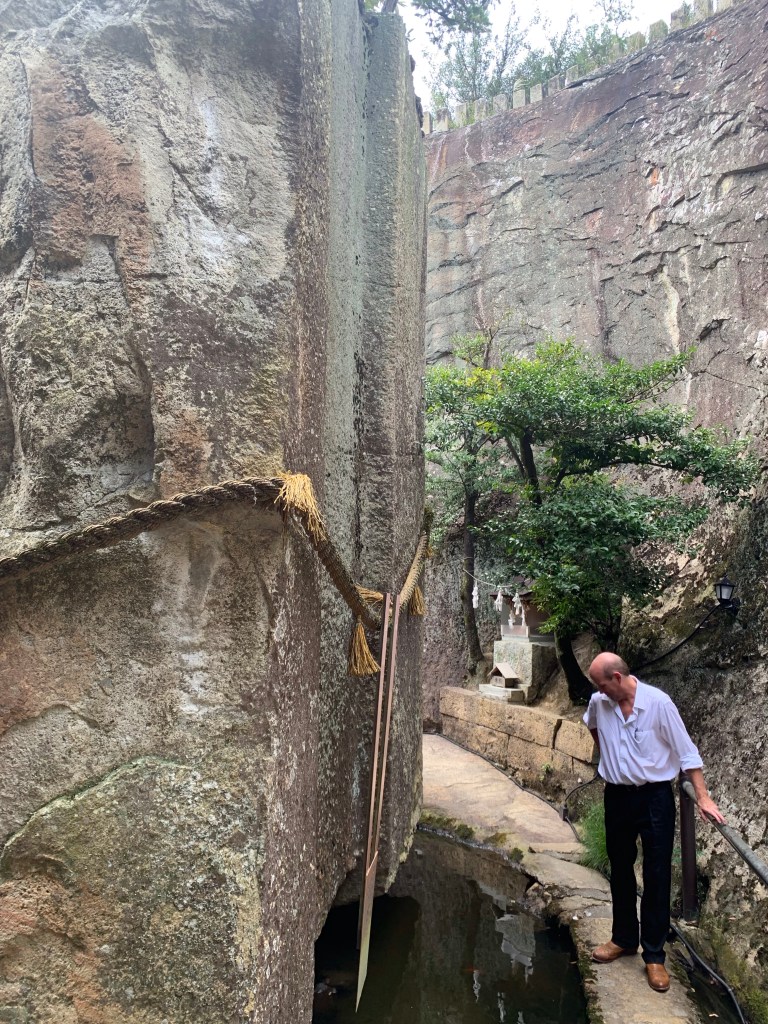
Examining the mysterious site of Ishi-no-Hoden in Japan
I find that science fiction and fantasy often contain more truths than what mainstream sources would ever admit to, such as television shows like Battlestar Galactica, where the concept of human seeding on earth was explored, or Lord of the Rings, where the nature of evil in some far ancient past, or future, is the dominating topic, or the Robert Jordan series, The Wheel of Time that was a very good book series that dealt with essentially the Vico Cycle that I talk about so much. And, of course, Star Wars has been a favorite of mine that was set a long time ago in a far-distant galaxy. Not even our own. Examining abstract concepts in science fiction certainly does help us deal with reality much more effectively and provokes the questions we should be asking. And when you start to do that, you can see truths lost to others, such as why there are so many global wars. Well, especially in the hot zone of the Old Silk Road, many of the conflicts we have these days, such as the war in Israel, and then of Ukraine and the whole Russian puzzle with China and other places that don’t have massive economies, but are perpetually in conflict for some mysterious reason. And I would offer that the best evidence indicates that these regions have very ancient pasts, far extending into what we today consider old. We think of a few thousand years as a lot, but the evidence from many sources, not the same idiots who tried to tell us not to take Ivermectin to deal with the lab-created virus, COVID-19, and that there was no election fraud in 2020, have tried to tell us about true history. But the result of decentralized media that is finally talking about real, substantive issues indicates that the wars of our modern times are purely created to conceal a deep and ancient past, allowing a corrupt global network to remain in power over the human race through sheer deceit.
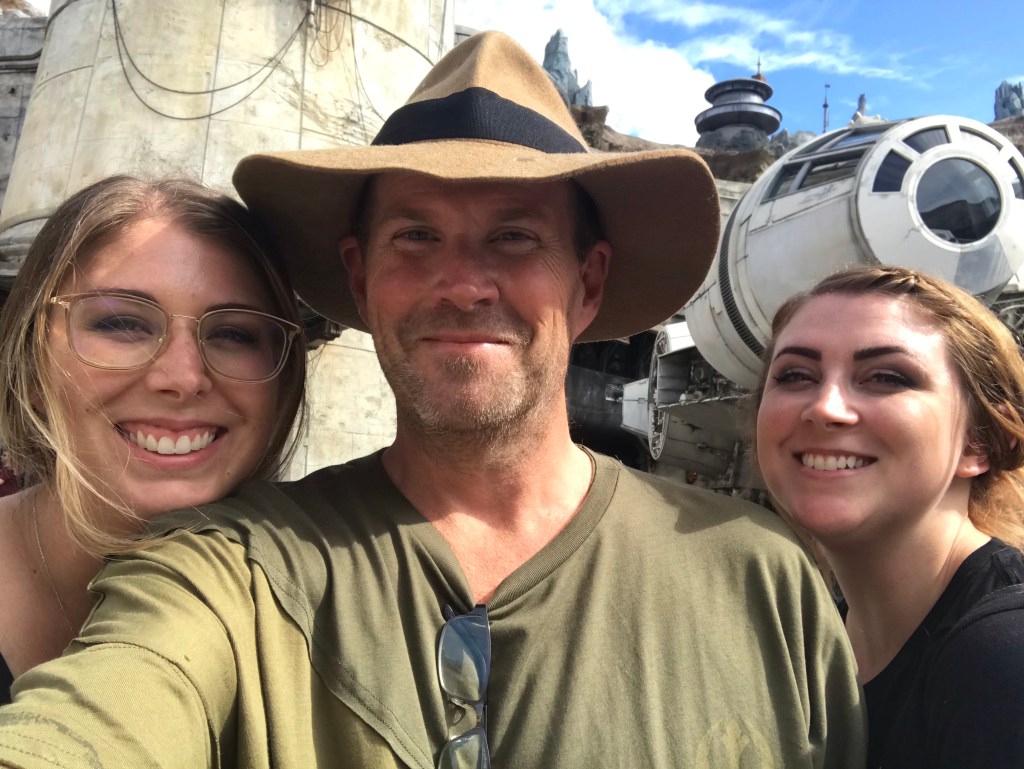
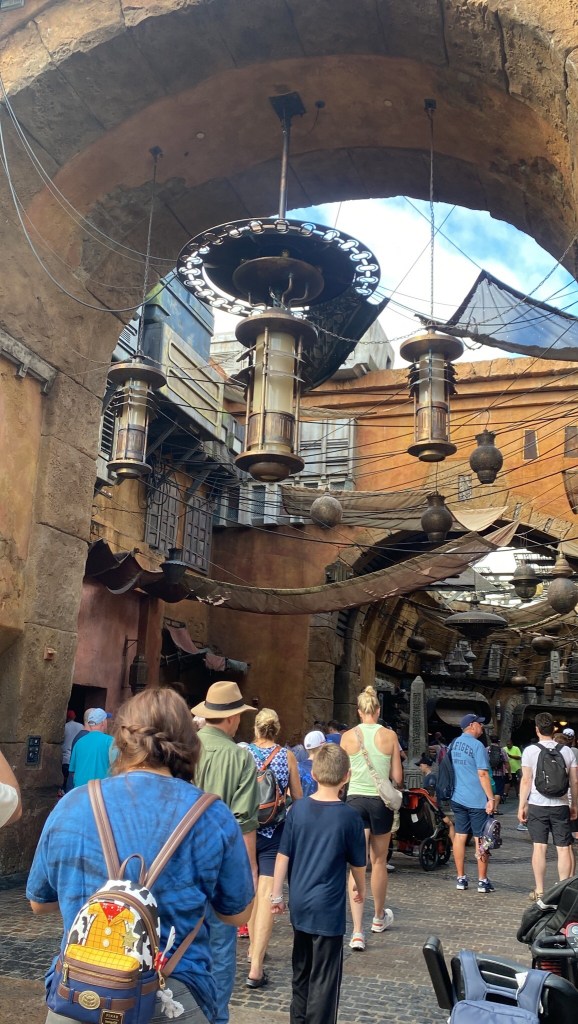
The Millennium Falcon at the Black Spire Outpost
And that’s what I was thinking about when my family recently visited a very favorite place I have, the Star Wars land at Disney World, Galaxy’s Edge. I’ve always loved that particular science fiction story, and specifically the spaceship, the Millennium Falcon so to see a land where all these things were built and you can walk around and interact with them, was magnificent. So, I found that I was able to get my family to Disney World and to that specific place and we had one of the most marvelous days of our lives, together. But there had been something bothering me over these last few years since I had last visited what they call The Black Spire Outpost that I resolved while there with my family. I had a lot of time to think about it, and it all came together for me during this recent visit. The place reminds me of what Ancient Jerusalem would have looked like in a period of largely unrecorded history, around 8,000 BC, when that region of the world was said to have been a space command center for a landing corridor that was very important in the near east area, where many of our most significant religions were born, Christianity, Judaism, Islam, Hindu, Buddhism, and Zoroastrianism. And the haunting passage from the Bible that I couldn’t get out of my head was that from Genesis 22:2, “and he said, take now thy son, thine only son Isaac, whom thou lovest, and get thee into the land of Moriah; and offer him there for a burnt offering upon one of the mountains which I will tell thee of.” This action was in around the 2070s BC, long after any settlement of a spaceport in Jerusalem would have been located there. All Abraham would have seen of Mt. Moriah, where King Solomon, over a thousand years later, would build the great temple and place the Ark of the Covenant, the Ten Commandments, upon that exact spot where Isaac was to be sacrificed, in that precise spot. In 3000 to 5000 years, most stone structures erode away into nothing, so anything that would have been in that region at that time would have long eroded from 8000 BC.
My kids
I’m a fan of Zecharia Sitchin’s books. Many people, especially mainstream scientists, have said that his books are purely science fiction and not based on accurate science. Even Graham Hancock has said such things. But I think those are not fair assessments, and I think time has proven that Zecharia Sitchin was very authentic. He has since died, but his work lives on in his students, who have done some exciting work on the activity on earth that may have occurred based on stories passed down through various cultures that are just as scientific as anything else over a roughly 450,000 year period, which paves the way not only for our current world religions but also the notion we have of kingships and even burial practices. After all the lies that the world’s governments have told us, more people are looking at things that used to be considered wild conspiracy theories and reexamining them with fresh eyes. When looked at with this updated perspective, it becomes evident that the power structures on Earth who desperately want to hold on to what they consider royal bloodlines given to them through heredity wish to maintain their right to rule Earth by controlling what we know of the past, so that is the real cause of all these ridiculous wars. If there are wars, actual science can’t do any research because those regions are too dangerous for that kind of activity. I’m also a fan and dedicated member of the Biblical Archaeology Review Society, and I understand and sympathize with their task of digging and gathering evidence in such a hostile part of the world, politically.
How things likely looked, a long time ago. But not so far away.
For me, uniquely, I had just stepped off a plane from Japan while I was with my family at the Black Spire Outpost and had visited the very ancient site of Ishi-no-Hoden and studied how the modern city of Osaka was built around the Kufan tombs that were built in the shape of keyholes, very mysterious. Going to the Black Spire Outpost reminded me of what an ancient Jerusalem would have looked like well before there was Abraham, Isaac, or the Jewish people. A mixture of high technology that could navigate the known galaxy, perhaps even the universe that has long since come and gone interlaced with primitive structures and building methods erected quickly to facilitate the need from a growing economy not rooted to travel on earth. But what was left behind was some remote memory of these actions lost only to telling stories and an understanding of that truth within our subconscious brains, which most of us share. And those memories are most effectively communicated through science fiction. Yet, at the Black Spire Outpost, you can walk around and touch something that may well have been part of our far ancient past only manifested through storytelling. But it is as accurate as anything else—perhaps more. The wars in the world that dominate much of our political discussion these days are meant to hide the truth from us, which is why I am talking about them more than ever. Because we have been lied to, we must have a culture that deals with the past to have an honest future. The reason that Jerusalem is such a hot zone even to this day is that power is sought in concealing the truth and giving people controlled narratives through religion that keeps them in power and prevents people from learning their true history, which is buried under the streets of Jerusalem well past the typical periods that we have always thought of as ancient, but in reality, are just scratching the surface.
It’s not hard to see how it happened; if you understand politics, you know that mass populations are easily controlled by a political system that can capture a narrative, and humans, by nature, are best communicated with through story. So, if you own the story, you control the population, the primary focus of religions, and the politics that have spawned from them since recorded time. But this line of questions for me started in 2009 while at the Mothman Festival in Point Pleasant, West Virginia, and I picked up a map that had known burial sites of giants, people of gigantic stature. I thought that was interesting, so I have kept my ears open since then for evidence as it has come in. And as that evidence has been collected, it is pretty evident that in the Ohio River Valley and across the world, just about everywhere, especially in mound-building cultures, are the remains of giant people. That is why there isn’t better archaeology looking into the contents of these mounds, even in China and Japan and all over the Near East, specifically the many mounds of Israel that are essentially of the same construction and design. It came alive for me after visiting Stonehenge that something was strange because I saw the same features that I saw at home in Southern Ohio. And once you learn that the mounds weren’t burial in their orientation as much as they were intended to be celestial clocks, then suddenly things start making a lot more sense, which is the case of a massive earthwork near my home at Fort Hill, in downtown Hamilton, Ohio, and Serpent Mound about an hour and a half to the east.
Knowing what I do now, I am very comfortable calling it; the earth was settled by life from other places in space, likely many different species, and they have probably been interacting with us all along. But they come and go, and when they arrive on earth to settle or for visits, they need to know when they are. And that is the purpose of things like Stonehenge, the features at Göbekli Tepe, and even the mysterious Keyhole tombs in Japan. We are dealing with a culture that lived quite well and vibrantly in what we call the Archaic Period, from the age of Leo and Tauras, and dying out around the age of Aries, only to emerge into what we now call Biblical ancient. We know that because once you stop trying to look at history through what you find lying around the ground, which decays and erodes rather quickly, and start understanding that you measure activity in celestial time, which is the purpose of inventing the zodiac always was, relevant to stable ground features described, then you start to get the picture. And the people doing all this were huge, called giants. And that the Bible refers to as the Nephilim. Only they were a global culture that understood how to navigate across the oceans, and they did so frequently. Our assumption that hunters and gatherers rubbed sticks together and migrated across a land bridge into North America during an Ice Age period is, by now, just ridiculous.
But, the world’s politics has wanted us to think of them as gods and to worship them and their time of rule on earth. So, they have been working to conceal this information behind the mechanisms of institutionalism. To maintain that story, they have been trying to sell us all on this idea of indigenous people and that America should never have been settled by Christopher Columbus in 1492 because we interrupted the harmony of a nature-loving group of nomads with capitalism. But that was all a lie; the Indians were not indigenous to North America. Aliens were. The Indians were the latest visitors migrating around the earth for thousands of years. The way things look, we are dealing with at least 400,000 years of human history. Probably longer. We only see what hasn’t eroded yet, but there has been a lot of intelligent life on Earth over a long period. That doesn’t mean there weren’t hunters and gatherers doing their thing, just as we can find such people worldwide today. There were always homeless people not living within a structured society. But our assumptions about life and how we arrived where we are, based on abundant evidence, are entirely wrong. I think today, if we had reasonable archaeology into the many mounds of the world, we would find in them skeletons, like have been found at the Miamisburg Mound just south of Dayton, Ohio, lots of 8- to 10-foot-tall people. The fact that nobody is seriously studying this matter tells you everything you need to know. The social narrative of the exploitation of so-called indigenous people is far more valuable to the current political order of global communism than the truth of scientific discovery. The evidence is so abundant, mainly by private investigations, not science funded by government grants committed to a political narrative, that there is no longer a question.
I was always weary of this kind of alien settlement thinking until I watched the world’s governments lie to our faces about COVID-19. We all know that the virus was artificially made in China and released to the public in a way that the world’s governments knew about. They had even role-played the response, which Bill Gates led the effort. They were so arrogant about their ability to lie to the public through controlled narratives that they essentially painted themselves in a corner and had to tip-toe through that wet paint to reveal their guilt. Part of the reason for the arrogance, a big part of it, was their success in manipulating religious and scientific narratives to the public, such as they have gotten away with the indigenous people’s history, arbitrarily picking a habitation date of 1600 AD to 1800 AD, and saying that they were the indigenous people of North America and that all migration was evil so that the greatness of America can be delegitimized to the world and they would clamor for Chinese style communism because of their associated guilt. People didn’t question the narrative much, which inflated the egos of those who seek to control narratives in the world so they can easily control masses of people. So now that we know that aliens, or rather, our ancestors, came here from other planets, do we call them the indigenous people? Or were they the invaders of what was here before? But we know there was a global civilization that dates back all over the world into times during and even before the last ice age. And that what was left behind were fragments of their previous cultures that were quite advanced, as we can see in all these ground-based celestial clocks that still have crop circles appearing next to them all the time as if someone were writing notes on the ground to figure out when they were in time and space. Since time doesn’t move the same everywhere in the solar system, the galaxy, or the universe, which is the giveaway, they were concerned with time and the way we would wear a watch to measure our rotation to the sun. These very tall people and others needed to know relative to their orientations in space when they arrived on Earth. Was it 100 years later, or many thousands? And that is the way we must look at history in the future. Not in the way we have been. Or allow governments and institutions to lie to us to control a narrative that benefits them politically when science says otherwise.
When people call something a conspiracy, what they are usually saying is that they are too lazy to get the facts so they are prone to just listening to what they think is a trusted source has to say about something, and to stick with it. That source in the case of the Covid-19 virus is the government, which we are seeing has lots of conspiracies that are largely true to some degree or another. But other conspiracies are those such as the UFO outbreaks, which the Pentagon recently released a very mysterious video that has been out for a while now. Before the release of that video, UFO talk was very conspiracy based, but obviously, the government knows there is something to it that is going to be revealed as we move out into space and they can’t hide it from the public any longer. Another conspiracy that I am quite certain is true is a topic I have long talked about on this site, the species of giants in Ohio who predated modern Indians with advanced culture in the Miami Valley and up into New York, who likely are connected to the people who built Stonehenge in England. The big news there was that it wasn’t Christopher Columbus who discovered America, it was many people going back tens of thousands of years who were seafaring long before our history credits them, and that is something that academic institutions have been slow to accept.
The point here is that just because an academic class of people who like to be called “experts” say something, that doesn’t make it true. And when a society begins to point to experts and say we should listen to them, then that is a start to a problem. We saw this coming when it came to Covid-19. The political class who wanted to change presidents this fall blamed Trump on not listening to the “experts” enough, goading him into finally listening to Dr. Fauci during an election year, which opened the door to the “Plandemic” that has become Covid-19, a socialist grab for power that has unleashed all the leftists dreams they had been dreaming for many years. I saw it clearly for what it was from the outset, it was Plato’s Republic, his cave analogy, where experts knew what caused the shadows on a cave wall but didn’t want people to see for themselves what the causes were. To keep people from seeing for themselves what’s going on “experts” want to remain in power so they do whatever they can to keep everyone focused on the shadows of life, not the actual elements that cause the shadows themselves. To do that, they call anybody who wants to see the cause of the shadows in our lives conspiracy theorists.
I have always had a problem with institutional style learning because to see the big picture of things, which is really all I’m interested in ever, you need to study all categories of thinking, all topics—everything from aviation to philosophy. From biology to physics. From mathematics to literature. I for one could never be bored in life, my head turned and saw what caused the shadows on the cave walls many years ago, while I was still a child and I have never had much faith in “experts.” While they were studying to be “experts” they missed all the other things in life that contribute to the things we see and experience. So while what they say may have relevance to a very narrow field of observation, they miss the big picture every single time and that was never more evident than the massive disaster that has been Covid-19. Trump’s mistake was that he gave them a seat at the table and look what they did with it. But if Trump hadn’t, he would have had much more trouble by the press who has been advocating an “expert” class for over a hundred years in the United States. Most of the members of the media obviously haven’t read Plato’s Republic, and they should. Because there is a lot more going on in life than the drivel they report and the scope of existence is far beyond the limits of what any “experts” can tell us about anything.
Just like the problem with the species of giants who once ran massive empires in North America, often rivaling Greek and Roman society in sophistication, there are many “experts” who have written doctorial thesis papers on standard archaeological pre-Columbian theory and they can’t have new evidence destroy that academic criteria. To admit that the North American Indian was not a native, that white people didn’t take their land from them but that they simply took the land from others who came before them for tens of thousands of years would have major political and historical consequences. The information is getting out anyway, just as we are learning quite painfully that we are not alone, that likely our current government has been interacting with other species of interplanetary lifeforms, perhaps from the beginning of time. The government doesn’t trust us with the information, and we don’t trust the government because they don’t trust us—it becomes a vicious cycle and the mud in the middle becomes “conspiracy theory.” Like the academic “experts” government too wants to be the one that stands between people and knowledge just as the “experts” did in Plato’s cave analogy.
And that brings us to Judy Mikovits and her experiences with Dr. Fauci way before there was a coronavirus outbreak that has been talked about in the Plandemic video that Google, Facebook and the rest of the Silicone Valley tech companies are censoring on their platforms. The goal is to keep the rest of society asleep at the wheel, just like the Giants of Ohio conspiracy and UFOs, the desire for “experts” to remain experts has driven the discussion and created mistrust on both sides. In the case of Covid-19, the conspiracy was that the virus was used by the “experts” as a launch vehicle for their needs for funding, and the cooperative governments saw it as a push for outright socialism. Trump tried to make the “experts” happy by listening to them during an election year and that’s how they stuck him. But to see all this, you can’t be looking at the shadows, but the cause. For those willing to see, its easy. But the people who have lots of things to hide will discourage you by calling you a conspiracy theorist.
Obviously, knowing something is different than speculating, and when it comes to the UFO situation, we are seeing a movement toward full disclosure, where we will learn what the government knew and for how long. The world is too small and moving too fast to hide it anymore, so that is likely why the video was released now rather than years ago when the event actually happened. And that is the fate of these other issues too, the Giants of Ohio, the truth behind Covid-19, its all going to come out in time. What matters now is to understand why any “experts” would want to keep people from that information. The answer of course is power, and the weight of their reputations which means everything to them. New evidence or contrary opinions make them no longer experts on a topic, if people can see other views for themselves. The point of keeping everyone focused on “expert” opinion is to keep the experts in power and valuable and nothing else. Yet the truth is needed to actually solve problems and understand where we need to go and why. So in that context, that is why “experts” are so destructive to our society. They are not valuable, and so long as we allow them to stand between us and information, there will always be conspiracies and the false power they get from getting in the way.
One of the most persistent criticisms of my work on this site which has permeated over the decades is my legitimate coverage of ancient aliens’ stories, well before the History Channel show was popularized. While its true that I cover lots of mainstream political topics more accurately than any other source, from school levies, to presidential politics my first love in all categories is cultures and the aspects of them that rise and fall on a universal scale. In that regard it didn’t surprise me at all that the Department of Defense and the United States Navy has come forth and admitted that UFOs are real, they are calling them Unusual Arial Phenomenon, but that yes, they are indeed true and are beyond our present technology and are quite perplexing. I would not call them “them” per say however, I would call “them” an aspect of “us.” We all come from the same places and want the same things in the context of things. But we are not all equal, for us reality is a determination limited by the human mind which expands or contracts depending on intellectual fulfillment. In essence, those who have criticized my thoughts on things eventually come to learn that what I have often stated turns out to be true, but it was the limits of their reality which prevented them from seeing it sooner.
I was in a meeting last week with a lot of smart people and there was something of an argument about reality. It was suggested that I wasn’t conveying reality to the people who needed to know something whereas my statement was that reality wasn’t the same for everyone, and that before saying something my version of reality needed to be implemented. The people controlling the reality we were discussing were lazy people not very intellectual, therefor the constraint on understanding reality was limited to their measuring instrument, their own intellects. While those people were happy to name off their Fantasy picks for the upcoming NFL games on the weekend, they didn’t know jack shit about quantum mechanics and the ability to use the mind to move mountains in an intellectual jousting period so we were discussing two different realities in the context of space and time, yet the circumstances hadn’t changed. All the elements were there, it was just limited by our ability to measure it, based on our intellectual limits.
For many, the idea that there is alien life in space flying around in spaceships that behave by unique rules of physics is terrifying, because they worry that they are not the top of the food chain in life forms and it makes them worry about being preyed upon. Of course, the American government worries about revealing what they know because in doing so they would have to admit that they aren’t in control with our physical weapons. And of course, the evidence is quite obvious that the history of mankind goes much further back along the Archaic Period, even up to at least the last Ice Age. Much of what we call history is just now being unveiled and we are shocked by what we are learning. But the essence of that shock is that government fears letting normal people know that they are not in control and never have been—when for most human beings, that illusion of control allowed their lazy minds to feaster through life following some didactic path of unhealthy living without the expectation to do more with themselves.
But nothing about meeting alien life is scary to me. I see them as just another lifeform, like we’d observe in a new species of bird, or an elephant. They are just out there doing their thing. I don’t consider them or anybody who may exist in the universe or multiverse to be superior in thought and action. They just may be on a different reality based on their unique experience. I read four books last week, spoke to hundreds of people on the upper levels of society, and personally worked over 85 hours and I still had time for my family and to enjoy life without feeling wore out. Yet I heard complaints from people who barely worked 40 hours how tough life was and how they couldn’t find time to read the numbers and letters on their television remote. Those are the types of people who look at these UFOs and UAPs and are scared. They are the same people who have criticized my many articles about ancient civilizations in the pre-Columbian North America sphere of influence and in sites predating Europe’s reigns of kings and queens. That well before there was communism in Asia that they had already traveled the world many times over and that the North American Indian was in fact the results of those travels. They were not indigenous people for the modern progressive movement. The reality of these suggestions is limited to the intellect of the proponents. Live a week in my shoes and you will see things vastly different.
And that’s going to be the result of the meeting of minds that will eventually take place once we admit to ourselves that the Milky Way is teeming with life and we are far from the only advanced species functioning within it. I have never allowed my reality to be determined by dumb people and that is always at the core of my work whether we are talking about local and national government, or science and technology. The theme for me is consistent and my support for the Second Amendment even comes into play here. Dumb people who have lazy intellects are not going to be allowed to shape my reality and that is the fight we are all conducting. And we’ll find that the lifeforms flying those UAPs are no different than us in that regard. Intelligent life tends to want to build, not destroy. Dumb people do that. The whole question about life from other places visiting us here on earth has been suggested as a reality by dumb people.
Once we realize that there is life visiting us from space, and that this behavior has been going on for many millions of years, we can move on to other stages of human development that is not chained like a prisoner to our current versions of history that look back 4000 measly years and thinks that is a long time. Humans are much older than that and likely so are the lifeforms in those UAPs. Nothing would surprise me about what we learn there. What is surprising is that people are so lazy in our present age that they can’t wrap their mind around it until they’ve been exposed to the material for a decade or two. It has always been obvious to me. And while it can be frustrating to listen to people try to defend their reality built on lazy assumptions about the universe, I also understand that all thinking people will eventually come around to my version of reality anyway, because while reality can be different depending on how its measured, ultimately, it is what it is. A mind that can handle more reality than a mind that can’t will obviously see more of it and work with a larger aspect of it. And that is what really scares people about the UFO assumptions and why to appease the masses we have always tossed that study into the bin of tin foil hatted conspiracy theory. Let’s just call it what it really has been, lazy, loser people who didn’t want to challenge themselves with thought so they could continue the illusion that they were the only life in the world that mattered. But in reality, it is the mind of the hungry intellect whether it be an alien or a human, that truly thrives in this universe, no matter what level on the history of technology they find themselves on.
Again, the History Channel’s Project Blue Book television show is some of the best that I’ve seen in a while. I’m not what you would call a UFO enthusiast. I did do a book report on UFOs way back in the fourth grade that earned some rewards and was quite good at the time, but my association with the topic isn’t an obsession. Over the years I accept based on the evidence that our documented history is not correct, humans did not evolve by themselves into what we see today, but were accelerated along by interactions with different cultures, some of those coming from outside of the earth. And this has been going on for millions of years, not just thousands. Additionally, our lives extend into at least 11 dimensions. Our biological bodies only have senses designed to record four dimensions but even those have a very limited audio, visual spectrum of understanding. There is a lot that goes on that we just don’t see or hear because of the limits of our biological senses. So some of the assumptions that are being presented in Project Blue Book to not shock me. But for what the producers were suggesting about the real life Wernher von Braun and Dr. Hynek in Episode 4, “Operation Paperclip” I thought was quite extraordinary, revolutionary even.
President Trump was the first president I’ve ever met in person, and I’ve met him a few times now, each time was very enjoyable. But personally, I was able to have the façade of pretense removed upon these meetings. For all our lives we are led to believe that the President of the United States is a kingly like persona and once you meet them, they are really just normal people like anybody else. It’s the office that holds all the mysticism, which actually shouldn’t be part of the package. For me, President Trump won’t go down as the greatest president for all the things he did, which has been a lot of very good things, he’ll be remembered for what he didn’t do. Because he didn’t come from a political background or a cultured one, such as the Skull and Bones Society, he has been able to expose the Deep State, a branch of government that has been operating in the shadows of our tax paying system without any congressional oversight for years and does not report to the general norms of our Constitutional law. They are what Alex Jones would call the “globalists” and the maniacal Bilderbergers—the key holders to many suppressed technologies and the progenerates of many historical falsehoods to keep everyone off their trail, such as Columbus discovered America, Native Americas have indigenous rights and communism is the way of the future. Watching how the Deep State has gone after Trump just for winning the election of 2016 the evidence of many conspiracies long under suspicion have shown themselves to be true.
It took me a long time to admit it to myself buy without question the CIA has been on a campaign to allow drugs into American culture likely for the ultimate goal of dumbing down our population. Even now, many politicians are endorsing marijuana as a new tax revenue and much of this change has occurred with the behind the scenes involvement of the CIA. Learning the back story of the former TWA pilot Berry Seal who became one of the greatest drug smugglers ever under the direct employment of the CIA connecting him to the White House of Reagan’s second term in office was very eye-opening. Without question it is the desire for drugs to pour into American culture that is behind the resistance to Trump’s border wall. And the Deep State thinks of the president as a temporary employee anyway that they function independent from. They are not living by the American Constitution, they have their own code of conduct and that extends globally. In just the way that the FBI has behaved with Trump and the way that the current president has been threatened, and compromised with leaked information to the press that could have only been obtained through NSA recordings, CIA manipulations and FBI corruption. The Deep State has been revealed in how they have acted toward President Trump. Presidents used to be put in place to deflect attention, and Trump has not done that exposing all these maniacal plots in a way that has been very positive.
Yes, because I have seen the cover ups of science regarding North America’s true history, that well before Columbus arrived there were advanced cultures functioning as an Empire well before any flint chucking Indian came on the scene, their structures are everywhere and they date before Christ. Academia has ignored this evidence to carry on a storyline that fits what this Deep State wants. So it’s not hard to believe that the Airforce has been and is currently covering up alien contact and UFO technology reverse engineered to present some of the modern miracles we see to this day. The evidence is quite clear that there are life forms that have been visiting from outside the earth and have had their hand in shaping our culture. There are even lifeforms that exist in other dimensional planes. It is not far-fetched in my mind that many of these UFO sightings began when we learned to split the atom. The concern that UFO sightings seem to have around nuclear sites would best be explained by nuclear explosions having an impact into other dimensional realities in a negative way—they would have an interest in mitigating that risk. What to us looks like a massive explosion coming from a very small source likely pulls vast resources in other dimensions that are at this time incalculable.
And it is likely very true that our current government that is Deep State related and uses tax payer sources to run a global campaign of disinformation and panic driven synopsis to control the world’s populations is sitting on levitation technology and “free energy” so to maintain the current order for which they control. They are not eager to give up that control even though it is obvious that they are going to have to. Because of free speech and the rules of capitalism, they have not been able to suppress us all with their communist plot. People like Trump were elected anyway and now privatized space travel is going to space without them. They have lost control and they aren’t happy about it. I believe very much that all this sudden information such as Project Blue Book and Ancient Aliens is being released to the public because everyone knows that once we get to the moon, and to Mars that we are going to discover that we’ve been there before. Our relics and archaeology will uncover it all once again and we’re going to have to come to terms with that knowledge. And this Deep State will lose all their power even though they’ve done everything they could to hold it for another century longer. Perhaps their intention for inventing the Internet was to get everyone addicted to free porn and to keep their wondering minds quiet with abundant access to drugs. The human race is crippled by these things, but their curiosity didn’t stop as was planned. We have arrived to the doorstep of the 21st Century looking to space anyway and now we are discovering that it’s not only part of our own history but its an active place full of many life forms coming and going all over our Milky Way Galaxy.
I don’t know how much Project Blue Book has taken creative liberty with the material of the actual Wernher von Braun and Dr. Hynek. But I can see exactly how such a thing as proposed by the Episode 4 could have happened and is still happening to this day. We have seen it with how the Deep State has treated Donald Trump and how they are willing to lie even when they are busted beyond any hope of recovery. And even when the President picks his own people and puts them as heads of the intelligence community, they quickly revert to the culture of those Deep State tentacles. If they will lie about little things, such as how the FISA warrants to spy on President Trump during the transition of 2016 occurred, then they’ll lie about the origins of the human race and the current relationship earth has with advanced lifeforms. From what I have seen regarding the behavior of the Deep State in how they deal with Trump, I have no problem believing the theories of Project Blue Book. And it’s up to us to unseat those power-hungry despots, because they are not functioning for our own safety. They are doing everything to hold their own power just a while longer as king makers and class dividers. It’s not aliens we have to be concerned about or their invasion. Its our own people who would stand between us and them just for the desire to control the flow of information in the world, even to the detriment of millions of individuals. I think its time to end that practice in the here and now, and not some future time when all this will come hitting everyone in the face anyway. Now is the time, not later.
While I was on the air with Matt Clark during his WAAM radio broadcast recently he wanted me to talk a bit about my latest Curse of Fort Seven Mile series. However, time ran out and we couldn’t get into the details. Actually, I don’t think I could cover all the details in an hour show, or a 10 hour show. For me, what started as a simple pulp fiction series has evolved into something I would term as a philosophy for the 22nd century. The below videos will help with the context but essentially what I’m doing is this: over the next one hundred years we are going to discover that we are not alone in the solar system, let alone the galaxy. We will learn to defy death. We will unlock all the potentials of a Type 1 civilization and that will require us to completely revisit our current political and religious philosophies—because the present ones just won’t be sufficient. That’s not a knock on anybody, but the discoveries of the next century will just unlock a massive amount of potential that isn’t even forecasted on the horizon as of yet—and people will need some means of thinking about those things if they want to survive.
I have been pretty adamant about my hobbies and positions. I essentially grew up studying mythologies and religious cultures, but I like to make money, so I chose professional endeavors that I could raise a family on—but there is a lot about me that is very sympathetic to the Nathan Drake video game character. The people I most admire these days are people like Josh Gates and his friend Erin Ryder. If I did not love family as much as I do, I would have loved to live the life that they have—and believe me I have no regrets. But I do read and watch a lot of what those fantastic people have put out as far as discovery over the years. When they tackle some crypto mystery much of it comes out to nothing, but it’s the asking of the questions that I find absolutely amazing. There are a lot of people, many whom are featured in these videos who have committed enormous amounts of time and resources to asking hard questions about mankind’s origins—and I’ll be honest—I love each and every one of them. When I listen to their lectures and read their books I think in the best case scenarios, they may be getting 50% of any given idea correct. But even 1% of what these people are saying they are major game changers for the entire human race and the world at large.
Lately, there has been an explosion, likely because of the Internet, of conspiracy theories and examinations into a hidden past that does not agree with the Leaky evolutionary theories. The latest revisions are probably driven more by Jurassic Park’s DNA examples and the popular Lord of the Rings movies about Middle Earth—art has helped our society ask new questions from a fresh perspective—and the answers to those questions might just be explosive. If only 1% is true, mankind is in for some startling revelations. The best movies and books are the ones that make you ask, “what if,” and as the videos included here surmise, there are some very smart people who are asking lots of questions tainted by their personal backgrounds. But it is what they agree on that has stimulated my thinking and focused my mind on the hard evidence that is rapidly pouring in.
I wanted to write another Cliffhanger novel but I wanted it to be relevant to the world 100 years from now the way I read Jules Verne, Ayn Rand, H.P. Lovecraft or even Shakespeare. My favorite play of his is Titus Andronicus. His use of extreme violence to tell the moral story of love and loss—as well as dedication are the kinds of things I find infinitely fascinating and it doesn’t matter when in history we read such a story—they still communicate a truth which is valuable. Having these kinds of interests I couldn’t just write some average piece of fiction reviewers of today would like—I wanted to write something that people a century from now would marvel at and would still draw inspiration from. Yet I also wanted to make the argument that the values America had from around 1870 to about 1900 were the best the world had ever seen, and that those values should be captured in a bottle and examined in actually a scientific way—as having merit on culture building itself. The economic means of the country was explosive during that period, morality was respectable, and collectivism was being defeated wherever it was encountered—namely during westward expansion.
For about forty years I have had in my mind a really terrible antagonist and a concept for painting it into a story against the ultimate protagonist—but I needed to collect a lot of information to tell that story. Finally, I feel like I’m there. Once I had all the details worked out, I went to work writing it—and as I thought, it has turned out to be the byproduct of a hyperactive imagination, a technical background, legitimate scientific investigation and all the life experience learned in every hard way imaginable.
Knowing that over the next couple decades history will have to reflect what we are learning now—and that we will learn that not only are we not alone, but that we are currently in a relationship with thinking beings not from earth’s origin story and that the essential ingredient to a successful society resides within individual behavior as opposed to collective salvation—and that once that process begins—where democracies run by a mob take over the individual input of actual leaders—that all civilizations stop functioning and regress back to their beginnings.
Even as my protagonist, Cliffhanger fights bad guys with flaming bullwhips all in the name of justice—it is important these days to define the merits of that justice. It is not enough to simply show bad and good—it has to be defined by actual universal rules of engagement as defined by the observable conditions of our cosmos. To do that we have to step beyond our veil of politics and modern philosophy and take the next step. Taking that step is what and why I’m committing so much time to this new Cliffhanger story. Similarly to that Cannibals of Cahokia story—this Curse of Fort Seven Mile has the benefit of an additional twenty years of hard living and earned observation. Like H.P. Lovecraft I have a love for pulp fiction written in a romantic fashion—and on the surface that is what these new Cliffhanger stories are. But, my protagonist, Fletcher Finnegan in The Curse of Fort Seven Mile is actually named after one of my favorite literary figures of all time, the giant in Finnegan’s Wake from the James Joyce classic. My goals with the work are not to reach the New York Best Seller’s list, or even to get reviews from Publisher’s Weekly. It is to offer a useful philosophy for people grappling with real significant challenges to everything they believed was true for over 10,000 years and to provide them a softer landing philosophically—so to maybe for the first time in human history to provoke a change in mankind’s propensity to always revert back to the Vico cycle. Thus SpokeCliffhanger.
If you want a preview of this work they are available on the sidebar. But the real meat is yet to come and why I am dedicating some specific time and resources to completing it. To get a sense of it, just watch all these videos and you’ll get your mind ready to read what I’m putting into a story intended for readers of the next century. I’m not giving up on politics. But rather it is too small of a shoe for me now. The next obvious evolution is exopolitical theater and the vast changes it will bring. Currently it is a bit on the fringe side, but that will change rapidly—and when it does–well, people will want a point of reference and fiction is a good place to begin—by bridging what we know with what we will come to understand.
Horror to be relevant as an art form must have some hook of reality to it before it can be considered effective. The best horror writers avoid topics that are so fantastic that they extend beyond belief. Among the best of the horror writers was a creation that John Keel would later term more scientifically as “ultraterrestrials” and that would be H.P. Lovecraft’s Cthulhu. This is a dominating creature that lives outside of human time and space pushing against a cosmicism of projected reality driven by limited human senses to manipulate the actions of the technically defined living being. In theory those who attempt to reach beyond their senses into that world of Cthulhu run the extremely high possibility of insanity as minds often fold over on themselves once they leave the boundaries of four dimensions. Cthulhu was a fictional creation by a writer who lost both of his parents to an insane asylum and had himself suffered tormenting dreams by strange creatures from a very young child. But like all great horror writers, Lovecraft’s Cthulhu has its roots into a reality we all understand—but fear to comprehend for many reasons. The mythology of Cthulhu allows human beings to explore those strange possibilities from the safety of their senses without plummeting over the edge of sanity into a realm they clearly are not ready for. It is in that realm however that my own eyes have always looked as the cause of much misery and defaults in living as the primary source of superstition and religion—and a barrier to the truth.
When talking about such things I prefer the term ultraterrestrial to reference the type of creatures that Lovecraft wrote about in his Cthulhu mythos which has taken on a life of its own since his death in 1937. The stories Lovecraft wrote were well ahead of their time as it has only recently been proven that there are more than 10 dimensional realities known to mathematics—and probably more. Lovecraft’s stories explored the possibilities of beings from those other dimensions visiting from their realms in ways humans could not—which was a terrifying prospect. It still is, and is why even nearly a century after his death there is a cult following of H.P. Lovecraft. The reporter John Keel seemed particularly obsessed with this type of reality and reported about it in The Mothman Prophesies. In that book Keel was very level-headed and factually based even though the subject matter was extraordinary—UFOs interacting with people, strange monsters appearing out of nowhere, Men in Black walking about dressed as government agents not quite appearing human—being slightly off to those who spoke to them. Keel in that book was knocking on the door to Lovecraft’s Cthulhu and it could be said that the Mothman of Point Pleasant, West Virginia, or the “Bird Man” of ancient Cahokia or the many thousands of gargoyles poised from the buildings of gothic structures—particularly the Budweiser brewery in St Louis—were there to appease the demons who come into our world to terrorize and manipulate our reality. Keel’s other books, Strange Creatures From Time and Space, Our Haunted Planet, Operation Trojan Horse, The Eighth Tower, The Cosmic Question, and Disneyland of the Gods are all works obsessed with this realm of Lovecraft’s Cthulhu. Keel had been opened to the possibilities before his investigations into the strange creature in Point Pleasant during 1967 and once there had everything confirmed as though it was tailor-made for him by what he would later call ultraterrestrials—or tricksters. Because of their power and influence he would spend much of the rest of his life all the way to age 79 when he died in 2009 avoiding any kind of electronic device such as computers, phones, televisions etc., because Keel believed that the “tricksters” used those devices to control and manipulate the world of human beings with impunity to counteraction.
As time went on Keel’s books became more and more paranoid, and his subjectivity diminished for a time as he appeared to have gone too far down the rabbit hole of sanity for a time. Perhaps not as far as Lovecraft’s parents did—but the rope to reality which Keel held on to was slipping. Toward the end of his life he regained some of his grip on reality. The 2002 film adaptation of his book The Mothman Prophecies appears to have helped him and he spent the rest of his days giving lectures as the film brought his ultraterrestrials with the help of Richard Gere into the mainstream.
I have personally noticed this manipulation of these ultraterrestrials by Keel’s definition for a long time. The lazy relegate their definition of ultraterrestrials as angels and demons but that has never suited me. I have never been comfortable handing over my fate to beings that just flash in and out of my life with some advice—or appear in a dream to leave an imprint of instruction for me to execute. If I had been Noah and God appeared to me in a dream telling me to build an Ark, I would have woke up the next morning and told him—“dude, I don’t have the time to build you a stupid boat.” And I would have ignored the command. When the floods came, I would have survived somehow regardless of the advice. My opinion is that unless the motives of such individuals from other worlds is known, there is no way to attribute value to them leaving you to play the part of a pawn. Without knowing those beings personally there is no way to validate if the sources are good or evil. My assumption is that they are almost always evil posing as good. So to properly serve the good in the context of universal merit, those beings should be ignored. In this way for years I have poked and prodded into their world without the usual fear of insanity because I simply don’t trust any of them even though they have constantly tried to throw me off the trail.
One night on New Year’s Eve my family was playing a late night game of Piratesthe Constructable Strategy Game. We were between rounds so as everyone got up and stretched I resumed to my living room chair to read another quick chapter of The Mothman Prophecies which I had taken an interest in after seeing the movie. In the book there was a surprising amount of coverage of UFO lore and as I was reading it I couldn’t help but wonder if Steven Spielberg had read this very same book to inspire him to write Close Encounters of the Third Kind and Poltergeist because this was the subject matter by the very fact based reporting of John Keel. I found the book terrifying refreshing and a key piece into a lifetime puzzle I had been assembling most of my life which attempted to define the world of Lovecraft’s Cthulhu. As I had conceived that very thought outside my front window clearly over the golf course was a UFO floating freely over the tree line. My first rational thought was that it was a helicopter picking up a crash victim, or maybe even some kind of pyrotechnic display celebrating the New Year. But it was just floating there enticing me like a seductive siren attempting to lure me into the hidden rocks in the choppy waters of the ocean. My children were in the kitchen so I calmly grabbed their attention and directed their sight asking them to identity what was there. They went through the same process I did, helicopter, fireworks—UFO. Once we realized that the strobe displays on the vessel did not look like anything Wright Patterson Air Force Base nearby could have put out—it was too large for a drone—and too lit up to be stealthy we put on our shoes to rush out and meet it. We piled into our car and raced down the road to intercept it as it was now moving slowly. We turned left onto a road about a hundred yards north of our home and saw the vessel floating over a home valued near a million dollars and the strobe lights flashed down upon it. I blinked to make sure my vision was not faulty and when I opened my eyes it was gone. I stopped the car, got out and looked to the north. The entire sky was filled with a blacked out vessel roaming northeast. The moonlight had been showing the outlines of clouds, but this vessel concealed them all. My kids saw it too and we watched as it was there moving toward downtown Trenton one moment covering the entire sky from our home, over the Miller Brewery all the way to Trenton. It appeared to be about 7 or 8 miles wide. Then within the blink of an eye, it too was gone. If my kids hadn’t seen it with me, I would have thought it to be an illusion, but it was actually much more sophisticated as other minds witnessed it simultaneously. Within 30 seconds of the encounter we were left wondering if we actually saw what we saw. I got out of the car and walked up to the house where the vessel had loomed over and they had lost power. Nobody appeared to be home at the time, but their internal lights had flicked back on and a computer in the living room that had been on was in a reboot phase. So something material had been there and it caused the power to drop then come back on.
We had seen our first UFO as a family and it was exciting—it certainly wasn’t our imagination. However, I was skeptical and not so sure that little green men came down from E.T.’s home planet to pick some flowers. Rather, I was thinking of Keel’s ultraterrestrials—or even more cynically something like Lovecraft’s Cthulhu. It was more than a coincidence that I was studying The Mothman Prophecies and reading about those exact occurrences at that particular moment. And out of all the years I had been alive I had never seen a UFO until that moment. I didn’t even have to leave my home to see it, the thing practically landed in my front yard to get my attention. But as soon as we could chase it down for confirmation and get our cameras turned on and toward the object—it was gone. My intentions as it was happening was to find a way to get on the vessel and pull one of the pilots off and capture it so I could conduct a proper investigation. I doubt that was the intention by the perpetrators—but that’s what was going to happen.
I did the same thing as I spent some time hunting for a Mothman one summer in the regions where sightings had occurred. I was determined to capture the creature and put it in a zoo dispelling any folklore about it with scientific fact. But the more I looked, the more obvious it was that I was not going to find it—it would have to find me because those things only appear in our dimensional plane of reality when they want to. Over time I concluded that the UFO at our home, like the Mothman hunting, was a creation by ultraterrestrials to bait me into insanity by feeding my curiosity and thus directing my thoughts on the matter into a direction they desired. The circumstances were just too perfect to be real in the context presented. After that event I had a lot more respect for John Keel—he was certainly on to something. And without question H.P. Lovecraft was as well. The reason his Cthulhu mythos is so terrifying and is still very much alive after a century of development is that deep down inside we know there is some truth to it. The fictional creation of Cthulhu is an attempt to put into mythology a reality that is difficult to otherwise deal with.
To a writer like Lovecraft who had been tormented by ultraterrestrial monsters in his dreams from a child to an adult constantly and lost both parents to insanity his philosophy of cosmicism is understandable. The philosophy of cosmicism states that there is no recognizable divine presence, such as a god, in the universe, and that humans are particularly insignificant in the larger scheme of intergalactic existence, and perhaps are just a small species projecting their own mental idolatries onto the vast cosmos, ever susceptible to being wiped from existence at any moment. This also suggested that the majority of undiscerning humanity are creatures with the same significance as insects and plants, who, in their small, visionless and unimportant nature, do not recognize a much greater struggle between greater forces.
John Keel had come to many of the same conclusions as Lovecraft when he said at the end of his book The Complete Guide to Mysterious Beings, “there are entities on this planet, and around it, that are far beyond all efforts to translate them into understandable cellular creatures. They are not real in the sense that we are animals motivated by sex and emotions. They are part of the energies that were scattered into space billions of years ago. Their intelligence is so vast and so ruthlessly inhuman there is no way for us to comprehend it or communicate with it as we talk to dolphins.” Keel would then propose twice in that same book, “Someone within two hundred miles of your home, no matter where you live on this earth, has had a direct, often terrifying, personal confrontation with a shape-shifting, unbelievable. (ultraterrestrial) Our world has always been occupied by these things. We are just passing through. Belief or disbelief will come onto you from another direction.” What Keel was talking about was essentially Lovecraft’s Cthulhu.
Charles Fort said in his 1931 book Lo! during the time of Lovecraft, “There may be occult things, beings and events, and there may be something of the nature of an occult police force, which operates to divert human suspicions, and to supply explanations that are good enough, for whatever (minds) human beings have—or that, if there be occult mishiefmakers and occult ravagers, they may be of a world also of other beings that are acting to check them, and to explain them not benevolently, but to divert suspicion from themselves because they, too, may be exploiting life upon this earth, but in ways more subtle, and orderly or organized fashion. In “The Call of Cthulhu”, H. P. Lovecraft describes the fictional Cthulhu as “A monster of vaguely anthropoid outline, but with an octopus-like head whose face was a mass of feelers, a scaly, rubbery-looking body, prodigious claws on hind and fore feet, and long, narrow wings behind.”[5] Cthulhu has been described as a mix between a giant human, an octopus, and a dragon, and is depicted as being hundreds of meters tall, with human-looking arms and legs and a pair of rudimentary wings on its back.[5]Cthulhu’s head is depicted as similar to the entirety of a giant octopus, with an unknown number of tentacles surrounding its supposed mouth. Cthulhu is described as being able to change the shape of its body at will, extending and retracting limbs and tentacles as it sees fit.” This description is remarkably like the Mothman and is a creature of imagination brought to life through the reality of some ultraterrestrial shape shifter which is a trick as old as time.
Many of the cultures of times past as in the present which call for sacrifice to bring about something desired must point their superstitions toward these creatures. Not surprising those who attempt to map out that realm of the ultraterrestricals even in a fictional sense—such as the Cthulhu end up dead. Lovecraft died by the age of 46 and many who go down a similar path end up in the same state. Looking into that other world brings upon the cells of the human body an undoing which prevents living. I too have seen this as most notably reflected in my personal UFO story. There have been many times when shape shifting entities made their entrance onto the stages of existence and did just as Charles Fort stated—“policed” the explanations of reality to suit their desires. But if an inquiry into the other realms goes too deeply, then death is soon to follow. Sometimes it’s not even by deliberate attempt. Every year, roughly 15,000 people vanish under the most incredible circumstances, again according to John Keel’s studies into the matter. “A family man steps into his backyard to mow the lawn. He is never seen again. A waitress steps out of a restaurant to put a dime in the parking meter and disappears forever. A family of five in a suburb melt into nothingness, leaving behind all their cloths, bank accounts, the family car. We have dozens of puzzling cases in our files.” (Keel’s files) These Cthulhu stories by Lovecraft are terrifying—because they are grounded in a reality we are aware of but dare not probe.
Most people are happy to carry a lucky rabbit’s foot, avoid unlucky associations, or pray to a deity to navigate through the minefield of the ultraterrestrial traps. I have seen the attempt firsthand to divert my own attention obviously when doing an investigation by having those same beings throw me a bone as a UFO flew outside my front window to take me in a direction of inquiry they approved of—a classic case of misdirection. Entire societies have adopted the notion of sacrifice in substitution for productivity to essentially satisfy their unconscious appeasement of these metaphorical Cthulhu’s which loom like gargoyles over charity events and suck off the vanity of opulent socialites and the perfume bathed on to cover the smell of their decaying flesh. From the darkness of other dimensional realities our world is observed and manipulated to suit the needs of the ultraterrestrial, not our own as the strings of many living marionettes are tied to the fingers of an actual Cthulhu.
But unlike Keel and Lovecraft I do not believe the human race is destined to be meager insects in comparison to the cosmos. I believe in the thin veil of cosmicism but do not believe that the Cthulhu type creatures residing there are superior to the human being. If they were, there would not be all these elaborate tricks, like UFO’s landing in our front yards, or strange stories to captivate the tabloid lover in all of us—to keep us distracted and thus sacrificing to these gods of the unseen. Their tricks only have power of the one way mirror for if they enter our reality with us, they discover they have no real strength—only the ability to scheme for their own ends as a competing organism. And that goes for any entity in the universe—if they were so bold and audacious, they would not avoid direct contact and hide behind curtains of dimensional reality. So there is nothing really to fear from them once it is understood that they gain all their power and terror from dwelling in the unknown. But science is taking human beings into their realm whether they like it or not—and once we are there—there won’t be anywhere for them to hide any longer. They are not to be feared, but to be conquered and the way to beat them is to remove the concept of sacrifice from the human landscape. They obtain their sustenance off the emotional energy of the human race by a means not yet discovered and require misery, fear, and death to fuel their own existence.
Good horror touches these known truths—these deep suspicions we all have that just walking out to the mailbox may be the last time our bodies inhabit the earth. We all know someone who has suffered from paranormal experiences yet nobody discusses it because we feel the breath of the Cthulhu on the back of our necks. We try to counsel ourselves that the breath we feel is God and we seek to appease him with more sacrifice at churches, or financial donations and our prayers, but deep down inside we suspect that God is really a Lovecraftian monster ready to yank our lives from our bodies and consume it like a snack on Superbowl Sunday. So we don’t name the evil for fear that it has power over us, we don’t talk about it with others for fear that we might be discovered betraying our overlords. But those beasts have no real power—only the ability to operate from concealment. Cellular attacks can be countered, diseases overcome, and mental breakdowns—alleviated by a strong—well-read mind. If one is playing the Arkham Horror game which is a Lovecraftian journey I said weeks ago that I would take because of the nature of it, the characters of Harvey Walters and Sister Mary who both have a sanity of 7 would be the type of examples I’m refereeing to. I like Harvey and would like to teach everyone to be more like him so that they could have a proper defense against the Cthulhu terrorists of inter-dimensional sacrifice. But man’s fate is not destined to yield to these creatures, rather the other way around—which is the big secret they don’t want you to know about dear reader. The human mind has the power to create these Cthulhu monsters—but it can also destroy them. The reality of the horror of the Cthulhu is that they cannot match the productive enterprise of human imagination and effort. With those efforts the driving force of humanity, the Cthulhu has no defense leaving the ultraterrestrial empire without armament in a war that is as old as time. It would be my position to teach people how to make those Cthulhu into pets instead of Gods and the horror of their imprint into a children’s story.
All this was fun speculation however I was a bit stunned when Steven Spielberg and Michael Bay took the speculation of that first moonwalk and used it as a way to introduce their fictional Transformer robots in Transformers 3. I would have thought NASA, Armstrong and Aldrin would have protested such an outrageous use of their likeness, but they didn’t.
Instead the movie came out, and the talk was all about how cool the Transformers were and how hot the supermodel in the film was, but not much talk went on about the strange events of that first moon landing. After all, there are many conspiracy theorists who believe that the entire moon landing was a fake designed to convince the Soviet government that America had beat them to the moon to demoralize the communist country. Being a fan of Spielberg for many years, I have an idea of how much money he has personally invested into the research of extraterrestrial life, and without a doubt he had access to detailed discussions with Neil Armstrong and Buzz Aldrin at some point in the past and felt comfortable enough with their statements to inject them into the movie he produced.
So I do not say it lightly when I say that most of what the modern human being thinks he or she knows—they aren’t even close yet. Our feeble grasp of our history, of our nature, and of our potential future is but a blade of grass in the vast never-ending horizons of the Midwest in America where grass can be seen as far as sight will take us. Humans have a lot to learn and it is our superstitions, religions, and fears of discovery that hold us back.
Mythology, which is another subject of mine that I study intensely, is formed in that attempt to bridge what we can rationally discover through a philosophy such as Objectivism by Ayn Rand and what we suspect is just over the horizon of thought. When we observe something that does not fit neatly within our senses, yet know that something has occurred, we are left to piece together the puzzle pieces logically, and logic does not take us to the door of virgin births, and gods who grant wisdom from unknowable places in time and space. Nor is the mathematics of Pythagoras in 490 BCE going to provide everything we need, because much is still unknown waiting for a philosophy to uncover the tools to detect more of the known world.
The human tendency to believe that everything has been invented is the approach of the living dead, the modern version of the zombie who uses Lao Tzu as a crutch to hide from the danger of adventurous knowledge and reside peacefully in a life of harmony, and contentment. Compared to where the human race should be, we are no more advanced than Thales of Miletus and his deduction that everything in the universe is made of water, which is true if the basic material of the cosmos is analyzed at one level of understanding. We know now that there is much more to the cosmos than these simple observations made in 540 BCE.
Within the year of this writing the news in the scientific community is ablaze with the discovery that neutrinos have destroyed the premise of Einstein’s equation E=MC2 by moving beyond the speed of light for the first time in human history. The media wishes to profess that Einstein was wrong, but he was not. He was no more wrong than Thales of Miletus; he observed the world and went as far as he could with limited knowledge. Within 100 years, quantum mechanics using sub atomic particles went further than Einstein could. And in 100 more years we will discover that breaking the light barrier with neutrinos is an archaic field of endeavor. We currently know that 72% of the universe is made of something called Dark Energy and another 23% is made up of Dark Matter. Only 4.6% of the Universe is made up of Atoms, the stuff we detect with our senses—only 4.6%.
I am 100% sure that our current government in the United States, for the same reason that religions desire to maintain control over their flocks, wish to deny science—to revert back to The Dark Ages–so that they can still be in charge, have maintained a level of secrecy against the public from what they have learned. They are motivated by the same trends Plato observed in his book The Republic in his cave allegory. Those who are in positions of power wish to keep that power due to a primitive desire in the human mind to maintain hierarchical relationships and such thoughts are a sickness. They stand in the way of mankind’s fate.
This is why I believe that Neil and Buzz discovered on the moon what they sought out all along, relics from a society either camped out in observation of life on planet earth, or an abandoned facility in a state of serious decay. I believe this is the primary reason that funding has been cut to NASA and we have never returned to the moon. The governments of earth wish to keep the spirit of human kind under their thumbs so to preserve the old order of stupidity prevalent for over 10,000 years. Earthly governments wish to keep mankind quiet for the same reason that Athens sentenced Socrates to death, because to the view of the Athenian government, Socrates was corrupting the minds of the young with his questioning philosophy. Socrates was offered to be exiled disgracefully, or to drink a fatal dose of hemlock in 399 BCE. Socrates chose the hemlock but lived on in his pupils first Plato, then the magnificent Aristotle who then instructed Alexander the Great.
We are no different now than we were then. A few minds think ahead of the social train of thought while everyone else lingers behind. When the rest of society catches up with those great minds it’s finally realized that everyone should have listened. A few hundred years’ later great minds like Jesus, Buddha, Confucius, and many others are finally recognized for their genius by followers who are simply second-handlers and fill in their own lack of proper recollection with myth. And the frustration continues.
The gates of wonder are open, yet mankind fears to go in because we still cling to leaders to lead us! In America we rebelled to push these leaders away, and we created the greatest country in the world using the miracles of capitalism to drive a technological boom unheard of in the history of the world, culminating sadly in that space voyage with Neil Armstrong, Buzz Aldrin and Mike Collins. For the last 50 years America has enjoyed the technology developed during the NASA space race, but since Bill Clinton took office in the 90’s NASA has been dumbed down and defunded like the rest of society through a public education system that cares more for thoughts and feelings than adventure and scientific breakthroughs. This is done not to advance mankind, but for the kings of the hill to remain where they are, and to eliminate competition to their thrones of power. These days America is no different in their quests to throw off the shackles of political confinement than any other country in a global push for socialism. The motive was articulated by Plato in 340 BCE by the Allegory of the Cave which portrayed that the knowledge of the world is limited to mere shadows of reality and truth. And this is what our modern world is, mere shadows of a reality we do not yet have the courage to face.
Listen to Neil Armstrong in this clip at The White House in one of his rare and cryptic dialogs. This is not the speech of a conspiracy theorist, a con man, a hustler just trying to sell a new book. This is the voice of a fantastic test pilot who became an astronaut and had the courage to ride in a capsule the size of a car through the vast ocean of space to hit a small, unknown target. And what they found there was beyond human comprehension that is easy to see in hindsight.
If the human race starting with America could have the courage to tell it’s politicians to go to hell and shut the hell up—and get out of our way—we would discover on the moon the remnants of earths distant past, colonies set up to stage landings onto earth. We would also discover the means there of galactic, possibly intergalactic travel with technology that would make our discovery of the neutrino seem childlike. We would then discover on the planet Mars that Ray Bradbury was not so far off on his Martian Chronicles novel published in the 1950’s. There will be archeology on Mars that reveals great societies long gone and eroded away. Some of them coming to earth to settle, some of them trading with earth like America and China trade today, and we will discover that all this occurred over 100 million years ago and that these are our ancestors, and that the characters of Noah, and Solomon are our close relatives in the concept of time, instead of the distance figures we think them to be. We will also discover on Mars that some of its inhabitants left our solar system all together to settle someplace else in a cycle that is as old as time itself.
We will also discover that god is not out there in the heavens someplace or even on a distinct planet, but resides within one of the 11 dimensions that we are just beginning to get our minds around in quantum mechanics. These realities parallel our own existence completely in a complex pattern that can only be explained through the new rules of physics that show themselves at the quantum level.
But such discoveries will seem like science fiction always to the individual who seeks collectivism in a herd of cattle migrating through a bar or night club on a Friday night intoxicated and looking for a place to satisfy their sexual stimulation. They will belittle such concepts like amended ideas about the start of the human race, or technological breakthroughs that are easily within grasp, because they are living in a land of shadows, and are victims to the creators of those shadows.
It is even beyond comprehension to most minds that our current governments may actually be in present contact with extraterrestrial life, or are analyzing the documents left behind by such cultures that are kept locked away in private vaults peered at by those who wish to crown themselves kings. It would not be Presidents like Obama and the Russian KGB agent Putin who would involve themselves in these activities, because they are mere puppets to the hands of power that hold the cash they eat from.
I’m not personally interested in the shadows of our lives. I’m interested in what makes the shadows. To prevent investigation into their activities, the shadow makers have created the term “conspiracy theory” and other mechanisms to control speech and investigation, and alien technology falls under the umbrella of lunacy. Any serious scientific examination is discouraged either by politics or religious beliefs into the world behind those two facades. It is there that the real answers reside.
In my own life I have scrapped much of what I was taught in public education and in my 23 years of religious training on a quest to see what makes the shadows in our lives, and for me, it is easy to see the shadows everywhere, and many times I can see the shadow dancers in their true form as they cower in disgrace hoping to remain in the world of illusion. To a large extent that is what I report here every day at Overmanwarrior’s Wisdom, my observations of the shadow makers and what their motives are—as the rest of society seems content with just the images of shadows. We talk about school levy problems, public education deficiencies, philosophy, psychology, world history, politics, collectivism versus individualism, and the art of living a good, healthy life. Many who know me here believe that I’m an old-school cowboy type who wants the world to revert back to the days of John Wayne’s America—which I do. But more than that I love science, and all the possibilities that are before us, and it’s not just an anger at the progressive institutions who seem determined to take America back to the Dark Ages and reject the traditional values of American Excepetionalism, but also in the rejection of scientific discovery in favor of archaic protections of beliefs that belong to the evasive second-handlers.
It is sad that America has not returned to the moon. But the fact that we haven’t says to the world that our world governments wish to remain the shadow makers. They do not want to yield their monopoly on our understanding. They do not want us to discover that they are useless to us, because the discoveries that sit directly in front of the human race are infinitely productive, and beneficial. And the world of tomorrow is not destined to be enshrined in tyranny, and social apathy, but in discovery, adventure, and never-ending quests to see the makers of the next shadow on the wall. This is the fate of humanity that has been concealed by our would-be-kings to ends of preventing mankind from maturing into a fully technological society no longer dependent on leaders and their disreputable arrogance.
It’s a world so far only seen in myth, but in the case of keen observation, the myths of our culture are closer to reality than the shadow makers and their governments who cover themselves in secrecy by the funds we all send to them. All we must do is declare our independence, cut the money which maintains the façade and embrace this new world that extends beyond faith, beyond convention, into the world of tomorrow and all its possibilities.
Myth reflects reality in the eyes of an artist. Many times, the keys to understanding a deeper concept is in our fantasies in the form of fiction.