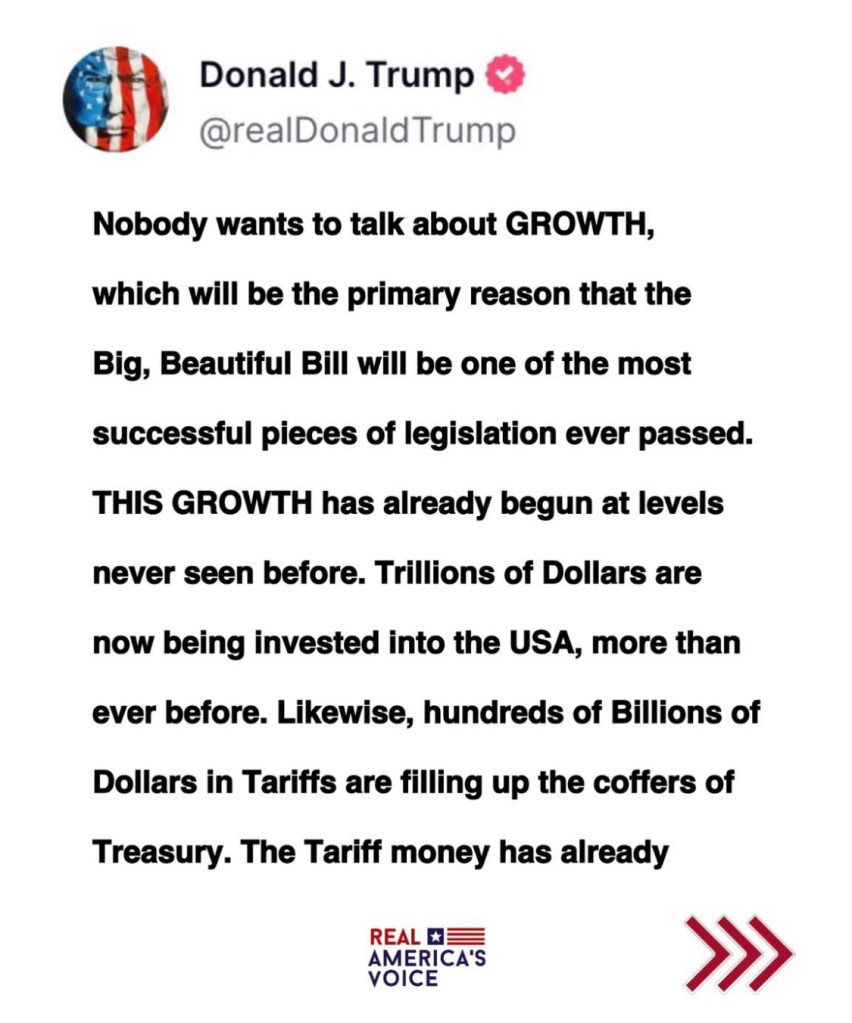
On January 7, 2026, the President signed Executive Order 14172, titled “Prioritizing the Warfighter in Defense Contracting, a directive aimed squarely at altering the financial and operational incentives that govern much of the modern defense industrial base. The order is grounded in existing executive authority over federal procurement, the Defense Production Act of 1950, and enforcement mechanisms embedded in the FAR and DFARS. Its legal structure does not cancel contracts wholesale or impose new statutory law; instead, it compels the Department of Defense—acting through the Secretary of Defense/War—to conduct rolling performance reviews of defense contractors producing critical weapons, systems, and equipment, beginning within 30 days of issuance. Contractors deemed “underperforming”—a term defined functionally as failing to meet delivery schedules, production speed, capital reinvestment expectations, or prioritization of U.S. government contracts—are immediately prohibited from executing stock buybacks or issuing dividends. Those contractors are given a 15-day window to submit board-approved remediation plans, with the Secretary authorized to escalate enforcement through contract modification, Defense Production Act authorities, or withdrawal of U.S. government advocacy if performance failures persist.
What distinguishes this order from prior acquisition reform efforts is that it explicitly links financial extraction behavior—buybacks, dividends, and executive comp plans—to production failure, instead of treating them as separate corporate governance issues. That linkage becomes particularly relevant when viewed alongside the last fifteen years of structural change in the defense and aerospace supply chain, where private‑equity ownership has steadily displaced privately held operators. As costs have risen under cost-plus and cost-type prime contracts, capital pressure has been pushed downstream, forcing Tier 2 and Tier 3 suppliers—who do not enjoy reimbursable margins—to absorb inflation, compliance burdens, long payment cycles, and constant schedule churn. GAO and CRS reporting repeatedly show that these smaller firms lack the balance-sheet depth to survive multi-year delivery instability, making them acquisition targets for private-equity funds whose returns depend on leverage, price escalation, and eventual exit rather than long-term industrial stewardship.
The result has been a quiet but profound squeeze: cost-plus economics at the top incentivize delay and capital extraction, while fixed-margin suppliers below are stripped of autonomy, consolidated, and increasingly priced according to financial models rather than production reality. Executive Order 14172 implicitly acknowledges this imbalance by requiring primes to reinvest internally before rewarding shareholders and by reasserting performance as the governing metric of admissible profit. Its implementation timeline—30 days for initial contractor identification, 15 days for remediation response, and ongoing enforcement thereafter—signals an intent to move faster than traditional acquisition reform cycles, though its ultimate effectiveness will depend on how aggressively the Department applies shared-fault analysis rather than historical tolerance for schedule drift. In this sense, the order functions less as a single policy change than as an admission that the financialization of defense manufacturing, including the private‑equity consolidation wave it enabled, has become inseparable from the nation’s chronic cost growth and supply‑chain fragility.
Across modern U.S. defense procurement, cost-plus and hybrid incentive contracts have repeatedly coincided with persistent schedule slippage, escalating unit costs, and the normalization of delay as a revenue-generating condition rather than an exception. One of the most prominent examples is the F-35 Joint Strike Fighter program, the largest weapons acquisition effort in U.S. history. Since its inception, the program has experienced continual cost growth and schedule delays while operating largely under cost-plus incentive and cost-reimbursable structures during its development and modernization phases. Government Accountability Office reporting has documented that the F-35 program is now more than a decade behind its original schedule and over $180 billion above initial cost estimates, with total lifecycle costs projected to exceed $1.6 trillion.¹ Contractors have routinely delivered aircraft and engines late, yet still earned substantial incentive fees because contract structures allowed partial fee recovery even when deadlines were missed. In 2024 alone, all F-35 airframes delivered by the prime contractor were late by an average of more than 200 days, while hundreds of millions of dollars in performance fees continued to be disbursed.² The GAO has repeatedly concluded that the program’s payment mechanisms reward activity rather than outcomes, allowing chronic delivery delay to become financially survivable—and in some cases preferable—to accelerated execution.³
Similar dynamics are evident in Navy shipbuilding, particularly in the Columbia-class ballistic-missile submarine program, which is widely regarded as the most critical element of the U.S. nuclear deterrent. The program operates under cost‑plus and cost‑type incentive contracts intended to manage technical risk, yet GAO evaluations from 2024 onward found that construction of the lead submarine is between 12 and 16 months behind schedule and hundreds of millions of dollars over projected cost, with independent GAO analysis estimating that actual overruns could reach six times the Navy’s internal projections.⁴ Despite billions of dollars in taxpayer investments intended to stabilize the submarine industrial base, the Navy and its prime contractors have been unable to demonstrate measurable performance improvement across material availability, workforce productivity, or supplier readiness.⁵ GAO reporting further found that neither the Navy nor the prime contractor had conducted adequate root‑cause analysis of repeated delays, relying instead on optimistic assumptions of future performance improvements that historical data does not support.⁶
The Littoral Combat Ship program provides an earlier illustration of how cost-plus‑leaning acquisition strategies can institutionalize inefficiency over time. Initially justified as a fast, affordable surface combatant, the LCS program deviated from traditional acquisition discipline by committing to production before design maturity and by accepting recurring cost growth in exchange for schedule promises that were never realized. Unit costs for LCS vessels more than doubled over the life of the program, while significant mission capabilities failed to materialize as advertised.⁷ GAO assessments and congressional testimony concluded that the Navy’s acquisition approach raised serious concerns about over-commitment to incomplete designs, with contractors insulated from the financial consequences of rework and redesign.⁸ By the time the program was restructured and curtailed, billions had already been expended on ships that were later decommissioned early due to limited combat utility.⁹
The VH‑71 presidential helicopter program offers a straightforward example of cost-plus dynamics combined with requirements volatility. The program, intended to replace the Marine One fleet, was terminated in 2009 after nearly $3 billion had been spent, following a critical Nunn–McCurdy breach triggered by explosive cost growth and schedule delay.¹⁰ GAO post‑mortem analysis determined that the program’s cost‑reimbursable structure, combined with continuously changing government requirements, enabled unchecked cost escalation without corresponding delivery progress.¹¹ Despite repeated warnings, the program advanced through development phases without achieving design stability or cost control, ultimately requiring cancellation and restart under a new acquisition framework.¹²
Even programs that shifted away from cost-plus contracts highlight the contrast. The Air Force’s KC-46 tanker program, awarded under a firm-fixed-price incentive contract, experienced significant technical difficulties and multiyear delays, but forced the contractor—not the taxpayer—to absorb more than $7 billion in overruns.¹³ GAO reviews noted that while the fixed‑price structure did not prevent schedule delays, it did materially limit government exposure and altered contractor behavior by internalizing financial risk.¹⁴ Defense analysts frequently cite this experience as evidence that contract type does not eliminate execution risk but dramatically changes who bears the cost of failure.
Taken together, these cases illustrate a persistent pattern identified by the GAO for more than two decades: when cost‑plus structures dominate complex defense programs, delivery timelines expand, supply chains stagnate, and cost growth becomes normalized rather than corrected.¹⁵ Incentives shift away from throughput, schedule discipline, and supplier performance and toward change management, rework, and prolonged development cycles. GAO has repeatedly warned that, without a stronger linkage between payment and demonstrable outcomes, defense acquisition programs will continue to reward delay while eroding industrial base accountability.¹⁶
So I am a big fan of this executive order. It’s been a long time coming. And it’s the only way to deal with escalating pricing in other fields. Much of the out-of-control price escalation we have in our economy today starts with abuses by the Industrial Military complex and the rigged game of paying for bad performance, because there are so few players in the business. Something had to be done.
—
Footnotes
1. U.S. Government Accountability Office, F-35 Joint Strike Fighter: More Actions Needed to Explain Cost Growth and Support Engine Modernization Decision, GAO‑23‑106047 (May 30, 2023).
2. U.S. Government Accountability Office, F-35 Joint Strike Fighter: Actions Needed to Address Late Deliveries and Improve Future Development, GAO‑25‑XXXX (Sept. 2025).
3. U.S. Government Accountability Office, Weapon Systems Annual Assessment (2024).
4. U.S. Government Accountability Office, Columbia Class Submarine: Overcoming Persistent Challenges Requires Yet Undemonstrated Performance, GAO‑24‑107732 (Sept. 30, 2024).
5. Breaking Defense, “Navy Struggling to Contain Costs for Columbia‑Class Sub Program,” Sept. 30, 2024.
6. U.S. Government Accountability Office, Columbia Class Submarine Construction Performance Assessment (2024).
7. U.S. Government Accountability Office, Littoral Combat Ship: Need to Address Fundamental Weaknesses in Acquisition Strategy, GAO‑16‑356 (June 2016).
8. Senate Armed Services Committee Hearing Transcript, Dec. 1, 2016 (GAO testimony).
9. Defense One, “Littoral Combat Ship at a Crossroads,” Dec. 2016.
10. U.S. Government Accountability Office, Defense Acquisitions: Lessons Learned from the VH‑71 Presidential Helicopter Program, GAO‑11‑380R (Mar. 25, 2011).
11. Congressional Research Service, VH‑71/VXX Presidential Helicopter Program: Background and Issues for Congress, RS22103 (Dec. 22, 2009).
12. Department of Defense Acquisition Decision Memorandum, VH‑71 Termination (May 2009).
13. Defense News, “How Boeing Lost $7 Billion on the KC-46 Tanker,” Jan. 9, 2024.
14. U.S. Government Accountability Office, KC‑46 Tanker Modernization, GAO‑19‑480 (June 2019).
15. U.S. Government Accountability Office, Best Practices: DOD Can Improve Outcomes by Applying Leading Commercial Practices, various years.
16. U.S. Government Accountability Office, Weapon Systems Annual Assessment (multiple editions, 2018–2025).
—
Bibliography
Government Accountability Office. Weapon Systems Annual Assessment. Washington, DC: GAO, multiple years.
Government Accountability Office. F-35 Joint Strike Fighter: More Actions Needed to Explain Cost Growth. GAO‑23‑106047.
Government Accountability Office. Columbia Class Submarine: Overcoming Persistent Challenges. GAO‑24‑107732.
Government Accountability Office. Littoral Combat Ship: Need to Address Fundamental Weaknesses. GAO‑16‑356.
Government Accountability Office. Defense Acquisitions: Lessons Learned from the VH‑71 Program. GAO‑11‑380R.
Congressional Research Service. Presidential Helicopter Replacement Program. RS22103.
Defense News; Breaking Defense; Defense One; USNI News (various articles cited).
Rich Hoffman

Click Here to Protect Yourself with Second Call Defense https://www.secondcalldefense.org/?affiliate=20707
—