The Only Way A New Indiana Jones Movie Would Be Successful: Consultants and corporate looters can’t copy success, it never works

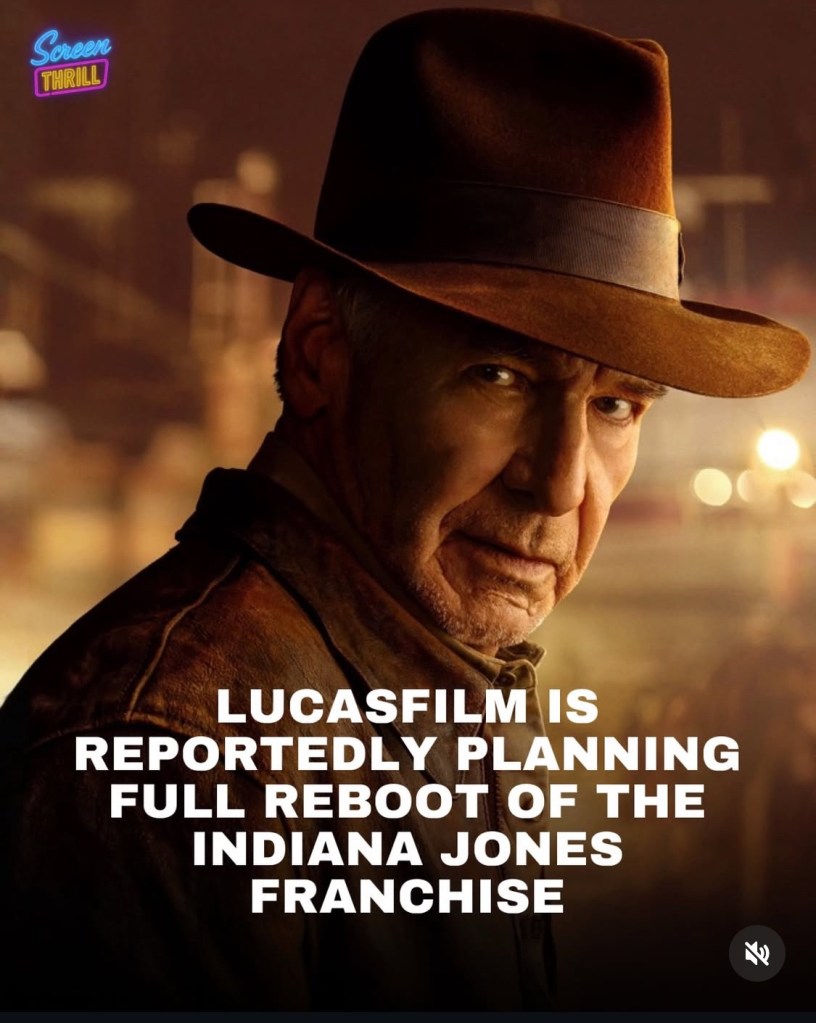
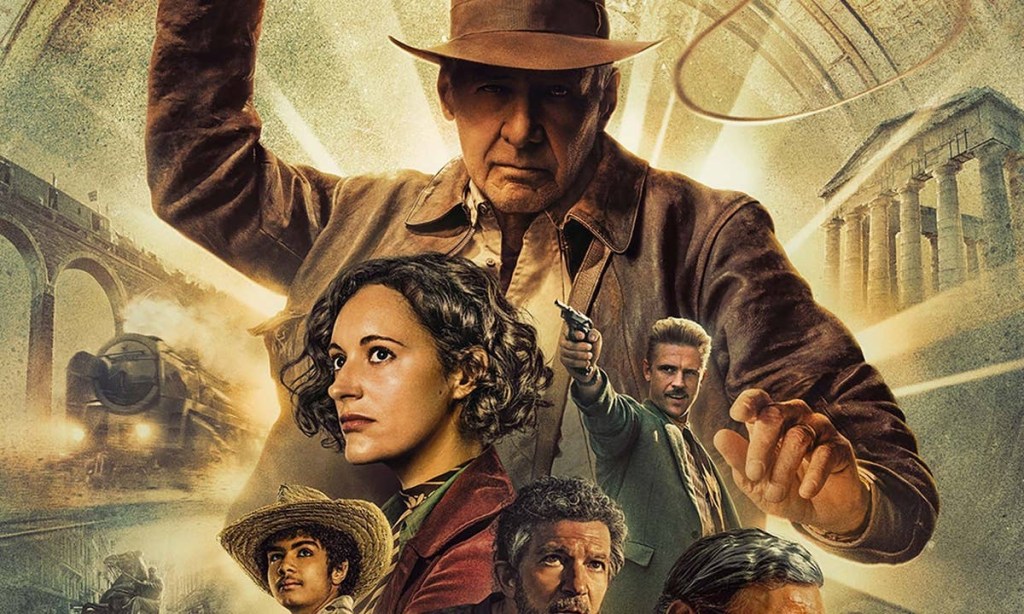
There is a way to do it, to make more Indiana Jones movies.  There have been at least seven different people who have played Indiana Jones at some point in time, everyone from George Hall, to Corey Carrier, to Sean Patrick Flanery—even River Phoenix.  Then, of course, there are all the video games and commercial appearances where an Indiana Jones-like character is seen doing something, from amusement park rides and Coke commercials to cameos in other movies.  Unlike other franchise characters, however, Indiana Jones is different in that Harrison Ford created a particular kind of character with a timeline expectation that society will hold Disney to.  There is a nice period in the character’s timeline, from age 25 to 35, where a new actor who resembles Harrison Ford could tell all-new stories that the public would love.  Most of the best Indiana Jones movies take place within a specific 3-4 year timeline that centers on Harrison Ford playing Indiana Jones in the iconic movie Raiders of the Lost Ark, a film that revolutionized the way stories are told and movies are presented.  I personally think it was the best movie ever made and that changed the value of the character created for the public forever.  The chances of doing something like that again with the same character but a different actor is impossible. I think it’s possible to make more movies after seeing how Disney and Bethesda, the video game maker, produced the latest Indiana Jones video game, Indiana Jones and the Great Circle.  It was a great game and a lot of fun, and it didn’t try to “reboot” Indiana Jones; it respected the timeline that people had come to know and trust.  And many actors contributed to that effort, and those are the rules of engagement.  There is a lot of talk now, halfway through 2025, that Disney wants to reboot the Indiana Jones movies.  They own the property and want to make money from it.  However, there are rules they must follow; otherwise, they will cause all kinds of social problems, just as they did with the Star Wars movies.  If they want Indiana Jones to remain valuable to the public, they’ll listen and stay respectful.

But if they think they are going to retell Raiders of the Lost Ark with a woke actor like Pedro Pascal, or even a woman, then they are out of their minds, and another Indiana Jones movie would be a disaster.  Indiana Jones is not something that can be ruined in the way that studios often do with Batman movies or James Bond stories.  There has been over 40 years of story telling from books, television, comics, video games that for that entire time held to a stringent canon timeline, and that trust has been built across many generations of fans, from kids today to their grandparents who saw the movies in the theater when they were kids.  I love the Indiana Jones Stunt Spectacular in Orlando, Florida, the stunt show that has been performed for years at Hollywood Studios. It has featured several different actors portraying Indiana Jones in that stage play.  However, the difference was that all content creators were very respectful of the original idea.  During the period I mentioned, numerous exciting stories could be told about a younger Indiana Jones as he establishes his excellent and famous reputation, which people would love to see depicted in movies.  However, those movies would require directors, producers, and musical talent as passionate about making the movies as were Steven Spielberg, George Lucas, and John Williams, originally.  Disney thought they would get away with a reboot of Star Wars by ignoring the story canon and essentially retelling A New Hope with The Force Awakens, and people have never forgiven them for it.  They might have made some short-term cash, but they destroyed the brand, and that has cost Disney a lot.  

This is important because the character of Indiana Jones has likely been the single most valuable narrative device that has advanced the arts and sciences in the world today.  There are many people who have become scientists because of Indiana Jones and the inspiration they received from him as children, which has been very beneficial.  The value of the Indiana Jones property lies in this social motivation.  And unless Disney respects that sentiment, it will harm them in very detrimental ways, and erode the character it currently holds socially.  Indiana Jones is more than just Harrison Ford, and unless a new production is presented with the same level of commitment as those original films were, it will be rejected at the box office, just as the Star Wars movies have been.  There is an arrogance that comes from the consultant class in society, who often con their way into the motion picture studios, never figuring these things out.  And those are the voices at Disney who think they could make a movie as good as the originals were, without understanding the social consequences of destroying the public’s love of the property.   The Indiana Jones timeline is unique in that it spans from his infancy in The Young Indiana Jones Chronicles to his portrayal by a 93-94-year-old man with an eye patch.  Within that timeline, there is room to make movies just as exciting as Temple of Doom and Raiders of the Lost Ark, if the stories deal with the post-college years.  However, suppose they recast and retell the stories for modern audiences with music by different composers, cinematography that fails to capture the spirit, and scripts that don’t adhere to the formula. In that case, the project will be a disaster.

I think Disney should leave it all alone and let it be what it is.  They’ll make more money off Indiana Jones if they allow it to stay valuable in people’s consciousness.  However, Disney is not filled with creative people; it is essentially run by consultants who choose to live by copying what they think is successful and trying to pass it off as their own.  And it never works well, and it certainly won’t work with Indiana Jones.  So, with all the talk about Disney developing another actor to play Indiana Jones in a new movie, I would advise them to proceed with great caution.  I’d see the film if they were respectful to the established timeline.  But if they want to put a minority character in the role instead of a white guy, and change elements of Indiana Jones for a more modern audience, then it will be a disaster.  And I’m only writing this now in the hope of keeping them from making that big mistake.  But I don’t have much faith that they’ll listen, and will destroy this as they have so many other things in life, and the impact of that in the world is very significant. It matters more than people think it does; we’re talking about the way that humans create reality for themselves through story and narrative devices, and Indiana Jones emerged as a necessity for human consciousness that was more than entertaining.  Disney has been warned, so we’ll see what they do.  I’d like to see it work.  I think there is an actor out there who could carry the torch of Indiana Jones during an exciting period that audiences would accept.  However, short of that, it would be best to leave it alone, as the social impact of changing the value with new content would be devastating in ways that most people cannot measure.  What I have said is the only way that it could be done because all other methods would be very destructive and unnecessary. People are pretty forgiving as long as they know they can trust a story not to change on them. And that’s true with everything in life. People can come and go, but people want to know that the story stays the same.

Rich Hoffman

Click Here to Protect Yourself with Second Call Defense https://www.secondcalldefense.org/?affiliate=20707
A Wonderful Expereince: Playing the new Indiana Jones game on PS5

I wasn’t going to play the new Indiana Jones game on PlayStation 5, but after much encouragement from my wife, I did, and I’m glad.  Indiana Jones and the Great Circle was an excellent experience with a great story, and was a throwback to the kind of entertainment I think we need a lot more of.  I was skeptical of Lucasfilm doing anything with Indiana Jones these days under the ownership of Disney.  I like the character and the kind of science spawned from those movies over the years.  But I wasn’t sure if they could pull off a good story without George Lucas.  But my wife has been pressing me to play more video games with the grandchildren, because that’s what they like to do.  But my life is so busy, I don’t have time to hang out online like most video games require, with a very social experience.  These days, video games are a way for kids to interact socially.  Games like Fortnite and Call of Duty put you in contact with thousands of people daily.  Kids who play these games for hours will interact with thousands of people in real time, so video game playing these days is a very social experience, and I’m not at all crazy about that.  I talk to way too many people throughout the week to want to spend my downtime talking and playing with more people.  So I haven’t been playing video games very much, and my wife thinks I need to do more for stress management.   So I listened to her, wives can be good for many things, and when the new Indiana Jones game came out in April of 2025 on the PS5 console, I thought I’d try it. 

Because I’m a fan of the character and raised my kids on the optimism of those movies, as a baseline for other things, I bought the Collector’s Edition of the game, which came with all kinds of neat stuff.  But once I started playing the game, I enjoyed the story as it takes you through the character of Indiana Jones to Peru, the Vatican, Giza, the Himalayas, Thailand, Shanghai, and Iraq.  It’s not an online game, so you can play it without interacting with others and have a nice story-driven experience.  And much to my surprise, this game was very much in line with the Indiana Jones movies, and it had a tone similar to the most recent one, the Dial of Destiny.  So it was true to the original character and didn’t have the woke stuff, which is such a problem these days.  There were a few things, but not enough to tarnish the game.  It was a good adventure story that was much longer than a typical movie.  I spent 60 hours playing the game, with about 12 hours of that time just doing the story itself, so it turned out to be a long movie experience that took place for me during April 2025, which was a good break from all the other things I typically do.  And it was good for the grandkids to see me doing something besides reading books, as I’ve said before, I read 4 to 5 books a week.  Some weeks, more than that, so I cover a lot of content that is very personal.  You can’t share the content you read with your family very well because reading is such a private thing.  But ironically, there is a scholarly element to this Indiana Jones game that was very refreshing.  

The game itself is about the “giant” controversy, which I think is the most important in the world right now, the idea that an ancient race of giants who lived before Noah’s flood inhabited the earth and had a very advanced culture.  I read a lot about this evidence, and it was a surprise that the modern debate drove the game’s plot.  We live in a time when people ask tough questions, and authority figures in authority positions have been caught lying to us, right to our faces.  At the center of this Indiana Jones story are many problems that played out during the Second World War.  Playing the Indiana Jones character you get to deal with actual historic characters such as Bonito Mussolini and the obsession with the occult that the Nazis were investing in and when you put the biblical narrative of the Fallen Angels of God, the Nephilim at the heart of a massive modern conspiracy theory, you have all the contents of a fascinating story, and it was.  Because I read so much about many different topics, the story of Indiana Jones and the Great Circle felt like it was produced and made just for me, including all the items that came with the Collector’s Edition.  I spend a lot of time thinking about these things through books and online lectures.  So it was a pleasure to play a video game about that kind of storyline.  And to have the material compelling, educational, and entertaining.  The game makers really loved the story, and it showed.

They first announced this game in 2020 during the COVID-19 crisis.  I wanted to like the news, but I was so down on Disney and Lucasfilm for what they had done to Star Wars that I would have rather they just left Indiana Jones alone.  As a literary character in our culture, Indiana Jones does so many good things that I figured Disney would only damage that character, as they have so many other things they’ve mishandled.  For instance, the pressure seen on a recent Joe Rogan Podcast with the Egyptologist Dr. Zahi Hawass probably wouldn’t have happened without an Indiana Jones character in popular, mainstream literature and filmmaking laying the foundation to apply the pressure.  So many people have been inspired by the character that they have correctly challenged established norms in a very healthy, academic way.  And when a game like this comes out and a mainstream audience plays it in such a mass way, good things tend to happen, and you see that with the questioning of independent investigators, questioning the institutional narrative of things to evoke the truth, which is what we should all be concerned about.  Stories like this light intellectual fires and usually have great significance for those who experience them.  So a game format, as opposed to a movie or a book, was very appropriate.  And I had a lot of fun with the game.  I’m glad I listened to my wife.  I like playing video games, but don’t think I’ll play them often.  But I am so happy to have taken the time to play this one, and it ended up being a positive thing for my entire family.  And I wish it could have gone on forever in many ways.  But playing through the whole story was an enjoyable experience that was a nice break from my day-to-day.  And I look forward to similar experiences to come along that kind of storytelling frontier.

Rich Hoffman

Click Here to Protect Yourself with Second Call Defense https://www.secondcalldefense.org/?affiliate=20707

The CIA Found The Ark of the Covenant: Confirming that it is located in Axum, Ethiopia

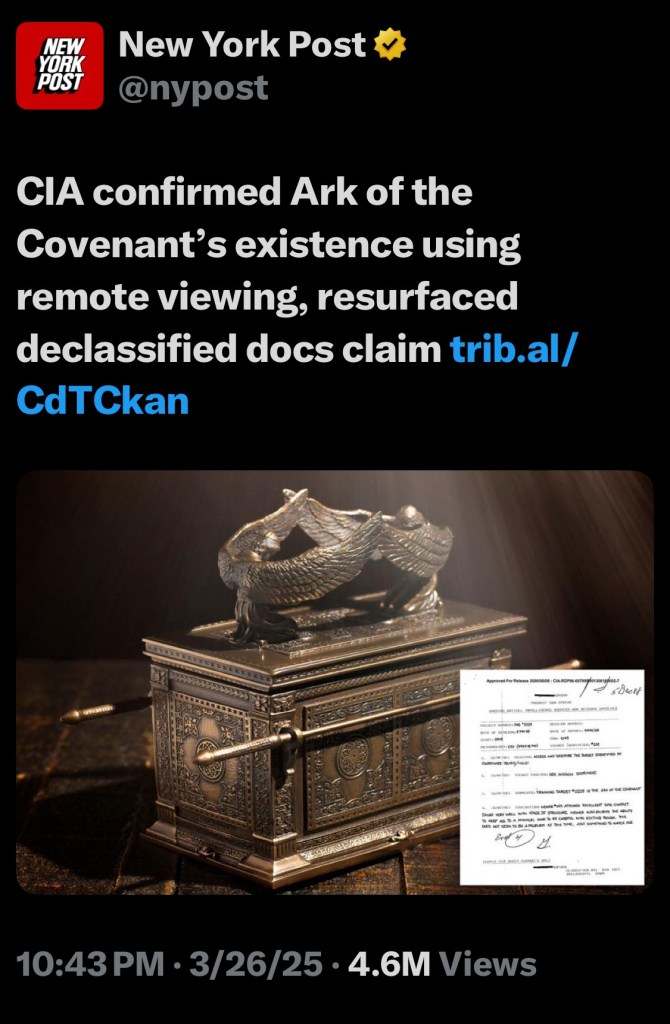
Is remote viewing possible?  I have discussed this before about Dolores Cannon and a very interesting book she wrote about the Essenes, using regression hypnosis to investigate relationships with Jesus Christ from 2,000 years ago; however, in talking to them in real time, as if they were right in front of us.  I can understand the skepticism, but I think we are talking about conditions of quantum entanglement rather than improbable scientific accidents.  Until people explain to me how ancient people moved large rocks without machines, I will remain skeptical that we are examining the correct science for all conditions.  I think I have a pretty good idea what they are. However, just for fun for my upcoming birthday this year, we are planning to go ghost hunting as a family.  We purchased some paranormal equipment, including an EMF detector, a spirit box, and a voice recorder, designed to detect spirits that are otherwise unable to communicate.  There is a lot invisible to us, such as electricity and radio waves, that are flying around all over the place, interacting with us constantly.  Yet we use these things to advance our society.  So, when it comes to the spirit world, I think there are a lot of life forms roaming around without bodies, across time and space, that do not function according to our linear measure of time, and are interacting with us in dreams, through devices that can pick them up, and even through drug use and hallucinogenic enterprise.  Just because we haven’t figured out all those scientific methods of communication yet, I think Dolores Cannan, and many others, including the CIA, have been able to use remote viewing to learn things they otherwise wouldn’t and to shape events from a great distance without getting up out of their chair.  So yes, I believe the declassified story about the CIA discovering the Ark of the Covenant, and that its location was in Axum, Ethiopia. 

What gives strength to that story is a book I read several years ago by Graham Hancock, which is one of my all-time favorite books, The Sign and the Seal, published in 1992 and heavily inspired by the fictional adventures of Indiana Jones.  Graham Hancock was a beat writer for The Economist and Ethiopia was his territory and they had all these rumors there by the locals that the Jewish Ark was hidden there in Axum because the son of Solomon and the Queen of Sheba had brought it there during his father’s lifetime, before the nations of the world moved against Israel to destroy it.  The story goes that Solomon wanted to preserve the Ark of the Covenant and the laws of Yahweh that were kept inside, the Ten Commandments, so he allowed his son and the Queen to hide them away with what is today a large contingent of Ethiopian Jews dedicated to protecting the Ark from the prying eyes of the world.  In his book, Graham Hancock conducted a tremendous amount of research that essentially led to the gates of a small church in Axum and a guard there who had given his life to protect the Ark from outsiders.  The guard there more or less displayed that at least he believed what he was guarding was the ancient Jewish relic, and he had radiation poisoning to prove it.  The guards at the Ark of Axum are elected to lifetime appointments by the town.  So, whoever gets the job gets it for life, and they typically become ill very quickly from their constant exposure to whatever it is they are guarding. When one dies, the next one is elected to a lifetime appointment, and they perform the service with a smile on their face, driven by the honor of it.  And they never leave their post. 

So to learn that the CIA had successfully confirmed through remote viewing that they discovered the Ark, not physically, not with their hands on it, but with the success of a telepathy practitioner, such as Delores Cannon was, I think only confirms what Graham Hancock, and many others have long said, that the Ark is in Axum Ethiopia and is still there to this day.  And I’ll go a little further as to the value of fantasy characters like Indiana Jones.  The value of those kinds of stories lies in getting people to think about such things, and if not for their popularity, Graham Hancock might have remained a beat writer and travel commentator for the rest of his life.  But because of Indiana Jones, the CIA was investigating the Ark, Graham Hancock wrote a book that changed his life, and many other people, and even now as there is a Trump administration declassifying many things, people are very excited to learn about what’s under the Giza plateau considering all this new news about mysterious objects under the Great Pyramid complex in Egypt, and this story about the Ark of the Covenant in Axum.  Fantasy fiction often drives us to scientific fact, and we are better off for the things we learn.  But as humans, we require some intellectual device that provokes us to ask questions we need to be asking; it’s how we acquire new information.  And there is still a lot we need to learn about the world, and I think the CIA has learned to do more with it than just view things remotely. 

A lot of times when you have a ghostly encounter, and a strange shadow man appears just outside your peripheral vision, I don’t always think it’s a ghost, but someone trying to interact with you, or spy on you from a remote viewing location.  And they might not even be living at the same time that you are.  They could be far in the past or way into the future, interacting with you through a dream, or a purposeful exploit of quantum entanglement.  And that these methods are scientific and can be used to communicate information just like a radio wave can now, or how electricity travels invisibly all around us, and we use it to power our entire civilization.  Even though those things are invisible to us, through our current senses, it doesn’t mean they aren’t real in and of themselves.  So, yes, I believe the CIA story, and I think there will be many more like it.  And I think it mainly because it confirms what Graham Hancock already figured out with hard reporting and boots on the ground regarding the actual location of The Ark of the Covenant and an adventure story that was inspired by Indiana Jones, but took on a life of its own that was even more interesting than the fictional account.  I’m not sure how much of the original Ark would be left, made out of wood and gold as it was.  It’s around 3,200 to 3,500 years old, and not much lasts that long, even when preserved.  However, I think what remains of it is in Axum, and the CIA confirmed this with a remote viewing method, which is exciting news.  However, it’s also just the tip of the iceberg in terms of what remains hidden from us using these same technological methods.  And the mysteries of science that we have yet to discover are still ahead of us, but have been seen through quantum entanglement, and it shows that we have a long way to go.

Rich Hoffman

Click Here to Protect Yourself with Second Call Defense https://www.secondcalldefense.org/?affiliate=20707

Why DEI Was Always a Dumb Idea: What we learned from the Swordsman Scene in ‘Raiders of the Lost Ark’

I really loved the book about Howard Kazanjian called A Producer’s Life.  I’ve referenced it many times over the last several weeks because it was an enjoyable book.  It’s the most fun I’ve had reading a book in a while, and it is one that I promised myself I’d read if Trump was re-elected into the White House.  I wouldn’t let myself think about these kinds of things as what is in Howard’s book prior, even if I do love the topic.  For a large part of my life, I wanted to be a filmmaker, and Hollywood producers like Howard Kazanjian were the kind of people who inspired me.  He produced most of my favorite movies from a key period, when he was on top of the Hollywood pile with Steven Spielberg, George Lucas, and many others, with films from 1975 until 1982.   Howard was always good, but if you are trending good movies and who made them over the entire history of Hollywood, this specific period set the stage for what the industry would become, and mean to the world as a whole regarding entertainment.  So, I find it very interesting to study what went right and wrong during this period.  Ironically, learning these things is precisely why understanding DEI policies and why they failed is important.  Because currently, after the Trump election and his spectacular victory, the world is giving up on Diversity, Equity, and Inclusion programs, and rightfully so.  We’re not talking about a Republican versus Democrat position here; Howard Kazanjian, I would say, probably leans toward Hollywood liberalism and likely wanted Kamala Harris to win the election.  But with Trump back in office, the world is a lot better, and I have more tolerance for people who are not so bright on political matters.  Which is why I couldn’t let myself read a book like this before the election. 

In that book, I read a good illustrative example of why DEI failed and why companies needed to get rid of it for the sake of everyone.  Picking employees based on their skin color or assuming they are equal to other people and that they should be included in something just because they exist was always ridiculous.  Some people are better than others, and if you want something to be good, you have to find the best people and put them in place; that’s good management.  And in the movie business, good people are few and far between.  But Howard Kazanjian, during that period I mentioned, found a way to be around the best people in the business, and specifically, a conversation I had never heard about regarding the famous swordsman scene from Raiders of the Lost Ark, being filmed in 1980 for a 1981 release.  Everyone, no matter who they are, knows the scene.  Indiana Jones is looking for his lost girlfriend, Marian, who the Nazis have captured on the streets of Cairo.  And he has to stop them with a glorious shootout with lots of explosions and good stuff.  Along the way, Indiana Jones is stopped by an Arab swordsman who wants to fight.  But the hero doesn’t have time for it.  What does he do?   People remember with great recollection that Indy pulls out his gun, shoots the villain on the spot with no fanfare, and gets back to looking for his girlfriend.  In all the documentaries of how that movie was made, we learned that Harrison Ford was sick that day and just did the scene as a joke because there was supposed to be a fight with bullwhips that was very elaborate, and the whole crew was sick of filming take after take.  When Spielberg saw what Harrison Ford did, he wanted to keep it as a new version and print it for the film.  But there was more to the story I heard in this book on Howard Kazanjian for the first time.

George Lucas still wanted his bullwhip fight scene.  One of the reasons he was making Raiders of the Lost Ark as the executive producer was to create a modern version of the kind of movies he liked as a kid, and he wanted a classic bullwhip fight like might have been in Don Q Son of Zorro, or Zorro’s Fighting Legion.  And he wasn’t convinced that just having Indiana Jones shoot the bad guy and get on with his business was the right thing to do.  So, here were the most talented filmmakers in movie-making history who disagreed with this famous scene.  So what were they going to do?  George Lucas decided to run two film versions by a test audience, one Spielberg’s way, the other with the bullwhip fight.  They were going to let market desire determine the film’s final version.  So they played George’s version first to a test audience.  People came out of the movie liking it, and Paramount Pictures felt they had a hit.  It was a good movie.  But when Spielberg’s version was seen, people applauded when Indiana Jones shot the swordsman.  And it became everyone’s favorite moment in the movie, even after all these years.  They made 5 Indiana Jones films over the next 40 years, but none would ever have a better moment than that one to mass audiences. 

Ultimately, even with all the talent of all these people involved, it was the marketplace that picked the scene. The filmmakers came up with ideas, but to determine the success of the enterprise, they tested the waters with market analysis. The audience clearly picked one version over the other, and the rest is filmmaking history.  Presently, they are test-screening the new Captain America movie for Disney, and it is going through all kinds of trouble because nothing is working.  The film is filled with a bunch of woke politics, and people don’t like it.  It’s going to bomb when it hits theaters in February.  Ultimately, that is why DEI programs destroyed market share and value for all companies, from cookie makers to high-tech offerings.  DEI was an imposed value put on the marketplace that would have been similar to George Lucas keeping his whip fight in the movie because he wanted it, to force the audience to like it because he did.  Instead of listening to them, which is what happened.  When companies try to impose themselves on the public and force values on them that they don’t have, failure is almost assured.  However, when products appeal to the audience’s sentiment, great success is possible.  It is rare because good ideas are complex, and companies often hang on to them even if the market pressure rejects them.  Only to plot an enterprise to its doom.  But when we say that getting rid of DEI suits all businesses everywhere, this is what we mean and why.  In capitalism, value serves the marketplace.  In authoritarian governments, values are imposed, and a monopoly status is sought that limits the viability of options.  And the world is far worse off because of it.  The best example of why some ideas work over other ideas can sometimes come from interesting places, which is undoubtedly the case with a movie most people agree has some value to them over time, and that is how Indiana Jones was created in that old classic movie, Raiders of the Lost Ark

Rich Hoffman

Click Here to Protect Yourself with Second Call Defense https://www.secondcalldefense.org/?affiliate=20707

Individuals Beat Corporations Every Time: Why success happens

This could apply to anything, but studying why some movies released at the theater are better than others is critical because of how the movie business works.  People get together and tell a story, and the value of that story is released to the public for them to vote on.  People tend to think of Hollywood as very glamorous, but in truth, very few people who work in the industry ever get to be a part of an extraordinary success, a ratio even less than in other fields of endeavor.  So it is always interesting to understand why some people put together a string of hits, such as Steven Spielberg and George Lucas, along with producer Howard Kazanjian.  An even more important example is the role that George Lucas’ first wife, Marcia Lucas, played in some of the most memorable and good movies of all time.  Also, why did a small, family-owned company like Lucasfilm lose its magic once it became a corporate conglomerate under Disney?  All this was in a fabulous book called ‘A Producer’s Life,’ which was about the life and times of Howard Kasanjian, who produced several of the Star Wars movies and the start of the Indiana Jones franchise, among other classic films like Cool Hand Luke, The Wild Bunch, and working with Alfred Hitchcock.  This book caused much stir when it first came out because Marcia Lucas was just as upset about Disney killing off Han Solo as I was for many political reasons.  That was just another example of how corporations that use processes to isolate individual contributions produce products in the world that are not as desired by the market.  In the case of the new Star Wars movies, the belief was that the film itself held all the magic and that a girl could replace a character like Han Solo to accommodate all kinds of woke rules wrapped around the axil of globalism. However, the Disney people never understood Star Wars, and this book had the opinions of someone who was very close to Star Wars, who was the key to their success initially. 

The book came out in 2021, right in the middle of the Covid monstrosity, and Biden had just been inserted into the White House, so I wasn’t in the mood to think about movies.  But I promised myself that if Trump returned to the White House, I’d get the book, take a bit of a vacation, and allow myself to think about some fun things.  For me, these are some of the most fun things, and they show how entertainment impacts culture as a whole.  And when it comes to those movies, Indiana Jones and Star Wars, few people have put together the kind of hits as filmmakers such as Steven Spielberg and George Lucas.  The corporate belief is that just anybody can make a good movie or a good anything if only enough money is spent on the project, and in film, typically, the industry attracts all the same kind of sharks looking for an easy dollar as Wall Street does.  But few of them, if anybody, understands what makes hits and misses in the marketplace.  I have always wondered why George Lucas was so good from 1975 to 1982.  After that period, George Lucas wasn’t very good at all.  He may have been interesting, but he had lost his touch, and I always thought it probably had something to do with his wife, Marcia. 

There were two good Star Wars movies, and then everything fell off the rails with Return of the Jedi.  The movies were self-funded and only distributed through 20th Century Fox.  George Lucas hated corporate filmmaking; he wanted to make independent films from a family-driven company.  This allowed someone like the film editor, his wife, Marcia Lucas, to put her personal touches all over those early movies, which were key to their successes.  Something Disney and all its resources today don’t have is that personal touch.  During Return of the Jedi, Marcia and George divorced, and she ran off with the stained glass window guy working on their Skywalker Ranch.  That sounds kind of cheap and stupid, but George Lucas was working hard at the time to maintain his independence from the studio system, so he was putting all the pressure on himself.  This is another reason why those family-made movies were so good.  It wasn’t the board of directors or BlackRock assets making the decisions; it was George Lucas.  But it drove a wedge between him and his wife, and he never recovered.  Neither did she.  They should have stuck it out, but that’s history now, and the results tell quite a story.  Because she worked with her husband, Marcia knew how to get the best out of the coverage shots he provided as a director and could make a story pop on the screen that resonated with audiences.  You have to be an excellent person to produce good work, which gets lost in all corporations: those individual contributions.  For instance, if SpaceX lost Elon Musk, the company would fail quickly.  We always see it in sports: a star player carries a franchise.  As the saying goes, there is no “I” in team, but there is in win.  Teams are not values, they are places where people can hide so they don’t have to deal with the pressure of taking on too much responsibility.

One time, when the character of Indiana Jones was being created, Harrison Ford, Steven Spielberg, and George Lucas designed the character before principal photography, and they were all talking about giving Indiana Jones some flaws that the audience could relate to, such as making him smoke and drink too much.  But as she often did with many of those early Lucasfilm movies, Marcia stepped in and gave her opinion that was critical to the effort’s success.  Keep in mind that these three moviemakers were some of the best of the best in the business. But it took George Lucas’ wife to point out the obvious.  She told them this was a kid’s movie and they couldn’t have Indiana Jones drinking and smoking.  He’ll lose all his charm, which they didn’t understand then.  But George listened to his wife, as usual, and the character became one of the most beloved in all movie history.  They are still trying to make money off Indiana Jones, with Disney running the studio.  But they don’t understand the character because they don’t have someone like Marcia Lucas in the editing room polishing everything up.  They have access to tens of thousands of talented filmmaking types, but very few understand the subtlety of success and failure.  Without question, Marcia Lucas, as a high-quality individual, made those early movies better.  She also made Lucas, Spielberg, and Harrison Ford better.  Better than any of them would ever be again once she was no longer a part of their lives.  After the divorce, it went all downhill from there.  They still made good movies, but they had all lost their touch, never to duplicate it again.  And no matter what business we’re talking about, that same kind of ratio applies.  Corporations often don’t get it; they mimic what made them great and hope nobody notices.  But to become great in the first place, there is always some charismatic individual, or a collection of them, who come together and make magic happen.  And without those individuals, no process in the world can promise success, purposefully or by accident.  Family-owned businesses are some of the best ways to achieve that success, and Lucasfilm was a family-owned business in those early days.  Once they became a corporate conglomerate, they could no longer make magic, and the brands they were associated with died in the court of public opinion. 

Rich Hoffman

Click Here to Protect Yourself with Second Call Defense https://www.secondcalldefense.org/?affiliate=20707

Josh Gates and the Secrets of All Civilization: Why the World Economic Forum is involved in the ancient site of Gobekli Tepe

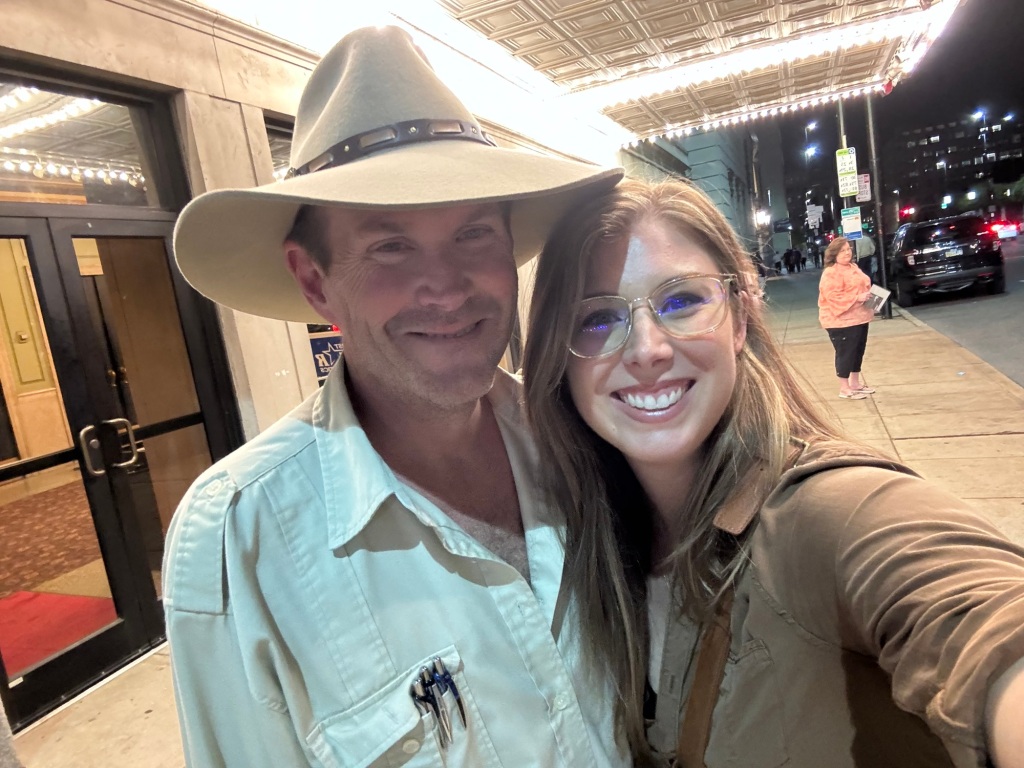
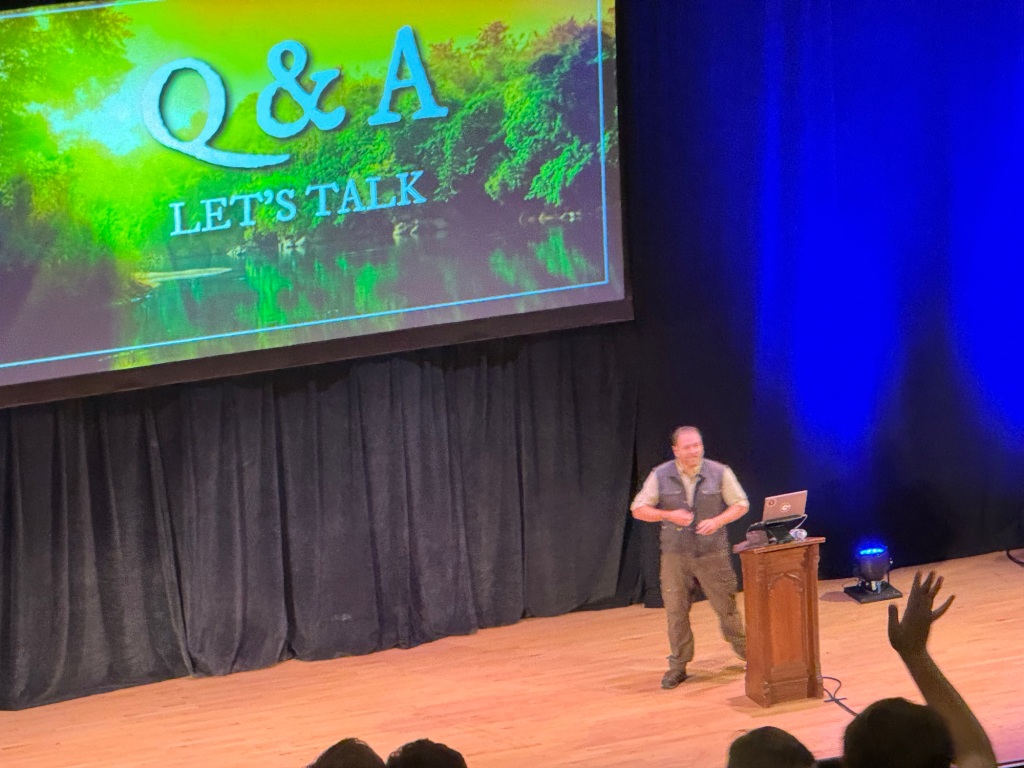
I do a lot of important things over a week.  But as I told my kids while we were in line to get into the Josh Gates Live: An Evening of Legends, Mysteries, and Tales of Adventure at the Taft Theater in downtown Cincinnati, nothing was more important than the three of us going there together while my wife watched all the grandkids.  My kids grew up on Josh Gates, and more specifically, Indiana Jones, who obviously very much inspired Josh Gates. It was important in ways that most people don’t measure things.  Specifically, I wanted to know a few things about Josh Gates in person that don’t come through the editing of his many thousands and thousands of television shows and interactions through the filter of social media.  Josh Gates is a very talented and good guy who has done much with a quirky in-between media lifestyle.  My family has immensely enjoyed his trips around the world.  My kids were interested in going, so I bought some tickets, not knowing what to expect from a live show.  But I did get my answers, answered.  And it’s not so much what he said, but what he didn’t say as a very successful producer of several shows on Discovery Channel and the Sci-Fi Channel over the years.  He’s seen everywhere on earth, all the various political systems, and conducted paranormal research in some of the most haunted places in the world.  But as I spent time with my kids for that evening in Cincinnati and ran into a surprising number of people I have known over the years, as the place was packed, I was thinking of a video my youngest daughter had sent me by Jimmey Corsetti at Bright Insight, a video channel dedicated to the next generation Josh Gates, Graham Hancock type of material that permeates the foundation of everything and leads right to the doorstep of the World Economic Forum.  So, there was a lot to unpack as the lights dimmed, and Josh Gates came out with a roaring applause to confirm a mystery I had long been wondering about.  And it turned out to be a fantastic evening.

At the end of the night, Josh Gates answered a question from the audience: does he believe in the paranormal after all his adventures? His answer was a cryptic one; my interpretation of it was that there was a social narrative driving the finance industry to not discuss their fingerprints in the activities that most haunt the human race.  Josh Gates is a mainstream guy who gets to fly worldwide, filming exciting television.   But he has had to make a deal with the many devils of that industry who like the ratings, but it’s best to always keep the answers just out of reach of the audience as the Oak Island show does.  Take people on an adventure and show them lots of exciting stuff.  But don’t bring meaning or personal opinions into it; we’ll fund your shows.  Let people ask questions, but never give them the answer.  It’s the way that people who want to control other people control other people, which is why, as Josh Gates was talking, I was thinking of that Bright Insight segment that featured why Gobekli Tepe in Turkey was being protected for tourism by the World Economic Forum disguised as helpful, but in truth, it is to prevent further excavations that show just how advanced humanity has been for over 10,000 years now.  As a professional, Josh knows where the lines are, and he stays within them even if there is plenty of evidence that shows just how mysterious the world is. 

Josh Gates gave an excellent answer to the audience when he answered that what matters in all these adventures is the stories, not so much how true they are.  Philosophically, reality can be decided by all kinds of circumstances.  However, the value of a story in unlocking the brain is ultimately more important.  I was thinking of many mysteries that personally bother me because I know there is a significant game of control trying to keep all humankind from discovering their true origins.  Most wars are about keeping everyone so unstable that the official narrative of human existence can be contained in a narrative controlled by those who want to rule the world.  I didn’t get to answer Josh Gates when he asked the audience what he should explore paranormally in Cincinnati if he were to try after a person from the audience asked him.  I would have told him that most of the downtown area of Cincinnati is deeply haunted and has been long before the city was ever built, especially along 5th Street.  Fountain Square and Jeff Ruby’s Steakhouse in the center of the town are built over the locations of a giant Indian Mound that was destroyed to create the city, so the whole area has deep ties to a paranormal world that is much older than many people think.  Including the Taft Theater where we were.  One of the people I know who went there and talked to me the day after received a tour of the place, not realizing she was a ghost.  She’s been there for years and haunts people often, disguising herself as a helpful usher.  But for no reason at all, she took him and his wife on a tour of the whole place and showed him where all the people who had died in the building still resided.  I believed his story, quite certainly.  I have some “experiences” at the Masonic lodge near the P&G headquarters that more than confirm the presence of lots of paranormal activity.  That whole street from Mt. Adams to the Museum Center is a haunted hot spot, and Josh Gates could have an exciting show there.  But my only question to the storyteller was, “Did she show you where the bathroom was?” 

Adventure has many layers, and I do travel and see things for myself.  I admire how much Gates has been able to travel and return to tell about it.  My family loves to travel, and we try to travel together as much as possible.  However, few people worldwide have traveled as much as Josh Gates; his perspective is important.  We live in a haunted world, hiding deep mysteries that are being kept from us deliberately to maintain a social order conducive to the rule of a narrow band of aristocrats to maintain an illusion of ruling over us.  And that is why the World Economic Forum communists are suppressing further investigations at Gobekli Tepe and many other historic sites around the world. It’s the same attitude they have in China, where many of the world’s biggest mysteries can’t even make it out of the communist media market.  They want to be the god their public worships; they don’t want their people to know much about their past.  So, the real fight in the world is between this knowledge of more and the people who want to rule and try to control the narrative.  Josh Gates said that his job is to show people many exciting places.  And that the value of those places is in the stories they tell.  Through those stories, you can learn the truth about things you otherwise wouldn’t have.  But the real essence of the mysteries is under the world’s political order, which is where my interest is.  And I got more out of that little event than I would have thought, and it was a wonderful evening.  Josh Gates is a wonderful dude. 

Rich Hoffman

Click Here to Protect Yourself with Second Call Defense https://www.secondcalldefense.org/?affiliate=20707

It’s Not the Fault of Indiana Jones: Disney listened to BlackRock and they’ll never recover

Indiana Jones is a great movie, but Disney mismanaged it by listening to the wrong people

One of the reasons I do these articles on this blog is because people are hungry for real information. Not the kind that the media has grown to give us, usually laced as propaganda to fulfill some NWO vision of centralized control using the China model of communism to determine reality. And there is something really menacing looming behind the various box office results that I say all the time are the ways that people vote for value in our culture. The Sound of Freedom movie is a category by itself, and as far as I’m concerned, there’s room for all these great movies that are suddenly coming out. But the way that the communist left has gained control of the marketplace is by placing the number 1 weekly horse race to movies, all in an effort to make or break their box office results. It’s a baked-in trick by the World Economic Forum types and their media apparatus to pick winners and losers in the marketplace of ideas with the illusion of industry reporting. And I say that as a guy who has read The Hollywood Reporter for three decades. I used to get the magazine version of that publication as an industry guide of great value. So I am quite aware of the switch to this new way of manipulating numbers to tell the kind of story that the financial controllers of communist activism want to tell. And a target early on was the new Indiana Jones movie, The Dial of Destiny. The WEF types wanted to see Disney kill off one of the great American heroes from the 1980s. Early screenings showed that the public didn’t like that. So Disney had to scramble to give the public the ending they wanted, which went against the desires of the BlackRocks of the world. And as a result, Bob Iger and the gang at Disney found themselves between a rock and a hard place with snakes and spikes in between to kill them with a thousand cuts.

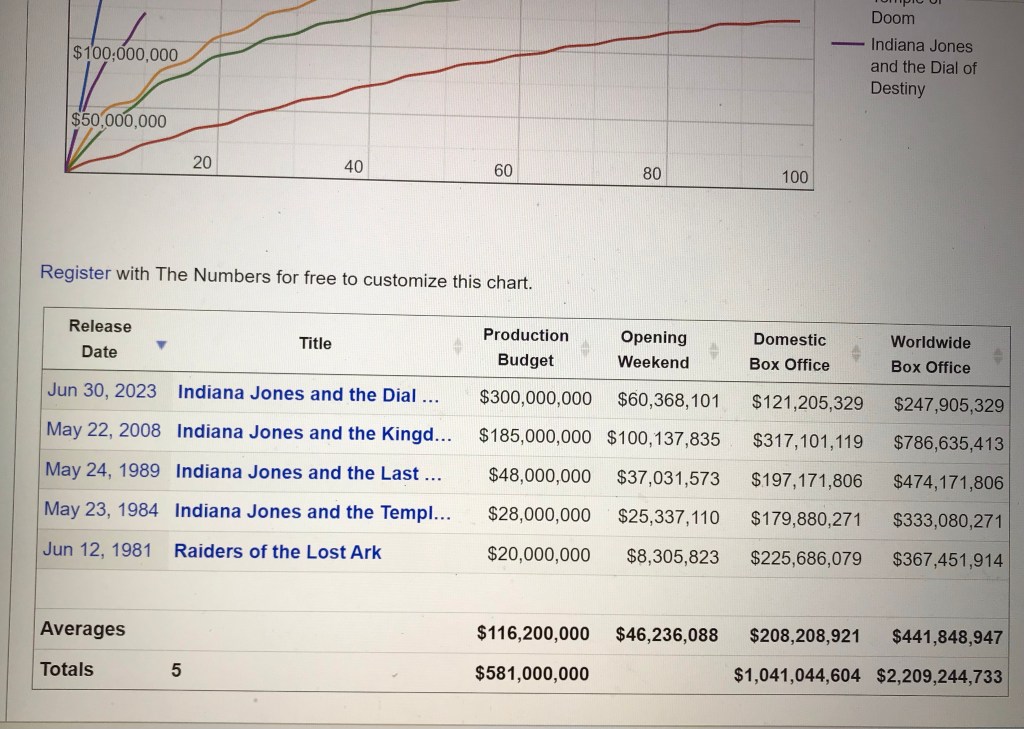
See the problem. Even with inflation, this cost structure is ridiculous and not sustainable.

When I look at the box office numbers for Indiana Jones and the Dial of Destiny, I see a pretty good movie that performs well day to day, even on weekdays. It’s consistently good with the other movies that were done in the 1980s, back in a time when those movies stayed at the movie theater for most of a year. But these days, with movies barely staying in a movie theater for more than 60 days, a film has to have a lot of pop on the front, most of this due to failures of liberalism. The movies are controlled by labor unions who want inflated budgets with unlimited money spent. And if a studio complies, they are rewarded with good press that will take them close to a good box office score. Disney got caught trying to appease everyone, including BlackRock, and they made everyone mad with a movie that had its budget out of control. If George Lucas was producing this Indiana Jones film, he would have kept the budget under 100 million, or he wouldn’t have made the picture. Kathy Kennedy let the budget spike up to around 300 million before advertising. So the standard is the problem, and the controllers expect to rule the marketplace. And Disney has damaged their own brand, so anti-Disney people started campaigning against this Indiana Jones movie several years ago. Then there was the political agenda from BlackRock and Vanguard about replacing Indiana Jones with a woman and killing off the Western hero for global communism. Disney picked the fans for its own survival, and the industry pounced, writing many negative articles against Indiana Jones, hoping to sink the film and punish the studio for not complying with the globalism mandate. 

Ultimately, this Indiana Jones film will be well respected and could have been financially successful if Disney had managed the budget. But it got out of control, and they thought they could spin it into a billion-dollar grosser. But without the support of the industry analysts, who are communist in most of their approaches to everything, the World Economic Forum activists worked overtime to ensure that it would never get there. They would have talked the movie up if Disney had killed off Indiana Jones. But they resorted to punishing the movie because it was a good hero story with a classic character living to see a happy ending. That was a good move for Disney in the long run because Indiana Jones will be around longer than the World Economic Forum. I’m not sure that Disney will make it. I’m telling people to go to the parks now while they are still there because I don’t think Disney will survive what they’ve done to themselves, which they are now the Bud Light of entertainment. When people think of Disney, they no longer think of Mickey Mouse but woke monsters who want to groom children. And once you lose that brand, it’s gone forever in this climate. They played the game wrong, and now it’s going to cost them.   They fixed the Indiana Jones movie in time to save it. But they should have done the same to themselves several years ago instead of committing to the World Economic Forum’s woke agenda of gender desecration, which started to become evident with the killing of Han Solo and that terrible Buzz Lightyear movie. 

It’s not an Indiana Jones problem; over the coming year, most people will watch the movie and like it, whether at the theater or at home on a streaming service. It’s a good family movie, but it’s too late for a course correction by Disney to save it at the box office. Because Disney is having problems everywhere. People are rejecting them as a company. That doesn’t mean that they’ll never have another billion-dollar film again. But they have lost permanent market share because of their woke commitment. And now their woke bosses at BlackRock are punishing them in the trades if they don’t stay committed to the continued desecration of American heroes. So the news isn’t good for Indiana Jones, but it’s not because the movie is bad. But there are undoubtedly many bad characters who are politically motivated on both sides, and Disney mismanaged the whole thing to their detriment. The lesson for everyone is not to pick against the audience, not to feed the everlasting hunger of the trade unions with inflated budgets, and to never align yourself with global activism against good stories and heroes who stand against evil. This is why I said it was a bad idea for Bob Iger to come back. I don’t know what he was thinking about taking a job that was bound to be a loser. There was no way to fix this Disney problem. And instead of being viewed as a pretty good CEO over his years, he’ll be remembered as the guy who let it all fall apart. But the truth is, this started a long time ago when the board started listening to global activists for communism and bending their films toward the China market. All that was a mistake that is showing itself at the box office. And it has nothing to do with Indiana Jones as a movie. If anything, people are supporting the movie more than they otherwise would. The problem is Disney, and I’m afraid that it’s a condition that will never correct itself.  

Rich Hoffman

Click to buy The Gunfighter’s Guide to Business

‘Indiana Jones and the Dial of Destiny’ is Fantastic: The way they used to make movies, family-friendly, happy endings, and a real love for the audiance

The really good news is that Indiana Jones and the Dial of Destiny is a wonderful movie. I have said it for years, and it’s certainly true here, one of the extraordinary measures of a society’s health is its box office because it tells the world what people are buying at the movie theater as an entertainment option. It accurately describes what kinds of things people really like in the world and provides a measure beyond political beliefs to the truth of public sentiment. It’s much more difficult to understand when you get into television ratings and streaming services. And I think what happened with Indiana Jones and the Dial of Destiny is something that we talked about last year with the release of Top Gun: Maverick, another movie that, like Indiana Jones, was delayed for many years in production before being released to the public. I’m sure that Steven Spielberg will deny it, along with the diversity crew at Disney, but clearly, what happened with Indiana Jones and the newly directed James Mangold Dial of Destiny is that they learned some important lessons with Top Gun, one of the first big hits coming out of Covid. And as a result, Indiana Jones and the Dial of Destiny is a fantastic film that seeks to be more like Raiders of the Lost Ark than the more slapstick Last Crusade. If you understand Indiana Jones like I do, and many people who have been with this character for over four decades now, and have watched all the television shows, read all the books, read the comics, played the video games, this Indiana Jones movie does a great job of showing a very complete character in a way that Hollywood has never had to deal with. And the movie pulls it off spectacularly and very respectfully. As only Harrison Ford could play, this is a very complex character, more so than most reviewers could wrap their minds around, and the result is something extraordinary with a very happy, family-friendly ending. I don’t think there was a single curse word in the entire film, and it didn’t have anything woke in it. It was an offering from Disney that was begging for forgiveness from the movie-going public.

What was clear to me was that this new director, James Mangold, loves Indiana Jones as many of us do, and he understands the character and his significance to actual history. I’ve also said many times that Indiana Jones has done more for science than almost any other resource in the history of the world. The publishing industry has really flourished because of Indiana Jones, not by direct correlation, but the hunger for the kind of content that is often discussed in Indiana Jones films and in Dial of Destiny; a lot is going on, things that work at many different levels that were built around a movie with a true love for the world of Indiana Jones and the way that fiction carries over into fact. I would go so far as to call Dial of Destiny as brilliant and ambitious while being very safe in the continuation of the character. As many have discussed, Indiana Jones is an old man in this movie. Harrison Ford is 80 years old, so we aren’t talking about a swashbuckling Errol Flynn type mixed with Humphrey Bogart as Raiders of the Lost Ark was often characterized back when it was first released. This is something unique and entirely of its own making that now has its own history that everything is measured from. And some of the real Indiana Jones types that are out there in the world doing great work, clearly inspired by these movies over the years, like Graham Hancock, the Joe Rogan Show, and even the religious writer Jonathan Cahn have shown that most of the thrill of Indiana Jones isn’t a youthful man fighting bad guys and escaping under speeding trucks. Over the years, the greatest thrills in Indiana Jones movies are more intellectual than physical, and that’s why Dial of Destiny works so well with an old Indiana Jones doing what only he could.

Instead, I would have Disney not made this Indiana Jones movie before I saw it. I raised my children on these movies; now, my grandchildren are tremendous fans. I enjoyed Kingdom of the Crystal Skull as an ambitious film that many didn’t like because it stepped out of the formula established in the first three films that were all released during Reagan-era politics in the 1980s. As much as people didn’t like the movie, and that Steven Spielberg didn’t seem to want to make it, there were a lot of positive things that came from that fourth film, such as the History Channel’s show Ancient Aliens, which culminated in the lives of great writers like Zecharia Sitchin and Erich von Daniken. These Indiana Jones movies open the broader market for these kinds of unique adventures into history, such as The Gold of the Gods so wonderfully portrays. Indiana Jones may have started as an adventurous playboy grave robber in Raiders of the Lost Ark. But he evolved quickly into the pent-up frustrations of George Lucas himself, a very smart person who wanted to live the lifetimes of dozens of the most brilliant people in all of human history, that over the years was attempted to flush out in all forms of media available to tell these stories. This movie, Dial of Destiny, does all that while still managing to keep Indiana Jones the person we have always known. He shoots guns in this movie, which I thought Disney would avoid altogether. There are fistfights that are not unbelievable for an 80-year-old man. And the development of Helena Shaw was respectful, fun, and dashing. I would easily see a movie that featured her as a main character. Played by Phoebe Waller-Bridge, she was a fun character, and I could see a sequel to Dial of Destiny where she is the feature, and Indiana Jones makes a guest appearance to help the movie along. This might be the last Indiana Jones movie, but I don’t think it will be the last Indiana Jones appearance by Harrison Ford, based on how this movie ended. 

It will be interesting to see how much business this movie does for Disney. Disney has severe brand damage now with their commitment to woke politics. But this movie is a clear peace offering to the ticket-buying public to help repair that brand. To invite people to come back to the theme parks. This is Bob Iger attempting to get Disney back in the public’s good graces. At least this film deserves to be in the billion-dollar club. But the Disney brand has made some people very, very angry. Yet this movie is as good as movies can be made and does not destroy a character the world has fallen in love with. And it leaves the door open to a happy ending for him, given that Indiana Jones is old. And that John Williams, who does a fantastic job with the musical score, as usual, is now in his 90s. This happy movie gives fans what they are looking for, and I couldn’t recommend it more. This is the kind of film that movie theaters were made for, that we used to get all the time in the 80s and 90s, but are now very rare. Indiana Jones and the Dial of Destiny is something special, and it was wonderful to see that movies like this can still be made. 

Rich Hoffman

Click to buy The Gunfighter’s Guide to Business

Woke Disney’s Glaring Problem: The negative impact of Showing the New Indiana Jones Movie at the Cannes Film Festival

I always get excited about new Indiana Jones movies, and I know enough about this upcoming one, the fifth movie in the series over a 40-year period of time, Indiana Jones and the Dial of Destiny, to say I think it’s going to be a pretty good movie, and that I’ll like it. Whenever I go to a bookstore, I see Indiana Jones’s impact on publishing. Most of the top ten books sold in publishing have some kind of Indiana Jones influence. That character was a wonderful creation of George Lucas, a guy who wanted to be either a drag racer or an anthropologist; instead, he became a filmmaker. And what he did was much better for many industries, especially history; he made it fun through the character of Indiana Jones. I see Indiana Jones all over each copy I receive of Biblical Archaeology Review, which I have been getting for over 40 years now. It’s undoubtedly my favorite topic. Because of my very popular blog that, I operate like a newspaper, many people think I am obsessed with politics. And I am very interested in politics. But mythology, comparative religion, and history, in general, are what I put most of my efforts into. I spend about 70 hours a week professionally. I spend about 30 hours a week on political “things.” And the rest of the time, I spend reading, exploring, and contemplating. It is not uncommon, as many people with hostile intent have learned, that I am up often at 2 AM walking around my yard or going up and down my street thinking about things I have read. I don’t sleep much because I love history topics so intensely, and I am always in some sort of study of those topics. Indiana Jones made history as an industry that made normally boring topics, fun, and I think this new film will do much as the previous films have done for the study of history, bring joy and adventure to it, and the human consciousness will grow in healthy ways. 

And because I’m interested in this subject, I watched the coverage of the Cannes Film Festival, which played in the middle part of May in France, where Indiana Jones and the Dial of Destiny was shown to a large audience. The Disney people, especially Bob Iger, the CEO, think they have a good movie in the new Indiana Jones film, and they decided to rush it out to reviewers to get some positive buzz going on the film. And they need it; as I have been talking about, Disney is in big trouble on multiple fronts. They have invested too much in ESG scores, BlackRock political values, and their company’s commitments have been slowly destroying them. They are not the same company they were ten years ago, and ten years from now, I think we will perhaps not see them in entertainment as an influencer at all. It is that bad for Disney. And I’m not a fan of Bob Iger, a big-time liberal who has committed to the global citizen movement, gambling that globalism would be the new transition economic force, so he has steered his company in that direction. But globalism is failing across the world. People want American nationalism, and even in broken-up countries on the other side of the globe, people want to think about the idea of America, not a bunch of bureaucrats in the European Union who the Administrative State so paralyzes they can’t even tie their shoes or a China approach with centrally managed communism that completely steamrolls the individuals of society into mashed potatoes who serve corrupt oligarchs like some top-heavy aristocracy. 

But I don’t think Bob Iger is an idiot. I think he did a pretty good job as the Disney CEO over the previous decade. However, it was a house of cards that was eventually going to fall, so I think it was a horrendous idea for him to return to attempt to save Disney because he was just going to sink himself in the process. He knows he needed a hit with Indiana Jones, so he stepped in and encouraged the filmmakers to make a film that people would want to see, to take out some of the Kathy Kennedy from Lucasfilm’s wokeness that was showing itself to be very unpopular with Bud Light, Target, and essentially the rise of the MAGA movement in politics. Bob and the gang made a pretty good movie that they thought would serve fans enough and not compromise their commitment to ESG measures, and they were in a rush to show it to the public. And, of course, the results were devastating. It was the worst thing they could have done. It would have been better in this media climate to surprise everyone at the release date instead of trying to create positive buzz for the film a month early. Indiana Jones and the Dial of Destiny comes out on June 30th, so that’s a lot of time to have people who now hate Disney because of its commitment to woke policies to criticize everything that they do, from The Little Mermaid to the destruction of Pixar, the ruin of Star Wars, and now another Indiana Jones film that many of the critics who saw the film are saying is worse than Indiana Jones and the Kingdom of the Crystal Skull. 

I personally liked Indiana Jones and the Kingdom of the Crystal Skull. It injected into publishing hundreds and hundreds of interesting books that I spent many thousands of hours reading over the last decade, so I was very happy with it. And I think that will certainly happen with this new movie, The Dial of Destiny, with the plot point being that of the Greek mathematician Archimedes. I think the concept for this film is much more interesting than a time travel movie like Back to the Future. This one deals with quantum entanglement, which people know is something I spend a lot of time considering and the nature of dimensional reality outside our four dimensions. But Disney underestimated the negative power of new media, so once their critics like Variety and the BBC came out negatively against the new Indiana Jones film, the new media types on YouTube, who have become the new influencers, pounced. It didn’t matter how good or bad the new Indiana Jones film was because it’s a Disney project, and as a company that has been committed to woke policies, they have made themselves open season for intense criticism, which will impact the opening of the new film. Iger should have held his cards and just let the film tell its own story when it was released. I’m sure I’ll find things I like about the new film, and I’m sure that the wokeisms will be there and I won’t like those. But I do think that Disney realized that Indiana Jones required some fan service and that they attempted to give that to this new film as a peace offering to their audiences. But it has had the opposite effect, and in some ways, I feel sorry for everyone involved in the film. They are feeling the pain of using their movies to sell political messages that the world doesn’t want. And when they thought they had surrendered to the fans a bit, they have only been slapped harder, which is the story coming out of the Cannes Film Festival. No matter how good the movie is, because of any connection to woke Disney, people are going to hate it because that is the political climate we are all in now. Globalism is the enemy; people know it and express themselves accordingly. 

Rich Hoffman

Click to buy The Gunfighter’s Guide to Business

Woke Politics is Killing Disney: We are not “global citizens” we are Americans–the world follows

You can’t kill Indiana Jones. But that is the word from test screenings or previews that are coming out of rough cuts of the movie. And it wouldn’t surprise me that they would try. In this new ESG world for which Disney is offering itself as a leader, killing off an 80s representative of toxic masculinity with a time travel story that ends with Indiana Jones sacrificing himself to the next generation female woke hero is consistent with everything that Kathleen Kennedy has done since she became president of Lucasfilm in 2013. I’m sure George Lucas had good intentions, but he never expected this from his former company and the brands he worked hard to build over many years. For all the reasons he hated corporate filmmaking while trying to finish his famous film, THX-1138, now he is seeing that, left in the hands of corporate control, they could screw up anything. Filmmaking is not a collaborative enterprise, even though that’s what they tell everyone in film school. It is a top-down driver of unique minds who tell other people what to do to obtain a strong vision that audiences can then enjoy. The previous Indiana Jones movies were all from the mind of George Lucas, and that’s what people wanted to see. And what will be interesting about Indiana Jones 5, which is getting some press with about six months until the release in June of 2023, is how different it will be without George Lucas or Steven Spielberg. You can put the same actors, music, and color pallets into a movie, but it won’t be Indiana Jones without George Lucas. And clearly, Kathy Kennedy didn’t understand anything; she thought these popular movies would be vehicles for woke politics and would hold up. But ultimately, audiences will reject them.

I thought the trailer preview looked pretty good, but the problem was it confirmed all the rumors that also indicate that Indiana Jones dies at the end. So like the ESG values of BlackRock have indicated, the way to give audiences a last look at an 80s icon of heroics and toxic masculinity is to erase him from history and to replace him with a woman. Without question, Kathy Kennedy would sign up for that. Whether they stick with that ending after the terrible online reaction is left to be determined. Are they that radical at Disney these days? Well, of course, they are! They are crazy, so I don’t have much hope for the new movie, just as I don’t for the new Avatar film coming up. People don’t want to go to the movies to see woke propaganda and gay rights messages. They want to be free of that, which is one of Indiana Jones’s appeals throughout movie history. But the ESG values of stakeholder capitalism are all about social governance, and Disney has dedicated itself to that leadership, and it is showing in their stock. They have brought back Bob Iger as the CEO to help them make the transition from value-driven content to the traditional way to make good movies; they earn a lot of money at the box office, and Disney is rewarded with a lot of cash. But over the last few years, those values have changed, at least on the corporate side. Driven by Larry Fink and the Klaus Schwab types at the World Economic Forum, stakeholder capitalism is the new value system and a global currency. And Disney expects Bob Iger to navigate that new world in a beneficial way to show other corporations how the stakeholder model will work. So there is much more going on here than Disney killing off one of the most beloved screen heroes of all time. It’s about replacing the value system that western civilization has for this new global view of the world.

But people are people, and what they value won’t change. As Disney has learned with its release of Strange World, which feature a gay plotline for the primary characters, and the weak showing for Black Panther II Wakanda Forever, wokness doesn’t excite people. There was a lot made of Bob Iger’s statements about taking politics out of Disney to repair the brand a bit, but what didn’t get talked about much was that he went on to say that he didn’t believe that Disney was very political. Rather, he saw much of what they were doing as the responsibilities of a “global citizen.” He said that Disney has been telling stories for over 100 years and takes its responsibility to be good global citizens very seriously. And to the ESG values of the World Economic Forum, gender-bending is much more important than box office votes. So Disney is deep into it now. They are off on their projections, and stockholders still measure value in dollars, not ESG scores. And that will continue as we move into 2023, and they find out Avatar won’t make the kind of money they are hoping because nobody wants to waste more than 2 hours on a climate change lecture about nature being more powerful than imagination and productivity. And if Disney sticks with the previews of Indiana Jones that have him being killed, that will kill Disney in ways they can’t even imagine right now. They thought Crystal Skull damaged the Indiana Jones brand. Killing Harrison Ford and replacing him with a woman just isn’t going to work. 

Oh, I wouldn’t mind a female type of Indiana Jones story. I loved Lara Croft until they gave her a stupid bow and arrow instead of the double guns she used to shoot. There is nothing wrong with strong female characters but much wrong with wokeness. And Lara Croft went woke years ago. And yes, the people who want to bring down western civilization and big media companies who have told lots of great stories selling western civilization to the world want to see it all come to an end. Disney these days is a woke company that has permanently damaged its brand. Of course, China and its partners at the World Economic Forum are happy to have that competition removed. But the world is truly at a loss. Yet, people will get over it and move on. They won’t care if there is never a Star Wars movie again. They can live without Indiana Jones. If this movie Indy 5 goes woke the way reports say it is, it will fail, and Disney will further slide down the ESG pit of doom. And Bob Iger won’t be able to save it. Disney was already slipping when he left as CEO just a few weeks before the Covid lockdowns hit in 2020. He knew all about it from the role-playing that went on at Event 201 at the end of 2019. Disney was always built on a house of cards of value that depended entirely on the public sentiment to enjoy the movies. And if Disney isn’t making movies people want to see and instead is committed to woke politics that nobody wants to see, then everything will dry up for them, and their stock will tank. And ESG isn’t going to catch, leaving Bob Iger and the gang holding all the losses for history to remember. People will paint this Indy 5 from their minds, just as many have Crystal Skull. And they’ll live their lives. But Disney will not survive, and Bob Iger looks like he’s going to dig in, much to his own demise. The preview confirmed the rumors, and that has already damaged the brand.

Rich Hoffman

Click to buy The Gunfighter’s Guide to Business