
Jim Cameron Has Lost It: Democrat movies are bad for theatre owners and very irresponsible

I’m not rooting for this new Avatar film to be a bust. I want the theaters breathing; I want popcorn machines humming; I want the marquee lights on for people who built these auditoriums and stuck it out through shutdowns, strikes, and the great experiment of “day‑and‑date” streaming. I’ve always liked the filmmaker; I’m not rooting for him to fail. But I can read a marketplace, and I can listen to what regular moviegoers tell each other—at the concession stand, online, at church, at work—and they’ll forgive almost anything except being lectured when they paid to be entertained. If the third one—this Fire and Ash one—lands, I’m happy for every exhibitor who cashes tickets and sells a few extra souvenir cups. If it stumbles, the reason won’t be the craft; Jim Cameron still builds technical worlds like few others. It will be the message mismatch in a market that has shifted under his feet. And that shift isn’t in our imaginations; it’s in the numbers. Opening weekend? $345 million globally, $88–89 million domestic—second‑largest global debut of 2025 behind Zootopia 2, but materially softer than The Way of Water’s $435 million holiday launch in 2022. The third film’s premium formats carried a heavy share—IMAX alone did $43.6 million, and 3D/IMAX accounted for 66% of grosses—proof that the draw remains “event tech” even when general interest cools a bit. 12

And yes, Jim Cameron knows exhibition math, over the years, he’s been the best at it; these films play for legs, not for a single weekend spike. The first one opened to $77 million domestically but camped at No. 1 for seven weeks and marched past $2.9 billion lifetime—still the all-time champ after reclaiming the crown via China re-release. The second one opened bigger—$134.1 million domestic—and legged out to $2.343 billion worldwide. So “Fire and Ash” starting below Way of Water doesn’t predetermine the finish line, but it does announce the current climate: domestic ticket buyers are more selective; they save their premium formats for must-see spectacles and otherwise wait for streaming. 34

Cameron bets that Fire and Ash can give Pandora a human core the audience bonds with again. He’s been telling the press that family—love, bonds, empathy—moved to the forefront after Way of Water’s reception, and that the “Ash People” show a different angle on the Na’vi. The studios pushed all of that: ABC’s primer explains the arc and the 197-minute run; USA TODAY walked folks through the romance pivot with Spider and Kiri; People and the official Avatar site laid out the December 19 release, cast, and creative. It’s all there if you want the meta‑story of the franchise’s evolution and Cameron’s tinkering to tune it to audience reaction. 5678

But I’m going to say the part people mutter in the lobby: Avatar is FernGully in space, Dances With Wolves in space, hippie parables in space. Beautiful, yes. Bioluminescent, yes. But the heart isn’t the creature; it’s the ride. You can see it at Disney’s Animal Kingdom—Pandora is a marvel of engineering; Flight of Passage is a technical knockout. People queue for hours, glow under the blacklight, and walk out saying, “That was cool.” Then they turn left and head for Everest or the safari. The land is loved; the Na’vi dolls are not driving retail like Marvel or Star Wars. Pandora is foremost an experience of tech and design. 910

That’s the sore truth Cameron wrestles with: he won the world by selling a technical spectacle and then tried to use that platform to teach environmentalism and human restraint to a culture whose purchasing habits—phones, trucks, streaming subscriptions—declare that they want harmony with technology, not a scolding about it. If you can make the metaphor land without the wagging finger, you’re in business. But modern audiences, especially domestic ones, have tuned their ears to “message movies,” and they pick them carefully. When they don’t like yours, you feel it in the Friday night cash drawer. Ask the theater managers: they’ll tell you that premium‑format demand spikes when the spectacle is undeniable—and the rest of the release slate lives or dies by word of mouth about fun, action, and escape, not the righteousness of the lecture. 1

And since we’re talking about keeping theaters alive, let’s talk economics. The domestic yearly box office has clawed back to $8.2 billion as of mid December 2025—up from pandemic lows but still well below the $11+ billion of pre-COVID years. Ticket sales around 726 million and an average price in the $11 range (with premium surcharges pushing the “effective” average higher for event weeks) tell you how fragile attendance remains even when tentpoles overperform. Zootopia 2 blasted the family corridor and crossed $1 billion in just 17 days—the fastest PG film ever to the milestone—demonstrating that when a title hits, America still shows up with kids and grandparents. But the recovery is uneven; mid-budget adult films continue to crater, and exhibitors need reliable pipelines of four-quadrant hits to pay the rent. 11121314

Operating a theater is unforgiving math: payroll, lease, utilities, insurance, and the studio’s cut, which is heaviest in the opening weeks. Concessions are the lifeline—popcorn and soda can carry margins north of 80%; ticket revenue shares may be 70–90% to studios in week one, easing toward 50/50 later. So the survival instinct for exhibitors is simple—give them blockbusters frequently enough that the concession engine runs hot, and use subscription programs to smooth the demand curve. That’s how you pay the $83K monthly OpEx and keep the HVAC humming. When tentpoles slide, and streaming conditions lead audiences to wait, that cash‑flow logic breaks down. 1516

Industry analysts tracked closures: roughly 5% of U.S./Canada screens gone between 2019 and 2022; AMC closed 106 net theaters through 2023; Regal/Cineworld shed dozens through bankruptcy. Foot traffic dropped by double digits across major chains in late 2023–mid 2024 because strikes delayed releases. Even with 2025’s steadier slate, domestic totals were still hovering in the low eighths by December, threatening fatigue if the holiday anchors didn’t deliver. That’s the context in which exhibitors watch Avatar 3: if it has legs, the end-of-year swing can push totals toward $9B; if it behaves like a front-loaded blockbuster without the legs, the last two weeks don’t bail out the ledger. 1718

Meanwhile, the streaming battlefield grew sharper. Households averaged 2.9 paid streamers, spending ~$46/month, with Netflix the most used; Amazon introduced default ads unless you pay to remove them; Disney tightened windows on high‑performers like Zootopia 2, stretching theatrical exclusivity into 2026. Consumers say inflation bites their entertainment budget, but they don’t cancel streaming easily; ad-supported tiers make the price stickier. All of that pulls casual theatergoers away from opening weekends—unless the title is a true “you gotta see it on the big screen” phenomenon. That’s the point: theaters remain vital for communal spectacles; streaming dominates convenience. 192021

So where does Cameron’s messaging collide with that behavior? Hollywood’s data on “woke” communication is complicated: some research finds inclusive advertising drives sales and engagement; other research warns consumers may perceive “woke‑washing,” eroding brand trust. In exhibition terms, the American audience isn’t a monolith—some will welcome explicit themes on environment, identity, or politics; others recoil if they feel preached to. When a movie becomes the avatar of a social crusade, it risks trading broad escapism for factional passion. That can be commercially fine when the target demos are wide (family animation, for instance). It’s harder when the film expects legions of repeat adult viewers to sustain $400M budgets. 222324

Technically, Cameron is still a master. The franchise’s premium format share proves that—audiences paid more than the average to see the images in the best way possible. Guinness World Records still catalogs the original’s mountain of achievements: the highest-grossing 3D film at the time, the fastest to a billion at the time, and global king. Way of Water reinforced that technical leadership, but here’s the 3D lesson of the last fifteen years: outside of Avatar (and a handful of bespoke releases), 3D became a surcharge for middling conversions. Audiences noticed; the novelty wore off. When Avatar returns, people remember, “Oh, this is what 3D is supposed to feel like,” and they show up in IMAX. But it doesn’t rehabilitate 3D as a default; it just says “this franchise is the exception.” That’s both a badge of honor for Cameron and a ceiling he can’t escape: as long as the brand’s primary hook is visual immersion, the story has to be world-beating to keep legs beyond the tech hit. 2526

You can ride that tech wave into theme parks. Pandora at Animal Kingdom opened in 2017 and became a crown jewel; it did exactly what the films do best—make you feel like you’re inside a place. But again, the halo is experiential. People gush about the floating mountains and Flight of Passage. They don’t fill shelves with Na’vi figurines the way they do Marvel characters. That’s not a moral judgment; it’s a merchandising truth that tells you what audiences connect to: the ride and the view. 10

Now, to the box office chessboard of 2025. Zootopia 2 became the highest-grossing American film of the year, blowing past $1 billion in record time for a PG title, with China acting as a rocket booster—over $430–$ 447 million there, second only to Endgame among MPA releases. Family content remains the most reliable play in a jittery market; inside Disney’s slate, you can see the split personality—animated juggernauts on one end, adult mid-budget dramedies like Ella McCay face-planting on the other. Exhibitors need the former to keep the concession margin pumping through the holidays, and they will take any Cameron-sized spectacle that keeps teens, dads, and gearheads buying premium tickets. 271314

On that score, Fire and Ash didn’t exactly bomb, initially—it managed to gain a $345 million worldwide opening and posted more assertive China than Way of Water’s first frame. But domestically, it’s under the sequel’s pace. Not the kind of performance that a film like this needs, given how many resources went into making it.  They are expensive to make and market.  And this kind of performance doesn’t come close to what the industry needs.  Analysts called out the new reality: three years after Way of Water—without the thirteen-year nostalgia gap—brand saturation and the streaming habit create a ceiling. Cameron is competing against his own legacy. The question is legs: holiday weekdays that behave like weekends, repeat viewings in premium formats, and the overseas skew that has always been Pandora’s ally. If the film holds like the first two, the break-even—reported budgets of ~$400 million plus $150 million in marketing—demand $1B+ to be comfortable. Disney’s decision tree on parts 4 and 5 will look at those legs, not the Friday surge. 2829

But let’s say the worst happens and domestic audiences shrug after two weekends. What does that mean? It doesn’t mean theaters are doomed. It means studios must feed exhibitors with a genre spread that respects what Americans actually buy: action they can cheer, family movies they can share, comedy that feels “earned” not sermonized, and adult thrillers that find urgency beyond streaming. The market is proving it will sprint for the right reasons—look at 2025’s slate: Minecraft, Wicked: For Good, Superman, Jurassic World Rebirth—all fueled weekends over $90–160 million. The domestic total we saw in Box Office Mojo’s year page—low eights as of Dec 22—can still jump if the holiday corridor behaves and Cameron’s legs show up. But the macro trend is stubborn: we’re not at $11 billion, and we won’t be until release pipelines and consumer habits align. 1211

A word for the owners who lasted this long: your business is still, fundamentally, concessions powered by event content. Subscription passes (AMC Stubs A-List, Regal Unlimited) cushion attendance; laser projection, PLF screens, and dine-in service lift per-patron revenue. But your fixed costs don’t care about critical scores; they care about whether Friday brings teenagers who buy buckets of popcorn and dads who add an IPA. So when a Cameron tentpole arrives, you pray for the old magic: repeat viewings, premium surcharges, and a “must see on the big screen” vibe. That’s why, regardless of anyone’s politics, I want Avatar to do well enough to float the end of the year for the exhibitor class. 30

And the politics—since we’re being honest—matter in a way studios underestimated. The 2016–2025 period trained Americans to see media as partisan signaling. Some studies say inclusive marketing drives sales; other data points to backlash when consumers smell inauthenticity. The Bud Light saga, Target backlash, Disney controversies—they taught brand managers to avoid overt culture‑war stands unless they can carry the consequences. Films became lightning rods. When a blockbuster’s press tour tilts into liberal advocacy—it can polarize the chatter that would otherwise be “did you see that set piece?” Cameron seems to have steered Fire and Ash toward grief, family, and character, perhaps as a recalibration. But if the audience has already filed Avatar under “lecture about environment,” you need months of word‑of‑mouth to prove you’ve delivered a narrative they can feel passion for. 2231

Cameron at his peak was never “woke” in the modern meme sense; he was a master of romance in catastrophe (Titanic) and man‑versus‑machine (Terminator), of Marines versus xenomorphs (Aliens). Those are universal frames you fill with craft, pace, and heart. Avatar’s universalism is visual; its message is particular. The bigger the individual, the narrower the net. Maybe Fire and Ash, with Lo’ak’s POV and Neytiri’s grief, has found the core that makes Pandora feel like a home family fights for rather than a lecture on planetary stewardship. Reviews and audience scores suggest the gap between critics (67%) and audiences (91%) is real—if the crowd likes it, the legs can happen. That’s the best-case path: the people drown out the pundits and get their friends to go. 32

As for me, I’m still walking into Pandora at Animal Kingdom and grinning at the floating mountains. I’m glad the tech exists, but my wish this holiday is practical: give exhibitors enough cash flow to survive. Give them Zootopia 2 numbers every Thanksgiving and Cameron-sized legs every Christmas, and then scatter a year with mid-range hits that fill Tuesdays. Give the owners who survived a marketplace with streaming siphons and political crossfire a break. They’re the stewards of a civic experience—strangers laughing together in the dark—that no algorithm can replace. If Fire and Ash ends up short of the Way of Water’s heights, I hope it’s still long enough to keep the box office humming while studios recalibrate toward stories that are fun first, message second, and always worth buying a large popcorn for. And when the exhibitors tally the year—$8.2B domestic, maybe a late surge to $9B if the holiday miracles stack—they’ll know the path forward. Audiences haven’t disappeared; they’ve become choosier. Earn the trip. Earn the concession upsell.  But a fair warning for Cameron and the rest of the Hollywood lefty types, when you find out that people don’t support your fantasy messaging for a Democrat platform at the movies, don’t be surprised that people reject you. 3311

Footnotes

1. “Box Office: ‘Avatar: Fire and Ash’ Powers to $345 Million Globally… Premium formats accounted for 66%; IMAX $43.6M.” Variety/Yahoo syndication (Dec 21, 2025). 1

2. Box Office Mojo: Avatar: The Way of Water totals and opening; franchise legs. 3

3. Wikipedia: List of box office records set by Avatar; regaining #1 worldwide via 2021 China re-release. 4

4. ABC News: “Everything to know about ‘Avatar: Fire and Ash’” including runtime and Dec. 19 release. 5

5. USA TODAY: Cameron’s emphasis on relationships; Ash People context. 6

6. People.com: Fire and Ash overview; Ash People framing; Dec. 19 release. 7

7. Avatar.com: official runtime, cast, awards notes. 8

8. Walt Disney World: Pandora – The World of Avatar land overview. 9

9. Pandora – The World of Avatar (Wikipedia): acreage, attractions, opening history. 10

10. Deadline: Domestic box office crossed $8B in 2025; holiday expectations tied to Fire and Ash. 33

11. Box Office Mojo: Domestic Yearly Box Office (historical totals). 12

12. Deadline/Hollywood Reporter/Variety: Zootopia 2 crosses $1B in record time for PG; China lift. 133427

13. Variety: Ella McCay opening; mid-budget adult titles struggling. 14

14. eFinancialModels: Concession margins and opening‑week revenue shares, typical breakdown. 15

15. Financial Models Lab: Example OpEx profile (payroll, lease, utilities) for a theater. 16

16. IndieWire/Yahoo: NATO/Cinema Foundation report—average ticket price $10.53 (2022) and ~5% screen decline 2019–2022. 1735

17. RetailStat industry outlook: chain closures, strike impacts, foot‑traffic declines. 18

18. Forbes Home: 2025 streaming habits—average subs and spend; Netflix share. 19

19. Inside the Magic: Zootopia 2 theatrical window held into 2026. 20

20. Nielsen Consumer Survey (2023): inflation concerns; ad-free streaming preference stability. 21

21. Kantar Brand Inclusion Index (2024): Inclusive advertising drives purchase decisions. 22

22. Journal of Brand Management (2023/2024): “woke” brand communication engagement; polarization nuance. 23

23. International Journal of Advertising (2024/2025): woke‑washing risks to brand trust. 24

24. Guinness World Records: Avatar records; 3D/IMAX dominance; analysts projecting Fire and Ash domestic potential. 25

25. ScreenRant (Oct 14, 2025): 3D boom and decline context; post‑conversion fatigue. 26

Bibliography & Further Reading

• Brueggemann, Tom. “The NATO Annual Report… Average Price of a Movie Theater Ticket.” IndieWire, Mar. 9, 2023. 17

• Rubin, Rebecca. “‘Zootopia 2’ Crosses $1 Billion Globally…” Variety, Dec. 12, 2025. 27

• Tartaglione, Nancy. “‘Zootopia 2’ Crosses $1 Billion… Fastest Hollywood Animation Ever.” Deadline, Dec. 12, 2025. 13

• “Avatar: The Way of Water – Box Office Mojo.” boxofficemojo.com. 3

• “List of Box Office Records Set by Avatar.” Wikipedia. 4

• “Pandora – The World of Avatar.” Walt Disney World Resort. 9

• “Pandora – The World of Avatar.” Wikipedia. 10

• “Economic Contributions of the US Movie Theater Industry (2019).” Ernst & Young for NATO (Cinema United). Aug. 2021. 36

• RetailStat. “Movie Theater Industry Outlook.” Sept. 12, 2024. 18

• Forbes Home. “2025 Media Streaming Stats You Should Know.” Nov. 27, 2025. 19

• Nielsen. “2023 Consumer Survey Report.” Nov. 2023. 21

• Kantar. “Brand Inclusion Index 2024.” July 15, 2024. 22

• Journal of Brand Management. “How persuasive is woke brand communication…” Dec. 21, 2023 (Vol. 31/2024). 23

• International Journal of Advertising. “Is woke advertising necessarily woke‑washing?” 2025 (accepted 2024). 24

• Guinness World Records. “Unbelievable amount of records Avatar has broken…” Dec. 19, 2025. 25

• ScreenRant. “The Rise and Fall of 3D Movies: Avatar’s Unfulfilled Promise.” Oct. 14, 2025. 26

Rich Hoffman
Click Here to Protect Yourself with Second Call Defense https://www.secondcalldefense.org/?affiliate=20707
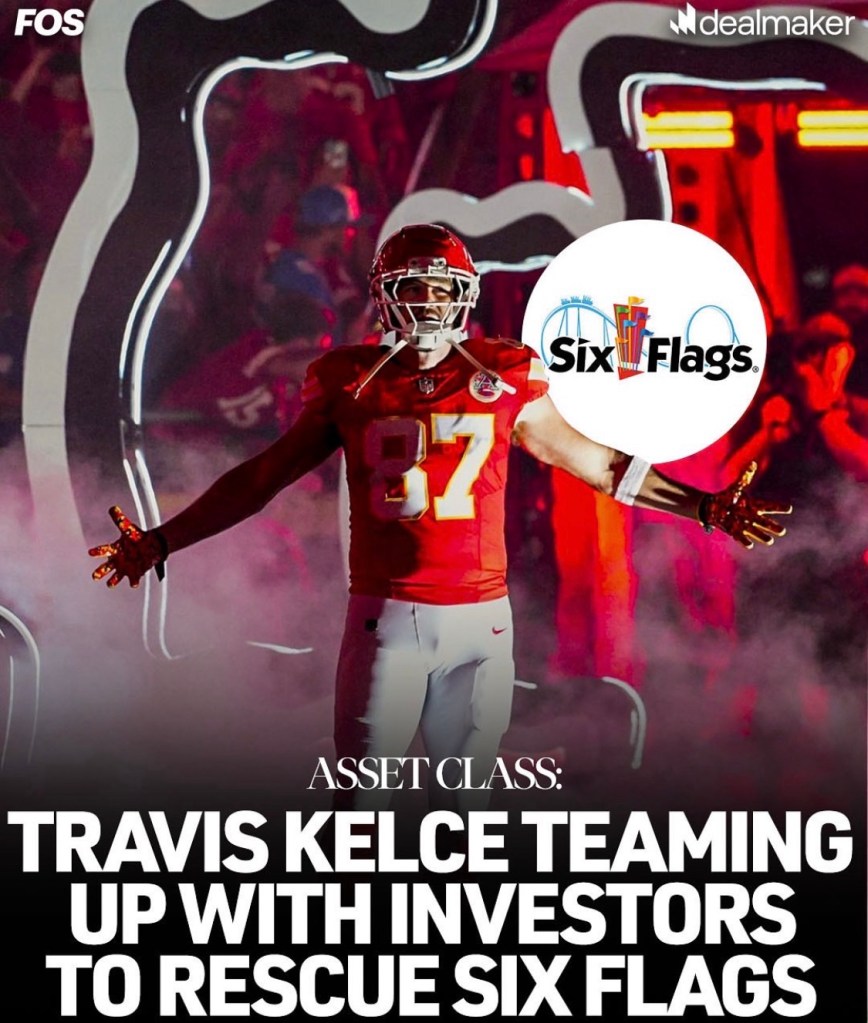
Six Flags is Ruining Kings Island: They have turned it into just another money grab revenue stream

Ownership matters. When a large company goes public and is traded among the slack-jawed loser clan, which is the vast majority, the company’s personal identity gets lost, and its value disappears most of the time.  That was certainly the case when Lucasfilm was sold to Disney.  George Lucas wanted all his Star Wars employees to have something to do while he retired, and the Disney people ruined the franchise, much to his frustration.  But that is the cost of private ownership that goes public and is traded among thieves, losers, and short-term bandits.  And that was what I was thinking at this year’s Halloween Haunt at Kings Island, which was recently bought out by Six Flags as they merged with Cedar Fair Amusement Parks.  Six Flags has made Kings Island worse, not better, and its brand has pulled down the popular Cincinnati amusement park.  When we talk about problems with capitalism, the flow of money, and the protection of private ownership, what has happened to some of these companies that go public is an important lesson.  And in the case of Kings Island, I have watched it all my life as it was initially owned by the Taft Broadcasting Company to create a family-friendly entertainment destination near Cincinnati. Back then, its rival to the north, Cedar Point, forced the two to outdo each other constantly, and the two parks developed their identities through direct competition, which made them what they are today.  But of course, when you build something good, there are always people who will want to take that value for themselves, so this concept of publicly traded companies is a real problem, because it facilitates the sale of value, and once that happens, a company loses itself once its personal identity is sold to the whims of collectivism.  In 1992, Paramount Communications bought Kings Island in an attempt to turn it into more of a Universal Studios, but that didn’t work out well, so they sold it to their rival, Cedar Point, owned by Cedar Fair Entertainment, in 2006.   

I thought Cedar Fair Amusements did an excellent job with Kings Island and the other parks it owned, because it understood what Midwest thrill parks were all about.  The problem was that amusement parks in the northern part of the state had to close during the off-season because it was too cold.  And competition from Six Flags, which operates mainly in the south and runs year-round, strains cash and makes shareholder returns challenging.  So, looking to generate year-round revenue as a large company, Six Flags joined with Cedar Fair and kept Six Flags as the parent company.  And Kings Island has suffered because of it.  Not that I’m thinking cheap about things, but this is the first year the Halloween Haunt has charged for its haunted houses on site.  I get it, it’s an expensive operation to hire all those actors and dress them up every night for full-scale haunted houses that rival everything on the open market during Halloween season.  Halloween Haunts is my favorite time to visit Kings Island.  I love the late-night operating hours, the cool nights, and the general atmosphere.  We invest pretty heavily in Gold passes for our entire family every year so we can all go there together, and that is my favorite time to attend.  So I was not happy to see that Six Flags started charging separately for all the haunted houses, and that they were taking Kings Island down the money-grab hole deeper than they had before. 

Now, this is the problem with publicly traded amusement parks.  During COVID, Kings Island was hit hard by ridiculous health regulations that nearly killed the company for a few years and drained it of cash.  And without question, it pushed them into this merger with Six Flags, seeking all year revenue on cash flow, making them appear to the public desperate.  Which then blows the whole entertainment vibe.  If people are having fun, they’ll spend money.  But if an amusement park starts looking desperate — which the year-round parks do, including Disney World — it becomes a drain that causes a lot of pain.  And not very fun.  What Six Flags has done to Kings Island is similar to what has happened to Disney World.  All the parks have fallen into the Fast Pass game, where they try to make the wait lines for rides excessively long so visitors will buy a Fast Pass to skip them.  They have done that at Disney World and Universal for years, and now they have adopted it at Six Flags and, ultimately, at Kings Island.  And when a Gold Pass doesn’t buy you much of anything special anymore, it’s almost cheaper to get general admission when you do want to go and to go less often.  Because the advantages of going all the time go away.  At Kings Island this year, the ride lines were really long —several hours long for the premier rides —because people weren’t waiting in the lines for the haunted houses like they usually do, since they cost money.  This forces people to buy Fast Passes to shorten the lines.  And it just took the fun out of the whole experience.

For instance, we were at Disney’s Hollywood Studios not that long ago, and my grandkids wanted to ride Slinky Dog.  We weren’t crazy about it because it’s not as exciting as the kinds of rides they have at Kings Island.  But it was a Toy Story-themed ride, and all my kids love that movie series, so they wanted to ride it.  It just so happened it had been raining heavily and had just stopped.  So they reopened the ride, and we were standing right at the front of the line when they did.  So we figured we’d jump right on.  The ride would be worth it if we only had to wait a few minutes.   We ended up waiting 45 minutes in line because they opened the fast-pass lane and let everyone ride first.  The standard line was now a holdover non-premium experience, and the girl at the front, who had a chart on how to fill the lines, tried to explain it all to me, not very well.  I had spent $20,000 on a vacation package to Disney World for my family, and here I was being told that wasn’t enough.  Give me a break.  And now, Kings Island had that same attitude, and it was a real turn-off.  A money grab to make shareholders happy with short-term gains, by destroying the long-term viability of the entertainment value.  And nobody cared because now everyone was doing the same thing: Six Flags, Universal, and, of course, Disney World.  It was a shame to see that Kings Island was now just like everyone else.  And it all started with COVID-19, another thing permanently ruined by the government’s overreach in the healthcare industry.  And it was not nearly as fun as it used to be, as most things are when they lose their identity as a privately held company, now driven by public sentiment, which is often short-sighted and greedy in its narrow scope.  And at Kings Island now, it shows.  What made Kings Island better than other parks was that at least they were owned by a Ohio based company that understood the Midwest, and they were different from the other parks.  But now, they are all the same, and none of them very good.  

Rich Hoffman

Click Here to Protect Yourself with Second Call Defense https://www.secondcalldefense.org/?affiliate=20707

‘Sketch’ is a Great Movie: Disney goes against Trump supporters

You would think that Disney would have learned some hard lessons about its role in the world and the financial problems it is finding itself in.  However, I don’t like discussing negatives all the time, because a fantastic movie called Sketch hit theaters a few weeks ago and is a sign of many good things to come from Angel Studios, showcasing a much different movie world on the horizon.  The Hollyweird crowd has lost all its influence and power and is on a dramatic downward trend.  Sketch was an excellent film that was on limited release, so it’s not a box office titan, unlike the way Disney distributes films. However, coming off the success of the fantastic Chosen series, Angel Studios, I think, is fair to say, is replacing the role Disney used to play with families.  I thought Sketch reminded me of a modern version of E.T., Goonies, or even Gremlins, movies produced by Steven Spielberg in his prime.  And it shows that markets determine success, not PR firms and lawyers who run these big studios these days.  The CEO of Disney came a bit unglued this past week, doubling down on his decision to release films that continue to fail to excite the public as they once did.  The recent movie, Fantastic Four, which I thought was pretty fantastic, has not performed well.  It will be fortunate to collect $500 million, half of what was expected to be made, and that is because Disney has lost the trust of the public. Bob Iger now sees the problem I have been pointing out for a long time, much more clearly.  It’s safe to say that his hopes for the upcoming movie Doomsday are in serious trouble because all the films building it up are not performing well at the movie theater.  

It just goes to show how little the entertainment industry knows about the psychology of the movie-going public.  And I love this topic because movies are something most everyone can relate to.  Most of us watch them whether on television, streaming services, or at the movie theater.  So, in many ways, buying a movie ticket, as I have always seen the experience, is like voting.  People vote for their values by spending money.  But there was a communist movement, as outlined by Cleon Skousen in the famous book, The Naked Communist, to take over the movie studios and the message that they broadcast to the world, and that has undoubtedly happened to Disney through the mask of woke culture.  Now that people have seen just how much Disney resembles the Democrat Party and how anti-Trump they have been, they have stopped spending money on Disney products and have turned toward other entertainment options, such as those provided by Angel Studios.  Currently, they are not financially comparable, even though they may show movies side by side.  I think the movie Sketch cost around $ 3 million to make, and it is considered very profitable, having doubled that amount in returns.  Whereas something like the latest Fantastic Four movie costs half a billion dollars by the time it’s made, and some media is created for it.  And it’s poised to break even, maybe.  So it’s not apples to apples, but more like apples and apple sauce.  However, the message is clear: people are leaving Disney and seeking alternatives, which is evident in their declining park attendance as well.  And in anger over their bad decisions to support woke agendas as an entertainment studio, Bob Iger and the stars of Fantastic Four, like Pedro Pascal, have been complaining about Trump supporters, which didn’t help their case.

Disney assumed that people would support whatever they put together because the public had to.  And that is not the case.  Trump supporters have taken themselves off the grid because they dislike the products that Disney has released, or even traditional cable.  I have been talking about emerging streaming services such as Truth Social, Trump’s personal social media platform, and they have good television that breaks the cycle of traditional cable services, leaving CNN, MSNBC, and all the networks struggling to maintain their audiences because they are all fleeing to outlets they trust more even if they are brand new.  Such as Angel Studios, which earned its audience with great projects like The Chosen.  And successful films at the theater, such as The Sound of Freedom.  However, it’s not just Disney; Warner Bros. has been more successful and less woke than Disney, as evidenced by its box office performance.  However, their recent update to Superman didn’t perform well at the theater, falling well short of expectations, which James Gunn was very dismissive about.  Superman is all about “truth, justice, and the American Way.”  Not the “human way.”  The world looks to America to be a beacon of hope, and that’s what the world wants out of American entertainment.  They don’t wish to communicate messages that put out the fires of hope.  And this Superman just wasn’t that “super.”  He was an all-too-human global citizen, and audiences rejected the premise.  It might have been a pretty good movie, just as Fantastic Four was.  However, the messaging was off-target for the intended audiences.  And when Bob Iger is mad, it’s because he thought he understood elements of market trends that he didn’t.  For all the same reasons people voted for Trump, they also vote with their market dollars on where to spend their money on amusement parks or movies. 

Bob Iger and many others believe that people go to see movies because they like the actors, such as in the upcoming Doomsday with Robert Downey Jr. They are investing massive amounts of money in these actors, thereby inflating the budgets.  There will be approximately 100 cameo actors in the upcoming big Marvel movie.  But the gamble on Pedro Pascal is scaring everyone at the Mouse House because it hasn’t turned out the way they planned.  I personally liked Pedro Pascal in The Fantastic Four.  I think he is good as The Mandalorian.  But he’s too woke to replace Mel Gibson and Bruce Willis as the new Hollywood leading man.  Because Hollywood thought it controlled the message, and that people loved the actors, but that is not turning out to be true.  A movie like Sketch features a cast of actors, none of whom are stars, and yet the movie still performed well for its small audience.  It will stream well, and people will remember it far longer than these Marvel movies.  And rather than learn their lesson, Disney is only digging deeper, indicating that they are going to double down on their woke agenda.  And that’s the problem.  Nobody cares about their product, and the more they push an openly gay agenda, which they did in The Eternals, people will drop them as an entertainment option, and that includes the $20k vacation to Disney World.  Eternals, with its openly gay scenes, was the dagger that halted Marvel’s successes at Disney.  The longer they avoid addressing that issue, the more financial damage they will incur.  When a studio and its actors go against the political trend of a nation like America, they can’t survive.  To fill the void of family entertainment left behind by Disney, there is the wonderful Angel Studios, which is producing great entertainment.  Sketch is just one example.  And for Bob Iger, a hard lesson that he will learn too late: the market is in charge.  Communist leaders are not.  And studios, if such assumptions capture them, will lose money in that marketplace because of free choice. 

Rich Hoffman

Click Here to Protect Yourself with Second Call Defense https://www.secondcalldefense.org/?affiliate=20707
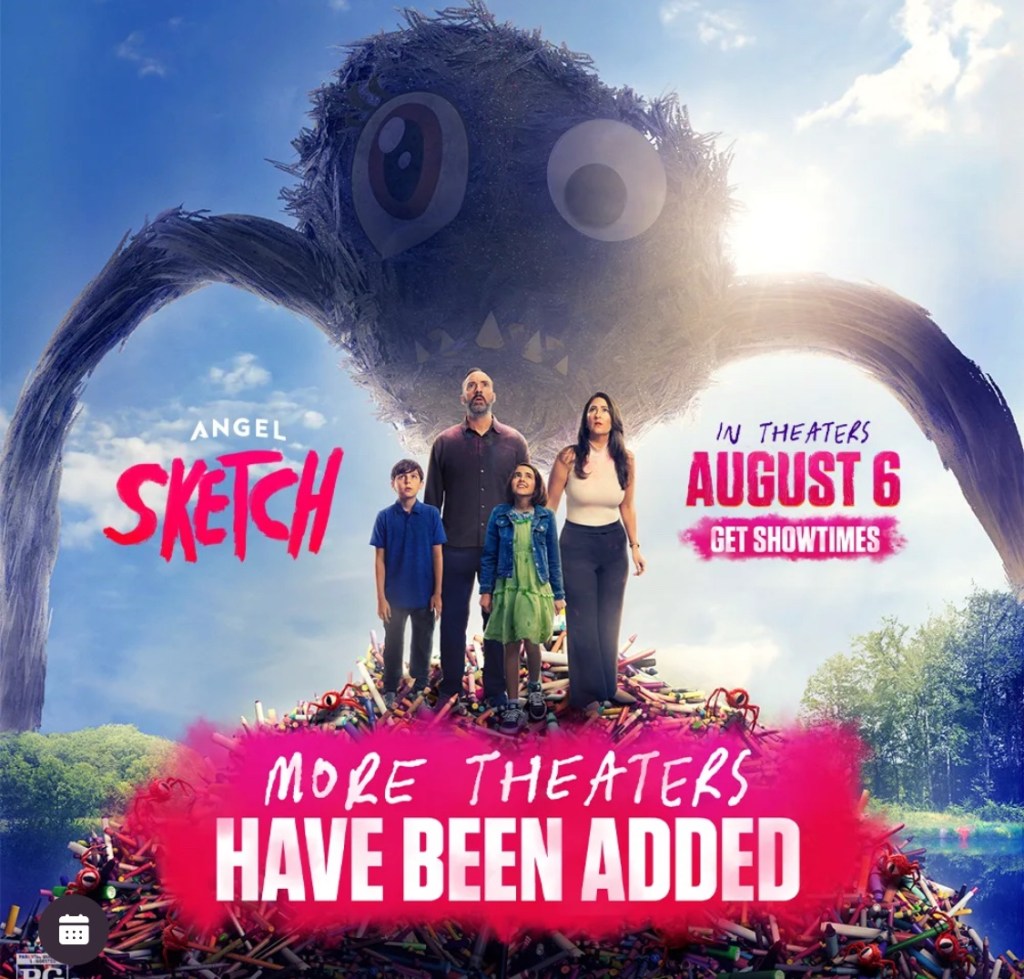
The Fantastic Four: It all comes down to the Statue of Liberty

The new movie, Fantastic Four: First Steps, was pretty fantastic.  Disney attempted to create a film for the Marvel franchise that would bring people back to the level of the first Avengers movie and the Iron Man film that preceded it.  Fantastic Four was wonderfully not woke, and the characters were all well done.  The acting was top-notch, with significant special effects, music, and story that was all good; it was a lot of fun.  So it is a shame that people are not rushing to the theaters to watch it.  The movie is set in a kind of idealistic 60s art style set into an unknown future, and it had a cool vibe to it.  And it had a great point.  I think the sacrifice of the baby plotline to save humanity is one of those key issues in the human race that should resonate much more than it has at the box office.  But we are talking about trust here, and Disney has lost it.  Marvel has lost it.  After the movie, The Eternals, which features homosexual lifestyles and men kissing in it, Marvel sealed its doom.  Hollywood, in general, was politically way off base and divided the movie-going public from their products, sealing their doom in the process.  I was able to see The Fantastic Four with my grandchildren.  They were interested in it because of the video game Marvel Rivals, so we agreed to take them. The movie turned out to be a fantastic family film, full of excellent ideas and old-fashioned filmmaking.  And the Fantastic Four family itself was one that audiences could all like.  I would recommend the movie and give some credit to Disney for listening and stepping away from their woke agenda as much as possible in this environment.  However, there are some lessons to take away here that might improve things in the future if Disney is willing to listen. I think it’s too late for them; their audiences are never coming back, which is why Fantastic Four is underperforming at the box office.  But it’s always worth trying.

One of the things that is hurting these Marvel movies is that they are too comic bookish for most audiences.  Most people lack a strong interest in quantum physics and the concept of multiple universes.  Comic writers, and now all entertainment writers, have found that the multiverse concept gives them a great deal of creative liberty, allowing them to set their stories within any known historical timeframe.  For instance, this Fantastic Four movie does not take place in a timeline and universe that overlaps with the original Avengers.  Technically, they don’t know about each other, leaving the audience to not invest in the characters.  The story might be neat and fun.  But does it matter to their belief in the reality of the previous storyline?  And I think for most people, the multiverse storylines are just too much for them to invest in emotionally.  Like a dream, people might have them, but they wake up from them never to remember them again, and they become meaningless in waking life.  And that is the problem with the Fantastic Four it doesn’t take place in a world people can relate to.  It’s just far enough out of reality to become prohibitive.  In the original Marvel movies, such as Iron Man, Spider-Man, and the Avengers, people could accept the superpowers as long as the universe itself was part of a narrative world built around a historical timeline, allowing them to invest emotionally in the characters.  For instance, in Captain America, his story takes place during World War II, a conflict that people have a grounding in.  And it was patriotic and gave people what they wanted, a defender of American ideas, which the world is very interested in. 

However, Disney and Marvel in general have been pushing for a post-American world of the global citizen, and that element was certainly present throughout the Fantastic Four.  They essentially have a world where the United Nations is in charge of everything, and Sue Storm from the Fantastic Four is in charge of the United Nations.  In many ways, the Fantastic Four was in charge of the world as a government power, which runs counter to the trend of individual lives being self-governing.  That is an idea that people will reject at the ballot box, and they will certainly reject it with their entertainment dollars.  People do not want to be told what to do, especially from the Fantastic Four.  That’s why it’s dangerous to let these Santa Monica types write these movies from the pier, talking to their friends at a bar.  That lefty political view of existence might be fashionable among 20 to 30-year-olds in sanitized settings, such as in the hip Santa Monica region.  However, the world doesn’t like that idea and will reject it completely, and it has.  They did everything they could with this movie to make it as enjoyable as possible, and it’s fun.  People don’t want the Fantastic Four to govern over them as gods.  That is a rejected premise in the world, and it certainly hurts the emotional investment that people are willing to give to these characters.  The movie doesn’t take place in our universe; it’s an alternative universe to the other Marvel stories.  And it doesn’t have a message that people enjoy; it assumes that movie audiences want to be saved by superheroes.  Not that the audiences want to be superheroes themselves.  So that is a fatal flaw. 

However, the biggest mistake was when the villain, Galactus, who was the size of Godzilla, came to New York to retrieve the baby born to the Fantastic Four, and he looked at the Statue of Liberty with some disdain.  Just saying, nobody is going to get away with that kind of thing these days.  The world wants to believe in the light of liberty coming from a free America.  And that is represented by the Statue of Liberty.  Having a massive villain that eats planets come to the Statue of Liberty as if to say that there are much bigger things in the universe than the idea of America is a bad move.  It might be the view of radical, Santa Monica lefties, but it’s not what the world wants to hear.  They want someone who likes America fighting bad guys.  Not something bigger than America looking down on our country as if to say that the scale of the fight is beyond the political whims of nation-building.  That’s a line that people won’t cross, and they have rejected it at the voting booth and the box office receipts.  It was a dumb scene.  Galactus didn’t try to smash the Statue of Liberty.  He just gave it a look that was demeaning but did not provide commentary.  Yet, audiences picked up on it; the liberal writers of these movies aren’t going to get away with that kind of thing.  People will see another film.  And that is what they have been doing.  The Fantastic Four is a great movie, but people have better things to do, and if the story is not aligned with the politics of our day, it’s unlikely to do well.  The fantasy that artists can rule the world through liberal politics behind commercial films is a thing of the past.  It was never a good idea, but now there are just too many entertainment options.  People tend to overlook things that do not align with their values.  And that is why The Fantastic Four is not doing well, despite being an excellent movie.  It’s too far outside the known world for people to invest emotionally in.  And that’s a shame. 

Rich Hoffman

Click Here to Protect Yourself with Second Call Defense https://www.secondcalldefense.org/?affiliate=20707

The Radicalism of Stephen Colbert: Trying to kill off toxic masculinity as been very expensive and not worth it

There is a much deeper reason that the news about Stephen Colbert being taken off the air is such big news.  Or why ABC is re-thinking some of its daytime programming, such as The View.  There will be numerous television changes because many of these big production companies have been so committed to progressive causes that the financial impact of it is finally starting to catch up to them.  However, in everyday conversation, the real reasons for economic failures have been largely unexplored.  People know they are generally happy to hear that the Trump-hating Colbert is losing his late-night show, and that many of the other late-night hosts are in danger as well, because of the anti-Trump agenda.  Anti-Make America Great Again agenda points are not popular for good business.  And typically, CBS Studios, a division of Paramount Global, the parent company of CBS, would not hesitate to donate $40 million to progressive political causes.  Which is what they are saying the show is losing per year.  It’s not about the money; it’s about the viability of the position.  Losing that much money by putting Stephen Colbert on television every night to attempt to destroy the Trump agenda is more or less a financial contribution to their political platform.  The problem for them is that they spent all that money and committed so many resources to it, yet they were unable to move the political needle at all.  Trump did not end up in jail, or bankrupt as radical liberals had fantasized about.  Instead, six months into his re-elected term, he is doing great, and there are no signs of him slowing down.  And he’s more popular than ever, which is breaking the back of the production companies and their commitment to communism that dates back to the fifties and sixties. 

I know quite a bit about all this as I have been discussing it for years.  For many people, it has been hard to connect the dots.  However, I hosted a major radio show on this topic, specifically centered on the release of the Star Wars movie, The Force Awakens, where Disney killed the very popular character of Han Solo.  A friend of mine and I discussed the poor decision that Disney made in killing off the white hero Han Solo and replacing him with a DEI cast that nobody ever took to.  And now, ten years later, the things we said have turned out to be hauntingly accurate.  After that big, popular show, my friend received an offer to work at Disney for an excellent salary.  I always thought they did it to shut him up and get him off the air.  It is much easier to throw money at controversial voices to contain them somewhat.  My friend loved the Disney Company and hoped to improve it, so more power to him.  I told him there was no saving the company, but he had to try.  But the point of the matter is this: Disney didn’t need to kill off the original heroes of the Star Wars saga.  But they did it anyway, and they did it for purely political reasons.  That’s how radical the hatred in Hollywood is for the Make America Great Again movement, which was emerging openly as Disney was committing to these new Star Wars movies that had a DEI cast, and a killing off of the strongest character of them all, Han Solo, who was made popular by the very popular actor, Harrison Ford.

Now I’ve heard it all before.  People tell me that old Harrison Ford always wanted to kill off the character of Han Solo.  As an actor, he hears all the stories about toxic white masculinity, which he has made a lot of money over the years popularizing.  So, for him, to sacrifice one of his roles to the gods of progressivism is a logical choice.  And he has been saying for forty years that Han Solo should die in the Star Wars series.  However, George Lucas knew better, so they brought him back for The Return of the Jedi, and that character went on to become one of the biggest and most popular in the Star Wars brand.  If Han Solo is on the movie posters, people are excited for Star Wars and the toys that came from that series of movies.  But if the movie posters, as they turned out to be, were just diversity, equity, and inclusion characters, then the public was going to reject the offering.  And in that process, Disney killed the Star Wars brand forever.  I don’t think it will ever come back. The damage was so significant that they begged Harrison Ford to return and make an appearance in the last Star Wars movie, The Rise of Skywalker, but it was too late by then.  And Disney has not been making any more Star Wars movies because their DEI characters were being rejected left and right.  A similar controversy arose on The Mandalorian television show involving Gina Carano.  She turned out not to be a DEI hire, but a conservative fighter, and Disney tried to punish her for it, and it blew up in their faces in terrible ways.  We are seeing entertainment that is not intended to entertain, but rather to convey political messages through popular franchises, and it has turned out to be a disastrous business decision. 

So, the writing was already on the wall when Trump was re-elected, and Disney was already undergoing its assessment process.  They had to learn, as a large entertainment company, that their public would reject them if they did not produce content that they wanted.  Kathy Kennedy should have known better about the Han Solo character.  Her husband, Frank Marshell, should be able to help her understand it.  He produced all the Jurassic Park movies and was the German mechanic in the very popular Raiders of the Lost Ark movie, notably in the fight scene.  He’s not a progressive lunatic.  However, he and Kennedy are fans of Jimmy Buffett and music from that era, so they have a left-leaning side that certainly comes through in their movies.  Kathy, as a woman CEO, went completely DEI and began pushing for female directors and characters.  I mean, they killed off Han Solo, knowing he was the father figure of the series, and they gave his famous spaceship, the Millennium Falcon, to some girl that nobody knew, as if the public would just accept it.  And they never did.  And the franchise took a permanent hit that it will never recover from.  I tried to tell them.  My friend and I laid it all out on that now-famous radio show, so we know the Disney bigwigs heard it and offered us jobs afterwards.  I have had numerous companies offer me money to try to keep me quiet, essentially.  I don’t blame my friend for taking the money.  Many people do, and it can lead to a fulfilling life.  And that is essentially why nobody understands these kinds of things structurally.  But that’s what’s going on with Stephen Colbert, and many others that will follow.  The man-hating Hollywood has not been working, and if they want to survive at all, they will have to make adjustments because the consumer is the boss.  Not the studios, and they have had to learn some tough lessons, too late.  The ramifications of all those bad decisions are only now becoming well-known and prominent.

Rich Hoffman

Click Here to Protect Yourself with Second Call Defense https://www.secondcalldefense.org/?affiliate=20707

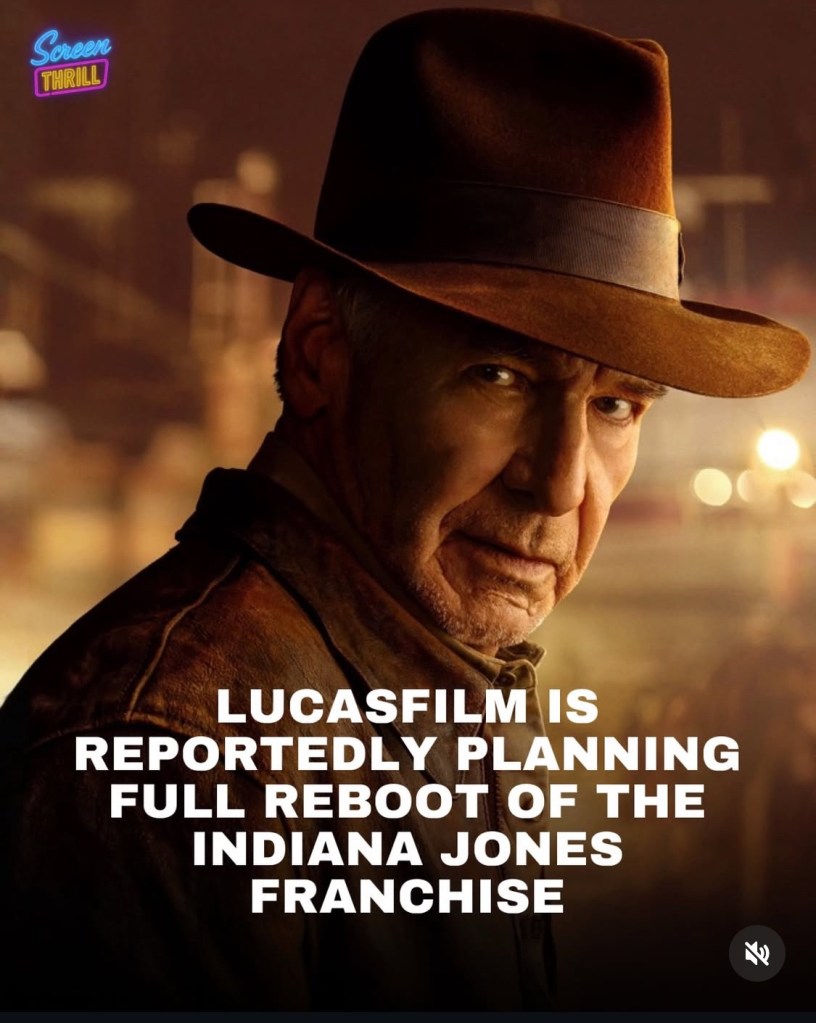
The Only Way A New Indiana Jones Movie Would Be Successful: Consultants and corporate looters can’t copy success, it never works

There is a way to do it, to make more Indiana Jones movies.  There have been at least seven different people who have played Indiana Jones at some point in time, everyone from George Hall, to Corey Carrier, to Sean Patrick Flanery—even River Phoenix.  Then, of course, there are all the video games and commercial appearances where an Indiana Jones-like character is seen doing something, from amusement park rides and Coke commercials to cameos in other movies.  Unlike other franchise characters, however, Indiana Jones is different in that Harrison Ford created a particular kind of character with a timeline expectation that society will hold Disney to.  There is a nice period in the character’s timeline, from age 25 to 35, where a new actor who resembles Harrison Ford could tell all-new stories that the public would love.  Most of the best Indiana Jones movies take place within a specific 3-4 year timeline that centers on Harrison Ford playing Indiana Jones in the iconic movie Raiders of the Lost Ark, a film that revolutionized the way stories are told and movies are presented.  I personally think it was the best movie ever made and that changed the value of the character created for the public forever.  The chances of doing something like that again with the same character but a different actor is impossible. I think it’s possible to make more movies after seeing how Disney and Bethesda, the video game maker, produced the latest Indiana Jones video game, Indiana Jones and the Great Circle.  It was a great game and a lot of fun, and it didn’t try to “reboot” Indiana Jones; it respected the timeline that people had come to know and trust.  And many actors contributed to that effort, and those are the rules of engagement.  There is a lot of talk now, halfway through 2025, that Disney wants to reboot the Indiana Jones movies.  They own the property and want to make money from it.  However, there are rules they must follow; otherwise, they will cause all kinds of social problems, just as they did with the Star Wars movies.  If they want Indiana Jones to remain valuable to the public, they’ll listen and stay respectful.

But if they think they are going to retell Raiders of the Lost Ark with a woke actor like Pedro Pascal, or even a woman, then they are out of their minds, and another Indiana Jones movie would be a disaster.  Indiana Jones is not something that can be ruined in the way that studios often do with Batman movies or James Bond stories.  There has been over 40 years of story telling from books, television, comics, video games that for that entire time held to a stringent canon timeline, and that trust has been built across many generations of fans, from kids today to their grandparents who saw the movies in the theater when they were kids.  I love the Indiana Jones Stunt Spectacular in Orlando, Florida, the stunt show that has been performed for years at Hollywood Studios. It has featured several different actors portraying Indiana Jones in that stage play.  However, the difference was that all content creators were very respectful of the original idea.  During the period I mentioned, numerous exciting stories could be told about a younger Indiana Jones as he establishes his excellent and famous reputation, which people would love to see depicted in movies.  However, those movies would require directors, producers, and musical talent as passionate about making the movies as were Steven Spielberg, George Lucas, and John Williams, originally.  Disney thought they would get away with a reboot of Star Wars by ignoring the story canon and essentially retelling A New Hope with The Force Awakens, and people have never forgiven them for it.  They might have made some short-term cash, but they destroyed the brand, and that has cost Disney a lot.  

This is important because the character of Indiana Jones has likely been the single most valuable narrative device that has advanced the arts and sciences in the world today.  There are many people who have become scientists because of Indiana Jones and the inspiration they received from him as children, which has been very beneficial.  The value of the Indiana Jones property lies in this social motivation.  And unless Disney respects that sentiment, it will harm them in very detrimental ways, and erode the character it currently holds socially.  Indiana Jones is more than just Harrison Ford, and unless a new production is presented with the same level of commitment as those original films were, it will be rejected at the box office, just as the Star Wars movies have been.  There is an arrogance that comes from the consultant class in society, who often con their way into the motion picture studios, never figuring these things out.  And those are the voices at Disney who think they could make a movie as good as the originals were, without understanding the social consequences of destroying the public’s love of the property.   The Indiana Jones timeline is unique in that it spans from his infancy in The Young Indiana Jones Chronicles to his portrayal by a 93-94-year-old man with an eye patch.  Within that timeline, there is room to make movies just as exciting as Temple of Doom and Raiders of the Lost Ark, if the stories deal with the post-college years.  However, suppose they recast and retell the stories for modern audiences with music by different composers, cinematography that fails to capture the spirit, and scripts that don’t adhere to the formula. In that case, the project will be a disaster.

I think Disney should leave it all alone and let it be what it is.  They’ll make more money off Indiana Jones if they allow it to stay valuable in people’s consciousness.  However, Disney is not filled with creative people; it is essentially run by consultants who choose to live by copying what they think is successful and trying to pass it off as their own.  And it never works well, and it certainly won’t work with Indiana Jones.  So, with all the talk about Disney developing another actor to play Indiana Jones in a new movie, I would advise them to proceed with great caution.  I’d see the film if they were respectful to the established timeline.  But if they want to put a minority character in the role instead of a white guy, and change elements of Indiana Jones for a more modern audience, then it will be a disaster.  And I’m only writing this now in the hope of keeping them from making that big mistake.  But I don’t have much faith that they’ll listen, and will destroy this as they have so many other things in life, and the impact of that in the world is very significant. It matters more than people think it does; we’re talking about the way that humans create reality for themselves through story and narrative devices, and Indiana Jones emerged as a necessity for human consciousness that was more than entertaining.  Disney has been warned, so we’ll see what they do.  I’d like to see it work.  I think there is an actor out there who could carry the torch of Indiana Jones during an exciting period that audiences would accept.  However, short of that, it would be best to leave it alone, as the social impact of changing the value with new content would be devastating in ways that most people cannot measure.  What I have said is the only way that it could be done because all other methods would be very destructive and unnecessary. People are pretty forgiving as long as they know they can trust a story not to change on them. And that’s true with everything in life. People can come and go, but people want to know that the story stays the same.

Rich Hoffman

Click Here to Protect Yourself with Second Call Defense https://www.secondcalldefense.org/?affiliate=20707

A Wonderful Expereince: Playing the new Indiana Jones game on PS5

I wasn’t going to play the new Indiana Jones game on PlayStation 5, but after much encouragement from my wife, I did, and I’m glad.  Indiana Jones and the Great Circle was an excellent experience with a great story, and was a throwback to the kind of entertainment I think we need a lot more of.  I was skeptical of Lucasfilm doing anything with Indiana Jones these days under the ownership of Disney.  I like the character and the kind of science spawned from those movies over the years.  But I wasn’t sure if they could pull off a good story without George Lucas.  But my wife has been pressing me to play more video games with the grandchildren, because that’s what they like to do.  But my life is so busy, I don’t have time to hang out online like most video games require, with a very social experience.  These days, video games are a way for kids to interact socially.  Games like Fortnite and Call of Duty put you in contact with thousands of people daily.  Kids who play these games for hours will interact with thousands of people in real time, so video game playing these days is a very social experience, and I’m not at all crazy about that.  I talk to way too many people throughout the week to want to spend my downtime talking and playing with more people.  So I haven’t been playing video games very much, and my wife thinks I need to do more for stress management.   So I listened to her, wives can be good for many things, and when the new Indiana Jones game came out in April of 2025 on the PS5 console, I thought I’d try it. 

Because I’m a fan of the character and raised my kids on the optimism of those movies, as a baseline for other things, I bought the Collector’s Edition of the game, which came with all kinds of neat stuff.  But once I started playing the game, I enjoyed the story as it takes you through the character of Indiana Jones to Peru, the Vatican, Giza, the Himalayas, Thailand, Shanghai, and Iraq.  It’s not an online game, so you can play it without interacting with others and have a nice story-driven experience.  And much to my surprise, this game was very much in line with the Indiana Jones movies, and it had a tone similar to the most recent one, the Dial of Destiny.  So it was true to the original character and didn’t have the woke stuff, which is such a problem these days.  There were a few things, but not enough to tarnish the game.  It was a good adventure story that was much longer than a typical movie.  I spent 60 hours playing the game, with about 12 hours of that time just doing the story itself, so it turned out to be a long movie experience that took place for me during April 2025, which was a good break from all the other things I typically do.  And it was good for the grandkids to see me doing something besides reading books, as I’ve said before, I read 4 to 5 books a week.  Some weeks, more than that, so I cover a lot of content that is very personal.  You can’t share the content you read with your family very well because reading is such a private thing.  But ironically, there is a scholarly element to this Indiana Jones game that was very refreshing.  

The game itself is about the “giant” controversy, which I think is the most important in the world right now, the idea that an ancient race of giants who lived before Noah’s flood inhabited the earth and had a very advanced culture.  I read a lot about this evidence, and it was a surprise that the modern debate drove the game’s plot.  We live in a time when people ask tough questions, and authority figures in authority positions have been caught lying to us, right to our faces.  At the center of this Indiana Jones story are many problems that played out during the Second World War.  Playing the Indiana Jones character you get to deal with actual historic characters such as Bonito Mussolini and the obsession with the occult that the Nazis were investing in and when you put the biblical narrative of the Fallen Angels of God, the Nephilim at the heart of a massive modern conspiracy theory, you have all the contents of a fascinating story, and it was.  Because I read so much about many different topics, the story of Indiana Jones and the Great Circle felt like it was produced and made just for me, including all the items that came with the Collector’s Edition.  I spend a lot of time thinking about these things through books and online lectures.  So it was a pleasure to play a video game about that kind of storyline.  And to have the material compelling, educational, and entertaining.  The game makers really loved the story, and it showed.

They first announced this game in 2020 during the COVID-19 crisis.  I wanted to like the news, but I was so down on Disney and Lucasfilm for what they had done to Star Wars that I would have rather they just left Indiana Jones alone.  As a literary character in our culture, Indiana Jones does so many good things that I figured Disney would only damage that character, as they have so many other things they’ve mishandled.  For instance, the pressure seen on a recent Joe Rogan Podcast with the Egyptologist Dr. Zahi Hawass probably wouldn’t have happened without an Indiana Jones character in popular, mainstream literature and filmmaking laying the foundation to apply the pressure.  So many people have been inspired by the character that they have correctly challenged established norms in a very healthy, academic way.  And when a game like this comes out and a mainstream audience plays it in such a mass way, good things tend to happen, and you see that with the questioning of independent investigators, questioning the institutional narrative of things to evoke the truth, which is what we should all be concerned about.  Stories like this light intellectual fires and usually have great significance for those who experience them.  So a game format, as opposed to a movie or a book, was very appropriate.  And I had a lot of fun with the game.  I’m glad I listened to my wife.  I like playing video games, but don’t think I’ll play them often.  But I am so happy to have taken the time to play this one, and it ended up being a positive thing for my entire family.  And I wish it could have gone on forever in many ways.  But playing through the whole story was an enjoyable experience that was a nice break from my day-to-day.  And I look forward to similar experiences to come along that kind of storytelling frontier.

Rich Hoffman

Click Here to Protect Yourself with Second Call Defense https://www.secondcalldefense.org/?affiliate=20707
Rachel Zegler is Only Part of the Problem: The live action Snow White is a disaster on every level

As I said many times, Disney should have listened.  I wasn’t planning to discuss the new Snow White film, but there is just too much to discuss to ignore.  The Disney stock is never coming back, guys.  Bad decisions lead to failed companies, and Disney has made numerous poor decisions, which it can’t afford.  Sure, out of all the movies released last year, they were the only studio to get a few movies in the billion-dollar club.  But for them these days, as opposed to just a few years ago, their business approach was reckless, and they lost respect for their audience and instead put them in an abusive relationship.  And that is the only thing that can be determined about the horrible decision to cast Rachel Zegler into a live-action remake of the Disney classic, Snow White.  And it pains me to say all this, because I have liked Disney, as a company.  As a vacation destination.  I enjoyed Disney as a company and as a family.  I have wanted nothing more than to see Disney succeed, and my intentions in that direction can be traced back for decades. I have put it in writing.  However, as a large company and an easy target for left-wing politics, they have adopted an extreme political stance, becoming increasingly arrogant, and have inadvertently made people like Rachel Zegler possible.  Zegler is essentially the Alexandria Ocasio-Cortez of Hollywood actresses, and she has sunk herself with this one before the Snow White remake could even get out of the box with feminist diatribes and anti-Israel messaging in support of Palestinian terrorism.  She is one of the worst members of the radical left, and she didn’t do anything to keep it off people’s minds.  Instead, like an entitled brat, she thought for some reason that she could use her platform to advance her personal beliefs, which at her young age of 23 years old, nobody wants to hear.   What could she possibly know?

Disney spent well more than $300 million on a remake of Snow White that nobody wanted.  It’s a beloved classic that, if you were to remake it, audiences would likely want to see how a cartoon looks in live-action, rather than using live-action to reinterpret classic themes as modern social commentary.  And then to write a script and put it on the screen by committee, the way many studios do these days.  Someone should have pulled Disney aside as a company well before they cast Zegler in the film to play the pure, white Snow White.  There were numerous mistakes made well before the cameras started rolling.  However, Disney, like Zegler, started this process by targeting Rosanne Barr for her political beliefs, and most notably, the actress Gina Carano, who appeared in the Star Wars: The Mandalorian show.  Of course, Rachel Zegler thought she should discuss her radical left-wing politics while doing press for Snow White, as the company itself was promoting that kind of activism.  She’s just a dumb, inexperienced kid, copying the adults around her.  What did she know?  Or what could she be expected to know?  Disney attempted to part ways with Johnny Depp regarding the Pirates of the Caribbean movies, which was a terrible mistake.  Not that Johnny Depp is a good person.  He did call for the killing of President Trump by assassination.  But when it comes to the Hollywood community, most people can agree that he is the character people want to see in any Pirates of the Caribbean movie, and Disney tried to push him out because of the anti-white male stereotypes.  Now that they are in deep financial trouble, they are trying to repair that relationship.  But it’s too late.

The math is obvious: movies like Snow White need to be in the billion-dollar range for box office viability.  However, Snow White only grossed around $43 million in its opening weekend, projecting the film to be a massive loss.  But Rachel Zegler is only part of the problem.  She’s the face of it, and she opened her mouth way too much even a year before the film came out.  Disney re-shot the movie and attempted to address some seriously problematic plot points.  For lots of ridiculous reasons, Disney thinks it needs to reprogram what little girls want to see in a movie, anti-romance stories, and feminist power where the evil witches are made sympathetic, rather than hated.  And that is because these goofy feminists are now running these studios, and they bring their broken politics to these projects and hire a cast that represents their radicalism as if these career movies will hide what’s ruined inside them.  But that’s not what people want to see.  People go to the movies to see hope and a positive reflection of their concerns.  They want to leave a movie feeling good about things, not being lectured to about how they need to change their minds.  Little girls hope that someday they will have a prince who comes and sweeps them off their feet, and that they can produce a nice family and live happily ever after.  The original Snow White was all about love’s first kiss and defeating the evil queen.  Not coming to terms with evil which is ultimately where Disney has fallen short.

There are properties that Disney still owns that are generating a little money, such as the Marvel films, Star Wars, and Avatar, with a few projects on the horizon.  There will still be a few movies here and there that do somewhat well, relative to the rest of the Hollywood industry.  But that is only a shadow of its former self, and once that trust is broken with audiences, it will be lost forever.  There is no way to repair it now.  Disney has made itself an anti-Trump, anti-family entertainment company, and I can say that after just visiting there with my family recently.  I wanted to love the Disney experience.  I had just returned from a week-long trip to Japan and then spent a week with my whole family at Disney World, staying at the wonderful Fort Wilderness resort.  I wanted to like it.  But it was like being in love with a ghost.  The magic had gone from the park; it was obvious to me.  All my kids enjoyed themselves, but to be honest, their favorite part of the entire trip and all the fantastic things we did was the swimming pool at the resort.  I spent a small fortune to give my granddaughter a Disney princess experience, complete with a dress and opportunities at the famous castle, and she thoroughly enjoyed it.  She still talks about it all the time and I spent the money because I wanted her to have a taste of an elevated female experience, as a little girl, of what life might be for her, as opposed to the doubts that are so persistent in little girls worried that they might not be pretty enough, or smart enough to get what they want in life.  Disney’s answer to that is to attack the expectations so that nobody fails.  And that is not what people want, which is why the parks are not as full as they used to be, and why people have stopped seeing Disney movies, are canceling their Disney+ memberships, and are turning to other entertainment options.  Rachel Zegler is a creation of Disney, and their support of people like her is precisely why they are failing now.  And why their stock will never bounce back, which I hate to say.

Rich Hoffman

Click Here to Protect Yourself with Second Call Defense https://www.secondcalldefense.org/?affiliate=20707
Why DEI Was Always a Dumb Idea: What we learned from the Swordsman Scene in ‘Raiders of the Lost Ark’

I really loved the book about Howard Kazanjian called A Producer’s Life.  I’ve referenced it many times over the last several weeks because it was an enjoyable book.  It’s the most fun I’ve had reading a book in a while, and it is one that I promised myself I’d read if Trump was re-elected into the White House.  I wouldn’t let myself think about these kinds of things as what is in Howard’s book prior, even if I do love the topic.  For a large part of my life, I wanted to be a filmmaker, and Hollywood producers like Howard Kazanjian were the kind of people who inspired me.  He produced most of my favorite movies from a key period, when he was on top of the Hollywood pile with Steven Spielberg, George Lucas, and many others, with films from 1975 until 1982.   Howard was always good, but if you are trending good movies and who made them over the entire history of Hollywood, this specific period set the stage for what the industry would become, and mean to the world as a whole regarding entertainment.  So, I find it very interesting to study what went right and wrong during this period.  Ironically, learning these things is precisely why understanding DEI policies and why they failed is important.  Because currently, after the Trump election and his spectacular victory, the world is giving up on Diversity, Equity, and Inclusion programs, and rightfully so.  We’re not talking about a Republican versus Democrat position here; Howard Kazanjian, I would say, probably leans toward Hollywood liberalism and likely wanted Kamala Harris to win the election.  But with Trump back in office, the world is a lot better, and I have more tolerance for people who are not so bright on political matters.  Which is why I couldn’t let myself read a book like this before the election. 

In that book, I read a good illustrative example of why DEI failed and why companies needed to get rid of it for the sake of everyone.  Picking employees based on their skin color or assuming they are equal to other people and that they should be included in something just because they exist was always ridiculous.  Some people are better than others, and if you want something to be good, you have to find the best people and put them in place; that’s good management.  And in the movie business, good people are few and far between.  But Howard Kazanjian, during that period I mentioned, found a way to be around the best people in the business, and specifically, a conversation I had never heard about regarding the famous swordsman scene from Raiders of the Lost Ark, being filmed in 1980 for a 1981 release.  Everyone, no matter who they are, knows the scene.  Indiana Jones is looking for his lost girlfriend, Marian, who the Nazis have captured on the streets of Cairo.  And he has to stop them with a glorious shootout with lots of explosions and good stuff.  Along the way, Indiana Jones is stopped by an Arab swordsman who wants to fight.  But the hero doesn’t have time for it.  What does he do?   People remember with great recollection that Indy pulls out his gun, shoots the villain on the spot with no fanfare, and gets back to looking for his girlfriend.  In all the documentaries of how that movie was made, we learned that Harrison Ford was sick that day and just did the scene as a joke because there was supposed to be a fight with bullwhips that was very elaborate, and the whole crew was sick of filming take after take.  When Spielberg saw what Harrison Ford did, he wanted to keep it as a new version and print it for the film.  But there was more to the story I heard in this book on Howard Kazanjian for the first time.

George Lucas still wanted his bullwhip fight scene.  One of the reasons he was making Raiders of the Lost Ark as the executive producer was to create a modern version of the kind of movies he liked as a kid, and he wanted a classic bullwhip fight like might have been in Don Q Son of Zorro, or Zorro’s Fighting Legion.  And he wasn’t convinced that just having Indiana Jones shoot the bad guy and get on with his business was the right thing to do.  So, here were the most talented filmmakers in movie-making history who disagreed with this famous scene.  So what were they going to do?  George Lucas decided to run two film versions by a test audience, one Spielberg’s way, the other with the bullwhip fight.  They were going to let market desire determine the film’s final version.  So they played George’s version first to a test audience.  People came out of the movie liking it, and Paramount Pictures felt they had a hit.  It was a good movie.  But when Spielberg’s version was seen, people applauded when Indiana Jones shot the swordsman.  And it became everyone’s favorite moment in the movie, even after all these years.  They made 5 Indiana Jones films over the next 40 years, but none would ever have a better moment than that one to mass audiences. 

Ultimately, even with all the talent of all these people involved, it was the marketplace that picked the scene. The filmmakers came up with ideas, but to determine the success of the enterprise, they tested the waters with market analysis. The audience clearly picked one version over the other, and the rest is filmmaking history.  Presently, they are test-screening the new Captain America movie for Disney, and it is going through all kinds of trouble because nothing is working.  The film is filled with a bunch of woke politics, and people don’t like it.  It’s going to bomb when it hits theaters in February.  Ultimately, that is why DEI programs destroyed market share and value for all companies, from cookie makers to high-tech offerings.  DEI was an imposed value put on the marketplace that would have been similar to George Lucas keeping his whip fight in the movie because he wanted it, to force the audience to like it because he did.  Instead of listening to them, which is what happened.  When companies try to impose themselves on the public and force values on them that they don’t have, failure is almost assured.  However, when products appeal to the audience’s sentiment, great success is possible.  It is rare because good ideas are complex, and companies often hang on to them even if the market pressure rejects them.  Only to plot an enterprise to its doom.  But when we say that getting rid of DEI suits all businesses everywhere, this is what we mean and why.  In capitalism, value serves the marketplace.  In authoritarian governments, values are imposed, and a monopoly status is sought that limits the viability of options.  And the world is far worse off because of it.  The best example of why some ideas work over other ideas can sometimes come from interesting places, which is undoubtedly the case with a movie most people agree has some value to them over time, and that is how Indiana Jones was created in that old classic movie, Raiders of the Lost Ark

Rich Hoffman

Click Here to Protect Yourself with Second Call Defense https://www.secondcalldefense.org/?affiliate=20707

Individuals Beat Corporations Every Time: Why success happens

This could apply to anything, but studying why some movies released at the theater are better than others is critical because of how the movie business works.  People get together and tell a story, and the value of that story is released to the public for them to vote on.  People tend to think of Hollywood as very glamorous, but in truth, very few people who work in the industry ever get to be a part of an extraordinary success, a ratio even less than in other fields of endeavor.  So it is always interesting to understand why some people put together a string of hits, such as Steven Spielberg and George Lucas, along with producer Howard Kazanjian.  An even more important example is the role that George Lucas’ first wife, Marcia Lucas, played in some of the most memorable and good movies of all time.  Also, why did a small, family-owned company like Lucasfilm lose its magic once it became a corporate conglomerate under Disney?  All this was in a fabulous book called ‘A Producer’s Life,’ which was about the life and times of Howard Kasanjian, who produced several of the Star Wars movies and the start of the Indiana Jones franchise, among other classic films like Cool Hand Luke, The Wild Bunch, and working with Alfred Hitchcock.  This book caused much stir when it first came out because Marcia Lucas was just as upset about Disney killing off Han Solo as I was for many political reasons.  That was just another example of how corporations that use processes to isolate individual contributions produce products in the world that are not as desired by the market.  In the case of the new Star Wars movies, the belief was that the film itself held all the magic and that a girl could replace a character like Han Solo to accommodate all kinds of woke rules wrapped around the axil of globalism. However, the Disney people never understood Star Wars, and this book had the opinions of someone who was very close to Star Wars, who was the key to their success initially. 

The book came out in 2021, right in the middle of the Covid monstrosity, and Biden had just been inserted into the White House, so I wasn’t in the mood to think about movies.  But I promised myself that if Trump returned to the White House, I’d get the book, take a bit of a vacation, and allow myself to think about some fun things.  For me, these are some of the most fun things, and they show how entertainment impacts culture as a whole.  And when it comes to those movies, Indiana Jones and Star Wars, few people have put together the kind of hits as filmmakers such as Steven Spielberg and George Lucas.  The corporate belief is that just anybody can make a good movie or a good anything if only enough money is spent on the project, and in film, typically, the industry attracts all the same kind of sharks looking for an easy dollar as Wall Street does.  But few of them, if anybody, understands what makes hits and misses in the marketplace.  I have always wondered why George Lucas was so good from 1975 to 1982.  After that period, George Lucas wasn’t very good at all.  He may have been interesting, but he had lost his touch, and I always thought it probably had something to do with his wife, Marcia. 

There were two good Star Wars movies, and then everything fell off the rails with Return of the Jedi.  The movies were self-funded and only distributed through 20th Century Fox.  George Lucas hated corporate filmmaking; he wanted to make independent films from a family-driven company.  This allowed someone like the film editor, his wife, Marcia Lucas, to put her personal touches all over those early movies, which were key to their successes.  Something Disney and all its resources today don’t have is that personal touch.  During Return of the Jedi, Marcia and George divorced, and she ran off with the stained glass window guy working on their Skywalker Ranch.  That sounds kind of cheap and stupid, but George Lucas was working hard at the time to maintain his independence from the studio system, so he was putting all the pressure on himself.  This is another reason why those family-made movies were so good.  It wasn’t the board of directors or BlackRock assets making the decisions; it was George Lucas.  But it drove a wedge between him and his wife, and he never recovered.  Neither did she.  They should have stuck it out, but that’s history now, and the results tell quite a story.  Because she worked with her husband, Marcia knew how to get the best out of the coverage shots he provided as a director and could make a story pop on the screen that resonated with audiences.  You have to be an excellent person to produce good work, which gets lost in all corporations: those individual contributions.  For instance, if SpaceX lost Elon Musk, the company would fail quickly.  We always see it in sports: a star player carries a franchise.  As the saying goes, there is no “I” in team, but there is in win.  Teams are not values, they are places where people can hide so they don’t have to deal with the pressure of taking on too much responsibility.

One time, when the character of Indiana Jones was being created, Harrison Ford, Steven Spielberg, and George Lucas designed the character before principal photography, and they were all talking about giving Indiana Jones some flaws that the audience could relate to, such as making him smoke and drink too much.  But as she often did with many of those early Lucasfilm movies, Marcia stepped in and gave her opinion that was critical to the effort’s success.  Keep in mind that these three moviemakers were some of the best of the best in the business. But it took George Lucas’ wife to point out the obvious.  She told them this was a kid’s movie and they couldn’t have Indiana Jones drinking and smoking.  He’ll lose all his charm, which they didn’t understand then.  But George listened to his wife, as usual, and the character became one of the most beloved in all movie history.  They are still trying to make money off Indiana Jones, with Disney running the studio.  But they don’t understand the character because they don’t have someone like Marcia Lucas in the editing room polishing everything up.  They have access to tens of thousands of talented filmmaking types, but very few understand the subtlety of success and failure.  Without question, Marcia Lucas, as a high-quality individual, made those early movies better.  She also made Lucas, Spielberg, and Harrison Ford better.  Better than any of them would ever be again once she was no longer a part of their lives.  After the divorce, it went all downhill from there.  They still made good movies, but they had all lost their touch, never to duplicate it again.  And no matter what business we’re talking about, that same kind of ratio applies.  Corporations often don’t get it; they mimic what made them great and hope nobody notices.  But to become great in the first place, there is always some charismatic individual, or a collection of them, who come together and make magic happen.  And without those individuals, no process in the world can promise success, purposefully or by accident.  Family-owned businesses are some of the best ways to achieve that success, and Lucasfilm was a family-owned business in those early days.  Once they became a corporate conglomerate, they could no longer make magic, and the brands they were associated with died in the court of public opinion. 

Rich Hoffman

Click Here to Protect Yourself with Second Call Defense https://www.secondcalldefense.org/?affiliate=20707