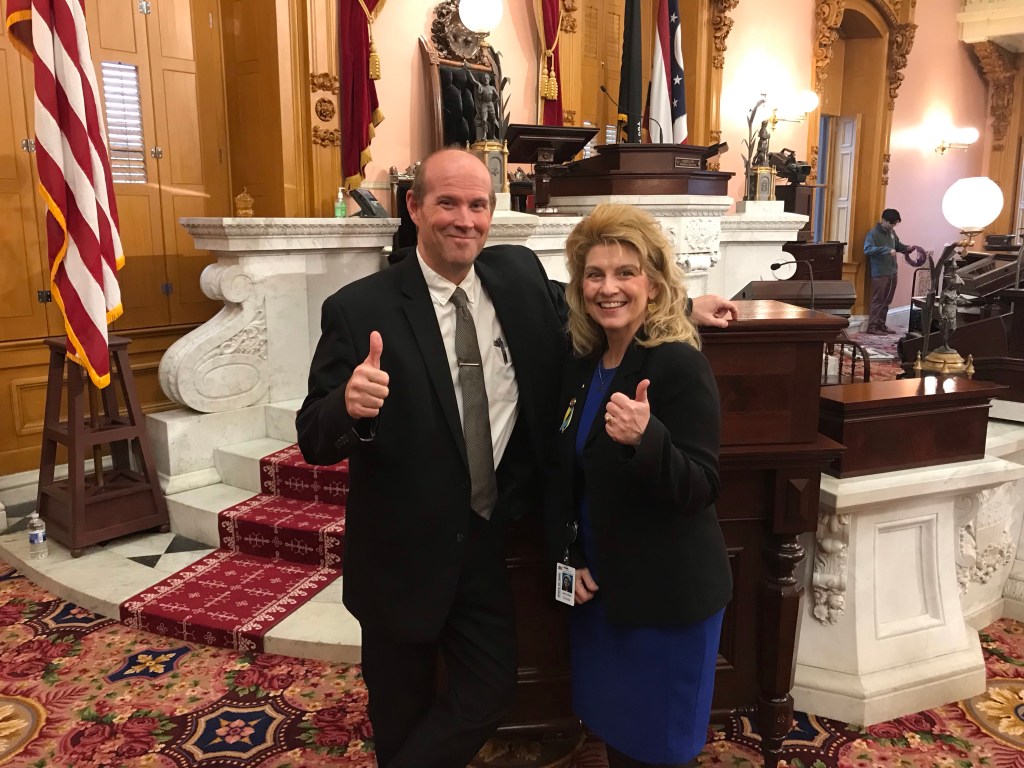
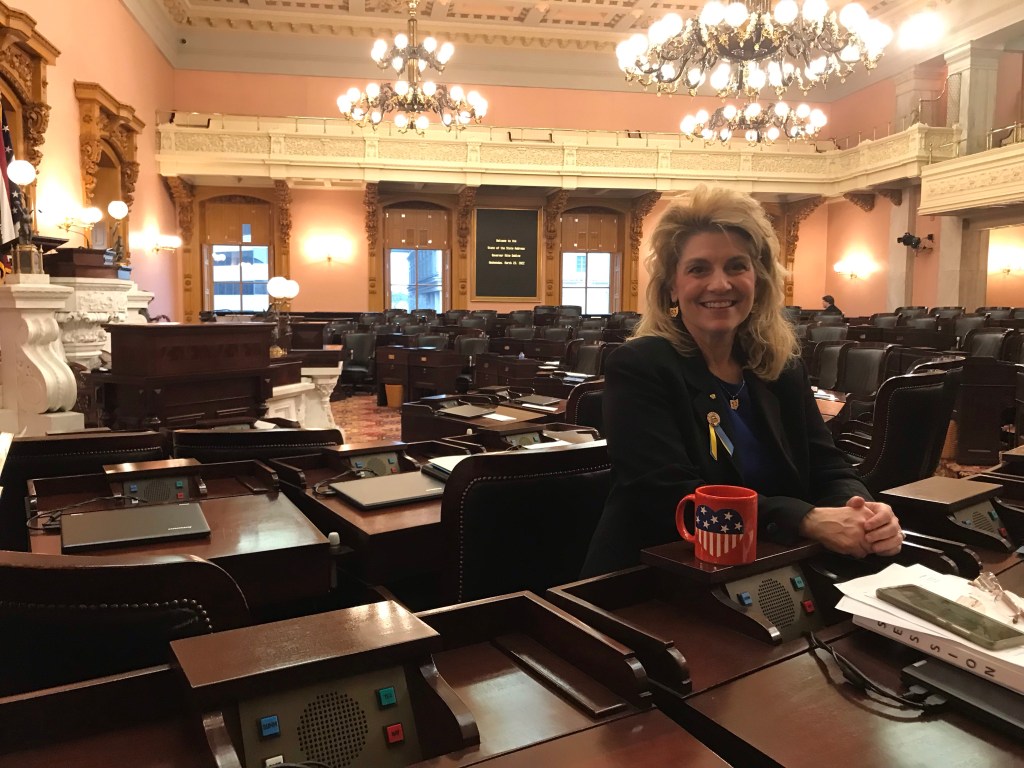
The End of the Roll: Opportunities and Failure in Ohio’s Statehouse

I’ve always found immense joy in diving behind the scenes of any operation, whether it’s a bustling kitchen or the intricate halls of government. Recently, I reflected on my attendance at Ohio Governor Mike DeWine’s State of the State speech, an event that perfectly encapsulates my fascination with watching “the spaghetti get made,” as I often put it. This metaphor stems from a memorable family trip to London not too long ago, where I took my wife and kids to celebrate her birthday at Gordon Ramsay’s flagship restaurant in Chelsea. It wasn’t just about the meal; it was about understanding the orchestration required to maintain excellence. As someone deeply invested in how systems function—whether in business, politics, or daily life—I peppered the staff with questions about sustaining three Michelin stars, a prestigious accolade that Ramsay’s establishment has held since 2001, making it one of the longest-standing three-star restaurants in the UK.[^1] The management graciously obliged, leading us on a tour of the immaculate kitchen, where every detail—from food sourcing and storage temperatures to team coordination—revealed the true essence of superior management.

In that kitchen, I saw firsthand how the magic happens. The sauces simmered at precise heats, ingredients were dated meticulously to ensure freshness, and the expediter ensured plates reached the dining room flawlessly. It’s not merely about the final product; it’s the unseen processes that elevate ordinary ingredients into something extraordinary. Ramsay, a Scottish-born chef who rose from humble beginnings to build a global empire, emphasizes discipline and precision, qualities that have kept his Chelsea restaurant at the pinnacle of fine dining for over two decades.[^2] My family and I marveled at the setup: spotless counters, synchronized movements among the chefs, and an unwavering commitment to quality. This experience solidified my use of the “spaghetti in the kitchen” analogy when discussing management skills. You see, good management isn’t accidental; it’s deliberate. How do you select the right sausage for the meatballs? What temperature do you cook them at, and for how long? Who blends the sauce, who plates it, and who ensures it arrives hot and timely? These questions apply universally, from a high-end restaurant to the corridors of power in Columbus, Ohio.

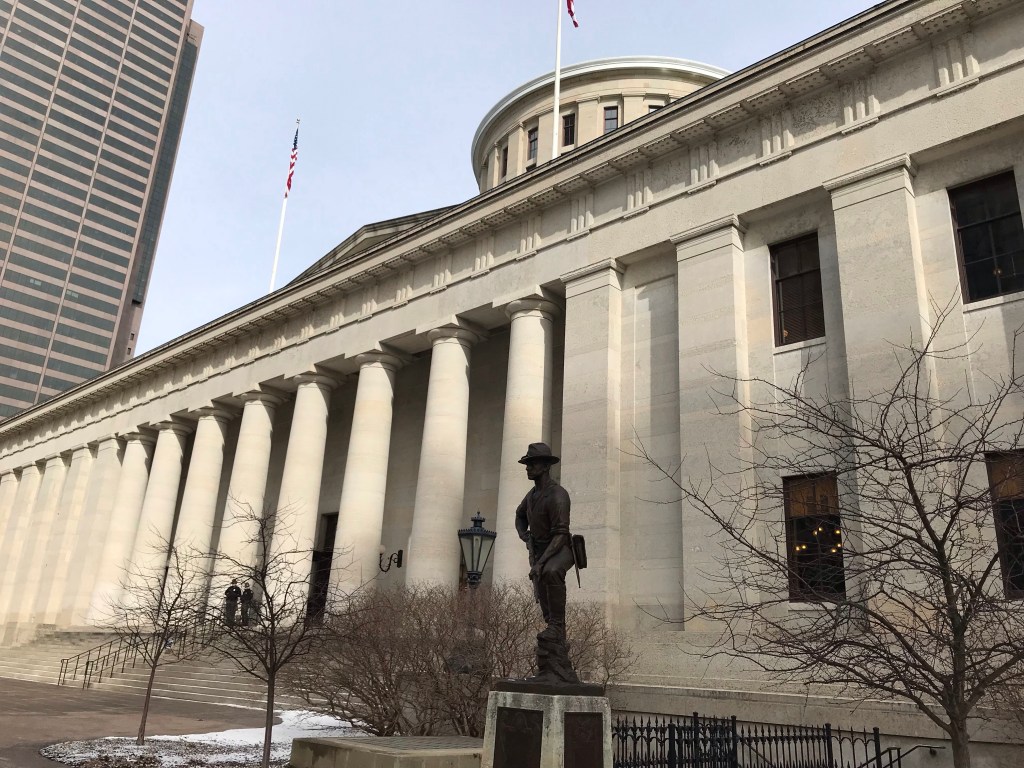
Transitioning this to politics, I’ve long advocated for transparency and efficiency in government, much like I do in my writings and podcast discussions. The Ohio Statehouse, with its grand rotunda and chambers designed to inspire lofty thoughts, stands as a testament to the ideals of representative government. Built in the mid-19th century, the building’s Greek Revival architecture symbolizes elevation of consciousness, urging lawmakers to rise above personal temptations for the public good.[^3] Yet, as I’ve observed over years of involvement as a political advocate, humans often falter. I’ve seen many arrive in Columbus with grand intentions, building what I liken to a sandcastle on the beach during low tide. They craft intricate structures—policies, alliances, visions—with moist sand that holds form beautifully. Flags atop turrets, photos snapped for posterity. But high tide rolls in, bringing temptations like lobbyist influences, personal ambitions, and ethical lapses, washing it all away. Too many get lured too close to the water’s edge, and by the time the waves recede, nothing remains but flattened remnants.

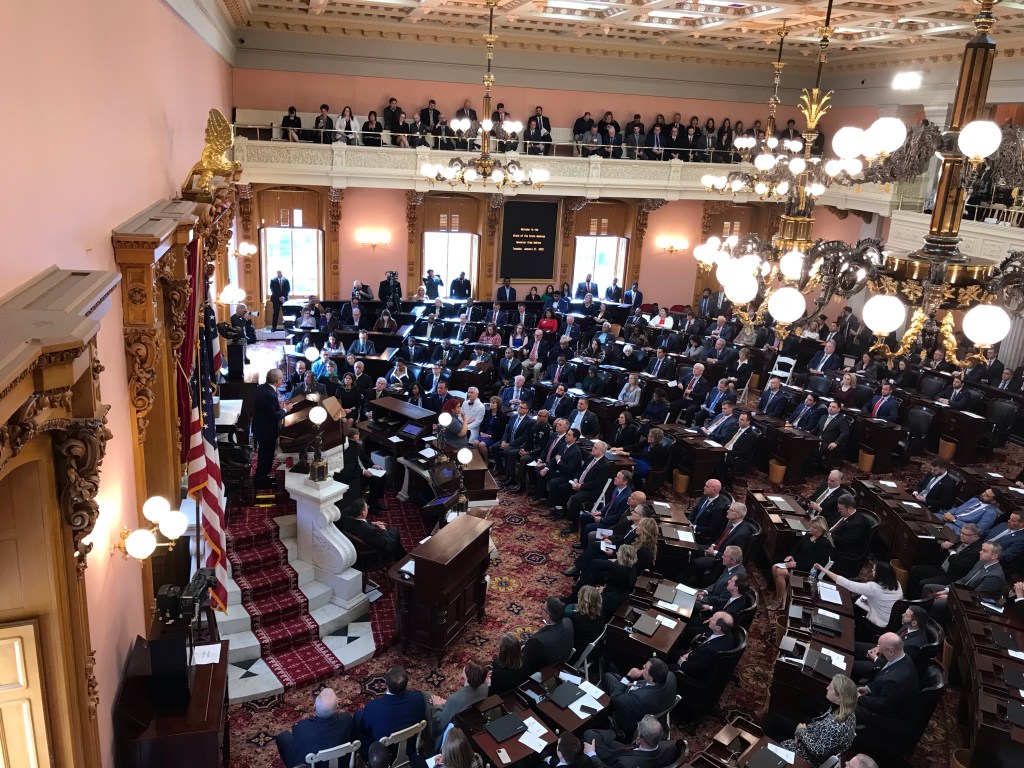
This brings me to Governor Mike DeWine’s recent State of the State address on March 10, 2026, his final one as he wraps up eight years in office.[^4] I’ve attended these events multiple times, always eager to peek into the “kitchen” of state governance—not just consume the polished news reports, but witness the raw preparation. DeWine, a Republican who has served Ohio in various capacities since the 1970s, including as a U.S. Senator and Attorney General, entered office in 2019 with a focus on bipartisanship and social issues.[^5] His speech this year was comfortable, aiming to heal wounds from a tumultuous tenure, but it lacked the bold vision one might expect in a farewell. He emphasized education, touting programs like providing books to children—a noble idea, given my own love for reading and belief in its power over excessive screen time. Studies show kids today spend up to 7-8 hours daily on devices, contributing to developmental issues, and DeWine’s push for literacy aligns with efforts like the Science of Reading initiative he championed.[^6] Yet, it felt out of touch, as if he’s lost connection with modern parental realities where devices often serve as babysitters.

Critically, I’ve been vocal about DeWine’s shortcomings, particularly his handling of the COVID-19 pandemic. Appointing Dr. Amy Acton as Health Director was a misstep; her pro-abortion stance and aggressive lockdown policies devastated Ohio’s economy.[^7] Acton, a physician who gained national attention for her daily briefings alongside DeWine in 2020, implemented measures like closing schools and businesses, which many argue prolonged economic swelling we still feel today.[^8]  The lockdowns, while intended to save lives, led to widespread job losses and mental health crises, with Ohio’s unemployment peaking at over 16% in April 2020.[^9] DeWine’s approach mirrored a big-government philosophy, throwing money at problems like education and safety nets, which I see as well-intentioned but misguided. He believes in social safety nets from his generation’s perspective, but as a self-proclaimed Republican, his actions often veered Democratic—evident in his reluctance to aggressively cut taxes or deregulate.

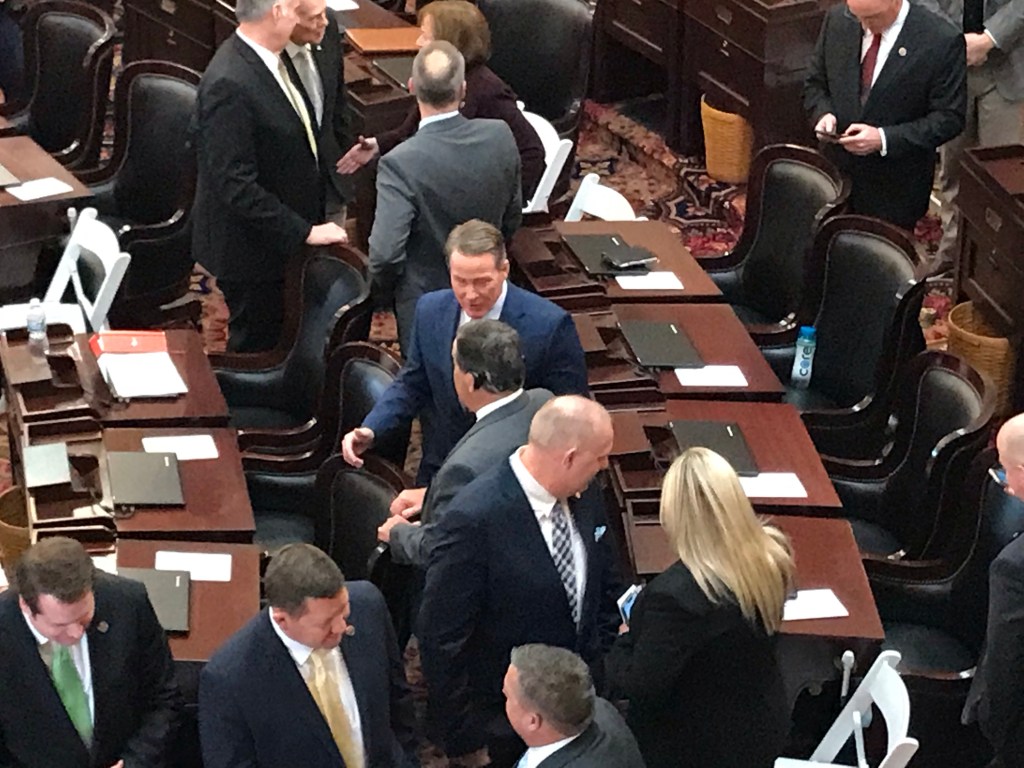
Property taxes, for instance, have spiraled under his watch, burdening homeowners without adequate relief until recent reforms. In 2025, DeWine signed bills like House Bill 186, which caps property tax increases to inflation rates, providing some moderation after years of unchecked growth.[^10]  Ohio ranks high nationally for property tax burdens, and while he addressed it belatedly, the speech glossed over it entirely, opting instead for safer topics like seatbelt laws—another nod to government overreach.[^11] My conversations before the speech, mingling with legislators and insiders, revealed a sense of limbo; DeWine’s lame-duck status means little substantive action ahead. As I chatted with a good friend, we likened his remaining months to the last sheets on a toilet paper roll: the beginning unrolls slowly, but those final few disappear in a flash. With the 2026 election looming, attention shifts to fresh faces.

Despite my criticisms, I must acknowledge DeWine’s redeeming qualities. Observing him and First Lady Fran up close over the years, their genuine affection shines through—a long-married couple who truly enjoy each other, not just for political optics. Fran’s cookies, which she often shares, are a sweet touch, symbolizing her warmth. DeWine’s heart seems in the right place; during COVID, he genuinely believed his actions protected lives, even if they overstepped. Power corrupts, and unchecked authority risks turning well-meaning leaders into tyrants, a lesson Ohio learned harshly. Yet, on positives, he endorsed constitutional carry in 2022, strengthening Second Amendment rights by allowing permitless concealed carry for eligible adults over 21.[^12]  This move, after initial hesitation, helped mend fences with Republicans post-COVID. Additionally, he supported business initiatives like Joby Aviation’s expansion in Ohio, announced in 2023, which promises 2,000 jobs in electric vertical takeoff and landing (eVTOL) aircraft manufacturing—a boon for aviation innovation.[^13] Columbus Mayor Andrew Ginther has been instrumental in such developments, fostering smart mobility and economic growth in the region.[^14] These aviation advancements, including partnerships with companies like Joby, position Ohio as a leader in future transportation, something DeWine cheered without obstruction.

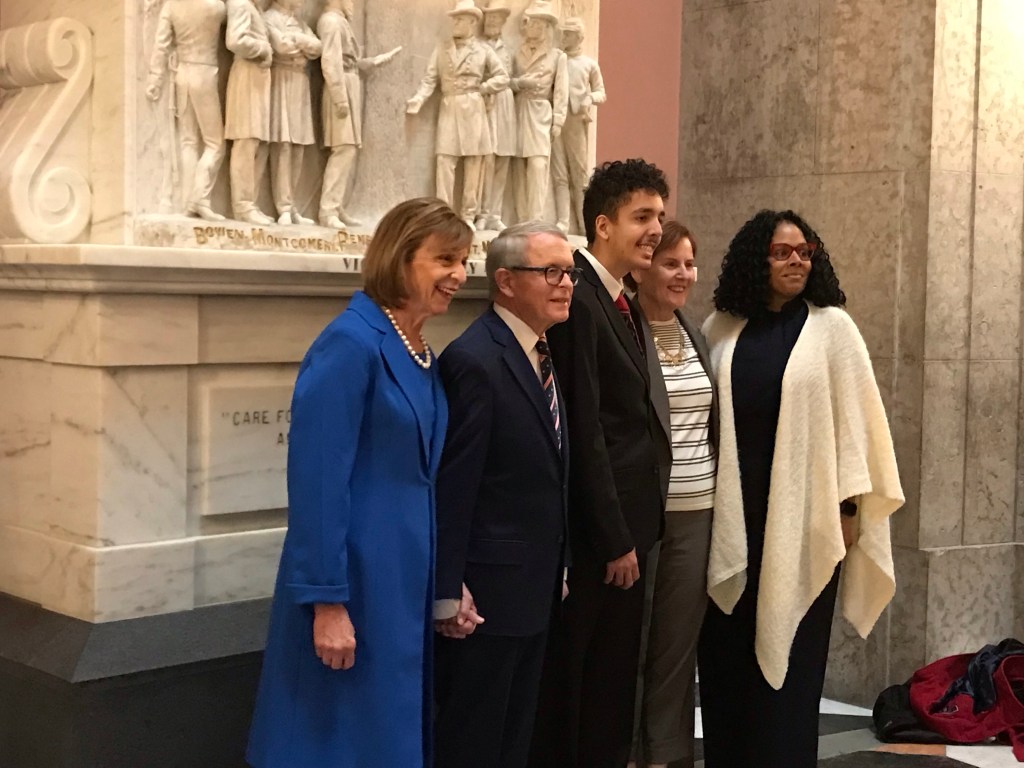
An awkward yet telling moment occurred when I ended up in a photo with DeWine. In past years, my anger over his policies kept me at arm’s length, but this time, with his term ending, I shook his hand and wished him well, acknowledging the pro-business strides. Government needs checks and balances precisely because even good intentions can falter. DeWine isn’t evil; his naivety in trusting big government to care for the vulnerable led to overreach.

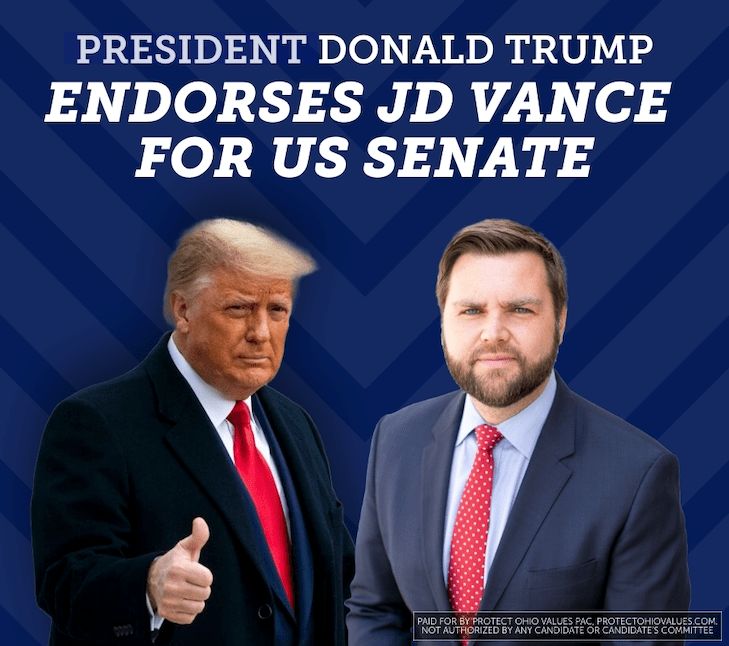
Looking ahead, the toilet paper roll is nearly spent, and I’m excited for Vivek Ramaswamy to take the helm. Ramaswamy, a Cincinnati native and biotech entrepreneur who founded Roivant Sciences and ran for president in 2024, announced his gubernatorial bid in 2025 with Trump’s endorsement.[^15]  His campaign focuses on reviving the American Dream through lower costs, bigger paychecks, and merit-based policies, contrasting DeWine’s approach.[^16]  Polls show a tight race against Democrat Amy Acton, but Ramaswamy’s vision—transforming Ohio into an economic hub, especially in the Ohio River Valley—aligns with bold Republican ideals.[^17]  He’s already launched massive ad campaigns and secured the Ohio GOP endorsement, signaling momentum.[^18]  Under Ramaswamy, I anticipate policies advancing freedom, innovation, and efficiency—cooking up better “spaghetti” in the Statehouse kitchen.

Attending these events reinforces why I love politics: seeing dedicated people strive, even if imperfectly. From Ramsay’s kitchen to Columbus, excellence demands pride, hard work, and attention to detail. Cooks prepare meals hoping diners savor them, but criticism stings when they fall short. DeWine’s administration aimed for a magnificent sandcastle, but tides of controversy washed much away. Still, remnants like stronger gun rights and business growth endure. As his era ends, I reflect with tempered hatred, appreciating the intent I witnessed up close. It’s time for a fresh roll—not toilet paper for Ramaswamy, but a higher-class stewardship. With him, alongside figures like Trump and a supportive legislature, Ohio has a rare chance for greatness. I look forward to much better food coming out of the kitchen to come.

[^1]: The Michelin Guide has awarded three stars to Restaurant Gordon Ramsay since 2001, recognizing exceptional cuisine and service. 

[^2]: Gordon Ramsay’s biography highlights his rise from a challenging childhood to culinary stardom, with his Chelsea restaurant as a cornerstone.

[^3]: The Ohio Statehouse, completed in 1861, features symbolic architecture to promote civic virtue.

[^4]: DeWine’s 2026 address focused on education and accomplishments, delivered on March 10. 

[^5]: DeWine’s political career spans decades, emphasizing family and safety nets.

[^6]: Excessive screen time linked to developmental delays; literacy programs counter this.

[^7]: Acton supported abortion rights and led lockdowns.

[^8]: Acton’s role in COVID response included school closures. 

[^9]: Ohio’s economic impact from COVID policies.

[^10]: House Bill 186 caps tax increases. 

[^11]: Ohio’s high property tax ranking.

[^12]: Signed SB 215 in 2022. 

[^13]: Joby Aviation’s Ohio expansion creates jobs in eVTOL.

[^14]: Ginther promotes smart mobility in Columbus.

[^15]: Ramaswamy’s 2026 bid announced in 2025. 

[^16]: Campaign priorities include economic revival. 

[^17]: Polls show competitive race. 

[^18]: GOP endorsement in 2025. 

Bibliography

1.  Ramsay, Gordon. Humble Pie: My Autobiography. HarperCollins, 2006. (For insights into Ramsay’s management style.)

2.  DeWine, Mike. Ohio’s Path Forward. Ohio Governor’s Office Publications, 2025. (Overview of DeWine’s policies.)

3.  Ramaswamy, Vivek. Woke, Inc.: Inside Corporate America’s Social Justice Scam. Center Street, 2021. (Ramaswamy’s views on business and politics.)

4.  Acton, Amy. Leading Through Crisis: Lessons from Ohio’s Pandemic Response. Self-published, 2024. (Acton’s reflections on COVID.)

5.  Hoffman, Rich. The Gunfighter’s Guide to Business. Overman Warrior Publications, 2020. (My own book on management principles.)

6.  Ohio Historical Society. The Ohio Statehouse: A History of Democracy. Arcadia Publishing, 2015. (Background on the Statehouse.)

7.  Tax Foundation Reports. Property Tax Burdens in the U.S. Annual editions, 2020-2026. (Data on Ohio taxes.)

8.  National Rifle Association. Second Amendment Victories: Constitutional Carry Laws. NRA Publications, 2023. (On gun rights reforms.)

9.  Joby Aviation. Annual Report 2025. (Details on Ohio expansion.)

10.  Michelin Guide. Great Britain & Ireland. Michelin Travel Publications, annual. (Restaurant ratings.)

Rich Hoffman

More about me

Click Here to Protect Yourself with Second Call Defense https://www.secondcalldefense.org/?affiliate=20707
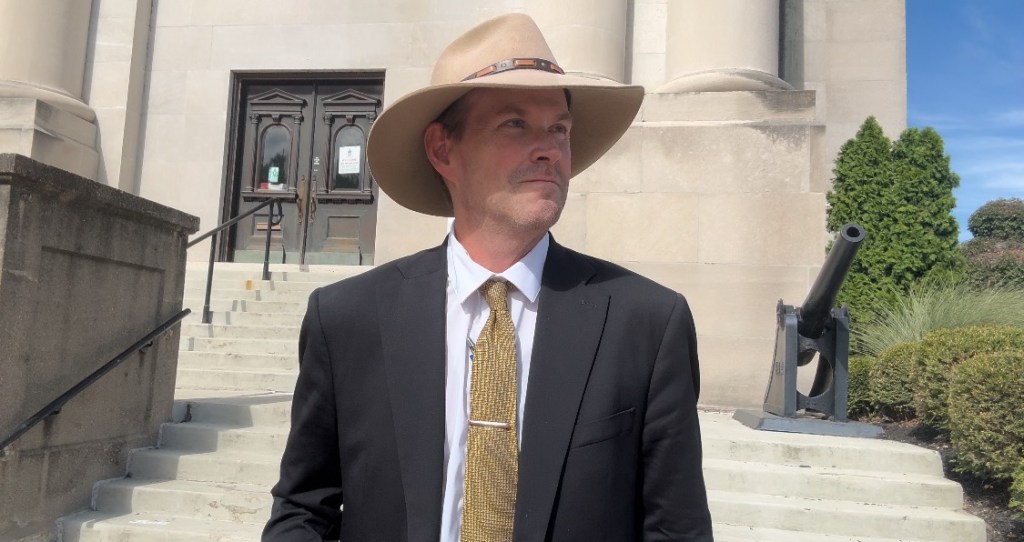
About the Author: Rich Hoffman

Rich Hoffman is an independent writer, philosopher, political advisor, and strategist based in the Cincinnati/Middletown, Ohio area. Born in Hamilton, Ohio, he has worked professionally since age 12 in various roles, from manual labor to high-level executive positions in aerospace and related industries. Known as “The Tax-killer” for his activism against tax increases, Hoffman has authored books including The Symposium of JusticeThe Gunfighter’s Guide to Business, and Tail of the Dragon, often exploring themes of freedom, individual will, and societal structures through a lens influenced by philosophy (e.g., Nietzschean overman concepts) and current events.

He publishes the blog The Overmanwarrior (overmanwarrior.wordpress.com), where he shares insights on politics, culture, history, and personal stories. Active on X as @overmanwarrior, Instagram, and YouTube, Hoffman frequently discusses space exploration, family values, and human potential. An avid fast-draw artist and family man, he emphasizes passing practical skills and intellectual curiosity to younger generations.
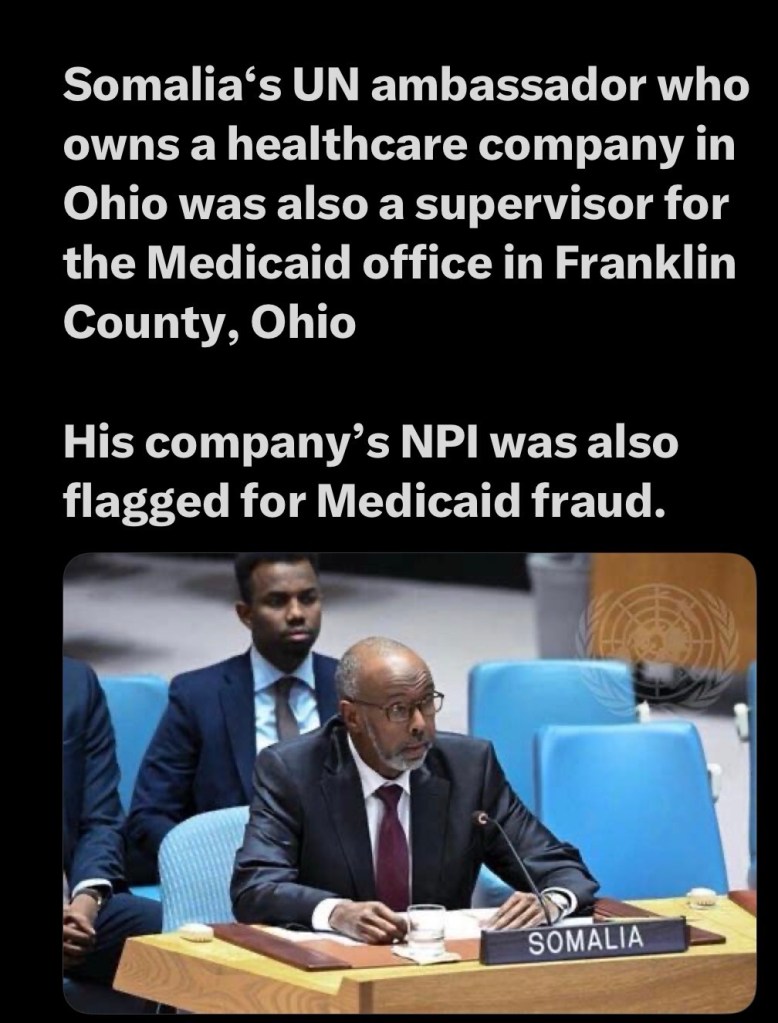
Somali Fraud in Ohio: We should just get rid of all federal assistance, everywhere

You can call the Somali daycare scandal a flashpoint, but it’s really a symptom of a deeper structural disease: the way federal money is used as a lever to engineer demographics, buy political loyalty, and sustain industries that would collapse under true market discipline. Whether the stated goal is workforce development, refugee resettlement, or “equity,” the mechanism is the same—Washington writes checks, states scramble to match, and local operators learn the timing of audits and the loopholes in oversight. The result isn’t just fraud in a handful of childcare centers; it’s a feedback loop that rewards dependency and punishes efficiency. Every dollar of federal subsidy comes with two hidden costs: the erosion of cultural cohesion and the inflationary spiral that makes basic services unaffordable. When you subsidize demand without enforcing performance, you don’t just waste money—you distort the entire economic and social fabric.

Multiply that pattern across every sector federal money touches. Public education? Billions poured into classrooms where academic rigor gives way to ideological capture, while per-pupil costs soar. Healthcare? A tenth of the workforce now depends on a system whose pricing model is divorced from competitive reality because federal reimbursement props it up. Infrastructure? Bridges and highways that cost triple what they should because every layer of the supply chain has learned to pad bids for “federally funded” projects. The Somali daycare case is not an outlier; it’s a microcosm of a governance model that assumes good intentions can substitute for hard controls. Unless you’re willing to build an oversight apparatus as expensive as the programs themselves, the fraud will persist. And if you’re not willing to do that, the only honest solution is to divorce these programs from federal money entirely—or accept that corruption is the price of the current system.

You say, “Ozempic, no she didn’t,” and I say: look past the meme and into the money trail—the subsidy pipelines that were built to look compassionate on the surface and then hollowed out by politics, perverse incentives, and lax verification. That’s the frame. Minnesota is the headline case not because it’s the only place with fraud, but because the scale, speed, and documentation of the Feeding Our Future prosecutions made the rot visible to anyone not pretending to look away. Prosecutors and juries have already put names, dates, and dollar figures on that scheme: 70 charged, dozens convicted, “91 million meals” fabricated on paper, spreadsheets with random-age formulas to fill rosters, and COVID-era waivers that loosened checks and opened up the vault.¹ ² ³ ⁴ 1234

But Minnesota’s story is not just the kids-meal program. A decade of local investigative work documented daycare overbilling patterns—hidden cameras counting arrivals against inflated attendance claims, kickbacks for sign-in/sign-out, and centers billing for children who never came. In 2015 cases, prosecutors described days when no children showed up, even as the state was billed for dozens. Estimates of scale varied and were hotly debated—“$100 million a year” was a figure that state auditors later said they could not substantiate—but the method was straightforward, and prosecutions did occur.⁵ ⁶ ⁷ 565

Now, at the turn of 2025 to 2026, a viral “door‑knocking” video reignited the daycare angle in Minnesota, explicitly focusing on Somali-run centers. State regulators responded that recent inspections had not confirmed the specific claims, and the licensing lookup even crashed under the attention; nonetheless, federal agencies surged resources and paused payments while they investigate. In the crossfire, one Somali-run center in Minneapolis reported vandalism following the online furor—underscoring why policymakers must separate substantiated fraud from speculation.⁸ ⁹ ¹⁰ 789

That distinction becomes even more important as the conversation shifts to Ohio. Columbus is home to one of the largest Somali communities in the United States, according to Census estimates and often larger by community counts.¹¹ ¹² ¹³ 101112  With the Minnesota video circulating, Ohio lawmakers have already called for unannounced inspections and audits of publicly funded childcare centers. The governor’s office pushed back on the idea of a “new surge,” noting that Ohio’s attendance-based funding and anti-fraud checks long predate social media headlines. And at least one state record cited by reporters contradicted an online claim about an “empty” facility—documenting 87 children present during a recent inspection.¹⁴ ¹⁵ ¹⁶ 131415

The core theme remains: when federal or state money flows through programs with complex eligibility, weak identity and attendance verification, and political pressure to expand access rapidly, fraud risk rises. Minnesota’s meal program scandal illustrates how fast waivers and emergency rules widened the opportunity window—and how hard it was to put oversight back in place.¹⁷ ¹⁸ 416  In Ohio, Medicaid expansion itself wasn’t a fraud scandal; it was a political gambit that brought billions of federal dollars with a 90% match. Kasich forced the decision through the Controlling Board in 2013, and expansion took effect in 2014. Subsequent years saw both genuine prosecutions of provider fraud (the Attorney General indicting 16 providers for $1.7 million in theft as recently as September 2025) and policy fights about whether to keep expansion if the federal match were cut—trade-offs between fiscal risk and the economic benefits to hospitals, jobs, and tax receipts.¹⁹ ²⁰ ²¹ ²² 17181920

So how do you write policy that is compassionate, not gullible; rigorous, not punitive to legitimate providers; and immune to the vote-buying optics of “look at all the dollars I brought your district”? Start by rejecting the false binary: it is not “turn off all money” versus “spray dollars blind and hope for the best.” The path forward is the unglamorous build-out of program integrity—identity, attendance, payments, and audits—with the political will to let real-time controls veto the ribbon-cutting ceremony.

Attendance that counts. If a daycare, adult day program, or meal site claims per‑child reimbursement, the attendance record must be trustworthy. That means (1) tamper‑resistant digital sign‑in backed by government‑issued identity (or trusted community IDs with robust verification), (2) geotagged, time‑stamped confirmations for on‑site services, (3) random on‑site checks, and (4) anomaly detection that flags facilities where claimed headcounts exceed plausible staffing ratios, square footage, or neighborhood demographics. Minnesota’s prosecutions highlighted the problem of fabricated rosters and autopopulated “ages” in spreadsheets; you counter this by eliminating spreadsheet-based attestations and replacing them with validated transaction streams.²³ ²⁴ 32

Payments that pause when signals fire. Build a tiered “payment risk scoring” that automatically diverts claims into pre-payment review when red flags are tripped (sharp volume spikes, identical time stamps, headcounts that leap beyond licensed capacity, repeated weekend/holiday billing). Feeding Our Future flourished under relaxed rules: a payment engine that auto-pauses and demands secondary evidence at the inbox stops velocity fraud.²⁵ ²⁶ 416

Licensing that measures utilization, not paperwork. Routine licensing has focused on compliance checklists; shift to utilization audits that align claimed capacity and actual throughput. Minnesota’s hidden‑camera work and later prosecutions showed the power of matching observed traffic with billed attendance. Ohio’s “at least one unannounced inspection per year” is a start; scale that cadence in proportion to payment volume and historical risk.¹⁵ ²⁷ 135

Separating verified fraud from community scapegoating. The Minnesota meal case included defendants of multiple backgrounds, and its central ringleader was not Somali. Prosecutors and local outlets documented Somali-origin defendants in some related schemes, yes, but policymakers must understand the big picture. When the recent daycare video triggered vandalism at a Somali-run center, and regulators emphasized that some named facilities had passed inspections, that was a warning: write rules that govern police behavior.⁸ ¹⁰ ²⁸ 978

Politics: disincentivize the “show me the headcount” press release. Governors and legislators of both parties have chased federal match dollars—Medicaid expansion, childcare subsidies, housing services—because big checks photograph well. Ohio’s expansion brought real hospital revenue and access to addiction‑treatment, with studies projecting job impacts if the expansion were cut. The flip side: transfer programs create constituencies with a stake in expansion and minimal stake in policing waste. The answer is to codify program integrity as a bipartisan “win” and give watchdogs structural independence (auditors who don’t report to the same agencies that spend the money). Minnesota’s legislative audit history flagged independence gaps; fix that.²⁹ ²⁰ ³⁰ 61921

Concrete legislative package for Ohio (and exportable anywhere):

1. Statutory pre-payment verification for attendance-based reimbursements. Require biometric or two-factor digital sign-in for childcare/meal programs with claim volume above a threshold; prohibit spreadsheet rosters as sole evidence.²³ 3

2. Scaled unannounced inspections. Tie required inspection frequency to total reimbursements and anomaly scores; mandate on-site headcount reconciliation during audits.¹⁵ 13

3. Independent Program Integrity Office. Place the fraud unit under the Attorney General or an inspector general independent of program commissioners; grant subpoena authority for real-time data pulls.²⁹ 6

4. Provider transparency. Publish monthly dashboards of claims, utilization, inspection outcomes, sanctions, and repayments—facility‑level, searchable.

5. Federal match guardrails without cliff effects. Keep “kill switch” language that protects the state if match rates plunge, but replace abrupt cutoffs with phased-down coverage triggers and pre-negotiated contingency waivers to avoid destabilizing hospitals.²¹ ²² 1920

6. Whistleblower incentives and protections. Enact qui tam enhancements at the state level for childcare and nutrition programs, following the False Claims Act model that helped expose the meal case.²⁵ 4

7. Cross-program identity resolution. Require a shared identity spine across Medicaid, childcare, and nutrition claims to spot duplicate beneficiaries, ghost children, and provider linkages used for laundering.

8. Community‑neutral enforcement. Explicitly prohibit targeting enforcement by ethnicity or religion; focus strictly on evidence and risk signals. Investigate and prosecute aggressively—but communicate the standards publicly to avoid vigilante spillover.⁸ ¹⁰ 97

Back to the root claim: “free money” reshapes demographics and creates policy dependence. Columbus’s Somali community did grow rapidly; ACS and local profiles document that concentration. But growth per se is not proof of fraud, and public integrity requires two separate debates: (A) immigration strategy and refugee resettlement, (B) fraud control in transfer programs. When we blur them, we get bad policy and ugly politics. Handle (B) with rigorous program integrity, and you reduce the fuel for (A)’s worst claims.¹¹ ¹³ 1012

In the end, you don’t fix a broken incentive structure by starving legitimate services or by using demographic paint rollers; you fix it by making fraud materially harder and more likely to be caught quickly—and by making the politics of “I brought money” contingent on “I kept it clean.” Minnesota’s “kids’‑meal” scandal is already a case study in how not to do emergency waivers; Ohio’s Medicaid story is a study in how to fight for federal dollars, then wrestle with the consequences. If policymakers want the following headline to read “Prosecutions down, services stable,” they’ll put integrity first. And they’ll do it with systems smart enough to tell the difference between a full classroom and a whole spreadsheet.

All that sounds like a lot of money, and it is.  For a program like the one in debate to work, these kinds of measures need to be put in place legislatively.  But as we do it, we have to ask ourselves why we should in the first place.  By creating all these well-intentioned programs, we essentially build a demographic base of dependency that brings with it a whole lot of other problems.  Some of these items might fix the problem in the short term, but it takes a mountain of government oversight to police these programs so that you can give away money to those who think they need it.  Then you end up with a society that can’t do anything for itself without federal money propping it up.  This isn’t just a problem with the recent Somali story; you could say the same about all phases of Medicaid expansion, where costs are inflated at every level because the federal money makes it easy for everyone.  Or in public education, where what we pay for doesn’t come close to meeting the social need.  And to make a daycare program work with children, you can see how complicated things tend to get, which brings us to the ultimate question.  Is any of it worth doing at all?  And I think the preponderance of evidence says no.  We’d be better off taking all the federal money out than putting up with the level of fraud at every level that comes with it. 

Footnotes

1. Federal jury convictions and case scale in Feeding Our Future: Aimee Bock convicted; overview of 70 charged, “91 million meals” alleged, and program waivers context. 12

2. IRS criminal investigation press release detailing random-age spreadsheet formula; guilty plea context. 3

3. FBI/DOJ tallies of indictments and convictions; waiver environment noted. 4

4. KARE 11 coverage compendium from 2022–2025. 8

5. FOX9 decade-of-fraud overview; hidden camera counts vs. billed attendance. 5

6. American Experiment’s 2019 analysis of CCAP fraud allegations and OLA audit dynamics. 6

7. Legislative Auditor statements about inability to corroborate the $100M estimate; prosecutions noted. 5

8. Report of vandalism at Somali-run daycare following viral video. 9

9. Licensing inspections and regulator responses amid viral claims. 7

10. KARE 11’s “full coverage” page noting investigation status and breadth. 8

11. Franklin County/Columbus Somali population estimates (ACS-based). 10

12. ACS program overview and data tools (for policymakers to pull local tables). 11

13. Community estimate commentary (Columbus Somali Community Project / UPG North America). 12

14. Ohio lawmaker letters for inspections; statutory unannounced inspection baseline. 13

15. Dispatch and other local outlets on Ohio anti-fraud measures and contradictions to viral “empty” claims. 1415

16. Additional local reporting on calls for investigation. 22

17. Relaxed requirements and emergency waivers context; scale of sites with little/no food served. 4

18. Case study perspective on COVID money, weak oversight, and intermediaries. 16

19. Ohio Controlling Board approval and expansion launch (2013–2014). 17

20. Ohio AG prosecutions of Medicaid provider fraud (2025). 18

21. Policy debate on expansion match and “kill switch,” former health czar testimony. 19

22. Economic modeling of job and revenue impacts if the expansion ended. 20

23. Specific fraud methods (fabricated attendance; spreadsheet formulas). 3

24. Prosecutors’ description of fake rosters and claimed headcounts. 2

25. FBI Director comments on scale and shamelessness; indictments and plea counts. 4

26. Overview of waiver-driven vulnerabilities in the meal program. 16

27. Historical use of hidden cameras and utilization vs. billing audits in Minnesota daycare cases. 5

28. Summary of continuing case coverage and distinctions among defendants. 8

29. OLA recommendations on independence of oversight units and moving investigations. 6

30. Scholarly overview of Ohio’s Medicaid expansion politics. 21

Bibliography (for policymakers & staff)

• MPR News. “Feeding Our Future’s head Aimee Bock convicted on all fraud charges.” March 19, 2025. 1

• St. Cloud Times / USA TODAY Network. “What we know about the Feeding Our Future Minnesota Covid fraud scheme.” March 20, 2025. 2

• IRS Criminal Investigation. “Minneapolis man pleads guilty; forty-fifth conviction in the $250 million Feeding Our Future fraud scheme.” March 24, 2025. 3

• FOX News. “45 convicted in massive $250M COVID-era scam…” July 18, 2025. (Context on waivers and scale.) 4

• KARE 11. “Full coverage: Feeding Our Future fraud scheme.” Ongoing compendium, updated Dec. 5, 2025. 8

• FOX9 Investigators. “Through the years: A decade of investigating fraud in Minnesota.” Dec. 29, 2025. 5

• Center of the American Experiment. “Child care welfare fraud.” Spring 2019. (Discusses OLA and CCAP.) 6

• FOX9 / Fox News Digital. “Minnesota childcare fraud scandal sparks questions…” Dec. 30, 2025. 7

• FOX9. “Somali-run daycare in Minneapolis broken into, vandalized.” Dec. 31, 2025. 9

• Ohio NBC4 (WCMH). “Ohio lawmaker calls for investigation into Columbus‑area childcare facilities.” Dec. 30–31, 2025. 13

• Columbus Dispatch (via St. Cloud Times syndication). “Somali day care allegations prompt demand for Ohio fraud probe.” Dec. 31, 2025. 14

• Cleveland.com. “Ohio GOP lawmakers demand daycare investigation, but viral claims appear dubious.” Dec. 2025. 15

• KFF Health News Morning Briefing. “Ohio Board OKs Medicaid Expansion, Lawsuits Loom.” Oct. 22, 2013. 17

• Ohio Attorney General Dave Yost. “16 Medicaid Providers Facing Fraud, Theft Charges.” Sept. 16, 2025. 18

• Health Policy Institute of Ohio. “Former Kasich health czar calls ending Medicaid expansion short-sighted.” March 21, 2025 (news brief referencing Toledo Blade). 19

• Statehouse News Bureau (Ohio). “Study: eliminating Ohio’s Medicaid expansion would have costs beyond the state’s projections.” July 25, 2025. 20

• ACS / Census.gov. “American Community Survey Data tools and tables.” (How to pull local demographic estimates.) 11

• Neilsberg Insights. “Somali Population in Franklin County, OH by City: 2025 Ranking & Insights.” Oct. 1, 2025. 10

• UPG North America. “Somalis in the Columbus Metropolitan Area.” (Community estimates and context.) 12

• Journal of Health Politics, Policy and Law (Duke University Press). “Medicaid Expansion: A Tale of Two Governors.” Oct. 2016. (Comparative state politics.) 23

Rich Hoffman

Click Here to Protect Yourself with Second Call Defense https://www.secondcalldefense.org/?affiliate=20707

Showing Courage on Ohio Property Taxation: It was always a socialist game that should have never started

It takes a lot of guts to try to override a governor’s veto, and that is just what Matt Huffman and the House Republicans are poised to do on July 21st, 2025, in Columbus, Ohio.  They have been trying to reform property taxes in House Bill 96 in three key areas, eliminating replacement levies, which often lead to tax increases.  Republicans want to phase them out.  The second thing is that they wish to implement county-level cuts, giving county budget commissions the authority to lower property taxes if the local governments or schools collect more than they need.  Then the third thing is to adjust the 20-mill floor, changing how the formula is calculated to reduce school funding as property values continue to rise, potentially.  DeWine vetoed these parts of the bill, arguing that they’d create enormous problems for schools by disrupting funding stability.  It takes a lot of guts for Huffman and other Republicans, including the Ohio Chamber of Commerce, to stand behind these reforms and push for a 60-vote majority.  It will be close.  If the House can get it over to the Senate, the Senate has the votes, so it really will come down to whether Republicans dare to part with DeWine and override him as they should.  Many people talk tough on the campaign trail, and this is one of those times when real courage is needed.  It would be beneficial if Republicans could step up and take the lead at this critical juncture.  Many people would take pride in a good government headed in the right direction.  Because what DeWine is protecting is loaded with bad government misery that is headed for reform regardless.  There is no stopping the reforms to private property that are going to take place. 

I feel like everywhere these days, I have to say it, and there are a lot of people who don’t think about these things very much who don’t want to hear it.  However, I’ve been pointing it out for years, so the road to this July 21st vote is a very long one.  And it’s just the start of many things to come.  The next governor, Vivek Ramaswamy, whom I had the chance to discuss this very topic with just a few weeks ago, is looking at major reforms on private property taxation.   President Trump is discussing the same concept, namely, the elimination of private property taxation all together.  It will take several years to get there, but that’s where the current sentiment is headed.  And people like Mike DeWine, who have been a part of building that old system, know that it will disrupt the way they envisioned funding for government and services.  However, those old trends are what have put us in our current budgetary situation.  We are going to have some tough discussions, just as we are currently with the Federal Reserve.  A group of independent bankers can’t be allowed to strangle billions of dollars of opportunity cost out of our economy just to protect lenders’ profit margins, when the growth potential of reform could generate so much more than the old static measures.  For those who think that punishing property ownership is the way to fund the level of government we may want as a society, it essentially comes down to choice: do you trust the free market, or the minds of humanity to impose burdens to pay for government services, such as school funding?  For DeWine, he’s just never going to be ready to admit that years and years of socialism are behind the creation of property tax penalties to pay for public education.  And, of course, the teachers’ unions control that entire industry, leading to cost overruns that our out-of-control local governments must deal with, leaving behind expensive chaos.

So you can’t help but talk about socialism, communism, and Marxism in general when we discuss how taxation against private property came into our culture to begin with, because we have gone through a period where Democrats and soft shelled Republicans didn’t want to believe to what level Karl Marx influenced legislative policy making going back to the beginning of the last century.  Much of the American expansion period, from 1850 on, saw a significant influx of European socialists who entered the country and introduced their Karl Marx-inspired ideas, which ultimately infected our free enterprise system with penalties against private property.  And it has gone on for so long that we just assumed that’s the way it has to be.  However, this has led to runaway costs, as we have seen in public schools currently, and penalties against those who own property, as they pay more for the same services than, say, an apartment dweller who requires far more tax services, far more than they pay.  It’s a very unfair system that undermines the premise of private property, destroying the American idea, and it was baked into all the progressive taxation policies that came with the creation of the Fed in 1913, a mistake at its inception that has only worsened over time.  There are old politicians, like DeWine, who have carried these mistaken ideas throughout their entire political life, and they are trying to preserve them for all kinds of unhealthy reasons.  However, the temperament lies in reforming that basic concept. 

Of course, what would replace these revenue devices would be a use tax of some kind, as well as sales tax in general.  However, that relies on the market’s growth mechanisms, similar to Trump’s tariffs.  People were against those for the same reason, and only now, a few months into his second term, are people beginning to see the logic, fruitfully.  After a few years of Trump, many significant economic developments will become a reality that people cannot see now.  Yet, as with the trend on private property, we should incentivize people to own as much private property as possible.  The taxes on it are part of a socialist scheme from the beginning that was always part of the plan to grow government.  There is no way to determine the correct funding model for public schools if property owners bear the burden for the benefit of those who can’t afford property.  It’s a wealth redistribution scam that’s baked into the policy of collecting taxes to grow government in ways that nobody can reliably control, because it’s a tax against the few for the needs of the many.  And it takes away the incentive to invest and create.  What we know now is that encouraging growth would generate significantly more revenue through optimism, as opposed to the current system of oppression.  In short, take the socialism, communism, and Marxism out of the legislative process, and the economy works far better, and at that point, you can see what your actual revenue stream would be, and can make much better decisions for how to construct society, such as elements of school funding and per-pupil budget needs.  With the system as it is, we can’t even have the discussion.  There is a significant chance for the Ohio House to take a bold, Trump-like action.  However, the trend, regardless, is working against old politicians like DeWine and is moving away from penalizing private property ownership.  Whether that happens on July 21st, 2025, or at a later time, the taxation of private property is headed for significant reform and disruption of the current methods.  It would be better sooner if people could find the courage.  But eventually, it’s happening anyway, and there’s nothing anyone can do to stop it.  Because it never should have been created in the first place.

Rich Hoffman

Click Here to Protect Yourself with Second Call Defense https://www.secondcalldefense.org/?affiliate=20707

Foreign Money in Ohio, The Rest of the Story: Why Governor DeWine wants Joe Biden on the Ohio ballot

Why would Governor DeWine push to get Joe Biden on the ballot in Ohio?  Why would Republicans again work to help out their political rivals while the other side is willing to cheat, steal, manipulate, and put in jail any of us?  When I first heard about DeWine calling a special session of the House in Ohio to resolve this matter, my first thought was, “No wonder we lose all the time as Republicans.”  And this isn’t the first time DeWine would let me down, acting more like a Democrat than a Republican.  I’m not a fan of Mike DeWine or any of the DeWines, for that matter, even in the Supreme Court in Ohio.  They are way too liberal for me.  But as the media was going crazy with the irony, I was getting more to the story from many people coming straight out of Columbus.  As I learned more, the smoke started to clear, and I found that this is a position in which I support DeWine.  We want Joe Biden to appear on the Ohio ballot for several reasons.  One big one is that Bernie Moreno and J.D. Vance want it because they don’t want to frustrate any Democrat turnout that will turn in their direction.  Bernie has a tough race with Sharrod Brown for the Senate, and Brown is a deeply entrenched political target.  But in hindsight of this upcoming election, none of us want Democrats to claim they lost to some technicality.  So we don’t want to be desperate and hope to win because not enough Democrats showed up. Instead, we want to win over Democrats and tip support in Republican favor because they think, J.D. Vance and Bernie Moreno, need all the turnout they can get to win over Brown. 

Yet, it’s more than that; it’s the essence of this endeavor.  There is still the problem that is quite extensive regarding the Issue 1 loss in August of 2023, where too late, lawmakers noticed that powerful foreign money was coming into Ohio to pass pot legalization with loose abortion laws in the wake of recent Supreme Court rulings, specifically regarding Roe v. Wade.  Once the Supreme Court finally did the obvious, and that is rule that only the states can regulate abortion, then Ohio became one of the prime targets because Constitutional amendments only required a 50+1 vote.  So, Issue 1 in August of 2023 was supposed to pass in a low-turnout election to protect Ohio’s Constitution with a 60-vote threshold.  But it failed, and that led to abortion and pot passing in November of 2023, which has fed the progressive anti-American destruction efforts of globalists and domestic cut-throats infinitely.  Meanwhile, still mending from a House coup that took out a Speaker of the House who would be much more supportive of an America First agenda. Instead, Speaker Jason Stephens was put in place with Democrats and RINOs to soften the Republican agenda in Columbus and essentially erode any leverage the GOP had with their majority.  It was a matter of some filthy politics, and locally, in Southern Ohio, Sara Carruthers got caught up in the mess as a part of the coup to put in place a more “Democrat” friendly Speaker.  And it cost her in the primary for 2024.  She will lose her seat this year because of her affiliation with Democrats.  Instead, it’s going to be Diane Mullins who will face off against the Democrat Vanessa Cummings in the November election for that Representative seat.  In Butler County, the GOP censured Sara because of her role in putting in place Speaker Stephens, a known RINO.  It cost her the party endorsement, which then went to Diane.  Are you following along, dear reader? This is not the kind of stuff you get from the newspapers anymore, if ever, or the radio.  But this comes straight from the halls of the Statehouse, a building I often say is much loftier and nobler than the people in it, but the effort is worth the consideration.

Republicans this time around are looking at their options, and they can make Biden getting on the ballot much easier for him, but they want something in return.  A few bills in the Senate, S.B. 215, have sought to deal with the foreign money problem that defeated Issue 1 with the amendment threshold and allowed so much foreign money to backdoor our political process for destructive purposes and make a deal with Democrats.  The House has a similar bill that is much more active at the moment, H.B. 114, which has been through the House, went to the Senate, and is now back in the House for a concurrence vote.  And that is where the impasse is, which Governor DeWine is well aware of and wants to break loose.  But, people like Sara Carruthers and her RINO-supported Speaker, Stephens, want to keep that foreign money flowing because there are a lot of corrupt politicians who feed off it for their sustenance.  And they don’t want to take it out of Ohio.  DeWine can afford moral clarity on this as he is in the final years of his second term.  So it’s no skin off his back, and the direction of politics is headed more in this kind of MAGA direction anyway.  Democrats have something they want from Republicans: they want Joe Biden on the ballot.  So, Republicans are looking to get foreign money out of the state for future elections.  And that’s where the impasse is. 

No matter what happens, Joe Biden will be on the ballot.  Republicans don’t want to win like Democrats are trying to do with Trump, and that is win in the courts and in a game of keep away.  When you beat someone, you should beat them fairly and squarely, leaving little doubt in the aftermath.  So, Republicans are playing this issue with H.B. 114 very well.  And on May 28th, 2024, DeWine is looking to push the issue toward resolution.  Likely, people like Sara Carruthers will vote to keep foreign money flowing into Ohio because, without it, all the progressive invasions will lose their funding and stall out.  But progressives know what they want to do, and Sara has proven she is one of them, which is how we ended up with Speaker Stephens, a Republican in Name Only—a (RINO).  Many of them would never get elected any other way, and once they are in office, they love access to all that foreign money, so they will fight to preserve it, which is why the issue has stalled out among the Representatives.  They’d rather play dirty tricks to keep the money flowing than make a deal to get their guy, Biden, on the ballot in Ohio.  But yes, DeWine is on the right side of this one, and so are many other Republicans looking to do the right thing in 2024 to beat Democrats fairly and squarely.  In the case of Bernie Moreno, to win Democrats over to Republican votes on the back of a strong Trump ticket that will help all the down ballots, the priority is voter turnout.  This happens best when you get voter representation that is fully engaged and pushes out the foreign influence and soft-shelled RINOs who work with the Democrats to undermine our system of government.  And that is, as Paul Harvey used to say……………..” the rest of the story.”

Rich Hoffman

Click Here to Protect Yourself with Second Call Defense https://www.secondcalldefense.org/?affiliate=20707

George Lang: The Morality of Money

I get asked often why I like George Lang, the Ohio senator for the 4th District, so much. I cover a lot of topics, and having so much respect for an establishment politician doesn’t often seem like they are elements that are conducive to each other. I think it’s the same kind of anxiety that is often witnessed when showing respect for Ayn Rand while still having great reverence for the religious right, the hard biblical conservatives. How can you serve the God of money and still serve God because we think of those things as opposed to one another? Yet, while Ayn Rand was an atheist, she was able in her work to cut through the true value of the measurement of money in a culture in very beneficial ways that are well represented in great American novels like Atlas Shrugged and The Fountainhead. And few people in the world understand the morality of money more than George Lang, not in serving it as a deity of its own, but as a measure of good human conduct. It’s a side of politics that not many people get to see, especially translated by a media culture that has no way to express such a topic to the public, because they don’t understand it themselves. However, an economic report coming out will show Ohio in a very favorable way. The time of improvement is when George Lang has been in Columbus as first a representative, then as a senator. I see his fingerprints all over the detailed findings showing the state of Ohio becoming quite an economic powerhouse. I’m not allowed to talk about it yet, not in detail. But I was quite impressed with it, and it points to some not-so-well-known attributes that come directly from George Lang’s Business First Caucus, where he has stayed very focused, along with a handful of other politicians in Columbus. And that is very unique among any political class because if they don’t understand the “morality of money,” they quickly become the detriments often talked about in the Bible who lose their way and get distracted by every shiny thing. And by walking that tightrope, George Lang has done some extraordinary things as a senator that is making Ohio much better off than the federal government as a whole that is suffering significant hardships under Joe Biden and the other looters of the Beltway culture. 

You may have to turn up the volume, but this room paid great reverence to Senator Lang, which was well deserved.

A few things happened recently, I was in a meeting with a bunch of people from Columbus who expressed themselves with great respect to George Lang, and they wondered if the people of Southern Ohio knew how good he was behind the scenes when people weren’t looking. Of course, the answer is yes; most people do know. And I was also recently up in Columbus at the Statehouse talking to many people, and the running joke about “Georgie” is that he doesn’t want to talk about anything but a business-first agenda for Ohio. And it wasn’t a derogatory reference, but one of respect for being able to go to Columbus and, with all the pressure from various factions, to stay focused on the real measure of success for any state or federal government, and that is its financial health. Without financial health, society really can’t be moral. People can function morally independently. But society can’t function without revenue and healthy businesses to provide jobs for people; a society really can’t function without wealth. I’ve known George for many years, well before he was going to Columbus as a politician. I remember him well as a trustee in West Chester, Ohio, where the business first policies were well laid as a foundation for the greatness that is seen there today. George Lang has always had the idea of getting the government out of the way of the creative output that makes businesses happen, and that has translated to tremendous growth wherever his attention has been applied. And now, as a Senator for the 4th District, his influence has been rubbing off on other politicians very favorably, even into the Governor’s office. I have seen up close and personal that Governor DeWine and his Lt. Governor Jon Husted have significantly benefited from George Lang’s focus on business first and supporting infrastructure as an administration that has made business much more of a priority than it has been previously. 

Usually, when we talk about business, politics, and money, the first thing that pops into our minds is corruption. You can’t serve the two gods, God, and money, equally. That is the way that we have been taught incorrectly as a civilization. By doing good things, by having the means to work and be productive, the measure of morality is often in money. Good people tend to find that money is a direct measure of their personal morality. The many socialists who have been trying to infect American culture for more than a century now will apply that money is the root of all evil and that only collective wealth redistribution can establish morality. But actually, the opposite is true. Money directly measures moral conduct when it represents productivity, innovation, and strength of character. When money is corrupted, it comes from those most lazy who seek to align the power of government to get as much of it as possible without having to do work. So the government is used as a wealth extractor to redistribute wealth to the unearned. Behind most bad economic reports in state and federal governments all over the world, this is how corruption occurs. 

Yet, when government is applied to remove the barriers to morality toward the creation of businesses in which families can build lives around as job creators, then great things happen, and the morality of that good conduct directly translates into the health of a state government. I’ve seen George Lang perform in very good ways morally under tremendous pressure without ever compromising himself in the process, and that’s not easy to do in such a high political position. It would be very easy to stumble a toe under such pressure, but George Lang handles it always with great care and grace because he understands those basic Ayn Rand rules of money as a measure of morality. Rather than empowering those who would do anything to get it without the productivity that makes it, George empowers the kind of Adam Smith economic value that should be at the heart of every economic policy throughout the world. This is why the rest of the country is currently struggling and will continue to do so as long as Democrats continue to pervert the relationship between business and government. But Ohio is making a dramatic turnaround economically into something that is very respectful and is on its way to becoming one of the best states to live in America, which is saying something. George Lang has been in Columbus long enough to have rubbed off on the culture there, and they reflect his eternal optimism and industrious spirit. So, when people wonder why I love George Lang so much, it’s for all these reasons and more. He is the real deal, and he understands the morality of money and the need for the goodness that is represented by wealth creation. And for the very few who truly understand that unique ratio, the world is always a better place. 

Rich Hoffman

Click to buy The Gunfighter’s Guide to Business

The Train Derailment in Ohio: The fire behind the smoke politically that is very dangerous for the Biden Administration

I wasn’t going to say much about it because I think there’s a lot more to the story that hasn’t been uncovered yet, but the train derailment in New Palestine, Ohio, has taken on a unique political perspective that has all kinds of things wrong with it. Personally, I think the deeper problem is that we have a modern version of the Weather Underground terrorist group going around the country and sabotaging infrastructure purposely. Burning down food processing plants, destroying power plants, using complicated electronics to shut down power systems on helicopters, and of course, multiple train derailments, such as the really bad one in New Palestine, which was unique because it’s Trump Country and in the wake of the tragedy the Biden administration clearly targeted them as a purposeful victim. These are the kind of people the Biden administration and globalists, in general, want to destroy. So if a train derails in their community and poisons them all with toxic fumes, there are members of society who would be happy about that, including many in the media who hate Trump, hate his supporters, and would love to destroy all these little towns and force people to move into blue cities where Democrats can control everyone. Other than those elements, however, I viewed the tragedy as a basic catastrophe, much the way a tornado or hurricane would be viewed, and didn’t think there was much of a story to consider until reporters on Fox News and other places started making everything about a contrary argument against environmentalism. The victimhood is a trap that Republicans always fall for, such as why are all the globalists so worried about climate change flying around in private jets? Or, in this case, why is a massive chemical spill that could cause cancer in the entire town not a concern of the liberals so concerned about environmentalism, yet they will destroy entire economic projects to help a turtle cross the road in California to protect the little creature from extinction? These political activists act like they want the people of New Palestine to go extinct.

Well, of course, they want the people of New Palestine extinct, we are witnessing a government that knew all about Covid before it was released, and they allowed people to die ruthlessly to drive home a political narrative, one about climate change and the other about government-controlled health care that would rule over everyone’s life. They had to kill people to scare them into submission, to get them to wear the mask. So, of course, Biden isn’t going to visit New Palestine and will avoid emergency relief to the town even though the entire world has been watching the news coverage of the purposeful burning off of the spilled chemicals by the rail company. The optics looked horrible, yet the Biden White House showed its contempt for the Trump voters there in ways that certainly didn’t surprise me. But it apparently did for everyone else. DeWine is not MAGA country Republican, I don’t consider him a Republican in any way, but there wasn’t much he could say to convince people that the drinking water was safe when obvious evidence of chemical residue was seen in the local creeks and the local pets were dying from some mysterious airborne killer, that might just be slowly killing off everyone in the town. DeWine tried to assure everyone that the water was safe to drink; their local processing plants could make it so. J.D. Vance was there to support the town, as he should be. President Trump is committed to a visit because they are his people. The train company itself has done a pretty good job cleaning things up. In the end, they are inspired to leave things better than they found them. There is plenty of criticism to go around, but in a few months, nobody will remember anything about this train derailment, and it will pass into history quickly. 

But yet, there is more to the story. Quickly the people of the town went from being normally compliant to being ostentatiously vocal about their condition, which we don’t normally see from people in MAGA country. If this had been a police shooting in a blue city, there would have been riots in the streets over something much less severe, as the locals would complain about police violence taking full advantage of the media coverage. Normally Republicans don’t say much when bad things happen to them, but this time they did. And nothing the government offered to do, or the train company would be good enough for them. They would voice their opinions about their dissatisfaction, which is something different. The news coverage took on a whole new meaning in the wake of the Biden classified documents, the Chinese spy balloons, the inflation rates, and the attempts by Covid to make a political comeback as a terrorist weapon of the global left. There was something new present in all this that was dangerous for the established order of things.

The level of defiance from New Palestine was clear; these were people who were not over all the lies of election fraud they had been exposed to. And the massive lies and cover-ups regarding Covid were still on their minds. And instead of taking the tragedy the way they might have in the past, not complaining about the drinking water, and trying to move on the best they could, now they were deeply skeptical of anything the government had to say, no matter who was saying it. It didn’t matter if it was Governor DeWine or the Biden administration; there was a general assumption that everyone was lying to them, and they were going to talk about it. Before the government cried wolf on Covid just a few years prior, these same people likely would have said very little about the train derailment. But in the wake of the mandatory lockdowns, the forced vaccinations, and the known election fraud, we are living in a completely different world, and the government has lost all credibility on just about everything. And the open war is not such a secret anymore. Trump voters do not like Biden’s administration, and the Biden insurgents don’t like them either. If anything new was revealed in this massive tragedy, it’s this inconvenient information that the normally peacefully compliant are no longer so peaceful. They aren’t happy, and they are going to let everyone know it. People are tired of being victims of government problems. When the EPA didn’t act quickly on the matter, people quickly noticed the difference in behavior and exploited it in political ways that were damaging to Biden’s administration. It’s not just a level of incompetence that we are talking about here. It’s a purposeful intent to destroy traditional America small town from small town, and these people of New Palestine weren’t going to go quietly in the night. Again, I think the train derailment was an act of sabotage, and time will prove it out. An overheated bearing is being blamed now, but there are just too many of these things happening for them all to be an accident. But something different happened this time, people made their voices heard in ways they haven’t before, and the established order of things wasn’t sure what to do about it. There is an uneasy volatility brewing, and the political class will find they don’t have the tools to fix it.

Rich Hoffman

Click to buy The Gunfighter’s Guide to Business

The State of the State Speech: More money on education can’t help the core problem

It was different this time from the last when I had a chance to get a picture with Governor Mike DeWine and his wife. After the State of the State Speech in the Ohio Statehouse Rotunda, there was a nice reception where all the members of the legislative bodies could break some bread and mend fences together. DeWine offered pictures to anybody who wanted them, and they moved around the room, providing the opportunity. I was taking some photos of the event, and he asked me if I wanted a picture. But I turned it down, not for the reasons before, but for entirely new ones. I have not been a Mike DeWine fan, to say the least. Yet, over this past year, and really since the significant Covid mistakes, he has worked hard to improve his relationship with the Representatives and Senate. The last time one of these photo opportunities came up, I was cheering on a replacement for DeWine, and I was still very angry over the Covid lockdowns. Since then, however, DeWine has been very good on Second Amendment issues, such as Stand Your Ground and Constitutional Carry, things that seemed like science fiction just two short years ago, and I am appreciative of the process that caused DeWine to go from a gun grabber with aggressive background checks to suddenly a star on gun rights, even with the training of teachers in schools to prevent school shootings that my friend Thomas Hall carried to the finish line I had much more appreciation this year for the work DeWine had done than before, so my reasons were more to protect him than anything else. 

I always appreciate getting invited to those kinds of events, and it was great to see so many good friends in that type of setting. I like to see how the cookies are made behind the scenes, and I revere the Ohio Statehouse as a temple of law and order. I have a particular relationship with the Ohio Constitution that most Supreme Court Justices likely don’t have. I always keep a copy of it near me, and I read from it frequently. The Ohio Constitution, the American Constitution, the Bible, and Ayn Rand’s Atlas Shrugged are books I always keep near me to read through a few pages here and there because I find them refreshing. Just for good measure we might have to throw in The Richest Man in Babylon as well.  They are beautiful works of human imagination and effort, and I never get tired of pouring over their words and intentions. And going to the Ohio Statehouse anytime is like going to church on Christmas Eve for most people. It’s a spiritual endeavor; I feel very comfortable there, like a second home. This 2023 speech was a bit different because it was an off-year election, and everyone was a bit more relaxed and cordial. I saw in almost everyone a real desire to do the right things based on their own view of the world. They may have the wrong idea of the world, but the intent was undoubtedly present, and it was a day of good government with the pressure dialed down a bit, and I found it very enjoyable. 

Yet, out of all the people there, I was the one most likely to end up on the cover of a newspaper or splashed all over the headlines of a news broadcast. There have been at least three times over the last six months when things were really close to getting out of hand. I do a lot of things, and there are a lot of enemies out there who would like me not to do those things. And things do get contentious, to say the least. I don’t look for those scenarios, but they do come looking for me. And if that were to happen, given all the good work that DeWine has done for the Second Amendment, I was worried that news outlets might dig up a picture of us together and use it to slam him for his support of gun rights. So the best way to keep that from happening was not to take the picture. I tend not to take many pictures with political figures I like. They sometimes want a picture, and it makes me feel good when they do. But I do worry about their reputations if I get into a situation that might take the legal community a few weeks to sort through while they clean up a mess. I am happy that these occurrences have not turned into a bloody mess so far, but the law of averages says that one of these times, it will. And I really don’t want the news outlets to make others guilty by association. I couldn’t tell Governor DeWine all that; there was only time for a “no thanks.” But that is the reason why I didn’t get a picture when the opportunity presented itself. I love the Ohio Statehouse and would like others around the country because the concept of law and order is always present; the intent is to have a good, civil society. Yet there are villains out there who want chaos, no accountability, and sheer evil and don’t respect such places. And they would like to see a guy like me gone from their minds. So the math problem of an eventuality is always a concern I have in public settings, not for myself but for those around me. It can take weeks or months to sort out those kinds of legal issues in the aftermath, and the media would look for every opportunity to demonize anybody who has supported the Second Amendment in the process. Even if the outcome would be innocence, the damage is always done with first impressions. 

One of the big themes of the day from the speech was education and how to improve it. I didn’t want to say to everyone that spending more money on education was worthless. They were there to pass laws and provide leadership, so what were they supposed to do, do nothing? Spend nothing when it’s evident that so many kids were falling between the cracks and were entering adulthood with very low reading ability. The education system we have always intended an intelligent society. Still, there is so much political radicalism from the left that is a part of every level of the education system that the problem is what we teach, not whether we teach or don’t teach. Money isn’t the problem, it’s the radical teacher unions and the overall communist manifesto they all seem to have that have ruined the minds of so many kids. There wasn’t room at the State of the State Speech to cover that essential problem. But it did loom in the background over all the good intentions in ways that were obvious to me. But that was a fight for another day, and it extended out beyond the Ohio Statehouse into the philosophy of mankind itself. Until we changed that, a problem that is well beyond the media façade that usually deals with education issues, there was nothing that could be done to help improve education. It’s a system of corruption that protects itself with the promise of violence, so there isn’t much law and order can do in those situations. It’s a fight that resides deeper in the pages of our state and federal constitutions, and that fight is unfolding as we speak. But for a few hours on a cold January day in Ohio, some good tidings and snacks were worth a break in the rotunda of a magnificent and historical building. And it was a day I appreciated quite a lot. 

Rich Hoffman

Click to buy The Gunfighter’s Guide to Business

$950,000 From DeWine Won’t Make Lakota Schools Safer: The teachers and administrators are the real danger, we need more school board oversight, not less

I think it’s actually bad news that Governor DeWine is issuing $47 million in public school security measures, $950,000 which is going to Lakota schools in my area of northern Cincinnati. That is like putting a lot of nice icing on a car tire, calling it a cake, and telling people to eat it. There is a lot wrong in public schools, one of which is the kind of school security that is needed to stop school shooters. I think Ohio addressed that issue best with H.B. 99, which will give training parameters to teachers who want to be first responders in case of a crisis in public schools. The false belief that kids are safe with teachers, administrators, and other paid employees continues to be the biggest concern that nobody has a stomach to discuss. But in truth, the extra security that DeWine was providing to Lakota schools and other public schools, with extra cameras and increased resource officers to keep outsiders on the outside, will only make it possible for the real threats to children to expand their malice behind that security. The problem is in continued belief that public employees can be trusted with our children implicitly, where I would argue that they need more oversight from a public that needs to be more engaged in their children’s lives. Having less engagement only allows public employees who have serious mental deficiencies to further dominate the time and attention of children in destructive ways, because the extra security keeps away the eyes that likely need to check out what’s going on more. 

This whole problem was exacerbated by the Darbi Boddy situation at Lakota, where the superintendent, Matt Miller, charged her with trespassing for showing up unannounced to take pictures of artwork on the walls of Lakota to see for herself what had been going on regarding CRT. Darby didn’t believe the teachers when they spoke at a school board meeting and said there was no CRT in the schools. Matt wanted to have an administrative state kind of audit. Darbi wanted to see for herself and leave the bureaucratic opinions at the door, which is what she was recently elected to do. As a result, Darbi was plastered all over the news and shamed for essentially doing her job. The behavior of Matt Miller toward Darbi made many people who supported Darbi very angry. Soon after, people started telling lots of stories about Matt Miller and how dangerous of a person he has been and how hypocritical his actions toward Darbi were. And now, a whole can of worms has been opened, and there is some very serious discussion going on that looks bad for everyone involved. It didn’t have to be personal the way it is. Still, all the parties should have known that it was a bad idea to attempt to make Darbi Boddy the scapegoat for much more serious trouble that continues to be a problem among administrators and the paid teaching staff. 

I have been neutral on Matt Miller, the superintendent at Lakota because there are people I trust on the school board who like him. So, I have put my feelings about paying him over $200,000 per year aside due to their opinions.   However, the reality of highly paid administrative types of government employees is consistent in many occupations, when they have lots of expendable income, which teachers at Lakota do. They don’t have heavy work schedules, they have summers off, and 7-hour work days of real productive time, then bad things are poised to happen because their minds are not occupied with positive things. And the stories of the cell phones with naked pictures between administrators and teachers are abundant. A bored adult mind that tends to be politically progressive often turns to pornography to fill their time, which opens the door to lots of terrible behavior, much of it illegal.

And regarding Matt Miller, he just went through a rough divorce, and some bad behavior revealed that he should have lost his job over, at a bare minimum. So, to my mind, he’s lucky to have his job still. But he’s certainly not in a position to place a value judgment on Darbi for doing her own investigation into bad conduct that voters have notified her is happening in the hallways of Lakota to the eyes of the students. And now, the hypocrisy of his position to Darbi and the purposeful intent to destroy her in the media and within the community has spurred on a lot of intense anger that has cracked open reports of a lot of very vile conduct that Matt Miller is in the middle of, and it’s not good. What they say about glass houses and not throwing rocks, Matt has been throwing rocks in a wet paper bag. It has turned out to be a terrible idea.

As I say all the time, everyone is innocent until proven guilty. Just because people say things about you doesn’t mean a person is truly guilty. If it did, there would be a SWAT team at Matt’s house immediately. We must examine the reports and the evidence and let law enforcement figure out what’s what. There is a process, and we must let the process do its work. However, in relation to this school safety money from DeWine, trapping kids in schools where these Lakota administrators and teachers have more protection from the opinions of the outside world is not a good idea. It makes kids not safer but puts them in much more danger. Because school shootings are just one danger kids face. In the sexually charged world, we live in now, where so many adults suffer from porn addiction and seek to act out their fantasies in real life, there is a lot of mental illness going on in the lives of people with expendable income and time to spend it. And giving those people protection from spontaneous visits from the school board or even cautious parents who want to know what’s happening with their children is a terrible idea. It protects the sex abusers from those who need to check their behavior with frequent audits. The employees and administrators cannot be trusted at face value. They need oversight, a lot of oversight. I’m not going to suggest we throw the whole baby out with the bathwater. I don’t think public schools are good for kids in many ways at all. To me, it’s only a free babysitting service for busy parents. But for those who need it, we are fools to trust these people with our kids unchecked and behind tight security, which protects them from the public. Which is precisely what this $950,000 will do; it will give those most guilty of committing sexual crimes in public places more protection to do much more of it. I hear many reports of this behavior going on among the teacher population and that it is led by leadership. There is so much evidence that a lot of it is written down with text messages from reliable witnesses. So, there is too much smoke for there not to be fire. How much fire is the real question? And where there are fires to put out, we would be fools to lock out the firefighters with added security. That is precisely what more security means. It won’t make kids safer; it makes them much more vulnerable. 

Rich Hoffman

Click to buy The Gunfighter’s Guide to Business

Butler Country Republican Party Endorses Jim Renacci for Governor: President Trump is coming to Delaware, Ohio on April 23rd, get your tickets

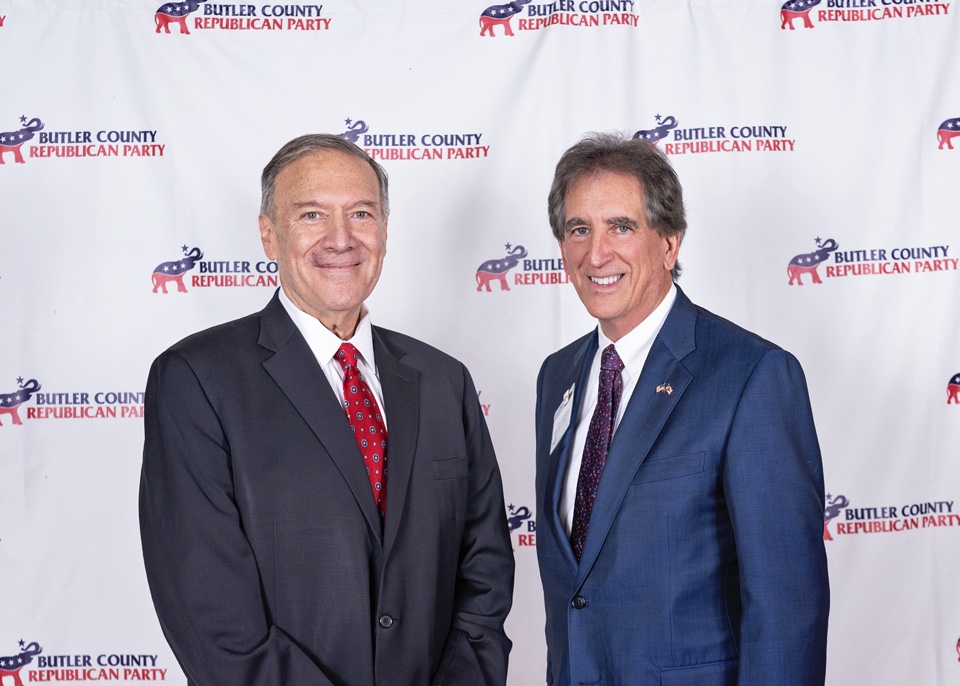
It was quite remarkable that the Butler County Republican Party endorsed Jim Renacci for Governor of Ohio during the upcoming primary vote. Butler County isn’t the only endorsement for Renacci; he is picking them up at an increasing pace as the stretch toward election day has come closer. However, the Butler County Republican Party is one of the strongest conservative forces for good in the nation. Every officeholder in Butler County, which has over 400,000 people, is a Republican. Butler County likes its Republicans, and to turn away from the current governor and political heavyweight Mike DeWine is quite a public statement. It shows the tremendous Republican strength of Jim Renacci, but it also indicates to what degree Mike DeWine has lost the conservative base, and deservedly so. DeWine has operated as a Democrat. He was horrible during the Covid crisis. In many ways, he led all the blue states in lockdowns and has been a complete embarrassment to the Republican Party. If there were a picture of what a RINO looked like (a Republican in name only), Mike DeWine’s face would be their despicable example. But an endorsement from the Butler County Republican Party was no easy thing to give to Renacci. The DeWine name has been in politics for a long time, and in a less turbulent time, an endorsement of the incumbent governor would be assured. However, the times are turbulent, and Mike DeWine has led disaster straight to all our doorsteps by letting global oriented health experts tie Ohio to the sinking ship of lockdowns and mask mandates destroying businesses and people’s lives ruthlessly as the grips of authoritarian power seized all rational thought and turned DeWine into a modern version of the insane Roman emperor, Nero. Jim Renacci was a chance to start over, and when the Republican Party of Butler County was ready to make that change, it’s quite clear that the rest of Ohio was too.

I have loved Jim Renacci from the beginning and spoke to him personally during his campaign several times. He is poised to bring a Jim Renacci version of Florida’s Ron DeSantis to Ohio. I think Jim can be better than DeSantis, who has set a very high bar in many ways. Just a few days ago, I had a chance to talk to Jim Renacci again, this time for a long time in a somewhat private setting, and we talked about Trump. He didn’t want to say if he would get a Trump endorsement at that time. We talked about how tough it would be for Trump to pick anybody as an endorsement because if the other guy won, Trump would have to work with the loser when he returns to the White House in 2024 after the shellacking that is planned for the insurgent Democrats after this upcoming 2022 election. Jim Renacci was undoubtedly part of the puzzle in retaking America from the grips of Democrat activism. But again, DeWine has been in politics for a long time and has worked with the Trump administration before. In public, the relationship was workable, but behind the scenes, not so much. At one of the last campaign events Trump held in Ohio when DeWine tried to get on the stage with the president, the public booed him off, embarrassing DeWine tremendously. Trump supporters had not forgotten what DeWine did to Ohio during Covid, and they let him hear about it. A few weeks ago, I had a chance to meet the governor in Columbus, and it was evident that he was a shell of his former personality. He knew he was in political trouble. He screwed up Ohio under his first term, and he would have to pay for it. So to answer the question of endorsements, Trump is coming to Ohio on April 23rd to Delaware, just north of Columbus. Renacci will be at that event to meet with his old friend, Donald J. Trump. Get your tickets and witness history. 

So now is the time for Joe Blystone and others who are also running for governor to put their name behind Jim Renacci. They are polling at 20% or less and are not picking up endorsements, which is an early indicator of people’s voting in the primary. Joe Blystone might be a good guy with conservative policies, but he doesn’t have the depth that Renacci brings to the table, and he’s not going to get it a month before the election. Instead, he could hurt the sizable lead that Renacci does have over DeWine by staying in the race. There is undoubtedly a home for good people like Blystone in a state run by Jim Renacci. He would essentially be an extension of the Trump administration, just as Florida is presently. But splitting up that Republican vote by skimming away 20% off the top would serve only one purpose, the chance that Mike DeWine might squeak in under the door due to a split-up conservative movement. That is undoubtedly the situation with the top four candidates for the Senate, one of the primary reasons Trump is coming to Ohio on the 23rd to settle a tight race so the party can unite behind his pick. Voters want to know who Trump wants to work with within the coming days, so the need to clarify things just a few weeks ahead of the primary election is necessary. Of course, it’s risky for President Trump to put his name behind anybody since all four of the candidates are running on a Trump platform of America first. But Trump isn’t afraid of risks, and this visit to Delaware shows it and the kind of leadership that a real leader brings to politics.

That is the same situation for candidate for governor Ron Hood and his running mate Candice Keller. I think they have value, and I’d hate to see them waste it fighting against Renacci for some slice of the Trump vote when the real villain in the race is Mike DeWine. Everyone needs to unite to ensure that Mike DeWine is defeated, especially with an upcoming Trump visit to back candidates and endorsements like Jim Renacci has with the Republican Party. There are still plenty of Never Trumper RINOs in the Republican Party who will show up and vote for Mike DeWine. Even though Blystone and Hood have no chance of catching up to Renacci before the election, if they were ever going to, it would have been before now; being in the race forces Renacci to have an unreasonable lead over DeWine to win the election. Without them in the race, Renacci would win for sure. So there could be only one reason they would stay in the race because they secretly want to help DeWine, which would then destroy their brand for any hope of a political future. It’s time for them to pick sides and back a winner. In this case, it’s Jim Renacci. It really shouldn’t be hard for them; whether the issue is constitutional conservativism or abortion rights, Renacci is so much like Trump policy-wise; he will listen to people who are further in the conservative movement than he is. But DeWine isn’t. So it should be an easy decision if those candidates genuinely want what’s best for Ohio. Once the Republican Party of Butler County makes their pick, it’s a good indication of what Ohio is going to do. And they have great things to offer the Republican Party; they should be involved once Jim Renacci is elected governor, and Ohio can then become much more of a MAGA state than it is now. We can then become the Florida of the north and perhaps do even better.

Rich Hoffman

Click to buy The Gunfighter’s Guide to Business

Jennifer Gross Endorses Jim Renacci: The Overton Window in Ohio Politics

I’ve never been a “no government anarchist.” My thoughts on government management have always been a small but active legislature that is contentious, honorable, yet tenacious. Those who have read my Gunfighter’s Guide to Business know I view most group-oriented behavior as a competitive match, not an opportunity for back-slapping and friendship. Our republic form of government has been unique globally, and now that we understand the nature of the attack against our country, we can better understand the threat that has always been there. I have thought about this kind of thing a lot over the last year, especially while visiting Mt. Rushmore. I found that place to be a temple of intellect, and the bookstore they have there is better than a gold mine of infinite wealth. My thoughts on the matter have matured up to the present with this visit to the Statehouse of Ohio. The challenge has been to create as open a market as possible for business and individual rights while still defending the sovereignty of our states and nation from foreign aggression. Which, of course, is hard to do in an open market global economy. The hostile forces to the United States have attacked not the concept of any nation-states but the essence of our very economy. This corporate board room government within a government type of thinking is challenging the very nature of our Republic form of government. Understanding the nature of that attack is precisely why I have been pointing out Ohio politicians I know who are doing the job correctly, in their own unique way, so that we can see examples of how our republic government should look. And a fine example of how government should look can be found in my State Representative Jennifer Gross, whom I recently had a chance to visit at the Statehouse. 

It’s taken me a while to warm up to Jennifer Gross. During a rough election, she ran against my pick for that seat that Mike DeWine had screwed up with emergency power Covid rules. But in the short time Jennifer has been in the seat of the 52nd District; she has brought more of the Tea Party to Columbus than I would have thought possible. When I recently found her after Governor DeWine’s State of the State speech, she was very bubbly and enthusiastic, working the floor and talking to many different people. I know that many members of the House and Senate and many other politicians view Jennifer as a disruptive force and find her unsettling. I’ve heard lots of negative talk about her by several in the political class, but I have some other ideas about her that I wanted to confirm. So we spent some time together talking about the Overton Window and its role, which she more than understood. And we also talked about the challenger Jim Renacci whom she is one of the only official members of the Statehouse to endorse openly. I know there are a lot more, but I could see the pressure up close. At this event, where Jennifer and I talked, Governor DeWine walked around talking to people. People in the House and Senate know they need DeWine to sign bills they are working on. And DeWine needs them to, to look like he’s in charge. DeWine wants to take credit for the big Intel chip manufacturing plant coming to Ohio, announced just ahead of the primary for 2022. And he recently signed a controversial Constitutional Carry bill he would never have signed otherwise, except for Republican pressure to act more “conservative.” But the trade-off has been to show public support for DeWine in a very tight race against Renacci and other challengers. So there is a lot of double talk going on around the Governor. But Jennifer is not one of those double-talkers. She is right out in the open about it, and the Governor is well aware. 

And that is the value I see in Jennifer; she openly embraces that role of a disrupter, someone who will challenge the Overton Window on the political spectrum and yank it hard right away from the communism that has seeped into the process over the years. Back to the constitutional republic, we have needed and expected. Politics is not about friendships, it’s about doing the job correctly, and there is a real hunger from Jennifer to do a great job. She intends to represent all the people honestly in her district, including the people who didn’t vote for her, and that was the general vibe I picked up on as she showed me around where her desk was and other features of the House chamber. Things got pretty heated in Columbus as Jeniffer was on the front of legislation to prevent mandated vaccine requirements imposed by the Biden administration. We all learned a lot from that experience. It was a balancing act between a Chamber of Commerce view of the world, allowing corporate environments to impose rules on their workforce for their own needs and the individual’s rights. The workers have their own sovereignty. Jennifer represented the raw Tea Party small-government perspective against forces that didn’t want to be bothered with contentious debate during a government-imposed pandemic. But in hindsight now, after watching Klaus Schwab at the World Government Forum in Dubai recently, we see those vicious bandits plotting the demise of America out in the open. Their mode of attack has been through the corporate boardroom, our Chambers of Commerce, and our mom-and-pop businesses, dancing to ridiculous rules and regulations imposed by unconstitutional commerce clauses. If we ever needed a functioning republic to sort all these things out, it was now. And I have been increasingly happy that there is someone like Jennifer Gross who will ask the hard questions and force people to think out of the box without making it unnecessarily contentious. Jennifer walks that line quite well, I think. 

So how to put businesses first in Ohio and give corporations the autonomy to locate in our state and do great things is the problem of those lofty halls in Columbus. It’s why I wrote The Gunfighter’s Guide to Business and started passing out copies of it to people I talk to in the political world. We have to defend business and commerce, uphold law and order, and stand by our government and boardroom politics. We have to stand for executive-level leadership in business and politics. But we must also stand for individual freedom and to force the scum and villainy out of our lives without killing the host. Not an easy thing to do, and that is what that book is about, a guide on how to tell good from bad, right from wrong, and unprofitable activity from the driver of all things, profit and value. And to perform that task well, especially in organized government, I find great value in disruptive forces like Jennifer Gross. She will uncomfortably keep everyone honest without turning the dispute into a personal fight. Playing along to get along is not what makes any republic form of government great. But asking the right questions, most often the ones you don’t even know you need to ask, is the key to keeping a government working correctly. And in the world we have today, where the bad guys have been hidden behind the rules and regulations of corporate America and international partnerships, there is a significant need for more disruptive Overton Window types like Jennifer Gross in our grand Statehouse. I am glad to have her there, and I feel proud to have such an engaged representative with plenty of fire to fight the forces at work in our state for duplicity and malice. The need for good government is genuine, more so now than ever. And Jennifer Gross keeps honesty at the front of all conversations for the betterment of everyone. 

Rich Hoffman

Click to buy The Gunfighter’s Guide to Business