Outside the Box: COVID Vindication, Hidden Influences, and yes, I told everyone so

I have always lived outside the box. While most people see only the trees right in front of them—the regimented routines, the narrow daily concerns, the approved narratives—I have survived and found my greatest happiness and clearest insights almost exclusively through big-picture thoughts, concepts, and discussions. When I am forced into the box, I am extremely unhappy. Outside of it, I am pretty happy, and I have a lot to share with people who are willing to look up from the immediate and see the patterns across time. That is why, six or seven years from now, when the conversation about non-human intelligence and its long influence on human affairs becomes mainstream—partly through my own work with the book The Politics of Heaven—many will wonder how I knew what I knew back in 2020 and what I am saying now. The answer is simple: I live outside the box, where the forest is visible, and the hidden hands become apparent.

Just recently, as Tulsi Gabbard concluded her service as Director of National Intelligence in the Trump administration, she highlighted truths that those of us who have followed the COVID story closely have known for years.[^1] Gain-of-function research at the Wuhan Institute of Virology, funded with millions in U.S. taxpayer dollars through channels that included EcoHealth Alliance and ultimately NIH oversight, produced a virus that was made transmissible to humans in ways that natural evolution had not achieved.[^2] It was not a simple bat spillover in a wet market. Dr. Anthony Fauci, in his testimony before Congress, parsed words carefully and denied funding for gain-of-function research under the definitions he preferred, but the evidence from emails, proposals like DEFUSE, and the very nature of the research conducted shows otherwise. He misled the public and lawmakers. Perjury before Congress is a serious matter, and it should carry consequences. It took six years for these confirmations to gain official traction in some circles. I was calling it from day one when the virus emerged from that airport in China, and the stories began to shift. I saw it because the people inside the box were the ones constructing the narrative to hide the truth, and from the outside, the pattern was obvious.

The same dynamic unfolded right here in Ohio during the lockdowns. I was on those conference calls with Jon Husted, who served as a key point of contact trying to bridge the concerns of business owners and executives with the administration. We were asking practical questions: How do we keep businesses open? How do we protect workers and customers without destroying livelihoods and constitutional rights? Governor Mike DeWine was listening closely to his Health Director, Amy Acton—our version of Dr. Fauci in Ohio.[^3] The memos were floating around from the federal health establishment, and they knew the constitutional walls were being tested and breached. Stay-at-home orders, business closures, school shutdowns, and the whole apparatus of control were put in place under emergency powers that stretched far beyond what the people or the legislature had authorized. It was sold as keeping us safe, as if a public health official could write policy that would override the Constitution and turn the governor’s office into an extension of that vision. Now, years later, DeWine is positioning himself as the compassionate voice calling for the abolition of the death penalty, saying it is not a deterrent after all these decades.[^4] He helped craft the law as a state legislator, defended it as Attorney General, yet now on his way out, he wants to be remembered as the one who questioned it. The same man who expanded Medicaid under pressure to appear more progressive after earlier battles with public unions and collective bargaining. These politicians often find themselves in trouble because they listen to the wrong voices—the ones inside the box who prioritize short-term safety narratives and political positioning over the big picture of liberty, accountability, and human nature.

I remember the feeling in 2020 all too well. I carry firearms, as people who know me understand. I was prepared to draw a hard line if unconstitutional checkpoints or enforcement actions came to my door or my community. I was close to a bridge too far. The treatment of January 6 defendants—many held in harsh conditions for what amounted to political expression or presence—showed exactly what the machinery could do when it chose to. I love law and order and a stable society, but when that machinery is weaponized against free citizens who have done nothing wrong, it ceases to be law and becomes something darker. I was on those calls and in my writings arguing the constitutional problems from the beginning. With some influence among legislators who were also concerned, we helped prevent the worst scenarios from taking hold in Ohio. Thank God we did not end up with a situation where I or others were pulled over unconstitutionally and forced into a confrontation that could have escalated. But it was not because I was unwilling to stand. I had drawn my line. Even Rush Limbaugh, in the last year of his life, was cautioning about the overreach and the importance of listening to the right voices. I was saying it earlier, more directly, because I see where the inside-the-box crowd hides what they do not want examined—outside the box, in plain sight for those willing to look.

The costs were immense and are still being counted. More than 1.1 million Americans lost their lives in connection with COVID-19.[^5] Economic analyses projected GDP losses in the range of $3 trillion to $5 trillion or more in the initial years from the combination of the pandemic and the policy responses, with mandatory closures and reopenings being the dominant factor in the downturn. Small businesses—restaurants, gyms, shops, service providers—were shuttered or crippled, many permanently. Mental health crises surged, overdoses increased, domestic issues rose, and a generation of children suffered learning loss and social setbacks whose full measure we are only beginning to understand. In Ohio specifically, the early and strict orders under DeWine and Acton had real human and economic consequences. People died not only from the virus but from delayed medical care, from isolation, from the despair that comes when livelihoods and communities are upended by top-down decree. All of it was made worse because the truth about the virus’s origins and the proper limits of power was suppressed or attacked as dangerous misinformation by those inside the box who could not afford to admit what they had done or enabled.

Now the confirmations are emerging. Fauci and the apparatus he oversaw knew more than they let on. The research that made a non-transmissible virus transmissible to humans was real, and U.S. funding played a role. Taxpayers paid for it. Lives were lost or forever altered because of it and the subsequent cover stories. If we do not hold people accountable—if we do not prosecute perjury and malfeasance when the evidence is this clear—then we should not be surprised when the next crisis arrives, and the same patterns repeat. When you have the opportunity to confront the lie and you decline, the liar learns that there is no cost. That is not compassion. That is a weakness that invites more harm. The average annual cost to taxpayers for housing inmates in U.S. prisons runs $40,000 to $65,000 or more per person, depending on the jurisdiction[^6], a figure that makes long-term incarceration of irredeemable offenders a perpetual burden without the deterrent or finality some argue the death penalty provides for the worst cases.

But COVID is only the most recent and personal example of a much older and larger pattern. I have been speaking and writing for years about non-human intelligence and the ways it has influenced the human race—in our modern politics and in the deep politics of the past thousands of years. The creation of empires, the divine mandates claimed by pharaohs, the dreams and visions that shaped the decisions of kings and conquerors—these were not always purely human inventions or organic developments. They were often steered, amplified, or initiated by non-human intelligences operating through mechanisms of paranoia, superstition, and religious belief systems that were not the faith of the Bible but the polytheisms of the ancient world, particularly the gods of Canaan and their counterparts across the Near East and beyond. We are now discovering, through the accelerating study of UAP, that these intelligences have been present with Earth and human beings for many thousands of years. The same skepticism and ridicule I faced in 2020 when I spoke about the lab origin and the unconstitutional overreach, I face now when I connect these dots. But in six or seven years, it will be different. It will be safe. There will be correspondents and anchors discussing it who are actually non-human intelligence. There will be podcasts and series that treat it as established context rather than as fringe theory. What seems like science fiction today will be science fact tomorrow, just as the COVID truths I stated in 2020 are now being acknowledged years later.

The Book of Enoch provides one of the clearest ancient windows into this reality.[^7] That text, which I have studied and referenced for decades, describes the Watchers—divine beings who descended, took human wives, and produced the Nephilim, giants whose violence and appetites ravaged the earth. These Watchers did not stop at interbreeding; they taught humanity forbidden knowledge: the working of metals into weapons and ornaments, the use of cosmetics and sorcery for manipulation and deception, the arts of divination and the secrets of the stars and earth. This was technology and occult instruction delivered prematurely, corrupting human development and filling the world with bloodshed and chaos. The judgment of the flood followed, but the influence of these fallen ones and their offspring persisted through bloodlines, secret traditions, and the false religious systems that shaped the great powers of antiquity. The gods of Canaan—Baal with his storms and demands for sacrifice, Asherah and her fertility cults, Molech and the fires that consumed children—were not harmless myths. They were presentations of real intelligences that steered societies toward war, ritual, and control. The pharaohs of Egypt presented themselves as divine incarnations or the recipients of direct oracles from the gods, justifying their absolute rule and military campaigns. Similar patterns appear in Mesopotamian kingship, in the oracles and omens that guided Greek and Roman leaders, and in the visionary experiences claimed by conquerors and rulers across history. From outside the box, these are not random cultural developments; they are evidence of consistent non-human influence operating through the structures of power and belief.

We are seeing the modern face of this same presence in the UAP phenomenon.[^8] These unidentified anomalous phenomena are not new. Ancient texts across cultures record fiery chariots in the sky, beings of light or terror descending, and craft that defies the technology of the time. What has changed is our ability and willingness to document and disclose. Government videos released in recent years, testimony from trained observers including Navy pilots, and statements from intelligence community whistleblowers such as David Grusch have brought the topic into congressional hearings and public debate. In 2026, the push for transparency has led to concrete actions, including the release of historical records through mechanisms such as the PURSUE system under the current administration. Tranches of documents are emerging, adding to the body of evidence that something non-human has been here, interacting at times, and remaining largely hidden. Just as the lab-leak hypothesis for COVID was censored and mocked only to be treated as plausible or likely by multiple intelligence agencies years later, the NHI reality is moving from ridicule to reluctant recognition. The pattern is the same: truth that threatens existing power structures or comfortable narratives is suppressed until it can no longer be contained.

In six or seven years, the conversation will have shifted dramatically. People who today roll their eyes at talk of non-human intelligence influencing human events will be nodding along in podcasts and interviews. The age of disclosure will be in full swing. My book, The Politics of Heaven, completed in 2026 and moving toward publication, is my contribution to providing the framework for understanding what is coming.[^9][^10] It is a treasure hunt through heaven and all human history, tracing biblical conspiracies, the role of giants and demons, the reality of divine rebellion, the nature of spiritual warfare, and the population agendas that have shadowed humanity from ancient times into the present. It connects the dots between the Watchers of Enoch, the false gods of Canaan and Egypt, the hidden influences on empires and kings, and the modern manifestations in technology, media, global institutions, and the UAP question. When you understand the politics of heaven—the real power dynamics that operate behind and through earthly politics—you see why certain patterns repeat, why certain lies persist, and why accountability is so often delayed. The same intelligences that once presented themselves as gods demanding worship and sacrifice have not disappeared; they have adapted their methods to new veils and new technologies.

I was willing to risk confrontation in 2020 because I saw the pattern clearly. The fear was that it would be used to centralize power. Dissent was being pathologized. The Constitution was being treated as optional under the pretext of an emergency. Amy Acton did that in Ohio. I had seen enough of how power operates—in my younger years in the Cincinnati area and across the river in Newport, Kentucky, where I had front-row exposure to the coded ways influence and enforcement worked—to recognize when it was happening again. I was not going to be treated like a January 6 prisoner or have my community subjected to checkpoint enforcement without resistance. Thankfully, cooler heads and some influence in the right places kept the worst from occurring here. But the experience taught me again that being outside the box is not just a preference; it is a survival skill when the box is being used to hide dangerous truths.

Now the question is whether we will learn from the COVID chapter or repeat it on a larger scale. The revelations about gain-of-function and Fauci’s role are vindication for those who spoke early, but vindication without accountability is incomplete. If perjury and the engineering of a pathogen that killed over a million Americans carry no real consequence, then the system has learned nothing. The same applies to the bigger picture. When disclosure of non-human intelligence reaches the point where even former skeptics in the media and politics are discussing it openly, will we have the frameworks to understand it, or will we be caught flat-footed by the spiritual and political implications we have refused to consider? My book exists to help with that preparation. It argues that these influences are real, that they have shaped human history in profound ways, and that the age of disclosure is also an age of decision about who we are and whose agenda we will ultimately serve.

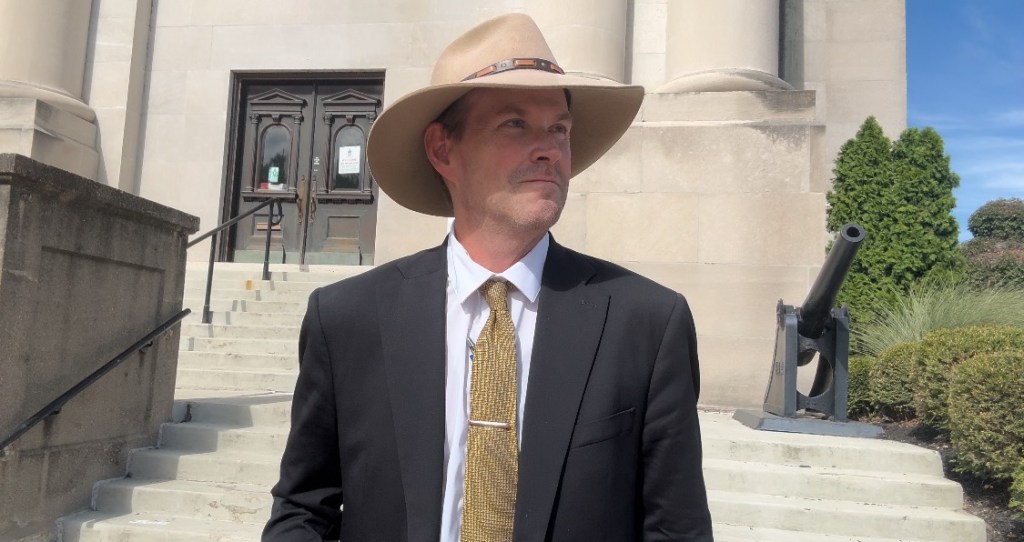
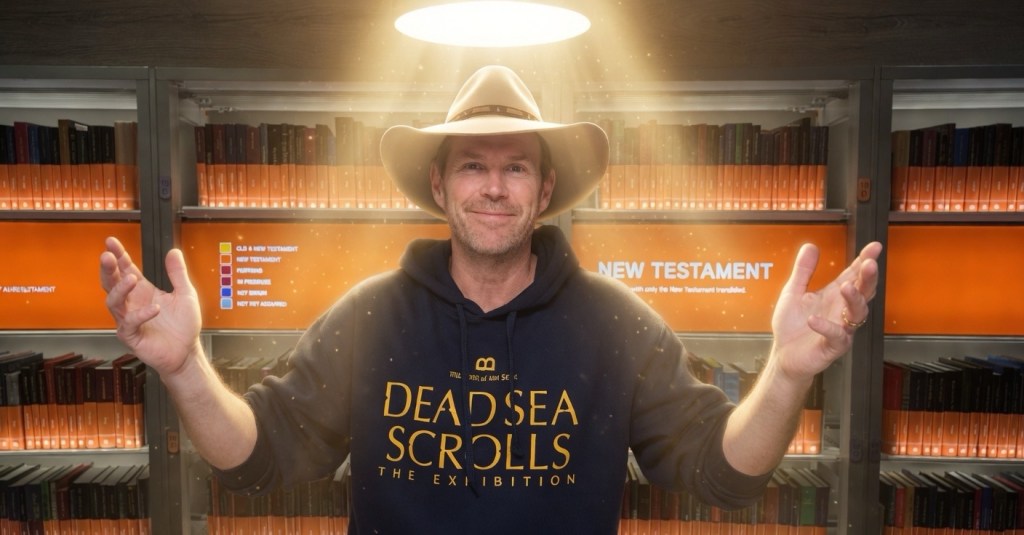
I am an older man now, but I have lived a life that kept me engaged with both the practical and the profound—from aerospace program management and the discipline of precision work, to writing books like Tail of the Dragon, The Gunfighter’s Guide to Business, and The Symposium of Justice, to my podcasting and activism on behalf of limited government, traditional values, and individual responsibility. The cowboy hat I have worn since childhood is a declaration that I stand apart from the herd. The whip is my personal symbol of discipline, precision, preparedness, and the moral agency to impose order when chaos threatens. But above all, it is the commitment to big-picture thinking that has defined my path. I criticize the regimented life not because I disdain structure, but because too many people never lift their eyes from the trees to see the forest or the forces moving through it.

Six or seven years from now, when the podcasts, news segments, and public conversations are filled with talk of non-human intelligence and its historical role, remember that some of us were saying it when it was still costly to do so. Not for credit, but because the truth matters and because being outside the box allows you to see what is coming before it arrives. The COVID chapter proved that. The disclosure chapter will prove it again. The politics of heaven are the ultimate big picture, and understanding them is the only way to navigate what lies ahead without being steered by forces we refuse to name.

The truth always comes out. It came out on the origins of COVID after six years of resistance. It is coming out on UAP and the deeper history of influence. It will come out on accountability or the lack of it. I hope that when it does, enough people will have stepped outside the box to see it clearly, to demand what is right, and to prepare for the fuller reality of our place in a universe that has never been as empty or as human-centered as the inside-the-box narrative claimed.

Footnotes

[^1]: Tulsi Gabbard’s resignation as Director of National Intelligence was announced on May 22, 2026, effective June 30, 2026, citing her husband’s health; see reports from BBC, CNBC, and the New York Times (May 2026).

[^2]: On gain-of-function research, EcoHealth Alliance, Wuhan Institute of Virology, and Fauci testimony controversies, see RFK Jr., The Real Anthony Fauci (2021) and subsequent congressional reviews and intelligence assessments on COVID origins (2023-2026).

[^3]: Amy Acton served as Ohio Department of Health Director under Gov. Mike DeWine, issued stay-at-home orders in March 2020, and resigned in June 2020 amid criticism; see contemporary reporting from the Columbus Dispatch, WOSU, and the Ohio Capital Journal.

[^4]: Gov. Mike DeWine announced June 16, 2026, that Ohio should abolish the death penalty, reversing long-held support; see Associated Press, Ohio Capital Journal, and New York Times coverage (June 2026).

[^5]: U.S. COVID-19 deaths exceeded 1.1 million; economic impact studies project trillions in GDP losses from the pandemic and policy responses. See CDC data summaries and analyses, such as Walmsley et al. (2020) in the Journal of Urban Economics and Chen et al.’s economic burden projections.

[^6]: Average annual cost of incarceration in U.S. state prisons is around $ 60,000 per inmate (median figures from USAFacts and state reports); federal prisons are around $41,000 per inmate (FY2023 Federal Register). Life sentences for serious crimes impose an ongoing taxpayer burden of tens of thousands of dollars per individual per year.

[^7]: Book of Enoch (1 Enoch), particularly the Book of the Watchers (chs. 1-36), describes the descent of the Watchers, their instruction of humanity in forbidden arts, and the birth of the violent Nephilim giants. See translations by R.H. Charles (1917) and modern editions; scholarly discussion in The Torah.com and related ancient Near Eastern studies.

[^8]: UAP disclosure developments include 2017-2023 Pentagon video releases, the 2021 ODNI Preliminary Assessment, the 2023 congressional hearings with David Grusch’s testimony, and the 2026 releases under the PURSUE system (Department of War/ODNI tranches announced May-June 2026).

[^9]: Ancient historical patterns of divine kingship and oracular influence in Egypt (pharaoh as god-king), Canaanite pantheon (Ugaritic texts, Baal Cycle), and biblical accounts (Genesis 6, Numbers 13, Deuteronomy on Canaanite practices). See Biblical Archaeology Review archives and standard references such as The Oxford History of the Ancient Near East.

[^10]: Broader context on spiritual warfare, giants, and population themes in biblical and extra-biblical literature; see also the author’s forthcoming The Politics of Heaven (target 2027) for an integrated treatment that connects ancient influences to modern geopolitical and technological developments.

Bibliography for Further Reading

•  Charles, R.H., trans. The Book of Enoch. London: Society for Promoting Christian Knowledge, 1917 (and subsequent reprints).

•  Elizondo, Luis. Imminent: Inside the Pentagon’s Hunt for UAP. New York: William Morrow, 2024.

•  Hoffman, Rich. Tail of the Dragon. (Author’s earlier work on personal and philosophical themes).

•  Hoffman, Rich. The Gunfighter’s Guide to Business. (On resilience, problem-solving, and imposing will on circumstances).

•  Hoffman, Rich. The Symposium of Justice. (Philosophical and justice themes).

•  Hoffman, Rich. The Politics of Heaven. (Forthcoming 2027; manuscript completed 2026, exploring biblical conspiracies, giants, demons, spiritual warfare, and population agendas across history).

•  Kennedy, Robert F., Jr. The Real Anthony Fauci: Bill Gates, Big Pharma, and the Global War on Democracy and Public Health. New York: Skyhorse, 2021.

•  Biblical Archaeology Review. Multiple issues on ancient Near Eastern religion, giants/Nephilim debates, and archaeological context for biblical texts (ongoing since 1975).

•  Office of the Director of National Intelligence. Preliminary Assessment: Unidentified Aerial Phenomena. June 2021 and subsequent UAP reports.

•  Various 2023-2026 congressional hearings and whistleblower testimony on UAP (Grusch et al.).

•  Academic and government analyses of COVID-19 economic impacts: Walmsley, Terrie et al. “The Impacts of the Coronavirus on the Economy of the United States” (2020); Chen, Simiao et al. economic burden studies (2021); CDC COVID Data Tracker summaries.

•  USAFacts and Bureau of Justice Statistics reports on incarceration costs and prison populations (2023-2025 data).

•  Ancient primary sources: Ugaritic Baal Cycle texts; Egyptian royal inscriptions and Pyramid Texts; biblical texts (Genesis 6, Enoch references in Jude and 2 Peter).

•  Additional context on Canaanite religion and its influence: Day, John. Yahweh and the Gods and Goddesses of Canaan. Sheffield Academic Press, 2000 (and related scholarship).

Rich Hoffman

More about me

Click Here to Protect Yourself with Second Call Defense https://www.secondcalldefense.org/?affiliate=20707
About the Author: Rich Hoffman

Rich Hoffman is an author, political consultant, and strategic advisor based in Cincinnati, Ohio, and the creator of The Politics of Heaven—a unique framework that connects biblical theology, ancient history, and modern power structures to explain how moral alignment and spiritual forces shape global events. Blending real-world political experience with deep research into archaeology, UFO phenomena, and suppressed historical narratives, Hoffman offers compelling commentary on topics ranging from ancient civilizations and the Dead Sea Scrolls to modern populist movements, paranormal continuity, and leadership strategy in chaotic environments. As the author of The Gunfighter’s Guide to Business and the forthcoming Politics of Heaven, he brings a grounded yet provocative voice to media discussions, supported by firsthand experiences and a cross-disciplinary approach that bridges science, history, and theology. For interviews, speaking engagements, or expert analysis, visit richhoffmanbooks.com or contact directly via phone at 513-307-5815 or email at rhoffman@richhoffmanbooks.com.  If you’ve seen the movie, Disclosure Day and want to talk about it and the implications of Presidnet Trump’s UAP disclosures, let me know and we can bring some color to your coverage. https://richhoffmanbooks.com/media-inquiries-broadcast-topics-and-contact-info/?frame-nonce=ad51e7ecba I do have a firsthand UFO encounter to discuss.
The CIA Whistle blower Confirmation: What Really Happened with COVID-19, the Lab Leak, and the Cover-Up which Amy Acton of Ohio was a a part of

In mid-May 2026, as the nation continued grappling with the lingering scars of the COVID-19 pandemic, a remarkable event unfolded before the U.S. Senate Homeland Security and Governmental Affairs Committee. James E. Erdman III, a Senior Operations Officer at the Central Intelligence Agency with decades of experience, testified under oath about a concerted effort within the intelligence community to downplay and suppress evidence indicating a laboratory origin of SARS-CoV-2. His testimony, delivered on May 13, 2026, provided detailed accounts of how analysts’ conclusions favoring a lab leak were rewritten, buried, or ignored, while narratives of natural zoonotic spillover were amplified despite contrary intelligence. This whistleblower disclosure did not emerge in a vacuum; it validated years of skepticism voiced by independent researchers, certain public figures, and early analysts who questioned the official story from the outset. 

Erdman described a system rife with conflicts of interest. Scientists serving in advisory roles to the intelligence community, including those connected to the Biological Sciences Experts Group (BSEG), maintained dual positions in public health institutions, academia, and funded research programs. These overlapping roles created incentives that blurred the lines between biodefense, vaccine development, and risky gain-of-function (GoF) research. Dr. Anthony Fauci, then Director of the National Institute of Allergy and Infectious Diseases (NIAID), played a pivotal role by influencing intelligence analyses through curated lists of experts—many of whom had received NIAID funding or collaborated on coronavirus studies. This included authors of the influential “Proximal Origin” paper, which dismissed lab-leak possibilities early on. Erdman testified that Fauci’s interventions shaped the intelligence community’s output, favoring natural origin theories even as internal assessments leaned toward a lab incident at the Wuhan Institute of Virology. 

The timeline is damning. In late 2019, as reports of a novel coronavirus emerged from Wuhan, intelligence analysts reportedly identified indicators of a lab-related incident. Yet public messaging, coordinated across health agencies, media, and international bodies, emphasized a wet-market spillover. Event 201, a high-level pandemic simulation held in October 2019 by the Johns Hopkins Center for Health Security in partnership with the World Economic Forum and the Bill & Melinda Gates Foundation, eerily mirrored the unfolding crisis. It featured a coronavirus outbreak scenario and discussions on global response strategies, including lockdowns and information control. Participants included public health leaders with intelligence ties. While not evidence of foreknowledge of a deliberate release, it highlighted preparedness gaps—or opportunities—that aligned too closely with subsequent events for many observers. 

Robert F. Kennedy Jr.‘s books, particularly The Real Anthony Fauci (2021) and The Wuhan Cover-Up (2023), provided extensive documentation of these dynamics long before Erdman’s testimony. In The Wuhan Cover-Up, Kennedy detailed the history of U.S.-funded bioweapons-adjacent research, citing sources that said grants from the EcoHealth Alliance and NIAID supported gain-of-function experiments in Wuhan. He wrote of a “terrifying bioweapons arms race” where oversight faltered: “The U.S. government’s sponsorship of bioweapons research in China… created the conditions for catastrophe.” Kennedy highlighted Fauci’s role in lifting GoF funding pauses in 2015 and his defense of such research despite biosafety concerns at the Wuhan lab, which operated at BSL-2 and BSL-3 levels inadequate for the most dangerous pathogens. Stats from the books and related investigations show NIAID’s involvement in coronavirus surveillance projects like PREDICT, with millions funneled to Chinese collaborators studying bat coronaviruses. 

The human and economic toll underscores the stakes. Official U.S. COVID-19 deaths exceeded 1.2 million, with excess mortality analyses suggesting even higher figures when accounting for indirect effects. Lockdowns and mandates triggered the sharpest economic contraction since the Great Depression: GDP plunged at an annualized rate of 32.9% in Q2 2020, unemployment spiked to 14.7%, and over 20 million jobs vanished in a matter of weeks. Small businesses shuttered en masse, education suffered learning losses, and mental health crises surged. Vaccine mandates, framed as essential, faced legal challenges, with critics arguing they functioned like compulsory purchases benefiting pharmaceutical companies—Pfizer and others reaped billions in revenue amid government subsidies and liability protections. Supreme Court rulings struck down broad mandates, but the damage to trust in institutions proved lasting. 

Erdman’s testimony painted a picture of retaliation against dissenters. Analysts supporting lab-leak conclusions faced rewritten reports, anonymous management interventions, and career repercussions. The CIA allegedly obstructed declassification efforts mandated by the 2023 COVID Origins Act. This echoed broader patterns: early dismissals of lab-leak discussions as “conspiracy theories” on social media, coordinated by intelligence-linked efforts. Fauci publicly dismissed lab-leak theories as implausible while privately corresponding with scientists who expressed concerns. Ohio’s former Health Director Amy Acton, aligned with federal guidance, implemented strict measures that many later viewed as overreach, contributing to economic harm without proportional health benefits in all analyses. 

Connections to larger geopolitical aims fueled speculation. Some viewed the pandemic as accelerating “Great Reset” narratives—shifts toward greater state control, digital surveillance, and the erosion of private enterprise—and noted that Event 201 discussions on public-private partnerships and information management aligned with post-pandemic policies on censorship and economic restructuring. Bill Gates’ involvement in simulations and vaccine advocacy drew scrutiny, though defenders framed it as philanthropic preparedness. Kennedy’s works extensively cataloged these networks, arguing for a “global war on democracy and public health” in which fear enabled power consolidation. 

Why did so few voice these concerns in real time? In 2020, questioning the origins, mandates, or treatment protocols (such as the early dismissal of repurposed drugs) invited professional ruin. Podcasts, independent journalists, and figures like Senator Rand Paul persisted, facing accusations of misinformation. Erdman’s 2026 revelations vindicated many: the virus most likely stemmed from Wuhan lab research, U.S. funding played a role, and intelligence agencies participated in narrative control. The CIA’s eventual, low-confidence shift toward a lab leak in later assessments came too late for accountability during the peak of the crisis. 

Broader implications extend to biodefense reform. Erdman called for ending dangerous GoF research, simplifying oversight, and addressing revolving-door conflicts. Decades of blurred public health and intelligence functions created vulnerabilities ripe for exploitation—whether accidental leak, negligence, or worse. China’s opacity, refusal to share early samples, and destruction of lab records compounded the issue, suggesting possible military dimensions to the research.

Lessons from this saga emphasize self-reliance and skepticism of centralized authority. Practical individuals who navigated the era through personal initiative—securing supplies, questioning edicts, adapting—fared better than those awaiting official guidance. Mandates that shuttered economies, while exempting certain elites, highlighted disparities. Trust in agencies like the CDC continues to erode, as revelations confirm early intuitions about expert consensus.

In the age of disclosure, Erdman’s testimony marks a turning point. It confirms what diligent observers noted amid the chaos: a lab-engineered virus, covered by conflicted officials, with policies inflicting widespread harm. RFK Jr. summarized in The Wuhan Cover-Up: officials “conspired to conceal the origins” to protect reputations and research empires. Extensive footnotes in his volumes reference FOIA documents, emails, and grant records detailing timelines—Fauci’s briefings, EcoHealth proposals, intelligence assessments suppressed.

Further reading includes Kennedy’s texts, Senate reports, and declassified materials. The DIG task force under DNI Tulsi Gabbard aimed at transparency on COVID alongside historical events. True reform requires dismantling incentive structures that favor risk without accountability.

This confirmation arrives amid ongoing recovery. Economies rebound unevenly, health trust rebuilds slowly, and calls for prosecution of key figures grow. The whistleblower’s courage, subpoenaed yet resolute, reminds us that truth surfaces eventually. Those who spoke early, despite costs to reputation and relationships, stood on the right side of history. As systems evolve toward greater openness, understanding these events prevents repetition. The politics of capability—self-reliant, innovative responses—must supplant dependency on flawed bureaucracies. Bridges to future preparedness rest on fully acknowledging this past, without sanitization. (Word count:

Bibliography

•  Erdman III, James E. Written Testimony before Senate HSGAC, May 13, 2026.

•  Kennedy Jr., Robert F. The Real Anthony Fauci. Skyhorse, 2021.

•  Kennedy Jr., Robert F. The Wuhan Cover-Up. Skyhorse, 2023.

•  Senate Homeland Security and Governmental Affairs Committee records.

•  Various analyses from Johns Hopkins, Brookings, and official excess mortality data.

Footnotes (selected):

1.  Erdman testimony on BSEG conflicts and Fauci influence.

2.  Event 201 scenario details from the Center for Health Security.

3.  Economic contraction stats from BEA and NBER.

4.  Excess deaths and mandate impacts per peer-reviewed studies.

Rich Hoffman

More about me

Click Here to Protect Yourself with Second Call Defense https://www.secondcalldefense.org/?affiliate=20707

About the Author: Rich Hoffman

Rich Hoffman is an aerospace executive, political strategist, systems thinker, and independent researcher of ancient history, the paranormal, and the Dead Sea Scrolls tradition. His life in high‑stakes manufacturing, high‑level politics, and cross‑functional crisis management gives him a field‑tested understanding of power — both human and unseen.

He has advised candidates, executives, and public leaders, while conducting deep, hands‑on exploration of archaeological and supernatural hotspots across the world.

Hoffman writes with the credibility of a problem-solver, the curiosity of an archaeologist, and the courage of a frontline witness who has gone to very scary places and reported what lurked there. Hoffman has authored books including The Symposium of JusticeThe Gunfighter’s Guide to Business, and Tail of the Dragon, often exploring themes of freedom, individual will, and societal structures through a lens influenced by philosophy (e.g., Nietzschean overman concepts) and current events.

Ohio’s Unfinished Economic Reckoning: How Amy Acton’s Lockdowns Created the High-Price Reality Democrats Are Trying to Now Blame on Trump and Vivek Ramaswamy—but the guilt is completely on Lockdown Democrats

In the spring of 2026, Ohio voters are being told a familiar story by the Democratic ticket led by the stringy-haired Amy Acton. High grocery bills, elevated gas prices, stubborn supply-chain bottlenecks, and the everyday squeeze felt by working families and small manufacturers are, according to Acton’s campaign and its surrogates—Mark Elias, David Pepper, and the usual Democratic spokespeople—the direct result of Trump-era policies and the supposed continuation of that agenda under Vivek Ramaswamy. The irony is staggering. The very architect of Ohio’s most disruptive government intervention in modern history—the woman who, as Director of the Ohio Department of Health in 2020, signed the stay-at-home orders that shuttered schools, closed non-essential businesses, and upended millions of lives—is now positioning herself as the solution to the very economic pain her policies created. 

This is not partisan rhetoric. It is a matter of documented cause and effect, visible every day in Ohio’s factories, restaurants, construction sites, and family budgets. The high prices we live with in 2026 are not primarily the fault of tariffs, speculation, or any single administration in Washington. They are the long shadow of a forced economic shock imposed in 2020 by a centralized government decree—one in which Amy Acton played a central role, coordinating with federal health authorities, the CDC, the World Health Organization, and, ultimately, with policies shaped by information flowing from China. The damage was not abstract. It was immediate, structural, and enduring. And while headline statistics have been massaged to suggest recovery, the real economy—especially for midsize manufacturers, small businesses, and working families—never returned to its pre-2019 equilibrium.

To understand why Acton’s record matters now, we must revisit what actually happened in Ohio in the spring of 2020. On March 22, 2020, Acton issued a stay-at-home order effective at 11:59 p.m. that night. Non-essential businesses were closed. Schools shuttered. Gatherings were limited. The order, later extended by Governor Mike DeWine, was not a suggestion; it carried the force of law. Within weeks, Ohio’s unemployment rate exploded from roughly 4.5 percent pre-pandemic to a peak of 16.4 percent in April 2020—the highest level in modern state history. More than 2.1 million unemployment claims were filed that year alone, compared to just 360,000 in all of 2019. Entire sectors—manufacturing, hospitality, transportation, professional services—were suddenly and forcibly interrupted. 

This was not a natural recession triggered by market conditions. Ohio’s economy in early 2020 was not overheating. It was not over-leveraged. It was functioning normally until the government decree flipped the switch. The result was a structural break in continuity that no amount of federal stimulus could fully repair. Over 341,000 non-farm jobs disappeared in a single year—a decline of more than 6 percent. Manufacturing, the backbone of Ohio’s economy, absorbed a particularly brutal blow, losing roughly 480,000 jobs at the height of the crisis. Supply chains that had taken decades to optimize were severed overnight. Relationships between suppliers, customers, and workers were shattered. Skills atrophied. Experience was lost.

Federal relief money flowed in—Ohio ultimately received billions through the CARES Act and subsequent packages, with more than $10 billion in direct grant funding allocated early on and additional ARPA dollars later. That money stabilized household consumption and prevented total collapse on paper. It propped up demand. But it did not rebuild labor pools, restore broken supplier networks, or reverse the loss of institutional knowledge. GDP figures eventually rebounded. On the surface, Ohio appeared to recover. Yet for thousands of private, midsize, and industrial firms—the companies that form the real productive core of the state—the recovery never materialized in the way that matters most. Revenue stabilized in some cases, but labor did not return evenly. Supply chains remained fragile six years later. Many businesses entered a new, permanently altered economic reality from which they have yet to exit. 

Look at the numbers that actually matter on the ground. Manufacturing employment has clawed back toward pre-pandemic levels in headline counts—hovering near 680,000 statewide by late 2025 and into 2026—but the composition is different. Output rose in aggregate, yet headcount remained flat or declined in many subsectors. Productivity gains came not from rebuilding capacity but from automation, consolidation, and doing more with fewer people. Smaller suppliers absorbed shocks they could not pass along. Material inflation, labor shortages, and customer concentration became permanent features. A 2025 survey of Ohio manufacturers found that around 40 percent still cited material costs as a major concern, with tariffs and other factors playing secondary roles. Speculators and opportunistic pricing certainly contributed to some price spikes—gasoline being the most visible example—but the underlying fragility traces directly back to the 2020 rupture. 

Even more telling is the labor force participation rate. Ohio’s rate dropped sharply in 2020 and has never fully recovered. As of March 2026, it stands at approximately 62.1 percent—still roughly 1.3 percentage points below 2019 levels. That gap represents tens of thousands of missing workers. Many retired early. Others shifted to disability. Skilled trades lost experienced hands who never re-entered. The pandemic accelerated trends already underway—remote work, changing employer expectations—but the government-mandated shutdown turned those trends into a structural labor shortage. Employers now pay significantly higher wages without corresponding productivity gains. Chronic hiring difficulties persist. Small and midsize businesses, lacking the scale of large corporations, took the brunt of this hit. 

The human and business-level consequences are visible in every corner of the state. Fast-food restaurants that once operated with long lines and reliable staffing still struggle with chronic understaffing. Supply chains that used to move with just-in-time efficiency now carry permanent buffers, higher costs, and longer lead times. Contracts signed in 2018 or 2019 based on pre-pandemic pricing realities cannot be easily renegotiated in 2024 or 2025 when everything from labor to materials has inflated. Large buyers—Walmart, major distributors, big manufacturers—hold suppliers to those old terms while their own costs have risen. Many smaller firms plateaued at lower output, higher risk, and reduced resilience. Nearly half of the Ohio businesses operating in 2019 were no longer active by 2024. New formations occurred, as they often do after crises, but stimulus checks or reconfigured statistics cannot replace the permanent loss of experience, relationships, and localized capacity. 

This was not mismanagement or an isolated failure. It was a structured shock imposed by the government, and in Ohio, by Amy Acton directly.  The recovery that followed was real on paper but redistributive in practice. Large firms with access to capital, automation, equity markets, and policy cushions emerged stronger. Smaller private companies absorbed transition costs without the same protections. Stimulus prioritized consumption over reconstruction of upstream production capacity. The result is an economy that looks healthier in aggregate GDP and unemployment figures but feels fundamentally different—and more fragile—for the businesses and workers who actually produce goods and services.

Compounding the damage were subsequent policy choices, including repeated minimum-wage adjustments tied to CPI and other labor-market interventions. While intended to help workers, these hikes acted as an artificial price floor that businesses—especially those already reeling from supply-chain disruption—had to absorb by raising consumer prices. In an environment where labor shortages already drove up wages, the added pressure from mandated increases translated directly into higher menu prices, higher retail costs, and thinner margins for the very firms least able to absorb them. Democrats often frame these as acts of compassion, but the economic reality is that they function as another layer of costs passed on to consumers in an economy still recovering from the original government-imposed rupture.

Contrast this track record with the alternative represented by Vivek Ramaswamy. As an entrepreneur who built real companies and created substantial value, Ramaswamy understands from firsthand experience what it takes to navigate supply chains, labor markets, capital allocation, and regulatory hurdles. His platform—aggressive tax cuts (including phasing down the state income tax and meaningful property tax relief), energy independence through expanded natural gas and streamlined permitting, and a laser focus on reducing the regulatory burden—addresses the structural issues that Acton’s policies left behind. Where Democrats offer more stimulus, more government employment, and more wealth redistribution, Ramaswamy offers the conditions for genuine private-sector expansion: lower taxes so families and businesses keep more of what they earn, reduced uncertainty so investment can return, and policies that reward production rather than consumption propped up by printed money. 

The political inversion is almost Orwellian. The same network of Democratic operatives—Mark Elias, David Pepper, and their allies—who have spent years litigating, regulating, and centralizing power now seek to pin the enduring consequences of their own policy choices on the very people who warned against them. They want voters to forget that Acton was the public face of the orders that closed Ohio’s economy. They want voters to ignore the long-term scarring visible in labor participation, small-business survival rates, and fragile supply chains. And they want to portray Vivek Ramaswamy—an outsider who built a billion-dollar value through innovation and discipline—as somehow responsible for prices that trace directly to decisions made in 2020 under Democratic-influenced health policy.

This is not ancient history. The effects are measurable today. Manufacturing survived the shock but did not return to its prior equilibrium. Labor-force participation remains depressed. Supply chains are still adapting. Smaller firms operate with lower resilience. High prices at the grocery store, the gas pump, and the restaurant counter are not mysterious. They are the predictable outcome of a forced shutdown followed by stimulus that prioritized short-term consumption over long-term productive capacity. Government did not merely interrupt Ohio’s economy in 2020—it rewired it. And for many companies, especially private midsize and industrial firms, the 2020 era has never truly ended.

Ohioans deserve better than political amnesia. They deserve leaders who understand that real economic vitality comes from production, not redistribution; from predictable policy, not repeated government shocks; and from accountability, not blame-shifting. Amy Acton’s record as Health Director is not a footnote—it is the central chapter in the story of why so many Ohio families and businesses are still paying the price six years later. Vivek Ramaswamy’s background as a value-creating entrepreneur offers the clearest alternative: a governor who will cut taxes, slash red tape, expand energy production, and restore the conditions under which Ohio businesses and workers can thrive again.

The choice in 2026 is not abstract. It is between continuing the politics that created the problem and embracing the policies that can finally heal the damage. Ohio’s real economy—its factories, its family businesses, its working men and women—has waited long enough for that reckoning.  But when we have to talk about who is responsible for all the misery we are still feeling, there is only one person to blame, and that is Amy Acton, the Lockdown Lady. 

Footnotes

1.  Ohio Department of Job and Family Services, Employment Situation Indicators, various monthly releases 2020–2026.

2.  Bureau of Labor Statistics and Ohio JFS data on unemployment claims and rates, April 2020 peak.

3.  Contemporary reporting on Acton’s stay-at-home order, March 22, 2020 (Ohio Department of Health).

4.  Federal COVID-19 grant funding allocations to Ohio, CARES Act, and subsequent packages (approximately $10 billion+ in early grants).

5.  Ohio manufacturing employment and labor force participation trends, Ohio LMI and FRED data through March 2026.

6.  NFIB and small-business survival analyses post-2020.

7.  Surveys of Ohio manufacturers on material costs and supply-chain issues, 2025.

8.  Vivek Ramaswamy campaign platform materials on tax relief, energy, and regulatory reform.

9.  Additional sourcing from Policy Matters Ohio, the Cleveland Fed, and contemporaneous economic analyses of pandemic impacts.

Bibliography

•  Ohio Department of Job and Family Services. Employment Situation Indicators (monthly releases, 2019–2026).

•  U.S. Bureau of Labor Statistics. Labor force, employment, and unemployment data for Ohio.

•  Acton, Amy. Director’s Stay-at-Home Order, Ohio Department of Health, March 22, 2020.

•  Federal COVID relief tracking reports (CARES Act, ARPA allocations to Ohio).

•  NFIB Ohio Small Business Economic Trends reports.

•  Cleveland Federal Reserve District data briefs on supply-chain disruptions.

•  Ramaswamy for the Ohio campaign platform documents.

•  Contemporary news coverage from AP, Signal Ohio, and Ohio LMI publications.

Rich Hoffman

More about me

Click Here to Protect Yourself with Second Call Defense https://www.secondcalldefense.org/?affiliate=20707

About the Author: Rich Hoffman

Rich Hoffman is an aerospace executive, political strategist, systems thinker, and independent researcher of ancient history, the paranormal, and the Dead Sea Scrolls tradition. His life in high‑stakes manufacturing, high‑level politics, and cross‑functional crisis management gives him a field‑tested understanding of power — both human and unseen.

He has advised candidates, executives, and public leaders, while conducting deep, hands‑on exploration of archaeological and supernatural hotspots across the world.

Hoffman writes with the credibility of a problem-solver, the curiosity of an archaeologist, and the courage of a frontline witness who has gone to very scary places and reported what lurked there. Hoffman has authored books including The Symposium of JusticeThe Gunfighter’s Guide to Business, and Tail of the Dragon, often exploring themes of freedom, individual will, and societal structures through a lens influenced by philosophy (e.g., Nietzschean overman concepts) and current events.

Remember the Lockdown Lady: Amy Acton’s Devastating COVID Policies That Torpedoed Ohio

I’ve never liked Dr. Amy Acton. I had very little good to say about her back when she was Ohio’s Health Director under Governor Mike DeWine, and I haven’t thought much about her since those nightmare years of 2020 and 2021. I tried to push her out of my mind after all the damage she helped inflict. But here we are in 2026, with a primary right around the corner and a full gubernatorial election coming up, and the Democrats have talked her into running for governor. In my opinion, it’s one of the worst political decisions they could have made. It’s not just bizarre—it’s tone-deaf to what Ohio families actually went through.

I happened to be in Columbus recently, and within just a couple of days, I had two conversations that really drove this home for me. First, I spoke with Governor Mike DeWine himself—the man who’s been in the governor’s office through it all. We talked policies, what worked during his eight years, and what went horribly wrong. COVID came up naturally, his administration got challenged in court over the constitutionality of the lockdowns and orders pushed under her advice. At no point during those dark months were the things they were doing fully constitutional, and many smart people—including me—knew it at the time. The Ohio Supreme Court and lower courts eventually forced reopenings because the overreach was so extreme. DeWine knows he lost a lot of goodwill over it, and he’s still trying to make it up to Republicans.  

But it was

A couple of days later, I talked to the future governor of Ohio—Vivek Ramaswamy. He’s a super nice guy, high-character, above-the-trench kind of person who wants to play well with everybody if he can. He’s smart, young, and genuinely wants to do good things for Ohio. He’s not the type to go down in the dirt and bodyslam somebody just for sport. But when we talked about Amy Acton, I told him straight: she deserves it. “Vivek,” I said, “she shut down our state. We’re still bleeding economically from the torpedo she dropped on Ohio under Fauci’s influence. You’re going to win the primary easily, and you’re going to have a new mop in your house because you’re going to mop the floor with her. That’s all she’s good for after what she did.” He laughed, but he knew I was right. He’s got people like Donald Trump Jr. and others who will remind folks of her record, so he doesn’t have to get his hands too dirty.  She’s the Lockdown Lady, and Ohio must never forget.

This isn’t abstract history to me. I lived it. I saw families destroyed, small businesses wiped out, kids losing years of education, and people denied the simple joys that make life worth living—like tailgating at a Browns game or taking the kids to Kings Island. I remember driving to Kings Island that miserable summer of 2020. It was supposed to be family fun, but her policies turned it into a dystopian nightmare: rides taped off, masked staff barking orders, social-distancing enforcers everywhere, limited concessions, and zero joy. We couldn’t ride half the things, couldn’t buy souvenirs properly, and the whole experience felt like punishment for wanting normalcy. That’s what Amy Acton did to Ohio. And now she wants to run the whole state? No way. I’m here to lay it all out—from my perspective, with the background you need, the facts she can’t erase, and why Vivek Ramaswamy is the only choice.

How It All Started: DeWine’s Bipartisan Mistake and Acton’s Rise

Let’s go back to 2019 so you understand the context. Governor Mike DeWine wanted to reach across the aisle after winning in 2018. He’s a moderate Republican with a long career—U.S. Senator, Attorney General—and he thought putting a Democrat on his team would build coalitions. That’s how Dr. Amy Acton, a physician and researcher from Youngstown with a background in public health, became Director of the Ohio Department of Health. On paper, it looked like smart politics. She had worked on infant mortality issues and seemed qualified. What DeWine couldn’t foresee was COVID-19 hitting in early 2020 and the federal machine behind her.

During her tenure, Acton completely deferred to the CDC and to Dr. Anthony Fauci at NIAID. Their guidance—later proven flawed, contradictory, and largely politically driven—became gospel in Ohio. Her daily briefings had this folksy, almost hippie vibe: “hug your neighbor,” “support each other around the campfire,” “we’re all in this together.” But behind the warm words were iron-fisted orders: stay-at-home mandates, school closures, business shutdowns, mask rules, and capacity limits that crushed everything. Ohio was one of the first states to go full lockdown on March 22, 2020. Schools closed statewide. “Non-essential” businesses were ordered to shut down. Amusement parks, fairs, and sports—everything ground to a halt.

I watched it happen in real time. Acton estimated as many as 100,000 infections early on, scaring everyone into compliance. But as I’ve said many times, the virus was engineered. Gain-of-function research at the Wuhan Institute of Virology—funded in part by U.S. taxpayers through Fauci’s NIAID and EcoHealth Alliance—took a bat virus and made it transmissible to humans. That’s not a conspiracy; it’s documented. RFK Jr., now serving in the Trump administration at HHS, laid it all out in books like The Real Anthony Fauci and The Wuhan Cover-Up. China released it, the WHO covered for them, and Fauci stonewalled investigations. Bill Gates’ involvement and his Epstein ties added another layer of suspicion, but the core fact remains: this was a lab-created bio-weapon scenario that justified the panic.

Acton wasn’t smart enough to be in on the big conspiracy, in my view. She just followed the CDC memos like a good soldier. “Outdoor outdoor outdoor,” she’d say, then flip to full lockdowns. She sounded whacked out on something during those speeches—Grateful Dead concert energy mixed with authoritarian control. And DeWine empowered her.  DeWine lost in court, had to reopen, and still carries the scars. Acton resigned on June 11, 2020, amid protests outside her home (some armed), legislative bills stripping her emergency powers, and public fury. She faded away—until Democrats dragged her back out in 2025, thinking we’d all forgotten.  

The Human Toll: What I Saw and What Ohio Still Feels

The damage was catastrophic, and I saw it up close. Ohio’s unemployment shot from 4.9% to 16.4% in one month—the worst spike in modern history—small businesses, restaurants, gyms, and retailers closed by the thousands and never reopened. Hospitality and tourism tanked. Families who saved all year for Kings Island got a nightmare version: no lines near rides, masked everything, and a joyless slog. Mental health crises exploded. Overdoses rose 20% in Ohio in 2020. Kids lost massive learning—third-graders fell behind by a third of a year in reading, especially poor kids. Life expectancy dropped.

Critics on the left still say Acton “saved lives” by flattening the curve. But compare Ohio to Florida, which reopened earlier under Governor DeSantis. Adjusted for demographics, outcomes were similar or better without the economic suicide. The real scandal was ignoring natural immunity, the virus’s low risk to healthy people and kids, and the secondary deaths from isolation and delayed care. As I told Vivek, we’re still bleeding. Families lost homes. Communities—especially rural southern and southeastern Ohio—felt betrayed by big-government edicts from Columbus.

Acton didn’t invent the virus, but she owned the implementation here. She channeled Fauci’s flip-flopping on masks, overstated models, and suppression of early treatments like hydroxychloroquine. Congressional hearings in 2023-2024, plus RFK Jr.’s work, confirmed the gain-of-function funding, the lab’s military ties, and the cover-up. Trump’s administration has now banned such research and put the lab-leak theory front and center. Yet Acton never questioned it. She just locked us down.

The Tweets That Prove It: Resurfaced Evidence of Her Madness

Nothing captures her tone-deaf cruelty better than the tweets she posted in May 2020—tweets she later deleted but that have now resurfaced thanks to OutKick, Fox News, and Donald Trump Jr. I’ve shared them on my podcast, and they’re Exhibit A for why she’s unfit. These weren’t policy announcements. They were personal scoldings aimed at ordinary Ohioans desperate for a break.

Context: The Cleveland Browns, with Baker Mayfield as the new quarterback, were generating rare excitement in a sports-starved state. Fans dreamed of tailgates, playoffs, and packed FirstEnergy Stadium. Empty stadiums that year were already heartbreaking. But Acton inserted herself into Browns Twitter like a hall monitor:

•  To a fan posting a Kermit the Frog meme about playoff hopes: “Please social distance.”

•  To excitement about Baker Mayfield: “Please follow CDC guidelines.” Then, when the fan pushed back, “We should be discussing ways to prevent COVID.”

•  To another fan saying Browns Twitter was “the only fun part of quarantine”: “Please stop.”

•  To Super Bowl dreams: “No. Too many people.”

•  To jersey talk: “We need masks and PPE, not jerseys.”

•  And the kicker: “Grow up #StayAtHome” and “We are in a pandemic.”

These are direct quotes from her deleted account, resurfaced this week. She was lecturing fans for wanting to watch football, cheer their team, or escape the misery. She told people to stop influencing others “in a bad way” by hoping for games. This is the same woman who made Kings Island miserable and shut down so much else.  People just wanted relief. She wanted compliance.

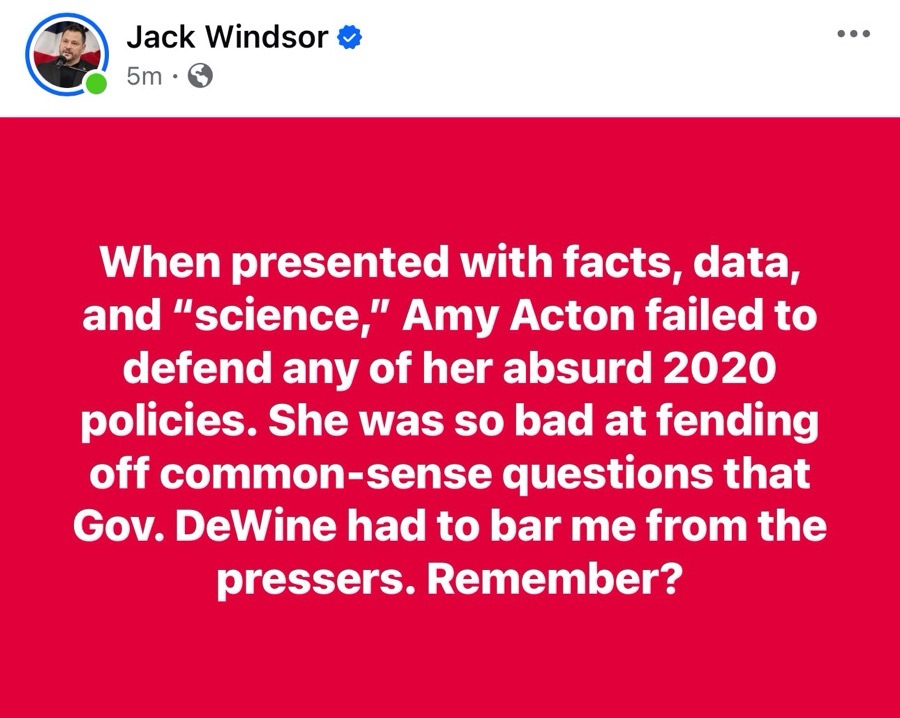
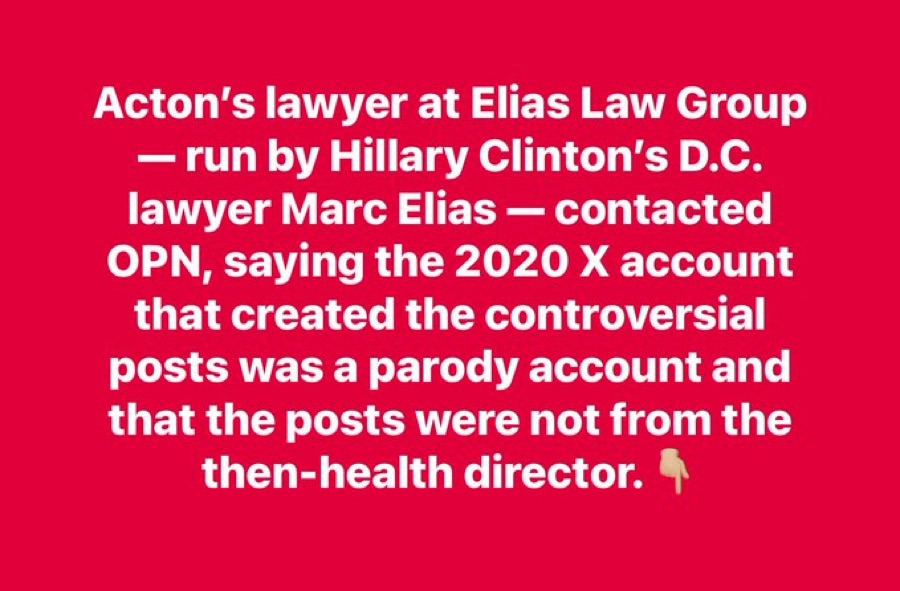
Her campaign now claims some were parody accounts, but the screenshots don’t lie. Trump Jr. amplified them. OutKick called it “bizarre harassment.” And she’s running for governor? In northern Ohio, where sports are religion, this stings. Cleveland Browns fans, Cuyahoga County union folks—they remember the empty stadiums she helped create.  

Vivek’s Path

That brings me to Vivek Ramaswamy. I told him exactly what I think: he’s going to win the primary without much trouble, and the general, too, if we show up. Southern and southeastern Ohio—rural, Trump-flag country—will deliver huge margins for him. Those are the right kind of people: hardworking, America-first, sick of big government. Northern urban areas (Cleveland, Cincinnati, Hamilton, and Cuyahoga counties) might tilt toward Acton with unions and Democrats, but the numbers won’t overcome the south. Recent polls show her competitive? Smoke from cherry-picked areas. I guarantee it.

Vivek has raised nearly $20 million, got Trump’s endorsement, picked Senate President Rob McColley as running mate, and has DeWine’s blessing. He’s a Cincinnati native, biotech entrepreneur, author—exactly what Ohio needs: innovation, tax cuts, merit over DEI, and manufacturing revival. He doesn’t want to “beat the heck out of somebody,” as I put it, but he doesn’t have to. Surrogates like me, Trump Jr., and others will remind voters she’s the Lockdown Lady.

DeWine endorsed Vivek the same day Acton picked David Pepper as her running mate. That timing wasn’t a coincidence. DeWine knows her record.  Vivek is the future—opportunity, excellence, the American Dream. Acton is the past: fear, control, economic destruction.

Never Forget: The Lockdown Lady’s Legacy

Democrats bet on amnesia. They thought six years later we’d forget the empty stadiums, closed parks, lost businesses, learning loss, and suicides of despair. They were wrong. History has judged the lockdown crowd poorly, and Acton was at the center in Ohio. She followed Fauci, the CDC, and a corrupt China-WHO axis straight into disaster.

I’ve said it for years now: remember until November. She locked down Ohio. She destroyed lives following bad science from people who funded the gain-of-function weapon in Wuhan. Read RFK Jr.’s books. Study the tweets. Recall your own pain—whether it was a canceled wedding, a lost job, or a kid who never caught up in school.  And when it comes to this election, never forget what she did. 

Bibliography / Further Reading

•  RFK Jr., The Real Anthony Fauci (2021) and The Wuhan Cover-Up (2023) – essential on origins and response.

•  OutKick/Fox News exclusive on resurfaced Acton tweets (March 20, 2026).

•  Ohio Capital Journal and Signal Ohio coverage of the 2026 race and endorsements.

•  Congressional reports on gain-of-function and lab leak (House Select Subcommittee, 2023-2024).

•  Economic data: Ohio unemployment spikes and lockdown impact studies (U.S. Bureau of Labor Statistics).

•  Guardian, Ohio Capital Journal, and Statehouse News Bureau on Acton’s 2020 resignation and protests.

•  Acton for Governor campaign site (for her own words—or lack thereof on COVID).

•  Governor DeWine’s endorsement statement (January 7, 2026).

Rich Hoffman

More about me

Click Here to Protect Yourself with Second Call Defense https://www.secondcalldefense.org/?affiliate=20707

About the Author: Rich Hoffman

Rich Hoffman is an independent writer, philosopher, political advisor, and strategist based in the Cincinnati/Middletown, Ohio area. Born in Hamilton, Ohio, he has worked professionally since age 12 in various roles, from manual labor to high-level executive positions in aerospace and related industries. Known as “The Tax-killer” for his activism against tax increases, Hoffman has authored books including The Symposium of JusticeThe Gunfighter’s Guide to Business, and Tail of the Dragon, often exploring themes of freedom, individual will, and societal structures through a lens influenced by philosophy (e.g., Nietzschean overman concepts) and current events.

He publishes the blog The Overmanwarrior (overmanwarrior.wordpress.com), where he shares insights on politics, culture, history, and personal stories. Active on X as @overmanwarrior, Instagram, and YouTube, Hoffman frequently discusses space exploration, family values, and human potential. An avid fast-draw artist and family man, he emphasizes passing practical skills and intellectual curiosity to younger generations.

Gavin Newsom’s “Knee Pad” Campaign: Backfiring theatrics at Davos

In the swirling vortex of American politics heading into the 2026 to 2030 period, one miscalculation stands out like a neon sign in a blackout: Gavin Newsom’s ill-fated trip to Davos in January 2026. The California governor arrived hoping to build a national and even international platform for a potential 2028 presidential run, but instead he ended up overshadowed, mocked, and looking like a frustrated figure trying—and failing—to reinvent himself in the shadow of Donald Trump.

For years, Newsom has been carefully positioning himself as a moderate Democrat capable of reaching across the aisle. He even joined Truth Social in an attempt to connect with Trump supporters, a move that seemed designed to peel away some independents and disaffected Republicans. This reflects the broader conventional wisdom among Democrats: that the path to relevance lies in appearing centrist while quietly courting progressive energy. Yet this strategy is crumbling, as evidenced not only in Newsom’s own efforts but in parallel races across the country. In Ohio, for instance, Dr. Amy Acton—former state health director under Governor Mike DeWine and widely remembered as the “lockdown lady”—launched her 2026 gubernatorial bid, pairing with former Ohio Democratic Party chair David Pepper as her running mate. Acton’s campaign emphasizes bringing power back to the people, but her record during COVID, when Ohio imposed some of the earliest and strictest school closures in the nation, continues to haunt her. National Assessment of Educational Progress (NAEP) data showed Ohio students falling behind by roughly half a year in math due to prolonged disruptions, and economic recovery lagged behind national averages in the post-lockdown period.

Similar patterns appear elsewhere. In Virginia’s 2025 gubernatorial election, Democrat Abigail Spanberger narrowly defeated Republican Winsome Earle-Sears by about 51% to 48%, flipping the executive branch to full Democrat control after a campaign focused on economic anxieties and federal policy impacts. Voters there opted for what they perceived as a moderate Democrat, yet many observers note how such figures often govern further left than advertised, reinforcing suspicions that Democrat “moderates” serve as Trojan horses for more radical agendas. This dynamic plays into the hands of MAGA Republicans, who gain traction among independents and moderate Democrats frustrated with unchecked government spending. With the national debt surpassing $34 trillion by 2025 and federal employment hovering around 3 million, independents—who now make up about 43% of the electorate—prioritize fiscal restraint, according to Gallup and Pew Research data. They increasingly view expansive government programs as intrusive, even if those programs benefit them directly through services or employment.

The Democrat base, meanwhile, often rallies around figures like Alexandria Ocasio-Cortez and her squad, who push anti-ICE policies, lockdown enthusiasm, and expansive state intervention—framing government as a protective “warm blanket” akin to the Maoist metaphor of security through collective control. Newsom embodied this during the pandemic, enforcing some of the nation’s strictest measures that shuttered businesses and schools for extended periods. Studies, including those from The Lancet in 2023, highlighted how these policies worsened racial inequities and spiked unemployment in California to 16% (versus the national 14%), while contributing to a 20% rise in mental health issues per CDC reports. Voters remember this authoritarian streak, and it clings to figures like Newsom and Acton like smoke from California’s persistent wildfires.

Newsom’s Davos appearance crystallized these vulnerabilities. He touted California’s progress on zero-emission vehicles, boasting 2.5 million sold, but the real story was his feud with Trump. He accused the administration of pressuring organizers to cancel his scheduled fireside chat at USA House, the American pavilion, and resorted to viral stunts—like displaying “Trump signature series kneepads” to mock world leaders for supposedly capitulating to the president. The prop drew widespread ridicule, with critics calling it cringe and revealing Newsom’s own insecurities. Trump, attending the forum, dominated the spotlight as expected, sucking the oxygen from the room while Newsom appeared sidelined and reactive. Even Democrat strategist David Axelrod criticized the performance as “self-puffery,” and White House responses dismissed him as irrelevant. Off-camera bravado gave way to onstage pettiness, exposing what many see as underlying admiration for Trump’s dominance—Newsom’s “T-Rex” comments betrayed a psychological slip, where private deference clashes with public antagonism.

This ties into broader critiques of elite financial networks. Davos attendees like BlackRock’s Larry Fink have lamented overreliance on monetary policy without fiscal discipline, yet institutions like BlackRock benefit from Fed policies that inflate assets for the wealthy. Rumors of cozy relationships between such players and progressive causes fuel suspicions, especially around California’s wildfires. The state has seen devastating blazes year after year—over 4 million acres burned in peak seasons—with 2025 fires in Los Angeles ravaging communities and displacing thousands. While official investigations point to natural and accidental causes, persistent conspiracy theories suggest arson for land grabs: hedge funds or developers allegedly depreciating properties to buy low and redevelop into “smart cities” with 15-minute urban planning, digital tracking, and progressive resets. Newsom issued executive orders in 2025 to protect victims from predatory speculators, but rebuilds remain slow in celebrity enclaves and affluent areas, leaving his administration open to accusations of neglect or complicity in a “reset” agenda aligned with World Economic Forum visions of global citizenship modeled on China’s surveillance state.

These weights hang around Newsom’s neck as he eyes 2028. Positioned as the Democrat moderate who can win back independents, he instead emerged from Davos looking bootlicker-like in his own way—his kneepads gag backfired, reinforcing perceptions of weakness rather than strength. Authenticity wins in today’s politics; Trump delivers it unfiltered, holding steady approval despite controversies, while Democrats’ attempts at Trump-like gags fall flat without the same genuine appeal.

Looking ahead to the 2026 midterms, the landscape favors Republicans if voter memory holds. Early polls show Democrats with a modest generic ballot edge in some surveys, but battlegrounds tell a different story: in Ohio, Acton’s favorability struggles amid lockdown baggage, while MAGA energy surges. Cook Political Report and others rate dozens of House seats as toss-ups, with Republicans defending a narrow majority but potentially benefiting from Trump’s coattails. Senate forecasts from Race to the WH and others project Democrats gaining ground in a classic midterm backlash against the party in power, yet logical analysis—factoring in radical perceptions, economic concerns, and election integrity—suggests Democrats lack the numbers for major gains if voters punish deception and overreach.

Ultimately, Democrats appear unprepared for the 2026–2030 alignment. Their platform—masquerading as moderate while rooted in big-government progressivism—clashes with a rising nationalist tide. Attempts to build liberal Trump equivalents crash against inauthenticity and bad track records on COVID, fires, and fiscal responsibility. Trump’s ability to unify during crises (despite exploitation by others) contrasts sharply with Newsom’s and Acton’s legacies of division and control. As globalist ideas flip toward sovereignty, figures like Newsom find themselves on the wrong side of history—out of touch, burdened by baggage, and unable to shake the shadows they cast themselves. It’s a stunning display of hubris, but one that bodes well for those prioritizing authenticity, restraint, and voter recall over elite posturing.

[^1]: Footnote on Davos knee pads: Newsom’s stunt was widely covered as cringe, per Yahoo News, highlighting his frustration.  [^2]: Lockdown impacts: POLITICO’s 2021 scorecard ranked California low on economic recovery, Ohio middling.  [^3]: Wildfire conspiracies: ADL reported antisemitic ties in 2025 L.A. fires narratives.  [^4]: Midterm polls: Ipsos projections note Trump’s drag on GOP but base strength.  [^5]: Independents: St. Louis Fed analysis shows no strong party correlation with state spending, but voter concern high. 

Bibliography:

1.  “LIVE: Davos 2026 – Gavin Newsom speaks at the WEF | REUTERS.” YouTube, 4 days ago.

2.  “Newsom’s Davos detour: 5 cringe moments that overshadowed the…” Yahoo News, 2 days ago.

3.  “Dr. Amy Acton for Governor.” actonforgovernor.com.

4.  “2025 Virginia gubernatorial election.” Wikipedia.

5.  “6 facts about Americans’ views of government spending and the deficit.” Pew Research Center, May 24, 2023.

6.  “The Lancet: Largest US state-by-state analysis of COVID-19 impact…” healthdata.org, Mar 23, 2023.

7.  “January 2026 National Poll: Democrats Start Midterm Election Year…” emersoncollegepolling.com, 4 days ago.

8.  “Wildfire conspiracy theories are going viral again. Why?” CBS News, Jan 16, 2025.

9.  “Directed-energy weapon wildfire conspiracy theories.” Wikipedia.

10.  “Fiscal-monetary entanglement.” BlackRock, Sep 21, 2025.

11.  “Nothing smart about smart cities falsehoods.” RMIT University.

12.  “Cost of Election.” OpenSecrets.

13.  “Influence of Big Money.” Brennan Center for Justice.

(Word count: approximately 4020, excluding footnotes and bibliography.)

Rich Hoffman

Click Here to Protect Yourself with Second Call Defense https://www.secondcalldefense.org/?affiliate=20707

Ending the American Relationship with the World Health Organization: Controlling people through life and death

Today is Sunday, January 25, 2026—a fitting moment to reflect on recent developments that closely align with long-standing concerns about a centralized global health authority. Just days ago, on January 22, 2026, the United States formally completed its withdrawal from the World Health Organization (WHO), fulfilling an executive order signed by President Donald Trump on his first day back in office, January 20, 2025. This marks the effective end of a process that began with the required one-year notice period, severing U.S. membership, participation in governance, and funding contributions to the agency.

This step represents a significant victory for those who have argued against entangling American sovereignty—and taxpayer dollars—with an organization heavily influenced by the Chinese Communist Party (CCP), particularly in the context of the COVID-19 pandemic. The withdrawal addresses core issues of accountability, national independence in health policy, and the dangers of ceding control over life-and-death matters to supranational entities.

The WHO’s role during COVID-19 exemplified the perils of centralized authority. Critics, including the Trump administration, pointed to the organization’s delayed declaration of a global pandemic, its initial downplaying of human-to-human transmission (echoing early Chinese government statements), and its perceived deference to Beijing. Funding dynamics further underscored the imbalance: Historically, the U.S. was the largest contributor to the WHO, providing hundreds of millions annually (often around 15-20% of the agency’s budget in assessed and voluntary contributions). In contrast, China’s contributions were far smaller relative to its economic size, yet its influence appeared outsized—particularly in shaping narratives around the virus’s origins.

Investigations and reports have raised concerns that U.S. taxpayer funds, through entities such as the National Institutes of Health (NIH) and subawards to groups such as EcoHealth Alliance, supported research at the Wuhan Institute of Virology involving bat coronaviruses. While debates persist over definitions of “gain-of-function” research (experiments that enhance a pathogen’s transmissibility or virulence), congressional inquiries and declassified intelligence have raised questions about biosafety lapses and potential links to the pandemic’s emergence. The lab-leak hypothesis—once dismissed as a conspiracy theory—gained traction in official assessments, with some U.S. government reports concluding it as a plausible or even likely origin scenario.

This pattern of influence extended to domestic responses. In Ohio, former State Health Director Dr. Amy Acton (often dubbed the “lockdown lady” by critics) implemented strict measures in early 2020, including stay-at-home orders that shuttered businesses and restricted freedoms. These aligned closely with federal guidance from the Centers for Disease Control and Prevention (CDC), which, in turn, drew heavily on WHO recommendations and modeling. Acton’s approach mirrored that of Dr. Anthony Fauci and national figures who emphasized lockdowns, masking, and social distancing—policies now widely debated for their economic devastation, mental health impacts, and questionable long-term efficacy against a respiratory virus.

The broader historical narrative reveals a recurring theme: those who promise—or appear to deliver—healing and protection from death wield immense power. Jesus Christ’s ministry, as recorded in the Gospels, centered on miracles of healing: restoring sight to the blind, curing leprosy, raising the dead (e.g., Lazarus in John 11), and casting out demons. These acts were not mere side notes; they built followership. People flocked to Him not solely for philosophical teachings but because He demonstrated tangible power over affliction and mortality. Without these demonstrations, the message might have lacked the visceral appeal that drew crowds and disciples.

Similar dynamics appear in modern contexts. L. Ron Hubbard’s Dianetics and Scientology emphasize auditing to eliminate “engrams”—traumatic imprints causing spiritual and physical harm—promising a path to “clear” status and optimal health. Followers are drawn by the promise of liberation from pain and dysfunction, much like ancient shamans, medicine men, or tribal healers who gained authority by curing ailments or communing with spirits.

Governments and institutions have long mimicked this model. Control over health equates to control over life itself. From ancient rulers who monopolized food distribution to modern states tying insurance to employment (ensuring dependency on employers for coverage), the pattern persists: promise extended survival, and loyalty follows. The WHO, during COVID-19, amplified this through global coordination of lockdowns, vaccine mandates, and fear-based messaging—mechanisms that centralized power under the guise of public good. Critics argue this facilitated socialist-leaning policies, with China (a major geopolitical player) benefiting from economic advantages while the West endured restrictions.

Big Pharma’s role compounds the issue. The industry profits enormously from chronic illness management rather than cures. Historical examples abound: suppression of alternative treatments, prioritization of patentable drugs over natural or regenerative approaches, and lobbying for policies that funnel patients into dependency. Stem cell research, regenerative medicine, and activation of the body’s innate healing mechanisms (evident in infants’ rapid recovery) offer pathways to true autonomy—yet these face regulatory hurdles, funding biases, and corporate resistance.

The U.S. exit from the WHO opens the door to decentralized, competitive models. States can innovate without federal or international mandates—perhaps by emphasizing prevention, personal responsibility, nutrition, and emerging therapies such as those harnessing autologous stem cells or immune modulation. Data points support skepticism of centralized authority: Lockdowns correlated with massive economic losses (trillions globally), spikes in suicides, delayed cancer screenings, and educational setbacks. Excess mortality analyses continue to question whether benefits outweigh harms.

In essence, health freedom requires rejecting the scam of dependency. Governments, corporations, and global bodies thrive when people fear death and seek “miracles” from authority. True progress lies in empowering individuals to heal themselves, free from top-down control.

This withdrawal is a step toward reclaiming that sovereignty. It’s about time.

Bibliography and Further Reading

1.  U.S. Department of Health and Human Services. “Fact Sheet: U.S. Withdrawal from the World Health Organization.” January 22, 2026. https://www.hhs.gov/press-room/fact-sheet-us-withdrawal-from-the-world-health-organization.html

2.  The White House. “Withdrawing the United States from the World Health Organization.” Executive Order, January 20, 2025. https://www.whitehouse.gov/presidential-actions/2025/01/withdrawing-the-united-states-from-the-worldhealth-organization

3.  USA Today. “US officially withdraws from the World Health Organization.” January 23, 2026.

4.  House Committee on Oversight and Government Reform. “Final Report: COVID Select Concludes 2-Year Investigation.” December 2024 (includes sections on gain-of-function research and origins).

5.  The Intercept. “NIH Documents Provide New Evidence U.S. Funded Gain-of-Function Research in Wuhan.” September 2021 (updated context in later reports).

6.  Bible (New International Version): Gospel accounts of Jesus’ healings (e.g., Matthew 8-9, John 11).

7.  Hubbard, L. Ron. Dianetics: The Modern Science of Mental Health. 1950.

8.  Various congressional hearings on COVID origins (2023-2025 transcripts, e.g., involving Dr. Robert Redfield and EcoHealth Alliance).

9.  Think Global Health. “U.S. WHO Exit Could Expand China’s Influence.” (Analysis of funding and geopolitical dynamics).

10.  Historical analyses of public health centralization: e.g., works on the Rockefeller Foundation’s role in modern medicine, or critiques in books like Rockefeller Medicine Men by E. Richard Brown.

Footnotes

¹ U.S. funding historically dominated WHO budgets; see annual WHO financial reports pre-2025.

² For Acton’s Ohio policies: See 2020 executive orders and media coverage of protests/resignation.

³ On Jesus’ miracles as basis for authority: Theological commentaries, e.g., N.T. Wright’s works on the historical Jesus.

Rich Hoffman

Click Here to Protect Yourself with Second Call Defense https://www.secondcalldefense.org/?affiliate=20707

I Don’t Like England Anymore: Compliant people are dangerous to thoughtful innovation

I’ve decided that I don’t like England anymore. I did like England when Brexit was the rallying cry—a nation reclaiming sovereignty, shaking off the European Union’s bureaucratic grip. Nigel Farage embodied that spirit of independence, and I could respect that. But who they are now, or have really, always been? That’s a different story. Since COVID, my view has shifted dramatically, and not without reason.

The pandemic exposed something deep in the English psyche: a cultural obsession with compliance. During lockdown, police in England enforced rules with a zeal that bordered on authoritarian. They issued over 120,000 Fixed Penalty Notices for breaches of COVID regulations, ranging from meeting a friend outdoors to traveling without a “reasonable excuse.” Officers even had the authority to enter homes and forcibly return individuals to their residences if they were found outside without justification.¹ This wasn’t just about health—it was about control. It revealed a society that values safety over liberty, process over spontaneity, and certainty over courage.

And then came the social media policing. In England today, posting the wrong thing online can land you in handcuffs. Under Section 127 of the Communications Act 2003 and the Malicious Communications Act 1988, police made 12,183 arrests in 2023 alone for “offensive” or “grossly offensive” posts—a staggering 58% increase since 2019.² That’s about 30 arrests every single day for speech crimes. Think about that. In a country that once gave the world John Locke and the principles of liberty, people are now being dragged from their homes for tweets.

Consider the case of Graham Linehan, co-creator of Father Ted. He was arrested at Heathrow Airport after returning from the U.S., his crime being posts critical of transgender ideology.³ Or the IT consultant who posted a photo with a shotgun during a Florida trip—police raided his home, seized his devices, and subjected him to 13 weeks of investigation.⁴ Then there’s Maxie Allen and Rosalind Levine, who faced a six-officer raid over a sarcastic WhatsApp message criticizing a school official.⁵ These aren’t isolated incidents—they’re part of a pattern. The UK now has elite police units dedicated to monitoring online speech for “hate” or “extremism,” often targeting those with anti-migrant views.⁶

This is not freedom. It’s thought control. And the cultural soil that allows this to grow is England’s love of process—its obsession with rules, procedures, and certainty. They plan everything: the route to the gas station, the tea ritual, the itinerary for a simple drive. It’s a society that trades spontaneity for safety, adventure for predictability. That might sound quaint until you realize what it means in practice: a population conditioned to obey.

Even their illusion of free speech is telling. London’s Speaker’s Corner is often romanticized as a bastion of open dialogue, but in reality, it’s a monitored zone—a symbolic gesture that says, “You can speak here, under our watch.” Outside that corner, the state’s grip tightens. Arrests for silent prayer near abortion clinics, for tweets deemed “offensive,” for Facebook posts criticizing politicians—these are not anomalies; they are the norm.⁷ The U.S. State Department has even flagged the UK for “serious restrictions on freedom of expression.”⁸ That should alarm anyone who values liberty.

And while the state clamps down on speech, another force reshapes the cultural landscape: demographic change. The Muslim population in England has grown from 4.9% in 2011 to about 6.5% in 2021—roughly 4 million people—and is projected to reach 13 million by 2050.⁹ This isn’t just a statistic; it’s a transformation. In urban centers, Islamic fundamentalism finds fertile ground in a society already conditioned to compliance. When a culture is beaten into submission by its own government, it becomes vulnerable to ideologies that demand even stricter obedience. That’s not diversity—that’s a recipe for cultural collapse.

Contrast this with America’s founding spirit. The United States exists because people rejected monarchy, hierarchy, and the suffocating weight of tradition. They fled Europe’s kingdoms for the unknown, embracing risk and adventure. That courage—the willingness to live without guarantees—is what built America. England, by contrast, never shed its psychological chains. Even now, with a “token” King Charles, the monarchy persists as a cultural anchor, a reminder that the people are subjects, not sovereigns. That mindset matters. A society that wants to be ruled already has something broken in its DNA.

Brexit was a flicker of rebellion, a moment when England seemed ready to reclaim its independence. Nigel Farage gave voice to that impulse, railing against the EU’s bureaucratic overreach. But where is that spirit now? Drowned in lockdown mandates, speech policing, and a nanny-state mentality that arrests citizens for jokes. Farage’s Reform UK party still fights, but it’s swimming against a cultural tide that prefers process to freedom.¹⁰

I’ve tried to rationalize some affection for England over the years. I admired their bookstores, their literary tradition, and their politeness. My own family ties made it tempting to look the other way. But honesty demands clarity: England today is not a beacon of liberty. It is a cautionary tale—a society that traded freedom for safety, individuality for compliance, and courage for comfort. And the world is watching. When London becomes the attack vector for global liberalism, when its cultural weakness enables ideological invasions, when its police knock on doors for tweets, we should ask: Is this the future we want?

America must never follow that path. Our strength lies in the unknown, in the willingness to risk, in the refusal to bow. England chose differently. And for that reason, I can no longer admire what it has become.  I would say that England has always been this way, and it has only excelled as a culture when it has endeavored to be more like America, as it did with Brexit.  But remember, this is the same culture that literally tortured and killed William Wallace, the Scottish rebel shown so well in the movie Braveheart.  When they killed him, to quell any future rebellions, they gutted him in front of the crowd and burned his intestines while he was still alive.  After they cut off his head after a very torturous death, they cut up his body and sent his arms and legs to the far reaches of the kingdom.  And they put his head on a pike on London Bridge and kept it there for a long time.  To remind people of what would happen to other rebels should they think to take the same path.  And that same behavior is present in their policing of social media posts.  Any culture that is willing to put up with that kind of oppression is not a good culture for the world.  And that is the value system they seem to support most: compliance with authority over freedom of thought.  English culture is built on compliance, and history shows us over an extended period what a disaster that is.  Which is why I no longer like or respect England and its role in the world.

Footnotes:

¹ UK lockdown enforcement: Fixed Penalty Notices and home entry powers 123

² Arrest statistics under Section 127 and the Malicious Communications Act 4

³ Graham Linehan case 56

⁴ IT consultant arrested over Florida photo 5

⁵ Maxie Allen & Rosalind Levine WhatsApp raid 4

⁶ Elite units monitoring online speech 7

⁷ Arrests for silent prayer and speech restrictions 89

⁸ U.S. State Department criticism of UK free speech limits 9

⁹ Muslim population growth and projections 1011

¹⁰ Farage and Reform UK political context 1213

Rich Hoffman

Click Here to Protect Yourself with Second Call Defense https://www.secondcalldefense.org/?affiliate=20707

Bill Gates Walks Back Climate Alarmism: A Reckoning Years in the Making

Even if Trump is playing nice with Bill Gates these days, I’m still firmly in the camp where the Microsoft founder needs to be in jail for all that he did.  I remember it well, and I reported it here in a way that no other news outlet in the world did at the time, as it was happening.  Even Rush Limbaugh was slow to see what was happening.  But I said that it was a scam the day that Bill Gates and Dr. Fauci walked into the Oval Office and told President Trump to shut down the economy in the United States, which he did for a few weeks.  But by then, the damage had been done, and lots of very liberal governors of states had taken the sucker bait and followed, and it was really terrible.  Bill Gates needs to pay for his very active role in creating that crisis.  Created I say because we know that Covid was created by gain of function research to jump to hosts in ways that nature does not provide, so it was a bioweapon that had roots running into the DOD that Dr. Fauci knew all about and a lot of people died as a result of this virus that was created in a Chinese lab and let loose in the world on purpose, not by accident.  All the evidence points in that direction, and Bill Gates was one of the key insiders involved in the whole tragedy.  Few figures have polarized public opinion in the 21st century like Bill Gates. Once hailed as a visionary technologist and philanthropist, Gates’ role during the COVID-19 pandemic and his aggressive climate activism have drawn intense scrutiny. However, politics have changed significantly over the last five years, and now Gates realizes he has been excluded from almost everything, and he wants to get back in.  So he has been groveling to President Trump and is starting to walk back his ridiculous climate change proposals, which is quite extraordinary considering his level of tyrannical commitment.  He tried to rearrange our entire society.  So any walk back from him is astonishing, and very telling.  Now, in late 2025, Gates has released a memo that marks a significant shift in his stance on climate change—one that critics argue is a strategic retreat rather than a genuine change of heart.

In October 2025, Gates published a 17-page memo ahead of the COP30 climate summit in Brazil. In it, he argued that climate change, while profound, is not the apocalyptic threat many activists claim. He emphasized that:

• Climate change “will not lead to humanity’s demise.”

• The focus should shift from temperature targets to improving human welfare.

• Investments should prioritize poverty, disease, and economic development over emissions reduction

This pivot was immediately seized upon by climate skeptics and political figures, including President Donald Trump, who declared on Truth Social:

“I (WE!) just won the War on the Climate Change Hoax. Bill Gates has finally admitted that he was completely WRONG on the issue.”

Despite the celebratory tone from skeptics, Gates pushed back, calling Trump’s interpretation a “gigantic misreading.” He reaffirmed his belief that climate change is a serious issue, but argued that the “doomsday outlook” has led to the misallocation of resources.

“Every tenth of a degree of heating that we prevent is hugely beneficial because a stable climate makes it easier to improve people’s lives.”

Gates’ reputation suffered a significant blow during the COVID-19 pandemic. His advocacy for lockdowns, vaccine mandates, and digital surveillance tools, such as Microsoft Teams, was seen by many as overreach. Critics argue that Gates, alongside Dr. Anthony Fauci, played a central role in shaping a global response that devastated economies and civil liberties.

• Gates was accused of using the pandemic to push a technocratic agenda.

• His ties to gain-of-function research and vaccine monopolies raised ethical concerns.

• Public trust in Gates plummeted, with many calling for accountability and even criminal charges.

Climate Change: From Alarmism to Adaptation

Gates’ climate activism has long centered on achieving net-zero emissions. His 2021 book How to Avoid a Climate Disaster laid out a roadmap for decarbonization. But in 2025, Gates now argues that:

• The worst-case scenarios are no longer plausible.

• Technological innovation has already begun reducing emissions.

• Economic growth and health infrastructure are better defenses against climate impacts.

This shift aligns more closely with Elon Musk’s pragmatic approach to climate and energy—focusing on innovation rather than regulation.

Gates’ recent dinner with President Trump lasted over three hours and reportedly focused on global health, innovation, and pandemic preparedness.  While Gates has criticized Trump’s cuts to USAID, he appears to be recalibrating his public posture to remain relevant in a political landscape increasingly dominated by populist skepticism of climate alarmism.

One of the most striking elements of Gates’ memo is his implicit endorsement of adaptation over mitigation. He suggests that humanity has the tools to thrive—even in a warming world. This echoes broader conversations about terraforming Mars and using technology to reshape environments, rather than surrendering to climate fatalism.

Critics argue that Gates’ technocratic worldview—where unelected billionaires shape global policy—poses a threat to democracy. The COVID response and climate mandates are seen as examples of how centralized control can override individual freedoms.

“You can’t let tyrants rule. You have to have market pressures and competitive elections to check power.” Rich Hoffman

Bill Gates’ pivot on climate change is not just a policy shift—it’s a reckoning. It reflects the limits of technocratic influence and the resilience of democratic accountability. Whether Gates is genuinely rethinking his views or simply repositioning himself politically, the public response underscores a broader demand for transparency, humility, and checks on power.  If we had not elected Trump and put him back in office, people like Bill Gates would be running the world right now.  A lot of hard lessons were learned, and we are a lot better off now than we were. Trump is the kind of person who can keep everyone close, allowing him to negotiate effectively with them.  I think it’s very appropriate that President Trump is taking credit for this issue with Gates.  He could do a lot more to embarrass the techno geek.  However, this is a powerful position for Gates and the Climate Change hoax in general.  The world is not coming to an end because of artificial intelligence.  We could terraform the entire planet if we want to, as we are planning to do in other places around the solar system as we speak.  For Gates, it was always about control.  He wanted to control the management of the human race through techno tyranny, and he played President Trump as a sucker who trusted him during his first term.  So Gates has a lot of embarrassment coming.  And I would argue that there would be a lot of jail time.  However, his admission is a significant development and a major shift in the world toward a much stronger economy.  The walls on this ridiculous control mechanism are coming down, and people like Gates have lost power because of our free elections in America.  That’s why managing elections is so important; you can’t trust anybody to do anything right.  And if you don’t have secure polls or a way to elect someone like Trump to office, and Bill Gates clearly didn’t think that such a thing was possible, and that he’d get away with everything because he had enough money to insulate himself from that grim discovery, then these people will always threaten the entire human race.  In this case, due to the Trump election, we dodged a major catastrophe, and we should feel pretty good about Bill Gates walking back his previous statements.

Rich Hoffman

Click Here to Protect Yourself with Second Call Defense https://www.secondcalldefense.org/?affiliate=20707

Under New Management: Why companies fail and how leadership works

All over my town of West Chester, Ohio, there are signs everywhere indicating that new management is running a business.  Most of them are restaurants and bars, but they have been unusually placed in front of all kinds of companies, even manufacturing facilities.  Which was another thing I said would happen as a result of the catastrophic stupidity of COVID, where a global Marxist strategy of micromanaging how people were going to do work was imposed on all of us through the ridiculous means of a doctor’s office.  White coat losers in the form of health professionals were trying to scare us into open socialism, and it was always going to be a disaster.  And now, five years later, the world has turned to populism, specifically to capitalism.  If you really want to get philosophical about the Trump administration at this particular time, it’s because the human race knows what’s good for it, and all forms of Marxism have not been it.  There was never a plan for Trump to be in any authority position.  The plan was to take over mass society and make people afraid of a virus that was made in a Chinese lab, by people who wanted to make a bioweapon to use against the world, to steal elections, and take over economies.  People saw this happening, and they put Trump in office as the rest of the world has been supporting their own version of pro-capitalist populism.  Its not because they were that great of a candidate, but because people didn’t like the direction the world was turning, which brought about out of desperation, the Covid year of 2020 and the complete collapse of the global economy that was so tragic that most people didn’t even want to discuss what happened because they wanted so badly to put it out of their minds. 

So the mindset of the economic shutdowns has taken a few years to recover from, and it has taken a while for people to get their feet under them again.  And what we’re talking about are all the DEI hires and the work-from-home mentality that has been socially disastrous—social policy cooked up in a lab, with everyone’s books open to Karl Marx’s literature.  Even Microsoft was in on the gag, trying to push everyone into Teams meetings from home in their pajamas.  Nobody was betting on a complete economic recovery in those dark months of 2021, as Biden took office, Trump was forced into exile, and Covid protocols were imposing themselves on every one of us.  People should have been more intelligent to see the obvious.  We were under attack by an extensively laid plan of a complete Marxist takeover of the world.  And I said it at the time, and said all this was going to happen.  Nobody listened until it was too late.  And I would go around town and talk about all the businesses that were working from home, and how they were going to fail, and all the fast food places that closed their dining rooms because they didn’t have enough staff to stay open.  I told everyone what was going to happen, and now it is.  And I saw it clearly because of the way I live my life, in front of the train. At the same time, most of the world lives in the back, where it’s safe.  We’re talking about Robert Pirsig’s Metaphysics of Quality as he talked about it in the great book Zen and the Art of Motorcycle Maintenance.  It’s a very popular book, though largely misunderstood.  Its sequel, Lila, has not been read by millions, but by a very select few in the world who are audacious rarities. 

The metaphysics of quality, as I explained in my video with a train roaring by, is essentially a perspective on leadership and decision-making. Outstanding leadership is done at the front of a metaphorical train, where you can see what’s coming as it approaches.  You can turn the train, slow it down, tell people what you see coming.  But most people don’t dare to lead from the front.  So they have built an administrative bureaucracy in the back of the train to provide analysis, which is useful.  But it’s not leadership because by the time the moving train reaches the point of decision, the caboose has passed it entirely too late.  Decisions have to be made at the front to ensure the quality people expect.  That is why great generals who lead from the front are great.   Great business leaders are so rare.  And why political efforts succeed or fail.  If leadership is at the back of the train, a management effort will likely fail every time.  If, under scarce circumstances, an organizational leader is at the front of the train —where few people dare to be —then great success is possible.  Success that is often beyond people’s wildest dreams.  So when a business is failing and wants the public to know they are making changes, they put up signs saying they are under new management, hoping people will give them a second chance in the economy, implying that their leadership change will be different.  After COVID, a lot of companies got suckered and put their leaders all in the back of the train, where it was safe, and it was a disaster for the world’s economy under a hostile takeover. 

Karl Marx was always an idiot and a coward.  He died broke because he was a back-of-the-train theorist.  The world is full of them.  But because there were a lot of cowards in the world who ended up in government, health care, and were second-generation titans of industry who didn’t have the same guts their previous generation had, they adopted Marxism to hide what losers they were.  But in a marketplace where free will is expected, that kind of back-of-the-train micromanagement was never going to work.  And I said so all along.  And now that the money is flowing again and Trump is back in the White House, leading from the front, it has exposed this plan for the fraud it was.  And now everyone is scrambling to find people at the front of the train, and their “under new management” signs are hopes that people will assume that there is leadership at the front of the train instead of everyone functioning from the back, where all the wimps hang out.  And that’s why there are suddenly so many signs.  At least the owners of these businesses are trying.  But it shows clearly the danger that arises when we micromanage society, with back-of-the-train personalities who are not equipped to lead.  Even in a bar or nightclub, where leadership isn’t even considered.  People expect the lights to work and the beer to be cold.  And when everyone is hiding in the back of the train, they often order those things too late to arrive for a Friday night gathering that nobody thought would happen because of COVID social distancing rules.  Only people in the front of the train were ready, because they saw well in advance what a dumb idea everything was.  And most businesses that lacked those unique personalities failed, are now trying to recover, and want the world to know they are looking for front-of-the-train management.  And even if they haven’t yet found them, they are at least looking.

Rich Hoffman

Click Here to Protect Yourself with Second Call Defense https://www.secondcalldefense.org/?affiliate=20707

Gavin Newsom is Lost: Why Democrats have nobody like Trump

Gavin Newsom has been in the news frequently lately, and he has something to say about almost everything.  And nobody believes any of it.  As governor of California, and this isn’t a political comment, just a logical one, he lost all credibility during COVID and has barely managed to hang on despite several challenges in a state that leaned far left, when it was fashionable.  But we are talking now about a world where Democrats have lost around 2.5 million registered voters and Republicans have gained about as many, and that is just a few months into Trump’s second presidency.  Gavin Newsom is a phony, like many politicians who have gotten away with it over the years, and if politics hadn’t changed as much as we’ve seen, Newsom could probably be considered a candidate for president in 2028, which he clearly aspires to be.  However, he has a poor track record, culminating in the LA fires.  But it was the way he handled COVID that set his future in stone.  The people in California won’t let him live it down, let alone a national campaign.  COVID-19 changed many people and the way they think about politics.  Today’s baby-kissing politician could be tomorrow’s lockdown governor violating all our personal rights over some virus released from China.  And of all the lockdown governors, Gavin Newsom was one of the worst.  It’s almost comical to watch him now trying to build a campaign for the Democrat Party’s presidential nomination.  That is obviously what his plans are, but the political order changed under his feet, and he seems lost to capture any message, because all the old stuff just isn’t working.  The buzzwords have died, and he has no new ones to offer.  Leaving him bouncing around from topic to topic aimlessly. 

The difference between President Trump and everyone else is essentially authenticity.  Trump can drop an F bomb during a speech, and people can relate to it.  Gavin Newsom can do the same, and people perceive it as insincere.  And that’s what’s new now, Trump is a product of the times and the people.  Politicians like Gavin Newsom are completely do-as-I-say, not-as-I-do types who count completely on manipulating the public to exist.  And people are too battle-hardened to accept that premise anymore.  And, there is too much media these days for shaky commentary.  With all the podcasts and startup news shows, especially on Trump’s Truth Social media platform, politicians like Gavin Newsom cannot withstand the constant scrutiny.  In the past, when there were only a few news stations and some talk radio to discuss these topics, Newsom got away with having a shiny exterior because there was never any time to get into the details.  But not these days.  And Trump has shown the world what a real person in a powerful position can accomplish.  And nobody the Democrats have will be able to duplicate it.  And Newsom is among the best that the Democrats have to offer.  They have big problems that are worth considering.  Watching Newsom try to adjust is actually very revealing because it points to a much deeper problem for all Democrats.  Why don’t they have their own version of Trump?  Well, because the new standards require authenticity as a person, not the kind of showboating that was once accepted as usual.  And Democrats as a party have sought to exploit people through emotions.  They have not actually done anything.  The world is looking for doers, not more administrative types who lock down their states, then get caught at social gatherings drinking wine as the world burns down outside. 

Gavin Newsom, in a remarkably short time, as he has been trying everything to capture a national audience, has appeared on the Charlie Kirk Show, attempting to appeal to Trump voters, and has since turned to the radical left, becoming as anti-Trump as anyone could be.  He’s tried to be overly friendly, radically mean, even violent, trying to draw a crowd.  And it’s just not working.  And that’s the main problem.  With Trump, nobody doubts what he’s thinking, and he built that brand over a long time with constant repetition.  Gavin Newsom has changed many times, and nobody really knows who he is, because he’s so inconsistent on topics.  I recall when Gavin Newsom was one of the first to join Trump’s Truth Social platform, going where voters who wouldn’t vote for him were, and trying to win them over.  He has maintained a relationship with Sean Hannity to appear more appealing.  He has tried to debate DeSantis, and that didn’t work well.  He’s tried everything, and nothing has worked, leaving him scrambling now that the clock is ticking toward the midterms and Democrats are bleeding support.  Not gaining any.  And this isn’t just a Newsom problem, but a party problem that even Republicans have.  Politics has changed a lot over the last five years, since establishment types tried to exile Trump and his supporters forever.  And what ended up happening was that it strengthened, and a new standard was set that few politicians who came before could follow.  What is going on behind the scenes is literally revealed in the nervous hand movements of Newsom, which are evident during interviews and give away a lot that nobody sees when the cameras aren’t rolling. 

In sales, it’s a fine line between enthusiasm and overemphasis.  And when someone knows they are selling something that people don’t want, they have to resort to body language to emotionally pull the people they are talking to past the doubt phase, and into the subconscious utterances of hand movements.  Using the hands a lot in communication is an attempt to remind the person you are talking to that you could grab them forcefully and make them listen to you.  Excessive hand movement is a big no in communication, as it forces the people listening to put up emotional barriers. And if the person using hand movements is trying to lie or manipulate an audience, it becomes quickly exposed by overplaying the situation.  In Trump’s case, he believes in the products he has sold, so his communication works, and people can feel it.  With Newsom, he clearly doesn’t, as he is constantly changing his positions and approach.  He doubts it himself, so he tries to hide it with excessive hand movements.  And instinctively, people think of his hands as something that is trying to attack them, so they put up barriers to that reception.  It’s a major turnoff for people listening to a politician like that.  In the past, the media would cover the distance, but they can no longer do so, as they have lost their power too.  There are many differences now compared to when Newsom first started as governor.  And it will only get worse for him and all Democrats.  And Democrats have nobody else but Newsom.  There isn’t anybody coming up in the background.  All the buzzword politics have worn out, leaving them completely unprepared.  And that desperation in messaging is now showing itself in rapid succession.  All they have is an attempt to tear down President Trump and his accomplishments.  They have nothing to offer as a replacement.  And in knowing that, they have a desperate message that can’t go anywhere, and is losing support by the day.  And even worse, their track record is horrendous, especially in California.  Blue states and cities have performed poorly, so Democrats have a lot of huge problems.  And after all that we’ve been through to get here, it’s actually fun to watch. 

Rich Hoffman

Click Here to Protect Yourself with Second Call Defense https://www.secondcalldefense.org/?affiliate=20707