Sonic Warfare: How Popular Music Became a Stealth Weapon in the Spiritual and Demographic Assault on Family, Faith, and Human Civilization

In the quiet rhythm of everyday life, where once a family gathered around the radio on a Sunday drive to church or tuned in to Casey Kasem’s countdown of the top hits, a profound transformation has unfolded—one that few recognized as it crept through the airwaves and into the bedrooms of children across generations. What began as innocent expressions of yearning for love, commitment, and the building of families has morphed, decade by decade, into a calculated barrage of confusion, anger, victimization, and raw hedonism. This is not mere artistic evolution or market demand; it is, I argue, a deliberate strategy woven into the fabric of mass media, engineered by producers and influencers who traded short-term celebrity and power for something far darker—an alignment with forces that undermine the very foundations of stable society, traditional relationships, and the biblical understanding of eternity. It ties directly into what I have long described as the depopulation agenda: a multifaceted campaign not just to control numbers but to erode the human impulse toward marriage, children, and generational continuity, replacing it with isolation, addiction, and spiritual fragmentation. The evidence is voluminous when viewed across the full scope of history, technology, and culture, and it reveals a pattern too consistent to dismiss as coincidence. 

Consider the family structure before the age of electricity and broadcast media. Doors were locked, parents controlled the household narrative, and social interactions happened in churches, businesses, or community gatherings. Polite society relied on shared experiences—songs that everyone heard together on the radio, reinforcing values of courtship, devotion, and the dream of a white-picket-fence life. Parents were the gatekeepers; external influences had to pass through them. But with radio waves, then television, and now personal devices streaming infinite content, that gate has been smashed open. Mass marketing and advertising discovered the power of repeated stimuli to sway opinions, and the family unit—once a fortress—became decentralized. Spouses disconnected, children tuned into private worlds on smartphones, and the shared cultural experience evaporated. Apple Music and Spotify deliver algorithm-curated isolation; no longer do families bond over the same top 100 on Sunday afternoons. This fragmentation is no accident. It mirrors the broader spiritual war against sovereignty—of nations, communities, and the individual soul—where outside forces, whether earthly producers or something more sinister, erode the intellect needed to raise good kids and build enduring families. 

Trace the musical trajectory since the discovery of broadcast power, and the degrading plot becomes unmistakable. In the 1950s, songs like Elvis Presley’s “Love Me Tender” or classics such as “Earth Angel” by The Penguins captured a culture yearning for genuine connection. Love was portrayed as destiny, leading naturally to marriage, family, and stability. The purpose was clear: find your soulmate, build a life, and contribute to society. These were not raw expressions of lust but hopeful anthems of commitment, played in cars with the whole family, shaping a collective mindset of hope and responsibility. The 1960s continued this trend with Elvis hits emphasizing man and woman in a harmonious partnership, while the 1970s brought soulful ballads from artists evoking deep emotional bonds—songs about finding “the one,” weathering life together, and the warmth of devotion. Even into the 1980s, tracks like Huey Lewis and the News’ “The Power of Love” or Foreigner’s “I Want to Know What Love Is” celebrated the drive to connect meaningfully, to work hard, buy a home, and raise a family. Music sold records because it reflected what people wanted: a date that led to vows, children, and a legacy. Producers catered to a market hungry for that vision because society itself still valued it. 

Then came the pivot—late 1980s into the 1990s—a deliberate experimentation that shattered the mold. Artists like Marilyn Manson emerged as shock troops, with androgynous imagery, anti-Christian rage, and lyrics that attacked the family unit head-on. Manson, openly tied to the Church of Satan and drawing from occult traditions, embodied the transsexual confusion and demonic rebellion that would later flood mainstream culture. Songs weren’t about building; they were about tearing down—heartbreak as permanent, hookups as norm, authority (especially parental and religious) as the enemy. Rob Zombie and similar acts amplified the anger rock movement, blending horror aesthetics with nihilistic messages. Even KISS, with its demonic stage personas, had earlier produced some love-oriented tracks, but the new wave glorified destruction. This wasn’t organic rebellion; it was engineered to pit children against parents. Kids raised on 1950s-1980s love songs suddenly heard their own generation’s soundtrack declare the old ways oppressive. The goal: undo the values of sacrifice, fidelity, and long-term investment. 

Rap music’s mainstream explosion accelerated the assault. Early artists like Run-DMC offered energy and positivity, but by the 1990s, figures like Snoop Dogg—pushed into the spotlight by industry producers—delivered tracks like “Gin and Juice.” Here was the shift crystallized: laid-back hedonism, pocketful of rubbers, smoking dope, partying till dawn in depressed neighborhoods. No more Huey Lewis-style work ethic or dreams of stability; instead, victimization cycles, hopelessness, and a culture of easy sex without consequence. Quincy Jones’ earlier proactive, uplifting productions for artists of color gave way to this new narrative—one that appealed to confusion and resentment, perfectly timed for kids with personal devices bypassing parental oversight. Rap wasn’t just music; it was marketed as rebellion against the “square” family values of prior generations. Studies confirm the lyrical evolution: from 1959 to 1980, popular songs were largely free of explicit content and focused on romance. Post-1990, references to sex, drugs, violence, and substance abuse skyrocketed—drug mentions up 66% since the 1970s, with degrading sexual lyrics linked to earlier teen sexual activity and riskier behaviors. 

This cultural reprogramming coincided with measurable societal decline. U.S. marriage rates fell from around 11 per 1,000 people in the 1950s to roughly 6 per 1,000 today. The share of adults who are married dropped from two-thirds in 1950 to about 46% now. Divorce rates, while peaking in 1980, remain elevated compared to mid-century levels, with ever-married women experiencing divorce rates nearly quadrupling since 1900. Fertility rates have plummeted alongside these shifts, contributing to real demographic pressures—not some abstract “overpopulation” panic of old eugenics movements, but a modern crisis of underpopulation driven by delayed or foregone family formation. Attitudes toward same-sex marriage and transgender issues shifted dramatically among younger generations, with Gallup and Pew data showing support rising from minority views in the 1990s to 69%+ today for same-sex marriage, and LGBTQ+ identification reaching 9.3% overall (over 20% among Gen Z). While personal freedoms matter, the broader effect—when combined with music’s normalization of fluid sexuality, hookups, and identity confusion—has been fewer traditional families and births. 

Behind the scenes, the producers who greenlit this shift often operated with occult undertones. Aleister Crowley’s influence permeates rock history—from Jimmy Page buying Crowley’s Boleskine House and incorporating his philosophy into Led Zeppelin, to the Beatles featuring Crowley on the cover of Sgt Pepper’s, to David Bowie and the Rolling Stones’ documented flirtations, as documented by filmmaker Kenneth Anger. Marilyn Manson’s self-identification as a Church of Satan minister and his Antichrist Superstar-era provocations weren’t subtle. These weren’t fringe eccentricities; they represented deals for fame, where short-term gains—celebrity, wealth, power—traded against traditional biblical eternity. As I detail extensively in my upcoming book The Politics of Heaven, such alignments with cult practices echo ancient Baal and Moloch worship: human sacrifices to dark forces for immediate reward, now repackaged as artistic “expression.” The intent was never to satisfy audience yearning but to steer it toward brokenness, away from the soulmate/family model that perpetuates civilization. 

Streaming technology completed the isolation. No shared Sunday radio experiences; instead, personalized algorithms feed each person their own echo chamber of below-the-line thinking—victimhood, Democrat-driven despair, sexual fluidity. Most modern output assumes a broken society rather than aspiring to one worth building. Love songs still exist, but from fractured perspectives: heartbreak as default, commitment as naive. The depopulation agenda thrives here—not overt sterilization, but cultural seduction that makes family formation seem outdated or oppressive. Pride events, trans narratives, and same-sex normalization, amplified through entertainment, further dilute the reproductive imperative. It is spiritual warfare: demons of old answering modern pacts, undermining God’s creation by targeting the family—the bedrock of sustainable intellect and good society.

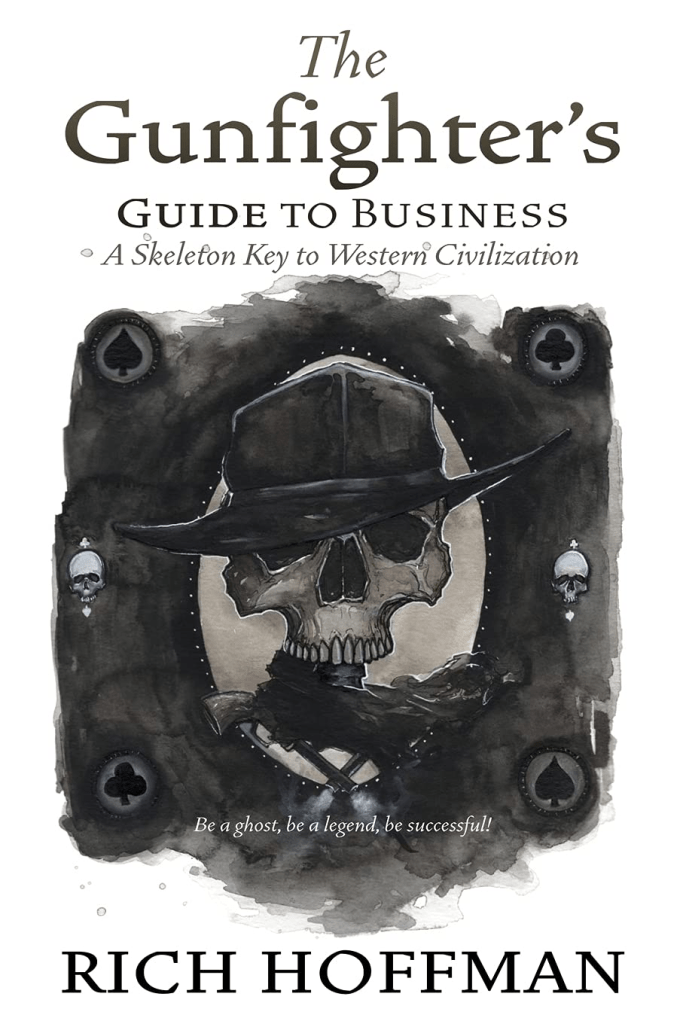
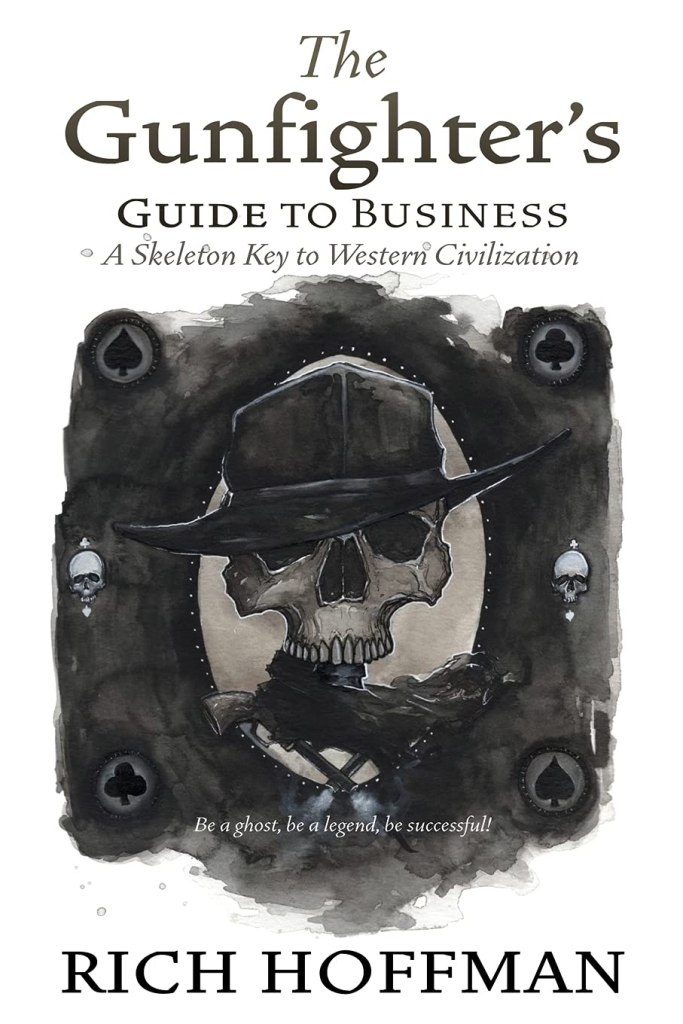
Yet awareness is the first counterstrike. By graphing this 70-year arc—love anthems to rage anthems, shared culture to solitary despair—the pattern emerges clearly. Music didn’t just reflect change; it drove it, with producers knowingly wielding it as a back-door weapon into isolated minds. The proof lies in the statistics, the lyrical analyses, the occult threads, and the demographic results. My earlier book, The Gunfighter’s Guide to Business, showed how to navigate such battles in practical terms; The Politics of Heaven, due in 2027, will map the full treasure hunt through history’s spiritual undercurrents. It’s not too late. Reclaim the narrative—curate what enters your home, teach discernment to the young, and recognize the game for what it is: a military campaign against humanity itself. The airwaves once united us in hope; now, understanding their weaponization can help us rebuild what was nearly lost.

Footnotes

(Integrated via key citations above; full sourcing below for transparency.)

Bibliography

•  Bowling Green State University National Center for Family & Marriage Research. “Divorce: More than a Century of Change, 1900-2022.” (2024).

•  USAFacts. “How Has Marriage in the US Changed Over Time?” (2025).

•  Our World in Data. “Marriages and Divorces.”

•  Fedler, Fred et al. “Analysis of Popular Music Reveals Emphasis on Sex, De-Emphasis of Romance.” (1982).

•  Madanikia, Y. & Bartholomew, K. “Themes of Lust and Love in Popular Music Lyrics From 1970 to 2010.” SAGE Open (2014).

•  Primack et al. Studies on substance use in popular music (various, 2008+).

•  Martino, S.C. et al. “Exposure to Degrading Versus Nondegrading Music Lyrics and Sexual Behavior Among Youth.” Pediatrics (2006).

•  Louder Than War. “Aleister Crowley’s Influence On Popular Music.” (2017).

•  Bebergal, Peter. Season of the Witch: How the Occult Saved Rock and Roll. (TarcherPerigee, 2014).

•  Gallup Historical Trends on LGBTQ+ Rights and Identification (2024-2025).

•  Pew Research Center. Reports on LGBTQ+ experiences and attitudes (2025).

Further reading: Michael Hur’s works on the music industry’s shadows; historical analyses of the culture industry (Adorno et al.); and primary sources on 20th-century population policy debates. The full scope demands ongoing research, but the trajectory is undeniable. This essay captures the essence of the deep dive—proof that understanding the game is the path to winning it.

Rich Hoffman

More about me

Click Here to Protect Yourself with Second Call Defense https://www.secondcalldefense.org/?affiliate=20707

About the Author: Rich Hoffman

Rich Hoffman is an aerospace executive, political strategist, systems thinker, and independent researcher of ancient history, the paranormal, and the Dead Sea Scrolls tradition. His life in high‑stakes manufacturing, high‑level politics, and cross‑functional crisis management gives him a field‑tested understanding of power — both human and unseen.

He has advised candidates, executives, and public leaders, while conducting deep, hands‑on exploration of archaeological and supernatural hotspots across the world.

Hoffman writes with the credibility of a problem-solver, the curiosity of an archaeologist, and the courage of a frontline witness who has gone to very scary places and reported what lurked there. Hoffman has authored books including The Symposium of JusticeThe Gunfighter’s Guide to Business, and Tail of the Dragon, often exploring themes of freedom, individual will, and societal structures through a lens influenced by philosophy (e.g., Nietzschean overman concepts) and current events.
Yes, I Think Jeffery Epstein is Still Alive: They think we’re suckers, and treat us that way

The persistent suspicions surrounding high-profile figures who vanish from public view—whether through reported death, disappearance, or institutional cover-up—often stem from a deep-seated distrust in official narratives. In an era where information flows freely and institutional authority faces scrutiny, these doubts are amplified. Conspiracy theories, while frequently dismissed, sometimes point to genuine irregularities that warrant examination. This pattern appears in cases like Adolf Hitler’s fate after World War II, Jeffrey Epstein’s death in 2019, and recent speculations about Joe Biden’s identity and health. What unites them is the recurring theme of “smoke,” suggesting potential “fire”: procedural failures, missing evidence, powerful interests that could benefit from concealment, and a history of elite impunity that makes extraordinary claims feel plausible to many.

Jeffrey Epstein’s case exemplifies this. Epstein, a financier convicted of sex offenses and accused of trafficking minors to elite circles, died on August 10, 2019, in his cell at the Metropolitan Correctional Center (MCC) in New York City while awaiting trial on federal sex-trafficking charges. The New York City Chief Medical Examiner ruled the cause of death as hanging, with the manner classified as suicide. A comprehensive 2023 Department of Justice Office of the Inspector General report detailed significant operational lapses at MCC: guards failed to conduct required checks (some falsified logs, leading to charges), Epstein was left without a cellmate despite recommendations, and he had been removed from suicide watch after a prior incident in July 2019. The report highlighted a malfunction in the prison’s Digital Video Recorder system starting July 29, 2019, which prevented recording from many cameras (though live feeds continued). Only limited footage from one camera was available for the relevant area.

These lapses—combined with Epstein’s connections to figures like Bill Clinton, Prince Andrew, Donald Trump, and others—fueled theories that he was murdered to silence him or that his death was staged for escape. The meme “Epstein didn’t kill himself” captured widespread skepticism, amplified by his associations and the elite networks he cultivated. Recent document releases in 2025-2026, including tranches from the U.S. Department of Justice totaling millions of pages, have reignited claims. Some allege Epstein is alive—perhaps in Israel, on an island, or elsewhere—based on debunked AI-generated images (e.g., a bearded man in Tel Aviv sunglasses falsely claimed as him), misread emails, or even a Fortnite username change (“littlestjeff1”) that Fortnite confirmed was unrelated and from an existing user. No credible evidence supports him being alive; forensic autopsies, including toxicology showing no unusual substances and no defensive wounds inconsistent with suicide, counter speculation. A 2025 CBS News analysis of jail video revealed no “missing minute” as some claimed, and officials dismissed homicide indicators.

Ghislaine Maxwell, Epstein’s associate, convicted in 2021 of sex trafficking and sentenced to 20 years, has remained largely silent on key details. In a February 2026 congressional deposition before the House Oversight Committee (via video from Federal Prison Camp Bryan), she invoked her Fifth Amendment right repeatedly, refusing to discuss Epstein, trafficking links, or related matters. Her attorney cited a pending habeas petition and advised her to invoke the Fifth Amendment to avoid self-incrimination. Reports describe harsh prison conditions in her low-security facility, including limited space, isolation, and a small cell with a toilet near the bunk—echoing inmate accounts of psychological strain. Some interpret her silence as pressure or as protection for powerful figures; others see it as a legal strategy amid ongoing appeals. Conspiracy claims even suggested a body double in her deposition video, but her lawyer confirmed it was her, attributing changes to jail’s toll (including prior sleep deprivation).

Similar doubts surround Adolf Hitler’s death. Official history states Hitler died by suicide in his Berlin bunker on April 30, 1945, alongside Eva Braun, with their bodies burned. Soviet forces recovered remains, including dental fragments confirmed in 2018 by French forensic experts as matching Hitler’s 1944 X-rays, proving his death in 1945. Post-war rumors, fueled by declassified FBI/CIA files on unverified sightings, claimed Hitler escaped via U-boat to South America (Argentina, Colombia, etc.), living incognito until the 1960s. These relied on hearsay, dubious witnesses, and books like Grey Wolf, often debunked as fiction or plagiarism. Recent 2025 Argentine declassifications of Nazi fugitive files (under President Javier Milei) detailed tracking of figures like Eichmann and Mengele, but offered no new evidence for Hitler. Historians note some Nazis fled to South America with ratlines and support networks, but forensic dental matches, bunker eyewitnesses (e.g., Otto Günsche, Heinz Linge), and CIA dismissals of claims as “phony” override speculation. Theories persist due to Soviet disinformation campaigns and incomplete initial body photos.

More recently, theories claim Joe Biden died in 2019 (perhaps from health issues or foul play) and was replaced by a body double, actor, clone, or masked entity for the 2020 election. Proponents cite perceived changes in appearance (ear shape, height, gait, eyes), basement campaigning during COVID, and inconsistencies in behavior. Some tie this to Epstein-related files, with unverified 2026 emails echoing claims (amplified by Donald Trump in 2025 Truth Social reposts) of Biden’s “execution” and replacement. These resurfaced amid broader distrust in elections and institutions. No evidence supports this; claims stem from manipulated videos, aging effects, satire, or debunked deepfake accusations. Biden’s family, public appearances, and medical records show a pattern of continuity. Theories echo patterns of elite manipulation but lack substantiation beyond visual anomalies that can be explained by lighting, age, or editing.

Connections between these cases include elite networks and power imbalances. Epstein’s ties to figures like Bill Gates involved philanthropy discussions, including a 2015 email invitation (from a redacted sender) to a Geneva pandemic preparedness conference on “Preparing for Pandemics.” Epstein claimed interactions with Gates on biomedical projects, modeling, or even lurid personal matters (e.g., STI treatments), but Gates’ spokespeople called such allegations “absurd and completely false,” noting no financial ties or collaboration materialized. Melinda French Gates expressed discomfort with these details in 2026 interviews. These narratives thrive in low-trust environments where official accounts seem incomplete. Procedural failures (MCC lapses, missing Hitler body photos) invite doubt, amplified by 2026 file dumps fueling QAnon-adjacent extremism, AI hoaxes, and foreign disinformation.

Yet, extraordinary claims require extraordinary evidence. Forensic confirmations (Epstein’s autopsy, Hitler’s teeth) counter speculation, while body-double theories lack substantiation. In a free-information age, scrutiny is valuable, but patterns of “smoke” don’t always indicate fire—sometimes they reflect negligence, coincidence, or elite impunity without full criminal conspiracy. Healthy skepticism demands evidence over assumption. As disclosures continue (e.g., ongoing Epstein file reviews, potential Maxwell appeals), patterns may clarify, but current facts point to suicide for Epstein, death in 1945 for Hitler, and continuity for Biden. Distrust in power structures is justified; baseless leaps risk undermining legitimate inquiries into real abuses and cover-ups.  But then again, that’s what money can buy in these cases, a way to taint the evidence, and then shape the conspiracy within the realm of institutionalized analysis.  When we say there is no evidence, it’s because we rely on evidence that has been bought and paid for to tell a story the conspirator desired.  And in that way, the truth is always concealed. 

Bibliography and Further Reading

•  U.S. Department of Justice Office of the Inspector General. Investigation and Review of the Federal Bureau of Prisons’ Custody, Care, and Supervision of Jeffrey Epstein (June 2023).

•  Charlier, Philippe et al. “The remains of Adolf Hitler: A biomedical analysis and definitive identification.” European Journal of Internal Medicine (2018).

•  Various 2026 reports: CBS News (Epstein theories debunked), Reuters (AI images fact-check), NPR (Gates-Epstein ties), France 24 (Hitler escape debunk).

•  Wikipedia: “Death of Jeffrey Epstein,” “Conspiracy theories about Adolf Hitler’s death” (cross-reference primaries).

•  News: New York Times, Guardian, BBC on Maxwell deposition, file releases (2025-2026).

•  Books: Grey Wolf (critiqued escape claims).

Rich Hoffman

More about me

Click Here to Protect Yourself with Second Call Defense https://www.secondcalldefense.org/?affiliate=20707

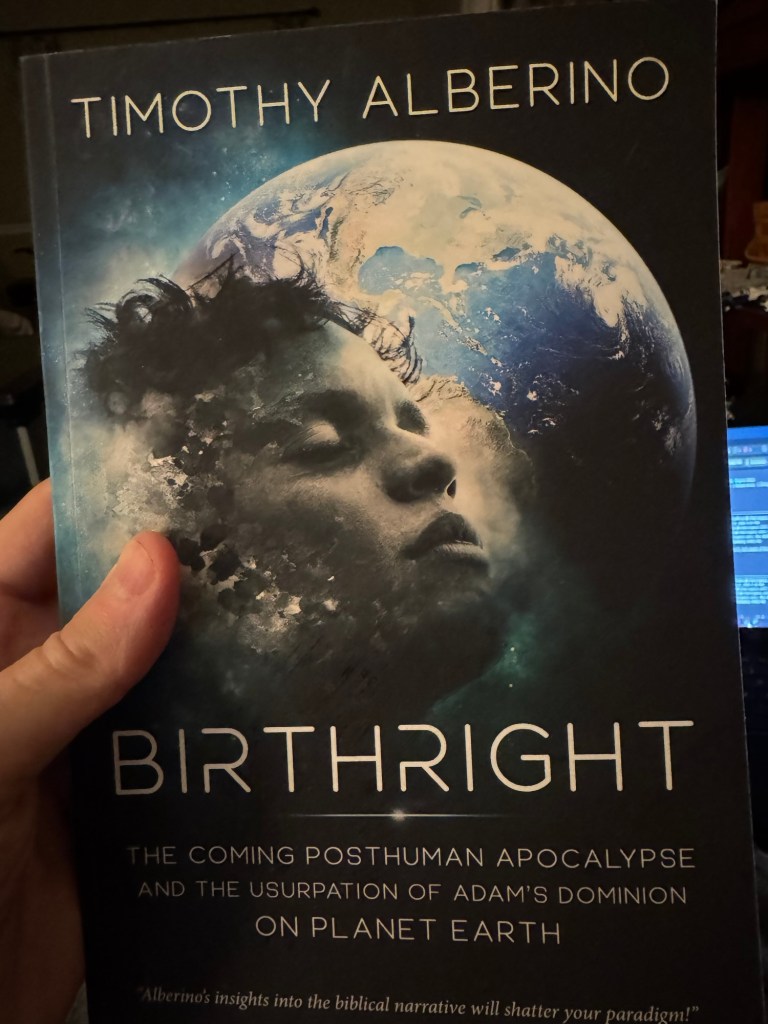
Timothy Alberino’s Fantastic book ‘Birthright’: Why we shouldn’t sell our souls for a bowl of stew

In the quiet moments away from the relentless pace of political battles, economic analysis, and the daily grind of defending principles in a world that often seems intent on erosion, there’s something profoundly refreshing about diving into a book that pulls back the curtain on deeper realities. One such discovery came recently with Timothy Alberino’s Birthright: The Coming Posthuman Apocalypse and the Usurpation of Adam’s Dominion on Planet Earth, published in 2020. This isn’t just another volume on ancient mysteries or fringe theories; it’s a meticulously crafted narrative that weaves biblical scholarship, historical inquiry, and contemporary phenomena into a cohesive worldview. It challenges the sanitized, compartmentalized versions of history and scripture we’ve been fed, urging readers to step out of Plato’s cave—where we’ve been chained, staring at shadows on the wall—and confront the fuller light of reality.

I finished the book on the day of the Olympic opening ceremonies that many viewed as laden with overt satanic symbolism and references to Luciferian themes. Such public displays, alongside scandals in Hollywood, the music industry, and elite circles involving ritualized sex, power, and exploitation—from Aleister Crowley’s influence to modern figures like Sean Combs or echoes in the Epstein saga—underscore a persistent undercurrent. Alberino argues these aren’t isolated excesses but part of an ancient war over humanity’s inheritance, a theme he traces back to the very beginning of the biblical account.

At the heart of Birthright is the concept of dominion granted to Adam and Eve in Genesis. Humanity, created in God’s image, was given authority over the Earth—to expand Eden, steward creation, and bring heaven’s order to the physical realm. This birthright represents not just land or resources but a divine mandate for rule, creativity, and moral governance. Yet from the outset, forces sought to usurp it. The serpent’s temptation in Eden was the first theft attempt, leading to the fall and the squandering of that authority through disobedience. Alberino expands this into a cosmic drama, drawing on the Book of Enoch (an apocryphal text preserved in the Dead Sea Scrolls and quoted in the New Testament) to detail the rebellion of the Watchers—200 fallen angels who descended, took human wives, and produced the Nephilim, hybrid giants whose existence corrupted the Earth with violence and forbidden knowledge.<sup>1</sup>

These events, detailed in Genesis 6:1-4 and elaborated in Enoch, explain the pre-Flood world’s wickedness, necessitating the deluge as divine judgment. The Nephilim weren’t mere tall humans but offspring engineered to challenge human dominion, their spirits becoming demons after their bodies perished.<sup>2</sup> Alberino connects this ancient incursion to modern phenomena: UFO sightings, alien abductions, and what he sees as a deceptive “alien” presence masquerading as extraterrestrial but rooted in the same fallen spiritual realm. He posits that today’s transhumanist agenda—merging human biology with technology, AI, and genetic engineering—represents the latest phase in this usurpation, aiming for a posthuman apocalypse where humanity’s birthright is fully stripped away, replaced by hybrid or enhanced entities loyal to adversarial forces.<sup>3</sup>

This framework resonates deeply with longstanding interests in giants, ancient history, and the Nephilim. For years, discussions of giants in North America—mound builder discoveries from the 1800s along rivers like the Miami Valley, often dismissed as carnival hoaxes or pseudoscience—were marginalized. An early article I wrote on these topics back in 2010 drew massive attention but faced backlash for blending “serious” issues like tax policy with what mainstream culture deemed conspiracy territory. Institutions prefer neat categories: politics here, religion there, ancient anomalies safely labeled myth. Yet evidence persists, from biblical references to global giant lore, suggesting a suppressed history.

Alberino’s work builds on scholars like Michael Heiser, who applied rigorous biblical exegesis to the divine council and supernatural elements in scripture.<sup>4</sup> The Bible, as an artifact, is remarkable—preserved through millennia of translation, political editing (from early Roman church councils to Renaissance interpretations), and textual discoveries like the Dead Sea Scrolls, which confirm remarkable consistency. Yet it’s dense, fragmented, like shadows in Plato’s allegory: we see projections but not always the sources. Alberino encourages turning from the wall to examine the fire, the figures casting shadows, and ultimately stepping into the world beyond illusion.

He frames the ongoing battle as one over this birthright. The story of Esau and Jacob in Genesis 25 illustrates it starkly. Esau, the firstborn, sells his birthright to Jacob for a bowl of stew when hungry and impatient, valuing immediate gratification over eternal inheritance. Yahweh honors the transaction, leading to Jacob (renamed Israel) fathering the tribes and claiming the promised land. This narrative isn’t just family drama; it’s a microcosm of humanity’s temptation to trade divine authority for fleeting pleasures—sex, power, convenience, or modern equivalents like celebrity, wealth, or technological transcendence.<sup>5</sup>

Alberino ties this to figures who rejected paternal guidance and embraced rebellion. Aleister Crowley and Friedrich Nietzsche, both losing religious fathers young, spiraled into philosophies that influenced destructive movements—Crowley’s occult sex magic permeating Hollywood and music, Nietzsche’s Übermensch (overman) twisted into Nazi ideology. These represent selling the birthright for Luciferian promises of godhood without God. In contrast, the biblical Overman ideal—Adam as God’s supreme representation on Earth, uncorrupted—offers a heroic vision: humanity as stewards, not slaves to temptation or manipulation.

My affinity for the “Overman warrior” concept aligns here—not the corrupted Nietzschean version that fueled tyranny, but a Superman-like ideal of strength, virtue, and resistance to evil. It’s about refusing to be broken, manipulated, or seduced into yielding dominion. Personal history in passion plays, portraying biblical roles, fostered a lifelong engagement with these themes, yet frustration with weak portrayals of figures like Adam (easily tempted) or institutional failures to confront modern implications has been, to say the least, infinitely disappointing for me.

Alberino’s book bridges gaps: why the Bible omits details (political censorship, lost texts), why giants and fallen angels matter (they explain evil’s origins), and why UFOs fit (as modern deceptions echoing ancient incursions). He critiques institutional religion for downplaying Enoch or supernatural elements, allowing secular science to dismiss anomalies. Yet fresh scholarship—Dead Sea Scrolls, archaeological confirmations of biblical sites like the City of David—validates the narrative’s core.

This isn’t pseudoscience; it’s interdisciplinary inquiry challenging controlled categories. The Temple Mount disputes—Islam denying Jewish archaeological evidence despite visible proof—mirror broader suppressions of inconvenient truths. Similarly, giants’ stories were ridiculed as roadshow myths to justify land theft or secularize history, but persistent global accounts suggest otherwise.

In an era of disclosure debates, black budgets, and fear-based control narratives around “mysteries,” Alberino reframes UFOs as spiritual, not merely technological. The 200 Watchers’ rebellion sought to corrupt the human line, preventing Eden’s expansion. Today’s equivalents—rituals in entertainment, elite exploitation—continue that agenda, luring people to sell their birthright cheaply.

The hope lies in reclamation. Humanity’s mandate remains: expand Eden, resist deception, claim dominion through alignment with divine order. Alberino’s work, alongside emerging discussions in UFO communities, biblical studies, and alternative history, signals a shift—people untying from Plato’s cave, exploring freely.

This book stands out for its scholarly precision, narrative flow, and refusal to compartmentalize. It entertains while provoking profound reflection, much like Graham Hancock’s works or Vera brothers’ explorations, but with stronger biblical anchoring. For anyone weary of surface-level politics or religion, it’s a reminder that the real fight transcends the visible—it’s eternal, cosmic, and personal.

Highly recommended. It elevates understanding, inspires resistance to temptation, and reaffirms the value of pursuing truth beyond shadows. More from Alberino—on Enoch commentary, expeditions—promises further illumination. In a world pushing posthuman futures, remembering our birthright may be the ultimate act of defiance and hope.

Bibliography and Further Reading

•  Alberino, Timothy. Birthright: The Coming Posthuman Apocalypse and the Usurpation of Adam’s Dominion on Planet Earth. Independently published, 2020. (Primary text; available on Amazon, author’s site.)

•  Alberino, Timothy. The Book of Enoch: With Commentary & Concept Art on the Book of the Watchers.

•  Heiser, Michael S. The Unseen Realm: Recovering the Supernatural Worldview of the Bible. Lexham Press, 2015.

•  The Book of Enoch (Ethiopic version, translated editions; referenced in Jude 1:14-15).

•  Dead Sea Scrolls publications (e.g., via Biblical Archaeology Society resources).

•  Reviews and summaries: Goodreads (4.5+ average), Shortform book summary, Amazon customer reviews.

•  Related discussions: YouTube interviews with Alberino (e.g., Shawn Ryan Show, various podcasts).

<sup>1</sup> Alberino, Birthright, drawing on Book of Enoch chapters 6-16; see also Genesis 6:1-4.

<sup>2</sup> Ibid.; Heiser, The Unseen Realm, pp. 92-110 on Nephilim as hybrid offspring.

<sup>3</sup> Alberino, Birthright, chapters on UFOs and transhumanism; Shortform summary highlights the “posthuman apocalypse” thesis.

<sup>4</sup> Heiser, The Unseen Realm, core argument on divine council and rebellious “sons of God.”

<sup>5</sup> Genesis 25:29-34; Alberino frames this as emblematic of selling dominion for temporal gain.

Footnotes reference key biblical passages, book sections, and supporting scholarship for further personal exploration.

Rich Hoffman

More about me

Click Here to Protect Yourself with Second Call Defense https://www.secondcalldefense.org/?affiliate=20707

UFO Disclosure: Historical Context, Cultural Impact, and the Interdimensional Reality

Unidentified Flying Objects (UFOs), now officially termed Unidentified Anomalous Phenomena (UAPs), have transitioned from fringe speculation to mainstream discourse in recent years. The concept of UFO disclosure refers to the systematic release of information by governments, military agencies, and credible institutions regarding unexplained aerial phenomena. This shift has profound implications for science, security, and culture. While the notion of extraterrestrial visitation has long captivated the public imagination, recent developments—including congressional hearings, Pentagon reports, and high-profile media coverage—suggest that the phenomenon warrants serious consideration beyond conspiracy theories. The question is no longer whether UFOs exist, but what they represent and how society should respond to their disclosure.

Historically, UFO sightings surged in the mid-20th century, coinciding with technological advancements and geopolitical tensions during the Cold War. The Roswell incident of 1947, often cited as the genesis of modern UFO lore, sparked widespread speculation about crashed alien spacecraft and government cover-ups. In response, the U.S. Air Force launched Project Sign in 1947, followed by Project Grudge in 1949, and ultimately Project Blue Book in 1952. Project Blue Book became the most extensive government program investigating UFOs, collecting over 12,000 reports before its termination in 1969. While most cases were attributed to natural phenomena or misidentified aircraft, 701 remained unexplained (Britannica, 2025; Wikipedia, 2025). The official stance concluded that UFOs posed no threat to national security and lacked evidence of extraterrestrial origin. However, critics argue that the Condon Report, which justified the program’s closure, reflected institutional bias rather than scientific rigor (History.com, 2025). These early investigations established a pattern of secrecy and skepticism that shaped public perception for decades.

The modern era of disclosure began in 2017 when The New York Times revealed the existence of the Pentagon’s Advanced Aerospace Threat Identification Program (AATIP). This revelation, coupled with the release of declassified Navy videos depicting objects with extraordinary flight characteristics, reignited global interest. Subsequent reports by the Office of the Director of National Intelligence (ODNI) and the Department of Defense’s All-Domain Anomaly Resolution Office (AARO) have documented hundreds of UAP incidents, some defying conventional explanations (ODNI, 2023; DoD, 2024). The 2024 consolidated report noted that while many sightings were attributable to balloons or drones, a subset exhibited anomalous behavior, including transmedium travel and acceleration beyond known propulsion systems (DoD, 2024). Congressional hearings featuring whistleblowers such as David Grusch further intensified the debate, with claims of crash retrieval programs and non-human biologics entering the public record. Although these assertions remain controversial, they underscore a growing consensus that UAPs merit scientific investigation rather than dismissal.

Media figures have played a pivotal role in amplifying the disclosure narrative. Tucker Carlson, once reticent on the subject, has devoted extensive coverage to UAPs, interviewing lawmakers like Rep. Tim Burchett and discussing classified briefings that suggest underwater UFOs—so-called USOs—capable of moving at 200 mph in ocean trenches (Carlson Interview, 2025). Carlson has hinted at a “spiritual component” to the phenomenon, describing aspects so disturbing that he hesitates to share them publicly (Newsweek, 2023). Similarly, Megyn Kelly has hosted discussions with historian Victor Davis Hanson and former intelligence officials, exploring claims of reverse-engineered alien technology and the cultural ramifications of disclosure (Kelly Show, 2025). Joe Rogan’s podcast has featured prominent voices such as Bob Lazar, Jacques Vallée, and David Grusch, delving into theories ranging from extraterrestrial visitation to simulation hypotheses (JRE Library, 2025). These platforms have not only normalized UFO discourse but also framed it within broader philosophical and scientific contexts, challenging audiences to reconsider humanity’s place in the cosmos.

The cultural impact of UFO disclosure extends beyond media sensationalism. It intersects with epistemology, theology, and sociology, raising questions about authority, trust, and existential meaning. Historically, UFO narratives have mirrored societal anxieties—from Cold War fears of Soviet technological superiority to contemporary concerns about government transparency. Today, disclosure challenges entrenched paradigms, compelling institutions to reconcile empirical anomalies with scientific orthodoxy. Popular culture, from Hollywood films to streaming documentaries like The Age of Disclosure, reflects this tension, oscillating between skepticism and wonder. As anthropologist Diana Walsh Pasulka observes, UFOs function as “technological angels,” embodying both scientific mystery and spiritual symbolism (Pasulka, 2019). This duality explains why disclosure evokes not only curiosity but also apprehension, as it destabilizes ontological certainties that underpin modern civilization.

Speculative theories about UAP origins further complicate the discourse. The extraterrestrial hypothesis (ETH), positing that UFOs are spacecraft from other planets, remains the most popular explanation. However, the interdimensional hypothesis (IDH) has gained traction among scholars and ufologists. Pioneered by thinkers like J. Allen Hynek and Jacques Vallée, IDH suggests that UAPs may originate from parallel realities or higher dimensions, exploiting quantum anomalies to traverse spacetime (Patheos, 2024; Vallée, 1975). Contemporary research in quantum physics and multiverse theory lends conceptual plausibility to this idea, even if empirical validation remains elusive. Tim Lomas (2023) argues for “epistemic humility” in evaluating such hypotheses, noting that UAP behavior—such as instantaneous acceleration and materialization—defies classical physics and may indicate non-local phenomena (Lomas, 2023). If true, the implications are staggering: reality may be far more complex than the materialist paradigm assumes, encompassing layers of existence beyond human perception. This perspective resonates with ultraterrestrial models proposed by physicist Harold Puthoff, which entertain scenarios involving time travelers, ancient civilizations, or entities operating outside conventional spacetime (Journal of Cosmology, 2024).

The philosophical and theological ramifications of these theories are profound. If UAPs represent interdimensional intelligences, traditional dichotomies between science and spirituality collapse, inviting a synthesis of metaphysics and empirical inquiry. Such a paradigm shift could redefine humanity’s understanding of consciousness, agency, and destiny. It may also catalyze ethical debates about contact protocols, planetary stewardship, and the moral status of non-human intelligences. As Vallée cautions, disclosure is not merely a scientific event but a cultural transformation with unpredictable consequences for religion, governance, and social cohesion. Governments have reportedly convened think tanks to assess these impacts, with some concluding that full disclosure could destabilize global institutions—a rationale often cited for continued secrecy (NewsNation, 2025). Whether this paternalism is justified remains contentious, but it underscores the gravity of the issue.

UFO disclosure represents a watershed moment in human history, challenging epistemic boundaries and cultural norms. From the secrecy of Project Blue Book to the transparency of ODNI reports, the trajectory of UAP discourse reflects a gradual shift from ridicule to legitimacy. Media figures like Carlson, Kelly, and Rogan have accelerated this transition, framing UFOs as both scientific enigmas and philosophical provocations. While the extraterrestrial hypothesis dominates popular imagination, interdimensional models invite deeper reflection on the nature of reality and consciousness. Ultimately, disclosure is not an end but a beginning—a call to expand our intellectual horizons and prepare for a future where the unknown becomes knowable. Whether humanity meets this challenge with wisdom or hubris will determine the contours of the next great chapter in our cosmic story.

UFO disclosure has evolved from Cold War secrecy under Project Blue Book to contemporary transparency through ODNI and AARO reports. Media figures such as Tucker Carlson, Megyn Kelly, and Joe Rogan have mainstreamed the debate, while documentaries like The Age of Disclosure amplify claims of crash retrieval programs and non-human biologics. Beyond empirical anomalies, disclosure raises cultural, philosophical, and theological questions, challenging materialist assumptions and inviting consideration of interdimensional hypotheses. Whether UAPs are extraterrestrial, ultraterrestrial, or manifestations of higher-dimensional realities, their study demands epistemic humility and interdisciplinary inquiry. Disclosure is not merely about UFOs—it is about redefining humanity’s place in a universe that is likely far stranger than imagined.

References (APA Style)

• Britannica. (2025). Project Blue Book. Retrieved from https://www.britannica.com/topic/Project-Blue-Book

• Department of Defense. (2024). Fiscal Year 2024 Consolidated Annual Report on Unidentified Anomalous Phenomena. Retrieved from https://media.defense.gov

• History.com. (2025). Project Blue Book: The US Government’s Secret UFO Investigations. Retrieved from https://www.history.com/articles/project-blue-book

• Lomas, T. (2023). The Ultraterrestrial Hypothesis: A Case for Scientific Openness to an Interdimensional Explanation for UAP. Journal of Transpersonal Psychology.

• Newsweek. (2023). Why Tucker Carlson’s Scared to Report on UFOs. Retrieved from https://www.newsweek.com

• Patheos. (2024). UAP: The Interdimensional Hypothesis. Retrieved from https://www.patheos.com

• Pasulka, D. W. (2019). *

Rich Hoffman

Click Here to Protect Yourself with Second Call Defense https://www.secondcalldefense.org/?affiliate=20707

Conspiracy Theorists are Prophets of Truth: The human abuse of power by controlling false narratives

What we are seeing come apart, in a good way, is a human narrative that has long held in it the power over others through concealment.  It was pretty astonishing, knowing some of the things I do about the conspiracies talked about, to watch the confirmation hearings of Kash Patel, Tulsi Gabbard, and Robert F. Kennedy by senators who clearly insisted that these people accept a complete lie in order to get a confirmation vote.  It would have been shocking if it wasn’t so stark and apparent.  But that kind of thing happens every day and has gone on for thousands of years.  Conformity to a popular opinion is more important to authority structures than the truth.  For instance, asking Kash Patel if Joe Biden won the 2020 election was more of a hazing oath than a quest for the truth.  Of course, Biden didn’t win that election.  I reported it from the very hour it happened and have seen precinct maps showing where the election fraud occurred.  I have talked about it for the last several years almost every day because it was one of the most significant crimes in the history of the world.  And the evidence, four years later, is starting to come out into the light of day.  So, by asking Kash the question, which he knows there was election fraud too, the entire premise is to see if Kash would lie to be accepted into the club of Washington D.C. employees.  For those types of people, in which evil rides like a horse, the greater good is defined as superior to the truth.  If the masses would be better off not knowing the truth, as determined by the authority figures of the day, then the truth must be concealed.  And once you start doing all that, you can never put the genie back in the bottle.

When RFK was asked about COVID and vaccines, the attempt was to get him to refute his truthful statements and to accept a government-formed diatribe that was meant to conceal the truth from the public to preserve the institutions that abused their power and killed millions and millions of people.  For the greater good, RFK was expected to lie to get the job Trump appointed him for.  Of course, this is ridiculous, but we put up with it every day and behind many of the problems we have regarding our government and how it does the work for the people who put it in power, or they lose their way and start to think they are in charge, we have to admit that conspiracy theories have been very good for our society and are a natural way that people who seek the truth find a way to bridge what they are told by people they can’t trust, and the actuality of evidence.  In the case of our own government, or even in the science fields, institutional migration into popular culture is more important than the facts of the matter, so we have a large number of conspiracy theories from people who seek the truth, but can’t get it from their sources of authority.  And we have indeed witnessed, such as with the CIA, that part of their strategy of concealment is an actual abuse of their authority, leaving people guessing constantly what’s going to happen next.  The best example of this method is sleep deprivation torture, where a patient is never allowed to rest until they either confess to a crime they never committed, just so they can sleep, or to get them to psychologically accept a truth they otherwise would have rejected.  In this case, let’s get people talking about aliens in Roswell, New Mexico, instead of what globalism was doing to the small military town in destroying it so they could ship the jobs to China and make it the kingmaker of New World Order politics. 

This condition is most evident in the current trend of history analysis.  We have been lied to about the origins of the human race and the linear track of history, with humans migrating from hunters and gatherers and building cities predictably inventing things until we have arrived in the modern age.  But the truth is that humans have risen and fallen for thousands of years, reaching heights of greatness before falling back into a culture of barely rubbing two sticks together to make a fire.  That is a source of conspiracy that authority figures are terrified of because to admit to it, masses of people might not follow them if they prove to be wrong, and society might yet again retreat into the abyss of human achievement.  Even though we have vast evidence showing much contrary information that archaeologists and anthropologists reported, that evidence is ignored so that an established belief can remain the informative narrative.  Anybody who brings forth any new truth that would challenge the official narrative established by universities and polite scientific society would be called a conspiracy theorist.  We know that civilization is tens of thousands of years old and that hunters and gatherers who settled at sites such as Stonehenge were curious about the stones and built a culture around them.  However, the mathematical elements and construction themselves came from a much more advanced society that was global. 

As protestors outside of the closed-down USAID screamed about the DOGE efforts to get rid of entire government departments, they were all guilty of accepting an official narrative of social benefit when the real menace was wealth redistribution from a capitalist country to prop up communist countries, and in the process, to destroy capitalism so a centralized power could rule the world.  The official narrative was that USAID was helping people.  When the truth was that it had been seeking to destroy the brand of America that the world wanted to kill so it didn’t have to compete with North American capitalism.  The goal of many who seek power in the world is to gain the ability to control a narrative and to use it to rule over the masses.  And the trick to their power is to get those masses to admit to a falsehood to survive.  The only way we have arrived at the point we are now where the Trump administration has gained the moral authority to do all that it’s doing is because the conspiracy theorists turned out to be right about most things.  Not just some things, but most, and those in authority at the time, have been caught falsifying the official narratives, and they don’t know how to handle a society of truth.  No human culture ever has.  It’s never been done before, anywhere.  But we are doing it now in America, and essentially, it’s because the conspiracy theories were able to get an honest analysis through free speech, which is why it’s so necessary in any culture.  But seeing such a mechanism of authority play out when the facts are so well known only shows how bad it has always been.  We should all thank God for the conspiracy theories in our lives.  They have forced the world to be more honest, and in that process, they have alleviated a lot of evil destruction.  And because of all that, we are entering a unique time of truth, as we’ve never seen it before.

Rich Hoffman

Click Here to Protect Yourself with Second Call Defense https://www.secondcalldefense.org/?affiliate=20707

As Usual, People Trusted Government and They Lost Their Lives: The Marxism behind the Lahaina wildfire

I’m proud of the people regarding the terrible fire in Lahaina, Hawaii, on the island of Maui during the summer of 2023.  Early in learning why a raging fire broke out that destroyed the entire town and so far killed entire families, with over 500 people wiped away from their lives, credible people were sharing videos of some beam weapon that was igniting the fire, aggravating its spread.  So from moment one, many people were not falling for the narrative that a raging fire had just burst out and destroyed the entire town.  The sirens didn’t go off because the government official feared that people might be scared and run into the fire in the hills surrounding the city.  And the loser in charge of the water to fight the fire was afraid that he might upset the “water spirit” by using it for such a catastrophic event.  Virtually everything about the Lahaina fire that destroyed the entire town resulted from some government pinhead and stupidity, and people have learned from Covid not to trust the experts.  Because the experts are usually bought and paid for and serve other kinds of powers, such as the World Economic Forum.  Immediately people assumed that the fire had been started by some nefarious characters who wanted the town for some other purpose, which obviously would be revealed in who did what with the land in the aftermath.  Bill Gates had a house near that location that wasn’t touched by fire, and people noticed it.  People were asking the right questions in the devastating aftermath, where we are today.  We should expect to be lied to by an incompetent government.  And when there are major disasters like this one, we should look for who profits from the demise because there is probably something to it.

But at the very least, conspiracies about motivation are not needed here.  Asking hard questions is healthy, and the answers are likely harder to digest.  But we know that significant incompetence was on full display, which is the most dangerous aspect of the fire and the government meant to protect the town’s people.  We live in a time where the experiment of the Administrative State, as much as we might complain about it when they are slow to get us a check from our tax returns or answer our complaints about some service they are in charge of, has failed and failed to the point where they are just openly dangerous.  There isn’t much of a core competency we can trust about an administrative state government and its slow-minded, lazy employees.  This is a shame, but it’s a glaring reality in 2023.  It always was to a large degree, but this is different.  People seem finally ready to admit that they’ll never hear from the government, “I’m here to help.”  Instead, they’ll hear, “I’m on my lunch break, I’m working from home because of Covid,” or “I want more money to sit around and do less work.”  The liberal playbook of Marxist environmentalism is doing the same thing to power companies worldwide.  In my state of Ohio, I have talked explicitly about the FirstEnergy problem, where radical politics has attacked any politician who has tried to have a relationship with them.  The radicals want to get rid of nuclear energy and are trying to put that power company out of business and force them to say uncle with renewables, solar, and wind.  And that looks to be the same kind of case at this massive fire in Hawaii.

The experts, the same kind of experts who told us not to take Ivermectin to treat Covid, which turned out to be disastrously lousy advice, have indicated that the electric company in Hawaii may have had poor infrastructure and that a spark arch might have been the cause of the fire.  And as bad as that sounds, if it’s true, then the reason is even worse because it’s evident that the operational money that should have been going into improving their grid was instead going into the hole of renewable energy because the tentacles of liberal climate science are all over this catastrophe.  They caused problems, and once there was an emergency, they failed to warn people of the danger or give them the tools to fight the fire.  The evidence points to a new kind of warfare where the government can completely manipulate circumstances to fit the desires of their fundraising needs.  Suppose a wealthy donor wants instant oceanfront property for some nefarious reason. In that case, the government can burn down an entire town using the justification of green energy to displace everyone so that they can destroy the property, sell it to some investor for dirt cheap and blame it on some excuse created by the minds of a bureaucratic administrative state as the cover fire for lawsuits.  And nobody will ever figure it out, “they think,” because everyone is too busy trying to get a good ESG score to notice.  Rather than providing good power to the needs of the people, this power company in Lahaina, Hawaii, was more concerned with environmental compliance than the needs of the people they were supposed to serve, and the results have been devastating. 

In every layer of the failure, from the power company to the government agencies in charge of crisis management, we see that cultural Marxism, with various degrees of communism and socialism sprinkled throughout the Administrative State, can be traced to bad centralized policy that does not serve people.  It has made people victims of it, not benefactors.  And when people die due to the government’s actions, immediately the narrative from the media is to underreport the crises deliberately.  Who needs conspiracy theories when it’s so overtly apparent that the government, a collective body of lazy, liberal employees, is just dumb?  That the cause of the fire was dumbness, whether nefarious or accidental.  The wrong ideas persuading the bad economic objectives put the people of Lahaina, Hawaii, in danger and destroyed many lives.  We live in a time when we can’t even trust the water meter reader.  That government activism destroys an affordable kilowatt hour by power companies because they are more worried about appeasing Larry Fink at BlackRock and their environmental terrorism.  When you give dumb, lazy people as much power as this modern age of government official working for an incompetent administrative state has, their mistakes will be deadly, and the aftermath catastrophic.  Like everything that the government touches, disaster follows in its wake, whether it’s the teaching of kids in government schools, to the license bureau; listening to the authorities is an excellent way to get killed and lose everything you’ve spent a lifetime trying to build.  Governments and their Marxist sensibilities are destroyers and certainly do not have anybody’s best interests as their priority, which was never more evident than in the aftermath of the Lahaina, Hawaii fire.  Aside from any nefarious World Economic Forum intentions, the real problem was incompetence and having the wrong people in bad positions to make all the wrong decisions. Purposeful or not, the results were a disaster for innocent people who were guilty of trusting the government too much and have now paid for it with their lives. 

Rich Hoffman

The Way to Beat Secret Societies: Hidden power gained through hidden rules to create the illusion of knowledge

Usually, when people talk about secret societies, there is a level of dread that is associated. Secret societies seem ominous because, as human beings, we think of the things we don’t know about as being powerful and godly, which is part of the appeal that drives people into secret society membership. And this is a problem when you are trying to run a transparent society where you understand the characters and their motives. In an honest world, there shouldn’t be any desire for secret societies. There shouldn’t be any secrets. But as we have learned over the last several years, many secret societies work in the background and are attached to many of the messes that are part of our modern problems. The quest for secret knowledge to leverage power over others is a strong aphrodisiac to the kind of personalities who want to rule over others. That has made secret society membership a menace to society because it keeps people from dealing squarely with one another. If so many secret societies ask for supernatural, occult aid, how should a straightforward, election-based culture operate? And that is where we currently find ourselves, especially in Europe and America–those who want to be like Europe. I know of many secret societies, and I know the kind of people who are members, and they aren’t very secret, especially in a society that has as much information access as we do these days. Secret societies aren’t so secret anymore because everyone knows where everyone else is and what they’re doing. Which leaves the question pending, why join one in the first place? What could they possibly do for anybody? 

Well, I have a very different take on secret societies that I have formed over a long period of time. And what helps that perspective is that I have never wanted to be in one. I tend to like to be in charge. I was like that as a little kid, so working my way up in a secret society, like the Masons, or some other group, was never for me. I never liked being told what to do, and I always required full autonomy for my independence. So, it was easy for me to say no to those kinds of membership offers. I once had quite a fight with an entire fraternity because I went there to see a friend of mine with my wife, which apparently there were all kinds of rules against. And on our way up to the fraternity house, she walked across the seal on the sidewalk for their membership. There were house rules on how to serve that seal best, and not knowing anything about those rules as a visitor, she didn’t know she wasn’t supposed to walk over it. The entire house rallied to assault us, but I have an unyielding personality, so a stalemate ensued because they really didn’t want to fight. They were obligated by the fraternity charter to conduct themselves in such a way, but they were all wimps who really didn’t want to fight that they were forced to stew; as I visited my friend, he toured me around the house, and we left uneventfully. My friend was removed from the fraternity after we left, which is a common passive-aggressive action that low-conflict threshold people perform when faced with a challenge to their invisible authority. 

This is what the weakness of all secret societies have, whether it’s just a college fraternity or the Skull and Bones Society that the Bush and Kerry families were members of. The training for this way of thinking often starts early for people so that by the time they are fully functioning adults, they are largely governed by secret social rules that aren’t openly expressed, which then makes managing a stable society a challenge because you have people worshipping lots of rules that are not part of the ethics of a social construct. And I have found all such people to be weak and easy to beat in whatever the engagement is, whether it’s physical, legal, or purely social. People drawn to secret societies want secret rules and power to protect them from their insecurities, which is why they are attracted to such powers in the first place. The power is an illusion because other people can’t know what those powers are. And this little shift in social engagement gives the illusion of power. In some ancient cultures, a high priest might acquire such power by understanding when an eclipse would occur and might point at the sky and declare power over the heavens. And because the information about how eclipses occur was secret to the society, who did not have access to that information because of some tyrannical regime, the high priest appears to have a secret power over the heavens. But the whole gag is about a lack of knowledge, not in full disclosure. And this is what draws people into secret societies, invisible rules to create the illusion of secret power. 

There is also a strong desire for weak people to hide in the herd to not be independent. They fear being singled out in society, so they seek membership in groups to hide in the safety of the masses. Group membership tells the world that people value them enough to be associated with a secret handshake and an exchange of some fundamental shared values. One of the most insecure things for people is to grow up and away from their parents; most people never develop that ability. So to fill that void, they seek a brotherhood and create a new family out of secret society membership, such as the Masons. Companionship is one of human beings’ most primal needs, so group consensus associated with limited access is a very persuasive motivator. And that is all innocent enough until those mentalities are brought into elected politics, where you expect representatives to perform on a job based on a platform they were elected to. Not following some rules of the secret handshake in the Skull and Bones Society which dominates Beltway politics within the intelligence agencies and operates to social practices that the rest of society that pays for their government through taxes has no idea about, like my story about the fraternity seal. To the outside world, the seal meant nothing. But to the fraternity brothers, it was everything; it represented their secret fears glazed over by symbols and rules only they knew about, which gave them the illusion of security in a scary world. And that is the key to beating such groups. If they were secure people, they wouldn’t seek group membership. But they do because they aren’t powerful people. They depend on numbers to hide their timidity as individuals. Once that is known and exploited, they fall apart quickly. Just as the scam of the high priest predicting an eclipse. If other members of the society understand how to read star alignments and know the cause of eclipses, the phony power of the high priest will lose all its influence. Because the power is based on ignorance and group association to maintain that illusion, but once that curtain falls, the power of the secret society is gone, which is where we find ourselves in the modern world. Many high priests are making their livings off secret society membership to rules only they know about. But the public isn’t as ignorant as they once were, because of the vast amounts of available shared information. And because of that and the need for independence in people who are not timid, the powers that have ruled the world in secrecy are desperately vulnerable and not nearly as scary as they once were.

Rich Hoffman

Click to buy The Gunfighter’s Guide to Business

Does The CIA Use Mind Control: How our thoughts work and for what purpose

Don’t you ever wonder where your thoughts come from, those random little ideas that pop into your head like, “Why don’t you jump” while standing next to a high space? Or “Why don’t you just punch that guy in the face.” How are such thoughts produced, and where do they come from? Are they from demons who reside in the background and jump from body to body, depending on their flavor of the moment? Or are those thoughts of some deep subconscious production? Or even yet, are they productions of the CIA who have found a way to implant thoughts into a mind much the way a radio receives information from a radio wave? We tend to think of our minds as off limits to the outside world, as our ultimate safe place. Nobody can read our thoughts; if we want to shut out the world, our minds are our last refuse. Nobody has a right to our thoughts, so we have built up a false sense of security over time regarding our minds, what they can do, and how secure they are. But the CIA has displayed an over-interest in mind control in the distant past, during the 1960s, and we should not just assume they weren’t successful. Instead, I think their lack of publication of results says that they were all too successful and that mind control is much easier than we have been led, on purpose, to believe. This idea of mind control often arises when we wonder about false flag events and other mass shootings. A radical government looking for someone to blame for something would find it safest to use people in ways that mass society has not yet accepted as a reality. So, of course, they would use such a method, and as we have seen in all aspects of their lives, they will abuse any power given to them because it’s a temptation beyond their ability to control.

Now when we talk about mind control, that doesn’t mean we lose self-control. But people most susceptible to mind control from some third-party government hostility are those less in control of their thought processes, like drug users, dumb people, highly emotional people, and people without a strong resolve. People who are intoxicated are particularly vulnerable to outside influences on their minds. So controlling people’s minds isn’t as easy as just turning on a radio or speaking into a microphone to broadcast a message. Getting a message into a mind is only part of the battle. Getting people to act on it is quite another. That’s why it’s crucial to understand mass school shootings; for instance, most of the gunmen are from broken homes, have a history of drugs, and are likely taking medicine for depression. If you are a hostile government, for instance, and you want to inspire a false flag event through a mass shooting that will consume the news cycle to keep people from talking about other problems in the world, then such depleted, weak minds are the kind of people you’d be interested in influencing. But assuming that such a thing isn’t happening because we don’t believe the technology is there yet is preposterous. While people debate the feasibility, it provides easy cover for the malicious to perform their malice, which is all too common nowadays.

Every time you witness a magic show, you are seeing a form of mind control, a purposeful deception in a mass audience where mind manipulation is a shared experience. Most good salespeople are naturally good at mind control. And it used to be difficult to ask a girl out for a date before the Internet made things all too easy by turning a no or a shy opposition into a yes. Influencing the mind is a common practice among human beings, so naturally, the governments of the world would be very interested in developing mind control technology for their own survival. And from what we’ve witnessed from our government and other governments and their financial powers that prop them up, there is a strong desire to control people’s minds. Advertisers try to do it every minute of every day through mass media ads. And when government gets in trouble over some issue or another and needs a deflection, or they want to inspire gun confiscation legislation, then some drug-using menace to society might then find the thought of performing a mass killing popping into his mind, either through a direct message broadcast to his weak mind from a government agent seeking a cover from the shadows. Or perhaps some evil spirit is conjured up through some mass ritual of occult reverence, and that spiritual assassin fulfills the request by jumping into the seat of an unoccupied mind. Why else would there be government policy on marijuana, an obvious mind-altering drug where intoxication is so openly embraced? I would say that it makes it much easier to control a society that doesn’t have strong thoughts, and drug use makes it easy for governments to rule over weak people. But does it happen at all? Well, you bet it does. It happens much more often than we believe it does. The mind is a receiver of all kinds of information, and we still don’t understand well how thought is produced in the brain. So the ability to manipulate a thought is one of the most valuable traits a menacing government addicted to world domination would strive to utilize. 

With all the talk about 5G, our minds are constantly being bombed by radio waves, internet signals, signals bouncing all over the earth from satellite communications. Our cell phones are continually broadcasting and receiving information, and all those waves of information are passing through our minds. So, it should be obvious to conclude that those many random thoughts, like “punch that person” or “call that person a name,” or even worse, are coming from outside sources from our own minds and that our minds aren’t so secure. If you have noticed, when you pick up your phone, it knows when you are looking at it. Our mind broadcasts information that goes to our extremities, but do we think it stops there, within the confines of our bodies? I would think not. And as of yet, we have only assumed that our privacy is a priority based on biological science. Yet it’s time to think seriously that there are lots of influences out there that have cracked the code. And your best defense against those forces is to have sanity as your best defense. The ability to override those random messages that come into your mind to rationally discard them. But once that rationality is lost to stupidity or drunkenness, then the mind is fair game for all kinds of maniacal purposes. And don’t be silly; the CIA cracked the code to mind control many years ago. They use it for their needs, which, as we have seen recently, are not the domestic needs of national security, but the efforts of globalism among a drug-induced population of victims being used for sheer evil and purposes of global conquest. They may not be able actually to make people commit a crime, but they sure can push a button and make many think about it, which is the first step to action. And the less resolute a targeted mind is, the easier it is to get them to do what you want them to do.

Rich Hoffman

Click to buy The Gunfighter’s Guide to Business

Should We Worry About the Rothchilds: International finance has declared war on the United States

I’m not the kind of person who chants outside the Bilderberg meetings and screams at the sky, like Alex Jones and his supporters might. I have no tolerance for the Rothchild family’s influence over finance. As far as I’m concerned, anybody who messes with American money and value should have the wrath of the American people brought down on it. If they aren’t going to follow our laws, then they aren’t protected by them either. It’s pretty much as simple as that. I do not see any of these wealthy oligarchs as superior, as a ruling elite, even if they do have the blood of aliens in them, which they seek to preserve to rule over the entire earth. Their view of themselves I see as insanity, and once they step into trying to influence our lives and liberty with mass media manipulations through the backdoor of finance, they have attempted war and must be punished accordingly. So, when I hear the name Rothchild, which is coming up more and more these days as all those old conspiracy theories are coming true right in front of our faces, the trend is to view them as a menace, but to me, they are just criminal scumbags who deserve punishment. They do not have a right to rule over anybody. They are not smarter than we are, and they are not going to be able to rule the world with centralized communist authority. People falsely assume that our Constitution is meant for nations, our own and other countries, as a base for law and order. But no, it also holds true for individuals, such as the Rothchild family. They don’t get to attack America through finance, without a country, and escape the act of war for which it is. It just surprises people, and they have been slow to react to such an audacious assumption.

It’s the same attack patterns we have seen throughout history; it’s just coming from a direction most people don’t associate as a threat. But the people who make up the World Economic Forum and own the assets that make up the world’s most powerful banks have openly expressed their intentions to make war on the United States. And until recently, nobody took it all that seriously. But after Covid and as we witnessed how so many politicians have already been bought off to global communism, after the China model, and the globalism in general of the World Economic Forum losers like Klaus Schwab, open warfare against America is clearly the objective. So we must treat them appropriately, as hostile agents toward our way of life and our country. There is no fight for freedom anywhere in the world against any other nation that is more important than standing up to the World Economic Forum and the world’s central bankers, who are every bit as hungry to take over the world as a historical figure like Napoleon was, or Alexander the Great. What the bankers are doing now is just as menacing, and the Rothchild name, along with the Rockefellers and many others, are naturally associated. It’s not a conspiracy theory to say such a thing; it’s a fact in raw form in front of us. These globalist attackers are just the latest of a long line of tyrants who bring their own version of insanity to the world governments; if only we’d listen to them, everything would be great from their perspective. When we talk about the values of freedom, we are talking about being free of these kinds of influences, and we have been willing to look the other way so long as we have assumptions of freedom. But more and more, people are seeing that those freedoms are considered an illusion by these menacing globalist characters, and they are making their move which has scared people.

I would say do not be afraid of the Rothchild family. There are many ways to destroy people who seek to impose themselves the way we see the World Economic Forum people attempting to do to bring about global communism, run by them, of course. The purpose of our Constitution is to prevent these very kinds of actions, so use it to fight back against this international tyranny. Most of us have been untested in our lifetimes, so we weren’t ready for a fight like this. We were locked and loaded when it came to an armed assault. But in our credit culture, where everyone, for the most part, is in debt to these centralized bankers, we did not think about a war happening regarding finance. I’ve talked about it a lot before, first with Thomas Jefferson, then with Andrew Jackson, the fight against central banking has always been a challenge since the start of the country. Not many people know that the Rothchild family primarily funded the South during the Civil War. They were trying to split up the new nation with an internalized conflict to stop the Republicans under Lincoln from gaining political power. Lincoln’s assassin, Booth, didn’t just climb out of bed one day and kill the president. There were lots of people involved, including the Order of the Jesuits, ultimately funded by the Rothchild family and others. That same kind of backdoor manipulation can be seen today with Black Lives Matter protests. Antifa terrorism. The news stories that fail to report the cocaine in the White House properly or suppress the Hunter Biden laptop. If money influences why people do things, and you are wondering why people do things they likely wouldn’t otherwise do, then tracing the money to who is giving it usually tells you who your villains are. And with all the trouble in the world today, George Soros and his kid Alex are coming up more and more. Alex Soros has been to the White House having personal meetings with Biden to use their money for domestic terrorism because they don’t think anybody will catch them on it. And, of course, this is why the Rothchild name is being tossed around so much; people are learning.

Yet, in truth, these are not powerful people. Money is only a weapon in that it can unlock the greed of lazy people who desire easy money, so evil comes with the package, and to good people, these actions can be terrifying. However, our American Constitution was written to protect us legally from these very kinds of attacks. And that’s how we need to view all these groups who want to end America and have used our monetary system as their means of attack. But always remember that they do not have a right to attack us. They think they are pulling over a fast one and that we are too slow and stupid to figure out what they are up to. They are conducting war to destroy our nation and replace it with the United Nations they rule over. And their weapons of mass destruction is finance. This attempt to use finance as a weapon goes back to the start of America, which was why the Federal Reserve was created in 1913. The wealthy families never wanted to do what was right for America. They wanted to eliminate competition to their family lines, just like all the rulers of Europe had done for thousands of years. But in America, we outgrew that immature notion. It has just taken us a while to act on that knowledge. 

Rich Hoffman

Click to buy The Gunfighter’s Guide to Business

Why Should We Vote for Trump if He Got Suckered During His First Term: Fighting the organized crime of captured governments worldwide

I have many books that cover conspiracy theories that, before 2019, nobody would have believed. After all, who in their right mind would have believed that the government, “our government,” was involved in the creation of a bioweapon that ended up killing many millions of people worldwide and that it was unleashed in 2020 from China as a way to destroy the American presidency and red-hot economy? And that Dr. Fauci and Bill Gates knew what the plan was, and they purposely suppressed medicine to fight the bioweapon virus, such as hydroxychloroquine and ivermectin, so that more people would die, and that the goals of a Great Reset, as imagined by Klaus Schwab and Yuval Harari from the World Economic Forum, a group of terrorists posing as a kind of charity organization who are seeking world domination without having a country to represent, but rather all countries united under globalism for their maniacal plans of mayhem and destruction of capitalism by communist insurgents. Yet that is precisely what happened, and what was worse was the timing, during the 2020 election season so that the emergency mode that swept over America could be used to suspend Constitutional norms and push states into changing the law for how elections were conducted so that American intelligence agencies could orchestrate a coup against a sitting president, a person hated by all the forces of globalism, both foreign and domestic, yet loved popularly by most of America who wants the sovereignty of their country back, so they trusted their election process as opposed to hitting the streets with violence to preserve their nation. Covid kept everyone hiding in their homes from the government-engineered virus, terrified that they might be the next victim of death. It was a very elaborate scheme involving many thousands of horrible people in governments worldwide. But who would have believed it before that time? 

Well, I did; I screamed it from the mountaintops. I find it amazing, for instance, after seeing the new Indiana Jones movie many times at the theater now that most people are having a problem with learning that the United States hired Nazis for the American space program. Really! That is supposed to be a well-known fact. The American space program that started NASA was full of old Nazis from Germany who worked directly for Hitler. And in addition, they were radical occultists way over the deep end, connected to Alister Crowley and the New Dawn cult that involved sacrificing all kinds of living things to ancient gods for supernatural aid. Everyone should know that because it’s been talked about in conspiracy circles for years but talking to people coming out of the Indiana Jones movie seems to be the most shocking thing to them. They didn’t know. It’s not what you talk about at Starbucks, especially before 2019, before Covid was unleashed on the world. Yet it was true, all of it was, and much more. I would not say I was ever a fan of conspiracy theories; I have always wanted a straight-up society of good people running our government and that our society was something we could all believe in and be proud of. I wanted to be proud of NASA. I wanted to be proud of the CIA. I used to have a nice hat I wore everywhere, showing my support for the CIA. But the more I read about these groups, the more you learn about these conspiracy theories and how true they really are. 

And like the talk about Nazis who founded NASA, many of those same people are now saying that we shouldn’t vote for President Trump because he was suckered so much by those around him. Obviously, Trump did get suckered by Bill Gates and Dr. Fauci. Trump trusted people, and they knowingly took advantage of his lack of knowledge regarding Covid, tricking Trump into destroying his own economy for the benefit of the aggressive Chinese. I called it a Pearl Harbor attack at the time. But I was the only one. Everyone else was grabbing a mask and hiding in their homes because the dumb government told them to, the same people who caused the problem in the first place. Then Trump thinking he was team building put a lot of Rinos on his staff to appease the various factions that were against the Make America Great Again movement. And those people sought to appease Trump’s ego to his face while working behind the scenes to undermine his presidency. So why on earth would we want to return Trump to the White House if he was so easily suckered? What would prevent him from being suckered again? Why should we give him another chance, or even worse yet, shouldn’t we appease the gods of globalism so that they stop unleashing bioweapons on us and trying to destroy our economy by picking some lightweight like Ron DeSantis or Nikki Haley, as endorsed by Fox News and the gang in New York are simply the controlled opposition for global politics with Chinese style communism in mind. There are serious problems that may require appeasement as opposed to transformative leadership in the Executive Branch. 

Long before Obama was in the White House, there were massive conspiracies engineered by lots of hostile forces to destroy America from the inside out, to destroy our laws, put international criminals in charge of our money, and to rob the value of our country and redistribute it around the world. But when Trump was elected in 2016, and the forces of globalism panicked because that was never supposed to happen, they showed their cards to the rest of the world that by the time 2020 rolled around, they were no longer concerned about concealing these vast conspiracy theories. And now that we can see them openly, we can now talk about defeating those forces. And no other presidential candidate is more motivated to fight these aggressors than Trump. He wants revenge for what they did to him personally. And many of us want a peaceful revolution against these hostile forces for the threat we have always known them to be. But because of Trump, more people now know them. Trump knows who the players are because they personally burned him, he understands how the corruption machine works, and if he had just four years to deal with it, he could do great things that have needed to happen for decades. But only now are people ready to see what those things are and comprehend just how hostile those forces against America, both foreign and domestic, were all along. “Yes, Nazis built our moon rockets,” I said to a very nice man after seeing the latest Indiana Jones movie. “Without Hitler’s Nazis, an American space program would never have existed. What they showed in that movie was actually true.” He was stunned. I could have continued, “and Covid was created to destroy America and capitalism in general from the inside out.” Maybe someday someone will make a movie about these things, and I’ll have a similar conversation with people like that 50 years from now. But until then, Trump is the best way to change the course of history back to an American nation that is the light for the world. And only he could have a chance to perform the task because he learned the players from actual, real-world experience that forced these conspiracies to the surface for all to see.

Rich Hoffman

Click to buy The Gunfighter’s Guide to Business