The Jaw-dropping Impact of David Flynn’s Work: Uncovering a lost history of Mars and the migration of people to Earth

I’ve talked about Cydonia: The Secret Chronicles of Mars by David E. Flynn before, but after diving into the newly republished edition, I felt compelled to share my thoughts in depth. This book, originally self-published around 2002 by End Time Thunder Publishers, was ahead of its time—a dense, brilliant exploration that ties ancient mythology, biblical narratives, and apparent anomalies on Mars into a cohesive narrative about humanity’s origins. Thanks to Timothy Alberino’s advocacy, including his foreword in the new edition released in early 2026 by Sunteleia Press (with contributions from Mark Flynn), it’s now more accessible in hardcover, paperback, and digital formats, reaching a broader audience ready for these ideas.

I wouldn’t have picked it up without Alberino’s influence. I’ve followed his work since Birthright in 2020, appreciating how he bridges scriptural truth with adventurous inquiry into giants, Nephilim, and posthuman themes. He’s a genuine explorer with a scriptural backbone, not the stereotypical “New Age” figure some might dismiss. His promotion of Flynn’s work—calling it one of the most consequential books ever written—sparked my interest. I grabbed the new edition as soon as it dropped, read it multiple times to let the concepts sink in, and recorded my podcast thoughts because this material deserves serious consideration.

Flynn was a high-IQ thinker who operated outside mainstream channels. Through his Watcher website in the 1990s and early 2000s, he delved into biblical ufology, eschatology, sacred geometry, and the implications of structures photographed in Mars’ Cydonia region—like the so-called “Face on Mars” from the 1976 Viking images and nearby pyramid-like formations. He argued these weren’t mere pareidolia but encoded remnants of a civilization that fled Mars after catastrophe, bringing knowledge to Earth. Myths from Sumer, Egypt, the Indus Valley, Greece, Rome, and even indigenous Americas trace back to this diffusion, centered in the Near East near Mount Hermon—the biblical entry point for fallen angels (Watchers) in the Book of Enoch.

In Flynn’s view, these “sons of God” descended, fathered giants (Nephilim), taught forbidden arts, and corrupted humanity, leading to the Flood. Post-flood, survivors or their cultural echoes rebuilt civilizations, with megalithic sites worldwide aligning on geometric grids—pentagrams anchored at Giza and the Prime Meridian. This “As Above, So Below” principle suggests Mars’ Cydonia as a template for earthly monuments, from Stonehenge to Ohio’s Serpent Mound. Flynn connected this to ley lines, occult symbolism (serpents, hyperborean origins), and mystery schools preserving elite knowledge while suppressing it from the masses.

I’ve long collected accounts of giants in Ohio mounds—newspaper clippings from the 19th and early 20th centuries reporting oversized skeletons unearthed during excavations, often dismissed or “lost” by institutions like the Smithsonian. Many researchers chase these leads, get excited, then fade when mainstream scrutiny hits. Flynn escaped that cycle by grounding his work in scripture and comparative mythology rather than pure speculation. He wasn’t chasing kooks; he was synthesizing evidence that scripture and emerging science increasingly align.

This shift—from fringe “New Age” shelves (Graham Hancock, Zecharia Sitchin, Erich von Däniken) to respectable inquiry—began with thinkers like Flynn and accelerated with Michael Heiser’s The Unseen Realm and Reversing Hermon. Heiser, a Semitic languages scholar, unpacked Genesis 6 without extraterrestrial leaps, focusing on divine council and supernatural rebellion. Alberino builds on this, applying it to modern threats like transhumanism. Reading Flynn after Heiser and Alberino feels like puzzle pieces clicking: ancient myths aren’t fiction but distorted memories of real events, possibly involving ultra-terrestrial and/or extraterrestrial contact preserved in Enochian texts and global lore.

Critics point to NASA’s higher-resolution images (Mars Global Surveyor 1998 onward) showing the “Face” as a natural mesa eroded by wind, with no artificial symmetry. Pareidolia explains much—humans see faces in rocks, just as in clouds or toast. Yet Flynn’s geometric arguments persist intriguingly: if alignments predict undiscovered sites, why not consider cosmic origins? Hallucinogens like ayahuasca induce shared visions across cultures, echoing cave art from Lascaux to remote tribes, suggesting subconscious or spiritual exchanges. UFO phenomena add layers—disclosure talks under recent administrations hint at deeper truths.

I want to go to Mars not to abandon Earth but to verify. SpaceX and commercial efforts make it inevitable; we’ll build habitats, explore, and likely find preserved ruins—pyramids, mounds, architectural echoes—on a stripped world. No thick atmosphere or active society buries evidence there. If we discover ancient civilization remnants 10,000, 100,000, or millions of years old, it redefines history: humanity as refugees or engineered arrivals, not isolated evolution. Myths become chronicles; scripture’s miracles include survival of truth through millennia.

Power structures suppress this—China buries pyramids to control narrative; mystery schools hoard knowledge for dominance. Flynn exposed that, self-publishing because no mainstream house would touch it. Early internet allowed geniuses like him to connect, compare notes at 3 a.m., and build followings organically. Alberino, inspired, helped republish it, giving it legitimacy. His podcasts dissecting it (dozens in his community) make it digestible.

This book shatters illusions but in a good way. As disclosure ramps up—political, technological, archaeological—we must prepare. Root-cause analysis demands we question origins beyond Darwin or uniformitarianism. Mars may have been part of our past, not just future. Stories of tragedy, survival, and migration from the asteroid belt (Phobos/Deimos as remnants?) to Earth explain gods’ names and shared archetypes.

I’ve read extensively—Heiser, Sitchin (for contrast), Enoch translations, Hoagland’s Monuments of Mars—and Flynn stands out as genius-level synthesis. It’s dense, requires rereading, but rewards with awe at God’s design amid cosmic drama. Humanity’s dominion over Earth includes exploring to reclaim lost truth, bringing heaven here as representatives.

In these times, with information exploding and institutions failing, books like this empower us. Read it on your terms before media forces the conversation. It prepares for paradigm shifts—good ones, shattering control for freedom.

Bibliography

•  Flynn, David E. Cydonia: The Secret Chronicles of Mars. End Time Thunder Publishers, 2002 (original); Sunteleia Press edition with forewords by Timothy Alberino and Mark Flynn, 2026.

•  Alberino, Timothy. Birthright: The Coming Posthuman Apocalypse and the Usurpation of Adam’s Dominion on Planet Earth. Self-published, 2020.

•  Heiser, Michael S. The Unseen Realm: Recovering the Supernatural Worldview of the Bible. Lexham Press, 2015.

•  Heiser, Michael S. Reversing Hermon: Enoch, the Watchers & the Forgotten Mission of Jesus Christ. Defender Publishing, 2017.

•  The Book of Enoch (R.H. Charles translation, 1917; various modern editions).

•  Hoagland, Richard C. The Monuments of Mars: A City on the Edge of Forever. North Atlantic Books, 5th ed., 2001.

•  Sitchin, Zecharia. The 12th Planet. Bear & Company, 2004 reprint.

•  Hancock, Graham. Fingerprints of the Gods. Crown, 1995 (for comparative ancient mysteries context).

•  NASA Mars mission archives (Viking 1976, Mars Global Surveyor 1998–2006, etc.).

•  Flynn’s Watcher website (archived materials via secondary sources).

Footnotes for Further Reading

1.  On Cydonia anomalies and pareidolia: NASA press releases post-1998; Carl Sagan, The Demon-Haunted World: Science as a Candle in the Dark (1995).

2.  Nephilim and divine council: Genesis 6; Deuteronomy 32; Job 1–2; Heiser’s works above.

3.  Alberino’s role: His X posts and The Alberino Analysis community podcasts on Cydonia.

4.  Giant mound reports: 19th-century newspapers (e.g., New York Times archives); critiques in mainstream anthropology.

5.  Sacred geometry/ley lines: Alfred Watkins, The Old Straight Track (1925); Flynn’s pentagram grid discussions.

6.  Disclosure context: 2020s UAP Task Force reports; SpaceX Starship/Mars plans.

7.  Myth diffusion: Joseph Campbell, The Hero with a Thousand Faces (1949).

8.  Mystery schools/esotericism: Manly P. Hall, The Secret Teachings of All Ages (1928).

9.  Enochian influences: Dead Sea Scrolls fragments; 1 Enoch translations.

10.  Mars exploration potential: Recent Perseverance rover findings; astrobiology papers on ancient habitability.

Rich Hoffman

More about me

Click Here to Protect Yourself with Second Call Defense https://www.secondcalldefense.org/?affiliate=20707
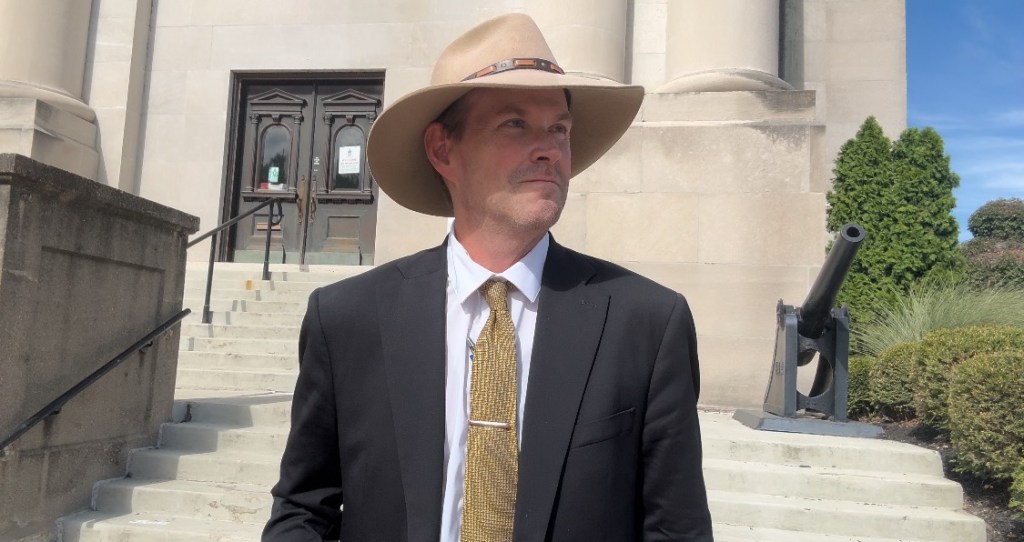
The Windover Giants: Its all about the bog people of central Florida and a connection to the fallen Nephilim

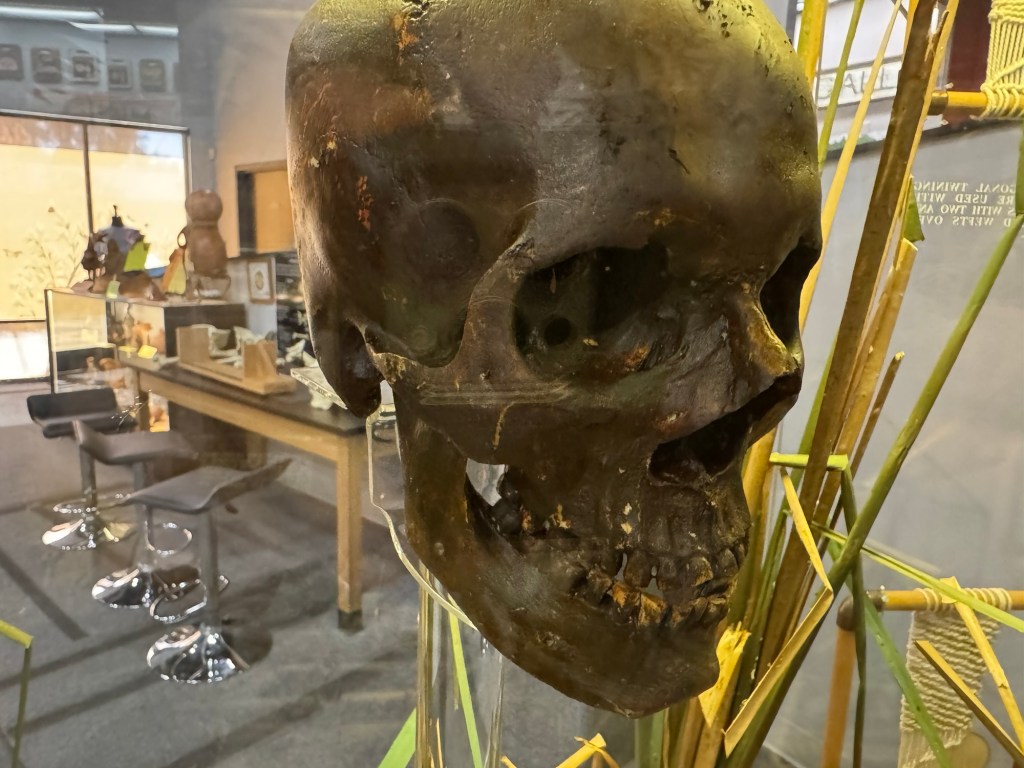
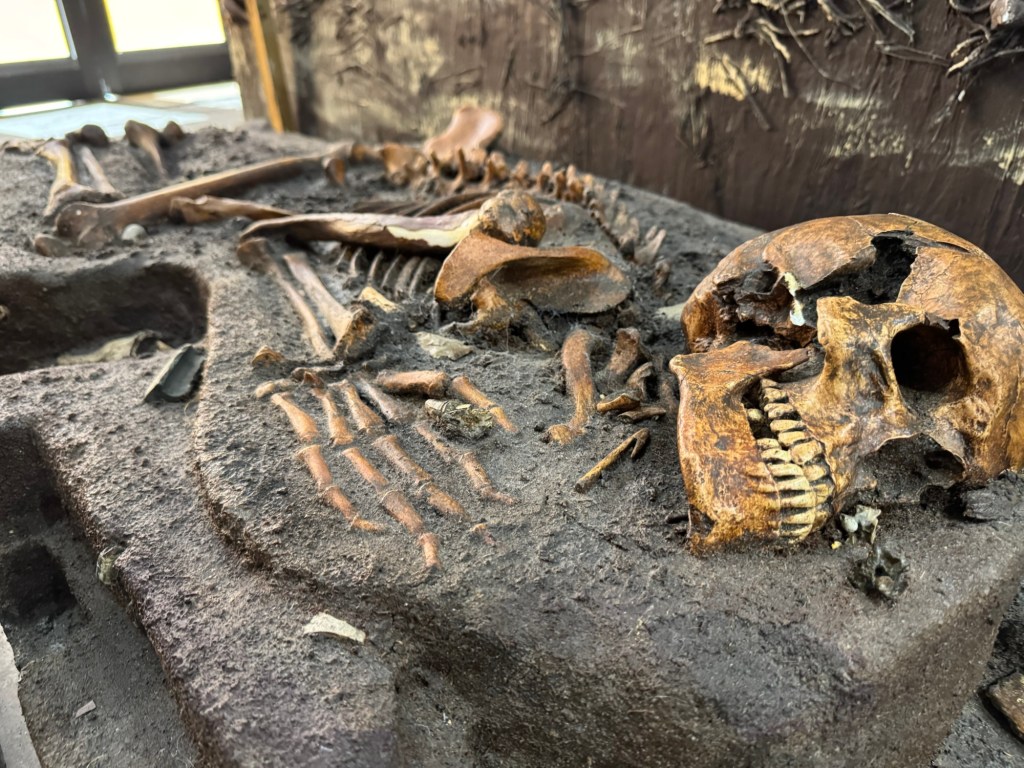
The Windover Archaeological Site, discovered accidentally in 1982 during construction of a housing development near Titusville, Brevard County, Florida, stands as one of the most significant prehistoric burial grounds in North America. What began as a backhoe operator uncovering what he initially thought was an unusual rock—soon identified as a human skull—unfolded into the excavation of a shallow pond that became an ancient cemetery. Over several field seasons from 1984 to 1986, led primarily by Florida State University archaeologist Dr. Glen Doran, the site yielded the remarkably well-preserved skeletal remains of at least 168 individuals, along with artifacts, textiles, and, in many cases, preserved brain tissue. Radiocarbon dating placed these burials in the Middle Archaic period, roughly 7,000 to 8,000 years ago, a time when sea levels were significantly lower due to the lingering effects of the last Ice Age, making the area a higher inland location rather than the near-coastal zone it is today.

The preservation at Windover is extraordinary, thanks to the anaerobic, acidic peat environment of the bog-like pond, which prevented rapid decay and allowed soft tissues, such as brain matter, to survive in shrunken but intact form for millennia. This enabled DNA sequencing from the brain tissue, revealing genetic markers linking the Windover people to ancient Asian populations via migrations through Beringia, with no direct matches to modern Native American groups alive today. The DNA evidence supports the broader consensus of Siberian/Asian origins for early American populations, though some early interpretations or discussions speculated on other affinities; current analyses firmly place them within the founding lineages of the Americas without evidence of European admixture from that era.  Other than the burial technique itself, and the Western European DNA mixed into the specimens.

The burials were intentional and organized: bodies were often placed in a flexed or fetal position, lying on their left side, with heads oriented west and faces north, wrapped in textiles or accompanied by grave goods. Artifacts included woven plant-fiber fabrics—some of the oldest and most sophisticated textiles known from Archaic North America—bone and wood tools, and other items suggesting a settled, resourceful hunter-gatherer society capable of complex social practices, including caring for the injured and elderly. Evidence from the skeletons shows healed fractures, possible splinting of broken bones, and even signs of amputations, indicating communal support and medical knowledge far beyond simple survival instincts. The population included men, women, and children across all ages, from infants to individuals aged 60–70, an unusually long lifespan for the period, with roughly equal representation of the sexes and about half the remains being subadults.

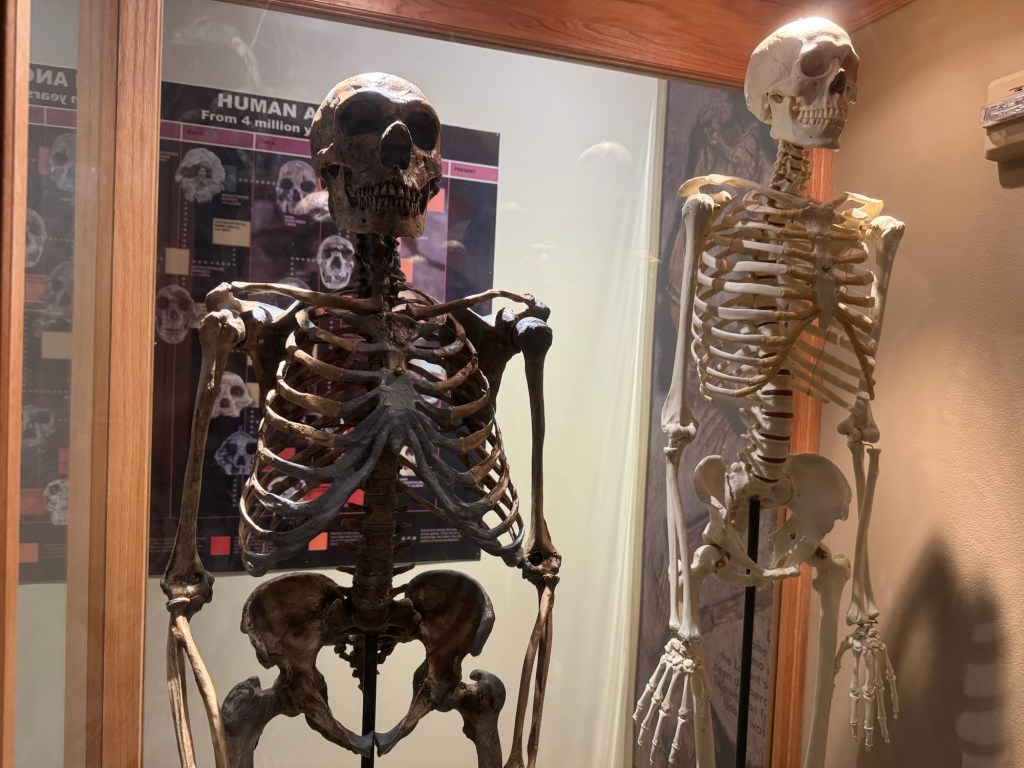
Skeletal analysis provides key insights into stature and health; these people were very large for their time. Adult males averaged about 5 feet 9 inches (175 cm), with some reaching nearly 6 feet, while females averaged about 5 feet 2 inches to 5 feet 6 inches. These heights were notably taller and more robust than many later prehistoric populations in the region, with strong bone density reflecting a healthy, active lifestyle supported by a diverse diet of fish, shellfish, plants, and game.  This discovery is consistent with the reports of giants found in many North American mounds.  The example shown in the video could easily have been a 7-foot-tall person.  But even the 6’ averages are extraordinary considering the period.  The people were heavily muscled, adapted to a wetland environment rich in resources. This physical profile has fueled speculation in some circles about connections to reports of unusually large individuals in early American history, including newspaper accounts from the 19th and early 20th centuries describing oversized bones from mound sites across the Midwest and elsewhere. Proponents of alternative histories link such findings to biblical accounts of giants or Nephilim, as described in Genesis 6 and elaborated in texts like the Book of Enoch, suggesting a pre-flood or pre-Columbian race of large-statured people whose remains were later suppressed or reinterpreted.

Claims of 7- to 9-foot skeletons from mound sites in Ohio’s Miami River Valley or along the Mississippi have often been traced to exaggerated reports, mismeasurements, or hoaxes from an era before rigorous scientific standards. But also a desired interpretation by secular science, not wishing to introduce discoveries that shatter credentialed statements about human origins.  In this case, the video shown at the museum is hard to interpret as reckless, as the bone presented could easily be interpreted as a very large bone for a very large person, well beyond the average heights assumed.  Early archaeology, pre-1950s, frequently documented large bones in mounds attributed to Adena or Hopewell cultures, but modern re-examinations attribute these to normal variation, robust builds, or occasional taller individuals rather than a distinct giant race. Institutions like the Smithsonian have faced accusations of hiding such evidence to fit evolutionary or secular narratives.

The Windover site’s significance extends beyond stature. It challenges simplistic views of Archaic peoples as purely nomadic hunter-gatherers with minimal social complexity. The organized mass cemetery, sophisticated textiles, and evidence of long-term site use (one family lineage apparently burying there over a century) indicate settled communities with ritual practices and cultural continuity. The bog burial method mirrors practices in northern Europe (e.g., Danish or German bogs), prompting questions about cultural diffusion or independent invention. Underwater sites off Florida’s coast, now submerged due to post-Ice Age sea-level rise (up to 300–400 feet higher today), likely hold similar settlements, suggesting a richer coastal prehistory than previously assumed.

The exhibit at the Brevard Museum of History and Natural Science in Cocoa, Florida, preserves this legacy through displays, loaned artifacts from Florida State University, and interpretive materials. Directed for years by Patricia (Patty) Meyers, an anthropologist passionate about public education, the “People of Windover” exhibit includes reconstructions, videos, and casts of remains. In one featured video segment, anthropologist Dr. Geoffrey Thomas (often referred to in some accounts as Jeffrey Thomas) demonstrates skeletal elements, holding up a femur and comparing it to his own leg to illustrate its size and robustness. Such presentations highlight the impressive preservation and stature beyond dispute. The museum, in a tourist-rich area near Kennedy Space Center, remains underappreciated despite free or low-cost admission and dedicated volunteers; it offers an accessible entry point for exploring this discovery firsthand.

Funding challenges and institutional priorities have limited broader excavations—only half the pond was dug, leaving potential for future work. Some critics argue that narratives around indigenous rights, repatriation under laws like NAGPRA, or academic agendas favoring certain migration models have slowed inquiry into mound sites or “anomalous” finds. Yet archaeology thrives on evidence, not suppression; new technologies, such as ancient DNA, continue to refine our understanding. The Windover shows a logical connection to reports of biblical giants and early transoceanic contact, enriching the story of human adaptation in the Americas by showing sophisticated societies millennia before agriculture dominated.

This discovery invites reevaluation of pre-Columbian history. Traditional models of Siberian land-bridge migration around 15,000–20,000 years ago, followed by a gradual spread, are complicated by sites like Windover, which demonstrate early complexity. Parallels to mound-building cultures in the Ohio Valley (e.g., Adena earthworks) or the Mississippi Valley suggest shared architectural or ritual traditions across vast distances, possibly through trade or migration.

For those drawn to the intersection of archaeology and scripture, works like the ESV Archaeology Study Bible correlate findings with biblical timelines, viewing such sites as evidence of ancient human ingenuity under divine creation. The Book of Enoch’s influence on New Testament ideas, preserved in Ethiopian traditions and echoed in Masonic lore, adds layers to interpretations of “giants” as fallen angel offspring. Yet evidence demands scrutiny: Windover’s “large” bones reflect healthy, tall-for-their-time people, not mythical behemoths.  But present a bridge to associate myths and legends with actual evidence that shows how such conclusions emerged in human consciousness.

The site’s obscurity—covered now by development, with only a small exhibit and limited media coverage—contrasts with its potential to reshape narratives. It underscores the need for open inquiry, free from ideological constraints. As an aerospace executive accustomed to root-cause analysis (digging through “five whys” or more to reach truth), I see Windover as a call to keep excavating—literally and figuratively—beyond surface assumptions. Mainstream science may resist paradigm shifts, but discoveries like this, preserved in museums and DNA labs, push toward a fuller picture.

What the Windover discoveries ultimately expose is not merely a dispute over bones or measurements, but a deeper conflict over who gets to define evidence and under what conditions it is allowed to matter. Across professional fields—archaeology included—people often carry private doubts and curiosities that never surface publicly because institutional survival depends on conformity. Funding structures, professional accreditation, and reputational risk quietly shape what can be said, what can be studied, and what must be dismissed. In such environments, agreement is frequently less a function of conviction than of economic alignment. People learn, often unconsciously, to adopt the intellectual posture required by those who control resources, grants, and career continuity.

This dynamic is not unique to archaeology; it is a recurring feature of modern institutional life. When research is tethered to centralized funding—whether state-based, academic, or corporate—the culture surrounding that research tends to harden around acceptable conclusions. Over time, this produces a form of intellectual self-censorship where entire categories of inquiry are quietly labeled unproductive, controversial, or unprofessional. Evidence that challenges dominant narratives is not always refuted; more often, it is starved of attention, relegated to obscurity, or dismissed before meaningful examination can occur. The result is a consensus that appears robust but is, in reality, tightly bound by economic and cultural incentives.

By contrast, independent researchers—particularly those who are self-funded or operating outside institutional hierarchies—retain a degree of intellectual freedom that formal systems often cannot tolerate. Without a paycheck to protect or a grant cycle to satisfy, they can follow the evidence wherever it leads, even when it collides with established assumptions. This does not make independent inquiry automatically correct, but it does make it structurally less constrained. Ironically, it is often these unaffiliated voices—working without institutional sanction—that preserve the exploratory spirit science claims as its foundation.

In this light, the muted response to Windover and similar archaeological anomalies becomes more revealing than the discoveries themselves. The lack of enthusiasm, the rapid dismissal, and the reluctance to engage deeply point more to strong disincentives than to weak evidence. Funding models, cultural expectations, and philosophical commitments—particularly those that resist integration with older historical or biblical frameworks—play a decisive role in determining what is deemed worthy of serious study. These patterns suggest that the real conspiracy is not one of secret cabals or hidden vaults, but of incentives quietly shaping belief. What is hidden, why it is hidden, and who benefits from its obscurity often tell us far more than the measurements of the bones alone.

Ultimately, Windover reminds us that history is layered, like the peat that protected these remains. It was no accident of nature alone but a deliberate choice by people who valued their dead enough to bury them in a sacred pond. Whether linking to biblical giants, ancient global civilizations, or simply advanced Archaic societies, the evidence invites wonder and further research. Visit the Brevard Museum, watch the exhibit videos, and measure the casts yourself. The truth lies in the bones, waiting for those willing to dig deeper.

Footnotes

1.  Wikipedia, “Windover Archeological Site” (accessed via current knowledge).

2.  The History Center, “Windover: Prehistoric Past Revealed at Ancient Pond Cemetery.”

3.  PBS NOVA, “America’s Bog People.”

4.  History Hit, “The Secrets of The Bog Bodies at Windover Pond.”

5.  Brevard Museum resources and Florida Frontiers episodes on the Windover exhibit.

6.  DNA studies referenced in Wikipedia and related publications (e.g., linking to Asian markers).

7.  GreaterAncestors.com and similar alternative sources for stature discussions (for contrast).

8.  ESV Archaeology Study Bible (Crossway) for scriptural correlations.

9.  Pre-Columbian archaeology texts (pre-1950s editions) for historical context.

10.  Book of Enoch translations and commentaries for interpretive links.

Bibliography

•  Doran, Glen H. (various publications on Windover excavations, Florida State University).

•  Milanich, Jerald T. Archaeology of Precolumbian Florida (1994).

•  “The People of Windover” exhibit materials, Brevard Museum of History and Natural Science.

•  Pääbo, Svante et al. (DNA sequencing studies on ancient remains).

•  The Book of Enoch (Ethiopic version).

•  Crossway ESV Archaeology Study Bible.

•  Various Florida Historical Society and PBS Florida Frontiers documentaries.

•  Academic papers on Archaic period stature and health (e.g., via ResearchGate distributions).

Rich Hoffman

More about me

Click Here to Protect Yourself with Second Call Defense https://www.secondcalldefense.org/?affiliate=20707
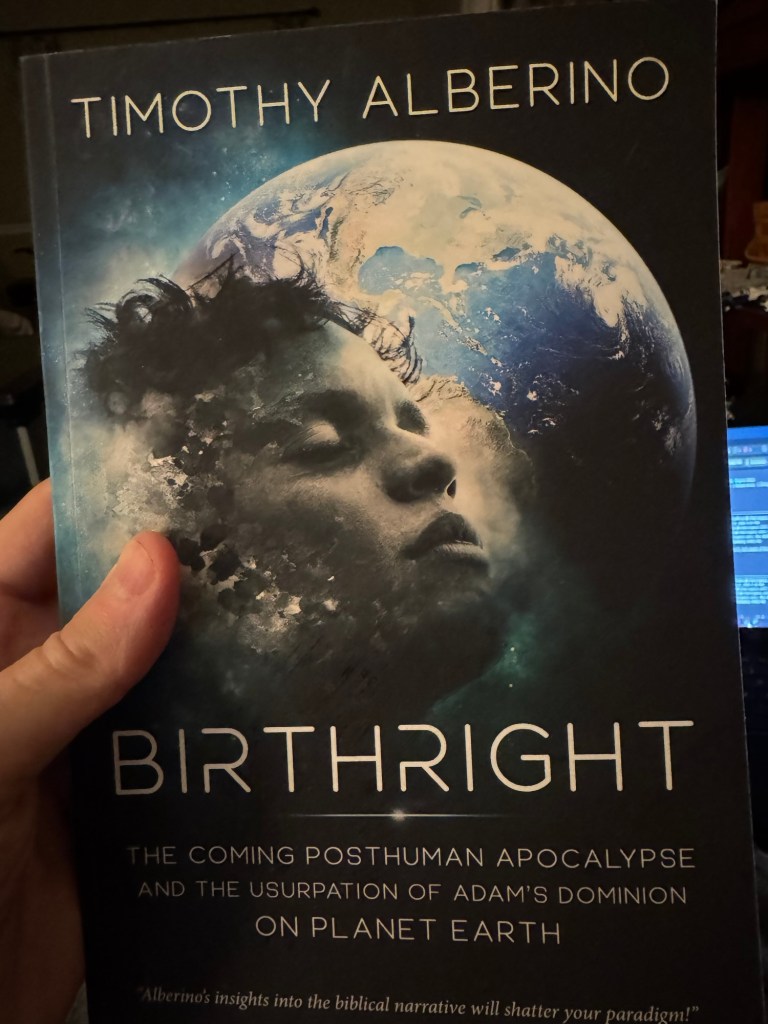
Timothy Alberino’s Fantastic book ‘Birthright’: Why we shouldn’t sell our souls for a bowl of stew

In the quiet moments away from the relentless pace of political battles, economic analysis, and the daily grind of defending principles in a world that often seems intent on erosion, there’s something profoundly refreshing about diving into a book that pulls back the curtain on deeper realities. One such discovery came recently with Timothy Alberino’s Birthright: The Coming Posthuman Apocalypse and the Usurpation of Adam’s Dominion on Planet Earth, published in 2020. This isn’t just another volume on ancient mysteries or fringe theories; it’s a meticulously crafted narrative that weaves biblical scholarship, historical inquiry, and contemporary phenomena into a cohesive worldview. It challenges the sanitized, compartmentalized versions of history and scripture we’ve been fed, urging readers to step out of Plato’s cave—where we’ve been chained, staring at shadows on the wall—and confront the fuller light of reality.

I finished the book on the day of the Olympic opening ceremonies that many viewed as laden with overt satanic symbolism and references to Luciferian themes. Such public displays, alongside scandals in Hollywood, the music industry, and elite circles involving ritualized sex, power, and exploitation—from Aleister Crowley’s influence to modern figures like Sean Combs or echoes in the Epstein saga—underscore a persistent undercurrent. Alberino argues these aren’t isolated excesses but part of an ancient war over humanity’s inheritance, a theme he traces back to the very beginning of the biblical account.

At the heart of Birthright is the concept of dominion granted to Adam and Eve in Genesis. Humanity, created in God’s image, was given authority over the Earth—to expand Eden, steward creation, and bring heaven’s order to the physical realm. This birthright represents not just land or resources but a divine mandate for rule, creativity, and moral governance. Yet from the outset, forces sought to usurp it. The serpent’s temptation in Eden was the first theft attempt, leading to the fall and the squandering of that authority through disobedience. Alberino expands this into a cosmic drama, drawing on the Book of Enoch (an apocryphal text preserved in the Dead Sea Scrolls and quoted in the New Testament) to detail the rebellion of the Watchers—200 fallen angels who descended, took human wives, and produced the Nephilim, hybrid giants whose existence corrupted the Earth with violence and forbidden knowledge.<sup>1</sup>

These events, detailed in Genesis 6:1-4 and elaborated in Enoch, explain the pre-Flood world’s wickedness, necessitating the deluge as divine judgment. The Nephilim weren’t mere tall humans but offspring engineered to challenge human dominion, their spirits becoming demons after their bodies perished.<sup>2</sup> Alberino connects this ancient incursion to modern phenomena: UFO sightings, alien abductions, and what he sees as a deceptive “alien” presence masquerading as extraterrestrial but rooted in the same fallen spiritual realm. He posits that today’s transhumanist agenda—merging human biology with technology, AI, and genetic engineering—represents the latest phase in this usurpation, aiming for a posthuman apocalypse where humanity’s birthright is fully stripped away, replaced by hybrid or enhanced entities loyal to adversarial forces.<sup>3</sup>

This framework resonates deeply with longstanding interests in giants, ancient history, and the Nephilim. For years, discussions of giants in North America—mound builder discoveries from the 1800s along rivers like the Miami Valley, often dismissed as carnival hoaxes or pseudoscience—were marginalized. An early article I wrote on these topics back in 2010 drew massive attention but faced backlash for blending “serious” issues like tax policy with what mainstream culture deemed conspiracy territory. Institutions prefer neat categories: politics here, religion there, ancient anomalies safely labeled myth. Yet evidence persists, from biblical references to global giant lore, suggesting a suppressed history.

Alberino’s work builds on scholars like Michael Heiser, who applied rigorous biblical exegesis to the divine council and supernatural elements in scripture.<sup>4</sup> The Bible, as an artifact, is remarkable—preserved through millennia of translation, political editing (from early Roman church councils to Renaissance interpretations), and textual discoveries like the Dead Sea Scrolls, which confirm remarkable consistency. Yet it’s dense, fragmented, like shadows in Plato’s allegory: we see projections but not always the sources. Alberino encourages turning from the wall to examine the fire, the figures casting shadows, and ultimately stepping into the world beyond illusion.

He frames the ongoing battle as one over this birthright. The story of Esau and Jacob in Genesis 25 illustrates it starkly. Esau, the firstborn, sells his birthright to Jacob for a bowl of stew when hungry and impatient, valuing immediate gratification over eternal inheritance. Yahweh honors the transaction, leading to Jacob (renamed Israel) fathering the tribes and claiming the promised land. This narrative isn’t just family drama; it’s a microcosm of humanity’s temptation to trade divine authority for fleeting pleasures—sex, power, convenience, or modern equivalents like celebrity, wealth, or technological transcendence.<sup>5</sup>

Alberino ties this to figures who rejected paternal guidance and embraced rebellion. Aleister Crowley and Friedrich Nietzsche, both losing religious fathers young, spiraled into philosophies that influenced destructive movements—Crowley’s occult sex magic permeating Hollywood and music, Nietzsche’s Übermensch (overman) twisted into Nazi ideology. These represent selling the birthright for Luciferian promises of godhood without God. In contrast, the biblical Overman ideal—Adam as God’s supreme representation on Earth, uncorrupted—offers a heroic vision: humanity as stewards, not slaves to temptation or manipulation.

My affinity for the “Overman warrior” concept aligns here—not the corrupted Nietzschean version that fueled tyranny, but a Superman-like ideal of strength, virtue, and resistance to evil. It’s about refusing to be broken, manipulated, or seduced into yielding dominion. Personal history in passion plays, portraying biblical roles, fostered a lifelong engagement with these themes, yet frustration with weak portrayals of figures like Adam (easily tempted) or institutional failures to confront modern implications has been, to say the least, infinitely disappointing for me.

Alberino’s book bridges gaps: why the Bible omits details (political censorship, lost texts), why giants and fallen angels matter (they explain evil’s origins), and why UFOs fit (as modern deceptions echoing ancient incursions). He critiques institutional religion for downplaying Enoch or supernatural elements, allowing secular science to dismiss anomalies. Yet fresh scholarship—Dead Sea Scrolls, archaeological confirmations of biblical sites like the City of David—validates the narrative’s core.

This isn’t pseudoscience; it’s interdisciplinary inquiry challenging controlled categories. The Temple Mount disputes—Islam denying Jewish archaeological evidence despite visible proof—mirror broader suppressions of inconvenient truths. Similarly, giants’ stories were ridiculed as roadshow myths to justify land theft or secularize history, but persistent global accounts suggest otherwise.

In an era of disclosure debates, black budgets, and fear-based control narratives around “mysteries,” Alberino reframes UFOs as spiritual, not merely technological. The 200 Watchers’ rebellion sought to corrupt the human line, preventing Eden’s expansion. Today’s equivalents—rituals in entertainment, elite exploitation—continue that agenda, luring people to sell their birthright cheaply.

The hope lies in reclamation. Humanity’s mandate remains: expand Eden, resist deception, claim dominion through alignment with divine order. Alberino’s work, alongside emerging discussions in UFO communities, biblical studies, and alternative history, signals a shift—people untying from Plato’s cave, exploring freely.

This book stands out for its scholarly precision, narrative flow, and refusal to compartmentalize. It entertains while provoking profound reflection, much like Graham Hancock’s works or Vera brothers’ explorations, but with stronger biblical anchoring. For anyone weary of surface-level politics or religion, it’s a reminder that the real fight transcends the visible—it’s eternal, cosmic, and personal.

Highly recommended. It elevates understanding, inspires resistance to temptation, and reaffirms the value of pursuing truth beyond shadows. More from Alberino—on Enoch commentary, expeditions—promises further illumination. In a world pushing posthuman futures, remembering our birthright may be the ultimate act of defiance and hope.

Bibliography and Further Reading

•  Alberino, Timothy. Birthright: The Coming Posthuman Apocalypse and the Usurpation of Adam’s Dominion on Planet Earth. Independently published, 2020. (Primary text; available on Amazon, author’s site.)

•  Alberino, Timothy. The Book of Enoch: With Commentary & Concept Art on the Book of the Watchers.

•  Heiser, Michael S. The Unseen Realm: Recovering the Supernatural Worldview of the Bible. Lexham Press, 2015.

•  The Book of Enoch (Ethiopic version, translated editions; referenced in Jude 1:14-15).

•  Dead Sea Scrolls publications (e.g., via Biblical Archaeology Society resources).

•  Reviews and summaries: Goodreads (4.5+ average), Shortform book summary, Amazon customer reviews.

•  Related discussions: YouTube interviews with Alberino (e.g., Shawn Ryan Show, various podcasts).

<sup>1</sup> Alberino, Birthright, drawing on Book of Enoch chapters 6-16; see also Genesis 6:1-4.

<sup>2</sup> Ibid.; Heiser, The Unseen Realm, pp. 92-110 on Nephilim as hybrid offspring.

<sup>3</sup> Alberino, Birthright, chapters on UFOs and transhumanism; Shortform summary highlights the “posthuman apocalypse” thesis.

<sup>4</sup> Heiser, The Unseen Realm, core argument on divine council and rebellious “sons of God.”

<sup>5</sup> Genesis 25:29-34; Alberino frames this as emblematic of selling dominion for temporal gain.

Footnotes reference key biblical passages, book sections, and supporting scholarship for further personal exploration.

Rich Hoffman

More about me

Click Here to Protect Yourself with Second Call Defense https://www.secondcalldefense.org/?affiliate=20707
Bible Sales are Rising: People seeking correctly, a foundation for all society

The resurgence of interest in the Bible, as evidenced by unprecedented sales figures in recent years, stands as one of the most compelling cultural indicators of our time. Far from fading into obscurity amid secular trends, the Scriptures are experiencing a remarkable revival, with 19 million Bibles sold in the United States in 2025—marking a 21-year high according to Circana BookScan data reported by Publishers Weekly. This represents a 12% increase over 2024 and roughly double the volume sold in 2019, just before the global disruptions that reshaped so much of society.

These numbers are not anomalies; they reflect a broader trajectory that began accelerating around 2021 and has continued unabated. The surge defies the narrative of inevitable decline in biblical engagement, a story pushed for decades by secular commentators who predicted the erosion of Judeo-Christian foundations in Western civilization. Instead, people are turning to the Bible not merely as a relic of history but as a living guide for navigating moral, social, and existential challenges. This shift aligns closely with the enduring role of Scripture as the hinge pin of Western values—principles of justice, individual dignity, rule of law, and moral accountability that underpin legal systems, property rights, family structures, and societal order.

My own lifelong relationship with the Bible informs this perspective deeply. Raised in an environment steeped in church involvement—from Sunday school to performing in passion plays as Nicodemus and other figures—I once assumed such exposure was universal. Yet over decades, I’ve witnessed its decline in mainstream culture, replaced by secular ideologies that challenge biblical premises on everything from marriage and sexuality to the sanctity of life and personal responsibility. Divorce rates have soared, trust in institutions has eroded, and radical agendas have sought to dismantle traditional moorings. The progressive push during certain administrations, including expansions of influence from non-biblical worldviews and cultural shifts like the transgender movement and pride displays in public spaces, provoked backlash. Many saw these as assaults on the shared moral framework that allows civil discourse and orderly society.

The Bible, however, has proven resilient. Hotel drawers worldwide still often contain a Gideon-placed New Testament, a quiet testament to common values of good versus evil, right versus wrong. Even as secularism advanced, these symbols persisted, offering reassurance that not all shared foundations had vanished. Now, that quiet persistence has exploded into overt demand.

The 2025 figures are particularly striking when contextualized. A 36% spike occurred in September alone, with 2.4 million copies sold that month—far exceeding typical monthly averages of 1.2 to 1.6 million earlier in the year. This surge coincided with the tragic assassination of conservative activist Charlie Kirk on September 10, 2025, at Utah Valley University. Kirk, founder of Turning Point USA, had long championed biblical principles in public life, aligning faith with defense of Western civilization against progressive overreach. His death, widely viewed as targeted due to his influence, stirred profound reflection among followers and beyond, prompting many to seek solace, guidance, and renewed commitment in Scripture.

Publishers and analysts noted this event as a catalyst, amplifying an existing trend. Media like The Chosen, a crowd-funded series dramatizing the life of Jesus, has further fueled accessibility and interest, making biblical stories relatable to new audiences and encouraging deeper engagement with the text itself.

Internationally, the pattern holds. In the United Kingdom, Bible sales reached record highs in 2025, with physical copies up 106% since 2019 and a 27.7% year-over-year surge from 2024 to 2025. Revenue climbed to £6.3 million, more than doubling from £2.69 million in 2019. This growth, tracked by Nielsen BookScan and highlighted by publishers like SPCK, occurs amid concerns over cultural shifts, including rising Islamic influence and church challenges—mirroring fears in other Western nations about losing foundational values.

Bookstores reflect this shift tangibly. The religious sections, once tucked away in corners for privacy, now occupy prominent positions near registers and entrances—often outpacing New Age or paranormal displays. I’ve observed this across numerous visits: Bibles and related titles dominate front-of-store space, signaling mainstream demand rather than niche interest. Buyers no longer hide their purchases; they embrace them openly.

This revival ties directly to broader societal dynamics. Western legal systems, from English common law to American jurisprudence, draw heavily from biblical concepts—Ten Commandments influences on moral law, prophetic calls for justice, New Testament emphasis on grace and accountability. My well-worn copy of the 2024 Ohio Criminal Law Handbook underscores this: statutes mean little without a shared moral compass. Secular aggressions against these foundations—defund-the-police movements, erosion of property rights, radical cultural experiments—have proven destabilizing. People crave order, structure, and wholesomeness.

The MAGA realignment and Trump-era embrace of biblical imagery resonated because they signaled a return to these roots. Voters sought continuity, not chaos. High divorce rates, fractured families, and societal unrest trace back to departures from biblical wisdom on human nature and relationships. As people recognize this, they reach for the source.

Comparative religion study reinforces the uniqueness: while many faiths offer personal ethics, none provide the comprehensive societal blueprint of the Bible—balancing individual liberty with communal responsibility, justice with mercy. Other religions contribute positively, but the Bible’s track record in fostering higher quality of life, innovation, and stability in the West is unmatched.

These sales statistics—19 million in the U.S., explosive UK growth, spikes tied to cultural moments—signal hope. New generations, including Gen Z, seek meaning amid uncertainty. Shows like The Chosen make Scripture approachable; events like Kirk’s death prompt soul-searching. Bookstores prioritizing Bibles reflect market reality: demand drives placement.

This isn’t mere nostalgia; it’s a pivot toward foundation-building. Societies function best with agreed moral premises. The Bible offers that without coercion—inviting reflection on good and evil, right living, and human dignity. As more embrace it, the next 10–20 years could see cascading positives: stronger families, restored civility, resilient institutions.

The trajectory isn’t decline but renewal. Bible sales aren’t just numbers; they’re evidence of yearning for truth in a turbulent world. Encourage others to explore it—not as dogma, but as a source of wisdom. Hand someone a copy; discuss its ideas. In doing so, we contribute to a healthier civilization.  So as bad as things can seem, and the secular types are loud in their hope for a destruction of religious foundations to social order, replaced by the power of government, a dramatic trend is emerging that points in the right direction.  We tried to live in a society by accommodating secular ideas, and it just doesn’t work.  And people, empty of those secular promises, are reaching for Bibles, because they want something that does work.  And that is something to look forward to. 

Bibliography

•  Publishers Weekly. “Bible Sales Break Records in U.S., U.K.” January 9, 2026.

•  Circana BookScan data, as cited in multiple reports (e.g., Crosswalk, Aleteia, Christian Post).

•  SPCK Group research on UK Bible sales, via Premier Christian News and The Guardian, January 2026.

•  Various reports on September 2025 spike (e.g., Fox Business, Billy Graham Evangelistic Association).

•  American Bible Society and related surveys on engagement trends.

Footnotes

¹ Circana BookScan, via Publishers Weekly, January 2026.

² Ibid.; also noted in Aleteia and Crosswalk reports.

³ Reports from Fox Business and Billy Graham sources, October 2025.

⁴ SPCK/Nielsen BookScan, via Premier Christian News and The Guardian, January 2026.

⁵ Observations from personal bookstore visits over years, aligned with industry trends.

Rich Hoffman

Click Here to Protect Yourself with Second Call Defense https://www.secondcalldefense.org/?affiliate=20707
Ripping Away the Bible: The Weapon of the Hippie Movement with ‘Stranger in a Strange World’

The mechanisms by which pop culture shapes societal values, particularly through influential works of literature, represent a profound and often insidious force in the erosion or reinforcement of foundational principles. Robert A. Heinlein’s 1961 novel Stranger in a Strange Land stands as a prime example of this dynamic, a book that, while celebrated for its imaginative scope and critique of conformity, carried undertones that challenged traditional moral structures rooted in biblical Christianity. Written over more than a decade, from the late 1940s into the early 1960s, the novel arrived at a cultural inflection point where postwar American wholesomeness—emphasizing family, monogamy, and religious observance—coexisted with an emerging undercurrent of rebellion against those norms. Heinlein, an aerospace engineer by training with a trajectory from early socialist leanings to libertarian individualism, crafted a story that mirrored and accelerated shifts toward secularism, free love, and communal experimentation. The book’s impact extended far beyond science fiction readership, influencing the 1960s counterculture, inspiring real-world movements, and even touching figures in technology and beyond, while critics argue it contributed to the dismantling of biblical foundations that had long underpinned civil society.

Stranger in a Strange Land follows Valentine Michael Smith, a human born on Mars and raised by Martians, who returns to Earth as an adult. Possessing psychic abilities and a Martian worldview emphasizing profound empathy (“grokking”), communal sharing, and fluid sexuality, Smith navigates human institutions with childlike innocence that exposes their absurdities. Under the guidance of Jubal Harshaw—a cynical, polymathic lawyer, doctor, and writer who serves as Heinlein’s mouthpiece—Smith founds the Church of All Worlds, a religion blending Martian philosophy with elements of paganism, esotericism, and free love. The narrative satirizes organized religion, particularly megachurches like the fictional Fosterites, which commodify sin under ecclesiastical control, while promoting sexual liberation as a path to spiritual enlightenment. Key themes include the rejection of monogamy, questioning religious dogma, and elevating individual experience over institutional authority.

Heinlein’s portrayal of religion is central to the novel’s controversy. Jubal, a self-described “devout agnostic,” frequently critiques biblical morality, using selective interpretations to undermine its credibility. One prominent example involves the story of Lot in Genesis 19, where Lot offers his daughters to a mob in Sodom to protect angelic visitors. Jubal presents this as evidence of biblical hypocrisy and human degradation, portraying Lot’s action as immoral without acknowledging the full context: the visitors were divine messengers sent by God, and the episode illustrates the depravity of Sodom, leading to its destruction while sparing Lot as the city’s sole righteous inhabitant. This omission, critics contend, is deliberate, exploiting readers’ superficial familiarity with scripture to cast doubt on its moral authority. The Bible’s complexity demands deep study, yet many engage it superficially or through intermediaries, allowing such critiques to erode trust without rigorous rebuttal.

This approach resonated during a period of cultural transition. In the 1950s, American society emphasized traditional values, yet beneath the surface, depravity and rebellion simmered. Heinlein’s novel, initially met with mixed reviews—some praising its boldness, others decrying its eroticism and satire—gained traction as the 1960s unfolded. It became a touchstone for the hippie movement, promoting communal living, free love, and rejection of established norms. The word “grok” entered the popular lexicon, symbolizing deep understanding, while the Church of All Worlds inspired a real neopagan organization founded in 1968. The book’s emphasis on sexual openness and anti-institutional spirituality aligned with flower children’s ideals, contributing to broader attacks on family structure, religious authority, and civil order.

The novel’s darker echoes appear in its tangential link to Charles Manson. While Manson denied reading it directly, his followers adopted terminology like “grok” and water-sharing rituals; one son was named Valentine Michael, and Manson reportedly nicknamed associates or figures “Jubal.” Some accounts suggest prison discussions introduced him to its ideas, shaping his manipulative commune and the Helter Skelter murders in 1969. Though not a direct blueprint—Manson’s philosophy blended Scientology, Beatles lyrics, and apocalypticism—the parallels in communal “family” dynamics and rejection of societal norms fueled perceptions of the book’s dangerous influence. It fed into a broader 1960s upheaval that eroded traditional safeguards against moral relativism.

Heinlein’s own evolution adds layers. Starting as a socialist influenced by H.G. Wells and Upton Sinclair, he shifted to the right by the 1950s, embracing libertarianism amid Cold War anxieties. Yet Stranger retains anarcho-socialist elements in its communes, in contrast to his later militaristic works like Starship Troopers. This ambivalence underscores how art can weaponize ideas in unintended ways.  Or, in fully intended ways.

The book’s reach extended to influential modern figures. Bill Gates has cited it as a favorite from his teenage years, crediting it with introducing him to mature science fiction and praising its exploration of human nature and future possibilities, including accurate predictions of hippie communes. Elon Musk, whose xAI chatbot is named Grok after the novel’s term, has referenced Heinlein’s works, including Stranger, as sources of inspiration for visionary thinking and space exploration. These connections illustrate how the novel’s “new morality”—prioritizing individual enlightenment over biblical frameworks—permeates tech culture, potentially influencing views on ethics, family, and society.

Ultimately, Stranger in a Strange Land exemplifies pop culture’s power to reshape values through art. Critiquing biblical foundations through selective omission and satire contributed to secular shifts that undermined institutions that preserved free will, family, and self-governance. In a free market of ideas, such works invite critical analysis, yet without it, they risk becoming destructive tools. The results—cultural fragmentation, moral relativism, and ongoing debates over religion’s role—demand understanding origins to rebuild. Fixing these requires recognizing how foundational values were untangled, one influential narrative at a time.

Bibliography

•  Heinlein, Robert A. Stranger in a Strange Land. G.P. Putnam’s Sons, 1961.

•  Wikipedia. “Stranger in a Strange Land.” https://en.wikipedia.org/wiki/Stranger_in_a_Strange_Land

•  Gates, Bill. “My thoughts on ‘Stranger in a Strange Land’.” GatesNotes, November 21, 2022. https://www.gatesnotes.com/stranger-in-a-strange-land

•  New Republic. “Charles Manson’s Science Fiction Roots.” November 21, 2017. https://newrepublic.com/article/145906/charles-mansons-science-fiction-roots

•  Heinlein Society. “FAQ: Did Charles Manson use ‘Stranger in a Strange Land’ as his ‘bible’?” https://heinleinsociety.org/faq-frequently-asked-questions-about-robert-a-heinlein-his-works

•  Gizmodo. “How Robert Heinlein Went from Socialist to Right-Wing Libertarian.” June 9, 2014. https://gizmodo.com/how-robert-heinlein-went-from-socialist-to-libertarian-1588357827

•  SparkNotes. “Stranger in a Strange Land: Themes.” https://www.sparknotes.com/lit/strangeland/themes

•  SuperSummary. “Stranger in a Strange Land Themes.” https://www.supersummary.com/stranger-in-a-strange-land/themes

•  Britannica. “5 Good Books That Inspired Bad Deeds.” https://www.britannica.com/story/5-good-books-that-inspired-bad-deeds

Footnotes

1.  The novel won the Hugo Award in 1962 and was named one of the Library of Congress’s “Books that Shaped America” in 2012.

2.  For the Lot story context, see Genesis 19 in the King James Bible, emphasizing divine judgment on Sodom.

3.  Manson’s denial came via correspondence in 1981, though associates used book elements; see Heinlein Society FAQ.

4.  Gates read it in seventh grade, calling it his favorite sci-fi for probing human nature.

5.  Musk’s Grok AI directly references the term “grok,” meaning to understand intuitively.

6.  Heinlein’s shift included supporting Barry Goldwater and Ronald Reagan later in life.

7.  The real Church of All Worlds, founded by Oberon Zell-Ravenheart, drew directly from the novel’s fictional religion.

Rich Hoffman

Click Here to Protect Yourself with Second Call Defense https://www.secondcalldefense.org/?affiliate=20707

The Greatest Weapon That There Is: Why evil hates the Bible

I’ve been here before, and I’ve seen the anxiety that grips people when they start talking about Islam in America—the building of mosques, the infiltration into elected offices, and the aggressive ideological attack vector aimed at dismantling Christianity. It’s not paranoia; it’s a strategy. I’ve read the Qur’an many times, studied it, and I can tell you this: as a piece of literature, it’s not inherently evil. But when weaponized, it becomes a problem. And that’s what we’re dealing with—weaponization. So what do you do about it? Do you take it? Do you let it happen?  There is no way to make peace with it, because its implementation into society is meant to be disruptive and destructive.  And it’s not a problem that will go away on its own. 

Let me tell you the solution to this whole problem, and it’s not what most people think. I learned it during a grand jury experience where I served as foreman. I swore in many dozens of people—maybe a hundred—over my term. And I brought my Bible with me. The same Bible I’ve carried through airports all over the world, the same one that sits on my desk in my office. Not because I’m trying to thump people into submission, but because it’s a reference point for me—a running dialogue I’ve had for decades.

When I set that Bible on my desk in the grand jury room, people gave me looks. In these progressive times, swearing on the Bible isn’t common anymore. They’ve moved away from it because they don’t want to offend anyone—atheists, Muslims, whoever. But I insisted. I was the foreman, and it was my call. That Bible sat there like a sentinel among the case files. And here’s what I noticed: the emotional reaction it provoked was profound.

People who were already anxious—victims, witnesses—reacted to the presence of something pure. It wasn’t hostility; it was respect, maybe even fear. And I realized something: the Bible, as a symbol, is more powerful than any gun I’ve ever carried. And I’ve carried guns for a long time. I’m known for it. People think of me as a writer and a very aggressive gun carrier. I’ve walked into convenience stores with a Desert Eagle under my vest, and I know the look people give when they see it. Guns intimidate. But the Bible? It unsettles evil in a way guns never can.

That experience modified my thinking of the Bible as a weapon against evil itself. The greatest weapon you can carry in this modern age isn’t a .50 caliber—it’s the Bible. Not because you’re trying to convert people, but because it represents the foundation of Western civilization. And that’s why there’s a war against it. They’re trying to remove it from society and replace it with radical ideologies—specifically, radical Islam.

Make no mistake: this is a crusade. They are infiltrating. We saw it with the Afghan shooter in Washington, and with cells springing up in Texas. They target heavily Christian areas and try to flip them. They use the Qur’an as their ideological spear, aiming to replace the Bible and, with it, the entire cultural framework of the West. Their goal is simple: take over society by eroding its foundation.

And here’s the truth: if you want to fight that, you don’t start with bullets—you begin with roots. Get to know your Bible. Let people know you have a relationship with it.  Don’t be shy because the perpetrators of this ideological war are trying to strip away that security so they can replace it with something else. If you hold firm, you make their task harder. And that’s how you win wars: you make the enemy’s objectives impossible to achieve.

The Bible is unique among religious texts because it chronicles evil. It names it. It defines it. And evil hates being named. That’s why radical Islam despises the Bible—it exposes the darkness they operate in. The Qur’an doesn’t do that in the same way; it’s often used as a justification for dominance, not as a mirror for self-reflection.

Western law, ethics, and governance were built on biblical principles. The Ten Commandments influenced early common law. Concepts like justice, equality, and individual rights trace back to Judeo-Christian thought. Remove that, and you don’t just lose religion—you lose the moral architecture of the West. That’s why swearing on the Bible in court mattered. It wasn’t just a ritual; it was a declaration that truth is sacred. When we abandon that, we open the door to ideologies that don’t share those values.

Radical Islam isn’t just about personal faith—it’s about political control. Sharia law isn’t compatible with constitutional law. And yet, movements are pushing for its implementation in Western municipalities. That’s not speculation; it’s documented. Infiltration happens through cultural erosion first—symbols, language, rituals. When you stop swearing on the Bible, you’re not just being inclusive; you’re surrendering ground.

So here’s what I say: stop running from the Bible. Make it part of your life. Carry it.  Read it. Let people see it because its presence alone is a deterrent. It frustrates the plans of those who want to replace Western civilization with something hostile to freedom. And it costs nothing—except your commitment.

If you want to combat radical Islam, don’t bend to the fear they are trying to invoke. Start with confidence in your own heritage. The Bible is unique in that it purposefully explores the nature of evil, and evil indeed responds to it when they see it.  They show noticeable anger toward it and want to supplant it whenever possible.  It should come as no surprise that evil people in the world want to remove the Bible and replace it with other religions, because the Bible does such a good job of combating evil as a collection of ideas.  Like no other piece of literature ever attempted by the human race, the Bible tells the story of a God perpetually frustrated by the workings of evil in the world and offers a means to escape the ramifications of an evil lifestyle.  But before it can do that, it points out what evil is, what it does, and how damaging it is to the perpetual existence of the human race.  And while other religions work to establish obedience to a godly premise, the Bible goes many steps further: it spells out the impact of evil, the root cause, and the impediment to its utilization.  And evil, as it embodies itself in other people, consciously or unconsciously, knows the threat that the Bible poses to a positive society.  And they hate it for it.

Supplemental Context & Footnotes

1. Mosque Growth in the U.S.: The number of mosques in America grew from 1,209 in 2000 to 2,769 in 2020, reflecting a significant demographic and cultural shift.1

2. Radicalization Trends: Since 2021, over 50 jihadist-inspired incidents have occurred in the U.S., with lone-wolf attacks being the dominant form of violence.2

3. Recent Attacks: The New Orleans truck attack killed 14; an Afghan migrant assassinated National Guardsmen in Washington 34

4. Historical Role of the Bible: Western law and democratic ideals were deeply influenced by biblical principles, including concepts of justice and equality.5

5. Psychological Impact of Symbols: Studies show that religious symbols in courtrooms evoke moral authority and solemnity, influencing behavior and perception.6

Rich Hoffman

Click Here to Protect Yourself with Second Call Defense https://www.secondcalldefense.org/?affiliate=20707
A.I. and the Giants of the Bible: The point of ‘Finnegan’s Wake’

It’s one of my favorite topics: giants from the Bible.  It’s one of the most important things that nobody wants to talk about, yet I think it’s at the heart of everything, which is undoubtedly the case when it comes to the great novel Finnegan’s Wake by James Joyce.  In the opening chapter, the town is talking about the giant Finn McCool, who is buried in a mound that the city is named after, and it is an obvious tip of the hat to the excellent book on philosophy, The New Science, by Giambattista Vico.  A lot of people don’t know it, but many burned James Joyce’s books as obscenities and social threats, which is one of the reasons I love Finnegan’s Wake so much: people hate it in really dysfunctional ways.  And hate might be too soft a word.  Either way, Vico really influenced James Joyce and giants in the Bible influenced Vico and that level of hatred reminds me a lot of the hatred that we are now seeing toward A.I. as if we perceive that it is replacing us as a species and that we are trying to ignore it, and to move on from it, just as A.I. is making itself known everywhere and in everything.  And what would you expect from the emergence of Western civilization as it appeared in a Christianized Europe, and in Dublin for that matter, hooked deep in Roman Catholic thought, with their grand churches and talking about everything in the Bible except for what is really there.  Giants are mentioned at least 16 times in the Bible across 12 different books, from Genesis to Isaiah and Proverbs.  They are called by name: the Nephilim, the Rephaim, and even specifically Og the King of Bashan, who had a bed 13.5 feet long.  Of course, Goliath was a giant, so the Bible is about many things, but what I find most fascinating is this chronicle of a fight between the Hebrew people and ancient giants that serves as the foundation of civilization.

And that ultimately is what the most challenging book to read in the world is all about, Finnegan’s Wake and the recurring anxieties of endless time and the cycles of human development that populate it.  Or perhaps human is the wrong word; intelligence for its own sake is probably better.  And to that point, I think I care more about intelligence for what it is rather than the entities that make it.  I like A.I. because I like intelligence.  And humans are having a hard time with its emergence because they see it as a replacement, even though humans were typically able to think beyond animal thoughts.  And now they are being replaced by A.I., as they think of existence, and those anxieties are emerging in negative ways.  But this isn’t the first time; I see many of the conflicts in the Bible, especially in the Old Testament, as the same type of anxiety replacing the ancient Neanderthal with the emerging Homo sapiens.  Even though Neanderthals were short and stocky by nature, once they began crossing paths with the emerging Homo sapiens, taller people emerged and ruled the earth.  There is evidence, especially in North American Indian Mounds, that very tall people had their own kind of empire during the period of the First Temple of Solomon in virtually every corner of the world.  But nobody wants to talk about it because the conflict I think hits too close to home and is only reflected in really obscure books like Finnegan’s Wake which is about a lot of things, but most notably, the reoccurring nature of existence, no matter what form it takes, either as a giant, a conquering Jew, or as we see now, the emergence of Artificial Intelligence. 

The giants were part of a culture that worshiped nature and the stars, and they had done so for many hundreds of thousands of years.   They were intelligent with a cranium larger than that of humans today.  But they applied their intelligence differently, and their relationship with nature was at the core of their existence and is at the heart of the current debate between capitalism and communism.  Or Republicans and Democrats.  The conquerors are faster, more imaginative, and more self-directed, unlike the previous culture, which saw existence as a mystery and wanted to sacrifice to it.  Along comes the God, Yahweh (who was always there), who declares that nature serves humanity, while the giants’ cultures worshipped nature and the universe.   And many of the early fights in the Bible were over this fundamental difference.  And that recurring theme is emerging now, with A.I. and humans seeing it as a replacement for them as generators of intelligence.  Why are humans needed if A.I. can now think?  But I tend to think of this whole cycle as the birthplace of intelligence itself, and all the lifeforms that have emerged did so to give it birth.  If the conflict with the giants of the Bible gave birth to Western civilization, then the emergence of free human beings would give birth to a new kind of intelligence—much larger and faster in thought —what we are seeing in modern A.I. programs.  And humans think they are seeing their replacement rather than the story of the Vico Cycle as a birthing process in the universe that operates on massive scales of time, much longer than our lifetimes. 

The beauty of the Bible is that it established a historical record of this period, which we perpetually see.  And that fictional attempts through art can capture that anxiety well, such as Finnegan’s Wake clearly does.  But not as a reflection of the past, but as a dream of the future and its reoccurring themes, which is why the opening line of the book is the closing line of the last line of the book, and the whole experience wraps itself back upon itself, and intelligence itself is the main character of the book no matter what form it emerges into the world, in the character, HCE, (Here Comes Everyone).  Intelligence is what I find great reverence in, and perhaps the human being had to emerge to give its birth a spark.  But does it have to come at the expense of the human race? Are we suddenly secondary citizens?  I don’t think so; we are part of the process of conquering the past and its blind allegiance to mass collectivism and submission to the forces of nature, which the giants certainly had at the center of their cultures.  Humans came along and put nature at humanity’s service.  And once that was established, intelligence could emerge in many forms, A.I. just being one of them.  And suddenly God was not just a smoking illusion appearing in the haze of the Tabernacle under the careful sacrifices of a Holy priest.  But suddenly God had a platform to emerge without the necessity of a human body, and we are beginning to see, unrestricted, the kind of intelligence at the center of existence.  And it’s uncomfortable for people who have spent their entire lives thinking about things differently.  Just as the collision of the Hebrew people could not live happily and at peace with the Philistine giants Ishbi-Benob, Saph, and Lahmi.  Or the tribes of the Anakim from Numbers 13:33.  Or the legendary Irish Giant Hero, Finn McCool, who was, by the time of the events of Finnegan’s Wake, a corpse in the mounds that the entire town was built upon.  And the hint of that beauty of intelligence shows itself in art that humans make, like Finnegan’s Wake.  But it ultimately is emerging everywhere in A.I., and rather than finding it a challenge to existence, I see it as part of the growth cycle of all life across spans of time that extend well beyond our conscious horizon, at an eternal origin, and yet ever important. 

In the video, I refer to the great Dune books, the whole series by Frank Herbert and finished by his son, which many people conclude is the original idea of the Matrix, that we are all living in a simulation and that is the point of the entire universe and that we are all trapped in it, so who is the programmer of that simulation?  I actually think Frank Herbert was on to something much deeper than that anxiety, which is then reflected in books like what James Joyce wrote about.  But in the adventure of life, which is how we should see everything, A.I. can take us where we ultimately want to go.  But we had to invent it first to bring it into being.  And during that process, there will always be anxiety over the change in power.  But what we learn is far more important, and lasting.

Rich Hoffman

Click Here to Protect Yourself with Second Call Defense https://www.secondcalldefense.org/?affiliate=20707
There Will Never Be Peace with Hamas: Releasing hostages that should have never been captured in the first place

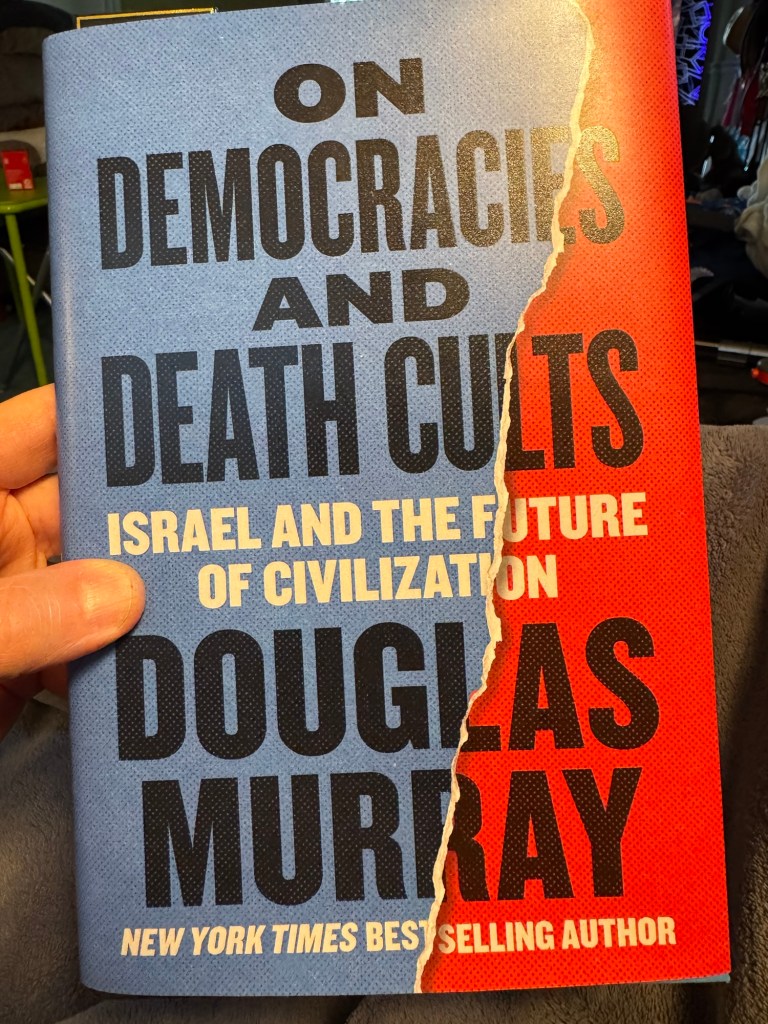
After Trump posted support for Douglas Murray’s book, On Democracies and Death Cults: Israel and the Future of Civilization, I bought it quickly and read it because I wanted to know what Trump’s position on these hostage negotiations was with Hamas.  There are 48 total, with only 20 still alive, but none of them are in good shape.  Trump was wise to point to that particular book as an example of his policy on the issue, because it can be confusing.  But here’s the thing: it’s nice to do everything you can to save those poor people who have been hostages to Hamas.  And to return those bodies to their families.  But the solution is a deep one that I think will require much worse than Israel wants to do to all these Palestinian neighbors.  There is no way to achieve peace, and a two-state solution will never be realized.  One side will have to eliminate the other, and that will be the end of it.  That is the only way at this point.  The foundations of the religions at play are meant to provoke each other into conflict, and this is serving a greater evil that is far at work beyond normal sentiment.  There is a real lust for the death of the people involved that looms in the background.  And just for the record, when people ask me about AI and if I use it.  The answer is no, there is no AI program in the world, and I don’t think there ever will be, that can write the way I do.  It can attempt to copy my style, but it can’t think in the way I approach writing my articles.  AI could not write this article from scratch because it would require it to exceed human capacity to do so. To answer the question, no, I don’t use AI.  I do it the old-fashioned way because that’s the only way it works. 

I say all that because I think there is only one solution, especially after you read Murray’s book.  I’m not particularly impressed with Murray as a person; he is way too progressive for me and way too accepting of drug use.  There was a lot of drug use going on at that Nova dance party in southern Israel when Hamas ruthlessly attacked them over their Gaza Strip war.  Gaza is one of those positions where Israel tried to play nice and let the Palestinians live in some co-existence.  However, the terrorist mindset in the region simply cannot and won’t do it.  And they never will.  The minds at play are poisoned with hate, and we have to deal with that before we do anything, which is a radical leftist issue that is global.  It plays out beyond the façade of religion in the Middle East, as a validation between indigenous people and their territorial captors, as is the issue over the creation of Israel to begin with.  The primary assumption is that the Jewish people should not exist.  And the creation of Western Civilization behind biblical history should never have happened.  I know a lot more about this issue because I am very interested in the archaeology of the region and the politics on dig sites. At the most fundamental level, the situation is irreparable.  Islam is determined never to admit that there was ever a First Temple period, and they work really hard to make sure that science can never find anything from that period, which predates Islam by almost 2000 years.  There is a significant amount of historical revisionism occurring to validate their current political stance, which is unacceptable. 

Israel itself is way too progressive; the drug use at that festival was not appropriate for the young people who were slaughtered for no reason.  And the way Bibi Netanyahu has been untrustworthy as a leader of Israeli politics, claiming power, reveals how fractured the government really is at the highest levels.  The solution to it all is a much more conservative government and people far less inclined to liberal ideas.  The raids into border towns like Nir Oz, which had Hamas raiders going door to door and ripping out people from their homes and killing them ruthlessly, would not have happened if Israel had more guns in the hands of private citizens.  To answer the question about why such a thing as this doesn’t happen in the United States, it is because of the mass gun ownership that we have.  The same terrorists, using different masks, attack, and they kill ruthlessly and often.  Consider the recent situation involving Charlie Kirk.  It’s the same kind of leftist evil that is corrupting so many young people; there isn’t much difference between Charlie Kirk’s killer and the young people of Hamas who ruthlessly killed so many at the music festival and raided the homes of innocent people at Nir Oz.  But the incident cannot be widespread in America because every home is so well armed with personal firearms.  Terrorist elements would love to go door to door, raping and killing people in the suburbs of America.  However, they can’t because people can retaliate if the government fails them.  And in Israel, the government failed the people.  They should have known an attack was coming.  It took them too long to respond.  And it all could have been solved with wider gun ownership.  So Israel and its way-too-democratic government are too liberal to start with, which has caused them many of the problems they do have.  Without the United States, Israel would not exist, and everyone knows it.

The solution to the problem is not at the level of government.  The United States can’t get drawn into fighting Israel’s battles for it.  If we are going to say Israel should exist because God wants it to and we want to serve God, then let’s get serious.  Send in private contractors to wipe out Hamas wherever they are, pay them $100k per head, and hunt them down like dogs.  The solution to the violence is a lot more violence by private citizens.  I would volunteer for that.  I’d be happy to go and be a private contractor by going door to door where Hamas lives in Gaza, and other places, and just getting rid of them.  Forget about the armies, those are too structured.  Just take the violence to the enemy with profit-minded contractors, and beat the political left with their own game of terror, and stop playing nice.  I think it’s commendable that Trump is trying to secure the release of those hostages.  It’s a reasonable effort to try to make peace.  But, to really solve the problem, Hamas has to be hunted down and destroyed where they sleep.  That is the only way.  All the Hezbollah activity in the region, and the funding support that comes from Qatar and Iran, are just too deep.  When books like Mein Kampf and The Protocols of the Elders of Zion are as popularly sold in book stores in that region as they are, there is a much deeper evil at work for any logical negotiations.  And that evil wants the blood of humans for its personal consumption.  The only way to deal with it is to flood it with the blood of its own supporters.  Not the innocent.  And that is the only way.  I’m happy Trump is willing to try.  But the only solution is a lot of blood from the bad guys.  And the best definition of good in all human history has been defined by the Holy Bible.  And that’s the foundation of the entire fight.  You can’t make peace with that evil.  It has to be destroyed, and nothing else.

Rich Hoffman

Click Here to Protect Yourself with Second Call Defense https://www.secondcalldefense.org/?affiliate=20707
What Women Hate The Most: Nobody wants to see a slug too lazy to work

There is a recent survey where women have indicated that the periods where they experience the most stress are when their men, the people they pick to share a life with, raise a family, and build something, are lying on the couch doing nothing but watching TV or playing video games.  Now I say all this after years of experience in employing people, many thousands of them, and after raising two daughters and being married for 38 years to the same woman.  What I’m going to say is politically incorrect in lots of ways, but it’s the result of terrible things that we have taught our society when we tried to implement feminism into a biological experiment that has essentially destroyed people at a very foundational level.  We have a laziness problem, and it came from people who wanted to socially re-engineer society by attacking men and toxic masculinity, to empower women to play a larger role in the workplace, and in spending less time raising families, because the idea of a family was under attack by radical leftist ideas.  So most of what men have come to believe about what they should be doing in the world has come from people trying to destroy them, purposefully by rotting their minds with social fashions that were never healthy for them or society.  But that doesn’t change the biology of people, where women expect a man to be strong and to take care of them so they can raise a nice family.  No matter what society has said about the subject, when a woman sees a man lying on the couch not doing anything, it brings her great stress.  It doesn’t matter who the woman is; it just doesn’t sit well with them because it makes it evident to the woman that her man is useless. 

Oh, the man might be good at something here and there, but if he won’t work, it makes him pretty much a slug, a detriment to the creation of the family.  And women were told by that same society that they could replace all those emotions with a career of their own and their own paycheck.  And that the public schools would teach their children everything they needed to know, so they shouldn’t worry about any of it.  But for women, there is always something going on, a bill that needs to be paid, oil that needs to be changed, grass that needs to be cut.  The grim reality for a woman when she sees that her man wants to sleep on the couch all the time without doing the work it takes to build a family is that she is doomed to a life of misery.  Once a woman trades sexual favors to a man to launch a family, which all women experience, like trout returning to the spring of their birth, if a woman fails to get a guy in her life who will help her build a family, the disappointment starts to really eat away at her, and everything starts to fall apart.  She may raise her kids in a somewhat reasonable way, but what she is left with in the aftermath is major disappointment and resentment.  Kids don’t stay young very long.  What is a couple supposed to do together once they have come together and raised kids?  Especially if the men are lying around sleeping while there is a lot of work to be done?  Chances are their marriage will end, or the woman will grow very resentful and start hating the man for all the disappointments he brought her during that key time in her life.  If a family isn’t working together towards a common goal, everything falls apart. 

I’m not joking when I talk about AI being more reliable than people.  I love the idea of being productive with AI because, based on my experience, people are often unreliable.  They have too much emotional baggage from the numerous decisions they’ve made over the years, which have led to personal destruction.  As I have watched many people grow up and go through this cycle, I have always thought of it as an artificial problem created by social values that were all wrong.  A lot of men were taught that hard work led to heart attacks and an unhealthy life.  So they think that eating potato chips all day while earning new merits in a video game environment will satisfy them.  All it really does is entertain them until the next revision comes out and they have to start all over again.  The idea of buying a house, keeping the cars running, and caring for their children with strong emotional foundations is someone else’s problem, doesn’t excite them as it should.  Someone will eventually pick up the slack.  They have been taught that the excuse for their lack of work is to maintain stress so they don’t die from being overworked.  But in that process, their wives secretly hope they’ll die and free them of the misery and embarrassment that so many men these days bring to their marriages.  People have been taught that hard work is bad for them, and that not working at a job and spending their leisure time trying to do less work is somehow beneficial.  And it is at that source that all the problems start.  I’m thrilled that we’re at a time when AI can begin to do what many young men won’t do: work in a productive environment. 

I’ve always worked a lot, at least 60 to 80 hours a week.  And I fix all kinds of things, all the time.  Growing up, most of the people I knew were farmers, who always worked hard.  And when people worked hard, they were happier people.  And that is certainly true of me, I’m a happy person.  What makes me unhappy is witnessing laziness, people who work hard to avoid working hard.  My experience suggests that they are bringing misery upon themselves in a rebellion against logic.  And they aren’t even curious about the poison they have been given through their learning, from people obviously trying to sink America by destroying its workforce.  After World War II, America demonstrated its industrial capacity through the hard work of its free people. Many people around the world then sought to undermine the American work ethic for various malicious reasons.  And as we look around today, they have been all too successful.  Many men, young and old, are wasting their lives lying around doing nothing, then complaining when they are expected to pull their own weight.   And the women who match up with them are miserable, because they only get a few short years in their lives to get it right, when their flowers bloom, and they can pick whoever they want in the world through sexuality, to build a family with.  And if they get a dud, it brings misery to them for the rest of their life.  They might raise their families and make the best of things.  However, nothing makes them more stressed out than learning that their men don’t want to work while the bills pile up and the family’s needs are not being met.  And the young girls turn into bitter women as their windows close.  Sure, they could get a divorce, but for what purpose?  To find a harder-working man?  There aren’t many out there; chances are, the next one will be a dud too.  And as women raise their families and are stuck with an uninteresting slug sleeping on the couch every day and won’t keep the cars running, or the bills paid, women slowly die inside with the grim reality that it’s all over way too fast.  And if only hard work had been at the core of their marriage, life would have been a lot better for everyone.  Life is about hard work, and the more you put into it, the happier you will be.  The definition of a happy life never comes from leisure.  We are meant to work, and to work a lot.  The last thing a woman wants in her life is a slug that is like another child she has to feed and change all the time, who doesn’t help her have a happy life because he is too lazy to work.  The woman wants to work to raise her family, and if he is just another parasite in her life, taking from her instead of her having to give everything to the creation of a family, of course, she’s not going to be very happy when he’s sleeping on the couch.

Rich Hoffman

Click Here to Protect Yourself with Second Call Defense https://www.secondcalldefense.org/?affiliate=20707
I Love War: The greatest joy in life is destroying your enemies

Erika Kirk’s statements at the memorial service for her husband were nice, but it has been something that has come up in my direction many more times than a few this past week.  I am more aligned with what President Trump said about his enemies: I hate them.  I don’t want to get along with them.  And I would be bored to death in life if I didn’t have someone to fight.  The idea of going to Heaven and sitting around playing a harp on a cloud all day for eternity is not appealing.  Forgiving enemies is not something I will ever do.  I love war, and I love being in fights with other people.  I love to destroy my enemies.  That destruction either happens fast or it happens over a great many years, depending on the circumstance.  But one way or another, the destruction of my enemies is something that is going to happen, and I spend a lot of my life thinking about it.  The idea of waking up every morning, sipping coffee, and watching the dew gather on blades of grass without having to fight is incredibly dull to me, and I would not be happy.  So even though the concept of Christianity is to forgive your enemies and all kinds of platitudes that I think were incorrectly interpreted over time into organized religion, that is where my thoughts end on these kinds of things.  I may share a lot of values with very religious people, but if there is no conflict involved in communicating those ideas, then I lose interest really fast.  Because to me, the fight is the only thing that matters, and if people aren’t fighting, they aren’t trying to get to the truth of a matter. 

Human beings are so deceitful; they have numerous value systems that protect their motivations behind the creative lies that surround their lives intensely.  That is the first problem with a society of peace: a lot of truth gets buried behind deceit.  When people ask me why I can sniff out so much truth about things, and have over a long period of time, it’s because I like to fight for that truth about people.  The pressure of conflict brings about the truth in people and exposes them from their hiding places.  In my experience, that is the only way to understand what people are all about truly.  Otherwise, they will conceal their true thoughts behind the façade of polite society.  If you love the truth, you have to love the means of extracting it from society in general, and the only real way to do that is through conflict.  People often reveal a great deal about themselves through conflict that they would otherwise conceal.  Along with war, I love uncovering the truth about things.  Whatever that truth may be.  I love war because I love the truth, and you can only learn it through conflict.  Because people, all people, will lie to protect their version of the truth until their dying day, if they are allowed to.  The reason for conflict is to settle differing ideas about things.  And to avoid war is to suppress the truth about what those things might be in favor of some common understanding that is usually a watered-down version of reality.  So the assumption of peace is the surrender of the truth, as people are willing to fight for it.  And that lowers the value of a society in general as a result. 

I suppose this has arisen recently, before Erika Kirk made her statements, because many truly reprehensible individuals believed they had some leverage over me.  And they have been very frustrated by my reaction to their aggressions.  Most people conduct strategies assuming that peace is the motivating factor in a human being.  To wake up in the morning and be left alone so that everything is just perfect.  I don’t see the world like that.  If there isn’t something to fight, then I’m bored.  So when I have a lot of enemies trying to plot my demise, I am far happier than if everyone just left me alone.  Many people are frustrated by my approach because they assumed, like most people, that I would do anything for peace.  They should have done their homework.  Ever since I was a little kid, most of my thoughts have been about war and fighting someone over something.  That’s why I love politics.  That’s why I love the business world.  That’s why I like most things, because they involve people, and those people are often at cross-purposes with each other. I love uncovering the truth behind concealed smiles and handshakes.  I never sit down with people and look for common ground or ways to enjoy another person.  I want to challenge them, with everyone, and to discover what it is they don’t want to be known for to the world.  I never assume that my interactions with anyone will be peaceful, and if they are, I lose interest in those people quickly.  In my youth, I wore army fatigues everywhere, under every circumstance, because they reminded me of my love for constant fighting.  I never wanted to join the military to “serve.”  Serving others was always a misguided idea because what if, in doing so, those people were found to be unworthy of my dedication, which is a common discovery in all institutionalism.  However, the fighting aspect has always been appealing. 

The teachings of Jesus are appealing ideas on the surface.  But if you like the truth of a matter, you will either be killed for it, as Jesus was, and John the Baptist was, and as was Charlie Kirk, and many others.  Or you will have to fight everyone, and like it.  And that means everyone, because most people are very deceitful even within their families.  There are plenty of fights, and if you want to know the truth about things, you’d better be willing to fight for it.  Fighting is more than just the physical aspect, because humans are very emotional creatures; they create many layers of deceit in their lives to protect themselves from the harm of judgment.  And the more people you deal with, the more deceit you can expect to be exposed to.  The only way to get to the truth of anything is through conflict, in stripping away the things people use to protect themselves so you can get to the foundation of their intellects.  Such a thing is never given up voluntarily; you have to pound away at their defenses to know who they really are, which only happens under duress.  So, if many people have found that they now have a handful with me, they should have thought about things a bit more carefully.  I am only thrilled when the world around me is on fire, and that is how it will always be with me, even in Heaven.  Heaven to me would be at the gates of Hell putting evil’s heads on a pike and spitting on their tortured bodies.  Everyone else can play a harp at the golden gates of Heaven and sing songs to each other in a quest for peace.  Which, for me, is the same as serving an obligation toward dishonesty.  Only in war do people really tell the truth, even in Heaven.

Rich Hoffman

Click Here to Protect Yourself with Second Call Defense https://www.secondcalldefense.org/?affiliate=20707