Trump’s Relationship with Qatar: Tucker’s interview with Sheikh Mohammed

There’s a difference between people who hold a line because it feels righteous and those who keep asking questions because they know reality changes with every new fact. Reporters live—or should live—on that second path. The more evidence you collect, the more you grow, and growth tends to look messy from the outside. Tucker Carlson’s evolution has had plenty of critics, but what deserves attention is the basic craft: go to the places other media avoid, ask the blunt questions, publish the exchange, and let the audience judge. His recent interview in Doha with Qatar’s prime minister, Sheikh Mohammed bin Abdulrahman Al Thani, landed exactly in that territory: controversial, necessary, and clarifying—especially if your goal is to understand how diplomacy actually works in the Middle East, where U.S. forces rely on Al Udeid Air Base and where back‑channels with difficult actors are the price of getting hostages out and guns silenced, even temporarily.[^1][^2]

If you’re serious about peace, you talk. You talk to adversaries, to intermediaries, to people whose ideology makes your skin crawl, because the alternative is to guess their motives and fire at shadows. Qatar sits at the nexus of two realities that make Americans uncomfortable: it’s a major non‑NATO ally hosting the largest U.S. base in the region, and it has, for years, served as a conduit to Hamas and other hard actors—often at Washington’s request.[^3][^4] That dual role draws fire. Critics say, with reason, that Doha has tolerated extremist financiers and given political oxygen to movements we reject.[^5][^6] Defenders point out that Doha’s mediation has repeatedly produced outcomes Washington needed—hostage exchanges, ceasefire windows, and channels to groups we won’t meet directly.[^7][^8] Both can be true at once; the practical question is whether engagement through Qatar, under U.S. conditions, yields more stability than posturing in its absence.

Carlson’s Doha exchange turned the subtext into text. He put the prime minister on the hook: why host Hamas, and what money goes where? Al Thani’s answer was pointed—that Hamas’s presence in Doha began as a U.S. and Israeli‑approved channel, with transfers to civilians in Gaza coordinated transparently.[^9][^10] Believe that fully or not, the claim is now on record. As viewers, we got posture, context, and accountability: a mediator stating publicly the rationale and process. From there the discussion veered to an even sharper controversy—reports of Israeli operations striking in Doha during mediation, and the unusual moment when President Trump pushed Prime Minister Netanyahu to issue a formal apology to Qatar for violating a mediator’s “safe space.”[^11][^12] That detail matters, because it shows business‑style leadership doing something Washington rarely does: pressing a close ally to respect a process that serves U.S. interests, not just alliance optics. If you want ceasefires and hostages home, you protect your channels, even when doing so costs political points with familiar audiences.

Now, you don’t have to be a “fan” of Carlson to see the utility of the interview. The point is the reporting: ask hard questions, surface contradictions, let the audience trace the through‑line to policy. Media that refuses to platform controversial interlocutors substitutes judgment for evidence; the audience gets a filtered picture that flatters ideology. The record—on readiness at Al Udeid, on the scale of Qatari lobbying in Washington, on LNG leverage and sovereign wealth—demands more than slogans.[^13][^14][^15] Qatar isn’t a sidebar; it’s a strategic keystone in the current security architecture. U.S. operations across the region depend on basing and overflight, and since 2003 Qatar has pumped billions into infrastructure that CENTCOM, AFCENT, and Special Operations rely on every day.[^3][^16] When the U.S. chooses to engage through Doha to reach groups like Hamas or Taliban political offices, it’s choosing the least bad path to outcomes other channels can’t deliver. That’s not romance; it’s logistics.

Enter Ted Cruz. His criticism of Carlson for interviewing Doha’s head of government—and later jabbing at Carlson’s announcement that he would buy property in Qatar—reads as a continuation of a summer feud that began with Cruz’s hawkish case for regime change in Iran and ran aground on basic facts.[^17][^18][^19] In the viral exchange, Carlson pressed Cruz for the population size and ethnic composition of the country he was urging the U.S. to help topple. Cruz couldn’t answer, then pivoted to accusation. The clip went everywhere because it reduced a complex policy argument to one essential question: if you want to kill a government, do you know the country you’re about to break?[^20][^21] It wasn’t a debating trick; it was a reporter asking for the minimal knowledge that makes an intervention policy serious. The broader MAGA family split between business‑first pragmatists and maximalist hawks was already visible; this spat simply made the line brighter. Months later in Doha, Cruz lashed publicly, accusing Carlson of shilling for a “terror state” and posting taunts that did more to inflame than to persuade.[^22][^23][^24] The problem with this style of critique isn’t passion; it’s shallow framing. If Carlson’s interview put facts on the table about mediation, basing, and aid, then the appropriate counter is data: track transfers, cite Treasury designations, show where Doha violates commitments, and argue for remedies that preserve U.S. interests while constraining Qatar’s worst habits.

So let’s put those numbers down. Economically, Qatar is small in headcount and huge in energy. It has the world’s third‑largest proven gas reserves, sits among the top LNG exporters, and is moving through a multi‑year North Field expansion intended to nearly double LNG capacity by 2030.[^25][^26] Marketed natural gas output held steady at ~170 bcm in 2024, with domestic consumption around 42 bcm.[^27] Hydrocarbon revenues fell with global prices from 2022 to 2023, but hydrocarbons still accounted for a dominant share of government income.[^26] Real GDP growth hovered near 2% in 2024 by IMF estimates, with non‑hydrocarbon sectors advancing under the Third National Development Strategy (NDS‑3) and Vision 2030.[^28][^29] The sovereign wealth footprint—Qatar Investment Authority—sits in the hundreds of billions and projects soft‑power reach through high‑profile stakes and global partnerships.[^29] The upshot is leverage: Doha can fund influence, absorb reputational bruises, and keep playing mediator because LNG cash cushions the risk.

Security ties with the United States are institutional, not episodic. The State Department fact sheets lay it out: access, basing, and overflight privileges facilitate operations against al‑Qa’ida affiliates and ISIS; Al Udeid hosts forward headquarters for multiple U.S. commands; and Foreign Military Sales with Qatar exceed $26 billion, including F‑15QA fighters and advanced air defense.[^3] The Trump White House readouts in 2017 and 2018 acknowledged the need to resolve the GCC rift while recognizing Qatar’s counterterrorism MOU progress; they also leaned into trade, investment, and defense procurement as stabilizers in the relationship.[^30][^31][^32] In 2025, Trump’s visit to Al Udeid produced headlines about Qatari investment in the base and defense purchases—exactly the business‑style diplomacy that critics deride and practitioners call reality.[^33] Even during acute tensions, like Iran’s missile attack on Al Udeid in June 2025 following U.S. strikes in Iran, Doha maintained posture as a U.S. ally condemning the attack and signaling response rights.[^34] That’s not a trivial point; basing partnerships show their character under fire.

On the other side of the ledger, accusations of terror financing and extremist hospitality have shadowed Doha for years. Treasury officials, analysts, and NGOs have documented permissive environments for designated financiers, support for Islamist movements, and Doha’s long encouragement of Hamas’s political bureau.[^5][^6][^35] Critics in Israel and the U.S. point to the billions in transfers to Gaza since 2018 and argue that aid inevitably strengthens Hamas’s governance.[^36][^37] Qatar’s counter is always two‑part: (1) mediation requires contact, and (2) funds for civilians were coordinated and monitored, with Israel’s participation.[^10][^36] Washington’s posture has waxed and waned. In late 2024, amid stalemates in hostage talks, reports surfaced that the U.S. asked Doha to expel Hamas’s political leadership and that Qatar temporarily suspended mediation out of frustration with both sides.[^38][^39][^40] Yet by January 2025, Doha helped broker a new ceasefire and hostage exchange with U.S. and Egyptian negotiators, underscoring the bipartisan reality: when talks matter, you want the mediator who knows the rooms and the personalities.[^41][^42] You can hate that arrangement and still need it.

This is where business leadership in public office makes a difference. A dealmaker’s instinct is to preserve optionality and keep lines open long enough to test whether interests can align. It looks ambiguous because it is. Trump’s approach to Qatar—leaning into investment, leveraging basing ties, and pushing allies privately to respect mediation—fits that mold.[^30][^33][^12] Purists will say ambiguity equals moral compromise. Practitioners will say ambiguity equals leverage. In the Middle East, leverage is often the only bridge between bad choices and less‑bad outcomes. You can meet Kim Jong Un, Xi Jinping, Vladimir Putin, or Sheikh Mohammed Al Thani without endorsing their systems; you do it because future decisions are better when today’s signals are clearer. And yes, sometimes you compliment the counterpart in public to keep a channel from collapsing while your team demands changes behind the door. That isn’t lying; it’s sequencing.

Critics like Ted Cruz would cast this as disingenuous—insisting that any public warmth is complicity with terror sponsors. But that framing misses the mechanics of influence. You don’t get ceasefires by humiliating mediators; you get them by constraining their worst incentives and rewarding their best. If Qatar wants legitimacy in Washington—as the Quincy Institute tallied, Doha spent nearly $250 million on registered lobbying and PR since 2016 to cultivate precisely that—it will pay reputational costs for any backsliding on financing or hospitality for extremists.[^15] The same pressure campaign that plastered Times Square with anti‑Qatar billboards in 2024 can push Congress toward tighter conditions on aid monitoring and final‑mile disbursement in Gaza.[^41] But the hard question for hawks is: when Doha is out, who replaces them? Egypt will mediate; so will other Gulf states in narrower rooms. None has Qatar’s combination of access, money, and U.S. basing ties. Kicking Doha out satisfies anger but reduces your toolset.

In the Carlson–Cruz feud, the impulse to turn a complex policy dispute into a loyalty test shortchanges the audience. Carlson’s insistence on basic knowledge before regime‑change rhetoric isn’t anti‑hawk; it’s anti‑reckless. Cruz’s insistence that engagement equals endorsement ignores decades of U.S. practice using adversarial channels for adversarial needs. Consider Qatar’s role with the Taliban: Washington leveraged Doha for talks that led to prisoner exchanges and the exit framework from Afghanistan.[^60][^56] Consider hostage mediation in Russia or the Middle East: Doha helped facilitate discussions for detainees like Evan Gershkovich and served as a neutral space in otherwise impossible dialogues.[^1][^8] These aren’t fairy tales; they’re messy, partial wins, and they depend on TVs and microphones bringing the people in charge into public view. That’s what interviews like Carlson’s accomplish when they’re done right. He asked, the PM answered, and viewers can now calibrate their own assessment with specific claims to confirm or reject.

The economic overlay matters too. A state as energy‑rich as Qatar will always try to convert LNG revenue into geopolitical insulation. The IMF and EIA numbers make clear that hydrocarbon cash dominates fiscal capacity even as NDS‑3 pushes diversification.[^28][^26][^23] That has two effects. First, Doha can bankroll long mediations and PR campaigns without bleeding out; second, Western capitals keep incentives to tolerate the mediator they dislike because they want supply security and logistics continuity. If you want Europe warm in winter and U.S. aircraft running in theater, you do not casually sever the relationship with the Gulf’s gas giant. The grown‑up move is to bind Doha to verifiable conditions—Treasury enforcement, intelligence coordination, and staged monitoring of any humanitarian flows—while protecting Al Udeid as a strategic asset. Business practice calls this creating a “win set”: align enough interests that cooperation beats non‑cooperation for all critical actors.

Which brings us back to interviewing controversial leaders. The point is not to canonize the interviewer; it’s to normalize the discipline. Serious journalism is adversarial but curious. You ask the uncomfortable question about hosting Hamas. You press the claim about transfers. You challenge the narrative on strikes and apologies. Then you publish—and the audience gets data points to test. Telling reporters they can’t sit down with a prime minister because online factions see treachery in the flight itinerary is a recipe for self‑inflicted ignorance. If free speech means anything, it means we hear answers from the source and decide. That’s healthier than relying on curated outrage.

None of this excuses Qatar’s poorest choices. Treasury, intelligence, and independent watchdogs should keep the heat on permissive financing networks and hospitality for designated actors.[^5][^6][^16] Congress should scrutinize any extravagant “gifts” to U.S. administrations—the 747‑8 controversy raised legitimate espionage concerns that deserve rigorous technical vetting, not partisan shrugs.[^43][^44] And U.S. policymakers should keep footing Qatar’s mediation inside clear boundaries: verifiable aid channels, explicit non‑funding of militant reconstruction, and sunset clauses on offices for organizations that reject compromise.[^1][^10][^41] But we also keep talking. Because talking—especially via mediators we can pressure—beats bombing channels into rubble and then wondering why prisoners don’t come home.

In the movement space, there’s a temptation to equate criticism of allies with betrayal. That assumption wrecks coalitions. If Trump does something worthy of critique, critique it. If a reporter catches a senator flat‑footed on basic facts, don’t convert hurt pride into a campaign against engagement. Carlson’s Iran exchange exposed a habit among some hawks of treating intervention as a posture rather than a plan. Plans begin with numbers—population, composition, economic throughput—and follow with a theory of change. That’s not softness; it’s competence. When a prime minister in Doha says the quiet part out loud—about who asked for Hamas’s office and how transfers were overseen—the competent response is to document, verify, and adjust policy steps accordingly. It is not to shoot the messenger for doing a job.

The Middle East will not reward purity tests. It rewards leverage and consistency. Qatar fits awkwardly in that frame: ally to the U.S., conduit to groups we oppose, and energy engine with a long bank account. You can push Doha toward better behavior, and you should. But you should also use interviews—especially tense ones—to educate a public hungry for unfiltered answers. Carlson is not a savior figure, and he would probably laugh at the suggestion. He’s a reporter who, in this case, asked the right questions in the right room. If ten years from now you want a record that shows how we got hostages back and froze fires long enough to move aid trucks, you’ll need the transcript.

In business, the rule is simple: find one thing you can build on, even when you dislike nine others. That’s how families stay intact; it’s how companies close deals; and it’s how countries avoid wars they can’t win. The Doha interview, and the larger debate over Qatar’s role, is exactly that kind of test. We should be sophisticated enough to take it.

—

Footnotes / Sources

[^1]: U.S. Department of State, U.S. Security Cooperation With Qatar (Jan. 20, 2025), detailing Al Udeid basing, U.S. command presence, and defense cooperation.

[^2]: Gulf News, “Qatar’s Al Udeid Air Base explained” (June 24, 2025), overview of base history and strategic role.

[^3]: U.S. Department of State fact sheet; see also EIU note on Qatar’s “major non-NATO ally” status and mediation role.

[^4]: NPR / NBC reporting on Qatar’s mediation, including suspension and later resumption in 2024–2025.

[^5]: Counter Extremism Project, “Qatar, Money, and Terror” (overview of financing allegations).

[^6]: Wikipedia summary with citations, “Qatar and state-sponsored terrorism,” noting Treasury concerns (David S. Cohen, 2014) and legislative changes.

[^7]: TIME100 profile, Karl Vick (Apr. 17, 2024), on Al Thani’s mediation in Gaza; Wilson Center bio.

[^8]: The Economist Intelligence Unit (Jan. 31, 2025) on Qatar’s role in brokering the Jan. 2025 ceasefire/hostage deal.

[^9]: RealClearPolitics video brief and transcript excerpts: Qatari PM to Carlson—Hamas in Doha “at the request of the U.S.”; transfers coordinated with Israel (Dec. 7, 2025).

[^10]: TheWrap / The New Arab coverage of the interview, including Carlson’s on‑stage claims and Al Thani’s responses about aid transparency.

[^11]: DRM News / Singju Post transcription discussing Israeli strike in Doha and Trump’s push for apology (Dec. 7–8, 2025).

[^12]: VOR News analysis on Trump pressing Netanyahu to apologize post‑strike (Dec. 9, 2025).

[^13]: EIA Country Analysis Brief: Qatar (Oct. 20, 2025), revenue composition, LNG status.

[^14]: PwC Qatar Economy Watch 2024; NPC statistical release on 2024 GDP and diversification.

[^15]: Quincy Institute Brief 83 (Sept. 8, 2025), “Soft Power, Hard Influence,” tallying ~$250M in FARA‑registered spending since 2016.

[^16]: State Department basing and FMS; see also Gulf News for Al Udeid investment ($8B).

[^17]: NBC News (June 18, 2025), viral Carlson–Cruz exchange on Iran basics.

[^18]: The Independent coverage of the full interview and subsequent accusations.

[^19]: PEOPLE / TMZ / Chron local coverage corroborating the exchange details and Cruz’s posture.

[^20]: Firstpost explainer on why the clash went viral and its policy split implications (June 20, 2025).

[^21]: NBC / PEOPLE clips—Cruz admitting lack of population figure while advocating regime change.

[^22]: Mediaite (Dec. 5, 2025) and Algemeiner (Dec. 8, 2025) on Cruz’s #QatarFirst jab and later explicit taunts after Carlson’s property announcement.

[^23]: Yahoo/Mediaite recap of Carlson’s announcement and Cruz’s “terror state” criticism (Dec. 7–8, 2025).

[^24]: Economic Times / YouTube clip of the “No one can stop me” segment responding to Cruz (Dec. 8, 2025).

[^25]: EIA brief: gas production, export status, GTL facilities; LNG capacity trajectory.

[^26]: EIA table on hydrocarbon revenue and production composition; IMF revenue shares cited.

[^27]: Gulf Times citing GECF statistical bulletin (Dec. 13, 2025), marketed gas ~170 bcm, domestic ~41.9 bcm.

[^28]: New Zealand MFAT country report (Aug. 2024) and IMF projections: real GDP ~2% in 2024; LNG expansion growth wave post‑2025/26.

[^29]: PwC Economy Watch on NDS‑3, diversification; QIA scale; CEO optimism.

[^30]: Trump White House readout (Sept. 20, 2017) on meeting with Emir Tamim—counterterrorism MOU, GCC dispute resolution.

[^31]: Doha Institute analysis of April 2018 summit and U.S. repositioning on the GCC rift.

[^32]: GovInfo transcript of Sept. 19, 2017 remarks—trade and dispute resolution themes.

[^33]: Economic Times / CNBC TV18 coverage of Trump’s 2025 Gulf tour and Qatari investment/purchases (May 15, 2025).

[^34]: CNBC breaking news report (June 23, 2025) on Iran’s missile strike on Al Udeid and Qatar’s response.

[^35]: FDD analysis (July 13, 2025) on Qatar–Hamas ties over decades.

[^36]: Times of Israel analysis (Jan. 13, 2024) on Qatar’s dual role as Hamas sponsor and Western ally; Gaza transfers.

[^37]: Mediaite / Algemeiner cite estimates of ~$1.8B support; EIU notes monitored civilian transfers.

[^38]: NBC News (Nov. 9, 2024) reporting on Qatar halting mediation and U.S. pressure to expel Hamas political bureau.

[^39]: NPR (Nov. 9–10, 2024) on Qatar’s suspension and conditions for resumption.

[^40]: BBC / policy blogs reflecting the “withdrawal then return” mediation arc.

[^41]: Times of Israel (Jan. 16, 2025) analysis: “How Qatar gambled on mediating a Gaza truce, and won.”

[^42]: EIU (Jan. 31, 2025): Qatar’s key role, U.S.–Egypt partnership in brokering January ceasefire.

[^43]: The Hill (May 13, 2025) and CNBC video on Cruz warning about Qatari 747‑8 gift to Trump—espionage/surveillance concerns.

[^44]: Yahoo/NYSun recap of conservative backlash to Carlson buying property in Qatar—authoritarian critiques and free‑expression arguments.

[^60]: Ministry of Foreign Affairs (Qatar) / Wilson Center bios: Al Thani’s role in multiple regional mediations including Afghanistan.

—

Rich Hoffman
Click Here to Protect Yourself with Second Call Defense https://www.secondcalldefense.org/?affiliate=2070
The Affordability Crisis: Price increases to fill vacant personalities are the folly of socialism looming in the background

The question of housing affordability has become one of the most pressing socio-economic issues in the United States today. With the average home price reaching approximately $400,000 in 2024, many young families and individuals find themselves priced out of the market. This reality raises a critical question: why does the housing industry continue to prioritize large, expensive homes when market signals clearly indicate a growing demand for smaller, affordable housing options? Historically, the American housing model was built on accessibility. Following World War II, the United States experienced an unprecedented housing boom driven by the GI Bill, which provided returning veterans with low-interest mortgages and educational benefits. Between 1945 and 1960, the average home price increased from roughly $8,000 to $12,000 [1], while median household income rose from $2,400 to $5,600 [2]. These homes were predominantly single-story ranch houses designed to be affordable for working-class families. They featured simple layouts, modest square footage, and efficient construction methods that allowed developers to build entire neighborhoods quickly and inexpensively. This model supported rapid suburbanization and contributed to the rise of the American middle class. By contrast, the late 20th and early 21st centuries saw a shift toward larger homes, often called “McMansions.” In 1980, the average home price was $47,000 [3], but by 2000, it had climbed to $120,000 [4], and by 2020, it had skyrocketed to $320,000 [5]. This escalation far outpaced wage growth, creating a structural imbalance in housing affordability and leaving younger generations unable to enter the market. The cultural and economic forces that once prioritized affordability have been replaced by incentives that reward size, luxury, and perceived status, setting the stage for today’s housing crisis.

The persistent trend toward building larger homes is not driven solely by consumer demand but by systemic incentives in the real estate and finance sectors. Developers maximize profits by constructing high-value properties, while municipalities benefit from increased property tax revenues. This dynamic discourages the development of smaller, entry-level homes, even though demographic data suggests that younger generations prefer affordability and functionality over size and luxury. According to recent affordability indices, the ratio of median household income to qualifying income for a median-priced home fell to 0.68 in 2024 [6]. This indicates that homeownership is increasingly unattainable for average earners, reinforcing the argument for a return to smaller, cost-effective housing models. Yet the financial ecosystem—from banks to zoning boards—remains locked into a paradigm that rewards high-margin projects. Mortgage lenders often favor larger loans because they generate higher interest revenue, while local governments prioritize developments that promise substantial tax inflows. These incentives create a feedback loop that perpetuates the construction of oversized homes, even as market demand shifts toward affordability. Furthermore, inflationary pressures and speculative investment exacerbate the problem. Between 2000 and 2024, housing prices grew by more than 230%, while median incomes increased by less than 75%. This disparity underscores the structural imbalance between wages and housing costs, a gap that cannot be bridged solely by traditional market mechanisms. Without intervention, the housing market risks becoming increasingly exclusionary, limiting access to homeownership and eroding the foundation of economic mobility.

Beyond economics, cultural factors play a significant role in shaping housing trends. For decades, the pursuit of status through material possessions influenced consumer preferences, encouraging the construction of larger homes as symbols of success. Golf memberships, luxury cars, and sprawling properties became markers of achievement, reinforcing a cycle of materialism that drove housing design. However, contemporary social values are shifting. Younger generations prioritize experiences, sustainability, and financial flexibility over conspicuous consumption. They are less interested in impressing neighbors with square footage and more concerned with affordability and quality of life. This cultural evolution underscores the need for housing policies and development strategies that align with changing societal norms. Yet the industry has been slow to adapt, clinging to outdated assumptions about what buyers want. Compounding the affordability crisis is the growing influence of institutional investors such as Blackstone, Invitation Homes, and other private equity firms that have acquired tens of thousands of single-family homes across the country. These firms often purchase distressed properties in bulk, outbidding individual buyers with cash offers, and then convert these homes into rental units. This practice accelerates the transition from an ownership-based society to a rental-based one, echoing predictions from the World Economic Forum that “you will own nothing and be happy.” While such statements are controversial, they highlight the structural forces reshaping housing markets globally and the erosion of the American Dream. Institutional investors operate with access to cheap capital and sophisticated financial instruments, enabling them to dominate local markets and set rental prices that further strain household budgets. When ownership becomes unattainable, wealth accumulation stalls, and generational inequality deepens, creating a society increasingly divided along economic lines. The presence of these investors also distorts housing supply, as homes that could serve as affordable entry points for families are removed from the ownership pool and repurposed for profit-driven rental schemes.

Failure to address this imbalance has profound social and economic consequences. Young adults delay marriage and family formation because they cannot afford homes. Communities lose stability as homeownership declines, and wealth inequality deepens as property ownership consolidates among institutional investors. Ultimately, the American Dream of homeownership becomes unattainable for a growing segment of the population. The current housing crisis reflects a failure to adapt to evolving market realities and cultural values. Continuing to build large, expensive homes in the face of declining affordability and changing consumer preferences is economically unsustainable and socially detrimental. A strategic pivot toward smaller, affordable housing—akin to the post-WWII ranch-style model—offers a viable solution to restore accessibility to the American Dream. Developers, policymakers, and financial institutions must recognize that the market is in charge, not the egos of those who seek to maximize profit at the expense of social stability. If this shift does not occur, the consequences will ripple across generations, transforming a nation of homeowners into a nation of renters and undermining the very foundation of American prosperity. The time to act is now: by embracing affordability, sustainability, and inclusivity, the housing industry can realign with the values that once made homeownership a cornerstone of American life.  But price increases, as a solution to fill the empty minds of vacant personalities, are the driving force here.  Everyone can’t be rich; they don’t have a mind for it, nor do they want it.  But we have been caught in giving everyone a sense of wealth without them doing the work of wealth, and in the process, we have opened Pandora’s box of illusion that many are perfectly willing to exploit for a short-term gain.  But the cost of those short-term gains is now before us, and it’s wrapped up in this whole affordability debate.  And looming in the background is the mechanisms of Marxism that knew what they were doing all along.  Once people throw in the towel, what will they want?  That’s what has happened in New York with the new communist mayor there.  And behind it all, there is a push to hide from the world the moral bankruptcy of the instigators if what gets ushered in behind the carnage is socialism and government-driven price controls.  When really, what was needed all along were market-driven sentiments of pure capitalism; if only people had listened to those market forces instead of trying to control them.

References:

[1] U.S. Census Bureau. Historical Housing Data, 1945–1960.

[2] U.S. Census Bureau. Median Income Trends, 1945–1960.

[3] National Association of Realtors. Housing Price Trends, 1980.

[4] Federal Reserve Economic Data (FRED). Median Home Prices, 2000.

[5] Federal Reserve Economic Data (FRED). Median Home Prices, 2020.

[6] Housing Affordability Index Report, 2024.

Rich Hoffman

Click Here to Protect Yourself with Second Call Defense https://www.secondcalldefense.org/?affiliate=20707

The Shutdown Standoff and the Filibuster Flashpoint: A Political Reckoning with American communists

Speaking with Bernie Moreno recently, it’s clear that the U.S. Senate is at a pivotal moment. The government shutdown, now entering its 40th day, has become a crucible for ideological warfare, with President Trump urging Senate Republicans to reconsider the filibuster rule to break the impasse and reshape the future of American governance.  I think Trump has a good idea, and that the nuclear option should be used, never to let Democrats have power again, so there is no reason to play nice with them.  Democrats, most of them, and around 10-15 Republicans are the enemy of our country and should not be given a seat at the table. 

At the heart of the standoff are three distinct factions: a Democrat Party increasingly defined by its progressive wing, a MAGA-aligned Republican base pushing for aggressive reform, and a centrist bloc of senators hesitant to abandon institutional norms. The Democrats, led by figures like Chuck Schumer and bolstered by progressives otherwise known as “communists” such as Bernie Sanders and Alexandria Ocasio-Cortez, have refused to support any continuing resolution (CR) that doesn’t include a vote on extending Affordable Care Act (ACA) premium tax credits. Their strategy hinges on leveraging the shutdown to galvanize their base and preserve key health care provisions.  They are not that unlike the terrorists who bombed New York City with the 9/11 terrorist action.  If they destroyed commercial air travel to maintain socialized medicine, they are all for it.  They would love to harm the economy to slow down Trump ahead of the midterms.  These are the same people who wanted to use COVID to shut down the economy during Trump’s last year of his first term.  So this kind of economic terrorism is typical for them.

Meanwhile, Senate Republicans, under Majority Leader John Thune, have proposed a compromise: advance the House-passed CR and amend it with a “minibus” of three long-term appropriations bills, extending government funding through January 30, 2026. This deal, which has gained traction among at least eight Democrats, includes a future vote on ACA subsidies—a concession aimed at breaking the deadlock.  As I have always said, healthcare is a nasty hill to die on, because we are on the precipice of significant changes.  The way healthcare is today is not how it will be tomorrow, and the cost structure needs to be completely reinvented.  For Democrats, healthcare is about controlling the lives of individual people in a mass way, and has nothing to do with caring for people. 

Yet, the filibuster remains the elephant in the room. Trump’s call to eliminate the 60-vote threshold for passing legislation has reignited debate over Senate rules. He argues that the filibuster is a relic that Democrats have weaponized to obstruct progress, and that Republicans must act decisively to secure election reform, border security, and economic stability. “If we do it, we will never lose the midterms,” Trump declared, pressing for one-day voting and voter ID laws.  He’s right, there is no reason to play fair with the Democrats.  They almost went nuclear during Biden’s term, except for two senators who prevented it. Otherwise, they currently have 49 senators who were willing to go nuclear when they had power, a clear warning sign to Republicans.  So, if the shoe is ever on their feet again, they will do it; therefore, there is no reason to play fair now.  Don’t give them a chance at terrorism in the future because they are already thinking about it.  We are only here now because we dodged a bullet then.  Don’t expect that to happen twice.

Despite Trump’s pressure, Senate leadership remains divided. Thune and others have resisted the nuclear option, citing the need to preserve minority rights and avoid legislative chaos. A limited carve-out—lowering the threshold to 51 votes for clean CRs—was floated but appears unlikely to pass.

The shutdown’s impact is severe: over 1,000 flights have been canceled, SNAP benefits have been disrupted, and $5 billion in arms exports to NATO and Ukraine have been delayed. Air traffic controllers are stretched thin, and federal workers remain unpaid. The crisis has exposed the fragility of government-dependent systems and reignited calls for the privatization of critical infrastructure.  I’m certainly one of those who think we should not have a government involved in essential services like air traffic control.  Airlines should provide their own employees, and they would do a better job.  Sticking the government in the middle of critical infrastructure is a really dumb idea.  And to make matters worse, the pay scale and attitude of these employees are already poor, as they are unionized, which should be outlawed for all government positions.  In a short time, AI will be able to do a much better job with air traffic control than humans anyway, so why should we ever allow the government to stand in the way of human necessity?  It’s an incredibly dumb idea. 

In this climate, the filibuster debate is more than procedural—it’s existential. For Trump-aligned Republicans, eliminating it is a strategic imperative to prevent Democrats from regaining power and advancing what they view as radical, anti-capitalist policies. For moderates and institutionalists, it’s a dangerous precedent that could unravel the Senate’s deliberative foundation.  And that’s where the future of America is anyway, with Democrats moving hard socialist and communist as a party, we can’t let them have a seat at the table.  We have to draw the line somewhere.  Let the moderates be the new left-wing party, but don’t play nice with the communists and give them fairness.  Because they will destroy our country if given a chance, and that is at the heart of the debate.  Look at what they have been willing to do with the air traffic controllers.  If they can bring down American infrastructure to maintain control over healthcare, then they certainly will.  Those kinds of Democrats can never again be allowed to vote for the filibuster rule, because the next time, they will get it.  It’s been a race to beat the other to the punch for a long time, and we happen to be fortunate to have this impasse happening while Trump is in the White House. 

The stakes couldn’t be higher. The outcome will not only determine the fate of the shutdown but may also redefine the balance of power in Washington for years to come, regardless of any short-term CR. Whether the filibuster survives or falls, the political landscape is shifting—and the next chapter in America’s legislative history is being written in real time.  And you don’t want to lose your country by playing nice with those who wish to destroy it.  It was interesting to speak with Bernie Moreno about his first year as a senator.  Of course, we didn’t talk about any of these kinds of details; he’s a very level-headed person who was reporting on the lay of the land in the Senate.  But what is obvious is that we already have three parties, and one of them certainly wants to destroy the concept of a capitalist America and to push everything into communist control, much the way China operates.  And it’s me saying it, along with Trump, that we don’t want to be a sucker on this, we need to play tough, and forget playing fair.  This is a game of beating the other side to the punch, and that other side are radical communists, as exhibited by the newly elected New York Mayor, Zohran Mamdani. In a world where people like that are debating the Filibuster, they will go nuclear.  We are fortunate to be in a time when fairness still prevails, and we should be wise in utilizing that power while we still have it. Because there is nothing less patriotic than letting hostile agents destroy your country, and in case it’s still not known to the vast majority, the Democrats are the enemy. 

Rich Hoffman

Click Here to Protect Yourself with Second Call Defense https://www.secondcalldefense.org/?affiliate=20707

The Evils of Corporate Culture: Why we love and hate them

One of the things that is most ill-defined in our country, and certainly in the world, is the understanding of why we tend to hate corporate culture.  Yet almost in the same sentence, we desire to be a part of them.  It’s actually pretty straightforward and obvious, which goes back to the foundations of capitalism and the work of Adam Smith in 1776, as well as the intrusive and corrosive nature of Karl Marx’s communism, which ultimately have led to many of the problems we see today.  We hate communism with the same ambiguity, and the reason in all cases is that corporations exist to allow the mediocre to feel validated in mass society, and that it shields them from the insults of competition.  Corporate cultures are often characterized by collectivism and are seldom driven by unique individuals with great vision.  By the time a company goes “corporate,” it loses that unique leadership that likely built the company into something publicly traded and valuable.  So when we say that something is “corporate,” we are saying that it is of less quality than something that isn’t.  Corporations allow mass collectivism to appear valuable by leveraging the efforts that built a company.   I’ve been thinking about this recently because I have had a front-row seat to a corporate takeover, and it has been astonishing to watch.  The people involved are really dumb.  And I don’t say that as an insult, but as an observation where individual intelligence is completely vacant from the minds of those involved, which is typically associated with stupidity or dumbness if taken in isolation.  But if many such people assert something, then there is a belief that a majority then gives validation, even to stupidity.  It’s one thing to read about these things happening in the world and to know the type of people involved.  But I usually have some insulation from this kind of thing by living my life, until those types of people stepped into my interaction by their own choice.  And I have had to establish their base reality, the only way that it can be defined, that they are dumb people looking for easy money in the world, and they accomplish this through mass collectivism, the same way that labor unions are a problem.  Wherever people hide value in groups, we see a loss in the quality of the visionary experience.  You don’t think of a boardroom as a group of people who solve big problems.  Typically, we think of a group of individuals who appease each other in a setting, at the expense of innovation.

I tend to support large organizations because their creation generates the flow of money, and I like money as a measure of a healthy society.  The more money a society has, the more corporations that create it, the more opportunities that society has to improve the lives of its people.  However, that is a very high-level assumption because, unfortunately, most people do not have positive corporate experiences, as many of the ideas we have about things are flawed from the start.  Even all the years of economic evolution that brought about the excellent book, The Wealth of Nations, there is always uncertainty in individuals about their ability to function in the world productively, so they seek joint relationships to hide in, and that is how the corporation came about as these ideas of capitalism and Marxism emerged as the world became smaller and easier to travel in.  Even if there were more opportunities for boldness and adventure, it was still the same kind of people who took them, leaving most of the rest of the world looking for a way to participate without the risk of actually doing so.  We prefer corporate jobs for the high pay we can earn within their structure.  But the pay usually comes at the cost of individual integrity.  You have to give up one thing to get the security of another.  And as human beings, we look down our noses at such a concession because we deem it inherently evil.  Evil because it destroys individuals, rather than enhancing them.

It’s not unusual for a family to applaud that a youthful personality has just joined a respected corporation at Thanksgiving Dinner.  The applause comes because we care about the young person and want them to have financial security.  But also in the back of our minds, we know that something is dying in that person, the ability to become all the dreams of youth as a unique individual.  Corporate environments are about giving voice to mediocrity for the benefits of mass collectivism. So that unique person we knew growing up will likely give up some of their dreams in the process of conformity.  They might gain an extensive paycheck, but in the process, they’ll lose their soul.  And we now understand this process well, having undergone many years of separating business from being run by kingdoms.  However, by default, the corporation evolved to give the mediocre a kind of unionized collective bargaining against the tendency toward cowardice, the act of waking up in the morning and having the courage to be an individual.  I know about such people, but I usually avoid them like a sickness until I had to speak to them often, when they came to my doorstep.  And it’s remarkable how typical dumbness is.  And when we say “dumbness,” we are referring to a lack of individual thought, where a person thinks something and acts on it without careful consideration. Instead, they feel a sense of unity for the preservation of the group, and their ambitions are collectively shaped through the force of numbers, rather than individual vision.  So, obviously, a corporation run by a board, even if there is a strong CEO, ultimately exists to sell mass collectivism to a consuming public, and we only notice when it impacts us, because there aren’t many pure examples of capitalism to measure real value against. 

We might like money, but there haven’t been enough examples of corporations that have survived due to corporate social responsibility efforts to give better examples of how things should be, or how humans should even make a living.  I’m talking about Robert Pirsig’s Metaphysics of Quality again, the difference between back-of-the-train people and those who dare to live in the front.  The corporate environment was not intended to put the best in charge.  But to make mediocrity rule the masses through collective ambition.  The loss of individuality to the concept of just being another number.  And in the process, everything is less effective.  And so, there is this cheerleading effort by corporations to acquire privately owned companies, as the corporation and its inhabitants want to believe, through the force of confiscated resources, that they can be as good as the visionary owner.  But they never are, and that little secret rots them into their graves.  They may be able to buy a second home in Florida and have the nicest cars to drive.  They may make enough money to turn their kids into younger versions of themselves by sending them to a communist camp we call “college,” by saying we want to give those kids the best chance at life, when we secretly fear that they will grow up to be better than us.  There is a lot wrong with corporate thought and the people who have defined it over the years. Based on what I’ve seen of it, an entirely new definition for money-making needs to be introduced.  The faceless monster of corporate ownership is just an extension of Marxism that emerged in the void of any other definition at that time of its growth into everyday language.  And many of us really want to be associated with the corporate culture for the security of income.  However, it comes at the expense of individual integrity, and for that reason, we secretly view corporations as inherently evil.  However, since most of us lack the security of personal wealth and thought, we want to be associated with something so that, by default, other people won’t see what we really are.  And that we won’t be found out as phonies, even if that’s what we think each day when we get out of bed. 

Rich Hoffman

Click Here to Protect Yourself with Second Call Defense https://www.secondcalldefense.org/?affiliate=20707

How to Pick Up Women: Not hiding in the herd like a coward

I have several people in my life who are young and are just starting to be interested in girls, an anxiety that most men never get over. Forget about the modern attempt to rewrite human behavior; biology is biology.  Women, in the form of young girls, are meant to establish upon the human race a survival of the fittest kind of competition that is intended to inspire greatness.  I’ve told the story more than once about how I met my own wife; it was under very challenging circumstances, and I’m the type of person who doesn’t yield to anything.  Nothing is off limits to me.  So, I saw her in a car on a date with another guy, and I knocked on the window, essentially asking her to marry me.  And we’ve been married now for nearly 38 years.  I would advise all young people concerned about attracting young girls to be confident and direct.  Because here’s the secret.  Women don’t like slugs.  If you are outgoing, most women will want to leverage whatever attractiveness they have to reel you in, as they desire those qualities in their own family building and for their future children.  They may not be consciously aware of all that, but their essential biological necessity establishes it in their behavior quite clearly.  I think one of the wisest movies in the history of cinema came from the movie Scarface, starring Al Pacino, during the pool scene.  Tony Montana’s friend wanted to pick up a pretty girl at the pool and was being very obvious about his sexual intentions.  Tony tried to warn him not to be improper with her, but he did it anyway. He talked to her for a minute, then stuck his tongue out in a sexually suggestive manner, as if all the young woman wanted was sexual pleasure, and she slapped him. 

After that scene, Tony tried to help his wounded friend by telling him that in America, you have to make money first.  Then the women will love you.  But not until then.  Make some money, show that you are successful, and getting women will be no problem.  That is generally true in most cases.  No matter how much radical liberals try to rewrite human behavior, that basic biological necessity holds.  If you are confident, women in the form of young girls will see a basic ingredient for success, and they will find a way to make room for you under any condition.  Because the chances are, anybody they might happen to be dating, probably isn’t very confident.  Another rule is that any mildly attractive woman is likely attached to someone, but most of the time, until she’s around 35 years old, she is always looking for someone better.  Always, even on their wedding day.  This is why many women are drawn to successful individuals.  It’s the way that the human race is wired to sustain itself perpetually forward.  The privilege to sexual interaction can be psychologically constructed toward perpetuation, but that won’t stop a wandering eye from always zeroing in on someone who has the potential for great success.  So I always tell young people, ‘If you want girls, make yourself useful, and they’ll find you.’ You won’t have to go looking for them.  If you are a successful young person, you won’t be short on opportunities.  However, you must be the genuine article. If you dress for success and try to smooze over unsuspecting women at the club with too much cologne and a cheesy outfit, they’ll discover real quick that you aren’t what you sold yourself to be, and they’ll check out fast and move on to someone else.

Of course, I’m not talking about girls when I’m talking about girls.  But essential ingredients regarding the human race.  Women are often the standard bearers for all existence. If you want to be associated with a good one, you have to be a person they think of as good.  And most women are disappointed with the men in their lives, because our society teaches boys to be not very good men.  Boys learn all the cosmetic stuff, but when it comes time to change the oil, they are lost.  I have a friend in his fifties who is recently divorced.  He’s a demolition derby driver, professionally, so he knows how to tear down a car and rebuild it from the ground up.  He does it for fun almost every day of the week and throughout the weekend.  Once word got around that he was no longer married, he had about 40 different girls half his age wanting to date him; it was really out of control.  Now he’s not that wealthy by any means.  However, he knows how to work on cars, and most of them have cars that need to be repaired, so he possesses skills that the other men in the millennial age group don’t have.   And the girls are very aggressive about solving that problem by wanting to date my friend.  As I joke with him, I say that being able to change oil is like being a millionaire in this overly progressive society, where feminism has been a joke and a massive failure.  He is the evidence of that.  You can’t hoodwink skills over fake charm; women figure it out really fast. 

However, that same approach essentially carries over into all aspects of life.  You can’t fake it, whether you are dealing with women or men; people are people, and they judge each other based on these essential truths.  And once you understand this, it’s good to separate yourself from the herd by not chasing around traits that you think will make you likable, but are essentially a waste of time.  I often discuss the Metaphysics of Quality, particularly regarding the back-of-the-train types, which are most people.  Where you always want to be is in the front of the train, where it takes courage to be.  Of course, women will be more attracted to you there, as opposed to the back, where all the others are hiding.  But it’s not just women; all people respond similarly, even if they themselves don’t have that kind of personal courage.  They are attracted to those who do.  So, it’s best in life not to associate yourself with others who are considered losers, but are hiding that trait under some premise of collectivism to disguise their cowardly behavior, which reveals them to be back-of-the-train types, rather than leaders from the front.  As Tony Montana said in Scarface, to get the women in America, you have to make the money.  But even more than that, you have to be willing to emerge from the crowd and show a confidence that can achieve success, whether it’s making millions of dollars or just being able to change the oil in a car.  Apparently, millennial women are very stressed about being able to change oil. The bar for success has significantly lowered over the years, as it used to be that all young men could change their own oil.  But being able to do something better than everyone else is the key to getting opportunities in life.  And those who separate themselves from the masses have much better lives, in just about every case. 

Rich Hoffman

Click Here to Protect Yourself with Second Call Defense https://www.secondcalldefense.org/?affiliate=20707

The Impairment Playbook: One of the biggest threats to American infrastructure

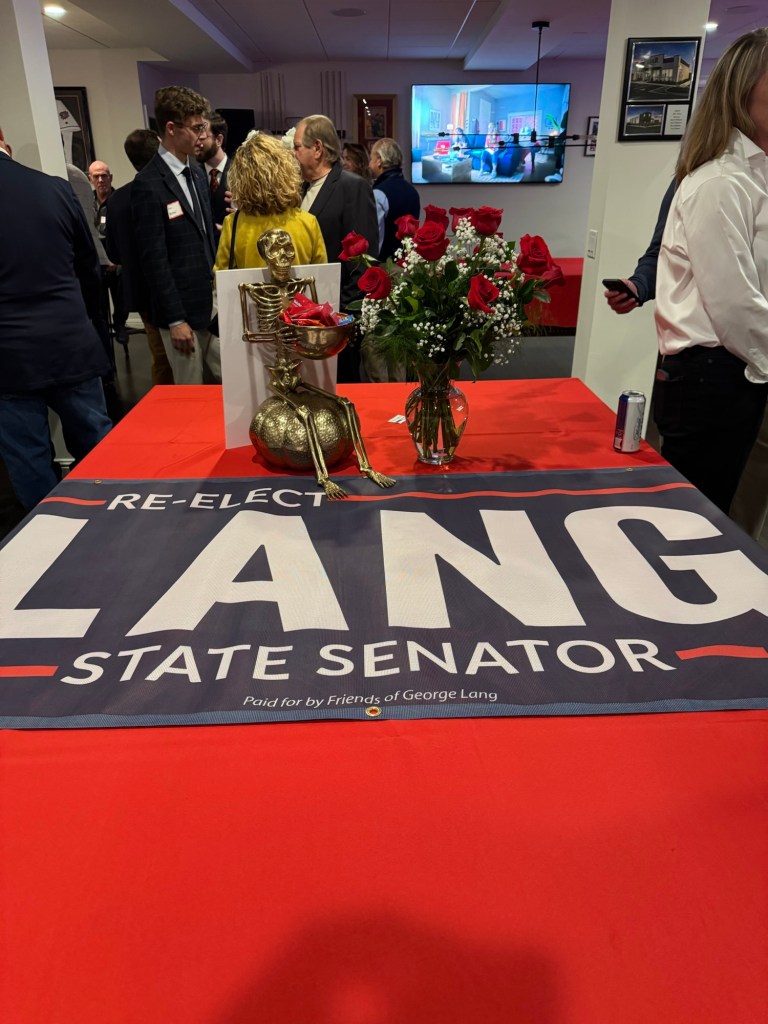
One of my many roles is Vice President of Manufacturing, Facilities, and Program Management at CTL Aerospace. At Senator George Lang’s fundraiser on November 1st, 2025, everyone I spoke with was primarily interested in an update on the Chapter 11 filing for the company.  After all, it wasn’t that long ago when Vivek Ramaswamy came to CTL to announce his run for Governor, so there were lots of people cheering that the company would find a way through to the other side of a challenging financial situation.  And to make matters worse, our case was not one of not having customers or income, but rather part of a widespread suppression campaign by our bank that many privately owned Tier 2 suppliers have experienced over the last decade.  Only in the case of CTL Aerospace, the ownership has shown a very rigorous desire to hold ownership rather than to be pushed aside, essentially by pirates who just wanted to raid our ship and steal all the plunder for a quick flip on the market, as a turn and burn, as they like to say.  The context and legal positioning regarding CTL Aerospace’s Chapter 11 proceedings, specifically the compelling basis for equitable subordination under 11 U.S.C. §510(c). The facts of our case, supported by documented creditor misconduct and predatory financial behavior, are now a very public matter, so the personalities involved are in the public record. 

CTL Aerospace—a 79-year-old aerospace manufacturer—has faced targeted financial suppression during a period of global supply chain instability. The aggressor in this case refused to extend forbearance, coupled with abrupt covenant enforcement and term manipulation, directly impaired our ability to procure raw materials and maintain operational continuity, resulting in massive damages for which everyone in the crowd I was speaking with was very interested. These actions were timed to coincide with industry-wide distress and reflect a pattern of bad faith and strategic impairment.  And the target against us was the “goodwill” of our business, the brand that we had built over a long period of time, the intangibles that are often overlooked in modern business because nobody prosecutes those kinds of cases anymore.  Even though they certainly should and would otherwise if the costs weren’t so prohibitively high.  Once you get into something like this, you see a real menace to the infrastructure of America that is determined to erode our manufacturing base by international banks, who, just like pirates, are seeking short-term plunder and quick sales on the hedge fund market.  When you attack a company’s “goodwill” through purposeful suppression techniques, which a bank can do since it is the mechanism through which all cash for a company flows, if it breaches that fiduciary trust, it can really wreck a business.  And as I found out during this process, it’s not just CTL Aerospace going through this kind of thing, but it’s common in the nation right now, as many private owners we know closely have had to step out of the game and get into the name change cycle every few years, which has caused all kinds of supply chain instability.  Again, much of this is now public record, and people have been following the case. They wanted me to provide an undercover perspective, as this is a very political problem, a matter of national security, which is undoubtedly the case at CTL Aerospace.

Case law supports our position, which is to fight back and seek damages for the massive financial impact on our company’s goodwill. In Citicorp Venture Capital, Ltd. v. Committee of Creditors Holding Unsecured Claims (In re Papercraft Corp.), 211 B.R. 813 (W.D. Pa. 1997), the court subordinated a creditor’s claim due to inequitable conduct that harmed other creditors and the debtor’s reorganization prospects. Similarly, In re Fabricators, Inc., 926 F.2d 1458 (5th Cir. 1991), emphasized that insider status and control over the debtor’s financial decisions can trigger subordination when used to the detriment of the estate.  And that was certainly the case at CTL Aerospace in really extraordinary ways.  But often, such defenses are never applied because by the time you go through the Chapter 11 process, a company doesn’t have the money to fight, which means you essentially have to hire $3000 per hour lawyers to run the case.  Because the banks certainly have those types on their side. In this case, the conduct—potentially documented in internal communications and covenant enforcement timelines—suggests a deliberate strategy to induce distress and position itself for asset acquisition or impairment accounting. We are actively pursuing discovery to uncover these records and may seek engagement with the DOJ or OCC for a lender liability review.  And based on the evidence we have and the timeline, which many have told us from an insider perspective is a classic case of “The Playbook,” would be an easy case to prosecute.  And likely a large settlement.  But that’s not where my mind is, or some of the people involved in this with me.  We want to see much deeper punishment for the entire financial industry, because this hasn’t just happened to us.  It’s a significant impediment to the economic backbone of the entire American manufacturing industry.  It’s not enough for us to survive, which we look poised to do.  However, to illustrate what was done. 

I explained it like this to many people at the fundraiser, and it was good to chat with Senator Bernie Moreno, who is doing a great job in D.C., and Congressman Warren Davidson who has been fantastic over the role of the Fed in government and is very cerebral in problem resolution, imagine you are a big deer with a full rack of antlers, a 10 pointer.  You have lived a long time, and it shows in the development of your antlers.  But one unfortunate day, you try to cross a road and you get hit by a car, breaking your hip or leg.  The driver keeps going.  You are lying there helpless.  Then a cringy pick-up truck comes along with a very loathsome character getting out, who sees an opportunity for a free mount on his cabin wall to brag about.  He sees the big deer with the whole rack and thinks it’s an excellent opportunity to kill the deer and hang the head on his wall for bragging rights.  He didn’t do the work of hunting the deer, but nobody will ever know.  Typically, in a business cycle, the deer would find a way to crawl away into the woods to heal and restore itself to life after such an accident.  In CTL’s business, a global supply chain issue put us under significant stress.  However, rather than helping CTL, the bank adopted a suppression strategy, essentially running the deer over with a car so they could hang the easy kill on their portfolio management wall for bragging rights and a path to easy money.  And from my perspective, based on the evidence, there is a prominent political position in all this, too, a hatred for the Trump administration and this notion of Making America Great Again.  Patriotic companies like CTL Aerospace, which are privately owned and conduct a significant amount of defense work, are prime targets.  They are the 10-point bucks that would look great on a very progressive trophy wall for financial institutions.  However, the facts of the case are sufficient.  It was a sloppy case on the opposition’s part; they made numerous mistakes that they thought they could hide behind expensive lawyers.  But the case law certainly doesn’t favor them. 

When everyone asked me what needs to happen in this case, I gave my point of view, which is prosecution on equitable subordination under 11 U.S.C. §510(c).  The attacker is demoted from a secured creditor, and their impairment play is wrapped up in a case law lesson.  However, the issue would have to be taken out of their control, as they currently hold a monopoly status in the courts and the financial mechanism.  At the very least, this is a case of predatory accounting that should serve as a cautionary lesson for similar cases.  And as long as it’s going on, it violates any notion that Ohio, or America, can sustain new business activity when these practices are hindering the behavior.  It’s a significant threat to our economy and national security.  Over the course of the last year, we spoke to a lot of people to get involved, and once they realized that CTL was in the squeeze play, they didn’t want to get wrapped up in the whole effort for fear of being sucked in themselves.  Like the deer example, they felt sorry for the deer but didn’t dare to help, fearing they would be poached themselves. 

I told the same story over and over, but it has a lot of details, so I wrote it down here, as most of the attendees are very interested in the topics I discuss.  This financial behavior is actually part of a larger collapse of political and social order that is occurring in most industries. This lack of respect for goodwill, for instance, is precisely why the Disney Company is struggling these days, as it owns intangibles such as movie rights, brand names, and amusement parks.  But they have, through woke corporate practices, destroyed the “goodwill” of the company that Uncle Walt built, and people wanted to be associated with.  Hedge fund people think in terms of tangibles, such as the head of a 10-point buck on their wall to brag about.  However, what truly adds value to the marketplace is the intangible of “goodwill.”  And that’s what the fight at CTL Aerospace is really about, and why so many people were interested in an update.  Most of these tier 2 companies don’t put up much of a fight.  Once wounded, they sell off to make the pain end as quickly as possible.  And that is what the opposition thought was going to happen here.  Only it didn’t, and the stand and fight part was not something they were quite ready for.  And that’s where the case is as of now. Significant reforms to the finance industry are needed, as this is certainly not the only example.  And suppose we really want to make America Great Again. In that case, we need to punish these predatory practices of fiduciary terrorism through “goodwill” destruction because it’s a real problem for virtually everyone whose lives are touched in terrifying ways by it.

Rich Hoffman

Click Here to Protect Yourself with Second Call Defense https://www.secondcalldefense.org/?affiliate=20707

Carrying the Weight of the World: Trump’s UN Speech and earning the right to be blunt about escalators

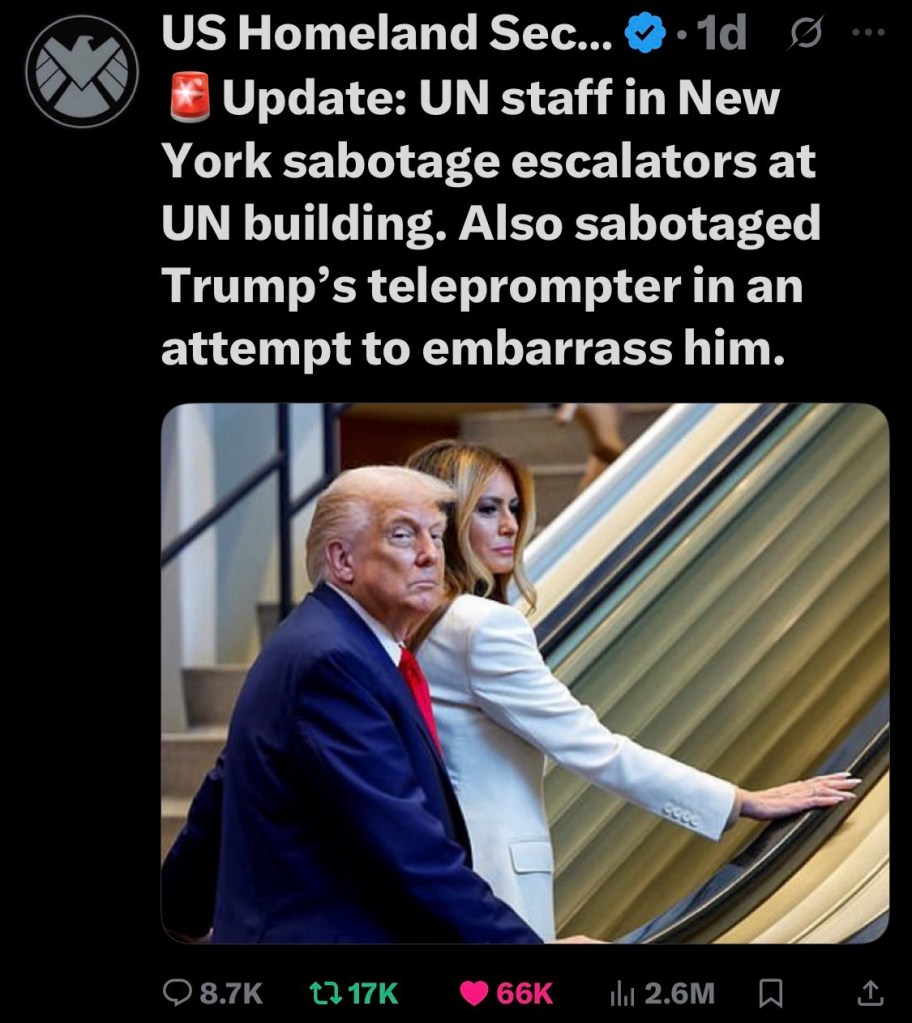
Who wouldn’t love the UN speech of 2025 that President Trump gave, as the escalator broke as soon as he and Melania put their feet on it?  That’s the world we are living in, and obviously, the escalator incident was no accident.  Employees joked about the escalators’ malfunctioning leading up to that speech as a radical means of protest, hoping to garner more funding for the United Nations, as if additional resources would solve all the problems.  Instead, Trump and his wife walked up the escalator without a whole lot of drama and gave a speech that essentially wiped the smile off the face of a very radical world that has failed dramatically since the creation of the UN after World War II.  It wasn’t the usual speech of placation that often accompanies these kinds of things, with calls for unity, peace, and all that kind of rhetoric.  No, Trump had earned the right to call out everyone, right in front of their faces, and tell them what a bunch of low-life characters they all were.  And that is what earning the right by carrying the weight of the world earns you.  And why Trump changing positions on Russia is so important, because only by earning that trust, by enduring the weight of the world, can a person like Trump say the things he does in public.  The UN speech was a remarkable statement by a world that the United States was clearly leading.  All nations were not there equally.  Running the world by committee has turned out to be a disaster, and it took someone like Trump to point it out.  Not through the media with some passive-aggressive protest, but live, to their faces.  And while everyone was on their heels from what he was saying, they complained that the UN doesn’t work, and neither do its escalators or its teleprompters.  Technical sabotage was meant to throw Trump off his game, but it ultimately played to his advantage.

But to earn that right to be as blunt as Trump has been, carrying the weight of the world comes first, and when people wonder why people like Melania Trump and her husband would want to trade in their life of the rich and famous for this demanding job of being President of the United States, the answer comes from speeches like the one Trump gave.  Watching their faces on the 9/11 ceremony this year, the day after Charlie Kirk, a former friend of theirs, was assassinated in cold blood, was obviously hard for them.  And on the day of the speech, the would-be progressive assassin Ryan Wesley Routh was convicted on all counts in trying to plot the murder of Trump at his golf course, just a few months after the attempted assassination of the President at Butler, Pennsylvania, that drew blood, but had only clipped his ear.  Charlie Kirk wasn’t so lucky, and that was obviously weighing on Trump as he and his wife went through the rituals of 9/11 ceremonies to pay tribute to the most significant act of terrorism that ever occurred on American soil.  More terrorism on a larger scale than the escalator sabotage at the UN, but the same in principle.  And the knowledge that after someone of good character had just been killed on a college campus, many on the Democrat side of politics cheered about it, and to discover that so many of our public school teachers were happy that Kirk was dead, and were gloating about it.   The weight of all that evil when you are in a job like the one in the White House can really make you not want to get up out of bed in the morning.

Then, to add to that, the deceit of Vladimir Putin of Russia, who has been saying one thing about peace all along, while turning around and killing many thousands of people on both sides, ruthlessly can really shake your faith in any kind of relationship.  Even Benjamin Netanyahu has been deceitful in his platitudes of peace, while turning around and acting contrary, being very aggressive, knowing that the United States would always bail him out of any trouble he got into.  So he was picking fights anyway, putting Trump in a terrible position.  The evil that people showed, and being in a position to see it so bluntly, was really wearing on the President, as it does most people who find themselves in that perspective.  Leadership is hard when you know so much truth that most people get to dance through without too much thought.  And that leads to the question of why anyone would want to be a leader of anything, whether it’s the President of the United States or the CEO of a company.  Why would anybody want to put themselves through the ordeal of all the trouble?  Especially when they are wealthy and could choose otherwise?  Knowing the worst in people, because your perspective reveals it to you, why would anybody want to do it?  To know too much and to carry around so much weight, knowing the level of hatred in the world around you.  Most people never encounter this kind of situation because their relationships maintain an illusion of civility.  But Trump is seeing the raw evil that can come from people, and he never gets a break from it.  It’s tough to use the Power of Positive Thinking to overcome such menacing negative thinking, and the Democrats are the party of negativity and below-the-line victimization.

Well, you do it so that you get a chance to go to the United Nations and tell them all what you think of them.  You endure the pain of life so that you can throw it in their faces.  And in doing so, you make the world a bit less crappy because of the people in it.  The United Nations was a failure from the start, but it was able to hide its poor performance behind the evils of humanity.  And as long as people kept the speeches nice, nobody talked about the tough stuff.  And everyone could party on the town, buying prostitutes while away from home, and go to fancy restaurants without any real cares in the world.  But to pull that off, everyone needs to be equally trashy and guilty of the crimes that the world enjoyed.  But by carrying the weight of the world the way that Trump does, from a leadership perspective, he can break protocol and tell people what he thinks of them, because everyone he’s talking to knows they can’t do the same.  Their guilt weighs heavily on their minds, burdening them with the truth of it all.  And that is why it’s worth being in a leadership position.  And without all the pain and the desire to carry it from the White House, nobody earns the right to talk about the real problems.  And this United Nations meeting would be just one more eventless charade.  But because Trump has suffered through some terrible weeks where the worst that people can do to each other was made evident, and he smiles his way through it like nothing in the world can bother him, he earns the right to be critical of escalators that don’t work, or global organizations that fail just as spectacularly.  And that he can broker peace with the biggest nations of the world, who are up to no good, because he has been willing to carry the burdens of knowledge that comes from really knowing the deceit that people are capable of.  And we are all better off for it.

Rich Hoffman

Click Here to Protect Yourself with Second Call Defense https://www.secondcalldefense.org/?affiliate=20707

Ethics in Politics: Holding grudges won’t help win races, or maintain political management

Social interactions are at the heart of human discourse, and I speak from the perspective of someone who has spent a long time building relationships—not always easily, and certainly not always with universal approval. People often talk about love and unity, but I wouldn’t say I’m universally loved. In fact, I’m probably excessively hated by many, and I understand why. It’s not something I wake up hoping to change. I don’t start my day thinking, “I want people to love me today.” That’s not the goal. The goal is to make things work, and sometimes that means doing things others aren’t willing to accept. That’s when people get mad.

Recently, I’ve been vocal about supporting Ben Nguyen for the Lakota School Board. That’s stirred up some discussion. Lynda O’Connor has supported him, the former Lakota school board member who a lot of people are still very angry with.  I was at Ben’s fundraiser at Nancy Nix’s house, and Isaac Adi, another Lakota school board member was there too. I’ve seen Isaac at a few events, and we’ve had the opportunity to talk a bit. There has been tension between us, especially with the way his relationship with Darbi Boddy evolved, and how our policies got tangled up. That situation has many layers behind the scenes. If you want to talk ethics, you can justify being mad at people for what they do to each other.  I’ve been married for 37 years and have learned a lot about dealing with other people. I’ve dealt with all kinds of people—kids, grandkids, colleagues—and not everyone aligns with your goals. You have to find a way to make it work.

If you draw a hard line and say, “It’s my way or the highway,” you might be ethically correct, but you’ll lose people. And if you’re trying to influence something, losing people means losing effectiveness. Politics isn’t about making friends. When you’re trying to bring groups together, you can’t fall into the trap of friendship-based peer pressure. You have to rely on the strength of your ideas in a competitive environment. Politics isn’t a branding exercise. You can either withdraw from society or face the challenge of building teams to accomplish a task. It becomes dicey when political affiliations are based on relationships rather than ideas.

You want the best ideas to emerge. You want a competitive atmosphere where ideas collide. That’s the way you get an authentic system. You have to trust people to vote correctly, but only if you articulate your ideas properly. Sheriff Jones and I have supported other candidates within the Republican Party, and recently we have talked about the things we have in common. We want to help the Trump administration achieve its goals, even if there’s controversy—like the situation at the county jail over immigration policy. We agree on some things and disagree on others. We joke about it when we see each other to stay on ground we can work with. But ultimately, it’s not about building friendships or consensus. It’s about who can make the best argument.

Politics should be about argument, not popularity. If feelings get hurt in the process, that’s part of the election cycle. Politicians often use likability as a tool—they kiss babies, shake hands, and make themselves accessible to the public. But that’s just the first layer. You have to be confident in your ability to articulate a message. Many politicians get elected but don’t raise money or debate effectively. If you can’t engage with people who disagree with you, things fall apart. People get mad. I’ve had people mad at me just for being in a picture with Isaac. They say, “You know what he did to Darbi Boddy?” and assume that by being seen with him, I’m supporting him over her.

That kind of division doesn’t help a party win. There are all kinds of people with different thoughts. Isaac and I are not going to the movies together any time soon, but he represents a vote on the school board. He has opinions about how things should be done. I think he cares about kids and schools, even if I disagree with his methods. That’s what political faith is—believing in the process. If you base everything on popularity—“If you like me, vote my way”—you’re not making a real argument. You have to go further. If you can’t, things fall apart.

It’s essential to communicate with one another. Political candidates need to engage, not isolate. You don’t have to be best friends, but you need common ground. On immigration enforcement, for example, we can sit down and have a great discussion. It’s about positioning your statement and believing in what you’re saying. If you can’t win people over with your argument, people often fall back on popularity. That’s dangerous. You’re using your elected position to steer people through peer pressure, not persuasion.

That’s not sustainable. It’s why political parties struggle to work together. If you do that in your family, you’ll have a broken Thanksgiving dinner where people show up, but nobody likes each other. You might have money, but no real friends, they just hang around you for what they can get out of you. How you handle relationships determines your success in politics. Shared opinion has to go through the funnel of the party system. You can’t have 30% of people on one side and expect unity. You need at least 50% alignment. Even if you’re 40% apart on issues, you can still be on the same side of the line. Democrats are on the other side, and you have to be willing to work with people of different opinions.  Republicans might be at the center line of 50% and others are at 90%.  But their Democrat opposition might be at 40% on the other side of the line, and those kinds of Democrats and Republicans are closer together ideologically than the hard-core Republican at 90%.  But Republicans have to find a way to work with other Republicans if the party is going to do the work voters need. 

That doesn’t mean you abandon ethics or break promises. But you can’t get caught in “It’s either me or them.” That’s not a good place to make articulate arguments. Politics should be about fulfilling voter objectives. That’s the goal. I’ve disagreed strongly with how Isaac and Darbi’s relationship on the school board collapsed. It made me reluctant to get involved in school board issues again. But it’s not fair to someone like Ben Nguyen—a good young man who wants to make a difference. He’s trying to partner with other people to build something positive.

Looking at Isaac during Ben’s fundraiser, I  thought, “Maybe we can get another vote. Maybe we have a chance.” Not right away, but in the near future, we can build something. That’s how I’ve survived—by staying true to myself, relying on my ability to make an argument, and letting public debate shape opinion. It’s good to stay away from popularity contests. Fights don’t help anyone. They create a disjointed approach, and then Democrats win their spots because they unify—even if their ideas are really far apart.

Republicans need to figure this out, especially in school board races. When people see me in pictures with other political people they don’t like, they hold grudges. But that doesn’t solve problems. I want progress. I don’t care if people want to get a corn dog with me. What matters is whether they consider the arguments and make informed decisions. That’s what we’re trying to do—get the correct arguments into the public arena and give voters choices that reflect their lives.

Most people have excuses and fights along the way. However, it’s all aimed at uncovering the truth about what the public wants in representation. You have to trust that process. Make your case with confidence. Don’t rely on popularity. Don’t expect people to vote your way just because they like you. Win the argument. Let the best ideas rise. Let people make their own choices. That’s how things work out for the better and you get a civil society.  And much better political teamwork.

Rich Hoffman

Click Here to Protect Yourself with Second Call Defense https://www.secondcalldefense.org/?affiliate=20707

The Use of Youth Violance as a Weapon: Federalizing the police in Washington D.C.

I have never been a fan of the Grand Theft Auto video games.  I think they are diabolically disgusting and a horrible influence on the kids and adults who play them.  Now I know that most people playing those games won’t hit the streets to become criminals. They play those fantasies out in the game, and don’t cross that behavior over into real life.  But there are quite a few young people who have grown up in a fatherless home, and have moms who are on government dependence, and are lacking good leadership roles, which has inspired the horrible behavior we have seen in the crime statistics, where carjackings are up.  Violence against other people is up.  Robberies are up.  All crime has been trending upward and there is a great evil at work that employs itself in Democrat politics, fueled by anti-American personalities like George Soros to destabilize culture at every opportunity and create the conditions where 14-17 year old kids wanting to join gangs apply great violence on our city streets and hide the behavior behind racism so that it cannot be criticized.  However, it’s all part of a plan to attack America from within, and it’s evident in entertainment, such as the Grand Theft Auto video games.  We should teach our youth to be the good guys, not the bad guys.  And all this came to a head when a mob of thugs, underage thugs, attacked the former member of the Trump administration, Big Balls, and they beat him to near death for defending his girlfriend during a carjacking attempt.  The violence is purposeful and meant to destabilize our culture in negative ways, and we just can’t put up with it, as a society.  So I am a big supporter of what Trump did in reaction to the Big Balls incident. 

The word has been out for a long time that kids under the age of 18 can get away with just about anything, even murder.  So the game has been to weaponize the youth in a kind of socialist destabilization way to overthrow American culture, which we have seen through the liberalized court system.  Where judges are generally lenient with youth, the more you examine the way we have built the rules of our society, the more obvious it becomes that they were created to destabilize our culture, and that is undoubtedly part of the fun at Rockstar Games when they design a new game.  The allure of being a criminal becomes ingrained in the minds of young people, making them corrosive to society as a whole.  And if anyone criticizes the game itself, the argument will then become a free speech issue, and the bad guys will laugh all the way to the bank.  And the bank is in on it, too.  Most institutions, especially the legal profession, have taken their place in working against American culture, and the youth have figured out their role in all that.  So violence is up everywhere, especially in Washington, D.C., where Big Balls was attacked, and Trump decided enough was enough.  He was already thinking about federalizing the city streets of Washington.  But now he had a good reason, so he did it, and I think it’s a fantastic idea.  We’re not talking about a condition of employment here; we are talking about correcting a culture of assault that is baked into our legal system purposefully.  And people are getting killed and beaten up to satisfy an attack against the American notion of private property itself.  So none of this is an accident.  It’s been a purposeful strategy. 

The same forces have been behind the defund the police movement.  They have made being a cop hard, so recruitment is down in cities where they don’t want the trouble of the courts if they are accused of another George Floyd case.  The reason for the police coverage of arrests gone bad by the media and the community activists has been to ultimately stop cops from arresting the youth, and to diminish recruiting numbers so that people don’t want to become cops.  Who would want the job?  So we have police shortages in most every city, we have prosecutors who will destroy the lives of cops, but let young people off the hook for literal murder, so what could go wrong?  All the same people are behind these destabilizing factors, and they want an end to America as a free country.  We already have military forces ready to cover the gaps in these police shortages.  We are paying them anyway, so we might as well put them to work and clean up our city streets, starting with Washington, D.C.  The critical thing to remember about the whole situation is that it was all purposefully created by the foundations of evil itself, including the creation of video games like Grand Theft Auto—the attack on civilized culture and the promotion of ill will among the nation’s youth.  And the assumption that cars could be stolen, businesses pillaged at will, and every kind of assault that the mind could think of, was utilized to instill fear among the voting population, afraid to call any of it bad behavior because they want to avoid being called a racist.  The mass manipulation of the public by the multilayered forces of evil has been catastrophic and purposeful. 

I have seen that crime in Washington, D.C., up close in the same general areas where Big Balls was attacked.  And it’s far worse than they talk about on TV.  I was in Washington for an event at the Smithsonian that I was invited to, and I went with my family. We arrived late at night.  My wife needed milk for my kids, so I hit the streets to look for an all-night store that might have it.  I did find the milk, but I was shocked at the level of violence that was ever-present, and the level of crime that the police were willing to put up with.  The store itself was ransacked, and this happens every night.  The owner accepted it; they told me the whole story as chaos resumed around us at the checkout counter.  The clerk was shocked that at that time of night, I was actually willing to pay for my milk, and that I didn’t just take it without paying.  Yes, I was threatened by lots of bad people, but I have my ways of dealing with those kinds of people that are long-standing and very effective.  And I made it back to our hotel room fine.  But the opportunities for violence were frequent and literally on every block between the store and the hotel room.  And the next day, most of that crime was gone, and the professionals took over the streets as if nothing had even happened.  We can’t allow that kind of crime anywhere, so it’s about time that somebody cracks down on it, and that is what Trump is doing.  And it’s a great thing.  We’ll discuss the dangers of federalizing police on city streets later.  But for now, the most dangerous thing to do is to let crime continue as it has.  Racism and youth crime, even the destruction of the American family, have all been attacks on our culture by influencers with the money to corrupt the system, and we’ve let them do it under some loose interpretation of free speech.  So we are playing a vicious game with truly evil people.  And they won’t be beaten by playing nice. 

Rich Hoffman

Click Here to Protect Yourself with Second Call Defense https://www.secondcalldefense.org/?affiliate=20707

Republicans Need to Redraw the Maps: Redistrict wherever possible, do not play fair with Democrats

Don’t feel bad about winning.  Do Republicans owe it to Democrats to be fair?  Never forget, Democrats want to change the way America works, and we should have learned the hard lessons from playing fair with them in the past; we know what they do when given a chance at fairness.  We are now at a point where we control all branches of government, and there is a chance to gain many seats in the House and Senate, thereby strengthening our majorities.  And that we should do everything we can do, even if it means gaining just a single seat.  It drove me crazy in the 2024 election to see so many close races going to the Democrats, especially in California.  If we had monitored election fraud more closely, there would already be larger majorities in Congress. And yes, there was a lot of election fraud where illegal aliens and mail-in ballots pushed tight races to Democrat wins.  We were all paying attention to Trump and were happy he won.  We were delighted to get majorities in the House and Senate.  But we could have had more.  It should not be as close as it is right now.  So, we owe it to ourselves to stop the midterm trend of giving the keys back to the other party and instead gain deeper majorities. There are several ways we can do that.  And even with all that said, remember what I say all the time, because it’s true.  If you make it harder for Democrats to cheat, they can’t win elections.  Not even in places like Los Angeles and New York.  Democrats only have any trace of power through election fraud and other scandalous activities, so don’t feel bad doing what must be done to keep them from acquiring power ever, especially for these upcoming midterms. 

The biggest news of the moment is that Texas is redistricting some of its congressional seats to favor GOP candidates, which could result in an additional 3-5 seats, a very positive development.  Other states are considering the same approach, particularly in Florida and Missouri, which could result in a few additional seats.  The rule is, if you can pick up one seat, Republicans should do it.  Democrats have only been playing nice because they assume they will take back power in Congress in the midterms, and they plan to be obstructionists on every issue.  And you can bet that they plan to impeach President Trump over every radical issue, just as they did in 2019 and 2020.  The best way to prevent that is to eliminate the threat of power by not allowing them to have it.  They might be upset at gerrymandering intentions with redrawing the maps to take advantage of Democrats, but what they have planned is far, far worse, and at this stage in 2025, completely avoidable. Historically speaking, a president’s party loses 32 House seats during midterm elections because voters swing between parties in frustration with the rate of progress that comes from the White House.  Which is part of the plan in stalling everything Trump is trying to do, including appointing radical judges and even Jerome Powell keeping the Fed’s interest rates high, hoping to hurt Trump’s economy ahead of the midterm elections.  So Democrats are already doing much worse than gerrymandering congressional districts.  The key to success in holding onto Republican seats and even gaining more is for Trump to maintain an approval rating of around 63% and for Republicans to gain advantages in redistricting.  Trump’s approval rating was excellent in June as the bombing in Iran and the Fourth of July events had everyone feeling good.  Lately, with the Epstein talk and Russia causing lots of trouble, Trump is hovering at 44%.  Democrats see that as blood in the water for them to exploit, so they will continue to throw gas on any fire that might hurt Trump.

Republicans, through redistricting efforts, could pick up 5-10 extra seats, which is a significant gain right out of the gate.  There is additionally a Supreme Court case, Louisiana v. Callais, that indicates that Democrats have been accused of severe unconstitutional racial gerrymandering under the 14th and 15th Amendments.  And if this provision were found to be the case, as we should not be making up districts based on race or sex, Republicans could pick up as many as 25 seats.  This Supreme Court case is essentially judging on the premise of election fraud; the system is set up to take advantage of disadvantaged people for exploitation.  Not fairness.  This is the case regarding most things coming from Democrat politics.  The argument in the Louisiana case is expected to occur in the fall of 2025, with a decision anticipated in mid-2026.  And suppose the court rules that the Section 2 requirements for majority-minority districts are unconstitutional. In that case, states across the nation will need to redraw new maps before the 2026 midterms, potentially resulting in Republican pickups of 1-3 seats in states like Louisiana, Georgia, and Alabama.  The probability of the strike down of S.B. 8 to limit Section 2’s will likely come down to a 5-4 or even 6-3 decision with Kavanaugh and Roberts siding for the change, which is now racial-based intent that supports unconstitutional gerrymandering.  So do not feel bad about pushing back. Democrats have already made a mess of things for years, and countless Democrats who should never have been in representative government have been elected to seats they never should have had.  And it’s time now to change all that.

Obviously, in the Senate, things are counted a bit differently, as two senators represent each state.  So, gaining majorities requires a different strategy. However, suppose the trend toward wins in the House breaks the cycle of expectation that currently exists, where the party in power loses power during midterm elections. In that case, there is a possibility of gaining supermajorities in 2026 through 2028.  And that is how we should all think about these things.  So drop the pretense of fairness and play these things to win.  And keep in mind the long game.  The things we do today have an enormous impact on tomorrow.  And you win tomorrow by planting the seeds for it today.  I would add that if election reform were implemented alongside these mitigating factors, Republicans could achieve supermajorities in the House and Senate, possibly even before 2028.  Numerous close Senate races fall within the margin of error that Democrats have built into their assumptions.  And if we take that away from them, they will start to drop away like flies.  They won’t be able to win future elections.  So, redraw those maps wherever possible.  Fight the Democrats in court over every issue, and don’t feel bad about wearing them out.  They intend to destroy America; we have seen their actions before.  So when you get a chance to take their head off with a boot to the neck, do it.  Don’t hold back with compassion.  Don’t get caught up in a contention of playing fair.  Play to win, and play to defeat a political enemy that seeks at every turn to manipulate things toward our self-destruction.  We don’t owe them any assumptions of fairness.  The best thing we could do as Republicans is play to win by any means possible.  And let the sums of those wins add up to supermajorities that will take our nation to a much better tomorrow because tomorrow starts today.

Rich Hoffman

Click Here to Protect Yourself with Second Call Defense https://www.secondcalldefense.org/?affiliate=20707