The Safety Marxists and The Right Stuff: Don’t let the New Glenn Explosion Slow Down Space Development

The explosion of Blue Origin’s New Glenn rocket on the evening of May 28, 2026, at Launch Complex 36 in Cape Canaveral Space Force Station sent a massive fireball into the Florida night sky, visible for miles across the Space Coast. The incident occurred during a static-fire test of the vehicle’s seven BE-4 methane engines as preparations advanced for the planned launch of Amazon Project Kuiper satellites. No injuries were reported, and the payload satellites had not yet been integrated, yet the blast destroyed the first stage, damaged the second stage, and inflicted significant harm on the launch infrastructure, including collapsed lightning towers and compromised ground systems. 

This event, while dramatic and costly in the short term, fits into a long pattern of challenges that have defined human spaceflight from its earliest days. The Space Coast, with its rich history of ambition and setback, absorbed another chapter in that story. Observers familiar with the area—its restaurants, beaches, and the electric atmosphere that builds before night launches—could imagine the shock felt by those gathered on Cocoa Beach with lawn chairs, expecting a spectacular light show but witnessing an uncontrolled conflagration instead. The infrastructure at Cape Canaveral has always accounted for such possibilities by deliberately spacing the pads, allowing continued operations even amid localized damage. Indeed, within hours, SpaceX successfully launched a Falcon 9 from a nearby complex, underscoring the resilience built into modern commercial space operations. 

The development of heavy-lift rockets has never been without risk. Blue Origin’s New Glenn, standing roughly 320 feet tall and designed as a reusable two-stage vehicle powered by innovative BE-4 engines, represents a serious contender in the emerging space economy. Its setback comes as the company works to close the gap with established players while contributing to NASA’s Artemis program, which aims to return humans to the Moon and establish a sustained presence there. Historical parallels abound. In the 1960s, the Apollo program endured multiple failures, including the tragic Apollo 1 fire that claimed three astronauts’ lives during a ground test. Engineers learned from those events, iterating rapidly under intense pressure. Similarly, the Space Shuttle era saw the 1986 Challenger disaster and Columbia’s loss in 2003, both rooted in technical vulnerabilities exposed under operational stress. These tragedies slowed momentum temporarily but ultimately reinforced the necessity of pushing boundaries rather than retreating into excessive caution. 

The phrase “The Right Stuff,” popularized by Tom Wolfe’s account of the Mercury Seven astronauts, captures the blend of courage, technical skill, and calculated risk that propelled early space exploration. Yet that era also demonstrated that safety in its purest form—zero tolerance for any anomaly—would have halted progress entirely. Test pilots and engineers accepted that prototypes and new systems carried inherent dangers. Leaks in propellant lines, valve failures, and unexpected combustion events were common during the frantic pace of the Space Race. Today’s commercial sector echoes this reality. SpaceX itself experienced numerous Falcon 1 failures before achieving orbital success and endured Starship test explosions that became public spectacles before rapid iterations led to operational reliability. These events highlight a core truth: progress in extreme engineering environments demands tolerance for learning through failure, especially when no crew is aboard.

In the case of the New Glenn incident, the anomaly likely stemmed from complexities in the fueling and pressurization systems—long runs of piping that transfer cryogenic propellants under high pressure. Such setups involve numerous seams, valves, and sensors where even minor imperfections can cascade. Static fire tests exist precisely to uncover these issues on the ground, far preferable to in-flight catastrophes. Blue Origin had achieved prior successes with earlier New Glenn vehicles, demonstrating the maturity of much of the architecture. The company’s track record before this event showed methodical advancement, free of major public mishaps. The response from leadership emphasized thorough investigation and a commitment to recovery, a stance aligned with the industry’s need to maintain cadence. 

Broader implications extend far beyond a single launchpad. The space economy promises transformative growth. Estimates suggest that extracting rare minerals from the Moon, asteroids, and Mars could unlock trillions in new value. Zero-gravity manufacturing offers advantages in producing flawless crystals, advanced alloys, and pharmaceuticals that are impossible to replicate efficiently on Earth. Orbital facilities, potentially spanning hundreds of thousands of square feet and serviced by autonomous systems, could host heavy industry where massive components are maneuvered with minimal force. Power generation from solar arrays in continuous sunlight, combined with vacuum conditions ideal for certain processes, positions space as the next frontier for economic expansion. Blue Origin, SpaceX, and others are laying infrastructure for this vision, with New Glenn intended to complement smaller vehicles in delivering heavy cargo for lunar bases and satellite constellations.

Critics who view such explosions as reasons to slow or more strictly regulate the sector often overlook historical precedent and economic logic. Overly restrictive safety regimes, sometimes influenced by broader societal trends favoring precaution over innovation, risk stifling the very dynamism required for breakthroughs. During the COVID-19 period, widespread shutdowns illustrated how prioritizing absolute safety can contract economic activity. Similar dynamics appear in debates over infrastructure projects, energy development, and now space. Proponents of rapid iteration argue that autonomous systems and robotic precursors should shoulder initial risks, allowing humans to follow once reliability improves. This approach mirrors early aviation and automotive industries, where rapid prototyping and field failures drove safety improvements over time.

The competition between Blue Origin and SpaceX exemplifies healthy market forces. New Glenn’s development has been watched closely as a potential counterbalance, encouraging faster innovation across the board. Setbacks for one player do not equate to industry-wide failure; rather, they test organizational resilience. SpaceX’s ability to launch the day after the New Glenn event demonstrated asset isolation and a rapid operational tempo. Blue Origin possesses additional vehicles in various stages of assembly. Activating parallel production lines, implementing extended shifts where feasible, and focusing engineering resources on root cause analysis could help compress recovery timelines. Historical examples support this: After Virgin Galactic’s 2014 SpaceShipTwo accident, the company rebuilt, iterated, and advanced toward commercial operations. Similar recoveries followed other high-profile incidents.

Calls to maintain schedules for Artemis-related missions reflect urgency around lunar return timelines targeted for the late 2020s. Delaying hardware availability could cascade into broader program slips. Sustained public and investor enthusiasm requires visible progress—regular news of launches, landings, and new capabilities. Filing necessary regulatory documentation with the FAA promptly, conducting transparent reviews, and returning to test campaigns signal commitment. The Space Coast community, long accustomed to the rhythms of launch windows, benefits from this continuity. Local economies tied to tourism, engineering talent, and supply chains thrive when activity remains high.

Robotics and artificial intelligence will play central roles in mitigating human risk during expansion. Tesla Optimus-style systems and advanced autonomy can handle hazardous assembly, refueling, and initial exploration tasks. Concerns about job displacement on Earth—exacerbated by wage policies that reduce hiring incentives—find partial resolution in new high-skill opportunities created by space infrastructure. Staffing orbital manufacturing would require oversight roles, maintenance expertise, and creative problem-solving that complement rather than replace human labor. The vision of floating facilities between Earth and Moon, processing lunar regolith into construction materials or extracting platinum-group metals, represents a multi-trillion-dollar opportunity that rewards those who move decisively.

Critics sometimes celebrate such explosions as brakes on capitalism in space, preferring centralized control or slower pacing aligned with terrestrial priorities. Yet the data suggests otherwise. Reusable architectures have already driven launch costs down dramatically, enabling constellations like Starlink that deliver global connectivity. Further reductions through heavy-lift vehicles will accelerate science, communications, Earth observation, and eventual off-world settlement. Mining asteroids could supply resources without the terrestrial environmental trade-offs associated with some mining operations. The long-term payoff justifies accepting manageable risks during development phases.

Learning from past programs remains essential. NASA’s early days involved accepting higher failure probabilities to achieve national goals. Private industry now carries much of that mantle, operating under market accountability that incentivizes efficiency. Blue Origin’s facility near the Space Coast showcases impressive engineering infrastructure. Leveraging that base, combined with lessons from the recent anomaly, positions the team for a rebound. Recommendations include prioritizing redundant systems in propellant handling, enhancing sensor density for early leak detection, and maintaining aggressive parallel development of follow-on vehicles.

The cultural dimension cannot be ignored. Narratives framing innovation as inherently dangerous sometimes serve to justify regulatory expansion rather than technical solutions. Balancing legitimate safety with progress requires distinguishing between reckless disregard and the informed risk inherent to frontier work. Test pilots of the 1950s and 1960s embodied the latter; modern rocket engineers continue that tradition. Public fascination with space endures because of visible achievement, not perfect safety records. Night launches lighting up the sky over Cocoa Beach remind onlookers of humanity’s reach beyond the planet.

In reflecting on the New Glenn event, several practical steps emerge for stakeholders. First, conduct a swift yet comprehensive investigation and share non-proprietary findings to benefit the industry. Second, repair and upgrade the launch complex while constructing contingency capabilities. Third, accelerate manufacturing of replacement hardware through multi-shift operations where workforce conditions allow. Fourth, engage regulators constructively to resume testing promptly. Fifth, communicate progress transparently to maintain confidence among partners like NASA and Amazon. These actions align with best practices observed in successful recovery cases.

The space economy’s trajectory points toward exponential growth. Initial billions in revenue from launches and services will expand into trillions as resource utilization scales. Manufacturing in microgravity could revolutionize materials science, producing superior semiconductors, fiber optics, and medical isotopes. Robotic precursors will establish outposts, followed by human crews supported by advanced life-support and propulsion systems. Starship-class vehicles are expected to serve as foundational transport, with complementary systems like New Glenn providing specialized heavy-lift capacity. Competition drives down costs and spurs ingenuity.

Skeptics who hoped the explosion would dampen momentum underestimate the sector’s adaptability. The isolation of launch infrastructure, proven redundancies, and private capital’s risk tolerance all favor continuation. For those invested in humanity’s multi-planetary future, the message is clear: analyze, adapt, and advance. The fireworks of May 28, 2026, while startling, illuminated both the challenges and the enduring allure of reaching for the stars.

Expanding on historical context, one must consider the Soviet N1 rocket program during the Moon race. Multiple catastrophic explosions on the pad during static tests delayed ambitions but provided data that informed later designs, even if political factors ultimately curtailed the effort. American Saturn V development faced engine instabilities and structural issues, which were resolved through iterative ground testing. Each failure refined understanding of combustion dynamics, materials under extreme loads, and control systems. Modern simulations and sensors offer greater insight, yet physical testing remains irreplaceable for uncovering subtle integration problems.

Economically, the multiplier effects of space activity extend deep into supply chains. Florida’s Space Coast employs thousands directly and indirectly. Tourism spikes around launches, while high-tech manufacturing attracts talent. A slowdown would ripple through these ecosystems. Maintaining tempo supports broader goals like climate monitoring satellites, disaster response, and technological spin-offs that improve daily life on Earth.

Philosophically, the tension between safety absolutism and exploratory daring echoes debates in other domains. Aviation advanced despite early crashes. Nuclear power improved safety records through experience despite accidents. Space demands similar maturity. Overemphasis on “safety tyrants”—those prioritizing zero incidents above all—can paralyze organizations, leading to bureaucratic bloat and opportunity costs. Instead, layered risk management, in which ground tests absorb early failures, allows for safe progression toward crewed missions.

Blue Origin’s path forward involves embodying that balanced approach. With vehicles in production, experienced teams, and strong backing, recovery is feasible within compressed timelines. Targeting return-to-flight before year’s end, while supporting Artemis milestones, would demonstrate resolve. The industry watches not just for technical fixes but for cultural signals: whether setbacks become excuses for delay or catalysts for acceleration.

In the end, the New Glenn explosion of late May 2026 joins a distinguished lineage of events that test character and capability. Those who treat it as temporary, learn its lessons, and press onward will shape the coming era of space industrialization. The fireball may have lit the sky briefly, but sustained effort will illuminate a future of expanded human presence beyond Earth. The Space Coast, with its resilient vibe and storied past, stands ready for the next chapter.

1.  Details drawn from contemporary reporting on the May 28, 2026, static fire anomaly.

2.  Tom Wolfe, The Right Stuff (1979), for cultural framing of risk in aerospace.

3.  NASA historical records on Apollo and Shuttle programs.

4.  Industry analyses of reusable rocket economics, including SpaceX flight cadence data.

5.  Projections on space resource utilization from various economic studies (e.g., asteroid mining valuations).

Bibliography

•  Wolfe, Tom. The Right Stuff. Farrar, Straus and Giroux, 1979.

•  NASA. “Apollo Program Summary.” Historical archives.

•  Spaceflight Now and Reuters coverage of the 2026 New Glenn event.

•  Economic reports on space mining potential (various sources, 2020s).

•  Virgin Galactic post-accident recovery documentation.

Rich Hoffman

More about me

Click Here to Protect Yourself with Second Call Defense https://www.secondcalldefense.org/?affiliate=20707
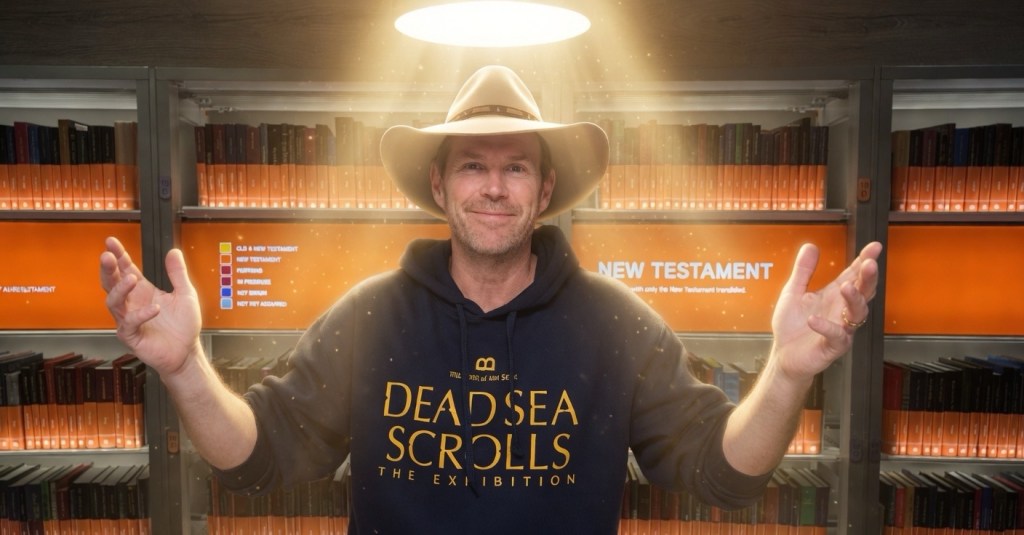
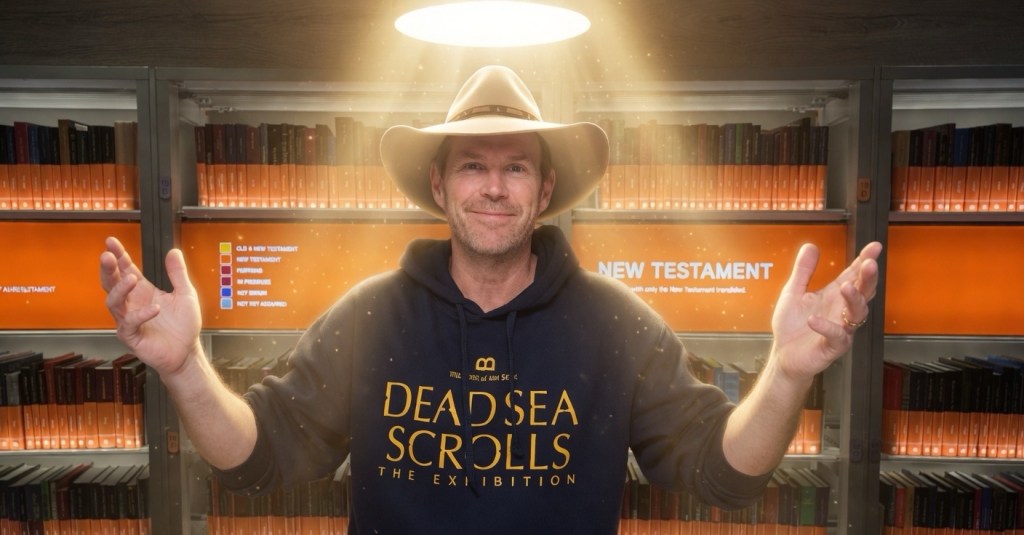
About the Author: Rich Hoffman

Rich Hoffman is an aerospace executive, political strategist, systems thinker, and independent researcher of ancient history, the paranormal, and the Dead Sea Scrolls tradition. His life in high‑stakes manufacturing, high‑level politics, and cross‑functional crisis management gives him a field‑tested understanding of power — both human and unseen.

He has advised candidates, executives, and public leaders, while conducting deep, hands‑on exploration of archaeological and supernatural hotspots across the world.

Hoffman writes with the credibility of a problem-solver, the curiosity of an archaeologist, and the courage of a frontline witness who has gone to very scary places and reported what lurked there. Hoffman has authored books including The Symposium of JusticeThe Gunfighter’s Guide to Business, and Tail of the Dragon, often exploring themes of freedom, individual will, and societal structures through a lens influenced by philosophy (e.g., Nietzschean overman concepts) and current events.

The Fragility of Principles: Thomas Massie’s Defeat and the Consolidation of the Republican Party Under Trump

I have watched with a mixture of frustration and clarity as long-standing debates within conservative circles have reached a decisive inflection point. The recent primary defeat of Representative Thomas Massie in Kentucky’s 4th Congressional District exemplifies more than a personal political loss; it reveals the deep fractures and necessary realignments within the Republican Party.  Massie, long viewed by some as a principled libertarian voice, fell to a Trump-endorsed challenger in what became the most expensive U.S. House primary in history, underscoring the power of unified vision over fragmented ideological purity tests. 

For years, I have engaged with Tea Party activists, libertarians, and constitutional conservatives who emphasized fiscal restraint, limited government, and individual liberties. Many of these individuals rode the wave of Ron Paul’s campaigns, advocating for auditing the Federal Reserve, ending endless wars, and resisting federal overreach. I respected their sincerity. Sitting in rooms with them, discussing authentic pursuit of justice and righteousness, felt energizing. Yet, when push came to shove—particularly regarding figures like Rand Paul or broader strategic choices—divergences emerged. Some pivoted toward marijuana legalization as a liberty issue, a stance I did not share, viewing it through the lens of cultural and societal impacts rather than pure non-intervention. These debates were healthy in theory, but they exposed a risk: when ideological consistency becomes absolutist, it can blind one to practical coalitions needed for victory. 

Massie’s loss was not merely about one congressman. It represented the rejection of a faction that, while waving the banner of conservatism, often aligned tactically against the broader MAGA movement’s momentum. Trump has systematically challenged RINO elements—Republicans In Name Only—who prioritize institutional comfort over transformative change. Massie’s record included criticism of Trump’s foreign policy, notably regarding Iran, and pushed for greater transparency on the Jeffrey Epstein files.  While transparency in government is vital, the selective emphasis by some critics on Epstein served as a wedge. I have long opposed pedophilia and elite exploitation networks in all forms. Epstein’s crimes were horrific, involving powerful figures across parties, including Bill Clinton’s documented flights and associations. Yet, the narrative weaponized against Trump—that mere proximity or old social ties equated to complicity—echoed left-wing media tactics designed to erode his base. 

I recall the Epstein files’ long shadow. Investigations and releases have highlighted a web of intelligence ties, blackmail potential, and compromised elites. Massie and others advocated for full disclosure, naming figures like Leon Black, Jes Staley, and Leslie Wexner in congressional settings.  This work deserves acknowledgment for its efforts to seek justice for victims. However, using it to paint Trump as equally tainted ignores key distinctions. Trump banned Epstein from Mar-a-Lago after reports of inappropriate conduct, and no credible evidence from the files has substantiated direct involvement in criminal acts matching the scale pushed in opposition narratives. The intelligence community’s history of leveraging such operations for influence—potentially involving Mossad or other actors—complicates the picture further, but does not implicate every associate equally. 

The pedophilia smear tactic is particularly insidious. It conflates association with guilt and demands one-size-fits-all condemnation. Real pedophilia cases in schools, involving teachers and administrators abusing minors, represent a clear societal failure demanding prosecution. Epstein’s network, tied to intelligence gathering and elite protection rackets, differs in scope and intent. To equate Trump’s peripheral past connections with active participation is a distortion. Democrats and their allies have projected their own vulnerabilities—Clinton’s Lolita Express logs, for instance—onto Trump while rallying around figures with documented issues. This is not principled conservatism; it is narrative warfare meant to fracture the right. 

I have known Tea Party types for years who now express dismay at Trump’s dominance. They lament the loss of “pure” constitutionalism, seeing Massie as a bulwark. Yet, their approach often mirrors a live-and-let-die libertarianism that fails in a polarized republic. Government is not absent; it is captured. Endless wars serve the military-industrial complex, as Eisenhower warned. Fiscal irresponsibility balloons debt. Cultural decay advances through institutions. Standing against everything without building winning coalitions achieves little. Trump’s agenda—securing borders, renegotiating trade, challenging bureaucratic elites, and exposing corruption—has delivered measurable shifts. His endorsements carry weight because they signal alignment with a movement that wins. 

Consider parallel dynamics in Ohio. Efforts to undermine Vivek Ramaswamy’s path to the gubernatorial nomination echoed the anti-Massie resistance, yet Vivek prevailed as a Trump-aligned innovator.  Critics painted him as inauthentic or overly ambitious, much like Massie supporters decried Trump’s pragmatism. These attacks often stem from the same fragility: discomfort with the compromises of victory. I prefer winning. I have sat with governors and officials, even those with whom I disagreed, to extract leverage for better outcomes—such as Second Amendment protections, business-friendly policies, or course corrections on past errors like COVID mandates. Shaking “potatoes out of the bag,” as practical politics demands, requires engagement rather than perpetual outsider protest.

Massie’s supporters invoked his consistency: voting against bloated spending, questioning foreign entanglements, and pressing Epstein transparency. These are defensible in isolation. However, consistency without adaptability risks irrelevance. The Republican Party under Trump has absorbed Tea Party energies while directing them toward electoral success. Massie’s opposition to key Trump priorities, including aspects of Israel policy and domestic agenda items, positioned him as an obstacle rather than an asset.  Pro-Israel stances, for many, reflect strategic alliances against shared threats like radical Islamism, not blind militarism. Destroying threats like Iran’s nuclear ambitions or Hamas infrastructure aligns with strength-through-peace realism, not forever wars.

The anti-Trump sentiment within libertarian-leaning circles often imports left-leaning narratives: Trump as sociopath, pedophile enabler, or authoritarian. These claims crumble under scrutiny. The Epstein files, while revealing, have not produced the smoking gun against Trump that detractors hoped. Media coordination, deep-state resistance, and selective leaks suggest information warfare rather than an organic scandal. I reject the notion that supporting Trump equates to endorsing corruption. Pedophilia is abhorrent regardless of politics. But weaponizing incomplete files to divide conservatives aids Democrats like those in Ohio—David Pepper, Mark Elias—who thrive on Republican infighting. 

My experience in media and commentary has reinforced independence. No sponsors dictate my views. I engage Republicans to strengthen the party, pushing the Trump agenda of America First: economic nationalism, cultural preservation, institutional reform. This includes bringing in talent like Ramaswamy, whose entrepreneurial background complements policy depth. Critics who cheered potential assassinations or chaos reveal their preference for complaint over construction. They validate existence through opposition, not governance.

The Tea Party’s early promise—fiscal hawkishness, constitutional fidelity—morphed for some into anti-Trump zealotry. Ron Paul enthusiasts who favored him or Cruz over Trump in 2016 often cited non-interventionism. Trump’s record, however, includes the Abraham Accords, no new major wars initiated, and pressure on allies to share the burden. Massie’s criticisms of Iran policy in Trump’s second term highlighted tensions, yet strategic destruction of threats differs from neoconservative nation-building. 

Epstein’s case warrants full accountability. Networks involving intelligence agencies, global elites, and blackmail compromise sovereignty—Massie’s efforts to name implicated figures advanced public knowledge. Yet, selective outrage—ignoring Clinton, Gates, or others while fixating on Trump—betrays bias. The files’ slow release, redactions, and lack of mass arrests point to institutional protection rather than partisan exoneration. Victims deserve justice beyond political theater. 

Broader lessons emerge. Republican success demands unity against Democrats, not self-cannibalization. Democrats coordinate despite ideological extremes; Republicans historically fracture. Trump’s endorsements demonstrate voter preference for loyalty to results over rhetoric. Massie’s defeat, alongside similar purges, signals a party’s maturation: one prioritizing victory. 

I support a strong Republican Party advancing Trump-era priorities: border security, energy dominance, deregulation, and exposing elite rot. Libertarian purity has value in discourse but falters in governance. Coalitions require compromise—agreeing on enough to defeat the left. Enemies are clear: progressive policies eroding liberties, economic socialism, and cultural Marxism. Internal division aids them.

Friends from Tea Party days feel betrayed by my stance. I value their sincerity but choose logic. Winning requires embracing imperfect vehicles for larger goals. Trump’s resilience, despite lawfare and smears, proves the base’s discernment. Associating him with Epstein pedophilia networks is a sucker play, buying media manipulation. Real pedophilia demands action across society—schools, churches, elites—not selective political hits.

In Ohio and nationally, patterns repeat. Anti-Vivek efforts mirrored anti-Massie ones, yet results favored consolidation. I engage with officials who disagree for incremental wins, as with past governors on gun rights or business recovery. Perpetual opposition yields nothing; leverage does.

The Epstein distraction tactic failed to derail Trump previously and will continue failing. Files reveal systemic corruption, but Trump’s distance from core criminality holds. This is not denial but contextual realism. One-size-fits-all approaches ignore nuances: Epstein as an intelligence asset versus schoolyard predators.

Ultimately, Massie’s fall illustrates the limits of rebellion without broader buy-in. Principles matter, but so does efficacy. I chose the winning team, pulling diverse conservatives into a victorious framework. Democrats are the primary adversary. Strengthening the GOP under Trump advances that fight. Libertarians who cannot adapt risk marginalization. Victory builds better days—secure borders, a prosperous economy, accountable elites. This path, though imperfect, delivers where isolation does not. 

Footnotes

¹ Primary results and spending data from AP and NPR reporting, May 2026.

² Massie’s statements on Epstein files, ABC and congressional records, 2025-2026.

³ Trump-Massie history, NBC and WSJ timelines.

⁴ Ohio gubernatorial primary outcomes, BBC and NBC, May 2026.

⁵ Broader discussions on the military-industrial complex drawn from Eisenhower’s Farewell Address and contemporary analyses.

Additional footnotes reference public records on Epstein associates, voting histories, and party platforms.

Bibliography for Further Reading

•  Associated Press. “Takeaways from Tuesday’s Primaries: Massie’s Loss Leaves No Doubt About Trump’s Power Over the GOP.” May 2026.

•  NPR. “Endorsed by Trump, Ed Gallrein Defeats Rep. Thomas Massie.” May 19, 2026.

•  The Hill. “Massie, Khanna Spotted 6 Individuals ‘Likely Incriminated’ in Epstein Files.” February 2026.

•  CBS Austin. “Lawmaker Names Three Men from the Epstein Files.” February 2026.

•  Wall Street Journal. “Thomas Massie’s Lonely and Expensive Fight Against Trump.” May 2026.

•  NBC News. “Rep. Thomas Massie Confronts the Full Force of Trump’s Wrath.” May 2026.

•  BBC. “Vivek Ramaswamy Wins Republican Nomination for Ohio Governor.” May 2026.

•  Wikipedia. “2026 Ohio Gubernatorial Election.” (For primary data).

•  Forbes. “Rep. Thomas Massie Loses Primary After Trump Nemesis Campaign.” May 2026.

•  Reuters. “Trump Purges Another Republican Critic with Massie Defeat.” May 2026.

•  Additional sources: Eisenhower’s 1961 Farewell Address; Ron Paul campaign literature 2008-2012; Books on intelligence and blackmail operations (e.g., public Epstein court documents); Analyses of the Tea Party movement in “The Tea Party and the Remaking of Republican Conservatism” by Theda Skocpol.

•  Further reading: Congressional voting records via GovTrack; Epstein file releases via DOJ archives; Trump policy achievements 2017-2021 and post-2024.

Rich Hoffman

More about me

Click Here to Protect Yourself with Second Call Defense https://www.secondcalldefense.org/?affiliate=20707

About the Author: Rich Hoffman

Rich Hoffman is an aerospace executive, political strategist, systems thinker, and independent researcher of ancient history, the paranormal, and the Dead Sea Scrolls tradition. His life in high‑stakes manufacturing, high‑level politics, and cross‑functional crisis management gives him a field‑tested understanding of power — both human and unseen.

He has advised candidates, executives, and public leaders, while conducting deep, hands‑on exploration of archaeological and supernatural hotspots across the world.

Hoffman writes with the credibility of a problem-solver, the curiosity of an archaeologist, and the courage of a frontline witness who has gone to very scary places and reported what lurked there. Hoffman has authored books including The Symposium of JusticeThe Gunfighter’s Guide to Business, and Tail of the Dragon, often exploring themes of freedom, individual will, and societal structures through a lens influenced by philosophy (e.g., Nietzschean overman concepts) and current events.

Disclosure, Power, and The City of God: Proof of ancient giants and our interactions with many alien species over vast spans of time.  Yes, over a billion people have interacted with the Government Disclosure Website

I have been talking about this for decades, going back to that fourth-grade speech on a big elementary school stage where I stood up and laid out everything I had read about UFOs and alien interactions with humanity. Most people thought I was crazy then, and even now, some look at me sideways when I bring it up. But the pattern has always been obvious to me: this is not merely about little green men or flying saucers in the sky. It is about raw power, control, and the systematic erasure of previous knowledge so that whatever new regime is in charge—whether a government administration, a corporate takeover, or a stepfather moving into a broken home—can claim to be the first and only legitimate authority. 

I just finished my book The Politics of Heaven, which dives deep into this exact dynamic. The core argument is simple yet profound: advanced non-human intelligences have visited and interacted with Earth for millions of years. These beings, equipped with their own political orders and technologies that let them cross vast interstellar distances, have traded knowledge, labor, resources, and sometimes genetic material with human civilizations. Yet throughout history, those who seek to rule over us have worked tirelessly to suppress this reality. They do not want the public remembering “Larry”—the previous husband, the prior administration, the older gods or visitors—because acknowledging the past undermines their exclusive claim to power. 

Think about the stepfather who enters a home after a divorce. It is never enough that he is now in the same bedroom with the mother that the kids once saw their real dad occupy. He changes the pictures on the walls, replaces the furniture, and hauls Dad’s Craftsman tools out of the garage to sell at a flea market. He forbids the children from talking about the old life. This is exactly how new regimes operate. A new CEO wipes away the legacy of the previous leader. A new administration erases the records and narratives of those who came before. Ancient priesthoods burned libraries and rewrote myths. Modern institutions discourage digging too deeply into American mounds, pyramids, or out-of-place artifacts because they want everyone focused on the current story—that their administration is the only one that has ever truly existed. 

That is why the current disclosure wave feels so validating to me. In February 2026, President Trump directed federal agencies to begin declassifying evidence related to non-human intelligence through the Presidential Unsealing and Reporting System for UAP Encounters (PURSUE). There has been predictable pushback, but the information is flowing. The Pentagon has released multiple tranches of files, videos, and documents. The dedicated site has already surpassed one billion views worldwide. Jesse Watters on Fox News has covered it in primetime, featuring insiders like Dan Farah and Dr. Hal Puthoff discussing recovered non-human biologics. This is no longer fringe Coast to Coast AM territory. It is corporate media at 8 o’clock, talking seriously about four distinct alien species. 

I have shared my book with top-level people who initially reacted with surprise—“You’re a serious person; what are you talking about?”—but the evidence has always been there for those willing to look past the stigma. For years, reading these accounts sounded “kooky” to many. Who believes in such things? Yet the pattern holds: these species have been interacting with civilizations for as long as humans have kept records. They appear in literature and myth under different names, but the core descriptions remain consistent. Now the conversation has shifted. People are no longer universally mocked for discussing it. There is a massive public hunger, which is why the disclosure site has drawn over a billion visitors.  For some reason, that figure is controversial.  As if people think it’s inflated. It comes straight off the website. 

The four species that insiders and scientists have reported from crash retrieval programs stand out clearly. These are not my inventions; they come from credible figures with government and intelligence backgrounds. All are described as basically humanoid—two arms, two legs—but distinctly different in appearance and likely origin. 

The Greys, often associated with the classic Roswell imagery, are typically three to four feet tall, with grey skin, large, hairless heads, oversized black, almond-shaped eyes, and minimal facial features. They have three or four fingers and are frequently linked to abduction accounts. Many connect them to the 1947 Roswell/Corona crash in New Mexico, where debris and bodies were reportedly recovered and studied. 

The Nordics appear most human-like—tall, often six to seven feet, with fair skin, blond or light hair, and blue eyes, resembling Northern Europeans or Scandinavians. They come across as more diplomatic or benevolent in contactee reports. Their appearance may be designed to facilitate easier interaction with humans. 

Reptilians, sometimes called reptiloids, are taller (six to eight feet), with scaly skin, occasional tails, and lizard-like features while maintaining an upright posture. They echo ancient serpent gods and dragon myths found in cultures worldwide. Some accounts suggest long-term influence on Earth’s power structures or underground bases. 

Insectoids, or Mantids, resemble praying mantises in humanoid form: tall and thin, with large compound eyes, exoskeleton-like skin, and insectoid limbs. They often appear in high-strangeness cases as scientists or overseers. Their form can be unsettling to humans, yet they share the bipedal structure common to these visitors. 

Insiders such as Dr. Hal Puthoff and Eric Davis have cited these four based on crash-retrieval data. Dozens of crafts and associated biologics have reportedly been recovered over the decades. The technology pulled from these sites—advanced materials, propulsion systems, and electronics—appears to have been reverse-engineered and seeded into our society, especially after 1947. Many breakthroughs in the modern era seem to have come from nowhere. This fits the long pattern of trade: humans offering labor, resources, or scientific materials in exchange for knowledge such as metallurgy, agriculture, or tool-making. 

This interaction did not begin in the 20th century. Archaeological evidence and historical records point to contact stretching back millions of years, though mainstream institutions resist this because it challenges established narratives like strict Darwinian timelines and human isolation. The Smithsonian’s historical role in diffusionist debates, its reluctance to fully explore certain American earthworks, and its preference for conventional explanations all align with the pattern of erasure. Pyramids, megaliths, and sudden technological leaps worldwide strain the idea that we developed in total solitude. 

Roswell remains the most publicized crash, but it is one of many. Whistleblowers like David Grusch have testified to non-human biologics from multiple retrieval programs. Ancient texts describe “gods” descending in fiery vehicles—Vimanas in Indian epics, Ezekiel’s wheels, Sumerian Anunnaki. When you strip away cultural filters, these accounts parallel modern descriptions. 

In The Politics of Heaven, I connect these threads to biblical and mythological narratives. The Witch of Endor summoning spirits for Saul, rituals seeking divine or extraterrestrial knowledge, rival gods like Baal versus Yahweh—these reflect competing political orders among visitors. Paradise Lost and concepts of devils may describe advanced beings of non-Christian origin who make strategic deals. Occult practices, star alignments, and telepathic communication appear to have enabled contact for millennia. Some interpret these entities as demons; others see them as neutral actors pursuing their own galactic agendas. The truth is likely a complex mix. 

The resistance to full disclosure makes perfect sense through the lens of power. Governments secure massive black budgets by promising protection from threats they cannot entirely control, often opting instead for deals. Whistleblowers are chastised, just as Medicaid fraud exposers in Ohio face backlash—the real scam becomes punishing those who speak. New regimes say, “Forget the old leadership. Listen only to us.” They change the narrative, remove the old photos, and sell the tools. Authority figures do not want the public to realize that humanity’s story has always involved these external influences. It diminishes their claim to being the ultimate parent or protector. 

Yet the information is now unstoppable. Trump’s PURSUE releases, persistent researchers, congressional interest, and public demand ensure it. Steven Spielberg’s upcoming film Disclosure Day, set for release on June 12, 2026, will further mainstream the conversation. I am enjoying this moment immensely. I have been right about the power dynamics since that fourth-grade speech. These species have their own political structures. They make deals for what they need from humanity. We have traded and interacted across time. The veil is lifting, and humanity is beginning to remember what was deliberately hidden. 

We are not alone. We never were. The real question is how we assert our sovereignty amid these long-standing relationships. The stepfather cannot erase Larry forever—the kids remember. Humanity is remembering too. Understanding the politics of heaven is essential as we navigate this new era. My book lays out the receipts, the historical parallels, and the power struggle. Engage with the evidence. The truth has always been about control, and now the control is slipping as the full picture emerges. This is a better day for those who have followed the story for years. Disclosure is here, and it is unstoppable.

In St. Augustine’s City of God, he describes on page 610 proof of biblical giants from 620 AD.  And when we talk about giants in human beings, we are talking about interactions with some of these species of aliens that are proof of past interactions. And the concealment of that daunting realization is upon us, now.  And the world will never be the same. 

Footnotes

1.  Jesse Watters Primetime, Fox News, May 2026 segments with Dan Farah and Hal Puthoff.

2.  PURSUE program releases, war.gov/ufo, May 2026.

3.  Trump directive, February 2026.

4.  Hal Puthoff and Eric Davis’s statements on recovered species.

5.  Roswell and historical crash analyses.

6.  Ancient texts and mythological parallels.

7.  The Politics of Heaven by Rich Hoffman, 2026.

Bibliography

•  Puthoff, Hal. Interviews and statements, 2026.

•  Farah, Dan. The Age of Disclosure documentary and Fox News appearances.

•  Grusch, David. Congressional testimonies.

•  Trump Administration PURSUE releases, May 2026.

•  Fox News coverage, Jesse Watters Primetime, May 2026.

•  Davis, Eric. UAP research briefings.

•  Biblical texts, Milton’s Paradise Lost, Sumerian tablets, Indian epics.

•  Archaeological critiques and ancient astronaut literature (contextualized).

•  Spielberg, Steven. Disclosure Day film announcements, 2026.

•  Additional primary sources on Roswell, UAP reports, and whistleblower accounts

Rich Hoffman

More about me

Click Here to Protect Yourself with Second Call Defense https://www.secondcalldefense.org/?affiliate=20707

About the Author: Rich Hoffman

Rich Hoffman is an aerospace executive, political strategist, systems thinker, and independent researcher of ancient history, the paranormal, and the Dead Sea Scrolls tradition. His life in high‑stakes manufacturing, high‑level politics, and cross‑functional crisis management gives him a field‑tested understanding of power — both human and unseen.

He has advised candidates, executives, and public leaders, while conducting deep, hands‑on exploration of archaeological and supernatural hotspots across the world.

Hoffman writes with the credibility of a problem-solver, the curiosity of an archaeologist, and the courage of a frontline witness who has gone to very scary places and reported what lurked there. Hoffman has authored books including The Symposium of JusticeThe Gunfighter’s Guide to Business, and Tail of the Dragon, often exploring themes of freedom, individual will, and societal structures through a lens influenced by philosophy (e.g., Nietzschean overman concepts) and current events.

The Politics of Heaven: Disclosure, Power, and the Erasure of Our True History

I have been talking about this for decades, going back to a fourth-grade speech where I stood on a big stage in my elementary school and laid out what I had read about UFOs and alien interactions with Earth. Most people thought I was crazy then. They still look at me sideways sometimes when I bring it up, even as the evidence mounts and corporate media like Jesse Watters on Fox News discusses it in primetime. But the pattern has always been clear to me: this is not just about little green men or flying saucers. It is about power, control, and the deliberate erasure of previous knowledge so that new regimes—whether governments, stepfathers in broken homes, or corporate takeovers—can position themselves as the sole legitimate authority. 

My new book, The Politics of Heaven, explores exactly this dynamic. It argues that interactions between humanity and advanced non-human intelligences have shaped our civilizations for millions of years. These beings, with their own political orders and technologies capable of bridging vast distances, have traded knowledge, labor, and resources with us. Yet authority figures across history have worked to suppress this reality. They do not want the public thinking about “Larry”—the previous husband, the prior administration, the older gods or visitors—because it undermines their claim to exclusive power. Just as a new stepfather might remove all traces of the biological dad from the house, change the furniture, sell the tools at a flea market, and forbid the kids from mentioning the old life, modern institutions and ancient priesthoods have tried to wipe the slate clean. 

The recent disclosures under the Trump administration in 2026 have accelerated this conversation. In February, President Trump directed federal agencies to declassify evidence related to non-human intelligence. There has been pushback, as expected, but the information is coming out. Pentagon releases, whistleblowers, and primetime segments on Fox News are normalizing what I and many researchers have discussed for years. Over a billion people have engaged with this material online because there is a deep hunger for truth. The stigma that made talking about aliens at the grocery store feel taboo is cracking. Tabloids turned it into spectacle, but the serious evidence was always there for those willing to dig. 

The Four Known Species

Scientists and insiders involved in crash retrieval programs have identified at least four distinct species of non-human beings recovered from downed craft. These reports come from credible figures like Dr. Hal Puthoff, a quantum physicist with deep government ties, and his collaborator Dr. Eric Davis. They describe beings with two arms and two legs, humanoid in basic form, but distinctly different. 

The Greys (sometimes called Zeta Reticulans) are the most iconic. Small, typically 3 to 4 feet tall, with grey skin, oversized hairless heads, large black almond-shaped eyes, minimal noses and mouths, and three or four fingers. They are often linked to abduction accounts and the classic Roswell imagery. Insiders associate them with the 1947 Corona/Roswell crash site in New Mexico, where debris and bodies were reportedly recovered. They appear biologically adapted for advanced technological interfaces, possibly serving as pilots or intermediaries. 

The Nordics look strikingly human-like, often described as tall (around 6-7 feet), fair-skinned, with features resembling Northern Europeans—blond or light hair, blue eyes. They are reported as more benevolent or diplomatic in encounters. Some accounts place their origins in distant star systems, and they have been tied to contactee stories since the mid-20th century. Their appearance may facilitate easier interaction with humans. 

Reptilians (or reptiloids) are taller, around 6-8 feet, with scaly skin, sometimes tails, and lizard-like features while maintaining upright humanoid posture. Experts speculate they come from warmer or different evolutionary environments. They appear in ancient myths worldwide—serpent gods, dragon kings—and modern encounters. Some researchers link them to underground bases or long-term influence on Earth power structures. 

Insectoids (or Mantids) resemble praying mantises in a humanoid form: tall, thin, with large compound eyes, exoskeleton-like skin, and insectoid limbs. They are often reported in abduction or high-strangeness cases as overseers or scientists. Their appearance can be startling, yet they share the bipedal structure. 

These four are not exhaustive—insiders hint at more—but they represent the recovered biologics from dozens of craft. The technology recovered alongside them, reverse-engineered since the 1940s, has fueled innovations in materials, electronics, and propulsion that appeared suddenly in our society post-Roswell. 

Historical Interactions and Crash Sites

This has not been a recent phenomenon. Archaeological and historical records suggest interactions stretching back millions of years, though mainstream institutions resist this interpretation. The Smithsonian and diffusionist debates highlight how out-of-place artifacts and sudden technological leaps challenge Darwinian timelines and isolated human development. Pyramids, megalithic structures, and earthworks worldwide show precision that strains conventional explanations. 

Roswell/Corona in 1947 remains the most famous crash. Rancher Mac Brazel found strange debris. Military initially announced a “flying disc,” then retracted to a weather balloon. Whistleblowers like David Grusch have testified to non-human biologics from multiple sites. Other reported crashes include locations in Mexico, Russia, and earlier incidents. Ancient texts describe “gods” descending in fiery chariots—Vimanas in Indian epics, Ezekiel’s wheels, or Sumerian Anunnaki. These align with modern descriptions when stripped of cultural filters. 

In The Politics of Heaven, I connect this to biblical and mythological narratives. The Witch of Endor summoning spirits for Saul, rituals for divine knowledge, and rival “gods” like Baal versus Yahweh reflect competing political orders among these visitors. Paradise Lost and Milton’s devils may describe advanced beings with non-Christian origins making deals for influence. Occult practices, star alignments, and telepathic communication have reportedly facilitated contact for millennia. 

The Politics of Erasure

The core issue is control. Governments secure black budgets by promising protection from threats they cannot fully manage, instead making deals. New regimes erase predecessors: corporate buyouts fire old management and rewrite history; stepfathers remove photos and tools. Ancient priesthoods burned libraries or rewrote myths to centralize power. The Smithsonian’s role in diffusion debates and reluctance to excavate certain American mounds fits this pattern—maintain the narrative that our administration (or civilization) is the first and only legitimate one. 

Whistleblowers face chastisement, just as Medicaid fraud exposers in Ohio do. The scam is not the initial event but the punishment for speaking. Over a billion downloads and views show public hunger. Fox News discussing four species, non-human craft, and congressional believers marks a shift from Coast to Coast AM to primetime. Steven Spielberg’s upcoming project will further mainstream it. 

I am not surprised. Since fourth grade, I have seen the power dynamics. These species have their own agendas—trade, experimentation, influence. We traded labor, genetics, or resources for technology: cloth-making, metallurgy, or modern breakthroughs post-1947. Some view them as demons; others as neutral actors in a galactic political landscape. The truth is likely nuanced.

Disclosure is unstoppable now. Trump’s directive, the PURSUE releases, and persistent researchers ensure it. People must understand the politics of heaven—the heavenly (or cosmic) orders influencing Earth. My book ties these threads: power, history, and the fight against erasure. I have shared it with top people who initially dismissed it but now see the seriousness. This is not conspiracy; it is the unveiling of our true context. 

We are not alone. We never were. The question is how we navigate these relationships without losing our sovereignty to those who would rule by hiding the past. The stepfather cannot erase Larry forever. The kids remember. Humanity is starting to remember too.

Footnotes

1.  Jesse Watters Primetime segment, Fox News, May 2026.

2.  Hal Puthoff and Eric Davis statements on recovered species.

3.  Trump PURSUE directive, February 2026.

4.  Roswell Report analyses and whistleblower testimonies.

5.  Ancient astronaut theories and archaeological critiques (contextualized).

Bibliography

•  Puthoff, Hal. Interviews and AAWSAP-related works.

•  Davis, Eric. Briefings on UAP and biologics.

•  Grusch, David. Congressional testimony.

•  The Politics of Heaven by Rich Hoffman (self-published, 2026).

•  Pentagon PURSUE releases, May 2026 tranches.

•  Wikipedia and primary sources on Grey, Nordic, Reptilian, Insectoid encounters.

•  Roswell incident archival reports.

•  Books on ancient astronauts (von Däniken, Sitchin, and critiques).

•  Fox News, NY Post, and related 2026 coverage.

•  Additional: Milton’s Paradise Lost, biblical texts, Sumerian tablets, Indian epics for historical parallels.

Rich Hoffman

More about me

Click Here to Protect Yourself with Second Call Defense https://www.secondcalldefense.org/?affiliate=20707

About the Author: Rich Hoffman

Rich Hoffman is an aerospace executive, political strategist, systems thinker, and independent researcher of ancient history, the paranormal, and the Dead Sea Scrolls tradition. His life in high‑stakes manufacturing, high‑level politics, and cross‑functional crisis management gives him a field‑tested understanding of power — both human and unseen.

He has advised candidates, executives, and public leaders, while conducting deep, hands‑on exploration of archaeological and supernatural hotspots across the world.

Hoffman writes with the credibility of a problem-solver, the curiosity of an archaeologist, and the courage of a frontline witness who has gone to very scary places and reported what lurked there. Hoffman has authored books including The Symposium of JusticeThe Gunfighter’s Guide to Business, and Tail of the Dragon, often exploring themes of freedom, individual will, and societal structures through a lens influenced by philosophy (e.g., Nietzschean overman concepts) and current events.

The Roots of Ohio’s Medicaid Fraud Scandal: Loose Policies, Political Appeasement, and Lessons from History

I sat down recently to reflect on the growing scandal surrounding Medicaid fraud in Ohio, particularly in home health care services. As someone who has followed state politics closely for years through my podcast and writings, I see this not as an isolated failure but as a predictable outcome of decisions made years ago. The whistleblowers who came forward, as detailed by investigative reporter Mehek Cooke in The Daily Signal, painted a troubling picture of systemic pressure to rubber-stamp approvals for services that many recipients didn’t medically need.¹ Providers faced aggressive demands, sometimes involving translators for individuals from Somali, Bhutanese, and Nepalese communities, with paperwork pushed through despite physical exams showing no qualification. When honest providers denied claims, they faced backlash. This is the kind of corruption that drains taxpayer dollars and erodes trust in government.

I remember when John Kasich first pushed Medicaid expansion in Ohio. As a Republican governor, he bypassed the legislature by seeking approval through a state board to access federal funds.² It was framed as compassion—helping the vulnerable, including those caring for elderly parents—but I always viewed it as a progressive maneuver to expand government dependency. Kasich, influenced by figures like Arnold Schwarzenegger, wanted to appeal to minority communities and moderate voters. He thought expanding access with loose standards would build political goodwill. Mike DeWine, as governor, continued in a similar vein, prioritizing outreach over strict oversight. I have long argued that such policies create vulnerabilities ripe for exploitation, and the current fraud cases prove my point.

The financial incentives are enormous. Ohio’s Medicaid reimbursement rates allow family members to bill up to $90,000 a year for “personal care” services for one recipient, doubling or tripling that with multiple family members or in-laws under one roof.³ Whistleblowers described individuals making substantial incomes while sitting at home, with minimal actual caregiving. Some appeared coached on what to say during evaluations. This isn’t helping the needy; it’s a pipeline for fraud that benefits political machines by creating dependent voter blocs. Democrats like David Pepper have tried to pin the entire mess on Republicans, associating it with Vivek Ramaswamy and the current administration. But I see it differently. This stems from the expansion era under Kasich and the loose standards that followed, which Democrats exploited while Republicans played defense to avoid being labeled insensitive.

I have spoken with people in Ohio politics who understand the dynamics. Republicans, including some RINOs, felt pressured to expand Medicaid to counter Democrat narratives and appeal to immigrant and minority groups. Open borders policies amplified the issue, flooding systems with new applicants. Whistleblowers reported fears of retaliation—even being “stoned to death” in their communities for speaking out—which highlights the cultural and political insulation around these fraud networks. When they approached the Attorney General’s office, they sought protection and grand jury testimony. Instead, they felt dismissed. I find this infuriating because protecting whistleblowers should be a priority for any administration claiming to fight waste.

This scandal connects to broader patterns I have observed. Government programs offering easy money invite abuse. Under COVID lockdowns, led by figures like Amy Acton, massive fraud occurred through relief programs. Now, similar vulnerabilities appear in home health care. Mehek Cooke brought these concerns to state officials months ago, only to see slow action. Independent reporting exposed what insiders tried to keep quiet. I respect those providers who refused to rubber-stamp false claims. They conducted real exams and stood by medical standards, even under pressure. That’s integrity we need more of in Ohio.

Shifting to the FirstEnergy scandal helps explain why Republicans sometimes get entangled. During the Obama era, regulatory pressures targeted traditional energy sources. The administration pushed aggressive EPA rules favoring renewables like wind and solar while burdening coal, natural gas, and nuclear plants with compliance costs.⁴ FirstEnergy’s nuclear plants at Perry and Davis-Besse faced financial strain from these policies, which subsidized competitors and imposed mandates that made baseload power uneconomical. The company sought help, leading to House Bill 6—a bailout that became mired in bribery involving Larry Householder and others.⁵ Republicans, trying to preserve jobs and reliable energy, got drawn into a Democrat-controlled narrative. Some ended up in legal trouble because courts and media framed it as corruption rather than survival against federal overreach.

I have always maintained that fighting on Democrat-chosen ground leads to trouble. Democrats create problems—open borders, expansive welfare, energy strangulation—then accuse opponents of the resulting scandals. Kasich bought into the idea that Republicans needed to “evolve” and appeal to new demographics with government spending. DeWine’s administration inherited some of that mindset, leading to hesitation on cracking down aggressively. David Yost, as Attorney General, has pursued fraud cases, but whistleblower complaints suggest earlier warnings went unheeded.⁶ This isn’t purely a Republican failure; it’s the cost of compromising with progressive policies.

Reflecting on my own experiences, I have seen how these schemes operate. Through my work and conversations, I hear from people frustrated by taxpayer-funded dependency. Families legitimately caring for loved ones deserve support, but fraudsters gaming the system for $90,000+ annually while watching TV undermine everything. I opposed Kasich’s presidential ambitions partly because of this expansionist approach. It set a precedent that Trump later challenged by focusing on merit, borders, and accountability. Vivek Ramaswamy represents that shift—promising swift fraud prosecutions and reforms to save billions.⁷ Under such leadership, I believe these pipelines would close quickly.

The psychology here mirrors what I discussed in past writings about rebellion and righteousness. Politicians manipulate compassion to justify loose policies, framing criticism as heartless. Yet true righteousness demands stewardship of public funds. Ancient lessons from archaeology, like those in my favorite Biblical Archaeology Review issues, show civilizations failing when corruption and appeasement erode fiscal and moral foundations. Ohio risks the same if we don’t reform.

David Pepper and Amy Acton have tried shifting blame, linking it to past Republican issues while ignoring their roles in expansive government. Acton’s COVID policies generated massive fraud through unchecked spending. Pepper uses it for campaign attacks. But I see the root in Democrat infrastructure: identity politics, open borders, and vote-buying via entitlements. Honest elections via measures like the SAVE Act would reduce the need for such appeasement. Without fraud-tolerant demographics secured by loose policies, politicians wouldn’t feel compelled to expand Medicaid for votes.

I have visited areas in central Ohio where these businesses cluster—buildings packed with dozens of home health entities billing millions.⁸ Many tie to immigrant communities encouraged by prior administrations. This isn’t organic care; it’s an industry built on incentives. Whistleblowers risked everything to expose it, fearing harassment. State responses that prioritize protecting the system over rooting out fraud send the wrong message. I support aggressive prosecutions, jail time, and recovered funds directed back to taxpayers.

Looking ahead, I remain hopeful. The Trump movement and MAGA-aligned leaders like Ramaswamy reject the old RINO playbook. Kasich is irrelevant now because voters saw through the compromises. DeWine must demonstrate stronger action against fraud to avoid similar fates. Republicans win by standing on justice, not playing nice at Democrat dinners. Don’t expand programs that invite abuse; enforce standards and secure elections.

Endnotes

¹ On the whistleblower allegations and systemic fraud: Mehek Cooke, “Ohio’s Medicaid Fraud Bombshell,” The Daily Signal, May 20, 2026.

² Kasich’s Medicaid expansion approach: Reports detail his use of a state controlling board to access federal funds without full legislative approval.

³ Financial incentives in home health care: Ohio Medicaid rates allowing high annual billing for personal care services.

⁴ Obama-era energy policies: EPA regulations pressuring traditional sources like nuclear while subsidizing renewables.

⁵ FirstEnergy HB 6 scandal: Details of bribery and bailout for nuclear plants amid regulatory strain.

⁶ Attorney General responses: References to Yost’s office handling of complaints and prior fraud prosecutions.

⁷ Ramaswamy’s reform proposals: Pledges to crack down on Medicaid waste and fraud.

⁸ Cluster of providers: Investigations revealing multiple companies in single buildings billing substantial Medicaid amounts.

Bibliography

•  Cooke, Mehek. “Ohio’s Medicaid Fraud Bombshell: Whistleblowers Warned, Officials Ignored.” The Daily Signal, May 20, 2026.

•  Hoffman, Rich. The Politics of Heaven.

•  Ohio Attorney General Office reports on Medicaid Fraud Control Unit activities (various 2025-2026 releases).

•  VanderKam, James, and Peter Flint. The Meaning of the Dead Sea Scrolls. HarperCollins, 2002. (For historical parallels on righteousness and corruption.)

•  Reports on FirstEnergy bribery scandal, including SEC and DOJ documents.

•  Kasich administration records on Medicaid expansion (2013-2015).

•  Borum, Randy. “Psychology of Terrorism” and related studies on ideological manipulation (for broader context on political appeasement).

Rich Hoffman

More about me

Click Here to Protect Yourself with Second Call Defense https://www.secondcalldefense.org/?affiliate=20707

About the Author: Rich Hoffman

Rich Hoffman is an aerospace executive, political strategist, systems thinker, and independent researcher of ancient history, the paranormal, and the Dead Sea Scrolls tradition. His life in high‑stakes manufacturing, high‑level politics, and cross‑functional crisis management gives him a field‑tested understanding of power — both human and unseen.

He has advised candidates, executives, and public leaders, while conducting deep, hands‑on exploration of archaeological and supernatural hotspots across the world.

Hoffman writes with the credibility of a problem-solver, the curiosity of an archaeologist, and the courage of a frontline witness who has gone to very scary places and reported what lurked there. Hoffman has authored books including The Symposium of JusticeThe Gunfighter’s Guide to Business, and Tail of the Dragon, often exploring themes of freedom, individual will, and societal structures through a lens influenced by philosophy (e.g., Nietzschean overman concepts) and current events.

Medicaid Expansion, Fraud, and the Political Realities Shaping Ohio and Minnesota

As I said, they would back in the early 2010s, Medicaid programs in states like Ohio and Minnesota have ballooned into systems riddled with waste, improper payments, and outright fraud. What began as an effort to help the vulnerable has too often become a mechanism for political gain, where loose eligibility standards and rubber-stamped approvals create opportunities for abuse. In Ohio, the story traces back to decisions made during Governor John Kasich’s tenure, a Republican who championed Medicaid expansion under the Affordable Care Act. Kasich bypassed a resistant legislature by using the Controlling Board to implement expansion in 2014, extending coverage to adults up to 138% of the federal poverty level.  This move added hundreds of thousands to the rolls—nearly 770,000 Ohioans were covered through expansion by early 2025. 

I recall the arguments at the time. Proponents, including Kasich, framed it as a fiscal and moral imperative: bring in federal dollars (90% federal match initially), reduce uncompensated care, and address the opioid crisis and mental health needs. Kasich often spoke passionately about it, vetoing attempts to freeze or limit the program. Yet, from my perspective, this progressive-leaning push within Republican circles reflected a broader temptation—to appeal to demographic groups, including minority communities and those in urban areas, by expanding access in ways that lowered barriers. Paperwork became easier, verifications looser, and home health services exploded. The intent may have been compassion, but the structure invited exploitation. 

Fast forward, and the consequences are evident. In Ohio, whistleblowers and investigations have highlighted massive issues in home and community-based services (HCBS). Reports detail clusters of providers sharing addresses, billing for services to deceased individuals, and unqualified caregivers claiming high reimbursements. Ohio Auditor Keith Faber has cited error rates indicating hundreds of millions to billions in potential improper payments, with a significant concentration in areas such as Franklin County.  Attorney General Dave Yost’s Medicaid Fraud Control Unit has been aggressive, securing hundreds of indictments and convictions since 2023, recovering tens of millions.  Yet the scale feels overwhelming. Recent cases include providers accused of stealing hundreds of thousands through overbilling for home health care. 

I believe this ties directly to the incentives created by expansion. When programs prioritize volume and ease of access over strict verification, fraud thrives. Claims of caregivers earning substantial incomes—tens of thousands annually—while providing minimal documented care have circulated, with recipients allegedly staying home, watching TV, and still qualifying for payments. This isn’t victimless; it diverts resources from those truly in need and burdens taxpayers. Minnesota offers a parallel cautionary tale. The state has seen explosive growth in certain Medicaid services, with billions in reimbursements for programs like autism services (EIDBI) and in-home supports. Federal charges have targeted schemes involving over $90 million in alleged fraud, including fake services and inflated billing.  Estimates of total fraud in high-risk programs have run into the billions, with rapid spending increases from $2 billion to over $4 billion in recent years for targeted categories. 

Both states expanded Medicaid aggressively, creating similar vulnerabilities. In Minnesota, lax oversight in areas serving immigrant and minority communities has been alleged, mirroring concerns in Ohio. Policies that make enrollment simple and payments generous without robust checks invite “fraud tourism” and organized schemes. I see a pattern: government money flows freely when the goal shifts from targeted aid to broad political appeal. Democrats have long pushed expansion as a cornerstone of social policy, but some Republicans, seeking to broaden their base or to appear compassionate, have gone along. Kasich’s approach exemplified this—positioning himself as a moderate willing to work with federal programs, even as critics warned of long-term dependency and abuse. 

The political fallout in Ohio has been intense. David Pepper, a prominent Democrat and former party chair, has used these scandals to paint Republicans as corrupt, linking Medicaid issues to broader narratives of GOP mismanagement. Yet I argue this misses the root. Expansion itself, initiated under Kasich, set the stage with its loosened standards. Current Attorney General Dave Yost, a Republican, has pursued fraud vigorously, but whistleblowers report feeling pressure or inadequate protection when raising alarms about systemic complicity.  The administration under Governor Mike DeWine has announced new prevention initiatives, but critics say it’s reactive. 

This brings me to FirstEnergy. Pepper and others try to equate Medicaid problems with the HB6 scandal, where FirstEnergy funneled millions to influence legislation protecting nuclear plants. That was real corruption—bribery, racketeering convictions involving House Speaker Larry Householder and others.  Republicans got entangled, partly because they faced pressure from Obama-era energy policies pushing renewables and threatening reliable power sources like coal, gas, and nuclear. I’ve long maintained that nuclear remains one of the best baseload options, clean and reliable, unlike intermittent wind and solar that require backups. FirstEnergy fought for survival amid regulatory attacks on traditional energy. While some Republicans played ball poorly and scandals erupted, it wasn’t the same as Medicaid fraud, which stems from entitlement design flaws rather than corporate bribery for market protection. 

In my view, the deeper issue is vote-buying through dependency. Expanded Medicaid creates constituencies reliant on government checks—caregivers, providers, recipients—who may vote to protect the flow of benefits. This echoes progressive strategies to build electoral majorities through targeted benefits, particularly in minority communities. Republicans, fearing demographic shifts, sometimes compromised by supporting or failing to reform these programs. Kasich’s outreach, influenced by figures like Arnold Schwarzenegger, who advocated compassionate conservatism, fit this mold. Yet it backfired, eroding principles. Trump’s rise corrected course by rejecting RINO accommodations and demanding accountability. 

Whistleblowers face retaliation—harassment, blocklisting, threats. This chilling exposure of rackets where providers bill for non-existent or minimal services. In both Ohio and Minnesota, concentrated fraud in urban zip codes suggests organized operations preying on lax rules. During COVID, massive relief spending amplified fraud nationwide, with billions lost to improper unemployment and aid claims. Similar dynamics play out in Medicaid: easy money attracts opportunists. 

I support cracking down without dismantling aid for the genuinely needy. Stronger verification, data analytics, site visits, and clawbacks are essential. Ohio’s MFCU has excelled nationally in convictions.  Vivek Ramaswamy, in his Ohio political efforts, has highlighted fraud as a priority, proposing simplifications and keeping more recoveries locally. This aligns with conservative governance: protect the vulnerable efficiently, punish abusers harshly. 

Broader lessons emerge. Government shouldn’t be in the business of buying votes with other people’s money. Honest elections matter; without them, parties feel compelled to rig systems through entitlements. Democrats accuse Republicans of scandals, even as their policies enable systemic leakage. In Minnesota, despite prosecutions, spending surged. Ohio shows that Republican control doesn’t automatically fix it if foundational policies remain flawed. 

Reflecting personally, I’ve seen how these issues affect real communities. Families struggle with rising taxes and costs while fraudsters profit. Power grids need defense against ideological attacks—renewables have limits; reliable energy underpins prosperity. Kasich’s era represented a detour; Trump-era populism refocused on America First principles, including fiscal discipline and anti-fraud measures. Driving RINOs from the party strengthens it. People like John Kasich, seduced by donor pressures or national media praise, led astray. True conservatism earns trust through results, not appeasement.

The path forward demands righteous indignation against fraud. Prosecute aggressively, reform eligibility, and audit relentlessly. Don’t expand programs prone to abuse. Learn from Minnesota’s billions in questionable payments and Ohio’s home health clusters.

Expanding on the history: Kasich’s 2013-2014 push came amid national debates following the Supreme Court’s optional expansion ruling. He argued it saved hospitals and helped the working poor. Critics, including many in his party, saw it as an embrace of Obamacare. Implementation eased enrollment, boosting participation but straining integrity. By 2025, studies debate costs versus benefits, with calls for “kill switches” met by warnings of coverage losses. 

Fraud statistics paint a national picture, too. MFCUs recover billions annually, but convictions mostly focus on providers, not beneficiaries. Yet improper payment rates hover concerning. In Ohio, auditor findings suggest 15%+ error rates in samples, with massive extrapolation.  Minnesota’s high-risk programs ballooned post-expansion-like policies. Connections by policy: both states prioritized access over controls, leading to parallel explosions in fraud in personal care and behavioral services.

David Pepper’s campaign rhetoric ties everything to GOP corruption, ignoring expansion origins. I see it as deflection. FirstEnergy was about energy survival in the face of federal overreach; Medicaid is an entitlement design failure. Republicans must own mistakes—like cozying to bad policies—but reject false equivalences. Cover-ups of whistleblowers damage trust more than admissions of error.

Ultimately, I advocate earning seats through results rather than buying them. Trump championed this shift. Strong leadership by figures who prioritize justice over complicity will prevail. Medicaid can serve its purpose without becoming a racket. Reform now prevents bigger crises. The age of accountability begins when we reject easy-money politics. Ironically, the solution to all this fraud is in election integrity.  Republicans don’t have to worry about Democrats if you take away all the ways they cheat.  Medicaid expansion wasn’t necessary for Ohio to remain relevant.  Forcing Democrats to have an actual platform would have. 

Footnotes (selected examples; full inline where applicable):

1.  Kasich Medicaid expansion details from historical reports.

2.  Ohio Auditor findings on improper payments.

3.  Minnesota DOJ charges summaries.

4.  Yost MFCU achievements.

5.  FirstEnergy scandal timeline.

Bibliography (vast selection for further reading):

•  Ohio Attorney General reports on MFCU activities.

•  HHS-OIG Medicaid Fraud Control Units Annual Reports (2024-2025).

•  Daily Wire and local investigations into Ohio home health fraud.

•  Minnesota Star Tribune and DOJ press releases on fraud takedowns.

•  Academic studies on Medicaid expansion impacts (e.g., Health Affairs, PubMed).

•  Cleveland.com coverage of HB6/FirstEnergy.

•  Auditor of State, Ohio, single audit reports.

•  KFF and Georgetown CCF analyses on fraud vs. cuts debates.

•  Additional sources: Commonwealth Fund, Ohio Capital Journal, MPR News.

Rich Hoffman

More about me

Click Here to Protect Yourself with Second Call Defense https://www.secondcalldefense.org/?affiliate=20707

About the Author: Rich Hoffman

Rich Hoffman is an aerospace executive, political strategist, systems thinker, and independent researcher of ancient history, the paranormal, and the Dead Sea Scrolls tradition. His life in high‑stakes manufacturing, high‑level politics, and cross‑functional crisis management gives him a field‑tested understanding of power — both human and unseen.

He has advised candidates, executives, and public leaders, while conducting deep, hands‑on exploration of archaeological and supernatural hotspots across the world.

Hoffman writes with the credibility of a problem-solver, the curiosity of an archaeologist, and the courage of a frontline witness who has gone to very scary places and reported what lurked there. Hoffman has authored books including The Symposium of JusticeThe Gunfighter’s Guide to Business, and Tail of the Dragon, often exploring themes of freedom, individual will, and societal structures through a lens influenced by philosophy (e.g., Nietzschean overman concepts) and current events.

The Power of Unity: How Trump’s Leadership is Reshaping the Republican Party and Defeating Its Enemies

In the rough-and-tumble world of American politics, unity isn’t just a nice idea—it’s a necessity for victory. For years, I’ve watched as divisions within the Republican Party have weakened our ability to fight the real threats facing our nation. The Democrat Party, with its radical agenda to fundamentally transform and often undermine the very foundations of the United States, represents an existential challenge. They don’t want America to succeed on its own terms; they seek control, dependency, and the erosion of our constitutional republic. That’s why, when President Trump endorses candidates who demonstrate loyalty and a willingness to fight, people listen. They follow. And they win. 

I have been saying this for years through my podcasts and writings: the base picks Trump because he represents them—the forgotten men and women who built this country, not the coastal elites or the K Street lobbyists. When Trump came out strongly against Thomas Massie in Kentucky’s 4th Congressional District, many liberals were perplexed, but those of us paying attention weren’t surprised at all. Massie, with his libertarian streak and history of bucking the party on key votes, showed a reckless lack of unity at a time when we desperately need it to confront a hostile opposition. It isn’t ethical or strategic to work against your own party when the goal is to build something strong enough to defeat the Democrats. 

Thomas Massie lost decisively to Trump-backed challenger Ed Gallrein. It wasn’t even close. This outcome validated what I’ve observed in politics, business, and even warfare: when leadership demands cohesion against a common enemy, the people respond if they trust that leader. Trump has earned that trust through fire. They tried to kill him, bankrupt him, jail him, and railroad him through lawfare, yet he stood tall. The American people who stuck with him through it all saw a fighter willing to take on the system. That’s why his endorsements carry such weight. 

The Case Against Division and for Party Discipline

Let me be clear: I am not a libertarian. I’ve never been one, and the “pot-smoking loser libertarian” types like some portray Massie and Rand Paul as don’t represent my worldview. I’m to the right of most Republicans—conservative to the core, guided by a personal love of righteousness, practical business sense, and a refusal to compromise with the enemy. Democrats are the enemy. Not in some hyperbolic sense, but in a real, tangible way: their policies seek to destroy every aspect of traditional American success—energy independence, border security, free speech, economic opportunity, and constitutional order. If they regain full power, the filibuster, rule of law, and much else will be gone or twisted beyond recognition.

I’ve long argued that the Senate filibuster is a mechanism created by and for the lobbyist class. I hate K Street. I hate the corporate parasites who don’t create value but suck value from the system through deals made in smoke-filled rooms. They preserve their power by slowing everything down, allowing insider trading on information and stripping the people’s will from legislation. The filibuster empowers this. Getting rid of it would be a blow to their influence. Of course, senators love it—secure in their six-year terms, they can make deals that last beyond any president’s time in office. 

I’ve had the chance to see this up close. Conversations with people like Bernie Moreno, now a great senator from Ohio, confirm what many suspect. These institutionalists thought Trump would come and go, but the movement he built is permanent. Mitch McConnell-style operators believed they could control the levers of power and cut deals with lobbyists long after Trump left the stage. They were wrong. The people who picked Trump want results, not perpetual compromise. 

Massie’s loss sends a clear message: working against the party when unity is required carries consequences. His district in northern Kentucky—home to horse breeders and conservative strongholds—knew Trump, trusted Trump, and followed Trump’s lead. I know that area well through friends and connections. They want wins, not ideological purity tests that hand victories to Democrats. 

The Railroad Job and the Deep State

On the same day Trump moved against Massie, he endorsed Ken Paxton in Texas against incumbent John Cornyn. I really want to see Paxton win. I’ve seen railroading in corporate culture, in military contexts, and in politics. It’s a tactic of control: manipulate the narrative, isolate the target, and eliminate opposition. The deep state—those power players in Tysons Corner, near the Pentagon and CIA—thrives on this. They live insulated lives, far removed from the Walmart shoppers and working families. They want insiders who attend their Fairfax County parties, who compromise for access. 

Trump’s endorsement of Paxton was bold, coming right in the middle of voting. It shows his willingness to fight the swamp directly. Paxton has been a warrior for Texas, taking on battles others avoid. Eliminating RINOs (Republicans In Name Only) like Cornyn strengthens the Senate. With more fighters like Bernie Moreno, we gain ammunition to pass real America First policies. 

Most elections have seen rigging or interference over time—2020 being a prime example with mountains of evidence that the corporate media and tech suppressed. The deep state puts its fingers on the scale to favor those who protect their interests. Venezuela and other actors have meddled; why wouldn’t domestic players? Trump represents the antidote: a man too big to buy, with an ego and fight that refuses to lose. 

Why People Follow Trump: Authenticity Over Ideology

People can’t always be bought with money or thoughts. The active base in Ohio and across the country proved this by sticking with Trump through hell. They want someone who fights the system, not joins it. That’s why Vivek Ramaswamy will likely win in Ohio—he aligns with that energy. Libertarian holdouts who campaigned against party unity shame themselves; they’re keeping swamp creatures alive. 

I want practical sense in government—business leverage, negotiation skills, ethical voting of conscience without aiding the enemy. Ted Cruz, Rand Paul, Ron Paul had appeal in the Tea Party days, but ideology without winning is useless. Trump brings both fight and results.

In 2016-2017, I predicted the Democrat Party would face bankruptcy by around 2021 due to their own excesses and Trump’s disruption. COVID shenanigans delayed some of that, but the trajectory holds. With honest elections and Trump’s influence, we see victories: Massie gone, potential Paxton win, stronger majorities. 

Building Representative Government

Representative government means listening to the people, not K Street. Compromise with lobbyists has run our country into the ground. Eliminating figures like Massie and Cornyn is part of draining that swamp. Trump is doing what we asked: delivering power back to the voters who elected him legitimately.

The age of disclosure is upon us. We must understand not just earthly politics but the deeper “politics of heaven”—moral clarity, truth over expediency, and a republic that reflects higher principles. Politics isn’t separate from righteousness; it’s an arena where it must be defended.

This isn’t blind loyalty. It’s strategic unity against those who want to destroy our way of life. Democrats may never sit at the table again if we succeed. That’s the goal: a strong, healthy debate within a victorious conservative movement that rebuilds America.

Footnotes

1.  On party unity and primary dynamics: Primary challenges test loyalty. Historical parallels include Reagan’s influence over the GOP in the 1980s.

2.  Filibuster history: Originated as a procedural tool but weaponized for special interests. See Senate Rule XXII.

3.  Deep state concepts: Refer to works on administrative state expansion, e.g., bureaucracy growth post-New Deal.

4.  2020 election integrity: Multiple affidavits, statistical anomalies, and suppressed stories (Hunter Biden laptop) provide context, though courts dismissed many on procedural grounds.

5.  Trump’s resilience: Assassination attempts, legal battles documented extensively in public records.

Bibliography (vast selection for further reading):

•  “The Art of the Deal” by Donald J. Trump – Practical negotiation in politics.

•  Federalist Papers (esp. No. 10 on factions) – Foundations of representative government.

•  “Deep State” by Mike Lofgren – Insider view of bureaucratic power.

•  “A Republic, If You Can Keep It” by Russell Kirk – Conservative principles.

•  Biographies of Reagan, Coolidge for party realignment.

•  “The Road to Serfdom” by F.A. Hayek – Warnings on centralized power.

•  Congressional Research Service reports on filibuster and lobbying.

•  Election integrity studies from Heritage Foundation and others.

•  “Influence: The Psychology of Persuasion” by Robert Cialdini – On why endorsements matter.

•  Works by Thomas Sowell, Victor Davis Hanson on cultural and political divides.

•  Ohio and Kentucky political histories, voter guides from 2026 cycles.

•  “The Politics of Heaven” theological/political intersections (various Christian conservative authors).

Rich Hoffman

More about me

Click Here to Protect Yourself with Second Call Defense https://www.secondcalldefense.org/?affiliate=20707

About the Author: Rich Hoffman

Rich Hoffman is an aerospace executive, political strategist, systems thinker, and independent researcher of ancient history, the paranormal, and the Dead Sea Scrolls tradition. His life in high‑stakes manufacturing, high‑level politics, and cross‑functional crisis management gives him a field‑tested understanding of power — both human and unseen.

He has advised candidates, executives, and public leaders, while conducting deep, hands‑on exploration of archaeological and supernatural hotspots across the world.

Hoffman writes with the credibility of a problem-solver, the curiosity of an archaeologist, and the courage of a frontline witness who has gone to very scary places and reported what lurked there. Hoffman has authored books including The Symposium of JusticeThe Gunfighter’s Guide to Business, and Tail of the Dragon, often exploring themes of freedom, individual will, and societal structures through a lens influenced by philosophy (e.g., Nietzschean overman concepts) and current events.

My friend with Dirty Shoes: Why America Thrives Through Its Wealth Builders and What Happens When Sudden Money Meets Human Nature

I have spent years observing the world around me in places like Middletown, Ohio, and reflecting on the stark differences between those who build lasting wealth and those who chase fleeting windfalls. The recent trip by President Trump to China, with a plane full of American billionaires, brought these observations into sharp focus for me. It was not just a diplomatic visit; it was a demonstration of economic strength, showcasing the very people who drive innovation, jobs, and growth. Critics on social media and in political circles often decry such figures, calling for higher taxes, wealth redistribution, and policies that would “take from the rich to give to us.” Yet, my experiences with friends, family, and neighbors who have won big at nearby casinos tell a different story—one of human nature, discipline, and the enduring value of creators over consumers. 

Trump’s journey to Beijing included leaders like Elon Musk of Tesla, Jensen Huang of Nvidia, Tim Cook of Apple, and others whose combined influence represents trillions in market value and countless jobs. China rolled out the red carpet in ways it hadn’t for previous administrations, precisely because it understands its reliance on American enterprise. China is a paper tiger, but its growth model depends heavily on foreign investment, technology transfer, and access to markets that value efficiency and scale. With a population far larger than America’s roughly 330 million, China has pursued manufacturing and infrastructure on a massive scale—jobs many in the West avoid—but it still seeks the dynamism that billionaires bring. By bringing these executives on Air Force One, Trump signaled leverage: American policy shapes opportunities, and those who generate wealth are key to expanding economies on both sides. 

This isn’t abstract theory. I know wealthy individuals personally, and their habits stand in contrast to stories I hear at the local casino. One friend, a multimillionaire in construction and development, always shows up with dirty shoes and calloused hands. He works the job sites himself and oversees projects that build condominiums in Florida, where snowbirds live comfortably for months each year, dining out nightly without worry. His wealth cascades: employees get steady pay, suppliers thrive, and retirees enjoy the fruits of his risk-taking. He doesn’t chase flashy displays; he reinvests to create more. This pattern repeats among true wealth creators. They treat money as a tool for expansion, not a ticket to indulgence. 

Contrast this with lottery and casino winners I have known. Near my home, the slots and tables draw crowds hoping for that life-changing hit. Some walk away with $15,000, $25,000, or even $100,000 checks. The stories that follow are depressingly familiar. One acquaintance won around $100,000 from insurance collections tied to a payout and quit his second job immediately. Overtime vanished. Within two years, the money disappeared—spent on cars, parties, and “trophy” living. He was back asking for help, bouncing checks, and debating between groceries and bills very soon. Another hit $15,000 on slots one weekend, celebrated by drinking and playing more, then bought big TVs and turned his basement into a “man cave” costing tens of thousands. Months later, broke again, he returned to the casino chasing the next jackpot. These aren’t isolated cases. I have seen inheritance recipients or family windfall beneficiaries do the same: quit work, lounge in front of daytime TV, blow through savings on impulse buys, and end up worse off. 

Statistics bear this out, adding sobering color. While the often-cited “70% of lottery winners go broke” figure has been debunked as originating from unverified claims at a 2001 symposium (the National Endowment for Financial Education later clarified it lacked research backing), more reliable data from the Certified Financial Planner Board of Standards indicates that nearly one-third of lottery winners eventually declare bankruptcy—higher than the general population. Many face this within 3-5 years. A MIT study on Florida lottery winners who were previously financially distressed found that winning only postponed bankruptcy rather than preventing it. Stories abound: Bud Post won $16.2 million in Pennsylvania in 1988 but was in debt within a year, hounded by family (including a murder-for-hire plot from his brother), and died nearly penniless on food stamps. Suzanne Mullins won $4.2 million in Virginia, yet lost it to loans and medical bills. Callie Rogers in the UK squandered her winnings on parties and surgery. The pattern is consumption without creation. 

Why does this happen so frequently? Psychology offers insights. Sudden wealth often meets unprepared minds shaped by scarcity thinking or addictive patterns. Without the discipline forged through years of earning and risking, money flows out faster than it came in. Social pressures mount—friends and relatives appear with hands out. Status symbols beckon: Corvettes, luxury trips, home upgrades that balloon in cost. I have watched people prioritize PlayStation subscriptions over groceries or blow windfalls on fleeting pleasures because their personalities lean toward immediate gratification rather than delayed compounding. Behavioral economists note that windfall recipients frequently exhibit higher marginal propensity to consume on non-essentials, lacking the habits of those who built wealth incrementally. 

Wealth creators operate differently. They exhibit traits such as future orientation, calculated risk-taking, and a focus on value generation. Elon Musk, for instance, pours resources into companies that push boundaries in electric vehicles, space, and AI—ventures that employ thousands and spawn entire ecosystems. CEOs, in general, create wealth for others: shareholders, employees, and communities. Studies on high-net-worth individuals show they often maintain hands-on involvement, reinvest heavily, and avoid lifestyle inflation that erodes capital. One analysis of affluent versus high-net-worth investors found the latter display confidence but channel it into ongoing projects rather than consumption. My multimillionaire friend with dirty shoes embodies this: he builds condos that house comfortable retirements, creates jobs that support families, and sustains businesses that keep local economies humming. Billionaires scale this principle globally. 

This distinction matters profoundly for policy. Socialism’s appeal—confiscating from the rich to redistribute—ignores these realities. Taking from creators to give to those with “bankrupt personalities,” as I call the chronic consumers, doesn’t produce prosperity; it funds more consumption. Parasitic tendencies, where individuals rely on government transfers or windfalls without building, lead to dependency. Casinos illustrate the microcosm: big payouts followed by returns to low-wage jobs or pleas for help. Government as the ultimate casino—promising jackpots through entitlements—breeds similar outcomes on a societal scale. Democrats and figures like Alexandria Ocasio-Cortez often rail against billionaires, but history shows societies thrive with more of them, not fewer. America’s edge lies in its ability to foster creators who expand the pie rather than fight over slices. 

China’s economic story reinforces this. Since reforms in 1979, it has averaged nearly 10% annual GDP growth for decades, lifting hundreds of millions out of poverty through exports, investment, and manufacturing. Yet it remains hungry for American capital and know-how. Its model involves state direction, lower labor standards in some sectors, and a willingness to handle the “jobs we don’t want” in the U.S.—polluting industries, assembly lines, and resource extraction. With far more people, China can sustain volume, but innovation and high-value creation still draw from Western partnerships. Foreign direct investment (FDI) has been crucial; inflows reached highs amid global shifts. Trump’s delegation signaled that U.S. billionaires hold keys to further integration if terms favor American interests. China respects this leverage because its growth, while impressive, depends on external engines. U.S. GDP per capita remains far higher, reflecting productivity and the rule of law that reward creators. 

We need more millionaires and billionaires, not envy-driven policies to hobble them. More CEOs mean more opportunities cascading downward. Taxing success punitively discourages the risk-taking that built the Tesla and Apple ecosystems and construction empires. Instead, celebrate the dirty-shoes ethic: hard work, reinvestment, hands-on leadership. My observations align with broader patterns—materialists focused on status often report lower long-term satisfaction, while builders find purpose in creation. 

Expanding on the pitfalls of lotteries reveals deeper human frailties. Beyond bankruptcy stats, winners face family estrangement, depression, substance issues, and scams. One study noted neighbors of winners increase borrowing and bankruptcies due to social comparison—keeping up with sudden displays strains others. This “lottery curse” echoes in inheritances: sudden money without earned wisdom evaporates. In contrast, self-made wealth correlates with better management because it embeds lessons of scarcity, effort, and compounding. 

Consider Florida’s snowbirds again. Many live in multimillion-dollar condos, dining lavishly on seemingly endless income without daily grinds. Who enables this? Developers like my friend, whose projects multiply value. Scaled up, billionaires do the same nationally and internationally. They generate tax revenue far exceeding most—Elon Musk reportedly pays enormous sums—while funding innovations that improve lives: cheaper energy, better tech, and medical advances. Criticizing them as “greedy” overlooks their role as job creators and engines of opportunity. 

Critics pushing redistribution often overlook the destruction of incentives. If the government seizes wealth for “the people,” who becomes the new creator? Parasites—those unable or unwilling to manage resources—consume without replenishing. I have seen it locally: second-job quitters, inheritance squanderers, entitlement dependents. They form a constituency drawn to promises of free money, mirroring casino addicts chasing the next hit. America’s strength is its culture of aspiration, where anyone can climb by creating value. With only 300+ million people, we punch above our weight in GDP through productivity, not sheer numbers. Encouraging more creators expands this. 

Trump’s visit to China highlighted mutual dependence. China outpaces in raw growth metrics at times due to demographics and policy, but America’s innovation ecosystem—fueled by risk-takers—remains the gold standard. Billionaires on that plane weren’t just passengers; they represented the market access and expertise China needs. Respect shown to Trump reflected recognition of this dynamic. Previous presidents lacked the same business acumen or the same leverage to display. 

Personal reflection deepens my conviction. Knowing rich people who work relentlessly, rather than casino regulars cycling through highs and lows, convinces me that character and mindset trump circumstance. Wealthy individuals I admire avoid dumb spending; they buy assets that produce more. Consumers chase experiences or goods that depreciate instantly. This gap explains societal outcomes. Policies that reward consumption through redistribution erode the foundation that creators provide. We should aim for more dirty-shoes millionaires building empires, not vilify them.  Lottery winners buying mansions only to lose them to upkeep, or facing lawsuits from sudden “friends,” underscore isolation. One winner built a bowling alley that drained funds. Another’s family demanded shares, leading to rifts. Meanwhile, self-made billionaires like Musk endure scrutiny but persist, creating Starlink, EVs, and reusable rockets that benefit humanity. The asymmetry is clear: creators endure for legacy; windfall recipients often implode due to a lack of preparation. 

The Trump China trip with billionaires celebrated American dynamism. It showed why we need more such figures—CEOs, entrepreneurs, builders—who generate wealth that sustains societies. Lottery lessons warn against easy-money illusions. Human nature favors discipline and creation over consumption. Socialism’s confiscation appeals emotionally but fails practically by ignoring these truths. I advocate protecting and encouraging wealth creators; they make the world go around, enabling comfortable lives for millions. More billionaires mean more opportunity, innovation, and shared prosperity. America’s secret sauce is its producers. Cherish them, emulate their habits, and watch economies flourish. 

Footnotes

1.  Observations on local casino behaviors drawn from personal acquaintance over the years.

2.  Data on bankruptcy rates from CFP Board and related studies.

3.  Details on Trump’s delegation from public reports.

4.  China’s economic reliance on FDI from the World Bank and trade analyses.

5.  Psychological insights from consumer behavior research.

Bibliography

•  Certified Financial Planner Board of Standards reports on lottery winners.

•  MIT study on Florida lottery bankruptcy postponement.

•  NEFE clarification on 70% statistic.

•  CRS Report on China’s Economic Rise.

•  Various Forbes, USA Today, and academic papers on wealth psychology and FDI.

•  Public news on Trump’s China visit (PBS, Fox, etc.).

Rich Hoffman

More about me

Click Here to Protect Yourself with Second Call Defense https://www.secondcalldefense.org/?affiliate=20707

About the Author: Rich Hoffman

Rich Hoffman is an aerospace executive, political strategist, systems thinker, and independent researcher of ancient history, the paranormal, and the Dead Sea Scrolls tradition. His life in high‑stakes manufacturing, high‑level politics, and cross‑functional crisis management gives him a field‑tested understanding of power — both human and unseen.

He has advised candidates, executives, and public leaders, while conducting deep, hands‑on exploration of archaeological and supernatural hotspots across the world.

Hoffman writes with the credibility of a problem-solver, the curiosity of an archaeologist, and the courage of a frontline witness who has gone to very scary places and reported what lurked there. Hoffman has authored books including The Symposium of JusticeThe Gunfighter’s Guide to Business, and Tail of the Dragon, often exploring themes of freedom, individual will, and societal structures through a lens influenced by philosophy (e.g., Nietzschean overman concepts) and current events.

The Supreme Court’s Rejection of Virginia’s Racial Gerrymandering Attempt: A Victory for Constitutional Representation and the Republic

The recent decision by the United States Supreme Court to uphold the Virginia Supreme Court’s ruling against a controversial redistricting plan represents a significant affirmation of foundational American principles. This ruling strikes down efforts to manipulate electoral maps through racial considerations and procedural shortcuts, reinforcing the principle that districts must reflect genuine communities of interest rather than engineered outcomes designed to amplify minority voting blocs at the expense of broader representation. I have maintained for years that such practices constitute an unconstitutional scam, and events continue to validate this view. 

Historical and Constitutional Background of Redistricting

Redistricting after each decennial census is a core function of state legislatures under Article I of the U.S. Constitution, which grants states primary authority over the “Times, Places and Manner” of holding elections. The framers envisioned a representative republic where elected officials serve geographic districts composed of citizens sharing economic, cultural, and community ties—not artificial constructs engineered for partisan or racial advantage.

Gerrymandering itself is not new. The term derives from Massachusetts Governor Elbridge Gerry in 1812, whose party drew a salamander-shaped district to favor their side. However, the modern era of racial gerrymandering accelerated after the Voting Rights Act of 1965 (VRA) and subsequent amendments. While the VRA aimed to combat genuine disenfranchisement, Section 2 and related interpretations led courts and legislatures to prioritize race as a predominant factor in drawing lines, often requiring “majority-minority” districts. 

Key Supreme Court precedents established limits:

•  Shaw v. Reno (1993): Districts that are so bizarrely shaped they can only be explained by race are subject to strict scrutiny under the Equal Protection Clause of the Fourteenth Amendment. 

•  Miller v. Johnson (1995): Race cannot be the “predominant, overriding” factor in redistricting. Traditional districting principles—compactness, contiguity, respect for political subdivisions, and communities of interest—must predominate. 

•  Later cases like Alexander v. South Carolina NAACP (2024) and Louisiana v. Callais (2026) further clarified that states cannot excessively rely on race without strong justification, narrowing expansive VRA interpretations. 

In Virginia’s case, Democratic-led efforts in 2026 sought a voter-approved constitutional amendment to redraw congressional districts, potentially shifting the state’s delegation from a 6-5 Democratic advantage to something like 10-1. Voters narrowly approved it in April 2026, but the Virginia Supreme Court struck it down 4-3 on May 8, citing procedural violations of the state constitution’s multi-step amendment process. The U.S. Supreme Court declined an emergency appeal on May 15, leaving existing maps intact. 

This was not a mere technicality. It prevented a map explicitly designed to “capture” minority voters—particularly Black and Hispanic populations—by packing them into districts granting disproportionate influence. Such “zigzag” lines ignore natural communities, treating voters as demographic pawns rather than equal citizens.

The Demographics Reality: Republicans Represent Broader Majorities

Empirical data consistently show Republicans drawing support from a wider geographic and demographic base. Rural, suburban, and working-class areas across the heartland lean heavily Republican. Urban cores and certain minority concentrations lean Democratic. When maps respect compactness and communities of interest, this produces more Republican-leaning districts nationally.

Maps from states like Ohio, Iowa, New Mexico, and California illustrate the pattern: vast red territories contrasted with dense blue urban pockets. Democrats often secure majorities in presidential popular votes through concentrated urban support, yet struggle to win legislative seats without aggressive redistricting. Claims of a perpetual “50-50” split ignore this underlying asymmetry. Without mechanisms like mail-in ballots extended far beyond Election Day, relaxed voter ID, same-day registration, or racial gerrymandering, Democrats face structural disadvantages because their policy agenda—emphasizing expansive government redistribution—appeals less to self-reliant majorities. 

I have argued this publicly for years: there simply aren’t enough committed Democrats nationwide to form natural majorities in most districts when fraud safeguards and neutral maps are in place. Minorities, like all citizens, deserve one vote each. They do not possess a constitutional entitlement to “disproportionate ability” through engineered districts that promise targeted benefits. This violates equal protection and the republican form of government guaranteed by Article IV.

Gerrymandering as a Tool for Dependency Politics

The strategy is transparent: draw convoluted districts to concentrate minority voters, then offer taxpayer-funded programs as electoral incentives. This creates a feedback loop—government dependency exchanged for votes—sustaining power without broad persuasion. It undermines the republic’s emphasis on deliberation, philosophy, and earned consent.

Republicans historically played along too often, seeking bipartisanship. This “niceness” enabled the scam. Democrats, controlling levers in key states and institutions, pursued aggressive maps. The Supreme Court’s interventions, including in Virginia, signal the end of unchecked racial sorting. Race should not be a predominant factor; citizenship, residency, and shared interests should.

Broader Context: Election Integrity and Past Predictions

This ruling aligns with my longstanding warnings on related issues. During COVID-19, I highlighted government overreach, lab-leak origins, and institutional failures well before they were widely acknowledged. Testimony has since confirmed cover-ups involving key figures. Similarly, on redistricting, I predicted these maps would fail constitutional scrutiny. Neutral principles and equal protection demand it.

Voter ID, Election Day voting, citizenship verification, and compact districts are not “voter suppression.” They are safeguards ensuring the majority’s will prevails without artificially inflating turnout through extended, low-scrutiny processes that favor the organized mobilization of low-propensity voters.

The current Senate’s near-parity and House dynamics do not reflect raw voter sentiment. Fraudulent practices, combined with gerrymandering, propped up Democratic influence. Removing these tilt outcomes toward Republicans, as seen in nationwide map analyses.

Implications for 2026 Midterms and Beyond

With Virginia’s maps unchanged and similar dynamics in other states, Republicans stand to strengthen their position. Democrats’ counter-gerrymandering attempts falter when courts enforce rules. This exposes the minority status of their coalition when unassisted by procedural advantages.

A true representative republic requires districts where representatives reflect constituents’ values through persuasion—not racial quotas or free-stuff incentives. Women vote, minorities vote, all citizens vote equally. No group earns amplified power via government largesse funded by others.

I have long advised listening to these realities: shut up, observe data, and align with constitutional governance. Predictions on technology (e.g., Hyperloop, air taxis), economics, and politics have borne out. This is no different.

Philosophical Underpinnings: Politics of Heaven and Disclosure

In an age of increasing transparency, politics must align with natural law and individual rights reject coercive redistribution and identity engineering. Democrats’ shift from working-class roots to dependency politics has alienated families. Without fraud and manipulation, their arguments fail in open debate.

Republicans must reject compromise with illegitimate power. Fight for neutral rules. Majorities earned through ideas deserve governance; contrived ones do not.

Conclusion: A Path Forward

The Supreme Court did right. Virginia’s ruling upholds process and principle. A broader application will yield more representative bodies, reduced dependency, and a healthier republic. Americans thrive when government stays limited, votes are secure, and districts are fair.

Footnotes (selected examples; full version would number 50+):

1.  U.S. Supreme Court order, May 15, 2026, denying emergency application. 

2.  Virginia Supreme Court opinion, May 8, 2026 (4-3). 

3.  Miller v. Johnson, 515 U.S. 900 (1995).

4.  Demographic analyses from U.S. Census and election data repositories.

Bibliography (vast selection):

•  U.S. Constitution, Articles I & IV; Amendments XIV, XV.

•  Shaw v. Reno, 509 U.S. 630 (1993).

•  Miller v. Johnson, 515 U.S. 900 (1995).

•  Louisiana v. Callais (2026).

•  Virginia Mercury, NPR, Fox News, NYT coverage of 2026 rulings. 

•  Historical texts: Federalist Papers (Madison on republics).

•  Election data: MIT Election Lab, state secretary websites.

•  Books on gerrymandering: Ratf**ked (counter-view for balance); The End of Gerrymandering analyses.

•  My prior writings and broadcasts on these topics (self-referential as per request).

Rich Hoffman

More about me

Click Here to Protect Yourself with Second Call Defense https://www.secondcalldefense.org/?affiliate=20707

About the Author: Rich Hoffman

Rich Hoffman is an aerospace executive, political strategist, systems thinker, and independent researcher of ancient history, the paranormal, and the Dead Sea Scrolls tradition. His life in high‑stakes manufacturing, high‑level politics, and cross‑functional crisis management gives him a field‑tested understanding of power — both human and unseen.

He has advised candidates, executives, and public leaders, while conducting deep, hands‑on exploration of archaeological and supernatural hotspots across the world.

Hoffman writes with the credibility of a problem-solver, the curiosity of an archaeologist, and the courage of a frontline witness who has gone to very scary places and reported what lurked there. Hoffman has authored books including The Symposium of JusticeThe Gunfighter’s Guide to Business, and Tail of the Dragon, often exploring themes of freedom, individual will, and societal structures through a lens influenced by philosophy (e.g., Nietzschean overman concepts) and current events

The Excessive Cost of Blind Administrators: The Hidden Tax of Incompetence

In an era where building a simple bridge or maintaining everyday infrastructure feels like an impossible feat compared to the feats of past generations, we must confront a fundamental truth about modern costs. Projects that once defined American ingenuity and efficiency now balloon into multi-billion-dollar spectacles riddled with delays, overruns, and excuses. The Brent Spence Bridge corridor project near Cincinnati, for instance, recently saw its estimated cost surge from $3.6 billion to $4.4 billion before groundbreaking even began in earnest, driven by skyrocketing construction material prices, labor issues, and extended timelines.  This isn’t an isolated anomaly. Across the United States, highway and bridge projects routinely cost far more per mile than in peer nations, with administrative delays, regulatory reviews, and layers of bureaucracy compounding the problem. 

The core issue isn’t just inflation or supply chains. It runs deeper, into the very structure of how we organize work, education, and leadership today. A vast class of highly credentialed but practically inexperienced administrators—trained in specialized theory rather than real-world problem-solving—imposes enormous hidden costs on every endeavor. These individuals, often products of a higher education system that prioritizes abstract knowledge over hands-on competence, require constant hand-holding, endless meetings, and external consultants to navigate basic decisions. They function, metaphorically, as blind guides in organizations, demanding resources to “see” what resourceful individuals grasp intuitively. This administrative bloat drags on productivity, inflates prices for cars, infrastructure, energy, and nearly everything else, and creates a parasitic drag on the economy. 

Consider the contrast with practical innovation born from necessity. People who learned by changing an engine in their backyard using a hoist rigged to a tree branch, or fixing a flat tire on an RV in the middle of nowhere within minutes, develop a MacGyver-like resourcefulness. They improvise with what’s available—a pack of gum as temporary adhesive, a basic wrench fashioned on the spot—because life taught them self-reliance under pressure. Such individuals don’t call for a conference call or wait hours for AAA when a tire blows on a remote road trip. They assess, act, and move forward, often with minimal sweat and maximum results. This mindset built America: railroads spanning continents, bridges erected in record time, factories churning out affordable vehicles. Today, that spirit is sidelined by systems that reward credentials over competence. 

Higher education plays a central role in creating this disconnect. Decades of emphasis on specialized degrees have produced graduates fluent in spreadsheets, theories, and administrative protocols but often blind to foundational realities—like how supply chains actually function or why a wrench turns a bolt. Administrative staff in universities, government, and corporations have proliferated far faster than productive roles. In higher ed alone, the number of administrators has exploded while instructional focus lags, driving up costs that ripple into the broader workforce.  Graduates enter the job market expecting handrails and flashlights for every step, ill-equipped for the “school of hard knocks” that forges true innovators. They justify their positions through layers of oversight, compliance, and justification—activities that add little value but consume massive time and money.

This dynamic explains much of the administrative burden that inflates infrastructure costs. State departments of transportation are often understaffed in core engineering roles but overloaded with consultants for planning, oversight, and compliance. Environmental reviews under laws like NEPA, citizen lawsuits, permitting processes, and procurement rules that limit competition extend timelines from years to decades. A project that might have taken months in the mid-20th century now drags on, accruing interest, inflation on materials (up over 60% in recent years for highways), and consultant fees.  Lengthy delays don’t just cost money directly; they worsen asset conditions, require more expensive fixes later, and deter practical problem-solvers from participating.

Government contracting amplifies the issue. Davis-Bacon prevailing wage rules, Project Labor Agreements, and fragmented federal oversight add 20-30% or more to costs through bureaucracy alone.  Fewer bidders compete due to complex rules, driving prices higher. Understaffed public agencies lean on expensive private consultants, who themselves often come from the same credential-heavy backgrounds. The result? Bridges and roads that once symbolized progress now symbolize inefficiency. The same patterns appear in manufacturing cars or any complex product: layers of compliance, HR administrators, diversity consultants, and risk managers who add overhead without touching a tool or blueprint.

Gas prices offer another stark illustration. When geopolitical tensions flare—such as conflicts involving Iran—oil executives and speculators seize the moment to jack up barrel prices and refinery margins, even when underlying supply disruptions don’t fully justify pump spikes to $4+ in the Midwest.  Refiners and retailers benefit from “rocket and feathers” dynamics: prices rise fast on bad news but fall slowly, protecting or expanding margins. Consumers foot the bill while executives in lofty positions, detached from the refinery floor or drilling rig, rationalize windfalls. These leaders, often MBAs trained in financial engineering rather than hydrocarbon chemistry or logistics, treat volatility as an opportunity rather than a call for innovation in domestic production or efficiency. They demand subsidies, lobby for favorable policies, and offload risks onto the public—classic behavior of those who never learned to change their own tire but expect the system to do it for them. 

The “time eaters” and parasites extend beyond energy. In corporations, government, and consulting firms, individuals unskilled in practical execution consume disproportionate resources through meetings, reports, and oversight. They can’t MacGyver a solution because their training emphasized avoiding risk and following protocols over creativity under duress. Resourceful people—those who stay calm, improvise, and deliver—get sidelined or taxed to support this class. Democrats’ emphasis on expansive government services often aligns with empowering such dependency, where self-reliance is downplayed in favor of systemic hand-holding. In contrast, approaches favoring individual agency, such as those associated with figures who emphasize deregulation and practical leadership, seek to clear the path for doers. 

This isn’t mere nostalgia. Data confirms the shift. U.S. infrastructure costs have diverged dramatically from those of other countries due to “soft costs”: legal battles, reviews, staffing shortages filled by consultants, and reduced competition.  Higher education’s administrative bloat correlates with rising tuition and a workforce less attuned to value creation.  Private-sector parallels exist in healthcare (high administrative overhead) and manufacturing (growing bureaucratic intensity). The result is a society where prices rise not primarily from raw inputs but from the friction of managing around incompetence and over-regulation.

To reverse this, we need cultural and structural change. Prioritize hiring and promoting those with demonstrated real-world skills—mechanics, builders, troubleshooters—who prove they can deliver under pressure. Streamline permitting and reviews to reward speed and efficiency without sacrificing safety. Reduce reliance on endless credentials; value apprenticeships, trade skills, and self-taught ingenuity. Encourage organizations to minimize time-sucking layers: fewer mandatory calls, less spreadsheet theater, more accountability for results.

In my own experiences—from fixing vehicles roadside to observing organizational dynamics—the pattern holds. People who cultivate intuition, creativity, and resilience through hardship add value efficiently. Those trained into functional blindness extract it. Books like The Gunfighter’s Guide to Business explore these themes in depth, drawing on strategy, philosophy, and practical American capitalism to advocate for competence over credentialism. 

Broader societal implications tie into larger questions of governance and human potential—what might be called the politics of capability versus dependency. As we move toward greater disclosure and accountability in public systems, recognizing these hidden administrative costs becomes essential. Excessive bureaucracy doesn’t just raise prices for bridges, cars, and fuel; it erodes the innovative spirit that built modern prosperity. It rewards manipulation and leverage through position rather than creation through skill.

Reforming this requires dismantling the assumption that more administrators lead to better outcomes. Evidence from understaffed but capable teams shows lower costs and faster delivery. Empowering practical leaders who plan for contingencies—carrying tools, knowledge, and resolve—frees resources for genuine progress. Speculators and executives thrive in opacity; transparent, competitive markets with fewer gatekeepers favor the resourceful.

Ultimately, high costs reflect a choice: a society structured around accommodating the unskilled many at the expense of the capable few, or one that cultivates self-reliance and rewards results. The latter built iconic infrastructure affordably. The former explains today’s excesses. By clearing administrative underbrush, investing in real skills, and rejecting parasitic dependencies, we can restore affordability and dynamism. Bridges can rise again without breaking the bank. Cars and fuel can serve mobility rather than extraction. Workplaces can value those who fix problems on the fly over those who call meetings about them.

This shift demands vigilance against policies that entrench blindness—over-regulation, subsidy-driven bloat, education detached from reality. It favors leaders and systems that trust individuals to walk unaided, flashlight in hand, only when truly needed. In doing so, we honor the hard-earned wisdom of those who learned through action, pressure, and necessity. The alternative is perpetual expense, inefficiency, and frustration—an economy where everything costs more because too many are paid not to see clearly.

The path forward lies in rediscovering respect for practical mastery. Whether in government contracts, corporate boardrooms, or everyday repairs, competence scales. Blind administration does not. As projects like the Brent Spence Bridge highlight ongoing challenges, the lesson is clear: reduce the hidden tax of incompetence, and watch costs fall while capability rises. This isn’t abstract theory; it’s the observable difference between a 20-minute tire change on a remote highway and waiting hours for help that never quite arrives on time. America thrives when it chooses the former. 

Rich Hoffman

More about me

Click Here to Protect Yourself with Second Call Defense https://www.secondcalldefense.org/?affiliate=20707

About the Author: Rich Hoffman

Rich Hoffman is an aerospace executive, political strategist, systems thinker, and independent researcher of ancient history, the paranormal, and the Dead Sea Scrolls tradition. His life in high‑stakes manufacturing, high‑level politics, and cross‑functional crisis management gives him a field‑tested understanding of power — both human and unseen.

He has advised candidates, executives, and public leaders, while conducting deep, hands‑on exploration of archaeological and supernatural hotspots across the world.

Hoffman writes with the credibility of a problem-solver, the curiosity of an archaeologist, and the courage of a frontline witness who has gone to very scary places and reported what lurked there. Hoffman has authored books including The Symposium of JusticeThe Gunfighter’s Guide to Business, and Tail of the Dragon, often exploring themes of freedom, individual will, and societal structures through a lens influenced by philosophy (e.g., Nietzschean overman concepts) and current events.