Let’s Talk About AI: New Perspective on the Great Movie, ‘Jurassic Park’ about Extinction

The conversation around artificial intelligence often swings between breathless optimism and deep-seated anxiety. Some view AI as an existential threat that will hollow out creative professions, displace workers en masse, and erode the uniquely human spark that drives innovation and meaning. Others embrace it as a liberating force, one that amplifies human potential, democratizes production, and unleashes unprecedented economic expansion. The truth, as history repeatedly demonstrates, lies closer to the latter when paired with clear-eyed adaptation: AI functions best as a powerful tool rather than an autonomous replacement, enhancing rather than erasing the human elements of vision, soul, and intentional creation.

Consider the personal experience of integrating AI into video production. Where once a concept for a show like Destination Unknown or Expedition X required extensive location scouting, crew coordination, and costly footage acquisition, generative tools now allow rapid rendering of visual references. A speaker can describe a scene—say, an ancient ruin shrouded in mist with subtle lighting cues—and AI can generate illustrative imagery to accompany narration, clarifying abstract ideas for viewers without turning the piece into a hollow spectacle. This does not eliminate the need for storytelling; it elevates it. The core remains human: crafting the script, selecting the angle of inquiry, infusing personal insight. AI handles rote or bandwidth-intensive tasks, freeing creators to focus on what matters—emotional resonance, conceptual depth, and authentic voice. Far from producing “AI for the sake of AI,” thoughtful application boosts production value, making complex subjects more accessible and engaging. Studies on AI in filmmaking consistently frame it this way: as a collaborator that streamlines workflows, automates repetitive editing or concept visualization, and allows filmmakers to prioritize narrative over logistics. 

This pattern echoes throughout creative fields. Artists and photographers face real challenges as generative models flood digital platforms with convincing imagery, sometimes reducing demand for stock assets or routine commissions. Reports from 2025 indicate declines in job postings for computer graphics artists (down over 30 percent in some analyses), writers, and photographers, with more than two-thirds of creative workers expressing concerns about job security.  Younger or mid-level professionals in illustration and design report pressure, and some have pivoted toward traditional mediums like painting or sculpture as a hedge. Yet the data also reveal adaptation and complementarity. Many creatives report using AI for ideation, image editing, or initial drafts, which accelerates their process and allows greater experimentation. A World Economic Forum assessment suggests AI could automate up to 26 percent of tasks in the arts, design, and media, but it simultaneously drives demand for hybrid skills—those that blend artistic sensibility with technological fluency.   At least that’s what they’ve been talking about at Davos this year.  Far from extinction, roles emphasizing empathy, originality, and human-AI collaboration show resilience or growth. Professional photographers worried about “post-photography” still thrive when their work emphasizes lived experience, intentional composition, or cultural commentary that algorithms cannot replicate from training data alone. AI mimics patterns; it does not originate from personal struggle, memory, or epiphany.

The anxiety feels familiar because technological leaps have triggered it before. The 1993 film Jurassic Park serves as a near-perfect metaphor. Paleontologist Dr. Alan Grant confronts the idea that his life’s work—painstakingly excavating fossils to reconstruct extinct creatures—might be rendered obsolete by genetic engineering that “creates” dinosaurs anew. The film itself embodied the shift: early plans relied on Phil Tippett’s acclaimed stop-motion techniques, refined over decades of practical-effects mastery evident in Willis O’Brien’s work on the 1933 King Kong and Ray Harryhausen’s Dynamation sequences in films like Jason and the Argonauts. Those methods, involving frame-by-frame manipulation of miniature models combined with live-action compositing, produced iconic, tactile realism but demanded immense time and skill. Industrial Light & Magic’s pivot to computer-generated imagery for key dinosaur sequences—blending CGI with animatronics for seamless interaction with actors—revolutionized the industry. George Lucas reportedly called the test footage a historic threshold, akin to the light bulb. Stop-motion artists feared obsolescence, much as some today worry about generative AI. Yet the story succeeded not because of the visuals alone, but because of its human heart: themes of hubris, chaos theory, wonder, and the limits of control. The effects made disbelief suspendable; the narrative made it memorable. CGI did not kill practical effects—it expanded the toolkit. Tippett adapted, contributing to the film’s Oscar-winning visuals, and the industry grew richer as hybrid approaches emerged. Subsequent films layered digital enhancements atop physical models, preserving craft while unlocking new possibilities. History shows that jaw-dropping innovation often provokes short-term disruption followed by broader creative flourishing.

A parallel tale appears in American folklore: Paul Bunyan, the legendary lumberjack whose axe could fell forests in mighty swings, challenged by the arrival of the mechanical chainsaw. In some retellings, the machine narrowly “wins” a contest of output, symbolizing the sadness of mechanization overtaking raw human (or superhuman) effort. Loggers’ lives grew easier, productivity soared, and the industry expanded rather than vanished. Bunyan, emblematic of frontier grit, did not disappear; the myth endured as a celebration of human scale in the face of technological progress. The lesson holds: clinging to old methods unchanged risks irrelevance, but embracing tools that amplify effort redirects energy toward higher-value work. Economic output rarely contracts in the long run; it transforms. Jobs shift from rote labor to oversight, innovation, and refinement.

Skeptics rightly note that not every role adapts equally. “Sandbaggers” in low-effort, data-heavy positions—those cruising through repetitive analysis or administrative tasks—face higher displacement risk, as AI excels at pattern recognition and optimization. Clerical and routine cognitive work shows vulnerability in exposure metrics. Yet aggregate evidence through the mid-2020s paints a picture of net augmentation rather than catastrophe. Generative AI has been linked to productivity gains, with users reporting time savings that translate to roughly 1-5 percent overall efficiency improvements in surveyed workflows. Firms adopting AI often see revenue and employment growth, not contraction, because enhanced output creates new demand. The World Economic Forum’s Future of Jobs Report 2025 projected 92 million roles displaced by 2030 but 170 million new ones created—a net positive of 78 million—driven by AI-related fields, data infrastructure, and complementary human skills. Construction booms around data centers alone generated tens of thousands of jobs, with multipliers in local economies. Studies distinguish between automating AI (perception/motor tasks that cut costs but yield limited productivity lifts) and generative/creative AI (language, ideation, decision support), which augments workers in white-collar, design, and entertainment sectors, boosting firm value and hiring in many cases. 

Elon Musk has speculated about universal basic income (or “universal high income”) as a potential response if AI renders many traditional jobs optional, envisioning an abundance in which goods and services become so plentiful that scarcity fades. In benign scenarios, he suggests work might become elective for personal fulfillment rather than necessity. I disagree with him, all this might change the way human work, works, but it won’t remove the need for it.  This resonates with fears of structural unemployment but overlooks persistent human drivers. Economies still demand physical output—manufacturing, infrastructure, resource extraction—where robotics advances but human oversight, problem-solving in unstructured environments, and adaptive ingenuity remain essential. Lemon and cucumber might metaphorically aid blood sugar regulation, but complex supply chains, quality control, and frontier innovation require the “human touch” that scales poorly without vision. Productivity models project that AI will contribute 0.3 to 1.5 percentage points or more to annual growth in the coming decades, lifting GDP and living standards without assuming zero-sum job loss. Historical technology waves (mechanization, computers, the internet) displaced specific tasks yet expanded overall employment as new industries emerged. AI frees bandwidth: less time on drudgery means more for creative enterprise, scientific inquiry, and relational work that algorithms mimic but rarely originate with genuine intent or emotional depth.

At the core sits a philosophical distinction. Human creative output—whether a book like my new one, The Politics of Heaven, a painting, or a documentary—stems from something deeper than data recombination. It draws on lived experience, moral intuition, subconscious synthesis, and what many describe as soul or spirit: the ineffable drive to communicate meaning beyond statistical patterns. AI trains on vast human-produced corpora, excelling at interpolation and style mimicry. It can suggest edits, generate visuals from prompts, or polish prose, but it lacks original intentionality rooted in personal stakes or transcendent insight. A 2024 study of writers found AI assistance boosted individual novelty for some but led to more homogenized collective outputs. People consistently rate purportedly human-created art higher for emotional resonance and authenticity. Debates persist over whether AI can ever possess “creativity” in the full sense—flair, purposeful rule-breaking, or ethical self-evaluation—but current systems recombine rather than transcend their training data. They do not “know what they do not know” in the exploratory, risk-embracing way humans do when pushing frontiers. This boundary preserves space for original authorship. Every word in a personally authored book remains irreplaceable because it carries the writer’s unique synthesis of observation, conviction, and heart—elements AI can echo or refine but not authentically supplant.

The trajectory points toward expansion, not contraction. AI handles the “Luddite action” of repetitive labor faster and around the clock, granting humans greater bandwidth to drive innovation. Video creators reach wider audiences with clearer visuals; artists supplement techniques rather than compete head-on; engineers and storytellers tackle grander problems. Industries will shift emphasis back toward making “real things”—tangible goods, advanced manufacturing, physical infrastructure—where robotics assists efficiency but human adaptability navigates variability. Silicon Valley visions of fully synthetic realities replacing awkward human interaction overlook the persistent value of genuine connection, empathy, and shared physical endeavor. Awkwardness in social dynamics is not a bug to engineer away; it is part of the friction that sparks authentic creativity and relationships.

Embracing AI requires a proactive mindset: use it to your advantage, insist on human vision at the helm, and adapt skills toward collaboration. Those who treat it as a co-pilot—generating references, accelerating iteration, democratizing access—will see improved reach and conceptual clarity. People pursuing art can integrate tools for ideation or production assistance while grounding work in original observation and personal voice. Insisting on pre-AI purity risks the paleontologist’s fate in a world of engineered wonders; better to evolve the practice. The age ahead promises excitement: human intellect applied to broader frontiers, economic output amplified, and stories told with greater power. Anxiety is understandable amid transition, but history favors those who harness change rather than resist it. The dinosaurs of Jurassic Park awed audiences not through perfect replication of the past but through the believable integration of new technology that served timeless themes. So too with AI: the visuals and efficiency may dazzle, but the enduring impact will come from the human soul directing the narrative.

This perspective aligns with observed patterns. Creative industries report both disruption and opportunity, with many professionals diversifying income while leveraging AI as an enabler. Economic forecasts emphasize productivity gains that have historically correlated with net job creation, albeit with sectoral shifts favoring adaptable, higher-skill roles. The “soul” argument finds support in psychological and philosophical distinctions: AI outputs often lack the intentional depth or emotional authenticity that audiences value in human work. By viewing AI as an extension of effort rather than its substitute, individuals and societies position themselves to thrive.

For further reading and deeper exploration, the following sources provide valuable context on these themes:

•  Creative Bloq reports on digital art trends and AI pressure in 2025-2026, highlighting artist adaptation strategies.

•  The Conversation and Smithsonian articles on Jurassic Park’s CGI revolution and its industry impact.

•  World Economic Forum Future of Jobs Report 2025 on projected role displacement and creation.

•  Goldman Sachs and Wharton analyses of AI’s productivity and GDP contributions.

•  Philosophical discussions in outlets like Oxford AI Ethics and academic studies on human vs. AI creativity biases.

•  Historical accounts of stop-motion pioneers like Willis O’Brien and Ray Harryhausen in King Kong and beyond.

•  Economic research from BBVA, ITIF, and Brookings on AI’s mixed employment effects and adaptive capacity.

Rich Hoffman

More about me

Click Here to Protect Yourself with Second Call Defense https://www.secondcalldefense.org/?affiliate=20707

About the Author: Rich Hoffman

Rich Hoffman is an aerospace executive, political strategist, systems thinker, and independent researcher of ancient history, the paranormal, and the Dead Sea Scrolls tradition. His life in high‑stakes manufacturing, high‑level politics, and cross‑functional crisis management gives him a field‑tested understanding of power — both human and unseen.

He has advised candidates, executives, and public leaders, while conducting deep, hands‑on exploration of archaeological and supernatural hotspots across the world.

Hoffman writes with the credibility of a problem-solver, the curiosity of an archaeologist, and the courage of a frontline witness who has gone to very scary places and reported what lurked there. Hoffman has authored books including The Symposium of JusticeThe Gunfighter’s Guide to Business, and Tail of the Dragon, often exploring themes of freedom, individual will, and societal structures through a lens influenced by philosophy (e.g., Nietzschean overman concepts) and current events.

Being A Vigilante: The difference between then and now

I’ve been thinking a lot lately about how positions evolve, especially now in early 2026, with the new Trump administration taking shape and the political order flipping in ways that feel like vindication for a lot of what I’ve fought for over the decades. People on the outside—those who once held power and now find themselves looking in—are quick to accuse me of changing my tune. “You’ve flipped,” they say. “You were anti-government back then, and now you’re cheering for it.” But the truth is more straightforward and more consistent than that: I’m still the same person who wrote The Symposium of Justice in 2004. I’ve learned, grown, and adapted based on real experience, but the core hasn’t shifted. What’s changed is the situation around me.

Fighting Evil

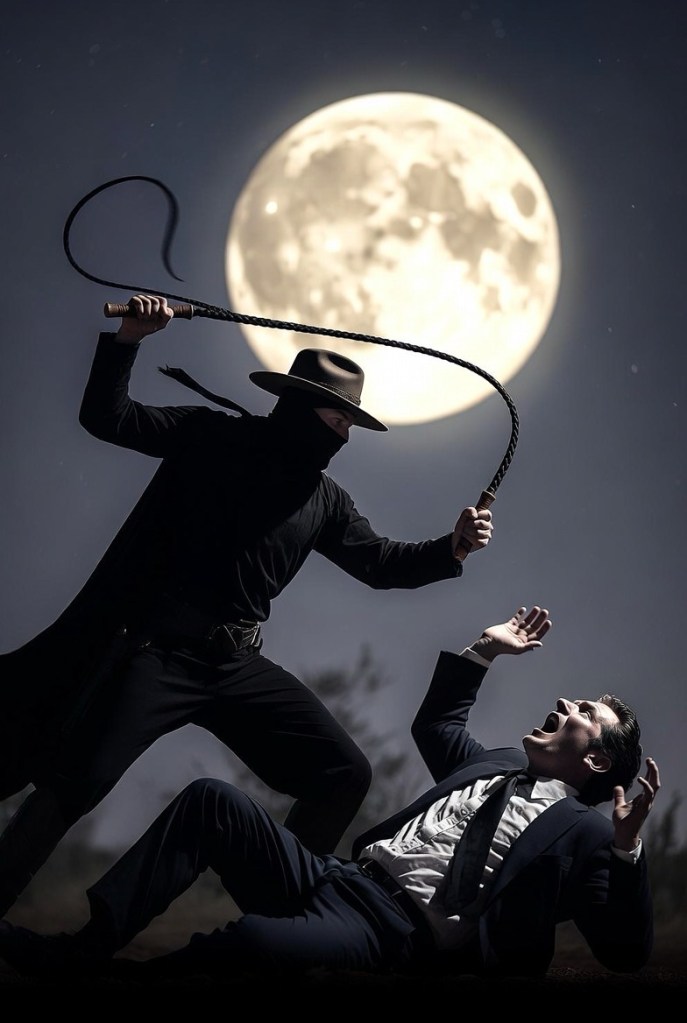
Back in 2004, when I published The Symposium of Justice, the world looked very different. George W. Bush was in office; the Patriot Act had just expanded federal reach in the name of security, and the government felt like it was ballooning out of control, regardless of who held the reins.[^1] I wasn’t writing as some detached observer; the book was semi-autobiographical, rooted in the raw anger of my thirties. I’d lived a whole, intense life by then—far more than most people my age. I’d been knee-deep in small-city and big-city battles, pushing for legislative fixes to corruption, getting tangled up in significant drug enforcement efforts, and even interacting directly with the FBI on fronts where things weren’t working right.[^2] When the system failed, I didn’t just complain—I acted. There were nights I ran around confronting drug dealers with a bullwhip, breaking up operations in self-defense mode that had been my primary mechanism since I was a kid. One time, I ended up in front of a drug house with about 40 young adults and teens caught in the crossfire of Grand Theft Auto-style chaos. I confronted them head-on, and it saved many of their lives because the police came and broke up the fight, but it wasn’t glamorous. It was vigilante justice born of frustration: if the authorities wouldn’t or couldn’t fix it, someone had to.

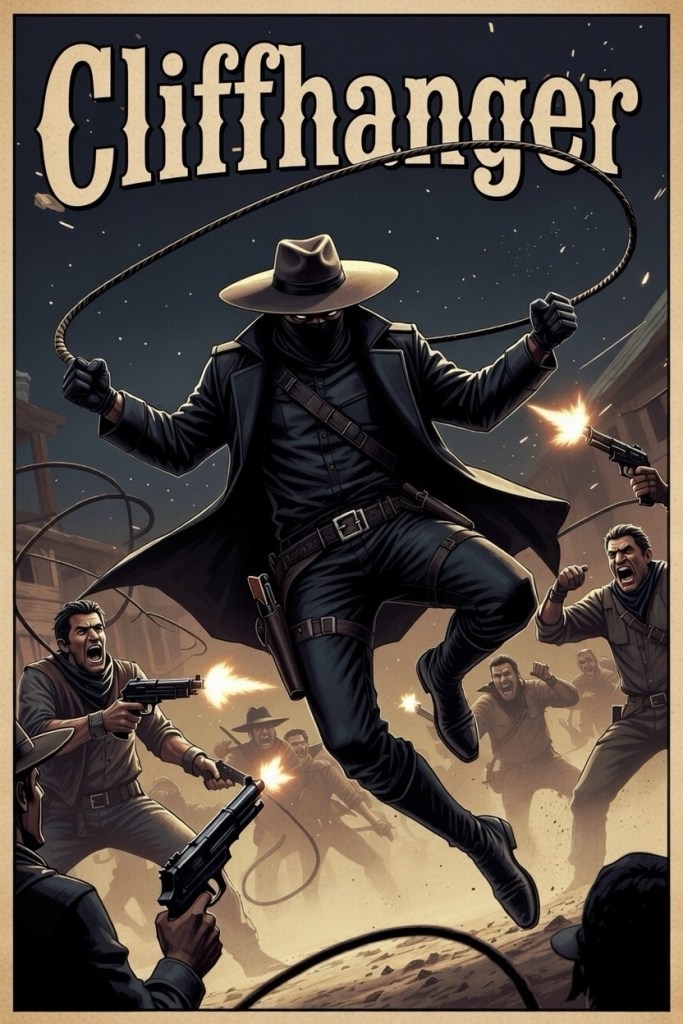
The main character in The Symposium of Justice, Cliffhanger, channels that same energy. He takes on a corrupt, centralized government intertwined with entertainment elites who play radical games in the arena. The book is about vigilante justice against tyranny—drawing from real experiences where I saw powerful forces profit off drugs, kickbacks, and control. I was angry, no apologies. It was the work of a man ready to fight back physically if needed. I thought about going full vigilante: mask on, discretion, punishing the bad guys in the shadows like Batman or Zorro, my all-time favorite. I was prepared for it. Law enforcement didn’t like me much—FBI cases I was involved in heavily made that clear—but politics tied their hands, and there wasn’t much they could do.[^3]

But something shifted after the book came out. It had enough impact to spark honest conversations. People reached out—film festivals, the Western arts community, and political circles. I started talking to influential people in entertainment who shared similar frustrations with centralized corruption. Instead of running around at night cracking skulls, I found a more powerful path: writing every day, putting my name to it, building a blog that became my daily weapon. The Overmanwarrior blog started as an extension of that 2004 anger but evolved into something sustained and influential.[^4] Blogging wasn’t as romantic as vigilante nights—no mask, no midnight drama—but it was far more effective. I could expose corruption, rally people, influence voters, and shape events without risking everything on force.

I had two clear options back then: either do the vigilante thing for real—rest in the world making things good through direct action—or worry about it and try to expire it indirectly through politics and persuasion. I chose the latter. Getting more involved in politics showed me that the drug dealers and corrupt players profited from the system because they had kickbacks and protection. Vigilantism might feel good in the moment, but it doesn’t dismantle the machine. Blogging, activism, running for office vibes (though I stayed independent), and fighting tax increases (earning me the “Tax-killer” nickname) did more damage to that machine.[^5] I influenced things in ways a masked figure never could—because when you take the mask off, own your name, and accept personal responsibility, you build real power. People know who you are; they can debate you, fight you if they want, but the ideas spread farther.

Fast-forward to now, 2026, and the difference is night and day. We have a government under Trump that aligns more with the orthodox, law-and-order society I always wanted. The Republican Party has become the vehicle for reform, not the expansion of tyranny. The people I wrote about in 2004—the radicals controlling entertainment, profiting off chaos—are on the outside looking in. Protests flare up, funded by background players causing trouble, but they’re losing. The bad guys scream and cry because good government is winning through elections, debate, free speech, and voter accountability—not through fear or intimidation.

That’s why accusations of “changing” miss the point. I didn’t just hope for a different government; I supported the mechanisms that put a better one in place. Elections, arguments, convincing voters—that’s how you win without masks. The other side can’t match it. They cry foul, blow up lines of communication, resort to violence or victimhood because their positions don’t hold up in open debate. Just enforce the law and order, win arguments, and replace the corrupt with a proper government. It’s better than running around at night with a bullwhip, taking frustrations out on faces. Expose them, beat them at the ballot box, and build something lasting.

My life trajectory proves it. In my thirties, I drew on personal experience: FBI interactions, legislative pushes that failed, vigilante moments that worked short-term but revealed their limits. After the book, film festivals opened doors—Western arts folks who got the Zorro vibe, entertainment people tired of radical agendas and wanted to work with me off the record, so long as I was willing to sign mine to the cause. I spoke at events, networked, and learned that influence through ideas trumps force.[^6] By the 2010s, with Tail of the Dragon in 2012 amid Tea Party energy, I was writing philosophy in action—motorcycle freedom symbolizing untethered resistance to overreach.[^7] Plans for bigger distribution (even ties to Glenn Beck circles) hit walls because the tone was too explosive against expanding federal power then. But it planted seeds.

Today, I’m happy with the trajectory. The Trump administration, Congress, and local and state governments are doing great work in places. No need for vigilantism when voters can pick leaders who enforce rules. The other side’s inability to argue substantively shows why they lose—they rely on emotion, not reason. Winning voters with good arguments builds longevity and a proper society.

Some look for ways to undermine my current stance, digging up the 2004 book to say I’ve contradicted myself. Fine—let the debates flourish. That’s why I put myself out there: to inspire thinking and to reject victimization cycles. The world isn’t heading toward the dystopia many feared in the early 2000s. People are upset, lashing out, but the system works best if people manage the government, avoiding becoming a vigilante, trying to conceal their identity so that the powerful can’t find them and punish them in real life.  I found that it’s far more powerful to beat them where they can’t defend themselves, with ideas that you sign your name to.  Let voters handle it. When government goes rogue, accountability through the ballot box fixes it—not shadows.

It does my heart good to see the bad guys suffer these days. I take showers with “liberal tears” from my tank—refreshing, cleansing the evil they proposed.[^8] Romantic as vigilante justice is in books and movies, real justice comes from winning wars openly: expose corruption, replace it with order, and manage government through accountability. That’s what I learned over 20+ years. The Symposium of Justice remains relevant—its perspective on tyranny holds, but now we have a government worth supporting. Huge difference.  It may not be as exciting.  But the the method I ended up using to fight bad guys has been very effective.  And it works a whole lot better. 

[^1]: Context from post-9/11 Patriot Act criticisms; Hoffman’s 2004 publication aligns with anti-government sentiment under Bush (e.g., blog retrospectives on overmanwarrior.wordpress.com).

[^2]: Personal accounts of FBI/drug enforcement involvement referenced in Goodreads author bio and blog posts on activism.

[^3]: Self-described tensions with law enforcement in tax/anti-corruption fights; “Tax-killer” nickname from local battles.

[^4]: Blog launch as evolution from book; daily writing as alternative to direct action (overmanwarrior.wordpress.com history).

[^5]: Activism details from Goodreads and blog; Reform Party/Tea Party ties.

[^6]: Film festival/Western arts community interactions inferred from transcript and broader activist networking.

[^7]: Tail of the Dragon (2012) publication amid Tea Party; motorcycle symbolism for freedom (Goodreads/author notes).

[^8]: Direct quote/paraphrase from transcript on “liberal tears” as metaphor for current satisfaction.

Bibliography

•  Hoffman, Rich. The Symposium of Justice. Self-published, 2004. (Referenced in blog archives and Goodreads profile.)

•  Hoffman, Rich. Tail of the Dragon. Cliffhanger Research and Development, 2012. (Goodreads; blog promotions.)

•  Overmanwarrior.wordpress.com (various posts, 2011–2026 retrospectives on book evolution and activism).

•  Goodreads Author Profile: Rich Hoffman (biography, nicknames, works list).

•  Various X posts (@overmanwarrior), 2025–2026 (e.g., political commentary tied to current events).

•  Local news archives (Middletown/Cincinnati area) on tax activism (“Tax-killer” references).

•  Film festival/Western arts community interactions (personal testimony; no specific public links, but contextual from transcript).

Rich Hoffman

Click Here to Protect Yourself with Second Call Defense https://www.secondcalldefense.org/?affiliate=20707

The Drug War’s Turning Point: Why Mexico’s Palace Was Stormed and Venezuela Became Ground Zero

Latin America is boiling over. In Mexico, hundreds of thousands of protesters stormed the National Palace in Mexico City, demanding accountability from President Claudia Sheinbaum after years of cartel-driven violence and corruption. In Venezuela, Nicolás Maduro clings to power through brazen election fraud, while his regime funnels billions from narcotics and oil into global networks tied to China, Russia, and Iran.

What triggered this sudden wave of defiance? The assassination of Uruapan Mayor Carlos Manzo—a rare politician who dared to defy cartel intimidation—was the spark. But the fuel was a psychological shift: the sight of U.S. aircraft carriers off Venezuela’s coast and Trump’s aggressive strikes on cartel-linked vessels in the Caribbean. For millions living under cartel terror, this was a signal: Big Brother is watching—and ready to act.

Section 1: Claudia Sheinbaum’s Crisis of Credibility

Mexico’s first female president, Claudia Sheinbaum, entered office in 2024, promising reform. Instead, her administration is mired in scandal. Two former officials accused of running a cartel-linked criminal enterprise remain at large—one even holds a Senate seat. U.S. Treasury sanctions forced Mexican banks to shut down after laundering millions for cartels.

Key Facts:

• Corruption Allegations: Intercam and CIBanco closed after U.S. sanctions for laundering cartel money.

• Public Perception: 60% of Americans view Mexico’s government unfavorably; nearly half say it’s doing a “terrible job” on border security.

• Protests: November 15 saw the largest anti-government rally in decades—120 injured, 20 arrested, and palace gates torn down.

Sheinbaum’s dilemma is apparent: appease cartels or risk destabilization. Her socialist platform, like AMLO’s before her, has created fertile ground for corruption—because authoritarian systems are easy to buy off.

Section 2: The Cartel State—Mexico’s Parallel Government

Cartels are not fringe actors—they are the state behind the state. Their reach extends from rural villages to federal institutions.

Scope of Influence:

• Major Players: Sinaloa Cartel and Jalisco New Generation Cartel (CJNG) dominate, alongside Gulf, Juárez, and splinter groups.

• Revenue: Mexican cartels generate $12.1 billion annually, surpassing Colombia as the world’s top drug-trafficking economy.

• Territorial Control: CJNG operates on every continent except Antarctica, controlling ports, smuggling routes, and even illicit gold mines in Venezuela.

Officials face a simple calculus: profit or perish. This systemic corruption explains why extermination camps—complete with crematoriums—exist in Jalisco and Colima, with authorities complicit in cover-ups.

Section 3: Fentanyl—Mexico’s Deadliest Export

Since 2019, Mexico has replaced China as the primary source of U.S.-bound fentanyl. The scale is staggering:

• Labs: CJNG and Sinaloa run industrial-scale “super labs” producing fentanyl powder and pills using Chinese precursors.

• Lab Dismantling: Under Sheinbaum, authorities dismantled 750 clandestine labs, seized 1.5 tons of fentanyl, and confiscated over 2 million pills in six months.

• Largest Bust: In Sinaloa, forces seized 630,000 pills and 282 lbs of powdered fentanyl—the biggest in history.

Border Seizures:

    • FY 2023: 27,275 lbs (12,370 kg)

    • FY 2024: 21,489 lbs (9,750 kg)

    • FY 2025 YTD: 5,515 lbs (2,500 kg)

• DEA Estimates: Cartels produce enough fentanyl for billions of lethal doses annually.

Economics:

• A single kilogram yields 500,000–1,000,000 doses, retailing for $20–$30 per pill in the U.S.—a street value exceeding $20 million per kg.

• CJNG and Sinaloa launder $1.4 billion annually through U.S. casinos and shell companies tied to fentanyl proceeds.

This is not just a criminal enterprise—it’s a weapon of mass destruction disguised as commerce.

Section 4: The Assassination That Sparked a Revolt

Carlos Manzo, Uruapan’s mayor, was gunned down on November 1 during Day of the Dead festivities. His crime? Publicly denouncing cartel extortion of avocado growers and demanding federal action.

Aftermath:

• Mastermind Arrested: Jorge Armando “El Licenciado,” linked to CJNG, ordered the hit via encrypted messaging.

• Security Failure: Seven of Manzo’s own bodyguards were arrested for complicity.

• Protests: His murder ignited nationwide outrage, culminating in the storming of the National Palace.

Manzo’s assassination was not isolated—seven mayors have been killed in 2025 alone. For ordinary Mexicans, his death symbolized a truth long whispered: the government serves the cartels, not the people.

Section 5: Venezuela—The Cartel Republic

While Mexico bleeds, Venezuela metastasizes. Maduro’s regime is a narco-state masquerading as a government.

Election Fraud:

• Maduro declared victory in 2024 with 51.2% of votes, but opposition tallies show 67–70% for Edmundo González.

• International observers condemned the process as illegitimate.

Drug Trade Dynamics:

• Venezuela is a key transshipment hub for cocaine and synthetic drugs, generating billions for elites tied to the Cartel of the Suns.

• Chinese chemical suppliers provide precursors; Chinese money-laundering networks move cartel cash globally.

Geopolitical Stakes:

• China relies on Venezuelan oil to fuel its Belt and Road ambitions; Russia and Iran exploit Caracas as a Western Hemisphere foothold.

• U.S. warships and the USS Gerald Ford carrier group now patrol Caribbean waters, signaling a counternarcotics mission—or regime change.

Section 6: The Trump Doctrine—Psychology as Strategy

Trump’s decision to strike cartel-linked vessels in international waters was more than a military maneuver—it was a psychological operation.

Impact:

• 22 vessels destroyed; 83 killed in Caribbean strikes since September.

• For Mexicans and Venezuelans living under cartel terror, these images broadcast hope: The U.S. is here, and the cartels are not invincible.

This perception emboldened protesters to storm Mexico’s palace and fueled whispers of resistance in Venezuela. Military presence, even without boots on the ground, alters the risk calculus for oppressed populations.

Section 7: The Human Cost

• Mexico: Over 460,000 homicides since 2006 in cartel-related violence.

• Border Spillover: Cartels issue bounties up to $50,000 for hits on U.S. law enforcement; ICE and CBP agents face ambushes and drone surveillance.

• Ohio Connection: Even local sheriffs like Butler County’s Richard Jones have been on cartel hit lists for years—a testament to the reach of these networks.

Section 8: Why This Matters

This is not just a regional crisis—it’s a global one. Cartels are the connective tissue between socialist regimes, authoritarian states, and transnational crime. They finance corruption, destabilize democracies, and weaponize narcotics against civil societies.

Solutions:

1. Designate Cartels as Terrorist Organizations (already underway for CJNG and Sinaloa).

2. Target Financial Networks—especially Chinese-linked laundering operations.

3. Deploy Persistent Naval Presence to disrupt trafficking routes.

4. Empower Local Resistance through intelligence and logistical support.

5. Expose Ideological Cover—Marxism cloaked in populism.

Closing Thoughts

The storming of Mexico’s palace and the unrest in Venezuela are not isolated events—they are symptoms of a deeper ideological and criminal convergence. Trump’s military strategy has cracked the psychological armor of cartel dominance, giving ordinary people a reason to fight back.  And for anybody who wants to fight back against sex trafficking and the degradation of human intellect, this fight against the cartels, from many directions, is the right thing.  A window has opened for the people of Mexico that they have long been waiting for, and they are starting to take action.  The best way to defeat the cartels is to turn the hunters into the hunted and make the people of Mexico defend themselves, knowing that their big brother is just offshore to help them out at a moment’s notice.  And of course, it’s much more than Mexico; the entire region has been overrun by communist influences for the last century, so attacking the drug boats is about reclaiming territorial security from very hostile, foreign invaders.  And the drug boats are just the start of something really good. 

Rich Hoffman

Click Here to Protect Yourself with Second Call Defense https://www.secondcalldefense.org/?affiliate=20707

Don’t Ever Turn the Other Cheek: Seeing and knowing everything

I would say I’m an easy person to get along with.  As long as you don’t smoke pot, drink too much, cover yourself in tattoos and body piercings, don’t cheat on your spouse, don’t live off the government as a welfare recipient, aren’t a Democrat, didn’t compromise yourself in college hazing rituals, aren’t a sexual deviant, aren’t a godless heathen, aren’t a lazy loser, if there are any people left in the world at that point, I’m very easy to deal with.  But love is not promised, it’s earned, and if people abuse their relationship with me, I hold it against them.  And I have to say that because over the Memorial Day weekend, I heard at least three times that I’m a controlling lunatic who is too difficult to deal with.  I wouldn’t say that. Instead, the people complaining, from friends and family who expected something out of me over the holiday weekend, were unhappy at my lack of appeasement of their wishes.  And that comes down to my very rigorous schedule and people who clearly don’t respect it.  I don’t make time for people who have let me down.  And when I get to that point with people, I don’t even care enough to explain it to them.  I drop them, never to look back, and many people find that unsettling.  But to answer the statement that was brought up to me, that I am so hated that when I die, nobody will come to my funeral, I say, that is fine.  I don’t lower my standards for anybody, and if nobody comes to my funeral, which I have no plan to attend anytime soon, I’m okay with that.  I don’t think it’s important to be liked in the world because to do so, you have to compromise to the weaknesses of others.  I’d rather be alone in the world and have nobody come to my funeral than to lower my standards in any way. 

And to that point, I have instructed my wife that should such a day ever occur, to burn my body and disperse it somewhere so people can’t spit on my grave and have access to me in any compromised way.  I don’t talk about it much.  People wonder what it’s like to be as opinionated as I am, and how it works out.  I would say it isn’t easy at best.  But it all comes down to expectations, how people manage their lives, and whether I choose to make time for them when they want me to.  But here’s the thing: nothing is done in the world that I don’t understand, especially regarding people.  I know all the causes and effects of why people do what they do.  Nothing surprises me.  I see through every scheme, deceit, and misplaced non-verbal communication.  I know everything they try to hide from the world, every wart on a person.  Call it a gift I have from God.  To what purpose can I use it to some good enterprise? It would be easy to abuse that talent.  It takes quite a lot of discipline to keep a skill like that pointed toward justice.  But when you have that ability, people can’t snowball you.  And when it comes to family engagements, where many people just haven’t lived very good lives, and as a result, they aren’t very good people, I see and understand why they do everything they have done and they shouldn’t expect a free pass from me. 

I genuinely let people live their lives the way they want to.  But when they show me they don’t care what their actions do to my loyalty, I show them that I care so little for them that I’ll drop them off the earth without a second thought.  That is a long-standing policy I have, and it wouldn’t bother me if it resulted in nobody coming to my funeral or inviting me to do things.  However, that is not the case; I have too many people in the world who want me to do things with them, and my phone never stops receiving text messages and emails from someone wanting something from me.  But the same thing has been happening to my immediate family, and the kind of advice I give them about people in the world.  When my family members ask me what I think of this and that, I tell them.  I tell them everything, and it turns out to be painfully right every time.   And that makes people trying to do bad things in the world very upset that they can’t operate in the shadows, because I so easily shine light on everything.  And when they can’t manipulate people I care about easily, they get angry with me for removing the illusion they have built their lives around.  I don’t go out of my way to do it.  But if I’m asked, I tell it all.  And it’s always right.  Call it a gift from God.  And I use it effectively and in the way that God designed a skill like that.  But saying that, I’m not like Jesus, I don’t turn the other cheek on anything.  I carry grudges for decades and never get over things when bad things have been done to me.  And I’m not about to start doing so. 

There is a long line of very parasitic people.  I would say most people are.  And when people I care about ask me what I think, and I warn them to watch out for people who want to associate with them because they want to loot off their essence, because they are good people and those looters aren’t good people, to beware that they don’t take your soul away from you.  Always manage the eternal component of yourself with the understanding that you can’t undo a compromised self.  And when people try to control people I care about, and my advice keeps it from happening, there will be a lot of anger.  Tough tootles.  If you don’t want the ramifications of that behavior, don’t do the behavior.  But there is nothing I don’t know about human nature.  And I have no cell in my body that seeks to appease people who have done bad things.  So if that upsets people, I don’t care.  I never forget.  I do hold things against people.  And I don’t turn the other cheek only to have it slapped again.  And if that makes me a bad person, I would say that the value system of the people who feel that way is all messed up.  Of course, a log being burned in the fire thinks the fire is evil.  I can live with that because there are a lot of people who have made themselves worthless so that they can easily be tossed into the fire to be burnt up and disposed of without a thought in the world.  And that might upset them.  But I genuinely don’t care.  People who have done bad things to themselves, I don’t forgive.  And I don’t ignore it when they’ve done it to me and people I care about.  Too many people have lived bad lives, made bad decisions, and wished to hide those things by associating with good people to keep their conduct concealed with mass collectivism.  But that doesn’t work with me.  Never forget, I see everything.  I can read the contents of people’s souls, and I know what’s really there and I use that information with great success in life.  That might make people very angry that I can do that.  But they can only blame themselves for being bad people.  You can’t hide it with money.  With community service.  Or snacks at a family gathering.  I don’t have a tolerance for bad people, and yes, I do judge and judge often.  I never signed up for this stupid notion of not judging people.  That is a dumb political position created by bad people to hide their conduct from the world.  I have the opposite view.  I judge and hold it against people forever.  And that might seem unfair to people who are too far gone. But they should have thought about that before they went there.  Don’t be a bad person, and we’ll get along just fine.

Rich Hoffman

Click Here to Protect Yourself with Second Call Defense https://www.secondcalldefense.org/?affiliate=20707

Making People Great Again: What would you do if you were Lot

It’s an unfortunate Civil War, and this whole issue of the H-1B visas is a problem, but everyone is missing the real point on the matter.  I don’t think the issue of looking for skilled immigrant labor over domestic skilled labor because they are cheaper is the issue.  That might be the fear of the labor unions and this is the danger of bringing people into the Republican Party who aren’t really conservative.  And we know Elon Musk was a Democrat for most of his life and was converted because of Trump.  And the people demanding only using domestic labor have more of a labor union view of the world on this issue.  The real issue isn’t financial; the quality of people available is the real problem.  You might want to hire domestic people for some enterprise, but there is a reason foreign labor is so attractive, and it’s not money.  Nor is it regional.  It’s value-based.  At least, that’s my experience.  And to cover the point, I think we need to reframe the premise a bit, which is an issue that has come up for me more and more: a personal story about my son-in-law that gets on my nerves often these days.  I have terrific kids, but that’s not by accident.  There was a lot of hard work that went into raising them, and there isn’t much in society that rewards good parenting the way it should.  All you get is seeing your kids grow up and becoming something good.  But social recognition is almost entirely nonexistent.  And worse, and this is the case every New Year, people who were very critical of how I raised my kids go way out of their way to surround themselves with them because they are such good people.  Not to get too personal about it, but it is such an unusual story these days; many of those same critics from over a decade ago are now the people who want to be the best friends of my oldest daughter and her husband, who married young, have stayed married for over 15 years, and have only ever dated each other.  As a result, they are raising a very nice family that everyone wants to emulate.  And the efforts lately have gotten in my way of having a schedule to enjoy my family, which gets on my nerves.  But is a story worth telling. 

I also got married at a very young age because I found the right woman.  But she was a very pretty young woman, and for men who get into those kinds of relationships, you understand what I mean by every male in the world who looks at a woman like that, wants to take her from you.  And when you are young, you don’t have much in life yet to fend them off but violence and tenacity.  Needless to say, I often saw the ugly side of human beings in ways that explain why that recent social media woman on TikTok slept with over 100 men in a day and that it was a story of fascination focused on the morality of the young woman.  But my issue would be with the men; how are there that many men not already committed to a relationship and would have sex with her right after some other dude had done the deed?  Yuk.  And to go at such a pace to do 100 men in a single day, there are only 24 hours in a day, so the math portrays a pretty cheap and loser woman and a bunch of disgusting men as a statistical sample addicted to a pornographic and destructive lifestyle.  So when you have a pretty wife who, of course, is going to produce pretty kids, you have a dramatic portion of society that is plotting and scheming continuously to stick stuff in them for their personal pleasure.  And when it comes to my family, this is a question that came up to me recently as I was talking about Lot from the Bible offering up his daughters to the mob to rape, to save his home guests, a couple of angels……I’m not Lot.  What would I do if I were Lot?  Well, I’ve been there, and many people know exactly what I’d do, I’d fight them.  And I’d fight them all to win, no matter how many of them there were. 

That left me with an unusual problem once my daughters started coming into their teens and wanted to date boys.  I’m sure there are nice young men on a farm in Iowa milking cows at 5 AM every morning and going to church on Sunday for their entire lives who might have been decent people for my daughters to date.  I hear success stories here and there where good men marry into a family and live happily ever after.  But the truth of the matter, which most women will tell you, is that the quality of men just isn’t very good.  They have bad parents and immoral lifestyles, and they certainly aren’t going to grow up with good leadership skills to make good husbands and fathers to my future grandchildren.  So, I was a hard no on the dating experience.  I instead advocated foreign relationships with online boys my kids found in England because they were polite kids from a polite culture.  And in one case, my future son-in-law had a very nice, traditional family with great values.  The other kid’s broken family eventually fell apart and didn’t work out, despite the best intentions.  But in one case, it worked great and continues to work wonderfully.

During this process, I received many criticisms that still exist today.  People didn’t get why I wouldn’t let my kids date some boy down the road.  Why did I think my stuff didn’t stink, and why did I think my daughters were so lofty that some average boy shouldn’t or couldn’t have access to her?  I feel so strongly about all this that I even wrote a book dealing with this issue called The Symposium of Justice, which is a very defined commitment for me.  So when some of those same critics want to think it was by some accident that my oldest daughter and her husband are such good and intact people, it makes me pretty furious.  It wasn’t an accident.  It was a good policy from me, and I turned out to be right about everything, as I usually am.  The rest of the world was wrong.  Dreadfully wrong.  I was never going to be Lot kicking my daughters out into the street to the mob that just wanted to rape them for personal pleasure.  And you don’t want to think of people having such low lives.  But when it comes to sex, they often are.  The quality of people is revealed very quickly, and because of my experience raising daughters, I can say that the quality of people out there is very low.  So now that I often said as they were growing up, I didn’t think any boys in America could date my daughters these days.  Maybe during the World War II generation.  But certainly not now. 

So, it was very controversial for me to only allow my kids to date boys from other countries.  And it wasn’t from some third-world nation like India or China because of cheap labor.  It’s because they had at least found one with whom they could date and build a family.  To further clarify, I don’t go to bachelor parties when other people get married.  My family invited my wife to a bachelorette party once, which caused a rift in our family that persists to this day and probably always will.  I’m rigid hardcore on this morality issue; I’m probably more conservative than Amish people are on this matter.  If you approach a marriage with such scandal in your mind from the beginning, you can’t expect it to last over the generations, and family building is impossible.  So people laughed and giggled about my approach, but they aren’t laughing so much these days.  As I said, I turned out to be right about everything.  I’d rather destroy the mob than turn my daughters over to their disgusting lust.  And I feel the same way about the workforce.  I think everyone has a chance to show that they are high-quality people.  But they don’t grow on trees, and America has been the target of attack by those wanting to destroy it person by person through the education system for decades now, and that has left our workforce a long way from the Right Stuff.  Being a good person and husband or wife takes a good thought process.  Or to raise good kids.  You can’t cheat it.  You can’t create a policy that makes it that way within a human resource department.  You either have good people, or you don’t.  And using the Bible reference, you are either the people in the mob trying to rape Lot and his home guests, or you are trying to defend something precious from the angry mob.  And knowing all that, you have to Make America Great Again somehow.  But it will take more than cheap talk about marriage. All the while, people see strippers at a bachelor party and giggle like a bunch of idiots under the desecration of value in front of an entire family.  Those aren’t the foundations of a good marriage.  And they certainly don’t make good workers, not to the way I think of things.  And when you are looking for workers who get married, stay married, show up on time, and can put their skills to good use, not just to have them, but to work hard enough to use them, often you find that the people you need for those positions are not produced by the culture you are recruiting from.  It might break your heart to be so discriminatory.  However, discretion often leads to much better decisions and more successful enterprises.  And to have a good society, you have to have good people in it.  And to make good people, you need good families.  And we just don’t have enough of those these days for all kinds of reasons. 

Rich Hoffman

Click Here to Protect Yourself with Second Call Defense https://www.secondcalldefense.org/?affiliate=20707

The Archaeology of Space: A lot of minds need to be shattered

With the same kind of vivacious denials, the narrative of human civilization is as edited and denied as the election fraud of 2020, and for all the same reasons.  The truth, which is being uncovered quickly through decentralized media and studies in these matters that exceeds traditional scholarship, is that for many tens of thousands of years, a global race of very tall people worshipped the stars and had very advanced understandings of planetary movement.  They were hinted at in the Bible as that wonderful collection of documents gives us a hint into a past that very little evidence survived due to the  amount of time that we are talking about.  We have all over the earth, which can be seen on Netflix now with Graham Hancock’s Apocalypse series some of the emerging evidence, the obvious hints at a very ancient past.  But, the narrative, largely for continued control over earth’s populations has been to deny all this aggressively.  Which is why the election of 2024 was so important, and why the current established order has to collapse and be destroyed, essentially.  Because the fight has been to hide a lot of things from the past and once we get out into space as human beings, routinely, and we open up archaeological study that extends to other planets, we are going to find out a lot more soul-shattering details about our place in the universe than what that Netflix show, Ancient Apocalypse has shown.  But it’s a reality we have to face and its going to happen very quickly over the next couple of years.

As Graham Hancock talked about his Ancient Apocalypse Netflix series, which has a lot of faces melting, on the Joe Rogan Experience he mentioned that during the filming he was banned from the Cahokia Mounds Park just outside of St. Louis, for the same reasons that he was banned from Serpent Mound during the previous season.  What Graham was proposing was that the Cahokia complex was much more like ancient Mesopotamia, and the Aztecs and Mayans than some hunter and gatherer Indians who were peaceful and built a few mounds to worship the sun.  I actually have some very direct experience with this phenomena that I was involved in a long time before Graham Hancock became famous for his journalism into these matters.  Way back in 1997 after the Titanic was doing great movie business my brother lived in Los Angeles and a bunch of investors wanted to make a movie of their own and get in on the Hollywood fun.  So I wrote a script on an idea I had called The Lost Cannibals of Cahokia, which was an outrageous adventure story that was a crossover between the Texas Chainsaw Massacre and Indiana Jones adventures.  And when I turned it in to the agents and the Wilshire Blvd producers and money people, their faces melted by how violent and outrageous it was.  And at some point about a decade of shopping the script around, several really big names in entertainment were wanting to partner up to get the movie made. But the real heart of the problem with the script was that at the core of it I had explored the cause of the demise of the Cahokian culture, and all cultures for that matter, which is a theme I explore in everything I do.  And it didn’t make people very happy, to say the least.  My script went on to win several awards at various film festivals and was seen by a lot of people who really liked it.  But they couldn’t get their minds around the central premise which attacked directly assumptions about humanity that were sacred cows.  I was told that if I wanted to make the movie that we could do all the horror and adventure elements, but that we’d have to rework the central premise.  And I was offered a lot of money for it, in the millions of dollars.  But I shelved it for a later day because my favorite parts of the story were the things they wanted to throw out.  And I decided to put my attention more into political matters because the world wasn’t quite ready for the things I was interested in.

So I understood why so many people were upset over Graham Hancock’s proposals about Cahokia, and many sites along the ancient Mississippi River, where its obvious there was a very established culture during the Archaic period and that they were trading with South America, establishing the settlement at Easter Island, and all through the Polynesian Islands.  And that many of these cultures were considered advanced during the last Ice Age.  There is a vast conspiracy that is obsessed with keeping human beings from learning too much about their past beyond what the Bible discusses.  But the hints are everywhere and being talked about much more now, especially with Trump returning to office and dismantaling a lot of the out-of-date organizations that have been suppressing this information for thousands of years.  It’s not hard to see how and why, considering that Stonehenge is not that old and in a few thousand more years, there won’t be much left of it through the natural erosion process.  That is the same issue with the many pyramids around the world that date back just 3000 to 5000 BC.  The evidence at Gobekli Tepe for instance was buried purposely in Turkey and uncovered only to find that it is over 11,000 years old.  So by being buried, it preserved the site from erosive elements leaving us all to wonder just how much evidence from the past has been eroded away. 

Well, we’re going to find out, and with SpaceX’s Starship producing every 8 hours a new ship to go into space, we will quickly moved to a space economy during Trump’s next term.  And this is not just current politics, but something we have been moving toward since the days of Biblical reporting, even the central heart of the destruction of the Library at Qumran and the standoff with the Romans at Masada.  Governments have been hiding this issue from the public to maintain control over populations until essentially this century.  And now the lid is being blown off that long held secret.  And we’re going to get to the moon and Mars, and to the moons around Jupiter and Saturn and we’re going to find out that our history goes back much further than just colonies on Earth.  And many of our mythologies and assumptions are going to be shattered, and they need to be.  I have watched that process myself just over some of the sites on earth, and among people who were very smart and very rich and their faces melted over any suggestion of something happening beyond the accepted norms.  But we have to get ourselves ready because space archaeology will become an important field, and much of what has been suppressed as evidence on earth will no longer be able to be suppressed.  And we are going to learn a lot about ourselves, at a pace of change that will be astonishing.  I saw many years ago that this had to happen.  I was surprised by it when I saw how violent it made people just based on my script which many were involved with for the money it could have made.  But for me, it was much more personal, and important.  And ultimately, a sign of things to come.

Rich Hoffman

Click Here to Protect Yourself with Second Call Defense https://www.secondcalldefense.org/?affiliate=20707

Lifting the Curse: What we must do in 2024

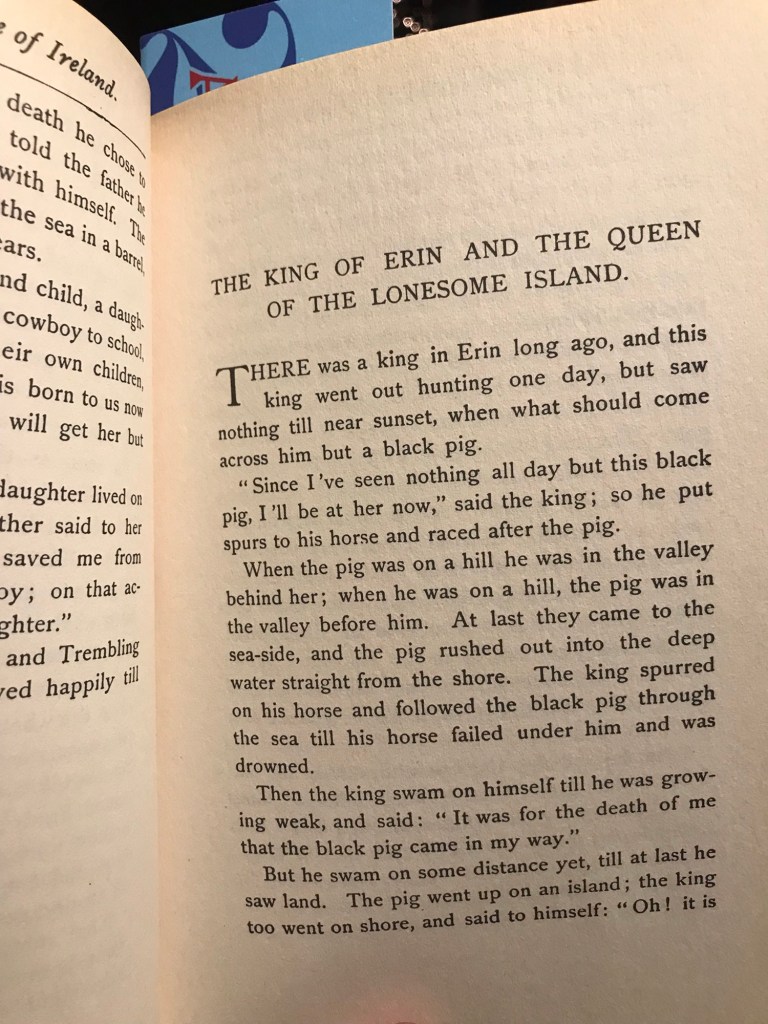
One of the key ways that the enemies of America have been able to erode our ethical values as a society is by attacking our morality once it has been exposed. And we are made vulnerable to this trait once attackers gain control of our basic needs for survival by controlling our means of income. That is the entire strategy of the Desecrators of Davos, the global tyrants of the World Economic Forum, and their propped-up bad guy, China, to rule the world through a communist plan. The more they have been able to attack the basic value system of Western Civilization, the more control they have been able to exert over individual people in a cultural, mass way. That is why I have said often lately there are things in life that I clearly won’t do for money because if you are functioning from an ethical behavior, then automatically, the bad guys lose a tremendous amount of leverage over you by nature. This is, after all, what the whole Epstein Island extortion racket was all about. And I can say, and I’d like to share that freedom with other people, that the best things in life do not come just from the most income. Not that wealth is bad. But wealth that is tied to strings attached that people in the World Economic Forum control is bad, and often results in a loss of freedom. Sure, you might have large sums of money in the bank account, but if the bank can take it away from you on a whim, then what you have isn’t yours. So we have to fight these bad guys with all that in mind. Over the last few months, I was offered a few seven-figure opportunities that I turned down. The reasoning was similar to an old story I love from a great book, Myths and Folklore of Ireland, by Jeremiah Curtin, specifically “The King of Erin and the Queen of the Lonesome Island.” What makes Western civilization so great is that our culture, cascading off of biblical tradition, produces great art that represents real values, which are at the heart of this specified story. I think of this story when people ask me why I turn down offers like that. And I offer it to other people when we discuss what should or should not be done to acquire wealth, and the traps that often come with it by the tyrants of the world that want nothing more than to control you and everything you care about.

I highly revere Irish literature, especially the kind attributed to the King of Erin and his love interest, the Queen of Lonesome Island. It’s a good story about some ill-fated characters who find each other romantically inclined, but he’s married to an evil queen and has a couple of illegitimate kids with her that he thinks are his own. So when he has a kid with the Queen of Lonesome Island and grows up to reconcile with his father and compete with these other siblings for the father’s attention, the mother’s love, and the rights to a kingdom, the setting is set for a grand adventure. One of my favorite books in the history of the world is Finnegans Wake by James Joyce, which I consider to be written in the language of the Elohim. I don’t think it was meant for human eyes and ears. But to the Divine Council and their rebels against goodness that thrive beyond our ability to see them. Yet they are there with massive armies of malice; to deal with them, we must have some intellectual capacity to accommodate them into our thoughts. And many of these Irish stories do just that. With that tradition in mind, the young prince, trying to reconcile with his father, is told to save his kingdom by going to the flaming well of Tubber Tintye and retrieving three cups of water from that golden castle, currently under a dark spell that has corrupted the world, kind of like our current times with the Biden administration.

After a series of adventures, the prince arrives at the castle where all the giants and monsters plagued by the curse are asleep for seven years, a recurring numerical theme we see in the ancient world.  It is certainly present in the Bible, but it traces back tens of thousands of years to pagan religions obsessed with star alignments and heavenly bodies’ mathematical comings and goings.  So the prince plans to get into the flaming room of gold to get water during this 7-year period when all the monsters are asleep.  So he comes to the hall in the castle that has thirteen rooms along it, more numerical significance.  The thirteenth room is the destination, and along the way are rooms with beautiful women in each one, twelve rooms in total; these are the twelve disciples, the twelve months of the year, the relationship to eternity, and the universe in general.  As the young prince walks toward that thirteenth room, he looks into the first room door and sees the most beautiful woman he has ever seen lying there invitingly.  He is tempted to go in but resists.  He’s there to accomplish a mission and tries to stay focused.  This would be equivalent in our current time to China offering to pay off a politician or to send a honeypot to your hotel while out on a business trip, hoping to get dirt on you. 

The prince goes to the next room, and in that room, he sees a woman who makes the previous woman look ugly by comparison.  And so it goes all the way down the twelve rooms, each with a much more beautiful woman in them.  Until he gets to the thirteenth room, where he sees the most beautiful woman ever created by the universe. This is the Queen of Tubber Tintye, and she is sleeping on a golden couch, spinning around the room around that well of fire where he is supposed to get his water to save his kingdom.  The prince rests for the next six days (these are the days of the week leading up to the Sabbath), gathers his water, and then leaves to save his kingdom.  But first, he leaves behind a polite letter explaining to the Queen who he is and what he has done.  After another six years, the Queen wakes up and sees a baby about six years old playing there on the floor, waiting for parental guidance, so she is angry to know who gave her a baby.  After some searching, she finds the letter and learns about the prince.  The story climaxes with the death of the evil queen and her two manipulative sons.  All the bad people die, which is just a great story.  The King of Erin is reunited with his real love, the Queen of Lonesome Island as the Queen of Tubber Tintye lifts the curse over all the land.  The young prince marries the Queen and is now the king over Tubber Tintye, and everyone lives happily ever after.  But why? The prince resisted temptation and stayed true to his purpose in life.  And while he could have stopped by that first or second room and had relations with what he thought at the time was the most beautiful woman in the world, he would have given up entire kingdoms in the process.  But he saved the world because he held out, resisted temptation, and stayed focused on retrieving the golden flaming fire.  And in so many ways, that is how we will defeat evil now.  Only the burning well is our upcoming election of 2024.  And we must stay on point to deliver our society from evil and slay the parasites that stand in our way for the betterment of all humanity. 

Rich Hoffman

Click Here to Protect Yourself with Second Call Defense https://www.secondcalldefense.org/?affiliate=20707

In Politics Friends Come and Go: But why do political parties exist in the first place

When it comes to politics or anything in life, get a dog if you want a friend. Dogs are programmed to serve our human needs for friendship. But don’t expect friendships in politics ever to sustain some deep seeded need. There is only one purpose for politics, and that is the management of community resources. Finding meaning in it of some social value is a path in life that will obviously have many challenges, most of which will be unfulfilling. Even on the best day of political exchanges, there will be disappointments because it never works out how you might want it to. Yet one of the many traps that emerge in politics is when a person involved finds that they get to sit at the table with all the cool kids, which is how the lobby system works at the federal and state level. That appeal to be accepted by your peers can be very alluring. And all too often, it causes good people to go bad relative to what people think they voted for. This is how we end up with RINOs in the Republican Party. They may not start out that way, but they certainly turn out to be far off their original position over a number of years, and it’s at that point they have to figure out if they can still be useful to a voting public. But we are dealing with people here, and I can think of a few politicians that I have known for a long time and may personally like. But, due to life circumstances, they are not as conservative today as they were ten years ago or even five years ago. And when that happens, they have to figure out if they are in politics to serve some deep seeded need they have or if they are only doing it to gain some joy in social acceptance, presenting themselves one way, when ideologically, they have drifted into a more liberal view of the world. 

In politics, I still stand by former Speaker of the House Larry Householder, who was just sentenced to 20 years in prison over the FirstEnergy scandal. I found that case much like Sheriff Jones and Attorney General David Yost went after Roger Reynolds, the former Butler County Auditor. I feel sorry for the FirstEnergy people; they provide energy through a couple of nuclear power plants, and the political left is looking to destroy those companies and replace them with solar farms and wind power. I don’t think there was any justice in putting Householder in jail, I think its 100% politics, using rules to destroy your political rivals, and in that case, the FBI was weaponized just like it has been against Trump and the road to the start of the corruption leads to Mike DeWine’s door, the governor of Ohio who likely didn’t want a rival power in Columbus at the Speaker position. Look at the drama with the coup they had just this last year with the Speaker, so politics is a dirty game. People on the out go to jail, and millions of dollars get wasted in the name of acquiring power. I can say that as I just recently saw DeWine and his wife at a social event, and he’s turning back to his liberal ways again now that he’s in his last term and Trump hasn’t been in power for a while. And mentioning Sheriff Jones, you might remember all the drama between him and Representative Thomas Hall. They had been bitter enemies, but now they are getting along quite well. People move on positions all the time; the question always remains, can they actually do the public who votes for them any good, or is everything they show the public fake while what they do behind closed doors a different representation along the political spectrum? 

And that’s certainly the case of a few names within the Butler County Republican Party presently. Life happens, and people find that their political views of the world change, sometimes quite a lot. But when you hold leadership positions and hang on to those positions, why would they do it if they aren’t that conservative anymore? Politics is one thing, and it’s easy to have political opinions in a vacuum of reality, in an untested environment. But when you love your kids and the kids move in a direction that challenges those conservative beliefs, do you try to take the party to a hard left position, or do you give up the leadership roles to take care of your family? Loyalty isn’t the question, but it’s what is expected in public office that does matter. Because votes expect the brand of conservative opinion that reflects them, this is how the RINO problem began initially. I’ve been involved in many meetings where powerful politicians became upset with being called RINOs. Because they didn’t see that they had become more “liberal” in their political discourse. John Boehner, who lives in my neighborhood and is good friends with several people I know very well, comes to mind. He used to be Speaker of the House, but he had to resign due to heavy calls from people in the Tea Party who thought he was a RINO. It hurt him. I hurt for him, so I never really jumped all over him too much. The world wanted a more conservative representative, and he wasn’t it. So, he needed to step away. And that is certainly the case for other area Republicans who find themselves in a similar situation.

Doing the right thing is hard. But ultimately, politics isn’t for the representatives; it’s for the brand of the party, and the party exists for the people who vote. This fantasy that people have that Ron DeSantis might fill the void of Trump is ridiculous because the move toward Trump is because people have become frustrated with RINOs, and they are looking to purge them from their party. And the same thing will happen in the Butler County Republican Party if RINOs emerge and take leadership positions; the voters out there will work to get rid of them, just as they did John Boehner. There may be perfectly valid reasons that people become RINOs. John Boehner cries a lot, and once people learned that about him, it changed how they saw him. Voters want tough people, not compromised people who have lost their confidence socially, who have made mistakes that are embarrassing, and who seek to hide those things socially through party leadership. It ends up not helping anybody but worst of all; it weakens the voter impression of their Republican Party representation. The most important thing is to protect the brand, and forcing voters to accept more liberal leadership isn’t going to help engage voters in the polls. Telling Darbi Boddy to calm down and play nice with RINOs won’t help the party brand. It hurts it. Because people want more Darbi’s and fewer John Boehners. I’ve heard the complaints, and it’s a topic in need of perspective. Essentially, I do have friendships with people who have moved to the hard left. And I will still like them even if I disagree with them politically. But protecting the Republican brand should be something everyone can agree with. Sure, there will be political squabbles. But they come and go. In the end, what ultimately matters is whether voters have a party that represents them. And if they don’t, why does it exist in the first place?

Rich Hoffman

Click to buy The Gunfighter’s Guide to Business

The Government Endorsed Attack on America: Sexual Perversion and drug poisoning to destroy our entire society

I can just say that I’m not going to put up with the kind of garbage that went on in Middletown, Ohio, over the last weekend of June 2023. There was a drag show in public that went on, which is shown in the pictures here, that was just disgusting. But these went on nationwide, this assault to desecrate sexuality with unhealthy lifestyles that this current government in America fully endorses. I see what these sexual deviants are doing as an assault. It’s one thing to have sexual lifestyle choices behind closed doors; it’s quite another to weaponize it and to stick it into all our faces as an assault on the very foundations of civilization. So on the very next day, I met with some friends down at the Courthouse in Hamilton, Ohio, for a stake in the ground of goodness to March for Children as a moral position as a response to these horrendous intrusions. It was nice to see so many people there, and I was surprised that there were so many officeholders present who weren’t afraid to put their names next to the issue. Essentially after some speeches, shown here, in front of the Courthouse, we marched around the old building three times, just as in the attack on Jericho. In this case, after three times, we didn’t want the Courthouse to fall, as did the walls in that Biblical city, but for the barriers to law and order to fall away so that justice could be established to protect children under full assault.

Without question, the most emotional speech of the day came from Mark Murphy, who is part of the leadership of the Republican Party of Butler County. Mark recently lost his daughter due to a fentanyl overdose. It only took one time for it to happen, and if it can happen to Mark, it can happen to anybody. What a lot of people fail to realize is that a lot of these evils that we are seeing, whether it’s the drag queen shows or the drug cartels deliberately poisoning our youth with drugs like fentanyl, these are military attacks against American culture. They are deliberately targeting the youth of our culture to destroy them and, as a result, American culture as a whole. Listening to Mark talk, the number of people losing children to fentanyl overdoses is astonishing. The silent killer is the biggest threat in the world today. If ground troops did these deaths with tanks and guns, we’d be outraged by the attack and would seek revenge for the aggression. But the attack is coming in a way we don’t typically think of as an attack, but as a leisurely activity, drug use. Yet the intentions couldn’t be more obvious. We have a media culture and a government that is actually helping the situation along, and there is no other excuse for it. Drugs have always been a problem for the attackers of Western Civilization; the motive is to exploit the free culture with poison so that the competing cultures of the world can then thrive without comparison. Usually, we’d hear about these stories as soldiers who died in the field somewhere. But this attack is on our doorsteps, in all of our neighborhoods, and is all too common. Unfortunately, Mark’s story is not unique. It is so common that people are numb to it that they’d instead think about everything else but this topic. That’s why it was nice to see so many people show up for the March for Children because until we admit that there is a problem, we will continue to be vulnerable to these globalist attacks run by the organized crime arm of that effort, the drug cartels. 

Who in their right mind wouldn’t want to stand up for children, but that is precisely the threat in our schools these days. Public education has become a predatory environment, which is most publicly articulated in the PRIDE event in Middletown. The outlandish behavior seen there is being bred into kids in public schools, and very few people are standing up to it, and apparent evil that is an all-out assault on cultural norms. Darbi Boddy was at the March for Children event as politicians like Jennifer Gross and Todd Minniear spoke about the challenges of doing what’s appropriate for kids despite grotesque social behavior that the masses have now accepted as a reality. But the kids are counting on the adults in their lives to protect them from these predators. And what else could you call people so obviously addicted to a sexual deviation with the intent to engage with underage children? It’s a clear case of evil as far as I’m concerned, and when we are confronted with such things, we must do something about it. There is no common ground with these types of people who have only destruction and mayhem on their minds. A purposeful corruption of the youth toward a life of ill-advised sex addiction; nothing good comes from such a lifestyle, yet we are expected just to take all this desecration politely and without anger? I don’t think so. Everyone who facilitates these types of activities, from officeholders to teachers in the schools, are accommodating sheer evil. It’s not tolerance to accept destructive sexual lifestyles; it’s irresponsible. 

For me, it’s not an option to be accommodating. If we are going to see these kinds of attacks against our American culture, then it should be expected to have an equally hostile response. When the attack vector is so apparent, and the death and mental destruction of an entire nation of people is the target, then nobody should expect to be treated nicely in their desecrations. We are not obligated to kindness when faced with such evil and the intentions of malcontents. If they are free to express themselves in such grotesque ways, then we are also free to have an opinion about it and to let them know that we are judging them on their bad behavior, at the very least. We are not obligated just to take it and accept it out of some guilt by a leftist definition of privilege. Sexual addiction is bad under any condition; nobody should be thinking about it as much as the trans show in Middletown clearly is. But the point isn’t health; it’s destruction. They are selling our own destruction to us through the temptation of pleasure, the most ancient door to evil known to all civilizations. Whether it’s through drug abuse or sexual lifestyles, our current government is helping America’s enemies destroy our country from within, and the casualties are real. And it’s not just the adults they are targeting, but our children. These days, they aren’t even bothering to hide any longer. They do it because they don’t respect us or think that we’ll do anything about it. So the effort is on us in this present time to engage the enemy and redefine the terms of destruction. We cannot co-exist with evil, nor should we expect to. Instead, we must make our opinions known, judge the bad behavior for what it is, and commit ourselves to save children to save our nation because the attack couldn’t be more obvious.

Rich Hoffman

Click to buy The Gunfighter’s Guide to Business

Defeating Evil Governments: A society with lots of guns and Bibles keeps people free

It’s been a more common occurrence, of course, that I discuss religion. I mean, look at the times we are living in. There is an astonishing level of evil on display here, so it comes my way a lot; what should we do? So, it’s unsurprising that I talk about religion; it has always been a big part of my life. But I have a lot of other things going on in my life that I felt I could talk about everything else without imposing myself on the people around me. I deal with a lot of people with lots of different viewpoints. Everyone knows that I’m morally very rigid, but I am accommodating toward other people, perhaps extraordinarily. But religion isn’t a new thing for me. I never said a curse word in my life until after I was 18 years old. I never drank alcohol until my church pushed it on me to take communion. I despise belching and farting, especially when people can hear it. I’ve never smoked marijuana or done drugs of any kind. I went to church most Sundays of my life until I was about 22. And I stopped because the pastor of my church had his wife leave him, which I never forgave him for. As I said then and still say it today, how do you lead a church if you can’t lead a family? (she got bored with Church life and had a wild streak hit her in her middle years. But I still blame the husband when things like that happen)  Church wasn’t religious enough for me, so I stopped going. I never felt it did a good enough job of fighting evil. I could go on and on, but as a person, I’ve never been a very loosie goosy person to be around. So when all the avenues of evil show themselves for the slaughter, I feel that there is a license to express myself accordingly. 

So yes, it has always come up, I handle religion cordially, but I often don’t impose my views on people because, literally, nobody has the kind of views about a good and moral life that I do, so I’ve learned to keep a lot to myself, just to have speaking relationships with people. But my views are certainly not new. I’m talking about it more now because it literally comes up every day from someone looking for answers. And with all the talk about what’s going on in the world and the level of evil we are dealing with, I have a simple two-part answer strategically on how to defeat our foes that I’m happy to share. It’s why I don’t worry too much about the level of corruption we are dealing with because I have always seen the clear path out of it. Of course, I’m happy to share that self-assurance with anybody who wants to listen. However, for context, even the most devout Baptist minister would find it hard to live with my rigidity religiously. My comment to people who are curious is that evil is struggling to remain hidden, and now they are going all out toward apocalyptic activism. But the trajectory of history is against them, and they are behaving out of desperation because they know it. So, when people ask me about the solutions to our modern problems, I assure them that the bad guys will not win, especially in America, for two very specific reasons, the Bible and gun ownership. As long as those two things exist in America, the government might fall away, but the people will go on as usual. Because we are not ruled, we have representatives. If they go bad, that doesn’t mean all the people follow. Instead, far from it.

I was at one of my favorite bookstores recently in Dayton, Ohio. It has a tremendous second floor, large enough to comfortably throw footballs in, big high ceilings, and lots of open space, and I took a minute to marvel at the religious section. The number of Bibles on display for sale was bewildering, and they are there because Bibles make up a substantial percentage of all books sold. And when people buy Bibles, they read them, so a literate society makes for one that won’t fall for all the ridiculously stupid leftist ideology. The really religious people, the people who read the Bible, tend to make up most of the homeschool movement, which I’ve always been a part of in some way. My children are currently homeschooling my grandchildren, for instance, because the schools are such cesspools of evil, exposing them to it just isn’t in the cards of reality. But I get to speak with a lot of very smart people because they essentially read their Bibles. Reading as an action makes people more intelligent, so Bible reading gives people who do so advantage over those who don’t. And the Bible’s contents took many lives to reach our hands. Every time I see a bunch of bookshelves filled with Bibles knowing that people are buying them up often, I consider how many millions of people died just to get those lines printed on paper for people to read. It’s quite a journey filled with a lot of spilled blood. But printing presses, mass publishing, and a stable economy have made Bibles so common that there is no way to go back in time to where totalitarian governments ruled by ignorance. That is clearly the modern strategy to rule over the world, to keep people ignorant and groundless on morality. But as long as there are Bibles in the world, tyranny will not be able to take over where people read them. That’s why communist countries are so hostile toward the Holy Bible because it’s nearly impossible for them to rule over literate people with beliefs in good and evil. 

But reading the Bible isn’t enough. Throughout most of our history, just reading and sharing certain Bibles, such as the Wyclif Bible in 1384, could put you to death. A lot of people have been burnt at the stake or killed in multiple ways just for reading the Bible or seeking independent spiritual belief, a belief away from the governments trying to impose on people a belief system they otherwise wouldn’t accommodate. That’s why our gun culture is so influential and why they want to get rid of guns so aggressively. Guns keep the government from coming door to door and burning people at the stake because they want to read from the Bible or express their values which go against the lunacy of a tyrannical government. So long as those two things are in a society, the intentions of evil upon a mass culture will fail. In America, currently, the government is failing, but the people are not. This government tries to rule through fear, mechanisms they learned in academia. But the assumption all along was that they could turn America into an atheist nation and a gunless nation. And they haven’t been able to come close on either point. And so long as guns and Bibles are part of American culture, the intentions of the communists, the Democrat losers, the globalists, the gangsters who are now in our government to hide from the prosecutors who used to haunt them, now they are them—all of them will fall short on their objectives because, for the first time in history, people have access to massive self-defense, and the intelligence of the written word, the ability to think for themselves. They don’t need government. But the government needs them. And in times such as these, a way of life that I have been more than prepared for every year that I’ve lived it, the things I have said over all that time are only becoming more obviously true. Keep your guns close and use them to keep reading from the Bible. And if you do those two things and share your enthusiasm openly, the bad guys will lose in this apocalyptic war, which will be fun to watch. 

Rich Hoffman

Click to buy The Gunfighter’s Guide to Business