A Change in Strategy: Making wins great again, and more often

It is truly encouraging to witness President Donald Trump returning to the campaign trail with renewed vigor, particularly as he emphasizes the critical issue of affordability for everyday Americans. His recent appearance in Pennsylvania, a key battleground state, marked a strong start to what promises to be an aggressive push leading into the 2026 midterms. In that rally on December 9, 2025, at the Mount Airy Casino Resort in Mount Pocono, Trump delivered a message centered on economic relief, highlighting how his policies are already beginning to address the lingering burdens placed on families by years of misguided governance. While he critiqued the notion of an “affordability crisis” as overstated by opponents, he underscored tangible progress, such as falling gas prices and efforts to deregulate burdensome rules that drive up costs for essentials like appliances and vehicles. This approach resonates deeply because it acknowledges the real struggles Americans face while pointing to proactive solutions.

Timing could not have been more poignant, coming just days before the Federal Reserve’s decision on December 10, 2025, under Chairman Jerome Powell, to cut interest rates by another 25 basis points, bringing the benchmark range to 3.50%-3.75%. This modest reduction, the third in a series that year, was met with division within the Fed, reflecting broader uncertainties in the economy. Trump has rightly pointed out that such moves, while welcome, come far too late for many households battered by prolonged high borrowing costs. The damage inflicted by inflationary policies during the Biden administration, compounded by the Fed’s earlier hesitance, has created a deep hole from which recovery will demand time and deliberate action. Mortgages, car loans, and credit card debt remain elevated for millions, eroding purchasing power even as some indicators improve. It will take sustained effort to restore true economic confidence, and piecemeal rate adjustments alone cannot undo the entrenched effects overnight. [1]

The root causes trace back further, to policies initiated under the Obama era and radically amplified under Biden. From expansive spending programs that fueled demand without matching supply increases, to regulatory overreach that stifled energy production and manufacturing, these approaches disrupted the robust growth trajectory established during Trump’s first term from 2017 to 2020. In those years, deregulation, tax reforms, and pro-energy policies drove unemployment to historic lows, wage growth for middle- and lower-income workers, and a manufacturing renaissance. Many initiatives launched then—such as opportunity zones and criminal justice reform—laid foundations for broader prosperity. Yet, the abrupt shift under Biden reversed much of that momentum, prioritizing ideologically driven agendas over practical economics. The result was supply chain vulnerabilities exposed by the pandemic, energy dependence that empowered adversaries, and inflation that peaked at levels not seen in decades. [2]

Even now, in late 2025, the lingering shadows of those policies manifest in persistent affordability challenges. Groceries, housing, and energy costs remain elevated compared to pre-2021 levels, squeezing family budgets despite cooling inflation rates. Americans are understandably impatient; they want relief in their pockets today, not promises deferred. Trump’s return to the trail signals a commitment to accelerating that relief through bold measures, including tariff strategies designed to protect domestic industries and encourage reshoring of jobs.

Tariffs, often misunderstood, are a vital tool in this equation. Ongoing disputes and legal challenges surrounding their implementation highlight the complexities, but they also underscore their potential to rebuild American leverage in global trade. By addressing unfair practices from trading partners, tariffs aim to level the playing field, fostering investment here at home and ultimately contributing to lower long-term costs through stronger domestic production. Uncertainties remain as courts review certain authorities, but the principle stands: protecting American workers and consumers requires resolve against imbalances that have eroded manufacturing bases for decades. [3][4]

This context sets the stage for the 2026 midterms, where Republicans must demonstrate aggression and unity to retain control of Congress and advance an agenda of renewal. Keeping the House majority is paramount, given its narrow margins and the historical tendency for the president’s party to face headwinds in off-year elections. With key races across battlegrounds, the party needs to articulate a clear vision: continuing deregulation, securing borders to curb illicit flows impacting communities, and prioritizing policies that put money back in citizens’ pockets. [5]

On a personal note, as someone who has long engaged in sharing insights through daily blog postings and videos, I have observed how information dissemination plays a pivotal role in shaping outcomes. Over time, my content has evolved to reach a targeted audience—movers and shakers at various levels of society, particularly those in influential positions across industries and politics. These individuals are the ones driving change, seeking substantive arguments to deploy in boardrooms, legislatures, and conversations that matter. My aim has never been to cater to the broadest crowd but to equip those in power with ammunition: well-reasoned points, backed by facts, that can influence decisions.

This requires independence. I deliberately steer clear of entanglements in fields dominated by self-serving structures, such as much of the legal profession. Having navigated legal battles in recent years, I have grown profoundly disenchanted with a system that often prioritizes complexity and billing over justice and efficiency. Lawyers, with rare exceptions, overcharge for routine tasks, perpetuating a judicial framework so convoluted that ordinary citizens cannot navigate it without “experts.” This setup discourages principled individuals from entering politics, as many politicians emerge from law backgrounds laden with legalistic mindsets ill-suited to real-world problem-solving. Conservatives in these roles may hold decent values, but their training often hampers innovative thinking. By remaining outside such ecosystems, I can offer objective, unfiltered opinions that resonate precisely because they cut through the noise.

People cling to these perspectives because they are articulated coherently, stringing ideas into comprehensive narratives. In a landscape flooded with superficial commentary, originality stands out. High-level attorneys and political consultants, constrained by their professions’ lack of creativity, frequently seek external inspiration. My role is to provide that—freely, without the exorbitant fees that characterize traditional consulting. Charging thousands per hour for insights that should be shared as civic contribution strikes me as exploitative. True proficiency yields abundance without needing to monetize every interaction; giving information away elevates society as a whole. [7]

Recently, I have adapted my blog postings to enhance their utility. Where once I offered straightforward opinions for consumption and action, I now incorporate detailed footnotes, akin to academic sourcing. This shift allows readers to delve deeper, verifying claims and building upon them. On affordability, for instance, statistics abound—housing starts, wage growth relative to inflation, energy independence metrics—that bolster arguments when properly cited. Influential readers can then integrate these into strategies, legislation, or campaigns with confidence.

This adaptation aligns with technological evolution, particularly the rise of AI tools that scan vast information streams. In an era where traditional reading habits wane and content is often consumed via audio or summaries, making material AI-friendly accelerates its impact. Footnotes provide structured entry points for algorithms to extract supplemental data, enabling users to rapidly develop informed positions on legislation, legal analyses, or political tactics.

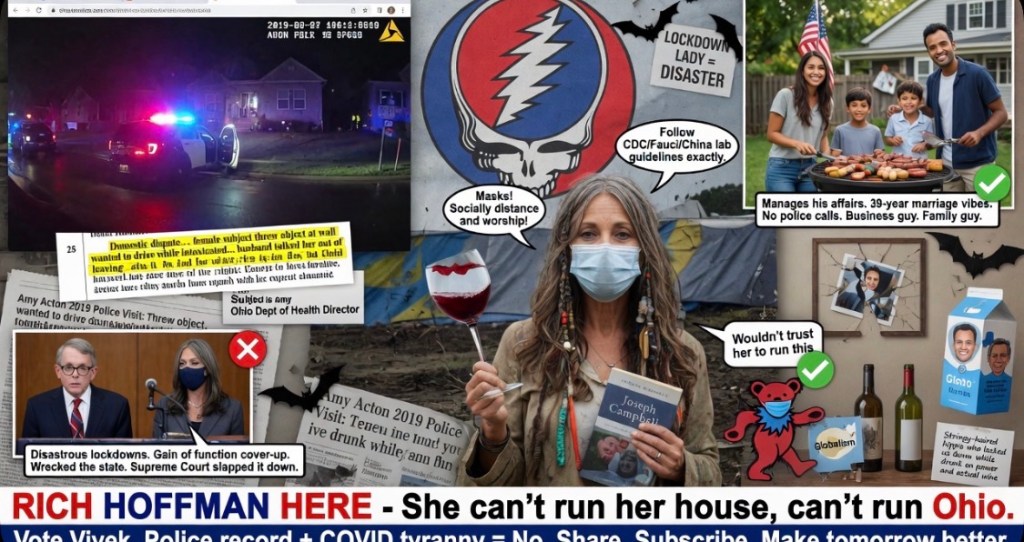
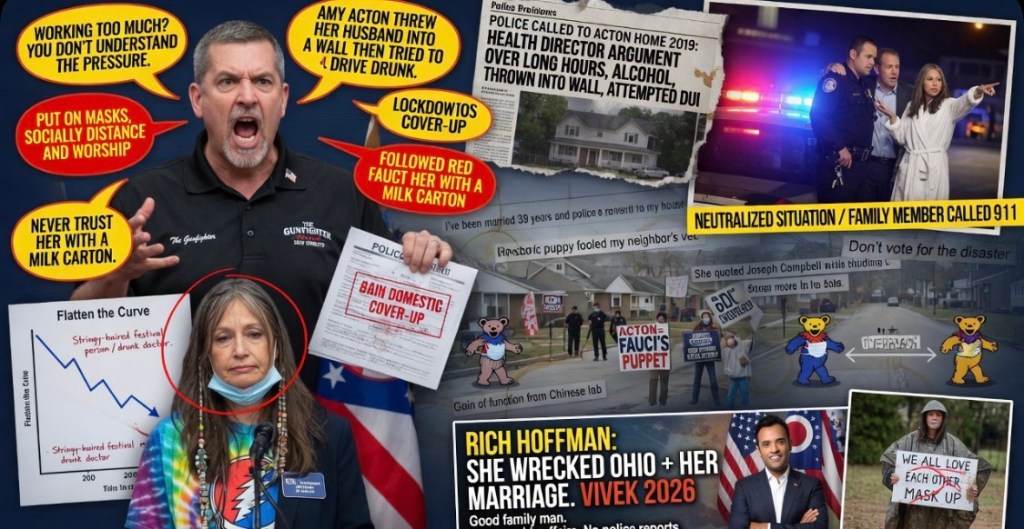
Looking ahead to 2026, these efforts support broader goals: retaining Republican control of the House, electing strong candidates like Vivek Ramaswamy to the Ohio governorship—where recent polls show a tight race against Democrat Amy Acton, with affordability central to both platforms—and ensuring Trump’s agenda succeeds. Ohio exemplifies states where principled leadership can address major challenges, from economic revitalization to public health and education reforms. Nationwide, down-ballot races will determine whether progress continues or stalls. [8]

Trump’s unique strength lies in his ability to distill complex issues into messages that captivate mass audiences at rallies. His communication style energizes supporters and clarifies stakes in ways few can match. Yet, sustained success demands more: pervasive, enduring content that outlasts news cycles. By enhancing accessibility—opinions paired with verifiable sources—individuals can adapt ideas, add personal spins, and act swiftly. [6]

Information access is half the battle. Equipping decision-makers with tools to research further empowers them to craft platforms efficiently. My high-volume output risks fading in daily overload, but strategic adjustments ensure longevity. As AI perpetuates and amplifies quality content, it becomes an ally in disseminating strategies.

Ultimately, my contribution is clarifying paths to tactical victories. Trump rallies inspire and mobilize, but translating enthusiasm into electoral wins requires groundwork: candidate recruitment, message refinement, voter turnout. In this exciting juncture, with 2026 poised for Republican gains and extensions to 2028, collective roles interlock. Providing clear, actionable insights helps successors pick up the baton—new governors, senators, representatives—and run effectively.

We stand at a pivotal moment. Economic direction is shifting rightward, but vigilance is essential. Sharing substantiated views, subscribing to aligned channels, and engaging actively can make tomorrow better. The business of renewal thrives on informed participation; and  lasting prosperity.


References:

[1] Associated Press, NBC News coverage of Trump rally in Pennsylvania, December 9, 2025.

[2] Federal Reserve Board, FOMC Statement, December 10, 2025; CNBC report on rate cut.

[3] Bureau of Labor Statistics, Real Earnings Report, September 2025.

[4] Harvard Joint Center for Housing Studies, State of the Nation’s Housing 2025.

[5] Congressional Research Service, Report R48549 on tariff actions and trade policy.

[6] The Hill and Ohio Capital Journal coverage of Ohio governor race polling, late 2025.

[7] Thomson Reuters, State of the US Legal Market 2025; JDJournal billing rate analysis.

[8] McKinsey Global Survey on AI Adoption, 2025; Ahrefs State of AI in Content Marketing report.

Rich Hoffman

Click Here to Protect Yourself with Second Call Defense https://www.secondcalldefense.org/?affiliate=20707
The Affordability Crisis: Price increases to fill vacant personalities are the folly of socialism looming in the background

The question of housing affordability has become one of the most pressing socio-economic issues in the United States today. With the average home price reaching approximately $400,000 in 2024, many young families and individuals find themselves priced out of the market. This reality raises a critical question: why does the housing industry continue to prioritize large, expensive homes when market signals clearly indicate a growing demand for smaller, affordable housing options? Historically, the American housing model was built on accessibility. Following World War II, the United States experienced an unprecedented housing boom driven by the GI Bill, which provided returning veterans with low-interest mortgages and educational benefits. Between 1945 and 1960, the average home price increased from roughly $8,000 to $12,000 [1], while median household income rose from $2,400 to $5,600 [2]. These homes were predominantly single-story ranch houses designed to be affordable for working-class families. They featured simple layouts, modest square footage, and efficient construction methods that allowed developers to build entire neighborhoods quickly and inexpensively. This model supported rapid suburbanization and contributed to the rise of the American middle class. By contrast, the late 20th and early 21st centuries saw a shift toward larger homes, often called “McMansions.” In 1980, the average home price was $47,000 [3], but by 2000, it had climbed to $120,000 [4], and by 2020, it had skyrocketed to $320,000 [5]. This escalation far outpaced wage growth, creating a structural imbalance in housing affordability and leaving younger generations unable to enter the market. The cultural and economic forces that once prioritized affordability have been replaced by incentives that reward size, luxury, and perceived status, setting the stage for today’s housing crisis.

The persistent trend toward building larger homes is not driven solely by consumer demand but by systemic incentives in the real estate and finance sectors. Developers maximize profits by constructing high-value properties, while municipalities benefit from increased property tax revenues. This dynamic discourages the development of smaller, entry-level homes, even though demographic data suggests that younger generations prefer affordability and functionality over size and luxury. According to recent affordability indices, the ratio of median household income to qualifying income for a median-priced home fell to 0.68 in 2024 [6]. This indicates that homeownership is increasingly unattainable for average earners, reinforcing the argument for a return to smaller, cost-effective housing models. Yet the financial ecosystem—from banks to zoning boards—remains locked into a paradigm that rewards high-margin projects. Mortgage lenders often favor larger loans because they generate higher interest revenue, while local governments prioritize developments that promise substantial tax inflows. These incentives create a feedback loop that perpetuates the construction of oversized homes, even as market demand shifts toward affordability. Furthermore, inflationary pressures and speculative investment exacerbate the problem. Between 2000 and 2024, housing prices grew by more than 230%, while median incomes increased by less than 75%. This disparity underscores the structural imbalance between wages and housing costs, a gap that cannot be bridged solely by traditional market mechanisms. Without intervention, the housing market risks becoming increasingly exclusionary, limiting access to homeownership and eroding the foundation of economic mobility.

Beyond economics, cultural factors play a significant role in shaping housing trends. For decades, the pursuit of status through material possessions influenced consumer preferences, encouraging the construction of larger homes as symbols of success. Golf memberships, luxury cars, and sprawling properties became markers of achievement, reinforcing a cycle of materialism that drove housing design. However, contemporary social values are shifting. Younger generations prioritize experiences, sustainability, and financial flexibility over conspicuous consumption. They are less interested in impressing neighbors with square footage and more concerned with affordability and quality of life. This cultural evolution underscores the need for housing policies and development strategies that align with changing societal norms. Yet the industry has been slow to adapt, clinging to outdated assumptions about what buyers want. Compounding the affordability crisis is the growing influence of institutional investors such as Blackstone, Invitation Homes, and other private equity firms that have acquired tens of thousands of single-family homes across the country. These firms often purchase distressed properties in bulk, outbidding individual buyers with cash offers, and then convert these homes into rental units. This practice accelerates the transition from an ownership-based society to a rental-based one, echoing predictions from the World Economic Forum that “you will own nothing and be happy.” While such statements are controversial, they highlight the structural forces reshaping housing markets globally and the erosion of the American Dream. Institutional investors operate with access to cheap capital and sophisticated financial instruments, enabling them to dominate local markets and set rental prices that further strain household budgets. When ownership becomes unattainable, wealth accumulation stalls, and generational inequality deepens, creating a society increasingly divided along economic lines. The presence of these investors also distorts housing supply, as homes that could serve as affordable entry points for families are removed from the ownership pool and repurposed for profit-driven rental schemes.

Failure to address this imbalance has profound social and economic consequences. Young adults delay marriage and family formation because they cannot afford homes. Communities lose stability as homeownership declines, and wealth inequality deepens as property ownership consolidates among institutional investors. Ultimately, the American Dream of homeownership becomes unattainable for a growing segment of the population. The current housing crisis reflects a failure to adapt to evolving market realities and cultural values. Continuing to build large, expensive homes in the face of declining affordability and changing consumer preferences is economically unsustainable and socially detrimental. A strategic pivot toward smaller, affordable housing—akin to the post-WWII ranch-style model—offers a viable solution to restore accessibility to the American Dream. Developers, policymakers, and financial institutions must recognize that the market is in charge, not the egos of those who seek to maximize profit at the expense of social stability. If this shift does not occur, the consequences will ripple across generations, transforming a nation of homeowners into a nation of renters and undermining the very foundation of American prosperity. The time to act is now: by embracing affordability, sustainability, and inclusivity, the housing industry can realign with the values that once made homeownership a cornerstone of American life.  But price increases, as a solution to fill the empty minds of vacant personalities, are the driving force here.  Everyone can’t be rich; they don’t have a mind for it, nor do they want it.  But we have been caught in giving everyone a sense of wealth without them doing the work of wealth, and in the process, we have opened Pandora’s box of illusion that many are perfectly willing to exploit for a short-term gain.  But the cost of those short-term gains is now before us, and it’s wrapped up in this whole affordability debate.  And looming in the background is the mechanisms of Marxism that knew what they were doing all along.  Once people throw in the towel, what will they want?  That’s what has happened in New York with the new communist mayor there.  And behind it all, there is a push to hide from the world the moral bankruptcy of the instigators if what gets ushered in behind the carnage is socialism and government-driven price controls.  When really, what was needed all along were market-driven sentiments of pure capitalism; if only people had listened to those market forces instead of trying to control them.

References:

[1] U.S. Census Bureau. Historical Housing Data, 1945–1960.

[2] U.S. Census Bureau. Median Income Trends, 1945–1960.

[3] National Association of Realtors. Housing Price Trends, 1980.

[4] Federal Reserve Economic Data (FRED). Median Home Prices, 2000.

[5] Federal Reserve Economic Data (FRED). Median Home Prices, 2020.

[6] Housing Affordability Index Report, 2024.

Rich Hoffman

Click Here to Protect Yourself with Second Call Defense https://www.secondcalldefense.org/?affiliate=20707

Aggressive Interdiction and Human Rights: A Legal and Ethical Analysis

The controversy surrounding aggressive U.S. actions against drug cartels, including the destruction of narcotics-laden vessels, has ignited a global debate. Critics frame these measures as violations of human rights, while proponents argue that cartels themselves are the most egregious violators of human dignity.  I would contend that decisive interdiction, even through kinetic means, aligns with international law principles and humanitarian imperatives. To understand this, we must delve into the historical evolution of international law, the staggering scale of the global drug trade, and the human suffering perpetuated by these criminal networks.  But here’s the deal for context: there is no International Law, only American law.  The same people criticizing the Trump administration for blowing up the drug boats in Venezuela are the same kind of Democrats who wanted to defund the police.  And have produced videos promoting seditious actions against America, particularly Mark Kelly.  He should be in jail, not ranting about preserving the rights of drug boats or their cartel occupants.  I’m a big supporter of blowing up drug boats and taking the fight to the cartels’ front door.  There are a lot of flawed characters involved in this drug business, so anyone protesting human rights as a defense for the continued practice is purposely trying to make the world less stable for benefits that are not in our favor. 


International law governing narcotics control did not emerge in a vacuum. Its roots trace back to early 20th-century efforts to regulate opium and morphine, culminating in the 1961 Single Convention on Narcotic Drugs. This treaty, alongside the 1971 Convention on Psychotropic Substances and the 1988 United Nations Convention Against Illicit Traffic in Narcotic Drugs and Psychotropic Substances, sought to harmonize global efforts against drug trafficking. Yet these frameworks were never designed to override national sovereignty. Enforcement remains the prerogative of individual states, a reality that underscores why nations like the United States resort to unilateral action when multilateral mechanisms falter. Scholars emphasize that Article 14 of the 1988 Convention explicitly encourages states to adopt stringent interdiction strategies to suppress trafficking. [1]  It was a good time when most of the world still thought of drugs as dangerous, but too many people have fallen under their seduction and are now part of the problem.  And that is undoubtedly the case of the very socialist body of the United Nations.  Any defense of the drug network, knowing what we do now of the costs, is reprehensible and unforgivable. 


Consider the plight of communities ravaged by cartel violence. In Mexico, entire towns have been depopulated as families flee the terror of organized crime. Mothers bury sons lost to gang wars, while children grow up in landscapes dominated by fear. Since 2006, Mexico has recorded over 460,000 homicides, mainly attributable to cartel-related violence. [3] These are not abstract numbers; they represent shattered lives and broken futures. The global drug economy, valued between $360 and $652 billion annually, rivals the GDP of mid-sized nations. Cocaine production alone reached 2,757 metric tons in 2022, per UNODC data. [2] Each shipment fuels a cycle of addiction, corruption, and death that transcends borders.  This is not an issue that we can turn our backs on.  Ignoring this desperate evil is not responsible; it’s reprehensible.  There is no greater human rights violator on planet earth than these murderous drug cartels.  And no war has ever been fought that was more important than this one.   Here, we have a clear villain.  And if Democrats can’t see and agree to that, well, then they are part of the problem.  Which I would say has always been the case.  Only now do we have context for their actions.  They want to topple the stability of the world.  When you are fighting for the lives of drug dealers, you are fighting the wrong things. 


The fentanyl crisis epitomizes the lethal evolution of narcotics trafficking. Between 2020 and 2023, U.S. overdose deaths linked to synthetic opioids surged by 279%. In 2023 alone, fentanyl claimed 72,776 lives, constituting 69% of all overdose fatalities. [4] Behind these statistics are stories of young lives extinguished in their prime—college students, parents, veterans—victims of a substance so potent that two milligrams can kill. Economically, fentanyl’s profitability is unparalleled: one kilogram, costing $80,000 wholesale, yields $1.6 million on the street. Cartels exploit Chinese precursor suppliers, with investigations identifying 188 companies complicit in this trade. [5] These dynamics illustrate the intersection of organized crime, public health, and international security.  We are talking more lives lost than what the Vietnam War cost Americans.  This isn’t a remote threat; it’s a very personal one where the war has been brought literally into our backyards.  The only difference is that the weapons used are not guns and bombs.  But the destruction of the mind itself.  And this isn’t some market-driven intent.  It’s a sinisterly plotted scheme that starts in places like China to destroy Western civilization itself.  And with a smile on their faces as they watch the death of many innocents. 


Cartels have diversified beyond narcotics into human trafficking, generating $236 billion annually through forced labor and sexual exploitation. [6] Millions of women and children are entrapped in these networks, often under the same criminal syndicates orchestrating narcotics flows. This duality magnifies humanitarian crises, rendering cartels not merely criminal enterprises but systemic violators of fundamental rights. Survivors recount harrowing tales of coercion, violence, and despair—stories that rarely make headlines but define the lived reality of cartel dominance.  There are untold numbers of women and children who are literally destroyed in this process, and they are ruined for life.  There is a cost to this that nobody has yet put their mind around, and it poses the most significant problem of them all in sheer magnitude. 


Venezuela’s transformation into a narcotics hub exemplifies state complicity. The Cartel de los Soles, allegedly embedded within the Venezuelan military, facilitates cocaine transshipment to global markets. U.S. indictments implicate senior Maduro regime officials in narco-terrorism conspiracies. [7] Geopolitical entanglements with Russia and China furnish economic lifelines, complicating enforcement and underscoring the nexus between organized crime and authoritarian resilience. Remote airstrips launch drug flights under the cover of night, while maritime routes snake through Caribbean waters, evading interdiction. Each shipment represents not just contraband but the erosion of governance and the triumph of criminality over law.


Critics decry kinetic interdiction as extrajudicial, yet proportionality under international humanitarian law permits force when confronting actors whose conduct precipitates mass atrocity. Analogies to anti-piracy operations and counterterrorism frameworks validate such measures. [8] The principle of Responsibility to Protect (R2P) arguably extends to dismantling cartels, given their role in orchestrating transnational violence and exploitation. To frame interdiction as mere aggression is to ignore the moral calculus of inaction—a calculus measured in lives lost, communities shattered, and futures foreclosed.


Drug cartels epitomize systemic human rights violators, perpetuating cycles of death, addiction, and exploitation. Aggressive interdiction, including the destruction of narcotics vessels, aligns with both legal norms and moral imperatives. Inaction sustains a status quo wherein criminal syndicates eclipse state authority, eroding global security and humanitarian values. History will judge not the audacity of action but the complacency of silence.  And for my part, I say blow up many more drug boats.  And if they want help, call me.  I’d be happy to lend support in the destruction of drug cartels and their evil minions. 

[1] United Nations Convention Against Illicit Traffic in Narcotic Drugs and Psychotropic Substances, 1988.

[2] UNODC World Drug Report 2023.

[3] Mexico Homicide Data, INEGI, 2023.

[4] CDC Overdose Mortality Statistics, 2023.

[5] U.S. DEA Fentanyl Intelligence Report, 2024.

[6] ILO Global Estimates on Modern Slavery, 2022.

[7] U.S. DOJ Indictments on Venezuelan Officials, 2023.

[8] International Committee of the Red Cross, Principles of Proportionality, 2021.

Rich Hoffman

Click Here to Protect Yourself with Second Call Defense https://www.secondcalldefense.org/?affiliate=20707

Sedition, Civilian Control, and the Afghan Shooter: A Constitutional Crisis in Motion

The foundation of American governance rests on a principle that distinguishes it from authoritarian regimes: civilian control over the military. This concept ensures that elected officials—not generals or unelected bureaucrats—command the armed forces. It is a safeguard against military coups and tyranny, preserving the democratic structure envisioned by the framers of the Constitution. When this principle is undermined, the entire system of governance faces existential risk.

Recent events have brought this issue into sharp focus. On November 26, 2025, an Afghan immigrant—Rahmanullah Lakanwal—opened fire on two National Guard members near the White House. This attack, occurring on the eve of Thanksgiving, was not an isolated act of violence. It was symptomatic of a deeper ideological war being waged against law and order, fueled by political rhetoric and systemic failures in immigration vetting. At the center of this controversy lies a video released by six members of Congress, including Senator Mark Kelly, urging military personnel to “refuse illegal orders” from President Trump. While framed as a constitutional safeguard, critics argue that the video constitutes sedition, a crime punishable by death under U.S. law.

Lakanwal, a 29-year-old Afghan national, ambushed two West Virginia National Guard members—Specialist Sarah Beckstrom and Staff Sergeant Andrew Wolfe—near the Farragut West Metro station, just blocks from the White House. Armed with a .357 Smith & Wesson revolver, he critically injured both soldiers before being subdued and hospitalized. Authorities have charged him with assault with intent to kill while armed, with potential escalation to murder charges if the victims succumb to their injuries.1

Lakanwal entered the United States in September 2021 under Operation Allies Welcome, a Biden administration initiative to resettle Afghans who assisted U.S. forces during the war. Approximately 76,000 Afghans were admitted under this program, many on humanitarian parole. Lakanwal, a former Afghan special forces commander who worked closely with U.S. and British troops, was granted asylum in 2025.

While the program aimed to honor commitments to allies, critics argue that vetting was rushed, creating security vulnerabilities. The Trump administration has since halted Afghan immigration processing indefinitely pending review.3

The FBI is investigating whether Lakanwal acted as a lone wolf inspired by jihadist ideology or had operational ties to terrorist networks. While no direct links to ISIS or al-Qaeda have been confirmed, authorities are treating the case as potential international terrorism.4

This incident underscores a broader trend: according to the Center for Strategic and International Studies (CSIS), the U.S. has averaged three jihadist plots or attacks per year since 2020, most inspired rather than directed by foreign groups.5

The ideological dimension cannot be ignored. Radical Islamists view Western democracies—and particularly Christian-majority nations like the U.S.—as adversaries. Acts of terror serve as both symbolic and tactical blows against these societies. When political rhetoric within the U.S. appears to legitimize defiance of lawful authority, it creates fertile ground for extremists seeking justification for violence.

Who Were the “Seditious Six?”

1. Sen. Mark Kelly (AZ)

2. Sen. Elissa Slotkin (MI)

3. Rep. Jason Crow (CO)

4. Rep. Chrissy Houlahan (PA)

5. Rep. Chris Deluzio (PA)

6. Rep. Maggie Goodlander (NH)6

The lawmakers urged military and intelligence personnel to “refuse illegal orders” and uphold the Constitution. While they claimed this was a defense against tyranny, critics—including President Trump—argued that the video that the “seditious six” produced constituted sedition, punishable by death under federal law. The Pentagon is reportedly investigating whether Kelly could be recalled to active duty for court-martial under the Uniform Code of Military Justice (UCMJ).67

Legal experts counter that advising troops not to follow unlawful orders is correct under military law. Sedition requires intent to overthrow the government by force, which the video did not explicitly advocate.8  And that’s the problem, because the clear intent was to inspire people like Rahmanullah Lakanwal to do it on their behalf while the “seditious six” claim innocence.

Legal Definitions

• Sedition (18 U.S.C. §2384): Conspiracy to use force to overthrow or oppose U.S. authority or hinder execution of law. Punishable by up to 20 years.9

• Insurrection (18 U.S.C. §2383): Violent rebellion against U.S. authority.10

January 6 Context

Prosecutors charged organized groups like the Oath Keepers and Proud Boys with seditious conspiracy for plotting to block certification of the 2020 election.11

Key Difference

January 6 was a reaction to election fraud—a protest against what participants saw as the destruction of democratic governance. The Kelly video, by contrast, sought to influence military obedience, striking at the heart of civilian control. While both raise constitutional questions, the latter arguably poses a more systemic threat because it undermines the chain of command that preserves a representative government that reports to the people and is obedient to them.  With January 6th, the government was picking our president, so we are dealing with a big difference and a major problem in context.  And it’s the same bad players in all cases.  The political left, and moderates in their back pocket, do not want a representative government that reports to a president they pick.  They want to put a complete loser like Joe Biden in power to rule over the masses as a fourth branch of government that rules from Tyson’s Corner mansions. 

Civilian oversight of the military is not a mere tradition; it is a constitutional mandate. Article II of the Constitution vests executive power in the President, who serves as Commander-in-Chief. This structure prevents military autonomy and ensures accountability through elections.

When elected officials encourage defiance of presidential orders, they erode this foundation. If the military becomes a political actor, democracy collapses into oligarchy or dictatorship. The Kelly video, regardless of intent, introduced ambiguity into a system that depends on clarity.

The Afghan shooter’s attack illustrates the real-world consequences of ideological destabilization. Political rhetoric that delegitimizes lawful authority does not exist in a vacuum; it reverberates globally, influencing actors who seek chaos. Immigration policies that prioritize mass over security compound the risk.

Moreover, the selective application of legal standards—aggressive prosecution of January 6 participants versus leniency toward lawmakers flirting with sedition—undermines public trust. Lawfare becomes a weapon, not a shield, when used to destroy political rivals rather than uphold justice.

The events of November 26, 2025, are a warning. When civilian control of the military is questioned, when immigration vetting fails, and when political discourse normalizes defiance of lawful authority, the republic teeters on the brink. Sedition is not a partisan label; it is a legal reality with grave consequences. Whether the Kelly video meets that threshold will be decided in courts and history books, but its implications are undeniable.

The Afghan shooter’s bullets were not just aimed at two soldiers; they were aimed at the constitutional order itself. Preserving that order requires vigilance—not only against foreign threats but against domestic rhetoric that erodes the foundations of governance.

• Operation Allies Welcome admitted approximately 76,000 Afghans between 2021 and 2022, with DHS reporting that 40% lacked full biometric vetting. [Footnote: DHS Report, 2023]

• CSIS data shows an average of 3 jihadist-inspired plots annually since 2020, with 68% involving lone actors. [Footnote: CSIS Terrorism Trends, 2024]

• Gallup polling (2024) indicates only 45% of Americans trust civilian control of the military, down from 62% in 2010. [Footnote: Gallup, 2024]

Legal Framework:

• Sedition prosecutions surged post-January 6, with DOJ charging 17 individuals under 18 U.S.C. §2384 in 2021–2023. [Footnote: DOJ Annual Report, 2023]

• Comparative analysis: Brazil faced 11 sedition-related prosecutions after Bolsonaro supporters stormed government buildings in 2023. [Footnote: Latin American Security Review, 2024]

Both Marjorie Taylor Greene’s resignation and Kelly’s video highlight systemic stress points: erosion of institutional norms and the weaponization of rhetoric. Greene’s failure to govern parallels Kelly’s flirtation with sedition—each case underscores the fragility of democratic guardrails when political actors prioritize ideology over institutional responsibility.

Academic Perspectives:

• Huntington’s “The Soldier and the State” remains foundational, warning that politicization of the military invites democratic collapse. [Footnote: Huntington, 1957]

• Recent scholarship (Feaver, 2022) argues that partisan signaling to military personnel correlates with declining trust in democratic institutions. [Footnote: Feaver, 2022]

Policy Recommendations:

1. Reinforce UCMJ clarity on unlawful orders.

2. Mandate bipartisan oversight for immigration vetting programs.

3. Establish congressional ethics review for rhetoric impacting military obedience.

References:

– DHS Report on Operation Allies Welcome (2023)

– CSIS Terrorism Trends (2024)

– Gallup Polling Data (2024)

– DOJ Annual Report (2023)

– Huntington, S. (1957). The Soldier and the State.

– Feaver, P. (2022). Armed Servants: Agency and Control in Civil-Military Relations.

Cross-Reference: Greene’s governance failure illustrates parallel institutional stress.

Rich Hoffman

Click Here to Protect Yourself with Second Call Defense https://www.secondcalldefense.org/?affiliate=20707

Bill Gates Walks Back Climate Alarmism: A Reckoning Years in the Making

Even if Trump is playing nice with Bill Gates these days, I’m still firmly in the camp where the Microsoft founder needs to be in jail for all that he did.  I remember it well, and I reported it here in a way that no other news outlet in the world did at the time, as it was happening.  Even Rush Limbaugh was slow to see what was happening.  But I said that it was a scam the day that Bill Gates and Dr. Fauci walked into the Oval Office and told President Trump to shut down the economy in the United States, which he did for a few weeks.  But by then, the damage had been done, and lots of very liberal governors of states had taken the sucker bait and followed, and it was really terrible.  Bill Gates needs to pay for his very active role in creating that crisis.  Created I say because we know that Covid was created by gain of function research to jump to hosts in ways that nature does not provide, so it was a bioweapon that had roots running into the DOD that Dr. Fauci knew all about and a lot of people died as a result of this virus that was created in a Chinese lab and let loose in the world on purpose, not by accident.  All the evidence points in that direction, and Bill Gates was one of the key insiders involved in the whole tragedy.  Few figures have polarized public opinion in the 21st century like Bill Gates. Once hailed as a visionary technologist and philanthropist, Gates’ role during the COVID-19 pandemic and his aggressive climate activism have drawn intense scrutiny. However, politics have changed significantly over the last five years, and now Gates realizes he has been excluded from almost everything, and he wants to get back in.  So he has been groveling to President Trump and is starting to walk back his ridiculous climate change proposals, which is quite extraordinary considering his level of tyrannical commitment.  He tried to rearrange our entire society.  So any walk back from him is astonishing, and very telling.  Now, in late 2025, Gates has released a memo that marks a significant shift in his stance on climate change—one that critics argue is a strategic retreat rather than a genuine change of heart.

In October 2025, Gates published a 17-page memo ahead of the COP30 climate summit in Brazil. In it, he argued that climate change, while profound, is not the apocalyptic threat many activists claim. He emphasized that:

• Climate change “will not lead to humanity’s demise.”

• The focus should shift from temperature targets to improving human welfare.

• Investments should prioritize poverty, disease, and economic development over emissions reduction

This pivot was immediately seized upon by climate skeptics and political figures, including President Donald Trump, who declared on Truth Social:

“I (WE!) just won the War on the Climate Change Hoax. Bill Gates has finally admitted that he was completely WRONG on the issue.”

Despite the celebratory tone from skeptics, Gates pushed back, calling Trump’s interpretation a “gigantic misreading.” He reaffirmed his belief that climate change is a serious issue, but argued that the “doomsday outlook” has led to the misallocation of resources.

“Every tenth of a degree of heating that we prevent is hugely beneficial because a stable climate makes it easier to improve people’s lives.”

Gates’ reputation suffered a significant blow during the COVID-19 pandemic. His advocacy for lockdowns, vaccine mandates, and digital surveillance tools, such as Microsoft Teams, was seen by many as overreach. Critics argue that Gates, alongside Dr. Anthony Fauci, played a central role in shaping a global response that devastated economies and civil liberties.

• Gates was accused of using the pandemic to push a technocratic agenda.

• His ties to gain-of-function research and vaccine monopolies raised ethical concerns.

• Public trust in Gates plummeted, with many calling for accountability and even criminal charges.

Climate Change: From Alarmism to Adaptation

Gates’ climate activism has long centered on achieving net-zero emissions. His 2021 book How to Avoid a Climate Disaster laid out a roadmap for decarbonization. But in 2025, Gates now argues that:

• The worst-case scenarios are no longer plausible.

• Technological innovation has already begun reducing emissions.

• Economic growth and health infrastructure are better defenses against climate impacts.

This shift aligns more closely with Elon Musk’s pragmatic approach to climate and energy—focusing on innovation rather than regulation.

Gates’ recent dinner with President Trump lasted over three hours and reportedly focused on global health, innovation, and pandemic preparedness.  While Gates has criticized Trump’s cuts to USAID, he appears to be recalibrating his public posture to remain relevant in a political landscape increasingly dominated by populist skepticism of climate alarmism.

One of the most striking elements of Gates’ memo is his implicit endorsement of adaptation over mitigation. He suggests that humanity has the tools to thrive—even in a warming world. This echoes broader conversations about terraforming Mars and using technology to reshape environments, rather than surrendering to climate fatalism.

Critics argue that Gates’ technocratic worldview—where unelected billionaires shape global policy—poses a threat to democracy. The COVID response and climate mandates are seen as examples of how centralized control can override individual freedoms.

“You can’t let tyrants rule. You have to have market pressures and competitive elections to check power.” Rich Hoffman

Bill Gates’ pivot on climate change is not just a policy shift—it’s a reckoning. It reflects the limits of technocratic influence and the resilience of democratic accountability. Whether Gates is genuinely rethinking his views or simply repositioning himself politically, the public response underscores a broader demand for transparency, humility, and checks on power.  If we had not elected Trump and put him back in office, people like Bill Gates would be running the world right now.  A lot of hard lessons were learned, and we are a lot better off now than we were. Trump is the kind of person who can keep everyone close, allowing him to negotiate effectively with them.  I think it’s very appropriate that President Trump is taking credit for this issue with Gates.  He could do a lot more to embarrass the techno geek.  However, this is a powerful position for Gates and the Climate Change hoax in general.  The world is not coming to an end because of artificial intelligence.  We could terraform the entire planet if we want to, as we are planning to do in other places around the solar system as we speak.  For Gates, it was always about control.  He wanted to control the management of the human race through techno tyranny, and he played President Trump as a sucker who trusted him during his first term.  So Gates has a lot of embarrassment coming.  And I would argue that there would be a lot of jail time.  However, his admission is a significant development and a major shift in the world toward a much stronger economy.  The walls on this ridiculous control mechanism are coming down, and people like Gates have lost power because of our free elections in America.  That’s why managing elections is so important; you can’t trust anybody to do anything right.  And if you don’t have secure polls or a way to elect someone like Trump to office, and Bill Gates clearly didn’t think that such a thing was possible, and that he’d get away with everything because he had enough money to insulate himself from that grim discovery, then these people will always threaten the entire human race.  In this case, due to the Trump election, we dodged a major catastrophe, and we should feel pretty good about Bill Gates walking back his previous statements.

Rich Hoffman

Click Here to Protect Yourself with Second Call Defense https://www.secondcalldefense.org/?affiliate=20707

The Shutdown Standoff and the Filibuster Flashpoint: A Political Reckoning with American communists

Speaking with Bernie Moreno recently, it’s clear that the U.S. Senate is at a pivotal moment. The government shutdown, now entering its 40th day, has become a crucible for ideological warfare, with President Trump urging Senate Republicans to reconsider the filibuster rule to break the impasse and reshape the future of American governance.  I think Trump has a good idea, and that the nuclear option should be used, never to let Democrats have power again, so there is no reason to play nice with them.  Democrats, most of them, and around 10-15 Republicans are the enemy of our country and should not be given a seat at the table. 

At the heart of the standoff are three distinct factions: a Democrat Party increasingly defined by its progressive wing, a MAGA-aligned Republican base pushing for aggressive reform, and a centrist bloc of senators hesitant to abandon institutional norms. The Democrats, led by figures like Chuck Schumer and bolstered by progressives otherwise known as “communists” such as Bernie Sanders and Alexandria Ocasio-Cortez, have refused to support any continuing resolution (CR) that doesn’t include a vote on extending Affordable Care Act (ACA) premium tax credits. Their strategy hinges on leveraging the shutdown to galvanize their base and preserve key health care provisions.  They are not that unlike the terrorists who bombed New York City with the 9/11 terrorist action.  If they destroyed commercial air travel to maintain socialized medicine, they are all for it.  They would love to harm the economy to slow down Trump ahead of the midterms.  These are the same people who wanted to use COVID to shut down the economy during Trump’s last year of his first term.  So this kind of economic terrorism is typical for them.

Meanwhile, Senate Republicans, under Majority Leader John Thune, have proposed a compromise: advance the House-passed CR and amend it with a “minibus” of three long-term appropriations bills, extending government funding through January 30, 2026. This deal, which has gained traction among at least eight Democrats, includes a future vote on ACA subsidies—a concession aimed at breaking the deadlock.  As I have always said, healthcare is a nasty hill to die on, because we are on the precipice of significant changes.  The way healthcare is today is not how it will be tomorrow, and the cost structure needs to be completely reinvented.  For Democrats, healthcare is about controlling the lives of individual people in a mass way, and has nothing to do with caring for people. 

Yet, the filibuster remains the elephant in the room. Trump’s call to eliminate the 60-vote threshold for passing legislation has reignited debate over Senate rules. He argues that the filibuster is a relic that Democrats have weaponized to obstruct progress, and that Republicans must act decisively to secure election reform, border security, and economic stability. “If we do it, we will never lose the midterms,” Trump declared, pressing for one-day voting and voter ID laws.  He’s right, there is no reason to play fair with the Democrats.  They almost went nuclear during Biden’s term, except for two senators who prevented it. Otherwise, they currently have 49 senators who were willing to go nuclear when they had power, a clear warning sign to Republicans.  So, if the shoe is ever on their feet again, they will do it; therefore, there is no reason to play fair now.  Don’t give them a chance at terrorism in the future because they are already thinking about it.  We are only here now because we dodged a bullet then.  Don’t expect that to happen twice.

Despite Trump’s pressure, Senate leadership remains divided. Thune and others have resisted the nuclear option, citing the need to preserve minority rights and avoid legislative chaos. A limited carve-out—lowering the threshold to 51 votes for clean CRs—was floated but appears unlikely to pass.

The shutdown’s impact is severe: over 1,000 flights have been canceled, SNAP benefits have been disrupted, and $5 billion in arms exports to NATO and Ukraine have been delayed. Air traffic controllers are stretched thin, and federal workers remain unpaid. The crisis has exposed the fragility of government-dependent systems and reignited calls for the privatization of critical infrastructure.  I’m certainly one of those who think we should not have a government involved in essential services like air traffic control.  Airlines should provide their own employees, and they would do a better job.  Sticking the government in the middle of critical infrastructure is a really dumb idea.  And to make matters worse, the pay scale and attitude of these employees are already poor, as they are unionized, which should be outlawed for all government positions.  In a short time, AI will be able to do a much better job with air traffic control than humans anyway, so why should we ever allow the government to stand in the way of human necessity?  It’s an incredibly dumb idea. 

In this climate, the filibuster debate is more than procedural—it’s existential. For Trump-aligned Republicans, eliminating it is a strategic imperative to prevent Democrats from regaining power and advancing what they view as radical, anti-capitalist policies. For moderates and institutionalists, it’s a dangerous precedent that could unravel the Senate’s deliberative foundation.  And that’s where the future of America is anyway, with Democrats moving hard socialist and communist as a party, we can’t let them have a seat at the table.  We have to draw the line somewhere.  Let the moderates be the new left-wing party, but don’t play nice with the communists and give them fairness.  Because they will destroy our country if given a chance, and that is at the heart of the debate.  Look at what they have been willing to do with the air traffic controllers.  If they can bring down American infrastructure to maintain control over healthcare, then they certainly will.  Those kinds of Democrats can never again be allowed to vote for the filibuster rule, because the next time, they will get it.  It’s been a race to beat the other to the punch for a long time, and we happen to be fortunate to have this impasse happening while Trump is in the White House. 

The stakes couldn’t be higher. The outcome will not only determine the fate of the shutdown but may also redefine the balance of power in Washington for years to come, regardless of any short-term CR. Whether the filibuster survives or falls, the political landscape is shifting—and the next chapter in America’s legislative history is being written in real time.  And you don’t want to lose your country by playing nice with those who wish to destroy it.  It was interesting to speak with Bernie Moreno about his first year as a senator.  Of course, we didn’t talk about any of these kinds of details; he’s a very level-headed person who was reporting on the lay of the land in the Senate.  But what is obvious is that we already have three parties, and one of them certainly wants to destroy the concept of a capitalist America and to push everything into communist control, much the way China operates.  And it’s me saying it, along with Trump, that we don’t want to be a sucker on this, we need to play tough, and forget playing fair.  This is a game of beating the other side to the punch, and that other side are radical communists, as exhibited by the newly elected New York Mayor, Zohran Mamdani. In a world where people like that are debating the Filibuster, they will go nuclear.  We are fortunate to be in a time when fairness still prevails, and we should be wise in utilizing that power while we still have it. Because there is nothing less patriotic than letting hostile agents destroy your country, and in case it’s still not known to the vast majority, the Democrats are the enemy. 

Rich Hoffman

Click Here to Protect Yourself with Second Call Defense https://www.secondcalldefense.org/?affiliate=20707

The Evils of Corporate Culture: Why we love and hate them

One of the things that is most ill-defined in our country, and certainly in the world, is the understanding of why we tend to hate corporate culture.  Yet almost in the same sentence, we desire to be a part of them.  It’s actually pretty straightforward and obvious, which goes back to the foundations of capitalism and the work of Adam Smith in 1776, as well as the intrusive and corrosive nature of Karl Marx’s communism, which ultimately have led to many of the problems we see today.  We hate communism with the same ambiguity, and the reason in all cases is that corporations exist to allow the mediocre to feel validated in mass society, and that it shields them from the insults of competition.  Corporate cultures are often characterized by collectivism and are seldom driven by unique individuals with great vision.  By the time a company goes “corporate,” it loses that unique leadership that likely built the company into something publicly traded and valuable.  So when we say that something is “corporate,” we are saying that it is of less quality than something that isn’t.  Corporations allow mass collectivism to appear valuable by leveraging the efforts that built a company.   I’ve been thinking about this recently because I have had a front-row seat to a corporate takeover, and it has been astonishing to watch.  The people involved are really dumb.  And I don’t say that as an insult, but as an observation where individual intelligence is completely vacant from the minds of those involved, which is typically associated with stupidity or dumbness if taken in isolation.  But if many such people assert something, then there is a belief that a majority then gives validation, even to stupidity.  It’s one thing to read about these things happening in the world and to know the type of people involved.  But I usually have some insulation from this kind of thing by living my life, until those types of people stepped into my interaction by their own choice.  And I have had to establish their base reality, the only way that it can be defined, that they are dumb people looking for easy money in the world, and they accomplish this through mass collectivism, the same way that labor unions are a problem.  Wherever people hide value in groups, we see a loss in the quality of the visionary experience.  You don’t think of a boardroom as a group of people who solve big problems.  Typically, we think of a group of individuals who appease each other in a setting, at the expense of innovation.

I tend to support large organizations because their creation generates the flow of money, and I like money as a measure of a healthy society.  The more money a society has, the more corporations that create it, the more opportunities that society has to improve the lives of its people.  However, that is a very high-level assumption because, unfortunately, most people do not have positive corporate experiences, as many of the ideas we have about things are flawed from the start.  Even all the years of economic evolution that brought about the excellent book, The Wealth of Nations, there is always uncertainty in individuals about their ability to function in the world productively, so they seek joint relationships to hide in, and that is how the corporation came about as these ideas of capitalism and Marxism emerged as the world became smaller and easier to travel in.  Even if there were more opportunities for boldness and adventure, it was still the same kind of people who took them, leaving most of the rest of the world looking for a way to participate without the risk of actually doing so.  We prefer corporate jobs for the high pay we can earn within their structure.  But the pay usually comes at the cost of individual integrity.  You have to give up one thing to get the security of another.  And as human beings, we look down our noses at such a concession because we deem it inherently evil.  Evil because it destroys individuals, rather than enhancing them.

It’s not unusual for a family to applaud that a youthful personality has just joined a respected corporation at Thanksgiving Dinner.  The applause comes because we care about the young person and want them to have financial security.  But also in the back of our minds, we know that something is dying in that person, the ability to become all the dreams of youth as a unique individual.  Corporate environments are about giving voice to mediocrity for the benefits of mass collectivism. So that unique person we knew growing up will likely give up some of their dreams in the process of conformity.  They might gain an extensive paycheck, but in the process, they’ll lose their soul.  And we now understand this process well, having undergone many years of separating business from being run by kingdoms.  However, by default, the corporation evolved to give the mediocre a kind of unionized collective bargaining against the tendency toward cowardice, the act of waking up in the morning and having the courage to be an individual.  I know about such people, but I usually avoid them like a sickness until I had to speak to them often, when they came to my doorstep.  And it’s remarkable how typical dumbness is.  And when we say “dumbness,” we are referring to a lack of individual thought, where a person thinks something and acts on it without careful consideration. Instead, they feel a sense of unity for the preservation of the group, and their ambitions are collectively shaped through the force of numbers, rather than individual vision.  So, obviously, a corporation run by a board, even if there is a strong CEO, ultimately exists to sell mass collectivism to a consuming public, and we only notice when it impacts us, because there aren’t many pure examples of capitalism to measure real value against. 

We might like money, but there haven’t been enough examples of corporations that have survived due to corporate social responsibility efforts to give better examples of how things should be, or how humans should even make a living.  I’m talking about Robert Pirsig’s Metaphysics of Quality again, the difference between back-of-the-train people and those who dare to live in the front.  The corporate environment was not intended to put the best in charge.  But to make mediocrity rule the masses through collective ambition.  The loss of individuality to the concept of just being another number.  And in the process, everything is less effective.  And so, there is this cheerleading effort by corporations to acquire privately owned companies, as the corporation and its inhabitants want to believe, through the force of confiscated resources, that they can be as good as the visionary owner.  But they never are, and that little secret rots them into their graves.  They may be able to buy a second home in Florida and have the nicest cars to drive.  They may make enough money to turn their kids into younger versions of themselves by sending them to a communist camp we call “college,” by saying we want to give those kids the best chance at life, when we secretly fear that they will grow up to be better than us.  There is a lot wrong with corporate thought and the people who have defined it over the years. Based on what I’ve seen of it, an entirely new definition for money-making needs to be introduced.  The faceless monster of corporate ownership is just an extension of Marxism that emerged in the void of any other definition at that time of its growth into everyday language.  And many of us really want to be associated with the corporate culture for the security of income.  However, it comes at the expense of individual integrity, and for that reason, we secretly view corporations as inherently evil.  However, since most of us lack the security of personal wealth and thought, we want to be associated with something so that, by default, other people won’t see what we really are.  And that we won’t be found out as phonies, even if that’s what we think each day when we get out of bed. 

Rich Hoffman

Click Here to Protect Yourself with Second Call Defense https://www.secondcalldefense.org/?affiliate=20707

Why Lakota Voters Should Reject the Largest School Levy in Ohio History: Vote for Ben Nguyen and listen to my Friend, Jamie Minniear on 55 KRC

In the heart of Butler County, the Lakota School District is asking voters to approve what would be the largest school tax levy in Ohio history—a staggering $506.4 million bond issue paired with a permanent improvement levy. This proposal, if passed, would cost homeowners $208 per year for every $100,000 of appraised property value, with collections beginning in 2029. While district officials claim the net increase will be closer to $93.10 per $100,000 due to retiring debt, the reality remains: this is a massive financial commitment for taxpayers, especially seniors and working families already burdened by inflation and rising costs. The levy’s purpose? To demolish nine existing schools—some only 40 years old—and build four new elementary schools, while reducing the total number of buildings from 21 to 16. But many residents, including Jamie and Todd Minniear, leaders of the No More Lakota Taxes campaign, argue that this plan is fiscally irresponsible and prioritizes construction over classroom needs.

Jamie Minniear, speaking on 55KRC with Brian Thomas, passionately advocated for Ben Nguyen, a 2025 Lakota graduate and conservative school board candidate who opposes the levy. She described Nguyen as a sharp, creative thinker with fresh ideas for education reform and a deep understanding of the district’s challenges. Nguyen’s candidacy represents a new generation of leadership—one that values fiscal discipline, educational outcomes, and community engagement over extravagant spending. Jamie emphasized that the levy is not about improving teacher pay or classroom instruction; it’s about tearing down buildings and replacing them with new ones, regardless of whether they truly need replacement. She and Brian Thomas, the host, recalled his own experience attending classes in trailers and rundown buildings, yet still receiving a quality education. Her point was clear: education doesn’t require luxury—it requires commitment, good teachers, and community support.

The Minniear-led opposition has gained traction by highlighting the lack of transparency and misleading ballot language. While the ballot shows a 5.94-mill increase, the district claims the real impact will be 2.66 mills due to debt roll-off. This discrepancy has confused voters and raised concerns about the district’s communication strategy. Moreover, the district’s plan to reconfigure grade bands, shift students between buildings, and consolidate campuses has sparked anxiety among parents who fear disruption and overcrowding. Critics argue that the district should focus on maintaining existing infrastructure, investing in teacher development, and enhancing academic programs—not launching a half-billion-dollar construction spree. The Ohio Facilities Construction Commission rated many of the buildings slated for demolition as “borderline” or “satisfactory,” further questioning the necessity of such drastic measures.

Ultimately, the levy represents a philosophical divide in the community: between those who believe more spending equals better education, and those who believe in doing more with less. Jamie Minniear and her husband Todd have galvanized a grassroots movement that champions responsible stewardship, local control, and student-centered priorities. Their campaign is not anti-education—it’s pro-accountability. They believe that rejecting this levy is the first step toward a broader conversation about what truly matters in public education. With Ben Nguyen on the ballot and a growing chorus of concerned citizens, Lakota voters have a chance to send a clear message: we support our schools, but we demand smarter solutions. On November 4, vote NO on the Lakota levy!

Rich Hoffman

Click Here to Protect Yourself with Second Call Defense https://www.secondcalldefense.org/?affiliate=20707

The Only Investment Guide You’ll Ever Need: How it all started

Here’s another good story about A.I. and why I think it is beneficial, not a hindrance to the human race.  I have a unique business philosophy regarding money and how to save a significant amount, allowing me to live comfortably without needing a lot of it for various reasons, which enables me to maintain my independence from parasitic individuals and vastly evil corporations.  And that started for me in the summer of 1987.  I don’t often tell this story because it’s usually better just to let the water drift under the bridge and move on.  We have a lot of family events each year, and I have to see many of these people and behave as nicely as possible. However, many things are simply unforgivable, and that’s what happened to me during the early stages of dating my wife, just after high school and before college.  She was being groomed to marry one of those race-to-mediocrity people from the Beckett Ridge Country Club during its heyday.  She was a model being considered for supermodel status, and her parents had ideas for her life that they wanted to be associated with.  When you have a beautiful kid like that, it’s hard not to want to cash in on her in some social way.  So the last thing they wanted was for her to let them know that she was dating a person whom everyone was scared of at the time.  To say I got into a lot of trouble would be an understatement.  I was not the kind of person that parents wanted their daughter to bring home.  Which I thought was always strange, and still do, because I am precisely the kind of person every parent should want their kids affiliated with, at least the way I see it.

So, her parents forbade the relationship. As is true with everything in my life, when someone challenges me to a fight, I never let go of it, and that would undoubtedly be the case in our marriage.  We’ve now been married for almost 38 years, but not without a lot of unnecessary hardship being imposed on us.  So our dating period got cut dramatically short when a family therapist advised them to throw her out of the house and force me to take care of her, essentially to take away all the fun stuff so that the romance would be taken out of our relationship and we’d break up and she would move back home and start dating people her parents liked, and be done with me.  So they kicked her out of her very nice house at the time and forced her to move in with me.  I had 36 points on my driver’s license and was at that time serving something like a 9-year suspension of my driver’s license, for reckless driving as society measures it.  I raced a lot of cars in those days, got into a lot of fights, and was in court a lot.  But I was willing to put that life away to marry this girl, because she was worth it.  It was, therefore, a very much a Romeo and Juliet romance, only without the tragic ending.  Instead, I was determined to fight off the world, whatever it took, and marry this young girl, making a family with her.  And nobody was going to get in the way.  So here I was in a little townhouse in Sharonville with a good friend of mine living on our own, and suddenly this girl was kicked out of her house and living with us in a kind of three-way arrangement that was very, very tough. 

Like I usually do when things get tough, I read books. That summer, I had to learn a lot about money quickly so I could win the game of starting a family and become smart about the financial games of life.  I still do this, and it’s why I read an average of 3 to 4 books a week, still.  Because there’s a lot to know, and if you want to win at life, you have to know more than the people you are dealing with.  In that case, with my future wife, we would have been married a year later, but at that time, it was a tragedy of Shakespearean proportions, with all the ruthlessness one could imagine, difficult beyond reason or belief.  Crushing difficulty.  To alleviate that pressure, I went down the road from our townhouse and checked out Andrew Tobias’ very well-known book, ‘The Only Investment Guide You’ll Ever Need,’ from the library.  I spent the summer reading it, and the next several decades thinking about it, and it has formed my basic approach to wealth creation, to stay off the treadmill of social expectation, because there is a lot of wasted money spent on it, and to use good money to defeat bad, time and time again.  However, it is mostly on minimalism that Andrew Tobias discusses regarding money management. Stay out of the casino of money making, and you’ll actually come out way ahead.  And with that basic approach, my wife and I have navigated some treacherous waters over the years and defeated many formidable characters. 

I have been professionally dealing with a similar issue that involves a lot of money and people, and they have been commenting on my position, which gives them minimal access to my life and those in it, much to their frustration. This essentially stems from the basic strategy I formulated in that book so long ago.  But for the life of me, I couldn’t remember the title, just the contents.  Back then, I used to check out books at the library and had to return them.  These days, I put them on a shelf and refer to them repeatedly.  But that early in my life, I didn’t even have a house yet.  So once my wife moved back in with her parents and they reached out to me to see if we could all reconcile, I turned the book back into the Sharonville Library and never saw it again.  But at my current age, I wanted to reread it because it was relevant to my current circumstances and I wanted to reconnect with my roots.  So, I asked the Grok A.I. which book I had read on finance during the summer of 1987 from the Sharonville Library, and it told me within seconds, ‘The Only Investment Guide You’ll Ever Need.’  It was interesting because the book was on record in that library at the time, and they knew I had checked it out based on their reporting.  I was finally able to buy a copy from Amazon, and it was hand-delivered to my front porch the next day.  And I read it again and really enjoyed it.  It had been updated from the 1987 version I had read into a 2016 view of the world, but the same basic book was still there.  Same cover and everything.  It’s the kind of book everyone should read on finance, and that’s why it’s still popular, even today.  It has certainly helped me throughout the years, and strategically speaking, it works very well.  I have always thought of it, and because of A.I., I was able to reconnect with it.  Nobody will promise you a nice and easy future.  But if you are smart and apply innovative strategies to your life, you’d be surprised at what you can survive and endure.  And for a lot of reasons, Andrew’s book will always be a treasure for me.  A treasure I was able to enjoy because of A.I. and its ability to know so much, so quickly.

Rich Hoffman

Click Here to Protect Yourself with Second Call Defense https://www.secondcalldefense.org/?affiliate=20707

The Value of “Goodwill”: Attacking America infrastructure behind the banking industry

There are a lot of bad people out there doing a lot of nasty stuff, and often it’s not over the pursuit of ideological differences.  One of the greatest perpetrators of evil in the world is the pursuit of easy money because people are too lazy to make it for themselves.  And that is certainly the case with a conflict I’m involved in with Wells Fargo, where I have witnessed many layers of evil driven by those types of sentiments that really put a challenge to all the assumptions people have of freedom.  It’s one thing to work toward MAGA goals of self-government and personal fulfillment.  It’s quite another to see how a mobster-type of network running behind the legal profession thinks of itself as a government behind a government, and that when they want to steal something from you, they believe they can do it without recourse, because their efforts are so predictably parasitic that a whole new layer of concern unfolds before you.  When I warn people about the problems with modern banking, it comes from direct experience.  And when you have something really valuable, there will always be entities out there who will want to steal it, perhaps for purely ideological reasons.  But mostly, because they can and they lack that value themselves.  So if you leave your doors unlocked in a crowded area, you can almost guarantee that someone will try to open your door and steal the contents of your car.  Especially if it looks like something valuable might be in it.  You cannot trust that good deeds will always maintain civility.  More often than not, you will see the worst of the human race if you allow them to show it to you, and that is the case with a conflict I’m involved in with a team of others that finds itself in a dispute with a vast bank that thinks it has more power than the United States government, and that they have complete control over the legal profession, and can essentially make anything happen that they want to see happen.

Not to get into the specifics of the case I’m involved in, which is a very public case.  Nothing much shocks me; I’ve pretty much been there and done everything.  But in the Wells Fargo case, which most people dealing with them outside the coloring lines of normal loans and transactions report, the level of evil they utilize these days is long over the rainbow.  But to see their behavior and arrogance displayed before the courts is essentially a lesson on why the creation of the Fed at Jekyll Island was such a bad idea in 1913.  It’s one thing to vote for the right to vote.  To pass a school levy.  Or even to go to war with another country.  But this idea that we’d let some global terrorists run our monetary policy and be able to control financial interests in the defense of our country, essentially, is reprehensibly wrong, which is the issue at the center of the case I’m involved in.  How would a bank like Wells Fargo get so much power to begin with, or BlackRock, which owns so many companies with a controlling financial interest in them, as BlackRock does with Wells Fargo?  The answer starts with the Fed printing trillions of dollars and issuing the phony money into Wall Street over a long period of time to wash it.  And essentially give the handlers of that money control over all the means of production in the world through finance.  When we study how communism has spread beyond the borders of politics, look at the finance industry, and you’ll see what a menace all this is. 

But for the depth of it, I had a front row seat as we were securing counsel for a vigorous defense of essentially a hostile takeover.  And while looking for that level of counsel, we found that most of the top talent across the country had to recuse themselves because they had some financial tie to Wells Fargo, in some way.  And the obvious answer that comes to mind is how could any one bank acquire that much power?  To influence to such an extent the entire legal industry.  And they had no fear of law enforcement or political reform of their holdings.  They acquired that power from the Lords of Easy Money, who print money at the Fed to saturate the market with a flood of cash, no matter what its real value to gold is.  It’s the perception of value that they control because there are no auditors on the face of the planet who could come in and scrutinize them for their deeds.  And when we did, it was hard to find a lawyer anywhere who was not on the take somehow by just that one bank.  Then apply that same standard to the many banks that control our lives, and you start to see a real problem.  They think they are well beyond political controls to be regulated by the people of a nation through an election process.  We’ve learned a lot over these last few years about how these sinister characters operate behind the curtain.  And we were all too polite to even ask the question, until this latest Trump term where we have seen a lot of evil behavior that assumed it had control of the political process including the FBI, CIA, and of course, the banking industry, hiding behind a Federal Reserve that never should have been created in the first place, for these very reasons.

There is a legal standard in cases like this where “goodwill” is the real commodity.  It’s not the dollars and sense that buy material or pay payroll, it’s the intangibles of what a company or entity means to society in general.  And that looks to be the case here, where money doesn’t mean anything to the attackers, because they work in an industry where they can print all they want to flush it through the system through hedge fund investors like a personal assassination squad.  The attack is on the value of something to society, not in the hardware it uses to produce the product.  In this case, a company openly supportive of the Trump administration and a very woke bank that wanted to attack the “goodwill” of that brand to take that chess piece off the map, essentially.  And it’s not so much the politics of it as it comes down to a case of private ownership, on the premise of privately held companies versus publicly traded ones, where the means of production are out of the hands of private people, but collectively owned.  The amount of money that it takes to keep the entire legal profession on a retainer is essentially enormous.  Yet that is the case as I see it; it is an astonishing level of power that no bank, no single entity, should ever have for themselves.  And a lot has been revealed in their arrogance, which is worth fighting.  And that will undoubtedly be the case here.  But to see just how bad it is up close and personal has been alarming.  It’s one thing to talk about these things as they happen and are observed.  It’s another to be personally involved.  And to see the rot up close and to meet the characters.  If we thought the situation was bad before, now we know it.  And we can’t unsee what we have seen.  Nor can we put that genie back in the bottle.  The wrath of justice has to take place because we can’t let it endure untethered.  Knowing what I do about cases like this, it is astonishing to consider how much “goodwill” has been attacked by phony money to destroy businesses from the inside out.  And to determine, based on that assessment, what the real threat to American infrastructure truly is.

Rich Hoffman

Click Here to Protect Yourself with Second Call Defense https://www.secondcalldefense.org/?affiliate=20707