The Invincible Mind: Navigating Human Relationships, Politics, and the Pursuit of Truth

Human beings interact in countless ways, layered with psychological complexities that often obscure simple truths. Friendships form, alliances shift, and conflicts arise—not always from malice, but from differing visions of what is right. In politics especially, these dynamics intensify: tides turn, candidates rise and fall, and people find themselves on opposite sides of debates. Yet, amid the noise, some relationships endure. Observers sometimes question loyalties: “How can you be so friendly with someone you disagree with politically?”
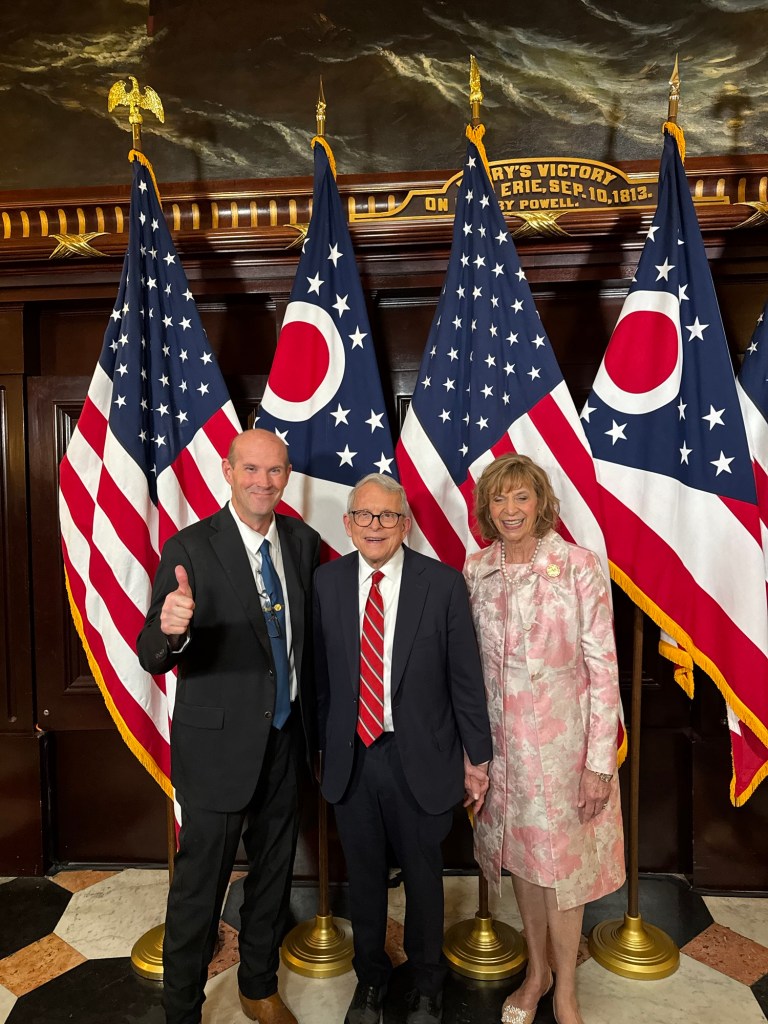
I’ve had some very public disagreements with people. But I can never think of a time that I wouldn’t ever talk to someone again

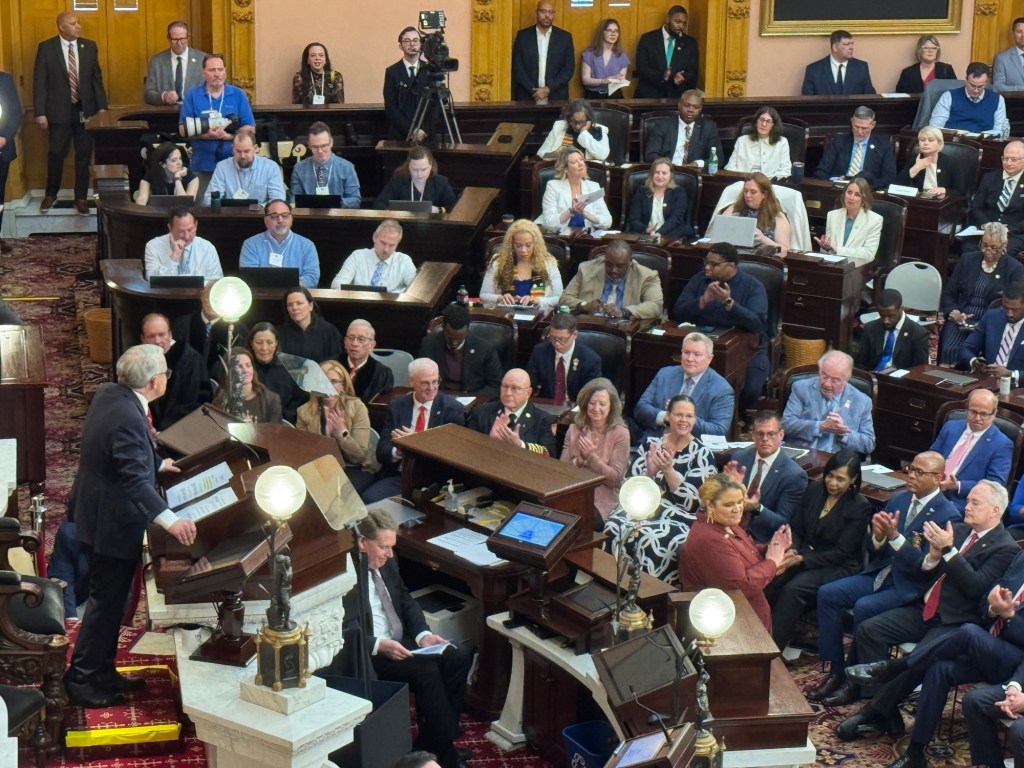
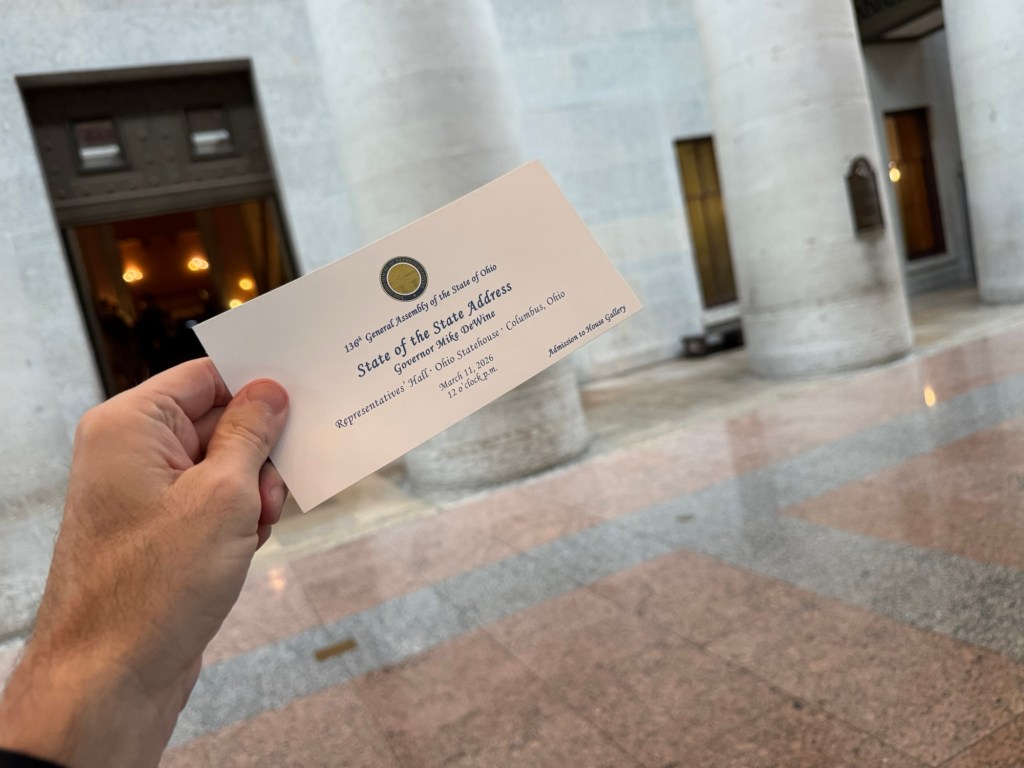
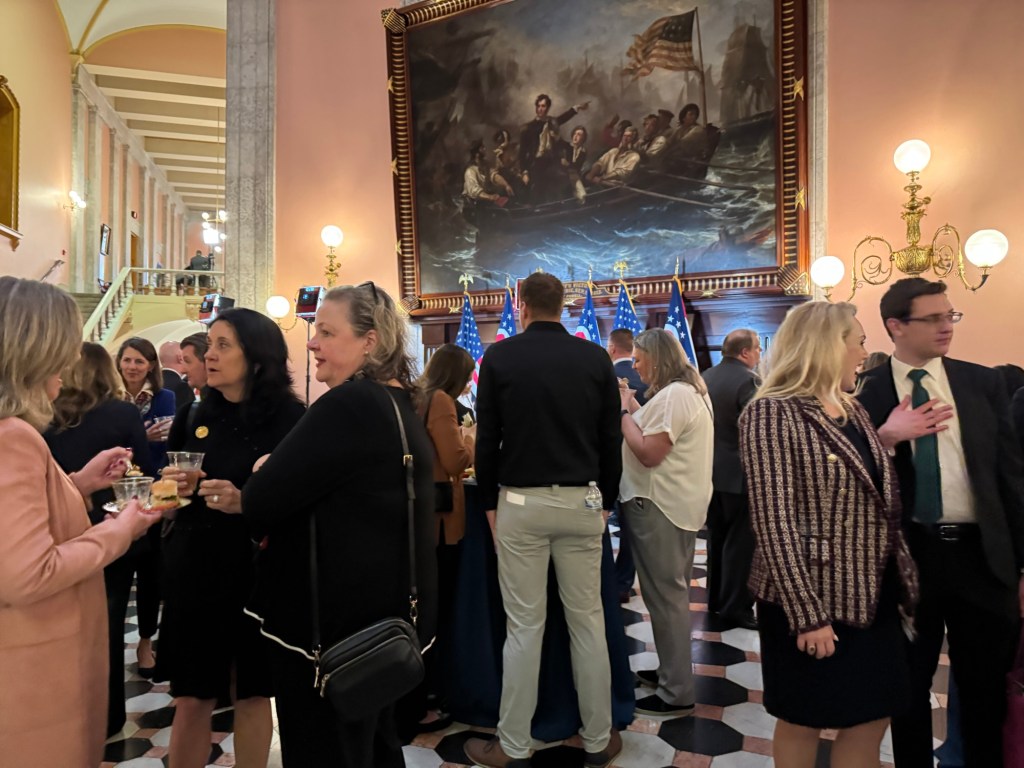
This question has arisen repeatedly in my interactions with Butler County Sheriff Richard K. Jones and many others. We’ve shared public moments of warmth and camaraderie, even as political winds have blown in conflicting directions. The same applies to recent encounters with Ohio Governor Mike DeWine. After years of sharp criticism—particularly over his administration’s handling of COVID policies and other matters—I shook his hand following his final State of the State address. We discussed areas of agreement, such as Second Amendment rights and efforts to combat AI-generated child exploitation. These moments highlight a core principle: genuine regard for individuals ‘ needs need not hinge on perfect alignment. Relationships built on authenticity withstand disagreement; those rooted in manipulation crumble.
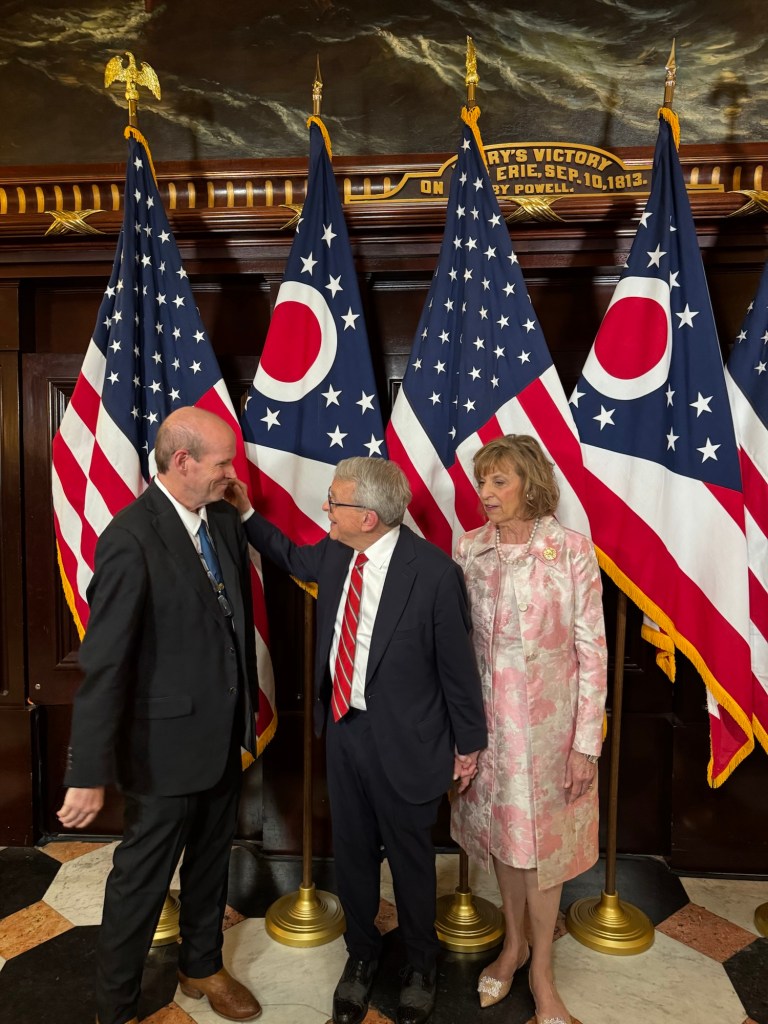
We were talking about his wife’s great cookies. The second amendment during his administration. Taxes. And his endorsement of Vivek Ramaswamy.

This perspective stems from a life shaped by diverse encounters. Growing up in Ohio, I navigated rough characters and “celebrity” figures in my early adult years—individuals carrying heavy psychological burdens and disappointments. These experiences, often intense and sleepless, taught navigation of human darkness. I awoke each day intent on being the “good guy,” never contemplating villainy. This innate drive toward justice, perhaps divinely guided, clashed with destructive forces, leading through ominous courtrooms and rigorous trials.
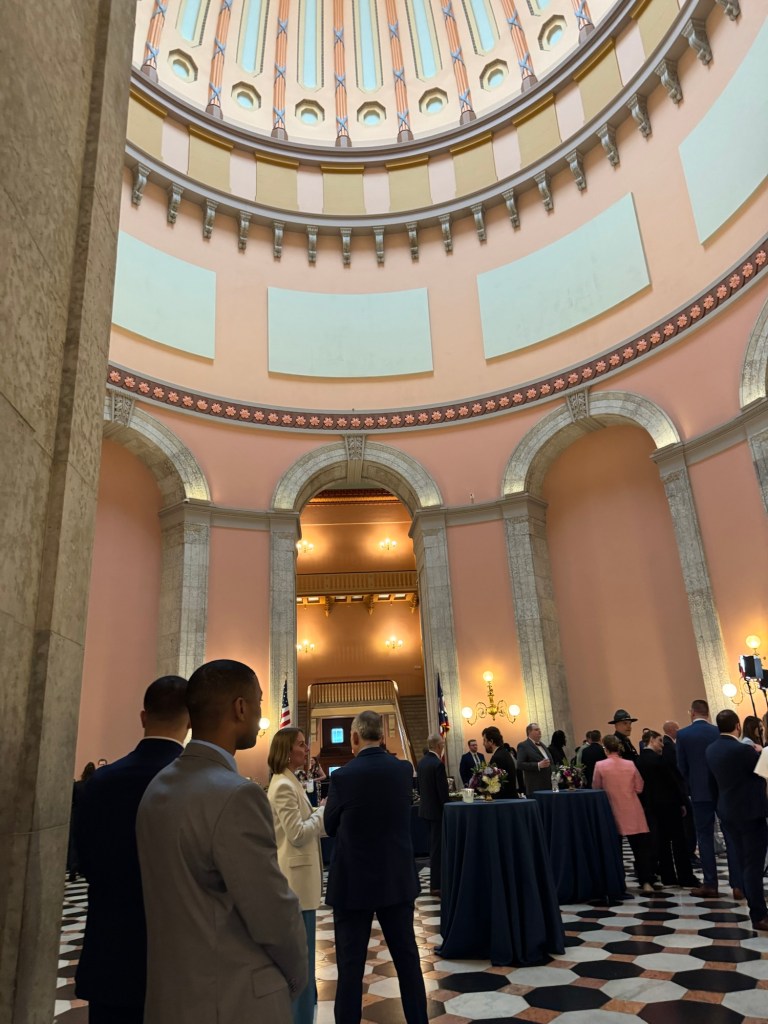
The lofty expectations of public office. Few people ever live up to those expectations. But the building was built with the expectation of exceptionalism.

These trials instilled resilience. I’ve seen the worst of human behavior: betrayal, manipulation, and raw conflict. Yet, they clarified priorities. Nothing since has felt catastrophic by comparison. This foundation allows aloof observation—staying “lofty” amid chaos—while engaging directly when needed.
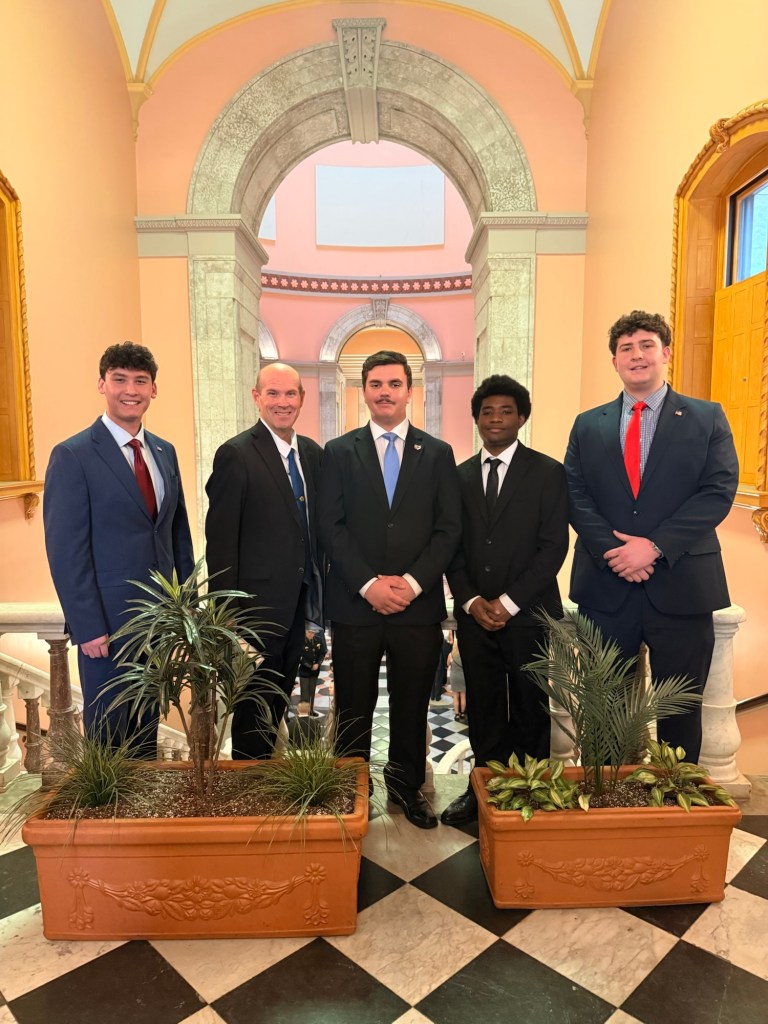
I love to see the future, in the here and now. Great young people!

Professionally, I’ve channeled this into commentary via platforms like The Overmanwarrior blog, podcasts, and writings (including books like The Symposium of Justice and business guides). As a fast-draw enthusiast and strategist, I’ve advised on local and state issues. Public friendships, like with Sheriff Jones, stem from shared values on law, order, and community—despite occasional political divergences. These are not performative; they’re authentic.
Most relationships reduce to two levers of control. The first is friendship as leverage: people offer smiles, hugs, or inclusion to gain compliance. When denied, they withdraw—“I’m not your friend anymore unless you…” This mirrors childhood games (stickers on lockers) and adult dynamics (passive-aggression in marriages, where affection is withheld until demands are met). In politics, it’s “endorse my candidate or lose my support.” Women and men alike use emotional coziness as currency; it’s learned early and persists.
The second is the threat of violence or intimidation. When friendship fails, escalation follows: harassment, protests, spiritual “warfare,” or physical threats—“Do what I say or face consequences.” Authoritarian regimes amplify this; bullies in parking lots embody it personally. Both aim at submission through fear.

I’ve rejected both. Secure in my positions, I express them openly—here, on podcasts, in writing—without needing validation. Disagreement doesn’t prompt cliff-jumping; it invites dialogue or indifference. If someone withdraws friendship over opinions, that’s their choice. If intimidation arises, I handle it unflinchingly, drawing from early lessons in facing rough characters.
This stance echoes timeless wisdom, like Sun Tzu’s The Art of War: become invincible by rendering tactics ineffective. Control what you can—your actions, values, responses—and influence outcomes without direct domination.

Sheriff Jones exemplifies this. We’ve agreed on much: law enforcement, border security, deportations, and community protection. His office’s work with ICE and unapologetic stance on illegal immigration align with my views. Publicly, we’re friendly—podcasts, events, and genuine conversations about his brand and duties.
Yet, political motivations diverge at times. Endorsements or strategies might differ. Critics note our chumminess amid such gaps, confused by loyalty despite opposition. The answer: I like him authentically. His character, spine, and public service earn respect. If we clash, we may not talk for a while—that’s fine. Friendship isn’t conditional on perfect alignment. I won’t manipulate him (or allow manipulation) to force agreement. Truth emerges through pressure and process, not emotional blackmail.

This extends broadly. I like many who’ve opposed me politically, and I reserve the right to value people independently. Indifference to reciprocity preserves freedom.
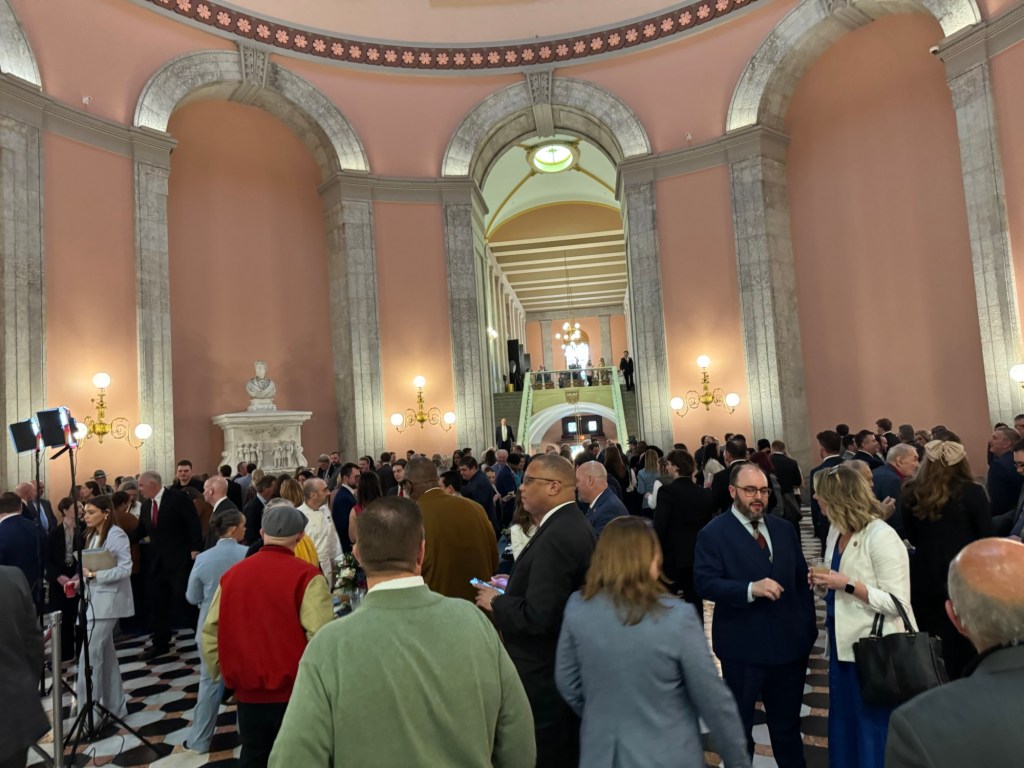
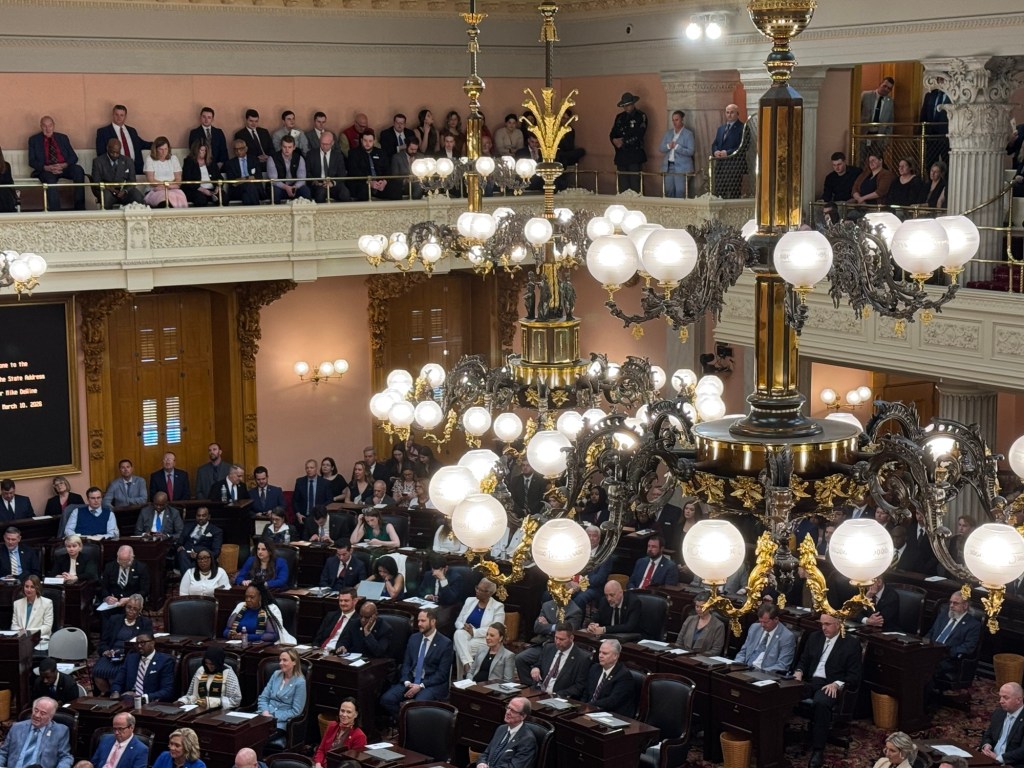
A recent addition underscores this: Governor DeWine’s final State of the State address. His administration faced criticism—over COVID handling and other policies—creating opposition, which I had been very critical of, rightfully so. Yet, post-speech, we shook hands and spoke cordially.

We aligned on key issues: Second Amendment defense, and crucially, combating AI-generated child sexual abuse material (often called “simulated” or “AI child porn”). DeWine and Attorney General Dave Yost highlighted predators using AI to create exploitative images of children, urging legislation to criminalize creation, possession, and distribution. This addresses a growing threat where legal gaps allow evasion of traditional child pornography laws. I expressed support, noting agreement despite past differences, such as when Yost was running against my supported candidate, Vivek Ramaswamy for governor.

This exchange wasn’t leverage-seeking. It prioritized common ground—protecting children—over grudges. Putting differences aside when opportunities arise fosters the emergence of truth, not manipulation through fear of lost friendship.

Politics amplifies these dynamics: RINOs vs. traditional conservatives, reform movements, religious clashes. Belief systems collide; scores settle. Yet, values about people shouldn’t depend on outcomes. I like or dislike based on character, not scoreboard.

Pursuing righteousness means respecting all sides, allowing truth to reveal itself through conflict’s “fog of war.” Hot tempers subside; smoke clears; good emerges. Manipulation—friendship withdrawal or intimidation—crowds ideas into small-mindedness. Independence enables macro focus: immortal existence over micro squabbles (marriages, divorces, family disputes).
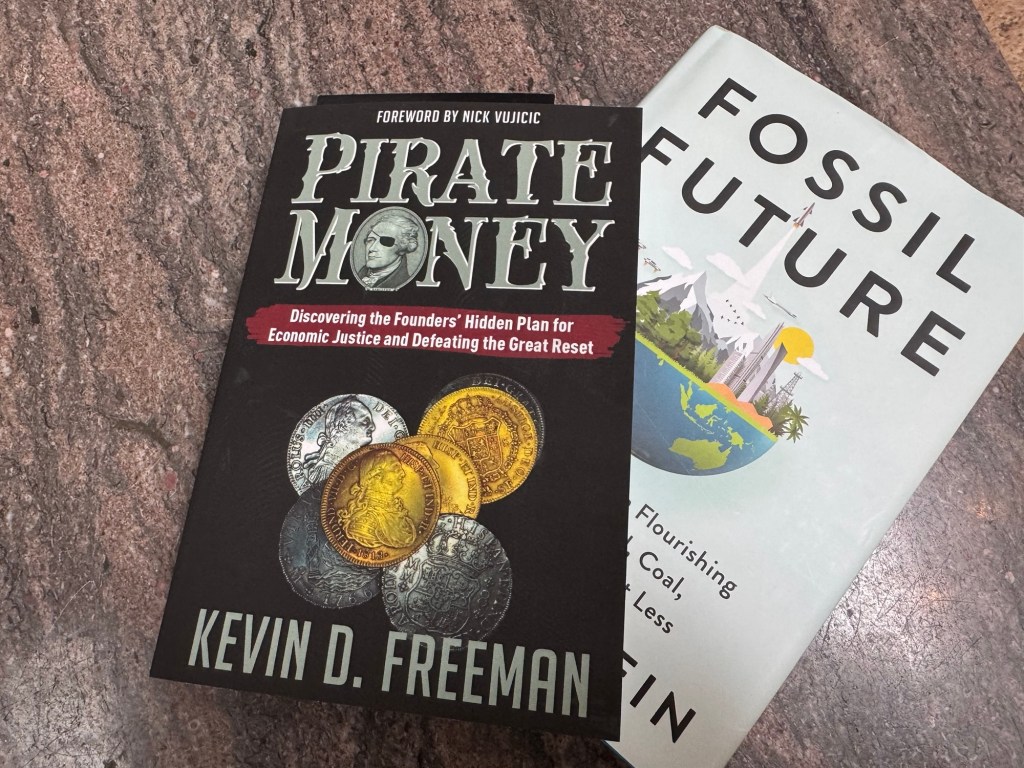
A good friend of mine gave me some homework to do

I’ve built a life affording this luxury: secure positions, no fear of loss. Many seek friendship; time limits interactions. Some engage strategically to advance balls—purely functional, not manipulative.

It’s okay to like those who hate you, to be friendly with opponents, and to shake hands after battles. Truth often surfaces in conflict; observation reveals positions. By staying outside manipulation’s reach, one accomplishes greatly where others falter.

In the end, righteousness is rooted in truth, not personal desires or leverage. Respect others’ thoughts—even wrong ones. Good people come around; disputes fade. We shake hands, share hot dogs at picnics, and discuss lofty things as emotions drift.
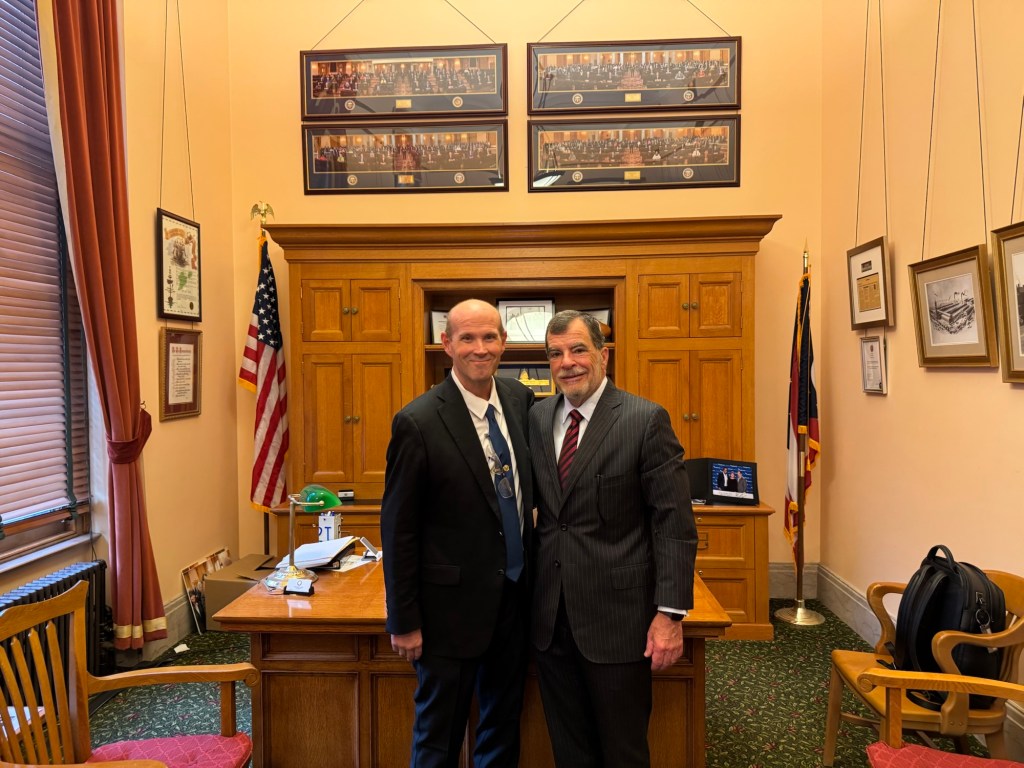
George Lang is a great guy in all aspects, what a lot of people don’t know about him is he loves books. Something we share beyond the immediacy of politics

 Bibliography

Overmanwarrior blog (overmanwarrior.wordpress.com) – Primary source for writings on politics, philosophy, and personal insights. Butler County Sheriff’s Office interactions – Public podcasts and events with Sheriff Jones (e.g., discussions on immigration, law enforcement). Ohio Governor Mike DeWine’s State of the State address (2026) – Focused on AI restrictions, including child exploitation; references from news coverage (e.g., Toledo Blade, ABC6). Attorney General Dave Yost’s efforts – Collaboration on bills like SB 217/SB 163 targeting AI-generated CSAM. The Art of War by Sun Tzu – Concept of invincibility through non-engagement with opponent strengths. Personal books: The Symposium of Justice, business guides – Available via Overmanwarrior platforms.

This framework allows engagement without compromise, advancing righteousness amid human complexity.

1.  Hoffman, Rich. The Symposium of Justice. iUniverse, 2004.

A novel blending fiction with philosophical themes of justice, freedom, and confronting sinister forces—written as a counterpoint to real-world political and personal battles. Available on Amazon: https://www.amazon.com/Symposium-Justice-Rich-Hoffman/dp/1412020158.

2.  Hoffman, Rich. Tail of the Dragon. CreateSpace Independent Publishing Platform, 2012.

Explores themes of freedom, law, and high-stakes conflict through a narrative rooted in real altercations and political activism and often described as “faction” (fact-based fiction).

3.  Hoffman, Rich. The Gunfighter’s Guide to Business: A Skeleton Key to Western Civilization. Liberty Hill Publishing, 2021.

A practical and philosophical guide that draws parallels among gunfighting strategy, business, and life—offering a Western counterpoint to Eastern classics like The Art of War. Emphasizes invincibility through preparation and independence. Available on Amazon and referenced in Hoffman’s bio.

4.  Hoffman, Rich. “The Overmanwarrior” (blog). WordPress.com, ongoing since ~2010. Primary URL: https://overmanwarrior.wordpress.com/.

Daily posts on politics, culture, philosophy, personal stories, and current events in Ohio (e.g., Butler County issues, tax fights, and human dynamics). Includes author bio, reflections on early life, and discussions of books like The Symposium of Justice.

5.  Sun Tzu. The Art of War. Translated by Lionel Giles (1910 edition) or modern versions (e.g., Everyman’s Library). Original ~5th century BCE.

Key concept from Chapter 4 (“Formation”): “Invincibility lies in oneself; vulnerability lies in the enemy.” The skilled make themselves invincible through self-preparation, rendering opponent tactics ineffective—directly echoed in the essay’s rejection of manipulation levers.

6.  “DeWine calls for new AI regs, parental control rules in 2026 State of the State.” Cleveland.com (via various outlets, including Facebook reposts and Toledo Blade coverage), March 2026.

Covers Governor Mike DeWine’s final State of the State address, urging legislation on AI guardrails, including outlawing the creation, possession, and distribution of AI-generated child sexual abuse material (CSAM). Aligns with the essay’s mention of agreement on child protection despite past differences.

7.  “Ohio struggles to combat AI-generated child porn amid legal gaps.” ABC6 On Your Side, January 29, 2026.

Details legislative efforts (involving DeWine and Attorney General Dave Yost) to close gaps in prosecuting AI-simulated child exploitation, highlighting the growing threat and push for criminalization.

8.  Butler County Sheriff’s Office. “In The Saddle With Sheriff Richard K. Jones” (podcast series). Apple Podcasts and related platforms, ongoing.

Episodes featuring Sheriff Richard K. Jones on law enforcement, immigration (e.g., 287(g) agreements), and community issues. Includes collaborations and discussions with Rich Hoffman (e.g., Rumble episodes on ICE detainees and related topics).

9.  Various public interactions: Butler County Sheriff’s Office Facebook posts and YouTube videos (e.g., “Ohio 287(g) with Butler County Sheriff Richard Jones,” November 2025).

Document friendly exchanges, podcasts, and joint appearances between Sheriff Jones and Rich Hoffman on topics like border security and prisoner handling.

Top Notes for Further Reading

•  Start with Hoffman’s blog (The Overmanwarrior) for the most direct, unfiltered context—search archives for terms like “Sheriff Jones,” “DeWine,” “friendship,” “manipulation,” or “invincibility” to find raw reflections mirroring the essay’s monologue.

•  For philosophical grounding on invincibility and non-manipulative strategy, read The Art of War Chapter 4 alongside The Gunfighter’s Guide to Business—Hoffman explicitly positions his work as a Western response to Sun Tzu.

•  On Ohio politics and the examples: Follow coverage from Cleveland.com, Toledo Blade, and ABC6 for updates on AI/CSAM bills (e.g., potential SB 217/SB 163 analogs) and DeWine’s 2026 address. Sheriff’s Office social media provides real-time context on Jones’ work and public persona.

•  For broader insights into human relationships and power dynamics: Explore related classics like Machiavelli’s The Prince (on manipulation) or Nietzsche’s ideas on the “overman” (influencing the blog’s name), though Hoffman’s approach emphasizes righteousness over conquest.

Rich Hoffman

More about me

Click Here to Protect Yourself with Second Call Defense https://www.secondcalldefense.org/?affiliate=20707
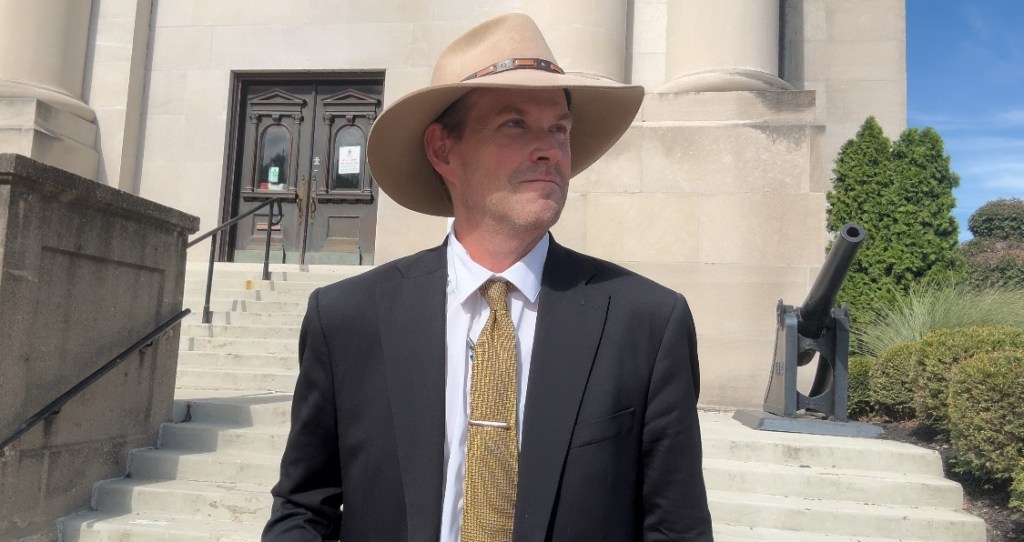
About the Author: Rich Hoffman

Rich Hoffman is an independent writer, philosopher, political advisor, and strategist based in the Cincinnati/Middletown, Ohio area. Born in Hamilton, Ohio, he has worked professionally since age 12 in various roles, from manual labor to high-level executive positions in aerospace and related industries. Known as “The Tax-killer” for his activism against tax increases, Hoffman has authored books including The Symposium of Justice, The Gunfighter’s Guide to Business, and Tail of the Dragon, often exploring themes of freedom, individual will, and societal structures through a lens influenced by philosophy (e.g., Nietzschean overman concepts) and current events.

He publishes the blog The Overmanwarrior (overmanwarrior.wordpress.com), where he shares insights on politics, culture, history, and personal stories. Active on X as @overmanwarrior, Instagram, and YouTube, Hoffman frequently discusses space exploration, family values, and human potential. An avid fast-draw artist and family man, he emphasizes passing practical skills and intellectual curiosity to younger generations.
The Shoe on the Other Foot: Reflections on ‘Tail of the Dragon,’ Prophecy, and the Triumph of Liberty Over Tyranny

The book Tail of the Dragon, which I wrote and published in 2012, remains one of the most personal and enduring statements I’ve ever made. At the time, I was deeply immersed in the political currents of the late 2000s and early 2010s—active in the Reform Party since the Ross Perot days, a supporter of Pat Buchanan’s ideas, an early Tea Party participant (even earning the nickname “Tax Killer” in my community for fighting tax increases), and someone who had long advocated for limited government against what I saw as growing tyranny. I began writing the novel around 2010, finishing it in 2012, during Barack Obama’s presidency, when frustrations with federal overreach, economic policies, and foreign entanglements were boiling over.

The story is framed as a high-octane action tale—a car chase thriller set on the real-life Tail of the Dragon, the legendary 11-mile stretch of U.S. Highway 129 straddling the Tennessee-North Carolina border in the Great Smoky Mountains. This road, with its 318 curves, has a storied history dating back centuries: originally a buffalo trail and Cherokee path, later used by hunters, trappers, and settlers in the 1700s and 1800s, it was paved in the 1930s and became a mecca for motorcyclists and sports car enthusiasts in the late 20th century.

I drew from my own experiences riding motorcycles across the U.S., immersing myself in the culture of independence and the open road—the raw desire for freedom unburdened by overbearing authority. The protagonist, Rick Stevens, a rebellious everyman whose NASCAR dreams have faded, becomes entangled in a high-stakes pursuit that pits individual liberty against a corrupt, tyrannical system. It’s packed with action, comedy in places, romance, and high-speed drama, inspired by classics like Smokey and the Bandit or The Dukes of Hazzard, but with a much darker, more serious edge. Unlike those lighthearted films where characters evade consequences, my story reflects real-world stakes: government overreach, loss of personal freedoms, and the moral cost of resistance.

Officially categorized as “philosophy in action” because that’s where my mind was—blending thrilling narrative with deep ideas about governance, justice, and human nature. I didn’t write it for quick sales or mass-market appeal; books, for me, are vehicles for ideas meant to endure for centuries, not fleeting articles or videos. They provide a framework—a complete world—to explore concepts that demand sustained thought.

At the time, the book puzzled people. Some saw it as just a car-chase novel; others recognized the anti-government manifesto woven in. It critiqued a system that enabled corruption, foreign meddling, and domestic tyranny. I distributed hundreds of copies to tourist spots near the Tail of the Dragon, where motor geeks and road warriors embraced it. The motorcycle community—fiercely independent—loved the authenticity. Online, it sold modestly, but it found a niche among Tea Party leaders, libertarians (though I’m not strictly one), and those disillusioned with the status quo.

The reception was mixed in mainstream circles. My connections—friends close to Glenn Beck, entertainment figures—hinted at potential for film adaptation, given the era’s boom in car-chase movies grossing billions. But Hollywood was shifting leftward, and my conservative, liberty-focused message was too explosive. Pre-Trump, pre-MAGA, it was taboo to openly challenge the Obama-era government so aggressively.

The ending is what many readers called “perfect”—and it’s the core of why the book feels prophetic today. Without spoiling it fully, the resolution isn’t a simple outlaw victory or easy escape. It grapples with justice, consequences, and optimism: even in chaos, there’s a path to something better. I am an optimist at heart; I see potential for good even amid fire. The characters face dire situations far beyond Bonnie and Clyde-style tragedy or Smokey and the Bandit hijinks, reflecting my real experiences with law, order, and government reform efforts.

Fast-forward to now, in 2026, and the world has caught up. People who read it years ago—Tea Party activists, early MAGA supporters, grassroots leaders—revisit it and say the arguments aged well. They ask: “You were anti-government then—why support crackdowns now on protesters, immigration enforcement, or actions against regimes like Iran?” The answer lies in that ending and the philosophy behind it.

In 2012, the government I opposed funded adversaries abroad while undermining constitutional principles at home. The Obama administration pursued policies toward Iran that included sanctions but also controversial elements—like the eventual JCPOA nuclear deal (finalized later in 2015) and cash transfers critics labeled as enabling terrorism.

It allowed influence from regimes in places like Venezuela, where China and others gained footholds through oil and alliances. Drug cartels and thugs thrived in hemispheric politics, enabled by weak borders and foreign policy that prioritized appeasement over strength.

My book was a call to fight back—violently, if necessary—against such tyranny. It was rough, angry, explosive. Mainstream folks shied away; motorcycle warriors and liberty-minded readers took it to heart.

Today, the shoe is on the other foot. A government aligned with the values I championed—freedom, upward mobility for the majority, cracking down on threats—holds power. Actions against violent protesters (like those in Minnesota scenarios), strong immigration enforcement, and decisive moves on Iran and Venezuela aren’t hypocrisy; they’re the fulfillment of what I advocated. A freedom-fighting government represents the people’s interests, not the old tyrannical one.

Recent developments illustrate this: U.S. operations targeting Iran’s nuclear sites and influence, combined with efforts in Venezuela to remove leaders like Nicolás Maduro, curb Chinese, Russian, and Iranian footholds in the hemisphere, and secure strategic resources like oil.

These are chess moves in a high-level game—eradicating threats that once thrived under the prior order, reducing adversarial footprints, and restoring American dominance in our sphere.

The difference isn’t anti-government absolutism (that’s libertarian territory, which I don’t claim). It’s defining tyranny versus legitimate authority. When “our side” wins, we fly the flag proudly, ensuring government serves freedom, not suppresses it. The former rulers now protest violently—borrowing our playbook but twisting it with force—because they’re on the outside.

Tail of the Dragon helped shape thinking among key influencers years ahead of the curve. It wasn’t a bestseller, but it has a cult following: people still seek copies, discuss it at rallies, reference it in conversations. It provided a philosophical framework for building a movement—one that took time (through Tea Party to MAGA, through investigations, COVID, and elections) but prevailed.

I’m proud of it. Books like this aren’t for immediate gain; they’re for longevity. The message endures: resist tyranny, but recognize when victory arrives and authority aligns with liberty. The world caught up, and that’s a good thing.

Bibliography

•  Hoffman, Rich. Tail of the Dragon. Self-published/iUniverse, 2012. (Primary source; available on Amazon and Goodreads.)

•  Tail of the Dragon official site. “History.” tailofthedragon.com/history. Accessed March 2026.

•  U.S. Department of State archives. “Iran–United States Relations During the Obama Administration.” Wikipedia summary drawing from primary sources, 2010–2016.

•  FactCheck.org. “Obama Didn’t Give Iran ‘150 Billion in Cash’.” March 1, 2019 (updated context).

•  Politico. “Obama’s Hidden Iran Deal Giveaway.” April 24, 2017.

•  Foreign Affairs. “Trump’s Way of War: Iran, Venezuela, and the End of the Powell Doctrine.” Recent analysis, 2026.

•  ABC News. “Trump Demands Venezuela Kick Out China and Russia.” January 6, 2026.

•  Various Goodreads and Amazon reviews of Tail of the Dragon by Rich Hoffman, 2012–present.

Footnotes

1.  Tail of the Dragon route history drawn from tailofthedragon.com and related sources.

2.  Book details from Amazon and Goodreads listings.

3.  Iran policy critiques based on archived Obama-era fact sheets and subsequent analyses.

4.  Current geopolitical actions referenced from 2026 news reports on U.S. operations in Iran and Venezuela.

Rich Hoffman

More about me

Click Here to Protect Yourself with Second Call Defense https://www.secondcalldefense.org/?affiliate=20707

The Warm Blanket of Socialism: Hiding the tattoos and body piercings of millions of bad personal decisions with progressive crusades

The mirror doesn’t lie.  What looks back is the result of millions and millions of decisions, and most people don’t like what they see.  So they construct social engagements accordingly.  If they lean toward liberal politics, it is likely because they are ashamed of their decisions in life and look for social order to hide them from the realities of those bad decisions with a warm blanket of socialism to hide under.  And the last thing they want to do is have some conservative come into their room and rip away that protection from even themselves, let alone the judgments of the world. But beyond the personal, the reflection prompts deeper contemplation about the state of the nation—particularly the visible unraveling among those who champion a progressive, collectivist vision for society. What some call the “warm blanket of socialism” provides comfort to those less inclined toward self-reliance, a psychological shelter against the uncertainties of individual responsibility and the harsh light of personal accountability.

Self-reliance has long been a cornerstone of the American ethos, embodied in figures who tie their own shoes at a young age, change their own tires, perform their own brake jobs, cook their own meals, and build their lives through initiative. Such individuals tend to align with Republican values, emphasizing limited government, free markets, and personal merit. In contrast, those who feel lost or overwhelmed often seek refuge in collective structures—government programs, social safety nets, group identities—where shared burdens mitigate individual risk. This isn’t mere preference; it’s a response to upbringing and circumstance. If early life lacked lessons in independence, if family structures fractured through divorce, remarriage, or instability, the world can feel perpetually threatening. The “blanket” becomes essential, and any policy pulling it away—lower taxes reducing social services, pro-capitalist reforms favoring entrepreneurs, immigration enforcement, or school choice—evokes terror, like yanking covers off a frightened child in the dark.

This dynamic explains much of the current unrest. With policies under the Trump administration prioritizing capitalism, family stability, homeschooling, and distrust of public education, and reducing dependence on public aid, those accustomed to collective coverage feel exposed. Fewer people relying on the system means less communal “blanket” to hide behind. Protests erupt not only from policy disagreements but also from existential fear: the loss of a parental government that shields from consequences. This mirrors historical patterns—East Berlin walls, Soviet barriers—designed to prevent defection from collectivism to individual freedom, lest the illusion of security crumble.

Psychological research illuminates these divides. Conservatives often exhibit higher self-control, greater emphasis on personal responsibility, and stronger physiological responses to threats in ways that reinforce stability-seeking behaviors. Liberals, by contrast, prioritize harm avoidance, fairness as equality, and openness to change, sometimes at the expense of binding structures like authority or tradition. One study found that conservatives outperform liberals in self-control tasks, particularly when free will is framed positively, suggesting that ideology shapes not only beliefs but also behavioral resilience. Happiness gaps also appear: conservatives report higher life satisfaction, potentially attributable to attitudes that value personal agency over systemic solutions.

Family structure plays a pivotal role. Decades of rising divorce, blended families, absent parents, and serial partners disrupt trust in foundational institutions. Children navigating weekends between homes—with new spouses, girlfriends, boyfriends—often internalize instability, leading to victimhood narratives and reliance on external support. Data show complex patterns: conservatives are slightly more likely to have ever divorced in some age groups, but remarry more readily and report happier marriages overall. Marriage rates have declined sharply among Democrats compared to Republicans since the 1980s, with liberals increasingly forgoing marriage altogether, viewing it as less essential for happiness. Conservative women tend to marry younger and desire more children, sustaining family-oriented values. In red states, higher teen birth rates historically contrast with lower divorce rates in blue states like Massachusetts, highlighting how cultural norms around family influence outcomes.

Public education, infused with progressive ideologies over generations, amplifies this. Marxist influences in curricula—from high school to university—promote collectivism over individual merit, framing society as oppressive rather than opportunity-rich. Turning away from this requires reclaiming education rooted in self-reliance and traditional values.

Visible markers often signal these divides. Protesters against conservative policies frequently display extensive tattoos, piercings (nose rings, large earlobe gauges), and other body modifications—symbols of rebellion against norms and a return to “primitive” or indigenous aesthetics that reject Western civilization’s emphasis on restraint. Biblically, Leviticus 19:28 prohibits cuttings or marks for the dead, often interpreted as rejecting pagan mourning rituals or idolatry rather than all body art. Many Christian scholars argue that the New Testament shifts focus to heart intentions and body stewardship (1 Corinthians 6:19-20), not absolute bans. The verse targeted cultural compromise with false gods, not modern self-expression. Still, some view extreme modifications as desecration of the “temple,” opening doors to parasitic influences—spiritual or psychological—that erode personal sanctity. This ties to anti-civilizational trends: embracing perversions destructive to family, promoting LGBTQ+ agendas that undermine traditional bonds, and feeding primal urges over ordered happiness.

Yet statistics nuance perceptions. A 2023 Pew Research Center survey found that 32% of U.S. adults have at least one tattoo (22% have more than one), with roughly equal rates: 33% among Democrats/Democratic leaners and 32% among Republicans/Republican leaners. No major partisan divide exists; differences vary more by age (higher among under-50s), gender (38% women vs. 27% men), and race/ethnicity. Visible, extreme modifications may cluster more among vocal progressive activists, creating a perceptual association, but broader data indicate that tattoos are mainstream across ideologies.

The anger on display—protests that block highways, defend open borders, and resist enforcement—stems from poor personal decisions compounded by cultural shifts. Tattoos and piercings become outward signs of inner chaos, a rejection of self-care mirroring societal rejection of meritocracy. When self-reliance prevails, those who hide behind collectivism feel judged; their resentment manifests as demands for “fairness” that serve as cover for mistakes. We can’t restructure society around resentment—help those open to change, but not at civilization’s expense.

This isn’t hatred of people but a critique of ideology: understanding roots—broken families, poor teachings, fear—fosters empathy without capitulation. Promote self-reliance, stable families, capitalist opportunity; rebuild through virtue, not mandates. Policies favoring doers—business starters, home maintainers, homeschoolers—create prosperity for all willing to participate.  But what people believe politically, and act out socially, such as in the Minnesota riots, are reflections of their many bad decisions in life, and a transferance to society in general that they can pass off those mistakes through moral crusades that are always too little too late.  And usually, the body piercings and tattoos are a clear reflection of a fragmented mind hiding behind social causes because they have wrecked their lives personally, and can only get redemption through collectivist enterprise. 

Footnotes

1.  Pew Research Center, “32% of Americans have a tattoo, including 22% who have more than one,” August 15, 2023. https://www.pewresearch.org/short-reads/2023/08/15/32-of-americans-have-a-tattoo-including-22-who-have-more-than-one/

2.  Institute for Family Studies, “The Growing Link Between Marriage, Fertility, and Partisanship,” September 18, 2025.

3.  Gallup, “When and Why Marriage Became Partisan,” July 11, 2024.

4.  American Enterprise Institute, “The Republican Marriage Advantage: Partisanship, Marriage, and Family Stability in the Trump Era,” October 31, 2024.

5.  Desiring God, “Tattoos in Biblical Perspective,” December 19, 2013. https://www.desiringgod.org/interviews/tattoos-in-biblical-perspective

6.  Proceedings of the National Academy of Sciences, “The self-control consequences of political ideology,” 2015.

7.  Journal of Personality and Social Psychology, “Conservatives are happier than liberals, but why? Political ideology, personality, and life satisfaction,” 2012.

8.  PLOS ONE, studies on moral foundations and psychological motivations in liberalism vs. conservatism, 2020.

Rich Hoffman

More about me

Click Here to Protect Yourself with Second Call Defense https://www.secondcalldefense.org/?affiliate=20707

Being A Vigilante: The difference between then and now

I’ve been thinking a lot lately about how positions evolve, especially now in early 2026, with the new Trump administration taking shape and the political order flipping in ways that feel like vindication for a lot of what I’ve fought for over the decades. People on the outside—those who once held power and now find themselves looking in—are quick to accuse me of changing my tune. “You’ve flipped,” they say. “You were anti-government back then, and now you’re cheering for it.” But the truth is more straightforward and more consistent than that: I’m still the same person who wrote The Symposium of Justice in 2004. I’ve learned, grown, and adapted based on real experience, but the core hasn’t shifted. What’s changed is the situation around me.

Fighting Evil

Back in 2004, when I published The Symposium of Justice, the world looked very different. George W. Bush was in office; the Patriot Act had just expanded federal reach in the name of security, and the government felt like it was ballooning out of control, regardless of who held the reins.[^1] I wasn’t writing as some detached observer; the book was semi-autobiographical, rooted in the raw anger of my thirties. I’d lived a whole, intense life by then—far more than most people my age. I’d been knee-deep in small-city and big-city battles, pushing for legislative fixes to corruption, getting tangled up in significant drug enforcement efforts, and even interacting directly with the FBI on fronts where things weren’t working right.[^2] When the system failed, I didn’t just complain—I acted. There were nights I ran around confronting drug dealers with a bullwhip, breaking up operations in self-defense mode that had been my primary mechanism since I was a kid. One time, I ended up in front of a drug house with about 40 young adults and teens caught in the crossfire of Grand Theft Auto-style chaos. I confronted them head-on, and it saved many of their lives because the police came and broke up the fight, but it wasn’t glamorous. It was vigilante justice born of frustration: if the authorities wouldn’t or couldn’t fix it, someone had to.

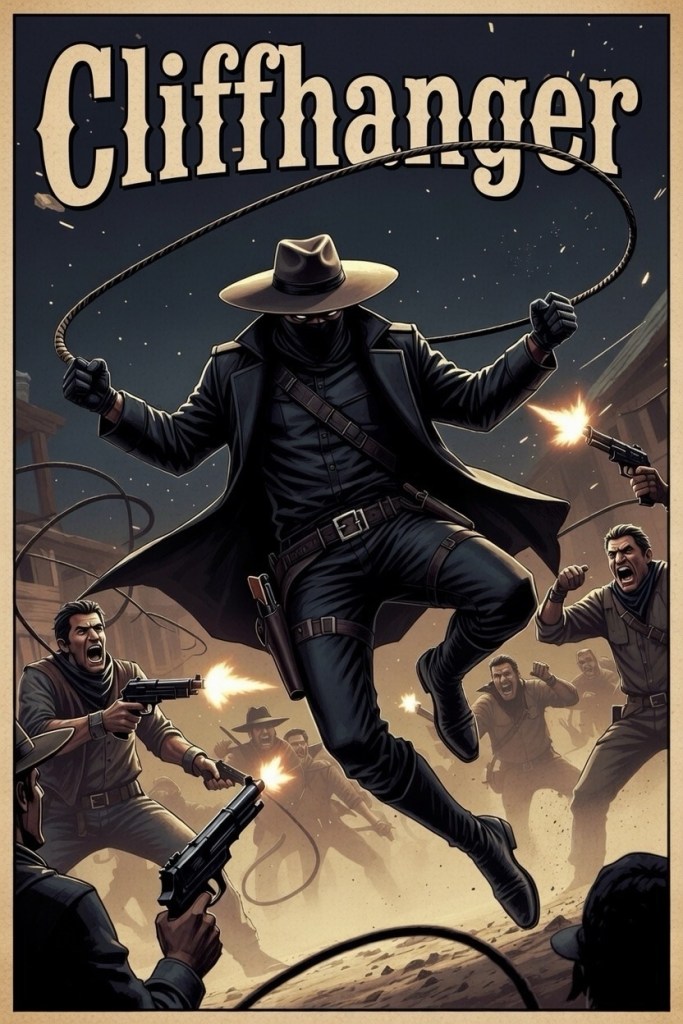
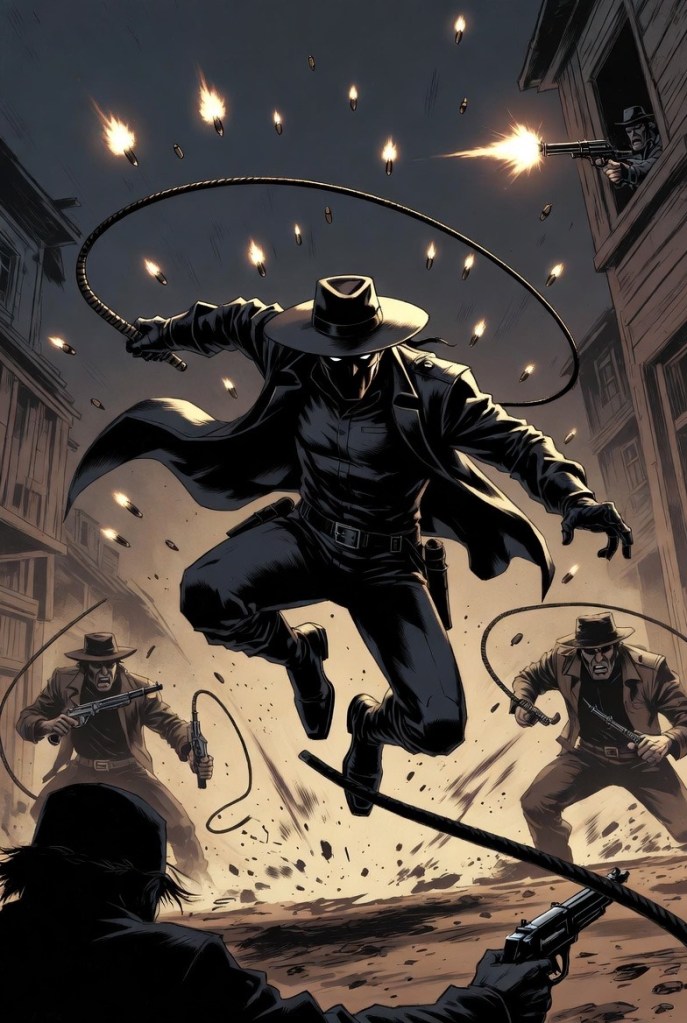
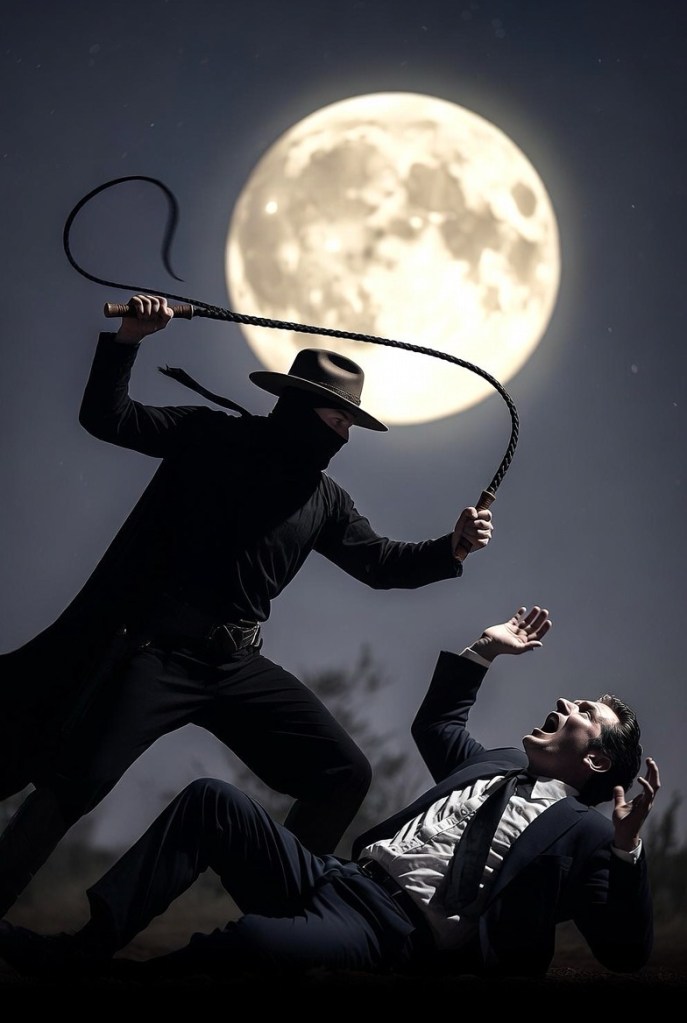
The main character in The Symposium of Justice, Cliffhanger, channels that same energy. He takes on a corrupt, centralized government intertwined with entertainment elites who play radical games in the arena. The book is about vigilante justice against tyranny—drawing from real experiences where I saw powerful forces profit off drugs, kickbacks, and control. I was angry, no apologies. It was the work of a man ready to fight back physically if needed. I thought about going full vigilante: mask on, discretion, punishing the bad guys in the shadows like Batman or Zorro, my all-time favorite. I was prepared for it. Law enforcement didn’t like me much—FBI cases I was involved in heavily made that clear—but politics tied their hands, and there wasn’t much they could do.[^3]

But something shifted after the book came out. It had enough impact to spark honest conversations. People reached out—film festivals, the Western arts community, and political circles. I started talking to influential people in entertainment who shared similar frustrations with centralized corruption. Instead of running around at night cracking skulls, I found a more powerful path: writing every day, putting my name to it, building a blog that became my daily weapon. The Overmanwarrior blog started as an extension of that 2004 anger but evolved into something sustained and influential.[^4] Blogging wasn’t as romantic as vigilante nights—no mask, no midnight drama—but it was far more effective. I could expose corruption, rally people, influence voters, and shape events without risking everything on force.

I had two clear options back then: either do the vigilante thing for real—rest in the world making things good through direct action—or worry about it and try to expire it indirectly through politics and persuasion. I chose the latter. Getting more involved in politics showed me that the drug dealers and corrupt players profited from the system because they had kickbacks and protection. Vigilantism might feel good in the moment, but it doesn’t dismantle the machine. Blogging, activism, running for office vibes (though I stayed independent), and fighting tax increases (earning me the “Tax-killer” nickname) did more damage to that machine.[^5] I influenced things in ways a masked figure never could—because when you take the mask off, own your name, and accept personal responsibility, you build real power. People know who you are; they can debate you, fight you if they want, but the ideas spread farther.

Fast-forward to now, 2026, and the difference is night and day. We have a government under Trump that aligns more with the orthodox, law-and-order society I always wanted. The Republican Party has become the vehicle for reform, not the expansion of tyranny. The people I wrote about in 2004—the radicals controlling entertainment, profiting off chaos—are on the outside looking in. Protests flare up, funded by background players causing trouble, but they’re losing. The bad guys scream and cry because good government is winning through elections, debate, free speech, and voter accountability—not through fear or intimidation.

That’s why accusations of “changing” miss the point. I didn’t just hope for a different government; I supported the mechanisms that put a better one in place. Elections, arguments, convincing voters—that’s how you win without masks. The other side can’t match it. They cry foul, blow up lines of communication, resort to violence or victimhood because their positions don’t hold up in open debate. Just enforce the law and order, win arguments, and replace the corrupt with a proper government. It’s better than running around at night with a bullwhip, taking frustrations out on faces. Expose them, beat them at the ballot box, and build something lasting.

My life trajectory proves it. In my thirties, I drew on personal experience: FBI interactions, legislative pushes that failed, vigilante moments that worked short-term but revealed their limits. After the book, film festivals opened doors—Western arts folks who got the Zorro vibe, entertainment people tired of radical agendas and wanted to work with me off the record, so long as I was willing to sign mine to the cause. I spoke at events, networked, and learned that influence through ideas trumps force.[^6] By the 2010s, with Tail of the Dragon in 2012 amid Tea Party energy, I was writing philosophy in action—motorcycle freedom symbolizing untethered resistance to overreach.[^7] Plans for bigger distribution (even ties to Glenn Beck circles) hit walls because the tone was too explosive against expanding federal power then. But it planted seeds.

Today, I’m happy with the trajectory. The Trump administration, Congress, and local and state governments are doing great work in places. No need for vigilantism when voters can pick leaders who enforce rules. The other side’s inability to argue substantively shows why they lose—they rely on emotion, not reason. Winning voters with good arguments builds longevity and a proper society.

Some look for ways to undermine my current stance, digging up the 2004 book to say I’ve contradicted myself. Fine—let the debates flourish. That’s why I put myself out there: to inspire thinking and to reject victimization cycles. The world isn’t heading toward the dystopia many feared in the early 2000s. People are upset, lashing out, but the system works best if people manage the government, avoiding becoming a vigilante, trying to conceal their identity so that the powerful can’t find them and punish them in real life.  I found that it’s far more powerful to beat them where they can’t defend themselves, with ideas that you sign your name to.  Let voters handle it. When government goes rogue, accountability through the ballot box fixes it—not shadows.

It does my heart good to see the bad guys suffer these days. I take showers with “liberal tears” from my tank—refreshing, cleansing the evil they proposed.[^8] Romantic as vigilante justice is in books and movies, real justice comes from winning wars openly: expose corruption, replace it with order, and manage government through accountability. That’s what I learned over 20+ years. The Symposium of Justice remains relevant—its perspective on tyranny holds, but now we have a government worth supporting. Huge difference.  It may not be as exciting.  But the the method I ended up using to fight bad guys has been very effective.  And it works a whole lot better. 

[^1]: Context from post-9/11 Patriot Act criticisms; Hoffman’s 2004 publication aligns with anti-government sentiment under Bush (e.g., blog retrospectives on overmanwarrior.wordpress.com).

[^2]: Personal accounts of FBI/drug enforcement involvement referenced in Goodreads author bio and blog posts on activism.

[^3]: Self-described tensions with law enforcement in tax/anti-corruption fights; “Tax-killer” nickname from local battles.

[^4]: Blog launch as evolution from book; daily writing as alternative to direct action (overmanwarrior.wordpress.com history).

[^5]: Activism details from Goodreads and blog; Reform Party/Tea Party ties.

[^6]: Film festival/Western arts community interactions inferred from transcript and broader activist networking.

[^7]: Tail of the Dragon (2012) publication amid Tea Party; motorcycle symbolism for freedom (Goodreads/author notes).

[^8]: Direct quote/paraphrase from transcript on “liberal tears” as metaphor for current satisfaction.

Bibliography

•  Hoffman, Rich. The Symposium of Justice. Self-published, 2004. (Referenced in blog archives and Goodreads profile.)

•  Hoffman, Rich. Tail of the Dragon. Cliffhanger Research and Development, 2012. (Goodreads; blog promotions.)

•  Overmanwarrior.wordpress.com (various posts, 2011–2026 retrospectives on book evolution and activism).

•  Goodreads Author Profile: Rich Hoffman (biography, nicknames, works list).

•  Various X posts (@overmanwarrior), 2025–2026 (e.g., political commentary tied to current events).

•  Local news archives (Middletown/Cincinnati area) on tax activism (“Tax-killer” references).

•  Film festival/Western arts community interactions (personal testimony; no specific public links, but contextual from transcript).

Rich Hoffman

Click Here to Protect Yourself with Second Call Defense https://www.secondcalldefense.org/?affiliate=20707

CPS and their Lazy Employees Closed for 3 Days: Teaching kids to be wimps and to hide everything behind “safety”

The recent winter storm that struck the Greater Cincinnati region in late January 2026—often dubbed “Snowmageddon” or the “snow apocalypse” by locals and media alike—delivered a significant punch, blanketing the area with record-breaking snowfall. On January 25, 2026, Cincinnati logged 9.2 inches at Cincinnati/Northern Kentucky International Airport, shattering the previous single-day record for that date (5.8 inches in 2004) and ranking among the top one-day totals in city history.[^1] Storm totals across the Tri-State reached 10 to 16 inches in many spots, with some neighborhoods seeing even higher accumulations, marking the heaviest snowfall since events like February 1998.[^2] The storm arrived over the weekend, with heavy snow falling primarily on Sunday, January 25, followed by frigid temperatures dipping near or below zero, icy conditions, and lingering drifts that made travel challenging for days.

In response, Cincinnati Public Schools (CPS)—serving approximately 35,000 students and 6,500 staff across 66 schools—closed for three consecutive days: Monday, January 26; Tuesday, January 27; and Wednesday, January 28, 2026. Classes resumed on Thursday, January 29, after Superintendent Shauna Murphy announced the reopening, emphasizing safety as the top priority while calling on the community to clear sidewalks, salt icy patches, and ensure safe access to bus stops and crosswalks.[^3] Murphy’s statement highlighted the district’s eagerness to welcome students back but underscored the need for collective effort: “We are eager to welcome our students back, and we need the community’s help to make their commute safer.”[^4] This three-day shutdown drew sharp criticism from some residents, who argued that roads were passable relatively quickly, with many areas shoveled or plowed by Monday morning, and that the closure exemplified broader societal trends toward excessive caution.

Ohio’s snow emergency levels provide context for the decisions. Hamilton County, encompassing Cincinnati, declared a Level 3 snow emergency starting at 6 p.m. on Sunday, January 25, restricting roads to emergency personnel only due to heavy accumulation, ice, and extreme cold.[^5] By Monday, it downgraded to Level 2 before rush hour, and further to Level 1 by Tuesday or Wednesday in many areas, signaling improving but still hazardous conditions.[^6] Neighboring counties like Butler, Clermont, and Warren followed similar patterns, starting high and reducing as plowing progressed. These levels guide travel restrictions but leave school closure calls to superintendents, who weigh factors like bus safety, sidewalk accessibility, building conditions, staff availability, and liability risks.

The critique centers not on the storm’s severity—undeniably substantial—but on the response, particularly the extended closure of public schools like CPS. By Monday, much of the snow had been cleared from major roads, and personal observations from driving across Cincinnati showed navigable conditions despite piled snowbanks and side-street challenges. Trash collection continued in many areas, albeit with difficulties, and businesses operated, albeit with some disruptions. In northern states like Minnesota, the Dakotas, or the Northeast, similar or heavier snowfalls prompt adaptation rather than widespread shutdowns—plows run continuously, residents clear driveways, and life proceeds with gritted determination. Human tenacity historically overcomes such obstacles without paralyzing entire systems.

Yet in Cincinnati, the three-day closure extended beyond what many deemed necessary. An hour delay or two on Monday might have sufficed, allowing students and staff to resume routines while addressing residual hazards. Instead, the decision reinforced a pattern: prioritize “safety” above all, even when it borders on overcaution. Critics argue this hides administrative convenience—avoiding liability from potential accidents, bus delays, or injuries—and teacher/staff reluctance to brave conditions. Union influences and bureaucratic inertia play roles; it’s easier to close than coordinate amid risks. The superintendent’s plea for community help clearing sidewalks subtly shifts responsibility outward while justifying the delay.

This mentality extends far beyond one storm. Modern society increasingly hides behind “safety” to mask laziness, lack of fortitude, or aversion to discomfort. Public education, meant to prepare children for adulthood, instead teaches yielding to challenges. When schools close at the first sign of trouble—snow, cold, rain—children learn that crises warrant retreat, not resilience. They absorb that excuses like “it’s too dangerous” or “liability concerns” trump duty. This coddling produces adults unprepared for reality: drivers who panic on slightly slippery roads despite modern vehicles with traction control and front-wheel drive; workers who demand remote setups post-COVID or call off for minor inconveniences; individuals who turn to substances like legalized marijuana to “mellow out” stress rather than confront it.

The generational shift is stark. Older generations fought through blizzards, building character through adversity—shoveling without complaint, driving cautiously but confidently, showing up regardless. Today’s youth, shaped by administrative-heavy systems, learn the opposite: safety trumps effort, government coddles, and challenges are avoided. Public schools, funded by taxpayer dollars, bear particular responsibility. CPS, like many districts, emphasizes emotional well-being, equity, and risk aversion over grit and productivity. When closures occur, lost instructional time compounds—though Ohio’s flexible calamity day rules and built-in hours often prevent make-up days, as CPS’s 2025-2026 calendar allows significant buffer before extensions.[^7]

The economic ripple is profound. Extended closures disrupt families—parents miss work or juggle childcare—while signaling to the workforce that productivity yields to comfort. In large corporations, remote work persists as a “safety” holdover, eroding collaboration and output. In education, unions and administrators prioritize protection over performance, facilitating below-average effort. When 80% of society adopts this mindset, productivity plummets, innovation stalls, and resilience erodes.

Add legalized marijuana to the mix, and problems compound. Drivers already slow-reacting under optimal conditions—mellowed, delayed starts from stops, hesitant turns—face amplified hazards in snow. Untrained in crisis navigation due to school-taught avoidance, they crawl at 20-25 mph on 45-50 mph roads, causing backups and accidents. This isn’t mere anecdote; it’s observable in rush-hour chaos post-storm, where inexperience met residual ice.

The root lies in public education’s philosophical shift. Once emphasizing arithmetic, reading, citizenship, and perseverance, it now prioritizes social dynamics, safety protocols, and emotional shielding. Kids learn popularity contests and group norms but not how to dominate adversity—change a tire, shovel efficiently, drive in snow, or push through discomfort. They grow into adults who fear everything: cold feet, back strain, minor slips. Liberals, often dominating urban administrations like Hamilton County’s, amplify this by framing caution as compassion, using “safety” to justify inaction.

Contrast with private enterprise: businesses stayed open where possible, adapting because survival demands it. Taxpayer-funded entities like CPS face less pressure, hiding behind bureaucracy. The result? A softer society, less productive, more dependent. One storm exposes it: three days off for what could have been managed with delays teaches surrender, not strength.

This isn’t compassion—it’s detriment. True care prepares people to thrive amid hardship, not hide from it. Future generations will inherit adults ill-equipped for crises—marital, financial, or meteorological—because schools modeled yielding. It’s embarrassing, pathetic even, when paid services fail to model fortitude.

West Chester and surrounding areas, with their Republican-leaning success, resist some of this, but urban cores like Cincinnati succumb. The lesson: vigilance preserves excellence. Yielding to every flake erodes it gradually. Snowmageddon 2026 wasn’t apocalyptic in scale but in implication—society’s softening, starting in classrooms.

Shame on those who hide laziness behind safety. Fight through, show up, dominate the crisis. That’s how good communities—and people—endure.

Bibliography

•  Cincinnati Enquirer. “How much snow did we get? Yes, we broke records.” January 26, 2026. https://www.cincinnati.com/story/weather/2026/01/26/cincinnati-snow-record-how-much-snow-did-we-get-ohio/88358201007

•  FOX19. “PHOTOS: A blanket of white covers the Tri-State.” January 25, 2026. https://www.fox19.com/2026/01/26/photos-blanket-white-covers-tri-state

•  Cincinnati Public Schools. “CPS to Reopen Thursday, Jan. 29, 2026.” https://www.cps-k12.org/all-news/default-news-page/~board/district-homepage-news/post/cps-to-reopen-thursday-jan-29-2026

•  Cincinnati Enquirer. “Cincinnati schools reopening Jan. 29, other districts remain closed.” January 28, 2026. https://www.cincinnati.com/story/news/education/2026/01/28/cincinnati-schools-reopening-jan-29-other-districts-stay-closed/88402584007

•  City of Cheviot. “Hamilton County Level 3 Snow Emergency.” January 25, 2026. https://cheviot.org/hamilton-county-level-3-snow-emergency

•  Cincinnati Enquirer. “Snow emergency levels in Ohio today.” January 27, 2026. https://www.cincinnati.com/story/weather/2026/01/27/snow-emergency-levels-in-ohio-today-updates/88374686007

•  Cincinnati Public Schools Calendar 2025-2026. https://www.cps-k12.org/calendar

[^1]: National Weather Service data cited in Cincinnati Enquirer, Jan. 26, 2026.

[^2]: FOX19 reporting on storm totals, Jan. 25, 2026.

[^3]: CPS official announcement, Jan. 28, 2026.

[^4]: Superintendent Shauna Murphy statement, WLWT and FOX19 coverage.

[^5]: Hamilton County Sheriff’s declaration, Jan. 25, 2026.

[^6]: County downgrades reported in Cincinnati Enquirer, Jan. 27, 2026.

[^7]: CPS calendar and calamity day rules, Cincinnati Enquirer, Feb. 2, 2026.

Rich Hoffman

Click Here to Protect Yourself with Second Call Defense https://www.secondcalldefense.org/?affiliate=20707

The Unraveling of Commissioner Cindy Carpenter: When Behavior Catches Up in Butler County Politics

In Butler County, Ohio, public office is supposed to be about service, fiscal responsibility, and representing the people who elected you—not leveraging your title for personal favors, flipping off constituents on camera, or repeatedly crossing party lines while clinging to a Republican label. Yet for over a decade, Butler County Commissioner Cindy Carpenter has operated in ways that have tested those expectations, culminating in a series of self-inflicted controversies that now threaten her long-held seat. The latest chapter, unfolding quietly but decisively in early February 2026, marks a turning point: on February 3, 2026, during a regularly scheduled commissioners’ meeting, the board—acting on advice from Prosecutor Michael Gmoser—voted to remove Carpenter from her position on the Housing and Homeless Coalition board due to mounting complaints about her conduct. This isn’t speculation or rumor; it’s documented in public video of the meeting, where the prosecutor’s guidance was read into the record, underscoring that the severity of the issues warranted her immediate removal pending further review.[1]

This move didn’t come out of nowhere. It builds directly on the December 2025 investigation into Carpenter’s heated exchange at her granddaughter’s apartment complex near Miami University in Oxford. What started as a family visit escalated into accusations of racist language, intimidation, and abuse of office. The apartment manager filed a formal complaint, prompting Prosecutor Gmoser to investigate. His report, read aloud at a commission meeting shortly after, cleared her of criminal wrongdoing—no charges for intimidation or racial utterances that would trigger prosecution—but pulled no punches on the optics: her behavior was “distasteful” and “beneath the dignity of an elected officeholder.”[2] Carpenter admitted to making an obscene gesture (the middle finger) caught on video, but denied any racial slurs. The prosecutor emphasized it wasn’t illegal, but that leniency was never meant to be a free pass. It was a warning that such actions erode public trust, especially from someone in a position of authority.

Fast-forward to January 2026, and the political repercussions accelerated. The Butler County Republican Party, which had long endorsed Carpenter in past cycles, shifted decisively. At their endorsement meeting, they backed challenger Michael Ryan—a former Hamilton City Council member—with a strong 71% vote, described internally as “historic.”[3] Carpenter didn’t even seek the endorsement this time, a move party chair Todd Hall called “not unusual” for her, but one that spoke volumes. Ryan’s platform emphasizes conservative values, accountability, and a fresh approach to county issues like economic development and public safety—areas where Carpenter’s tenure has drawn criticism for divisiveness. Other challengers, including a Democrat (Mike Miller) and minor Republican candidates, round out the May 2026 primary field, but Ryan’s GOP backing positions him as the serious alternative.

Why the party abandonment? It’s not just politics; it’s pattern recognition. Carpenter has served since 2011, winning multiple terms but often amid complaints about her temperament. Colleagues and observers describe her as “difficult” to work with—quick to outbursts, resistant to collaboration, and prone to going rogue on policy. One glaring example: while holding a Republican endorsement, she was caught campaigning for a Democrat—Middletown’s mayor—at a polling place, holding signs and promoting the candidate.[4] That incident alone alienated many in the GOP base, who saw it as a slap in the face to party loyalty. For years, she received the benefit of the doubt: “That’s just her personality,” people said. “She flies off the handle sometimes, but she’s effective.” But effectiveness wears thin when trust erodes.

The homelessness portfolio, ironically, has been a flashpoint. Carpenter has long advocated for addressing homelessness, chairing related committees, and pushing for more permanent supportive housing units (she cited a need for 274 in prior gap analyses).[5] Yet her approach has sparked internal rifts. In 2025, she led a grassroots effort through her Housing and Homeless Collaborative to remove Butler County from Ohio’s Balance of State Continuum of Care, seeking independent HUD status to secure additional funding potentially.[6] Commissioners Don Dixon and T.C. Rogers vigorously opposed it, sending objection letters and questioning accountability for millions of taxpayer dollars. Dixon was concerned about providers making unchecked decisions without voter oversight; Carpenter argued that urban counties like Hamilton and Montgomery receive far more funding under similar arrangements.[7] The split highlighted her willingness to buck the majority on the board she shares with them.

Enter the February 3, 2026, meeting. Amid ongoing fallout from the Oxford incident, new complaints surfaced—severe enough that Prosecutor Gmoser advised Dixon and Rogers, as legal counsel to the board, to remove Carpenter from the Housing and Homeless Coalition board immediately.[8] The prosecutor isn’t pursuing criminal charges (yet), but his guidance underscores that elected officials must maintain public confidence. Complaints from coalition members, providers, or stakeholders—possibly building on years of perceived abrasiveness—pushed the issue over the edge. Dixon voted in favor of the removal; the action passed, stripping her from a board central to her self-proclaimed expertise. Video from the meeting shows the discussion, the prosecutor’s letter read aloud, and the vote—no ambiguity.[9]

This isn’t a partisan witch hunt. The complaints aren’t coming solely from political opponents; they’re from people who’ve dealt with her directly—young residents at the apartment complex who felt bullied, coalition partners frustrated by her style, and even fellow Republicans tired of defending the indefensible. As noted, “You can’t be mad and say things or do things that people can scrutinize negatively—you have to be smart enough not to walk into traps.” Throwing your weight around as a commissioner to demand special treatment for family, then escalating when challenged, is exactly that trap. When it’s on camera, it doesn’t fade; it festers.

The broader lesson here is accountability. Public officials aren’t above scrutiny. Carpenter’s 11+ years in office gave her the benefit of the doubt for too long—personality quirks excused, party-crossing overlooked, outbursts tolerated. But once the Oxford video surfaced, the dam broke. More people felt empowered to speak: “If she did that there, what about here?” The prosecutor’s initial “not criminal, but distasteful” statement was fair at the time; now, with additional complaints drawing him back in, it’s harder to dismiss. He has other priorities—crime, opioids, budgets—but when complaints pile up against a commissioner, he must investigate. Removing her from the homelessness board isn’t punishment; it’s prudence. Trust in county government requires it.

For voters heading into the May 2026 primary, the choice is clear. Michael Ryan offers a contrast: endorsed by the GOP, focused on conservative principles, and with no history of similar scandals. He’s attended events, built relationships, and positioned himself as a team player. Carpenter’s absence from many GOP gatherings and her reputation for difficulty have left her isolated. The primary isn’t about punishing her—it’s about what’s best for Butler County. A commissioner who can’t handle public interaction without controversy, who loses party support, and who faces board removals isn’t serving effectively.

Her past is catching up because she built the momentum herself. No one forced her to go to that apartment complex and leverage her title. No one made her flip off people on camera. No one compelled the emotional outbursts or party-line crossings. Those were choices. Now, consequences follow—not because of “politics,” but because behavior matters. In a Republican-leaning county like Butler, voters expect alignment and decorum. When that’s absent, options emerge.

This story matters beyond one person. It reminds everyone in the office that power is temporary and trust is earned daily. When you abuse it—even in small ways—it compounds. Carpenter could have de-escalated, apologized fully, and collaborated more. Instead, the pattern continued, and now the board on which she sits has acted against her. The prosecutor provided avenues for explanation; she hasn’t helped herself.

Butler County deserves better than stale leadership mired in self-made drama. The shoes are dropping, and they’re landing squarely where they belong—on choices made over the years.  Cindy Carpenter is a mess, and there are now fewer and fewer people around to clean it up.  Because she just keeps making messes. 

Bibliography / Sources

1.  Video evidence from Butler County Commissioners’ meeting, February 3, 2026 (public session; removal vote and prosecutor’s advice read into record).

2.  Butler County Prosecutor Michael Gmoser’s report, December 2025 (read into commission record; covered in Journal-News, December 3, 2025).

3.  Butler County GOP endorsement announcement for Michael Ryan, January 2026 (Journal-News, January 12, 2026).

4.  Reports of Carpenter campaigning for the Democratic Middletown mayor (local accounts, referenced in multiple critiques).

5.  Carpenter statements on homelessness gap analysis (Journal-News, various 2023–2025 articles).

6.  Efforts to redesignate Continuum of Care (Journal-News, March 2025; Cincinnati Enquirer, July 2025).

7.  Dixon/Rogers objection letter and board discussions (Citizen Portal, March 2025).

8.  Prosecutor Gmoser’s advice on board removal (February 3, 2026, meeting video; emerging mentions on social media, e.g., Facebook groups).

9.  Public meeting archives, Butler County website (butlercountyohio.org; video footage).

Rich Hoffman

Click Here to Protect Yourself with Second Call Defense https://www.secondcalldefense.org/?affiliate=20707

‘Tail of the Dragon’: A Prophetic Blend of High-Octane Action and Philosophical Inquiry into Freedom and Government—then and now

In 2012, amid the political turbulence of the early Obama years and the rise of the Tea Party movement, Rich Hoffman published Tail of the Dragon, a novel that defied easy categorization. Officially designated “philosophy in action” by its publisher, the book combines the adrenaline-fueled thrills of classic car-chase stories with a deep exploration of individual liberty, governmental overreach, and the moral ambiguities of resistance. Far from a mere pulp thriller, it serves as a vehicle—literally and figuratively—for Hoffman’s enduring belief that books, unlike fleeting articles, podcasts, or blog posts, can endure for centuries, delivering ideas that challenge readers across generations.

The story centers on Rick Stevens, a NASCAR-loving everyman whose dreams have been stifled by a mundane life of conformity. After being wronged by an overzealous highway patrol backed by political ambition, Stevens embarks on what becomes the most incredible car chase in literary history. Armed with a custom-built red Firebird and twenty million dollars, he races through the treacherous curves of the Tail of the Dragon—a real-world stretch of U.S. Route 129 along the Tennessee-North Carolina border, notorious among gearheads for its 318 curves in 11 miles. Joined by Renee, his wife, the chase evolves into a journey of self-discovery, romance, and defiance against a tyrannical system that extends to the White House. The narrative draws inspiration from films like Smokey and the Bandit, The Dukes of Hazzard, and Bonnie and Clyde, but infuses them with a serious anti-government critique in which breaking laws becomes a philosophical experiment in freedom.

Hoffman’s inspiration stemmed from personal experience and extensive research. A longtime activist in the Reform Party—supporting Ross Perot and Pat Buchanan—and an early participant in the Tea Party, he viewed government as often tyrannical, especially in local tax and regulatory battles that earned him the nickname “Tax-killer.” Motorcycle trips with his wife across the United States immersed him in road culture, the freedom of the open highway, and the allure of untethered motion. The Tail of the Dragon road itself, a mecca for performance car enthusiasts, provided the perfect backdrop: a place where drivers test limits against nature’s unforgiving twists, mirroring the broader struggle against oppressive authority.

Yet the book resists simple libertarian categorization. Hoffman has never identified strictly as a libertarian; his perspective is more pragmatic and optimistic. The novel’s “perfect ending”—praised by readers as one of the greatest in independent fiction—avoids the tragic downfall of outlaws like Bonnie and Clyde. Instead, it offers resolution that affirms individual triumph over systemic oppression, without descending into nihilism. This optimism reflects Hoffman’s worldview: even amid chaos, positivity can emerge, turning potential hell into something constructive.

Published during a time of political polarization, Tail of the Dragon initially struggled for mainstream appeal. Plans for broader distribution, including ties to Glenn Beck’s circle, faltered because of its explosive anti-government tone amid an administration seen as expanding federal power. It found a niche audience among motorcycle enthusiasts, road warriors, and Tea Party activists, who distributed copies at tourist sites along the Dragon Road in North Carolina. Reviews highlighted its action, romance, and philosophical depth, with some comparing it to Ayn Rand’s works for its portrayal of an Übermensch-like figure defying collectivist constraints. One early commentator noted it as a “wake-up call to stand strong and firm to protect America the way it was founded.”

Over the subsequent years, the book’s prescience became evident. Hoffman argues that its themes anticipated the rise of Donald Trump and the MAGA movement—three years before Trump’s 2015 candidacy. The novel’s critique of entrenched power, lawfare, and the hypocrisy of those who decry tyranny only when out of favor resonated with real-world events: the Tea Party’s evolution into broader populist resistance, Trump’s first term amid investigations, the COVID-era restrictions, and the shift in political fortunes. Readers who once viewed the book as overly angry or extreme returned to it years later, finding its arguments validated. Questions arose: How could the author, once fiercely anti-government, now support vigorous enforcement under a Trump-aligned administration? The response lies in the book’s core philosophy: opposition to tyranny depends on whose interests the government serves. When “our people” hold power, representing the majority’s will and individual freedom, authority becomes legitimate—a “freedom-fighting government” rather than oppression.

This distinction—between a tyrannical regime and one aligned with liberty—defines the novel’s enduring message. It challenges readers to think beyond blanket anti-statism, exploring why one government might be resisted violently while another is defended. In a post-2020 landscape of protests, immigration enforcement, and shifting power dynamics, the book’s ending feels prophetic: the protagonists’ victory mirrors a broader societal realignment in which former outsiders gain control and yesterday’s rebels become today’s defenders of order.

More than a decade later, Tail of the Dragon continues to circulate in niche circles, selling copies sporadically and sparking discussions at rallies and events. Its lack of mass-market success is unsurprising; Hoffman writes for longevity, not immediate gain, targeting specialized audiences who grapple with fundamental questions of power, freedom, and justice. The book remains a testament to the idea that philosophy can ride shotgun in an action story, delivering uncomfortable truths that take years—or elections—to register fully.

When I write books, I intend them to say something larger than a temporary platform commentary, and Tail of the Dragon is one of those projects.  Even if the reform sought in the book turned out to be the Presidency of Donald Trump, that outcome was hinted at in the ending of Tail of the Dragon.  At that time, people couldn’t imagine the kind of government we have now, as we had just had 8 years of George W. Bush and 4 years of Obama, with the leanings of 4 more years.  The Tea Party movement was in full swing, but nobody really knew where it was going.  So the events in the book were quite scandalous at the time, and I faced a lot of wrath because of them.  But what happened was essentially the same.  It was always going to take something like what happened at the Tail of the Dragon to change the political order, and President Trump put that on himself.  And I think what we ended up with was something better.  So yes, what’s the difference between then and now?  Well, my people won offices and are now running the government, unlike what we experienced in 2012, when this book came out.  And with this government in charge, I like it and fully support it.  I fought for this government, and I’m happy to have it.

Bibliography

•  Hoffman, Rich. Tail of the Dragon. Cliffhanger Research and Development, 2012 (various editions, including CreateSpace Independent Publishing Platform reprints).

Footnotes

1.  Plot summary and quotes drawn from book descriptions on Goodreads and Amazon listings.

2.  Author background and intentions from Hoffman’s own commentary on his blog (overmanwarrior.wordpress.com) and Goodreads author profile.

3.  Reviews and comparisons (e.g., to Ayn Rand, Zen and the Art of Motorcycle Maintenance) from contemporary reader feedback and promotional materials.

4.  Tail of the Dragon road details are widely documented in automotive and tourism sources; Hoffman’s research involved on-site motorcycle trips.

5.  Political context aligns with the Tea Party era (2010–2012) and subsequent MAGA developments, as reflected in Hoffman’s retrospective analysis.

Rich Hoffman

Click Here to Protect Yourself with Second Call Defense https://www.secondcalldefense.org/?affiliate=20707

The Tyranny of a Snowpocolpyse: Bending the knee to nature to satisfy a Marxist agenda of harming the American economy

The massive winter storm that swept across much of North America in late January 2026, often referred to in the media as a historic or “monster” event, brought heavy snowfall, ice, and extreme cold from the southern plains to the Northeast and beyond. This storm, impacting regions from Texas to New York and even parts of New Mexico and New England, dumped more than a foot of snow in numerous areas, shattered daily snowfall records in some locations, caused widespread power outages affecting over a million customers at peak, led to thousands of flight cancellations, and was linked to multiple fatalities due to accidents, hypothermia, and related incidents.

In the Ohio Valley, particularly around Cincinnati and its surrounding counties, the storm arrived over the weekend of January 24-26, 2026, with heavy snowfall primarily on January 25. The National Weather Service reported that Cincinnati (KCVG airport area) received about 10.2 inches total, with 9.2 inches falling on January 25 alone, breaking the daily record for January 25. Nearby areas in Butler County saw higher totals: Middletown reported 13.3 inches, Monroe 13.1 inches, and other spots in the county ranging from 12 to 13 inches. Northern areas like Columbus tallied around 12 inches, while rural eastern Ohio locations approached or exceeded higher amounts in some cases.

Snow emergency levels were declared across the region. In Butler County, under Republican-led leadership, including Sheriff Richard K. Jones, the county was placed under a Level 2 snow emergency during the peak (roadways hazardous with blowing and drifting snow; only necessary travel advised), later downgraded to Level 1 by January 26 as conditions improved. This contrasted with Hamilton County (encompassing Cincinnati, often under more Democratic influence), which escalated to a Level 3 emergency on Sunday evening—closing roads to non-emergency personnel—before dropping to Level 2 by Monday morning. Adjacent counties like Warren and Clermont mostly stayed at Level 1 or 2, with crews actively clearing roads.

The storm’s broader impacts were severe: Over 19,000 flights canceled nationwide, power outages peaking above 1 million customers (heaviest in states like Tennessee, Mississippi, Louisiana, and Texas), and at least 12-29 deaths reported across the U.S. from causes including hypothermia, accidents on ice/snow, and exertion-related incidents while shoveling. In the South, ice accumulation was particularly damaging, while in the North, deeper snow was more common. The event affected an estimated 200 million people under some form of winter weather alert.

This widespread disruption evoked comparisons to past events, notably the harsh winters of 1977-1978. In January 1977, extreme cold led to the Ohio River freezing over in Cincinnati, allowing people—including children—to walk across it in places, amid fuel shortages and prolonged subzero temperatures. The Great Blizzard of 1978 was even more intense in the Ohio Valley and Great Lakes, with blinding winds, massive drifts, and statewide halts to transportation and business for days. Back then, despite less advanced equipment (fewer four-wheel-drive vehicles or monster trucks common today), people adapted: they ventured out, worked through conditions, and communities rallied to help those stuck. The river freeze and blizzards were met with resilience rather than widespread shutdowns.

Yet the 2026 storm highlighted a perceived shift in societal behavior. Many called off work en masse on Monday (and even preemptively on Friday based on forecasts), leading to many businesses, including pizza places and fast-food outlets, closing. This echoed patterns seen during COVID-19, where official guidance to “stay home, stay safe” encouraged compliance over individual initiative. Historical data from the Bureau of Labor Statistics shows major snowstorms can cause millions of reduced work hours—e.g., one 1996 event affected over 10 million full-time workers—but modern responses often amplify caution through media hype and emergency declarations. Level 3 restrictions in places like Hamilton County explicitly limited non-essential travel, ostensibly to aid emergency crews, but critics argue this enables complacency, shifting responsibility from citizens to authorities.

In Butler County, roads were cleared efficiently within 24 hours, allowing easy travel by Monday with minimal traffic—ironically making commutes smoother for those who ventured out. Personal accounts of shoveling driveways, preparing vehicles, and carrying on with everyday routines stand in contrast to widespread absences, particularly among younger workers (under 45), who may have grown accustomed to “safety-first” messaging from authorities, unions, and the media. This generation, often described as coddled by constant warnings about minor inconveniences, seems quicker to yield to nature rather than dominate it through preparation and determination.

The core issue is philosophical: Human beings are meant to impose will over obstacles, not retreat at the first sign of adversity. Authorities exist to facilitate—clearing roads so the public can work —not to create excuses for inaction. When meteorologists, politicians, and experts amplify “apocalypse” narratives, it fosters dependency: stay home to avoid “white death,” much like mask mandates or lockdowns during pandemics. Yet the storm melted quickly, roads reopened, and no lasting drama ensued for those prepared.

This “snow apocalypse of 2026” exposed a weaker society, one embarrassed by its lack of fortitude. Older generations recall more brutal winters with fewer excuses; today, many use official declarations as justification for laziness. To thrive, we must reject this—clear your driveway, ready your vehicle, get to work (even if late), make up time, and help others stuck. Overcome impediments; don’t yield to them. The economy depends on production, not perpetual caution.

Reform starts with personal responsibility: Toughen up, prepare, and question when “experts” urge shutdowns that serve their convenience over the public’s productivity.  There is a deep root of rotten Marxism behind snow days like this one, where yielding to nature, and ultimately the authority of chaos, chips away at a capitalist culture.  Safety is meant to destroy personal initiative just as the riots of the mob are intended to eliminate the authority of the police and a law-and-order community.  While masking themselves as helpful, socialists looking for a way to get out of work pointed to safety and compliance with justice, a lack of effort, and it was embarrassing to witness.  Just like a mother that overly coddles their children, not for their own protection, but to stifle their intellectual growth so that they might never leave the nest, an overly tyrannical government filled with parental types looking for the thrill of having authority over subordinates dominates the decision-making process.  And what was embarrassing was that so many people fell for it because they wanted a free day off work to sit around their house and do nothing.  To watch mindless television and contribute little to the heroic efforts of a thriving economy.  And for everyone who chose to call off work and stay home, and to listen to the mindless authority types and their Marxist messages, it was a shameful display—a bunch of wimps who yielded to a snowpocalpyse with a bent knee driven by sheer laziness.  One thing is for sure, they don’t make people like they used to.  These last several generations are filled with wimps, losers, and slack-jawed impediments too lazy to live, and all too willing to submit to government authority types with Marxist agendas of stifling the American economy.  And all over a little bit of snow, they succeeded. 

Bibliography and Further Reading

1.  National Weather Service, Wilmington, OH. “January 24-25, 2026 – Winter Storm.” https://www.weather.gov/iln/20260125

2.  Cincinnati Enquirer. “How much snow did we get? Yes, we broke records. See new Ohio totals.” January 26, 2026. https://www.cincinnati.com/story/weather/2026/01/26/cincinnati-snow-record-how-much-snow-did-we-get-ohio/88358201007

3.  FOX19. “LIST: Entire Tri-State under snow advisories, Hamilton County under level 3 emergency.” January 25, 2026. https://www.fox19.com/2026/01/25/list-snow-emergencies-across-tri-state

4.  CNN. “January 25-26, 2026 — Winter storm.” https://www.cnn.com/weather/live-news/winter-storm-forecast-snow-ice-01-25-26-climate

5.  Wikipedia. “January 2026 North American winter storm.” https://en.wikipedia.org/wiki/January_2026_North_American_winter_storm

6.  WLWT Archives. “In January of 1977, the Ohio River froze over.” https://www.wlwt.com/article/ohio-river-freezes-over-january-1977-cincinnati-ohio-winter/70062954

7.  National Weather Service. “Great Blizzard of 1978.” Referenced in historical summaries.

8.  U.S. Bureau of Labor Statistics. “Work absences due to bad weather from 1994 to 2016.” https://www.bls.gov/opub/ted/2017/work-absences-due-to-bad-weather-from-1994-to-2016.htm

Rich Hoffman

Click Here to Protect Yourself with Second Call Defense https://www.secondcalldefense.org/?affiliate=20707

The Fed Can’t Be Independent: When money is power, its control must rest with the people, not an untouchable elite

The recent events surrounding the Federal Reserve and President Trump’s administration lay bare a fundamental tension in American governance: the supposed independence of the central bank versus the democratic accountability demanded by an elected executive and, ultimately, the people. In early 2026, Federal Reserve Chair Jerome Powell publicly accused the administration of using a Justice Department criminal investigation—ostensibly into cost overruns on the Fed’s headquarters renovation and his congressional testimony—as a pretext to intimidate him into slashing interest rates more aggressively. Powell stated plainly that this threat stemmed from the Fed’s refusal to align monetary policy with the president’s preferences for lower borrowing costs, which Trump has repeatedly demanded to ease federal debt servicing and stimulate growth. This episode is not mere political theater; it exposes the core flaw in the Federal Reserve’s design. While defenders hail its independence as essential for sound economic stewardship—insulated from short-term political pressures—the reality is that this insulation has enabled an unaccountable entity to wield immense power over the nation’s currency, economy, and even its sovereignty, often in ways that favor entrenched financial elites over ordinary citizens.

The Federal Reserve was never meant to be a neutral arbiter of economic stability in the way its proponents claim. Established in 1913 through the Federal Reserve Act, it emerged from a secretive 1910 meeting on Jekyll Island, Georgia, where powerful bankers—including representatives of J.P. Morgan interests, Paul Warburg, and others representing a quarter of the world’s wealth—crafted a plan for a central bank disguised as a public institution. As detailed in G. Edward Griffin’s seminal work, The Creature from Jekyll Island: A Second Look at the Federal Reserve, this gathering aimed to create a cartel that could issue money from nothing (fiat currency via fractional-reserve banking), control bank reserves to prevent reckless competitors from collapsing the system, socialize losses through taxpayer bailouts, and present the whole apparatus as a safeguard for the public. The result was not a government agency in the traditional sense but a hybrid: privately influenced yet granted governmental authority, with board members appointed by the president but insulated from direct oversight on monetary decisions.

This structure deviates sharply from the constitutional framework envisioned by the Founders. Article I, Section 8 of the U.S. Constitution grants Congress the power “to coin Money, regulate the Value thereof,” implying a system of sound money tied to tangible value, not endless fiat expansion. Early American history reflects fierce resistance to centralized banking precisely because it concentrated power in unelected hands. Andrew Jackson, a Democrat who understood the threat of financial monopolies, waged war on the Second Bank of the United States in the 1830s. He viewed it as a corrupt engine benefiting the wealthy elite at the expense of farmers, mechanics, and laborers. Jackson’s veto of the bank’s recharter in 1832 declared that such concentrated power could “influence elections or control the affairs of the nation.” His policies dismantled the bank, ushering in a period of decentralized, state-chartered banking that coincided with explosive economic growth and westward expansion.

Similarly, Ulysses S. Grant, a Republican president during Reconstruction, navigated pressures from banking interests amid the Panic of 1873 and debates over greenbacks versus specie resumption. Grant’s administration pushed for sound money policies, resisting inflationary schemes that favored creditors and speculators over debtors and producers. The post-Civil War era under Grant saw the U.S. rise to global prominence through industrial expansion, innovation, and opportunity—precisely because monetary policy was not yet fully captured by a central cartel. These leaders—Jackson the populist Democrat and Grant the steadfast Republican—stood against centralized banking as antithetical to republican virtue and economic freedom. Their eras produced wealth creation that lifted millions, contrasting sharply with the boom-bust cycles exacerbated by modern central banking.

The Federal Reserve’s defenders argue that independence prevents politicians from manipulating money for electoral gain, ensuring decisions based on data rather than demagoguery. Yet history shows the opposite: central banks enable endless government spending, fund wars without direct taxation, and create inflation that acts as a hidden tax on savings and wages. The Fed’s massive bond purchases post-2008 crisis, for instance, flooded the system with liquidity, inflating asset bubbles while eroding purchasing power for average Americans. Ron Paul’s End the Fed powerfully articulates this critique, drawing on economic history to show how the institution fosters dependency, rewards recklessness, and undermines liberty. Paul argues that fiat money debases currency—stealing value from holders—and that true prosperity requires sound money, competition in banking, and accountability to voters.

Trump’s recent pressure on the Fed, including calls for rates as low as 1% and the escalation to subpoenas and threats, highlights the problem from the other side. If the Fed is truly independent, why does an elected president feel compelled to intimidate its chair? The answer lies in the Fed’s unchecked power over interest rates, money supply, and thus the cost of government debt. Trump’s frustration stems from a desire to align monetary policy with executive goals—lower rates to reduce borrowing costs on trillions in debt and boost growth. Yet this very dynamic reveals the constitutional mismatch: monetary policy, which affects every citizen’s wallet, remains largely outside the branches accountable to the people. Congress delegated its coinage power to an entity that operates with minimal direct oversight, creating a shadow government of bankers.

This setup serves globalist interests more than American ones. Centralized banking facilitates international coordination, where interest rate policies can be manipulated to favor multinational finance over national sovereignty. The Fed’s actions post-2008—buying toxic assets and guaranteeing returns—exemplified how losses are socialized while profits privatize. It rewards legacy wealth and entrenches inequality, preventing the broad access to opportunity that defined America’s rise.

The alternative is not chaos but a return to constitutional principles: Congress reclaiming money creation, perhaps through sound money standards or competing currencies, and subjecting policy to electoral scrutiny. Presidents like Jackson and Grant demonstrated that decentralized systems foster innovation and prosperity. Trump’s challenge, however flawed in execution, underscores a truth: the Fed cannot remain an island unto itself. True independence from scrutiny invites abuse; accountability to the people ensures service to the republic.

The intimidation tactics against Powell may backfire, raising inflation expectations and yields as markets lose confidence in institutional integrity. But they also force a reckoning. The Federal Reserve’s vaunted independence is, in practice, independence from the American people. Until that changes, the system remains rigged—favoring those who pull levers behind closed doors over those who build, work, and vote.  And we can’t allow that kind of system to erode our means of management over our money supply and the nation it is poised to serve.

Bibliography

•  Griffin, G. Edward. The Creature from Jekyll Island: A Second Look at the Federal Reserve. American Media, 2010 (updated editions available).

•  Paul, Ron. End the Fed. Grand Central Publishing, 2009.

•  Lowenstein, Roger. America’s Bank: The Epic Struggle to Create the Federal Reserve. Penguin Press, 2015.

•  Meltzer, Allan H. A History of the Federal Reserve (multiple volumes). University of Chicago Press, various dates.

•  Remini, Robert V. Andrew Jackson and the Course of American Freedom, 1822-1832. Harper & Row, 1981.

Footnotes for Further Reading

1.  For the Jekyll Island meeting and origins: Griffin (above), chapters on the “secret meeting.”

2.  Jackson’s Bank War: Remini’s biography series; also “The Bank War” essays from the Miller Center and Richmond Fed.

3.  Ron Paul’s critique: End the Fed, especially sections on inflation as theft and unconstitutional nature.

4.  Recent events: Powell’s January 11, 2026 statement (federalreserve.gov); coverage from Reuters, NPR, PBS News, and The New York Times on the DOJ probe and independence concerns.

5.  Grant-era policies: Discussions in economic histories of Reconstruction and the Panic of 1873.

Rich Hoffman

Click Here to Protect Yourself with Second Call Defense https://www.secondcalldefense.org/?affiliate=20707

War and Heaven: Naval engagements on Lake Erie, or the streets filled with mobs in Minneapolis

Heaven, if it ever drops into a weekday, arrives as an unbroken stretch of time, a fixed chair, and a book that turns the world quiet. Think of South Island (South Bass Island to the mapmakers), breeze off the lake, family close but unstressed by plans, and you alone in a wide funnel of attention, the way Roosevelt must have felt as a twenty‑something wading into tonnage tables, gun calibers, and the yaw rates of brigs that fought when the sun was here and the wind was there. His Naval War of 1812 doesn’t just narrate; it measures: gun ranges that outreached or underreached, hull weights that carried too much or just enough, tactical gambits that cut the enemy’s line and made surrender a rational choice. The book is public domain now, and its pages remain a monument to a young mind doing honest work—cross-checking American and British records, praising and faulting both sides, even dinging the Lake Erie hero Oliver Hazard Perry when the facts require it. 12

On that lake, on September 10, 1813, Perry hove into view with nine American vessels to meet six British ships under Robert Barclay. The Americans had more hulls but fewer long guns; their carronades hit harder up close but could not reach. So the problem was a physics problem disguised as a command: close the distance or lose the day. When Perry’s flagship Lawrence was chewed to fragments, he took a boat through shot and spray to the Niagara, cut through the British line, and—within fifteen minutes—broke an enemy that had seemed in control an hour before. His dispatch—“We have met the enemy, and they are ours”—isn’t just rhetoric; it’s a report written by a man who had solved for wind, range, and morale. 34

Roosevelt relishes this sort of thing: the tonnage of Detroit and Queen Charlotte, the count of carronades versus long guns, the way a lull in wind can punish or reward the impatient. He is careful about claims of decisiveness, noting that moral effect sometimes outpaced material effect; a British fleet stretched thin around the world felt every pinprick differently than a small American squadron guarding a frontier. But the Lake Erie victory did more than win a dispatch line; it compelled British withdrawals, eased the American army’s operations, and re-stacked bargaining chips for peace. Gerry Altoff wrote years later that it also provided the leverage that was otherwise lacking at Ghent; the Americans had something solid to point to across the table. These are the old equations: logistics, geometry, and courage. 25

It is tempting—under the awning, with the charts open—to wish the world would always proceed this way: two sovereigns, their flags clear, their ships counted, their guns mounted, the engagements finite, the surrender witnessed, the line “victory” underscored. Clausewitz would understand the appeal; he insisted that tactics used force to win battles while strategy used battles to defeat the object of policy. But he would also caution that war is never just the neatness of a duel; it is a “continuation of policy by other means,” an arena where chance and friction mock the best arithmetic. Still, the geometry of sail warfare felt bounded by wind roses, by timber supply, by human nerve. Today, the geometry has dissolved. 67

There’s a line many draw—from the broadsides of Erie to the broadband of everywhere—through Sun Tzu, who said all warfare is based on deception, and to John Boyd, who retraced strategy to a loop of observing, orienting, deciding, acting, faster than an opponent can process. Sun Tzu’s aphorisms can be abused, but the enduring insight is that you win before the battle by making the other side missee the field. Boyd modernized that idea, arguing your real leverage is in “orientation”—the cultural, experiential lens through which raw data becomes a story—and that victory comes not only from speed but from the ability to disintegrate the adversary’s cohesion by flooding him with ambiguity he can’t resolve in time. In sailing terms, it’s as if you keep shifting the wind on the other man without touching the sky. 89

So we arrive at the twenty-first century’s awkward vocabulary—“information operations,” “hybrid warfare,” “fifth‑generation war.” The common core is simple: power has migrated into the cognitive domain. States and networks try to command the trend, not just the trench. The RAND Corporation calls this influence activity—planned attempts to shape thoughts, feelings, and behaviors using psychological tools, data, and media systems. Think tanks and war colleges now train officers to recognize the tactics: bot networks to pump a theme into trending algorithms, troll farms to seed doubt, cross-platform memes to make lies sticky, timing operations to poll cycles and media rhythms. What used to be a leaflet drop is now a hashtag cascade. 1011

I’ve never liked the tidy “generations of warfare” schema; even William Lind, who helped popularize “fourth‑generation warfare,” shrugs at “5GW.” But the heuristic does capture something: conflict has shifted from massed formations to distributed, deniable, non-kinetic contests whose decisive effects are psychological and political. The “battlefield” is always on: your phone, your feed, your bank, your ballot. Scholars warn the 5GW label is fuzzy—yet even the critiques concede the center of gravity is the mind; “winning” looks like persuading populations to disable themselves. Roosevelt mapped sail plans; our planners map social graphs. 1213

If that sounds like exaggeration, look at the empirical work. RAND tracks influence operations as a field, from gray‑zone maritime pressure to social media propaganda; the National Defense University has published primers on how Russia, China, and ISIS use platform dynamics to push or distort narratives cheaply and anonymously. Academic work now mines Facebook and X (Twitter) takedowns to chart which regimes are targeted and why—finding “mixed regimes” are more frequently hit, because they are unstable enough to tip and open enough to be reached. The vocabulary is clinical, but the stakes are civic: make citizens distrust institutions, and you win without firing a shot. 1415

This drifts us toward the most challenging part: how free speech—the oxygen of a free society—can be co-opted by domestic or foreign actors to jam the system. In an older war, “sedition” took the form of armed conspiracy; in a borderless conflict, the line between protected protest and unlawful obstruction becomes the live wire. The Supreme Court’s lodestar is Brandenburg v. Ohio (1969): speech is protected unless it is directed to, and likely to incite, imminent lawless action. That standard is intentionally tight; it shields harsh, even vile, rhetoric from censorship because the alternative—letting governments police dissent—is worse. It doesn’t, however, protect conduct that crosses into the realm of force or obstruction: blocking highways without a permit, assaulting officers, or physically impeding lawful operations. Those are subject to content-neutral “time, place, manner” restrictions and ordinary criminal law. 1617

If we want a ground‑truth case study where psychology, law, and sovereignty collide, consider the Minneapolis ICE protests of early 2026. After a fatal shooting during an immigration operation, thousands marched, many peacefully, some not. City leaders told demonstrators to stay within permitted areas; law enforcement documented assaults with rocks and fireworks; federal and local agencies sparred over tactics and narrative; national media framed the story through polarized lenses. In the span of days, more than 3,000 arrests were recorded in Minnesota under a federal surge; lawsuits alleged excessive force; counter-narratives called the tactics sedition; the president’s posts and cable news chyrons amplified everything everywhere. Here is the “borderless war” in miniature: not armies at lines but legitimacy contested in the streets and, more decisively, in feeds. 1819

What would Roosevelt do with such a battlespace? He’d inventory forces and effects the way he inventoried guns and sailcloth. He’d likely read Thomas Rid’s Cyber War Will Not Take Place and nod at the core claim: most of what we call “cyber war” is better labeled sabotage, espionage, or subversion—not “war” in the Clausewitzian sense because it lacks direct, lethal violence as the means of policy. Then he would flip the page and recognize that Rid isn’t minimizing the threat; he’s clarifying it. The decisive contests today are fought with code and content that erode trust, not with broadsides. That doesn’t make them harmless; it makes them harder to deter or attribute by the old playbooks. 2021

Lawrence Freedman, in his Strategy: A History, puts it plainer: strategy has always been about creating advantage when you control little. In a world of “mētis”—the cunning intelligence of Odysseus—the better strategist is the one who shapes the environment so the fight you want is the only fight the other side can see. Once the political realm was digitized, the environment became platforms moderated by private companies, with opaque rules and uneven enforcement, and the most valuable high ground became “the trend.” Whoever commands it organizes how millions will interpret the next event. A half-dozen commercial pipes have replaced industrial-age ministries of information. 2223

Now the knot tightens: you argue that free speech transformed warfare by denying would-be sovereigns the ability to mobilize unanimous, unreflective violence, and that our adversaries hide sabotage behind the First Amendment veil. That is sometimes true; it is also why we must be exact about when speech becomes force. Brandenburg draws that bright line. Beyond that, neutral time‑, place‑, and manner rules apply. You can assemble and shout. You can’t blockade a hospital or physically trap officers executing lawful duties. Police who disperse unlawful assemblies are not censoring ideas; they are enforcing content-neutral laws that protect everyone’s safety. Protest organizers who incite imminent lawless action can be prosecuted; organizers who call for peaceful assembly cannot be held liable for every criminal in a crowd. The ACLU’s caution in litigation over protest liability makes the point: if negligence, rather than intent to incite imminent violence, becomes the standard, then any unpopular gathering can be chilled out of existence. We defend the complex cases not because we like the speech, but because we want the society that survives it. 2425

Meanwhile, outside the courthouse, the contests spin on. Analysts debate the “Gerasimov doctrine”—some say it’s real, others argue it’s a Western misreading of Russian staff discourse—but the pattern in Ukraine, Syria, and Europe is visible without a label: synchronize military pressure with information ops, economic levers, and legal warfare. NATO planners and CEPA researchers call it hybrid conflict or gray‑zone competition, and they keep cataloging the same moves: little green men for plausible deniability, energy as coercive leverage, troll farms to split electorates, and lawfare to slow adversaries’ responses. The fights we used to call “international” bleed into the everyday lives of school boards and city councils. 2627

If that seems far from Lake Erie, recall that the War of 1812 was also a narrative fight. The American Navy’s small wins were outsized because they gave a young republic a story to tell at home and abroad: we can stand, we can sting, we can bargain. Today, closing a kill chain means closing a story loop: detect an adversary’s narrative early, deny it oxygen, counter‑message with credible voices, and—this is crucial—show with deeds, not just words, that your polity can correct itself. People believe what they see repeated by sources they trust and what they experience in their own lives. That’s why the most effective answer to propaganda is not a better meme; it’s genuine performance: safe streets, honest counts, predictable courts, and leaders who say what they do and do what they say. RAND’s recent work even contemplates acquiring generative AI for U.S. influence activities—an odd but predictable sign that our own institutions understand the fight has moved upstream into perception and are trying to learn how to be both practical and lawful. That path is mined with ethical tripwires; the only way through is transparency and strictly bounded authorities that keep such tools outward-facing and rights-compliant. 1028

Where does this leave a South Bass Island heaven of contemplation and literary solitude? Oddly enough, it’s a strategic prescription. The antidote to borderless conflict is sovereign attention: individuals and institutions that can sit still, read deeply, analyze honestly, and act locally. The more our public life rewards speed over orientation, the more we are vulnerable to any actor who can throw sand in our eyes. Boyd would tell a plant manager in Ohio or a mayor in Minneapolis the same thing he said to fighter pilots: out‑observe and out‑orient your adversary. Build teams that can absorb shocks, improvise, and stay lawful under pressure. Channel outrage into order. It sounds dull; it wins wars. 2930

And on sovereignty as we framed it—whether nations still represent their populations when cartels or captured elites steer policy—the lesson of Lake Erie still applies. You don’t beat distributed, deniable networks by lining up ships on a lake; you deny them social harbors. That means showing citizens that lawful authority answers to them, not to financiers or gangs, and that the ballot, the courtroom, and the market still work better than the street. The social instinct—support internal reformers, protect dissenters from retaliation, expose puppet structures, promise help if people stand up for accountable sovereignty—mirrors the best parts of democratic statecraft. But it only works if we do it at home, in plain sight. When we are credible to our own people, our message travels without being pushed. When we stop reading our own books and start measuring the world only by our team’s hashtags, we become easy to play.

So, yes: there will be carrier groups and drone swarms and—sadly—kinetic fights when deterrence fails. But most of the time, the decisive engagements will look like Minneapolis in January: permissions and permits, street-level restraint, federalism’s friction, cameras at every angle, and a brutal contest to fix the national frame around the footage. The side that wins those fights is the side that keeps faith with the constitution while meeting disorder with measured law, not rage. The country that proves it can do that consistently will be the one whose example invites others to reclaim their sovereignties without a shot—precisely the result Sun Tzu admired: subdue without fighting. 31

When the day’s noise is over, I always go back to the chair at my RV with a full refrigerator of snacks. Roosevelt at twenty-three is still there on the page, arguing with data; Perry is still hauling his flag from Lawrence to Niagara in a small boat; the wind is still fickle; the sun is still low on the water. And you realize that the old war and the new war are both about the same two questions: Who gets to write the story of what just happened? And who still believes it when it’s told?

—

Notes

1. Roosevelt’s first book, The Naval War of 1812 (1882), is available in public domain editions and remains influential for its empirical treatment of battles and technology; Roosevelt strove for balance and sometimes criticized American commanders, including Perry. 12

2. The Battle of Lake Erie (Sept. 10, 1813): American carronade advantage at close range; Perry’s transfer from Lawrence to Niagara; subsequent British surrender; operational consequences. 34

3. Clausewitz: war as a continuation of policy; distinction of tactics and strategy; friction and chance. 76

4. Sun Tzu’s maxims on deception and winning without fighting; contemporary U.S. Navy analysis of deception’s centrality. 831

5. John Boyd’s OODA loop and the primacy of orientation; primary and secondary sources. 929

6. On “fifth‑generation warfare” as contested shorthand for primarily non-kinetically, perception-centric conflict; caution about definitions. 1213

7. Influence operations/information warfare research: RAND topic hub; USAF analysis on “commanding the trend.” 1011

8. Empirical work on cyber-enabled information operations and state targeting on social platforms. 15

9. First Amendment incitement standard (Brandenburg v. Ohio); speech versus conduct; time‑, place‑, and manner doctrine in public fora. 1617

10. Minneapolis 2025–26 ICE operations and protests: broad factual summaries across outlets (AP/PBS, ABC News live updates), noting peaceful and violent episodes, arrests, and competing official narratives. 1819

11. Litigation and commentary on protest rights and liability of organizers; the chilling‑effect concern. 24

12. Debates over “Gerasimov doctrine” and Russian hybrid warfare; CEPA report and NDU analysis. 2627

13. Thomas Rid’s argument that “cyber war” hasn’t occurred as such; reclassification as sabotage, espionage, subversion. 2021

14. Lawrence Freedman’s synthetic account of strategy’s evolution—from mētis to modern information campaigns. 2223

15. Emerging U.S. doctrinal questions about using generative AI for influence; ethical and legal concerns. 1028

Select Bibliography & Further Reading

Roosevelt, Theodore. The Naval War of 1812. (Public‑domain eds.; see Project Gutenberg compilation and Library of Congress scans.) 132

National Park Service. “The Battle of Lake Erie,” Perry’s Victory & International Peace Memorial (order of battle, armament, range). 3

American Battlefield Trust. “Lake Erie: Facts and Summary.” 33

Clausewitz, Carl von. On War. (Liberty Fund online selections; Princeton translation.) 76

Sun Tzu. The Art of War. (Analytical commentaries on deception in modern doctrine.) 8

Boyd, John. “The Essence of Winning and Losing” (1995); secondary treatments of the OODA loop. 929

Rid, Thomas. Cyber War Will Not Take Place. Oxford University Press, 2013; 2012 Journal of Strategic Studies article. 2021

Freedman, Lawrence. Strategy: A History. Oxford University Press, 2013. 22

RAND Corporation. “Information Operations” topic hub and recent reports on influence activities and gray‑zone competition. 10

National Defense University. “Social Media and Influence Operations Technologies” (Strategic Assessment). 14

Prier, Jarred. “Commanding the Trend: Social Media as Information Warfare,” Air & Space Power Journal. 11

Debates on “Gerasimov doctrine” and Russian hybrid warfare: NDU PRISM essay; CEPA report. 2627

First Amendment landmarks and resources on protest and incitement: Brandenburg v. Ohio (Oyez/Justia). 1716

Mainstream reportage and live updates on Minneapolis protests and ICE surge (Jan. 2026): PBS/AP; ABC News. 1819

Rich Hoffman

Click Here to Protect Yourself with Second Call Defense https://www.secondcalldefense.org/?affiliate=20707