I’ve taken a lot of heat over the years for how I approach operations management. People watch what I’ve done with large, complicated organizations and then announce that I’m somehow making it look too easy, or that the method can’t scale, or that anyone with enough capital could copy it. Fine. Let me answer all of them at once, because the emails on this subject have been piling up and a single clear response is better than another round of copy-and-paste.
Jungle Jim’s International Market sits out on Route 4 in Fairfield, right here in Butler County. I grew up watching the place. My grandfather worked across the way at the old Fisher Body plant. The roadside produce stand that became the store was there in the early seventies, bouncing from vacant lot to vacant lot until Jim Bonaminio finally planted roots in 1975 with a 4,200-square-foot building. Today the flagship is somewhere north of 200,000 square feet—some measurements put it closer to 280,000 or even 300,000 depending on how you count the latest expansions—and there is a second location in Eastgate. It is one of the largest independent grocery operations in the country and easily the most distinctive.
People from every corner of the planet who land in the Cincinnati area homesick walk through those doors and find something that tastes like home. Almost two thousand wines. Live seafood tanks. Sections organized by country. Animatronics, a monorail, giant animals, a cooking school, a podcast studio. The bathrooms open into rooms that feel like Narnia. It is a theme park of food, and it runs on thin margins in one of the most competitive, low-margin industries on earth. Yet it keeps growing while the corporate chains in their shiny shoes and pressed shirts keep trying—and failing—to reverse-engineer the magic.
I have watched Jim walk the floor in costume, looking like Merlin or some jungle explorer, and the first thing you notice is that he is not trying to do every job himself. He hires people who actually care about the product, gives them real authority over their departments, and then gets out of the way. Department managers run their sections like independent businesses—buying, merchandising, hiring, firing. He does not need his name stamped on every decision. That is one of the hardest disciplines in leadership: empowering competent people without constantly inserting yourself so everyone knows who is in charge. Most executives fail that test. They cannot stand the idea that something good happened without their fingerprints all over it.
The same pattern shows up across Butler County. Sheriff Richard Jones has run the sheriff’s office for two decades with a continuity culture that keeps the books in the black, generates substantial boarding-of-prisoners revenue (including the ICE contract), and maintains operational discipline without the endless consultant theater you see in other counties. He understands that you put the right people in place, give them clear authority, and then hold them accountable for results. You do not throw money at wet wood and hope it lights.
Butler County has produced more than its share of these personalities. JD Vance came out of Middletown. The traits are recognizable once you have lived here long enough: direct, practical, uninterested in the performance of competence that substitutes for the real thing. You see the same operating style in the way Jungle Jim built from a roadside stand across from the factory where my grandfather worked into the largest independent of its kind. You see it in the way SpaceX runs.
Elon Musk did not invent the principle, but he has executed it at industrial scale. SpaceX gives engineers real ownership—cradle-to-grave responsibility—and then demands results. Automation and advanced welding are not about eliminating jobs; they are about expanding capacity when there are not enough skilled people to meet demand the old way. The robots and the elevated welding systems are force multipliers. The culture underneath them is the same one that lets Jungle Jim’s stock 180,000 items and still feel alive instead of sterile. It is the same culture that lets a sheriff’s office run surplus while neighboring jurisdictions drown in process.
Corporate types in suits keep flying in from New York and Los Angeles and San Francisco with large budgets and big investors. They walk the aisles of Jungle Jim’s taking notes. They study SpaceX’s production rates. Then they go home and throw gasoline on wet wood. They saturate the problem with capital and consultants and shiny process decks, and when the fire never quite catches they blame the market or the labor force or the regulations. They never figure out that the wood was never stacked correctly in the first place. The people who actually know how to start a fire in the rain do not need the gas. They prepare the ground, choose the right people, and let the work speak.
I have done this for decades in complex organizations. The critics who say it looks easy are usually the ones who have never had to do it without a blank check. When you do not have unlimited capital you get creative. You learn to empower rather than control. You accept that the best people will not stay if you keep putting your name over theirs. Jungle Jim has had corporate buyers and executives studying him for thirty years and they still cannot copy it. China has been trying to copy SpaceX and they still cannot drop the vehicle on the camera the way SpaceX does. The difference is not money. The difference is a personality type and an operating culture that cannot be faked.
That is why I believe the SpaceX IPO path will continue to create enormous new wealth. The culture is real. The operational discipline is real. The people closest to the work are trusted to move. Investors who understand people—who understand the difference between wet-wood capital and actual fire—will do very well. The ones who think you can buy the same result with consultants and process will keep burning fuel and wondering why nothing catches.
I will put a couple of the better documentaries and walk-throughs of Jungle Jim’s on the blog, along with material on SpaceX’s production and welding systems. Watch the way the people on the floor actually operate. Then watch the corporate versions of the same industries. The contrast is the entire lesson.
Operational excellence is not a mystery. It is rare because most people cannot stand to give away the credit. The ones who can do it make it look easy. The ones who cannot keep throwing gas on wet wood and calling it strategy. Butler County has produced more than its share of the first kind. I am not going to apologize for noticing.
Notes
1. Jungle Jim’s International Market was founded by James O. “Jungle Jim” Bonaminio. The permanent Fairfield store opened in 1975 at 4,200 square feet after several years of roadside stands, including a location across from the Fisher Body plant. Current main-store size is reported in the 200,000–300,000 square-foot range depending on the source and the most recent expansions; a second location operates in Eastgate. See Wikipedia entry and official Jungle Jim’s history pages.
2. Weekly visitor figures of approximately 82,000 and product counts exceeding 180,000 items (with strong international representation) appear consistently in contemporaneous reporting. The store is frequently described as a “theme park of food.”
3. Bonaminio’s management approach emphasizes hiring people with passion for specific departments and granting them substantial operating authority. Recent interviews and employee descriptions confirm department-level autonomy in buying, merchandising, and staffing.
4. Butler County Sheriff Richard K. Jones has held office since 2005. The office generates significant revenue through boarding-of-prisoners contracts, including a renewed ICE arrangement that has produced multi-million-dollar annual inflows and rate increases. County budget documents show the sheriff’s operation remaining a major, self-supporting component of the overall budget while maintaining operational continuity.
5. SpaceX’s internal culture of extreme ownership, flat structure for engineers, and cradle-to-grave product responsibility is documented in multiple former-employee accounts and contemporaneous reporting. Automation and advanced welding processes are treated as capacity multipliers rather than pure labor replacements.
6. JD Vance was raised in Middletown, Ohio (Butler County). The local cultural and industrial background is a matter of public record.
Bibliography / Further Reading
• Jungle Jim’s official site and “The Jungle Jim Story” pages (junglejims.com).
• Wikipedia: “Jungle Jim’s International Market.”
• Smithsonian Magazine, “Welcome to Jungle Jim’s” (2016).
• Cincinnati Business Courier and Journal-News coverage of Bonaminio interviews and 50th-anniversary material (2024–2026).
• Wall Street Journal Opinion Q&A with Jim Bonaminio (2026).
• Progressive Grocer and Supermarket News profiles of Jungle Jim’s independent model.
• Butler County Sheriff’s Office budget submissions and Journal-News reporting on ICE contract revenues and staffing (2025–2026).
• Reporting on SpaceX engineering culture and ownership model (Wired, Business Insider, former-employee accounts, 2022–2026).
• “Evolution of the Jungle” and related YouTube material produced by Jungle Jim’s International Market.
• Local Butler County political and business coverage of Sheriff Jones and regional figures.
Rich Hoffman is an author, political consultant, and strategic advisor based in Cincinnati, Ohio, and the creator of The Politics of Heaven—a unique framework that connects biblical theology, ancient history, and modern power structures to explain how moral alignment and spiritual forces shape global events. Blending real-world political experience with deep research into archaeology, UFO phenomena, and suppressed historical narratives, Hoffman offers compelling commentary on topics ranging from ancient civilizations and the Dead Sea Scrolls to modern populist movements, paranormal continuity, and leadership strategy in chaotic environments. As the author of The Gunfighter’s Guide to Business and the forthcoming Politics of Heaven, he brings a grounded yet provocative voice to media discussions, supported by firsthand experiences and a cross-disciplinary approach that bridges science, history, and theology. For interviews, speaking engagements, or expert analysis, visit richhoffmanbooks.com or contact directly via phone at 513-307-5815 or email at rhoffman@richhoffmanbooks.com. If you’ve seen the movie, Disclosure Day and want to talk about it and the implications of Presidnet Trump’s UAP disclosures, let me know and we can bring some color to your coverage. https://richhoffmanbooks.com/media-inquiries-broadcast-topics-and-contact-info/?frame-nonce=ad51e7ecba I do have a firsthand UFO encounter to discuss.
I was sitting upstairs in that restaurant on the boardwalk at Put-in-Bay, looking out over the water while the Teams calls kept coming in. The view pulls you in if you’ve been there. There’s the big central park, the U-shaped stretch of bars and shops wrapped around it, and then the thick forest of masts and hulls filling the harbor in front of it. From the second story you can pick out the bigger boats if you know who owns them. I had a bowl of shrimp and ice water in front of me and the restaurant’s Wi-Fi was solid enough that I could answer questions from people who wanted me on their advisory boards for twenty minutes at a stretch. Manufacturing people mostly. Plastic bottles one day, ship parts another. They all want to know the same basic things: how do you use capital, how do you hire the people who will build something the market actually needs, and how do you keep the whole machine from coming apart when the rules keep changing under your feet.
I told the woman who seated me I needed a quiet corner with good reception because I had a couple of these calls to get through before I could rejoin my family. She set me up where I could still see the bay. Between questions I kept glancing left at those boats and thinking about the men I know who keep them there. A slip and a vessel in that harbor is not a cheap hobby. You’re talking real money, the kind of money that used to stay inside a company so the owners could make payroll and renegotiate supply contracts when things got tight. A lot of those boats are paid for by people who once sat in the CFO chair of companies that no longer belong to the families who built them.
It put me in mind of an old bakery owner I used to deal with years ago when I was younger and still learning how the world actually worked. Transactions did not always go my way. When they didn’t, he would look at me with that half-amused, half-hard expression and say the line I have never forgotten: who owns the gold rules. It was a ruthless statement and a true one. I lived by it, learned from it, and used it for a long time. Gold meant control. Gold meant the ability to set terms. Gold meant you could decide who got paid and who got squeezed. In that older economy it was still possible for a privately held company to own its own gold, to keep its own books, and to weather a rough season without selling the whole enterprise to strangers.
That economy is gone. The currency changed. The Federal Reserve prints money at a scale that would have been unthinkable when I was dealing with that baker, and that printed money does not stay neutral. It floods into investment channels that then go looking for hard assets—companies, homes, anything that can absorb the excess liquidity and launder it into legitimate ownership. After the COVID disruption the process accelerated. Supply chains seized up. Costs for materials and labor jumped. Minimum-wage pressures and regulatory layers that had been building for years suddenly became impossible to absorb on the old margins. A lot of long-standing private companies found themselves carrying debt loads they never would have taken on in a tighter money environment, or they found their CFOs more interested in the lifestyle the easy capital could buy than in protecting the cash flow that kept the doors open.
I know seven different CFOs who keep boats in that same harbor at Put-in-Bay. They are not moral monsters. They are shortsighted in the particular way the new rules reward. When the money was flowing they took what the system offered. Some of them sold the companies out from under the owners who had built them. Others loaded the balance sheets with leverage that looked smart on paper until the interest rates and the inventory costs and the slower collections all hit at once. The blood in the water brought the sharks. Private equity and institutional capital showed up with the printed money and the patience to wait out the distressed sellers. The old privately held firms that had lasted decades suddenly could not hold. Bankruptcy or forced sale became the only remaining moves that preserved anything at all.
The numbers back up what I have been watching on the ground. Since 2000 the count of private-equity-backed companies in the United States has climbed from roughly two thousand to more than eleven thousand five hundred, and by late 2025 the figure was approaching thirteen thousand. Over the same stretch the number of publicly listed companies on the major exchanges fell by about thirty-five percent, from around seven thousand to roughly forty-five hundred. Private equity did not invent the pressures that hollowed out traditional ownership, but it has been the primary vehicle that absorbed the wreckage. Business bankruptcy filings, which dropped to historic lows in the immediate post-stimulus years, have been climbing steadily again. In the twelve months ending in mid-2025 they were up more than eleven percent year over year, with business filings themselves rising into the twenty-three to twenty-four thousand range. That is still below the peaks of earlier crises, yet the direction is unmistakable and the casualties are concentrated among the mid-sized and long-private firms that once formed the backbone of local manufacturing and distribution.
The people who call me for advice are trying to figure out how to survive inside this new arrangement. They still think in the old terms. They believe that if they can just get enough gold—enough capital, enough line of credit, enough valuation—they will be able to rule the way the bakery owner once ruled. I tell them the truth as I see it from that restaurant window. Gold is still useful, but knowledge has become the scarcer and more powerful resource. The man who understands how to turn knowledge into something the market will pay for can acquire gold whenever he needs it. The man who only knows how to hold gold, or how to extract it from someone else’s balance sheet, is playing a game that is already being rewritten around him.
A lot of the capital washing through these deals is not patient industrial capital. It is money that needs a home after the Federal Reserve expanded the money supply at rates that had not been seen in modern times. M2 grew by roughly forty percent in the two years after the pandemic began. That liquidity had to go somewhere. It went into private equity funds, into real-estate investment vehicles, into every channel that could convert paper claims into ownership of real productive assets. The result is a quiet transfer. Private ownership is not outlawed. It is simply made more expensive, more leveraged, and more vulnerable to the next policy shock until the original owners are forced to sell or fold. What replaces them is often a portfolio company whose ultimate decision-makers sit in New York or London or some other distant place and whose primary obligation is to the limited partners who supplied the capital, not to the community that once depended on the firm.
I do not pretend this is a conspiracy theory that requires secret handshakes. The mechanisms are public. Monetary policy that treats inflation as a temporary inconvenience while asset prices soar. Regulatory and wage policies that raise the fixed costs of running a small or mid-sized operation. A financial culture that rewards the extraction of value over the patient creation of it. And a political culture that has grown comfortable talking about “stakeholders” and “public interest” while the actual private owners who built the companies are being squeezed out. Whether you call the endpoint socialism or simply the financialization of everything, the practical effect is the same: fewer people who own the means of production in any meaningful sense, and more people who work for capital that answers to no local loyalty.
I keep taking the advisory calls because the people on the other end still need answers faster than the next book or the next documentary will deliver them. I tell them what I told the people on those Teams sessions while I watched the boats bob in the harbor. The old rule still has force, but the gold itself has changed. Knowledge that can be turned into products people actually want is the only form of capital that cannot be printed into existence by a central bank or diluted by the next round of leverage. The companies that survive the current slaughter will be the ones that treat knowledge as the real scarce resource and that refuse to let short-term extraction destroy the long-term ability to create value.
Private ownership of productive enterprises is not a nostalgic preference. It is the practical foundation of a free economy. When that foundation erodes far enough, the language of free markets remains but the substance is gone. I have watched enough of it happen in the last several years, including a long-standing company not far from my own house, to know the pattern is not accidental and not temporary. The people who still believe they can simply steal or leverage their way to the gold and then rule forever are the ones who have not yet noticed that the rules themselves have shifted under them. Knowledge compounds. Printed money does not. That difference is going to decide more than most of the current players seem to understand.
I give the advice away freely because the window for acting on it is already narrower than most people realize. The next decade will not look like the last one, and the companies that still answer to actual owners rather than to distant capital will be rarer still unless enough people decide that knowledge is the only gold worth owning.
Notes
1. Citizens Bank analysis drawing on industry data shows the private-equity-backed company count in the United States rising from approximately 2,000 in 2000 to more than 11,500 in recent years, a gain exceeding 400 percent, while the number of companies listed on the NYSE and NASDAQ fell from roughly 7,000 to about 4,500. PitchBook data for Q3 2025 places the number of U.S. PE-backed companies near 12,900.
2. Administrative Office of the U.S. Courts data show business bankruptcy filings rising from 18,926 in the year ending December 2023 to 23,107 in the year ending December 2024 (a 22 percent increase), with further elevation into 2025. Total bankruptcy filings for the twelve months ending June 2025 reached 542,529, an 11.5 percent increase over the prior period.
3. Federal Reserve data and analyses from the St. Louis Fed and other sources document the rapid expansion of M2 money supply during 2020–2022, with year-over-year growth rates exceeding 25 percent at peak and cumulative increases on the order of 40 percent from early 2020 levels, contributing to the inflationary and asset-price pressures that followed.
Bibliography
Citizens Bank. “The Public to Private Equity Pivot Continues.” Capital Markets & Advisory insights, December 2024.
PitchBook. Data on U.S. private-equity-backed company counts and holding periods, various releases through 2025–2026.
Administrative Office of the U.S. Courts. Bankruptcy Statistics, twelve-month periods ending 2023–2025.
Federal Reserve Bank of St. Louis. “The Rise and Fall of M2.” On the Economy, May 2023, and subsequent H.6 Money Stock Measures releases.
Davis, Steven J., et al. “The Economic Effects of Private Equity Buyouts.” NBER Working Paper 26371 (and related Chicago Booth / BFI versions).
McKinsey & Company. Global Private Markets Report 2026.
S&P Global Market Intelligence. Reports on private-equity portfolio company bankruptcies and corporate distress, 2024–2025.
U.S. Small Business Administration, Office of Advocacy. Frequently Asked Questions About Small Business, 2024–2025 editions, for context on the continuing dominance of small private firms even as mid-market ownership concentrates.
Rich Hoffman is an author, political consultant, and strategic advisor based in Cincinnati, Ohio, and the creator of The Politics of Heaven—a unique framework that connects biblical theology, ancient history, and modern power structures to explain how moral alignment and spiritual forces shape global events. Blending real-world political experience with deep research into archaeology, UFO phenomena, and suppressed historical narratives, Hoffman offers compelling commentary on topics ranging from ancient civilizations and the Dead Sea Scrolls to modern populist movements, paranormal continuity, and leadership strategy in chaotic environments. As the author of The Gunfighter’s Guide to Business and the forthcoming Politics of Heaven, he brings a grounded yet provocative voice to media discussions, supported by firsthand experiences and a cross-disciplinary approach that bridges science, history, and theology. For interviews, speaking engagements, or expert analysis, visit richhoffmanbooks.com or contact directly via phone at 513-307-5815 or email at rhoffman@richhoffmanbooks.com. If you’ve seen the movie, Disclosure Day and want to talk about it and the implications of Presidnet Trump’s UAP disclosures, let me know and we can bring some color to your coverage. https://richhoffmanbooks.com/media-inquiries-broadcast-topics-and-contact-info/?frame-nonce=ad51e7ecba I do have a firsthand UFO encounter to discuss.
It was a Friday night in mid-July 2026, and I was in one of those nice theaters with the little tables—the kind that make an evening out feel intentional rather than just another screen in the dark. The film was Young Washington, the new one about George Washington’s early years in the French and Indian War, before he was the marble statue on the dollar bill or the father of a nation. It was a good picture, the kind that puts you in a patriotic frame of mind without preaching. I had my phone face-down on the table because I didn’t want to be that guy checking messages during the show. But even silenced, I could feel it lighting up now and then. When the credits rolled and I finally turned it over, there were more notifications than I expected. One of them was from Sheriff Jones.
I like Sheriff Jones. I always have. He’s one of those larger-than-life figures who makes Butler County feel like it still has some old-fashioned backbone left. When he texted to let me know he had a new book out—“They Call Me Jonesy: Let’s Get Real About Saving America”—I was genuinely surprised. It had come out back in May, and I hadn’t heard a thing about it until that message. He said if I wanted to talk about it or pick one up, to reach out. I told him right then I’d get it read. I could have driven over and grabbed a copy from him directly, but I wanted to do it the right way—support the work properly—so I opened Amazon on the spot and bought it. As I write this, the book hasn’t arrived yet. I’ve been busy, the way most of us are these days, and sometimes the important people and the important things slip through the cracks until a text like that snaps you back to attention.
While I wait for it to show up, I’ve been thinking about what it means to have a Sheriff like Richard K. Jones in our community—and why the public relations side of his job might be every bit as important as the operational side most people picture when they think “law enforcement.”
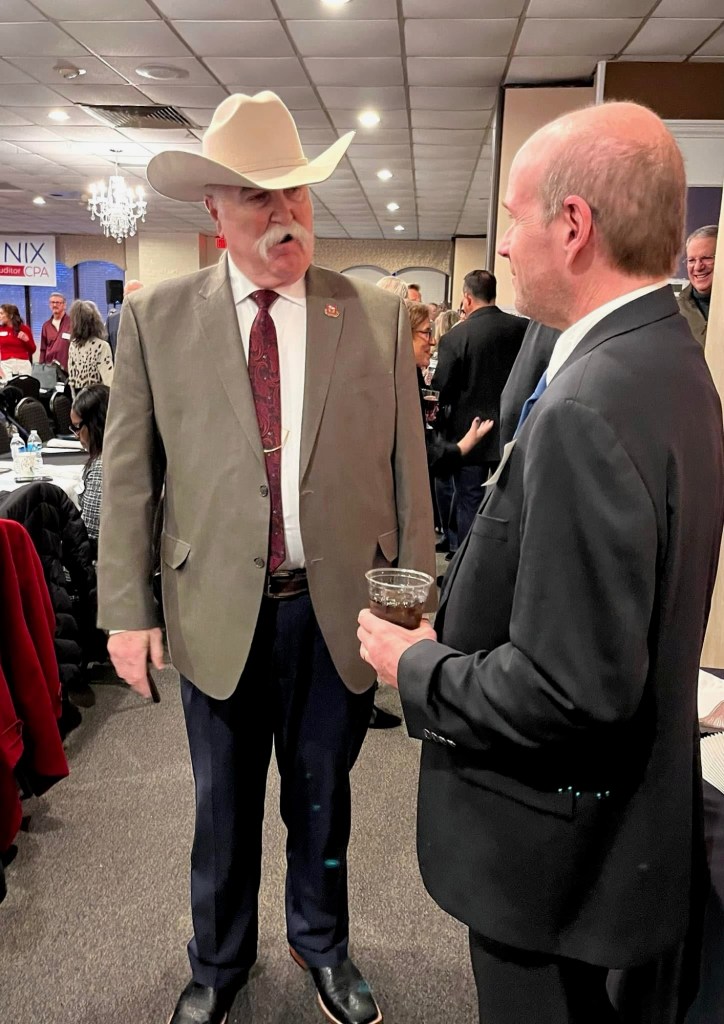
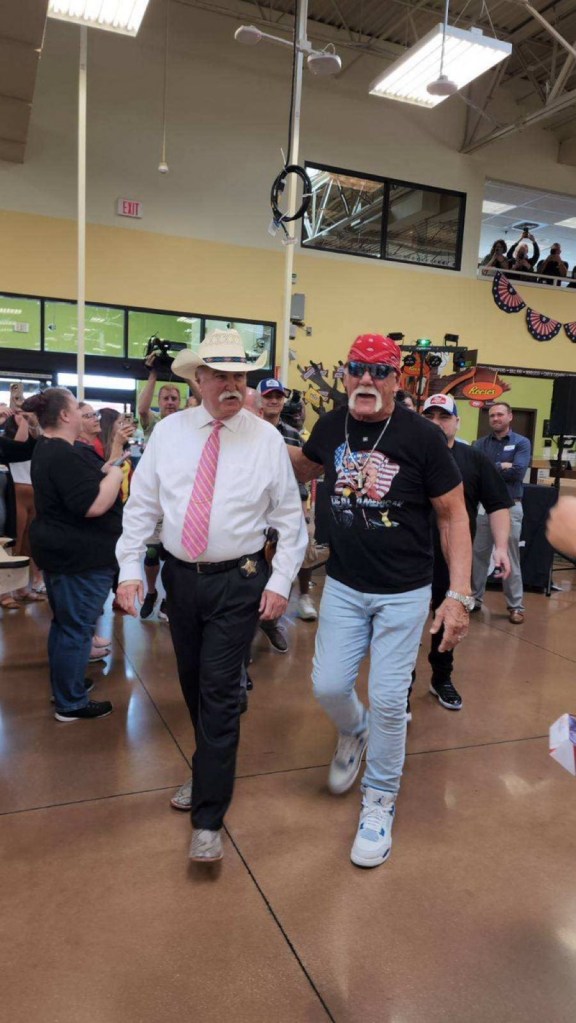
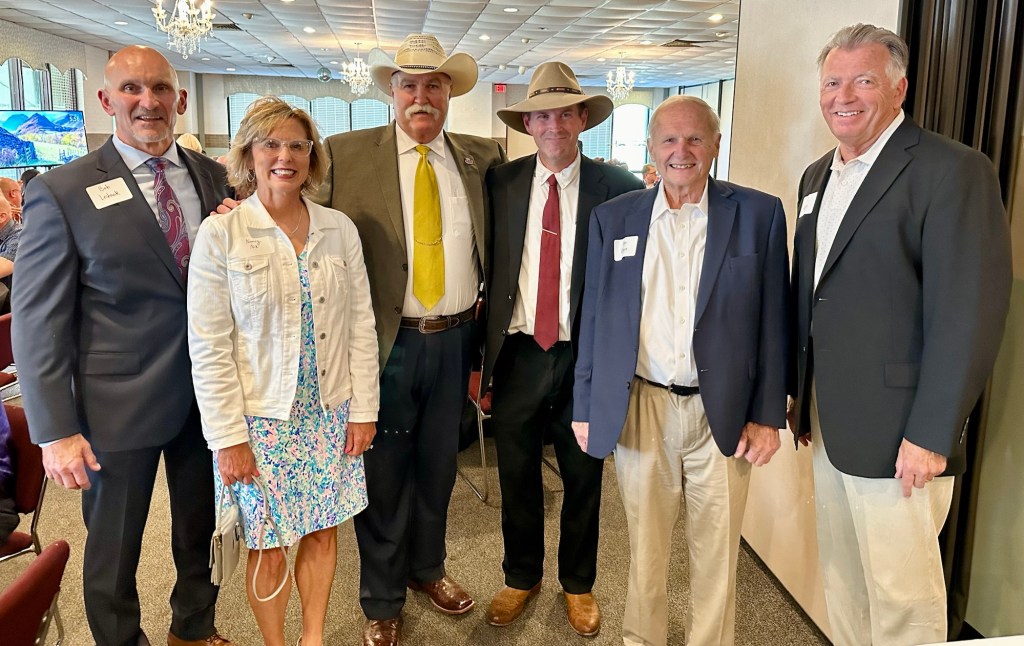
In Butler County, Jones is more than the man who runs the jail and signs the paychecks for deputies. He’s a character in the classic sense: the tall figure in the signature cowboy hat and those big ostrich boots, the one who shows up at fundraisers for youth shooting sports, compares hats with old friends, and isn’t afraid to talk about the realities of the job—the lawsuits that come with the territory, the guns he carries or the ones the department fields, the constant pressure from every direction. He’s been doing this a long time. First elected in 2004, he’s now well into what I’d call his seventh term of service, having worked through multiple governors, multiple presidents, and the full spectrum of political weather in Ohio and beyond. He’s dealt with the Bush years, the Obama years, the Biden years, and whatever comes next. Through all of it, he’s stayed visible, outspoken, and unapologetic in a way that feels increasingly rare.
That visibility is the part a lot of people miss when they talk about what a Sheriff is supposed to do. Some folks think the job is purely about kicking in doors and locking up bad guys. And yes, that work matters—more than most civilians will ever understand. But if you only do the enforcement piece and ignore the executive piece, you eventually lose the community you’re sworn to protect. People start seeing the badge as something distant and ominous rather than something that belongs to them. They start questioning why their tax dollars go to support it. Morale inside the department suffers when the public narrative turns against you. Jones figured this out a long time ago, long before national figures made “brand” a dirty word or a political weapon. He understood that in a republic, especially at the county level where government is closest to the people, you have to build something citizens can latch onto and believe in. You have to make law and order feel like a shared project rather than an imposition.
That’s what I mean when I talk about executive leadership. I’ve written about it in The Gunfighter’s Guide to Business and I’m still working through the lessons in my own professional life—an aerospace executive who spends a lot of hours every week trying to impose will on circumstances, build teams that believe in the mission, and create something durable enough to survive the inevitable storms. The gunfighter doesn’t just draw fast; he creates the conditions where the draw is rarely necessary because the reputation and the relationships do half the work. Same principle applies to a Sheriff’s office. If the community sees the department as “us” rather than “them,” you get better cooperation on tips, better juries, better budgets, better young people considering the career, and a healthier society overall. Jones has spent years cultivating exactly that. He gets on TV. He does the interviews. He shows up. He lets people see the human being behind the badge—the one with the cowboy hat and the straight talk—and that makes all the difference when something goes wrong and the cameras show up for the wrong reasons.
I’ll be honest: when I saw his name on my phone that night, part of me hoped it was the other kind of message. The one where he says they’re getting ready to hit a house or round up some cartel types or serve a warrant that might need an extra set of eyes and a steady hand. I’ve lived long enough and seen enough to know that sometimes the only thing that moves the needle is decisive action on the ground. I would have been in the truck in five minutes, and I think he knows that. But instead he wanted to tell me about the book, and that’s valuable in its own right. Because writing the book is also action—it’s distilling decades of experience into something other people can use. From everything I’ve seen in the descriptions and early word, They Call Me Jonesy is exactly what you’d expect from the man: candid, humorous in that tough-love Midwestern way, deeply patriotic, and full of stories about leadership under pressure, the cost of political correctness, the realities of “the swamp” at every level, and what it actually takes to push back. It’s a call to action for people who still believe in law and order, traditional values, and straight talk. And it comes from someone who’s walked the walk for more than twenty years in one of the most visible law enforcement jobs in Ohio.
We share a mutual friend in David Kern, the longtime Liberty Township trustee. David and I have known each other all my life. He’s always been a solid political figure—practical, engaged, the kind of person who gets things done without needing to be the loudest voice in the room. Jones and I have connected over that shared respect more than once. We’ve not always agreed on every detail of every issue, but we’ve always been able to shake hands, compare cowboy hats (mine’s been a fixture since I was in third or fourth grade, a declaration that I wasn’t going to blend into whatever the culture was selling that week), and keep the relationship real. That matters in a county like ours. It’s how you get things done when the easy path would be to retreat into your own silo and let the rest of the world burn.
There’s something refreshing about a public servant who still understands that the job includes selling the mission. Not in a slick, consultant-driven way—Jones is too much of a character for that—but in the old-fashioned sense of showing people why it’s worth supporting. He’s not afraid to be seen. He’s not afraid to be himself. And because of that, when Butler County residents look at the Sheriff’s Office, they don’t automatically default to suspicion or resentment. They see someone who’s been there through the hard times, who’s willing to say the unpopular thing out loud, and who’s built enough goodwill that the community is willing to give him the benefit of the doubt when the inevitable controversies flare. That’s brand building at its most practical. It’s also leadership at its most effective.
I’m proud of Sheriff Jones for putting this book out into the world. Not every lawman has the discipline or the inclination to turn the raw material of a long career into something readable and useful for the next generation. He’s become something of an international figure in certain circles because of his willingness to speak plainly about immigration, crime, and the erosion of common sense in policy. But he’s stayed rooted here. That says something. And for those of us who call Butler County home, it means we have a Sheriff who gets the big picture: saving America isn’t just a slogan or a national election every four years. It happens in places like this, one relationship, one visible stand, one candid conversation at a time.
The book is available on Amazon right now—“They Call Me Jonesy: Let’s Get Real About Saving America” by Richard K. Jones. I’m looking forward to reading it the moment it lands on my doorstep, and I’ll have more to say once I’ve had a chance to digest it properly. If it captures even a fraction of the personality and the hard-won wisdom I’ve come to associate with the man who sent me that text, it’ll be time well spent. And if you’re the kind of person who still believes that strong, unapologetic leadership at the local level is part of how we turn this country around, then do yourself a favor and pick up a copy too.
In the meantime, I’ll keep my phone close. You never know when the next message from the Sheriff might come through—maybe about the book, maybe about something more immediate. Either way, I’m glad he’s out there, hat and all, doing the work of building something worth believing in. We need more like him.
Footnotes
[1] Richard K. Jones, They Call Me Jonesy: Let’s Get Real About Saving America (Independently published, May 18, 2026). The paperback edition became available around that date; a Kindle edition is also offered. See the official site at theycallmejonesy.com and the Amazon listing for current purchasing options and a free sample.
[2] The book’s public description emphasizes candid leadership lessons drawn from Jones’s decades in corrections and law enforcement, including direct commentary on crime, political correctness, “the swamp,” patriotism, and practical steps for those who want to help save America. Early testimonials have come from figures including former Arizona Sheriff Mark Lamb and former Middletown Police Chief Rodney Muterspaw.
[3] Sheriff Richard K. Jones was first elected Butler County Sheriff in November 2004 (taking office January 2005) and, as of mid-2026, is serving what official records describe as his sixth term. In personal conversation and local perception, the length and continuity of his service often register as an even longer tenure of steady leadership through changing political environments.
[4] Rich Hoffman, The Gunfighter’s Guide to Business (available through standard retailers). The book explores themes of resilience, imposing will on circumstances, building loyal teams, and the executive’s role in creating something people will fight to preserve—lessons that parallel the brand-building and leadership approach discussed here.
[5] Purchase They Call Me Jonesy: Let’s Get Real About Saving America directly through Amazon or the author’s site (theycallmejonesy.com). As of July 2026 it remains a recent release and is easy to find with a quick search for the title and author.
Bibliography
Jones, Richard K. They Call Me Jonesy: Let’s Get Real About Saving America. Independently published, May 18, 2026.
Rich Hoffman is an author, political consultant, and strategic advisor based in Cincinnati, Ohio, and the creator of The Politics of Heaven—a unique framework that connects biblical theology, ancient history, and modern power structures to explain how moral alignment and spiritual forces shape global events. Blending real-world political experience with deep research into archaeology, UFO phenomena, and suppressed historical narratives, Hoffman offers compelling commentary on topics ranging from ancient civilizations and the Dead Sea Scrolls to modern populist movements, paranormal continuity, and leadership strategy in chaotic environments. As the author of The Gunfighter’s Guide to Business and the forthcoming Politics of Heaven, he brings a grounded yet provocative voice to media discussions, supported by firsthand experiences and a cross-disciplinary approach that bridges science, history, and theology. For interviews, speaking engagements, or expert analysis, visit richhoffmanbooks.com or contact directly via phone at 513-307-5815 or email at rhoffman@richhoffmanbooks.com. If you’ve seen the movie, Disclosure Day and want to talk about it and the implications of Presidnet Trump’s UAP disclosures, let me know and we can bring some color to your coverage. https://richhoffmanbooks.com/media-inquiries-broadcast-topics-and-contact-info/?frame-nonce=ad51e7ecba I do have a firsthand UFO encounter to discuss.
George Washington occupies a unique place in the American imagination. His face appears on currency, his name rests upon the nation’s capital, and his reputation has become so intertwined with the founding of the United States that many people think of him only as the victorious commander of the Revolutionary War or the first President. Yet the making of George Washington occurred long before Yorktown, before the Constitutional Convention, and before the presidency itself. The true story of Washington is the story of formation through adversity, failure, hardship, and character. That is why a film centered upon his youth is so important. A society that wishes to understand greatness must study not only triumphs but also the difficult roads that produced them.
The importance of Young Washington lies precisely in its willingness to explore that earlier chapter. Rather than beginning with a celebrated general crossing the Delaware River or presiding over a new republic, the story examines the young man who had not yet become the legend. It reveals Washington during the years when mistakes carried consequences, when ambition collided with reality, and when the wilderness of North America tested the limits of endurance and leadership. Those experiences were not side notes to history. They were the furnace in which the future Father of His Country was forged.
Modern audiences often forget how dangerous eighteenth-century America actually was. The colonies were not peaceful settlements waiting patiently for independence. The frontier remained a contested world of forests, mountains, rivers, Native American nations, French military forces, British colonial ambitions, and competing claims to vast territories stretching westward beyond the Appalachians.[1] Young Washington entered this world as a surveyor and officer, navigating landscapes that were physically unforgiving and politically explosive.
The French and Indian War shaped the future of North America long before the American Revolution. Many historians describe it as the first global war because fighting extended beyond the American colonies into Europe, the Caribbean, India, and the Atlantic world.[2] The outcome would determine which empire dominated much of the continent—into this conflict stepped a young Virginian with little combat experience and enormous expectations resting upon his shoulders.
One of the most fascinating aspects of Washington’s early life was the extraordinary responsibility placed upon him at a remarkably young age. While many modern young adults are encouraged to avoid risk and postpone responsibility, eighteenth-century society frequently demanded the opposite. Washington found himself carrying diplomatic messages through wilderness territories, negotiating with Native American leaders, evaluating military threats, and commanding troops in situations that would challenge experienced officers.[3] Such responsibilities matured him quickly. The lessons learned in forests and mountains would prove no less valuable than those later learned on battlefields or in government chambers.
The story surrounding Fort Necessity remains one of the most important episodes of Washington’s development. It was not his greatest victory. In many respects, it represented a significant defeat. Yet history repeatedly shows that failures often teach more than successes. Built in a vulnerable meadow, the fort placed British colonial forces in a precarious position. French troops and their allies occupied superior terrain within the surrounding wooded areas. Rain transformed the battlefield into a muddy disaster. Washington ultimately surrendered under difficult circumstances in July 1754.[4]
Many historical figures spend their careers attempting to hide their failures. Washington did something different. He learned from them. The humiliation at Fort Necessity did not destroy his reputation; rather, it became one of the experiences that taught caution, patience, logistics, and strategic judgment. Years later, during the Revolutionary War, Washington would demonstrate restraint and discipline that distinguished him from many contemporaries. Those qualities did not emerge from nowhere. They emerged from earlier encounters with defeat and disappointment.
There is also something powerful about physically visiting places connected to history. Reading books provides knowledge, but standing where events occurred provides perspective. The mountains of western Maryland and Pennsylvania remain striking reminders of the challenges faced by colonial soldiers. The terrain itself explains much of the story. Steep ridges, dense forests, winding roads, and isolated valleys reveal why campaigns in that region were so difficult. Geography often becomes an invisible character in historical narratives, and nowhere is that more evident than in Washington’s frontier experience.
The routes that would later become the National Road carry tremendous historical significance as well. Connecting eastern population centers with western territories, they became some of the most important transportation projects in early American history.[5] Yet before roads and highways transformed the region, movement through those mountains demanded determination, courage, and endurance. Washington’s experiences along those routes exposed him to the realities of frontier America and deepened his understanding of the continent he would later help unite.
A film exploring these events succeeds when it respects the material. Historical drama does not require perfect documentation of every detail, but it must convey the spirit, character, and significance of the people involved. According to many viewers familiar with Washington’s biography, Young Washington captures that spirit effectively. The portrayal of Washington as noble without being perfect allows audiences to encounter him as a human being rather than an untouchable monument.
That distinction matters because modern culture frequently swings between extremes. Historical figures are either idealized beyond recognition or condemned without context. Washington deserves neither treatment. He was a man with strengths and flaws, successes and failures, extraordinary abilities and ordinary limitations. What separates him from countless others is not perfection but character. Throughout crises, disappointments, and temptations, he consistently sought duty above personal comfort.[6]
This emphasis upon character may explain why the film resonates so strongly with audiences. Many forms of contemporary entertainment focus upon antiheroes, cynicism, moral ambiguity, or spectacle. Such approaches can produce compelling stories, but they often leave audiences hungry for something different. There remains a deep desire to witness individuals striving toward virtue, honor, courage, and responsibility. Human beings naturally admire excellence. They seek examples of people attempting to become better versions of themselves.
This is one reason George Washington continues to command respect centuries after his death. His achievements cannot be separated from his moral aspirations. He believed leadership required self-control. He believed reputation mattered. He believed public service demanded sacrifice. He understood that power, if not restrained by character, could destroy both leaders and nations.[7]
Few decisions illustrate this more clearly than his resignation of military authority after the American Revolution. History contains countless examples of victorious generals who transformed military success into political dictatorship. Washington chose another path. After securing independence, he surrendered power and returned home. King George III reportedly remarked that such an action would make Washington “the greatest man in the world.”[8] The roots of that decision can be traced back to earlier lessons learned during his youth. The young officer who experienced failure at Fort Necessity eventually became the mature statesman willing to relinquish power.
The success of films like Young Washington also reflects a broader cultural shift. Many audiences increasingly search for stories that celebrate rather than deconstruct. Entertainment once produced numerous historical adventures focused upon courage, exploration, leadership, and national heritage. Classic productions such as Davy Crockett and Zorro attracted viewers not because their heroes were flawless, but because they represented ideals worth pursuing. Such stories reminded audiences that civilization depends upon honorable conduct.
Angel Studios appears to recognize this hunger. The company has developed a reputation for producing projects that emphasize family-friendly storytelling, historical subjects, faith, perseverance, and moral clarity. Whether individual viewers agree with every creative choice is ultimately secondary. The greater significance lies in the fact that audiences continue to support films that treat virtue seriously rather than sarcastically.
The enthusiastic audience response described by many theatergoers reinforces this point. Packed theaters, applause during credits, and viewers remaining in their seats after the film concludes suggest more than mere entertainment value. They suggest emotional investment. People stay because they do not want the experience to end. They remain because something meaningful has occurred. The story has connected them not merely with a plot but with values, memories, and aspirations.
History possesses a unique ability to create that connection. Contemporary debates often divide people, but historical narratives sometimes unite them around shared admiration for courage and perseverance. George Washington serves as one of those rare figures capable of reaching across ideological boundaries. Americans may disagree about countless issues, yet many still recognize the importance of the leadership that guided the nation through its earliest and most fragile years.[9]
Perhaps the most striking aspect of Washington’s story is the consistency between his public life and his private aspirations. The pursuit of self-improvement remained a recurring theme throughout his life. As a young man, he studied, observed, listened, and learned from mistakes. As a military leader, he refined discipline and judgment. As president, he attempted to place national interests above factional interests. Growth never stopped.
That emphasis upon striving rather than perfection carries enduring relevance. Every generation faces moments of disappointment, conflict, and uncertainty. Every individual encounters failures that seem overwhelming in the moment. Washington’s example demonstrates that setbacks need not define a life. Defeat at Fort Necessity did not prevent future greatness. Criticism did not prevent achievement. Hardship did not destroy resolve. Instead, adversity became preparation.
The frontier itself symbolized this process. The forests beyond colonial settlements represented danger, uncertainty, and opportunity. They tested physical endurance while revealing inner character. Washington’s journeys across that landscape helped develop qualities that later proved indispensable. Resourcefulness, patience, courage, adaptability, and resilience emerged not in comfort but in challenge.
A compelling historical film, therefore, accomplishes more than simple education. It invites audiences to reconsider what greatness actually means. Greatness is not merely holding office, winning battles, or receiving recognition. Greatness begins in the difficult choices made before anyone is watching. It begins with responsibility embraced rather than avoided. It begins with the willingness to learn from mistakes rather than deny them.
For that reason, Young Washington offers a valuable contribution to American historical storytelling. It introduces viewers to formative experiences that are often overshadowed by later accomplishments. It encourages appreciation for the long process through which character develops. Most importantly, it reminds audiences that the foundations of leadership are laid long before leadership is publicly recognized.
There is also something refreshing about spending time in the company of admirable characters. Modern culture often celebrates transgression while dismissing virtue as naïve. Yet viewers continue responding positively to stories featuring courage, integrity, loyalty, and self-sacrifice. The reason is simple. Human beings instinctively recognize these traits as desirable. They recognize them as qualities capable of elevating communities, institutions, and nations.
Washington’s story continues to endure because it illustrates that elevation. A young surveyor became a frontier officer. A frontier officer became a military commander. A military commander became the leader of a revolution. A revolutionary leader became the first president. Yet beneath each transformation remained the same aspiration toward honor and duty. The titles changed. The character remained.
Films capable of conveying that truth perform an important cultural service. They preserve memory. They encourage reflection. They connect present generations with the experiences that shaped earlier ones. They provide reminders that history is not simply a collection of dates and events but a record of human choices.
Ultimately, the enduring appeal of George Washington rests upon more than military accomplishments or political achievements. It rests upon the example of a man who repeatedly sought the higher path when easier alternatives existed. The youth who faced defeat in the mountains became the leader who guided a fragile republic. The officer who learned difficult lessons on the frontier became the statesman willing to place principle above personal ambition. The story remains powerful because it speaks to universal themes of growth, responsibility, perseverance, and character.
That is why Young Washington deserves attention. It tells a chapter of history too often ignored. It introduces audiences to the experiences that forged one of the most important figures in American history. It presents nobility without arrogance, courage without recklessness, and patriotism without cynicism. In an era frequently dominated by stories celebrating the worst of human behavior, there is something profoundly valuable about a story centered upon the possibility of becoming better. George Washington’s journey reminds audiences that greatness is not inherited, accidental, or effortless. It is earned through struggle, formed through adversity, and sustained through character. More than two centuries after his death, that lesson remains as relevant as ever.
Footnotes
[1] Fred Anderson, Crucible of War: The Seven Years’ War and the Fate of Empire in British North America, 1754–1766 (New York: Knopf, 2000).
[2] Daniel Baugh, The Global Seven Years’ War 1754–1763 (London: Routledge, 2011).
[3] George Washington, The Journal of Major George Washington (1754).
[4] David Preston, Braddock’s Defeat: The Battle of the Monongahela and the Road to Revolution (Oxford University Press, 2015).
[5] Karl Raitz, The National Road (Johns Hopkins University Press, 1996).
[6] Ron Chernow, Washington: A Life (New York: Penguin Press, 2010).
[7] James Thomas Flexner, George Washington in the American Revolution (Little, Brown and Company, 1968).
[8] Joseph J. Ellis, His Excellency: George Washington (New York: Knopf, 2004).
[9] Gordon S. Wood, The Radicalism of the American Revolution (Vintage Books, 1993).
Bibliography
Anderson, Fred. Crucible of War: The Seven Years’ War and the Fate of Empire in British North America, 1754–1766. New York: Knopf, 2000.
Baugh, Daniel. The Global Seven Years’ War 1754–1763. London: Routledge, 2011.
Chernow, Ron. Washington: A Life. New York: Penguin Press, 2010.
Ellis, Joseph J. His Excellency: George Washington. New York: Knopf, 2004.
Flexner, James Thomas. George Washington in the American Revolution. Boston: Little, Brown and Company, 1968.
Preston, David. Braddock’s Defeat: The Battle of the Monongahela and the Road to Revolution. Oxford: Oxford University Press, 2015.
Raitz, Karl. The National Road. Baltimore: Johns Hopkins University Press, 1996.
Washington, George. The Journal of Major George Washington. Williamsburg, 1754.
Wood, Gordon S. The Radicalism of the American Revolution. New York: Vintage Books, 1993.
Rich Hoffman is an author, political consultant, and strategic advisor based in Cincinnati, Ohio, and the creator of The Politics of Heaven—a unique framework that connects biblical theology, ancient history, and modern power structures to explain how moral alignment and spiritual forces shape global events. Blending real-world political experience with deep research into archaeology, UFO phenomena, and suppressed historical narratives, Hoffman offers compelling commentary on topics ranging from ancient civilizations and the Dead Sea Scrolls to modern populist movements, paranormal continuity, and leadership strategy in chaotic environments. As the author of The Gunfighter’s Guide to Business and the forthcoming Politics of Heaven, he brings a grounded yet provocative voice to media discussions, supported by firsthand experiences and a cross-disciplinary approach that bridges science, history, and theology. For interviews, speaking engagements, or expert analysis, visit richhoffmanbooks.com or contact directly via phone at 513-307-5815 or email at rhoffman@richhoffmanbooks.com. If you’ve seen the movie, Disclosure Day and want to talk about it and the implications of Presidnet Trump’s UAP disclosures, let me know and we can bring some color to your coverage. https://richhoffmanbooks.com/media-inquiries-broadcast-topics-and-contact-info/?frame-nonce=ad51e7ecba I do have a firsthand UFO encounter to discuss.
I’ve spent a good portion of my life studying the patterns of human behavior, the currents of history, and the undercurrents of power that most people never bother to examine deeply. It’s not because I’m some oracle with a crystal ball, but because I’ve immersed myself in the totality of human endeavor—ancient texts, biblical archaeology, philosophy from Nietzsche to the gunfighter ethos of self-reliance, and the hard lessons from real-world politics and business. That perspective has given me an edge in seeing where things are headed long before the crowd catches up. And right now, as we sit here in 2026 watching outright communists and their fellow travelers gain traction in elections across the country, including right here in Ohio, I can’t help but chuckle and say what I’ve said so many times before: I told you so.
It’s astonishing, really, how quickly people forget—or choose to ignore—the warnings. Just the other day, I was flipping through Fox News and saw Jesse Watters, Laura Ingraham, and even Greg Gutfeld on Gutfeld! Looking somewhat bewildered by the state of things. They’re grappling with the radical left’s influence, the populism that Bernie Sanders tapped into and figures like Alexandria Ocasio-Cortez represent, all while trying to navigate corporate media structures that prefer softball topics over hard truths. It’s the same crowd that, more than a decade ago, was all too eager to sideline voices like mine when I dared to call out the creeping socialism in public sector unions, education, and the broader culture. Back then, during the Tea Party era and around 2012, the orthodox establishment thought they could stuff the genie back in the bottle and return to the comfortable George W. Bush days of controlled opposition. They were wrong, and history has proven it.
Let me take you back to those days, because the personal stories provide the color and context that make this more than just abstract political theory. Over a decade ago, I was a frequent guest on radio shows, including weekday slots from 9 to 12 and weekend mornings on platforms like the Darryl Park show, reaching millions. Clear Channel (now iHeartMedia) had higher-ups who would pull me aside or call after my segments. “Rich,” they’d say, “you’re talking about socialism and communism in the public schools and unions—that’s too extreme. Communism is a bad word. You’re upsetting people.” They didn’t see the harm in the rising costs of labor in public education or in the influence of teachers’ unions funded by taxpayer money. I was in the extreme minority pushing back.
The Cincinnati Enquirer even came out to my house for an exposé. They thought my approach to political campaigning was crazy—cracking bullwhips with targets, demonstrating precision, discipline, and the willingness to stand apart from the crowd. My family history with whips as tools of mastery in rural Kentucky informed that symbolism: it’s about imposing will on chaos, not violence. But to them, it was a spectacle. I knew better. Human nature responds to symbols of strength and self-mastery. People sense authenticity. That’s why my message resonated even as the gatekeepers tried to shut it down.
I remember one particular push around public sector unions. John Kasich’s administration in Ohio dealt with reforms, but the backlash was fierce. I argued then, as I do now, that public unions should not be funded with taxpayer dollars in ways that entrench political power at the expense of the very people paying the bills. Unions affiliated with progressive causes, pushing agendas that bleed into classrooms—confiscatory property taxes funding Marxist-influenced education. It wasn’t popular. People told me I was making enemies, that “a lot of people make money off that chaos.” In 2012, things didn’t go well for those reforms in some places, and suddenly I was being pushed aside as an advisor or voice worth listening to. New forces were taking over, they thought. But I’ve seen this cycle many times in my life.
Fast forward, and here we are. Trump’s movement exposed the rot; MAGA became the populist force on the right, while the left’s version coalesced around Sanders and then more radical figures. They tried to gloss it over with Schumer and Pelosi types, promoting AOC as the face of left-wing populism. In Ohio, we see echoes in candidates like Amy Acton, the former health director now running as a Democrat for governor against Vivek Ramaswamy. People are asking, “Is this who we are?” Yes, it is the natural evolution when you let structures rot from within.
Around that time of trouble with Clear Channel, I didn’t care much about staying in the corporate fold. They offered me slots on stations like in Ann Arbor, Michigan, but I wanted freedom. Private ownership was already being gobbled up, a pattern tied to larger centralizing forces. Instead, I joined Matt Clark on his radio show in Michigan—around 2013-2014—and we read the planks of the Communist Manifesto on air. I hadn’t even heard of The Naked Communist by W. Cleon Skousen at first, but once I dug in, it was revelatory. Skousen’s 1958 book distills communist strategy: infiltrating institutions, undermining culture, using education as a weapon. We laid it out on air, and it hit hard because it mirrored what was happening.
The Communist Manifesto by Marx and Engels outlines transitional measures that sound eerily familiar: abolition of private property in land, heavy progressive income taxes, centralization of credit, free public education (with a specific ideological bent), and more. Skousen expanded on how these were being advanced not through overt revolution but gradual infiltration—especially post-WWII, through the New Deal era, the 1960s counterculture, and into public schools via the Department of Education created in the late 1970s. I’ve been railing against this for decades: property taxes as confiscation of wealth to fund socialist indoctrination. Drop your kids off for “babysitting” while they absorb attitudes hostile to capitalism, family, and individual liberty.
Look at the evidence. Public sector unions grew massively, wielding power through collective bargaining that influences policy far beyond wages. In Ohio, the 2011 battles over Senate Bill 5 highlighted the tensions. Critics called reforms anti-worker; supporters saw them as protecting taxpayers. The long-term effect? Generations raised on these ideas are voting for policies that expand government control. We see it in New York and Portland, and in attempts here in Ohio. Soccer, as I’ve joked, is a socialist game—low scores, penalizing individual excellence, team dependency. Contrast that with American football: capitalism, specialization, big plays rewarding talent and strategy. Little cultural elements seep in, shaping mindsets.
Fox News and corporate media during the Trump exile period played a role, too. When they thought he was done, they pivoted to DeSantis and conventional Republicans, hoping to normalize. Many in the media wanted less politics, more sports, grilling hot dogs—anything to avoid offending advertisers. Truth-telling took a backseat to revenue. I warned them. The corporate structure favors controlled narratives. But voters rejected it. Two terms of Trump, ongoing cultural shifts, and now the chickens coming home to roost.
My own journey informs this. I’ve worked since age 12, from manual labor to aerospace executive. I’ve seen power operate in the shadows—from Cincinnati’s riverfront politics in the 1990s and interactions with figures across the aisle to insights from organized networks where coded signals and plausible deniability ruled. Ethics kept me straight: sober, honest, observant. That front-row seat to how establishments maintain control taught me not to let others define my value. I don’t give people power over me through consensus or popularity contests. That’s partly the Overman ethos—imposing will on circumstances—resilience over victimhood.
People ridiculed me for talking about communism in schools or cultural Marxism. “Conspiracy theory!” they said. Yet here we are, with Marxist ideas normalized in curricula, DEI initiatives, attacks on private property, and big government solutions. The Naked Communist warned of this infiltration decades ago. Skousen detailed 45 goals, many of which involved media, education, and the weakening of moral foundations. We’ve seen music shift from 1950s-80s family themes to hedonism and occult influences, eroding values. Public schools, funded by confiscated wealth, became transmission belts for these ideas.
I’ve always offered help sincerely—free advice from decades of study—out of a desire to strengthen families and communities. But many prefer scapegoats and the blame game. They sidelined voices like mine, thinking they could manage the narrative. When lives or policies fall apart, I don’t gloat maliciously, but there is satisfaction in the “I told you so.” It’s not personal profit; it’s validation of studying reality over wishful thinking. In business, politics, family—I’ve seen patterns repeat. Warnings about the socialist/Marxist wave, public unions, and education weren’t new; roots trace to the 1930s Red Decade, FDR’s expansions, and post-war shifts.
Now, with elections looming, including Ohio’s gubernatorial race, the question is whether people will learn. Vivek Ramaswamy represents pro-capitalist, America First energy—make money, innovate, don’t apologize. Opponents tap proletarian resentment: hate the rich, use government to redistribute. This is the apocalypse of learned helplessness versus the gunfighter spirit of self-mastery.
My upcoming book, The Politics of Heaven, delves deeper into these spiritual and historical dimensions—biblical conspiracies, giants, divine rebellion, spiritual warfare manifesting in earthly power struggles. It’s a treasure hunt through history showing how anti-human forces operate. Sharing the manuscript with serious readers has been encouraging. It ties ancient insights to modern battles, urging resilience rooted in faith and truth.
As we recently celebrated the Fourth of July—fireworks, patriotism, soccer matches rallying some—it’s a reminder of what’s at stake. American exceptionalism isn’t compatible with the collectivist mindset. I’ve withdrawn from chasing those who won’t listen; it’s their choice to run into the wall. But for those paying attention, the lessons are clear. Study the sources, question the structures, reject the slow poison.
In the end, my reputation has held because I base decisions on evidence and human nature, not fleeting trends. Whether it’s aliens and UAP disclosure (topics I’ve discussed for years, tying into ancient histories) or the communist undercurrents, time vindicates. People may owe apologies in 20 years, but I won’t hold my breath. The age of “I told you so” is here, not for ego, but as a hard-earned lesson: listen to those who’ve studied the long game, or choke on the consequences. Family, faith, self-reliance—these endure. Everything else is noise.
Footnotes
1. Observations on current Ohio politics and candidates.
2. Personal radio experiences and Clear Channel interactions.
3. W. Cleon Skousen, The Naked Communist (1958).
4. Karl Marx and Friedrich Engels, The Communist Manifesto (1848).
5. Coverage of Ohio public sector union debates, e.g., 2011 reforms.
Bibliography
• Skousen, W. Cleon. The Naked Communist. Ensign Publishing, 1958.
• Marx, Karl, and Friedrich Engels. The Communist Manifesto. 1848.
• Various news sources on Ohio elections 2026 and historical union battles.
• Personal archives and observations from radio, politics, and aerospace career.
Rich Hoffman is an author, political consultant, and strategic advisor based in Cincinnati, Ohio, and the creator of The Politics of Heaven—a unique framework that connects biblical theology, ancient history, and modern power structures to explain how moral alignment and spiritual forces shape global events. Blending real-world political experience with deep research into archaeology, UFO phenomena, and suppressed historical narratives, Hoffman offers compelling commentary on topics ranging from ancient civilizations and the Dead Sea Scrolls to modern populist movements, paranormal continuity, and leadership strategy in chaotic environments. As the author of The Gunfighter’s Guide to Business and the forthcoming Politics of Heaven, he brings a grounded yet provocative voice to media discussions, supported by firsthand experiences and a cross-disciplinary approach that bridges science, history, and theology. For interviews, speaking engagements, or expert analysis, visit richhoffmanbooks.com or contact directly via phone at 513-307-5815 or email at rhoffman@richhoffmanbooks.com. If you’ve seen the movie, Disclosure Day and want to talk about it and the implications of Presidnet Trump’s UAP disclosures, let me know and we can bring some color to your coverage. https://richhoffmanbooks.com/media-inquiries-broadcast-topics-and-contact-info/?frame-nonce=ad51e7ecba I do have a firsthand UFO encounter to discuss.
I had been telling stories about visiting The Wilds, that impressive safari park and conservation center affiliated with the Columbus Zoo out in the hills of Ohio. It is one of those places worth the drive no matter where you are in the state, a sprawling expanse of reclaimed land turned into something that feels close to the real thing—vast pastures under open sky, exotic animals moving with room to stretch their legs. They have rhinos and giraffes in good numbers, along with camels, zebras, cheetahs, and others, all managed with a light enough hand that the illusion of wild freedom holds up pretty well from the back of an open-air safari vehicle.¹
You climb aboard one of their customized tour buses or trucks—solid machines built for the terrain—and set out through a series of large paddocks. The gates are there for a reason. They control movement between sections so the animals do not mix in ways that would cause trouble, and the whole operation runs on a balance between giving the creatures space and keeping things workable for keepers, vets, and paying visitors who want the Serengeti experience without the actual risks of the real wild. Supplemental feeding stations and strategic placement of water to help keep the herds where the staff wants them for health, breeding programs, and viewing. It is wildlife management at a high level, about as good as you are going to get when you are dealing with dangerous and valuable animals on thousands of acres that used to be strip-mined ground.²
The compliant animals make it easy. The rhinos—those massive southern white rhinos—graze and wallow near the resources provided for them, powerful but predictable in their routines. The giraffes tower elegantly, moving between browse stations and open pasture in ways that fit the management plan. Camels shed their coats in season, zebras stay in loose groups, and the whole scene looks like freedom while functioning inside a carefully designed system of fences, gates, rotations, and incentives. It is not a cage, but it is not the true untamed wild either. It is managed pasture with the look of the wild, and most of the animals play their part without fuss.³
That is what made the ostrich stand out to me.
I noticed him early, standing apart from the clusters near the food and water. Tall, alert, head turning with that sharp, curious rhythm ostriches have. While the rhinos and giraffes and camels stayed close to what the keepers had laid out for them, this bird was watching the vehicle. As we moved from one paddock into the next, the gate system did its job—or tried to. The tour vehicle went through, the mechanism closed behind us, and there he was again on the other side. He had figured it out. He waited, timed his approach, slipped in close behind the bus or jeep as it passed, and crossed into the fresh section before the barrier fully secured. Now he was loose in new territory, running with a different group, exploring ground the plan had not assigned him that day.⁴
The reaction from the staff told the whole story. You could hear it in the radio chatter and see it in the quick deployment of groundskeepers in another vehicle. They had to go after him, work him back toward his proper paddock without stressing the other animals or ruining the tour for the people who had paid to see a smooth, wild-like experience. It was not the first time. The bird had made a habit of it. One fence, one gate at a time, and he had learned the vulnerability. He did not need the food station to stay content. He wanted novelty, new company, the chance to impose his own will on the layout the humans had built.⁵
I was rooting for him the whole time.
Here was an animal refusing the script. The other creatures accepted the pasture as given—the convenient food, the predictable safety, the lanes they were expected to occupy. The ostrich treated the whole setup as a puzzle to solve. He used the tour vehicle itself, the thing the keepers relied on to move visitors through their controlled world, as his ticket to the next field. He did not stay near the bowl. He risked the chase, the herding, the temporary disruption, because something in him wanted to see what was over there and who else was around. That kind of ambition is rare in a managed environment, and it is exactly what makes systems better when you let it play out instead of crushing it on sight.⁶
It struck me then, and has stayed with me since, how perfectly this mirrors what I have seen over decades in aerospace and manufacturing. We build our own versions of The Wilds every day. We lay out departments like paddocks, write procedures like fence lines, and place compensation, titles, benefits, and job security like feeding stations to keep people content and predictable. We install gates—approval chains, compliance checklists, annual audits, legacy safety rules—and we staff them with officers whose job is to make sure nothing slips through unplanned. Most people, like most animals in the park, adapt. They stay near the resources, do the expected work, and the machine runs smoothly enough from a distance. Visitors and shareholders see order and productivity.⁷
But then there are the rebels and learning the actual work from the ground up, often see the single-gate weaknesses first. They know which rules came from someone who retired twenty years ago and never got revisited. They spot the places where the process has become theater—compliance for the sake of compliance, documentation that protects no one and slows everything. When they point it out or, worse, quietly work around it to get the real job done, it can be deeply disconcerting to layers of management that have never turned a wrench or stood on a shop floor during a real problem. Knowledge from the ground threatens the illusion of total control. So the system often responds the same way the keepers responded to the ostrich: more rules, more oversight, more “training,” or direct pressure to get back in the assigned pasture.⁸
The cost of that approach is enormous and mostly invisible until you add it up. Direct spending on regulatory compliance labor alone runs into the hundreds of billions annually across American business, with manufacturing carrying a heavy share. Broader economic drag—capital and talent diverted from productive work into compliance bureaucracies, innovations delayed or abandoned because the approval path is too long, small and mid-sized firms crushed under burdens that larger players can absorb—pushes the true opportunity cost into the trillions over time. We lose competitiveness, we lose resilience, and we lose the very people who could have fixed the problems if we had listened instead of herding them back into line. It is not dramatic like a factory closing overnight. It is the slow erosion of capability, the quiet decision by talented hands-on people to stop trying or to leave for places that still value initiative.⁹
SpaceX has shown what happens when you refuse that model. Elon Musk walks into meetings and asks the questions most compliance cultures are designed to avoid: Who wrote this rule? Why did they write it? Does it still make sense, or is it just legacy that nobody wants to touch? A shocking number of requirements get deleted or radically simplified once you trace them back to their origin. The company builds, tests, fails in public view, learns fast, and iterates. Reusable rockets, vertical integration, rapid launch cadence—these did not come from following the old aerospace playbook of exhaustive upfront documentation and risk aversion at every step. They came from treating the rulebook as a starting point to be challenged, not a sacred pasture to remain inside.¹⁰ The results speak for themselves in cost per launch and flight rate. The ostrich approach, applied at scale, forces the entire system to get better.¹¹
I have always had a soft spot for the ostriches in any workforce. I advocate for them on purpose. The ones who will not stay in their lane, who figure out how to get behind the jeep and into the next field, are usually the same people who reveal where the real weaknesses are and who come up with fixes nobody on the compliance side would have imagined. Sometimes they bite you—disrupt schedules, question authority in uncomfortable ways, make the tour guides nervous. That is the price of having them. The alternative is a pasture full of well-fed, predictable animals that look impressive when the bus drives by but generate very little genuine progress or resilience. Their souls get crushed under the weight of never being allowed to test the fence, and the organization slowly loses the capacity to adapt when the real world stops cooperating with the plan.¹²
In my own years moving from hands-on roles into executive responsibility, I saw this pattern repeat across programs and companies. The people who had done the work with their own hands carried an instinctive understanding of what was theater and what was necessary. They were often the first to spot when a procedure had become detached from reality or when a new requirement was solving a problem that no longer existed. Management that lacked that grounding sometimes viewed them as threats to order rather than assets to be unleashed. The organizations that protected and empowered those voices moved faster and solved harder problems. The ones that prioritized perfect compliance and predictable behavior above all else eventually found themselves defending processes that nobody could explain anymore, while competitors who tolerated a little productive rebellion pulled ahead.¹³
The same dynamic shows up far beyond factories and boardrooms. Education systems that reward sitting still and repeating approved answers over curiosity and independent problem-solving. Government bureaucracies where the safest career move is to add another layer of review rather than remove an obsolete one. Cultural institutions that present curated narratives as the full range of choice. We all live inside versions of The Wilds at times—the illusion of open range while the fences, feeding stations, and gate protocols quietly shape what is possible. Most days it feels normal. Then something like that ostrich reminds you that the system only works as well as it does because enough creatures choose not to test the boundaries too hard.¹⁴
What I liked most about watching that bird work the tour was how it improved the keepers. They had to confront the limitation in their current gate setup. They had to think about whether single-point control was enough or whether double-gate airlock procedures, better behavioral enrichment, or adjusted resource placement would reduce the escapes without turning the place into a tighter prison. The ostrich was not just causing trouble; he was doing unpaid consulting work for the management team. He showed them where their assumptions about animal movement and motivation had gaps. A purely compliant population would never have forced that improvement. The rebel paid for his freedom by making the whole operation a little sharper.¹⁵
I left The Wilds that day still thinking about him. The rhinos were impressive in their size and presence. The giraffes were beautiful against the sky. The cheetahs carried that coiled power that makes you respect the food chain. All of them cool in their own ways, and all of them content to operate inside the lanes the humans had drawn. The ostrich was the one I kept coming back to—the non-compliant one, the rule-questioner, the creature willing to go where the keepers did not want him and to accept the temporary chase as the cost of exploration. He did not need the easy food to stay interested in life. He wanted new ground and new company, and he found a way to claim it using the very system designed to contain him.¹⁶
That is the quality I look for and try to protect in the people around me, whether in aerospace programs, manufacturing operations, or just everyday life. Give the ostriches some room. Listen when they show you the weakness in the single gate. Accept that a little productive chaos now and then is cheaper than the long-term stagnation of perfect compliance. The organizations and societies that figure this out keep their edge. The ones that treat every deviation as a threat to be chased back into the assigned pasture eventually discover that their well-managed animals have lost the capacity to handle real trouble when it arrives.¹⁷
I have no interest in living in a world where the only acceptable animals are the ones that stay near the bowl. I would rather deal with the occasional escape, the radio calls, the groundskeepers earning their pay, and the improvements that come from being forced to see the system through the eyes of someone who refuses to accept it as final. That ostrich at The Wilds was doing exactly what the best innovators and problem-solvers do everywhere else: he treated the fence not as an absolute limit but as a problem to be solved, and in doing so he made the entire managed landscape a little more honest and a little more capable.¹⁸
When people ask me now what my favorite animal was on that visit, I do not hesitate. The big ones were impressive. The compliant ones were easy on the eye and the schedule. But the ostrich—the tall, curious, gate-hacking rebel who would not stay in his lane and who spent half the tour where he was not supposed to be—was the one that mattered. He reminded me why I have always had more respect for the people who figure out how to get behind the jeep than for the ones who never leave the feeding station. Encourage that spirit where you find it. Protect it when the compliance officers come with their herding tools. The future does not belong to the perfectly pastured. It belongs to those willing to test the gate now and then, accept the chase, and show the rest of us what we missed by staying comfortable.¹⁹
This experience at The Wilds lingered in my mind long after I returned home, connecting to deeper patterns I have observed across my life and work. The managed illusion of freedom in those paddocks is not so different from the structures we encounter in corporate America, where layers of policy and oversight create the appearance of progress while often stifling the very innovation needed to survive. In aerospace, where I have spent much of my career, the contrast between traditional approaches and more agile ones is particularly stark. Legacy programs can become bogged down in requirements that originated decades ago, defended not because they remain relevant but because changing them would require admitting that the original rationale might no longer hold. Hands-on experience reveals these disconnects quickly, yet articulating them can mark you as difficult rather than valuable.²⁰
Consider the broader implications for American manufacturing. When compliance becomes the primary metric of success, resources flow toward documentation and auditing rather than research, development, or process refinement. Studies have documented how regulatory burdens disproportionately affect smaller firms, creating barriers to entry and expansion that favor incumbents who can afford dedicated compliance departments. The result is slower adoption of new technologies, reduced experimentation on the shop floor, and a workforce trained more in navigating bureaucracy than in solving novel problems. The ostrich in such an environment would be quickly reassigned or sidelined, and the whole system suffers for it.²¹
Elon Musk’s approach at SpaceX offers a compelling counterexample, one I have followed with great interest. By insisting on first-principles thinking—breaking down every assumption to its fundamentals and rebuilding only what proves necessary—the company has achieved breakthroughs that seemed impossible under conventional paradigms. Reusability was not just an engineering challenge; it was a direct challenge to the accepted economics of spaceflight, where expendable vehicles and massive cost-plus contracts had become the norm. Questioning those foundations required a culture that rewarded the kind of boundary-testing the ostrich exemplified. The payoff has been dramatic reductions in launch costs and an unprecedented cadence of operations, reshaping the industry.²²
In reflecting on these matters, I often draw parallels to larger questions of human agency and the systems that seek to channel or constrain it. The ostrich’s refusal to remain content within the provided pasture speaks to something fundamental in the created order: a drive toward exploration, adaptation, and the exercise of will that resists overly deterministic management. In my ongoing work exploring the Politics of Heaven and the deeper spiritual and historical currents shaping human affairs, such metaphors take on added resonance. Just as the keepers at The Wilds maintain an illusion of wildness for educational and conservation purposes, larger forces in society—whether economic, cultural, or institutional—often construct environments that prioritize predictability and control over the messy vitality of genuine freedom. Individuals who, like the ostrich, find ways to slip through the gates challenge those illusions and force reevaluation.²³
This is not to romanticize chaos or dismiss the need for structure. Successful wildlife management at The Wilds demonstrates that boundaries serve important functions: protecting animals, enabling breeding programs, ensuring visitor safety, and advancing conservation goals. Similarly, in business and society, rules around safety, quality, and ethics are essential. The problem arises when those rules multiply unchecked, when compliance officers outnumber innovators, or when the original purpose of a regulation fades from memory while its enforcement mechanisms grow ever more elaborate. The ostrich does not demand the removal of all fences; he demonstrates the value of testing them and adapting the system in response.²⁴
My own background has given me a particular vantage on this tension. Having worked my way up through various roles in industry, from tasks requiring direct physical engagement to overseeing complex programs, I have witnessed how domain knowledge from the “shop floor” often clashes with abstract managerial frameworks. Those who have turned wrenches understand intuitively where procedures add value and where they have become ritual. Encouraging such perspectives requires leadership willing to tolerate temporary disruption for long-term gain—much like the keepers who, instead of permanently punishing the ostrich, likely considered improvements to their gate protocols or enrichment strategies.²⁵
Culturally, the pattern repeats in media and entertainment, where narratives often reinforce managed expectations rather than celebrating the disruptive questioner. From my observations of shifts in popular music and storytelling over decades, there has been a movement away from themes of individual agency and moral courage toward more passive or hedonistic portrayals that keep audiences comfortably within prescribed emotional and ideological lanes. The ostrich disrupts that too, by refusing the easy feed of convention and seeking fresh territory.²⁷
Politically and economically, the stakes are high. Over-reliance on compliance culture contributes to the kinds of institutional failures I encountered during grand jury service, where layers of bureaucracy sometimes obscured accountability and human judgment. Challenging stupid rules is not rebellion for its own sake but a necessary corrective to systems that drift toward self-perpetuation at the expense of their intended purposes. In local Ohio contexts, from school levies to commissioner races, I have seen similar dynamics: entrenched approaches defended vigorously, while innovative voices advocating for accountability and efficiency are treated as threats to the established order.²⁸
Ultimately, the lesson from that lone ostrich at The Wilds is one of balance and appreciation. Systems need structure to function, but they thrive when they incorporate the energy of those who test the edges. In manufacturing, this means streamlining regulations that no longer serve their purpose and empowering frontline workers to propose and implement improvements. In broader society, it means fostering cultures that value inquiry and agency over rote obedience. As someone who has long championed self-mastery, resilience, and the imposition of individual will on challenging circumstances—symbolized in my own life by the whip as a tool of precision and discipline—I see the ostrich as a kindred spirit. He navigates the managed wild with determination and ingenuity, improving it in the process.²⁹
When I share this story, people often smile at the image of the bird sneaking through gates and evading keepers during the tour. But beneath the humor lies a serious point about human flourishing. We are not meant to be permanently pastured, content with provided resources and predictable routines. The drive to explore, to question, to innovate—even at the risk of temporary conflict with authority—is part of what makes progress possible, whether in conservation parks, factories, or the grander arenas of history and spirit. I prefer the company of ostriches, even if they occasionally complicate the tour. They keep things alive, force adaptation, and remind us that true freedom, however constrained by reality, involves the courage to move beyond the feeding station and into the next field.³⁰
So the next time you find yourself in a system that feels overly managed, remember the ostrich at The Wilds. Look for the single gate, time your move, and be willing to run when the keepers come calling. The disruption might just lead to better management for everyone involved. In my experience, it almost always does.
Footnotes
¹ Official descriptions of The Wilds as a 10,000+ acre conservation center with open-range safari experiences, emphasizing educational value and animal welfare. See The Wilds website resources on mission and operations.
² Details on reclaimed strip-mined land conversion, paddock management, and gate systems for species separation and rotational grazing in large wildlife parks.
³ Visitor accounts and park literature highlighting predictable behaviors of rhinos, giraffes, and other megafauna near supplemental feeding and water sources.
⁴ Observations of ostrich curiosity and vehicle-following behavior in safari settings, consistent with ethological studies of ratite intelligence and learning.
⁵ Reports from guides and staff on recurring challenges with individual animals exploiting procedural gaps during tours.
⁶ Analysis of problem-solving in captive animals and its implications for enrichment strategies in conservation management.
⁷ Corporate analogies drawn from organizational behavior literature on incentive structures and departmental silos.
⁸ Personal reflections informed by decades in aerospace, noting tensions between experiential knowledge and administrative layers.
⁹ Quantitative assessments of regulatory compliance burdens, including labor costs and opportunity losses in U.S. manufacturing sectors.
¹⁰ Public statements and case studies on SpaceX’s first-principles engineering methodology and requirement rationalization processes.
¹¹ Industry analyses of launch cost reductions and operational cadence improvements attributable to iterative, challenge-based approaches.
¹² Discussions of innovation cultures versus compliance-oriented management in business strategy texts.
¹³ Insights from program management experience in aerospace regarding the value of shop-floor perspectives.
¹⁴ Broader applications to educational and governmental institutions, drawing on critiques of bureaucratic inertia.
¹⁵ Principles of adaptive management in wildlife conservation, where outlier behaviors drive procedural improvements.
¹⁶ Comparative evaluation of animal temperaments in managed environments and their contributions to system dynamics.
¹⁷ Recommendations for fostering psychological safety and autonomy in high-performance teams.
¹⁸ Philosophical ties between individual agency and systemic resilience, informed by long-term observation.
¹⁹ Synthesis of the ostrich metaphor as applied to personal and professional philosophy of resilience and inquiry.
²⁰ Examination of legacy requirements in traditional aerospace programs versus agile methodologies.
²¹ Empirical studies on regulatory impacts on firm size, innovation rates, and market entry barriers.
²² Detailed accounts of reusable rocket development and associated regulatory and engineering challenges.
²³ Connections to explorations of power structures, agency, and historical patterns in spiritual and societal contexts.
²⁴ Balanced view of necessary boundaries versus over-regulation, with examples from safety and ethical standards.
²⁵ Reflections on career progression and the role of practical knowledge in leadership effectiveness.
²⁶ Applications to intergenerational knowledge transfer and character development through hands-on challenges.
²⁷ Cultural critiques of shifts in media narratives and their effects on perceptions of agency.
²⁸ Observations from civic engagement and public service experiences regarding institutional accountability.
²⁹ Integration with personal symbols of discipline, precision, and moral agency in navigating constraints.
³⁰ Concluding emphasis on the long-term benefits of embracing productive non-conformity for societal and organizational health.
Bibliography
The Wilds. Official website and publications on conservation, safari operations, and animal management (thewilds.org).
Trebbi, Francesco, et al. Research papers on the costs of regulatory compliance in the United States, including establishment-level data analyses (NBER and related).
National Association of Manufacturers. Multiple reports detailing per-employee and aggregate regulatory burdens on U.S. industry.
Musk, Elon, and SpaceX team. Interviews, presentations, and public documentation on engineering philosophy and operational innovations.
Christensen, Clayton M. The Innovator’s Dilemma: When New Technologies Cause Great Firms to Fail. Harvard Business Review Press.
Schumpeter, Joseph A. Capitalism, Socialism and Democracy. Harper & Brothers (on creative destruction).
Various ethology and conservation journals on ratite behavior, wildlife park management, and behavioral enrichment.
Hoffman, Rich. Prior essays and books including The Gunfighter’s Guide to Business and ongoing work on The Politics of Heaven, exploring agency, structures of power, and human systems.
Organizational psychology and management texts on compliance versus innovation cultures (e.g., works on psychological safety and adaptive leadership).
Visitor and video documentation of The Wilds experiences highlighting animal-vehicle interactions.
Government and think tank analyses of manufacturing competitiveness, opportunity costs, and regulatory reform needs.
Additional readings on free will, institutional critique, and historical patterns of rebellion against managed orders for deeper contextual understanding.
Rich Hoffman is an author, political consultant, and strategic advisor based in Cincinnati, Ohio, and the creator of The Politics of Heaven—a unique framework that connects biblical theology, ancient history, and modern power structures to explain how moral alignment and spiritual forces shape global events. Blending real-world political experience with deep research into archaeology, UFO phenomena, and suppressed historical narratives, Hoffman offers compelling commentary on topics ranging from ancient civilizations and the Dead Sea Scrolls to modern populist movements, paranormal continuity, and leadership strategy in chaotic environments. As the author of The Gunfighter’s Guide to Business and the forthcoming Politics of Heaven, he brings a grounded yet provocative voice to media discussions, supported by firsthand experiences and a cross-disciplinary approach that bridges science, history, and theology. For interviews, speaking engagements, or expert analysis, visit richhoffmanbooks.com or contact directly via phone at 513-307-5815 or email at rhoffman@richhoffmanbooks.com. If you’ve seen the movie, Disclosure Day and want to talk about it and the implications of Presidnet Trump’s UAP disclosures, let me know and we can bring some color to your coverage. https://richhoffmanbooks.com/media-inquiries-broadcast-topics-and-contact-info/?frame-nonce=ad51e7ecba I do have a firsthand UFO encounter to discuss.
I don’t want to be that guy who keeps circling back to the same uncomfortable subjects, but the truth doesn’t do me any favors by staying quiet. There was a very good episode of War Room the other day in which Rudy Giuliani spent about 45 minutes across three segments laying out exactly what happened in the Los Angeles mayoral race. Steve Hilton, a strong candidate who was performing well on election night, watched the lead evaporate as ballots kept being counted long after the polls closed. It wasn’t mysterious. It was the same playbook we saw in 2020, refined and deployed again in 2026 wherever the rules allow endless mail-in and provisional ballots with minimal traceability. I put the episode on my blog because people need to see it. When you have no voter ID requirement, same-day voting standards, and the ability to keep counting until the desired number appears, the cheese is already baked into the system. You’re not running a representative republic anymore. You’re running a managed installation process.
Anybody who lived through 2020 knows what massive fraud looks like when it happens in plain sight. Ballots appearing in the middle of the night, unsecured drop boxes, signature verification that was loosened or ignored under the cover of COVID, and the endless counting in key jurisdictions until the numbers flipped. No one of any real consequence was ever punished for it. Rudy Giuliani stepped forward, paid an enormous personal price in wealth, reputation, and legal warfare, and they tried to destroy him. Trump, as a billionaire, could finance his way through the lawfare with good lawyers. Most people cannot. That is the chilling effect. Whistleblowers see what happens to Tina Peters in Colorado or the January 6 defendants and decide the personal cost is too high. The evidence gets suppressed or buried because the people who hold it are intimidated into silence. “Where is the proof?” the critics ask. The proof is in the ruined lives of those who brought it forward and in the jurisdictions where the rules were deliberately written to make fraud easy and detection hard.
Look at California under Gavin Newsom. The rules he and his allies put in place allow ballots to be counted well past election day. No strict voter ID. Mail-in ballots that arrive with weak chain-of-custody protections. Once the election-night numbers come in and the gap is known, the machinery can produce or process just enough additional ballots to close it. Steve Hilton was doing well enough that night, but the final certified results told a different story. This is not speculation. It is the observable pattern in places where the system is designed for it. In Ohio, we saw Amy Acton, as health director, literally cancel an election during COVID because it was supposedly too dangerous to vote in person. The same public health apparatus that pushed masks, lockdowns, and trust-the-science messaging while gain-of-function research funding flowed created the pretext for changing voting rules nationwide. Dr. Fauci’s emails, the lab-leak questions that were dismissed as conspiracy theories, and the lack of accountability afterward showed the credentialed class protecting its own. Rand Paul and others tried to hold them accountable through proper channels, but the Department of Justice under Biden was not interested. The push was always toward more centralized control and less verifiable elections.
I have watched this up close in Ohio politics for years. Butler County, Lakota schools, commissioner races—the local battles matter because they are where the rubber meets the road for families. But the bigger picture is national. Republicans who still carry water for the old institutional order—McConnell holdovers, Susan Collins types—look at their role as sandbagging the tide rather than representing the voters who sent them there. They see Trump as a temporary disruption, a lame duck whose influence will fade, and they want to preserve what they call the “institution” even if it means slow-walking real reform on election security. Bernie Moreno is doing a great job in the Senate from Ohio. JD Vance represents a different, more combative generation. Ten years from now, people like them will be the moderates compared to the harder line the base demands. The Senate is changing, but the sandbaggers are still there, trying to keep the door open just wide enough for the familiar game to continue.
The Marxist playbook is not subtle. Control the flow of information, install sympathetic officials in key positions (secretaries of state, election boards), loosen verification, and use emergencies—real or manufactured—to justify changes that make fraud scalable. COVID was the perfect vehicle. It allowed rule changes that never fully reverted. In blue strongholds and sanctuary jurisdictions, the combination of no ID, mail ballots without robust tracking, and post-election counting creates the opportunity to “find” whatever margin is needed. They laugh about it because they believe the system protects them. Giuliani, despite everything they threw at him, is still willing to go on War Room and say the quiet part out loud. Tina Peters went to jail for trying to preserve records. January 6 protesters who raised their voices about election integrity are still suffering consequences. The message is clear: bring forward the evidence, and we will bankrupt you, jail you, or block you.
I know a thing or two about blocklisting. In my line of work and in the writing I do, talking about these subjects attaches your name to algorithms that throttle reach. Platforms claim to support free speech but run background filters that limit the distribution of content on controversial topics. Pay to remove restrictions if you have the money, or stay throttled. It is a revenue stream and a control mechanism. Yet the truth does not disappear just because the search results are manipulated. Election fraud evidence exists in the affidavits, the video footage, the statistical anomalies, the whistleblower accounts that never received fair hearings, and the simple, observable reality that, in too many places, the counting never seems to stop until the right side wins. Steve Hilton’s race is only the latest example. Unless every state adopts strict voter ID, same-day voting with paper trails, and real-time chain of custody for mail ballots, the door stays open. Federal elections have national consequences, so national standards are not radical—they are constitutional common sense.
People ask why Republicans don’t just win bigger everywhere. Look at the states where elections are reasonably secure versus those that treat ballots like confetti. The contrast is obvious. The rhinos who shrug and say “demographics are destiny” or “we can’t fight the system” are the ones preserving the very mechanisms that import and protect the demographics they claim are inevitable. Trump showed what happens when you fight. The institutional response was lawfare, censorship, and two-tier justice. They tried to destroy him financially and legally because he was too big to intimidate easily. Most candidates are not. That is why the credentialed and connected class thought they could install Biden, prop him up, and continue the managed decline. The economy suffered, borders were chaotic, and trust evaporated. Now in 2026, we see the same tactics locally and statewide.
I have reverence for genuine history and for the people who were here before European settlement. I have read deeply on Tecumseh, Blue Jacket, the Shawnee, and the broader Native nations of the Ohio Valley. Their stories are rich and tragic. But calling every group that happened to occupy land at a particular moment “indigenous” in a way that freezes history and justifies modern political narratives is the same credentialed sleight-of-hand we see in election administration. Cultures rose and fell here long before. The Windover Bog People in Florida, the Old Copper Complex around the Great Lakes, the Hopewell and Adena earthworks—these show sophisticated societies with trade and complexity going back thousands of years. The point is evidence, not ideology. The same applies to elections. Let the ballots be verifiable. Let the voters be who they say they are. Anything less is an invitation to the kind of managed outcomes we keep witnessing.
In my aerospace work, I deal with credentialed experts who cling to old drawings because their name is on them. Changing anything costs time, money, and bruised egos. SpaceX succeeds by ruthlessly eliminating stupid requirements. Gwynne Shotwell laid it out clearly—ditch the unnecessary parts, simplify, iterate faster. That mindset scales. The same disease infects our politics and election systems. Layers of bureaucracy, legacy rules, and protected interests prevent simple fixes like voter ID and paper-trail same-day voting. The result is predictable: outcomes that do not match the obvious sentiment on the ground. People see their neighborhoods change, costs rise, and security erode, yet the installed officials keep winning under rules that favor volume over verification.
The future Senate looks better with people like Bernie Moreno and JD Vance. They represent a harder edge that will not tolerate the old sandbagging. But the McConnell holdovers still act as if their job is to restrain the voters rather than represent them. Trump’s influence, even as a lame duck in their eyes, forced the conversation. The base will not go back to business as usual. Election integrity is non-negotiable. States that leave the door open to post-election counting and unsecured mail ballots are advertising their willingness to let the system be gamed. California’s recent races are Exhibit A. Newsom’s rules enabled the endless counting. The gap on election night was known, and the machinery filled it. This is not democracy. This is an installation.
I have no illusions that talking about it will win me friends in certain circles. My name gets associated with searches for election security and fraud, and my reach gets limited. But the truth is stubborn. Giuliani, despite everything, keeps speaking. Tina Peters paid a heavy price for preserving records. Ordinary people who showed up on January 6 to protest what they saw are still living with the consequences. The credentialed class and their political allies thought they could intimidate everyone into silence. They overreached. The backlash is building because people can see the pattern with their own eyes. When ballots keep appearing until the right number is reached, when ID is treated as oppression rather than basic security, and when emergencies are used to rewrite rules permanently, the representative republic is replaced by something else.
My book The Politics of Heaven explores the deeper spiritual and historical layers—how non-human influences, heavenly politics, and human power structures interact across time. Election fraud fits inside that larger story. It is not just technical cheating. It is the attempt to frustrate the will of a people and impose an agenda that cannot win in the open. The ancient temptation is always to seize control by any means. The modern version uses bureaucracy, emergency powers, and captured institutions. The solution is the same as it has always been: transparency, accountability, and courage. Secure the elections. Demand ID. Insist on same-day counting with paper trails. Punish fraud severely. Anything less leaves the door open for the next round.
The rhinos who think they can wait Trump out and return to the comfortable institutional game are misreading the moment. The base has seen too much. Bernie Marino and others like him point to a different Senate ten years from now—one less tolerant of sandbagging. The future belongs to those willing to close the loopholes and let the people’s will actually decide. Until then, the California model—endless ballots, no ID, counting until victory—is the warning. Giuliani laid it out in the War Room. The episode is worth watching. The pattern is clear. The evidence is in the rules themselves and in the observable results that defy election-night reality.
I keep coming back to these subjects because they matter more than comfort. My job in aerospace shows me daily how clinging to stupid requirements destroys efficiency and progress. The same is true in government and elections. Scrap the unnecessary parts. Simplify. Verify. Iterate on truth instead of protecting the machine. The republic depends on it. The age of disclosure demands it. The Politics of Heaven is coming soon because the heavenly politics have earthly consequences, and we cannot afford to ignore either.
Footnotes
[1] War Room episode with Giuliani on LA mayoral race (recent 2026 broadcast); patterns of post-election counting under California rules.
[2] COVID-era changes in Ohio and nationally, including Acton’s election cancellation; Fauci-related correspondence and gain-of-function context from public records and testimony.
[4] General election security literature on voter ID, mail ballot chain of custody, and statistical anomalies in 2020/2026 races.
Bibliography
• Giuliani, Rudy. Appearances and segments on War Room (2026 episodes covering California election practices).
• Public records on California election rules under the Newsom administration (mail ballot processing, post-election counting).
• Ohio election history, including Amy Acton’s COVID-era decisions (state health department archives).
• Peters, Tina. Case documents and Colorado election integrity proceedings.
• Various congressional testimony on the 2020 election (House and Senate committees).
• ODNI and related reports on broader integrity and influence issues.
• Standard references on election administration: voter ID studies from the Heritage Foundation and state audit reports.
• Personal and local Ohio political context (Butler County, Lakota, commissioner races) from public records.
• The Politics of Heaven manuscript themes (spiritual/historical layers intersecting modern power structures).
• Additional reading: Works on lawfare against Trump and Giuliani; January 6 case summaries; comparative state election security analyses (e.g., states with strict ID vs. expansive mail-in).
Rich Hoffman is an author, political consultant, and strategic advisor based in Cincinnati, Ohio, and the creator of The Politics of Heaven—a unique framework that connects biblical theology, ancient history, and modern power structures to explain how moral alignment and spiritual forces shape global events. Blending real-world political experience with deep research into archaeology, UFO phenomena, and suppressed historical narratives, Hoffman offers compelling commentary on topics ranging from ancient civilizations and the Dead Sea Scrolls to modern populist movements, paranormal continuity, and leadership strategy in chaotic environments. As the author of The Gunfighter’s Guide to Business and the forthcoming Politics of Heaven, he brings a grounded yet provocative voice to media discussions, supported by firsthand experiences and a cross-disciplinary approach that bridges science, history, and theology. For interviews, speaking engagements, or expert analysis, visit richhoffmanbooks.com or contact directly via phone at 513-307-5815 or email at rhoffman@richhoffmanbooks.com. If you’ve seen the movie, Disclosure Day and want to talk about it and the implications of Presidnet Trump’s UAP disclosures, let me know and we can bring some color to your coverage. https://richhoffmanbooks.com/media-inquiries-broadcast-topics-and-contact-info/?frame-nonce=ad51e7ecba I do have a firsthand UFO encounter to discuss.
In January 2020, a UFO was filmed directly over the Newark Earthworks. L.A. Marzulli posted about the video, calling it no coincidence. He sees the site as tied to the Nephilim and fallen angels, pointing to the advanced 18.6-year lunar cycle built into the Octagon as evidence that the knowledge couldn’t have come from the local people alone. To him, the sighting proved a direct link between these ancient mound complexes worldwide and the modern UFO phenomenon. And this story points to a deeper issue: that people like Marzulli have lost any trust in any institutional contributor, and what that means for the continuation of civilization itself. After all, I did have a UFO experience myself, which I attribute more to occult practice than physical contact, which makes the Holy Stones of that region much more interesting and important than they otherwise would be. Because of this and many similar controversies, I am slightly obsessed with how non-human intelligence, whether it be overt demons or aliens from outside of Earth’s gravity imprint, has shaped human civilization in ways that institutional archaeology cannot deal with, because they don’t have the current means, which is exactly why I sat down to write The Politics of Heaven. I was always inspired by Frazer’s Golden Bough and how it created the field of anthropology, and for my own work, I want to contribute to the continued evolution of the vast dialogue of that subject matter: how much non-human intelligence has shaped human society from the very beginning, not with just conspiracy theory consideration, but with hard, observable science.
I’ve been thinking along similar lines, though I come at it from a different angle. The Newark Earthworks aren’t just ceremonial or astronomical in the usual sense. I propose that they function like a giant horizontal clock laid flat on the ground, precisely tracking the moon’s complex 18.6-year nodal cycle. That’s not casual observation — it’s sophisticated long-term record-keeping.
Here’s where it gets interesting to me: if you have entities traveling from outside our normal frame of reference, experiencing time dilation, these massive, visible-from-the-air geometric earthworks would make perfect navigational markers not just for where you are, but for when you are. The stars and moon shift over centuries. A culture that can leave and return after what feels like a short trip to them might need reliable ground references to calibrate exactly which phase of earthly time they’ve arrived in. The Newark complex, with its perfect lunar alignments, would serve that purpose beautifully — like tying ribbons on trees in a forest before GPS existed to keep from getting lost, except on a monumental, landscape scale.
It’s one more piece suggesting the story of these earthworks — and the Holy Stones found nearby — is far from settled. The more we learn about UAPs, the more the old archaeological assumptions look incomplete.
For decades, I had known about the Johnson-Humrickhouse Museum up in Coshocton, the small but remarkable place that holds the Newark Holy Stones—the Decalogue Stone with its figure and Hebrew inscriptions, the Keystone, the associated pieces. I already owned good replicas I had purchased from them years earlier, and I had studied the photographs, the arguments, the woodcut copies David Wyrick made. But I had never stood in front of the actual stones in their case. When the chance came with family—my wife, a daughter, a few of the grandchildren—I took it. We drove out on a day when the museum opened at noon. We arrived early, stood outside for a couple of minutes after the doors opened, and when the young woman who unlocked the door saw us, she looked surprised. They do not get many visitors on an average weekday. I told her I had come a long way to see the Holy Stones. She let us in.
The museum sits in a quiet stretch of central Ohio, not far from the great Newark Earthworks complex that spreads across what is now the city of Newark and the surrounding countryside. Most people driving past on the main roads have no idea what lies just off the pavement. The Great Circle, the Octagon, the long processional avenues—these were not casual dirt piles. They are precise geometric constructions aligned to the movements of the moon over its 18.6-year nodal cycle. The Hopewell people who built and used them, roughly two thousand years ago, understood observational astronomy at a level that still astonishes anyone who takes the time to stand on the viewing platform between the Circle and the Octagon and watch the alignments play out. Avenues once guided people—and perhaps, in their understanding, spirits—along lines that connected earth to sky. Much of it is gone now. Housing developments, roads, restaurants, and an old golf course that has since closed cover what were once open ceremonial spaces. The main highway cuts through what was once part of the complex. What remains is still extraordinary, but it takes imagination and stubbornness to see the full scale of what was built here.
Inside the museum, I wandered through the gift shop first, as I always do in places like this. I was not expecting to find anything new. I already had the Holy Stones replicas at home. Then I saw three flat sandstone pieces sitting among other small items. No price tag stood out. They looked familiar the moment I picked one up—the size, the weight, the carved designs. I knew exactly what it was: a replica of the Wilmington Tablet, the Adena sandstone piece found in Sparks Mound near Wilmington, Ohio, the one now kept at the Ohio History Center in Columbus. The young woman at the counter thought they were coasters. She had to call someone to find a price. Five dollars. I bought one without hesitation. I had been looking for a good replica of that tablet for a long time. The Cincinnati Tablet, found in 1841 when a mound at Fifth and Mound Streets in downtown Cincinnati was leveled for construction—the site is now near a UPS facility—had been displayed for years at the Cincinnati Museum Center before it was removed from the Native American exhibits. It did not fit the prevailing story comfortably. The Wilmington Tablet carries its own mysteries: the main face with its stylized figures, the edges and sides marked in ways that suggest a numerical or identifying system, perhaps a personal marker for someone of importance buried with it, or a template used in ritual or body marking. Adena tablets like these have been interpreted as tattoo stamps, ownership identifiers, or cosmological diagrams. Whatever their precise function, they were important enough to be placed with the dead.
I carried the new replica with me into the exhibit area and sat down in front of the Decalogue Stone. The case holds the stone itself along with its sandstone box. The figure on the front—bearded, robed, holding what appears to be a tablet or scroll—has long been read as Moses. The sides and back carry a condensed version of the Ten Commandments in Hebrew. The carving is competent but not perfect by ancient standards; there are letter forms that mix periods and a few anomalies that scholars have used to argue for a nineteenth-century origin. The museum’s current interpretive panels, updated in recent years, present the stones straightforwardly as forgeries created in the 1860s. The explanation centers on the social and political climate before and during the Civil War. Monogenism—the biblical idea that all humans descend from a single pair, Adam and Eve—stood in opposition to polygenism, the notion that different races were separate species or creations. Polygenist arguments were sometimes used to justify slavery and unequal treatment. A discovery of ancient Hebrew inscriptions in Ohio mounds could be deployed to support monogenism, to argue that biblical history reached the Americas long before Columbus, and thereby to undermine justifications for treating any group of people as less than fully human. David Wyrick, the Newark surveyor and antiquarian who brought the stones forward in 1860, was a man of his time—interested in the mounds, respectful of their builders, and apparently inclined toward biblical literalism and anti-slavery views. His reputation suffered after the findings. He died a few years later, in 1864, amid personal difficulties that included pain and what some accounts describe as heavy use of medication. Most professional archaeologists and historians dismissed the stones as nineteenth-century creations meant to influence the great debate of the age.
David Wyrick died on April 16, 1864, at the age of 57. Contemporary newspaper accounts reported that he died suddenly from an overdose of laudanum, a common opium-based painkiller he had been taking regularly for a long-term painful illness, most likely severe rheumatoid arthritis.
Local records and the original reporting did not list his death as suicide. The official cause was listed as “rheumatism” in some documents, and the newspaper noted the overdose without claiming it was intentional. However, the intense controversy surrounding the Holy Stones, combined with his financial troubles, led later writers to describe it as suicide. That narrative stuck in many books and articles for decades, even though the primary sources from 1864 do not support it.
The stress from the backlash clearly took a heavy toll on him physically and mentally. Still, the evidence shows he was managing chronic pain with medication that ultimately proved fatal. I would propose that it granted non-human intelligence access to his mind under duress, a move that proved catastrophic.
The image in the visitor center is David Wyrick’s 1860 survey map of the Newark Earthworks. It’s a detailed, hand-drawn overhead plan showing the full layout of the Great Circle, the Octagon, the parallel walls connecting them, and the surrounding landscape as it existed at the time. It includes roads, the Ohio and Erie Canal, railroad lines, and even the Great Circle, which was used as the Licking County Fairgrounds.
It’s widely considered one of the most accurate early maps of the site, which is why Ohio History Connection still displays and references it. It’s not an artistic painting; it’s a surveyor’s technical drawing — clean, precise lines with measurements and labels.
I sat there longer than I expected. The grandchildren moved around the room, patient, as children are when grandpa gets quiet in front of old things. My daughter kept the camera ready because she knows the look I get when something lands hard. I felt a familiar weight settle in. I have spent most of my life being the person who says the thing that makes a room go quiet. I do not enjoy it. I would rather study, walk the sites, read the reports, and keep my thoughts to myself. But the pattern forming in my mind as I looked at the Holy Stones and read the museum’s careful, institutionally approved explanation would not stay quiet. The stones may indeed be nineteenth-century work. The letter forms, the timing with Lincoln’s election, the social circles Wyrick moved in—all of that can be documented. Yet the question “why would someone go to this much trouble?” still sits there. The mainstream answer is political and religious motivation in a divided country. That answer is not wrong on its face. It is incomplete.
What struck me, sitting in that chair, was how little room the current framing leaves for the possibility that Wyrick himself was not the originator of the content, or that, even if he carved or commissioned the stones, the impulse and the specific knowledge came from elsewhere. Pain medications of the mid-nineteenth century were not inert. Some had properties that alter consciousness. Wyrick was a man under strain, already deeply engaged with the mounds and their meanings, moving through a landscape where indigenous knowledge and biblical imagination were colliding in real time. Across human history, people in altered states—whether through plants, fasting, ritual, or substances—have reported contact with intelligences that are not their own. They have returned with precise information about astronomy, geometry, architecture, and moral order. The Newark Earthworks themselves demonstrate exactly that kind of precise knowledge: alignments that track the moon’s complex cycle, geometry that rivals anything built in the Old World at the same period. The Hopewell culture that maintained and expanded these sites was part of a vast interaction sphere that moved copper from the Great Lakes, mica from the Appalachians, and ideas across hundreds of miles. They were not isolated. They were connected.
The possibility that non-human intelligences have interacted with human beings across deep time is no longer the fringe claim it once was. Government releases on UAPs in recent years have normalized the conversation in ways that would have been impossible even a decade ago. Films like Disclosure Day and public discussions now explore themes of possession, mind influence, and non-human entities operating through human agents. Some of these portrayals treat the phenomenon as technological or biological. Others, including certain narratives that reached wide audiences, frame it in explicitly spiritual terms—entities that seek to override human sovereignty, countered by faith, symbol, and will. I watched one such portrayal not long before this visit and recognized the pattern immediately. The same dynamic appears in ancient accounts worldwide: shamanic traditions in which practitioners enter altered states to receive knowledge from “the gods” or spirits; biblical descriptions of encounters at burning bushes, on mountaintops, or in temples complete with high place drug use, to a modern eye familiar with high-speed travel and gravitational effects, like interactions with non-local intelligences; the global recurrence of similar architectural and astronomical knowledge appearing in places separated by oceans and centuries.
If non-human intelligences have been present and active, they would not need wooden ships or land bridges to move knowledge. They would need markers. The Newark Earthworks, with their lunar clock and visible geometry, serve perfectly as reference points that can be read from above or used by people on the ground to synchronize time over long intervals. Time dilation is not science fiction; it is a measured fact. Travelers moving at relativistic speeds or operating near significant gravitational gradients experience time differently from observers on Earth’s surface. A short subjective journey for them could correspond to centuries or more here. Upon return, they would need fixed, durable references—alignments to stars and moon, geometric figures visible from altitude, places where the calendar could be read without ambiguity. The Hopewell and Adena landscapes contain exactly those features. So do other ancient sites that display sudden leaps in mathematical and observational sophistication. The question is not whether the knowledge appears; it is where it came from and why it appears in the patterns it does.
The Wilmington Tablet I now own a replica of fits into this larger question. It was buried with someone important enough that their personal marker was placed in the mound. The edge markings that catch the eye when you turn the piece over suggest a system—numbers, ownership, affiliation, or ritual status. Similar tablets from the Adena sphere have been found with red ochre residue consistent with use as printing or stamping devices, possibly for body art that identified lineage, achievement, or spiritual standing. If these were “ID cards” for the dead, they imply a society that tracked individual identity and status with precision across generations. That level of organization recurs in mound-building cultures of the Ohio Valley and beyond. It does not require external input to exist, but the sudden appearance of specific symbolic and mathematical systems in multiple places at roughly the same horizon of development invites the question of common inspiration.
I do not claim the Holy Stones are ancient. The evidence the museum presents for a nineteenth-century creation is substantial and has been reinforced by careful recent work. What I am willing to say, after sitting with the stones and walking the remnants of the earthworks, is that the story we are told about why they exist is too tidy. It reduces a complex man and a complex moment to a simple political hoax. It leaves no room for the possibility that Wyrick, already immersed in the mounds and carrying his own burdens, encountered something—an idea, an image, a compulsion—that felt as if it came from outside himself. That experience would not make the stones ancient. It would make them artifacts of contact, whether the contact was spiritual, psychological, or something we do not yet have language for. The same pattern appears in other times and places where precise knowledge falls into the hands of people under stress or in altered states: the biblical prophets, the builders of megalithic monuments, the medicine people who maintained alignments and oral calendars over centuries.
The destruction of the physical evidence compounds the problem. Newark itself was built over and through one of the most significant ceremonial landscapes in North America. Miamisburg Mound sits in a town that grew around it. Countless smaller mounds were plowed flat or bulldozed for roads and foundations before anyone could record what they contained. The Windover Pond site in Florida, with its 8,000-year-old burials preserving brain tissue and some of the oldest textiles in the Americas, revealed people whose material culture and genetic signals do not fit neatly into later narratives of isolation and simplicity. Bones and artifacts continue to be reburied under policies that prioritize contemporary tribal affiliation over scientific study, even when the genetic and cultural distance is vast. Every time we pave or rebury without full documentation, we remove data that might clarify whether the knowledge visible in these sites was generated locally, transmitted through ordinary human networks, or introduced through less conventional channels.
Archaeologists do the hard, necessary work of excavation, mapping, and dating. I respect that labor. What I question is the institutional reluctance to entertain hypotheses that fall outside the current consensus, especially when the consensus itself rests partly on the absence of evidence that has been destroyed or never collected. The same scholars who correctly note that the Holy Stones’ Hebrew shows characteristics of nineteenth-century Bibles are often the first to dismiss any suggestion that pre-Columbian contact or non-local inspiration could explain other anomalies. The stones become a cautionary tale about forgeries rather than a prompt to ask why a surveyor in 1860 would risk everything to place Hebrew commandments inside a Hopewell-era mound. The answer “politics” is available. The answer “something spoke to him in a way that felt authoritative” is not, because it opens territory that academic archaeology has largely ceded to other disciplines or to popular writers.
My own work, particularly the book I have been completing, looks to hold both the documented record and the larger pattern in view. The Politics of Heaven is not an attack on archaeology. It is a dedicated effort to reconnect what we can see on the ground—earthworks, tablets, alignments, sudden appearances of sophisticated knowledge—with the possibility that non-human intelligences have been active participants in human affairs for a very long time. That possibility does not require rejecting indigenous achievement. It expands it. The people who built and used the Newark complex were sophisticated observers and engineers. They also lived in a world where altered states, visionary experience, and communication with non-ordinary intelligences were part of the cultural toolkit. The same toolkit appears in the ancient Near East, in Britain, in Mesoamerica, and in the shamanic traditions that persist today. The content of what comes through those channels varies, but the mechanism is recurrent.
Sitting in the museum that afternoon, I realized again why I have to write what I am writing. The stones are on display. The earthworks are still there in fragments. The UAP files are coming out. The cultural conversation has shifted enough that a person can say, without immediate professional ruin, that the old categories—isolated continents, purely local invention, no external intelligences—are no longer sufficient to explain the full record. David Wyrick may have been a forger, a dupe, a sincere man who encountered something he could not fully explain, or all three at different moments. He was an abolitionist, like Lincoln, opposed to slavery, and I think he was a pretty good person. The stones he brought forward remain touchstones. They force us to ask what counts as evidence and whose stories get to shape the past. The Wilmington Tablet replica now sits on a shelf in my house. It is not ancient. It is a modern copy of an ancient object that, in turn, raises questions we have not yet answered. When I look at it, I think about the person it once identified or accompanied, the culture that made it important enough to bury, and the long chain of curiosity that brought a replica into my hands on an ordinary afternoon in Coshocton.
The grandchildren eventually pulled me toward the door. We stopped at a small tavern down the road for fish and chips. I set the tablet on the table for a moment and joked that it needed to eat too. The absurdity made them laugh, which was the point. Later, driving home through the Ohio countryside, I kept returning to the image of the Decalogue Stone in its case and the museum’s careful panels explaining its modern origin. They are not wrong about the carving. They are incomplete about the context. The full story of these places and these objects will require more than one discipline and more than one kind of evidence. It will require the willingness to sit with anomalies instead of explaining them away, to walk the remaining earthworks at moonrise, to hold a tablet in your hands and ask what it was for, and to consider that the intelligences our ancestors called gods, spirits, or watchers may have been something we are only now beginning to name again.
I did not want to be the person who has to say these things out loud in public. I still do not. But the pattern is there, the sites are there, the disclosures are happening, and the stones continue to ask their questions. The Johnson-Humrickhouse Museum did its job. It preserved the objects, updated the interpretation, and let a visitor sit quietly in front of them long enough for the next layer of the story to become visible. That is what good museums do. The rest is up to those of us who walk out the door still carrying the questions.
The mainstream interpretation encountered at the museum and the broader synthesis regarding non-human intelligence, time dilation, archaeoastronomy, spiritual influence, and the need to re-evaluate assumptions in light of emerging data. Personal observations and opinions are rendered in the first person throughout. Background on the Newark Earthworks, Hopewell/Adena contexts, Wyrick controversy, specific tablets, and institutional shifts is woven into the narrative rather than presented as separate sections. A bibliography of key sources for further reading follows.)
Selected Sources and Further Reading. But in essence, this is why I wrote The Politics of Heaven, to explore some of these out-of-the-box issues and put them in a useful, modern context.
• Johnson-Humrickhouse Museum, Coshocton, Ohio. Exhibit materials and presentations on the Newark Holy Stones (updated circa 2020–2022), including work by museum staff and archaeologist Brad Lepper. The museum website and related publications detail the stones’ history and current interpretation as nineteenth-century artifacts that reflect monogenist/polygenist debates.
• Wikipedia and scholarly summaries on the Newark Holy Stones (cross-referenced with primary accounts): consensus view as likely a hoax or planted artifacts from 1860, with discussion of Wyrick’s role, letter-form anomalies, and social context pre-Civil War.
• Ohio History Connection / Ohio History Center resources on the Wilmington Tablet (Sparks Mound, Clinton County) and Cincinnati Tablet (Fifth & Mound Streets discovery, 1841). Adena culture context for engraved sandstone tablets.
• Hopewell Ceremonial Earthworks (UNESCO World Heritage Site documentation) and Newark Earthworks visitor resources: lunar alignments, 18.6-year cycle, geometric precision, Hopewell interaction sphere.
• Ross Hamilton, The Mystery of the Serpent Mound (and related works on Ohio earthworks geometry and astronomy).
• Graham Hancock’s publications on ancient civilizations, consciousness, and alternative historical frameworks (for engagement with entheogen and non-local influence hypotheses; contrasted in the essay with sovereignty concerns).
• Biblical Archaeology Review (long-term reference for comparative ancient Near Eastern and American contexts).
• Primary historical accounts of David Wyrick’s discoveries (1860–1861 pamphlets and contemporary reports) and later analyses (e.g., Whittlesey, Lepper, and others on authenticity debates).
• UAP-related government releases and congressional records (post-2017 onward) for the shifting public and official conversation on non-human intelligence.
• Additional context on Adena/Hopewell tablets, Windover Pond site (Florida), time dilation in relativity, and global parallels in archaeoastronomy and altered-state traditions can be found in standard archaeological syntheses and peer-reviewed journals on those topics.
Rich Hoffman is an author, political consultant, and strategic advisor based in Cincinnati, Ohio, and the creator of The Politics of Heaven—a unique framework that connects biblical theology, ancient history, and modern power structures to explain how moral alignment and spiritual forces shape global events. Blending real-world political experience with deep research into archaeology, UFO phenomena, and suppressed historical narratives, Hoffman offers compelling commentary on topics ranging from ancient civilizations and the Dead Sea Scrolls to modern populist movements, paranormal continuity, and leadership strategy in chaotic environments. As the author of The Gunfighter’s Guide to Business and the forthcoming Politics of Heaven, he brings a grounded yet provocative voice to media discussions, supported by firsthand experiences and a cross-disciplinary approach that bridges science, history, and theology. For interviews, speaking engagements, or expert analysis, visit richhoffmanbooks.com or contact directly via phone at 513-307-5815 or email at rhoffman@richhoffmanbooks.com. If you’ve seen the movie, Disclosure Day and want to talk about it and the implications of Presidnet Trump’s UAP disclosures, let me know and we can bring some color to your coverage. https://richhoffmanbooks.com/media-inquiries-broadcast-topics-and-contact-info/?frame-nonce=ad51e7ecba I do have a firsthand UFO encounter to discuss.
A few years ago, the World Economic Forum floated this vision of the future captured in the phrase “you’ll own nothing and be happy.”¹ It sounded like one of those slick marketing pitches that ignores human nature entirely. People don’t like it. They push back in quiet, stubborn ways that reveal something deep about who we are as human beings wired for possession, autonomy, and legacy. I saw it clearly the other day when I was taking someone in their twenties to lunch in my car. They glanced at the dashboard and asked what that strange slot was. It was the CD player. My car isn’t ancient—I tend to drive vehicles for a decade or more—and yet to this young person, it was an artifact from another era.²
I explained that compact discs were once revolutionary. Developed through a collaboration between Philips and Sony starting in the late 1970s, with key demonstrations in 1979 and a commercial launch in 1982, CDs promised perfect digital sound without the pops, scratches, or degradation of vinyl records or the hiss of cassettes.³ By the late 1980s and throughout the 1990s, they dominated the market. I remember the excitement vividly. You could pop one in, skip tracks instantly, and take your music anywhere without worrying about needles or tape wear. I had built plenty of playlists on cassettes by recording songs off vinyl albums in the order I wanted, but CDs made sequencing seamless. You owned it outright. You could drive down the road at highway speeds—through Ohio’s potholes, storms, or whatever the Great Miami River valley threw at you—and the music played reliably. No internet required. No monthly subscription draining your account. No dependency on someone else’s servers.⁴
That young person couldn’t wrap their mind around it. Subscription services like Apple Music and Spotify have shaped their entire adult life. They rent access to a vast library that lives on someone else’s servers. Lose the subscription, the connection, or the company’s goodwill, and it vanishes. I told them that Walmart still carries CDs, though in smaller sections now, and that Cracker Barrel gift shops across the country have racks of vinyl albums selling briskly. People are buying physical music again. They want to own it—put it on the shelf, hold it in their hands, play it whenever they want without begging permission from a corporation. My grandkids notice the library of CDs on our entertainment center. They see the difference between something solid and tangible versus rented pixels in the cloud.⁵
The vinyl resurgence is one of the most astonishing cultural shifts I’ve witnessed. I grew up with LPs. They seemed archaic once CDs arrived with their superior convenience and durability for travel, but now younger generations are embracing records again. According to the Recording Industry Association of America (RIAA), vinyl has grown for 19 consecutive years. In 2025, U.S. vinyl sales surpassed $1 billion for the first time in decades, selling about 46.8 million units and generating nearly three times the revenue of CDs (which sold around 29.5 million units).⁶ Artists like Taylor Swift have driven special editions, but the trend runs deeper. Gen Z and millennials seek that tactile connection in a digital world. I’ve seen it at Target, Walmart, and Cracker Barrel during RV stops. People are hungry for ownership.⁷
This isn’t mere nostalgia. It’s a rejection of the rental economy pushed by globalist visions. The WEF’s 2016 essay by Ida Auken envisioned a 2030 where everything—housing, transportation, entertainment—is rented as a service, delivered conveniently, with no personal clutter of ownership.⁸ Critics rightly called it an attack on human dignity. We are not wired to be perpetual renters. We want our own refrigerator stocked with food we chose, our own yard to tend, our own spouse and children to raise as ours, our own books on the shelf that we can touch and mark. In my family, that physical library of CDs represents more than music—it represents independence.⁹
I remember the full arc of these formats. Vinyl offered warmth and ritual—the act of placing the needle, flipping sides, experiencing the album as intended. But it had drawbacks: bulk, susceptibility to warping, scratches, and the need for careful handling. Cassettes enabled homemade mixtapes and portability in cars, but their quality degraded. CDs felt like liberation when they emerged. Philips and Sony standardized the 12 cm disc to fit Beethoven’s Ninth Symphony entirely, about 74 minutes. The technology used laser reading for error correction, making it robust for travel. You could carry dozens in a slim case. I loved loading them into the car player and having on-demand music without internet or subscriptions.¹⁰
Then the market shifted dramatically. Streaming services offered convenience and unlimited access, but at the cost of true ownership. Apple Music has an enormous catalog—I appreciate the discovery aspect—but I despise the model. You pay monthly forever. Stop paying, and your library disappears. The same happened with movies. Remember rushing to buy the new release on DVD or Blu-ray and building a collection? Now it’s Netflix, HBO Max, or whichever service holds rights that month. Physical sales plummeted as streaming cannibalized them. Yet when content rotates off platforms, demand for ownership spikes again.¹¹
The push toward renting everything ties into deeper political desires for control. Centralized powers—global forums, big tech, financial interests—prefer recurring revenue and dependency. If you own it, you have sovereignty. If you rent, they can change terms, censor content, raise prices, or cut you off. This mirrors broader patterns I’ve seen in politics, aerospace, and culture. In The Gunfighter’s Guide to Business, I discuss self-reliance and imposing your will on circumstances rather than leasing your life from others.¹² The same principle applies here. Look at the excitement around SpaceX’s IPO. People want to own a piece of something real, not just subscribe to access.¹³
During RV travels with my wife across the country—to the Space Coast, Gettysburg, or anywhere the road takes us—I’m reminded why ownership matters. There’s nothing like having your own bed, your own refrigerator with cold drinks and snacks, your own clean bathroom instead of relying on gas station facilities. You rent the campsite, but your stuff is yours. It provides a sense of autonomy even while moving. The same goes for books. I own physical copies. I like touching them, flipping pages, keeping them in my personal library. Downloading or using Audible has its convenience, but it lacks permanence. I’m not a fan of leasing intellectual or cultural space.¹⁴
Power outages here in Ohio—whether from big storms rolling up from the Gulf, tornadoes, or winter events—highlight another advantage. With a generator, you could still play a DVD, Blu-ray, or CD. Streaming dies without connectivity. Personal libraries provide resilience. Vinyl’s comeback, despite being larger and more fragile than CDs, shows the depth of this desire. Records take up space, can warp or scratch, and require more care, yet people buy them enthusiastically.¹⁵
The speed of change amazes me. My car still has a working CD player, yet new vehicles rarely include them. Manufacturers followed the connectivity and subscription trend. But the backlash is real. Who still makes CDs? Companies like Disc Makers and Bison Disc continue short-run and replication services for artists and collectors. Demand persists for reissues, independent releases, and audiophile formats. Given vinyl’s proof of concept, a modest CD revival is plausible—especially for durability, portability, and offline use. Collectors value the format’s sound quality and convenience over vinyl’s ritual.¹⁶
This hunger extends beyond music to the core of human nature. Americans especially cherish property rights. We want our homes, cars, guns, private spaces, and cultural artifacts that reflect our identity. Progressive globalist ideas of shared everything clash with that reality. Socialism’s communal experiments fail because they ignore our drive to build legacies. Music is deeply personal. The songs that shaped your youth, the albums discovered on your own—they become part of you. Renting them feels like renting your memories.¹⁷
I explained all this to that young person over lunch. They had recently bought a vinyl album at Target and were intrigued by the concept of true ownership. CDs seemed novel again. It’s not about rejecting technology—streaming has its place for discovery and variety. But the default shouldn’t be perpetual rental. Ownership provides resilience, no algorithmic control over your playlist, and the satisfaction of pointing to a shelf and saying, “That’s mine.” During family trips, we play our own music without signal drops or interruptions from navigation or texts.¹⁸
The WEF vision assumes adaptation to renting. Evidence suggests otherwise. Vinyl’s 19-year growth streak, physical media’s persistence, and resistance to woke content in Hollywood all signal a market shift. Big tech and entertainment pushed subscription models and certain narratives, alienating audiences. People retreat to what they can control.¹⁹
In my own life, this philosophy runs deep—from early experiences in Cincinnati to aerospace program management. Consultants and rented expertise come and go, but teams that own the mission endure—the same with culture. We want music, books, and stories that belong to us. In The Politics of Heaven, I explore these threads of spiritual, cultural, and economic sovereignty. Ownership isn’t greed; it’s dignity and agency.²⁰
There’s room for balance. Physical formats like vinyl and CDs offer tangible connection. Digital provides access. But forcing everything into rental models driven by political control rather than pure market demand has backfired. The serpent of ownership uncoils in the face of forced renting. People choose it every time they buy a record, a CD, a book, or build their own space. That’s the real future—not a 2030 rented utopia, but timeless human nature asserting itself.
I still pop in a CD when I drive. It works perfectly. And it’s mine. That feeling matters more than any subscription pitch. As I dictate this overlooking the Great Miami River or from the RV, I’m reminded how personal autonomy anchors everything. The market is speaking loudly. Vinyl proves it. CDs could follow. And humans will keep choosing what they can truly call their own—making tomorrow a better day through ownership, not rental.²¹
Footnotes
¹ World Economic Forum / Ida Auken essay “Welcome to 2030” (2016).
² Personal observation from recent interaction.
³ Philips/Sony CD development history, 1979–1982 standardization.
⁴ CD advantages for portability and reliability.
⁵ Retail observations at Walmart, Cracker Barrel, and Target.
⁶ RIAA 2025 Year-End Report: Vinyl $1B+, 46.8M units vs. CDs 29.5M.
⁷ Gen Z/millennial trends in tactile media.
⁸ WEF ownership predictions and criticism.
⁹ Family library of CDs.
¹⁰ Technical history of CD format.
¹¹ Streaming impact on physical media sales.
¹² The Gunfighter’s Guide to Business Principles.
¹³ SpaceX IPO and ownership desire.
¹⁴ RV travel and book ownership reflections.
¹⁵ Vinyl drawbacks vs. appeal.
¹⁶ Current CD manufacturing (Disc Makers, etc.) and revival potential.
¹⁷ Human nature and property rights.
¹⁸ Conversation with a young person.
¹⁹ Cultural and market backlash.
²⁰ Ties to The Politics of Heaven.
²¹ Closing personal philosophy.
Bibliography
• Recording Industry Association of America (RIAA). 2025 Year-End Recorded Music Revenue Report.
• World Economic Forum. Ida Auken, “Welcome to 2030” (2016).
• Philips/Sony historical documentation on CD development.
• Rich Hoffman, The Gunfighter’s Guide to Business and The Politics of Heaven.
• Industry reports on physical media trends (Disc Makers, retail observations).
Rich Hoffman is an author, political consultant, and strategic advisor based in Cincinnati, Ohio, and the creator of The Politics of Heaven—a unique framework that connects biblical theology, ancient history, and modern power structures to explain how moral alignment and spiritual forces shape global events. Blending real-world political experience with deep research into archaeology, UFO phenomena, and suppressed historical narratives, Hoffman offers compelling commentary on topics ranging from ancient civilizations and the Dead Sea Scrolls to modern populist movements, paranormal continuity, and leadership strategy in chaotic environments. As the author of The Gunfighter’s Guide to Business and the forthcoming Politics of Heaven, he brings a grounded yet provocative voice to media discussions, supported by firsthand experiences and a cross-disciplinary approach that bridges science, history, and theology. For interviews, speaking engagements, or expert analysis, visit richhoffmanbooks.com or contact directly via phone at 513-307-5815 or email at rhoffman@richhoffmanbooks.com. If you’ve seen the movie, Disclosure Day and want to talk about it and the implications of Presidnet Trump’s UAP disclosures, let me know and we can bring some color to your coverage. https://richhoffmanbooks.com/media-inquiries-broadcast-topics-and-contact-info/?frame-nonce=ad51e7ecba I do have a firsthand UFO encounter to discuss.
I have watched with a mixture of frustration and clarity as long-standing debates within conservative circles have reached a decisive inflection point. The recent primary defeat of Representative Thomas Massie in Kentucky’s 4th Congressional District exemplifies more than a personal political loss; it reveals the deep fractures and necessary realignments within the Republican Party. Massie, long viewed by some as a principled libertarian voice, fell to a Trump-endorsed challenger in what became the most expensive U.S. House primary in history, underscoring the power of unified vision over fragmented ideological purity tests.
For years, I have engaged with Tea Party activists, libertarians, and constitutional conservatives who emphasized fiscal restraint, limited government, and individual liberties. Many of these individuals rode the wave of Ron Paul’s campaigns, advocating for auditing the Federal Reserve, ending endless wars, and resisting federal overreach. I respected their sincerity. Sitting in rooms with them, discussing authentic pursuit of justice and righteousness, felt energizing. Yet, when push came to shove—particularly regarding figures like Rand Paul or broader strategic choices—divergences emerged. Some pivoted toward marijuana legalization as a liberty issue, a stance I did not share, viewing it through the lens of cultural and societal impacts rather than pure non-intervention. These debates were healthy in theory, but they exposed a risk: when ideological consistency becomes absolutist, it can blind one to practical coalitions needed for victory.
Massie’s loss was not merely about one congressman. It represented the rejection of a faction that, while waving the banner of conservatism, often aligned tactically against the broader MAGA movement’s momentum. Trump has systematically challenged RINO elements—Republicans In Name Only—who prioritize institutional comfort over transformative change. Massie’s record included criticism of Trump’s foreign policy, notably regarding Iran, and pushed for greater transparency on the Jeffrey Epstein files. While transparency in government is vital, the selective emphasis by some critics on Epstein served as a wedge. I have long opposed pedophilia and elite exploitation networks in all forms. Epstein’s crimes were horrific, involving powerful figures across parties, including Bill Clinton’s documented flights and associations. Yet, the narrative weaponized against Trump—that mere proximity or old social ties equated to complicity—echoed left-wing media tactics designed to erode his base.
I recall the Epstein files’ long shadow. Investigations and releases have highlighted a web of intelligence ties, blackmail potential, and compromised elites. Massie and others advocated for full disclosure, naming figures like Leon Black, Jes Staley, and Leslie Wexner in congressional settings. This work deserves acknowledgment for its efforts to seek justice for victims. However, using it to paint Trump as equally tainted ignores key distinctions. Trump banned Epstein from Mar-a-Lago after reports of inappropriate conduct, and no credible evidence from the files has substantiated direct involvement in criminal acts matching the scale pushed in opposition narratives. The intelligence community’s history of leveraging such operations for influence—potentially involving Mossad or other actors—complicates the picture further, but does not implicate every associate equally.
The pedophilia smear tactic is particularly insidious. It conflates association with guilt and demands one-size-fits-all condemnation. Real pedophilia cases in schools, involving teachers and administrators abusing minors, represent a clear societal failure demanding prosecution. Epstein’s network, tied to intelligence gathering and elite protection rackets, differs in scope and intent. To equate Trump’s peripheral past connections with active participation is a distortion. Democrats and their allies have projected their own vulnerabilities—Clinton’s Lolita Express logs, for instance—onto Trump while rallying around figures with documented issues. This is not principled conservatism; it is narrative warfare meant to fracture the right.
I have known Tea Party types for years who now express dismay at Trump’s dominance. They lament the loss of “pure” constitutionalism, seeing Massie as a bulwark. Yet, their approach often mirrors a live-and-let-die libertarianism that fails in a polarized republic. Government is not absent; it is captured. Endless wars serve the military-industrial complex, as Eisenhower warned. Fiscal irresponsibility balloons debt. Cultural decay advances through institutions. Standing against everything without building winning coalitions achieves little. Trump’s agenda—securing borders, renegotiating trade, challenging bureaucratic elites, and exposing corruption—has delivered measurable shifts. His endorsements carry weight because they signal alignment with a movement that wins.
Consider parallel dynamics in Ohio. Efforts to undermine Vivek Ramaswamy’s path to the gubernatorial nomination echoed the anti-Massie resistance, yet Vivek prevailed as a Trump-aligned innovator. Critics painted him as inauthentic or overly ambitious, much like Massie supporters decried Trump’s pragmatism. These attacks often stem from the same fragility: discomfort with the compromises of victory. I prefer winning. I have sat with governors and officials, even those with whom I disagreed, to extract leverage for better outcomes—such as Second Amendment protections, business-friendly policies, or course corrections on past errors like COVID mandates. Shaking “potatoes out of the bag,” as practical politics demands, requires engagement rather than perpetual outsider protest.
Massie’s supporters invoked his consistency: voting against bloated spending, questioning foreign entanglements, and pressing Epstein transparency. These are defensible in isolation. However, consistency without adaptability risks irrelevance. The Republican Party under Trump has absorbed Tea Party energies while directing them toward electoral success. Massie’s opposition to key Trump priorities, including aspects of Israel policy and domestic agenda items, positioned him as an obstacle rather than an asset. Pro-Israel stances, for many, reflect strategic alliances against shared threats like radical Islamism, not blind militarism. Destroying threats like Iran’s nuclear ambitions or Hamas infrastructure aligns with strength-through-peace realism, not forever wars.
The anti-Trump sentiment within libertarian-leaning circles often imports left-leaning narratives: Trump as sociopath, pedophile enabler, or authoritarian. These claims crumble under scrutiny. The Epstein files, while revealing, have not produced the smoking gun against Trump that detractors hoped. Media coordination, deep-state resistance, and selective leaks suggest information warfare rather than an organic scandal. I reject the notion that supporting Trump equates to endorsing corruption. Pedophilia is abhorrent regardless of politics. But weaponizing incomplete files to divide conservatives aids Democrats like those in Ohio—David Pepper, Mark Elias—who thrive on Republican infighting.
My experience in media and commentary has reinforced independence. No sponsors dictate my views. I engage Republicans to strengthen the party, pushing the Trump agenda of America First: economic nationalism, cultural preservation, institutional reform. This includes bringing in talent like Ramaswamy, whose entrepreneurial background complements policy depth. Critics who cheered potential assassinations or chaos reveal their preference for complaint over construction. They validate existence through opposition, not governance.
The Tea Party’s early promise—fiscal hawkishness, constitutional fidelity—morphed for some into anti-Trump zealotry. Ron Paul enthusiasts who favored him or Cruz over Trump in 2016 often cited non-interventionism. Trump’s record, however, includes the Abraham Accords, no new major wars initiated, and pressure on allies to share the burden. Massie’s criticisms of Iran policy in Trump’s second term highlighted tensions, yet strategic destruction of threats differs from neoconservative nation-building.
Epstein’s case warrants full accountability. Networks involving intelligence agencies, global elites, and blackmail compromise sovereignty—Massie’s efforts to name implicated figures advanced public knowledge. Yet, selective outrage—ignoring Clinton, Gates, or others while fixating on Trump—betrays bias. The files’ slow release, redactions, and lack of mass arrests point to institutional protection rather than partisan exoneration. Victims deserve justice beyond political theater.
Broader lessons emerge. Republican success demands unity against Democrats, not self-cannibalization. Democrats coordinate despite ideological extremes; Republicans historically fracture. Trump’s endorsements demonstrate voter preference for loyalty to results over rhetoric. Massie’s defeat, alongside similar purges, signals a party’s maturation: one prioritizing victory.
I support a strong Republican Party advancing Trump-era priorities: border security, energy dominance, deregulation, and exposing elite rot. Libertarian purity has value in discourse but falters in governance. Coalitions require compromise—agreeing on enough to defeat the left. Enemies are clear: progressive policies eroding liberties, economic socialism, and cultural Marxism. Internal division aids them.
Friends from Tea Party days feel betrayed by my stance. I value their sincerity but choose logic. Winning requires embracing imperfect vehicles for larger goals. Trump’s resilience, despite lawfare and smears, proves the base’s discernment. Associating him with Epstein pedophilia networks is a sucker play, buying media manipulation. Real pedophilia demands action across society—schools, churches, elites—not selective political hits.
In Ohio and nationally, patterns repeat. Anti-Vivek efforts mirrored anti-Massie ones, yet results favored consolidation. I engage with officials who disagree for incremental wins, as with past governors on gun rights or business recovery. Perpetual opposition yields nothing; leverage does.
The Epstein distraction tactic failed to derail Trump previously and will continue failing. Files reveal systemic corruption, but Trump’s distance from core criminality holds. This is not denial but contextual realism. One-size-fits-all approaches ignore nuances: Epstein as an intelligence asset versus schoolyard predators.
Ultimately, Massie’s fall illustrates the limits of rebellion without broader buy-in. Principles matter, but so does efficacy. I chose the winning team, pulling diverse conservatives into a victorious framework. Democrats are the primary adversary. Strengthening the GOP under Trump advances that fight. Libertarians who cannot adapt risk marginalization. Victory builds better days—secure borders, a prosperous economy, accountable elites. This path, though imperfect, delivers where isolation does not.
Footnotes
¹ Primary results and spending data from AP and NPR reporting, May 2026.
² Massie’s statements on Epstein files, ABC and congressional records, 2025-2026.
³ Trump-Massie history, NBC and WSJ timelines.
⁴ Ohio gubernatorial primary outcomes, BBC and NBC, May 2026.
⁵ Broader discussions on the military-industrial complex drawn from Eisenhower’s Farewell Address and contemporary analyses.
Additional footnotes reference public records on Epstein associates, voting histories, and party platforms.
Bibliography for Further Reading
• Associated Press. “Takeaways from Tuesday’s Primaries: Massie’s Loss Leaves No Doubt About Trump’s Power Over the GOP.” May 2026.
• NPR. “Endorsed by Trump, Ed Gallrein Defeats Rep. Thomas Massie.” May 19, 2026.
• The Hill. “Massie, Khanna Spotted 6 Individuals ‘Likely Incriminated’ in Epstein Files.” February 2026.
• CBS Austin. “Lawmaker Names Three Men from the Epstein Files.” February 2026.
• Wall Street Journal. “Thomas Massie’s Lonely and Expensive Fight Against Trump.” May 2026.
• NBC News. “Rep. Thomas Massie Confronts the Full Force of Trump’s Wrath.” May 2026.
• BBC. “Vivek Ramaswamy Wins Republican Nomination for Ohio Governor.” May 2026.
• Forbes. “Rep. Thomas Massie Loses Primary After Trump Nemesis Campaign.” May 2026.
• Reuters. “Trump Purges Another Republican Critic with Massie Defeat.” May 2026.
• Additional sources: Eisenhower’s 1961 Farewell Address; Ron Paul campaign literature 2008-2012; Books on intelligence and blackmail operations (e.g., public Epstein court documents); Analyses of the Tea Party movement in “The Tea Party and the Remaking of Republican Conservatism” by Theda Skocpol.
• Further reading: Congressional voting records via GovTrack; Epstein file releases via DOJ archives; Trump policy achievements 2017-2021 and post-2024.
Rich Hoffman is an aerospace executive, political strategist, systems thinker, and independent researcher of ancient history, the paranormal, and the Dead Sea Scrolls tradition. His life in high‑stakes manufacturing, high‑level politics, and cross‑functional crisis management gives him a field‑tested understanding of power — both human and unseen.
He has advised candidates, executives, and public leaders, while conducting deep, hands‑on exploration of archaeological and supernatural hotspots across the world.
Hoffman writes with the credibility of a problem-solver, the curiosity of an archaeologist, and the courage of a frontline witness who has gone to very scary places and reported what lurked there. Hoffman has authored books including The Symposium of Justice, The Gunfighter’s Guide to Business, and Tail of the Dragon, often exploring themes of freedom, individual will, and societal structures through a lens influenced by philosophy (e.g., Nietzschean overman concepts) and current events.