
The Real Herbie at the Pump: Why Refinery Capacity, Not Crude Supply, Explains High Gas Prices

Every election cycle the same conversation plays on cable news and social media. Gas prices are high, so the argument turns to Venezuela, Saudi Arabia, Iran, or domestic drilling. The assumption is that more crude oil automatically means cheaper gasoline at the station. It does not. Crude is the feedstock. The binding constraint is the processing capacity that turns that crude into finished products people actually burn. That constraint has a name in management theory. It is Herbie.

Eliyahu Goldratt’s 1984 book The Goal introduced the Theory of Constraints through a simple story. On a Boy Scout hike, the slowest kid, Herbie, sets the pace for the entire line no matter how fast everyone else can walk. Fix Herbie and throughput improves. Ignore him and every other improvement is wasted. In American fuel markets right now, refining capacity is Herbie. We have enough crude. We do not have enough slack in the plants that process it, and the policy environment that created that condition has been running for decades.[1]

How Many Refineries We Actually Have

As of January 1, 2026, the Energy Information Administration counted roughly 130 operable petroleum refineries in the United States with atmospheric crude distillation capacity near 18.16 million barrels per day.[2][3] That figure sounds substantial until it is stacked against history. In 1982 there were 301 refineries. We have lost roughly 171 plants, a decline of more than half.[4] Capacity barely rose—from about 17.9 million barrels per day then to the current level—because the industry consolidated. The average refinery grew from roughly 59,000 barrels per day to nearly 140,000.

Marathon’s Garyville plant in Louisiana opened in 1977 at about 200,000 barrels per day and now runs over 617,000. ExxonMobil expanded its Beaumont facility in 2023. Fewer doors, bigger rooms. Capacity peaked near 18.98 million barrels per day in January 2020 and has been sliding since.[5] Recent closures accelerated the drop. Phillips 66’s Los Angeles-area refinery (about 139,000 barrels per day) ceased crude processing in late 2025. Valero’s Benicia refinery (roughly 145,000–170,000 barrels per day) is scheduled to shut by spring 2026. Together those two plants alone remove several hundred thousand barrels per day of West Coast capacity in roughly a year and a half. Gross removals since 2020 total around 1.7 million barrels per day even after expansions elsewhere.[6][7]

Utilization, Slack, and Where the Barrels Go

Total operable capacity of 18.16 million barrels per day sounds adequate until you look at actual runs. In mid-October 2026, U.S. refineries were processing about 16.6 million barrels per day of crude—93.4 percent utilization for the week ending October 16. The five-year average sits near 87 percent. Over the summer of 2026 the fleet averaged more than 95 percent from May through September, the highest sustained rate since 1998.[8][9] When plants run that hard there is almost no spare capacity to absorb a hurricane, an unplanned outage, or a sudden demand spike.

Gasoline output is running near 9.8 million barrels per day while domestic gasoline demand sits around 8.7 million. The gap is filled by exports. The United States is now the world’s largest exporter of refined products, shipping more than 1.5 million barrels per day of diesel alone.[10] Those exports are not a conspiracy. They are rational responses to price signals in a market where domestic refining capacity is tight and global product markets are tight. The result is that domestic prices stay elevated even when crude itself is not the bottleneck. Diesel is the sharper pressure point. Harbor diesel crack spreads have run well above gasoline cracks for extended periods because global refining capacity has been constrained by events in the Middle East, Russia, and elsewhere at the same time U.S. plants are already pinned near full utilization.

Why We Do Not Build More

A modern large-scale refinery costs $10–20 billion and takes five to seven years to permit and construct under current rules. Environmental reviews, air permits, water permits, and litigation can kill a project regardless of engineering feasibility. Demand uncertainty compounds the problem. Investors looking at long-term electric-vehicle adoption curves and fuel-efficiency standards are reluctant to underwrite a fifty-year payback on an asset whose primary market is expected to shrink. The last major U.S. refinery built from scratch was Marathon’s Garyville plant in 1977. A small 45,000-barrel-per-day facility in Galveston that started in 2022 is the most recent addition of any size.

The industry responded rationally to the constraints it faced. Companies expanded existing sites where permits were easier and closed plants where compliance costs exceeded returns. That is not a market failure in the classical sense. It is the predictable outcome of policy choices that raised the cost and risk of refining relative to other uses of capital.

California as the Extreme Case

California illustrates the mechanism most clearly. The state has unique fuel specifications, limited pipeline access from the Gulf Coast, and therefore relies heavily on in-state refining or waterborne imports. Recent closures have driven prices well above the national average—California regular has been reported near $5.89 while the national EIA weekly average sat around $4.27 for the week of October 26 and AAA’s daily figure near $4.25. Ohio has been closer to $4.30.[11]

Valero’s CEO was direct: the regulatory and enforcement environment in California is the most stringent and difficult of anywhere else in North America, and the Benicia plant cost considerably more to maintain than the company’s other California facility. The company booked a large impairment before deciding to exit. Phillips 66’s decision followed a similar logic. A stack of rules—the Low Carbon Fuel Standard, cap-and-trade allowance costs, unique CARB fuel specifications, and groundwater remediation requirements—raised operating costs while making long-term expansion unattractive. Proposals that would have given the state energy commission additional control over inventory levels and maintenance schedules added further uncertainty. The asymmetry is striking: imported fuel does not face the same compliance costs as in-state refining. The regulation does not simply raise the price of the product; it makes continued operation of the plant less profitable than shutting it down and sourcing from elsewhere.[12][13]

Herbie, Policy, and the Parallel in Other Energy Markets

The Theory of Constraints applies cleanly. Find the bottleneck, understand what slows it, and address that constraint directly. Yelling at crude suppliers does not remove Herbie when the processing plants are already running above 95 percent. The same logic appears in electricity markets. Nuclear power has been constrained for decades by cost and permitting rather than physics. Solar and wind have become the cheapest sources of new generation in many regions, yet they do not produce when it is dark or calm. The system still requires firm, dispatchable capacity. Policies that make nuclear or additional gas capacity difficult to build leave the grid with its own Herbie—the absence of reliable firm power that can respond when intermittent sources drop.

In both fuels and power, the constraint was engineered. Twenty years of policy aimed at reducing fossil-fuel use made refining and certain forms of firm generation less attractive relative to other investments. Companies responded by allocating capital elsewhere. The resulting tightness is not an accident; it is the outcome the rules produced. Short-term measures—Strategic Petroleum Reserve releases, Defense Production Act funding, temporary import adjustments—can ease acute shortages, but they do not restore spare capacity. Prices remain elevated as long as global refining capacity stays constrained and domestic plants have little slack.

What Actually Moves Prices and What Voters Should Watch

The Iranian conflict and other geopolitical events affect prices, but mainly by providing cover for wider margins when the underlying system is already tight. Lost refining capacity in the Middle East, Russia, and elsewhere removed millions of barrels per day of product supply at the same time U.S. plants were running near maximum. The war did not create the domestic bottleneck; it exposed how little buffer existed.

Long-term solutions fall into two categories. One is regulatory reform that lowers the cost and time required to expand existing plants or build new ones—particularly the unique California rules and the broader permitting gauntlet. That directly addresses Herbie. The other is to accept that large-scale refining will not return under current rules and to accelerate everything downstream of the pump: more efficient vehicles, electrification where it makes sense, and firm low-carbon generation such as nuclear for the broader grid. The first path is faster but requires admitting that prior policy created the constraint. The second path is slower and does not require the same political acknowledgment.

In California the regulatory reversal is unlikely to come from the 2026 governor’s race. Recent polls have shown Democrat Xavier Becerra leading Republican Steve Hilton by roughly 20 to 27 points. No Republican has won statewide office there since Arnold Schwarzenegger in 2006, and even that earlier period did not dismantle the renewable-portfolio and compliance culture that has shaped refining economics. Managing the existing machine is different from removing the constraints that make new capacity unattractive.[14]

The Self-Imposed Constraint

People asking why gasoline is expensive should look at the rules that govern the plants that make it. Crude supply matters, but it is not the binding constraint when refineries are already operating at 93–95 percent utilization and refined products are being exported because domestic capacity is tight. The industry consolidated and closed plants because the combination of high capital cost, long permitting timelines, and ongoing compliance risk made additional capacity a poor investment relative to other options. That outcome was produced by policy. It can be changed by policy.

Smaller, more accountable government that focuses on clear, stable rules rather than continuous regulatory expansion would lower the cost of keeping Herbie moving. The alternative is continued high utilization, continued export of refined products, continued vulnerability to any disruption, and continued arguments about crude supplies that do not address the actual bottleneck. The numbers from the EIA, the closure announcements from Valero and Phillips 66, and the utilization rates reported this year all point to the same place. The constraint is in the processing step, and it was largely created by design.

Footnotes

[1] Goldratt, Eliyahu M., and Jeff Cox. The Goal: A Process of Ongoing Improvement. North River Press, 1984.

[2] U.S. Energy Information Administration (EIA), Refinery Capacity Report data as of January 1, 2026; secondary summaries including Apollo Technical and industry compilations citing EIA tables on operable refineries.

[3] EIA, “Today in Energy” series and related capacity reports noting refining capacity levels near 18.1–18.2 million barrels per day in the mid-2020s.

[4] Historical EIA data and industry summaries confirming approximately 301 operable U.S. refineries in 1982; contemporary counts of ~130 as of early 2026.

[5] EIA historical capacity series and reports on post-2020 declines, including effects of closures and limited expansions.

[6] Phillips 66 announcements (2024–2025) on cessation of operations at its Los Angeles-area refinery (~139,000 bpd) by late 2025; contemporaneous reporting from Reuters and company filings.

[7] Valero Energy announcements and regulatory notices (2025) regarding the Benicia refinery (~145,000–170,000 bpd) shutdown targeted for April 2026; company statements on costs and impairments.

[8] EIA Weekly Petroleum Status Report data for the week ending October 16, 2026, showing ~93.4% utilization; secondary trackers confirming the figure.

[9] EIA “Today in Energy” reports (2026) noting U.S. refinery utilization averaging more than 95% from May through September 2026, the highest since 1998.

[10] EIA petroleum product export data and market analyses documenting U.S. status as the world’s largest exporter of refined products, including significant diesel volumes.

[11] EIA weekly retail gasoline price data (week of October 26, 2026) and AAA daily national averages; state-level figures for California and Ohio from contemporaneous reporting.

[12] Valero CEO public statements (2025) describing California’s regulatory and enforcement environment as the most stringent in North America and citing higher maintenance costs at Benicia.

[13] Phillips 66 and industry reporting on the cumulative effect of California’s Low Carbon Fuel Standard, cap-and-trade, CARB specifications, and related rules on refining economics.

[14] Emerson College Polling, PPIC, SurveyUSA, and RealClearPolitics averages (October 2026) showing Xavier Becerra leading Steve Hilton by approximately 20–27 points in the California gubernatorial race.

Bibliography

Energy Information Administration. Refinery Capacity Report (various years, including data as of January 1, 2025 and January 1, 2026). U.S. Department of Energy. https://www.eia.gov/petroleum/refinerycapacity/

Energy Information Administration. Weekly Petroleum Status Report and related utilization data, October 2026.

Energy Information Administration. “Today in Energy” series on refinery capacity and utilization trends, 2024–2026.

Goldratt, Eliyahu M., and Jeff Cox. The Goal: A Process of Ongoing Improvement. North River Press, 1984.

Phillips 66. Public announcements regarding cessation of operations at the Los Angeles-area refinery, 2024–2025.

Valero Energy. Statements and regulatory filings regarding the Benicia refinery, 2025–2026.

American Fuel & Petrochemical Manufacturers. Annual refining capacity summaries drawing on EIA data.

Public polling averages and individual surveys (Emerson College, PPIC, SurveyUSA, and others) on the 2026 California gubernatorial race, October 2026.

Rich Hoffman

More about me

Click Here to Protect Yourself with Second Call Defense https://www.secondcalldefense.org/?affiliate=20707
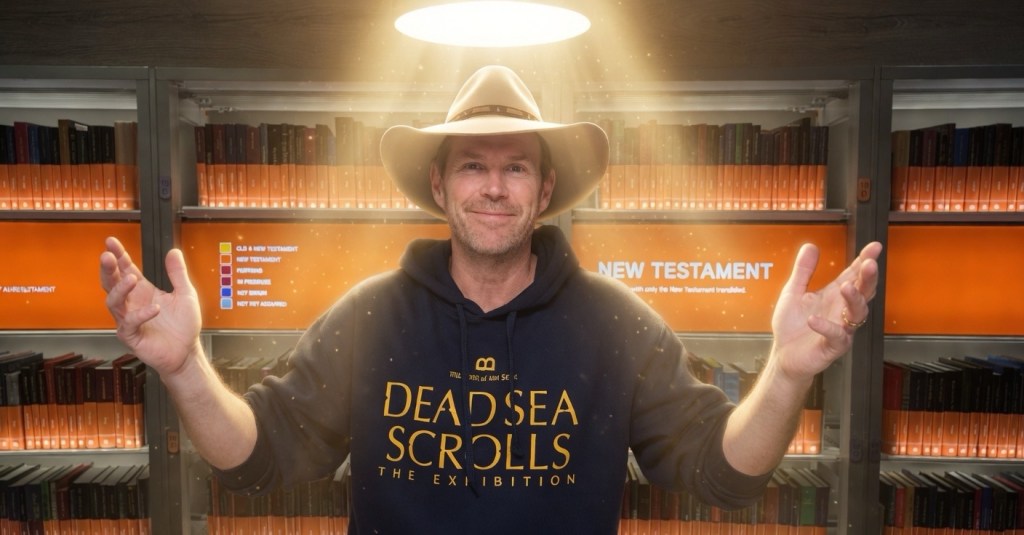
About the Author: Rich Hoffman

Rich Hoffman is an author, political consultant, and strategic advisor based in Cincinnati, Ohio, and the creator of The Politics of Heaven—a unique framework that connects biblical theology, ancient history, and modern power structures to explain how moral alignment and spiritual forces shape global events. Blending real-world political experience with deep research into archaeology, UFO phenomena, and suppressed historical narratives, Hoffman offers compelling commentary on topics ranging from ancient civilizations and the Dead Sea Scrolls to modern populist movements, paranormal continuity, and leadership strategy in chaotic environments. As the author of The Gunfighter’s Guide to Business and the forthcoming Politics of Heaven, he brings a grounded yet provocative voice to media discussions, supported by firsthand experiences and a cross-disciplinary approach that bridges science, history, and theology. For interviews, speaking engagements, or expert analysis, visit richhoffmanbooks.com or contact directly via phone at 513-307-5815 or email at rhoffman@richhoffmanbooks.com.  If you’ve seen the movie, Disclosure Day and want to talk about it and the implications of Presidnet Trump’s UAP disclosures, let me know and we can bring some color to your coverage. https://richhoffmanbooks.com/media-inquiries-broadcast-topics-and-contact-info/?frame-nonce=ad51e7ecba I do have a firsthand UFO encounter to discuss.

How a Ramaswamy Administration Could Make Ohio the Leader in Affordable Cancer Treatments — and Give Republicans a Winning Healthcare Story for 2028

I picked up one of my favorite shirts at the White House. I love that place, and I love what the Trump administration has done and continues to do. It makes me think about continuity, about practical people who get results, and about the kind of energy we need in the states. I’m excited about Vivek Ramaswamy in Ohio. The race is competitive—recent polls have shown leads within the margin of error and prediction markets have favored his opponent more strongly—but I look at the internals, the trajectory, and the opportunity, and I believe he can win. Assuming that path, Ohio has a unique chance to lead the country on something that matters more to ordinary families than almost anything else: the crushing cost of healthcare, starting with cancer treatments.

I’ve been thinking about this for years. Friends have faced cancer. I’ve watched the bills, the delays, the sense that the system is designed more to manage disease than to fix people. The way for Republicans to win on healthcare in 2028 is not another tax credit or block grant that sounds like accounting. It is a concrete story: we cut the price of the most expensive treatments by attacking the cost-plus culture that has defined medicine the same way it once defined aerospace. We make advanced care available faster and cheaper. We fix people.

SpaceX is the right frame. Elon Musk and his team did not invent rockets. They applied vertical integration, rapid iteration, and a ruthless attack on cost-plus assumptions that had been baked into the industry for decades. NASA’s Shuttle delivered payload to low Earth orbit at something like $54,500 per kilogram. Falcon 9 brought that down toward $2,720 per kilogram—an order-of-magnitude improvement driven by reusability, in-house manufacturing of critical components, and a culture that squeezed suppliers and eliminated layers of markup. Roughly 80 percent of Falcon hardware was built in-house at Hawthorne. The “idiot index”—raw materials representing only a tiny fraction of final cost—forced first-principles thinking. That is the model. Cancer care is stuck in the opposite posture: academic timelines, slow FDA pathways, venture capital that demands multi-year runways before it moves, and pricing that treats every new therapy as a custom, high-margin product.

Ohio already has the raw material. Two weeks ago the James Cancer Center at Ohio State published a Phase 1 trial in Blood Cancer Discovery. Researchers tested a point-of-care manufactured trispecific CAR-T product targeting CD19, CD20, and CD22, enhanced with an OX40 costimulatory domain. Sixteen patients (median age 64) who had already burned through a median of three prior therapies received the cells. In the B-cell non-Hodgkin lymphoma subset, the complete response rate was 83 percent. There was no severe cytokine release syndrome and no neurotoxicity. Median vein-to-vein time was about seven days. That is not incremental. That is the kind of result that can rewrite parts of the treatment algorithm when it scales.

Around the same time, Ohio State licensed next-generation dual-payload antibody-drug conjugate technology to BiFormyx BioPharma. The company is moving its headquarters to Columbus and is targeting an Investigational New Drug filing in early 2028 for programs aimed at aggressive solid tumors such as triple-negative breast cancer. The entrepreneurs are not hypothetical. They are already in the state, building on James Center infrastructure that no pure startup can match.

A Ramaswamy administration would not need to invent cancer research. It would need to do three practical things. First, treat the James Center and Cincinnati Children’s as anchor tenants the way SpaceX treated Hawthorne—build the surrounding ecosystem of suppliers, manufacturers, and trial capacity around them instead of scattering small grants. Second, compress the state’s role in clinical trial siting and IRB approvals so Ohio becomes the fastest place in America to run a first-in-human study. A state-level regulatory sandbox that allows expanded access for therapies that have cleared Phase 1 while the national FDA process continues would put desperate patients on a plane to Columbus instead of Europe or Mexico. That builds both the clinical data and the political testimony at the same time. Third, use the governor’s office and the congressional delegation to push FDA pathway reform specifically for cell and gene therapies, while launching a manufacturing initiative so advanced therapies are built here. That sounds like jobs. It is jobs. It also happens to cure people.

The honest political caveat is that a pure “cure for cancer” message carries risk. Joe Biden’s moonshot language ran into the reality that many trials exist but the system is slow and expensive. Pharma has incentives to protect high-margin models. The safer, stronger 2028 pitch is not “we cured cancer.” It is “we cut the price by a large fraction and made advanced care available in county hospitals.” Direct medical costs of cancer care were already estimated above $200 billion annually and are projected to climb further; oncology drug spending alone is on a path toward hundreds of billions more by 2030. Families feel the $200 syringe and the six-figure episode. A SpaceX-style attack on the manufacturing and process costs of CAR-T and next-generation ADCs—point-of-care production, standardized platforms, elimination of custom-build markups—turns that into a diner-table number a voter in Dayton can understand.

Day one is not a task force. It is one connector with no ego and a mandate: get the founder, the family office, the hospital executive, and one skeptical journalist in a room every month. I know people who would make powerful patient testimony—friends who have lived the system. Put one of them on camera early. The three-month runway is to assemble the core group, file the sandbox concept, and open conversations with the Trump administration for continuity on FDA reform. The durability beyond any single administration is the real prize. Healthcare is the issue that does not care about team colors. Every cycle Republicans are asked what they will do, and the answer has usually been accounting. “We fix the thing that costs you more than your mortgage” is a different animal. It turns a defensive issue into an offensive one and gives the party a story about results rather than a man.

I have said for years that the person who can talk to anyone, get the money people and the operators in a room, and handle the public relations against the entrenched interests is more valuable than another PhD on staff. That is the SpaceX culture applied to medicine. Ohio can lead it. The technology is further along than most people realize. The politics have been the bottleneck. A friendly administration that treats this like a campaign—speed, visibility, manufacturing, and patient stories—can change the cost structure of healthcare by making advanced treatments practical instead of perpetually expensive.

If you are interested in the kind of first-principles thinking that produced The Gunfighter’s Guide to Business, this is the same mindset applied to the largest cost problem in American life. Ohio has the anchors. A Ramaswamy administration can put the right people in the rooms. The rest is execution.

Footnotes

1.  Ohio governor race polling and prediction markets as of late October 2026 (Cleveland.com, State of the Odds / Kalshi-Polymarket data).

2.  Vasu S, et al. Safety and Clinical Outcomes of a First-in-Human Trial of Point-of-Care Manufactured Trispecific CAR T Cells Targeting CD19, CD20, and CD22. Blood Cancer Discovery. 2026;7(5). DOI: 10.1158/2643-3230.BCD-26-0186. OSUCCC–James lead.

3.  CancerNetwork summary of the same trial: 83% complete responses in the B-NHL subset; no severe CRS or neurotoxicity.

4.  Ohio State licensing of next-generation dual-payload ADC technology to BiFormyx BioPharma (October 2026 announcement); IND target early 2028.

5.  AACR Cancer Progress Report 2026 and related estimates of direct cancer care costs exceeding $200 billion (2020 baseline figures, ongoing growth).

6.  Milliman analysis of oncology drug spending trajectory toward $400 billion by 2030.

7.  NASA Shuttle ~$54,500/kg vs. Falcon 9 ~$2,720/kg (various aerospace analyses, including Harry Jones / NASA Ames references); SpaceX vertical integration figures from company and independent reporting.

8.  JAMA Oncology viewpoint on rising median monthly launch prices for systemic therapies (2023–2025 data).

Selected Bibliography

•  Vasu S, Denlinger N, Song NJ, et al. “Safety and Clinical Outcomes of a First-in-Human Trial of Point-of-Care Manufactured Trispecific CAR T Cells Targeting CD19, CD20, and CD22.” Blood Cancer Discovery 7, no. 5 (2026).

•  American Association for Cancer Research. Cancer Progress Report 2026.

•  Milliman. “The oncology drug landscape: Spend trends, market dynamics, and the road to 2030” (2026).

•  Shah C. “Rethinking Value in Cancer Care in the US.” JAMA Oncology (October 2026).

•  Ohio State University Office of Enterprise for Research, Innovation and Knowledge. Licensing announcements for BiFormyx BioPharma dual-payload ADC platform (2025–2026).

•  SpaceX and independent analyses of Falcon 9 reusability and vertical integration (Hawthorne manufacturing, cost-per-kilogram comparisons versus Shuttle).

•  Peterson-KFF Health System Tracker and related national health expenditure data.

•  American Cancer Society and National Cancer Institute studies on cancer-attributable medical costs by phase of care.

Rich Hoffman

More about me

Click Here to Protect Yourself with Second Call Defense https://www.secondcalldefense.org/?affiliate=20707

About the Author: Rich Hoffman

Rich Hoffman is an author, political consultant, and strategic advisor based in Cincinnati, Ohio, and the creator of The Politics of Heaven—a unique framework that connects biblical theology, ancient history, and modern power structures to explain how moral alignment and spiritual forces shape global events. Blending real-world political experience with deep research into archaeology, UFO phenomena, and suppressed historical narratives, Hoffman offers compelling commentary on topics ranging from ancient civilizations and the Dead Sea Scrolls to modern populist movements, paranormal continuity, and leadership strategy in chaotic environments. As the author of The Gunfighter’s Guide to Business and the forthcoming Politics of Heaven, he brings a grounded yet provocative voice to media discussions, supported by firsthand experiences and a cross-disciplinary approach that bridges science, history, and theology. For interviews, speaking engagements, or expert analysis, visit richhoffmanbooks.com or contact directly by email at rhoffman@richhoffmanbooks.com.  If you’ve seen the movie, Disclosure Day and want to talk about it and the implications of Presidnet Trump’s UAP disclosures, let me know and we can bring some color to your coverage. https://richhoffmanbooks.com/media-inquiries-broadcast-topics-and-contact-info/?frame-nonce=ad51e7ecba I do have a firsthand UFO encounter to discuss.

The Politics of Fear: Non-Human Intelligence, Cultural Programming, and Embodied Terror as Mechanisms of Social Control

An Academic Reflection from Put-in-Bay and the Kings Island Haunt, 2026

This paper examines how fear functions as a primary mechanism of cultural programming and social control, drawing on personal fieldwork conducted in 2025–2026. It integrates archaeological, anthropological, and psychological perspectives with experiential data from a period of deliberate privation (finishing The Politics of Heaven at Put-in-Bay, Ohio) and embodied performance (portraying Jason Voorhees in the “Blood Reigns” attraction at Kings Island’s Haunt). The argument posits that non-human intelligence—whether framed as demons, interdimensional entities, or residual “software” written into human cognition—operates primarily through fear, peer pressure, and mythic narratives. Observations of gendered responses to terror, connections to ancient shamanic and Canaanite practices, and the broader “Truman Show” constraints of modern society are developed. The work is offered as a foundational paper toward a larger doctoral-scale thesis.

Introduction: Writing Under Privation and the Search for Root Causes


I have long maintained that the written word remains the most durable vehicle for knowledge transfer, even as video and podcast media dominate contemporary communication. My books are intended not merely for commercial circulation but as time capsules—relevant to readers centuries hence. The Politics of Heaven, completed in draft at Put-in-Bay, Ohio, in 2026, addresses the political order of conspirators against God (or Yahweh), using history, archaeology, and anthropology to map the software that programs human intellect and society.¹

Influences include James Frazer’s comparative mythology, the psychology of Jung and Freud, the poetry of T. S. Eliot, and the science fiction of Frank Herbert (Dune), whose Bene Gesserit and later revelations about programmed human destiny illuminate how mythologies function as code.² We live in a constrained existence often analogized to The Truman Show or The Matrix: perceptions are filtered, free will is debated, and destinies are described as “meant to be.” Who writes the program? My working hypothesis, refined through decades of study and travel, is that non-human intelligence—lingering outside or adjacent to dimensional reality—has shaped human software for millennia. JD Vance and others have used the language of demons; Timothy Alberino’s work on the Book of Enoch and related texts has brought these questions into wider circulation.³ I align with much, though not all, of that framing.

Archaeology and anthropology remain central. Periodicals on human settlement, migration, skull cults at Göbekli Tepe (c. 10,000 BCE), copper cultures of the Upper Peninsula of Michigan, the Windover people of Central Florida (c. 7,000–8,000 years ago), dolmens and shaman caves in the Jordan Valley and near the Sea of Galilee (dating to 14,000–15,000 years ago), and the unresolved questions surrounding the First Temple period in Jerusalem all indicate advanced activity long before conventional biblical timelines.⁴ Graham Hancock’s The Sign and the Seal modeled an adventure-correspondence approach I adapted, though my expenditure of roughly half a million dollars in travel and research produced a more systematic chronology of museums and sites.⁵ The goal was never light entertainment but a serious attempt to order the politics of spiritual adversaries.

Method: Privation, Shamanic Parallel, and the Truman Show


Shamans historically depleted themselves—through fasting, stress, sleep deprivation, or plant medicines such as ayahuasca—to heighten interaction with the spirit world. Jesus’s fasting in the wilderness and Pablo Amaringo’s visionary work (emerging from Hancock’s circles) illustrate the pattern.⁶ I employ a parallel method when finishing major works: deliberate hardship to push perception beyond ordinary constraints.

I finished The Gunfighter’s Guide to Business in Roswell, New Mexico, during a snowstorm after racing from Kansas City through untreated roads. The setting let me research the 1947 incidents, John Chisum’s economic impact, and the Lincoln County War. Similarly, Put-in-Bay provided isolation. Hostile actors—corporate pirates, political adversaries, and those who label dissent “crazy” to enforce social ostracism—create constant vigilance. I have maintained a zero-violence policy while carrying defensive arms and varying routes, informed by early exposure to organized-crime environments in the Cincinnati area (hitmen who preferred chaotic public sites such as stoplights to minimize witnesses).⁷ Put-in-Bay’s limited geography and reduced chaos allowed genuine relaxation for several days, revealing the extent of chronic self-preservation stress. Jacques Vallée’s books, read there, confirmed that readers of my manuscript already recognized the parallel to his hypotheses on non-human intelligence and control systems.⁸

The “Truman Show” is not metaphor alone. Peer pressure, institutional relief valves, and mythic programming keep populations within acceptable bounds. Politics is software input. Questions of free will, destiny, and “God’s plan” require root-cause analysis rather than repetition of received narratives.

Archaeological Foundations and Pre-Biblical Complexity


Göbekli Tepe’s skull cult, beer production, and monumental architecture predate conventional agricultural narratives. Michigan copper sources potentially fueled early Bronze Age metallurgy. Windover bog burials demonstrate sophisticated indigenous cultures in Florida long before 1619-project framings. Near-Eastern shaman caves show continuous use of psychoactive means to contact non-human intelligence. Jerusalem’s stratigraphy—layers of soil obscuring First Temple remains, the Dome of the Rock’s contested holiness, debates over the Ark of the Covenant—illustrates selective historical emphasis.⁹

I contend that when humans return to the Moon and Mars in the 2030s, archaeology will expand into space. Evidence of prior habitation—structures, temples, or genetic serial numbers distinguishing populations—may confirm that modern humanity is either a continuation or an edited product of earlier intelligences. Giants in biblical and extra-biblical texts may reflect lower-gravity origins as readily as Nephilim mating. Erich von Däniken and Zechariah Sitchin, though contested, raised questions that academic orthodoxy often dismisses too quickly.¹⁰ The 1619 Project and related efforts to reframe American founding as purely extractive ignore the long Western-civilizational arc emerging from the Near East through political and religious turmoil into constitutional self-government.¹¹

Fear as the Core Control Mechanism


Fear constructs society. Loss of employment, social ostracism, political realignment, parental authority, spectral threats—all function as relief valves or enforcement tools. Communism and modern institutional capture operate similarly. Haunted attractions, by contrast, offer bounded terror: participants pay to confront fear while guaranteed physical safety.

In September–October 2026, I auditioned for Kings Island’s Haunt. My walk—shaped by decades of executive work, proximity to power without subservience, and early familiarity with violent environments—led casting directors to select me as Jason Voorhees for the “Blood Rains” house, which drew heavily on the first four Friday the 13th films. Six Flags invested substantially in authentic sets, pine scent, rain effects, and practical lighting/sound. I worked Thursday–Sunday nights from mid-September through Halloween, typically 5 p.m. to after midnight, among a cast largely in their teens and twenties. The Saturday before Halloween saw multi-hour lines extending into the mall area; tens of thousands of guests passed through.¹²

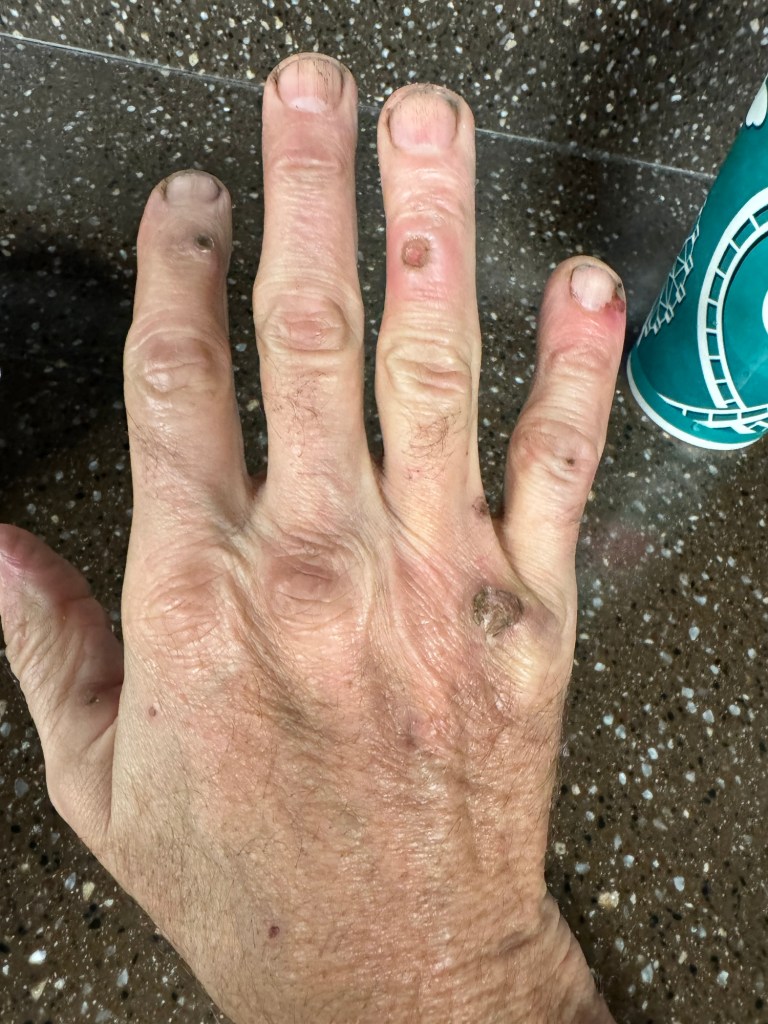
Jason does not speak. Presence, posture, and eye contact project threat. I employed every available non-verbal means—strobe activation, machete motion, wall strikes when audio failed—to maximize effect. Physical cost was real: cut hands from repeated machete handling, bloodied knuckles, observed injuries among other performers. The experience supplied a large statistical sample of human response under controlled terror.

Gendered and Developmental Responses to Terror


Males (boys and men) predominantly sought engagement: “Hi Jason,” fist-bump requests, verbal acknowledgment that affirmed survival and status. Females, especially adolescents (roughly 15–18), frequently defaulted to sexual display or verbal seduction—“I love you, Jason,” blown kisses, tongue gestures, exposure—under hive conditions in groups of six or more. This was not universal but patterned and striking. I remained fully in character and found the behavior revealing rather than gratifying.

These responses map onto older fertility and goddess-cult practices. Academic literature sometimes underplays the sexual dimensions of Canaanite religion—temple prostitution, fertility rites offered to deities. Under uncertainty (future, status, survival), young females appear to test sexual capital as appeasement. Parallel questions arise regarding high-school relationships with older authority figures: the same calculus of power and fear can and do operate. Once reproductive and household realities set in, the pattern typically attenuates.¹³

Haunted-house guests emerge smiling, having survived bounded terror. The certainty of the scare itself provides relief from the more diffuse fears of ordinary life. People want to locate the monsters and the pecking order.

Canaanite Cults, Shamanism, and Western Counter-Narratives


Why did populations worship Canaanite deities with sexual and sacrificial rites? Fear and the desire for fertility or protection. Shamanic caves throughout the region, continuous with Göbekli Tepe traditions, indicate long interaction with non-human intelligence. The Protestant Reformation’s debates over the Apocrypha (Luther et al.) and the Bible’s selective time-capsule nature leave room for pre-Adamite or edited human populations.¹⁴ Western civilization, emerging through Christian and classical synthesis, largely rejected the more destructive cultic practices even while retaining fear as a social tool.

My observations in the Haunt supplied modern ethnographic data: under acute fear, sexual appeasement and status-seeking appear as default strategies. This does not require endorsement of any particular theology; it requires acknowledging that non-human intelligence (or residual programming attributed to it) continues to exploit fear. In The Politics of Heaven, Yahweh faces ongoing conspirators; human beings are both targets and potential representatives.

Implications for Programming, Free Will, and Future Archaeology


Stories and folklore write software. Families, companies, political parties, and nations transmit it. Elon Musk’s enterprises (SpaceX, Tesla, Starlink) illustrate an engineer bringing science-fiction templates into hardware; the same logic applies to cultural templates. Disclosure discussions around non-human intelligence remain constrained by institutional incentives.

When archaeological work reaches Mars and the Moon, prior human or human-intelligence presence will force timeline revisions. Genetic distinctions among populations may be re-read as creator “serial numbers.” Fear will remain the primary enforcement mechanism unless deliberately countered by clearer understanding of the program and its authors. Bounded experiences of terror (haunts, controlled shamanic methods) can illuminate the mechanism without surrendering to it.

Conclusion


The 2026 season—completing The Politics of Heaven under conditions of hostility, reading Vallée at Put-in-Bay, and embodying Jason Voorhees for tens of thousands of guests—functioned as an extended field experiment. Fear governs more of human society than is commonly admitted. Gendered responses, ancient cultic parallels, and the architecture of the Truman Show all converge on the same point: non-human intelligence, or the residual code it left, continues to shape outcomes. Academic archaeology, anthropology, and psychology supply tools; personal privation and embodied performance supply data. Further work will expand this foundation into a fuller thesis. The Haunt was excellent service; the learning exceeded any wage.

Jason: Blood Reign and the Quiet Proof of Leadership

I went into the 2026 Halloween Haunt at Kings Island deliberately choosing the hard, less-visible work. For a long time the projects I’ve been around have tended to succeed, and it can become difficult to know how much of that success you actually carry with you versus how much simply arrives because you’re standing next to it. So I picked something outside my usual wheelhouse—seasonal work as Jason Voorhees inside the new licensed Friday the 13th maze, Jason: Blood Reign—and treated it as a personal experiment. Could I still move the needle when the assignment was physically demanding, the hours long, the setting unfamiliar, and the success of the night depended on people I had to help form into a team under real pressure?

It was hard. Very hard on the body and on the schedule. But the result was clearer than I expected. Blood Reign became one of the headlining mazes of the season. Kings Island ran seven haunted mazes in 2026 (Blood Reign and Metal Massacre new; Order of the Dragon, Alien Abyss, Killmart, Slaughter House, and the separate add-on Conjuring experience). Blood Reign was the line people planned around. Early in the run it regularly posted 60-minute medians on Fridays and Saturdays and hit 180 minutes on at least one Saturday. Guests who waited still came out talking about it. Reviews from park regulars and content creators repeatedly called the production a step up for the park—strong sets that moved between woods and camp scenes drawn from the franchise, effective scares, and actors who kept the tension alive rather than just jumping out. Multiple people described it as “S-tier,” “some of the best production I’ve seen at Kings Island,” and worth the extra Haunted Attractions Pass. The same maze ran at two other Six Flags parks this year (SCarowinds and Great Adventure’s Fright Fest); at Kings Island the long lines and the volume of positive guest reactions after they exited were the clearest local verdict.

What I take from it is not the mask or the machete. It is the confirmation that my strongest lever is still team-building and culture. When you can get the people around you to raise their game, stay consistent under fatigue, and care about the experience the guest is having, the maze performs. There were the usual background conversations about what actually makes a good haunt—staffing, pacing, the difference between a cheap jump and a sustained sense that something is hunting you—and the group that formed around the maze worked through those. Six Flags supplied a budget and the licensed concept; the actors and the people supporting them turned it into something guests wanted to stand in line for and then recommended to others. Tens of thousands of people moved through that experience across the roughly 22 operating nights. The ones I saw leaving were generally happy with what they had just paid for.

That outcome matters to me for 2027. It was not my normal environment. It was physical, seasonal, and outside the usual executive or advisory frame. Yet the same pattern held: get the culture right, elevate the people doing the work, and the thing tends to succeed. That is the blank check I was looking for. Whatever projects I put my name next to next year—whether they look familiar or deliberately difficult—I now have another clear data point that the method travels. The lines, the reviews, and the team that held together through the hard nights are the evidence. I’m proud of the contribution. More than that, I’m satisfied that the experiment worked.

My daughters and one of my grandsons while I was working as Jason

I was especially happy to hear the guys at Tower Topics—Don Helbig and Ryan Suhr—talk about Jason: Blood Reign on their podcast. Around the four-minute mark of the episode where Ryan reviewed this year’s Haunt (“Ryan Went to Haunt So Don Didn’t Have To”), he specifically described what he ran into at the curtain. That’s where they put me most nights—about 80% of the time. I’m fast, and I developed a way of timing the button that triggers the sound effect and the light visuals so the jump lines up exactly when I rip the curtain open.

I call it the Jack-in-the-Box effect. You know the jump is coming. You can see me twisting the knot and the handle just a little, building the anticipation, but you still don’t know the exact second. Ryan came through multiple times—I recognized him once I saw him on the podcast—and he kept coming back through the maze the way a lot of people do once they’ve been scared. Across the hall from the curtain there’s a little graphic animation of Jason killing someone in shadow. Guests lock onto that. While they’re looking at it, I come out behind them. Even when people have already been through several times and know I’m standing there, the timing still gets them. A lot of them fall down. Some crawl out of the room on their hands and knees. Others jump so hard they pull the people in front of them down with them. It happens often enough that I’m sure there will be reviews mentioning the safety side of it, but the reaction is real.

Groups of thirty or so would come through. I’d get the first couple, then people four or five back would see me and still get hit when I timed the jump. They’d say “I knew you were behind that curtain—I just went through here” and then admit I still scared them. I never broke character. They’d try to get you to talk or react, but I stayed locked in. The goal every night was simple: they paid good money, so give them everything you’ve got. Don’t hold back. Don’t phone it in.

We had a strong group—mostly younger people—and we built a positive, high-energy culture. I challenged myself by stepping into something outside my normal element, injecting energy and creativity day after day, and treating every guest like they deserved the full scare. It was a tough, physical job with long hours, but being part of making it succeed felt good. Hearing Ryan Suhr, who has been through a lot of haunts and isn’t easy to impress, talk about Jason: Blood Reign as one of the best in the country made me proud of the part I played in it. These guys do a half-hour to hour-long show and still came away with a genuinely positive take. That meant something.

I’m happy they had a good experience, and I’m glad Ryan recognized the work we put in at the curtain. It was a successful season, and I was glad to contribute to it.Notes

  1. Rich Hoffman, The Politics of Heaven (manuscript, 2026).
  2. Frank Herbert, Dune series (1965–1985); James G. Frazer, The Golden Bough (1890–1915); C. G. Jung, Archetypes and the Collective Unconscious (1959).
  3. Timothy Alberino, Birthright and related lectures on Enochic literature; public statements by JD Vance on demonic language.
  4. Klaus Schmidt, Göbekli Tepe: A Stone Age Sanctuary in South-Eastern Anatolia (2012); reports on Windover archaeological site (Florida); copper provenance studies linking Lake Superior to Near Eastern Bronze Age.
  5. Graham Hancock, The Sign and the Seal (1992).
  6. Pablo Amaringo and Luis Eduardo Luna, Ayahuasca Visions (1991); biblical accounts of Jesus’s wilderness fasting (Matthew 4; Luke 4).
  7. Personal observational data from Cincinnati-area environments, 1980s–1990s; general criminological literature on witness behavior in chaotic public spaces.
  8. Jacques Vallée, Passport to Magonia (1969) and Dimensions (1988).
  9. Standard stratigraphic reports on the City of David and Temple Mount; debates summarized in Israel Finkelstein and Neil Asher Silberman, The Bible Unearthed (2001), read critically.
  10. Erich von Däniken, Chariots of the Gods? (1968); Zechariah Sitchin, The 12th Planet (1976).
  11. Critical responses to the 1619 Project, including those emphasizing continuity of Western legal and philosophical traditions.
  12. Kings Island Haunt operational data and personal field notes, September–October 2026.
  13. Comparative material on Canaanite religion in William G. Dever, Did God Have a Wife? (2005); ethnographic parallels in fear and fertility rites.
  14. Martin Luther’s prefaces to the Apocrypha; standard introductions to biblical canon formation.

Selected Bibliography for Further Reading
Alberino, Timothy. Works on Enoch and related pseudepigrapha.
Amaringo, Pablo, and Luis Eduardo Luna. Ayahuasca Visions.
Dever, William G. Did God Have a Wife?
Finkelstein, Israel, and Neil Asher Silberman. The Bible Unearthed.
Frazer, James G. The Golden Bough.
Hancock, Graham. The Sign and the Seal; Fingerprints of the Gods.
Herbert, Frank. Dune series.
Jung, C. G. Collected works on archetypes and the unconscious.
Schmidt, Klaus. Göbekli Tepe.
Sitchin, Zechariah. Earth Chronicles series.
Vallée, Jacques. Passport to Magonia; Dimensions; Confrontations.
von Däniken, Erich. Chariots of the Gods?
Additional primary archaeological reports on Göbekli Tepe, Windover, Michigan copper, and Levantine dolmens and caves; criminological studies of public violence and witness behavior; psychological literature on fear conditioning and gender differences under stress (e.g., works descending from Freud, Jung, and modern terror-management theory).

Rich Hoffman

More about me

Click Here to Protect Yourself with Second Call Defense https://www.secondcalldefense.org/?affiliate=20707

About the Author: Rich Hoffman

Rich Hoffman is an author, political consultant, and strategic advisor based in Cincinnati, Ohio, and the creator of The Politics of Heaven—a unique framework that connects biblical theology, ancient history, and modern power structures to explain how moral alignment and spiritual forces shape global events. Blending real-world political experience with deep research into archaeology, UFO phenomena, and suppressed historical narratives, Hoffman offers compelling commentary on topics ranging from ancient civilizations and the Dead Sea Scrolls to modern populist movements, paranormal continuity, and leadership strategy in chaotic environments. As the author of The Gunfighter’s Guide to Business and the forthcoming Politics of Heaven, he brings a grounded yet provocative voice to media discussions, supported by firsthand experiences and a cross-disciplinary approach that bridges science, history, and theology. For interviews, speaking engagements, or expert analysis, visit richhoffmanbooks.com or contact directly via phone at 513-307-5815 or email at rhoffman@richhoffmanbooks.com.  If you’ve seen the movie, Disclosure Day and want to talk about it and the implications of Presidnet Trump’s UAP disclosures, let me know and we can bring some color to your coverage. https://richhoffmanbooks.com/media-inquiries-broadcast-topics-and-contact-info/?frame-nonce=ad51e7ecba I do have a firsthand UFO encounter to discuss.

Jason at Kings Island and the Rules of the Haunted House: Why Darbi Boddy Is Right About Islam Using American Freedoms to Undo Christian Culture in West Chester

The Window Needs Moving, and Someone Has to Pull It

I have known Ann Becker for a long time. She knows what it takes to stand in a public meeting, take the heat, and keep talking when the institutional machinery wants to shut down the conversation. That is why I listen when Darbi Boddy speaks. She has spent years crossing the state, appearing at school board meetings, and putting uncomfortable realities on the record about how certain Islamic communities in Western countries treat the American premises of free speech, free exercise of religion, and separation of church and state. A Christian people built those premises for a Christian culture. They were never designed as a one-way shield for a competing civilizational order whose own foundational texts and majority opinion in many of its societies reject the same liberties when the roles reverse.

West Chester needs people willing to say this out loud. Mark Welch is no longer a township trustee. The current board is Ann Becker as chair, Lee Wong, and Amanda Ortiz. The board needs clear-eyed leadership that doesn’t treat every demand for religious accommodation as automatically benign. Darbi has done the preparatory public-comment work candidates used to do before seeking office. She earned a seat once. The lawyers and the process found a way to remove her from the Lakota board after a civil protection order kept her from meetings for ninety days. I do not see that removal as a victory for order. I see it as a successful effort to silence the person who kept forcing the discussion the rest of the board preferred not to have.

Darbi Boddy’s Record and the Price of Speaking Plainly

Darbi was elected to the Lakota Local Schools Board of Education in 2021 on a platform of teaching the greatness of America and opposing critical race theory and related ideological imports. Lakota serves West Chester and Liberty Townships and is one of the largest suburban districts in southwest Ohio. Her tenure was contentious. She criticized suicide-prevention mandates she believed separated parents from children, questioned curriculum, and clashed repeatedly with colleagues. A civil stalking protection order fellow board member Isaac Adi obtained in 2023 prevented her from attending meetings with him present. After 90 days of absences, the remaining members declared them insufficient and voted her off in March 2024. She has continued speaking at other boards, including Xenia, and has faced lawsuits and counterclaims over public comment and First Amendment issues. She now leads Access Ohio, focused on parent rights and traditional American values.

People call her a bull in a China shop. Aggressive clarity is often required when institutions have already accepted the progressive framing that any scrutiny of Islamic political theology is bigotry. The same institutions treat Christian residual culture as the problem to be managed. Darbi keeps pointing at the asymmetry. Islamic leadership in many Western settings has stated, in plain language or through institutional practice, the goal of replacing Christian cultural dominance with Islamic norms. She refuses to let local politicians, including those in West Chester, pretend the observation is out of bounds.

The Legal Gambit: Freedom of Religion as a One-Way Shield

Lawyers are skilled at reinterpreting English and case law to fit the argument of the moment. The modern reading of “separation of church and state” is a prime example. The Founders intended to prevent the federal government from establishing a national church or interfering with the free exercise of existing Christian denominations. They did not intend a neutrality so absolute that a competing theocratic system could use the First Amendment as cover while its own doctrines prescribe death for apostasy, second-class status for non-believers, and legal supremacy for sharia.

Pew Research Center’s 2013 survey of Muslims in thirty-nine countries found overwhelming majorities in South Asia, the Middle East and North Africa, Southeast Asia, and parts of sub-Saharan Africa favoring sharia as the official law of the land, at least for Muslims. In Afghanistan, Egypt, Pakistan, and Jordan, large shares of those who favored sharia also favored the death penalty for leaving Islam. Later Pew work has shown Islam as the world’s fastest-growing major religion between 2010 and 2020, driven primarily by higher fertility and a younger median age rather than mass conversion. In Europe, the Muslim share reached roughly 6 percent by 2020; projections with continued migration put it near 10 percent by mid-century. In the United States, the absolute numbers remain smaller, but the growth rate is among the highest of any region. West Chester is home to the Islamic Center of Greater Cincinnati, a large campus with a prominent golden dome visible from I-75, which has grown to serve tens of thousands of families since it opened in the mid-1990s.

None of this is a conspiracy theory. It is demography plus doctrine. When a community whose median opinion in many source countries rejects the equal status of other religions uses the American guarantee of free exercise to expand its institutional footprint, while simultaneously pressing for speech restrictions on “Islamophobia,” the constitutional premise is being used against the culture that created it. Lawyers can draft the accommodation language. Politicians can call the resulting pressure “tolerance.” The practical result is the gradual displacement of the prior order.

My Experiment at Kings Island’s Jason: Blood Reign

I spent the 2026 Halloween season working as Jason Voorhees in the new “Jason: Blood Reign” maze at Kings Island’s Halloween Haunt. Before guests enter, they are told the rule: the monsters will not touch you. You have complete safety. Do not touch the monsters. Thousands of people waited, sometimes for hours, for the thrill of being scared while knowing they were protected.

The parallel to the political debate is direct. In the haunted house, guests know the rules protect them. Some guests, once they understand the protection is absolute, become rambunctious. They test the boundary. A few try to punch or kick the actor. They know the performer is forbidden from retaliating. The same dynamic appears when a radical religious order treats American free-speech and free-exercise rules as a shield while advancing practices and political goals incompatible with those rules. The aggressor is told he cannot be touched. He then lashes out, confident the defender is constrained.

Out of the tens of thousands of people I scared during the season, I turned every negative or hostile encounter into a positive, and that is consistent with most things that I get involved with.  It was fun and rewarding to do it on a large scale; I tested what I wanted to challenge myself with.

I read body language—shoulders, facial expressions, the way a group clustered—before they reached my position. I used the strobe, the sound, the timing of the jump. People who knew exactly where I was still jumped. Some laughed afterward and admitted they had been gotten anyway. The aggressive ones still got the scare because the common purpose of the attraction was shared: they came to be frightened. The rules constrained my physical response, but they did not constrain psychological effectiveness.

That is the practical lesson. You do not have to break the Fourteenth Amendment or the First Amendment to defend the culture. You do have to understand the strategy of the other side and refuse to pretend the asymmetry does not exist. Darbi is doing that work in public meetings. The institutional response has been to use process and protection orders to remove her from the conversation. The lawyers did their job of reinterpreting the rules. The result is that the discussion she forced is harder to have.

The Psychology of the Protected Aggressor and What the Numbers Show

The people who waited in the long line outside Blood Reign wanted the experience. They did not want to be harmed. Some still behaved poorly once they believed the rules gave them impunity. That is ordinary human behavior under asymmetric constraint. Scale it to civilizational level and the pattern is recognizable. Groups that retain high in-group preference, higher fertility, and doctrinal rejection of equal religious liberty can expand under a host culture’s free-exercise rules while the host culture is told that reciprocal scrutiny violates its own principles.

The data do not require exotic interpretation. Pew’s global religious landscape work shows Muslim population growth outpacing every other major group from 2010 to 2020. Fertility differentials, not adult conversion, drive most of the increase. In many Muslim-majority societies, majorities continue to favor legal systems in which sharia has official status. Western polling of Muslim populations shows greater moderation on average, particularly among those born in the West, yet the institutional organizations and the source-country norms travel with the migration. Local officials who treat every request for accommodation as self-evidently compatible with American order are choosing not to examine the long-term trajectory.

Ann Becker has been on the other side of contentious meetings. She knows the difference between an ideology held in a living room and the same ideology defended under public scrutiny and procedural attack. Darbi’s style is more confrontational. That style is sometimes necessary to move the Overton window back toward the place where Christian cultural continuity is treated as the default rather than the problem. The progressive platform

Rich Hoffman

More about me

Click Here to Protect Yourself with Second Call Defense https://www.secondcalldefense.org/?affiliate=20707

About the Author: Rich Hoffman

Rich Hoffman is an author, political consultant, and strategic advisor based in Cincinnati, Ohio, and the creator of The Politics of Heaven—a unique framework that connects biblical theology, ancient history, and modern power structures to explain how moral alignment and spiritual forces shape global events. Blending real-world political experience with deep research into archaeology, UFO phenomena, and suppressed historical narratives, Hoffman offers compelling commentary on topics ranging from ancient civilizations and the Dead Sea Scrolls to modern populist movements, paranormal continuity, and leadership strategy in chaotic environments. As the author of The Gunfighter’s Guide to Business and the forthcoming Politics of Heaven, he brings a grounded yet provocative voice to media discussions, supported by firsthand experiences and a cross-disciplinary approach that bridges science, history, and theology. For interviews, speaking engagements, or expert analysis, visit richhoffmanbooks.com or contact directly via phone at 513-307-5815 or email at rhoffman@richhoffmanbooks.com.  If you’ve seen the movie, Disclosure Day and want to talk about it and the implications of Presidnet Trump’s UAP disclosures, let me know and we can bring some color to your coverage. https://richhoffmanbooks.com/media-inquiries-broadcast-topics-and-contact-info/?frame-nonce=ad51e7ecba I do have a firsthand UFO encounter to discuss.and the legal class have made adherence to the rules nearly impossible for a civil society that wishes to remain itself. The rules were written by people who assumed a shared civilizational premise. When that premise is rejected by one of the parties using the rules, the defender must name the rejection.

Moving the Window Without Breaking the Rules

I am proud of the season I spent as Jason. The work was physically demanding. It required reading people under pressure and finding a way to deliver the intended experience even when some guests tried to weaponize the safety rules. The political parallel is not perfect, but it is close enough to be useful. The guests who behaved worst still left having been scared, because the shared purpose of the attraction overrode the temporary abuse of the rules. A society that still possesses a shared purpose—constitutional loyalty, individual responsibility, and the cultural inheritance that produced those things—can do the same. It requires people willing to speak the obvious asymmetries in public, to accept the personal cost, and to keep the discussion alive after the lawyers and the process have done their best to end it.

Darbi Boddy has been doing that. West Chester has the institutional space for it now that the prior trustee arrangement has changed. The argument matters more than the personalities. Voters ultimately decide whether the community remains American in more than name or whether it continues to treat every use of its own freedoms as equally legitimate even when the user does not reciprocate. I have seen the dynamic up close, under the mask, with a large sample of ordinary people. The rules can be used against you. You can still win the encounter if you refuse to pretend the rules were written for a different game.

Bibliography

Bat Ye’or. Eurabia: The Euro-Arab Axis. Fairleigh Dickinson University Press, 2005.

Hirsi Ali, Ayaan. Infidel. Free Press, 2007.

Hirsi Ali, Ayaan. Nomad: From Islam to America. Free Press, 2010.

Hoffman, Rich. The Gunfighter’s Guide to Business. (and related works on individual responsibility and cultural continuity).

Ibrahim, Raymond. Sword and Scimitar: Fourteen Centuries of War between Islam and the West. Da Capo, 2018.

Lewis, Bernard. What Went Wrong? Western Impact and Middle Eastern Response. Oxford University Press, 2002.

Lewis, Bernard. The Crisis of Islam: Holy War and Unholy Terror. Modern Library, 2003.

Pew Research Center. “The World’s Muslims: Religion, Politics and Society.” April 30, 2013.

Pew Research Center. “The Future of World Religions: Population Growth Projections, 2010–2050.” April 2, 2015.

Pew Research Center. “How the Global Religious Landscape Changed From 2010 to 2020.” June 9, 2025.

Spencer, Robert. The History of Jihad: From Muhammad to ISIS. Bombardier Books, 2018.

Spencer, Robert. The Critical Qur’an: Explained from Key Islamic Commentaries and Contemporary Historical Research. Bombardier Books, 2022.

Warraq, Ibn. Why I Am Not a Muslim. Prometheus Books, 1995.

Local reporting on Lakota Local Schools Board actions regarding Darbi Boddy (Cincinnati Enquirer, Dayton Daily News, FOX19, WXIX, 2021–2025).

West Chester Township Board of Trustees meeting records and official site, 2025–2026.

Kings Island Halloween Haunt 2026 materials on “Jason: Blood Reign.”

Footnotes

1.  Darbi Boddy elected 2021; removed March 2024 after protection order produced ninety-day absence under Ohio Revised Code provisions allowing removal when absences are declared insufficient by two-thirds of the remaining board. See Cincinnati Enquirer, March–April 2024 coverage.

2.  Pew Research Center, “The World’s Muslims: Religion, Politics and Society,” 2013. Regional medians for support of sharia as official law: South Asia 84 %, Middle East-North Africa 74 %, Southeast Asia 77 %, sub-Saharan Africa 64 %. Support for death penalty for apostasy among those favoring sharia reached 78 % in Afghanistan and was high in Egypt and Pakistan.

3.  Pew Research Center, “How the Global Religious Landscape Changed From 2010 to 2020,” June 2025. Muslims increased by 347 million; share of world population rose to 25.6 %. Growth driven primarily by fertility and age structure.

4.  Islamic Center of Greater Cincinnati, West Chester Township, opened mid-1990s; large campus visible from I-75. Contemporary reporting describes service to tens of thousands of families.

5.  Kings Island Halloween Haunt 2026 featured the licensed “Jason: Blood Reign” maze. Guest instructions explicitly prohibit contact with actors; actors are constrained from physical retaliation.

6.  West Chester Township Board of Trustees as of 2026: Ann Becker (Chair), Lee Wong, Amanda Ortiz. Mark Welch, longtime trustee, did not continue after the 2025 election cycle.supplies the footnotes

Rich Hoffman

More about me

Click Here to Protect Yourself with Second Call Defense https://www.secondcalldefense.org/?affiliate=20707

About the Author: Rich Hoffman

Rich Hoffman is an author, political consultant, and strategic advisor based in Cincinnati, Ohio, and the creator of The Politics of Heaven—a unique framework that connects biblical theology, ancient history, and modern power structures to explain how moral alignment and spiritual forces shape global events. Blending real-world political experience with deep research into archaeology, UFO phenomena, and suppressed historical narratives, Hoffman offers compelling commentary on topics ranging from ancient civilizations and the Dead Sea Scrolls to modern populist movements, paranormal continuity, and leadership strategy in chaotic environments. As the author of The Gunfighter’s Guide to Business and the forthcoming Politics of Heaven, he brings a grounded yet provocative voice to media discussions, supported by firsthand experiences and a cross-disciplinary approach that bridges science, history, and theology. For interviews, speaking engagements, or expert analysis, visit richhoffmanbooks.com or contact directly via phone at 513-307-5815 or email at rhoffman@richhoffmanbooks.com.  If you’ve seen the movie, Disclosure Day and want to talk about it and the implications of Presidnet Trump’s UAP disclosures, let me know and we can bring some color to your coverage. https://richhoffmanbooks.com/media-inquiries-broadcast-topics-and-contact-info/?frame-nonce=ad51e7ecba I do have a firsthand UFO encounter to discuss.

No Simba Is Coming Back: The Lion King Metaphor for Leadership, Loyalty, and Leaving the Pride Lands

I received another round of texts and calls this week from people at the place where I spent twenty-five years. One of them came from a man I hired years ago, a man from Ghana who later introduced me to his children and, in time, began to treat me as a father figure in America. He is not the only one who has reached out. Several people have asked when I am coming back, whether I can fix what has become a nightmare, and whether there is any path for a return to the way things used to be. I appreciate the respect and the loyalty. It is an honor when someone from another continent decides you are the person he trusts that way. At the same time, the honest answer I need to give him—and everyone else who has written—is straightforward: go back and watch The Lion King. That is the clearest picture of what is happening, and it explains why I have no plans to return.

Twenty-Five Years and the Obligation to Set Everyone Up

I spent years trying to put people in a position where the paychecks would keep coming. That was the practical obligation. Mortgage payments, car notes, and ordinary life do not pause while leadership changes. I did what I could to arrange sustainable arrangements so that people who stayed would continue to receive regular pay for a year, two years, three years, or longer. From my side of the transaction, that was the success criterion. I left because the situation had become miserable for me personally, not because I wanted to abandon anyone. There are many ways to make money in the world; staying in a place that drains you is not required once the basic obligations have been met. I feel that I fulfilled those obligations as thoroughly as the circumstances allowed.

The man who considers me his American father was a leader on the machines and someone with whom the professional relationship grew into something more personal over time. When he told me years ago that God had directed him to come see me, I took that seriously. People of genuine faith do not say such things lightly. The same respect he showed then is present in the way he has reached out now. I value that. I also know that affection and loyalty do not change the structural facts of the place I left.

Scar’s Conspiracy and the Ruined Pride Lands

The Lion King (1994) remains one of the clearest popular stories about what happens when someone schemes for a title he cannot actually carry. Scar, Mufasa’s brother, conspires with the hyenas, engineers a stampede, and kills the king so he can seize the throne. Once he has the position, the Pride Lands deteriorate. The grass dies, the herds leave, and the remaining lions live under scarcity and fear. Scar’s rule is not an improvement; it is a slow collapse. The film makes the point without subtlety: taking the title does not confer the competence, the loyalty, or the capacity to sustain the kingdom. Ambition organized around grievance produces depletion rather than abundance.

That pattern appears in real organizations more often than people like to admit. Someone decides he can do the job better, works in the background to undermine the person currently holding it, and eventually obtains the role. The immediate result is often not improved performance but declining morale, reduced trust, and a workplace that feels worse for the people still inside it. Research on leadership transitions consistently shows measurable drops in engagement, trust, and retention after a change at the top. One global study found that after a reorganization, 88 percent of senior leaders believed the new structure would succeed while only 36 percent of employees agreed; only 22 percent of employees said they received adequate support to adapt. Other data indicate that poorly managed transitions can reduce employee performance by roughly 15 percent and that a substantial share of executive transitions are later judged failures. Communication often falls by about 20 percent in the first months after a CEO change as uncertainty rises. None of this is abstract when the people living it are calling and texting.

The Reality of Leadership Transitions

I have told people who reached out that I did my part. I arranged what I could so that paychecks would continue. Beyond that, I have no capacity or intention to re-enter the situation. I am busy. I am also taking time to recover from years of long hours and physical demand—time that was unavailable while I was responsible for keeping everyone paid. The desire for the former leader to return is understandable. Employees who trusted the previous arrangement naturally hope the person who made the place function will come back and restore it. In the film, Nala and others eventually find Simba and urge him to return. The difference is that Simba does return, confronts Scar, and restores the land. I am not that figure, and I have not left any door open for that role.

There is no Simba waiting to take the kingdom back. The place will continue in its current direction or it will not; that is now outside my control. People who need a regular paycheck can stay and work under the existing conditions. Those who find the conditions intolerable have the same option I exercised: they can leave and find another arrangement. I do not say that lightly. Changing jobs is disruptive. It is also sometimes necessary when the alternative is remaining in a declining environment run by people whose primary qualification was the desire for the title.

Why There Is No Simba Coming Back

I have no plans to return and save the pride from Scar. The years spent trying to set people up were already costly in personal terms. I did that work out of loyalty and a sense of obligation. Repeating it would not be healthy, and I have no desire to reopen that chapter. Greatness, for me, is now located elsewhere. Scar-type figures exist in many organizations; they scheme, obtain the position, and then discover that competence and care for the people under them are not automatically transferred with the title. The remaining employees have to navigate that reality themselves.

I appreciate every message that expresses affection or asks me to come back. It is good to be missed. It is also important to be clear. I fulfilled the practical duty of arranging sustainable pay where I could. I am not available to re-enter the role, and I do not expect that to change. For the man who calls me father in America, and for everyone else who wrote, the clearest reply remains the same: watch The Lion King again. Scar takes the throne through conspiracy. The Pride Lands decline under his rule. Simba eventually returns in the story. In this particular case, that return is not available. The circle of life continues either way, but it continues without me in that particular pride.

Notes

1. The Lion King, directed by Roger Allers and Rob Minkoff (Walt Disney Pictures, 1994). The film’s plot centers on Scar’s conspiracy to murder Mufasa, seize the throne, and the subsequent ecological and social collapse of the Pride Lands under his rule.

2.  Standard plot summaries of The Lion King (1994) detail Scar’s alliance with the hyenas, the engineered stampede, the betrayal of Mufasa, and the later return of Simba. See also analyses of Scar as an archetype of toxic or subtractive leadership that obtains power through deception but cannot sustain the conditions that made the kingdom viable.

3.  Bain & Company research (reported 2026) on organizational restructuring found large gaps between leader confidence and employee experience; only 22 percent of employees reported receiving sufficient support. Related findings appear in Gallup data on engagement declines after disruptive change and in studies of communication volume after CEO transitions (roughly 20 percent drop in the initial months). McKinsey and other sources have estimated that successful transitions reduce attrition while failed ones can reduce performance by double-digit percentages; estimates of transition failure rates commonly range into the 40 percent range within two years.

4.  Leadership literature on succession and toxic leadership frequently uses narrative examples such as Scar to illustrate the difference between obtaining a title and possessing the capacity to lead. See also research on Leader-Member Exchange and engagement drops following top-level change.

Bibliography

Allers, Roger, and Rob Minkoff, dirs. The Lion King. Walt Disney Pictures, 1994.

Bain & Company. Research on organizational restructuring and employee adaptation (reported 2026).

Gallup. State of the Global Workplace reports and related analyses of engagement, change, and leadership levels.

Harvard Business School Working Knowledge. Studies on communication volume and uncertainty following CEO transitions.

McKinsey & Company. Research on executive transitions, retention, and performance outcomes.

Analyses of toxic leadership and narrative archetypes in The Lion King (various academic and popular treatments of Scar as manipulator versus competent steward).

Additional recommended reading: works on succession planning, employee trust after leadership change, and the practical limits of personal loyalty in organizational settings.

Rich Hoffman

More about me

Click Here to Protect Yourself with Second Call Defense https://www.secondcalldefense.org/?affiliate=20707

About the Author: Rich Hoffman

Rich Hoffman is an author, political consultant, and strategic advisor based in Cincinnati, Ohio, and the creator of The Politics of Heaven—a unique framework that connects biblical theology, ancient history, and modern power structures to explain how moral alignment and spiritual forces shape global events. Blending real-world political experience with deep research into archaeology, UFO phenomena, and suppressed historical narratives, Hoffman offers compelling commentary on topics ranging from ancient civilizations and the Dead Sea Scrolls to modern populist movements, paranormal continuity, and leadership strategy in chaotic environments. As the author of The Gunfighter’s Guide to Business and the forthcoming Politics of Heaven, he brings a grounded yet provocative voice to media discussions, supported by firsthand experiences and a cross-disciplinary approach that bridges science, history, and theology. For interviews, speaking engagements, or expert analysis, visit richhoffmanbooks.com or contact directly via phone at 513-307-5815 or email at rhoffman@richhoffmanbooks.com.  If you’ve seen the movie, Disclosure Day and want to talk about it and the implications of Presidnet Trump’s UAP disclosures, let me know and we can bring some color to your coverage. https://richhoffmanbooks.com/media-inquiries-broadcast-topics-and-contact-info/?frame-nonce=ad51e7ecba I do have a firsthand UFO encounter to discuss.
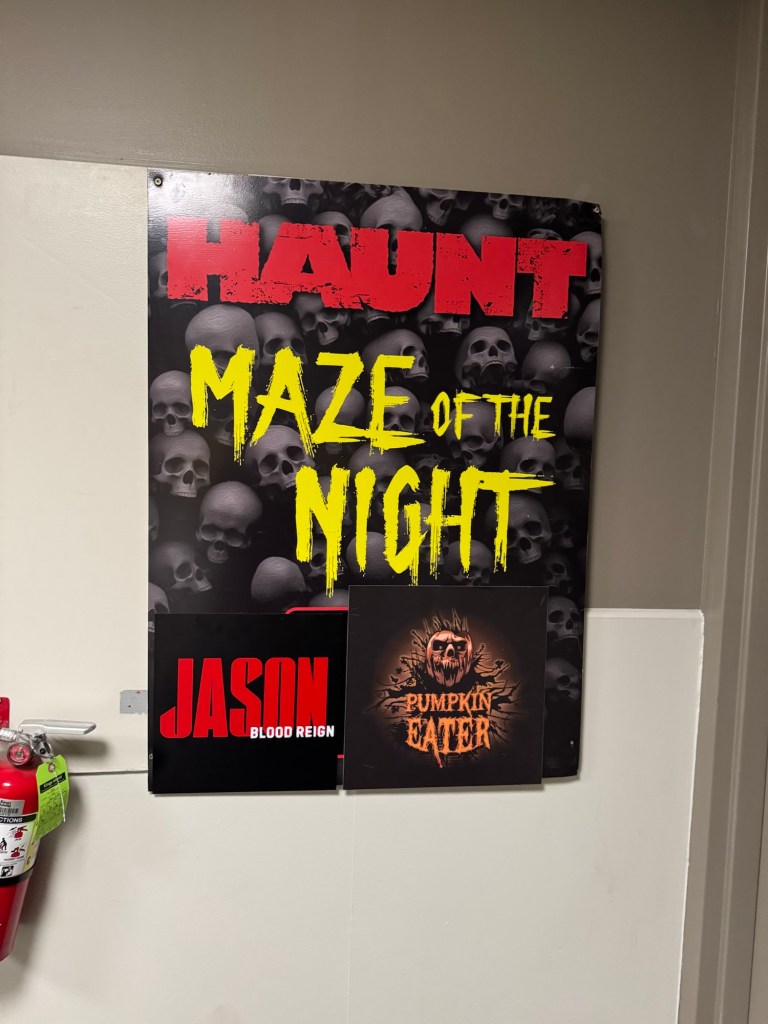
The Tesla Roadster, Blue Origin, and the Movies That Built the New Space Economy

I was very happy to see the Tesla Roadster demonstration. Teslas are the best-engineered cars in the world. The electric designation itself does not particularly move me; what matters is the engineering. When the Roadster drove upside down on a ramp using a suction system and then launched into the air on cold-gas thrusters—jumping over a line of other Teslas and landing under control—I thought immediately of the practical uses. Those kinds of features would be useful more often than people assume. It reminded me of the Lotus Esprit from The Spy Who Loved Me, the car that drove into the water and became a submarine. It reminded me of Batmobile concepts. Most of all it reminded me of the jet car from Hooper, one of my favorite films. I have always wanted something like that. When the production Roadster arrives, I expect to get one for myself and probably a few for family. The Cybertruck, the rest of the Tesla line, and this new Roadster confirm what I have said for years: Tesla is the greatest car company in the world, and SpaceX is the greatest company in the world.¹

The October Demonstrations and the Bezos Interview

The Roadster event took place on October 15, 2026, at the SpaceX test site in McGregor, Texas. The car used a multi-mode fan and ground-sealing system (drawing on SpaceX technology) to generate the downforce needed to cling to the inverted ramp, then cold-gas thrusters for the aerial maneuvers and the claimed 0–60 mph time of 0.81 seconds. Production is targeted for 2028. It is not a practical flying car for everyday traffic, but it is a serious demonstration of integrated vehicle and propulsion engineering.²

Around the same time, Jeff Bezos sat for an extensive interview with Bret Baier on Special Report from the Blue Origin facility in Cape Canaveral. I have been to that facility. Bezos has worked against Trump in the past, yet he is now aligned with the same capitalist push that is producing real hardware. The conversation was largely optimistic and focused on execution: a permanent lunar presence rather than a flags-and-footprints visit, routine cargo landings first, New Glenn’s return to flight, and the broader economic shift. Blue Origin has named one of its New Glenn boosters Never Tell Me the Odds, a direct reference to Han Solo’s line in The Empire Strikes Back during the asteroid-field sequence. That booster has already achieved successful landings and reuse. These are not abstract slogans. They are operating vehicles.³

The Films That Shaped the Builders

The Empire Strikes Back and Raiders of the Lost Ark came out close together and were written in ways that reinforced each other. Harrison Ford carried both. The asteroid-field escape under damaged conditions is the source of the “Never tell me the odds” line. The Raiders sequences—the well with the snakes, the desert fight near the flying wing, and the truck chase for the Ark—show the same tenacity: improvise, keep moving, finish the job under pressure. Those films, along with earlier work such as the Lotus submarine car in The Spy Who Loved Me, formed a generation that later built actual rockets and high-performance vehicles. Elon Musk and Jeff Bezos are the most visible examples, but the pattern is broader. The attitude was not “the odds are against it.” The attitude was to build the system that changes the odds.

I have watched the Blue Origin facility and the SpaceX operations at Boca Chica. The difference between those sites and the older institutional model is visible on the floor. The future workforce is not limited to people who followed a traditional path through the right degrees and the right political alliances. It includes people who can be trained from ordinary backgrounds—Waffle House shifts, mechanical work, or similar—onto a production cadence that builds flight hardware. The administrative economy that guaranteed a modest upper-middle-class living in exchange for compliance is losing ground. The next decade’s value is being created in companies that actually fly vehicles and manufacture advanced systems.⁴

Where the Money and the Work Are Going

When people ask me where to put effort or capital, I point to Tesla, SpaceX, and Blue Origin. The Roadster is more than a stunt; it is evidence that the same organizations building orbital vehicles are applying those methods to ground transportation. Bezos’s comments on lunar infrastructure, AI applied to physical manufacturing, and higher launch cadence describe a market that rewards execution over process. Traditional commodities, legacy military-industrial arrangements, and political career paths that top out in the low hundreds of thousands are not where the expansion is occurring. I have no interest in returning to earlier roles even if the opportunity reappeared. The work that matters is here.

I keep returning to those two films because the parallel is practical. The asteroid field and the desert chase both required precise control under failure conditions. The people now running the flight tests and production lines absorbed that lesson and applied it to hardware. The result is visible: reusable boosters that land, cars that can generate the forces needed for extreme maneuvers, and manufacturing systems that pull people into high-skill work faster than the old credentialed pipeline. That is the economy I am focused on. It is exciting, and I am looking forward to the Roadster when it is available.

Notes

1.  Tesla Roadster demonstration, October 15, 2026, SpaceX McGregor, Texas facility. Livestreamed event showed inverted driving via suction system, aerial maneuvers with cold-gas thrusters (SpaceX collaboration), and sub-1-second 0–60 claims. Production targeted for 2028. Multiple contemporary reports (PCMag, The Verge, CNN Business, Business Insider) document the stunts and the distinction between demonstration capability and everyday road use.

2.  Same event coverage. Specs discussed include multi-nozzle cold-gas thrusters, ultra-high-pressure air systems, and extreme acceleration. The demonstration was physical and attended, not AI-generated.

3.  Bret Baier exclusive interview with Jeff Bezos, October 7, 2026, Blue Origin Cape Canaveral facility, aired on Special Report. Topics included permanent lunar base, New Glenn schedule, AI regulation with a light hand on tools rather than applications, and economic optimism. Blue Origin booster Never Tell Me the Odds references The Empire Strikes Back (1980); the vehicle has completed successful landings and reuse. See also Ars Technica, Reuters, and NASASpaceflight reporting on New Glenn flights.

4.  On workforce and industrial cadence: public statements from Blue Origin and SpaceX leadership on production scaling, plus broader commentary on the shift from credentialed administrative paths to hands-on manufacturing in aerospace and advanced vehicles. The “Waffle House to flight line” observation is the author’s based on facility visits and industry pattern.

Bibliography

The Empire Strikes Back. Directed by Irvin Kershner. Lucasfilm, 1980.

Raiders of the Lost Ark. Directed by Steven Spielberg. Lucasfilm, 1981.

The Spy Who Loved Me. Directed by Lewis Gilbert. Eon Productions, 1977.

Hooper. Directed by Hal Needham. Warner Bros., 1978.

Tesla. Roadster event livestream and official materials, October 15, 2026.

Contemporary reporting on the Roadster demonstration: PCMag, The Verge, CNN Business, Business Insider, Statesman (Austin), October 2026.

Fox News. Bret Baier interview with Jeff Bezos, Special Report, October 7, 2026, from Blue Origin Cape Canaveral.

Ars Technica, Reuters, NASASpaceflight, and related coverage of New Glenn launches, booster Never Tell Me the Odds, and recovery operations (2025–2026).

Additional recommended reading: technical histories of reusable launch systems, analyses of the commercial space sector’s manufacturing model, and contemporary accounts of Tesla vehicle engineering and production.

Rich Hoffman

More about me

Click Here to Protect Yourself with Second Call Defense https://www.secondcalldefense.org/?affiliate=20707

About the Author: Rich Hoffman

Rich Hoffman is an author, political consultant, and strategic advisor based in Cincinnati, Ohio, and the creator of The Politics of Heaven—a unique framework that connects biblical theology, ancient history, and modern power structures to explain how moral alignment and spiritual forces shape global events. Blending real-world political experience with deep research into archaeology, UFO phenomena, and suppressed historical narratives, Hoffman offers compelling commentary on topics ranging from ancient civilizations and the Dead Sea Scrolls to modern populist movements, paranormal continuity, and leadership strategy in chaotic environments. As the author of The Gunfighter’s Guide to Business and the forthcoming Politics of Heaven, he brings a grounded yet provocative voice to media discussions, supported by firsthand experiences and a cross-disciplinary approach that bridges science, history, and theology. For interviews, speaking engagements, or expert analysis, visit richhoffmanbooks.com or contact directly via phone at 513-307-5815 or email at rhoffman@richhoffmanbooks.com.  If you’ve seen the movie, Disclosure Day and want to talk about it and the implications of Presidnet Trump’s UAP disclosures, let me know and we can bring some color to your coverage. https://richhoffmanbooks.com/media-inquiries-broadcast-topics-and-contact-info/?frame-nonce=ad51e7ecba I do have a firsthand UFO encounter to discuss.

Vote Yes on Ohio Issue 3: Lock Voter ID into the Constitution Before the Whisper Campaigns Confuse Enough People

Early voting is already underway in Ohio, and from what I am hearing on the ground, shenanigans and whisper campaigns are moving through the lines and the mailboxes. I just got off an important call with someone who is a major mover and shaker in Ohio politics—he is everywhere, he sees everything, and he does not want his name attached to this. What he told me matches what I have been picking up from the ground troops in Butler County, Warren County, and Hamilton County. Democrats know voter ID is popular. They know they cannot openly oppose it without looking like they want loose rules. So they are trying to play it both ways: smile and nod that identification is fine while quietly telling confused voters not to bother with Issue 3, or to vote no because “it is already the law.” That is the classic whisper campaign, and it is active right now.¹

What Issue 3 Actually Does

Issue 3 is a legislatively referred constitutional amendment on the November 3, 2026 ballot. It would add a new Section 5 to Article V of the Ohio Constitution requiring voters to present an approved form of government-issued photo identification to vote in person. Acceptable documents match current law: an unexpired Ohio driver’s license or state ID card, a U.S. passport or passport card, a U.S. military ID, an Ohio National Guard ID, or a U.S. Department of Veterans Affairs ID. There is an allowance for an alternative verification method if someone has a sincere religious objection to being photographed. For non-in-person voting, it sets a minimum standard—photo ID or, if authorized by law, a signature plus one other unique identifier.²

Ohio already requires photo ID for in-person voting under House Bill 458, which Governor Mike DeWine signed in January 2023 and which took effect that April. Issue 3 does not invent a new requirement for Election Day. It constitutionalizes the existing one. A future legislature could not simply repeal or water it down with a simple majority vote. Changing it would require another constitutional amendment and a statewide vote. That is the entire point.³

Why Identification for Voting Is Not Extreme

I have had to use my passport and driver’s license for things far less important than choosing who runs the state. Cross an ocean for work or family and the authorities want to know who you are. Get a job, board a plane, cash a check, buy a beer, rent an apartment—identification is routine. Yet when it comes to the franchise that decides taxes, schools, and Ohio’s direction, some people treat the same basic requirement as an attack. Democrats have spent years arguing that requiring proof of identity suppresses votes. The practical reality is simpler: they have structural problems winning without loose rules, non-citizen voting risks, and the ability to litigate or legislate the standards downward later. If you already need a government-issued photo ID to drive to the polls, the idea that you should not need one to cast a ballot does not survive ordinary scrutiny.⁴

Leaving It to the Legislature Is Not Good Enough

The next General Assembly can change current law. That is why the old moderate Republican approach of “trust the process and the statutes” is not sufficient. For decades, we have watched election rules become battlefields of lawsuits, emergency orders, and administrative discretion. Ambiguous statutes get stretched. Provisional ballots, signature mismatches, and mail procedures create friction that favors the side with better lawyers and more patience. Putting the core identification requirement into the Constitution raises the bar permanently. It is not radical; it is the same logic that put other foundational rules into the document so they cannot be quietly reversed when political winds shift.⁵

The Whisper Campaigns and the Ground Game

The person who called me said the effort is particularly active in the southwest counties. Democrats know Issue 3 polls well—recent surveys have shown support in the 60 percent range. They cannot run a loud “vote no” campaign without looking like they oppose basic election security. Instead, they are working the lines and the early-vote sites with the quiet message that it is unnecessary, that you should vote for the candidates and skip the issue, or that a yes vote somehow hurts something else. That is deliberate confusion. I have seen this pattern before. When an idea is popular with ordinary people and inconvenient for the institutional left, the response is rarely a straight argument. It is noise, procedural objections, and selective silence.⁶

I am not claiming every Democrat is coordinating a formal operation. I am reporting what reliable sources on the ground are seeing in Butler, Warren, and Hamilton counties right now. Early voting numbers are already moving. Some of the same people who spent years expanding mail and early voting procedures now hope low-information voters will not notice Issue 3 or will treat it as optional. It is not optional if you want the requirement locked in.

The Rest of the Ballot

While you are there, the usual local priorities still apply. In the Lakota area, vote no on the school levy. Higher taxes on the same system that hasn’t delivered better results aren’t the answer. Vote for Republican candidates aligned with the direction Ohio has been moving. And make sure you vote yes on Issue 3. Whether you vote early in person, by mail with proper identification, or on Election Day, the identification question protects the integrity of all the others going forward.

Why This Matters Beyond One Election

Democrats have treated election administration as a growth industry for three decades. The more moving parts—provisional ballots, extended cure periods, expansive mail rules—the more opportunities for friction that can be litigated or exploited. Ohio tightened the rules in 2023 precisely because the previous non-photo options and longer windows created unnecessary risk. Constitutionalizing the photo ID standard is the logical next step so that a temporary legislative majority cannot unwind it. I do not want the next set of “reformers” treating basic identity verification as optional again.⁷

Show up. Vote yes on Issue 3. Do not let the whisper campaign talk you out of the one item on the ballot that makes it harder for the usual games to continue. The constitution is where permanent rules belong. Everything else is negotiable. This should not be.

Bibliography / Further Reading

• Ballotpedia, “Ohio Issue 3, Require Voter Identification Amendment (2026)” and related 2026 ballot measure pages.

• Official Ohio Secretary of State ballot language, explanation, and arguments for and against Issue 3.

• Substitute Senate Joint Resolution 10 (2026) and the enrolled text of the proposed Section 5 of Article V.

• House Bill 458 (134th General Assembly), signed January 6, 2023; effective April 7, 2023—text, fiscal notes, and contemporary news coverage of the photo ID requirement.

• Suffolk University/USA TODAY Network Ohio poll (September 23–27, 2026) showing approximately 61 percent support for Issue 3.

• Ohio Republican Party materials supporting Issue 3 and contemporaneous statements from legislative sponsors (Theresa Gavarone, Jane Timken, and others).

• Analyses of photo ID laws and election administration from the Heritage Foundation, Honest Elections Project, and academic reviews of HB 458’s implementation.

• Historical context on Ohio election law changes, including drop-box limits, provisional ballot cure periods, and absentee deadlines under HB 458.

• Broader works on election integrity and administrative discretion (for example, studies of non-citizen voting risks, signature verification error rates, and the political economy of mail balloting).

• Ayn Rand, Atlas Shrugged and The Fountainhead—useful for the larger contrast between systems that reward clarity and responsibility versus those that thrive on ambiguity and managed outcomes.

Rich Hoffman is an aerospace executive, writer, and host of the Overman Warrior Podcast / Executive Warrior Podcast, based in the Cincinnati / Butler County area of Ohio. He has written extensively on local and national politics, individual responsibility, and the cultural and institutional costs of managerial governance.

Footnotes

¹ Ground reports from Butler, Warren, and Hamilton counties during early voting (began October 6, 2026) describing selective messaging on Issue 3; consistent with the low-profile nature of organized “no” efforts noted in contemporaneous coverage.

² Ballotpedia, “Ohio Issue 3, Require Voter Identification Amendment (2026)”; official ballot language certified by the Ohio Ballot Board (August 2026); Signal Ohio and other explainers confirming the measure enshrines existing in-person photo ID rules and sets minimum standards for other methods.

³ House Bill 458 (signed January 6, 2023; effective April 7, 2023) established the current photo ID requirement for in-person voting and related absentee procedures. Issue 3 constitutionalizes the core in-person standard so that future statutory repeal would require another statewide vote.

⁴ Everyday identification requirements (driver’s license, passport, employment, travel) are routinely accepted; the same logic applies to the franchise. Ohio already issues free state IDs to those who need them.

⁵ Legislative referral via SJR 10 (passed Senate 22–9 on June 3, 2026; House 62–30 on June 10, 2026). Constitutional placement raises the amendment threshold compared with ordinary statute.

⁶ Suffolk University/USA TODAY Network poll (September 23–27, 2026) of 500 likely voters: 61 percent support, 31 percent oppose, 8 percent undecided. Coverage notes limited high-profile Democratic opposition and the measure’s popularity.

⁷ Contemporary reporting on HB 458 (AP, Cleveland.com, Democracy Docket, ACLU of Ohio analyses) details the shift from non-photo options to photo ID, shortened cure and return windows, and single drop-box limits. These changes reduced administrative discretion; constitutional entrenchment continues in that direction.

Rich Hoffman

More about me

Click Here to Protect Yourself with Second Call Defense https://www.secondcalldefense.org/?affiliate=20707

About the Author: Rich Hoffman

Rich Hoffman is an author, political consultant, and strategic advisor based in Cincinnati, Ohio, and the creator of The Politics of Heaven—a unique framework that connects biblical theology, ancient history, and modern power structures to explain how moral alignment and spiritual forces shape global events. Blending real-world political experience with deep research into archaeology, UFO phenomena, and suppressed historical narratives, Hoffman offers compelling commentary on topics ranging from ancient civilizations and the Dead Sea Scrolls to modern populist movements, paranormal continuity, and leadership strategy in chaotic environments. As the author of The Gunfighter’s Guide to Business and the forthcoming Politics of Heaven, he brings a grounded yet provocative voice to media discussions, supported by firsthand experiences and a cross-disciplinary approach that bridges science, history, and theology. For interviews, speaking engagements, or expert analysis, visit richhoffmanbooks.com or contact directly via phone at 513-307-5815 or email at rhoffman@richhoffmanbooks.com.  If you’ve seen the movie, Disclosure Day and want to talk about it and the implications of Presidnet Trump’s UAP disclosures, let me know and we can bring some color to your coverage. https://richhoffmanbooks.com/media-inquiries-broadcast-topics-and-contact-info/?frame-nonce=ad51e7ecba I do have a firsthand UFO encounter to discuss.

The Jonathan Edwards Study Bible, the Corruption of Character, and Why Good Government Requires Good People

I have been saying this more and more lately: if you have not yet picked up a copy of the new Jonathan Edwards Study Bible: Experience Abiding Joy in Christ (NKJV), get one. Thomas Nelson released it on August 18, 2026, with Dr. Matthew Everhard as general editor, and it is one of the best things to happen this year. The paper smells wonderful. The binding, the Comfort Print type, the two-color printing, the inclusion of Edwards’ own Resolutions, and the study notes drawn straight from his sermons, treatises, and “Blank Bible”—everything about it invites serious engagement. I already had a solid Bible, but this one is different. It is a tool for the kind of long, disciplined conversations about Christian values and biblical order that I expect to keep having for hundreds of hours in the years ahead.¹

Biblical Foundations for Healthy Families, Churches, and Government

What is really at stake is not merely personal piety. The Bible records how a particular people, and then a wider civilization, survived more than a thousand years of human turmoil by clinging to values capable of building a healthy society. Translation history—from Hebrew and Greek through the Reformation and Martin Luther’s work into new European standards—matters, but the deeper point is functional: those values produce good families, good churches that help form good families, and, from among those people, a portion willing and able to serve in political office.² Good government does not appear by magic or by bureaucratic decree. It is downstream of character. Without good people formed by good families and churches, the supply of those fit for limited, constitutional office shrinks.

I have a granddaughter just over one year old. Watching her, and remembering the same stages with the other grandchildren, sharpens the contrast. Content aimed at children under two is still largely constructive: language, association, positive voices, basic formation. By the time a child reaches eight, nine, or ten, and especially the 10-to-13 and 13-to-16 windows, the cultural message shifts. “Adult” content is coded as sexually charged, reckless, and liberally sprinkled with cuss words. Children who want to be treated as grown-ups learn to associate maturity with those markers. We are careful what we pour into toddlers’ brains; we become careless, or even actively destructive, once they hit double digits. Then we express surprise when people in their twenties, thirties, and forties remain stuck in the same patterns—never growing up, treating foul language and sexualized recklessness as signs of sophistication.³

From Educational Under-Twos to Sexualized Teens: The Cultural Pipeline

This is not abstract. I watch the YouTube videos my teenage grandson (turning 15) chooses when he visits. I pay attention because culture follows what marketers push to each age cohort. Research confirms the scale. A 2025 report from the Children’s Commissioner for England found that 70 percent of young people had seen pornography before age 18, with more than a quarter first exposed by age 11 and some as young as six; social media platforms, not dedicated adult sites, were the dominant source. Common Sense Media, Thorn, and Ofcom data show substantial rates of sexual content and interactions among minors on TikTok, YouTube, Instagram, and related apps. Ofcom has repeatedly flagged TikTok and YouTube for feeding harmful content to large majorities of teens via recommendation systems.⁴ Algorithms do not merely reflect demand; they amplify it. Creators who want reach—and I know many of them—alter content toward whatever is trending. When the trend is sexualized, vulgar, or adversarial, that is what gets pushed.⁵

Algorithms as the Modern Adversary: Rewarding the Bad

Who controls the algorithm controls the content. TikTok (Chinese-owned), YouTube (Alphabet/Google), and similar platforms systematically reward material that maximizes engagement: outrage, sexualization, cussing, laziness framed as authenticity. Positive, formative, or explicitly “good” content is rarely the algorithmic winner. Internal evidence from whistleblowers and external audits (Center for Countering Digital Hate, academic studies of recommendation systems) shows platforms have repeatedly prioritized borderline or harmful material because it drives time-on-site and revenue. The result is a pipeline that takes children from constructive early programming and, within a few years, immerses them in the opposite. We then wonder why so many adults never exit the pattern.⁶

This is the modern version of an old story. In the Book of Job, the adversary (Satan) is granted permission to test Job’s loyalty. The figure is not a cartoon; the biblical picture includes a divine council and adversarial spiritual powers that operate through deception, cultural capture, and the redefinition of good. Today’s adversaries—whether understood spiritually, institutionally, or both—do the same work through media, education, and policy. Public schools teach compliance with whatever the current policy defines as good. When that definition rewards sexual openness, foul language, and mediocrity while punishing high standards or traditional formation, the output is predictable. “Good” becomes relative, socially managed, and hostile to excellence. People learn that being too good makes others look bad, so they stay mediocre or worse. Corruption, fraud, and waste in public office become rational strategies for advancement rather than moral failures.⁷

The Shortage of Good People and the Case for Small Government

My wife and I hear it constantly during election seasons: we need good people in office who will uphold the Constitution. The practical question is where those people come from. A society that has deliberately removed character formation from schools, rewarded the opposite through media algorithms, and redefined good according to the manipulators’ interests will not produce a deep bench of people capable of limited, constitutional government. Good people still emerge—statistical anomalies of family, church, and personal resolve—but they are scarce. Not everyone is interchangeable. Attributes differ. When we pretend otherwise and lower the standard so that bad people can hold power, the results are devastating.⁸

This is one of the strongest practical arguments for small government. Large government requires a continuous supply of competent, character-bound people to staff it. When that supply shrinks by design, expanding the state simply multiplies failure. The corporate-state complex has spent decades treating people as interchangeable inputs; the results show declining literacy and numeracy (NAEP data showing large shares of students below basic proficiency), eroded character metrics reported by teachers, and a persistent inability to reduce fraud and waste. We taught the next generation that corruption is how you get ahead, then wondered why public office is hard to staff with anyone who will actually fight it.⁹

Political Parties as Sorters of Character

Political parties exist, among other reasons, to sort. A party that attracts and elevates people of genuine character—and refuses to authorize the opposite—will outperform one that does not. I affiliate with the Republican Party in my county precisely because its stated goals still include sorting for better rather than worse. That sorting is imperfect and always under pressure, but the alternative is worse. When “good” is redefined by adversarial forces, the people who remain resolute become rarer and more identifiable. Everyone who is paying attention already knows who they are.

I do not believe God is stupid or passively all-seeing in a way that removes human responsibility. The biblical picture allows for adversarial powers that test, deceive, and exploit the desire to fit in more than the desire to be good. Most people prefer belonging to excellence. The result is a thinner stock of people ready for the duties of self-government. The remedy begins where Edwards began: with deliberate resolve, steady engagement with Scripture, and the formation of families and churches that still know the difference between good and its counterfeit. The new Study Bible is a practical aid to that work. Without returning to making good people on purpose, the vacancies, corruption, and cultural pipeline will continue. The plot to destroy good families, good people, and therefore good government has always been there. The difference now is how efficiently the tools of the age execute it—and how clearly the results are visible.

Notes

1.  Thomas Nelson, The Jonathan Edwards Study Bible: Experience Abiding Joy in Christ (NKJV), general editor Dr. Matthew Everhard (Nashville: Thomas Nelson, August 18, 2026). Features include study notes drawn from Edwards’ works (with source citations to the Yale edition), Edwards’ seventy Resolutions, full-page essays on his theology and the First Great Awakening, and his miscellanies note-taking system. See also Matthew Everhard’s discussions of the project on the Unashamed Truth channel.

2.  On the historical transmission of biblical values and their role in social order, see standard treatments such as Diarmaid MacCulloch, Christianity: The First Three Thousand Years (New York: Viking, 2010), and earlier works on the Reformation’s impact on European moral and political standards. Edwards himself argued that true religion produces the highest happiness and ordered life; see his Religious Affections and the Resolutions (1722–1723).

3.  Personal observation of age-graded media targeting is consistent with long-term content analyses such as UCLA’s Center for Scholars and Storytellers longitudinal survey of values in children’s television (fame and image rising relative to community and benevolence across decades).

4.  Children’s Commissioner for England, reports on children’s exposure to pornography (2023 and 2025 updates); Common Sense Media, research on teens and explicit/AI-generated material (2026); Thorn, Youth Perspectives on Online Safety (2025); Ofcom, findings on harmful content exposure via recommendation feeds for UK teens.

5.  Center for Countering Digital Hate (CCDH) reports on algorithmic amplification of harmful content; academic audits of TikTok and YouTube Shorts recommendation systems (e.g., studies showing rapid increase in toxic or misogynistic content after minimal engagement); BBC and other reporting on whistleblower accounts of platforms prioritizing engagement over safety.

6.  Same sources as note 5; additional context in Ofcom regulatory findings and ISD Global analyses of search and recommendation bias on TikTok.

7.  The Job narrative (Job 1–2) provides the classic biblical example of adversarial testing within the framework of divine sovereignty and a heavenly council. Edwards’ theology of spiritual conflict and the necessity of resolve appears throughout his writings and the new Study Bible notes.

8.  Teacher surveys on declining student character (e.g., 2026 data showing majority of educators reporting behavioral and ethical decline); NAEP reading and math trends showing rising shares of students below basic proficiency; historical analyses of the retreat of deliberate character education from public schools after the mid-20th century.

9.  On the removal of character and moral formation from public education and associated social trends, see B. Edward McClellan, Moral Education in America, and later data on literacy, civic knowledge, and ethical attitudes among youth (Josephson Institute reports and similar).

Bibliography

Everhard, Matthew D. Holy Living: Jonathan Edwards’s Seventy Resolutions for Living the Christian Life. Hendrickson, 2019 (and related lectures/videos on the Resolutions).

Edwards, Jonathan. The Works of Jonathan Edwards. Yale University Press edition (edwards.yale.edu). Especially Religious Affections, sermons, and the Resolutions (1722–1723).

The Jonathan Edwards Study Bible: Experience Abiding Joy in Christ (NKJV). General editor Matthew Everhard. Thomas Nelson, 2026.

MacCulloch, Diarmaid. Christianity: The First Three Thousand Years. Viking, 2010.

Children’s Commissioner for England. Reports on children’s exposure to pornography and online harm (2023–2025).

Common Sense Media. Research on teens, pornography, and AI-generated explicit material (2026).

Thorn. Youth Perspectives on Online Safety (2025).

Ofcom. Regulatory findings on harmful content recommendation to UK teens (multiple reports).

Center for Countering Digital Hate. Reports on algorithmic amplification of harmful and polarizing content.

National Assessment of Educational Progress (NAEP). Long-term trends in reading and mathematics proficiency.

UCLA Center for Scholars and Storytellers. Longitudinal studies of values conveyed in children’s and teen media.

McClellan, B. Edward. Moral Education in America: Schools and the Shaping of Character from Colonial Times to the Present.

Josephson Institute. Reports on the ethics of American youth.

Additional recommended reading: works on the divine council motif in biblical studies (e.g., Michael Heiser), studies of recommendation-system design and engagement incentives, and historical accounts of the First Great Awakening and Puritan moral formation.

Rich Hoffman

More about me

Click Here to Protect Yourself with Second Call Defense https://www.secondcalldefense.org/?affiliate=20707

About the Author: Rich Hoffman

Rich Hoffman is an author, political consultant, and strategic advisor based in Cincinnati, Ohio, and the creator of The Politics of Heaven—a unique framework that connects biblical theology, ancient history, and modern power structures to explain how moral alignment and spiritual forces shape global events. Blending real-world political experience with deep research into archaeology, UFO phenomena, and suppressed historical narratives, Hoffman offers compelling commentary on topics ranging from ancient civilizations and the Dead Sea Scrolls to modern populist movements, paranormal continuity, and leadership strategy in chaotic environments. As the author of The Gunfighter’s Guide to Business and the forthcoming Politics of Heaven, he brings a grounded yet provocative voice to media discussions, supported by firsthand experiences and a cross-disciplinary approach that bridges science, history, and theology. For interviews, speaking engagements, or expert analysis, visit richhoffmanbooks.com or contact directly via phone at 513-307-5815 or email at rhoffman@richhoffmanbooks.com.  If you’ve seen the movie, Disclosure Day and want to talk about it and the implications of Presidnet Trump’s UAP disclosures, let me know and we can bring some color to your coverage. https://richhoffmanbooks.com/media-inquiries-broadcast-topics-and-contact-info/?frame-nonce=ad51e7ecba I do have a firsthand UFO encounter to discuss.

Amy Acton’s Mother Calls Her a Liar: The Death Nail in a Campaign Built on Overdramatization

I think it was always going to be Vivek Ramaswamy. Ohio has moved, and the people who still believe they can turn the clock back to some polite, managed Republicanism are going to be disappointed. But when Amy Acton’s own mother steps forward just weeks before Election Day and calls her daughter a liar—disputing the very childhood story Acton has used to shape her public image—and Vivek’s campaign turns that into an ad, it is not a minor footnote. It is the final stake through a campaign that was already built on overdramatization, emotional appeals, and a refusal to confront reality.¹

The Mother’s Words and Why They Matter

Donna Arthur, identifying herself as Amy Acton’s mother and noting her past work in child and family services, said she loves her daughter but that Acton “has a serious problem. She is a liar. She lies about her past. She says she grew up living in a tent. None of that is true. She’s lied her entire life.” She urged Ohioans not to elect her, warning that life would only get worse.¹

Acton’s campaign and her brother, Philip Stearns, responded by highlighting the long estrangement—dating to 1978 when Acton was twelve—and the fact that her stepfather was indicted for sexually abusing her. Court records and earlier reporting, including Acton’s own 2019 interviews, support key elements of hardship and removal from the home. The mother stayed with the man until his death. That is a tragic family story, and I am not minimizing childhood trauma. But the mother is speaking now, as an adult, about the adult candidate’s character and truthfulness. When your own mother says you have been a liar your whole life and that the tent story is not true, conventional political wisdom says that is a disaster for the candidate. Why would any campaign lean into it if the basic facts were unassailable? It is awkward Thanksgiving material, and it is the kind of thing that sticks with undecided voters who already sense something is off.²

A Pattern of Overdramatization

This is not an isolated episode. During COVID, Acton, as Ohio’s health director under Mike DeWine, was the face of the lockdowns, school closures (Ohio was among the first), and business restrictions that crushed small operators while she and others projected certainty. She became emotional, pushed back against reopening, and ultimately resigned amid protests and legislative pushback, citing pressure to sign orders she opposed. Staff accounts described sensitivity to criticism and emotional reactions. She made a big deal out of everything, turning public health into a personal drama that made insecure people feel temporarily safe while the economic and educational costs piled up.

More recently, at the Canfield Fair in early September, an armed man pushed through a crowd toward her, knocking people over. He had pistols, a Taser, and brass knuckles but was holding a phone or camera; weapons were not brandished. The campaign’s initial framing was of an armed individual lunging at her. It turned out to be a man who wanted to get closer—possibly for a picture or confrontation—but the overstatement fit the pattern. She has a history of elevating ordinary or mixed situations into crises that serve a narrative.³ ⁴

The Moderate Republicans and the Old Handbook

There are still Republicans in Ohio who wanted a return to the managed, polite version of the party—the Amy Acton types cite the George W. Bush-era playbook and claim Acton was simply following the established pandemic plan. They hoped the post-Trump world would settle back into something familiar where they retained more control. They are wrong. People rejected that approach years ago. They want the clarity and results orientation that Trump represents, not more of the same managerial caution that allowed problems to fester. Vivek Ramaswamy is an extension of that Trump-aligned direction for Ohio’s governorship. The old guard’s preference for continuity was never going to hold.

Democrats, by contrast, often select and elevate candidates who carry significant personal and psychological baggage. Acton is not unique in that regard. The party’s base has long rewarded emotional performance and narratives of victimhood over steady competence. When the candidate’s own mother is on record saying she needs help and cannot help others until she tells the truth, it confirms what many already observe: too many Democrat standard-bearers are not in a position to lead.⁶

What This Means Weeks Before Election Day

The race is close on paper. Some polls have Acton ahead by a few points; others are tighter or show Ramaswamy edges. Betting markets and conventional wisdom have shifted at times, but the fundamentals of Ohio—Trump’s repeated wins and the desire for a break from lockdown-style governance—favor the Republican. This mother’s intervention does not invent new information so much as it crystallizes existing doubts. For voters who were on the fence or who simply do not want another round of overdramatized governance, it provides a clear signal from the person who raised her.⁵

I am not unhappy to hear it. It is rare for a family member to speak so directly, and when she does—even under the complicated circumstances of long estrangement and documented abuse—it carries weight. Acton has overdramatized her past and her present. As governor she would do the same with the state’s problems. Ohio does not need more of that. We need someone who will impose discipline, expand opportunity, and stop treating every challenge as a personal emotional event. Vivek was always the stronger bet. The mother’s words simply make the choice clearer for anyone still paying attention.

Bibliography / Further Reading

• Contemporary reporting on the Acton-Ramaswamy race and the October 2026 ad (Newsweek, Forbes, CNN, Washington Post, PolitiFact, Ohio Capital Journal, and local Ohio outlets).

• Acton’s own prior interviews and official records concerning her childhood and 2020 public health tenure (Youngstown Vindicator 2019; Ohio Department of Health orders; DeWine administration records).

• Ayn Rand, Atlas Shrugged and The Fountainhead — for the contrast between producers and those who live through narrative and emotion.

• Works on political psychology and the modern left’s preference for emotional framing (e.g., analyses of victimhood culture and institutional capture).

• Ohio political history and the post-2016 realignment of the Republican Party toward Trump-aligned priorities.

Rich Hoffman is an aerospace executive, writer, and host of the Overman Warrior Podcast / Executive Warrior Podcast, based in the Cincinnati / Butler County area of Ohio. He has written extensively on local and national politics, individual responsibility, and the cultural costs of managerial governance.

Footnotes

¹ Newsweek, “Amy Acton’s mother calls her ‘liar’ in brutal ad as Ohio race tightens,” October 20, 2026; Forbes, CNN, Washington Post, and multiple other outlets confirmed the video and subsequent Ramaswamy campaign acknowledgment of responsibility and $4 million promotion commitment.

² Court records from Mahoning County (1978) and contemporaneous reporting, including Acton’s 2019 Youngstown Vindicator interview and statements from her brother Philip Stearns, document the stepfather’s indictment on rape charges, removal from custody, and estrangement since age 12. See also PolitiFact and Ohio Capital Journal coverage, October 20–21, 2026.

³ Fox News, ABC News, and local Mahoning County reporting on the September 6, 2026 Canfield Fair incident involving Patrick Havas, who was armed with two pistols, a Taser, and brass knuckles but holding a phone/camera; campaign initially described it as an armed individual lunging at Acton.

⁴ Amy Acton served as Ohio Department of Health Director from 2019 to June 11, 2020, under Gov. Mike DeWine. Ohio was among the first states to close schools (March 2020). Stay-at-home orders, business closures, and the postponement of the March 17 primary (via Acton’s signed order) drew significant backlash, protests, and legislative efforts to limit her powers. Acton resigned citing political pressure on certain orders. See POLITICO, Washington Examiner staffer accounts, and contemporaneous Ohio news.

⁵ Recent polling (Marist October 15–18, 2026: Acton 50–43; BGSU/YouGov: 50–44; mixed with some Ramaswamy leads) shows a close race. Election Day is November 3, 2026. Ramaswamy is the Republican nominee, endorsed by President Trump; Acton is the Democratic nominee.

Rich Hoffman

More about me

Click Here to Protect Yourself with Second Call Defense https://www.secondcalldefense.org/?affiliate=20707

About the Author: Rich Hoffman

Rich Hoffman is an author, political consultant, and strategic advisor based in Cincinnati, Ohio, and the creator of The Politics of Heaven—a unique framework that connects biblical theology, ancient history, and modern power structures to explain how moral alignment and spiritual forces shape global events. Blending real-world political experience with deep research into archaeology, UFO phenomena, and suppressed historical narratives, Hoffman offers compelling commentary on topics ranging from ancient civilizations and the Dead Sea Scrolls to modern populist movements, paranormal continuity, and leadership strategy in chaotic environments. As the author of The Gunfighter’s Guide to Business and the forthcoming Politics of Heaven, he brings a grounded yet provocative voice to media discussions, supported by firsthand experiences and a cross-disciplinary approach that bridges science, history, and theology. For interviews, speaking engagements, or expert analysis, visit richhoffmanbooks.com or contact directly via phone at 513-307-5815 or email at rhoffman@richhoffmanbooks.com.  If you’ve seen the movie, Disclosure Day and want to talk about it and the implications of Presidnet Trump’s UAP disclosures, let me know and we can bring some color to your coverage. https://richhoffmanbooks.com/media-inquiries-broadcast-topics-and-contact-info/?frame-nonce=ad51e7ecba I do have a firsthand UFO encounter to discuss.

Soft Campaigns and Bloody Knuckles: Why the Administrative State’s Interchangeable-People Model Is Failing in 2026

There is a common thread running through the 2026 campaigns of Amy Acton in Ohio and James Talarico in Texas. Both operate on the premise that the candidate is largely optional. Public relations teams, controlled events, and background management can substitute for the person who is supposed to do the job. Talarico spent roughly nine to twelve days off the in-person trail in late September and early October with the flu—working by Zoom from home, citing contagion concerns and his Type 1 diabetes—while opponents circulated “missing” posters and called him missing in action. Acton has refused to debate Vivek Ramaswamy, limited cameras and open questioning at events, and run a tightly managed operation that keeps her from unscripted exposure. The underlying belief is the same one that has dominated corporate human-resources departments for years: people are interchangeable units, exceptional performance is not required, and the administrative layer can keep the machine running if the front person needs a sick day or prefers not to answer questions.

The Philosophy That Anyone Can Be Swapped

This is the practical application of a long-running idea that exceptionalism is a problem rather than a feature. In its Marxist and later administrative forms, the claim is that human beings can be treated like standardized inputs. One person can be replaced by another without meaningful loss, the way one can of soda can be swapped for another. Training, credentials, and process matter more than the specific individual who shows up and does the work under pressure. Corporate America absorbed large parts of this view. Human-resources manuals, wellness policies, and promotion criteria increasingly rewarded those who managed risk, took the approved time off, and avoided friction. The person who keeps working with split knuckles, stitches a cut with superglue rather than lose the day, or simply refuses to stop is treated as a liability rather than an asset.

I have spent enough time in environments that still require physical output to see the difference. My hands currently carry the evidence—cuts on top of older cuts, knuckles that have not fully healed because the work continued. That is ordinary in trades and in any setting where the job is not primarily the management of process. It is increasingly rare in the layers that set policy for everyone else. When the administrative state and the corporations that mirror it define acceptable behavior as calling out for the flu, taking extended leave for ordinary life events, and deferring to the background staff, they select for a particular temperament. They do not select for the temperament that built the capacity they now administer.

Campaigns as Public-Relations Exercises

The same selection shows up in politics. A candidate who can be kept off camera, shielded from debate, or replaced by staff for days at a time is easier for the professional class to manage. Acton’s campaign has cited security concerns rooted in her time as Ohio health director during the COVID period, along with what it describes as unfair attacks. Those concerns can be real. The pattern of refusing open formats and unscripted questioning is still a choice about how the candidate intends to operate. Talarico’s absence was explained as responsible behavior—he did not want to infect someone’s grandmother. Working remotely is feasible for many jobs. It is a different proposition when the job on offer is representing a state in a contested Senate race weeks before early voting. The opponents treated the gap as evidence of fragility. The defense treated it as ordinary employee sick leave. Both reactions reveal the expectation each side holds about what the role requires.

The older assumption was that the person seeking the office had to demonstrate the capacity to do it in public, under conditions that were not fully controlled. Money, staff, and messaging mattered, but they did not fully substitute for the candidate. The newer assumption, visible in multiple 2026 races, is that sufficient resources and message discipline can carry a controlled figure across the line. That assumption has been tested before. It does not reliably produce candidates who can function once the controlled environment ends.

Softness as Policy and Cultural Output

The preference for interchangeable, low-friction people has costs beyond any single campaign. Skilled trades in the United States face persistent shortages. Reports from industry groups project the need for well over a million new skilled workers annually through the mid-2030s, with training pipelines producing only a fraction of the required numbers. Electricians, mechanics, carpenters, and similar roles remain difficult to fill in multiple states. Part of the explanation is demographic and economic—aging workers, housing costs, the long prestige advantage given to four-year degrees after the GI Bill. Part of it is cultural. Decades of messaging treated physical, outdoor, or mechanically demanding work as lower status. At the same time, administrative and corporate environments normalized the idea that minor illness, injury, or discomfort should remove a person from the job rather than be managed around it.

I do not claim that every cut requires a clinic visit or that diabetes-related flu complications are imaginary. I do claim that a society which systematically promotes the people who treat ordinary hardship as disqualifying, and which sidelines those who continue working through it, will have fewer people capable of the output a first-rate economy and a competent government require. Foreign competitors do not need to invent this preference. They benefit when it is already embedded in hiring, promotion, education, and political selection. The Confucian-institute style influence operations and earlier Soviet efforts at institutional penetration are documented in specific cases. The broader softening is also a domestic story of prosperity, cheap credit, and status competition that raised consumption expectations while lowering the status of the work that once supported a single-income household in a modest house. Both layers operate at once.

What Gets Selected

The candidates and the corporate managers who treat the administrative layer as the real actor are not anomalies. They are the predictable product of rules that reward risk avoidance, message control, and the appearance of process compliance. When those rules dominate, the people who still measure themselves by whether the work got done—regardless of the condition of their hands—become harder to find and easier to marginalize. Campaigns that can be run substantially from Zoom or from behind a communications team test how far that model can be extended into elected office. The results in November will show how many voters still prefer the older expectation: that the person asking for the job should be able to do it in public, without the background apparatus fully substituting for them.

I have written elsewhere about the practical difference between people who impose their will on circumstances and people who manage the circumstances other people have already accepted. The 2026 races offer a clear comparison. One approach treats the candidate as a manageable input. The other treats the capacity to function under imperfect conditions as non-negotiable. The administrative state has spent decades selecting for the first. A country that wants to remain first-rate cannot afford to keep doing so indefinitely.

Footnotes

1.  Contemporary reporting from October 2026 documents James Talarico’s multi-day absence from in-person campaigning due to the flu, his remote work via Zoom, his Type 1 diabetes, and the subsequent “missing” posters and commentary from Ken Paxton’s campaign and President Trump.

2.  Reporting on Amy Acton’s Ohio gubernatorial campaign details her refusal to debate Vivek Ramaswamy, limited media access at events, and the campaign’s stated reasons involving prior security concerns and the nature of opposing attacks.

3.  Industry analyses (Alliance for America’s Skilled Trades and related contractor surveys) project large annual shortfalls in skilled-trade workers through 2035, with training completion and entry rates lagging demand in multiple states.

Bibliography for Further Reading

•  Contemporary news accounts of the Talarico absence and Paxton/Trump response (CNN, Fox News, Texas Scorecard, local Texas outlets, October 2026).

•  Reporting on Amy Acton’s debate refusal and campaign access decisions (Columbus Dispatch, PJ Media, Daily Signal, Ohio outlets).

•  Alliance for America’s Skilled Trades and Associated General Contractors reports on workforce shortages in construction and skilled trades.

•  Historical accounts of the GI Bill’s effect on college attendance and the relative status of trades.

•  Aldous Huxley, Brave New World (on industrialized human management and the reduction of individual variance).

•  Victor Davis Hanson, essays on administrative growth, cultural expectations, and the divergence between institutional norms and practical output.

•  Rich Hoffman, The Gunfighter’s Guide to Business (on individual agency, toughness, and the difference between process management and imposed results).

Rich Hoffman

More about me

Click Here to Protect Yourself with Second Call Defense https://www.secondcalldefense.org/?affiliate=20707

About the Author: Rich Hoffman

Rich Hoffman is an author, political consultant, and strategic advisor based in Cincinnati, Ohio, and the creator of The Politics of Heaven—a unique framework that connects biblical theology, ancient history, and modern power structures to explain how moral alignment and spiritual forces shape global events. Blending real-world political experience with deep research into archaeology, UFO phenomena, and suppressed historical narratives, Hoffman offers compelling commentary on topics ranging from ancient civilizations and the Dead Sea Scrolls to modern populist movements, paranormal continuity, and leadership strategy in chaotic environments. As the author of The Gunfighter’s Guide to Business and the forthcoming Politics of Heaven, he brings a grounded yet provocative voice to media discussions, supported by firsthand experiences and a cross-disciplinary approach that bridges science, history, and theology. For interviews, speaking engagements, or expert analysis, visit richhoffmanbooks.com or contact directly via phone at 513-307-5815 or email at rhoffman@richhoffmanbooks.com.  If you’ve seen the movie, Disclosure Day and want to talk about it and the implications of Presidnet Trump’s UAP disclosures, let me know and we can bring some color to your coverage. https://richhoffmanbooks.com/media-inquiries-broadcast-topics-and-contact-info/?frame-nonce=ad51e7ecba I do have a firsthand UFO encounter to discuss.