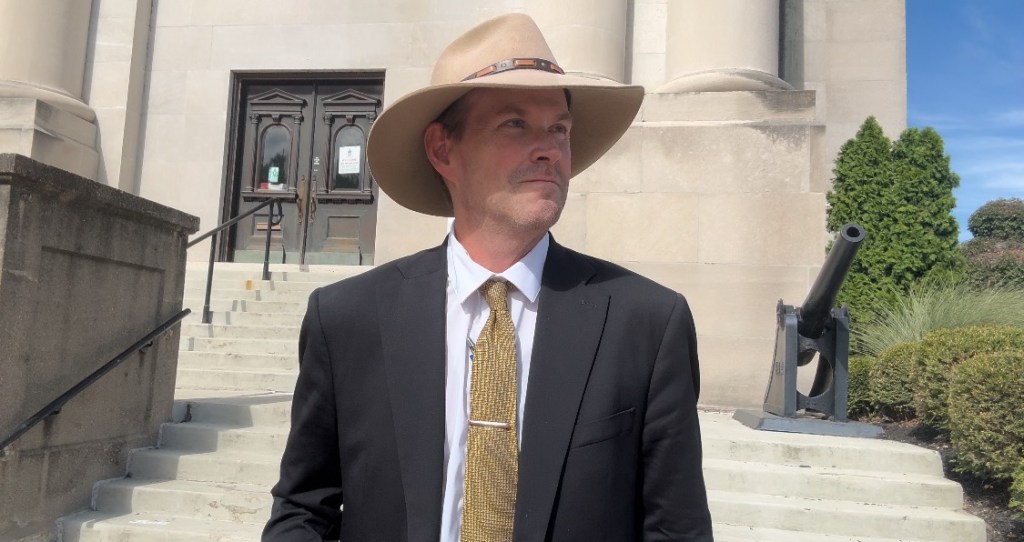
Pip: The Overmanwarrior has a lot of interests — ancient scrolls, Ohio politics, model rocketry with grandchildren — but this week, everything points to one place: up.
Mara: Rich Hoffman makes the case that the Moon is the defining economic and strategic frontier of our era, and he connects that argument to energy independence, Ohio’s industrial future, and what it actually takes to build a Type I civilization.
Pip: Let’s start with the gold rush that isn’t metaphorical.
The Moon: America’s Next Frontier and the Coming Space Economy
Mara: The post opens not with a policy argument but with a moment — a tired walk back from the Smithsonian, arms full of books, and then a pause at a rack near the cashier.
Pip: He writes: “That spontaneous purchase captures something larger: the Moon is not just a celestial body; it is the key to the next great American expansion, a modern gold rush that will generate wealth, innovation, and opportunity on a scale rivaling the Western frontier.”
Mara: The upshot is that this isn’t nostalgia for Apollo. It’s a resource argument. The Moon holds helium-3, thorium, rare earth elements, and metals tied to what the post calls KREEP terrains — and the claim is that returning those resources via vehicles like Starship transforms economies on Earth.
Pip: The thorium case is the one that stops you. Small modular thorium reactors, described here as potentially the size of a large air conditioner, powering a home for decades with minimal waste. That’s not a distant concept — it’s the argument for why lunar extraction has a direct line to your electricity bill.
Mara: On the broader space economy, the post cites projections exceeding one trillion dollars by 2032, with space tourism alone growing at compound annual rates between 36 and 44 percent. SpaceX’s Starship cadence and Blue Origin’s lunar lander infrastructure are the mechanisms he points to.
Pip: And Ohio is the landing zone for all of it — literally. Butler County aquifers, the I-75 corridor, a proposed spaceport near Monroe, data centers, orbital manufacturing returning chips to Intel-scale plants. Roosevelt-era expansion, Musk-era execution.
Mara: He also addresses the skeptics directly. International lander confirmations from Japan and Firefly Aerospace, hardware visible through powerful telescopes — the post treats doubt as understandable but ultimately answerable by evidence.
Pip: His investment thesis is just as direct: aerospace, lunar resource plays, Starlink, and whatever an Interlune IPO looks like. Re-read this in a decade, he says.
Mara: The personal thread running through all of it is his grandson — the kid who memorized Kuiper Belt objects at age three and flew that Artemis model rocket. The Moon, the post argues, is the inheritance that generation actually gets to claim.
Pip: Roosevelt had the West. The argument here is that the next version of that expansion is already in motion — and the window is now.
Mara: The resources, the infrastructure, the policy levers — it’s all on the table. The question is whether the will follows.
Rich Hoffman is an author, political consultant, and strategic advisor based in Cincinnati, Ohio, and the creator of The Politics of Heaven—a unique framework that connects biblical theology, ancient history, and modern power structures to explain how moral alignment and spiritual forces shape global events. Blending real-world political experience with deep research into archaeology, UFO phenomena, and suppressed historical narratives, Hoffman offers compelling commentary on topics ranging from ancient civilizations and the Dead Sea Scrolls to modern populist movements, paranormal continuity, and leadership strategy in chaotic environments. As the author of The Gunfighter’s Guide to Business and the forthcoming Politics of Heaven, he brings a grounded yet provocative voice to media discussions, supported by firsthand experiences and a cross-disciplinary approach that bridges science, history, and theology. For interviews, speaking engagements, or expert analysis, visit richhoffmanbooks.com or contact directly via phone at 513-307-5815 or email at rhoffman@richhoffmanbooks.com. If you’ve seen the movie, Disclosure Day and want to talk about it and the implications of Presidnet Trump’s UAP disclosures, let me know and we can bring some color to your coverage. https://richhoffmanbooks.com/media-inquiries-broadcast-topics-and-contact-info/?frame-nonce=ad51e7ecba I do have a firsthand UFO encounter to discuss.

The explosion of Blue Origin’s New Glenn rocket on the evening of May 28, 2026, at Launch Complex 36 in Cape Canaveral Space Force Station sent a massive fireball into the Florida night sky, visible for miles across the Space Coast. The incident occurred during a static-fire test of the vehicle’s seven BE-4 methane engines as preparations advanced for the planned launch of Amazon Project Kuiper satellites. No injuries were reported, and the payload satellites had not yet been integrated, yet the blast destroyed the first stage, damaged the second stage, and inflicted significant harm on the launch infrastructure, including collapsed lightning towers and compromised ground systems.
This event, while dramatic and costly in the short term, fits into a long pattern of challenges that have defined human spaceflight from its earliest days. The Space Coast, with its rich history of ambition and setback, absorbed another chapter in that story. Observers familiar with the area—its restaurants, beaches, and the electric atmosphere that builds before night launches—could imagine the shock felt by those gathered on Cocoa Beach with lawn chairs, expecting a spectacular light show but witnessing an uncontrolled conflagration instead. The infrastructure at Cape Canaveral has always accounted for such possibilities by deliberately spacing the pads, allowing continued operations even amid localized damage. Indeed, within hours, SpaceX successfully launched a Falcon 9 from a nearby complex, underscoring the resilience built into modern commercial space operations.
The development of heavy-lift rockets has never been without risk. Blue Origin’s New Glenn, standing roughly 320 feet tall and designed as a reusable two-stage vehicle powered by innovative BE-4 engines, represents a serious contender in the emerging space economy. Its setback comes as the company works to close the gap with established players while contributing to NASA’s Artemis program, which aims to return humans to the Moon and establish a sustained presence there. Historical parallels abound. In the 1960s, the Apollo program endured multiple failures, including the tragic Apollo 1 fire that claimed three astronauts’ lives during a ground test. Engineers learned from those events, iterating rapidly under intense pressure. Similarly, the Space Shuttle era saw the 1986 Challenger disaster and Columbia’s loss in 2003, both rooted in technical vulnerabilities exposed under operational stress. These tragedies slowed momentum temporarily but ultimately reinforced the necessity of pushing boundaries rather than retreating into excessive caution.
The phrase “The Right Stuff,” popularized by Tom Wolfe’s account of the Mercury Seven astronauts, captures the blend of courage, technical skill, and calculated risk that propelled early space exploration. Yet that era also demonstrated that safety in its purest form—zero tolerance for any anomaly—would have halted progress entirely. Test pilots and engineers accepted that prototypes and new systems carried inherent dangers. Leaks in propellant lines, valve failures, and unexpected combustion events were common during the frantic pace of the Space Race. Today’s commercial sector echoes this reality. SpaceX itself experienced numerous Falcon 1 failures before achieving orbital success and endured Starship test explosions that became public spectacles before rapid iterations led to operational reliability. These events highlight a core truth: progress in extreme engineering environments demands tolerance for learning through failure, especially when no crew is aboard.
In the case of the New Glenn incident, the anomaly likely stemmed from complexities in the fueling and pressurization systems—long runs of piping that transfer cryogenic propellants under high pressure. Such setups involve numerous seams, valves, and sensors where even minor imperfections can cascade. Static fire tests exist precisely to uncover these issues on the ground, far preferable to in-flight catastrophes. Blue Origin had achieved prior successes with earlier New Glenn vehicles, demonstrating the maturity of much of the architecture. The company’s track record before this event showed methodical advancement, free of major public mishaps. The response from leadership emphasized thorough investigation and a commitment to recovery, a stance aligned with the industry’s need to maintain cadence.
Broader implications extend far beyond a single launchpad. The space economy promises transformative growth. Estimates suggest that extracting rare minerals from the Moon, asteroids, and Mars could unlock trillions in new value. Zero-gravity manufacturing offers advantages in producing flawless crystals, advanced alloys, and pharmaceuticals that are impossible to replicate efficiently on Earth. Orbital facilities, potentially spanning hundreds of thousands of square feet and serviced by autonomous systems, could host heavy industry where massive components are maneuvered with minimal force. Power generation from solar arrays in continuous sunlight, combined with vacuum conditions ideal for certain processes, positions space as the next frontier for economic expansion. Blue Origin, SpaceX, and others are laying infrastructure for this vision, with New Glenn intended to complement smaller vehicles in delivering heavy cargo for lunar bases and satellite constellations.
Critics who view such explosions as reasons to slow or more strictly regulate the sector often overlook historical precedent and economic logic. Overly restrictive safety regimes, sometimes influenced by broader societal trends favoring precaution over innovation, risk stifling the very dynamism required for breakthroughs. During the COVID-19 period, widespread shutdowns illustrated how prioritizing absolute safety can contract economic activity. Similar dynamics appear in debates over infrastructure projects, energy development, and now space. Proponents of rapid iteration argue that autonomous systems and robotic precursors should shoulder initial risks, allowing humans to follow once reliability improves. This approach mirrors early aviation and automotive industries, where rapid prototyping and field failures drove safety improvements over time.
The competition between Blue Origin and SpaceX exemplifies healthy market forces. New Glenn’s development has been watched closely as a potential counterbalance, encouraging faster innovation across the board. Setbacks for one player do not equate to industry-wide failure; rather, they test organizational resilience. SpaceX’s ability to launch the day after the New Glenn event demonstrated asset isolation and a rapid operational tempo. Blue Origin possesses additional vehicles in various stages of assembly. Activating parallel production lines, implementing extended shifts where feasible, and focusing engineering resources on root cause analysis could help compress recovery timelines. Historical examples support this: After Virgin Galactic’s 2014 SpaceShipTwo accident, the company rebuilt, iterated, and advanced toward commercial operations. Similar recoveries followed other high-profile incidents.
Calls to maintain schedules for Artemis-related missions reflect urgency around lunar return timelines targeted for the late 2020s. Delaying hardware availability could cascade into broader program slips. Sustained public and investor enthusiasm requires visible progress—regular news of launches, landings, and new capabilities. Filing necessary regulatory documentation with the FAA promptly, conducting transparent reviews, and returning to test campaigns signal commitment. The Space Coast community, long accustomed to the rhythms of launch windows, benefits from this continuity. Local economies tied to tourism, engineering talent, and supply chains thrive when activity remains high.
Robotics and artificial intelligence will play central roles in mitigating human risk during expansion. Tesla Optimus-style systems and advanced autonomy can handle hazardous assembly, refueling, and initial exploration tasks. Concerns about job displacement on Earth—exacerbated by wage policies that reduce hiring incentives—find partial resolution in new high-skill opportunities created by space infrastructure. Staffing orbital manufacturing would require oversight roles, maintenance expertise, and creative problem-solving that complement rather than replace human labor. The vision of floating facilities between Earth and Moon, processing lunar regolith into construction materials or extracting platinum-group metals, represents a multi-trillion-dollar opportunity that rewards those who move decisively.
Critics sometimes celebrate such explosions as brakes on capitalism in space, preferring centralized control or slower pacing aligned with terrestrial priorities. Yet the data suggests otherwise. Reusable architectures have already driven launch costs down dramatically, enabling constellations like Starlink that deliver global connectivity. Further reductions through heavy-lift vehicles will accelerate science, communications, Earth observation, and eventual off-world settlement. Mining asteroids could supply resources without the terrestrial environmental trade-offs associated with some mining operations. The long-term payoff justifies accepting manageable risks during development phases.
Learning from past programs remains essential. NASA’s early days involved accepting higher failure probabilities to achieve national goals. Private industry now carries much of that mantle, operating under market accountability that incentivizes efficiency. Blue Origin’s facility near the Space Coast showcases impressive engineering infrastructure. Leveraging that base, combined with lessons from the recent anomaly, positions the team for a rebound. Recommendations include prioritizing redundant systems in propellant handling, enhancing sensor density for early leak detection, and maintaining aggressive parallel development of follow-on vehicles.
The cultural dimension cannot be ignored. Narratives framing innovation as inherently dangerous sometimes serve to justify regulatory expansion rather than technical solutions. Balancing legitimate safety with progress requires distinguishing between reckless disregard and the informed risk inherent to frontier work. Test pilots of the 1950s and 1960s embodied the latter; modern rocket engineers continue that tradition. Public fascination with space endures because of visible achievement, not perfect safety records. Night launches lighting up the sky over Cocoa Beach remind onlookers of humanity’s reach beyond the planet.
In reflecting on the New Glenn event, several practical steps emerge for stakeholders. First, conduct a swift yet comprehensive investigation and share non-proprietary findings to benefit the industry. Second, repair and upgrade the launch complex while constructing contingency capabilities. Third, accelerate manufacturing of replacement hardware through multi-shift operations where workforce conditions allow. Fourth, engage regulators constructively to resume testing promptly. Fifth, communicate progress transparently to maintain confidence among partners like NASA and Amazon. These actions align with best practices observed in successful recovery cases.
The space economy’s trajectory points toward exponential growth. Initial billions in revenue from launches and services will expand into trillions as resource utilization scales. Manufacturing in microgravity could revolutionize materials science, producing superior semiconductors, fiber optics, and medical isotopes. Robotic precursors will establish outposts, followed by human crews supported by advanced life-support and propulsion systems. Starship-class vehicles are expected to serve as foundational transport, with complementary systems like New Glenn providing specialized heavy-lift capacity. Competition drives down costs and spurs ingenuity.
Skeptics who hoped the explosion would dampen momentum underestimate the sector’s adaptability. The isolation of launch infrastructure, proven redundancies, and private capital’s risk tolerance all favor continuation. For those invested in humanity’s multi-planetary future, the message is clear: analyze, adapt, and advance. The fireworks of May 28, 2026, while startling, illuminated both the challenges and the enduring allure of reaching for the stars.
Expanding on historical context, one must consider the Soviet N1 rocket program during the Moon race. Multiple catastrophic explosions on the pad during static tests delayed ambitions but provided data that informed later designs, even if political factors ultimately curtailed the effort. American Saturn V development faced engine instabilities and structural issues, which were resolved through iterative ground testing. Each failure refined understanding of combustion dynamics, materials under extreme loads, and control systems. Modern simulations and sensors offer greater insight, yet physical testing remains irreplaceable for uncovering subtle integration problems.
Economically, the multiplier effects of space activity extend deep into supply chains. Florida’s Space Coast employs thousands directly and indirectly. Tourism spikes around launches, while high-tech manufacturing attracts talent. A slowdown would ripple through these ecosystems. Maintaining tempo supports broader goals like climate monitoring satellites, disaster response, and technological spin-offs that improve daily life on Earth.
Philosophically, the tension between safety absolutism and exploratory daring echoes debates in other domains. Aviation advanced despite early crashes. Nuclear power improved safety records through experience despite accidents. Space demands similar maturity. Overemphasis on “safety tyrants”—those prioritizing zero incidents above all—can paralyze organizations, leading to bureaucratic bloat and opportunity costs. Instead, layered risk management, in which ground tests absorb early failures, allows for safe progression toward crewed missions.
Blue Origin’s path forward involves embodying that balanced approach. With vehicles in production, experienced teams, and strong backing, recovery is feasible within compressed timelines. Targeting return-to-flight before year’s end, while supporting Artemis milestones, would demonstrate resolve. The industry watches not just for technical fixes but for cultural signals: whether setbacks become excuses for delay or catalysts for acceleration.
In the end, the New Glenn explosion of late May 2026 joins a distinguished lineage of events that test character and capability. Those who treat it as temporary, learn its lessons, and press onward will shape the coming era of space industrialization. The fireball may have lit the sky briefly, but sustained effort will illuminate a future of expanded human presence beyond Earth. The Space Coast, with its resilient vibe and storied past, stands ready for the next chapter.
1. Details drawn from contemporary reporting on the May 28, 2026, static fire anomaly.
2. Tom Wolfe, The Right Stuff (1979), for cultural framing of risk in aerospace.
3. NASA historical records on Apollo and Shuttle programs.
4. Industry analyses of reusable rocket economics, including SpaceX flight cadence data.
5. Projections on space resource utilization from various economic studies (e.g., asteroid mining valuations).
Bibliography
• Wolfe, Tom. The Right Stuff. Farrar, Straus and Giroux, 1979.
• NASA. “Apollo Program Summary.” Historical archives.
• Spaceflight Now and Reuters coverage of the 2026 New Glenn event.
• Economic reports on space mining potential (various sources, 2020s).
Rich Hoffman is an aerospace executive, political strategist, systems thinker, and independent researcher of ancient history, the paranormal, and the Dead Sea Scrolls tradition. His life in high‑stakes manufacturing, high‑level politics, and cross‑functional crisis management gives him a field‑tested understanding of power — both human and unseen.
He has advised candidates, executives, and public leaders, while conducting deep, hands‑on exploration of archaeological and supernatural hotspots across the world.
Hoffman writes with the credibility of a problem-solver, the curiosity of an archaeologist, and the courage of a frontline witness who has gone to very scary places and reported what lurked there. Hoffman has authored books including The Symposium of Justice, The Gunfighter’s Guide to Business, and Tail of the Dragon, often exploring themes of freedom, individual will, and societal structures through a lens influenced by philosophy (e.g., Nietzschean overman concepts) and current events.
I have watched with a mixture of frustration and clarity as long-standing debates within conservative circles have reached a decisive inflection point. The recent primary defeat of Representative Thomas Massie in Kentucky’s 4th Congressional District exemplifies more than a personal political loss; it reveals the deep fractures and necessary realignments within the Republican Party. Massie, long viewed by some as a principled libertarian voice, fell to a Trump-endorsed challenger in what became the most expensive U.S. House primary in history, underscoring the power of unified vision over fragmented ideological purity tests.
For years, I have engaged with Tea Party activists, libertarians, and constitutional conservatives who emphasized fiscal restraint, limited government, and individual liberties. Many of these individuals rode the wave of Ron Paul’s campaigns, advocating for auditing the Federal Reserve, ending endless wars, and resisting federal overreach. I respected their sincerity. Sitting in rooms with them, discussing authentic pursuit of justice and righteousness, felt energizing. Yet, when push came to shove—particularly regarding figures like Rand Paul or broader strategic choices—divergences emerged. Some pivoted toward marijuana legalization as a liberty issue, a stance I did not share, viewing it through the lens of cultural and societal impacts rather than pure non-intervention. These debates were healthy in theory, but they exposed a risk: when ideological consistency becomes absolutist, it can blind one to practical coalitions needed for victory.
Massie’s loss was not merely about one congressman. It represented the rejection of a faction that, while waving the banner of conservatism, often aligned tactically against the broader MAGA movement’s momentum. Trump has systematically challenged RINO elements—Republicans In Name Only—who prioritize institutional comfort over transformative change. Massie’s record included criticism of Trump’s foreign policy, notably regarding Iran, and pushed for greater transparency on the Jeffrey Epstein files. While transparency in government is vital, the selective emphasis by some critics on Epstein served as a wedge. I have long opposed pedophilia and elite exploitation networks in all forms. Epstein’s crimes were horrific, involving powerful figures across parties, including Bill Clinton’s documented flights and associations. Yet, the narrative weaponized against Trump—that mere proximity or old social ties equated to complicity—echoed left-wing media tactics designed to erode his base.
I recall the Epstein files’ long shadow. Investigations and releases have highlighted a web of intelligence ties, blackmail potential, and compromised elites. Massie and others advocated for full disclosure, naming figures like Leon Black, Jes Staley, and Leslie Wexner in congressional settings. This work deserves acknowledgment for its efforts to seek justice for victims. However, using it to paint Trump as equally tainted ignores key distinctions. Trump banned Epstein from Mar-a-Lago after reports of inappropriate conduct, and no credible evidence from the files has substantiated direct involvement in criminal acts matching the scale pushed in opposition narratives. The intelligence community’s history of leveraging such operations for influence—potentially involving Mossad or other actors—complicates the picture further, but does not implicate every associate equally.
The pedophilia smear tactic is particularly insidious. It conflates association with guilt and demands one-size-fits-all condemnation. Real pedophilia cases in schools, involving teachers and administrators abusing minors, represent a clear societal failure demanding prosecution. Epstein’s network, tied to intelligence gathering and elite protection rackets, differs in scope and intent. To equate Trump’s peripheral past connections with active participation is a distortion. Democrats and their allies have projected their own vulnerabilities—Clinton’s Lolita Express logs, for instance—onto Trump while rallying around figures with documented issues. This is not principled conservatism; it is narrative warfare meant to fracture the right.
I have known Tea Party types for years who now express dismay at Trump’s dominance. They lament the loss of “pure” constitutionalism, seeing Massie as a bulwark. Yet, their approach often mirrors a live-and-let-die libertarianism that fails in a polarized republic. Government is not absent; it is captured. Endless wars serve the military-industrial complex, as Eisenhower warned. Fiscal irresponsibility balloons debt. Cultural decay advances through institutions. Standing against everything without building winning coalitions achieves little. Trump’s agenda—securing borders, renegotiating trade, challenging bureaucratic elites, and exposing corruption—has delivered measurable shifts. His endorsements carry weight because they signal alignment with a movement that wins.
Consider parallel dynamics in Ohio. Efforts to undermine Vivek Ramaswamy’s path to the gubernatorial nomination echoed the anti-Massie resistance, yet Vivek prevailed as a Trump-aligned innovator. Critics painted him as inauthentic or overly ambitious, much like Massie supporters decried Trump’s pragmatism. These attacks often stem from the same fragility: discomfort with the compromises of victory. I prefer winning. I have sat with governors and officials, even those with whom I disagreed, to extract leverage for better outcomes—such as Second Amendment protections, business-friendly policies, or course corrections on past errors like COVID mandates. Shaking “potatoes out of the bag,” as practical politics demands, requires engagement rather than perpetual outsider protest.
Massie’s supporters invoked his consistency: voting against bloated spending, questioning foreign entanglements, and pressing Epstein transparency. These are defensible in isolation. However, consistency without adaptability risks irrelevance. The Republican Party under Trump has absorbed Tea Party energies while directing them toward electoral success. Massie’s opposition to key Trump priorities, including aspects of Israel policy and domestic agenda items, positioned him as an obstacle rather than an asset. Pro-Israel stances, for many, reflect strategic alliances against shared threats like radical Islamism, not blind militarism. Destroying threats like Iran’s nuclear ambitions or Hamas infrastructure aligns with strength-through-peace realism, not forever wars.
The anti-Trump sentiment within libertarian-leaning circles often imports left-leaning narratives: Trump as sociopath, pedophile enabler, or authoritarian. These claims crumble under scrutiny. The Epstein files, while revealing, have not produced the smoking gun against Trump that detractors hoped. Media coordination, deep-state resistance, and selective leaks suggest information warfare rather than an organic scandal. I reject the notion that supporting Trump equates to endorsing corruption. Pedophilia is abhorrent regardless of politics. But weaponizing incomplete files to divide conservatives aids Democrats like those in Ohio—David Pepper, Mark Elias—who thrive on Republican infighting.
My experience in media and commentary has reinforced independence. No sponsors dictate my views. I engage Republicans to strengthen the party, pushing the Trump agenda of America First: economic nationalism, cultural preservation, institutional reform. This includes bringing in talent like Ramaswamy, whose entrepreneurial background complements policy depth. Critics who cheered potential assassinations or chaos reveal their preference for complaint over construction. They validate existence through opposition, not governance.
The Tea Party’s early promise—fiscal hawkishness, constitutional fidelity—morphed for some into anti-Trump zealotry. Ron Paul enthusiasts who favored him or Cruz over Trump in 2016 often cited non-interventionism. Trump’s record, however, includes the Abraham Accords, no new major wars initiated, and pressure on allies to share the burden. Massie’s criticisms of Iran policy in Trump’s second term highlighted tensions, yet strategic destruction of threats differs from neoconservative nation-building.
Epstein’s case warrants full accountability. Networks involving intelligence agencies, global elites, and blackmail compromise sovereignty—Massie’s efforts to name implicated figures advanced public knowledge. Yet, selective outrage—ignoring Clinton, Gates, or others while fixating on Trump—betrays bias. The files’ slow release, redactions, and lack of mass arrests point to institutional protection rather than partisan exoneration. Victims deserve justice beyond political theater.
Broader lessons emerge. Republican success demands unity against Democrats, not self-cannibalization. Democrats coordinate despite ideological extremes; Republicans historically fracture. Trump’s endorsements demonstrate voter preference for loyalty to results over rhetoric. Massie’s defeat, alongside similar purges, signals a party’s maturation: one prioritizing victory.
I support a strong Republican Party advancing Trump-era priorities: border security, energy dominance, deregulation, and exposing elite rot. Libertarian purity has value in discourse but falters in governance. Coalitions require compromise—agreeing on enough to defeat the left. Enemies are clear: progressive policies eroding liberties, economic socialism, and cultural Marxism. Internal division aids them.
Friends from Tea Party days feel betrayed by my stance. I value their sincerity but choose logic. Winning requires embracing imperfect vehicles for larger goals. Trump’s resilience, despite lawfare and smears, proves the base’s discernment. Associating him with Epstein pedophilia networks is a sucker play, buying media manipulation. Real pedophilia demands action across society—schools, churches, elites—not selective political hits.
In Ohio and nationally, patterns repeat. Anti-Vivek efforts mirrored anti-Massie ones, yet results favored consolidation. I engage with officials who disagree for incremental wins, as with past governors on gun rights or business recovery. Perpetual opposition yields nothing; leverage does.
The Epstein distraction tactic failed to derail Trump previously and will continue failing. Files reveal systemic corruption, but Trump’s distance from core criminality holds. This is not denial but contextual realism. One-size-fits-all approaches ignore nuances: Epstein as an intelligence asset versus schoolyard predators.
Ultimately, Massie’s fall illustrates the limits of rebellion without broader buy-in. Principles matter, but so does efficacy. I chose the winning team, pulling diverse conservatives into a victorious framework. Democrats are the primary adversary. Strengthening the GOP under Trump advances that fight. Libertarians who cannot adapt risk marginalization. Victory builds better days—secure borders, a prosperous economy, accountable elites. This path, though imperfect, delivers where isolation does not.
Footnotes
¹ Primary results and spending data from AP and NPR reporting, May 2026.
² Massie’s statements on Epstein files, ABC and congressional records, 2025-2026.
³ Trump-Massie history, NBC and WSJ timelines.
⁴ Ohio gubernatorial primary outcomes, BBC and NBC, May 2026.
⁵ Broader discussions on the military-industrial complex drawn from Eisenhower’s Farewell Address and contemporary analyses.
Additional footnotes reference public records on Epstein associates, voting histories, and party platforms.
Bibliography for Further Reading
• Associated Press. “Takeaways from Tuesday’s Primaries: Massie’s Loss Leaves No Doubt About Trump’s Power Over the GOP.” May 2026.
• NPR. “Endorsed by Trump, Ed Gallrein Defeats Rep. Thomas Massie.” May 19, 2026.
• The Hill. “Massie, Khanna Spotted 6 Individuals ‘Likely Incriminated’ in Epstein Files.” February 2026.
• CBS Austin. “Lawmaker Names Three Men from the Epstein Files.” February 2026.
• Wall Street Journal. “Thomas Massie’s Lonely and Expensive Fight Against Trump.” May 2026.
• NBC News. “Rep. Thomas Massie Confronts the Full Force of Trump’s Wrath.” May 2026.
• BBC. “Vivek Ramaswamy Wins Republican Nomination for Ohio Governor.” May 2026.
• Forbes. “Rep. Thomas Massie Loses Primary After Trump Nemesis Campaign.” May 2026.
• Reuters. “Trump Purges Another Republican Critic with Massie Defeat.” May 2026.
• Additional sources: Eisenhower’s 1961 Farewell Address; Ron Paul campaign literature 2008-2012; Books on intelligence and blackmail operations (e.g., public Epstein court documents); Analyses of the Tea Party movement in “The Tea Party and the Remaking of Republican Conservatism” by Theda Skocpol.
• Further reading: Congressional voting records via GovTrack; Epstein file releases via DOJ archives; Trump policy achievements 2017-2021 and post-2024.
Rich Hoffman is an aerospace executive, political strategist, systems thinker, and independent researcher of ancient history, the paranormal, and the Dead Sea Scrolls tradition. His life in high‑stakes manufacturing, high‑level politics, and cross‑functional crisis management gives him a field‑tested understanding of power — both human and unseen.
He has advised candidates, executives, and public leaders, while conducting deep, hands‑on exploration of archaeological and supernatural hotspots across the world.
Hoffman writes with the credibility of a problem-solver, the curiosity of an archaeologist, and the courage of a frontline witness who has gone to very scary places and reported what lurked there. Hoffman has authored books including The Symposium of Justice, The Gunfighter’s Guide to Business, and Tail of the Dragon, often exploring themes of freedom, individual will, and societal structures through a lens influenced by philosophy (e.g., Nietzschean overman concepts) and current events.
Michael Ryan’s decisive victory in the 2026 Butler County Republican primary for commissioner marks a significant shift in local politics, reflecting voter demand for genuine conservatism, accountability, and fresh leadership. I have followed these races closely for years, and this outcome stands out as a clear repudiation of entitlement politics and a triumph for the kind of candidate who earns support through hard work and integrity. With final unofficial results showing Ryan capturing approximately 72% of the vote to Cindy Carpenter’s 28%, the primary essentially decides the seat in this heavily Republican county.
Butler County, Ohio, is in the southwestern part of the state, encompassing communities such as Hamilton, Middletown, Fairfield, and Oxford (home to Miami University), as well as numerous townships. Its population exceeds 390,000, with a strong manufacturing and agricultural base alongside growing suburban development. The Board of Commissioners oversees a substantial budget, infrastructure projects, economic development, public safety, and human services. For decades, the board has operated under Republican dominance, making the GOP primary the real contest. Winning it virtually guarantees victory in November against the unopposed Democrat Mike Miller.
Cindy Carpenter had served as commissioner since 2011 and was seeking a fifth term. Her tenure focused on human services, public health, and fiscal matters, but it was marred by controversies that alienated many in the party base. Incidents included a heated confrontation at a Miami University-area apartment complex involving her granddaughter, where she was accused of leveraging her position, using inappropriate language, and displaying aggressive behavior captured on video. Investigations cleared her of criminal wrongdoing but highlighted conduct deemed “distasteful” and “beneath her elected position.” Additional complaints arose, including allegations of aggressive conduct at a housing coalition meeting. Even the county sheriff publicly expressed concerns about her behavior.
A particularly damaging episode involved Carpenter campaigning for a Democrat in the Middletown mayoral race, crossing party lines in ways that many viewed as disloyal. This move, combined with her decision not to seek the Butler County Republican Party endorsement, signaled a disconnect. She appeared to operate with an entitled mindset, assuming incumbency alone would carry her through. Her campaign signs, some in blue tones reminiscent of Democratic aesthetics, and limited fundraising—only about $7,700 compared to Ryan’s over $46,000—underscored a lack of broad support.
In contrast, Michael Ryan entered the race as a former Hamilton City Council member with a background in business and community service. He positioned himself as a true conservative caretaker focused on fiscal responsibility, job creation, lower taxes, and practical governance. Ryan methodically built support: he secured the Republican Party endorsement with a striking 71% in the first round of voting, an early and historic show of strength. Major figures lined up behind him, including Auditor Nancy Nix, who endorsed him at a fundraiser when it still carried risk; Congressman Warren Davidson; State Representative Thomas Hall; and others, such as George Lang. These endorsements validated his approach and reassured voters that change could be safe and effective.
I endorsed Ryan early, well before the primary heated up. Having known him for years, I saw in him the sincerity and dedication often missing in politics. He raised money effectively, attended events tirelessly, engaged voters across the county, and maintained a positive, bridge-building demeanor even amid challenges like sign theft. His campaign emphasized family values, economic growth, and responsiveness—qualities that resonated deeply in a county frustrated with the status quo. The watch party on primary night, held at the Premier Shooting facility with a speakeasy-style back area, overflowed with supporters. The room was packed; people had to turn sideways to navigate. Energy filled the space as results rolled in.
Congressman Warren Davidson attended and shared insights from his experience in large districts. We discussed the political savvy required at every level and how Ryan had grown into a polished figure capable of uniting people. Davidson’s presence underscored the race’s importance, and his admiration for Ryan’s development over the couple of years spoke volumes. Other supporters like Darbi Boddy added to the festive, optimistic atmosphere. It felt like a genuine celebration of earned success rather than entitlement.
The results confirmed what grassroots momentum had suggested. With 100% of precincts reporting in unofficial tallies, Ryan’s 72%-28% margin was overwhelming and, for some, embarrassing to the incumbent. Early voting and election-day observations showed Carpenter’s team attempting a last-minute sign blitz, but it failed against organized, enthusiastic Ryan volunteers who kept their ground game strong. The Republican slate card proved crucial, as it often does; voters seeking vetted candidates found Ryan prominently featured through party processes and independent media coverage.
This victory carries broader lessons for politics, especially local races. Party systems matter because they help aggregate preferences in a diverse society. People differ on countless details—concrete versus asphalt, tax priorities, development approaches—but effective governance requires building majorities. Dismissing the party as irrelevant or operating as a “RINO” critic while undermining it rarely succeeds. Ryan demonstrated the opposite: he worked within the system, earned endorsements through respect and effort, and presented a positive vision.
Background on Butler County’s political landscape adds context. The county has long leaned conservative, supporting Republican candidates at high levels, including strong support for Trump in recent cycles. Yet local frustrations with taxes, growth management, infrastructure, and perceived insider politics have grown. Projects involving economic development, public safety, and services will benefit from new energy. Ryan has signaled readiness to hit the ground running, with ideas on efficiency, accountability, and forward-thinking initiatives already in motion during the campaign. His experience on Hamilton council involved practical decision-making on budgets and community issues, preparing him well for county-level responsibilities.
Roger Reynolds, former county auditor, briefly entered the race but withdrew after the party endorsement went decisively to Ryan. His last-minute alignment with Carpenter, including sign placement, highlighted lingering personal grievances but ultimately underscored the party’s unified shift. Voters rejected that approach. In an era where authenticity matters more than ever, Ryan’s consistent message and character won out.
I am proud to have supported him from the beginning. When Nancy Nix announced her endorsement at a fundraiser, it took courage because challengers to incumbents often face skepticism. Yet as momentum built—through articles, videos, conversations, and events—support snowballed. Thousands accessed information in the final days, researching Ryan’s record and deciding he represented the change they sought without chaos.
Looking ahead to the general election in November 2026, the focus shifts to implementation. Ryan will face minimal opposition, allowing emphasis on transition planning. Priorities likely include continuing fiscal stewardship amid state and federal shifts, addressing housing and development thoughtfully, enhancing public safety, and promoting economic opportunities in a region balancing rural roots with suburban expansion. His fresh perspective promises to inject optimism and results-oriented governance.
Politics at the county level profoundly affects daily life: road maintenance, emergency services, property taxes, zoning, and more. When voters sense entitlement or disconnection, they respond, as seen here. Carpenter’s campaign assumed voter inertia; Ryan proved engagement and sincerity prevail. This race reminds us that traditional political games—relying on name recognition, minimal effort, or media insiders—have diminished effectiveness in an era of an informed electorate.
The night of the primary embodied hope. A full room of dedicated Republicans, conversations with leaders like Davidson, and the visible relief and excitement on supporters’ faces painted a picture of renewal. Ryan’s wife and family shared in the moment, grounding the victory in personal commitment. For those involved in politics, the takeaway is clear: do the work, be genuine, build coalitions, and respect the process. Ryan exemplified this, turning potential obstacles into advantages.
As someone who values conservative principles of limited government, individual responsibility, and community strength, I see Ryan’s win as validation. Butler County deserves leadership that listens, acts prudently, and prioritizes residents. With the primary behind us, anticipation builds for his term starting in 2027. Many good projects and ideas wait in the wings, ready for execution. And because of this election, a lot of good things will happen.
Footnotes
1. Journal-News reporting on final unofficial results showing Ryan at 72%.
2. Cincinnati Enquirer coverage of fundraising disparity and endorsements.
3. Ballotpedia profiles on candidates and race background.
4. Accounts of Carpenter controversies from multiple local news outlets.
5. Party endorsement details and 71% vote.
6. Observations from the watch party and interactions with Davidson.
Bibliography / Further Reading
• Journal-News (Hamilton, Ohio): Multiple articles on the primary, results, and candidate profiles (2026).
• Cincinnati Enquirer: Coverage of the commissioner race, fundraising, and controversies.
• Ballotpedia: Entries for Michael V. Ryan, Cindy Carpenter, and Butler County elections 2026.
• Ryan for Butler official campaign site: Policy positions and updates.
• Butler County Board of Elections: Official results and candidate filings.
• articles on local politics and endorsements.
• Additional context from county commissioner office descriptions and historical election data.
This primary will be remembered as a turning point in which voters chose character, preparation, and vision over incumbency. Michael Ryan earned this victory, and Butler County stands to benefit. The hard work of the campaign now transitions to governance, with high expectations and strong support. It is a positive development for the future.
Rich Hoffman is an aerospace executive, political strategist, systems thinker, and independent researcher of ancient history, the paranormal, and the Dead Sea Scrolls tradition. His life in high‑stakes manufacturing, high‑level politics, and cross‑functional crisis management gives him a field‑tested understanding of power — both human and unseen.
He has advised candidates, executives, and public leaders, while conducting deep, hands‑on exploration of archaeological and supernatural hotspots across the world.
Hoffman writes with the credibility of a problem-solver, the curiosity of an archaeologist, and the courage of a frontline witness who has gone to very scary places and reported what lurked there. Hoffman has authored books including The Symposium of Justice, The Gunfighter’s Guide to Business, and Tail of the Dragon, often exploring themes of freedom, individual will, and societal structures through a lens influenced by philosophy (e.g., Nietzschean overman concepts) and current events.
In Butler County, Ohio, public office is supposed to be about service, fiscal responsibility, and representing the people who elected you—not leveraging your title for personal favors, flipping off constituents on camera, or repeatedly crossing party lines while clinging to a Republican label. Yet for over a decade, Butler County Commissioner Cindy Carpenter has operated in ways that have tested those expectations, culminating in a series of self-inflicted controversies that now threaten her long-held seat. The latest chapter, unfolding quietly but decisively in early February 2026, marks a turning point: on February 3, 2026, during a regularly scheduled commissioners’ meeting, the board—acting on advice from Prosecutor Michael Gmoser—voted to remove Carpenter from her position on the Housing and Homeless Coalition board due to mounting complaints about her conduct. This isn’t speculation or rumor; it’s documented in public video of the meeting, where the prosecutor’s guidance was read into the record, underscoring that the severity of the issues warranted her immediate removal pending further review.[1]
This move didn’t come out of nowhere. It builds directly on the December 2025 investigation into Carpenter’s heated exchange at her granddaughter’s apartment complex near Miami University in Oxford. What started as a family visit escalated into accusations of racist language, intimidation, and abuse of office. The apartment manager filed a formal complaint, prompting Prosecutor Gmoser to investigate. His report, read aloud at a commission meeting shortly after, cleared her of criminal wrongdoing—no charges for intimidation or racial utterances that would trigger prosecution—but pulled no punches on the optics: her behavior was “distasteful” and “beneath the dignity of an elected officeholder.”[2] Carpenter admitted to making an obscene gesture (the middle finger) caught on video, but denied any racial slurs. The prosecutor emphasized it wasn’t illegal, but that leniency was never meant to be a free pass. It was a warning that such actions erode public trust, especially from someone in a position of authority.
Fast-forward to January 2026, and the political repercussions accelerated. The Butler County Republican Party, which had long endorsed Carpenter in past cycles, shifted decisively. At their endorsement meeting, they backed challenger Michael Ryan—a former Hamilton City Council member—with a strong 71% vote, described internally as “historic.”[3] Carpenter didn’t even seek the endorsement this time, a move party chair Todd Hall called “not unusual” for her, but one that spoke volumes. Ryan’s platform emphasizes conservative values, accountability, and a fresh approach to county issues like economic development and public safety—areas where Carpenter’s tenure has drawn criticism for divisiveness. Other challengers, including a Democrat (Mike Miller) and minor Republican candidates, round out the May 2026 primary field, but Ryan’s GOP backing positions him as the serious alternative.
Why the party abandonment? It’s not just politics; it’s pattern recognition. Carpenter has served since 2011, winning multiple terms but often amid complaints about her temperament. Colleagues and observers describe her as “difficult” to work with—quick to outbursts, resistant to collaboration, and prone to going rogue on policy. One glaring example: while holding a Republican endorsement, she was caught campaigning for a Democrat—Middletown’s mayor—at a polling place, holding signs and promoting the candidate.[4] That incident alone alienated many in the GOP base, who saw it as a slap in the face to party loyalty. For years, she received the benefit of the doubt: “That’s just her personality,” people said. “She flies off the handle sometimes, but she’s effective.” But effectiveness wears thin when trust erodes.
The homelessness portfolio, ironically, has been a flashpoint. Carpenter has long advocated for addressing homelessness, chairing related committees, and pushing for more permanent supportive housing units (she cited a need for 274 in prior gap analyses).[5] Yet her approach has sparked internal rifts. In 2025, she led a grassroots effort through her Housing and Homeless Collaborative to remove Butler County from Ohio’s Balance of State Continuum of Care, seeking independent HUD status to secure additional funding potentially.[6] Commissioners Don Dixon and T.C. Rogers vigorously opposed it, sending objection letters and questioning accountability for millions of taxpayer dollars. Dixon was concerned about providers making unchecked decisions without voter oversight; Carpenter argued that urban counties like Hamilton and Montgomery receive far more funding under similar arrangements.[7] The split highlighted her willingness to buck the majority on the board she shares with them.
Enter the February 3, 2026, meeting. Amid ongoing fallout from the Oxford incident, new complaints surfaced—severe enough that Prosecutor Gmoser advised Dixon and Rogers, as legal counsel to the board, to remove Carpenter from the Housing and Homeless Coalition board immediately.[8] The prosecutor isn’t pursuing criminal charges (yet), but his guidance underscores that elected officials must maintain public confidence. Complaints from coalition members, providers, or stakeholders—possibly building on years of perceived abrasiveness—pushed the issue over the edge. Dixon voted in favor of the removal; the action passed, stripping her from a board central to her self-proclaimed expertise. Video from the meeting shows the discussion, the prosecutor’s letter read aloud, and the vote—no ambiguity.[9]
This isn’t a partisan witch hunt. The complaints aren’t coming solely from political opponents; they’re from people who’ve dealt with her directly—young residents at the apartment complex who felt bullied, coalition partners frustrated by her style, and even fellow Republicans tired of defending the indefensible. As noted, “You can’t be mad and say things or do things that people can scrutinize negatively—you have to be smart enough not to walk into traps.” Throwing your weight around as a commissioner to demand special treatment for family, then escalating when challenged, is exactly that trap. When it’s on camera, it doesn’t fade; it festers.
The broader lesson here is accountability. Public officials aren’t above scrutiny. Carpenter’s 11+ years in office gave her the benefit of the doubt for too long—personality quirks excused, party-crossing overlooked, outbursts tolerated. But once the Oxford video surfaced, the dam broke. More people felt empowered to speak: “If she did that there, what about here?” The prosecutor’s initial “not criminal, but distasteful” statement was fair at the time; now, with additional complaints drawing him back in, it’s harder to dismiss. He has other priorities—crime, opioids, budgets—but when complaints pile up against a commissioner, he must investigate. Removing her from the homelessness board isn’t punishment; it’s prudence. Trust in county government requires it.
For voters heading into the May 2026 primary, the choice is clear. Michael Ryan offers a contrast: endorsed by the GOP, focused on conservative principles, and with no history of similar scandals. He’s attended events, built relationships, and positioned himself as a team player. Carpenter’s absence from many GOP gatherings and her reputation for difficulty have left her isolated. The primary isn’t about punishing her—it’s about what’s best for Butler County. A commissioner who can’t handle public interaction without controversy, who loses party support, and who faces board removals isn’t serving effectively.
Her past is catching up because she built the momentum herself. No one forced her to go to that apartment complex and leverage her title. No one made her flip off people on camera. No one compelled the emotional outbursts or party-line crossings. Those were choices. Now, consequences follow—not because of “politics,” but because behavior matters. In a Republican-leaning county like Butler, voters expect alignment and decorum. When that’s absent, options emerge.
This story matters beyond one person. It reminds everyone in the office that power is temporary and trust is earned daily. When you abuse it—even in small ways—it compounds. Carpenter could have de-escalated, apologized fully, and collaborated more. Instead, the pattern continued, and now the board on which she sits has acted against her. The prosecutor provided avenues for explanation; she hasn’t helped herself.
Butler County deserves better than stale leadership mired in self-made drama. The shoes are dropping, and they’re landing squarely where they belong—on choices made over the years. Cindy Carpenter is a mess, and there are now fewer and fewer people around to clean it up. Because she just keeps making messes.
Bibliography / Sources
1. Video evidence from Butler County Commissioners’ meeting, February 3, 2026 (public session; removal vote and prosecutor’s advice read into record).
2. Butler County Prosecutor Michael Gmoser’s report, December 2025 (read into commission record; covered in Journal-News, December 3, 2025).
3. Butler County GOP endorsement announcement for Michael Ryan, January 2026 (Journal-News, January 12, 2026).
4. Reports of Carpenter campaigning for the Democratic Middletown mayor (local accounts, referenced in multiple critiques).
5. Carpenter statements on homelessness gap analysis (Journal-News, various 2023–2025 articles).
6. Efforts to redesignate Continuum of Care (Journal-News, March 2025; Cincinnati Enquirer, July 2025).
7. Dixon/Rogers objection letter and board discussions (Citizen Portal, March 2025).
8. Prosecutor Gmoser’s advice on board removal (February 3, 2026, meeting video; emerging mentions on social media, e.g., Facebook groups).
9. Public meeting archives, Butler County website (butlercountyohio.org; video footage).
The victimization role that Zohran Mamdani is trying to utilize against President Trump isn’t going to work. I know many people are worried about Mamdani and that he is a sign of things to come, and he is. But not in the way that people fear. Zohran Kwame Mamdani is an American politician born on October 18, 1991, in Kampala, Uganda. He is a member of the New York State Assembly, representing the 36th district in Queens since 2021. He is a Democratic Socialist and a member of the Democratic Party. Mamdani won the Democratic nomination for mayor of New York City in the 2025 primary, defeating former Governor Andrew Cuomo. If elected, he would be the city’s first Muslim and Indian American mayor. Trump is right to discuss arresting and deporting communists. America has gone to war to fight communism, and when political people try to infuse communism into our political structure, they deserve the ridicule that they get. Trump has no obligation to play nice with socialism and communism. Mamdani is a Democrat who does not shy away from the socialist label, as most do, because he is making a move that Bernie Sanders and Ocasio-Cortez have paved the way for. I’ve been talking about it for a long time. The communists, Marxists, and socialists in America reside behind the disguise of the Democrat Party, and it is built into their policy-making. So knowing that, we have no obligation to play nice with them. Democrats are not equal at the table in a capitalist country if socialism is what they are really about, which it is and always has been. We cannot discuss with Democrats if that is what they are. Those ideologies are just too far apart, and Trump is right to indicate playing rough with them.
I’m not surprised that Mamdani won a primary election. I’m not sure he wins in the general election. There are a lot of people in New York City who have considered themselves capitalists, but have adopted Democrat ideas to prove to their leftist friends that they are not mean people. That argument is so “pre-Trump,” and it’s not going to work now for Mamdani. The politics of meanness is over; it took our country to a place we didn’t want to go, and that fever broke during the summer of 2024 with that assassination attempt against Trump, and he stood up and pumped his fist in the air, declaring we should all fight. Before that, there were many people, perhaps most people, who loved capitalism, but they adopted elements of socialism to prove to left-leaning political types that they were not what they were being called. Name-calling was a political tactic employed by the Democrat Party as it evolved into power. And as long as it worked, they were going to keep doing it. Mamdoni thinks that he is going to run a victimization campaign and that people will respond to him because they feel sorry for him. And that’s not how all this is going to emerge. Socialism is not going to make an open takeover of our political system. Now that people are forced to see the Democrat Party for what it is, they will reject those political candidates. And they won’t be able to win just because they are people of color, or that they are Muslim, or that they are nice-looking kids who can make TikTok videos. Victimization politics have given us many miserable politicians, and we have learned a hard lesson that the Trump administration is giving us relief from. And now that people know what they are picking, Democrats are going to get much different results than they have had in the past.
It’s not that people accepted Marxists, socialists, and communists. But people did not like President Obama and his socialist behavior, sold to us by his skin color. The kind of world that we have did not make people feel good. That wasn’t a platform for success for Bernie Sanders, Cortez, and Mamdani to utilize in the future. Instead, the same kind of Marxists are always there, but the Democrats lost their cover story. So it’s much harder for them now. Regionally, in places like New York, where high-density populations typically vote for Democrat ideas, these socialist candidates can perform well. However, in general populations across the rest of the country, they won’t do well at all because people are no longer voting out of guilt. Trump has shown people that they can vote for their self-interest and get much better results than voting for someone because they are Muslim. Or a person of color. Those are trends that are going out with the tide, not coming in. And everything that Mamdani is saying assumes that the victimization politics is the wave of the future. And that’s just not the case. It is not advisable to base your political platform on the ability to win a vote simply because people feel sorry for you. You want people to vote for you because you make them feel good about themselves. And that is what Trump has unlocked in politics: the ability to vote for candidates because they want to achieve a better standard of living and solve real problems. Not because they feel guilty about slavery or economic inequality. And in the end, in New York, it’s a capitalist town that has had an identity crisis, finding more confidence in itself with Trump in the White House.
Keep in mind that we have been teaching kids socialism in public schools for more than three decades now, so people have wide-ranging feelings on the topic. What a teacher’s union-controlled socialist sentiment has taught them does not represent their instincts toward self-interest. I am often stunned by how uninformed people can be, not because they are unintelligent. Still, when you talk to them, you get to hear such contrasts in their behavior that the totality of their utterances evolves into substandard assumptions. They don’t know what they think about anything, nor do they have the confidence to articulate their thoughts publicly, because they have been taught in school to suppress their opinions. Not to express them, but to advance socialist enterprises in America. But for anybody who wants a house, or a car, or a family, socialism is the enemy to those things, and people have a natural revulsion to anything that might prevent happiness along those lines. So, even if they are taught socialism, their instincts often run counter to it. In America, where people have a perpetual choice, they will not choose the limits of Marxism and its umbrella political ideas, such as socialism and communism. They have picked Trump once the peer pressure was cast away, and they were alone in the voting booth. And that is how it will be in New York as well as the rest of the country. The trend is not moving toward socialism, but rather away from it, as we consider that the schools have failed us. And we aren’t happy about it. And Zohran Mamdani might be good at TikTok videos that all but the most naive suckers enjoy. Still, when it comes to economic policy, people have learned many hard lessons from the mistakes of the Obama administration. They don’t want them in the future of politics, so while some might be shocked that a socialist beat a mainstreamer in a primary election, they shouldn’t be, because socialism is where the Democrat Party is. But it’s not where the rest of the country is. Republicans are poised to win by even larger margins because people are finally feeling free to express themselves more openly, and that doesn’t do well for politicians like Bernie Sanders and Zohran Mamdani.
Trump was hilarious at the Al Smith Dinner in 2024 by calling various men from the Democrat party essentially women, and people laughed because they knew the truth. Even women. This whole women’s rights thing has been a disaster. Not that we should treat women unfairly and not allow them to vote and own property, but in the more subtle strategy of destroying the American family. There are a lot of things coming undone in 2024, and this issue of wokeness and robbing society of extraordinary women and powerful women is being rejected as we speak, and Trump gets that trend. He played on it with jokes that were more than true, making them funny and a forbidden subject that has been taboo in our society. When Trump told Chuck Schumer, with him sitting right next to him during the speech, that Chuck might still get a chance to be the first woman president, the joke became the highlight of the evening and more than a little bit true. This discussion has mainly emerged during the campaign season of 2024, with Democrats digging in on toxic masculinity by exhibiting Doug Emhoff, Kamala’s husband, as an example of what the 21st-century man should be. But as the Harris campaign moved in that direction, people started doing some digging and found out that Kamala’s husband had been naughty to women, treating them in very scandalous ways, slapping them, and forcing them to flirt with him at his law practice. This brings up the secret behind the entire Democrat party: they often present a public profile to hide what they do in public. And by talking about toxic masculinity, they hope that the low-information voter will overlook all their evil actions. Just as they have done with Tampon Tim, the proposed vice presidential candidate for Kamala Harris, as he has promoted tampoons in men’s bathrooms but trying to get the public to think of him as a hunter and gun rights advocate. Democrats are liars who use politics and the power that comes from it to mask their intention to abuse other people and commit crimes.
The creation of the beta male has been very destructive for the human race. Men are typically physically more robust, so fighting with each other tends to be more literal. Men are quick to anger; they might have a vicious fight in a parking lot, but they get over things quickly and can often become fast friends with their enemies. Women, though, are more psychological. Since they don’t have physical strength, they have developed mind games, which often mystifies men. And that has been going on for many thousands of years. However, once progressive society encouraged women to enter the workplace, to attack the American family, American business, and the essential structure of how humans engage with each other, what has happened has brought everyone a lot of dissatisfaction, which is lingering behind this current political movement. Women like men for what men do for them, and men like women for what they do for them. And that was fine somewhat until progressive in the form of the modern Democrat party, coming straight from the manipulators at the World Economic Forum, started telling people that men can be women, and women, men depending on how they felt that day, and they screwed up everything. That attitude has also shown up in the workplace. When people have to do business with each other, there is much less directness than there used to be, making doing business much less effective. Too few people say what they mean, making it hard to get anything done.
This poison was purposeful, of course. However, people in their workplaces are tired of the effects, and the change in attitude toward what the Democrat platform has deeply committed itself to results from massive dissatisfaction. Yet the Democrats behind Kamala Harris are tone-deaf to it. They are committed to the communist cause and can see no other way. That plan meant that toxic men who might stand up to the communist push needed to be removed and replaced in business, politics, and life in general with more people like Doug Emhoff and fewer like Donald Trump. It hasn’t worked out the way it was intended, but the Democrats keep giving us more of them, only to have society laugh at the results. That’s why Trump said what he said at the Al Smith Dinner; he understands what people think. Just as when he said on Access Hollywood about women, it was the kind of locker room talk people want to engage in. Because there is truth in it, men talk about women in superficial ways because that is how they are wired biologically to interact with them. Women want deeper meanings and can often find they can easily manipulate men to their advantage. Over thousands of years, we have all developed checks and balances on that power, which Trump understands all too well and has exhibited many times over. And the dumb people thought Trump talking about grade-A female genitalia were assuming that the progressive mind control message would overcome biology, and that turned out to be a complete disaster. People being polite entertained those woke rules until they saw what they did to the world around them. And now they are changing their mind. But rather than adapting to those observations, Democrats have dug in.
Turning men into betas has been catastrophic because now nobody tells the truth about anything. Every interaction has turned passive-aggressive because all fighting has become a kind of sissy-slapping contest. One thing that Democrats have not looked in the mirror yet to admit to themselves is that Trump is the choice of people who want masculinity to be back in society, especially in leadership positions. I remember seeing Trump at Tea Party events around 2010 when a small crowd of people who loved his Art of the Deal books would show up to hear him speak. Back then, much of this progressive woke stuff wasn’t known about its impact on everyone’s lives. Trump didn’t suddenly arrive on the scene with thousands of people waiting all day to see him. He became that way because he offered himself up as an alternative to the nonsense of the new beta male rules given to us by vile Democrats who want to destroy the world as we know it. And we like our world; we like women; we like men; we like tough people; and we like leaders. We don’t want cry babies who cry their eyes out over a caterpillar squashed on the sidewalk. We don’t like men who take off for maternity leave. I say to other men daily, “Did you have the baby? Your wife did. You need to get back to work and be a man. Be tough.” Work when you’re not feeling well. Lead when you’d rather take a nap because you are too tired. Be brutal when it’s hard because people count on you to fight when they are too weak to do it themselves. And as to these beta males, women don’t want them. Nobody wants them. And that was never going to be a thing. Beta men make the world far worse. The world doesn’t need where everyone fights like a bunch of women. Because then, nothing will get done.
I’m very proud of Kristi Ertel of Protect Lakota Kids.com for her really good interview on 55 KRC with Brian Thomas. She was there to talk about the latest information on Matt Miller, the controversial superintendent from Lakota, and the trouble he has put himself into with his reckless personal life. Many in the Lakota district, over 800 people, have signed the petition to force Miller to resign. Miller and his radical union members at Lakota did the same thing to the new school board member Darbi Boddy just a few months before, having a petition to force her to resign essentially because they didn’t like her. Supporters of a conservative school board took exception and found out what kind of crazy sexual lifestyle Miller thought was normal, and it became public information at that point. So now the shoe is on the other foot, and I thought Kristi did an exceptional job representing the many people in the Lakota school district who have found how the school board has dealt with the issue reprehensible. And some people like Kristi, who is a fantastic Christian woman with very high standards, can’t deal with the level of morality exhibited by the Lakota administration and its school board. Even with the threats of lawsuits that the superintendent has lashed out at toward his critics, Kristi is the type of person who can’t turn away from a dilemma, which is asking the community to look the other way when reprehensible moral circumstances are imposed on everyone. And she’s not alone. But good for her to stand up for what’s right even when so much is wrong and horrible, and that has been threatened by the public employees as if they were ultimately in charge. When I read the cease-and-desist letter from Matt Miller’s attorney, and Kristi talked about this on the radio interview, I thought some alien from another planet had written it. It clearly didn’t consider any Constitutional provisions regarding free speech. And to the point discussed on 55 KRC, all the information was based on Matt Miller’s own words. But my conclusion reflects the microcosm that is essentially the macrocosm of global politics these days.
It wasn’t just this interview with Kristi that had spawned a lot of attention on this story over the past week; Libs of TikTok was talking about it, which cascaded into it being covered by the very popular Louder with Crowder show, and Charlie Kirk. The story was always going to get out; when a very public employee exhibits such bad behavior, it was bound to. As if that weren’t bad enough, it’s the cover-up of that information that has presented itself as far worse, as if all the participants involved, the media, the school board, the police, the prosecutor’s office, a whole bunch of lawyers, its as if they believed that if they denied that anything happened, then sent out threatening letters to harass the public into submission, that they could somehow change the nature of reality itself. And if they believed that, then no wonder they thought they could do anything and get away with it. That is, after all, what we are seeing in international and national politics, that characters like Nancy Pelosi, Hunter Biden, or even the fact that Covid was made in a lab in Wuhan, China, and so long as the communist country pretended that nothing happened, then they could literally get away with murder. Or that election fraud never occurred in 2020 or 2022, even though Katie Hobbs in Arizona was caught certifying her own election by pushing all the complaints of voter irregularities past the certification date forcing constitutionally protected fraud in the process. What we saw happening at Lakota was essentially the same type of crazy, extremely liberal behavior.
Yet the thing that gets missed in all these cases is that no matter what the administrative state does to contain information with public relations officials, lawyers, or open harassment through violence or other means, people are still going to have an opinion on the matter. Unlike in China, where they control every aspect of people’s lives, people in America still have free will and the ability to think independently. Just because authority figures say something is red or yellow when we can see it’s blue, we are not obligated to accept what those authority figures say just because they are authority figures. What’s fascinating about this Lakota cult of liberalism is that they really thought they were going to be able to contain the bad behavior of their superintendent and force good people like Kristi Ertel to act against her conscience, her strong belief system in goodness and the good of God, and accept evil right in front of her face, and that there was nothing she, or anybody could do about it. It’s as if Matt Miller and his army of wife-swapping administrators thought they were in charge of the whole community or something instead of employees within it. And that they could literally do anything, say anything, and push any kind of agenda onto the taxpayers, and they would be obligated to accept their reality without question. It was essentially the China Model but without the controls of a totalitarian regime controlling over a billion people in every way, shape, and form, upon fear of death. It has been a head-scratcher because I know many of the characters involved. It has been bizarre to see them so consumed with the process and willing to accept outright evil because of some misplaced fear that the law was working against us all and that the big bad administrative state could destroy us at any time. Hey, read a book sometime, and get smart. Lakota schools, their public employees, lawyers, PR people, and the media tag alongs who have helped cover some really detrimental behavior have all contributed to making our community worse, making things more dangerous for children, and thumbing their noses at the community in general. Lakota was already declining in quality before Matt Miller came along, and since he stepped into that superintendent role, the grades for Lakota have continued to drop. So why all these people would seek to protect a bad employee with a bad track record is beyond logic. But yet, what we have seen come out of all these liberal institutions is an assumption that so long as they control information and how people perceive it, they can hide their poor performance behind this strange veil of corruption. And that people wouldn’t form their own opinions on things. Well, people do have opinions on things, and free minds have arrived at the opinion that what has been going on at Lakota and public schools, in general, does not reflect what taxpayers want. And they are angry about it. I am very happy to know that many people like Kristi Ertel are free-thinking enough to form their own opinions and defend them when challenged by such nonsense as we have witnessed in this Lakota case. If not for free speech and people like Kristi, there would be a lot more corruption in the world, and now we see why things are so screwed up everywhere because there haven’t been enough Kristi Ertels in the world standing up for what’s right, and teaching children how adults should behave by condemning bad behavior when we do see it. And if more people did call out such bad behavior, it would at least force the perpetrators to keep it hidden from public view. But when bad people don’t fear the judgment of the public because they think the system will hide them from the guilt of their actions, well, then you get what we have seen at Lakota, and other places, wherever liberalism is out of control, and a war against God and goodness has been unleashed as if the pages of the Book of Revelations were manifest on the earth and the Devil himself were in charge of everything, and everybody.
Biden DOJ is Working to Hide the Election Fraud Committed by Facebook
I think it’s the most significant thing that happened this past week, the third week of January 2022. Perhaps you didn’t hear about it on the news. Well, that’s because it’s not a very sexy story. And it’s also one of those situations where the media are still prostitutes to Zuckerbucks and other billionaires who tampered with the election of 2020 with media buyouts. A lot of people have been using Facebook for years, that’s how they communicate with their grandmas in the Midwest or their long-lost high school friends, and they can’t bring themselves to the reality of just what an evil company it is and how treasonous their behavior was during the last election. Remember all those people in the media who always preface election fraud talk by saying, “there is absolutely no evidence of election fraud?” Well, those are Zuckerbucks talking, not the actual evidence. The truth is a year out from that election and the inauguration of Joe Biden (or rather the insertion), there is a lot of evidence, and the Biden people know it. And it’s getting out rather fast. The story this week that I referred to that is so important is that the day after the Senate denied a break in the filibuster bill to allow for the federal takeover of our elections, Biden’s DOJ (Department of Justice) moved on the Trump case against Big Tech, specifically Facebook to insert itself in the grand cover-up. The admission of election fraud is in their actions, but Biden has no choice. Suppose the case continues forward, as the America First Policy Institute projects it. In that case, the discovery process will reveal a direct violation of Section 230, a law passed to protect internet companies in 1996, and a very unconstitutional assault against Americans with direct collaboration between government and Facebook to cheat in the 2020 election and insert a favored candidate, their Joe Biden and remove our President Trump. That is kind of a bad thing any way you look at it.
On that same day, January 20th, Facebook moved to dismiss the case Trump has against them on merits, hoping that the courts will relieve them of the embarrassment coming their way in court. But it’s getting pretty hot, and the Biden Department of Justice can’t afford for the case to continue, so the insertion of the DOJ is a gross abuse of power, but one that they can’t afford not to use. But they are using it to tell the world everything they need to know. We all know by now that the Russia, Russia, Russia hoax paid for by the Clinton campaign and Democrats working with the FBI planted the seeds to hide the real conspiracy, China, China, China. China had been working with the Big Tech companies like Facebook and Google for ultimate government censorship, and many paid-off politicians were willing to go along with it for the paycheck. While we were looking at Russia, the real scam was being played in China by the real criminals. And Facebook was at the center of it. They invested nearly half a billion dollars in influencing the results of the 2020 election, with Mark Zuckerberg himself getting involved in keeping the radicals of his company appeased. After all, it was their stated goal, and those of Google, which were published and are out there for all to see, to remove Trump from office during the next election cycle. They planned to use their Big Tech platform to hide behind Section 230 government protection, to alter an election.
That’s all bad enough, but the real issue with the Big Tech lawsuit that the DOJ is trying to protect Biden and Facebook from is the direct collaboration of a company hiding behind Section 230 to insert an American president in the White House. That is a terrible thing. Especially legally. In this case, the government and Facebook are very vulnerable, which is why Facebook is seeking to dismiss the case. They can’t afford what will come out due to the discovery process. We know that the conspiracy occurred between the government and Big Tech because of what they did regarding Covid-19 over the same period. The collusion happened; all that has to be proven is that it happened during the election in a way that tilted the scales toward a specific candidate, Joe Biden, in this case.
Additionally, this has been chronicled in several books, most arguably, Molly Hemmingway’s book Rigged, which lays the case of Big Tech collusion during the election out in a very reliable manner. It would not be difficult to present that same evidence and more in court, which is why the DOJ is seeking to insert itself to protect the defendants out of desperation. How is that for an admission? If this were a formal interrogation under any other circumstance, we would say that the target is about to “crack.”
As the AFPI stated in response to the movement by the DOJ, “the fact that President Biden’s DOJ has filed a Motion to Intervene in this case, involving the censorship of a sitting United States President, tends to indicate the two are working in concert with one another to censor specific people and messages. When Congress passed Section 230 in 1996, it was intended to be used as a tool to help internet companies compete in the new global marketplace — it is now used as a shield that enables Facebook and others to violate America’s most basic right to free speech — it is time to demand accountability.” In other words, the Section 230 abuse is the dagger that will bring all these losers down. All the other noise coming out of Washington, including the January 6th Commission, is just part of the cover-up to keep people’s minds busy on other things, so they don’t see the massive evidence of voter fraud that is building up on this case, and the complicity of the DOJ to try to sabotage the case in the courts before it is too late.
I would argue that it’s already too late. This move by the Biden DOJ doesn’t surprise me at all. We are dealing with criminals here, as defined by the Constitution. They are guilty of treason, sedition, and terrorism. What the government has done with Covid as a means to attempt to hide these other crimes with literal fear of death has been far worse than anything a terrorist organization around the world has done to America. Our own government has been caught tampering with viruses to make bioweapons out of them in partnership with China, giving them perpetual leverage over our nation indefinitely, a terrible strategic decision. But never forget, at the heart of all the chaos is this court case, the proof that there was election fraud, that Biden is not the legitimate president, and that many in our government are guilty of heinous crimes of treason, then used sheer intimidation including abuse of the DOJ to avoid prosecution. We are dealing with bad people here, and they have been caught in the act of committing these crimes. And their only backstop is the DOJ, hoping to prevent justice from occurring at all. But that’s not how this ends; justice is coming for them, and not even the Department of Justice can protect Biden’s administration and Facebook from the truth. They crossed the line of law by a lot, and now they’ll have to pay for what they did. And they don’t have a right to obfuscate justice in our nation for their own preservation. They committed the crime, and now time will do them in. And they deserve it.