Getting ‘The Right Stuff’ Again in American Manufacturing: NASA needs a lot more than bold talk to beat China to the Moon

The recent interview between Fox News host Jesse Watters and NASA Administrator Jared Isaacman, which aired amid the high-stakes momentum of the Artemis program, captured more than just technical difficulties with an earpiece that briefly cut out audio during a live segment. It encapsulated a deeper tension roiling American aerospace ambitions: the urgent race to establish a permanent lunar presence before China, set against decades of bureaucratic drift, cultural shifts in the workforce, and policy choices that prioritized social engineering over raw engineering excellence. Isaacman, the billionaire entrepreneur and commercial astronaut who assumed the role of NASA’s 15th administrator in December 2025 after President Trump’s nomination and swift Senate confirmation, has injected a dose of private-sector urgency into the agency. Yet the exchange with Watters—where questions about beating China to a sustained moon base prompted the glitch—sparked immediate online speculation about whether it was a genuine malfunction or narrative control. Those who follow space policy closely understand the subtext: the United States holds a lead today, but sustaining it demands confronting uncomfortable truths about how DEI-driven mandates, union-influenced work cultures, and regulatory bloat have eroded the very foundations that once propelled America to the moon in under a decade during the Apollo era. 

To appreciate the stakes, one must revisit NASA’s trajectory since the glory days of Apollo 11 in 1969. That achievement, born of Cold War necessity and a national commitment to excellence under Presidents Kennedy and Johnson, saw the agency operate with a singular focus: land humans on the moon and return them safely. The program succeeded through relentless innovation, round-the-clock engineering, and a workforce ethos that tolerated risk in pursuit of national objectives. By contrast, the post-Apollo decades brought complacency, budget constraints, and the rise of the Space Shuttle and International Space Station as routine operations rather than frontier-pushing endeavors. Human spaceflight stagnated, with the shuttle program ending in 2011 after the Columbia and Challenger tragedies highlighted safety concerns but also exposed layers of bureaucracy. Enter the Obama administration in 2009, which inherited a Constellation program already strained but pivoted sharply. In a 2010 Al Jazeera interview, then-NASA Administrator Charles Bolden articulated what he described as one of President Obama’s top priorities for the agency: reaching out to the Muslim world to highlight historic contributions to science, math, and engineering. The White House quickly clarified that this was not NASA’s foremost mission—emphasizing inspiration for children and international partnerships instead—but the remark crystallized a broader reorientation. Funding for human exploration was curtailed in favor of commercial partnerships and Earth science, while SLS (Space Launch System) development, mandated by Congress as a jobs program across multiple states, ballooned in cost and timeline. By 2012-2013, as the administration emphasized diversity and inclusion initiatives across federal agencies, NASA and its contractors began integrating DEI frameworks into hiring, training, and performance evaluations. Executive performance plans incorporated DEI metrics, and contractors faced pressure to align with equity action plans that emphasized demographic targets over merit-based selection. 

These policies did not emerge in isolation. Across aerospace and manufacturing sectors, similar mandates proliferated, often tied to federal contracts worth billions. NASA’s 2022 Equity Action Plan, for instance, embedded DEIA (Diversity, Equity, Inclusion, and Accessibility) requirements into mission leadership selection, mentorship programs, and supplier diversity goals. While proponents argued that diverse teams foster innovation—as evidenced by claims about the Mars Curiosity rover mission, where varied perspectives allegedly enhanced problem-solving—critics pointed to measurable performance drag. OpenTheBooks analyses from the period revealed NASA allocating tens of millions to DEI-specific contracts and training between fiscal years 2021 and 2024, even as core programs like Artemis faced delays. Boeing and SpaceX, major NASA partners, navigated these pressures amid their own unionized workforces and supplier chains, where compliance sometimes trumped speed. The result? Extended timelines and cost overruns that dwarfed Apollo’s efficiency. Artemis I, the uncrewed SLS test flight, finally launched in 2022 after years of slippage; Artemis II, the crewed lunar flyby, occurred in early 2026 following further postponements linked to technical issues, hydrogen leaks, and integration challenges. Cumulative costs for the program through 2025 exceeded $93 billion according to NASA’s Office of Inspector General, with SLS launches now priced at around $4 billion each—far beyond initial projections of $500 million. These figures reflect not just inflation or complexity but systemic inefficiencies: multilayered oversight, “safety-first” cultures that sometimes masked risk aversion, and a workforce environment where political correctness and work-from-home mandates during COVID exacerbated disconnects between salaried administrators and shop-floor technicians. 

From an insider’s perspective in aerospace manufacturing—where physical hardware must meet unforgiving tolerances for flight—the cultural erosion becomes glaring. Large primes and their tiered suppliers adopted elements of the Toyota Production System (TPS) in the 1980s and 1990s, inspired by Japan’s post-war industrial miracle. Taiichi Ohno’s lean principles emphasized waste elimination, just-in-time inventory, and the Andon cord: a mechanism empowering any line worker to halt production upon spotting a defect, triggering immediate problem-solving by cross-functional teams. In Japanese facilities, this system thrived on a cultural bedrock of exceptional work ethic—deep bows at convenience stores, meticulous attention to detail in every task, and a societal emphasis on collective diligence rooted in post-war reconstruction values. Workers viewed line stops as a matter of quality and the customer, not as excuses for downtime. NUMMI, the 1984 Toyota-GM joint venture in Fremont, California, demonstrated that these principles could be transplanted to American soil, transforming a dysfunctional GM plant into a high-performing operation through rigorous training, respect for workers, and a kaizen (continuous improvement) mindset. Yet scaling this across U.S. aerospace proved elusive, largely due to entrenched differences in labor culture. 

American manufacturing, particularly in union-heavy sectors like aerospace and autos, evolved differently. Labor unions, while securing wages and protections, often fostered adversarial dynamics that prioritized job security and grievance processes over rapid resolution. The United Auto Workers (UAW), for example, navigated the bankruptcies of GM and Chrysler in 2009, yet patterns persisted: when issues arose—defective parts, process deviations—responses frequently involved slowdowns, Netflix viewing on phones during waits, or leveraging downtime for personal pursuits rather than pursuing aggressive root-cause fixes. This contrasts sharply with TPS’s “stop to fix” ethos, where Japanese teams swarm problems relentlessly. In aerospace, where suppliers cascade behaviors from primes like Boeing or Lockheed, the ripple effects compound. During the COVID-era mandates, remote work for administrators clashed with the impossibility of “building stuff” from home, revealing the fragility of cultures detached from physical production. Safety protocols, essential after historical tragedies, sometimes became pretexts for caution that bordered on paralysis, inflating costs and timelines. A recent tour of NASA facilities underscored this: late on a Saturday night, parking lots sat half-empty, with activity levels insufficient for the compressed schedules needed to outpace rivals. Contrast this with SpaceX’s Hawthorne and Boca Chica operations, where engineers and technicians work extended shifts, holidays included, driven by founder Elon Musk’s “hardcore” ethos of iteration and urgency. The Falcon and Starship programs demonstrate that meritocratic, high-engagement cultures can deliver reusable hardware at a fraction of traditional costs, pressuring NASA and legacy contractors to adapt. 

The geopolitical dimension amplifies these internal frailties. China’s lunar ambitions are no secret and proceed with authoritarian efficiency. Having landed robotic missions on the far side of the moon and established the Tiangong space station, Beijing aims to achieve a crewed landing by 2030 using the Long March 10 rocket, Mengzhou spacecraft, and Lanyue lander. Follow-on plans include an International Lunar Research Station (with Russia) by 2035, featuring habitats, resource utilization, and sustained presence near the south pole. Wu Weiren, chief designer of China’s lunar program, has outlined aggressive resource-development goals, unhindered by the democratic debates or union negotiations that constrain the U.S. As of April 2026, NASA’s Artemis architecture—post-Isaacman’s overhaul—targets crewed landings in 2028 via Artemis III or IV, pivoting from the canceled Lunar Gateway to direct south pole infrastructure: habitats, pressurized rovers, nuclear power, and ISRU (in-situ resource utilization) for oxygen and construction. NASA’s Ignition event in March 2026 laid out a $20-30 billion, multi-phase plan over seven to ten years for a base that supports month-long crew stays, leveraging commercial partners like SpaceX and Blue Origin. Yet without cultural acceleration, China’s state-directed workforce—operating under conditions that Americans might deem “unhealthy” but that yield results—could close the gap. The lead is “too great” only if maintained; hesitation invites reversal. 

Isaacman’s leadership signals a potential inflection. A veteran of the Inspiration4 and Polaris Dawn missions, he brings entrepreneurial grit, having overseen infrastructure demolitions at the Marshall Space Flight Center to modernize for Trump-era goals. The Watters interview, despite the glitch (deemed technical by most accounts, not evasion), highlighted Artemis II’s successes and Mars-forward experiments. But sustaining momentum requires a broader resurrection of the American manufacturing base. This means rejecting leniency toward policies that dilute merit—hiring, promotions, and evaluations rooted in competence rather than quotas. It demands seven-day operations, holiday shifts without complaint, and full parking lots at 3 a.m. Safety must remain paramount, but not as a shield for disengagement; engaged teams, as SpaceX proves, reduce errors through vigilance rather than bureaucracy. Unions supporting political shifts (many backed Trump in recent cycles) face a reckoning: adapt to competitive realities or risk irrelevance as smaller, agile players—Firefly, Blue Origin, and commercial upstarts—overtake sluggish giants. Suppliers must follow suit, cascading urgency downward rather than mirroring top-down complacency. 

Historical parallels abound. The original space race demanded Apollo-era grit: engineers sleeping under desks, welders iterating prototypes until flawless, a nation unified against Soviet threats. Today’s competition, while economic and scientific rather than purely military, carries strategic weight. Lunar resources—helium-3 for fusion, water ice for propellant, regolith for construction—could dictate cislunar dominance, influencing satellite networks, planetary defense, and future Mars missions. An American flag on the first sustained base is not symbolism but necessity, setting norms for celestial governance amid rising multipolarity. Sacrificing lives recklessly is unacceptable, yet charging forward with calculated risk mirrors historical precedents: D-Day assaults or Pacific island-hopping campaigns where objectives justified intensity. NASA’s suppliers, from avionics to propulsion, must internalize this; half-asleep workers awaiting problem resolution or LinkedIn job-hunting administrators undermine the mission.

My book, The Gunfighter’s Guide to Business (2021), anticipated these manufacturing and cultural crossroads. Hard-learned truths from COVID—when intent behind policies crystallized as micromanagement and reduced output—demand a return to basics: merit over mandates, engagement over entitlement, innovation over regulation. Trump’s second term, with Isaacman at the helm, has already accelerated Artemis restructuring, but longevity matters. Republican continuity post-2028 ensures that policies endure beyond a single administration, preventing a reversion to pre-2025 drift. This is not partisan rhetoric but pragmatic necessity for a workforce revival that dusts off “the right stuff”—the toughness, curiosity, and dedication that defined mid-20th-century America.

In aerospace, where atmospheric or orbital flight shares the same adventurous DNA, success hinges on compressing timelines rather than extending them. Japan’s lean techniques succeeded not through rote imitation but cultural alignment; America must forge its hybrid, leveraging individual initiative within disciplined systems. Parasite-like drags—DEI overhead, union-enabled slowdowns, safety-as-excuse—must yield to vitality. Recent conferences with major manufacturers reveal lingering Toyota envy without the execution; presentations touting incremental lean gains ignore root cultural mismatches. Smaller innovators will force adaptation, as they already do via commercial crew and cargo.

Ultimately, the moon base vision—sustainable habitats and a continuous presence akin to the ISS but extraterrestrial—demands more than hardware. It requires human capital aligned with purpose: passionate, grid-tough teams working around the clock because the frontier calls. China pushes aggressively, accepting trade-offs for primacy; the U.S. can lead by reclaiming its edge without mirroring authoritarianism, simply by unleashing latent American ingenuity. The Watters-Isaacman moment, glitch and all, reminds us that the stakes are real. With policies favoring merit, excellence, and intelligence (MEI) supplanting prior frameworks, and commercial pressure from SpaceX et al., NASA can reclaim leadership. The American manufacturing base, long crippled by self-inflicted wounds, stands poised for resurrection—if leaders and workers alike embrace the grind. This is the undercurrent of the current space drama: not mere technical hurdles, but a call to cultural renewal. Sustaining it ensures not just lunar victory but a broader renaissance, where adventure, innovation, and unapologetic excellence propel humanity outward. The 2030 deadline looms; meeting it—and beyond—restores what decades of deviation nearly forfeited. The right stuff awaits rediscovery, and the time is now. 

Bibliography and Footnotes for Further Reading

1.  NASA Office of Inspector General. Artemis Program Cost and Schedule Overruns. 2025-2026 reports detailing $93 billion+ expenditures through FY2025.

2.  Bolden, Charles. Al Jazeera Interview (July 2010), as documented in Reuters and CBS News archives on NASA outreach priorities. 

3.  Isaacman, Jared. NASA Official Biography and Confirmation Records (December 2025). NASA.gov

4.  Planetary Society. Cost Analysis of SLS/Orion Programs. Updated 2026.

5.  Ohno, Taiichi. Toyota Production System: Beyond Large-Scale Production. Productivity Press, 1988 (foundational TPS text, including Andon system).

6.  Adler, Paul S. “Cultural Transformation at NUMMI.” MIT Sloan Management Review, 1994. 

7.  OpenTheBooks. “NASA’s One Giant Leap Toward DEI.” Substack analysis of FY2021-2024 spending. 

8.  Reuters. “China’s Crewed Lunar Program Eyes Astronaut Landing by 2030.” April 2026. 

9.  NASA. Artemis Ignition Event and Moon Base Plan. March 2026 announcements. 

10.  Hoffman, Rich. Gunfight Guide to Business (2021). Self-published insights on manufacturing resilience and cultural factors in industry.

11.  National Academies of Sciences, Engineering, and Medicine. Advancing DEIA in Competed Space Missions. 2022 report (context for pre-2025 policies). 

12.  U.S. Government Accountability Office. Audits on NASA project overruns, 2025.

13.  JETRO Surveys on U.S.-Japan manufacturing challenges (labor and workforce data).

14.  Nature. “China Planning Lunar Landing and Base.” April 2026. 

15.  Fox News Archives. Watters-Isaacman Interview Transcripts and Clips (April 2026). 

16.  Lean Blog. Analyses of Andon cord and Japanese vs. Western implementation. 

17.  CSIS. Reports on U.S.-Japan economic ties and workforce development (2026).

18.  Additional historical: Logsdon, John. John F. Kennedy and the Race to the Moon. Palgrave Macmillan, 2010 (Apollo context).

19.  Musk, Elon, and SpaceX public updates on operational culture (various 2020s interviews).

20.  Trump Administration Executive Orders on Ending DEI Programs (January 2025 onward). 

Rich Hoffman

More about me

Click Here to Protect Yourself with Second Call Defense https://www.secondcalldefense.org/?affiliate=20707
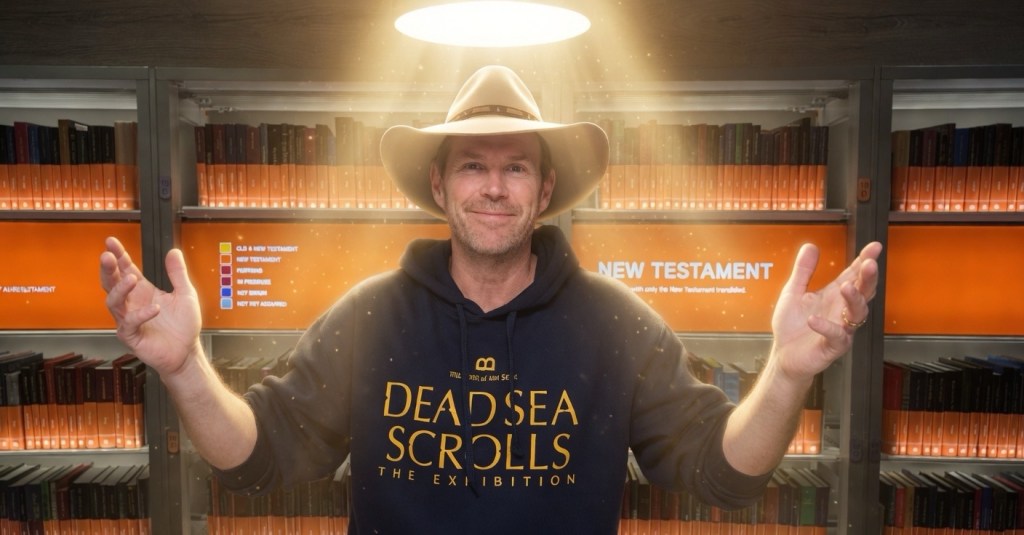
About the Author: Rich Hoffman

Rich Hoffman is an aerospace executive, political strategist, systems thinker, and independent researcher of ancient history, the paranormal, and the Dead Sea Scrolls tradition. His life in high‑stakes manufacturing, high‑level politics, and cross‑functional crisis management gives him a field‑tested understanding of power — both human and unseen.

He has advised candidates, executives, and public leaders, while conducting deep, hands‑on exploration of archaeological and supernatural hotspots across the world.

Hoffman writes with the credibility of a problem-solver, the curiosity of an archaeologist, and the courage of a frontline witness who has gone to very scary places and reported what lurked there. Hoffman has authored books including The Symposium of JusticeThe Gunfighter’s Guide to Business, and Tail of the Dragon, often exploring themes of freedom, individual will, and societal structures through a lens influenced by philosophy (e.g., Nietzschean overman concepts) and current events.

Ascending from Plato’s Cave: Don’t suffer from second husband syndrome

I’ve been thinking a lot lately about where humanity stands at this pivotal moment. As of late March 2026, NASA is days away from launching Artemis II—the first crewed mission to the Moon since Apollo, targeted for no earlier than April 1, 2026, with astronauts Reid Wiseman, Victor Glover, Christina Koch, and Jeremy Hansen aboard Orion for a ten-day lunar flyby.   This isn’t just another flight; it’s NASA finally getting aggressive, the way it always should have been. I support the Artemis program with my whole heart. I want to see timelines compressed, second and third shifts running around the clock, Saturdays and Sundays included—full throttle output. We’ve talked for decades about whether we ever really went to the Moon. I respect people who doubt it; many have been lied to by institutions they once trusted. But I’ve traveled the world, seen the curvature of the Earth with my own eyes, understood time zones through lived experience, and studied how ancient mathematicians calculated that curvature to plot constellations and voyages. Those advances in human culture demand we go to space—not just with drones or robots, but with people living sustainably off-world. That’s the only way we climb out of Plato’s cave, stop staring at shadows, and see reality for what it is.

My perspective is rooted in a deep love for knowledge, ancient history, and the biblical call to dominion. I don’t dismiss fears about transhumanism or the occult origins some attribute to NASA. I get the Tower of Babel parallels—humanity trying to replace God. But I also believe God gave us intellect and drive precisely for exploration. Leaving Earth isn’t rebellion; it’s fulfillment of the creation mandate. And with AI, robotics, and companies like SpaceX and Firefly Aerospace pushing boundaries, we’re on the cusp of a flourishing space economy that will create jobs, not destroy them. I’ll explain all of this below, drawing on the examples and reasoning I’ve shared in conversations, while adding substantial background, historical context, scientific details, and references for further study. This is my view, expressed in the first person because these convictions are personal—forged from years of study, travel, and reflection on what makes civilizations thrive or collapse.

Let’s start with the skepticism that still lingers. I’ve met kind, thoughtful people who defend Flat Earth theory aggressively. I feel for them. Decades of institutional deception—from governments to media—have left many clinging to simplicity as a shield against complexity. Yet the evidence against a flat Earth is overwhelming and ancient. Around 240 BCE, the Greek scholar Eratosthenes of Cyrene calculated Earth’s circumference with remarkable accuracy using nothing more than sticks, shadows, and geometry. At noon on the summer solstice in Syene (modern Aswan), the Sun shone directly down a well with no shadow. In Alexandria, 5000 stadia north, a stick cast a 7.2-degree shadow—exactly 1/50th of a circle. Multiplying the distance by 50 gave him roughly 250,000 stadia, or about 40,000 kilometers—within 1% of the modern equatorial value of 40,075 km.   Ancient cultures used this spherical understanding to navigate oceans and align monuments with constellations. Time zones, the Coriolis effect on weather, and lunar eclipses (where Earth’s round shadow falls on the Moon) all confirm it. I’ve seen the horizon curve from high altitudes and across oceans. We don’t need to argue endlessly; we need to move forward.

The same institutional distrust fuels Moon-landing conspiracies. Yet commercial progress is demolishing doubt. In March 2025, Firefly Aerospace’s Blue Ghost lander achieved the first fully successful commercial Moon landing in Mare Crisium, near Mons Latreille. It operated for over 14 days on the surface—346 hours of daylight plus lunar night—delivering NASA payloads and proving robotic precision.  This wasn’t government theater; it was private industry landing hardware right near prior Apollo sites. The best proof, though, will be routine human traffic: Starship ferrying thousands to lunar bases and back. When people vacation on the Moon like they do in Hawaii, the shadows-on-the-wall debate ends.

This brings me to Plato’s Allegory of the Cave, which I invoke often because it perfectly captures our situation. In Book VII of The Republic, Socrates describes prisoners chained since birth in an underground cavern, facing a blank wall. Behind them burns a fire; between fire and prisoners, puppeteers carry objects whose shadows dance on the wall. The prisoners believe these shadows are ultimate reality; they compete to predict the next shadow, mistaking illusion for truth. One prisoner breaks free. Dragged upward into sunlight, he suffers pain but gradually sees real objects, then the Sun itself—the Form of the Good. Returning to the cave to free others, he is mocked as blind. Plato uses this to illustrate education’s purpose: turning the soul from illusion toward truth.  

I see modern humanity in that cave. We’ve been fed institutional shadows—media narratives, bureaucratic lies, power-maintaining myths. Space exploration is the ascent. Drones and rovers have sent back data, but they’re still shadows. Humans must go—live, work, have children off-world—to grasp the fire and the Sun beyond. Only then do we understand what cast those flickering images on Earth’s wall. My entire worldview, from business to culture to faith, rests on this quest for unfiltered knowledge. I refuse to remain chained, interpreting shadows while interpreters with agendas lie about what they see.

Ancient history reinforces this urgency. I study civilizations full-time because they reveal what builds success: boldness, truth-seeking, and expansion. Many past cultures achieved greatness then lost momentum—collapsed under internal rot or external conquest. I call this “second husband syndrome.” Imagine a second husband tormented by thoughts of his wife’s first husband, especially if children from that marriage remain. Jealousy poisons the new relationship. Likewise, modern elites suppress or dismiss prior cultures’ achievements to claim sole glory. They rewrite history so previous “husbands” (Atlantis legends, megalithic engineering, advanced astronomy) never existed or were primitive. This intellectual jealousy stifles progress. Studying the Sumerians, Egyptians, Greeks, or Maya shows they grasped Earth’s sphericity, built with precision, and reached for the stars. To build successful cultures today, we must leave the mother’s womb—Earth—and psychologically inhabit other worlds. Labor shortages on Earth are irrelevant; AI and robotics multiply our hours exponentially.

Biblically, this expansion aligns with God’s design, not against it. Genesis 1:28 commands: “Be fruitful and multiply and fill the earth and subdue it, and have dominion over the fish of the sea and over the birds of the heavens and over every living thing that moves on the earth.” Theologians call this the creation or cultural mandate—image-bearers exercising responsible stewardship and creativity across creation.   Some interpret it Earth-only, warning against “playing God.” I counter: God gave intellect, curiosity, and the stars themselves. Exploration within biblical rules—humility before the Creator, ethical stewardship—strengthens faith. Western civilization’s prosperity flows from this worldview: truth-seeking fused with moral order. Space doesn’t dismiss Scripture; it illuminates it. Ancient myths and biblical echoes (Ezekiel’s wheels, chariots of fire) hint at cosmic realities. When we settle the Moon and Mars, we’ll confront those stories with fresh eyes, not fear.

Transhumanism and AI raise valid anxieties. I sympathize with those guarding the “temple of the human body” against occult-tinged experiments that seek to dethrone God. Yet I support robotics and AI enthusiastically. They’re tools, not replacements. Elon Musk’s Optimus robots—demonstrated in recent high-profile events—represent progress, not erasure. The robot Melania Trump walked onstage symbolized partnership: machines handling hostile environments so humans thrive. Blue-collar fears about job loss in trucking or fast food miss the bigger picture. Space will explode opportunities. Lunar mining, orbital manufacturing, tourism, and research will demand millions of roles Earthside and off-world. NASA studies project Artemis driving economic growth through commercial partnerships and a burgeoning lunar marketplace.  PwC forecasts a $127 billion Moon economy by 2050, fueled by energy infrastructure, resources, and services.  I think it will be a lot higher than that.  Far from regression, we gain jobs by the mass. I’m bullish because history shows technology expands human potential when paired with moral vision.

Look at the hardware already proving the path. SpaceX’s Starship must fly aggressively; routine, reusable flights are non-negotiable. Firefly’s success shows commercial lunar access is here. Artemis II tests Orion and SLS for crewed lunar operations, paving the way for Artemis III’s landing (targeted 2027–2028 under current plans) and eventual bases. I want Americans—led by visionaries like President Trump—first on the Moon again, first with permanent colonies (dozens, then hundreds, then thousands). A 10,000-person lunar hub by 2050 isn’t fantasy; it’s engineering plus will. People will live there comfortably: internet, power, hotels. I’ll be among the first tourists with my wife—enthusiastically. Imagine vacationing on the Moon, then returning transformed.

Mars follows. Elon Musk has highlighted the Fermi Paradox’s scariest resolution: we might be alone, or nearly so, in the observable universe—a tiny candle of consciousness in darkness.   That rarity demands we multiply life outward. Different gravities will reshape humanity—taller or shorter frames, new adaptations—yet our core experience evolves. Space archaeology will resolve earthly mythologies: Was Mars once lush? Did prior intelligences leave traces? We boldly go, not in fear, but in faith.

Opposition comes from anti-human forces—regressive ideologies that prefer controlled scarcity on Earth over expansive freedom. Democrats and globalist mindsets sabotage by slowing timelines, inflating costs, or prioritizing Earthbound politics. They fear off-world colonies because independent humans are harder to dominate. I reject that. Human destiny is multi-planetary; it guarantees species survival against asteroids, climate shifts, or self-inflicted woes.

I want answers. I want the space economy flourishing, exploration routine, and humanity confronting the fire behind the shadows. My book The Gunfighter’s Guide to Business outlines principles of decisive action and moral clarity I apply here. Subscribe, engage, study ancient history, support aggressive NASA and SpaceX timelines. Let’s compress Artemis, land Starships weekly, and build hotels on the Moon. The cave is behind us. The stars await. Godspeed.

Footnotes and Further Reference Material

1.  Plato. The Republic, Book VII (514a–520a). Standard translation by Benjamin Jowett or Allan Bloom recommended. For modern analysis: SparkNotes or MasterClass summaries align with my interpretation of enlightenment through ascent. 

2.  Eratosthenes’ method detailed in Cleomedes’ On the Circular Motions of the Heavens and modern reconstructions. See APS News (2006) or Khan Academy for accessible explanations. 

3.  NASA Artemis Program: Official site (nasa.gov/artemis) for timelines; Wikipedia for historical delays. Economic report: “Economic Growth and National Competitiveness Impacts of the Artemis Program” (NASA, 2022). 

4.  Firefly Blue Ghost Mission 1: Firefly Aerospace press releases and end-of-mission summary. Confirms March 2, 2025 landing. 

5.  Biblical Creation Mandate: Genesis 1:26–28; extended discussion in Answers in Genesis or Focus on the Family resources. 

6.  Space economy projections: PwC Lunar Market Assessment (2026); NASA’s commercial lunar payload services page. 

7.  Elon Musk on Fermi Paradox and solitude in cosmos: Public statements 2018–2026, including Davos remarks and X posts. 

Additional reading: The Republic (Plato); Pale Blue Dot (Carl Sagan) for perspective (though I differ on some philosophical points); NASA’s Artemis economic studies; The Case for Mars (Robert Zubrin); ancient astronomy texts like Ptolemy or modern histories of Eratosthenes. For AI/robotics ethics: Musk’s own writings and Tesla Optimus updates. Study these, visit NASA facilities as I have with my wife, and join the ascent. The future is ours to seize.

Rich Hoffman

More about me

Click Here to Protect Yourself with Second Call Defense https://www.secondcalldefense.org/?affiliate=20707

About the Author: Rich Hoffman

Rich Hoffman is an aerospace executive, political strategist, systems thinker, and independent researcher of ancient history, the paranormal, and the Dead Sea Scrolls tradition. His life in high‑stakes manufacturing, high‑level politics, and cross‑functional crisis management gives him a field‑tested understanding of power — both human and unseen.

He has advised candidates, executives, and public leaders, while conducting deep, hands‑on exploration of archaeological and supernatural hotspots across the world.

Hoffman writes with the credibility of a problem-solver, the curiosity of an archaeologist, and the courage of a frontline witness who has gone to very scary places and reported what lurked there. Hoffman has authored books including The Symposium of JusticeThe Gunfighter’s Guide to Business, and Tail of the Dragon, often exploring themes of freedom, individual will, and societal structures through a lens influenced by philosophy (e.g., Nietzschean overman concepts) and current events.

The Wonderful Dinosaur Store on the Space Coast: What good economies produce

The Dinosaur Store in Cocoa Beach, Florida, stands as a remarkable testament to personal passion, entrepreneurial spirit, and the enduring human fascination with the ancient world. Nestled at 250 West Cocoa Beach Causeway, just a short distance—literally a football’s throw—from the iconic Ron Jon Surf Shop, this family-run establishment has evolved from a modest fossil and mineral shop into one of the Space Coast’s most captivating attractions. For decades, it has drawn families, tourists, and enthusiasts alike, blending commerce with education in a way that feels refreshingly authentic in an era often dominated by corporate chains.

The story begins in November 1996, when the store first opened its doors as a small retail space focused on fossils, minerals, geodes, and related curiosities. Founded by Steve and Donna Cayer, it capitalized on a surge of interest in prehistoric life sparked by cultural phenomena like the 1993 blockbuster Jurassic Park. Visitors flocking to Cocoa Beach for sun, surf, and the nearby Ron Jon Surf Shop—a massive complex synonymous with Florida beach culture—would often wander over to pick up unique souvenirs: polished ammonites, shark teeth, or perhaps a necklace strung with genuine dinosaur bone fragments. The location was ideal, perched in a high-traffic tourist corridor along State Road 520, where beachgoers and space enthusiasts from nearby Cape Canaveral mingled.

What set the Dinosaur Store apart from typical souvenir shops was its authenticity. The family didn’t merely resell imported trinkets; they traveled extensively during the off-season, when summer crowds thinned and families headed to Disney World or other attractions. Steve and Donna ventured to fossil-rich sites across the globe, including the badlands of Montana, where heavy rains routinely erode sedimentary rock and expose new specimens. They collected ethically, often from permitted digs, and brought back high-quality pieces: Spinosaurus teeth, Allosaurus claws, brachiopods, and meteorites. These items formed the backbone of their inventory, supplemented by jewelry crafted from dinosaur fossils—pendants, earrings, and rings that turned ancient remnants into wearable history. Customers could purchase a Spinosaurus tooth or a slice of petrified wood table, items that carried a tangible connection to deep time.

Over the years, the store thrived. The post-Jurassic Park boom turned it into a lucrative family business, profitable enough to support not just daily operations but ambitious dreams. Rather than resting on success—perhaps buying a condo, a boat, or indulging in lavish vacations—the Cayers channeled their earnings into something far more enduring. They acquired property and constructed a multi-story building dedicated to their passions. What began as a single-floor operation in a strip mall setting expanded into a three-story edifice, transforming the ground level into a sprawling gift shop and adventure zone while reserving the upper floors for something extraordinary: the Museum of Dinosaurs and Ancient Cultures.

The museum opened to the public in April 2017 (on Earth Day) after roughly eight years of planning and development, following the store and Adventure Zone’s launch on the first floor in March 2009. It occupies approximately 20,000 to 26,000 square feet across the second and third floors (sources vary slightly on exact footage, but the scale is immense for a private venture). It operates as a nonprofit entity, with proceeds supporting preservation, education, and ongoing exhibits. Entry requires a ticket purchased downstairs (around $16 for adults, with discounts and combo options including the Adventure Zone downstairs), and last admissions are timed to ensure a full experience before closing.

The museum’s design is ingeniously immersive. Upon taking the elevator up, visitors enter a vast, open space where the second floor soars to the ceiling, allowing for life-sized dinosaur skeletons and models that dominate the view. A standout is the 46-foot Giganotosaurus skeleton, one of the largest theropod displays in a private setting. Floor-to-ceiling mounts include roaring recreations, fleshed-out models, and over 60 dinosaur skeletons alongside more than 80 taxidermy specimens spanning 200 million years of natural history. The layout encourages looking upward, with necks and heads stretching toward the rafters, creating a sense of awe akin to standing beneath towering Jurassic giants. Authentic fossils abound—real bones, claws, and teeth sourced from the family’s expeditions—blended seamlessly with high-quality replicas for educational impact. Additional features include a Mineral Cave with ultraviolet-reactive crystals and a Dawn of Man section with paleolithic tools and hominid skull casts.

The third floor adds a mezzanine-like platform that zigzags through the space, offering elevated views of the dinosaur exhibits below while transitioning into human history. Here, the focus shifts to ancient cultures, bridging paleontology with anthropology and archaeology. Dedicated galleries showcase regions worldwide: ancient Egypt features a detailed replication of King Tutankhamun’s tomb, complete with replicas of artifacts and mummified animals; China includes a diorama of Terracotta Army soldiers; Mesoamerica highlights Aztec and Mayan elements, such as Chichen Itza-inspired structures; and additional sections cover tribal Africa and New Guinea. Authentic artifacts—pottery, tools, jewelry—sit alongside taxidermy from relevant regions, creating a narrative that connects prehistoric life to the rise of human civilizations. The exhibits emphasize how cultures emerged over millennia, often in relation to the natural world preserved in the fossil record.

This integration is what makes the museum unique. While major institutions like the Field Museum in Chicago, the Smithsonian, or the British Museum boast world-class collections, they are often vast, bureaucratic, and spread across enormous campuses. The Dinosaur Store’s museum achieves comparable quality on a more intimate, privately funded scale. It feels personal—born from passion rather than institutional mandate. The Cayers’ love for digging, collecting, and sharing shines through: they didn’t stop at selling fossils; they built a bridge between dinosaurs and the ancient peoples who might have encountered similar wonders in myth or reality. In doing so, they’ve created a place where visitors can ponder the history of life on Earth—from extinct megafauna to the ingenuity of pyramid-builders and terra-cotta warriors.

For many families, including my own, the Dinosaur Store has been a recurring touchstone. Over the years, trips to the Space Coast—often tied to Kennedy Space Center visits or beach days—included obligatory stops here. My daughter once bought me a Spinosaurus tooth as a gift, a small but meaningful token that still sits on my shelf, evoking memories of laughter, wonder, and the simple joy of discovery. We’d browse the shop, admire the geodes and meteorites, then head out with a new trinket: a dinosaur bone necklace or a polished fossil slab. Those visits built family traditions, turning a roadside attraction into something heartfelt.

A decade passed without a return—life shifted to other pursuits, including following developments in the space program during periods of stagnation. But with renewed activity under recent administrations, the pull of the Space Coast returned in 2026. Stepping back into the store felt like greeting old friends. The family behind the counter remembered familiar faces, sharing stories of their travels and the museum’s growth. Ascending to the upper floors revealed the jaw-dropping evolution: the towering skeletons, the meticulous cultural dioramas, the seamless flow between prehistory and antiquity. It surpassed expectations—better than many celebrated exhibits elsewhere, achieved through private ambition and capitalist ingenuity.

This success story underscores a broader point about passion in free economies. In places like the Space Coast, with its vibrant tourism, surf culture, and proximity to high-tech endeavors, individuals can turn hobbies into legacies. The Cayers could have cashed out comfortably, but they invested in education and wonder. Their museum doesn’t just display bones and artifacts; it invites reflection on deep time, cultural continuity, and humanity’s place in the cosmos. In a world where many pursuits prioritize profit alone, here is a rare example of going above and beyond—creating something magnificent not for acclaim, but because the topic demands it. The project reportedly cost around $3.7 million to develop, with an estimated $3 million in artifacts at opening, underscoring the scale of their commitment.

If you find yourself near Disney, the beaches, or Cape Canaveral, make the detour. Park (free, conveniently located), grab a Ron Jon T-shirt if you like, then step into the Dinosaur Store. Browse the ground-floor treasures—perhaps snag a Spinosaurus tooth or a fossil necklace—then head upstairs. The museum awaits: a private passion project that rivals global institutions in ambition and execution. You’ll leave with a renewed appreciation for the ancient past, the power of dedication, and the simple thrill of discovery.

For those eager to explore further, the official website offers details on hours, tickets, and exhibits. Reviews on platforms like TripAdvisor and Google (consistently 4.4+ stars from thousands) echo the sentiment: it’s a hidden gem worth the trip. Academic resources on paleontology provide deeper context on fossils, while studies on ancient cultures offer complementary reading. The museum itself serves as an accessible gateway, proving that wonder can thrive in unexpected places when fueled by genuine enthusiasm.

Footnotes

¹ The Museum of Dinosaurs and Ancient Cultures opened in April 2017.¹

² The museum spans 20,000–26,000 square feet, with variations in reported size across sources.²

³ Development took approximately eight years, following the first-floor openings in 2009.³

⁴ Estimated cost of $3.7 million, with $3 million in artifacts at opening.⁴

⁵ Founders Steve and Donna Cayer.⁵

⁶ Giganotosaurus skeleton measures 46 feet.⁶

⁷ Over 60 dinosaur skeletons and 80+ taxidermy specimens.⁷

⁸ Nonprofit status supports preservation and education.⁸

⁹ Google rating of 4.4 stars from over 2,300 reviews.⁹

Bibliography

•  The Dinosaur Store. “Home.” Accessed March 2026. https://dinosaurstore.com/.

•  The Dinosaur Store. “Museum of Dinosaurs & Ancient Cultures.” Accessed March 2026. https://dinosaurstore.com/museum.

•  The Dinosaur Store. “About Us.” Accessed March 2026. https://dinosaurstore.com/about-us.

•  Wikipedia. “Museum of Dinosaurs and Ancient Cultures.” Accessed March 2026. https://en.wikipedia.org/wiki/Museum_of_Dinosaurs_and_Ancient_Cultures.

•  TripAdvisor. “The Dinosaur Store (2026).” Accessed March 2026. https://www.tripadvisor.com/Attraction_Review-g34145-d2285722-Reviews-The_Dinosaur_Store-Cocoa_Beach_Brevard_County_Florida.html.

•  Visit Space Coast. “Museum of Dinosaurs & Ancient Cultures.” Accessed March 2026. https://www.visitspacecoast.com/profile/cocoa-beach/things-to-do/museum-of-dinosaurs-ancient-cultures.

•  Florida Today. “This Cocoa Beach spot pays tribute to dinosaurs, ancient cultures.” October 9, 2025. https://www.floridatoday.com/story/news/hidden-gems/2025/10/09/beachside-brevard-building-houses-massive-ancient-cultures-dino-exhibit/86170682007.

•  USA Today. “Museum of Dinosaurs and Ancient Cultures opening in Cocoa Beach.” April 20, 2017. (Referenced in Wikipedia citation).

Rich Hoffman

More about me

Click Here to Protect Yourself with Second Call Defense https://www.secondcalldefense.org/?affiliate=20707

Its Time for NASA to get The Right Stuff, Again: They need to work faster, longer, and launches need to happen much more often

My wife and I recently returned from a trip to NASA’s Space Coast in Florida, a place that has held a special significance in my life for over 30 years. My family has owned a condominium complex in the area for decades, and we’ve visited the Cape Canaveral region dozens of times. It’s been a big part of our lives, from family vacations to watching the ebb and flow of the aerospace industry along the coast. This latest visit was particularly exciting because I wanted to get a firsthand look at the facilities tied to the Artemis program, as well as the impressive campuses of private companies like SpaceX and Blue Origin. I am deeply invested in the expansion of human presence off-planet Earth—not just for the adventure and acquisition of knowledge, but for risk mitigation against existential threats to humanity and to unlock the full potential of human intellect beyond our world. I want a thriving space economy, and I want NASA to succeed spectacularly in leading that charge. However, my observations during this trip left me with a mix of enthusiasm and constructive criticism about the current state of NASA’s Artemis program.

We timed our visit toward the end of February 2026, hoping to catch some activity. SpaceX had a busy schedule with multiple Falcon 9 launches deploying Starlink satellites, including one on a Wednesday, another on a Friday, and a Saturday night launch around 9 p.m. that I was particularly eager to witness. These launches have become so routine and reliable that they barely make headlines anymore, which is actually a good thing—it means the infrastructure is robust, dependable, and taken for granted like buses running on schedule.¹ Yet for me, personally, it was a milestone: after all these years of visiting the area, including many stays at our family condo with views toward the launch sites, I had never personally witnessed a launch until that Saturday night. I set up my camera on the balcony, and when the Falcon 9 lifted off, it was thrilling—a bright streak lighting up the night sky, followed by the booster’s controlled descent. It felt like a long-overdue personal victory, but it also underscored a deeper issue: launches from the Space Coast should be commonplace, not rare exceptions.

In contrast, the Artemis program felt stagnant. While touring the Kennedy Space Center facilities, I noticed a heavy emphasis on historical reverence—the Apollo era, the Shuttle program, the achievements of the past. There’s immense pride in what NASA accomplished when it was the only game in town, but far less visible momentum on current endeavors. The exhibits and tours celebrate the “right stuff” mentality of old, yet the gift shop selling “The Right Stuff” merchandise feels like a relic rather than a living ethos.² When stacked against the dynamic energy at SpaceX and Blue Origin, the difference is stark.

SpaceX’s operations are behind secure gates, but their pace is undeniable. During our visit, we saw a Falcon booster that had just landed on a droneship being towed into Port Canaveral on a flatbed truck, cleaned up near restaurants where cruise ships depart, and prepared for reuse—all on a Saturday, with crews working as if it were a regular weekday.³ The company had three launches in a short window that week alone, demonstrating frequency, reusability, and high employee engagement. Blue Origin’s campus, visible right outside the visitor center gates, is enormous—once an empty field, now dominated by a massive factory complex for their New Glenn rocket and lunar lander work, rivaling or exceeding large industrial sites I’ve seen elsewhere, like GE facilities in Ohio.⁴ Their footprint signals serious investment in a new space economy.

Artemis, however, hit a snag during our stay. NASA had been preparing for an early-March launch of Artemis II, the crewed lunar flyby mission using the Space Launch System (SLS) rocket and Orion spacecraft. But during final checks, including a dry run or wet dress rehearsal, issues emerged: leaks (including helium flow anomalies in the upper stage and prior hydrogen concerns) and other mechanical problems.⁵ The decision was made to scrub the March window, roll the stack back into the Vehicle Assembly Building (VAB) for fixes, and target April at the earliest.⁶ This delay was disappointing but not surprising given the program’s history of setbacks.

I offer this as constructive criticism because I genuinely want Artemis to work. The program represents NASA’s path to sustained lunar presence, eventual Mars exploration, and broader human expansion. But it suffers from several structural issues. First, the cadence is too slow. Apollo launches happened far more frequently, with shorter intervals that kept teams sharp, knowledge fresh, and momentum high.⁷ In Artemis, years pass between major flights—Artemis I was uncrewed in 2022, Artemis II is now pushed further, and landings are delayed. This leads to entropy: experienced personnel move on, retire, or shift careers, and institutional knowledge erodes. High turnover in skilled aerospace roles exacerbates this.

Second, there’s a cultural shift away from the bold, risk-accepting “right stuff” era.⁸ In the past, engineers and workers stayed late, worked extra shifts, and treated the mission as an adventure worth personal sacrifice. Today, NASA seems more bureaucratic—9-to-5 mindsets, emphasis on protocols (even lingering COVID-era restrictions in some views), and fear of media backlash from any failure. Catastrophic risks like Challenger and Columbia are memorialized heartbreakingly at the Atlantis exhibit, but those risks were part of pushing boundaries. Adventurers accepted it; today, there’s paralysis by analysis and PR caution.⁹

Third, workforce engagement appears lower than that of private firms. SpaceX recruits passionate people who work multiple shifts, weekends included, to meet aggressive schedules. NASA has fallen into patterns where not all hires prioritize the mission’s higher purpose—some treat it as just a job. This ties into broader criticisms of prioritizing diversity, equity, and inclusion (DEI) metrics over merit-based selection of the “best and brightest” for frontline problem-solving.¹⁰ While inclusion is valuable, the core must remain technical excellence and drive.

The recent program changes highlight these struggles. NASA announced major revisions: adding an interim mission (now Artemis III in 2027) for low-Earth orbit tests of docking with commercial landers (from SpaceX and Blue Origin), life support, and other systems—pushing the first lunar landing to Artemis IV in 2028, with potential for another that year.¹¹ This “sprinkling in” another mission before attempting a landing suggests the original Artemis III step was too ambitious given accumulated delays and risks, including ongoing Orion heat shield concerns from Artemis I (unexpected char loss, leading to trajectory adjustments rather than full redesign for Artemis II).¹² Changing reentry vectors might be more practical than material overhauls, which could take a decade, but it still reflects caution over boldness.

Historically, political decisions have hampered NASA. The Obama-era cancellation of Constellation, reliance on Russian Soyuz for ISS access, and redirection toward other priorities (like studying Islamic contributions to science) felt like a betrayal of the adventure spirit.¹³ The Trump administration’s creation of Space Force and push for resurgence helped, but sustained congressional support has been inconsistent.¹⁴ Without it, NASA can’t match the frequency of private players.

The local Space Coast economy reflects this. Property values have stabilized but not exploded as they could with consistent activity.¹⁵ Cocoa Beach and the surrounding areas thrive more from tourism and private launches than NASA events. When launches were rare, the vibrancy lagged; now, with SpaceX’s dominance, there’s renewed energy—people shopping at Publix, upper mobility in aerospace jobs, families coming to watch launches.

I remain optimistic. NASA has the infrastructure—Kennedy Space Center is ideal for launches—and partnerships with SpaceX, Blue Origin, and others. Administrator statements post-delay emphasized fixing issues quickly, increasing cadence (targeting more frequent SLS flights), and returning to basics to accelerate progress toward 2028 landings.¹⁶ But success requires cultural revival: robust second and third shifts, seven-day operations, passion over paycheck, acceptance of managed risk for exploration, and political unity beyond one administration.

I’ve seen the Space Coast transform, from Apollo’s glory to the Shuttle era to today’s commercial boom. My first personal launch sighting was exhilarating, but it shouldn’t have taken 30+ years. Launches should be daily occurrences—maybe grab pizza and watch one every evening. That’s the expectation we need: frequent, reliable, advancing humanity. Artemis can lead if it recaptures the right stuff—not just in a gift shop, but in every engineer, worker, and decision.

The space economy could double U.S. GDP contributions through innovation, jobs, and knowledge gains.¹⁷ It’s not just money; it’s human bandwidth expanding. Congress, local leaders, the White House—everyone must rally. Private companies are setting the pace; NASA should leverage that, not lag.  But to do all that, NASA needs to work harder and faster.  A lot faster. 

Footnotes:

¹ SpaceX Starlink launches in late February 2026 included multiple launches from Cape Canaveral.

² “The Right Stuff” refers to the 1979 book/1983 film on Mercury program bravery.

³ Reusable Falcon 9 boosters routinely recovered and refurbished.

⁴ Blue Origin’s KSC facility is massive for New Glenn production.

⁵ Helium flow anomaly in SLS upper stage led to rollback.

⁶ NASA targeted April 2026 for Artemis II post-rollback.

⁷ Apollo had a higher launch frequency in peak years.

⁸ Tom Wolfe’s “The Right Stuff” captured the early astronaut/test pilot ethos.

⁹ Analysis paralysis and PR fears cited in delays.

¹⁰ Broader debates on merit vs. DEI in technical fields.

¹¹ NASA added a mission, shifted landing to Artemis IV in 2028.

¹² Orion heat shield char loss from Artemis I prompted changes.

¹³ Obama-era program shifts and ISS reliance on Russia.

¹⁴ Space Force established in 2019 under Trump.

¹⁵ Local economy tied to aerospace activity levels.

¹⁶ Post-delay press conference emphasized speed and fixes.

¹⁷ Estimates of space economy growth potential.

Bibliography / Further Reading

•  NASA official Artemis updates: https://www.nasa.gov/artemis

•  Artemis II delay announcements (Feb 2026): NASA blogs and press releases on helium issues and rollback.

•  SpaceX launch manifests: https://www.spacex.com/launches

•  Blue Origin facilities overview: Wikipedia and company announcements on KSC campus.

•  Orion heat shield investigation: NASA technical reports post-Artemis I.

•  Historical Apollo cadence: NASA history archives.

•  “The Right Stuff” by Tom Wolfe (1979).

•  Space economy reports: Various economic analyses on growth projections.

•  Political history: Coverage of Constellation cancellation and Space Force creation.

Rich Hoffman

More about me

Click Here to Protect Yourself with Second Call Defense https://www.secondcalldefense.org/?affiliate=20707

The Jaw-dropping Impact of David Flynn’s Work: Uncovering a lost history of Mars and the migration of people to Earth

I’ve talked about Cydonia: The Secret Chronicles of Mars by David E. Flynn before, but after diving into the newly republished edition, I felt compelled to share my thoughts in depth. This book, originally self-published around 2002 by End Time Thunder Publishers, was ahead of its time—a dense, brilliant exploration that ties ancient mythology, biblical narratives, and apparent anomalies on Mars into a cohesive narrative about humanity’s origins. Thanks to Timothy Alberino’s advocacy, including his foreword in the new edition released in early 2026 by Sunteleia Press (with contributions from Mark Flynn), it’s now more accessible in hardcover, paperback, and digital formats, reaching a broader audience ready for these ideas.

I wouldn’t have picked it up without Alberino’s influence. I’ve followed his work since Birthright in 2020, appreciating how he bridges scriptural truth with adventurous inquiry into giants, Nephilim, and posthuman themes. He’s a genuine explorer with a scriptural backbone, not the stereotypical “New Age” figure some might dismiss. His promotion of Flynn’s work—calling it one of the most consequential books ever written—sparked my interest. I grabbed the new edition as soon as it dropped, read it multiple times to let the concepts sink in, and recorded my podcast thoughts because this material deserves serious consideration.

Flynn was a high-IQ thinker who operated outside mainstream channels. Through his Watcher website in the 1990s and early 2000s, he delved into biblical ufology, eschatology, sacred geometry, and the implications of structures photographed in Mars’ Cydonia region—like the so-called “Face on Mars” from the 1976 Viking images and nearby pyramid-like formations. He argued these weren’t mere pareidolia but encoded remnants of a civilization that fled Mars after catastrophe, bringing knowledge to Earth. Myths from Sumer, Egypt, the Indus Valley, Greece, Rome, and even indigenous Americas trace back to this diffusion, centered in the Near East near Mount Hermon—the biblical entry point for fallen angels (Watchers) in the Book of Enoch.

In Flynn’s view, these “sons of God” descended, fathered giants (Nephilim), taught forbidden arts, and corrupted humanity, leading to the Flood. Post-flood, survivors or their cultural echoes rebuilt civilizations, with megalithic sites worldwide aligning on geometric grids—pentagrams anchored at Giza and the Prime Meridian. This “As Above, So Below” principle suggests Mars’ Cydonia as a template for earthly monuments, from Stonehenge to Ohio’s Serpent Mound. Flynn connected this to ley lines, occult symbolism (serpents, hyperborean origins), and mystery schools preserving elite knowledge while suppressing it from the masses.

I’ve long collected accounts of giants in Ohio mounds—newspaper clippings from the 19th and early 20th centuries reporting oversized skeletons unearthed during excavations, often dismissed or “lost” by institutions like the Smithsonian. Many researchers chase these leads, get excited, then fade when mainstream scrutiny hits. Flynn escaped that cycle by grounding his work in scripture and comparative mythology rather than pure speculation. He wasn’t chasing kooks; he was synthesizing evidence that scripture and emerging science increasingly align.

This shift—from fringe “New Age” shelves (Graham Hancock, Zecharia Sitchin, Erich von Däniken) to respectable inquiry—began with thinkers like Flynn and accelerated with Michael Heiser’s The Unseen Realm and Reversing Hermon. Heiser, a Semitic languages scholar, unpacked Genesis 6 without extraterrestrial leaps, focusing on divine council and supernatural rebellion. Alberino builds on this, applying it to modern threats like transhumanism. Reading Flynn after Heiser and Alberino feels like puzzle pieces clicking: ancient myths aren’t fiction but distorted memories of real events, possibly involving ultra-terrestrial and/or extraterrestrial contact preserved in Enochian texts and global lore.

Critics point to NASA’s higher-resolution images (Mars Global Surveyor 1998 onward) showing the “Face” as a natural mesa eroded by wind, with no artificial symmetry. Pareidolia explains much—humans see faces in rocks, just as in clouds or toast. Yet Flynn’s geometric arguments persist intriguingly: if alignments predict undiscovered sites, why not consider cosmic origins? Hallucinogens like ayahuasca induce shared visions across cultures, echoing cave art from Lascaux to remote tribes, suggesting subconscious or spiritual exchanges. UFO phenomena add layers—disclosure talks under recent administrations hint at deeper truths.

I want to go to Mars not to abandon Earth but to verify. SpaceX and commercial efforts make it inevitable; we’ll build habitats, explore, and likely find preserved ruins—pyramids, mounds, architectural echoes—on a stripped world. No thick atmosphere or active society buries evidence there. If we discover ancient civilization remnants 10,000, 100,000, or millions of years old, it redefines history: humanity as refugees or engineered arrivals, not isolated evolution. Myths become chronicles; scripture’s miracles include survival of truth through millennia.

Power structures suppress this—China buries pyramids to control narrative; mystery schools hoard knowledge for dominance. Flynn exposed that, self-publishing because no mainstream house would touch it. Early internet allowed geniuses like him to connect, compare notes at 3 a.m., and build followings organically. Alberino, inspired, helped republish it, giving it legitimacy. His podcasts dissecting it (dozens in his community) make it digestible.

This book shatters illusions but in a good way. As disclosure ramps up—political, technological, archaeological—we must prepare. Root-cause analysis demands we question origins beyond Darwin or uniformitarianism. Mars may have been part of our past, not just future. Stories of tragedy, survival, and migration from the asteroid belt (Phobos/Deimos as remnants?) to Earth explain gods’ names and shared archetypes.

I’ve read extensively—Heiser, Sitchin (for contrast), Enoch translations, Hoagland’s Monuments of Mars—and Flynn stands out as genius-level synthesis. It’s dense, requires rereading, but rewards with awe at God’s design amid cosmic drama. Humanity’s dominion over Earth includes exploring to reclaim lost truth, bringing heaven here as representatives.

In these times, with information exploding and institutions failing, books like this empower us. Read it on your terms before media forces the conversation. It prepares for paradigm shifts—good ones, shattering control for freedom.

Bibliography

•  Flynn, David E. Cydonia: The Secret Chronicles of Mars. End Time Thunder Publishers, 2002 (original); Sunteleia Press edition with forewords by Timothy Alberino and Mark Flynn, 2026.

•  Alberino, Timothy. Birthright: The Coming Posthuman Apocalypse and the Usurpation of Adam’s Dominion on Planet Earth. Self-published, 2020.

•  Heiser, Michael S. The Unseen Realm: Recovering the Supernatural Worldview of the Bible. Lexham Press, 2015.

•  Heiser, Michael S. Reversing Hermon: Enoch, the Watchers & the Forgotten Mission of Jesus Christ. Defender Publishing, 2017.

•  The Book of Enoch (R.H. Charles translation, 1917; various modern editions).

•  Hoagland, Richard C. The Monuments of Mars: A City on the Edge of Forever. North Atlantic Books, 5th ed., 2001.

•  Sitchin, Zecharia. The 12th Planet. Bear & Company, 2004 reprint.

•  Hancock, Graham. Fingerprints of the Gods. Crown, 1995 (for comparative ancient mysteries context).

•  NASA Mars mission archives (Viking 1976, Mars Global Surveyor 1998–2006, etc.).

•  Flynn’s Watcher website (archived materials via secondary sources).

Footnotes for Further Reading

1.  On Cydonia anomalies and pareidolia: NASA press releases post-1998; Carl Sagan, The Demon-Haunted World: Science as a Candle in the Dark (1995).

2.  Nephilim and divine council: Genesis 6; Deuteronomy 32; Job 1–2; Heiser’s works above.

3.  Alberino’s role: His X posts and The Alberino Analysis community podcasts on Cydonia.

4.  Giant mound reports: 19th-century newspapers (e.g., New York Times archives); critiques in mainstream anthropology.

5.  Sacred geometry/ley lines: Alfred Watkins, The Old Straight Track (1925); Flynn’s pentagram grid discussions.

6.  Disclosure context: 2020s UAP Task Force reports; SpaceX Starship/Mars plans.

7.  Myth diffusion: Joseph Campbell, The Hero with a Thousand Faces (1949).

8.  Mystery schools/esotericism: Manly P. Hall, The Secret Teachings of All Ages (1928).

9.  Enochian influences: Dead Sea Scrolls fragments; 1 Enoch translations.

10.  Mars exploration potential: Recent Perseverance rover findings; astrobiology papers on ancient habitability.

Rich Hoffman

More about me

Click Here to Protect Yourself with Second Call Defense https://www.secondcalldefense.org/?affiliate=20707

Cheering on Artemis II: One step closer to a vacation on the Moon

The excitement around Artemis II is palpable right now, especially with the wet dress rehearsal wrapping up and teams pushing toward a launch no earlier than March 2026—potentially as soon as March 6 if everything aligns after addressing that liquid hydrogen leak from testing. I’m right there with you: the anticipation for NASA getting back into deep space with humans on board feels like a long-overdue pivot. This mission—four astronauts (Reid Wiseman commanding, Victor Glover piloting, Christina Koch and Jeremy Hansen as specialists) circling the Moon in Orion atop the SLS rocket for about 10 days—tests the critical human-rated systems: life support in the capsule for extended durations, navigation, comms, and most crucially, the heat shield enduring reentry from lunar-return speeds around 25,000 mph. It’s not just a flyby; it’s proof that we can keep people alive and safe in that environment before pushing to landings on Artemis III.

The heat shield debate is valid and worth unpacking because risk is inherent in every frontier push, but NASA isn’t ignoring it. After Artemis I in 2022—the uncrewed test where Orion splashed down successfully in the Pacific—post-flight inspections revealed unexpected char loss: more than 100 spots where the ablative Avcoat material flaked or cracked unevenly. Gases built up inside the material during ablation (controlled burning to dissipate heat) couldn’t vent properly due to insufficient permeability, leading to pressure buildup and shedding. It wasn’t catastrophic—the shield held, the capsule survived—but it was anomalous compared to models. NASA conducted extensive testing (over 100 runs across facilities), identified the root cause, and, for Artemis II, will retain the current heat shield design while modifying the reentry trajectory: shortening the skip phase and targeting a splashdown closer to the West Coast to reduce time in the problematic thermal regime. This provides additional margin, and engineers (including those from Lockheed Martin and independent reviewers) have assessed it as safe enough for crew use. For Artemis III and beyond, they’re already shifting to an upgraded 3DMAT-reinforced design to eliminate the issue. Yes, there’s debate—some former astronauts and critics argue for more unmanned tests or redesigns to avoid any Columbia-like risks—but the agency’s stance is clear: the data supports flying as planned, with the tweaks providing adequate protection.

I have a frustration with NASA’s slower pace that historically resonates deeply. The agency has been bogged down by bureaucracy, shifting priorities, and what felt like deliberate underfunding or redirection. Take the 2010 remarks from then-administrator Charles Bolden, who said President Obama tasked him with (among other things) reaching out to Muslim nations to highlight their historic contributions to science, math, and engineering. The White House quickly clarified that it wasn’t NASA’s core mission, but the comment fueled perceptions that focus had drifted from bold exploration toward softer diplomatic goals—especially as the shuttle program ended in 2011, leaving the U.S. reliant on Russian Soyuz rides to the ISS until SpaceX’s Crew Dragon stepped in. That gap period was humiliating and stalled momentum. Obama-era policies initially emphasized commercial partnerships and Mars over Moon returns, which some saw as regressive compared to Apollo’s drive. Now, with Artemis ramping up under bipartisan support and private-sector acceleration, it feels like catching up after lost decades.

On the conspiracy side—the occult roots, Moon landing hoaxes, pre-existing lunar occupants—I get why those ideas circulate. Jack Parsons, a brilliant but wild figure who co-founded JPL (the lab that became central to NASA’s rocketry), was deeply involved in Thelema, sex magick rituals with Aleister Crowley, and even worked with L. Ron Hubbard before Scientology. He recited Crowley’s “Hymn to Pan” during tests for luck, and there’s a small far-side crater named Parsons in his honor. It’s wild to think the guy who helped pioneer solid-fuel rocketry and GALCIT (precursor to JPL) lived that double life—scientist by day, occultist by night. But does that invalidate the engineering? No more than it erases the Moon landings. Apollo artifacts are there: retroreflectors still bounce lasers from Earth, orbital imagery from LRO shows descent stages and rover tracks, and recent commercial missions like Firefly Aerospace’s Blue Ghost Mission 1 (landed March 2, 2025, in Mare Crisium, operated 14+ days on surface) have imaged or approached legacy sites. Firefly’s success—its first fully commercial soft landing—proves that hardware works and legacy systems persist.  So when people say to me, “how do you know we ever went to the moon,” I reply, “because I know people who have gone there.  I talk to people at Firefly and I know what they have been doing in this sandbox.

Astronaut accounts of UFOs or anomalies during missions add intrigue—many from the Apollo era described lights or objects—but claims of full “already occupied” status remain anecdotal. Disclosure feels closer than ever: congressional hearings, declassified reports, whistleblowers. Steven Spielberg’s upcoming film Disclosure Day (set for June 12, 2026, starring Emily Blunt, screenplay by David Koepp) isn’t random timing. Spielberg’s track record with Close Encounters and E.T. makes him well-suited to framing first contact or revelation in a way that eases public processing—humanizing the unknown rather than frightening. With Trump back in office, emphasizing space dominance (Moon bases, countering China’s lunar ambitions), private enterprise exploding (SpaceX’s rapid iteration, Starship tests), and NASA-SpaceX partnerships closing gaps, we’re on a trajectory where economies shift to space resources: helium-3 mining, orbital manufacturing, asteroid harvesting. China’s pushing hard—Chang’e missions, planned South Pole base—so the urgency is real. We need lunar footholds before they lock in advantages.

I have a vision of lunar hotels in 5–10 years that isn’t a fantasy. Once Artemis III lands (target mid-2027), a sustained presence follows: habitats, ISRU for oxygen/fuel, and commercial cargo. Vacation spots? Blue Origin and SpaceX tourism precursors point that way. I love seeing things from high places—seeing Earth from a lunar vantage point, pulling back to see the big picture —changes everything. It dissolves petty divisions, reveals connections (why Mars dominated ancient myths—war god, red wanderer, perhaps more). Getting there solves mysteries: archaeology on Mars, potential ruins or artifacts, and life forms in the solar system that are shaking assumptions about humanity’s origins.

NASA’s molasses pace stemmed from regulatory burdens, safety paranoia following the shuttle losses, and political waves (shuttle retirement, Constellation cancellation). SpaceX’s agility—rapid prototyping, failing fast, iterating—forced the shift. Without them, we’d still hitch rides. Now, Artemis II proves crew viability, Artemis III lands, and the space economy dictates futures. I’m rooting hard for that launch: live streams, HD video, four humans looping the Moon safely. It’s the step toward a lunar getaway, to perspective from the high ground. Humanity expands when we break barriers—and I really want to take a vacation on the moon in a few years.  And beyond. 

Footnotes

1.  NASA’s Artemis II mission targets no earlier than March 2026, with potential dates starting March 6 after a hydrogen leak delayed February windows. Wet dress rehearsal data review ongoing as of February 2026.

2.  Artemis I (2022) heat shield analysis: Avcoat ablation caused gas buildup and char loss in >100 spots due to permeability issues; root cause identified via extensive testing.

3.  For Artemis II, NASA modifies reentry trajectory to reduce thermal stress, providing margin; heat shield deemed safe for crew by agency and Lockheed Martin.

4.  Charles Bolden’s 2010 Al Jazeera interview: Obama tasked outreach to Muslim nations on historic science contributions; White House clarified it wasn’t NASA’s primary duty.

5.  Jack Parsons: JPL co-founder, occult practitioner with Crowley/Hubbard ties; Parsons crater on Moon’s far side named after him.

6.  Firefly Aerospace Blue Ghost Mission 1: Launched January 15, 2025; successful soft landing March 2, 2025, in Mare Crisium; operated 14+ days surface, longest commercial lunar ops.

7.  Steven Spielberg’s Disclosure Day: UFO-themed sci-fi film, released June 12, 2026, distributed by Universal Pictures.

8.  Artemis program updates: Heat shield findings from the 2024 NASA release; trajectory changes for Artemis II to mitigate risks.

Bibliography

•  NASA. “Artemis II: NASA’s First Crewed Lunar Flyby in 50 Years.” nasa.gov/mission/artemis-ii (accessed February 2026).

•  NASA. “NASA Identifies Cause of Artemis I Orion Heat Shield Char Loss.” December 6, 2024.

•  Space.com. “The Artemis 1 moon mission had a heat shield issue. Here’s why NASA doesn’t think it will happen again on Artemis 2.” February 2026.

•  Wikipedia. “Space policy of the Obama administration.” en.wikipedia.org (accessed February 2026).

•  Space.com. “Muslim Outreach Isn’t NASA Chief’s Duty, White House Says.” July 14, 2010.

•  Science History Institute. “The Sex-Cult ‘Antichrist’ Who Rocketed Us to Space: Part 1.” March 12, 2024.

•  Firefly Aerospace. “Blue Ghost Mission 1.” fireflyspace.com (accessed February 2026).

•  IMDb. “Disclosure Day (2026).” imdb.com/title/tt15047880 (accessed February 2026).

•  Wikipedia. “Disclosure Day.” en.wikipedia.org (accessed February 2026).

Rich Hoffman

More about me

Click Here to Protect Yourself with Second Call Defense https://www.secondcalldefense.org/?affiliate=20707

Nuclear Power on the Moon: The world we could have, if only we had the courage

Yes, I told everyone what was going to happen when Trump was back in the White House: that space travel would be a priority, along with a lot of technology that nobody had thought much about until now.  It has been revealed that, as part of the Artemis program, NASA plans to put a 100-kilowatt lunar nuclear fission reactor on the moon by 2030, which is just around the corner at this point.  Only four years from now.  It’s the first big step in settling space, as a reactor like this will last for about 10 years. It would be about the size of a small car and produce enough energy for a small outpost, including habitats, science labs, and resource processing, with some surplus for redundancy and expansion.  When people first heard this story, they thought of a nuclear reactor as seen on Earth, with the large noticeable cooling stacks.  However, this will be a small unit, and people will be surprised to learn how effective and independent it is.  For instance, nuclear submarines can operate for roughly 15 years before they need to replace their cores, allowing them to remain operational for 90-120 days without returning to port.  And then, they only dock to restore food.  Their energy needs stay powered for all those years.  That’s what we are talking about on a moon base, and it will be relatively easy to take off into space and start producing power.  Remember when Elon Musk launched that Tesla car into space? This moon reactor will be about the same size and weight.  This is the kind of technology that will allow moon-based employees to live relatively the same way they do on Earth.  The power will be good and sustainable.  And will be relatable.  And it’s going to provoke a lot of good questions for people who will be learning about these things quickly.

I have been a strong supporter of personal nuclear energy, such as thorium reactors, for private homes.  I have argued for years, like many of the technical innovations in health and science, that absolute personal independence comes from personal energy.  And, going back to Edison, Tesla, and Westinghouse and how electrical infrastructure was envisioned, we are more than ready to put a thorium reactor on every house to power it for 70 years without being attached to a larger, centrally managed grid.  When a storm knocks out the power, we should not be dependent on a monopoly carrier to fix the power lines so we can have power again.  But every house, like every car, should generate its power independently.  Nuclear energy is the best way to achieve this goal.  I know Elon Musk loves solar power, and I do too when you aren’t near any infrastructure that can produce energy.  I have my current favorite solar-powered flashlight.  I also have some camping equipment that is solar-powered, so you can get enough power to run a laptop and charge some phones while on a distant mountain.  If you can get power from the sun, that’s great.  However, nuclear energy is the way to go for clean energy that has some power behind it.  And the technology is now available to provide every human being on earth with independent power for their homes.  Just as there are cures for cancer, but our current healthcare system can’t accommodate the innovation without its destruction, so it avoids the change for its survival. 

Speaking of cancer, you might have heard that honey bee sting venom can kill all the cancer cells in the body of a woman with breast cancer in about an hour.  That is pretty big news, but not surprising.  That is the case with most things; science has long been figured out, but the economic models for achieving absolute independence are holding us back socially.  When people see us build a moon base very quickly that is powered by nuclear energy, and that its comfortable, people are going to be asking a lot of questions, like, why can’t I have my nuclear reactor in my neighborhood if it’s only the size of a small car and can give me all the power I could ever want, individually.  This moon base is going to change a lot of things culturally for people, as it will eliminate the question of whether the Apollo missions were ever real, given the ongoing debate about the trustworthiness of government information.  Going to the moon and establishing a small base will prompt many questions on Earth to be asked.  If we can do it there, why can’t we do it here?  And from there, the question becomes one about how we view infrastructure.  Should all individuals own gold to protect the value of money, or at least have money attached to a gold standard, or can the Fed control economic standards as central planners?  Is education more effectively taught centrally or through individualized efforts?  And should we make everyone sick to justify the infrastructure of healthcare, because of the insatiable need it has for fixed costs to feed its bloated network of insurance and care that also has unionized labor attached to it?  At the heart of all those discussions is whether our homes should be connected to a centrally managed power grid, and of course, the answer is no. 

Most of what holds us back from tackling the engineering challenges of personal nuclear reactors for homes and communities is public acceptance, which has been shaped by all the infrastructure planners who have tried to demonize nuclear power in general.  Regulations on atomic power are harsh, making it technically unfeasible and cost-prohibitive even to develop the technology on such a scale.  However, nuclear power at the bottom of the Arctic Ocean, or on the moon, where regulators haven’t been able to create such a restrictive environment, allows technology to develop in response to necessity.  And we will discover that many of the rules we create for ourselves have a cost to innovation that could dramatically improve our lives.  But it will be shocking to people watching just how quickly all this happens, and that by 2030, we will have a presence of human life on another celestial body.  And they will be able to live much as they do on Earth, with nuclear power making it possible.  However, people will be correct to ask why they can’t have the same technology on earth, with free, reliable, and robust energy, that is available off the costly grid on earth. And the answer is that they could.  But regulations protect stagnation; they do not inspire innovation, and if you want to get away from the limits of human averages, you have to go on adventures where their rules have not yet made a mess of the world and attempt to use regulations to make easy careers for themselves.  Innovation and independence are more frequent where people have not yet made rules to protect themselves from challenges.  Many of the rules we have are not for the safety of society, but rather to protect the way people make a living and to shield themselves from innovative challenges to their established professions.  And that many of the economic problems that we have are that too many people write rules to protect themselves from change, rather than embrace change in the spirit of adventure that might be acceptable on the moon, far away from government interference.  However, in civilization, the preservation of old ways becomes the priority.  That is why we still have dirty power controlled by centralized forces that behave like a monopoly and are unreliable, especially during storms.  We could have done better if only we had dared to take on the adventure.

Rich Hoffman

Click Here to Protect Yourself with Second Call Defense https://www.secondcalldefense.org/?affiliate=20707

The Magnificant Launch of Starship: A Jealous, Fat, Mother that wants to Sabotage her son’s hot wife

The biggest story of the year so far was undoubtedly the SpaceX Starship launch that occurred on April 20th, 2023. It was the largest rocket configuration that ever attempted to fly, and they managed to get the monstrosity to leave the pad and achieve supersonic speeds in its first flight. I stopped what I was doing when the launch occurred in Boca Chica, Texas, around 9:30 AM. And the rest of the world was watching too. Suddenly nothing else was more important, and it was nice to see. But of course, there were problems. The force of the launch damaged the launch pad, some of the Raptor engines did not ignite, and others burned out during the flight, leaving the upward trajectory to fall short of its orbital goals. The craft lost control in the upper atmosphere and had to self-destruct in what SpaceX called “an unscheduled disassembly.” We were watching an entirely new sector of the economy blooming before our eyes. Starship was essentially a giant space bus that would make it possible to move civilization into space with routine, reusable space flights, much more effectively than the Space Shuttle from NASA was able to. Starship was a game changer, and they actually made the thing fly, which many thought would be impossible. So with everything going on which seemed so important, there was nothing bigger, better, or more dramatic than the launch of SpaceX’s Starship into orbital testing. There are more phases to test, such as the orbital spaceflight itself and reloading back on a pad in Texas for rapid refueling and relaunch. Yet, there is a lot more going on with this launch than just a technical achievement. The entire world was not happy about it, even though they were paying attention. You didn’t see Joe Biden stop and give a press conference about this event from the Rose Garden because, in essence, the world’s politics did not want to see SpaceX achieve anything, which became apparent in the hours after the launch. 

All the news coverage was negative to one degree or another. The key reports talked about the damage to the launch pad and that the Starship had exploded on its first flight. There was almost a jealous parent syndrome going on when a son brings home a hot young girl he intends to marry, and the mother is a fat piece of cabbage shaped by years of bad decisions who says nothing but bad things about the young wife-to-be. Of course, the son wants his mom to be happy, but she’s overtly jealous and can’t say anything good because here is a nice young couple who have a chance to do all kinds of great things together, while the mom’s life is essentially over. So she jealously criticizes everything about the young couple to their face, and even worse, behind their backs, making it impossible to have a conversation with her about anything because she is so filled with jealous hate. That global mother is the earth, and the way she intends to manage her family is communism, as China has been selling it to the world. And with communists, a centralized government intends to prevent options for the children so that they are easier to control. For top-heavy governments filled with lazy bureaucrats, they are always looking for the easiest options, so they wish to limit the desires of the human race to fit their limited abilities. Space, in this case, is the hot young wife that is filled with promise colliding with the desire by governments to rule at all costs. They want Covid restrictions and economy lockdowns, while the children want to be free of such parental figures and a chance to do things their own way in the world. That is what Starship brings to civilization.

The plan is for Starship to launch a new craft several times a week within a few years. The assembly line-like approach at Starbase, where the Starship launches, currently have plenty of other rockets ready to go. That’s the way SpaceX operates. Even with all the damage, SpaceX will have another craft ready to fly in a few months, and they’ll stay along that path until they achieve stable flight that is so routine that people won’t even pay attention anymore, much the way that the Falcon Heavy launches are now, that launch so often that nobody hardly takes the time to watch them, even though every one of them is its own minor miracle of science. In a short time, Starship will be able to take people into space by the busloads, and they will unlock a whole new economy where the tools of space will suddenly free mankind in ways that recorded history has never been able to achieve. The ability to set up space stations on the moon, manufacture in the weightlessness of space, and travel to Mars and other places is a game changer that many haven’t come to terms with. And yet launches like the one early in 2023 drag that angry mother along for the ride that is way beyond their control, and they don’t like it. 

A quick reminder that when NASA landed people on the moon, we had two significant events that sought to pull mankind back into the worship of ancient Sumerian gods, such as the Cult of Ishtar with the Stonewall Inn riots at the end of June 1969, then again a month after the July landing on the moon with the Woodstock music festival. What we saw was a crawl by the timid of our society back to the primitive grasp of that jealous mother because they lacked the courage to embrace this new future where mankind could build a rocket and land people on the moon to walk around, pick up rocks and practice their golf swing. The governments of the world should be more supportive, just as they should support the young son who brings home the hot wife-to-be, untarnished by the mistakes of age and a fresh outlook on life. Space is an opportunity for everyone, and SpaceX’s work is destroying the yearnings for global communism because it brings too many options to civilization, requiring an entirely new political philosophy. Knowing all that, the way that the news media is these days, entirely on board with centralized governments controlling every aspect of society, this push into space does not fit their comfort zone of technical innovation. The imagination and ambition of our society were outgrowing the governments that wanted to hold it back with silly rules and regulations. And many of those static figures hoped that SpaceX would fail and continue to fail. So all they could think about during that magnificent launch was their hope that it would all go bad and that; hopefully, Elon Musk would get discouraged and stop trying to get into space and would shut up, sit down, and take orders from an authoritarian government like everyone else. Instead, what SpaceX continues to do, and why people cheer on those launches the way they do, is because space gives people options. Options that organized societies have always struggled with. How do you boss around people with kingly roles if people can just pick up their stuff and leave? And with that, there were many animosities that Starship had a successful launch, that it had left the pad and achieved great things that will bring tremendous new options to all existence. Which clearly the tyrants of the world do not want to see. 

Rich Hoffman

Click to buy The Gunfighter’s Guide to Business

Hollywood’s Democrats are Blood Sucking Occultists: Study what they do, not what they say, and start with Alister Crowley, Jack Parsons, and L. Ron Hubbard

When faced with so much evil, it’s logical to wonder about conspiracy theories, such as does the Illuminati run Hollywood and the record industry? Do modern actors and musicians worship Satan? Is there a blood cult of liberals who drink the blood of tortured children hoping to invoke help from the spirit realm to make their lazy asses more successful in life? Well, I’d say, based on experience, that the answer to all those questions is yes. Liberals, in general, are lazy, and yes, they would instead seek supernatural aid in bringing success to their lives through the occult than in being good, honest, and hard-working to achieve success. Yes, they will contact spirits from some parallel dimension to work through some problem, just as they would sit on the side of the road with a flat tire and wait for someone to come along to change it for them. Evil is driven by laziness, and lazy people will always be prone to evil deeds. How do we know? There is plenty of evidence of it, especially from characters I have written about before, who helped start Hollywood and NASA, L. Ron Hubbard, Alister Crowley, and Jack Parsons. All three of those people brought sex magic to Pasadena, California, in the hopes of getting help from the spirit world to further their success. It’s clear that Jack Parsons is the man behind rocketry in America and putting people on the moon. Without Jack Parsons, there would have never been a NASA. There is a crater on the moon named after him, so he’s not some crazy, irrelevant figure. When you know history, you can understand the motivations of people. So when concerned voters these days look at the occult for rationalization as to the level of evil they are seeing now in modern times, there’s a good reason for it.

The sex orgies of the movie Eyes Wide Shut and the spirit world interactions of David Lynch films is a very real thing, even though people may not talk about it. Alister Crowley so entranced members of the band Led Zepplin that they bought his house at Loch Ness, which is said to be horribly haunted. Likely because of all the rituals that Crowley utilized in the house to manipulate the spirit world to his aims. You can’t really talk about politics and liberalism in general without pulling back the layers of the occult that reside just underneath the surface. Liberals in the Democrat party believe what they do for a reason, and we need to understand what those things are. Based on their belief system, including the “spirit cooking” that we know about in John Podesta’s emails, revealed by Wikileaks, contact with the spirit world is essential to these people. Podesta himself, the campaign manager for Hillary Clinton in 2016, is a huge UFO advocate who is pushing for full disclosure to the public of what the government knows about the activity, and for those who don’t know, UFO phenomena and occult rituals are closely linked. It’s not so much about little green men “out there” somewhere but other kinds of characters. You don’t hear about conservatives doing these things. These beliefs that liberals have must be analyzed to understand their political viewpoint, which at the center of it involves a massive blood cult of killing babies. Abortion is at the center of what all Democrats believe in, and the scandal of Covid has ripped away the cloak of their primary concern. For abortion it’s all about the rights of the mother. But for Covid, nobody owned their body, and the government could tell everyone to get mandatory medicine. See how things fall apart with these people; logically, they are up to no good, which gets revealed in such quandaries.

Understanding the political left’s stance on abortion and knowing the background of their origins in Hollywood, such as the cults left behind by Alister Crowley, L. Ron Hubbard, and Jack Parsons, it makes more sense to view the killing of babies as a massive blood sacrifice to the demons of existence than to argue that sex and perversions are acceptable to a nation founded by Christians for the appeasement of ambitious spirits who seek to bring great harm and mayhem to our world through rituals and blood magic. Its more logical to view satanic influences in the movie industry, human trafficking, music, drugs, and all the communist elements of the counter-culture movement that followed Jack and the gang after the 1940s, when many Hollywood actresses, producers, and influencers were at these massive sex orgies trying to invoke the spirit world to their desires expressed through orgasm to the universe addicted to the pornography of human inhabitants on earth. Not your typical Little House on the Prairie storyline, but it’s what these people essentially are doing. By opening such a thoughtful door to such creatures of mythology, the political left has actually tried to commit mass ritual destruction to America through these practices. Even today, L. Ron Hubbard, who stole away the wife and centerpiece of the sex orgies at Parson’s house, is at the heart of Hollywood with his religion of Scientology based on science fiction books. And Jack was OK with it at the time. Hubbard would start one of Hollywood’s prominent religions after that, where they believe that we all have harnessed spirits that need to be set free because the galactic dictator Zenu brought them to earth and imprisoned them in human bodies, which gave birth to the human race. These are the kind of Democrats who voted for Joe Biden and worked against President Trump in modern times, killers of babies, desecrators of America’s puritan founding, and advocates of massive sex magic rituals to invoke the spirit world to help their lazy asses to gain fame and fortune. Would many people in Hollywood drink menstrual blood and pray to the celestial sign of Venus under the chanting and drug inducement of a bunch of lunatics? Yes, they would, especially if they might gain fame and fortune in the entertainment industry.   

Of course, they will lie to our faces. They don’t believe in God, so what’s to stop them from lying? What does it matter if they put their hand on a Bible and take an oath to the Constitution? These people don’t believe in the same kind of things that the rest of us believe. And they have been operating in the light of day for over a century. Like I say all the time, don’t listen to what they say; pay attention to what they do. And look at who the founders of Hollywood were; sex magic was a thing in Pasadena at the start of two major industries, entertainment, and aviation. And people in those industries know it, but you don’t see NASA change the crater’s name on the moon due to cancel culture. Instead, many have followed in the footsteps of the characters mentioned here. They watched their success, and they sought to do the same for themselves. We’ve seen what kind of losers are running the Disney Company these days. This stuff didn’t just grow overnight. It took years to develop the occult fascination that we see so many references to in our entertainment culture, especially in music. Why all the Illuminati signs from pop culture icons? Well, because they believe it works and will help them succeed in life. For them, it’s a better life than following some poor dude who was nailed to a cross and died for all our sins. They’d rather commit those sins, sacrifice babies to the demons of existence, and drink menstrual blood to give birth to the moon goddess than actually work for a living the traditional way. And that is why there is so much evil in the world. Occultist personalities are lazy, real, and everywhere, especially on the progressive side of belief. And that is the reality of what we are fighting today. 

Rich Hoffman

Click to buy The Gunfighter’s Guide to Business

Covid is a ‘Return to the Primitive’: Government attacking regenerative science so they can stay in control and imprison society at large

Government Returns to the Primitive

Well, if there was ever a great example of Ayn Rand’s book Return of the Primitive, a compilation of articles she had written in the 60s, the Biden speech on Covid was it.  So, you get tested, then what?  You find out you have Covid; what happens next?  How is testing a proactive measure by government in any way?  What is the point of testing?   Essentially, all testing does is give the media something to talk about in case counts.  But it does nothing to solve the problem of Covid.  The government assumes that once someone has Covid, they should sit around in quarantine for several days to avoid spreading it to other people so that we don’t have hospital staffing shortages?  The whole approach is one of the finest examples of government stupidity that there has ever been, and sadly, many people have been caught up in the shell game in negative ways.  What we have with Covid is a government-made cold that was tampered with by Dr. Fauci in partnership with the Chinese, who used all this panic as a means to alter the election of 2020. Now they are stuck in the perpetual lie that they have to maintain to cover up the original sin.  It’s really pathetic in the scheme of things.  For authoritarian types, those who like to do government work because they want to boss around other people, the temptation to always regress to the “primitive” is always there and is the most dangerous aspect of modern society. It’s not the virus that is dangerous with Covid. It’s the dumb government that has created many artificial policies to deal with it. 

In that Ayn Rand book, she points out the paradox of the space race and that the Woodstock music festival happened within a month of landing on the moon for the first time.  We saw the best that human ingenuity and imagination could achieve in one case.  Then we saw the reaction of the below-the-line thinkers, hippies, communists, and scum bags who wanted to listen to Jimmie Hendrix play a guitar. At the same time, the participants did lots of drugs, wallowed in the mud naked, and had sex with whoever happened to come along.  Those music festival participants essentially wanted to climb back to a time in the past when humans were subservient to the weather, to the seasons, and the village chief.  And essentially, we still have those same elements playing out before our eyes.  On the day of this article, Christmas of 2021, the James Webb Space Telescope was launched to peer into the distant universe.  Space X is poised to test out their Super Heavy rockets for the first significant step into colonizing Mars, either for the first time or to return there from some distant past long erased from memory.  Then you have these government idiots telling us to run and hide from a silly virus that they made and funded essentially to manipulate political circumstances so that they could be the village chief.  But to be the boss, they have to cut off the feet of all the villagers effectively so they can’t run away from them.  To paralyze people with fear over Covid has been one of the most destructive things that any government has ever done to people, and the results have been pathetically ridiculous. 

Long-time readers here know about regenerative science.  There is essentially no reason ever to get cancer or get sick about anything.  Almost everything can be fixed at the level of a DNA strain.   Suppose we had a government not trying to crawl back into the past campfires and control vast amounts of our economy with government regulation and intrusion. In that case, we could really empty our hospitals by fixing the people who are stuck there rather quickly.  The truth is, and we can see it with Covid, the government wants people in the hospitals.  They want people sick.  They work like K-Street pimps in whoring out the pharmaceutical drugs because those are their donors, and an unsuspecting public awaits!  The government does not want regenerative medicine because it takes away their power.  There is power in fear, and when people are afraid to die, they seek the village chief, just as all primitive people have.  But it’s all by choice.  Real science says that we can fix anything in anybody at any time.  In fact, one of the latest Elon Musk projects is Neuralink which will allow paralyzed people to walk again, like usual.  There really isn’t a problem the human race can’t solve.  There is no reason to get sick and die unless it’s by some freak accident.  The governments of the world want people in a weak state to control them and their economies.  And that is all that Covid ever was in all its variants. 

There are solutions right now in hydroxychloroquine and Ivermectin that can contain the virus outbreak but make sure to note that the governments and their pawns, Big Tech, corporate media, and other distributors of misinformation want to steer people away from anything that doesn’t make massive profits for their pharmaceutical donors.  The government pays Big Pharma then gives away the medicine for free to build a mandated client base for the drugs for the virus that the government made to control all those people. It’s the most significant sham ever tried, and its mission statement is regression, to take mankind back to the campfire, not to the distant stars of the universe as a species.  The government doesn’t want solutions to the problems they caused because they want the issues to steer society in ways they desire, which is profitable as authoritarians.  When Biden gave his speech to the nation without a plan on putting society back to normal, it was an insult.  All he could utter was some babbling talk about testing without a plan to get rid of the virus and make society normal again.  Instead, all the government wanted to talk about was some method of listening to their tainted leadership for safety and an endless list of nonsense that would keep people in a depleted condition forever. 

But despite all that government tampering, science has evolved the state of the human being, and to this very moment, there is no mystery as to some problem that can’t be solved, not with humans themselves or the greater world around them.  All cancers could be solved, every disease has an answer, and biological improvements are there for us to pluck off the tree of life like a ripe apple ready for our stomachs.  It’s all there for us if only we would reach up and just take it.  But the government is that snake that says, “no, don’t leave me behind. Don’t eat from the tree of immortality.  Eat from the tree of knowledge of good and evil, as defined by evil! Don’t take Ivermectin to kill the virus we made to make you love me. Don’t solve the problems I gave you to be together.  Stay with me in Hell, forever, because I love you so much.” It sounds pretty crazy, doesn’t it?  Yet that is precisely what Joe Biden and his government losers were saying in his address to the nation over Covid.  It was pathetic, a declaration of the primitive, and a lie in the face of real science, which is yearning to bust free of government clutches and do good work for all humanity, well into the future.  A future the government would instead sabotage than endure because that future means we would need them much less.

Rich Hoffman

Click to buy The Gunfighter’s Guide to Business