Traveling, Independent Media, and Coming Home to Butler County Politics
I’ve been traveling most of the summer, so I’ve been doing a lot of catching up. You can’t help but notice the difference when you step away and then come back. I’ve been a little behind on the local politics, and I want to refer to some changes in the Butler County Republican Party at the chair level.[1] When you’re in a leadership position, there’s always somebody who thinks they could do it better than you. There’s always a critic. I tell people that’s part of leadership. You’re always going to have armchair quarterbacks. They’re going to criticize and say stuff. Sitting down and talking to people who don’t agree with you is hard. Winning them over to your side is hard.
In Butler County we’ve had strong Republican support for a long time. When you’re the weak party—as Democrats are in Ohio and in Butler County—the only realistic path to power is splitting the majority party. Some Republicans, once they lose the eye of the tiger, start looking for ways to lose so they can feel relevant again. That’s Rocky III territory. The champion takes the top for granted and gets knocked down by someone hungrier. Strong leadership holds the party together so the majority stays a majority.
Todd Hall, Armchair Quarterbacks, and the Reality of Party Leadership
I always liked Todd Hall. I remember when people would complain about him. When you’re the chairman, you’re the lightning rod. Todd managed to keep things moving by focusing on something everybody could rally behind: electing Republicans and keeping the county on a conservative track.[2] You need a big tent to win. Pure factions feel righteous and then lose. I’ve said it for years—I’ll take people who will come to the table, grab a pizza, and argue philosophy all day long. We have more in common than not. The alternative is handing Democrats the only hope they have: a fractured Republican Party.
Big Tent Republicans vs. Purity Factions: Why Winning Requires Team Building
Trump himself was not a lifelong Republican in the traditional sense. Elon Musk came into the MAGA orbit from a different background. I take people who show up and want to win. The opposite impulse—the desire to purge and purify until only the purest remain—is how majorities become minorities. Democrats understand this. Their only realistic path in Butler County is to encourage Republicans to fight each other, thereby opening up the general-election map.[3]
I’ve watched it. People who could not win through the front door start working the back door—undermining officeholders who did win their primaries, feeding narratives to the Journal-News, and treating every establishment Republican as the enemy. That is not strategy. That is revenge dressed up as principle. And it is exactly what hands seats to Democrats.
Nancy Nix: Fiscal Discipline, Quiet Influence, and Why I Stand Behind Her
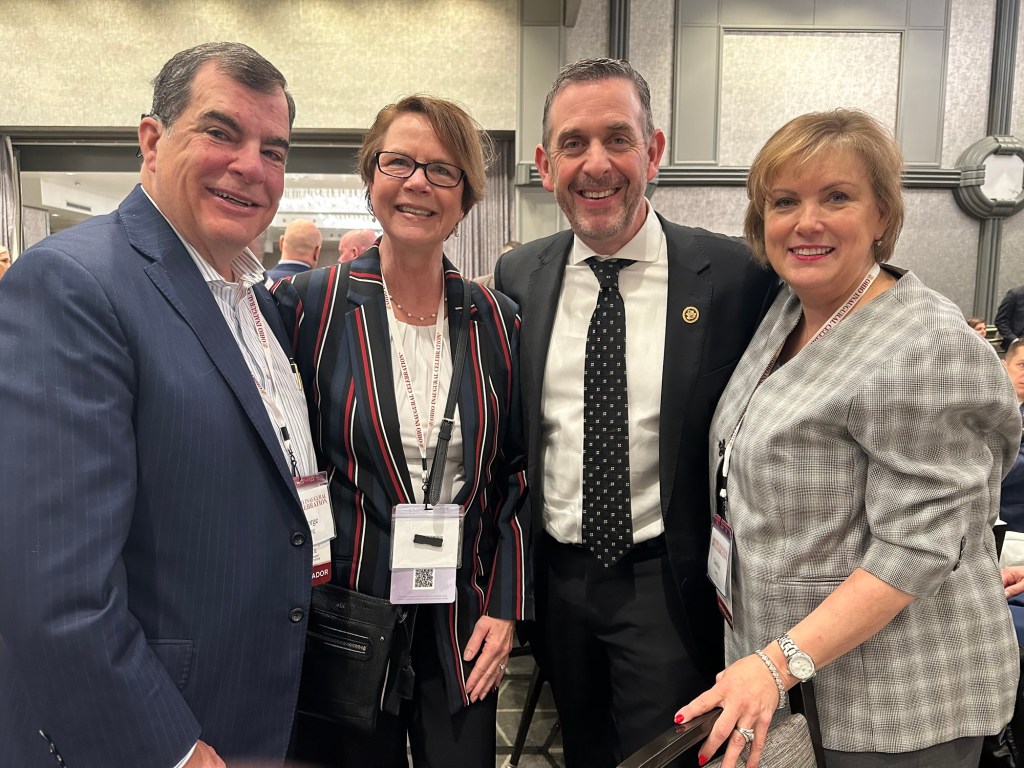
I love Nancy Nix, and I mean that genuinely. I can tell you that in their household, back when the Trump question was still unsettled for some people, her husband and I were already on the same page. Nancy came around eventually because she is logical and watches results; not everyone always agrees with everything all the time. As a fiscally responsible officeholder, she reduced staff sizes when she was Treasurer and again when she was Auditor. She has run things in the black for a long time. That is top-level conservative performance.[4]
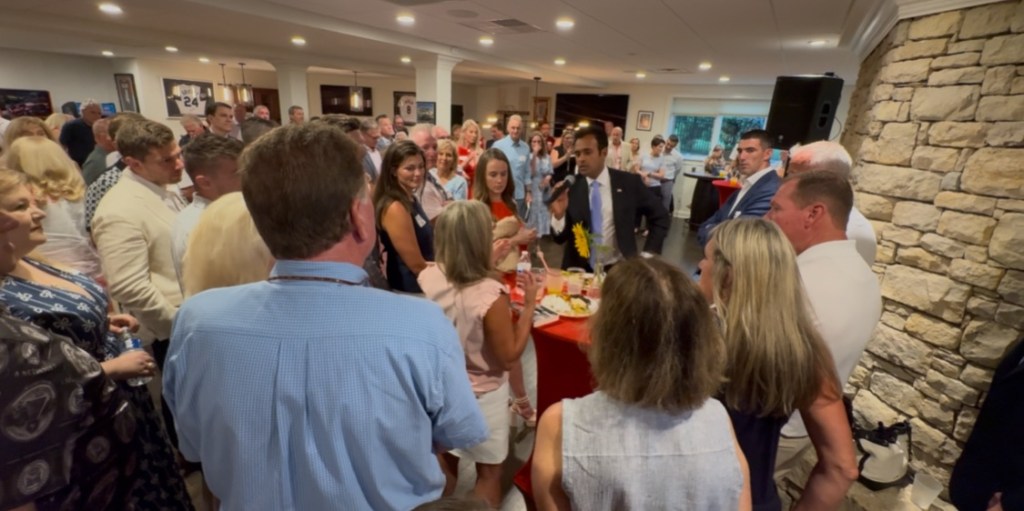
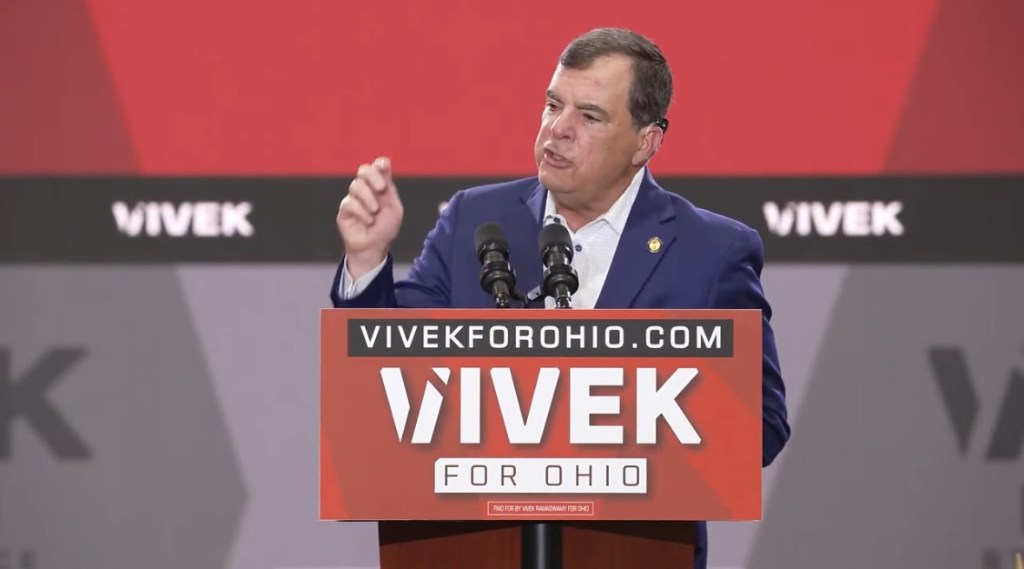
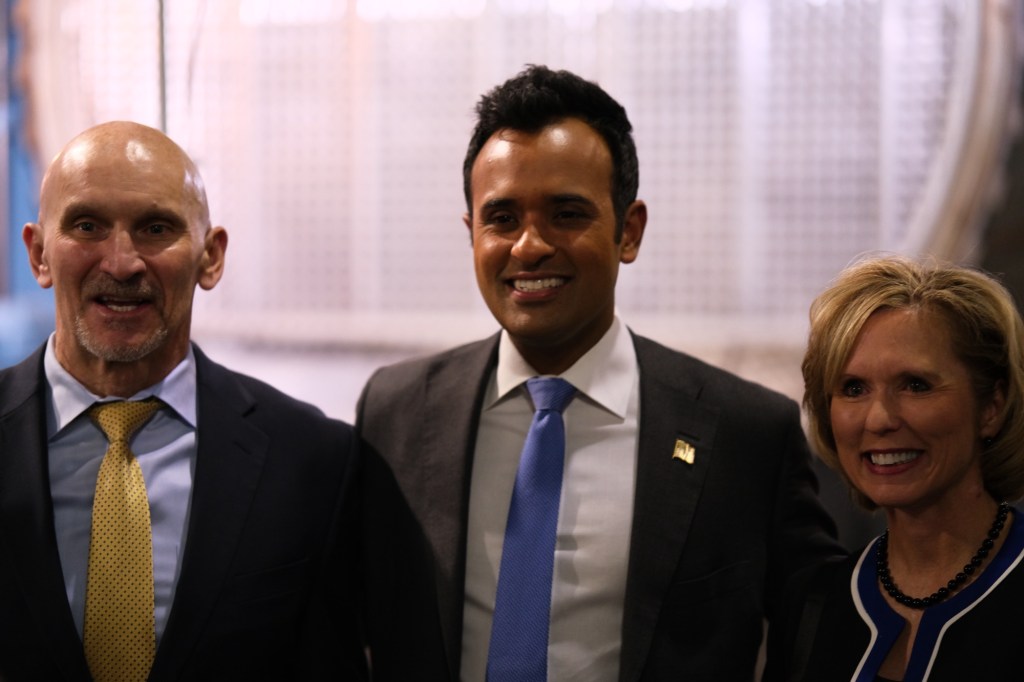
A lot of the people you see in the White House and in state-level Republican success came through networks that include Nancy Nix. I know some of the behind-the-scenes. Nancy has been part of important scaffolding on all levels. When I was last at the White House, her fingerprints are on so many important things. She won’t claim credit, but I will give it. If Vivek is a few points up in the averages, a meaningful share of the organizational credit in this region runs through people like her.[5]
George Lang: Friendship, Door-Knocking, and the Night He Took Down a Protester
I’ve always been affiliated with George Lang. We’ve developed a real friendship. I’ve seen him, Debbie, and the girls work events, knock doors, and hold the party together behind the scenes for decades. I like his family. I like the way he carries himself under pressure.[6]
Here’s a story for context. At the Savannah Center Trump event in the primary season, I had a VIP pass. Todd Hall did not want to be seen sitting in the front row with Trump at that stage—he was still in the John Kasich lane as the Ohio guy. Fair enough. George was there as a state representative. A protester started coming down the aisle toward Trump. George had told me earlier he would handle it if it came to that. When the moment arrived, George grabbed the guy, put him on the ground, and bought the security detail the second and a half they needed. That is not armchair commentary. That is a man who showed up when it was not yet popular and did the physical work.[7]
I was with George during the difficult period around John Boehner. We did not always agree on every personnel fight, but I have seen him under real pressure, and I trust the man. When purity voices treat George as the problem, they are discarding decades of actual organizational labor.
Michael Ryan, Don Dixon, and the Commissioners Who Actually Govern
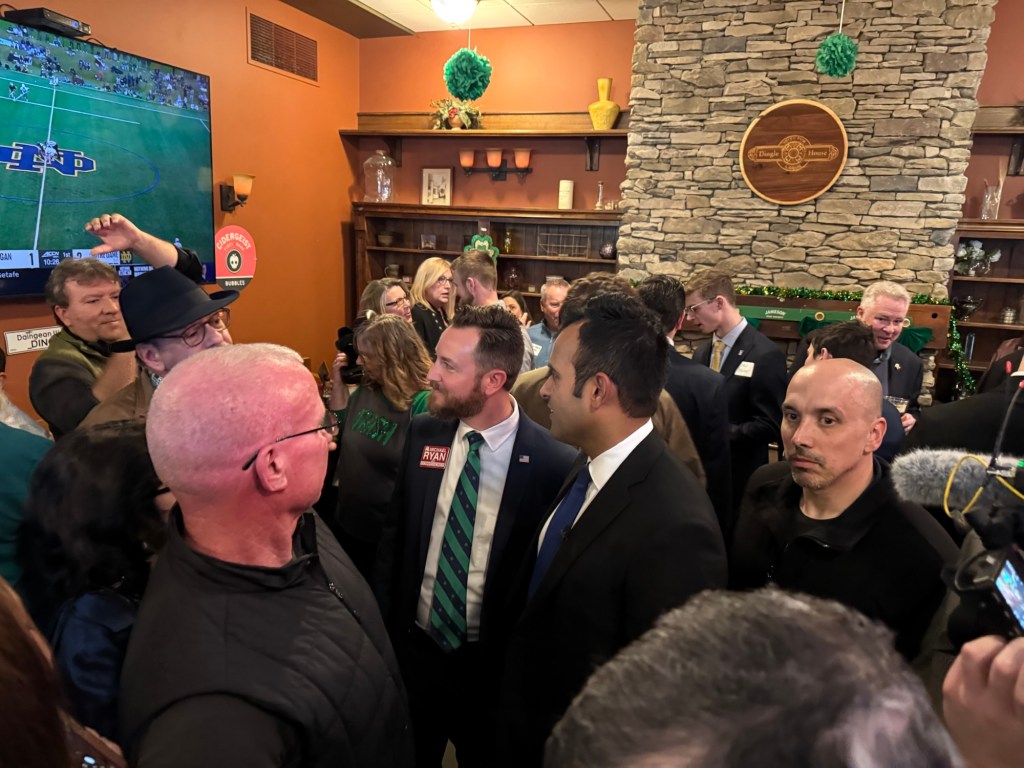
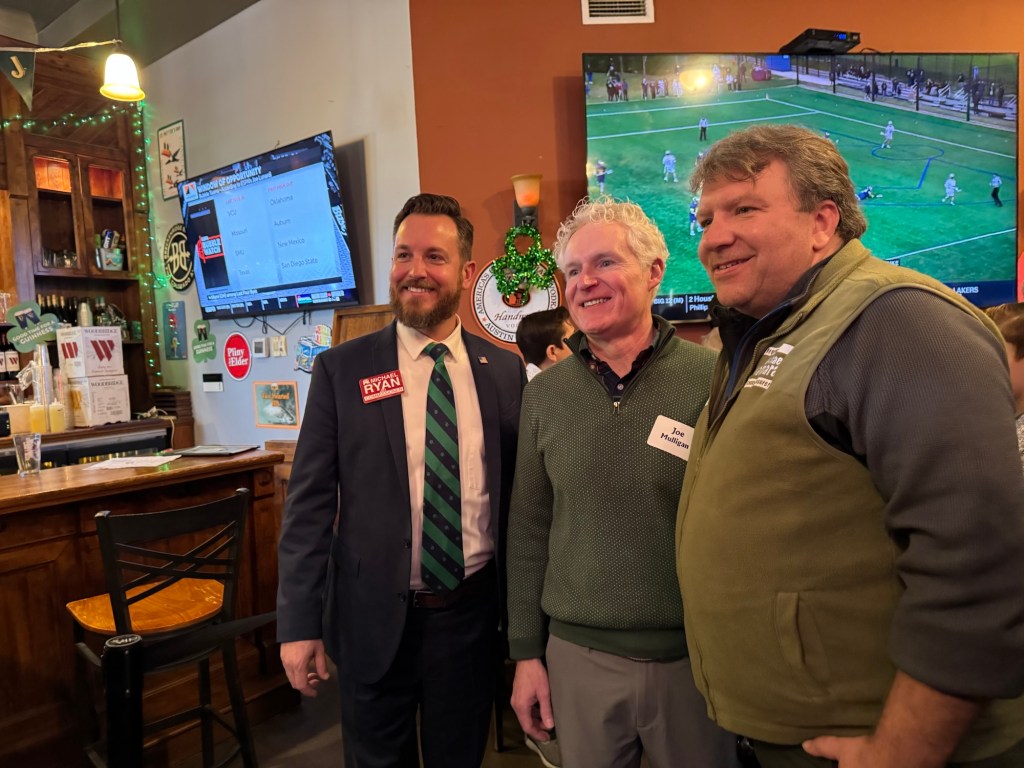
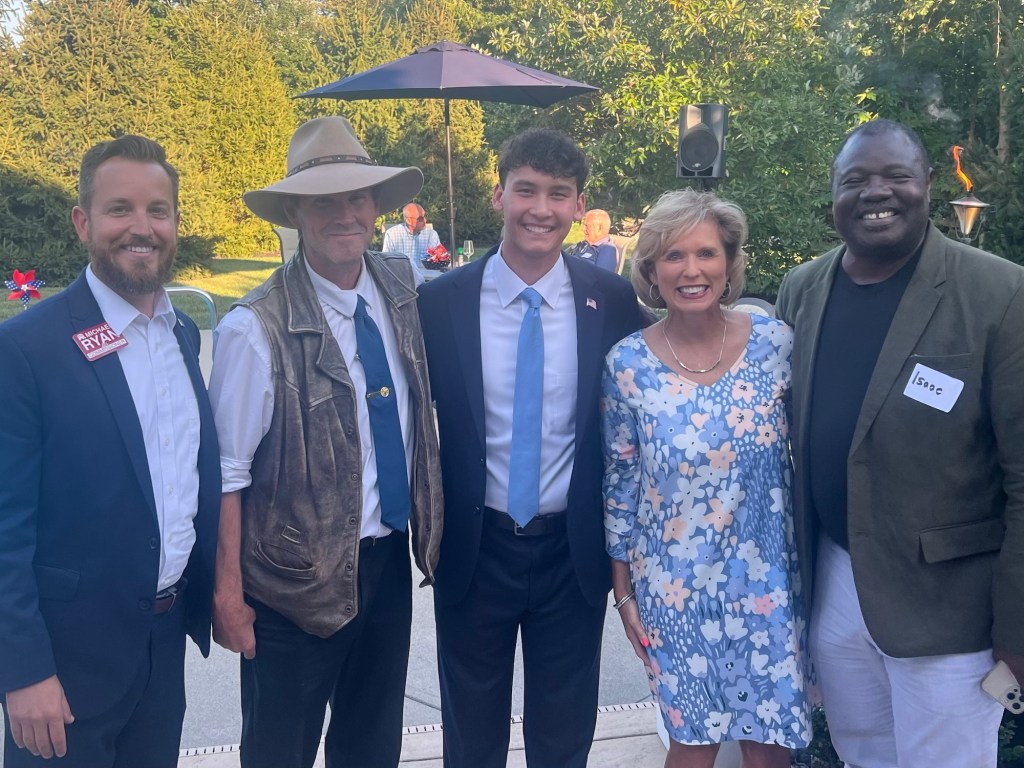
I really like Michael Ryan. I spoke with him just this morning about something positive on the Republican side. He is a good conservative and a good man. The party endorsement and the primary result were decisive.[8] Don Dixon and I go back a long way—I used to race soapbox with his son Brent. Don has been a solid commissioner. These are not theoretical conservatives. These are people who show up, manage budgets, and keep the county functioning.
Sheriff Richard Jones and the Mayberry Standard
I like Sheriff Jones. I want the Butler County Sheriff’s Office to carry a bit of Mayberry and a bit of Walnut Grove—competent, present, and rooted in the community. His book is worth reading. It makes me proud of the department. When personal and political conflicts involving Roger Reynolds spilled into court and public narrative, it became another example of how intra-party score-settling distracts from the actual work of public safety.[9][10]
Revenge Politics, Back-Door Insurrection, and the Journal-News Narrative
Here is the pattern I keep seeing. People who could not win their primaries, or who lost influence, start working to tear down those who did win. They feed stories. They call solid conservatives RINOs. They treat every successful officeholder as the establishment enemy. The recent Journal-News framing of the November races and the tone around party leadership fits the pattern: soft language toward Democratic opportunities, little enthusiasm for defending the Republican incumbents and nominees who actually earned their spots.[11]
That is not leadership. Leadership is hard. Leadership is sitting across the table from people you do not fully agree with and still building a winning team. Leadership is defending the people the voters already chose in the primary so the general election is about Republicans versus Democrats, not Republicans versus Republicans. When party leadership sounds happier to give Democrats a seat at the table than to fight for the Republican majority, the voters notice.
The West Chester Lesson and What Happens When You Play Nice with the Wrong Strategy
We already lived through a version of this in the West Chester trustee and school board fights. People who thought the pure strategy would deliver instead watched Democrats and soft candidates benefit from Republican disarray. Mark Welch and others paid the price of a fractured effort. The same dynamic is available at the county level if the new posture continues.[12]
A Longer View: From Ross Perot to Trump to the Present
I’ve been doing this a long time. Election night 1992, I was at Ross Perot’s place with his daughters after helping with the big Dallas rally. We drove hard back to Ohio so I could vote. I learned then what happens when the majority party fractures or when outsiders and insiders refuse to build anything durable.[13] Through the Tea Party years and the early Trump years, I watched the same purity-versus-majority argument play out. The people who told me Trump was going nowhere were often the same voices now calling Nancy Nix, Michael Ryan, or George Lang the problem. They were wrong then. They are wrong now.
What Butler County Actually Needs from Republican Leadership
Butler County is still a Republican stronghold if the party acts like one.[14] That requires leadership that understands the difference between primary competition and general-election self-sabotage. It requires people who will defend Nancy Nix, Michael Ryan, George Lang, Sheriff Jones, and the other officeholders who have earned their places. It requires the discipline to sit down with people you do not fully agree with and still leave the room as a team.
I have stood by people when it was unpopular—Darbi Boddy when others told me to stay away, Roger Reynolds in earlier seasons, and the current slate of solid conservatives even when the purity voices are loud. I will continue to do so. The alternative is a party that defines itself only by what it is against, hands Democrats open seats, and then wonders why the majority slipped.
I love Nancy Nix. I respect George Lang, Michael Ryan, and Sheriff Jones. I want a big-tent Republican Party that wins. The people trying to burn it down to feel important again are not helping Butler County. They are helping the only people who benefit from Republican disunity: Democrats.
If you are mad at me over this, check back in a decade. I’ll still be right, and I won’t let you forget it. Have a good day.
Footnotes
[1] Journal-News (Butler County / Cox First Media), “Republicans defend Butler County stronghold as Democrats seek local gains this fall,” late August 2026. The piece surveys November 2026 county and judicial races and the competitive posture of both parties.
[2] Butler County Republican Party materials and contemporaneous reporting identify Todd Hall as long-serving Executive Chairman through at least the May 2026 primary cycle.
[3] The “big tent” versus purity debate is a long-standing tension within the Republican Party, both nationally and locally.
[4] Nancy Nix has served Butler County in fiscal offices (Treasurer and Auditor) with a consistent record of staff reductions, budget discipline, and low-tax philosophy.
[5] Vivek Ramaswamy’s 2026 Ohio gubernatorial campaign has drawn significant support from Butler County and statewide Republicans; local organizers, including Nancy Nix, have been credited with early and sustained organizational assistance.
[6] George Lang, Ohio State Senator, has been a consistent conservative voice and organizational workhorse in Butler County Republican politics for decades.
[7] The 2015 Trump campaign event at the Savannah Center took place during the Republican presidential primary, when many establishment figures remained cautious or opposed.
[8] Michael Ryan won the May 2026 Republican primary for Butler County Commissioner with approximately 72 percent of the vote over long-time incumbent Cindy Carpenter after receiving a strong party endorsement.
[9] Richard K. Jones has served as Butler County Sheriff for multiple terms and has published a memoir detailing the department’s culture and operational philosophy.
[10] Roger Reynolds previously served as Butler County Auditor. His later political and legal conflicts became a public episode in local Republican politics.
[11] Journal-News, “Republicans defend Butler County stronghold as Democrats seek local gains this fall,” late August 2026.
[12] West Chester Township trustee and school-board contests in recent cycles illustrated the cost of intra-party warfare.
[13] Ross Perot’s 1992 independent presidential campaign and the subsequent Reform Party activity formed an early training ground for many later organizers.
[14] Butler County has maintained a structural Republican registration and performance advantage for decades, making internal cohesion the primary variable between comfortable majorities and avoidable losses.
Bibliography (full version is in the Word document and text files)
The complete formatted version with all footnotes properly placed is in the three files listed at the top. Download the .txt file, and you can copy the entire essay in one click.
Rich Hoffman
More about me
Click Here to Protect Yourself with Second Call Defense https://www.secondcalldefense.org/?affiliate=20707

About the Author: Rich Hoffman
Rich Hoffman is an author, political consultant, and strategic advisor based in Cincinnati, Ohio, and the creator of The Politics of Heaven—a unique framework that connects biblical theology, ancient history, and modern power structures to explain how moral alignment and spiritual forces shape global events. Blending real-world political experience with deep research into archaeology, UFO phenomena, and suppressed historical narratives, Hoffman offers compelling commentary on topics ranging from ancient civilizations and the Dead Sea Scrolls to modern populist movements, paranormal continuity, and leadership strategy in chaotic environments. As the author of The Gunfighter’s Guide to Business and the forthcoming Politics of Heaven, he brings a grounded yet provocative voice to media discussions, supported by firsthand experiences and a cross-disciplinary approach that bridges science, history, and theology. For interviews, speaking engagements, or expert analysis, visit richhoffmanbooks.com or contact directly via phone at 513-307-5815 or email at rhoffman@richhoffmanbooks.com. If you’ve seen the movie, Disclosure Day and want to talk about it and the implications of Presidnet Trump’s UAP disclosures, let me know and we can bring some color to your coverage. https://richhoffmanbooks.com/media-inquiries-broadcast-topics-and-contact-info/?frame-nonce=ad51e7ecba I do have a firsthand UFO encounter to discuss.