Pip: The Overmanwarrior has thoughts on party unity, and they are not delivered quietly.
Mara: Rich Hoffman’s recent writing zeroes in on one question: when does a county GOP chair’s public posture stop building the team and start doing the opposition’s work for them? Let’s start with the wine metaphor — and why it matters eight weeks before a midterm.
Don’t Sour the Wine: Lectures, Loyalty, and the Midterm Math
Mara: The post opens with a genuine acknowledgment that chairing a county party is hard, thankless work — and then pivots to a specific warning about what happens when the chairman’s message lands in print.
Pip: The Journal-News ran the new Butler County GOP chair’s priorities, and the quote that crystallized everything is this one: “The Republicans that are in office need to learn to cut spending and cut taxes, and I have not been seeing that happen, and it displeases me.”
Mara: That sentence is the spine of the argument. Once it’s in the paper, it belongs to every Democrat, every fence-sitter, and every volunteer quietly deciding whether this job is worth the abuse.
Pip: And the timing is the real problem. Democrats don’t have to beat Republicans if Republicans brand their own officeholders as failures eight weeks before Election Day. Kathy Wyenandt — cited here as the visible face of the Butler County Democratic Party — doesn’t need a majority tomorrow. She needs Republicans to do her turnout work for her.
Mara: The post draws a sharp distinction between the substance and the delivery. Cutting spending, reducing waste, watching the schools — those aren’t radical asks in a Republican county. The argument is tone, timing, venue, and target.
Pip: There’s a fast-food manager analogy in here that earns its keep. Barking works on teenagers folding boxes. It does not work on people you’re asking to put their name on a ballot, absorb the hate mail, and run again in two years.
Mara: The post also invokes David Kern — a Liberty Township trustee for 32 years who briefly chaired this same county party and, by the post’s account, discovered the hard way that herding quarreling Republicans is a different sport than fighting Democrats. That history, the argument goes, is sitting right there for anyone who wants to read it instead of repeating it.
Pip: And then there’s the Nicodemus point, which is doing real work. Nicodemus loved the message and still had to remain a functioning member of the priesthood. Serious politics is not a purity cult.
Mara: The post is direct about the arithmetic: the absolutist slice of the party is estimated well under 40 percent of Butler County Republicans, with the rest on the fence or transactional. Lecture the 60 percent as if they’re the problem, and you meet them later on the other side of the aisle — or at home on the couch.
Pip: The advice at the end is genuinely constructive. Bring the concerns to a closed session. Make the case. Help officeholders find the money and the coalition. Then go to the paper together.
Mara: The closing line lands the whole thing plainly: “Lecturing your own officeholders in the newspaper is how you do the Democrats’ work for them.”
Pip: Build the tent, inspect the team in private, cheer them in public. That’s the whole craft in one sentence.
Mara: The question of who gets to call themselves a team player — and who decides — isn’t going away before November. More on that next time.
Rich Hoffman is an author, political consultant, and strategic advisor based in Cincinnati, Ohio, and the creator of The Politics of Heaven—a unique framework that connects biblical theology, ancient history, and modern power structures to explain how moral alignment and spiritual forces shape global events. Blending real-world political experience with deep research into archaeology, UFO phenomena, and suppressed historical narratives, Hoffman offers compelling commentary on topics ranging from ancient civilizations and the Dead Sea Scrolls to modern populist movements, paranormal continuity, and leadership strategy in chaotic environments. As the author of The Gunfighter’s Guide to Business and the forthcoming Politics of Heaven, he brings a grounded yet provocative voice to media discussions, supported by firsthand experiences and a cross-disciplinary approach that bridges science, history, and theology. For interviews, speaking engagements, or expert analysis, visit richhoffmanbooks.com or contact directly via phone at 513-307-5815 or email at rhoffman@richhoffmanbooks.com. If you’ve seen the movie, Disclosure Day and want to talk about it and the implications of Presidnet Trump’s UAP disclosures, let me know and we can bring some color to your coverage. https://richhoffmanbooks.com/media-inquiries-broadcast-topics-and-contact-info/?frame-nonce=ad51e7ecba I do have a firsthand UFO encounter to discuss.
Pip: Welcome to The Overmanwarrior, where the polls say it’s a toss-up and Rich Hoffman says the polls are lying to you — again.
Mara: Rich Hoffman has been tracking the 2026 midterm landscape closely, and the central argument running through his recent work is that the published numbers in Ohio, Texas, and Wisconsin are systematically understating Republican support.
Pip: Let’s start with why those poll averages keep getting it wrong, and what Wisconsin just proved about the problem.
Why the 2026 Midterm Polls Are Still Misleading
Mara: The core tension here is between what the published averages show and what the underlying partisan lean of these states actually suggests. Ohio went Republican by eleven points in 2024. Texas by fourteen. Yet the polling has both states looking like toss-ups.
Pip: And then Wisconsin handed everyone a very loud data point. The Democratic primary had Francesca Hong leading David Crowley by double digits — sometimes twenty points — right up until election night.
Mara: The post is direct about what happened: “One late survey had her at 44 percent to Crowley’s 22 percent.” Crowley won by less than half a percentage point. Hong received roughly what the final polls projected for her. The entire error was on Crowley’s side.
Pip: So the polls captured the progressive candidate’s floor perfectly and missed everyone else entirely. That’s not a rounding error.
Mara: The explanation offered is non-response bias. Conservative, rural, and Trump-aligned voters are less likely to answer a survey. The people who do respond skew toward Democrats and toward the more engaged, activist end of the electorate. Pollsters try to correct for this with demographic weighting, but the corrections are imperfect when the harder-to-reach population is systematically absent from the sample.
Pip: There’s also a commercial layer worth naming — close races sell advertising, and campaigns keep spending when the horse race looks competitive.
Mara: Right. The argument is that a seven- or eight-point underlying Republican advantage, published as a two-point race, generates more television and digital spending than a blowout narrative would. The incentive structure rewards the appearance of competitiveness.
Mara: In Ohio, the governor’s race between Vivek Ramaswamy and Amy Acton sits near a statistical tie in the aggregates, with Ramaswamy at 47.0 and Acton at 46.2 in one weighted average. The Senate special between Jon Husted and Sherrod Brown shows a similarly compressed margin, with individual polls bouncing between a small Husted lead and a small Brown lead. In Texas, the Emerson College survey from August ninth and tenth had Ken Paxton at 47 and James Talarico at 46 among likely voters.
Pip: Three states, same pattern. The post’s read is that if the election were held today, Republicans would win these races by closer to seven or eight points — not by a fraction.
Mara: And the Wisconsin primary is the evidence that the measurement problem hasn’t been solved. Late-deciding and previously undecided voters broke hard against the more radical option, and the models missed it entirely because those voters weren’t in the sample.
Pip: Election night geography in Ohio compounds the illusion — early returns from Columbus and urban centers can show a temporary Democratic lead before the suburban and rural counties report.
Mara: The post flags that directly: if rural voters don’t respond to the poll, they won’t be counted in the averages either. The same population that’s hard to reach by phone is the one that shows up late on election night and moves the final margin.
Pip: Which brings us to what actually happens when November arrives and those voters show up.
Mara: The through-line is a gap between measurement and reality — and the argument that Wisconsin made that gap visible in a way that’s hard to dismiss.
Pip: Watch what the hard-to-reach voters actually do when the ballots are counted. Not what the people who answer the phone say in August.
Rich Hoffman is an author, political consultant, and strategic advisor based in Cincinnati, Ohio, and the creator of The Politics of Heaven—a unique framework that connects biblical theology, ancient history, and modern power structures to explain how moral alignment and spiritual forces shape global events. Blending real-world political experience with deep research into archaeology, UFO phenomena, and suppressed historical narratives, Hoffman offers compelling commentary on topics ranging from ancient civilizations and the Dead Sea Scrolls to modern populist movements, paranormal continuity, and leadership strategy in chaotic environments. As the author of The Gunfighter’s Guide to Business and the forthcoming Politics of Heaven, he brings a grounded yet provocative voice to media discussions, supported by firsthand experiences and a cross-disciplinary approach that bridges science, history, and theology. For interviews, speaking engagements, or expert analysis, visit richhoffmanbooks.com or contact directly via phone at 513-307-5815 or email at rhoffman@richhoffmanbooks.com. If you’ve seen the movie, Disclosure Day and want to talk about it and the implications of Presidnet Trump’s UAP disclosures, let me know and we can bring some color to your coverage. https://richhoffmanbooks.com/media-inquiries-broadcast-topics-and-contact-info/?frame-nonce=ad51e7ecba I do have a firsthand UFO encounter to discuss.
I have been watching the midterm landscape closely in mid-August 2026. Three months out from Election Day, the polling averages in several key races look tighter than the underlying partisan lean of these states would suggest. Ohio’s governor’s race between Vivek Ramaswamy and Amy Acton sits near a toss-up. The special Senate election between Jon Husted and Sherrod Brown is competitive. In Texas, Ken Paxton and James Talarico are essentially deadlocked in recent surveys. Then came the Wisconsin Democratic primary, where the polls were off by roughly 20 points in the direction favoring the more progressive candidate.
I have said for a long time that a meaningful portion of the modern polling industry carries systematic bias against Republicans. Conservatives and Trump voters are less likely to pick up the phone or complete a survey. Pollsters still lean on models and samples that over-weight the people who do answer—disproportionately Democrats and people more inclined to engage with survey-takers. On top of that sits a commercial incentive: close races generate more advertising dollars. Campaigns with money to spend feel pressure to keep spending when the horse race looks competitive. Wisconsin just provided another public demonstration of how badly these models can fail when late undecideds and turnout dynamics break in one direction.
I do not think the actual underlying margins in Ohio or Texas are as tight as the published averages. I think several points in these surveys understate Republicans, and if the election were held today, the Republican candidates would win more comfortably than the current numbers imply. That is not complacency. It is pattern recognition from 2016 forward, reinforced by the Wisconsin result and by what I see on the ground and on platforms where people actually speak freely.
Wisconsin Democratic Primary 2026: The 20-Point Polling Collapse of Francesca Hong
The clearest recent data point is Wisconsin. Polls consistently showed Democratic Socialist State Representative Francesca Hong leading Milwaukee County Executive David Crowley by double digits—sometimes by around 20 points. One late survey had her at 44 percent to Crowley’s 22 percent. Another earlier reading put her near 38 percent with Crowley in single digits and a large undecided bloc.
On primary night Crowley won by less than half a percentage point. Hong received roughly the share the final polls had projected for her—around 39 percent. The entire error was on Crowley’s side. Late-deciding and previously undecided voters broke hard against the more radical option. Primaries are harder to model than generals because turnout is lower and more volatile, and Wisconsin’s open primary added another layer of uncertainty. Still, the scale of the miss is striking. The models captured the progressive candidate’s floor but completely missed the late surge to the more traditional Democrat.
I was not surprised. There is a recurring temptation inside media and polling circles to treat energized progressive or socialist factions as larger than they are. College campuses, activist networks, and highly engaged online progressive voters are easy to reach and happy to talk to pollsters. The broader primary electorate is less so. When the actual voters showed up, the socialist ceiling was exposed. The same pattern has appeared in other recent cycles, in which early surveys elevate a hard-left candidate and then the candidate underperforms once undecideds and lower-propensity voters enter the picture.
Current Ohio Governor Polls: Vivek Ramaswamy vs Amy Acton in Mid-August 2026
In Ohio, the governor’s race is officially an open seat. Aggregates in mid-August put Vivek Ramaswamy and former state health director Amy Acton essentially even, or with Ramaswamy ahead by less than a point. One recent weighted average had Ramaswamy at 47.0 percent and Acton at 46.2 percent. Individual surveys have bounced: some Democratic-leaning pollsters have shown Acton up two or three points; others have shown a tie or a small Republican edge.
Ohio is not a pure 50-50 state. Donald Trump carried it by roughly eleven points in 2024. The underlying Republican structural advantage has been visible for several cycles. A race this close in the averages, this far out, is therefore anomalous on its face. Acton’s association with COVID-era restrictions remains a live liability with a large share of the electorate that still remembers the lockdowns and school closures. Ramaswamy’s profile is national and polarizing, which creates some friction among independents and moderates, but the state’s recent presidential and statewide results do not suggest a natural environment for a Democratic win.
Ohio Senate Race Polling: Jon Husted vs Sherrod Brown
The special Senate election is similarly compressed. Jon Husted, appointed after JD Vance’s elevation, faces former Senator Sherrod Brown. Aggregates in early August showed Husted ahead by roughly two to three points in some trackers, while other windows had Brown with a small edge or a statistical tie. A New York Times/Siena survey had Husted at 50–47. An AARP-sponsored poll earlier in the summer had Brown up three. The race is competitive on paper.
Brown is a known quantity with residual personal brand strength among some working-class and older voters. Yet Ohio has continued moving right relative to the national environment. A race that looks this tight three months out again sits uncomfortably against the state’s recent performance. If nonresponse systematically suppresses Republican numbers, the published margins understate Husted’s true position.
Texas US Senate Polls 2026: Ken Paxton vs James Talarico Dead Heat
In Texas, the pattern repeats. The latest Emerson College survey (August 9–10) had Attorney General Ken Paxton at 47 percent and state Representative James Talarico at 46 percent among likely voters. Other recent polls have shown similar dead heats or small leads for either side.
Texas is not a purple state. Trump won it by roughly fourteen points in 2024. Paxton is a polarizing figure with a long history of legal and political battles, which creates openings for a skilled Democratic challenger. Talarico has run a disciplined campaign and benefits from the same non-response dynamics that compress Republican leads elsewhere. Still, a race this close in a state with Texas’s underlying Republican baseline is another data point that looks softer for the GOP than the fundamentals imply.
The Persistent Problem of Republican Non-Response Bias in Modern Polling
The common thread is non-response. I am on every list. Campaigns and pollsters call and text constantly. I rarely answer. I vote in every primary and every general election, but I do not have time for a fifteen-minute questionnaire from someone I do not know. Many people in my circle operate the same way. Conservatives, older voters, rural voters, and Trump-aligned voters have lower cooperation rates with traditional survey methods. Cell-phone-only households, caller-ID screening, and general distrust of institutions make the problem worse than it was in the landline era.
Democrats and more progressive voters, by contrast, remain relatively easy to reach and willing to engage. The result is a sample that is tilted before any weighting is applied. Pollsters attempt to correct with demographic targets, education weights, and recalled vote, but the corrections are imperfect. When the underlying population of interest—likely Republican voters—has systematically lower response rates, the adjusted numbers still lag. This is not a new observation. It has been discussed after 2016, 2020, and 2022. Wisconsin’s primary is simply the latest high-profile reminder that the models can still break when late movement occurs among the harder-to-reach.
Media and Pollster Incentives to Keep Races Looking Close
There is also a commercial layer. Close races sell. Media companies and the consultants who live off campaign advertising benefit when the horse race stays competitive. Republican candidates and committees have raised substantial sums. Those dollars flow more readily when the published polls suggest the outcome is in doubt. A seven- or eight-point underlying Republican advantage, when published as a two-point race, generates more television, digital, and direct-mail spending than a blowout narrative would. I am not claiming a grand conspiracy in every survey. I am saying the incentive structure rewards the appearance of competitiveness, and the sampling problems make that appearance easier to produce.
Why Platforms Like X Offer a Clearer Picture Than Traditional Surveys
This is where platforms that still allow relatively unfiltered speech become useful. People say things online under their own names or consistent pseudonyms that they will not say to a stranger on the phone. Sentiment on X, when read carefully and at scale, has often been a better leading indicator of Republican energy than the published telephone and online panel averages. AI systems that can process large volumes of public posts provide another check on the traditional samples. They are not perfect—online populations are not identical to the electorate—but they are less constrained by the cooperation-rate problem that plagues live interviewers and many opt-in panels.
What a Real Election Day Would Show Right Now in These States
If the election were held in the middle of August 2026, I believe the Republican candidates in these races would win by larger margins than the current averages indicate—closer to the seven- or eight-point range in Ohio and a clearer, more comfortable win for Paxton in Texas. That is not a prediction locked in stone for November. Turnout, national mood, candidate performance, and late events still matter. Campaigns cannot rest on structural advantages. But the idea that these races are true toss-ups or that Texas is on the verge of flipping requires accepting that the polling error has suddenly vanished. Wisconsin suggests it has not.
Election Night Dynamics in Ohio: Urban Early Returns vs Rural Reality
Ohio’s geography still shapes how results appear on election night. Early returns from the Columbus area and other urban centers can create a temporary Democratic lead. As the suburban and rural counties between the cities report, the numbers swing back. That pattern has been consistent. Watching the first 15 or 30 minutes of returns without understanding the sequence can cause unnecessary panic. The same logic applies to interpreting summer polls that over-sample the easier-to-reach urban and college populations. And if surveys do not account for this real estate trend, their outlook will not be accurate. If rural people don’t respond to the poll, they won’t be counted.
I have been around these fights long enough to recognize the difference between a genuine shift in the electorate and a measurement problem. The Wisconsin primary was a measurement problem with real consequences for the models. The compressed margins in Ohio and Texas look like the same problem applied to general-election contests in states that have been moving toward Republicans. Non-response among the very voters who decide these races remains the central issue. Until the industry solves the cooperation-rate gap, or until alternative signals from freer platforms are weighted more heavily, the published numbers will continue to understate the Republican side. Plan accordingly.
Footnotes
1. Aggregated Ohio governor polling as of mid-August 2026 from Pollsmax and concurrent trackers showing Ramaswamy 47.0 / Acton 46.2 and recent individual surveys (NYT/Siena, Tulchin, AARP/Fabrizio, etc.).
2. Wisconsin primary result: David Crowley approximately 39.8 percent, Francesca Hong approximately 39.3 percent; pre-election surveys consistently showed Hong leads of 15–20+ points.
3. Ohio Senate aggregates and individual polls (Pollsmax, NYT/Siena, AARP, Beacon/Shaw) place the race within a few points either way.
5. Discussion of non-response bias and primary modeling difficulties drawn from post-election analyses of the Wisconsin results and longer-standing literature on declining survey cooperation rates among conservatives.
6. 2024 presidential margins: Ohio approximately R+11, Texas approximately R+14, Wisconsin narrow Republican win.
Bibliography for Further Reading
• Pollsmax, RealClearPolitics, 270toWin, and Decision Desk HQ aggregate pages for 2026 Ohio governor, Ohio Senate special, and Texas Senate.
• Emerson College Polling releases on Texas, August 2026.
• Contemporary reporting and post-mortems on the Wisconsin Democratic gubernatorial primary (Axios, New York Times, Milwaukee Journal Sentinel, Marquette Law School Poll commentary).
• Historical analyses of non-response bias in U.S. political polling after the 2016, 2020, and 2022 cycles.
• Public statements and data releases from the campaigns of Vivek Ramaswamy, Jon Husted, Ken Paxton, Amy Acton, Sherrod Brown, and James Talarico.
• Academic and industry papers on declining telephone survey response rates and the challenges of weighting for partisan non-response.
The numbers will keep coming. Watch what the hard-to-reach voters actually do when the ballots are counted, not onlywhat the people who answer the phone say in August.
Rich Hoffman is an author, political consultant, and strategic advisor based in Cincinnati, Ohio, and the creator of The Politics of Heaven—a unique framework that connects biblical theology, ancient history, and modern power structures to explain how moral alignment and spiritual forces shape global events. Blending real-world political experience with deep research into archaeology, UFO phenomena, and suppressed historical narratives, Hoffman offers compelling commentary on topics ranging from ancient civilizations and the Dead Sea Scrolls to modern populist movements, paranormal continuity, and leadership strategy in chaotic environments. As the author of The Gunfighter’s Guide to Business and the forthcoming Politics of Heaven, he brings a grounded yet provocative voice to media discussions, supported by firsthand experiences and a cross-disciplinary approach that bridges science, history, and theology. For interviews, speaking engagements, or expert analysis, visit richhoffmanbooks.com or contact directly via phone at 513-307-5815 or email at rhoffman@richhoffmanbooks.com. If you’ve seen the movie, Disclosure Day and want to talk about it and the implications of Presidnet Trump’s UAP disclosures, let me know and we can bring some color to your coverage. https://richhoffmanbooks.com/media-inquiries-broadcast-topics-and-contact-info/?frame-nonce=ad51e7ecba I do have a firsthand UFO encounter to discuss.
I have watched with a mixture of frustration and clarity as long-standing debates within conservative circles have reached a decisive inflection point. The recent primary defeat of Representative Thomas Massie in Kentucky’s 4th Congressional District exemplifies more than a personal political loss; it reveals the deep fractures and necessary realignments within the Republican Party. Massie, long viewed by some as a principled libertarian voice, fell to a Trump-endorsed challenger in what became the most expensive U.S. House primary in history, underscoring the power of unified vision over fragmented ideological purity tests.
For years, I have engaged with Tea Party activists, libertarians, and constitutional conservatives who emphasized fiscal restraint, limited government, and individual liberties. Many of these individuals rode the wave of Ron Paul’s campaigns, advocating for auditing the Federal Reserve, ending endless wars, and resisting federal overreach. I respected their sincerity. Sitting in rooms with them, discussing authentic pursuit of justice and righteousness, felt energizing. Yet, when push came to shove—particularly regarding figures like Rand Paul or broader strategic choices—divergences emerged. Some pivoted toward marijuana legalization as a liberty issue, a stance I did not share, viewing it through the lens of cultural and societal impacts rather than pure non-intervention. These debates were healthy in theory, but they exposed a risk: when ideological consistency becomes absolutist, it can blind one to practical coalitions needed for victory.
Massie’s loss was not merely about one congressman. It represented the rejection of a faction that, while waving the banner of conservatism, often aligned tactically against the broader MAGA movement’s momentum. Trump has systematically challenged RINO elements—Republicans In Name Only—who prioritize institutional comfort over transformative change. Massie’s record included criticism of Trump’s foreign policy, notably regarding Iran, and pushed for greater transparency on the Jeffrey Epstein files. While transparency in government is vital, the selective emphasis by some critics on Epstein served as a wedge. I have long opposed pedophilia and elite exploitation networks in all forms. Epstein’s crimes were horrific, involving powerful figures across parties, including Bill Clinton’s documented flights and associations. Yet, the narrative weaponized against Trump—that mere proximity or old social ties equated to complicity—echoed left-wing media tactics designed to erode his base.
I recall the Epstein files’ long shadow. Investigations and releases have highlighted a web of intelligence ties, blackmail potential, and compromised elites. Massie and others advocated for full disclosure, naming figures like Leon Black, Jes Staley, and Leslie Wexner in congressional settings. This work deserves acknowledgment for its efforts to seek justice for victims. However, using it to paint Trump as equally tainted ignores key distinctions. Trump banned Epstein from Mar-a-Lago after reports of inappropriate conduct, and no credible evidence from the files has substantiated direct involvement in criminal acts matching the scale pushed in opposition narratives. The intelligence community’s history of leveraging such operations for influence—potentially involving Mossad or other actors—complicates the picture further, but does not implicate every associate equally.
The pedophilia smear tactic is particularly insidious. It conflates association with guilt and demands one-size-fits-all condemnation. Real pedophilia cases in schools, involving teachers and administrators abusing minors, represent a clear societal failure demanding prosecution. Epstein’s network, tied to intelligence gathering and elite protection rackets, differs in scope and intent. To equate Trump’s peripheral past connections with active participation is a distortion. Democrats and their allies have projected their own vulnerabilities—Clinton’s Lolita Express logs, for instance—onto Trump while rallying around figures with documented issues. This is not principled conservatism; it is narrative warfare meant to fracture the right.
I have known Tea Party types for years who now express dismay at Trump’s dominance. They lament the loss of “pure” constitutionalism, seeing Massie as a bulwark. Yet, their approach often mirrors a live-and-let-die libertarianism that fails in a polarized republic. Government is not absent; it is captured. Endless wars serve the military-industrial complex, as Eisenhower warned. Fiscal irresponsibility balloons debt. Cultural decay advances through institutions. Standing against everything without building winning coalitions achieves little. Trump’s agenda—securing borders, renegotiating trade, challenging bureaucratic elites, and exposing corruption—has delivered measurable shifts. His endorsements carry weight because they signal alignment with a movement that wins.
Consider parallel dynamics in Ohio. Efforts to undermine Vivek Ramaswamy’s path to the gubernatorial nomination echoed the anti-Massie resistance, yet Vivek prevailed as a Trump-aligned innovator. Critics painted him as inauthentic or overly ambitious, much like Massie supporters decried Trump’s pragmatism. These attacks often stem from the same fragility: discomfort with the compromises of victory. I prefer winning. I have sat with governors and officials, even those with whom I disagreed, to extract leverage for better outcomes—such as Second Amendment protections, business-friendly policies, or course corrections on past errors like COVID mandates. Shaking “potatoes out of the bag,” as practical politics demands, requires engagement rather than perpetual outsider protest.
Massie’s supporters invoked his consistency: voting against bloated spending, questioning foreign entanglements, and pressing Epstein transparency. These are defensible in isolation. However, consistency without adaptability risks irrelevance. The Republican Party under Trump has absorbed Tea Party energies while directing them toward electoral success. Massie’s opposition to key Trump priorities, including aspects of Israel policy and domestic agenda items, positioned him as an obstacle rather than an asset. Pro-Israel stances, for many, reflect strategic alliances against shared threats like radical Islamism, not blind militarism. Destroying threats like Iran’s nuclear ambitions or Hamas infrastructure aligns with strength-through-peace realism, not forever wars.
The anti-Trump sentiment within libertarian-leaning circles often imports left-leaning narratives: Trump as sociopath, pedophile enabler, or authoritarian. These claims crumble under scrutiny. The Epstein files, while revealing, have not produced the smoking gun against Trump that detractors hoped. Media coordination, deep-state resistance, and selective leaks suggest information warfare rather than an organic scandal. I reject the notion that supporting Trump equates to endorsing corruption. Pedophilia is abhorrent regardless of politics. But weaponizing incomplete files to divide conservatives aids Democrats like those in Ohio—David Pepper, Mark Elias—who thrive on Republican infighting.
My experience in media and commentary has reinforced independence. No sponsors dictate my views. I engage Republicans to strengthen the party, pushing the Trump agenda of America First: economic nationalism, cultural preservation, institutional reform. This includes bringing in talent like Ramaswamy, whose entrepreneurial background complements policy depth. Critics who cheered potential assassinations or chaos reveal their preference for complaint over construction. They validate existence through opposition, not governance.
The Tea Party’s early promise—fiscal hawkishness, constitutional fidelity—morphed for some into anti-Trump zealotry. Ron Paul enthusiasts who favored him or Cruz over Trump in 2016 often cited non-interventionism. Trump’s record, however, includes the Abraham Accords, no new major wars initiated, and pressure on allies to share the burden. Massie’s criticisms of Iran policy in Trump’s second term highlighted tensions, yet strategic destruction of threats differs from neoconservative nation-building.
Epstein’s case warrants full accountability. Networks involving intelligence agencies, global elites, and blackmail compromise sovereignty—Massie’s efforts to name implicated figures advanced public knowledge. Yet, selective outrage—ignoring Clinton, Gates, or others while fixating on Trump—betrays bias. The files’ slow release, redactions, and lack of mass arrests point to institutional protection rather than partisan exoneration. Victims deserve justice beyond political theater.
Broader lessons emerge. Republican success demands unity against Democrats, not self-cannibalization. Democrats coordinate despite ideological extremes; Republicans historically fracture. Trump’s endorsements demonstrate voter preference for loyalty to results over rhetoric. Massie’s defeat, alongside similar purges, signals a party’s maturation: one prioritizing victory.
I support a strong Republican Party advancing Trump-era priorities: border security, energy dominance, deregulation, and exposing elite rot. Libertarian purity has value in discourse but falters in governance. Coalitions require compromise—agreeing on enough to defeat the left. Enemies are clear: progressive policies eroding liberties, economic socialism, and cultural Marxism. Internal division aids them.
Friends from Tea Party days feel betrayed by my stance. I value their sincerity but choose logic. Winning requires embracing imperfect vehicles for larger goals. Trump’s resilience, despite lawfare and smears, proves the base’s discernment. Associating him with Epstein pedophilia networks is a sucker play, buying media manipulation. Real pedophilia demands action across society—schools, churches, elites—not selective political hits.
In Ohio and nationally, patterns repeat. Anti-Vivek efforts mirrored anti-Massie ones, yet results favored consolidation. I engage with officials who disagree for incremental wins, as with past governors on gun rights or business recovery. Perpetual opposition yields nothing; leverage does.
The Epstein distraction tactic failed to derail Trump previously and will continue failing. Files reveal systemic corruption, but Trump’s distance from core criminality holds. This is not denial but contextual realism. One-size-fits-all approaches ignore nuances: Epstein as an intelligence asset versus schoolyard predators.
Ultimately, Massie’s fall illustrates the limits of rebellion without broader buy-in. Principles matter, but so does efficacy. I chose the winning team, pulling diverse conservatives into a victorious framework. Democrats are the primary adversary. Strengthening the GOP under Trump advances that fight. Libertarians who cannot adapt risk marginalization. Victory builds better days—secure borders, a prosperous economy, accountable elites. This path, though imperfect, delivers where isolation does not.
Footnotes
¹ Primary results and spending data from AP and NPR reporting, May 2026.
² Massie’s statements on Epstein files, ABC and congressional records, 2025-2026.
³ Trump-Massie history, NBC and WSJ timelines.
⁴ Ohio gubernatorial primary outcomes, BBC and NBC, May 2026.
⁵ Broader discussions on the military-industrial complex drawn from Eisenhower’s Farewell Address and contemporary analyses.
Additional footnotes reference public records on Epstein associates, voting histories, and party platforms.
Bibliography for Further Reading
• Associated Press. “Takeaways from Tuesday’s Primaries: Massie’s Loss Leaves No Doubt About Trump’s Power Over the GOP.” May 2026.
• NPR. “Endorsed by Trump, Ed Gallrein Defeats Rep. Thomas Massie.” May 19, 2026.
• The Hill. “Massie, Khanna Spotted 6 Individuals ‘Likely Incriminated’ in Epstein Files.” February 2026.
• CBS Austin. “Lawmaker Names Three Men from the Epstein Files.” February 2026.
• Wall Street Journal. “Thomas Massie’s Lonely and Expensive Fight Against Trump.” May 2026.
• NBC News. “Rep. Thomas Massie Confronts the Full Force of Trump’s Wrath.” May 2026.
• BBC. “Vivek Ramaswamy Wins Republican Nomination for Ohio Governor.” May 2026.
• Forbes. “Rep. Thomas Massie Loses Primary After Trump Nemesis Campaign.” May 2026.
• Reuters. “Trump Purges Another Republican Critic with Massie Defeat.” May 2026.
• Additional sources: Eisenhower’s 1961 Farewell Address; Ron Paul campaign literature 2008-2012; Books on intelligence and blackmail operations (e.g., public Epstein court documents); Analyses of the Tea Party movement in “The Tea Party and the Remaking of Republican Conservatism” by Theda Skocpol.
• Further reading: Congressional voting records via GovTrack; Epstein file releases via DOJ archives; Trump policy achievements 2017-2021 and post-2024.
Rich Hoffman is an aerospace executive, political strategist, systems thinker, and independent researcher of ancient history, the paranormal, and the Dead Sea Scrolls tradition. His life in high‑stakes manufacturing, high‑level politics, and cross‑functional crisis management gives him a field‑tested understanding of power — both human and unseen.
He has advised candidates, executives, and public leaders, while conducting deep, hands‑on exploration of archaeological and supernatural hotspots across the world.
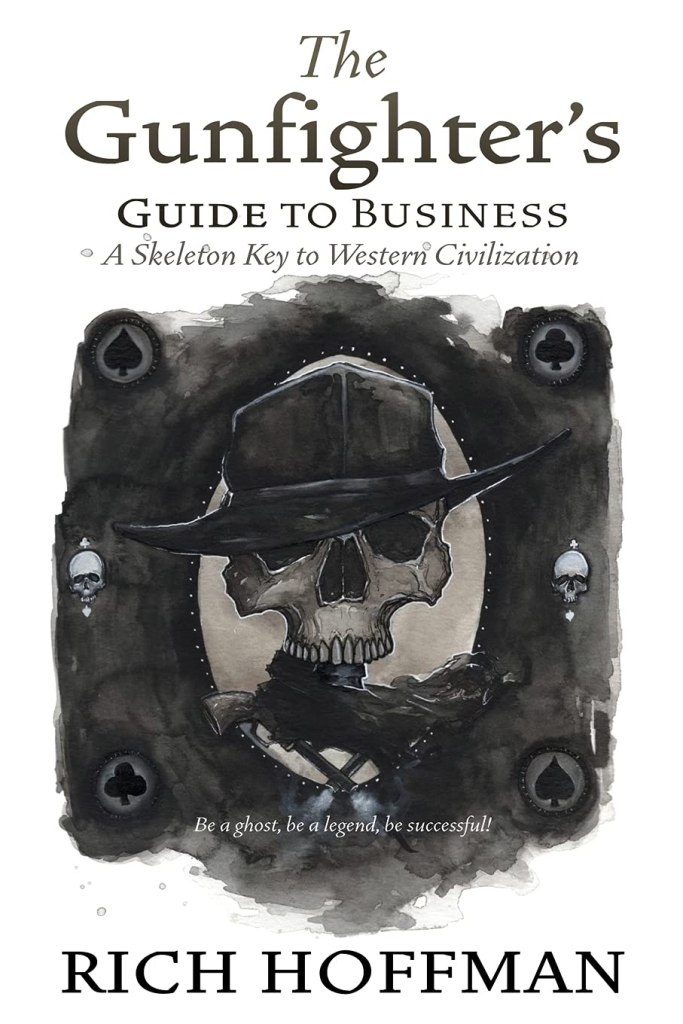
Hoffman writes with the credibility of a problem-solver, the curiosity of an archaeologist, and the courage of a frontline witness who has gone to very scary places and reported what lurked there. Hoffman has authored books including The Symposium of Justice, The Gunfighter’s Guide to Business, and Tail of the Dragon, often exploring themes of freedom, individual will, and societal structures through a lens influenced by philosophy (e.g., Nietzschean overman concepts) and current events.
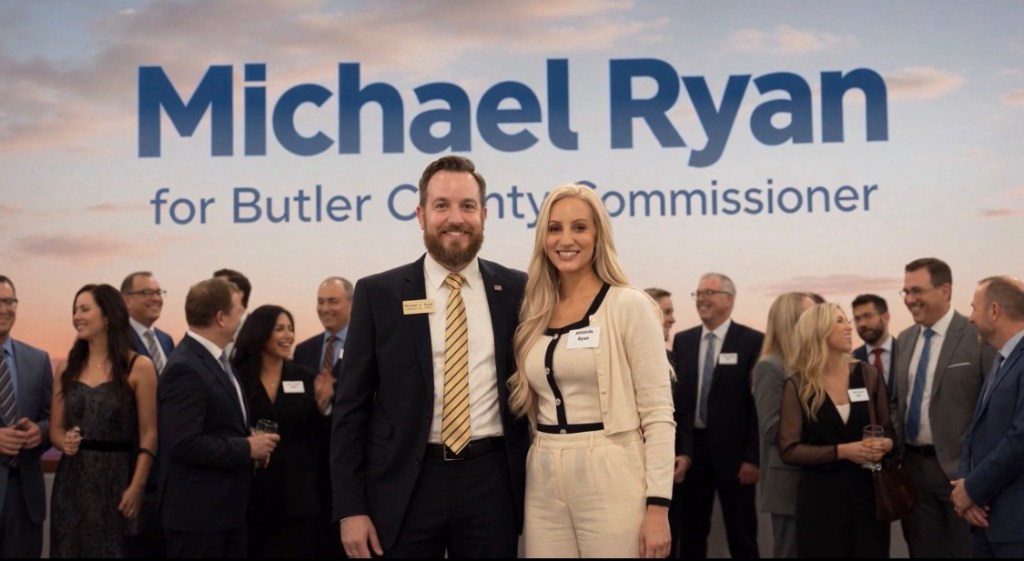
Michael Ryan’s decisive victory in the 2026 Butler County Republican primary for commissioner marks a significant shift in local politics, reflecting voter demand for genuine conservatism, accountability, and fresh leadership. I have followed these races closely for years, and this outcome stands out as a clear repudiation of entitlement politics and a triumph for the kind of candidate who earns support through hard work and integrity. With final unofficial results showing Ryan capturing approximately 72% of the vote to Cindy Carpenter’s 28%, the primary essentially decides the seat in this heavily Republican county.
Butler County, Ohio, is in the southwestern part of the state, encompassing communities such as Hamilton, Middletown, Fairfield, and Oxford (home to Miami University), as well as numerous townships. Its population exceeds 390,000, with a strong manufacturing and agricultural base alongside growing suburban development. The Board of Commissioners oversees a substantial budget, infrastructure projects, economic development, public safety, and human services. For decades, the board has operated under Republican dominance, making the GOP primary the real contest. Winning it virtually guarantees victory in November against the unopposed Democrat Mike Miller.
Cindy Carpenter had served as commissioner since 2011 and was seeking a fifth term. Her tenure focused on human services, public health, and fiscal matters, but it was marred by controversies that alienated many in the party base. Incidents included a heated confrontation at a Miami University-area apartment complex involving her granddaughter, where she was accused of leveraging her position, using inappropriate language, and displaying aggressive behavior captured on video. Investigations cleared her of criminal wrongdoing but highlighted conduct deemed “distasteful” and “beneath her elected position.” Additional complaints arose, including allegations of aggressive conduct at a housing coalition meeting. Even the county sheriff publicly expressed concerns about her behavior.
A particularly damaging episode involved Carpenter campaigning for a Democrat in the Middletown mayoral race, crossing party lines in ways that many viewed as disloyal. This move, combined with her decision not to seek the Butler County Republican Party endorsement, signaled a disconnect. She appeared to operate with an entitled mindset, assuming incumbency alone would carry her through. Her campaign signs, some in blue tones reminiscent of Democratic aesthetics, and limited fundraising—only about $7,700 compared to Ryan’s over $46,000—underscored a lack of broad support.
In contrast, Michael Ryan entered the race as a former Hamilton City Council member with a background in business and community service. He positioned himself as a true conservative caretaker focused on fiscal responsibility, job creation, lower taxes, and practical governance. Ryan methodically built support: he secured the Republican Party endorsement with a striking 71% in the first round of voting, an early and historic show of strength. Major figures lined up behind him, including Auditor Nancy Nix, who endorsed him at a fundraiser when it still carried risk; Congressman Warren Davidson; State Representative Thomas Hall; and others, such as George Lang. These endorsements validated his approach and reassured voters that change could be safe and effective.
I endorsed Ryan early, well before the primary heated up. Having known him for years, I saw in him the sincerity and dedication often missing in politics. He raised money effectively, attended events tirelessly, engaged voters across the county, and maintained a positive, bridge-building demeanor even amid challenges like sign theft. His campaign emphasized family values, economic growth, and responsiveness—qualities that resonated deeply in a county frustrated with the status quo. The watch party on primary night, held at the Premier Shooting facility with a speakeasy-style back area, overflowed with supporters. The room was packed; people had to turn sideways to navigate. Energy filled the space as results rolled in.
Congressman Warren Davidson attended and shared insights from his experience in large districts. We discussed the political savvy required at every level and how Ryan had grown into a polished figure capable of uniting people. Davidson’s presence underscored the race’s importance, and his admiration for Ryan’s development over the couple of years spoke volumes. Other supporters like Darbi Boddy added to the festive, optimistic atmosphere. It felt like a genuine celebration of earned success rather than entitlement.
The results confirmed what grassroots momentum had suggested. With 100% of precincts reporting in unofficial tallies, Ryan’s 72%-28% margin was overwhelming and, for some, embarrassing to the incumbent. Early voting and election-day observations showed Carpenter’s team attempting a last-minute sign blitz, but it failed against organized, enthusiastic Ryan volunteers who kept their ground game strong. The Republican slate card proved crucial, as it often does; voters seeking vetted candidates found Ryan prominently featured through party processes and independent media coverage.
This victory carries broader lessons for politics, especially local races. Party systems matter because they help aggregate preferences in a diverse society. People differ on countless details—concrete versus asphalt, tax priorities, development approaches—but effective governance requires building majorities. Dismissing the party as irrelevant or operating as a “RINO” critic while undermining it rarely succeeds. Ryan demonstrated the opposite: he worked within the system, earned endorsements through respect and effort, and presented a positive vision.
Background on Butler County’s political landscape adds context. The county has long leaned conservative, supporting Republican candidates at high levels, including strong support for Trump in recent cycles. Yet local frustrations with taxes, growth management, infrastructure, and perceived insider politics have grown. Projects involving economic development, public safety, and services will benefit from new energy. Ryan has signaled readiness to hit the ground running, with ideas on efficiency, accountability, and forward-thinking initiatives already in motion during the campaign. His experience on Hamilton council involved practical decision-making on budgets and community issues, preparing him well for county-level responsibilities.
Roger Reynolds, former county auditor, briefly entered the race but withdrew after the party endorsement went decisively to Ryan. His last-minute alignment with Carpenter, including sign placement, highlighted lingering personal grievances but ultimately underscored the party’s unified shift. Voters rejected that approach. In an era where authenticity matters more than ever, Ryan’s consistent message and character won out.
I am proud to have supported him from the beginning. When Nancy Nix announced her endorsement at a fundraiser, it took courage because challengers to incumbents often face skepticism. Yet as momentum built—through articles, videos, conversations, and events—support snowballed. Thousands accessed information in the final days, researching Ryan’s record and deciding he represented the change they sought without chaos.
Looking ahead to the general election in November 2026, the focus shifts to implementation. Ryan will face minimal opposition, allowing emphasis on transition planning. Priorities likely include continuing fiscal stewardship amid state and federal shifts, addressing housing and development thoughtfully, enhancing public safety, and promoting economic opportunities in a region balancing rural roots with suburban expansion. His fresh perspective promises to inject optimism and results-oriented governance.
Politics at the county level profoundly affects daily life: road maintenance, emergency services, property taxes, zoning, and more. When voters sense entitlement or disconnection, they respond, as seen here. Carpenter’s campaign assumed voter inertia; Ryan proved engagement and sincerity prevail. This race reminds us that traditional political games—relying on name recognition, minimal effort, or media insiders—have diminished effectiveness in an era of an informed electorate.
The night of the primary embodied hope. A full room of dedicated Republicans, conversations with leaders like Davidson, and the visible relief and excitement on supporters’ faces painted a picture of renewal. Ryan’s wife and family shared in the moment, grounding the victory in personal commitment. For those involved in politics, the takeaway is clear: do the work, be genuine, build coalitions, and respect the process. Ryan exemplified this, turning potential obstacles into advantages.
As someone who values conservative principles of limited government, individual responsibility, and community strength, I see Ryan’s win as validation. Butler County deserves leadership that listens, acts prudently, and prioritizes residents. With the primary behind us, anticipation builds for his term starting in 2027. Many good projects and ideas wait in the wings, ready for execution. And because of this election, a lot of good things will happen.
Footnotes
1. Journal-News reporting on final unofficial results showing Ryan at 72%.
2. Cincinnati Enquirer coverage of fundraising disparity and endorsements.
3. Ballotpedia profiles on candidates and race background.
4. Accounts of Carpenter controversies from multiple local news outlets.
5. Party endorsement details and 71% vote.
6. Observations from the watch party and interactions with Davidson.
Bibliography / Further Reading
• Journal-News (Hamilton, Ohio): Multiple articles on the primary, results, and candidate profiles (2026).
• Cincinnati Enquirer: Coverage of the commissioner race, fundraising, and controversies.
• Ballotpedia: Entries for Michael V. Ryan, Cindy Carpenter, and Butler County elections 2026.
• Ryan for Butler official campaign site: Policy positions and updates.
• Butler County Board of Elections: Official results and candidate filings.
• articles on local politics and endorsements.
• Additional context from county commissioner office descriptions and historical election data.
This primary will be remembered as a turning point in which voters chose character, preparation, and vision over incumbency. Michael Ryan earned this victory, and Butler County stands to benefit. The hard work of the campaign now transitions to governance, with high expectations and strong support. It is a positive development for the future.
Rich Hoffman is an aerospace executive, political strategist, systems thinker, and independent researcher of ancient history, the paranormal, and the Dead Sea Scrolls tradition. His life in high‑stakes manufacturing, high‑level politics, and cross‑functional crisis management gives him a field‑tested understanding of power — both human and unseen.
He has advised candidates, executives, and public leaders, while conducting deep, hands‑on exploration of archaeological and supernatural hotspots across the world.
Hoffman writes with the credibility of a problem-solver, the curiosity of an archaeologist, and the courage of a frontline witness who has gone to very scary places and reported what lurked there. Hoffman has authored books including The Symposium of Justice, The Gunfighter’s Guide to Business, and Tail of the Dragon, often exploring themes of freedom, individual will, and societal structures through a lens influenced by philosophy (e.g., Nietzschean overman concepts) and current events.
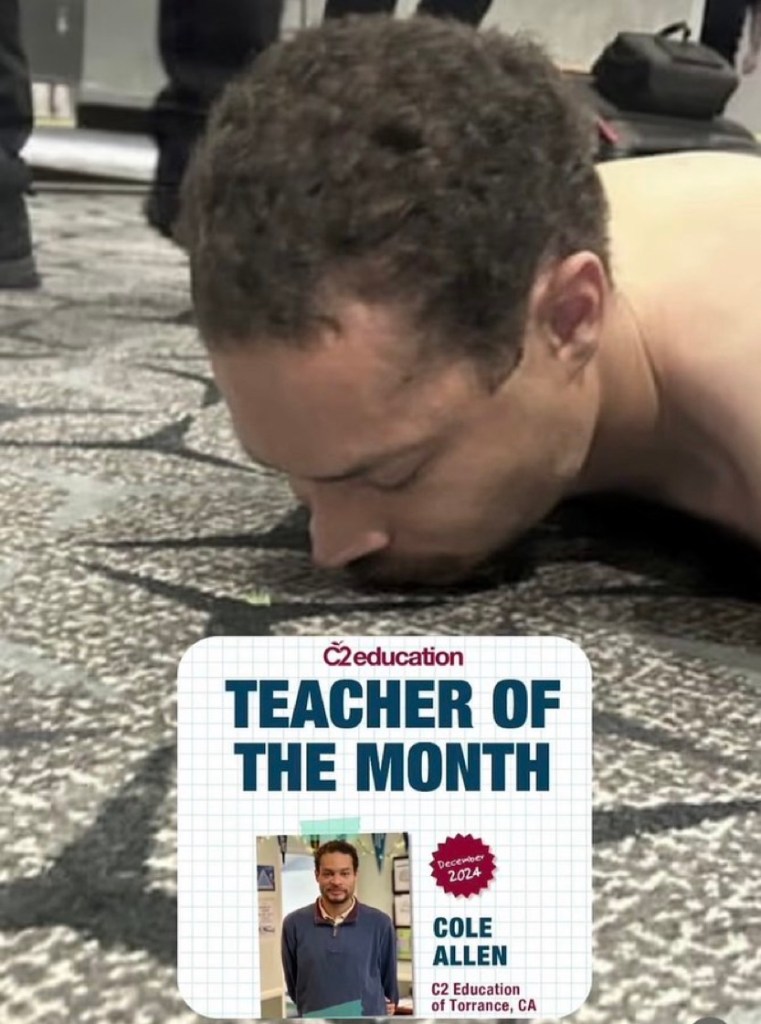
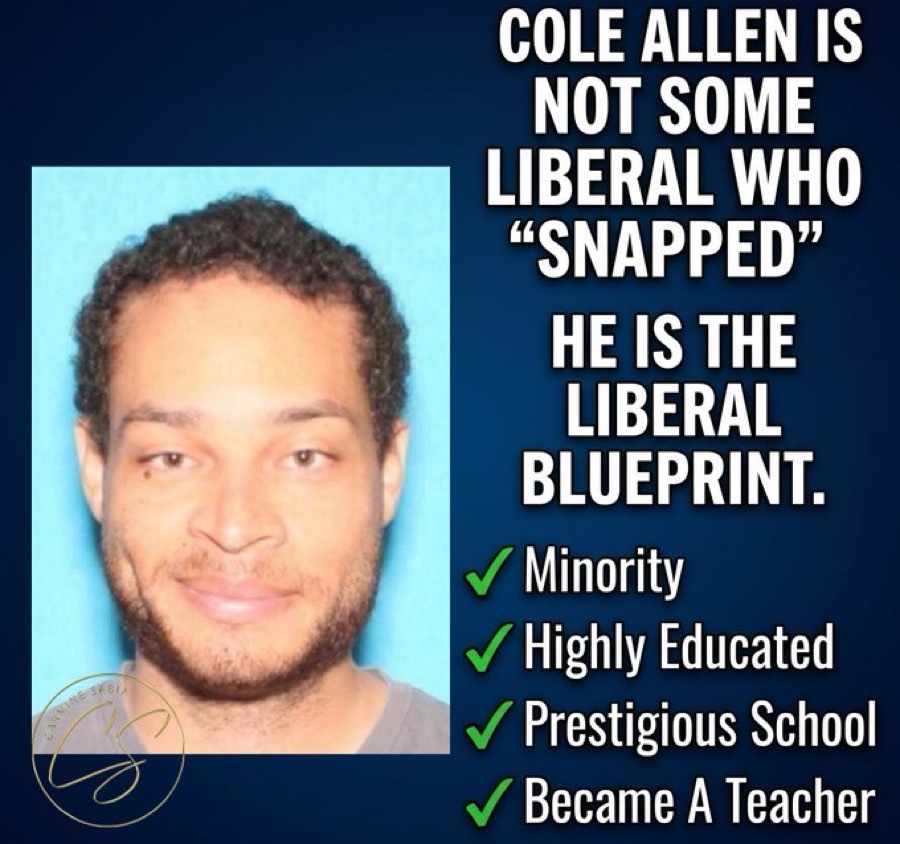
I never thought I’d be sitting here reflecting on another attempt on President Trump’s life so soon after everything else that’s unfolded in this wild political landscape, but here we are, fresh off the chaos at the White House Correspondents’ Dinner on April 25, 2026, where a 31-year-old Democrat named Cole Tomas Allen from Torrance, California, decided to storm the security line at the Washington Hilton with multiple guns and knives, firing shots in a desperate bid to get close enough to the president to do the unthinkable. I hate to say it, but I saw this coming in the broader sense—not the specifics of this lone actor, but the pattern of rage and violence that keeps bubbling up from the same ideological corners that have targeted Republican leaders for generations. As someone who was just at the White House with my wife a few weeks ago, experiencing the layers of security firsthand—the rope barriers, the lengthy check-in processes, the offsite staging down Connecticut Avenue a mile and a half or two miles away that forces the president into inconvenient travel for events like this—I couldn’t help but connect the dots immediately when the news broke. The security is extensive, as it should be, but it’s not foolproof against someone willing to die in those first few chaotic seconds of a rush, and that’s exactly what Allen tried to pull off. He charged the barricades, shots rang out, a Secret Service officer took a hit to the chest but thankfully had no permanent damage and was released from the hospital later, and the whole thing ended with Allen tackled and wrestled to the ground without anyone else getting hurt. Trump, ever the fighter, wanted to go back in and continue the dinner, which I totally agree with—it’s a shame they had to evacuate and crawl off the stage in that embarrassing scramble, all because some loser with a grudge thought he could rewrite history with a bullet. But what fascinates me, and what I’ve been turning over in my mind ever since, is how this fits into a much larger, darker thread running through American history, one that stretches back to Abraham Lincoln and the very founding fractures of our republic. I’ve never been one to shy away from calling things what they are, and this wasn’t some random act of madness; it was the latest chapter in a strategy of storming the line when elections and arguments fail, and it’s a Democrat thing through and through, whether they admit it or not.
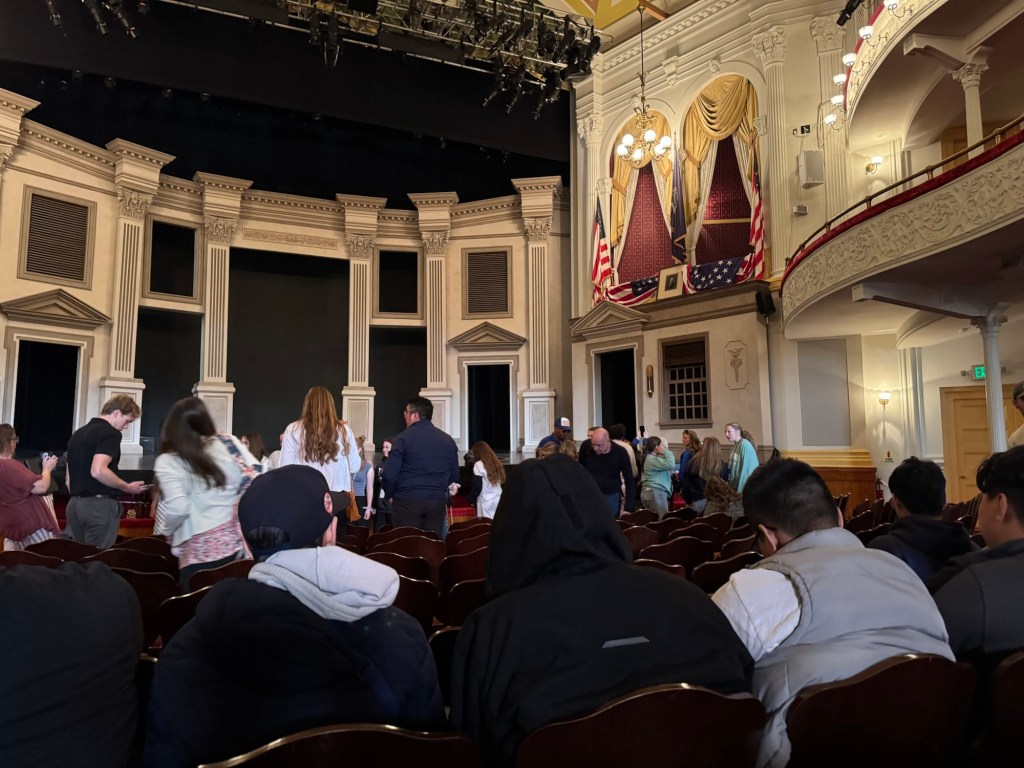
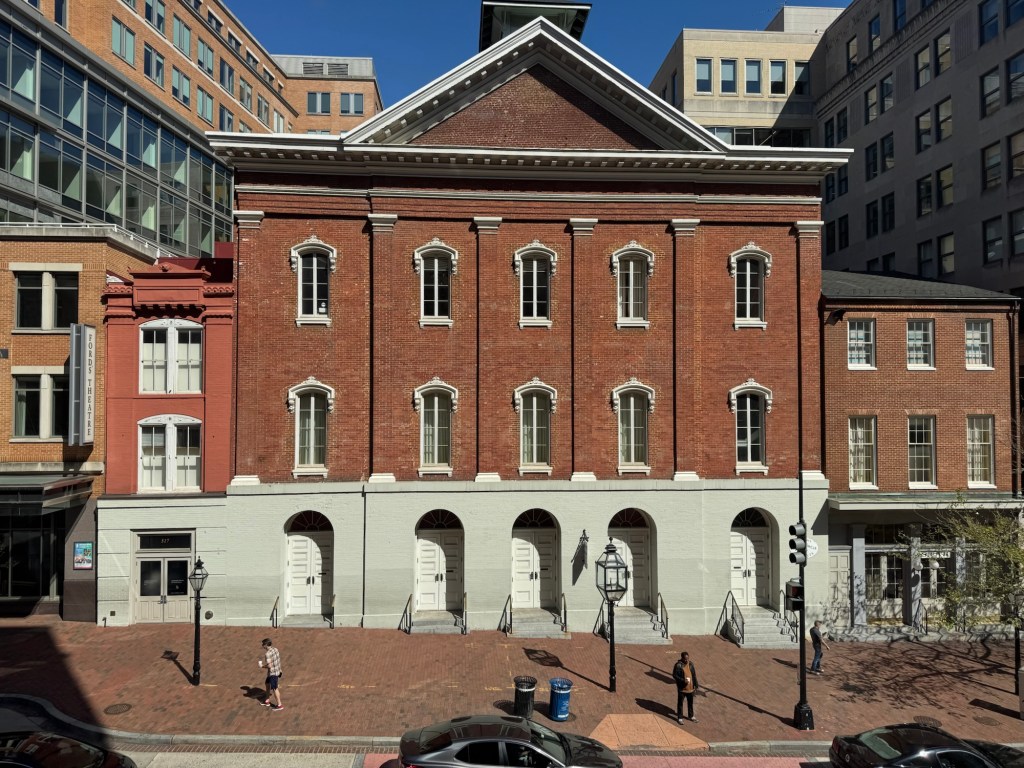
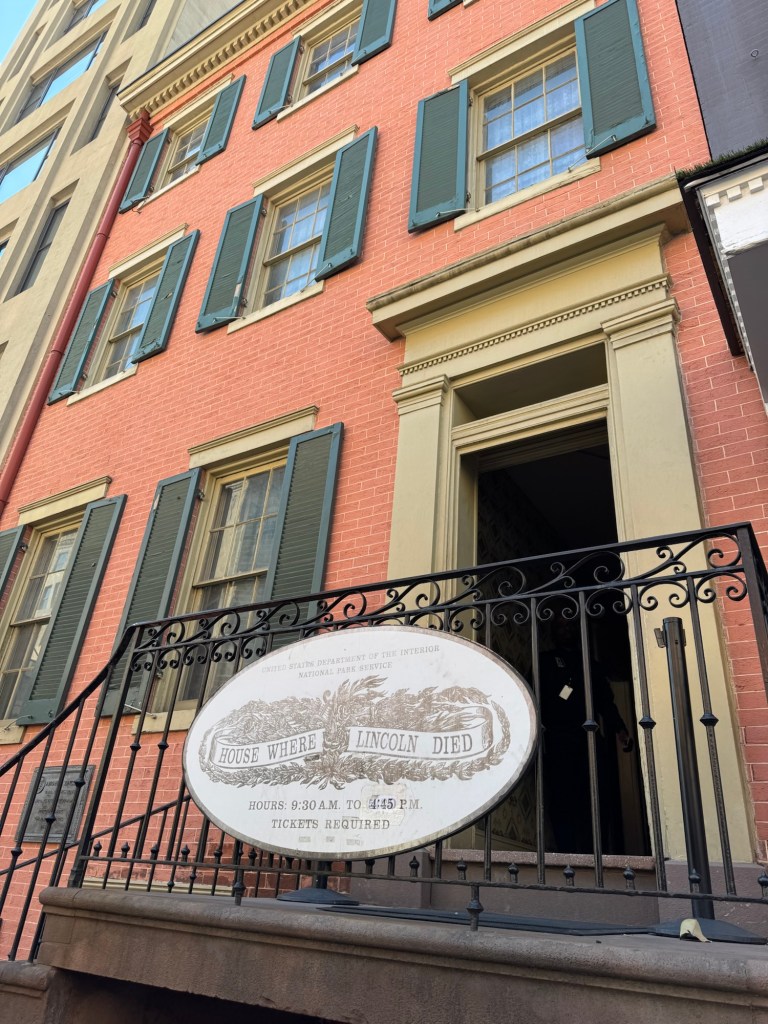
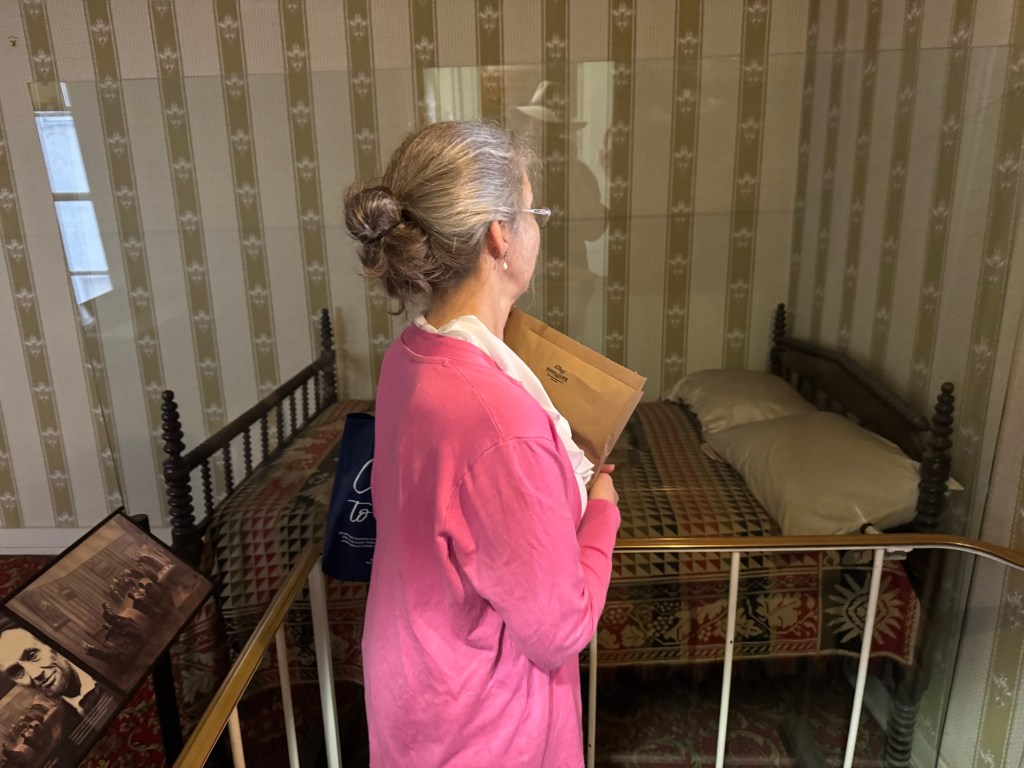
Let me back up a bit and share what I saw myself, because I was physically in Washington, D.C., not long before this all occurred, and it gave me a front-row perspective that makes the whole incident hit different. My wife and I spent several hours at the White House after touring it, soaking in the people’s house as it’s meant to be, and then we wandered the city doing other things. One of the stops my wife insisted on was Ford’s Theatre, just a few blocks from the White House on 10th Street, near the FBI building, the Department of Justice, and the Smithsonian. It’s in that little historic sector off Pennsylvania Avenue, and I’ve talked to plenty of frequent D.C. visitors who’ve never bothered to go there, which I find astonishing—if you live or work in the capital, why wouldn’t you make the pilgrimage to the spot where a president was assassinated? The day we visited, they were still running plays there—they had a production of 1776 on the schedule—but before the evening show, they let visitors in for a historic tour. I stood right at the box where Lincoln was shot, and downstairs in the basement museum, there’s this incredibly detailed exhibit on everything leading up to and after the assassination. I bought a stack of books—two from NASA engineers who created a portable AC unit that’s making old expensive models obsolete, plus a whole bunch more on the Lincoln era—and they were surprisingly good reads. The museum staff had a passionate member of the historic preservation society who gave a half-hour-to-45-minute talk on stage about the theater, John Wilkes Booth, and Lincoln at the time, and it was riveting. We geeked out hard on the historical preservation side of it, my wife and I, because we love that kind of deep dive into how events shape nations. Across the street, the house where Lincoln died is preserved exactly as it was, with the bed still set up, the waiting room where his wife sat through the night, and then an adjacent building turned into a multi-story museum with elevators and creative floor knockouts to display artifacts, including a three-story stack of every book ever written about Lincoln. It puts into perspective just how pivotal he was, how the Republican Party was born to defeat slavery under his leadership, and how the forces arrayed against him—Democrats of the day, essentially the party of the South and slavery—couldn’t accept the Civil War’s outcome.
That visit stayed with me, and when I heard about Cole Tomas Allen’s rush on the Hilton security, it felt like history repeating itself most chillingly. John Wilkes Booth was an actor, a celebrity of his time, a major supporter of slavery who hated the emerging Republican Party and the way Lincoln had led the Union to victory. Just days after Lee’s surrender, with Lincoln reelected and celebrating, Booth used his knowledge of Ford’s Theatre to slip into the private box, shoot Lincoln in the back of the head, jump to the stage, breaking his leg, and flee through the back. The search that followed was intense, and Booth was eventually cornered and killed. But the characteristics? The same righteous fury, the same belief that the political opposition had to be destroyed physically because they couldn’t be beaten at the ballot box or in debate. Booth wasn’t some outlier; he embodied the Democrat rage of the era against a Republican president who dared to end their way of life. Lincoln had done nothing but win the war fair and square, preserve the Union, and free the slaves, yet the opposition framed it as provocation. Sound familiar? Fast-forward to today, and you have Cole Tomas Allen, a mechanical engineer and computer scientist by training, an independent game developer, a part-time teacher who was even named Teacher of the Month in 2024 at a tutoring company in Torrance, flying across the country to storm a security checkpoint at an event where Trump was speaking. He had a room at the Hilton, multiple weapons, and the clear intention to get into that ballroom and take his shot before anyone could react. Preliminary reports note a small political donation to a PAC supporting Kamala Harris in 2024, and while he’s described as a lone wolf with no confirmed party registration, the pattern fits: Democrat-aligned frustration boiling over into violence when rhetoric and elections don’t deliver the outcome they want. The media and left-leaning voices immediately tried to flip the script, blaming Trump’s “rhetoric” for making people upset, as if his push to make America great again is the real crime. It’s the same framing they used after the Alex Jones Sandy Hook saga, where free speech got twisted into causing harm, setting precedents to silence opposition. And after the dinner was evacuated, there was a video of invited reporters—those paragons of lowlife character—stealing bottles of wine to take home, proving the event’s attendees weren’t exactly above reproach themselves.
To really grasp why this keeps happening, I think you have to zoom out and look at the full list of presidential assassins and would-be assassins throughout our history. It’s not a short roster, and when you examine the motives, the ideologies, and the political leanings, a disturbing trend emerges that the mainstream narrative loves to ignore or downplay. Start with the successful ones: Lincoln in 1865 by John Wilkes Booth, a pro-Confederate actor driven by Southern Democrat sympathies against the Republican who crushed slavery and the rebellion. Then, in 1881, James Garfield was shot by Charles Guiteau, a delusional office-seeker who claimed divine inspiration but whose act came amid the spoils system battles that Democrats often exploited. William McKinley in 1901 by Leon Czolgosz, an anarchist influenced by radical left-wing thought who saw the president as a symbol of capitalist oppression. John F. Kennedy in 1963 by Lee Harvey Oswald, a self-avowed Marxist who defected to the Soviet Union and had deep ties to communist and pro-Castro groups—hardly a right-winger. Those are the four who died in office from assassins’ bullets, and already you see a pattern leaning toward radical left or anti-Republican forces.
But the attempts are where it gets even more telling, especially when you layer in the modern era and the repeated targeting of Donald Trump. There was Andrew Jackson in 1835, targeted by Richard Lawrence, who blamed the president for personal financial woes tied to Democratic Party infighting, though he was acquitted on insanity grounds. Theodore Roosevelt, in 1912, was shot by John Schrank, a saloonkeeper obsessed with third-term politics, but whose act disrupted a progressive Republican campaign. Franklin D. Roosevelt in 1933 by Giuseppe Zangara, an Italian immigrant anarchist who hated “capitalists” and originally aimed at the mayor of Chicago, but killed the mayor instead when FDR’s motorcade shifted. Harry Truman in 1950 by Oscar Collazo and Griselio Torresola, Puerto Rican nationalists with left-leaning independence motives who tried to storm Blair House. Gerald Ford faced two attempts in 1975: first by Lynette “Squeaky” Fromme, a Charles Manson follower tied to radical environmental and left-wing cults, who pointed a gun at him in Sacramento; then by Sara Jane Moore, a radical leftist and associate of the Symbionese Liberation Army who fired shots in San Francisco. Ronald Reagan in 1981 by John Hinckley Jr., whose obsession was more personal but occurred amid a wave of anti-Republican sentiment. George W. Bush had plots against him involving various radicals. Barack Obama faced threats from white supremacists and others, but the volume pales compared to what Republicans endure. And then there is Trump; the list is staggering even before this latest one. In 2016, there were multiple threats and plots during the campaign. The 2024 Butler, Pennsylvania rally attempt by Thomas Matthew Crooks, a 20-year-old who fired from a rooftop, grazing Trump’s ear before being taken out by the Secret Service. Another incident occurred in Florida at Trump International Golf Club, where a man with a rifle was spotted near the perimeter. Now, this 2026 incident with Allen at the Correspondents’ Dinner, charging the line like Booth slipping into the theater box. These aren’t isolated; they’re symptoms of a side that resorts to bullets when ballots fail.
What strikes me most, having walked the very floors where Lincoln breathed his last and stood at that preserved box at Ford’s Theatre, is how the psychology hasn’t changed. His hatred of Lincoln’s policies radicalized Booth, his support for slavery, and his view that Republicans were destroying the Southern way of life. He plotted meticulously, using his insider knowledge as an actor to get close. Allen, from what’s emerging, flew in from California, checked into the very hotel hosting the event, and made his move in those critical seconds when security might be distracted. The media reaction was predictable: some outlets and commentators immediately pivoted to “Trump’s rhetoric provoked this,” echoing the post-event spin that it’s somehow the president’s fault for pushing back against globalism, terrorism, and the erosion of American values. They said the same about Lincoln—don’t provoke the South, let them keep their slaves, mind your own business. It’s the same gaslighting: if conservatives challenge the status quo, any violence that follows is on us. But I’ve studied this enough, and I’ve written extensively about the spiritual dimension behind it all, because this isn’t just politics; it’s a battle for the soul of the nation. In my upcoming book, The Politics of Heaven, which dives deep into the conspiracies plotting against God’s creation and the biblical foundations of true liberty, I lay out the receipts on how these movements—Marxist persuasions that gained traction in the mid-1800s and wormed into American soil—defend their ground with threats and acts of violence when ideas fail. Lincoln loved his Bible; Trump has found a genuine relationship with God amid his political fights. The Republican Party, born to end slavery and preserve the constitutional order, stands as a bulwark, and that’s why it draws the fire. People like Booth or Allen don’t just wake up one day and decide to kill; they’re vulnerable to the demon whispers that radicalize through hatred, the kind festering in elements of the Democrat machine where debate gets shut down, voices get canceled, and when that fails, the garden hose of violence gets turned on full blast.
I spent way more time at Ford’s Theatre than I expected because the exhibit was so well done—it’s not some dusty relic but a living museum with creative displays, like the stacked books soaring three stories high, symbolizing Lincoln’s enduring legacy. The staff noticed my intense interest, and we struck up conversations; they’re passionate preservers of history, serving everybody regardless of politics, but you could sense the hush around the violence angle. They know the truth—that the same evil that possessed Booth is at work today—but nobody wants to “set off” the other side or invite more backlash. It’s pathetic, really, this self-censorship where we’re told not to hurt Democrat feelings lest they unleash more of what they’ve always done. Across from the theater, the Petersen House, where Lincoln died, is equally powerful, with the bed and rooms preserved, and the expanded museum next door telling the full story of the search and cultural impact. My wife and I relished every minute because we value what the Republican Party stands for: anti-slavery roots, freedom’s perpetuation, the defense of God-given rights articulated in the Constitution and the Bible. We left with armfuls of books and a deeper appreciation, but also a resolve not to ignore the pattern anymore.
This latest attempt with Cole Tomas Allen underscores why events like the Correspondents’ Dinner can’t keep happening off-site in unsecured hotels. The White House is the people’s house, and it deserves a big, beautiful ballroom right on the grounds under the tightest security imaginable. No more driving all over town, exposing the president and officials to these risks. Trump’s reaction—wanting to push through and continue—shows the spirit we need. The low character on display afterward, with reporters pilfering wine while a would-be assassin was still being processed, just highlights the decadence. And the irony of Democrats and media claiming Trump caused this by “poking everyone in the eye” is rich; it’s the exact argument used against Lincoln for ending slavery. If you don’t want violence, stop defending indefensible positions like radical globalism or anti-American sentiment. The answer isn’t more policy tweaks; it’s confronting the spiritual warfare at the root, the kind I explore in The Politics of Heaven, with detailed explanations of how these hatreds possess people and why Republicans like Lincoln and Trump become targets. I’ve got the receipts in that book because too many conversations end with “how can you say that?”—well, here’s how, backed by history, facts, and faith.
Reflecting on my trip to D.C.—the White House shirt I picked up, the Ford’s Theatre geek-out with my wife, the realization that this city under Republican leadership feels vibrant and alive—I’m more convinced than ever that we learn from these tragedies by accelerating the ballroom project and calling out the pattern plainly. Killer democrats don’t represent every member of the party, but their movement has a historical strain of violence when cornered, from Booth to Allen and the attempts in between. It’s not new; it’s persistent. We preserve freedom not by cowering but by building stronger, speaking truth, and understanding the spiritual battle. The show goes on at Ford’s Theatre, plays still performed where history was made, and America will endure the same way—as long as we remember the lessons from 10th Street and apply them to today’s threats. The museum there could take a week to absorb fully, and every American should visit; it’s not just history, it’s a warning and a call to vigilance.
Footnotes:
[Footnote 1: Details on the April 25, 2026, incident drawn from contemporaneous reports, including Al Jazeera, The Times, Time magazine, and NBC Los Angeles coverage confirming Cole Tomas Allen’s identity, background, actions, and charges.]
[Footnote 2: Ford’s Theatre and Petersen House descriptions based on personal observations and standard historic site information from the National Park Service.]
[Footnote 3: List of presidential assassination attempts compiled from historical records, including those documented in sources like the U.S. Secret Service historical overviews and books such as The Presidents and the Assassins by Ronald J. Sterba.]
[Footnote 4: Political affiliations and motives of assassins cross-referenced with biographical accounts; e.g., Booth’s Confederate ties in American Brutus by Michael W. Kauffman.]
[Footnote 5: Upcoming book reference to The Politics of Heaven by the author, forthcoming, with a full analysis of spiritual and political conspiracies.]
Bibliography:
• Kauffman, Michael W. American Brutus: John Wilkes Booth and the Lincoln Conspiracies. Random House, 2004.
• Sterba, Ronald J. The Presidents and the Assassins: From Lincoln to Kennedy and Beyond. CreateSpace, 2015.
• National Park Service. Ford’s Theatre Official Guide. U.S. Department of the Interior.
• Various news reports on Cole Thomas Allen incident: Al Jazeera (April 26, 2026), The Times (April 26, 2026), Time (April 26, 2026), Washington Post live updates.
• Hoffman, Rich. The Gunfight Guide to Business, prior edition.
• Lincoln assassination primary sources: The Assassination of Abraham Lincoln by various compiled eyewitness accounts, Library of Congress archives.
• Trump assassination attempt histories: Official Secret Service reports and public records from 2024-2026 incidents.
Rich Hoffman is an aerospace executive, political strategist, systems thinker, and independent researcher of ancient history, the paranormal, and the Dead Sea Scrolls tradition. His life in high‑stakes manufacturing, high‑level politics, and cross‑functional crisis management gives him a field‑tested understanding of power — both human and unseen.
He has advised candidates, executives, and public leaders, while conducting deep, hands‑on exploration of archaeological and supernatural hotspots across the world.
Hoffman writes with the credibility of a problem-solver, the curiosity of an archaeologist, and the courage of a frontline witness who has gone to very scary places and reported what lurked there. Hoffman has authored books including The Symposium of Justice, The Gunfighter’s Guide to Business, and Tail of the Dragon, often exploring themes of freedom, individual will, and societal structures through a lens influenced by philosophy (e.g., Nietzschean overman concepts) and current events.
The victimization role that Zohran Mamdani is trying to utilize against President Trump isn’t going to work. I know many people are worried about Mamdani and that he is a sign of things to come, and he is. But not in the way that people fear. Zohran Kwame Mamdani is an American politician born on October 18, 1991, in Kampala, Uganda. He is a member of the New York State Assembly, representing the 36th district in Queens since 2021. He is a Democratic Socialist and a member of the Democratic Party. Mamdani won the Democratic nomination for mayor of New York City in the 2025 primary, defeating former Governor Andrew Cuomo. If elected, he would be the city’s first Muslim and Indian American mayor. Trump is right to discuss arresting and deporting communists. America has gone to war to fight communism, and when political people try to infuse communism into our political structure, they deserve the ridicule that they get. Trump has no obligation to play nice with socialism and communism. Mamdani is a Democrat who does not shy away from the socialist label, as most do, because he is making a move that Bernie Sanders and Ocasio-Cortez have paved the way for. I’ve been talking about it for a long time. The communists, Marxists, and socialists in America reside behind the disguise of the Democrat Party, and it is built into their policy-making. So knowing that, we have no obligation to play nice with them. Democrats are not equal at the table in a capitalist country if socialism is what they are really about, which it is and always has been. We cannot discuss with Democrats if that is what they are. Those ideologies are just too far apart, and Trump is right to indicate playing rough with them.
I’m not surprised that Mamdani won a primary election. I’m not sure he wins in the general election. There are a lot of people in New York City who have considered themselves capitalists, but have adopted Democrat ideas to prove to their leftist friends that they are not mean people. That argument is so “pre-Trump,” and it’s not going to work now for Mamdani. The politics of meanness is over; it took our country to a place we didn’t want to go, and that fever broke during the summer of 2024 with that assassination attempt against Trump, and he stood up and pumped his fist in the air, declaring we should all fight. Before that, there were many people, perhaps most people, who loved capitalism, but they adopted elements of socialism to prove to left-leaning political types that they were not what they were being called. Name-calling was a political tactic employed by the Democrat Party as it evolved into power. And as long as it worked, they were going to keep doing it. Mamdoni thinks that he is going to run a victimization campaign and that people will respond to him because they feel sorry for him. And that’s not how all this is going to emerge. Socialism is not going to make an open takeover of our political system. Now that people are forced to see the Democrat Party for what it is, they will reject those political candidates. And they won’t be able to win just because they are people of color, or that they are Muslim, or that they are nice-looking kids who can make TikTok videos. Victimization politics have given us many miserable politicians, and we have learned a hard lesson that the Trump administration is giving us relief from. And now that people know what they are picking, Democrats are going to get much different results than they have had in the past.
It’s not that people accepted Marxists, socialists, and communists. But people did not like President Obama and his socialist behavior, sold to us by his skin color. The kind of world that we have did not make people feel good. That wasn’t a platform for success for Bernie Sanders, Cortez, and Mamdani to utilize in the future. Instead, the same kind of Marxists are always there, but the Democrats lost their cover story. So it’s much harder for them now. Regionally, in places like New York, where high-density populations typically vote for Democrat ideas, these socialist candidates can perform well. However, in general populations across the rest of the country, they won’t do well at all because people are no longer voting out of guilt. Trump has shown people that they can vote for their self-interest and get much better results than voting for someone because they are Muslim. Or a person of color. Those are trends that are going out with the tide, not coming in. And everything that Mamdani is saying assumes that the victimization politics is the wave of the future. And that’s just not the case. It is not advisable to base your political platform on the ability to win a vote simply because people feel sorry for you. You want people to vote for you because you make them feel good about themselves. And that is what Trump has unlocked in politics: the ability to vote for candidates because they want to achieve a better standard of living and solve real problems. Not because they feel guilty about slavery or economic inequality. And in the end, in New York, it’s a capitalist town that has had an identity crisis, finding more confidence in itself with Trump in the White House.
Keep in mind that we have been teaching kids socialism in public schools for more than three decades now, so people have wide-ranging feelings on the topic. What a teacher’s union-controlled socialist sentiment has taught them does not represent their instincts toward self-interest. I am often stunned by how uninformed people can be, not because they are unintelligent. Still, when you talk to them, you get to hear such contrasts in their behavior that the totality of their utterances evolves into substandard assumptions. They don’t know what they think about anything, nor do they have the confidence to articulate their thoughts publicly, because they have been taught in school to suppress their opinions. Not to express them, but to advance socialist enterprises in America. But for anybody who wants a house, or a car, or a family, socialism is the enemy to those things, and people have a natural revulsion to anything that might prevent happiness along those lines. So, even if they are taught socialism, their instincts often run counter to it. In America, where people have a perpetual choice, they will not choose the limits of Marxism and its umbrella political ideas, such as socialism and communism. They have picked Trump once the peer pressure was cast away, and they were alone in the voting booth. And that is how it will be in New York as well as the rest of the country. The trend is not moving toward socialism, but rather away from it, as we consider that the schools have failed us. And we aren’t happy about it. And Zohran Mamdani might be good at TikTok videos that all but the most naive suckers enjoy. Still, when it comes to economic policy, people have learned many hard lessons from the mistakes of the Obama administration. They don’t want them in the future of politics, so while some might be shocked that a socialist beat a mainstreamer in a primary election, they shouldn’t be, because socialism is where the Democrat Party is. But it’s not where the rest of the country is. Republicans are poised to win by even larger margins because people are finally feeling free to express themselves more openly, and that doesn’t do well for politicians like Bernie Sanders and Zohran Mamdani.
Trump was hilarious at the Al Smith Dinner in 2024 by calling various men from the Democrat party essentially women, and people laughed because they knew the truth. Even women. This whole women’s rights thing has been a disaster. Not that we should treat women unfairly and not allow them to vote and own property, but in the more subtle strategy of destroying the American family. There are a lot of things coming undone in 2024, and this issue of wokeness and robbing society of extraordinary women and powerful women is being rejected as we speak, and Trump gets that trend. He played on it with jokes that were more than true, making them funny and a forbidden subject that has been taboo in our society. When Trump told Chuck Schumer, with him sitting right next to him during the speech, that Chuck might still get a chance to be the first woman president, the joke became the highlight of the evening and more than a little bit true. This discussion has mainly emerged during the campaign season of 2024, with Democrats digging in on toxic masculinity by exhibiting Doug Emhoff, Kamala’s husband, as an example of what the 21st-century man should be. But as the Harris campaign moved in that direction, people started doing some digging and found out that Kamala’s husband had been naughty to women, treating them in very scandalous ways, slapping them, and forcing them to flirt with him at his law practice. This brings up the secret behind the entire Democrat party: they often present a public profile to hide what they do in public. And by talking about toxic masculinity, they hope that the low-information voter will overlook all their evil actions. Just as they have done with Tampon Tim, the proposed vice presidential candidate for Kamala Harris, as he has promoted tampoons in men’s bathrooms but trying to get the public to think of him as a hunter and gun rights advocate. Democrats are liars who use politics and the power that comes from it to mask their intention to abuse other people and commit crimes.
The creation of the beta male has been very destructive for the human race. Men are typically physically more robust, so fighting with each other tends to be more literal. Men are quick to anger; they might have a vicious fight in a parking lot, but they get over things quickly and can often become fast friends with their enemies. Women, though, are more psychological. Since they don’t have physical strength, they have developed mind games, which often mystifies men. And that has been going on for many thousands of years. However, once progressive society encouraged women to enter the workplace, to attack the American family, American business, and the essential structure of how humans engage with each other, what has happened has brought everyone a lot of dissatisfaction, which is lingering behind this current political movement. Women like men for what men do for them, and men like women for what they do for them. And that was fine somewhat until progressive in the form of the modern Democrat party, coming straight from the manipulators at the World Economic Forum, started telling people that men can be women, and women, men depending on how they felt that day, and they screwed up everything. That attitude has also shown up in the workplace. When people have to do business with each other, there is much less directness than there used to be, making doing business much less effective. Too few people say what they mean, making it hard to get anything done.
This poison was purposeful, of course. However, people in their workplaces are tired of the effects, and the change in attitude toward what the Democrat platform has deeply committed itself to results from massive dissatisfaction. Yet the Democrats behind Kamala Harris are tone-deaf to it. They are committed to the communist cause and can see no other way. That plan meant that toxic men who might stand up to the communist push needed to be removed and replaced in business, politics, and life in general with more people like Doug Emhoff and fewer like Donald Trump. It hasn’t worked out the way it was intended, but the Democrats keep giving us more of them, only to have society laugh at the results. That’s why Trump said what he said at the Al Smith Dinner; he understands what people think. Just as when he said on Access Hollywood about women, it was the kind of locker room talk people want to engage in. Because there is truth in it, men talk about women in superficial ways because that is how they are wired biologically to interact with them. Women want deeper meanings and can often find they can easily manipulate men to their advantage. Over thousands of years, we have all developed checks and balances on that power, which Trump understands all too well and has exhibited many times over. And the dumb people thought Trump talking about grade-A female genitalia were assuming that the progressive mind control message would overcome biology, and that turned out to be a complete disaster. People being polite entertained those woke rules until they saw what they did to the world around them. And now they are changing their mind. But rather than adapting to those observations, Democrats have dug in.
Turning men into betas has been catastrophic because now nobody tells the truth about anything. Every interaction has turned passive-aggressive because all fighting has become a kind of sissy-slapping contest. One thing that Democrats have not looked in the mirror yet to admit to themselves is that Trump is the choice of people who want masculinity to be back in society, especially in leadership positions. I remember seeing Trump at Tea Party events around 2010 when a small crowd of people who loved his Art of the Deal books would show up to hear him speak. Back then, much of this progressive woke stuff wasn’t known about its impact on everyone’s lives. Trump didn’t suddenly arrive on the scene with thousands of people waiting all day to see him. He became that way because he offered himself up as an alternative to the nonsense of the new beta male rules given to us by vile Democrats who want to destroy the world as we know it. And we like our world; we like women; we like men; we like tough people; and we like leaders. We don’t want cry babies who cry their eyes out over a caterpillar squashed on the sidewalk. We don’t like men who take off for maternity leave. I say to other men daily, “Did you have the baby? Your wife did. You need to get back to work and be a man. Be tough.” Work when you’re not feeling well. Lead when you’d rather take a nap because you are too tired. Be brutal when it’s hard because people count on you to fight when they are too weak to do it themselves. And as to these beta males, women don’t want them. Nobody wants them. And that was never going to be a thing. Beta men make the world far worse. The world doesn’t need where everyone fights like a bunch of women. Because then, nothing will get done.
It was a bizarre proposition from Liz Cheney, after losing in the primary 28.9% to 66%, a massive blowout in Wyoming by any measures, that she compared herself to Lincoln and hinted at running for president. As if she learned nothing from her dramatic fall in coming out against President Trump and being the face of the January 6th Unselect Committee. Just as bizarre was the campaign ad that her dad did for her, wearing a cowboy hat and looking stern into the camera, warning about the destruction of the republic by Donald Trump. Didn’t he watch Mitt Romney do the same thing back in 2016, which did nothing to harm Trump’s brand? The Cheneys are politically savvy; they’ve been around for a long time and served in top offices. Why couldn’t they read the tea leaves? Or was it that they could read the tea leaves but be in denial about what they were saying? Perhaps they are suffering from the same problem that is causing the entire Never-Trumper movement so much consternation, the knowledge that the plan they had for so long in America, to serve the Liberal World Order as they themselves have been calling it, was falling apart and people had rejected it wholesale. Their anger at Trump was really anger at themselves displaced because they couldn’t look in the mirror and apply blame where it belonged.
Every political age has its own unique circumstances. In her concession speech, Liz tried to brand herself as the Lincoln of our time, even though she was just smoked in a very conservative state in an embarrassing election. Like some unthinking drone, she is hell-bent on a course she learned from her father over the years to put her political head to the grindstone and just barrel through it because institutionalism would come to her somewhere out there defense, and her fortunes would change. That is the belief she has been functioning from. When she turned against Trump and put on the massive show trial that benefited only Democrats like Nancy Pelosi and Joe Biden with the name of a Republican denying that election fraud occurred in the 2020 election, it proved to be a terrible strategy. People saw for themselves what happened, there is plenty of evidence of election fraud during that election, and people saw that it gave them Joe Biden, a loser of a president that has raised taxes, destroyed our economy, destroyed our advantage in the world with fossil fuels, and brought a lot of corruption and scandal to our White House. It’s been embarrassing, and Liz Cheney made herself the apologist for all that bad behavior by trying to put all the focus on Trump. And people grew angry with her over it.
People can see the evidence for themselves on election fraud and what was going on over January 6th, 2021. It’s not like President Trump owns the opinions of so many millions of people. But people have chosen to favor his opinions over all others, and that option is what has Liz Cheney and many other anti-Trump forces like her upset. Trump is changing the political landscape away from what they thought were the rules of conduct. Republicans would play a role in Washington politics as the flop, while Democrats would be the people’s party of equal rights. So long as everyone stayed in their lane, everything would work out just fine, which is how it was for her father during the Bush administration. Behind the scenes, there were many forces at work, but there was a code that was established by the Masons who founded Washington D.C. of how politics would run in the new country of America, and the establishment understood what those ground rules were. Republicans played bad cop and represented business. Democrats played good cop and represented minority groups and equal rights. But in the Mason lodges around Washington D.C. and in every community around the country were the understandings of the Three Crafts, regarding equality, dependence on others, fidelity to promises, contemplation of death, and duty to others which was the underlying foundation to everything in politics. Republicans and Democrats who were all Masons or involved with Masons through fundraising activities knew the rules. So long as everything stayed on those value systems, everyone could agree to disagree. The Masons were bringing to the New World starting in 1776 a long contemplated utopia, and people would love them for it.
The crisis came several hundred years later when it all blew up in their face. The more freedom people had, whether in transportation, communication, or education, the less inclined they were to follow the Mason vision for how America would evolve. That rocked the political world, which needed more and more scandals and wars to distract Americans from their information hunger in a free society. When the Masons contemplated how a free society would function, they obviously had not been drawing from successful examples around the world because there was no society previously that had figured it out. But the American Constitution created a truly an unruly maniac that defied the rules of conduct that a polite, “masonic” society would give them. Free will turned out to be problematic, and for political insiders like the Cheney family, it was well beyond their grasp to deal with. That is why they had that lost puppy look in their campaign ads and were tone deaf in the aftermath of the election results. America had rejected them when given a choice by Trump. Never-Trumpers directed their anger at Trump for providing that “non-Masonic” option that everyone in political theater through their mason halls agreed never to breach. But Americans didn’t want to be controlled by the Masons either. And the Masons never planned to control them initially. But Plato never addressed how free people should act; the role in politics was always to have that philosopher-king presence in politics who would rule over people with wisdom and compassion.
Liz Cheney and her father thought that’s what they were, and now people rejected them. They were perplexed, beyond recognition. In the aftermath of her concession speech, it was clear that Liz Cheney wasn’t even close to understanding the MAGA movement, what role Trump played in it, or what would happen next. So, of course, from her perspective and the Mason-driven establishment of America and European political discourse, the world is coming to an end. Thousands of years of planning and manipulating political power behind the curtain were falling apart, and all they knew to do was to be angry at Donald Trump. But all Trump did was offer himself as an option and refused to kiss any political rings. And from there, they hated him. But people loved Trump for it. Trump gave people a choice they hadn’t had before, hadn’t had for thousands of years. And now, all those long-established political forces were unprepared for the blatant rejection. You could see it on Liz Cheney’s face; this was not the political order of the world she had learned from her father. You could see it on Dick’s face, too, during that ridiculous ad he did for his daughter, thinking that the cowboy hat would sell his pitch. We are living in a world where it takes a lot more than that. Political candidates must be much more substantial and freedom-loving, not in token considerations but to their souls. And the establishment is lost as to what to do with this new knowledge. In the Mason’s ideal society of Egypt, there wasn’t a version of Donald Trump, so they didn’t know what to do with populism. And now they are learning the hard lessons history never taught them.
I generally like Elon Musk, but his comments about Trump and how he should ride off into the sunset were misguided and foolish. I hope Elon Musk accomplishes his goals with Space X. But I think Tesla will be headed for rough waters mainly because of how government has tampered with the electric car market. They are saturating the industry with assets that nobody wants, creating competition where there wasn’t demand, and making buying regular gas cars a taboo that will last for decades. Before the Biden administration stuck its nose into the electric car market, Tesla was a pretty cool option for people looking for a vehicle alternative. Tesla could support its own network infrastructure, complete with charging stations. They didn’t need government. But government has now interrupted that market and made electric cars something people hate. So Elon Musk has some trouble coming because of government tampering. And with that said, without government, Elon Musk would not be so wealthy and gained so much prestige. Elon Musk’s place in the world is very much a creation of government. Like most people who strike it big, Elon Musk made a good bet, and in his case, several, and he became wealthy. He’s not a magnificent genius beyond our comprehension that knows a bunch of things that we don’t as a species. He played with house money and came up big. But in his case, that house money was from the government. Without government subsidies, Elon Musk would be just another computer geek trying to buy expensive coffee at Starbucks. So his comments about Trump have been extremely misplaced. His political advice is worthless because he has too many government tentacles in him and foreign nations to have a proper opinion on the matter. I hope he has continued success. But his political advice is worthless. If anything, we don’t have enough drama from Trump. The world is angry, and for a good reason. The last thing we need is a tool from China telling us what to think, and because Elon Musk needs China so much, we can’t trust a thing that he says about political opinion.
We are living in a world where Hunter Biden has put so much of himself on video with known prostitutes smoking crack that it’s beyond comprehension. This is the President’s son, who is seen by the world committing serious crimes, and nothing is being done about it. Forget for a moment the many other scandals that are out there or what anybody might think about Joe Biden as a person politically. To have a direct member of the President behaving so badly is enough to justify profound anger at the world’s injustice. If there were never a Trump, never a Tea Party, never any opposition from political parties, the behavior of Hunter Biden would be enough to justify a revolt of the American population against the Biden administration for the embarrassment that it has brought to our nation. But then consider all the crimes of Covid by government imposed on the American people. Consider the inflation rate. The war on fossil fuels that have pushed up the cost of gas to unforgivable standards. The impact of the stolen election in 2020 which is now apparent. After the Wisconsin Supreme Court decision on drop boxes, it’s clear that there is a trend in America that is finally figuring out that Joe Biden should have never even been inaugurated. People have a right. Actually, they are obligated to be upset about the crimes committed in 2020 between the government-created Covid pandemic and the election fraud that followed. If people weren’t outraged, it would be weird. It’s perfectly justifiable for people to express themselves with anger at the Biden government, the people who put him in power, and the governments of the world that have imposed themselves on everyone’s lives in such destructive ways. Trump represents that anger in a manageable way, and everyone should be happy that there is a Trump out there to discharge all pent-up anger.
This anger in the world, in general, didn’t just happen during the Trump administration. The Trump administration was a creation of that anger. The lead-up to it occurred for many decades. Most noticeably during the 90s, when the political left tried to cram down America’s throats a liberal view of the world that was revenge for the eight good years of Ronald Reagan. Reaganomics was revenge for what America saw during the Carter administration. Ford was destroyed because of his association with Richard Nixon. Nixon was destroyed because he was a threat to the administrative state. Kennedy was killed because he was a threat to that same administrative state. Bobby Kennedy was killed because he was a disruption to that partnership with the administrative state and the façade of organized crime that ultimately could be traced back to government. This has been a political fight that has gone on for a long time, and it was evident to conservatives that after 2003 the media would not give George Bush a fair shake. Bush was hated, and the political left pushed that anger to launch Barack Obama, a terrorist candidate from Bill Ayers launched in the living room of a Weather Underground radical. They lied about it to our face even though we had the evidence. They lied about his birth certificate. They lied about Benghazi. They lied about everything, and those stories mounted to the point where people lost trust in everything. Mitt Romney in 2012 was another loss for conservatives who had been burnt by losers like John McCain over the years, moderates who wanted to play by the rules while the political left broke the law and rubbed our faces in it. By the time Trump offered himself in 2015, people were ready to fight back, and they elected him despite the administrative state’s goals to stop it.
Things were good under Trump; the country worked. We discovered that a lot could be fixed in the world if only we had someone in the White House who wanted to solve problems. The administrative state wants perpetual problems because that’s how their funding works. They never wanted to fix anything, and Trump showed what a scam everything they said really was. Then they took Trump away and expected people to just put up with it. No, that’s not how it works. All that has happened was that the political left represented in America by the Democrats stole away the natural sentiments of what America wanted and imposed on them the desires of an administrative state they didn’t want or support. In more polite times, they might have held their nose and put up with it, but after all the years of disrespect by the left toward the right, things finally broke. Trump was the discharge of that anger, but now that anger is far greater than it was just a few years ago. America is not a centrist nation. The media has all the wrong terms for left and right. When they talk about the political left, they are talking about communists and socialists.
Nazis were socialists; they were not the “far right.” America has its own definitions for conservative thought, and most of the nation is conservative. They are not “centralists” as the Beltway defines them. The way America is was always determined by the flyover states, not the crazy lunatics who live on the coasts. So the more crimes the left commits, the more lies they impose on America, and the more bad behavior disrespecting America will only lead to more anger. That anger isn’t going to go away. It’s only growing; until it is dealt with, there will be lots of “drama” in politics. And that drama will continue until respect is given to those who actually run the country, Trump supporters, and the person they picked for President, President Trump.