Pip: The Overmanwarrior has a hobby, and it is not whittling — it is making people extremely wealthy, which turns out to involve a lot of autonomous aircraft and very little waiting around.
Mara: Rich Hoffman lays out why the drone delivery window is open right now, what it means for southern Ohio specifically, and where the real economic weight sits — not in the consumer flights, but in the infrastructure underneath them. Let’s start with the drones themselves and the regional opportunity they’re building.
Drones, Dollars, and the Butler County Window
Pip: The argument here is that drone delivery has crossed from experiment to operating infrastructure — and that the regions paying attention right now are the ones that will capture the economic upside, not the ones who show up after the narrative hardens.
Mara: The post sets the scale clearly before making that case: “Walmart surpassed one million cumulative drone deliveries by May 2026, with roughly 40 percent of that volume occurring in a single quarter.”
Pip: So this is not a pilot program anymore. That volume curve means the supporting layers — docking infrastructure, replenishment logistics, manufacturing capacity — have to scale with it, and that scaling is where the durable jobs and investment land.
Mara: Zipline is the clearest example of how that infrastructure matures. Platform 2 flies at 200 to 300 feet and lowers a tethered droid with its own sensors and thrusters to a customer-selected spot — driveway, deck, backyard. The aircraft never descends into the risk zone. The technology spent years proving itself in medical logistics in Rwanda before Walmart, Little Caesars, and Uber Eats arrived.
Pip: Turns out delivering blood to remote clinics in Rwanda is excellent job training for dropping ketchup on a Hamilton patio.
Mara: And Cleveland Clinic is already using Zipline for prescription deliveries in Beachwood, so Ohio is not waiting on the sidelines. The post makes the middle-mile case just as directly: faster consumer delivery means higher inventory turnover, which means stores need faster replenishment from regional distribution centers — and semi-truck schedules become the bottleneck.
Pip: That’s where intermediate autonomous systems in the 250-to-550-pound payload class come in, and where Butler County’s geography — its proximity to CVG, major interstates, and existing distribution infrastructure — makes it a logical node.
Mara: A regional vertical port or staging facility is described as achievable in the low tens of millions when private capital and public partnerships align. There is also a September 18 event at Miami University presenting specific technology and partnership frameworks for anyone tracking this locally.
Pip: The post’s closing line is the one that stays with you: “The infrastructure is being built in real time. The economic consequences will accrue to the regions and operators that treat the present window as operational rather than speculative.”
Mara: That framing runs through everything — the space economy linkages, the manufacturing scaling, the airspace corridor logic. The consumer flights visible over Hamilton are the surface. The deeper economic weight sits in what gets built to support them.
Pip: Infrastructure windows and wealth creation — the through-line is timing. The regions that move while the stack is still being assembled are the ones that end up owning the stack.
Mara: Next time, we will see what other territory The Overmanwarrior is mapping. Stay with us.
Rich Hoffman is an author, political consultant, and strategic advisor based in Cincinnati, Ohio, and the creator of The Politics of Heaven—a unique framework that connects biblical theology, ancient history, and modern power structures to explain how moral alignment and spiritual forces shape global events. Blending real-world political experience with deep research into archaeology, UFO phenomena, and suppressed historical narratives, Hoffman offers compelling commentary on topics ranging from ancient civilizations and the Dead Sea Scrolls to modern populist movements, paranormal continuity, and leadership strategy in chaotic environments. As the author of The Gunfighter’s Guide to Business and the forthcoming Politics of Heaven, he brings a grounded yet provocative voice to media discussions, supported by firsthand experiences and a cross-disciplinary approach that bridges science, history, and theology. For interviews, speaking engagements, or expert analysis, visit richhoffmanbooks.com or contact directly via phone at 513-307-5815 or email at rhoffman@richhoffmanbooks.com. If you’ve seen the movie, Disclosure Day and want to talk about it and the implications of Presidnet Trump’s UAP disclosures, let me know and we can bring some color to your coverage. https://richhoffmanbooks.com/media-inquiries-broadcast-topics-and-contact-info/?frame-nonce=ad51e7ecba I do have a firsthand UFO encounter to discuss.
I’ve taken a lot of heat over the years for how I approach operations management. People watch what I’ve done with large, complicated organizations and then announce that I’m somehow making it look too easy, or that the method can’t scale, or that anyone with enough capital could copy it. Fine. Let me answer all of them at once, because the emails on this subject have been piling up and a single clear response is better than another round of copy-and-paste.
Jungle Jim’s International Market sits out on Route 4 in Fairfield, right here in Butler County. I grew up watching the place. My grandfather worked across the way at the old Fisher Body plant. The roadside produce stand that became the store was there in the early seventies, bouncing from vacant lot to vacant lot until Jim Bonaminio finally planted roots in 1975 with a 4,200-square-foot building. Today the flagship is somewhere north of 200,000 square feet—some measurements put it closer to 280,000 or even 300,000 depending on how you count the latest expansions—and there is a second location in Eastgate. It is one of the largest independent grocery operations in the country and easily the most distinctive.
People from every corner of the planet who land in the Cincinnati area homesick walk through those doors and find something that tastes like home. Almost two thousand wines. Live seafood tanks. Sections organized by country. Animatronics, a monorail, giant animals, a cooking school, a podcast studio. The bathrooms open into rooms that feel like Narnia. It is a theme park of food, and it runs on thin margins in one of the most competitive, low-margin industries on earth. Yet it keeps growing while the corporate chains in their shiny shoes and pressed shirts keep trying—and failing—to reverse-engineer the magic.
I have watched Jim walk the floor in costume, looking like Merlin or some jungle explorer, and the first thing you notice is that he is not trying to do every job himself. He hires people who actually care about the product, gives them real authority over their departments, and then gets out of the way. Department managers run their sections like independent businesses—buying, merchandising, hiring, firing. He does not need his name stamped on every decision. That is one of the hardest disciplines in leadership: empowering competent people without constantly inserting yourself so everyone knows who is in charge. Most executives fail that test. They cannot stand the idea that something good happened without their fingerprints all over it.
The same pattern shows up across Butler County. Sheriff Richard Jones has run the sheriff’s office for two decades with a continuity culture that keeps the books in the black, generates substantial boarding-of-prisoners revenue (including the ICE contract), and maintains operational discipline without the endless consultant theater you see in other counties. He understands that you put the right people in place, give them clear authority, and then hold them accountable for results. You do not throw money at wet wood and hope it lights.
Butler County has produced more than its share of these personalities. JD Vance came out of Middletown. The traits are recognizable once you have lived here long enough: direct, practical, uninterested in the performance of competence that substitutes for the real thing. You see the same operating style in the way Jungle Jim built from a roadside stand across from the factory where my grandfather worked into the largest independent of its kind. You see it in the way SpaceX runs.
Elon Musk did not invent the principle, but he has executed it at industrial scale. SpaceX gives engineers real ownership—cradle-to-grave responsibility—and then demands results. Automation and advanced welding are not about eliminating jobs; they are about expanding capacity when there are not enough skilled people to meet demand the old way. The robots and the elevated welding systems are force multipliers. The culture underneath them is the same one that lets Jungle Jim’s stock 180,000 items and still feel alive instead of sterile. It is the same culture that lets a sheriff’s office run surplus while neighboring jurisdictions drown in process.
Corporate types in suits keep flying in from New York and Los Angeles and San Francisco with large budgets and big investors. They walk the aisles of Jungle Jim’s taking notes. They study SpaceX’s production rates. Then they go home and throw gasoline on wet wood. They saturate the problem with capital and consultants and shiny process decks, and when the fire never quite catches they blame the market or the labor force or the regulations. They never figure out that the wood was never stacked correctly in the first place. The people who actually know how to start a fire in the rain do not need the gas. They prepare the ground, choose the right people, and let the work speak.
I have done this for decades in complex organizations. The critics who say it looks easy are usually the ones who have never had to do it without a blank check. When you do not have unlimited capital you get creative. You learn to empower rather than control. You accept that the best people will not stay if you keep putting your name over theirs. Jungle Jim has had corporate buyers and executives studying him for thirty years and they still cannot copy it. China has been trying to copy SpaceX and they still cannot drop the vehicle on the camera the way SpaceX does. The difference is not money. The difference is a personality type and an operating culture that cannot be faked.
That is why I believe the SpaceX IPO path will continue to create enormous new wealth. The culture is real. The operational discipline is real. The people closest to the work are trusted to move. Investors who understand people—who understand the difference between wet-wood capital and actual fire—will do very well. The ones who think you can buy the same result with consultants and process will keep burning fuel and wondering why nothing catches.
I will put a couple of the better documentaries and walk-throughs of Jungle Jim’s on the blog, along with material on SpaceX’s production and welding systems. Watch the way the people on the floor actually operate. Then watch the corporate versions of the same industries. The contrast is the entire lesson.
Operational excellence is not a mystery. It is rare because most people cannot stand to give away the credit. The ones who can do it make it look easy. The ones who cannot keep throwing gas on wet wood and calling it strategy. Butler County has produced more than its share of the first kind. I am not going to apologize for noticing.
Notes
1. Jungle Jim’s International Market was founded by James O. “Jungle Jim” Bonaminio. The permanent Fairfield store opened in 1975 at 4,200 square feet after several years of roadside stands, including a location across from the Fisher Body plant. Current main-store size is reported in the 200,000–300,000 square-foot range depending on the source and the most recent expansions; a second location operates in Eastgate. See Wikipedia entry and official Jungle Jim’s history pages.
2. Weekly visitor figures of approximately 82,000 and product counts exceeding 180,000 items (with strong international representation) appear consistently in contemporaneous reporting. The store is frequently described as a “theme park of food.”
3. Bonaminio’s management approach emphasizes hiring people with passion for specific departments and granting them substantial operating authority. Recent interviews and employee descriptions confirm department-level autonomy in buying, merchandising, and staffing.
4. Butler County Sheriff Richard K. Jones has held office since 2005. The office generates significant revenue through boarding-of-prisoners contracts, including a renewed ICE arrangement that has produced multi-million-dollar annual inflows and rate increases. County budget documents show the sheriff’s operation remaining a major, self-supporting component of the overall budget while maintaining operational continuity.
5. SpaceX’s internal culture of extreme ownership, flat structure for engineers, and cradle-to-grave product responsibility is documented in multiple former-employee accounts and contemporaneous reporting. Automation and advanced welding processes are treated as capacity multipliers rather than pure labor replacements.
6. JD Vance was raised in Middletown, Ohio (Butler County). The local cultural and industrial background is a matter of public record.
Bibliography / Further Reading
• Jungle Jim’s official site and “The Jungle Jim Story” pages (junglejims.com).
• Wikipedia: “Jungle Jim’s International Market.”
• Smithsonian Magazine, “Welcome to Jungle Jim’s” (2016).
• Cincinnati Business Courier and Journal-News coverage of Bonaminio interviews and 50th-anniversary material (2024–2026).
• Wall Street Journal Opinion Q&A with Jim Bonaminio (2026).
• Progressive Grocer and Supermarket News profiles of Jungle Jim’s independent model.
• Butler County Sheriff’s Office budget submissions and Journal-News reporting on ICE contract revenues and staffing (2025–2026).
• Reporting on SpaceX engineering culture and ownership model (Wired, Business Insider, former-employee accounts, 2022–2026).
• “Evolution of the Jungle” and related YouTube material produced by Jungle Jim’s International Market.
• Local Butler County political and business coverage of Sheriff Jones and regional figures.
Rich Hoffman is an author, political consultant, and strategic advisor based in Cincinnati, Ohio, and the creator of The Politics of Heaven—a unique framework that connects biblical theology, ancient history, and modern power structures to explain how moral alignment and spiritual forces shape global events. Blending real-world political experience with deep research into archaeology, UFO phenomena, and suppressed historical narratives, Hoffman offers compelling commentary on topics ranging from ancient civilizations and the Dead Sea Scrolls to modern populist movements, paranormal continuity, and leadership strategy in chaotic environments. As the author of The Gunfighter’s Guide to Business and the forthcoming Politics of Heaven, he brings a grounded yet provocative voice to media discussions, supported by firsthand experiences and a cross-disciplinary approach that bridges science, history, and theology. For interviews, speaking engagements, or expert analysis, visit richhoffmanbooks.com or contact directly via phone at 513-307-5815 or email at rhoffman@richhoffmanbooks.com. If you’ve seen the movie, Disclosure Day and want to talk about it and the implications of Presidnet Trump’s UAP disclosures, let me know and we can bring some color to your coverage. https://richhoffmanbooks.com/media-inquiries-broadcast-topics-and-contact-info/?frame-nonce=ad51e7ecba I do have a firsthand UFO encounter to discuss.
I was sitting upstairs in that restaurant on the boardwalk at Put-in-Bay, looking out over the water while the Teams calls kept coming in. The view pulls you in if you’ve been there. There’s the big central park, the U-shaped stretch of bars and shops wrapped around it, and then the thick forest of masts and hulls filling the harbor in front of it. From the second story you can pick out the bigger boats if you know who owns them. I had a bowl of shrimp and ice water in front of me and the restaurant’s Wi-Fi was solid enough that I could answer questions from people who wanted me on their advisory boards for twenty minutes at a stretch. Manufacturing people mostly. Plastic bottles one day, ship parts another. They all want to know the same basic things: how do you use capital, how do you hire the people who will build something the market actually needs, and how do you keep the whole machine from coming apart when the rules keep changing under your feet.
I told the woman who seated me I needed a quiet corner with good reception because I had a couple of these calls to get through before I could rejoin my family. She set me up where I could still see the bay. Between questions I kept glancing left at those boats and thinking about the men I know who keep them there. A slip and a vessel in that harbor is not a cheap hobby. You’re talking real money, the kind of money that used to stay inside a company so the owners could make payroll and renegotiate supply contracts when things got tight. A lot of those boats are paid for by people who once sat in the CFO chair of companies that no longer belong to the families who built them.
It put me in mind of an old bakery owner I used to deal with years ago when I was younger and still learning how the world actually worked. Transactions did not always go my way. When they didn’t, he would look at me with that half-amused, half-hard expression and say the line I have never forgotten: who owns the gold rules. It was a ruthless statement and a true one. I lived by it, learned from it, and used it for a long time. Gold meant control. Gold meant the ability to set terms. Gold meant you could decide who got paid and who got squeezed. In that older economy it was still possible for a privately held company to own its own gold, to keep its own books, and to weather a rough season without selling the whole enterprise to strangers.
That economy is gone. The currency changed. The Federal Reserve prints money at a scale that would have been unthinkable when I was dealing with that baker, and that printed money does not stay neutral. It floods into investment channels that then go looking for hard assets—companies, homes, anything that can absorb the excess liquidity and launder it into legitimate ownership. After the COVID disruption the process accelerated. Supply chains seized up. Costs for materials and labor jumped. Minimum-wage pressures and regulatory layers that had been building for years suddenly became impossible to absorb on the old margins. A lot of long-standing private companies found themselves carrying debt loads they never would have taken on in a tighter money environment, or they found their CFOs more interested in the lifestyle the easy capital could buy than in protecting the cash flow that kept the doors open.
I know seven different CFOs who keep boats in that same harbor at Put-in-Bay. They are not moral monsters. They are shortsighted in the particular way the new rules reward. When the money was flowing they took what the system offered. Some of them sold the companies out from under the owners who had built them. Others loaded the balance sheets with leverage that looked smart on paper until the interest rates and the inventory costs and the slower collections all hit at once. The blood in the water brought the sharks. Private equity and institutional capital showed up with the printed money and the patience to wait out the distressed sellers. The old privately held firms that had lasted decades suddenly could not hold. Bankruptcy or forced sale became the only remaining moves that preserved anything at all.
The numbers back up what I have been watching on the ground. Since 2000 the count of private-equity-backed companies in the United States has climbed from roughly two thousand to more than eleven thousand five hundred, and by late 2025 the figure was approaching thirteen thousand. Over the same stretch the number of publicly listed companies on the major exchanges fell by about thirty-five percent, from around seven thousand to roughly forty-five hundred. Private equity did not invent the pressures that hollowed out traditional ownership, but it has been the primary vehicle that absorbed the wreckage. Business bankruptcy filings, which dropped to historic lows in the immediate post-stimulus years, have been climbing steadily again. In the twelve months ending in mid-2025 they were up more than eleven percent year over year, with business filings themselves rising into the twenty-three to twenty-four thousand range. That is still below the peaks of earlier crises, yet the direction is unmistakable and the casualties are concentrated among the mid-sized and long-private firms that once formed the backbone of local manufacturing and distribution.
The people who call me for advice are trying to figure out how to survive inside this new arrangement. They still think in the old terms. They believe that if they can just get enough gold—enough capital, enough line of credit, enough valuation—they will be able to rule the way the bakery owner once ruled. I tell them the truth as I see it from that restaurant window. Gold is still useful, but knowledge has become the scarcer and more powerful resource. The man who understands how to turn knowledge into something the market will pay for can acquire gold whenever he needs it. The man who only knows how to hold gold, or how to extract it from someone else’s balance sheet, is playing a game that is already being rewritten around him.
A lot of the capital washing through these deals is not patient industrial capital. It is money that needs a home after the Federal Reserve expanded the money supply at rates that had not been seen in modern times. M2 grew by roughly forty percent in the two years after the pandemic began. That liquidity had to go somewhere. It went into private equity funds, into real-estate investment vehicles, into every channel that could convert paper claims into ownership of real productive assets. The result is a quiet transfer. Private ownership is not outlawed. It is simply made more expensive, more leveraged, and more vulnerable to the next policy shock until the original owners are forced to sell or fold. What replaces them is often a portfolio company whose ultimate decision-makers sit in New York or London or some other distant place and whose primary obligation is to the limited partners who supplied the capital, not to the community that once depended on the firm.
I do not pretend this is a conspiracy theory that requires secret handshakes. The mechanisms are public. Monetary policy that treats inflation as a temporary inconvenience while asset prices soar. Regulatory and wage policies that raise the fixed costs of running a small or mid-sized operation. A financial culture that rewards the extraction of value over the patient creation of it. And a political culture that has grown comfortable talking about “stakeholders” and “public interest” while the actual private owners who built the companies are being squeezed out. Whether you call the endpoint socialism or simply the financialization of everything, the practical effect is the same: fewer people who own the means of production in any meaningful sense, and more people who work for capital that answers to no local loyalty.
I keep taking the advisory calls because the people on the other end still need answers faster than the next book or the next documentary will deliver them. I tell them what I told the people on those Teams sessions while I watched the boats bob in the harbor. The old rule still has force, but the gold itself has changed. Knowledge that can be turned into products people actually want is the only form of capital that cannot be printed into existence by a central bank or diluted by the next round of leverage. The companies that survive the current slaughter will be the ones that treat knowledge as the real scarce resource and that refuse to let short-term extraction destroy the long-term ability to create value.
Private ownership of productive enterprises is not a nostalgic preference. It is the practical foundation of a free economy. When that foundation erodes far enough, the language of free markets remains but the substance is gone. I have watched enough of it happen in the last several years, including a long-standing company not far from my own house, to know the pattern is not accidental and not temporary. The people who still believe they can simply steal or leverage their way to the gold and then rule forever are the ones who have not yet noticed that the rules themselves have shifted under them. Knowledge compounds. Printed money does not. That difference is going to decide more than most of the current players seem to understand.
I give the advice away freely because the window for acting on it is already narrower than most people realize. The next decade will not look like the last one, and the companies that still answer to actual owners rather than to distant capital will be rarer still unless enough people decide that knowledge is the only gold worth owning.
Notes
1. Citizens Bank analysis drawing on industry data shows the private-equity-backed company count in the United States rising from approximately 2,000 in 2000 to more than 11,500 in recent years, a gain exceeding 400 percent, while the number of companies listed on the NYSE and NASDAQ fell from roughly 7,000 to about 4,500. PitchBook data for Q3 2025 places the number of U.S. PE-backed companies near 12,900.
2. Administrative Office of the U.S. Courts data show business bankruptcy filings rising from 18,926 in the year ending December 2023 to 23,107 in the year ending December 2024 (a 22 percent increase), with further elevation into 2025. Total bankruptcy filings for the twelve months ending June 2025 reached 542,529, an 11.5 percent increase over the prior period.
3. Federal Reserve data and analyses from the St. Louis Fed and other sources document the rapid expansion of M2 money supply during 2020–2022, with year-over-year growth rates exceeding 25 percent at peak and cumulative increases on the order of 40 percent from early 2020 levels, contributing to the inflationary and asset-price pressures that followed.
Bibliography
Citizens Bank. “The Public to Private Equity Pivot Continues.” Capital Markets & Advisory insights, December 2024.
PitchBook. Data on U.S. private-equity-backed company counts and holding periods, various releases through 2025–2026.
Administrative Office of the U.S. Courts. Bankruptcy Statistics, twelve-month periods ending 2023–2025.
Federal Reserve Bank of St. Louis. “The Rise and Fall of M2.” On the Economy, May 2023, and subsequent H.6 Money Stock Measures releases.
Davis, Steven J., et al. “The Economic Effects of Private Equity Buyouts.” NBER Working Paper 26371 (and related Chicago Booth / BFI versions).
McKinsey & Company. Global Private Markets Report 2026.
S&P Global Market Intelligence. Reports on private-equity portfolio company bankruptcies and corporate distress, 2024–2025.
U.S. Small Business Administration, Office of Advocacy. Frequently Asked Questions About Small Business, 2024–2025 editions, for context on the continuing dominance of small private firms even as mid-market ownership concentrates.
Rich Hoffman is an author, political consultant, and strategic advisor based in Cincinnati, Ohio, and the creator of The Politics of Heaven—a unique framework that connects biblical theology, ancient history, and modern power structures to explain how moral alignment and spiritual forces shape global events. Blending real-world political experience with deep research into archaeology, UFO phenomena, and suppressed historical narratives, Hoffman offers compelling commentary on topics ranging from ancient civilizations and the Dead Sea Scrolls to modern populist movements, paranormal continuity, and leadership strategy in chaotic environments. As the author of The Gunfighter’s Guide to Business and the forthcoming Politics of Heaven, he brings a grounded yet provocative voice to media discussions, supported by firsthand experiences and a cross-disciplinary approach that bridges science, history, and theology. For interviews, speaking engagements, or expert analysis, visit richhoffmanbooks.com or contact directly via phone at 513-307-5815 or email at rhoffman@richhoffmanbooks.com. If you’ve seen the movie, Disclosure Day and want to talk about it and the implications of Presidnet Trump’s UAP disclosures, let me know and we can bring some color to your coverage. https://richhoffmanbooks.com/media-inquiries-broadcast-topics-and-contact-info/?frame-nonce=ad51e7ecba I do have a firsthand UFO encounter to discuss.
I have watched a hostile takeover unfold up close in the aerospace industry. The people driving it never announced their intentions. They arrived with consultants and new ownership structures, spoke in measured language about efficiency and alignment, and made the decisive moves from boardrooms far removed from the daily floor. The target company’s people kept working, kept delivering, kept hoping the familiar rhythms would hold. By the time the real pattern became visible, the leverage had already shifted. Decisions about who stayed, what got consolidated, and which programs survived were already set in motion. The prey did not run away. In many cases, it moved toward the very forces reshaping it, seeking reassurance, seeking to prove value, seeking to stay inside the story.
That experience has stayed with me as I watch the recent waves of UAP disclosures. The Pentagon’s PURSUE releases under the current administration—multiple tranches of documents, videos, and agent narratives in May, June, and July 2026—have brought to light orb sightings, high-speed objects, and cases that the All-domain Anomaly Resolution Office itself still lists as unresolved. One Western U.S. event near a sensitive national-security site involved federal agents describing “orbs launching other orbs.” AARO’s own June 2026 memo on that case notes that roughly forty percent of the phenomena lacked a plausible conventional explanation and remained open. Another tranche included a military aviator’s account of an object with “flight characteristics unlike anything I had seen in my 28 years.” These are not fringe videos. They are now part of the official record, released under executive order, yet they arrive without chain-of-custody clarity on the most anomalous material and without a coherent strategic picture.
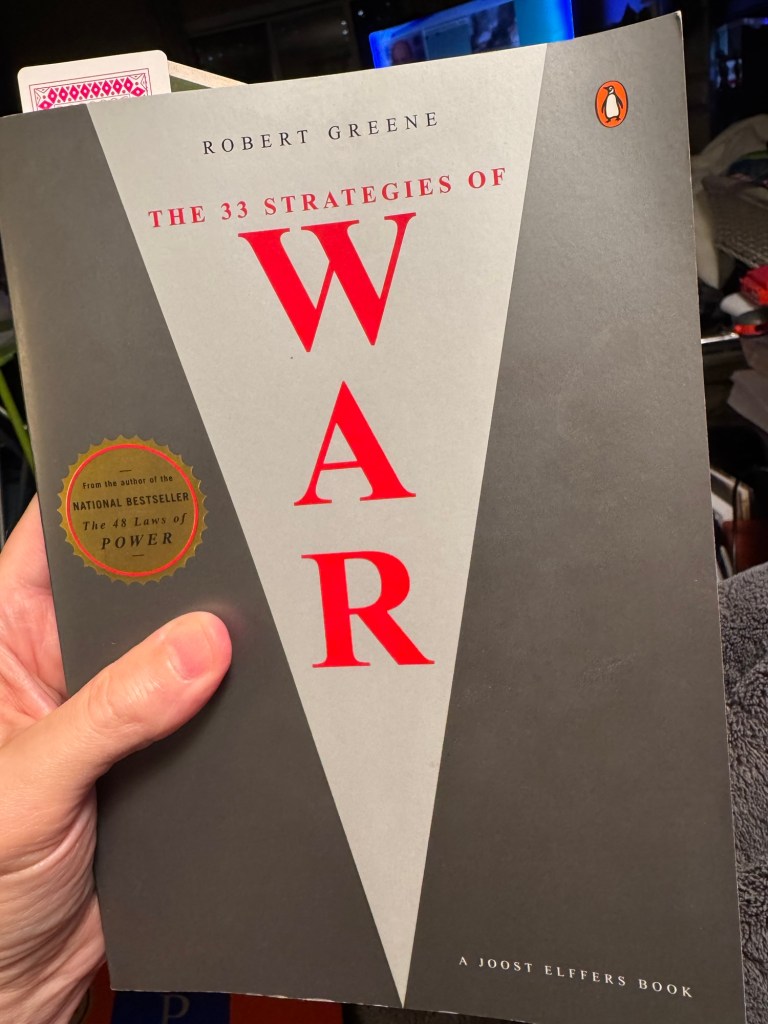
The obvious question keeps returning: if these are simply advanced drones or foreign technology, why the persistent concealment across decades? If they represent non-human intelligence, why not open contact? My answer is shaped by what I saw in that takeover and by the universal patterns Robert Greene distilled in The 48 Laws of Power and The 33 Strategies of War. Those books sit in every serious business section because they codify something older than corporate strategy: the mechanics of concealed intention, formlessness, and the calculated use of superior position to shape the target’s behavior without triggering full resistance.
A hunter does not step into the clearing and announce himself. He wears the scent of the field, moves with the wind, waits in the tree stand for hours. The goal is proximity without alarm. The deer that senses nothing continues its pattern until the moment the arrow is already in flight. Corporate raiders operate on the same principle. They do not declare war on the culture they intend to absorb. They speak of synergy, of unlocking value, of shared future. The language itself is camouflage. By the time the target’s leadership understands the real mapping of power, the decisive votes and the key personnel decisions have already been made elsewhere.
If non-human intelligences have been present in our environment for a long time—and the pattern of sightings near nuclear and sensitive military sites across the released files is difficult to dismiss as random—then concealment is the rational posture of a competing form of life that does not yet wish open war or open dependence. Superior technology does not automatically translate into benevolence any more than superior capital in a takeover guarantees the survival of the acquired company’s original character. The strategic advantage lies in remaining unseen while shaping outcomes: extracting data, influencing behavior at the margins, keeping the target population stable enough to continue producing what the observer needs. A species that wanted only to eliminate us would have done so. A species that wants to study, harvest, steer, or occupy the same niche without triggering a unified human response has every reason to stay in the tree stand.
The recent disclosures actually reinforce this reading more than they contradict it. We are shown orbs that appear to coordinate, that launch smaller orbs, that exhibit flight profiles AARO cannot yet attribute to known platforms. We are told some cases remain unresolved even after multi-sensor correlation. We hear whistleblower testimony—from David Grusch and others—describing long-term programs involving recovered craft and non-human biologics, yet official releases still emphasize the lack of conclusive proof while simultaneously documenting phenomena that exceed current human capabilities. This is not full transparency. It is a calibrated release. It keeps the conversation alive, keeps researchers and the public engaged, and shields the deeper architecture behind these events. That is precisely how power that intends to remain dominant behaves when it does not yet need to reveal its full hand.
Greene’s work is popular in business circles because it maps these dynamics without moral overlay. Law after law describes the advantage of appearing formless, of never revealing the full extent of one’s resources or intentions, of using the target’s own momentum against it—the same principles scale. If an intelligence operates across dimensions or with technology that renders our sensors marginal, the same logic applies: stay close enough to observe and influence, far enough to avoid decisive confrontation, and never give the prey a clear target to rally against. The fascination many people feel toward UAPs—the drive to decode every new video, to attend every hearing, to interpret every ambiguous shape—can itself become part of the dynamic. The prey moves toward the predator’s position because the predator has made itself the most interesting thing in the environment.
I am not claiming these intelligences are cartoon villains. I am saying the default assumption that superior technology equals benevolent guardianship has no grounding in observable history or in the power dynamics we already understand at the human level. The same species that builds monuments and writes philosophy also builds weapons and perfects deception when advantage requires it. Why would we expect a competing life form to operate on more sentimental rules? The disclosures we have received so far—multiple batches of unresolved orb events, aviator encounters, and internal government debate—show advanced presence without showing open intent. That gap is not an accident of bureaucracy. It is consistent with the behavior of any actor who has already calculated the costs of full revelation.
Most people can’t do this. They learn the rules and stay prisoners to them al their lives.
The corrective lens is the same one that works in any competitive environment. Assume the other side is playing to win on its own terms. Map the actual flows of information and leverage rather than the stated narrative. Strengthen internal visibility so that critical dependencies—whether material, procedural, or perceptual—cannot be quietly depleted in the shop, which meant knowing who ordered the consumables and whether the schedule would starve the line. In the larger arena, it means refusing to treat every new release as either proof of salvation or proof of nothing. It means treating the pattern of concealment itself as data.
We have been given enough now to see that something is operating with capabilities we do not control and with intentions it has not chosen to declare. The hunter does not need our permission to remain in the stand. He only needs us to keep behaving as if the clearing is empty. The disclosures have made the clearing feel less empty, but they have not yet forced the figure in the tree to step forward. That fact alone tells us something about the nature of the game being played.
Footnotes
1. Personal observation from aerospace program management, 2026.
2. PURSUE Release documentation, Department of War, various tranches 2026.
3. AARO memorandum on Western U.S. “orbs launching orbs” event, June 2026.
4. Robert Greene, The 48 Laws of Power (1998) and The 33 Strategies of War (2006).
5. David Grusch congressional testimony and related whistleblower accounts, 2023–2026.
6. Historical analysis of corporate power dynamics drawn from Greene’s framework and observed industry practices.
7. Additional references to UAP case files are available via war.gov/UFO portal.
Bibliography
• Greene, Robert. The 48 Laws of Power. Viking, 1998.
• Greene, Robert. The 33 Strategies of War. Viking, 2006.
• U.S. Department of War / AARO. PURSUE UAP Release Tranches (May–July 2026). war.gov/UFO.
• Squier, Ephraim G., and Edwin H. Davis. Ancient Monuments of the Mississippi Valley. Smithsonian Contributions to Knowledge, 1848 (for context on Ohio earthworks like East Fork).
• Various journalistic summaries of Grusch testimony and PURSUE files, 2026.
Rich Hoffman is an author, political consultant, and strategic advisor based in Cincinnati, Ohio, and the creator of The Politics of Heaven—a unique framework that connects biblical theology, ancient history, and modern power structures to explain how moral alignment and spiritual forces shape global events. Blending real-world political experience with deep research into archaeology, UFO phenomena, and suppressed historical narratives, Hoffman offers compelling commentary on topics ranging from ancient civilizations and the Dead Sea Scrolls to modern populist movements, paranormal continuity, and leadership strategy in chaotic environments. As the author of The Gunfighter’s Guide to Business and the forthcoming Politics of Heaven, he brings a grounded yet provocative voice to media discussions, supported by firsthand experiences and a cross-disciplinary approach that bridges science, history, and theology. For interviews, speaking engagements, or expert analysis, visit richhoffmanbooks.com or contact directly via phone at 513-307-5815 or email at rhoffman@richhoffmanbooks.com. If you’ve seen the movie, Disclosure Day and want to talk about it and the implications of Presidnet Trump’s UAP disclosures, let me know and we can bring some color to your coverage. https://richhoffmanbooks.com/media-inquiries-broadcast-topics-and-contact-info/?frame-nonce=ad51e7ecba I do have a firsthand UFO encounter to discuss.
I wrote The Gunfighter’s Guide to Business back in 2021 because I had grown weary of hearing about Japanese warrior codes every time someone discussed Lean manufacturing or the Toyota Production System. Those approaches contain real value—Toyota’s emphasis on eliminating waste, Just-in-Time production, and continuous improvement through Kaizen has influenced industries worldwide. But as an American who spent decades in manufacturing and aerospace, applying those lessons while teaching teams how to solve problems on the fly, I felt our culture needed its own framework. We have our own warrior tradition, one rooted in self-reliance, quick decision-making under pressure, and the willingness to face risk head-on. That is the spirit of the gunfighter—the fast-draw competitor who practices until shooting from the hip becomes an expression of hard-won skill and confidence rather than recklessness.
The book is not aimed at legacy corporations seeking incremental tweaks to maintain the status quo. It is for entrepreneurs and individuals who want to build something real in a world full of obstacles. I drew heavily from the sport of fast draw, which I have long seen as a perfect metaphor for high-stakes business: when you are truly skilled, you can act decisively and accurately without hesitation. Chapters explore placing bets wisely, managing risk, and understanding that real success often means operating as a “ghost”—staying agile and unencumbered by titles, corner offices, or attachments that others can target in an effort to gain control over you.
This year, 2026, has brought several moments that reminded me why the message matters. People have approached me in everyday places like Costco in Liberty Township—recognizing me from the blog, videos, or the book itself. They want to talk, ask for a signature, or share how the ideas resonated with them. One particularly memorable encounter came from the CEO of a large company a few states away who had read the book and flew in specifically to find me. He made a substantial offer: come consult for several months, coach his workforce on the gunfighter mindset, and help reshape the culture. It was the kind of money that would make most people in my position jump with enthusiasm. I said no.
I critique consultants throughout the book, and I stand by that. Not because every single one is worthless, but because too many function as the “dandies” or “bounty hunters” in Clint Eastwood’s Unforgiven—profiting from the legends and hard work of others without ever stepping into the real fight themselves. The gunfighters are the ones who face the target, put their lives or reputations on the line, and deliver results. I have always tried to live as the latter. Turning down that opportunity was not about rejecting money; it was about staying consistent with the principles I laid out. I am not racing to stuff a retirement account before time runs out. I have a different measure of success, one shaped by decades of experience and a marriage built on integrity.
That integrity traces back to a moment early in my relationship with my wife, nearly forty years ago. I was selling cars as a young man—good at it, making strong commissions in a cutthroat environment. One Saturday, I had an older, retired customer ready to buy a truck, paying $5,000 over sticker price, all cash. The finance department balked at the markup, but the sales manager pushed me to close it anyway. I had the man’s keys, had built genuine trust over hours of conversation, and convinced him to walk across the street to withdraw the cash. My future wife showed up at the lot right as I was finishing the deal. I thought she would be impressed by the big sale. Instead, she was deeply upset that I had taken advantage of an honest man. She came from a different background—modeling, country club circles—and had seen plenty of “successful” men who measured life by mansions, boats, and flashy deals. She wanted none of it. She told me it was the Corvette I was about to buy or her; she would not marry someone who operated that way. I walked the deal back, took the ethical path, and my commission was cut in half. I left that job soon after. We have been married ever since, and that decision remains one of the best of my life. It taught me that real leverage comes from living in a way your spouse and family can respect—not from cornering every last dollar or using dollars to gain control of people.
These same values run through the book and my daily work. I have encountered “safety tyrants” and sandbaggers in manufacturing facilities—people who hide behind compliance rules, slow output to protect their own power or laziness, and attack anyone who pushes for genuine improvement. I have seen engineers and managers who opposed efficiency gains, only for the pressure of their own schemes to catch up with them later. I do not celebrate their misfortunes, but I also do not mourn those who tried to destroy my teams or me. When you face real opposition in business—or life—you square your shoulders like Andrew Jackson in his duels or Theodore Roosevelt finishing a speech with a bullet in his chest. You do not cry over the grave of someone who would have put you in one. Forgiveness in the theological sense is between them and God; my job is to defend what matters and keep moving forward.
This mindset is not just for business. It applies to politics, culture, and how we build any healthy organization or society. Capitalism, properly understood, rewards those willing to initiate, risk, and deliver—not the parasites who live off others’ efforts. I see parallels in today’s corporate world and broader culture: too much fear disguised as safety, too many incentives to sandbag rather than excel. SpaceX stands out as a counterexample—lean, confident, and willing to accept calculated risk in pursuit of big goals. That spirit is what America’s economy needs more of in the years ahead, especially as entrepreneurs step up in the current environment.
I am not closed to opportunities, and I am grateful when people find value in the work. Some have bought copies in bulk to share with their teams. The book was written so readers can engage with the ideas independently—the bullet-point summaries at the end of each chapter help reinforce the key lessons without needing me in the room. Royalties still arrive occasionally, and my wife and I enjoy turning a good check into a nice dinner. That feels honest and sustainable. Turning a large consulting gig into another form of selling out would betray the gunfighter ethos I wrote about.
The stories and principles in The Gunfighter’s Guide to Business come from real experience—car lots, stamping plants, aerospace programs, and the hard lessons learned alongside a supportive wife who keeps me honest. They are meant for those with the guts to start companies, face opposition, and build something lasting. If you have not read it, I believe you will find it useful, whether for your own ventures or simply understanding how to navigate a world full of safety tyrants and bounty hunters. The gunfighter spirit is not about recklessness; it is about skill, ethics, and the courage to act when others hide behind rules. That is the skeleton key I aimed to offer to Western civilization and American enterprise. I still carry it with me every day and live by every word. Many are finding those words very valuable, and I’m glad to hear it. Thanks for the opportunities. But to me, opportunities are measured in more than just money, even though this offer was for a lot of it. The gunfighter still has to take bullets and to bite bullets, and be willing to deliver them.
Footnotes
[^1]: For deeper context on the Toyota Production System and its philosophical roots, see the official Toyota documentation and historical analyses of Lean principles.
[^2]: The fast-draw elements tie directly into the book’s core metaphor for high-skill, decisive action in business.
[^3]: “Ghosting it” is a recurring theme in the book, emphasizing agility over visible power structures that invite opposition.
[^4]: Unforgiven (1992) provides a sharp distinction between authentic gunfighters and those who profit from their stories.
[^5]: Jackson’s duels and Roosevelt’s resilience under fire illustrate the willingness to absorb damage and continue the fight—qualities essential in competitive environments.
[^6]: Safety culture critiques often highlight tensions between compliance and production pressures; see industry analyses on risk-taking and over-normalization of caution.
[^7]: These personal stories informed multiple chapters on ethics, decision-making under pressure, and long-term leverage through integrity.
[^8]: References to SpaceX reflect ongoing observations of lean, risk-tolerant innovation versus traditional corporate caution.
Bibliography
Hoffman, Rich. The Gunfighter’s Guide to Business: A Skeleton Key to Western Civilization. Liberty Hill Publishing, 2021. (Core text referenced throughout.)
Ohno, Taiichi. Toyota Production System: Beyond Large-Scale Production. Productivity Press, 1988.
Liker, Jeffrey K. The Toyota Way: 14 Management Principles from the World’s Greatest Manufacturer. McGraw-Hill, 2004.
Womack, James P., Daniel T. Jones, and Daniel Roos. The Machine That Changed the World: The Story of Lean Production. Free Press, 1990.
Eastwood, Clint, dir. Unforgiven. Warner Bros. Pictures, 1992.
Brands, H.W. Andrew Jackson: His Life and Times. Anchor Books, 2006.
Morris, Edmund. Theodore Rex. Random House, 2001.
Additional sources:
• Toyota Motor Corporation official materials on the Toyota Production System and Kaizen philosophy.
• Industry reports and critiques on safety culture in manufacturing (e.g., discussions of production vs. compliance tensions).
• Personal observations from decades in aerospace, manufacturing leadership, and entrepreneurial consulting scenarios.
• Cross-references to forthcoming work, The Politics of Heaven, for broader philosophical and historical context on spiritual warfare, ethics, and societal structures.
Rich Hoffman is an author, political consultant, and strategic advisor based in Cincinnati, Ohio, and the creator of The Politics of Heaven—a unique framework that connects biblical theology, ancient history, and modern power structures to explain how moral alignment and spiritual forces shape global events. Blending real-world political experience with deep research into archaeology, UFO phenomena, and suppressed historical narratives, Hoffman offers compelling commentary on topics ranging from ancient civilizations and the Dead Sea Scrolls to modern populist movements, paranormal continuity, and leadership strategy in chaotic environments. As the author of The Gunfighter’s Guide to Business and the forthcoming Politics of Heaven, he brings a grounded yet provocative voice to media discussions, supported by firsthand experiences and a cross-disciplinary approach that bridges science, history, and theology. For interviews, speaking engagements, or expert analysis, visit richhoffmanbooks.com or contact directly via phone at 513-307-5815 or email at rhoffman@richhoffmanbooks.com. If you’ve seen the movie, Disclosure Day and want to talk about it and the implications of Presidnet Trump’s UAP disclosures, let me know and we can bring some color to your coverage. https://richhoffmanbooks.com/media-inquiries-broadcast-topics-and-contact-info/?frame-nonce=ad51e7ecba I do have a firsthand UFO encounter to discuss.
As the dust settles on Ohio’s May 5, 2026, primary election, the stage is set for one of the most consequential gubernatorial contests in the state’s recent history. Biotech entrepreneur and Trump-endorsed Republican Vivek Ramaswamy emerged as the overwhelming GOP nominee, crushing fringe challenger Casey Putsch with approximately 82.5% of the vote (673,902 votes to Putsch’s 143,257). Ramaswamy swept every single county in Ohio, a remarkable show of unity across urban, suburban, and rural areas. On the Democratic side, former Ohio Department of Health Director Dr. Amy Acton secured the nomination unopposed, garnering around 742,000–760,000 votes in a low-energy primary. Overall voter turnout reached about 22.6% of registered voters, a modest uptick from recent midterm cycles.
This matchup pits a dynamic, pro-growth outsider in Ramaswamy—backed by President Donald Trump and positioning Ohio as the nation’s top economic powerhouse—against Acton, whose public profile remains indelibly tied to the state’s aggressive COVID-19 response. As one conservative commentator noted in a recent podcast monologue, the race is far from the neck-and-neck horse race portrayed in some polling and media narratives. While recent surveys show a tight contest (with some giving Acton a slight edge or Ramaswamy a narrow lead), the ground game, Trump’s coattails, independent-voter outreach, and Acton’s historical liabilities suggest that Ramaswamy enters the general election with a structural advantage that could widen significantly by November 3, 2026.
To fully appreciate this contest, we must delve into the candidates’ backgrounds, the primary results and their implications, the lingering economic scars from the pandemic era, comparative policy outcomes in neighboring states, and the broader political currents reshaping Ohio. This analysis expands on grassroots conservative perspectives—while incorporating verifiable data on turnout, economic metrics, investment challenges, and campaign tactics. Far from a replay of “yesteryear” Democrat strategies, this race highlights how progressive governance models have faltered in a post-Trump political landscape.
Candidate Profiles: Contrasting Visions for Ohio’s Future
Vivek Ramaswamy, a Cincinnati native and biotech billionaire, represents a fresh face in Ohio politics despite his national profile from the 2024 Republican presidential primary. Born to Indian immigrant parents, Ramaswamy built a successful pharmaceutical company (Roivant Sciences) before pivoting to public service. His Trump endorsement came early and emphatically, framing him as a “young, strong, and smart” leader committed to meritocracy, deregulation, and economic revival. Ramaswamy’s campaign emphasizes making Ohio the “#1 state” through pro-business policies, workforce upskilling, and attracting high-tech investment in sectors like semiconductors and biotechnology. He campaigns on the “high road,” avoiding personal attacks while highlighting policy contrasts. Critics from the far-right fringes—such as Putsch, dubbed the “car guy” for his automotive-themed online persona—have leveled baseless claims about Ramaswamy’s heritage or loyalty, echoing outdated nativist arguments. Ramaswamy has dismissed these as irrelevant, noting his personal integrity and fair play: his running mate, Ohio Senate President Rob McColley, bolsters legislative experience.
In stark contrast stands Dr. Amy Acton, a physician from Youngstown with a compelling personal story of overcoming hardship in a steel mill family. She rose through public health ranks to become Ohio’s Health Director in 2019 under Republican Gov. Mike DeWine. Acton’s national visibility peaked during the early COVID-19 crisis, when she joined DeWine for daily briefings and advocated strict mitigation measures. These included Ohio’s first-in-the-nation school closures, stay-at-home orders (issued March 22, 2020), business shutdowns, and even the postponement of the state’s presidential primary. Supporters praised her as a calming, data-driven voice who “flattened the curve” and protected hospitals. However, detractors—including many business owners, parents, and conservatives—blame her policies for devastating economic and educational fallout, from mental health crises among youth to prolonged business closures. Acton resigned in June 2020 amid personal threats and protests, later serving briefly as a health advisor before entering the private sector and academia. Her 2026 campaign, with running mate and former Democratic Party chair David Pepper, focuses on “power back to the people,” affordability, and a critique of “billionaires and special interests.” Yet her record remains a focal point of Republican attacks, with Ramaswamy labeling her tenure an “abandonment of responsibility.”
Acton’s campaign has leaned on traditional Democratic infrastructure, including legal support from figures like election attorney Mark Elias, who has been linked to aggressive tactics such as cease-and-desist letters targeting critics. Pepper, a vocal strategist, has served as an attack dog, pushing narratives that question Ramaswamy’s Ohio investment record or allege personal scandals (e.g., unsubstantiated claims of extramarital affairs, which can easily be dismissed as fabrications). These echo “yesteryear” playbook moves but risk backfiring in an era of heightened voter skepticism toward centralized government overreach.
Primary Season: A Landslide for Ramaswamy, Unopposed for Acton
The May 5 primaries crystallized Republican enthusiasm. Ramaswamy’s 82.5% victory margin—far exceeding pre-primary polls showing him at 50-76%—demonstrated broad consolidation. He won 60-90%+ in nearly every county, from Democratic-leaning urban centers to deep-red rural areas, per county-by-county maps. Putsch, representing a self-described “radical right” element with fringe ideas (e.g., racial primacy in voting or extreme nativism), captured only 17.5% and never posed a serious threat. GOP insiders viewed him as illegitimate, akin to past primary spoilers. This sweep signals unified party backing, contrasting with historical GOP infighting (e.g., the 2016 Trump vs. Cruz/Rubio dynamics, in which critics eventually coalesced post-nomination).
Acton’s uncontested path yielded solid but unremarkable Democratic turnout. Overall, the low primary participation (22.6%) underscores that the real battle begins now, targeting the 2-3% of independents and soft partisans who decide the general election. Ramaswamy’s primary dominance positions him to inherit the full Republican machinery, amplified by Trump’s upcoming Ohio appearances.
The Economic Reckoning: COVID Policies, Recovery, and Investment Challenges
Central to the race is Acton’s COVID legacy and its economic toll. Ohio’s early lockdowns contributed to sharp job losses—hundreds of thousands in spring 2020—with uneven recovery. While statewide GDP rebounded (Ohio’s 2023 GDP was around $884 billion, according to BEA data), sectors such as hospitality, retail, and education lagged. Critics argue Acton’s orders exacerbated long-term damage: prolonged school closures harmed student outcomes, and business restrictions drove some enterprises to relocate. Ramaswamy has tied this to Ohio’s failure to recover fully, positioning his administration to reverse it through deregulation and investment incentives.
Ohio’s business climate has improved—ranked No. 7 nationally and No. 1 in the Midwest in the 2026 Chief Executive CEO survey—but faces headwinds. The high-profile Intel semiconductor plant in New Albany (announced in 2022 with up to $20-100 billion promised) exemplifies stalled momentum: construction delays pushed first production from 2025/2026 to 2030-2031, with Intel investing $5+ billion by early 2026 but citing market and financial caution. Opponents blame pandemic-era policies and regulatory uncertainty; supporters note national chip shortages and the federal CHIPS Act. Regardless, such delays highlight the risk of capital flight if Ohio appears unstable.
Comparisons to neighboring states underscore the stakes. Indiana, a right-to-work state since 2012, has often outperformed Ohio in manufacturing retention and unemployment (recently ~3.3% vs. Ohio’s ~4.1-4.2%). Studies on right-to-work show mixed but generally positive effects on job growth in competitive sectors. Michigan (post-right-to-work repeal) and Pennsylvania (swing state with union influence) have seen volatile recoveries, with Michigan’s auto sector still grappling with post-COVID supply chains. Kentucky, under GOP leadership but with its own challenges (e.g., successor dynamics under former Gov. Beshear), attracts some investment but lags in high-tech draws. Ohio, lacking right-to-work status despite past attempts (e.g., failed 2011 SB5), relies on tax incentives and workforce development—but Acton’s era amplified perceptions of anti-business hostility. Post-pandemic GDP growth has been comparable across the region (Ohio ~2.1% in recent years), yet Ohio’s unemployment edged higher in some BLS snapshots, and narratives of a business exodus persist. Ramaswamy’s platform—aligning with a potential Trump administration—promises to lure dollars from Indiana, Michigan, and beyond by emphasizing economic viability over lockdowns.
Unions add another layer. Traditionally Democratic strongholds (teachers, public sector) have shifted toward Trump-era populism on trade and energy. Acton’s ties to labor risk alienating moderates if framed as favoring centralized mandates over job creation. Ramaswamy’s pro-worker, anti-regulation stance could peel independents.
Campaign Tactics, Polling Realities, and Broader Ohio Politics
Recent polls paint a competitive picture—RCP averages near even, with outliers like an early-2026 Emerson showing Acton +1 and Bowling Green/YouGov favoring Ramaswamy slightly. Yet intuition will hold: horse-race media and ad buyers inflate closeness for engagement. Ramaswamy’s primary sweep, Trump rallies, and Acton’s baggage (framed as “COVID queen” by the GOP) suggest momentum. Early attacks—scandals, investment critiques—have already been deployed, leaving Democrats vulnerable to “October surprise” fatigue. Elias-style legal maneuvers and Pepper’s opposition research risk overreach, mirroring past Democratic missteps in red-leaning Ohio.
Ohio’s political map favors Republicans in gubernatorial races—no Democrat has won since 2006. Trump carried the state handily in 2016, 2020, and 2024. Ramaswamy inherits this, plus Senate and House majorities for swift policy wins. Acton represents a “propped-up Biden figure”: big government, unions, and progressive holdouts hoping to stall MAGA momentum. But as unions court Trump and independents prioritize pocketbooks, her path narrows.
Outlook: Boots on the Ground and a Call to Action
The general election will hinge on turnout and independents. Ramaswamy’s personal appeal—honest, non-combative—contrasts with Acton’s defensive posture. As the monologue urges, do not take victory for granted: vote in November, rally behind the nominee. With Trump stumping and economic contrasts sharpening, Ramaswamy could pull away decisively. Ohio’s recovery from pandemic policies, Intel’s fate, and regional competition will define the narrative.
In sum, this race transcends personalities. It tests whether Ohio embraces pro-growth conservatism or reverts to centralized experimentation. Data favors the former; history and momentum reinforce it. As voters weigh track records, Ramaswamy’s vision aligns with a thriving Ohio, while Acton’s invites scrutiny of past costs. The coming months promise clarity—and opportunity, along with a lot of political drama. Amy Acton will have a hard time surviving the intensity that is headed her way.
Footnotes
1. AP projections and primary results, May 2026.
2. Ramaswamy’s victory speech and Acton’s coverage of the criticism.
3. BLS unemployment data (Feb/Mar 2026 snapshots).
4. BEA GDP by state reports.
5. Chief Executive 2026 Best States for Business survey.
6. Ballotpedia and NYT poll aggregates.
(Additional citations drawn from campaign filings, historical COVID orders via Ohio Dept. of Health archives, and economic impact studies.)
Rich Hoffman is an aerospace executive, political strategist, systems thinker, and independent researcher of ancient history, the paranormal, and the Dead Sea Scrolls tradition. His life in high‑stakes manufacturing, high‑level politics, and cross‑functional crisis management gives him a field‑tested understanding of power — both human and unseen.
He has advised candidates, executives, and public leaders, while conducting deep, hands‑on exploration of archaeological and supernatural hotspots across the world.
Hoffman writes with the credibility of a problem-solver, the curiosity of an archaeologist, and the courage of a frontline witness who has gone to very scary places and reported what lurked there. Hoffman has authored books including The Symposium of Justice, The Gunfighter’s Guide to Business, and Tail of the Dragon, often exploring themes of freedom, individual will, and societal structures through a lens influenced by philosophy (e.g., Nietzschean overman concepts) and current events.
This seems to come up every year when people are reflecting and sending each other motivational messages, such as they do on LinkedIn. Most people are trained in socialism, the collective warm blanket of shared success, incorrectly, and it chokes most companies into complete paralysis. Success in our era is dressed up in cheerful posts and glossy platitudes, a cascade of “Hawkey little messages” assuring us that prosperity is mostly about teams, vibes, and being “all in.” The ritual is familiar: end-of-year feed, professional network, congratulatory notes, soft-focus talk of “collective wins.” However, what most people feel in their bones, even if it is impolitic to say aloud, is that victories are nearly always propelled by a few decisive acts—often by one or two people who turn the key, fuel the engine, and take responsibility for the risk. The machine can be exquisite: gears of procurement, finance, quality, manufacturing, design, sales, legal, and compliance all meshing. However, machines, however sentimental, do not start themselves. Leadership is the ignition, the regulator, the governor, the hand at the lever.
If you want success, build a machine that reliably makes success. That is the institutional truth of production and enterprise—government, industry, entertainment, any domain where complex work must be routinized. Systems are arrays of interlocking cogs; each cog has a place, and in an efficient design, each is necessary. However, necessity is not sufficiency. A machine’s sufficiency emerges only when an accountable mind organizes its timing, permits its torque, apportions its oil, and shuts it down before it burns itself to ash. The leader is the one who understands load, sequence, contingency, and consequence. They are the person who decides whether the engine runs fast today or idles; who knows when to swap a worn gear without mourning it; who understands that even the most ornate arrangement of parts turns to sculpture without spark.
We train most people to be components. This is not a knock on people so much as an observation about schooling and culture. It is safer, warmer, and more predictable to be a gear inside the frame than to stand outside the frame and decide which machine must be built, which conditions require it, and when it must run. The collective promises comfort; the individual bears cost. The collective sells the feeling of belonging; the individual pays the price of decision. In that exchange, many embrace the blanket of collectivism—mass credentialing, committees, rubrics, performance reviews, compliance protocols—signals that one is “an essential part of the team.” Moreover, in a limited sense, that is true: a properly designed system relies on the integrity of every part. Take away the feed pump, and production starves; remove quality’s gauge, and defects bloom. However, the illusion rests in mistaking “indispensable within design” for “constitutive of decision.” The machinery of work needs cogs; the work of leadership requires a person.
Leadership is not consensus engineering. It is not the median of opinions distilled into approved action. Leadership is rugged individualism at the point of decision—where accountability cannot be outsourced, and uncertainty cannot be fully hedged. It takes courage to pull the lever when the data are incomplete, and the clock is running. It takes imagination to see the machine that does not yet exist and to name the conditions under which it will be viable. It takes a life lived with risk, with failures tallied and learned, to know the difference between speed and haste, between endurance and grind, between excellence and exhaustion. Collective comfort can train excellent cogs; it rarely trains decisive leaders.
Watch team sports if you need a working metaphor. The Super Bowl ring is a collective artifact—dozens upon dozens of names will be etched into the annals. Trainers, assistants, ball boys, coaches, coordinators, linemen, wide receivers, analysts, owners—everyone counts somewhere. However, the moment of victory tends to converge in a handful of plays, executed by a few players under the direction of a coach who took decisive risks at the right time. The ring belongs to all; the victory turns on the few. Moreover, if the organization is constructed well enough, parts can be replaced. Players retire or are traded; staff rotates. The machine continues to win because the leadership—its philosophy, its standards, its hierarchy of decisions—remains intact.
This is why strong organizations do not worship any single cog. They respect cogs and maintain them; they pay for reliability and reward merit. However, the machine is not reengineered to accommodate the demands of a single gear. Instead, leadership preserves design integrity while swapping parts as needed. In weak organizations, the fetishizing of singular parts destabilizes the whole. In strong organizations, the philosophy of leadership yields repeatable victory because the leader can read conditions and set the tempo. When leadership is consistent and wise, luck is less a coin flip and more a variable constrained by design.
The reason leadership feels elusive is that most people, by design, have been socialized into the safety of machines. The world is complex; specialization is rational. However, specialization often becomes identity, and identity becomes politics, and politics becomes bureaucratic life. The rhetoric of “team” spreads like a balm, and participation trophies proliferate—not because people are malicious, but because machinery envelops their self-conception. Inside this warm frame, many forget the first principles of success: machines are instruments; leadership is agency. The machine is necessary; the leader is decisive.
Righteous leadership is not domination. It is stewardship under justice. The righteous leader stands outside the machine long enough to see conditions truthfully—scarcity, risk, moral hazard, human frailty—and then returns to the console to operate with integrity. Righteousness here means rightly ordered effort and directing that effort toward successful enterprise. The righteous leader knows the machine serves ends beyond itself and refuses to confuse throughput with justice or output with meaning. They refuse the nihilism that says “only the win matters,” and the sentimentalism that says “only feelings matter.” Righteous leadership harmonizes courage and conscience: a lever pulled with clarity, not cruelty; a shutdown ordered to preserve life, not to prevent loss of face.
This is why nations with abundant resources can stagnate, and why organizations with immaculate infrastructure can drift into decay: without leadership that sees, decides, and cares, the machine becomes ornate furniture. Oil rigs rust; factories idle; supply chains fray. Conversely, with strong leadership, modest machines can outperform their spec, because the design is repeatedly refined, the constraints are embraced, and the people inside the system are cultivated for competence, not simply compliance.
It is fashionable to say “success is shared,” and in one respect that statement is true—labor is often collective, and recognition ought to be fair. However, success is not collectively decided. Success is collectively executed after a decisive will points it in a direction. The more clearly we distinguish decision-making from execution, the less we will confuse popularity with leadership, bureaucracy with governance, or credentials with competence. Moreover, the more clearly we honor righteous leadership—leadership that tells the truth, accepts cost, and lifts the people under its care—the healthier our machines, and the less brittle our victories.
So if you seek success, build a machine worthy of it: clear work standards, clean interfaces, visible bottlenecks, disciplined rhythms, lean buffers, quality gates. Then seek, become, or empower a leader of conscience. Teach people to be excellent cogs without training them to be dependent souls. Reward initiative alongside reliability. Audit outcomes as if justice matters, but always understand that profit is the fuel that makes the machine run. Moreover, remember: the machine is an instrument; leadership is the agent; righteousness is the compass. When those three align, the lever is pulled at the right time—and the win, when it comes, is more than luck and more than noise. It is the visible fruit of invisible virtues: courage, clarity, and care. However, just because it is invisible, does not mean it does not exist. Only that people from their perspective do not see it, because they are just cogs in the wheel, and their understanding of the big picture is severely limited.
—
Footnotes
[1] Peter F. Drucker, The Effective Executive (HarperBusiness, 2006).
[2] W. Edwards Deming, Out of the Crisis (MIT Press, 2000).
[3] Eliyahu M. Goldratt, The Goal (North River Press, 2014).
[4] Stephen R. Covey, The 7 Habits of Highly Effective People (Simon & Schuster, 2013).
[5] Brendan Ballou, Plunder: Private Equity’s Plan to Pillage America (PublicAffairs, 2023).
[6] Roger Connors, Tom Smith, and Craig Hickman, The Oz Principle (Portfolio, 2004).
[7] F. A. Hayek, The Road to Serfdom (University of Chicago Press, 2007).
[8] Alexis de Tocqueville, Democracy in America (Penguin Classics, 2003).
[9] Jim Collins, Good to Great (HarperBusiness, 2001).
[10] Andrew Grove, High Output Management (Vintage, 2015).
—
Bibliography
Ballou, Brendan. Plunder: Private Equity’s Plan to Pillage America. New York: PublicAffairs, 2023.
Collins, Jim. Good to Great: Why Some Companies Make the Leap… and Others Do not. New York: HarperBusiness, 2001.
Covey, Stephen R. The 7 Habits of Highly Effective People. New York: Simon & Schuster, 2013.
Deming, W. Edwards. Out of the Crisis. Cambridge, MA: MIT Press, 2000.
Drucker, Peter F. The Effective Executive. New York: HarperBusiness, 2006.
Goldratt, Eliyahu M. The Goal: A Process of Ongoing Improvement. Great Barrington, MA: North River Press, 2014.
Grove, Andrew S. High Output Management. New York: Vintage, 2015.
Hayek, F. A. The Road to Serfdom. Chicago: University of Chicago Press, 2007.
Tocqueville, Alexis de. Democracy in America. London: Penguin Classics, 2003.
Connors, Roger, Tom Smith, and Craig Hickman. The Oz Principle: Getting Results Through Individual and Organizational Accountability. New York: Portfolio, 2004.
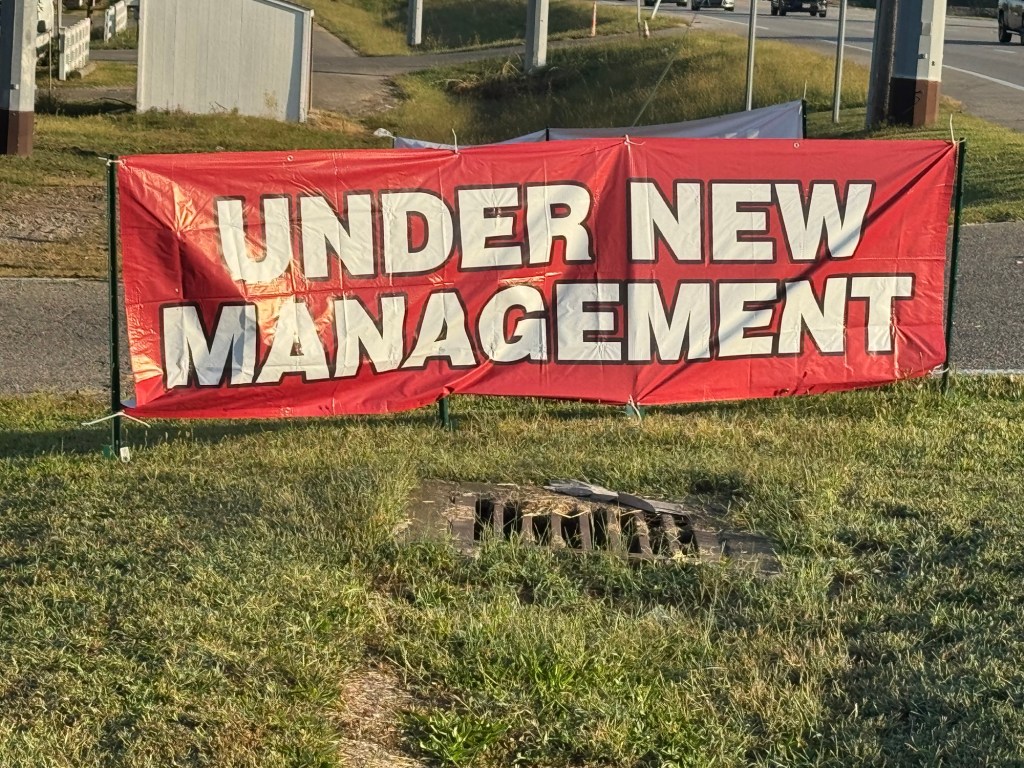
It was a good accident while I was shooting the video for this article, when a train came by. I tried to wait for a previous, huge train to go by, but about 10 minutes later, another came, almost as if the trains wanted to help me make my point. Because I was discussing the Metaphysics of Quality, a favorite topic of mine from Robert Persig’s famous book, Zen and the Art of Motorcycle Maintenance, I think it’s one of the most important books that the human race has ever produced because it puts its finger on a very allusive idea, which is why some people are better than others, especially in the field of business management. And these days, now several years out of Covid, and a world obviously not prepared for Trump to be in the White House, a lot of companies are flat-footed on this current economy. There was an assumption during the COVID pandemic, and all the way up to last week, that different rules would govern the world, a kind of socialist administrative state where work was bent to the preferences of the workers instead of the needs of the business. And people are shocked by these very capitalist rules. All over my town, signs are going up to let the public know that their companies are under new management. Most of them are restaurants that have been too slow and understaffed for too long. Many people thought they would be able to work from home to stop the spread of COVID, which, in retrospect, was a laughable endeavor. Yet the entire world tried to think it and actually put it into practice, which was one of the dumbest things ever. To my point, which is why I can say that our COVID response, even as it was artificial, was really dumb. That train helped me make the point right on time, leaving a perfect demonstration of what the heart of the problem is with all these restructurings.
What the world needs, especially from every company and every family, is a leader who leads from the front, where all the action happens. Using a train metaphor, the front of the train, at the cutting edge, is where all the critical decisions are made. For instance, how fast should the train be going? Does it need to turn onto a different track in case something falls across it, posing a danger to the entire train? Operating the train needs to happen from the front, where all the controls are, and the leader can see what’s coming before anybody else. However, most leadership cultures, and I can say this after dealing with many tens of thousands of people, most of whom have advanced degrees and extensive experience in high-tech sectors, are behind-the-scenes people. People who sit in the caboose collect data and report the contents of the train as it moves along. The information they process can be helpful, but by the time they see it, the front of the train, especially on a very long one, has already passed the point where something was observed. For exemplary leadership, by the time the people in the back of the train see it, it’s too late to do anything different. Most management in the world, whether it’s a small company like a private restaurant, or a large company, or a government, functions from the back of the train because that’s where it’s safest, and people generally don’t like danger. That is why good leadership, let alone outstanding leadership, is so rare in any industry. It takes a lot of guts to run things from the front of the train.
When people say they are under new management, they are trying to tell their customers that things are different and that they’ll get more responsive service from the organization, and they allude to this leadership quality. As if to say that their management is new, and therefore the opportunity to be better is in the future. But to be honest, the ownership is usually just throwing darts in the dark, and they don’t know the difference between good leadership and bad, because they are too afraid of the cutting edge at the front of the train to make decisions there. It’s scary at the front, and most people in the world, more than 99% of them, would rather be in the back of the train. I have literally dealt with consultants at every level who proclaim to know a lot about these things, who are in that consulting business because they are afraid of life at the front of the train, where all the scary stuff happens. They don’t want scary things in their lives, so they do what many people do who aren’t very good at life: they teach. Nothing is safer than putting the train on pause and studying its contents while it’s not moving, in a classroom environment where there are no dangers of driving through day-to-day life. And this isn’t some fluke opinion; it’s actually a flaw in the way we teach generations of people in a classroom environment, and why those who survive the schools of hard knocks are actually better prepared for authentic leadership. Leadership isn’t taught as much as it is learned in the challenging places that the world presents.
The problem with all the COVID protocols and the obsession with moving the world into an administrative state management condition, where people could sit in their living rooms in their pajamas and tell others things from a Teams call, was absurdly stupid. Yet, that is why so many companies are now struggling to meet customer demands. The marketplace did not go the way it was expected to, and virtually everyone is struggling to catch up. Many organizations are seeking new management to replace the old one, and they are posting signs to let their customers know that they are trying to find effective leadership, even if the kind of leadership they are looking for is actually one of the rarest commodities in the world. Good leadership thrives at the front of the train while most of the world desires to hide in the back. They might make a lot of noise back there and bark out commands, but on a fast-moving train, by the time they see them, the train has already moved well beyond the point of decision-making. And that is the core of the problem; it takes courage to run things from the front of the train. And our schools don’t and can’t teach courage. They teach people to be in the back of the train, where the bootlickers and con artists reside. They are that way because they lack courage and have to fake it to make it. They learn to appease the teacher in a static classroom, and once in the world, they do the same from the back of the train. And that is why most management in the world is ineffective. But then we marvel when we see individuals who have great success at almost everything they do. This is why it’s called “Metaphysics of Quality” by Robert Pirsig, and it’s one of the most outstanding books on the subject of business that has ever been written or thought about. I’ve read numerous books on business, including some of the most popular titles on Lean Manufacturing and Six Sigma. All that means nothing if your organization doesn’t have a leader at the front of the train. And you can put all the signs out about new leadership, but it doesn’t matter if all that leadership is where most leadership is in the world today – at the back of the train, hiding, where it’s safe. Leaders need to love danger and to make decisions unafraid as they face it moment by moment. That is the difference between success and failure.
Gavin Newsom has been in the news frequently lately, and he has something to say about almost everything. And nobody believes any of it. As governor of California, and this isn’t a political comment, just a logical one, he lost all credibility during COVID and has barely managed to hang on despite several challenges in a state that leaned far left, when it was fashionable. But we are talking now about a world where Democrats have lost around 2.5 million registered voters and Republicans have gained about as many, and that is just a few months into Trump’s second presidency. Gavin Newsom is a phony, like many politicians who have gotten away with it over the years, and if politics hadn’t changed as much as we’ve seen, Newsom could probably be considered a candidate for president in 2028, which he clearly aspires to be. However, he has a poor track record, culminating in the LA fires. But it was the way he handled COVID that set his future in stone. The people in California won’t let him live it down, let alone a national campaign. COVID-19 changed many people and the way they think about politics. Today’s baby-kissing politician could be tomorrow’s lockdown governor violating all our personal rights over some virus released from China. And of all the lockdown governors, Gavin Newsom was one of the worst. It’s almost comical to watch him now trying to build a campaign for the Democrat Party’s presidential nomination. That is obviously what his plans are, but the political order changed under his feet, and he seems lost to capture any message, because all the old stuff just isn’t working. The buzzwords have died, and he has no new ones to offer. Leaving him bouncing around from topic to topic aimlessly.
The difference between President Trump and everyone else is essentially authenticity. Trump can drop an F bomb during a speech, and people can relate to it. Gavin Newsom can do the same, and people perceive it as insincere. And that’s what’s new now, Trump is a product of the times and the people. Politicians like Gavin Newsom are completely do-as-I-say, not-as-I-do types who count completely on manipulating the public to exist. And people are too battle-hardened to accept that premise anymore. And, there is too much media these days for shaky commentary. With all the podcasts and startup news shows, especially on Trump’s Truth Social media platform, politicians like Gavin Newsom cannot withstand the constant scrutiny. In the past, when there were only a few news stations and some talk radio to discuss these topics, Newsom got away with having a shiny exterior because there was never any time to get into the details. But not these days. And Trump has shown the world what a real person in a powerful position can accomplish. And nobody the Democrats have will be able to duplicate it. And Newsom is among the best that the Democrats have to offer. They have big problems that are worth considering. Watching Newsom try to adjust is actually very revealing because it points to a much deeper problem for all Democrats. Why don’t they have their own version of Trump? Well, because the new standards require authenticity as a person, not the kind of showboating that was once accepted as usual. And Democrats as a party have sought to exploit people through emotions. They have not actually done anything. The world is looking for doers, not more administrative types who lock down their states, then get caught at social gatherings drinking wine as the world burns down outside.
Gavin Newsom, in a remarkably short time, as he has been trying everything to capture a national audience, has appeared on the Charlie Kirk Show, attempting to appeal to Trump voters, and has since turned to the radical left, becoming as anti-Trump as anyone could be. He’s tried to be overly friendly, radically mean, even violent, trying to draw a crowd. And it’s just not working. And that’s the main problem. With Trump, nobody doubts what he’s thinking, and he built that brand over a long time with constant repetition. Gavin Newsom has changed many times, and nobody really knows who he is, because he’s so inconsistent on topics. I recall when Gavin Newsom was one of the first to join Trump’s Truth Social platform, going where voters who wouldn’t vote for him were, and trying to win them over. He has maintained a relationship with Sean Hannity to appear more appealing. He has tried to debate DeSantis, and that didn’t work well. He’s tried everything, and nothing has worked, leaving him scrambling now that the clock is ticking toward the midterms and Democrats are bleeding support. Not gaining any. And this isn’t just a Newsom problem, but a party problem that even Republicans have. Politics has changed a lot over the last five years, since establishment types tried to exile Trump and his supporters forever. And what ended up happening was that it strengthened, and a new standard was set that few politicians who came before could follow. What is going on behind the scenes is literally revealed in the nervous hand movements of Newsom, which are evident during interviews and give away a lot that nobody sees when the cameras aren’t rolling.
In sales, it’s a fine line between enthusiasm and overemphasis. And when someone knows they are selling something that people don’t want, they have to resort to body language to emotionally pull the people they are talking to past the doubt phase, and into the subconscious utterances of hand movements. Using the hands a lot in communication is an attempt to remind the person you are talking to that you could grab them forcefully and make them listen to you. Excessive hand movement is a big no in communication, as it forces the people listening to put up emotional barriers. And if the person using hand movements is trying to lie or manipulate an audience, it becomes quickly exposed by overplaying the situation. In Trump’s case, he believes in the products he has sold, so his communication works, and people can feel it. With Newsom, he clearly doesn’t, as he is constantly changing his positions and approach. He doubts it himself, so he tries to hide it with excessive hand movements. And instinctively, people think of his hands as something that is trying to attack them, so they put up barriers to that reception. It’s a major turnoff for people listening to a politician like that. In the past, the media would cover the distance, but they can no longer do so, as they have lost their power too. There are many differences now compared to when Newsom first started as governor. And it will only get worse for him and all Democrats. And Democrats have nobody else but Newsom. There isn’t anybody coming up in the background. All the buzzword politics have worn out, leaving them completely unprepared. And that desperation in messaging is now showing itself in rapid succession. All they have is an attempt to tear down President Trump and his accomplishments. They have nothing to offer as a replacement. And in knowing that, they have a desperate message that can’t go anywhere, and is losing support by the day. And even worse, their track record is horrendous, especially in California. Blue states and cities have performed poorly, so Democrats have a lot of huge problems. And after all that we’ve been through to get here, it’s actually fun to watch.
I thought Trump’s speech to West Point for their commencement was remarkable and not discussed enough. The theme of the entire speech was momentum, which was excellent advice that you usually don’t hear coming from a President of the United States, nor do you hear such a thing discussed at any military academy. Military endeavors, like political experiences, are typically about conformance to a static norm. Not gaining momentum in life by challenging that static order. And as examples of capturing momentum in life, Trump mentioned military figures like Billy Mitchell, who was court-martialed and forced into retirement for insisting that the army adopt aerial strategies that utilized the airplane. Trump mentioned Patten and others who openly challenged the static norms of their day to gain strategic momentum for a tactical advantage, which was excellent advice. As he was speaking, I thought of the way the great Claire Lee Chennault, the leader of the Flying Tigers, was treated by the military. There is a long history of clashes between inside-the-box thinking and challengers from the outside. Yet what is being celebrated at any graduation ceremony is conformance. The school you are graduating from sets up rules you must learn and comply with, and if you successfully do so, you get a paper from them saying you graduated, and that the world can trust you to play by the rules that are set up. That’s what employers think they are looking for when they hire people through their human resources department. If they want a college graduate, they want someone who will follow the rules and not challenge them, and their graduation from an educational institution provides that proof. However, instead of celebrating compliance, Trump was advocating for rebellion.
Trump told the inspiring story, but with a sad ending, of William Levitt, who developed Levittown with his family’s company, Levitt & Sons, on Long Island from 1947 to 1951. This development defined the concept of a planned community that has been copied all over the United States ever since. Bill Levitt was known for walking his building sites picking up nails to save money and pushing his teams to be very frugal on expenses, and Trump indicated that the key to the success of Levitt was his strong work ethic that captured momentum in life and that through that momentum, he achieved a lot of success. However, Levitt found it challenging to sustain that momentum after achieving success, and by 1968, they were facing mounting debts and struggling to manage the company’s growth. They got too far out over their skis and started failing with everything they worked on, leaving Levitt as a crumpled-up old man by the time Trump met him in the 1980s at a party with other very influential real estate developers. Trump found him in the corner of the party of the big shots, sitting alone, with nobody talking to him. And when President Trump spoke with him, Levitt told him regretfully that he had lost momentum in life and didn’t have it in him anymore, which is an unfortunate story, but it’s essential and motivational because of what it means to the human race. Playing it safe is not the path to success. Neither is doing what other people tell you. Most people who experience the most tremendous success in life work very hard, take a lot of risks, and manage those risks with significant momentum, riding one success story to another with sheer force. And if they lose their edge, they start to find all their projects failing.
Remarkably, Trump discussed the momentum killers in life that impacted Bill Levitt, such as his three marriages, most of which were under the strain of collapsing financial circumstances, and the sale of Levitt & Sons to ITT in 1968 for $92 million. Levitt had gone from that frugal construction site leader picking up nails to buying lavish mansions and purchasing a yacht. Then, he moved to a house in southern France. And he blew through his money quickly and wanted to get back into the game, but had to wait ten years due to a non-compete clause preventing him from developing any real estate in the U.S. until 1978. And after this period, Levitt tried to make his comeback, but failed miserably, until he was the crumpled mess that Trump saw at the party of tycoons in New York City, broken and pushed aside. And when Trump asked him what happened, the old man said that “he had lost his momentum.” This was very valuable information for a group of graduating students from a military academy. Not the kind of things they typically teach in places like West Point. However, it is very accurate, and one of those topics we should study more. And Trump would know. His life had gone through many of those same types of momentum killers. However, Trump, guided by his basic philosophy of the Power of Positive Thinking, never lost his momentum. No matter how bad things got, Trump never stopped being that guy on a construction site who picked up nails. And he always worked hard and long. Sure, he married three times, but the women could wait until he was done with work for the day, long after most people go to bed. Rising early and working until everyone else is sleeping is a great way to maintain momentum in life.
And that’s the point of Trump’s commencement speech to the graduates of West Point in 2025. It’s one thing to bring in a motivational speaker who says these things, and many consultants out there talk a big game, but they don’t stick around long enough to fight through things and do real work. The world is starving for these kinds of people who say lots of pretty words, but lack the work ethic to be on a job site picking up nails to save money. I receive numerous offers to be one of those talkers. But to Trump’s point, you have to do more than talk in life. You must be genuinely successful, and one key to achieving this is maintaining momentum. Not to get sidetracked with fancy boats and expensive vacations, or to live in a house in the south of France. But to think out of the box and break the rules with an all-in bid to gain momentum. And once you get it, to keep it, you must work harder than everyone else. And not listening to the negative people who want to break your momentum so that they can compete with you. Trump’s West Point speech was wonderfully anti-institutional to a group of people who were graduating from a very rigid institution. The advice about success is one that few people ever realize in life, but Trump, as a President who had to overcome a lot to even be in that position, gave free advice that was worth many millions of dollars. And it is valuable to anyone who listens, and it is the key to making America Great Again. Greatness is not achieved by doing what people tell you to do. It is achieved by capturing momentum and using it to achieve success where others fail, and avoiding challenges to momentum that might stop it and force people to be just like everyone else in life, stuck in the mud, and complaining that their life is meaningless. Some people gain momentum in life for a short period, such as when they are teenagers moving out of their parents’ home. Or as business leaders who happen upon a good thing. But few people ever get it and maintain it. And Trump’s advice to the West Point graduates was good in that it told them how to keep it so that their graduation ceremony wouldn’t be the best thing to ever happen to them, but rather, just the beginning of an extraordinary life to come.