School levies Fail all over Ohio: Only 24 measures passed while 42 failed, showing voter fatigue in funding democrat driven free babysitting services

The recent primary election held on May 5, 2026, in Ohio sent a clear signal regarding public education funding. Voters statewide faced 66 local school district proposals for new or renewed property and income tax levies to support K-12 operations. Only 24 measures passed, representing approximately 36 percent approval, while 42 failed. This outcome marked a sharp decline from prior cycles, where passage rates had reached 52 percent in May 2024 and 64 percent in May 2025. Districts across Northeast Ohio, Southwest Ohio, and other regions—including Parma City, Streetsboro City, Fairfield City, Strongsville, and Plain Local—witnessed their requests for additional revenue rejected, often by substantial margins. In Parma City Schools, for instance, an income tax levy failed by nearly 20 percentage points, marking yet another setback for a district that had not secured new funding since 2011. Streetsboro City Schools saw its third consecutive levy attempt collapse despite warnings of cuts to junior varsity sports and arts programs. These results were not isolated but reflected widespread voter fatigue with repeated tax increases amid stagnant academic performance and rising household costs. 

The pattern encompassed both new levies and renewals, though new revenue requests fared particularly poorly. Only about 24 percent of new levies succeeded, compared to 75 percent of renewals. In Southwest Ohio, Mt. Healthy City Schools secured passage on its fourth attempt in two years after earlier defeats, while Xenia Community Schools renewed a permanent improvement levy narrowly. Fairfield City Schools, however, saw a proposed 1.25 percent earned income tax rejected as expenses continued to outpace revenue projections. Similar defeats occurred in central and northern districts, including Pickerington Local, where an income tax initiative failed decisively. Analysts pointed to economic pressures—rising property values, inflation, and concerns over gas prices near $5 per gallon—as key factors. Low primary turnout, typically advantageous for organized supporters such as teachers’ unions and families reliant on district services, did not deliver the anticipated edge. Instead, sufficient opposition materialized to block most proposals, indicating a potential shift in community tolerance for the existing funding model. 

This voter resistance appeared most pronounced in larger suburban systems such as Lakota Local Schools in Butler County, north of Cincinnati. Serving roughly 17,000 students, Lakota pursued significant funding measures in prior cycles. In November 2025, voters rejected a proposed $506 million bond and permanent improvement levy—the largest such request in state history at the time—intended for facilities upgrades. Despite operating levies stretching back to 2013 and strong cash reserves built through consecutive balanced budgets, the district faced scrutiny over escalating costs and outcomes. Annual payrolls remain substantial, with teacher salary schedules reflecting competitive compensation amid a top-heavy administrative structure. Critics highlight that such expenditures have not translated into uniformly strong graduate preparedness, as many students require remediation upon entering college or the workforce. 

A notable counterpoint within Lakota emerged through Benjamin Nguyen, a 2025 graduate of Lakota West High School. At age 18, Nguyen became one of Ohio’s youngest elected officials when voters selected him for the school board in November 2025. Now a freshman at Miami University studying public administration, he serves as a student-centered voice emphasizing fiscal accountability, parental engagement, and practical skill-building. His contributions, including advocacy for restoring public comment periods at board meetings, demonstrate how strong family support and personal initiative can yield high achievement even in a system viewed by many as flawed. Nguyen’s election and collaborative approach—working across ideological lines on the five-member board—stand out amid broader challenges. Yet his success represents an outlier rather than the standard. Data indicate that family structure, including stable two-parent households and home reinforcement of core skills, explains far more variation in long-term outcomes than incremental school spending alone. 

At the national level, local rejections in Ohio align with persistent disconnects between investment and results. Public school current spending per pupil reached $17,619 in fiscal year 2024, a 6.6 percent increase from $16,526 the prior year. Total K-12 expenditures exceeded $981 billion nationwide, with personnel costs—salaries and benefits—accounting for the majority of budgets. Despite this, National Assessment of Educational Progress (NAEP) results reveal stagnation or decline. In recent assessments, only about 31 percent of fourth-graders achieved proficiency in reading, with eighth-grade figures similarly lagging. Mathematics proficiency hovered around 40 percent for fourth-graders, while twelfth-grade scores hit record lows in basic categories. These trends persist even as per-pupil spending ranks among the highest globally when adjusted for purchasing power. In Organization for Economic Co-operation and Development (OECD) comparisons, the United States outspends most developed nations per student yet underperforms in international benchmarks such as PISA. 

Large urban districts illustrate the gap vividly. In five major cities, combined per-pupil spending—including all funding sources—averaged $26,578 in recent years, 50 percent above the national figure. Federal contributions alone averaged $13,116 per student in these systems. Yet hundreds of thousands of eighth-graders scored below basic proficiency in math and reading on NAEP, with performance worse in 2024 than in 2003 for several subgroups. Teacher compensation nationally averages around $74,000, higher in major metros, yet unions have channeled substantial resources—over $135 million in recent cycles—toward policies favoring increased funding rather than structural changes. This dynamic has fueled perceptions that additional resources primarily sustain existing structures without driving measurable gains in literacy, numeracy, or civic knowledge. 

The philosophical roots of these challenges trace to early 20th-century reforms. John Dewey and progressive educators shifted emphasis from classical content mastery—reading, mathematics, history, and philosophy—toward socialization, experiential learning, and preparation for democratic participation. Dewey’s framework in works such as “Democracy and Education” prioritized habit formation and social cooperation, incorporating elements that viewed schools as vehicles for societal transformation. While not explicitly ideological in a partisan sense, this approach embedded priorities of group dynamics and cultural adaptation over rigorous academic drills. Subsequent influences through teacher preparation and policy embedded themes of emotional development and contemporary social issues, sometimes at the expense of phonics-based literacy, procedural math fluency, and factual civic instruction. Observers note that many graduates emerge with pronounced views on current affairs but gaps in practical sciences, financial literacy, and constitutional principles. 

Centralized federal oversight exacerbates inefficiencies. The U.S. Department of Education, created in 1979, administers roughly $2,500 per pupil in federal aid accompanied by compliance mandates, reporting burdens, and grant incentives that favor established interests. Total federal spending on education since 1979 exceeds $3 trillion, yet outcomes have remained flat or declined in key areas. Proposals in 2026 to trim administrative layers and devolve authority reflect frustration with a bureaucracy focused on regulation rather than classroom results. Historical initiatives such as No Child Left Behind and Common Core yielded limited or mixed improvements, further eroding public trust. In red states like Ohio, voters increasingly view property tax mechanisms as tools for wealth redistribution that fund ideological priorities rather than core competencies. 

Reliance on property taxes as the primary local revenue source compounds taxpayer discontent. In Ohio and similar states, this ties school funding to home values, incentivizing districts to expand operations without proportional efficiency gains. Homeowners without school-age children, retirees, and empty-nesters subsidize systems that many perceive as delivering diminishing returns. Dual-income families may appreciate schools as childcare, yet growing numbers question indefinite support for outcomes that include workforce unreadiness and, in some cases, political socialization misaligned with family values. The 2026 primary defeats suggest this model has reached a breaking point. Districts attempting to place levies on low-turnout ballots encountered organized resistance, as seen in the broad rejections across 42 measures. 

Reform advocates increasingly emphasize school choice as an alternative. Programs attaching funding to individual students rather than geographic zip codes introduce competition and accountability. Ohio’s EdChoice Scholarship initiative offers evidence: participants showed higher college enrollment and bachelor’s degree attainment rates, particularly among low-income, male, and Black students. Longitudinal studies indicate that 27 of 30 empirical analyses of choice programs document academic gains for participants or competitive improvements in traditional schools, with no negative effects identified. Public districts facing enrollment pressure have responded with modest performance gains, suggesting spillover benefits. Such mechanisms encourage cost control—reducing administrative overhead, negotiating sustainable compensation, and prioritizing proven instruction over extraneous or ideological initiatives. 

In districts like Lakota, where facilities plans and operating levies recur despite voter input, student-centered funding would compel innovation. Parents could select providers based on results, fostering environments where high-achieving students like Nguyen become the norm rather than exceptions supported primarily by external family strengths. Payroll adjustments, including limits on union-driven legal expenses and emphasis on merit-based advancement, could realign incentives. Broader fiscal realities reinforce the case: escalating education costs crowd out other priorities and private investment. Property tax revolts, now evident at the ballot box, echo historical taxpayer pushback. With national debt burdens and competing demands, indefinite funding increases without accountability prove unsustainable. 

Public education’s foundational promise—to impart literacy, numeracy, and civic competence—has been overshadowed by a system that, in many instances, generates remediation needs, ideological conformity, and workforce unpreparedness. Evidence from Ohio’s 2026 primaries, national proficiency data, and international benchmarks demonstrates that fundamental change is required. The model inherited from progressive reformers and expanded through centralized bureaucracy no longer commands broad consent. Voters signal exhaustion with outcomes that fail to deliver reading proficiency, mathematical competence, or philosophical grounding. Strong families remain the most reliable predictor of success, yet schools should complement rather than undermine them. Attaching resources directly to children, promoting competition via choice, and refocusing on core academics provide a viable path. Until these reforms advance, districts will confront repeated levy defeats, taxpayers will withhold approval, and successive generations will inherit the costs of a system that prioritizes institutional preservation over excellence. Decentralization, parental empowerment, and outcome-based accountability represent not merely preferable options but essential directions if education is to fulfill its democratic and economic functions in coming decades.

Additional layers of data underscore the urgency. Enrollment trends show declining birth rates and out-migration in some Ohio communities, yet per-pupil costs continue rising due to fixed overhead and contractual obligations. In Lakota, 12 consecutive years of balanced budgets have built reserves exceeding policy minimums, yet repeated levy attempts signal structural pressures. Nationally, the share of students scoring below NAEP basic levels increased post-2019, with low-income eighth-graders faring worse in 2024 than in 2003 across multiple subjects. Big-city districts spending $26,000-plus per pupil still report fewer than one-third of students at basic proficiency, highlighting inefficiencies unrelated to raw funding levels. Teachers’ unions, while advocating for members, have opposed many choice expansions and accountability measures, directing political spending toward aligned candidates. These patterns suggest that without competitive pressure, cost-per-pupil reductions—through streamlined administration, negotiated contracts, and merit-focused staffing—will remain elusive.

Historical context further illuminates the trajectory. Progressive education’s emphasis on socialization aligned with broader societal shifts toward centralized planning in the mid-20th century. Dewey’s influence permeated normal schools and curriculum frameworks, embedding experiential and cooperative learning as ideals. Subsequent federal expansions post-1965 and the 1979 Department of Education creation layered regulatory complexity atop local systems. Results have been underwhelming: inflation-adjusted per-pupil spending has risen over 245 percent since the department’s founding, yet scores have flatlined or declined in key metrics. International comparisons reinforce the point: nations spending less per student often outperform the United States through focused curricula and cultural emphasis on academic rigor.

School choice programs nationwide provide a natural experiment. Voucher and education savings account initiatives in states like Florida, Arizona, and Ohio demonstrate improved outcomes for participants and competitive pressure on traditional districts. Urban Institute analyses of Ohio EdChoice participants found 32 percent higher college enrollment rates and 60 percent higher bachelor’s attainment compared to matched public school peers. Competitive effects lifted nearby traditional schools modestly. These findings align with broader meta-analyses showing consistent positive or neutral impacts. In Ohio, expanding such mechanisms could address enrollment assumptions tied to residential ZIP codes, forcing districts to earn families through results rather than geographic monopoly.

Taxpayer perspectives have evolved. Property tax burdens have climbed with home values, often exceeding $7,000 annually in affluent suburbs like Lakota. Families with grown children or no children increasingly question subsidizing systems perceived as misaligned with their values. Dual-income households may value convenience, yet retirees and working-class voters express fatigue with funding outcomes that include low civic literacy and workforce readiness gaps. The 2026 primary rejections—particularly of new levies—indicate this sentiment has translated into electoral action. Districts planning return visits to the ballot in August or November face heightened opposition, as organized groups and informed voters mobilize against low-turnout strategies.

Practical reforms could include payroll moderation, administrative efficiencies, and curriculum refocus. In Lakota, where teacher schedules reflect annual cost-of-living adjustments near 2 percent and multi-year increments, total compensation packages—including benefits—contribute to high per-pupil figures. Reducing legal expenditures tied to union negotiations and emphasizing core instruction could free resources. Restoring public comment periods, as Nguyen supported, enhances transparency and accountability. Broader state-level changes, such as attaching funds to students and eliminating ZIP code monopolies, would incentivize districts to compete on quality, safety, and results rather than assume enrollment.

The economic case for restructuring is compelling. Education spending approaching $1 trillion nationally crowds out infrastructure, defense, and private-sector growth. Unsustainable property tax reliance distorts housing markets and burdens fixed-income residents. Voter signals in Ohio and elsewhere suggest willingness to support effective models but rejection of perpetual escalation without improvement. Family-centric approaches—stable homes reinforcing values, reading, and discipline—complement any system. Public education must earn value through demonstrable outcomes rather than mandate support via taxation.

Rich Hoffman

More about me

Click Here to Protect Yourself with Second Call Defense https://www.secondcalldefense.org/?affiliate=20707
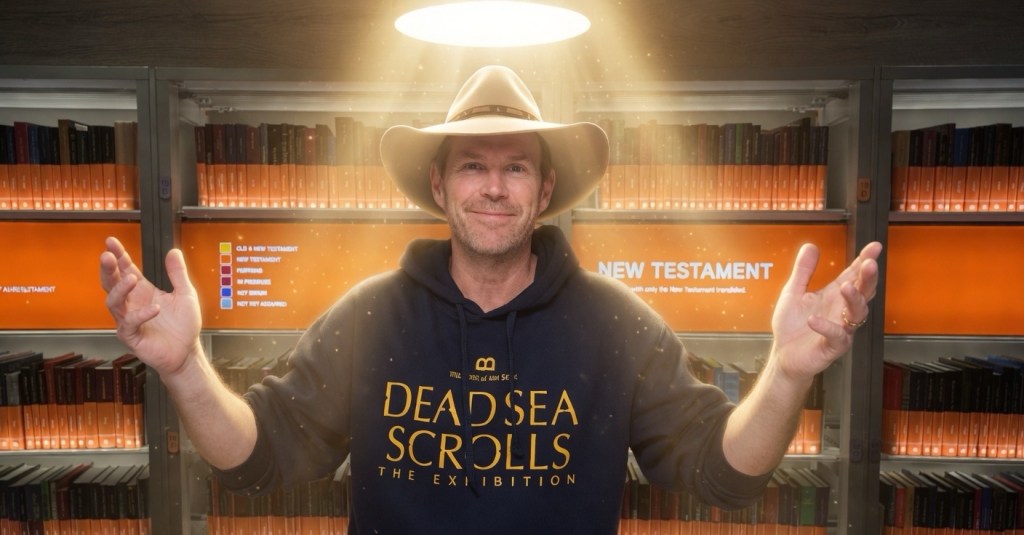
About the Author: Rich Hoffman

Rich Hoffman is an aerospace executive, political strategist, systems thinker, and independent researcher of ancient history, the paranormal, and the Dead Sea Scrolls tradition. His life in high‑stakes manufacturing, high‑level politics, and cross‑functional crisis management gives him a field‑tested understanding of power — both human and unseen.

He has advised candidates, executives, and public leaders, while conducting deep, hands‑on exploration of archaeological and supernatural hotspots across the world.

Hoffman writes with the credibility of a problem-solver, the curiosity of an archaeologist, and the courage of a frontline witness who has gone to very scary places and reported what lurked there. Hoffman has authored books including The Symposium of JusticeThe Gunfighter’s Guide to Business, and Tail of the Dragon, often exploring themes of freedom, individual will, and societal structures through a lens influenced by philosophy (e.g., Nietzschean overman concepts) and current events
The Litigation Profiteers: How Election Lawyers and Government Legal Firms Thrive on Political Chaos and Taxpayer Funds

As I drove past the law practice in Beckett Ridge the other day, I noticed the big sign out front supporting Cindy Carpenter in the Republican primary for Butler County Commissioner. It struck me as odd. The lawyer who runs that firm shows up at Republican events, associates with Republican circles, and presents himself as one of us. Yet here he was, publicly backing a candidate the party had dumped in favor of its endorsed choice, Michael Ryan. That sign crystallized something I’ve observed for years in Ohio politics: certain legal professionals operate in the shadows, injecting themselves into local disputes not out of ideological consistency but because chaos creates billable hours. This isn’t isolated to one small firm or one county. It scales up dramatically when you reach the national level, where figures like Marc Elias have built entire practices—and substantial wealth—by turning election law into a high-volume litigation machine that drains public resources while advancing partisan goals. What follows is my endeavor to shed light on this system, drawing on personal experiences in Ohio and broader patterns affecting taxpayers nationwide. 

Marc Elias, the prominent Democratic election law attorney (often referred to in shorthand as “Mark” in casual conversation), stands as the archetype of this phenomenon. Elias, a partner at Elias Law Group, and is a direct supporter of Amy Acton in Ohio, which he founded after leaving Perkins Coie in 2021, has positioned himself as the go-to litigator for voting rights challenges. He founded Democracy Docket in 2020 as a platform to track and analyze these cases, and his firm has been extraordinarily active. In October 2025, Elias publicly stated that his team of fewer than 60 lawyers was litigating 63 voting and election cases across 30 states. By May 2026, that number had climbed to 85 cases in 43 states plus the District of Columbia. His side claims victories in the overwhelming majority of post-2020 challenges to Republican-backed election measures, framing them as defenses against “voter suppression.” Critics, however, see a deliberate strategy of lawfare: filing lawsuits in multiple jurisdictions to force states, counties, and local governments to expend vast sums to defend laws that enjoy broad public support, such as voter ID requirements. Elias himself has acknowledged the volume, noting in one Democracy Docket piece that his firm’s work is relentless and expanding. 

This isn’t new for Elias. In 2020, he led the Democratic legal response to more than 60 lawsuits filed by Donald Trump and his allies challenging election results. Nearly all of those suits failed, often on procedural grounds or for lack of evidence. Elias’s team prevailed in the lion’s share, cementing his reputation. But the pattern predates 2020. He has challenged voter ID laws, early voting restrictions, ballot-collection rules, and redistricting efforts in dozens of states. In Ohio specifically, Elias Law Group filed suit in January 2023 against House Bill 458, signed by Republican Governor Mike DeWine. The law included photo voter ID requirements and other provisions that the plaintiffs—groups like the Northeast Ohio Coalition for the Homeless, Ohio Federation of Teachers, Ohio Alliance for Retired Americans, and Union Veterans Council—called “voter suppression.” The suit argued the measures disproportionately harmed young, elderly, Black, military, and overseas voters. Elias’s firm has also targeted Ohio’s rules on drop boxes and foreign funding in ballot measures. These actions align with a national playbook: challenge decentralized election administration in as many venues as possible, knowing that even if many suits are dismissed, the cumulative cost to defenders mounts. 

What makes this infrastructure so effective—and so corrosive—is the decentralized nature of American elections. Unlike a centralized national system, voting rules are set and administered at the state and county levels. A single law, such as Ohio’s voter ID requirement or restrictions on “Golden Week” early voting and registration (which Elias’s earlier work also targeted), can trigger parallel lawsuits in federal and state courts. Each filing forces election officials, secretaries of state, and attorneys general to respond. Defense isn’t cheap. Routine election litigation for a state or county can run between $50,000 and $250,000 per case, according to estimates from officials who have faced these challenges. When emergency injunctions, appeals, and discovery are involved, costs balloon into the hundreds of thousands or even millions per major dispute. Multiply that across dozens or hundreds of suits nationwide, and the taxpayer burden becomes enormous. Many of these expenses are buried in general budgets, election administration line items, or outside counsel contracts rather than isolated as “litigation defense.” There is no national requirement to itemize plaintiff-specific legal fees, making the full picture opaque. Reporters rarely dig into the granular accounting, so the public seldom sees the true price tag. 

I have seen this dynamic play out up close in Ohio. During my involvement with local issues, particularly around Lakota Local Schools in Butler County, I witnessed how legal strategies can be weaponized to remove elected officials who don’t align with certain interests. A school board member endorsed by the Republican Party faced removal efforts involving coordinated complaints, legal maneuvering, and outside pressure. The board ultimately acted against her amid disputes over absences and other procedural issues. Public records battles followed, including a case that reached the Ohio Supreme Court, where Lakota was ordered to pay thousands in fees for failing to promptly release documents related to legal spending and threats of litigation. The district also settled other suits involving residents barred from speaking at meetings, covering plaintiff legal fees. These aren’t abstract costs. They come out of the same budgets funded by local property taxes—the very taxes that already strain families and businesses. School boards negotiate collective bargaining agreements with unions, and the legalisms involved in those contracts, disputes, and related litigation generate substantial revenue for outside firms. Chaos in the public school system, whether over board composition, curriculum, or operations, keeps the meter running. 

The same lawyer I saw with the Carpenter sign had previously inserted himself into the school board removal effort. He helped craft or advise on the legal strategy that contributed to ousting a Republican-backed member. It surprised me at first—someone who attends Republican events playing along with what appeared to be an effort to shift the board toward more liberal control. But it makes sense once you follow the money. Law firms that specialize in government work—whether at the school board, county, or state level—thrive when there is perpetual conflict. They represent municipalities in defense matters, advise on contracts, and sometimes moonlight on partisan challenges. The incentive is clear: more lawsuits mean more retainers, more billable hours, more settlements. In Lakota’s case, the legal spend tied to board disputes and public records requests added up quickly, all ultimately borne by taxpayers.

This pattern repeats at the state and national scale. Elias’s firm has received tens of millions in payments from Democratic committees and campaigns. OpenSecrets data for the 2024 cycle alone shows Elias Law Group receiving over $40 million in legal services from various Democratic entities. These funds don’t come from thin air; they originate with donors who expect results in the form of favorable court rulings, delayed or blocked reforms, and sustained pressure on Republican-led election administrations. When states settle early to avoid mounting defense costs—as some attorneys general have done rather than fight every challenge to the bitter end—the litigation achieves its strategic goal without a full trial. The threat of bankruptcy through legal fees is real for smaller jurisdictions. Communities facing multiple simultaneous suits often lack the resources to defend aggressively, leading to procedural changes or policy retreats that might not have occurred on the merits. 

Critics of voter ID and other common-sense reforms frequently point to the absence of widespread fraud findings in court as proof that the measures are unnecessary. But that misses the point. Many challenges never reach a full evidentiary hearing on fraud because the sheer expense of litigation forces capitulation or dismissal on narrower grounds. Elias and similar litigators understand this leverage perfectly. They file suits knowing that even meritless claims impose real costs. One notable example involved sanctions against Elias and co-counsel. In a Texas case concerning the elimination of straight-ticket voting, the Fifth Circuit Court of Appeals sanctioned the team for filing redundant and misleading motions. The court ordered payment of opposing attorney fees and double costs, describing the conduct as problematic. While Elias’s defenders called it a technicality or good-faith error, the episode illustrates how aggressive tactics can cross lines—and still generate fees along the way. A federal court in another context also addressed Elias-related conduct with fee-shifting orders. 

The broader legal profession has learned to mine government budgets in similar ways. Public sector collective bargaining, school board disputes, redistricting battles, and election administration all require specialized counsel. Firms embed themselves in these ecosystems, often representing both sides of the table at different times. The result is a self-perpetuating cycle: policies that invite litigation create demand for lawyers; lawyers file suits that generate more litigation; governments pay to defend or settle, raising taxes or cutting services elsewhere. Property taxes, in particular, become a reliable revenue stream for these activities because they are local and somewhat insulated from immediate voter backlash. In Ohio, where property taxes fund much of local government and schools, the inability to rationalize budgets amid endless legal challenges keeps rates elevated. Media rarely connect the dots between litigation infrastructure and tax burdens, but the connection is direct.

I’ve dealt with my share of lawyers and consultants lately, both personally and in observing public affairs. They are expensive—often prohibitively so. They jump between contracts, charge premium rates, and extract significant value from the top of any deal or dispute. When legal issues arise, they can drain bank accounts with astonishing speed. In government contexts, this dynamic is amplified because the payer is diffuse: the taxpayer. Most citizens don’t have the expertise or resources to challenge the system themselves. Self-representation is possible but risky and time-consuming; hiring specialists is the default for institutions. Judges, many of whom come from the same legal circles or socialize with attorneys at events, often defer to the professionals. The result is a clubby environment where loyalty to the bar most of the time trumps accountability to the public.

Nationally, the scale is staggering. Democracy Docket’s own tracking shows hundreds of voting and election lawsuits filed in recent cycles—228 in 2024 alone, part of a total of 306 from early 2023 through Election Day. While Elias frames these as necessary defenses of democracy, the cumulative burden of defense falls on public coffers. States like Texas have spent millions defending voter ID and redistricting laws over the years. North Carolina expended roughly $5 million on voter ID litigation between 2011 and 2016. Local Voting Rights Act Section 2 suits have cost jurisdictions millions apiece in defense and settlements—Charleston County, South Carolina, spent $2 million unsuccessfully; Yakima, Washington, nearly $3 million. These figures represent conservative estimates; appeals and repeated filings multiply the impact. When aggregated across the country, the high single digits of millions—or likely far more—disappear into budgets without clear public accounting. 

Elias’s involvement in Ohio is not abstract. Beyond the 2023 HB 458 challenge, his network has engaged with issues such as foreign money in ballot campaigns and drop box rules. He has also sued to overturn certain restrictions on foreign nationals’ spending in Ohio ballot measures. These actions, while presented as principled stands for access, have the practical effect of complicating administration and forcing expenditure. Meanwhile, at the local level, analogous tactics play out in school boards and county commissions. The removal of a Republican-endorsed school board member in Lakota, the public records fights, and the legal maneuvering around board composition all illustrate how law can be used to reshape governance without direct voter input at the ballot box. The lawyer with the Carpenter sign understood the game: support the candidate who sustains the ecosystem of disputes.

This is not to say every lawsuit is frivolous or that voting rights concerns are imaginary. Legitimate disputes exist, and courts rightly resolve them. But the volume, the targeting of popular reforms like voter ID (supported by large majorities in polls), and the financial incentives create a corrosive feedback loop. Democrats benefit from the chaos because it undermines Republican-led integrity measures. Law firms benefit regardless of the outcome because fees accrue during the process. Taxpayers lose either way—directly through documented legal bills and indirectly through higher taxes, diverted election funds, and eroded trust. When cases settle or procedural changes are mandated to avoid further expense, the public rarely sees the full ledger.

The decentralized structure of elections is a feature of federalism, but it becomes a vulnerability when exploited systematically. Each county must defend its own processes. State attorneys general face a barrage. The strategy is clear: file enough suits to overwhelm capacity, force settlements, and normalize the idea that basic safeguards are legally suspect. Elias has coordinated responses to dozens of cases, and affiliated litigation has filed over 100 suits in a single year. His personal involvement in 64 election cases during the 2020-2021 period is well-documented. The goal, from the critic’s perspective, is not merely to win discrete cases but to make enforcement of election laws so costly that officials stop trying.

Personal experiences reinforce the systemic view. Dealing with consultants and attorneys in various contexts has shown me how quickly costs escalate. They take a large cut off the top, move from job to job, and thrive on complexity. In government, this is magnified. School board members who push back against the status quo often find themselves targeted legally. Elected officials hesitate to fight because they fear draining community resources. The result is a shadow governance where law firms exert outsized influence.

To break the cycle, we need structural changes. Stronger voter ID laws with clear, unambiguous standards reduce litigation fodder. Meaningful sanctions for abusive filings, greater transparency in government legal spending, and centralized tracking of litigation costs would help. Term limits or ethics rules for government attorneys might limit revolving-door incentives. Most importantly, voters must recognize that these “phantom costs” are real and fund them through taxes. Integrity in elections isn’t free, but neither is the endless litigation that undermines it.

As someone who has watched this play out from the ground level in Ohio—seeing yard signs that reveal divided loyalties, school board battles that consume resources, and national players like Elias shaping the battlefield—I believe the public deserves better. The litigation infrastructure built on chaos benefits a small class of professionals at the expense of representative government. Taxpayers foot the bill, often without realizing the full scope. Shining a light on these practices, demanding accountability, and supporting reforms that prioritize clarity over ambiguity are essential. Otherwise, the parasites will continue to thrive while the body politic weakens. We have the tools to fix it; what remains is the will to use them.

Footnotes

1.  Personal observation of law practice signage and political involvement in Butler County, Ohio, 2026 primary context.

2.  Democracy Docket reports and Elias public statements on case volume.

3.  Ohio Capital Journal coverage of HB 458 lawsuit filed by Elias Law Group.

4.  Estimates drawn from public official reports and historical litigation defense data (e.g., Texas, North Carolina voter ID cases).

5.  Ohio Supreme Court ruling in Lakota Local Schools public records case, 2024.

6.  OpenSecrets vendor payment data for Elias Law Group, 2024 cycle.

7.  Fifth Circuit sanctions order in Texas straight-ticket voting litigation.

8.  Washington Post compilation of election-related public expenditures.

9.  Additional sources: Wikipedia entry on Marc Elias; Brennan Center and Campaign Legal Center litigation trackers; local Butler County reporting on Carpenter/Ryan primary and Lakota board disputes.

Bibliography

•  Elias, Marc. Various articles, Democracy Docket (2020–2026).

•  “Marc Elias,” Wikipedia.

•  Ohio Capital Journal articles on Elias Law Group Ohio lawsuits (2023).

•  OpenSecrets.org vendor profile: Elias Law Group.

•  Washington Post, “Trump’s false election claims cost taxpayers over $500 million” (2021, updated analyses).

•  Court documents: Fifth Circuit sanctions ruling; Ohio Supreme Court Lakota records case (2024).

•  Additional reporting: Cincinnati Enquirer, WLWT, Ballotpedia on Butler County and Lakota Local Schools.

Rich Hoffman

More about me

Click Here to Protect Yourself with Second Call Defense https://www.secondcalldefense.org/?affiliate=20707

About the Author: Rich Hoffman

Rich Hoffman is an aerospace executive, political strategist, systems thinker, and independent researcher of ancient history, the paranormal, and the Dead Sea Scrolls tradition. His life in high‑stakes manufacturing, high‑level politics, and cross‑functional crisis management gives him a field‑tested understanding of power — both human and unseen.

He has advised candidates, executives, and public leaders, while conducting deep, hands‑on exploration of archaeological and supernatural hotspots across the world.

Hoffman writes with the credibility of a problem-solver, the curiosity of an archaeologist, and the courage of a frontline witness who has gone to very scary places and reported what lurked there. Hoffman has authored books including The Symposium of JusticeThe Gunfighter’s Guide to Business, and Tail of the Dragon, often exploring themes of freedom, individual will, and societal structures through a lens influenced by philosophy (e.g., Nietzschean overman concepts) and current events.

Fighting Monsters: Culture at Liberty Center in Butler County that is healthy and wise

The recent Lunar New Year celebration at Liberty Center in Liberty Township, Ohio, brought back a flood of memories for me. On February 28, 2026, the mall complex—always a wonderful development just north of the I-275 loop—hosted a vibrant Lunar Festival organized by the Alliance of Chinese Culture & Arts. The event featured classic dragon and lion dances, Chinese music, Asian drums, acrobatics, Taiji demonstrations, and more, filling the space with energy and drawing crowds from the local community in Butler County. It was a positive, constructive way to launch the next phase of the year, embracing Eastern cultural traditions in a modern American setting. The performances were well-coordinated, tasteful, and joyful, with vendors offering dumplings and other treats amid the festivities, and watching the dragon soar and the lions prance reminded me of my own early experiences with these rituals.

As a teenager in the mid-1980s—around 1984, 1985, and 1986—I had one of my first real jobs at Emperor’s Wok, a highly decorated Chinese restaurant on Chester Road in Sharonville, Ohio. It was one of the most elaborate spots in Cincinnati at the time, with intricate interiors dedicated to Chinese culture. Everyone went there for authentic food in an immersive environment. The owners and family were wonderful; I got to know the cooks and the performers who handled the dragon dances. My role included customer service—dressing sharply in a bowtie to hustle tips in a classic, high-energy setting—but during Chinese New Year, it became something more adventurous. They kept the dragon costume and props in a closet year-round, and I was tasked with climbing onto the roof and the magnificent awning where cars pulled up for drop-offs. The restaurant had a grand entrance, and the parking lot would fill with spectators as the traditional dragon dance unfolded.

The dance lasted about half an hour, complete with booming drums, crashing cymbals, and the performers underneath the long, colorful dragon puppet. My job was to feed strings of thousands of firecrackers off the awning, setting them off in bursts that exploded above the dragon’s head as it twisted and leaped below. The noise, smoke, and flashes created an electric atmosphere, scaring away bad spirits in the tradition while entertaining the crowd. Firecrackers were key—loud explosions to drive off evil—and the whole thing felt proactive: humans creating their own spectacle to combat terror. Seeing similar elements at Liberty Center in 2026 brought it all rushing back: the coordination, the percussion, the acrobatics, and the sense of community triumph over unseen threats.

These dances aren’t just entertainment; they’re deeply rooted in Chinese mythology and serve a spiritual purpose. The lion dance, prominent in southern China, is often associated with the legend of the Nian (or Nian beast), a ferocious monster that terrorized villages on New Year’s Eve. Descriptions vary—some say it resembled a flat-faced lion with a horn, others a massive creature larger than an elephant with sharp teeth—but the core story is consistent. The Nian feared loud noises, bright lights, and the color red. Villagers discovered this and used firecrackers, fireworks, red decorations, lanterns, and couplets on doors to repel it. Over time, these customs evolved into annual traditions: red envelopes for luck, staying up late, and performances to ensure protection and prosperity. The lion dance mimics this defense, with performers in vibrant, red-heavy costumes embodying strength and courage. The dragon dance, dating back to the Han Dynasty or earlier, honors the dragon as a symbol of power, wisdom, benevolence, good fortune, and control over rain and water—essential for agriculture and abundance.

A key figure in many lion dances is the Laughing Buddha, or Big Head Buddha (Dai Tou Fat), often portrayed as a jolly, potbellied character in a mask, waving a fan. This isn’t the historical Buddha of Buddhism but a folk figure inspired by Budai (or Hotei), the “Laughing Buddha” known for joy, prosperity, and contentment. In the dance, he provides comic relief, teasing and guiding the lions—sometimes playfully chasing them or interacting with the crowd—while coordinating to the music. His presence adds lightness: amid the fierce combat against evil, there’s laughter, pranks, and confidence. The potbelly symbolizes a full, prosperous life, laughing in the face of danger. It’s a brilliant touch—turning fear into joy, showing human ingenuity in overcoming darkness through humor and skill. The martial arts elements, acrobatics, and kung fu displays highlight dexterity and strength, reinforcing that humans can triumph over lurking monsters.

This reverence for the spirit world extends across Eastern cultures. In Japan, Shinto temples feature similar beliefs in kami (spirits), with rituals to balance the seen and unseen. Korea and other regions share roots in warding off malevolent forces through noise, color, and performance. The thin veil between the physical and spiritual worlds means monsters or evil spirits—rambunctious and ever-present—must be managed proactively. Red wards off negativity; mirrors on costumes reflect evil back; drums and gongs create an overwhelming sound to dispel it. It’s optimistic: approach the unknown with boldness, abundance, and good fortune, much like fortune cookies that always deliver positive messages.

These patterns aren’t unique to the East. Globally, cultures confront “monsters” or paranormal threats through ritual. North American Indigenous traditions often involve drums, yelling, colorful regalia, and dances to connect with or control spirit visions—sometimes blurred by hallucinogenic plants in shamanic practices, creating colorful, terrifying projections that demand management for societal harmony. The use of red, loud percussion, and aggressive displays taps into the idea of warding off evil, much like firecrackers or mirrors. In Christianity, demons are pushed out through prayer, exorcism, or faith in divine protection. Everywhere, humans develop mechanisms to live with terror—whether invisible forces, cryptids, or existential fears.

This brings me to the Mothman legend from Point Pleasant, West Virginia (close to Ohio roots). Sightings in 1966-1967 described a large, winged humanoid with glowing red eyes, often near the TNT area (a former munitions site). It became tied to the tragic Silver Bridge collapse in December 1967, killing 46 people, turning Mothman into a harbinger of doom. Some link it to Native American lore, such as thunderbirds or curses (e.g., Chief Cornstalk’s), or even misidentified birds, such as sandhill cranes. But the archetype persists: a monster emerging seasonally or in crisis, attacking or foretelling harm. Around Christmas or New Year periods, it echoes the Nian—seasonal terror tied to transitions. Both involve communities responding: firecrackers and dances for Nian, vigilance and folklore for Mothman.

Expanding further, many speculate on shared origins for such creatures. Ancient astronaut theories suggest amphibious or serpentine beings from places like Sirius (as in Dogon African traditions of Nommo from Sirius B) influenced global myths. Chinese dragons—long, serpentine, benevolent yet powerful—might reflect memories of advanced visitors or natural phenomena, migrating from regions like the Indus Valley over the Himalayas into East Asia. From the Near East westward, dragons became adversarial (e.g., biblical serpents or European fire-breathers), but in the East, they’re auspicious. Amphibious gods (e.g., Babylonian Oannes or Dagon) appear in Sumerian and other lore, possibly tied to seafaring or aquatic extraterrestrials who seeded civilization. The persistence of monster myths—winged humanoids, serpents, beasts—suggests a universal human concern with the “other”: unseen threats in the dark, whether paranormal, spiritual, or existential.

Yet cultures don’t just fear; they innovate. Eastern approaches—optimistic, proactive, laughing at danger—offer lessons. The Laughing Buddha prances confidently amid monsters, embodying joy despite peril. Drums attack the spirit world aggressively, red banners proclaim victory, and firecrackers create human-made chaos to counter it. This mindset—embracing abundance, prosperity, and humor—helps build constructive societies. Liberty Center’s event wonderfully blended this ancient wisdom with modern community life, reminding us that engaging with other cultures enriches our own without duplicating rituals wholesale. We have strengths in the West, but learning to face “monsters”—whether literal cryptids, personal demons, or global uncertainties—builds resilience.

My time at Emperor’s Wok taught me early about cultural depth beyond surface festivity. Friendships with the family performers, the thrill of the rooftop explosions, the cultural immersion—all shaped how I view the world. Watching the 2026 festival, I saw echoes of those days: positive energy pushing back darkness, joy in the face of the unknown. It’s a healthy reverence for survival, a reminder that humans thrive by confronting fears creatively. Watch out for the monsters—they’re everywhere—but find ways to laugh, drum, and dance them away.

For further reading and research:

•  Wikipedia entries on “Nian,” “Lion dance,” “Dragon dance,” and “Mothman” provide solid overviews with sources.

•  Britannica’s article on the Chinese New Year details legends and traditions.

•  Books like The Mothman Prophecies by John Keel explore the Point Pleasant events.

•  Robert K.G. Temple’s The Sirius Mystery discusses Dogon-Sirius connections (though controversial).

•  Academic sources on shamanism and global folklore, such as studies on Indigenous North American rituals or comparative mythology.

Rich Hoffman

More about me

Click Here to Protect Yourself with Second Call Defense https://www.secondcalldefense.org/?affiliate=20707

Its Time for NASA to get The Right Stuff, Again: They need to work faster, longer, and launches need to happen much more often

My wife and I recently returned from a trip to NASA’s Space Coast in Florida, a place that has held a special significance in my life for over 30 years. My family has owned a condominium complex in the area for decades, and we’ve visited the Cape Canaveral region dozens of times. It’s been a big part of our lives, from family vacations to watching the ebb and flow of the aerospace industry along the coast. This latest visit was particularly exciting because I wanted to get a firsthand look at the facilities tied to the Artemis program, as well as the impressive campuses of private companies like SpaceX and Blue Origin. I am deeply invested in the expansion of human presence off-planet Earth—not just for the adventure and acquisition of knowledge, but for risk mitigation against existential threats to humanity and to unlock the full potential of human intellect beyond our world. I want a thriving space economy, and I want NASA to succeed spectacularly in leading that charge. However, my observations during this trip left me with a mix of enthusiasm and constructive criticism about the current state of NASA’s Artemis program.

We timed our visit toward the end of February 2026, hoping to catch some activity. SpaceX had a busy schedule with multiple Falcon 9 launches deploying Starlink satellites, including one on a Wednesday, another on a Friday, and a Saturday night launch around 9 p.m. that I was particularly eager to witness. These launches have become so routine and reliable that they barely make headlines anymore, which is actually a good thing—it means the infrastructure is robust, dependable, and taken for granted like buses running on schedule.¹ Yet for me, personally, it was a milestone: after all these years of visiting the area, including many stays at our family condo with views toward the launch sites, I had never personally witnessed a launch until that Saturday night. I set up my camera on the balcony, and when the Falcon 9 lifted off, it was thrilling—a bright streak lighting up the night sky, followed by the booster’s controlled descent. It felt like a long-overdue personal victory, but it also underscored a deeper issue: launches from the Space Coast should be commonplace, not rare exceptions.

In contrast, the Artemis program felt stagnant. While touring the Kennedy Space Center facilities, I noticed a heavy emphasis on historical reverence—the Apollo era, the Shuttle program, the achievements of the past. There’s immense pride in what NASA accomplished when it was the only game in town, but far less visible momentum on current endeavors. The exhibits and tours celebrate the “right stuff” mentality of old, yet the gift shop selling “The Right Stuff” merchandise feels like a relic rather than a living ethos.² When stacked against the dynamic energy at SpaceX and Blue Origin, the difference is stark.

SpaceX’s operations are behind secure gates, but their pace is undeniable. During our visit, we saw a Falcon booster that had just landed on a droneship being towed into Port Canaveral on a flatbed truck, cleaned up near restaurants where cruise ships depart, and prepared for reuse—all on a Saturday, with crews working as if it were a regular weekday.³ The company had three launches in a short window that week alone, demonstrating frequency, reusability, and high employee engagement. Blue Origin’s campus, visible right outside the visitor center gates, is enormous—once an empty field, now dominated by a massive factory complex for their New Glenn rocket and lunar lander work, rivaling or exceeding large industrial sites I’ve seen elsewhere, like GE facilities in Ohio.⁴ Their footprint signals serious investment in a new space economy.

Artemis, however, hit a snag during our stay. NASA had been preparing for an early-March launch of Artemis II, the crewed lunar flyby mission using the Space Launch System (SLS) rocket and Orion spacecraft. But during final checks, including a dry run or wet dress rehearsal, issues emerged: leaks (including helium flow anomalies in the upper stage and prior hydrogen concerns) and other mechanical problems.⁵ The decision was made to scrub the March window, roll the stack back into the Vehicle Assembly Building (VAB) for fixes, and target April at the earliest.⁶ This delay was disappointing but not surprising given the program’s history of setbacks.

I offer this as constructive criticism because I genuinely want Artemis to work. The program represents NASA’s path to sustained lunar presence, eventual Mars exploration, and broader human expansion. But it suffers from several structural issues. First, the cadence is too slow. Apollo launches happened far more frequently, with shorter intervals that kept teams sharp, knowledge fresh, and momentum high.⁷ In Artemis, years pass between major flights—Artemis I was uncrewed in 2022, Artemis II is now pushed further, and landings are delayed. This leads to entropy: experienced personnel move on, retire, or shift careers, and institutional knowledge erodes. High turnover in skilled aerospace roles exacerbates this.

Second, there’s a cultural shift away from the bold, risk-accepting “right stuff” era.⁸ In the past, engineers and workers stayed late, worked extra shifts, and treated the mission as an adventure worth personal sacrifice. Today, NASA seems more bureaucratic—9-to-5 mindsets, emphasis on protocols (even lingering COVID-era restrictions in some views), and fear of media backlash from any failure. Catastrophic risks like Challenger and Columbia are memorialized heartbreakingly at the Atlantis exhibit, but those risks were part of pushing boundaries. Adventurers accepted it; today, there’s paralysis by analysis and PR caution.⁹

Third, workforce engagement appears lower than that of private firms. SpaceX recruits passionate people who work multiple shifts, weekends included, to meet aggressive schedules. NASA has fallen into patterns where not all hires prioritize the mission’s higher purpose—some treat it as just a job. This ties into broader criticisms of prioritizing diversity, equity, and inclusion (DEI) metrics over merit-based selection of the “best and brightest” for frontline problem-solving.¹⁰ While inclusion is valuable, the core must remain technical excellence and drive.

The recent program changes highlight these struggles. NASA announced major revisions: adding an interim mission (now Artemis III in 2027) for low-Earth orbit tests of docking with commercial landers (from SpaceX and Blue Origin), life support, and other systems—pushing the first lunar landing to Artemis IV in 2028, with potential for another that year.¹¹ This “sprinkling in” another mission before attempting a landing suggests the original Artemis III step was too ambitious given accumulated delays and risks, including ongoing Orion heat shield concerns from Artemis I (unexpected char loss, leading to trajectory adjustments rather than full redesign for Artemis II).¹² Changing reentry vectors might be more practical than material overhauls, which could take a decade, but it still reflects caution over boldness.

Historically, political decisions have hampered NASA. The Obama-era cancellation of Constellation, reliance on Russian Soyuz for ISS access, and redirection toward other priorities (like studying Islamic contributions to science) felt like a betrayal of the adventure spirit.¹³ The Trump administration’s creation of Space Force and push for resurgence helped, but sustained congressional support has been inconsistent.¹⁴ Without it, NASA can’t match the frequency of private players.

The local Space Coast economy reflects this. Property values have stabilized but not exploded as they could with consistent activity.¹⁵ Cocoa Beach and the surrounding areas thrive more from tourism and private launches than NASA events. When launches were rare, the vibrancy lagged; now, with SpaceX’s dominance, there’s renewed energy—people shopping at Publix, upper mobility in aerospace jobs, families coming to watch launches.

I remain optimistic. NASA has the infrastructure—Kennedy Space Center is ideal for launches—and partnerships with SpaceX, Blue Origin, and others. Administrator statements post-delay emphasized fixing issues quickly, increasing cadence (targeting more frequent SLS flights), and returning to basics to accelerate progress toward 2028 landings.¹⁶ But success requires cultural revival: robust second and third shifts, seven-day operations, passion over paycheck, acceptance of managed risk for exploration, and political unity beyond one administration.

I’ve seen the Space Coast transform, from Apollo’s glory to the Shuttle era to today’s commercial boom. My first personal launch sighting was exhilarating, but it shouldn’t have taken 30+ years. Launches should be daily occurrences—maybe grab pizza and watch one every evening. That’s the expectation we need: frequent, reliable, advancing humanity. Artemis can lead if it recaptures the right stuff—not just in a gift shop, but in every engineer, worker, and decision.

The space economy could double U.S. GDP contributions through innovation, jobs, and knowledge gains.¹⁷ It’s not just money; it’s human bandwidth expanding. Congress, local leaders, the White House—everyone must rally. Private companies are setting the pace; NASA should leverage that, not lag.  But to do all that, NASA needs to work harder and faster.  A lot faster. 

Footnotes:

¹ SpaceX Starlink launches in late February 2026 included multiple launches from Cape Canaveral.

² “The Right Stuff” refers to the 1979 book/1983 film on Mercury program bravery.

³ Reusable Falcon 9 boosters routinely recovered and refurbished.

⁴ Blue Origin’s KSC facility is massive for New Glenn production.

⁵ Helium flow anomaly in SLS upper stage led to rollback.

⁶ NASA targeted April 2026 for Artemis II post-rollback.

⁷ Apollo had a higher launch frequency in peak years.

⁸ Tom Wolfe’s “The Right Stuff” captured the early astronaut/test pilot ethos.

⁹ Analysis paralysis and PR fears cited in delays.

¹⁰ Broader debates on merit vs. DEI in technical fields.

¹¹ NASA added a mission, shifted landing to Artemis IV in 2028.

¹² Orion heat shield char loss from Artemis I prompted changes.

¹³ Obama-era program shifts and ISS reliance on Russia.

¹⁴ Space Force established in 2019 under Trump.

¹⁵ Local economy tied to aerospace activity levels.

¹⁶ Post-delay press conference emphasized speed and fixes.

¹⁷ Estimates of space economy growth potential.

Bibliography / Further Reading

•  NASA official Artemis updates: https://www.nasa.gov/artemis

•  Artemis II delay announcements (Feb 2026): NASA blogs and press releases on helium issues and rollback.

•  SpaceX launch manifests: https://www.spacex.com/launches

•  Blue Origin facilities overview: Wikipedia and company announcements on KSC campus.

•  Orion heat shield investigation: NASA technical reports post-Artemis I.

•  Historical Apollo cadence: NASA history archives.

•  “The Right Stuff” by Tom Wolfe (1979).

•  Space economy reports: Various economic analyses on growth projections.

•  Political history: Coverage of Constellation cancellation and Space Force creation.

Rich Hoffman

More about me

Click Here to Protect Yourself with Second Call Defense https://www.secondcalldefense.org/?affiliate=20707

Yes, I Think Jeffery Epstein is Still Alive: They think we’re suckers, and treat us that way

The persistent suspicions surrounding high-profile figures who vanish from public view—whether through reported death, disappearance, or institutional cover-up—often stem from a deep-seated distrust in official narratives. In an era where information flows freely and institutional authority faces scrutiny, these doubts are amplified. Conspiracy theories, while frequently dismissed, sometimes point to genuine irregularities that warrant examination. This pattern appears in cases like Adolf Hitler’s fate after World War II, Jeffrey Epstein’s death in 2019, and recent speculations about Joe Biden’s identity and health. What unites them is the recurring theme of “smoke,” suggesting potential “fire”: procedural failures, missing evidence, powerful interests that could benefit from concealment, and a history of elite impunity that makes extraordinary claims feel plausible to many.

Jeffrey Epstein’s case exemplifies this. Epstein, a financier convicted of sex offenses and accused of trafficking minors to elite circles, died on August 10, 2019, in his cell at the Metropolitan Correctional Center (MCC) in New York City while awaiting trial on federal sex-trafficking charges. The New York City Chief Medical Examiner ruled the cause of death as hanging, with the manner classified as suicide. A comprehensive 2023 Department of Justice Office of the Inspector General report detailed significant operational lapses at MCC: guards failed to conduct required checks (some falsified logs, leading to charges), Epstein was left without a cellmate despite recommendations, and he had been removed from suicide watch after a prior incident in July 2019. The report highlighted a malfunction in the prison’s Digital Video Recorder system starting July 29, 2019, which prevented recording from many cameras (though live feeds continued). Only limited footage from one camera was available for the relevant area.

These lapses—combined with Epstein’s connections to figures like Bill Clinton, Prince Andrew, Donald Trump, and others—fueled theories that he was murdered to silence him or that his death was staged for escape. The meme “Epstein didn’t kill himself” captured widespread skepticism, amplified by his associations and the elite networks he cultivated. Recent document releases in 2025-2026, including tranches from the U.S. Department of Justice totaling millions of pages, have reignited claims. Some allege Epstein is alive—perhaps in Israel, on an island, or elsewhere—based on debunked AI-generated images (e.g., a bearded man in Tel Aviv sunglasses falsely claimed as him), misread emails, or even a Fortnite username change (“littlestjeff1”) that Fortnite confirmed was unrelated and from an existing user. No credible evidence supports him being alive; forensic autopsies, including toxicology showing no unusual substances and no defensive wounds inconsistent with suicide, counter speculation. A 2025 CBS News analysis of jail video revealed no “missing minute” as some claimed, and officials dismissed homicide indicators.

Ghislaine Maxwell, Epstein’s associate, convicted in 2021 of sex trafficking and sentenced to 20 years, has remained largely silent on key details. In a February 2026 congressional deposition before the House Oversight Committee (via video from Federal Prison Camp Bryan), she invoked her Fifth Amendment right repeatedly, refusing to discuss Epstein, trafficking links, or related matters. Her attorney cited a pending habeas petition and advised her to invoke the Fifth Amendment to avoid self-incrimination. Reports describe harsh prison conditions in her low-security facility, including limited space, isolation, and a small cell with a toilet near the bunk—echoing inmate accounts of psychological strain. Some interpret her silence as pressure or as protection for powerful figures; others see it as a legal strategy amid ongoing appeals. Conspiracy claims even suggested a body double in her deposition video, but her lawyer confirmed it was her, attributing changes to jail’s toll (including prior sleep deprivation).

Similar doubts surround Adolf Hitler’s death. Official history states Hitler died by suicide in his Berlin bunker on April 30, 1945, alongside Eva Braun, with their bodies burned. Soviet forces recovered remains, including dental fragments confirmed in 2018 by French forensic experts as matching Hitler’s 1944 X-rays, proving his death in 1945. Post-war rumors, fueled by declassified FBI/CIA files on unverified sightings, claimed Hitler escaped via U-boat to South America (Argentina, Colombia, etc.), living incognito until the 1960s. These relied on hearsay, dubious witnesses, and books like Grey Wolf, often debunked as fiction or plagiarism. Recent 2025 Argentine declassifications of Nazi fugitive files (under President Javier Milei) detailed tracking of figures like Eichmann and Mengele, but offered no new evidence for Hitler. Historians note some Nazis fled to South America with ratlines and support networks, but forensic dental matches, bunker eyewitnesses (e.g., Otto Günsche, Heinz Linge), and CIA dismissals of claims as “phony” override speculation. Theories persist due to Soviet disinformation campaigns and incomplete initial body photos.

More recently, theories claim Joe Biden died in 2019 (perhaps from health issues or foul play) and was replaced by a body double, actor, clone, or masked entity for the 2020 election. Proponents cite perceived changes in appearance (ear shape, height, gait, eyes), basement campaigning during COVID, and inconsistencies in behavior. Some tie this to Epstein-related files, with unverified 2026 emails echoing claims (amplified by Donald Trump in 2025 Truth Social reposts) of Biden’s “execution” and replacement. These resurfaced amid broader distrust in elections and institutions. No evidence supports this; claims stem from manipulated videos, aging effects, satire, or debunked deepfake accusations. Biden’s family, public appearances, and medical records show a pattern of continuity. Theories echo patterns of elite manipulation but lack substantiation beyond visual anomalies that can be explained by lighting, age, or editing.

Connections between these cases include elite networks and power imbalances. Epstein’s ties to figures like Bill Gates involved philanthropy discussions, including a 2015 email invitation (from a redacted sender) to a Geneva pandemic preparedness conference on “Preparing for Pandemics.” Epstein claimed interactions with Gates on biomedical projects, modeling, or even lurid personal matters (e.g., STI treatments), but Gates’ spokespeople called such allegations “absurd and completely false,” noting no financial ties or collaboration materialized. Melinda French Gates expressed discomfort with these details in 2026 interviews. These narratives thrive in low-trust environments where official accounts seem incomplete. Procedural failures (MCC lapses, missing Hitler body photos) invite doubt, amplified by 2026 file dumps fueling QAnon-adjacent extremism, AI hoaxes, and foreign disinformation.

Yet, extraordinary claims require extraordinary evidence. Forensic confirmations (Epstein’s autopsy, Hitler’s teeth) counter speculation, while body-double theories lack substantiation. In a free-information age, scrutiny is valuable, but patterns of “smoke” don’t always indicate fire—sometimes they reflect negligence, coincidence, or elite impunity without full criminal conspiracy. Healthy skepticism demands evidence over assumption. As disclosures continue (e.g., ongoing Epstein file reviews, potential Maxwell appeals), patterns may clarify, but current facts point to suicide for Epstein, death in 1945 for Hitler, and continuity for Biden. Distrust in power structures is justified; baseless leaps risk undermining legitimate inquiries into real abuses and cover-ups.  But then again, that’s what money can buy in these cases, a way to taint the evidence, and then shape the conspiracy within the realm of institutionalized analysis.  When we say there is no evidence, it’s because we rely on evidence that has been bought and paid for to tell a story the conspirator desired.  And in that way, the truth is always concealed. 

Bibliography and Further Reading

•  U.S. Department of Justice Office of the Inspector General. Investigation and Review of the Federal Bureau of Prisons’ Custody, Care, and Supervision of Jeffrey Epstein (June 2023).

•  Charlier, Philippe et al. “The remains of Adolf Hitler: A biomedical analysis and definitive identification.” European Journal of Internal Medicine (2018).

•  Various 2026 reports: CBS News (Epstein theories debunked), Reuters (AI images fact-check), NPR (Gates-Epstein ties), France 24 (Hitler escape debunk).

•  Wikipedia: “Death of Jeffrey Epstein,” “Conspiracy theories about Adolf Hitler’s death” (cross-reference primaries).

•  News: New York Times, Guardian, BBC on Maxwell deposition, file releases (2025-2026).

•  Books: Grey Wolf (critiqued escape claims).

Rich Hoffman

More about me

Click Here to Protect Yourself with Second Call Defense https://www.secondcalldefense.org/?affiliate=20707

‘Prehistoric Worlds Or, Vanished Races’: The truth of the anti-giant conspiracy

Not very long ago, my daughter called me in a rush from a used bookstore in downtown Middletown, Ohio—a place that’s seen better days, rough around the edges, but still holding onto some hidden gems. She told me I had to come right away because she’d found something special and was guarding it like a treasure. When I got there, she handed me an 1885 original edition of The Prehistoric World: Or, Vanished Races by E.A. Allen. The book is barely holding together after all these years, its pages fragile and yellowed, but it’s a remarkable artifact. I bought it for a reasonable price, and it’s become one of my prized possessions. It’s not just a book; it’s a window into a time when exploration and curiosity drove inquiry, before modern institutions locked down narratives with rigid assumptions.

I’ve always been drawn to these topics. Back in high school, even as far back as fifth and sixth grade, I was ahead of my teachers in history and anthropology classes. I’d read widely—Joseph Campbell’s works, myths, comparative religion—and I knew much of what was being taught was incomplete or outright wrong. I endured it to graduate and escape that institutionalized mindset, which I saw holding back real understanding. In my twenties, I dove deeper into Joseph Campbell and even joined the Joseph Campbell Foundation. My adventures around the world, combined with a lifelong connection to southern Ohio, shaped my views. My wife and I have been married nearly 39 years, and throughout that time, we’ve visited Serpent Mound repeatedly—every few years, it’s become a touchstone for us.

Living in southern Ohio, near Middletown and Hamilton, I’ve always had a personal relationship with these ancient sites. Serpent Mound, the massive effigy serpent earthwork in Adams County, is one of the most famous, but closer to home are the mounds along the Great Miami River Valley. There’s the Miamisburg Mound, one of the largest conical burial mounds in eastern North America, built by the Adena culture around 800 B.C. to A.D. 100. It’s 65 feet tall, 800 feet around, and excavations in 1869 revealed layered construction with possible stone facing and burial goods like pipes and effigies. There are even reports that they found skulls in that mound that would fit over the top of regular people, and that these finds terrified the excavators and they abandoned the site, never to return. Yet, despite its proximity—right near where I grew up—schools never took us there on field trips. We went to other places, heard stories about Native American burials and the sadness of destruction by Europeans, but nothing about these advanced earthworks.

Then there’s the area across from Joyce Park in Hamilton, where Pyramid Hill Sculpture Park now sits near Fortified Hill, an older than 2,000-year-old ceremonial earthworks site tied to the Hopewell or earlier traditions. In Allen’s 1885 book, there’s a description and illustration of a large effigy mound or structure in that vicinity—two high peaks carved or shaped, possibly reflecting ancient alignments, even to constellations like Aries, thought to be around 5,000 years old in some interpretations. The book chronicles many Ohio River Valley mounds, dedicating significant portions to the Miami and Mississippi cultures, Mexico, the Aztecs, and global prehistoric peoples. It’s an adventurous, Victorian-era take—profusely illustrated, speculative, open to wonders without the heavy filter of modern politics or funding constraints.

What strikes me most is how this 1885 book feels more honest about discoveries than much of what came later. During that era, explorers and adventurers reported findings without preconceived notions imposed by institutions. Allen’s work reflects a time when people were excited about vanished races and prehistoric worlds, including reports of mound contents that challenged emerging narratives. Many 19th-century accounts from Ohio mounds mentioned unusually large skeletons—sometimes described as 7 to 9 feet tall—unearthed during excavations. These were often speculatively linked to biblical giants or to ancient, advanced peoples. Newspapers and reports from the time sensationalized them, but they reflected genuine observations before professional archaeology standardized explanations. Mainstream archaeology today attributes these to the Adena and Hopewell cultures—sophisticated societies with wide trade networks, astronomical alignments in their earthworks, and ceremonial practices—but dismisses giant claims as misinterpretations, exaggerations, or hoaxes based on crumbling bones and poor documentation.  I have come to understand that the anti-giant conspiracy that has permeated the sciences was a secular construct intended to disprove biblical narratives, rather than to understand them, which was a critical error from that perspective.

I can’t help but feel that institutional science took a wrong turn. After the late 19th century, education and research became centralized, often prioritizing narratives that fit political or funding needs over raw observation. The mounds were attributed solely to ancestors of modern Native Americans, like the Adena (800 B.C.–A.D. 100) and Hopewell (200 B.C.–A.D. 500), who built massive geometric enclosures and burial sites with precision. These are now UNESCO-recognized, like the Hopewell Ceremonial Earthworks, celebrated for their engineering and cultural depth. Yet, in my view, this framing sometimes ignores anomalies or alternative interpretations to maintain control over the story.

This ties into broader questions I’ve pondered for decades. What if these earthworks—Serpent Mound with its debated alignments to solstices (summer sunset at the head, possible lunar or solar cycles), Miamisburg’s layered burials, Fortified Hill’s ceremonial space—are remnants of something older, perhaps offshoots of lost civilizations? Some speculate connections to Atlantis or pre-Ice Age advanced societies, which were wiped out by the Younger Dryas catastrophe around 12,900–11,600 years ago—a sudden cold snap possibly triggered by comet impacts and freshwater floods that disrupted ocean currents, leading to megafauna extinctions and cultural disruptions. Graham Hancock and others link this to Plato’s Atlantis, a global flood-like event ending an Ice Age civilization, with survivors possibly influencing later cultures.

In Ohio, the mounds don’t fit neatly into short timelines. Serpent Mound’s age is debated—some radiocarbon dates suggest an Adena date around 300 B.C., others a Fort Ancient date around A.D. 1100, with possible repairs—but its astronomical sophistication and serpent symbolism hint at deeper roots. The book I found predates the heavy institutionalization that followed, capturing a spirit of adventure where discoveries weren’t immediately boxed into “primitive Indians” or dismissed. It dedicates half its 800 pages to American earthworks, showing alignments and complexities that modern textbooks often downplay.

My frustration stems from this: growing up here, no one talked about these sites in school. No field trips to Pyramid Hill or Miamisburg. No discussion of potential giant remains or alignments that “they shouldn’t even know about” at the time. It felt like a deliberate omission to preserve a simple narrative. Institutions, chasing grants and political correctness, built assumptions around limited data, leading to dead ends. Meanwhile, independent researchers and adventurers are bypassing them, returning to direct observation and instinct.

This book reminds me how much more open inquiry was in 1885, before the Smithsonian and universities solidified control. It shows we knew—or at least wondered—more freely then. We’ve gone downhill in some ways, prioritizing preservation of timelines over pursuit of truth. My daughter recognized that instinctually when she saved it for me. It’s a benchmark: a call to question, explore, and reject complacency in institutionalized science.

We need to return to that adventurous spirit—observe these mounds, ask who built them, why, how old they truly are, and how they connect to our story today. The earthworks along the Ohio River Valley aren’t just relics; they’re evidence of advanced understanding—astronomical, engineering, spiritual—that challenges easy answers. By reflecting on books like Allen’s, we see where assumptions went wrong and how rediscovering truth requires going beyond the official path.

Bibliography

•  Allen, E. A. The Prehistoric World: Or, Vanished Races. Central Publishing House, 1885. (Available via Project Gutenberg and archives.)

•  Ohio History Connection. “Miamisburg Mound.” ohiohistory.org.

•  Ohio History Connection. “Serpent Mound.” ohiohistory.org.

•  Hopewell Ceremonial Earthworks. hopewellearthworks.org.

•  UNESCO. “Hopewell Ceremonial Earthworks.” whc.unesco.org.

•  Romain, William F. Various studies on Ohio earthworks astronomy.

•  Hancock, Graham. America Before: The Key to Earth’s Lost Civilization. St. Martin’s Press, 2019. (For Younger Dryas and catastrophe discussions.)

•  Various 19th-century newspaper reports on mound discoveries (e.g., via historical archives).

Footnotes

1.  Radiocarbon dating debates on Serpent Mound: See Monaghan and Hermann (2019) reconciliation of dates.

2.  Giant skeleton reports: Often debunked as mismeasurements (e.g., Columbus Dispatch, 2019), but reflect period observations.

3.  Younger Dryas Impact Hypothesis: Firestone et al. (2007) and subsequent studies.

4.  Adena/Hopewell mainstream views: National Park Service, Hopewell Culture National Historical Park.

Rich Hoffman

More about me

Click Here to Protect Yourself with Second Call Defense https://www.secondcalldefense.org/?affiliate=20707

Restoring Trust in American Elections: The Case for Reform in Light of Persistent 2020 Questions and the Path Forward

For millions of Americans, the 2020 presidential election left an indelible mark—not just because of its outcome, but because of the questions that have lingered ever since. Joe Biden received over 81 million votes, a record at the time, yet four years later, Kamala Harris garnered roughly 75 million in a similar political landscape with population growth and comparable partisan divides. This drop of more than 6 million votes, combined with Donald Trump’s increase from 74 million to around 77 million, has fueled widespread skepticism. Many see it not as natural voter shifts, but as evidence that 2020’s totals were artificially inflated through lax rules, mail-in ballot chaos, and vulnerabilities in electronic systems—especially under the cover of COVID-19 policies that expanded unmonitored voting.

These concerns are not fringe theories whispered in corners; they have driven national policy debates, legal actions, and now federal interventions. In late January 2026, FBI agents executed a search warrant at Fulton County’s election facility in Georgia, seizing hundreds of boxes containing 2020 ballots, tabulator tapes, electronic images, and voter rolls.<sup>1</sup> Fulton County, the epicenter of Georgia’s 11,779-vote margin favoring Biden, has long been a focal point for allegations of irregularities—misinterpreted surveillance video at State Farm Arena, disputed absentee ballot handling, and chain-of-custody questions. County officials promptly challenged the seizure in federal court, seeking the return of the materials and the unsealing of the warrant affidavit, arguing that it constituted overreach.<sup>2</sup> Yet for those convinced of fraud, this move signals accountability finally arriving under a Trump-led Justice Department.

We’ll examine these claims in the context of historical developments, empirical comparisons, and current developments. I would argue that, while courts and audits in 2020 found no widespread fraud sufficient to overturn the results, the system’s vulnerabilities—loose voter eligibility verification, the absence of universal ID requirements in key states, and reliance on potentially manipulable technology—created opportunities for abuse. And the authorities didn’t find fraud because they either didn’t want to look, or they deliberately looked in the wrong place to hide their complicity in the radicalism that did not want to honor voters in a self-governing government. Genuine self-governance requires secure elections in which every vote is verifiable, and every citizen’s voice counts equally. Reforms such as the Safeguard American Voters Eligibility (SAVE) Act offer a practical path forward, ensuring that only eligible citizens participate without disenfranchising legitimate voters.

A Brief History of Voting Technology and Fraud Concerns

America’s voting systems have always balanced innovation with risk. Paper ballots gave way to mechanical lever machines in the late 1800s to reduce intimidation and speed counting. Optical scanners emerged in the 1960s, followed by direct-recording electronic (DRE) machines in the 1990s. The 2000 Florida recount debacle led to the Help America Vote Act (HAVA) of 2002, which pushed states toward more modern systems but also highlighted persistent issues: punch-card errors, hanging chads, and questions about machine accuracy.

By 2020, many jurisdictions used touchscreen DREs or ballot-marking devices with paper trails, while others relied on hand-marked paper ballots scanned optically. Critics point to shared origins with machines used in countries such as Venezuela and to concerns about the security of Dominion and ES&S systems. High-profile lawsuits against companies making fraud claims (e.g., Mike Lindell’s defamation losses) have chilled some discussion, but audits consistently show machines perform accurately when properly maintained and paper records are available for verification.<sup>3</sup>  The evidence is there in most cases with the paper backup to match the vote count.  However, this manual check often doesn’t occur, creating opportunities for discrepancies to affect results.

Fraud itself has historically been rare. The Heritage Foundation has tracked and documented cases since 1982, totaling approximately 1,500, which is insignificant relative to the billions of votes.<sup>4</sup> Yet rarity does not equal impossibility, especially in high-stakes, loosely regulated environments. The 2020 expansion of mail-in voting, drop boxes, and relaxed signature-matching requirements—often justified as a pandemic necessity—amplified risks in states without strict safeguards.

Fulton County in Focus: From 2020 Allegations to 2026 Federal Action

Georgia’s narrow 2020 margin made Fulton County a lightning rod. Biden’s considerable urban advantage there offset rural Trump’s strength statewide. Allegations included “suitcase” ballots retrieved from beneath tables (later explained as standard procedure), water main breaks that delayed counting, and discrepancies in absentee ballot processing. Multiple recounts, including a hand audit, confirmed results, and courts rejected challenges.<sup>5</sup>

Fast-forward to 2026: The FBI’s seizure of roughly 700 boxes has reignited debate. Agents sought physical ballots, scanner tapes, digital images, and voter rolls from 2020.<sup>6</sup> Body camera footage shows tense interactions, with county staff expressing confusion over the warrant.<sup>7</sup> Fulton leaders, including Chair Robb Pitts, received warnings of potential arrests and filed for return of materials, citing state sovereignty and lack of transparency.<sup>8</sup>

Proponents view this as evidence that emerging issues—chain-of-custody breaches, unauthorized votes, or tampering — could surface. Critics call it political retribution, noting Trump’s repeated claims and the administration’s push to “nationalize” elections in Democratic areas.<sup>9</sup> Regardless, the action underscores why many demand reforms: if doubts persist after years of scrutiny, prevention through stricter rules is essential.

Vote Total Discrepancies: What the Numbers Really Tell Us

The stark contrast between 2020 and 2024 Democratic performance is central to skepticism. Biden’s 81.3 million votes dwarfed Obama’s 2012 total (65.9 million) and Harris’s ~75 million. In states with loose rules—no voter ID, universal mail ballots, minimal verification—Democrat margins often aligned with these patterns.

Turnout in 2020 hit 66.6%, driven by pandemic expansions and polarization. By 2024, fatigue, reduced mail voting, and demographic shifts (e.g., Harris underperforming among nonwhite voters) explain much of the decline.<sup>10</sup> Yet the gap—over 6 million fewer Democrat votes despite population growth—raises legitimate questions about 2020 inflation.

Comparisons with prior elections indicate that Democrats gained ~15 million votes from Obama to Biden, then lost most of them back to Harris. If electronic flipping, non-citizen voting, or dead voters on the rolls contributed even modestly, the numbers could align more closely with a natural ~55-60 million Democratic base in clean elections. States with strict ID and in-person emphasis showed more stable patterns.

The SAVE Act: A Common-Sense Safeguard

Introduced as H.R. 22 in the 119th Congress, the SAVE Act requires documentary proof of citizenship (passport, birth certificate, naturalization papers) for federal voter registration, ending reliance on sworn statements.<sup>11</sup> The House passed it in April 2025; it remains stalled in the Senate amid opposition from groups like the League of Women Voters and Brennan Center, who argue it could disenfranchise millions lacking easy access to documents.<sup>12</sup>

Supporters counter that non-citizen voting, though rare, occurs in lax systems and that proof requirements mirror those for passport or employment verification. Recent efforts urge Senate action before the 2026 midterm elections.<sup>13</sup> For Ohio—already requiring non-strict photo ID—the Act could complement existing rules without significant disruption, ensuring federal elections reflect citizens only.

Voter ID and Security: Protecting Access While Closing Loopholes

Thirty-six states require some voter ID; 23 mandate strict photo ID. Ohio’s non-strict system permits alternatives such as utility bills. Evidence indicates that ID laws deter negligible fraud but can slightly suppress turnout among low-income or minority voters.<sup>14</sup> Free IDs, expanded provisional ballots, and affidavits mitigate this.

States without strict ID requirements (e.g., California) have not documented widespread fraud, yet critics argue that loose rules enable abuse. A balanced approach—universal ID with accommodations—enhances security without barriers.

Electronic Systems, Audits, and Accountability

Machines face hacking fears, but paper trails and post-election audits (risk-limiting or full) verify accuracy. Cases such as Tina Peters’ ruthless conviction for unauthorized access highlight the risks of not having proper security in all elections with federal consequences.  To that point, all indications point to Arizona where Kari Lake should be the governor if election security had been properly utilized.<sup>15</sup> Robust audits, not bans, address concerns.

Conclusion: Toward a More Accountable Republic

The 2020 election exposed vulnerabilities that eroded trust. Courts dismissed widespread fraud claims, but anomalies and lax regulations raise doubts. The Fulton seizure may reveal more—or reaffirm prior findings—but prevention is preferable to reaction.

The SAVE Act, voter ID mandates, and improved audits offer solutions. Ohio legislators and federal counterparts can lead by prioritizing citizenship verification and transparency. Secure elections ensure the government reflects the people, not manipulation. Restoring faith requires action now—before doubts harden into division, which I would argue has already occurred.  Stealing elections by any means is a serious crime and we need to understand who has done what, and what impact that has had on a free republic for which the people rule over themselves.   And without secure elections, that just can’t happen.  And it must happen.  Which is why the SAVE Act is absolutely necessary.

Footnotes

1.  CBS News, “Body camera footage captures confusion as FBI agents seize election records in Fulton County,” 2026.

2.  PBS News, “Fulton County asks court to return 2020 election documents seized by the FBI,” Feb. 2026.

3.  Various court rulings and audits (e.g., Georgia hand recount).

4.  Heritage Foundation Election Fraud Database.

5.  Georgia Secretary of State audits and court dismissals.

6.  Reuters, “Georgia’s Fulton County challenges seizure of election records,” Feb. 2026.

7.  GPB News, “Footage released of FBI search and seizure,” Feb. 2026.

8.  The Guardian, “Fulton County leader says he was warned he faced arrest,” Feb. 2026.

9.  Brennan Center analysis, Feb. 2026.

10.  Election turnout data from U.S. Census and AP analyses.

11.  Congress.gov, H.R.22 – SAVE Act.

12.  League of Women Voters and Brennan Center statements.

13.  Rep. Bean press release, Feb. 2026.

14.  NCSL Voter ID overview.

15.  Heritage Foundation case summaries.

Bibliography for Further Reading

•  Congress.gov: H.R.22 – SAVE Act (119th Congress).

•  Brennan Center for Justice: Reports on voter ID and SAVE Act impacts.

•  Heritage Foundation: Election Fraud Database and related analyses.

•  CBS News, PBS News, The New York Times, Reuters: Coverage of the 2026 Fulton County FBI seizure.

•  Georgia Public Broadcasting and Atlanta Journal-Constitution: Local reporting on Fulton developments.

•  National Conference of State Legislatures: Voter ID laws by state.

•  U.S. Election Assistance Commission: Voting system guidelines and audits.

Rich Hoffman

Click Here to Protect Yourself with Second Call Defense https://www.secondcalldefense.org/?affiliate=20707

Apoorva Ramasway is a Really Good Person: One of the big reasons to support Vivek Ramaswamy for governor of Ohio

There was never any question about supporting Vivek Ramaswamy for Governor of the State of Ohio.  But after meeting with him at his launch ceremony in West Chester, Ohio, I feel even better about it.  Of course, he is a great talent that can speak the peel off an orange.  But so can a lot of con artists.  The question everyone always wants to know about these kinds of things is how can they know they can trust him?  What makes a person trustworthy, even if they have the gift of gab?  After all, there are a lot of salespeople out there who can sell you just about anything who aren’t worth 2 cents as people.  So what makes Vivek Ramaswamy a good person, good enough to be made Governor of the State of Ohio?  Well, I have a proven tactic that I use to qualify people, especially adult people, that has worked for me over the years: I measure a person’s worth based on what kind of spouse they have.  They can sell pretty words to the public all day, but if they partner with a terrible person as a spouse, you should always question the person’s validity.  As a general rule, good people tend to attract other good people.  And bad, toxic people tend to do the same.  You don’t often find a toxic person choosing to be married to a high-quality person.  They are attached to them for a reason.  So judging a person based on the worth of their spouse is quite good as an accurate measurement, and I am thrilled to say that Vivek Ramaswamy’s wife is top-class and a very good person. Upon meeting Apoorva Ramaswamy, I found that I liked Vivek even more.  They are a nice couple who work well together in ways that are bigger than the jobs they do in life.

I don’t mind saying it, and there are certainly more that I can think of, but at this Vivek Ramaswamy event were some very good friends of mine who were part of setting up everything in the background.  And we are friends for a reason that goes beyond political considerations.  I know a lot of people, but I put more trust in these people for a lot of reasons, most of which start with their spouses.  For instance, when people ask me, “How can you trust George Lang?  He’s a RINO establishment figure.”  I can say to them that I can trust him in ways I wouldn’t trust other people, largely because of what I know him that is different from other people, especially people in a decisive Senate role.  Why George?  He has a wonderful wife in Debbie, who is just as solid as a person can get.  They are a good couple, and they are at an age where they travel a lot, and the fruits of a lot of hard work are emerging, and they are living a good life.  They work well together, and things were not always as good as they are now.  I remember when the political left was trying to throw George in jail just for knowing John Boehner.  Even in the toughest of times, Debbie has always been loyal to George, and as a couple, they are always trying to do the right thing, and I have come to know both of them pretty well over the years in ways that far exceed politics.  If George Lang had never been a senator and never was again, he and his wife would still be friends with me and my wife.  They are good people to know.

And why do I like her so much? People always ask me about Nancy Nix.  Well, what’s not to like?  She is as good as they get.  She comes across as a good person as a politician due to her many sincere desires for the world to be a better place, and I have come to know her over the years as a person with profound convictions toward biblical goodness.  But I’ll say that her husband Bob Leshnak is perfect for her.  Sometimes, it takes a while to find people who can work with them instead of against them.  When you are a person like Nancy who is naturally attractive and has a very outward projecting personality, you can attract a lot of bar flies.  But as a naturally good person from a good family, she knows how to sort through all that to find a great spouse in Bob.  He is good for her and doesn’t work against her, and they just come out as a good couple when you talk to them in any setting.  How can people be expected to manage your government financially or ethically if they can’t manage their own homes?  I could say that I know Fran DeWine a bit, enough to see that she makes the current governor of Ohio a far better person than he would otherwise be.  They are childhood sweethearts, which makes him a person that can at least be brought to reason because he has managed a long marriage to a good person.  I have met Melania Trump on several occasions and always said she is the key to why President Trump has become the kind of good person he is at this stage.  Spouses say a lot about the people we know, publicly. 

At Vivek’s West Chester event, I got to talk to him in great detail, but that wasn’t new.  I could also walk around with his wife and talk to her one-on-one.  And I found it interesting that she had a good relationship with Representative Jennifer Gross, who is too Tea Party for many people.  It says a lot about Apoorva in a good way and about Vivek with the doors closed.  Apoorva was a very classy woman, full of life and spirit, and I kept thinking she would be an ideal First Lady of Ohio.  She comes across well in all the right ways.  But what is most apparent is that she and Vivek are a power couple that feeds off each other.  We’re not talking about a couple of people climbing through social power to achieve a status through won elections.  These people are personally good and want to share that with others in a leadership way.  This is a much different set of standards than the traditional power couple that only share their desire for public power, and once that is not in their lives through a lost election or bad financial times, their relationship breaks apart.  Spouses aren’t helping each other if they plot divorce behind their spouses’ backs and are always jealous of the other people in their lives because they are insecure in the foundations of their relationship.  When you meet people who have people in their lives that they are building families with and who are willing to walk through all the fires of life together, you can know that there are unique qualities you can trust in them as public servants.  And that is undoubtedly the case for Vivek Ramaswamy and his wife, Apoorva.  They will still be a good couple once the days of politics are done, a few decades from now.  They will be defined by what they do together rather than what they convince people to give them in the form of trust and social management.  They are good because they are good, and they work together, which is the best trait of all.

Rich Hoffman

Click Here to Protect Yourself with Second Call Defense https://www.secondcalldefense.org/?affiliate=20707

Controlling Demons to Try to Destroy the Trump Administration: The Lesser Key of Solomon

Among many things, I am an expert on the occult, not a practitioner.  Long before the established religions we have today, there was a cult of planet worshippers who sought the help of supernatural aid frequently, and they had sacrificial cultures designed to appease them.  I don’t even pray to God for myself, let alone conduct magic ceremonies.  I see those types of people as weak and diabolical.  I have written a lot about the evil of Aleister Crowley and Jack Parsons, one of the founders of NASA, and they believed in the help of supernatural aid to help them accomplish their desired tasks, and they were often successful.  When you study the Bible, there is a lot of communication with spirits, angels, and demons to help with earthly desires, so we should not assume that all that desire went away. Instead, I would say that the desire to have relationships with entities outside our terrestrial boundaries is as intense as ever.  If you’ve ever been to the Denver International Airport, you will start to get a good sense of it, and as is predictable, Democrat politics has festered into that specific area purposefully.  Like with Aleister Crowley and the Denver Airport, Masonic lodges are part of the story, and of course, with them, we are talking about their reverence for the ancient builders of King Solomon’s Temple, and specifically Hiram Aboff, of Tyre, who was said to be the architect of the famous temple.  And this is where I think we have to think about these supernatural entities when we ask the question about why so many evil things are happening now against the Trump administration, such as terrorist attacks, airplane accidents, and political upheaval.  To understand all those motivations, I think you can look to a simple book such as The Lesser Key of Solomon and remind yourself that many thousands of people turn to books like that in an attempt to conduct the armies of darkness against the forces of good and that many are putting curses on the Trump administration as we speak, to stop him.

This is a very ancient practice passed down over a very long period of time

Speaking of curses, just because someone intends harm on you, even from the spirit world, doesn’t mean they will succeed.  Take me, for example. I am speaking to you after four decades of ill intentions cast upon me by almost every malicious character you can imagine.  So, there are always countermeasures.  And I have studied the world’s occult practices to understand the enemy’s weapons.  But I would never use them myself.  To me, asking for help from anybody or anything is weak.  I don’t even ask for directions to a gas station from GPS.  So witchcraft or practicing magic is off the table.  I see them as just as foolish as ancient practices of demonic appeasement with human sacrifice.  But with all that said, my daughters were traveling recently and found themselves in Salem, Massachusetts, which is covered with reverence for witches and all those who think Harry Potter sorcery are a good idea.  They were in an excellent bookstore filled with books on the occult, so they took a picture and sent me an extensive sampling, asking if I wanted any of them while they were there.  I spotted one that I have had my eye on for a long time: The Lesser Key of Solomon, edited by Joseph H. Peterson.  I have read different versions of that book, allegedly written by King Solomon himself and transferred through time to the present through oral traditions and esoteric references.  So they picked it up for me, and it is quite an interesting book, to say the least.

I am working on a line of thought that I have on the Kofun tombs of Japan and how they connect to the empire of King Solomon.  These tombs are all over Osaka. I have seen them by the hundreds, and I think Solomon’s influence ended there at the Pacific Ocean along the Silk Road in ways that nobody has adequately studied or understood.  In Japan, they communicate with good and evil spirits all the time, on just about every street corner, and they call these spirits kami.  In Islam, they call them jinn.  In Western cultures, we call them angels and demons.  In Japan, it always amazes me how people openly seek to appease these spirits and help them in some way or another with incense and prayer.  So I think The Lesser Key of Solomon is one of the reasons that they built all those kofun tombs in the shape of a keyhole, as a way to lock away the people buried there from the evil menace of a hostile spirit world that might harass them in death.  You might recall, dear reader, that the story goes from the Apocrypha text removed from the Bible called The Testament of Solomon, for which The Lesser Key is an extension, that King Solomon was given by God a ring that could seal away demons and actually employed them to his wishes.  It’s an old take on the Arabian Nights stories of the Genie.  The story goes that Solomon captured all these demons to help him build King Solomon’s temple which is why Master Masons and people were so inclined to seek The Lesser Key of Solomon so that they could also command spirits like King Solomon did to build the temple and conduct his business of an empire that extended far away from ancient Israel.  That’s how Aleister Crowley and many like him from the occult practitioner sciences that predate the Hebrew people by many thousands of years get involved in all this demon worship by trying to command spirits as Solomon did for the perpetuation of some terrestrial cause. 

The critical point to remember here is not the conduct of morality attached to discussions like this but understanding the intent.  There are many people in the world, especially practicing Democrats, who seek supernatural aid to help them achieve some political cause.  And the demon world is hectic trying to grant their requests.  And I can assure everyone that all over Washington D.C., wannabe witches, and occult practitioners are trying to put a curse on everything that the Trump administration tries to touch.  So when we see all the crazy stuff in the news and wonder why so many people are doing so many bad things, it’s not always the CIA conducting some coup attempt or the FBI trying to do the same to keep Kash Patel from becoming their boss.  It goes even deeper than that to why people think what they do and how those thoughts pop into their minds.  To deal with this occult menace, we have to admit that it exists in the first place, which many are reluctant to do.  But when I see the kind of news stories that have been common since Trump was elected, I see occult attempts to stop the political tide that so many desire.  But many scandalous characters are seeking the aid of the spirit world to overthrow our political order with a lot of personal investment.  And I think it will get much worse. Yet that doesn’t mean that all these evil intentions will be successful.  All it does mean is that we must look at where the problems are and see the threats for what they truly are.  And not illusively of their origins.  And fight those fights at the doorstep of the enemy. 

What amazes me about all these images is that they look so much like Indian art, crop circles, and ancient mound construction

Rich Hoffman

Click Here to Protect Yourself with Second Call Defense https://www.secondcalldefense.org/?affiliate=20707

The Healthcare Policy of Jesus Christ: Yes, you can reverse Type 2 Diabetes

It was another one of those very interesting meetings that I was in that is worth sharing.  I was talking to a group of really smart people who were trying to figure out healthcare policy in Ohio under the Trump administration and what it should be like under a much more free-market approach.  Now, these were people who make a living in that industry, and they wanted to improve healthcare the way it is traditionally defined, which I thought was ridiculously stupid, especially what we know today about the trajectory of the human race and what it will look like after the next four years of Trump.  That led them to ask me what I thought it should look like or would rather be.  I told them we should be talking about Jesus Christ, the best healthcare practitioner on earth at any point in history.  That left some people scratching their heads; they weren’t making the connection.  So, I elaborated.  I told them that Jesus could heal people just by being near them, that people could touch his cloak, and that they would have their health ailments wholly restored to a healthy condition.  These people told me, “Come on now, that’s just a story.  Surely you don’t believe in some magic healing power, do you?”  “Of course,” I replied.  “Cultures all over the world tell similar stories.  There are shamans right now in Peru who claim they can reach into the spirit world and heal people under the influence of ayahuasca.  And what about Mr. Miyagi from the Karate Kid?  Remember how he rubbed his hands together and could heal an injury just with a human hand? “  I received a lot of extraordinary looks that migrated into a perplexed state of ambiguity.

But I wasn’t kidding.  I explained to them that there was a science to the miracles of God and a very distinct reason that cultures worldwide could claim to heal people miraculously.  We have moved our culture into a pharmaceutical test lab that treats the pain, not the problem of a health issue.  So, we don’t see much in the way of treatments from unique people who have a knack for healing people just by being around them.  When it comes to Jesus, he would be the ideal kind of person we want our doctors to be.  We should be healing people as they did in the New Testament of the Bible.  Not in the way that we profit off the continued sickness of people, which is what we are doing now.  We talk about spending money to treat the pain of a declining condition.  Where if Jesus were here, he would just put his hand on the sick and cure them of what was bothering them, whether it was blindness, crippled conditions, or even resurrection from death itself.  I would say that the power of God was able through Jesus Christ to stimulate stem cell growth in the recipients, and the healing process would commence in people as if they were just in a fetal state, just starting their lives.  Most stem cell treatments work because they show a body’s current stem cells how to get off their butts and start healing the body again—a kind of capitalism of the human body kind of approach.  Injected stem cells help heal an immediate injury like a torn rotator cup or a busted knee.  However, the stem cells are flushed out of the body relatively quickly.  Long-term health treatment comes from resetting the condition of a person’s biological stem cells so that health can be restored and new tissue can be produced, as young people typically do. 

The evidence suggests that person-to-person contact can influence stem cell growth in a person suffering from an ailment, not just with Jesus but with village shamans and those in Eastern cultures who have different ways of treating health conditions, such as in Japan.  And that if we wanted to treat the sick, we would be looking at that science, taking it out of speculation and turning it into policy.  The Bible is full of paranormal observations where God was in contact with people through other people, and healing was one of the big themes of demonstrating the power of God to those who could not otherwise see it.  And our modern healthcare policy, like so much else that’s wrong, was built to show the power of government, of the power of bureaucracy, and has an element of sacrifice to it for some Marxist greater good.  We seek to profit off the demise of people, to make them pay pharmaceutical companies to ease their pain, while we allow them to die to sacrifice them to some deity, whether it’s Mother Earth or some other supernatural force.  In the end, our current healthcare policy was much dumber than believing in fantasy stories like Jesus healing the sick and being a caretaker to the poor.  The goal of a sound healthcare system would be or should be, freeing people from sickness and dependency on the government or a company seeking to profit from their condition.  Not to build the whole thing around the opposite direction.  “You guys know that type 2 diabetes is a completely reversible condition.  If you change your diet and relieve your pancreas, the beta cells within it will return to life and restore it to a healthy condition.  Beta cells don’t die as many have thought was the terminal condition of diabetes.  They go into shock when they are inundated with either unhealthy lifestyles or genetic conditions that predispose them to retreat to a paralyzed state under trauma.  They can be inspired to return to function with a healthy lifestyle commitment.  That is the kind of real healing that isn’t just a miracle from the Bible.  It’s real.”

The table I was sitting at was quiet with disbelief.  I had touched a nerve.  These people spent many hours a week, very passionate about healthcare, and what I said about stem cells, or diabetes was not part of their daily considerations.  So, I elaborated on the real cure for cancer.  “You guys know that the real cure for cancer is to recalibrate your immune system because the T-cells get lazy and stop seeing dangerous cancer cells for what they are.  It’s like letting too many Democrats run a school board or a county commission.  Of course, they’ll bring sickness in their wake.  The way to supercharge an immune system so that a body kills off cancer cells like people typically do when they are younger, is to reset the immune system back to its calibrated state when it was younger.  All this chemotherapy stuff was as dumb as starting a fire with a rock.  “Fix the T lymphocytes among the white cell count, and you kill off most of the cancers known to us now,” I said.  “And people like Jesus, through the power of God, chronicled in the ancient text of the Bible, observed that these kinds of treatments were possible.  Now, we have the science to understand how and why these things were observed.  And if you guys want a good healthcare system that doesn’t cost much money, then adopt the healthcare policy of Jesus Christ.”  Anything less would just be stupid.  The Bible, especially the New Testament, should be our healthcare policy.  It is not that we are talking about miracles but that God was trying to tell us about the science of healing.  It was possible for unique people with very vibrant personalities to influence the cell structure of a sick person and provoke healing in them.  If we want to be free and healthy in the future, we should recognize the science of those relationships.  And to me, the answer is clear: restoring a person’s stem cells to a calibrated condition that heals them from within instead of treating the pain of a declining condition.  Yes, type 2 diabetes is reversible if we allow our body to heal itself.  Just as many things are if we lean in that direction instead of crippling a body’s ambition to do so with drugs that only make the situation worse.

If you get caught by aliens, say Jesus Christ, and they’ll disappear…………..Yes, I’m serious.

Rich Hoffman

Click Here to Protect Yourself with Second Call Defense https://www.secondcalldefense.org/?affiliate=20707