This is a wonderful video that once again shows why Peter Jackson is currently the best in the business. All this behind the scenes stuff will do nothing to harm the final impression of the film, because the goal of the production is to shoot scenes that hide everything shown in these video clips with the content of the story. It is hard to see an endless supply of mountain ranges and pick the proper shots that fit perfectly into the context of a story created by J.R.R. Tolkien many years ago, yet the crew is doing just that with great attention to detail.
Both of those film adaptations suffer greatly by the weight of the mighty books. Great works of literature such as those are very, very difficult to translate into film. The film versions leave something to be desired because in the mind of the reader, it is very difficult to capture the essence of what images are painted across the mind conjured up by the words. Even the Harry Potter films suffered from this to some extent even with the big budget attempt. Brave New World and Atlas Shrugged have so many characters and the scope of the work is so vast that the production value comes across almost like a television show. The essence of the story still gets conveyed, but the theater experience as a separate entity does suffer.
In Tolkien’s work, which I find particularly attractive, the characters are smart. The wizards are wise, they read big ancient books, and the hobbits are cultured. So the detail to capture on film requires literally thousands upon thousands of craftsman to supply that added texture which Jackson effortlessly incorporates into his film version. The ability to juggle all these tasks while flying in a helicopter and finding just the right shots to reflect what Tolkien intended in literature, which will be ridiculed by a loving public all of whom interpreted the information independently, and is a truly laborious task. But as seen in that clip, Jackson is on top of every aspect of the production like a man who has already been there and done it. Yet he is doing it in the present.
It’s the mind of Jackson that makes this adaption of The Hobbit head and shoulders above similar attempts. I enjoy the effort that goes into just about any film, but one of such quality like The Hobbit begin and end on the set with the smallest detail and being at the front of the train in thinking.
Another interesting fragment to be taken from this short clip is the crew who left for vacation. One of the reasons that those who work in the film business tend to not be much grounded in a political philosophy is because they do travel the world so much and touch so many cultures while shooting on location. They are not particularly in love with capitalism or socialism or any variation in between. They just want to know when they get paid, and if they can get in and out of an airport. Political philosophy is up to “other people.” It works well for their nomadic lifestyles but caution should be used when listening to these actors when they give interviews and they are asked political questions. Chances are they don’t know much about politics. They might know something about Obama because they were invited to a fund raiser and had the opportunity to meet him, so in relation to other politicians, they probably don’t know much about what’s going on and will support Obama—because they shook his hand. Actors tend to become absorbed in whatever project they are working on, so the outside world gets lost to them.
Personally, I find these little breaks into the world of Peter Jackson’s production of The Hobbit to be welcome voyages into a land I wish so much the rest of the world could conceive. In films the cast and crew work so hard to make an idea come to life. The idea might be a fantasy about Hobbits, Wizards and dragons, but the reality is a group of individuals who make those ideas into a story that reflects the vision. Films—particularly ones adapted from classic literature are about big ideas that must be turned from a fantasy into a reality by minds that have so much vision that they can spot the elements in the randomness of the living world. And that is a talent worth celebrating as the quest for revisiting the wonders of Middle-Earth presses upon us in the months to come.
A long time ago I used to be the guy who fed the string of exploding fireworks from the top of a Chinese restaurant that I worked at while the owners of the establishment put on an epic dragon dance like the one seen below. The fireworks were coiled up in a box that had over 50,000 tied to it and I’d have to stand on the roof and feed the lit explosions just over the dancing dragon below as it performed for a massive audience. My task was to keep the fireworks about two feet above the action but to protect anything from igniting the feed box, which was very dangerous work on my end, that I loved.
As I witnessed many oriental dragon dances I contemplated the difference in how oriental cultures viewed dragons and how the Occident, (western cultures) viewed dragons. They are very different ways of looking at the same thing. In the orient, dragons are a symbol of life renewing aspects. The dragon sheds its skin, and is seen as a serpent and life-giver in many respects. In the west, the dragon’s breath fire, are meant to be feared and usually sit on top of huge piles of treasure and are sought after to be slain. But why was this?
It was that primary question that sent me on a ten-year study and provoked me to quit college three times because nobody had a satisfactory answer for me in the field of philosophy. That might not have been the case if I had been able to attend Sarah Lawrence College where Joseph Campbell taught comparative mythology, or Leonard Peikoff’s philosophy classes at Long Island University, had I known about them when I was 18 to 28. But the books of those men were available, and I scooped up the work of Joseph Campbell and devoured them for the next ten years trying to figure out what was wrong with this whole problem of dragons in human society.
I spent many late nights at Waffle Houses all over Cincinnati reading till 4 to 5 AM over breakfast omelets pouring through all of Campbell’s classics meticulously, and it was this action that catapulted me into a lifelong study of myth, philosophy, and human culture that extended beyond the realms of classic anthropological and archeological study. The study of dragons in our culture actually is the skeleton key to understanding the conflicts of our age and it all begins with the grace of that dragon dance from my youth and the hypnotic fireworks I was tasked to feed during the ceremony. And it ends with the reason why I am so excited about the new Peter Jackson film translation of The Hobbit, which I so enthusiastically support at my site here.
My wife’s birthday was last night and my daughter, son-in-law and I went to our favorite Chinese restaurant in Liberty Twp to get my wife the only food she truly likes, Chinese from Panda King. My entire family loves the oriental family who run that restaurant and we’ve known them for years. The man and woman who operate Panda King are two of the hardest working people I know and their son grew up much like the sons I knew in my teenage years, working with the family business, doing their homework between orders and displaying a fantastic work ethic. It is that work ethic that I admire so much in the people of the orient. They have no fear of hard work and cannot be stopped once set in motion. So my wife wanted food from The Panda King for her birthday dinner and nothing else.
About that time a young man who I had fired from his job about 7 months ago came in to order food and appeared to recognize me. There was that tension where words cannot cross a void and nothing is said as a result. He didn’t know what to say to me, and there was nothing I could say to him to bring comfort. Asking how he was doing would have been inappropriate under the conditions of his termination, and asking for an appeal to me would have been degrading. So he avoided eye contact with me, ordered his food and left unceremoniously, as my daughter and I continued to talk about Smaug from The Hobbit.
Running into former employees that I’ve had to terminate happens a lot. It happens when I get gas, and at various shopping complexes as I am out and about, so I’ve learned to shift into the proper gear when those encounters happen. Firing an employee or letting them go as a reduction-in-force is difficult, but the situation is always in their control. It is a failure in job performance that does them in, and they either accept that fact or they don’t. So the choice to be angry is entirely in their control.
This guy in Panda King chose not to be angry and took responsibility for his actions, so his lack of desire to be confrontational to me earned some respect that he had won back just a little bit from how I felt about him upon termination.
When the food was done cooking the owners put it all in a giant box that it took to carry it all home. I joked to them about coming home with us to eat it all. The couple gave me an odd look not comprehending what I was saying as the thought of leaving their work in the middle of the evening was not even a consideration, even joking. And there-in-lies the fundamental difference between the east and the west, as much as I admire the oriental work ethic and their very dedicated preservation of strong families in their culture, they do not function very independently. Independence is not important to them culturally. The people of the orient think in terms of collectivism, as a complete organism of which they are but a single cell. They are naturally altruistic by their cultural heritage and as much as I admire them as a social organism, they think very different from the way I do. This is why their dragons are revered as life-sustaining, because the dragon to them is the state. This is why oriental cultures tend to fall toward communism. This is the case certainly in China, Korea, Vietnam, Cambodia, and if the politics is not literal communism, then it might be monarchy, feudalism such as what is found in Japanese cultures or an out-right dictatorship. The people of the orient are prone to sacrifice their individual lives for the benefit of the collective whole.
When J.R.R. Tolkien wrote The Hobbit, and The Lord of the Rings he set out to bring Great Britain a proper mythology for their culture, which England did not have. England through their reign of empire had a hodgepodge of many cultures as they imported the King Author legends from France, which had its roots in the troubadours of romanticism. But England lacked an authentic myth to unify its people, so Tolkien set out to give it one with his characters in the literary classics of Middle Earth. As a professor at Oxford he saw firsthand the spread of socialism throughout London society and as a veteran of World War I he had some very unique perspectives into the progressive conditions that spread after the Treaty of Versailles. Tolkien the intellectual kept his mind free from politics like many creative people and instead delved into creating his own world mythology which reflected the concepts of our actual life. Walt Disney and George Lucas have done that in the United States and in England Tolkien was taking his observations of human behavior and painting them against stories such as The Hobbit in 1936.
Tolkien was so prone to withdrawal from contemporary politics that he lashed out in anger at those who declared his Lord of the Rings as an anti-communist parable comparing Joseph Stalin to the Dark Lord. Tolkien saw his work as reaching beyond the politics of the day even though he was clearly reacting to the events through the mechanism of myth.
The Hobbit is in essence a treasure hunt, not too unlike that of Disney’s beloved pirates from Pirates of the Caribbean. Bilbo Baggins was conscripted from a group of treasure hunters led by Gandalf seeking to take back their kingdom and the treasure guarded there by the dragon Smaug. This takes the home-loving Hobbit Bilbo on an adventure of the lifetime and lead directly into the events that become Lord of the Rings, which is a much more sinister story about evil and the nature of its influence. In The Hobbit, Smaug is the perfect embodiment of the classic occidental dragon motif as seen in this clip from the 1977 cartoon adaption of The Hobbit.
Notice Smaug is a pompous, arrogant creature who uses brute force to guard his treasure taken from the surrounding kingdoms. And he sleeps atop it guarding each and every item. Bilbo the Thief, the (pirate) has been tasked to steal an item from the dragon’s lair. The dragon in these stories represents The State, the institutional control of an organization that takes and steals by force the wealth of the people who have their rights to their creations. So the dragon is the villain in occidental mythology where the creature represents a destruction of individual liberty, and the right to their personal wealth. The dragon does not have a right to hoard the looted wealth of the people in its lair. This makes the dragon slayer, the thief of Bilbo Baggins a hero in this case.
However, if the same story were told in China, Bilbo would be the villain and it would be the dragon who would be the hero. Because in that culture the dragon is the revered creature, the state and the survival of the culture is the paramount concern. But in European post renaissance mythology, before Karl Marx spread his disease across Europe, it was the individual desire for conquering one’s personal dragons that become the concern.
I put the quality of J.R.R. Tolkien’s thinking in line with the Founding Fathers by way of intellectual capacity in what he was trying to achieve. Tolkien had the ability to behold very large ideas much the way Ben Franklin did, and was able to see beyond the political trends of his day to tell very powerful myths in an attempt to hold his culture together. Tolkien was creating a mythology which directly leads to philosophy, two ingredients that are paramount to holding a culture together.
Political science and other feeble attempts to bypass the process of myth always lead to social decay. Mythology is needed in order to form complicated social concepts which give context to large ideas. This is why the new documentary called Finding Joe, which is about the power of Joseph Campbell’s scholarship in creating a new field of endeavor called comparative mythology which will soon become a major field of study like anthropology, sociology, and even physics is now, because there is power in myths and the words that form them. So much so that societies will rise and fall based on the strength of their mythological messages.
But that is the difference between the east and the west and these ideas are in open conflict with each other. The hippie movement of the 60’s and into the modern-day sought to study the east as the premier mode of thinking using examples of India, Tibetan Buddhism, and Japanese Zen to challenge the thinking of western thought. It was even Jane Fonda who basically made love publicly with communist North Vietnam using her sex appeal to win over millions of American’s into communism.
But it cannot be disguised what lingers in the heart of mankind. And all the open conflicts of our day could be seen in Panda King where my daughter and I were buying my wife dinner for her birthday. My friends who run the place genuinely enjoy seeing me when I come to place an order and our friendship exists completely in respect. But they do not understand my motorcycle riding, my cowboy hats or my outlandish dress on occasion. They do not understand my strong desire for individual liberty. And I do not understand their blind obedience to collectivism, or their selfless natures. I admire it in some respects, but I do not, nor do I wish to understand it. When I see a dragon I wish to slay it and mount it’s head on my wall so I can hang my bullwhips from its teeth. When they see a dragon they want to do a dance and celebrate its nature.
And the fellow who I fired was a young fellow who was confused by all this stuff. He thought that work was optional, that he could show up when he wanted. He often wore symbols of the Yen and Yang on his jewelry and had a fascination with the Peace symbol. He thought that he could make up his own hours and that if he lost his job he’d just collect unemployment. So I gave him directions to the unemployment office and told him to get in line because he was now on it. He huffed and puffed and bragged on Facebook about how was going to stick it to me and what a bad guy I was, but in the end he had lost his job because he did not perform the tasks he was hired to do. He was functioning from a faulty philosophy. He wanted the collectivism of the east without the hard work, yet he still wanted the individuality of the west, again without the work. That young man is a victim of no mythology, but rather a grouping of broken symbols that had lost their meaning leaving his mind vacant of resolution. This gives him little social value in that he cannot even be hired like Bilbo Baggins to steal treasure from a dragon resting atop a pile of gold.
If you want a long sustaining society that will always hold itself together, the orient has the problem licked. They are a stable people who can have a continuous society that lasts for generations, but they are willing to give up individual liberty to have it. The Occident, (the west) tends to burn itself out quickly in the absence of strong family values since the innovations of one generation to the next die out as the great minds of one age find the descendents of the next one much like that guy I had to fire. Without the work ethic to sustain an idea, they quickly die out and the culture disintegrates. But, it is in individual endeavor that innovation thrives, and it is in the Occident that we developed aviation, computers, the internet, electricity, and virtually all technological marvels. Because the keys to a good life, the treasures of mankind are underneath the dragons of society and those dragons must be killed to gain those treasures. You cannot dance around them and throw sacrifices at those dragons and expect the dragon to give you treasure. Instead the dragon will only ask for more. So the dragons must be killed, so that society can prosper and advance with each slain monster.
American society will thrive once it stops feeling guilty for the dragons it kills, because we are not like those in the orient. We are unique, and it is our task to kill dragons and steal their treasure for our use. That is the mythology of the west, and one that at a subconscious level, we all understand.
Far over the misty mountains cold To dungeons deep and caverns old The pines were roaring on the height, The winds were moaning in the night, The fire was red, it flaming spread; The trees like torches blazed with light.
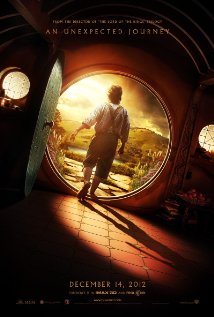
And this is the song from the book, The Hobbit, which much to my delight will finally be released as a film on December 14th 2012. After much debate and legal maneuverings, Peter Jackson has finally been able to bring this epic tale to life on the silver screen. Here’s the preview:
A long time ago I spent several weeks reading Lord of the Rings, of which The Hobbit is a prequel by candle light for the effect of climbing into the mind of J.R.R Tolkien and his world of Gandalf. It is Gandalf of whom I most notably identify with. And it was Tolkien and his world of The Hobbit, and Lord of the Rings that left me hungry for more of that type of material which naturally carried over into the work of Robert Jordan’s Wheel of Time series.
But there is something soothing in the beginnings of things, and The Hobbit is one of those stories that contain a special treasure within the heart of imagination. “The Hobbit: An Unexpected Journey” follows title character Bilbo Baggins, who is swept into an epic quest to reclaim the lost Dwarf Kingdom of Erebor, which was long ago conquered by the dragon Smaug. Approached out of the blue by the wizard Gandalf the Grey, Bilbo finds himself joining a company of thirteen dwarves led by the legendary warrior, Thorin Oakensheild. Their journey will take them into the Wild; through treacherous lands swarming with Goblins and Orcs, deadly Wargs and Giant Spiders, Shapeshifters and Sorcerers. Sounds like a trip into our own world outside of our homes, and is metaphorically similar in many ways. But this is a fantasy rooted in deep philosophy that is a story for eternity. And I can’t wait to see it!
But until then, here is the cartoon from 1977. I adore it. It will be wonderful to see this turned into a live action film!
I make no attempt to hide the fact that I think Atlas Shrugged is one of the greatest novels of all time, and that Ayn Rand is one of the greatest philosophers in the history of mankind. When the recent film, Atlas Shrugged Part 1 came out to scathing reviews, the establishment found themselves attempting to deface the film at every turn. The reason for all the commotion is that Atlas Shrugged is essentially a philosophy that decertifies the altruistic tendencies of our modern society.
I thought the makers of the film version attempted a bold endeavor and everything was uphill for them. With the rights for the film being bounced between film icons like Clint Eastwood and Angelina Jolie who wanted to make a film version, it was obvious that traditional Hollywood could not get their minds around a film version of the massive book that is Atlas Shrugged. After much trial and tribulation, it was decided to proceed to film the movie in a three-part series with Part 1 coming out on April 15th 2011 with John Aglialoro producing assisted by a team of very dedicated Ayn Rand fans. What resulted was an entertaining film that left people traditionally viewing characters of business as villains lost to articulate their feelings, and wanting to lash out at the movie for challenging their stereotypes. Aglialoro had committed to making all three films, but after taking a beating on the first one, he has wisely sought to take his time and pull in even more talent for the very challenging 2nd and 3rd films.
I am pleased to have received in my email box yesterday a notice from the producers that they are proceeding now with Part 2 and have obtained the additional talent of Duncan Scott who worked on Ayn Rand’s We the Living film. Part 2 is set to be released in October 2012 amidst the presidential election which will be appropriate, and the team has released this teaser trailer to entice the legions of hungry fans.
The film versions of Atlas Shrugged are caught between a rock and a hard place. Without the top line talent of the Steven Spielberg’s or George Clooney’s of the world, Hollywood will of course look down its nose at the production values of these films. The greatest film makers in our modern times are unfortunately against everything that Atlas Shrugged is for, so top-level talent is hard to come by for an epic film like this. On the other hand, lovers of the book like me will undoubtedly feel frustration because there is no way to put into a movie the depth that a book like Atlas Shrugged can provide. But that’s ok, because the films serve as completely adequate cliff notes versions of the book and are a wonderful way to introduce the work of Ayn Rand to an audience that may not have heard about her before.
Atlas Shrugged whether we are talking about the book or the movies is not a simple work of just a story intended to entertain. Atlas Shrugged is a work of philosophy. As a work of philosophy it is OK to not have all the usual Hollywood flare, because it’s the meaning of the work that is important. And the film makers have done well to install that philosophy into the movie as seen in the clips below where scenes from the first film are broke down and analyzed for their meaning.
I ran into Ayn Rand for the first time while reading the book Dutch by Edmond Morris. Morris made a mention about the life and times of Ronald Reagan during the 50’s and Ayn Rand’s ubermensch novels were best sellers then. Well the word ubermensch means in German overman which is a concept Nietzsche talked about extensively in Thus Spoke Zarathustra so Morris’s choice of words to describe Ayn Rand sparked my interest. I think he meant it in a derogatory way. But if the progressives didn’t like her, there was a sure bet that I would so I checked out Ayn Rand and discovered that she had arrived at many of the same conclusions about life as I did. Reading her was an affirmation that many of my thoughts were not wrong, and better yet, she had made predictions a half a century earlier that were coming true now. So her work was a validation that I had been on the correct path all along.
The troubling aspect however was that I had always read a lot, and it wasn’t until my upper 30’s that I discovered this very prolific writer, even when that writer was essentially a carbon copy to the type of material that I enjoy reading and writing myself. That is because the work of Ayn Rand had been purposely kept from the public mind for the most part by the kinds of progressive groups who are the villains of Atlas Shrugged in a literal sense.
Over Christmas 2011 my father-in-law who is also a prolific reader, and a school teacher who holds a master’s degree in geology had told me about this great new movie called Atlas Shrugged over dinner. I stared open-mouthed at him as he went on and on about how much he loved the film. I couldn’t believe that he had never heard of the book. After all, he was in high school when the book came out, so I would have thought that at some point he would have run into the material.
He assured me that he had not, and he said the movie made him want to read the book and he planned to get the novel the next time he was at a book store. I told him to wait a moment, that I’d be right back. I excused myself from the dinner table and left my family sitting there while I got into the car and drove down to the local Barnes and Noble Bookstore in Louisville. Not wanting my food to get cold, I told the girl at the help counter, “I have an emergency; my father-in-law has never read Atlas Shrugged. I need a copy of it right now so I can rectify that situation.” She smiled and said that has been happening a lot lately, since the movie had come out. People were pouring into the book store and demanding Ayn Rand’s works! I gave my father-in-law Atlas Shrugged at the dinner table when I returned and his smile was from ear to ear as he held it in his hands as though he possessed magic between his finger tips.
That is why the movies are so important, because our society has had this fantastic work by Ayn Rand covered up to some extent for 50 years. Apparently some literature classes in high schools and colleges have exposed students to Atlas Shrugged, but for the most part the literary classic has been discouraged by progressive groups, and now that the movies are starting to be made, the films are igniting curiosity into actually reading Atlas Shrugged so that more of the philosophy can be absorbed in the written word than could ever be shown on the silver screen.
To me a film is successful if it entertains first, and then leaves the viewer hungry for more information at the conclusion. And for those who do not know the work of Atlas Shrugged these films are introducing millions upon millions of people to a whole new way of thinking that is uniquely American, and I think it’s absolutely wonderful! So the news that the producers have managed to scrape together the money and talent to produce the second film is great news and I will be a tremendous advocate helping wherever I can so that more and more people will be exposed to the wonderful philosophy of Ayn Rand which is virtually inseparable from my own philosophy. For more information on Part 2, there is a new website that let fans follow the progress to its completion and release in October.
Perhaps it’s part of Superintendent Mantia’s Global Education program, or maybe it’s just sheer stupidity, but for some reason, Lakota is promoting the work of Ron Henrich, a social studies teacher at Hopewell Junior School at Lakota and his recent trip to China to help teach there. You can read the story for yourself on Lakota’s website at the link below.
It is not wise to fund our own demise, then brag about it as though it were a benefit of great merit. To learn more about China, I suggest you watch this very good film by Richard Gere called Red Corner (1987). I present it here in its totality. So grab a snack and enjoy a peek into a country run by communists who are seeking Lakota teachers to help educate their society.
By the way, Red Corner is banned in China. You can’t even see it on YouTube. And the execution scene was real, provided to the director at great risk to themselves. 1987 was not that long ago folks.
The goal of the global socialists, those of Socialist International is to destroy the United States with a smile on their faces while they embrace us in the chambers of the United Nations. (See my article on Socialist International here):
Upon this announcement The Cincinnati Enquirer interviewed me for my comments. I gave a frustrated response to the questions which can be read here. The answer to Lakota’s budget trouble is rather easy.
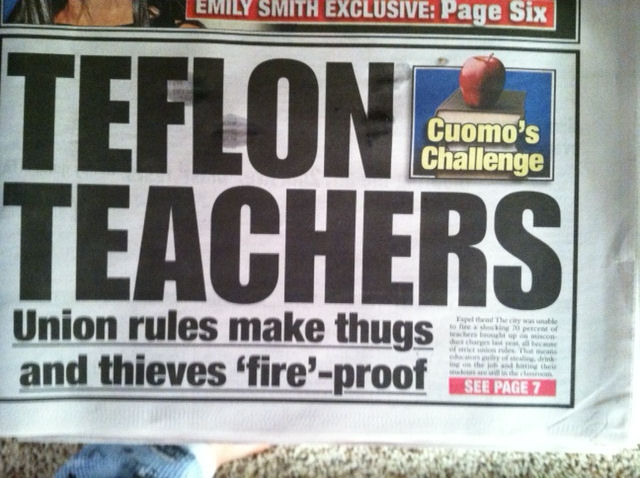
At some point Ohio will have a Right-to-Work amendment to our Ohio Constitution which will break up the union monopoly forever. This will happen because Indiana is going to get it, and Ohio will have to follow to remain competitive economically.Once the unions no longer run our public schools, we can then see how much money education will really costs. But not until that time should any additional funds be allocated for public education under any circumstances. Because it is obvious that the school board and administrations have no control or courage to even ask the labor force to take a 5% cut to save those 42 jobs that are in jeopardy. I know a portion of the teachers of Lakota are willing to take a pay cut, because I asked one of them on 700 WLW, and they said in the affirmative, “Yes I would take a pay cut to save the jobs of teachers.” Listen for yourself.
The politician brings nothing but lies, and are utterly worthless, and must be overhauled in the minds of America for what they are, based on what they do, and not on what they say. For more on this sleazy salesman proposal read my detailed article on the concept here: