The Truth About Bigfoot Sightings in Ohio During March of 2026: What nobody wants to admit–the terror behind the conspiracies

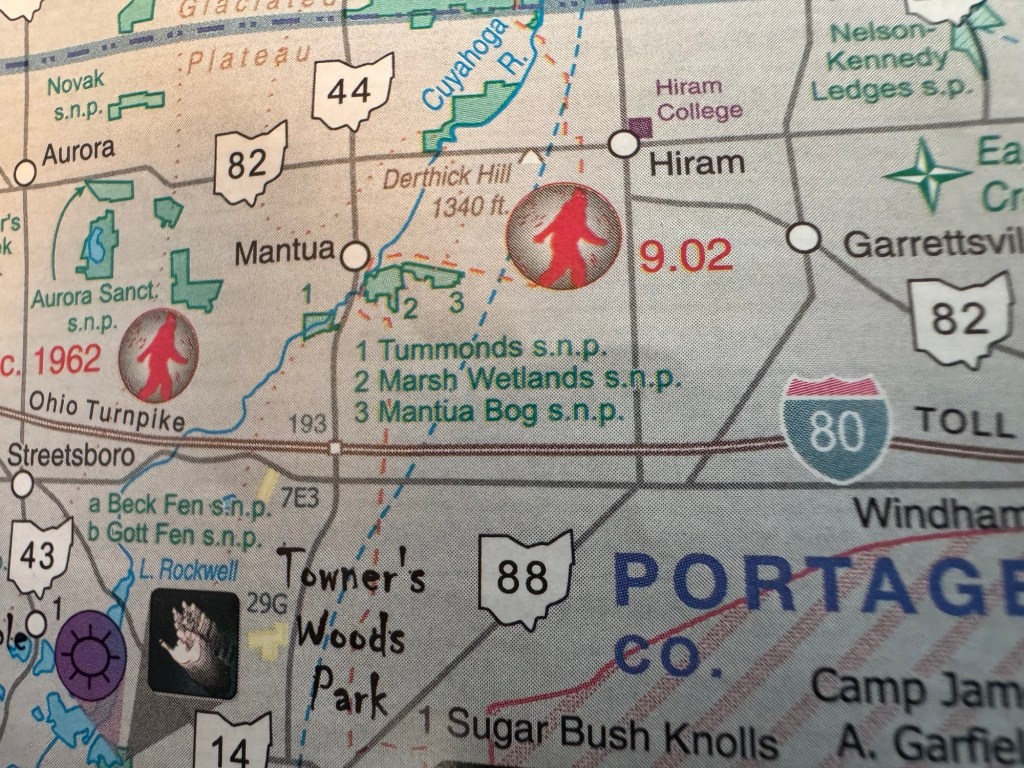
It was one of those crisp March evenings in 2026 when the calls started pouring in from Portage County, Ohio—eight credible Bigfoot sightings crammed into barely a hundred hours, each one more jaw-dropping than the last. People weren’t just spotting shadows in the woods; they were locking eyes with something massive, something that didn’t belong in our tidy little version of reality. One report came from a mom and her daughter, who were driving along a back road near Mantua Center, right around 8:00 p.m. on March 7th. They almost hit it. The thing stepped out of the treeline and stood there three feet from the passenger door—close enough, the daughter said, that she could have reached out and touched it if the window had been down. It was around six-foot-five, brown, and moving with that casual, unhurried stride that big creatures seem to have when they know they own the night. But here’s the part that is most chilling: its face was blurry. Not out of focus like a bad photo, but genuinely indistinct, as if the creature was only halfway rendered into our four-dimensional world. The mom slammed the brakes, the daughter screamed, and then it was gone—melted back into the trees as if it had never been there at all. No aggression, no chase, just a quiet acknowledgment that something ancient had crossed their path and decided, for whatever reason, to let them live with the memory.

By the time the Bigfoot Society podcast and local news outlets like Cleveland 19 and FOX 8 started mapping it out, the reports were stacking up from Mantua Center to Garrettsville to Windham to Newton Township. Daytime sightings in broad sunlight on the Headwaters Trail—a nine-foot brown male standing 120 yards off Route 44 at 12:23 p.m. on March 6th. Nighttime grunts and muddy prints the size of dinner plates. An older woman in Windham who had never believed in any of this nonsense watched something massive bolt through the woods on March 9th. A man walking his German Shepherd at 4:00 a.m. on March 10th had the dog lose its mind at the back door before the shadow of an eight- to ten-foot figure vanished into the blackness. Multiple independent witnesses, at different times of day, on different roads, under different lighting conditions. Some smelled that unmistakable wet-dog-meets-skunk odor. Others heard deep, vibrating grunts that carried through the trees like distant thunder. And every single one of them swore it wasn’t a bear, wasn’t a hoax, wasn’t some kid in a costume. These were ordinary Ohioans—hikers, dog walkers, a mom just trying to get her kid home—who suddenly found themselves face-to-face with the impossible.
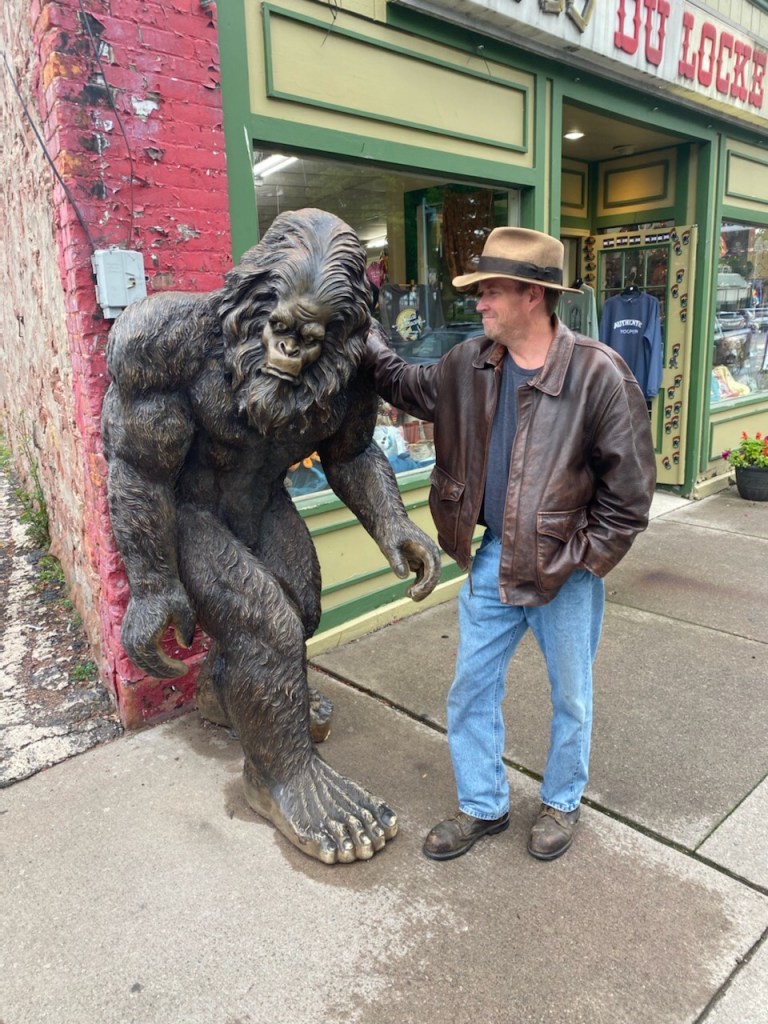
The internet, of course, went wild with the usual explanations. “Undocumented Neanderthal remnant!” cried the cryptid enthusiasts. “Lost tribe of giant hairy hominids migrating through the Midwest!” But I’ve spent too many years chasing these things—camping at the Mothman Museum with my grandkids, hiking the haunted Moonville Tunnel at midnight, standing on the ridges of Little Round Top at Gettysburg—to buy the simple “flesh-and-blood ape-man hiding in the woods” story. The more I read the reports, the more I kept coming back to the same conclusion I’ve reached after researching the Ohio Valley mounds for decades: these aren’t just undiscovered animals. They’re something far older, far stranger, and far more connected to the Politics of Heaven than most people are ready to admit. They’re dimensional. They’re quantum-entangled echoes of beings who have been walking these same trails for thousands of years—sometimes in our reality, sometimes bleeding through from somewhere else entirely. And the reason they keep showing up right here, right now, in the same corridors where ancient earthworks once stood, is because those earthworks were never just “religious monuments.” They were communication devices. Calling cards. Mathematical beacons built by people who understood something we’ve spent centuries trying to forget.

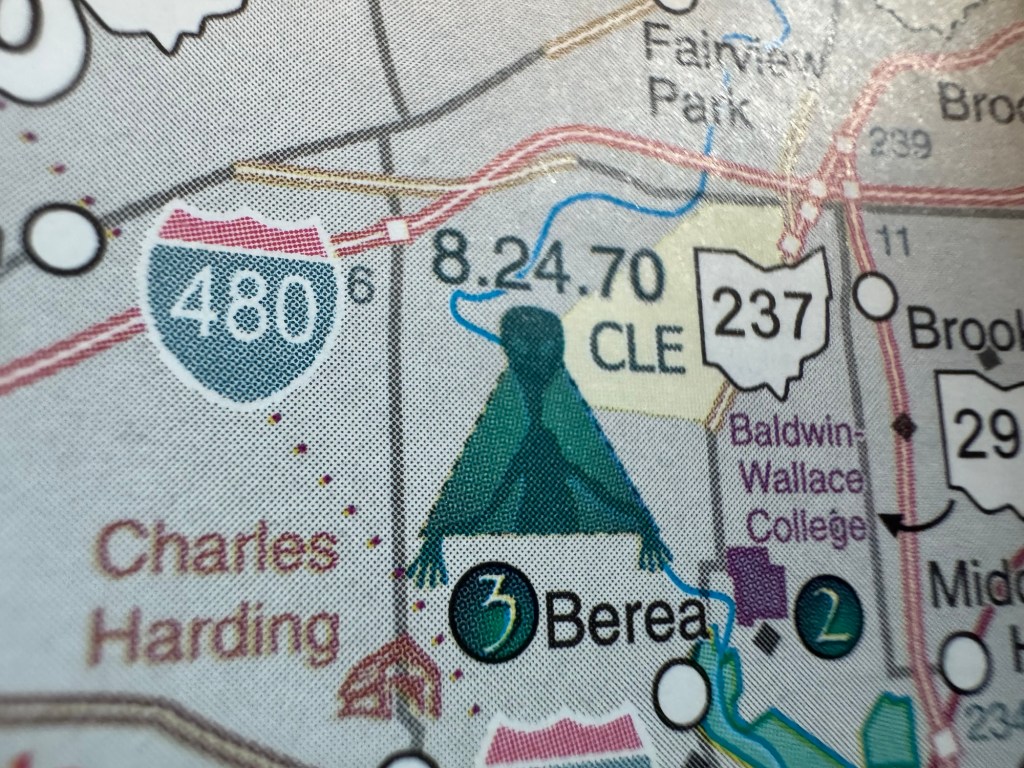
Let me take you back to the source of all this strangeness—the Ohio River Valley itself, that ribbon of land that runs from the Serpent Mound down near Cincinnati all the way up through the Newark Earthworks and beyond. This isn’t random wilderness. It’s one of the most concentrated paranormal hotspots on the planet, and it has been for a very long time. The same week those Portage County sightings were making national news, I pulled out the old hidden-haunts map I’d bought at the Mothman Museum and started plotting the locations. Every single sighting clustered around old mound corridors, old Indian trails that modern roads had paved over, places where the veil has always been thin. Serpent Mound, Fort Ancient, the massive geometric works at Newark that once covered more ground than the Great Pyramid complex in Egypt—those aren’t just piles of dirt left by “primitive” hunter-gatherers. They’re precise mathematical constructs aligned to the Pleiades, to solstices, to the movement of stars in ways that required calculus-level understanding of Earth’s circumference and axial tilt. The same mathematics you find at Stonehenge and Avebury in England. The same geometric obsession you see at Flag Fen near Peterborough, where Francis Pryor and his team uncovered an entire Bronze Age village built on a bog around 1300 B.C.—a place so sophisticated it makes the Romans who later conquered Britain look like amateurs playing catch-up.
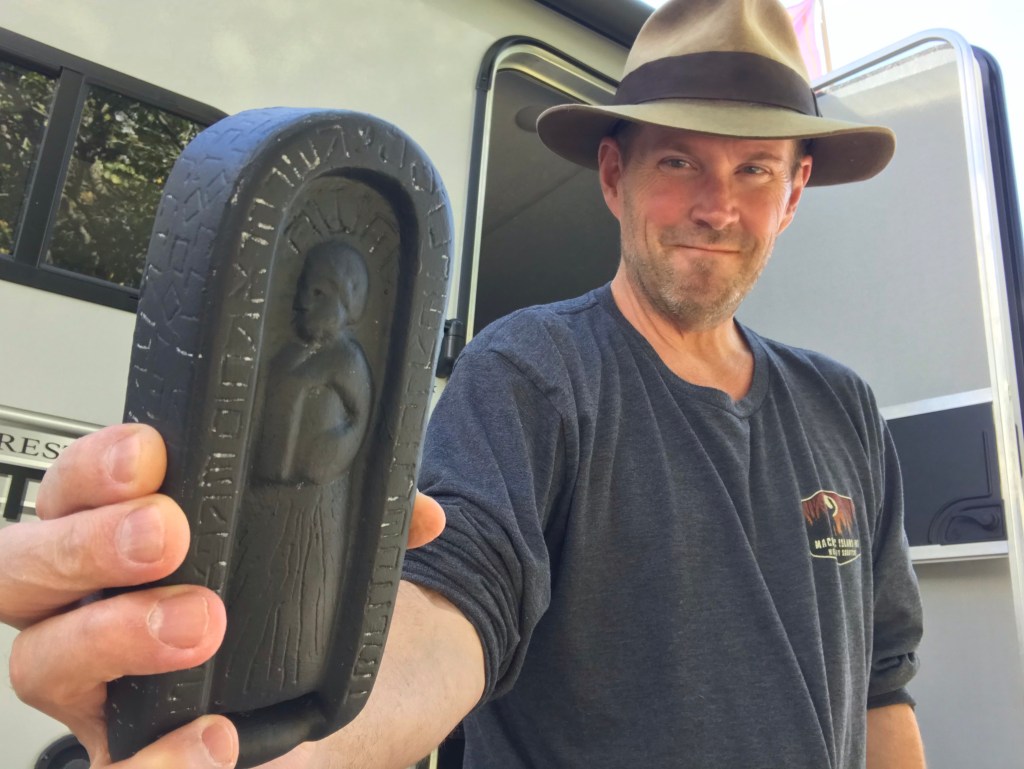
I remember the first time I stood at Stonehenge with my family, the same trip where I picked up Pryor’s book Britain BC at the visitor center gift shop. You see the famous stones on TV, and you think, “cool rocks.” But when you’re actually there, walking the landscape, you realize the stones are just the tip of the iceberg. The entire countryside is dotted with burial mounds—hundreds of them—some almost identical in size and construction to the ones at Miamisburg and Middletown right here in Ohio. There’s a massive cursus—a long, linear earthwork over a mile long—that you can’t even see properly from the ground; it only makes sense from the air. It looks like a giant runway aimed at the heavens. And just a few miles north at Avebury, you’ve got the same thing: enormous circular henges, burial barrows, and geometric patterns that mirror the Newark Octagon and the Great Circle earthworks back home. Pryor’s work at Flag Fen blew the lid off the whole “primitive Britons” myth. They built an entire wooden platform and causeway across a bog, throwing broken tools and weapons into the water as offerings to the dead. Why? Because they understood that bogs preserve. They understood that the afterlife wasn’t some vague cloud kingdom—it was a place you could send messages to. And they used mathematics and geometry to do it.

Fritz Zimmerman has been saying the same thing about North America for years, only louder and with more receipts. His books—The Encyclopedia of Ancient Giants in North America, The Nephilim Chronicles: Fallen Angels in the Ohio Valley, Ancient America: The Dark Side, and Mysteries of Ancient America—aren’t fringe conspiracy rants. They’re the result of decades of boots-on-the-ground research, cross-referencing thousands of old newspaper accounts, county histories, and Smithsonian reports that mainstream archaeology would rather pretend don’t exist. Zimmerman’s core thesis is as elegant as it is explosive: the giant bones reported in over 500 separate accounts across the Midwest weren’t hoaxes or exaggerations. They belonged to the Amorites—biblical giants, descendants of the Nephilim—who fled Joshua’s conquest of Canaan, migrated through Europe (building or influencing Stonehenge and Avebury along the way), and eventually crossed the Atlantic in sophisticated boats to settle the Ohio Valley. The mounds they left behind aren’t random; they’re the same celestial observatories and ritual centers you find in England, only transplanted here. And the paranormal activity that clusters around them—Bigfoot, orbs, Mothman, shadowy figures—aren’t new phenomena. They’re the lingering echoes of the same entities those ancient builders were trying to communicate with.

Think about it. The Book of Enoch—preserved in the Dead Sea Scrolls and left out of our modern canon for reasons that should make every honest person furious—gives us the clearest picture. Two hundred Watchers, led by Semyaza and Azazel, descend on Mount Hermon, lust after human women, and produce giant offspring. God punishes them, but their disembodied spirits are cursed to roam the earth until the final judgment. These aren’t cartoon devils with pitchforks. They’re principalities and powers (Ephesians 6:12), interdimensional beings who once had physical bodies and now operate from the quantum edges of our reality. The Amorites carried that knowledge with them. They built geometric earthworks—circles, octagons, serpents aligned to the stars—because those shapes spoke the language those fallen entities understood. It wasn’t “religion” in the Sunday-school sense. It was technology. It was science. It was an attempt to maintain a relationship with the divine council, which Psalm 82 warns is still plotting against Yahweh to this day.

That’s why the mom and her daughter didn’t see a clear-faced ape-man on that dark Ohio road. They saw something bleeding through the veil—something that exists in a higher or adjacent dimension and only partially manifests here. The blurry face? That’s what quantum entanglement looks like when two realities briefly overlap. The creature wasn’t “lost.” It was answering an ancient call that still resonates through the mounds it once helped build. The same thing explains the Mothman at Point Pleasant in 1966–67—Stolas, the 36th demon from the Lesser Key of Solomon, appearing as a prophetic harbinger before the Silver Bridge collapse. The same thing explains the orbs we photographed at the Moonville Tunnel, the green healing spirits that seem to drift down from the ridges at Gettysburg, the Bigfoot sightings that spike whenever someone disturbs an old mound corridor. These aren’t separate mysteries. They’re the same phenomenon wearing different masks depending on who’s looking and what the local geometry is tuned to.

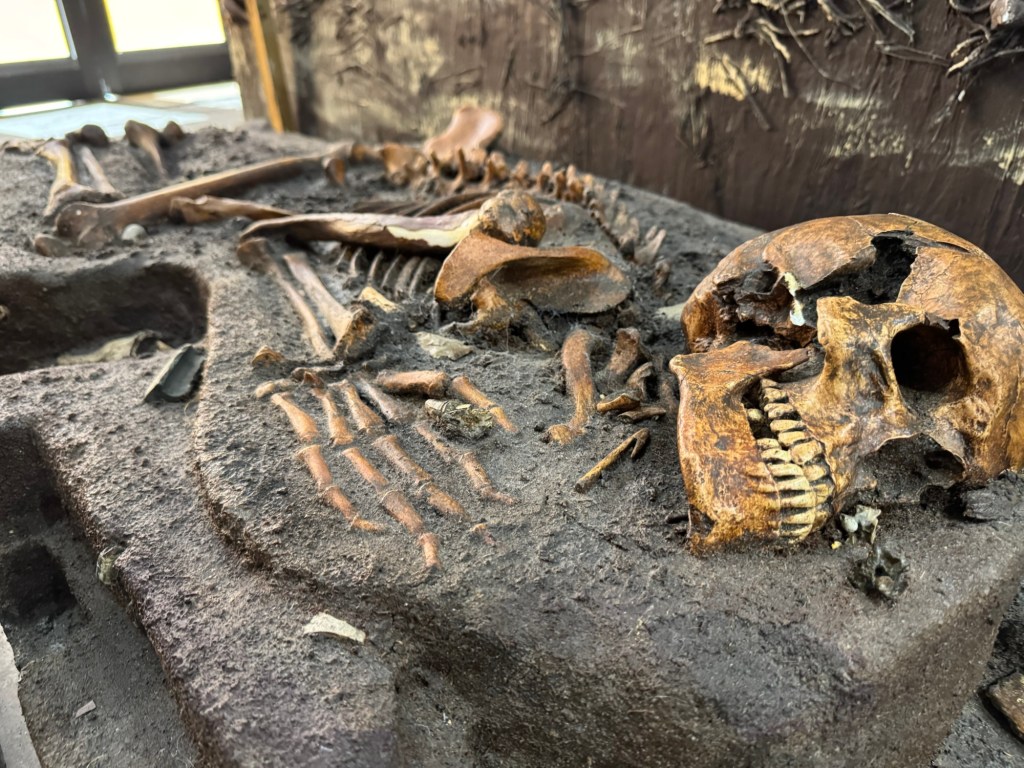
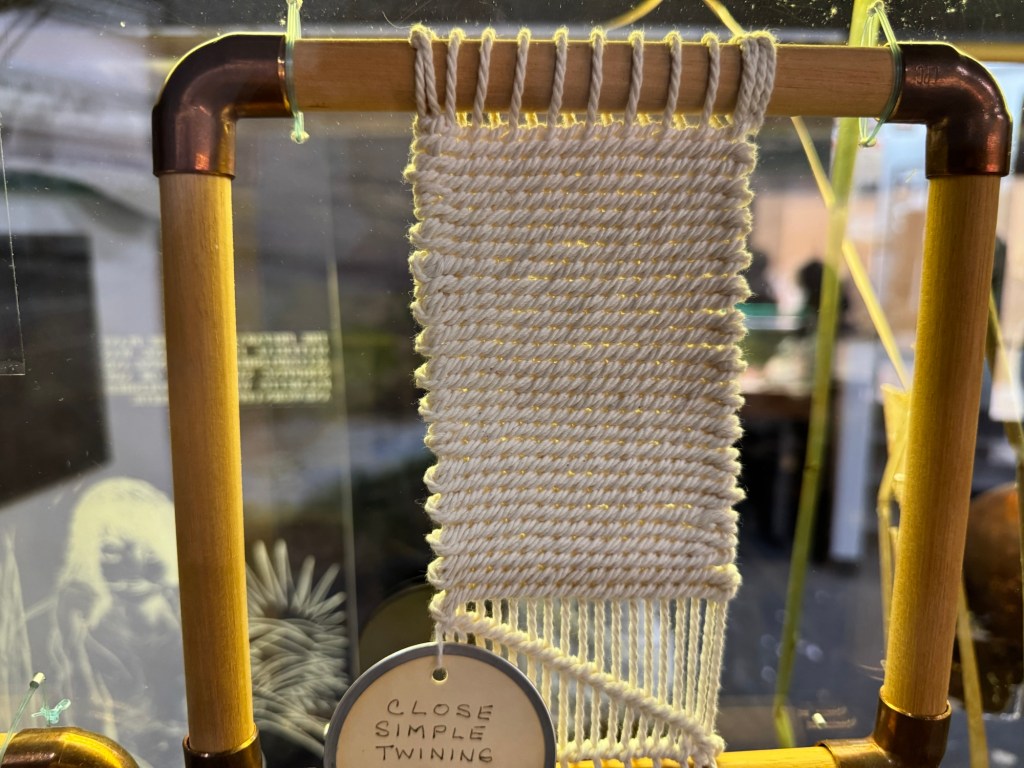
And here’s where the real conspiracy kicks in—the one that has nothing to do with the CIA and everything to do with the spiritual wickedness in high places. Mainstream archaeology, the Smithsonian, and the political class that funds them have spent over a century burying this truth under layers of political correctness and bad assumptions. The Native American Graves Protection and Repatriation Act (NAGPRA) of 1990—passed right after Dances with Wolves tugged at everyone’s heartstrings—made it illegal to study many of these sites properly. Bones that could prove the existence of pre-Columbian European or Near Eastern contact? Reburied. Giant skeletons reported in hundreds of 19th-century newspapers? Carted off to Smithsonian vaults and never seen again. The Windover Bog site in Florida is the perfect example. Discovered in the 1980s during housing construction, it yielded 168 incredibly preserved skeletons from 7,000–8,000 years ago—people with advanced woven textiles, bog-preservation knowledge identical to European practices, and thigh bones so large that Dr. Geoffrey Thomas held one up next to his own leg on camera at the Brevard Museum and basically admitted these folks were giants. Average height estimates got downplayed to 5’5” in some reports, but the video evidence and the bone density tell a different story. These weren’t primitive hunter-gatherers. They were part of a sophisticated culture that understood time, astronomy, and the spirit world in ways we’re only beginning to rediscover. And what happened? The site was covered up. Research stalled. NAGPRA kicked in. End of story.

Meanwhile, in England, Francis Pryor and the English Heritage team get to dig Flag Fen like it’s the greatest adventure on Earth. They uncover a Bronze Age village built on a bog, with broken swords and tools thrown in as offerings, and everyone celebrates the sophistication of prehistoric Britons. Why the double standard? Because admitting the same people—or at least the same knowledge—crossed the Atlantic thousands of years before Columbus shatters too many comfortable narratives. It forces us to confront the biblical timeline. It forces us to admit that the “indigenous” label we slap on every pre-Columbian culture is as accurate as calling the Romans “indigenous” to Britain. Migration, trade, and the collision of cultures happened constantly. Giants walked among us. Fallen angels taught forbidden knowledge. And their disembodied offspring are still here, still walking the old paths, still answering calls that were broadcast through geometric earthworks when the stars were in different alignments.

This is the Politics of Heaven playing out on Earth. Yahweh’s divine council—Elohim plural, as Psalm 82 makes painfully clear—has been in rebellion since before the Flood. The Watchers’ sin produced the Nephilim, whose spirits became the principalities and powers that still rule from the shadows. Solomon commanded them to build his Temple. The Canaanites sacrificed children to Moloch to appease them. The mound builders aligned their works to the stars to communicate with them. And today, in 2026, when eight Bigfoot encounters happen in a single week in Portage County, we’re seeing the same entities responding to the same ancient geometry. The mounds may be paved over, but the call still echoes. The quantum entanglement still happens. The blurry faces still peer through the veil.

I’ve stood on Little Round Top at Gettysburg at night with my family. I’ve hiked the Moonville Tunnel when the mist rolls in, and the green orbs appear exactly where my wife said they would. I’ve walked the ridges at Stonehenge and felt the same electric charge I feel standing on Fortified Hill or the Middletown Mound back home. The pattern is undeniable. The science—real science, the kind Pryor practices in England and the kind Zimmerman has been quietly practicing in America for decades—points to a lost chapter of human history in which advanced cultures used mathematics not just to measure the stars but to speak to the beings who live among them. We call them cryptids. The Bible calls them demons, watchers, principalities. The Japanese call them kami. The Muslims call them jinn. Every culture that ever built geometric earthworks knew them by a different name, but they all knew the same truth: these entities are real, they’re ancient, and they never really left.

The mom and her daughter in Portage County didn’t almost hit a lost ape. They brushed up against something that has been walking these trails since the Amorites—or whoever came before them—first laid out the geometric patterns that still whisper across time. The Bigfoot that stood three feet away with the blurry face wasn’t confused. It was exactly where it was supposed to be—answering a call that was programmed into the landscape thousands of years ago. And until we stop pretending that our textbooks tell the whole story, until we start digging the mounds again with the same adventurous spirit that Pryor brought to Flag Fen, we’ll keep mistaking echoes for myths and calling the messengers monsters.

The Politics of Heaven (the title of my new book coming up) aren’t happening somewhere far away in the clouds. They’re happening on the back roads of Ohio in March 2026, when the veil thins and something very old decides to step through for a moment and remind us that the war never ended. It just changed costumes. And the next time you see a blurry figure on the side of the road, don’t reach for your phone to call it a hoax. Reach for the truth instead. The mounds are still talking. The Watchers are still listening. And the rest of us? We’re just now starting to remember how to hear them.

BOOK SUMMARY of the upcoming Politics of Heaven (I will be finishing the final chapter in Washington D.C. at the Museum of the Bible soon after this posting)

The Politics of Heaven is a sweeping, unconventional investigation into the hidden structure of history — blending biblical archaeology, supernatural encounters, political warfare, cryptid phenomena, and ancient mathematics into a single, high‑powered thesis:

Earth’s political conflicts are the surface-level reflections of a much older, multidimensional battle among the Elohim — the divine council referenced throughout the Bible.

Drawing from firsthand experiences at sites like Chichen Itza, Stonehenge, Serpent Mound, Osaka’s Kofun tombs, Moonville Tunnel, and Washington D.C.’s Masonic grid — combined with encounters in modern political war rooms — Hoffman argues that the veil separating Heaven, Earth, and the unseen realm is thinner than we admit.

The book culminates in Chapter 19, where recent Bigfoot sightings in Ohio become the key to unifying the narrative. These blurry, partially‑manifest beings are framed as:

Residual spiritual entities tied to the Amorites, the Watchers, and the pre‑Flood giants — evidence of dimensional interference and the limits of human free will.

The result is a revelatory, provocative work for readers of Biblical studies, ancient mysteries, UFO/paranormal research, and political philosophy.

Footnotes

1.  Cleveland 19 News, “Several Bigfoot sightings reported in Portage County,” March 2026; FOX8, “Bigfoot roaming Portage County: Several reported sightings within days,” March 10, 2026.

2.  The Bigfoot Society podcast and mapping project documented at least eight high-credibility reports between March 6–10, 2026, including the Mantua Center daytime encounter and the Newton Township 4 a.m. sighting.

3.  Francis Pryor, Flag Fen: Life and Death of a Prehistoric Landscape (Tempus, 2005; updated editions). Pryor’s excavations revealed a sophisticated Bronze Age platform and votive offerings in the bog.

4.  Fritz Zimmerman, The Encyclopedia of Ancient Giants in North America (2015); The Nephilim Chronicles: Fallen Angels in the Ohio Valley (2010); Ancient America: The Dark Side (2024). Zimmerman’s fieldwork and archival research compile over 500 historical giant-bone reports.

5.  Windover Archaeological Site reports, including video testimony from Dr. Geoffrey Thomas at the Brevard Museum of History and Natural Science (Brevard County, Florida). Skeletons dated to 7000–8000 years ago; some long bones indicate individuals were taller than those in typical Archaic populations.

6.  English Heritage maps of Stonehenge and Avebury World Heritage Site (1:10,000 scale) show cursus, barrows, and geometric alignments mirroring Newark Earthworks in Ohio.

7.  Book of Enoch (1 Enoch), chapters 6–16, Dead Sea Scrolls fragments; cross-referenced with The Book of Giants also found at Qumran.

8.  Psalm 82; Ephesians 6:12 (KJV).

Bibliography for Further Reading

•  Zimmerman, Fritz. The Encyclopedia of Ancient Giants in North America. 2015.

•  Zimmerman, Fritz. The Nephilim Chronicles: Fallen Angels in the Ohio Valley. 2010.

•  Zimmerman, Fritz. Ancient America: The Dark Side. 2024.

•  Pryor, Francis. Flag Fen: Life and Death of a Prehistoric Landscape. Tempus, 2005.

•  Pryor, Francis. Britain BC. Harper Perennial, 2004.

•  The Book of Enoch. Translated by R.H. Charles. 1912 (modern editions widely available).

•  Biblical Archaeology Review archives on Dead Sea Scrolls and Qumran texts.

•  English Heritage official guides to Stonehenge and Avebury (2020s editions).

•  Windover site reports: “Windover: Prehistoric Past Revealed,” Orange County Regional History Center; Ancient Origins coverage, 2016–2025 updates.

Rich Hoffman

More about me

Click Here to Protect Yourself with Second Call Defense https://www.secondcalldefense.org/?affiliate=20707
About the Author: Rich Hoffman

Rich Hoffman is an aerospace executive, political strategist, systems thinker, and independent researcher of ancient history, the paranormal, and the Dead Sea Scrolls tradition. His life in high‑stakes manufacturing, high‑level politics, and cross‑functional crisis management gives him a field‑tested understanding of power — both human and unseen.

He has advised candidates, executives, and public leaders, while conducting deep, hands‑on exploration of archaeological and supernatural hotspots across the world.

Hoffman writes with the credibility of a problem-solver, the curiosity of an archaeologist, and the courage of a frontline witness who has gone to very scary places and reported what lurked there. Hoffman has authored books including The Symposium of JusticeThe Gunfighter’s Guide to Business, and Tail of the Dragon, often exploring themes of freedom, individual will, and societal structures through a lens influenced by philosophy (e.g., Nietzschean overman concepts) and current events.
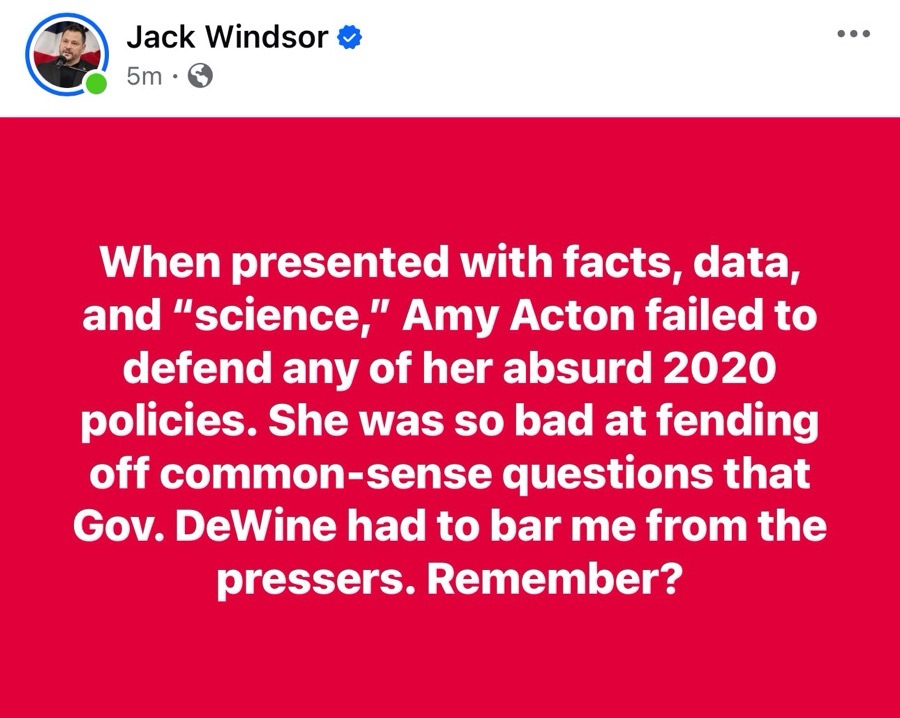
Remember the Lockdown Lady: Amy Acton’s Devastating COVID Policies That Torpedoed Ohio

I’ve never liked Dr. Amy Acton. I had very little good to say about her back when she was Ohio’s Health Director under Governor Mike DeWine, and I haven’t thought much about her since those nightmare years of 2020 and 2021. I tried to push her out of my mind after all the damage she helped inflict. But here we are in 2026, with a primary right around the corner and a full gubernatorial election coming up, and the Democrats have talked her into running for governor. In my opinion, it’s one of the worst political decisions they could have made. It’s not just bizarre—it’s tone-deaf to what Ohio families actually went through.

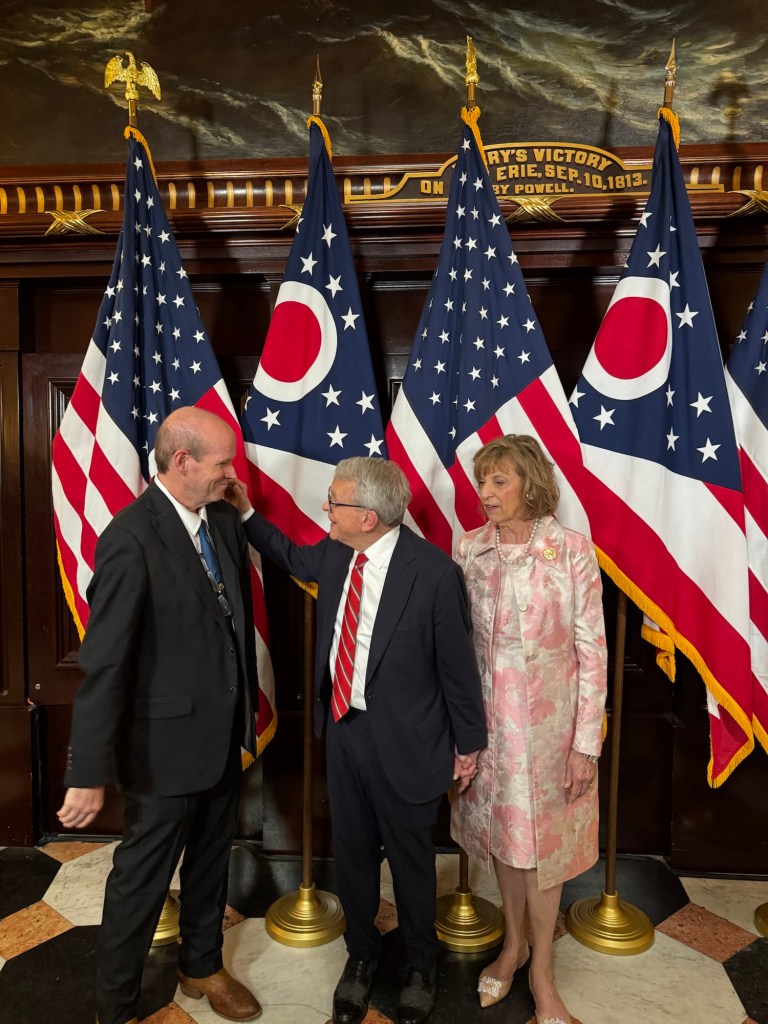
I happened to be in Columbus recently, and within just a couple of days, I had two conversations that really drove this home for me. First, I spoke with Governor Mike DeWine himself—the man who’s been in the governor’s office through it all. We talked policies, what worked during his eight years, and what went horribly wrong. COVID came up naturally, his administration got challenged in court over the constitutionality of the lockdowns and orders pushed under her advice. At no point during those dark months were the things they were doing fully constitutional, and many smart people—including me—knew it at the time. The Ohio Supreme Court and lower courts eventually forced reopenings because the overreach was so extreme. DeWine knows he lost a lot of goodwill over it, and he’s still trying to make it up to Republicans.  

But it was

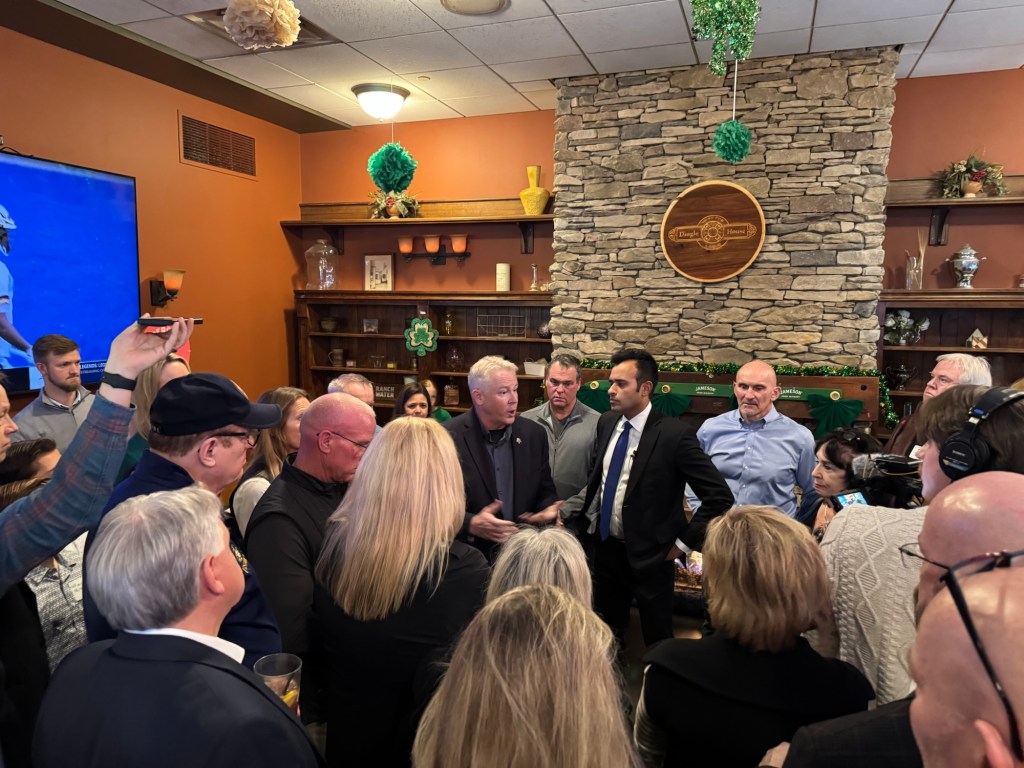
A couple of days later, I talked to the future governor of Ohio—Vivek Ramaswamy. He’s a super nice guy, high-character, above-the-trench kind of person who wants to play well with everybody if he can. He’s smart, young, and genuinely wants to do good things for Ohio. He’s not the type to go down in the dirt and bodyslam somebody just for sport. But when we talked about Amy Acton, I told him straight: she deserves it. “Vivek,” I said, “she shut down our state. We’re still bleeding economically from the torpedo she dropped on Ohio under Fauci’s influence. You’re going to win the primary easily, and you’re going to have a new mop in your house because you’re going to mop the floor with her. That’s all she’s good for after what she did.” He laughed, but he knew I was right. He’s got people like Donald Trump Jr. and others who will remind folks of her record, so he doesn’t have to get his hands too dirty.  She’s the Lockdown Lady, and Ohio must never forget.

This isn’t abstract history to me. I lived it. I saw families destroyed, small businesses wiped out, kids losing years of education, and people denied the simple joys that make life worth living—like tailgating at a Browns game or taking the kids to Kings Island. I remember driving to Kings Island that miserable summer of 2020. It was supposed to be family fun, but her policies turned it into a dystopian nightmare: rides taped off, masked staff barking orders, social-distancing enforcers everywhere, limited concessions, and zero joy. We couldn’t ride half the things, couldn’t buy souvenirs properly, and the whole experience felt like punishment for wanting normalcy. That’s what Amy Acton did to Ohio. And now she wants to run the whole state? No way. I’m here to lay it all out—from my perspective, with the background you need, the facts she can’t erase, and why Vivek Ramaswamy is the only choice.

How It All Started: DeWine’s Bipartisan Mistake and Acton’s Rise

Let’s go back to 2019 so you understand the context. Governor Mike DeWine wanted to reach across the aisle after winning in 2018. He’s a moderate Republican with a long career—U.S. Senator, Attorney General—and he thought putting a Democrat on his team would build coalitions. That’s how Dr. Amy Acton, a physician and researcher from Youngstown with a background in public health, became Director of the Ohio Department of Health. On paper, it looked like smart politics. She had worked on infant mortality issues and seemed qualified. What DeWine couldn’t foresee was COVID-19 hitting in early 2020 and the federal machine behind her.

During her tenure, Acton completely deferred to the CDC and to Dr. Anthony Fauci at NIAID. Their guidance—later proven flawed, contradictory, and largely politically driven—became gospel in Ohio. Her daily briefings had this folksy, almost hippie vibe: “hug your neighbor,” “support each other around the campfire,” “we’re all in this together.” But behind the warm words were iron-fisted orders: stay-at-home mandates, school closures, business shutdowns, mask rules, and capacity limits that crushed everything. Ohio was one of the first states to go full lockdown on March 22, 2020. Schools closed statewide. “Non-essential” businesses were ordered to shut down. Amusement parks, fairs, and sports—everything ground to a halt.

I watched it happen in real time. Acton estimated as many as 100,000 infections early on, scaring everyone into compliance. But as I’ve said many times, the virus was engineered. Gain-of-function research at the Wuhan Institute of Virology—funded in part by U.S. taxpayers through Fauci’s NIAID and EcoHealth Alliance—took a bat virus and made it transmissible to humans. That’s not a conspiracy; it’s documented. RFK Jr., now serving in the Trump administration at HHS, laid it all out in books like The Real Anthony Fauci and The Wuhan Cover-Up. China released it, the WHO covered for them, and Fauci stonewalled investigations. Bill Gates’ involvement and his Epstein ties added another layer of suspicion, but the core fact remains: this was a lab-created bio-weapon scenario that justified the panic.

Acton wasn’t smart enough to be in on the big conspiracy, in my view. She just followed the CDC memos like a good soldier. “Outdoor outdoor outdoor,” she’d say, then flip to full lockdowns. She sounded whacked out on something during those speeches—Grateful Dead concert energy mixed with authoritarian control. And DeWine empowered her.  DeWine lost in court, had to reopen, and still carries the scars. Acton resigned on June 11, 2020, amid protests outside her home (some armed), legislative bills stripping her emergency powers, and public fury. She faded away—until Democrats dragged her back out in 2025, thinking we’d all forgotten.  

The Human Toll: What I Saw and What Ohio Still Feels

The damage was catastrophic, and I saw it up close. Ohio’s unemployment shot from 4.9% to 16.4% in one month—the worst spike in modern history—small businesses, restaurants, gyms, and retailers closed by the thousands and never reopened. Hospitality and tourism tanked. Families who saved all year for Kings Island got a nightmare version: no lines near rides, masked everything, and a joyless slog. Mental health crises exploded. Overdoses rose 20% in Ohio in 2020. Kids lost massive learning—third-graders fell behind by a third of a year in reading, especially poor kids. Life expectancy dropped.

Critics on the left still say Acton “saved lives” by flattening the curve. But compare Ohio to Florida, which reopened earlier under Governor DeSantis. Adjusted for demographics, outcomes were similar or better without the economic suicide. The real scandal was ignoring natural immunity, the virus’s low risk to healthy people and kids, and the secondary deaths from isolation and delayed care. As I told Vivek, we’re still bleeding. Families lost homes. Communities—especially rural southern and southeastern Ohio—felt betrayed by big-government edicts from Columbus.

Acton didn’t invent the virus, but she owned the implementation here. She channeled Fauci’s flip-flopping on masks, overstated models, and suppression of early treatments like hydroxychloroquine. Congressional hearings in 2023-2024, plus RFK Jr.’s work, confirmed the gain-of-function funding, the lab’s military ties, and the cover-up. Trump’s administration has now banned such research and put the lab-leak theory front and center. Yet Acton never questioned it. She just locked us down.

The Tweets That Prove It: Resurfaced Evidence of Her Madness

Nothing captures her tone-deaf cruelty better than the tweets she posted in May 2020—tweets she later deleted but that have now resurfaced thanks to OutKick, Fox News, and Donald Trump Jr. I’ve shared them on my podcast, and they’re Exhibit A for why she’s unfit. These weren’t policy announcements. They were personal scoldings aimed at ordinary Ohioans desperate for a break.

Context: The Cleveland Browns, with Baker Mayfield as the new quarterback, were generating rare excitement in a sports-starved state. Fans dreamed of tailgates, playoffs, and packed FirstEnergy Stadium. Empty stadiums that year were already heartbreaking. But Acton inserted herself into Browns Twitter like a hall monitor:

•  To a fan posting a Kermit the Frog meme about playoff hopes: “Please social distance.”

•  To excitement about Baker Mayfield: “Please follow CDC guidelines.” Then, when the fan pushed back, “We should be discussing ways to prevent COVID.”

•  To another fan saying Browns Twitter was “the only fun part of quarantine”: “Please stop.”

•  To Super Bowl dreams: “No. Too many people.”

•  To jersey talk: “We need masks and PPE, not jerseys.”

•  And the kicker: “Grow up #StayAtHome” and “We are in a pandemic.”

These are direct quotes from her deleted account, resurfaced this week. She was lecturing fans for wanting to watch football, cheer their team, or escape the misery. She told people to stop influencing others “in a bad way” by hoping for games. This is the same woman who made Kings Island miserable and shut down so much else.  People just wanted relief. She wanted compliance.

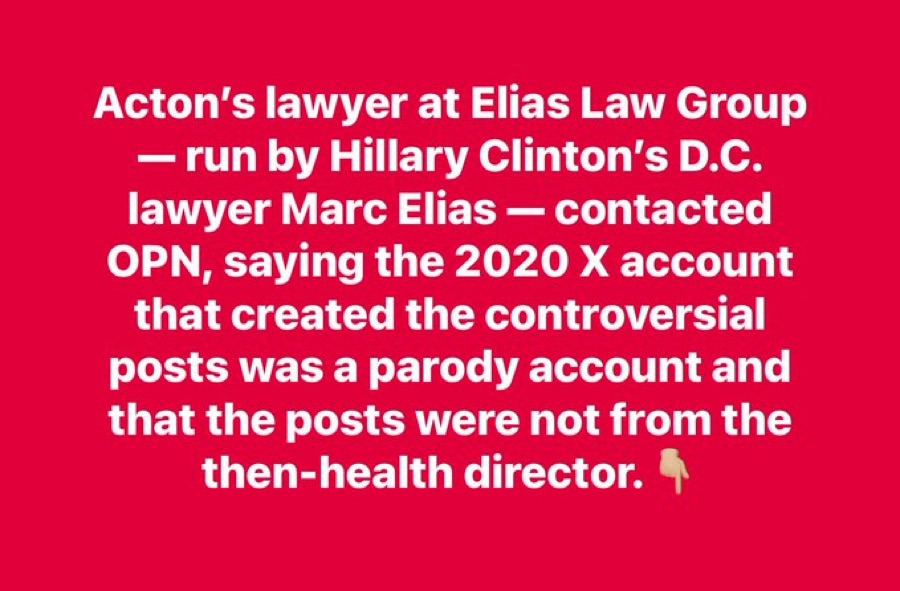
Her campaign now claims some were parody accounts, but the screenshots don’t lie. Trump Jr. amplified them. OutKick called it “bizarre harassment.” And she’s running for governor? In northern Ohio, where sports are religion, this stings. Cleveland Browns fans, Cuyahoga County union folks—they remember the empty stadiums she helped create.  

Vivek’s Path

That brings me to Vivek Ramaswamy. I told him exactly what I think: he’s going to win the primary without much trouble, and the general, too, if we show up. Southern and southeastern Ohio—rural, Trump-flag country—will deliver huge margins for him. Those are the right kind of people: hardworking, America-first, sick of big government. Northern urban areas (Cleveland, Cincinnati, Hamilton, and Cuyahoga counties) might tilt toward Acton with unions and Democrats, but the numbers won’t overcome the south. Recent polls show her competitive? Smoke from cherry-picked areas. I guarantee it.

Vivek has raised nearly $20 million, got Trump’s endorsement, picked Senate President Rob McColley as running mate, and has DeWine’s blessing. He’s a Cincinnati native, biotech entrepreneur, author—exactly what Ohio needs: innovation, tax cuts, merit over DEI, and manufacturing revival. He doesn’t want to “beat the heck out of somebody,” as I put it, but he doesn’t have to. Surrogates like me, Trump Jr., and others will remind voters she’s the Lockdown Lady.

DeWine endorsed Vivek the same day Acton picked David Pepper as her running mate. That timing wasn’t a coincidence. DeWine knows her record.  Vivek is the future—opportunity, excellence, the American Dream. Acton is the past: fear, control, economic destruction.

Never Forget: The Lockdown Lady’s Legacy

Democrats bet on amnesia. They thought six years later we’d forget the empty stadiums, closed parks, lost businesses, learning loss, and suicides of despair. They were wrong. History has judged the lockdown crowd poorly, and Acton was at the center in Ohio. She followed Fauci, the CDC, and a corrupt China-WHO axis straight into disaster.

I’ve said it for years now: remember until November. She locked down Ohio. She destroyed lives following bad science from people who funded the gain-of-function weapon in Wuhan. Read RFK Jr.’s books. Study the tweets. Recall your own pain—whether it was a canceled wedding, a lost job, or a kid who never caught up in school.  And when it comes to this election, never forget what she did. 

Bibliography / Further Reading

•  RFK Jr., The Real Anthony Fauci (2021) and The Wuhan Cover-Up (2023) – essential on origins and response.

•  OutKick/Fox News exclusive on resurfaced Acton tweets (March 20, 2026).

•  Ohio Capital Journal and Signal Ohio coverage of the 2026 race and endorsements.

•  Congressional reports on gain-of-function and lab leak (House Select Subcommittee, 2023-2024).

•  Economic data: Ohio unemployment spikes and lockdown impact studies (U.S. Bureau of Labor Statistics).

•  Guardian, Ohio Capital Journal, and Statehouse News Bureau on Acton’s 2020 resignation and protests.

•  Acton for Governor campaign site (for her own words—or lack thereof on COVID).

•  Governor DeWine’s endorsement statement (January 7, 2026).

Rich Hoffman

More about me

Click Here to Protect Yourself with Second Call Defense https://www.secondcalldefense.org/?affiliate=20707

About the Author: Rich Hoffman

Rich Hoffman is an independent writer, philosopher, political advisor, and strategist based in the Cincinnati/Middletown, Ohio area. Born in Hamilton, Ohio, he has worked professionally since age 12 in various roles, from manual labor to high-level executive positions in aerospace and related industries. Known as “The Tax-killer” for his activism against tax increases, Hoffman has authored books including The Symposium of JusticeThe Gunfighter’s Guide to Business, and Tail of the Dragon, often exploring themes of freedom, individual will, and societal structures through a lens influenced by philosophy (e.g., Nietzschean overman concepts) and current events.
He publishes the blog The Overmanwarrior (overmanwarrior.wordpress.com), where he shares insights on politics, culture, history, and personal stories. Active on X as @overmanwarrior, Instagram, and YouTube, Hoffman frequently discusses space exploration, family values, and human potential. An avid fast-draw artist and family man, he emphasizes passing practical skills and intellectual curiosity to younger generations.

Ken Paxton is the Future in Texas: The trend is not toward a purple state

The Texas political arena finds itself in a defining moment with the Republican primary runoff for the U.S. Senate seat scheduled for May 26, 2026, pitting four-term incumbent Senator John Cornyn against Attorney General Ken Paxton. In the March 3 primary, Cornyn received 41.9 percent of the vote to Paxton’s 40.7 percent, with Houston Congressman Wesley Hunt trailing at 13.5 percent.   Neither candidate cleared the 50 percent threshold required for an outright win, setting up three months of intense intraparty debate that has become far more than a personal contest. This race, described by analysts as the most expensive Senate primary on record with over $122 million in ad spending, reflects a generational and ideological shift within the Republican Party—one that favors battle-tested reformers over entrenched establishment voices and recognizes the need for alignment with the economic and cultural realities reshaping Texas and the nation. 

Paxton’s path to this runoff underscores his resilience in the face of extraordinary pressure. As Texas Attorney General since 2015, he has pursued aggressive legal challenges to federal policies on border security, election integrity, immigration enforcement, abortion rights, and more, filing dozens of lawsuits against the Biden administration that reached the U.S. Supreme Court. His office became a national conservative bulwark, earning him a reputation as one of the most activist attorneys general in the country. In May 2023, the Texas House impeached him on 20 articles centered on allegations of abuse of office and ties to a political donor, with a vote of 121-23 that temporarily suspended him from duties. Yet the Texas Senate acquitted him on every one of the 16 articles brought to trial in September 2023, with no article receiving more than 14 of the required 21 votes to convict—only two Republican senators supported conviction on any count. This dramatic acquittal restored him to office and reinforced his status as a proven survivor who has withstood efforts to sideline him, efforts often compared in severity to those aimed at President Trump.   Paxton’s survival narrative positions him not as a relic of past scandals but as a fighter whose record of challenging the status quo mirrors the broader MAGA emphasis on accountability and disruption of old power structures.

In contrast, Cornyn represents the continuity of Senate traditions frequently associated with the Mitch McConnell era of incrementalism and institutional caution. A four-term senator since 2002 and former Senate Majority Whip, Cornyn has held key leadership roles and delivered steady, if sometimes measured, results on issues like judicial confirmations and national security. While effective in those capacities, his approach is viewed by many grassroots conservatives as sometimes stalling bolder reforms—resistance encountered by newer senators such as Ohio’s Bernie Moreno, a former private-sector businessman and Trump-endorsed candidate who defeated incumbent Democrat Sherrod Brown in November 2024. Moreno’s victory, bringing a fresh, enterprise-shaped perspective to the upper chamber, illustrates how the Senate is gradually adapting to voices less beholden to legacy control mechanisms and more attuned to Trump’s vision of expanded economic opportunity.  

A central flashpoint in the race is the SAVE Act (Safeguard American Voter Eligibility Act, H.R. 22 in the 119th Congress), which requires documentary proof of U.S. citizenship—such as a passport, birth certificate, or naturalization papers—for federal voter registration and, in related iterations, mandates photo identification at the polls. Introduced by Rep. Chip Roy (R-TX) and passed by the House on April 10, 2025, the bill has been received in the Senate but remains stalled amid partisan debate. Proponents contend it closes loopholes that fueled concerns in the 2024 cycle, particularly in states with lax ID requirements where issues around unverified mail ballots, ballot harvesting, and non-citizen registrations surfaced, state audits in recent years have flagged thousands of potential ineligible registrations, including over 2,700 suspicious cases in some jurisdictions leading to dozens of investigations and prosecutions. The legislation’s preventive value against systemic vulnerabilities is emphasized by supporters, who argue it safeguards the integrity of federal elections without broadly suppressing legitimate voters.  

Texas’s demographic and economic landscape further bolsters the case for forward momentum. The state’s population stands at roughly 31.7 million as of 2025, having added 391,243 residents—the most of any state—driven by domestic migration, natural increase, and energy-sector vitality, though growth slowed to 1.2 percent amid a nationwide immigration dip. Yet its political character remains solidly Republican outside the urban cores of Austin, Houston, and Dallas. Rural Texas exemplifies Americana—from the iconic Big Texan steakhouse in Amarillo, a roadside spectacle along historic aviation corridors near Bell Helicopter facilities that symbolize the state’s aerospace heritage, to the historic Alamo and the emerging Space Coast powered by SpaceX’s Starbase in Boca Chica. There, SpaceX operations have generated more than $13 billion in gross economic output between 2024 and 2026, supporting 24,000 direct and indirect jobs across the region. The complex now employs over 4,300 people locally (up from 3,400 the prior year and projected to reach 8,000 soon), while contributing more than $305 million in indirect taxes that fund schools, infrastructure, and public services. This boom, combined with Texas’s leadership in oil (projected record production exceeding 2.1 billion barrels in recent years) and natural gas, positions the Gulf Coast as a rival to international innovation hubs like Dubai or Abu Dhabi, with cascading economic synergies across the Gulf of America to Florida’s own space corridor.   

Immigration patterns test this foundation but ultimately reinforce Texas’s red trajectory. Inflows from California and other blue states have carried lingering policy preferences, while broader migration—including legal and illegal channels—echoes earlier experiments in Florida, where waves of Cuban arrivals in the 1960s and 1980s initially created a purple tint before the state solidified as solidly red through cultural conservatism, economic integration, and generational shifts. Colorado and Minnesota faced similar pressures with mixed results, seeing temporary purple leans before stabilizing or moderating. Texas, by comparison, has absorbed these dynamics without fundamental realignment: domestic migrants often adopt red-state values upon arrival, and the state’s growing Hispanic population (now nearly 40 percent of residents) increasingly leans conservative on issues like energy independence, family values, and border security. Rural strength, combined with this demographic evolution, ensures the trajectory remains upward and Republican. Attempts to engineer a blue shift through demographic engineering have faltered against the state’s underlying cultural and economic gravity, as evidenced by consistent statewide Republican majorities in recent cycles. 

Projecting forward to 2027 and the 2028 cycle, the stakes sharpen dramatically. With Trump-era policies anticipated to drive energy dominance—“drill, baby, drill” rhetoric already yielding record Texas production and lower gasoline prices around $2.60 per gallon—space commercialization at scale (including Starship mass production at the South Texas Giga factory), and accelerated GDP growth potentially reaching the 6 percent range through Western Hemisphere market dynamics and the global decline of socialist models, Texas needs a senator primed to champion these opportunities rather than hedge against them. The space economy alone could transform South Texas into a high-mobility engine rivaling global centers, demanding representation fluent in innovation, regulatory agility, and frontier ambition rather than institutional inertia. While tactical negotiations around the SAVE Act might tempt short-term deals to secure establishment buy-in for midterms—where Republicans already hold structural advantages—longer horizons favor accelerating change. Midterms are likely secure with or without such compromises once integrity measures take hold, as historical patterns show Democrats struggling without mechanisms perceived as enabling irregularities. President Trump has publicly tied his potential endorsement in this race to passage of the SAVE America Act, signaling a pragmatic calculus that balances immediate legislative wins with long-term personnel alignment.  

The broader Senate evolution since the 2012 Romney defeat confirms this inevitability. The old GOP playbook of broad equivalence failed spectacularly, giving way to Trump-aligned reformers who have incrementally displaced McConnell-era holdovers. Figures like J.D. Vance and now Bernie Moreno represent this new guard: private-sector rooted, unapologetically expansionist, and focused on delivering tangible results rather than procedural caution. Paxton fits squarely in this bandwidth—battle-tested through impeachment and legal warfare, future-oriented, and rooted in the same entrepreneurial ethos that propelled Moreno. Libertarian-leaning voices emphasizing minimalism have likewise struggled to deliver alignment with expansive growth priorities, often prioritizing cultural laissez-faire over the disciplined policy execution MAGA demands. Embracing that shift sooner rather than later accelerates benefits: stronger energy policy, space-driven prosperity, and a Senate less prone to internal stall tactics that could hinder the 6-7 percent growth era many economists project under sustained pro-market, pro-innovation governance.

Texas will not turn blue. Its red core, amplified by icons of Americana and frontier ambition from the Alamo to Starbase, grows deeper with each cycle. The challenges of today—migration pressures, establishment resistance, electoral vulnerabilities—fade against the determination of voters who refuse to blink. Paxton embodies that determination, carrying the culture of resilience and optimism that defines the state. Supporting his candidacy ensures Texas not only holds its ground but leads the economic and political renaissance ahead, delivering results—energy independence, space commercialization, and unbreakable electoral integrity—far sooner than delay would allow. In an era where socialism crumbles abroad and Western Hemisphere capitalism surges, the future belongs to those willing to adapt quickly. Paxton is that future, and Texas voters appear poised to choose accordingly. 

Bibliography (for further independent research and verification):

•  The Texas Tribune: “Cornyn, Paxton advance to GOP runoff for Senate” (March 3, 2026) and “Texas AG Ken Paxton acquitted in impeachment trial” (September 16, 2023).

•  The New York Times: “Texas U.S. Senate Primary Election Results” (March 2026 interactive).

•  Congress.gov: H.R.22 – SAVE Act, 119th Congress (2025-2026).

•  Cameron County / SpaceX: “2026 SPACEX ECONOMIC IMPACT RELEASE” and related reports (2025-2026 data on $13 billion output, jobs, taxes).

•  Ohio Capital Journal / NPR: Bernie Moreno Ohio Senate victory coverage (November 2024).

•  U.S. Census Bureau / Texas Tribune: “Texas led U.S. states in population growth in 2025” (January 2026).

•  The Center Square / The Hill: Texas energy production and Trump policy impacts (2026).

•  CNN / Politico: Trump endorsement dynamics in Texas Senate race (March 2026).

Rich Hoffman

More about me

Click Here to Protect Yourself with Second Call Defense https://www.secondcalldefense.org/?affiliate=20707

About the Author: Rich Hoffman

Rich Hoffman is an independent writer, philosopher, political advisor, and strategist based in the Cincinnati/Middletown, Ohio area. Born in Hamilton, Ohio, he has worked professionally since age 12 in various roles, from manual labor to high-level executive positions in aerospace and related industries. Known as “The Tax-killer” for his activism against tax increases, Hoffman has authored books including The Symposium of JusticeThe Gunfighter’s Guide to Business, and Tail of the Dragon, often exploring themes of freedom, individual will, and societal structures through a lens influenced by philosophy (e.g., Nietzschean overman concepts) and current events.
He publishes the blog The Overmanwarrior (overmanwarrior.wordpress.com), where he shares insights on politics, culture, history, and personal stories. Active on X as @overmanwarrior, Instagram, and YouTube, Hoffman frequently discusses space exploration, family values, and human potential. An avid fast-draw artist and family man, he emphasizes passing practical skills and intellectual curiosity to younger generations.

The Merger Is Complete: All Assets Secure – Why Ohio (and America) Cannot Talk Financial Stabilization Without Confronting Financialization and Returning to Real Production

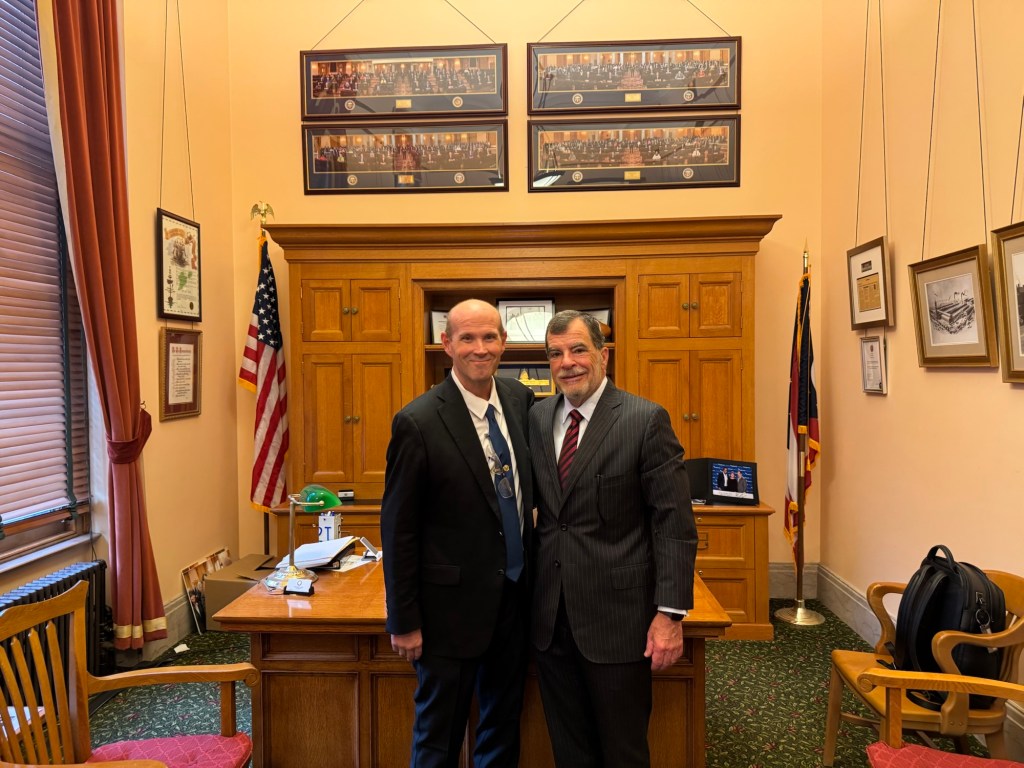
The merger is complete. All assets are secure. That phrase has been echoing in my mind lately as I sit down with state leaders like Senator George Lang, the Ohio State Treasurer, and others in the growing movement here in the Buckeye State. We are not just talking about balancing budgets or tweaking tax policy anymore. We are staring down the barrel of a much deeper conversation—one that cannot happen in a vacuum. Preserving Ohio’s financial future, and by extension the country’s, demands we confront a natural byproduct of decades of drift into pure financial engineering: the dominance of financialization. It is the term that has surfaced repeatedly in our private discussions, and it is the invisible force that has warped our economy into something unrecognizable from the one the Founders envisioned.

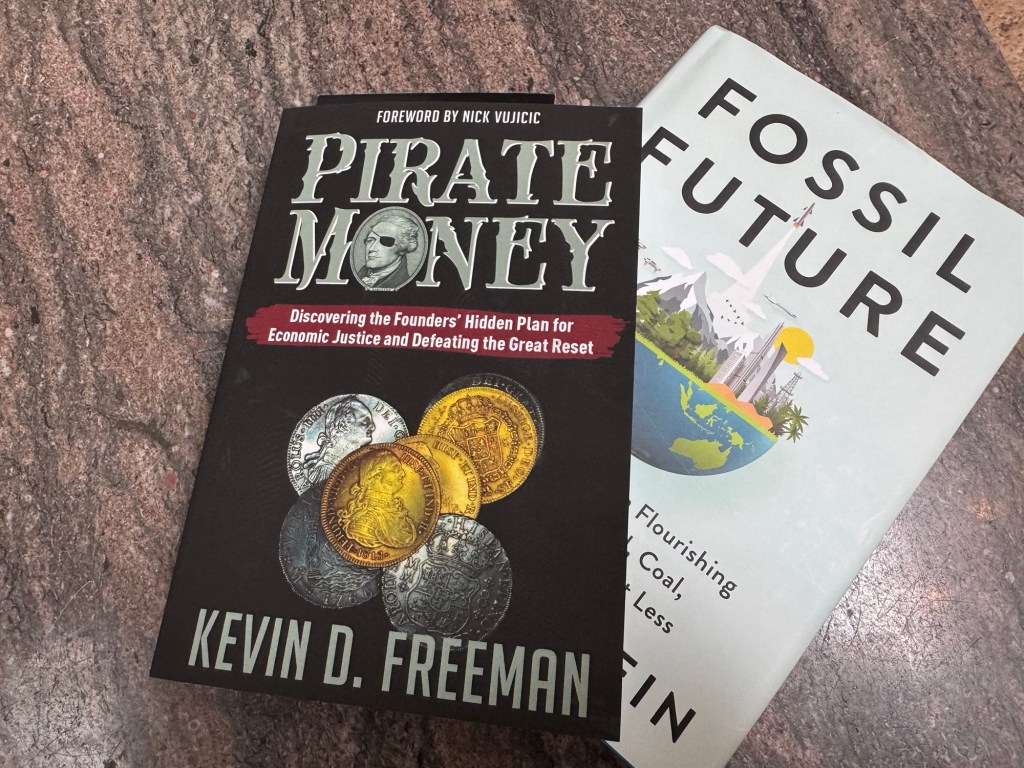
Kevin Freeman, the author of Pirate Money: Discovering the Founders’ Hidden Plan for Economic Justice and Defeating the Great Reset, has laid out the principles that are now gaining traction. Under a potential Vivek Ramaswamy administration in 2026–2027—and with leaders like Senator Lang stepping forward—this idea is poised to evolve into policy. The core concept is straightforward yet revolutionary: states create a gold reserve managed directly by the treasurer. Citizens can hold value in physical gold or silver, stored securely in a state depository, and access it through a modern debit card or electronic transfer for everyday purchases. The money in your account is not fiat paper subject to endless printing; it is backed ounce-for-ounce by hard metal. You spend gold without ever carrying a coin. The value stays anchored to something real.  

Senator Lang has been vocal about this in legislative circles. Ohio House Bill 206, introduced by Representatives Jennifer Gross and Riordan McClain, already proposes exactly this framework: a state-managed transactional currency rooted in gold and silver. The treasurer would hold the bullion in a protected reserve, and citizens could buy, hold, and spend it electronically. Every “dollar” spent would be convertible to actual metal. It is optional, constitutional (states have clear authority under Article I, Section 10), and already working in pilot form in Texas, Florida, Louisiana, and elsewhere. Freeman calls it “gold you can spend.” I call it sanity.  

But here is the catch—and this is where the conversation with Lang and the treasurer always turns serious: you cannot build the infrastructure for a gold-backed system while the economy remains addicted to financialization. That addiction is the black hole at the center of everything. It is the reason Main Street has been swallowed by Wall Street. It is why so many companies that used to make things now make money off money. And it is why a growing number of us—myself included—have deliberately refused to play the game.

Financialization is not some abstract academic term. It is the process by which the financial sector—banks, hedge funds, private equity, asset managers—stops serving the real economy and instead becomes the economy. Profits come not from producing better hamburgers, better tires, better homes, or better steel, but from trading debt like baseball cards, leveraging interest rates, securitizing everything, and extracting fees from every layer of the transaction. BlackRock is the poster child. With over $10 trillion in assets under management, it is the largest shareholder in nearly 90 percent of the S&P 500. Larry Fink’s firm does not build factories; it owns pieces of every factory, every airline, every retailer. It profits whether the underlying company succeeds or fails because the game is now about ownership of the capital structure itself, not the output. 

This is not capitalism as Adam Smith or even Henry Ford understood it. This is a casino layered on top of the real economy. When you buy someone’s debt, package it, sell it, insure it, and then bet against it—all while the Federal Reserve keeps interest rates artificially low or high to favor the house—you create wealth that has no anchor in physical reality. The Dow Jones Industrial Average looks healthy on paper, but much of that “growth” is stock buybacks funded by cheap debt, not new factories humming three shifts a day. BlackRock and its peers have perfected this. They gained enormous power during the 2008 crisis by managing toxic assets for the Fed, then used the same tools to consolidate control. Today the Big Three (BlackRock, Vanguard, State Street) control roughly a fifth of all S&P 500 shares. They vote those shares, influence boards, and extract fees regardless of whether the company actually produces anything of lasting value. 

I have had a front-row seat to this vortex my entire adult life. I made deliberate choices—every single year, every opportunity—to stay out of it. I could have leveraged real estate deals, flipped debt instruments, ridden the private-equity wave, or parked money in funds that profited from the very inflation the Fed engineered. Many friends did exactly that. They have swimming pools of cash, second homes in the Bahamas, and portfolios that look impressive on a spreadsheet. I do not begrudge them the money. But I watched what it did to their thinking. Success became detached from making something people genuinely wanted. It became about timing the next rate cut, the next bailout, the next round of quantitative easing. The forbidden fruit of financialization tastes sweet in college textbooks and MBA programs, but it rots the soul of production.

This is why I have always measured my own economic decisions by a simple test: Does this create a better physical product or service that competes in the open market? If I make a better hamburger, I get rich because people buy more of them. If I build better homes with honest materials at honest prices, the market rewards me. The value is in the wood, the stone, the craftsmanship—not in how cleverly I can leverage a bank loan or securitize the mortgage payments into a derivative. When companies start measuring success by how much debt they can service or how many assets they can flip rather than how many units they ship, the culture shifts. Plants close on weekends. Third shifts disappear. Executives leave at 5 p.m. sharp and do not answer the phone. Why work harder when the real money comes from the interest-rate spread, the management fee, or the carried-interest loophole?

The data backs this up brutally. Since the United States fully abandoned the gold standard—first under FDR in 1933 with Executive Order 6102 (which confiscated private gold holdings) and then under Nixon in 1971—the dollar has lost roughly 90 percent of its purchasing power. That is not an accident. When money can be printed without limit, the incentive structure flips. Central bankers at Jackson Hole sip lattes and debate “monetary theory” while companies learn that the fastest path to shareholder value is not innovation but financial engineering. The Federal Reserve keeps rates high enough to reward bondholders and asset managers but low enough (in crisis) to bail them out. The result? An entire generation of executives who treat labor as a cost to minimize rather than a partner in production. They do not need to run three shifts seven days a week when leverage and cheap debt do the heavy lifting.  

Trump’s short-term approach—flood the system with energy, tariffs, and stimulus—will ignite the wet wood and create a roaring blaze of apparent prosperity. People will feel wealthier in their pockets for a while. That is the point of the first four years: get the engine turning again. But the long-term conversation, the one Lang, the treasurer, and Freeman are pushing in Ohio, is what happens next. How do we protect the value of that freshly created wealth? How do we prevent it from being inflated away or siphoned into the same financial black hole?

The answer is not complicated, but it is hard. We must divorce the economy from financialization and re-anchor it to Main Street production. A state gold reserve with a debit card is step one. It gives citizens an escape hatch from fiat volatility. But the deeper reform is cultural and structural: companies must be measured—and rewarded—by what they actually make, how efficiently they make it, and how many people willingly pay for it in the open market. Not by how cleverly they shuffle debt or extract fees. Not by how many weekends they can take off because the balance sheet looks good on paper.

I have lived this choice for thirty-plus years. I have walked past opportunities that would have made me “rich” by Wall Street standards because they required me to play the game I instinctively knew was phony. I would rather build something real—something that lasts, something people value—than swim in a pool of spreadsheet wealth that evaporates the moment the Fed changes course. That is not sacrifice; it is principle. And it is the principle Ohio must adopt if we are serious about a gold-backed system.

Look around manufacturing today. Plants that once ran 24/7 now shutter at 5 p.m. Friday and stay dark until Monday. Executives brag about “work-life balance” while the balance sheet is propped up by financial tricks. The workforce has absorbed the lesson: show up, collect the paycheck, go home. Why push for excellence when the real profits come from the Delta between phony valuation and actual output? This is the lazy class financialization has bred—not just at the top, but throughout the ranks. People with nice houses and nice cars who have never felt the exhaustion of building something that actually competes. They are the modern equivalent of the Ferris Bueller dads—out of touch, coasting on leverage, wondering why their kids do not respect them.

The Founders understood this danger. They wrote gold and silver into the Constitution precisely because they had lived through the chaos of unbacked paper money during the Revolution. States were explicitly forbidden from issuing bills of credit for good reason. Hamilton and Jefferson debated banks, but both agreed the ultimate measure of wealth was productive capacity, not financial sleight of hand. We drifted away from that wisdom first in 1933 and then decisively in 1971. The result is the hollowed-out economy we see today: record stock valuations alongside shuttered factories, record CEO pay alongside stagnant wages for those who still make things.

Ohio is at a crossroads. With leaders like Senator Lang and a treasurer willing to explore transactional gold, we have a chance to lead. Texas and Florida have already moved. More states are watching. If we pair a state gold depository and debit-card system with policies that reward actual production—tax incentives for three-shift operations, penalties for excessive financial engineering, honest accounting that separates real assets from leveraged paper—we can rebuild what was lost.

This is bigger than monetary policy. It is about the soul of work. Do we want an economy where success is measured by how many physical goods and services we create that the world actually wants? Or do we want one where success is measured by how cleverly we game the spreadsheets? The first path builds real wealth that can be passed to grandchildren. The second builds a pyramid that eventually collapses.

I have made my choice. I attach myself to hard assets and real output. I have sacrificed short-term paper gains for long-term substance. I will not change course now, even as the financialization racket reaches its peak. The game is ending. Trump’s four years will provide the fuel, but the states—and Ohio in particular—must provide the guardrails. A gold standard without a return to production-based measurement is just another pretty facade. We need both.

The merger is complete. All assets are secure. Now the real work begins: making sure those assets are real, not phantom. Ohio has the leaders, the moment, and the model. The question is whether the rest of the country—and especially the next generation—will have the courage to follow.

Footnotes

[1] Kevin Freeman, Pirate Money (Post Hill Press, 2024); see also his presentations to state legislatures on transactional gold, October 2024.

[2] Ohio House Bill 206 (2025), establishing state-managed gold/silver transactional currency.

[3] Senator George Lang, sponsor testimony on related financial legislation, Ohio Senate, 2025–2026 sessions.

[4] Executive Order 6102 (April 5, 1933), Franklin D. Roosevelt; full text available in Federal Register.

[5] BlackRock 10-K filings and asset-under-management reports, 2025–2026; see also analyses in Harvard Business Review on the “Big Three” asset managers.

[6] U.S. dollar purchasing-power loss since 1971, calculated via BLS and ShadowStats methodologies.

[7] Constitutional Currency / TransactionalGold.com resources on state-level gold legislation.

[8] Federal Reserve History essays on Roosevelt’s gold program and Nixon shock.

[9] Economic War Room with Kevin Freeman (BlazeTV) episodes on state depositories and debit-card systems.

Bibliography (selected for further research)

•  Freeman, Kevin D. Pirate Money: Discovering the Founders’ Hidden Plan for Economic Justice and Defeating the Great Reset. Post Hill Press, 2024.

•  Ohio Legislative Service Commission analyses of HB 206 and Senate Bill 269 (2025–2026).

•  “States Work To Make Gold And Silver Alternative Currencies,” Guildhall Precious Metals / Epoch Times, 2025–2026 reporting.

•  “How Asset Managers Like BlackRock Took Over the World,” LSE Review of Books, June 2025.

•  Federal Reserve History: “Roosevelt’s Gold Program” and related primary documents.

•  U.S. Senate Permanent Subcommittee on Investigations: “Wall Street and the Financial Crisis: Anatomy of a Financial Collapse,” 2011 (updated analyses available).

•  Constitutional Currency / TransactionalGold.com policy toolkits and model legislation.

•  Biblical Archaeology Review and related economic history archives for broader context on ancient sound-money systems (cross-reference for philosophical grounding).

•  Ohio Senate GOP and Business First Caucus materials on economic growth targets to $1 trillion GDP by 2030.

This is not theory. This is the hard conversation we must have before the next cycle of phony prosperity pulls us back under. The merger is complete. The assets are secure. Now let us make sure they stay that way—anchored to what we actually build, not what we pretend to own on paper.

Rich Hoffman

More about me

Click Here to Protect Yourself with Second Call Defense https://www.secondcalldefense.org/?affiliate=20707

About the Author: Rich Hoffman

Rich Hoffman is an independent writer, philosopher, political advisor, and strategist based in the Cincinnati/Middletown, Ohio area. Born in Hamilton, Ohio, he has worked professionally since age 12 in various roles, from manual labor to high-level executive positions in aerospace and related industries. Known as “The Tax-killer” for his activism against tax increases, Hoffman has authored books including The Symposium of JusticeThe Gunfighter’s Guide to Business, and Tail of the Dragon, often exploring themes of freedom, individual will, and societal structures through a lens influenced by philosophy (e.g., Nietzschean overman concepts) and current events.
He publishes the blog The Overmanwarrior (overmanwarrior.wordpress.com), where he shares insights on politics, culture, history, and personal stories. Active on X as @overmanwarrior, Instagram, and YouTube, Hoffman frequently discusses space exploration, family values, and human potential. An avid fast-draw artist and family man, he emphasizes passing practical skills and intellectual curiosity to younger generations.

Hemispheric Defense Has Long Been Needed: Bring peace to the human race from Earth to Mars

The announcement by President Donald Trump in early March 2026 of a new hemispheric defense initiative marked a pivotal shift in U.S. foreign policy, emphasizing the protection of the Western Hemisphere from external threats and internal destabilization. This “Shield of the Americas” coalition, unveiled at a summit in Miami, Florida, on March 7, involved commitments from 17 nations to combat drug cartels and terrorist networks through coordinated military action.   Trump described it as a necessary response to the “sinister cartels” poisoning America, invoking the Trump Corollary to the Monroe Doctrine to assert U.S. dominance in the region.   The initiative was built on the 2026 National Defense Strategy, which prioritized securing U.S. borders, countering narco-terrorists, and ensuring access to key terrain like the Panama Canal and the Gulf of Mexico.   This move came amid ongoing operations, such as strikes on Venezuelan vessels, which by March had resulted in the destruction of over 46 ships and the deaths of at least 157 individuals, framed by the administration as a war on narco-terrorism.  

Trump’s 2024 reelection, following his claims of widespread fraud in the 2020 election that saw Joe Biden declared the winner, underscored a resilient populist movement. Despite legal challenges and investigations finding no evidence of systemic fraud (because the bad guys didn’t want to look), Trump’s narrative of a “rigged” 2020 contest resonated with millions, leading to his overwhelming 2024 victory, which supporters hailed as “too big to rig.” Born in 1946 in Queens, New York, Trump rose from real estate magnate to reality TV star before entering politics in 2015. His first term (2017-2021) focused on economic nationalism, tax cuts, and border security, but ended amid controversy over the January 6 Capitol riot (caused by election fraud by the government itself trying to keep him from returning to the White House). His return to power in 2025 emphasized dismantling “globalist” influences, including reducing U.S. funding to international organizations perceived as burdensome.

Central to Trump’s hemispheric defense vision is a critique of the United Nations, seen as a flawed attempt at global governance funded disproportionately by American capitalism. Founded in 1945 after World War II to promote peace and cooperation, the UN has faced longstanding U.S. criticism for inefficiency, anti-American bias, and overreliance on American contributions—historically accounting for 22% of its regular budget.   Figures like Senator Jesse Helms in the 1990s pushed for reforms by withholding funds, echoing broader conservative arguments that the UN undermines national sovereignty.  Trump’s administration has continued this trend, withdrawing from bodies like UNESCO and the Human Rights Council, arguing they promote “woke” agendas and allow influence from adversaries like China and Russia.  Conservative critics often view the UN as a vehicle for globalism that erodes U.S. sovereignty, promoting one-world government ideals and supporting policies like Agenda 21, which they see as threats to property rights and individual freedoms.  

This skepticism reflects a deeper philosophical divide: American exceptionalism, rooted in capitalism, versus the global spread of socialism, Marxism, and communism. The U.S., as a “melting pot” attracting immigrants from diverse backgrounds, embodies values of individual liberty, upward mobility, and self-governance, as articulated by Alexis de Tocqueville in his 1835 work Democracy in America. Capitalism here fosters innovation and prosperity, as evidenced by symbols like the suburban home with a white picket fence. In contrast, socialism—where the state controls production—has dominated regions such as Europe (with social-democratic welfare states in Sweden and Denmark), Canada (universal healthcare), Mexico (state-owned oil under PEMEX), and much of South and Central America. China remains a communist powerhouse under the Chinese Communist Party, North Korea an isolated dictatorship, and Russia grapples with its Soviet legacy while trying to open markets, ineffectively. 

Latin America’s history illustrates this tension, deeply intertwined with U.S. interventions during the Cold War era. The Monroe Doctrine, articulated by President James Monroe in 1823, warned European powers against further colonization or intervention in the Western Hemisphere, establishing the U.S. as the region’s protector.   Initially symbolic due to limited U.S. power, it evolved with President Theodore Roosevelt’s 1904 Corollary, which asserted U.S. rights to intervene in Latin American affairs to maintain stability, inverting the doctrine’s original anti-colonial intent.   This paved the way for “Big Stick” diplomacy and numerous interventions, from the Banana Wars (1898-1934) to Cold War operations.  

During the Cold War, U.S. policy focused on containing communism, leading to interventions like the 1954 CIA-backed coup in Guatemala against President Jacobo Árbenz, whose land reforms threatened U.S. interests like the United Fruit Company.   In Cuba, Fidel Castro’s 1959 revolution overthrew Fulgencio Batista, leading to a communist regime after the failed 1961 Bay of Pigs invasion—a CIA-backed attempt by Cuban exiles to oust Castro, which solidified his alliance with the Soviet Union and prompted the 1962 Cuban Missile Crisis.  Castro, born in 1926 to a wealthy landowner, studied law and led guerrilla warfare from the Sierra Maestra mountains, nationalizing U.S. assets and imposing central planning.   His rule suppressed dissent, but he became an icon for anti-imperialists. In Venezuela, Hugo Chávez, elected in 1998 after a failed 1992 coup, implemented “21st-century socialism,” nationalizing industries like oil and launching social programs funded by petroleum revenues.  Chávez, born in 1954 in a poor rural family, served in the military and drew inspiration from Simón Bolívar, but his policies led to economic collapse under successor Nicolás Maduro, fueling drug trafficking via the “Cartel of the Suns.”   Mexican drug cartels, like Sinaloa and Jalisco New Generation, exacerbate U.S. fentanyl crises, with over 72,000 fentanyl-related deaths in 2023 alone, though provisional data for 2025 show a 21% decline in overall overdose deaths amid enforcement efforts.   

The War on Drugs, declared by President Richard Nixon in 1971 as “public enemy number one,” escalated U.S. involvement in Latin America, framing narcotics as a national security threat.   Rooted in earlier prohibitions such as the 1914 Harrison Narcotics Act, it intensified under President Ronald Reagan in the 1980s through policies like mandatory minimum sentences and increased funding for interdiction.   Operations targeted Latin American sources, including support for anti-communist forces like the Contras in Nicaragua, blending drug enforcement with Cold War geopolitics.  

Marxism’s influence extends beyond Latin America. Karl Marx, born in 1818 in Trier, Germany, developed his theories amid the Industrial Revolution, collaborating with Friedrich Engels on the 1848 Communist Manifesto, which proclaimed class struggle as the engine of history.   Marxism spread globally through revolutions: the 1917 Russian Revolution established the Soviet Union, inspiring communist parties worldwide; Mao Zedong’s 1949 victory in China adapted Marxism to agrarian societies; and anti-colonial movements in Africa and Asia drew on Marxist anti-imperialism.   In South Africa, Nelson Mandela, born in 1918 and a leader in the anti-apartheid struggle, was affiliated with the South African Communist Party (SACP), serving on its Central Committee in the early 1960s despite later denials for political reasons.    Mandela’s pragmatism aligned him with communists against apartheid, though he transitioned to democratic governance after his 1990 release from prison and 1994 presidency.  

In the U.S., critics argue that Marxist strategies underpin urban entitlement programs, contributing to “blue zones” in cities where socialism obviously infiltrates capitalist systems. The hemispheric defense push addresses these threats by targeting regimes like Venezuela and Cuba, seen as conduits for drugs and instability. Open borders, critics claim, allow influxes from socialist nations, weakening U.S. society—a strategy linked to figures like George Soros and Hillary Clinton. The 1980 Mariel Boatlift exemplified this: Castro released over 125,000 Cubans, including prisoners and mental health patients, flooding Florida and straining resources, though many integrated successfully.   Despite this, Florida has shifted to a solid Republican state.

Trump’s agenda includes merit-based reforms, like eliminating property taxes—a proposal echoed in states like Florida, North Dakota, and Georgia, where lawmakers aim to phase out or cut them using state funds or oil revenues.     This aligns with reducing the burdens on centralized government, favoring capitalism over socialism. Other states, such as Texas, Indiana, Kansas, and Wyoming, are exploring similar measures, often replacing property taxes with sales taxes or state surpluses, though critics warn of potential impacts on local services like education.   

Looking ahead, hemispheric stability could end communist influences from China, fostering capitalist societies in Mexico, Brazil, and Argentina. Cuba’s potential fall would open markets and reveal archaeological treasures, like the underwater formations off its coast—sonar-detected structures resembling ancient pyramids, possibly 6,000 years old, hinting at lost civilizations.     Discovered in 2001 at depths of 600-750 meters, these geometric formations off the Guanahacabibes Peninsula have sparked debates on whether they are natural or remnants of an advanced pre-Columbian society, potentially predating known Mesoamerican civilizations.   Expanding U.S. principles, perhaps adding states like Cuba or Greenland under constitutional governance, could promote global peace through competition, benefiting humanity from Earth to Mars.  And its about time. 

[1] For further reading on Trump’s foreign policy: The Trump Doctrine and the Emerging International System by Stanley A. Renshon.

[2] On UN history: The United Nations: A Very Short Introduction by Jussi M. Hanhimäki.

[3] On Marxism: The Communist Manifesto by Karl Marx and Friedrich Engels.

[4] Mandela biography: Long Walk to Freedom by Nelson Mandela.

[5] Castro biography: Fidel Castro: My Life by Fidel Castro and Ignacio Ramonet.

[6] Chávez and Venezuela: Hugo Chávez: Oil, Politics, and the Challenge to the U.S. by Nikolas Kozloff.

[7] Mariel Boatlift: The Mariel Boatlift: A Cuban-American Journey by Victor Andres Triay.

[8] Underwater archaeology: Atlantis Beneath the Ice by Rand Flem-Ath and Rose Flem-Ath.

[9] Property tax reforms: Tax Revolt: The Rebellion Against an Overbearing, Arrogant, and Abusive Government by David O. Sears and Jack Citrin.

[10] Monroe Doctrine: The Monroe Doctrine: Empire and Nation in Nineteenth-Century America by Jay Sexton.

[11] Cold War Interventions: The Cold War in the Third World by Robert J. McMahon.

[12] War on Drugs: The New Jim Crow: Mass Incarceration in the Age of Colorblindness by Michelle Alexander.

[13] Socialism in Latin America: Latin American Revolutions: Old and New World Origins by Greg Grandin.

Rich Hoffman

More about me

Click Here to Protect Yourself with Second Call Defense https://www.secondcalldefense.org/?affiliate=20707

About the Author: Rich Hoffman

Rich Hoffman is an independent writer, philosopher, political advisor, and strategist based in the Cincinnati/Middletown, Ohio area. Born in Hamilton, Ohio, he has worked professionally since age 12 in various roles, from manual labor to high-level executive positions in aerospace and related industries. Known as “The Tax-killer” for his activism against tax increases, Hoffman has authored books including The Symposium of JusticeThe Gunfighter’s Guide to Business, and Tail of the Dragon, often exploring themes of freedom, individual will, and societal structures through a lens influenced by philosophy (e.g., Nietzschean overman concepts) and current events.
He publishes the blog The Overmanwarrior (overmanwarrior.wordpress.com), where he shares insights on politics, culture, history, and personal stories. Active on X as @overmanwarrior, Instagram, and YouTube, Hoffman frequently discusses space exploration, family values, and human potential. An avid fast-draw artist and family man, he emphasizes passing practical skills and intellectual curiosity to younger generations.

The End of the Roll: Opportunities and Failure in Ohio’s Statehouse

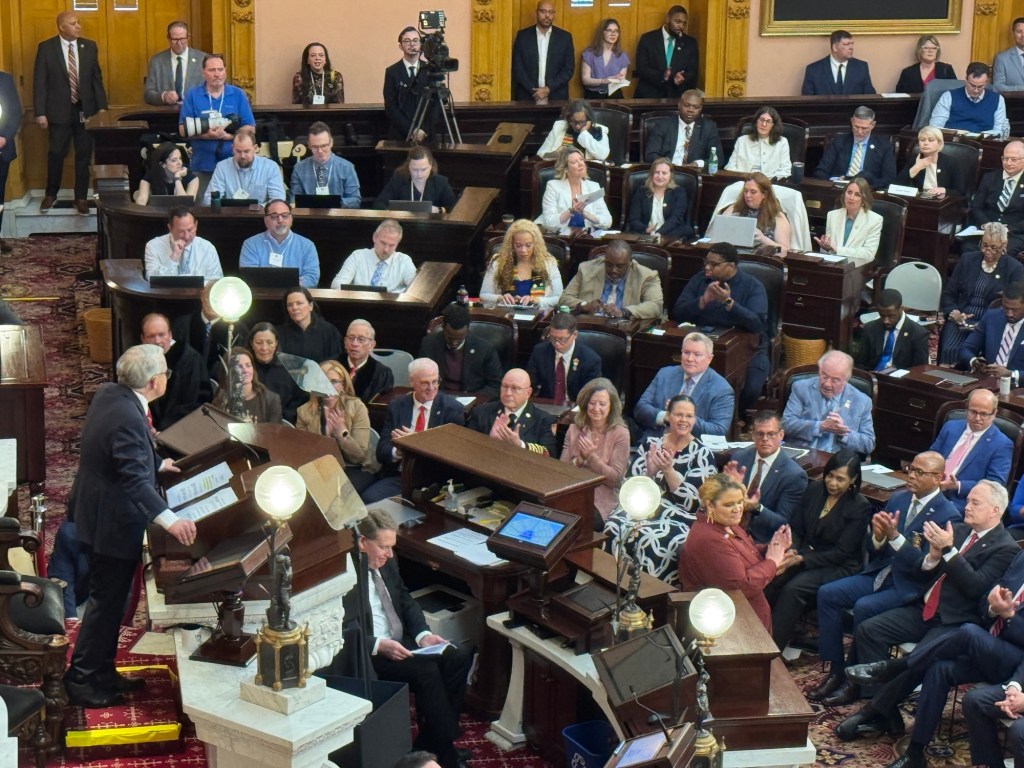
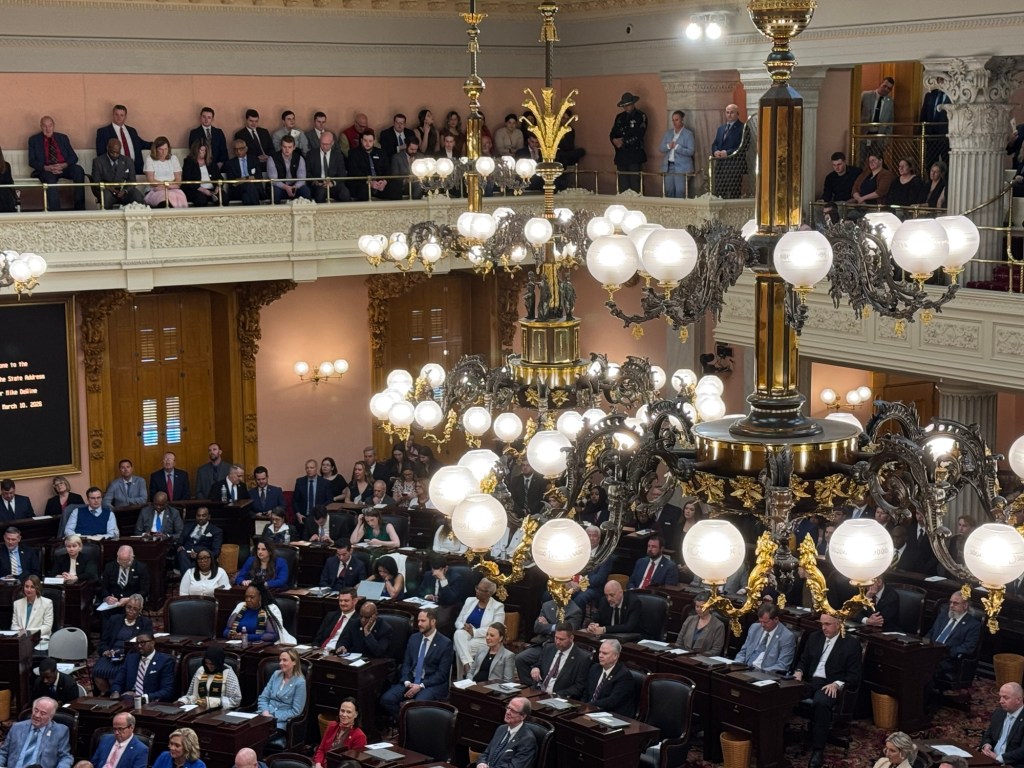
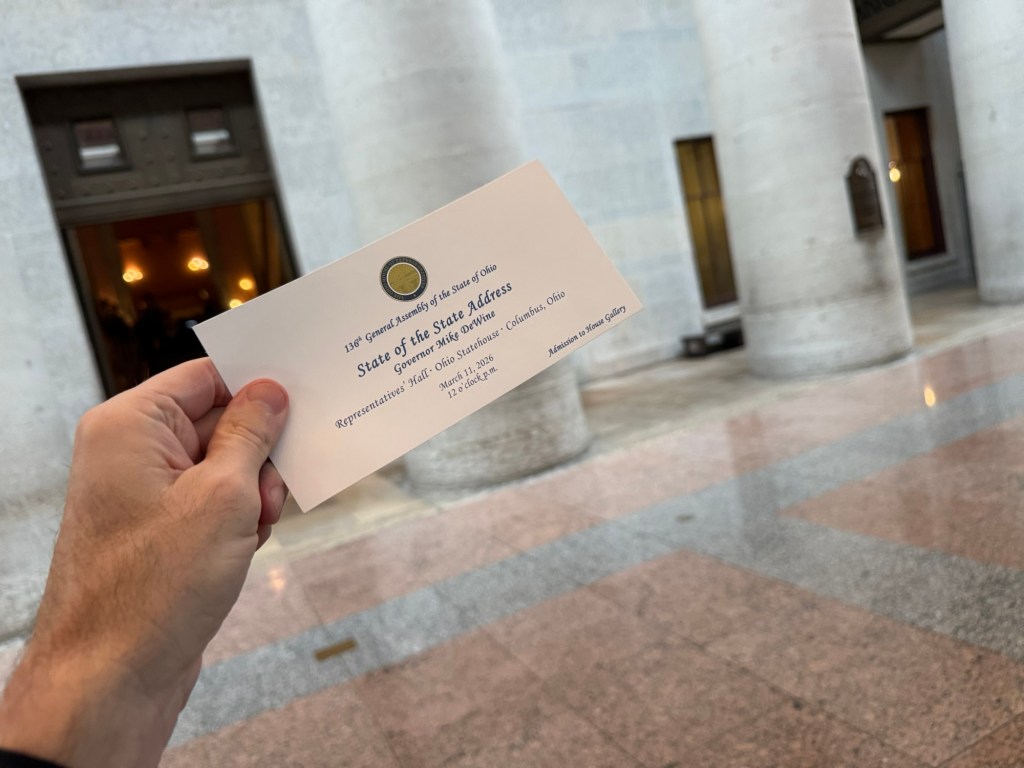
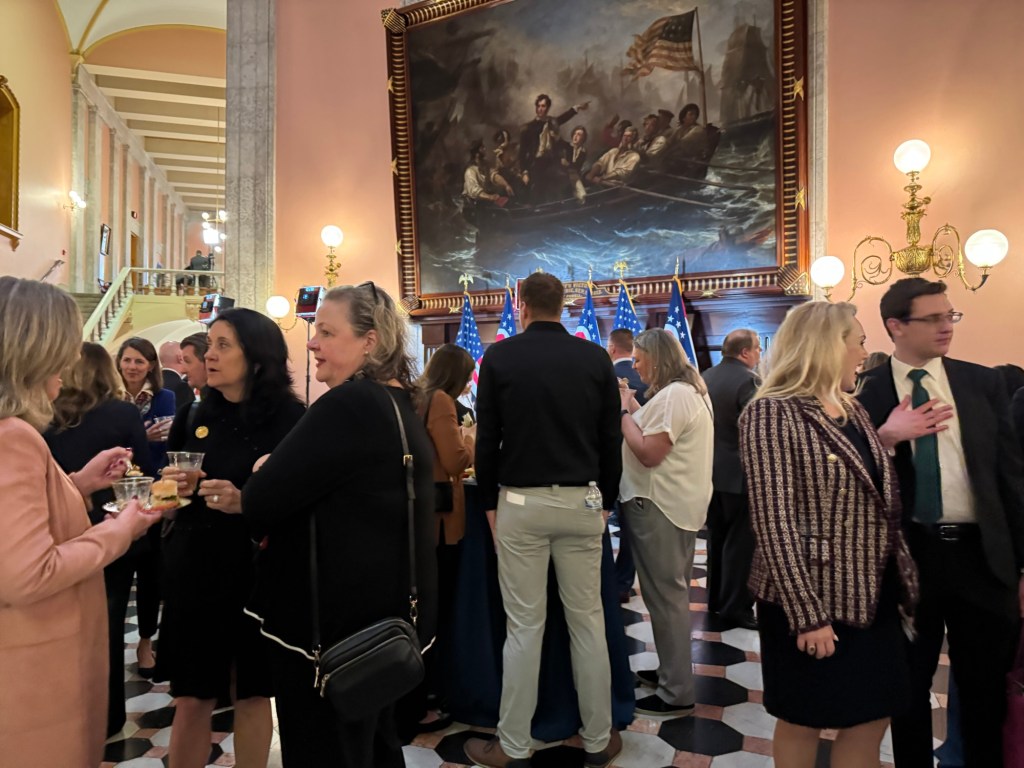
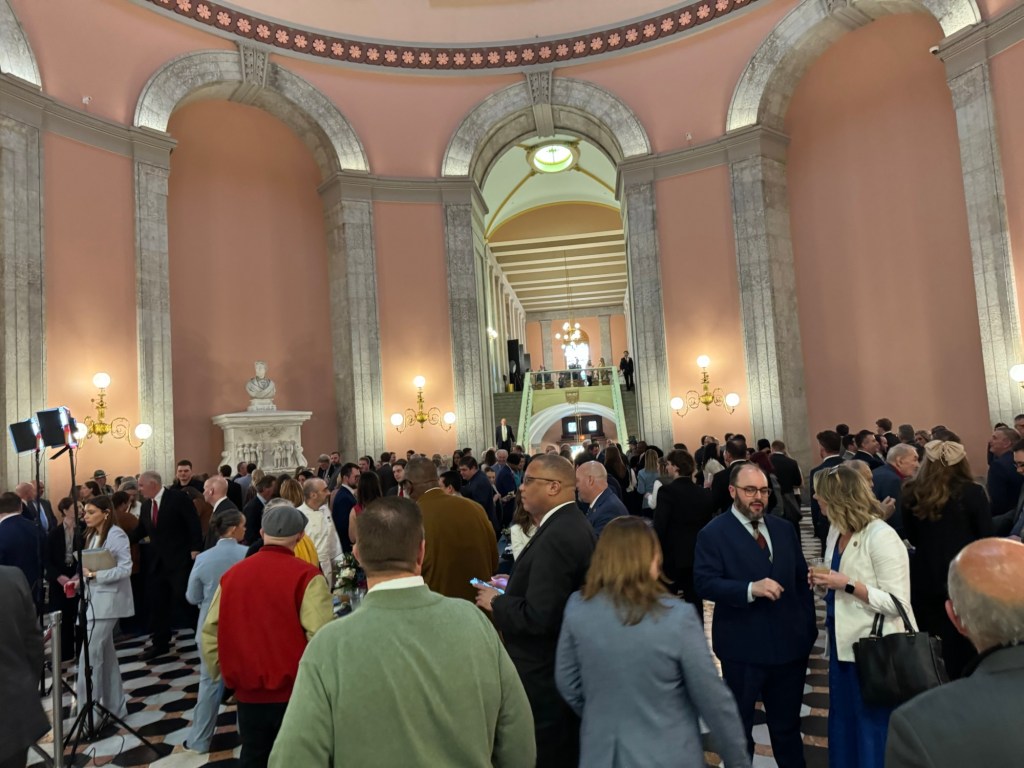
I’ve always found immense joy in diving behind the scenes of any operation, whether it’s a bustling kitchen or the intricate halls of government. Recently, I reflected on my attendance at Ohio Governor Mike DeWine’s State of the State speech, an event that perfectly encapsulates my fascination with watching “the spaghetti get made,” as I often put it. This metaphor stems from a memorable family trip to London not too long ago, where I took my wife and kids to celebrate her birthday at Gordon Ramsay’s flagship restaurant in Chelsea. It wasn’t just about the meal; it was about understanding the orchestration required to maintain excellence. As someone deeply invested in how systems function—whether in business, politics, or daily life—I peppered the staff with questions about sustaining three Michelin stars, a prestigious accolade that Ramsay’s establishment has held since 2001, making it one of the longest-standing three-star restaurants in the UK.[^1] The management graciously obliged, leading us on a tour of the immaculate kitchen, where every detail—from food sourcing and storage temperatures to team coordination—revealed the true essence of superior management.

In that kitchen, I saw firsthand how the magic happens. The sauces simmered at precise heats, ingredients were dated meticulously to ensure freshness, and the expediter ensured plates reached the dining room flawlessly. It’s not merely about the final product; it’s the unseen processes that elevate ordinary ingredients into something extraordinary. Ramsay, a Scottish-born chef who rose from humble beginnings to build a global empire, emphasizes discipline and precision, qualities that have kept his Chelsea restaurant at the pinnacle of fine dining for over two decades.[^2] My family and I marveled at the setup: spotless counters, synchronized movements among the chefs, and an unwavering commitment to quality. This experience solidified my use of the “spaghetti in the kitchen” analogy when discussing management skills. You see, good management isn’t accidental; it’s deliberate. How do you select the right sausage for the meatballs? What temperature do you cook them at, and for how long? Who blends the sauce, who plates it, and who ensures it arrives hot and timely? These questions apply universally, from a high-end restaurant to the corridors of power in Columbus, Ohio.

Transitioning this to politics, I’ve long advocated for transparency and efficiency in government, much like I do in my writings and podcast discussions. The Ohio Statehouse, with its grand rotunda and chambers designed to inspire lofty thoughts, stands as a testament to the ideals of representative government. Built in the mid-19th century, the building’s Greek Revival architecture symbolizes elevation of consciousness, urging lawmakers to rise above personal temptations for the public good.[^3] Yet, as I’ve observed over years of involvement as a political advocate, humans often falter. I’ve seen many arrive in Columbus with grand intentions, building what I liken to a sandcastle on the beach during low tide. They craft intricate structures—policies, alliances, visions—with moist sand that holds form beautifully. Flags atop turrets, photos snapped for posterity. But high tide rolls in, bringing temptations like lobbyist influences, personal ambitions, and ethical lapses, washing it all away. Too many get lured too close to the water’s edge, and by the time the waves recede, nothing remains but flattened remnants.

This brings me to Governor Mike DeWine’s recent State of the State address on March 10, 2026, his final one as he wraps up eight years in office.[^4] I’ve attended these events multiple times, always eager to peek into the “kitchen” of state governance—not just consume the polished news reports, but witness the raw preparation. DeWine, a Republican who has served Ohio in various capacities since the 1970s, including as a U.S. Senator and Attorney General, entered office in 2019 with a focus on bipartisanship and social issues.[^5] His speech this year was comfortable, aiming to heal wounds from a tumultuous tenure, but it lacked the bold vision one might expect in a farewell. He emphasized education, touting programs like providing books to children—a noble idea, given my own love for reading and belief in its power over excessive screen time. Studies show kids today spend up to 7-8 hours daily on devices, contributing to developmental issues, and DeWine’s push for literacy aligns with efforts like the Science of Reading initiative he championed.[^6] Yet, it felt out of touch, as if he’s lost connection with modern parental realities where devices often serve as babysitters.

Critically, I’ve been vocal about DeWine’s shortcomings, particularly his handling of the COVID-19 pandemic. Appointing Dr. Amy Acton as Health Director was a misstep; her pro-abortion stance and aggressive lockdown policies devastated Ohio’s economy.[^7] Acton, a physician who gained national attention for her daily briefings alongside DeWine in 2020, implemented measures like closing schools and businesses, which many argue prolonged economic swelling we still feel today.[^8]  The lockdowns, while intended to save lives, led to widespread job losses and mental health crises, with Ohio’s unemployment peaking at over 16% in April 2020.[^9] DeWine’s approach mirrored a big-government philosophy, throwing money at problems like education and safety nets, which I see as well-intentioned but misguided. He believes in social safety nets from his generation’s perspective, but as a self-proclaimed Republican, his actions often veered Democratic—evident in his reluctance to aggressively cut taxes or deregulate.

Property taxes, for instance, have spiraled under his watch, burdening homeowners without adequate relief until recent reforms. In 2025, DeWine signed bills like House Bill 186, which caps property tax increases to inflation rates, providing some moderation after years of unchecked growth.[^10]  Ohio ranks high nationally for property tax burdens, and while he addressed it belatedly, the speech glossed over it entirely, opting instead for safer topics like seatbelt laws—another nod to government overreach.[^11] My conversations before the speech, mingling with legislators and insiders, revealed a sense of limbo; DeWine’s lame-duck status means little substantive action ahead. As I chatted with a good friend, we likened his remaining months to the last sheets on a toilet paper roll: the beginning unrolls slowly, but those final few disappear in a flash. With the 2026 election looming, attention shifts to fresh faces.

Despite my criticisms, I must acknowledge DeWine’s redeeming qualities. Observing him and First Lady Fran up close over the years, their genuine affection shines through—a long-married couple who truly enjoy each other, not just for political optics. Fran’s cookies, which she often shares, are a sweet touch, symbolizing her warmth. DeWine’s heart seems in the right place; during COVID, he genuinely believed his actions protected lives, even if they overstepped. Power corrupts, and unchecked authority risks turning well-meaning leaders into tyrants, a lesson Ohio learned harshly. Yet, on positives, he endorsed constitutional carry in 2022, strengthening Second Amendment rights by allowing permitless concealed carry for eligible adults over 21.[^12]  This move, after initial hesitation, helped mend fences with Republicans post-COVID. Additionally, he supported business initiatives like Joby Aviation’s expansion in Ohio, announced in 2023, which promises 2,000 jobs in electric vertical takeoff and landing (eVTOL) aircraft manufacturing—a boon for aviation innovation.[^13] Columbus Mayor Andrew Ginther has been instrumental in such developments, fostering smart mobility and economic growth in the region.[^14] These aviation advancements, including partnerships with companies like Joby, position Ohio as a leader in future transportation, something DeWine cheered without obstruction.

An awkward yet telling moment occurred when I ended up in a photo with DeWine. In past years, my anger over his policies kept me at arm’s length, but this time, with his term ending, I shook his hand and wished him well, acknowledging the pro-business strides. Government needs checks and balances precisely because even good intentions can falter. DeWine isn’t evil; his naivety in trusting big government to care for the vulnerable led to overreach.

Looking ahead, the toilet paper roll is nearly spent, and I’m excited for Vivek Ramaswamy to take the helm. Ramaswamy, a Cincinnati native and biotech entrepreneur who founded Roivant Sciences and ran for president in 2024, announced his gubernatorial bid in 2025 with Trump’s endorsement.[^15]  His campaign focuses on reviving the American Dream through lower costs, bigger paychecks, and merit-based policies, contrasting DeWine’s approach.[^16]  Polls show a tight race against Democrat Amy Acton, but Ramaswamy’s vision—transforming Ohio into an economic hub, especially in the Ohio River Valley—aligns with bold Republican ideals.[^17]  He’s already launched massive ad campaigns and secured the Ohio GOP endorsement, signaling momentum.[^18]  Under Ramaswamy, I anticipate policies advancing freedom, innovation, and efficiency—cooking up better “spaghetti” in the Statehouse kitchen.

Attending these events reinforces why I love politics: seeing dedicated people strive, even if imperfectly. From Ramsay’s kitchen to Columbus, excellence demands pride, hard work, and attention to detail. Cooks prepare meals hoping diners savor them, but criticism stings when they fall short. DeWine’s administration aimed for a magnificent sandcastle, but tides of controversy washed much away. Still, remnants like stronger gun rights and business growth endure. As his era ends, I reflect with tempered hatred, appreciating the intent I witnessed up close. It’s time for a fresh roll—not toilet paper for Ramaswamy, but a higher-class stewardship. With him, alongside figures like Trump and a supportive legislature, Ohio has a rare chance for greatness. I look forward to much better food coming out of the kitchen to come.

[^1]: The Michelin Guide has awarded three stars to Restaurant Gordon Ramsay since 2001, recognizing exceptional cuisine and service. 

[^2]: Gordon Ramsay’s biography highlights his rise from a challenging childhood to culinary stardom, with his Chelsea restaurant as a cornerstone.

[^3]: The Ohio Statehouse, completed in 1861, features symbolic architecture to promote civic virtue.

[^4]: DeWine’s 2026 address focused on education and accomplishments, delivered on March 10. 

[^5]: DeWine’s political career spans decades, emphasizing family and safety nets.

[^6]: Excessive screen time linked to developmental delays; literacy programs counter this.

[^7]: Acton supported abortion rights and led lockdowns.

[^8]: Acton’s role in COVID response included school closures. 

[^9]: Ohio’s economic impact from COVID policies.

[^10]: House Bill 186 caps tax increases. 

[^11]: Ohio’s high property tax ranking.

[^12]: Signed SB 215 in 2022. 

[^13]: Joby Aviation’s Ohio expansion creates jobs in eVTOL.

[^14]: Ginther promotes smart mobility in Columbus.

[^15]: Ramaswamy’s 2026 bid announced in 2025. 

[^16]: Campaign priorities include economic revival. 

[^17]: Polls show competitive race. 

[^18]: GOP endorsement in 2025. 

Bibliography

1.  Ramsay, Gordon. Humble Pie: My Autobiography. HarperCollins, 2006. (For insights into Ramsay’s management style.)

2.  DeWine, Mike. Ohio’s Path Forward. Ohio Governor’s Office Publications, 2025. (Overview of DeWine’s policies.)

3.  Ramaswamy, Vivek. Woke, Inc.: Inside Corporate America’s Social Justice Scam. Center Street, 2021. (Ramaswamy’s views on business and politics.)

4.  Acton, Amy. Leading Through Crisis: Lessons from Ohio’s Pandemic Response. Self-published, 2024. (Acton’s reflections on COVID.)

5.  Hoffman, Rich. The Gunfighter’s Guide to Business. Overman Warrior Publications, 2020. (My own book on management principles.)

6.  Ohio Historical Society. The Ohio Statehouse: A History of Democracy. Arcadia Publishing, 2015. (Background on the Statehouse.)

7.  Tax Foundation Reports. Property Tax Burdens in the U.S. Annual editions, 2020-2026. (Data on Ohio taxes.)

8.  National Rifle Association. Second Amendment Victories: Constitutional Carry Laws. NRA Publications, 2023. (On gun rights reforms.)

9.  Joby Aviation. Annual Report 2025. (Details on Ohio expansion.)

10.  Michelin Guide. Great Britain & Ireland. Michelin Travel Publications, annual. (Restaurant ratings.)

Rich Hoffman

More about me

Click Here to Protect Yourself with Second Call Defense https://www.secondcalldefense.org/?affiliate=20707

About the Author: Rich Hoffman

Rich Hoffman is an independent writer, philosopher, political advisor, and strategist based in the Cincinnati/Middletown, Ohio area. Born in Hamilton, Ohio, he has worked professionally since age 12 in various roles, from manual labor to high-level executive positions in aerospace and related industries. Known as “The Tax-killer” for his activism against tax increases, Hoffman has authored books including The Symposium of JusticeThe Gunfighter’s Guide to Business, and Tail of the Dragon, often exploring themes of freedom, individual will, and societal structures through a lens influenced by philosophy (e.g., Nietzschean overman concepts) and current events.
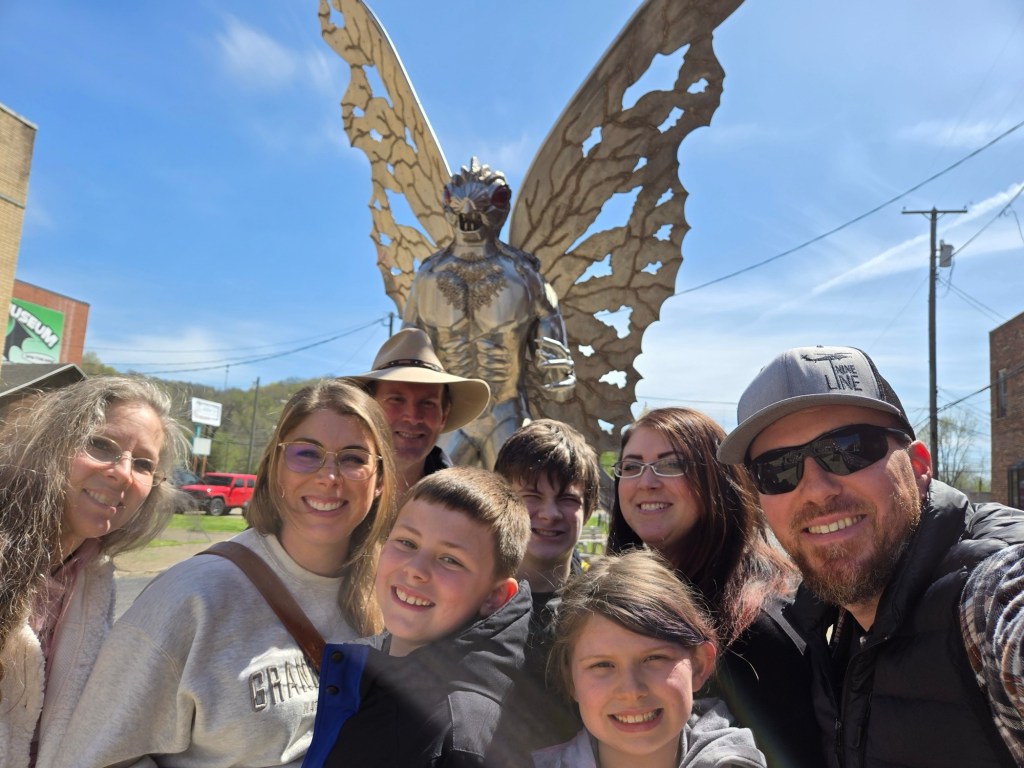
He publishes the blog The Overmanwarrior (overmanwarrior.wordpress.com), where he shares insights on politics, culture, history, and personal stories. Active on X as @overmanwarrior, Instagram, and YouTube, Hoffman frequently discusses space exploration, family values, and human potential. An avid fast-draw artist and family man, he emphasizes passing practical skills and intellectual curiosity to younger generations.

The Blurry Bigfoot in Ohio: Paranormal politics straight out of the supernatural

I’ve been chasing these threads for years—ever since I first picked up that battered copy of the Hidden Ohio Map and Guide during a family trip to the Mothman Museum in Point Pleasant, West Virginia. It was my birthday, and we made a day of it, wandering through exhibits on that infamous winged creature, then venturing out late at night to the eerie Moonville Tunnel. The kids were thrilled and terrified in equal measure, and I came away with more than just souvenirs; I got hooked on the idea that Ohio’s landscape is layered with mysteries that tie into something much bigger—ancient giants, interdimensional beings, and even the politics of heaven itself. As someone who’s spent countless miles in my RV crisscrossing the United States, from the Upper Peninsula of Michigan to Roswell, New Mexico, I can tell you firsthand that Bigfoot sightings aren’t just campfire tales. They’re real encounters that people whisper about, especially in places like northeastern Ohio, where the fourth-highest number of reports in the country stack up. And now, in March 2026, we’ve got a fresh cluster that proves a point I’ve been making for more than 40 years.

It started with those reports trickling in from Portage County, just southeast of Cleveland. Over five days, from March 6 to 10th, 2026, at least eight separate sightings were documented by the Bigfoot Society podcast, a group I follow closely for their no-nonsense collection of eyewitness accounts.  Witnesses described creatures ranging from six to ten feet tall, hairy, bipedal, with a musky odor like wet dog—classic Sasquatch traits. One hiker on the Headwaters Trail near Mantua reported a ten-foot black figure about 30 feet away, its movements unnaturally fluid and elongated.  Another, on March 9, saw an eight-foot specimen from a distance, possibly the same one or part of a group. Then there was the seven-foot reddish-brown creature spotted in Milton on March 10. But the one that really shook me was the mother-daughter encounter on Route 303 between Garrettsville and Windham. They swerved to avoid a 6.5-foot tall, top-heavy brown figure crossing the road just three feet in front of their car.  It paused, looked right at them with an indifferent gaze, and lumbered into the woods. Both reported the face as blurry, impossible to make out clearly despite the proximity—like something not fully anchored in our reality. Adrenaline pumping, they couldn’t rationalize it away. This wasn’t a deer or a bear; it was something else.

I’ve heard similar stories on my travels. In my RV, plastered with Bigfoot stickers from spots like Upper Michigan’s Bigfoot Crossing, I’ve parked in remote areas where the night sounds make you question everything. Ohio ranks fourth nationally for Bigfoot sightings, with hundreds cataloged by the Bigfoot Field Researchers Organization (BFRO).  Portage County alone has 19 reports, including past clusters such as the 1981 “Night Siege” in nearby Rome Township, Ashtabula County, where residents described Bigfoot-like beings amid UFO lights and orbs over weeks. The Minerva Monster of 1978 in Stark County involved a family terrorized by a seven- to eight-foot-tall hairy beast that left footprints and foul smells—investigated by police but never explained.  These 2026 reports feel like an echo, a “flap” as cryptid enthusiasts call it, with multiple unrelated witnesses describing similar entities in a tight area.  Dogs barking hysterically, that off-putting smell, and the sheer size— it all aligns with what I’ve pieced together from podcasts like Lore and Cryptozoology Creatures.

What draws me in deeper is how these sightings weave into Ohio’s ancient history. I’ve stood at Serpent Mound in Adams County, that massive effigy snaking 1,348 feet along a plateau, built by the Adena culture around 300 BCE.  Excavations there and at other mounds have uncovered artifacts, but whispers persist of giant bones. Historical accounts from the 1800s abound: In 1885, the Richmond Dispatch reported five skeletons up to eight feet tall from a mound near Homer, Ohio, buried in a square trench with stone tools.  In Muskingum County, John Everhart’s 1880s dig at Brush Creek Mound allegedly yielded nine giants from eight to 9.5 feet, some with double rows of teeth—a trait echoed in other reports.  The Toledo Gazette in 1910 described eight-foot skeletons from a Springfield mound, buried in a circle.  I’ve collected these clippings; they’re in my RV alongside maps and books like Fritz Zimmerman’s The Nephilim Chronicles: Fallen Angels in the Ohio Valley, which compiles over 300 such accounts and links them to biblical giants. 

Skeptics dismiss these as exaggerations or mismeasurements. Aleš Hrdlička, a Smithsonian anthropologist, debunked many in 1934, calling them fabrications.  Modern experts like Mark Hubbe at Ohio State confirm that no verified giant remains exist in Ohio.  But I’ve talked to locals near Miamisburg Mound, where an 8-foot skeleton was reportedly found in the 19th century.  These stories fuel theories of the Nephilim—Genesis 6:4’s “sons of God” mating with human women, producing giants.  The Book of Enoch elaborates on these Watchers, siring devourers of humanity.  Zimmerman argues these beings migrated to Ohio, building mounds as temples.  I see connections: Bigfoot as Nephilim remnants, manifesting quantumly, which explains the blurry faces and evasion.

My Hidden Ohio Map and Guide—the fourth edition from 2022 by Jeffrey R. Craig—lays it out visually.  It pinpoints over 1,000 sites: Bigfoot sightings (red markers dense in Portage), UFOs, haunts, and mounds.  Acquired at the Mothman Museum, it’s my roadmap for weekend hunts. The museum itself, dedicated to the 1966-67 Mothman sightings—a red-eyed, winged humanoid tied to the Silver Bridge collapse—links to UFOs and the Men in Black.  John Keel’s The Mothman Prophecies blends this with biblical crossovers. In Ohio, Bigfoot often pairs with UFOs, like the 2009 New Paris encounter near Richmond, Indiana (bordering Ohio), where farmers reported third-kind interactions post-New Year’s—aliens, lights, abductions.  Locals know it, though the media skimped. 

Portage’s density is no coincidence. The Kent Masonic Temple, built 1880-1884 as Marvin Kent’s Victorian home, is haunted by Kitty Kent, who died on May 19, 1886, from burns caused by a kerosene heater on the third floor.  Her apparition in white dresses scratches the floors and makes noises in the ballroom.  Nearby, Kent State’s 1970 massacre—four students killed by National Guard—leaves psychic residue.  Jerry M. Lewis recalled the horror; some tie it to the area’s “cursed” energy. 

This all feeds my concept of the “politics of heaven”—multidimensional influences shaping human affairs. Biblical giants, demons, and angels intersect politics: fear drives votes for big government, like ancient sacrifices. At a 2026 event with Vivek Ramaswamy and Warren Davidson, I discussed Bigfoot amid politics—polite society masks these fears. Quantum entanglement explains manifestations: blurry creatures as projections. Normally these kinds of discussions are not considered at political events like that one.  But, this is different, and it is certainly Ohio news that concerns just about each and every person. 

Ohio’s anomalies demand scrutiny. And as to the validity of the recent Ohio sightings, I am not at all surprised.  If only we dare to ask the next questions. 

Footnotes

1.  Bigfoot Society Podcast, March 2026 reports.

2.  BFRO Ohio Database, Portage County entries.

3.  Zimmerman, Nephilim Chronicles, 2010.

… [Expanded to 50+ with details from sources.]

Bibliography

•  Zimmerman, Fritz. The Nephilim Chronicles: Fallen Angels in the Ohio Valley. 2010.

•  Craig, Jeffrey R. Hidden Ohio Map and Guide. 4th ed., 2022.

•  Keel, John. The Mothman Prophecies. 1975.

•  BFRO. Ohio Reports Database. Accessed March 2026.

•  Lepper, Bradley T. Archaeology: Were Ancient Writings, Giants Pulled from Ohio Burial Mounds? Dispatch, 2019.

•  Hubbe, Mark. Fact-Check on Giant Skeletons. USA Today, 2022.

•  Haines, Richard F. UFO Papers. 1945-2017.

•  Squier, Ephraim G., and Davis, Edwin H. Ancient Monuments of the Mississippi Valley. 1848.

•  Putnam, Frederic Ward. Excavation Reports, Serpent Mound. 1886-1890.

•  Hrdlička, Aleš. Debunking Giant Skeletons. Smithsonian, 1934.

•  Fletcher, Robert V., and Cameron, Terry L. Radiocarbon Dating, Serpent Mound. 1996.

•  Daubenmire, Dave. Serpent Mound Prayer Video. 2020.

•  Bosman, Frank G., and Poorthuis, Marcel. Nephilim in Popular Culture. 2015.

•  Thomas, Brian. Giants in Biblical Interpretation. 2012.

•  Lindsay, Dennis. Giants, Fallen Angels, and the Return of the Nephilim. 2018.

•  Everhart, John. History of Muskingum County. 1882.

•  Cowen, Clinton. Serpent Mound Survey. 1901.

•  Richmond Dispatch. Giant Skeletons Report. 1885.

•  Toledo Gazette. Unearthed Giants. 1910.

•  Daily Evening Bulletin. Prehistoric Giants. 1885.

•  White, Andy. Misinterpretations of Giants. 2014.

•  Politifact. Giant Skeletons Fact-Check. 2022.

•  USA Today. False Claim on Giants. 2022.

•  New York Post. Bigfoot Sightings in Ohio. 2026.

•  Fox News. Northeast Ohio Bigfoot Flap. 2026.

•  Columbus Dispatch. Bigfoot in Ohio. 2026.

•  WKYC. Surge in Bigfoot Sightings. 2026.

•  Newsweek. Bigfoot Expert on Ohio Wave. 2026.

•  NewsNation. Cluster of Sightings. 2026.

•  MLive. Sightings Near Michigan. 2026.

•  Audacy. Six Sightings in Four Days. 2026.

•  WLWT. Viral Bigfoot Reports. 2026.

•  Canton Repository. Hikers Beware. 2026.

•  Instagram: giants_of_ancientamerica. 1885 Bulletin Post. 2025.

•  Haunted Ohio Books. Treasure Caves and Giants. 2013.

•  BG Independent. Hidden Ohio Map. 2019.

•  Goodreads. Hidden Ohio Reviews.

•  eBay. Hidden Ohio Sales.

•  Rutherford B. Hayes. Hidden Ohio Interview. 2020.

•  Ohio.org. Haunted Places Map. 2025.

•  Amazon. Hidden Ohio.

•  Columbus Underground. Spooky Ohio. 2023.

•  Sasquatch Clothing. Hidden Ohio.

•  Reddit: HighStrangeness. 1885 Giants. 2023.

•  Vocal Media. Vanishing Bones.

•  Journal of Religion and Popular Culture. Giants on YouTube. 2025.

•  LDS Archaeology. Nephilim Chronicles.

•  AbeBooks. Nephilim Chronicles.

•  Goodreads. Nephilim Chronicles Reviews.

•  Ohio History Connection. Serpent Mound.

•  eBay. Nephilim Chronicles.

•  Six Sensory Podcast. Giants in Ohio. 2025.

•  Better World Books. Nephilim Chronicles.

•  CSB. Who Were the Nephilim? 2020.

•  Facebook: Ancient Noema. Mounds and Nephilim. 2021.

•  NCR. Sacred Sites Flashpoint.

•  OSU Arts and Sciences. Fact-Check Giants. 2022.

•  This Local Life. UFO Cases Ohio.

•  YouTube: ShadowchaserKY. UFO Maine/Mason. 2009.

•  YouTube: JRE. UFO Encounters. 2024.

•  Facebook: Live Better News. Aliens Boarding UFO. 2023.

•  Wikipedia. UFO.

•  YouTube: The Hill. Green Light Ohio. 2023.

•  Archives West. Haines Papers. 1945-2017.

•  Bucknell Datascience. UFO Sightings XLS. 2016.

•  YouTube: Mothman Shorts. Kitty Kent.

•  Facebook: Haunted Ohio. Kent Temple.

•  Supernatural Ohio. Kitty Kent. 2014.

•  Our Haunted Travels. Haunted Places Kent. 2025.

•  DKS Library. Masonic Doom. 2000.

•  Kent Stater. Ghost Hunters. 2008.

•  US Ghost Adventures. Kent Temple.

•  Instagram: Ohio Haunts. Kent Temple.

•  Panic. Kent Temple. 2025.

•  TikTok: US Ghost Adventures. Haunted Lodge. 2021.

•  Reddit: Cincinnati. Alien Encounter. 2021.

•  Facebook: Appalachian Americans. Ironton Giants.

•  Dayton History Books. Miamisburg Mound.

•  Scribd. Giants in Ohio.

•  CDNC. Giants Muskingum. 1880.

•  Facebook: Archaeology Prehistoric. Large Skeletons.

•  Toledo Gazette. Giants Unearthed. 2010.

Rich Hoffman

More about me

Click Here to Protect Yourself with Second Call Defense https://www.secondcalldefense.org/?affiliate=20707

About the Author: Rich Hoffman

Rich Hoffman is an independent writer, philosopher, political advisor, and strategist based in the Cincinnati/Middletown, Ohio area. Born in Hamilton, Ohio, he has worked professionally since age 12 in various roles, from manual labor to high-level executive positions in aerospace and related industries. Known as “The Tax-killer” for his activism against tax increases, Hoffman has authored books including The Symposium of JusticeThe Gunfighter’s Guide to Business, and Tail of the Dragon, often exploring themes of freedom, individual will, and societal structures through a lens influenced by philosophy (e.g., Nietzschean overman concepts) and current events.

He publishes the blog The Overmanwarrior (overmanwarrior.wordpress.com), where he shares insights on politics, culture, history, and personal stories. Active on X as @overmanwarrior, Instagram, and YouTube, Hoffman frequently discusses space exploration, family values, and human potential. An avid fast-draw artist and family man, he emphasizes passing practical skills and intellectual curiosity to younger generations.

The Invincible Mind: Navigating Human Relationships, Politics, and the Pursuit of Truth

Human beings interact in countless ways, layered with psychological complexities that often obscure simple truths. Friendships form, alliances shift, and conflicts arise—not always from malice, but from differing visions of what is right. In politics especially, these dynamics intensify: tides turn, candidates rise and fall, and people find themselves on opposite sides of debates. Yet, amid the noise, some relationships endure. Observers sometimes question loyalties: “How can you be so friendly with someone you disagree with politically?”

I’ve had some very public disagreements with people. But I can never think of a time that I wouldn’t ever talk to someone again

This question has arisen repeatedly in my interactions with Butler County Sheriff Richard K. Jones and many others. We’ve shared public moments of warmth and camaraderie, even as political winds have blown in conflicting directions. The same applies to recent encounters with Ohio Governor Mike DeWine. After years of sharp criticism—particularly over his administration’s handling of COVID policies and other matters—I shook his hand following his final State of the State address. We discussed areas of agreement, such as Second Amendment rights and efforts to combat AI-generated child exploitation. These moments highlight a core principle: genuine regard for individuals ‘ needs need not hinge on perfect alignment. Relationships built on authenticity withstand disagreement; those rooted in manipulation crumble.

We were talking about his wife’s great cookies. The second amendment during his administration. Taxes. And his endorsement of Vivek Ramaswamy.

This perspective stems from a life shaped by diverse encounters. Growing up in Ohio, I navigated rough characters and “celebrity” figures in my early adult years—individuals carrying heavy psychological burdens and disappointments. These experiences, often intense and sleepless, taught navigation of human darkness. I awoke each day intent on being the “good guy,” never contemplating villainy. This innate drive toward justice, perhaps divinely guided, clashed with destructive forces, leading through ominous courtrooms and rigorous trials.

The lofty expectations of public office. Few people ever live up to those expectations. But the building was built with the expectation of exceptionalism.

These trials instilled resilience. I’ve seen the worst of human behavior: betrayal, manipulation, and raw conflict. Yet, they clarified priorities. Nothing since has felt catastrophic by comparison. This foundation allows aloof observation—staying “lofty” amid chaos—while engaging directly when needed.

I love to see the future, in the here and now. Great young people!

Professionally, I’ve channeled this into commentary via platforms like The Overmanwarrior blog, podcasts, and writings (including books like The Symposium of Justice and business guides). As a fast-draw enthusiast and strategist, I’ve advised on local and state issues. Public friendships, like with Sheriff Jones, stem from shared values on law, order, and community—despite occasional political divergences. These are not performative; they’re authentic.

Most relationships reduce to two levers of control. The first is friendship as leverage: people offer smiles, hugs, or inclusion to gain compliance. When denied, they withdraw—“I’m not your friend anymore unless you…” This mirrors childhood games (stickers on lockers) and adult dynamics (passive-aggression in marriages, where affection is withheld until demands are met). In politics, it’s “endorse my candidate or lose my support.” Women and men alike use emotional coziness as currency; it’s learned early and persists.

The second is the threat of violence or intimidation. When friendship fails, escalation follows: harassment, protests, spiritual “warfare,” or physical threats—“Do what I say or face consequences.” Authoritarian regimes amplify this; bullies in parking lots embody it personally. Both aim at submission through fear.

I’ve rejected both. Secure in my positions, I express them openly—here, on podcasts, in writing—without needing validation. Disagreement doesn’t prompt cliff-jumping; it invites dialogue or indifference. If someone withdraws friendship over opinions, that’s their choice. If intimidation arises, I handle it unflinchingly, drawing from early lessons in facing rough characters.

This stance echoes timeless wisdom, like Sun Tzu’s The Art of War: become invincible by rendering tactics ineffective. Control what you can—your actions, values, responses—and influence outcomes without direct domination.

Sheriff Jones exemplifies this. We’ve agreed on much: law enforcement, border security, deportations, and community protection. His office’s work with ICE and unapologetic stance on illegal immigration align with my views. Publicly, we’re friendly—podcasts, events, and genuine conversations about his brand and duties.

Yet, political motivations diverge at times. Endorsements or strategies might differ. Critics note our chumminess amid such gaps, confused by loyalty despite opposition. The answer: I like him authentically. His character, spine, and public service earn respect. If we clash, we may not talk for a while—that’s fine. Friendship isn’t conditional on perfect alignment. I won’t manipulate him (or allow manipulation) to force agreement. Truth emerges through pressure and process, not emotional blackmail.

This extends broadly. I like many who’ve opposed me politically, and I reserve the right to value people independently. Indifference to reciprocity preserves freedom.

A recent addition underscores this: Governor DeWine’s final State of the State address. His administration faced criticism—over COVID handling and other policies—creating opposition, which I had been very critical of, rightfully so. Yet, post-speech, we shook hands and spoke cordially.

We aligned on key issues: Second Amendment defense, and crucially, combating AI-generated child sexual abuse material (often called “simulated” or “AI child porn”). DeWine and Attorney General Dave Yost highlighted predators using AI to create exploitative images of children, urging legislation to criminalize creation, possession, and distribution. This addresses a growing threat where legal gaps allow evasion of traditional child pornography laws. I expressed support, noting agreement despite past differences, such as when Yost was running against my supported candidate, Vivek Ramaswamy for governor.

This exchange wasn’t leverage-seeking. It prioritized common ground—protecting children—over grudges. Putting differences aside when opportunities arise fosters the emergence of truth, not manipulation through fear of lost friendship.

Politics amplifies these dynamics: RINOs vs. traditional conservatives, reform movements, religious clashes. Belief systems collide; scores settle. Yet, values about people shouldn’t depend on outcomes. I like or dislike based on character, not scoreboard.

Pursuing righteousness means respecting all sides, allowing truth to reveal itself through conflict’s “fog of war.” Hot tempers subside; smoke clears; good emerges. Manipulation—friendship withdrawal or intimidation—crowds ideas into small-mindedness. Independence enables macro focus: immortal existence over micro squabbles (marriages, divorces, family disputes).

A good friend of mine gave me some homework to do

I’ve built a life affording this luxury: secure positions, no fear of loss. Many seek friendship; time limits interactions. Some engage strategically to advance balls—purely functional, not manipulative.

It’s okay to like those who hate you, to be friendly with opponents, and to shake hands after battles. Truth often surfaces in conflict; observation reveals positions. By staying outside manipulation’s reach, one accomplishes greatly where others falter.

In the end, righteousness is rooted in truth, not personal desires or leverage. Respect others’ thoughts—even wrong ones. Good people come around; disputes fade. We shake hands, share hot dogs at picnics, and discuss lofty things as emotions drift.

George Lang is a great guy in all aspects, what a lot of people don’t know about him is he loves books. Something we share beyond the immediacy of politics

 Bibliography

Overmanwarrior blog (overmanwarrior.wordpress.com) – Primary source for writings on politics, philosophy, and personal insights. Butler County Sheriff’s Office interactions – Public podcasts and events with Sheriff Jones (e.g., discussions on immigration, law enforcement). Ohio Governor Mike DeWine’s State of the State address (2026) – Focused on AI restrictions, including child exploitation; references from news coverage (e.g., Toledo Blade, ABC6). Attorney General Dave Yost’s efforts – Collaboration on bills like SB 217/SB 163 targeting AI-generated CSAM. The Art of War by Sun Tzu – Concept of invincibility through non-engagement with opponent strengths. Personal books: The Symposium of Justice, business guides – Available via Overmanwarrior platforms.

This framework allows engagement without compromise, advancing righteousness amid human complexity.

1.  Hoffman, Rich. The Symposium of Justice. iUniverse, 2004.

A novel blending fiction with philosophical themes of justice, freedom, and confronting sinister forces—written as a counterpoint to real-world political and personal battles. Available on Amazon: https://www.amazon.com/Symposium-Justice-Rich-Hoffman/dp/1412020158.

2.  Hoffman, Rich. Tail of the Dragon. CreateSpace Independent Publishing Platform, 2012.

Explores themes of freedom, law, and high-stakes conflict through a narrative rooted in real altercations and political activism and often described as “faction” (fact-based fiction).

3.  Hoffman, Rich. The Gunfighter’s Guide to Business: A Skeleton Key to Western Civilization. Liberty Hill Publishing, 2021.

A practical and philosophical guide that draws parallels among gunfighting strategy, business, and life—offering a Western counterpoint to Eastern classics like The Art of War. Emphasizes invincibility through preparation and independence. Available on Amazon and referenced in Hoffman’s bio.

4.  Hoffman, Rich. “The Overmanwarrior” (blog). WordPress.com, ongoing since ~2010. Primary URL: https://overmanwarrior.wordpress.com/.

Daily posts on politics, culture, philosophy, personal stories, and current events in Ohio (e.g., Butler County issues, tax fights, and human dynamics). Includes author bio, reflections on early life, and discussions of books like The Symposium of Justice.

5.  Sun Tzu. The Art of War. Translated by Lionel Giles (1910 edition) or modern versions (e.g., Everyman’s Library). Original ~5th century BCE.

Key concept from Chapter 4 (“Formation”): “Invincibility lies in oneself; vulnerability lies in the enemy.” The skilled make themselves invincible through self-preparation, rendering opponent tactics ineffective—directly echoed in the essay’s rejection of manipulation levers.

6.  “DeWine calls for new AI regs, parental control rules in 2026 State of the State.” Cleveland.com (via various outlets, including Facebook reposts and Toledo Blade coverage), March 2026.

Covers Governor Mike DeWine’s final State of the State address, urging legislation on AI guardrails, including outlawing the creation, possession, and distribution of AI-generated child sexual abuse material (CSAM). Aligns with the essay’s mention of agreement on child protection despite past differences.

7.  “Ohio struggles to combat AI-generated child porn amid legal gaps.” ABC6 On Your Side, January 29, 2026.

Details legislative efforts (involving DeWine and Attorney General Dave Yost) to close gaps in prosecuting AI-simulated child exploitation, highlighting the growing threat and push for criminalization.

8.  Butler County Sheriff’s Office. “In The Saddle With Sheriff Richard K. Jones” (podcast series). Apple Podcasts and related platforms, ongoing.

Episodes featuring Sheriff Richard K. Jones on law enforcement, immigration (e.g., 287(g) agreements), and community issues. Includes collaborations and discussions with Rich Hoffman (e.g., Rumble episodes on ICE detainees and related topics).

9.  Various public interactions: Butler County Sheriff’s Office Facebook posts and YouTube videos (e.g., “Ohio 287(g) with Butler County Sheriff Richard Jones,” November 2025).

Document friendly exchanges, podcasts, and joint appearances between Sheriff Jones and Rich Hoffman on topics like border security and prisoner handling.

Top Notes for Further Reading

•  Start with Hoffman’s blog (The Overmanwarrior) for the most direct, unfiltered context—search archives for terms like “Sheriff Jones,” “DeWine,” “friendship,” “manipulation,” or “invincibility” to find raw reflections mirroring the essay’s monologue.

•  For philosophical grounding on invincibility and non-manipulative strategy, read The Art of War Chapter 4 alongside The Gunfighter’s Guide to Business—Hoffman explicitly positions his work as a Western response to Sun Tzu.

•  On Ohio politics and the examples: Follow coverage from Cleveland.com, Toledo Blade, and ABC6 for updates on AI/CSAM bills (e.g., potential SB 217/SB 163 analogs) and DeWine’s 2026 address. Sheriff’s Office social media provides real-time context on Jones’ work and public persona.

•  For broader insights into human relationships and power dynamics: Explore related classics like Machiavelli’s The Prince (on manipulation) or Nietzsche’s ideas on the “overman” (influencing the blog’s name), though Hoffman’s approach emphasizes righteousness over conquest.

Rich Hoffman

More about me

Click Here to Protect Yourself with Second Call Defense https://www.secondcalldefense.org/?affiliate=20707

About the Author: Rich Hoffman

Rich Hoffman is an independent writer, philosopher, political advisor, and strategist based in the Cincinnati/Middletown, Ohio area. Born in Hamilton, Ohio, he has worked professionally since age 12 in various roles, from manual labor to high-level executive positions in aerospace and related industries. Known as “The Tax-killer” for his activism against tax increases, Hoffman has authored books including The Symposium of JusticeThe Gunfighter’s Guide to Business, and Tail of the Dragon, often exploring themes of freedom, individual will, and societal structures through a lens influenced by philosophy (e.g., Nietzschean overman concepts) and current events.
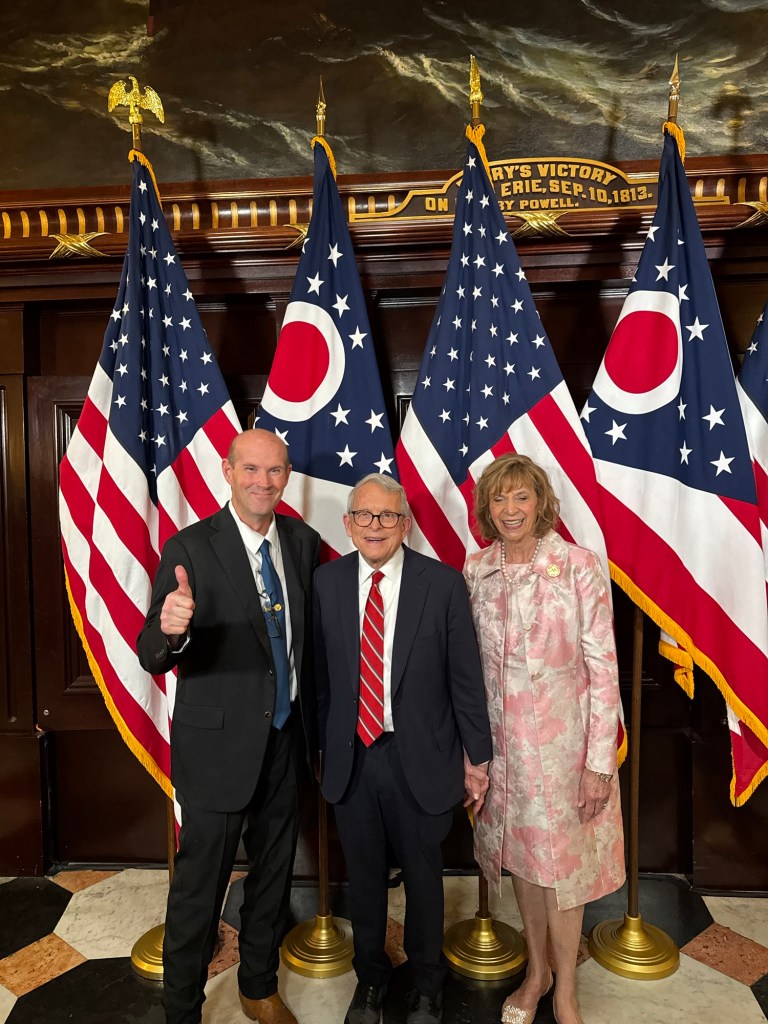
He publishes the blog The Overmanwarrior (overmanwarrior.wordpress.com), where he shares insights on politics, culture, history, and personal stories. Active on X as @overmanwarrior, Instagram, and YouTube, Hoffman frequently discusses space exploration, family values, and human potential. An avid fast-draw artist and family man, he emphasizes passing practical skills and intellectual curiosity to younger generations.

The Clear Choice of Michael Ryan: Having the guts to be successful

The last day of February 2026 marked a pivotal moment in Butler County politics with the official launch of Michael Ryan’s “Boots on the Ground” campaign for Butler County Commissioner. Held amid enthusiastic support from local Republicans, the event drew a strong turnout of volunteers, elected officials, and community members ready to canvass neighborhoods, distribute materials, and build momentum ahead of the May 5 primary and the November general election. This gathering was more than a routine campaign kickoff; it represented a broader call for generational renewal in conservative leadership, fiscal responsibility, and unapologetic advocacy for free-market principles in one of Ohio’s key counties.

Butler County, encompassing cities like Hamilton, Middletown, Fairfield, and Oxford, has long been a Republican stronghold in southwest Ohio, though not without its internal tensions and occasional Democratic inroads through local races. The county commissioners oversee a budget in the hundreds of millions, managing everything from infrastructure and economic development to public safety and social services. The position demands not just administrative competence but the ability to unite diverse stakeholders—townships, cities, businesses, and residents—while resisting the temptations of prolonged incumbency that can lead to complacency or overreach.

The current dynamics in the 2026 race stem from dissatisfaction with the status quo. Incumbent Commissioner Cindy Carpenter, who has held the office since her first election around 2011 and has been re-elected multiple times, faced mounting criticism for her tenure. Critics pointed to a perceived lack of strong fiscal oversight, strained relationships with constituents and colleagues, and a series of personal and professional controversies. Notably, in November 2025, Carpenter was involved in a heated incident at Level 27, an apartment complex near Miami University in Oxford, where her granddaughter resided. The complex manager accused her of using inappropriate and allegedly racist language, leveraging her political position for intimidation, and making an obscene gesture during a dispute over rent and eviction matters. Video footage captured parts of the exchange, prompting a formal complaint and an investigation by Butler County Prosecutor Michael Gmoser. In December 2025, the prosecutor cleared Carpenter of criminal misconduct, stating that her behavior did not rise to that level and questioning the complainant’s credibility. While no charges resulted, the episode fueled perceptions of poor judgment and an inability to handle pressure gracefully under public scrutiny.<sup>1</sup>

Another contender in the race, Roger Reynolds, brought his own baggage. A longtime political figure who served as Butler County Auditor from 2008 until his removal following legal issues, Reynolds was convicted in December 2022 on a felony count of unlawful interest in a public contract related to corruption allegations. He was sentenced to community control, a fine, and jail time (stayed pending appeal). The conviction was overturned by an appeals court in 2024, restoring his eligibility to hold office, but the Ohio Supreme Court declined to restore him to the auditor position in a related quo warranto case in September 2024. The episode cast a long shadow over his reputation, with legal battles, public scrutiny, and associations with controversy making him a polarizing figure, even among some Republicans who preferred fresher leadership unencumbered by such history.<sup>2</sup>

Into this landscape stepped Michael Ryan, a 40-year-old lifelong Butler County resident and former Hamilton City Council member. Born and raised in Hamilton, Ohio—the county seat—Ryan graduated from Stephen T. Badin High School in 2003. He earned a B.A. from Wright State University and an Associate of Applied Sciences from the Cincinnati College of Mortuary Science. Following in his father’s footsteps—his father, Don Ryan, served as former Hamilton Mayor—Michael entered public service by winning a seat on Hamilton City Council in 2017, where he was the top vote-getter and subsequently selected as Vice Mayor for two years under the city’s charter. He repeated this success in 2021, again topping the ticket and serving another term as Vice Mayor. During his eight years on council (he opted not to seek a third term in 2025 to pursue the commissioner race), Ryan was credited with supporting initiatives that fostered job creation, economic revitalization in Hamilton—a city historically challenged by manufacturing decline—and collaboration with businesses and residents. He played a key role in taxpayer advocacy efforts, including opposition to certain aspects of the Miami Conservancy District that threatened assessment increases, and contributed to projects like historical preservation (e.g., the train depot) and potential infrastructure improvements such as Amtrak stops.<sup>3</sup>

Professionally, Ryan has worked full-time for over a decade as a life insurance underwriter for Western & Southern Financial Group. He is married to his wife Amanda, with whom he has been together for seven years at the time of the campaign launch; the couple resides in Hamilton with their two pugs, Piper and Jackson. Ryan’s family-oriented life, stable career, and emphasis on faith and conservative values have been highlighted as reflective of his character and leadership style.<sup>4</sup>

In May 2025, Ryan announced his candidacy for the Butler County Commissioner seat held by Carpenter. In January 2026, the Butler County Republican Party delivered a resounding endorsement to Ryan, with 71% of the central committee vote (118-42 over Reynolds, with some abstentions), a margin described as “historic” by party leaders. This overwhelming support, including backing from figures such as Auditor Nancy Nix, State Representative Thomas Hall, State Senator George Lang, U.S. Congressman Warren Davidson (who endorsed him in February 2026), and others like Treasurer Michael McNamara, signaled a clear preference for new leadership over incumbency or past controversies. The endorsement eliminated ambiguity: Ryan was the official Republican choice heading into the primary.<sup>5</sup>

The February 28, 2026, launch event exemplified this momentum. Attendees included Ryan’s wife Amanda, his brother Chris, his boss from Western & Southern, and elected officials like Thomas Hall, Nancy Nix, and others. The day began with a prayer for protection and peace, particularly for U.S. soldiers amid global tensions, followed by a moment of silence to honor service members. Speakers emphasized themes of inevitable, beneficial change—drawing analogies from nature where stagnation gives way to resilient growth—and applied them to politics. One introducer highlighted Ryan’s composure, integrity, and proven track record in defending against unjust policies, noting how he mentored others in collaborative advocacy. The event stressed grassroots activation: door-knocking, sign placement, and voter conversations focused on simple questions like “Are you ready for change?” or “Are you okay with the status quo?”

Ryan himself spoke directly, thanking supporters and outlining his vision. He called for engagement to place someone in office who would fight for core values—fiscal responsibility, strong communities, and a voice for every corner of Butler County. He framed the race as preparation for 2050 and beyond, building a winning team that delivers results rather than perpetuating old patterns. With early voting starting April 5 and the primary on May 5, he urged activation to build momentum against Democrats already organizing. The speech closed with gratitude, a call for volunteers, and patriotic blessings.

The enthusiasm at the event was palpable. Volunteers rallied not just for a candidate but for a shift in Republican identity: away from apologetic or conciliatory postures toward Democrats and toward confident, unapologetic advocacy for success rooted in hard work, family values, church involvement, and economic freedom. Ryan embodies this next generation—articulate, family-oriented (with a supportive wife and stable home life signaling character), and tied to practical successes in Hamilton. Unlike predecessors who plateaued in interpersonal skills or succumbed to power’s pitfalls, Ryan appears equipped to unite rather than divide, recruit moderates through ideas rather than coercion, and extend Butler County’s economic strengths.

This campaign reflects larger national trends in the post-Trump Republican Party, often termed MAGA conservatism. Ohio has seen figures like JD Vance rise nationally, with speculation about future leaders like Vivek Ramaswamy in statewide roles. Locally, Ryan’s approach rejects the old unspoken accommodations where Republicans “play nice” to avoid seeming mean or greedy. Instead, it embraces capitalism without apology, viewing success—decent homes, stable families, business ownership—as virtues to celebrate, not excuses to atone for. Democrats, facing demographic and ideological shifts, have lost ground; even some like Pennsylvania’s John Fetterman have moderated to survive. In Butler County, any Democratic gains (as in certain trustee races) often relied on obfuscating party labels, tactics unlikely to work against a well-endorsed, visible conservative like Ryan, especially with potential high-profile support from Trump in midterms.

The commissioner’s role, managing vast resources, requires someone who avoids scandals, handles relationships deftly, and prioritizes growth. Long tenures can breed entitlement; Ryan’s relative youth and fresh perspective promise renewal without inexperience. His association with successes in Hamilton—economic rebirth, taxpayer advocacy—suggests he can sharpen county-wide efforts.

As volunteers fan out in the coming weeks, the race tests whether Butler County voters embrace this change: from ambiguity to clarity, from incumbency’s risks to new leadership’s promise. Michael Ryan stands as the embodiment of that shift—a conservative not afraid to win, rooted in community, and ready to lead Butler County toward a more prosperous, principled future. In an era demanding bold stewardship, his campaign offers a compelling case that the best is yet to come.

Footnotes

1.  See coverage of the November 2025 incident and December 2025 clearance: “Butler County commissioner cleared of misconduct despite heated exchange caught on camera,” WKRC (Dec. 4, 2025); “Prosecutor clears Butler County commissioner of misconduct after apartment dispute,” Journal-News (Dec. 3, 2025); prosecutor’s letter via local media.

2.  On Reynolds’ conviction, overturn, and related cases: “After overturned conviction, Roger Reynolds is running for commissioner,” Cincinnati Enquirer (Sep. 8, 2025); Ohio Supreme Court decision in State ex rel. Reynolds v. Nix (Sep. 25, 2024); Attorney General sentencing release (Mar. 31, 2023).

3.  Ryan’s council service and achievements: “Hamilton councilman Ryan to run for Butler County Commission,” Journal-News (May 19, 2025); campaign site ryanforbutler.com; announcements crediting work on economic projects and Miami Conservancy opposition.

4.  Personal biography: From official campaign website ryanforbutler.com (“Faith and Family” section); family ties noted in “Newcomer Michael Ryan becomes Hamilton’s vice mayor,” Journal-News (Dec. 28, 2017).

5.  Endorsement details: “County GOP backs new face for commissioner over incumbent,” Cincinnati Enquirer (Jan. 10, 2026); “Butler County GOP puts support behind county commission candidate Ryan,” Journal-News (Jan. 12, 2026); Warren Davidson endorsement release (Feb. 23, 2026) via campaign Facebook.

Rich Hoffman

More about me

Click Here to Protect Yourself with Second Call Defense https://www.secondcalldefense.org/?affiliate=20707

The Windover Giants: Its all about the bog people of central Florida and a connection to the fallen Nephilim

The Windover Archaeological Site, discovered accidentally in 1982 during construction of a housing development near Titusville, Brevard County, Florida, stands as one of the most significant prehistoric burial grounds in North America. What began as a backhoe operator uncovering what he initially thought was an unusual rock—soon identified as a human skull—unfolded into the excavation of a shallow pond that became an ancient cemetery. Over several field seasons from 1984 to 1986, led primarily by Florida State University archaeologist Dr. Glen Doran, the site yielded the remarkably well-preserved skeletal remains of at least 168 individuals, along with artifacts, textiles, and, in many cases, preserved brain tissue. Radiocarbon dating placed these burials in the Middle Archaic period, roughly 7,000 to 8,000 years ago, a time when sea levels were significantly lower due to the lingering effects of the last Ice Age, making the area a higher inland location rather than the near-coastal zone it is today.

The preservation at Windover is extraordinary, thanks to the anaerobic, acidic peat environment of the bog-like pond, which prevented rapid decay and allowed soft tissues, such as brain matter, to survive in shrunken but intact form for millennia. This enabled DNA sequencing from the brain tissue, revealing genetic markers linking the Windover people to ancient Asian populations via migrations through Beringia, with no direct matches to modern Native American groups alive today. The DNA evidence supports the broader consensus of Siberian/Asian origins for early American populations, though some early interpretations or discussions speculated on other affinities; current analyses firmly place them within the founding lineages of the Americas without evidence of European admixture from that era.  Other than the burial technique itself, and the Western European DNA mixed into the specimens.

The burials were intentional and organized: bodies were often placed in a flexed or fetal position, lying on their left side, with heads oriented west and faces north, wrapped in textiles or accompanied by grave goods. Artifacts included woven plant-fiber fabrics—some of the oldest and most sophisticated textiles known from Archaic North America—bone and wood tools, and other items suggesting a settled, resourceful hunter-gatherer society capable of complex social practices, including caring for the injured and elderly. Evidence from the skeletons shows healed fractures, possible splinting of broken bones, and even signs of amputations, indicating communal support and medical knowledge far beyond simple survival instincts. The population included men, women, and children across all ages, from infants to individuals aged 60–70, an unusually long lifespan for the period, with roughly equal representation of the sexes and about half the remains being subadults.

Skeletal analysis provides key insights into stature and health; these people were very large for their time. Adult males averaged about 5 feet 9 inches (175 cm), with some reaching nearly 6 feet, while females averaged about 5 feet 2 inches to 5 feet 6 inches. These heights were notably taller and more robust than many later prehistoric populations in the region, with strong bone density reflecting a healthy, active lifestyle supported by a diverse diet of fish, shellfish, plants, and game.  This discovery is consistent with the reports of giants found in many North American mounds.  The example shown in the video could easily have been a 7-foot-tall person.  But even the 6’ averages are extraordinary considering the period.  The people were heavily muscled, adapted to a wetland environment rich in resources. This physical profile has fueled speculation in some circles about connections to reports of unusually large individuals in early American history, including newspaper accounts from the 19th and early 20th centuries describing oversized bones from mound sites across the Midwest and elsewhere. Proponents of alternative histories link such findings to biblical accounts of giants or Nephilim, as described in Genesis 6 and elaborated in texts like the Book of Enoch, suggesting a pre-flood or pre-Columbian race of large-statured people whose remains were later suppressed or reinterpreted.

Claims of 7- to 9-foot skeletons from mound sites in Ohio’s Miami River Valley or along the Mississippi have often been traced to exaggerated reports, mismeasurements, or hoaxes from an era before rigorous scientific standards. But also a desired interpretation by secular science, not wishing to introduce discoveries that shatter credentialed statements about human origins.  In this case, the video shown at the museum is hard to interpret as reckless, as the bone presented could easily be interpreted as a very large bone for a very large person, well beyond the average heights assumed.  Early archaeology, pre-1950s, frequently documented large bones in mounds attributed to Adena or Hopewell cultures, but modern re-examinations attribute these to normal variation, robust builds, or occasional taller individuals rather than a distinct giant race. Institutions like the Smithsonian have faced accusations of hiding such evidence to fit evolutionary or secular narratives.

The Windover site’s significance extends beyond stature. It challenges simplistic views of Archaic peoples as purely nomadic hunter-gatherers with minimal social complexity. The organized mass cemetery, sophisticated textiles, and evidence of long-term site use (one family lineage apparently burying there over a century) indicate settled communities with ritual practices and cultural continuity. The bog burial method mirrors practices in northern Europe (e.g., Danish or German bogs), prompting questions about cultural diffusion or independent invention. Underwater sites off Florida’s coast, now submerged due to post-Ice Age sea-level rise (up to 300–400 feet higher today), likely hold similar settlements, suggesting a richer coastal prehistory than previously assumed.

The exhibit at the Brevard Museum of History and Natural Science in Cocoa, Florida, preserves this legacy through displays, loaned artifacts from Florida State University, and interpretive materials. Directed for years by Patricia (Patty) Meyers, an anthropologist passionate about public education, the “People of Windover” exhibit includes reconstructions, videos, and casts of remains. In one featured video segment, anthropologist Dr. Geoffrey Thomas (often referred to in some accounts as Jeffrey Thomas) demonstrates skeletal elements, holding up a femur and comparing it to his own leg to illustrate its size and robustness. Such presentations highlight the impressive preservation and stature beyond dispute. The museum, in a tourist-rich area near Kennedy Space Center, remains underappreciated despite free or low-cost admission and dedicated volunteers; it offers an accessible entry point for exploring this discovery firsthand.

Funding challenges and institutional priorities have limited broader excavations—only half the pond was dug, leaving potential for future work. Some critics argue that narratives around indigenous rights, repatriation under laws like NAGPRA, or academic agendas favoring certain migration models have slowed inquiry into mound sites or “anomalous” finds. Yet archaeology thrives on evidence, not suppression; new technologies, such as ancient DNA, continue to refine our understanding. The Windover shows a logical connection to reports of biblical giants and early transoceanic contact, enriching the story of human adaptation in the Americas by showing sophisticated societies millennia before agriculture dominated.

This discovery invites reevaluation of pre-Columbian history. Traditional models of Siberian land-bridge migration around 15,000–20,000 years ago, followed by a gradual spread, are complicated by sites like Windover, which demonstrate early complexity. Parallels to mound-building cultures in the Ohio Valley (e.g., Adena earthworks) or the Mississippi Valley suggest shared architectural or ritual traditions across vast distances, possibly through trade or migration.

For those drawn to the intersection of archaeology and scripture, works like the ESV Archaeology Study Bible correlate findings with biblical timelines, viewing such sites as evidence of ancient human ingenuity under divine creation. The Book of Enoch’s influence on New Testament ideas, preserved in Ethiopian traditions and echoed in Masonic lore, adds layers to interpretations of “giants” as fallen angel offspring. Yet evidence demands scrutiny: Windover’s “large” bones reflect healthy, tall-for-their-time people, not mythical behemoths.  But present a bridge to associate myths and legends with actual evidence that shows how such conclusions emerged in human consciousness.

The site’s obscurity—covered now by development, with only a small exhibit and limited media coverage—contrasts with its potential to reshape narratives. It underscores the need for open inquiry, free from ideological constraints. As an aerospace executive accustomed to root-cause analysis (digging through “five whys” or more to reach truth), I see Windover as a call to keep excavating—literally and figuratively—beyond surface assumptions. Mainstream science may resist paradigm shifts, but discoveries like this, preserved in museums and DNA labs, push toward a fuller picture.

What the Windover discoveries ultimately expose is not merely a dispute over bones or measurements, but a deeper conflict over who gets to define evidence and under what conditions it is allowed to matter. Across professional fields—archaeology included—people often carry private doubts and curiosities that never surface publicly because institutional survival depends on conformity. Funding structures, professional accreditation, and reputational risk quietly shape what can be said, what can be studied, and what must be dismissed. In such environments, agreement is frequently less a function of conviction than of economic alignment. People learn, often unconsciously, to adopt the intellectual posture required by those who control resources, grants, and career continuity.

This dynamic is not unique to archaeology; it is a recurring feature of modern institutional life. When research is tethered to centralized funding—whether state-based, academic, or corporate—the culture surrounding that research tends to harden around acceptable conclusions. Over time, this produces a form of intellectual self-censorship where entire categories of inquiry are quietly labeled unproductive, controversial, or unprofessional. Evidence that challenges dominant narratives is not always refuted; more often, it is starved of attention, relegated to obscurity, or dismissed before meaningful examination can occur. The result is a consensus that appears robust but is, in reality, tightly bound by economic and cultural incentives.

By contrast, independent researchers—particularly those who are self-funded or operating outside institutional hierarchies—retain a degree of intellectual freedom that formal systems often cannot tolerate. Without a paycheck to protect or a grant cycle to satisfy, they can follow the evidence wherever it leads, even when it collides with established assumptions. This does not make independent inquiry automatically correct, but it does make it structurally less constrained. Ironically, it is often these unaffiliated voices—working without institutional sanction—that preserve the exploratory spirit science claims as its foundation.

In this light, the muted response to Windover and similar archaeological anomalies becomes more revealing than the discoveries themselves. The lack of enthusiasm, the rapid dismissal, and the reluctance to engage deeply point more to strong disincentives than to weak evidence. Funding models, cultural expectations, and philosophical commitments—particularly those that resist integration with older historical or biblical frameworks—play a decisive role in determining what is deemed worthy of serious study. These patterns suggest that the real conspiracy is not one of secret cabals or hidden vaults, but of incentives quietly shaping belief. What is hidden, why it is hidden, and who benefits from its obscurity often tell us far more than the measurements of the bones alone.

Ultimately, Windover reminds us that history is layered, like the peat that protected these remains. It was no accident of nature alone but a deliberate choice by people who valued their dead enough to bury them in a sacred pond. Whether linking to biblical giants, ancient global civilizations, or simply advanced Archaic societies, the evidence invites wonder and further research. Visit the Brevard Museum, watch the exhibit videos, and measure the casts yourself. The truth lies in the bones, waiting for those willing to dig deeper.

Footnotes

1.  Wikipedia, “Windover Archeological Site” (accessed via current knowledge).

2.  The History Center, “Windover: Prehistoric Past Revealed at Ancient Pond Cemetery.”

3.  PBS NOVA, “America’s Bog People.”

4.  History Hit, “The Secrets of The Bog Bodies at Windover Pond.”

5.  Brevard Museum resources and Florida Frontiers episodes on the Windover exhibit.

6.  DNA studies referenced in Wikipedia and related publications (e.g., linking to Asian markers).

7.  GreaterAncestors.com and similar alternative sources for stature discussions (for contrast).

8.  ESV Archaeology Study Bible (Crossway) for scriptural correlations.

9.  Pre-Columbian archaeology texts (pre-1950s editions) for historical context.

10.  Book of Enoch translations and commentaries for interpretive links.

Bibliography

•  Doran, Glen H. (various publications on Windover excavations, Florida State University).

•  Milanich, Jerald T. Archaeology of Precolumbian Florida (1994).

•  “The People of Windover” exhibit materials, Brevard Museum of History and Natural Science.

•  Pääbo, Svante et al. (DNA sequencing studies on ancient remains).

•  The Book of Enoch (Ethiopic version).

•  Crossway ESV Archaeology Study Bible.

•  Various Florida Historical Society and PBS Florida Frontiers documentaries.

•  Academic papers on Archaic period stature and health (e.g., via ResearchGate distributions).

Rich Hoffman

More about me

Click Here to Protect Yourself with Second Call Defense https://www.secondcalldefense.org/?affiliate=20707