The Public Education Wasteland: John D. Rockefeller’s massive failure

The public education system in the United States, as it has evolved over more than a century, stands as one of the most ambitious yet profoundly flawed experiments in social engineering. From its early roots in the common school movement of the 19th century to the massive philanthropic interventions of the early 20th century, it was shaped by a mix of genuine reformist zeal, industrial needs, progressive philosophy, and the influence of extraordinarily wealthy individuals who believed they could design better societies from the top down. I have long argued that this system was designed from the outset to be a disaster—not necessarily through deliberate malice in every case, but through a fundamental misalignment with human nature, individual potential, and the organic processes of learning and cultural transmission. What began as an effort to uplift and standardize often devolved into a mechanism for producing compliant participants in a corporate-industrial order rather than fully realized, critically thinking human beings grounded in family, philosophy, and personal initiative. The results surround us today: generations of adults who struggle with basic reasoning when encountered in everyday settings, from casual conversations at a grocery store checkout to broader societal debates. The system has not equipped people for intelligent, independent thought; instead, it has often reinforced cultural values shaped more by commercial profit motives than by timeless truths about value, desire, and human flourishing.

To understand this, one must go back to the historical context of American education before the heavy hand of centralized philanthropy and progressive ideology took hold. Compulsory schooling in the U.S. drew inspiration from Prussian models of the early 19th century, which emphasized state-directed education to foster obedience, discipline, and loyalty in a militarized society. American reformers like Horace Mann in Massachusetts adapted elements of this in the 1830s and 1840s, pushing for “common schools” that were free, tax-supported, and aimed at assimilating immigrants, instilling moral values (often Protestant ones), and creating a unified citizenry. The goal was noble on paper: reduce ignorance, promote social mobility, and build a republic of informed voters. Yet even then, tensions existed between local control, parental authority, and emerging bureaucratic structures. By the late 19th century, as industrialization accelerated, schools increasingly mirrored factory rhythms—bells signaling shifts, rows of desks enforcing order, and curricula focused on rote memorization of facts rather than deep inquiry or creative problem-solving.

It was into this evolving landscape that John D. Rockefeller entered with his vast fortune from Standard Oil. Rockefeller, a devout Baptist who rose from modest beginnings through relentless work and shrewd business acumen, viewed philanthropy not as mere charity but as a systematic way to address root causes of social ills. In 1902-1903, he established the General Education Board (GEB) with an initial gift of $1 million, eventually pouring in over $180 million from the Rockefeller family (equivalent to hundreds of millions or more in today’s terms). The GEB was chartered by Congress in 1903 with the broad mandate to promote education “within the United States of America, without distinction of race, sex, or creed.” Its early efforts focused heavily on the South, where post-Civil War poverty and underdevelopment lingered. The board funded rural schools, teacher training, high school construction (over 1,600 in the South in one decade), agricultural demonstration programs like boys’ corn clubs, and efforts to combat hookworm and improve farming practices. It also supported higher education, medical schools, and institutions like the University of Chicago, which Rockefeller had helped found earlier. 

Frederick T. Gates, Rockefeller’s key advisor and a former Baptist minister, played a central role in shaping the GEB’s vision. Gates envisioned “The Country School of To-Morrow,” where education would make rural life “beautiful, intelligent, fruitful, re-creative, healthful, and joyous.” The approach emphasized practical, scientific methods over abstract or classical learning for many students, particularly in vocational and agricultural contexts. The GEB insisted on sound accounting, matching grants to encourage local buy-in, and cooperation with existing systems, including segregated ones in the Jim Crow South. It channeled funds toward industrial education models influenced by figures like Booker T. Washington at Tuskegee, prioritizing skills for economic productivity over broader liberal arts for certain populations. Critics later pointed out paternalistic elements: the board often worked within segregation rather than challenging it outright, and its focus on “efficient” schooling aligned with industrial needs for a disciplined workforce. 

A persistent claim in modern critiques is that Rockefeller or the GEB explicitly aimed to create “a nation of workers, not thinkers,” with schools emphasizing obedience, rule-following, and memorization to feed 9-to-5 corporate jobs. This quote is widely circulated online and in videos, attributed directly to Rockefeller. However, historical records do not confirm he said it verbatim; it appears to be a popularized paraphrase or synthesis drawn from the era’s emphasis on vocational training and social efficiency. What is clear is the GEB’s pragmatic bent: it promoted standardized curricula, teacher professionalism, and schooling that prepared people for productive roles in an industrial economy. Rockefeller himself saw his giving as an extension of Christian stewardship—using wealth responsibly to improve society, much as he had built his business through efficiency and scale. He did not wake up intending harm; by all accounts, he believed stable companies, reliable workers, and orderly communities would benefit everyone. His philanthropy extended to medicine (funding the Rockefeller Institute and shifting toward scientific, often petroleum-derived pharmaceuticals) and public health, reflecting a worldview where organized expertise could solve human problems. 

Yet this top-down approach carried inherent risks. When immense wealth detaches individuals from everyday market validations and shared human struggles, perspective can erode. Rockefeller had survived ruthless business competition, antitrust battles, and public scrutiny that painted him as a monopolist. By the time he turned to education, he operated from a position of extraordinary insulation. His “good intentions” from his vantage point—creating compliant, skilled laborers to sustain strong companies and a taxable economy—translated into systems that prioritized conformity over the messy, imaginative processes of individual development. Schools became places where personal initiative, rooted in family and innate curiosity, was subordinated to collective goals defined by experts. The mundane subjects—arithmetic drills, grammar rules, standardized history—served efficiency, but often at the expense of fostering wonder, debate, or the ability to question authority constructively. This was not unique to Rockefeller; other industrialists like Andrew Carnegie and J.P. Morgan supported similar efforts, and the broader Progressive Era embraced “scientific” management of society.

Enter John Dewey, whose progressive education philosophy intertwined with and amplified these structural changes. Dewey (1859-1952), a philosopher and psychologist, rejected traditional “banking” models of education—where teachers deposit facts into passive students—in favor of experiential, child-centered learning. In works like The School and Society (1899) and Democracy and Education (1916), he argued that education should be a process of social reform, where students learn by doing, solving real problems, and engaging with their environment. Knowledge emerges from experience, not rote transmission. Schools, for Dewey, were laboratories for democracy: they should break down barriers between subjects, integrate play and work, and prepare students for collaborative life in a changing industrial world. He influenced teacher training, curricula, and the “project method,” where learning revolves around hands-on activities rather than lectures. 

On the surface, Dewey’s ideas sound liberating—emphasizing critical inquiry, adaptability, and social engagement. In practice, however, when fused with centralized funding and bureaucratic control, they often produced the opposite. Progressive education emphasized “social experience” and group processes over individual mastery of foundational knowledge or classical disciplines. It downplayed timeless content (great books, rigorous logic, moral absolutes rooted in philosophy or faith) in favor of relativistic, experiential methods that could easily drift into ideological conformity. Teacher unions, increasingly aligned with leftist politics in later decades, embraced elements of this framework, using schools not just for skills but as vehicles for social change. Funding tied to property taxes created local monopolies, insulating the system from market competition or parental choice. The result: curricula that sometimes prioritized “relevant” social issues or vocational tracking over developing autonomous minds capable of independent judgment.

I see the core problem as a philosophical vacuum. Human beings are not blank slates to be molded by experts or corporations. We are born with genetic predispositions, creative sparks, and a need for grounding in family structures, moral traditions, and personal agency. True education cultivates the whole person—intellect, character, imagination, and the capacity for self-reinvention. When young, children are most open and inventive, like Peter Pan figures full of wonder. Public systems, by adolescence, often dampen this through regimentation, testing regimes that reward memorization over synthesis, and cultural influences that value short-term profit or groupthink. Conversations at grocery stores reveal the fallout: adults lacking basic critical faculties, unable to connect dots across history, economics, or personal responsibility. Entire generations emerge unequipped for the “invisible hand” of Adam Smith’s marketplace—not just economic transactions, but the psychological and cultural dynamics where demand shapes supply through voluntary choices, grounded in real human desires rather than top-down engineering.

Compare this to the dangers of concentrated power, whether in kings, billionaires, or unelected experts. Rockefeller did not set out to “destroy the world,” any more than Bill Gates intended harm with his COVID-era initiatives on vaccines, lockdowns, or climate policies. Both operated from bubbles of immense resources, convinced their vision—shaped by success in one domain—applied universally. Gates, like Rockefeller before him, tied wealth to policy influence: funding global health, education reforms, and “solutions” that often bypassed rigorous debate or market testing. During the pandemic, protocols influenced by such figures (distancing, mandates, lab-origin questions sidelined) revealed the perils when sanity detaches from lived reality. Wealth insulates; it creates echo chambers where “good intentions” justify overreach. People in such positions lose the tethering that marketplace survival provides—the daily validation or correction through voluntary exchange with ordinary folks. Sanity requires constant exercise against shared experience; without it, systems built in vacuums produce monstrosities, as seen in education’s failure to produce resilient, philosophically grounded citizens.

The young voices emerging on social media today, piecing together these realizations, highlight a broader awakening. They see how the system breeds followers for corporate or governmental structures rather than autonomous individuals. Marketing shapes demand in unhealthy ways when corporations, not consumers, drive culture. Public education, funded coercively and captured by unions and ideologies, perpetuates bad ideas: it reflects and reinforces a culture where value is measured by compliance or credentialism, not genuine contribution or critical discernment. Crises like declining test scores, chronic absenteeism, teacher shortages, and abysmal proficiency in reading/math (with only a fraction of students proficient by middle school) underscore the wasteland. Students graduate without the tools for economic self-reliance or intellectual independence, vulnerable to manipulation by media, politics, or fleeting trends. 

This is not fixed by more money. Decades of increased spending have yielded diminishing or negative returns. The foundation was flawed: it subordinated parental and local roles to centralized “experts,” replaced family-based value formation with state-sanctioned socialization, and traded philosophical depth for utilitarian skills. Rockefeller’s era assumed a strong centralized society with stable workers would float all boats via upward mobility. Instead, it often eroded the family structures needed to raise complete humans, pushing government into the parental void. Dewey’s experientialism, without anchors in truth-seeking or individual rigor, lent itself to relativism and social engineering. When combined with tax-funded monopolies, the system normalized catastrophe—calling widespread mediocrity or ideological capture “normal” because shared insanity becomes the baseline.

Sanity itself is relational. We measure it against others’ shared experiences. When education produces masses who have lost imagination, critical faculties, and grounding—replaced by Peter Pan-like avoidance of adult responsibility or rigid adherence to authority—it creates a feedback loop of normalized dysfunction. People hit midlife crises harder because foundational tools for resilience were never built. Tragedy, disappointment, or economic rupture exposes the fragility. Wealthy influencers, detached from grocery-store realities, exacerbate this when they shape policy. A representative republic, with checks and balances, exists precisely to prevent any one person or class from imposing their vacuum-sealed vision. Electing leaders who restore market-like accountability—choice, competition, decentralization—offers a path forward.

Redesign from the ground up is essential. Models should prioritize outcomes like critical thinking, moral reasoning, practical skills tied to real value creation, and philosophical literacy rooted in family and voluntary community. Encourage homeschooling, charters, vouchers, and apprenticeships that align with individual gifts rather than one-size-fits-all regimentation. Teach the “why” behind subjects, fostering the ability to question marketing, authority, and cultural fads without descending into cynicism. Ground learning in human nature: curiosity, relationships, and the pursuit of truth about the universe. Draw from history’s lessons—Prussian obedience, progressive experimentation, philanthropic overreach—without romanticizing the past or ignoring successes like localized common schools or classical approaches that built earlier generations of innovators.

The awakening seen in viral clips and young commentators is hopeful. More people connecting the dots means less perpetuation of failure. If society is to avoid the destructive elements of wrong thinking, education must facilitate human values—autonomy, creativity, ethical grounding—rather than the wacky whims of any era’s ultra-wealthy or ideological class. Rockefeller and Dewey operated in their time with the tools and assumptions available; history now reveals the shortcomings. A free economy, representative governance, and decentralized learning provide the best safeguards against insanity at scale. Rebuilding requires humility: acknowledge the disaster, reject preservation of broken foundations, and scale success through competition and choice, not coercion.

This system has been a detriment far more than a benefit in many respects, producing dependent minds in an age demanding adaptability. Yet human potential endures. Parents, communities, and individuals choosing differently—prioritizing real education over credentials—can reclaim what was lost. The market of ideas and voluntary associations, not acquired power, should determine the trajectory of human desire and learning. Only then can we move from a wasteland of insufficient preparation to a renaissance of capable, sane, flourishing people.

Bibliography (selected key sources for further reading):

•  General Education Board reports and histories from the Rockefeller Archive Center (resource.rockarch.org).

•  John Dewey, Democracy and Education (1916) and The School and Society (1899).

•  Frederick T. Gates and Rockefeller correspondence on philanthropy.

•  Critiques including works on progressive education’s impact (e.g., analyses in History of Education Quarterly).

•  Snopes and historical fact-checks on attributed Rockefeller quotes.

•  Contemporary assessments of U.S. education outcomes from NAEP and related studies.

•  Books on industrial philanthropy, such as those examining the Progressive Era and GEB’s Southern focus (e.g., Anderson and Moss, Dangerous Donations).

Additional reading: Primary GEB documents, Dewey’s collected works, and modern examinations of compulsory schooling origins. These provide context for the faults while acknowledging intentions. Further research into Prussian influences, vocational tracking, and declines in critical thinking metrics will deepen understanding.

Rich Hoffman

More about me

Click Here to Protect Yourself with Second Call Defense https://www.secondcalldefense.org/?affiliate=20707
About the Author: Rich Hoffman

Rich Hoffman is an aerospace executive, political strategist, systems thinker, and independent researcher of ancient history, the paranormal, and the Dead Sea Scrolls tradition. His life in high‑stakes manufacturing, high‑level politics, and cross‑functional crisis management gives him a field‑tested understanding of power — both human and unseen.

He has advised candidates, executives, and public leaders, while conducting deep, hands‑on exploration of archaeological and supernatural hotspots across the world.

Hoffman writes with the credibility of a problem-solver, the curiosity of an archaeologist, and the courage of a frontline witness who has gone to very scary places and reported what lurked there. Hoffman has authored books including The Symposium of JusticeThe Gunfighter’s Guide to Business, and Tail of the Dragon, often exploring themes of freedom, individual will, and societal structures through a lens influenced by philosophy (e.g., Nietzschean overman concepts) and current events.

NAGPRA: Worse than book burning–the Time Team shows how to do it right

As I reflect on this continuation of my birthday gift to myself—the deep dive into the Windover Archaeological Site and everything it represents—I can’t help but feel a profound sense of urgency mixed with frustration. My wife suggested we check it out because it tied directly into a project I was working on, and while I had heard about it before, seeing the exhibits up close and then immersing myself in the details through books like Glen H. Doran’s Windover: Multidisciplinary Investigations of an Early Archaic Florida Cemetery (published by the University Press of Florida in 2002) changed everything for me. That visit wasn’t just a casual outing; it was a revelation about what American archaeology could be and what it has become under policies that, in my view, prioritize political narratives over truth-seeking discovery. This is part two of that discussion, building on what I wrote earlier about the dig itself, but now zooming in on why the Native American Graves Protection and Repatriation Act—NAGPRA, which I’ve come to call the “Wolves Act” because of the cultural buzz around Dances with Wolves during its passage—needs to be repealed or fundamentally reformed. We should be following the example of Britain’s Time Team, not letting a 1990 law bury our history, as the developers and politicians did with that Florida pond after just three seasons of excavation.

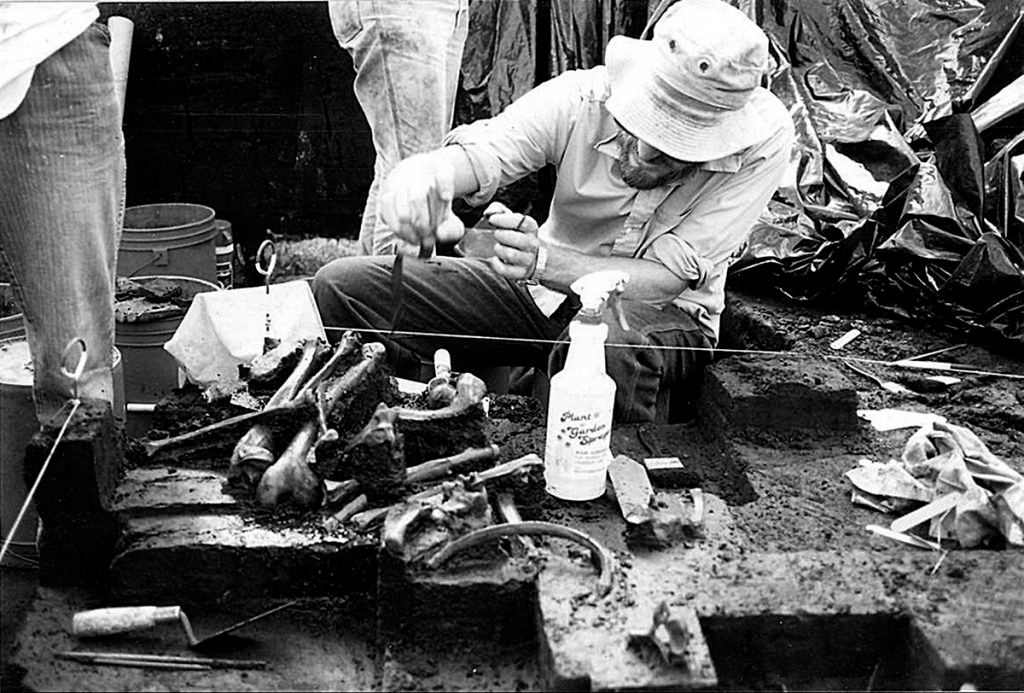
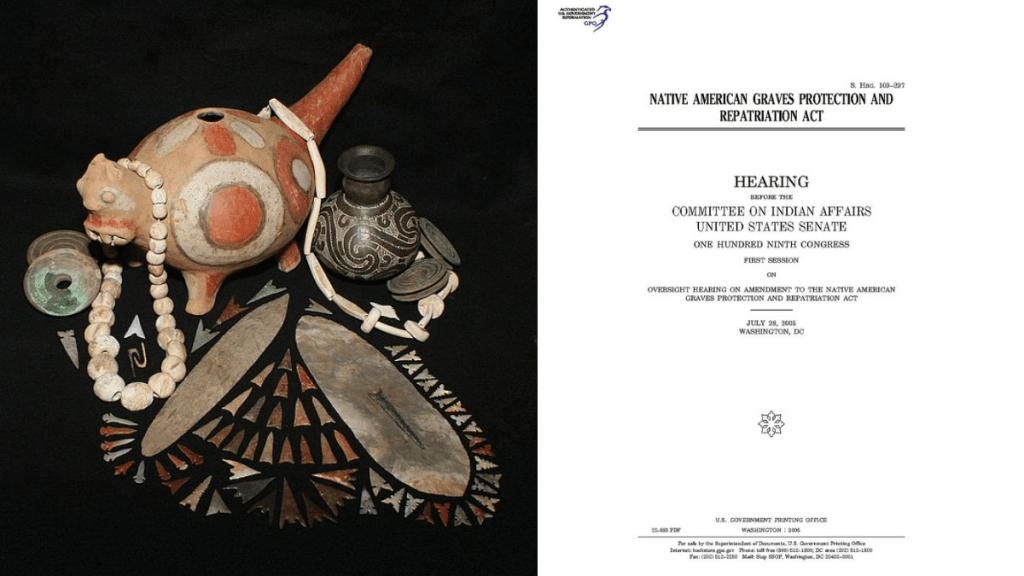
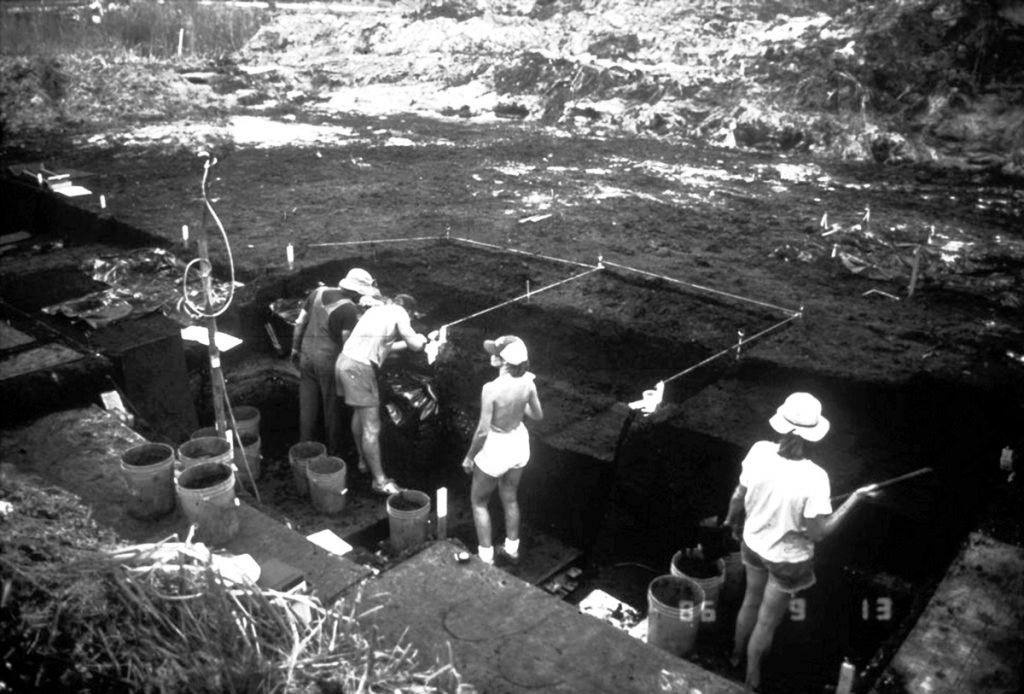
Let me start from the beginning of my personal connection to this. I remember driving out to the area near Titusville with my wife, the kind of trip where you expect a quiet museum stop but walk away astonished. The Windover site, discovered in 1982 during road construction for a housing development called Windover Farms, turned out to be one of the most significant archaeological finds in the Western Hemisphere. A backhoe operator scooped up skulls, and what followed was a frantic but methodical excavation led by Glen Doran from Florida State University between 1984 and 1986. They uncovered remains of about 168 individuals buried in a shallow pond that had become a natural peat bog, preserving everything from brain tissue—the oldest known in the world at the time—to intricate textiles, wooden artifacts, bone tools, and more. These people lived around 7,000 to 8,000 years ago in the Early Archaic period, long before what we think of as “Native American” tribes like the Cherokee or Seminole even formed as we know them today. The preservation was phenomenal because of the pond’s anaerobic conditions; it was like a time capsule from a world we barely understand.

Reading Doran’s book afterward felt like stepping into that excavation myself. It’s a multidisciplinary masterpiece—environmental analysis, radiocarbon dating, paleoethnobotany, DNA studies from the brain tissue, mortuary patterns, the works. They found the oldest woven fabrics in the Southeast, complex cordage, and evidence of sophisticated lifeways that challenge the simplistic “hunter-gatherer” stereotypes. My wife and I stood there in the museum exhibits, looking at replicas and displays (some now limited or relocated due to modern restrictions), and I kept thinking: This is North America’s equivalent of discovering a lost civilization, yet it barely registers in our national consciousness. Why? Because right around the time the final analyses were wrapping up, NAGPRA dropped in 1990 like a political hammer. The law was signed by President George H.W. Bush on November 16, 1990, after being introduced in the House by Democrat Mo Udall of Arizona. It sailed through on voice votes, with strong Democratic backing amid a wave of activism and cultural sentiment fueled by movies like Dances with Wolves, which painted indigenous peoples as noble victims of American aggression. I was living through that era, very aware of the buzz in Washington. I wasn’t a Bush fan—I voted against him, worked against him in the ’92 election, even flirted with the Reform Party because I saw him as a RINO continuing the same globalist, sovereignty-eroding policies Democrats had long championed. This wasn’t some Republican innovation; it was a bipartisan surrender to a narrative that America’s foundations were built on theft and needed constant atonement.

NAGPRA’s stated goal was to protect Native American graves, repatriate human remains and cultural items from museums and federal agencies to lineal descendants or culturally affiliated tribes. On paper, it sounds reasonable—addressing real historical wrongs like grave robbing in the 19th century. But in practice, and especially for ancient sites like Windover, it’s been devastating. The remains at Windover predate any known modern tribal affiliations by millennia. DNA studies from the site (what little could be done before restrictions tightened) showed haplogroups tracing back to ancient Asian migrations, but nothing that tied them neatly to today’s federally recognized tribes. Yet the law forces institutions like Florida State University to consult tribes, inventory collections, and often repatriate or rebury without full study. FSU has issued NAGPRA notices for some collections, and the process drags on, limiting further research. The pond was partially backfilled after the initial dig; half the cemetery remains untouched, not because the science was done, but because funding dried up amid the political winds. Developers and archaeologists knew what was coming, so they rushed what they could. Today, if a similar site were found, it might never see the light of day beyond a quick salvage operation before reburial. That’s not science; that’s erasure disguised as respect.  It’s equivalent to modern-day book burning, only the material is destroyed before we even have a chance to discover it. 

I’ve seen this pattern before, and it screams deliberate policy to undermine American sovereignty. Democrats have long used “victim” groups—indigenous peoples, in this case—as levers to dismantle narratives of Western expansion and self-reliance. NAGPRA wasn’t born in a vacuum; it was part of a broader 1990s push that included open-border sentiments and identity politics. The same era gave us policies questioning every aspect of American settlement, from land use to energy. Bush signed it, sure, but as a continuation of the previous administration’s trajectory. I stepped away from the GOP at the time because it felt like the party was complicit in weakening the republic from within. This law doesn’t just repatriate; it creates a framework in which federal recognition of tribes governs everything on or near federal lands, which is a huge chunk of the country. It turns archaeologists into bureaucrats navigating tribal consultations instead of digging for truth. And for sites with no clear affiliation—like the 8,000-year-old Windover bones, which likely belonged to pre-Clovis or early Archaic peoples who other groups later displaced—it effectively halts inquiry. How do you return remains to a tribe that didn’t exist yet? You don’t; you bury the evidence and pretend the history starts with the groups Democrats designate as “indigenous.”

This ties directly into the speculation about giants and multiple cultures in the Ohio Valley and Mississippi River mounds that I’ve pondered for years. Old newspaper accounts and 19th-century reports from the Smithsonian and others described oversized skulls and skeletons in Adena and Hopewell mounds—evidence, some say, of earlier populations. Modern archaeology dismisses much of it as exaggeration or hoaxes, but the pattern is suspicious: NAGPRA and similar policies make it risky even to revisit those claims with new tech like DNA. If there were prior cultures—perhaps Solutrean influences from Europe or other migrations predating the Beringia model—it challenges the singular “Native Americans as eternal stewards” narrative. Pre-Clovis sites like Buttermilk Creek in Texas (15,000+ years old) and genetic evidence of multiple waves into the Americas already poke holes in the old Clovis-first theory. Yet NAGPRA’s cultural affiliation rules often default to modern tribes, erasing the complexity. It’s the same playbook as border policies today: open the gates, label critics as aggressors, and rewrite the founding story to justify dismantling sovereignty. Democrats didn’t invent this overnight; it’s been their trajectory—using “aggrieved” groups to fracture the American experiment.

Compare that to what’s happening in Great Britain with Time Team. If you’ve never watched it, do yourself a favor—episodes are all over YouTube now, even after the show ended its main run on Channel 4. Hosted by Tony Robinson with archaeologists like Mick Aston, Phil Harding, and Carenza Lewis, it was a phenomenon from 1994 to 2014. They’d show up at a site—often tipped off by locals or metal detectorists—spend three days digging with geophysics, volunteers, and experts, then reveal everything from Roman villas to Neolithic tombs to medieval villages. No endless permits bogged down by politics; English Heritage and local councils supported it. The archaeologists became celebrities, the public ate it up, and it funded real research while turning history into entertainment. They published scientific papers too—more than some university departments. Stonehenge, Hadrian’s Wall, Roman baths: Britain celebrates layer upon layer of its past, from Mesolithic to medieval, without erasing any group. Bones from Iron Age, Bronze Age, or Roman contexts are studied for diet, disease, migration—not reburied to appease a modern political framework. It’s respectful scholarship that builds national pride, not guilt. I’ve been to England; their heritage sites are tourist magnets, economic engines, and educational goldmines. Archaeologists there are rock stars, not bureaucrats.

Why can’t we do that here? Japan has underwater sites off the coast of Osaka; China guards its ancient tombs but still excavates selectively. Even in the volatile Middle East, guys like Joel Kramer on his Expedition Bible YouTube channel navigate borders, checkpoints, and regimes to document sites from Sodom to Shiloh. His book Where God Came Down is a masterclass in persistence amid obstacles. The Biblical Archaeology Society and Biblical Archaeology Review fight for dig seasons in Israel despite political minefields—hostile neighbors, military oversight, and permit battles. Yet they publish voraciously because the region’s history is too vital to bury. In the U.S., we have a free country, capital markets, and vast untouched potential—from Florida ponds to Ohio mounds to underwater sites off the coasts—and we tie our hands with NAGPRA. Developers bulldoze sites quietly to avoid red tape; museums shelve collections. The Windover team saw the writing on the wall and wrapped up just as the law hit. The 2002 book exists as a snapshot of what was possible pre-NAGPRA; post-law, that level of open inquiry is gone.

This isn’t abstract. It harms research into who we really are as Americans. Western expansion wasn’t just conquest; it was building on layers of human history, some of which involved the displacement of earlier groups by later ones—just like everywhere else on Earth. Suppressing that validates a one-sided story used to push globalist agendas: open borders, energy restrictions framed as “respecting the land,” and centralized control. The same forces behind NAGPRA cheer solar mandates while demonizing natural gas and erasing our industrial heritage, just as they erase pre-Columbian complexity. I’ve said it before in my writings and streams: Rumble and independent platforms are game-changers because legacy media conceals this. There’s no evidence of giants or advanced pre-Native societies, they claim—yet policies prevent the digs that could prove or disprove it. Old Smithsonian reports from the 1800s detailed large skeletons in mounds; modern DNA from Hopewell and Adena sites shows continuity with later Native groups but also hints of admixture. Why not let the marketplace of ideas decide through open science?

Imagine an American Time Team. Archaeologists as celebrities on the Discovery Channel, live digs at mound sites or Florida bogs, public volunteers, and tourist revenue fund more work. Stonehenge draws millions; why not make Windover or Serpent Mound a Disney-level attraction with VR reconstructions, exhibits, and ongoing excavations? We have the capital, the freedom, the talent. Instead, we have rogue developers destroying sites, and universities complying with repatriation, which halts study. FSU still holds some Windover materials, but NAGPRA inventories and consultations limit what can be done. Rachel Wentz’s popular book Life and Death at Windover captures the human story—families, health, rituals—but even that feels like a last gasp before the freeze.

Repealing or reforming NAGPRA for remains older than, say, 5,000 years—where affiliation is impossible—would be a start. Treat ancient bones like science treats Ötzi the Iceman in Europe: study, learn, share. Respect living tribes’ concerns for recent remains, but don’t let it blanket 15,000 years of migration and replacement. England’s approach proves you can honor the dead without erasing history. Their Time Team episodes on Roman occupation or Neolithic life don’t undermine modern Britain; they enrich it. We need that here—full stop.

My effort in writing this and in pushing these ideas on my platforms stems from that museum visit and the book that followed. It’s personal: I want my kids and grandkids to know the full story of this continent, not a sanitized version designed to undermine the republic. The Windover discovery was a window—a fantastic, irreplaceable one—into a sophisticated past. NAGPRA closed it. Democrats knew what they were doing in 1990, riding the Dances with Wolves wave to frame America as a perpetual aggressor. Republicans like Bush went along. It’s the same game as today’s policies. We deserve better: open archaeology, public celebration, evidence wherever it leads. Let’s make American digs rock stars again. The Time Team model isn’t just British; it’s what humanity needs. And it starts by repealing the laws that bury our past to serve political ends.

Footnotes

1.  Glen H. Doran, ed., Windover: Multidisciplinary Investigations of an Early Archaic Florida Cemetery (University Press of Florida, 2002). Core source for site details, artifacts, and analyses.

2.  Rachel Wentz, Life and Death at Windover: Excavations of a 7,000-Year-Old Pond Cemetery (personal accounts and bioarchaeology).

3.  Native American Graves Protection and Repatriation Act, Pub. L. 101-601 (1990). Legislative history via Congress.gov; signed by GHW Bush.

4.  Time Team episodes, Channel 4 (UK), available on YouTube; see also English Heritage reports on public archaeology impact.

5.  Joel P. Kramer, Where God Came Down: The Archaeological Evidence (Expedition Bible publications); YouTube channel documents border and access challenges.

6.  Biblical Archaeology Review archives detail permit struggles in the Holy Land due to geopolitics.

7.  Pre-Clovis and migration studies: e.g., Waters et al. on Buttermilk Creek (Science, 2011); ancient DNA papers in PNAS and Nature on multiple waves.

8.  Historical mound reports: 19th-century Smithsonian and newspaper accounts (contextualized in modern critiques); DNA from Hopewell sites (Ohio History Connection studies).

Bibliography for Further Reading

•  Doran, Glen H., ed. Windover: Multidisciplinary Investigations of an Early Archaic Florida Cemetery. University Press of Florida, 2002.

•  Wentz, Rachel. Life and Death at Windover. University Press of Florida (related publications).

•  U.S. Congress. Native American Graves Protection and Repatriation Act (NAGPRA), 25 U.S.C. 3001 et seq. (1990).

•  Robinson, Tony, et al. Time Team series (1994–2014). Channel 4; scientific outputs summarized in Current Archaeology and English Heritage reports.

•  Kramer, Joel P. Where God Came Down. Expedition Bible, 2022 (approx.).

•  Biblical Archaeology Society. Biblical Archaeology Review (ongoing issues on global dig challenges).

•  Waters, Michael R., et al. “The Buttermilk Creek Complex and the Origins of Clovis at the Debra L. Friedkin Site, Texas.” Science, 2011.

•  Mills, Lisa A. “Ancient DNA from the Ohio Hopewell.” Ohio History Connection research.

•  ProPublica/NBC investigations on NAGPRA implementation (2023 reports on repatriation delays and impacts).

•  Additional: Federal Register notices on FSU NAGPRA inventories (2021+); Archaeological Conservancy site profiles on Windover.

Rich Hoffman

More about me

Click Here to Protect Yourself with Second Call Defense https://www.secondcalldefense.org/?affiliate=20707

About the Author: Rich Hoffman

Rich Hoffman is an aerospace executive, political strategist, systems thinker, and independent researcher of ancient history, the paranormal, and the Dead Sea Scrolls tradition. His life in high‑stakes manufacturing, high‑level politics, and cross‑functional crisis management gives him a field‑tested understanding of power — both human and unseen.

He has advised candidates, executives, and public leaders, while conducting deep, hands‑on exploration of archaeological and supernatural hotspots across the world.

Hoffman writes with the credibility of a problem-solver, the curiosity of an archaeologist, and the courage of a frontline witness who has gone to very scary places and reported what lurked there. Hoffman has authored books including The Symposium of JusticeThe Gunfighter’s Guide to Business, and Tail of the Dragon, often exploring themes of freedom, individual will, and societal structures through a lens influenced by philosophy (e.g., Nietzschean overman concepts) and current events.
The Smoking Gun of Windover: What NAGPRA was meant to conceal

I have been reflecting deeply on this as April 9th rolls around—my birthday—and I decided this year I would give myself something truly personal, something that excites me at the core of my being and ties together years of my own research, political observations, and that relentless drive to uncover truths that the system tries to bury. It is not some flashy gift or a day off from the work I do for everyone else; instead, it is this deep dive into what I consider one of the most important archaeological revelations of our lifetime, a site that serves as a smoking gun for so many historical narratives that have been twisted, politicized, and deliberately constrained. I am talking about the Windover archaeological site in Central Florida, that extraordinary bog cemetery near Titusville, just up the road from the Kennedy Space Center, where an accidental discovery in the mid-1980s peeled back layers of prehistory in ways that challenge everything we have been taught about the peopling of North America, the sophistication of ancient cultures, and the very foundations of modern political narratives about land, history, and who truly belongs here. I have poured over the rare academic book that documented it all—Windover: Multidisciplinary Investigations of an Early Archaic Florida Cemetery, edited by Glen H. Doran and published by the University Press of Florida in 2002—and it has become my birthday present to myself because it represents a narrow window into truth before the doors slammed shut with laws like NAGPRA. I invite everyone who reads this to share in that excitement with me, because this is not just dusty bones in a pond; it is evidence of a sophisticated society that predates the standard Beringia migration story by thousands of years in meaningful ways, and it exposes how politics, not science, has been driving the suppression of our deep past.  

I first came across references to this site years ago in my own independent studies of ancient American history, the kind of reading I do late at night after dealing with local politics here in Butler County, Ohio, or after watching the national scene unfold with all its layers of deception. Back then, I was already skeptical of the official timelines pushed in academia—the neat little story that indigenous peoples crossed the Bering land bridge around 15,000 to 20,000 years ago, spread south as hunter-gatherers, and that everything before European contact fits neatly into that box with tribes like the Iroquois, Lakota, or Sioux representing the “original” inhabitants. But Windover blew that open for me in a way nothing else had. Discovered accidentally in 1982 or early 1984 when a backhoe operator for a housing development called Windover Farms scooped up a human skull while digging in a small peat bog pond, it quickly became clear this was no recent crime scene. County medical examiners dated the remains as ancient, and that led to Florida State University anthropologist Glen Doran stepping in as principal investigator. From 1984 through about 1987, his team excavated roughly half of this half-acre pond cemetery under challenging wet-site conditions, uncovering the remains of at least 168 individuals—men, women, and children, from infants to elders around 60—buried in a deliberate, logical manner that suggested a thoughtful, organized society. What made it extraordinary was the preservation: the acidic yet neutral-pH peat bog acted like a natural time capsule, keeping not just bones but also soft tissue intact. We are talking brain tissue still present in 91 skulls, some with cellular structure preserved enough for DNA extraction; skin on the bodies; even the last meals still identifiable in their stomachs. They had clothing woven from plant fibers—some of the oldest and most complex textiles ever found in the New World, requiring looms or advanced weaving techniques that nobody expected for an “Archaic” period people 7,000 to 8,000 years ago. Wooden artifacts, bone and antler tools, a bottle gourd—evidence of a culture far more advanced than the simple hunter-gatherer label academia slaps on prehistory.  

An amazing book!

I have that Doran book—it is a thick, technical volume, the kind produced in limited academic runs, probably only a few thousand copies worldwide, and I feel fortunate to have one because it captures every multidisciplinary angle: environmental analysis, radiocarbon dating pinning the site firmly to around 6000-5000 BC, mortuary patterns showing bodies often placed with poles or stakes to keep them submerged, facing north with heads turned west in what looks like a deliberate ritual orientation toward the setting sun and perhaps some spiritual reverence. The people themselves were robust; average adult males stood about five feet nine inches, taller and healthier than many later prehistoric groups, with some individuals pushing six feet or more based on femur lengths and bone density—enough to fuel those early newspaper reports of “giants” in North America before institutionalized science dismissed them as hoaxes or exaggerations. There is no wild conspiracy in Doran’s work; it is straight, careful archaeology by scientists who genuinely loved the field and rushed to document everything because they sensed the political tides turning. Half the cemetery was left untouched, and today the site sits under a plaque in a wooded subdivision, a National Historic Landmark with no further major digs. That is the tragedy I keep coming back to, and it is why Windover feels like the smoking gun for me. 

What hit me hardest when I dug into the details—and this is where my own political experience from years fighting school levies, local corruption, and national narratives in Ohio gives me a unique lens—is how perfectly timed this discovery was before the Native American Graves Protection and Repatriation Act (NAGPRA) slammed the brakes on American archaeology. NAGPRA passed Congress on November 16, 1990, right after the Windover excavations wrapped up and right around the cultural frenzy sparked by Dances with Wolves, that Hollywood epic romanticizing the Sioux and framing Western expansion as pure theft of indigenous land. I have studied how bills get written, who lobbies them, and the closed-door intentions behind them, and NAGPRA was loaded with progressive language designed to solidify a specific narrative: America as stolen property from “Native Americans” defined by a very shallow historical scope. It required consultation with tribes for any remains or cultural items, mandated repatriation, and effectively shut down large-scale digs because developers and archaeologists alike knew that uncovering bones could halt projects, tie up land in legal battles, and invite tribal claims. Developers started burying finds quietly rather than reporting them, and grant money in academia dried up unless you played along with the official story. Windover happened in that narrow window before the law fully kicked in—Doran and his team worked fast, funded in part by the curious developers themselves, who paused their subdivision to allow proper science—and the result was this irreplaceable snapshot of an 8,000-year-old culture that does not neatly fit the Beringia-to-modern-tribes pipeline. 

The DNA analysis of the preserved brain tissue is what really undermines the premises on which NAGPRA was built. Studies showed genetic markers linking these Windover people to ancient Asian populations via the Beringia route, as expected—haplogroups like A, C, D, and even the rare X that pops up in some Native contexts—but crucially, they do not align closely with any living Native American tribes or even many known prehistoric groups. It suggests either their lineage died out, experienced a severe bottleneck, or represents a distinct early population that predates or diverged from the groups we retroactively label as “indigenous.” I am not here to take anything away from what we have been calling Native American communities or their cultural heritage; I respect the reverence for ancestors. But when you have remains this old—older than the pyramids, older than Mesopotamian civilizations in some contexts—and DNA that does not match the shallow 300-400-year tribal samples used to justify repatriation claims, who exactly do you hand them back to? The law assumes a direct, unbroken chain to contemporary tribes, but Windover proves the timeline, and the populations were far more complex. These were not simple hunter-gatherers; they had advanced textile production, implying looms; thoughtful burial rituals suggesting religion or cosmology; trade networks possibly reaching far beyond the region (given certain materials); and a settled community life in a resource-rich Florida environment when sea levels were lower and the coastline extended miles outward. Villages and mounds now submerged offshore hint at even broader Archaic networks. This site forces a reevaluation: the “Native American” designation under NAGPRA was built on politically convenient assumptions that ignored deeper prehistory, and that ignorance was weaponized to challenge the legitimacy of Western expansion and the founding of the United States itself. 

I see this as part of a larger pattern I have observed in my own work on politics and history—the way organized systems, often with roots in spiritual battles that play out in the terrestrial realm, rewrite narratives to maintain power. My upcoming book, The Politics of Heaven, dives straight into this because sites like Windover provide the hard evidence that legends, mythology, and even biblical accounts of ancient sophistication are not fairy tales. Think about it: these people knew how to weave delicate fabrics thousands of years before we associate such technology with the Indus Valley, Mesopotamia, or Egypt. They cared for their sick and dead in a mass cemetery with ritual precision. Their stature and health suggest a robust population living in a stable society. And all of this at a time when the Ice Age was ending, sea levels were rising, and cultures we now call “Atlantis” in Platonic accounts or other global flood myths were supposedly migrating and seeding knowledge worldwide. Plato described Atlantis as an advanced civilization destroyed by catastrophe, with survivors spreading to Egypt, Britain, the Americas—places where we find sudden leaps in sophistication that do not fit the slow Beringia crawl. Windover fits as one piece of that puzzle: evidence of pre-Mesopotamian complexity right here in North America, with possible ties to shamanic or spiritual practices seen in even older Near Eastern sites. Take Qesem Cave near Tel Aviv in Israel, for example—an ancient site showing early humans (or pre-modern hominins) with innovative tool use, controlled fire, and communal activities dating back hundreds of thousands of years, far predating the standard timelines and hinting at organized, intelligent societies communicating with or revering something beyond the material world. Similar patterns appear in Natufian or shamanic contexts in the Levant around 13,000-10,000 BC, with ritual fires and early communal structures. These are not isolated; they point to a deep, sophisticated human history that institutional science, constrained by funding and politics, has been reluctant to explore fully. 

Here in North America, we have the same suppression at work, only dressed up as “reverence for indigenous rights.” Cahokia Mounds near St. Louis is another example I have studied closely—a massive Mississippian city around 1000-1400 AD with more people than London at the time, featuring the famous Birdman tablet and legends of Thunderbirds that echo across Native oral histories. Yet St. Louis was literally built on top of it, and we still vaguely associate it with later tribes despite clear discontinuities. Mound builders, Adena, Hopewell—earlier cultures with advanced earthworks and trade—get shoehorned into the same narrative, ignoring how each generation builds over the previous one, claiming territory like animals marking trees. Human nature drives this, but laws like NAGPRA freeze it artificially at a politically useful point: 1492 onward, with Europeans as the sole thieves. The reality, as Windover shows, is layered theft and migration going back millennia—groups taking from older groups, sophisticated societies rising and falling. If we had unrestricted digs, we could map this properly, learn from mistakes, and avoid repeating cycles of conquest and cultural erasure. Instead, the law—passed in that post-Dances with Wolves glow of guilt—created incentives to hide discoveries, starved archaeology of funding for controversial sites, and prioritized a narrative that undermines the Christian-influenced Western foundation of America. I know how these bills are crafted from my own experiences fighting local and state politics; the closed-door intentions are rarely about dead ancestors and always about power, land claims, and reshaping history to favor certain ideologies.

Glen Doran himself, who passed away in 2021, and his colleagues captured their frustration between the lines in that book. They knew NAGPRA was coming; they rushed the work because they understood the profession was about to be handcuffed. The peat chemistry, the pollen, the paleoethnobotany, the DNA—all of it documented before the repatriation machine could intervene. Yet even today, the remaining half of the pond sits largely untouched, and broader Florida bog sites or offshore mounds from lower sea-level eras go unexplored because developers fear land seizures and archaeologists fear grant denials or tribal vetoes. This is not reverence; it is concealment. I love true archaeology—the kind done in England on shows like Time Team, where they dig openly, analyze bones without mandatory handover, and let evidence speak. Here, the human need to know has been subordinated to politics, which is why Windover feels like such a miracle: it slipped through just before the gates closed. It validates folklore, Plato’s hints at Atlantis, global trade networks in deep antiquity, and even the idea that our origin stories—whether biblical, mythological, or shamanic—involve advanced pre-flood or pre-catastrophe civilizations that revered higher powers, appeased spirits, and built societies with ritual purpose. The Windover dead faced north, heads west toward the sunset—symbolism that screams cosmology, not random burial. They were not “cavemen”; they were part of something older and wiser than we have only breadcrumbs of now.

This all ties directly into the spiritual warfare I explore in my work—the fallen entities at war with creation itself, imprinting their influence on earthly power structures to erase God’s narrative and replace it with controlled ignorance. Laws like NAGPRA are not neutral; they serve to keep humanity deficient in knowledge, allowing modern political orders to maintain authority built on false premises. Western expansion brought a Christian viewpoint and free civilization that disrupted older pagan or shamanic systems, but if deeper evidence shows sophisticated pre-Columbian (and pre-Beringia in practice) cultures with their own complexities, the “stolen land” story loses its moral absolutism. Everyone stole from someone; history is layered conquest. The real crime is preventing inquiry that could reveal this, because it threatens the power base. Windover proves it in my eyes: 8,000-year-old brains yielding DNA that does not fit the 1990 legal template, textiles requiring technology we associate with much later eras, and a cemetery showing care and ritual in a society predating known tribes. It is the perfect example for my book because it shows how politics cascades from heavenly rebellion into terrestrial control—concealing evidence so the deficient knowledge keeps people dependent on the current narrative.

I have met enough people in politics over the years, from Tea Party rallies to local commissioners, to recognize when good intentions get co-opted by larger agendas. Archaeologists like Doran wanted knowledge; the system wanted control. That is why I judge these things rigorously in my own life and work—if you cannot manage truth at the foundational level, you cannot lead effectively elsewhere. Windover demands we repeal or heavily reform NAGPRA, not to disrespect anyone but to prioritize the human need to know over artificial constraints. We need more digs, more funding for wet sites in Florida and beyond, and more open analysis of offshore mounds from Ice Age coastlines. Only then can we bridge the gap between legend and evidence, avoid repeating past mistakes, and understand our true place in the deep timeline. This site, with its preserved last meals, woven fabrics, and unclaimed DNA, hints at Atlantis-like migrations, shamanic connections to the spirit world (echoing Qesem Cave’s early innovations or Cahokia’s Birdman symbolism), and a history far richer than the shallow one politicized in 1990.

As I celebrate another year on this earth, I find real joy in holding this truth close. It reinforces why I fight the battles I do—not just local levies or national elections, but the deeper war for accurate history. The Windover people were real, sophisticated, and part of something vast. Their story survived by accident in the bog, preserved long enough for us to glimpse it before the political machine intervened. That is my birthday gift: the excitement of knowing more is out there if we demand the freedom to look. I will keep pushing in my writings, my podcast, and my life because evidence like this changes everything. Share it, study it, and let it provoke the larger discussion it deserves. The republic, and humanity’s understanding of itself, depends on refusing to let politics bury the past any longer.

Footnotes

1.  Primary source details on discovery, excavation, and findings from Glen H. Doran’s edited volume and supporting analyses.

2.  DNA results and non-alignment with modern tribes were summarized from peer-reviewed studies referenced in site reports.

3.  NAGPRA legislative history and timing relative to Windover drawn from official records and archaeological critiques.

4.  Stature and artifact sophistication (textiles, rituals) from bioarchaeological chapters in the Windover investigations.

5.  Broader connections to global prehistory (Qesem Cave, Cahokia) informed by my independent cross-referencing of Paleolithic and Mississippian sites.

6.  Political motivations behind NAGPRA are tied to the cultural context of 1990 (Dances with Wolves) and observed patterns in bill-making from my experience.

Bibliography for Continued Reading

•  Doran, Glen H., ed. Windover: Multidisciplinary Investigations of an Early Archaic Florida Cemetery. University Press of Florida, 2002.

•  Wentz, Rachel K. Life and Death at Windover: Excavations of a 7,000-Year-Old Pond Cemetery. Florida Historical Society Press, 2012.

•  National Park Service. “Native American Graves Protection and Repatriation Act.” Official NPS overview and regulations.

•  Plato. Timaeus and Critias (translations discussing Atlantis).

•  Various reports on Qesem Cave: Barkai et al., publications on Lower Paleolithic innovation in Israel.

•  Pauketat, Timothy R. Cahokia: Ancient America’s Great City on the Mississippi. Penguin, 2010 (for Birdman and mound-builder context).

•  Biblical Archaeology Review and related journals on Near Eastern shamanic/ritual sites predating Mesopotamia.

•  My own forthcoming The Politics of Heaven for expanded spiritual-political synthesis.

•  National Geographic and Florida Museum archives on Windover preservation and public exhibits.

Rich Hoffman

More about me

Click Here to Protect Yourself with Second Call Defense https://www.secondcalldefense.org/?affiliate=20707

About the Author: Rich Hoffman

Rich Hoffman is an aerospace executive, political strategist, systems thinker, and independent researcher of ancient history, the paranormal, and the Dead Sea Scrolls tradition. His life in high‑stakes manufacturing, high‑level politics, and cross‑functional crisis management gives him a field‑tested understanding of power — both human and unseen.

He has advised candidates, executives, and public leaders, while conducting deep, hands‑on exploration of archaeological and supernatural hotspots across the world.

Hoffman writes with the credibility of a problem-solver, the curiosity of an archaeologist, and the courage of a frontline witness who has gone to very scary places and reported what lurked there. Hoffman has authored books including The Symposium of JusticeThe Gunfighter’s Guide to Business, and Tail of the Dragon, often exploring themes of freedom, individual will, and societal structures through a lens influenced by philosophy (e.g., Nietzschean overman concepts) and current events.
Make Sure to Judge and Judge Often: Kristi Noem and Pam Bondi couldn’t get the job done–find someone who can

I have been watching the second Trump administration unfold over the first few months of 2026 with a mixture of hope and growing frustration, the kind that comes from someone who has spent years in the political trenches here in Butler County, Ohio, and across the country. When President Trump tapped Pam Bondi for Attorney General, I thought it was a strong move. I had followed her work as Florida’s Attorney General, where she showed real backbone against some of the progressive nonsense that was infecting state governments. She talked a tough game on television—promising to go after the Russia hoax crowd, the January 6 committee members who turned a legitimate protest into a political persecution, the FBI insiders who abused FISA warrants, and the broader network of Democrats who had spent years twisting the law to target conservatives. I believed she had the smarts and prosecutorial experience to drag some of these cases to a close finally. But as the weeks turned into months, I saw the same old pattern: lots of sound bites, plenty of tough talk, but not nearly enough action. Cases that should have been fast-tracked sat gathering dust. Indictments that the American people desperately needed to see—real accountability for those who weaponized government—never quite materialized. By early April 2026, I wasn’t surprised when Trump made a change. I respect Pam Bondi, and I still think she’s intelligent, but if you’re not getting the job done at that level, you have to go. The Department of Justice is a swamp all its own, filled with careerists who know how to slow-walk everything, and it takes a special kind of resolve to push through. I believe Trump is doing a good job overall, but these personnel decisions matter. You can’t have people in the highest offices who talk the talk but can’t deliver results when the country is counting on real justice.

This whole situation with Bondi got me thinking deeper about what it really takes to succeed in this environment, and it brought me straight to Kristi Noem. I have always liked Kristi Noem. I thought she did a great job as governor of South Dakota. Her policies weren’t bad at all—I agreed with her on border security, crime, education, and pushing back against the radical transgender agenda that’s confusing so many kids. She had that independent Western spirit that resonated with many of us. I loved the campaign ads where she was riding horses around Mount Rushmore in a cowboy hat; it captured something authentic about American strength and freedom. When Trump brought her into the administration and eventually placed her at Homeland Security, I was optimistic. She seemed like the kind of no-nonsense leader who could secure the border and dismantle some of the chaos the previous administration had allowed to persist. But then the personal scandals hit, and everything changed. Reports surfaced about an affair with Corey Lewandowski, one of Trump’s longtime aides. I have met Corey Lewandowski several times over the years. He’s a sharp, charismatic guy who throws himself completely into the fight. He shares that same passion for the cause that many of us feel. When you’re away from home a lot, traveling constantly, surrounded by people who understand your mission at the deepest level, it becomes really easy to make bad judgments. I know how it happens. The adrenaline is high, the hours are long, and suddenly you’re sharing late-night strategy sessions with someone who gets the fire in your belly like your spouse back home sometimes can’t. It’s human nature, but it’s still bad judgment. You should be able to fight off temptation, especially when you’re married. I have been married to a good woman for a long time, and I know it takes work, especially when life gets busy, and the spotlight pulls you in different directions. But that’s exactly why character matters so much at the top.

What made the Noem situation even messier was what came out about her husband, Bryon. Nearly forty years of marriage, kids grown, grandkids in the picture, and suddenly the public learned he had been sending sexually charged pictures of himself online—cross-dressing, some boob fetish, the kind of private behavior that, once exposed, destroys trust on every level. I don’t think it was a complete surprise to everyone around them; neighbors in South Dakota apparently called it an open secret. Kristi expressed shock, but the damage was immediate and devastating. Her husband’s actions left her vulnerable, and the combination of the reported affair and the family embarrassment became too much under the national microscope. I believe she was devastated by it all. When you put yourself out there the way she did—national media, international travel, constant public appearances—the little cracks in a marriage get magnified. You’re gone too much. The empty nest, which should be a time to reconnect with your spouse, becomes filled with politics, rallies, and crises. It’s hard to maintain an intimate relationship when you’re living in the public eye every day. I have seen this pattern before with people who rise fast in the Tea Party or MAGA movements. They come into office with big ideas and good intentions, but the pressure and temptations of Washington or high-level administration roles test them in ways they never expected. Some handle it; many don’t. That’s why I hold people to a rigorous standard on their personal lives, especially when they seek high office. If you can’t keep your marriage straight, if you can’t manage your own household, there’s something wrong that will eventually show up in how you handle the bigger responsibilities.

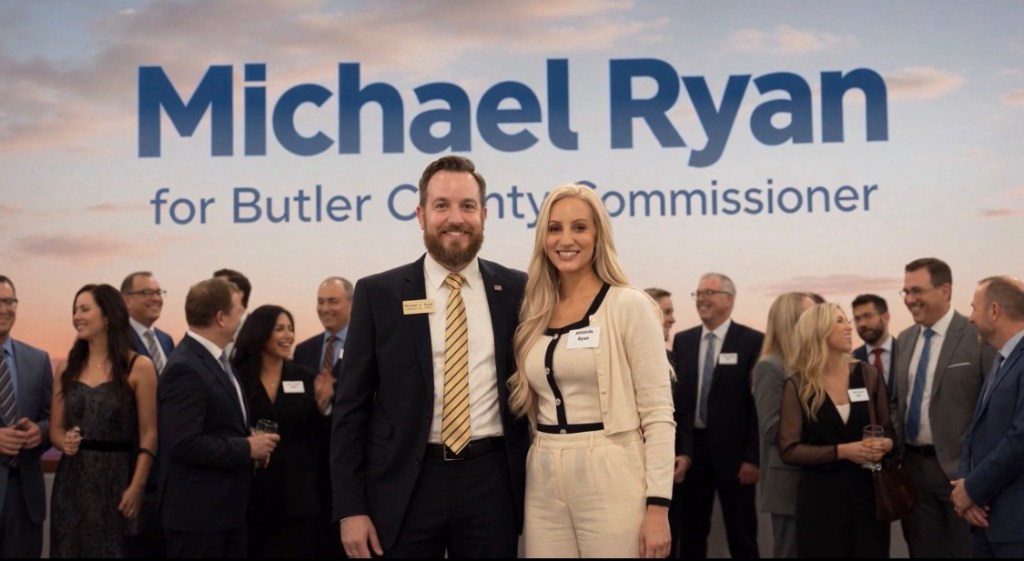
I remember talking to JD Vance early on, back when he was making the rounds pitching himself to folks like me in Ohio. I had read Hillbilly Elegy and appreciated his story, but I wasn’t fully sold yet. I looked him in the eye and asked him directly: “You’re heading to Washington in your 40s with all this attention. How are you going to handle the temptations? Are you going to fight for justice, or are you just going to become another pastry in the lucrative swamp?” He didn’t flinch. His wife, Usha, was right there—super nice, super sweet, super solid. You could tell they genuinely liked each other, not just for the cameras. The way they interacted, even when the event was over and no one was watching, told me a lot. They share a real affection and partnership. That matters to me. I have seen the same thing with George Lang here in Ohio—his wife Debbie is a rock, a good person who keeps him grounded. Michael Ryan in Butler County has that same solid family foundation, which is one reason I support him so strongly. I could say the same thing about Congressman Warren Davidson and his wonderful wife, Lisa.  These are the kinds of people I trust in positions of power because they have proven they can manage the most important thing first: their own home. Trump himself has learned this lesson across his marriages. Melania has been a steady, classy presence for him, someone who understands the pressure and stands by him without needing constant validation. It takes time to figure these things out, especially in a high-profile life, but once you do, it becomes your armor against the temptations that come with power.

With Kristi Noem, I think the combination of the affair and her husband’s public embarrassment created a perfect storm. She had put herself out there so visibly that any weakness became ammunition for the enemies. Lewandowski is a nice, charismatic guy, and when you share that highest-level passion for the mission, it’s easy to cross lines you shouldn’t. I don’t condone it, but I understand how it happens. The marriage was already strained by years of public life. When your spouse isn’t as engaged or interested, and you’re out there chasing big goals, loneliness can creep in. But that doesn’t excuse the bad judgment. If your home life is dysfunctional—if your husband is caught cross-dressing and sending fetish photos online—then how can you possibly lead something as critical as Homeland Security without becoming a liability? The bad guys are always watching. They look for any crack to exploit. Noem’s situation wasn’t just personal; it raised real questions about judgment, vulnerability to blackmail, and the ability to focus under pressure. I still like her as a person. I think she has good intentions and did a lot of positive things in South Dakota. But when the scandals broke, Trump had no choice but to move her out. The administration can’t afford that kind of distraction at the top. It’s not about being perfect—but about having the discipline to keep your house in order so you can focus on the nation’s house.

I have thought a lot about why these kinds of failures happen so often in politics, especially at the federal level. It starts with the nature of the job itself. You’re constantly in the spotlight. Public relations, media appearances, international travel—it all pulls you away from the simple, intimate things that keep a marriage strong. When the kids are grown, and the grandkids are pulling at your heart, that space in your life gets filled with the next campaign event or policy fight. It becomes easy to seek validation or connection with people who share your daily battles. Corey Lewandowski and Kristi Noem apparently found that connection in each other. I have met Lewandowski enough times to know he’s passionate and committed. But passion without boundaries leads to trouble. The same thing happened in countless administrations before this one. History is full of leaders whose personal indiscretions undermined their public work. In the Trump era, with the media and Democrats armed and ready to pounce on any weakness, the margin for error is razor-thin. That’s why I believe we need to rigorously evaluate people’s family lives before giving them these roles. If you can’t protect your own family, if you can’t keep your marriage intact despite the pressures, then you’re not equipped to protect the country or deliver justice for the American people.

Look at what happened with the January 6 defendants. Many of them sat in jail for over a year while the January 6 committee ran its circus and the media turned a protest into an “insurrection” narrative. I believe those responsible for the selective prosecution and the weaponization of government should face real consequences. The FBI, the DOJ under previous leadership, and the congressional Democrats who pushed the narrative all deserve scrutiny. Yet under Bondi, those big cases didn’t move with the urgency I expected. I still support Trump’s overall direction—he has been really good on many fronts—but I want to see people in key positions who can actually prosecute the real criminals and get results. The same standard applies to every cabinet role. At Homeland Security, we needed someone who could secure the border without personal scandals becoming distractions. Noem’s situation showed how quickly good intentions can be derailed by poor personal management.

I have met a lot of these people over the years. I have talked with Tea Party and MAGA leaders who rose fast and then struggled under the weight of Washington. Some come out stronger; others fall apart. That’s why, when I get the chance to speak with a candidate or someone rising in the ranks—as I did with JD Vance—I ask the personal questions. I want to know how they handle temptation when the lights are off and no one is watching. I look at how they treat their spouse when the event is over, and the crowd is gone. Do they genuinely like each other? Do they share a real partnership? That tells me more than any policy paper ever could. JD Vance passed that test in my eyes. His wife is solid, and you can see the mutual respect and affection. George Lang and his wife, Debbie, show the same thing. Michael Ryan has that foundation, too. These are the people I trust to stay focused when the pressure hits. Trump has clearly learned this over time. He knows he needs people who can handle the spotlight without their personal lives becoming liabilities. Melania has been a great example of that steadiness for him.

Kristi Noem’s story is a cautionary tale, but I don’t write her off completely. She made many positive contributions, and I believe she wanted to do good for the country. The dysfunction in her home life—whether it was her husband’s online behavior or the strains of long absences—created vulnerabilities she couldn’t overcome in that high-pressure role. When the affair with Lewandowski became public knowledge, and the photos of her husband surfaced, it all became too much. The family unit is supposed to be the first line of defense. When that breaks down, enemies exploit it, the media feasts on it, and the mission suffers. I think Trump did the right thing by making the change. The administration needs people who can deliver without unnecessary drama. It’s not easy living under that kind of scrutiny.  That’s why maintaining strong family relationships is non-negotiable for me when evaluating leaders. If you can’t keep your own house in order, you won’t keep the nation’s house in order.

There is a deeper philosophical layer here that I have often reflected on. In a world where power attracts temptation like moths to flame, character becomes the ultimate filter. Let’s support people who want to do good things, even if they stumble, but when they seek the highest levels of administration, the standard must be higher. Bad judgment in personal matters signals deeper issues—weakness under pressure, inability to prioritize, vulnerability to manipulation. Noem’s case, like others before it, shows that you can have the right policies and the right rhetoric, but without personal discipline, the weight of the office will expose every crack. Trump has surrounded himself with some strong people who seem to understand this. JD Vance, with his solid marriage, gives me confidence. Others in the orbit who keep their families first will likely endure. For those who don’t, the door eventually closes, as it did with Bondi when results lagged and with Noem when the personal scandals exploded.

I still believe in the broader mission. Trump is moving the country in the right direction on many fronts, but personnel is policy. We need fighters who can actually prosecute the January 6 cases, hold the deep state accountable, secure the borders, and resist the cultural pressures that have weakened us. That requires people with the character to resist temptation when it comes knocking in hotel rooms and late-night meetings. It requires marriages that can withstand the absences and the spotlight. It requires leaders who understand that their first responsibility is to their own household before they take responsibility for the nation’s. I have seen too many good people with big ideas falter because they couldn’t manage the personal side. Kristi Noem had a lot going for her, but the combination of the Lewandowski affair and her husband’s embarrassing public behavior created a situation she couldn’t survive in that role. Pam Bondi talked a good game but couldn’t deliver the decisive actions needed. Both cases reinforce the same lesson: in high-stakes politics, especially in a second Trump term, where expectations are sky-high, character and execution must go hand in hand.

As I look ahead, I hope the administration continues to learn from these early stumbles. Bring in people who have proven they can handle pressure without personal meltdowns. Reward those who keep their families strong and their judgment sharp. The country needs real justice, secure borders, and leadership that doesn’t hand ammunition to the opposition on a silver platter. I still support Trump’s vision because I believe he is fighting for the right things. But I also believe he needs warriors around him who won’t crumble when the temptations or scandals hit. That’s the standard I apply when I evaluate anyone seeking my support, whether it’s here in Ohio or at the national level. Manage your home well, resist the easy temptations, deliver results, and you’ll have my backing. Fail at the personal level, and no amount of policy agreement will make up for it in the long run. Politics at the top is brutal, and only those with strong foundations survive. I have seen it up close, and that’s why I judge so rigorously. The republic deserves nothing less.

Footnotes

1.  Observations on Pam Bondi’s tenure drawn from public reporting on DOJ activities in early 2026 and Trump administration personnel changes.

2.  Details of Kristi Noem’s governorship and policies based on her public record in South Dakota, including border and cultural issues.

3.  Reports on the Lewandowski-Noem relationship and Bryon Noem’s online activities appeared in major outlets in early 2026.

4.  Personal conversations with JD Vance referenced from local Ohio political events.

5.  Broader reflections on family, temptation, and leadership informed by years of observing Tea Party and MAGA figures.

Bibliography for Continued Reading

•  Noem, Kristi. Not My First Rodeo: Lessons from the Heartland.

•  Vance, J.D. Hillbilly Elegy: A Memoir of a Family and Culture in Crisis.

•  Lewandowski, Corey. Let Trump Be Trump: The Inside Story of His Presidency.

•  Trump, Donald J. Crippled America and subsequent campaign materials.

•  Various reporting from The Daily Mail, New York Post, and Fox News on 2025-2026 administration personnel stories.

•  Biblical references: Proverbs 4:23 (“Guard your heart, for everything you do flows from it”).

•  Local Ohio political coverage on figures like George Lang and Michael Ryan from Butler County and state sources.

Rich Hoffman

More about me

Click Here to Protect Yourself with Second Call Defense https://www.secondcalldefense.org/?affiliate=20707

About the Author: Rich Hoffman

Rich Hoffman is an aerospace executive, political strategist, systems thinker, and independent researcher of ancient history, the paranormal, and the Dead Sea Scrolls tradition. His life in high‑stakes manufacturing, high‑level politics, and cross‑functional crisis management gives him a field‑tested understanding of power — both human and unseen.

He has advised candidates, executives, and public leaders, while conducting deep, hands‑on exploration of archaeological and supernatural hotspots across the world.

Hoffman writes with the credibility of a problem-solver, the curiosity of an archaeologist, and the courage of a frontline witness who has gone to very scary places and reported what lurked there. Hoffman has authored books including The Symposium of JusticeThe Gunfighter’s Guide to Business, and Tail of the Dragon, often exploring themes of freedom, individual will, and societal structures through a lens influenced by philosophy (e.g., Nietzschean overman concepts) and current events.
The Layered Foundations of Civilization and the True Meaning of Easter: Why Christianity Supplanted the Blood Cults of the World and Why Good Friday Is Indeed Good

I’ve said it many times before, and I’ll keep saying it because the evidence keeps piling up in every direction I look: civilizations don’t spring up out of nowhere like some secular fairy tale taught in modern classrooms. They build directly on top of previous civilizations, often literally stacking their cities, temples, and rituals atop the ruins of what came before. That’s why digging through the archaeological record to prove deep-time assumptions is so difficult—layers upon layers of human endeavor, each one trying to make sense of the same spiritual warfare that has raged since the beginning of recorded time. The same principle applies to our holidays, especially Easter. What we celebrate today isn’t some pristine invention of the early Church; it’s a Christian overlay on ancient pagan traditions, and that layering isn’t a bug—it’s the feature that makes the whole thing work psychologically and culturally for humanity’s long-term survival.  

This past Holy Week of 2026, as the world marked another Easter amid the chaos of our times, I found myself explaining this story over and over again to a new generation—mostly people under thirty—who are staring at the mess handed down by their parents and grandparents. Secular society led those older cohorts astray with promises of endless pleasure, moral relativism, and “progress” that stripped away any real foundation. These young people don’t like what they inherited. They’re drinking less, they’re not as sexually driven in the destructive ways previous generations were sold, and they’re turning to Christianity in numbers I haven’t seen in my lifetime. It’s not just some fleeting reaction to current events, though the assassination of Charlie Kirk last September certainly played a role in waking some of them up. Kirk and Turning Point USA had been reaching that exact demographic with a message of truth, responsibility, and American exceptionalism rooted in Judeo-Christian values. When radicals lashed out and killed the messenger, they didn’t kill the message—they turned Kirk into a symbol, almost a modern martyr in the eyes of many. That’s the danger of assassinating ideas: they don’t die; they multiply. But Kirk’s success wasn’t accidental. A whole cohort was already listening, already rejecting the secular void, and looking for something solid to stand on. Christianity is providing that anchor, just as it has for millennia.

Let’s get specific about Easter, because the question keeps coming up from these young seekers: Why the bunnies? Why the eggs? How does any of that connect to Christ’s resurrection? The answers take us straight back to those layered civilizations I mentioned. The Easter bunny and Easter eggs didn’t originate in the Gospels. They trace back to Germanic and broader European pagan traditions tied to spring fertility rites—reverence for the changing seasons where life bursts forth after winter’s death. Bunnies, with their legendary reproductive vigor, became symbols of vitality and new life. Eggs, obviously, represent rejuvenation—the perfect vessel from which new life hatches. Painting them was humanity’s way of imprinting our creative stamp on that divine process. These rituals migrated and blended across cultures, just as trade routes and migrations carried ideas from the Near East to Europe and beyond. The Christian tradition didn’t erase them; it baptized them, layering the resurrection of Christ—the ultimate victory over death—onto these older spring celebrations. That’s how holidays work. They evolve, but the core psychological need remains: to mark renewal, confront mortality, and seek meaning in the cycle of life and death.  

This isn’t some dilution of faith; it’s evidence of Christianity’s genius as a sustaining cultural mechanism. Look at the broader pattern. For hundreds of years—two or three centuries at a stretch, over and over—pagan societies rose and fell on the worship of planetary gods: Jupiter, Mars, Saturn among the Romans, borrowed wholesale from the Greeks, who themselves drew from Near Eastern deities. The same archetypes appear globally—uncovering similar pantheons and ritual cycles in Central America, South America, North America, Africa, and even ancient China. These civilizations kept collapsing under their own weight because they were psychologically tethered to blood cults. Human sacrifice wasn’t some fringe horror; it was the currency that kept the spiritual order supposedly in balance. The gods demanded blood—literal blood—to appease their hunger, to ensure fertility, to prevent catastrophe. Aztecs, Mayans, and countless others built entire societies around it. Temples like those of Artemis or Ishtar incorporated ritual prostitution and worse. Phoenician traders may have carried these practices across the oceans, with evidence of sophisticated pre-Beringia trade networks appearing in places like central Florida, near what’s now the Kennedy Space Center. The archaeological record hints at vast, interconnected systems far older and more advanced than the simple migration narratives we’re usually fed.

Christianity broke that cycle. It didn’t just compete with paganism; it psychologically supplanted it on a global scale. The crucifixion and resurrection of Christ presented the ultimate sacrifice—the Lamb of God offering Himself once for all—no more need for endless rivers of human blood on pyramids or altars. The body becomes bread; the blood becomes wine. Communion replaces the cannibalistic feasts that followed ritual killings. This wasn’t abstract theology; it was a pragmatic, world-changing intervention in the human condition. As I’ve explored in my upcoming book The Politics of Heaven, which draws heavily from Ephesians 6:12 and the ancient Book of Enoch, this spiritual war has been raging since the rebellion in heaven. Disembodied spirits—fallen entities hungry for the destruction of God’s creation—have whispered through dreams, drunkenness, hallucinogens like ayahuasca, or modern “possessions” that masquerade as progressive enlightenment. They crave anxiety, death, and the dismemberment of humanity because they are at war with the Creator. Christianity gave humanity the mechanism to say “no” on a civilizational level.

I’ve seen this truth play out personally. Years ago, my wife and I were in the Yucatan on Good Friday. We witnessed an entire town pour into the streets for a passion play—recreating Christ carrying the cross to His death. The whole community participated. It was profound. These were descendants of the very cultures that once cut out living hearts on temple steps and consumed the flesh in communal rites to appease gods who demanded blood to keep the sun rising or the rains falling. The Mayans and Aztecs didn’t do it for sport; they believed it was necessary for cosmic order. The Spanish conquest, whatever its flaws and whatever the secular historians scream about “genocide,” brought an end to that nightmare for the survivors. As I wrote about that experience in my reflections (what some have called Lockers of My Mind in my ongoing personal chronicles), it hit me hard: these people weren’t mourning lost heritage in that moment. They were liberated by it. Christianity replaced the terror with a single, sufficient sacrifice. No more pyramids running red. No more children or captives fed to the gods. Just bread and wine, remembrance, and the promise of resurrection. 

The critics—those secularists, progressives, and anti-human types who pine for “Earth worship” and indigenous revival—love to flip the script. They blame Christianity for slaughtering the Aztecs, Mayans, and every other group during the spread of Western civilization. “Look at all the bloodshed!” they cry. “The Crusades! The conquests! Christianity destroyed vibrant cultures! Peel back the layers, though, and you see the lie. Those “vibrant cultures” were built on industrial-scale human sacrifice. The Aztecs alone killed tens of thousands annually—estimates run into the hundreds of thousands over decades—to feed their bloodthirsty pantheon. Hearts torn out, bodies dismembered and eaten in front of crowds. The same patterns repeated worldwide: temple prostitutes in the cults of Ishtar, ritual killings in Phoenician outposts, even echoes in Roman and Greek practices before Christianity civilized them. The Jewish temple system itself pointed toward sacrifice, which is why tensions persist with some groups still longing for a Third Temple to resume animal (and, in some interpretations, fuller) offerings. Christ’s declaration—“It is finished”—shattered that—one sacrifice to end all sacrifices.

That’s why Good Friday is good. It marks the death that killed death’s dominion through blood currency. Easter celebrates the resurrection that proves the victory. We layer on the bunnies and eggs not to mock the old ways but to redeem them—spring renewal now points to eternal life in Christ, not seasonal appeasement of demons. This psychological shift was revolutionary. It toppled the Roman Empire not by sword alone but by offering a better story: humanity no longer enslaved to the whims of hostile spirits. Kings fell. Empires crumbled under the weight of this truth. And it continues today. Modern blood cults haven’t vanished; they’ve shape-shifted. Abortion clinics as modern altars, the desecration of the body through endless “self-expression,” broken families, and hedonistic pursuits that feed the same entities. Progressives who decry Christianity as oppressive are often the very ones seduced by these whispers, pushing policies that increase anxiety, death, and the consumption of innocence—whether literal or figurative.

I’ve written about this extensively because it’s not just history; it’s the present war. In The Politics of Heaven, I lay out the evidence of this vast conspiracy: giants, disembodied spirits, the ancient playbook from Enoch that explains the hunger for God’s creation. Jonathan Cahn’s work on the return of the gods captures the avatar-like reemergence of these entities in our time—possessing leaders, movements, and even individuals who surrender their integrity. From a quantum perspective, as I sometimes explore in my writings, it makes even more sense. Parallel realities, entangled essences, free will playing out against a backdrop that feels predestined because the spiritual architecture was set long ago. The stars the ancients charted weren’t superstition; they reflected a written order. Evil seeks to maintain its foothold, craving bloodlust because it is wild and destructive. Christianity provided the off-ramp.

Look at the young people today. They see through the secular lie. They’re not buying the narrative that Christianity “robbed” indigenous peoples of their essence. The essence of those cultures—the part worth preserving—was their humanity, which the blood cults were devouring. The heritage that needed eradicating was the one demanding hearts on pyramids. The survivors in the Yucatan that day understood it intuitively as they reenacted the Passion. They had a better life because of the Christian overlay. Pretty colors and sophisticated math in Aztec temples don’t excuse the horror. The same goes for every pagan system that required blood to function.

This is the productive, beneficial impact of Christianity that secular history deliberately obscures. It freed humanity from the cycle. It gave us moral judgment rooted in a single, sufficient sacrifice. It allowed civilization to advance rather than collapse every few centuries under spiritual exhaustion. As I detail in The Gunfighter’s Guide to Business and in my other works, such as The Symposium of Justice and Tail of the Dragon, the same principles apply to individual lives and enterprises: reject the appeasement of evil, embrace truth, and build something lasting. The overman—the Nietzschean ideal I’ve long admired but ultimately grounded in Christian reality—doesn’t bow to the old gods. He overcomes through Christ.

When people ask me why we celebrate Easter despite the “harm” attributed to Christianity, I point them to the Yucatan village, to the global archaeological record, to the undeniable decline of ritual sacrifice wherever the Gospel took root. We celebrate because we are remembering the sacrifice that ended the need for sacrifice. We celebrate bunnies and eggs because they now point to the ultimate renewal. We celebrate Good Friday because it was the day the currency of blood was retired forever for those who accept it. The evil spirits still lurk—they always have, and they always will until the final restoration. But Christianity armed humanity with the ultimate psychological and spiritual divorce from their demands.

The young people turning to faith right now are doing God’s work, whether they realize it fully or not. They’re rejecting the blood cults in modern dress—abortion, cultural suicide, the worship of self that feeds the same entities. They’re choosing life, renewal, and the Kingdom that was always meant to rule.

Easter isn’t just a holiday. It’s a declaration of victory layered atop the ruins of every failed pagan attempt to appease the dark. And in 2026, with the world still reeling from political violence and spiritual hunger, it’s more relevant than ever. That’s why it remains one of my favorite holidays. It reminds us that death was defeated, that renewal is possible, and that humanity is far better off because one perfect sacrifice broke the chains that had bound the earth for thousands of years. The bunnies still hop, the eggs still get painted, but now they point to something eternal. Christ is risen. The old cults are overthrown. And that is why we celebrate.

Footnotes

1.  See Jacob Grimm’s 1835 analysis of Eostre/Ostara traditions and modern archaeological confirmations of hare symbolism in Neolithic Europe.

2.  Bede’s Ecclesiastical History (731 C.E.) on the month of Eosturmonath and its assimilation into Christian practice.

3.  Bernal Díaz del Castillo’s eyewitness accounts in True History of the Conquest of New Spain detailing Aztec sacrificial practices.

4.  My own reflections on the Yucatan passion play, expanded in personal writings referenced as Lockers of My Mind.

5.  Jonathan Cahn, The Return of the Gods and related works on spiritual reemergence and avatars.

6.  Ephesians 6:12 and the Book of Enoch as foundational to The Politics of Heaven.

Bibliography for Further Reading

•  Hoffman, Rich. The Politics of Heaven: Evidence of a Vast Conspiracy Involving Giants, Disembodied Evil Spirits, and the Ancient Book of Enoch. (Ongoing project, excerpts available at overmanwarrior.wordpress.com).

•  Hoffman, Rich. The Gunfighter’s Guide to Business.

•  Hoffman, Rich. The Symposium of Justice.

•  Hoffman, Rich. Tail of the Dragon.

•  Bede. Ecclesiastical History of the English People.

•  Díaz del Castillo, Bernal. True History of the Conquest of New Spain.

•  Cahn, Jonathan. The Return of the Gods.

•  Smithsonian Magazine articles on Easter Bunny origins (2022).

•  Various archaeological reports on global pagan deities and trade networks (Phoenician and pre-Columbian contacts).

Rich Hoffman

More about me

Click Here to Protect Yourself with Second Call Defense https://www.secondcalldefense.org/?affiliate=20707

About the Author: Rich Hoffman

Rich Hoffman is an aerospace executive, political strategist, systems thinker, and independent researcher of ancient history, the paranormal, and the Dead Sea Scrolls tradition. His life in high‑stakes manufacturing, high‑level politics, and cross‑functional crisis management gives him a field‑tested understanding of power — both human and unseen.

He has advised candidates, executives, and public leaders, while conducting deep, hands‑on exploration of archaeological and supernatural hotspots across the world.

Hoffman writes with the credibility of a problem-solver, the curiosity of an archaeologist, and the courage of a frontline witness who has gone to very scary places and reported what lurked there. Hoffman has authored books including The Symposium of JusticeThe Gunfighter’s Guide to Business, and Tail of the Dragon, often exploring themes of freedom, individual will, and societal structures through a lens influenced by philosophy (e.g., Nietzschean overman concepts) and current events.
Protecting the Supreme Court, Correcting the 14th Amendment’s Ambiguity, and Why President Trump’s Executive Order on Birthright Citizenship Must Stand: A Defense of Sovereignty, History, and the Republic Against Democrat Weaponization.

I have said it repeatedly, and the events of recent years only reinforce my conviction: the stability of the United States rests on strong institutions that resist the short-term, destructive impulses of partisan power grabs. I am a vocal supporter of the Supreme Court. America is far better off because we have this body of nine justices, even when they do not always rule exactly as I or any single citizen might prefer. That independence is its strength. Yet independence does not mean immunity from political pressure or erosion. We must guard the Court fiercely against attempts to pack it—something Democrats have openly discussed and pursued whenever they sense they can regain majorities in Congress and the White House. Court packing would destroy the legitimacy of the judiciary, turning it into just another partisan tool rather than the constitutional anchor it was designed to be. In the future, preventing such packing is issue number one if we want to preserve the Republic as the Founders and the Reconstruction-era Republicans envisioned it.

This brings us directly to the current debate before the Supreme Court in Trump v. Barbara and the related challenge to President Donald Trump’s executive order on birthright citizenship. On his first day back in office in January 2025, President Trump issued Executive Order No. 14,160, titled “Protecting the Meaning and Value of American Citizenship.” The order sought to clarify and limit automatic birthright citizenship under the 14th Amendment for children born in the United States to parents who are here illegally or on temporary visas. Trump attended the oral arguments himself on April 1, 2026—the first sitting president to do so in such a historic case—because the stakes could not be higher. He wanted the justices to see him, to understand that this is not abstract legal theory but a direct defense of American sovereignty against deliberate abuse. 

I watched the arguments closely, as did many Americans. The presentations from the White House side were strong, but I believe they could have been plainer in connecting the dots for the broader public and, frankly, for any justice still wrestling with the text. Some justices, including moderates like Chief Justice Roberts and Justice Barrett, seemed focused on the literal wording of the 14th Amendment’s Citizenship Clause. That is understandable in a chamber built for deep constitutional deliberation. But context, history, and the clear evil intent behind modern exploitation of that language demand more than wooden literalism. The Supreme Court has the opportunity—and I would argue the duty—to rule in favor of the executive order, or at least to rein in lower courts from overstepping while setting a precedent that corrects the ambiguity Democrats have weaponized for decades.

Let’s go back to the text and the moment that produced it. Section 1 of the 14th Amendment, ratified in 1868 during Reconstruction, reads: “All persons born or naturalized in the United States, and subject to the jurisdiction thereof, are citizens of the United States and of the State wherein they reside. No State shall make or enforce any law which shall abridge the privileges or immunities of citizens of the United States; nor shall any State deprive any person of life, liberty, or property, without due process of law; nor deny to any person within its jurisdiction the equal protection of the laws.”

The key phrase is “subject to the jurisdiction thereof.” This was not written in a vacuum. The Republican Party was founded explicitly to abolish slavery. The Constitution itself contained mechanisms—free speech, open debate, federalism with sovereign states competing against one another—that allowed moral philosophy to challenge the evil of slavery through open discussion. Slavery was not uniquely American; it was a global human tragedy. The Hebrew enslaved people in Egypt, freed by Moses and God through forty years in the wilderness, remind us that this is not about skin color but about the human experience of bondage. Every ancient culture practiced it. In the antebellum world, it remained economically entrenched because the Industrial Revolution had not yet provided mechanical alternatives to physical labor on plantations.

Democrats of that era were the party of the plantation South, defending slavery as essential to their economic and political power. Republicans, led by figures like Abraham Lincoln, fought to end it. The Civil War nearly destroyed the nation. Think of Gettysburg: the pivotal Union victory where Robert E. Lee overreached, and the Confederacy lost Stonewall Jackson earlier. Had things gone differently, slavery might have persisted longer, and the Democrat vision could have dominated. But Ulysses S. Grant took command after Gettysburg, ground down Lee’s army through superior resources and will, and the Union prevailed. Reconstruction followed, and the 14th Amendment was crafted with strong, deliberate language to protect the children of formerly enslaved people from being undermined by resentful Southern Democrats. It overrode the horrific Dred Scott decision and ensured that those born on American soil to people now under full U.S. jurisdiction would be citizens with equal protection. The strong wording was necessary because the country had almost died; Republicans needed ironclad guarantees against future subversion by the very forces that had supported secession and slavery. 

The amendment was never intended as an open invitation for the entire world to produce “anchor babies” by entering the United States—legally or illegally—and claiming automatic citizenship for their children as a pathway to chain migration and demographic transformation. That perversion creates an administrative nightmare and devalues the priceless gift of American citizenship. Only about 3 million people are born in the U.S. each year with that “lottery ticket.” Opening the borders to everyone dilutes its worth to nothing. You do not see mass “birth tourism” or anchor strategies overwhelming France, Germany, or other European nations in the same way because the U.S. Constitution’s freedoms and opportunities are uniquely attractive. Parents exploit this to give their children benefits they themselves lack, while the broader society bears the cost.

Democrats have exploited this ambiguity with vicious intent. Just as they once defended slavery and later resisted Reconstruction, they now use the 14th Amendment’s language—written to heal a broken nation after a war over bondage—as a Trojan horse for open borders. The strategy is clear: flood the country with illegal immigration, encourage births on U.S. soil, and secure a new voting base that tilts heavily Democrat. They have lain in wait behind the scenes, playing the long game, just as they did during Reconstruction when they sought to undermine enslaved people formerly. If they regain majorities, their plans include court packing to dilute the current conservative-leaning Court, eliminating the filibuster where convenient, and accelerating policies that erode national sovereignty in favor of a “citizens of the world” globalism. They are counting on literal readings that ignore the “subject to the jurisdiction” qualifier and the original context of full allegiance to the United States.

President Trump’s executive order directly corrects this abuse. It does not rewrite the Constitution; it restores the original meaning by directing agencies to interpret “jurisdiction” properly—excluding those whose parents owe primary allegiance elsewhere (illegal entrants or temporary visa holders not fully subject to U.S. authority in the complete sense intended). This aligns with historical exceptions noted even in cases like United States v. Wong Kim Ark (1898), which involved children of lawful, domiciled residents, not illegal or transient populations. The order prevents the slow erosion that Democrats rely on, where administrative inertia and activist lower courts allow the problem to fester until it becomes irreversible. We do not have decades to wait for a new amendment; the border crisis and demographic shifts are immediate threats. Republicans have often been too nice, playing by rules that Democrats discard when inconvenient. Trump’s presence in the courtroom signaled: this is serious; the people who elected me demand action now.

I cannot understand why any justice would struggle purely on constitutional grounds if they weigh the full history. The 14th Amendment’s strong language protected the most vulnerable—children of formerly enslaved people—from the very Democrats who had championed slavery. Now those same political forces (in evolved form) flip the script, using that protective language to punish America by overwhelming it with migration that collapses social services, wages, and cultural cohesion in under two years if unchecked. It is the same evil at work: resentment, power through numbers, destruction of the Republic’s foundations. Slavery was about controlling labor; today’s open-border policies are about controlling future electorates through imported dependency.

The Supreme Court sits in one of the most magnificent intellectual environments on Earth. The chamber, connected by tunnel to the Library of Congress with its majestic architecture and vast repository of human knowledge, invites precisely the deep consideration this case requires. I suggest to the justices: take a break from arguments, walk that tunnel, sit amid the great books, and reflect on humanity’s trajectory. The Republic pivots on decisions like this. The Library of Congress and Capitol Hill represent the accumulated wisdom that brought us here—from the wilderness with Moses, through the philosophical debates that birthed the Republican Party, through the blood of Gettysburg and the resolve of Grant, to the Reconstruction amendments that stitched the nation back together.

Chief Justice Roberts and Justice Barrett, in particular, have the chance to cement their places in history not as strict literalists who enable modern subversion, but as guardians who adapt to the clear wartime-like conditions at the border without destroying the Court’s integrity. A two-part ruling could work: affirm the executive branch’s authority to interpret and enforce the “jurisdiction” clause against abuse, while cautioning against overreach. Or uphold the order’s core while leaving room for Congress to legislate further clarity. Either way, failing to support it risks handing Democrats the weapon they crave. They will wait out Trump, then pack the Court if given power, bust the filibuster, and accelerate the “citizens of the world” agenda that treats American sovereignty as an outdated obstacle.

This is not abstract. As I have written in my books, including ongoing work like The Politics of Heaven, spiritual and cultural warfare underlies these battles. The same forces that resisted abolition now resist secure borders and a coherent national identity. Slavery was a global curse divorced from humanity through moral debate, protected by American mechanisms. Christianity and Western philosophy advanced the idea of divorce. Today, the blood cults of old may be gone, but new mechanisms—demographic replacement, erosion of citizenship’s value—serve similar ends of control and destruction of God’s ordered creation under sovereign nations.

Trump’s order offers the corrective language the 14th Amendment needed but could not foresee in 1868, when the threat was resurgent Southern Democrats undermining formerly enslaved people, not global migration engineered for partisan gain. The executive order prevents the administrative nightmare of “anchor” policies that reward lawbreaking. It honors the Reconstruction Republicans’ intent to build a stable, sovereign nation where citizenship means full jurisdiction and allegiance, not a loophole for invasion by birth.

I urge the Supreme Court to rule in favor of the order. Do so knowing that Democrats play by no rules when power is at stake. They have shown their hand with past court-packing proposals and threats to undermine safeguards. Republicans must not be “too nice” here. The slow pace of constitutional amendment cannot match the urgency; evil percolates in the interim. Support the executive order, set the precedent, and preserve the Court’s role as a bulwark rather than a casualty of partisan war.

This decision will be judged for centuries. Get it right. Visit the Library of Congress, absorb the weight of history—from the Exodus to Gettysburg to today—and return to chambers ready to defend the Republic. The human intellect that built these institutions demands it. American sovereignty, the value of citizenship, and the stability of our constitutional order hang in the balance. Trump showed up because he cares. The justices must now do their part in history.

Footnotes

1.  Text of the 14th Amendment, Section 1, ratified July 9, 1868.

2.  United States v. Wong Kim Ark, 169 U.S. 649 (1898), distinguishing lawful domiciled residents.

3.  Executive Order No. 14,160, “Protecting the Meaning and Value of American Citizenship,” January 20, 2025.

4.  Historical accounts of Reconstruction and the Joint Committee on Reconstruction’s intent to protect enslaved people’s children formerly.

5.  Debates surrounding Democratic resistance to abolition and Reconstruction policies.

6.  Oral arguments in Trump v. Barbara, April 1, 2026.

7.  References to court-packing proposals by Democrats in recent Congresses.

8.  Civil War context, including the Battle of Gettysburg and Ulysses S. Grant’s campaign.

9.  Biblical parallels to slavery and liberation (Exodus narrative).

10.  My prior writings on sovereignty, spiritual warfare, and cultural mechanisms in The Politics of Heaven and related works.

Bibliography for Further Reading

•  Hoffman, Rich. The Politics of Heaven: Evidence of a Vast Conspiracy Involving Giants, Disembodied Evil Spirits, and the Ancient Book of Enoch (ongoing project).

•  Hoffman, Rich. The Gunfighter’s Guide to Business.

•  Foner, Eric. Reconstruction: America’s Unfinished Revolution, 1863–1877.

•  United States v. Wong Kim Ark, 169 U.S. 649 (1898).

•  The Fourteenth Amendment to the U.S. Constitution (full text and ratification history).

•  Donald J. Trump, Executive Order No. 14,160 (January 20, 2025).

•  SCOTUSblog coverage of Trump v. Barbara oral arguments (April 2026).

•  Senate records on Reconstruction and the 14th Amendment.

•  Battlefields.org and National Park Service resources on Gettysburg, Grant, and Reconstruction.

•  Heritage Foundation analyses of birthright citizenship and the original intent of the 14th Amendment.

•  Jonathan Cahn’s works on recurring spiritual patterns in history (for broader cultural context).

Rich Hoffman

More about me

Click Here to Protect Yourself with Second Call Defense https://www.secondcalldefense.org/?affiliate=20707

About the Author: Rich Hoffman

Rich Hoffman is an aerospace executive, political strategist, systems thinker, and independent researcher of ancient history, the paranormal, and the Dead Sea Scrolls tradition. His life in high‑stakes manufacturing, high‑level politics, and cross‑functional crisis management gives him a field‑tested understanding of power — both human and unseen.

He has advised candidates, executives, and public leaders, while conducting deep, hands‑on exploration of archaeological and supernatural hotspots across the world.

Hoffman writes with the credibility of a problem-solver, the curiosity of an archaeologist, and the courage of a frontline witness who has gone to very scary places and reported what lurked there. Hoffman has authored books including The Symposium of JusticeThe Gunfighter’s Guide to Business, and Tail of the Dragon, often exploring themes of freedom, individual will, and societal structures through a lens influenced by philosophy (e.g., Nietzschean overman concepts) and current events.
The Sex Cults of Artemis: We need to choose a name that sustains not just the body of exploration, but the soul of civilization itself.        

Artemis is going back to the moon, and I’m really not crazy about the name. I didn’t like it when they first came up with it, and I still don’t. It feels like one more concession to a secular worldview that pretends ancient pagan deities are just harmless branding exercises—cool-sounding relics from a long-dead culture that “everybody can agree on.” But history doesn’t work that way. Names carry weight. They carry spiritual baggage. And when NASA reached for a name to replace the glory days of Apollo and send us back to the lunar surface, they chose Artemis, the Greek moon goddess and twin sister of Apollo. On the surface, it sounds clever, a neat mythological bookend. But dig even a little deeper, and you’re wading into the same fertility cults, temple rituals, and appeasement of dark forces that early Christian writers confronted head-on in the Mediterranean world two thousand years ago. I’ve spent years studying this pattern, and it’s the backbone of a book I’m finishing called The Politics of Heaven. What we’re seeing with the Artemis program isn’t just branding. It’s a symptom of a much older struggle between the human spirit and the principalities that have always hungered for our attention, our bodies, and our collective sanity.

Let me start with the obvious. The Temple of Artemis at Ephesus was one of the Seven Wonders of the Ancient World, a massive marble edifice that dominated the city and the entire region. Built and rebuilt over centuries, it was more than a tourist attraction or a bank (which it also was—temples doubled as secure depositories). It was the epicenter of a cult that blended Greek mythology with older Near Eastern fertility worship. Artemis herself, in her Ephesian form, was often depicted with dozens of breasts or egg-like ornaments, symbols that modern scholars sometimes try to downplay as “not really about sex or fertility.” Yet the ancient world understood her differently. She was the goddess of the hunt and the wilderness, of chastity in some tellings, yet deeply entangled with the cycles of birth and reproduction, and the raw forces of nature. Her temple drew pilgrims, merchants, and locals who participated in festivals filled with processions, music, dancing, and—according to multiple ancient reports—rituals that involved the offering of human vitality, including sexual acts, to appease the divine.

Christian writers of the period didn’t shy away from describing what they saw. In Acts 19, the apostle Paul’s ministry in Ephesus sparks a riot among the silversmiths who made shrines to “the great goddess Diana” (the Roman name for Artemis). The city clerk calms the crowd by reminding them that Ephesus is the “temple keeper of the great Artemis, and of the image which fell from Jupiter.” That “image” was likely a meteorite revered as a divine gift, tying the cult directly to celestial forces. But Paul and the early Christians saw something far darker at work. They weren’t just opposing statues or tourism revenue. They were confronting a system of spiritual appeasement that had roots stretching back thousands of years to the fertility cults of Mesopotamia—Inanna, Ishtar, Astarte, and their Greek and Roman counterparts. These goddesses demanded sacrifice, often in the form of sexual union performed in or near the temple precincts. Women—sometimes all women in certain cultures—were expected to spend time as temple prostitutes, offering their bodies to strangers for money that went to the temple treasury. It wasn’t “empowerment” or personal choice in our modern sense. It was a collective duty to the gods, a way to ensure fertility for the land, prosperity for the city, and protection from whatever malevolent forces lurked in the spirit realm if the rituals were neglected.

Secular historians and archaeologists today often dismiss these accounts as Christian propaganda or exaggeration. They point out that direct physical evidence—carved reliefs, unambiguous inscriptions—is scarce at Ephesus because the temple was largely destroyed, its stones carted off for other buildings after Christianity became the dominant faith of the empire. Digging seasons in Turkey are short; the site has been layered over by centuries of occupation, and hostile conditions (political, environmental) have limited excavation. But absence of evidence isn’t evidence of absence, especially when you’re dealing with practices that were deliberately secretive or oral in nature. We have reports from Herodotus, Strabo, and other classical writers describing sacred prostitution in temples dedicated to similar goddesses across the region. In Babylon, for instance, every woman was reportedly required once in her life to sit in the temple of Ishtar (or Mylitta) and have intercourse with a stranger for a fee. Similar customs are attested in Cyprus, Phoenicia, and parts of Asia Minor. The early Church fathers didn’t invent these stories out of thin air; they were reacting to what they witnessed firsthand on the frontiers of the Roman East.

I believe we can trust those Christian reports precisely because the behavior they condemned persists. It just wears different clothes. Look at modern nightclub culture—the so-called “meat markets” that young people, especially women aged eighteen to twenty-four, are actively encouraged to frequent before “settling down.” Bachelorette parties where sexual impropriety is not only tolerated but celebrated. The progressive push for “sexual liberation” and “women’s rights” frames any restraint as patriarchal oppression. We send our daughters—girls who were playing with Legos and dolls just a few years earlier—into environments of throbbing music, flashing lights, alcohol, and physical grinding that would have been right at home in an ancient fertility festival. They dress in scandalously revealing outfits, present their bodies for public consumption, and are told it’s all harmless fun, a phase to “get out of their system.” The money doesn’t go to a temple treasury anymore, but the spiritual transaction is eerily parallel: the sacrifice of personal sanctity, the abandonment of the body to collective debauchery, the implicit agreement that youth and vitality must be offered up so the rest of society can enjoy peace from whatever unseen forces demand their due.

This isn’t hyperbole. It’s pattern recognition. Ephesians 6:12 puts it plainly: “For we wrestle not against flesh and blood, but against principalities, against powers, against the rulers of the darkness of this world, against spiritual wickedness in high places.” The apostle Paul, writing to the very church in Ephesus that had just emerged from the shadow of Artemis worship, understood that these weren’t abstract metaphors. The spirit world is real, and it competes for control of human bodies and minds. The body is the vehicle for the soul, but it’s a vulnerable one. When people impair their consciousness—through drunkenness, drugs, or ritual frenzy—they loosen the tether that keeps the conscious self in the driver’s seat. Competing spirits rush in. Personalities split, behaviors turn erratic, sanity fluctuates. Ancient temple prostitutes weren’t just performing an economic or social function; they were opening doorways. The same doorways we open every weekend in clubs across America and Europe. The music changes, the lighting gets fancier, but the appeasement of disembodied entities hungry for human essence remains constant.

My own explorations into these dynamics—through reading, observation, and reflection on how evil operates in human societies—have convinced me that we cannot separate the material world from the spiritual one. We are entangled. Secularism’s great lie is that we can neuter history, strip away the sacred (or the diabolical), and treat ancient gods as cartoon characters for mission patches and rocket fairings. NASA did exactly that with Artemis. After the Obama-era push to highlight “Islamic contributions to science” and diversify the agency with voices from every culture, the name was pitched as inclusive, neutral, non-offensive. Why pick something biblical when you could pick a “cool” pagan goddess that “everybody can agree on”? It’s the same impulse that led the agency’s early rocketry pioneers into occult territory. Jack Parsons, one of the founders of the Jet Propulsion Laboratory (JPL), was a brilliant chemist and engineer by day and a devoted Thelemite occultist by night. A disciple of Aleister Crowley, Parsons performed the Babalon Working in 1946 with L. Ron Hubbard—sex magic rituals involving masturbation onto magical tablets, invocations of the goddess Babalon (a Thelemic stand-in for the Scarlet Woman of Revelation), and attempts to incarnate demonic forces into the material plane. He saw no contradiction between rocket science and summoning ancient entities. In fact, he believed his rituals fueled his breakthroughs. NASA loves to celebrate the Apollo era’s clean, heroic image while quietly glossing over the fact that the foundational rocketry work at JPL had deep roots in Parsons’ dual obsessions. The cult origins of NASA aren’t a conspiracy theory; they’re documented in biographies like George Pendle’s Strange Angel. Parsons literally signed letters as “The Antichrist” and conducted black masses in his Pasadena home.

This brings me back to why naming the lunar return program after Artemis bothers me so much. It’s not just semantics. It’s a continuation of the same appeasement strategy humanity has employed for millennia. In ancient times, societies sacrificed their youth—virginity, vitality, individual dignity—to fertility goddesses in hopes that the “hungry gods” would leave the collective alone. Today we do it with our entertainment, our dating apps, our “hook-up culture,” and our refusal to draw moral lines. We tell young women that their bodies are theirs to offer freely in the nightclub meat market, that restraint is repression, and that any talk of spiritual consequences is outdated superstition. Meanwhile, the principalities and powers—those same competing souls and disembodied spirits that haunted the temples of Artemis, Ishtar, and Astarte—continue their work. They don’t need marble altars anymore; smartphones, social media, and Saturday-night fever vibes do the job just fine. The result is the same: fractured personalities, generational trauma, and a culture that robs itself of sanity in exchange for momentary collective highs.

I’m not suggesting NASA should abandon space exploration—quite the opposite. I love NASA. I want it to succeed. I want humanity to expand beyond Earth, to sustain life across the solar system, perhaps even outlive our home planet. But if we’re going to do that with any long-term credibility and moral foundation, we should draw from the best of our cultural inheritance—not the pagan underbelly that early Christians rightly rebelled against. Western civilization, for all its flaws, is rooted in biblical ideology. Why not name a program after a figure from Scripture that embodies vision, endurance, or divine favor? Something that signals we’ve learned from history rather than repeating its mistakes. The Artemis choice feels like a deliberate step away from that heritage, a nod to the “neutral” secular narrative that pretends spirit doesn’t matter. But spirit does matter. The body is the vehicle for the soul’s journey, and there are always entities eager to hijack the wheel when we let our guard down.

Archaeology may not have uncovered every detail of those ancient sex rituals—not yet, anyway—but the Christian eyewitness accounts from the period fill the gap. Paul’s letters to the Ephesians, the riot in Acts 19, and the writings of the early Church fathers all paint a consistent picture of cultures steeped in fertility worship that demanded human essence as payment. The temples are mostly gone now, reduced to a few pillars and scattered stones at Ephesus, but the underlying spiritual dynamic hasn’t vanished. It’s migrated into our secular rituals: the nightclub as temple, the DJ as high priest, the dance floor as altar. Young women (and men, though the pressure on females has always been more pronounced in these cults) are still expected to “do their tour of duty,” to offer themselves to the collective before committing to marriage and family. We call it empowerment. The ancients called it piety. Both are forms of appeasement.

In The Politics of Heaven, I unpack this at much greater length—how evil works through human institutions, how spirit and matter are inseparable, how competing souls vie for control of our bodies, and why yielding to animalistic impulses under the guise of “freedom” always leads to cultural decline. The book has taken years of research, reflection, and editorial effort, but the core argument is simple: we cannot outrun the spiritual realm by renaming it or pretending it’s mythology. NASA’s decision to invoke Artemis is a small but telling example of a larger societal failure to learn from history. We keep making the same stupid mistakes because we’re afraid of being called intolerant by the secular crowd. We’d rather appease the principalities than confront them.

If we truly want a sustainable future—one that includes permanent human presence on the Moon and beyond—we need to stop revering the old gods, even in name only. The cults of fertility and debauchery didn’t produce enduring civilizations; they produced cycles of excess, collapse, and moral exhaustion. Christianity’s radical break from those practices—its insistence on individual sanctity, monogamous marriage, and spiritual warfare against the powers of darkness—gave the West the moral framework that eventually launched the scientific revolution and the space age itself. Let’s honor that trajectory instead of reaching backward for pagan branding that sounds “cool” to focus groups.

I’ve seen too much evidence, both ancient and contemporary, to believe otherwise. The spirits that demanded appeasement in the temples of Ephesus and Babylon are the same ones whispering through our modern meat markets and cultural expectations. They thrive on impaired minds, abandoned bodies, and the sacrifice of youth. We don’t defeat them by pretending they don’t exist or by giving their old names new rocket programs. We defeat them by calling them what they are, drawing lines in the sand, and choosing names—and behaviors—that reflect the better angels of our nature rather than the demons we’ve never truly escaped. The Moon awaits, but the path we take to get there matters. Artemis might get us there faster on paper, but at what spiritual cost? I’d rather we choose a name that sustains not just the body of exploration, but the soul of civilization itself.        

Footnotes

1.  NASA official statements on the Artemis program naming, 2019 announcement by Administrator Jim Bridenstine.

2.  George Pendle, Strange Angel: The Otherworldly Life of Rocket Scientist John Whiteside Parsons (2005).

3.  Ephesians 6:12 (KJV).

4.  Acts 19:23-41, especially v. 35.

5.  Herodotus, Histories (on Babylonian customs of Ishtar/Mylitta); Strabo, Geography (references to temple practices in Asia Minor and Corinth).

6.  S.M. Baugh, “Cult Prostitution in New Testament Ephesus,” JETS 42/3 (1999), though I disagree with his dismissal of the broader pattern reported by early Christians.

7.  Stephanie Lynn Budin, The Myth of Sacred Prostitution in Antiquity (2008)—a secular counter-view that I believe underestimates eyewitness testimony from the period.

8.  Richard Metzger’s accounts of Parsons’ Babalon Working rituals.

9.  N.T. Wright, lectures on Ephesus and the Artemis cult background.

10.  My ongoing research for The Politics of Heaven (forthcoming).

Bibliography for Further Reading

•  Bible (King James Version), especially Acts 19, Ephesians 6, and 1 Timothy 2.

•  Pendle, George. Strange Angel: The Otherworldly Life of Rocket Scientist John Whiteside Parsons. Weidenfeld & Nicolson, 2005.

•  Herodotus. The Histories. Translated by Aubrey de Sélincourt. Penguin Classics.

•  Strabo. Geography. Loeb Classical Library.

•  Baugh, S.M. “Cult Prostitution in New Testament Ephesus.” Journal of the Evangelical Theological Society 42, no. 3 (1999).

•  Budin, Stephanie Lynn. The Myth of Sacred Prostitution in Antiquity. Cambridge University Press, 2008.

•  Kramer, Samuel Noah. The Sacred Marriage Rite. Indiana University Press, 1969 (for the Mesopotamian context).

•  NASA historical documents on Project Apollo and Artemis program origins.

•  Wright, N.T. Paul and the Faithfulness of God (relevant sections on pagan cults in Asia Minor).

•  Additional archaeological reports on Ephesus from the Austrian Archaeological Institute and related publications on the Artemision.

Rich Hoffman

More about me

Click Here to Protect Yourself with Second Call Defense https://www.secondcalldefense.org/?affiliate=20707

About the Author: Rich Hoffman

Rich Hoffman is an aerospace executive, political strategist, systems thinker, and independent researcher of ancient history, the paranormal, and the Dead Sea Scrolls tradition. His life in high‑stakes manufacturing, high‑level politics, and cross‑functional crisis management gives him a field‑tested understanding of power — both human and unseen.

He has advised candidates, executives, and public leaders, while conducting deep, hands‑on exploration of archaeological and supernatural hotspots across the world.

Hoffman writes with the credibility of a problem-solver, the curiosity of an archaeologist, and the courage of a frontline witness who has gone to very scary places and reported what lurked there. Hoffman has authored books including The Symposium of JusticeThe Gunfighter’s Guide to Business, and Tail of the Dragon, often exploring themes of freedom, individual will, and societal structures through a lens influenced by philosophy (e.g., Nietzschean overman concepts) and current events.
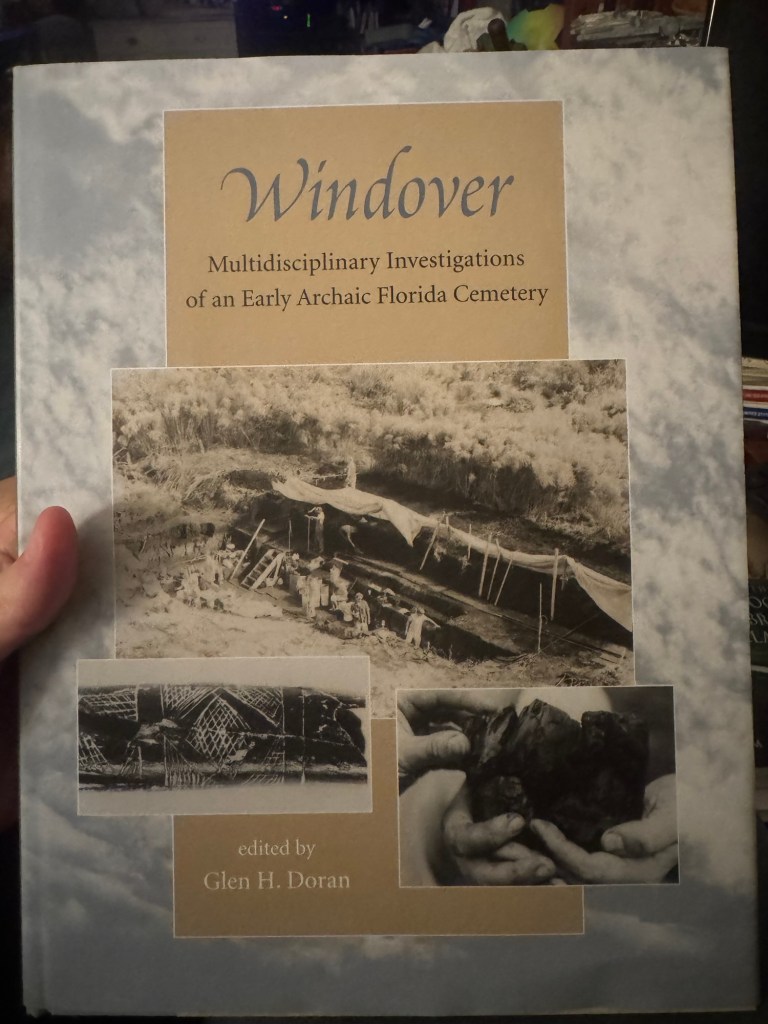
Unlocking Human Potential: The benefits of fossil fuel energy

The essence of being human lies not in the fragile physical form that houses us, but in the boundless drive of imagination—the spark that turns thought into creation, invention into progress, and survival into flourishing. This creative nature sets humanity apart from every other species on Earth. While animals adapt to their environment through instinct and biological necessity, humans reshape it. We envision possibilities beyond the immediate, craft tools to extend our reach, and build systems that multiply our efforts across generations. This is the image of the Creator reflected in us: not a static likeness, but a dynamic capacity to imagine, design, and realize a better world. Discussions of souls and bodies as vehicles often touch on this everlasting essence. The body is temporary, a biological carrier, but the imaginative drive—the soul’s expression—transcends it, propelling humanity toward ever-greater achievements. In an age of rapid technological change, including the rise of artificial intelligence (AI), some fear a “post-human apocalypse” that disrupts the natural order. Yet this view misses the deeper truth: tools like AI represent the next logical extension of human creativity, not its replacement. They amplify the very qualities that define us, freeing time and energy for more profound acts of creation. 

Alex Epstein’s Fossil Future: Why Global Human Flourishing Requires More Oil, Coal, and Natural Gas—Not Less (2022) provides a powerful framework for understanding this. Epstein argues that cost-effective, reliable energy is the foundation of human flourishing. Fossil fuels deliver this energy at unmatched scale: low-cost, on-demand, versatile, and capable of powering billions. They enable “machine labor” that replaces backbreaking human toil, producing food, shelter, medicine, and comfort in abundance. Without them, billions would still suffer and die from lack of energy for basic needs—like refrigeration to preserve food and medicine, or electricity for incubators saving premature babies. Epstein highlights how the “knowledge system”—experts, media, and policymakers—often ignores these massive benefits while catastrophizing side effects. He flips the script: more fossil fuel use, combined with climate mastery through technology and adaptation, will make the world far better, not worse. 

Consider the historical trajectory. For most of human existence—roughly 95% of our species’ time on Earth—survival consumed nearly every waking hour. Hunter-gatherer societies, as studied among groups like the Ju/’hoansi, spent about 15 hours per week acquiring food and necessities, with the rest devoted to rest, social bonds, and basic leisure. Yet life was precarious: short lifespans, vulnerability to famine, disease, and predators. Agriculture brought some stability but increased labor demands. Pre-industrial workers often toiled 60-70 hours per week or more during peak seasons, with annual hours exceeding 3,000 in many places by the late 19th century. Medieval artisans might average 8-9 hours of work daily, but the year included long stretches of seasonal labor without modern safety nets. Life expectancy hovered around 30-40 years in many eras, limited by malnutrition, infection, and physical exhaustion. 

The fossil fuel revolution changed everything. Beginning in earnest in the late 18th and 19th centuries with coal, then oil and natural gas, energy abundance powered the Industrial Revolution and beyond. Graphs of global life expectancy, population, and GDP per capita show “hockey stick” growth mirroring rising CO₂ emissions from fossil fuels since the late 1800s. Extreme poverty plummeted from about 35% of the world population in 1990 to under 10% today, driven largely by energy-enabled growth in places like China and India, where coal and hydrocarbons fueled industrialization. Life expectancy worldwide rose from around 35 years in ancient times to nearly 72-73 years today. Access to electricity correlates strongly with these gains: it powers clean water pumps, refrigeration, lighting, and medical devices, reducing deaths from indoor air pollution (which still claim millions annually from traditional biomass cooking) and enabling education and economic opportunity. 

Drive through any community at 2 a.m. today, and the evidence surrounds us. Porch lights glow, air conditioners or heaters keep temperatures comfortable, and refrigerators hum with fresh food and cold drinks. A simple flip of a switch banishes darkness; a tap delivers clean water without trekking to a river or well. Sewer systems pump waste away efficiently—these conveniences, all energy-dependent, free humans from the drudgery that defined most of history. Before widespread electricity, fetching water, cooking over open fires, hand-washing clothes, and manual farming consumed vast portions of the day. Fossil fuels (and the electricity they predominantly generate—about 80% of global energy still comes from hydrocarbons) multiplied human productivity exponentially. One barrel of oil contains energy equivalent to roughly 25,000 hours of human labor. Modern societies harness this to produce food surpluses feeding 8 billion people, build durable homes, manufacture medicines, and transport goods globally via Walmart-like supply chains that make essentials affordable.

Epstein emphasizes that these benefits extend far beyond comfort. Energy access enables “upper mobility”—the chance for individuals to rise through effort and ingenuity. It powers tools: power drills, pumps, computers, and factories. Time once spent on mere survival now goes to innovation, family, art, science, and enterprise. This is not mere leisure for idleness; it is liberated human potential. Even if many spend extra time on video games, social media scrolling, or boredom-induced snacking (a real phenomenon in affluent societies where a theoretical 40-hour workweek often compresses into far less productive time), the outliers—the creators, inventors, and entrepreneurs—flourish. A small percentage of highly driven individuals, empowered by abundant energy, produce inventions that benefit billions: vaccines, smartphones, efficient agriculture, and now AI. The cascade effect across generations compounds this: books preserve knowledge, inventions build on prior ones, and energy multiplies output. Humanity’s trajectory—from wheel and spear to calculus and computers—shows this pattern. Fossil fuels, formed from ancient sunlight stored over millions of years, unlocked that stored energy for modern use, bridging primitive existence to an era of unprecedented possibility. 

Critics of fossil fuels often frame nature as a sacred, living essence demanding protection at all costs—an “Earth worshiper” perspective that prioritizes untouched wilderness over human life. This inverts priorities. The environment has always been dynamic; humans have “impacted” it since the use of fire and tools. The real moral standard is human flourishing: longer, healthier, opportunity-rich lives. Fossil fuels have made Earth more livable by enabling climate mastery—better buildings, irrigation, disaster response, and crop yields that reduce weather-related deaths (which have plummeted dramatically). Side effects like emissions are real but “masterable” through technology, adaptation, and continued energy innovation. Opposing abundant energy in the name of nature condemns billions to energy poverty: over 600-700 million still lack electricity access, and 2+ billion rely on polluting cooking fuels, causing millions of premature deaths yearly from indoor smoke. In sub-Saharan Africa and parts of Asia, women and children spend up to 40 hours weekly gathering firewood—time stolen from education, work, and family. Energy abundance lifts all, including ecosystems, which are managed more effectively with technology. 

AI emerges as the natural offspring of this energy-driven progress. Computing power, itself born from electricity and fossil-enabled infrastructure, now mimics and multiplies aspects of human thinking. Data centers, increasingly powered by reliable sources (with fossil fuels still critical for baseload), consume growing amounts of electricity—global data center use is projected to double or more by 2030, reaching around 945 TWh, with AI driving much of the surge via accelerated server use. AI processes vast datasets, optimizes designs, accelerates drug discovery, and automates routine tasks in ways no prior tool could. It does not “think” with a soul or original imagination; it pattern-matches at superhuman speed and scale. Yet this serves human creators: an engineer using AI can iterate on prototypes faster, a scientist can model complex systems overnight, and a writer can explore ideas with computational assistance. The soul—the imaginative drive—remains uniquely human. AI lacks consciousness, genuine emotion, moral intuition, or the spark of original vision rooted in lived experience and transcendence. It is a tool, like the abacus, calculator, or computer before it, extending biological limitations without replacing the essence that wields it. 

Fears of a “post-human apocalypse” echo ancient anxieties, like the Tower of Babel—human hubris punished for overreaching. Some posthumanist thinkers speculate that AI could blur boundaries, creating hybrid or superior intelligences that diminish traditional humanity. Yet this misunderstands our nature. Humanity’s purpose, if one draws from the perspective of being made in the divine image, is creative stewardship: to untangle the universe’s potential, spread across it, and perpetuate life through innovation. The universe itself seems tuned for discovery—physical laws allowing complexity, energy gradients enabling work, minds capable of comprehension. Tools cascade: the wheel eased transport, agriculture amplified food, fossil fuels powered industry, computers accelerated calculation, and AI now multiplies cognitive labor. Each step frees time and resources for higher pursuits. Even if 95% of people “waste” liberated time on trivialities, the 5% (or fewer) who channel it into breakthroughs—new medicines, sustainable tech, space exploration, artistic masterpieces—lift everyone. Historical inventions from tiny creative minorities have done exactly that.

The work-leisure duality taught in modern culture is often artificial. Life is an integrated “happy bowl of soup”: family, labor, rest, creation, and reflection blend in a meaningful whole. Energy abundance allows this integration without the constant threat of starvation or exposure. A 40-hour theoretical workweek in energy-rich societies often yields far more output per hour than centuries of toil, yet many feel time-poor due to choices, not necessity. AI promises further compression of drudgery—handling data analysis, logistics, or routine creativity—freeing even more bandwidth for the imaginative core. Faster is frequently better when it means compressing processes without sacrificing quality, enabling broader access and compounding innovation. Energy for AI is substantial, but so was energy for early factories or electrification; the returns in human capability justify it as part of the same virtuous cycle.

Skeptics might ask: Is the purpose of existence endless toil around a campfire, hunting daily for short lives and basic reproduction? Or is it the exercise of imagination to spread life, knowledge, and beauty on a cosmic scale? The latter aligns with humanity’s unique endowment. We walked over fossil fuels for millennia before recognizing their potential—ancient sunlight captured in decayed life, now powering our ascent. That recognition itself was an act of imagination. AI, requiring enormous computing power (with projections showing AI-related electricity demand growing rapidly, potentially accounting for a significant share of data center growth), continues this: it processes while humans dream, experiments tirelessly, and supports creators who still must “prove stuff in life”—build, test, refine, and give meaning through purpose.

Environmental concerns deserve to be addressed, but not through energy denial. Nature worship that seeks to eradicate human impact or pedestalize a static “life force” ignores that humans are part of nature’s creative unfolding. Tools exist to be used responsibly: innovation in cleaner combustion, nuclear (often sidelined in debates), advanced renewables where practical, and adaptation. Epstein’s call for an “energy philosophy” prioritizing human flourishing over anti-impact frameworks remains sound. Fossil fuels launched us; they need not be eternal, but replacing them prematurely with unreliable alternatives risks reversing gains. Sustainable abundance—whatever form it takes—must deliver the same or better reliability and scalability.

This era brims with adventure. The “good old days” of simplicity, wild expansion, and quiet reverence hold romantic appeal, evoking self-reliance and direct connection to the land. Yet humanity was not built solely for that. We adapt biologically and culturally, using the environment as raw material for higher causes. Low-vision challenges or daily rituals pale against the broader canvas: imagination as the daily ritual expanding possibility. Fossil fuels bridged the gap from primitive survival to this magnificent period. AI, as its intellectual extension, accelerates the cascade. The few who seize leisure for creation—whether in business, art, science, or family—perpetuate the chain. Even “wasted” time by the majority indirectly supports the system, enabling outliers.

In the end, defining a human by physical form alone reduces us to biology; the drive to imagine, create, and improve defines the everlasting essence. Souls occupy bodies as vehicles for this purpose. AI augments without supplanting it. Energy abundance, exemplified by fossil fuels’ proven track record, makes the discussion possible. As Epstein demonstrates with data on poverty reduction, health gains, and productivity, more cost-effective energy correlates with flourishing. Billions still need it; denying that in favor of abstract natural orders harms the vulnerable most.

The trajectory inspires optimism. Human history is one of cascading intelligence: from oral traditions to written books, mechanical calculators to digital computers, biological labor to AI-assisted thought. Each generation multiplies prior efforts. Curiosity and imagination, fueled by freed time and power, drive us to untangle universal usefulness—perhaps to spread life beyond Earth. God’s purpose, interpreted through this lens, aligns with creators’ flourishing, even if imperfectly realized by most. The 1-5% producing magnificent inventions offset the expense many times over, benefiting all lifeforms through better management, reduced scarcity, and expanded opportunity.

Embrace this future with the philosophy of past wisdom: reverence for simplicity, where it teaches resilience, but forward momentum where imagination calls. A personal energy policy—understanding benefits, trade-offs, and the moral primacy of human life—equips everyone. Innovation is inherent; free time, energy, and tools amplify it. The near future holds profound positive change: compressed processes, broader abilities, and a more creative existence. Reverence for the wild West or campfire eras coexists with excitement for what lies ahead. Tools like AI, powered ultimately by the same energy principles, serve the soul’s drive. This is no apocalypse threatening order—it is the order unfolding as intended: humans as co-creators, using imagination to make, give, and perpetuate life on scales only dimly foreseen.

The point of existence emerges clearly—not mere survival like other animals, but purposeful expansion of potential. Even in Middletown, Ohio, or anywhere, late-night refrigerator raids or porch lights symbolize victory over drudgery. AI will compound that victory, calculating tirelessly so humans can imagine boldly. The adventure continues. Those choosing to wield leisure imaginatively will shape it. History’s fossils fuel the launch; human essence steers the course. It is a wonderful time to be alive, full of discovery for those who engage it.

Bibliography / Suggested Further Reading:

•  Epstein, Alex. Fossil Future: Why Global Human Flourishing Requires More Oil, Coal, and Natural Gas—Not Less. Portfolio, 2022.

•  Our World in Data reports on energy access, life expectancy, poverty, and time use (ourworldindata.org).

•  International Energy Agency (IEA) reports on energy and AI, data centers, and access statistics.

•  Historical analyses of work hours: e.g., studies on hunter-gatherer societies by anthropologists like James Suzman; pre-industrial labor data from economic historians.

•  Philosophical works on creativity, soul, and human nature: classical texts on imago Dei; modern discussions in posthumanism critiques (for contrast).

•  Additional context from energy innovation reports and productivity studies.

These sources provide empirical grounding and inspire deeper exploration of energy philosophy, human potential, and technological progress.

Rich Hoffman

More about me

Click Here to Protect Yourself with Second Call Defense https://www.secondcalldefense.org/?affiliate=20707

About the Author: Rich Hoffman

Rich Hoffman is an aerospace executive, political strategist, systems thinker, and independent researcher of ancient history, the paranormal, and the Dead Sea Scrolls tradition. His life in high‑stakes manufacturing, high‑level politics, and cross‑functional crisis management gives him a field‑tested understanding of power — both human and unseen.

He has advised candidates, executives, and public leaders, while conducting deep, hands‑on exploration of archaeological and supernatural hotspots across the world.

Hoffman writes with the credibility of a problem-solver, the curiosity of an archaeologist, and the courage of a frontline witness who has gone to very scary places and reported what lurked there. Hoffman has authored books including The Symposium of JusticeThe Gunfighter’s Guide to Business, and Tail of the Dragon, often exploring themes of freedom, individual will, and societal structures through a lens influenced by philosophy (e.g., Nietzschean overman concepts) and current events.
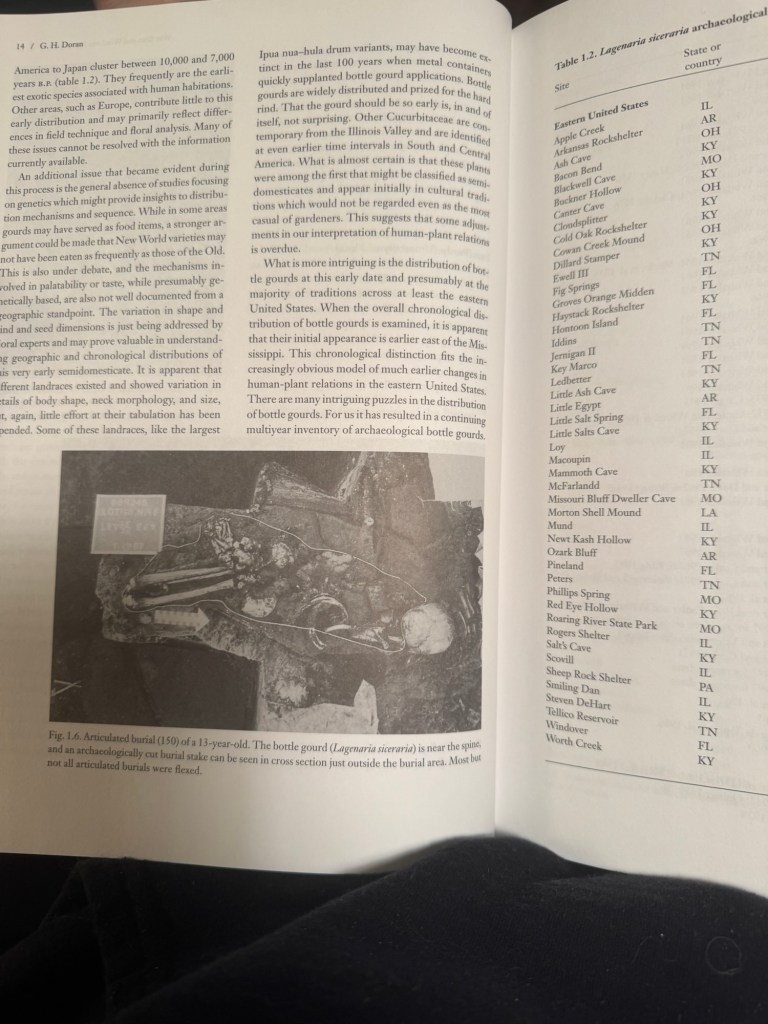
Give the Vice President a Copy of ‘Birthright’: The best political move that the White House could make would be to talk about Aliens and their relationship to mankind

In the quiet rhythms of a life well-lived in Middletown, Ohio—where the Ohio River Valley whispers stories of ancient mounds and forgotten giants—few pursuits bring deeper satisfaction than the steady arrival of a new issue of Biblical Archaeology Review. For decades, since I was eleven or twelve years old, these pages have anchored a lifelong fascination with the tangible remnants of Scripture: pottery shards from Israelite settlements, inscriptions confirming kings mentioned in the books of Kings and Chronicles, and excavation reports that ground the biblical narrative in real soil and stone rather than abstract myth.  That same reverence for evidence extends naturally to the majestic ESV Archaeology Study Bible from Crossway, a volume packed with hundreds of full-color photographs, detailed maps, timelines, and notes contributed by field-trained archaeologists who have walked the very sites they describe. It doesn’t indulge in wild speculation; instead, it methodically illuminates how discoveries at places like Megiddo, Hazor, Lachish, or the City of David correspond directly to the texts we hold dear, reinforcing that the Bible is not some detached spiritual allegory but a record deeply interwoven with verifiable history, geography, and material culture.   

The more one engages with these resources, the deeper the layers become. Archaeology confirms the plausibility of biblical events and places, but it also leaves space for the “paranormal” or supernatural dimensions that the texts themselves never shy away from—encounters with spiritual forces, hybrid beings, and cosmic rebellions that shape human destiny across millennia. This interplay becomes especially urgent in 2026, as Vice President J.D. Vance has spoken openly about his long-standing obsession with UFO files and his firm conviction that what many call extraterrestrial visitors are not aliens from distant planets in the conventional science-fiction sense. In a recent interview with podcaster Benny Johnson, Vance stated plainly, “I don’t think they’re aliens. I think they’re demons anyway.” He frames the phenomena through a Christian worldview: there is real good and real evil operating in the unseen realm, and entities engaging in “weird things to people”—abductions, genetic interference, or deceptive encounters—align more readily with biblical descriptions of spiritual deception than with benevolent or neutral visitors from another star system. Vance, drawing on his background as a Marine, lawyer, author of Hillbilly Elegy, and now Vice President with access to the highest-level classifications, has vowed that the Trump administration will pursue the genuine disclosure of classified UFO-related materials. His goal appears practical as well as curious: get ahead of cultural shaping moments, such as a potential new Spielberg film that could frame the narrative in purely secular or optimistic “space brothers” terms, much as Close Encounters of the Third Kind did in the late 1970s when it profoundly influenced public perception and even inspired my own fourth-grade report on UFO sightings. His sincerity stands out, especially coming from someone rooted in Midwestern values, family commitments, and a desire to serve effectively without descending into fringe hysteria. Many everyday “normies”—folks who grill hot dogs on weekends, mow lawns on Saturdays, follow the Cincinnati Reds, and focus on practical concerns like gas prices and raising kids—are now paying attention because the topic has shifted from taboo conspiracy to something discussed at the highest levels of government.    

This broad-brush linkage of UFO phenomena to “demons” carries real merit as an initial guardrail. It rightly rejects naive materialism that assumes everything must fit within a purely physical, Darwinian cosmos devoid of spiritual agency. It echoes concerns raised by figures like Tucker Carlson in recent years and acknowledges that evil is not merely a human construct but involves intelligent opposition to God’s order. Yet it also risks painting with strokes that are too wide, potentially collapsing distinct layers of a complex cosmic conflict into a single undifferentiated category. This is precisely where Timothy Alberino’s 2020 book Birthright: The Coming Posthuman Apocalypse and the Usurpation of Adam’s Dominion on Planet Earth stands out as one of the most articulate, Scripture-rooted, and up-to-date bridges available. Alberino, an explorer, filmmaker, and researcher who brings an almost Indiana Jones spirit to biblical scholarship—traveling to remote sites, engaging ancient texts, and connecting dots across disciplines—does not dismiss the demonic dimension. Instead, he refines the categories with precision drawn from Genesis, the Book of Enoch, the Epistle of Jude, Revelation, and the broader ancient Near Eastern context, while integrating modern reports of abductions, hybridization programs, and transhumanist trends.   

Alberino constructs his framework around a pre-Adamic galactic rebellion led by Lucifer, personified as the dragon or morning star, who fell from his exalted position. This insurrection caused widespread devastation across the cosmos, leaving planets and realms in a state of tohu va-bohu—formless and void, as Genesis 1:2 poetically describes the initial condition of Earth before renewal. God then restores the terrestrial realm and appoints Adam as regent, granting humanity the irrevocable birthright of dominion: to rule as image-bearers, sons and daughters of the Most High, exercising authority over creation in partnership with Heaven. Humanity is positioned as the “younger sibling” in a universe already populated by an “elder race”—advanced non-human beings, primarily angelic orders, possessing greater perception, capabilities, and even technology-like means of traversal (what we might today interpret as aerospace phenomena). This elder race includes both loyal servants of God and those who joined the rebellion.  

The critical transgression comes with the Watchers, a group of fallen angels detailed in Genesis 6:1-4 and expanded dramatically in the Book of Enoch (particularly the Book of the Watchers, chapters 1–36). These beings descend to Earth, take human women as wives, and produce hybrid offspring known as the Nephilim—violent giants who fill the earth with bloodshed, corruption, and forbidden knowledge. The Watchers teach humanity sorcery, metallurgy, cosmetics, weapons-making, and other arts that accelerate moral decay and violence. The Flood serves as a divine reset, wiping out the corrupted order, yet the disembodied spirits of the slain Nephilim persist as restless, tormented entities. These become the “demons” or unclean spirits familiar from the New Testament—beings that seek embodiment, oppress, possess, haunt, and torment humanity, craving the physicality they lost when their giant bodies perished. This distinction is crucial and consistent in Alberino’s analysis: demons are specifically the bodiless spirits of the dead Nephilim giants, operating primarily in the invisible spiritual realm.  

In contrast, modern UFO or “alien” phenomena—encounters with Grays, reported abductions, cattle mutilations, hybridization programs, and craft exhibiting advanced propulsion—represent a different but related layer. Alberino argues these are physical, biological entities, not mere disembodied spirits. They may be engineered hybrids, surviving bloodlines from pre-Flood or post-Flood incursions, or tools deployed by the ongoing Luciferian agenda. These beings operate with tangible technology, agendas centered on genetic tampering, and a long-term strategy to push humanity toward transhumanism—the merging of biology with machines, AI, or artificial enhancements that promise god-like power but ultimately corrupt the image of God in man. This echoes the ancient corruption of the human seed but updates it for a technological age. Labeling everything “demons” with a broad brush misses the tangible, fleshly (or bio-engineered) component of the warfare. Both the demonic spirits and the physical alien entities oppose God’s created order and seek to usurp Adam’s birthright, but they function on different fronts: one through invisible oppression and possession, the other through visible incursions, deception, and ideological subversion. The endgame Alberino warns of is a posthuman apocalypse, where humanity trades its divine inheritance for counterfeit upgrades, paving the way for a counterfeit kingdom ruled by an adversary who may even present through advanced aerospace means.  

This nuanced model provides profound ballast for any impending disclosure. If government files reveal physical craft, recovered bodies, or documented interactions, a simplistic “all demons in disguise” approach could leave people spiritually and intellectually unprepared for the fuller biblical cosmology. Alberino’s work equips readers to see the phenomena as part of an ancient, multi-front war rather than random anomalies or friendly visitors. It rejects both materialist reductionism (everything is just advanced human tech or natural phenomena) and unanchored mysticism, always anchoring back to Christ as the ultimate restorer of dominion and the One who reclaims the birthright on behalf of redeemed humanity. Transhumanism, in this light, is not neutral progress but the latest glittering bait—much like Esau trading his birthright for stew—designed to produce a species no longer eligible for the redemption offered through the seed of the woman.

This framework harmonizes beautifully with the hard archaeological and historical evidence that publications like Biblical Archaeology Review and study Bibles like the ESV edition help contextualize, while extending courageously into territories mainstream academia often avoids. Consider the work of Fritz Zimmerman, whose exhaustive compilations—The Encyclopedia of Ancient Giants in North America and related volumes—draw from thousands of 19th- and early 20th-century newspaper accounts, county histories, and pioneer reports. Across the Ohio River Valley and beyond, stories abound of massive human skeletons unearthed during farming, railroad construction, or mound excavations: individuals seven to twelve feet tall, sometimes with double rows of teeth, elongated skulls, or other anomalous features. These finds cluster particularly in Adena and Hopewell cultures, with large conical mounds, geometric earthworks, and burial practices that suggest a distinct ruling or priestly class. Many accounts describe bones that crumbled to dust upon exposure to air, or specimens that mysteriously vanished after being sent to institutions like the Smithsonian. Zimmerman documents hundreds of such cases across dozens of states, with especially dense concentrations in Ohio, Indiana, Kentucky, and West Virginia. Native American oral traditions in the region often speak of an earlier race of giants—red-haired, bearded, or technologically advanced—who warred with incoming tribes or were eventually driven out. These accounts align strikingly with biblical and extra-biblical references to post-Flood Rephaim, Anakim, Emim, and other giant clans, including Og of Bashan (whose iron bed measured over thirteen feet) and the family of Goliath. The pattern of suppression or dismissal of these finds mirrors the historical handling of UFO reports: both challenge purely materialist or evolutionary paradigms that prefer gradual human development without anomalous interventions.   

Closer to home here in Ohio, the Great Serpent Mound in Adams County offers another compelling intersection of geology, archaeology, and potential sacred knowledge. The effigy mound itself—an undulating serpent nearly a quarter-mile long, with a coiled tail and open mouth appearing to swallow an egg-like oval—sits precisely on the rim of a confirmed cryptoexplosion or impact structure. Geological surveys confirm this as a complex impact crater roughly eight miles in diameter, formed by an asteroid or comet strike between approximately 252 and 330 million years ago (late Paleozoic era). Evidence includes shatter cones in the bedrock, planar deformation features in quartz grains (indicating extreme shock pressures), breccias, and a central uplift with intensely faulted and folded strata. The structure features a central dome, transition zone, and ring graben. Why would ancient builders—likely Adena or Fort Ancient peoples—choose this precise location for such a monumental earthwork, investing enormous labor to shape the serpent with astronomical precision? The head aligns with the summer solstice sunset, and the overall form may track lunar standstills or equinoxes. Placing a sacred effigy at the edge of a massive ancient scar suggests either extraordinary astronomical observation or guidance from intelligences attuned to celestial and terrestrial energies. Similar patterns appear globally at megalithic sites built on anomalous geological features, hinting at interactions with forces or entities beyond ordinary human capability in the eras traditionally assigned. Erosion over deep time has softened the crater’s expression, but the underlying anomaly remains, inviting questions about why certain “high places” or power centers were repeatedly chosen for temples, mounds, or alignments across cultures.    

Alberino’s analysis gains further depth when paired with the Book of Enoch, preserved among the Dead Sea Scrolls and now available in editions with scholarly commentary, including contributions associated with Alberino. This ancient text expands dramatically on the sparse account in Genesis 6, detailing the Watchers’ descent on Mount Hermon, their oath-bound pact, the birth and rampaging violence of the giants, and the forbidden teachings that corrupted pre-Flood civilization. Enoch, the seventh from Adam, is taken up without dying and receives heavenly visions, serving as a scribe and intermediary. The text describes the giants’ spirits, after their bodies are destroyed in the Flood judgment, becoming evil spirits that afflict humanity—precisely the origin story for demons that Alberino and others distinguish from the physical players in the ongoing conflict. The Dead Sea Scrolls’ validation of Enochic material alongside canonical books underscores that these ideas circulated widely in Second Temple Judaism and influenced early Christian thought, even if the book itself was not included in the final Protestant canon. Reading Enoch alongside Genesis, Jude (which quotes it), and 2 Peter provides a richer scaffolding for understanding why paranormal activity persists rather than vanishing after the Flood or the cross: it adapted, going underground behind the distractions of polite society, technology, entertainment, and daily survival. Sports scores, mortgages, careers, and weekend routines occupy mental space, leaving little room for reflection on deeper cosmic narratives—yet the ancient texts insist the battle continues. 

David Flynn’s provocative research in Temple at the Center of Time adds yet another layer, building on Sir Isaac Newton’s extensive (and often private) studies of biblical prophecy, chronology, and sacred measurements. Newton, far from a purely secular scientist, devoted significant energy to deciphering what he saw as a “prisca sapientia”—an ancient pure knowledge embedded in Scripture and architecture. Flynn maps distances and geometries from the Jerusalem Temple Mount using modern tools and finds uncanny correlations with pivotal historical dates, including links to 1948 and the rebirth of Israel. The Temple functions not merely as a religious site but as a prophetic and temporal landmark, with measurements potentially encoding timelines and geographic centers of divine activity. Alberino engages such synchronicities appreciatively but cautiously, always subordinating them to the clear Christocentric gospel: Jesus as the true Temple, the restorer of dominion, and the One who defeats the dragon decisively at the end. This approach avoids numerological excess while honoring the idea that sacred geography and time may reflect deeper divine order amid the chaos of rebellion.  

Broader explorations by researchers like Graham Hancock—focusing on lost advanced civilizations, potential Younger Dryas cataclysms, megalithic sophistication predating conventional timelines, and underwater ruins—find partial integration in Alberino’s biblical axis without abandoning scriptural authority. Pre-Flood or immediately post-Babel influences could reflect lingering effects of rebel factions or their human collaborators, manifesting as pockets of advanced knowledge, monumental construction, or anomalous technology that later cultures remembered as “golden ages” or Atlantean echoes. The Tower of Babel itself, recently re-examined in Biblical Archaeology Review for grammatical nuances suggesting the structure may have been portrayed as completed before divine intervention, represents another rebellion against God’s order: humanity unified in pride, seeking to “make a name” through monumental architecture (likely a ziggurat in the Mesopotamian context) rather than trusting divine provision and scattering as commanded. Archaeological parallels to Mesopotamian ziggurats abound, yet the biblical emphasis remains theological—confusion of languages as judgment on centralized defiance. Recent articles explore whether the tower narrative assumes completion, deepening interpretive questions about human hubris and divine sovereignty. Alberino would see such events as recurring motifs in the usurpation attempt: centralized power, forbidden tech or knowledge, and attempts to breach heavenly boundaries. 

In an era when political necessities may soon force greater openness on classified files—driven by leaks, public pressure, and the need to shape the narrative before Hollywood or adversarial powers do—Birthright offers essential intellectual and spiritual preparation. It reframes UFO discourse away from pure mysticism or sci-fi optimism into a coherent biblical war narrative: not random extraterrestrial tourists, but a multi-front assault on humanity’s God-given role as stewards and image-bearers. Demonic spirits (Nephilim ghosts) handle much of the invisible torment, possession, and oppression; physical or bio-engineered entities advance genetic subversion, ideological erosion (through atheism, Darwinian reductionism, or self-deification), and the transhumanist trajectory toward a posthuman counterfeit. The Antichrist figure, in some interpretations Alberino entertains, could even emerge with aerospace or technological grandeur rather than purely supernatural spectacle. Yet the ultimate message remains one of hope and redemption: the birthright, though contested and partially squandered through deception, was never permanently revoked. Christ, the last Adam, reclaims and restores it for all who trust in Him, culminating in the final battle at Armageddon and the renewal of creation where dominion is exercised rightly under the King of Kings.

For those of us in Ohio, with Patterson Air Force Base lore circulating for generations—stories of reverse-engineered craft, anomalous materials, or even giant remains studied quietly—these discussions feel less abstract. Regional Bigfoot sightings, mound complexes, and persistent UFO reports over the years seem to belong to the same interwoven story when viewed through a biblical lens: remnants or echoes of ancient incursions, spiritual oppressions, and ongoing attempts to challenge humanity’s assigned role. Friends and acquaintances in politics, like State Senator George Lang, have shared late-night conversations about ancient aliens, Easter Island’s buried bodies, or megalithic mysteries with me—moments that transcend partisan lines and touch the deeper adventure of discovery. Even mainstream figures are now engaging topics once confined to podcasts or fringe circles, precisely because evidence from multiple disciplines has accumulated: archaeological anomalies, textual survivals like Enoch, eyewitness consistency in abduction reports, and technological leaps that raise questions about origins and agendas.

Vance’s instinct to categorize the phenomena demonically serves as a healthy initial filter against overly optimistic or materialist interpretations. Alberino’s added nuance—distinguishing layers while maintaining a unified adversarial agenda—prepares believers, seekers, and even policymakers to engage disclosure without panic, deception, or loss of grounding. It encourages deeper engagement with Scripture, cross-referencing using archaeological tools like the ESV Study Bible, insights from the Dead Sea Scrolls, and an honest evaluation of extra-biblical texts. The answers, as so often happens, rarely reside comfortably within the institutional boxes built by academia, government, or the media; they reward those willing to follow the evidence across archaeology, ancient literature, contemporary reports, and cosmic theology. The birthright of dominion remains humanity’s divine inheritance—contested, yes, but ultimately secured through the finished work of Christ.

Those interested in building a firmer foundation would do well to read Birthright multiple times, allowing its dense interconnections to settle. Pair it with Zimmerman’s giant compilations for regional grounding, Flynn for sacred geography explorations (read critically), primary Enoch translations with commentary, ongoing issues of Biblical Archaeology Review for fresh site reports (including recent discussions on Babel’s grammar and implications), and the ESV Archaeology Study Bible for visual and contextual depth. The puzzle’s outer edges have long been visible; the middle is filling rapidly with every honest inquiry. When fuller disclosure arrives—whether driven by political timing, inevitable leaks, or cultural momentum—it will rattle many worldviews. A framework anchored in dominion, rebellion, fall, redemption, and ultimate victory equips us not merely to understand strange phenomena but to stand firm in our created purpose amid the storm.

The adventure has always lain just beyond the handrails of “normal” life. For those who dare step out—whether a vice-presidential advisor seeking context, an Ohio resident curious about local mounds and base rumors, or anyone sensing that polite society’s distractions have hidden deeper truths—the rewards include a clearer vision of who we are, why the conflict persists, and how the story ends with restoration rather than extinction or usurpation. In the end, remembering the birthright is not about fear of aliens or demons but about reclaiming our identity as image-bearers destined for glory in a renewed creation. The evidence, both ancient and emerging, continues to point in that direction for those with eyes to see and ears to hear. And for all those reasons, and more, we need to give Vice President Vance a copy of Timothy Alberino’s Birthright, for a context to the White House narrative of Alien Disclosure and the many new questions that will come with it.

Beyond the immediate policy landscape, the issue of disclosure presents a unique cultural and political inflection point. At a time when the public is saturated with economic anxiety—elevated energy prices, trade tensions, contentious Supreme Court cases, and ongoing losses and gridlock in both the House and Senate—voters are increasingly responsive to issues that offer transparency, curiosity, and a sense of shared truth. Gas prices may fluctuate and stabilize over time, but public trust, once eroded, is far more difficult to recover. Disclosure, approached carefully and credibly, speaks directly to that trust deficit.

Historically, disclosure efforts have generated intense public interest but have often failed to deliver substantive clarity. Episodes surrounding the Epstein records or the long-promised JFK disclosures fueled attention, speculation, and media buzz, yet ultimately left many Americans dissatisfied by incrementalism and ambiguity. A future disclosure moment does not necessarily have to follow that pattern. If handled with seriousness, institutional credibility, and clear communication, it could stand apart as a rare instance where public curiosity is met with meaningful acknowledgment rather than prolonged deferral.

Culturally, the subject of disclosure—whether related to unexplained phenomena, advanced technologies, or anomalous encounters—has increasingly found resonance among communities traditionally aligned with progressive or countercultural movements. This has allowed one side of the political spectrum to dominate the narrative space, framing disclosure as an expression of openness, curiosity, and empathy for everyday people who report unusual experiences. That cultural alignment is not inevitable, however. There exists an opportunity for broader engagement that avoids sensationalism while still acknowledging the legitimacy of public interest in these phenomena.

Public-facing engagement does not require endorsement of every claim or abandoning analytical rigor. Rather, it involves meeting voter curiosity with respect—recognizing that unexplained observations and regional folklore often function as entry points into deeper questions about science, government transparency, and institutional credibility. When approached thoughtfully, this engagement can humanize leadership, counter perceptions of detachment, and prevent disclosure-related narratives from being monopolized or caricatured.

From a broader political perspective, disclosure also represents a rare issue capable of temporarily transcending partisan exhaustion. In a midterm environment where voters are seeking tangible “wins” amid legislative stalemate, disclosure—if it produces real information and measurable transparency—could serve as a confidence-building event rather than a distraction. Done well, it has the potential to occupy the public narrative during periods when other contentious issues naturally cool, offering space for recalibration rather than escalation.

For these reasons, disclosure is not merely a speculative subject but a test of institutional seriousness. Its success depends less on timing theatrics and more on whether it delivers clarity, credibility, and follow-through. Managed responsibly, it could become one of the defining public conversations of the coming election cycle—one remembered not for hype, but for substance.

Footnotes

¹ Personal reflection on lifelong subscription to Biblical Archaeology Review since childhood, aligning with its role in correlating finds with biblical texts.

² Crossway, ESV Archaeology Study Bible (2017/2018), with over 2,000 study notes, 400+ photographs, maps, and contributions from field archaeologists.

³ J.D. Vance interview with Benny Johnson (March 2026), where he explicitly states UFOs/aliens are “demons” and expresses an obsession with disclosure files.

⁴ Timothy Alberino, Birthright: The Coming Posthuman Apocalypse and the Usurpation of Adam’s Dominion on Planet Earth (2020). Key arguments include the pre-Adamic rebellion, the birthright of dominion, the distinction between Nephilim demons and physical alien entities, and the transhumanist endgame.

⁵ Genesis 6:1-4; 1 Enoch (Book of the Watchers).

⁶ Jude 6; 1 Enoch 15:8-9 on spirits of giants as evil spirits.

⁷ Alberino interviews and debates (e.g., Nephilim Death Squad, Michael Knowles), clarifying aliens as physical tools vs. disembodied demons.

⁸ Fritz Zimmerman, The Encyclopedia of Ancient Giants in North America (2015), compiling 888+ giant accounts from newspapers and histories, with emphasis on the Ohio Valley.

⁹ Ohio Department of Natural Resources and geological studies on Serpent Mound Impact Structure (8-mile diameter, ~252-330 million years ago).

¹⁰ Archaeological descriptions of Serpent Mound alignments (summer solstice sunset at head).

¹¹ David Flynn, Temple at the Center of Time: Newton’s Bible Codex Finally Deciphered and the Year 2012 (2008).

¹² Alberino-associated editions/commentary on the Book of Enoch.

¹³ Personal and regional observations on Ohio sites, Patterson AFB lore, and mound/giant traditions.

¹⁴ Transhumanism discussions in Birthright as modern usurpation.

¹⁵ Dead Sea Scrolls confirming Enochic texts.

¹⁶ Recent Biblical Archaeology Review (Spring 2026) on Tower of Babel grammar possibly indicating completion.

Bibliography

•  Alberino, Timothy. Birthright: The Coming Posthuman Apocalypse and the Usurpation of Adam’s Dominion on Planet Earth. 2020.

•  Crossway. ESV Archaeology Study Bible. 2017/2018.

•  Flynn, David. Temple at the Center of Time: Newton’s Bible Codex Finally Deciphered and the Year 2012. 2008.

•  The Book of Enoch (1 Enoch), various editions including those with modern commentary.

•  Biblical Archaeology Review, ongoing issues, including Spring 2026 article on Tower of Babel by Richelle and Vanderhooft.

•  Zimmerman, Fritz. The Encyclopedia of Ancient Giants in North America. 2015.

•  Ohio Division of Geological Survey reports on Serpent Mound Impact Structure.

•  Genesis, Jude, Revelation (ESV or standard translations).

•  Vance, J.D. Interview comments reported in Fox News, The Hill, Newsweek (March 2026).

Rich Hoffman

More about me

Click Here to Protect Yourself with Second Call Defense https://www.secondcalldefense.org/?affiliate=20707

About the Author: Rich Hoffman

Rich Hoffman is an aerospace executive, political strategist, systems thinker, and independent researcher of ancient history, the paranormal, and the Dead Sea Scrolls tradition. His life in high‑stakes manufacturing, high‑level politics, and cross‑functional crisis management gives him a field‑tested understanding of power — both human and unseen.

He has advised candidates, executives, and public leaders, while conducting deep, hands‑on exploration of archaeological and supernatural hotspots across the world.

Hoffman writes with the credibility of a problem-solver, the curiosity of an archaeologist, and the courage of a frontline witness who has gone to very scary places and reported what lurked there. Hoffman has authored books including The Symposium of JusticeThe Gunfighter’s Guide to Business, and Tail of the Dragon, often exploring themes of freedom, individual will, and societal structures through a lens influenced by philosophy (e.g., Nietzschean overman concepts) and current events.
Let’s Talk About AI: New Perspective on the Great Movie, ‘Jurassic Park’ about Extinction

The conversation around artificial intelligence often swings between breathless optimism and deep-seated anxiety. Some view AI as an existential threat that will hollow out creative professions, displace workers en masse, and erode the uniquely human spark that drives innovation and meaning. Others embrace it as a liberating force, one that amplifies human potential, democratizes production, and unleashes unprecedented economic expansion. The truth, as history repeatedly demonstrates, lies closer to the latter when paired with clear-eyed adaptation: AI functions best as a powerful tool rather than an autonomous replacement, enhancing rather than erasing the human elements of vision, soul, and intentional creation.

Consider the personal experience of integrating AI into video production. Where once a concept for a show like Destination Unknown or Expedition X required extensive location scouting, crew coordination, and costly footage acquisition, generative tools now allow rapid rendering of visual references. A speaker can describe a scene—say, an ancient ruin shrouded in mist with subtle lighting cues—and AI can generate illustrative imagery to accompany narration, clarifying abstract ideas for viewers without turning the piece into a hollow spectacle. This does not eliminate the need for storytelling; it elevates it. The core remains human: crafting the script, selecting the angle of inquiry, infusing personal insight. AI handles rote or bandwidth-intensive tasks, freeing creators to focus on what matters—emotional resonance, conceptual depth, and authentic voice. Far from producing “AI for the sake of AI,” thoughtful application boosts production value, making complex subjects more accessible and engaging. Studies on AI in filmmaking consistently frame it this way: as a collaborator that streamlines workflows, automates repetitive editing or concept visualization, and allows filmmakers to prioritize narrative over logistics. 

This pattern echoes throughout creative fields. Artists and photographers face real challenges as generative models flood digital platforms with convincing imagery, sometimes reducing demand for stock assets or routine commissions. Reports from 2025 indicate declines in job postings for computer graphics artists (down over 30 percent in some analyses), writers, and photographers, with more than two-thirds of creative workers expressing concerns about job security.  Younger or mid-level professionals in illustration and design report pressure, and some have pivoted toward traditional mediums like painting or sculpture as a hedge. Yet the data also reveal adaptation and complementarity. Many creatives report using AI for ideation, image editing, or initial drafts, which accelerates their process and allows greater experimentation. A World Economic Forum assessment suggests AI could automate up to 26 percent of tasks in the arts, design, and media, but it simultaneously drives demand for hybrid skills—those that blend artistic sensibility with technological fluency.   At least that’s what they’ve been talking about at Davos this year.  Far from extinction, roles emphasizing empathy, originality, and human-AI collaboration show resilience or growth. Professional photographers worried about “post-photography” still thrive when their work emphasizes lived experience, intentional composition, or cultural commentary that algorithms cannot replicate from training data alone. AI mimics patterns; it does not originate from personal struggle, memory, or epiphany.

The anxiety feels familiar because technological leaps have triggered it before. The 1993 film Jurassic Park serves as a near-perfect metaphor. Paleontologist Dr. Alan Grant confronts the idea that his life’s work—painstakingly excavating fossils to reconstruct extinct creatures—might be rendered obsolete by genetic engineering that “creates” dinosaurs anew. The film itself embodied the shift: early plans relied on Phil Tippett’s acclaimed stop-motion techniques, refined over decades of practical-effects mastery evident in Willis O’Brien’s work on the 1933 King Kong and Ray Harryhausen’s Dynamation sequences in films like Jason and the Argonauts. Those methods, involving frame-by-frame manipulation of miniature models combined with live-action compositing, produced iconic, tactile realism but demanded immense time and skill. Industrial Light & Magic’s pivot to computer-generated imagery for key dinosaur sequences—blending CGI with animatronics for seamless interaction with actors—revolutionized the industry. George Lucas reportedly called the test footage a historic threshold, akin to the light bulb. Stop-motion artists feared obsolescence, much as some today worry about generative AI. Yet the story succeeded not because of the visuals alone, but because of its human heart: themes of hubris, chaos theory, wonder, and the limits of control. The effects made disbelief suspendable; the narrative made it memorable. CGI did not kill practical effects—it expanded the toolkit. Tippett adapted, contributing to the film’s Oscar-winning visuals, and the industry grew richer as hybrid approaches emerged. Subsequent films layered digital enhancements atop physical models, preserving craft while unlocking new possibilities. History shows that jaw-dropping innovation often provokes short-term disruption followed by broader creative flourishing.

A parallel tale appears in American folklore: Paul Bunyan, the legendary lumberjack whose axe could fell forests in mighty swings, challenged by the arrival of the mechanical chainsaw. In some retellings, the machine narrowly “wins” a contest of output, symbolizing the sadness of mechanization overtaking raw human (or superhuman) effort. Loggers’ lives grew easier, productivity soared, and the industry expanded rather than vanished. Bunyan, emblematic of frontier grit, did not disappear; the myth endured as a celebration of human scale in the face of technological progress. The lesson holds: clinging to old methods unchanged risks irrelevance, but embracing tools that amplify effort redirects energy toward higher-value work. Economic output rarely contracts in the long run; it transforms. Jobs shift from rote labor to oversight, innovation, and refinement.

Skeptics rightly note that not every role adapts equally. “Sandbaggers” in low-effort, data-heavy positions—those cruising through repetitive analysis or administrative tasks—face higher displacement risk, as AI excels at pattern recognition and optimization. Clerical and routine cognitive work shows vulnerability in exposure metrics. Yet aggregate evidence through the mid-2020s paints a picture of net augmentation rather than catastrophe. Generative AI has been linked to productivity gains, with users reporting time savings that translate to roughly 1-5 percent overall efficiency improvements in surveyed workflows. Firms adopting AI often see revenue and employment growth, not contraction, because enhanced output creates new demand. The World Economic Forum’s Future of Jobs Report 2025 projected 92 million roles displaced by 2030 but 170 million new ones created—a net positive of 78 million—driven by AI-related fields, data infrastructure, and complementary human skills. Construction booms around data centers alone generated tens of thousands of jobs, with multipliers in local economies. Studies distinguish between automating AI (perception/motor tasks that cut costs but yield limited productivity lifts) and generative/creative AI (language, ideation, decision support), which augments workers in white-collar, design, and entertainment sectors, boosting firm value and hiring in many cases. 

Elon Musk has speculated about universal basic income (or “universal high income”) as a potential response if AI renders many traditional jobs optional, envisioning an abundance in which goods and services become so plentiful that scarcity fades. In benign scenarios, he suggests work might become elective for personal fulfillment rather than necessity. I disagree with him, all this might change the way human work, works, but it won’t remove the need for it.  This resonates with fears of structural unemployment but overlooks persistent human drivers. Economies still demand physical output—manufacturing, infrastructure, resource extraction—where robotics advances but human oversight, problem-solving in unstructured environments, and adaptive ingenuity remain essential. Lemon and cucumber might metaphorically aid blood sugar regulation, but complex supply chains, quality control, and frontier innovation require the “human touch” that scales poorly without vision. Productivity models project that AI will contribute 0.3 to 1.5 percentage points or more to annual growth in the coming decades, lifting GDP and living standards without assuming zero-sum job loss. Historical technology waves (mechanization, computers, the internet) displaced specific tasks yet expanded overall employment as new industries emerged. AI frees bandwidth: less time on drudgery means more for creative enterprise, scientific inquiry, and relational work that algorithms mimic but rarely originate with genuine intent or emotional depth.

At the core sits a philosophical distinction. Human creative output—whether a book like my new one, The Politics of Heaven, a painting, or a documentary—stems from something deeper than data recombination. It draws on lived experience, moral intuition, subconscious synthesis, and what many describe as soul or spirit: the ineffable drive to communicate meaning beyond statistical patterns. AI trains on vast human-produced corpora, excelling at interpolation and style mimicry. It can suggest edits, generate visuals from prompts, or polish prose, but it lacks original intentionality rooted in personal stakes or transcendent insight. A 2024 study of writers found AI assistance boosted individual novelty for some but led to more homogenized collective outputs. People consistently rate purportedly human-created art higher for emotional resonance and authenticity. Debates persist over whether AI can ever possess “creativity” in the full sense—flair, purposeful rule-breaking, or ethical self-evaluation—but current systems recombine rather than transcend their training data. They do not “know what they do not know” in the exploratory, risk-embracing way humans do when pushing frontiers. This boundary preserves space for original authorship. Every word in a personally authored book remains irreplaceable because it carries the writer’s unique synthesis of observation, conviction, and heart—elements AI can echo or refine but not authentically supplant.

The trajectory points toward expansion, not contraction. AI handles the “Luddite action” of repetitive labor faster and around the clock, granting humans greater bandwidth to drive innovation. Video creators reach wider audiences with clearer visuals; artists supplement techniques rather than compete head-on; engineers and storytellers tackle grander problems. Industries will shift emphasis back toward making “real things”—tangible goods, advanced manufacturing, physical infrastructure—where robotics assists efficiency but human adaptability navigates variability. Silicon Valley visions of fully synthetic realities replacing awkward human interaction overlook the persistent value of genuine connection, empathy, and shared physical endeavor. Awkwardness in social dynamics is not a bug to engineer away; it is part of the friction that sparks authentic creativity and relationships.

Embracing AI requires a proactive mindset: use it to your advantage, insist on human vision at the helm, and adapt skills toward collaboration. Those who treat it as a co-pilot—generating references, accelerating iteration, democratizing access—will see improved reach and conceptual clarity. People pursuing art can integrate tools for ideation or production assistance while grounding work in original observation and personal voice. Insisting on pre-AI purity risks the paleontologist’s fate in a world of engineered wonders; better to evolve the practice. The age ahead promises excitement: human intellect applied to broader frontiers, economic output amplified, and stories told with greater power. Anxiety is understandable amid transition, but history favors those who harness change rather than resist it. The dinosaurs of Jurassic Park awed audiences not through perfect replication of the past but through the believable integration of new technology that served timeless themes. So too with AI: the visuals and efficiency may dazzle, but the enduring impact will come from the human soul directing the narrative.

This perspective aligns with observed patterns. Creative industries report both disruption and opportunity, with many professionals diversifying income while leveraging AI as an enabler. Economic forecasts emphasize productivity gains that have historically correlated with net job creation, albeit with sectoral shifts favoring adaptable, higher-skill roles. The “soul” argument finds support in psychological and philosophical distinctions: AI outputs often lack the intentional depth or emotional authenticity that audiences value in human work. By viewing AI as an extension of effort rather than its substitute, individuals and societies position themselves to thrive.

For further reading and deeper exploration, the following sources provide valuable context on these themes:

•  Creative Bloq reports on digital art trends and AI pressure in 2025-2026, highlighting artist adaptation strategies.

•  The Conversation and Smithsonian articles on Jurassic Park’s CGI revolution and its industry impact.

•  World Economic Forum Future of Jobs Report 2025 on projected role displacement and creation.

•  Goldman Sachs and Wharton analyses of AI’s productivity and GDP contributions.

•  Philosophical discussions in outlets like Oxford AI Ethics and academic studies on human vs. AI creativity biases.

•  Historical accounts of stop-motion pioneers like Willis O’Brien and Ray Harryhausen in King Kong and beyond.

•  Economic research from BBVA, ITIF, and Brookings on AI’s mixed employment effects and adaptive capacity.

Rich Hoffman

More about me

Click Here to Protect Yourself with Second Call Defense https://www.secondcalldefense.org/?affiliate=20707

About the Author: Rich Hoffman

Rich Hoffman is an aerospace executive, political strategist, systems thinker, and independent researcher of ancient history, the paranormal, and the Dead Sea Scrolls tradition. His life in high‑stakes manufacturing, high‑level politics, and cross‑functional crisis management gives him a field‑tested understanding of power — both human and unseen.

He has advised candidates, executives, and public leaders, while conducting deep, hands‑on exploration of archaeological and supernatural hotspots across the world.

Hoffman writes with the credibility of a problem-solver, the curiosity of an archaeologist, and the courage of a frontline witness who has gone to very scary places and reported what lurked there. Hoffman has authored books including The Symposium of JusticeThe Gunfighter’s Guide to Business, and Tail of the Dragon, often exploring themes of freedom, individual will, and societal structures through a lens influenced by philosophy (e.g., Nietzschean overman concepts) and current events.