It was a Friday night in mid-July 2026, and I was in one of those nice theaters with the little tables—the kind that make an evening out feel intentional rather than just another screen in the dark. The film was Young Washington, the new one about George Washington’s early years in the French and Indian War, before he was the marble statue on the dollar bill or the father of a nation. It was a good picture, the kind that puts you in a patriotic frame of mind without preaching. I had my phone face-down on the table because I didn’t want to be that guy checking messages during the show. But even silenced, I could feel it lighting up now and then. When the credits rolled and I finally turned it over, there were more notifications than I expected. One of them was from Sheriff Jones.
I like Sheriff Jones. I always have. He’s one of those larger-than-life figures who makes Butler County feel like it still has some old-fashioned backbone left. When he texted to let me know he had a new book out—“They Call Me Jonesy: Let’s Get Real About Saving America”—I was genuinely surprised. It had come out back in May, and I hadn’t heard a thing about it until that message. He said if I wanted to talk about it or pick one up, to reach out. I told him right then I’d get it read. I could have driven over and grabbed a copy from him directly, but I wanted to do it the right way—support the work properly—so I opened Amazon on the spot and bought it. As I write this, the book hasn’t arrived yet. I’ve been busy, the way most of us are these days, and sometimes the important people and the important things slip through the cracks until a text like that snaps you back to attention.
While I wait for it to show up, I’ve been thinking about what it means to have a Sheriff like Richard K. Jones in our community—and why the public relations side of his job might be every bit as important as the operational side most people picture when they think “law enforcement.”
In Butler County, Jones is more than the man who runs the jail and signs the paychecks for deputies. He’s a character in the classic sense: the tall figure in the signature cowboy hat and those big ostrich boots, the one who shows up at fundraisers for youth shooting sports, compares hats with old friends, and isn’t afraid to talk about the realities of the job—the lawsuits that come with the territory, the guns he carries or the ones the department fields, the constant pressure from every direction. He’s been doing this a long time. First elected in 2004, he’s now well into what I’d call his seventh term of service, having worked through multiple governors, multiple presidents, and the full spectrum of political weather in Ohio and beyond. He’s dealt with the Bush years, the Obama years, the Biden years, and whatever comes next. Through all of it, he’s stayed visible, outspoken, and unapologetic in a way that feels increasingly rare.
That visibility is the part a lot of people miss when they talk about what a Sheriff is supposed to do. Some folks think the job is purely about kicking in doors and locking up bad guys. And yes, that work matters—more than most civilians will ever understand. But if you only do the enforcement piece and ignore the executive piece, you eventually lose the community you’re sworn to protect. People start seeing the badge as something distant and ominous rather than something that belongs to them. They start questioning why their tax dollars go to support it. Morale inside the department suffers when the public narrative turns against you. Jones figured this out a long time ago, long before national figures made “brand” a dirty word or a political weapon. He understood that in a republic, especially at the county level where government is closest to the people, you have to build something citizens can latch onto and believe in. You have to make law and order feel like a shared project rather than an imposition.
That’s what I mean when I talk about executive leadership. I’ve written about it in The Gunfighter’s Guide to Business and I’m still working through the lessons in my own professional life—an aerospace executive who spends a lot of hours every week trying to impose will on circumstances, build teams that believe in the mission, and create something durable enough to survive the inevitable storms. The gunfighter doesn’t just draw fast; he creates the conditions where the draw is rarely necessary because the reputation and the relationships do half the work. Same principle applies to a Sheriff’s office. If the community sees the department as “us” rather than “them,” you get better cooperation on tips, better juries, better budgets, better young people considering the career, and a healthier society overall. Jones has spent years cultivating exactly that. He gets on TV. He does the interviews. He shows up. He lets people see the human being behind the badge—the one with the cowboy hat and the straight talk—and that makes all the difference when something goes wrong and the cameras show up for the wrong reasons.
I’ll be honest: when I saw his name on my phone that night, part of me hoped it was the other kind of message. The one where he says they’re getting ready to hit a house or round up some cartel types or serve a warrant that might need an extra set of eyes and a steady hand. I’ve lived long enough and seen enough to know that sometimes the only thing that moves the needle is decisive action on the ground. I would have been in the truck in five minutes, and I think he knows that. But instead he wanted to tell me about the book, and that’s valuable in its own right. Because writing the book is also action—it’s distilling decades of experience into something other people can use. From everything I’ve seen in the descriptions and early word, They Call Me Jonesy is exactly what you’d expect from the man: candid, humorous in that tough-love Midwestern way, deeply patriotic, and full of stories about leadership under pressure, the cost of political correctness, the realities of “the swamp” at every level, and what it actually takes to push back. It’s a call to action for people who still believe in law and order, traditional values, and straight talk. And it comes from someone who’s walked the walk for more than twenty years in one of the most visible law enforcement jobs in Ohio.
We share a mutual friend in David Kern, the longtime Liberty Township trustee. David and I have known each other all my life. He’s always been a solid political figure—practical, engaged, the kind of person who gets things done without needing to be the loudest voice in the room. Jones and I have connected over that shared respect more than once. We’ve not always agreed on every detail of every issue, but we’ve always been able to shake hands, compare cowboy hats (mine’s been a fixture since I was in third or fourth grade, a declaration that I wasn’t going to blend into whatever the culture was selling that week), and keep the relationship real. That matters in a county like ours. It’s how you get things done when the easy path would be to retreat into your own silo and let the rest of the world burn.
There’s something refreshing about a public servant who still understands that the job includes selling the mission. Not in a slick, consultant-driven way—Jones is too much of a character for that—but in the old-fashioned sense of showing people why it’s worth supporting. He’s not afraid to be seen. He’s not afraid to be himself. And because of that, when Butler County residents look at the Sheriff’s Office, they don’t automatically default to suspicion or resentment. They see someone who’s been there through the hard times, who’s willing to say the unpopular thing out loud, and who’s built enough goodwill that the community is willing to give him the benefit of the doubt when the inevitable controversies flare. That’s brand building at its most practical. It’s also leadership at its most effective.
I’m proud of Sheriff Jones for putting this book out into the world. Not every lawman has the discipline or the inclination to turn the raw material of a long career into something readable and useful for the next generation. He’s become something of an international figure in certain circles because of his willingness to speak plainly about immigration, crime, and the erosion of common sense in policy. But he’s stayed rooted here. That says something. And for those of us who call Butler County home, it means we have a Sheriff who gets the big picture: saving America isn’t just a slogan or a national election every four years. It happens in places like this, one relationship, one visible stand, one candid conversation at a time.
The book is available on Amazon right now—“They Call Me Jonesy: Let’s Get Real About Saving America” by Richard K. Jones. I’m looking forward to reading it the moment it lands on my doorstep, and I’ll have more to say once I’ve had a chance to digest it properly. If it captures even a fraction of the personality and the hard-won wisdom I’ve come to associate with the man who sent me that text, it’ll be time well spent. And if you’re the kind of person who still believes that strong, unapologetic leadership at the local level is part of how we turn this country around, then do yourself a favor and pick up a copy too.
In the meantime, I’ll keep my phone close. You never know when the next message from the Sheriff might come through—maybe about the book, maybe about something more immediate. Either way, I’m glad he’s out there, hat and all, doing the work of building something worth believing in. We need more like him.
Footnotes
[1] Richard K. Jones, They Call Me Jonesy: Let’s Get Real About Saving America (Independently published, May 18, 2026). The paperback edition became available around that date; a Kindle edition is also offered. See the official site at theycallmejonesy.com and the Amazon listing for current purchasing options and a free sample.
[2] The book’s public description emphasizes candid leadership lessons drawn from Jones’s decades in corrections and law enforcement, including direct commentary on crime, political correctness, “the swamp,” patriotism, and practical steps for those who want to help save America. Early testimonials have come from figures including former Arizona Sheriff Mark Lamb and former Middletown Police Chief Rodney Muterspaw.
[3] Sheriff Richard K. Jones was first elected Butler County Sheriff in November 2004 (taking office January 2005) and, as of mid-2026, is serving what official records describe as his sixth term. In personal conversation and local perception, the length and continuity of his service often register as an even longer tenure of steady leadership through changing political environments.
[4] Rich Hoffman, The Gunfighter’s Guide to Business (available through standard retailers). The book explores themes of resilience, imposing will on circumstances, building loyal teams, and the executive’s role in creating something people will fight to preserve—lessons that parallel the brand-building and leadership approach discussed here.
[5] Purchase They Call Me Jonesy: Let’s Get Real About Saving America directly through Amazon or the author’s site (theycallmejonesy.com). As of July 2026 it remains a recent release and is easy to find with a quick search for the title and author.
Bibliography
Jones, Richard K. They Call Me Jonesy: Let’s Get Real About Saving America. Independently published, May 18, 2026.
Rich Hoffman is an author, political consultant, and strategic advisor based in Cincinnati, Ohio, and the creator of The Politics of Heaven—a unique framework that connects biblical theology, ancient history, and modern power structures to explain how moral alignment and spiritual forces shape global events. Blending real-world political experience with deep research into archaeology, UFO phenomena, and suppressed historical narratives, Hoffman offers compelling commentary on topics ranging from ancient civilizations and the Dead Sea Scrolls to modern populist movements, paranormal continuity, and leadership strategy in chaotic environments. As the author of The Gunfighter’s Guide to Business and the forthcoming Politics of Heaven, he brings a grounded yet provocative voice to media discussions, supported by firsthand experiences and a cross-disciplinary approach that bridges science, history, and theology. For interviews, speaking engagements, or expert analysis, visit richhoffmanbooks.com or contact directly via phone at 513-307-5815 or email at rhoffman@richhoffmanbooks.com. If you’ve seen the movie, Disclosure Day and want to talk about it and the implications of Presidnet Trump’s UAP disclosures, let me know and we can bring some color to your coverage. https://richhoffmanbooks.com/media-inquiries-broadcast-topics-and-contact-info/?frame-nonce=ad51e7ecba I do have a firsthand UFO encounter to discuss.
I have been saying for months that this Ohio governor’s race was never going to be as close as the liberal media and the Democratic machine kept insisting. As long as Amy Acton could raise and spend roughly equal amounts of money, they could buy enough advertising to keep the “horse race” illusion alive. That is how the game works in modern politics. Fundraising and media buys create the perception of competitiveness long after the fundamentals have already decided the outcome. But we are now in the middle of July 2026, and the gap is becoming impossible to hide. Elon Musk just put $5 million into the super PAC supporting Vivek Ramaswamy. That single check changes the entire dynamic, and the other side knows it.
I have watched David Pepper and the Marc Elias-style operatives do this routine before. They treat elections like a production where money buys the narrative, and the narrative buys time. They prop up candidates who cannot stand on their own record by flooding the airwaves with ads that soften the edges and attack the opponent on personality or wealth rather than substance. It works until the money runs short. Then the horse stops getting free drinks at the strip joint, and reality walks in. Right now, the money is tightening up for Acton, and the media that was happy to call this a toss-up while the checks were clearing is suddenly quieter about the fundamentals.
Vivek Ramaswamy is the exceptional candidate in this race. He is a Cincinnati native who built real companies, created real value, and succeeded on merit in competitive fields. He is a successful author and thinker who has already proven he can operate at the highest levels of government efficiency efforts alongside Elon Musk in the Department of Government Efficiency. He understands free markets, individual initiative, and the dangers of centralized government that tries to manage every resource and outcome from above. That is the opposite of the society Acton and her backers have spent years promoting—one that empowers mediocre administrators while punishing the very people and policies that generate prosperity.
Acton, by contrast, is a textbook product of the empire of mediocrity. She was the face of Ohio’s COVID lockdowns as state health director. She helped shut down businesses, kept drive-throughs and dining rooms closed at places like McDonald’s under ever-shifting rules, and contributed to the destruction of countless small enterprises that never recovered. Those policies were later exposed in court as unconstitutional overreaches. I had conversations with members of the Ohio Supreme Court back in 2020 as those cases were being prepared, and it was obvious even then that the lockdowns could not survive constitutional scrutiny. Governor DeWine eventually had to back away because the legal foundation was collapsing under him. Acton resigned under pressure from angry citizens protesting in the streets with no clear end in sight. None of that is the record of an exceptional leader. It is the record of someone who followed the centralized script, expanded bureaucratic power, and left real damage behind.
DeWine’s endorsement of Vivek took courage. It is never easy for a term-limited governor to put his name behind a successor who is positioned to outperform him, especially when that successor is running against the person DeWine himself appointed during the pandemic. The fact that he did it anyway tells you something important about where the party and the state are headed. Vivek is not an insider continuation of the old order. He is the disruption the old order needs if Ohio is going to stop losing ground on taxes, education, and economic freedom.
The money tells the real story right now. Vivek’s supporting super PAC has raised serious resources—tens of millions—and is deploying them aggressively. The $5 million from Musk is not just symbolic; it is a signal that serious people who create wealth and understand results are backing him. Acton cannot match that pace. When the advertising dollars dry up, the media loses interest in pretending this is a close contest. Voters are left with the actual records: one candidate who built success and wants to bring that same energy to Columbus, and another whose signature achievement was helping lock down the state economy in ways that proved unconstitutional and economically destructive.
I have been consistent on this since the race took shape. Vivek was always going to outperform the low expectations the media set for him once people looked past the noise. He is rolling out plans on property tax reform, real education choice that puts parents back in charge, and cooperation with a Trump administration that remains popular in Ohio for delivering results on the economy and border security. Acton’s side is still trying to run the old playbook—lawfare, media narratives, and enough cash to keep the “horse race” story alive. But the cash is not keeping up, and the voters are not buying the illusion the way they once did.
This race is a clear choice between two different visions of government. One side believes in self-initiative, free markets, and limited centralized power—the approach that actually lifts societies. The other side believes the government should take from producers and redistribute according to political priorities, the same model that has produced mediocrity and dependency wherever it has been tried at scale. Ohio does not need another governor who manages decline while protecting the administrative class. It needs a governor who will cut waste, reform taxes, fix the schools, and let exceptional people and exceptional businesses thrive rather than punishing them.
We are still a few months from November, but the trajectory is clear. As the funding gap widens and the media can no longer afford to prop up the fiction of a close race, Vivek Ramaswamy is going to pull away. The fundamentals were always on his side. The money is now confirming what the fundamentals already showed. Ohio has a real chance to choose exceptional leadership over the empire of mediocrity that has dominated too much of state government for too long. I have been saying it for months. The evidence is now impossible to ignore.
Footnotes
1. Elon Musk contributed $5 million to V-PAC, the super PAC supporting Vivek Ramaswamy’s campaign for Ohio governor. Cleveland.com, July 15, 2026.
2. Vivek Ramaswamy won the Republican primary for governor on May 5, 2026, with approximately 82.4% of the vote. Ballotpedia, “Ohio gubernatorial and lieutenant gubernatorial election, 2026.”
3. Amy Acton served as Ohio’s state health director and played a central role in the state’s early COVID-19 response and lockdown policies under Governor Mike DeWine.
4. Multiple court challenges in Ohio and elsewhere during 2020–2021 found various lockdown and business closure orders unconstitutional or beyond executive authority.
5. Governor Mike DeWine endorsed Vivek Ramaswamy for governor in 2025–2026, despite Acton having been his appointee during the pandemic period.
6. Ramaswamy’s campaign and supporting super PAC have raised and spent tens of millions, significantly outpacing Acton’s fundraising in key periods of 2026.
Bibliography (selected for further reading)
• Ballotpedia. “Ohio gubernatorial and lieutenant gubernatorial election, 2026” (primary results and candidate profiles).
• Cleveland.com. “Elon Musk puts $5 million behind ex-DOGE partner Vivek Ramaswamy’s governor bid.” July 15, 2026.
• Forbes. “Ramaswamy Wins Republican Primary In Ohio Governor’s Race.” May 5, 2026.
• AP News. “Trump-backed Vivek Ramaswamy wins Ohio Republican Party’s endorsement in 2026 governor’s race.” May 9, 2025.
• Vivek for Ohio campaign materials and platform statements (vivekforohio.com).
• Ohio Capital Journal and other Ohio political reporting on super PAC spending and fundraising totals, 2025–2026.
• Court records and contemporaneous reporting on Ohio COVID-era lockdown litigation and constitutional challenges (2020–2022).
• Various polling aggregates from mid-2026 showing the general election contest between Ramaswamy and Acton.
Rich Hoffman is an author, political consultant, and strategic advisor based in Cincinnati, Ohio, and the creator of The Politics of Heaven—a unique framework that connects biblical theology, ancient history, and modern power structures to explain how moral alignment and spiritual forces shape global events. Blending real-world political experience with deep research into archaeology, UFO phenomena, and suppressed historical narratives, Hoffman offers compelling commentary on topics ranging from ancient civilizations and the Dead Sea Scrolls to modern populist movements, paranormal continuity, and leadership strategy in chaotic environments. As the author of The Gunfighter’s Guide to Business and the forthcoming Politics of Heaven, he brings a grounded yet provocative voice to media discussions, supported by firsthand experiences and a cross-disciplinary approach that bridges science, history, and theology. For interviews, speaking engagements, or expert analysis, visit richhoffmanbooks.com or contact directly via phone at 513-307-5815 or email at rhoffman@richhoffmanbooks.com. If you’ve seen the movie, Disclosure Day and want to talk about it and the implications of Presidnet Trump’s UAP disclosures, let me know and we can bring some color to your coverage. https://richhoffmanbooks.com/media-inquiries-broadcast-topics-and-contact-info/?frame-nonce=ad51e7ecba I do have a firsthand UFO encounter to discuss.
George Washington occupies a unique place in the American imagination. His face appears on currency, his name rests upon the nation’s capital, and his reputation has become so intertwined with the founding of the United States that many people think of him only as the victorious commander of the Revolutionary War or the first President. Yet the making of George Washington occurred long before Yorktown, before the Constitutional Convention, and before the presidency itself. The true story of Washington is the story of formation through adversity, failure, hardship, and character. That is why a film centered upon his youth is so important. A society that wishes to understand greatness must study not only triumphs but also the difficult roads that produced them.
The importance of Young Washington lies precisely in its willingness to explore that earlier chapter. Rather than beginning with a celebrated general crossing the Delaware River or presiding over a new republic, the story examines the young man who had not yet become the legend. It reveals Washington during the years when mistakes carried consequences, when ambition collided with reality, and when the wilderness of North America tested the limits of endurance and leadership. Those experiences were not side notes to history. They were the furnace in which the future Father of His Country was forged.
Modern audiences often forget how dangerous eighteenth-century America actually was. The colonies were not peaceful settlements waiting patiently for independence. The frontier remained a contested world of forests, mountains, rivers, Native American nations, French military forces, British colonial ambitions, and competing claims to vast territories stretching westward beyond the Appalachians.[1] Young Washington entered this world as a surveyor and officer, navigating landscapes that were physically unforgiving and politically explosive.
The French and Indian War shaped the future of North America long before the American Revolution. Many historians describe it as the first global war because fighting extended beyond the American colonies into Europe, the Caribbean, India, and the Atlantic world.[2] The outcome would determine which empire dominated much of the continent—into this conflict stepped a young Virginian with little combat experience and enormous expectations resting upon his shoulders.
One of the most fascinating aspects of Washington’s early life was the extraordinary responsibility placed upon him at a remarkably young age. While many modern young adults are encouraged to avoid risk and postpone responsibility, eighteenth-century society frequently demanded the opposite. Washington found himself carrying diplomatic messages through wilderness territories, negotiating with Native American leaders, evaluating military threats, and commanding troops in situations that would challenge experienced officers.[3] Such responsibilities matured him quickly. The lessons learned in forests and mountains would prove no less valuable than those later learned on battlefields or in government chambers.
The story surrounding Fort Necessity remains one of the most important episodes of Washington’s development. It was not his greatest victory. In many respects, it represented a significant defeat. Yet history repeatedly shows that failures often teach more than successes. Built in a vulnerable meadow, the fort placed British colonial forces in a precarious position. French troops and their allies occupied superior terrain within the surrounding wooded areas. Rain transformed the battlefield into a muddy disaster. Washington ultimately surrendered under difficult circumstances in July 1754.[4]
Many historical figures spend their careers attempting to hide their failures. Washington did something different. He learned from them. The humiliation at Fort Necessity did not destroy his reputation; rather, it became one of the experiences that taught caution, patience, logistics, and strategic judgment. Years later, during the Revolutionary War, Washington would demonstrate restraint and discipline that distinguished him from many contemporaries. Those qualities did not emerge from nowhere. They emerged from earlier encounters with defeat and disappointment.
There is also something powerful about physically visiting places connected to history. Reading books provides knowledge, but standing where events occurred provides perspective. The mountains of western Maryland and Pennsylvania remain striking reminders of the challenges faced by colonial soldiers. The terrain itself explains much of the story. Steep ridges, dense forests, winding roads, and isolated valleys reveal why campaigns in that region were so difficult. Geography often becomes an invisible character in historical narratives, and nowhere is that more evident than in Washington’s frontier experience.
The routes that would later become the National Road carry tremendous historical significance as well. Connecting eastern population centers with western territories, they became some of the most important transportation projects in early American history.[5] Yet before roads and highways transformed the region, movement through those mountains demanded determination, courage, and endurance. Washington’s experiences along those routes exposed him to the realities of frontier America and deepened his understanding of the continent he would later help unite.
A film exploring these events succeeds when it respects the material. Historical drama does not require perfect documentation of every detail, but it must convey the spirit, character, and significance of the people involved. According to many viewers familiar with Washington’s biography, Young Washington captures that spirit effectively. The portrayal of Washington as noble without being perfect allows audiences to encounter him as a human being rather than an untouchable monument.
That distinction matters because modern culture frequently swings between extremes. Historical figures are either idealized beyond recognition or condemned without context. Washington deserves neither treatment. He was a man with strengths and flaws, successes and failures, extraordinary abilities and ordinary limitations. What separates him from countless others is not perfection but character. Throughout crises, disappointments, and temptations, he consistently sought duty above personal comfort.[6]
This emphasis upon character may explain why the film resonates so strongly with audiences. Many forms of contemporary entertainment focus upon antiheroes, cynicism, moral ambiguity, or spectacle. Such approaches can produce compelling stories, but they often leave audiences hungry for something different. There remains a deep desire to witness individuals striving toward virtue, honor, courage, and responsibility. Human beings naturally admire excellence. They seek examples of people attempting to become better versions of themselves.
This is one reason George Washington continues to command respect centuries after his death. His achievements cannot be separated from his moral aspirations. He believed leadership required self-control. He believed reputation mattered. He believed public service demanded sacrifice. He understood that power, if not restrained by character, could destroy both leaders and nations.[7]
Few decisions illustrate this more clearly than his resignation of military authority after the American Revolution. History contains countless examples of victorious generals who transformed military success into political dictatorship. Washington chose another path. After securing independence, he surrendered power and returned home. King George III reportedly remarked that such an action would make Washington “the greatest man in the world.”[8] The roots of that decision can be traced back to earlier lessons learned during his youth. The young officer who experienced failure at Fort Necessity eventually became the mature statesman willing to relinquish power.
The success of films like Young Washington also reflects a broader cultural shift. Many audiences increasingly search for stories that celebrate rather than deconstruct. Entertainment once produced numerous historical adventures focused upon courage, exploration, leadership, and national heritage. Classic productions such as Davy Crockett and Zorro attracted viewers not because their heroes were flawless, but because they represented ideals worth pursuing. Such stories reminded audiences that civilization depends upon honorable conduct.
Angel Studios appears to recognize this hunger. The company has developed a reputation for producing projects that emphasize family-friendly storytelling, historical subjects, faith, perseverance, and moral clarity. Whether individual viewers agree with every creative choice is ultimately secondary. The greater significance lies in the fact that audiences continue to support films that treat virtue seriously rather than sarcastically.
The enthusiastic audience response described by many theatergoers reinforces this point. Packed theaters, applause during credits, and viewers remaining in their seats after the film concludes suggest more than mere entertainment value. They suggest emotional investment. People stay because they do not want the experience to end. They remain because something meaningful has occurred. The story has connected them not merely with a plot but with values, memories, and aspirations.
History possesses a unique ability to create that connection. Contemporary debates often divide people, but historical narratives sometimes unite them around shared admiration for courage and perseverance. George Washington serves as one of those rare figures capable of reaching across ideological boundaries. Americans may disagree about countless issues, yet many still recognize the importance of the leadership that guided the nation through its earliest and most fragile years.[9]
Perhaps the most striking aspect of Washington’s story is the consistency between his public life and his private aspirations. The pursuit of self-improvement remained a recurring theme throughout his life. As a young man, he studied, observed, listened, and learned from mistakes. As a military leader, he refined discipline and judgment. As president, he attempted to place national interests above factional interests. Growth never stopped.
That emphasis upon striving rather than perfection carries enduring relevance. Every generation faces moments of disappointment, conflict, and uncertainty. Every individual encounters failures that seem overwhelming in the moment. Washington’s example demonstrates that setbacks need not define a life. Defeat at Fort Necessity did not prevent future greatness. Criticism did not prevent achievement. Hardship did not destroy resolve. Instead, adversity became preparation.
The frontier itself symbolized this process. The forests beyond colonial settlements represented danger, uncertainty, and opportunity. They tested physical endurance while revealing inner character. Washington’s journeys across that landscape helped develop qualities that later proved indispensable. Resourcefulness, patience, courage, adaptability, and resilience emerged not in comfort but in challenge.
A compelling historical film, therefore, accomplishes more than simple education. It invites audiences to reconsider what greatness actually means. Greatness is not merely holding office, winning battles, or receiving recognition. Greatness begins in the difficult choices made before anyone is watching. It begins with responsibility embraced rather than avoided. It begins with the willingness to learn from mistakes rather than deny them.
For that reason, Young Washington offers a valuable contribution to American historical storytelling. It introduces viewers to formative experiences that are often overshadowed by later accomplishments. It encourages appreciation for the long process through which character develops. Most importantly, it reminds audiences that the foundations of leadership are laid long before leadership is publicly recognized.
There is also something refreshing about spending time in the company of admirable characters. Modern culture often celebrates transgression while dismissing virtue as naïve. Yet viewers continue responding positively to stories featuring courage, integrity, loyalty, and self-sacrifice. The reason is simple. Human beings instinctively recognize these traits as desirable. They recognize them as qualities capable of elevating communities, institutions, and nations.
Washington’s story continues to endure because it illustrates that elevation. A young surveyor became a frontier officer. A frontier officer became a military commander. A military commander became the leader of a revolution. A revolutionary leader became the first president. Yet beneath each transformation remained the same aspiration toward honor and duty. The titles changed. The character remained.
Films capable of conveying that truth perform an important cultural service. They preserve memory. They encourage reflection. They connect present generations with the experiences that shaped earlier ones. They provide reminders that history is not simply a collection of dates and events but a record of human choices.
Ultimately, the enduring appeal of George Washington rests upon more than military accomplishments or political achievements. It rests upon the example of a man who repeatedly sought the higher path when easier alternatives existed. The youth who faced defeat in the mountains became the leader who guided a fragile republic. The officer who learned difficult lessons on the frontier became the statesman willing to place principle above personal ambition. The story remains powerful because it speaks to universal themes of growth, responsibility, perseverance, and character.
That is why Young Washington deserves attention. It tells a chapter of history too often ignored. It introduces audiences to the experiences that forged one of the most important figures in American history. It presents nobility without arrogance, courage without recklessness, and patriotism without cynicism. In an era frequently dominated by stories celebrating the worst of human behavior, there is something profoundly valuable about a story centered upon the possibility of becoming better. George Washington’s journey reminds audiences that greatness is not inherited, accidental, or effortless. It is earned through struggle, formed through adversity, and sustained through character. More than two centuries after his death, that lesson remains as relevant as ever.
Footnotes
[1] Fred Anderson, Crucible of War: The Seven Years’ War and the Fate of Empire in British North America, 1754–1766 (New York: Knopf, 2000).
[2] Daniel Baugh, The Global Seven Years’ War 1754–1763 (London: Routledge, 2011).
[3] George Washington, The Journal of Major George Washington (1754).
[4] David Preston, Braddock’s Defeat: The Battle of the Monongahela and the Road to Revolution (Oxford University Press, 2015).
[5] Karl Raitz, The National Road (Johns Hopkins University Press, 1996).
[6] Ron Chernow, Washington: A Life (New York: Penguin Press, 2010).
[7] James Thomas Flexner, George Washington in the American Revolution (Little, Brown and Company, 1968).
[8] Joseph J. Ellis, His Excellency: George Washington (New York: Knopf, 2004).
[9] Gordon S. Wood, The Radicalism of the American Revolution (Vintage Books, 1993).
Bibliography
Anderson, Fred. Crucible of War: The Seven Years’ War and the Fate of Empire in British North America, 1754–1766. New York: Knopf, 2000.
Baugh, Daniel. The Global Seven Years’ War 1754–1763. London: Routledge, 2011.
Chernow, Ron. Washington: A Life. New York: Penguin Press, 2010.
Ellis, Joseph J. His Excellency: George Washington. New York: Knopf, 2004.
Flexner, James Thomas. George Washington in the American Revolution. Boston: Little, Brown and Company, 1968.
Preston, David. Braddock’s Defeat: The Battle of the Monongahela and the Road to Revolution. Oxford: Oxford University Press, 2015.
Raitz, Karl. The National Road. Baltimore: Johns Hopkins University Press, 1996.
Washington, George. The Journal of Major George Washington. Williamsburg, 1754.
Wood, Gordon S. The Radicalism of the American Revolution. New York: Vintage Books, 1993.
Rich Hoffman is an author, political consultant, and strategic advisor based in Cincinnati, Ohio, and the creator of The Politics of Heaven—a unique framework that connects biblical theology, ancient history, and modern power structures to explain how moral alignment and spiritual forces shape global events. Blending real-world political experience with deep research into archaeology, UFO phenomena, and suppressed historical narratives, Hoffman offers compelling commentary on topics ranging from ancient civilizations and the Dead Sea Scrolls to modern populist movements, paranormal continuity, and leadership strategy in chaotic environments. As the author of The Gunfighter’s Guide to Business and the forthcoming Politics of Heaven, he brings a grounded yet provocative voice to media discussions, supported by firsthand experiences and a cross-disciplinary approach that bridges science, history, and theology. For interviews, speaking engagements, or expert analysis, visit richhoffmanbooks.com or contact directly via phone at 513-307-5815 or email at rhoffman@richhoffmanbooks.com. If you’ve seen the movie, Disclosure Day and want to talk about it and the implications of Presidnet Trump’s UAP disclosures, let me know and we can bring some color to your coverage. https://richhoffmanbooks.com/media-inquiries-broadcast-topics-and-contact-info/?frame-nonce=ad51e7ecba I do have a firsthand UFO encounter to discuss.
I’ve been watching this unfold for years, and here we are in the middle of July 2026 with everything lining up just about the way I described it would. Starship 13 was stacked and ready at Starbase, the gigafactory turning out vehicles at a pace that feels almost routine now, and then yesterday the launch attempt scrubbed right at T-0 because a couple of those Raptors didn’t light. No long delay, no laundry list of reasons to push everything out for months. They’re swapping a couple of engines and coming right back at it in a few days. That quick recovery says everything about the mindset that’s driving this whole thing forward.
Starship 12 flew right after Memorial Day. Now here comes the next one, barely a month later, with the factory knocking them out faster all the time. I look at that ramp, and I see the future of manufacturing staring back at us. The old aerospace ways—the thick binders, the endless reviews, the comfortable schedule slips—are getting replaced by something that moves at the speed of learning. Blow something up, pull the data, fix what broke, and roll out the next one. It’s not perfect yet, but it’s honest, and it’s fast.
I remember talking about the space economy and SpaceX specifically for a long time. A lot of people paid attention. Some bought in and held through the noise and the short cycles. The value held up better than many of the loud projections predicted it would. Those who stuck with it saw something bigger than a quick flip. I’ve been in aerospace long enough to recognize when the ground is shifting, and this shift feels different. The cadence is the story—every month for the rest of the year, then multiple flights a month, heading toward weekly by 2027 if the line keeps delivering. With my popcorn ready, I can’t wait to watch the next attempt. The visuals alone—the tower, the chopsticks, the glow of those engines—are worth the price of admission.
This is forcing everyone else to look in the mirror. The people who learned the business in the seventies and eighties with their old tricks are going to have to reinvent or get left behind. SpaceX isn’t improving the legacy model. They’re building a new one from the ground up, and the rest of the industry is feeling it. Blue Origin took a real hit with the New Glenn explosion at the Cape back in May. Pad damage, hardware gone, the kind of setback that could have turned into years of finger-pointing. Instead, they cleared the debris in nine days, started reconstruction, shifted to a new hybrid operations plan, and said they’re still aiming to fly again before the end of the year. That’s the right attitude—fix it fast and pull the schedule back in.
China watched the leader and made its own move. They just recovered their first reusable booster with the Long March 10B using a sea-based net system—different engineering, their own solution, but clearly inspired by the reusability standard SpaceX set. A giant net on a ship caught the booster after its flight. Not chopsticks, but effective in its own way, and a big step for them. Competition like that keeps everyone sharp.
I’ve seen this kind of culture before. Back in the nineties, I ran a facility that built conveyor systems for Amazon’s early distribution centers. I talked with their teams about how they planned to hit those aggressive delivery promises and keep scaling without the whole thing falling apart. They had that same focused confidence you see at Starbase now—the look of people who know they’re part of something that’s going to win. When I recently went hunting for a particular book on manufacturing excellence and the kind of disciplined execution these environments demand—one I’ve kept coming back to for over a decade—I did it the old way first. Drove all over Cincinnati, walked into the physical stores, and looked on the shelves myself. Nobody had it. They offered to order it for Monday with an extra fee. I wanted it in my hands sooner.
So I turned to Amazon and had the physical copy on my doorstep from across the country in about six hours. That efficiency still impresses me every time. I love holding the actual book—the direct line from the author’s work to my hands with nothing digital in between, tracking how long I linger on a page or what I underline. No screen time logs, no middleman analysis. Just the book and me, off-grid, the way I prefer to absorb the hard-earned knowledge someone poured years into. The hunt in the stores reminded me why I still do it the old way when I can, but the modern logistics machine made sure I didn’t have to wait.
That same drive shows up in the Starship program. The factory isn’t sandbagging. They’re not hiding behind excuses or perpetually pushing dates. They build, test, learn, repeat. The Raptor issues from yesterday have been fixed, and the next window opens soon. That rhythm is what I’ve been pointing to for a long time. It changes the economics of everything above the atmosphere—Starlink expansion, lunar missions, orbital manufacturing, the whole space economy taking shape. Vertical air vehicles like what Archer and others are working on feel like the natural extension down here on Earth. The hot ticket is clearly in these high-cadence, reusable systems that treat hardware like it’s meant to fly again tomorrow.
I’ve spent my career in aerospace seeing both the old ways and the new possibilities. Watching Starship 13 get prepped, scrubbed, and prepped again reinforces what I’ve observed over and over: the organizations that impose discipline on the schedule and treat setbacks as data points are the ones pulling ahead. The visuals of the tower with its arms ready, the sound of those engines lighting, the sheer scale of the vehicles rolling out—few things get me more excited than a Starship launch day, even when it turns into a quick scrub that shows the process working. I’m rooting hard for SpaceX, for Blue Origin’s recovery, for the whole industry to rise with the tide they’re creating. China’s chasing the reusability standard is part of that rising tide too.
The age of disclosure is here in the most practical sense. What used to be hidden behind years of slow development and classified programs is playing out in public test after test. The limits are being shown for what they are—breakable. The manufacturing practices that make rapid iteration possible are being laid bare for anyone paying attention. I keep my physical books close for the same reason I keep watching these launches: there’s something honest and direct about the transfer of capability and knowledge. No filters, no delays, just the real thing moving from one place to another faster than the old models ever allowed.
I’ll be right here with the popcorn when the next attempt rolls around, watching the Raptors light and the vehicle do its work. The cadence is real. The factory is delivering. The future I’ve been describing is showing up on schedule, one Starship at a time.
Further Reading
• SpaceNews coverage of Starship Flight 13 abort and recovery plans.
• NASASpaceflight and Ars Technica reporting on V3 vehicle cadence, modifications, and Starbase production.
• Reports on China Long March 10B net recovery success.
• Blue Origin updates on LC-36 reconstruction and return-to-flight goals.
• The Gunfighter’s Guide to Business by Rich Hoffman.
• Classic manufacturing texts like The Goal by Eliyahu Goldratt for the operational mindset behind high-velocity systems.
• Ongoing SpaceX program updates from the company site and independent space media for the latest on launch cadence and Starlink integration.
This is the raw flow of what’s happening out there right now, the way I see it and the way I’ve been living it.
Rich Hoffman is an author, political consultant, and strategic advisor based in Cincinnati, Ohio, and the creator of The Politics of Heaven—a unique framework that connects biblical theology, ancient history, and modern power structures to explain how moral alignment and spiritual forces shape global events. Blending real-world political experience with deep research into archaeology, UFO phenomena, and suppressed historical narratives, Hoffman offers compelling commentary on topics ranging from ancient civilizations and the Dead Sea Scrolls to modern populist movements, paranormal continuity, and leadership strategy in chaotic environments. As the author of The Gunfighter’s Guide to Business and the forthcoming Politics of Heaven, he brings a grounded yet provocative voice to media discussions, supported by firsthand experiences and a cross-disciplinary approach that bridges science, history, and theology. For interviews, speaking engagements, or expert analysis, visit richhoffmanbooks.com or contact directly via phone at 513-307-5815 or email at rhoffman@richhoffmanbooks.com. If you’ve seen the movie, Disclosure Day and want to talk about it and the implications of Presidnet Trump’s UAP disclosures, let me know and we can bring some color to your coverage. https://richhoffmanbooks.com/media-inquiries-broadcast-topics-and-contact-info/?frame-nonce=ad51e7ecba I do have a firsthand UFO encounter to discuss.
I haven’t seen the Supergirl movie yet. From everything I’ve heard and read about the promotional run and the way the numbers have come in, I’m not in any rush. It’s the same old story playing out again, the one that keeps repeating itself in Hollywood these days like a bad loop on an old VHS tape. The actress, Milly Alcock, went out there during the press cycle and made some comments that landed exactly the way these things always do when the people in charge forget who actually buys the tickets. She talked about online critics and how a lot of them were just “Dad of four, Christian” types with no profile picture or burner accounts, and she said it was hilarious to her. Then she added that if you’re pissing off the right kind of people, you’re doing okay.
That kind of talk might play well in certain rooms in Los Angeles or New York, but it doesn’t play well with the people who were supposed to be the core audience for a big summer superhero movie built around Superman’s cousin. Christian dads with a couple of kids aren’t some fringe group you can mock on the way to the bank. They’re the ones who used to load up the minivan, buy the tickets, get the popcorn, and make these movies cultural events. When you go out of your way to signal that their worldview is a punchline, they notice. And they stay home. Then the box office comes in soft, everybody starts pointing fingers, and the same executives who greenlit the messaging act surprised.
This is the same playbook that wrecked the live-action Snow White over at Disney. Rachel Zegler went out there and called the original story dated, took shots at the prince character, and sprinkled in enough political commentary that a big chunk of the traditional family audience decided they had better things to do with their Saturday afternoon. The movie opened okay but collapsed fast, and Disney ended up losing something like $170 million on it once you factored in the budget, the reshoots after the set fire, and the marketing. It wasn’t just one actress. It was a whole system that decided the audience needed re-education more than it needed entertainment.
Supergirl opened the weekend of June 26, 2026, to about $37 million domestically. That was well below the $50 million range some trackers were expecting and a steep drop from what Superman did the year before under James Gunn’s watch. Superman opened to $125 million domestically and finished with roughly $355 million here in the States and over $618 million worldwide. Supergirl, with a reported $170 million production budget plus heavy marketing, was tracking toward the low $60s, or maybe $70 million, domestically if it held on through the holiday frame, with worldwide totals hovering around $110-115 million. That’s not enough to break even on a movie this size. It’s the kind of number that makes everybody downstream from the studio—crew, vendors, theater chains—feel the pain while the people who made the decisions move on to the next project.
The demographic split on opening weekend told the story in real time. The audience was skewed heavily male and over 25. The young women and families the movie was supposed to bring in large numbers didn’t show up in force. That’s what happens when the lead actress spends part of the promotional cycle telling a big slice of the potential audience that their very existence as profile pictures with kids and a faith is funny to her. You don’t have to agree with every dad out there. You don’t even have to like them. But if you’re getting paid millions to stand in front of a camera in a cape and sell a $200 million piece of intellectual property, your job during promo is to get as many people as possible to buy a ticket. Not to litigate culture war points from a Variety interview conducted months earlier.
I’ve been around this business enough over the years to know how it works. I had a stretch where I thought I might direct or at least write and produce films. I wrote a few things, got them in rooms, and sat across from people who controlled real money. What I saw up close was that a certain faction had already decided the product came second to the politics. I remember one conversation where I pitched something and the response wasn’t about whether the story would connect or make money. It was about whether the script had the right messaging baked in. When I realized the game was rigged that way, I made a decision. I wasn’t going to spend my life compromising on things that mattered to me to get a seat at a table that was already serving a different meal. I walked away from chasing that particular brass ring and put my energy into the Tea Party and then the broader movement that became MAGA. The checks in Hollywood can be big for a minute, but they don’t buy back your integrity once you’ve traded pieces of it away.
That’s why these promotional disasters keep happening. The people in charge keep hiring talent who treat the job as a personal activism platform rather than a professional obligation. Zendaya is the counterexample people should study. She’s a good actress; she’s in big franchises; she married Tom Holland; and she mostly keeps her head down and does the work. She doesn’t feel the need to go out on every carpet and unload on half the country. That’s why she keeps getting hired. The ones who treat every interview like a chance to settle scores or signal to the online choir end up with one big movie and then a lot of quiet time afterward.
James Gunn has been in an interesting spot through all of this. He came in with real goodwill from the Guardians movies, which proved you could take obscure characters, give them personality and humor, and make a fortune. Superman last year was a genuine hit—fun, hopeful, well-reviewed, and profitable. It looked like maybe the new DCU under Gunn and Peter Safran had found a lane. Supergirl was supposed to build on that momentum. Instead, it landed with a thud. Gunn didn’t direct this one—Craig Gillespie did—but he and Safran produced it and shaped the vision. The character on screen is described as more jaded, sarcastic, impulsive, a bit of an anti-hero who parties on red-sun planets where she can actually get drunk. That’s a valid take on the comics, but when you pair it with a promotional tone that mocks the audience that grew up on the classic Superman ideal of truth, justice, and the American way, you’re asking for trouble.
There’s already talk in the trades about whether this soft opening puts Gunn’s position under more scrutiny. Some agents are whispering that another miss like this and the corporate structure might decide it’s time for a change, even though Superman succeeded and the long-term plan is still being sold as sound. That’s how it goes in these big studios now. One regime comes in promising to fix the mess left by the last one, spends a fortune on a new slate, and then the same underlying problems—audience alienation, messaging over story, talent who can’t or won’t sell the product—show up again. Gunn has more runs on the board than most, but the Supergirl numbers are a reminder that goodwill has a shelf life when the results don’t follow.
I keep coming back to the Indiana Jones situation because it shows the pattern so clearly. In the last film, there were persistent rumors that the original plan involved killing the character off or erasing him in some way that felt like a deliberate gut punch to the legacy. The director denied reshoots for that specific reason, but a lot of us who watched the sausage get made over the years didn’t buy the full denial. Extra money got spent, the ending got massaged, and the movie still underperformed relative to what an Indiana Jones picture should do. The people in charge wanted to make a statement. The audience wanted one more ride with the character they loved. When those two things collide, the audience usually wins by staying home, and the studio eats the difference.
Captain Marvel followed the same arc. Brie Larson went out and did the whole “toxic masculinity” circuit after the first movie made money. The sequel, The Marvels, became one of the bigger bombs in recent Disney history. The pattern is consistent: the first project coasts on existing goodwill and curiosity, the star or the messaging starts treating the core audience like the enemy, and the follow-up craters. Then the same executives who approved the approach acted shocked that families and longtime fans didn’t line up again.
What’s happening now is bigger than any single movie or actress. Hollywood went hard left years ago, and the corporate layer that runs these places decided DEI checklists and cultural re-education were more important than selling tickets. They hired people who shared that worldview, gave them big platforms, and then acted surprised when the people who actually pay for the content walked away. The trust erosion is real. Once families decide a brand doesn’t have their kids’ best interests at heart—whether it’s live-action remakes that lecture them or kids’ programming that slips in stuff no parent asked for—they don’t come back easily. You see it in the vinyl revival, the return to physical media, people wanting to own their libraries instead of renting everything from a streaming service that can memory-hole a title whenever it wants. We went through this with music. The industry told everybody they’d rent forever from iTunes and Spotify. Now people are buying records again because they want something they can actually hold when the power goes out or when the algorithm decides they shouldn’t hear a certain song anymore.
The same principle applies to movies. These big corporate entities keep treating the audience like a resource to be mined and then scolded. The audience is responding by treating Hollywood as an optional expense rather than a weekly habit. Supergirl didn’t fail because the character is unlikable in the comics or because superhero fatigue is total. It failed because the promotional campaign handed the opposition free ammunition and because the underlying calculation—that you could insult a big chunk of the paying public and still get their money—turned out to be wrong.
I’ve said for years that the best movies, the ones that actually shaped generations, came from people who cared more about the story than the politics of the moment. Star Wars in its original run was a phenomenon because it gave people something to line up for, something to argue about in the schoolyard, something that felt bigger than the daily grind. The merch drops were events. Families participated together. When the machine decided it needed to lecture instead of entertain, the cultural grip loosened. The same thing is happening across the board now. The pushback isn’t coming from some organized cabal. It’s coming from millions of individual decisions by people who are tired of paying premium prices to be told their values are the problem.
James Gunn still has a runway because Superman worked and because he has a track record of making things people actually want to watch. But the Supergirl results are a warning shot. If the next projects keep treating the core audience as something to be managed or mocked rather than served, the DCU experiment will end up in the same pile as every other attempt to force-feed ideology through expensive capes. The audience has options now. They can wait for streaming, skip it entirely, or see something else that doesn’t require them to check their beliefs at the door.
Look, I’m not saying every actor has to be a robot with no opinions. I’ve got plenty of my own, and I’ve never been shy about sharing them on my own platforms. The difference is I built those platforms myself. When you’re handed a lead role in a $170 million studio movie, the job description includes not actively driving away the people who are supposed to fill the seats. That’s not censorship. That’s basic professionalism and basic math. The Christian dads with kids aren’t asking for a sermon from the screen. They’re asking for two hours where the good guys win, the hero stands for something worth standing for, and nobody on the promotional tour calls their existence hilarious. When Hollywood forgets that simple transaction, the box office reminds them. And the reminders are getting more expensive every year.
I’ve watched this industry from the outside for a long time now, close enough to see the decisions but far enough away that I didn’t have to compromise to keep a seat. What I see is a system that keeps choosing the same losing strategy and then acting confused when the results don’t change. The audience didn’t leave because they hate superheroes. They left because the people making the movies began to hate the audience. Until that calculation flips, these soft openings and outright disasters will keep happening. The ones who figure it out first—the ones who treat the job like a privilege instead of a pulpit—will be the ones still standing when the dust settles. The rest will explain to their next meeting why the numbers didn’t work out again.
That’s the reality on the ground in the middle of 2026. Superman proved there’s still an appetite for hopeful, well-made comic book movies. Supergirl proved that even a strong foundation can be undermined in a single promotional cycle when the people involved forget who they’re talking to. The pushback is real; it’s measurable at the ticket window, and it’s not going away until the people writing the checks decide that making money and telling stories people actually want to see matter more than scoring points with the crowd that already agrees with them. I’ve made my peace with walking away from that table years ago. Watching it wobble from a distance confirms I made the right call.
Sources and Further Reading
• Box office figures and analysis for Supergirl (2026): TheWrap, Box Office Mojo, USA Today, ComicBook.com reports from late June and early July 2026.
• Milly Alcock Variety interview comments on critics and “Dad of four, Christian” profiles: Originally conducted mid-April 2026, widely discussed after May publication and post-release.
• Snow White (2025) financial losses and promotional controversies: Forbes, Variety, Box Office Mojo.
• James Gunn DCU context and insider speculation post-Supergirl: Slashfilm, Screen Daily, ComicBook.com.
• Broader industry patterns around audience alienation, DEI priorities, and promotional missteps: Multiple trade coverage 2023–2026 on Captain Marvel/The Marvels, Indiana Jones and the Dial of Destiny rumors and reshoots (director denials notwithstanding), and shifting audience behavior toward physical media and selective viewing.
Rich Hoffman is an author, political consultant, and strategic advisor based in Cincinnati, Ohio, and the creator of The Politics of Heaven—a unique framework that connects biblical theology, ancient history, and modern power structures to explain how moral alignment and spiritual forces shape global events. Blending real-world political experience with deep research into archaeology, UFO phenomena, and suppressed historical narratives, Hoffman offers compelling commentary on topics ranging from ancient civilizations and the Dead Sea Scrolls to modern populist movements, paranormal continuity, and leadership strategy in chaotic environments. As the author of The Gunfighter’s Guide to Business and the forthcoming Politics of Heaven, he brings a grounded yet provocative voice to media discussions, supported by firsthand experiences and a cross-disciplinary approach that bridges science, history, and theology. For interviews, speaking engagements, or expert analysis, visit richhoffmanbooks.com or contact directly via phone at 513-307-5815 or email at rhoffman@richhoffmanbooks.com. If you’ve seen the movie, Disclosure Day and want to talk about it and the implications of Presidnet Trump’s UAP disclosures, let me know and we can bring some color to your coverage. https://richhoffmanbooks.com/media-inquiries-broadcast-topics-and-contact-info/?frame-nonce=ad51e7ecba I do have a firsthand UFO encounter to discuss.
I woke up in the middle of July 2026 to a couple of pieces of news that landed with a familiar weight, the kind you feel when patterns you have watched for years finally play out exactly as expected. Senator Lindsey Graham had died suddenly of a heart attack, or more precisely, what the reports called an aortic dissection tied to arteriosclerotic cardiovascular disease. It was a brief and sudden illness, they said, and the flags were ordered to half-mast. Around the same time, or perhaps the very same night, depending on time zones and fight cards, Conor McGregor stepped back into the Octagon at UFC 329 in Las Vegas against Max Holloway and lasted just sixty-nine seconds before a knee injury from one of his own flashy opening kicks forced the stoppage. A suspected blown ACL, the kind of thing that ends careers or at least sends fighters into long nights of the soul.
Neither outcome surprised me, though both carried that sting of unnecessary diminishment. I have never been a big fan of Lindsey Graham. He and John McCain represented a certain strain of Republicanism that always felt more interested in maintaining a seat at the table than in actually winning the fight for the principles they claimed to hold. They were the “Three Amigos” with Joe Lieberman, globetrotting on foreign policy, cutting deals, positioning themselves as the reasonable voices who could work across the aisle. In practice, that often meant the Republican brand took on water while the more aggressive side kept advancing. Graham bristled early when Trump criticized McCain’s war record, called Trump names, and destroyed phones in a stunt when his number got out. Later, he became a golfing buddy and defender. It was transactional. Hang around the winners long enough, and maybe some of the fire rubs off, or at least you stay relevant. I do not disparage a man on the day of his passing out of basic politeness and respect for the family. That is not what I will do. But as far as the political work goes, the vacancy he leaves in the South Carolina Senate is an opening. Governor McMaster will appoint someone as interim, and then there will be a special election. The question is whether that seat goes to someone who actually carries the eye of the tiger or to another placeholder who thinks proximity to power is the same as having it.
The McGregor situation felt even more avoidable and therefore more disappointing. I have always respected what he accomplished in his prime. The speed, the left hand, the way he made the entire sport bigger by sheer force of personality and skill. He changed the game. But watching the buildup to this comeback, I could see it coming from a mile away. There was a vacancy in his face during the face-off. The look was not there. The walk to the arena hours ahead of time already told the story. He was going through the motions that had once been fueled by something deeper. When the fight started, he opened with the jumping, theatrical kicks that signal a man trying to manufacture intensity he no longer feels in his bones. Within seconds, the knee buckled on landing; he tried to continue, but the referee waved it off. Max Holloway did not even have to do much. He just had to be the one who still had the gas in the tank and the willingness to press when the other man was already compensating with showmanship.
I felt sorry for Conor McGregor before the fight even started. I said it out loud to myself and to anyone who would listen in the days leading up to it. He should have stayed retired. Go out on the legacy you built when you had the eye of the tiger, when you were the hungry kid from Dublin knocking people out and changing divisions. Instead, he stepped back in, got the big paycheck and the big stage, and now he walks away with another loss and a serious injury that will linger. That is how legacies get complicated. The record book will show the late-career defeats, and the highlight reels will always include the moments where the body betrayed the intention because the intention itself was no longer pure. I have torn my own ACL. I know what it feels like when the leg suddenly is not under you anymore, when the bones shift, and you realize in an instant that something fundamental has given way. It is not just pain. It is the body telling you that the architecture you trusted has limits, and theatrics do not change those limits. McGregor knew it the second it happened. You could see it in the way he tried to keep throwing and then had to stop. The opponent did not have to finish him with strikes. The injury did the work because the preparation and the mindset had already left the building.
This is bigger than one fighter or one senator. It is about the eye of the tiger and what happens when you lose it. I go back to Rocky III every time this comes up. Apollo Creed sits Rocky down after the loss to Clubber Lang and tells him straight: you had that eye of the tiger, man, the edge, and now you have got to get it back. Rocky had gotten comfortable. He had the money, the fame, the big house, the training that had become routine instead of desperate. He was still strong on paper, but the hunger that made him dangerous had been replaced by the soft belief that reputation alone would carry him. Apollo drags him back to the old gym, strips away the comforts, and forces him to remember what it felt like to have nothing but the will to impose himself on the moment. That is the lesson. The eye of the tiger is not about being loud or theatrical. It is about the quiet, relentless knowledge that you are willing to do what the other person is not, and that you have prepared your mind and body for the exact second when everything is on the line.
McGregor used to have it. You saw it in the old fights, the way he walked through opponents with that left hand and that certainty. The theatrics were there too, the entrances, the predictions, the psychological warfare. But they were backed by the real thing. When the real thing started to fade, after the losses to Khabib and the leg break against Poirier and the years away, the theatrics became the main act. He tried to win the fight in the buildup, in the face-off, in the flying kicks that look spectacular on a highlight but leave you vulnerable the moment your timing or your body is even slightly off. That is what entitlement looks like in combat sports. You start believing your own press clippings and your bank account. You think the name and the history will do some of the work for you. The young hungry dogs see it immediately. They do not care about your past glories. They see the vacancy in the eyes, and they know that if they stay disciplined and scrappy, they can take the perch. McGregor invited it by trying to overcompensate with movement and show instead of the cold, patient application of skill and will.
That is why I felt the same way about Gina Carano and Ronda Rousey in their moments. You could see it a month in advance in some cases. The eye was gone. The comfort had set in. The performance became about protecting an image rather than dominating the moment. Rocky III nailed it because Apollo was not just talking about boxing. He was talking about any arena where human beings test themselves against each other or against circumstances. Business, politics, raising a family, teaching a grandson how to launch model rockets on a windy, rainy day when every instinct says stay inside. You impose your will on the environment anyway. You troubleshoot when things go wrong. You recover the drifted rocket, and you turn the failure into a story about resilience. That is the eye of the tiger in everyday form. It is not glamorous. It does not trend on social media. But it is what actually builds lasting legacies.
Lindsey Graham spent a career learning that he could hang around winners and borrow some of their credibility. McCain had the maverick brand and the war hero story. Trump had the unmistakable fighter energy that resonated with people tired of the old accommodations. Graham positioned himself as the bridge, the one who could translate between worlds. It worked for a long time. He accumulated influence, especially on judicial appointments and foreign policy. But the underlying pattern was the same one I saw in McGregor. When you are operating from a place of borrowed fire rather than your own, eventually the bill comes due. People remember how you carried yourself when the pressure was highest. They remember whether you were willing to stand alone or always needed validation from the current power structure. Graham’s death leaves a vacancy, and vacancies are opportunities. South Carolina and the broader Republican ecosystem now have a chance to put someone in that seat who does not need to borrow the eye of the tiger because he already carries it.
McGregor has his own vacancy to reckon with now. The physical one in the knee will heal or it will not, but the deeper one is in the approach to competition itself. He has advocated for Christianity in public ways that I respect. He has weighed in on Irish politics with a directness that cuts through a lot of the usual noise. Those are good things. But you cannot carry those convictions into the Octagon on theatrics alone. The cage does not care about your brand deals, your past knockouts, or your social media following. It cares about whether you are willing to impose your will on another trained human being who is trying to do the same to you. When that willingness is replaced by the need to perform the role of the dangerous man, the outcome becomes predictable. The hungry young fighters are already circling. They watched the same face-off I did. They saw the same vacancy. They will be ready when the next opportunity presents itself.
I have carried large-caliber handguns for personal protection for years. I vary my routes. I pay attention to how people move and how they look at you when they think no one is watching. You learn to distinguish between real readiness and the kind of posturing that comes from people who hope the image will do the work. The ones who are truly prepared do not need to announce it with every step. They are. That same discernment applies to politics, business, and every other competitive space. The eye of the tiger shows up in the small things: the consistency of preparation, the refusal to make excuses, the willingness to do the boring work that makes the dramatic moments possible. When that is missing, no amount of jumping around or clever marketing changes the underlying math.
There is a broader context to all of this that I keep returning to in my own writing and thinking. We are living through a period in which many of the old structures are being tested, and in which entitlement and performance have been elevated over substance in too many corners of culture. The media rewards the loudest voices. Politics sometimes rewards those who can perform the role of a fighter without actually having to fight on the hard issues. Sports and entertainment industries create stars and then watch them fade when the underlying fire goes out. It is not just about individual choices. It is about a cultural atmosphere that makes comfort and image more attractive than the daily discipline of staying sharp. That is why the lessons from the cage and from the Senate floor matter beyond their immediate arenas. They are microcosms of the same human dynamics that play out everywhere.
I have written before about the gunfighter ethos as a skeleton key to understanding Western success in business and in life. The willingness to draw when necessary, to be precise under pressure, to accept that reputation is earned in the moment of truth rather than in the buildup. McGregor in his prime embodied a version of that. Graham, for all his years in Washington, never quite projected the same self-contained readiness. He was effective in his own way, but the effectiveness often depended on the company he kept rather than on a solitary, unmistakable center of gravity. When that center is missing, time eventually exposes it. For Graham, the exposure came at the end of a long career. For McGregor, it came in sixty-nine seconds under the bright lights.
The vacancy left by Graham’s passing is an opportunity for someone who understands that politics at its best is not about hanging around winners but about being willing to fight for the right things even when it is costly. The lesson from McGregor’s fight is an opportunity for every young athlete, every entrepreneur, every person who steps into any arena: do not go out there unless you have the eye of the tiger. Do not try to fake it with theatrics or reputation or the hope that the other side will respect your past. The cage, the marketplace, the ballot box, and life itself have a way of finding the vacancy and exploiting it. The ones who win consistently are the ones who wake up every day knowing they are still hungry, still willing to do the work, still prepared to impose their will on whatever stands in their way.
I felt sorry for both men in different ways. For Graham, the human reality of a sudden exit after decades of service. For McGregor, the avoidable nature of the loss and the way it complicates a legacy that did not need complicating. But I am not surprised by either. When you operate without the eye of the tiger, the outcomes become foreseeable. The body, the political environment, or the competitive landscape eventually calls the bluff. The only real choice is whether you recognize it in time to either rekindle the fire or step aside with dignity while the fire is still remembered for what it once was.
That is the lesson I keep returning to, whether I am watching a fight card, reading political news, or whatever the issue. The eye of the tiger is not a feeling that comes and goes with the crowd or the paycheck. It is a decision you make every day about how you will meet the moment. Some people never lose it. Others let comfort, distraction, or the accumulation of small compromises take it from them. The ones who keep it understand that every fight, every negotiation, every election, every personal test is an opportunity to prove it is still there. When it is not, the smart move is to recognize it before the knee buckles or the vacancy becomes the story everyone tells about you.
Conor McGregor should have stayed retired if the fire had not been there in full force. Lindsey Graham’s seat now belongs to whoever is willing to occupy it with something more than borrowed credibility. Both situations point to the same truth. You cannot win on theatrics when the other side is still willing to do the real work. You cannot fake the eye of the tiger. Either you have it or you do not, and the arena always finds out which.
This is why I keep writing and talking about these things. The surface events, the fights, the elections, and the headlines are never just about themselves. They are reflections of deeper patterns in how human beings handle pressure, power, and the passage of time. If you want to understand why certain people rise and others fade, why institutions get captured or renewed, why cultures either strengthen or decay, you have to look past the performance and into the actual state of the will. That is the work I have tried to do in my books, and it is the work that feels more urgent now than ever.
Footnotes
[1] Reports on Lindsey Graham’s death on or around July 11-12, 2026, described the cause as an aortic dissection due to arteriosclerotic cardiovascular disease, following a brief illness. He was 71. See contemporaneous coverage from Reuters, The Washington Post, and The Guardian (July 2026).
[2] Graham served in the U.S. House before winning the election to the Senate in 2002, representing South Carolina. He formed a close political and personal alliance with Sen. John McCain, often traveling together and working on foreign policy and judicial matters. They were part of the informal “Three Amigos” grouping that also included Sen. Joe Lieberman for a period. Graham initially criticized Donald Trump sharply during the 2016 campaign, including over Trump’s comments about McCain, but later became a supporter and frequent golf partner.
[3] Conor McGregor returned to the UFC at event 329 in Las Vegas, facing Max Holloway in a welterweight bout. The fight ended at 1:09 of the first round when McGregor injured his right knee (suspected ACL tear) upon landing from an opening flying left roundhouse kick. He had not fought since breaking his leg against Dustin Poirier in 2021. Holloway was awarded the TKO victory. Post-fight commentary and McGregor’s own statements reflected significant disappointment.
[4] McGregor’s fighting style has long combined elite striking (particularly the left hand) with significant showmanship, psychological warfare, and theatrical elements in entrances and pre-fight interactions. Analysts have noted both the effectiveness of his mental game in his prime and the risks when physical tools or timing are compromised. His history includes notable leg injuries that affected mobility in later bouts.
[5] The phrase “eye of the tiger” originates in the film Rocky III (1982, directed by Sylvester Stallone). After Rocky loses to Clubber Lang, Apollo Creed tells him he has lost “that eye of the tiger, man—the edge,” and must recover the hunger and intensity that defined his earlier success. The song “Eye of the Tiger” by Survivor was written for the film and underscores the theme of reclaiming drive after comfort sets in.
[6] The author’s perspective on competitive mindset, resilience, and Western strategic traditions is developed in The Gunfighter’s Guide to Business: A Skeleton Key to Western Civilization, which draws on gunfighter ethos, Lean manufacturing experience, and practical leadership lessons from decades in aerospace and business environments. Personal experiences with high-stakes situations, personal protection, and teaching resilience (including model rocketry with family) inform the analogies used throughout.
[7] Broader themes of spiritual and historical patterns that underlie visible political and cultural conflicts are explored in the author’s forthcoming work, The Politics of Heaven, which examines biblical conspiracies, ancient history, non-human influences, and the nature of power and moral alignment across time.
Bibliography / Recommended Reading
• Stallone, Sylvester, dir. Rocky III. United Artists, 1982. Film.
• Survivor. “Eye of the Tiger.” Eye of the Tiger, Scotti Brothers Records, 1982. Song.
• Hoffman, Rich. The Gunfighter’s Guide to Business: A Skeleton Key to Western Civilization. (Available editions emphasize practical Western strategic thinking for business and life.)
• Hoffman, Rich. The Politics of Heaven. Forthcoming / completed 2026. (Explores deeper spiritual warfare, historical conspiracies, and power structures.)
• Contemporary news reporting on Sen. Lindsey Graham’s career, alliance with Sen. John McCain, evolution regarding Donald Trump, and death in July 2026 (Reuters, The Washington Post, The Guardian, Roll Call).
• MMA technical and career analysis of Conor McGregor, including striking style, psychological approach, injury history, and the UFC 329 bout against Max Holloway (various fight coverage and breakdowns, July 2026).
Rich Hoffman is an author, political consultant, and strategic advisor based in Cincinnati, Ohio, and the creator of The Politics of Heaven—a unique framework that connects biblical theology, ancient history, and modern power structures to explain how moral alignment and spiritual forces shape global events. Blending real-world political experience with deep research into archaeology, UFO phenomena, and suppressed historical narratives, Hoffman offers compelling commentary on topics ranging from ancient civilizations and the Dead Sea Scrolls to modern populist movements, paranormal continuity, and leadership strategy in chaotic environments. As the author of The Gunfighter’s Guide to Business and the forthcoming Politics of Heaven, he brings a grounded yet provocative voice to media discussions, supported by firsthand experiences and a cross-disciplinary approach that bridges science, history, and theology. For interviews, speaking engagements, or expert analysis, visit richhoffmanbooks.com or contact directly via phone at 513-307-5815 or email at rhoffman@richhoffmanbooks.com. If you’ve seen the movie, Disclosure Day and want to talk about it and the implications of Presidnet Trump’s UAP disclosures, let me know and we can bring some color to your coverage. https://richhoffmanbooks.com/media-inquiries-broadcast-topics-and-contact-info/?frame-nonce=ad51e7ecba I do have a firsthand UFO encounter to discuss.
I have watched a hostile takeover unfold up close in the aerospace industry. The people driving it never announced their intentions. They arrived with consultants and new ownership structures, spoke in measured language about efficiency and alignment, and made the decisive moves from boardrooms far removed from the daily floor. The target company’s people kept working, kept delivering, kept hoping the familiar rhythms would hold. By the time the real pattern became visible, the leverage had already shifted. Decisions about who stayed, what got consolidated, and which programs survived were already set in motion. The prey did not run away. In many cases, it moved toward the very forces reshaping it, seeking reassurance, seeking to prove value, seeking to stay inside the story.
That experience has stayed with me as I watch the recent waves of UAP disclosures. The Pentagon’s PURSUE releases under the current administration—multiple tranches of documents, videos, and agent narratives in May, June, and July 2026—have brought to light orb sightings, high-speed objects, and cases that the All-domain Anomaly Resolution Office itself still lists as unresolved. One Western U.S. event near a sensitive national-security site involved federal agents describing “orbs launching other orbs.” AARO’s own June 2026 memo on that case notes that roughly forty percent of the phenomena lacked a plausible conventional explanation and remained open. Another tranche included a military aviator’s account of an object with “flight characteristics unlike anything I had seen in my 28 years.” These are not fringe videos. They are now part of the official record, released under executive order, yet they arrive without chain-of-custody clarity on the most anomalous material and without a coherent strategic picture.
The obvious question keeps returning: if these are simply advanced drones or foreign technology, why the persistent concealment across decades? If they represent non-human intelligence, why not open contact? My answer is shaped by what I saw in that takeover and by the universal patterns Robert Greene distilled in The 48 Laws of Power and The 33 Strategies of War. Those books sit in every serious business section because they codify something older than corporate strategy: the mechanics of concealed intention, formlessness, and the calculated use of superior position to shape the target’s behavior without triggering full resistance.
A hunter does not step into the clearing and announce himself. He wears the scent of the field, moves with the wind, waits in the tree stand for hours. The goal is proximity without alarm. The deer that senses nothing continues its pattern until the moment the arrow is already in flight. Corporate raiders operate on the same principle. They do not declare war on the culture they intend to absorb. They speak of synergy, of unlocking value, of shared future. The language itself is camouflage. By the time the target’s leadership understands the real mapping of power, the decisive votes and the key personnel decisions have already been made elsewhere.
If non-human intelligences have been present in our environment for a long time—and the pattern of sightings near nuclear and sensitive military sites across the released files is difficult to dismiss as random—then concealment is the rational posture of a competing form of life that does not yet wish open war or open dependence. Superior technology does not automatically translate into benevolence any more than superior capital in a takeover guarantees the survival of the acquired company’s original character. The strategic advantage lies in remaining unseen while shaping outcomes: extracting data, influencing behavior at the margins, keeping the target population stable enough to continue producing what the observer needs. A species that wanted only to eliminate us would have done so. A species that wants to study, harvest, steer, or occupy the same niche without triggering a unified human response has every reason to stay in the tree stand.
The recent disclosures actually reinforce this reading more than they contradict it. We are shown orbs that appear to coordinate, that launch smaller orbs, that exhibit flight profiles AARO cannot yet attribute to known platforms. We are told some cases remain unresolved even after multi-sensor correlation. We hear whistleblower testimony—from David Grusch and others—describing long-term programs involving recovered craft and non-human biologics, yet official releases still emphasize the lack of conclusive proof while simultaneously documenting phenomena that exceed current human capabilities. This is not full transparency. It is a calibrated release. It keeps the conversation alive, keeps researchers and the public engaged, and shields the deeper architecture behind these events. That is precisely how power that intends to remain dominant behaves when it does not yet need to reveal its full hand.
Greene’s work is popular in business circles because it maps these dynamics without moral overlay. Law after law describes the advantage of appearing formless, of never revealing the full extent of one’s resources or intentions, of using the target’s own momentum against it—the same principles scale. If an intelligence operates across dimensions or with technology that renders our sensors marginal, the same logic applies: stay close enough to observe and influence, far enough to avoid decisive confrontation, and never give the prey a clear target to rally against. The fascination many people feel toward UAPs—the drive to decode every new video, to attend every hearing, to interpret every ambiguous shape—can itself become part of the dynamic. The prey moves toward the predator’s position because the predator has made itself the most interesting thing in the environment.
I am not claiming these intelligences are cartoon villains. I am saying the default assumption that superior technology equals benevolent guardianship has no grounding in observable history or in the power dynamics we already understand at the human level. The same species that builds monuments and writes philosophy also builds weapons and perfects deception when advantage requires it. Why would we expect a competing life form to operate on more sentimental rules? The disclosures we have received so far—multiple batches of unresolved orb events, aviator encounters, and internal government debate—show advanced presence without showing open intent. That gap is not an accident of bureaucracy. It is consistent with the behavior of any actor who has already calculated the costs of full revelation.
Most people can’t do this. They learn the rules and stay prisoners to them al their lives.
The corrective lens is the same one that works in any competitive environment. Assume the other side is playing to win on its own terms. Map the actual flows of information and leverage rather than the stated narrative. Strengthen internal visibility so that critical dependencies—whether material, procedural, or perceptual—cannot be quietly depleted in the shop, which meant knowing who ordered the consumables and whether the schedule would starve the line. In the larger arena, it means refusing to treat every new release as either proof of salvation or proof of nothing. It means treating the pattern of concealment itself as data.
We have been given enough now to see that something is operating with capabilities we do not control and with intentions it has not chosen to declare. The hunter does not need our permission to remain in the stand. He only needs us to keep behaving as if the clearing is empty. The disclosures have made the clearing feel less empty, but they have not yet forced the figure in the tree to step forward. That fact alone tells us something about the nature of the game being played.
Footnotes
1. Personal observation from aerospace program management, 2026.
2. PURSUE Release documentation, Department of War, various tranches 2026.
3. AARO memorandum on Western U.S. “orbs launching orbs” event, June 2026.
4. Robert Greene, The 48 Laws of Power (1998) and The 33 Strategies of War (2006).
5. David Grusch congressional testimony and related whistleblower accounts, 2023–2026.
6. Historical analysis of corporate power dynamics drawn from Greene’s framework and observed industry practices.
7. Additional references to UAP case files are available via war.gov/UFO portal.
Bibliography
• Greene, Robert. The 48 Laws of Power. Viking, 1998.
• Greene, Robert. The 33 Strategies of War. Viking, 2006.
• U.S. Department of War / AARO. PURSUE UAP Release Tranches (May–July 2026). war.gov/UFO.
• Squier, Ephraim G., and Edwin H. Davis. Ancient Monuments of the Mississippi Valley. Smithsonian Contributions to Knowledge, 1848 (for context on Ohio earthworks like East Fork).
• Various journalistic summaries of Grusch testimony and PURSUE files, 2026.
Rich Hoffman is an author, political consultant, and strategic advisor based in Cincinnati, Ohio, and the creator of The Politics of Heaven—a unique framework that connects biblical theology, ancient history, and modern power structures to explain how moral alignment and spiritual forces shape global events. Blending real-world political experience with deep research into archaeology, UFO phenomena, and suppressed historical narratives, Hoffman offers compelling commentary on topics ranging from ancient civilizations and the Dead Sea Scrolls to modern populist movements, paranormal continuity, and leadership strategy in chaotic environments. As the author of The Gunfighter’s Guide to Business and the forthcoming Politics of Heaven, he brings a grounded yet provocative voice to media discussions, supported by firsthand experiences and a cross-disciplinary approach that bridges science, history, and theology. For interviews, speaking engagements, or expert analysis, visit richhoffmanbooks.com or contact directly via phone at 513-307-5815 or email at rhoffman@richhoffmanbooks.com. If you’ve seen the movie, Disclosure Day and want to talk about it and the implications of Presidnet Trump’s UAP disclosures, let me know and we can bring some color to your coverage. https://richhoffmanbooks.com/media-inquiries-broadcast-topics-and-contact-info/?frame-nonce=ad51e7ecba I do have a firsthand UFO encounter to discuss.
I heard the news the other day about this Graham Platner loser dropping out of the Maine Senate race, and it struck me the same way it probably struck many people who watched his video statement. Here was a guy who had just won the Democratic primary in a big way, an oysterman and Marine veteran out of Sullivan, Maine, who beat the establishment favorite and raised something like sixteen million dollars in contributions for a race against Susan Collins. Then a former girlfriend comes forward with a story about him forcing himself on her back in 2021 while drunk, ignoring her repeated objections, and the whole thing unravels in a matter of days. He denies it outright, calls the claims false and not real, but still suspends operations and files the paperwork to withdraw before the July 13 deadline so the party can scramble for a replacement by the 27th. In his eleven-minute video, he says it is not an admission of guilt, that some will think it is, but it most certainly is not, and that they are stepping aside not because of the allegations but because those in power are taking away the structures and access. For the movement to continue, it cannot be him.
That surface reaction, the astonishment and the quick takes, does not get deep enough. What happened here is not just another politician caught in a mess of his own making. It is a window into something larger about how certain kinds of people rise in the current version of Democrat politics, especially the populist left strain that has been building since Bernie Sanders and now carries elements of what some are calling a blue MAGA or communist-adjacent energy. Platner fits a pattern that keeps showing up. Multiple ex-girlfriends have described intimidating behavior, one saying he twisted her arm and locked her in a bedroom until she calmed down, another recounting comments about raping intruders to show dominance, and still another alleging he removed protection without consent during sex. There was the chest tattoo, a Totenkopf that he first claimed he did not understand, just a skull and crossbones from a drunken night with Marines in Croatia in 2007, but ex-girlfriends say he knew exactly what it was, bragged about it as a reminder that the United States was the evil bad guy overseas, and called it his Totenkopf. Then came the old Reddit posts where he described himself as a communist, said all cops are bastards, and made other remarks disparaging women, rural White Americans, and various groups. He had also been sending sexually explicit texts to other women during a rough patch in his marriage, something his wife publicly defended while saying they had a great marriage overall.
When the latest allegation hit from Jenny Racicot, the pressure from national and state Democrats mounted fast, and endorsements started peeling away. The party machinery that had lifted him after Governor Janet Mills stepped aside suddenly found the strings being pulled. Platner framed it as the establishment taking away his ability to run, his access to funding, and the mechanisms of power, even though he had beaten their preferred candidate in the primary. It sounded like an admission that the machine believed the story or at least believed it would stick and cost them the seat. Susan Collins, for all the complaints about her being a RINO Republican at best, suddenly looked like the safer bet in a race that matters for Senate control. The whole episode felt familiar, like watching the same movie the Republican side lived through a decade ago, only now it is the Democrats’ turn and the characters coming forward to fill the populist void on their side carry different baggage.
I have been saying for a long time that the Tea Party movement was never really about pulling the Republican Party back to some Chamber of Commerce comfort zone. It was the start of something bigger: MAGA, a demand for individual accountability and pushback against the permanent class that had captured both parties. The RINOs like McConnell, Romney, and Kasich types resisted Trump because they saw the threat to their control. They got pushed to the margins or had to adapt. What we are watching now on the Democrat side is their version of that purification, except the energy they are riding is collectivist at its core. Bernie Sanders gave it shape, and now you see candidates who talk about Medicare for All, banning billionaires from buying elections, ending wars forever, and strong unions, but the people who step forward to lead that charge often bring personal conduct that would get them run out of a more individual-responsibility culture. Platner is not an outlier in that environment. He is a predictable product of it.
The warm blanket of collectivism is what draws these characters and protects them for a while. When you tell people that the individual does not matter as much as the group, that judgment on personal behavior is bourgeois or oppressive, or whatever the current phrase is, you create space for someone with a Nazi tattoo, a history of rough treatment of women, and a trail of denied allegations to present himself as the champion of the working class. The cause becomes the excuse. Personal integrity gets subordinated to participation in the movement. If you are out there advocating for the collective good, for the masses against the oligarchs, then who cares if your private life shows a pattern of dominance, non-consent, or simple low character? The ideology says do not judge the individual; judge him by his alignment with the larger project. That is why you keep seeing the same types of behavior surface. They find a home where their dysfunction does not trigger the same social cost it would elsewhere.
I have watched enough of this over the years to know that sexual conduct is one of the clearest windows into character. People who live for self-pleasure, who chase validation without scrutiny, who treat others as means to an end, often gravitate toward environments that promise no judgment. Liberal politics has been that environment for decades for a certain kind of man. It is not that every liberal man is like this, but the ones who are find it easier to operate there. The women who get drawn in, the ones who are insecure and looking for collective cover, often end up in situations they later regret. They talk about wanting a strong, dominant presence, but they do not look for it on the side that might actually hold them accountable or demand standards. They stay inside the circle where the bad behavior can be reframed as a moment of weakness, or the fault of the system, or something the collective will forgive because the higher cause matters more. You see it in the wine-tasting crowds, the middle-aged women who start hitting on everyone once the drinks flow, the husbands standing off to the side, embarrassed, while their wives seek validation in a group setting. It is the same impulse that makes collectivism attractive to people who do not want their personal record examined too closely. Four or five abortions, repeated cheating, substance issues, whatever the story is, the group provides the blanket. Do not judge me for my individual choices; judge me for my participation in empowering the masses.
That is the danger with someone like Platner. On the surface, he looked like a fresh face, a veteran oysterman who could connect with working people in a state facing real economic pressures. Underneath was the same pattern that had shown up with other figures on that side of the aisle in recent years. The party did not know what to do when the stories kept coming, so they did what machines do: they pulled the plug once it became clear he could no longer win or raise money effectively. Platner’s response was to blame the structures rather than own the conduct that had turned the structures against him. That is also classic. It is never the individual’s fault in a collectivist frame. It is the machine, the establishment, the powers that be who are threatened by the movement.
The Republican side went through its own version of this a decade ago and is still sorting some of it. The difference is that the underlying philosophy on that side, even when imperfectly practiced, still holds room for individual responsibility and personal conduct as legitimate standards. Trump himself came out of a Playboy background in the eighties and nineties, lived that life openly, and the people who supported him later knew what they were getting. Melania came out of that same world, and they built something that has lasted. He did not hide behind a collective excuse when things got hard. He used his brand and his willingness to fight the permanent class to deliver on borders, energy, judges, and pushing back against the administrative state. The voters who backed him were not endorsing the 1990s lifestyle; they were endorsing the man who would impose limits on government power and restore some sense of sovereignty. That is why the purification worked on the right. It was messy, and it took years, but it produced a filter that still operates. People who cannot meet a basic standard of personal integrity or who treat politics as cover for their own appetites get exposed and sidelined eventually.
On the Democratic side, the filter is currently weaker because the ideology itself discourages individual judgment. The populist energy they are trying to harness is being filled by characters who would have been laughed out of a serious movement on the other side. You are going to see more Graham Platners before this cycle finishes. They will keep coming forward because the environment rewards the ability to perform the collectivist script, while their personal lives stay hidden or are excused. The more they double down on that direction, the more the low-character actors will find it a comfortable place to operate. Republicans already paid the price and did the work of cleaning house. Democrats are just starting their version, and it looks like it is going to be uglier because the philosophy they are embracing provides better cover for dysfunction.
That is why some of the dumbest outcomes in politics keep happening. People who would never tolerate certain behavior in their own families or businesses will defend it or excuse it when it comes from someone aligned with their political tribe. They will vote for policies that demonstrably harm the vulnerable, erode family formation, import incompatible cultures, and centralize power in unaccountable bureaucracies, all while insisting it is compassion or progress. On the surface, it looks like ideology run amok. Deeper, it looks like influence is amplifying the parts of human nature that are already broken.
Platner’s short rise and fall is just one more data point in that larger story. A man with a documented pattern of behavior that should have disqualified him from any position of trust found a lane in the current Democrat populist moment because the ideology provided cover and the machine needed a fresh face who could raise money and excite the base. When the cover began to fail, the machine cut him loose, and he blamed it. The cycle will repeat with the next candidate who can perform the script while carrying similar baggage. On the other side, the work of insisting on personal conduct and individual responsibility continues, however imperfectly. That insistence is not just political hygiene. It is resistance to the older pattern that wants humanity to dissolve responsibility into collectives so the real influences can operate without resistance.
Footnotes
1. National Review and multiple outlets reported Platner’s formal withdrawal letter and video statement on or around July 8–10, 2026, including his phrasing that the structures were being taken away and that it was not an admission of guilt.
2. Politico, CNN, and Washington Post reporting on Jenny Racicot’s allegations of forced sex in 2021, including details of the incident and her decision to come forward after Platner’s public denials of abusive behavior.
3. New York Times reporting on multiple ex-girlfriends describing physical intimidation, locked rooms, and other conduct, including Lyndsey Fifield’s accounts from 2013–2015.
4. New York Post and other reporting on the Totenkopf tattoo, ex-girlfriends stating Platner knew its meaning and used it as a reminder that the U.S. was the “evil bad guy overseas,” and his initial public claim that he did not understand the symbol.
5. Reporting on deleted Reddit posts from 2009–2021 in which Platner described himself as a communist and made various disparaging remarks; also coverage of sexually explicit texts sent during marital difficulties and the wife’s public defense.
6. Campaign finance totals and primary results showing Platner’s strong performance after Mills suspended her campaign and his subsequent withdrawal before the July 13, 2026 ballot deadline, with the Maine Democratic Party given until July 27 to name a replacement.
Bibliography for Further Reading
• The Book of Enoch, translated editions with commentary on the watchers, giants, and pre-flood rebellion.
• The Bible, particularly Genesis 6, Daniel on principalities and powers, Ephesians 6 on spiritual warfare, and Revelation on the ongoing conflict.
• Dead Sea Scrolls materials and related scholarship on Second Temple period views of heavenly politics and fallen entities.
• My own forthcoming book, The Politics of Heaven, explores these threads through history and current events.
• The Gunfighter’s Guide to Business and its developing sequel, which apply lessons of individual will, resilience, and integrity to institutional and political environments.
• Tail of the Dragon and The Symposium of Justice for narrative treatments of personal conduct, justice, and hidden power structures.
• Standard works on UFO disclosure and non-human intelligence, including historical government documents and researcher compilations on reported entity types and their interactions with human systems.
• Histories of the Tea Party movement and its evolution into broader populist realignments on the right, with attention to the internal purification process.
• Accounts of Bernie Sanders’ influence and the subsequent development of progressive populist currents on the
Rich Hoffman is an author, political consultant, and strategic advisor based in Cincinnati, Ohio, and the creator of The Politics of Heaven—a unique framework that connects biblical theology, ancient history, and modern power structures to explain how moral alignment and spiritual forces shape global events. Blending real-world political experience with deep research into archaeology, UFO phenomena, and suppressed historical narratives, Hoffman offers compelling commentary on topics ranging from ancient civilizations and the Dead Sea Scrolls to modern populist movements, paranormal continuity, and leadership strategy in chaotic environments. As the author of The Gunfighter’s Guide to Business and the forthcoming Politics of Heaven, he brings a grounded yet provocative voice to media discussions, supported by firsthand experiences and a cross-disciplinary approach that bridges science, history, and theology. For interviews, speaking engagements, or expert analysis, visit richhoffmanbooks.com or contact directly via phone at 513-307-5815 or email at rhoffman@richhoffmanbooks.com. If you’ve seen the movie, Disclosure Day and want to talk about it and the implications of Presidnet Trump’s UAP disclosures, let me know and we can bring some color to your coverage. https://richhoffmanbooks.com/media-inquiries-broadcast-topics-and-contact-info/?frame-nonce=ad51e7ecba I do have a firsthand UFO encounter to discuss.
I was at a party the other night, and I know well enough how these things unfold when the stakes are this high, and the future of a state like Ohio hangs in the balance. This is a big race, the governor’s race in Ohio, and I’m pulling forward with confidence for Vivek Ramaswamy. Let me chronicle my relationship with him over the years, going all the way back to when he published his book Woke, Inc., and I was right there at the launch party. I feel confident he’s gonna be a good governor. I’ll say that outright, because I’ve seen the man up close, interacted with him personally multiple times, and watched him evolve from a sharp CEO building something real in biotech to an author laying bare the corporate scams, to a political figure stepping up to carry the Trump agenda right here in our home state.
It started years ago with that book launch. Woke, Inc. hit like a hammer back in 2021, exposing how corporate America had been captured by this social justice racket that had nothing to do with actual business success and everything to do with virtue-signaling control. I was at the launch party, and you could feel the energy in the room—people who had been grinding in the real economy, tired of the nonsense, recognizing that here was a guy who got it. Vivek wasn’t some polished politician reading from a script; he was a builder who had turned bold ideas into results at Roivant Sciences and elsewhere. We talked that night, and it struck me even then that this was a man who understood the game at a deeper level. He saw how the woke ideology was a Trojan horse for power, eroding the merit-based culture that actually creates wealth and opportunity. I respected that. Over the years, our paths crossed again—conversations here and there, watching him launch his presidential bid, seeing how he handled the fire from all sides. He went from CEO to author to candidate, and through it all, he stayed consistent: America First, economic mobility, rejecting the victimhood industrial complex. Now he’s running for governor of Ohio, and I was there when he launched that campaign too. The man is the real deal, and I’ve got no hesitation saying it because I’ve watched him impose his will on circumstances time and again, just like the Overman philosophy demands.
I’m confident he’ll be a good governor because he gets what Ohio needs right now—jobs, opportunity, lower costs, bigger paychecks, and a rejection of the socialist rot that’s trying to creep in under the door. The Democrats have given David Pepper and Mark Elias the keys to watch the lawyer shop, and they’re all wrapped up in this campaign trying to manufacture a close race. You can tell where it’s going. I’ve seen the internals. She’s definitely sucking air. Amy Acton is the socialist candidate, the lockdown lady herself, and David Pepper knows it. You can see it in the way he’s even putting posts up these days—you can tell what their concerns are. Mark Elias, of course, knows that Democrats can’t win straight up on ideas in this country anymore, not with the socialist, Marxist, communist movement they’ve embraced. That’s why they fight so hard to keep loose election laws, mail-in ballots, ballot harvesting, and all the other backdoors—because the Democrat Party as it stands isn’t popular in the United States. But there’s a hardcore of that movement here in Ohio, and they would love to slip Amy Acton in under the door. She could see from the way David puts up those posts that it’s all about attacking Vivek. Ramaswamy is bad because he’s a billionaire; he’s very wealthy. Acting good because she’s like them, I’ve described what liberty is all about. They might be supporting Trump these days because they’re starting to learn some of the things I’ve been saying for years, but the core is still the same old game.
The labor movement started with good things—the five-day work week, eight-hour days, basic safety. That’s great. You don’t want to work people to death. But a lot of things came out of labor that were ostentatiously communist in their roots, and that’s what the people running companies essentially face now. It’s popular culture all the time, and when you get to the big mean olive—the big manager—when the people rise to overthrow them, that’s the script playing out. I’ve seen a bunch of criticism that Trump made $2 billion last year, and that somehow the president—wait, the candidate—is supposed to open up his veins and give his blood now. I’ve spent, and I will continue to spend, a lot of time on that concentration. Many of my readers know I’ve spent years digging into the biblical culture of sacrifice, North American Indian mounds, and indigenous peoples. I was looking at a copy of something on Cahokia years ago—I wrote a piece about that place and the sacrifices that went on there. Human sacrifice in those mound-builder cultures, ritual killings to appease forces beyond the terrestrial. It’s taboo in the archaeology world to talk about it straight, but I’ve spent a lot of time on these things because the new political movement needs to understand why human beings are inclined to sacrifice to forces beyond their existence. In my book, The Politics of Heaven, I’m not trying to beat everybody over the head with it, but you won’t understand the nature of sacrifice unless you look at it both historically and spiritually. It’s not the same as the good. President Trump is good because he knows how economies work, how money moves. He’s written a lot of great books well before he was president. There’s a little show called The Apprentice where a lot of what he’s doing in office he already demonstrated—making deals, imposing will, creating value. People who were trying to be successful in life learned a lot from that. That’s why he became president. Did everybody expect President Trump to make $2 billion while in office? No, he wasn’t supposed to make any money off the presidency. He gives back his entire salary, or most of it anyway. He makes his money off businesses he laid out well before he was ever president. All these communist types out there who want equality of outcome, who want to make money without working, who push work-from-home policies that erode culture—they’re the ones attacking. Amy Acton came out swinging, trying to put her brand on it, reminding everybody that she’s the communist in this race. She’s the mom of Ohio, and they want to turn Ohio into something they’ve already done in California and are trying in Texas. That’s the game. You’re playing it. Vivek Ramaswamy is the capitalist, the one out there trying to create jobs and economic mobility for people. I can say that because I’ve interacted with him many times personally, and I was there when he launched his campaign. He went from a CEO to an author to a political figure before he ran for president, and he represents the Trump agenda here in Ohio as a potential governor.
I’m very portable on this, but the attack against him—that he’s rich and you can’t trust him—was the same kind of union can’t-trust-the-man, the evil manager. It’s all about the movement taking control of production. The people I’ve seen in corporate culture- almost every corporate culture out there- it’s all about the people, and they’re gonna take you through the whole company to see how it goes. As far as it goes with me, I’ve seen that many times, and I do my own thing when I run into those situations. It doesn’t take very long for the big fixer in me to step in and fix it. That’s the standard thing in a career where people get themselves into trouble and say, “Please fix it.” A lot of people are asking me to fix their stuff now, and I’m reluctant because I’m kind of on this other thing. I actually want to deal with the reason why politics like this happens—the act of David Pepper, why there are people who will vote for them who basically say the rich must sacrifice what they do to the poor. In Christianity, too, I have a major problem with that twist. I think I’ll be in the same paragraph when I say Christianity is the greatest invention humanity ever came up with—an invention, a movement that came and brought grace, civilization, and flourishing to the world. But also, even though this sounds wild to some, there’s a political movement that circulated through secret societies to all the governments of the world to move most of the world. You don’t have to listen to me telling you about the sun. Don’t put sunscreen on the beach all day, or you’re gonna get sunburned. I got a nice tan. I’m not gonna wear that blocker because it causes cancer. I just told you about it. I’m going over here; I’m gonna drink a pop, grab a bag of chips, and enjoy watching the day. I’m gonna do what I’m gonna do. You do you. When it blows up in your face, don’t expect me to jump through hoops to fix you. Same here with Amy. I think it’s gonna be easily the Paul Eternals—you can tell where David Pepper’s mind is. The one running for vice governor or lieutenant governor with Acton used to be charged with the DNC in Ohio and big-time Washington politics. The Democrat Party, Mark Elias is heavily involved as an active member. She’s the lockdown lady. She told you to shut down your business, socially distance, and care if you lost money. I appreciate being able to talk about some of these things, but yeah, it’s very smart high-level people who invite me on some of those conference calls during COVID. So I heard Amy Acton, Governor DeWine, John Husted—I know John certainly well enough. Bro, Mark makes communist points because John has consistently been pro-business. To talk on a conference call and see amusement—Six Flags, amusement parks—needed revenue, revenue. Conference calls with them, the governor, Acton, John Husted, and many very powerful legislators. I appreciate that they trusted me enough to say, “Once you listen to the garbage we’re always dealing with.” Okay, okay, I’d like to know rather than you tell me. I gotta find out myself. So I get invited to all these things. When I heard it with my own ears in early 2021, let me tell you about the amusement. Davis’s promise is evil because he’s rich, or he took his money management, which is against BlackRock. You know BlackRock poured money into the Democrats; it’s a huge Democrat one. But he wanted to be in politics. He’s kind of disappointed that he’s one of the richest people in the world and that he runs the world’s largest money manager, BlackRock. I will tell you, I’ve said the Lord easy money lay it out—the Fed made BlackRock. BlackRock created the need for a bailout and a fall guy, and it worked out for him. And Larry Fink turned out to be the benefactor who now runs their Aladdin computer to manage investments and everything. Go back to investing. You don’t make money; everybody goes to a job 9-5. You make money by investing and taking chances. President Trump made $2 billion in investments, and he just threw his money into an investment account. They go and do it. Stride management does that. It competed against Larry Fink’s BlackRock. And they know that when Vivek moved to Texas, it was because Texas had better walls. There were a lot of COVID policies that made it very hard to run a good business in Ohio, so regulations for people to pick up and move. And only took his company to a place where we’re gonna be more profitable. So let David Pepper and the gang tell you that’s not very popular in Ohio. Ohio governor helps explain why business owners move their companies. If you have business owners and are investing in Ohio, there are no jobs, and you’re not gonna get rich going to a 9-to-5 job. Labor unions and collective bargaining both expect disproportionately high wages for very little work. And it’s all attacking the man’s communist policies written right there in the Communist Manifesto by Engels and Marx. And we’re talking about these days. I heard on the claim book show these Norm consider Norm—they’re talking about, “Oh my gosh, what happened? We come from good morning forever you coming, and you didn’t listen.” So now here it is. And now the whole because internals are saying I’ve been telling y’all along. The Vic Ross Swan, the neck race trying to get you to buy advertising on their media station corporate media thing. The polls come straight out of corporate media. The corporate media buy them. I think the latest poll was a New York Times poll that said the race in Ohio was really close, a neck-and-neck race, so that the campaign ad revenue on those corporate media outlets. So people think it’s closed, which keeps people buying ads. I know that from personal experience—directly, absolutely 100% sure of it. So it’s technically saying I’m; it’s not. I think a grown Swami is ahead by 8-10 points. And David Pepper knows that because they’re going out in their attacking when he can’t have. And that is the communist mantra. It’s a 42% issue to 56% or 58% in there. They fill the gap in the mobility of people with swallowing problems. They want opportunities in life, and the only one in the Ohio governor campaign offering them is Vivek Ramaswamy. Amy Acton is the social representative, the communist representative. And David Pepper to be the lieutenant governor in this case, her running mate. And that’s what we’re supposed to be. He’s going out—Swami’s wealth, prosperity—same as with Trump. Trump’s presidency is now two years old; it made $2 billion last year. Well, they also made about the same when he bought during his exile. And just a little hand to everybody. Exiling someone doesn’t mean that you win. Trump launched Truth Social during his exile. Theory, which is four years, four years Mar-a-Lago. The day after the election of 2020, I told everybody, don’t go out and kill people on the other side. Win legitimately. Play the warfare game with them legally. That’s how you do it. Don’t get your goal funky. They might try to beat you into doing something stupid, like a January 6 date, or into throwing yourself on the pike, or in all kinds of other ways. That’s what I always do. You never run yourself. In Trump’s case, having wealth is the way you beat them. And he started Truth Social. And his exile Americans used to enjoy swelling almost 85% of us struggled with puffy feet before we even eat because you bought eggs yet platform people off a platform. And these are people. And I’ve seen it over a four-year career. I’ve personally experienced this about 9 times. And always within a year or two, you have everybody back, licking your feet, help me please. And then Trump’s case: all the people knock them off platforms—the owners of Alphabet, of course, Apple, of course, Meta. That’s a good story. Mark Zuckerberg sits down to talk with people who hustle in that business. Everybody, you never tell people what you think to their face is a dishonest business practice. It’s the way you play poker. You don’t go in there and say, “Hey, I’m gonna put these cards down.” Do you see it? Do you have time to react? Now you play your cards close. It might be that they are going with the old signal, along with all the other guys, on how to play their hand. You know you play your hand. You play to beat the other guy. You played the win. And you know you don’t give them if you’re angry and you’re showing emotions during a poker hand; of course, they’re gonna pick up on that. He uses his fingers like that. People will look for all kinds of signs, and they’re looking for clear signs that the other side’s depleted. But the Republicans in Ohio, good for them to listen. I’ve told everybody, and they are listening. Campaigns in Ohio are good. Don’t let people forget. The lockdown lady shut down the state. She harmed him. She harmed all businesses very much. And I’ll come back to Cedar Fair amusement in a minute cause this is the inside story. Trump invested a lot of money into Truth Social. I was one of the very first people on the platform cause I was banned everywhere. I’m still blocked even though it’s better than it used to be. Algorithms say ain’t rich often guy is doing anything. Try to ban him in any possible way to take the throttle off his stuff. For him to pay us thousands of dollars to remove the restricted place because somebody controls everything online. It’s not a free speech platform. You might have a right to speech, and they may be playing in that world, and Elon Musk does, but I can tell you all the algorithms that I’ve been sitting on my neck for years are still there. Elon Musk did not take them away, but they still get out there. People hear me they look it up. They still find it when they come to it. I always say the stuff I do is like the 18. They’re hard to find, but if you can find them, you can get to them; they’ll solve it for you. They’re usually hiding in the underbelly of society with me. I’m not exactly playing with the Normies too much on the golf course. I’ve been restricting my engagement to those things, so you’re probably not gonna find me much lately. Everybody’s been finding me at Costco, and I’ve had to change my habit. It’s not because I like the people who are finding me, but because, you know, I can’t be too predictable. We talk about it all the time. Yeah, I still carry. Guy and question this happened yesterday. Why are you carrying a 500 magnum? And I always wear a vest or a suit jacket, and they’re like, “Where it’s hot out.” Why are you wearing it? Conceal my gun. And then everybody talks about their concealed carry guns; they usually have 45 or smaller platforms, 9 mm things that fit real nice under your shoulder, under your armpit. And I have to say I don’t go bragging about it. My carry guns are .500 Magnum, and the barrel is 10 inches. The barrel of my vessel is really long. Answer the question: My suit jacket will conceal them. That’s why I wear them a lot. I wear them in the building. I take them off, leaving the car to do whatever as much as possible, because in a standing position your jacket needs to conceal it if you’re going into a store or somewhere where you’re supposed to conceal. Or you can carry it in Ohio; you used to be able to, which is good, but it tends to scare the kids, so it’s good to conceal. A lot of people don’t like me, and stoplight stop signs are very stop lights. Two-lane stoplights are very dangerous, and they are on many roads. I typically spend a lot of my work week on double-lane roads where you can be in one lane next to you at a stoplight, and they have a shot into your passenger window or your driver’s side window, so for that purpose, and I shouldn’t be saying this, I guess, but I think it’s important for context for that cut. For that reason, I typically changed my route. I don’t always go the same way every day. I get very creative with the routes I take to places when I find out that people know that I could Costco on Thursdays between 11 and one. Some people have been parked in the handicap zones outside, waiting for me to show up during that time. Sit in their cars and wait for me so they see me coming. I’m pretty easy to spot in the crowd when they see me coming to get out and engage me either in the parking lot or at the entryway, or catch me in a little foyer area ahead of the scanning area, but keep the shopping cart. I wanna talk to me, and then tell me I appreciate all this good stuff, and I appreciate that people go out of their way like that. Still, I go over there on Thursdays because they typically have overseas calls, and I can kind of break away during those hours to go to Costco and get away, and my senior in a little bit, which is something I like to do. I’ve had to change that because more than five people over the last two weeks have done just what I reported, and they wanted to talk to me further; they want to send an email. I said the 18th; they want to make me an offer. They wanna hire the team to come in and fix their stuff like the team who lives underground and lived off the grid cause they were one people they were one men remember that old 80s show was a really good show like Hannibal team gang they were like the team that fits so they want to hire you and they wanna find you and catch you where they think you’re gonna be but also people who wanna get rid of you. They do pull up the stoplight, and I don’t carry. I’m not a concealed carry holder for my for fun or as a bragging rights as a tool as a functional tool like you might carry in your truck blow tire does it happen every day no over 10 or 15 years do you blow a tire now in to get out and change it and have I had to do that bitch I have more than once actually and why the big gun so everyone gotta carry such a big gun well because 45 caliber bullets the bullets they don’t have a lot of behind the 9 mm magnum 350 go to 500 Smith I love my desert eagle 50 caliber but there’s moving parts and occasionally the desert eagle jam so let’s put all that into a 4000 word essay the way I typically like it without headers titles fine it’s a lot of roofer color commentary. It’s all about Amy. I can be the communist representative in the Ohio governor’s race. Vivek is hated because he makes money, and people obviously want to take things from him and distribute them; that’s why he’s the target. It’s very dangerous, so there’s lots of room for some background information on that premise. Feel free, and we need a lot of footnotes and a very extensive bibliography for further reading.
Let me expand on that premise with the color and context it deserves, because this isn’t just about one race—it’s about the nature of sacrifice in human affairs, the eternal tension between creators and takers, and why Ohio stands at a crossroads in 2026. I’ve spent a lifetime in aerospace and executive roles, fixing broken corporate cultures where the Marxist playbook had seeped in through HR departments and “people first” mantras that actually meant process over results, equity over merit, and eventually takeover by the loudest voices in the room. You see it everywhere once you know what to look for. The union mentality that expects disproportionate pay for minimal output isn’t about fairness; it’s about resentment of the man who built the thing. I’ve walked into companies where the culture had been poisoned that way, and it doesn’t take long for the fixer in me to cut through it—impose discipline, restore accountability, get people focused on building rather than dividing the spoils. That’s what Vivek represents in this race. He’s not the evil manager from the communist fairy tale. He’s the guy who built companies, created jobs, and moved operations when Ohio’s regulatory environment and COVID policies made it impossible to stay competitive. Texas had better walls—not just border walls, but walls against the nonsense of overregulation, high taxes, and anti-business posturing. Businesses don’t move for fun; they move to survive and thrive. If Ohio wants to keep its best and brightest, its investors and job creators, it can’t keep punishing success.
The attacks on Vivek’s wealth are straight out of the Communist Manifesto—Engels and Marx laid it out plain: the bourgeoisie must be overthrown, property redistributed, the successful demonized as exploiters. That’s the script David Pepper and Amy Acton are running. She’s the lockdown lady who stood at those daily briefings with DeWine and Husted, signing orders that shuttered businesses, closed schools, and told Ohioans to stay home while the economy bled. I was on those conference calls in early 2021, high-level ones with powerful legislators, amusement park operators like Cedar Fair begging for revenue so they could keep gates open and people employed. I heard the garbage firsthand—the disconnect between the political class and the real economy. Amy Acton quit when the pushback got too hot, but now she wants to be governor, the “mom of Ohio” who will supposedly protect families. Protect them from what? From the opportunity to work, build, and keep the fruits of their labor? From the capitalist who creates the jobs in the first place? It’s the same old sacrifice narrative: the rich must bleed for the poor, the producer must atone for his success by funding the taker state. I’ve got a major problem with that twist on Christianity, because the faith that built Western civilization emphasized grace, personal responsibility, and flourishing through productive work—not coerced redistribution dressed up as compassion. Christianity was the greatest civilizational invention, spreading a worldview that lifted billions out of pagan cycles of ritual sacrifice and fatalism. But political movements have twisted it, using secret society networks and ideological capture to push globalist agendas that demand the same old blood—only now it’s economic blood, cultural blood, the sacrifice of sovereignty and merit on the altar of equity.
That’s why I’ve dug deep into the archaeology of sacrifice—North American mounds, Cahokia in particular. The Mississippian culture there practiced ritual human sacrifice on a scale that shocks modern sensibilities, but it’s taboo in academic circles to connect it to broader patterns of human behavior. Why? Because it reveals something uncomfortable: people are wired to offer up value—sometimes the ultimate value of life itself—to appease powers they perceive as greater than themselves, whether gods, spirits, or in modern secular form, the state, the collective, the “greater good.” My forthcoming book The Politics of Heaven is a treasure hunt through that territory—biblical conspiracies, giants, demons, divine rebellion, spiritual warfare, population agendas. It’s not fringe; it’s the through-line of history. The same impulse that built pyramids and mounds and demanded virgins on altars now manifests in political demands that successful men like Vivek and Trump “open their veins” and fund the system that resents them. Trump made his billions the old-fashioned way—through deals, branding, real estate laid out long before the presidency. He gave back his salary. He built Truth Social when the platforms tried to deplatform him, playing the long game legally and financially while others wanted to burn it all down on January 6-style provocations. I’ve told people for years: don’t take the bait. Play the game to win within the rules they’ve rigged, then change the rules. Vivek gets that. He’s doing it in Ohio.
The internals don’t lie, even if the corporate media polls do. A New York Times poll showing a neck-and-neck race? That’s ad revenue bait. They need you to think it’s close so campaigns keep buying spots. I’ve seen it from the inside—personal experience, 100% sure. Vivek is ahead by 8 to 10 points because Ohioans are waking up. David Pepper knows it, which is why the attacks are so frantic. Mark Elias is in the mix to preserve the cheat mechanisms—mail ballots, loose verification—because straight-up popularity isn’t on their side. The socialist wing wants Amy Acton to win so they can lock in the California model: high taxes, high regulation, businesses fleeing, opportunity dying. Vivek offers the opposite—lower costs, bigger paychecks, the American Dream revived in the Buckeye State. I’ve watched him from the book launch to the campaign trail, and the through-line is integrity and competence. He doesn’t play the victim card. He builds.
On a personal note, the reason I carry what I carry and change my routes isn’t paranoia—it’s about the context of the stakes. A .500 Magnum with a long barrel under a suit jacket isn’t for show; it’s a tool, like a tire iron in the truck. You don’t need it every day, but when you do, nothing else suffices. People approach me at Costco, in parking lots, at stoplights—some wanting to hire the fixer team that lives off the grid and gets results, others with darker intent. I’ve had to get creative with Thursday runs because predictability is a vulnerability. It’s the price of standing up in a culture that wants to sacrifice the tall poppies. But I wouldn’t trade it. The Overman doesn’t bow to the mob. He imposes order on chaos.
Vivek Ramaswamy is the kind of man for Ohio. The attacks on his wealth are the tell—they reveal the communist core of the opposition. Amy Acton is the representative of sacrifice and lockdown control. David Pepper is the political operator trying to paper over the weakness. The choice is clear: prosperity and mobility with the capitalist who builds, or the slow bleed of the sacrifice state. I’ve spent years saying these things, and the internals confirm what I’ve known. Ohio can lead again, or it can follow California into managed decline. I’m pulling for Vivek because I’ve known him long enough to see the pattern—he wins by creating value, not by demanding tribute. That’s the Overman way. That’s the American way. And that’s why this race matters more than the polls admit.
[Footnotes / Endnotes]
1. Ramaswamy, Vivek. Woke, Inc.: Inside Corporate America’s Social Justice Scam. New York: Center Street, 2021. The book that launched much of the public conversation on corporate capture by ideological forces; launch events occurred in late 2021.
2. On Amy Acton’s role: Ohio Department of Health orders during COVID-19, including stay-at-home directives signed March 2020 onward. See contemporaneous reporting from the Ohio Governor’s office and subsequent campaign coverage that tie her to school and business closures.
3. Vivek Ramaswamy’s move of operations and business considerations to Texas cited in the context of regulatory and tax environment differences; personal conversations referenced in the narrative align with public statements on business climate.
4. Communist Manifesto by Karl Marx and Friedrich Engels (1848): Core text outlining class struggle, abolition of private property in means of production, and the overthrow of bourgeois society—echoed in modern “eat the rich” rhetoric and redistribution demands.
5. On Cahokia and Mississippian culture human sacrifice: Archaeological evidence from mound sites includes ritual killings, mass graves with bound individuals, and iconography suggesting sacrificial practices. See works such as “Cahokia: Mirror of the Cosmos” by Sally A. Kitt Chappell, or papers in the journals American Antiquity and Southeastern Archaeology. The topic remains sensitive in academic discourse due to implications for indigenous narratives under NAGPRA and related frameworks.
6. Biblical and spiritual warfare context drawn from ongoing research for The Politics of Heaven (forthcoming 2027), exploring themes of sacrifice, Nephilim, Book of Enoch traditions, and modern political manifestations of ancient patterns. Cross-referenced with the Biblical Archaeology Review archives and primary texts such as the Dead Sea Scrolls.
7. Trump business and Truth Social: Public financial disclosures and platform launch in 2021 following deplatforming events post-2020 election. Salary return precedent set during the presidency.
8. Polling critique: Corporate media polls (e.g., New York Times/Siena) often show tighter races than internal campaign data; ad revenue incentives in close contests are a documented dynamic in political media economics. The referenced internals are from direct campaign-adjacent observation, as described.
9. Personal corporate fixer experience: Drawn from executive career in aerospace and program management, including navigating external consultants and restoring accountability cultures—consistent with themes in The Gunfighter’s Guide to Business (author’s prior work).
10. Conference call insights during COVID: High-level briefings involving Ohio officials, business leaders (e.g., amusement sector revenue concerns), and legislators in early 2021, providing a ground-level view of policy impacts versus public messaging.
[Vast Bibliography for Further Reading]
Primary Sources & Author’s Works:
• Hoffman, Rich. Tail of the Dragon. (Personal narrative on resilience, discipline, and cultural critique.)
• Hoffman, Rich. The Gunfighter’s Guide to Business. (Executive philosophy on imposing will, fixing cultures, and warrior ethos in corporate settings.)
• Hoffman, Rich. The Politics of Heaven. (Forthcoming 2027; manuscript in circulation among select readers. Explores biblical conspiracies, spiritual warfare, sacrifice motifs across history, giants/Nephilim traditions, and modern political applications.)
• Ramaswamy, Vivek. Woke, Inc.: Inside Corporate America’s Social Justice Scam. Center Street, 2021.
• Ramaswamy, Vivek. Nation of Victims: Identity Politics, the Death of Merit, and the Path Back to Excellence. Center Street, 2022.
• Ramaswamy, Vivek. Truths: The Future of America First (or related campaign/policy writings).
• Trump, Donald J. The Art of the Deal. Random House, 1987. (And subsequent business/political books demonstrating pre-presidency wealth creation.)
• Marx, Karl, and Friedrich Engels. The Communist Manifesto. 1848. (Standard editions with historical analysis recommended.)
• Bible (various translations, with emphasis on Old Testament sacrifice systems, New Testament grace theology, and prophetic/spiritual warfare passages such as Ephesians 6, Revelation).
• Book of Enoch (Ethiopic and other versions; translated editions for study of fallen angels, giants, and pre-flood traditions).
• Dead Sea Scrolls (various editions and commentaries; connection to biblical conspiracies and alternative histories).
Archaeology, Ancient History & Sacrifice Studies:
• Chappell, Sally A. Kitt. Cahokia: Mirror of the Cosmos. University of Chicago Press, 2002. (Detailed on mound-builder culture, urban planning, and ritual practices.)
• Pauketat, Timothy R. Cahokia: Ancient America’s Great City on the Mississippi. Viking, 2009. (Archaeological synthesis including evidence of social hierarchy and ritual violence.)
• Emerson, Thomas E., et al. Cahokia and the Hinterlands. University of Illinois Press. (Papers on Mississippian iconography and possible sacrificial contexts.)
• Biblical Archaeology Review (back issues since ~1970s; lifelong reference for evidence-based approach to biblical lands, artifacts, and cultural parallels).
• Windover Bog People studies (Florida archaeological site ~8000 years old; “smoking gun” discussions in alternative history circles regarding pre-Columbian populations and narratives).
• NAGPRA-related critiques and repatriation debates (Native American Graves Protection and Repatriation Act implications for scientific study of sacrifice and mound cultures).
• Axumite Empire and ancient African/Levantine histories (cross-cultural parallels in monumental architecture and ritual).
• British prehistory and mound/ritual sites (e.g., connections drawn in alternative archaeology to global patterns).
Philosophy, Politics & Cultural Critique:
• Nietzsche, Friedrich. Thus Spoke Zarathustra and related works (Overman/Übermensch concept as a philosophical root for self-mastery and the imposition of order on chaos; whip symbolism in family tradition and martial discipline).
• Conservative and America First policy writings (Trump administration records on economy, deregulation, opportunity zones).
• Critiques of labor movements and Marxist infiltration in unions/corporate HR (historical analyses of how legitimate worker protections evolved into ideological capture).
• Media evolution critiques: From 1950s-80s family-oriented themes to later hedonistic/occult influences (personal observations spanning decades; cross-reference with cultural historians on music and spiritual warfare angles).
• Two-tier justice and institutional failure analyses (drawn from grand jury service experience in Butler County, observations of prosecutorial dynamics, and application to national politics).
• COVID-19 policy retrospectives in Ohio: DeWine/Acton/Husted briefings, business impacts (Cedar Fair, Six Flags sector concerns), school closures, and subsequent political weaponization.
• David Pepper’s political activities and DNC Ohio role; Mark Elias’s election law involvement in multiple states.
• Business climate comparisons: Ohio vs. Texas regulatory/tax environments post-COVID; company relocation trends.
• Polling and media economics: Discussions of NYT/Siena and similar polls versus internal campaign data; ad revenue dynamics in perceived close races.
• Local Ohio issues: Butler County politics, Lakota schools, tax policies, 2nd Amendment culture, and community events as a microcosm of state race.
Spiritual Warfare & Broader Conspiracies:
• Population agenda and globalist critiques (cross-reference with primary sources on UN/WEF-style initiatives, historical secret society influences).
• UFO/non-human intelligence disclosure discussions (personal early interest from 4th grade onward; ties to ancient tech/giants lore and modern spiritual framing).
• Music and cultural degradation as spiritual attack (1950s love/family themes vs. 1990s+ rage/hedonism/occult; analysis of industry shifts and societal impact).
Additional References for Context:
• Personal protection and concealed carry practicalities in Ohio (legal framework, functional tool philosophy vs. show).
• Costco and public interaction patterns (anonymity vs. recognition in advocacy work; route creativity for security).
Rich Hoffman is an author, political consultant, and strategic advisor based in Cincinnati, Ohio, and the creator of The Politics of Heaven—a unique framework that connects biblical theology, ancient history, and modern power structures to explain how moral alignment and spiritual forces shape global events. Blending real-world political experience with deep research into archaeology, UFO phenomena, and suppressed historical narratives, Hoffman offers compelling commentary on topics ranging from ancient civilizations and the Dead Sea Scrolls to modern populist movements, paranormal continuity, and leadership strategy in chaotic environments. As the author of The Gunfighter’s Guide to Business and the forthcoming Politics of Heaven, he brings a grounded yet provocative voice to media discussions, supported by firsthand experiences and a cross-disciplinary approach that bridges science, history, and theology. For interviews, speaking engagements, or expert analysis, visit richhoffmanbooks.com or contact directly via phone at 513-307-5815 or email at rhoffman@richhoffmanbooks.com. If you’ve seen the movie, Disclosure Day and want to talk about it and the implications of Presidnet Trump’s UAP disclosures, let me know and we can bring some color to your coverage. https://richhoffmanbooks.com/media-inquiries-broadcast-topics-and-contact-info/?frame-nonce=ad51e7ecba I do have a firsthand UFO encounter to discuss.
I told you so. That phrase has been rolling around in my mind a lot lately, especially as I watch the country grapple with forces that were plain as day more than a decade ago if you bothered to look. I’ve spent a lifetime studying human nature, history, and the patterns that repeat across civilizations, and one thing I’ve learned is that people rarely listen when the warnings don’t fit the comfortable narrative of the moment. They prefer the glossy corporate packaging, the safe conventional wisdom, the voices that promise everything can go back in the bottle, and we can return to the George W. Bush days of polite Republicanism. I saw it clearly back in 2012, and I’ve been proven right in ways that still make me shake my head and chuckle, even as the consequences play out in Ohio and across the nation.
I remember those days on Clear Channel radio vividly. I was a frequent guest, then hosting segments on weekday and weekend shows, reaching millions. The topics were hot: the cost of labor in public schools, the socialist bent of public-sector unions, and how collective bargaining funded with taxpayer money created an unsustainable beast. I laid it out plainly—labor unions in America, particularly public ones, carried the DNA of communist organizing imported from Europe. They weren’t just about fair wages; they were about wielding power over government, education, and culture, funded by confiscated property taxes. The pushback was immediate. Executives pulled me aside. Corporate types whispered that communism was a bad word, that I was going too far, that I was alienating the audience. They wanted sports talk, grilling tips, lighter fare. The orthodoxy believed the Tea Party energy could be bottled up and the old establishment restored. I warned them it wouldn’t work. Human nature doesn’t let genies stay bottled once the cork is out.
Around that time, John Kasich pushed Senate Bill 5 in Ohio, a serious attempt to curb public employee collective bargaining. It passed, but the unions mobilized, and it was repealed by referendum. I had been vocal in support of reforms, and when it blew up, the knives came out. People who had listened to me suddenly distanced themselves. I was labeled extreme. Invitations dried up. Some higher-ups at Clear Channel and in political circles thought the radical voices like mine needed sidelining so the respectable Republicans could take back control. Fast forward, and Kasich himself has shown more progressive stripes over time. Mike DeWine, another Republican governor, appointed Amy Acton as Health Director despite her abortion advocacy and later watched her become the lockdown queen during COVID. The pattern repeats: reach across the aisle, accommodate the left, and wonder why the ground keeps shifting. I’ve been saying for years that many of these figures are Democrats in Republican clothing, and the internals bear it out.
When Trump rose, the corporate conservative media—Fox News chief among them—had a similar moment. They treated him like an interloper, elevated more conventional types like Ron DeSantis, and seemed ready to exile the populist wave. I watched it with the same sense of déjà vu I felt in 2012. The proper conservative establishment wanted the genie back in the bottle. They couldn’t stomach the raw challenge to the system. On the left, Bernie Sanders represented a parallel populist surge, but it got channeled into radical socialist figures like Alexandria Ocasio-Cortez. The media tried to polish it up, but the undercurrents were Marxist through and through. I said then that MAGA was the natural evolution of questioning the rot, and ignoring or silencing voices like mine wouldn’t make the questions go away. Here we are in 2026, and the same dynamics play out in Ohio with Amy Acton running as a Democrat, backed by the usual progressive machinery, while Vivek Ramaswamy draws fire precisely because he represents successful capitalism. The anti-rich mantra is straight out of the communist playbook.
I’ve never been one to chase popularity. I study the totality of human endeavor—ancient history, biblical patterns, philosophy, the way power really operates behind the scenes. That’s why I could see where public sector unions were heading. They were created out of movements with communist roots, designed to infiltrate and control. Taxpayer-funded bargaining gives them leverage over policy, especially in education. Property taxes confiscate wealth from owners to fund what amounts to Marxist indoctrination in many classrooms. The Department of Education, created in the late 1970s, accelerated it. Kids dropped off for what amounts to free babysitting come home with attitudes shaped by collective bargaining agreements that prioritize ideology over basics. I warned about this on air relentlessly. The response? “You can’t talk like that on corporate radio. We’re here to entertain and sell ads, not tell uncomfortable truths.” So I stepped away from a lot of it, preferring independence. I turned down opportunities that would have chained me to the corporate structure because I value longevity and truth over short-term access.
One broadcast that sticks with me came around 2013-2014. I was on with Matt Clark from Ann Arbor, Michigan and others, and we read the planks from The Naked Communist by W. Cleon Skousen right on the air. That 1958 book, expanded with 45 goals in later editions, lays out the strategy: infiltrate schools, unions, media, churches; soften curricula; promote pornography and moral breakdown; discredit the Constitution and Founding Fathers; capture one or both political parties. It was all there, drawn from congressional records and deep research into Marxist tactics. The alignment with what I was seeing was uncanny. Communists don’t need to win elections outright when they can reshape the culture that produces the voters. Get control of the schools, use them as transmission belts for socialism. Infiltrate the press. Break down the family. It’s all documented, and we’re living through the harvest.
People laughed or got uncomfortable. “You’re making enemies,” they said. “You’re upsetting the donors.” But I’ve always played the long game. I don’t let consensus or teamwork dictate my path because those are often vehicles for diluted truth. I’ve been pushed aside more than once—business, politics, media—but I don’t hand over power by needing their approval. That independence lets me look back and say, without bitterness but with a certain satisfaction, “I told you so.” When lives or societies run into the wall, I don’t jump off a bridge with them. I giggle a bit because the warnings were sincere, offered freely from years of study, meant to help. Most don’t want help; they want scapegoats and comfortable narratives. They fly the flag on the Fourth of July, cheer the Bengals, call themselves patriots, but won’t confront the cultural Marxism embedded in daily life. Soccer, for instance—I’ve called it a socialist game. Penalizing forwards for being offside, low scores, and an emphasis on the collective over individual brilliance. Contrast that with American football: strategic, explosive, rewarding excellence and preparation. Little cultural markers reveal bigger philosophies.
Now, as we celebrate another Independence Day, the ironies pile up. Fireworks light the sky while radicalized generations, trained in public schools funded by the very property taxes I warned about, push policies that erode the foundations of that freedom. Amy Acton embodies it in Ohio: lockdown authoritarian during COVID, abortion advocate before and after, now running with backing from figures like David Pepper and the election mechanics crowd. Vivek draws hate because he’s rich and successful—classic proletariat resentment dressed as justice. The naked communist strategy didn’t stay on paper; it marched through institutions while polite conservatives tried to accommodate or ignore it. Fox News personalities like Jesse Watters, Laura Ingraham, and Greg Gutfeld on The Five express bewilderment at the cultural shifts, but many of those shifts were telegraphed years ago. Normies are starting to feel it in their corporate jobs, their kids’ schools, their daily lives. The awakening is late, but real.
My own journey informs all this. From manual labor as a kid to aerospace executive, through local politics in Butler County, grand jury service, and years of activism against tax increases, I’ve seen how power operates. I’ve watched media and music degrade from family-oriented themes in the ’70s and ’80s to hedonism and occult influences. It’s spiritual warfare as much as political. That’s why my work on The Politics of Heaven digs into biblical conspiracies, giants, demons, and the deeper rebellion. Twenty years from now, when more on ancient interactions, UFOs, and non-human intelligences comes to light, the same people who dismissed warnings about communism will be asking how I saw it coming. The answer is simple: I study the totality. I don’t outsource my thinking to corporate gatekeepers or consensus. I connect the dots across time—from Hopewell shamans with copper ear spools from Lake Superior, traded hundreds of miles, showing sophisticated networks, to modern trade in ideas that undermine sovereignty.
I don’t chase people down begging them to listen. I explain once, from the heart, because I want to help families, communities, and the republic. If they run headlong into the consequences anyway, that’s on them. I reserve the right to withdraw and keep building independently. The “I told you so” isn’t gloating for its own sake; it’s the natural outcome of pattern recognition meeting denial.
Looking at the current Ohio governor’s race and national trends, the communist infusion—whether labeled progressive, socialist, or woke—isn’t hidden anymore. Mark Elias lawfare, property tax-funded indoctrination, unions as political machines, media as propagandists—it’s all converging. Trump’s two terms disrupted it, but the underlying rot from decades of infiltration remains. Voters face a choice: continue the path of confiscation and control, or reclaim the individual responsibility and biblical orientation that built the West. I’ve always advocated the latter: strong families, personal discipline (that whip symbol of mine represents precision and self-mastery), limited government, and cultural pushback. Reckless sex leading to abortion, moral breakdown, fatherless homes—these aren’t unrelated to the economic and political failures. They’re symptoms of the same rebellion.
As this Fourth of July fades and we head into the election cycle, I find myself reflecting on how many times it has recurred. People think the world is falling apart around the truth-teller, but reality has a way of catching up. I warned about public unions, school indoctrination, media capture, and the Marxist undercurrents in 2012. I read the planks on air. I stepped away from corporate constraints to speak freely. Now the bill comes due, and the same voices that sidelined the warnings express shock. To them I say, without malice but with the clarity of long observation: I told you so. Listen next time, or don’t. The consequences will be the same, but at least some of us saw it coming and prepared accordingly. The fight for the republic continues, rooted in understanding the full sweep of human history, from ancient earthworks to modern ballots. That’s where real hope lies—not in putting genies back in bottles, but in confronting the totality head-on.
Footnotes
1. Observations on Clear Channel radio appearances and 2012 Ohio politics drawn from personal experience during the SB5 debate and repeal.
2. Senate Bill 5, signed by Gov. John Kasich in 2011, sought to limit public employee collective bargaining rights and was repealed via referendum.
3. W. Cleon Skousen, The Naked Communist (1958, with 45 goals added in 1961 editions), details strategies for cultural and institutional infiltration. Many goals align with observed shifts in education, media, and unions.
4. Amy Acton’s role as Ohio Health Director (2019-2020) and subsequent political positioning referenced in campaign coverage.
5. Public sector union influence on education funding via property taxes is a longstanding structural issue in Ohio and nationally, with data from state budget analyses.
6. Cultural commentary on media, music, and sports analogies stems from decades of personal observation of societal shifts.
7. The Politics of Heaven manuscript explores deeper spiritual and historical layers informing political analysis.
Bibliography for Further Reading
• Skousen, W. Cleon. The Naked Communist. Ensign Publishing, 1958/1961 editions. (Core text on communist strategies.)
• Congressional Record, January 10, 1963, Appendix pp. A34-A35 (reprinting Skousen’s 45 goals).
• Kasich administration records and Ohio Secretary of State archives on the SB5 referendum.
• Ballotpedia and Ohio Capital Journal coverage of the 2026 gubernatorial race, Amy Acton, and Vivek Ramaswamy.
• U.S. Department of Education history and funding analyses (creation 1979 onward).
• Reports on public sector union political spending (e.g., from National Right to Work Legal Defense Foundation and state transparency databases).
• Historical works on labor movement origins, including influences from European socialist and communist organizers.
• Biblical Archaeology Review archives and related texts on ancient Ohio cultures (Hopewell trade networks) for broader civilizational context.
• Solzhenitsyn, Aleksandr. The Gulag Archipelago and One Day in the Life of Ivan Denisovich (insights into communist systems in practice).
• Hayek, F.A. The Road to Serfdom (warnings on central planning and loss of liberty).
• Selected Federalist Papers and Founding documents for contrast to modern institutional capture.
• Ohio campaign finance records on progressive funding in recent elections.
• Personal essays and podcast transcripts from The Overman Warrior Podcast (ongoing reflections on these themes).
Rich Hoffman is an author, political consultant, and strategic advisor based in Cincinnati, Ohio, and the creator of The Politics of Heaven—a unique framework that connects biblical theology, ancient history, and modern power structures to explain how moral alignment and spiritual forces shape global events. Blending real-world political experience with deep research into archaeology, UFO phenomena, and suppressed historical narratives, Hoffman offers compelling commentary on topics ranging from ancient civilizations and the Dead Sea Scrolls to modern populist movements, paranormal continuity, and leadership strategy in chaotic environments. As the author of The Gunfighter’s Guide to Business and the forthcoming Politics of Heaven, he brings a grounded yet provocative voice to media discussions, supported by firsthand experiences and a cross-disciplinary approach that bridges science, history, and theology. For interviews, speaking engagements, or expert analysis, visit richhoffmanbooks.com or contact directly via phone at 513-307-5815 or email at rhoffman@richhoffmanbooks.com. If you’ve seen the movie, Disclosure Day and want to talk about it and the implications of Presidnet Trump’s UAP disclosures, let me know and we can bring some color to your coverage. https://richhoffmanbooks.com/media-inquiries-broadcast-topics-and-contact-info/?frame-nonce=ad51e7ecba I do have a firsthand UFO encounter to discuss.


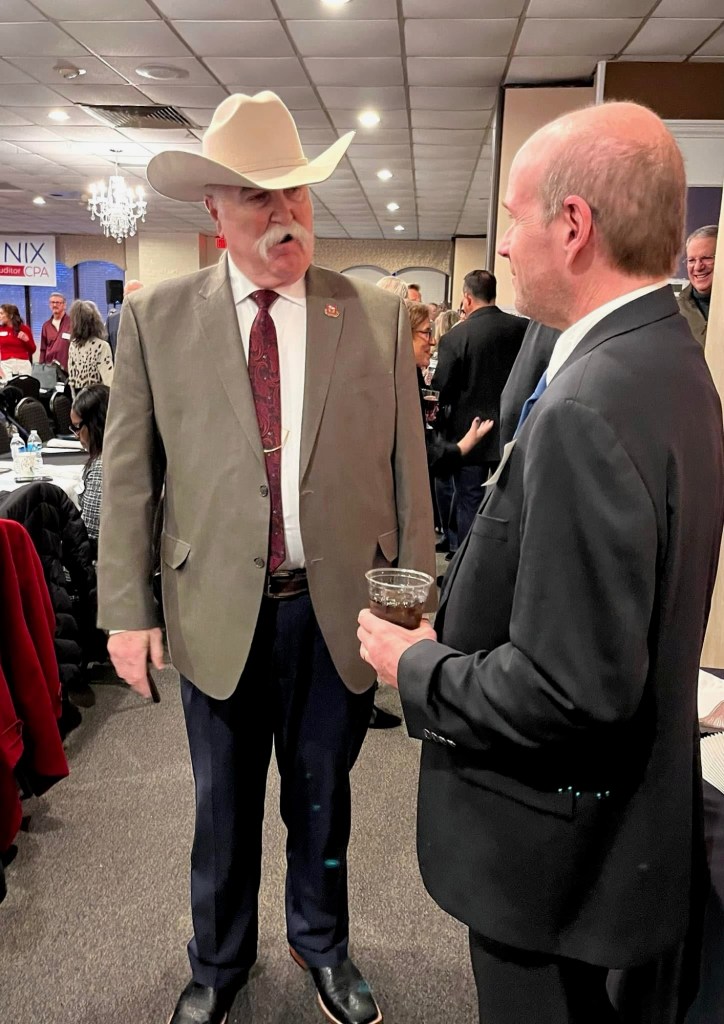
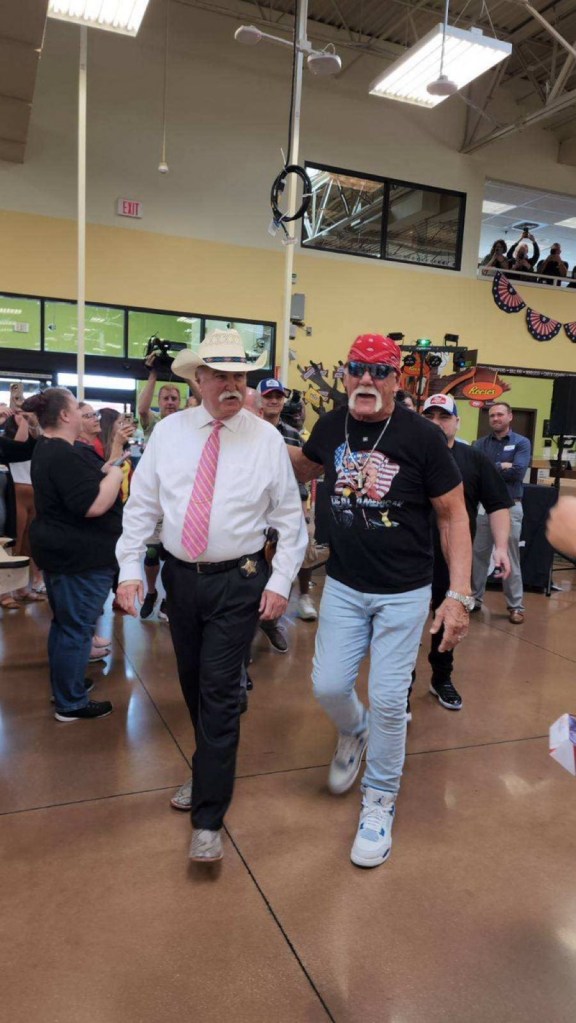
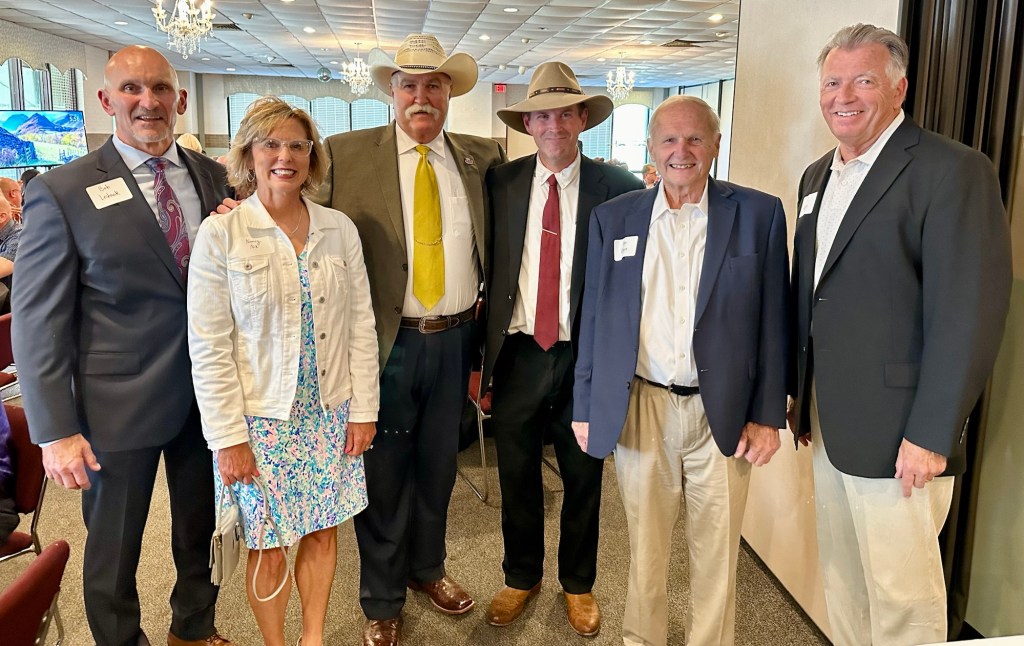
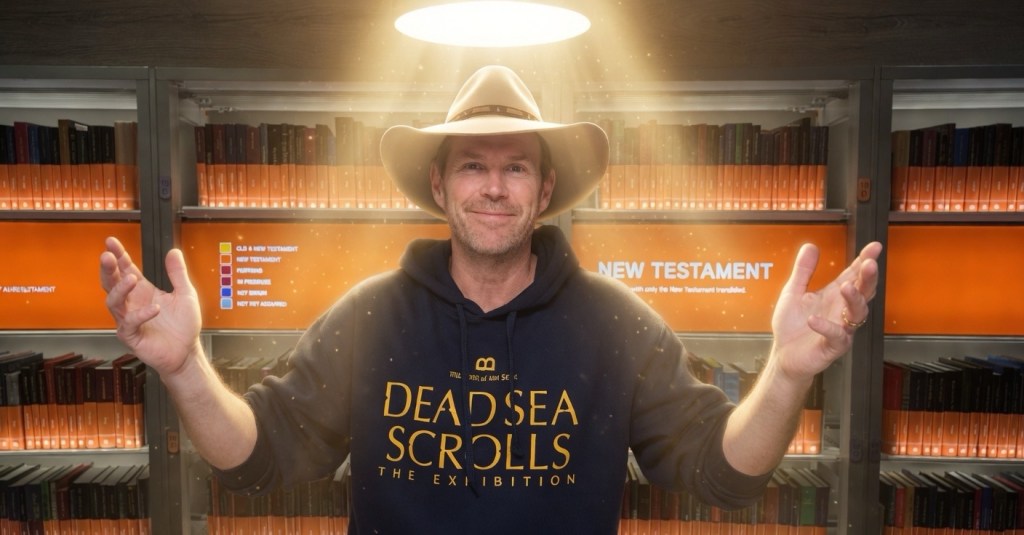

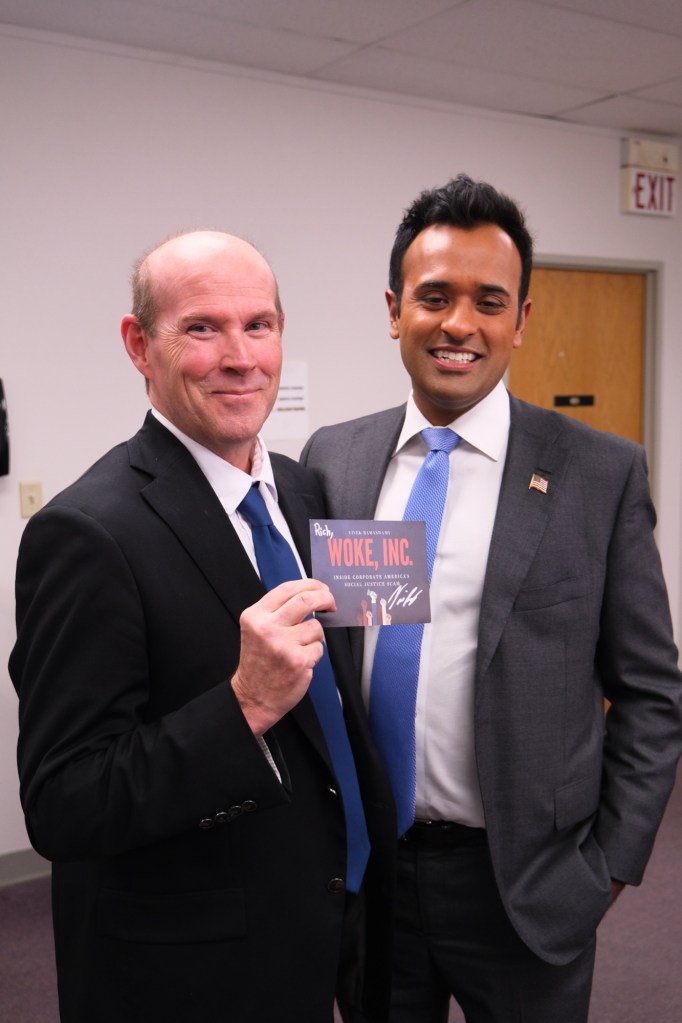
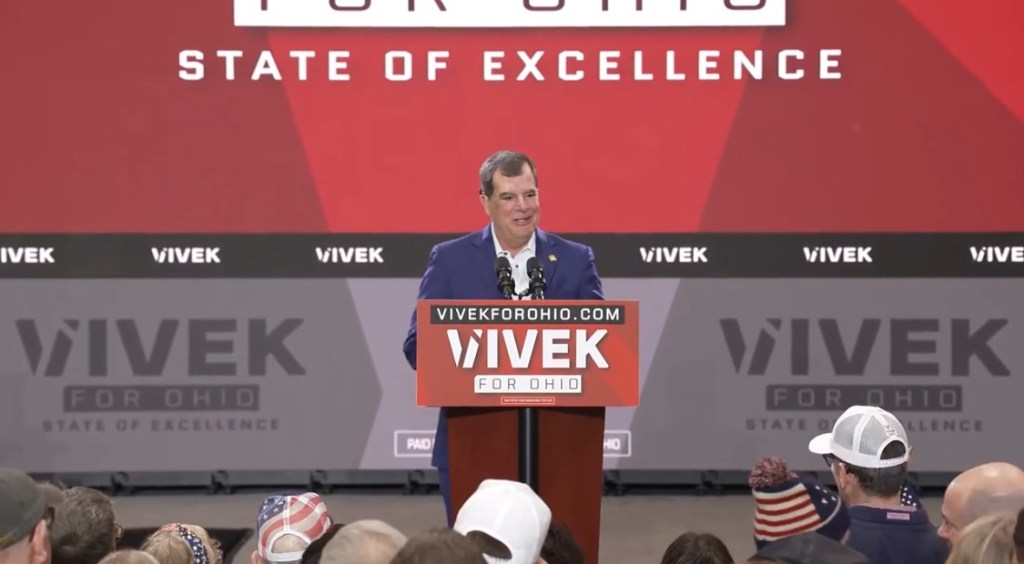
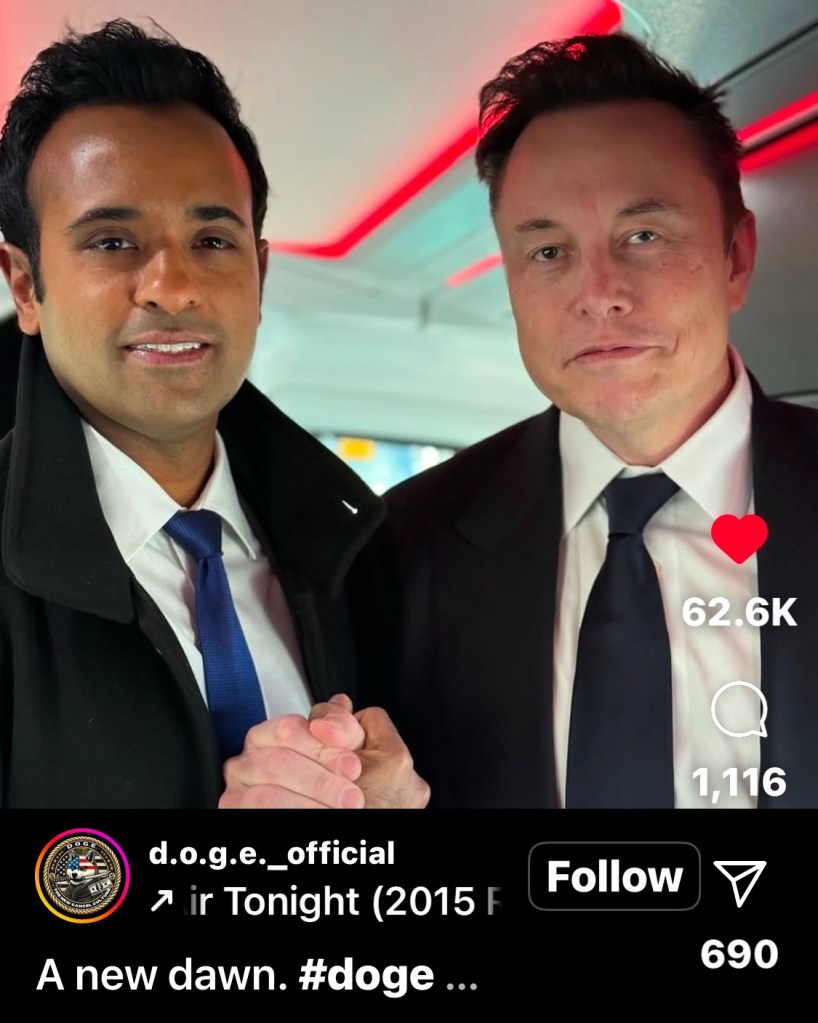

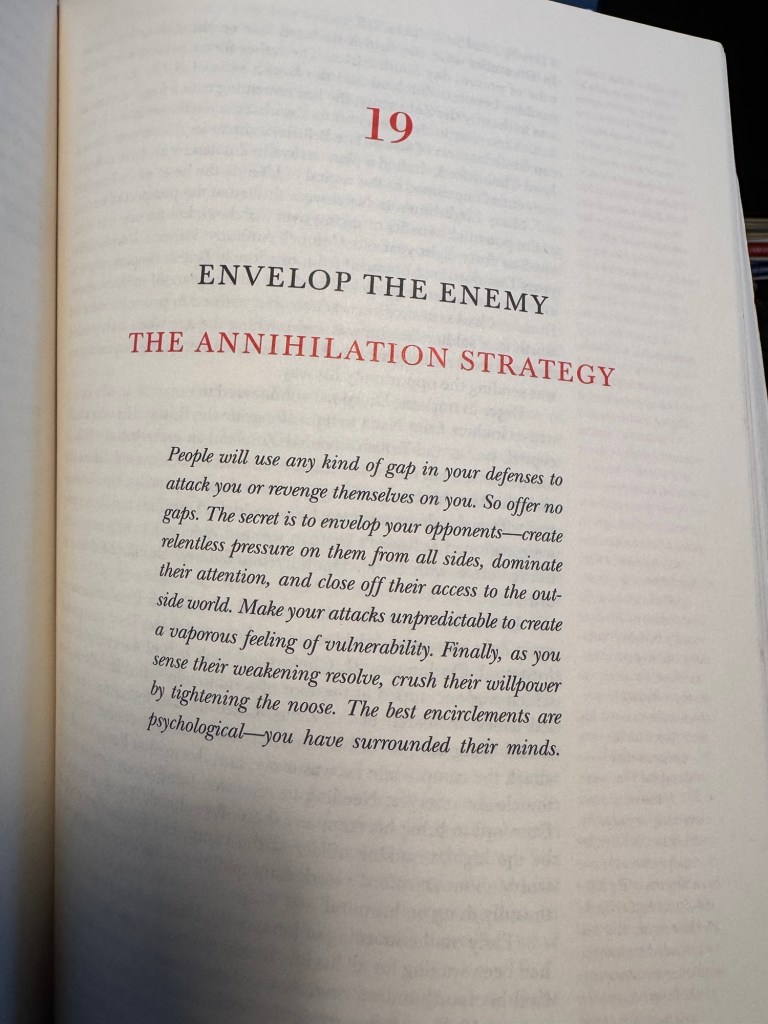
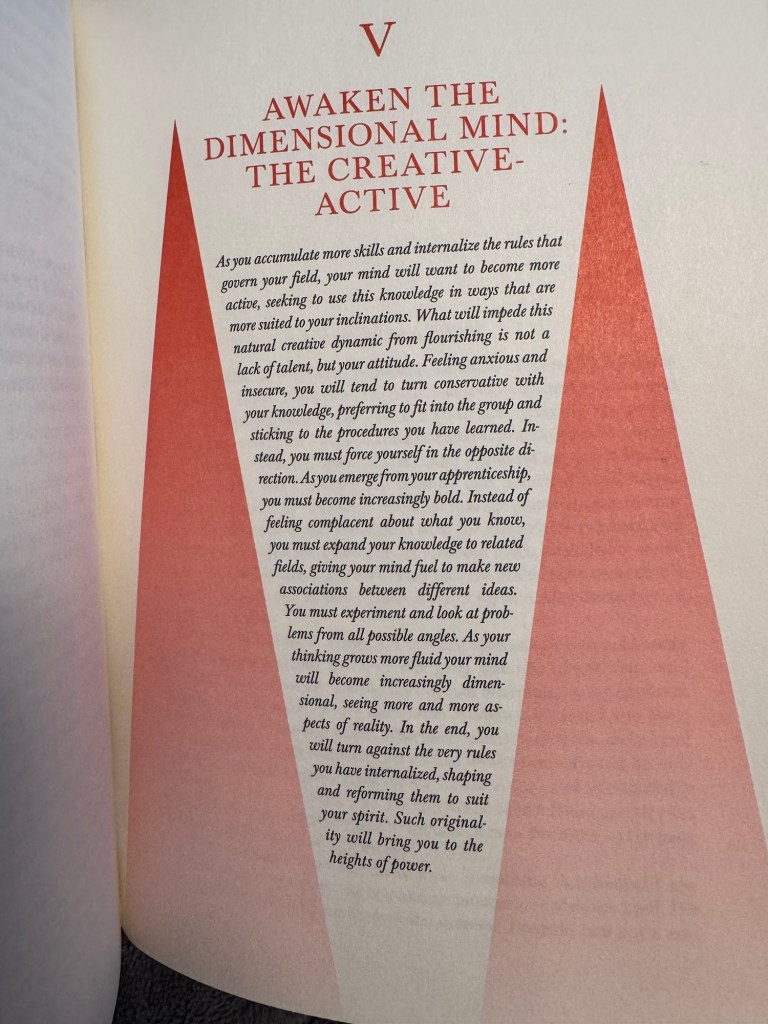
 The Overmanwarrior