The Affordability Crisis: Price increases to fill vacant personalities are the folly of socialism looming in the background

The question of housing affordability has become one of the most pressing socio-economic issues in the United States today. With the average home price reaching approximately $400,000 in 2024, many young families and individuals find themselves priced out of the market. This reality raises a critical question: why does the housing industry continue to prioritize large, expensive homes when market signals clearly indicate a growing demand for smaller, affordable housing options? Historically, the American housing model was built on accessibility. Following World War II, the United States experienced an unprecedented housing boom driven by the GI Bill, which provided returning veterans with low-interest mortgages and educational benefits. Between 1945 and 1960, the average home price increased from roughly $8,000 to $12,000 [1], while median household income rose from $2,400 to $5,600 [2]. These homes were predominantly single-story ranch houses designed to be affordable for working-class families. They featured simple layouts, modest square footage, and efficient construction methods that allowed developers to build entire neighborhoods quickly and inexpensively. This model supported rapid suburbanization and contributed to the rise of the American middle class. By contrast, the late 20th and early 21st centuries saw a shift toward larger homes, often called “McMansions.” In 1980, the average home price was $47,000 [3], but by 2000, it had climbed to $120,000 [4], and by 2020, it had skyrocketed to $320,000 [5]. This escalation far outpaced wage growth, creating a structural imbalance in housing affordability and leaving younger generations unable to enter the market. The cultural and economic forces that once prioritized affordability have been replaced by incentives that reward size, luxury, and perceived status, setting the stage for today’s housing crisis.

The persistent trend toward building larger homes is not driven solely by consumer demand but by systemic incentives in the real estate and finance sectors. Developers maximize profits by constructing high-value properties, while municipalities benefit from increased property tax revenues. This dynamic discourages the development of smaller, entry-level homes, even though demographic data suggests that younger generations prefer affordability and functionality over size and luxury. According to recent affordability indices, the ratio of median household income to qualifying income for a median-priced home fell to 0.68 in 2024 [6]. This indicates that homeownership is increasingly unattainable for average earners, reinforcing the argument for a return to smaller, cost-effective housing models. Yet the financial ecosystem—from banks to zoning boards—remains locked into a paradigm that rewards high-margin projects. Mortgage lenders often favor larger loans because they generate higher interest revenue, while local governments prioritize developments that promise substantial tax inflows. These incentives create a feedback loop that perpetuates the construction of oversized homes, even as market demand shifts toward affordability. Furthermore, inflationary pressures and speculative investment exacerbate the problem. Between 2000 and 2024, housing prices grew by more than 230%, while median incomes increased by less than 75%. This disparity underscores the structural imbalance between wages and housing costs, a gap that cannot be bridged solely by traditional market mechanisms. Without intervention, the housing market risks becoming increasingly exclusionary, limiting access to homeownership and eroding the foundation of economic mobility.

Beyond economics, cultural factors play a significant role in shaping housing trends. For decades, the pursuit of status through material possessions influenced consumer preferences, encouraging the construction of larger homes as symbols of success. Golf memberships, luxury cars, and sprawling properties became markers of achievement, reinforcing a cycle of materialism that drove housing design. However, contemporary social values are shifting. Younger generations prioritize experiences, sustainability, and financial flexibility over conspicuous consumption. They are less interested in impressing neighbors with square footage and more concerned with affordability and quality of life. This cultural evolution underscores the need for housing policies and development strategies that align with changing societal norms. Yet the industry has been slow to adapt, clinging to outdated assumptions about what buyers want. Compounding the affordability crisis is the growing influence of institutional investors such as Blackstone, Invitation Homes, and other private equity firms that have acquired tens of thousands of single-family homes across the country. These firms often purchase distressed properties in bulk, outbidding individual buyers with cash offers, and then convert these homes into rental units. This practice accelerates the transition from an ownership-based society to a rental-based one, echoing predictions from the World Economic Forum that “you will own nothing and be happy.” While such statements are controversial, they highlight the structural forces reshaping housing markets globally and the erosion of the American Dream. Institutional investors operate with access to cheap capital and sophisticated financial instruments, enabling them to dominate local markets and set rental prices that further strain household budgets. When ownership becomes unattainable, wealth accumulation stalls, and generational inequality deepens, creating a society increasingly divided along economic lines. The presence of these investors also distorts housing supply, as homes that could serve as affordable entry points for families are removed from the ownership pool and repurposed for profit-driven rental schemes.

Failure to address this imbalance has profound social and economic consequences. Young adults delay marriage and family formation because they cannot afford homes. Communities lose stability as homeownership declines, and wealth inequality deepens as property ownership consolidates among institutional investors. Ultimately, the American Dream of homeownership becomes unattainable for a growing segment of the population. The current housing crisis reflects a failure to adapt to evolving market realities and cultural values. Continuing to build large, expensive homes in the face of declining affordability and changing consumer preferences is economically unsustainable and socially detrimental. A strategic pivot toward smaller, affordable housing—akin to the post-WWII ranch-style model—offers a viable solution to restore accessibility to the American Dream. Developers, policymakers, and financial institutions must recognize that the market is in charge, not the egos of those who seek to maximize profit at the expense of social stability. If this shift does not occur, the consequences will ripple across generations, transforming a nation of homeowners into a nation of renters and undermining the very foundation of American prosperity. The time to act is now: by embracing affordability, sustainability, and inclusivity, the housing industry can realign with the values that once made homeownership a cornerstone of American life.  But price increases, as a solution to fill the empty minds of vacant personalities, are the driving force here.  Everyone can’t be rich; they don’t have a mind for it, nor do they want it.  But we have been caught in giving everyone a sense of wealth without them doing the work of wealth, and in the process, we have opened Pandora’s box of illusion that many are perfectly willing to exploit for a short-term gain.  But the cost of those short-term gains is now before us, and it’s wrapped up in this whole affordability debate.  And looming in the background is the mechanisms of Marxism that knew what they were doing all along.  Once people throw in the towel, what will they want?  That’s what has happened in New York with the new communist mayor there.  And behind it all, there is a push to hide from the world the moral bankruptcy of the instigators if what gets ushered in behind the carnage is socialism and government-driven price controls.  When really, what was needed all along were market-driven sentiments of pure capitalism; if only people had listened to those market forces instead of trying to control them.

References:

[1] U.S. Census Bureau. Historical Housing Data, 1945–1960.

[2] U.S. Census Bureau. Median Income Trends, 1945–1960.

[3] National Association of Realtors. Housing Price Trends, 1980.

[4] Federal Reserve Economic Data (FRED). Median Home Prices, 2000.

[5] Federal Reserve Economic Data (FRED). Median Home Prices, 2020.

[6] Housing Affordability Index Report, 2024.

Rich Hoffman
Click Here to Protect Yourself with Second Call Defense https://www.secondcalldefense.org/?affiliate=20707
Aggressive Interdiction and Human Rights: A Legal and Ethical Analysis

The controversy surrounding aggressive U.S. actions against drug cartels, including the destruction of narcotics-laden vessels, has ignited a global debate. Critics frame these measures as violations of human rights, while proponents argue that cartels themselves are the most egregious violators of human dignity.  I would contend that decisive interdiction, even through kinetic means, aligns with international law principles and humanitarian imperatives. To understand this, we must delve into the historical evolution of international law, the staggering scale of the global drug trade, and the human suffering perpetuated by these criminal networks.  But here’s the deal for context: there is no International Law, only American law.  The same people criticizing the Trump administration for blowing up the drug boats in Venezuela are the same kind of Democrats who wanted to defund the police.  And have produced videos promoting seditious actions against America, particularly Mark Kelly.  He should be in jail, not ranting about preserving the rights of drug boats or their cartel occupants.  I’m a big supporter of blowing up drug boats and taking the fight to the cartels’ front door.  There are a lot of flawed characters involved in this drug business, so anyone protesting human rights as a defense for the continued practice is purposely trying to make the world less stable for benefits that are not in our favor. 


International law governing narcotics control did not emerge in a vacuum. Its roots trace back to early 20th-century efforts to regulate opium and morphine, culminating in the 1961 Single Convention on Narcotic Drugs. This treaty, alongside the 1971 Convention on Psychotropic Substances and the 1988 United Nations Convention Against Illicit Traffic in Narcotic Drugs and Psychotropic Substances, sought to harmonize global efforts against drug trafficking. Yet these frameworks were never designed to override national sovereignty. Enforcement remains the prerogative of individual states, a reality that underscores why nations like the United States resort to unilateral action when multilateral mechanisms falter. Scholars emphasize that Article 14 of the 1988 Convention explicitly encourages states to adopt stringent interdiction strategies to suppress trafficking. [1]  It was a good time when most of the world still thought of drugs as dangerous, but too many people have fallen under their seduction and are now part of the problem.  And that is undoubtedly the case of the very socialist body of the United Nations.  Any defense of the drug network, knowing what we do now of the costs, is reprehensible and unforgivable. 


Consider the plight of communities ravaged by cartel violence. In Mexico, entire towns have been depopulated as families flee the terror of organized crime. Mothers bury sons lost to gang wars, while children grow up in landscapes dominated by fear. Since 2006, Mexico has recorded over 460,000 homicides, mainly attributable to cartel-related violence. [3] These are not abstract numbers; they represent shattered lives and broken futures. The global drug economy, valued between $360 and $652 billion annually, rivals the GDP of mid-sized nations. Cocaine production alone reached 2,757 metric tons in 2022, per UNODC data. [2] Each shipment fuels a cycle of addiction, corruption, and death that transcends borders.  This is not an issue that we can turn our backs on.  Ignoring this desperate evil is not responsible; it’s reprehensible.  There is no greater human rights violator on planet earth than these murderous drug cartels.  And no war has ever been fought that was more important than this one.   Here, we have a clear villain.  And if Democrats can’t see and agree to that, well, then they are part of the problem.  Which I would say has always been the case.  Only now do we have context for their actions.  They want to topple the stability of the world.  When you are fighting for the lives of drug dealers, you are fighting the wrong things. 


The fentanyl crisis epitomizes the lethal evolution of narcotics trafficking. Between 2020 and 2023, U.S. overdose deaths linked to synthetic opioids surged by 279%. In 2023 alone, fentanyl claimed 72,776 lives, constituting 69% of all overdose fatalities. [4] Behind these statistics are stories of young lives extinguished in their prime—college students, parents, veterans—victims of a substance so potent that two milligrams can kill. Economically, fentanyl’s profitability is unparalleled: one kilogram, costing $80,000 wholesale, yields $1.6 million on the street. Cartels exploit Chinese precursor suppliers, with investigations identifying 188 companies complicit in this trade. [5] These dynamics illustrate the intersection of organized crime, public health, and international security.  We are talking more lives lost than what the Vietnam War cost Americans.  This isn’t a remote threat; it’s a very personal one where the war has been brought literally into our backyards.  The only difference is that the weapons used are not guns and bombs.  But the destruction of the mind itself.  And this isn’t some market-driven intent.  It’s a sinisterly plotted scheme that starts in places like China to destroy Western civilization itself.  And with a smile on their faces as they watch the death of many innocents. 


Cartels have diversified beyond narcotics into human trafficking, generating $236 billion annually through forced labor and sexual exploitation. [6] Millions of women and children are entrapped in these networks, often under the same criminal syndicates orchestrating narcotics flows. This duality magnifies humanitarian crises, rendering cartels not merely criminal enterprises but systemic violators of fundamental rights. Survivors recount harrowing tales of coercion, violence, and despair—stories that rarely make headlines but define the lived reality of cartel dominance.  There are untold numbers of women and children who are literally destroyed in this process, and they are ruined for life.  There is a cost to this that nobody has yet put their mind around, and it poses the most significant problem of them all in sheer magnitude. 


Venezuela’s transformation into a narcotics hub exemplifies state complicity. The Cartel de los Soles, allegedly embedded within the Venezuelan military, facilitates cocaine transshipment to global markets. U.S. indictments implicate senior Maduro regime officials in narco-terrorism conspiracies. [7] Geopolitical entanglements with Russia and China furnish economic lifelines, complicating enforcement and underscoring the nexus between organized crime and authoritarian resilience. Remote airstrips launch drug flights under the cover of night, while maritime routes snake through Caribbean waters, evading interdiction. Each shipment represents not just contraband but the erosion of governance and the triumph of criminality over law.


Critics decry kinetic interdiction as extrajudicial, yet proportionality under international humanitarian law permits force when confronting actors whose conduct precipitates mass atrocity. Analogies to anti-piracy operations and counterterrorism frameworks validate such measures. [8] The principle of Responsibility to Protect (R2P) arguably extends to dismantling cartels, given their role in orchestrating transnational violence and exploitation. To frame interdiction as mere aggression is to ignore the moral calculus of inaction—a calculus measured in lives lost, communities shattered, and futures foreclosed.


Drug cartels epitomize systemic human rights violators, perpetuating cycles of death, addiction, and exploitation. Aggressive interdiction, including the destruction of narcotics vessels, aligns with both legal norms and moral imperatives. Inaction sustains a status quo wherein criminal syndicates eclipse state authority, eroding global security and humanitarian values. History will judge not the audacity of action but the complacency of silence.  And for my part, I say blow up many more drug boats.  And if they want help, call me.  I’d be happy to lend support in the destruction of drug cartels and their evil minions. 

[1] United Nations Convention Against Illicit Traffic in Narcotic Drugs and Psychotropic Substances, 1988.

[2] UNODC World Drug Report 2023.

[3] Mexico Homicide Data, INEGI, 2023.

[4] CDC Overdose Mortality Statistics, 2023.

[5] U.S. DEA Fentanyl Intelligence Report, 2024.

[6] ILO Global Estimates on Modern Slavery, 2022.

[7] U.S. DOJ Indictments on Venezuelan Officials, 2023.

[8] International Committee of the Red Cross, Principles of Proportionality, 2021.

Rich Hoffman

Click Here to Protect Yourself with Second Call Defense https://www.secondcalldefense.org/?affiliate=20707
UFO Disclosure: Historical Context, Cultural Impact, and the Interdimensional Reality

Unidentified Flying Objects (UFOs), now officially termed Unidentified Anomalous Phenomena (UAPs), have transitioned from fringe speculation to mainstream discourse in recent years. The concept of UFO disclosure refers to the systematic release of information by governments, military agencies, and credible institutions regarding unexplained aerial phenomena. This shift has profound implications for science, security, and culture. While the notion of extraterrestrial visitation has long captivated the public imagination, recent developments—including congressional hearings, Pentagon reports, and high-profile media coverage—suggest that the phenomenon warrants serious consideration beyond conspiracy theories. The question is no longer whether UFOs exist, but what they represent and how society should respond to their disclosure.

Historically, UFO sightings surged in the mid-20th century, coinciding with technological advancements and geopolitical tensions during the Cold War. The Roswell incident of 1947, often cited as the genesis of modern UFO lore, sparked widespread speculation about crashed alien spacecraft and government cover-ups. In response, the U.S. Air Force launched Project Sign in 1947, followed by Project Grudge in 1949, and ultimately Project Blue Book in 1952. Project Blue Book became the most extensive government program investigating UFOs, collecting over 12,000 reports before its termination in 1969. While most cases were attributed to natural phenomena or misidentified aircraft, 701 remained unexplained (Britannica, 2025; Wikipedia, 2025). The official stance concluded that UFOs posed no threat to national security and lacked evidence of extraterrestrial origin. However, critics argue that the Condon Report, which justified the program’s closure, reflected institutional bias rather than scientific rigor (History.com, 2025). These early investigations established a pattern of secrecy and skepticism that shaped public perception for decades.

The modern era of disclosure began in 2017 when The New York Times revealed the existence of the Pentagon’s Advanced Aerospace Threat Identification Program (AATIP). This revelation, coupled with the release of declassified Navy videos depicting objects with extraordinary flight characteristics, reignited global interest. Subsequent reports by the Office of the Director of National Intelligence (ODNI) and the Department of Defense’s All-Domain Anomaly Resolution Office (AARO) have documented hundreds of UAP incidents, some defying conventional explanations (ODNI, 2023; DoD, 2024). The 2024 consolidated report noted that while many sightings were attributable to balloons or drones, a subset exhibited anomalous behavior, including transmedium travel and acceleration beyond known propulsion systems (DoD, 2024). Congressional hearings featuring whistleblowers such as David Grusch further intensified the debate, with claims of crash retrieval programs and non-human biologics entering the public record. Although these assertions remain controversial, they underscore a growing consensus that UAPs merit scientific investigation rather than dismissal.

Media figures have played a pivotal role in amplifying the disclosure narrative. Tucker Carlson, once reticent on the subject, has devoted extensive coverage to UAPs, interviewing lawmakers like Rep. Tim Burchett and discussing classified briefings that suggest underwater UFOs—so-called USOs—capable of moving at 200 mph in ocean trenches (Carlson Interview, 2025). Carlson has hinted at a “spiritual component” to the phenomenon, describing aspects so disturbing that he hesitates to share them publicly (Newsweek, 2023). Similarly, Megyn Kelly has hosted discussions with historian Victor Davis Hanson and former intelligence officials, exploring claims of reverse-engineered alien technology and the cultural ramifications of disclosure (Kelly Show, 2025). Joe Rogan’s podcast has featured prominent voices such as Bob Lazar, Jacques Vallée, and David Grusch, delving into theories ranging from extraterrestrial visitation to simulation hypotheses (JRE Library, 2025). These platforms have not only normalized UFO discourse but also framed it within broader philosophical and scientific contexts, challenging audiences to reconsider humanity’s place in the cosmos.

The cultural impact of UFO disclosure extends beyond media sensationalism. It intersects with epistemology, theology, and sociology, raising questions about authority, trust, and existential meaning. Historically, UFO narratives have mirrored societal anxieties—from Cold War fears of Soviet technological superiority to contemporary concerns about government transparency. Today, disclosure challenges entrenched paradigms, compelling institutions to reconcile empirical anomalies with scientific orthodoxy. Popular culture, from Hollywood films to streaming documentaries like The Age of Disclosure, reflects this tension, oscillating between skepticism and wonder. As anthropologist Diana Walsh Pasulka observes, UFOs function as “technological angels,” embodying both scientific mystery and spiritual symbolism (Pasulka, 2019). This duality explains why disclosure evokes not only curiosity but also apprehension, as it destabilizes ontological certainties that underpin modern civilization.

Speculative theories about UAP origins further complicate the discourse. The extraterrestrial hypothesis (ETH), positing that UFOs are spacecraft from other planets, remains the most popular explanation. However, the interdimensional hypothesis (IDH) has gained traction among scholars and ufologists. Pioneered by thinkers like J. Allen Hynek and Jacques Vallée, IDH suggests that UAPs may originate from parallel realities or higher dimensions, exploiting quantum anomalies to traverse spacetime (Patheos, 2024; Vallée, 1975). Contemporary research in quantum physics and multiverse theory lends conceptual plausibility to this idea, even if empirical validation remains elusive. Tim Lomas (2023) argues for “epistemic humility” in evaluating such hypotheses, noting that UAP behavior—such as instantaneous acceleration and materialization—defies classical physics and may indicate non-local phenomena (Lomas, 2023). If true, the implications are staggering: reality may be far more complex than the materialist paradigm assumes, encompassing layers of existence beyond human perception. This perspective resonates with ultraterrestrial models proposed by physicist Harold Puthoff, which entertain scenarios involving time travelers, ancient civilizations, or entities operating outside conventional spacetime (Journal of Cosmology, 2024).

The philosophical and theological ramifications of these theories are profound. If UAPs represent interdimensional intelligences, traditional dichotomies between science and spirituality collapse, inviting a synthesis of metaphysics and empirical inquiry. Such a paradigm shift could redefine humanity’s understanding of consciousness, agency, and destiny. It may also catalyze ethical debates about contact protocols, planetary stewardship, and the moral status of non-human intelligences. As Vallée cautions, disclosure is not merely a scientific event but a cultural transformation with unpredictable consequences for religion, governance, and social cohesion. Governments have reportedly convened think tanks to assess these impacts, with some concluding that full disclosure could destabilize global institutions—a rationale often cited for continued secrecy (NewsNation, 2025). Whether this paternalism is justified remains contentious, but it underscores the gravity of the issue.

UFO disclosure represents a watershed moment in human history, challenging epistemic boundaries and cultural norms. From the secrecy of Project Blue Book to the transparency of ODNI reports, the trajectory of UAP discourse reflects a gradual shift from ridicule to legitimacy. Media figures like Carlson, Kelly, and Rogan have accelerated this transition, framing UFOs as both scientific enigmas and philosophical provocations. While the extraterrestrial hypothesis dominates popular imagination, interdimensional models invite deeper reflection on the nature of reality and consciousness. Ultimately, disclosure is not an end but a beginning—a call to expand our intellectual horizons and prepare for a future where the unknown becomes knowable. Whether humanity meets this challenge with wisdom or hubris will determine the contours of the next great chapter in our cosmic story.

UFO disclosure has evolved from Cold War secrecy under Project Blue Book to contemporary transparency through ODNI and AARO reports. Media figures such as Tucker Carlson, Megyn Kelly, and Joe Rogan have mainstreamed the debate, while documentaries like The Age of Disclosure amplify claims of crash retrieval programs and non-human biologics. Beyond empirical anomalies, disclosure raises cultural, philosophical, and theological questions, challenging materialist assumptions and inviting consideration of interdimensional hypotheses. Whether UAPs are extraterrestrial, ultraterrestrial, or manifestations of higher-dimensional realities, their study demands epistemic humility and interdisciplinary inquiry. Disclosure is not merely about UFOs—it is about redefining humanity’s place in a universe that is likely far stranger than imagined.

References (APA Style)

• Britannica. (2025). Project Blue Book. Retrieved from https://www.britannica.com/topic/Project-Blue-Book

• Department of Defense. (2024). Fiscal Year 2024 Consolidated Annual Report on Unidentified Anomalous Phenomena. Retrieved from https://media.defense.gov

• History.com. (2025). Project Blue Book: The US Government’s Secret UFO Investigations. Retrieved from https://www.history.com/articles/project-blue-book

• Lomas, T. (2023). The Ultraterrestrial Hypothesis: A Case for Scientific Openness to an Interdimensional Explanation for UAP. Journal of Transpersonal Psychology.

• Newsweek. (2023). Why Tucker Carlson’s Scared to Report on UFOs. Retrieved from https://www.newsweek.com

• Patheos. (2024). UAP: The Interdimensional Hypothesis. Retrieved from https://www.patheos.com

• Pasulka, D. W. (2019). *

Rich Hoffman

Click Here to Protect Yourself with Second Call Defense https://www.secondcalldefense.org/?affiliate=20707
Justice Deferred: Why Prosecutions Under Trump’s Second Term Remain Slow—and What Global Parallels Reveal

Donald Trump’s second term reignited expectations of sweeping accountability for political corruption. Yet, despite strong rhetoric and high-profile promises, major prosecutions remain elusive.  One year into Trump’s second term, the question persists: Why haven’t the big names gone to jail? Hillary Clinton remains free, despite years of allegations. The Clintons’ ties to corruption, Epstein’s network, and the weaponization of law enforcement against Trump allies have fueled public frustration. From Rudy Giuliani to Peter Navarro, loyalists have faced bankruptcy and imprisonment for defending election integrity. Meanwhile, figures like Letitia James and James Comey—central to prosecutorial misconduct—walk free after cases were dismissed due to procedural irregularities, not innocence.

This paradox underscores a deeper truth: prosecutions are not merely legal acts—they are political acts requiring stability, mandate, and timing. In a polarized nation, aggressive prosecutions without securing legislative dominance risk triggering retaliatory cycles, undermining the very agenda they aim to protect.

The dismissal of cases against Letitia James and James Comey illustrates the fragility of prosecutorial authority. A federal judge recently threw out charges citing the unlawful appointment of Lindsey Halligan as interim U.S. attorney, despite clear evidence of misconduct. The crime was procedural, not substantive—a loophole exploited to shield political elites from accountability1.

This is not unique. DOJ statistics reveal that high-profile political cases often span 3–7 years from indictment to resolution, with declination rates exceeding 39% when political volatility threatens institutional legitimacy2. Prosecutors, like any actors, weigh personal risk: firebomb threats, reputational ruin, and career destruction loom large when partisan control can flip overnight.

Trump’s own experience reinforces this caution. His first term saw relentless lawfare—Mueller investigations, impeachment trials, and civil suits—weaponized to cripple his agenda. The lesson? Without a stable mandate, prosecutions become pyrrhic victories, inviting reciprocal vengeance when power shifts.

The human toll of this legal warfare is staggering. Rudy Giuliani, once America’s Mayor, now faces $1.36 million in unpaid legal fees, with bankruptcy looming3. Mike Lindell, the MyPillow CEO, has liquidated assets to fund election integrity lawsuits, burning through millions4. Tina Peters, a Colorado clerk, sits in jail for investigating election fraud—a chilling precedent for dissent5.

These cases illustrate the asymmetry of lawfare: defending truth costs fortunes, while weaponizing law costs taxpayers. The financial attrition of Trump allies serves as a deterrent, signaling to future operatives that loyalty carries existential risk.

Enter the Epstein files—a political gambit disguised as transparency. Democrats, desperate to derail Trump ahead of midterms, embraced Epstein disclosures as a “gotcha” strategy, betting on salacious ties to tarnish MAGA credibility6. What they miscalculated was Trump’s counterplay: full release of the files, exposing a Democratic nexus of sexual trafficking, influence peddling, and elite corruption7.

This maneuver exemplifies asymmetric warfare: bait the opposition into overreach, then detonate the trap. As Trump played it, “rat poison in the nest”—a tactic to implode the colony from within. The fallout promises to be seismic, not for Trump, but for the progressive aristocracy entangled in Epstein’s web.

Brazil offers a cautionary mirror. Jair Bolsonaro, ousted after contesting election fraud, now faces 27 years in prison for an alleged coup attempt8. His successor, Lula da Silva—himself a convict released to reclaim power—embodies the cyclical weaponization of law. The message is clear: in politicized systems, justice is not blind; it is partisan.

For MAGA strategists, Bolsonaro’s fate underscores the imperative of institutional entrenchment. Without securing Congress and insulating the judiciary, Trump’s prosecutions risk reversal under a Democratic resurgence.

According to the Bureau of Justice Statistics, U.S. attorneys prosecuted 61% of suspects in matters concluded in FY 2023, with political cases often delayed beyond five years due to appeals and procedural challenges2. The median time from investigation to decision: 61 days, but high-profile cases involving political figures skew far longer, often requiring special counsel oversight.

Public impatience for “perp walks” is understandable. Yet, in the calculus of power, timing trumps theatrics. Immediate arrests may gratify the base but jeopardize the agenda if Democrats reclaim legislative control. Trump’s restraint is not weakness—it is war by other means.

The Epstein gambit, midterm positioning, and structural reforms signal a long game: secure the mandate, then strike decisively. Until then, justice remains deferred—not denied.  I would say to all who are seeking justice, defend Trump for the midterms, keep the Democrats running for the hills.  And sweep them up once the rat nest is poisoned and they can no longer do any harm.  But don’t play nice with them.  They would never give you the same benefit. 

References

NBC News. Judge dismisses cases against James Comey and Letitia James after finding prosecutor was unlawfully appointed. Nov. 24, 2025.1

Bureau of Justice Statistics. Federal Justice Statistics, 2023. March 2025.2

USA Today. Rudy Giuliani must pay his defense lawyers $1.36 million. Sept. 17, 2025.3

CBS News. Convicted Colorado election clerk Tina Peters transfer controversy. Nov. 23, 2025.4

PBS News. Trump signs bill to release Jeffrey Epstein case files. Nov. 20, 2025.7

CBS News. Jair Bolsonaro arrested before serving 27-year sentence for coup attempt. Nov. 22, 2025.8


To understand why prosecutions under Trump’s second term remain slow, we must situate this phenomenon within a broader historical and theoretical context. Lawfare—the strategic use of legal systems as instruments of political warfare—is not an American invention. It is a global sport, played with Machiavellian finesse and Foucauldian precision

Consider South Korea: former presidents Park Geun-hye and Lee Myung-bak were imprisoned for corruption, only to be pardoned later in a theatrical display of political mercy. This oscillation between punishment and absolution mirrors Michel Foucault’s thesis on power as a dynamic, relational force rather than a static possession [1]. In Israel, Benjamin Netanyahu’s corruption trials have dragged on for years, punctuated by coalition collapses and judicial reforms—a case study in how legal timing intersects with political survival [2].

Historical parallels abound. Watergate, often romanticized as a triumph of accountability, was in fact a slow burn. The scandal erupted in 1972, yet Nixon resigned only in 1974 after exhaustive hearings and strategic delays. Roman legal systems offer an even older template: prosecutions were frequently deferred until political winds shifted, illustrating Cicero’s dictum that law is the servant of politics, not its master [3].

Theoretical frameworks enrich this analysis. Machiavelli, in The Prince, counseled rulers to appear just while wielding power ruthlessly—a maxim evident in Trump’s calibrated restraint. Foucault’s Discipline and Punish reminds us that law is a technology of control, deployed to normalize behavior and consolidate authority [4]. When Trump delays prosecutions, he is not abdicating justice; he is performing sovereignty, signaling that timing—not immediacy—defines true dominion.

Global data corroborates this thesis. Transparency International reports that high-profile political prosecutions in democracies average 4–6 years from indictment to resolution, with delays often justified as procedural safeguards [5]. In Brazil, Lula da Silva’s conviction and subsequent resurgence exemplify lawfare’s cyclical nature: today’s convict is tomorrow’s kingmaker [6].

This expanded lens reframes Trump’s strategy as part of a transnational pattern: justice deferred is not justice denied—it is justice weaponized. The playful irony? While pundits clamor for perp walks, seasoned strategists know that the real game is chess, not checkers. Arrests gratify the mob; timing secures the throne.

Footnotes:
[1] Foucault, M. (1977). Discipline and Punish: The Birth of the Prison. Vintage Books.
[2] Peleg, I. (2023). Judicial Politics in Israel: Between Law and Power. Israel Studies Review.
[3] Cicero, M.T. (54 BCE). De Legibus.
[4] Machiavelli, N. (1532). The Prince.
[5] Transparency International. Global Corruption Report, 2024.
[6] Hunter, W. (2020). The Politics of Corruption in Brazil. Journal of Democracy.

Bibliography

Foucault, M. (1977). Discipline and Punish: The Birth of the Prison. Vintage Books.

Machiavelli, N. (1532). The Prince.

Cicero, M.T. (54 BCE). De Legibus.

Peleg, I. (2023). Judicial Politics in Israel: Between Law and Power. Israel Studies Review.

Transparency International. Global Corruption Report, 2024.

Hunter, W. (2020). The Politics of Corruption in Brazil. Journal of Democracy.

Rich Hoffman

Click Here to Protect Yourself with Second Call Defense https://www.secondcalldefense.org/?affiliate=20707

Armageddon as Process: From the Teacher of Righteousness to Modern Political Movements

For centuries, people have imagined the Battle of Armageddon as a climactic showdown—a single day when good finally triumphs over evil. But what if Armageddon is not a moment in time, but a perpetual struggle? What if the battle has been raging for thousands of years, manifesting in different eras, cultures, and movements? Today, as millions rally behind reformist causes like the MAGA movement, many wonder why evil seems so entrenched, why corruption persists even when righteousness gains ground. The answer lies in history: the fight against systemic evil is not episodic—it is eternal.

To understand this, we must look back to the crucible of Western civilization: the Holy Land during the turbulent centuries before and after Christ. There, in the shadow of empires, a small sect called the Essenes waged a spiritual and cultural rebellion against corruption. Their writings—the Dead Sea Scrolls—reveal a figure known as the Teacher of Righteousness, a man who defied the “Wicked Priest” and inspired generations of resistance. From Qumran to Megiddo, from the Copper Scroll to the mosaic affirming Jesus in a Roman garrison, the story of righteousness versus evil is a continuum that stretches into our own time.

Around 150 BCE, as Judea reeled under Hellenistic influence after Alexander the Great, a separatist sect emerged—the Essenes. Disillusioned by Jewish priests who compromised with Greek rulers, the Essenes withdrew to the desert near Qumran. They lived by strict purity laws, followed a solar calendar, and anticipated an apocalyptic showdown between the “Sons of Light” and the “Sons of Darkness.” Their writings—the Community Rule, War Scroll, and Damascus Document—outline a worldview obsessed with righteousness and divine justice.

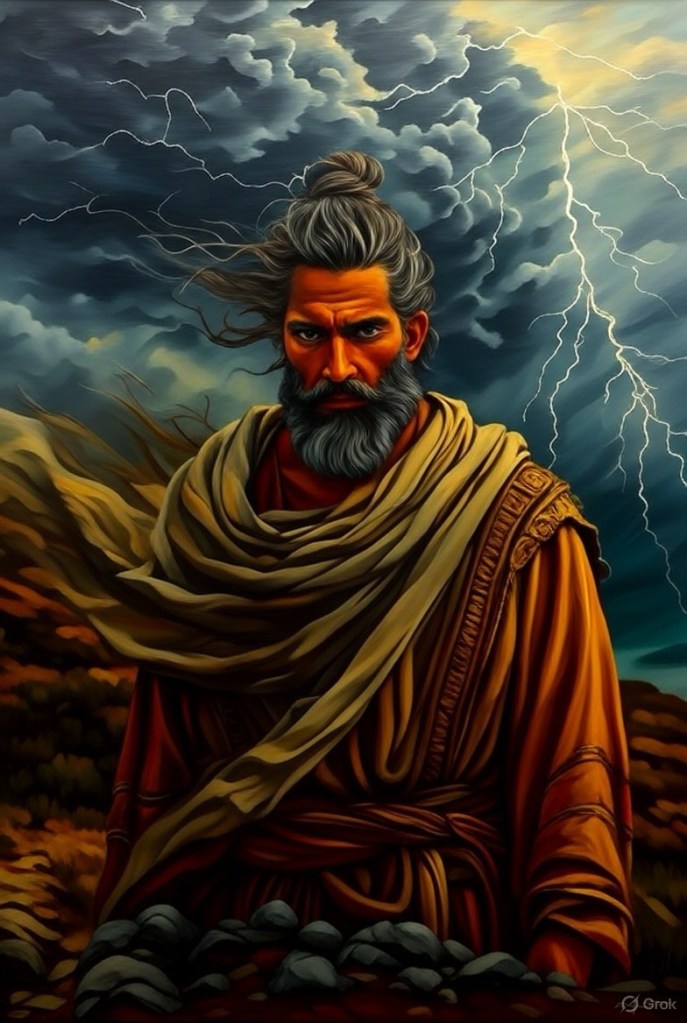
Central to these texts is the enigmatic Teacher of Righteousness, a leader who clashed with the “Wicked Priest,” likely a Hasmonean high priest aligned with foreign powers. The Teacher’s mission was clear: restore covenantal purity and resist systemic corruption. His life foreshadows later figures like John the Baptist and Jesus, who also confronted entrenched elites. Without the Dead Sea Scrolls, we would never know this man existed—yet his influence rippled through history, shaping the moral architecture of Western thought.

Discovered in 1952 in Qumran Cave 3, the Copper Scroll stands apart from other Dead Sea texts. Unlike parchment manuscripts, it was etched on metal—suggesting permanence. Its contents? A list of 64 treasure caches, possibly Temple wealth hidden during Roman incursions. This reveals a critical truth: rebellion was not merely spiritual; it had economic dimensions. Control of resources meant survival for communities resisting imperial domination. The Copper Scroll is a silent witness to the material stakes of righteousness—a reminder that corruption thrives not only in temples but in treasuries.

Megiddo, perched at the crossroads of ancient trade routes, was more than a city—it was a symbol. From Canaanite stronghold to Israelite fortress, from Greek outpost to Roman garrison, Megiddo embodied the clash of civilizations. By the second century CE, it housed Legio VI Ferrata, a Roman legionary camp with 5,000 soldiers. Roads, amphitheaters, and barracks testify to imperial might. Yet Revelation would immortalize Megiddo as Armageddon—the stage for the ultimate battle between good and evil. In truth, that battle was already underway, fought not with swords alone but with ideas, faith, and sacrifice.

Among the most stunning finds at Megiddo is a mosaic floor dated to around 230 CE, discovered in a Roman military compound. Its inscription dedicates worship to “God Jesus Christ”—the earliest archaeological evidence of Jesus’ divinity. This predates Constantine’s Edict of Milan by nearly a century, proving that Christianity was infiltrating the Roman world long before it became state-sanctioned. The mosaic, displayed at the Museum of the Bible, marks a turning point: the empire that crucified Christ was slowly bowing to His name. This was not an overnight revolution but a gradual transformation—a testament to the endurance of righteousness.

Before Rome embraced the cross, it worshipped a pantheon of gods—Jupiter, Mars, Venus—and demanded emperor worship. Greek deities like Zeus and Athena lingered in cultural memory. Against this backdrop, Christianity’s rise was nothing short of miraculous. Persecuted believers faced martyrdom, yet their faith spread from catacombs to palaces. By 313 CE, Constantine legalized Christianity; by 380 CE, Theodosius made it the official religion. But the seeds of this revolution were sown centuries earlier—by rebels like the Essenes, prophets like John, and visionaries like the Teacher of Righteousness.

What does this mean for us today? The struggle between righteousness and corruption did not end with Constantine—or with the crucifixion. It is a permanent condition of human society. Modern movements like the Tea Party, the Reform Party, and MAGA echo the same impulse: to resist entrenched elites and restore moral order. Just as the Essenes defied the Wicked Priest, today’s reformers challenge systems that profit from decay. The hostility they face—from media vilification to legal persecution—mirrors the fate of ancient rebels. Why? Because evil never surrenders quietly.

History teaches a sobering truth: fighting evil is hard, slow, and often bloody—but it works. The Teacher of Righteousness did not live to see Rome fall, yet his stand against corruption helped ignite a movement that reshaped the world. The Essenes’ scrolls lay hidden for two millennia, only to inspire us today. The Megiddo mosaic whispers across centuries: righteousness wins—not in a day, but in the long arc of history. So when despair creeps in, remember: Armageddon is not ahead of us—it is all around us. And every act of courage, every stand for truth, moves the battle forward.

— Additional notes and reference —

Abstract:

This work examines Armageddon as a historical continuum rather than a singular event, tracing its roots from the Essenes and the Teacher of Righteousness through Greek and Roman occupations, Jewish revolts, and the rise of Christianity. It integrates archaeological evidence from Megiddo, textual analysis of the Dead Sea Scrolls, and modern political parallels to argue that the struggle between righteousness and corruption is an enduring condition of human society.

1. Introduction

Armageddon is often imagined as an apocalyptic climax, yet history reveals it as a recurring process. From Qumran to Washington, the battle between systemic evil and reformist zeal persists. [Footnote: Collins, 2010]

2. Historical Timeline

– 332 BCE: Alexander the Great conquers Judea, introducing Hellenistic culture. [Footnote: Josephus, Antiquities]

– 140–37 BCE: Hasmonean dynasty asserts Jewish autonomy but succumbs to corruption. [Footnote: Schiffman, 1994]

– 63 BCE: Pompey annexes Judea; Roman rule begins. [Footnote: Goodman, 2007]

– 66–73 CE: First Jewish Revolt ends with destruction of the Second Temple. [Footnote: Josephus, Wars]

– 313 CE: Constantine legalizes Christianity; 380 CE: Theodosius makes it official. [Footnote: Brown, 1989]

3. The Essenes and Teacher of Righteousness

The Essenes, a separatist sect, withdrew to Qumran to resist priestly corruption. Their texts—the Community Rule, War Scroll, Damascus Document—reveal a dualistic worldview: Sons of Light vs. Sons of Darkness. The Teacher of Righteousness emerges as a prophetic figure opposing the Wicked Priest. [Footnote: Vermes, 2011]

4. Megiddo and Armageddon

Megiddo’s strategic location made it a stage for imperial clashes. Excavations reveal layers from Canaanite to Roman eras. Revelation’s Armageddon draws on this geography as a metaphor for ultimate conflict. [Footnote: BAR, 2015]

5. Dead Sea Scrolls and Copper Scroll

The Copper Scroll lists 64 treasure caches, underscoring the economic stakes of rebellion. Resistance was not merely spiritual but material. [Footnote: Allegro, 1960]

6. Greek and Roman Context

Greek philosophy and Roman law reshaped Judea’s cultural landscape. Emperor worship and Hellenistic syncretism clashed with Jewish monotheism, fueling sectarian movements. [Footnote: Hengel, 1974]

7. Modern Parallels

Reform Party → Tea Party → MAGA echo ancient insurgencies. Each arose to combat perceived corruption, facing vilification and systemic pushback. [Footnote: Skocpol & Williamson, 2012]

8. Conclusion

Armageddon is not a prophecy deferred but a pattern repeated. From the Teacher of Righteousness to modern populists, the fight against entrenched power endures.

References:

– Allegro, J. (1960). The Treasure of the Copper Scroll.

– BAR (Biblical Archaeology Review), various issues.

– Brown, P. (1989). The Rise of Western Christendom.

– Collins, J. (2010). Apocalypticism in the Dead Sea Scrolls.

– Goodman, M. (2007). Rome and Jerusalem.

– Hengel, M. (1974). Judaism and Hellenism.

– Josephus. Antiquities and Wars of the Jews.

– Schiffman, L. (1994). Reclaiming the Dead Sea Scrolls.

– Skocpol, T., & Williamson, V. (2012). The Tea Party and the Remaking of Republican Conservatism.

– Vermes, G. (2011). The Complete Dead Sea Scrolls in English.

Rich Hoffman

Click Here to Protect Yourself with Second Call Defense https://www.secondcalldefense.org/?affiliate=20707

Sedition, Civilian Control, and the Afghan Shooter: A Constitutional Crisis in Motion

The foundation of American governance rests on a principle that distinguishes it from authoritarian regimes: civilian control over the military. This concept ensures that elected officials—not generals or unelected bureaucrats—command the armed forces. It is a safeguard against military coups and tyranny, preserving the democratic structure envisioned by the framers of the Constitution. When this principle is undermined, the entire system of governance faces existential risk.

Recent events have brought this issue into sharp focus. On November 26, 2025, an Afghan immigrant—Rahmanullah Lakanwal—opened fire on two National Guard members near the White House. This attack, occurring on the eve of Thanksgiving, was not an isolated act of violence. It was symptomatic of a deeper ideological war being waged against law and order, fueled by political rhetoric and systemic failures in immigration vetting. At the center of this controversy lies a video released by six members of Congress, including Senator Mark Kelly, urging military personnel to “refuse illegal orders” from President Trump. While framed as a constitutional safeguard, critics argue that the video constitutes sedition, a crime punishable by death under U.S. law.

Lakanwal, a 29-year-old Afghan national, ambushed two West Virginia National Guard members—Specialist Sarah Beckstrom and Staff Sergeant Andrew Wolfe—near the Farragut West Metro station, just blocks from the White House. Armed with a .357 Smith & Wesson revolver, he critically injured both soldiers before being subdued and hospitalized. Authorities have charged him with assault with intent to kill while armed, with potential escalation to murder charges if the victims succumb to their injuries.1

Lakanwal entered the United States in September 2021 under Operation Allies Welcome, a Biden administration initiative to resettle Afghans who assisted U.S. forces during the war. Approximately 76,000 Afghans were admitted under this program, many on humanitarian parole. Lakanwal, a former Afghan special forces commander who worked closely with U.S. and British troops, was granted asylum in 2025.

While the program aimed to honor commitments to allies, critics argue that vetting was rushed, creating security vulnerabilities. The Trump administration has since halted Afghan immigration processing indefinitely pending review.3

The FBI is investigating whether Lakanwal acted as a lone wolf inspired by jihadist ideology or had operational ties to terrorist networks. While no direct links to ISIS or al-Qaeda have been confirmed, authorities are treating the case as potential international terrorism.4

This incident underscores a broader trend: according to the Center for Strategic and International Studies (CSIS), the U.S. has averaged three jihadist plots or attacks per year since 2020, most inspired rather than directed by foreign groups.5

The ideological dimension cannot be ignored. Radical Islamists view Western democracies—and particularly Christian-majority nations like the U.S.—as adversaries. Acts of terror serve as both symbolic and tactical blows against these societies. When political rhetoric within the U.S. appears to legitimize defiance of lawful authority, it creates fertile ground for extremists seeking justification for violence.

Who Were the “Seditious Six?”

1. Sen. Mark Kelly (AZ)

2. Sen. Elissa Slotkin (MI)

3. Rep. Jason Crow (CO)

4. Rep. Chrissy Houlahan (PA)

5. Rep. Chris Deluzio (PA)

6. Rep. Maggie Goodlander (NH)6

The lawmakers urged military and intelligence personnel to “refuse illegal orders” and uphold the Constitution. While they claimed this was a defense against tyranny, critics—including President Trump—argued that the video that the “seditious six” produced constituted sedition, punishable by death under federal law. The Pentagon is reportedly investigating whether Kelly could be recalled to active duty for court-martial under the Uniform Code of Military Justice (UCMJ).67

Legal experts counter that advising troops not to follow unlawful orders is correct under military law. Sedition requires intent to overthrow the government by force, which the video did not explicitly advocate.8  And that’s the problem, because the clear intent was to inspire people like Rahmanullah Lakanwal to do it on their behalf while the “seditious six” claim innocence.

Legal Definitions

• Sedition (18 U.S.C. §2384): Conspiracy to use force to overthrow or oppose U.S. authority or hinder execution of law. Punishable by up to 20 years.9

• Insurrection (18 U.S.C. §2383): Violent rebellion against U.S. authority.10

January 6 Context

Prosecutors charged organized groups like the Oath Keepers and Proud Boys with seditious conspiracy for plotting to block certification of the 2020 election.11

Key Difference

January 6 was a reaction to election fraud—a protest against what participants saw as the destruction of democratic governance. The Kelly video, by contrast, sought to influence military obedience, striking at the heart of civilian control. While both raise constitutional questions, the latter arguably poses a more systemic threat because it undermines the chain of command that preserves a representative government that reports to the people and is obedient to them.  With January 6th, the government was picking our president, so we are dealing with a big difference and a major problem in context.  And it’s the same bad players in all cases.  The political left, and moderates in their back pocket, do not want a representative government that reports to a president they pick.  They want to put a complete loser like Joe Biden in power to rule over the masses as a fourth branch of government that rules from Tyson’s Corner mansions. 

Civilian oversight of the military is not a mere tradition; it is a constitutional mandate. Article II of the Constitution vests executive power in the President, who serves as Commander-in-Chief. This structure prevents military autonomy and ensures accountability through elections.

When elected officials encourage defiance of presidential orders, they erode this foundation. If the military becomes a political actor, democracy collapses into oligarchy or dictatorship. The Kelly video, regardless of intent, introduced ambiguity into a system that depends on clarity.

The Afghan shooter’s attack illustrates the real-world consequences of ideological destabilization. Political rhetoric that delegitimizes lawful authority does not exist in a vacuum; it reverberates globally, influencing actors who seek chaos. Immigration policies that prioritize mass over security compound the risk.

Moreover, the selective application of legal standards—aggressive prosecution of January 6 participants versus leniency toward lawmakers flirting with sedition—undermines public trust. Lawfare becomes a weapon, not a shield, when used to destroy political rivals rather than uphold justice.

The events of November 26, 2025, are a warning. When civilian control of the military is questioned, when immigration vetting fails, and when political discourse normalizes defiance of lawful authority, the republic teeters on the brink. Sedition is not a partisan label; it is a legal reality with grave consequences. Whether the Kelly video meets that threshold will be decided in courts and history books, but its implications are undeniable.

The Afghan shooter’s bullets were not just aimed at two soldiers; they were aimed at the constitutional order itself. Preserving that order requires vigilance—not only against foreign threats but against domestic rhetoric that erodes the foundations of governance.

• Operation Allies Welcome admitted approximately 76,000 Afghans between 2021 and 2022, with DHS reporting that 40% lacked full biometric vetting. [Footnote: DHS Report, 2023]

• CSIS data shows an average of 3 jihadist-inspired plots annually since 2020, with 68% involving lone actors. [Footnote: CSIS Terrorism Trends, 2024]

• Gallup polling (2024) indicates only 45% of Americans trust civilian control of the military, down from 62% in 2010. [Footnote: Gallup, 2024]

Legal Framework:

• Sedition prosecutions surged post-January 6, with DOJ charging 17 individuals under 18 U.S.C. §2384 in 2021–2023. [Footnote: DOJ Annual Report, 2023]

• Comparative analysis: Brazil faced 11 sedition-related prosecutions after Bolsonaro supporters stormed government buildings in 2023. [Footnote: Latin American Security Review, 2024]

Both Marjorie Taylor Greene’s resignation and Kelly’s video highlight systemic stress points: erosion of institutional norms and the weaponization of rhetoric. Greene’s failure to govern parallels Kelly’s flirtation with sedition—each case underscores the fragility of democratic guardrails when political actors prioritize ideology over institutional responsibility.

Academic Perspectives:

• Huntington’s “The Soldier and the State” remains foundational, warning that politicization of the military invites democratic collapse. [Footnote: Huntington, 1957]

• Recent scholarship (Feaver, 2022) argues that partisan signaling to military personnel correlates with declining trust in democratic institutions. [Footnote: Feaver, 2022]

Policy Recommendations:

1. Reinforce UCMJ clarity on unlawful orders.

2. Mandate bipartisan oversight for immigration vetting programs.

3. Establish congressional ethics review for rhetoric impacting military obedience.

References:

– DHS Report on Operation Allies Welcome (2023)

– CSIS Terrorism Trends (2024)

– Gallup Polling Data (2024)

– DOJ Annual Report (2023)

– Huntington, S. (1957). The Soldier and the State.

– Feaver, P. (2022). Armed Servants: Agency and Control in Civil-Military Relations.

Cross-Reference: Greene’s governance failure illustrates parallel institutional stress.

Rich Hoffman

Click Here to Protect Yourself with Second Call Defense https://www.secondcalldefense.org/?affiliate=20707

Thanksgiving, Family, and the Weight of Choices: Why Generations Rise or Fall Together

Thanksgiving is one of those rare moments in American life where everything slows down just enough for us to notice what really matters. The smell of turkey fills the house, football hums in the background, and for a few hours, the world’s chaos takes a back seat to mashed potatoes and pumpkin pie. I love this time of year. I love the family gatherings, the laughter, the jokes that only make sense to people who share your last name. But, Thanksgiving is also a fascinating study in human nature. You sit around that table and, without saying a word, you can see the weight of another year on everyone’s face—the triumphs, the mistakes, the quiet regrets.

What is family, really? People say it’s blood, but I think it’s more complicated than that. Family is biology, sure, but it’s also choices—every choice we make and every choice our kids make. And those choices stack up like bricks over time, building the life we live. Some people build palaces; others build prisons. Thanksgiving is where you see the architecture of those choices on full display.

When you’re born, you don’t get to pick your family. You’re handed a set of people and told, “These are yours.” But as life goes on, family becomes less about biology and more about decisions. Who you marry, how you raise your kids, what values you teach them—those choices ripple through generations. I’ve raised kids and now grandkids, and I can tell you this: the quality of a family gathering isn’t determined by the turkey on the table; it’s determined by the choices everyone made to get there.

I’ve seen families where bitterness hangs in the air like smoke because bad decisions piled up—wrong marriages, financial disasters, grudges that never healed. And I’ve seen families where people genuinely enjoy each other’s company because they made better choices. It’s not luck. It’s not fate. It’s choices.

I’ve always said this—and sometimes people look at me funny when I do—but I treat kids differently than I treat adults. Why? Because kids still have options. They haven’t stacked up a lifetime of mistakes yet. They’re like a blank canvas with endless possibilities. Adults, on the other hand, well… by the time you hit your 40s or 50s, the mistakes start showing. You can see it in their faces, in their posture, in the way they talk about life. Every bad decision leaves a mark.

I’ve sat at Thanksgiving tables and watched this play out. You see the cousin who married the wrong person, and now every conversation is about how hard life is. You see the uncle who spent his 20s chasing quick thrills and now looks like a relic of his former self. And then you look at the kids—bright-eyed, full of energy, thinking they’re invincible. They don’t know yet that life is a marathon, not a sprint.

That’s why I invest in kids. I talk to them differently. I try to steer them away from the mistakes that everyone else seems determined to make. Because if you can help a kid avoid even half the bad choices their peers make, you’ve given them a head start that will pay off for decades.

Life is like a marathon. At the starting line, everyone looks the same—bunched up, full of energy, ready to run. But five miles in, the pack starts to spread out. Some people are way ahead, others are falling behind, and the gap keeps growing. That’s what choices do.

And the stats prove it. By middle age, the spread is enormous:

• 41% of first marriages end in divorce, and the odds get worse with each attempt.

• The average U.S. household carries $105,056 in debt, with mortgage debt alone averaging $268,060.

• Over 40% of adults are obese, and the highest rates are among people in their 40s and 50s.

These aren’t random outcomes. They’re the result of choices stacked up over decades. The people who finish strong aren’t the ones who sprint early—they’re the ones who pace themselves, make smart decisions, and stay disciplined when everyone else is falling apart.

Here’s something I’ve noticed over the years: misery loves company. People who make bad choices don’t just suffer quietly—they want everyone else to make the same mistakes. Why? Because it makes them feel less alone. If you’ve wrecked your finances, married the wrong person, and let your health go, it’s comforting to see the next generation do the same. It’s almost like a twisted form of validation: “See? It’s not just me. This is how life works.”

But let’s be honest—it’s not “how life works.” It’s how bad decisions impact outcomes. And the numbers back this up. Divorce, debt, obesity—they’re all connected. Stress from debt leads to overeating. Relationship breakdowns lead to depression. Depression leads to bad health habits. It’s a cycle, and once you’re in it, climbing out feels impossible.

I’ve seen this at family gatherings. You hear the stories—another year of bills piling up, another kid in trouble, another health scare. And everyone nods like it’s normal. But it’s not normal. It’s the result of choices. And the sad part? People cling to the idea that something magical will fix it—a lottery win, a miracle from God, a quick fix that wipes the slate clean. But most of the time, that fix never comes.

Here’s the good news: the cycle can be broken. It’s not easy, but it’s possible—and it starts with the next generation. The key isn’t to make kids perfect. The key is to help them avoid the big mistakes—the ones that derail lives. Teach them that life isn’t about following the crowd. Because the crowd? The crowd is headed straight for debt, divorce, and diabolical outcomes.

So what do you do? You teach kids to think long-term. You teach them that every choice is a brick in the house they’re building. Pick the wrong bricks, and the house collapses. Pick the right ones, and you’ve got a fortress.

I tell my grandkids, “Don’t chase what everyone else is chasing. Most people are running toward misery and calling it fun.” I remind them that life is a marathon, and the people who finish strong aren’t the ones who sprint early—they’re the ones who pace themselves, make smart decisions, and stay disciplined when everyone else is falling apart.

And here’s the beautiful part: when you do this, you don’t just change one life. You change a family. You change a legacy. Because good choices ripple forward just like bad ones do. Imagine a Thanksgiving table where everyone is healthy, happy, and financially secure—not because they got lucky, but because they made choices that built that reality. That’s possible. I’ve seen glimpses of it in my own family, and it’s worth every ounce of effort.

Thanksgiving is more than turkey and football—it’s a mirror. Every year, when the family gathers, you can see the story of choices written on people’s faces. Some look vibrant, full of life, laughing easily. Others look worn down, carrying the weight of years of bad decisions. And it’s not just physical—it’s in the conversations. You hear who’s struggling with debt, who’s on their third marriage, who’s battling health problems.

But here’s the thing: Thanksgiving also gives us hope. It’s a chance to reset, to remind ourselves what matters. For a few hours, the bills and the stress fade away, and we just enjoy being together. And if we use that time wisely—not just to eat, but to inspire—we can plant seeds that change the next generation.

Family is a gift, but it’s also a responsibility. It’s not just about biology—it’s about choices. Every choice we make ripples through generations, shaping the lives of people who haven’t even been born yet. That’s heavy, but it’s also empowering. Because if bad choices can create misery, good choices can create joy.

So this Thanksgiving, as you sit around the table, look at the faces you care about and ask yourself: What legacy are we building? Are we passing down wisdom, or just repeating the same mistakes? Because the truth is, the cycle doesn’t have to continue. We can break it. We can teach our kids to run the marathon wisely, to pace themselves, to make decisions that lead to health, happiness, and freedom.

And if we do that—if we choose better and inspire better—then maybe, just maybe, the next Thanksgiving will feel different. The laughter will be louder, the smiles will be brighter, and the weight of bad choices will be replaced by the joy of good ones. That’s something worth being thankful for.

Rich Hoffman

Click Here to Protect Yourself with Second Call Defense https://www.secondcalldefense.org/?affiliate=20707
The Drug War’s Turning Point: Why Mexico’s Palace Was Stormed and Venezuela Became Ground Zero

Latin America is boiling over. In Mexico, hundreds of thousands of protesters stormed the National Palace in Mexico City, demanding accountability from President Claudia Sheinbaum after years of cartel-driven violence and corruption. In Venezuela, Nicolás Maduro clings to power through brazen election fraud, while his regime funnels billions from narcotics and oil into global networks tied to China, Russia, and Iran.

What triggered this sudden wave of defiance? The assassination of Uruapan Mayor Carlos Manzo—a rare politician who dared to defy cartel intimidation—was the spark. But the fuel was a psychological shift: the sight of U.S. aircraft carriers off Venezuela’s coast and Trump’s aggressive strikes on cartel-linked vessels in the Caribbean. For millions living under cartel terror, this was a signal: Big Brother is watching—and ready to act.

Section 1: Claudia Sheinbaum’s Crisis of Credibility

Mexico’s first female president, Claudia Sheinbaum, entered office in 2024, promising reform. Instead, her administration is mired in scandal. Two former officials accused of running a cartel-linked criminal enterprise remain at large—one even holds a Senate seat. U.S. Treasury sanctions forced Mexican banks to shut down after laundering millions for cartels.

Key Facts:

• Corruption Allegations: Intercam and CIBanco closed after U.S. sanctions for laundering cartel money.

• Public Perception: 60% of Americans view Mexico’s government unfavorably; nearly half say it’s doing a “terrible job” on border security.

• Protests: November 15 saw the largest anti-government rally in decades—120 injured, 20 arrested, and palace gates torn down.

Sheinbaum’s dilemma is apparent: appease cartels or risk destabilization. Her socialist platform, like AMLO’s before her, has created fertile ground for corruption—because authoritarian systems are easy to buy off.

Section 2: The Cartel State—Mexico’s Parallel Government

Cartels are not fringe actors—they are the state behind the state. Their reach extends from rural villages to federal institutions.

Scope of Influence:

• Major Players: Sinaloa Cartel and Jalisco New Generation Cartel (CJNG) dominate, alongside Gulf, Juárez, and splinter groups.

• Revenue: Mexican cartels generate $12.1 billion annually, surpassing Colombia as the world’s top drug-trafficking economy.

• Territorial Control: CJNG operates on every continent except Antarctica, controlling ports, smuggling routes, and even illicit gold mines in Venezuela.

Officials face a simple calculus: profit or perish. This systemic corruption explains why extermination camps—complete with crematoriums—exist in Jalisco and Colima, with authorities complicit in cover-ups.

Section 3: Fentanyl—Mexico’s Deadliest Export

Since 2019, Mexico has replaced China as the primary source of U.S.-bound fentanyl. The scale is staggering:

• Labs: CJNG and Sinaloa run industrial-scale “super labs” producing fentanyl powder and pills using Chinese precursors.

• Lab Dismantling: Under Sheinbaum, authorities dismantled 750 clandestine labs, seized 1.5 tons of fentanyl, and confiscated over 2 million pills in six months.

• Largest Bust: In Sinaloa, forces seized 630,000 pills and 282 lbs of powdered fentanyl—the biggest in history.

Border Seizures:

    • FY 2023: 27,275 lbs (12,370 kg)

    • FY 2024: 21,489 lbs (9,750 kg)

    • FY 2025 YTD: 5,515 lbs (2,500 kg)

• DEA Estimates: Cartels produce enough fentanyl for billions of lethal doses annually.

Economics:

• A single kilogram yields 500,000–1,000,000 doses, retailing for $20–$30 per pill in the U.S.—a street value exceeding $20 million per kg.

• CJNG and Sinaloa launder $1.4 billion annually through U.S. casinos and shell companies tied to fentanyl proceeds.

This is not just a criminal enterprise—it’s a weapon of mass destruction disguised as commerce.

Section 4: The Assassination That Sparked a Revolt

Carlos Manzo, Uruapan’s mayor, was gunned down on November 1 during Day of the Dead festivities. His crime? Publicly denouncing cartel extortion of avocado growers and demanding federal action.

Aftermath:

• Mastermind Arrested: Jorge Armando “El Licenciado,” linked to CJNG, ordered the hit via encrypted messaging.

• Security Failure: Seven of Manzo’s own bodyguards were arrested for complicity.

• Protests: His murder ignited nationwide outrage, culminating in the storming of the National Palace.

Manzo’s assassination was not isolated—seven mayors have been killed in 2025 alone. For ordinary Mexicans, his death symbolized a truth long whispered: the government serves the cartels, not the people.

Section 5: Venezuela—The Cartel Republic

While Mexico bleeds, Venezuela metastasizes. Maduro’s regime is a narco-state masquerading as a government.

Election Fraud:

• Maduro declared victory in 2024 with 51.2% of votes, but opposition tallies show 67–70% for Edmundo González.

• International observers condemned the process as illegitimate.

Drug Trade Dynamics:

• Venezuela is a key transshipment hub for cocaine and synthetic drugs, generating billions for elites tied to the Cartel of the Suns.

• Chinese chemical suppliers provide precursors; Chinese money-laundering networks move cartel cash globally.

Geopolitical Stakes:

• China relies on Venezuelan oil to fuel its Belt and Road ambitions; Russia and Iran exploit Caracas as a Western Hemisphere foothold.

• U.S. warships and the USS Gerald Ford carrier group now patrol Caribbean waters, signaling a counternarcotics mission—or regime change.

Section 6: The Trump Doctrine—Psychology as Strategy

Trump’s decision to strike cartel-linked vessels in international waters was more than a military maneuver—it was a psychological operation.

Impact:

• 22 vessels destroyed; 83 killed in Caribbean strikes since September.

• For Mexicans and Venezuelans living under cartel terror, these images broadcast hope: The U.S. is here, and the cartels are not invincible.

This perception emboldened protesters to storm Mexico’s palace and fueled whispers of resistance in Venezuela. Military presence, even without boots on the ground, alters the risk calculus for oppressed populations.

Section 7: The Human Cost

• Mexico: Over 460,000 homicides since 2006 in cartel-related violence.

• Border Spillover: Cartels issue bounties up to $50,000 for hits on U.S. law enforcement; ICE and CBP agents face ambushes and drone surveillance.

• Ohio Connection: Even local sheriffs like Butler County’s Richard Jones have been on cartel hit lists for years—a testament to the reach of these networks.

Section 8: Why This Matters

This is not just a regional crisis—it’s a global one. Cartels are the connective tissue between socialist regimes, authoritarian states, and transnational crime. They finance corruption, destabilize democracies, and weaponize narcotics against civil societies.

Solutions:

1. Designate Cartels as Terrorist Organizations (already underway for CJNG and Sinaloa).

2. Target Financial Networks—especially Chinese-linked laundering operations.

3. Deploy Persistent Naval Presence to disrupt trafficking routes.

4. Empower Local Resistance through intelligence and logistical support.

5. Expose Ideological Cover—Marxism cloaked in populism.

Closing Thoughts

The storming of Mexico’s palace and the unrest in Venezuela are not isolated events—they are symptoms of a deeper ideological and criminal convergence. Trump’s military strategy has cracked the psychological armor of cartel dominance, giving ordinary people a reason to fight back.  And for anybody who wants to fight back against sex trafficking and the degradation of human intellect, this fight against the cartels, from many directions, is the right thing.  A window has opened for the people of Mexico that they have long been waiting for, and they are starting to take action.  The best way to defeat the cartels is to turn the hunters into the hunted and make the people of Mexico defend themselves, knowing that their big brother is just offshore to help them out at a moment’s notice.  And of course, it’s much more than Mexico; the entire region has been overrun by communist influences for the last century, so attacking the drug boats is about reclaiming territorial security from very hostile, foreign invaders.  And the drug boats are just the start of something really good. 

Rich Hoffman

Click Here to Protect Yourself with Second Call Defense https://www.secondcalldefense.org/?affiliate=20707
The Communist Mamdani in New York: Its time to pull away the masks

The election of Zohran Mamdani as mayor of New York City marks a turning point in American politics. For decades, the Democrat Party has flirted with socialist ideas under the guise of progressivism, soft-selling policies that inch toward state control while maintaining a capitalist façade. Figures like Hillary Clinton, Barack Obama, and Joe Biden represented this strategy—identity politics and incremental reforms masking deeper ideological ambitions. But Mamdani’s victory strips away the pretense. Running openly as a democratic socialist, he secured 50.4% of the vote, defeating establishment candidates and signaling that the radical wing of the Democratic Party is no longer content to operate in the shadows.

This is not an isolated phenomenon. It is the culmination of decades of ideological conditioning in public schools and universities, where Marxist thought has been normalized under academic freedom. The result? A generation of voters who see socialism not as a foreign threat but as a moral imperative. Mamdani’s platform—price controls, free transit, and housing guarantees—echoes the promises of past revolutions. His rhetoric of affordability resonates in a city where 1 in 5 residents cannot afford $2.90 for transit fare, a statistic he cited during his Oval Office meeting with Donald Trump. But beneath the compassionate language lies the same economic logic that has historically led nations down the path of stagnation and authoritarianism.

To understand the implications of Mamdani’s rise, one must revisit the Cuban Revolution. In 1959, Fidel Castro and Che Guevara overthrew Fulgencio Batista, promising justice, equality, and prosperity. Initially, they were hailed as liberators—a narrative strikingly similar to Mamdani’s portrayal of them as champions of the working class. Yet within two years, Cuba declared itself a Marxist-Leninist state aligned with the Soviet Union, cementing a system that would devastate its economy and freeze its society in time.

The revolution’s human cost was staggering. Che Guevara personally oversaw firing squads at La Cabaña fortress, where at least 151 executions occurred under his orders, and estimates suggest 5,600 Cubans died by firing squad overall during the early years of communist rule.  These were not isolated acts of violence but systemic purges designed to eliminate dissent—a grim reminder that revolutions promising equality often deliver tyranny.

Economically, Cuba became dependent on Soviet subsidies, which accounted for 20–25% of its GDP. When the USSR collapsed in 1991, Cuba’s GDP plummeted 35% between 1989 and 1993, imports fell 75%, and caloric intake dropped by 30%, causing widespread malnutrition. The island remains a museum of mid-20th-century technology, with 1950s cars still on the roads—a testament to how communism halts progress. These outcomes were not accidents; they were the inevitable result of policies that prioritize ideological purity over economic reality.

New York City is not Cuba, but the ideological blueprint is eerily familiar. Mamdani’s proposals—free bus fare, price controls on groceries, and expanded public housing—mirror the early promises of Castro’s regime. These measures appeal to voters crushed by rising costs, yet history warns that such policies rarely solve the underlying problems. Price controls distort markets, leading to shortages and black markets. Free services strain public budgets, necessitating higher taxes or debt financing, which in turn discourage investment and innovation.

The danger lies not in the intent but in the trajectory. Once the state assumes responsibility for housing, transportation, and food, the logic of control expands. Businesses become targets for regulation, then expropriation. Property rights erode, and with them, the foundation of capitalist prosperity. This is not speculation; it is the documented pattern of every Marxist experiment from Cuba to Venezuela. The question is not whether Mamdani’s policies will work—they won’t—but how far they will go before the economic engine of New York stalls.

Against this backdrop, Donald Trump’s meeting with Mamdani on November 21, 2025, was a study in strategic restraint. Despite branding Mamdani a “communist lunatic” during the campaign, Trump extended an olive branch, emphasizing shared priorities like crime reduction and housing. “The better he does, the happier I am,” Trump remarked—a statement that projects confidence while hedging against failure.  This was not mere politeness; it was a calculated move to position himself as the voice of reason should Mamdani’s socialist experiment implode.

Yet beneath the cordiality lurks an ideological fault line. Trump represents a populist capitalism that thrives on deregulation and private enterprise. Mamdani embodies democratic socialism, which seeks to redistribute wealth and expand state control. Their meeting was less a dialogue than a prelude to conflict—a clash of systems that cannot coexist indefinitely. If Mamdani’s policies trigger economic decline, Trump will claim vindication, framing the episode as proof that socialism fails.  The stakes extend far beyond New York City; they touch the core of America’s identity as a capitalist nation.

The Mamdani election is not an anomaly; it is the logical outcome of decades of ideological drift. For years, the left has advanced Marxist principles under softer labels—progressivism, social justice, democratic socialism—while conservatives clung to a crumbling center. That era is over. The façade has fallen, and the raw contest between capitalism and communism is back on the political stage. History offers a clear verdict: societies that embrace Marxism stagnate, starve, and silence dissent. Yet history also warns that complacency is fatal. If America fails to articulate and defend the merits of capitalism—innovation, property rights, individual liberty—the allure of “free everything” will prevail, and the cost will be measured not in dollars but in freedom.

The fight ahead is not about bike paths or zoning laws; it is about the system that will define America’s future. Will we remain a nation of entrepreneurs and private property, or will we slide into the gray uniformity of state control? The answer begins in New York City, with a mayor who calls himself a democratic socialist but walks the well-worn path of Marxist revolution. The question is whether we have learned enough from history to stop it.  And what did anybody expect when generations of youth trained in public schools toward outright communism are now the voters picking representatives?  Of course, they will want communism; they have been told all their lives that capitalism is bad and that communism is the future.  And now the future is here.  Bernie Sanders was always the populist wing of Democrats, and if they had not pushed him aside for Hillary and Biden, a communist would have been their presidential candidate.  Communism is what Antifa has wanted.  It’s what most of the minority disruptions have been pushing for.  It’s what all taxation on private property seeks to impose.  And while people might be shocked to see how Trump handled Mamdani, it was nothing short of how fighters treat each other before a big match.  Trump showed graciousness before the gloves had to be put on.  But the fight will occur, and I think it’s a good time for it.  People need to see this communist attempt without the smokescreen of identity politics to hide it.  And rather than worry about the results, the choice is better when all the factors are known.  Because when people have had to deal with open communism, they have suffered and turned away from it.  And that will be the same result in New York, as well as everywhere.  Take away the façade and show things as they always, really, have been.

Rich Hoffman

Click Here to Protect Yourself with Second Call Defense https://www.secondcalldefense.org/?affiliate=20707

Affordability in Crisis: Why Price Hikes Are a Symptom of Deeper Economic Mismanagement

 The Illusion of Prosperity

Affordability has become one of the most pressing economic issues of 2025. Everywhere you look—groceries, housing, dining, even basic services—prices have surged. Politicians blame “corporate greed,” consultants preach “raise your prices,” and consumers wonder why their paychecks don’t stretch as far as promised.

I warned about this years ago in my book, The Gunfighter’s Guide to Business. The affordability crisis isn’t a mystery—it’s the predictable outcome of government interference, consultant-driven short-term thinking, and a cultural abandonment of lean principles. What we’re seeing now is the result of artificial wage inflation, cost-plus pricing models, and a failure to defend capitalism’s core logic.

Section 1: The Wage-Price Spiral—How Policy Broke the Market

The roots of today’s affordability problem lie in political decisions, not market forces. When Democrats pushed for a $15 minimum wage, they claimed it would lift millions out of poverty. On paper, that sounds noble. In reality, it distorted the entire wage structure.

• Minimum wage hikes ripple upward: When entry-level pay jumps, mid-tier and senior wages follow. Businesses face higher labor costs across the board.

• Inflationary pressure kicks in: To cover these costs, companies raise prices. Consultants reinforce this with “cost-plus” advice—pass it on to the customer.

• Purchasing power stagnates: Even if workers earn more nominally, real wages barely improve because goods and services inflate proportionally.

• Nominal wages rose 78.7% since 2006, but real wages (inflation-adjusted) grew only 11.9%.

• Inflation spiked to 9.1% in June 2022, while wage growth lagged at 4.8%, creating the sharpest negative gap in decades.

• From 2024 to 2025, inflation cooled to ~3%, but real wage gains remain modest—about 0.58%.

Timeline of Key Events:

• 2020: COVID pandemic disrupts labor markets.

• 2021: Stimulus checks and remote work incentives distort supply-demand.

• 2022: Inflation peaks amid supply chain chaos and wage hikes.

• 2025: Affordability crisis persists despite cooling inflation.

Section 2: Consultants and the Cost-Plus Trap

Post-COVID, businesses faced unprecedented disruption: supply chain chaos, labor shortages, and regulatory burdens. Enter the consultants—the self-proclaimed saviors of industry. Their universal advice? “Raise your prices.”

This is the lazy solution. Instead of driving waste out of operations, consultants push cost-plus models that normalize inefficiency. Every added layer—compliance costs, consultant fees, expedited shipping—gets baked into the price. Customers end up paying for waste, not value.

I warned about this in The Gunfighter’s Guide to Business:

“Consultants rarely take risks; they profit from yours. They stand on the sidelines, leeching off success, and when times get tough, they tell you to ‘charge more.’ That’s not strategy—that’s parasitism.”

Section 3: Global Contrast—Lean vs. Bloated

While American firms inflate prices to cover inefficiencies, Japanese manufacturers pursue the opposite: lean manufacturing. Rooted in the Toyota Production System, lean focuses on eliminating waste, optimizing flow, and maximizing customer value.

Toyota vs. Boeing: A Tale of Two Philosophies

• Toyota: Continuous improvement (Kaizen), Just-in-Time inventory, and employee empowerment drive costs out of the system.

• Boeing: Historically relied on cost-plus contracts with government clients, but has adopted lean principles in recent years to remain competitive.

• Boeing’s move toward Toyota-style production—standardization, automation, and flow lines—helped reduce assembly time for the 777X and 737 programs.

Key Insight: Toyota’s lean culture treats waste elimination as a moral imperative. Boeing, under pressure from SpaceX and Airbus, is learning that lean isn’t optional—it’s survival. 

Section 4: SpaceX—The Lean Disruptor

SpaceX represents the next generation of manufacturing efficiency. By vertically integrating production and reusing rocket boosters, SpaceX slashed launch costs by over 90%—from $25,000/kg to under $1,500/kg.

Compare that to Boeing and Lockheed’s United Launch Alliance (ULA), which historically charged $400 million per launch. Even after aggressive cost-cutting, ULA’s Vulcan rocket costs $110 million—still far above SpaceX’s $69 million Falcon 9 price.

Why SpaceX Wins:

• Reusability: 98% of Falcon 9 boosters reused.

• Vertical Integration: In-house production of engines and avionics.

• Lean Thinking: Eliminates waste at every stage, from design to launch.

Section 5: Post-COVID Price Chaos

COVID didn’t just disrupt supply chains—it rewired pricing behavior. Firms increased the frequency and size of price changes, often without corresponding improvements in value.

Drivers of inflation post-2020:

• Supply shocks: Energy volatility and shipping delays.

• Demand surges: Stimulus-fueled spending and pent-up consumption.

• Labor market distortions: Remote work incentives and wage bargaining power.

Instead of addressing structural inefficiencies, businesses defaulted to price hikes. Consultants validated this approach, creating a culture of inflationary complacency.

Section 6: Affordability vs. Value—The Chef Ramsay Analogy

Not all high prices are bad. I once paid $4,500 for a dinner at Chef Ramsay’s flagship restaurant in London. Why? The experience justified the cost, offering world-class cuisine, impeccable service, and a behind-the-scenes kitchen tour. That’s value-driven pricing.

Contrast that with a $12 fast-food burger inflated to $18 because of wage mandates and consultant fees. The product didn’t improve; the price did. That’s the essence of the affordability crisis: customers paying more for the same—or worse—experience.  In these examples, it’s all food. The only difference is essentially in the value of the brand built.  Nobody is going to confuse a Chef Ramsey restaurant with the McDonald’s experience.  But even McDonald’s these days is showing really high prices for something where the real value is in affordability.  And the less they cover their margin, the more temptation there is to raise their prices, which then makes fewer people use them for a cheap hamburger on the go.  Everyone loses when prices are raised in this process.

Section 7: Solutions—How to Restore Market Logic

1. Reinstate Market-Driven Wages

    • Stop politicizing pay scales. Let supply and demand set labor value.

2. Drive Waste Out

    • Adopt lean principles: eliminate inefficiencies instead of passing them to customers.

3. Reward True Value

    • Premium pricing should reflect premium experience—not bureaucratic overhead.

4. Reject Consultant Dependency

    • Build internal expertise. Consultants should advise, not dictate.

5. Defend Capitalism

    • Capitalism thrives on competition and efficiency—not government micromanagement or parasitic intermediaries.

The Gunfighter’s Perspective

In The Gunfighter’s Guide to Business, I infused into this discussion:

“If you want to shoot down the bandits in the street, don’t hire a posse of consultants who only loot the carcass after the fight. Learn to aim, pull the trigger, and own the risk.  And take the rewards for yourself, don’t share them with the parasites.  The dandies, who only come after all the hard stuff is done, only steal what is won in the fight after.”

That philosophy matters now more than ever. Affordability isn’t about price tags—it’s about value, efficiency, and courage to reject easy answers.

From the book:

“Shooting from the hip is an example of quality and delivery that should be sought after, not avoided.”
(The book reframes quick, decisive action as a strength in business.) [amazon.com]

“America’s Art of War — this book should be taught in every business school in America.”
(Positioning the book as a modern interpretation of strategic classics.) [amazon.com]

“They may have traded their six guns for ties, pens, and emails, but the goals are the same as they have always been: success!”
(Drawing parallels between gunfighters and modern professionals.) [amazon.com]

“A new view of management is unleashed here, termed by the author as ‘ghosting it.’”
(An original concept in the book about leadership and obscure objectives.) [bookstore….ishing.com]

“The old West is not dead but instead is very much alive as we aim our business goals toward space and look to conquer the next frontier.”

Closing Thoughts

America’s affordability crisis is self-inflicted. We let politics override economics, consultants override common sense, and waste override value. The solution isn’t another round of price hikes—it’s a return to market discipline and operational excellence.

If you want more on this, read The Gunfighter’s Guide to Business. It’s not just a book—it’s a manifesto for reclaiming capitalism from the parasites and restoring sanity to the marketplace.  I knew when I wrote that book that a tough time was coming, and everything is happening exactly as I said it would.  So I’m not just trying to sell you a book so I can fly my family to London to take them out to eat at Chef Ramsey’s signature restaurant again. The book has been out for a few years now, and it’s done what I intended.  But it would help everyone with this current crisis.  At the point where I wrote that book, I had watched for decades as consultants gutted the businesses they intended to help, because they were essentially parasites by nature.  Not that they meant to be that way, but that was their character.  And when it comes to all these affordability problems, it has been layers of Marxism hiding behind capitalism for a long time that caused the problem, and by another kind of evil, that is precisely what is driving people toward more Marxism because the consultants have essentially blamed the free market for everything, when it is too much tampering and collective value that has caused all the trouble.  So with this debate fully resurrected in a healthy Trump economy, it’s time to talk about the details, and when it comes to that, I literally wrote the book on the subject.  Something I have found is that everyone else in the consulting firms is only dancing around because they can’t look in the mirror and admit they’ve always been part of the problem.

Rich Hoffman

Click Here to Protect Yourself with Second Call Defense https://www.secondcalldefense.org/?affiliate=20707