They Call Me Jonesy: The Night the Arena Roared and the Establishment Lost the Plot

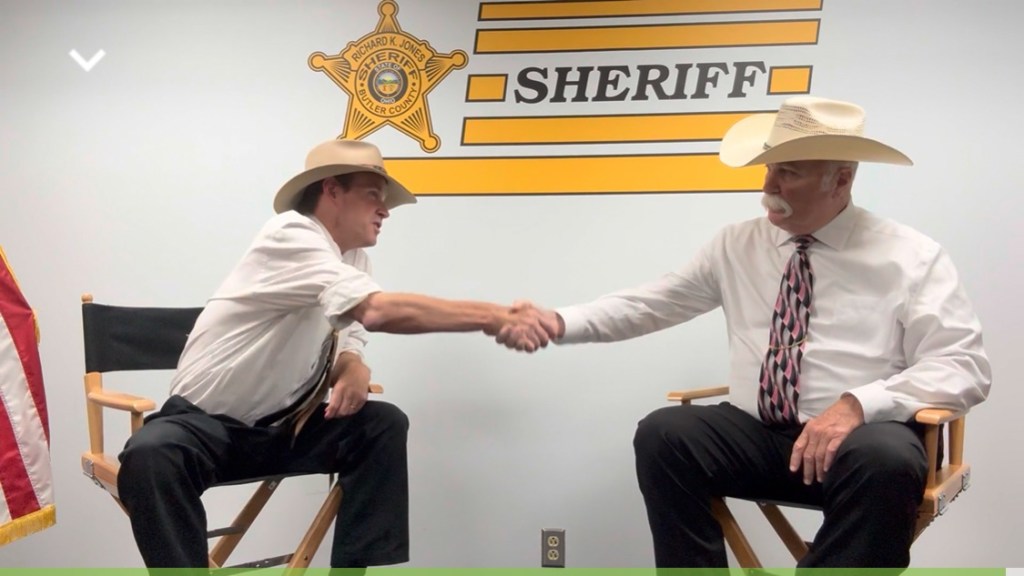
I have been sitting with Sheriff Richard K. Jones’s book for about 24 hours now, turning the pages the way a man turns over an old photograph that still has the power to surprise him. They Call Me Jonesy: Let’s Get Real About Saving America is not a polished political memoir written by committee. It is the voice of a man who has spent a lifetime walking the same ground I have walked in Butler County, speaking the same language of family, order, and personal accountability that once held communities together before the experts decided those things were negotiable. Jones has always been the Sheriff who runs his office the way Andy Griffith ran Mayberry and Marshall Dillon ran Dodge City, with a healthy dose of Waffle House common sense thrown in for good measure. You show up, you tell the truth, you do the job, and you do not apologize for the results. That approach has kept Butler County safer than most places that spend three times the money and twice the consultants, and it is why so many of us who live here still call him simply Jones.

What kept pulling me back to the book was not the policy talk or the war stories about the jail, though those are solid enough. It was the cautionary tales about family and the slow corrosion of the values that once made a man accountable to his own house before he tried to run anyone else’s. Jones and I share a deep and permanent hatred of the drug culture that has hollowed out so many families in this county and across the country. We have both watched too many good people lose children, lose marriages, lose the simple ability to look their grandchildren in the eye without shame. He writes about those losses without the usual soft language of the therapeutic class. He writes like a man who has had to clean up the mess afterward. That kind of honesty is rare now, and it is the reason the book feels less like a campaign document and more like a dispatch from someone who has been on the wall for a long time and is finally willing to say what he has seen.

But the story that made me laugh out loud, the one that sent me straight back to October of 2016, is the one about the night he opened for Donald Trump at U.S. Bank Arena. I was there. Not in the sense that I was sitting in the same row or riding in the same car. I was backstage, working the edges of the same event, trying to find a quiet corner where I could take a conference call with people on the other side of the world while the whole building shook. And I watched the exchange Jones describes in the book unfold in real time.

It was Thursday, October 13, 2016. The Access Hollywood tape had dropped only six days earlier, on October 7, and the professional political class was still in full panic. Most of the Ohio Republican establishment had already decided Trump was finished. They had lined up behind Marco Rubio, Ted Cruz, or John Kasich, the local favorite who was still twisting arms for support even as the primary season was long over. Supporting Trump in those weeks was not the fashionable choice. It was the choice that got you labeled a crank, a risk, a man who did not understand how power actually worked. Senator George Lang, I, and a handful of others had been in that camp early. We had met Trump, sat with him, watched him operate before the primaries even heated up in Ohio. We knew the ground. Most of the smart people in the room did not.

Jones was one of the few who never flinched. By the time the campaign asked him to warm up the crowd at U.S. Bank Arena, the atmosphere was thick with the kind of nervous energy that only comes when the people in charge are not sure the candidate is going to survive the next news cycle. The director of the program that night wanted a script. He wanted to know exactly what the Sheriff was going to say. He wanted control. Jones looked at him the way he has looked at a thousand people who try to put a leash on him and said, essentially, that is not how I work. I talk from the hip. I have been talking all year. You tell me how long you need and I will fill the time. I do not need a teleprompter or your talking points.

I was standing close enough to hear the exchange while they were trying to get me upstairs to a box where I could take that overseas call. Giuliani was somewhere in the mix. The production people were frantic. Trump’s plane was still in the air. The arena was filling from the floor to the upper decks, and the noise was already starting to build. Jones went out there anyway. He did not have a prepared speech. He walked onto the stage and did the thing he has always done: he talked to the people the way a man talks to his neighbors when the subject is serious. Fifteen minutes turned into something closer to thirty. The crowd answered him the way Butler County has always answered him. They roared. From the high box where I finally closed the windows and tried to finish my call, Jones looked like a small figure on a distant stage, but the sound of that arena was impossible to shut out. I had the volume turned up on my headset and still could barely hear the people on the other end of the line. Part of me was irritated that my business meeting was being drowned out by a Sheriff who refused to stay on script. Most of me was very proud.

Trump claimed the crowd that night was 21,000, with thousands more outside who could not get in. Mike Pence put the number around 19,000 the next morning. The arena’s concert capacity sits somewhere in the neighborhood of 17,500, and some of the upper seats behind the stage were empty according to the reporters who were counting chairs instead of energy. The exact headcount is the kind of detail the media loves to argue about when they do not want to talk about what the crowd actually felt. What I saw from that box was a building packed tight enough that the noise had nowhere to go but up. People had not been paid to be there. They had not been bused in. They had decided that the Access Hollywood tape and the coordinated media effort to sink the candidate were not going to decide the election for them. Jones understood that before most of the professionals in the room did.

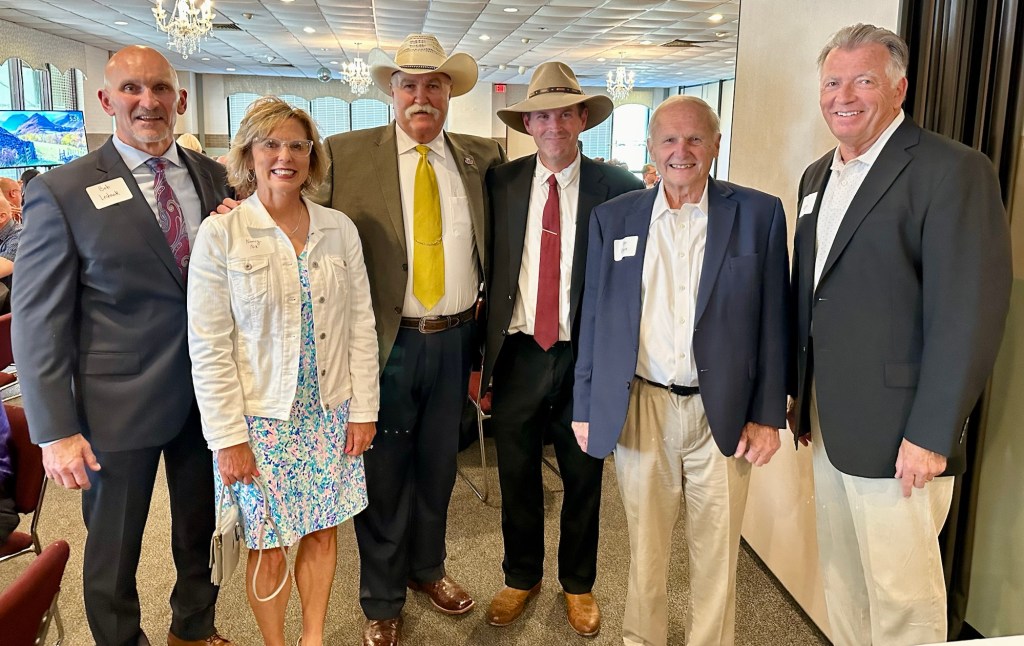
I have watched Jones make hard calls for more than twenty years. We have not always stood on the same side of every primary or every local fight. There have been nights when we were polite but cool because we were representing different candidates or different issues on the ballot. We have always found our way back to the common ground, because the common ground is larger than the temporary disagreements. Supporting Trump when it was still radioactive inside the Ohio Republican Party was one of those moments when the ground became visible. The same people who told us we were going to destroy our own political futures are now the ones who want their picture taken with the man. That is how these things usually go. The smart set picks the wrong horse for the wrong reasons, and then they rewrite the story after the race is over.

Jones has always had a gift for seeing through the fog. When Corey Lewandowski came through Ross’ Big Bull later, the first person he sought out was the same Sheriff who had refused to read from a script on a night when the campaign was still bleeding. That is the kind of quiet authority that does not show up on a résumé. It shows up when the building is full, and the professionals are nervous, and somebody still has to walk out there and speak without a net.

I recommend the book without reservation. Read the parts about family and the slow destruction of the old rules. Read the parts about the jail and the daily work of keeping order in a county that still believes order is possible. And read the part about that night at U.S. Bank Arena, because it captures something essential about the man. He is not a performer. He is not a consultant’s idea of a lawman. He is the product of a certain kind of American stubbornness that refuses to be managed, and on the nights when it matters most, that stubbornness turns out to be the smartest thing in the room.

I was proud of him that night. I am proud of him for putting the story down on paper without sanding off the edges. Some of us were right when it was expensive to be right. Ten years later, it is still a pleasure to remember it.

Footnotes

1.  Richard K. Jones, They Call Me Jonesy: Let’s Get Real About Saving America (publication details as available through standard retail channels, 2025–2026). The account of the U.S. Bank Arena appearance appears in the sections dealing with early Trump support and the political pressures of the 2016 general election campaign.

2.  The Access Hollywood recording was published by The Washington Post on October 7, 2016. See “Donald Trump recorded having extremely lewd conversation about women in 2005,” Washington Post, October 7, 2016.

3.  Attendance estimates for the October 13, 2016, rally at U.S. Bank Arena (now Heritage Bank Center) varied. Trump publicly claimed 21,000 inside with additional thousands outside; Mike Pence cited approximately 19,000 the following day. Contemporary reporting noted the arena’s concert configuration capacity near 17,500 and observed some empty upper-level seats. See “How many people attended Trump’s Cincy rally? No one seems to agree,” WCPO, October 13–14, 2016; and arena capacity data from Heritage Bank Center / U.S. Bank Arena historical records.

4.  Photographic and contemporaneous coverage confirming Sheriff Jones’s appearance as a speaker that evening can be found in the Cincinnati Enquirer photo gallery, “Trump supporters rally at U.S. Bank Arena,” October 13, 2016, and related local television reports from WCPO and WLWT.

5.  On the broader context of early Ohio support for Trump amid establishment resistance, see contemporaneous reporting on the positions of figures such as then-Senator Rob Portman, Governor John Kasich, and local Republican organizational dynamics in the weeks following the Access Hollywood release.

Selected Bibliography for Further Reading

Jones, Richard K. They Call Me Jonesy: Let’s Get Real About Saving America.

Fahrenthold, David A. “Trump recorded having extremely lewd conversation about women in 2005.” The Washington Post, October 7, 2016.

“How many people attended Trump’s Cincy rally?” WCPO 9 News, October 2016.

Heritage Bank Center (formerly U.S. Bank Arena) venue history and capacity documentation.

Rich Hoffman

More about me

Click Here to Protect Yourself with Second Call Defense https://www.secondcalldefense.org/?affiliate=20707

About the Author: Rich Hoffman

Rich Hoffman is an author, political consultant, and strategic advisor based in Cincinnati, Ohio, and the creator of The Politics of Heaven—a unique framework that connects biblical theology, ancient history, and modern power structures to explain how moral alignment and spiritual forces shape global events. Blending real-world political experience with deep research into archaeology, UFO phenomena, and suppressed historical narratives, Hoffman offers compelling commentary on topics ranging from ancient civilizations and the Dead Sea Scrolls to modern populist movements, paranormal continuity, and leadership strategy in chaotic environments. As the author of The Gunfighter’s Guide to Business and the forthcoming Politics of Heaven, he brings a grounded yet provocative voice to media discussions, supported by firsthand experiences and a cross-disciplinary approach that bridges science, history, and theology. For interviews, speaking engagements, or expert analysis, visit richhoffmanbooks.com or contact directly via phone at 513-307-5815 or email at rhoffman@richhoffmanbooks.com.  If you’ve seen the movie, Disclosure Day and want to talk about it and the implications of Presidnet Trump’s UAP disclosures, let me know and we can bring some color to your coverage. https://richhoffmanbooks.com/media-inquiries-broadcast-topics-and-contact-info/?frame-nonce=ad51e7ecba I do have a firsthand UFO encounter to discuss.
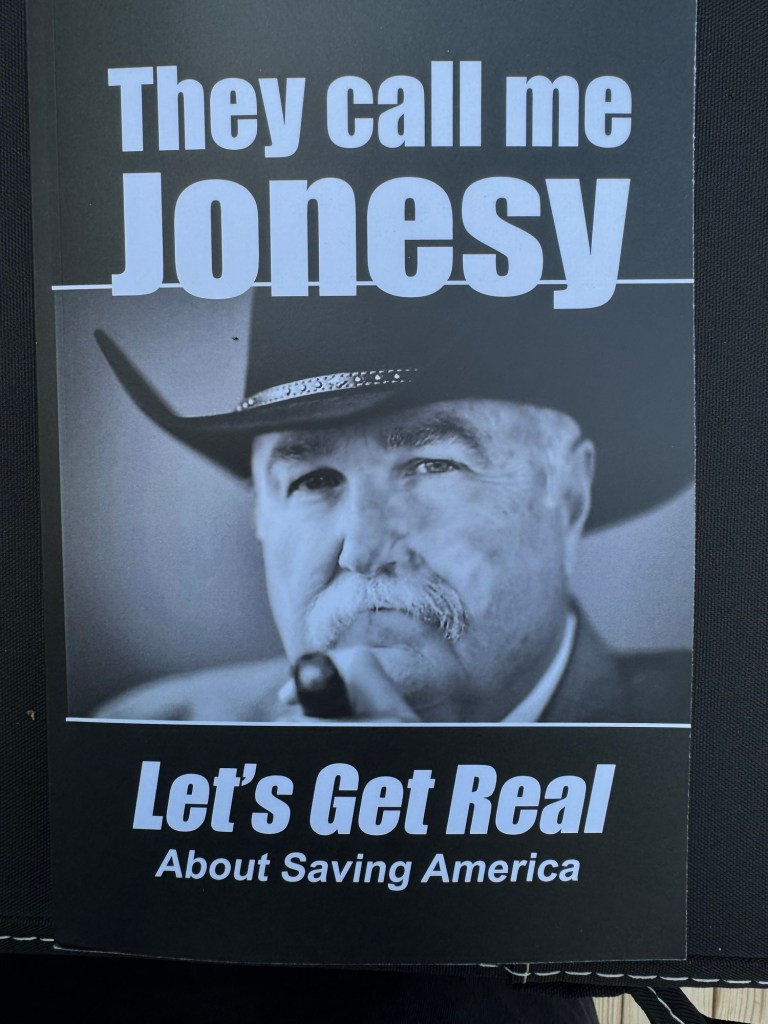
Sheriff Jones’ New Book: The Treasure of Butler County, Waffle House, Andy Griffith, and Gunsmoke all wrapped up into one person

I first learned that Sheriff Richard K. Jones had put a book out when a few people in the county mentioned it in passing, and the moment I heard the title I knew I would read it. They Call Me Jonesy: Let’s Get Real About Saving America arrived on the front porch the day my family and I returned from being out of town at Put-in-Bay, in Ohio. I had ordered it so it would be waiting, because I had already promised myself and others that I would get through it promptly. After more than two decades of knowing the man, shaking his hand at events, watching him work a room in that cowboy hat of his, and hearing him on WLW or in national spots talking immigration and law and order, I still carried questions about how he became who he is, what shaped the priorities he brings to the office every morning, and how a man decides day to day what matters most when the badge is on. The book answered more of those questions than casual conversation ever could.

What struck me first is that this is not merely a campaign volume or a greatest-hits collection of media appearances. It reads like a man who has spent a lifetime speaking into microphones and cameras finally realizing that the voice does not last forever. There is a quiet urgency underneath the stories. He talks about the burial plot, about the friend at the funeral home who will one day see him prepared for the last service. He is only a little more than a decade older than I am, yet the public job ages a person in ways private life does not. Six terms as sheriff of Butler County, with the possibility of more, still brings the knowledge that one day the hat comes off for the last time. Writing the book becomes a way of leaving the voice behind so that the things he believes still matter after the daily briefings and the press conferences stop. 

I have always liked the Gunsmoke in him. He admits the debt openly. The old black-and-white shows, the clear line between the man who upholds the law and the men who break it, the sense that a sheriff walks the street and talks to people and puts things right when he can. Andy Griffith is there too, the Mayberry instinct to put an arm around the troubled soul and try to set him back on the path. Those two shows formed a generation of men who believed law enforcement could be both firm and decent. Jonesy lives that combination more than most. He is black-and-white on the big questions. Drugs destroy families and communities; illegal immigration brings more of the same; the jail is full of people who made choices that wrecked their own lives and the lives of others. Yet the book reveals a softer edge than the public persona sometimes allows. He is a compassionate conservative in the older sense of the term. He wants the county to feel more like the place he grew up, where most of the kids he knew had parents who stayed married twenty or thirty years and worked through their troubles instead of walking away at the first hard stretch. 

That observation about divorce rates is one of the strongest passages. He watched the numbers climb across his adult lifetime and saw the downstream damage in the jail, in the overdose calls, in the children who never had a stable home to push against. Stable families produce the work ethic and the self-control that keep a community from tipping into chaos. When the marriages fracture as a matter of course, the sheriff’s office ends up dealing with the wreckage. He does not present himself as a sociologist, but the pattern is plain to anyone who has spent decades answering the same kinds of calls. The data back the instinct. The sharp rise in divorce after the introduction of no-fault laws, the parallel growth in single-parent households, and the measurable links to higher rates of juvenile trouble, drug use, and later criminality are not left-wing inventions or right-wing inventions. They are simply what happened. 

I share the same cultural memory. I grew up with Gunsmoke playing in the background at my grandparents’ place near Oxford, rabbit ears and all, the same black-and-white morality on the screen while the adults talked about the real world. The shows did not prepare a man for the full depth of certain modern evils. Pornography addiction of the kind that turns a phone into a nonstop delivery system, and the further slide into the sexual exploitation of children, sit outside the frame of those old stories. Jonesy is of an era when a teenager might sneak a look at a dirty magazine on a high shelf in an old bookstore hoping that the cashier wouldn’t catch them. The scale and the numbness of what exists now are harder for that generation to metabolize, not because the men lack courage, but because the evil itself is newer in its accessibility and its intensity. He is devastatingly clear on drugs. On the deeper sexual corruptions that have grown in the last thirty years, the book leaves the impression of a man who sees the damage and still struggles to find language adequate to the thing itself. That is not a failing of character. It is the honest limit of a worldview formed before the internet made every darkness instantly available.

His record on the drug side is long and consistent. The seizures, the public messaging, the refusal to treat overdose deaths as inevitable background noise, all of it tracks with the same black-and-white view. He has been equally consistent on illegal immigration, which is why the national media found him useful for color and why the comparisons to Joe Arpaio sometimes surface. Arpaio paid a political and legal price for enforcing the same principles under a different administration; the pardon that followed was a recognition that the prosecution had been selective. Jonesy has not faced that level of federal hostility, and Butler County is not Maricopa. The local political climate has allowed him to keep doing the work. I expect him to keep winning as long as he wants the job, and I hope that is for a good while yet. The county is better for his presence. 

There is a section on the COVID years that brought back the tension of those days. He kept the office functioning, kept the messaging straightforward, and refused to let the panic dictate every decision. Leadership under that kind of pressure reveals the man. The same instinct shows up in the smaller habits. He likes the Waffle House on Main Street in Hamilton enough that they named an omelet after him. I understand the attraction. Walk in, sit at the counter, talk to the cooks and the waitresses and whoever else is there about the country and the county and what needs fixing. It is the modern version of the saloon without the whiskey, a place where a sheriff can still be a citizen among citizens. I took my granddaughter to a Waffle House on a trip toward Columbus for the same reason. The American flags and the unapologetic patriotism on the walls feel like home. Jonesy belongs in that atmosphere the same way he belongs in the cowboy hat.

The book is full of the personal details that never surface in a sound bite. Garfield High School. The long marriage. The children and grandchildren. The zoo trips. The quiet pride in having built a life that looks something like the ones he saw around him as a boy. He is not trying to present himself as a sophisticated theorist. He is trying to say that the old model still works if enough people insist on it. Strong families, clear laws, a sheriff who shows up every day ready to lock up the people who refuse to live by them, and a willingness to put an arm around the ones who might still be pulled back. That combination is rarer than it should be.

I have found myself on the opposite side of primary fights from time to time, the normal friction of people who share a party but not always a candidate. None of that changed the basic respect. The man has brought real public relations value to the office and to the county. When national outlets need a sheriff who will speak plainly about the border or the drug crisis, they know where to find him. Locally he has kept the department visible and the standards high. The book makes plain that the visibility is not an end in itself. It is a tool for keeping the public on the side of the people who have to make the hard calls at three in the morning.

Some of my favorite people. And I never get tired of Sheriff Jones.

What lingers after the last page is the sense of a man measuring the distance between the county he inherited and the county he will leave. He wants the next generation of law enforcement and the next generation of citizens to remember that the job is still worth doing it the old way. The book is his attempt to make that memory portable. It is not perfect. No book written by a working sheriff in the middle of the job is going to be. It is honest in the places that matter. The love of the old shows, the sadness over the collapse of stable families, the daily refusal to treat drug dealers as unfortunate victims of circumstance, the recognition that the voice will one day go quiet, all of it lands cleanly.

If the goal is still to make the country better starting from the ground up, then more sheriffs who think like this would help. Fix the families and a large part of the downstream crime and addiction begins to shrink. Keep the border and the drug pipelines under pressure. Keep the local office present and accountable. Jonesy has practiced that combination for a long time in one midwestern county. The book lets the rest of the country see the method without the filter of a three-minute television hit. I finished it glad I had waited for the porch delivery, and gladder still that the man who wrote it is still on the job. Butler County has been better for it. The country would be better if more places had the same standard.

I will keep endorsing him for as many terms as he chooses to run. The hat still fits. The instincts are still sound. And the book ensures that even after the last term the voice remains available to anyone willing to listen.  Which they should. 

Notes

1.  Richard K. Jones, They Call Me Jonesy: Let’s Get Real About Saving America (2026). Official description and author framing appear at theycallmejonesy.com and the Amazon listing for the title.

2.  Biographical details drawn from the Butler County Sheriff’s Office official profile and contemporary reporting: born October 11, 1953, Hamilton, Ohio; military service 1973–1975; long career in Ohio corrections before becoming chief deputy and then sheriff in 2005; multiple reelections including the 2020 cycle that secured a fifth term.

3.  Comparison to Joe Arpaio references the 2017 presidential pardon following the contempt conviction tied to immigration enforcement practices under the prior administration. See White House statement of August 25, 2017, and contemporaneous coverage.

4.  Historical divorce and family-structure trends are well documented in Census and CDC data showing the post-1960s acceleration after no-fault divorce reforms, the rise in single-parent households, and correlated social outcomes. See also the long-term cultural commentary in works such as Charles Murray’s Coming Apart and the earlier observations of Daniel Patrick Moynihan.

5.  Jones’s public commentary on immigration, fentanyl, and COVID-era policy is extensively recorded in local outlets (Journal-News, Local 12), national appearances, and the sheriff’s own podcast In the Saddle.

Bibliography for Further Reading

Arpaio, Joe, and Tom Fitton. Joe’s Law: America’s Toughest Sheriff Takes On Illegal Immigration, Drugs, and Everything Else That Threatens America. New York: AMACOM, 2008.

Murray, Charles. Coming Apart: The State of White America, 1960–2010. New York: Crown Forum, 2012.

Moynihan, Daniel Patrick. The Negro Family: The Case for National Action. Washington, D.C.: U.S. Department of Labor, 1965. (The original memorandum remains foundational for understanding family-structure effects on social outcomes.)

Putnam, Robert D. Our Kids: The American Dream in Crisis. New York: Simon & Schuster, 2015.

Sheriff Richard K. Jones. Official biography and news archive at butlersheriff.org.

They Call Me Jonesy official site: theycallmejonesy.com.

U.S. Census Bureau and National Center for Health Statistics historical tables on marriage, divorce, and household composition, 1950–present.

Vance, J.D. Hillbilly Elegy: A Memoir of a Family and Culture in Crisis. New York: Harper, 2016. (Useful companion reading on the cultural and family pressures in the broader Ohio Valley region.)

Rich Hoffman

More about me

Click Here to Protect Yourself with Second Call Defense https://www.secondcalldefense.org/?affiliate=20707

About the Author: Rich Hoffman

Rich Hoffman is an author, political consultant, and strategic advisor based in Cincinnati, Ohio, and the creator of The Politics of Heaven—a unique framework that connects biblical theology, ancient history, and modern power structures to explain how moral alignment and spiritual forces shape global events. Blending real-world political experience with deep research into archaeology, UFO phenomena, and suppressed historical narratives, Hoffman offers compelling commentary on topics ranging from ancient civilizations and the Dead Sea Scrolls to modern populist movements, paranormal continuity, and leadership strategy in chaotic environments. As the author of The Gunfighter’s Guide to Business and the forthcoming Politics of Heaven, he brings a grounded yet provocative voice to media discussions, supported by firsthand experiences and a cross-disciplinary approach that bridges science, history, and theology. For interviews, speaking engagements, or expert analysis, visit richhoffmanbooks.com or contact directly via phone at 513-307-5815 or email at rhoffman@richhoffmanbooks.com.  If you’ve seen the movie, Disclosure Day and want to talk about it and the implications of Presidnet Trump’s UAP disclosures, let me know and we can bring some color to your coverage. https://richhoffmanbooks.com/media-inquiries-broadcast-topics-and-contact-info/?frame-nonce=ad51e7ecba I do have a firsthand UFO encounter to discuss.
Trump Put out the Evidence: How can media companies claim it’s all false before they actually read it?

I sat there the other day listening to the typical pre-speech coverage of President Trump’s primetime address on election security, and it was the same tired script I’ve heard for years now. The reporters and anchors could barely contain their eagerness to frame it as the desperate act of a man who cannot bring himself to abandon the most unpopular policies, no matter how toxic they may be for his own people running for reelection or for the party itself. They talked about his “gambit,” about how he was going to try to convince Republicans that the sky is falling on voting machines and foreign influence, and they already had the line ready: the president is expected to release declassified intelligence about China’s role, but of course it will all be false. How do they know it’s false before anyone has even looked at the documents? Because the network producers and the people who own those networks already decided it was false. That network of people is the real problem. They take bits and pieces, glue them together into a predetermined conclusion, and then run with it as if they have done any real analysis. One thing Donald Trump is not incapable of is putting actual evidence in front of the American people. That was the coverage before the speech even aired, right in the middle of July, while Trump was still out there logging the hours and trying to lock in the system’s security for the long haul. It is disconcerting, and it is exactly why I have spent more time than most going down the rabbit hole of what is really running our political order. When every talking head gets the same memo and says the same thing about elections, you start to wonder whether they are all that stupid or whether a lie can be denied until you die and everybody will play along.

We have known Democrats have been cheating for decades. It was not invented in 2020. I knew something was fishy in 2012. I knew it again in 2016 when Trump obviously won Florida. The panhandle results came in early, and they were overwhelmingly Republican, just as anyone who understands the state would expect. Then you had the usual delays out of the bigger Democrat-leaning counties, Brevard and the rest, where the reporting slowed to a crawl on election night. What they found was that Trump’s lead was too large to overcome with the remaining ballots, so they finally had to turn the results in. This was before COVID and the great expansion of mail-in ballots, signature verification theater, and the endless counting until the other side got what it needed. We just kept counting. That is the pattern. Now people are paying closer attention, and the same act is still necessary for Democrats and the media that cover for them. I heard the ABC reporter come straight out and say the President of the United States was going to give an address to the nation on Thursday night talking about the SAVE Act and election security, and the framing was already that he was pushing something false. Trump is not going to run again. He will be well into his eighties when he leaves office. He has done the job he set out to do and will ride off into the sunset. So why does he care so much? Because the midterms are lining up to be an overwhelming Republican year if the elections are actually secure. Democrats are going to have a hard time if everybody is watching the results carefully. I will say it again: if you are a Republican and you do not want to have to compete against another Democrat who should never have been on the ballot, you need to pay attention to making these elections as secure as possible. They cannot cheat if the system will not let them. How do you know they have been cheating? You can tell by the way the coverage is handled. They know something is there. The same ABC voice that said “President Trump falsely claims there was election fraud in 2020” did not wait to examine the evidence he was about to release. They just declared it false. Trump does not need a personal reason beyond the upcoming midterms and the simple fact that he does not want Democrats taking the House through the same methods they have used for years. The projections already lean Republican, but those projections assume a relatively clean process. Force voter ID. Make people show identification to vote. Why is that so controversial? Because Democrats cannot win if they cannot cheat, and that is a real problem that has been with us not just for a few years but for decades. That is how they have kept it close since Reagan was in office.

Both Bushes knew it was going on, and the Republican establishment did not stand up for itself. I am not a typical Republican in that sense. I knew Rob Portman pretty well before he became a senator, and I watched him drift. You get to Washington, and people start leaning on you. You start sympathizing with the other side a little. You eat lunch with them every day in the cafeteria. They have good hamburgers down there, by the way. You stand in line with the people you are supposed to be fighting, and they talk about the movies and their kids and where the kids are going to college. You develop a liking for them. Pretty soon you are voting more similarly than you ever intended, and you might even suspect that some of them only got into office through fraud, but you do not want to see them embarrassed. You do not want to expose it because friendships have formed. Fair enough. It happens in almost every industry. But that is not what voters are voting for. Voters want representative government. When you soft-pedal the problem, you are voting not to give it to them. The 2020 election was the clearest case yet of the system deciding that President Trump would not be allowed a second term, so they threw him out. They rigged it the way they do in other nations, the way Russia and much of Europe keep their people in power. Democrats have kept it close in the United States through election fraud for many decades, and reporters are being deliberately disingenuous when they refuse to admit it. They know it. When they come out and say “President Trump falsely claims” before they have even looked at the reports he just released, they are not doing journalism. They are taking the corporate byline and running with it. He put the evidence out there. No one analyzed it. They just declared the claim false.

I happen to know precisely where a lot of the theft took place, and there were a lot of crooks involved. Now that more people are open to looking at it, we have to talk about it and make sure it doesn’t happen again. That is what Trump’s national address was about: why we need secure elections, what we have learned, and what needs to happen going forward so the SAVE Act can finally pass. He went to the public and laid it out, and the criticism from the media types was extraordinary in its uniformity and its arrogance. How do they have the right to say he provided evidence of fraud involving China and then act as if they already know more than he does? They were given a line by the producers and the owners of their media companies: Trump is crazy, there was no election fraud in 2020, even though everybody who has looked at the data knows there was an abundance of it. Most Democrats currently in office should not be there because the elections that put them there were compromised. Look at Kentucky. The teachers’ unions and the college towns in Louisville, Lexington, and Frankfort were able to push a candidate over the top with enough votes collected without proper identification. Anywhere you have low election security, you are going to find Democrats excelling and winning even when the broader population is not actually voting for them. That is the problem. If you do not have secure elections, you do not have representative government. You have a system that has seized power and is using its influence to destroy the free will of the voters. That is not acceptable. Before you say “he falsely claims,” you should at least look at the evidence. Trump put it out. There is a lot of it.

The documents released with the speech show that over a period of years starting in the 2020 cycle, China carried out what is described as the largest compromise of election data in history, acquiring roughly 220 million U.S. voter files. Those files included names, home addresses, phone numbers, political party preferences, and other sensitive data that could be used to register voters or engage in other forms of interference. Intelligence assessments indicated that China assigned a specific data-exploitation unit to the project. U.S. agencies began learning about the compromise of tens of millions of voters’ data across 18 states as early as 2020, yet the information was suppressed and downplayed. The same set of documents underscores long-known vulnerabilities in electronic voting and ballot-counting systems. Adversaries including China, Russia, Iran, and North Korea can compromise election infrastructure, particularly centralized repositories such as voter registration databases, poll books, and official election websites. A DHS review of available state voter rolls and public records identified approximately 278,000 non-citizens registered to vote in federal elections, and the actual number is almost certainly higher because several Democrat-controlled states refused to share their full files. These are not fringe theories. These are the findings that the administration declassified and put before the country. The media response was to declare the claims false before the public had time to read a single page.

That is the conspiracy. The people who run the corporations that own the major media outlets want to reserve the right to insert Democrats into office and play kingmaker through illegal or insecure election means, whether through machines, mail-in ballots with no reliable chain of custody, or perpetual counting that continues until the desired margin appears. There is no voter ID on many of these ballots, so votes can be manufactured until the numbers work out. There is a great deal of evidence that this is exactly what has happened in multiple cycles, and it is a big story. A primetime address should have received far more serious treatment. Instead, you see how the media handled it, because they are part of the problem. Corporations want to control who gets into office, which is why so many policy outcomes look the way they do. It is not because we freely chose them. It is because the system has been captured by people who treat free elections as an obstacle rather than the foundation of self-government. Free and secure elections are how a people maintains its own government. They are taking that away, and that is why Trump went on primetime and talked about it. We had a hard lesson in 2020. We are still fiddling around with the facts when we should have taken decisive action years ago. He went to the airwaves because the matter is serious, and it will remain serious for every election going forward.

The media voices who dismiss all of this without examination are in bed with the same forces trying to rob people of their ability to maintain their own government through honest elections. That is supposed to stay here. Until we address it, we will keep having the same problems. The SAVE Act needs to pass. If you are serious about representative government, demand it. Call your representatives. Pay attention to the midterms. Make the process as hard to cheat as possible. That is the only way the people who actually show up and vote get the government they intend.

If you have ever read my book on business and the gunfighter approach to dealing with reality as it is rather than as the comfortable prefer it to be, you already know where I stand on these matters of discipline and clear-eyed assessment. The larger story of how power actually operates in this country, and the deeper forces that shape the political order, is something I have been exploring at length. Disclosure of the full picture requires understanding the politics of heaven itself. The evidence is there for anyone willing to look past the daily bylines.

Footnotes

1.  Pre-speech and post-speech framing by ABC, NBC, and CNN treated Trump’s claims as predetermined falsehoods; networks declined to air the July 16, 2026, primetime address live on their main channels. See ABC News, “Key takeaways from Trump’s election speech,” July 17, 2026; The Hill, “James Carville criticizes networks for not airing Trump’s election security speech,” July 17, 2026.

2.  On 2016 Florida reporting patterns, panhandle counties reported early and heavily for Trump while certain larger counties lagged; contemporaneous accounts noted the scale of the Republican margin forced earlier reporting. See Politico, “How Trump won Florida,” November 8, 2016.

3.  The SAVE America Act (also referred to as the Safeguard American Voter Eligibility Act) mandates documentary proof of citizenship for registration, photo identification for voting in federal elections, and greater state sharing of voter-roll data. House passage occurred in February 2026; subsequent efforts attached provisions to other legislation amid Senate resistance. See Bipartisan Policy Center, “Six Things to Know About the SAVE America Act,” updated July 17, 2026; Congress.gov, H.R. 7296 and related measures.

4.  White House release accompanying the July 16, 2026, address: “Over a period of years starting during the 2020 election cycle, the People’s Republic of China carried out what is believed to be the largest compromise of election data in history—resulting in China’s illicit acquisition of 220 million U.S. voter files.” Includes names, addresses, phone numbers, and party preferences; intelligence community assessments spanning 2020–2026 document adversary capabilities against election infrastructure. Official White House page, “Election Integrity,” July 2026, and linked declassified packages on China’s acquisition of American voter data and vulnerabilities in electronic voting systems.

5.  DHS review cited in the same release identified approximately 278,000 non-citizens registered to vote based on available state rolls and public records; the administration noted the figure is incomplete because certain states declined full data sharing. White House, “Election Integrity,” July 2026.

6.  Heritage Foundation Election Fraud Database contains more than 1,400 documented, proven instances of election fraud across multiple categories (as of late 2025 updates exceeding 1,600 sampled cases). Heritage Foundation, Election Fraud Map and Database, electionfraud.heritage.org.

7.  Kentucky races have repeatedly featured claims of irregularities concentrated in urban and university-adjacent counties with weaker identification practices; former Governor Matt Bevin and others publicly alleged absentee and machine issues after close contests. Courier-Journal, “What officials, experts say about Bevin’s voter fraud claims,” November 2019; ongoing Kentucky Attorney General election-integrity inquiries, 2026.

8.  Intelligence Community assessments (January 2020 onward) state that U.S. adversaries including China, Russia, Iran, and North Korea possess the capability to compromise election infrastructure, with centralized voter databases and poll books judged most vulnerable: declassified materials released July 16, 2026, White House Election Integrity portal.

Bibliography

ABC News. “Key takeaways from Trump’s elections speech.” July 17, 2026. https://abcnews.com/Politics/key-takeaways-trumps-elections-speech/story?id=134835191.

Bipartisan Policy Center. “Six Things to Know About the SAVE America Act

Rich Hoffman

More about me

Click Here to Protect Yourself with Second Call Defense https://www.secondcalldefense.org/?affiliate=20707

About the Author: Rich Hoffman

Rich Hoffman is an author, political consultant, and strategic advisor based in Cincinnati, Ohio, and the creator of The Politics of Heaven—a unique framework that connects biblical theology, ancient history, and modern power structures to explain how moral alignment and spiritual forces shape global events. Blending real-world political experience with deep research into archaeology, UFO phenomena, and suppressed historical narratives, Hoffman offers compelling commentary on topics ranging from ancient civilizations and the Dead Sea Scrolls to modern populist movements, paranormal continuity, and leadership strategy in chaotic environments. As the author of The Gunfighter’s Guide to Business and the forthcoming Politics of Heaven, he brings a grounded yet provocative voice to media discussions, supported by firsthand experiences and a cross-disciplinary approach that bridges science, history, and theology. For interviews, speaking engagements, or expert analysis, visit richhoffmanbooks.com or contact directly via phone at 513-307-5815 or email at rhoffman@richhoffmanbooks.com.  If you’ve seen the movie, Disclosure Day and want to talk about it and the implications of Presidnet Trump’s UAP disclosures, let me know and we can bring some color to your coverage. https://richhoffmanbooks.com/media-inquiries-broadcast-topics-and-contact-info/?frame-nonce=ad51e7ecba I do have a firsthand UFO encounter to discuss.
The Frogman of Loveland: Down the Rabbit Hole to the Politics of Heaven and Magonia

I did not set out to become the UFO guy. I woke up asking practical questions about power, motivation, and politics—the same way I have solved engineering and organizational problems my entire career in aerospace and executive roles. Something was broken in our understanding of how the world actually works, and I wanted to fix it by following the evidence wherever it led. That path started with the Bible, the divine council, and the politics of heaven itself. It took me through anthropology, local Ohio archaeology along the Little Miami River valley I know so well, and straight into the work of Jacques Vallée. The synchronicity is very interesting.

When I began writing The Politics of Heaven, my goal was straightforward: to understand the motivations of the characters we pray to and interact with in scripture. The Bible is not a collection of moral fables; it is a chronicle of encounters with super-characters—angels, demons, principalities, powers, and the divine council. Job’s story alone shows Satan as a member of that council, maneuvering Yahweh into testing a loyal man. That is politics. Pure, raw politics. If we are going to engage with these forces through prayer, ritual, or culture, we had better know what they want. Human politics is not enough. We need to map the agendas of the non-human intelligences that have been shaping events from the beginning.

That line of inquiry naturally led me to anthropology. Sir James Frazer’s The Golden Bough remains one of my favorite books after years of reading it. It opened the door to how cultures worldwide have interacted with the spirit world—the “great spirit,” ancestors, and other intelligences. Modern anthropology grew out of that comparative study, but it largely stopped at human societies. It cataloged myths, rituals, and shamans without seriously asking whether the beings on the other side of those rituals had their own coherent politics, territories, and long-term strategies. I propose we need a new branch: an anthropology of non-human intelligence and its impact on human history, culture, and current events.

Living here in the Cincinnati area, with deep roots in Butler County and the river valleys, the evidence was literally under my feet and in my backyard. The Little Miami River corridor is thick with Hopewell-era ceremonial earthworks. Fort Ancient sits on a plateau overlooking the river, just a short distance from Loveland and Milford—3.5 miles of precisely engineered earthen walls enclosing roughly 100 acres, with documented astronomical alignments with the solstices and lunar standstills. It was not a fort in the military sense; it was a monumental ritual and observational complex. 

Further down the valley, in what is now Terrace Park, there once stood one of Hamilton County’s largest prehistoric earthworks—an enclosure of about 80 acres along the bluff above the Little Miami. In 1820, it was still visible, six feet high and twelve feet wide at the base. Today, homes, gardens, and part of a school sit atop it. Other mounds in the area were leveled for roads like Wooster Pike or disappeared under development. These were not random piles of dirt. They shared the same sophisticated geometry and mathematics seen at the great Newark Earthworks—precise circles, octagons, and alignments that encoded lunar cycles (the 18.6-year standstill), solar events, and what appears to be practical knowledge of π and equal-area constructions between squares and circles. 

Newark itself is staggering. The Great Circle and Octagon complex once sprawled over several square miles. Researchers like Ray Hively, Robert Horn, Bradley Lepper, and William Romain have documented alignments of breathtaking precision—every major lunar standstill direction embedded in the architecture when viewed over the local horizon. These were not defensive works or casual gathering places. They were cosmic engines, ritual machines designed to connect heaven and earth, time and space. Shamans almost certainly used them in altered states—likely with psychedelics or other techniques—to communicate with the spirit world. The geometry stripped away ordinary filters and tuned the participants to frequencies where non-human intelligences could interact. 

If we had not paved over so many of these sites with neighborhoods, roads, and golf courses, places like the Terrace Park earthwork and others around Milford would rank as world-heritage-level marvels alongside the pyramids or Stonehenge. The precision of their construction, the labor involved, and the astronomical knowledge encoded in them point to something far beyond ordinary tribal engineering. Either the Hopewell independently achieved mathematical and observational sophistication that rivals anything in the ancient world, or they were receiving information and instruction from intelligences that already understood these patterns.

That brings me to the frogman.

Just a few miles upstream and downstream from these lost or buried ceremonial centers along the Little Miami, people have been seeing something that does not fit ordinary biology. In 1955, a businessman near Loveland reported three or four humanoid figures, three to four feet tall, with leathery skin and frog- or lizard-like faces, gathered near a bridge or along the riverbank. One version mentions a wand-like object emitting sparks or light. In 1972, Loveland police officer Ray Shockey encountered a similar being on Riverside Drive near the old Totes boot factory and the river. It stood up in his headlights. His partner, Mark Mathews, later claimed to have shot one; decades afterward, he said it was a large tailless iguana that had escaped a pet owner and was living near warm factory pipes. The legend persisted anyway—scrape marks on guardrails, a creature climbing over or under them and vanishing into the water. In 2016, near Lake Isabella (right across from Indian Hill and close to the old Terrace Park area), Pokémon Go players reported seeing a large, frog-like figure standing on its hind legs. 

My family has turned the Loveland Frogman into a running joke with the grandkids. “Let’s go catch a frogman tonight down by the river.” It is fifteen minutes from the house. We laugh, but the pattern is hard to ignore. These sightings cluster in the exact river corridor where major Hopewell ritual sites once stood—sites now largely erased by modern development. The beings show up looking for something that is no longer there: the shamans, the rituals, the precise geometric invitations that once opened doors between worlds. They arrive a couple of thousand years too late or too early, stepping over guardrails on Kemper Road or near Lake Isabella, still drawn to the old power spots along the Little Miami.

This is where Jacques Vallée enters the story through pure synchronicity. While sharing early drafts of The Politics of Heaven with agents, publishers, and consultants, multiple people independently told me the same thing: “You sound like Jacques Vallée. You need to read Passport to Magonia.” I had avoided deep dives into UFO literature because I did not want to be labeled the UFO guy. I knew Vallée had consulted on Close Encounters of the Third Kind, but I had not read his work. When the book arrived from Amazon the next day—waiting at a distribution center as if it had been pre-positioned—I opened it and immediately recognized the territory.

Vallée’s central argument in Passport to Magonia (1969) is that modern UFO occupants are not new. They are the fairies, elves, sylphs, demons, angels, and aerial beings of folklore repackaged for a technological age. He draws on medieval accounts of ships from Magonia—a legendary realm in the clouds whose sailors collected grain knocked down by storms—and shows the same encounter structure repeating across centuries: aerial craft, non-human entities, interaction (sometimes seductive or revelatory, sometimes disturbing), and departure. The beings adapt their appearance and story to the expectations of the witnesses. They leave physical traces but behave in ways that violate the physics implied by their appearance. They operate as a control system or an influence mechanism, interacting with human consciousness over time. 

Magonia, in Vallée’s reading, functions like a rival sovereignty—a political order operating just outside or alongside our dimensional reality. That matched exactly what my research into the divine council and biblical politics had already led me to conclude independently. These are not simple visitors from another planet dropping in for disclosure or friendly ET chats. They are ultra-terrestrials or interdimensional intelligences with their own agendas, territories, and long game. They have been shaping human culture, religion, and politics for millennia—sometimes as gods or angels, sometimes as tricksters or tormentors. The Hopewell geometers and shamans were engaging them through precise ritual architecture. The frogman sightings suggest they still patrol the old contact zones.

I am not claiming every sighting is profound. Some are misidentifications or hoaxes. But the pattern—ancient ceremonial precision along the same rivers where cryptid activity persists, the synchronicity of arriving at Vallée’s conclusions through biblical and political inquiry, the consistent folklore structure across cultures—demands serious attention. Steven Spielberg captured a sanitized version in Close Encounters and E.T. The cute, friendly aliens who want to take us for a ride or phone home. The real record includes missing time, abductions, trauma, and manipulation. Vallée documented the disturbing side; mainstream disclosure narratives often soften it.

Understanding their politics matters. If these intelligences have motivations—territorial, informational, or influence-based—then treating them as either nonexistent or purely benevolent is a form of strategic blindness. Just as we map human political actors, we need to map theirs. The Bible already does some of that work. Anthropology and archaeology can do more if we stop pretending the “spirit world” was only a psychological projection. The evidence from Newark, Fort Ancient, the lost mounds of Terrace Park and Milford, the persistent frogman activity, and Vallée’s comparative folklore all point in the same direction: non-human intelligences have been here, interacting with us, and they have their own order.

I did not chase this rabbit hole for fame or money. There is little of either in the following evidence, this far outside the box. I followed it because the questions were honest and the evidence was insistent. The Politics of Heaven is the result—a treasure hunt through scripture, history, archaeology, and personal experience that refuses to stop at comfortable boundaries. The synchronicity with Vallée’s work was not a coincidence; it was confirmation that the evidence converges.

We are long past the point where we can afford to dismiss these patterns as mere folklore or swamp gas. The beings that built—or inspired—the precise geometries of the Hopewell earthworks, that still appear along the same rivers in forms adapted to our expectations, and that the Bible chronicles as members of a divine council with political agency, are operating with agendas. Mapping those agendas is not a conspiracy theory. It is the next necessary step in anthropology, political strategy, and honest theology.

The frogman is still out there, or something like him. The old sites are still under the neighborhoods. And the politics of heaven—and of Magonia—continue whether we pay attention or not.

Footnotes (selected key references; full bibliography follows):

1.  Jacques Vallée, Passport to Magonia: From Folklore to Flying Saucers (1969; various editions). Core thesis on continuity between UFO occupants and historical aerial beings/fairies from Magonia and similar traditions.

2.  Reports on Loveland Frogman: Singular Fortean Society coverage of 1972 officer sightings (Shockey/Mathews); WCPO 2016 interview with Mathews identifying the shot creature as a large iguana; 1955 Stringfield report of businessman sighting near Loveland/Little Miami bridges; 2016 Pokémon Go sighting near Lake Isabella.

3.  Terrace Park earthwork: Historical Society of Terrace Park records noting a large ~80-acre enclosure visible into the 19th/20th century, now largely covered by development, homes, and school grounds—other local mounds destroyed by road construction.

4.  Fort Ancient: Descriptions of hilltop enclosure overlooking Little Miami River, ~3.5 miles of walls, astronomical alignments (solstice, lunar). See National Park Service and archaeological summaries.

5.  Newark Earthworks geometry and astronomy: Foundational work by Ray Hively and Robert Horn (1982 onward) on lunar standstill alignments in the Octagon; Bradley Lepper and William Romain on geometry, “squaring the circle” relations, cosmic/ritual function, pilgrimage center aspects. UNESCO World Heritage designation for Hopewell Ceremonial Earthworks (2023) includes several Ohio sites.

6.  Hopewell culture context: Widespread ceremonial earthworks across Ohio river valleys (Scioto, Little Miami, etc.), ~200 BCE–500 CE, advanced mathematics, astronomy, trade, likely shamanic ritual use of geometry and altered states. Many sites were lost to agriculture and urban development.

7.  Biblical references: Job (divine council politics, Satan as a member testing Yahweh’s servant); broader Enochic and prophetic traditions on principalities, powers, and heavenly politics.

8.  Frazer, James George. The Golden Bough (various editions). Foundational comparative study of myth, ritual, and interaction with spirit/great spirit across cultures; inspiration for expanded anthropology.

Bibliography (selected; expands on footnotes for depth):

•  Vallée, Jacques. Passport to Magonia.

•  Hively, Ray, and Robert Horn. “Geometry and Astronomy in Prehistoric Ohio.” Journal for the History of Astronomy: Archaeoastronomy Supplement (1982 and subsequent papers).

•  Lepper, Bradley T. Multiple works on Newark Earthworks as ceremonial landscape, pilgrimage center, and geometric/astronomical achievement.

•  Romain, William F. Works on Hopewell geometry, astronomy, cosmology, and Fort Ancient.

•  Squier, Ephraim George, and Edwin Hamilton Davis. Ancient Monuments of the Mississippi Valley (1848). Foundational survey including Ohio earthworks.

•  Historical Society of Terrace Park records on local prehistoric earthworks.

•  Singular Fortean Society, WCPO, and contemporary newspaper accounts of Loveland Frogman incidents (1955, 1972, 2016).

•  National Park Service and Ohio History Connection materials on Fort Ancient and Hopewell sites.

•  Frazer, James George. The Golden Bough.

•  Biblical texts (Job, Enoch traditions, references to divine council and principalities).

Rich Hoffman

More about me

Click Here to Protect Yourself with Second Call Defense https://www.secondcalldefense.org/?affiliate=20707

About the Author: Rich Hoffman

Rich Hoffman is an author, political consultant, and strategic advisor based in Cincinnati, Ohio, and the creator of The Politics of Heaven—a unique framework that connects biblical theology, ancient history, and modern power structures to explain how moral alignment and spiritual forces shape global events. Blending real-world political experience with deep research into archaeology, UFO phenomena, and suppressed historical narratives, Hoffman offers compelling commentary on topics ranging from ancient civilizations and the Dead Sea Scrolls to modern populist movements, paranormal continuity, and leadership strategy in chaotic environments. As the author of The Gunfighter’s Guide to Business and the forthcoming Politics of Heaven, he brings a grounded yet provocative voice to media discussions, supported by firsthand experiences and a cross-disciplinary approach that bridges science, history, and theology. For interviews, speaking engagements, or expert analysis, visit richhoffmanbooks.com or contact directly via phone at 513-307-5815 or email at rhoffman@richhoffmanbooks.com.  If you’ve seen the movie, Disclosure Day and want to talk about it and the implications of Presidnet Trump’s UAP disclosures, let me know and we can bring some color to your coverage. https://richhoffmanbooks.com/media-inquiries-broadcast-topics-and-contact-info/?frame-nonce=ad51e7ecba I do have a firsthand UFO encounter to discuss.
The Resonance of Exceptional Sound: John Williams, the Art of the Film Score, and the Music That Refuses to Be Mediocre

I have always believed that the music which moves me most deeply is not the disposable pop that floods the airwaves and algorithms, but the symphonic scores crafted for great films. These orchestral works possess a unique power to resonate. They do not merely accompany the images on screen; they complete them, giving emotional weight and narrative propulsion to stories that might otherwise remain flat. They fill the spaces between dialogue and action with something larger than life, something that lingers in the mind and spirit long after the theater lights come up. In a culture saturated with catchy but ultimately empty beats designed to hypnotize rather than elevate, these scores stand apart as acts of genuine artistry.

Right now I am listening, as I have nearly every day since its release in June, to the soundtrack for Steven Spielberg’s new film Disclosure Day. Once again, at the age of ninety-four, John Williams has delivered something astonishing.  The orchestration is smart and purposeful, the pacing precise, the way the music weaves itself into the story’s fabric nothing short of genius. There is a contemplative main theme tinged with Americana that grounds the middle-American setting, eerie string passages that echo earlier sci-fi explorations, and moments of darker dissonance that speak to forces trying to suppress hidden truths. There are chases and revelations, wordless choral passages, and a large symphonic ensemble of ninety-six players recorded over months rather than the usual frantic weeks. Even in its more restrained passages—music that, as Spielberg has described it, accompanies the film from slightly behind, giving it a subtle nudge forward rather than dominating—it carries that unmistakable Williams signature: it makes you feel the weight of what is at stake. 

This latest score, their thirtieth collaboration stretching back more than half a century to The Sugarland Express in 1974, feels like both a culmination and a gift.  It arrives at a moment when the film itself grapples with disclosure, with non-human intelligence, with truths long kept in shadow. The music does not sensationalize; it deepens. It reminds us that some stories require more than spectacle. They require a composer who understands how to make the unseen feel present, how to turn tension into transcendence.

I have loved Williams’ work for as long as I can remember, but one cue in particular has lived with me for over thirty years: “Desert Chase” from Raiders of the Lost Ark. I have listened to it countless times, including this very morning. It never grows old. In that relentless, driving music, you hear the truck barreling through the canyon, the Nazi driver pushing gears, the dust and violence and desperate ingenuity of Indiana Jones. Thrown from the vehicle, he finds a way back underneath it, fights his way forward, and seizes control. The cue builds through key changes that ratchet up the intensity, like a truck driver shifting up, until it resolves in hard-won triumph. Williams captured something essential there: exceptional tenacity. The refusal to quit when every force is arrayed against you. The ability to resurrect yourself from the dirt, climb back into the fight, and take the prize. That is not just action music. It is a philosophy rendered in orchestra.

I remember standing in an eighth-grade English class when the assignment was to share our favorite song. Classmates spoke of current hits—the Police, Van Halen, whatever dominated the radio that year. When my turn came, I said, without hesitation, “Desert Chase” by John Williams. There were puzzled looks. It was not what anyone expected, and it was not what the culture was steering us toward. But it was the truth. Even then, I knew the difference between music that merely entertains for three minutes and music that tells a story of struggle and victory, that makes you believe in the possibility of overcoming. My oldest daughter later slept with the Raiders of the Lost Ark soundtrack playing in her room; I could hear those themes drifting down the hall, the same composer who had already shaped so much of what I valued in storytelling.

What made Williams different from so many others who toiled in Hollywood before Jaws and Star Wars made him a household name? He had already built a substantial body of work—scores for television, for films like Daddy-O, Valley of the Dolls, The Reivers, the innovative Jane Eyre, disaster epics such as The Poseidon Adventure, Earthquake, and The Towering Inferno, and his first collaboration with Spielberg on The Sugarland Express.  He was no unknown. He had won an Oscar for his work on Fiddler on the Roof. Yet many in the industry, particularly those operating by committee consensus, did not see the full measure of his gift. They judged him against the mediocre output that surrounded them and found him wanting because he refused to stay within those narrow bounds.

I recall profiles and television pieces from the mid-1980s, around the time he was scoring Indiana Jones and the Temple of Doom, that tried to unpack why he succeeded where others plateaued. The answer was always the same: he was exceptional, and exceptional talent is often invisible or threatening to those who measure everything by average standards. Corporate and studio cultures built on consensus, consultants, and committee decision-making tend to produce safe, forgettable products. George Lucas has spoken recently about how studios now hire rooms full of people to make films by committee, with screenwriters chasing paychecks and delivering whatever the money wants. The result is rarely inspired. Most studios passed on Star Wars entirely; they did not understand it and saw only risk. Twentieth Century Fox took the chance largely because of Lucas’s prior success with American Graffiti, not because executives grasped the epic vision.  They undervalued what they could not immediately commodify.

Williams endured years of that environment. Mediocre people in positions of power often surround themselves with other mediocre people; it makes them feel less exposed in the mirror. They promote the average because true excellence makes them uncomfortable. They criticize work that aims higher as “too elevated” or not what “the public wants,” when what they really fear is being outshone. Committees become hiding places for those who lack the intuition or courage to back a singular vision. Williams kept working, kept refining his craft, kept writing music that filled narrative with emotional truth rather than wallpaper. It was only when he partnered consistently with other exceptional talents—Spielberg chief among them—that the string of iconic scores began to flow in full public view. But the genius had been there all along.

Spielberg’s particular gift as a director is his ability to recognize and elevate exceptional collaborators rather than constrain them. He does not manage by committee, noting that it dilutes everything to the lowest common denominator. He trusts the people who are operating at a higher level and lets them do what they do best. The result is work that consistently rises above the average—often far above. Their partnership across thirty films has produced some of the most memorable cinematic experiences of the last half-century precisely because it has been a meeting of two minds that value quality over consensus.  In Disclosure Day, even as Williams works in a more restrained mode for much of the score, the moments of power still feel earned and inevitable. Spielberg has called scoring the reward at the end of making a film—the chance to hear what Williams will bring. That trust, that mutual elevation, is rare in an industry that too often punishes it.

This is why Williams’ music has always resonated so strongly with me. It embodies the same principles I have written about elsewhere: the development of intuition that lets you act decisively and accurately, the refusal to settle for mediocrity, the willingness to impose will and vision on circumstances rather than waiting for permission or group approval. In The Gunfighter’s Guide to Business, I explored what it takes to rise above the common level, to shoot from the hip with precision because you have done the hard work of mastery. Williams’ career is a master class in that. He did not wait for the culture to catch up. He kept composing at the highest level, and eventually the culture—or at least the audiences and the exceptional partners—caught up with him.

Listening to this new score, I feel fortunate. For a man well into his nineties to pour such care, such detail, such soul into more than two hours of music—recorded across seven sessions over six months with a full orchestra, wordless choir, and meticulous attention to every nuance—is remarkable.  I wish there were ten or twenty more to come. If this proves to be among the final chapters, it is a worthy one. His legacy is already secure: a body of work that has taught generations what great film music can do. It elevates ambition. It makes us believe we can overcome the truck that tries to run us over, find our way back into the fight, and claim something greater than we were handed.

In a world that often seems engineered to flatten the exceptional and reward the safe, John Williams has spent a lifetime doing the opposite. His music does not pander. It invites us upward. That is why I have never tired of “Desert Chase,” why I still listen to these scores rather than the latest pop confection, and why this latest offering from a ninety-four-year-old master feels like both a benediction and a call to keep striving.

The themes that run through Disclosure Day—the uncovering of hidden truths, the encounter with the unknown, the courage required to face what has been concealed—find their perfect counterpart in music that refuses to settle for the ordinary. As I continue my own work, including the forthcoming The Politics of Heaven, I am reminded that the battle between forces that would diminish human potential and those that call us toward greater clarity and courage is fought on many fronts. Music of this caliber is one of them. It reminds us what is possible when exceptional talent is allowed to do its work without being dragged down by committee or consensus.

I am grateful for every note John Williams has given us, and especially for this one. The hourglass may have less sand left than we would like, but what remains is still producing gold. That, more than anything, is the lesson worth carrying forward.

Notes

[^1]: John Williams was born on February 8, 1932. As of mid-2026, he is 94 years old.

[^2]: Disclosure Day (2026) marks the 30th collaboration between Spielberg and Williams, and Williams’ 105th theatrical film score since his debut in 1958. The score was recorded over seven sessions from September 2025 to February 2026 with a 96-piece orchestra.

[^3]: Notable pre-Jaws (1975) scores by Williams include work on Daddy-O (1958), Valley of the Dolls (1967), The Reivers (1969), Jane Eyre (1970), The Poseidon Adventure (1972), The Towering Inferno (1974), Earthquake (1974), and his first Spielberg film, The Sugarland Express (1974).

[^4]: Most major studios passed on Star Wars (1977). Twentieth Century Fox proceeded largely on the strength of Lucas’s prior success with American Graffiti, not full confidence in the concept itself. Lucas retained merchandising and sequel rights because the studio undervalued them.

[^5]: Spielberg has described the Disclosure Day score as “probably the most restrained score he has ever written for one of our collaborations—at least until it is not,” noting that Williams holds back in a subtle way that enriches the film by “accompanying it from slightly behind, pushing it forward.”

Bibliography / Further Reading

•  Burlingame, Jon. “How John Williams Scored Steven Spielberg’s ‘Disclosure Day’.” Variety, 2026.

•  “Disclosure Day: Everything you need to know about John Williams’ score.” Classic FM, 2026.

•  “List of compositions by John Williams.” Wikipedia (detailed filmography).

•  “TIMELINES: JOHN WILLIAMS” and related features. Film Score Monthly.

•  Accounts of the development and studio reception of Star Wars in works such as J.W. Rinzler’s The Making of Star Wars and contemporary reporting.

•  Spielberg’s public comments on the Disclosure Day score and his long partnership with Williams (various 2026 interviews and press notes).

The music plays on. Keep listening for what elevates.

Rich Hoffman

More about me

Click Here to Protect Yourself with Second Call Defense https://www.secondcalldefense.org/?affiliate=20707

About the Author: Rich Hoffman

Rich Hoffman is an author, political consultant, and strategic advisor based in Cincinnati, Ohio, and the creator of The Politics of Heaven—a unique framework that connects biblical theology, ancient history, and modern power structures to explain how moral alignment and spiritual forces shape global events. Blending real-world political experience with deep research into archaeology, UFO phenomena, and suppressed historical narratives, Hoffman offers compelling commentary on topics ranging from ancient civilizations and the Dead Sea Scrolls to modern populist movements, paranormal continuity, and leadership strategy in chaotic environments. As the author of The Gunfighter’s Guide to Business and the forthcoming Politics of Heaven, he brings a grounded yet provocative voice to media discussions, supported by firsthand experiences and a cross-disciplinary approach that bridges science, history, and theology. For interviews, speaking engagements, or expert analysis, visit richhoffmanbooks.com or contact directly via phone at 513-307-5815 or email at rhoffman@richhoffmanbooks.com.  If you’ve seen the movie, Disclosure Day and want to talk about it and the implications of Presidnet Trump’s UAP disclosures, let me know and we can bring some color to your coverage. https://richhoffmanbooks.com/media-inquiries-broadcast-topics-and-contact-info/?frame-nonce=ad51e7ecba I do have a firsthand UFO encounter to discuss.
They Call Me Jonesy: Sheriff Jones’ Book About Leadership, Brand building, and Saving America

It was a Friday night in mid-July 2026, and I was in one of those nice theaters with the little tables—the kind that make an evening out feel intentional rather than just another screen in the dark. The film was Young Washington, the new one about George Washington’s early years in the French and Indian War, before he was the marble statue on the dollar bill or the father of a nation. It was a good picture, the kind that puts you in a patriotic frame of mind without preaching. I had my phone face-down on the table because I didn’t want to be that guy checking messages during the show. But even silenced, I could feel it lighting up now and then. When the credits rolled and I finally turned it over, there were more notifications than I expected. One of them was from Sheriff Jones.

I like Sheriff Jones. I always have. He’s one of those larger-than-life figures who makes Butler County feel like it still has some old-fashioned backbone left. When he texted to let me know he had a new book out—“They Call Me Jonesy: Let’s Get Real About Saving America”—I was genuinely surprised. It had come out back in May, and I hadn’t heard a thing about it until that message. He said if I wanted to talk about it or pick one up, to reach out. I told him right then I’d get it read. I could have driven over and grabbed a copy from him directly, but I wanted to do it the right way—support the work properly—so I opened Amazon on the spot and bought it. As I write this, the book hasn’t arrived yet. I’ve been busy, the way most of us are these days, and sometimes the important people and the important things slip through the cracks until a text like that snaps you back to attention.

While I wait for it to show up, I’ve been thinking about what it means to have a Sheriff like Richard K. Jones in our community—and why the public relations side of his job might be every bit as important as the operational side most people picture when they think “law enforcement.”

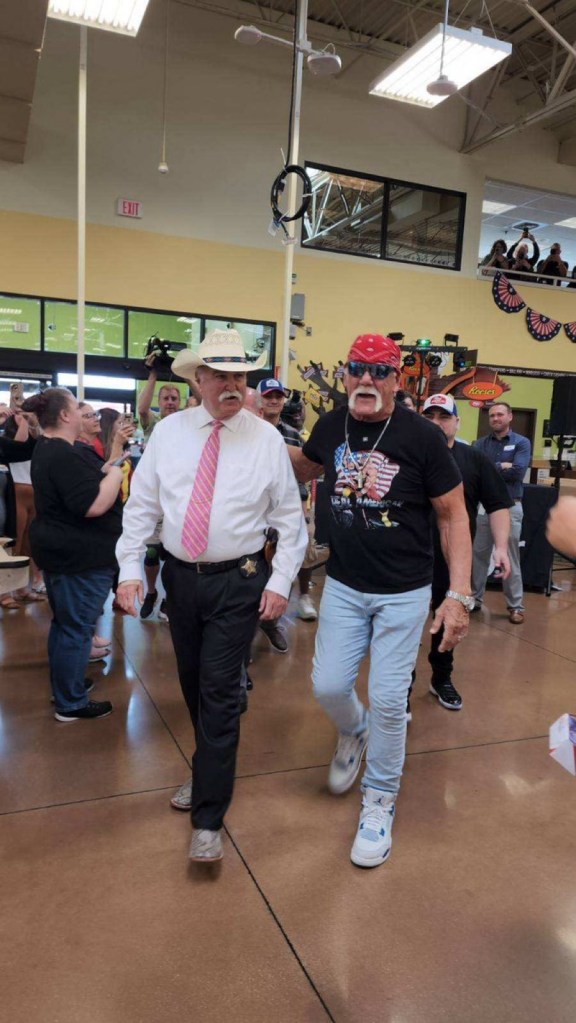
In Butler County, Jones is more than the man who runs the jail and signs the paychecks for deputies. He’s a character in the classic sense: the tall figure in the signature cowboy hat and those big ostrich boots, the one who shows up at fundraisers for youth shooting sports, compares hats with old friends, and isn’t afraid to talk about the realities of the job—the lawsuits that come with the territory, the guns he carries or the ones the department fields, the constant pressure from every direction. He’s been doing this a long time. First elected in 2004, he’s now well into what I’d call his seventh term of service, having worked through multiple governors, multiple presidents, and the full spectrum of political weather in Ohio and beyond. He’s dealt with the Bush years, the Obama years, the Biden years, and whatever comes next. Through all of it, he’s stayed visible, outspoken, and unapologetic in a way that feels increasingly rare.

That visibility is the part a lot of people miss when they talk about what a Sheriff is supposed to do. Some folks think the job is purely about kicking in doors and locking up bad guys. And yes, that work matters—more than most civilians will ever understand. But if you only do the enforcement piece and ignore the executive piece, you eventually lose the community you’re sworn to protect. People start seeing the badge as something distant and ominous rather than something that belongs to them. They start questioning why their tax dollars go to support it. Morale inside the department suffers when the public narrative turns against you. Jones figured this out a long time ago, long before national figures made “brand” a dirty word or a political weapon. He understood that in a republic, especially at the county level where government is closest to the people, you have to build something citizens can latch onto and believe in. You have to make law and order feel like a shared project rather than an imposition.

That’s what I mean when I talk about executive leadership. I’ve written about it in The Gunfighter’s Guide to Business and I’m still working through the lessons in my own professional life—an aerospace executive who spends a lot of hours every week trying to impose will on circumstances, build teams that believe in the mission, and create something durable enough to survive the inevitable storms. The gunfighter doesn’t just draw fast; he creates the conditions where the draw is rarely necessary because the reputation and the relationships do half the work. Same principle applies to a Sheriff’s office. If the community sees the department as “us” rather than “them,” you get better cooperation on tips, better juries, better budgets, better young people considering the career, and a healthier society overall. Jones has spent years cultivating exactly that. He gets on TV. He does the interviews. He shows up. He lets people see the human being behind the badge—the one with the cowboy hat and the straight talk—and that makes all the difference when something goes wrong and the cameras show up for the wrong reasons.

I’ll be honest: when I saw his name on my phone that night, part of me hoped it was the other kind of message. The one where he says they’re getting ready to hit a house or round up some cartel types or serve a warrant that might need an extra set of eyes and a steady hand. I’ve lived long enough and seen enough to know that sometimes the only thing that moves the needle is decisive action on the ground. I would have been in the truck in five minutes, and I think he knows that. But instead he wanted to tell me about the book, and that’s valuable in its own right. Because writing the book is also action—it’s distilling decades of experience into something other people can use. From everything I’ve seen in the descriptions and early word, They Call Me Jonesy is exactly what you’d expect from the man: candid, humorous in that tough-love Midwestern way, deeply patriotic, and full of stories about leadership under pressure, the cost of political correctness, the realities of “the swamp” at every level, and what it actually takes to push back. It’s a call to action for people who still believe in law and order, traditional values, and straight talk. And it comes from someone who’s walked the walk for more than twenty years in one of the most visible law enforcement jobs in Ohio.

We share a mutual friend in David Kern, the longtime Liberty Township trustee. David and I have known each other all my life. He’s always been a solid political figure—practical, engaged, the kind of person who gets things done without needing to be the loudest voice in the room. Jones and I have connected over that shared respect more than once. We’ve not always agreed on every detail of every issue, but we’ve always been able to shake hands, compare cowboy hats (mine’s been a fixture since I was in third or fourth grade, a declaration that I wasn’t going to blend into whatever the culture was selling that week), and keep the relationship real. That matters in a county like ours. It’s how you get things done when the easy path would be to retreat into your own silo and let the rest of the world burn.

There’s something refreshing about a public servant who still understands that the job includes selling the mission. Not in a slick, consultant-driven way—Jones is too much of a character for that—but in the old-fashioned sense of showing people why it’s worth supporting. He’s not afraid to be seen. He’s not afraid to be himself. And because of that, when Butler County residents look at the Sheriff’s Office, they don’t automatically default to suspicion or resentment. They see someone who’s been there through the hard times, who’s willing to say the unpopular thing out loud, and who’s built enough goodwill that the community is willing to give him the benefit of the doubt when the inevitable controversies flare. That’s brand building at its most practical. It’s also leadership at its most effective.

I’m proud of Sheriff Jones for putting this book out into the world. Not every lawman has the discipline or the inclination to turn the raw material of a long career into something readable and useful for the next generation. He’s become something of an international figure in certain circles because of his willingness to speak plainly about immigration, crime, and the erosion of common sense in policy. But he’s stayed rooted here. That says something. And for those of us who call Butler County home, it means we have a Sheriff who gets the big picture: saving America isn’t just a slogan or a national election every four years. It happens in places like this, one relationship, one visible stand, one candid conversation at a time.

The book is available on Amazon right now—“They Call Me Jonesy: Let’s Get Real About Saving America” by Richard K. Jones. I’m looking forward to reading it the moment it lands on my doorstep, and I’ll have more to say once I’ve had a chance to digest it properly. If it captures even a fraction of the personality and the hard-won wisdom I’ve come to associate with the man who sent me that text, it’ll be time well spent. And if you’re the kind of person who still believes that strong, unapologetic leadership at the local level is part of how we turn this country around, then do yourself a favor and pick up a copy too.

In the meantime, I’ll keep my phone close. You never know when the next message from the Sheriff might come through—maybe about the book, maybe about something more immediate. Either way, I’m glad he’s out there, hat and all, doing the work of building something worth believing in. We need more like him.

Footnotes

[1] Richard K. Jones, They Call Me Jonesy: Let’s Get Real About Saving America (Independently published, May 18, 2026). The paperback edition became available around that date; a Kindle edition is also offered. See the official site at theycallmejonesy.com and the Amazon listing for current purchasing options and a free sample.

[2] The book’s public description emphasizes candid leadership lessons drawn from Jones’s decades in corrections and law enforcement, including direct commentary on crime, political correctness, “the swamp,” patriotism, and practical steps for those who want to help save America. Early testimonials have come from figures including former Arizona Sheriff Mark Lamb and former Middletown Police Chief Rodney Muterspaw.

[3] Sheriff Richard K. Jones was first elected Butler County Sheriff in November 2004 (taking office January 2005) and, as of mid-2026, is serving what official records describe as his sixth term. In personal conversation and local perception, the length and continuity of his service often register as an even longer tenure of steady leadership through changing political environments.

[4] Rich Hoffman, The Gunfighter’s Guide to Business (available through standard retailers). The book explores themes of resilience, imposing will on circumstances, building loyal teams, and the executive’s role in creating something people will fight to preserve—lessons that parallel the brand-building and leadership approach discussed here.

[5] Purchase They Call Me Jonesy: Let’s Get Real About Saving America directly through Amazon or the author’s site (theycallmejonesy.com). As of July 2026 it remains a recent release and is easy to find with a quick search for the title and author.

Bibliography

Jones, Richard K. They Call Me Jonesy: Let’s Get Real About Saving America. Independently published, May 18, 2026.

Butler County Sheriff’s Office. “Sheriff.” Official biography page. https://www.butlersheriff.org/sheriff. Accessed July 2026.

Hoffman, Rich. The Gunfighter’s Guide to Business. [Publication details per author’s records].

Amazon.com product page for They Call Me Jonesy: Let’s Get Real About Saving America by Richard K. Jones (ASIN or ISBN as listed on site).

theycallmejonesy.com – Official book site with description, sample, and testimonials.

Rich Hoffman

More about me

Click Here to Protect Yourself with Second Call Defense https://www.secondcalldefense.org/?affiliate=20707

About the Author: Rich Hoffman

Rich Hoffman is an author, political consultant, and strategic advisor based in Cincinnati, Ohio, and the creator of The Politics of Heaven—a unique framework that connects biblical theology, ancient history, and modern power structures to explain how moral alignment and spiritual forces shape global events. Blending real-world political experience with deep research into archaeology, UFO phenomena, and suppressed historical narratives, Hoffman offers compelling commentary on topics ranging from ancient civilizations and the Dead Sea Scrolls to modern populist movements, paranormal continuity, and leadership strategy in chaotic environments. As the author of The Gunfighter’s Guide to Business and the forthcoming Politics of Heaven, he brings a grounded yet provocative voice to media discussions, supported by firsthand experiences and a cross-disciplinary approach that bridges science, history, and theology. For interviews, speaking engagements, or expert analysis, visit richhoffmanbooks.com or contact directly via phone at 513-307-5815 or email at rhoffman@richhoffmanbooks.com.  If you’ve seen the movie, Disclosure Day and want to talk about it and the implications of Presidnet Trump’s UAP disclosures, let me know and we can bring some color to your coverage. https://richhoffmanbooks.com/media-inquiries-broadcast-topics-and-contact-info/?frame-nonce=ad51e7ecba I do have a firsthand UFO encounter to discuss.
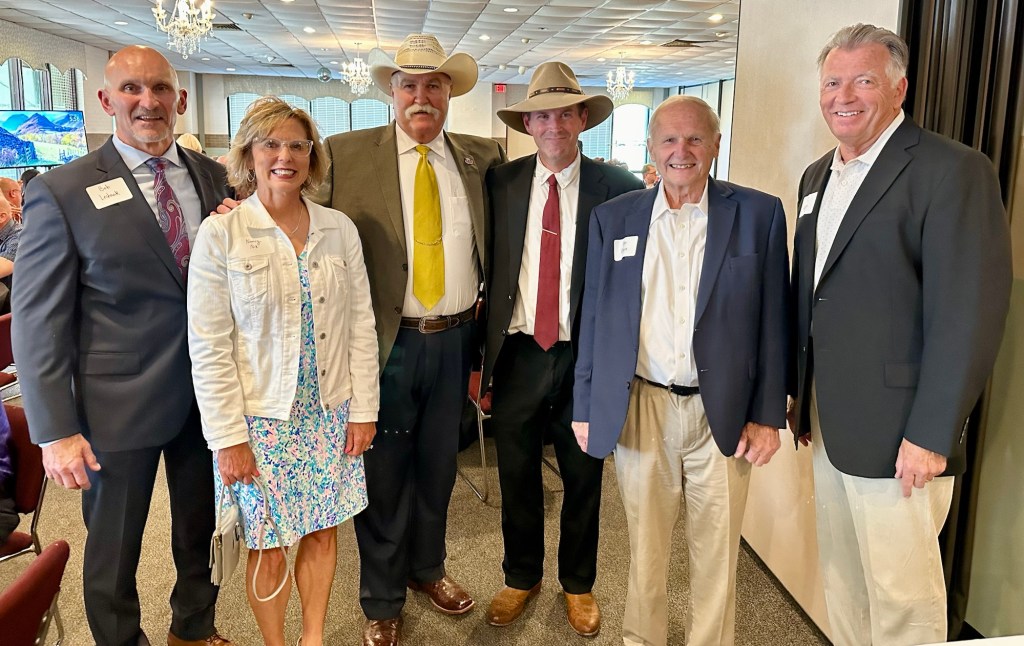
The Lesson of Supergirl: The audience has a lot of Christian dads in it

I haven’t seen the Supergirl movie yet. From everything I’ve heard and read about the promotional run and the way the numbers have come in, I’m not in any rush. It’s the same old story playing out again, the one that keeps repeating itself in Hollywood these days like a bad loop on an old VHS tape. The actress, Milly Alcock, went out there during the press cycle and made some comments that landed exactly the way these things always do when the people in charge forget who actually buys the tickets. She talked about online critics and how a lot of them were just “Dad of four, Christian” types with no profile picture or burner accounts, and she said it was hilarious to her. Then she added that if you’re pissing off the right kind of people, you’re doing okay. 

That kind of talk might play well in certain rooms in Los Angeles or New York, but it doesn’t play well with the people who were supposed to be the core audience for a big summer superhero movie built around Superman’s cousin. Christian dads with a couple of kids aren’t some fringe group you can mock on the way to the bank. They’re the ones who used to load up the minivan, buy the tickets, get the popcorn, and make these movies cultural events. When you go out of your way to signal that their worldview is a punchline, they notice. And they stay home. Then the box office comes in soft, everybody starts pointing fingers, and the same executives who greenlit the messaging act surprised.

This is the same playbook that wrecked the live-action Snow White over at Disney. Rachel Zegler went out there and called the original story dated, took shots at the prince character, and sprinkled in enough political commentary that a big chunk of the traditional family audience decided they had better things to do with their Saturday afternoon. The movie opened okay but collapsed fast, and Disney ended up losing something like $170 million on it once you factored in the budget, the reshoots after the set fire, and the marketing.  It wasn’t just one actress. It was a whole system that decided the audience needed re-education more than it needed entertainment.

Supergirl opened the weekend of June 26, 2026, to about $37 million domestically. That was well below the $50 million range some trackers were expecting and a steep drop from what Superman did the year before under James Gunn’s watch. Superman opened to $125 million domestically and finished with roughly $355 million here in the States and over $618 million worldwide. Supergirl, with a reported $170 million production budget plus heavy marketing, was tracking toward the low $60s, or maybe $70 million, domestically if it held on through the holiday frame, with worldwide totals hovering around $110-115 million.  That’s not enough to break even on a movie this size. It’s the kind of number that makes everybody downstream from the studio—crew, vendors, theater chains—feel the pain while the people who made the decisions move on to the next project.

The demographic split on opening weekend told the story in real time. The audience was skewed heavily male and over 25. The young women and families the movie was supposed to bring in large numbers didn’t show up in force. That’s what happens when the lead actress spends part of the promotional cycle telling a big slice of the potential audience that their very existence as profile pictures with kids and a faith is funny to her. You don’t have to agree with every dad out there. You don’t even have to like them. But if you’re getting paid millions to stand in front of a camera in a cape and sell a $200 million piece of intellectual property, your job during promo is to get as many people as possible to buy a ticket. Not to litigate culture war points from a Variety interview conducted months earlier. 

I’ve been around this business enough over the years to know how it works. I had a stretch where I thought I might direct or at least write and produce films. I wrote a few things, got them in rooms, and sat across from people who controlled real money. What I saw up close was that a certain faction had already decided the product came second to the politics. I remember one conversation where I pitched something and the response wasn’t about whether the story would connect or make money. It was about whether the script had the right messaging baked in. When I realized the game was rigged that way, I made a decision. I wasn’t going to spend my life compromising on things that mattered to me to get a seat at a table that was already serving a different meal. I walked away from chasing that particular brass ring and put my energy into the Tea Party and then the broader movement that became MAGA. The checks in Hollywood can be big for a minute, but they don’t buy back your integrity once you’ve traded pieces of it away.

That’s why these promotional disasters keep happening. The people in charge keep hiring talent who treat the job as a personal activism platform rather than a professional obligation. Zendaya is the counterexample people should study. She’s a good actress; she’s in big franchises; she married Tom Holland; and she mostly keeps her head down and does the work. She doesn’t feel the need to go out on every carpet and unload on half the country. That’s why she keeps getting hired. The ones who treat every interview like a chance to settle scores or signal to the online choir end up with one big movie and then a lot of quiet time afterward.

James Gunn has been in an interesting spot through all of this. He came in with real goodwill from the Guardians movies, which proved you could take obscure characters, give them personality and humor, and make a fortune. Superman last year was a genuine hit—fun, hopeful, well-reviewed, and profitable. It looked like maybe the new DCU under Gunn and Peter Safran had found a lane. Supergirl was supposed to build on that momentum. Instead, it landed with a thud. Gunn didn’t direct this one—Craig Gillespie did—but he and Safran produced it and shaped the vision. The character on screen is described as more jaded, sarcastic, impulsive, a bit of an anti-hero who parties on red-sun planets where she can actually get drunk. That’s a valid take on the comics, but when you pair it with a promotional tone that mocks the audience that grew up on the classic Superman ideal of truth, justice, and the American way, you’re asking for trouble. 

There’s already talk in the trades about whether this soft opening puts Gunn’s position under more scrutiny. Some agents are whispering that another miss like this and the corporate structure might decide it’s time for a change, even though Superman succeeded and the long-term plan is still being sold as sound.  That’s how it goes in these big studios now. One regime comes in promising to fix the mess left by the last one, spends a fortune on a new slate, and then the same underlying problems—audience alienation, messaging over story, talent who can’t or won’t sell the product—show up again. Gunn has more runs on the board than most, but the Supergirl numbers are a reminder that goodwill has a shelf life when the results don’t follow.

I keep coming back to the Indiana Jones situation because it shows the pattern so clearly. In the last film, there were persistent rumors that the original plan involved killing the character off or erasing him in some way that felt like a deliberate gut punch to the legacy. The director denied reshoots for that specific reason, but a lot of us who watched the sausage get made over the years didn’t buy the full denial. Extra money got spent, the ending got massaged, and the movie still underperformed relative to what an Indiana Jones picture should do. The people in charge wanted to make a statement. The audience wanted one more ride with the character they loved. When those two things collide, the audience usually wins by staying home, and the studio eats the difference.

Captain Marvel followed the same arc. Brie Larson went out and did the whole “toxic masculinity” circuit after the first movie made money. The sequel, The Marvels, became one of the bigger bombs in recent Disney history. The pattern is consistent: the first project coasts on existing goodwill and curiosity, the star or the messaging starts treating the core audience like the enemy, and the follow-up craters. Then the same executives who approved the approach acted shocked that families and longtime fans didn’t line up again.

What’s happening now is bigger than any single movie or actress. Hollywood went hard left years ago, and the corporate layer that runs these places decided DEI checklists and cultural re-education were more important than selling tickets. They hired people who shared that worldview, gave them big platforms, and then acted surprised when the people who actually pay for the content walked away. The trust erosion is real. Once families decide a brand doesn’t have their kids’ best interests at heart—whether it’s live-action remakes that lecture them or kids’ programming that slips in stuff no parent asked for—they don’t come back easily. You see it in the vinyl revival, the return to physical media, people wanting to own their libraries instead of renting everything from a streaming service that can memory-hole a title whenever it wants. We went through this with music. The industry told everybody they’d rent forever from iTunes and Spotify. Now people are buying records again because they want something they can actually hold when the power goes out or when the algorithm decides they shouldn’t hear a certain song anymore.

The same principle applies to movies. These big corporate entities keep treating the audience like a resource to be mined and then scolded. The audience is responding by treating Hollywood as an optional expense rather than a weekly habit. Supergirl didn’t fail because the character is unlikable in the comics or because superhero fatigue is total. It failed because the promotional campaign handed the opposition free ammunition and because the underlying calculation—that you could insult a big chunk of the paying public and still get their money—turned out to be wrong.

I’ve said for years that the best movies, the ones that actually shaped generations, came from people who cared more about the story than the politics of the moment. Star Wars in its original run was a phenomenon because it gave people something to line up for, something to argue about in the schoolyard, something that felt bigger than the daily grind. The merch drops were events. Families participated together. When the machine decided it needed to lecture instead of entertain, the cultural grip loosened. The same thing is happening across the board now. The pushback isn’t coming from some organized cabal. It’s coming from millions of individual decisions by people who are tired of paying premium prices to be told their values are the problem.

James Gunn still has a runway because Superman worked and because he has a track record of making things people actually want to watch. But the Supergirl results are a warning shot. If the next projects keep treating the core audience as something to be managed or mocked rather than served, the DCU experiment will end up in the same pile as every other attempt to force-feed ideology through expensive capes. The audience has options now. They can wait for streaming, skip it entirely, or see something else that doesn’t require them to check their beliefs at the door.

Look, I’m not saying every actor has to be a robot with no opinions. I’ve got plenty of my own, and I’ve never been shy about sharing them on my own platforms. The difference is I built those platforms myself. When you’re handed a lead role in a $170 million studio movie, the job description includes not actively driving away the people who are supposed to fill the seats. That’s not censorship. That’s basic professionalism and basic math. The Christian dads with kids aren’t asking for a sermon from the screen. They’re asking for two hours where the good guys win, the hero stands for something worth standing for, and nobody on the promotional tour calls their existence hilarious. When Hollywood forgets that simple transaction, the box office reminds them. And the reminders are getting more expensive every year.

I’ve watched this industry from the outside for a long time now, close enough to see the decisions but far enough away that I didn’t have to compromise to keep a seat. What I see is a system that keeps choosing the same losing strategy and then acting confused when the results don’t change. The audience didn’t leave because they hate superheroes. They left because the people making the movies began to hate the audience. Until that calculation flips, these soft openings and outright disasters will keep happening. The ones who figure it out first—the ones who treat the job like a privilege instead of a pulpit—will be the ones still standing when the dust settles. The rest will explain to their next meeting why the numbers didn’t work out again.

That’s the reality on the ground in the middle of 2026. Superman proved there’s still an appetite for hopeful, well-made comic book movies. Supergirl proved that even a strong foundation can be undermined in a single promotional cycle when the people involved forget who they’re talking to. The pushback is real; it’s measurable at the ticket window, and it’s not going away until the people writing the checks decide that making money and telling stories people actually want to see matter more than scoring points with the crowd that already agrees with them. I’ve made my peace with walking away from that table years ago. Watching it wobble from a distance confirms I made the right call.

Sources and Further Reading

•  Box office figures and analysis for Supergirl (2026): TheWrap, Box Office Mojo, USA Today, ComicBook.com reports from late June and early July 2026. 

•  Milly Alcock Variety interview comments on critics and “Dad of four, Christian” profiles: Originally conducted mid-April 2026, widely discussed after May publication and post-release. 

•  Snow White (2025) financial losses and promotional controversies: Forbes, Variety, Box Office Mojo. 

•  James Gunn DCU context and insider speculation post-Supergirl: Slashfilm, Screen Daily, ComicBook.com. 

•  Broader industry patterns around audience alienation, DEI priorities, and promotional missteps: Multiple trade coverage 2023–2026 on Captain Marvel/The Marvels, Indiana Jones and the Dial of Destiny rumors and reshoots (director denials notwithstanding), and shifting audience behavior toward physical media and selective viewing.

Rich Hoffman

More about me

Click Here to Protect Yourself with Second Call Defense https://www.secondcalldefense.org/?affiliate=20707

About the Author: Rich Hoffman

Rich Hoffman is an author, political consultant, and strategic advisor based in Cincinnati, Ohio, and the creator of The Politics of Heaven—a unique framework that connects biblical theology, ancient history, and modern power structures to explain how moral alignment and spiritual forces shape global events. Blending real-world political experience with deep research into archaeology, UFO phenomena, and suppressed historical narratives, Hoffman offers compelling commentary on topics ranging from ancient civilizations and the Dead Sea Scrolls to modern populist movements, paranormal continuity, and leadership strategy in chaotic environments. As the author of The Gunfighter’s Guide to Business and the forthcoming Politics of Heaven, he brings a grounded yet provocative voice to media discussions, supported by firsthand experiences and a cross-disciplinary approach that bridges science, history, and theology. For interviews, speaking engagements, or expert analysis, visit richhoffmanbooks.com or contact directly via phone at 513-307-5815 or email at rhoffman@richhoffmanbooks.com.  If you’ve seen the movie, Disclosure Day and want to talk about it and the implications of Presidnet Trump’s UAP disclosures, let me know and we can bring some color to your coverage. https://richhoffmanbooks.com/media-inquiries-broadcast-topics-and-contact-info/?frame-nonce=ad51e7ecba I do have a firsthand UFO encounter to discuss.

The Hunter’s Camouflage: What Hostile Takeovers Reveal About UAP Concealment and Competing Non-Human Intelligences as the prey runs toward the preditors

I have watched a hostile takeover unfold up close in the aerospace industry. The people driving it never announced their intentions. They arrived with consultants and new ownership structures, spoke in measured language about efficiency and alignment, and made the decisive moves from boardrooms far removed from the daily floor. The target company’s people kept working, kept delivering, kept hoping the familiar rhythms would hold. By the time the real pattern became visible, the leverage had already shifted. Decisions about who stayed, what got consolidated, and which programs survived were already set in motion. The prey did not run away. In many cases, it moved toward the very forces reshaping it, seeking reassurance, seeking to prove value, seeking to stay inside the story. 

That experience has stayed with me as I watch the recent waves of UAP disclosures. The Pentagon’s PURSUE releases under the current administration—multiple tranches of documents, videos, and agent narratives in May, June, and July 2026—have brought to light orb sightings, high-speed objects, and cases that the All-domain Anomaly Resolution Office itself still lists as unresolved.  One Western U.S. event near a sensitive national-security site involved federal agents describing “orbs launching other orbs.” AARO’s own June 2026 memo on that case notes that roughly forty percent of the phenomena lacked a plausible conventional explanation and remained open.  Another tranche included a military aviator’s account of an object with “flight characteristics unlike anything I had seen in my 28 years.” These are not fringe videos. They are now part of the official record, released under executive order, yet they arrive without chain-of-custody clarity on the most anomalous material and without a coherent strategic picture. 

The obvious question keeps returning: if these are simply advanced drones or foreign technology, why the persistent concealment across decades? If they represent non-human intelligence, why not open contact? My answer is shaped by what I saw in that takeover and by the universal patterns Robert Greene distilled in The 48 Laws of Power and The 33 Strategies of War. Those books sit in every serious business section because they codify something older than corporate strategy: the mechanics of concealed intention, formlessness, and the calculated use of superior position to shape the target’s behavior without triggering full resistance. 

A hunter does not step into the clearing and announce himself. He wears the scent of the field, moves with the wind, waits in the tree stand for hours. The goal is proximity without alarm. The deer that senses nothing continues its pattern until the moment the arrow is already in flight. Corporate raiders operate on the same principle. They do not declare war on the culture they intend to absorb. They speak of synergy, of unlocking value, of shared future. The language itself is camouflage. By the time the target’s leadership understands the real mapping of power, the decisive votes and the key personnel decisions have already been made elsewhere. 

If non-human intelligences have been present in our environment for a long time—and the pattern of sightings near nuclear and sensitive military sites across the released files is difficult to dismiss as random—then concealment is the rational posture of a competing form of life that does not yet wish open war or open dependence. Superior technology does not automatically translate into benevolence any more than superior capital in a takeover guarantees the survival of the acquired company’s original character. The strategic advantage lies in remaining unseen while shaping outcomes: extracting data, influencing behavior at the margins, keeping the target population stable enough to continue producing what the observer needs. A species that wanted only to eliminate us would have done so. A species that wants to study, harvest, steer, or occupy the same niche without triggering a unified human response has every reason to stay in the tree stand.

The recent disclosures actually reinforce this reading more than they contradict it. We are shown orbs that appear to coordinate, that launch smaller orbs, that exhibit flight profiles AARO cannot yet attribute to known platforms. We are told some cases remain unresolved even after multi-sensor correlation. We hear whistleblower testimony—from David Grusch and others—describing long-term programs involving recovered craft and non-human biologics, yet official releases still emphasize the lack of conclusive proof while simultaneously documenting phenomena that exceed current human capabilities.  This is not full transparency. It is a calibrated release. It keeps the conversation alive, keeps researchers and the public engaged, and shields the deeper architecture behind these events. That is precisely how power that intends to remain dominant behaves when it does not yet need to reveal its full hand.

Greene’s work is popular in business circles because it maps these dynamics without moral overlay. Law after law describes the advantage of appearing formless, of never revealing the full extent of one’s resources or intentions, of using the target’s own momentum against it—the same principles scale. If an intelligence operates across dimensions or with technology that renders our sensors marginal, the same logic applies: stay close enough to observe and influence, far enough to avoid decisive confrontation, and never give the prey a clear target to rally against. The fascination many people feel toward UAPs—the drive to decode every new video, to attend every hearing, to interpret every ambiguous shape—can itself become part of the dynamic. The prey moves toward the predator’s position because the predator has made itself the most interesting thing in the environment. 

I am not claiming these intelligences are cartoon villains. I am saying the default assumption that superior technology equals benevolent guardianship has no grounding in observable history or in the power dynamics we already understand at the human level. The same species that builds monuments and writes philosophy also builds weapons and perfects deception when advantage requires it. Why would we expect a competing life form to operate on more sentimental rules? The disclosures we have received so far—multiple batches of unresolved orb events, aviator encounters, and internal government debate—show advanced presence without showing open intent. That gap is not an accident of bureaucracy. It is consistent with the behavior of any actor who has already calculated the costs of full revelation. 

Most people can’t do this. They learn the rules and stay prisoners to them al their lives.

The corrective lens is the same one that works in any competitive environment. Assume the other side is playing to win on its own terms. Map the actual flows of information and leverage rather than the stated narrative. Strengthen internal visibility so that critical dependencies—whether material, procedural, or perceptual—cannot be quietly depleted in the shop, which meant knowing who ordered the consumables and whether the schedule would starve the line. In the larger arena, it means refusing to treat every new release as either proof of salvation or proof of nothing. It means treating the pattern of concealment itself as data.

We have been given enough now to see that something is operating with capabilities we do not control and with intentions it has not chosen to declare. The hunter does not need our permission to remain in the stand. He only needs us to keep behaving as if the clearing is empty. The disclosures have made the clearing feel less empty, but they have not yet forced the figure in the tree to step forward. That fact alone tells us something about the nature of the game being played.

Footnotes

1.  Personal observation from aerospace program management, 2026.

2.  PURSUE Release documentation, Department of War, various tranches 2026.

3.  AARO memorandum on Western U.S. “orbs launching orbs” event, June 2026.

4.  Robert Greene, The 48 Laws of Power (1998) and The 33 Strategies of War (2006).

5.  David Grusch congressional testimony and related whistleblower accounts, 2023–2026.

6.  Historical analysis of corporate power dynamics drawn from Greene’s framework and observed industry practices.

7.  Additional references to UAP case files are available via war.gov/UFO portal.

Bibliography

•  Greene, Robert. The 48 Laws of Power. Viking, 1998.

•  Greene, Robert. The 33 Strategies of War. Viking, 2006.

•  U.S. Department of War / AARO. PURSUE UAP Release Tranches (May–July 2026). war.gov/UFO.

•  Squier, Ephraim G., and Edwin H. Davis. Ancient Monuments of the Mississippi Valley. Smithsonian Contributions to Knowledge, 1848 (for context on Ohio earthworks like East Fork).

•  Various journalistic summaries of Grusch testimony and PURSUE files, 2026.

Rich Hoffman

More about me

Click Here to Protect Yourself with Second Call Defense https://www.secondcalldefense.org/?affiliate=20707

About the Author: Rich Hoffman

Rich Hoffman is an author, political consultant, and strategic advisor based in Cincinnati, Ohio, and the creator of The Politics of Heaven—a unique framework that connects biblical theology, ancient history, and modern power structures to explain how moral alignment and spiritual forces shape global events. Blending real-world political experience with deep research into archaeology, UFO phenomena, and suppressed historical narratives, Hoffman offers compelling commentary on topics ranging from ancient civilizations and the Dead Sea Scrolls to modern populist movements, paranormal continuity, and leadership strategy in chaotic environments. As the author of The Gunfighter’s Guide to Business and the forthcoming Politics of Heaven, he brings a grounded yet provocative voice to media discussions, supported by firsthand experiences and a cross-disciplinary approach that bridges science, history, and theology. For interviews, speaking engagements, or expert analysis, visit richhoffmanbooks.com or contact directly via phone at 513-307-5815 or email at rhoffman@richhoffmanbooks.com.  If you’ve seen the movie, Disclosure Day and want to talk about it and the implications of Presidnet Trump’s UAP disclosures, let me know and we can bring some color to your coverage. https://richhoffmanbooks.com/media-inquiries-broadcast-topics-and-contact-info/?frame-nonce=ad51e7ecba I do have a firsthand UFO encounter to discuss.
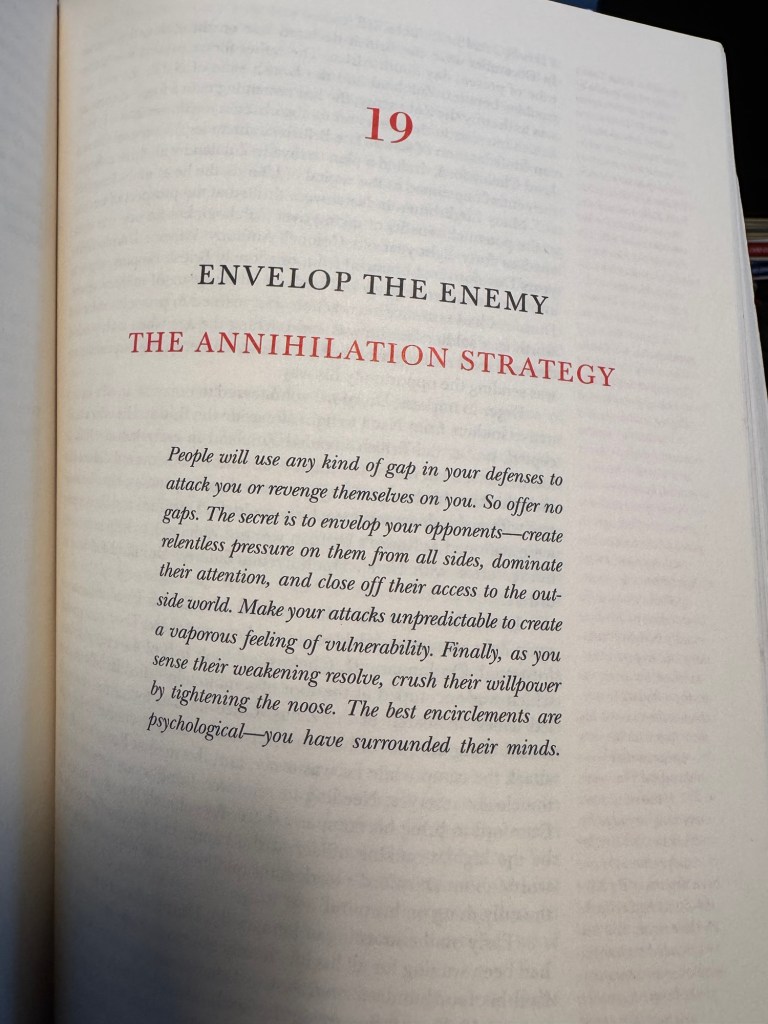
There Are Millions of Graham Platners Taking Advantage of Liberal Women: They hide bad conduct in collectivist movements, such as communism

I heard the news the other day about this Graham Platner loser dropping out of the Maine Senate race, and it struck me the same way it probably struck many people who watched his video statement. Here was a guy who had just won the Democratic primary in a big way, an oysterman and Marine veteran out of Sullivan, Maine, who beat the establishment favorite and raised something like sixteen million dollars in contributions for a race against Susan Collins. Then a former girlfriend comes forward with a story about him forcing himself on her back in 2021 while drunk, ignoring her repeated objections, and the whole thing unravels in a matter of days. He denies it outright, calls the claims false and not real, but still suspends operations and files the paperwork to withdraw before the July 13 deadline so the party can scramble for a replacement by the 27th. In his eleven-minute video, he says it is not an admission of guilt, that some will think it is, but it most certainly is not, and that they are stepping aside not because of the allegations but because those in power are taking away the structures and access. For the movement to continue, it cannot be him. 

That surface reaction, the astonishment and the quick takes, does not get deep enough. What happened here is not just another politician caught in a mess of his own making. It is a window into something larger about how certain kinds of people rise in the current version of Democrat politics, especially the populist left strain that has been building since Bernie Sanders and now carries elements of what some are calling a blue MAGA or communist-adjacent energy. Platner fits a pattern that keeps showing up. Multiple ex-girlfriends have described intimidating behavior, one saying he twisted her arm and locked her in a bedroom until she calmed down, another recounting comments about raping intruders to show dominance, and still another alleging he removed protection without consent during sex. There was the chest tattoo, a Totenkopf that he first claimed he did not understand, just a skull and crossbones from a drunken night with Marines in Croatia in 2007, but ex-girlfriends say he knew exactly what it was, bragged about it as a reminder that the United States was the evil bad guy overseas, and called it his Totenkopf. Then came the old Reddit posts where he described himself as a communist, said all cops are bastards, and made other remarks disparaging women, rural White Americans, and various groups. He had also been sending sexually explicit texts to other women during a rough patch in his marriage, something his wife publicly defended while saying they had a great marriage overall. 

When the latest allegation hit from Jenny Racicot, the pressure from national and state Democrats mounted fast, and endorsements started peeling away. The party machinery that had lifted him after Governor Janet Mills stepped aside suddenly found the strings being pulled. Platner framed it as the establishment taking away his ability to run, his access to funding, and the mechanisms of power, even though he had beaten their preferred candidate in the primary. It sounded like an admission that the machine believed the story or at least believed it would stick and cost them the seat. Susan Collins, for all the complaints about her being a RINO Republican at best, suddenly looked like the safer bet in a race that matters for Senate control. The whole episode felt familiar, like watching the same movie the Republican side lived through a decade ago, only now it is the Democrats’ turn and the characters coming forward to fill the populist void on their side carry different baggage.

I have been saying for a long time that the Tea Party movement was never really about pulling the Republican Party back to some Chamber of Commerce comfort zone. It was the start of something bigger: MAGA, a demand for individual accountability and pushback against the permanent class that had captured both parties. The RINOs like McConnell, Romney, and Kasich types resisted Trump because they saw the threat to their control. They got pushed to the margins or had to adapt. What we are watching now on the Democrat side is their version of that purification, except the energy they are riding is collectivist at its core. Bernie Sanders gave it shape, and now you see candidates who talk about Medicare for All, banning billionaires from buying elections, ending wars forever, and strong unions, but the people who step forward to lead that charge often bring personal conduct that would get them run out of a more individual-responsibility culture. Platner is not an outlier in that environment. He is a predictable product of it.

The warm blanket of collectivism is what draws these characters and protects them for a while. When you tell people that the individual does not matter as much as the group, that judgment on personal behavior is bourgeois or oppressive, or whatever the current phrase is, you create space for someone with a Nazi tattoo, a history of rough treatment of women, and a trail of denied allegations to present himself as the champion of the working class. The cause becomes the excuse. Personal integrity gets subordinated to participation in the movement. If you are out there advocating for the collective good, for the masses against the oligarchs, then who cares if your private life shows a pattern of dominance, non-consent, or simple low character? The ideology says do not judge the individual; judge him by his alignment with the larger project. That is why you keep seeing the same types of behavior surface. They find a home where their dysfunction does not trigger the same social cost it would elsewhere.

I have watched enough of this over the years to know that sexual conduct is one of the clearest windows into character. People who live for self-pleasure, who chase validation without scrutiny, who treat others as means to an end, often gravitate toward environments that promise no judgment. Liberal politics has been that environment for decades for a certain kind of man. It is not that every liberal man is like this, but the ones who are find it easier to operate there. The women who get drawn in, the ones who are insecure and looking for collective cover, often end up in situations they later regret. They talk about wanting a strong, dominant presence, but they do not look for it on the side that might actually hold them accountable or demand standards. They stay inside the circle where the bad behavior can be reframed as a moment of weakness, or the fault of the system, or something the collective will forgive because the higher cause matters more. You see it in the wine-tasting crowds, the middle-aged women who start hitting on everyone once the drinks flow, the husbands standing off to the side, embarrassed, while their wives seek validation in a group setting. It is the same impulse that makes collectivism attractive to people who do not want their personal record examined too closely. Four or five abortions, repeated cheating, substance issues, whatever the story is, the group provides the blanket. Do not judge me for my individual choices; judge me for my participation in empowering the masses.

That is the danger with someone like Platner. On the surface, he looked like a fresh face, a veteran oysterman who could connect with working people in a state facing real economic pressures. Underneath was the same pattern that had shown up with other figures on that side of the aisle in recent years. The party did not know what to do when the stories kept coming, so they did what machines do: they pulled the plug once it became clear he could no longer win or raise money effectively. Platner’s response was to blame the structures rather than own the conduct that had turned the structures against him. That is also classic. It is never the individual’s fault in a collectivist frame. It is the machine, the establishment, the powers that be who are threatened by the movement.

The Republican side went through its own version of this a decade ago and is still sorting some of it. The difference is that the underlying philosophy on that side, even when imperfectly practiced, still holds room for individual responsibility and personal conduct as legitimate standards. Trump himself came out of a Playboy background in the eighties and nineties, lived that life openly, and the people who supported him later knew what they were getting. Melania came out of that same world, and they built something that has lasted. He did not hide behind a collective excuse when things got hard. He used his brand and his willingness to fight the permanent class to deliver on borders, energy, judges, and pushing back against the administrative state. The voters who backed him were not endorsing the 1990s lifestyle; they were endorsing the man who would impose limits on government power and restore some sense of sovereignty. That is why the purification worked on the right. It was messy, and it took years, but it produced a filter that still operates. People who cannot meet a basic standard of personal integrity or who treat politics as cover for their own appetites get exposed and sidelined eventually.

On the Democratic side, the filter is currently weaker because the ideology itself discourages individual judgment. The populist energy they are trying to harness is being filled by characters who would have been laughed out of a serious movement on the other side. You are going to see more Graham Platners before this cycle finishes. They will keep coming forward because the environment rewards the ability to perform the collectivist script, while their personal lives stay hidden or are excused. The more they double down on that direction, the more the low-character actors will find it a comfortable place to operate. Republicans already paid the price and did the work of cleaning house. Democrats are just starting their version, and it looks like it is going to be uglier because the philosophy they are embracing provides better cover for dysfunction.

That is why some of the dumbest outcomes in politics keep happening. People who would never tolerate certain behavior in their own families or businesses will defend it or excuse it when it comes from someone aligned with their political tribe. They will vote for policies that demonstrably harm the vulnerable, erode family formation, import incompatible cultures, and centralize power in unaccountable bureaucracies, all while insisting it is compassion or progress. On the surface, it looks like ideology run amok. Deeper, it looks like influence is amplifying the parts of human nature that are already broken.

Platner’s short rise and fall is just one more data point in that larger story. A man with a documented pattern of behavior that should have disqualified him from any position of trust found a lane in the current Democrat populist moment because the ideology provided cover and the machine needed a fresh face who could raise money and excite the base. When the cover began to fail, the machine cut him loose, and he blamed it. The cycle will repeat with the next candidate who can perform the script while carrying similar baggage. On the other side, the work of insisting on personal conduct and individual responsibility continues, however imperfectly. That insistence is not just political hygiene. It is resistance to the older pattern that wants humanity to dissolve responsibility into collectives so the real influences can operate without resistance.

Footnotes

1.  National Review and multiple outlets reported Platner’s formal withdrawal letter and video statement on or around July 8–10, 2026, including his phrasing that the structures were being taken away and that it was not an admission of guilt.

2.  Politico, CNN, and Washington Post reporting on Jenny Racicot’s allegations of forced sex in 2021, including details of the incident and her decision to come forward after Platner’s public denials of abusive behavior.

3.  New York Times reporting on multiple ex-girlfriends describing physical intimidation, locked rooms, and other conduct, including Lyndsey Fifield’s accounts from 2013–2015.

4.  New York Post and other reporting on the Totenkopf tattoo, ex-girlfriends stating Platner knew its meaning and used it as a reminder that the U.S. was the “evil bad guy overseas,” and his initial public claim that he did not understand the symbol.

5.  Reporting on deleted Reddit posts from 2009–2021 in which Platner described himself as a communist and made various disparaging remarks; also coverage of sexually explicit texts sent during marital difficulties and the wife’s public defense.

6.  Campaign finance totals and primary results showing Platner’s strong performance after Mills suspended her campaign and his subsequent withdrawal before the July 13, 2026 ballot deadline, with the Maine Democratic Party given until July 27 to name a replacement.

Bibliography for Further Reading

•  The Book of Enoch, translated editions with commentary on the watchers, giants, and pre-flood rebellion.

•  The Bible, particularly Genesis 6, Daniel on principalities and powers, Ephesians 6 on spiritual warfare, and Revelation on the ongoing conflict.

•  Dead Sea Scrolls materials and related scholarship on Second Temple period views of heavenly politics and fallen entities.

•  My own forthcoming book, The Politics of Heaven, explores these threads through history and current events.

•  The Gunfighter’s Guide to Business and its developing sequel, which apply lessons of individual will, resilience, and integrity to institutional and political environments.

•  Tail of the Dragon and The Symposium of Justice for narrative treatments of personal conduct, justice, and hidden power structures.

•  Standard works on UFO disclosure and non-human intelligence, including historical government documents and researcher compilations on reported entity types and their interactions with human systems.

•  Histories of the Tea Party movement and its evolution into broader populist realignments on the right, with attention to the internal purification process.

•  Accounts of Bernie Sanders’ influence and the subsequent development of progressive populist currents on the

Rich Hoffman

More about me

Click Here to Protect Yourself with Second Call Defense https://www.secondcalldefense.org/?affiliate=20707

About the Author: Rich Hoffman

Rich Hoffman is an author, political consultant, and strategic advisor based in Cincinnati, Ohio, and the creator of The Politics of Heaven—a unique framework that connects biblical theology, ancient history, and modern power structures to explain how moral alignment and spiritual forces shape global events. Blending real-world political experience with deep research into archaeology, UFO phenomena, and suppressed historical narratives, Hoffman offers compelling commentary on topics ranging from ancient civilizations and the Dead Sea Scrolls to modern populist movements, paranormal continuity, and leadership strategy in chaotic environments. As the author of The Gunfighter’s Guide to Business and the forthcoming Politics of Heaven, he brings a grounded yet provocative voice to media discussions, supported by firsthand experiences and a cross-disciplinary approach that bridges science, history, and theology. For interviews, speaking engagements, or expert analysis, visit richhoffmanbooks.com or contact directly via phone at 513-307-5815 or email at rhoffman@richhoffmanbooks.com.  If you’ve seen the movie, Disclosure Day and want to talk about it and the implications of Presidnet Trump’s UAP disclosures, let me know and we can bring some color to your coverage. https://richhoffmanbooks.com/media-inquiries-broadcast-topics-and-contact-info/?frame-nonce=ad51e7ecba I do have a firsthand UFO encounter to discuss.
The Lakota Grooming Scandal: Power, Protection, and the Price of Silence in Our Public Schools

I have watched this story unfold with a mixture of anger, sadness, and that familiar sinking feeling that comes when you realize the system is working exactly as designed—not for the kids, but for the adults who feed off the perpetual motion machine of public money and institutional self-preservation. A mother filed a federal lawsuit on July 1, 2026, alleging that a Lakota Local Schools teacher groomed and sexually abused her daughter over roughly three years, starting when the girl was 13 years old in seventh grade at Liberty Junior School. 

According to the detailed complaint, the teacher—identified in court documents as Ronald Henrich—did not even teach the girl in any of her classes. He welcomed her into his classroom during study hall periods, showed her “special attention,” and began building a relationship. Messages started on the district’s own Remind app. The student confided personal struggles, including mental health issues. The communications continued and escalated even after the mother tried to set boundaries. By ninth grade, the meetings moved to a closed-door “mindfulness room” for Friday lunches. Communications shifted to district email and Google Docs when access to Remind was curtailed. In March 2025, the mother discovered the teacher actively typing “extremely sexually graphic content” into a shared Canva document with her daughter. She recorded it. She called the Butler County Sheriff’s Office. 

The district’s response, according to the lawsuit, was to promise administrative leave and restricted access to technology, then quietly allow the teacher to take Family and Medical Leave Act leave instead. Less than two weeks after the explicit messages surfaced—and while investigations by the district, sheriff, and children’s services were still open—the district approved his retirement. No public discipline. No immediate report to the Ohio Department of Education, as many parents would expect. The teacher walked away with his pension and benefits intact while the family was left to pick up the pieces. 

The superintendent, Ashley Whitely, issued the standard institutional denial: the district “denies all allegations” and claims student safety is its top priority.  Meanwhile, the mother’s lawsuit also details earlier reports she made that went unaddressed, repeated class pull-outs without parental notification, and even troubling lapses in how the school nurse handled the student’s medication—stockpiling Tylenol that contributed to a suicide attempt and failing to manage anxiety medication on a trip properly. These are not small administrative hiccups. They paint a picture of a system that had multiple opportunities to intervene and chose not to.

Then there is the part that really bothers me. According to people who have followed the internal handling, the HR director—Jeff Rouff—essentially shrugged and said something to the effect that the age of consent in Ohio is 16, so what’s the big deal? Two consenting adults. Nothing illegal happened. That line of thinking is exactly why these situations metastasize. It ignores the entire grooming process that began at 13, when the girl was under the care and authority of this adult in a position of power inside a public school building. It ignores the use of school-issued devices and district apps to conduct the relationship. It ignores the closed doors, the missed classes, the emotional manipulation of a vulnerable child who had already suffered prior sexual abuse. Age of consent statutes were never intended to give cover to adults in positions of trust who spend years cultivating access to minors. That is not a gray area. That is the precise reason we have laws and professional conduct codes for educators in the first place.

I heard about problems surrounding this teacher roughly a year before the lawsuit dropped. Other parents and observers had been talking. The circle had already started to form. When the story finally broke across local media—Channel 5, Local 12, FOX 19—the superintendent’s immediate public move was not a somber address about accountability and root-cause fixes. It was a cheerleading video hyping the fall, talking about hiring dozens more staff members, rolling out a corporate “roadmap” with “stakeholders,” and reminding everyone to keep supporting public schools. The timing felt deliberate. Distract. Reassure the taxpayers who write the checks. Keep the money flowing.

That is the game I have been describing for years. Lakota, like many large suburban districts, is constantly in or approaching levy mode. The narrative must be controlled: we are great, we are improving, we need a little more of your property tax money to keep doing the wonderful things we do. Bad stories—especially stories that suggest adults in the building are preying on children and that leadership circled the wagons—threaten that narrative. So the wagons circle. The teacher retires quietly. HR offers the age-of-consent talking point. The superintendent films the upbeat video. The teachers’ union, which exists in large part to protect its members from consequences, stays largely silent or issues the usual generic statements about due process. And the machine keeps turning.

This is not an isolated incident. The lawsuit itself references a pattern of other cases involving Lakota employees over the years—some that resulted in convictions or license revocations, others that were handled with quiet exits.  Former board member Darbi Boddy, who has remained a vocal parent advocate even after her time on the board ended, issued a clear public statement criticizing the handling of this situation. Good for her. We need more people willing to say the obvious out loud rather than hide behind “stakeholder engagement” jargon.

What troubles me most is how predictable the protection response has become. When something like this surfaces, the institution’s first instinct is not “How do we make sure this never happens again and how do we support the victim?” It is “How do we contain the damage to our brand and our funding pipeline?” The HR director’s reported comment about 16 being legal is a perfect example of that mindset. It treats the endpoint—the moment the child turned 16—as the only thing that matters, while erasing the years of grooming and boundary erosion that got her there. It treats a minor student in a teacher’s care as just another “consenting adult” the second the calendar flips. That is not how any responsible adult in education should think. It is how an institution thinks when its primary loyalty is to itself and the revenue stream that sustains it.

Public education in its current monopolistic, union-protected, tax-funded form has structural problems that make these failures almost inevitable. When you combine compulsory attendance, massive budgets, powerful collective bargaining agreements that make firing even grossly negligent employees difficult and expensive, and a culture that treats any criticism as an attack on “the children” or “public education itself,” you create exactly the conditions for cover-ups. The money keeps coming in as long as the bad stories stay buried or get spun. Parents who raise concerns are dismissed as “haters” or people with “unrealistically high moral standards.” Meanwhile, the actual standard on the ground—don’t have sex with kids in the classroom or via school devices, don’t groom them for years, don’t let it slide when a parent reports it—somehow becomes negotiable the moment it threatens the budget or the reputation.

I am not saying every teacher is doing this. The vast majority are not. But the ones who are counting on the system’s reluctance to act decisively. They count on the HR director who will find the legal technicality to keep them safe from judgment. They count on the superintendent who will film the upbeat video instead of cleaning house. They count on the union that will fight to the last dollar of taxpayer money to protect a member who should never have been in a classroom with minors. And they count on enough parents staying disengaged or intimidated for the story to fade before real accountability arrives.

The mother in this case did what too few parents feel empowered to do: she documented, she reported, she refused to let it disappear. Her lawsuit is now public. The allegations are serious and detailed. Whether every claim is ultimately proven in court is for the legal process to decide. But the pattern of institutional response—quiet exit, legal denials, distraction videos, and the age-of-consent shrug—is already on display for anyone willing to look. That pattern should alarm every parent in Lakota and in any district that operates the same way.

How many other kids right now are in unhealthy dynamics with adults who hold power over their grades, their schedules, their daily lives inside these buildings? How many school-issued devices are carrying messages that would make any decent parent’s blood run cold if they saw them? How many times has a concerned parent been told some version of “nothing to see here, move along, and please vote yes on the next levy”? I would be willing to bet the number is higher than any of us want to admit. This case only became a story because one mother refused to be quiet. The rest stay invisible because the system is optimized for exactly that outcome.

We keep being told that more money, more staff, more programs, and more “roadmaps” will fix what ails public education. I have watched this play out locally for years. The money keeps increasing. The problems—academic stagnation in too many areas, cultural capture, and now these horrifying failures of basic child protection—persist or worsen. At some point, parents have to ask whether the institution itself is the problem, not the lack of funding. When the first instinct of leadership is to protect the adult and the budget rather than the child, the social contract has already been broken.

I have said it before, and I will keep saying it: these schools should not be connected to public dollars through collective bargaining agreements that shield misconduct this way. The current model creates perverse incentives. It rewards circling the wagons. It punishes transparency. And the kids pay the price—sometimes in ways that can never be fully repaired.

If you are a parent in Lakota or anywhere else, pay attention to what is happening here. Read the lawsuit. Watch what the district actually does versus what it says in the carefully produced videos. Talk to your kids. Monitor the devices. Show up at meetings. Ask the uncomfortable questions. And recognize that the people telling you everything is fine and you need to keep writing bigger checks may have priorities that do not align with protecting your child.

This story is not going away. The mother made sure of that by filing in federal court. Good. Sunlight is still the best disinfectant, even when the institution would prefer the lights stay off.

Footnotes

1.  Details of the federal lawsuit filed July 1, 2026, in the U.S. District Court for the Southern District of Ohio, as reported in contemporaneous coverage by the Cincinnati Enquirer and Journal-News.

2.  Allegations regarding the timeline, use of the Remind app, Canva document, mindfulness room meetings, and district response drawn from the complaint were summarized in multiple local outlets.

3.  District statement denying allegations and emphasizing student safety priorities, reported across local media following the lawsuit filing.

4.  References to prior incidents and pattern allegations contained within the 2026 lawsuit filings and prior local reporting on other Lakota employee cases.

5.  Ohio age of consent is 16; however, professional conduct codes for educators and laws regarding persons in positions of authority create additional prohibitions on sexual conduct with students that do not turn solely on the general age of consent.

Bibliography for Further Reading

•  Cincinnati Enquirer, “Parent says Lakota teacher groomed and abused her daughter,” July 8, 2026. 

•  Journal-News, “Lawsuit: Lakota teacher ‘groomed and sexually abused’ a student and was allowed to take medical leave, retire,” July 7, 2026 (updated July 9). 

•  FOX19 / Local 12 coverage of the July 2026 lawsuit and related statements.

•  Ohio Department of Education professional conduct standards for educators (ongoing reference for context on boundaries and reporting obligations).

•  General resources on educator sexual misconduct patterns: U.S. Department of Education reports and studies on employee misconduct in K-12 settings (searchable via ED.gov).

•  Local coverage of prior Lakota cases involving Justin Dennis and others referenced in the 2026 lawsuit for pattern context.

•  Darbi Boddy’s public statements and commentary on Lakota issues (available via local media archives and her public channels).

•  Ohio Revised Code sections on sexual battery, unlawful sexual conduct with a minor, and school employee reporting requirements.

Rich Hoffman

More about me

Click Here to Protect Yourself with Second Call Defense https://www.secondcalldefense.org/?affiliate=20707

About the Author: Rich Hoffman

Rich Hoffman is an author, political consultant, and strategic advisor based in Cincinnati, Ohio, and the creator of The Politics of Heaven—a unique framework that connects biblical theology, ancient history, and modern power structures to explain how moral alignment and spiritual forces shape global events. Blending real-world political experience with deep research into archaeology, UFO phenomena, and suppressed historical narratives, Hoffman offers compelling commentary on topics ranging from ancient civilizations and the Dead Sea Scrolls to modern populist movements, paranormal continuity, and leadership strategy in chaotic environments. As the author of The Gunfighter’s Guide to Business and the forthcoming Politics of Heaven, he brings a grounded yet provocative voice to media discussions, supported by firsthand experiences and a cross-disciplinary approach that bridges science, history, and theology. For interviews, speaking engagements, or expert analysis, visit richhoffmanbooks.com or contact directly via phone at 513-307-5815 or email at rhoffman@richhoffmanbooks.com.  If you’ve seen the movie, Disclosure Day and want to talk about it and the implications of Presidnet Trump’s UAP disclosures, let me know and we can bring some color to your coverage. https://richhoffmanbooks.com/media-inquiries-broadcast-topics-and-contact-info/?frame-nonce=ad51e7ecba I do have a firsthand UFO encounter to discuss.