A Community Night at Miami University’s Innovation Center
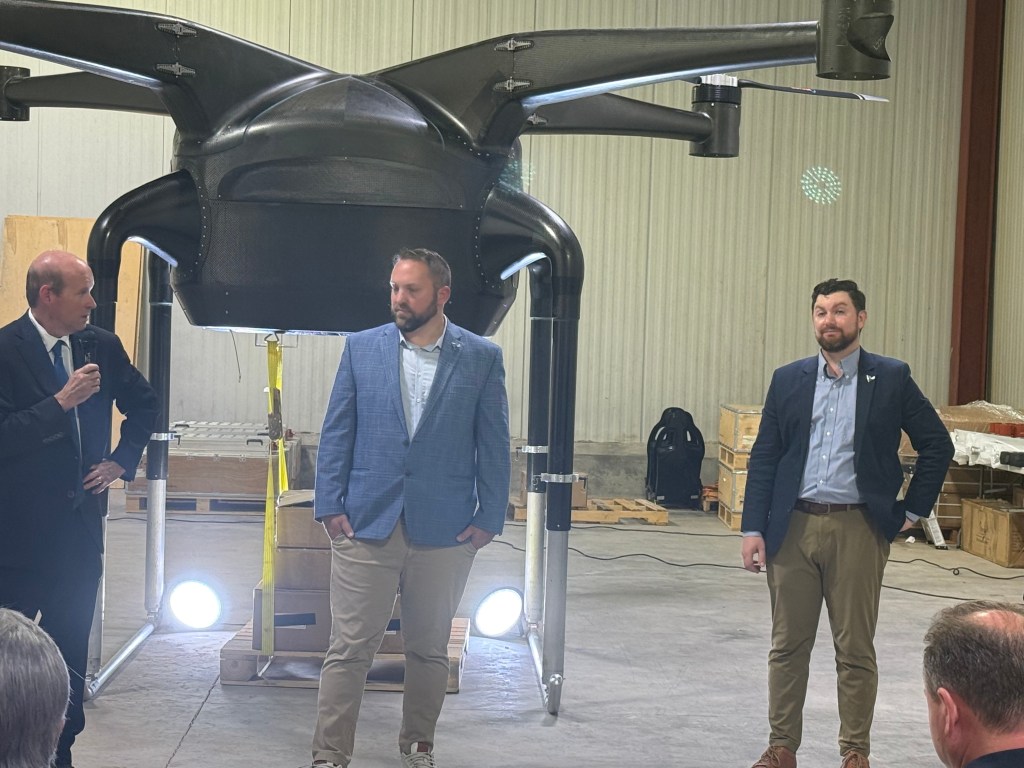
On September 21, 2026, we hosted a special community event at Miami University’s Innovation Center on Elm Street in Oxford, Ohio.
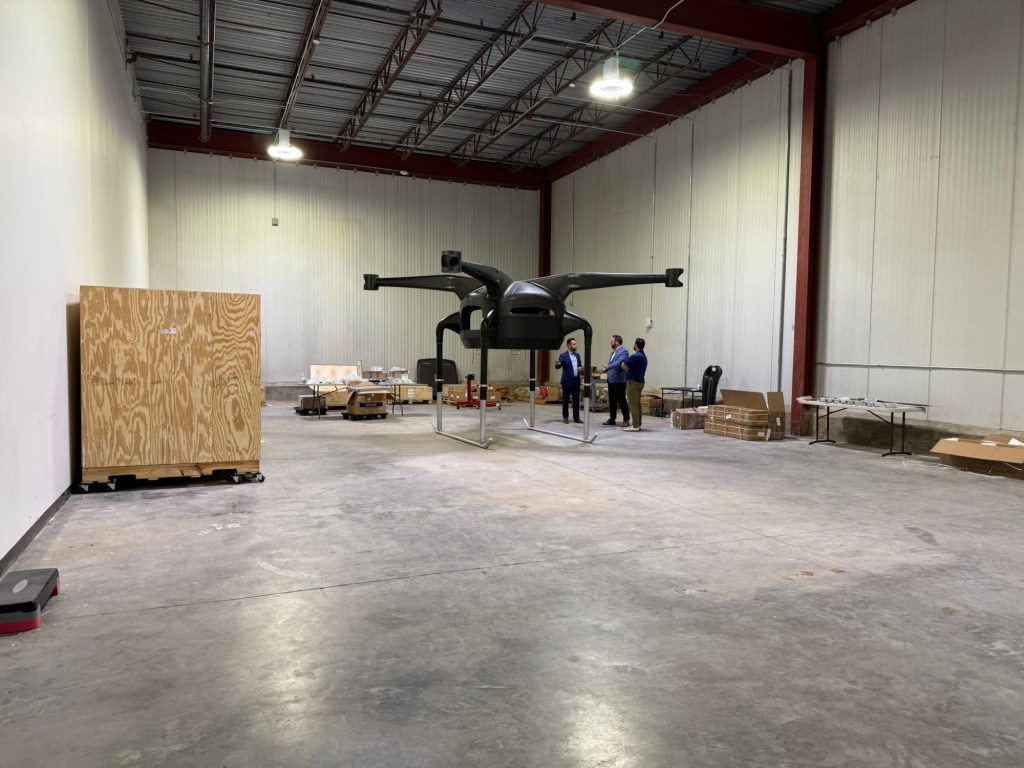
We called the evening “Dreams on Elm Street”, a lighthearted nod to the classic 1980s film. But what we’re building at Volynt isn’t the stuff of nightmares. It’s the realization of a dream, one that is taking shape right here in Butler County and has the potential to transform the future of logistics, aviation, and economic development in Ohio.
The turnout exceeded our expectations. The room was filled with Miami University staff, students, local business leaders, elected officials, and community members who wanted to learn more about what Volynt is building and where we’re headed.
We were honored to welcome Senator George Lang, Butler County Auditor Nancy Nix, and Michael Ryan, who is poised to become Butler County’s next commissioner. Their presence reflected the growing enthusiasm for innovation, entrepreneurship, and advanced aerospace development in our region.
Sharing the Vision
I opened the evening by welcoming our guests and providing an overview of the event. From there, our leadership team took the stage.
Our CEO shared Volynt’s long-term vision and mission. Our Chief Technology Officer highlighted the engineering milestones we’ve achieved and the technology behind the Volynt Vyper platform. As Chief Operating Officer, I discussed how Volynt is transforming cutting-edge aviation technology into a scalable and sustainable business. I outlined our operational strategy, manufacturing roadmap, partnerships, and the steps required to move from prototype development to commercial deployment.
The presentations were engaging, the audience was attentive, and the questions that followed demonstrated genuine interest and excitement.
Most importantly, this wasn’t a flashy product launch filled with unrealistic promises. It was an honest conversation about where we are today, what we’ve accomplished, and what the next several years may hold.
From Prototype to Production
Our immediate focus is straightforward.
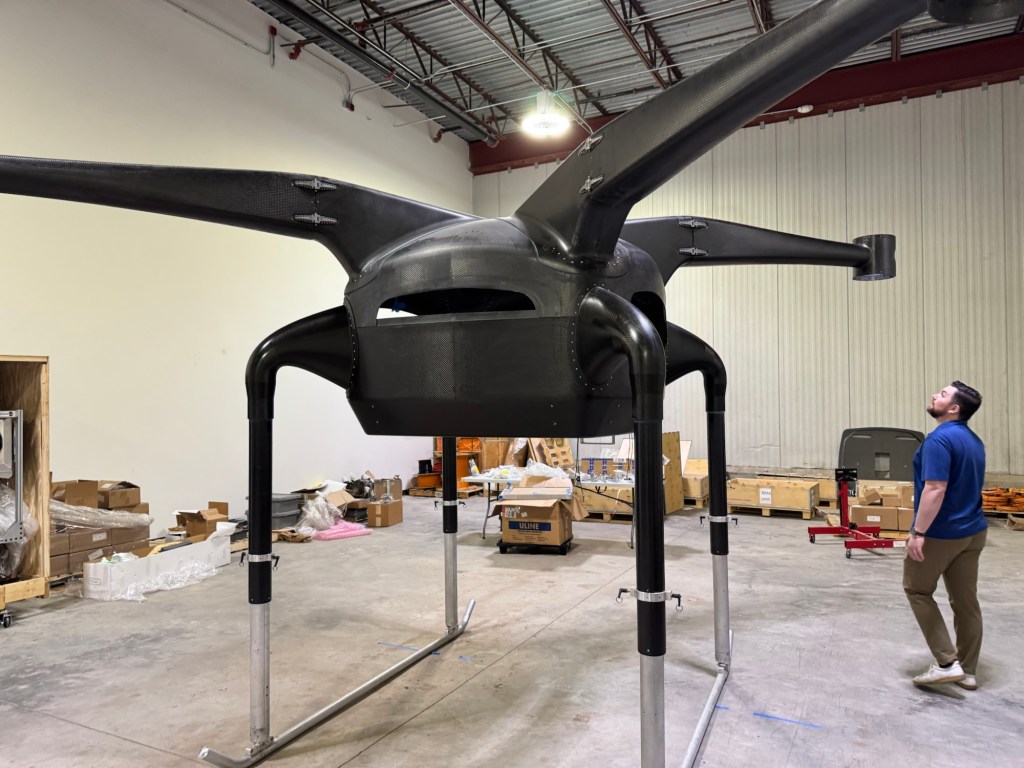
Over the next six months, our team will complete the full-scale Vyper prototype that was unveiled at the Innovation Center. That aircraft represents years of design work, engineering refinement, and determination.
Once completed, the aircraft will enter an intensive testing phase designed to validate performance, reliability, and operational capabilities.
Looking ahead to 2027, we plan to participate in major industry competitions, build broader recognition within the aerospace community, and begin manufacturing multiple aircraft.
The goals are ambitious, but they are supported by a clear roadmap and a dedicated team committed to execution.
The Drone Revolution Is Already Here
One of the most important messages of the evening was that autonomous aviation is no longer a future concept.
It’s happening today.
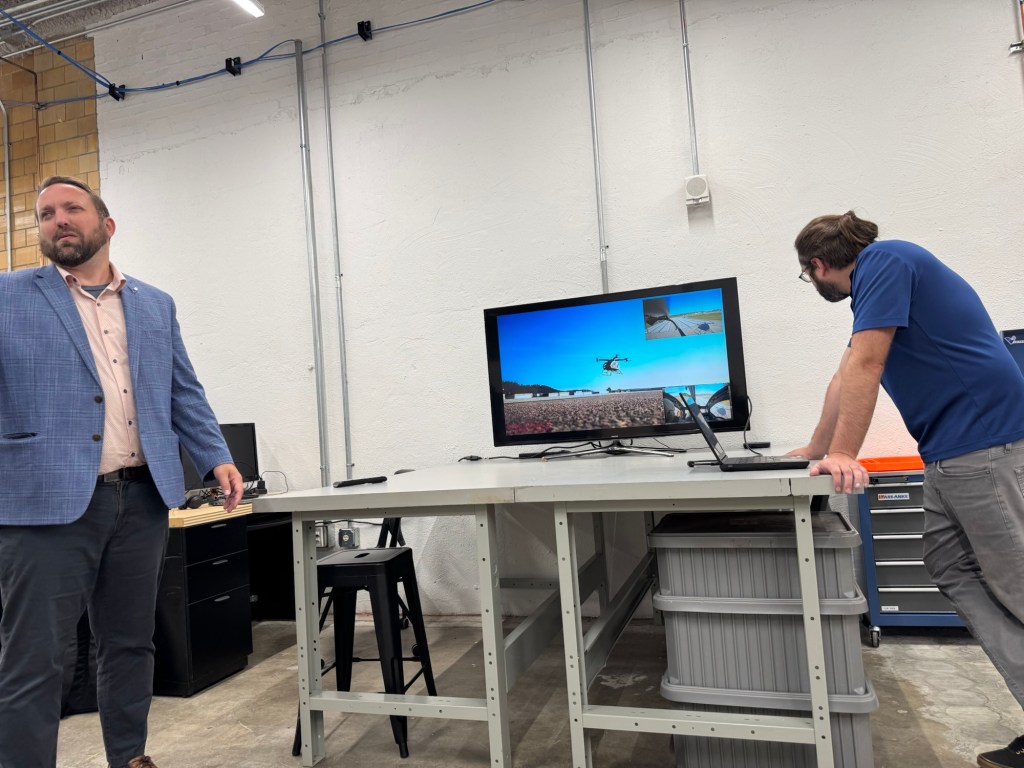
Just one day after our event, Dayton-area company Dexa launched a drone delivery service in Kettering. The program delivers food orders from TJ Chumps on East Stroop Road to customers within a several-mile radius across Kettering, Oakwood, and Centerville.
These smaller drones operate as last-mile delivery systems. Flying at approximately 400 feet, they lower food orders safely to customers using a cable-delivery system. Dexa has spent years developing this capability and is helping demonstrate that drone delivery is becoming a practical reality.
Volynt’s mission is different.
While companies like Dexa focus on last-mile delivery, Volynt is developing larger autonomous aircraft designed for middle-mile logistics. Our aircraft are intended to transport meaningful payloads between regional hubs such as Cincinnati/Northern Kentucky International Airport (CVG), Dayton International Airport, Indianapolis, and other distribution centers.
This approach has the potential to reduce transportation bottlenecks, address driver shortages, and create more efficient supply chains.
Whether it’s delivering a meal across town or transporting freight across a region, autonomous aviation is rapidly reshaping how goods move through our economy.
Why Ohio Is Positioned to Lead
Ohio’s aviation legacy is unmatched.
The birthplace of powered flight now has an opportunity to become a leader in autonomous flight.
Few regions are better positioned than Butler County to participate in that transformation.
Our region offers access to multiple airports, including Miami University’s airport, where initial flight operations can be conducted. At the same time, substantial investment continues at Butler County Regional Airport, where significant infrastructure improvements are being planned.
The resources, workforce, educational institutions, and transportation network already exist. What remains is bringing together the innovators, investors, and community leaders who can turn opportunity into reality.
Creating Careers That Stay Close to Home
One topic that resonates deeply with me is talent retention.
I have spoken with countless parents who have made tremendous sacrifices to provide educational opportunities for their children through Miami University, Butler Tech, and the University of Cincinnati. Too often, those graduates leave Ohio because they believe the best opportunities are elsewhere.
That reality creates a challenge for families and communities alike.
One of our long-term goals at Volynt is to help change that story.
We envision creating thousands of high-quality aerospace, engineering, technology, and manufacturing jobs throughout Southern Ohio. We want talented young people to have the option of building exciting, fulfilling careers without leaving their families, communities, and hometowns behind.
Strong Community Support
One of the most encouraging moments of the evening was seeing the level of support from the community.
Michael Ryan delivered an excellent presentation about economic development in Butler County and how innovative companies such as Volynt can contribute to future growth and prosperity.
The participation from Miami University, local leaders, educators, students, business professionals, and community members reinforced something I’ve believed from the beginning:
Innovation succeeds when communities embrace it.
Dreams on Elm Street was more than a company presentation. It was a milestone. It brought together people from different backgrounds and perspectives to discuss a shared vision for the future of our region.
The energy in the room was unmistakable. The conversations were thoughtful. The questions were insightful. The enthusiasm was genuine.
For me, that confirmed that we’re moving in the right direction.
Looking Ahead
Volynt’s journey is still in its early chapters.
There is much work ahead, many challenges to overcome, and numerous milestones still to achieve. But the momentum is real, and the opportunities are significant.
We will continue sharing updates with the community as we progress from prototype development to testing, certification, manufacturing, and beyond.
This is only the beginning.
Thank you to everyone who attended Dreams on Elm Street and supported our mission. Your encouragement and belief in what we’re building means more than you know.
Together, we’re not just dreaming about the future.
We’re building it.
About the Author
Rich Hoffman is Chief Operating Officer of Volynt, where he leads operational strategy, business development, manufacturing planning, and growth initiatives for the company’s autonomous aerospace programs. A longtime Butler County leader and aerospace executive, he is committed to building high-quality technology careers and advancing innovation throughout Southwest Ohio.
Rich Hoffman is an author, political consultant, and strategic advisor based in Cincinnati, Ohio, and the creator of The Politics of Heaven—a unique framework that connects biblical theology, ancient history, and modern power structures to explain how moral alignment and spiritual forces shape global events. Blending real-world political experience with deep research into archaeology, UFO phenomena, and suppressed historical narratives, Hoffman offers compelling commentary on topics ranging from ancient civilizations and the Dead Sea Scrolls to modern populist movements, paranormal continuity, and leadership strategy in chaotic environments. As the author of The Gunfighter’s Guide to Business and the forthcoming Politics of Heaven, he brings a grounded yet provocative voice to media discussions, supported by firsthand experiences and a cross-disciplinary approach that bridges science, history, and theology. For interviews, speaking engagements, or expert analysis, visit richhoffmanbooks.com or contact directly via phone at 513-307-5815 or email at rhoffman@richhoffmanbooks.com. If you’ve seen the movie, Disclosure Day and want to talk about it and the implications of Presidnet Trump’s UAP disclosures, let me know and we can bring some color to your coverage. https://richhoffmanbooks.com/media-inquiries-broadcast-topics-and-contact-info/?frame-nonce=ad51e7ecba I do have a firsthand UFO encounter to discuss.
People have been asking me what I am doing. They have wondered about me. They have watched the episodes, read the blog, seen me in rooms around Butler County for years, and then I went quiet in the way a person goes quiet when they are changing the work under their feet and are not ready to turn it into content.
I am not looking for a safe job that pays well so I can run out the clock. I have had those offers. I appreciate them. I am affiliating myself with a team of very sharp engineers and builders at Volynt Aero, as a senior consultant, with a path toward the COO seat, and I am doing it because I am in a stage of life where I want to swing for the fences. Not out of desperation. Out of refusal. I have watched too many capable people spend their best remaining years hitting ground balls and calling it wisdom.[1][2]
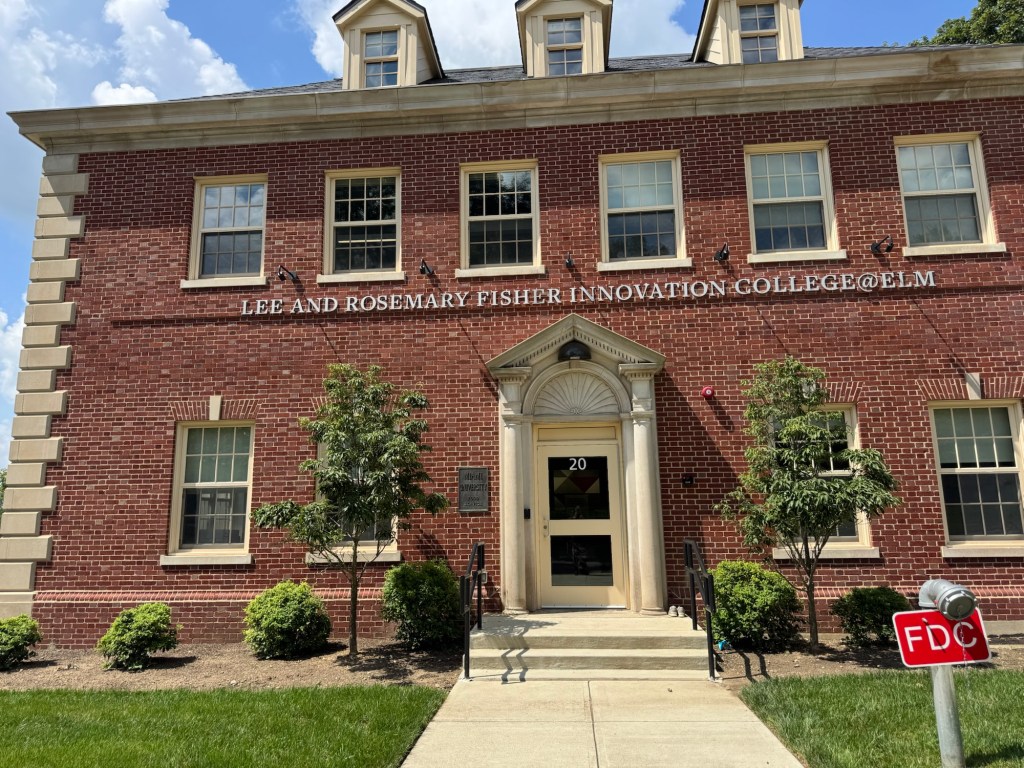
On Monday, September 21, 2026, at 7:00 p.m., at 20 South Elm Street, Oxford, Ohio 45056, inside Fisher Innovation College@Elm on Miami University’s campus, we are going to talk in public about economic vitality and what I believe is an enormous opportunity for Butler County. The event is free. Nobody is asking you to bring a checkbook. Just eat some snacks, shake hands, and hear the plan. I told my wife to go to Costco and get Doritos, punch, and whatever else makes a room feel welcoming instead of processed. That is the tone—serious work. Easy room. If you have wanted a reason to see me after a decade of reading or listening, that is the date. My schedule jumps around a lot, but I will be there for this.[3][4]
Oxford. The university town on the west side of the county. The building is the renovated old food-service and workforce site at 20 S. Elm Street — College@Elm — not a lecture hall buried in the academic core. Volynt Aero lists that building as its home. Miami’s Advanced Air Mobility Hub lives in that same incubator. The door you want is on Elm.[1][2][3][5]
I still dislike the word consultant, even though I now wear it, because I spent years chained to a success I had already built, and I felt embarrassed standing next to men who had already swung and connected. And why I would rather strike out in public, in Butler County, in the aerospace market I have been talking about for years, than spend the rest of my working life protecting ground that other people were already trying to steal.
I am a job-creator kind of person. I want to make jobs. I do not want to get a job someone else already made. That distinction sounds like a slogan until you have lived both sides of it. Most of the professional class measures adulthood by getting a job. Making jobs is how a county stays alive. I am happiest when I create work for other people—hundreds, or thousands. If I can help build something that employs a thousand people or more, that is the scoreboard I care about. Upper mobility. Payrolls that put gas in cars. Families that can stay in Butler County instead of exporting their kids to Texas, North Carolina, or the coasts and then coming home at Christmas to tell us how much better the schools are somewhere else.
I have done versions of this before. I have hired. I have built programs. I have kept a business alive longer than I wanted to because I brought people into it and felt responsible for the lives attached to those paychecks. That loyalty was not branding. It cost me years. It also taught me the thing the consultant class never learns: once you make something valuable, you become a target. Pirates do not always arrive with hooks and flags. Sometimes they arrive with decks, retainers, and a vocabulary about “professionalizing the operation.”
Go back to 2019. We had a Trump rally at a place where I had spent much of my life building a business. The owner was my friend. I stayed with that business a long time because of that friendship and because I didn’t want to deal with the woke corporatism that evolved from 2015 through 2020. Then COVID. Then the years after COVID, when the work stopped being about building and started being about keeping the lights on for people I had hired. I felt chained to their ability to put gas in the car. In a lot of ways I felt like I was lashed to a white whale. From the outside, that can look like success. The people who still had jobs were glad the jobs existed. I was glad they still had them. Inside, I was resentful — not of the people, of the process. I had created jobs, and then I became the janitor of those jobs while other people bought in, layered in, and tried to change what I didn’t want changed.[6]
It felt like trying to stay married to someone who wanted to cheat. Every time you turned around, they were climbing out a window toward some new lover with a fancier spreadsheet and phony EBITA numbers propped up by a shell game. I poured my heart into a company I didn’t fully control. Other people wanted to change it. I didn’t like the changes or the people who came with them. I still liked the people I had encouraged to become part of it. So I stayed. I defended. I hit ground balls to advance other people already safely on base. I kept the lights on.
Over the last couple of years, I went through multiple cycles of consulting firms imposed on me by, come what may, financial institutions who thought they knew best, after the best was already placed in their lap and worked out for them. Three waves. Then a fourth. I will say it the way I say it when I am not dressing it up for a chamber breakfast: a lot of them are dumb as rocks, and I do not mean to insult rocks. They are paid like industry professionals while the world under their feet has already changed. They exist to maintain ground already taken. They do not create the ground. They arrive after value exists and explain to the people who made the value how the value should now be managed. That is not a free market. That is a priesthood of fools.[7][8]
I worked at the same place for many years because of loyalty to the owner and because I wanted his family to benefit from what had been built. I still want that. Friendship does not expire because a corporate process gets stupid. But I also wanted an excuse to get away from a machine that had stopped being a build and had become a defense. The first opening that would let me play where I actually wanted to play showed up in these guys at Miami, in vertical takeoff, in the new space-adjacent aerospace market I have been putting episodes on for a long time. I have been interested in vertical aerospace for years. I wanted into that market for all kinds of reasons. Then my life opened a gap; I met them, I liked them, I wanted them to succeed, and they started introducing me to people. That was the intention. That is why I said yes.
They have introduced me as the coming COO. Right now I am a consultant. A senior consultant. I have a path toward the COO role at the scale they are trying to reach. I was apprehensive about the word. I have been stunned by how many places want me to consult for them. I had personal reservations about putting my name on that label. I still have them. I am also proud to be affiliated with this particular team. The title is not the prize. The prize is whether we can turn a sharp technical package into manufacturing, customers, and jobs.
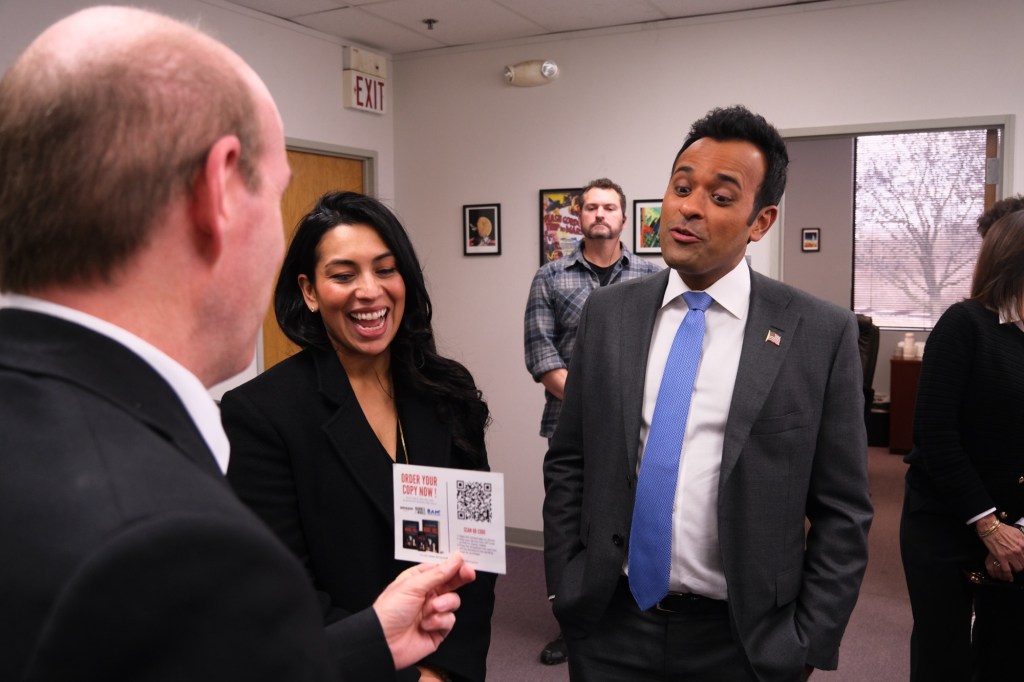
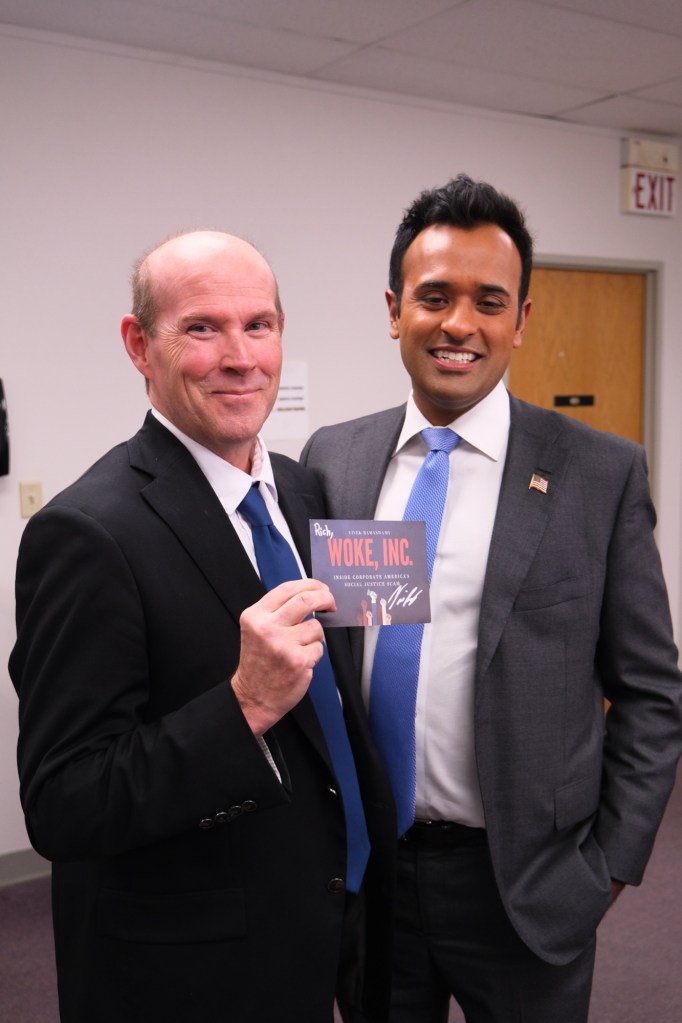
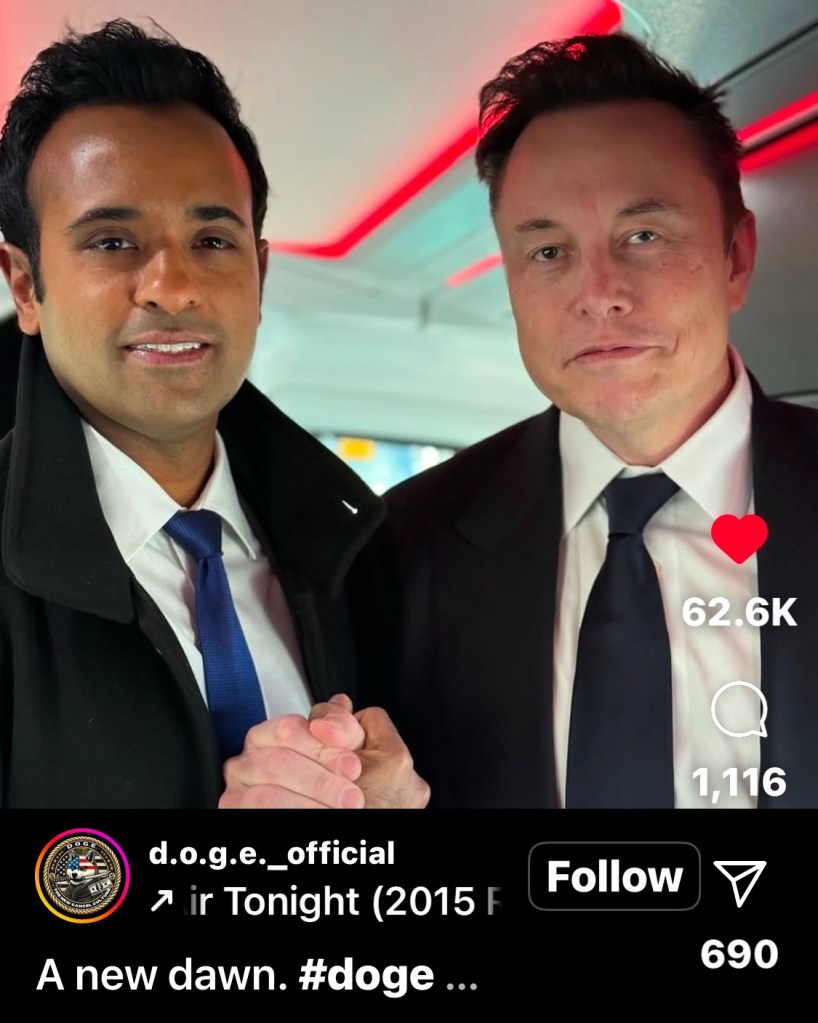
Vivek Ramaswamy and J.D. Vance were at that 2019 rally I hosted. Warren Davidson has been in the orbit. I have had conversations with Bernie Moreno. I had a good talk with Jim Renacci after an event at Jags in West Chester. I have watched a lot of people I know leave the safe lane, take a real risk, and come back with independent wealth—enough to enter politics, or to refuse to be owned by it.[9][10]
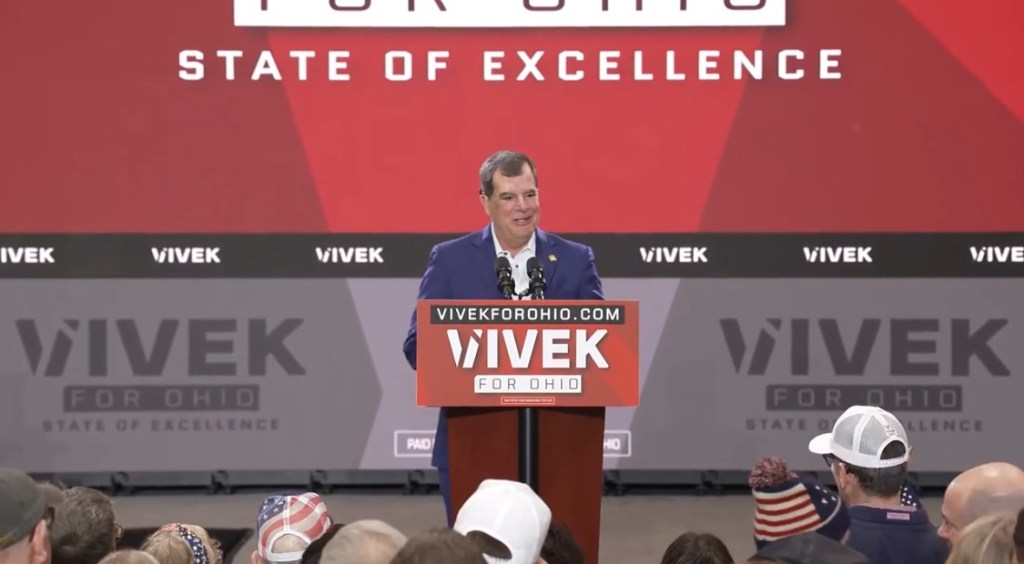
Vivek was already on a steep wealth curve then. He wasn’t quite in the billionaire club the way magazines like to print it, but he was headed that way, and since then he’s been in that conversation and has taken the political path back toward Ohio’s governorship. Years later the call came through other people: he wanted to announce a governor’s race at my place, because the place still represented a free-enterprise culture that had not gone fully woke, and because we were doing things that did not look like everybody else. I said yes. I meant yes. I also felt a private embarrassment I should admit here, because if I do not admit it, the rest of this sounds like a victory lap instead of a confession.
When you stand next to people who built or sold large enterprises and then used that capital to change the map, and you are the guy still defending last decade’s success against the fourth wave of consultants, you feel the difference in your chest. They look at you the way a hitting coach looks at a veteran who will not let the bat get through the zone. You are at this stage of life. Why are you hitting ground balls? Why are you taking the walk? Why are you protecting a single when the bases are loaded? You are a guy who could drive the ball with runners on. Why are you trying to beat out a roller to short?
The honest answer, for a long time, was loyalty. Loyalty to the owner who was my friend. Loyalty to the people I hired. I do not apologize for that. I also will not pretend it was the same thing as ambition. Ambition would have left earlier. Loyalty stayed. Then loyalty, after enough waves of professional stupidity, became a kind of self-betrayal. I felt like I was underperforming in front of people I respected. I felt like I was wasting a bat. When Vivek talked about using the place because it still stood for the free-enterprise system, I felt a flicker of pride and a bigger flicker of “I should have more to put on the table than a good venue and a good story about the past.”
I watched them swing. Some of the balls went over the fence. The crowd enjoyed it. The players enjoyed it. Everybody enjoys seeing a ball leave the yard, including the man who hit it. I wanted that feeling again — not the celebrity, the creation. I want to make other people wealthy. I want payrolls large enough that a community can even start talking about abolishing property taxes without gutting the services people actually like. That is a standard, not a slogan. If you are not trying to create billions in new market value, I am not sure the conversation is worth the evening. A few hundred million in annual revenue is what the coastal startup press calls a win. I do not think that is a win. Ten billion in new market growth is the starting point for a conversation about success. To me, success looks like a hundred billion. That is how you change a county instead of decorating it.
I haven’t built a job base that employed a thousand people or more in over a decade. I have been trying to hang on to the success I had already built. That work has its honor. It also became boring to me, and boredom in an operator is a warning light. When the fourth wave of consultants arrived with different ideas about how we should do the thing I had already done, I was happy to leave and not look back. They did not like me. I did not like their ideas. I did not want to be part of another cycle of ground balls. I took the off-ramp. I would rather hit the reset button and start over with people who want to build than spend another year arguing with people who think a slide deck is an airplane. I’m sure I’ll write a book about all this once I get some distance from the immediacy of it all. It will make a very interesting business book. But first, such books are only valuable to people once you are looking back from a position of success; otherwise, it’s just another story about a down-and-out situation. Success has to be attached to the narrative.
That is how I landed at Volynt.
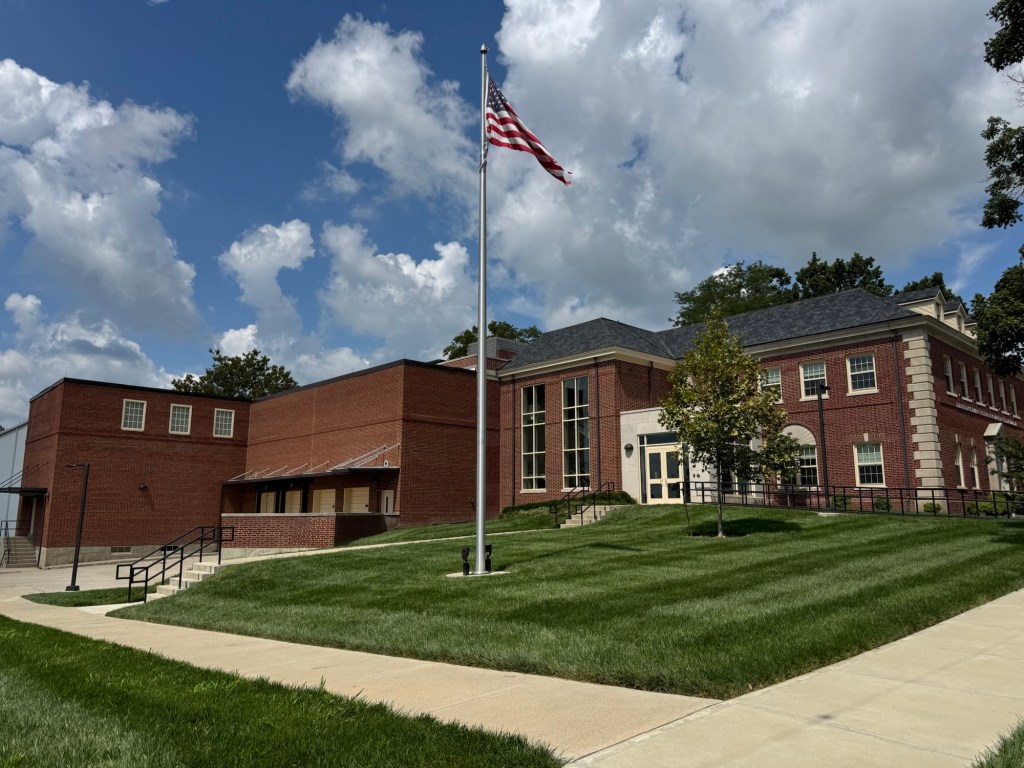
The building matters, and I am going to stay on the building for a minute because “Miami University” is a large map, and people get lost on large maps. College@Elm is Miami’s innovation and workforce hub at 20 S. Elm Street. It used to sit vacant. The university, the City of Oxford, alumni, the state capital budget, and JobsOhio money turned it into a technology, entrepreneurship, and light-manufacturing incubator — office, design and testing, startup space, a workforce resource function, and room for real production instead of just posters about production. Miami alumni Lee and Rosemary Fisher put their name on it. Randi Thomas and the ASPIRE shop treated it as a way to drag Oxford out of an eight-month student economy and toward a twelve-month one. That is the room.[3][4][11][12]
Volynt Aero’s address is that building. Suite language has appeared in their capability materials as 20 S. Elm St., Suite 117. Miami has also stood up an Advanced Air Mobility Hub in the same incubator, aimed at autonomous, hybrid-electric, and eVTOL aircraft, in collaboration with Butler County and Middletown Regional Airports, Cincinnati/Northern Kentucky International Airport, Butler Tech, and industry partners including Volynt.[1][2][5]
Volynt is not a passenger flying-taxi pitch dressed up for a TED talk. I need to say that because the popular press only knows one picture of this industry: a four-seat air taxi humming over a downtown skyline in a rendering that has never paid a supplier. The company is building large hybrid-electric uncrewed aircraft for cargo logistics, disaster response, contested logistics, mobile power generation, and forward communications—ugly work. Useful work. The work that can find a customer before the lifestyle brochure does. They call the aircraft line Vyper in their public materials. The founding team came out of UAS and eVTOL work dating to 2012, including AFWERX Agility Prime flight-test experience on a full-scale electric aircraft; University of Cincinnati aerospace engineering; Rose-Hulman and Illinois mechanical engineering; and FAA experimental airworthiness work. Together, they have forty-plus years of experience in electric vehicles, eVTOL, and manned and uncrewed aircraft. Jeffrey Bennett is the CEO. Justin Jantzen is the CTO. The rest of the technical bench is the kind of bench a county should want to keep.[2][5][13]
They have proposed a Hybrid Propulsion and Energy Lab — the HyPE Lab — at Miami University Airport in Oxford, a facility in the neighborhood of seven million dollars aimed at hybrid-electric, hydrogen fuel cell, and electric aviation development. They have already pulled Ohio Third Frontier / TVSF grant support in partnership with Miami and the Entrepreneurs’ Center. That is not a finished factory. That is a package with technology laid out, customer logic laid out, and a county sitting in the birthplace of powered flight, next to Wright-Patterson, next to a new Butler Tech aviation hangar beside Middletown Regional, next to Joby and BETA and Electra planting metal in the Miami Valley, in a state that has spent years trying to own advanced air mobility instead of applauding it from the stands.[14][15][16][17][18]
Ohio’s own AAM studies are not modest. DriveOhio and the NEXA work done for the state put the prize at roughly thirteen billion dollars in economic activity over twenty-five years, about fifteen thousand jobs, and about two and a half billion in tax revenue — if Ohio actually captures the market. Cargo, emergency services, and vehicle manufacturing are a large share of that stack. That is the lane Volynt is in. I do not treat a consultant forecast as destiny. I have spent too many years watching forecasts get used as incense. I treat the number as a fastball I can see. If the state leaves that stack on the table, California and Texas will take it and send us a newsletter about thought leadership.[19][20]
I want to give this some color, because “economic vitality” is a phrase chambers of commerce use until it means nothing.
Vitality is not a social-hour calendar. Vitality is surplus. It is when a county produces so much new value that young people do not have to leave, old industrial sites get reused, airports become more than weekend-pilot hobbies, and tax fights become less vicious because the base is growing faster than the government. I have spent a lot of my public life as the tax-killer in this county. I didn’t do that because I hate roads, sheriffs, and firehouses. I did it because a government that cannot stop growing will eat a private economy that has stopped growing. The only durable answer is not a clever levy. The durable answer is so much new payroll and new production that the argument changes temperature.
Butler County already has pieces of the machine. Miami’s Oxford campus and the regional campuses. Middletown’s steel and manufacturing memory, including the kind of heavy industry that still knows what a shift is. The I-75 corridor. Two relevant airports inside the conversation — Miami University Airport in Oxford and Middletown Regional — plus CVG as the big-hub partner on the AAM map. Butler Tech’s new aviation center, a roughly fifteen-million-dollar hangar and classroom pile next to the Middletown airport, with county, city, and JobsOhio money in it, training kids who can see an aerospace job without leaving home. And a university incubator on Elm Street, explicitly sold as a way to create year-round work in a town that used to hibernate when students left.[1][15][11]. And let’s not forget about the wonderful Butler County Regional, which has the prospect of enormous significance in a way that it has always been poised to bring forth.
Advanced air mobility is one of the few new industrial stacks that can still be built in the Midwest instead of being imported as a finished product from the coasts. Ohio has been recruiting it on purpose. Joby has been planting manufacturing near Dayton and talking about thousands of jobs and hundreds of aircraft a year if the production curve holds. Electra has committed a huge Ohio production bet out of an MIT classroom idea that turned into a short-takeoff hybrid aircraft and an $850 million manufacturing story in Springfield and Clark County, with job counts in the neighborhood of two thousand. BETA and the National Advanced Air Mobility Center of Excellence in Springfield are part of the same weather system. JobsOhio has treated AAM as a super-sector and has been walking that story all the way to Paris. Hartzell in Piqua certified an electric-aircraft propeller. The FAA’s eVTOL Integration Pilot Program is on the 2026 calendar. Ohio entered that fight with a multi-state medical-logistics proposal.[16][17][18][21]
Most of the passenger eVTOL story is still a certification and capital-markets story. That is not an insult. It is a timeline. Certification is slow. Air-taxi unit economics are a sermon until the aircraft is legal, maintainable, and paid for by someone other than a vision fund. The cargo, disaster, defense-adjacent, and mobile-power story can move sooner because the customer is not waiting for a four-seat taxi to become socially fashionable. An uncrewed hybrid aircraft that can haul, generate, and communicate in ugly terrain is a product a government buyer and a logistics company can understand without a lifestyle brochure. That is why I like this package. It is closer to a truck than to a fashion object.
I have talked about the new space economy and vertical aerospace for years. All these things mentioned here are merging at a very unique time in Southern Ohio, and I’ve known it for a long time, and I had felt stuck, unable to participate because of my other commitments. I wanted into that market, not stuck to loyal obligations. Not as a fan. As an operator. I have walked the producer culture at SpaceX and looked at what happens when a company treats manufacturing as the product instead of treating the press release as the product. Reusability. Iteration. Catching the thing and flying it again. That is the version of aerospace I want in Ohio. I do not need Volynt to be SpaceX. I need Volynt to be as serious as SpaceX: close the gap between the drawing and the floor. California and Texas will take a lot of the gold rush. They should not take all of it. Ohio invented powered flight. It should not rent the sequel from the coasts and call the rental economic development.
There is a second vitality problem I will not dance around. A lot of American corporate culture imported a compliance religion that I believe tracks, in spirit if not in every memo, to the same managerial habits that made Wall Street comfortable with Communist China’s labor and governance model while lecturing American manufacturers about virtue. ESG-era asset managers scolded domestic firms and stayed hungry for China exposure. Larry Fink could write letters telling American CEOs that climate and stakeholders would reshape finance, and the same apparatus could treat Beijing as a growth market. That split personality cost real companies real billions in distracted leadership. It also trained a consultant class to speak fluent morality while missing the factory. I have watched it up close. I have watched financial institutions send in the next wave of advisors because they thought a firm that had not gone woke yet still had juice that could be squeezed if only the culture were more compliant. They do not like Elon Musk. They do not like being told the world will change through building instead of through postings. I have been a target of that instinct. I am done volunteering for it.[22][23][24]
I want to lead a very dramatic change that changes entire industry standards, around the world. I want to help build a company that makes money the old way: a customer pays for a machine that works. Easy money and financial engineering can look like vitality for a while. Then inflation shows up, and the community realizes the jobs were never as solid as the press release. I want the other kind. Output. Exports. Aircraft. Power systems. Maintenance hangars. Suppliers. Kids from Butler Tech and Miami who can stay home and get paid. I want so much money coming into this community that property taxes become a conversation you can have without destroying the services people like. That is where my mind is. Getting on base is not enough.
Swinging for the fences is a moral choice, not a motivational poster. Baseball metaphors get cheap. I am keeping this one because it is the cleanest picture of the decision.
Most people in operating roles at this stage of life take the safe route. Get on base. Take the walk. Protect the pension. Let someone else hit the homer. You have already done the hard thing once. Now you need to keep your place in the lineup. I understand that instinct. I rejected it.
Swinging for the fences can end in a strikeout. I know that. I am a realist in business. Success is not entirely up to me. Other people have to get on base. The pitcher has to leave a pitch you can actually hit. Certification, capital, customers, suppliers, and timing all have to arrive in something like the right order. I have said on the air that this is a poker game more than a guaranteed jackpot. The risk is real. I do not think the risk is stupid. They have a gap I think they can close. I know what I can do in an operating seat. That part is not in doubt in my mind. I have done versions of it many times. The barrier most early technical teams cannot cross is not the CAD model. It is the factory floor, the hiring machine, the customer close, and the culture that does not dissolve when the first institutional money arrives. In this case, I see all those coming together in very unique and profitable ways. It’s always about timing, and the timing for this is right now.
Even so, a strikeout while swinging for the fence feels more honest to me than a career of ground balls. I have wanted a window to build from the ground up again. I got one. Before the window closes, I want a grand slam for Butler County — or at least a swing that everybody in the stands can respect. Safety is not my default setting. Loyalty is. Those two traits fought each other for years. Loyalty won, until the fourth wave of consultants made it obvious that staying was no longer protecting the people I hired. It was protecting a process I did not believe in.
I enjoy risk. I enjoy my life most when there is real risk in it. People who have known me a long time know that. They also know I will hang onto a job base I created longer than a purely rational careerist would, because I do not like being the person who collected a check and left other people’s mortgages on the table. When the money showed up to go somewhere else, and I knew the new layer was going to take it in a direction I would not sign off on, I did not feel like I was letting anybody down by leaving. I felt like I was buying my freedom from a process that had already decided I was the problem.
I want to be a version, in Ohio, of what the serious aerospace builders are doing in Texas. I expect that of myself. I was embarrassed, in those conversations with people like Vivek Ramaswamy and Bernie Moreno who had already swung and connected in their own lives, because I could hear the unasked question from them: you love the free-enterprise system enough to host a speech, why aren’t you in the game at that scale? I hosted the speech. I meant it. I also needed a moment of my own — the kind where you roll the dice large enough that the win, if it comes, is visible from the rest of the world.
September 21 is not a fundraiser with a soft-ask after the punch. It is not the Rich Hoffman show. It is not a secret society. It is a public conversation about a plan for economic vitality in Butler County, hosted where the work is already living, on a Monday night, with the people doing the engineering in the room. If you come, you will not be listening to me invent a company out of a microphone. You will be listening to why I think this particular team, in this particular building, in this particular county, is a bat worth swinging.
Monday, September 21, 2026. Seven o’clock. Fisher Innovation College@Elm. 20 South Elm Street. Oxford, Ohio 45056. Free. Come as you are.
If the evening works, you will leave less interested in me and more interested in what a serious advanced-air-mobility build could do to the tax base, the talent pipeline, and the self-respect of a manufacturing region that has been told for twenty years that the future lives somewhere else. There is a lot of affiliation possible in this — Miami engineers, Butler Tech kids, airport boards, suppliers who already know composites and power electronics, people across Ohio who are tired of watching the next factory announcement land in another state. I want these guys among the names people mention when they talk about who actually built the upper-mobility market instead of posting about it on LinkedIn.
Let me stay in Butler County long enough that the vitality claim isn’t a vibe.
This county sits between Cincinnati and Dayton with a population now in the high 380,000s to about 400,000 depending on which vintage of the estimate you trust, employment in the neighborhood of 190,000 people, and a local GDP north of twenty billion dollars. Manufacturing is not the largest headcount sector—healthcare and retail usually win that race—but it is still the spine. County profile data puts manufacturing employment in the mid-teens of thousands, with hundreds of manufacturing establishments. That is the difference between a bedroom county and a producing county. Bedroom counties import paychecks and export children. Producing counties keep a reason to stay.[26][27]
I have lived in this county my whole adult life. I did not stay because it was fashionable. I stayed because this is the ground I know, and because I think a person who talks about job creation while quietly arranging his own exit to a coastal zip code is running a different play than the one they are selling. The future I want is not a TED talk in Austin about the Midwest. The future I want is a payroll in Oxford, Middletown, Hamilton, Trenton, West Chester, Fairfield, and the townships not named in the brochures.
Middletown still knows steel. Cleveland-Cliffs putting real capital into Middletown Works is the kind of story that should shame anyone who wrote this valley off as a twentieth-century museum. Hamilton is growing again, according to the latest Census slice of incorporated places. Oxford shrinks a little when the student count wobbles, which is exactly why College@Elm was sold as a twelve-month economy instead of an eight-month one. The I-75 corridor still moves freight. The airports are not theoretical. Miami University Airport is a tool if someone treats it as one. Middletown Regional now has a Butler Tech aviation hangar next door — roughly thirty thousand square feet and fifteen million dollars, with millions from the county commissioners, JobsOhio, and the city — so a kid can learn airframes and powerplants without buying a plane ticket to Dayton on the first day of class.[28][15][11]
That is the county I am talking about on the 21st. Not a fantasy county. This one.
I should talk about the industry itself, because vitality without an industry is just a mood.
The Wright brothers did not invent flight so Ohio could become a spectator. Huffman Prairie is a cow pasture with a better story than most nations ever get, and Wright-Patterson plus the Air Force Research Laboratory turned that story into a century of metal, propulsion, sensors, and people who know how to hold a tolerance. The National Advanced Air Mobility Center of Excellence in Springfield gave the new stack a hangar and a test culture. Ohio was early on beyond-visual-line-of-sight work. JobsOhio has been walking AAM around the world as a super-sector. That is nothing. It is also not finished. A super-sector that does not produce aircraft, batteries, blades, software, and trained hands in this state is just a brand.[16][21]
Joby is the loudest nearby proof. In 2023, the state stood at Hawthorn Hill and announced a Dayton-area manufacturing bet aimed at two thousand jobs, hundreds of millions in investment, and a long-run rate described as up to five hundred aircraft a year if the curve holds. By late 2025 they were making propeller blades in Dayton — thirty blades per aircraft across six rotors, with talk of fifteen thousand blades a year at scale. In January 2026 they bought a 700,000-square-foot building in the Vandalia / Dayton orbit to support a doubling of production toward four aircraft a month in 2027, while California still does final assembly in Marina. That is what a real company looks like when it stops rendering and starts buying floor. I do not work for Joby. I am not pretending Volynt is Joby. I am saying the weather system is here, and a county that refuses to fly in that weather is choosing to stay on the ground for sport, and just hitting ground balls when they should be home runs.[18][29][30]
Electra is the other loud proof. An MIT classroom argument about short takeoff versus pure eVTOL turned into a hybrid-aircraft story, then into an $850 million Ohio manufacturing commitment in Springfield and Clark County, with job figures in the neighborhood of two thousand. That architecture differs from Volynt’s unmanned hybrid cargo and power mission, and that is the point. A healthy industrial stack is not one company. It is a density of companies that can share suppliers, schools, airports, and a labor pool that already knows composites, wiring harnesses, thermal problems, and shift work.[17]
BETA, Wisk, Archer, and the rest of the passenger field will keep eating capital and calendar until the FAA is satisfied. That is their fight. Ohio’s eIPP proposal — medical cargo, multi-state coordination, existing infrastructure north of a billion dollars already in the AAM pipeline by the state’s telling — is an attempt to make the fight operational instead of ceremonial.[21]
Volynt’s lane is the one I keep coming back to because it does not need a downtown skyline to make sense. Contested logistics. Disaster. Mobile power. Forward comms. Cargo that does not care whether the landing zone has a concourse. Hybrid propulsion because batteries alone still lose arguments with range, weather, and payload. Unmanned because the scarce resource in a bad place is often the trained crew, not the box. If you have listened to me talk about cargo drones, battlefield and hurricane power, and the difference between a toy and a truck, this is that conversation with a company attached to it.[2][5][13]
I have been drawing and talking through those vehicles for a long time — American-flag and camouflage workhorses, five-hundred-pound-class cargo, relief power after a storm, the ugly missions that do not photograph like an air taxi over a football stadium. The point of affiliation is not that I became a CAD operator. The point is that I know what it looks like when a technical team has the machine but doesn’t yet have the operating company around it. That gap is where COOs either earn their keep or become another slide.
What do I think I bring? I am not going to write myself a brochure. I will say this. I have hired at scale. I have built programs. I have kept operations alive under pressure. I have sat through the consultant priesthood, and I know which parts of their language are anesthesia. I have a public voice in this county, which is either an asset or a liability depending on whether you want the work known. I want the work known. I want suppliers to walk in. I want kids from Butler Tech to see a ladder. I want Miami engineers to have a reason to stay on Elm Street after graduation instead of taking the first offer that spells California correctly. I want political people who talk about jobs to have to look at an actual floor instead of a resolution.
I also want to be honest about scale. Volynt is early. Public profiles put the firm in the small-headcount startup band, founded in 2024, grant-supported, incubator-housed, airport-lab proposed. That is not a criticism. That is the inning. I am walking in at the inning where the bat still matters.
People will ask why a person who distrusts consultants became one. I have answered it, and I will answer it again because the contradiction is the point. I distrust consultants as a class because the class profits from ambiguity and from other people’s sunk costs. I accepted this particular affiliation because the team asked me to help them become a company, not to help them become a presentation about a company. If that changes — if the work becomes another layer of process laid on top of people who actually know how to build aircraft — I will not stay for the fee. I have already lived that movie. I did not like the ending.
The same is true of the COO language. A COO at this stage is not a parking place for a résumé. A COO at this stage is the person who turns a technical core into hiring, suppliers, quality, customers, cash discipline, and a culture that can survive the first serious outside money. Most startups die in that translation. They have smart founders and a concept that connects, and they cannot get distance. I think I can get them distance. That is the only reason to say the letters out loud. A COO has to be top notch and able to build at scale to achieve the kind of revenue I think is meaningful, and you won’t get that by playing it safe and hitting ground balls.
I want to address a risk that the safe people often overlook. Risk isn’t the same as recklessness. Recklessness is swinging at everything. Risk is knowing the count, knowing the pitcher, and still letting the bat go because a walk will not change the game. I have been offered safe work that paid well. I know what that work is. It is a ground ball with a 401(k). It is a walk with better catering. It is other people’s home runs. I have lost years to loyalty, and I am not going to lose the next window to comfort. Comfort is how a producing region becomes a commenting region.
A cultural fight runs beneath the industrial one, and I am not going to pretend I do not see it. LinkedIn-era corporate America learned a language that came into American firms through compliance, banking, and the HR stack, and a lot of that language treats production as a moral problem to be managed instead of a good to be multiplied. I have called that language anti-American in the sense that it distrusts the producer and trusts the administrator. I have called out the China contradiction because it is the tell. If your virtue system cannot survive contact with the actual labor and governance model of the country that ate so much of our manufacturing, your virtue system is a costume. I don’t want a company that puts on the costume to raise a round. I want a company that makes a machine a customer will pay for, then makes another one faster.[22][23][24]
That is why I talk about SpaceX the way I do. Not because I think every Ohio startup is going to catch a booster. Because the method is the method: iterate in public, treat the factory as the product, refuse the cost-plus fog, and accept that some days the thing blows up and you learn. The consultant class hates that method because it makes their timelines look like prayer. I like that method because it is the only one that has recently changed what a country can do in the air.
I also like it because it creates the thing I actually want to be judged by. Jobs. Not jobs as a press-release noun. Jobs as a person who can buy a house in this county, raise children who do not have to apologize for staying, and look at a factory or a hangar and know the work is real. I have not had a run at a thousand-plus job base in more than ten years. That sentence bothers me. It should. A person who knows how to do a thing and spends a decade defending a smaller version of the thing is not being humble. They are being delayed.
Vertical aerospace does not sit in a vacuum. The same decade that made reusable orbital machines ordinary made a lot of people rich and made a lot of other people angry that wealth could still be created without a committee. I have said that a few hundred million in revenue is not the definition of a serious company in this era. I meant it. The markets being built around launch, satellite constellations, lunar logistics, point-to-point cargo, and now advanced air mobility are not cottage markets. They are the next industrial revolution, and they still have an American accent if we keep it. If we treat them as branding exercises for cities that want to look modern, the accent moves to Shenzhen, to a Gulf sovereign fund, or to whatever coastal firm learned to speak Ohio long enough to take the incentive and leave the toolpath somewhere else.
Vertical takeoff is the part of that revolution that touches a county like mine first. You do not need a Cape to build a hybrid cargo aircraft. You need engineers, a hangar, a certification strategy, suppliers, and a customer with a problem a road cannot solve. Disaster is that customer. Defense logistics is that customer. A hospital network that cannot wait for a truck in snow is that customer. A grid that dies in a hurricane is that customer. I have watched too many AAM conversations start at the air-taxi rendering and stay there until the money gets bored. Start at the ugly mission. The ugly mission pays. The pretty mission might pay later.
I kept doing episodes on this because it would have been easier to do another week of political weather. Politics matters. I am not walking away from it. But politics without production is commentary. I got tired of being excellent at commentary while the production problem in my own working life was a whale I was feeding. That is the private engine under this public announcement. I wanted my workdays to match the thing I have been telling this audience is coming.
I also wanted my community to have a shot at the kind of wealth that does not arrive as a transfer payment. Transfer wealth makes clients. Produced wealth makes citizens. I have watched federal money, state money, levy money, and foundation money wash through this region and leave behind a professional class that knows how to apply for the next wash. I am not against a smart grant. Volynt has used Ohio Third Frontier support and I am not going to pretend that seed capital is sinful. I am against a culture that thinks the grant is the business. The business is an aircraft that flies, a customer who pays, a shop that can build the next one, and a payroll that does not vanish when the appropriation cycle turns.
Consultants love the grant cycle. They measure it in the way they understand measurement: hours, decks, compliance language, a ribbon, a quote in the paper. Builders love the second aircraft. The second aircraft is the only metric that means the first one was not a stunt. If you come on the 21st and you only want to hear about the first rendering, you will be in the wrong room. I want to hear about the second, the tenth, and the factory that makes the tenth boring.
Boring is the compliment. SpaceX became important when landing a booster stopped being a miracle and started being a Tuesday. Joby becomes important in Ohio when a blade is just a blade and an airframe is just an airframe and the third shift is staffed. Volynt becomes important in Butler County when a hybrid unmanned cargo aircraft is a product you can point at, not a paragraph in an incubator newsletter. I am here for the Tuesday. I am willing to live through the miracles to get there. I am not willing to live through another decade of process about the miracles.
People who have known me since the car lots and the plants and the courtrooms and the long years in aerospace programs know I do not have a clean corporate story. I have a Western story. I worked young. I learned in rooms that did not care about my feelings. I wrote a book that used a gunfighter as the American stand-in for Sun Tzu and Musashi because I thought this civilization had forgotten that speed plus competence is a moral achievement, not a personality defect. That book was not a merch play. It was meant to give operators a language that did not come from a consultancy or from a monastery. If you read it and then watch me take a safe COO job at a firm that wants to be liked by the same class the book was written against, you should reject the book and I would never want you to do that.[7]
The loyalty years complicate the legend, and I am leaving the complication in. I could tell this as a clean break: woke capital arrived, I left, I found the future. That is too clean. I stayed because of a friend. I stayed because of people I hired. That is a virtue until it becomes a cage. The cage ended when the fourth wave made it obvious that the fight was no longer about the work. It was about who got to narrate the work. I do not give that away anymore.
If you are a young engineer at Miami and you are reading this, I want you in the room. If you are a trades kid at Butler Tech who can hold a torque spec, I want you in the room. If you are a supplier who already sells to the Dayton aerospace pile and you are curious whether Oxford is serious, I want you in the room. If you are a mover and shaker, a trustee, a mayor, or a staffer who only knows this industry from a JobsOhio slide, I want you in the room. If you are a person who has listened to me for ten years and thought I would never come back to a build, I want you in the room so you can see that I meant what I said when it really mattered most. Not when the game was on the line and we were hitting ground balls just to get and stay on base. But to hit home runs and to win the game in ways that nobody ever forgets.
So come to Elm Street.
If you are coming from Middletown or Liberty Township, you are driving west toward Oxford, not south toward Cincinnati and not north toward Dayton unless you like extra highway. You want 20 South Elm Street. You want the College@Elm building. You want 7:00 p.m. on Monday the 21st. Park like a person who has been to Oxford before, the building has its own parking lot— the streets are tight, the students exist, the building is the old food-service site that does not look like a cathedral and should not. Walk in. Eat a Dorito. Shake a hand. Listen to engineers. Listen to why I think this is the fence we need to knock the ball over with the bases loaded.
If you have known me for a long time and you have been waiting for a reason that was not another levy fight or another school-board night, this is a different reason. I still care about taxes, because a county that cannot grow its base will keep reaching into the same pockets. I still care about schools, because a talent pipeline that hates production will not staff a hangar. I still care about the sheriff’s side of a functioning county, because none of this works in a place that cannot keep law and order. But the 21st is not a political rally. It is an economic conversation with a company in the room.
I have said I want wealth large enough that property tax abolition becomes thinkable without wrecking services. People hear that as a joke or as a campaign line. Hear it as a measuring stick. If the new stack in Ohio is really thirteen billion over twenty-five years and fifteen thousand jobs, and if Butler County captures even a serious slice of the cargo, power, training, and supplier work, the tax argument in this county changes. If we capture nothing, we will keep fighting over the same pie and calling the fight civic engagement.[19][20]
I wrote The Gunfighter’s Guide to Business because I thought America needed its own book of strategy — not another imported mystic manual, and not another consultant workbook that teaches people how to manage decline politely. Shooting from the hip, in that book, is not sloppiness. It is mastery under time pressure. I have made a lot of people money before. I have given a lot of people jobs they could live on. I am proud of that. I want to do it again, bigger than I have had a chance to do it in more than a decade. That is why I am standing where I am standing. That is why I stopped protecting the whale. That is why I am swinging.
If the ball goes over the fence, Butler County should feel it in the payrolls. If it does not, at least nobody will be able to say I spent the late innings bunting.
[2] Volynt Aero LinkedIn company page: Oxford headquarters; hybrid unmanned eVTOL mission; 20 S. Elm St. address; Ohio TVSF / Third Frontier grant with Miami University. https://www.linkedin.com/company/volynt-aero
[7] Rich Hoffman, The Gunfighter’s Guide to Business: A Skeleton Key to Western Civilization (Liberty Hill Publishing, 2021).
[8] Rich Hoffman, video commentary on consultants, pricing, and corporate process theater, including “Affordability and Pricing” (2025).
[9] C-SPAN, “Gubernatorial Candidate Vivek Ramaswamy (R-OH) Campaign in Middletown,” August 2026.
[10] Public biographies and campaign records of Vivek Ramaswamy, J.D. Vance, Warren Davidson, Bernie Moreno, and Jim Renacci, used only to locate the author’s personal encounters.
[11] “The new Fisher Innovation College@Elm center hopes to drive economic growth in the community,” The Miami Student, March 9, 2023.
[12] Miami University, “Miami, city of Oxford receive JobsOhio Vibrant Community Grant for visionary College@Elm project,” June 2021.
[20] Michael J. Dyment and Chase Leeby, Advanced Air Mobility Business Case Assessment: State of Ohio, NEXA Capital Partners / NEXA Advisors.
[21] JobsOhio, Ohio eIPP / AAM coalition materials, including the January 28, 2026 GlobeNewswire release on Ohio’s FAA eVTOL Integration Pilot Program proposal.
[22] “BlackRock’s China Hypocrisy Highlights ESG’s Shortcomings,” National Review, February 3, 2022.
[23] “China Has One Powerful Friend Left in the U.S.: Wall Street,” The Wall Street Journal.
[24] “‘Woke’ Capitalists Sell Out U.S. to China Behind a Mask of Virtue,” RealClearPolitics, June 4, 2020.
[25] Rich Hoffman, author bio and Politics of Heaven project description, The Overmanwarrior / richhoffmanbooks.com.
[26] St. Louis Fed (FRED), Employed Persons in Butler County, OH, 2025 annual: 189,920.
[27] Butler County / BCFA community profile: population near 388,000–399,000; manufacturing employment in the mid-teens of thousands; GDP reported above $22 billion in profile materials.
[28] Journal-News, May 26, 2026, Census estimates on Hamilton and other Butler County cities.
[29] JobsOhio, “Joby Aviation Doubles Down on Ohio,” 2026, and DeWine / Husted 2023 Dayton manufacturing announcement: 2,000 jobs targeted, up to 500 aircraft per year at full ambition.
[30] Dayton Daily News, June 15, 2026, Joby Dayton blade work and Vandalia 700,000-square-foot assembly building.
Bibliography and Further Reading
Hoffman, Rich. The Gunfighter’s Guide to Business: A Skeleton Key to Western Civilization. Liberty Hill Publishing, 2021. Hoffman, Rich. Tail of the Dragon. CreateSpace, 2012. Hoffman, Rich. The Symposium of Justice. Hoffman, Rich. The Overmanwarrior (blog). https://overmanwarrior.wordpress.com/ Hoffman, Rich. https://richhoffmanbooks.com/ Volynt Aero. https://volynt.aero Volynt Aero. Capability Statement. 2024. Miami University ASPIRE. Advanced Air Mobility Hub. Miami University. Economic and Community Impact of College@Elm. DriveOhio. Advanced Air Mobility Economic Impact Study. Dyment, Michael J., and Leeby, Chase. Advanced Air Mobility Business Case Assessment: State of Ohio. JobsOhio eIPP and AAM super-sector materials, 2025–2026. Ohno, Taiichi. Toyota Production System. Productivity Press, 1988. Goldratt, Eliyahu M. The Goal. Womack, Jones, and Roos. The Machine That Changed the World. 1990. Christensen, Clayton M. The Innovator’s Dilemma. 1997. Grove, Andrew S. Only the Paranoid Survive. 1996. Drucker, Peter F. Innovation and Entrepreneurship. Ries, Eric. The Lean Startup. 2011. Fink, Larry. Annual letters to CEOs, BlackRock, 2018–2025. Ramaswamy, Vivek. Woke, Inc. 2021. Ramaswamy, Vivek. Nation of Victims. 2022. Vance, J.D. Hillbilly Elegy. 2016. Rand, Ayn. Atlas Shrugged. 1957. Rand, Ayn. The Fountainhead. 1943. NASA / Booz Allen Hamilton urban air mobility market studies. FAA eVTOL Integration Pilot Program (eIPP) announcements, 2026. AFWERX Agility Prime program overviews. Kahn, Roger. The Boys of Summer. 1972. Lewis, Michael. Moneyball. 2003. Nietzsche, Friedrich. Thus Spoke Zarathustra. Sun Tzu. The Art of War. Musashi, Miyamoto. The Book of Five Rings.
Rich Hoffman is an author, political consultant, and strategic advisor based in Cincinnati, Ohio, and the creator of The Politics of Heaven—a unique framework that connects biblical theology, ancient history, and modern power structures to explain how moral alignment and spiritual forces shape global events. Blending real-world political experience with deep research into archaeology, UFO phenomena, and suppressed historical narratives, Hoffman offers compelling commentary on topics ranging from ancient civilizations and the Dead Sea Scrolls to modern populist movements, paranormal continuity, and leadership strategy in chaotic environments. As the author of The Gunfighter’s Guide to Business and the forthcoming Politics of Heaven, he brings a grounded yet provocative voice to media discussions, supported by firsthand experiences and a cross-disciplinary approach that bridges science, history, and theology. For interviews, speaking engagements, or expert analysis, visit richhoffmanbooks.com or contact directly via phone at 513-307-5815 or email at rhoffman@richhoffmanbooks.com. If you’ve seen the movie, Disclosure Day and want to talk about it and the implications of Presidnet Trump’s UAP disclosures, let me know and we can bring some color to your coverage. https://richhoffmanbooks.com/media-inquiries-broadcast-topics-and-contact-info/?frame-nonce=ad51e7ecba I do have a firsthand UFO encounter to discuss.
I have watched this movie before. In 2015 and 2016, and again in 2024, the same class of people tried to tell America that Donald Trump’s wealth was a character defect. They said a rich man could not be trusted, that success itself was the indictment, that gold, planes, and golf were proof he was “not like you.” Voters put him in the White House twice anyway, because they understood something the professional scolds never will: independence is an asset. A man who does not need the job is harder to own. That is the lesson Ohio Democrats and a handful of leftover Republican wreckers are now trying to unlearn with Vivek Ramaswamy, and it is why Amy Acton spent Labor Day weekend screaming that you cannot buy Ohio.
She needed a chant. What she got was a gaffe.
The Speech That Sounded Like a Person Running Out of Road
Watch the clip. Acton is at a union picnic with Pete Buttigieg in tow, doing the ritual of the lockdown years: I am a doctor, not a politician, becoming one right in front of your eyes. Then she starts barking that Vivek cannot buy the state, cannot buy Ohio, cannot buy us, cannot buy us, cannot buy us in Ohio, that is the end of this. It is the sort of thing a campaign writes on a whiteboard when the internals look ugly and the only remaining argument is envy. The crowd does not catch fire. She looks like she is trying to start a wave at a funeral.
This is the same Amy Acton Ohio already knows. She ran public health under Mike DeWine when the state was locked down, businesses were smashed, kids were sent home, and “follow the science” became a political religion. She collected awards for it. A lot of Ohioans collected unemployment, missed funerals, and watched their Main Streets die. You can call that public service if you like. I call it the record she has to run on, and it is why the “I’m just like you” routine lands like a lead pipe. She is not just like you. She is the woman who told you to stay home while the people who write the rules kept their salaries.
The wealth attack is even thinner. Vivek flew to watch tennis. He likes tennis. He used to be a ranked junior. He has a court. He went to the U.S. Open and he has been to Paris. Wealthy people do that. Trump never ran from Mar-a-Lago or the golf course; he wore the gold clip and the silk tie and said, yes, I did well, and if you vote for me I will try to make it so you can do well too. That is a producer’s message. Acton’s message is the opposite: he has money, therefore he is illegitimate, therefore hand the keys to the people who want to tax the successful and redistribute the proceeds to the discontented. That is not a governing philosophy. That is a ransom note.
Why Attacking Wealth Is a Loser’s Tell
I have been thinking lately about the Apostle Paul. He was effective in part because he had standing and independence. He was not a ward of the movement. He could travel, argue, and endure because he was not begging the crowd for his next meal. Politics is not the church, but the principle is the same. A candidate who has already won in the private economy does not need Columbus the way a career public-health administrator needs Columbus. Vivek does not need a government job. That is supposed to be a feature. The people yelling “you can’t buy Ohio” are announcing that they cannot raise comparable money and cannot compete on growth, so they will compete on resentment.
David Pepper and the rest of the chorus have been working this line for months: billionaire, private jet, not one of us. Fine. Then explain why Trump’s jets and clubs did not stop two national victories, and why Ohioans who want plants, capital, and jobs might prefer a man who has already built companies to a woman whose signature achievement was closing the state. You can dislike Vivek’s style. You can argue policy. What you cannot do, with a straight face, is pretend that enjoying a tennis match is a civic crime while the alternative is more of the administrative state that already had its turn.
The other half of this farce is intra-Republican sabotage. After a primary, Democrats lock arms around whoever they nominated, even when she sounds like a chalkboard dragged down a stairwell. A slice of the right still wants to pick the scab. Nick Fuentes types, leftover primary rivals, the professional “I told you so” circuit—anyone who would rather be right about a Republican’s flaws than win the state—keep feeding the same clip. They did it to Trump in 2016 and 2024. He won anyway because voters vote their interest when the noise dies down. A good economy and job creators in your state beat a sermon about how the other guy’s plane is too nice.
Then Came the Fair, and the Overnight Conversion of a Shove Into an Assassination Plot
The timing is the tell. After the Labor Day chant made her look unhinged, the campaign needed a new story. Sunday at the Canfield Fair, a 38-year-old local named Patrick Havas pushed through a tent crowd toward Acton with a phone up, as if he were recording or trying to get close enough to be seen. He knocked over older people. Security took him down. After the fact, deputies found two pistols and a Taser-style device on him. He did not draw the guns. He did not fire. He did not brandish. Ohio is a constitutional-carry state. Carrying is not the same thing as attempting murder. The charges reported were disorderly conduct and misdemeanor assault for the people he knocked down. Acton was unhurt. The people who fell were assessed and, according to the sheriff, did not seek further treatment.
That is a bad scene at a fair. It is not a martyrdom. Campaign statements still said an “armed individual lunged” and injured multiple people. National copy followed the verb. By Saturday night into Sunday the lead was written as if Ohio had just watched a political assassination attempt. If there were clean video of a man trying to kill her, it would have been on every screen before supper. What we got instead was language inflation: lunge, attack, armed, threat—while the actual police story is a large man barreling for a better look or a confrontation, knocking seniors like bowling pins, and getting piled on by Highway Patrol.
This attack story is just another Democrat Jussie Smollett story, trying to gain sympathy and voter support through fake news talking points. This is the fullness of the Acton operation: when the speech is a disaster, change the subject to danger. When you cannot raise on growth, raise on fear. When you cannot debate or raise money, accuse the other side of buying the state. Look how many sucker politicians jumped on the bandwagon without knowing all the facts, which again came out looking like Amy Acton is a loser candidate.
What Ohio Actually Chooses When the Cameras Leave
Acton will keep the unions, the people who want the next transfer payment, and the media that still thinks 2020 was her finest hour. She will keep Pepper on the ticket as proof that the old Democratic machinery is still in the room. She will keep calling Vivek rich, which he is, and hoping Ohio has forgotten that successful people are allowed to like tennis, football Saturdays, and a life that is not a permanent campaign stop.
I want a state that recruits producers instead of lecturing them. If a man with a billion dollars in assets spends a few thousand to fly to a match, that is not the scandal. The scandal is a political class that treats his success as the crime and her lockdown résumé as the credential. Trump never apologized for winning. Vivek should not apologize for a court, a jet, or a seat at the Open. The people who need him to grovel are the same people who needed Trump to grovel. They lost that argument twice.
Vote like you want the factories and the payrolls. When things got tough for Amy Acton in 2026 she turned to fake news. Which only made everything worse. She is the lockdown lady and is horrible in every way a politician can be, which we all had a front-row seat to in 2020 when she destroyed Ohio’s economy and told everyone they could be superheroes if only they wore a mask in public. That is the person running for governor in Ohio as a Democrat. A disaster on a good day. On a bad day, she is a fake news agent of destruction and drunkenness.
Notes
1. Acton’s Labor Day-weekend remarks with Buttigieg at the Cincinnati AFL-CIO picnic, including the “you cannot buy this state / you can’t buy us” repetition, circulated widely on September 5–6, 2026. See WLWT coverage of the Hamilton picnic and contemporaneous rally video.
2. Acton served as Ohio Department of Health director under Gov. Mike DeWine beginning in 2019 and became the public face of the state’s COVID restrictions.
3. Criticism of Ramaswamy’s travel and tennis included Acton’s own Labor Day-weekend post attacking a U.S. Open appearance and earlier opinion pieces on a July 4 Paris trip.
4. Ramaswamy’s tennis background (junior player, Cincinnati Open ball boy, regular Open attendee) is part of his public biography and prior campaign videos.
5. Canfield Fair incident, September 6, 2026: Patrick Havas, 38, of Canfield, pushed through the Mahoning County Democratic Party tent, knocked down older attendees, was detained by Ohio State Highway Patrol executive protection; weapons recovered after detention; no brandishing reported; charges reported as disorderly conduct and two counts of misdemeanor assault. Acton uninjured.
6. Constitutional carry in Ohio means possession of a concealed firearm, without more, is not itself an assassination attempt.
7. Public polling through late summer 2026 generally showed a toss-up to slight-Ramaswamy edge depending on the house, which is consistent with a campaign hunting for a reset narrative.
8. Intra-GOP sniping after contested primaries is a recurring feature of the Trump era; Democrats have typically consolidated faster around flawed nominees.
Bibliography
Acton for Governor. Campaign statements and Labor Day / Canfield Fair remarks, September 2026.
Ballotpedia. “Amy Acton.” Candidate biography and office history.
CNN. “Armed man arrested after pushing through crowd toward Ohio Democratic gubernatorial nominee.” September 6, 2026.
Columbus Dispatch. “Armed man arrested after lunging at Amy Acton at Canfield Fair.” September 6, 2026.
Cincinnati Enquirer. Nick Anderson, “Ramaswamy’s Paris trip an example of his disconnect with Ohioans.” July 8, 2026.
HuffPost. “Vivek Ramaswamy Slammed For Leaving Ohio And Attending The U.S. Open.” September 6, 2026.
Mahoning County Sheriff’s Office / Ohio State Highway Patrol statements on the Canfield Fair detention of Patrick Havas, September 6, 2026.
New York Times. “Armed Man Arrested After Charging Toward Democratic Candidate for Ohio Governor.” September 6, 2026.
The Nerd Stash. “‘You Can’t Buy Us’: Ohio Dem Amy Acton Sparks Backlash After Awkward Rally Chant Aimed at Vivek Ramaswamy.” September 6, 2026.
Washington Post. “Armed individual ‘lunged’ at Democrat nominee for Ohio governor, campaign says.” September 6, 2026.
Wikipedia. “2026 Ohio gubernatorial election.” Polling averages and race ratings as of early September 2026.
WLWT. “Pete Buttigieg campaigns for Amy Acton, Greg Landsman at Cincinnati AFL-CIO picnic.” September 6, 2026.
Rich Hoffman is an author, political consultant, and strategic advisor based in Cincinnati, Ohio, and the creator of The Politics of Heaven—a unique framework that connects biblical theology, ancient history, and modern power structures to explain how moral alignment and spiritual forces shape global events. Blending real-world political experience with deep research into archaeology, UFO phenomena, and suppressed historical narratives, Hoffman offers compelling commentary on topics ranging from ancient civilizations and the Dead Sea Scrolls to modern populist movements, paranormal continuity, and leadership strategy in chaotic environments. As the author of The Gunfighter’s Guide to Business and the forthcoming Politics of Heaven, he brings a grounded yet provocative voice to media discussions, supported by firsthand experiences and a cross-disciplinary approach that bridges science, history, and theology. For interviews, speaking engagements, or expert analysis, visit richhoffmanbooks.com or contact directly via phone at 513-307-5815 or email at rhoffman@richhoffmanbooks.com. If you’ve seen the movie, Disclosure Day and want to talk about it and the implications of Presidnet Trump’s UAP disclosures, let me know and we can bring some color to your coverage. https://richhoffmanbooks.com/media-inquiries-broadcast-topics-and-contact-info/?frame-nonce=ad51e7ecba I do have a firsthand UFO encounter to discuss.
I have been writing almost every day since about 2009.[1] That is nearly twenty years of putting the same argument on the table while people told me I was not supposed to say it out loud. The argument is simple. America works when people who make jobs are allowed to make them. America fails when the political class uses the power of government to confiscate what those people built and hand it out as a permanent constituency. In Ohio, a few weeks out from the November 3, 2026 election, that argument has a name on each side of the ballot.[2]
Vivek Ramaswamy is the unapologetic capitalist. Amy Acton is the candidate of the administrative state that shut down the economy in 2020 and never fully admitted what that was. I do not care how many sidebars the campaigns invent between now and Election Day. Skin color, private jets, drinking rumors, data-center talking points, Lake Ontario, the Gulf of America — they all collapse into one question: do you want a job creator in the governor’s office, or do you want a manager of other people’s money?
The Horse Race as of Late August 2026
I will give the numbers first, because the people who live on polls will not read anything else. The race is a dead heat inside the margin of error. Aggregators in mid-August had the two candidates essentially tied near 47 percent each. A Fox News poll taken August 6–10 among registered voters had Ramaswamy 50 to Acton’s 48. A Wedgewood survey of likely voters a few days later had Acton 47 to 46. Prediction markets on Polymarket and Kalshi flipped toward Acton late in the week of August 24 after sitting near a coin flip. Markets are not votes. They are bets. I treat them as weather, not gospel.[3]. In this governor’s race, you’d rather be Vivek Ramaswamy than Amy Acton.
Ohio is still a state Donald Trump won by more than ten points in 2024. That does not make the governor’s race automatic. Midterms punish the party in the White House. Democrats are trying to turn Acton’s bedside manner into a permission structure for the same governing philosophy that produced the lockdowns. Republicans are trying to turn Ramaswamy’s wealth into a character supplement. Both tactics tell you what each side fears.
Money, Jets, and the “Why Is He Even Running?” Attack
David Pepper, Acton’s running mate and the former Ohio Democratic Party chair, has been out on the circuit asking why a billionaire would want the governor’s mansion. He has made a meal of campaign reports showing roughly $700,000 in private-jet leasing. Ramaswamy has self-funded at a scale no normal Ohio candidate can touch and has outspent Acton several times over in 2026 filings.[4]
I find the question revealing in the exact way Pepper does not intend. Why would a man who already cashed out of companies he built take a pay cut, live in a government house, and spend two years being screamed at by people who think profit is a sin? I asked a version of that question years ago, when he was still a CEO who had not yet written the book that Fox News later discovered. The answer he gave me then is the answer his campaign is still giving now: he made money. He wants to spend the next chapter creating the conditions for other people to make money. That is not a job hunt. That is a mission.
A communist-minded person looks at a private jet and sees stolen bread. A capitalist looks at the same jet and asks whether the man inside it is flying toward a plant, a donor meeting, or a vacation after creating tremendous market value. Intent matters. Output matters more.
I will never apologize for preferring self-funded candidates. The moment a politician’s paycheck depends on a machine, the machine owns the mind. I have watched it up close. I know a patriotic couple who together make a few hundred thousand a year, keep the flags in the garage, and stay quiet at the corporate job because they do not want the HR department to discover they vote like Americans. Control the check, and you control the speech. That is not a conspiracy theory. That is how large organizations work in 2026.
Amy Acton and the Lockdown State
Acton was Ohio’s health director when the state closed schools and businesses in 2020. Critics call her Ohio’s Dr. Fauci. Democrats treat that as a slur. I treat it as a job description. She was the face of orders that treated the economy as a switch a bureaucrat could flip. I lived through it here. So did every shop owner who found out a signature in Columbus could erase a year’s work overnight.[5]
The Amy Acton Covid response was authoritarian in method and Marxist in assumption: the productive life of a free people could be suspended by experts, who would decide when life was allowed to resume. That is not public health as a limited tool. That is government as the owner of time.
Why I Call the Lockdowns Marxist
Marxism is not only red flags and five-year plans. It is the belief that the state is the rightful allocator of work, risk, and reward. When you shut the places where people create value and keep the administrative offices open, you have already chosen a side. You have decided that the badge-wearing clerk outranks the owner who makes payroll. Ohio Democrats gambled that voters would remember Acton’s tone of voice and forget the empty Main Streets. I did not forget.
DeWine appointed her. DeWine has now endorsed Ramaswamy. That fact alone should end the fairy tale that Acton was a nonpolitical healer floating above faction. She was a cabinet officer who used emergency power. Emergency power is the most addictive drug in American government. People who taste it rarely volunteer to put the bottle down.
Unions, Paychecks, and the Long March Through the Shop Floor
I have said for years that the modern political union is a child of the Marxist analysis of class, even when the guy in the union hall flies a flag, hunts on weekends, and would punch you for calling him a communist. The original theory was never a mystery. Labor was organized as a counter-power to private ownership. In practice, union leadership in this country has spent decades steering members toward the party that grows government, because government is the only force large enough to take ownership away from the people who built the plant.[6]
That is why so many red-white-and-blue households still vote for the party that talks about them as a class to be managed. The leadership is not confused. The membership is loyal to the paycheck and the hall. I do not hate the welder. I hate the theory that says the welder’s children should live under a political class that treats the owner as a villain and the agency as a parent.
The FirstEnergy Lesson I Have Deep Sympathy For
I have been around Ohio politics long enough to watch a struggling energy company buy itself a statute. House Bill 6 and the FirstEnergy dark-money case are the exhibit. Ratepayers paid. Executives and a speaker went to court. The regulatory environment became a marketplace for influence. I will not bless a “deal” in which a company that cannot survive honest rules writes a check to a campaign so the rules change.[7]
That is the fine line I have learned to walk. Politicians have to keep the confiscators out of the regulatory shop so builders can build. That is not an unholy alliance. That is the only way a mixed economy does not slide into a managed one. A President Trump saying to industry, “I want a regulatory environment in which you can hire,” is the opposite of a health director saying, “I want an environment in which you may not open.” One expands the field. The other sits on it.
Why a Billionaire Wants a Crummy Mansion
I hosted a gathering in 2019. Vivek was there. So was J.D. Vance. It was neither a bundling operation nor a corporate ask. It was capitalists in a room talking about whether the country still believed in itself. Later, I sat in the front row at a Middletown-area event and talked to Vivek before and after the event. He told me the earlier room had mattered. He had built companies, sold, and was deciding whether the next chapter was a quieter rich life or a public fight.[8]
He chose the fight. I understand the psychology because my own life is simpler than it used to be, and I still cannot leave the argument alone. You spend years making something. You cash out. Then you look at the country that made the cash-out possible and watch a political movement try to call the making itself immoral. At that point, money is not the point. Example is the point. He has young children. So do a lot of the people I know who are still trying to start shops in Butler County, Warren County, and along the I-75 corridor. They need a governor who thinks a payroll is a moral achievement.
What “Public Servant” Actually Means
Acton’s campaign asks why he needs a job. That sentence is the whole Democratic theory of government in eight words. They think office is a job you take because you need income and status. I think office is a temporary grant of power you take because you already know how to create value and you want the rules to stop punishing the next person who tries. She needs the apparatus. He does not. That difference is not a smear. It is the reason self-reliant candidates are harder to own.
Naming Lakes, Inventing Guilt, and the Attack on the Founding
I have been talking about early Bronze Age copper, Florida’s long human timeline, and the political use of the word “indigenous.” I am not an “indigenous peoples” activist because a university committee decided the founding of the United States was a crime scene. Lake Ontario had Iroquoian names before English maps. That is history. It is not a veto of Ohio’s existence. The campaign to treat every European place-name as an apology is a campaign to treat American creation as illegitimate. If the country was born in sin, then the wealth it produced is stolen, and the state may seize it with a clean conscience.[9]
That is why I do not roll my eyes when President Trump puts a new name on a body of water. Marketing people understand pressure points. Force the argument into the open. Mexico is not a capitalist peer. Canada is a softer social democracy with better manners. China runs a party-state that Western finance keeps trying to copy while calling itself “stakeholder capitalism.” If you import the constraint structure of a manifesto into a corporation, do not act shocked when the sales numbers coming out the door shrink.
China has more than a billion people and still does not outrun American output on the terms that matter most. People are not GDP. Property, energy, and permission to try are the components of GDP.[10]
Free Speech, Treason Talk, and Where I Draw the Line
I use a hard word on purpose. I view a political project that intends to undo the capitalist republic from inside its own universities, HR offices, and public schools as hostile to the country that protects the speech. That is my moral line, not a statute I am asking a prosecutor to file tomorrow. The left has been brilliant at wrapping the project in the First Amendment. They want the protection of the system they are trying to hollow out. I will not pretend those things are neutral.
Republicans have often been cowards about this. They recite “free speech” as if the phrase were a substitute for a spine. Speech is the method. The aim is still the aim. If the aim is to teach children that job creation is exploitation and that America should not have been founded, you are not hosting a seminar. You are running a treasonous succession operation.
What I Want from a Governor of Ohio
I want a political class that keeps the confiscators out of the permit office. I want data centers and plants and the power to run them, not a lecture about why the grid should be smaller. I want elections that are elections, then an executive who tells builders: the rules will be stable enough that you can risk a decade of your life. I want fewer people who take jobs from the tax base and more people who create jobs that build the tax base.
You can steal only so much before you run out of victims. Every society that tries to live on confiscation discovers that the makers leave, hide, or stop. Then the speeches about “the people” get louder and the shelves get emptier. That is not a metaphor from a paperback. That is the twentieth century.
The Quiet Majority in the Garage
I do not think Ohio has reached the saturation point at which the paycheck controllers can order a blue state into existence. The man with the flags in the garage is still voting. He will not wear the pin at work. Democrats had to come all the way out into open socialism because they could not out-Trump Trump on prosperity. Bernie always beat Hillary in the heart of the Democrat Party. The party followed the energy. Now they have Acton as the respectable face of that energy in Ohio.
How I Measure Morality
Money is a human construct. I do not worship it. I measure it the way I measure any tool: by what it lets a free person do for other free people. A 12- or 16-hour day that produces a payroll is a moral act. A political career that lives off the payroll someone else produced is, at best, a borrowed life. I am sympathetic to imperfect Republicans who still know which side of that line they live on. I am not sympathetic to a politics that calls the maker greedy and the taker compassionate.
My people, the ones who have stayed with this blog for years, tend to be biblical in the old sense. They think a man should work, keep promises, raise children, and not covet his neighbor’s possessions. I am with them. The copper trade of the early Bronze Age, the mound builders, the later Iroquois, the English, the Americans — all of that is a long argument about who gets to take risk and keep the result. I come down on the side that built the country I actually live in.
The Vote
Vote for the job creator. That is the whole essay. Vivek Ramaswamy wants to be governor, so more people like him can exist. Amy Acton wants to be governor so the power that closed Ohio can be normalized as kindness. I was in the room when he was still deciding whether to step down from the CEO role. I have watched the last two years of his campaign confirm the pitch. I have watched her coalition confirm mine.
Ignore the sidebars if you can. The race is not about a jet. It is not about a lake. It is not about whether a rich man “needs a job.” It is about whether Ohio still believes that making something is better than administering something. I do. I have believed it since before this blog had a name. I will believe it after the returns come in.
Go vote. Keep the line. Make a job if you can. If you cannot, stand with the person who will.
Selected Sources for Readers Who Want the Record
Polling and market snapshots: RealClearPolitics; Decision Desk HQ; Fox News / Beacon Research / Shaw & Company (August 6–10, 2026); Wedgewood Polls (August 11–13, 2026); Newsweek reporting on Polymarket and Kalshi, August 28, 2026.
Campaign finance and travel: Ohio Capital Journal, August 21, 2026; NBC4 Columbus, August 26, 2026; Ohio Secretary of State campaign-finance database.
Candidate backgrounds: Ballotpedia and Wikipedia entries for the 2026 Ohio gubernatorial election and for Amy Acton; Politico Magazine profile, June 28, 2025; Cincinnati Enquirer coverage of COVID-era advertising, August 28, 2026.
HB 6 / FirstEnergy: U.S. Department of Justice deferred-prosecution materials; contemporaneous Ohio reporting summarized in footnote 6.
Personal context: author’s contemporaneous posts at overmanwarrior.wordpress.com; NBC News, October 4, 2023, on Ramaswamy’s 2019 Ohio political beginnings; C-SPAN, August 21, 2026, Middletown campaign event.
[1] Rich Hoffman, The Overmanwarrior (blog), published since approximately 2009–2010 at overmanwarrior.wordpress.com. Author of The Symposium of Justice (2004), Tail of the Dragon (2012), and The Gunfighter’s Guide to Business. Forthcoming: The Politics of Heaven (targeted 2027).
[2] Ohio gubernatorial election set for November 3, 2026. Incumbent Republican Gov. Mike DeWine is term-limited. Republican nominee: Vivek Ramaswamy (running mate: Ohio Senate President Rob McColley). Democratic nominee: Dr. Amy Acton (running mate: former Ohio Democratic Party chair David Pepper). Libertarian: Don Kissick. See Ballotpedia, “Ohio gubernatorial and lieutenant gubernatorial election, 2026.”
[3] RealClearPolitics aggregate through August 10, 2026: Acton 47.0%, Ramaswamy 46.8% (Acton +0.2). Decision Desk HQ through August 13: Acton 47.2%, Ramaswamy 46.8%. Fox News / Beacon / Shaw poll, August 6–10, 2026 (1,008 registered voters, ±3%): Ramaswamy 50%, Acton 48%. Wedgewood Polls, August 11–13, 2026 (800 likely voters, ±4%): Acton 47%, Ramaswamy 46%. Newsweek, August 28, 2026, reported Polymarket 54% Acton / 47% Ramaswamy and Kalshi 55% / 45% after a late-August shift.
[4] Ohio Capital Journal, August 21, 2026: Ramaswamy campaign spent nearly $690,000 leasing aircraft, including payments to V Leasing LLC (address tied to a Ramaswamy-owned property) and TVPX Aircraft Solutions. NBC4, August 26, 2026: Ramaswamy spent about $21.2 million in 2026 campaign funds through early August filings; Acton spent over $5.5 million. Wikipedia / Ohio Secretary of State filings, summarized in mid-August 2026, show Ramaswamy with substantially higher receipts and cash on hand, including substantial self-funding.
[5] Amy Acton served as director of the Ohio Department of Health from 2019 into 2020 under Gov. Mike DeWine and was the public face of Ohio’s early COVID-19 orders, including school closures and stay-at-home rules. She resigned as director in June 2020 amid protests and lawsuits, remaining briefly as an adviser. See Wikipedia, “Amy Acton”; Politico Magazine, June 28, 2025, “Can ‘Ohio’s Anthony Fauci’ Beat Vivek Ramaswamy?”
[6] Karl Marx and Friedrich Engels, The Communist Manifesto (1848), treat trade unions as instruments of class struggle within industrial capitalism. American labor history is more mixed: many U.S. unions were anti-communist during the Cold War. The author’s claim is interpretive—that union political machines often align with larger government and redistribution—not a claim that every rank-and-file member is a Marxist.
[7] House Bill 6 (2019) provided subsidies tied to FirstEnergy’s nuclear plants and other generation sources. Federal prosecutors described a roughly $60 million dark-money scheme around the bill. FirstEnergy entered a deferred prosecution agreement and paid a $230 million criminal penalty, admitting relevant facts. Former House Speaker Larry Householder was convicted. Related civil and regulatory costs to ratepayers have been widely reported. The author cites this episode as an example of captured regulation, not as a charge against any 2026 nominee.
[8] Author’s personal account of a 2019 gathering in the Cincinnati/Middletown area that included Vivek Ramaswamy and J.D. Vance, and of later attendance at a Ramaswamy event at a Middletown-area headquarters. NBC News, October 4, 2023, documented Ramaswamy’s 2019 return to Ohio and early political relationships, including with Vance and then-Lt. Gov. Jon Husted. C-SPAN recorded an August 21, 2026 Middletown campaign event featuring Ramaswamy.
[9] President Trump’s 2025 executive action renaming the Gulf of Mexico the “Gulf of America” and related debates over naming (including Great Lakes/Iroquois toponyms such as Ontario) became a cultural flashpoint. The author argues that renaming fights are proxies for whether the United States is a legitimate capitalist republic or a moral error to be undone. Geographic names have layered indigenous, colonial, and American histories; Ontario is an Iroquoian-derived name adopted into English cartography.
[10] World Bank and IMF national accounts: the United States remains the world’s largest economy by nominal GDP; China is second with a much larger population. Productivity, capital formation, property rights, and energy abundance—not headcount—drive output. Figures fluctuate yearly; the comparative point is structural, not a single-year snapshot.
Rich Hoffman is an author, political consultant, and strategic advisor based in Cincinnati, Ohio, and the creator of The Politics of Heaven—a unique framework that connects biblical theology, ancient history, and modern power structures to explain how moral alignment and spiritual forces shape global events. Blending real-world political experience with deep research into archaeology, UFO phenomena, and suppressed historical narratives, Hoffman offers compelling commentary on topics ranging from ancient civilizations and the Dead Sea Scrolls to modern populist movements, paranormal continuity, and leadership strategy in chaotic environments. As the author of The Gunfighter’s Guide to Business and the forthcoming Politics of Heaven, he brings a grounded yet provocative voice to media discussions, supported by firsthand experiences and a cross-disciplinary approach that bridges science, history, and theology. For interviews, speaking engagements, or expert analysis, visit richhoffmanbooks.com or contact directly via phone at 513-307-5815 or email at rhoffman@richhoffmanbooks.com. If you’ve seen the movie, Disclosure Day and want to talk about it and the implications of Presidnet Trump’s UAP disclosures, let me know and we can bring some color to your coverage. https://richhoffmanbooks.com/media-inquiries-broadcast-topics-and-contact-info/?frame-nonce=ad51e7ecba I do have a firsthand UFO encounter to discuss.
I have been watching the midterm landscape closely in mid-August 2026. Three months out from Election Day, the polling averages in several key races look tighter than the underlying partisan lean of these states would suggest. Ohio’s governor’s race between Vivek Ramaswamy and Amy Acton sits near a toss-up. The special Senate election between Jon Husted and Sherrod Brown is competitive. In Texas, Ken Paxton and James Talarico are essentially deadlocked in recent surveys. Then came the Wisconsin Democratic primary, where the polls were off by roughly 20 points in the direction favoring the more progressive candidate.
I have said for a long time that a meaningful portion of the modern polling industry carries systematic bias against Republicans. Conservatives and Trump voters are less likely to pick up the phone or complete a survey. Pollsters still lean on models and samples that over-weight the people who do answer—disproportionately Democrats and people more inclined to engage with survey-takers. On top of that sits a commercial incentive: close races generate more advertising dollars. Campaigns with money to spend feel pressure to keep spending when the horse race looks competitive. Wisconsin just provided another public demonstration of how badly these models can fail when late undecideds and turnout dynamics break in one direction.
I do not think the actual underlying margins in Ohio or Texas are as tight as the published averages. I think several points in these surveys understate Republicans, and if the election were held today, the Republican candidates would win more comfortably than the current numbers imply. That is not complacency. It is pattern recognition from 2016 forward, reinforced by the Wisconsin result and by what I see on the ground and on platforms where people actually speak freely.
Wisconsin Democratic Primary 2026: The 20-Point Polling Collapse of Francesca Hong
The clearest recent data point is Wisconsin. Polls consistently showed Democratic Socialist State Representative Francesca Hong leading Milwaukee County Executive David Crowley by double digits—sometimes by around 20 points. One late survey had her at 44 percent to Crowley’s 22 percent. Another earlier reading put her near 38 percent with Crowley in single digits and a large undecided bloc.
On primary night Crowley won by less than half a percentage point. Hong received roughly the share the final polls had projected for her—around 39 percent. The entire error was on Crowley’s side. Late-deciding and previously undecided voters broke hard against the more radical option. Primaries are harder to model than generals because turnout is lower and more volatile, and Wisconsin’s open primary added another layer of uncertainty. Still, the scale of the miss is striking. The models captured the progressive candidate’s floor but completely missed the late surge to the more traditional Democrat.
I was not surprised. There is a recurring temptation inside media and polling circles to treat energized progressive or socialist factions as larger than they are. College campuses, activist networks, and highly engaged online progressive voters are easy to reach and happy to talk to pollsters. The broader primary electorate is less so. When the actual voters showed up, the socialist ceiling was exposed. The same pattern has appeared in other recent cycles, in which early surveys elevate a hard-left candidate and then the candidate underperforms once undecideds and lower-propensity voters enter the picture.
Current Ohio Governor Polls: Vivek Ramaswamy vs Amy Acton in Mid-August 2026
In Ohio, the governor’s race is officially an open seat. Aggregates in mid-August put Vivek Ramaswamy and former state health director Amy Acton essentially even, or with Ramaswamy ahead by less than a point. One recent weighted average had Ramaswamy at 47.0 percent and Acton at 46.2 percent. Individual surveys have bounced: some Democratic-leaning pollsters have shown Acton up two or three points; others have shown a tie or a small Republican edge.
Ohio is not a pure 50-50 state. Donald Trump carried it by roughly eleven points in 2024. The underlying Republican structural advantage has been visible for several cycles. A race this close in the averages, this far out, is therefore anomalous on its face. Acton’s association with COVID-era restrictions remains a live liability with a large share of the electorate that still remembers the lockdowns and school closures. Ramaswamy’s profile is national and polarizing, which creates some friction among independents and moderates, but the state’s recent presidential and statewide results do not suggest a natural environment for a Democratic win.
Ohio Senate Race Polling: Jon Husted vs Sherrod Brown
The special Senate election is similarly compressed. Jon Husted, appointed after JD Vance’s elevation, faces former Senator Sherrod Brown. Aggregates in early August showed Husted ahead by roughly two to three points in some trackers, while other windows had Brown with a small edge or a statistical tie. A New York Times/Siena survey had Husted at 50–47. An AARP-sponsored poll earlier in the summer had Brown up three. The race is competitive on paper.
Brown is a known quantity with residual personal brand strength among some working-class and older voters. Yet Ohio has continued moving right relative to the national environment. A race that looks this tight three months out again sits uncomfortably against the state’s recent performance. If nonresponse systematically suppresses Republican numbers, the published margins understate Husted’s true position.
Texas US Senate Polls 2026: Ken Paxton vs James Talarico Dead Heat
In Texas, the pattern repeats. The latest Emerson College survey (August 9–10) had Attorney General Ken Paxton at 47 percent and state Representative James Talarico at 46 percent among likely voters. Other recent polls have shown similar dead heats or small leads for either side.
Texas is not a purple state. Trump won it by roughly fourteen points in 2024. Paxton is a polarizing figure with a long history of legal and political battles, which creates openings for a skilled Democratic challenger. Talarico has run a disciplined campaign and benefits from the same non-response dynamics that compress Republican leads elsewhere. Still, a race this close in a state with Texas’s underlying Republican baseline is another data point that looks softer for the GOP than the fundamentals imply.
The Persistent Problem of Republican Non-Response Bias in Modern Polling
The common thread is non-response. I am on every list. Campaigns and pollsters call and text constantly. I rarely answer. I vote in every primary and every general election, but I do not have time for a fifteen-minute questionnaire from someone I do not know. Many people in my circle operate the same way. Conservatives, older voters, rural voters, and Trump-aligned voters have lower cooperation rates with traditional survey methods. Cell-phone-only households, caller-ID screening, and general distrust of institutions make the problem worse than it was in the landline era.
Democrats and more progressive voters, by contrast, remain relatively easy to reach and willing to engage. The result is a sample that is tilted before any weighting is applied. Pollsters attempt to correct with demographic targets, education weights, and recalled vote, but the corrections are imperfect. When the underlying population of interest—likely Republican voters—has systematically lower response rates, the adjusted numbers still lag. This is not a new observation. It has been discussed after 2016, 2020, and 2022. Wisconsin’s primary is simply the latest high-profile reminder that the models can still break when late movement occurs among the harder-to-reach.
Media and Pollster Incentives to Keep Races Looking Close
There is also a commercial layer. Close races sell. Media companies and the consultants who live off campaign advertising benefit when the horse race stays competitive. Republican candidates and committees have raised substantial sums. Those dollars flow more readily when the published polls suggest the outcome is in doubt. A seven- or eight-point underlying Republican advantage, when published as a two-point race, generates more television, digital, and direct-mail spending than a blowout narrative would. I am not claiming a grand conspiracy in every survey. I am saying the incentive structure rewards the appearance of competitiveness, and the sampling problems make that appearance easier to produce.
Why Platforms Like X Offer a Clearer Picture Than Traditional Surveys
This is where platforms that still allow relatively unfiltered speech become useful. People say things online under their own names or consistent pseudonyms that they will not say to a stranger on the phone. Sentiment on X, when read carefully and at scale, has often been a better leading indicator of Republican energy than the published telephone and online panel averages. AI systems that can process large volumes of public posts provide another check on the traditional samples. They are not perfect—online populations are not identical to the electorate—but they are less constrained by the cooperation-rate problem that plagues live interviewers and many opt-in panels.
What a Real Election Day Would Show Right Now in These States
If the election were held in the middle of August 2026, I believe the Republican candidates in these races would win by larger margins than the current averages indicate—closer to the seven- or eight-point range in Ohio and a clearer, more comfortable win for Paxton in Texas. That is not a prediction locked in stone for November. Turnout, national mood, candidate performance, and late events still matter. Campaigns cannot rest on structural advantages. But the idea that these races are true toss-ups or that Texas is on the verge of flipping requires accepting that the polling error has suddenly vanished. Wisconsin suggests it has not.
Election Night Dynamics in Ohio: Urban Early Returns vs Rural Reality
Ohio’s geography still shapes how results appear on election night. Early returns from the Columbus area and other urban centers can create a temporary Democratic lead. As the suburban and rural counties between the cities report, the numbers swing back. That pattern has been consistent. Watching the first 15 or 30 minutes of returns without understanding the sequence can cause unnecessary panic. The same logic applies to interpreting summer polls that over-sample the easier-to-reach urban and college populations. And if surveys do not account for this real estate trend, their outlook will not be accurate. If rural people don’t respond to the poll, they won’t be counted.
I have been around these fights long enough to recognize the difference between a genuine shift in the electorate and a measurement problem. The Wisconsin primary was a measurement problem with real consequences for the models. The compressed margins in Ohio and Texas look like the same problem applied to general-election contests in states that have been moving toward Republicans. Non-response among the very voters who decide these races remains the central issue. Until the industry solves the cooperation-rate gap, or until alternative signals from freer platforms are weighted more heavily, the published numbers will continue to understate the Republican side. Plan accordingly.
Footnotes
1. Aggregated Ohio governor polling as of mid-August 2026 from Pollsmax and concurrent trackers showing Ramaswamy 47.0 / Acton 46.2 and recent individual surveys (NYT/Siena, Tulchin, AARP/Fabrizio, etc.).
2. Wisconsin primary result: David Crowley approximately 39.8 percent, Francesca Hong approximately 39.3 percent; pre-election surveys consistently showed Hong leads of 15–20+ points.
3. Ohio Senate aggregates and individual polls (Pollsmax, NYT/Siena, AARP, Beacon/Shaw) place the race within a few points either way.
5. Discussion of non-response bias and primary modeling difficulties drawn from post-election analyses of the Wisconsin results and longer-standing literature on declining survey cooperation rates among conservatives.
6. 2024 presidential margins: Ohio approximately R+11, Texas approximately R+14, Wisconsin narrow Republican win.
Bibliography for Further Reading
• Pollsmax, RealClearPolitics, 270toWin, and Decision Desk HQ aggregate pages for 2026 Ohio governor, Ohio Senate special, and Texas Senate.
• Emerson College Polling releases on Texas, August 2026.
• Contemporary reporting and post-mortems on the Wisconsin Democratic gubernatorial primary (Axios, New York Times, Milwaukee Journal Sentinel, Marquette Law School Poll commentary).
• Historical analyses of non-response bias in U.S. political polling after the 2016, 2020, and 2022 cycles.
• Public statements and data releases from the campaigns of Vivek Ramaswamy, Jon Husted, Ken Paxton, Amy Acton, Sherrod Brown, and James Talarico.
• Academic and industry papers on declining telephone survey response rates and the challenges of weighting for partisan non-response.
The numbers will keep coming. Watch what the hard-to-reach voters actually do when the ballots are counted, not onlywhat the people who answer the phone say in August.
Rich Hoffman is an author, political consultant, and strategic advisor based in Cincinnati, Ohio, and the creator of The Politics of Heaven—a unique framework that connects biblical theology, ancient history, and modern power structures to explain how moral alignment and spiritual forces shape global events. Blending real-world political experience with deep research into archaeology, UFO phenomena, and suppressed historical narratives, Hoffman offers compelling commentary on topics ranging from ancient civilizations and the Dead Sea Scrolls to modern populist movements, paranormal continuity, and leadership strategy in chaotic environments. As the author of The Gunfighter’s Guide to Business and the forthcoming Politics of Heaven, he brings a grounded yet provocative voice to media discussions, supported by firsthand experiences and a cross-disciplinary approach that bridges science, history, and theology. For interviews, speaking engagements, or expert analysis, visit richhoffmanbooks.com or contact directly via phone at 513-307-5815 or email at rhoffman@richhoffmanbooks.com. If you’ve seen the movie, Disclosure Day and want to talk about it and the implications of Presidnet Trump’s UAP disclosures, let me know and we can bring some color to your coverage. https://richhoffmanbooks.com/media-inquiries-broadcast-topics-and-contact-info/?frame-nonce=ad51e7ecba I do have a firsthand UFO encounter to discuss.
I saw the U.S. News & World Report rankings circulating on X this week, and they put Ohio at 42nd overall for 2026, which puts us in the bottom ten and marks a drop from 38th last year and 36th the year before.¹ The categories they measure are education, healthcare, economy, infrastructure, opportunity, fiscal stability, natural environment, and crime and corrections. Ohio’s weakest spots were natural environment at 43rd and economy at 38th, with healthcare at 36th, crime and corrections at 37th, infrastructure at 31st, and education at 29th. The brighter spots were opportunity at 18th and fiscal stability at 28th.² Utah sat at number one for the fourth straight year.
The timing is not lost on me. We are months out from a midterm cycle and a gubernatorial race, with Democrats trying to claw back ground in a state they have not controlled for a long time. Amy Acton is the Democratic nominee, and the narrative machine is looking for any data point that can be spun into evidence that Republican stewardship has failed. Ohio has had Republican governors and legislative majorities for the better part of two decades. When the ledgers are in the black, and the business climate is competitive, the opposition looks for rankings that penalize issues Republicans tend not to prioritize as much as progressive outlets do.
That is exactly what this ranking does. Education and healthcare carry the heaviest weights in the U.S. News methodology—roughly 15.8 percent and 15.5 percent, respectively—while natural environment and crime and corrections carry less weight.³ The metrics lean toward things like pre-K enrollment rates, higher-education access, college debt levels, and certain public-health indicators. States that invest more in expanding the existing system and in measuring inputs rather than outcomes tend to score higher on those axes. Ohio spends in the mid-to-high teens of thousands per pupil, right around or slightly below the national average depending on the data set, and we are not pretending that simply increasing the size of the bureaucracy automatically produces better results.⁴ The ranking rewards the model that has produced years of mediocre performance and cultural experimentation in many places, and it docked Ohio for not matching that model closely enough.
Meanwhile, two months earlier, CNBC released its America’s Top States for Business ranking and put Ohio at number one for the first time.⁵ That study uses a different set of 138 metrics weighted toward infrastructure, cost of doing business, workforce, economy, and access to capital—the things companies actually look at when they decide where to put plants, headquarters, and capital. Ohio ranked first in infrastructure and first in cost of doing business. We have no corporate income tax, a competitive commercial activity tax structure, shovel-ready sites, abundant power capacity, and more than 140 million people within a day’s drive. Governor DeWine correctly called that ranking proof that Ohio is a strong place for jobs and opportunity. The contrast is instructive. One ranking measures outcomes that matter to employers and taxpayers who have to meet payroll. The other measures a set of progressive priorities and then acts surprised when a state that has refused to adopt the full progressive playbook scores lower.
I prefer the CNBC approach. Rankings are never gospel, and methodology is everything. Mortimer Zuckerman owns U.S. News and has long reflected the worldview of coastal media institutions that view Republican governance as inherently suspect.⁶ When a ranking heavily weights healthcare access metrics and education-system expansion while Ohio is running consistent budget surpluses—nearly $1.8 billion above projections in fiscal year 2026—and is actively working on property-tax relief, the political incentive is obvious.⁷ Democrats cannot move the ball in Ohio the way they want, so the media environment supplies stories about how the state is “falling behind.” Ohio is operating in the black. We dug out of the deficits of earlier Democratic administrations and have maintained strong credit ratings and a healthy rainy-day fund. That is not failure. That is competence.
Amy Acton’s record is part of the same conversation. As Ohio’s health director in early 2020, she became the public face of some of the strictest early lockdowns in the country. Ohio was the first to close schools statewide and to impose broad business and gathering restrictions when case numbers were still low.⁸ The economic and educational damage from those months is still visible in workforce participation, learning loss, and small-business attrition. DeWine has said the ultimate responsibility was his, but Acton signed the orders and was the visible advocate. That history is fair game in a gubernatorial campaign. Voters who lived through the shutdowns remember who was on television telling them their livelihoods and their children’s schooling had to stop. Ramaswamy’s campaign has made that point repeatedly, and for good reason.
I met with Senator George Lang a few hours before looking at these rankings. We talk about a lot of things that are not pure politics—economy, history, the practical realities of running a state that has to stay competitive. Ohio’s fiscal position is one of the shared points of agreement among people who actually have to balance books. Democrats prefer that the state spend more aggressively on programs that score well in rankings like U.S. News. When the state declines to do that and still delivers opportunity rankings in the top 20 and a number-one business climate ranking from a major national outlet, the response is to declare the state a failure. That tells you more about the scorers than about Ohio.
I have watched this pattern for years. Rankings that punish limited-government outcomes and reward expansion of public systems are not neutral measuring sticks. They are arguments dressed up as data. Ohio under sustained Republican leadership has produced a competitive business environment, budget surpluses, and a refusal to treat every progressive education or healthcare priority as mandatory. CNBC noticed. U.S. News did not. That gap is not a problem for Ohio. It is a problem for the people who keep insisting the only acceptable path is the one that produces higher scores on their preferred scorecard.
If the goal is to elect candidates who will reverse the fiscal discipline and reopen the spending spigots that progressive media outlets reward, then yes, this ranking is useful propaganda. If the goal is a state that can attract capital, keep taxes competitive, and avoid the deficits that once plagued it, then the CNBC ranking is the more relevant document.
Subscribe if you want more of this. The Gunfighter’s Guide to Business is still out there if you have not read it. Have a good day.
Footnotes
1. U.S. News & World Report, “Best States Rankings 2026,” released late July 2026; NBC4 Columbus coverage, August 10–11, 2026.
2. Official U.S. News Ohio profile and category rankings for 2026.
3. U.S. News Best States methodology page: Education 15.79%, Healthcare 15.51%, Economy 12.88%, Infrastructure 12.74%, Opportunity 12.20%, Fiscal Stability 12.19%, Natural Environment 9.69%, Crime & Corrections 9.01%. Weights derived from multi-year national surveys of what residents prioritize.
4. Thomas B. Fordham Institute, Ohio Education by the Numbers 2026; U.S. Census and NCES per-pupil expenditure data placing Ohio near the national average (approximately $16,300–$17,300 depending on exact definition and year).
5. CNBC, “America’s Top States for Business 2026,” July 9, 2026; Ohio ranked No. 1 overall, No. 1 infrastructure, No. 1 cost of doing business.
6. Ownership history: Mortimer Zuckerman acquired U.S. News & World Report in 1984; company remains privately held under his control.
7. Ohio Office of Budget and Management preliminary FY 2026 revenue report: General Revenue Fund tax receipts approximately $1.8 billion above estimates; multiple contemporaneous reports confirming surplus and ongoing property-tax relief measures.
8. Contemporary 2020 reporting and later campaign coverage of Acton’s tenure as Ohio Department of Health director, including school and business closure orders signed in her name.
Bibliography / Further Reading
• U.S. News & World Report Best States 2026 full rankings, methodology, and state profiles (usnews.com/news/best-states).
• CNBC America’s Top States for Business 2026 complete rankings and category scores.
• Ohio Office of Budget and Management FY 2026 revenue and budget documents.
• Thomas B. Fordham Institute, Ohio Education by the Numbers (2026 edition).
• Contemporary reporting on Amy Acton’s 2020 health orders and 2026 campaign (Associated Press, Columbus Dispatch, Ohio Capital Journal, and others).
• Historical ownership and editorial background of U.S. News & World Report (Wikipedia and company histories).
• Polling aggregates for the 2026 Ohio gubernatorial race (270toWin, Emerson, AARP, Fox, Siena, etc.).
Rich Hoffman is an author, political consultant, and strategic advisor based in Cincinnati, Ohio, and the creator of The Politics of Heaven—a unique framework that connects biblical theology, ancient history, and modern power structures to explain how moral alignment and spiritual forces shape global events. Blending real-world political experience with deep research into archaeology, UFO phenomena, and suppressed historical narratives, Hoffman offers compelling commentary on topics ranging from ancient civilizations and the Dead Sea Scrolls to modern populist movements, paranormal continuity, and leadership strategy in chaotic environments. As the author of The Gunfighter’s Guide to Business and the forthcoming Politics of Heaven, he brings a grounded yet provocative voice to media discussions, supported by firsthand experiences and a cross-disciplinary approach that bridges science, history, and theology. For interviews, speaking engagements, or expert analysis, visit richhoffmanbooks.com or contact directly via phone at 513-307-5815 or email at rhoffman@richhoffmanbooks.com. If you’ve seen the movie, Disclosure Day and want to talk about it and the implications of Presidnet Trump’s UAP disclosures, let me know and we can bring some color to your coverage. https://richhoffmanbooks.com/media-inquiries-broadcast-topics-and-contact-info/?frame-nonce=ad51e7ecba I do have a firsthand UFO encounter to discuss.
I just got back from Put-in-Bay, and the whole time I kept looking at that big park and the yacht club thinking the same thing: this is exactly the kind of place a Republican governor candidate should plant a flag and talk about jobs. Not the usual Columbus or Cincinnati media circus. An island. Outside. Real people on vacation who still live in Ohio and want their kids to stay here. It would make great news precisely because it is not the typical stop. It signals strength. It tells the other side their strategy is already under pressure.
That same instinct applies east of Columbus in Amish country. Put an arm around the people who live with the paranormal side of Ohio—the Bigfoot reports that still come in, the stories that never make the official narrative. Those people vote. They know when somebody is listening and when somebody is talking down to them. A little color in the campaign does not hurt when the other side is running the same old progressive script.
Because that is what this race is really about. David Pepper is on the bottom of the Amy Acton ticket, the former Ohio Democratic Party chairman now serving as the institutional muscle. The person on the bottom of the ticket usually does the hard work of carrying the party machinery and the progressive money networks. They are connected into the larger Democrat operation that has treated Ohio as a prize in the long project of remaking the country. Mark Elias and that entire apparatus do not show up by accident. Ohio has been a target for years. Knock it off and the map changes.
Pepper has been loud about Vivek Ramaswamy moving Strive Asset Management out of Columbus to Texas. He acts like it is some personal betrayal. It is not. It is fiduciary duty. Companies exist to protect and grow capital, not to perform patriotism for politicians who create the conditions that drive capital away. Ramaswamy built brands. He understands that investors put money where the rules reward production instead of punishing it. Texas had better policy. Ohio is improving, and a lot of dedicated legislators have been grinding to make it friendlier, but the record under the last round of heavy-handed governance still hangs over the place. Aerospace manufacturing and advanced industry are coming whether the political class likes it or not. The only question is whether Ohio captures them or watches them locate somewhere else.
Amy Acton does not understand any of that. She resigned as health director in June 2020 after the COVID policies she helped drive produced real damage. Businesses closed. Ownership changed hands. Some never recovered. You can still feel it. Then there is the 2019 police call to her house over a domestic dispute where she had been drinking, took medication, shattered a mirror, and her husband had to keep her from driving. That is not abstract. It is part of the public record now. She never held a stable executive job that required building something that had to survive market discipline. She became popular with a certain type during the early COVID days because she made anxious people feel protected. That constituency is real, but it is not the majority that decides whether capital stays or leaves.
I have watched the type for decades. She reminds me of the girls who adopted the Fast Times at Ridgemont High beach-festival personality so they would not intimidate anyone by seeming too sharp. It worked in high school. It does not build a state. The Democrats seem to think they can turn that same soft, non-threatening persona into statewide votes. There are not enough of those voters left in Ohio to carry it. The people who still believe in opportunity look at a billionaire who actually ran companies and built an anti-woke asset manager because the existing ones had gone soft, and they see someone who knows how money moves.
Capitalism is voting with your feet. If the policy environment is hostile, you leave. That is not disloyalty. That is how free people protect what they have built. The Democrat instinct is closer to East Berlin. Stay. Wear the mask. Do not go to church. Be loyal to the state even when the rules are destroying the very conditions that let families raise the next generation here. They never understood why people climbed the wall. They still do not. North Korea makes the same calculation. Fear and guilt are cheaper than good policy.
That is why young people have been leaving their parents in Ohio for years. Mom and Dad stayed. Junior and the daughter looked around, saw limited opportunity, and moved. The traditional pattern—raise a family here, take the kids to Put-in-Bay or Hilton Head, keep the cycle going—breaks when the economic soil is thin. Ohio needs to be a premier destination again. That requires a governor who understands brand, investment, and the difference between real growth and political theater. Ramaswamy has lived that difference. He moved a company when the numbers said move. He will sign legislation that changes the numbers in Ohio’s favor. There is an army of legislators waiting for exactly that.
Pepper and the Acton operation are already showing the strain. The money is flowing in on their side, but the investment of belief is not. People remember who locked things down and who paid the price. They also notice who treats a corporate relocation as moral failure instead of economic signal. A few months out, the race is still competitive on paper, but the underlying dynamics favor the candidate who can talk about opportunity without apology. Seven or eight points is possible if the campaign stays aggressive and refuses to play on the other side’s chosen ground.
I would still take the Put-in-Bay stop and the Amish-country swing. Stretch the map. Force the media to cover something other than the scripted attacks. Show that the campaign is strong enough to go where the usual consultants say not to go. That is how you make the other side squirm. Ohio does not need another festival personality in the governor’s office ordering pizza and managing decline. It needs someone who knows how to build a brand people want to invest in and a state people want to raise families in. That is the choice. The rest is noise.
Notes
1. Amy Acton selected former Ohio Democratic Party chairman David Pepper as her lieutenant governor running mate in January 2026.
2. Strive Asset Management, co-founded by Vivek Ramaswamy as an anti-ESG/anti-woke firm, relocated its headquarters from Columbus, Ohio, to Dallas, Texas, with most staff expected to move by early 2025. Pepper and labor allies have repeatedly attacked the move as evidence of disloyalty to Ohio.
3. Acton served as Ohio Department of Health director from February 2019 until her resignation on June 11, 2020, amid intense controversy over COVID orders; she briefly continued as an advisor to Governor DeWine.
4. A 2019 Bexley police report described a domestic dispute at Acton’s home involving a verbal argument, alcohol, prescription medication, and a shattered mirror; no charges were filed. The report resurfaced during the 2026 campaign.
5. Multiple 2026 polls and the Cook Political Report have rated the Ramaswamy–Acton race a toss-up or extremely close as of mid-to-late July, after earlier lean-Republican ratings.
6. Ohio has long experienced net out-migration of young college-educated adults, a phenomenon repeatedly described as brain drain in academic and policy literature; recent data show some stabilization but the cultural memory of limited opportunity remains strong.
7. Ohio continues to record Bigfoot and other cryptid reports, including a notable 2026 uptick in Northeast Ohio, with cultural resonance in rural and Amish-adjacent communities.
Bibliography for Further Research
Acton, Amy, and related Ohio Department of Health records, 2019–2020.
Ballotpedia. “Ohio gubernatorial and lieutenant gubernatorial election, 2026.”
Cook Political Report. Race ratings for Ohio governor, July 2026 updates.
DeWine, Mike. Public statements on Acton’s resignation, June 11, 2020.
Elias, Marc / Democracy Docket. Broader progressive legal and electoral infrastructure materials.
McGuire, Patrick, et al. “Brain Drain in Ohio: Observations and Summaries.” University of Toledo Urban Affairs Center, 2006 (and subsequent updates).
Ohio Capital Journal and Columbus Dispatch reporting on Acton job history and the 2019 police call, April–July 2026.
Pepper, David. Substack writings and campaign statements criticizing Ramaswamy and Strive relocation, 2025–2026.
Ramaswamy, Vivek. Woke, Inc. and public comments on fiduciary duty, capital allocation, and state competitiveness.
Strive Enterprises press materials and Dallas Morning News coverage of the headquarters relocation, late 2024–2025.
U.S. Census and Ohio Board of Regents historical analyses of college-graduate migration patterns.
Additional reading on East German border controls, capital flight under socialist policy regimes, and the political economy of state competition (Texas vs. Ohio business climate comparisons).
Rich Hoffman is an author, political consultant, and strategic advisor based in Cincinnati, Ohio, and the creator of The Politics of Heaven—a unique framework that connects biblical theology, ancient history, and modern power structures to explain how moral alignment and spiritual forces shape global events. Blending real-world political experience with deep research into archaeology, UFO phenomena, and suppressed historical narratives, Hoffman offers compelling commentary on topics ranging from ancient civilizations and the Dead Sea Scrolls to modern populist movements, paranormal continuity, and leadership strategy in chaotic environments. As the author of The Gunfighter’s Guide to Business and the forthcoming Politics of Heaven, he brings a grounded yet provocative voice to media discussions, supported by firsthand experiences and a cross-disciplinary approach that bridges science, history, and theology. For interviews, speaking engagements, or expert analysis, visit richhoffmanbooks.com or contact directly via phone at 513-307-5815 or email at rhoffman@richhoffmanbooks.com. If you’ve seen the movie, Disclosure Day and want to talk about it and the implications of Presidnet Trump’s UAP disclosures, let me know and we can bring some color to your coverage. https://richhoffmanbooks.com/media-inquiries-broadcast-topics-and-contact-info/?frame-nonce=ad51e7ecba I do have a firsthand UFO encounter to discuss.
I have been saying for months that this Ohio governor’s race was never going to be as close as the liberal media and the Democratic machine kept insisting. As long as Amy Acton could raise and spend roughly equal amounts of money, they could buy enough advertising to keep the “horse race” illusion alive. That is how the game works in modern politics. Fundraising and media buys create the perception of competitiveness long after the fundamentals have already decided the outcome. But we are now in the middle of July 2026, and the gap is becoming impossible to hide. Elon Musk just put $5 million into the super PAC supporting Vivek Ramaswamy. That single check changes the entire dynamic, and the other side knows it.
I have watched David Pepper and the Marc Elias-style operatives do this routine before. They treat elections like a production where money buys the narrative, and the narrative buys time. They prop up candidates who cannot stand on their own record by flooding the airwaves with ads that soften the edges and attack the opponent on personality or wealth rather than substance. It works until the money runs short. Then the horse stops getting free drinks at the strip joint, and reality walks in. Right now, the money is tightening up for Acton, and the media that was happy to call this a toss-up while the checks were clearing is suddenly quieter about the fundamentals.
Vivek Ramaswamy is the exceptional candidate in this race. He is a Cincinnati native who built real companies, created real value, and succeeded on merit in competitive fields. He is a successful author and thinker who has already proven he can operate at the highest levels of government efficiency efforts alongside Elon Musk in the Department of Government Efficiency. He understands free markets, individual initiative, and the dangers of centralized government that tries to manage every resource and outcome from above. That is the opposite of the society Acton and her backers have spent years promoting—one that empowers mediocre administrators while punishing the very people and policies that generate prosperity.
Acton, by contrast, is a textbook product of the empire of mediocrity. She was the face of Ohio’s COVID lockdowns as state health director. She helped shut down businesses, kept drive-throughs and dining rooms closed at places like McDonald’s under ever-shifting rules, and contributed to the destruction of countless small enterprises that never recovered. Those policies were later exposed in court as unconstitutional overreaches. I had conversations with members of the Ohio Supreme Court back in 2020 as those cases were being prepared, and it was obvious even then that the lockdowns could not survive constitutional scrutiny. Governor DeWine eventually had to back away because the legal foundation was collapsing under him. Acton resigned under pressure from angry citizens protesting in the streets with no clear end in sight. None of that is the record of an exceptional leader. It is the record of someone who followed the centralized script, expanded bureaucratic power, and left real damage behind.
DeWine’s endorsement of Vivek took courage. It is never easy for a term-limited governor to put his name behind a successor who is positioned to outperform him, especially when that successor is running against the person DeWine himself appointed during the pandemic. The fact that he did it anyway tells you something important about where the party and the state are headed. Vivek is not an insider continuation of the old order. He is the disruption the old order needs if Ohio is going to stop losing ground on taxes, education, and economic freedom.
The money tells the real story right now. Vivek’s supporting super PAC has raised serious resources—tens of millions—and is deploying them aggressively. The $5 million from Musk is not just symbolic; it is a signal that serious people who create wealth and understand results are backing him. Acton cannot match that pace. When the advertising dollars dry up, the media loses interest in pretending this is a close contest. Voters are left with the actual records: one candidate who built success and wants to bring that same energy to Columbus, and another whose signature achievement was helping lock down the state economy in ways that proved unconstitutional and economically destructive.
I have been consistent on this since the race took shape. Vivek was always going to outperform the low expectations the media set for him once people looked past the noise. He is rolling out plans on property tax reform, real education choice that puts parents back in charge, and cooperation with a Trump administration that remains popular in Ohio for delivering results on the economy and border security. Acton’s side is still trying to run the old playbook—lawfare, media narratives, and enough cash to keep the “horse race” story alive. But the cash is not keeping up, and the voters are not buying the illusion the way they once did.
This race is a clear choice between two different visions of government. One side believes in self-initiative, free markets, and limited centralized power—the approach that actually lifts societies. The other side believes the government should take from producers and redistribute according to political priorities, the same model that has produced mediocrity and dependency wherever it has been tried at scale. Ohio does not need another governor who manages decline while protecting the administrative class. It needs a governor who will cut waste, reform taxes, fix the schools, and let exceptional people and exceptional businesses thrive rather than punishing them.
We are still a few months from November, but the trajectory is clear. As the funding gap widens and the media can no longer afford to prop up the fiction of a close race, Vivek Ramaswamy is going to pull away. The fundamentals were always on his side. The money is now confirming what the fundamentals already showed. Ohio has a real chance to choose exceptional leadership over the empire of mediocrity that has dominated too much of state government for too long. I have been saying it for months. The evidence is now impossible to ignore.
Footnotes
1. Elon Musk contributed $5 million to V-PAC, the super PAC supporting Vivek Ramaswamy’s campaign for Ohio governor. Cleveland.com, July 15, 2026.
2. Vivek Ramaswamy won the Republican primary for governor on May 5, 2026, with approximately 82.4% of the vote. Ballotpedia, “Ohio gubernatorial and lieutenant gubernatorial election, 2026.”
3. Amy Acton served as Ohio’s state health director and played a central role in the state’s early COVID-19 response and lockdown policies under Governor Mike DeWine.
4. Multiple court challenges in Ohio and elsewhere during 2020–2021 found various lockdown and business closure orders unconstitutional or beyond executive authority.
5. Governor Mike DeWine endorsed Vivek Ramaswamy for governor in 2025–2026, despite Acton having been his appointee during the pandemic period.
6. Ramaswamy’s campaign and supporting super PAC have raised and spent tens of millions, significantly outpacing Acton’s fundraising in key periods of 2026.
Bibliography (selected for further reading)
• Ballotpedia. “Ohio gubernatorial and lieutenant gubernatorial election, 2026” (primary results and candidate profiles).
• Cleveland.com. “Elon Musk puts $5 million behind ex-DOGE partner Vivek Ramaswamy’s governor bid.” July 15, 2026.
• Forbes. “Ramaswamy Wins Republican Primary In Ohio Governor’s Race.” May 5, 2026.
• AP News. “Trump-backed Vivek Ramaswamy wins Ohio Republican Party’s endorsement in 2026 governor’s race.” May 9, 2025.
• Vivek for Ohio campaign materials and platform statements (vivekforohio.com).
• Ohio Capital Journal and other Ohio political reporting on super PAC spending and fundraising totals, 2025–2026.
• Court records and contemporaneous reporting on Ohio COVID-era lockdown litigation and constitutional challenges (2020–2022).
• Various polling aggregates from mid-2026 showing the general election contest between Ramaswamy and Acton.
Rich Hoffman is an author, political consultant, and strategic advisor based in Cincinnati, Ohio, and the creator of The Politics of Heaven—a unique framework that connects biblical theology, ancient history, and modern power structures to explain how moral alignment and spiritual forces shape global events. Blending real-world political experience with deep research into archaeology, UFO phenomena, and suppressed historical narratives, Hoffman offers compelling commentary on topics ranging from ancient civilizations and the Dead Sea Scrolls to modern populist movements, paranormal continuity, and leadership strategy in chaotic environments. As the author of The Gunfighter’s Guide to Business and the forthcoming Politics of Heaven, he brings a grounded yet provocative voice to media discussions, supported by firsthand experiences and a cross-disciplinary approach that bridges science, history, and theology. For interviews, speaking engagements, or expert analysis, visit richhoffmanbooks.com or contact directly via phone at 513-307-5815 or email at rhoffman@richhoffmanbooks.com. If you’ve seen the movie, Disclosure Day and want to talk about it and the implications of Presidnet Trump’s UAP disclosures, let me know and we can bring some color to your coverage. https://richhoffmanbooks.com/media-inquiries-broadcast-topics-and-contact-info/?frame-nonce=ad51e7ecba I do have a firsthand UFO encounter to discuss.
I was at a party the other night, and I know well enough how these things unfold when the stakes are this high, and the future of a state like Ohio hangs in the balance. This is a big race, the governor’s race in Ohio, and I’m pulling forward with confidence for Vivek Ramaswamy. Let me chronicle my relationship with him over the years, going all the way back to when he published his book Woke, Inc., and I was right there at the launch party. I feel confident he’s gonna be a good governor. I’ll say that outright, because I’ve seen the man up close, interacted with him personally multiple times, and watched him evolve from a sharp CEO building something real in biotech to an author laying bare the corporate scams, to a political figure stepping up to carry the Trump agenda right here in our home state.
It started years ago with that book launch. Woke, Inc. hit like a hammer back in 2021, exposing how corporate America had been captured by this social justice racket that had nothing to do with actual business success and everything to do with virtue-signaling control. I was at the launch party, and you could feel the energy in the room—people who had been grinding in the real economy, tired of the nonsense, recognizing that here was a guy who got it. Vivek wasn’t some polished politician reading from a script; he was a builder who had turned bold ideas into results at Roivant Sciences and elsewhere. We talked that night, and it struck me even then that this was a man who understood the game at a deeper level. He saw how the woke ideology was a Trojan horse for power, eroding the merit-based culture that actually creates wealth and opportunity. I respected that. Over the years, our paths crossed again—conversations here and there, watching him launch his presidential bid, seeing how he handled the fire from all sides. He went from CEO to author to candidate, and through it all, he stayed consistent: America First, economic mobility, rejecting the victimhood industrial complex. Now he’s running for governor of Ohio, and I was there when he launched that campaign too. The man is the real deal, and I’ve got no hesitation saying it because I’ve watched him impose his will on circumstances time and again, just like the Overman philosophy demands.
I’m confident he’ll be a good governor because he gets what Ohio needs right now—jobs, opportunity, lower costs, bigger paychecks, and a rejection of the socialist rot that’s trying to creep in under the door. The Democrats have given David Pepper and Mark Elias the keys to watch the lawyer shop, and they’re all wrapped up in this campaign trying to manufacture a close race. You can tell where it’s going. I’ve seen the internals. She’s definitely sucking air. Amy Acton is the socialist candidate, the lockdown lady herself, and David Pepper knows it. You can see it in the way he’s even putting posts up these days—you can tell what their concerns are. Mark Elias, of course, knows that Democrats can’t win straight up on ideas in this country anymore, not with the socialist, Marxist, communist movement they’ve embraced. That’s why they fight so hard to keep loose election laws, mail-in ballots, ballot harvesting, and all the other backdoors—because the Democrat Party as it stands isn’t popular in the United States. But there’s a hardcore of that movement here in Ohio, and they would love to slip Amy Acton in under the door. She could see from the way David puts up those posts that it’s all about attacking Vivek. Ramaswamy is bad because he’s a billionaire; he’s very wealthy. Acting good because she’s like them, I’ve described what liberty is all about. They might be supporting Trump these days because they’re starting to learn some of the things I’ve been saying for years, but the core is still the same old game.
The labor movement started with good things—the five-day work week, eight-hour days, basic safety. That’s great. You don’t want to work people to death. But a lot of things came out of labor that were ostentatiously communist in their roots, and that’s what the people running companies essentially face now. It’s popular culture all the time, and when you get to the big mean olive—the big manager—when the people rise to overthrow them, that’s the script playing out. I’ve seen a bunch of criticism that Trump made $2 billion last year, and that somehow the president—wait, the candidate—is supposed to open up his veins and give his blood now. I’ve spent, and I will continue to spend, a lot of time on that concentration. Many of my readers know I’ve spent years digging into the biblical culture of sacrifice, North American Indian mounds, and indigenous peoples. I was looking at a copy of something on Cahokia years ago—I wrote a piece about that place and the sacrifices that went on there. Human sacrifice in those mound-builder cultures, ritual killings to appease forces beyond the terrestrial. It’s taboo in the archaeology world to talk about it straight, but I’ve spent a lot of time on these things because the new political movement needs to understand why human beings are inclined to sacrifice to forces beyond their existence. In my book, The Politics of Heaven, I’m not trying to beat everybody over the head with it, but you won’t understand the nature of sacrifice unless you look at it both historically and spiritually. It’s not the same as the good. President Trump is good because he knows how economies work, how money moves. He’s written a lot of great books well before he was president. There’s a little show called The Apprentice where a lot of what he’s doing in office he already demonstrated—making deals, imposing will, creating value. People who were trying to be successful in life learned a lot from that. That’s why he became president. Did everybody expect President Trump to make $2 billion while in office? No, he wasn’t supposed to make any money off the presidency. He gives back his entire salary, or most of it anyway. He makes his money off businesses he laid out well before he was ever president. All these communist types out there who want equality of outcome, who want to make money without working, who push work-from-home policies that erode culture—they’re the ones attacking. Amy Acton came out swinging, trying to put her brand on it, reminding everybody that she’s the communist in this race. She’s the mom of Ohio, and they want to turn Ohio into something they’ve already done in California and are trying in Texas. That’s the game. You’re playing it. Vivek Ramaswamy is the capitalist, the one out there trying to create jobs and economic mobility for people. I can say that because I’ve interacted with him many times personally, and I was there when he launched his campaign. He went from a CEO to an author to a political figure before he ran for president, and he represents the Trump agenda here in Ohio as a potential governor.
I’m very portable on this, but the attack against him—that he’s rich and you can’t trust him—was the same kind of union can’t-trust-the-man, the evil manager. It’s all about the movement taking control of production. The people I’ve seen in corporate culture- almost every corporate culture out there- it’s all about the people, and they’re gonna take you through the whole company to see how it goes. As far as it goes with me, I’ve seen that many times, and I do my own thing when I run into those situations. It doesn’t take very long for the big fixer in me to step in and fix it. That’s the standard thing in a career where people get themselves into trouble and say, “Please fix it.” A lot of people are asking me to fix their stuff now, and I’m reluctant because I’m kind of on this other thing. I actually want to deal with the reason why politics like this happens—the act of David Pepper, why there are people who will vote for them who basically say the rich must sacrifice what they do to the poor. In Christianity, too, I have a major problem with that twist. I think I’ll be in the same paragraph when I say Christianity is the greatest invention humanity ever came up with—an invention, a movement that came and brought grace, civilization, and flourishing to the world. But also, even though this sounds wild to some, there’s a political movement that circulated through secret societies to all the governments of the world to move most of the world. You don’t have to listen to me telling you about the sun. Don’t put sunscreen on the beach all day, or you’re gonna get sunburned. I got a nice tan. I’m not gonna wear that blocker because it causes cancer. I just told you about it. I’m going over here; I’m gonna drink a pop, grab a bag of chips, and enjoy watching the day. I’m gonna do what I’m gonna do. You do you. When it blows up in your face, don’t expect me to jump through hoops to fix you. Same here with Amy. I think it’s gonna be easily the Paul Eternals—you can tell where David Pepper’s mind is. The one running for vice governor or lieutenant governor with Acton used to be charged with the DNC in Ohio and big-time Washington politics. The Democrat Party, Mark Elias is heavily involved as an active member. She’s the lockdown lady. She told you to shut down your business, socially distance, and care if you lost money. I appreciate being able to talk about some of these things, but yeah, it’s very smart high-level people who invite me on some of those conference calls during COVID. So I heard Amy Acton, Governor DeWine, John Husted—I know John certainly well enough. Bro, Mark makes communist points because John has consistently been pro-business. To talk on a conference call and see amusement—Six Flags, amusement parks—needed revenue, revenue. Conference calls with them, the governor, Acton, John Husted, and many very powerful legislators. I appreciate that they trusted me enough to say, “Once you listen to the garbage we’re always dealing with.” Okay, okay, I’d like to know rather than you tell me. I gotta find out myself. So I get invited to all these things. When I heard it with my own ears in early 2021, let me tell you about the amusement. Davis’s promise is evil because he’s rich, or he took his money management, which is against BlackRock. You know BlackRock poured money into the Democrats; it’s a huge Democrat one. But he wanted to be in politics. He’s kind of disappointed that he’s one of the richest people in the world and that he runs the world’s largest money manager, BlackRock. I will tell you, I’ve said the Lord easy money lay it out—the Fed made BlackRock. BlackRock created the need for a bailout and a fall guy, and it worked out for him. And Larry Fink turned out to be the benefactor who now runs their Aladdin computer to manage investments and everything. Go back to investing. You don’t make money; everybody goes to a job 9-5. You make money by investing and taking chances. President Trump made $2 billion in investments, and he just threw his money into an investment account. They go and do it. Stride management does that. It competed against Larry Fink’s BlackRock. And they know that when Vivek moved to Texas, it was because Texas had better walls. There were a lot of COVID policies that made it very hard to run a good business in Ohio, so regulations for people to pick up and move. And only took his company to a place where we’re gonna be more profitable. So let David Pepper and the gang tell you that’s not very popular in Ohio. Ohio governor helps explain why business owners move their companies. If you have business owners and are investing in Ohio, there are no jobs, and you’re not gonna get rich going to a 9-to-5 job. Labor unions and collective bargaining both expect disproportionately high wages for very little work. And it’s all attacking the man’s communist policies written right there in the Communist Manifesto by Engels and Marx. And we’re talking about these days. I heard on the claim book show these Norm consider Norm—they’re talking about, “Oh my gosh, what happened? We come from good morning forever you coming, and you didn’t listen.” So now here it is. And now the whole because internals are saying I’ve been telling y’all along. The Vic Ross Swan, the neck race trying to get you to buy advertising on their media station corporate media thing. The polls come straight out of corporate media. The corporate media buy them. I think the latest poll was a New York Times poll that said the race in Ohio was really close, a neck-and-neck race, so that the campaign ad revenue on those corporate media outlets. So people think it’s closed, which keeps people buying ads. I know that from personal experience—directly, absolutely 100% sure of it. So it’s technically saying I’m; it’s not. I think a grown Swami is ahead by 8-10 points. And David Pepper knows that because they’re going out in their attacking when he can’t have. And that is the communist mantra. It’s a 42% issue to 56% or 58% in there. They fill the gap in the mobility of people with swallowing problems. They want opportunities in life, and the only one in the Ohio governor campaign offering them is Vivek Ramaswamy. Amy Acton is the social representative, the communist representative. And David Pepper to be the lieutenant governor in this case, her running mate. And that’s what we’re supposed to be. He’s going out—Swami’s wealth, prosperity—same as with Trump. Trump’s presidency is now two years old; it made $2 billion last year. Well, they also made about the same when he bought during his exile. And just a little hand to everybody. Exiling someone doesn’t mean that you win. Trump launched Truth Social during his exile. Theory, which is four years, four years Mar-a-Lago. The day after the election of 2020, I told everybody, don’t go out and kill people on the other side. Win legitimately. Play the warfare game with them legally. That’s how you do it. Don’t get your goal funky. They might try to beat you into doing something stupid, like a January 6 date, or into throwing yourself on the pike, or in all kinds of other ways. That’s what I always do. You never run yourself. In Trump’s case, having wealth is the way you beat them. And he started Truth Social. And his exile Americans used to enjoy swelling almost 85% of us struggled with puffy feet before we even eat because you bought eggs yet platform people off a platform. And these are people. And I’ve seen it over a four-year career. I’ve personally experienced this about 9 times. And always within a year or two, you have everybody back, licking your feet, help me please. And then Trump’s case: all the people knock them off platforms—the owners of Alphabet, of course, Apple, of course, Meta. That’s a good story. Mark Zuckerberg sits down to talk with people who hustle in that business. Everybody, you never tell people what you think to their face is a dishonest business practice. It’s the way you play poker. You don’t go in there and say, “Hey, I’m gonna put these cards down.” Do you see it? Do you have time to react? Now you play your cards close. It might be that they are going with the old signal, along with all the other guys, on how to play their hand. You know you play your hand. You play to beat the other guy. You played the win. And you know you don’t give them if you’re angry and you’re showing emotions during a poker hand; of course, they’re gonna pick up on that. He uses his fingers like that. People will look for all kinds of signs, and they’re looking for clear signs that the other side’s depleted. But the Republicans in Ohio, good for them to listen. I’ve told everybody, and they are listening. Campaigns in Ohio are good. Don’t let people forget. The lockdown lady shut down the state. She harmed him. She harmed all businesses very much. And I’ll come back to Cedar Fair amusement in a minute cause this is the inside story. Trump invested a lot of money into Truth Social. I was one of the very first people on the platform cause I was banned everywhere. I’m still blocked even though it’s better than it used to be. Algorithms say ain’t rich often guy is doing anything. Try to ban him in any possible way to take the throttle off his stuff. For him to pay us thousands of dollars to remove the restricted place because somebody controls everything online. It’s not a free speech platform. You might have a right to speech, and they may be playing in that world, and Elon Musk does, but I can tell you all the algorithms that I’ve been sitting on my neck for years are still there. Elon Musk did not take them away, but they still get out there. People hear me they look it up. They still find it when they come to it. I always say the stuff I do is like the 18. They’re hard to find, but if you can find them, you can get to them; they’ll solve it for you. They’re usually hiding in the underbelly of society with me. I’m not exactly playing with the Normies too much on the golf course. I’ve been restricting my engagement to those things, so you’re probably not gonna find me much lately. Everybody’s been finding me at Costco, and I’ve had to change my habit. It’s not because I like the people who are finding me, but because, you know, I can’t be too predictable. We talk about it all the time. Yeah, I still carry. Guy and question this happened yesterday. Why are you carrying a 500 magnum? And I always wear a vest or a suit jacket, and they’re like, “Where it’s hot out.” Why are you wearing it? Conceal my gun. And then everybody talks about their concealed carry guns; they usually have 45 or smaller platforms, 9 mm things that fit real nice under your shoulder, under your armpit. And I have to say I don’t go bragging about it. My carry guns are .500 Magnum, and the barrel is 10 inches. The barrel of my vessel is really long. Answer the question: My suit jacket will conceal them. That’s why I wear them a lot. I wear them in the building. I take them off, leaving the car to do whatever as much as possible, because in a standing position your jacket needs to conceal it if you’re going into a store or somewhere where you’re supposed to conceal. Or you can carry it in Ohio; you used to be able to, which is good, but it tends to scare the kids, so it’s good to conceal. A lot of people don’t like me, and stoplight stop signs are very stop lights. Two-lane stoplights are very dangerous, and they are on many roads. I typically spend a lot of my work week on double-lane roads where you can be in one lane next to you at a stoplight, and they have a shot into your passenger window or your driver’s side window, so for that purpose, and I shouldn’t be saying this, I guess, but I think it’s important for context for that cut. For that reason, I typically changed my route. I don’t always go the same way every day. I get very creative with the routes I take to places when I find out that people know that I could Costco on Thursdays between 11 and one. Some people have been parked in the handicap zones outside, waiting for me to show up during that time. Sit in their cars and wait for me so they see me coming. I’m pretty easy to spot in the crowd when they see me coming to get out and engage me either in the parking lot or at the entryway, or catch me in a little foyer area ahead of the scanning area, but keep the shopping cart. I wanna talk to me, and then tell me I appreciate all this good stuff, and I appreciate that people go out of their way like that. Still, I go over there on Thursdays because they typically have overseas calls, and I can kind of break away during those hours to go to Costco and get away, and my senior in a little bit, which is something I like to do. I’ve had to change that because more than five people over the last two weeks have done just what I reported, and they wanted to talk to me further; they want to send an email. I said the 18th; they want to make me an offer. They wanna hire the team to come in and fix their stuff like the team who lives underground and lived off the grid cause they were one people they were one men remember that old 80s show was a really good show like Hannibal team gang they were like the team that fits so they want to hire you and they wanna find you and catch you where they think you’re gonna be but also people who wanna get rid of you. They do pull up the stoplight, and I don’t carry. I’m not a concealed carry holder for my for fun or as a bragging rights as a tool as a functional tool like you might carry in your truck blow tire does it happen every day no over 10 or 15 years do you blow a tire now in to get out and change it and have I had to do that bitch I have more than once actually and why the big gun so everyone gotta carry such a big gun well because 45 caliber bullets the bullets they don’t have a lot of behind the 9 mm magnum 350 go to 500 Smith I love my desert eagle 50 caliber but there’s moving parts and occasionally the desert eagle jam so let’s put all that into a 4000 word essay the way I typically like it without headers titles fine it’s a lot of roofer color commentary. It’s all about Amy. I can be the communist representative in the Ohio governor’s race. Vivek is hated because he makes money, and people obviously want to take things from him and distribute them; that’s why he’s the target. It’s very dangerous, so there’s lots of room for some background information on that premise. Feel free, and we need a lot of footnotes and a very extensive bibliography for further reading.
Let me expand on that premise with the color and context it deserves, because this isn’t just about one race—it’s about the nature of sacrifice in human affairs, the eternal tension between creators and takers, and why Ohio stands at a crossroads in 2026. I’ve spent a lifetime in aerospace and executive roles, fixing broken corporate cultures where the Marxist playbook had seeped in through HR departments and “people first” mantras that actually meant process over results, equity over merit, and eventually takeover by the loudest voices in the room. You see it everywhere once you know what to look for. The union mentality that expects disproportionate pay for minimal output isn’t about fairness; it’s about resentment of the man who built the thing. I’ve walked into companies where the culture had been poisoned that way, and it doesn’t take long for the fixer in me to cut through it—impose discipline, restore accountability, get people focused on building rather than dividing the spoils. That’s what Vivek represents in this race. He’s not the evil manager from the communist fairy tale. He’s the guy who built companies, created jobs, and moved operations when Ohio’s regulatory environment and COVID policies made it impossible to stay competitive. Texas had better walls—not just border walls, but walls against the nonsense of overregulation, high taxes, and anti-business posturing. Businesses don’t move for fun; they move to survive and thrive. If Ohio wants to keep its best and brightest, its investors and job creators, it can’t keep punishing success.
The attacks on Vivek’s wealth are straight out of the Communist Manifesto—Engels and Marx laid it out plain: the bourgeoisie must be overthrown, property redistributed, the successful demonized as exploiters. That’s the script David Pepper and Amy Acton are running. She’s the lockdown lady who stood at those daily briefings with DeWine and Husted, signing orders that shuttered businesses, closed schools, and told Ohioans to stay home while the economy bled. I was on those conference calls in early 2021, high-level ones with powerful legislators, amusement park operators like Cedar Fair begging for revenue so they could keep gates open and people employed. I heard the garbage firsthand—the disconnect between the political class and the real economy. Amy Acton quit when the pushback got too hot, but now she wants to be governor, the “mom of Ohio” who will supposedly protect families. Protect them from what? From the opportunity to work, build, and keep the fruits of their labor? From the capitalist who creates the jobs in the first place? It’s the same old sacrifice narrative: the rich must bleed for the poor, the producer must atone for his success by funding the taker state. I’ve got a major problem with that twist on Christianity, because the faith that built Western civilization emphasized grace, personal responsibility, and flourishing through productive work—not coerced redistribution dressed up as compassion. Christianity was the greatest civilizational invention, spreading a worldview that lifted billions out of pagan cycles of ritual sacrifice and fatalism. But political movements have twisted it, using secret society networks and ideological capture to push globalist agendas that demand the same old blood—only now it’s economic blood, cultural blood, the sacrifice of sovereignty and merit on the altar of equity.
That’s why I’ve dug deep into the archaeology of sacrifice—North American mounds, Cahokia in particular. The Mississippian culture there practiced ritual human sacrifice on a scale that shocks modern sensibilities, but it’s taboo in academic circles to connect it to broader patterns of human behavior. Why? Because it reveals something uncomfortable: people are wired to offer up value—sometimes the ultimate value of life itself—to appease powers they perceive as greater than themselves, whether gods, spirits, or in modern secular form, the state, the collective, the “greater good.” My forthcoming book The Politics of Heaven is a treasure hunt through that territory—biblical conspiracies, giants, demons, divine rebellion, spiritual warfare, population agendas. It’s not fringe; it’s the through-line of history. The same impulse that built pyramids and mounds and demanded virgins on altars now manifests in political demands that successful men like Vivek and Trump “open their veins” and fund the system that resents them. Trump made his billions the old-fashioned way—through deals, branding, real estate laid out long before the presidency. He gave back his salary. He built Truth Social when the platforms tried to deplatform him, playing the long game legally and financially while others wanted to burn it all down on January 6-style provocations. I’ve told people for years: don’t take the bait. Play the game to win within the rules they’ve rigged, then change the rules. Vivek gets that. He’s doing it in Ohio.
The internals don’t lie, even if the corporate media polls do. A New York Times poll showing a neck-and-neck race? That’s ad revenue bait. They need you to think it’s close so campaigns keep buying spots. I’ve seen it from the inside—personal experience, 100% sure. Vivek is ahead by 8 to 10 points because Ohioans are waking up. David Pepper knows it, which is why the attacks are so frantic. Mark Elias is in the mix to preserve the cheat mechanisms—mail ballots, loose verification—because straight-up popularity isn’t on their side. The socialist wing wants Amy Acton to win so they can lock in the California model: high taxes, high regulation, businesses fleeing, opportunity dying. Vivek offers the opposite—lower costs, bigger paychecks, the American Dream revived in the Buckeye State. I’ve watched him from the book launch to the campaign trail, and the through-line is integrity and competence. He doesn’t play the victim card. He builds.
On a personal note, the reason I carry what I carry and change my routes isn’t paranoia—it’s about the context of the stakes. A .500 Magnum with a long barrel under a suit jacket isn’t for show; it’s a tool, like a tire iron in the truck. You don’t need it every day, but when you do, nothing else suffices. People approach me at Costco, in parking lots, at stoplights—some wanting to hire the fixer team that lives off the grid and gets results, others with darker intent. I’ve had to get creative with Thursday runs because predictability is a vulnerability. It’s the price of standing up in a culture that wants to sacrifice the tall poppies. But I wouldn’t trade it. The Overman doesn’t bow to the mob. He imposes order on chaos.
Vivek Ramaswamy is the kind of man for Ohio. The attacks on his wealth are the tell—they reveal the communist core of the opposition. Amy Acton is the representative of sacrifice and lockdown control. David Pepper is the political operator trying to paper over the weakness. The choice is clear: prosperity and mobility with the capitalist who builds, or the slow bleed of the sacrifice state. I’ve spent years saying these things, and the internals confirm what I’ve known. Ohio can lead again, or it can follow California into managed decline. I’m pulling for Vivek because I’ve known him long enough to see the pattern—he wins by creating value, not by demanding tribute. That’s the Overman way. That’s the American way. And that’s why this race matters more than the polls admit.
[Footnotes / Endnotes]
1. Ramaswamy, Vivek. Woke, Inc.: Inside Corporate America’s Social Justice Scam. New York: Center Street, 2021. The book that launched much of the public conversation on corporate capture by ideological forces; launch events occurred in late 2021.
2. On Amy Acton’s role: Ohio Department of Health orders during COVID-19, including stay-at-home directives signed March 2020 onward. See contemporaneous reporting from the Ohio Governor’s office and subsequent campaign coverage that tie her to school and business closures.
3. Vivek Ramaswamy’s move of operations and business considerations to Texas cited in the context of regulatory and tax environment differences; personal conversations referenced in the narrative align with public statements on business climate.
4. Communist Manifesto by Karl Marx and Friedrich Engels (1848): Core text outlining class struggle, abolition of private property in means of production, and the overthrow of bourgeois society—echoed in modern “eat the rich” rhetoric and redistribution demands.
5. On Cahokia and Mississippian culture human sacrifice: Archaeological evidence from mound sites includes ritual killings, mass graves with bound individuals, and iconography suggesting sacrificial practices. See works such as “Cahokia: Mirror of the Cosmos” by Sally A. Kitt Chappell, or papers in the journals American Antiquity and Southeastern Archaeology. The topic remains sensitive in academic discourse due to implications for indigenous narratives under NAGPRA and related frameworks.
6. Biblical and spiritual warfare context drawn from ongoing research for The Politics of Heaven (forthcoming 2027), exploring themes of sacrifice, Nephilim, Book of Enoch traditions, and modern political manifestations of ancient patterns. Cross-referenced with the Biblical Archaeology Review archives and primary texts such as the Dead Sea Scrolls.
7. Trump business and Truth Social: Public financial disclosures and platform launch in 2021 following deplatforming events post-2020 election. Salary return precedent set during the presidency.
8. Polling critique: Corporate media polls (e.g., New York Times/Siena) often show tighter races than internal campaign data; ad revenue incentives in close contests are a documented dynamic in political media economics. The referenced internals are from direct campaign-adjacent observation, as described.
9. Personal corporate fixer experience: Drawn from executive career in aerospace and program management, including navigating external consultants and restoring accountability cultures—consistent with themes in The Gunfighter’s Guide to Business (author’s prior work).
10. Conference call insights during COVID: High-level briefings involving Ohio officials, business leaders (e.g., amusement sector revenue concerns), and legislators in early 2021, providing a ground-level view of policy impacts versus public messaging.
[Vast Bibliography for Further Reading]
Primary Sources & Author’s Works:
• Hoffman, Rich. Tail of the Dragon. (Personal narrative on resilience, discipline, and cultural critique.)
• Hoffman, Rich. The Gunfighter’s Guide to Business. (Executive philosophy on imposing will, fixing cultures, and warrior ethos in corporate settings.)
• Hoffman, Rich. The Politics of Heaven. (Forthcoming 2027; manuscript in circulation among select readers. Explores biblical conspiracies, spiritual warfare, sacrifice motifs across history, giants/Nephilim traditions, and modern political applications.)
• Ramaswamy, Vivek. Woke, Inc.: Inside Corporate America’s Social Justice Scam. Center Street, 2021.
• Ramaswamy, Vivek. Nation of Victims: Identity Politics, the Death of Merit, and the Path Back to Excellence. Center Street, 2022.
• Ramaswamy, Vivek. Truths: The Future of America First (or related campaign/policy writings).
• Trump, Donald J. The Art of the Deal. Random House, 1987. (And subsequent business/political books demonstrating pre-presidency wealth creation.)
• Marx, Karl, and Friedrich Engels. The Communist Manifesto. 1848. (Standard editions with historical analysis recommended.)
• Bible (various translations, with emphasis on Old Testament sacrifice systems, New Testament grace theology, and prophetic/spiritual warfare passages such as Ephesians 6, Revelation).
• Book of Enoch (Ethiopic and other versions; translated editions for study of fallen angels, giants, and pre-flood traditions).
• Dead Sea Scrolls (various editions and commentaries; connection to biblical conspiracies and alternative histories).
Archaeology, Ancient History & Sacrifice Studies:
• Chappell, Sally A. Kitt. Cahokia: Mirror of the Cosmos. University of Chicago Press, 2002. (Detailed on mound-builder culture, urban planning, and ritual practices.)
• Pauketat, Timothy R. Cahokia: Ancient America’s Great City on the Mississippi. Viking, 2009. (Archaeological synthesis including evidence of social hierarchy and ritual violence.)
• Emerson, Thomas E., et al. Cahokia and the Hinterlands. University of Illinois Press. (Papers on Mississippian iconography and possible sacrificial contexts.)
• Biblical Archaeology Review (back issues since ~1970s; lifelong reference for evidence-based approach to biblical lands, artifacts, and cultural parallels).
• Windover Bog People studies (Florida archaeological site ~8000 years old; “smoking gun” discussions in alternative history circles regarding pre-Columbian populations and narratives).
• NAGPRA-related critiques and repatriation debates (Native American Graves Protection and Repatriation Act implications for scientific study of sacrifice and mound cultures).
• Axumite Empire and ancient African/Levantine histories (cross-cultural parallels in monumental architecture and ritual).
• British prehistory and mound/ritual sites (e.g., connections drawn in alternative archaeology to global patterns).
Philosophy, Politics & Cultural Critique:
• Nietzsche, Friedrich. Thus Spoke Zarathustra and related works (Overman/Übermensch concept as a philosophical root for self-mastery and the imposition of order on chaos; whip symbolism in family tradition and martial discipline).
• Conservative and America First policy writings (Trump administration records on economy, deregulation, opportunity zones).
• Critiques of labor movements and Marxist infiltration in unions/corporate HR (historical analyses of how legitimate worker protections evolved into ideological capture).
• Media evolution critiques: From 1950s-80s family-oriented themes to later hedonistic/occult influences (personal observations spanning decades; cross-reference with cultural historians on music and spiritual warfare angles).
• Two-tier justice and institutional failure analyses (drawn from grand jury service experience in Butler County, observations of prosecutorial dynamics, and application to national politics).
• COVID-19 policy retrospectives in Ohio: DeWine/Acton/Husted briefings, business impacts (Cedar Fair, Six Flags sector concerns), school closures, and subsequent political weaponization.
• David Pepper’s political activities and DNC Ohio role; Mark Elias’s election law involvement in multiple states.
• Business climate comparisons: Ohio vs. Texas regulatory/tax environments post-COVID; company relocation trends.
• Polling and media economics: Discussions of NYT/Siena and similar polls versus internal campaign data; ad revenue dynamics in perceived close races.
• Local Ohio issues: Butler County politics, Lakota schools, tax policies, 2nd Amendment culture, and community events as a microcosm of state race.
Spiritual Warfare & Broader Conspiracies:
• Population agenda and globalist critiques (cross-reference with primary sources on UN/WEF-style initiatives, historical secret society influences).
• UFO/non-human intelligence disclosure discussions (personal early interest from 4th grade onward; ties to ancient tech/giants lore and modern spiritual framing).
• Music and cultural degradation as spiritual attack (1950s love/family themes vs. 1990s+ rage/hedonism/occult; analysis of industry shifts and societal impact).
Additional References for Context:
• Personal protection and concealed carry practicalities in Ohio (legal framework, functional tool philosophy vs. show).
• Costco and public interaction patterns (anonymity vs. recognition in advocacy work; route creativity for security).
Rich Hoffman is an author, political consultant, and strategic advisor based in Cincinnati, Ohio, and the creator of The Politics of Heaven—a unique framework that connects biblical theology, ancient history, and modern power structures to explain how moral alignment and spiritual forces shape global events. Blending real-world political experience with deep research into archaeology, UFO phenomena, and suppressed historical narratives, Hoffman offers compelling commentary on topics ranging from ancient civilizations and the Dead Sea Scrolls to modern populist movements, paranormal continuity, and leadership strategy in chaotic environments. As the author of The Gunfighter’s Guide to Business and the forthcoming Politics of Heaven, he brings a grounded yet provocative voice to media discussions, supported by firsthand experiences and a cross-disciplinary approach that bridges science, history, and theology. For interviews, speaking engagements, or expert analysis, visit richhoffmanbooks.com or contact directly via phone at 513-307-5815 or email at rhoffman@richhoffmanbooks.com. If you’ve seen the movie, Disclosure Day and want to talk about it and the implications of Presidnet Trump’s UAP disclosures, let me know and we can bring some color to your coverage. https://richhoffmanbooks.com/media-inquiries-broadcast-topics-and-contact-info/?frame-nonce=ad51e7ecba I do have a firsthand UFO encounter to discuss.
The great serpent watches over our dance, and right now in Ohio politics, it’s coiling tightly around the desperate maneuvers of progressives who know they’re in trouble. There aren’t enough Democrats in Ohio, especially when President Trump comes out campaigning this summer. I’ve been involved in politics long enough to see the patterns, and this one is clear as day. Vivek Ramaswamy is going to win the governorship, likely in the 55% range or better against Amy Acton, and that reality has the left losing its mind.¹
It’s early in the general election cycle as of mid-June 2026, but the signs are unmistakable. Recent polling shows a tight race on paper, but I believe it significantly understates Ramaswamy’s strength. Take the Echelon Insights poll from early April showing Ramaswamy at 49% to Acton’s 44%. Or NC Research with Ramaswamy ahead 53-43. Even in tighter surveys like Bowling Green State University’s April poll, it was essentially a statistical tie around 48-47. A late May/early June Fox News poll had Acton at 50% and Ramaswamy at 49%.² But here’s my take, grounded in years of watching Ohio elections: these numbers are better for Vivek than they appear. Conservatives and industrious Republicans like me often don’t answer polls. I had one the other day—someone calling because I vote in every primary and general. I was too busy to engage. Many busy, working people on our side feel the same. We’re not sitting around waiting for pollsters. That non-response bias tilts the real electorate further toward Ramaswamy.³
Democrats know this too. That’s why they’re desperate, rallying around figures like “The Rooster”—D.J. Byrnes, the progressive blogger arrested at the Statehouse in early June for allegedly sending an explicit, digitally altered image of Shrek with an exposed penis to a state senator. They frame it as Republicans crushing free speech, but let’s be honest: sending disgraceful material like that to elected officials isn’t journalism or protected speech. It’s harassment. I don’t want senators dealing with that kind of behavior from so-called media members. The Rooster has a history of pushing boundaries, and Democrats defend it because it fits their pattern—low ethical standards, tolerance for chaos, and hostility toward law and order.⁴
This desperation stems from deeper demographic and cultural realities. Ohio isn’t California or New York. It’s a state that has consistently leaned Republican in recent cycles, especially at the statewide level. There aren’t enough reliable Democratic voters to overcome the MAGA wave, particularly with Trump actively supporting candidates like Ramaswamy and Jon Husted. Trump’s endorsement and summer appearances will solidify the base and pull in independents and even some union Democrats. Sherrod Brown knows the writing is on the wall too—his Senate race faces similar headwinds.⁵
Amy Acton’s campaign is trying every angle. She leans on her time as state health director during COVID, pandering to nurses, teachers’ unions, and public sector interests. “Remember how I supported the unions,” she signals. But that’s a losing message in 2026. Public sector unions, especially teachers’ unions pushing levies every few years, have radicalized themselves. The old model of zip-code-based funding and collective bargaining, which inflates costs, is dying. The future is student-centered funding—money follows the child, not the district bureaucracy. I’ve been saying this for years, going back to my heavy involvement around Senate Bill 5 in 2011-2012.⁶
I had my name all over discussions about SB 5. I was on WLW radio multiple times a week, pushing the argument that public-sector unions bargaining for taxpayer-funded benefits create perverse incentives. It wasn’t perfectly messaged at the time, and Republicans took a hit in the 2011 repeal vote, but the underlying principle was sound. Taxpayers deserve value. Acton’s union pandering won’t win over the broader electorate. Many union members, especially in places like Youngstown and northern Ohio, have shifted toward Trump and MAGA priorities—law and order, economic realism, America First. They’re not buying the big-government Marxism anymore.⁷
I’ve watched this evolution closely from Butler County. As someone deeply engaged in local issues, Lakota schools, tax fights, and statewide races, I see coalition-building underway. Vivek Ramaswamy brings fresh energy—entrepreneurial success, anti-woke clarity, and a vision for reducing government bloat. Pair that with Trump’s endorsement and events this summer, and the path is clear. Internal polling that Democrats have seen must be grim. That’s why the panic attacks and personal attacks ramp up. They can’t win on policy, so they smear.⁸
Progressives like the Rooster crowd—often smelling of marijuana, hanging at music festivals, embracing anarchist vibes—represent a demographic that doesn’t have the numbers. They want big government to shield chaos, erode Christian values, and oppose things like posting the Ten Commandments in courthouses. They hate law and order because it constrains their tendencies. But Ohio voters, by and large, want safety, prosperity, lower taxes, and accountability. Ramaswamy’s message of innovation, school choice, and fiscal responsibility resonates. Property tax relief, income tax reduction—these are winning issues. Democrats’ wealth redistribution and union protection rackets don’t sell here.⁹
Look at the broader national picture. Even in California, there are signs of pushback. I hosted an event at which Steve Hilton announced his gubernatorial run, and I’m optimistic about shifts there, too. Progressive governance has delivered homelessness, crime, and dysfunction. Ohio won’t repeat that mistake. Acton’s COVID record, public sector ties, and alignment with national Democrats who’ve lost touch with working people doom her chances. Polling may fluctuate, but turnout models favor Republicans. Trump’s coattails in a midterm-adjacent year (with strong national sentiment) will help.¹⁰
Republicans need to stay disciplined. Defend school choice, tax reform, and law enforcement without apology. Throw criminals in jail when warranted—like the Rooster case. It’s not about crushing speech; it’s about basic decency and accountability. Democrats do the same when roles reverse and never look back. Balance requires reciprocity. At the polls, make their ideas a footstool. Ohioans want results, not excuses.¹¹
My confidence in Ramaswamy comes from decades of observation. From the Reform Party to the Tea Party to MAGA, the momentum is with commonsense conservatives. Union voters crossing over, independents rejecting radicalism, rural and suburban turnout—the math works. Acton’s path relies on a blue wave that isn’t materializing. Sherrod Brown’s struggles show the same vulnerability.¹²
Trump’s support will seal it. By November, I expect Ramaswamy in the mid-50s, Acton in the 40s. Bank on it. Ohio stays red for good reason.¹³
Footnotes
¹ General observations on Ohio demographics and Trump influence.
² Aggregated from recent polls including Echelon Insights (April 2026), NC Research, Fox News (May/June 2026), Bowling Green State University.
³ Non-response bias in conservative polling.
⁴ Reporting on D.J. Byrnes “The Rooster” arrest for telecommunications harassment involving an explicit image.
⁵ Trump endorsements and Ohio statewide trends.
⁶ SB 5 history and user involvement via WLW radio.
⁷ Union voter shifts toward MAGA.
⁸ Ramaswamy’s platform strengths.
⁹ Progressive demographic limitations.
¹⁰ California parallels and Steve Hilton context.
¹¹ Law-and-order reciprocity.
¹² Broader electoral math.
¹³ Ties to personal philosophy and writings.
Bibliography
• Ohio Capital Journal, “Democrat Amy Acton and Republican Vivek Ramaswamy advance” (May 5, 2026).
• The Hill, Ramaswamy-Acton showdown coverage.
• 270toWin and Wikipedia 2026 Ohio Gubernatorial Polls (various April-June 2026).
• Fox News, Bowling Green State University, Echelon Insights poll toplines.
• Columbus Dispatch and Signal Ohio reporting on “The Rooster” arrest (June 2026).
• Historical coverage of Ohio SB 5 (2011-2012).
• Rich Hoffman’s writings and The Gunfighter’s Guide to Business.
• Additional sources on Ohio politics, unions, and Trump endorsements.
Rich Hoffman is an author, political consultant, and strategic advisor based in Cincinnati, Ohio, and the creator of The Politics of Heaven—a unique framework that connects biblical theology, ancient history, and modern power structures to explain how moral alignment and spiritual forces shape global events. Blending real-world political experience with deep research into archaeology, UFO phenomena, and suppressed historical narratives, Hoffman offers compelling commentary on topics ranging from ancient civilizations and the Dead Sea Scrolls to modern populist movements, paranormal continuity, and leadership strategy in chaotic environments. As the author of The Gunfighter’s Guide to Business and the forthcoming Politics of Heaven, he brings a grounded yet provocative voice to media discussions, supported by firsthand experiences and a cross-disciplinary approach that bridges science, history, and theology. For interviews, speaking engagements, or expert analysis, visit richhoffmanbooks.com or contact directly via phone at 513-307-5815 or email at rhoffman@richhoffmanbooks.com. If you’ve seen the movie, Disclosure Day and want to talk about it and the implications of Presidnet Trump’s UAP disclosures, let me know and we can bring some color to your coverage. https://richhoffmanbooks.com/media-inquiries-broadcast-topics-and-contact-info/?frame-nonce=ad51e7ecba I do have a firsthand UFO encounter to discuss.